

Blog / Maintenance & Service, Expert Repairs & Diagnostics, Genuine Parts & Accessories, Engine Care &

Blog

All Maintenance & Service, Expert Repairs & Diagnostics, Genuine Parts & Accessories, Engine Care & Used Vehicle Guides, Financing & Insurance, Buying Guides, Trade-In Advice, Certified Pre-Owned Automotive News, New Vehicle Reviews, Buying Guides, Financing & Insurance, Seasonal Driving Tips Maintenance & Service, Battery Care & Diagnostics, Electric Vehicle (EV) Maintenance, Seasonal Maintenance & Service, Warranty & Service Contracts, Repair & Diagnostics, Parts & Components New Vehicle Reviews, Buying Guides, Financing & Insurance, Model Comparisons, Automotive News Buying Guides, Financing & Insurance, New Vehicle Reviews, Model Comparisons, Sales & Promotions Used Vehicle Guides, Financing & Insurance, Buying Guides, Vehicle Warranty Information, Pre-Owned Vehicle Trade-In Advice, Financing & Insurance, Buying Guides, Used Vehicle Guides, New Vehicle Maintenance & Service, Parts & Accessories, Vehicle HVAC Care, Seasonal Vehicle Maintenance, DIY Maintenance & Service, Essential Vehicle Care, Preventive Maintenance Tips, Vehicle Longevity Compare Cars Used Vehicle Guides, Financing & Insurance, Buying Guides, Pre-Owned Vehicle Sales, Vehicle Maintenance & Service, Brake Systems & Repair, Vehicle Parts & Accessories, Towing & Load New Vehicle Reviews, Buying Guides, Model Comparisons, Financing & Insurance, Inventory & Sales Tips Vehicle Sales Events, New Vehicle Pricing & Incentives, Financing & Lease Options, Trade-In & Vehicle Sales Process, Financing & Credit Applications, New and Used Vehicle Inventory, Pickup and Vehicle Trade-In Tips, Financing & Insurance, Buying Guides, Dealership Sales Strategies, Inventory Buying Guides, Financing & Insurance, New Vehicle Reviews, Model Comparisons, Technology & Leasing & Lease Deals, Financing & Insurance, New Vehicle Sales, Commercial Vehicle Leasing, Maintenance & Service, Recall Information, Safety & Reliability, Vehicle Ownership Care, Parts & Maintenance & Service, Vehicle Pickup & Delivery, Mobile Service & On-Site Repairs, Oil Change & Community Events & Customer Appreciation, New Vehicle Reviews, Financing & Trade-In Guides, Maintenance & Service, Warranty & Recalls, Repair & Diagnostics, Parts & Accessories, Vehicle Used Vehicle Guides, Financing & Insurance, Buying Guides, New Vehicle Reviews, Commercial Vehicle Maintenance & Service, Automotive Technology & Software Updates, Warranty & Recall Service, Mobile Maintenance & Service, Vehicle Ownership Care, Mobile Repair Services, Genuine Parts & Certified New Vehicle Reviews, Buying Guides, Financing & Insurance, Model Comparisons, Automotive Technology Commercial Truck Sales, Fleet Vehicle Financing, Custom Work Truck Upfits, Commercial Vehicle Dealership Events & Promotions, Financing & Trade-In Options, Maintenance & Service Specials, Maintenance & Service, Mobile Vehicle Services, Vehicle Care & Ownership, Genuine Parts & Repairs, Maintenance & Service, Vehicle Inspections, Oil Change & Fluid Services, Tire Care & Battery Maintenance & Service, Vehicle Lighting & Electrical Systems, Automotive Safety & Inspection, OEM Model Comparisons, New Vehicle Reviews, Technology & Innovation, Safety Features, Buying Guides New Vehicle Reviews, Buying Guides, Financing & Insurance, Model Comparisons, Used Vehicle Guides Commercial Vehicle Sales, Financing & Leasing, Small Business Vehicle Incentives, Fleet Purchasing Commercial Vehicle Sales, Fleet Purchasing & Management, Financing & Leasing for Businesses, New & Community Events, New Vehicle Buying Guides, Financing & Insurance, Maintenance & Service, Local Maintenance & Service, Brake System Care, Vehicle Safety & Inspection, Parts Quality & Replacement, Maintenance & Service, Safety Features, Technology & Innovation, Seasonal Driving Tips, Parts & Maintenance & Service, Tire Care & Repair, Roadside Assistance, Vehicle Safety & Inspections, Maintenance & Service, Tire Care & Repair, Wheel Alignment & Balancing, Suspension Maintenance, Maintenance & Service, Tire Care & Replacement, Vehicle Safety & Handling, Seasonal Vehicle Maintenance & Service, Tire Care & Replacement, Vehicle Safety & Inspection, Emergency Roadside Maintenance & Service, Vehicle Software Updates, Safety Features, Technology & Innovation, Recall & New Vehicle Reviews, Buying Guides, Model Comparisons, Maintenance & Service, Technology & Used Vehicle Guides, Buying Guides, Financing & Insurance, Model Comparisons, Selling Your Car Vehicle Sales Events, New Vehicle Purchasing, Incentives & Discounts, Financing & Pre-Approval, Buying Guides, Financing & Insurance, New Vehicle Reviews, Commercial Fleet Sales, Custom Orders & Buying Guides, Financing & Insurance, Vehicle Inventory & Offers, Dealership Visit Preparation, Buying Guides, New Vehicle Reviews, Financing & Insurance, Commercial Vehicle Sales, Model Commercial Truck Sales, Fleet Purchasing Guides, Financing & Lease Options, Work Truck Commercial Vehicle Sales, Fleet Leasing & Management, Commercial Financing & Tax Incentives, Financing & Insurance, Leasing Benefits, Model Comparisons, Technology & Innovation, Buying Guides Leasing & Financing Options, Buying Guides, Model Comparisons, Negotiation Tips, Inventory & Leasing & Financing Options, Buying Guides, New Vehicle Reviews, Model Comparisons, Technology & Maintenance & Service, Automotive Detailing, Paint Protection & Care, Seasonal Vehicle Care, Maintenance & Service, Automotive Electrical Systems, Battery Care & Replacement, Vehicle Lighting Maintenance & Service, Automotive Fluids & Lubricants, Vehicle Care & Ownership, Dealership Service Maintenance & Service, Automotive Repair, Mobile & Remote Vehicle Service, Warranty & Roadside Maintenance & Service, Brake System Care, Vehicle Safety & Inspection, Automotive Repair Tips, Maintenance & Service, Brake System Care, Vehicle Safety & Inspections, Parts & Repairs, Expert Maintenance & Service, Technology & Innovation, Vehicle Diagnostics & Telematics, Fleet Management Maintenance & Service, Vehicle Care & Longevity, Scheduled Service Packages, Oil Changes & Fluid Maintenance & Service, Vehicle Inspection & Diagnostics, Parts & Repairs, Warranty & Resale Value, Maintenance & Service, Vehicle Interior Care, Technology & Innovation in Service, Professional New Vehicle Reviews, Buying Guides, Financing & Insurance, Model Comparisons, Inventory Highlights New Vehicle Reviews, Buying Guides, Financing & Insurance, Model Comparisons, Inventory Updates New Vehicle Reviews, Buying Guides, Technology & Innovation, Safety Features, Seasonal Driving Tips New Vehicle Reviews, Financing & Insurance, Buying Guides, Used Vehicle Guides, Model Comparisons New Vehicle Reviews, Model Comparisons, Commercial Truck Guides, Technology & Innovation, Buying Guides, Financing & Insurance, Used Vehicle Guides, New Vehicle Reviews, Cross-Border Commercial Leasing Options, Business Fleet Solutions, Financing & Leasing Programs, Commercial Community Engagement & Events, New Vehicle Promotions, Financing & Trade-In Options, Maintenance & Community Events & Dealership News, New Vehicle Promotions & Incentives, Maintenance & Service Community Events & Dealership News, New Vehicle Reviews, Financing & Insurance, Maintenance & Custom Ordering & Build Process, New Vehicle Inventory & Offers, Financing & Trade-In Guidance, East Liverpool, OH Ford Dealer East Liverpool, OH Used Cars Financing & Insurance, Buying Guides, Commercial Vehicle Solutions, Fleet Management, Inventory and Financing & Insurance, Buying Guides, New Vehicle Reviews, Used Vehicle Guides, Automotive Sales Financing & Insurance, Buying Guides, New Vehicle Reviews, Used Vehicle Guides, Automotive Sales & Financing & Insurance, Buying Guides, New Vehicle Reviews, Used Vehicle Guides, Model Comparisons Financing & Insurance, Buying Guides, Used Vehicle Guides, New Vehicle Reviews, Automotive Sales Financing & Insurance, Buying Guides, Used Vehicle Guides, Trade-In Tips, New Vehicle Sales Financing & Insurance, Buying Guides, Vehicle Inventory & Offers, Trade-In & Appraisal, Dealership Financing & Insurance, Buying Guides, Vehicle Trade-In Tips, Dealership Sales Process, New Vehicle Leasing & Financing Options, New Vehicle Leasing Guides, Buying Guides, Inventory Spotlight, Trade Leasing Options, Financing & Insurance, New Vehicle Reviews, Buying Guides, Technology & Innovation Leasing Options, Financing & Insurance, New Vehicle Sales, Buying Guides, Vehicle Inventory Maintenance & Service, Air Conditioning Repair, Genuine Parts & Accessories, Dealer-Authorized Maintenance & Service, Automotive Air Conditioning Repair, Vehicle Cooling System Care, Diagnostic Maintenance & Service, Automotive Detailing & Cleaning, Seasonal Vehicle Care, Vehicle Protection & Maintenance & Service, Automotive Detailing & Paint Care, Vehicle Exterior Protection, Paint Repair Maintenance & Service, Automotive Detailing & Protection, Corrosion & Rust Prevention, Paint & Maintenance & Service, Automotive Detailing, Vehicle Care & Protection, Off-Road Vehicle Maintenance & Service, Automotive Electrical Systems, Battery Care & Replacement, Diagnostics & Maintenance & Service, Automotive Glass Repair, Safety Features, Technology & Innovation, Mobile & Maintenance & Service, Automotive Lighting & Electrical, Vehicle Safety & Visibility, DIY Vehicle Maintenance & Service, Automotive Parts & Accessories, Seasonal Vehicle Care, Vehicle Safety & Maintenance & Service, Automotive Parts & Accessories, Vehicle Air Quality & HVAC Care, Preventive Maintenance & Service, Automotive Parts & Accessories, Vehicle Ownership Care, Engine Care & Maintenance & Service, Automotive Parts & Accessories, Vehicle Safety & Repair, Warranty & Maintenance & Service, Automotive Parts & Components, Vehicle Safety & Repair, Warranty & Service Maintenance & Service, Automotive Parts & Repairs, Vehicle Warranty & Protection, Service Center Maintenance & Service, Automotive Repair Tips, Service Team Selection, Warranty & Service Policies, Maintenance & Service, Automotive Repair, Parts & Accessories, Vehicle Ownership Care, Technology & Maintenance & Service, Automotive Repair, Parts & OEM Components, Vehicle Longevity & Care, Service Maintenance & Service, Automotive Technology & Diagnostics, Vehicle Electronics & Sensors, Seasonal Maintenance & Service, Battery Care & Replacement, Vehicle Electrical Systems, Seasonal Vehicle Maintenance & Service, Brake System Care, OEM Parts & Replacement, Vehicle Safety & Inspections, Maintenance & Service, Brake System Care, Vehicle Repair Tips, Automotive Parts & Components, Maintenance & Service, Brake System Care, Vehicle Safety & Inspections, Parts & Components, Maintenance & Service, Brake System Care, Vehicle Safety Inspections, Automotive Repair Tips, OEM Maintenance & Service, Certified Technician Insights, Warranty & Service Coverage, Genuine OEM Maintenance & Service, Cooling System Repairs, Vehicle Ownership Care, Diagnostic & Maintenance & Service, Diagnostic Services, Vehicle Health & Diagnostics, Service Tips & Advice, Maintenance & Service, Engine Care & Performance, Parts & Accessories, Genuine vs. After Maintenance & Service, Paint Protection & Detailing, Vehicle Exterior Care, Seasonal Vehicle Maintenance & Service, Parts & Accessories, Engine Care & Repair, Vehicle Longevity Tips, OEM Parts Maintenance & Service, Parts & Replacements, Vehicle Care Tips, Seasonal Maintenance, DIY Vehicle Maintenance & Service, Recall Updates & Safety Notices, Genuine Parts & Accessories, Truck Care & Maintenance & Service, Repair & Diagnostics, OEM Parts & Accessories, Warranty & Recall Maintenance & Service, Repair & Diagnostics, Parts & Accessories, Vehicle Ownership Care, Service Maintenance & Service, Repair & Diagnostics, Parts & Components, Preventive Care & Tips, Warranty & Maintenance & Service, Repair & Diagnostics, Tire & Wheel Care, Vehicle Safety & Inspection, Parts Maintenance & Service, Repair & Diagnostics, Warranty & Service Coverage, Genuine OEM Parts & Maintenance & Service, Repair & Parts, Vehicle Ownership Care, Safety Features, Technology & Maintenance & Service, Repair & Parts, Vehicle Ownership Care, Transmission Maintenance & Service, Repair Solutions, Vehicle Ownership Care, Parts & Accessories, Diagnostic Maintenance & Service, Repair Tips & Techniques, Vehicle Care & Ownership Maintenance & Service, Safety Features, Automotive Recalls & Repairs, Parts & Warranty Services, Maintenance & Service, Safety Features, Automotive Recalls & Repairs, Technology & Innovation, Maintenance & Service, Safety Features, Automotive Recalls, Vehicle Ownership Care, Parts & Repairs Maintenance & Service, Safety Features, Parts & Repairs, Vehicle Ownership Care, Automotive Service Maintenance & Service, Safety Features, Recall & Repair Updates, Parts & Repairs, Vehicle Ownership Maintenance & Service, Safety Features, Recall & Safety Campaigns, Vehicle Inspection & Repairs, Maintenance & Service, Safety Features, Recall & Warranty Information, Vehicle Diagnostics & Maintenance & Service, Safety Features, Recall Repairs & Safety Campaigns, Parts & Genuine Maintenance & Service, Safety Features, Recalls & Repairs, Parts & Accessories, Vehicle Ownership Maintenance & Service, Safety Features, Repair & Recall Updates, Parts & Components, Vehicle Maintenance & Service, Safety Features, Repair & Replacement, Vehicle Care & Inspection, Parts & Maintenance & Service, Safety Features, Seasonal Driving Tips, Technology & Innovation, Parts & Maintenance & Service, Safety Features, Technology & Innovation, Automotive Electrical Systems, Maintenance & Service, Safety Features, Technology & Innovation, Automotive News, Parts & Repairs Maintenance & Service, Safety Features, Technology & Innovation, Automotive Parts & Accessories, Maintenance & Service, Safety Features, Technology & Innovation, Automotive Recalls, Parts & Repairs Maintenance & Service, Safety Features, Technology & Innovation, Automotive Recalls, Vehicle Maintenance & Service, Safety Features, Technology & Innovation, Automotive Service Tips, Recall & Maintenance & Service, Safety Features, Technology & Innovation, Parts & Repairs, Seasonal Driving Maintenance & Service, Safety Features, Technology & Innovation, Parts & Repairs, Vehicle Ownership Maintenance & Service, Safety Features, Technology & Innovation, Recall & Warranty Information, Maintenance & Service, Safety Features, Technology & Innovation, Repair & Recall Information, Parts Maintenance & Service, Safety Features, Technology & Innovation, Tire Care & Replacement, Maintenance & Service, Safety Features, Vehicle Inspections, DIY Vehicle Care, Repair & Diagnostics Maintenance & Service, Safety Recalls & Repairs, Vehicle Safety & Compliance, Powertrain & Maintenance & Service, Seasonal Driving Tips, Model Comparisons, Technology & Innovation, Safety Maintenance & Service, Seasonal Driving Tips, Safety Features, Technology & Innovation, Automotive Maintenance & Service, Seasonal Driving Tips, Safety Features, Technology & Innovation, Parts & Maintenance & Service, Seasonal Driving Tips, Vehicle Care & Ownership, Brake System Maintenance, Maintenance & Service, Seasonal Driving Tips, Vehicle Care & Ownership, Parts & Accessories, Safety Maintenance & Service, Seasonal Driving Tips, Vehicle Care & Ownership, Safety Features, Maintenance & Service, Seasonal Driving Tips, Vehicle Care & Protection, Brake Maintenance, Tire Maintenance & Service, Seasonal Driving Tips, Vehicle Care & Warranty, Service Specials & Packages, Maintenance & Service, Seasonal Driving Tips, Vehicle Cooling Systems, Automotive Safety Features, Maintenance & Service, Service Scheduling & Convenience, Vehicle Repair & Diagnostics, Parts & Maintenance & Service, Technology & Innovation, Automotive Service Transparency, Digital Vehicle Maintenance & Service, Technology & Innovation, Safety Features, Parts & Warranty, Vehicle Maintenance & Service, Tire Care & Replacement, Seasonal Vehicle Care, Safety Features, Automotive Maintenance & Service, Tire Care & Replacement, Vehicle Safety & Inspections, Seasonal Vehicle Maintenance & Service, Transmission Care & Repair, Vehicle Fluid Services, Automotive Diagnostics, Maintenance & Service, Transmission Care, Repair & Parts, Vehicle Ownership Care, Common Vehicle Maintenance & Service, Vehicle Care Tips, Parts & Accessories, Seasonal Vehicle Maintenance, Maintenance & Service, Vehicle Detailing & Care, Parts & Accessories, Seasonal Vehicle Preparation, Maintenance & Service, Vehicle Detailing & Cosmetic Care, Automotive Cleaning & Protection, Service Maintenance & Service, Vehicle Detailing & Cosmetic Care, Service Scheduling & Convenience, Maintenance & Service, Vehicle Detailing & Protection, Repair & Inspection, Parts & Accessories, Maintenance & Service, Vehicle Detailing & Protection, Vehicle Care Tips, Seasonal Vehicle Maintenance & Service, Vehicle Diagnostics & Repair, Engine Performance & Troubleshooting, Fuel Maintenance & Service, Vehicle Fluids & Lubrication, Engine Care & Repair, Parts & Accessories, Maintenance & Service, Vehicle Ownership Care, Parts & Accessories, Repair & Diagnostics, Certified Maintenance & Service, Vehicle Repair & Diagnostics, Parts & Accessories, DIY Vehicle Care, Safety Maintenance & Service, Vehicle Repair & Diagnostics, Parts & Accessories, Hybrid & Electric Vehicle Maintenance & Service, Vehicle Repair & Diagnostics, Parts & Accessories, Seasonal Driving Tips, Maintenance & Service, Vehicle Repair & Diagnostics, Parts & Accessories, Service Lane Tips & Maintenance & Service, Vehicle Repair & Diagnostics, Parts & Accessories, Towing & Performance Maintenance & Service, Vehicle Repair & Parts, Service Convenience & Customer Care, Roadside Maintenance & Service, Vehicle Repair Tips, Parts & Accessories, Safety Features, Technology & Maintenance & Service, Vehicle Service Warranties, Repair & Coverage Plans, Ownership & Vehicle Model Comparisons, Buying Guides, New Vehicle Reviews, Financing & Insurance, Inventory Updates Model Comparisons, Buying Guides, New Vehicle Reviews, Technology & Innovation, Safety Features Model Comparisons, Buying Guides, Technology & Innovation, Safety Features, Maintenance & Service Model Comparisons, New Vehicle Reviews, Buying Guides, Technology & Innovation, Financing & Model Comparisons, New Vehicle Reviews, Buying Guides, Technology & Innovation, Safety Features Model Comparisons, New Vehicle Reviews, Safety Features, Technology & Innovation, Seasonal Driving Model Comparisons, New Vehicle Reviews, Technology & Innovation, Buying Guides, Maintenance & Model Comparisons, New Vehicle Reviews, Technology & Innovation, Maintenance & Service, Buying Model Comparisons, Towing & Hauling Guides, Maintenance & Service, Technology & Innovation, New New Vehicle Promotions, Buying Guides, Financing & Insurance, New Vehicle Reviews, Inventory New Vehicle Reviews, Buying Guides, Financing & Insurance, Model Comparisons, Automotive Sales New Vehicle Reviews, Buying Guides, Financing & Insurance, Model Comparisons, Commercial & Work New Vehicle Reviews, Buying Guides, Financing & Insurance, Model Comparisons, Vehicle Customization New Vehicle Reviews, Buying Guides, Financing & Insurance, Model Comparisons, Vehicle Inventory New Vehicle Reviews, Buying Guides, Financing & Insurance, New Vehicle Specials, Trade-In & Value New Vehicle Reviews, Buying Guides, Financing & Insurance, Used Vehicle Guides, Inventory Updates New Vehicle Reviews, Buying Guides, Financing & Insurance, Used Vehicle Guides, Model Comparisons New Vehicle Reviews, Buying Guides, Financing & Insurance, Vehicle Inventory & Specials, Model New Vehicle Reviews, Buying Guides, Financing & Insurance, Vehicle Inventory, Model Comparisons New Vehicle Reviews, Buying Guides, Model New Vehicle Reviews, Buying Guides, Model Comparisons, Financing & New Vehicle Reviews, Buying Guides, Safety Features, Technology & Innovation, Model Comparisons New Vehicle Reviews, Buying Guides, Technology & Innovation, Safety Features, Maintenance & Service New Vehicle Reviews, Financing & Insurance, Buying Guides, New Vehicle Specials, Model Comparisons New Vehicle Reviews, Financing & Insurance, Buying Guides, Technology & Innovation, Automotive New Vehicle Reviews, Model Comparisons, Buying Guides, Technology & Innovation, Safety Features New Vehicle Reviews, Model Comparisons, Financing & Insurance, Technology & Innovation, Safety New Vehicle Reviews, Model Comparisons, Off-Road Adventures, Technology & Innovation, Maintenance & New Vehicle Reviews, Model Comparisons, Safety Features, Technology & Innovation, Buying Guides New Vehicle Reviews, Model Comparisons, Technology & Innovation, Financing & Insurance, Maintenance New Vehicle Reviews, Model Comparisons, Technology & Innovation, Safety Features, Buying Guides New Vehicle Reviews, Model Comparisons, Technology & Innovation, Safety Features, Maintenance & New Vehicle Reviews, Off-Road Capabilities, Outdoor Adventure Vehicles, Technology & Innovation, New Vehicle Reviews, Technology & Innovation, Buying Guides, Maintenance & Service, Model New Vehicle Reviews, Technology & Innovation, Buying Guides, Safety Features, Model Comparisons New Vehicle Reviews, Technology & Innovation, Safety Features, Maintenance & Service, Buying Guides New Vehicle Sales, Financing & Incentives, Trade-In & Appraisal, Special Sales Events, Electric New Vehicle Sales, Financing & Incentives, Trade-In & Value Guides, Manufacturer Promotions, New Vehicle Sales, Financing & Insurance, Buying Guides, Manufacturer Incentives & Discounts, New Vehicle Sales, Vehicle Delivery & Logistics, Financing & Credit Applications, Trade-In & Trucks Used Vehicle Guides, Financing & Insurance, Buying Guides, Model Comparisons, Local Dealership Vehicle Sales Events, Financing & Leasing, Trade-In & Trade-Up Guides, New Vehicle Inventory Vehicle Sales Events, New Vehicle Buying Guides, Financing & Incentives, Dealership Inventory Vehicle Sales Events, New Vehicle Pricing, Financing & Credit Applications, Trade-In & Loyalty Vehicle Sales Process, Online Vehicle Purchasing, Financing & Loan Approval, Trade-In & Vehicle Vehicle Sales Promotions, New Vehicle Buying Guides, Financing & Credit Applications, Dealership Vehicle Sales Promotions, New Vehicle Buying Guides, Financing & Incentives, Trade-In & Valuation, Vehicle Sales, Online Car Buying, Financing & Incentives, Trade-In Guides, New Vehicle Delivery
f

How Often Do Brake Pads Need to Be Replaced?

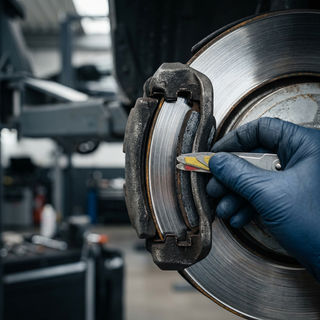
Brake pads typically last between 40,000 and 60,000 miles under normal driving conditions, though overall wear ranges from 20,000 to 70,000 miles depending on friction material, driving habits, and vehicle weight. Physical pad thickness determines safety far more accurately than odometer readings: replacement planning should begin when friction material wears down to 1/4 inch (approximately 6 mm), and new pads must be installed before the lining reaches 3 to 4 mm (or 3/32 of an inch). Friction lining on a brand-new brake pad measures about 12 mm thick. As you drive, the friction material gradually wears away against the spinning metal rotor to bring your vehicle to a controlled stop. Front brake pads handle roughly 60% to 70% of the stopping load due to forward weight transfer during deceleration, causing them to wear out faster than rear pads. Routine multi-point inspections provide the most dependable way to track pad wear over time. During standard maintenance services, our technicians measure remaining pad material across all four wheels using specialized thickness gauges. Catching thin pad lining early prevents severe metal-on-metal contact, preserving the smooth surface of your brake rotors and preventing costly damage to brake calipers. Vehicle size and regular cargo weight also play a significant role in wear schedules. For instance, a compact crossover like the Ford Escape with a 1.5L engine and all-wheel drive experiences different braking friction demands than a fully loaded three-row Ford Explorer equipped with a 2.3L engine and four-wheel drive. Drivers navigating steep riverfront bluffs in East Liverpool place extra thermal strain on their braking systems, making regular physical thickness measurements essential. If you suspect your vehicle requires a brake check, you can visit our East Liverpool service center on Pennsylvania Ave or give our team a quick call to consult with an advisor. Table of Contents What Factors Cause Brake Pads to Wear Out Faster? How Does Ceramic Brake Pad Lifespan Compare to Semi-Metallic? What Is the Average Cost to Replace Both Brake Pads and Rotors? Do OEM Brake Pads Last Longer Than Aftermarket Alternatives? Common Questions About Brake Maintenance and Lifespan Schedule Professional Brake Service at Tri State Ford What Factors Cause Brake Pads to Wear Out Faster? Driving environment, vehicle load, braking technique, and pad compound directly dictate how quickly brake pad lining degrades over time. Aggressive stop-and-go traffic, frequent high-speed braking, carrying heavy payloads, and navigating steep terrain all accelerate friction wear, causing pads to need replacement far earlier than the 60,000-mile mark. Urban commuting involves constant acceleration and deceleration cycles that create sustained heat buildup within the brake caliper assembly. This friction heat breaks down the pad's chemical bonding agents faster than steady open-highway driving. Commuters traveling along State Route 170 in Calcutta frequently encounter traffic light cycles and lower speed limits, which subjects brake components to repeated stop-and-go friction throughout daily driving. Braking habits significantly alter component longevity. Drivers who coast early when approaching red lights or downhill grades allow air to cool the rotors and pads, reducing thermal stress. Conversely, late, heavy foot pressure on the brake pedal generates intense surface friction that rapidly shaves away pad material. Riding the brake pedal continuously while descending long hills keeps the pad pressed against the rotor, generating extreme heat that can glaze pad surfaces and reduce stopping power. Vehicle mass and towed weight create additional stopping resistance. Heavy-duty haulers and full-size trucks like the Ford F-150 require substantially more hydraulic clamping pressure to bring heavy loads to a complete stop. When towing trailers or carrying full passenger loads, the extra kinetic energy converts directly into friction heat, accelerating pad degradation across both axles. Environmental elements like road salt, moisture, and debris also contribute to premature wear. Winter road treatments accelerate corrosion on caliper slide pins and backing plates. Sticky or binding caliper pins prevent the pad from fully retracting away from the rotor after you release the brake pedal, causing the pad to drag continuously and wear down unevenly. How Does Ceramic Brake Pad Lifespan Compare to Semi-Metallic? Ceramic brake pads generally last between 50,000 and 70,000 miles, whereas semi-metallic brake pads typically last between 30,000 and 50,000 miles. Ceramic compounds utilize dense ceramic fibers combined with copper or non-ferrous filler materials, creating a durable surface that withstands daily wear while producing minimal dust and noise. Semi-metallic brake pads contain between 30% and 65% metal content by weight, incorporating steel fibers, iron powder, and graphite alloys. This metallic construction offers superior heat dissipation and high initial bite, making semi-metallic pads well-suited for heavy-duty towing and high-stress applications. However, the harder metallic fibers act more aggressively against the rotor surface and wear down faster under normal passenger vehicle operation than refined ceramic formulations. Organic or non-asbestos organic (NAO) brake pads represent a third category, made from materials like glass, rubber, resin, and Kevlar. Organic pads deliver soft, quiet braking performance but wear out quickly, often lasting only 25,000 to 35,000 miles. They are primarily selected for lighter vehicles or budget applications where high heat resistance is not required. Brake Pad Material Type Typical Service Lifespan Primary Advantages Best Suited For Organic (NAO) 25,000 – 35,000 miles Quiet operation, low rotor wear Light passenger cars, gentle city driving Semi-Metallic 30,000 – 50,000 miles High heat tolerance, excellent stopping power Heavy towing, trucks, performance applications Ceramic 50,000 – 70,000 miles Extended longevity, low dust, ultra-quiet Daily commuting, family crossovers, sedans Choosing the correct friction material depends on your vehicle type and primary driving demands. While ceramic pads provide maximum mileage and cleaner wheels for everyday driving, semi-metallic pads remain the preferred choice for drivers who regularly push their vehicles through heavy work cycles. What Is the Average Cost to Replace Both Brake Pads and Rotors? Replacing both brake pads and rotors averages between $250 and $500 per axle, which translates to $500 to $1,000 for a comprehensive four-wheel service including parts and labor. Exact costs fluctuate based on vehicle classification, rotor design, caliper configuration, and whether specialized ceramic pads are selected. Labor charges typically account for half of the total invoice. Replacing rotors involves removing the wheel assembly, unbolting the brake caliper and mounting bracket, cleaning hub contact surfaces, compressing caliper pistons, and torquing all hardware to precise factory specifications. Larger vehicles with complex rear electronic parking brake mechanisms require electronic service mode activation prior to disassembly, slightly increasing total labor time. Brake rotors do not always require replacement during every pad service. Rotors generally last through two complete sets of brake pads—roughly 50,000 to 70,000 miles—provided the pads are changed before wear indicators scratch or groove the rotor face. During a pad replacement, technicians measure rotor thickness with a micrometer to verify that enough metal remains above the discard-limit spec cast into the rotor housing. If a rotor meets thickness safety standards and exhibits no deep scoring or thermal warping, it can sometimes be resurfaced on a precision brake lathe to restore a flat friction face. However, modern vehicle rotors are manufactured with thinner, lighter castings to optimize fuel efficiency. Consequently, replacing worn rotors with fresh units often provides superior thermal stability and longer service life compared to machining thin metal. Delaying pad replacement past the 3 mm safety mark rapidly escalates repair costs. When pad friction lining disappears completely, the steel backing plate grinds directly against the cast-iron rotor. This metal-on-metal friction destroys the rotor surface in short order and can overheat hydraulic caliper pistons, transforming a routine pad service into a complete system overhaul. Do OEM Brake Pads Last Longer Than Aftermarket Alternatives? Original equipment manufacturer (OEM) brake pads deliver reliable, standardized longevity because they are formulated to match the exact weight, rotor metallurgy, and hydraulic leverage of your specific vehicle. Premium aftermarket ceramic pads can match OEM pad life under ideal conditions, but entry-level aftermarket options often wear unevenly or degrade faster under thermal stress. Factory Ford Motorcraft pads undergo rigorous testing to ensure balanced friction performance across wide temperature ranges. OEM engineers select specific pad friction formulations that balance pad life, rotor preservation, noise suppression, and pedal feel. This precise engineering minimizes premature dusting, squealing, and pad glazing. Generic aftermarket pads frequently use a single friction compound across dozens of different vehicle models to reduce manufacturing costs. A compound designed broadly for multiple vehicle platforms may prove too soft for heavy SUVs or too hard for lighter passenger cars, leading to accelerated wear or increased rotor surface damage. When maintaining your braking system, ordering genuine Motorcraft replacement parts guarantees factory fitment and predictable wear life without guessing about compound compatibility. Matching OEM pads with factory-spec rotors ensures consistent stopping distance and protects your braking hardware over tens of thousands of miles. Common Questions About Brake Maintenance and Lifespan Our service team receives many questions about brake squeals, warning lights, pedal feel, and proper inspection habits. Here are clear answers to common questions regarding brake care. Q: What does a high-pitched squealing sound from brakes indicate? A high-pitched squeal while applying the brakes usually indicates that your brake pads have worn down to approximately 3 mm of remaining friction material. Most quality pads feature built-in metal wear indicators—small spring-steel tabs that contact the spinning rotor to produce a deliberate, high-frequency sound. This noise serves as an acoustic warning that it is time to schedule a pad replacement before metal backing plates contact and ruin the rotor surface. Q: What is the minimum safe thickness for brake pads? The absolute minimum safe brake pad thickness is 3/32 of an inch (roughly 3 mm). Operating a vehicle with pad material thinner than 3 mm significantly increases stopping distances and risks immediate metal-on-metal rotor damage. Service centers recommend planning a pad replacement as soon as measurements show 1/4 inch (about 6 mm) of material remaining, ensuring you schedule maintenance well before hitting critical wear limits. Q: How often should brake rotors be replaced? Brake rotors typically last between 50,000 and 70,000 miles, generally outlasting two sets of brake pads under standard driving conditions. Technicians measure rotor thickness with a precision micrometer during every brake inspection. If the rotor face is grooved, heat-cracked, warped, or worn below the manufacturer's minimum thickness threshold, new rotors must be installed alongside fresh pads to ensure safe braking performance. Q: Why do front brake pads wear out faster than rear brake pads? Front brake pads wear faster because physics shifts vehicle weight forward onto the front axle whenever you press the brake pedal. This dynamic weight transfer forces the front braking assembly to absorb 60% to 70% of the total stopping force. Because rear brakes manage less stopping load, rear pads often last significantly longer than front sets. Q: What causes a brake pedal to feel soft or squishy? A soft or squishy brake pedal points to air trapped within the hydraulic brake lines, degraded brake fluid, or a leaking brake component. As brake fluid ages, it absorbs atmospheric moisture, lowering its boiling point and creating compressible steam pockets under heavy braking. A sinking pedal requires immediate professional inspection to flush the hydraulic fluid or repair master cylinder seals. If your vehicle exhibits squealing, pedal vibration, or thin pad measurements, you can easily schedule a multi-point inspection online with our certified service team. Schedule Professional Brake Service at Tri State Ford Maintaining healthy brake pads and rotors keeps your vehicle stopping safely on every daily commute and family journey. Whether your vehicle requires a routine thickness measurement, fresh fluid, or a complete pad and rotor replacement, our certified technicians provide expert service using factory-approved parts. Our service department provides transparent digital vehicle inspections, thorough hardware cleaning, and precision installation tailored to your specific Ford model. We also handle comprehensive vehicle maintenance, including routine battery checks and multi-point inspections, to keep your vehicle performing reliably year-round. Visit our local Ford dealership at 1503 Pennsylvania Ave, East Liverpool, OH 43920, or call (330) 462-7578 to speak directly with an expert service advisor and book your appointment today. © 2026 Tri State Ford. All rights reserved. Vehicle specification data © JATO Dynamics Limited. Brake Pad Replacement in East Liverpool OH | Tri State Ford
d

What Causes a Car to Shake When Braking?

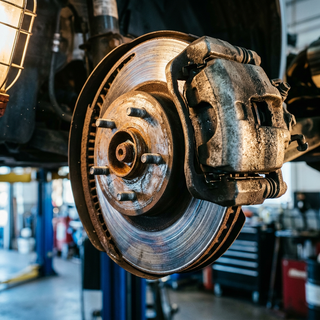
A car shakes when braking primarily due to disc thickness variation across the brake rotors, uneven friction material deposits on the rotor face, sticking caliper slide pins, or worn front suspension bushings. When brake pads clamp down on an uneven metal surface or compromised mechanical hardware, the resulting hydraulic force fluctuations send rapid pulses through the brake pedal and steering wheel. Braking relies on smooth, consistent contact between the brake pad friction material and the spinning iron surface of the brake rotor. When a vehicle decelerates, friction transforms kinetic energy into heat. If that heat is distributed unevenly, or if mechanical components fail to release smoothly, the uniform surface of the rotor breaks down. Even a microscopic variation in rotor thickness—as thin as a fraction of a millimeter—causes the brake pad to catch and release rapidly as the wheel rotates. Mechanical issues elsewhere in the wheel assembly can also generate or magnify this shaking. Corroded caliper pistons, seized guide pins, loose wheel bearings, or degraded rubber suspension bushings prevent the braking system from maintaining flat, even contact against the rotor hub. When navigating the steep descents along the riverfront bluffs of East Liverpool, this uneven contact generates intense thermal cycles that rapidly worsen vibration. Identifying the underlying cause of brake vibration requires a comprehensive inspection of the entire friction assembly. Drivers noticing pedal pulsation or wheel shimmy can visit our service center location on Pennsylvania Ave or give our service team a quick call at (330) 462-7578 to have our factory-trained technicians inspect the full system. Table of Contents How Do Warped Rotors and Uneven Pad Deposits Cause Brake Pulsation? Does Your Steering Wheel or Brake Pedal Shake? Pinpointing the Issue How Sticking Calipers, Seized Pins, and Worn Suspension Cause Shaking Warped Rotors vs. Unbalanced Wheels: Key Symptom Differences What Is the Cost of Replacing Brake Pads and Rotors? Common Questions About Brake Shaking and Expert Service Care How Do Warped Rotors and Uneven Pad Deposits Cause Brake Pulsation? Brake pulsation occurs when brake rotors develop uneven thickness or localized friction material buildup, forcing the brake pads to jump across high and low spots as the wheel turns. This physical oscillation transfers directly through the hydraulic brake fluid and suspension components, reaching the driver's foot and hands during deceleration. Many drivers assume a warped rotor is physically bent like a wavy metal plate. In modern vehicles, true structural warping from mechanical bending is quite rare. Instead, brake pulsation is usually caused by disc thickness variation (DTV) or uneven friction material transfer. Disc Thickness Variation: When a rotor spins through a misaligned caliper or against worn pads, specific areas of the disc wear down faster than others. As the brake pad squeezes a rotor that varies in thickness around its circumference, the hydraulic pressure inside the brake lines surges and drops with every wheel revolution. Friction Material Deposit: During aggressive stopping or prolonged heavy braking, temperatures between the pad and rotor spike dramatically. If a driver brings the car to a complete stop and holds the brake pedal down firmly while the brakes are scorching hot, binding resin from the brake pad melts directly onto that single spot on the rotor face. Lateral Runout: Minor wobble in the rotor's rotation, often caused by rust scale on the wheel hub or improper lug nut torque, causes the disc to contact the inner and outer pads unevenly during normal driving, eventually shaving high spots into the disc face. Over time, those hot spots on the rotor undergo a metallurgical change, transforming into a dense carbon-iron compound that wears at a different rate than the surrounding cast iron. Once these friction patches form, standard braking friction becomes uneven. Replacing degraded components with factory-spec hardware restores a smooth stopping surface, and our parts department can assist you to order genuine OEM Ford rotors and pads engineered specifically for your vehicle's braking system. Does Your Steering Wheel or Brake Pedal Shake? Pinpointing the Issue Shaking felt in the steering wheel during braking signals uneven front brake rotors or worn front steering and suspension components, whereas pulsation felt primarily through the brake pedal points to rear rotor thickness variation or anti-lock brake system engagement. Because front brakes handle roughly 70 percent of a vehicle's stopping force, friction variations on the front axle transmit feedback directly through the steering knuckles, tie rods, and steering column. If the steering wheel oscillates side-to-side in your hands when slowing down from highway speeds, the front brake rotors or front control arm bushings are almost always the friction source. When rear brake rotors suffer from thickness variation, the diagnostic feedback travels a different path: Rear braking forces act directly on the chassis and hydraulic line pressure rather than the front steering geometry. Vibration from rear rotors travels through the brake fluid column back up to the master cylinder, creating a rhythmically pulsing brake pedal under your foot. Severe rear rotor unevenness can also create a low-frequency hum or a subtle body vibration felt in the driver's seat frame. It is also critical to distinguish mechanical brake rotor pulsation from normal anti-lock braking system (ABS) operation. An active ABS system rapidly pulses the brake pedal only during heavy emergency braking or on slippery surfaces to prevent wheel lockup, accompanied by an instrument cluster warning light and a rapid mechanical chatter. If pedal pulsation occurs during light, routine deceleration on dry pavement without an ABS light, the cause is mechanical rotor or caliper wear. How Sticking Calipers, Seized Pins, and Worn Suspension Cause Shaking Sticking brake calipers and frozen slide pins force brake pads to drag continuously against the rotor face, generating extreme localized heat that warps metal discs and triggers severe vibration. A disc brake caliper uses hydraulic pressure from a piston to push brake pads against the rotor. To maintain even pressure on both sides of the disc, floating calipers slide back and forth on steel guide pins protected by rubber dust boots. If moisture penetrates those rubber boots, rust forms on the guide pins, freezing the caliper in place. Continuous Dragging: A seized guide pin prevents the outer pad from retracting when you release the brake pedal, leaving the pad rubbing constantly against the spinning rotor. Extreme Heat Buildup: Continuous friction raises rotor temperatures well beyond normal operational ranges, glazing the brake pad friction layer and creating severe thermal hot spots on the rotor surface. Vehicle Pulling: A stuck caliper exerts uneven drag on one side of the vehicle, often causing the car to pull toward the stuck side during normal driving and vibrate violently when the brakes are applied. Worn suspension hardware acts as an amplifier for these brake system defects. Components like tie rod ends, lower ball joints, and rubber control arm bushings are designed to absorb road shock and keep the front tires firmly aligned. When these steering linkages develop mechanical play, they can no longer damp the feedback from minor brake rotor variations. As a result, a tiny rotor imperfection that would normally go unnoticed turns into a harsh shake throughout the entire front assembly. Warped Rotors vs. Unbalanced Wheels: Key Symptom Differences Unbalanced wheels cause a continuous floorboard or steering wheel vibration that persists at constant highway speeds regardless of brake pedal pressure, whereas warped brake rotors produce vibration strictly when depressing the brake pedal. Diagnostic Factor Warped Brake Rotors Unbalanced Wheels / Damaged Tires Primary Trigger Pressing the brake pedal Vehicle speed (typically 50–70 mph) Cruising Behavior Smooth and quiet Constant vibration or rhythmic hum Pedal Feedback Rhythmic pulsing underfoot Stationary and steady pedal feel Steering Feedback Shimmy occurs only while decelerating Continuous wheel vibration at speed Primary Cause Disc thickness variation or heat spots Uneven tire weight, lost wheel weight, bent rim Isolating these symptoms saves troubleshooting time. Suburban commutes along State Route 170 highlight this distinction clearly: if a car hums and vibrates continuously while cruising at 45 mph, wheel balance or tire damage is the primary suspect. However, if the ride remains completely smooth until you apply the brakes for a stoplight, the issue resides squarely within the braking friction system. What Is the Cost of Replacing Brake Pads and Rotors? Professional brake pad and rotor replacement averages $250 to $500 per axle depending on vehicle size and friction material specifications, while DIY replacement parts generally cost $80 to $200 per axle. While replacing brake components at home saves initial labor expenses, professional service eliminates common installation mistakes that cause rapid recurrence of brake shaking. Home repairs without specialized precision tools carry hidden technical risks: Hub Cleaning: Failing to remove microscopic rust scale from the wheel hub surface with a wire wheel before installing new rotors creates lateral runout right out of the box. Fastener Torque: Uneven lug nut or caliper mounting bolt torque warps brand-new rotors within a few hundred miles of driving. Slide Pin Service: Reusing dry or corroded caliper slide pins causes immediate pad binding and localized heat damage on new rotors. Pad Bed-In Procedure: Skipping the critical thermal bed-in process prevents friction material from transferring evenly across the new disc surface. Investing in factory-certified service ensures that hub surfaces are measured for runout, slide pins are cleaned and lubricated with high-temperature silicone grease, hardware clips are replaced, and wheel fasteners are torqued precisely to factory specifications. Common Questions About Brake Shaking and Expert Service Care Q: Can bad tires cause a car to shake when braking? Worn, unevenly treaded, or separated tires can amplify vibration during braking because deceleration transfers vehicle weight onto the front tire contact patches. If a tire has flat spots, broken internal steel belts, or severe cupping, the increased downward load during stopping forces the tread imperfections against the pavement, creating a distinct shudder through the steering column and chassis. Q: Is it safe to drive with a shaking brake pedal? Driving with a shaking brake pedal is unsafe because vibration reduces the contact surface between the brake pad and rotor, increasing stopping distances and stressing front suspension linkages. Severe brake pulsation indicates irregular friction or overheating, which can lead to brake fluid boiling, reduced hydraulic pressure, or catastrophic friction material failure during an emergency stop. Q: Can warped brake rotors be resurfaced instead of replaced? Warped brake rotors can often be resurfaced on a brake lathe if the metal disc retains sufficient thickness above the manufacturer's discard limit. Machining removes high spots and restores a flat surface. However, if the rotor has deep thermal heat spots, heavy corrosion grooves, or thin metal specifications, complete replacement with new OEM rotors is necessary for long-term safety. Q: How long do brake pads and rotors typically last? Brake pads generally last between 30,000 and 70,000 miles, while brake rotors typically last between 50,000 and 70,000 miles depending on driving habits, vehicle weight, and road conditions. Driving in hilly terrain, hauling heavy loads, or aggressive stop-and-go commuting accelerates heat buildup and friction wear, requiring more frequent brake inspections. Q: Why does my brake pedal vibrate only at high highway speeds? Brake pedal vibration occurring exclusively at highway speeds is caused by minor disc thickness variation or subtle lateral runout that is too small to feel at lower city speeds. Because the wheel rotates significantly faster at 60 mph, the brake pad impacts rotor surface high spots much more frequently per second, turning minor friction variations into noticeable pedal pulses. Smooth, dependable stopping power is essential for everyday driving confidence and family safety. Our technicians see vehicles every week with minor brake vibrations that are easily corrected before they lead to premature suspension wear or rotor damage. To restore smooth braking performance, stop by our East Liverpool service center, give our service department a call, or easily schedule a service appointment online today. © 2026 Tri State Ford. All rights reserved. Brake Vibration Causes in East Liverpool OH | Tri State Ford
b

When Should You Replace Your Car Tires?

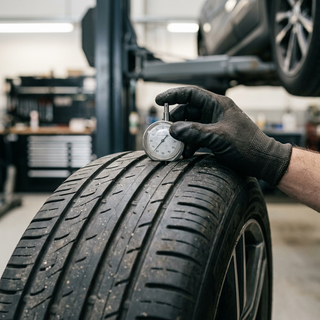
Replace your tires when the tread depth drops to 2/32 inch, when the rubber reaches six years of age, or immediately if you spot sidewall bulges, severe cracking, or deep cuts. The built-in tread wear indicators become level with the tread surface at 2/32 inch, signaling the absolute safety minimum. However, wet-weather stopping distance increases significantly once tread wears below 4/32 inch. Routine monthly checks help identify shallow tread, uneven wear, or structural rubber damage before a tire fails on the road. Tires serve as the single physical link between your vehicle and the pavement, bearing the entire vehicle weight while transferring steering, braking, and acceleration forces. Over time, friction wears down the outer rubber compound, reducing the depth of the circumferential grooves designed to channel water away from the contact patch. The National Highway Traffic Safety Administration (NHTSA) reports that worn tread and tire failures contribute to thousands of highway incidents annually, emphasizing the critical importance of timely tire replacement. Driving conditions around northeastern Ohio place heavy demands on vehicle rubber throughout the year. For example, navigating the riverfront bluffs and elevated steep grades in East Liverpool demands strong traction during seasonal rain, sleet, and winter ice. When rubber hardens from age or wears thin from mileage, stopping distances expand, and cornering grip degrades rapidly. Monitoring tire health involves checking air pressure cold at least once a month, inspecting the sidewalls for physical injury, and verifying that the remaining tread meets safety standards. If you suspect an issue or experience unusual steering wheel vibration, our team at Tri State Ford is available at (330) 462-7578 to conduct a comprehensive tire safety inspection. You can also visit our East Liverpool service center for professional tire balancing, alignment, and tread measurements. Table of Contents How Low Can Tire Tread Get and How Do You Measure It? What Physical Damage and Aging Require Buying New Tires? How Do Worn Tires Impact Braking and Driving Performance? Where Should Two New Tires Be Installed on a Front-Wheel-Drive Car? Common Tire Replacement Questions Answered Schedule Professional Tire Care at Tri State Ford How Low Can Tire Tread Get and How Do You Measure It? Tires must be replaced when tread depth reaches 2/32 inch, which represents the legally enforced safety minimum across most of the United States. Safety experts and original equipment manufacturers strongly advise replacing tires at 4/32 inch to preserve essential wet-road traction and emergency braking performance. As tires wear down, the depth of their tread channels decreases, limiting the volume of water the tire can clear from under the contact patch. When driving at highway speeds through heavy rain, a tire with 2/32 inch of tread takes drastically longer to stop than a new tire with full depth. Measuring Tread Depth with the Penny Test The penny test provides a quick, accessible method to estimate remaining tread depth at home: Select a standard U.S. penny and locate a main tread groove where the rubber appears most worn. Turn the coin so Abraham Lincoln’s head points upside down and faces toward you. Insert the coin straight into the center tread groove. Observe whether the top of Lincoln’s head is covered by the tread rubber. If the entire top of Lincoln’s head remains visible, your tread depth is at or below 2/32 inch, meaning the tire is worn out and requires immediate replacement. Using the Quarter Test for Extended Wet Safety The quarter test measures whether your tires have reached the recommended replacement threshold of 4/32 inch: Insert a U.S. quarter upside down into a primary tread groove with George Washington’s head facing you. Check if the top of Washington’s head is obscured by the rubber. If the top of his head is fully visible, the tread depth has dropped below 4/32 inch. While legally permissible, rubber at this level loses significant traction on wet roads, indicating it is time to start shopping for replacement tires. Identifying Built-In Tread Wear Indicator Bars Modern passenger tires feature built-in tread wear indicator bars molded directly into the primary circumferential grooves. These indicator bars consist of narrow bridges of raised rubber set at exactly 2/32 inch above the bottom of the groove. When the surrounding tread rubber wears down flush with these indicator bars, the tire has reached its legal wear limit and must be taken out of service. Utilizing Digital and Mechanical Tread Depth Gauges For precise readings, technicians use a dedicated tread depth gauge calibrated in thirty-seconds of an inch. To use a manual or digital gauge: Push the gauge probe all the way out. Place the base of the gauge flat against the outer tread block surrounding a main groove. Press the central probe down into the lowest point of the groove until it rests flush against the base rubber. Read the measurement displayed on the barrel or digital screen. Measure across three distinct locations on the tire—the inner shoulder, center tread, and outer shoulder—to identify uneven wear patterns caused by improper alignment or inflation issues. What Physical Damage and Aging Require Buying New Tires? A tire requires immediate replacement if it displays sidewall bulges, severe rubber cracking, deep cuts that expose internal steel belts, or if it reaches six years of age regardless of remaining tread depth. Physical damage to the tire carcass weakens its structural integrity, making it unsafe for high-speed driving. Rubber degrades over time due to exposure to atmospheric oxygen, ultraviolet light, ozone, and thermal changes. Even if a vehicle is driven infrequently and retains deep tread, the internal chemical bonds within the rubber compound break down over time. Ford guidelines recommend replacing tires every six years, or sooner if physical wear dictates, and replacing unused spare tires after six years in storage. Identifying Structural Sidewall Damage Sidewall injuries represent a severe safety hazard because the sidewall absorbs flexing forces during cornering and load carrying. Common forms of structural damage include: Sidewall Bulges and Blisters: A outward bubble on the sidewall indicates that internal fabric cords have snapped after a pothole or curb impact, allowing pressurized air to push through the inner liner. This condition cannot be repaired and requires immediate replacement. Deep Cuts and Gouges: Scrapes or punctures that slice deep enough into the sidewall or shoulder rubber to reveal cord fabric or steel plies compromise the strength of the tire casing. Radial Weather Cracking: Dry rot manifests as fine networks of cracks along the sidewall or inside the tread grooves, signaling that the rubber compounds have dried out and lost elasticity. Tread Separation: Ripples, bulges, or localized elevated areas on the tread surface indicate that the outer tread layer is detaching from the underlying steel belt structure. Reading the DOT Date Code Every tire stamped with a Department of Transportation (DOT) code displays its manufacturing date within the final four digits of the Tire Identification Number (TIN) located on the lower sidewall: DOT PJ8X L5R1 2523 In the example above, the final four digits ( 2523) indicate that the tire was manufactured during the 20th week of 2023. Checking this code ensures you know the exact age of your tires. Puncture Repair Limits According to United States Tire Manufacturers Association (USTMA) industry standards, punctures are only repairable if they occur within the central tread area and measure 1/4 inch or less in diameter. Punctures located on the tire shoulder, sidewall, or bead area cannot be safely patched or plugged, as these flexible zones endure extreme structural loads. Additionally, driving on a flat or underinflated tire causes internal heat damage and rubber shaving, rendering the casing unsuitable for repair. When physical damage or advanced age requires getting new tires, you can use our online tire finder tool to filter exact original equipment tire sizes and speed ratings for your specific vehicle. How Do Worn Tires Impact Braking and Driving Performance? Worn tire tread increases stopping distances on wet roads, degrades cornering grip, and drastically raises the risk of hydroplaning by reducing the tire’s ability to evacuate water from under the contact patch. Shallow tread grooves cannot clear accumulated water, forcing the tire to ride on a thin film of liquid and losing contact with the road surface. Emergency braking tests demonstrate the severe performance penalty of driving on worn rubber. Vehicles stopping on wet pavement at 60 mph on tires worn down to 4/32 inch require an average of 87 additional feet to come to a complete stop compared to vehicles on new tires. That additional stopping distance equals roughly a full second of travel time at highway speeds, which can mean the difference between a safe stop and a severe rear-end collision. Reduced Handling and Cornering Traction Beyond straight-line braking, shallow tread negatively impacts overall handling stability: Steering Response: Worn tires exhibit sluggish turn-in response, causing the steering wheel to feel loose or uncommunicative during lane changes. Lateral Grip: Reduced tread block height lowers lateral grip, causing the vehicle to slide outward during tight cornering maneuvers. Accelerative Traction: Slippery or wet pavement causes worn tires to spin easily under power, triggering traction control intervention and reducing momentum. Elevated Heat Build-Up: Reduced tread depth means less rubber mass to dissipate heat generated during high-speed driving, increasing thermal strain on the internal casing. The rolling terrain and wooded roads near Calcutta demand reliable traction during seasonal rain and freezing weather. Vehicles such as the 2026 Ford Escape equipped with All-wheel drive and a 1.5L EcoBoost engine rely on deep, aggressive tread blocks to distribute power effectively across all four wheels. When tread wears thin, even advanced driver-assist safety technology like anti-lock braking and electronic stability control cannot overcome the fundamental loss of mechanical grip. Where Should Two New Tires Be Installed on a Front-Wheel-Drive Car? When replacing only two tires on a front-wheel-drive vehicle, the new tires must always be installed on the rear axle. Installing fresh tires with full tread depth on the rear wheels maintains directional stability and prevents dangerous rear-end fishtailing on wet or slick roads. Many drivers assume that because a front-wheel-drive car uses its front tires for steering, acceleration, and the majority of braking force, fresh rubber belongs on the front. However, automotive safety engineers, tire manufacturers, and the NHTSA unanimously advise placing new tires on the rear axle regardless of whether the vehicle is front-wheel-drive, rear-wheel-drive, or all-wheel-drive. The Physics of Rear Traction and Hydroplaning Placing worn tires on the rear axle creates a critical traction imbalance during rain or emergency maneuvers: Oversteer Risk: If the rear tires have shallower tread than the front tires, the rear wheels will lose grip first when driving through standing water or making a sudden lane change. Loss of Control: When the rear tires hydroplane, the back end of the car slides outward, causing sudden oversteer (fishtailing). Oversteer is extremely difficult for most drivers to correct. Understeer Management: Conversely, if fresh tires sit on the rear and worn tires remain on the front, the front tires may lose traction first during hard cornering (understeer). Understeer causes the car to push straight ahead, which is easily managed by simply easing off the accelerator pedal. Tire Replacement Rules for All-Wheel-Drive Systems Vehicles equipped with full-time or automatic all-wheel-drive systems, such as the 2026 Ford Explorer featuring a 2.3L EcoBoost engine and a SelectShift® automatic transmission, operate under stricter tire replacement requirements. AWD transfer cases and center differentials require all four tires to roll at virtually identical circumferences. Variations in tread depth greater than 2/32 inch between tires cause the front and rear axles to rotate at slightly different speeds, generating constant friction and heat within the mechanical transfer case. On AWD models, replacing all four tires simultaneously is standard practice to protect complex drivetrain components from expensive mechanical damage. If you ever experience a sudden blowout, flat tire, or severe vibration while driving, remember that complimentary roadside assistance coverage is available for covered Ford owners by contacting Ford Roadside Assistance: 1-800-241-3673. If you suspect uneven tire wear or wish to evaluate your vehicle's overall road performance, you can schedule a test drive or vehicle safety evaluation with our service team to review your tire condition and suspension geometry. Common Tire Replacement Questions Answered Understanding tire care helps you protect your investment, maintain vehicle safety, and prevent premature wear. Below are concise answers to common questions about tire lifespan, repair safety, and driving diagnostics. Q: How do you read the DOT date code on a tire sidewall to check its age? Look at the outer sidewall for the DOT Tire Identification Number, which ends in a four-digit numerical code. The first two digits represent the calendar week of production, while the final two digits indicate the year. For example, a code reading 4222 indicates the tire was produced during the 42nd week of 2022. Tires older than six years should be inspected annually by a professional, and those reaching ten years should be replaced regardless of tread depth. Q: Is it safe to drive on a tire with a plug after a puncture? A plug applied from the outside without removing the tire from the wheel is considered a temporary emergency repair only. Safe puncture repair requires a combination plug-patch installed from inside the tire casing after taking the tire off the rim. This process seals the inner liner and fills the puncture path through the tread plies, preventing moisture from rusting the internal steel belts. Q: Why does my vehicle pull to one side even when tire pressures are balanced? A persistent vehicle pull can be caused by uneven tread wear, internal tire conicity, improper wheel alignment, or dragging brake components. Conicity occurs when manufacturing variations or internal belt shifts cause a tire to roll slightly cone-shaped, creating a lateral pulling force. Swapping the front tires from left to right can help determine if the pull stems from a tire structural issue or suspension alignment misalignment. Q: What tire maintenance helps extend tread life between replacements? Rotating your tires every 5,000 to 8,000 miles promotes balanced rubber wear across all four positions, while maintaining correct cold inflation pressures prevents shoulder or center wear. Additionally, scheduling a four-wheel alignment after hitting harsh potholes or curbs prevents uneven edge scrubbing. For owners performing routine garage maintenance or replacing damaged wheel hardware, our service counter provides quick access for ordering genuine Ford parts and tires engineered specifically for your model. Schedule Professional Tire Care at Tri State Ford Maintaining healthy tires is essential for keeping your vehicle safe, responsive, and efficient through every season. Whether your vehicle needs a routine rotation, wheel alignment, or a fresh set of factory-recommended tires, our team is equipped to handle all your maintenance needs with certified care. We invite you to visit our state-of-the-art facility for quick, transparent tire inspections and expert advice on choosing the right replacement rubber for your driving habits. You can stop by our dealership location at 1503 Pennsylvania Ave, East Liverpool, OH 43920 or speak directly with a service advisor by calling (330) 462-7578. Ready to make sure your vehicle is prepared for the road ahead? Take a moment to schedule a service appointment online today and let our service team keep your vehicle running smoothly and safely. © 2026 Tri State Ford. All rights reserved. Vehicle specification data © JATO Dynamics Limited. Car Tire Replacement Guide in East Liverpool OH | Tri State Ford
l

What Causes Uneven Tire Wear on a Vehicle?

Uneven tire wear is primarily caused by incorrect wheel alignment, improper inflation pressures, worn suspension components, and unperformed tire rotations. Mechanical stress from bad ball joints or failing struts alters how tread blocks contact the road surface. Potholes, curb impacts, and heavy payload hauling also distort tire geometry, leading to accelerated wear that compromises braking distance and overall driving stability. When a tire rolls along the pavement, its rubber contact patch should distribute the vehicle's weight uniformly across the entire tread width. If wheel alignment angles drift out of factory specification, the tire drags at an angle rather than rolling flat. This friction concentrated on a single edge or rib strips away rubber rapidly. Vehicle manufacturer specifications emphasize that even minor alignment deviations, such as a fraction of a degree off in toe or camber, will cause noticeable diagonal or shoulder wear over just a few thousand miles. Tire pressure plays an equally vital role in tread longevity. Underinflated tires sag in the center, transferring weight outward and wearing down both outer shoulders prematurely. Overinflated tires balloon outward in the middle, causing rapid center tread loss while leaving the shoulders untouched. Routine maintenance, including checking inflation levels monthly with an accurate gauge, prevents these uneven wear profiles from forming. Suspension wear and chassis impacts further compound tread breakdown. Driving over rough pavement or potholed back roads in Calcutta subjects steering linkages and control arms to severe shocks that can bend tie rods or knock alignment out of position. If you notice irregular tread patterns, pulling to one side, or steering wheel vibration, our team at 1503 Pennsylvania Ave, East Liverpool, OH 43920 can perform a comprehensive multi-point inspection. You can also give our service center a call directly at (330) 462-7578 or check current Ford service information before booking your visit. Table of Contents What Do Different Tire-Wear Patterns Reveal About Your Suspension and Alignment? How Do Bad Ball Joints, Shocks, and Suspension Parts Cause Inner Tire Wear? How Many 32nds of an Inch Difference Is Allowed on AWD Tires? How Often Should You Check Tire Pressure and Rotate Your Tires? Common Questions About Diagnosing and Fixing Uneven Tire Wear Protect Your Tires and Vehicle Stability at Tri State Ford What Do Different Tire-Wear Patterns Reveal About Your Suspension and Alignment? Visual tire-wear patterns serve as a precise diagnostic roadmap, signaling specific alignment errors, pressure issues, or worn mechanical components. Examining tread block shapes and wear location allows technicians to isolate problems before they destroy your tires. Different mechanical failures generate distinct physical signatures on the tread surface. Understanding what these patterns mean helps drivers spot potential hazards early: Center Tread Wear: Rapid wear concentrated strictly down the center rib indicates chronic overinflation. High pressure causes the center of the tire to bulge outward and carry the vast majority of the vehicle's load. Shoulder Wear on Both Edges: Heavy wear on both the inner and outer edges with deeper tread remaining in the center signifies chronic underinflation. Lacking sufficient air pressure, the tire carcass collapses inward, forcing the outer shoulders to absorb road contact. Inner or Outer Edge Wear: Heavy rubber loss on only one edge points directly to alignment trouble, specifically improper camber setting or incorrect toe angle. Excessive negative camber leans the top of the wheel inward, grinding down the inside shoulder. Feathered Tread Edges: When individual tread blocks feel smooth when sliding your hand across them in one direction but rough and sharp in the opposite direction, the tire suffers from feathering. This condition is caused by incorrect toe alignment, which forces the tire to scrub sideways while rolling forward. Tire Cupping or Scalloping: Deep, repeating scooped dips or valleys around the circumference of the tread indicate worn shock absorbers, struts, or loose wheel bearings. Worn dampeners fail to keep the tire firmly planted, allowing the wheel to bounce down the road like a basketball. Ignoring irregular tread patterns causes secondary damage to wheel bearings, steering racks, and suspension bushings over time. Driving on cupped or feathered tires also increases stopping distances on wet pavement and reduces resistance to hydroplaning. Catching these patterns early allows technicians to perform adjustments before the rubber is permanently ruined. When tread wear is identified in its beginning stages, correcting the mechanical root cause and rotating the tires can help balance out future wear. To have your tread inspected and corrected by factory-trained specialists, feel free to schedule a service appointment online or inquire about specialized equipment checks for custom vehicle factory orders. How Do Bad Ball Joints, Shocks, and Suspension Parts Cause Inner Tire Wear? Failing ball joints, worn control arm bushings, and leaking struts allow front wheels to lean inward, shifting the vehicle's weight onto the tire's inside shoulder. This misalignment creates excessive negative camber and improper toe angles, rapidly grinding down inner tread blocks until internal casing cords become exposed. Ball joints act as the critical pivot points connecting your vehicle's control arms to the steering knuckles. As ball joints wear down internally, microscopic play develops within the socket. This looseness allows the wheel assembly to tilt outward or inward under load. When a lower ball joint deteriorates, the wheel splays outward at the bottom, creating an aggressive negative camber angle. This forces the inner edge of the tire to bear the brunt of vehicle weight and cornering friction. Worn shock absorbers and struts exacerbate inner tire wear by failing to control wheel rebound. Struts hold the wheel at a precise angle relative to the body chassis. As internal hydraulic fluid leaks or valving degrades, the strut can no longer maintain structural rigidity during cornering or braking. The tire begins to wobble and bounce erratically, gouging out inner tread rubber while creating severe steering wheel vibrations. Drivers frequently ask our technicians why inside shoulder wear often goes unnoticed until a tire fails. Because inner edge wear occurs on the hidden underside of the vehicle, a tire can look healthy from the outside while severely compromised on the inside edge. If rubber wears down to the internal steel belts or nylon body cords, the tire loses structural integrity and becomes a blowout risk. Correcting inner tire wear requires replacing degraded steering parts—such as ball joints, tie rod ends, or control arm bushings—and performing a four-wheel laser alignment to reset factory geometric tolerances. Our department can quickly supply genuine OEM Ford suspension parts built specifically for your model's exact chassis requirements. How Many 32nds of an Inch Difference Is Allowed on AWD Tires? Engineering guidelines for all-wheel-drive systems require all four tires to have matching tread depths within 2/32 of an inch to 3/32 of an inch of one another. Exceeding this variance forces the transfer case and center differential to work continuously to compensate for differing wheel rotation speeds, leading to severe mechanical overheating and premature drivetrain failure. All-wheel-drive systems, such as Ford Intelligent AWD, monitor wheel speed sensors dozens of times per second to distribute torque precisely where traction is needed. Tire tread depth directly determines the overall rolling circumference of the wheel. A brand-new tire typically starts with 10/32 of an inch to 12/32 of an inch of tread depth, whereas a partially worn tire might measure 5/32 of an inch. This difference of 5/32 of an inch reduces the overall tire diameter by nearly a third of an inch, causing the worn tire to rotate faster than the new tire at identical vehicle speeds. When tires on an AWD vehicle rotate at different speeds on dry pavement, the driveline computer interprets the speed differential as wheel slip. The system continuously engages clutch packs inside the center differential or power transfer unit to correct the non-existent slip. This constant binding generates extreme heat, degrades differential fluid, and can destroy expensive drivetrain components in a short period. Tread Depth Variance Drivetrain Impact Recommended Action 0/32 to 2/32 of an inch Safe operational range; no driveline binding Maintain normal rotation schedule 3/32 of an inch Maximum allowable variance on most AWD systems Inspect tread regularly; plan replacement 4/32 of an inch or more High risk of transfer case and differential damage Replace all four tires or shave new tire Commuters in Boardman who rely on all-wheel-drive traction during wet spring rains or icy winter storms must keep tread variance top of mind when replacing damaged tires. If a single tire suffers an unrepairable puncture, installing one brand-new tire alongside three worn tires can compromise the AWD transfer case. In these situations, replacing all four tires or sourcing a shaved replacement tire matches rolling circumferences safely. Drivers can check tire sizes and tread options using our online tire lookup tool. How Often Should You Check Tire Pressure and Rotate Your Tires? Drivers should inspect cold tire inflation pressure at least once a month and perform tire rotations every 5,000 miles to 7,500 miles or at every scheduled oil change. Maintaining this interval ensures uniform tread wear across front and rear axles, extending tire life and maintaining optimal fuel economy. Tire air pressure fluctuates constantly due to ambient temperature changes and natural permeability through the tire's inner liner. For every 10-degree drop in outside air temperature, tire pressure decreases by approximately 1 PSI. Checking tire pressure monthly—and always before long highway trips—prevents undetected underinflation. Always measure pressure when the tires are cold, meaning the vehicle has been parked for at least three hours or driven less than one mile. The correct recommended inflation figure is located on the tire specification decal inside the driver's door jamb, not the maximum pressure stamped on the tire sidewall. Tire rotation is critical because front and rear tires perform vastly different duties: Front Tires: Bear the weight of the engine, absorb front-wheel steering angles, and handle over 60 percent of all braking forces. Rear Tires: Primarily follow the front wheels in front-wheel-drive vehicles, experiencing straight-line rolling friction without steering stress. By rotating tire positions periodically, wear patterns are distributed evenly across all four tires. Front-wheel-drive vehicles typically utilize a forward-cross rotation pattern, moving front tires straight to the rear and crossing rear tires to opposite front sides. Rear-wheel and four-wheel-drive trucks utilize a rear-cross pattern, moving rear tires straight forward and crossing front tires to opposite rear sides. Individual tire rotations are an affordable maintenance service, and many tire manufacturers or service departments offer complimentary rotations over the life of the tires when purchased as a set. Combining rotations with your regular oil change keeps your maintenance schedule organized and ensures your tires wear down evenly over thousands of miles. Common Questions About Diagnosing and Fixing Uneven Tire Wear Q: Is it safe to drive with tires worn down on the inner edge? No, driving with severe inner edge tire wear is unsafe because it structurally weakens the internal tire carcass. Excessive inner edge wear grinds away protective rubber layers, exposing internal steel belts and body cords to moisture, dirt, and road friction. Exposed cords quickly rust and fray, which dramatically increases the risk of a sudden highway blowout. If you spot exposed metal or fabric on any part of your tire tread, replace the tire immediately. Q: Does tire rotation cost money or is it free with new tires? Individual tire rotation services typically cost $20 to $50 when performed as a standalone service at a service center. However, many service departments and tire retailers offer lifetime complimentary tire rotations when you purchase a complete set of four new tires from them. Bundling your tire rotation with scheduled oil changes or multi-point vehicle inspections is a practical way to keep maintenance organized. Q: What causes tire feathering and how is it corrected? Tire feathering occurs when the individual tread blocks wear down at an angle, creating a sharp edge on one side and a rounded edge on the other. This condition is caused by improper toe alignment, which forces the tire to scrub sideways across the road while rolling forward. Feathering is corrected by placing the vehicle on an alignment rack and adjusting the steering tie rods back to factory toe settings. Q: Why does cupping occur on rear tires of trucks and SUVs? Cupping or scalloping on rear tires is caused by worn rear shock absorbers, out-of-balance wheel assemblies, or loose suspension bushings that allow the tire to bounce up and down repeatedly at highway speeds. Every time the tire bounces and lands on the pavement, rubber is carved out of the contact patch. Fixing rear tire cupping requires replacing worn shocks or struts and rebalancing the wheel assembly. Q: Can misaligned tires lower fuel economy during daily driving? Yes, misaligned tires increase rolling resistance, forcing your engine to work harder and consume more fuel. When wheels are not aligned parallel to each other, the misaligned tire drags across the pavement rather than rolling freely. This mechanical drag places continuous strain on the drivetrain, reducing fuel efficiency by up to 10 percent depending on how severely the alignment angles are off. If you have additional questions about tire maintenance or need directions to our department, visit our dealership map and location page or speak with a service advisor directly at (330) 462-7578. Protect Your Tires and Vehicle Stability at Tri State Ford Catching uneven tire wear early saves money, protects your steering and suspension systems, and keeps your vehicle handling safely in all road conditions. Whether your vehicle needs a four-wheel alignment adjustment, new ball joints, routine tire rotations, or a fresh set of factory-approved tires, professional maintenance ensures long-term reliability. Our certified technicians use specialized diagnostic tools and alignment equipment to restore your vehicle's factory specifications. Routine multi-point inspections catch worn control arm bushings, failing shocks, and pressure imbalances before they permanently ruin your tires. Take the next step in caring for your vehicle today. Contact our service team to schedule a professional tire inspection and wheel alignment, ensuring your vehicle remains dependable for every commute and weekend journey ahead. © 2026 Tri State Ford. All rights reserved. Uneven Tire Wear Solutions in East Liverpool OH | Tri State Ford
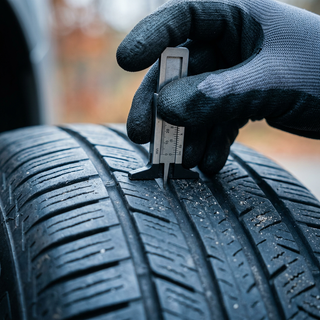
3

How Do You Prepare Your Car for Winter?

To prepare your car for winter, inspect the battery charge, adjust tire pressure to factory specifications, verify tire tread depth is at least 6/32 of an inch, flush engine coolant with a sub-zero freeze-protected mixture, install winter wiper blades with sub-zero washer fluid, and test your heating and defroster systems. Taking these preventative maintenance steps before freezing temperatures arrive prevents unexpected vehicle breakdowns and ensures maximum traction on icy roads. Sub-freezing temperatures put intense physical strain on every mechanical system in your vehicle. Engine oil thickens, battery chemical reactions slow down, and air pressure inside your tires drops continuously as outdoor temperatures fall. Drivers navigating the riverfront bluffs and steep hills of East Liverpool face unique winter challenges where slick roads require immediate braking response and consistent wheel grip. Proper seasonal vehicle preparation transforms how your vehicle handles slush, black ice, and freezing rain. Systematically checking key components ahead of the first winter storm preserves safety systems, protects critical engine components from costly damage, and gives you complete confidence behind the wheel all season long. You can stop by our dealership location or give our service department (330) 462-7578 a call to confirm your vehicle is ready for the cold weather ahead. Table of Contents What Key Vehicle Components Should Be Inspected Before the First Snow? What Is the Ideal Tire Tread Depth and Pressure for Winter Driving Conditions? What Battery Voltage and Cold Cranking Amps Are Required for Cold Weather? Which Winter Preparation Maintenance Tasks Can You Do at Home at Home? Quick Answers to Common Winter Vehicle Maintenance Questions Schedule Your Pre-Winter Inspection Today What Key Vehicle Components Should Be Inspected Before the First Snow? Before the first snowfall, inspect the vehicle battery, brake system, tire tread and pressure, engine coolant concentration, serpentine belts, radiator hoses, wiper blades, and exterior lighting. Evaluating these core mechanical systems ensures your vehicle maintains traction, visibility, and reliable engine operation during severe winter weather. Cold weather causes rubber materials to harden and contract, which accelerates cracking on aging serpentine belts and radiator hoses. A worn belt that snaps in sub-zero weather cuts power to your alternator and water pump, leading to sudden engine failure. Likewise, engine coolant must maintain a precise 50/50 mixture of antifreeze and water to protect the engine block from cracking when temperatures drop well below freezing. Brake performance demands thorough inspection before winter arrives. Technicians measure friction lining to verify at least 3/32 inch of pad material remains and inspect brake rotors for severe rust pitting or scoring. Advanced driver-assist technologies and drive modes rely on healthy mechanical components to function properly. For instance, Ford Explorer models equipped with Intelligent 4WD feature a Terrain Management System with Slippery mode and Deep Snow/Sand settings that modulate engine torque and transmission shift points to reduce wheel spin on packed snow [1.1.7]. Battery and charging system voltage output Brake pad lining thickness and rotor surface condition Coolant freeze-point protection and hose elasticity Serpentine drive belt tension and wear Headlight, tail light, and turn signal clarity Windshield wiper blade condition and washer fluid level If you prefer to perform maintenance repairs yourself, you can easily order OEM Ford parts online directly through our service portal. For drivers planning ahead for future seasonal travel needs, exploring the custom factory order options allows you to select winter-ready features like heated seats, remote start, and all-wheel drive straight from the factory. What Is the Ideal Tire Tread Depth and Pressure for Winter Driving Conditions? The ideal tire tread depth for winter driving is 6/32 of an inch or deeper on winter tires and at least 4/32 of an inch on all-season tires, maintained at the vehicle manufacturer's recommended cold inflation pressure listed on the driver-door placard. Tire pressure drops approximately 1 to 2 PSI for every 10-degree Fahrenheit decrease in outside temperature. Driving on underinflated tires compromises vehicle handling, reduces fuel efficiency, and causes uneven tread wear. Pressure checks must always be conducted when the tires are cold, meaning the vehicle has been parked for at least three hours. Never adjust tire inflation to the maximum pressure stamped on the tire sidewall, as that number reflects maximum load capacity rather than your vehicle's engineered inflation spec. Tread depth directly determines how effectively a tire channels slush, snow, and water away from the contact patch. While tires are legally considered worn out at 2/32 of an inch, that minimal tread depth cannot clear snow or prevent hydroplaning on wet highways. Suburban commuters driving daily routes through Calcutta along State Route 170 encounter mixed slush and packed snow where deep tread grooves are vital for maintaining steering control and stopping distance. To ensure your tires are prepared for slippery road surfaces, you can schedule a service appointment online to have our technicians check tire pressure, perform a computerized wheel alignment, and rotate your tires. What Battery Voltage and Cold Cranking Amps Are Required for Cold Weather? A healthy 12-volt automotive battery must maintain a resting voltage of 12.6 volts or higher and meet or exceed the factory rating for cold cranking amps to start reliably in freezing weather. Cold weather places a double burden on your electrical starting system. Freezing temperatures slow the internal chemical reaction inside lead-acid battery cells, reducing available cranking power by as much as 50 percent at zero degrees Fahrenheit. Simultaneously, low temperatures cause engine oil to thicken, which demands significantly more electrical current from the battery to turn over the crankshaft. Battery Health Metric Ideal Specification Cold Weather Impact Resting Voltage 12.6 volts or higher Dropping below 12.4V indicates a weak charge Charging Voltage 13.8 to 14.7 volts Alternator output must maintain charge under heater load Cold Cranking Amps Matches OEM specification Cold reduces effective amperage output significantly Testing your battery's state of charge and reserve capacity before winter identifies weak cell plates before you get stranded in a cold parking lot. Technicians clean corrosion from battery terminals, inspect hold-down brackets, and verify that the alternator charges between 13.8 and 14.7 volts while powering high-draw winter accessories like defrosters and heated seats. You can learn more about our comprehensive battery testing and battery replacement maintenance offerings to ensure your vehicle starts on the coldest mornings. Which Winter Preparation Maintenance Tasks Can You Do at Home at Home? You can check tire inflation pressure, measure tread depth using a coin, inspect wiper blade rubber for tearing, top off freezing-rated washer fluid, visually inspect belts and hoses for cracks, and test exterior safety lights at home without specialized tools. Performing a visual safety audit takes less than twenty minutes in your driveway: The Quarter Test: Insert a quarter upside down into the tread grooves of your tires. If the top of Washington's head is covered by the tread, you have at least 4/32 of an inch of tread depth remaining. Wiper and Washer Inspection: Lift each wiper arm and slide your finger along the rubber edge to feel for tears or stiff, cracked edges. Fill the windshield washer reservoir with winter-grade fluid rated for sub-zero temperatures. Belt and Hose Visual Check: With the engine off and cold, press down on engine drive belts to verify tension and look for fraying or longitudinal cracks along the V-ribs. Squeeze radiator hoses to ensure they feel firm rather than soft or spongy. Lighting Audit: Turn on your headlights, hazard flashers, and parking lights, then walk around the vehicle to verify every bulb illuminates clearly through clean lenses. Emergency Kit Setup: Pack an emergency kit containing jumper cables, an ice scraper, a flashlight, heavy blankets, bottled water, and sand or cat litter for tire traction. Quick Answers to Common Winter Vehicle Maintenance Questions Q: At what temperature do all-season tires lose flexibility and traction? All-season tire tread compounds begin to harden and lose elasticity at temperatures below 45 degrees Fahrenheit. As the rubber stiffens, it loses its ability to conform to small road imperfections, which significantly reduces traction on dry and wet pavement even before snow or ice falls. Specialized winter tires utilize flexible silica compounds designed specifically to remain pliable in sub-freezing temperatures. Q: Is a professional winter vehicle inspection worth the cost? A professional winter vehicle inspection identifies hidden mechanical vulnerabilities such as weak battery cell voltage, hairline belt cracks, and uneven brake lining wear before subzero weather leaves you stranded. Factory-trained technicians use specialized diagnostic tools to load-test electrical systems, measure coolant freeze points, and evaluate suspension components that cannot be adequately checked at home. Q: How do you inspect vehicle brakes for winter readiness? Inspect brake pads to confirm at least 3/32 inch of friction lining remains, check rotors for severe rust pitting or scoring, and verify that the brake fluid is clean and filled to the reservoir line. Clean brake fluid prevents internal moisture accumulation that can freeze inside hydraulic lines during extreme cold spells, ensuring smooth and consistent pedal feel. Q: What items should be in a winter emergency vehicle kit? A winter emergency kit should include heavy blankets, jumper cables, a flashlight with extra batteries, an ice scraper with a snow brush, a collapsible shovel, traction sand or kitty litter, non-perishable snacks, drinking water, and a mobile phone charger. Keeping these items in your cargo area ensures you remain safe and warm if your vehicle experiences a roadside delay during severe weather. Q: What should you do if your vehicle stalls during a winter storm? Stay inside your vehicle, turn on interior lights, and tie a bright marker cloth to your antenna or window. Check that your exhaust pipe remains completely clear of snow banks to prevent dangerous carbon monoxide gas from backing up into the cabin, and run the engine intermittently just long enough to keep warm. If you need emergency roadside service, you can reach Ford Roadside Assistance at 1-800-241-3673 for 24/7 towing, battery jump-starts, and flat tire assistance. You can also view our current Ford service specials for routine winter care. Schedule Your Pre-Winter Inspection Today Schedule a comprehensive pre-winter vehicle inspection at Tri State Ford to ensure your car, truck, or SUV is fully prepared for winter driving conditions. Taking care of routine maintenance before snow hits protects your vehicle's long-term reliability and keeps your family safe on slick roads. Our factory-trained technicians test battery health, evaluate brake system wear, analyze tire tread depth, flush essential engine fluids, and install fresh wiper blades using genuine OEM parts. We provide transparent service recommendations so you can make informed decisions about your vehicle's care. Visit our service center at 1503 Pennsylvania Ave, East Liverpool, OH 43920 or give our service team a quick call at (330) 462-7578 to reserve your inspection appointment before the first winter freeze. © 2026 Tri State Ford. All rights reserved. Vehicle specification data © JATO Dynamics Limited. Winter Car Prep in East Liverpool OH | Tri State Ford
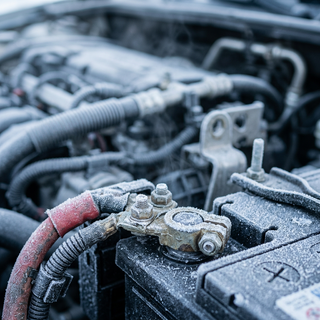
3

Why Does a Car Struggle to Start on Cold Mornings?

A car struggles to start on cold mornings because freezing temperatures slow down the chemical reactions inside the battery, drastically reducing its electrical output while simultaneously thickening engine oil and increasing internal mechanical resistance. This combination requires the starting motor to draw significantly more power from a battery that is operating at a reduced capacity. When temperatures drop to 32°F, a standard lead-acid car battery loses roughly 20% of its total cranking strength, and at 0°F, that output plunges by nearly 60%. At the exact moment your battery has the least power to offer, your engine demands up to twice as much energy to rotate. Cold weather thickens internal engine lubricants, causing pistons, bearings, and valve trains to resist movement. If your vehicle has a marginal electrical connection, an aging battery, or worn ignition components, these cold-weather physical forces reveal those hidden weaknesses immediately. Vehicles equipped with larger powertrains or higher compression engines require optimal voltage to fire reliably. For example, a 2026 Ford F-150 with a 3.5L EcoBoost® V6 or a 2026 Ford Explorer with a 2.3L EcoBoost® engine relies on precise starter speeds to build initial fuel rail pressure and generate combustion heat. When morning frost coats the windshield, any loss of electrical current leads directly to slow cranking or a complete failure to turn over. In suburban areas like Calcutta, where vehicles often sit outside overnight amidst rolling hills and cold valley air along State Route 170, a weak starting system is quick to surface. Taking time to inspect your starting system before winter settles in prevents unexpected delays. If your morning commute begins with an unusually sluggish start, you can stop by our service center in East Liverpool for a comprehensive electrical load check, or give our technicians a call at (330) 462-7578 to discuss your vehicle's symptoms. Table of Contents How Do Weakening Batteries and Extreme Cold Affect Engine Cranking? How Does Engine Oil Viscosity Cause Slow Morning Starts? Can Worn Spark Plugs or Fuel Delivery Issues Cause Extended Cranking? What Sound Does a Bad Starter Relay Make Compared to a Failing Starter Motor? How Much Does It Cost to Replace a Starter Motor or Alternator? Common Questions About Slow Morning Starts and Electrical Repairs Keep Your Vehicle Starting Dependably Every Morning How Do Weakening Batteries and Extreme Cold Affect Engine Cranking? A weakening battery cranks slowly on cold mornings because low ambient temperatures lower its Cold Cranking Amps (CCA) output while internal engine resistance peaks. As chemical activity slows inside traditional lead-acid cells, battery voltage drops rapidly during ignition, leaving insufficient current to spin the starter motor at normal operational speed. Batteries are rated by Cold Cranking Amps, which measures the number of amperes a battery can deliver at 0°F for 30 seconds while maintaining a minimum voltage of 7.2 volts. Standard passenger cars and compact SUVs like the 2026 Ford Escape generally require between 400 CCA and 600 CCA, while larger trucks and utility vehicles demand 700 CCA or higher. As a battery ages over three to five years, chemical sulfation builds up on the internal lead plates, reducing total active surface area. A battery that operates adequately during mild autumn weather may suddenly drop below its required threshold during the first hard freeze. Battery construction plays a critical role in winter performance. Standard flooded batteries contain liquid electrolyte solution that can stratify and freeze in extreme sub-zero conditions, potentially cracking internal plates or damaging the outer casing. In contrast, Absorbed Glass Mat (AGM) batteries bind the electrolyte inside fine fiberglass cell mats. This design eliminates free-flowing liquid, resists internal freezing, provides faster recharge acceptance, and delivers higher surge currents during cold starts. Our service team often sees drivers get caught off guard on the first sub-zero morning when a battery that passed summer checks suddenly fails. Corrosion at the cable terminals further compounds cold-weather starting issues. White or greenish powdery deposits created by lead sulfate build up resistance at the battery posts, blocking electrical flow to the starter. Cleaning terminals, verifying ground connections, and selecting an upgraded battery rating ensure dependable morning starts. Drivers looking to replace an aging unit can order genuine Motorcraft® replacement parts directly through our component department. How Does Engine Oil Viscosity Cause Slow Morning Starts? Engine oil viscosity directly causes slow morning starts because lower temperatures increase fluid thickness, creating severe parasitic drag on the engine crankshaft and pistons. When oil thickens into a heavy, gel-like consistency, the starter motor must work twice as hard to rotate the internal engine assembly until proper operating temperatures are reached. Motor oil is classified using a multi-grade rating system developed by the Society of Automotive Engineers (SAE), such as 0W-20 or 5W-30. The number preceding the "W" represents the oil's winter viscosity rating, indicating how easily fluid flows at sub-zero temperatures. Lower numbers mean thinner, more fluid oil during cold starts: 0W viscosity: Formulated to flow instantly at temperatures as low as -31°F, drastically reducing cold-start friction and providing rapid oil pressure to upper valvetrain components. 5W viscosity: Suitable for winter temperatures down to -22°F, offering strong protection for standard daily commuting needs. 10W viscosity: Thicker at sub-freezing temperatures, which can add substantial fluid drag during extreme cold starts if used outside recommended factory guidelines. Using motor oil with a higher cold-viscosity rating than recommended by the vehicle manufacturer forces the starter motor to overcome massive fluid friction. Modern engine designs rely on rapid oil pressure during the first few seconds of ignition. For example, variable valve timing actuators require immediate oil flow to set camshaft positioning for efficient combustion. Delayed oil flow prolongs cranking times and increases wear on internal bearings. For daily commuters traveling along Market Street in Boardman, where morning traffic requires quick, reliable vehicle performance, using full synthetic motor oil helps maintain liquid fluidity on sub-freezing mornings. Full synthetic oils resist cold-temperature thickening far better than conventional mineral oils, protecting internal surfaces and lowering electrical load on the starter. To keep your engine filled with the exact factory-recommended grade, you can schedule a winter service appointment online with our maintenance department. Can Worn Spark Plugs or Fuel Delivery Issues Cause Extended Cranking? Worn spark plugs and fuel delivery issues cause extended morning cranking because cold fuel vaporizes less efficiently, requiring precise fuel pressure and higher electrical voltage to ignite. Worn plug gaps demand more electrical current from an already stressed cold battery, while losing fuel line pressure overnight delays combustion inside the cylinders. When an engine is cold, liquid gasoline does not vaporize as easily as it does at operating temperature. The engine control computer compensates by delivering a richer air-fuel mixture during cold starts. However, if the ignition or fuel delivery systems are compromised, this rich mixture fails to ignite cleanly: Worn Spark Plugs: Over tens of thousands of miles, the electrical gap between the spark plug center and ground electrode widens. A wider gap requires significantly higher voltage from the ignition coils to jump. On a cold morning, when battery voltage is already suppressed, the ignition system may fail to produce a strong enough spark, causing extended cranking or engine misfires. Loss of Fuel Pressure: The fuel system relies on a check valve inside the fuel pump module to hold pressure in the fuel rail after the engine turns off. If this valve leaks, fuel drains back into the gas tank overnight. When you turn the key the next morning, the fuel pump must run for several seconds just to purge air from the lines and build pressure before the injectors can mist fuel into the combustion chambers. Clogged Fuel Injectors: Leaking or dirty fuel injectors alter the fuel spray pattern from a fine mist into large liquid droplets. Cold air cannot vaporize large droplets, resulting in wet spark plugs and delayed engine ignition. Taking advantage of modern convenience features can help manage winter driving routines. Remote start systems—activated on Ford models by pressing the door lock button once and the remote start button twice—allow the engine to warm up safely in an open outdoor area. If your vehicle exhibits hesitation or extended cranking when starting, our technicians can evaluate ignition components and fuel rail pressure. To make routine maintenance easier during busy winter months, customers can utilize our Ford Pick Up & Delivery service options to have their vehicle serviced without interrupting their workday. What Sound Does a Bad Starter Relay Make Compared to a Failing Starter Motor? A bad starter relay or solenoid typically produces a rapid series of metallic clicking sounds or a single faint click without turning the engine over, whereas a failing starter motor generates a heavy single thud, a high-pitched whirring sound, or a harsh metallic grinding noise. Distinguishing between these distinct acoustic symptoms allows technicians to isolate electrical control issues from mechanical starter hardware failures: Component Condition Primary Sound Produced Root Physical Cause Weak Battery / Low Voltage Rapid, continuous clicking ("click-click-click-click") The solenoid engages, voltage drops, the solenoid releases, and the cycle repeats rapidly. Bad Starter Relay / Solenoid Single soft click or complete silence Internal electrical contacts are pitted or burned, preventing high-amperage current from reaching the motor. Failing Starter Motor Brushes Single loud thud or dull clunk with no rotation Current reaches the starter, but worn carbon brushes or shorted armature windings fail to spin the shaft. Worn Starter Pinion Gear High-pitched whirring or screeching sound The starter motor spins at high speed, but the Bendix drive fails to extend and engage the flywheel. Damaged Flywheel Ring Gear Harsh metallic grinding noise Broken or rounded teeth on the engine flywheel prevent proper gear mesh during cranking. When you turn the ignition key or press the engine start button, a small control signal travels through the starter relay to energize the starter solenoid. The solenoid acts as an electromagnetic switch: it closes heavy internal contacts to feed full battery current directly to the starter motor while simultaneously pushing the starter pinion gear into mesh with the engine flywheel. If you hear a rapid chatter, the battery voltage is usually too low to keep the solenoid engaged. If you hear a single solid click accompanied by dimming interior lights, the solenoid is working, but the starter motor armature is locked or mechanically jammed. If you hear a high-pitched spinning sound without the engine turning over, the starter motor is functioning, but its internal drive clutch has failed. Maintaining complete vehicle health during winter includes inspecting all supportive chassis systems. While checking your electrical system, evaluating tire condition is equally vital for cold-weather traction. You can check your current tire sizes and tread options using our online tire lookup tool. How Much Does It Cost to Replace a Starter Motor or Alternator? Replacing a starter motor generally costs between $300 and $700 for parts and labor, while replacing an alternator typically ranges from $400 to $900 depending on vehicle make, engine packaging, and component accessibility. The total repair investment varies based on mechanical design factors and component quality: Starter Motor Replacement Factors: Parts Cost: A high-quality or original equipment replacement starter costs between $150 and $400. Labor Expense: Labor charges depend on location and accessibility. On straightforward inline-four or V6 engine layouts, replacement takes 1 to 2 hours. On dense engine bays where intake manifolds, steering shafts, or exhaust heat shields must be removed, labor can extend to 3 hours or more. Alternator Replacement Factors: Parts Cost: Replacement alternators range from $200 to $500 depending on amperage output requirements (such as high-output units needed for vehicles with extensive electronic accessories). Labor Expense: Replacing an alternator typically involves releasing serpentine belt tension, disconnecting electrical harnesses, and unbolting mounting brackets, requiring 1.5 to 3 hours of shop time. Accurate diagnostic testing before replacing major components prevents unnecessary expense. A blown starter fuse, corroded ground wire, or degraded battery cable can perfectly mimic a failed starter or alternator. For example, if an alternator's internal diode bridge fails, it may allow a small AC voltage leak that drains the battery overnight while parked, causing slow morning starts despite the battery itself being in good condition. Our factory-trained service technicians use specialized diagnostic tools to measure starter current draw, charging system ripple voltage, and battery conductance. Using genuine OEM Motorcraft® starters and alternators ensures exact bolt-on alignment, proper electrical plug compatibility, and long-term durability. If your vehicle is exhibiting slow cranking, flickering battery warning lights, or abnormal starting noises, bring it to our local dealership workshop for an accurate diagnosis, or give our service advisors a call at (330) 462-7578 to receive a detailed estimate. Common Questions About Slow Morning Starts and Electrical Repairs Q: What Cold Cranking Amps (CCA) rating does my vehicle need for winter? Most standard passenger cars and compact SUVs require a battery rated between 400 CCA and 600 CCA, while larger trucks like the 2026 Ford F-150 often require 700 CCA or higher. Choosing a battery with a CCA rating equal to or slightly higher than original factory specifications ensures your starter motor receives sufficient electrical current during sub-zero mornings. Q: How can I test my car battery's Cold Cranking Amps at home? You can test battery strength at home using a digital battery conductance tester connected directly to the positive and negative terminals. A reading significantly lower than the rated CCA printed on the battery label indicates internal plate degradation, signaling that the battery should be replaced before cold weather causes a complete failure. Q: Why does my Ford remote start fail to turn on the vehicle in extreme cold? Ford remote start systems automatically disable ignition when battery voltage drops below a safe operational threshold or if diagnostic trouble codes are stored in the engine computer. If your remote start fails on a freezing morning, unlock and lock the doors using your key fob, then press the remote start button twice to test system response. Q: Does extreme cold weather permanently damage a vehicle battery? Sub-zero cold reduces battery charge capacity and can freeze liquid electrolyte inside a discharged flooded battery, cracking internal lead plates and destroying the battery structure. Keeping your battery fully charged and upgrading to an AGM battery prevents internal freezing and extends battery life throughout harsh winters. Q: How do I know if my starting issue is a dead battery or a bad alternator? A dead battery causes slow cranking or rapid clicking when turning the key, but the engine will run normally once jump-started. A failing alternator often triggers a battery warning light on the dashboard, causes dimming headlights during night driving, or causes the engine to stall shortly after starting because the charging system cannot maintain operational voltage. Keep Your Vehicle Starting Dependably Every Morning Addressing slow starting symptoms early prevents unexpected breakdowns when winter weather is at its worst. Whether your vehicle requires a fresh battery with a higher Cold Cranking Amps rating, a system diagnostic to test starter current draw, or an engine oil change using the ideal winter viscosity grade, taking proactive steps preserves electrical health and extends starter motor longevity. Our factory-certified service center provides comprehensive battery load testing, charging system inspections, and genuine Motorcraft® replacement parts installed by trained technicians. If your car hesitates, clicks, or cranks slowly in the morning, schedule a professional diagnostic inspection or contact our team to ensure your vehicle remains completely dependable on every drive. Should you ever encounter an unexpected roadside emergency, manufacturer-backed emergency support is available directly through Ford Roadside Assistance: 1-800-241-3673. © 2026 Tri State Ford. All rights reserved. Vehicle specification data © JATO Dynamics Limited. Car Starting Issues in East Liverpool OH | Tri State Ford
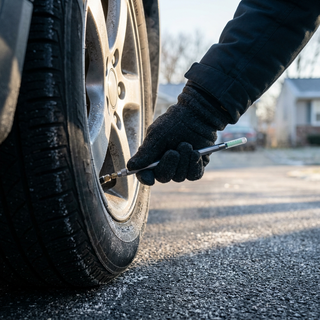
l

Why Does Cold Weather Trigger Your Tire Pressure Warning Light?

Cold weather causes air inside tires to contract, reducing tire pressure by approximately 1 PSI for every 10°F drop in outside temperature. When ambient temperatures plunge overnight, a tire that was already slightly underinflated drops below the Tire Pressure Monitoring System (TPMS) threshold—typically set at 25% below recommended cold PSI—activating the dashboard light even without a puncture. As autumn transitions into winter, daily temperature fluctuations frequently surprise vehicle owners. Gas operates according to basic thermal principles: when ambient air cools, gas molecules slow down and draw closer together. This contraction decreases the outward force exerted against the inner liner of the tire casing. In addition to natural thermal drops, tires naturally lose about 1 PSI per month through normal rubber permeability. When seasonal ambient temperature loss combines with gradual air seepage, a tire set correctly in mild autumn weather can cross the warning threshold on the first freezing morning. Understanding how quickly overnight temperatures shift helps prevent unnecessary worry about punctures. Along the Ohio River, near the riverfront bluffs and rolling terrain of East Liverpool, sub-freezing morning temperatures regularly drop pressure by 3 to 4 PSI before sunrise. Drivers who notice the warning light illuminating early in the morning may observe it shutting off after driving a few miles. As rolling tires flex against the pavement, internal friction generates heat, raising internal air temperature and restoring internal pressure above the warning cutoff. However, a dashboard light that extinguishes itself after highway driving does not mean the tire has returned to its proper cold inflation specification. The warning light disappearing simply means pressure temporarily cleared the minimum threshold. Once the car sits parked and cools down again, the pressure drops right back into the danger zone. Setting tire pressure when the rubber is completely cold ensures maximum safety, proper tire wear, and optimal fuel economy throughout winter. For personalized assistance or routine maintenance, visit our East Liverpool dealership address or give our service department a quick call at (330) 462-7578. Table of Contents What Is the Difference Between Direct and Indirect TPMS in Cold Weather? Where Is the Recommended Cold Tire Pressure PSI Located on Your Vehicle? How Much Fuel Economy Is Lost from Underinflated Tires in Winter? What Does a Blinking Tire Pressure Warning Light Mean? Common Questions About Winter Tire Pressure and TPMS Operation Schedule Professional Winter Tire Service What Is the Difference Between Direct and Indirect TPMS in Cold Weather? Direct TPMS relies on battery-powered hardware sensors mounted inside each wheel to measure actual PSI directly, whereas indirect TPMS utilizes anti-lock brake system (ABS) wheel speed sensors to monitor wheel rotation speed and estimate pressure changes based on wheel diameter. Both systems alert drivers to dangerous pressure loss, but they respond differently during sudden winter cold snaps. Direct TPMS monitors deliver exact, real-time pressure values to the vehicle instrument cluster. Each wheel sensor contains a tiny pressure transducer and RF transmitter powered by an internal lithium battery. When cold weather strikes overnight, a direct system measures the exact physical pressure drop immediately upon turning the ignition key. Many modern vehicles equipped with direct TPMS display the exact numeric PSI for all four individual tires right on the instrument display, making it easy to identify whether a single tire has a puncture or all four tires have dropped uniformly due to ambient cold. Indirect TPMS operates without wheel-mounted pressure sensors. Instead, it measures how fast each tire rotates relative to the others. An underinflated tire has a slightly smaller overall diameter, forcing it to rotate faster than a properly inflated tire to cover the same distance. In cold weather, indirect systems exhibit distinct characteristics: Delayed Alerts: Because indirect systems require vehicle motion to process wheel speed data, the low-pressure light won't illuminate while the car sits parked in the driveway. It triggers only after driving a short distance. Uniform Pressure Drops: If cold weather lowers pressure equally across all four tires, every wheel shrinks by the exact same proportion. Because all four wheels continue spinning at the same relative speed, an indirect TPMS might not immediately trigger a warning even though all four tires are significantly underinflated. Calibration Requirements: Indirect systems must be manually reset through the vehicle settings menu whenever air is added or tires are rotated so the ABS computer can relearn baseline rolling circumferences. Maintaining direct TPMS hardware requires periodic servicing, especially as wheel sensor batteries reach the end of their typical life cycle. When replacement sensors or valve service kits are needed during seasonal tire rotations, vehicle owners can easily order genuine OEM Ford replacement parts directly through our parts center. Where Is the Recommended Cold Tire Pressure PSI Located on Your Vehicle? The recommended cold tire inflation pressure is printed on the Tire and Loading Information label fixed to the driver-side door jamb or door pillar, as well as inside the vehicle owner's manual. Drivers should never use the pressure figure stamped into the tire sidewall, as that number represents the maximum pressure the tire casing can safely handle, not the vehicle manufacturer's recommended operating specification. Automotive engineers calculate ideal recommended tire pressure based on specific vehicle weight distribution, suspension tuning, braking dynamics, and cargo ratings. Filling a tire to the maximum PSI printed on the sidewall creates a harsh, uncomfortable ride, reduces traction on slick winter roads, and leads to premature center tread wear. To achieve accurate readings and maintain peak vehicle safety, follow these established pressure-checking standards: Define "Cold": Check pressure when the vehicle has been parked out of direct sunlight for at least three hours, or driven less than one mile at moderate speed. Account for Warm Expansion: If tire pressure must be checked immediately after driving, readings will naturally appear 4 to 6 PSI higher than cold specifications due to heat expansion. Do not bleed air from a warm tire to meet the door placard baseline. Use a Quality Pressure Gauge: Vehicle dashboard readouts provide convenient estimates, but a dedicated digital or pencil-style pressure gauge calibrated in 1 PSI increments provides the most reliable measurement. Checking tire pressure at least once a month and before long highway road trips keeps vehicle safety systems operating exactly as engineered. How Much Fuel Economy Is Lost from Underinflated Tires in Winter? Fuel efficiency drops by approximately 0.2% for every 1 PSI drop across all four tires, while driving on severely underinflated tires can reduce total fuel economy by up to 3%. In winter conditions—where cold engines and dense air already lower mileage—soft tires add unnecessary drag and increase weekly fuel costs. When tire pressure falls below specification, the tire tread flattens out against the road, expanding its contact patch. This expanded contact area generates increased rolling resistance, forcing the engine to consume extra fuel to maintain cruising speed. Beyond wasted fuel, underinflation severely affects overall vehicle durability and highway safety: Uneven Tread Wear: Underinflated tires wear heavily on the outer shoulders while leaving the center tread underutilized, prematurely destroying tread life. Excessive Heat Generation: Flexing sidewalls create internal friction and thermal buildup, increasing the risk of sudden tire casing failure. Compromised Handling and Braking: Underinflated sidewalls squirm during cornering, degrading steering response and increasing stopping distances on wet or icy pavement. Suburban commuters traveling along State Route 170 in Calcutta rely on proper tire inflation to maintain efficient daily driving during freezing weather. Capable family vehicles like the 2026 Ford Escape, rated at 26 city / 32 hwy MPG with its 1.5L engine and all-wheel drive, or the spacious 2026 Ford Explorer with its 300 hp 2.3L powertrain depend on correct cold inflation pressures to achieve their rated efficiency. Similarly, working trucks like the 2026 Ford F-150 featuring a 3.5L engine and SelectShift® transmission need proper tire support to deliver full towing performance and stable handling when hauling heavy loads. When tire tread wears thin or sidewalls show aging, drivers can use our convenient online tire lookup tool to locate factory-approved replacement tires built specifically for their vehicle trim. What Does a Blinking Tire Pressure Warning Light Mean? A tire pressure warning light that flashes for 60 to 90 seconds upon starting your vehicle before remaining continuously illuminated signals a TPMS system fault or dead sensor battery rather than simple low air pressure. When the light remains steady from the moment you start the engine, it indicates that at least one tire has low pressure. Understanding the distinction between a steady light and a flashing light prevents improper diagnostic steps. A flashing light indicates that the onboard computer has lost communication with one or more wheel sensors. Common triggers for a blinking TPMS light include: Expired Sensor Batteries: Direct TPMS sensors use integrated lithium batteries with a typical lifespan of 5 to 10 years. Once the battery depletes, the sensor stops transmitting data, triggering a system malfunction alert. Seasonal Wheel Swaps: Installing winter wheels and tires without transferring or reprogramming electronic TPMS sensors prevents the vehicle computer from reading pressure signals. Corroded or Damaged Hardware: Road salt and moisture can corrode valve stems or damage internal electronic components. Electronic Interference: Unapproved aftermarket electronic accessories installed near the dash can occasionally disrupt radio frequency signals sent from wheel sensors. If your dashboard displays a flashing warning light, check air pressure manually across all four tires using a pressure gauge to ensure immediate driving safety, then schedule a professional inspection to identify and replace faulty system components. Common Questions About Winter Tire Pressure and TPMS Operation Q: Is nitrogen better than regular compressed air for preventing winter tire pressure drops? Nitrogen molecules are larger than oxygen molecules and contain virtually no moisture, which reduces air migration through tire rubber and minimizes internal pressure fluctuations caused by humidity changes. However, dry nitrogen gas still obeys basic thermal laws, expanding and contracting as outside temperatures change. While pure nitrogen reduces gradual pressure loss, it still experiences pressure drops during severe cold snaps, making routine manual pressure checks necessary regardless of which inflation gas is used. Q: Does the tire pressure warning light go off by itself after driving? Yes, driving generates internal tire friction that warms the air inside, increasing internal pressure. If a tire was sitting just below the warning threshold, thermal expansion while driving can raise pressure enough to temporarily turn off the dashboard light. However, once the vehicle parks and the rubber cools back down, pressure drops right back below recommended levels. Drivers should add air to match recommended cold PSI ratings rather than relying on temporary driving heat. Q: Should you overinflate tires beyond the door sticker rating during winter? No, tires should always be inflated to the exact cold pressure specification listed on the driver's door jamb sticker. Overinflating tires to compensate for expected cold snaps reduces tire contact area on snow and ice, causing harsh ride quality, accelerated center tread wear, and reduced traction. Adjust pressure regularly to match recommended placard values as seasonal weather changes. Q: Why does only one tire trigger a warning light after a cold night? While cold weather affects all four tires equally, individual tires may sit at slightly different baseline pressures prior to a temperature drop. A tire that was already 2 PSI lower than the others due to normal seepage will cross the 25% underinflation threshold first when freezing weather hits. If one tire reads significantly lower than the rest, inspect the tread and valve stem carefully to rule out a nail, valve leak, or rim damage. Q: What should you do if a tire loses pressure rapidly on the road? If a tire loses pressure rapidly while driving, pull over safely to a flat, secure location away from traffic. Do not continue driving on a severely deflated tire, as doing so damages the wheel rim and tire sidewall structure. Drivers covered by factory warranty or extended protection plans can access dedicated manufacturer support by contacting Ford Roadside Assistance at 1-800-241-3673 for professional towing, flat tire changes, or emergency assistance. Schedule Professional Winter Tire Service Proper tire care is one of the most effective ways to ensure family safety, precise vehicle handling, and maximum fuel economy throughout the cold winter months. Whether your vehicle requires seasonal air pressure adjustments, TPMS sensor diagnostics, tire rotations, or complete replacement with brand-new snow-rated tires, our certified service department delivers expert care using factory-approved equipment and genuine OEM parts. Our factory-trained technicians can quickly inspect your tire tread depth, evaluate rubber condition, balance wheels, and reset your Tire Pressure Monitoring System to ensure worry-free winter driving. Visit our East Liverpool facility today, give our service team a quick call at (330) 462-7578, or conveniently schedule a service appointment online to keep your vehicle running smoothly and safely all season long. © 2026 Tri State Ford. All rights reserved. Vehicle specification data © JATO Dynamics Limited. Tire Pressure Tips for Cold Weather in East Liverpool OH | Tri State Ford
f

How Do You Protect Your Ford from Tri-State Winter Road Salt?

Protecting your Ford from winter road salt requires a combination of regular undercarriage rinses every 7 to 10 days, applying an oil-based penetrative undercoating before freezing temperatures arrive, and keeping body drain holes clear of debris. Washing with neutral-pH soap and lukewarm water removes active chemical deicers like liquid magnesium chloride, while annual inspections ensure protective factory coatings and chassis seals remain intact throughout salt season. Winter road management across Ohio, Pennsylvania, and West Virginia relies heavily on corrosive chemical deicers to clear snow and ice. While these treatments keep highways passable, they create an aggressive environment for vehicle chassis, suspension mounts, and mechanical linkages. Salt spray kicked up by tires coats hidden pockets beneath the vehicle, where trapped moisture and salt crystals work continuously to oxidize raw steel and vulnerable metals. Developing a proactive seasonal care routine is the most effective way to preserve the structural health, safety, and long-term value of your vehicle. A proper defense strategy begins with regular underbody maintenance during active salt months. Rinsing the underside of your vehicle removes accumulated salt crust before it chemically reacts with exposed chassis components. Drivers traveling through suburban neighborhoods in Calcutta along State Route 170 often encounter heavy brine applications before major snow events. Rinsing hard-to-reach areas, including behind wheel arch liners, along inner frame rails, and around fuel tank straps, prevents chemical residue from settling into tight crevices. Beyond routine washing, applying a high-quality rust inhibitor creates a durable barrier between metal surfaces and atmospheric moisture. Unlike factory paint or cosmetic clear coats, specialized underbody treatments shield raw steel components that endure constant gravel impacts and road splash. When winter weather arrives, drivers can reach our team directly at (330) 462-7578 or visit our East Liverpool facility for professional underbody care guidance and seasonal prep. Table of Contents How Does Ford Construct Modern Vehicles to Resist Rust and Corrosion? Why Is Liquid Magnesium Chloride More Corrosive Than Rock Salt? How Do Oil-Based Undercoatings Like Fluid Film and Krown Protect Your Vehicle? How Long Can a Vehicle Frame Last in the Rust Belt, and What Does Repair Cost? What Winter Inspection Should East Liverpool Ford Owners Request for Early Salt Defense? Common Questions About Ford Winter Care and Rust Prevention Protect Your Ford Chassis This Winter at Tri State Ford How Does Ford Construct Modern Vehicles to Resist Rust and Corrosion? Ford engineers modern vehicles with advanced metallurgy, electro-coat primer baths, specialized seam sealers, and targeted aluminum alloys to maximize long-term corrosion resistance. By combining high-strength steel structural components with corrosion-resistant body panels, Ford builds trucks and SUVs capable of enduring years of exposure to harsh winter road chemicals. The construction of the 2026 Ford F-150 demonstrates this multi-material engineering approach. The pickup features a military-grade, high-strength aluminum-alloy body, cab, and bed structure mounted on a fully boxed frame constructed of up to 78 percent high-strength steel. Because aluminum does not contain iron, it cannot form iron oxide, commonly known as rust. This material choice protects vulnerable exterior panels, rocker panels, and tailgate edges from the cosmetic rust holes that historically plagued older trucks. However, aluminum can still experience galvanic corrosion if exposed to salt and direct contact with dissimilar metals without proper isolation, which is why Ford utilizes specialized non-conductive fasteners and isolation barriers at connection points. To protect steel structural components, Ford subjects vehicle chassis to an intense dip process known as electro-coating, or E-coating. During manufacturing, frame assemblies and steel unibody structures are submerged in an electrically charged liquid primer tank. The electrical current draws corrosion-inhibiting primer into tiny crevices, inner box sections, and hidden seam welds that conventional sprayers cannot reach. Factory seam sealers and chip-resistant underbody coatings are then applied to high-impact zones, such as floor pans and wheel wells. Every new Ford vehicle comes backed by factory warranty protections against severe corrosion. The standard 5-year/unlimited-mileage Corrosion Perforation Warranty covers sheet metal panels against rusting through completely from the inside out. Drivers interested in exploring long-term chassis durability across the lineup can review factory service specials or learn more about building a tailored truck using custom vehicle order options. Why Is Liquid Magnesium Chloride More Corrosive Than Rock Salt? Liquid magnesium chloride is significantly more corrosive than traditional dry rock salt because it remains active at much lower temperatures, adheres tightly to metal surfaces, and continuously attracts moisture from the air. While standard rock salt (sodium chloride) loses its deicing effectiveness once temperatures drop below 15 degrees Fahrenheit, magnesium chloride remains an active liquid down to roughly minus 10 degrees Fahrenheit, allowing chemical oxidation to continue during extreme cold snaps. Highway maintenance crews frequently spray liquid magnesium chloride onto road surfaces as a anti-icing pre-treatment before winter storms hit. This liquid solution creates a sticky chemical layer on pavement that prevents snow and ice from bonding to the road. However, that same adhesive property causes liquid brine to cling aggressively to vehicle chassis components. When tires kick up liquid spray, the fine chemical mist penetrates deep into frame cavities, brake caliper slides, electrical connectors, and suspension bushings. Another factor contributing to magnesium chloride's destructive nature is its property of deliquescence. Magnesium chloride absorbs moisture directly from ambient air even in low-humidity environments. While dry rock salt stops reacting once road surfaces dry out, magnesium chloride residue on a vehicle underbody remains damp and chemically active long after winter roads have cleared. This continuous chemical reaction accelerates metal pitting and surface oxidation throughout the winter months. How Do Oil-Based Undercoatings Like Fluid Film and Krown Protect Your Vehicle? Oil-based undercoatings protect vehicle underbodies by creating a self-healing, moisture-displacing liquid barrier that blocks oxygen and road salt from contacting raw metal. Unlike traditional rubberized or hard black asphalt coatings that harden over time, oil- and lanolin-based rust inhibitors remain soft and active, allowing them to creep into tight metal seams, spot welds, and inner frame sections. Traditional hard rubberized undercoatings were once the standard for winter protection, but automotive technicians now recognize their potential drawbacks in severe salt zones. Over time, road gravel, frame flex, and temperature shifts cause hard rubberized coatings to crack or chip. Brine and salt water seep into those microscopic cracks and become trapped between the hard outer shell and the metal frame. Because the moisture cannot evaporate, severe corrosion forms undetected beneath the rubberized skin. In contrast, active penetrative treatments utilize distinct chemical formulations to deliver continuous protection: Fluid Film: A thick, lanolin-based coating derived from natural wool wax. It forms a dense, non-drying barrier that resists water wash-off in high-impact areas like wheel arches and lower frame rails. Krown: A lighter, petroleum-based fluid engineered for high capillary action. It actively creeps across metal surfaces, climbing upward into door cavities, tailgate seams, and boxed frame rails to displace trapped moisture. Applying penetrative oil treatments annually ensures that exposed chassis components, fuel line brackets, and suspension mounts remain coated. To keep your vehicle protected before the first freeze, drivers can schedule a service appointment online or check our latest new vehicle inventory for winter-ready models equipped with intelligent all-wheel drive systems. How Long Can a Vehicle Frame Last in the Rust Belt, and What Does Repair Cost? Without preventative maintenance or routine underbody washing, an untreated steel vehicle frame in heavy salt regions typically develops visible surface rust within 3 to 5 years and severe structural corrosion within 8 to 12 years. Constant exposure to road brine accelerates frame thinning, eventually weakening critical mounting points for control arms, leaf springs, and cab mounts. The progression of corrosion on an unprotected vehicle chassis generally follows three distinct stages: Surface Rust (Years 1–4): Light orange flaking forms on raw steel welds, exhaust hangers, and trailer hitch receivers. At this stage, structural integrity remains uncompromised, and treatment with oil-based rust converters or penetrative inhibitors can completely halt further degradation. Scale Rust (Years 5–8): Corrosion penetrates deeper into steel frame rails and crossmembers, causing outer layers of metal to bubble, pit, and flake off in thick sheets. Brake lines, fuel lines, and emergency brake cables often require replacement during this period. Structural Rot (Years 9+): Metal loss creates soft spots, holes, or cracks along frame rails, rocker panels, and spring shackles. Once structural steel loses its required thickness, the vehicle becomes unsafe to operate and will fail state safety inspections. Repairing advanced rust damage is labor-intensive and costly. Fixing rotted rocker panels or cab corners requires cutting away damaged metal, welding in repair panels, and refinishing paint, with costs frequently ranging between $1,000 and $2,500 per side. Structural frame repairs, such as welding safety reinforcement sleeves over rusted frame sections, can cost between $1,500 and $4,000. When frame rot affects steering linkages or main rails, total repair expenses often exceed the vehicle's market value. Investing in regular maintenance and replacing worn underbody hardware by ordering genuine Ford parts helps prevent costly structural repairs down the road. What Winter Inspection Should East Liverpool Ford Owners Request for Early Salt Defense? East Liverpool Ford owners should request a comprehensive winter underbody and chassis inspection focusing on structural frame rails, brake line integrity, suspension mounting points, and body drain passages. Vehicle operation along riverfront bluffs and steep inclines along the Ohio River exposes underbody components to heavy chemical deicer applications and constant road splash. Our service technicians routinely observe that salt spray collects in hidden pockets that drivers cannot see during standard car washes. During a dedicated winter care inspection, factory-trained technicians elevate the vehicle on a hoist to examine critical protection areas: Frame Box Sections and Crossmembers: Technicians inspect internal frame pockets, crossmember joints, and bumper mounts where road salt and mud accumulate and retain moisture. Brake and Fuel Lines: Metal hydraulic lines running along the frame rail are checked for pitting, flaking, or protective coating degradation to prevent fluid leaks. Rubber Boots and Steering Linkages: CV axle boots, tie-rod end dust boots, and ball joint seals are inspected for tears or dry rot that could allow salt water to destroy internal bearings. Body and Door Drain Holes: Technicians clear obstructed drain passages located at the bottom of doors, tailgate panels, and rocker sills to ensure melting snow drains freely. Shielding and Heat Guards: Exhaust heat shields and underbody splash pans are inspected to ensure hardware has not corroded, preventing loose panels from rattling or trapping brine. Catching minor surface oxidation during an autumn or early winter inspection allows technicians to clean, touch up, and protect vulnerable components before brine exposure turns light surface rust into severe structural damage. Common Questions About Ford Winter Care and Rust Prevention Q: Does an aluminum body on a Ford truck mean it will never suffer corrosion? An aluminum body will not form traditional iron oxide rust, but it can still experience galvanic corrosion if exposed to road salt and trapped moisture in contact with steel hardware. Ford isolates aluminum panels with specialized non-conductive fasteners and coatings. Keeping wheel wells clean and maintaining underbody cleanliness prevents chemical accumulation around body mounts and steel frame connection points. Q: How often should I wash the underbody of my Ford during the winter months? During active salt season, rinsing the underbody every 7 to 10 days is a practical routine for drivers navigating treated highways. Rinsing after major winter storms removes wet brine before it dries into a concentrated salt crust. Always use cool or lukewarm water rather than hot water, as hot water can accelerate chemical reactions between salt and exposed metal. Q: Will applying an aftermarket oil undercoating void my Ford factory warranty? Applying a penetrative oil-based undercoating does not automatically void your Ford factory warranty. However, care must be taken during application to avoid coating hot exhaust pipes, catalytic converters, brake rotors, rubber serpentine belts, and electrical sensors. Using professional application techniques ensures critical mechanical components remain clean while frame rails and floor pans receive thorough protective coverage. Q: Can I use a high-pressure power washer wand to clean my Ford undercarriage? Ford owner guidance advises against using high-pressure power washer wands at close range on underbody components, wiring harnesses, or rubber axle boots. High-pressure water can force salt brine past rubber grease seals, damage delicate electrical connectors, and strip away factory seam sealers. A low-pressure, high-volume hose rinse or automated undercarriage spray is safer and more effective. Q: What is the primary difference between rubberized undercoating and oil-based rust inhibitors? Rubberized undercoating forms a hard, dry barrier over metal surfaces, whereas oil-based inhibitors stay soft, fluid, and self-healing. Over time, hard rubberized coatings can develop hairline cracks that trap salt water against the frame, accelerating hidden rot. Oil-based treatments continuously creep into metal seams and spot welds, displacing moisture and blocking oxygen from reaching raw steel. For localized advice on preserving your vehicle through tri-state winters, stop by our service desk or give our team a call at (330) 462-7578 to speak with an advisor. Protect Your Ford Chassis This Winter at Tri State Ford Preventing winter road salt corrosion requires consistency, proper washing techniques, and targeted rust-prevention treatments. By understanding how road chemicals interact with frame steel and aluminum body panels, you can take proactive steps to safeguard your truck or SUV throughout the cold weather season. Regular underbody rinses and professional inspections remain your best defense against premature wear and expensive frame repairs. Our factory-trained service team at Tri State Ford understands the specific winter driving challenges faced by local vehicle owners. Whether your vehicle needs a seasonal multi-point inspection, underbody cleaning guidance, or genuine replacement parts, our technicians provide complete service support to keep your Ford running safely year after year. Contact our service counter today to prepare your vehicle for winter weather, review maintenance schedules, or schedule your seasonal chassis inspection with our expert technical team. © 2026 Tri State Ford. All rights reserved. Vehicle specification data © JATO Dynamics Limited. Ford Winter Salt Protection in East Liverpool OH | Tri State Ford
cx

Does Oil Filter Quality Actually Matter for Your Engine?

Oil filter quality directly impacts long-term engine survival because high-grade filters capture abrasive microscopic particles while preserving steady oil flow, whereas sub-standard filters restrict pressure, rupture under stress, or pass unfiltered debris through an open bypass valve. A vehicle engine depends on clean lubricant circulating at correct pressures across high-friction components such as camshafts, bearings, and cylinder walls. Choosing a precision-engineered filter keeps harmful metal shavings, carbon buildup, and dust away from internal components during everyday commutes and heavy towing. Modern engines operate under tight internal tolerances and higher oil pressures than older designs. A budget oil filter built with thin end caps or inconsistent filter media can collapse prematurely, allowing grit to circulate freely through the block. Over thousands of miles, unfiltered contaminants act like liquid sandpaper, gradually wearing down metal surfaces and creating costly mechanical play. The filter canister serves as the primary line of defense for the entire lubrication system. Motorcraft oil filters and quality OEM-specification alternatives are built to withstand high thermal strain and engine vibration without warping or leaking around the mounting base. Choosing the right filter during routine oil changes preserves proper oil circulation, protects factory powertrain warranties, and supports peak engine efficiency. Drivers looking for expert maintenance support can reach out to our service advisors by giving us a quick call or visiting our East Liverpool service center for complete vehicle inspections. Table of Contents What Technical Features and Micron Ratings Determine an Oil Filter's Efficiency? Synthetic vs. Cellulose Media: How Long Does Synthetic Filter Media Last? Internal Components: What Does an Anti-Drainback Valve Do and Why Is Dirty Oil Better Than No Oil? Are Cheap Oil Filters Prone to Leaking, Bursting, or Media Breakdown? How Do You Confirm an Aftermarket Oil Filter Meets OEM Specifications? Common Questions About Engine Oil Filter Performance and Maintenance Protect Your Engine with Professional Maintenance What Technical Features and Micron Ratings Determine an Oil Filter's Efficiency? An oil filter's efficiency is determined by its micron rating, structural housing integrity, filter media composition, and internal valve construction. The primary metric used to measure filtration capability is the micron rating, which identifies the smallest particle size the filter media can reliably trap during normal oil circulation. Human hair measures roughly 70 microns in diameter, while engine-damaging debris often ranges between 10 and 40 microns. Technical Feature Standard Filter Specification Premium / OEM Filter Specification Performance Impact Micron Capture Size 30 to 40 microns 10 to 20 microns Traps smaller abrasive particles before engine wear occurs Media Material Resin-impregnated cellulose paper Full synthetic glass-fiber blend Increases dirt-holding capacity and flow rates Anti-Drainback Valve Nitrile rubber High-temp silicone Prevents dry starts after overnight parking Canister Pressure Rating 200 to 250 psi burst threshold 300 to 350 psi burst threshold Prevents housing expansion during extreme cold starts A lower micron rating means the filter traps smaller specks of soot and metal dust. However, filtration efficiency must always be balanced against fluid resistance. If a filter media is engineered with pores that are too dense, it restricts oil flow and creates a pressure drop across the filter core. Our technicians frequently point out that restricting oil flow too severely can force the internal safety bypass valve open prematurely, sending unmanaged oil around the filter element. Premium filters solve this balance by using structured pleating and high-efficiency synthetic fibers, achieving fine particle capture down to 20 microns without compromising oil pressure. Synthetic vs. Cellulose Media: How Long Does Synthetic Filter Media Last? High-performance synthetic media operates effectively between 10,000 and 20,000 miles under normal driving conditions, outlasting traditional cellulose media, which typically breaks down after 3,000 to 5,000 miles. Synthetic filter media is woven from engineered glass and synthetic fibers that create a three-dimensional matrix for trapping debris, whereas cellulose filters rely on natural wood pulp paper. Cellulose fibers absorb moisture and weaken over time when exposed to hot engine oil and combustion byproducts. As cellulose media degrades, its pores expand or clog unevenly, leading to restricted oil flow and reduced dirt-holding capacity. Synthetic media offers several technical advantages for long-term engine protection: Synthetic fibers maintain consistent structural density when exposed to synthetic motor oils and elevated operating temperatures. Synthetic pleats feature lower flow resistance, allowing oil to circulate rapidly during freezing winter cold starts. The multi-layer synthetic design captures more total grams of contaminants before reaching fluid capacity limits. Drivers making frequent trips along State Route 170 around Calcutta benefit from synthetic filter media because short trips and stop-and-go driving generate elevated moisture and carbon condensation inside the oil pan. Using extended-life synthetic media ensures the oil filter maintains full filtering efficiency throughout modern multi-thousand-mile service intervals. Internal Components: What Does an Anti-Drainback Valve Do and Why Is Dirty Oil Better Than No Oil? An anti-drainback valve retains engine oil inside the filter canister and upper engine galleries when the ignition turns off, preventing severe dry-start friction when restarting the vehicle. Without a functional anti-drainback valve, gravity causes oil to drain back into the oil pan while the vehicle sits idle. Upon restarting, the engine operates for several critical seconds with empty oil passages while the pump refills the system. High-quality filters utilize a soft, heat-resistant silicone anti-drainback valve that stays pliable across thousands of thermal cycles. Lower-cost filters often use basic nitrile rubber valves, which harden, crack, and lose their sealing ability under continuous heat exposure. The filter's bypass valve serves as an essential mechanical safeguard when the main filter media becomes clogged or when cold oil is too thick to pass through the pleats quickly. When differential pressure across the media exceeds factory tolerances, the bypass valve opens to allow oil to flow directly to vital engine components without passing through the media core. Circulating dirty oil temporarily is far better than starving the engine of lubricant entirely, because complete oil starvation causes immediate metal-on-metal scoring, bearing failure, and total engine seizure within minutes. When replacing your filter during routine service, selecting genuine OEM replacement parts ensures the internal relief valves are calibrated to your engine's exact pressure requirements. Are Cheap Oil Filters Prone to Leaking, Bursting, or Media Breakdown? Economy oil filters are significantly more susceptible to gasket leaks, canister distortion, and media rupture because they utilize thinner steel housings, lower-grade rubber seals, and fragile paper end caps. Cold morning start-ups generate sudden oil pressure spikes as thick lubricant moves through narrow passages. High pressure can bow thin canister bases or blow out weak mounting gaskets on low-cost filters. Internal media failure presents an even greater risk than external leaks. When cheap cellulose paper breaks down under heat and chemical degradation, the pleats can tear or collapse inward under fluid pressure. Ruptured media sheds loose paper fibers into the oil stream and allows unfiltered contaminants to reach sensitive engine components: Variable valve timing solenoids can become clogged with shed fibers, leading to rough idling and loss of engine power. Crankshaft and camshaft bearings suffer accelerated surface abrasion from circulating metal fragments. Loose gasket material or collapsed end caps can block internal oil channels, causing localized oil starvation. Investing in a well-constructed oil filter protects your engine against sudden structural failures and long-term mechanical wear. How Do You Confirm an Aftermarket Oil Filter Meets OEM Specifications? Confirming an aftermarket oil filter meets original equipment manufacturer standards requires cross-referencing the filter maker's technical lookup guide to verify burst pressure tolerance, micron efficiency, and bypass valve pressure ratings. Vehicle manufacturers establish precise engineering limits for oil pressure, flow volume, and filtration efficiency to protect specific engine configurations. When evaluating an alternative filter brand, review the manufacturer's specification sheet to confirm the following criteria: Bypass Valve Calibration: Verify that the relief valve opening pressure matches your engine's factory rating, typically set between 8 and 18 psi depending on engine design. Thread and Sealing Gasket Dimensions: Ensure the mounting thread size, pitch, and rubber gasket diameter exactly match the engine filter adapter. Filter Efficiency Rating: Confirm the filter captures fine particles with a proven percentage rating at a specified micron size, such as 99% efficiency at 20 microns. Structural Burst Strength: Check that the steel canister is rated to withstand cold-start pressure spikes exceeding 300 psi. Choosing a factory-approved filter built specifically for your Ford vehicle eliminates compatibility guesswork and ensures every internal component performs to original specifications. Common Questions About Engine Oil Filter Performance and Maintenance Q: How much more expensive is a premium oil filter compared to a standard filter? Standard entry-level oil filters are generally less expensive than premium extended-life synthetic oil filters, so contact us for current pricing. Paying a small difference during an oil change delivers significantly higher dirt-holding capacity, stronger canister housing construction, and durable silicone valves that protect your engine over thousands of miles. Q: What happens when the Ford Intelligent Oil-Life Monitor displays a warning? The Intelligent Oil-Life Monitor evaluates vehicle usage, ambient operating temperatures, and engine hours to calculate fluid life accurately. When the system displays "Change Engine Oil Soon," approximately 5% oil life remains. When "Oil Change Required" appears, oil life has reached 0%, and replacing both the engine oil and oil filter is required immediately to maintain engine protection. Q: Can a clogged oil filter cause oil pressure warnings on the dashboard? Yes, a severely clogged filter can trigger an oil pressure warning light if the media becomes completely saturated and the internal bypass valve fails to open properly. Restricted oil flow drops overall pressure inside the engine galleries, activating the oil pressure sender unit. Drivers experiencing an oil pressure light should stop the vehicle safely and check fluid levels immediately. Q: Why isn't a lower micron rating always better for an oil filter? A full-flow oil filter must balance particle capture against continuous fluid volume. An extremely low micron rating can restrict oil flow too severely, causing an undesirable pressure drop across the filter core. If flow is overly restricted, the safety bypass valve opens and routes unfiltered oil straight to critical engine components. Q: How often should an oil filter be replaced on a Ford vehicle? The oil filter should be replaced at every single oil change interval. Following your owner's manual or vehicle message center ensures that fresh engine oil is never pushed through a dirty, saturated filter canister. Owners can easily schedule a service appointment online to have expert technicians inspect their vehicle and replace the filter with genuine OEM parts. Protect Your Engine with Professional Maintenance Your engine's health depends on consistent lubrication and reliable filtration during every drive. Using high-quality oil filters ensures that harmful abrasives stay out of critical engine components, preserving horsepower, fuel efficiency, and long-term durability. Our factory-trained service technicians at Tri State Ford specialize in comprehensive vehicle maintenance, using genuine Motorcraft filters and recommended synthetic lubricants designed specifically for your vehicle. Whether you drive daily along the riverfront in East Liverpool or commute across the tri-state area, keeping up with routine maintenance protects your vehicle investment. Contact our team by calling (330) 462-7578 or get directions to our East Liverpool dealership to schedule your next oil and filter service today. © 2026 Tri State Ford. All rights reserved. Oil Filter Quality in East Liverpool OH | Tri State Ford
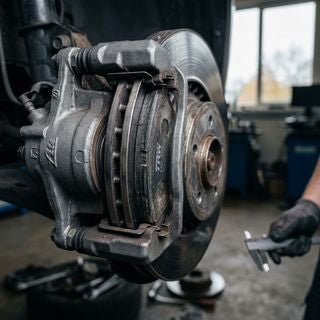
5

What Determines the Total Cost of a Brake Repair?

The total cost of a brake repair is determined by the specific components being serviced, the quality and material of the replacement parts, your vehicle's electronic features, and local labor rates. A basic pad replacement costs far less than a full system overhaul involving new brake rotors, rebuilt calipers, hydraulic flushes, and electronic sensor recalibrations. When drivers evaluate repair estimates, understanding the mechanical scope of the job prevents unexpected costs. Servicing a single axle with standard friction materials requires significantly fewer shop hours and components than replacing damaged rotors and hydraulic hardware on all four wheels. Vehicle design also plays a massive role in final pricing. Heavy-duty trucks and modern SUVs equipped with sophisticated safety tech require specialized servicing procedures compared to older compact sedans. Driving environment directly influences how quickly these braking components wear down. For example, navigating the steep riverfront bluffs around East Liverpool places higher thermal strain on friction pads and rotors than flat highway driving. Contin uous braking down sharp grades accelerates wear, often requiring full rotor replacements rather than simple pad refreshes. If you notice squealing sounds, a soft pedal, or steering vibration when stopping, our technicians can evaluate your entire system and outline exact service requirements before any work begins. You can check our East Liverpool service center location or give our service desk a quick call at (330) 462-7578 to discuss your braking needs. Table of Contents What Components Are Serviced in a Pad Swap Versus a Complete Brake Overhaul? Which Brake Pad Material Lasts the Longest Under Normal Driving Conditions? Why Do Electronic Parking Brakes and Safety Systems Increase Rear Brake Costs? Why Do Labor Rates and Repair Overhead Vary Between Shops? Does Taking a Car to an Independent Shop Void the Manufacturer Warranty? What Buyers Ask Most About Brake Service What Components Are Serviced in a Pad Swap Versus a Complete Brake Overhaul? A simple pad swap replaces only the friction pads on an existing rotor that still meets minimum factory thickness specifications. In contrast, a complete brake overhaul replaces the pads, brake rotors, hardware clips, pin boots, and includes a full brake fluid flush to restore factory stopping performance. Choosing between a pad swap and a complete overhaul depends on the condition of your vehicle's underlying hardware. During a basic service, technicians install fresh friction pads into the existing caliper brackets while leaving the current rotors in place. This option is only viable when the existing disc surfaces are smooth, free of deep scoring, and thick enough to safely absorb heat without warping. A complete overhaul addresses the entire mechanical assembly to eliminate brake noise and uneven wear patterns: Brake pads: High-friction material assemblies replaced across both wheels on the axle set. Brake rotors: Disc assemblies either resurfaced on a precision lathe or replaced with new original equipment rotors. Hardware kits: Stainless steel abutment clips, anti-rattle springs, and guide pin boots installed to maintain smooth pad movement. Hydraulic fluid: Exhausted fluid bled out and replenished with fresh DOT 3 or DOT 4 fluid to prevent internal pedal sponge. Neglecting worn hardware during a repair often causes new pads to stick or wear prematurely. Routine system inspections during regular maintenance—such as when you schedule a service appointment for routine maintenance or routine battery service insights —help identify thin pads before they damage expensive metal rotors. For added flexibility, our team also provides Ford Mobile Service options that can handle routine inspections directly at your home or workplace. Which Brake Pad Material Lasts the Longest Under Normal Driving Conditions? Ceramic brake pads generally provide the longest service life during standard daily commuting because their dense, hard compound resists thermal breakdown and physical wear better than organic or semi-metallic options. Selecting the right brake pad compound involves balancing overall pad longevity, stopping bite, noise control, and dust creation. Auto manufacturers and service technicians categorize friction materials into three primary compound classes: Pad Compound Service Life Expectancy Primary Strength Ideal Driving Scenario Non-Asbestos Organic 25,000 to 35,000 miles Extremely quiet operation Light city driving and mild climates Semi-Metallic 30,000 to 50,000 miles High heat dissipation and heavy bite Heavy-duty towing and truck hauling Ceramic 50,000 to 70,000 miles Long wear life and low dust Daily commuting and family travel While semi-metallic pads deliver high thermal conduction necessary for severe towing duties in an F-150, their metallic strands wear down rotor surfaces faster and produce noticeable brake dust. Organic pads offer soft, quiet stopping power but deteriorate quickly under high heat. For typical suburban commuting along State Route 170 in Calcutta, ceramic compounds strike the ultimate balance for crossover vehicles like the Ford Escape or Explorer. Their ceramic fibers handle continuous stop-and-go driving without grinding down the rotors, keeping maintenance intervals spread farther apart. Why Do Electronic Parking Brakes and Safety Systems Increase Rear Brake Costs? Modern electronic parking brakes require specialized diagnostic scan tools to retract electric servo motors before rear pads can be removed, while integrated Advanced Driver Assistance Systems may demand camera or radar recalibration after brake service. Unlike traditional hand-lever parking brakes that use simple mechanical cables, an electronic parking brake relies on electric actuators bolted directly onto the rear brake calipers. When servicing rear brakes on vehicles equipped with this technology, technicians must connect a diagnostic tool to put the brake system into service mode. Attempting to force the rear caliper piston back manually without disengaging the actuator will strip the internal gear mechanism, requiring a complete replacement of the electric motor assembly. Additionally, modern active safety equipment interacts directly with the hydraulic braking system. Technologies like Pre-Collision Assist with Automatic Emergency Braking rely on wheel speed sensors, electronic stability control modules, and hydraulic valves to apply full stopping force automatically during emergency scenarios. When technicians service rotors, hub assemblies, or wheel speed sensors, these driver-assist systems must be checked to confirm proper sensor alignment. The extra labor steps, specialized diagnostic equipment, and software calibration procedures required for these systems account for why modern rear brake services carry higher overall price tags than older mechanical systems. Why Do Labor Rates and Repair Overhead Vary Between Shops? Labor rates reflect a shop's operational overhead, specialized equipment investments, and the technical certification of its mechanics. Dealership service centers invest heavily in factory training, OEM specialized tools, and genuine original equipment parts, leading to higher labor rates compared to basic independent garages. When comparing estimates between repair facilities, the hourly labor rate is only one part of the equation. Service quality and job efficiency depend directly on technical expertise and diagnostic equipment: Technician training: Factory-certified technicians undergo continuous training on specific vehicle architectures, allowing them to diagnose complex brake faults faster and perform repairs accurately the first time. Specialized tooling: Factory scan tools, precision bench lathes, and vehicle-specific calibration rigs require substantial shop investment but ensure components meet strict original tolerances. Parts quality: Dealerships install exact-fit OEM parts built to original engineering standards rather than budget aftermarket friction pads that may vibrate or squeal. Choosing a facility that uses original factory components ensures all clips, shims, and friction compounds match your vehicle's factory engineering specifications. When replacing worn pads or rotors, vehicle owners can easily order OEM replacement parts directly through our service department to guarantee component quality. Does Taking a Car to an Independent Shop Void the Manufacturer Warranty? Having routine maintenance or brake repairs performed at an independent shop does not void an original manufacturer warranty, as long as appropriate service procedures are followed and quality parts are installed. Federal law protects consumer rights to choose where maintenance work is completed without losing warranty coverage. Under the Magnuson-Moss Warranty Act, vehicle manufacturers cannot invalidate a vehicle's factory warranty simply because maintenance was completed by an independent repair facility or by the vehicle owner. However, maintaining clear records and using proper components is essential to protect your coverage: Detailed record keeping: Always retain receipts and itemized invoices showing service dates, mileage, and specific parts installed. Quality standards: Ensure replacement brake components meet or exceed original equipment specifications. Proper installation: If an independent shop installs incorrect components or damages hydraulic or electronic systems during a brake job, warranty coverage will not cover the resulting repairs. For vehicle owners who prefer complete peace of mind, having service performed at an authorized dealership guarantees that factory-trained technicians carry out work according to manufacturer guidelines using genuine parts. Reviewing monthly manufacturer service offers can also make certified dealer maintenance surprisingly affordable while ensuring your warranty coverage remains completely uncompromised. What Buyers Ask Most About Brake Service Q: How often should brake fluid be flushed during routine maintenance? Brake fluid absorbs moisture over time, which lowers its boiling point and causes internal corrosion in hydraulic lines. Vehicle manufacturers generally recommend flushing brake fluid every 2 to 3 years or every 30,000 to 45,000 miles. Flushing contaminated fluid keeps hydraulic brake calipers functioning smoothly and protects expensive anti-lock braking system valves. Q: Why are new brake hardware kits necessary when changing pads? Hardware kits include replacement stainless steel abutment clips, anti-rattle springs, and rubber guide pin boots. Reusing old, corroded clips allows rust buildup to pinch new pads, causing uneven friction wear, squealing, and sticking calipers. Installing fresh hardware ensures smooth pad movement within the bracket and prolongs overall brake life. Q: Can worn front brakes cause steering wheel vibration during highway driving? Yes, excessive steering wheel wobble when applying the brakes at highway speeds usually points to warped brake rotors or severe thickness variation across the rotor face. When heat causes uneven wear or metal distortion on the disc surface, the brake pads grip inconsistently, transmitting mechanical pulses through the suspension directly to the steering column. Q: Is it safe to replace brake pads on only one side of an axle? Brake components must always be replaced in complete axle sets across both wheels on an axle. Servicing only one side creates uneven braking force between the left and right wheels, causing the vehicle to pull dangerously toward one side during sudden emergency stops and causing premature wear on hydraulic components. Q: How do I know if my vehicle needs rotor replacement instead of resurfacing? A technician measures the current thickness of the brake rotor using a precision micrometer. If machining the disc to remove grooves or rust drops its total thickness below the manufacturer minimum specifications etched into the rotor hub, the disc must be replaced rather than resurfaced to prevent heat cracking or severe brake fade. To keep your vehicle stopping safely and smoothly on local roads, trust our certified technicians to deliver transparent assessments and expert care. Stop by our service desk location today or reach out to our service team at (330) 462-7578 to schedule your thorough multi-point brake inspection. © 2026 Tri State Ford. All rights reserved. Brake Repair Cost Factors in East Liverpool OH | Tri State Ford
d

How Does Ford Mobile Service Work?

Ford Mobile Service brings certified vehicle maintenance directly to your driveway or workplace by dispatching factory-trained technicians in custom-outfitted service vans. The technician arrives during your scheduled time window, brings specialized diagnostic tools and genuine parts, completes the maintenance on site, and leaves your parking space clean without requiring you to visit a dealership service bay. Owners can book an appointment through the Ford App, online, or by giving our team a quick call at (330) 462-7578. When the service van arrives at your home, the technician performs the requested maintenance right in your driveway, whether you own a 2026 Ford Escape with the 1.5L EcoBoost engine or a heavy-duty 2026 Ford F-150 featuring the 3.5L EcoBoost V6. Our mobile units operate as fully functional extensions of our main garage, carrying fluid extraction systems, pneumatic tools, and original equipment manufacturer components. For drivers navigating the steep riverfront bluffs around East Liverpool, having routine maintenance performed on site saves valuable commuting time while preserving complete vehicle reliability. If an inspection reveals a larger repair that requires heavy hydraulic lifts, our staff can seamlessly transfer your vehicle to our dealership facility on Pennsylvania Avenue. Table of Contents Does Ford Mobile Service Cost More Than Bringing Your Vehicle to the Dealership? What Services and Maintenance Can Ford Mobile Service Perform in Your Driveway? Is Driveway Mobile Service as Fast as Bringing Your Vehicle to a Dealer Bay? Which Service Program Is Recommended for Major Engine or Transmission Repairs? How Do Ford Rewards Points Work for Driveway Oil Changes and Maintenance? Common Questions About Ford Mobile Service Convenient Driveway Maintenance Tailored to Your Schedule Does Ford Mobile Service Cost More Than Bringing Your Vehicle to the Dealership? Ford Mobile Service costs the exact same price as bringing your vehicle into a physical service bay, with no extra convenience fees or travel surcharges added for driveway appointments. Routine maintenance items like oil changes, tire rotations, and battery installations carry identical retail pricing whether completed in a dealer workshop or in your driveway. Participating dealerships structure mobile maintenance to match standard retail pricing sheets, ensuring transparent pricing across all maintenance channels. By choosing our Ford Mobile Service program, owners eliminate personal transit costs, fuel consumption, and lost work time without paying a premium for at-home care. Identical Retail Rates: Oil changes, cabin air filter replacements, and fluid top-offs cost the same rate on site as they do in the shop. Zero Travel Surcharges: Standard maintenance visits inside our designated service radius do not incur mileage fees or house-call dispatch costs. Full Coupon Eligibility: Current offers and eligible benefits may vary; contact the dealership for current service pricing and eligibility. Our service advisors frequently hear owners ask whether mobile vans carry factory diagnostic tools and genuine Motorcraft parts. Every mobile appointment utilizes the same diagnostic hardware, software updates, and factory-certified filters that our master technicians use inside the main facility. What Services and Maintenance Can Ford Mobile Service Perform in Your Driveway? Ford Mobile Service can complete routine fluid changes, filter replacements, battery installations, brake pad renewals, tire rotations, multi-point vehicle inspections, lamp replacements, software updates, and minor recall repairs directly in your driveway. The mobile van is equipped to handle roughly eighty percent of standard recommended vehicle maintenance schedules on site. The equipment installed inside each service van allows certified technicians to perform clean, spill-free maintenance on popular family vehicles like the 2026 Ford Explorer equipped with the 2.3L EcoBoost engine. Waste oil is vacuum-extracted through sealed equipment into onboard holding tanks, preventing any fluid drips on your pavement. Engine Oil and Filter Service: Complete drain or vacuum extraction of engine oil with new Motorcraft® filter installation. Brake System Care: Inspection and replacement of front or rear brake pads and rotors, along with brake fluid checks. Battery Testing and Replacement: Diagnostic testing of cold-cranking amps and full installation of a new Motorcraft® battery. Tire Maintenance: Four-wheel tire rotations, air pressure adjustments, and tread depth evaluations. Filters and Wipers: Replacement of engine air filters, cabin air filters, and windshield wiper blades. System Software and Recalls: Wireless modules allow technicians to flash powertrain control software and address eligible safety recalls. For busy families balancing school routines and work schedules around Calcutta, scheduling a mobile appointment online keeps your daily driver in peak mechanical condition without disturbing your family calendar. Is Driveway Mobile Service as Fast as Bringing Your Vehicle to a Dealer Bay? Driveway mobile service saves total vehicle owner time compared to a dealer bay visit because it completely eliminates driving time, check-in lines, and waiting room stays. While the physical labor time required for a technician to replace brake pads or change engine oil is virtually identical, the overall time commitment for the vehicle owner drops from several hours to a few minutes. When a vehicle enters a traditional service lane, it undergoes intake queuing, staging, and parking moves before and after the actual repair. Mobile technicians work continuously on a single vehicle from the moment they park in your driveway until the job is finished. Zero Transit Time: You do not spend time driving to a facility or arranging shuttle rides back home. No Line Delays: Work starts immediately upon the technician's scheduled arrival window. Uninterrupted Productivity: Owners can continue working from home or managing household tasks while service takes place outside. During routine battery evaluations, mobile technicians perform a digital load test and charging system check. If your vehicle shows slow cranking symptoms, reviewing our battery service guide provides helpful technical details on battery lifespans before your driveway appointment. Which Service Program Is Recommended for Major Engine or Transmission Repairs? Ford Pickup & Delivery or a direct in-bay appointment is recommended for major engine, transmission, or heavy suspension overhaul work because these complex jobs require heavy-duty hydraulic vehicle lifts, engine cranes, and specialized shop machinery. Mobile service vans handle light mechanical repairs, while full-facility bays accommodate deep mechanical teardowns. When a vehicle experiences severe mechanical issues involving powertrain removals or frame-level repairs, mobile service technicians recommend bringing the truck or SUV into a dedicated service bay. Through Ford Pickup & Delivery, a dealership team member picks up your vehicle from your home, leaves a loaner if arranged, takes your vehicle to the main repair facility, and returns it once master technicians complete the heavy overhaul. Complex shop repairs rely on direct access to heavy workshop tools, including: Two-Post and Four-Wheel Hydraulic Lifts: Required for complete transmission drops, transfer case removals, and subframe access. Heavy Machinery: Hydraulic presses, tire mounting and high-speed balancing machines, and engine hoists. Fluid Flushing Stations: Commercial-grade equipment for complete transmission fluid flushes and heavy cooling system flushes. If your vehicle requires deep mechanical overhaul parts, our team handles ordering OEM Ford parts directly from factory distribution hubs to ensure exact fitment and full warranty compliance. How Do Ford Rewards Points Work for Driveway Oil Changes and Maintenance? Ford Rewards points can be redeemed directly toward driveway oil changes, tire rotations, and mobile maintenance at the exact same conversion values used inside dealership service departments. Points earned from a new vehicle purchase or previous maintenance visits apply toward your invoice, lowering or completely covering your out-of-pocket costs. Point redemption values vary by service and vehicle; contact the dealership for current Ford Rewards redemption details. Technicians or service advisors process your reward points digitally at the time of booking or upon completion of the driveway visit. Flexible Redemption: Apply points to full maintenance invoices or use them toward eligible charges alongside standard payment methods. Automatic Point Earning: Every driveway service visit earns new reward points on all eligible parts and labor costs. Fleet and Work Truck Support: Local business owners managing a commercial commercial Ford F-Series work trucks fleet can combine rewards points across multiple vehicles to reduce fleet operating expenses. Common Questions About Ford Mobile Service Q: Do I need a paved driveway for Ford Mobile Service? A: A clean, level surface such as a concrete driveway, asphalt parking pad, or firm parking space is required so the technician can safely place jack stands, wheel chocks, and service equipment. Technicians cannot perform raised-vehicle work on steep inclines, soft soil, or loose gravel. Q: What happens if it rains or snows on my scheduled mobile service day? A: Mobile service vans are outfitted to operate in light rain or cold conditions, but severe weather, heavy snow, or dangerous lightning may require rescheduling. If weather prevents safe driveway work, our team contacts you to pick up the vehicle or adjust your appointment window. Q: Can Ford Mobile Service complete open safety recalls on my vehicle? A: Many software flashes, module updates, light wiring harness inspections, and minor hardware replacements under open factory recalls can be completed right in your driveway. Complex recalls requiring major component teardowns must still be scheduled inside our main service center. Q: Do I need to stay outside with the technician while work is performed? A: You do not need to stand outside during the appointment. Once you unlock the vehicle and hand over the key fob, you can return indoors while the technician completes the scheduled work, runs diagnostics, and cleans the work area. Q: How do I verify if my address qualifies for mobile driveway maintenance? A: Coverage is based on distance from our main facility and technician scheduling availability across local zip codes. You can confirm eligibility by entering your address in the Ford App or calling our service desk directly at (330) 462-7578 to check your street address. Convenient Driveway Maintenance Tailored to Your Schedule Over 90% of routine maintenance tasks can be completed right in your driveway with Ford Mobile Service, offering unmatched convenience without compromising quality. By combining driveway convenience with transparent retail pricing, original equipment parts, and full Ford Rewards integration, maintaining your vehicle has never been easier. Whether your household requires a routine oil change on a 2026 Ford Escape, a brake service on a 2026 Ford Explorer, or routine maintenance on a 2026 Ford F-150, our certified technicians deliver expert service without interrupting your busy day. Book your next mobile maintenance appointment online or visit our service center address to speak with our service team today. © 2026 Tri State Ford. All rights reserved. Vehicle specification data © JATO Dynamics Limited. Ford Mobile Service in East Liverpool OH | Tri State Ford
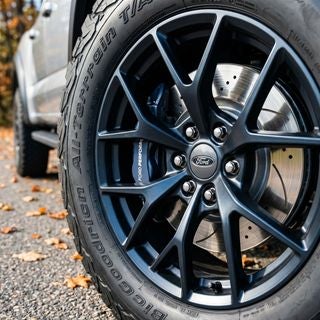
x

How Often Should You Schedule a Ford Brake Inspection?

You should schedule a Ford brake inspection every 10,000 miles or at every scheduled oil change, whichever occurs first. Routine checks allow technicians to evaluate friction material thickness and hydraulic system integrity before severe wear occurs. However, you should arrange an immediate inspection if you hear continuous squealing or grinding, feel pedal softness or steering wheel shudder during deceleration, or see an active brake warning light on your dashboard. Following a consistent inspection schedule ensures that minor wear is identified before it damages surrounding components. While the 10,000-mile interval serves as a reliable baseline for general driving, real-world conditions often dictate more frequent checkups. For instance, commuting through stop-and-go traffic along State Route 170 in Calcutta places higher demand on friction materials than steady highway cruising. Heavier vehicles like the 2026 Ford F-150 equipped with a 3.5L engine also transfer substantial kinetic energy into heat during braking, which accelerates pad wear when carrying heavy cargo or towing. Specific warning signs indicate that your braking system requires attention prior to your next scheduled service interval: Continuous high-pitched squealing or harsh metal-on-metal grinding noises when applying pressure to the pedal A spongy, soft, or unusually low brake pedal that sinks closer to the floorboard than normal Steering wheel pulsation, chassis shudder, or vehicle pulling to one side while slowing down A sharp burning odor near the wheel wells following hard stops Illumination of the red brake system light or yellow anti-lock braking system light on the instrument cluster Prompt attention to these symptoms prevents minor pad wear from turning into costly rotor scoring or caliper failure. To speak directly with our factory-trained service team, give us a quick call or stop by our East Liverpool facility for an in-person diagnostic review. Table of Contents What Is Included in a Ford Multi-Point Brake Inspection? How Many Miles Do Original Ford Motorcraft Brake Pads Last? Why Does Brake Fluid Need to Be Flushed Periodically in Ford Vehicles? What Are the Costs of Ford Brake Replacement and Rotor Resurfacing? Common Questions About Ford Brake Maintenance Proactive Ford Service Keeps Every Journey Safe What Is Included in a Ford Multi-Point Brake Inspection? A Ford multi-point brake inspection includes a complete technical evaluation of brake pad lining thickness, rotor surface integrity, caliper pin sliding action, hydraulic fluid moisture levels, brake line flexible hoses, and parking brake mechanism operation. Technicians remove all four wheels to measure friction components against factory minimum tolerances and inspect internal mechanical linkages. During the evaluation, technicians perform detailed measurements and physical checks across several core assemblies: Brake Pad Lining Thickness: Technicians use precision calipers to measure remaining friction material on inner and outer pads. Any lining measuring at or below 2 mm requires immediate replacement to ensure safe stopping power and prevent metal backing plates from contacting the disc. Rotor Condition and Thickness: Rotors are checked for minimum disc thickness, lateral runout, and surface defects such as deep grooves, heat cracks, or heavy corrosion ridges along the outer lip. Caliper and Hardware Operation: Inspection covers caliper slide pins, rubber dust boots, piston seals, and anti-rattle clips to ensure even pressure application and prevent sticking. Hydraulic Lines and Fluid Quality: Flexible rubber hoses and hard steel lines are checked for cracking, chafing, fluid seepage, or rust. Brake fluid is tested for chemical moisture absorption and clarity. Parking Brake Linkage: Technicians verify cable tension, electronic actuator functionality, and parking brake shoe lining condition on rear drum-in-hat or caliper-integrated setups. Our technicians routinely show vehicle owners physical wear measurements on precision gauges during routine service walk-throughs to provide full clarity on remaining pad life. For owners balancing busy work schedules, scheduling Ford mobile service options brings certified maintenance care directly to your driveway or workplace. How Many Miles Do Original Ford Motorcraft Brake Pads Last? Original Ford Motorcraft brake pads typically last between 40,000 and 60,000 miles under standard driving conditions, though actual lifespan ranges from 30,000 to 70,000 miles based on compound selection, vehicle weight, and driving habits. Heavy cargo loads, frequent mountain braking, or urban traffic shorten pad longevity. The material formulation of Motorcraft friction linings plays a major role in operating characteristics and durability: Motorcraft Ceramic Brake Pads: Formulated primarily from dense ceramic compounds and non-ferrous filler materials, ceramic pads deliver exceptionally quiet operation, minimal brake dust accumulation on wheels, and consistent pedal feel during daily commuting. They are standard equipment on everyday family vehicles like the 2026 Ford Explorer equipped with a 2.3L engine and SelectShift® transmission. Motorcraft Semi-Metallic Brake Pads: Engineered with steel, iron, and copper fibers embedded in synthetic resin, semi-metallic pads offer superior heat transfer, higher friction coefficients under extreme thermal loads, and maximum fade resistance. These are ideal for heavy-duty hauling or towing up to 10,400 lbs in a 2026 Ford F-150 or track-focused performance in a 2026 Ford Mustang. Navigating steep riverfront bluffs and hill climbs across East Liverpool increases friction temperatures, making semi-metallic compounds particularly effective for local trucks and heavy SUVs. To keep your vehicle operating at factory standards without disturbing your calendar, utilize Ford pick-up and delivery service to have your vehicle serviced and returned directly to your home. Why Does Brake Fluid Need to Be Flushed Periodically in Ford Vehicles? Brake fluid must be flushed every three years in Ford vehicles because hydraulic fluid is hygroscopic and naturally absorbs moisture from atmospheric humidity over time. Excess water lowers the boiling point of the fluid, causing a soft brake pedal during hard stops and accelerating internal oxidation throughout calipers and ABS valves. The hydraulic braking system relies on incompressible liquid to transfer force from the brake pedal to the wheel calipers. As brake fluid ages and absorbs ambient moisture through microscopic pores in flexible rubber hoses and reservoir caps, its thermal stability degrades significantly: Vapor Lock and Thermal Fade: Heavy or prolonged braking creates extreme friction temperatures at the caliper. Water-contaminated brake fluid boils at a much lower temperature than fresh fluid, producing vapor bubbles within the sealed hydraulic lines. Because vapor compresses under pressure while liquid does not, the brake pedal sinks toward the floor, resulting in sudden pedal fade or increased stopping distances. Internal Component Corrosion: Moisture trapped inside the hydraulic system reacts with iron and aluminum components. Over time, this leads to internal pitting on caliper pistons, valve bore degradation inside the anti-lock braking system hydraulic control unit, and premature degradation of master cylinder seals. Periodic flushes completely remove contaminated fluid, flush out microscopic metallic debris, and replenish anti-corrosion additives that keep internal hydraulic seals flexible and pressure-tight. What Are the Costs of Ford Brake Replacement and Rotor Resurfacing? Replacing both front and rear Ford brake pads and rotors generally varies by vehicle class, rotor dimensions, and axle requirements. Resurfacing rotors also varies by vehicle and labor requirements, whereas replacing rotors with new factory parts depends on parts and installation needs. Contact the dealership for current pricing. Deciding whether to resurface or replace worn rotors depends on precise measurements taken during the inspection process: Maintenance Consideration Rotor Resurfacing (Lathing) Full Rotor Replacement Primary Requirement Rotor thickness must exceed discard limit Required when rotor is cracked, warped, or thin Typical Part / Labor Cost $30 to $60 per rotor (labor only) $80 to $200 per rotor (plus installation labor) Surface Finish Outcome Restores smooth parallel friction surface Returns assembly to factory original disc specs Ideal Application Minor surface scoring or light rust buildup Heavy grooving, heat checking, or severe runout Rotor resurfacing involves mounting the brake disc to a precision machine lathe that shaves away a thin layer of metal, removing surface irregularities and light heat checking. Resurfacing is only viable if the final disc thickness remains safely above the minimum thickness specification cast directly into the rotor housing. If a rotor is machined below this limit, it loses the structural mass required to dissipate heat effectively, leading to rapid warpage and thermal failure. When installing new friction components, using genuine OEM parts ensures exact mechanical fitment, factory-matched noise dampening shims, and optimal thermal performance. Vehicle owners looking to perform maintenance or replace worn components can order genuine Motorcraft brake parts directly through our service center. Common Questions About Ford Brake Maintenance Q: How long does a Ford brake inspection take at the dealership? A standard Ford multi-point brake inspection typically takes 30 to 45 minutes when performed by a factory-trained technician. If the inspection is completed alongside routine maintenance, such as an oil change or tire rotation, the total service appointment usually lasts between one and two hours. Q: Is a brake inspection included in the Ford Works service package? Yes, the Ford Works maintenance package includes a visual and dimensional brake inspection alongside a synthetic blend oil change, filter replacement, tire rotation, pressure check, battery test, and comprehensive fluid check. It provides a complete diagnostic assessment of vital safety components in a single visit. Q: What causes a steering wheel to shake when applying Ford brakes? Steering wheel vibration during braking is usually caused by uneven rotor surface wear or lateral runout, often referred to as warped rotors. High thermal stress or uneven caliper clamping pressure creates variation in rotor thickness, causing the pads to skip across the disc surface and transfer pulsations through the steering system. Q: Can I drive safely if my Ford brake wear indicator light comes on? You should schedule a service appointment as soon as possible when the brake warning light illuminates. While the light indicates that brake pad lining thickness has reached a critical threshold or fluid level is low, continuing to drive risks rotor damage, elevated stopping distances, and potential hydraulic power loss. Q: How does towing a heavy trailer impact Ford brake maintenance schedules? Towing heavy loads significantly increases thermal friction and kinetic energy transfer, causing brake pads to wear down much faster than during unladen driving. Ford recommends inspecting friction materials at every 5,000 to 7,500 miles if you routinely tow trailers or haul heavy cargo. Proactive Ford Service Keeps Every Journey Safe Keeping your braking system in peak operational condition is essential for highway safety, predictable vehicle handling, and long-term component durability. Routine inspections eliminate guesswork by tracking pad wear rates, monitoring rotor thickness, and identifying hydraulic fluid degradation before performance suffers. Our service center provides the factory tools, specialized diagnostic equipment, and genuine Motorcraft parts required to keep your Ford performing exactly as the engineers intended. Whether you need a routine multi-point check, fluid flush, or full pad and rotor replacement, our certified service team is ready to assist. To preserve your vehicle's stopping performance and enjoy complete peace of mind on the road, schedule a service appointment online today. You can also visit our East Liverpool service center or speak directly with an advisor by giving us a quick call to discuss your maintenance needs. © 2026 Tri State Ford. All rights reserved. Vehicle specification data © JATO Dynamics Limited. Ford Brake Inspection in East Liverpool OH | Tri State Ford

Contact Us

Fill out this form below and we'll contact you shortly
*Required Fields