
Blog / Maintenance & Service, Expert Repairs & Diagnostics, Genuine Parts & Accessories, Engine Care &

Blog

All Maintenance & Service, Expert Repairs & Diagnostics, Genuine Parts & Accessories, Engine Care & Automotive News, New Vehicle Reviews, Buying Guides, Financing & Insurance, Seasonal Driving Tips Used Vehicle Guides, Financing & Insurance, Buying Guides, Trade-In Advice, Certified Pre-Owned Maintenance & Service, Battery Care & Diagnostics, Electric Vehicle (EV) Maintenance, Seasonal Maintenance & Service, Warranty & Service Contracts, Repair & Diagnostics, Parts & Components New Vehicle Reviews, Buying Guides, Financing & Insurance, Model Comparisons, Automotive News Buying Guides, Financing & Insurance, New Vehicle Reviews, Model Comparisons, Sales & Promotions Used Vehicle Guides, Financing & Insurance, Buying Guides, Vehicle Warranty Information, Pre-Owned Vehicle Trade-In Advice, Financing & Insurance, Buying Guides, Used Vehicle Guides, New Vehicle Maintenance & Service, Parts & Accessories, Vehicle HVAC Care, Seasonal Vehicle Maintenance, DIY Maintenance & Service, Essential Vehicle Care, Preventive Maintenance Tips, Vehicle Longevity Compare Cars Used Vehicle Guides, Financing & Insurance, Buying Guides, Pre-Owned Vehicle Sales, Vehicle Maintenance & Service, Brake Systems & Repair, Vehicle Parts & Accessories, Towing & Load New Vehicle Reviews, Buying Guides, Model Comparisons, Financing & Insurance, Inventory & Sales Tips Vehicle Sales Events, New Vehicle Pricing & Incentives, Financing & Lease Options, Trade-In & Vehicle Sales Process, Financing & Credit Applications, New and Used Vehicle Inventory, Pickup and Vehicle Trade-In Tips, Financing & Insurance, Buying Guides, Dealership Sales Strategies, Inventory Buying Guides, Financing & Insurance, New Vehicle Reviews, Model Comparisons, Technology & Leasing & Lease Deals, Financing & Insurance, New Vehicle Sales, Commercial Vehicle Leasing, Maintenance & Service, Recall Information, Safety & Reliability, Vehicle Ownership Care, Parts & Maintenance & Service, Vehicle Pickup & Delivery, Mobile Service & On-Site Repairs, Oil Change & Community Events & Customer Appreciation, New Vehicle Reviews, Financing & Trade-In Guides, Maintenance & Service, Warranty & Recalls, Repair & Diagnostics, Parts & Accessories, Vehicle Used Vehicle Guides, Financing & Insurance, Buying Guides, New Vehicle Reviews, Commercial Vehicle Maintenance & Service, Automotive Technology & Software Updates, Warranty & Recall Service, Mobile Maintenance & Service, Vehicle Ownership Care, Mobile Repair Services, Genuine Parts & Certified New Vehicle Reviews, Buying Guides, Financing & Insurance, Model Comparisons, Automotive Technology Commercial Truck Sales, Fleet Vehicle Financing, Custom Work Truck Upfits, Commercial Vehicle Dealership Events & Promotions, Financing & Trade-In Options, Maintenance & Service Specials, Maintenance & Service, Mobile Vehicle Services, Vehicle Care & Ownership, Genuine Parts & Repairs, Maintenance & Service, Vehicle Inspections, Oil Change & Fluid Services, Tire Care & Battery Maintenance & Service, Vehicle Lighting & Electrical Systems, Automotive Safety & Inspection, OEM Model Comparisons, New Vehicle Reviews, Technology & Innovation, Safety Features, Buying Guides New Vehicle Reviews, Buying Guides, Financing & Insurance, Model Comparisons, Used Vehicle Guides Commercial Vehicle Sales, Financing & Leasing, Small Business Vehicle Incentives, Fleet Purchasing Commercial Vehicle Sales, Fleet Purchasing & Management, Financing & Leasing for Businesses, New & Community Events, New Vehicle Buying Guides, Financing & Insurance, Maintenance & Service, Local Maintenance & Service, Brake System Care, Vehicle Safety & Inspection, Parts Quality & Replacement, Maintenance & Service, Safety Features, Technology & Innovation, Seasonal Driving Tips, Parts & Maintenance & Service, Tire Care & Repair, Roadside Assistance, Vehicle Safety & Inspections, Maintenance & Service, Tire Care & Repair, Wheel Alignment & Balancing, Suspension Maintenance, Maintenance & Service, Tire Care & Replacement, Vehicle Safety & Handling, Seasonal Vehicle Maintenance & Service, Tire Care & Replacement, Vehicle Safety & Inspection, Emergency Roadside Maintenance & Service, Vehicle Software Updates, Safety Features, Technology & Innovation, Recall & New Vehicle Reviews, Buying Guides, Model Comparisons, Maintenance & Service, Technology & Used Vehicle Guides, Buying Guides, Financing & Insurance, Model Comparisons, Selling Your Car Vehicle Sales Events, New Vehicle Purchasing, Incentives & Discounts, Financing & Pre-Approval, Buying Guides, Financing & Insurance, New Vehicle Reviews, Commercial Fleet Sales, Custom Orders & Buying Guides, Financing & Insurance, Vehicle Inventory & Offers, Dealership Visit Preparation, Buying Guides, New Vehicle Reviews, Financing & Insurance, Commercial Vehicle Sales, Model Commercial Truck Sales, Fleet Purchasing Guides, Financing & Lease Options, Work Truck Commercial Vehicle Sales, Fleet Leasing & Management, Commercial Financing & Tax Incentives, Financing & Insurance, Leasing Benefits, Model Comparisons, Technology & Innovation, Buying Guides Leasing & Financing Options, Buying Guides, Model Comparisons, Negotiation Tips, Inventory & Leasing & Financing Options, Buying Guides, New Vehicle Reviews, Model Comparisons, Technology & Maintenance & Service, Automotive Detailing, Paint Protection & Care, Seasonal Vehicle Care, Maintenance & Service, Automotive Electrical Systems, Battery Care & Replacement, Vehicle Lighting Maintenance & Service, Automotive Fluids & Lubricants, Vehicle Care & Ownership, Dealership Service Maintenance & Service, Automotive Repair, Mobile & Remote Vehicle Service, Warranty & Roadside Maintenance & Service, Brake System Care, Vehicle Safety & Inspection, Automotive Repair Tips, Maintenance & Service, Brake System Care, Vehicle Safety & Inspections, Parts & Repairs, Expert Maintenance & Service, Technology & Innovation, Vehicle Diagnostics & Telematics, Fleet Management Maintenance & Service, Vehicle Care & Longevity, Scheduled Service Packages, Oil Changes & Fluid Maintenance & Service, Vehicle Inspection & Diagnostics, Parts & Repairs, Warranty & Resale Value, Maintenance & Service, Vehicle Interior Care, Technology & Innovation in Service, Professional New Vehicle Reviews, Buying Guides, Financing & Insurance, Model Comparisons, Inventory Highlights New Vehicle Reviews, Buying Guides, Financing & Insurance, Model Comparisons, Inventory Updates New Vehicle Reviews, Buying Guides, Technology & Innovation, Safety Features, Seasonal Driving Tips New Vehicle Reviews, Financing & Insurance, Buying Guides, Used Vehicle Guides, Model Comparisons New Vehicle Reviews, Model Comparisons, Commercial Truck Guides, Technology & Innovation, Buying Guides, Financing & Insurance, Used Vehicle Guides, New Vehicle Reviews, Cross-Border Commercial Leasing Options, Business Fleet Solutions, Financing & Leasing Programs, Commercial Community Engagement & Events, New Vehicle Promotions, Financing & Trade-In Options, Maintenance & Community Events & Dealership News, New Vehicle Promotions & Incentives, Maintenance & Service Community Events & Dealership News, New Vehicle Reviews, Financing & Insurance, Maintenance & Custom Ordering & Build Process, New Vehicle Inventory & Offers, Financing & Trade-In Guidance, East Liverpool, OH Ford Dealer East Liverpool, OH Used Cars Financing & Insurance, Buying Guides, Commercial Vehicle Solutions, Fleet Management, Inventory and Financing & Insurance, Buying Guides, New Vehicle Reviews, Used Vehicle Guides, Automotive Sales Financing & Insurance, Buying Guides, New Vehicle Reviews, Used Vehicle Guides, Automotive Sales & Financing & Insurance, Buying Guides, New Vehicle Reviews, Used Vehicle Guides, Model Comparisons Financing & Insurance, Buying Guides, Used Vehicle Guides, New Vehicle Reviews, Automotive Sales Financing & Insurance, Buying Guides, Used Vehicle Guides, Trade-In Tips, New Vehicle Sales Financing & Insurance, Buying Guides, Vehicle Inventory & Offers, Trade-In & Appraisal, Dealership Financing & Insurance, Buying Guides, Vehicle Trade-In Tips, Dealership Sales Process, New Vehicle Leasing & Financing Options, New Vehicle Leasing Guides, Buying Guides, Inventory Spotlight, Trade Leasing Options, Financing & Insurance, New Vehicle Reviews, Buying Guides, Technology & Innovation Leasing Options, Financing & Insurance, New Vehicle Sales, Buying Guides, Vehicle Inventory Maintenance & Service, Air Conditioning Repair, Genuine Parts & Accessories, Dealer-Authorized Maintenance & Service, Automotive Air Conditioning Repair, Vehicle Cooling System Care, Diagnostic Maintenance & Service, Automotive Detailing & Cleaning, Seasonal Vehicle Care, Vehicle Protection & Maintenance & Service, Automotive Detailing & Paint Care, Vehicle Exterior Protection, Paint Repair Maintenance & Service, Automotive Detailing & Protection, Corrosion & Rust Prevention, Paint & Maintenance & Service, Automotive Detailing, Vehicle Care & Protection, Off-Road Vehicle Maintenance & Service, Automotive Electrical Systems, Battery Care & Replacement, Diagnostics & Maintenance & Service, Automotive Glass Repair, Safety Features, Technology & Innovation, Mobile & Maintenance & Service, Automotive Lighting & Electrical, Vehicle Safety & Visibility, DIY Vehicle Maintenance & Service, Automotive Parts & Accessories, Seasonal Vehicle Care, Vehicle Safety & Maintenance & Service, Automotive Parts & Accessories, Vehicle Air Quality & HVAC Care, Preventive Maintenance & Service, Automotive Parts & Accessories, Vehicle Ownership Care, Engine Care & Maintenance & Service, Automotive Parts & Accessories, Vehicle Safety & Repair, Warranty & Maintenance & Service, Automotive Parts & Components, Vehicle Safety & Repair, Warranty & Service Maintenance & Service, Automotive Parts & Repairs, Vehicle Warranty & Protection, Service Center Maintenance & Service, Automotive Repair Tips, Service Team Selection, Warranty & Service Policies, Maintenance & Service, Automotive Repair, Parts & Accessories, Vehicle Ownership Care, Technology & Maintenance & Service, Automotive Repair, Parts & OEM Components, Vehicle Longevity & Care, Service Maintenance & Service, Automotive Technology & Diagnostics, Vehicle Electronics & Sensors, Seasonal Maintenance & Service, Battery Care & Replacement, Vehicle Electrical Systems, Seasonal Vehicle Maintenance & Service, Brake System Care, OEM Parts & Replacement, Vehicle Safety & Inspections, Maintenance & Service, Brake System Care, Vehicle Repair Tips, Automotive Parts & Components, Maintenance & Service, Brake System Care, Vehicle Safety & Inspections, Parts & Components, Maintenance & Service, Brake System Care, Vehicle Safety Inspections, Automotive Repair Tips, OEM Maintenance & Service, Certified Technician Insights, Warranty & Service Coverage, Genuine OEM Maintenance & Service, Cooling System Repairs, Vehicle Ownership Care, Diagnostic & Maintenance & Service, Diagnostic Services, Vehicle Health & Diagnostics, Service Tips & Advice, Maintenance & Service, Engine Care & Performance, Parts & Accessories, Genuine vs. After Maintenance & Service, Paint Protection & Detailing, Vehicle Exterior Care, Seasonal Vehicle Maintenance & Service, Parts & Accessories, Engine Care & Repair, Vehicle Longevity Tips, OEM Parts Maintenance & Service, Parts & Replacements, Vehicle Care Tips, Seasonal Maintenance, DIY Vehicle Maintenance & Service, Recall Updates & Safety Notices, Genuine Parts & Accessories, Truck Care & Maintenance & Service, Repair & Diagnostics, OEM Parts & Accessories, Warranty & Recall Maintenance & Service, Repair & Diagnostics, Parts & Accessories, Vehicle Ownership Care, Service Maintenance & Service, Repair & Diagnostics, Parts & Components, Preventive Care & Tips, Warranty & Maintenance & Service, Repair & Diagnostics, Tire & Wheel Care, Vehicle Safety & Inspection, Parts Maintenance & Service, Repair & Diagnostics, Warranty & Service Coverage, Genuine OEM Parts & Maintenance & Service, Repair & Parts, Vehicle Ownership Care, Safety Features, Technology & Maintenance & Service, Repair & Parts, Vehicle Ownership Care, Transmission Maintenance & Service, Repair Solutions, Vehicle Ownership Care, Parts & Accessories, Diagnostic Maintenance & Service, Repair Tips & Techniques, Vehicle Care & Ownership Maintenance & Service, Safety Features, Automotive Recalls & Repairs, Parts & Warranty Services, Maintenance & Service, Safety Features, Automotive Recalls & Repairs, Technology & Innovation, Maintenance & Service, Safety Features, Automotive Recalls, Vehicle Ownership Care, Parts & Repairs Maintenance & Service, Safety Features, Parts & Repairs, Vehicle Ownership Care, Automotive Service Maintenance & Service, Safety Features, Recall & Repair Updates, Parts & Repairs, Vehicle Ownership Maintenance & Service, Safety Features, Recall & Safety Campaigns, Vehicle Inspection & Repairs, Maintenance & Service, Safety Features, Recall & Warranty Information, Vehicle Diagnostics & Maintenance & Service, Safety Features, Recall Repairs & Safety Campaigns, Parts & Genuine Maintenance & Service, Safety Features, Recalls & Repairs, Parts & Accessories, Vehicle Ownership Maintenance & Service, Safety Features, Repair & Recall Updates, Parts & Components, Vehicle Maintenance & Service, Safety Features, Repair & Replacement, Vehicle Care & Inspection, Parts & Maintenance & Service, Safety Features, Seasonal Driving Tips, Technology & Innovation, Parts & Maintenance & Service, Safety Features, Technology & Innovation, Automotive Electrical Systems, Maintenance & Service, Safety Features, Technology & Innovation, Automotive News, Parts & Repairs Maintenance & Service, Safety Features, Technology & Innovation, Automotive Parts & Accessories, Maintenance & Service, Safety Features, Technology & Innovation, Automotive Recalls, Parts & Repairs Maintenance & Service, Safety Features, Technology & Innovation, Automotive Recalls, Vehicle Maintenance & Service, Safety Features, Technology & Innovation, Automotive Service Tips, Recall & Maintenance & Service, Safety Features, Technology & Innovation, Parts & Repairs, Seasonal Driving Maintenance & Service, Safety Features, Technology & Innovation, Parts & Repairs, Vehicle Ownership Maintenance & Service, Safety Features, Technology & Innovation, Recall & Warranty Information, Maintenance & Service, Safety Features, Technology & Innovation, Repair & Recall Information, Parts Maintenance & Service, Safety Features, Technology & Innovation, Tire Care & Replacement, Maintenance & Service, Safety Features, Vehicle Inspections, DIY Vehicle Care, Repair & Diagnostics Maintenance & Service, Safety Recalls & Repairs, Vehicle Safety & Compliance, Powertrain & Maintenance & Service, Seasonal Driving Tips, Model Comparisons, Technology & Innovation, Safety Maintenance & Service, Seasonal Driving Tips, Safety Features, Technology & Innovation, Automotive Maintenance & Service, Seasonal Driving Tips, Safety Features, Technology & Innovation, Parts & Maintenance & Service, Seasonal Driving Tips, Vehicle Care & Ownership, Brake System Maintenance, Maintenance & Service, Seasonal Driving Tips, Vehicle Care & Ownership, Parts & Accessories, Safety Maintenance & Service, Seasonal Driving Tips, Vehicle Care & Ownership, Safety Features, Maintenance & Service, Seasonal Driving Tips, Vehicle Care & Protection, Brake Maintenance, Tire Maintenance & Service, Seasonal Driving Tips, Vehicle Care & Warranty, Service Specials & Packages, Maintenance & Service, Seasonal Driving Tips, Vehicle Cooling Systems, Automotive Safety Features, Maintenance & Service, Service Scheduling & Convenience, Vehicle Repair & Diagnostics, Parts & Maintenance & Service, Technology & Innovation, Automotive Service Transparency, Digital Vehicle Maintenance & Service, Technology & Innovation, Safety Features, Parts & Warranty, Vehicle Maintenance & Service, Tire Care & Replacement, Seasonal Vehicle Care, Safety Features, Automotive Maintenance & Service, Tire Care & Replacement, Vehicle Safety & Inspections, Seasonal Vehicle Maintenance & Service, Transmission Care & Repair, Vehicle Fluid Services, Automotive Diagnostics, Maintenance & Service, Transmission Care, Repair & Parts, Vehicle Ownership Care, Common Vehicle Maintenance & Service, Vehicle Care Tips, Parts & Accessories, Seasonal Vehicle Maintenance, Maintenance & Service, Vehicle Detailing & Care, Parts & Accessories, Seasonal Vehicle Preparation, Maintenance & Service, Vehicle Detailing & Cosmetic Care, Automotive Cleaning & Protection, Service Maintenance & Service, Vehicle Detailing & Cosmetic Care, Service Scheduling & Convenience, Maintenance & Service, Vehicle Detailing & Protection, Repair & Inspection, Parts & Accessories, Maintenance & Service, Vehicle Detailing & Protection, Vehicle Care Tips, Seasonal Vehicle Maintenance & Service, Vehicle Diagnostics & Repair, Engine Performance & Troubleshooting, Fuel Maintenance & Service, Vehicle Fluids & Lubrication, Engine Care & Repair, Parts & Accessories, Maintenance & Service, Vehicle Ownership Care, Parts & Accessories, Repair & Diagnostics, Certified Maintenance & Service, Vehicle Repair & Diagnostics, Parts & Accessories, DIY Vehicle Care, Safety Maintenance & Service, Vehicle Repair & Diagnostics, Parts & Accessories, Hybrid & Electric Vehicle Maintenance & Service, Vehicle Repair & Diagnostics, Parts & Accessories, Seasonal Driving Tips, Maintenance & Service, Vehicle Repair & Diagnostics, Parts & Accessories, Service Lane Tips & Maintenance & Service, Vehicle Repair & Diagnostics, Parts & Accessories, Towing & Performance Maintenance & Service, Vehicle Repair & Parts, Service Convenience & Customer Care, Roadside Maintenance & Service, Vehicle Repair Tips, Parts & Accessories, Safety Features, Technology & Maintenance & Service, Vehicle Service Warranties, Repair & Coverage Plans, Ownership & Vehicle Model Comparisons, Buying Guides, New Vehicle Reviews, Financing & Insurance, Inventory Updates Model Comparisons, Buying Guides, New Vehicle Reviews, Technology & Innovation, Safety Features Model Comparisons, Buying Guides, Technology & Innovation, Safety Features, Maintenance & Service Model Comparisons, New Vehicle Reviews, Buying Guides, Technology & Innovation, Financing & Model Comparisons, New Vehicle Reviews, Buying Guides, Technology & Innovation, Safety Features Model Comparisons, New Vehicle Reviews, Safety Features, Technology & Innovation, Seasonal Driving Model Comparisons, New Vehicle Reviews, Technology & Innovation, Buying Guides, Maintenance & Model Comparisons, New Vehicle Reviews, Technology & Innovation, Maintenance & Service, Buying Model Comparisons, Towing & Hauling Guides, Maintenance & Service, Technology & Innovation, New New Vehicle Promotions, Buying Guides, Financing & Insurance, New Vehicle Reviews, Inventory New Vehicle Reviews, Buying Guides, Financing & Insurance, Model Comparisons, Automotive Sales New Vehicle Reviews, Buying Guides, Financing & Insurance, Model Comparisons, Commercial & Work New Vehicle Reviews, Buying Guides, Financing & Insurance, Model Comparisons, Vehicle Customization New Vehicle Reviews, Buying Guides, Financing & Insurance, Model Comparisons, Vehicle Inventory New Vehicle Reviews, Buying Guides, Financing & Insurance, New Vehicle Specials, Trade-In & Value New Vehicle Reviews, Buying Guides, Financing & Insurance, Used Vehicle Guides, Inventory Updates New Vehicle Reviews, Buying Guides, Financing & Insurance, Used Vehicle Guides, Model Comparisons New Vehicle Reviews, Buying Guides, Financing & Insurance, Vehicle Inventory & Specials, Model New Vehicle Reviews, Buying Guides, Financing & Insurance, Vehicle Inventory, Model Comparisons New Vehicle Reviews, Buying Guides, Model New Vehicle Reviews, Buying Guides, Model Comparisons, Financing & New Vehicle Reviews, Buying Guides, Safety Features, Technology & Innovation, Model Comparisons New Vehicle Reviews, Buying Guides, Technology & Innovation, Safety Features, Maintenance & Service New Vehicle Reviews, Financing & Insurance, Buying Guides, New Vehicle Specials, Model Comparisons New Vehicle Reviews, Financing & Insurance, Buying Guides, Technology & Innovation, Automotive New Vehicle Reviews, Model Comparisons, Buying Guides, Technology & Innovation, Safety Features New Vehicle Reviews, Model Comparisons, Financing & Insurance, Technology & Innovation, Safety New Vehicle Reviews, Model Comparisons, Off-Road Adventures, Technology & Innovation, Maintenance & New Vehicle Reviews, Model Comparisons, Safety Features, Technology & Innovation, Buying Guides New Vehicle Reviews, Model Comparisons, Technology & Innovation, Financing & Insurance, Maintenance New Vehicle Reviews, Model Comparisons, Technology & Innovation, Safety Features, Buying Guides New Vehicle Reviews, Model Comparisons, Technology & Innovation, Safety Features, Maintenance & New Vehicle Reviews, Off-Road Capabilities, Outdoor Adventure Vehicles, Technology & Innovation, New Vehicle Reviews, Technology & Innovation, Buying Guides, Maintenance & Service, Model New Vehicle Reviews, Technology & Innovation, Buying Guides, Safety Features, Model Comparisons New Vehicle Reviews, Technology & Innovation, Safety Features, Maintenance & Service, Buying Guides New Vehicle Sales, Financing & Incentives, Trade-In & Appraisal, Special Sales Events, Electric New Vehicle Sales, Financing & Incentives, Trade-In & Value Guides, Manufacturer Promotions, New Vehicle Sales, Financing & Insurance, Buying Guides, Manufacturer Incentives & Discounts, New Vehicle Sales, Vehicle Delivery & Logistics, Financing & Credit Applications, Trade-In & Trucks Used Vehicle Guides, Financing & Insurance, Buying Guides, Model Comparisons, Local Dealership Vehicle Sales Events, Financing & Leasing, Trade-In & Trade-Up Guides, New Vehicle Inventory Vehicle Sales Events, New Vehicle Buying Guides, Financing & Incentives, Dealership Inventory Vehicle Sales Events, New Vehicle Pricing, Financing & Credit Applications, Trade-In & Loyalty Vehicle Sales Process, Online Vehicle Purchasing, Financing & Loan Approval, Trade-In & Vehicle Vehicle Sales Promotions, New Vehicle Buying Guides, Financing & Credit Applications, Dealership Vehicle Sales Promotions, New Vehicle Buying Guides, Financing & Incentives, Trade-In & Valuation, Vehicle Sales, Online Car Buying, Financing & Incentives, Trade-In Guides, New Vehicle Delivery
d

How Do You Prepare Your Car for a Winter Road Trip?

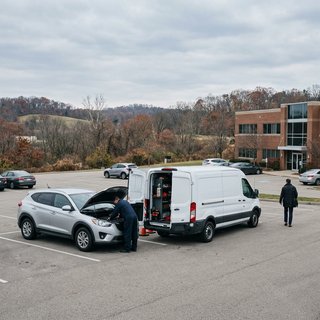
How Do You Prepare Your Car for a Winter Road Trip? Preparing your car for a long winter road trip requires testing your battery under load, verifying that tire tread depth is at least 4/32 of an inch, adjusting cold tire pressure to match the door jamb placard, and checking that engine coolant provides freeze protection down to sub-zero temperatures. You must also replace worn wiper blades with winter-grade units, fill the reservoir with de-icing washer fluid rated to -20 degrees Fahrenheit or lower, confirm that all exterior lights and defrosters operate properly, and pack a winter emergency traction kit. Taking care of these mechanical systems before departure prevents cold-weather stalling, loss of steering control, and reduced visibility during severe winter storms. Long highway stretches and regional elevation changes put extra strain on mechanical components. Cold air contracts the air inside tires, thickens drivetrain lubricants, and weakens the chemical output of starting batteries. When temperatures drop below freezing, small maintenance oversights that go unnoticed during mild autumn commutes quickly become roadside emergencies. Salt-belt travel adds corrosive road grime that cakes onto windshields and undercarriage hardware, making visibility and braking components work harder than usual. Navigating the steep riverfront bluffs of East Liverpool during an icy cold snap demonstrates how quickly road grip changes when sleet coats pavement. Vehicles equipped with active safety systems, such as Ford Co-Pilot360 with Pre-Collision Assist, rely on clean sensors and reliable tire contact patches to assist drivers on slick roadways. Ensuring that cameras and radar sensors remain clear of road slush is just as vital as checking mechanical hardware. Our factory-trained technicians at Tri State Ford inspect every vital system to keep your vehicle running smoothly through the harshest conditions. If you want a complete multi-point inspection before traveling, you can find our service center by getting turn-by-turn directions to our facility, or you can give our dedicated advisors a quick call at (330) 462-7578 to ask about our pre-trip diagnostic checks. Table of Contents How Do You Test Antifreeze Concentration and Freeze Point for Sub-Zero Travel? What Are the Tread Depth, Cold Inflation, and 3PMSF Standards for Winter Tires? Which Cold-Weather Fluids, Wipers, and Battery Tests Prevent Winter Breakdowns? What Emergency Supplies and Packing Checks Keep Family Travel Safe? Winter Travel Preparation FAQs: Inspection Timing and Severe Weather Gear Schedule Your Pre-Trip Winter Inspection at Tri State Ford How Do You Test Antifreeze Concentration and Freeze Point for Sub-Zero Travel? You test antifreeze concentration and freeze point at home by drawing a sample of cool engine coolant into an optical refractometer or a calibrated hydrometer from the translucent expansion tank. A standard 50/50 ratio of ethylene glycol to distilled water protects an engine against freezing down to -34 degrees Fahrenheit, whereas a heavy-duty 60/40 mixture extends freeze protection down to -62 degrees Fahrenheit for severe sub-zero travel. Never remove the radiator cap or expansion tank pressure relief cap on an engine that is hot or running. Pressurized boiling coolant causes severe steam burns. Wait until the engine block has cooled completely to room temperature before loosening the cap. Using a clean hydrometer, squeeze the rubber bulb, insert the pick-up tube into the coolant overflow tank, and draw enough fluid to suspend the internal float or indicator needles. The float level indicates the freezing point on an easy-to-read scale. Alternatively, an optical refractometer requires placing just two drops of coolant onto the testing prism, closing the cover plate, and looking through the eyepiece toward a light source to read the sharp shadow line indicating the freeze point and glycol percentage. A basic visual check is not enough because worn antifreeze can retain its bright yellow, orange, or green color while losing its thermal resilience and corrosion inhibitors. Weak coolant allows ice crystals to form inside the narrow radiator cores and heater matrix. When slush forms inside the cooling circuit, the engine overheats rapidly because frozen fluid blocks the water pump from circulating liquid through the block. If prolonged exposure drops temperatures below the liquid's freeze threshold, expanding ice can split aluminum radiator tanks, blow out expansion plugs, or crack engine block castings. Maintaining an exact mixture protects water pump seals and aluminum cylinder heads from internal pitting. If testing reveals that your coolant freeze threshold is above -20 degrees Fahrenheit, the cooling system needs an immediate drain and refill with fresh antifreeze meeting Ford engineering specifications. If you are preparing for seasonal maintenance and need factory-approved fluids, you can order genuine Motorcraft antifreeze and cooling components directly from our parts counter. If you are evaluating a replacement sport utility vehicle with advanced all-weather capabilities for family journeys, you can also schedule a test drive in an all-wheel-drive model to experience its stability firsthand. What Are the Tread Depth, Cold Inflation, and 3PMSF Standards for Winter Tires? Winter driving requires a minimum tire tread depth of 4/32 of an inch to maintain basic bite on packed snow, though 5/32 to 6/32 of an inch is recommended to channel away slush and reduce highway hydroplaning. Tires must always be set to the exact cold inflation pressure printed on the driver door jamb placard, compensating for the standard drop of 1 to 2 PSI for every 10-degree Fahrenheit drop in ambient outside temperature. Checking remaining tread depth at home is simple using standard pocket change: Place a quarter head-first into the center tread grooves; if the top of George Washington's head is covered, your tires possess at least 4/32 of an inch of tread. Place a penny head-first into the tread grooves; if the top of Abraham Lincoln's head is visible, your tires are below the legal minimum of 2/32 of an inch and must be replaced immediately. Inspect outer and inner shoulders for uneven wear, cupping, cuts, or sidewall impact bulges that could trigger high-speed blowouts in freezing conditions. Tires stamped with the Three-Peak Mountain Snowflake ( 3PMSF) symbol have passed standardized testing measuring acceleration on medium-packed snow. While standard tires bearing only the Mud and Snow ( M+S) badge simply have specific tread pattern void ratios, tires with the 3PMSF rating incorporate cold-weather rubber polymers that remain flexible below 45 degrees Fahrenheit. This flexibility ensures the sipes continue opening and closing over ice. However, all-weather 3PMSF tires do not match dedicated winter tires when stopping or cornering on sheet ice. Our service team frequently hears travelers ask whether factory tires provide adequate grip on icy highways or if a trip across northern passes demands dedicated winter rubber. We examine tread depth across all four wheels and check the date codes to ensure rubber compounds have not hardened with age. If your tires show severe wear, you can use our online tire finder tool to select brand-specific winter or all-weather options, or you can book a service appointment to have our technicians perform high-speed balancing and a four-wheel alignment before you leave. Which Cold-Weather Fluids, Wipers, and Battery Tests Prevent Winter Breakdowns? Preventing winter breakdowns requires filling the washer reservoir with de-icing fluid rated to at least -20 degrees Fahrenheit, replacing cracked wiper blades with beam-style winter blades, and performing an electronic battery conductance test. Sub-freezing temperatures weaken an automotive battery by up to 50 percent while demanding nearly double the electrical current to crank an engine against cold, viscous motor oil. Summer bug-wash formulas contain minimal alcohol and freeze solid at 32 degrees Fahrenheit, which can crack the plastic washer fluid reservoir, burst under-hood fluid lines, and burn out the small electric washer pump motor. Winter-rated fluids blend methanol and specialized detergents that dissolve road salt crust without refreezing on cold glass. Upgrading to beam-style winter wiper blades eliminates exposed metal joints that pack with wet snow, allowing the silicone or rubber blade to maintain even pressure across the windshield. Automotive batteries lose chemical efficiency as temperatures plunge. A battery that starts an engine without hesitation in warm weather can fail completely after parking overnight in sub-zero air. A proper diagnostic test measures cold cranking amps under an applied electrical load, confirming whether the internal lead plates can deliver starting voltage without a steep internal voltage drop. Technicians also clean the lead terminals, inspect the heavy ground cables, and ensure the alternator delivers a steady 13.8 to 14.5 volts to replenish the battery during short daytime driving cycles. Vehicles such as the Ford Explorer and Ford Escape feature automated defroster sequences and heated mirrors that place significant electrical loads on the charging system during winter commutes. Reviewing our comprehensive battery maintenance and diagnostic guidance helps you spot warning signs like slow engine turnover, dimming interior lights, or corrosion around battery hold-down clamps before you head onto remote highways. What Emergency Supplies and Packing Checks Keep Family Travel Safe? A winter roadside emergency kit must contain heavy-duty jumper cables, a compact folding snow shovel, an ice scraper with a brass or composite edge, a bright LED flashlight with spare lithium batteries, and traction material like non-clumping clay kitty litter. In addition, pack heavy wool blankets, a compact first-aid kit, high-calorie non-perishable snacks, a portable USB power bank for phones, and drinking water stored in an insulated cooler so it resists freezing. Drivers traveling through suburban Calcutta along State Route 170 know that open fields can create sudden wind gusts and blowing snowdrifts that cut visibility and strand vehicles unexpectedly. Preparing an emergency kit ensures that you and your passengers stay warm and safe if forced to wait for roadside assistance during a heavy snowfall. When packing your vehicle, keep heavy gear placed low and centered over the rear axle to maintain predictable handling and steady brake balance. Avoid stacking heavy luggage higher than the rear seatbacks, where loose items could turn into dangerous projectiles during sudden highway braking maneuvers. A 2026 Ford Explorer provides about 16 cubic feet of dedicated luggage room behind the third row and up to 5,000 lbs of towing capacity when equipped with Intelligent 4WD, while a 2026 Ford Escape delivers about 38 cubic feet of rear cargo space, offering a spacious cargo area for all your family gear without crowding passenger seating. Packing your vehicle thoughtfully keeps emergency tools, warm jackets, and road flares easily accessible without unloading luggage on an icy shoulder. Winter Travel Preparation FAQs: Inspection Timing and Severe Weather Gear Q: How far in advance of a winter road trip should an inspection be scheduled? You should schedule a pre-trip inspection one to two weeks before departure. This time window provides ample room for certified technicians to diagnose potential mechanical issues, source any specialized replacement parts, and perform essential maintenance like brake pad replacement, cooling system flushes, or wheel alignments without disrupting your planned departure date. Q: What is the risk of lowering tire pressure to gain traction in winter conditions? Lowering tire pressure on modern radial tires reduces overall winter traction on public roads by causing the center of the tread to cup inward. This inward cupping lifts critical biting edges away from the pavement and prevents sipes from clearing slush, while simultaneously increasing the risk of rim damage and tire overheating at highway speeds. Q: Can summer windshield washer fluid damage wiper systems in freezing weather? Summer washer fluid contains water-based detergents that freeze solid inside the washer tank, lines, and spray nozzles when temperatures drop below freezing. This expansion can crack the reservoir, pop fluid line junctions apart behind the cowl, and burn out the electric washer pump motor if the driver repeatedly attempts to spray frozen jets. Q: What should you do if your vehicle breaks down in severe winter weather? If your vehicle stalls or leaves the roadway in freezing weather, stay inside the cabin to retain body warmth and avoid exposure to passing traffic. Keep the exhaust pipe clear of snowdrifts to avoid carbon monoxide buildup if running the engine intermittently for heat, activate your hazard flashers, and call Ford Roadside Assistance: 1-800-241-3673 for authorized emergency recovery. Q: Why does engine oil viscosity matter when traveling to sub-zero climates? Engine oil thickens in severe cold, which slows fluid circulation through the valve train and increases mechanical resistance against the starter motor during cold starts. Using the manufacturer-recommended winter viscosity grade, such as full synthetic 5W-20 or 5W-30, ensures immediate oil pressurization and protects critical internal engine components from metal-to-metal wear during frigid starts. Schedule Your Pre-Trip Winter Inspection at Tri State Ford A thorough mechanical inspection ensures your vehicle stays dependable, comfortable, and safe through freezing weather and long road trips. From verifying battery health and antifreeze freeze points to checking tire tread depth and brake rotor wear, taking care of these vital components ahead of time provides peace of mind on every snowy mile. Our certified Ford technicians understand the unique demands of cold-weather driving and use only genuine Motorcraft parts engineered for your vehicle. We help you prepare your car for any winter adventure, providing dependable performance for your family journeys. Get ready for your next getaway by checking driving directions to our service center at 1503 Pennsylvania Ave, or connect with our team directly by placing a call to our service advisors at (330) 462-7578 to book your pre-trip service appointment today. © 2026 Tri State Ford. All rights reserved. Vehicle specification data © JATO Dynamics Limited. Winter Car Prep in East Liverpool, OH | Tri State Ford
d

Is a Ford Protect Extended Service Plan Worth Buying for Truck Transmission Protection?

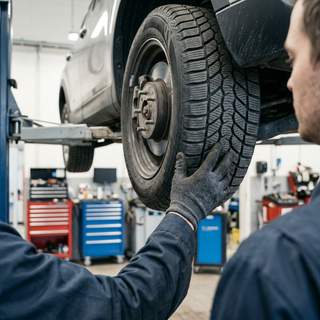
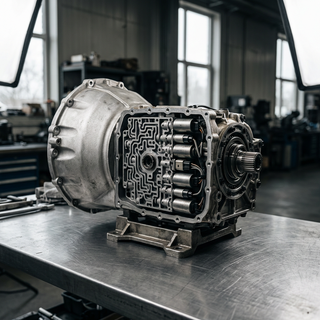
Is a Ford Protect Extended Service Plan Worth Buying for Truck Transmission Protection? Is a Ford Protect Extended Service Plan Worth Buying for Truck Transmission Protection? A Ford Protect Extended Service Plan is worth the investment for truck owners planning to keep their pickup beyond the factory 5-year/60,000-mile powertrain warranty, because major internal transmission repairs routinely exceed the plan's cost. With internal mechanical repairs or full unit replacements on modern transmissions running thousands of dollars, a factory-backed plan provides guaranteed repair coverage using genuine components installed by factory-trained technicians without out-of-pocket exposure beyond your chosen deductible. In my decade running our service department, truck owners often weigh coverage options right around their scheduled maintenance checkups. Factory powertrain protection offers solid initial security, but modern heavy-duty drivetrains operate under demanding conditions. When hauling heavy loads or navigating steep river valley climbs, internal heat and mechanical stress build up over tens of thousands of miles. A Ford Protect plan covers key mechanical assemblies like the planetary gear sets, valve body, torque converter, and electronic control solenoids. Unlike many third-party service contracts that dispute diagnostic charges or require salvaged internal parts, a Ford plan covers diagnostic labor and uses direct factory parts. Modern pickup electronics also integrate heavily with the powertrain control modules. If low electrical voltage triggers communication faults or erratic solenoid switching, our technicians run comprehensive electrical checks, including routine battery service testing, before diving into mechanical tear-downs. If you want to consult directly with our service advisers about plan coverage, you can give our team a quick phone call or stop by our service desk at 1503 Pennsylvania Ave to review vehicle-specific options. Table of Contents Common Warning Signs of Ford Truck Transmission Trouble What Causes Shuddering, Vibration, and Harsh Shifts in Ford 10-Speed Transmissions? How Ford's Adaptive Transmission Shift Scheduling Software Works Primary Failure Points of the Ford 6R80 Six-Speed and Lessons Learned Remanufactured Ford OEM 10R80 Transmissions Versus Aftermarket Rebuilds Transmission Symptoms and Repair Steps to Discuss with Our Service Team Common Warning Signs of Ford Truck Transmission Trouble The earliest warning signs of transmission distress in Ford trucks include delayed gear engagement, harsh upshifts between specific gears, shuddering under steady cruising speeds, and unexpected hesitation during deceleration. Catching these drivability symptoms early prevents localized mechanical wear, such as clutch plate glazing or valve body contamination, from spreading metal debris through the fluid passages and ruining the planetary gear sets. Gear engagement delays often become noticeable when shifting from park into drive or reverse after the truck sits overnight. A noticeable two-to-three-second pause followed by an abrupt clunk indicates that line pressure is bleeding off internally. On the road, drivers frequently notice erratic behavior when the gearbox transitions between third, fourth, and fifth gears, or when slowing down to a complete stop and feeling a hard bump as the gearbox drops into first gear. Another frequent complaint is a sudden sensation like driving over highway rumble strips under light throttle between 35 and 55 mph. Ignoring these early symptoms leads to increased friction and high internal operating temperatures. Metal shavings from dragging clutch packs quickly circulate through the oil cooler and lodge in fine valve body bores. For truck owners managing busy work schedules who cannot make an immediate trip to our shop for minor inspections or preliminary diagnostic scans, our Ford mobile service unit can handle routine inspections, select recall checks, and scheduled maintenance directly in your driveway or job site. What Causes Shuddering, Vibration, and Harsh Shifts in Ford 10-Speed Transmissions? Shuddering and harsh shifting in the 10R80 10-speed automatic transmission stem primarily from torque converter clutch slippage, degraded fluid viscosity, sticking valve body solenoids, or internal sleeve migration within earlier CDF clutch drum assemblies. When these mechanical or hydraulic faults develop, the transmission control module cannot maintain precise clutch apply pressures, leading to harsh clunks, gear hunting, and persistent low-frequency vibration. The CDF clutch drum issue represents the most significant mechanical failure point on units manufactured before mid-August 2022. Inside earlier iterations of the drum, the internal cylindrical bushing sleeve lacked a positive mechanical stop. Under continuous heat cycles and hydraulic pressure, this sleeve could walk or slide axially along the shaft. As the sleeve moved out of position, it partially blocked critical hydraulic oil feed passages. This fluid restriction causes pressure loss across the C, D, and F clutch packs, resulting in severe gear slipping, delayed shifts, and intermittent neutral dropouts under load. Ford subsequently updated the assembly by engineering a revised drum with a machined retention lip that prevents the sleeve from wandering. Shudder during steady-speed cruising often points to the torque converter lockup clutch slipping as friction material glazes or automatic transmission fluid shears down over time. Contaminated fluid causes variable force solenoids in the main control valve body to stick, producing erratic hydraulic pressure spikes. For truck owners experiencing these driveability issues across the elevation changes along the riverfront bluffs in East Liverpool, scheduling a prompt diagnosis is essential. To keep your workday uninterrupted during multi-day repairs, you can utilize our pickup and delivery service to have your truck collected from your home or office and returned once repairs are complete. How Ford's Adaptive Transmission Shift Scheduling Software Works Ford's adaptive shift scheduling software uses continuous algorithmic learning inside the transmission control module to match clutch pressure delivery and shift points to real-time driver inputs, vehicle weight, and driving conditions. The system monitors throttle position, engine load, brake switch activation, and road incline, automatically altering shift timing to balance fuel economy, passenger comfort, and acceleration responsiveness. During normal operation, the control software records internal clutch engagement timing down to milliseconds. As mechanical components bed in and fluid properties fluctuate with temperature, the software updates its adaptive pressure tables to ensure smooth shifts. However, rapid changes in vehicle usage, such as switching from empty highway commuting to towing a heavy equipment trailer up steep grades, can cause temporary shifting hesitation while the module recalculates optimal clutch apply pressures. Problems arise when owners mistake mechanical clutch slippage for adaptive software learning. If a transmission consistently bangs into gear or slips between third and fifth gear regardless of drive mode, the issue lies in internal hydraulic leakage or solenoid wear rather than software recalibration. In our shop, our technicians begin diagnosis by checking for diagnostic trouble codes, evaluating real-time shift adaptations using specialized diagnostic software, and clearing the adaptive shift tables only after mechanical hydraulic integrity has been confirmed. Primary Failure Points of the Ford 6R80 Six-Speed and Lessons Learned The primary failure point of the 6R80 six-speed automatic transmission was the molded lead frame assembly inside the main control valve body, which housed the output shaft speed sensor and range selector electronics. When electrical signal degradation occurred between the speed sensor and the powertrain control module, the system lost vehicle speed data, frequently causing the transmission to downshift unexpectedly into first gear at highway speeds. This abrupt downshift presented serious drivability concerns, prompting factory safety recalls and warranty extensions on affected models, including 2015 through 2017 trucks. The remedy centered on powertrain software calibrations to prevent uncommanded first-gear lockouts if the speed sensor signal drops, along with physical replacement of the molded lead frame and connector sleeve when diagnostic codes confirmed circuit failure. Beyond the lead frame, high-mileage 6R80 units occasionally developed cracks in the forward clutch drum weld and suffered torque converter clutch wear from extended fluid service intervals. The engineering lessons gained from the 6R80 directly influenced subsequent transmission generations: Upgraded electrical connector seals that resist long-term thermal embrittlement Advanced fail-safe software protocols that hold the current gear ratio if sensor signals degrade Stricter fluid filtration standards and refined fluid formulations to prevent internal varnish buildup Redesigned internal pressure circuits to safeguard hydraulic stability across severe duty cycles Remanufactured Ford OEM 10R80 Transmissions Versus Aftermarket Rebuilds A genuine remanufactured Ford OEM 10R80 transmission pricing varies by application and availability, whereas an independent aftermarket rebuild also varies before labor charges. While options may vary by provider, a factory remanufactured unit provides complete assembly-line precision, mandatory engineering updates, and superior nationwide warranty backing. When our service department installs a genuine factory remanufactured transmission, the unit arrives directly from Ford with every engineering revision pre-installed, including the updated CDF clutch drum featuring the machined retention lip, fully tested variable force solenoids, and a pre-calibrated valve body. In contrast, local independent rebuilds often reuse marginally worn planetary gear sets, shafts, or electronic solenoids to keep the parts bill lower. If an aftermarket shop fails to install the revised drum assembly or misaligns internal Teflon seals, the transmission can develop identical shifting failures within a few thousand miles. Furthermore, genuine Ford remanufactured powertrain assemblies carry a nationwide warranty that covers both parts and labor at any authorized dealership across the country. If an aftermarket unit fails while you are traveling out of state, independent shop warranties rarely cover out-of-area labor or towing expenses. For commercial fleets and DIY operators seeking replacement hardware, our department provides direct access to factory assemblies when you order genuine Ford parts through our catalog. Transmission Symptoms and Repair Steps to Discuss with Our Service Team Accurate diagnosis starts with an open, detailed discussion between you and our service department regarding exactly when, where, and how your truck exhibits transmission symptoms. When bringing your truck in, documenting engine operating temperature, specific gear changes, towing loads, and weather conditions helps our technicians reproduce the condition quickly and verify the root cause. When you bring your vehicle in, we follow a comprehensive diagnostic and repair process: Connecting factory diagnostic equipment to pull stored diagnostic trouble codes and review transmission freeze-frame data. Inspecting transmission fluid level and condition to check for burnt fluid or microscopic metal contamination. Conducting a technician road test while recording live transmission control module data parameters. Performing a technical service bulletin review to check for applicable software calibration updates or mechanical campaigns. Providing a transparent repair estimate detailing whether the fix requires a software update, a main valve body overhaul, or a complete unit replacement. Local driving habits play a major role in powertrain wear. For contractors towing heavy landscaping trailers through the rolling terrain around Calcutta, elevated fluid temperatures can accelerate clutch wear faster than steady highway driving. If your truck experiences sudden downshifts, slipping, or shuddering on the road, emergency transport can be arranged through Ford Roadside Assistance: 1-800-241-3673, which provides authorized towing directly to our repair bays. To have our certified technicians inspect your drivetrain and protect your truck for years to come, schedule a service appointment online with our team, contact our service desk directly by calling (330) 462-7578, or visit us at Tri State Ford located at 1503 Pennsylvania Ave. © 2026 Tri State Ford. All rights reserved. Ford Protect Plans in East Liverpool, OH | Tri State Ford
f

Is a Mobile Oil Change Service Worth It?

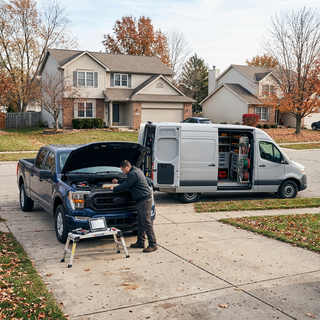
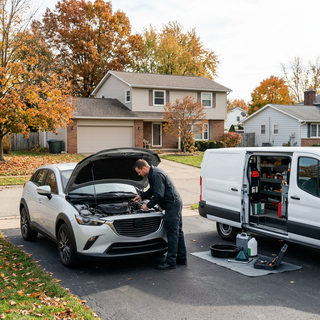
Is a Mobile Oil Change Service Worth It? A mobile oil change service is worth it because it delivers professional-grade vehicle maintenance directly to your driveway or workplace without service fee markups, saving up to two hours of driving and waiting room downtime. By utilizing factory-certified technicians who arrive with specialized containment systems and genuine manufacturer parts, vehicle owners maintain complete warranty protection while eliminating the hassle, mess, and scheduling conflicts of traditional auto shop visits. Taking care of routine engine maintenance should fit seamlessly into a busy week. For working professionals and families managing busy schedules around Calcutta, having a professional service van pull right up to the house turns a mandatory chore into a hands-off task. You do not need to rearrange your morning commute, coordinate rides, or sit in a customer lounge while waiting for an oil change. The technician handles the entire procedure outside while you stay focused on your work or family priorities inside. Beyond time savings, mobile care delivers complete transparency and peace of mind. You can watch the service take place on your own property and verify that factory-recommended oil grades and OEM filters go directly into your engine. When you want to combine convenient at-home care with expert dealership support, our team at Tri State Ford is always ready to assist. You can reach our team directly at (330) 462-7578 or drop by our convenient East Liverpool location to learn more about our complete service offerings. Table of Contents How Does a Mobile Oil Change Work and What Tools Do Technicians Bring? Are There Extra Travel Fees for Mobile Mechanics Coming to Your Location? Can Mobile Services Handle Full Synthetic Oil Changes for High-Performance Engines? Does Using a Mobile Maintenance Service Void Your Vehicle's Factory Warranty? Mobile Oil Change vs. DIY: Is Professional Mobile Service Safer and More Convenient? Common Questions About Mobile Maintenance and Scheduled Service How Does a Mobile Oil Change Work and What Tools Do Technicians Bring? A mobile oil change operates as a fully equipped rolling service bay where a certified technician brings custom fluid extraction units, vehicle lifts, new Motorcraft oil, and OEM filters directly to your vehicle. The technician performs a complete drain and refill, replaces the filter, conducts a multi-point inspection, and safely secures all used fluids without taking your vehicle off-site. Mobile service vans carry high-capacity pneumatic vacuum pumps, specialized low-profile hydraulic jacks, heavy-duty jack stands, and zero-drip oil containment systems designed to prevent any fluid from touching your driveway. Whether servicing a commuter crossover or a hard-working truck from our F-Series work truck inventory, the technician selects the precise oil viscosity and filter type required for your exact engine. For example, a heavy-duty pickup powered by a 3.5L engine paired with a SelectShift automatic transmission requires specific fluid volumes and filter specifications that mobile technicians have stocked and ready before arriving at your door. The service process follows strict technical standards: Setting up spill-prevention matting under the engine bay. Extracting or draining used engine oil directly into sealed, spill-proof storage containers. Installing a factory-certified filter replacement using proper torque specifications. Refilling the crankcase with premium synthetic blend or full synthetic oil matching OEM standards. Executing a visual checkup covering battery health, belt wear, hose integrity, and tire pressure. Every component used during mobile care meets or exceeds original manufacturer standards. Owners who prefer maintaining their own vehicles can easily order genuine OEM parts online through our dealership, but choosing mobile service gives you those exact high-quality components installed with professional precision right at home. Are There Extra Travel Fees for Mobile Mechanics Coming to Your Location? Most dealership-backed mobile oil change programs build travel costs directly into flat-rate maintenance pricing or offer complimentary travel within a designated service radius. Independent mobile mechanics may charge a standalone travel fee varies by service area depending on distance, but factory-supported mobile services eliminate surprise trip charges for standard scheduled maintenance. Transparent pricing is a core priority for modern vehicle care. For drivers living along the riverfront bluffs or navigating steep residential driveways in East Liverpool, mobile service brings factory-level maintenance straight to your street without hidden mileage surcharges. Before any work begins, you receive a clear price quote that outlines the exact cost of the oil, filter, labor, and routine checkup steps. Mobile maintenance packages often package routine care into comprehensive options like The Works, which bundles a synthetic-blend oil change, tire rotation, pressure check, brake inspection, fluid top-off, and battery test into a single transparent price. Because travel costs within the local service area are covered as part of the overall owner experience, mobile service delivers remarkable financial value alongside unmatched convenience. Can Mobile Services Handle Full Synthetic Oil Changes for High-Performance Engines? High-performance and EcoBoost engines require precise synthetic oil formulations, which mobile technicians carry to ensure optimal engine protection on-site. Mobile service units carry premium synthetic formulations designed to withstand high thermal stress, protecting turbochargers and internal engine components just as effectively as a traditional service bay. Modern turbocharged engines require high-grade synthetic lubricants that flow quickly at cold startup and resist breaking down under high operating temperatures. Whether your vehicle is equipped with a high-output 2.3L engine or a fuel-efficient 1.5L engine paired with an automatic 8-speed transmission, mobile vans stock the exact synthetic viscosity specified in your owner manual. Utilizing full synthetic oil preserves engine power, protects critical turbo bearings, and optimizes fuel economy across every driving condition. During a mobile appointment, technicians follow strict fluid-handling protocols to ensure clean filling without contamination. You can easily schedule a service appointment online to select full synthetic protection, ensuring your vehicle receives the exact high-performance lubricants it needs to run reliably for years to come. Does Using a Mobile Maintenance Service Void Your Vehicle's Factory Warranty? Using a mobile maintenance service does not void your vehicle's factory warranty under federal protection granted by the Magnuson-Moss Warranty Act. As long as the service uses manufacturer-compliant fluids and filters while maintaining clear digital records, your vehicle retains full warranty coverage. Federal warranty law strictly prohibits manufacturers or dealers from voiding a vehicle warranty simply because scheduled maintenance was performed outside a traditional dealership workshop or by a mobile provider. Key warranty protections include: Freedom of Service Choice: Owners can choose where and how routine maintenance is performed without invalidating bumper-to-bumper or powertrain warranties. Parts Protection: Warranties remain fully intact as long as replacement filters and oils meet original manufacturer performance specifications. Digital Record Keeping: Mobile appointments log detailed service histories, documenting exact dates, mileage, oil types, and inspection results. Utilizing our official Ford Mobile Service program provides an extra layer of confidence, as all completed work updates directly into your central vehicle history record. That digital paper trail satisfies every factory warranty requirement while giving future buyers verified proof of proper vehicle upkeep. Mobile Oil Change vs. DIY: Is Professional Mobile Service Safer and More Convenient? Professional mobile oil service is significantly safer and cleaner than DIY maintenance because certified technicians use heavy-duty jack stands, spill-containment mats, and sealed fluid recovery units that eliminate dangerous vehicle lifts and toxic waste disposal hassles. While changing oil yourself saves a small amount in labor, mobile service provides professional multi-point safety checks, proper torque verification, and certified environmental recycling without any physical strain or cleanup. Changing motor oil in a residential driveway carries real safety risks and technical challenges. Crawling under a vehicle raised on portable ramps or consumer hydraulic jacks creates safety hazards, while overtightening a drain plug can strip oil pan threads and cause expensive engine damage. Furthermore, collecting and transporting used motor oil to an approved recycling center takes extra time and risks messy spills inside your personal vehicle. Mobile technicians bring professional equipment and environmental controls directly to you. In addition to changing your oil safely, the technician performs essential preventive maintenance checks that DIYers often skip, such as testing electrical charging systems. If your vehicle shows signs of slow starting or low voltage, the technician can perform a comprehensive check and guide you through expert battery service options before a weak battery leaves you stranded. Common Questions About Mobile Maintenance and Scheduled Service Q: How much time does a mobile oil change save compared to visiting a service center? A mobile oil change takes roughly 20 to 30 minutes of on-site service time while your vehicle remains parked in your driveway or office spot. By eliminating round-trip driving, service desk check-ins, and sitting in a lounge, you save between 60 and 90 minutes of active time compared to a conventional shop visit. Q: What additional checks take place during a mobile oil change appointment? A standard mobile oil change includes a comprehensive multi-point inspection covering vital safety components. The technician checks windshield washer fluid, engine coolant, and brake fluid levels, inspects belts and hoses for cracking, measures tire tread depth and inflation pressure, and tests battery health to ensure overall vehicle reliability. Q: Can I schedule mobile service using the Ford App? Yes, owners can schedule mobile appointments directly through the Ford App. The mobile platform sends automated maintenance notifications based on your vehicle mileage, displays full service history, and connects you directly with your preferred local dealership to select convenient mobile service times. Q: What happens if my vehicle needs major repairs during a mobile oil service? If a technician identifies a complex mechanical issue during the mobile inspection that requires a lift or specialized shop machinery, they will document the issue clearly. Our dealership can then arrange complimentary pickup and delivery to bring your vehicle to our service facility, complete the required repair, and return it safely to your driveway. Q: How is emergency roadside assistance handled if my vehicle breaks down on the road? For unexpected roadside emergencies, flat tires, or battery failures while traveling, official manufacturer roadside protection provides dedicated support. You can call Ford Roadside Assistance at 1-800-241-3673 for immediate, 24/7 emergency dispatch, towing to authorized service facilities, and factory-backed repair assistance wherever you are. Taking proactive care of your vehicle has never been simpler. Whether you prefer the total convenience of mobile driveway service or need a comprehensive checkup at our shop, our expert service team is dedicated to keeping your vehicle running safely and smoothly. Contact our service department today at (330) 462-7578 or stop by our Tri State Ford service department to reserve your next maintenance appointment. © 2026 Tri State Ford. All rights reserved. Vehicle specification data © JATO Dynamics Limited. Mobile Oil Change Services in East Liverpool OH | Tri State Ford

f

How Often Should You Schedule Routine Vehicle Maintenance?

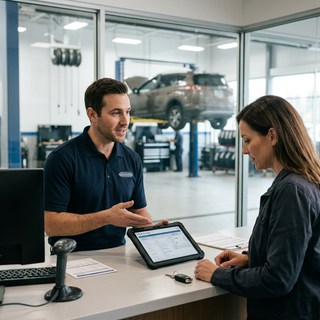
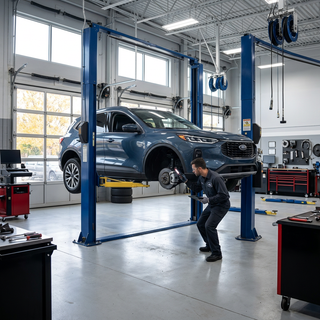
How Often Should You Schedule Routine Vehicle Maintenance? Modern vehicles require routine maintenance every 6 months or 5,000 to 7,500 miles under standard driving conditions, whichever comes first. Primary service visits include an engine oil and filter change, tire rotation, visual brake inspection, and fluid level checks. Following your vehicle's specific maintenance schedule ensures consistent engine performance, prolongs component longevity, and keeps your factory warranty protections intact. ROUTINE SERVICE INTERVALS SERVICE ITEM STANDARD INTERVAL SEVERE SERVICE Engine Oil & Filter Change 5,000 - 7,500 miles 3,000 - 5,000 miles Tire Rotation & Inspection 5,000 - 7,500 miles 5,000 miles Engine Air Filter 15,000 - 30,000 miles 10,000 - 15,000 miles Cabin Air Filter 15,000 - 20,000 miles 10,000 - 15,000 miles Brake Fluid Flush Every 2 Years / 24,000 mi Every 2 Years Transmission Fluid Service 60,000 - 100,000 miles 30,000 - 50,000 miles Every model relies on specific engineering criteria to determine maintenance frequency. For example, a 2026 Ford Escape operating as a daily family commuter utilizes built-in software algorithms to evaluate engine operating temperatures, trip lengths, and ambient conditions. When drivers ask our service advisors about oil life monitoring systems, they often wonder if the dashboard notification counts simple mileage or measures actual operating stress. Advanced systems like the Intelligent Oil-Life Monitor® analyze actual driving habits to notify you precisely when service is needed, rather than relying on guesswork. Suburban commuters driving along Market Street near Boardman accumulate miles on mixed highway routes, making a structured 7,500-mile inspection schedule ideal for maintaining efficiency. During a standard maintenance visit, trained technicians perform essential care steps: Draining spent engine oil and replacing the engine oil filter with genuine OEM components Rotating tires to balance tread wear across front and rear axles Inspecting brake pads, rotors, and hydraulic lines for premature wear Testing battery cold-cranking amps and cleaning terminal connections Checking and topping off windshield washer, power steering, and coolant fluids Staying aligned with manufacturer guidelines keeps your vehicle reliable through every season. You can easily find our dealership address at 1503 Pennsylvania Ave to stop by for routine service, or give our team (330) 462-7578 to speak directly with an advisor. Table of Contents What Is the Standard Interval for Synthetic Oil and Can It Go 15,000 Miles? What Is Considered Severe Driving Conditions for Vehicle Maintenance? Does Servicing at an Independent Shop Void Your Manufacturer Warranty? How Much Can Proper Routine Maintenance Save in Long-Term Repair Costs? Frequently Asked Questions About Vehicle Maintenance Schedules What Is the Standard Interval for Synthetic Oil and Can It Go 15,000 Miles? Full synthetic motor oil typically requires replacement every 7,500 to 10,000 miles or once per year under normal driving conditions. While select extended-drain synthetic oils advertise a 15,000-mile operating lifespan, stretching oil changes to 15,000 miles can increase engine wear and risk voiding factory warranty protections if your vehicle manual specifies shorter intervals. +-----------------------------------------------------------------------------------+ | OIL TYPE INTERVAL COMPARISON | +-----------------------------------------------------------------------------------+ | OIL TYPE | RECOMMENDED INTERVAL | MAXIMUM TIME DURATION | +-----------------------+--------------------------+--------------------------------+ | Conventional Motor Oil| 3,000 - 5,000 miles | 6 Months | | Synthetic Blend Oil | 5,000 - 7,500 miles | 6 to 12 Months | | Full Synthetic Oil | 7,500 - 10,000 miles | 12 Months | | Extended-Drain Synth | Up to 15,000 miles* | 12 Months (Conditions Apply) | +-----------------------------------------------------------------------------------+ * Always defer to manufacturer owner's manual specifications to maintain warranty coverage. Synthetic motor oil features highly refined base stock and advanced chemical additives engineered to resist thermal breakdown, oxidation, and sludge formation better than conventional oils. Modern turbocharged engines—such as the 2.3L EcoBoost® engine in the 2026 Ford Explorer or the 3.5L EcoBoost® engine in the 2026 Ford F-150 —generate intense heat within the turbocharger housing. Synthetic oil maintains its viscosity under extreme temperature swings, protecting critical internal components during heavy acceleration and highway cruising. Despite the chemical durability of extended-drain synthetic oils, engine oil filters accumulate microscopic metallic particles, carbon deposits, and airborne dust over time. Even if the synthetic oil molecules remain intact at 12,000 or 14,000 miles, a saturated filter can allow unfiltered oil to bypass the element entirely through the bypass valve. Furthermore, fuel dilution occurs naturally as small amounts of unburned gasoline pass piston rings during cold starts, thinning the oil and degrading its lubricating film. Adhering to the manufacturer's specified interval preserves critical powertrain protection. Following the vehicle-specific Owner's Manual guidance ensures your engine receives fresh oil and a clean filter before contamination limits lubricating efficiency. What Is Considered Severe Driving Conditions for Vehicle Maintenance? Severe driving conditions occur when vehicles experience frequent short trips under 5 miles, heavy towing, extensive idling, off-road driving, or operation in extreme sub-freezing temperatures with heavily salted roads. Under severe driving conditions, routine maintenance intervals should shorten to every 3,000 to 5,000 miles or every 6 months to protect vital mechanical components. NORMAL VS. SEVERE OPERATING CONDITIONS OPERATING FACTOR NORMAL CONDITIONS SEVERE CONDITIONS Trip Length Over 10 miles highway Under 5 miles city driving Ambient Temperature Moderate (30°F to 90°F) Sub-freezing or Extreme Heat Vehicle Payload Passengers & Light Gear Heavy Cargo & Frequent Towing Road Environment Paved, clean highways Dusty, muddy, or salted roads Engine Operation Steady cruise speeds Extensive idling/Stop-and-Go Engine oil needs to reach full operating temperature—typically around 200°F—to burn off water vapor created during combustion. Short commutes prevent the crankcase from heating fully, allowing moisture and unburned fuel to accumulate in the oil pan and form corrosive acid sludge. Additionally, local winter weather introduces sub-freezing temperatures where thick oil flow during cold starts subjects bearings and valve trains to elevated friction. Vehicles used for work or heavy utility face unique mechanical stress: Heavy Towing and Hauling: Pulling up to 10,400 lbs with an F-150 or 5,000 lbs with an Explorer elevates transmission fluid temperatures and accelerates brake pad wear. Dusty and Off-Road Environment: Driving on unpaved or gravel routes clogs the engine air filter rapidly, reducing fuel economy and engine output. Extended Idling and Stop-and-Go Traffic: Low-speed driving limits airflow through the radiator, increasing engine bay temperatures and reducing fan belt and hose longevity. The rolling hills and short-trip suburban errands around State Route 170 in Calcutta fall under severe driving schedules during sub-freezing winter months due to frequent cold starts and heavy road salt exposure. Checking our current manufacturer service offers can help keep your vehicle on a protective maintenance routine tailored to regional weather demands. Does Servicing at an Independent Shop Void Your Manufacturer Warranty? Servicing your vehicle at an independent repair shop or performing maintenance yourself does not void your manufacturer warranty. Under federal law established by the Magnuson-Moss Warranty Act, a warrantor cannot deny coverage simply because routine maintenance was performed outside an authorized dealership, provided proper service intervals and component specifications were followed. DEALERSHIP SERVICE VS. INDEPENDENT SERVICE SERVICE FEATURE DEALER SERVICE CENTER INDEPENDENT SHOP Factory-Certified Techs Yes (Brand Specific) Varies (General Automotive) Genuine OEM Parts Standard Replacement Aftermarket / Generic Digital Service History Automatic Ford Syncing Manual Paper Receipts TSB & Recall Updates Integrated Diagnostics Not Automatically Checked Warranty Claim Handing Direct Manufacturer Requires Customer Claim To safeguard your warranty rights when using an independent shop or completing DIY care, you must maintain complete service documentation. Ford states that failing to perform scheduled maintenance can affect warranty coverage for related components, making organized records essential. A complete record folder should include: Detailed repair orders or receipts showing the exact date and odometer reading Itemized parts documentation listing approved fluid grades and OEM filter part numbers A structured maintenance log recording every service milestone While independent shops offer basic maintenance capabilities, factory-authorized dealer service delivers specialized advantages. Dealer technicians receive continuous manufacturer training on specific engine architectures, electronic control modules, and safety systems like blind spot monitoring. Furthermore, service completed at our facility automatically syncs to your personal Ford account and Ford App. Independent facilities cannot perform open recall repairs or install automatic factory software updates, which require specialized diagnostic equipment. Exploring our monthly service specials allows you to maintain original equipment quality and factory-trained care while managing your vehicle ownership budget. How Much Can Proper Routine Maintenance Save in Long-Term Repair Costs? Staying current on routine vehicle maintenance saves thousands of dollars over a vehicle's operating lifespan by preventing secondary system damage and premature component breakdown. Small investments in fluid flushes, filter changes, and wear inspections protect complex assemblies like engines, automatic transmissions, and transfer cases from catastrophic failure. PREVENTIVE MAINTENANCE SAVINGS BREAKDOWN ROUTINE MAINTENANCE ITEM PREVENTIVE COST PREVENTED REPAIR CAUSED BY NEGLECT Routine Oil & Filter Minor Service Engine Replacement / Turbo Damage Coolant System Flush Routine Service Radiator & Head Gasket Failure Brake Pad Replacement Wear Maintenance Rotor & Caliper Overhaul Transmission Fluid Flush Interval Care Complete Transmission Rebuild Tire Rotations & Balancing Basic Care Premature 4-Tire Replacement Mechanical systems function through precise tolerances. When engine oil breaks down, friction accelerates wear on bearings, camshafts, and cylinder walls. Replacing engine oil every 7,500 miles costs a small fraction of replacing an entire engine block or twin-turbocharger assembly. Similarly, operating a SelectShift® automatic transmission with contaminated fluid leads to internal clutch slipping, overheating, and valve body failure. Key preventive maintenance areas that protect long-term value include: Brake System Care: Replacing brake pads before they wear down to the backing plate prevents costly scoring of brake rotors and caliper piston damage. Cooling System Maintenance: Fresh coolant prevents internal corrosion inside the aluminum engine block and heater core, eliminating overheating risks. Tire Alignment and Rotation: Regular rotations ensure balanced tread wear across all four tires, maximizing tread life and protecting all-wheel-drive transfer cases from rotational strain. Investing in minor preventive care preserves overall resale value and ensures your vehicle remains dependable for every commute. You can easily schedule a service appointment online to keep your vehicle running smoothly, or order genuine Ford parts for authentic factory components designed specifically for your model. Frequently Asked Questions About Vehicle Maintenance Schedules Q: What is included in a standard multi-point safety inspection during maintenance? A comprehensive multi-point inspection covers vital safety, mechanical, and wear components throughout your vehicle. Technicians evaluate brake pad thickness, rotor condition, tire tread depth, battery health, suspension bushings, steering linkages, and exhaust integrity. They also test exterior lighting, wiper blade performance, and check all fluid levels—including engine coolant, transmission fluid, brake fluid, and power steering fluid—to catch potential issues before they cause unexpected breakdowns. Q: How often should cabin and engine air filters be replaced? Engine air filters generally require replacement every 15,000 to 30,000 miles, though driving on unpaved, dusty, or gravel roads requires shorter replacement intervals. Cabin air filters, which clean heating and air conditioning air entering the passenger cabin, should be replaced every 15,000 to 20,000 miles or roughly once per year. Replacing the engine filter maintains proper fuel economy, while fresh cabin filters prevent HVAC odors and improve interior air quality. Q: When should automatic transmission fluid be changed? Automatic transmission fluid intervals range from 60,000 to 100,000 miles under normal operating conditions. However, vehicles subjected to severe service—such as frequent trailer towing, heavy cargo hauling, or mountain driving—should have their transmission fluid serviced every 30,000 to 50,000 miles. Fresh transmission fluid cools internal clutch packs, maintains smooth shift performance, and removes abrasive metallic particles from the fluid channels. Q: How does cold winter weather impact 12-volt vehicle battery lifespan? Prolonged sub-freezing winter temperatures slow down the chemical reactions inside a 12-volt lead-acid battery, reducing its cold-cranking power by up to 50 percent. At the same time, cold engine oil increases cranking resistance, requiring more energy to start the vehicle. Most vehicle batteries last 3 to 5 years; having your battery tested annually before winter ensures reliable starting performance when temperatures drop. Q: What documentation is required to support a factory warranty claim? To support a factory warranty claim, you should provide itemized receipts or repair orders showing the vehicle identification number, service dates, odometer readings, and exact work performed. Receipts must verify that recommended fluid specifications, such as approved viscosity grades, were used during maintenance. Keeping an organized folder with dated invoices provides complete evidence that required maintenance was performed according to owner manual guidelines. Keeping your vehicle in top condition is straightforward when guided by expert care. You can find our East Liverpool service center right in your neighborhood, or give our service team (330) 462-7578 a call to set up your next vehicle inspection today. © 2026 Tri State Ford. All rights reserved. Vehicle specification data © JATO Dynamics Limited. Routine Vehicle Maintenance in East Liverpool, OH | Tri State Ford
5

What Is the Average Annual Maintenance and Repair Cost for a Ford Explorer?

What Is the Average Annual Maintenance and Repair Cost for a Ford Explorer? The average annual maintenance and repair cost for a Ford Explorer is approximately $732, placing it right in line with midsize three-row SUV segment benchmarks. Owners typically experience an unscheduled repair frequency of just 0.2 visits per year, which is lower than the 0.4 annual average for the midsize SUV category. While routine maintenance accounts for scheduled visits, major system failures remain relatively uncommon when factory service schedules are followed. Routine preventative maintenance makes up the majority of those yearly expenditures during early ownership. Standard scheduled tasks like engine oil changes, tire rotations, multi-point visual inspections, and fluid top-offs cost roughly $200 to $350 annually during the first three years. As the odometer accumulates miles, routine wear items like cabin air filters, engine air filters, wiper blades, and brake pads gradually expand the annual budget. Unscheduled mechanical repairs account for the remaining balance. Industry tracking indicates a 14% probability that an unscheduled repair on an Explorer will be classified as a major issue, defined as a repair exceeding three times the average annual cost. Maintaining factory service intervals minimizes this risk, as our certified technicians identify minor fluid degradation or joint wear before it damages major mechanical assemblies. For drivers commuting along State Route 170 near Calcutta, regional elevation changes and winter road treatments place extra demands on suspension components and braking hardware. Staying current on scheduled undercarriage inspections preserves factory tolerances and avoids premature component degradation. Drivers can drop by our dealership at 1503 Pennsylvania Ave, East Liverpool, OH 43920 to consult with our factory-certified technicians or give our team (330) 462-7578 to discuss model-specific maintenance schedules. Table of Contents 2027 Ford Explorer 5-Year Ownership Costs: Depreciation, Fuel, and Insurance Can Basic Ford Explorer Maintenance Be Handled as DIY to Save Money? What Are the Most Common Long-Term Repairs and EcoBoost Turbo Concerns Over 5 to 10 Years? Towing Demands and Long-Term Service: How 5,000 Pounds of Pulling Affects Maintenance Common Questions About Ford Explorer Ownership and Service Costs Plan Your Ford Explorer Ownership Experience with Tri State Ford 2027 Ford Explorer 5-Year Ownership Costs: Depreciation, Fuel, and Insurance Over a five-year ownership cycle driving 15,000 miles per year, a 2027 Ford Explorer incurs an estimated total cost of ownership ranging from roughly $57,000 to $73,000, depending on trim and powertrain selection. Depreciation represents the largest individual expenditure, followed closely by fuel, financing, insurance, and routine mechanical maintenance. The entry-level 2027 Ford Explorer starts with a base MSRP of $38,680 for the Active RWD 100A configuration, while the Active 4WD 100A carries a base MSRP of $40,680, each with a $1,795 destination charge. Stepping up through the lineup, the Active RWD 200A lists at $40,615, the Active 4WD 200A at $42,615, the ST-Line RWD at $44,415, the ST-Line 4WD at $46,415, the Tremor 4WD starting at $49,415, the Platinum at $50,875, the Platinum 4WD at $52,875, the performance-tuned ST at $53,875, and the ST 4WD at $55,875. Five-year depreciation is roughly $22,000 to $25,000 on standard Active trims and exceeds $30,000 on upper trims like the ST. In segment comparisons, the Explorer retains value slightly behind the Toyota Highlander and Honda Pilot, which shed around 38% to 42% over five years, but outpaces domestic rivals like the Chevrolet Traverse and Dodge Durango. Operating costs over 75,000 miles reflect efficient standard powertrains and reasonable insurance ratings: Fuel Expenses: The standard 2.3L EcoBoost four-cylinder paired with the SelectShift automatic achieves an EPA-rated 20 city / 28 hwy / 23 combined in rear-wheel-drive configurations like the Active RWD 100A, Active RWD 200A, and ST-Line RWD. Equipping four-wheel drive shifts those numbers to 20 city / 27 hwy / 23 combined on the Active 4WD 100A, Active 4WD 200A, ST-Line 4WD, and Platinum 4WD. The high-output 3.0L EcoBoost V6 delivers 17 city / 25 hwy / 20 combined on the rear-wheel-drive ST and 17 city / 24 hwy / 20 combined on the ST 4WD, while the trail-ready Tremor 4WD checks in at 18 city / 22 hwy / 20 combined. Over five years, fuel budgets typically range from $12,500 to $15,000 based on standard pump averages. Insurance Costs: Annual full-coverage insurance premiums for the Explorer average between $1,650 and $1,980 for a driver with a clean record, or roughly $138 to $165 monthly. Standard safety gear, including Pre-Collision Assist with Automatic Emergency Braking, the Blind Spot Information System, and Lane-Keeping System, helps keep underwriting risk competitive with segment averages. Factory Protection: Every new Explorer comes guarded by Ford factory warranties, including a 3-year/36,000-mile bumper-to-bumper limited warranty, a 5-year/60,000-mile powertrain warranty, and a 5-year/unlimited-mile corrosion warranty. Ford roadside assistance provides towing to the nearest authorized Ford service center, flat tire changes, battery jump-starts, and lockout assistance. You can reach manufacturer dispatch directly via Ford Roadside Assistance: (800) 241-3673, ensuring factory-backed emergency support. Ford also provides a one-year subscription to the Ford Security Package starting from the original warranty date. Shoppers evaluating long-term budgets can explore our new Ford inventory to cross-reference equipment packages and window stickers across every available Explorer configuration. 2027 Ford Explorer Pricing Pricing by trim Trim Base MSRP Destination charge Active 4WD 100A $40,680 $1,795 Active 4WD 200A $42,615 $1,795 Active RWD 100A $38,680 $1,795 Active RWD 200A $40,615 $1,795 Platinum $50,875 $1,795 Platinum 4WD $52,875 $1,795 ST $53,875 $1,795 ST 4WD $55,875 $1,795 ST-LINE 4WD $46,415 $1,795 ST-LINE RWD $44,415 $1,795 Tremor 4WD Starting at $49,415 $1,795 Utility Police Interceptor 4x4 $49,050 $1,795 2027 Ford Explorer Fuel Economy Fuel economy and range by trim Trim MPG Active 4WD 100A 20 city / 27 hwy / 23 combined Active 4WD 200A 20 city / 27 hwy / 23 combined Active RWD 100A 20 city / 28 hwy / 23 combined Active RWD 200A 20 city / 28 hwy / 23 combined Platinum 20 city / 28 hwy / 23 combined Platinum 4WD 20 city / 27 hwy / 23 combined ST 17 city / 25 hwy / 20 combined ST 4WD 17 city / 24 hwy / 20 combined ST-LINE 4WD 20 city / 27 hwy / 23 combined ST-LINE RWD 20 city / 28 hwy / 23 combined Tremor 4WD 18 city / 22 hwy / 20 combined Utility Police Interceptor 4x4 — Can Basic Ford Explorer Maintenance Be Handled as DIY to Save Money? Routine preventative maintenance on a Ford Explorer can be completed at home to save 50% to 70% on standard labor charges. Tasks like swapping engine air filters, replacing cabin air filters, installing fresh wiper blades, exchanging 12-volt starting batteries, and performing basic oil changes require straightforward hand tools and basic mechanical knowledge. However, advanced systems like electronic parking brakes, pressurized cooling loops, and transmission fluid checks require specialized diagnostic interfaces that make professional workshop service preferable. The simplest do-it-yourself maintenance items deliver high financial returns with minimal investment in garage equipment: Engine and Cabin Air Filters: Replacing the engine air filter requires popping four metal retaining clips on the airbox housing, lifting the lid, removing the pleated element, and dropping in an authentic Motorcraft replacement. The cabin air filter sits behind the passenger glove compartment, requiring only the dampener cord to be disconnected and the glovebox dropped down. Completing both tasks at home takes under 20 minutes and saves significant workshop labor fees. Wiper Blade Replacement: Standard front and rear wiper assemblies utilize simple pinch-tab or hook connectors that release by hand. Changing blades twice a year preserves clear outward visibility through harsh northeastern weather without requiring a dealership appointment. Battery Replacement: Replacing the group-size 12-volt battery requires a 10 mm socket wrench to loosen the terminal clamps (negative terminal first, positive second) and an 8 mm wrench for the hold-down bracket. After installing a fresh unit, the Battery Monitoring System should be reset so the alternator charging profile matches the new battery's internal resistance. Engine oil and filter changes represent another popular home task, though the Explorer requires proper ramp clearance and oil catch basins. The 2.3L EcoBoost engine uses 6.0 quarts of synthetic-blend or full-synthetic 5W-30 engine oil meeting Ford specification WSS-M2C961-A1. Performing an oil drain and filter replacement at home requires standard jack stands, an oil filter wrench, and a drain pan. Brake pad and rotor replacement falls into an intermediate category. Standard front or rear brake pad replacement averages between $248 and $305 per axle at a certified shop, where parts cost roughly $126 and labor accounts for $122 to $179. Adding replacement rotors increases the axle cost to between $450 and $600. While mechanically inclined owners can compress caliper pistons and bolt in new pads, modern Explorers incorporate an Electronic Parking Brake on the rear axle. Servicing rear pads at home requires entering a dedicated "Brake Maintenance Mode" via steering wheel dashboard menus or an OBD-II scanner to retract the electric caliper servos; forcing the caliper pistons back mechanically without engaging service mode will strip the electronic actuator gears. When vehicle shoppers prefer an Explorer that has already undergone comprehensive factory screening, our inventory of CARFAX 1-Owner pre-owned vehicles offers documented service histories showing whether prior upkeep was handled at certified service bays. What Are the Most Common Long-Term Repairs and EcoBoost Turbo Concerns Over 5 to 10 Years? Over 5 to 10 years of ownership, total cumulative maintenance and repair expenses for a Ford Explorer average approximately $9,000 to $9,800, with mechanical demands concentrating heavily past the 75,000-mile mark. While the initial five years demand only $2,100 to $2,800 in scheduled fluid services and minor wear items, the second five years bring major wearable mechanical items into play, including suspension bushings, wheel bearings, cooling systems, and ignition hardware. Turbocharger longevity on both the 2.3L EcoBoost and the 3.0L EcoBoost V6 depends heavily on oil lubrication quality. Because exhaust gases spin the turbine wheel at speeds surpassing 150,000 RPM under heavy boost, operating temperatures within the center bearing cartridge are extreme. The most common EcoBoost turbocharger concerns center around oil coking in the narrow oil feed lines and bearing journal wear. If oil changes are neglected or low-grade conventional oils are used, heat-degraded oil bakes onto the internal bearing surfaces, restricting oil flow and causing premature shaft play. Utilizing full-synthetic motor oils and replacing spark plugs every 30,000 to 45,000 miles help prevent cylinder misfires that could otherwise dump unburned fuel into the exhaust turbine. Long-term mileage milestones beyond 80,000 miles also bring several predictable repair items: Brake Rotors and Friction Surfaces: Heavy three-row SUVs cycle immense thermal energy into braking hardware. Rotors generally require replacement every two pad cycles due to grooving or lateral runout caused by high heat cycling. Front Wheel Hub Bearing Assemblies: Road impacts and moisture eventually break down internal bearing seals, resulting in a low rumbling or humming noise that changes pitch while turning at highway speeds. Cooling System Components: Thermostat housings, coolant bypass valves, and auxiliary water pumps on EcoBoost engines can develop small seepage points around plastic hose necks and gasket seals after years of thermal expansion and contraction. Suspension Bushings and Ball Joints: Front lower control arm bushings and sway bar end links carry the weight of a 4,300-pound curb weight over pavement imperfections, eventually developing rubber tears that cause front-end clunks over road seams. To safeguard vehicle health, owners can easily order original Motorcraft parts directly from our parts department to ensure direct OEM fitment. For drivers looking to purchase an older model with factory warranty protection, our inventory of certified pre-owned Ford models includes thorough 139-point or 172-point mechanical inspections and comprehensive limited warranty coverage. 2027 Ford Explorer Engine & Performance Powertrain specs by trim Feature Active 4WD 100A Active 4WD 200A Active RWD 100A Active RWD 200A Platinum Platinum 4WD Standard engine 2.3L 2.3L 2.3L 2.3L 2.3L 2.3L Horsepower 300 hp 300 hp 300 hp 300 hp 300 hp 300 hp Torque 310 lb-ft 310 lb-ft 310 lb-ft 310 lb-ft 310 lb-ft 310 lb-ft Transmission SelectShift® SelectShift® SelectShift® SelectShift® SelectShift® SelectShift® Drivetrain Four-wheel drive Four-wheel drive Rear-wheel drive Rear-wheel drive Rear-wheel drive Four-wheel drive Engine & Performance (continued) Feature ST ST 4WD ST-LINE 4WD ST-LINE RWD Tremor 4WD Utility Police Interceptor 4x4 Standard engine 3L 3L 2.3L 2.3L 2.3L 3.3L Horsepower 400 hp 400 hp 300 hp 300 hp 300 hp 318 hp Torque 415 lb-ft 415 lb-ft 310 lb-ft 310 lb-ft 310 lb-ft 260 lb-ft Transmission SelectShift® SelectShift® SelectShift® SelectShift® SelectShift® SelectShift Drivetrain Rear-wheel drive Four-wheel drive Four-wheel drive Rear-wheel drive Four-wheel drive Four-wheel drive Towing Demands and Long-Term Service: How 5,000 Pounds of Pulling Affects Maintenance Properly equipped with the factory Class III Trailer Tow Package, the 2027 Ford Explorer delivers a maximum towing capacity of 5,000 lbs across its entire lineup. Pulling campers, utility trailers, or boats near that maximum weight rating increases thermal stress across the powertrain, prompting Ford to mandate severe-duty maintenance intervals to prevent accelerated wear on the transmission, transfer case, and differentials. Towing places severe mechanical demands across several critical vehicle systems: Transmission Fluid Degradation: Pulling 5,000 pounds causes the torque converter in the 10-speed automatic transmission to generate significantly more heat under sustained hill climbs. Transmission fluid exposed to elevated operating temperatures oxidizes faster, reducing lubricating properties. While normal-duty schedules suggest transmission fluid exchanges at 150,000 miles, regular towing warrants fluid exchanges every 30,000 to 45,000 miles. Rear Differential and Transfer Case Fluids: The rear differential and intelligent four-wheel-drive power transfer unit process sustained high torque loads when towing. Heavy trailering degrades gear lubricants, requiring differential oil drain-and-fill services far sooner than typical highway-only operation. Brake Pad and Rotor Consumption: Stopping a combined vehicle-and-trailer mass accelerates brake friction material wear. Towing on hilly secondary roads can cut brake pad lifespan in half, making frequent rotor thickness checks essential. Tire Wear and Alignment: Towing increases rear axle tongue load, compressing rear coil springs and altering rear wheel camber angles. Rotating tires every 5,000 miles prevents irregular inner-shoulder tread feathering. Families heading toward Mill Creek MetroParks near Canfield Township with a travel trailer or boat will appreciate how smoothly the Explorer manages heavy tongue loads. When hauling seasonal cargo, scheduling preventative fluid services helps avoid mid-season mechanical stress. You can easily schedule a service appointment online with our certified technicians, or if you are considering stepping into a fresh vehicle with updated towing hardware, our team can help you value your trade-in vehicle to evaluate equity toward your next family hauler. Common Questions About Ford Explorer Ownership and Service Costs Q: What is the recommended routine maintenance schedule for a Ford Explorer? Ford outlines scheduled maintenance intervals primarily every 10,000 miles or 12 months under normal driving conditions, monitored by the Intelligent Oil-Life Monitor system. Every 10,000 miles, the vehicle requires an engine oil and filter change, tire rotation, brake inspection, and multi-point vehicle check. At 20,000 miles, the cabin air filter requires replacement. At 30,000 miles, the engine air filter should be swapped, and the fuel system inspected. Spark plugs on turbocharged EcoBoost engines should be replaced at 60,000 to 70,000 miles for optimal combustion, while engine coolant and automatic transmission fluids should be exchanged by 100,000 miles, or earlier under severe operating conditions. Q: How does winter driving and road salt impact Explorer maintenance in northeastern Ohio? Operating in a severe salt-belt environment accelerates exterior corrosion on exposed metal chassis components, brake caliper slide pins, and exhaust hangers. Road salt brine can cause caliper guide pins to seize within their brackets, leading to uneven brake pad wear and premature rotor scoring. Road grit also degrades exposed suspension bushings and rubber ball joint boots over repeated freeze-thaw cycles. We recommend regular undercarriage pressure washes throughout winter months and an annual visual chassis inspection to lubricate caliper pins and protect steel brake lines. Q: How do cold winter temperatures affect the Explorer's 12-volt battery? Sub-freezing temperatures reduce a 12-volt automotive battery's chemical reaction speed, cutting available cold cranking amps by up to 30% to 50% during prolonged freezes while the engine requires thicker oil to turn over. Explorers equipped with modern digital instrument clusters, heated seats, and advanced driver aids draw substantial reserve capacity on startup. Testing battery state of health before freezing temperatures arrive prevents unexpected no-start conditions. Drivers experiencing slow engine cranks can view our battery testing and replacement guide for diagnostic advice. Q: Can I have routine Explorer scheduled maintenance performed at my home or office? Yes, routine maintenance including engine oil and filter changes, tire rotations, multi-point visual safety checks, wiper blade installations, and battery replacements can be completed at your driveway or workplace through Ford Mobile Service options. Certified technicians bring factory-approved tools and genuine Motorcraft parts directly to your location, providing identical warranty compliance and certified documentation without requiring you to visit a dealership service bay. Q: What manufacturer warranty coverage comes standard with a new Ford Explorer? Every new Ford Explorer includes a 3-year/36,000-mile bumper-to-bumper limited warranty covering factory defects in materials or workmanship, alongside a 5-year/60,000-mile powertrain limited warranty protecting the engine, transmission, and drive axles. Additionally, Ford provides a 5-year/unlimited-mile corrosion warranty against sheet metal perforation and 5 years or 60,000 miles of 24/7 roadside assistance. Customers planning their purchase budget can contact us for current financing information before selecting their vehicle. Plan Your Ford Explorer Ownership Experience with Tri State Ford Managing Ford Explorer ownership costs is simple when pairing preventative maintenance with factory-certified service support. Whether you plan to handle basic air filter replacements in your own garage or rely on our factory-trained master technicians for scheduled transmission and differential fluid flushes, consistent upkeep protects resale value and ensures long-term powertrain durability. Our team at Tri State Ford is ready to assist you through every stage of vehicle ownership, from selecting the ideal trim with the right towing hardware to structuring your service plans. Visit our showroom and service facility located at 1503 Pennsylvania Ave, East Liverpool, OH 43920, or give our team (330) 462-7578 today to schedule your next maintenance check or test drive. © 2026 Tri State Ford. All rights reserved. Vehicle specification data © JATO Dynamics Limited. Ford Explorer Costs in East Liverpool, OH | Tri State Ford

3

How Does Ford Mobile Service Work for Commercial Fleets?

How Does Ford Mobile Service Work for Commercial Fleets? Ford Mobile Service deploys factory-trained technicians directly to your company yard, warehouse, or jobsite in specially outfitted mobile service vans. Our technicians handle scheduled maintenance, light mechanical repairs, diagnostic evaluations, and manufacturer software updates right where your vehicles are parked. Instead of assigning drivers to shuttle trucks to a physical garage and waiting in line, your business schedules on-site appointments during scheduled downtime, keeping your commercial assets road-ready without taking vehicles off their daily routes. Managing a busy lineup of work vehicles requires balancing tight delivery schedules, jobsite commitments, and constant preventative care. When an asset leaves your staging area for maintenance, the hidden costs add up fast: secondary chase vehicles, driver hourly wages spent sitting in waiting rooms, and disrupted route timing. With our mobile service, our team schedules visits around your operating rhythm, servicing vehicles in batches during planned yard stops or between shifts. Our mobile units are equipped with commercial-grade fluid extraction systems, onboard power generators, pneumatic tools, air compressors, and factory calibration equipment. Whether your business operates a local delivery group of Ford Transit vans or runs heavy haulers from our F-Series work truck selection, our mobile technicians carry the specialized tooling required for commercial duty cycles. For local contractors balancing projects near State Route 170 in Calcutta, having scheduled maintenance roll directly onto your lot eliminates route disruptions before morning crews roll out. To discuss setting up a routine commercial care schedule or check our current service perimeter, give our commercial advisors (330) 462-7578 a call. You can also map a route to our service department at 1503 Pennsylvania Ave to coordinate multi-vehicle account setups with our fleet specialists. Table of Contents Can Ford Mobile Service Operate Indoors in a Company Warehouse or Garage? Which Routine Maintenance and Commercial Fleet Services Can Be Performed On-Site? Do Mobile Technicians Have Access to Dealership Diagnostic Systems? How Mobile Maintenance Cuts Fleet Downtime and Supports Mixed Makes with Omnicraft What Do Fleet Managers Need to Know About Ford Mobile Service? Streamline Your Commercial Maintenance Schedule with On-Site Fleet Care Can Ford Mobile Service Operate Indoors in a Company Warehouse or Garage? Indoor service is possible only when a warehouse or garage provides adequate clearance, stable flooring, ventilation, and safe access for the technician. The indoor space must offer adequate overhead door clearance for our tall-roof mobile service vans, a level concrete floor capable of supporting safe jacking, proper airflow, and a facility policy that permits standard commercial automotive fluids on the property. INDOOR FLEET SERVICE CHECKLIST Physical Clearance 10 to 12 feet of overhead door and ceiling clearance for mobile vans Flooring Surface Flat, reinforced concrete clean of debris and rated for commercial jacks Staging Footprint Minimum 4 to 6 feet of perimeter space around each serviced vehicle Facility Ventilation Active air exchange or open bay doors during diagnostic engine cycling Environmental Safety Approved indoor fluid transfer policy and available fire suppression equipment To accommodate our specialized service vans, an indoor facility generally needs a minimum of 10 to 12 feet of vertical clearance at the entry doors and inside the work envelope. Service vans carry internal storage racks, heavy-duty fluid reservoirs, and roof-mounted safety lighting that exceed standard passenger vehicle heights. Staging areas must also provide at least four to six feet of perimeter space around each fleet vehicle so technicians can maneuver tire-handling equipment, roll-around tool cabinets, and digital diagnostic carts without obstruction. Environmental protection is built directly into our on-site processes. Our technicians use closed-loop, vacuum-assisted fluid extraction systems that pull motor oil, transmission fluid, and engine coolant directly through the dipstick tube or sealed access ports into onboard waste recovery tanks. This eliminates open-air gravity pans and drastically lowers the risk of spills on your warehouse floor. Technicians also lay down heavy-duty absorbent containment mats and carry commercial spill kits to comply with property management and industrial health standards. When your warehouse team needs to prepare staging zones or confirm vehicle fitment, you can review our on-site capabilities through our dedicated mobile service overview. If your in-house fleet staff requires replacement filters, hardware, or shop supplies for their own daily checks, you can quickly order commercial maintenance parts through our parts department to keep your staging area fully stocked. Which Routine Maintenance and Commercial Fleet Services Can Be Performed On-Site? Our mobile service handles preventative maintenance, wear-and-tear component replacements, safety inspections, diagnostic troubleshooting, and software-driven recall remedies right at your facility. These capabilities cover up to 80 percent of the routine service events that keep work trucks and cargo vans running through demanding commercial duty cycles. ON-SITE MOBILE SERVICE CAPABILITIES Lubrication & Engine Health Full synthetic and diesel oil changes, oil filters, engine air filters, fuel water separators Brake & Friction Service Pad replacement, rotor replacement, caliper service, hydraulic fluid checks Electrical & Starting Systems Battery conductance testing, AGM/lead-acid replacement, terminal service, alternators Running Gear & Vision Tire rotations, electronic balance checks, tire pressure monitoring reset, wiper sets Diagnostics & Compliance Check engine light diagnostics, factory software updates, safety recall procedures Routine fluid intervals are the foundation of on-site service. Mobile technicians conduct comprehensive oil and filter services on gasoline engines, such as the 3.5L EcoBoost in the Ford F-150, as well as high-capacity Power Stroke turbo diesel engines powering the Ford Super Duty platform. Technicians replace engine air filters, cabin microfilters, and diesel fuel water separators before dirty elements harm fuel efficiency or wear down high-pressure injection pumps. Brake friction components take a beating in urban stop-and-go driving and hilly terrain. Technicians measure pad friction thickness with digital gauges, inspect rotor runout, and replace worn pads and rotors directly on your lot. Mobile vans also carry complete tire service gear, enabling technicians to rotate heavy-ply commercial tires, set cold inflation pressures to load specifications, and reset the Tire Pressure Monitoring System (TPMS) across every axle. To keep commercial vehicles from missing mandated operational windows, dispatchers can schedule fleet service online to book mobile maintenance blocks. Major structural overhauls, internal transmission rebuilds, frame straightening, and tasks requiring multi-post vehicle lifts remain assigned to our main service center, but mobile care handles the regular upkeep that prevents those catastrophic breakdowns. Do Mobile Technicians Have Access to Dealership Diagnostic Systems? Every mobile technician operates with the same factory-level computer diagnostic hardware and proprietary software programs used inside our dealership service bays. Rather than carrying generic handheld code readers that only display basic trouble codes, our mobile units connect directly to Ford Motor Company's engineering database using cloud-linked ruggedized laptops and specialized interface hardware. Our technicians run FDRS (Ford Diagnostic & Repair System) and the legacy IDS (Integrated Diagnostic System) through a genuine Ford VCM 3 (Vehicle Communication Module) vehicle interface. This setup allows technicians to read proprietary controller area network (CAN-bus) live data streams, test individual sensors, and command bidirectional component activations. If a delivery van triggers an illuminated wrench light or enters an engine limp mode, our mobile technician isolates the failing module, checks live pressure readings, and verifies wiring harness voltage on-site. These systems give our mobile units full module programming authority. Technicians can execute: Powertrain Control Module (PCM) software updates to refine transmission shift schedules and engine idle stability Body Control Module (BCM) configurations for auxiliary lighting and upfit electrical circuits Anti-lock braking system calibrations following hydraulic or wheel-speed sensor service Key-fob programming and fleet telematics gateway modem module synchronizations Manufacturer recalls involving module flashes, high-voltage battery software monitoring updates on electric models like the E-Transit, and communications updates are routinely resolved directly on your staging lot. Because our diagnostic tools update over secure cellular networks with real-time factory technical service bulletins, your commercial assets receive identical technical accuracy whether serviced in our shop or parked at your warehouse. How Mobile Maintenance Cuts Fleet Downtime and Supports Mixed Makes with Omnicraft Mobile fleet maintenance slashes non-productive downtime by servicing vehicles when they are naturally parked, eliminating the compounding labor costs of vehicle transport. For operations supporting manufacturing and industrial sites along the river bluffs in East Liverpool, scheduling maintenance between operational runs means zero lost billable hours for drivers and work crews. When a company relies solely on fixed service facilities, the cost of an oil change or brake inspection includes driver wages, fuel burn, and the loss of a revenue-generating vehicle for half a day. Batching mobile service on-site resets this dynamic. While your crews complete paperwork, rest overnight, or load inventory for the next morning, our technicians service three, five, or ten vehicles in a single visit. Dispatchers preserve their scheduled operating hours, vehicle wear from non-revenue travel drops to zero, and your overall fleet availability climbs. FLEET SERVICE METHOD COMPARISON Operational Factor Dealership Bay vs. On-Site Mobile Care Driver Transit Hours 1 to 2 paid driver hours per vehicle vs. 0 driver hours with on-site service Chase Vehicles Required Requires a second driver and chase truck vs. zero external logistics Vehicle Staging Time Sits in off-site holding queue vs. stays parked on company property until finished Service Scheduling Window Strictly during regular shop hours vs. flexible windows during fleet idle time Mixed-Make Support Often requires multiple brand dealers vs. unified care using Motorcraft & Omnicraft Many commercial fleets operate mixed vehicle inventories, combining Ford work trucks with vans and chassis cabs from other manufacturers. Through Ford's Omnicraft parts line, our mobile technicians carry certified, precision-engineered replacement parts designed specifically for non-Ford makes. Omnicraft supplies high-grade brake pads, rotors, starters, alternators, filters, and suspension parts backed by manufacturer warranties. Pairing Omnicraft with genuine Motorcraft components for your Ford vehicles allows you to consolidate all your preventative care into one single mobile vendor. Your fleet administrator handles one service invoice, maintains unified maintenance logs, and avoids juggling accounts across multiple independent repair facilities. What Do Fleet Managers Need to Know About Ford Mobile Service? Q: How many vehicles does my business need to schedule a mobile service visit? A single urgent diagnostic visit and scheduled batch maintenance for dozens of units can both fit into a fleet’s on-site service plan. While servicing multiple vehicles during a single visit maximizes your yard efficiency and technician staging time, single-vehicle visits are regularly scheduled for time-sensitive recalls or critical fluid intervals. Scheduling requirements and travel perimeters depend on technician availability, so contacting our service department allows us to build an appointment window tailored to your lot size. Q: Can mobile technicians service commercial electric vehicles like the E-Transit? Yes, our mobile technicians are certified to perform scheduled maintenance, software updates, and light mechanical repairs on commercial electric vehicles like the Ford E-Transit and F-150 Lightning. On-site EV services include multi-point safety inspections, high-voltage cooling system checks, 12-volt accessory battery testing, cabin air filter replacement, tire rotations, and brake friction maintenance. Mobile technicians also connect factory diagnostic systems to monitor battery cell state-of-health and complete high-voltage battery management software recalibrations right at your fleet charging depot. Q: What happens if an on-site inspection reveals a major mechanical issue? If a technician uncovers severe wear or heavy component failures during an inspection, we document the issue with digital measurements and photographs for your fleet coordinator. The technician establishes whether the vehicle remains safe to operate or requires immediate grounding. For heavy repairs exceeding mobile capabilities, such as transmission replacements, head gaskets, or structural frame alignment, our mobile coordinator helps arrange transport and schedules direct priority entry into our commercial dealership service bays. Q: How do cold winter temperatures and road salt affect mobile maintenance scheduling? Sub-freezing winter weather and heavy road salt usage accelerate undercarriage corrosion and severely strain electrical starting systems. Cold temperatures reduce battery cranking amperage, making proactive conductance testing vital before freezing weather hits. Our commercial battery testing advice explains how our technicians detect failing cells before work trucks fail to crank on winter mornings. If bitter weather or ice storms prevent safe outdoor repairs, mobile visits can transition inside your heated warehouse or be rescheduled to keep technicians safe and equipment operating properly. Q: Is there an added trip charge for scheduling Ford Mobile Service at our facility? Please contact our service department for current mobile service availability and any applicable fees for your location. Your business pays only for the standard parts and labor required for the specific maintenance, inspections, or mechanical repairs performed on your vehicles. Warranty repairs and software-based safety recalls performed on-site are covered according to manufacturer terms with no mobile dispatch fee charged to your commercial account. Streamline Your Commercial Maintenance Schedule with On-Site Fleet Care Protecting commercial vehicle uptime requires a proactive maintenance partner that works around your operating hours rather than disrupting them. Ford Mobile Service from Tri State Ford brings certified technicians, factory-grade diagnostic computers, and original equipment parts straight to your business location. Whether your fleet operates cargo vans, diesel haulers, or mixed-make utility trucks, our mobile units eliminate transit waste and keep your drivers focused on their jobs. Take the friction out of your fleet maintenance schedule by speaking with our commercial service team today. Give us a quick call to set up your company profile, review recurring batch maintenance options, or reserve an upcoming service date. If you prefer to discuss fleet maintenance management in person or inspect our dedicated commercial truck facilities, drop a pin to our service center location and let our commercial team build a maintenance schedule that keeps your business moving forward. © 2026 Tri State Ford. All rights reserved. Vehicle specification data © JATO Dynamics Limited. Ford Mobile Service in East Liverpool, OH | Tri State Ford
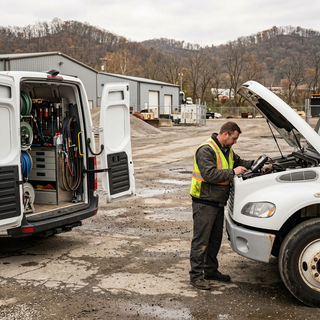
c

How Can You Get Car Maintenance Done Without Missing Work?

How Can You Get Car Maintenance Done Without Missing Work? You can keep your Ford running smoothly while minimizing workday interruption by utilizing Ford Mobile Service at your workplace, booking complimentary Ford Pickup & Delivery, or taking advantage of secure after-hours key drop facilities. These remote scheduling options can help reduce traditional service lobby wait times by bringing certified auto maintenance directly to your parking spot or transporting your vehicle back and forth while you remain on the clock. For working professionals navigating daily drives down State Route 170 from suburban communities like Calcutta, taking time off for routine vehicle care is often inconvenient. Automotive manufacturers and local service centers have restructured ownership care to eliminate schedule conflicts entirely. Instead of sitting in a waiting room or arranging rides between shifts, vehicle owners can leverage three primary workday options: Mobile On-Site Maintenance: A factory-trained technician drives a equipped service van to your office or worksite to perform essential fluid changes, filter updates, and tire care directly in the parking lot. Valet Pickup and Delivery: Dealership representatives collect your truck, SUV, or sedan directly from your work location, handle required maintenance or repairs at the shop, and return it before your shift ends. After-Hours Key Drop-Off: Drivers drop off their vehicle early in the morning before business hours or late at night using a secure key vault, allowing technicians to perform service during standard operating hours while providing digital updates remotely. Whether you need a quick engine check or standard maintenance, our team at Tri State Ford makes keeping your vehicle healthy seamless. To coordinate your next maintenance visit around your work week, reach out directly at (330) 462-7578 or drop by our service center location to speak with an advisor. Table of Contents What Services Are Included in Mobile Repair and Is There an Extra Fee? How Does Dealership Valet Pickup Work and Do You Need to Be Present? Which Is Faster for Work Schedules: Valet Pickup or Mobile Service? Where Is the Key Drop Box Located for After-Hours Vehicle Drop-Offs? Common Questions About Workday Vehicle Maintenance Options Schedule Convenient Ford Maintenance What Services Are Included in Mobile Repair and Is There an Extra Fee? Ford Mobile Service covers routine scheduled maintenance and light repairs, including engine oil and filter replacements, tire rotations, brake pad replacements, battery testing, wiper blade updates, fluid top-offs, multi-point safety inspections, and recall updates. For vehicles located within standard operational zones, mobile maintenance is typically billed at normal shop rates without added convenience fees. Mobile service vans function as remote service bays, equipped with commercial fluid extraction systems, pneumatic lifts, specialized hand tools, diagnostic equipment, and genuine Motorcraft parts. This equipment allows certified technicians to complete essential care tasks safely and cleanly in commercial parking lots without leaving behind oil drips or waste. Key maintenance tasks performed directly at your job site include: Routine Fluid Maintenance: Synthetic or blend engine oil changes, engine coolant adjustments, transmission fluid checks, and windshield washer reservoir refills. Brake System Care: Front and rear brake pad replacements, rotor inspections, and brake fluid line health assessments. Tire and Wheel Services: Four-wheel tire rotations, air pressure adjustments, tread depth evaluations, and tire wear diagnostics. Electrical and Battery Service: Diagnostic battery health testing, battery terminal cleaning, complete battery replacements, and vehicle software updates. Filter and Accessory Updates: Engine air filter replacements, cabin air filter updates, and wiper blade swaps. Transparent pricing remains a central priority for remote care. Most mobile service programs charge standard labor rates and retail parts costs identical to an in-shop visit. You receive an itemized digital estimate before work begins, allowing complete price clarity before approving any service. To lock in your preferred appointment window, utilize our online service scheduling portal. If you prefer performing basic maintenance tasks yourself or need specific components, you can also explore ordering genuine Ford parts direct from our dealership. How Does Dealership Valet Pickup Work and Do You Need to Be Present? Valet pickup and delivery involves a dealership representative arriving at your designated workplace or home address, exchanging keys, driving your vehicle to the service center for maintenance, and returning it upon completion. You only need to be present for a quick 60-second handoff at the beginning and end of the appointment, though contactless pickup options can often be arranged if work meetings restrict your availability. The Ford Pickup & Delivery workflow is engineered for minimal work interruption: Online or Phone Scheduling: You select a convenient pickup time and specify your vehicle's physical location. Representative Arrival: On service day, a designated dealership driver arrives during your chosen timeframe and notifies you via text message or phone call. Vehicle Inspection and Handover: A brief initial walk-around is performed to document vehicle condition before keys are transferred. Off-Site Repair and Digital Updates: Technicians perform scheduled services at the dealership, sending digital multipoint inspection reports and repair videos straight to your mobile device. Contactless Payment: You review your invoice and submit payment securely through your phone or computer. Return Delivery: The representative delivers your serviced vehicle back to your parking lot and returns your keys. Most dealerships offer complimentary pickup and delivery for qualifying warranty work or standard maintenance within a designated radius, typically 10 to 20 miles from the dealer facility. For services requiring extended shop stays, loaner vehicles can often be arranged during the pickup process. Our service team often notes that commuters scheduling valet service appreciate receiving digital multipoint inspection updates directly to their phones while working, keeping them fully informed without stepping away from their desks. To take advantage of this complimentary convenience, learn more about our Ford Pickup & Delivery program and verify service availability for your work location. Which Is Faster for Work Schedules: Valet Pickup or Mobile Service? Mobile service is generally faster for workday schedules because maintenance begins the moment the technician arrives at your vehicle, avoiding transit travel times and dealership intake lines. However, valet pickup remains the necessary choice when your vehicle requires complex mechanical overhauls, major powertrain repairs, or specialized equipment like wheel alignment machines and heavy shop hoists. Comparing both options helps determine the best fit for your daily schedule: Option Feature Mobile On-Site Service Valet Pickup & Delivery Primary Location Your work parking lot / driveway Dealership service center Typical Downtime 30 to 60 minutes on site 2 to 4 hours (includes transit) Eligible Services Oil changes, batteries, filters, brakes All mechanical, recall, and heavy repairs Vehicle Transit Vehicle remains parked at your work Driven to dealer facility and back Equipment Access Specialized mobile van tools Full dealership workshop and hoists For professionals working near commercial hubs around Market Street in Boardman, choosing mobile service for an oil change or air filter replacement means your vehicle never leaves its space. The entire job is completed while you attend meetings or complete tasks indoors. When a battery dies unexpectedly in the parking structure, requesting a dedicated Ford Mobile Service van allows a technician to handle routine battery testing and replacement right where the car is parked, restoring your vehicle before your workday ends. Where Is the Key Drop Box Located for After-Hours Vehicle Drop-Offs? Our after-hours key drop box is located directly adjacent to the main service department entrance, positioned under exterior security lighting for safe, round-the-clock access. This secure setup allows shift workers, early risers, and late commuters to drop off their vehicle outside regular business hours without needing staff assistance. Using the night drop facility involves simple steps designed for vehicle security and clear communication: Park in Designated Areas: Park your vehicle in a well-lit designated service visitor space near the service bays. Locate the Drop Station: Walk to the illuminated drop box near the main service entrance doors. Fill Out the Envelope: Retrieve a heavy-duty key drop envelope from the dispenser box. Print your contact details, vehicle make, model, and requested services clearly on the envelope face. Lock and Deposit: Lock your vehicle doors, place the key fob inside the envelope, seal it securely, and slide it through the reinforced drop slot into the internal vault. Once service staff open the facility in the morning, an advisor retrieves the key vault envelopes, checks the vehicle into the scheduling system, and contacts you via phone or text to confirm the service plan before work begins. This process ensures your vehicle gets first-tier positioning in the daily service queue. Common Questions About Workday Vehicle Maintenance Options Q: How do I prepare my vehicle for a workplace mobile service visit? Select a relatively flat, open parking space that allows sufficient clearance around your vehicle for the service van. Ensure your vehicle is parked in a publicly accessible area rather than a gated structure with height restrictions, and leave your contact number so the technician can coordinate key access upon arrival. Q: Is Ford Roadside Assistance available if my vehicle breaks down on the way to work? Yes, manufacturer-backed emergency support is available for eligible vehicles during their coverage period. If you experience a flat tire, dead battery, or unexpected breakdown during your morning commute, you can request support by contacting Ford Roadside Assistance: 1-800-241-3673. Certified technicians will respond to provide towing to an authorized dealership, jump-starts, or roadside repairs using genuine components. Q: Can I approve additional repair recommendations remotely while working? Yes, digital multi-point inspection reports are sent directly to your smartphone or email address. These reports include clear photos, video overviews from the technician, and transparent pricing for any recommended maintenance, allowing you to approve or decline specific items with a single tap from your desk. Q: What happens if a mobile inspection reveals a complex mechanical issue? If a mobile technician identifies a major issue requiring specialized workshop machinery—such as extended transmission work or heavy suspension overhauls—the technician documents the finding. Our service center will then coordinate complimentary valet pickup or assist in scheduling a workshop visit to address the repair at our main facility. Q: How far in advance should workday service appointments be scheduled? Booking 3 to 5 business days in advance ensures access to your preferred time window for mobile visits or valet pickup. While urgent repairs can often be accommodated sooner, advance booking secures reserved technician time aligned precisely with your work calendar. Schedule Convenient Ford Maintenance Maintaining your vehicle should never require burning PTO or disrupting your busy work schedule. With flexible mobile care options, complimentary valet pickup, and secure key drop availability, getting certified auto care is simpler than ever. Our factory-trained technicians use only genuine parts and advanced diagnostic tools to keep your Ford running at peak performance. Take control of your workday maintenance routine today. Get in touch with our expert team by giving us a call at (330) 462-7578 or set up directions to visit our East Liverpool facility at your convenience. We look forward to providing the hassle-free service you deserve. © 2026 Tri State Ford. All rights reserved. Car Maintenance Services in East Liverpool OH | Tri State Ford

f

How Do You Set Up Ford Pickup and Delivery Service?

How Do You Set Up Ford Pickup and Delivery Service? Setting up Ford Pickup & Delivery involves selecting the service through the Ford App, contacting our dealership service team by phone, or submitting a request through our online appointment system. You choose an available time window, specify your location, and list the maintenance needed. A dealership representative picks up your vehicle at the designated address, brings it to our service department for care, and returns it to your driveway or workplace once maintenance is complete. Arranging doorstep vehicle care removes the hassle of sitting in a waiting room or arranging rides during a busy workday. Truck owners and commuters balancing tight schedules can organize vehicle maintenance directly from a smartphone or office computer. When setting up your appointment, you specify whether your vehicle will be parked at home or at a work site, establish preferred contact methods for status updates, and approve the initial service scope. For truck owners driving between job sites and residential neighborhoods in Calcutta, setting up service without interrupting daily work routines keeps maintenance on track. Our team confirms the appointment timing and verifies location details prior to dispatching a representative. You can coordinate your next visit by reviewing our service center location on Pennsylvania Ave or by giving our service department a quick call at (330) 462-7578 to speak directly with an advisor. Table of Contents How Does Ford Pickup & Delivery Work on Service Day? How Do You Schedule Ford Pickup & Delivery Through the Ford App? Who Is Eligible for Complimentary Ford Pickup & Delivery? Which Services Qualify for Pickup & Delivery and What Costs Are Excluded? How Does Ford Pickup & Delivery Compare to Ford Mobile Service and Loaner Cars? Common Questions About Ford Remote Service Keep Your Ford Running Smoothly Without Leaving Home How Does Ford Pickup & Delivery Work on Service Day? On your scheduled service day, a dealership representative arrives at your designated address during the agreed time window, conducts a brief vehicle walk-around inspection, and takes possession of your vehicle after providing a digital or paper receipt. Your vehicle is transported to our service facility where factory-trained technicians perform the approved work, after which we deliver your vehicle back to your location and process payment remotely. The handoff process on service day is designed for maximum clarity and safety. Before taking the keys, our representative documents the vehicle's current condition and fuel level while confirming the requested maintenance items. Throughout the day, our service advisors stay in touch using text messages, phone calls, or app updates. If our technicians identify additional maintenance needs during a multi-point inspection, such as worn brake pads or aging wiper blades, you receive a detailed digital estimate to review and approve before any extra work begins. Once maintenance is complete, your vehicle receives a standard check to ensure all work meets factory quality guidelines. The representative cleans key touchpoints and drives or transports the vehicle back to your specified address. Payment is handled securely online or over the phone prior to delivery, meaning you simply receive your keys and completed service document upon return without ever stepping foot inside the dealership. When you are ready to book your next routine care, you can schedule a service appointment online and select genuine components by choosing to order OEM parts directly through our facility. How Do You Schedule Ford Pickup & Delivery Through the Ford App? To schedule Ford Pickup & Delivery using the Ford App, open the application on your smartphone, tap the Service icon, and choose the Pickup & Delivery option. From there, select your required maintenance items, enter your preferred pickup location and appointment date, and tap to confirm your reservation with our dealership. The Ford App streamlines ownership care by storing your vehicle's identification number, service history, and preferred dealership preferences in one central interface. When you open the app to schedule, system diagnostics may automatically flag upcoming maintenance needs based on your mileage and vehicle telemetry. You can select pre-set care packages or type specific notes regarding any vehicle symptoms you want our certified technicians to inspect. Open the Ford App and navigate to the Service tab. Select the Pickup & Delivery option from the available service methods. Check the required maintenance items or enter custom service requests. Input your exact address for pickup and return, such as your home or office. Choose your preferred date and available morning or afternoon time window. Review your contact details and finalize the reservation. After submitting your request, the app sends a push notification confirming that your reservation has been received by our department. As your service date approaches, the app provides real-time updates regarding representative dispatch, vehicle arrival at the shop, work progress, and return timing. You can easily manage these remote features by accessing our dedicated Ford Pickup & Delivery portal to learn more about app compatibility. Who Is Eligible for Complimentary Ford Pickup & Delivery? Complimentary Ford Pickup & Delivery is available to retail owners of Ford vehicles that are currently within their standard 3-year/36,000-mile bumper-to-bumper limited warranty. Owners of out-of-warranty Ford vehicles can still utilize the service for a fee or by redeeming earned Ford owner rewards points at participating dealerships. Vehicle eligibility requires that the vehicle be fully operational, drivable, and safe to transport. Emergency breakdown situations, vehicles with flat tires, or cars involved in roadside collisions do not qualify for standard Pickup & Delivery and must be managed through official roadside support channels instead. Leased Ford vehicles carry full factory warranty coverage during their initial term and are completely eligible for complimentary transport service during that active coverage window. Working-class drivers near the industrial riverfront in East Liverpool who lease a new Ford F-150 or Ford Maverick benefit from factory warranty coverage that includes this doorstep pickup option. Commercial fleet vehicles and heavy-duty trucks like the Ford Super Duty are also eligible at participating locations, provided local distance and transport guidelines are met. Which Services Qualify for Pickup & Delivery and What Costs Are Excluded? Most routine maintenance tasks, minor factory warranty repairs, software updates, and recall services qualify for Ford Pickup & Delivery, including oil changes, tire rotations, brake service, and battery service. The pickup and return vehicle transport is complimentary for eligible warranty owners, but the customer remains responsible for standard parts, labor, and maintenance service charges. Routine maintenance packages like The Works—which combines a synthetic blend oil change, tire rotation, pressure check, brake inspection, and comprehensive multi-point check—are perfectly suited for pickup service. Certified technicians perform all shop work using specialized tools, heavy shop lifts, and diagnostic gear that cannot be carried in a portable service van. Eligible Services Program Exclusions & Requirements Synthetic Oil & Filter Changes Parts and Labor Costs (Customer Pay) Tire Rotations & Wheel Balancing Non-Drivable Vehicles or Flat Tires Multi-Point Safety Inspections Accident/Collision Recovery Work Brake Pad & Rotor Replacements Aftermarket Accessory Installation Battery Testing & Replacement Out-of-Zone Transport Beyond Mileage While transport fees are covered during the warranty period, any out-of-pocket expenses for maintenance items, replacement filters, or worn components are billed directly to the vehicle owner. If a vehicle requires diagnostic testing that reveals out-of-warranty repairs, our service advisors provide clear line-item estimates for approval before work proceeds. Drivers looking to maintain starting power ahead of cold weather can review our guide on battery maintenance and replacement tips to prepare for their appointment. How Does Ford Pickup & Delivery Compare to Ford Mobile Service and Loaner Cars? Ford Pickup & Delivery transports your vehicle to our service facility for shop maintenance, whereas Ford Mobile Service sends a specially outfitted van and technician directly to your location to complete light maintenance in your driveway. If your vehicle requires shop care that spans multiple days, a loaner car can be requested when scheduling Pickup & Delivery, subject to dealer availability. Choosing between remote options depends on the depth of service required. Mobile Service excels at rapid tasks like engine air filter replacements, system software updates, multi-point inspections, and quick battery installations that require minimal heavy equipment. Conversely, Pickup & Delivery is the proper choice when work involves vehicle lifts, lathe turning for brake rotors, complex wheel alignments, or extensive powertrain diagnostics. Ford Pickup & Delivery Ford Mobile Service Vehicle taken to dealer facility Technician travels to customer Uses full shop tools and lifts Uses mobile van and hand tools Ideal for major repairs & brakes Ideal for oil, batteries, recalls Loaner cars available if requested Completed in driveway or lot When heavy-duty truck owners book multi-day maintenance for a Ford Super Duty powered by a 6.7L Power Stroke® V8 Turbo Diesel engine, our service advisors frequently discuss loaner vehicle availability upfront so work schedules remain uninterrupted. If you need a loaner car, requesting it during your initial booking ensures our team can reserve an available vehicle from our fleet. You can review transport availability by checking our service center directions, giving our service staff a call at (330) 462-7578, or exploring our Ford Mobile Service options online. Common Questions About Ford Remote Service Q: Does Ford Pickup & Delivery apply to leased Ford vehicles? Leased Ford vehicles remain eligible for complimentary Pickup & Delivery as long as they are covered under the standard 3-year/36,000-mile bumper-to-bumper warranty. Because leased vehicles carry standard factory warranty coverage, lessees receive the same remote transport benefits as retail buyers for eligible maintenance and warranty repairs. Q: Is there a specific mileage distance limit for vehicle pickup? Participating dealerships establish local transport boundaries based on staffing and travel time, which typically cover a radius of 10 to 15 miles from the facility. You can confirm whether your home or work address falls within our primary pickup zone by entering your address into the Ford App during scheduling or by contacting our service advisors. Q: Can routine oil changes and tire rotations be done with Pickup & Delivery? Routine oil changes, tire rotations, and general maintenance packages like The Works are fully eligible for Pickup & Delivery. Transporting your vehicle to our service facility allows our technicians to perform these maintenance services while utilizing hydraulic lifts for thorough underbody and safety inspections. Q: How do you request a loaner car during Ford Pickup & Delivery? You can request a loaner car while scheduling your appointment through the Ford App or by informing your service advisor over the phone. Loaner availability is managed on a first-come basis, so requesting a loaner vehicle well in advance of major service appointments helps secure temporary transportation. Q: What happens if my vehicle is not drivable or has a flat tire? Vehicles that are non-operational, stuck with a flat tire, or damaged in an accident are not eligible for standard Pickup & Delivery transport. In these situations, owners should contact Ford Roadside Assistance at 1-800-241-3673 to arrange flatbed towing to our certified service center. Keep Your Ford Running Smoothly Without Leaving Home Ford Pickup & Delivery brings professional, factory-backed vehicle care directly to your door, eliminating waiting rooms and commuting hassles. Whether your Ford F-150 needs its scheduled oil change or your Ford Maverick requires routine brake maintenance, our certified technicians ensure your vehicle receives genuine OEM parts and expert attention. Organizing your next service visit takes only a few moments through your smartphone or computer. Contact our service team today to confirm pickup availability for your location, ask about loaner vehicle options, and schedule your next maintenance appointment with total confidence. © 2026 Tri State Ford. All rights reserved. Vehicle specification data © JATO Dynamics Limited. Ford Pickup & Delivery Service in East Liverpool OH | Tri State Ford

f

How Does Ford Mobile Service Work in Your Driveway?

How Does Ford Mobile Service Work in Your Driveway? Ford Mobile Service dispatches factory-certified technicians in specialized support vans directly to your home or workplace to perform routine vehicle maintenance and light repairs. Participating dealers offer this service without an added house-call fee for standard upkeep like oil changes, tire rotations, battery replacements, brake pad service, fluid top-offs, and software updates. Labor and parts fees match standard dealership shop rates, while heavy repairs requiring vehicle lifts or major diagnostic bays are routed to full service facilities. Bringing certified maintenance straight to your parking space eliminates the traditional wait in a customer lounge. Mobile vans come fully equipped with diagnostic computers, fluid extraction systems, pneumatic tools, and genuine OEM motorcraft components. Whether your vehicle is a compact SUV or a hard-working truck, certified technicians follow factory maintenance procedures on site. For example, a heavy-duty model like the Ford F-150 XLT—equipped with a 3.5L V6 engine, SelectShift® automatic transmission, four-wheel drive, and a tow rating up to 10,400 lbs —receives the same systematic fluid checks and filter replacements on your driveway that it would inside a primary workshop bay. Residential service logistics are straightforward. The mobile van requires a relatively flat, paved surface, such as a concrete or asphalt driveway or dedicated parking space, along with adequate clearance around your vehicle to set up tool carts and collection units. Suburban residential driveways throughout Calcutta along State Route 170 provide an ideal layout for routine fluid service and multi-point inspections while owners focus on daily family schedules or work commitments. Our team at Tri State Ford makes mobile care effortless. You can explore Ford Mobile Service capabilities online to see how our remote maintenance fits your schedule. If you prefer to speak with our service department directly, give our advisors a call at (330) 462-7578, or find our dealership location at 1503 Pennsylvania Ave, East Liverpool, OH 43920. Table of Contents What Maintenance Services and Light Repairs Can Be Done at Home? How Does Mobile Care Support Electric and Hybrid Models? Do Prepaid Maintenance Plans and Rewards Points Cover Mobile Service Fees? What Options Exist When Heavy Repairs Require Dealership Shop Facilities? How Do You Schedule a Mobile Appointment in East Liverpool? Common Questions About Driveway Service and Maintenance Logistics What Maintenance Services and Light Repairs Can Be Done at Home? Routine maintenance tasks like oil changes and tire rotations can be completed at home by mobile technicians, saving you a trip to the dealership. A popular choice for remote maintenance is The Works vehicle checkup package. This comprehensive maintenance bundle includes a synthetic blend or full synthetic oil change, filter replacement, tire rotation, tire pressure adjustment, thorough brake inspection, fluid level top-off, battery charge test, and a detailed check of all belts and hoses. For family crossovers such as the Ford Escape—featuring a 1.5L EcoBoost engine, all-wheel drive, and about 38 cubic feet of rear cargo volume—or the Ford Explorer with its 2.3L EcoBoost engine and 5,000 lbs towing capacity, The Works package keeps critical systems protected against daily wear. The scope of mobile maintenance covers a broad variety of common vehicle upkeep needs: Engine oil and filter replacements utilizing manufacturer-recommended oil weights Tire rotation, tread depth inspection, and tire pressure monitoring system adjustments 12V battery testing, terminal cleaning, and full battery replacement Brake pad replacement, rotor thickness measurements, and fluid visual checks Cabin and engine air filter changes, wiper blade replacement, and exterior bulb swaps Computer diagnostic scans, check-engine light evaluation, and over-the-air software recalibrations Minor recall service procedures and factory-approved accessory installations When commercial operators manage multiple work vehicles, remote scheduling keeps fleets operating without taking trucks out of daily service rotations. Drivers can easily schedule a service appointment online for routine maintenance on individual vehicles or review our new Ford F-Series work truck inventory to evaluate how routine mobile service supports fleet uptime. How Does Mobile Care Support Electric and Hybrid Models? Ford Mobile Service equips technicians with high-voltage safety gear and specialized diagnostic tools to service electric vehicles and hybrid powertrains directly at your residence. Mobile units handle 12V battery replacements, high-voltage battery health diagnostics, tire rotations, brake pad inspections, cabin air filter swaps, and over-the-air module updates without requiring a trip to a service bay. Electric and hybrid vehicles demand tailored maintenance attention, particularly regarding thermal management systems and electronic control modules. Certified mobile technicians plug directly into the vehicle's onboard communication network to run complete system health checks, verifying battery cell voltage balance and cooling circuit performance. During cold winter seasons, when low temperatures can temporarily impact battery efficiency by 15% to 30%, mobile diagnostic updates ensure thermal preconditioning systems operate at peak parameters. Brake maintenance on hybrid and electric platforms also presents unique service requirements. Because regenerative braking handles a large portion of daily deceleration, mechanical brake rotors can collect rust or road debris, especially in salt-belt regions where heavy winter road salt accelerates underbody corrosion. Mobile technicians inspect pad wear, clean rotor surfaces, and test mechanical caliper slide pins right on your driveway to ensure smooth stopping power year-round. Do Prepaid Maintenance Plans and Rewards Points Cover Mobile Service Fees? Prepaid maintenance plans, including the Ford Protect Extended Service Plan, may cover eligible routine maintenance delivered by mobile service vans, and owners can redeem Ford Rewards points toward any remaining mobile parts or labor charges. Covered maintenance procedures may be eligible for no additional remote travel surcharges at participating dealerships, allowing vehicle owners to utilize their factory service benefits without leaving home. Redeeming rewards balance points for mobile service follows the exact same process used inside our dealership service drive. Accumulated points can offset the cost of new engine air filters, cabin filters, fresh wiper blades, or brake service. When battery health testing indicates a weakening cell structure, owners can review battery replacement guidance and apply their earned rewards points directly to the purchase of a new original-equipment battery installed right on their driveway. Prepaid factory maintenance plans simplify long-term vehicle budget management by locking in routine service coverage against future price adjustments. Scheduled oil changes, multi-point checks, and tire rotations covered under pre-funded plans apply directly to mobile appointments. Technicians log completed maintenance into the official vehicle service history database immediately upon finishing the job, preserving warranty documentation and supporting future resale value. What Options Exist When Heavy Repairs Require Dealership Shop Facilities? When a vehicle requires major mechanical repairs, internal engine overhauls, transmission rebuilding, frame realignment, or heavy component replacements that demand hydraulic vehicle lifts, Ford Pickup & Delivery provides a seamless alternative to driveway service. Participating dealers send a representative to pick up your vehicle from your residence, transport it safely to our fully equipped service bay, and return it to your driveway once certified technicians complete the repairs. Mobile service vans carry extensive tooling, but safety standards and mechanical requirements dictate that certain complex jobs remain in a controlled workshop environment: Engine removal, internal cylinder head repairs, or complete block replacements Transmission rebuilds, clutch replacements, and transfer case overhauls Four-wheel alignment procedures requiring precision laser alignment racks Structural body repair, frame straightening, and heavy welding projects Major air conditioning compressor rebuilds requiring industrial refrigerant recovery stations For sudden mechanical breakdowns or road emergencies where a vehicle cannot be safely driven, owners rely exclusively on manufacturer coverage. Ford Roadside Assistance: 1-800-241-3673 delivers 24/7 emergency support across North America, providing flat tire changes, battery jump-starts, fuel delivery, lockout assistance, and towing directly to an authorized dealership service center. When your vehicle is in our shop for extended repairs or scheduled mechanical work, our parts department uses only original equipment manufacturer components engineered to exact vehicle specifications. Vehicle owners looking to purchase specific maintenance parts or factory accessories can easily order OEM Ford parts directly through our dedicated online portal. How Do You Schedule a Mobile Appointment in East Liverpool? Scheduling a driveway mobile service appointment requires only a few minutes online through the Ford App, via our dealership service portal, or over the phone with a service advisor. Owners enter their vehicle model details, select the necessary maintenance procedures, input their home or office address, and choose an available calendar time slot that aligns with their daily plans. Before the technician arrives, preparing your parking area helps ensure a smooth and safe appointment: Park your vehicle on a flat, stable surface such as a concrete or asphalt driveway or level parking bay. Ensure at least 4 to 5 feet of clear workspace around the entire perimeter of the vehicle for tool carts and fluid equipment. Keep the driveway clear of parked secondary vehicles, children's toys, or yard debris. Unlock the vehicle doors and have the key fob ready for the technician upon arrival. Residential driveways situated along the riverfront bluffs and elevated valley streets of East Liverpool provide a suitable working environment for mobile service vans when clear, level parking is available. Once work is finished, the technician performs a final system check, reviews the digital multi-point inspection report with you, processes payment or plan coverage electronically, and leaves your driveway as clean as when they arrived. Common Questions About Driveway Service and Maintenance Logistics Q: Does Ford charge an extra travel fee for mobile service coming to your house? Participating Ford dealerships offer mobile service for routine maintenance and light repairs without charging an additional house-call or travel convenience fee. Labor rates and parts pricing for mobile appointments match standard dealership workshop pricing. Specific mileage radii or service area limits may apply depending on your location, so confirming coverage details when booking your appointment ensures transparent service expectations. Q: Can mobile service technicians perform official safety recall repairs in a driveway? Mobile technicians can complete select safety recall repairs right in your driveway, including software recalibrations, door latch updates, wiring harness inspections, and minor component swaps. Complex safety recalls requiring heavy disassembly or specialized workshop machinery must still be performed inside our service bay. When scheduling, provide your vehicle identification number so advisors can verify recall eligibility for remote service. Q: What happens if a mobile technician discovers a major mechanical issue during driveway service? If a mobile technician identifies a complex mechanical issue during a driveway inspection that cannot be safely repaired on site, they document the finding with photos and diagnostic data in your digital multi-point report. The technician explains the repair requirements and helps arrange Ford Pickup & Delivery or schedules a workshop visit at our dealership service facility so certified shop technicians can complete the necessary repairs. Q: Are mobile service technicians factory-certified to perform warranty maintenance? Every mobile service technician dispatched to your home is factory-certified and undergoes the exact same rigorous technical training required for dealership shop staff. All maintenance and light repairs performed during a mobile service visit utilize genuine OEM parts and adhere strictly to factory specifications, fully preserving your original new vehicle limited warranty and any active extended service plans. Q: Can mobile service replace worn brake pads and rotors in a residential driveway? Mobile service vans carry specialized jack stands, pneumatic tools, and precision measurement calipers to replace worn brake pads and rotors directly on your driveway. Technicians measure rotor thickness, inspect caliper slides, flush brake lines when necessary, and perform a complete system safety check before completing the appointment, restoring full stopping performance without requiring a trip to the shop. For any additional questions regarding driveway maintenance logistics, scheduling assistance, or vehicle care, reach out to our service team at (330) 462-7578 or visit our East Liverpool facility to speak with our certified technicians today. © 2026 Tri State Ford. All rights reserved. Vehicle specification data © JATO Dynamics Limited. Ford Mobile Service in East Liverpool OH | Tri State Ford

f

What Should You Check Before Authorizing Car Repairs?

Before authorizing car repairs, verify an itemized written estimate that breaks down labor, replacement parts, shop supply fees, and diagnostic costs. Confirm whether diagnostic charges roll into the final repair bill, establish a binding limit requiring your explicit permission before work exceeds the estimate by 10 percent, check part types and warranty terms, and clarify the estimated completion timeline. Written estimates serve as your primary financial and legal safeguard during automotive maintenance. In Ohio, administrative rules state that for work costing over $50, service facilities must provide an estimate-choice document before starting labor. Obtaining a detailed written work order ensures a clear mutual understanding between the vehicle owner and the service team, preventing unexpected charges or unapproved work. Asking targeted questions prior to signing repair authorization protects both your vehicle and your budget. Key details to verify include warranty coverage length—such as standard 24-month or 24,000-mile warranties on replacement parts—and whether old or damaged components can be saved for your inspection. For drivers visiting our facility at 1503 Pennsylvania Ave, clear communication remains the foundation of proper vehicle maintenance. You can stop by our East Liverpool service center or give our service advisors a quick call to review diagnostic findings before any repair begins. Table of Contents Will the Shop Contact You and Get Approval Before Exceeding Your Estimate? Are Diagnostic Fees Applied Toward Your Final Repair Costs and Can You See Scan Reports? Which Vehicle Repairs Require Immediate Attention for Driving Safety? Should You Choose OEM Parts and Why Are Components Like Rotors Replaced in Pairs? When Is It Necessary to Choose a Factory Service Center Over an Independent Shop? Common Questions About Auto Repair Estimates, Parts, and Service Approvals Will the Shop Contact You and Get Approval Before Exceeding Your Estimate? A reputable repair center must contact you and receive explicit authorization before performing additional service or exceeding an approved cost estimate. Under administrative rules enforced by the Ohio Attorney General, shops cannot exceed a written repair estimate by 10 percent or more without prior customer approval. When unexpected component wear or secondary mechanical issues surface during teardown, technicians must pause work and present an updated quote. This revised estimate should outline the specific reasons for the additional repairs, required parts, supplemental labor hours, and any change to the projected delivery time. Vehicle owners retain the full legal right to decline supplementary repairs and seek a secondary evaluation. Written authorization protects vehicle owners against unauthorized billing practices. If an automotive facility performs work that was never authorized, state consumer protection guidelines classify unapproved billing as a deceptive business practice. Establishing preferred communication channels upfront—whether text updates, email notifications, or direct phone calls—ensures you remain fully in control of every repair decision throughout the service process. Are Diagnostic Fees Applied Toward Your Final Repair Costs and Can You See Scan Reports? Diagnostic charges are frequently applied toward the total cost of completed repairs when you authorize the necessary service at the testing facility. Vehicle owners have the right to ask whether diagnostic fees roll into total labor charges and can request a complete digital or printed copy of the diagnostic scan report showing active trouble codes and system readings. Diagnostic procedures involve specialized scanning equipment, electrical testing, multimeters, and physical inspection time to pinpoint root causes behind warning lights or operational symptoms. Repair facilities charge diagnostic fees to compensate for technical expertise and testing equipment. Clarifying whether this fee is credited toward the final bill gives you complete cost transparency before disassembly begins. Reviewing diagnostic reports provides clear documentation of vehicle health issues before approving component replacement. Modern diagnostic scans retrieve OBD-II diagnostic trouble codes stored within engine, transmission, or safety control modules. Technicians can walk you through live sensor data, circuit testing results, and physical wear patterns, ensuring you understand exactly why a specific part replacement is recommended. Which Vehicle Repairs Require Immediate Attention for Driving Safety? Repairs impacting primary safety systems—including brakes, steering linkages, suspension components, tires, fuel lines, and engine cooling systems—demand immediate attention before driving continues. Delaying critical safety maintenance increases the risk of sudden mechanical failure, compromised vehicle control, or expensive secondary damage. Brake components require urgent remediation when friction materials wear past safety limits or hydraulic leaks develop. Worn brake pads, thinned rotors, or soft brake pedals significantly lengthen stopping distances. Navigating steep riverfront bluffs along the Ohio River in East Liverpool places elevated demands on braking systems and tires, making prompt attention to grinding noises, fluid spots, or steering wheel vibrations essential for road safety. Suspension and steering deficiencies also represent critical safety concerns that directly affect vehicle stability. Loose ball joints, worn tie rod ends, or leaking shock absorbers impair tire contact with the road, leading to unpredictable handling during sudden emergency maneuvers. Fuel smells signal active leaks that create severe fire hazards, while overheating cooling systems can warp cylinder heads and destroy internal engine parts if driven under severe thermal stress. Should You Choose OEM Parts and Why Are Components Like Rotors Replaced in Pairs? Selecting Original Equipment Manufacturer parts guarantees components are built to exact factory engineering specifications, material standards, and manufacturer warranty protections. Mechanics recommend replacing axle-paired components like brake rotors, brake pads, or shock absorbers simultaneously to maintain balanced vehicle handling, uniform wear rates, and consistent stopping performance. OEM components are designed by the vehicle manufacturer specifically for your model year, ensuring exact fitment and structural durability. In contrast, aftermarket parts vary widely in design standards and may carry separate third-party warranty terms. Choosing genuine factory parts protects existing vehicle warranties and ensures advanced driver-assist sensors operate accurately without calibration errors. Replacing wearable components across an entire axle prevents dangerous imbalances in vehicle dynamics. Installing new brake pads or rotors on only one side causes uneven stopping force, pulling the vehicle sideways during hard braking. During daily suburban driving along State Route 170 in Calcutta, balanced suspension damping and symmetric braking force keep your vehicle predictable and stable across changing weather conditions. When ordering replacement filters, belts, or brake hardware, you can easily order parts directly through our factory parts catalog. When Is It Necessary to Choose a Factory Service Center Over an Independent Shop? Visiting a dealership service center is necessary for active warranty repairs, safety recalls, proprietary software updates, electronic module programming, and complex multi-system vehicle diagnostics. Dealerships possess factory-specific diagnostic software, specialized service tools, and direct support channels from vehicle engineers. Modern vehicles rely on complex internal computer networks governing engine performance, transmission shifts, active safety suites, and high-voltage battery systems. Factory-trained technicians complete regular brand training to stay current on electronic architectures and repair procedures. Independent facilities may lack access to proprietary factory software updates and technical service bulletins required to resolve subtle electronic issues or reflash control modules. Factory service centers also offer specialized vehicle care programs and convenient maintenance solutions. When evaluating starting performance or battery health, checking current battery maintenance guidance helps prevent unexpected starting trouble. For routine maintenance needs, local vehicle owners can utilize our mobile service options to have certified technicians perform select maintenance services right at home or work. Common Questions About Auto Repair Estimates, Parts, and Service Approvals Q: Can I request to see my old or damaged parts after a repair is completed? Yes, under Ohio consumer protection guidelines, vehicle owners have the legal right to inspect or request the return of replaced parts, provided the request is made before repair work begins. Shops must return old parts unless the components must be sent back to the manufacturer under a warranty claim or core exchange agreement. Inspecting removed parts allows you to examine physical wear, cracking, or mechanical damage firsthand. Q: What are shop supply charges or environmental fees on a service bill? Shop supply charges on an auto repair bill cover routine consumable supplies used during service, such as cleaning solvents, shop rags, protective seat covers, grease, small fasteners, and hazardous fluid disposal. These charges are typically calculated as a small percentage of total labor costs or standard flat environmental fees. Service facilities disclose shop fee structures on the initial estimate so there are no unexpected line items on your final invoice. Q: What should I do if a repair shop attempts to charge more than the original estimate? If a repair bill exceeds the authorized written estimate by 10 percent or more without prior approval, state rules allow you to dispute the unauthorized charges. You can review the invoice with the service manager to reconcile charges with your signed approval. If a dispute arises over vehicle possession, owners may pay the authorized total under written protest to recover the vehicle before filing a consumer complaint. Q: How long does a repair warranty usually last on parts and labor? Repair warranties vary depending on the facility and part source, but standard coverage at certified service centers covers parts and labor for 12 months or 12,000 miles, with higher-tier programs providing up to 24 months or 24,000 miles. Written warranties specify duration, mileage limits, potential exclusions, and service location requirements. Always request a physical or digital copy of the written warranty when picking up your serviced vehicle. Q: What diagnostic information should I ask for before approving complex repairs? Ask for the specific OBD-II diagnostic trouble codes, physical inspection findings, and technician measurement logs that identify the failing component. Request that the service advisor explain what caused the code to trigger, whether secondary components are impacted, and whether the repair requires immediate attention for driving safety or can be planned for an upcoming service visit. Taking an informed, proactive approach to vehicle care keeps your vehicle reliable and protects your wallet from surprise expenses. When you need clear diagnostic explanations, transparent estimates, and factory-certified care, our team is ready to assist you. You can easily schedule a service appointment online, look up directions to our East Liverpool dealership, or give our service team a quick call to discuss your maintenance needs today. © 2026 Tri State Ford. All rights reserved. Car Repair Authorization Tips in East Liverpool OH | Tri State Ford

v

When Should You Trade In a Car Instead of Repairing It?

Trading in a vehicle is financially wiser than repairing it when a single mechanical estimate exceeds 50 percent of the vehicle's current market value, or when expected annual repair bills surpass the total cost of twelve months of replacement vehicle financing payments. Transitioning into a reliable automobile makes sense when chronic breakdowns disrupt daily transportation, safety systems become compromised, or factory warranty protection has completely lapsed. Evaluating an aging automobile requires looking closely at total long-term ownership expenses rather than focusing solely on immediate shop estimates. While a minor fix like replacing a belt or sensor is reasonable, spending thousands of dollars on an out-of-warranty powertrain issue often yields zero return on investment. Major repair expenditures rarely increase a vehicle's resale value dollar-for-dollar. Investing heavily in a depreciating vehicle simply locks capital into an older platform that remains vulnerable to subsequent mechanical failures. When drivers evaluate an older vehicle with impending mechanical work on our lot, our trade-in advisors frequently look at whether the needed work involves wearable maintenance components like brake pads or major assembly repairs before finalizing an appraisal. Vehicles carrying high mileage or documented accident histories face compounding depreciation, meaning each major repair dollar spent provides diminishing practical value. Upgrading to a modern vehicle replaces uncertain repair bills with a predictable payment options, updated safety engineering, and comprehensive factory coverage. For drivers navigating daily commutes along the Ohio River bluffs in East Liverpool, having consistent, trouble-free transport is essential for work and family commitments. To discuss your options with our team, feel free to give us a quick phone call or visit our dealership showroom to review trade appraisals in person. Table of Contents What Financial Formulas Help Determine If a Vehicle Repair Is Worth It? Is It Better to Repair a Vehicle Before Trading It In or Trade It In As-Is? How Do Insurance Costs and Long-Term Ownership Expenses Compare? How Do Major Failures Like Engine Replacements Impact the Trade-In Decision? Frequently Asked Questions About Deciding to Repair or Trade In Maximizing Your Vehicle's Trade Value What Financial Formulas Help Determine If a Vehicle Repair Is Worth It? Studies show that when repair costs surpass half the clean retail value of a vehicle, owners often save money by opting for a replacement instead. Applying clear mathematical thresholds eliminates emotional bias when weighing repair quotes against trade-in opportunities. The standard industry evaluation framework centers on three core quantitative checks: The 50 Percent Threshold Rule: Compare the itemized repair quote directly against current valuation guides. If an aging vehicle is worth $6,000 and requires a $3,500 transmission overhaul, applying the repair costs more than half of what the entire car is worth. Because that repair will not raise the car's resale value to $9,500, trading the vehicle in as-is prevents sinking non-recoverable funds into a depreciating asset. The Annual Repair-to-Payment Ratio: Add up all mechanical receipts and pending estimates over a rolling 12-month period. If maintaining your current vehicle costs $400 per month in continuous repairs and unexpected shop visits, those funds equal a monthly auto loan payment on a brand-new vehicle backed by factory warranty coverage. The Cumulative Depreciation and Mileage Factor: Industry data from AAA notes that 12,000 to 15,000 miles per year represents average driving. Vehicles accumulating significantly higher mileage face accelerated wear across core assemblies, including steering components, suspension bushings, and cooling systems. Once multiple primary systems reach their engineering wear limits simultaneously, repair frequency escalates rapidly. Continuing to pour money into an out-of-warranty vehicle often delays an inevitable vehicle replacement while draining funds that could serve as a down payment. Choosing to trade in allows you to pivot that equity directly into our latest new Ford inventory. Whether you prefer to select a versatile SUV equipped with a 10-speed automatic transmission and Ford Co-Pilot360 driver-assist features or submit a factory custom order tailored to your exact specifications, moving on from a money pit establishes financial predictability. For drivers seeking dependable transportation with lower upfront costs, exploring our pre-owned vehicle selection provides access to reliable cars, trucks, and crossovers with verified maintenance backgrounds and excellent remaining service life. Is It Better to Repair a Vehicle Before Trading It In or Trade It In As-Is? Trading in a vehicle as-is is almost always financially superior to paying for retail repairs prior to negotiating a trade appraisal. Dealerships recondition pre-owned vehicles using wholesale parts pricing and internal service labor rates that are substantially lower than retail repair shop quotes. When a consumer spends $2,000 at a retail repair facility to fix a mechanical defect before trading, the vehicle’s trade-in value rarely increases by that full $2,000 amount. In most circumstances, that $2,000 retail investment might only boost the trade offer by $500 to $1,000, resulting in a net financial loss for the owner. Dealership service departments can perform that exact same reconditioning work internally for a fraction of the consumer cost, allowing the trade value to stay competitive without requiring out-of-pocket cash from the customer. Before making any repair commitments, evaluate which issues are worth addressing versus those better left as-is: Skip Major Mechanical Overhauls: Complex engine repairs, transmission replacements, air conditioning compressor overhauls, and differential rebuilds should be left for the dealer to handle post-trade. Skip Body Shop and Paint Work: Dents, bumper scrapes, and paint touch-ups carry steep retail body shop costs that yield minimal trade return. Perform Simple Cosmetic Detailing: Cleaning the interior, washing the exterior, removing personal items, and replacing burnt-out light bulbs cost very little while presenting the vehicle in its best light. Address Minor Wear Items Only If Essential: If tires or windshield wipers are severely worn, simple low-cost fixes can improve overall vehicle presentation, but major component replacements should be avoided. Suburban families commuting from Calcutta across nearby state lines rely on vehicles with strong capability and generous cargo space for school runs, recreational gear, and winter driving. Sinking funds into repairing an older vehicle takes away from your budget for a modern, family-friendly vehicle, which can provide improved safety and reliability. Exploring current Ford purchase offers makes it seamless to transition into a new model. Drivers can also evaluate our certified pre-owned Ford lineup, where every vehicle undergoes a meticulous multi-point inspection and comes backed by factory warranty coverage, including a 5-year/60,000-mile powertrain limited warranty. How Do Insurance Costs and Long-Term Ownership Expenses Compare? While older vehicles typically carry lower comprehensive and collision insurance premiums due to their lower replacement value, newer vehicles offset higher insurance costs through superior fuel efficiency, advanced safety equipment discounts, and reduced maintenance outlays. A complete financial comparison requires looking at total monthly vehicle operating costs rather than insurance rates alone. An older, paid-off vehicle may seem inexpensive on paper, but unexpected breakdown costs, towing bills, rental car expenses, and poor fuel economy quickly add up. Modern Ford vehicles feature advanced powertrain engineering, such as the 3.5L EcoBoost V6 or hybrid engine options, which deliver substantial fuel savings over older, less efficient engines. Furthermore, standard Ford Co-Pilot360 technologies like pre-collision assist and blind-spot monitoring help mitigate accident risks, qualifying drivers for valuable safety equipment discounts from major auto insurance underwriters. Expense Category Older Repaired Vehicle New or Certified Ford Vehicle Monthly Payment $0 (if paid off) Predictable structured loan payment Warranty Protection Expired (100% out-of-pocket risk) 3-year/36,000-mile bumper-to-bumper warranty Unplanned Maintenance High ($1,000+ potential per incident) $0 for covered warrantable defects Fuel Economy Lower (aging engine efficiency) Optimized EcoBoost or hybrid efficiency Insurance Premiums Moderate (lower ACV replacement cost) Slightly higher (offset by safety discounts) Technology & Connectivity Outdated legacy systems SYNC 4 with smartphone integration When you factor in the financial protection provided by Ford's 3-year/36,000-mile bumper-to-bumper limited warranty alongside standard 24/7 Ford Roadside Assistance: 1-800-241-3673 covering emergency towing, flat tire changes, and fuel delivery, the total ownership cost of a new vehicle becomes surprisingly competitive. Replacing unpredictable shop invoices with a fixed budget protects your household finances. You can start exploring financing terms right away by filling out our online credit pre-approval application. How Do Major Failures Like Engine Replacements Impact the Trade-In Decision? A complete engine replacement ranks among the most expensive mechanical failures a vehicle owner can face, with average replacement costs ranging from $4,000 to over $10,000 depending on displacement, turbocharging, and engine bay complexity. Sinking that level of capital into an older vehicle almost never makes financial sense. When an engine experiences catastrophic internal failure, the vehicle's market value drops instantly to its scrap or core mechanical trade value. However, spending $7,000 to install a remanufactured engine in a car with a non-damaged market value of $8,000 only yields an $1,000 net gain in actual equity. That $7,000 investment is essentially lost, as the rest of the aging vehicle—including the transmission, electrical harness, suspension struts, and climate control system—remains high-mileage and vulnerable to subsequent component failures. Trading in a vehicle with a severe mechanical defect allows the owner to apply the remaining vehicle equity or trade allowance toward a dependable purchase rather than taking on fresh debt for a standalone repair. Transitioning into a model built tough for daily driving ensures that core components like the engine and transmission are protected by Ford factory warranties. Modern Ford vehicles engineered for durability provide space for the whole family, rugged capabilities for weekend getaways, and smooth, refined performance on both highway commutes and rural routes. Frequently Asked Questions About Deciding to Repair or Trade In Q: What is the 50 percent rule when evaluating car repairs? Known as the '50 percent rule,' this guideline helps owners decide when repair costs outweigh the benefits of keeping their current vehicle. Spending $4,000 to repair a car valued at $6,000 locks cash into an aging asset without increasing its overall resale market value by a corresponding amount. Q: Can I trade in a car that currently does not run or start? Yes, dealerships accept non-running vehicles on trade every day. The appraisal will reflect the vehicle's current condition and estimated reconditioning costs, but trading it as-is allows you to capture its remaining core value without paying out-of-pocket for expensive retail shop repairs or engine overhauls. Q: How do dealerships calculate trade-in values for vehicles needing repairs? Dealership trade appraisals consider year, trim, overall mileage, physical condition, and historical vehicle records against current regional wholesale market data. Necessary mechanical reconditioning is factored in using wholesale labor and internal parts costs, which are significantly lower than consumer retail shop quotes. Q: Will fixing minor body damage or scratches increase my trade-in offer enough to cover the cost? Paying for retail body shop repairs or paint touch-ups prior to trade-in rarely yields a positive return on investment. Professional bodywork is expensive at retail rates, whereas simple steps like thoroughly cleaning the cabin, washing the exterior, and presenting service records offer better presentation value at zero to minimal cost. Q: Is roadside assistance included when upgrading to a new Ford? Every new Ford vehicle includes standard Ford Roadside Assistance for 5 years or 60,000 miles, providing 24/7 emergency towing, flat tire changes, lockout support, and winching. This manufacturer-backed service ensures certified care at authorized service locations using genuine OEM parts. Maximizing Your Vehicle's Trade Value Making the final decision between repairing an aging automobile or trading it in comes down to protecting your household budget, ensuring daily driving safety, and eliminating unexpected breakdown stress. Sinking thousands of dollars into out-of-warranty mechanical repairs rarely yields a fair return, whereas trading your vehicle in as-is allows you to capture its remaining value and apply it directly toward a modern, feature-packed Ford. At Tri State Ford, our team is committed to providing clear, transparent appraisals and flexible financing solutions tailored to your goals. Whether you need a spacious SUV with intuitive smartphone integration for daily family errands or a durable truck with impressive towing capacity for weekend trailering, our inventory offers reliable performance and safety features you can trust. To start evaluating your options today, use our digital appraisal tool to value your trade-in online in just a few clicks. You can also give our team a quick call or stop by our showroom address at 1503 Pennsylvania Ave, East Liverpool, OH 43920 to test drive your next new or certified Ford vehicle. Keep Your Vehicle Running Strong Keep your vehicle performing at its best with our service team: Order Parts Schedule Service Appt © 2026 Tri State Ford. All rights reserved. Car Trade-In Advice in East Liverpool OH | Tri State Ford

f

What Should You Check Before Authorizing a Car Repair?

Before approving any auto repair, check the specific diagnostic test results, request a written itemized estimate detailing parts, labor, and shop fees, and confirm whether any teardown charges apply if work is declined. Verify whether repairs are urgent or safe to defer, clarify if replacement components are genuine OEM parts or aftermarket alternatives, and ensure the shop commits to obtaining prior approval before exceeding the agreed estimate. Taking time to review these details protects your vehicle and your repair budget. In Ohio, auto repair facilities handling jobs expected to cost over $50 must present an estimate choice form before starting work. This form gives you the right to select a written estimate, an oral estimate, or waive the estimate entirely. Requesting a written estimate establishes a legal baseline for the job. Once you request a written estimate, the facility cannot exceed that quoted amount by 10% or more (excluding tax) without securing your explicit oral or written authorization. Establishing clear communication guidelines with your service team ensures complete transparency throughout the repair process. Ask the service advisor to explain what diagnostic trouble codes were retrieved, what physical tests confirmed the component failure, and whether replacing the faulty item will resolve the underlying symptom. Clarify shop billing policies, including whether diagnostic scan fees are applied toward the final repair bill. Request that all removed components be saved for your inspection upon pickup. If you are commuting from nearby suburban communities like Calcutta along State Route 170, taking these proactive steps ensures your vehicle returns to the road reliably without unexpected billing surprises. When facing complex vehicle repairs or unexpected warning lights, our team at Tri State Ford provides fully transparent estimates and master technical evaluations. You can drop by our service center at 1503 Pennsylvania Ave or give our service department a quick call at (330) 462-7578 to discuss your diagnostic options before any work begins. Table of Contents What Specific Diagnostic Tests Identify Your Vehicle's Issue? Can You Get a Written, Itemized Estimate Before Work Begins? Is the Recommended Auto Repair Urgent or Can It Be Deferred Safely? What Specific Parts Need Replacement and How Do OEM vs Aftermarket Parts Impact Warranties? Common Service Questions Before Approving Your Vehicle Repair How to Schedule Trusted Service and Maintenance in East Liverpool What Specific Diagnostic Tests Identify Your Vehicle's Issue? Diagnostic testing identifies the root cause of a vehicle malfunction through digital OBD-II scanner checks, electrical multimeter testing, fluid pressure evaluations, and physical mechanical inspections rather than relying on surface symptoms. Master technicians follow systematic diagnostic protocols to isolate failing components before recommending part replacements. Modern vehicles rely on complex interconnected electronic networks. When a check engine light or performance glitch occurs, the initial step involves scanning the powertrain control module to retrieve Diagnostic Trouble Codes (DTCs). A trouble code does not pinpoint the precise failed part on its own; it identifies the specific circuit or system operating outside normal parameters. Technicians analyze live sensor data streams, freeze-frame data, and engine parameter graphs while the vehicle is running to observe real-time performance anomalies. Comprehensive physical diagnostics expand beyond electronic computer scans to confirm mechanical integrity: Cylinder Compression and Leak-Down Tests: Measure pressure integrity within combustion chambers to diagnose worn piston rings, burnt valves, or blown head gaskets. Fuel System Pressure Tests: Evaluate fuel pump output and pressure regulator performance to resolve engine misfires or hard-starting conditions. Smoke and Vacuum Leak Tests: Introduce harmless artificial smoke into intake manifolds or evaporative emission systems to detect hidden vacuum leaks and micro-cracks. Digital Battery and Electrical System Analysis: Test cold cranking amps, alternator diode ripple, and starter current draw under load to prevent electrical failures. Requesting a copy of the diagnostic scan report provides visibility into the health of your vehicle. Professional repair facilities differentiate between initial diagnostic fees and actual repair labor. The diagnostic fee covers specialized testing equipment, technical training, and bench time required to pinpoint the exact failure. Reputable shops frequently apply this diagnostic charge toward the overall labor bill when you authorize the recommended repair on site. Can You Get a Written, Itemized Estimate Before Work Begins? Vehicle owners have the right to receive a written, itemized estimate prior to authorizing any mechanical repairs. Under Ohio administrative regulations, auto repair businesses performing services over $50 must document your chosen estimate preference before initiating work. An itemized estimate provides a clear line-item breakdown of every anticipated charge. Reviewing this document line by line helps you understand exactly where your maintenance funds are going: Estimate Item What It Includes What to Check Before Approving Diagnostic Time Computer scan fees and physical pinpoint testing Confirm if fee applies toward total repair bill Parts Charges Component part numbers, quantities, and individual unit prices Verify if parts are new OEM, aftermarket, or remanufactured Labor Charges Hourly labor rates and calculated repair times Clarify whether labor is flat-rate or actual time Shop Supplies & Fees Hazardous waste disposal, shop rags, small fasteners, and lubricants Ensure supply fees are capped at a reasonable percentage Understanding shop labor calculations prevents billing confusion. Auto repair facilities generally utilize either flat-rate labor or actual-time labor. Flat-rate labor bills a set number of labor hours for a specific repair procedure based on standardized industry labor guides, regardless of whether the technician completes the job faster or slower. Actual-time labor charges strictly for the exact clock minutes spent working on the vehicle. Flat-rate billing provides pricing predictability up front, while actual-time billing is often applied to complex electrical troubleshooting or rust-heavy component extractions. For commercial operators and business owners managing fleet vehicles, detailed estimate accuracy is essential for controlling operational budgets. Work vehicles like those in our Ford F-Series work truck inventory require clear authorization records to track vehicle maintenance history and minimize downtime on job sites. Is the Recommended Auto Repair Urgent or Can It Be Deferred Safely? Recommended vehicle repairs fall into three distinct categories: immediate safety hazards, impending mechanical failures, and deferrable maintenance items. Requesting your technician to categorize service recommendations by urgency allows you to prioritize critical safety items immediately while budgeting for routine upkeep over time. Service priorities are grouped based on safety risks and mechanical severity: Immediate Safety Risks (Do Not Defer): Hydraulic brake fluid leaks, brake pads worn past safety limits, severely degraded steering linkage, bulging tire sidewalls, or fuel leaks. Operating a vehicle with these defects creates severe safety hazards. Impending Mechanical Failures (Repair Soon): Worn serpentine drive belts, leaking water pumps, failing wheel bearings, or active oil leaks landing on exhaust components. Delaying these repairs risks sudden breakdowns or expensive secondary damage. Deferrable Maintenance (Plan for Later): Minor valve cover dampness, cabin air filter replacements, cosmetic trim fixes, or routine differential fluid changes approaching recommended mileage intervals. Drivers traveling through Boardman along commercial corridors like Market Street rely on steady handling and responsive braking. Asking your service advisor to explain the consequences of postponing a specific repair helps you make informed choices. If a repair can be safely deferred, request a mileage threshold or time frame for when the component should be re-evaluated. What Specific Parts Need Replacement and How Do OEM vs Aftermarket Parts Impact Warranties? Replacing vehicle components requires choosing between original equipment manufacturer (OEM) parts, aftermarket alternatives, remanufactured assemblies, and salvage components. Under the federal Magnuson-Moss Warranty Act, installing non-OEM parts or servicing a vehicle at an independent shop does not automatically void your manufacturer warranty unless the aftermarket part directly causes a failure in a covered system. Understanding part classifications helps you weigh quality, durability, and cost: New OEM Parts: Engineered directly by or for the vehicle manufacturer to exact factory dimensions, material specifications, and quality standards. They deliver guaranteed fitment and carry manufacturer backing. Aftermarket Parts: Manufactured by third-party companies. Quality, tolerances, and warranty coverage vary significantly between brands. Remanufactured Parts: Used core components completely disassembled, cleaned, fitted with new wear items, and tested to meet functional tolerances. Salvage Parts: As-is components harvested from recycled vehicles without reconditioning. Genuine OEM components offer maximum reliability and seamless integration with factory electronic control systems. When maintaining your vehicle, you can easily request genuine factory components through our online parts ordering portal. Using factory-certified parts ensures exact structural fitment and protects ongoing component longevity. Common Service Questions Before Approving Your Vehicle Repair Q: Will servicing my vehicle at an independent repair shop void my new vehicle factory warranty? Servicing your vehicle at an independent facility will not void your factory warranty. Federal protection rules allow vehicle owners to complete routine maintenance and non-warranty repairs at any qualified repair facility without invalidating original factory coverage. To preserve your warranty rights, maintain detailed records and dated receipts for all completed services. Warranty repairs for factory defect recalls or coverage claims must still be performed at an authorized brand service center. Q: What is the practical difference between flat-rate labor and actual-time labor charges on a repair bill? Flat-rate labor charges a predefined number of labor hours for a specific service based on published factory labor time guides, regardless of the actual bench time spent by the technician. Actual-time labor bills strictly for the precise clock time required to complete the repair. Flat-rate pricing offers up-front cost certainty, whereas actual-time billing is typically utilized for specialized diagnostic work or custom component adjustments. Q: Can I request a copy of the diagnostic scan report and my old replaced parts after a repair? You can request a printed or digital copy of the OBD-II diagnostic scan report showing retrieved trouble codes and live system data. You also have the right to request the return of replaced old parts upon pickup. Informing the service advisor before work begins ensures old parts are set aside, provided they are not required to be returned to a manufacturer under a warranty claim or core exchange program. Q: Are diagnostic fees applied toward the final cost of my vehicle repairs if I approve the work? Many professional automotive service departments apply the initial diagnostic testing fee toward the overall labor charges if you authorize the recommended repairs at the same facility. The diagnostic charge covers the technician's time, technical expertise, and specialized scan equipment required to pinpoint the root fault. Confirming this policy with your service advisor prior to diagnostic testing helps clarify final billing expectations. You can easily schedule a service appointment online to have our certified master technicians perform a thorough diagnostic evaluation. Q: How does Ford Roadside Assistance support drivers when unexpected mechanical breakdowns occur? Ford Roadside Assistance provides 24/7 emergency support including towing to the nearest authorized service center, flat tire changes, battery jump-starts, fuel delivery, and lockout assistance. This manufacturer-backed service delivers brand-specific towing standards and certified technician repair quality. You can reach immediate emergency support directly by calling Ford Roadside Assistance: (800) 241-3673. For routine electrical and battery health evaluations before heading out on long trips, review our dedicated battery service guidance page, or take advantage of convenient home maintenance options through our mobile service program. How to Schedule Trusted Service and Maintenance in East Liverpool Protecting your vehicle investment requires clear communication, transparent pricing, and expert diagnostic evaluation before any repair work starts. Asking the right questions regarding diagnostic test procedures, itemized labor rates, part selection, and repair urgency ensures you remain in complete control of your maintenance decisions. Our certified technical team at Tri State Ford is dedicated to providing transparent vehicle care. We provide itemized estimates before commencing repairs, utilize advanced diagnostic equipment, and fit genuine factory parts designed to keep your vehicle running smoothly. Whether you require routine scheduled oil changes, advanced brake system overhauls, or complex engine diagnostics, our technicians deliver honest, dependable service. Take charge of your vehicle's health by visiting our dealership located at 1503 Pennsylvania Ave. Contact our friendly service department by calling (330) 462-7578 or set up your next service appointment online today to experience transparent, customer-focused automotive care. © 2026 Tri State Ford. All rights reserved. Car Repair Checklist East Liverpool OH | Tri State Ford

Contact Us

Fill out this form below and we'll contact you shortly
*Required Fields