
How Do You Prepare Your Car for a Winter Road Trip?
Preparing your car for a long winter road trip requires testing your battery under load, verifying that tire tread depth is at least 4/32 of an inch, adjusting cold tire pressure to match the door jamb placard, and checking that engine coolant provides freeze protection down to sub-zero temperatures. You must also replace worn wiper blades with winter-grade units, fill the reservoir with de-icing washer fluid rated to -20 degrees Fahrenheit or lower, confirm that all exterior lights and defrosters operate properly, and pack a winter emergency traction kit. Taking care of these mechanical systems before departure prevents cold-weather stalling, loss of steering control, and reduced visibility during severe winter storms.
Long highway stretches and regional elevation changes put extra strain on mechanical components. Cold air contracts the air inside tires, thickens drivetrain lubricants, and weakens the chemical output of starting batteries. When temperatures drop below freezing, small maintenance oversights that go unnoticed during mild autumn commutes quickly become roadside emergencies. Salt-belt travel adds corrosive road grime that cakes onto windshields and undercarriage hardware, making visibility and braking components work harder than usual.
Navigating the steep riverfront bluffs of East Liverpool during an icy cold snap demonstrates how quickly road grip changes when sleet coats pavement. Vehicles equipped with active safety systems, such as Ford Co-Pilot360 with Pre-Collision Assist, rely on clean sensors and reliable tire contact patches to assist drivers on slick roadways. Ensuring that cameras and radar sensors remain clear of road slush is just as vital as checking mechanical hardware.
Our factory-trained technicians at Tri State Ford inspect every vital system to keep your vehicle running smoothly through the harshest conditions. If you want a complete multi-point inspection before traveling, you can find our service center by getting turn-by-turn directions to our facility, or you can give our dedicated advisors a quick call at (330) 462-7578 to ask about our pre-trip diagnostic checks.
Table of Contents
- How Do You Test Antifreeze Concentration and Freeze Point for Sub-Zero Travel?
- What Are the Tread Depth, Cold Inflation, and 3PMSF Standards for Winter Tires?
- Which Cold-Weather Fluids, Wipers, and Battery Tests Prevent Winter Breakdowns?
- What Emergency Supplies and Packing Checks Keep Family Travel Safe?
- Winter Travel Preparation FAQs: Inspection Timing and Severe Weather Gear
- Schedule Your Pre-Trip Winter Inspection at Tri State Ford
How Do You Test Antifreeze Concentration and Freeze Point for Sub-Zero Travel?
You test antifreeze concentration and freeze point at home by drawing a sample of cool engine coolant into an optical refractometer or a calibrated hydrometer from the translucent expansion tank. A standard 50/50 ratio of ethylene glycol to distilled water protects an engine against freezing down to -34 degrees Fahrenheit, whereas a heavy-duty 60/40 mixture extends freeze protection down to -62 degrees Fahrenheit for severe sub-zero travel.
Never remove the radiator cap or expansion tank pressure relief cap on an engine that is hot or running. Pressurized boiling coolant causes severe steam burns. Wait until the engine block has cooled completely to room temperature before loosening the cap. Using a clean hydrometer, squeeze the rubber bulb, insert the pick-up tube into the coolant overflow tank, and draw enough fluid to suspend the internal float or indicator needles. The float level indicates the freezing point on an easy-to-read scale. Alternatively, an optical refractometer requires placing just two drops of coolant onto the testing prism, closing the cover plate, and looking through the eyepiece toward a light source to read the sharp shadow line indicating the freeze point and glycol percentage.
A basic visual check is not enough because worn antifreeze can retain its bright yellow, orange, or green color while losing its thermal resilience and corrosion inhibitors. Weak coolant allows ice crystals to form inside the narrow radiator cores and heater matrix. When slush forms inside the cooling circuit, the engine overheats rapidly because frozen fluid blocks the water pump from circulating liquid through the block. If prolonged exposure drops temperatures below the liquid's freeze threshold, expanding ice can split aluminum radiator tanks, blow out expansion plugs, or crack engine block castings.
Maintaining an exact mixture protects water pump seals and aluminum cylinder heads from internal pitting. If testing reveals that your coolant freeze threshold is above -20 degrees Fahrenheit, the cooling system needs an immediate drain and refill with fresh antifreeze meeting Ford engineering specifications. If you are preparing for seasonal maintenance and need factory-approved fluids, you can order genuine Motorcraft antifreeze and cooling components directly from our parts counter. If you are evaluating a replacement sport utility vehicle with advanced all-weather capabilities for family journeys, you can also schedule a test drive in an all-wheel-drive model to experience its stability firsthand.
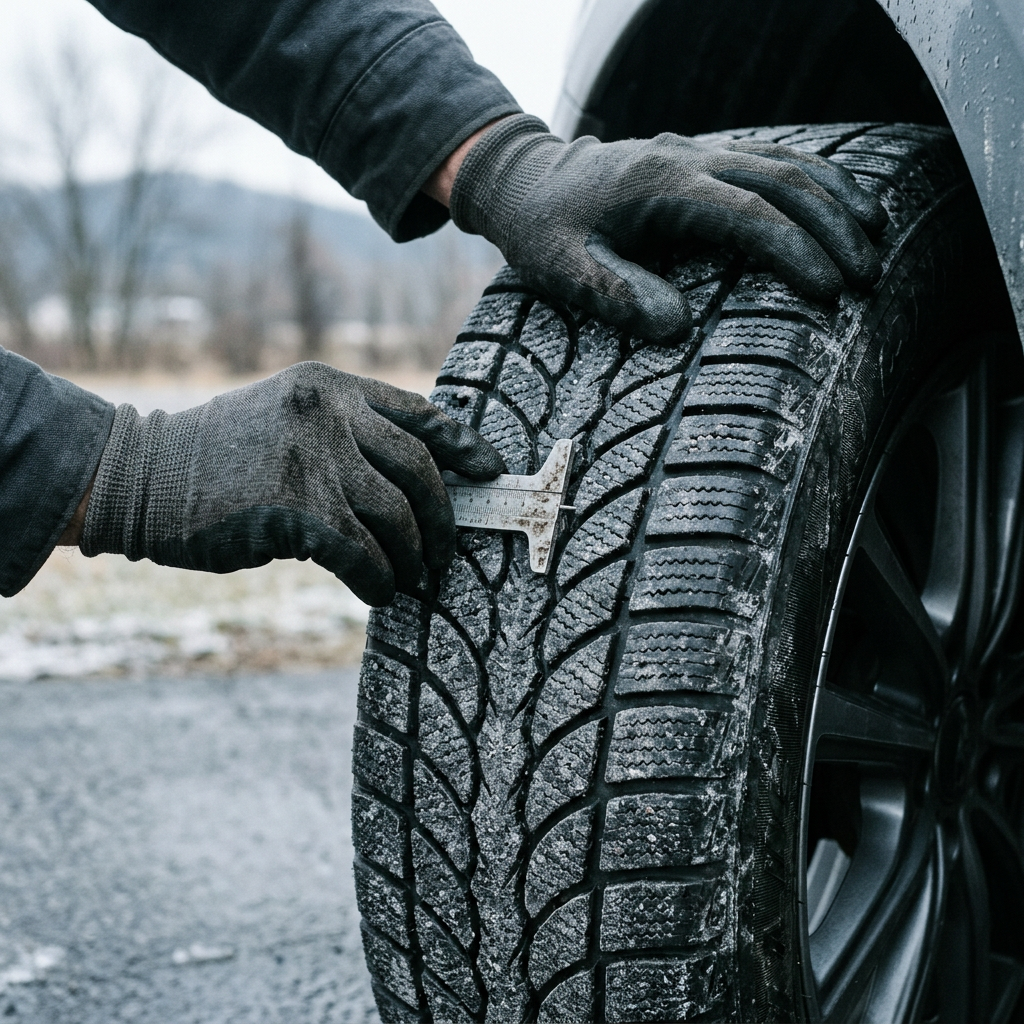
What Are the Tread Depth, Cold Inflation, and 3PMSF Standards for Winter Tires?
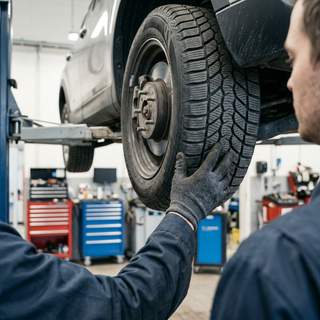
Winter driving requires a minimum tire tread depth of 4/32 of an inch to maintain basic bite on packed snow, though 5/32 to 6/32 of an inch is recommended to channel away slush and reduce highway hydroplaning. Tires must always be set to the exact cold inflation pressure printed on the driver door jamb placard, compensating for the standard drop of 1 to 2 PSI for every 10-degree Fahrenheit drop in ambient outside temperature.
Checking remaining tread depth at home is simple using standard pocket change:
- Place a quarter head-first into the center tread grooves; if the top of George Washington's head is covered, your tires possess at least 4/32 of an inch of tread.
- Place a penny head-first into the tread grooves; if the top of Abraham Lincoln's head is visible, your tires are below the legal minimum of 2/32 of an inch and must be replaced immediately.
- Inspect outer and inner shoulders for uneven wear, cupping, cuts, or sidewall impact bulges that could trigger high-speed blowouts in freezing conditions.
Tires stamped with the Three-Peak Mountain Snowflake ( 3PMSF) symbol have passed standardized testing measuring acceleration on medium-packed snow. While standard tires bearing only the Mud and Snow ( M+S) badge simply have specific tread pattern void ratios, tires with the 3PMSF rating incorporate cold-weather rubber polymers that remain flexible below 45 degrees Fahrenheit. This flexibility ensures the sipes continue opening and closing over ice. However, all-weather 3PMSF tires do not match dedicated winter tires when stopping or cornering on sheet ice.
Our service team frequently hears travelers ask whether factory tires provide adequate grip on icy highways or if a trip across northern passes demands dedicated winter rubber. We examine tread depth across all four wheels and check the date codes to ensure rubber compounds have not hardened with age. If your tires show severe wear, you can use our online tire finder tool to select brand-specific winter or all-weather options, or you can book a service appointment to have our technicians perform high-speed balancing and a four-wheel alignment before you leave.
Which Cold-Weather Fluids, Wipers, and Battery Tests Prevent Winter Breakdowns?
Preventing winter breakdowns requires filling the washer reservoir with de-icing fluid rated to at least -20 degrees Fahrenheit, replacing cracked wiper blades with beam-style winter blades, and performing an electronic battery conductance test. Sub-freezing temperatures weaken an automotive battery by up to 50 percent while demanding nearly double the electrical current to crank an engine against cold, viscous motor oil.
Summer bug-wash formulas contain minimal alcohol and freeze solid at 32 degrees Fahrenheit, which can crack the plastic washer fluid reservoir, burst under-hood fluid lines, and burn out the small electric washer pump motor. Winter-rated fluids blend methanol and specialized detergents that dissolve road salt crust without refreezing on cold glass. Upgrading to beam-style winter wiper blades eliminates exposed metal joints that pack with wet snow, allowing the silicone or rubber blade to maintain even pressure across the windshield.
Automotive batteries lose chemical efficiency as temperatures plunge. A battery that starts an engine without hesitation in warm weather can fail completely after parking overnight in sub-zero air. A proper diagnostic test measures cold cranking amps under an applied electrical load, confirming whether the internal lead plates can deliver starting voltage without a steep internal voltage drop. Technicians also clean the lead terminals, inspect the heavy ground cables, and ensure the alternator delivers a steady 13.8 to 14.5 volts to replenish the battery during short daytime driving cycles.
Vehicles such as the Ford Explorer and Ford Escape feature automated defroster sequences and heated mirrors that place significant electrical loads on the charging system during winter commutes. Reviewing our comprehensive battery maintenance and diagnostic guidance helps you spot warning signs like slow engine turnover, dimming interior lights, or corrosion around battery hold-down clamps before you head onto remote highways.
What Emergency Supplies and Packing Checks Keep Family Travel Safe?
A winter roadside emergency kit must contain heavy-duty jumper cables, a compact folding snow shovel, an ice scraper with a brass or composite edge, a bright LED flashlight with spare lithium batteries, and traction material like non-clumping clay kitty litter. In addition, pack heavy wool blankets, a compact first-aid kit, high-calorie non-perishable snacks, a portable USB power bank for phones, and drinking water stored in an insulated cooler so it resists freezing.
Drivers traveling through suburban Calcutta along State Route 170 know that open fields can create sudden wind gusts and blowing snowdrifts that cut visibility and strand vehicles unexpectedly. Preparing an emergency kit ensures that you and your passengers stay warm and safe if forced to wait for roadside assistance during a heavy snowfall.
When packing your vehicle, keep heavy gear placed low and centered over the rear axle to maintain predictable handling and steady brake balance. Avoid stacking heavy luggage higher than the rear seatbacks, where loose items could turn into dangerous projectiles during sudden highway braking maneuvers. A 2026 Ford Explorer provides about 16 cubic feet of dedicated luggage room behind the third row and up to 5,000 lbs of towing capacity when equipped with Intelligent 4WD, while a 2026 Ford Escape delivers about 38 cubic feet of rear cargo space, offering a spacious cargo area for all your family gear without crowding passenger seating. Packing your vehicle thoughtfully keeps emergency tools, warm jackets, and road flares easily accessible without unloading luggage on an icy shoulder.
Winter Travel Preparation FAQs: Inspection Timing and Severe Weather Gear
Q: How far in advance of a winter road trip should an inspection be scheduled?
You should schedule a pre-trip inspection one to two weeks before departure. This time window provides ample room for certified technicians to diagnose potential mechanical issues, source any specialized replacement parts, and perform essential maintenance like brake pad replacement, cooling system flushes, or wheel alignments without disrupting your planned departure date.
Q: What is the risk of lowering tire pressure to gain traction in winter conditions?
Lowering tire pressure on modern radial tires reduces overall winter traction on public roads by causing the center of the tread to cup inward. This inward cupping lifts critical biting edges away from the pavement and prevents sipes from clearing slush, while simultaneously increasing the risk of rim damage and tire overheating at highway speeds.
Q: Can summer windshield washer fluid damage wiper systems in freezing weather?
Summer washer fluid contains water-based detergents that freeze solid inside the washer tank, lines, and spray nozzles when temperatures drop below freezing. This expansion can crack the reservoir, pop fluid line junctions apart behind the cowl, and burn out the electric washer pump motor if the driver repeatedly attempts to spray frozen jets.
Q: What should you do if your vehicle breaks down in severe winter weather?
If your vehicle stalls or leaves the roadway in freezing weather, stay inside the cabin to retain body warmth and avoid exposure to passing traffic. Keep the exhaust pipe clear of snowdrifts to avoid carbon monoxide buildup if running the engine intermittently for heat, activate your hazard flashers, and call Ford Roadside Assistance: 1-800-241-3673 for authorized emergency recovery.
Q: Why does engine oil viscosity matter when traveling to sub-zero climates?
Engine oil thickens in severe cold, which slows fluid circulation through the valve train and increases mechanical resistance against the starter motor during cold starts. Using the manufacturer-recommended winter viscosity grade, such as full synthetic 5W-20 or 5W-30, ensures immediate oil pressurization and protects critical internal engine components from metal-to-metal wear during frigid starts.
Schedule Your Pre-Trip Winter Inspection at Tri State Ford
A thorough mechanical inspection ensures your vehicle stays dependable, comfortable, and safe through freezing weather and long road trips. From verifying battery health and antifreeze freeze points to checking tire tread depth and brake rotor wear, taking care of these vital components ahead of time provides peace of mind on every snowy mile.
Our certified Ford technicians understand the unique demands of cold-weather driving and use only genuine Motorcraft parts engineered for your vehicle. We help you prepare your car for any winter adventure, providing dependable performance for your family journeys. Get ready for your next getaway by checking driving directions to our service center at 1503 Pennsylvania Ave, or connect with our team directly by placing a call to our service advisors at (330) 462-7578 to book your pre-trip service appointment today.