Blog / Maintenance & Service, Expert Repairs & Diagnostics, Genuine Parts & Accessories, Engine Care &

Blog

All Maintenance & Service, Expert Repairs & Diagnostics, Genuine Parts & Accessories, Engine Care & New Vehicle Reviews, Buying Guides, Financing & Insurance, Model Comparisons, Automotive News Automotive News, New Vehicle Reviews, Buying Guides, Financing & Insurance, Seasonal Driving Tips Used Vehicle Guides, Financing & Insurance, Buying Guides, Trade-In Advice, Certified Pre-Owned Maintenance & Service, Warranty & Service Contracts, Repair & Diagnostics, Parts & Components Compare Cars Maintenance & Service, Battery Care & Diagnostics, Electric Vehicle (EV) Maintenance, Seasonal Used Vehicle Guides, Financing & Insurance, Buying Guides, Vehicle Warranty Information, Pre-Owned Vehicle Trade-In Advice, Financing & Insurance, Buying Guides, Used Vehicle Guides, New Vehicle Maintenance & Service, Essential Vehicle Care, Preventive Maintenance Tips, Vehicle Longevity Buying Guides, Financing & Insurance, New Vehicle Reviews, Model Comparisons, Sales & Promotions Maintenance & Service, Parts & Accessories, Vehicle HVAC Care, Seasonal Vehicle Maintenance, DIY Tips Used Vehicle Guides, Financing & Insurance, Buying Guides, Pre-Owned Vehicle Sales, Vehicle New Vehicle Reviews, Buying Guides, Model Comparisons, Financing & Insurance, Inventory & Sales Buying Guides, Financing & Insurance, New Vehicle Reviews, Model Comparisons, Technology & Maintenance & Service, Brake Systems & Repair, Vehicle Parts & Accessories, Towing & Load Vehicle Trade-In Tips, Financing & Insurance, Buying Guides, Dealership Sales Strategies, Inventory Community Events & Customer Appreciation, New Vehicle Reviews, Financing & Trade-In Guides, Leasing & Lease Deals, Financing & Insurance, New Vehicle Sales, Commercial Vehicle Leasing, Maintenance & Service, Warranty & Recalls, Repair & Diagnostics, Parts & Accessories, Vehicle New Vehicle Reviews, Buying Guides, Financing & Insurance, Model Comparisons, Automotive Technology Vehicle Sales Events, New Vehicle Pricing & Incentives, Financing & Lease Options, Trade-In & Maintenance & Service, Recall Information, Safety & Reliability, Vehicle Ownership Care, Parts & Maintenance & Service, Vehicle Lighting & Electrical Systems, Automotive Safety & Inspection, OEM Maintenance & Service, Vehicle Pickup & Delivery, Mobile Service & On-Site Repairs, Oil Change & Model Comparisons, New Vehicle Reviews, Technology & Innovation, Safety Features, Buying Guides Commercial Truck Sales, Fleet Vehicle Financing, Custom Work Truck Upfits, Commercial Vehicle Commercial Vehicle Sales, Financing & Leasing, Small Business Vehicle Incentives, Fleet Purchasing Commercial Vehicle Sales, Fleet Purchasing & Management, Financing & Leasing for Businesses, New & Community Events, New Vehicle Buying Guides, Financing & Insurance, Maintenance & Service, Local Dealership Events & Promotions, Financing & Trade-In Options, Maintenance & Service Specials, Maintenance & Service, Vehicle Ownership Care, Mobile Repair Services, Genuine Parts & Certified New Vehicle Reviews, Buying Guides, Financing & Insurance, Model Comparisons, Used Vehicle Guides Used Vehicle Guides, Financing & Insurance, Buying Guides, New Vehicle Reviews, Commercial Vehicle Vehicle Sales Process, Financing & Credit Applications, New and Used Vehicle Inventory, Pickup and Buying Guides, Financing & Insurance, New Vehicle Reviews, Commercial Fleet Sales, Custom Orders & Buying Guides, New Vehicle Reviews, Financing & Insurance, Commercial Vehicle Sales, Model Commercial Vehicle Sales, Fleet Leasing & Management, Commercial Financing & Tax Incentives, Financing & Insurance, Leasing Benefits, Model Comparisons, Technology & Innovation, Buying Guides Leasing & Financing Options, Buying Guides, Model Comparisons, Negotiation Tips, Inventory & Leasing & Financing Options, Buying Guides, New Vehicle Reviews, Model Comparisons, Technology & Maintenance & Service, Automotive Detailing, Paint Protection & Care, Seasonal Vehicle Care, Maintenance & Service, Automotive Electrical Systems, Battery Care & Replacement, Vehicle Lighting Maintenance & Service, Automotive Fluids & Lubricants, Vehicle Care & Ownership, Dealership Service Maintenance & Service, Brake System Care, Vehicle Safety & Inspection, Parts Quality & Replacement, Maintenance & Service, Brake System Care, Vehicle Safety & Inspections, Parts & Repairs, Expert Maintenance & Service, Mobile Vehicle Services, Vehicle Care & Ownership, Genuine Parts & Repairs, Maintenance & Service, Safety Features, Technology & Innovation, Seasonal Driving Tips, Parts & Maintenance & Service, Technology & Innovation, Vehicle Diagnostics & Telematics, Fleet Management Maintenance & Service, Tire Care & Repair, Roadside Assistance, Vehicle Safety & Inspections, Maintenance & Service, Tire Care & Repair, Wheel Alignment & Balancing, Suspension Maintenance, Maintenance & Service, Vehicle Inspection & Diagnostics, Parts & Repairs, Warranty & Resale Value, Maintenance & Service, Vehicle Inspections, Oil Change & Fluid Services, Tire Care & Battery Maintenance & Service, Vehicle Interior Care, Technology & Innovation in Service, Professional Maintenance & Service, Vehicle Software Updates, Safety Features, Technology & Innovation, Recall & New Vehicle Reviews, Buying Guides, Financing & Insurance, Model Comparisons, Inventory Highlights New Vehicle Reviews, Buying Guides, Financing & Insurance, Model Comparisons, Inventory Updates New Vehicle Reviews, Buying Guides, Model Comparisons, Maintenance & Service, Technology & New Vehicle Reviews, Buying Guides, Technology & Innovation, Safety Features, Seasonal Driving Tips Vehicle Sales Events, New Vehicle Purchasing, Incentives & Discounts, Financing & Pre-Approval, Buying Guides, Financing & Insurance, Used Vehicle Guides, New Vehicle Reviews, Cross-Border Buying Guides, Financing & Insurance, Vehicle Inventory & Offers, Dealership Visit Preparation, Commercial Leasing Options, Business Fleet Solutions, Financing & Leasing Programs, Commercial Commercial Truck Sales, Fleet Purchasing Guides, Financing & Lease Options, Work Truck Community Engagement & Events, New Vehicle Promotions, Financing & Trade-In Options, Maintenance & Community Events & Dealership News, New Vehicle Promotions & Incentives, Maintenance & Service Community Events & Dealership News, New Vehicle Reviews, Financing & Insurance, Maintenance & Custom Ordering & Build Process, New Vehicle Inventory & Offers, Financing & Trade-In Guidance, East Liverpool, OH Ford Dealer East Liverpool, OH Used Cars Financing & Insurance, Buying Guides, Commercial Vehicle Solutions, Fleet Management, Inventory and Financing & Insurance, Buying Guides, New Vehicle Reviews, Used Vehicle Guides, Automotive Sales Financing & Insurance, Buying Guides, New Vehicle Reviews, Used Vehicle Guides, Automotive Sales & Financing & Insurance, Buying Guides, New Vehicle Reviews, Used Vehicle Guides, Model Comparisons Financing & Insurance, Buying Guides, Used Vehicle Guides, New Vehicle Reviews, Automotive Sales Financing & Insurance, Buying Guides, Used Vehicle Guides, Trade-In Tips, New Vehicle Sales Financing & Insurance, Buying Guides, Vehicle Inventory & Offers, Trade-In & Appraisal, Dealership Financing & Insurance, Buying Guides, Vehicle Trade-In Tips, Dealership Sales Process, New Vehicle Leasing & Financing Options, New Vehicle Leasing Guides, Buying Guides, Inventory Spotlight, Trade Leasing Options, Financing & Insurance, New Vehicle Reviews, Buying Guides, Technology & Innovation Leasing Options, Financing & Insurance, New Vehicle Sales, Buying Guides, Vehicle Inventory Maintenance & Service, Air Conditioning Repair, Genuine Parts & Accessories, Dealer-Authorized Maintenance & Service, Automotive Air Conditioning Repair, Vehicle Cooling System Care, Diagnostic Maintenance & Service, Automotive Detailing & Cleaning, Seasonal Vehicle Care, Vehicle Protection & Maintenance & Service, Automotive Detailing & Paint Care, Vehicle Exterior Protection, Paint Repair Maintenance & Service, Automotive Detailing & Protection, Corrosion & Rust Prevention, Paint & Maintenance & Service, Automotive Detailing, Vehicle Care & Protection, Off-Road Vehicle Maintenance & Service, Automotive Electrical Systems, Battery Care & Replacement, Diagnostics & Maintenance & Service, Automotive Glass Repair, Safety Features, Technology & Innovation, Mobile & Maintenance & Service, Automotive Lighting & Electrical, Vehicle Safety & Visibility, DIY Vehicle Maintenance & Service, Automotive Parts & Accessories, Seasonal Vehicle Care, Vehicle Safety & Maintenance & Service, Automotive Parts & Accessories, Vehicle Air Quality & HVAC Care, Preventive Maintenance & Service, Automotive Parts & Accessories, Vehicle Ownership Care, Engine Care & Maintenance & Service, Automotive Parts & Accessories, Vehicle Safety & Repair, Warranty & Maintenance & Service, Automotive Parts & Components, Vehicle Safety & Repair, Warranty & Service Maintenance & Service, Automotive Parts & Repairs, Vehicle Warranty & Protection, Service Center Maintenance & Service, Automotive Repair Tips, Service Team Selection, Warranty & Service Policies, Maintenance & Service, Automotive Repair, Mobile & Remote Vehicle Service, Warranty & Roadside Maintenance & Service, Automotive Repair, Parts & Accessories, Vehicle Ownership Care, Technology & Maintenance & Service, Automotive Repair, Parts & OEM Components, Vehicle Longevity & Care, Service Maintenance & Service, Automotive Technology & Diagnostics, Vehicle Electronics & Sensors, Seasonal Maintenance & Service, Automotive Technology & Software Updates, Warranty & Recall Service, Mobile Maintenance & Service, Battery Care & Replacement, Vehicle Electrical Systems, Seasonal Vehicle Maintenance & Service, Brake System Care, OEM Parts & Replacement, Vehicle Safety & Inspections, Maintenance & Service, Brake System Care, Vehicle Repair Tips, Automotive Parts & Components, Maintenance & Service, Brake System Care, Vehicle Safety & Inspection, Automotive Repair Tips, Maintenance & Service, Brake System Care, Vehicle Safety & Inspections, Parts & Components, Maintenance & Service, Brake System Care, Vehicle Safety Inspections, Automotive Repair Tips, OEM Maintenance & Service, Certified Technician Insights, Warranty & Service Coverage, Genuine OEM Maintenance & Service, Cooling System Repairs, Vehicle Ownership Care, Diagnostic & Maintenance & Service, Diagnostic Services, Vehicle Health & Diagnostics, Service Tips & Advice, Maintenance & Service, Engine Care & Performance, Parts & Accessories, Genuine vs. After Maintenance & Service, Paint Protection & Detailing, Vehicle Exterior Care, Seasonal Vehicle Maintenance & Service, Parts & Accessories, Engine Care & Repair, Vehicle Longevity Tips, OEM Parts Maintenance & Service, Parts & Replacements, Vehicle Care Tips, Seasonal Maintenance, DIY Vehicle Maintenance & Service, Recall Updates & Safety Notices, Genuine Parts & Accessories, Truck Care & Maintenance & Service, Repair & Diagnostics, OEM Parts & Accessories, Warranty & Recall Maintenance & Service, Repair & Diagnostics, Parts & Accessories, Vehicle Ownership Care, Service Maintenance & Service, Repair & Diagnostics, Parts & Components, Preventive Care & Tips, Warranty & Maintenance & Service, Repair & Diagnostics, Tire & Wheel Care, Vehicle Safety & Inspection, Parts Maintenance & Service, Repair & Diagnostics, Warranty & Service Coverage, Genuine OEM Parts & Maintenance & Service, Repair & Parts, Vehicle Ownership Care, Safety Features, Technology & Maintenance & Service, Repair & Parts, Vehicle Ownership Care, Transmission Maintenance & Service, Repair Solutions, Vehicle Ownership Care, Parts & Accessories, Diagnostic Maintenance & Service, Repair Tips & Techniques, Vehicle Care & Ownership Maintenance & Service, Safety Features, Automotive Recalls & Repairs, Parts & Warranty Services, Maintenance & Service, Safety Features, Automotive Recalls & Repairs, Technology & Innovation, Maintenance & Service, Safety Features, Automotive Recalls, Vehicle Ownership Care, Parts & Repairs Maintenance & Service, Safety Features, Parts & Repairs, Vehicle Ownership Care, Automotive Service Maintenance & Service, Safety Features, Recall & Repair Updates, Parts & Repairs, Vehicle Ownership Maintenance & Service, Safety Features, Recall & Safety Campaigns, Vehicle Inspection & Repairs, Maintenance & Service, Safety Features, Recall & Warranty Information, Vehicle Diagnostics & Maintenance & Service, Safety Features, Recall Repairs & Safety Campaigns, Parts & Genuine Maintenance & Service, Safety Features, Recalls & Repairs, Parts & Accessories, Vehicle Ownership Maintenance & Service, Safety Features, Repair & Recall Updates, Parts & Components, Vehicle Maintenance & Service, Safety Features, Repair & Replacement, Vehicle Care & Inspection, Parts & Maintenance & Service, Safety Features, Seasonal Driving Tips, Technology & Innovation, Parts & Maintenance & Service, Safety Features, Technology & Innovation, Automotive Electrical Systems, Maintenance & Service, Safety Features, Technology & Innovation, Automotive News, Parts & Repairs Maintenance & Service, Safety Features, Technology & Innovation, Automotive Parts & Accessories, Maintenance & Service, Safety Features, Technology & Innovation, Automotive Recalls, Parts & Repairs Maintenance & Service, Safety Features, Technology & Innovation, Automotive Recalls, Vehicle Maintenance & Service, Safety Features, Technology & Innovation, Automotive Service Tips, Recall & Maintenance & Service, Safety Features, Technology & Innovation, Parts & Repairs, Seasonal Driving Maintenance & Service, Safety Features, Technology & Innovation, Parts & Repairs, Vehicle Ownership Maintenance & Service, Safety Features, Technology & Innovation, Recall & Warranty Information, Maintenance & Service, Safety Features, Technology & Innovation, Repair & Recall Information, Parts Maintenance & Service, Safety Features, Technology & Innovation, Tire Care & Replacement, Maintenance & Service, Safety Features, Vehicle Inspections, DIY Vehicle Care, Repair & Diagnostics Maintenance & Service, Safety Recalls & Repairs, Vehicle Safety & Compliance, Powertrain & Maintenance & Service, Seasonal Driving Tips, Model Comparisons, Technology & Innovation, Safety Maintenance & Service, Seasonal Driving Tips, Safety Features, Technology & Innovation, Automotive Maintenance & Service, Seasonal Driving Tips, Safety Features, Technology & Innovation, Parts & Maintenance & Service, Seasonal Driving Tips, Vehicle Care & Ownership, Brake System Maintenance, Maintenance & Service, Seasonal Driving Tips, Vehicle Care & Ownership, Parts & Accessories, Safety Maintenance & Service, Seasonal Driving Tips, Vehicle Care & Ownership, Safety Features, Maintenance & Service, Seasonal Driving Tips, Vehicle Care & Protection, Brake Maintenance, Tire Maintenance & Service, Seasonal Driving Tips, Vehicle Care & Warranty, Service Specials & Packages, Maintenance & Service, Seasonal Driving Tips, Vehicle Cooling Systems, Automotive Safety Features, Maintenance & Service, Service Scheduling & Convenience, Vehicle Repair & Diagnostics, Parts & Maintenance & Service, Technology & Innovation, Automotive Service Transparency, Digital Vehicle Maintenance & Service, Technology & Innovation, Safety Features, Parts & Warranty, Vehicle Maintenance & Service, Tire Care & Replacement, Seasonal Vehicle Care, Safety Features, Automotive Maintenance & Service, Tire Care & Replacement, Vehicle Safety & Handling, Seasonal Vehicle Maintenance & Service, Tire Care & Replacement, Vehicle Safety & Inspection, Emergency Roadside Maintenance & Service, Tire Care & Replacement, Vehicle Safety & Inspections, Seasonal Vehicle Maintenance & Service, Transmission Care & Repair, Vehicle Fluid Services, Automotive Diagnostics, Maintenance & Service, Transmission Care, Repair & Parts, Vehicle Ownership Care, Common Vehicle Maintenance & Service, Vehicle Care & Longevity, Scheduled Service Packages, Oil Changes & Fluid Maintenance & Service, Vehicle Care Tips, Parts & Accessories, Seasonal Vehicle Maintenance, Maintenance & Service, Vehicle Detailing & Care, Parts & Accessories, Seasonal Vehicle Preparation, Maintenance & Service, Vehicle Detailing & Cosmetic Care, Automotive Cleaning & Protection, Service Maintenance & Service, Vehicle Detailing & Cosmetic Care, Service Scheduling & Convenience, Maintenance & Service, Vehicle Detailing & Protection, Repair & Inspection, Parts & Accessories, Maintenance & Service, Vehicle Detailing & Protection, Vehicle Care Tips, Seasonal Vehicle Maintenance & Service, Vehicle Diagnostics & Repair, Engine Performance & Troubleshooting, Fuel Maintenance & Service, Vehicle Fluids & Lubrication, Engine Care & Repair, Parts & Accessories, Maintenance & Service, Vehicle Ownership Care, Parts & Accessories, Repair & Diagnostics, Certified Maintenance & Service, Vehicle Repair & Diagnostics, Parts & Accessories, DIY Vehicle Care, Safety Maintenance & Service, Vehicle Repair & Diagnostics, Parts & Accessories, Hybrid & Electric Vehicle Maintenance & Service, Vehicle Repair & Diagnostics, Parts & Accessories, Seasonal Driving Tips, Maintenance & Service, Vehicle Repair & Diagnostics, Parts & Accessories, Service Lane Tips & Maintenance & Service, Vehicle Repair & Diagnostics, Parts & Accessories, Towing & Performance Maintenance & Service, Vehicle Repair & Parts, Service Convenience & Customer Care, Roadside Maintenance & Service, Vehicle Repair Tips, Parts & Accessories, Safety Features, Technology & Maintenance & Service, Vehicle Service Warranties, Repair & Coverage Plans, Ownership & Vehicle Model Comparisons, Buying Guides, New Vehicle Reviews, Financing & Insurance, Inventory Updates Model Comparisons, Buying Guides, New Vehicle Reviews, Technology & Innovation, Safety Features Model Comparisons, Buying Guides, Technology & Innovation, Safety Features, Maintenance & Service Model Comparisons, New Vehicle Reviews, Buying Guides, Technology & Innovation, Financing & Model Comparisons, New Vehicle Reviews, Buying Guides, Technology & Innovation, Safety Features Model Comparisons, New Vehicle Reviews, Safety Features, Technology & Innovation, Seasonal Driving Model Comparisons, New Vehicle Reviews, Technology & Innovation, Buying Guides, Maintenance & Model Comparisons, New Vehicle Reviews, Technology & Innovation, Maintenance & Service, Buying Model Comparisons, Towing & Hauling Guides, Maintenance & Service, Technology & Innovation, New New Vehicle Promotions, Buying Guides, Financing & Insurance, New Vehicle Reviews, Inventory New Vehicle Reviews, Buying Guides, Financing & Insurance, Model Comparisons, Automotive Sales New Vehicle Reviews, Buying Guides, Financing & Insurance, Model Comparisons, Commercial & Work New Vehicle Reviews, Buying Guides, Financing & Insurance, Model Comparisons, Vehicle Customization New Vehicle Reviews, Buying Guides, Financing & Insurance, Model Comparisons, Vehicle Inventory New Vehicle Reviews, Buying Guides, Financing & Insurance, New Vehicle Specials, Trade-In & Value New Vehicle Reviews, Buying Guides, Financing & Insurance, Used Vehicle Guides, Inventory Updates New Vehicle Reviews, Buying Guides, Financing & Insurance, Used Vehicle Guides, Model Comparisons New Vehicle Reviews, Buying Guides, Financing & Insurance, Vehicle Inventory & Specials, Model New Vehicle Reviews, Buying Guides, Financing & Insurance, Vehicle Inventory, Model Comparisons New Vehicle Reviews, Buying Guides, Model Comparisons, Financing & New Vehicle Reviews, Buying Guides, Safety Features, Technology & Innovation, Model Comparisons New Vehicle Reviews, Buying Guides, Technology & Innovation, Safety Features, Maintenance & Service New Vehicle Reviews, Financing & Insurance, Buying Guides, New Vehicle Specials, Model Comparisons New Vehicle Reviews, Financing & Insurance, Buying Guides, Technology & Innovation, Automotive New Vehicle Reviews, Financing & Insurance, Buying Guides, Used Vehicle Guides, Model Comparisons New Vehicle Reviews, Model Comparisons, Buying Guides, Technology & Innovation, Safety Features New Vehicle Reviews, Model Comparisons, Commercial Truck Guides, Technology & Innovation, New Vehicle Reviews, Model Comparisons, Financing & Insurance, Technology & Innovation, Safety New Vehicle Reviews, Model Comparisons, Off-Road Adventures, Technology & Innovation, Maintenance & New Vehicle Reviews, Model Comparisons, Safety Features, Technology & Innovation, Buying Guides New Vehicle Reviews, Model Comparisons, Technology & Innovation, Financing & Insurance, Maintenance New Vehicle Reviews, Model Comparisons, Technology & Innovation, Safety Features, Buying Guides New Vehicle Reviews, Model Comparisons, Technology & Innovation, Safety Features, Maintenance & New Vehicle Reviews, Off-Road Capabilities, Outdoor Adventure Vehicles, Technology & Innovation, New Vehicle Reviews, Technology & Innovation, Buying Guides, Maintenance & Service, Model New Vehicle Reviews, Technology & Innovation, Buying Guides, Safety Features, Model Comparisons New Vehicle Reviews, Technology & Innovation, Safety Features, Maintenance & Service, Buying Guides New Vehicle Sales, Financing & Incentives, Trade-In & Appraisal, Special Sales Events, Electric New Vehicle Sales, Financing & Incentives, Trade-In & Value Guides, Manufacturer Promotions, New Vehicle Sales, Financing & Insurance, Buying Guides, Manufacturer Incentives & Discounts, New Vehicle Sales, Vehicle Delivery & Logistics, Financing & Credit Applications, Trade-In & Trucks Used Vehicle Guides, Buying Guides, Financing & Insurance, Model Comparisons, Selling Your Car Used Vehicle Guides, Financing & Insurance, Buying Guides, Model Comparisons, Local Dealership Vehicle Sales Events, Financing & Leasing, Trade-In & Trade-Up Guides, New Vehicle Inventory Vehicle Sales Events, New Vehicle Buying Guides, Financing & Incentives, Dealership Inventory Vehicle Sales Events, New Vehicle Pricing, Financing & Credit Applications, Trade-In & Loyalty Vehicle Sales Process, Online Vehicle Purchasing, Financing & Loan Approval, Trade-In & Vehicle Vehicle Sales Promotions, New Vehicle Buying Guides, Financing & Credit Applications, Dealership Vehicle Sales Promotions, New Vehicle Buying Guides, Financing & Incentives, Trade-In & Valuation, Vehicle Sales, Online Car Buying, Financing & Incentives, Trade-In Guides, New Vehicle Delivery
5

Is It Better to Service a Ford at a Dealership?

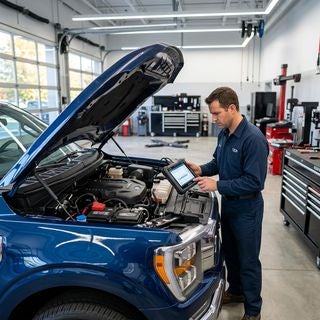
Servicing a Ford at a dealership is better for vehicle longevity, technical precision, and warranty compliance because factory-trained technicians use specialized diagnostic software and genuine Motorcraft components engineered specifically for your model. Independent repair shops often rely on multi-brand scan tools and generic aftermarket parts that may not meet exact factory standards. Dealership service also ensures open safety recalls, module updates, and Ford Protect extended service plan claims are processed seamlessly under one roof. Modern Ford trucks and SUVs feature sophisticated electronic architectures, turbocharged powertrains, and dedicated driver-assist hardware. Maintaining a vehicle like the 2026 Ford F-150 equipped with a 3.5L EcoBoost® V6 engine or a 2026 Ford Explorer requires precise mechanical calibration and up-to-date factory software. Routine maintenance tasks, such as professional battery service testing and replacement, involve specialized battery management system recalibrations that generic testing units cannot perform. Failing to reset this system after installing a new battery can lead to improper charging rates and reduced electrical component life. Our service team understands the daily demands placed on local vehicles, whether hauling cargo across the rolling suburban terrain of Calcutta or navigating daily commutes in unpredictable winter weather. Regular factory-scheduled checkups ensure key fluid levels, brake wear, tire health, and electrical systems remain in optimal working condition. To protect your investment and preserve long-term vehicle performance, you can reach our advisors by giving us a quick call at (330) 462-7578 or getting directions to our dedicated service center on Pennsylvania Ave. Table of Contents What Advanced Diagnostic Software and Equipment Do Ford Dealerships Use? How Do Genuine OEM and Motorcraft Parts Compare to Aftermarket Options? Does Independent Maintenance Void Your Factory Warranty or Ford Protect Coverage? How Can Ford Owners Save Money on Factory Dealership Maintenance? Do Ford Dealerships Offer Pickup & Delivery, Loaner Vehicles, and Quick Lane Care? Common Questions About Ford Maintenance and Service Options What Advanced Diagnostic Software and Equipment Do Ford Dealerships Use? Ford dealerships utilize proprietary diagnostic software suites, including the Ford Diagnostic and Repair System (FDRS) and legacy Integrated Diagnostic System (IDS), paired with specialized VCM III hardware interfaces that independent repair facilities rarely possess. This advanced hardware and software ecosystem grants factory technicians direct communication with every electronic module in your vehicle, allowing for precise system flashing, module reprogramming, and complete vehicle health mapping. While independent auto repair shops can read basic diagnostic trouble codes using generic OBD-II scanners, those universal tools lack access to Ford proprietary code definitions, live data parameters, and bidirectional control tests. Modern vehicles rely on cloud-connected networks for over-the-air software updates and complex computer modules. The FDRS platform is designed specifically for these modern vehicle architectures, enabling technicians to download software calibration updates directly from Ford engineering servers. Technicians at general service garages often encounter limitations when attempting to resolve complex electrical glitches, SYNC infotainment resets, or safety sensor recalibrations. When local drivers bring their vehicles to our authorized Ford service center, our service bay equipment interfaces directly with factory databases to pinpoint root causes quickly. Our team frequently sees vehicle owners who previously spent time and money at general repair shops for recurring check engine lights, only to find that an authorized software reflash was the precise fix required. How Do Genuine OEM and Motorcraft Parts Compare to Aftermarket Options? Genuine Motorcraft and OEM Ford parts are designed using original vehicle blueprints, ensuring exact fitment, identical structural integrity, and uncompromising durability compared to third-party aftermarket alternatives. Non-OEM manufacturers produce parts to fit a broad range of vehicle makes and models, which frequently results in loose physical tolerances, excessive operational noise, and premature component wear. Every original component is crafted to pass strict factory performance and safety evaluations. Key replacement components, including brake rotors, engine air filters, spark plugs, and suspension shocks, undergo extensive stress testing under extreme thermal and mechanical loads. Using generic aftermarket brake pads, for instance, can result in increased dust accumulation, squealing, and reduced stopping power during emergency situations. Choosing factory parts also protects your wallet with robust coverage. Motorcraft replacement components installed at a dealership come backed by a 2-year/unlimited-mileage warranty that includes both parts and labor coverage. If you prefer handling routine maintenance items yourself or need specialized components, you can easily order genuine Ford parts through our dedicated department to keep your truck or SUV performing to original factory standards. Does Independent Maintenance Void Your Factory Warranty or Ford Protect Coverage? Having routine maintenance performed at an independent repair shop does not void your Ford factory warranty under federal law, provided the service follows recommended schedules, uses specification-compliant materials, and is backed by detailed receipts. However, any repairs covered under a Ford Protect Extended Service Plan or official warranty claims must be completed at an authorized dealership using genuine OEM parts. Under the federal Magnuson-Moss Warranty Act, vehicle owners have the legal right to choose where they receive routine maintenance such as oil changes, tire rotations, and air filter replacements. However, Ford explicitly states that owners are responsible for following the "Scheduled Maintenance" guidelines detailed in the vehicle Owner's Manual. Fluids, filters, and replacement parts used during service must meet exact Ford engineering specifications. If an independent shop uses non-compliant engine oil or an inferior filter that causes mechanical damage, Ford can rightfully deny warranty claims related to that specific component failure. Maintaining thorough documentation is essential when using non-dealership service providers. Owners should keep itemized receipts detailing the date, vehicle mileage, specific services performed, and part numbers used. In contrast to routine maintenance, extended coverage under a Ford Protect Extended Service Plan carries strict contractual requirements. These service agreements require covered mechanical and electrical repairs to be diagnosed and completed by authorized dealership technicians to guarantee proper installation and genuine part usage. Reliable performance is especially critical when navigating the riverfront bluffs and steep grade changes along East Liverpool, where heavy engine loading puts added stress on internal components. How Can Ford Owners Save Money on Factory Dealership Maintenance? Ford owners can lower dealership maintenance expenses by redeeming Ford Rewards points earned on vehicle purchases, utilizing online dealership service coupons, and taking advantage of bundled seasonal maintenance packages. Adhering to preventative service schedules keeps long-term ownership costs low by catching minor wear items before they turn into major mechanical repairs. The Ford Rewards program allows vehicle owners to earn points on routine service visits, tire purchases, and vehicle care. These accumulated points act as direct credit toward future maintenance appointments, allowing you to offset the cost of upcoming fluid flushes, brake jobs, or cabin filter changes. Signing up for digital account management lets you track your point balance and view exclusive service offers directly from your smartphone. Bundled maintenance programs offer significant savings compared to paying for individual services separately. Bundled maintenance packages, such as "The Works," combine an oil change, synthetic blend fluid renewal, tire rotation, pressure check, brake wear inspection, and a comprehensive multi-point vehicle inspection into one transparently priced package. Taking advantage of these recurring service offers ensures your vehicle receives factory-grade attention while remaining friendly on your household budget. Do Ford Dealerships Offer Pickup & Delivery, Loaner Vehicles, and Quick Lane Care? Many Ford dealerships provide complimentary Ford Pickup & Delivery service, complimentary local shuttle rides, and dedicated loaner vehicles for qualifying service and repair appointments. For fast routine upkeep, Quick Lane facilities deliver rapid service without an appointment, though official warranty work and safety recalls must still be handled at the main dealership service center. The Ford Pickup & Delivery program is engineered to make maintenance seamless for busy schedules. An authorized representative arrives at your home or workplace to pick up your vehicle, brings it to our service department for complete maintenance, and delivers it back to your driveway once work is complete. You can easily confirm eligibility and arrange Ford pickup and delivery service online to keep your day moving without taking time out for a service lobby wait. When  rapid maintenance is needed, Quick Lane bays handle essential services like tire balances, wiper installations, brake pad swaps, and fluid checks with minimal downtime. However, it is important to note the operational distinction: Quick Lane locations cannot perform factory warranty repairs or process VIN-specific safety recalls. Those specialized tasks require the master technician certifications, specialized software access, and designated service bays found only within our primary dealership service department. Common Questions About Ford Maintenance and Service Options Q: Can Quick Lane perform official Ford factory warranty repairs or safety recalls? Quick Lane facilities excel at fast routine maintenance like oil changes and tire servicing, but they cannot perform official factory warranty repairs or safety recall updates. Recalls and warranty claims require specialized technician certifications, factory diagnostic software, and official documentation that must be processed through an authorized dealership service department. Q: How do I know when my Ford vehicle needs scheduled maintenance? Ford vehicles feature an Intelligent Oil-Life Monitor that calculates maintenance timing based on engine operating temperatures, towing loads, idling time, and actual driving habits. Instead of relying on generic mileage estimates, Ford recommends following your instrument cluster indicators and checking the "Scheduled Maintenance" section in your Owner's Manual for precise service intervals. Q: What should I bring with me when dropping off my Ford for warranty service? When arriving for a warranty service visit, bring your vehicle registration, current driver's license, and documentation of past maintenance records if servicing was performed outside a dealership. Providing complete receipt records confirms that required maintenance intervals were met using approved fluids and parts, allowing service advisors to process your claim smoothly. Q: Are software and SYNC updates included during routine dealership service visits? During routine service visits, technicians connect your vehicle to factory diagnostic tools that check for available software patches, module recalibrations, and SYNC system updates. While standard health checks cover essential module updates, major infotainment updates can also be addressed during your visit to maintain seamless mobile connectivity and display performance. Q: What is included in a Ford multi-point service inspection? A factory multi-point inspection provides a thorough visual and mechanical evaluation of key safety components. Technicians inspect brake pad thickness, tire tread wear patterns, battery health, belt and hose flexibility, suspension components, and fluid levels, providing a clear color-coded report that highlights immediate needs and upcoming maintenance priorities. Keeping your Ford in top condition ensures total reliability on every road trip and daily commute. To speak with our service team, give us a quick call at (330) 462-7578 or get directions to our service center location at 1503 Pennsylvania Ave, East Liverpool, OH 43920. You can also schedule a service appointment online to keep your vehicle running smoothly year-round. © 2026 Tri State Ford. All rights reserved. Vehicle specification data © JATO Dynamics Limited. Ford Service Excellence in East Liverpool OH | Tri State Ford
l

Is It Better to Service Your Ford at a Dealership?

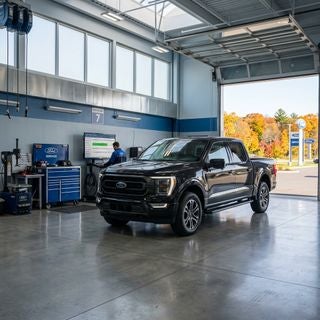
Servicing your Ford at a dealership is better for modern vehicles requiring specialized software updates, factory-trained technical diagnostics, and original equipment parts that maintain your manufacturer warranty. While independent repair shops offer routine maintenance at lower hourly labor rates, dealerships possess proprietary programming tools like Ford Diagnostic and Repair System (FDRS), factory technical service bulletins, and direct warranty processing required for complex electronic, powertrain, and recall repairs. Maintaining a modern truck or crossover involves far more than basic mechanical adjustments. Modern vehicles contain dozens of interconnected electronic control modules that govern everything from engine timing and transmission shift points to advanced safety sensors. When you bring a 2026 Ford F-150 equipped with a 3.5L engine and SelectShift® automatic transmission in for routine service, specialized diagnostic equipment checks the vehicle against central factory databases. These automatic system checks locate model-specific calibrations and module updates that standard code readers used by general repair garages simply cannot detect. Factory-certified technicians undergo rigorous, ongoing training directly from the manufacturer. This technical background ensures that every repair follows exact factory procedures and torque specifications. Whether your vehicle requires routine fluid changes or intricate powertrain troubleshooting, certified technicians understand the precise engineering requirements of your specific model year. For maximum convenience, routine service options fit seamlessly into your daily schedule. You can bring your vehicle to our service center location for full-service facility care, give our service team a quick call to discuss maintenance questions, or utilize our Ford Mobile Service van for light maintenance performed directly at your home or workplace. Table of Contents What Are the Pros and Cons of a Ford Dealership vs. an Independent Shop? How Do Ford IDS and FDRS Diagnostic Systems Protect Your Vehicle? What Is Included in the Ford Works Synthetic Blend Oil Change Package? Do Motorcraft Parts Include a Warranty and What Records Protect Coverage? What Is the Difference Between Main Dealership Service and Quick Lane Centers? Common Questions About Ford Maintenance and Scheduling What Are the Pros and Cons of a Ford Dealership vs. an Independent Shop? The main advantage of a Ford dealership is access to factory-trained technicians, original equipment Motorcraft components, and direct warranty processing, balanced against higher hourly labor rates. Independent repair shops typically offer lower labor costs and personal familiarity, but they often lack specialized Ford diagnostic software, factory recall capabilities, and dedicated technical tools required for complex vehicle modules. Evaluating where to take your vehicle requires weighing immediate upfront costs against long-term maintenance value and vehicle reliability. Below is a detailed breakdown comparing dealership service centers with independent automotive repair shops: Factory Training and Specialization: Dealership technicians specialize exclusively in Ford vehicle architectures, completing regular manufacturer certification courses. Independent mechanics work on various vehicle makes and models daily, which broadens their general knowledge but limits deep specialization in specific brand technical service bulletins. Diagnostic Software and Equipment: Dealerships utilize dedicated factory software tools like FDRS and Integrated Diagnostic System (IDS), which connect directly to central factory servers for module flashing and recalibration. Independent shops generally rely on multi-brand aftermarket scan tools that read generic trouble codes but cannot perform proprietary software updates or recalibrate complex modules. Parts Quality and Warranty: Dealerships install genuine Motorcraft and original equipment parts designed to exact factory tolerances, backed by nationwide warranty coverage that includes labor. Independent shops frequently utilize aftermarket white-label parts that vary in quality and may carry limited third-party warranties that exclude labor reimbursement. Recall and Warranty Management: Dealerships automatically verify open safety recalls and perform warranty repairs at zero cost to the owner. Independent repair facilities cannot perform official warranty repairs or resolve open safety recalls under factory authorization. For drivers managing daily commutes along State Route 170 near Beaver Creek in Calcutta, the elevated terrain and variable weather put extra stress on steering, suspension, and thermal cooling systems. Having certified technicians inspect critical drivetrain assemblies ensures your vehicle remains reliable under demanding local driving conditions. Visiting an authorized Ford service center provides long-term peace of mind by ensuring every component meets rigid factory standards. How Do Ford IDS and FDRS Diagnostic Systems Protect Your Vehicle? Integrated Diagnostic System (IDS) and Ford Diagnostic and Repair System (FDRS) protect your vehicle by allowing technicians to communicate directly with all internal computer modules to perform factory software updates, recalibrations, and pinpoint electrical troubleshooting. Independent shops using generic scan tools can read basic trouble codes, but they cannot download central factory software updates or reflash central vehicle modules. Modern automotive architectures rely on high-speed controller area network (CAN-bus) systems where separate computer modules share operational data in real time. IDS serves as the legacy software platform for older vehicle electrical architectures, while FDRS is the modern cloud-based platform designed for newer vehicles with advanced electrical systems and over-the-air update capabilities. These diagnostic suites allow technicians to perform complete vehicle health scans, view live sensor parameter identification data, and execute guided pinpoint tests to isolate electrical concerns quickly. During routine maintenance visits, dealership technicians connect your vehicle to the central Ford network. This connection automatically identifies outstanding technical service bulletins and recalibration updates released by factory engineers. For example, updating the transmission control module or body control module software can resolve minor shift hesitations, optimize fuel delivery, or improve battery charging logic without replacing any physical hardware. Families coming in for scheduled upkeep often ask our service advisors whether factory software updates can be completed during a routine oil change before checking on mechanical wear items. Independent repair facilities can purchase temporary subscriptions to factory software, but high hardware costs and recurring licensing fees keep many general garages from maintaining active connections. Without access to FDRS, an independent shop might replace a functional electronic sensor when a simple factory software reflash would have resolved the fault code. Utilizing authentic diagnostic software prevents unnecessary component replacement and keeps your vehicle's electronic infrastructure running efficiently. What Is Included in the Ford Works Synthetic Blend Oil Change Package? The Works Synthetic Blend Oil Change package includes a synthetic blend oil and filter replacement, tire rotation and pressure inspection, a comprehensive multi-point vehicle inspection, fluid top-offs, and a detailed battery test. This bundled service provides essential preventive maintenance to protect engine components, prolong tire wear, and identify potential mechanical concerns before they cause unexpected road troubles. Regular oil changes are vital for high-efficiency engines like the 1.5L EcoBoost® found in the 2026 Ford Escape, which relies on clean oil to lubricate high-speed turbocharger bearings and variable camshaft timing actuators. The synthetic blend motor oil used during The Works service offers superior thermal resistance compared to standard conventional oil, helping prevent harmful sludging and internal carbon deposits. The multi-point inspection included in this package acts as an early warning system for critical safety systems. Certified technicians visually inspect and measure key components across your vehicle: Brake System: Measurement of brake pad friction material thickness, rotor surface condition, brake lines, and fluid condition. Tire Health: Digital tread depth readings across outer, center, and inner ribs, inspection for uneven wear patterns, and cold tire pressure adjustment. Underbody and Suspension: Inspection of shocks, struts, steering linkages, constant-velocity boots, and exhaust system mountings. Fluid Levels and Condition: Checking and topping off windshield washer fluid, engine coolant, transmission fluid, power steering fluid, and brake fluid. Electrical System: Conductive conductance testing of the 12-volt battery to measure cold-cranking amp capacity and charging system output. Catching minor wear items early prevents costly mechanical failures and keeps your vehicle safe for daily family driving. Owners can easily schedule a service appointment online to reserve a dedicated service bay time for The Works package. Do Motorcraft Parts Include a Warranty and What Records Protect Coverage? Most Motorcraft and genuine Ford replacement parts installed at an authorized dealership come backed by a 24-month/unlimited-mileage warranty that covers both the part replacement and dealership labor costs. To keep your original vehicle warranty and parts coverage intact, owners should retain itemized repair invoices showing the service date, vehicle mileage, specific maintenance performed, part numbers, and approved fluid specifications. The 24-month/unlimited-mileage warranty provides strong financial protection for vehicle owners. If a covered component fails within two years of installation, any Ford dealership nationwide will replace the part and perform the labor at no charge to you. In contrast, purchasing aftermarket parts from an auto supply store or independent garage often comes with limited part-only warranties, meaning you must pay out-of-pocket for labor costs if the replacement component fails prematurely. To maintain your full factory powertrain and bumper-to-bumper warranty protections under federal regulations, proper documentation is essential. If a warranty question arises regarding a mechanical failure, you must prove that all scheduled maintenance was performed according to factory mileage intervals using fluids and filters that meet precise engineering standards. Essential service records to keep organized in your owner file include: Itemized Service Invoices: Documents showing the exact date, vehicle identification number, and mileage reading at the time of service. Part Numbers and Descriptions: Detailed lists verifying that installed oil filters, air filters, and mechanical components match factory specifications. Fluid Specifications: Verification that engine oil, transmission fluid, and coolants meet specific Ford material standards (such as WSS-M2C961-A1 for motor oil). Self-Maintenance Receipts: If you perform basic air filter or wiper blade replacements yourself, keep dated retail receipts showing the purchase of qualifying Motorcraft parts. Having complete service records uploaded directly to the central Ford system through dealership visits simplifies warranty claims and helps preserve higher resale value when you decide to trade in your vehicle. Vehicle owners looking for specific maintenance components can order genuine Motorcraft parts online directly through our parts department. What Is the Difference Between Main Dealership Service and Quick Lane Centers? The primary difference is that Quick Lane centers handle rapid routine maintenance, tire replacements, brake care, and battery checks for all makes without needing an appointment, while the main Ford dealership service department manages complex diagnostic troubleshooting, internal engine or transmission repairs, and official recall work. Quick Lane provides fast service for daily upkeep, whereas the main service bay handles heavy mechanical repairs. Understanding which service path fits your immediate vehicle needs helps save time while ensuring your vehicle receives appropriate technical care. Quick Lane facilities are designed for speed and convenience, featuring dedicated service bays equipped for fast turnarounds on maintenance items like oil changes, tire rotations, wheel alignments, and brake pad installations. Service Category Quick Lane Centers Main Dealership Service Department Appointment Requirement No appointment necessary (walk-ins welcome) Appointments recommended for scheduled bay time Primary Focus Routine maintenance, tires, brakes, batteries Complex diagnostics, engine/transmission overhaul, electrical Vehicle Makes Served All vehicle makes and models Specialized Ford vehicle service and heavy repairs Recall & Warranty Work Limited warranty repairs Full factory recall resolution and complete warranty repairs Diagnostic Depth Quick multi-point checks and battery testing Advanced FDRS module reflashing and pinpoint wiring tests For commuters navigating daily stop-and-go driving along Market Street near Boardman Plaza in Boardman, frequent vehicle starts and electrical demands place added stress on charging systems. Utilizing fast-service options for regular battery conductance testing helps prevent sudden winter starting failures. You can review our practical routine battery testing and replacement advice to understand how seasonal temperature swings impact battery lifespan. Common Questions About Ford Maintenance and Scheduling Q: How far in advance should routine Ford service be scheduled? Routine service visits should typically be booked one to two weeks in advance to secure a convenient time slot, especially for detailed multi-point maintenance or involved repair work. Booking early ensures that specialized technicians and necessary original equipment parts are reserved for your specific vehicle. For urgent routine upkeep like oil changes or bulb replacements, walk-in quick service options allow drivers to drop in without a prior online reservation. Q: Will servicing a Ford at an independent shop void the factory warranty? Servicing your vehicle at an independent shop does not automatically void your factory warranty under federal law, provided the service meets factory specifications. However, you must keep complete, itemized receipts proving that correct fluid types and quality parts were used at proper mileage intervals. Any mechanical damage directly caused by improper parts, incorrect fluid specifications, or sub-standard repair work will not be covered under your factory warranty. Q: What happens if a factory software update is missed during regular maintenance? Skipping module software updates can leave your vehicle running on outdated calibration files, which might cause subtle transmission shift hesitation, display glitches, or inefficient battery charging routines. Ford regularly issues technical service bulletins and recalibration files that dealership technicians apply during routine service connections using FDRS software. Keeping module software current ensures your powertrain and electronic accessories operate according to the latest factory engineering refinements. Q: Why is synthetic blend oil recommended for EcoBoost engines? EcoBoost engines utilize turbochargers that operate at extremely high rotational speeds and thermal levels, requiring motor oil that resists thermal breakdown. Synthetic blend motor oil delivers enhanced thermal stability and viscosity retention compared to standard conventional motor oil, protecting internal bearings and preventing carbon buildup on engine valves over extended driving intervals. Using approved synthetic blend oil protects vital turbocharger components and preserves internal engine cleanliness. Q: How does cold weather affect routine maintenance needs in northeastern Ohio? Sub-freezing winter temperatures weaken battery cranking output while road salt causes accelerated surface oxidation on chassis and brake components. Regular winter multi-point inspections at our service center check battery cold-cranking health, verify anti-freeze protection levels, and inspect undercarriage components to maintain reliability throughout severe seasonal conditions. Inspecting rubber boots and fluid lines before winter prevents sudden cold-weather breakdowns. Schedule Your Trusted Ford Maintenance Service Keeping your vehicle running at peak performance requires certified technical expertise, specialized factory software, and genuine Motorcraft parts designed specifically for your model. Whether your vehicle requires a routine Works Synthetic Blend Oil Change, complex electrical diagnostic work, or seasonal brake maintenance, our certified technical team is ready to deliver fast, transparent care. Visit us at 1503 Pennsylvania Ave, East Liverpool, OH 43920 or give our dedicated service department (330) 462-7578 a call to schedule your next maintenance visit today. © 2026 Tri State Ford. All rights reserved. Vehicle specification data © JATO Dynamics Limited. Ford Maintenance in East Liverpool OH | Tri State Ford

l

Why Should You Use a Factory-Trained Ford Technician?

Using a factory-trained Ford technician ensures your vehicle is repaired by a specialist educated directly by Ford Motor Company on proprietary diagnostic software, model-specific wiring, and factory engineering standards. These technicians complete specialized coursework covering Ford engines, transmissions, electrical architectures, and safety systems, using genuine OEM parts to maintain factory warranty coverage, vehicle longevity, and optimal safety. Modern automobiles feature interconnected electronic control modules, complex multiplex wiring networks, and advanced driver-assist computer systems. When a warning light illuminates or a mechanical component underperforms, standard generic code scanners often retrieve broad error codes that fail to pin down the root cause. Factory-trained technicians utilize the Professional Technician System (PTS) network to access precise vehicle technical service bulletins, exact electrical schematics, and factory repair procedures designed specifically for your model year. Engineers at Ford design vehicles with specialized tolerances and unique mechanical assemblies. For example, servicing the SelectShift transmission or diagnosing the twin-turbo system on a 3.5L EcoBoost engine in a 2026 Ford F-150 rated for 10,400 lbs of towing capacity requires direct familiarity with Ford engineering. Drivers navigating the rolling hills and local commutes along State Route 170 in Calcutta rely on precise engine calibration and braking response, which factory-trained technicians verify using model-specific software calibrations. When you bring your vehicle to our service bay, you receive care from professionals who work on Ford powertrains and chassis every single day. If you want to discuss your vehicle's performance or set up a routine checkup, you can give our team a quick call or drop by our service center location to speak directly with an expert advisor. Table of Contents What Are the Certification Levels and Training Hours for Ford Technicians? Is ASE Certification Required at a Ford Dealership Service Department? Do Independent Mechanics Have Access to Ford FDRS Diagnostic Software? What Specialized Training Do Ford Technicians Receive for Electric and Hybrid Vehicles? How Much Does Service Cost at a Ford Dealership and What Records Protect Your Warranty? Common Questions About Ford Service and Technician Training Trust Your Vehicle to Factory-Trained Experts at Tri State Ford What Are the Certification Levels and Training Hours for Ford Technicians? Ford structures technician advancement through distinct certification tiers within the STARS framework, beginning at Registered Technician and progressing to Senior Master Technician. Achieving higher certification levels requires completing hundreds of hours of Web-Based Training and hands-on classroom instruction over several years. The Ford technician certification pathway includes five primary recognition levels: Registered Technician: Foundations in vehicle inspection, safety protocols, routine fluid maintenance, and fundamental shop practices. Certified Technician: Completion of core technical modules covering braking systems, steering, suspension, and basic electrical diagnosis. Specialty Trained Technician: Mastery in specific mechanical areas such as diesel engine repair, automatic transmissions, or electrical system diagnostics. Master Technician: Comprehensive expertise across multiple specialty areas, validated by passing rigorous written and practical examinations alongside active industry credentials. Senior Master Technician: The highest level of factory recognition, requiring a minimum of five consecutive years as a Master Technician plus complete mastery across engine performance, transmission overhauls, chassis systems, and high-voltage drive units. Many professional technicians begin their career through the Automotive Student Service Educational Training (ASSET) program. This two-year college cooperative education program combines classroom instruction at participating colleges with paid, hands-on apprenticeship inside a Ford dealership service center. Students in the Automotive Student Service Educational Training (ASSET) curriculum rotate between academic lectures on engine theory and real-world shop operations, logging hundreds of hours on current-model vehicles. Beyond initial education, Ford technicians undergo continuous training whenever new vehicle platforms or updated components launch. Whether adjusting safety parameters on a 2026 Ford Explorer equipped with a 2.3L engine or servicing heavy-duty driveline assemblies, certified technicians use authentic replacement components. You can conveniently order OEM parts online directly through our dealership to ensure your vehicle retains original factory specifications. Is ASE Certification Required at a Ford Dealership Service Department? ASE certification is not strictly mandatory for entry-level dealership service roles, but Ford requires technicians to earn specific National Institute for Automotive Service Excellence credentials to achieve advanced Master and Senior Master Technician status. The Automotive Service Excellence certification represents an independent, industry-wide benchmark testing general automotive knowledge across various vehicle systems. While general mechanics at independent repair shops often hold individual ASE certifications to demonstrate general competency, Ford factory credentials focus specifically on Ford engineering, proprietary software, and factory repair procedures. A technician working on a Ford vehicle benefits from combining both universal automotive testing and manufacturer-specific instruction. In our dealership service center, entry-level technicians start with web-based foundational modules and routine maintenance services while working under the guidance of senior mentors. As technicians progress toward Master status, they must maintain valid ASE certifications in areas such as engine repair, automatic transmission/transaxle, manual drive train and axles, suspension and steering, brakes, electrical systems, heating and air conditioning, and engine performance. Combining universal ASE testing with specialized Ford factory training gives technicians a complete understanding of both general mechanical principles and brand-specific technology. Whether your vehicle requires routine inspection or specialized care, you can schedule a service appointment online to reserve time with our team. If you are experiencing starting issues or electrical glitches, review our specialized battery maintenance guidance before visiting. For major mechanical repairs or extended component replacements, drivers can consult our finance department to explore available payment management options. Do Independent Mechanics Have Access to Ford FDRS Diagnostic Software? Independent mechanics can purchase subscription access to Ford Diagnosis and Repair System (FDRS) software and Integrated Diagnostic System (IDS) tools, but many third-party shops opt for generic aftermarket scanners due to software licensing fees and hardware requirements. The Ford Diagnosis and Repair System (FDRS) is the current-generation diagnostic software designed for Ford vehicles utilizing modern vehicle communication networks. Earlier vehicle platforms utilize the Integrated Diagnostic System (IDS) program. These software suites allow technicians to perform complete vehicle module re-flashing, clear deep-level diagnostic trouble codes, run automated actuator tests, reprogram key fobs, and recalibrate advanced driver-assist camera and radar sensors following alignment or body service. While independent repair facilities can legally purchase software licenses directly from Ford Motor Company, doing so requires investing in specialized hardware interface tools, such as the official VCM III vehicle communication module. Furthermore, independent shops must pay recurring subscription fees to maintain active software access. Because independent garages service dozens of different vehicle makes each week, maintaining active OEM diagnostic subscriptions for every manufacturer is often cost-prohibitive. Consequently, many general repair shops rely on multi-brand aftermarket scan tools. While aftermarket tools can read generic OBD-II engine codes, they frequently lack the capability to communicate with proprietary Ford computer modules, execute deep module resets, or install factory software updates. A factory-trained technician operating Ford Diagnosis and Repair System (FDRS) inside a dealership service department connects directly to Ford factory servers, downloading exact software calibrations designed for your specific vehicle identification number. What Specialized Training Do Ford Technicians Receive for Electric and Hybrid Vehicles? Ford technicians undergo specialized high-voltage training covering battery pack diagnostics, high-voltage safety isolation, electric drive module maintenance, and Ford Pro Charging infrastructure. Working on high-voltage electrified vehicles requires rigorous safety protocols that go beyond traditional internal combustion engine maintenance. Technicians complete coursework on personal protective equipment (PPE) usage, high-voltage rubber insulating glove testing, and precise battery de-energizing procedures before performing any work inside high-voltage enclosures. This training ensures technician safety while preventing electrical damage to sensitive vehicle control units. The technical curriculum for electrified powertrains includes: Diagnostic isolation of high-voltage battery cell imbalances and module testing. Thermal management system maintenance, including dedicated cooling loops and electric water pump diagnostics. Servicing integrated electric drive units, single-speed transmissions, and rotor position sensors. Inspection and troubleshooting of onboard charging modules, AC/DC converters, and charging port assemblies. Calibration of regenerative braking systems that balance friction braking with electric motor deceleration. When servicing complex hybrid systems or high-voltage battery arrays, factory-trained technicians use insulated hand tools rated for high-voltage isolation alongside factory software monitoring routines. This specialized training ensures that hybrid and all-electric Ford models operate safely, efficiently, and reliably throughout their service lives. How Much Does Service Cost at a Ford Dealership and What Records Protect Your Warranty? Ford dealership labor rates and routine maintenance costs vary by vehicle and service needs; contact our service department for current pricing. While independent garages may advertise lower hourly shop rates, dealership service departments deliver higher initial repair accuracy and long-term value. Factory-trained technicians complete repairs faster because they utilize model-specific technical manuals, exact diagnostic routines, and specialized hand tools. Installing genuine Motorcraft fluids, filters, and mechanical components helps eliminate fitment issues and premature wear, ensuring your vehicle remains dependable over thousands of miles. To maintain your vehicle's factory warranty coverage—such as the standard 3-year/36,000-mile bumper-to-bumper warranty or the 5-year/60,000-mile powertrain warranty —you must maintain detailed service documentation. If a warrantable component fails, the vehicle manufacturer may request proof that required maintenance was performed according to the owner's manual schedule. To ensure your factory warranty remains valid, maintain an organized service folder containing: Itemized repair orders showing the date of service and exact vehicle mileage at the time of work. The full Vehicle Identification Number (VIN) clearly printed on every service receipt. Part numbers and descriptions verifying that factory-approved fluids, such as Motorcraft engine oil, were used. Complete receipts for all purchased parts and fluids if minor self-service tasks are performed. When managing the steep riverfront bluffs and hill climbs in East Liverpool, keeping up with routine transmission fluid changes and brake pad replacements ensures maximum engine braking efficiency and long-term drivetrain protection. Servicing your vehicle at an authorized dealership helps keep your maintenance records organized, but you should still save copies of all service receipts. If you are looking for trusted maintenance care, you can find our service center easily, contact our service team by calling (330) 462-7578, or obtain driving directions to our service bays for your next maintenance visit. Common Questions About Ford Service and Technician Training Q: What is the main difference between a factory-trained technician and a general mechanic? A factory-trained technician receives direct education from Ford Motor Company focusing on proprietary vehicle software, specific engine architectures, and factory service bulletins. General mechanics service many different automotive brands using aftermarket tools, whereas factory-trained technicians specialize exclusively in Ford engineering and utilize OEM diagnostic hardware connected directly to factory database servers. Q: How long does it take for a mechanic to become a Ford Master Technician? Becoming a Ford Master Technician typically takes several years of dedicated work. Mechanics must complete hundreds of hours of Web-Based Training and classroom instruction, gain years of hands-on dealership service experience, and pass multiple ASE certification tests across core mechanical areas before earning Master Technician recognition. Q: Will servicing my vehicle at an independent shop void my Ford factory warranty? Servicing your vehicle at an independent shop does not automatically void your factory warranty. Under federal law, you have the right to have routine maintenance performed at any repair facility. However, you must keep complete, itemized receipts showing that correct fluids and parts were installed at recommended mileage intervals, and any damage caused by improper aftermarket repairs or substandard parts will not be covered under warranty. Q: What diagnostic equipment is used during a Ford dealership multi-point inspection? During a multi-point inspection, technicians utilize the Ford Diagnosis and Repair System (FDRS) software to check electronic control modules for stored fault codes. They also perform physical evaluations using specialized precision tools to measure brake pad thickness, tire tread depth, battery cold-cranking amps, and cooling system pressure levels. Q: How often do Ford technicians need to renew or update their certifications? Ford technicians undergo continuous training throughout the year. Whenever Ford introduces new vehicle platforms, updated powertrain options, or new electrical architectures, technicians must complete mandatory Web-Based Training modules and classroom instruction to maintain active certification status for those specific systems. Trust Your Vehicle to Factory-Trained Experts at Tri State Ford Keeping your Ford operating smoothly requires proper diagnostic technology, genuine OEM replacement parts, and technicians trained directly by the manufacturer. Whether your vehicle needs routine fluid service, brake inspection, or advanced powertrain diagnostic work, relying on certified professionals ensures the job gets done right the first time. Our service team is dedicated to delivering clear communication, efficient turnarounds, and expert care for every driver who walks through our doors. To experience reliable vehicle maintenance tailored to your schedule, schedule your next service appointment online or call our service department today. © 2026 Tri State Ford. All rights reserved. Vehicle specification data © JATO Dynamics Limited. Factory-Trained Ford Technicians in East Liverpool OH | Tri State Ford
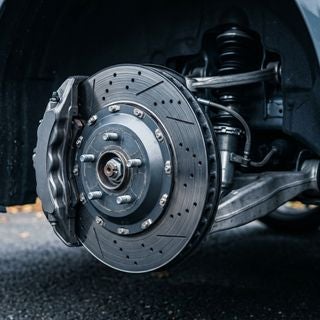
6

Which Auto Parts Are Most Critical for Vehicle Safety?

The auto parts most critical for vehicle safety are tires, brake pads and rotors, steering and suspension linkages, replacement airbags, and timing belts. These components directly dictate stopping distance, emergency evasion handling, structural crash protection, and reliable engine timing. Compromising on their quality drastically elevates the risk of mechanical failure, extended stopping times, loss of directional control, and cabin intrusion during a collision. Vehicle mechanical systems operate as an interconnected safety envelope. When a driver presses the brake pedal or turns the steering wheel, every link in that mechanical chain must withstand immediate kinetic pressure. High-grade components undergo rigorous stress testing, thermal validation, and material analysis to handle emergency maneuvers. Substituting lower-grade components weakens this system, transforming standard road hazards into immediate safety threats. For drivers navigating the steep riverfront bluffs and sudden stops around East Liverpool, mechanical precision is essential. Steering tie rods, ball joints, control arms, and coil springs maintain tire contact with the pavement. If budget steering or suspension parts yield under heavy cornering or load shifts, electronic safety systems like stability control and anti-lock braking systems cannot properly function. Maintaining these safety-critical systems with validated components preserves overall operational safety. If you ever suspect wear in your vehicle's core safety mechanics, feel free to stop by our East Liverpool service facility or reach out to our technicians directly by giving us a quick call to discuss an inspection. Table of Contents Why Are Budget Tires Considered a Major Safety Risk? What Are the Risks of Using aftermarket brake pads and rotors? Why Should You Never choose low-quality replacement airbags? Are OES Parts as Good as OEM Parts? Do Detailed Maintenance Records Showing Quality Parts Boost Trade-In Value? Key Service Questions Regarding Vehicle Parts and Safety Trust Tri State Ford for Professional Safety Component Service Why Are Budget Tires Considered a Major Safety Risk? Budget tires are considered a major safety risk because they utilize low-grade synthetic rubber compounds, rigid sidewalls, and shallow tread designs that significantly lengthen stopping distances and reduce wet-weather traction. These structural deficiencies compromise vehicle stability, increase hydroplaning risks, and heighten the probability of sudden tread separation or catastrophic blowouts under load. Tires serve as the sole physical point of contact between a vehicle and the road surface, covering a total contact patch roughly the size of four human palms. Premium and Original Equipment tires are engineered with specific silica-enhanced rubber formulations that remain flexible across broad temperature ranges. In contrast, low-cost tire manufacturers save on production costs by using stiffer, lower-cost petroleum-based compounds. This lack of compound flexibility prevents the tread from conforming to road micro-textures, leading to a substantial drop in cornering grip and stopping performance during unexpected hard braking. The National Highway Traffic Safety Administration identifies 2/32 inch as the absolute minimum tread depth before immediate tire replacement is required. However, budget tires often lose traction well before reaching that wear bar due to poor water-evacuation channels. During heavy rainstorms, inferior tread architecture fails to channel water away from the contact patch, lifting the tire off the pavement and causing severe hydroplaning. Furthermore, the National Highway Traffic Safety Administration advises drivers to check tire inflation pressure at least monthly when the tires are cold, setting levels to the manufacturer's specification found on the driver's door placard rather than the maximum pressure stamped on the tire sidewall. Maintaining optimal tire pressure and monitoring tread depth preserves original handling dynamics and ensures that factory driver-assist features operate as designed. Drivers looking to verify their current tire condition can easily schedule a service appointment online with our certified maintenance team. What Are the Risks of Using aftermarket brake pads and rotors? Using aftermarket brake pads and rotors introduces severe safety risks, including rapid thermal brake fade, uneven rotor warping, excessive stopping distances, and potential complete friction material shear under emergency braking. Low-quality friction compounds lack proper thermal resistance, turning excessive kinetic heat into a slippery glazed layer that leaves the brake pedal feeling spongy and unresponsive. Brake systems rely on converting kinetic energy into thermal energy through friction. High-tier brake pads, such as genuine Motorcraft components, utilize vehicle-specific friction formulations engineered to match the exact weight, braking bias, and thermal demands of the vehicle. These premium pad assemblies include integrated noise-damping insulators, engineered steel shims, and application-specific attaching hardware that ensure precise caliper alignment and even wear distribution. Cheap aftermarket pads frequently skip these critical insulating shims and hardware, resulting in high-pitched brake squeal, severe dusting, and premature rotor scarring. When drivers come into our service facility after noticing longer braking distances on wet roads, our technicians frequently discover low-grade friction pads or budget tires that lack proper thermal resistance. Low-cost brake rotors compound these issues by using inferior cast iron with uneven density, thinner internal cooling vanes, and coarse surface machining. Under repeated stopping cycles, low-grade iron cannot dissipate heat efficiently. This thermal build-up causes the rotor face to warp, creating violent pedal pulsation and steering wheel shudder. In severe cases, extreme heat causes brake fluid contamination and boiling, leading to pedal drop and sudden loss of braking power. To prevent friction failure and maintain proper caliper movement, routine system flushes and hardware replacements are required: Flush brake fluid every two to three years or 30,000 miles to eliminate moisture contamination and maintain hydraulic pressure. Replace caliper slide pins, anti-rattle clips, and stainless steel hardware during every pad replacement to prevent binding. Inspect rotor thickness and lateral runout at every oil change interval to catch uneven wear before damage occurs. Why Should You Never choose low-quality replacement airbags? You should never choose low-quality replacement airbags because non-OEM, unvetted, or counterfeit airbag assemblies can fail to deploy or violently explode during a crash, sending metal fragments into the cabin. Improperly manufactured inflators transform a life-saving restraint into a fatal hazard during otherwise survivable collisions. Airbags rely on precise pyrotechnic charges and chemical propellants calibrated to deploy within milliseconds of an impact signal. According to safety alerts from the National Highway Traffic Safety Administration, unvetted and counterfeit replacement airbag inflators—including banned imported units labeled with suspect identifiers like DTN60DB—pose severe risks of rupture. Rather than safely expanding the fabric cushion to protect vehicle occupants, defective inflator canisters can violently rupture under pressure, propelling sharp metal shrapnel directly toward the driver and passengers. Vehicles involved in previous collisions where airbags deployed require rigorous verification before returning to the road. The National Highway Traffic Safety Administration strongly urges owners of used vehicles repaired after a crash deployment to have their supplemental restraint systems thoroughly inspected by a factory-authorized service center. Non-genuine replacement parts purchased through unregulated online channels or cut-rate body shops often lack safety sensor calibration and chemical propellant stability. Ensuring that every replacement airbag is a genuine OEM unit maintains original crash test ratings and protects human life. Are OES Parts as Good as OEM Parts? Original Equipment Supplier (OES) parts are functionally identical to Original Equipment Manufacturer (OEM) parts because they are produced by the same tier-one manufacturing suppliers using identical engineering drawings, tooling, and quality standards. Choosing OES components provides exact factory-level fitment, material integrity, and operational reliability while frequently offering a lower cost point. Vehicle manufacturers design complex systems but outsource the physical production of specific components—such as alternators, brake calipers, sensors, and spark plugs—to specialized automotive suppliers. When a component is branded with the vehicle manufacturer's logo and packaged in factory boxes, it is categorized as an OEM part. When that exact same supplier packages the identical component under their own brand name, it is sold as an OES part. Both variants share identical metallurgy, dimensions, tolerances, and performance ratings. In contrast, low-tier generic aftermarket parts are reverse-engineered by third-party factories without access to original factory CAD files or proprietary alloy recipes. This often results in improper bolt alignment, electrical resistance variations, and accelerated wear rates. Sticking with OEM or verified OES components preserves factory warranty protections and prevents premature mechanical breakdown. Ford stands behind its official Motorcraft replacement components with a comprehensive two-year unlimited-mileage service-parts warranty, providing long-term confidence for every repair. Owners needing factory-approved parts for upcoming vehicle maintenance can easily order genuine Ford parts directly through our dedicated parts center. Do Detailed Maintenance Records Showing Quality Parts Boost Trade-In Value? Detailed maintenance records showing the exclusive use of high-quality OEM or top-tier OES parts significantly boost trade-in value by eliminating mechanical uncertainty and verifying diligent vehicle stewardship. Dealership appraisers and prospective buyers pay a premium for vehicles with documented maintenance histories because they represent lower reconditioning costs and reduced risk of hidden mechanical defects. When a vehicle enters the dealership appraisal process, evaluators examine overall condition, tire tread wear, brake pad thickness, fluid clarity, and service documentation. A comprehensive logbook filled with receipts for factory-specified fluid changes, genuine filter replacements, and premium safety components signals that the engine, transmission, and chassis have been well preserved. This documented history allows the dealership to classify the vehicle as a high-tier pre-owned candidate, justifying a higher trade-in valuation. For vehicle owners navigating the gently rolling suburban terrain around Calcutta, consistent adherence to the factory maintenance schedule protects core drivetrain longevity. Routine engine oil and filter changes performed according to the vehicle's intelligent oil-life monitor prevent sludge build-up and internal friction. Documenting these services along with timing belt replacements, cooling system flushes, and brake overhauls proves that the vehicle has been operated under optimal maintenance standards, delivering tangible financial returns when it comes time to trade up. Key Service Questions Regarding Vehicle Parts and Safety Q: How often should I check my tire pressure and tread depth? You should inspect tire pressure at least once a month when the tires are cold, using the recommended PSI found on your vehicle's driver-side door placard. Tread depth should be checked during every monthly pressure check or oil change interval using a dedicated gauge. Tires measuring at or below 2/32 inch tread depth require immediate replacement, as severe traction loss and hydroplaning hazards increase drastically below this safety threshold. Q: What are the primary signs that my vehicle's brake pads need replacement? The most common indicators of worn brake pads include high-pitched squealing noises caused by built-in wear indicators, severe pedal pulsation, grinding metallic sounds during braking, and increased stopping distances. If your brake pedal feels unusually soft or spongy when pressed, friction material degradation or brake fluid overheating may be present, requiring an immediate brake inspection to restore system safety. Q: Why is professional installation recommended for steering and suspension parts? Professional installation is critical for steering and suspension components because tierods, ball joints, control arms, and struts require precise torque specifications, specialized press tools, and immediate four-wheel alignment adjustments. Incorrectly installed suspension linkage can cause severe handling instability, uneven tire wear, and failure of electronic driver-assist sensors that rely on accurate steering angle data. Q: How do I know if my timing belt needs to be replaced? Timing belt replacement intervals are vehicle-specific and detailed within your official factory maintenance schedule rather than determined by visual inspection alone. Because timing belts operate inside engine covers and control critical valve-to-piston synchronization, a snapping belt on an interference engine can cause catastrophic internal engine destruction. Following your vehicle's designated mileage interval for timing belt service prevents sudden snapping and costly engine replacement. Q: Can using non-OEM oil filters cause engine damage? Yes, low-quality aftermarket oil filters often utilize poor synthetic or paper filtering media and lack internal anti-drainback valves. This can lead to oil starvation during cold engine starts and allow unfiltered debris to circulate through tight engine tolerances. Using genuine OEM or Motorcraft oil filters ensures proper oil flow rates, pressure regulation, and particle filtration designed specifically for your engine's internal architecture. Trust Tri State Ford for Professional Safety Component Service Tri State Ford provides certified service and genuine OEM parts to ensure every vehicle safety system operates at peak factory standards. Protecting your vehicle with top-tier components prevents unexpected breakdowns, maintains handling precision, and ensures long-term driving safety. Our factory-trained technicians utilize specialized diagnostic equipment, official service protocols, and genuine Motorcraft parts for every repair. Whether your vehicle requires fresh tires, premium brake pads, or routine battery service guidance, our team delivers transparent vehicle care tailored to your driving requirements. When you are ready to experience certified automotive care, visit our local service center at 1503 Pennsylvania Ave, East Liverpool, OH 43920 or give our service advisors a call at (330) 462-7578 to schedule your maintenance appointment today. © 2026 Tri State Ford. All rights reserved. Critical Vehicle Safety Parts in East Liverpool OH | Tri State Ford
5

How Do You Prepare a Ford 4WD System for Winter in the Ohio Valley?

Preparing a Ford four-wheel-drive system for winter requires inspecting the transfer case and differential fluid levels, testing electronic or vacuum-operated axle engagement actuators, verifying battery output, and checking tire tread depth. Technicians also confirm that terrain management features like Slippery mode function correctly. Completing these checks before sub-freezing temperatures arrive prevents component binding, sluggish front-axle engagement, and unexpected traction loss on frozen roads. Early winter weather brings sudden freeze-thaw cycles, packed snow, and river valley fog that turn local asphalt slick without warning. A four-wheel-drive truck or SUV relies on mechanical and electronic coordination between the transmission, transfer case, front differential, and wheel hubs. If fluid inside the transfer case is degraded or contaminated with moisture, low ambient temperatures increase fluid viscosity, causing delayed mechanical engagement when switching from two-wheel drive to four-wheel drive. A thorough pre-winter checkup evaluates every component involved in transferring torque: Transfer Case and Differential Fluid: Inspecting fluid levels and checking for dark color or metal shavings that signal internal wear. Hub Engagement Motors and Actuators: Testing integrated wheel ends and vacuum lines to ensure prompt front axle locking is functioning properly. Drive Mode Electronics: Running diagnostic checks on drive mode switches to verify communication with the powertrain control module. Battery Cold-Cranking Capacity: Measuring battery voltage under load, as electronic four-wheel-drive actuators draw significant electrical power during engagement. Undercarriage and Fastener Condition: Checking protective skid plates and differential housing seals for signs of seepage or road-salt corrosion. Drivers navigating rolling elevation changes along State Route 170 in Calcutta depend on immediate front-wheel traction when pulling onto snow-dusted highways. If an actuator fails or transfer case fluid breaks down, drivers may find themselves stranded in rear-wheel drive when road conditions deteriorate. To keep your truck or SUV performing dependably in freezing conditions, you can stop by our East Liverpool facility or give our service department (330) 462-7578 to confirm current appointment availability. Table of Contents What Maintenance and Fluid Specifications Are Recommended for Ford Transfer Cases? How Fast Does Ford Intelligent 4WD Adjust Power Distribution on Slick Ice? Is 4WD Auto Safer Than 4WD High on Roads with Patchy Ice and Dry Pavement? Does Having Four-Wheel Drive Eliminate the Need for Winter Tires in Cold Weather? How Much Does a Winter 4WD Inspection Cost for a Ford Truck or SUV? Common Questions About Ford 4WD Winter Operation Where Can Ford Owners Arrange a Local Pre-Winter Inspection? What Maintenance and Fluid Specifications Are Recommended for Ford Transfer Cases? Ford transfer cases require specialized lubricants like Motorcraft MERCON LV or dedicated Motorcraft Transfer Case Fluid, with inspections recommended every 10,000 miles and fluid replacement typically scheduled between 30,000 miles and 60,000 miles depending on operating severity. Using non-approved lubricants or neglecting fluid changes leads to fluid oxidation, premature clutch pack wear, and internal gear scoring in severe winter cold. The transfer case is responsible for splitting engine torque between the front and rear axles. Modern Ford vehicles employ electronically controlled transfer cases equipped with internal multi-plate clutch packs. These internal clutches engage seamlessly to direct power forward whenever rear-wheel slip is detected. Over time, thermal cycles, towing friction, and normal mechanical wear break down the fluid's additive package. Degraded fluid loses its ability to lubricate internal chain drives and planetary gear sets, increasing mechanical friction when ambient temperatures fall below freezing. When servicing a Ford transfer case, technicians follow precise factory maintenance procedures: Draining old lubricant and inspecting magnet drain plugs for fine metal particles. Checking vent hoses for blockages that could cause pressure buildup and seal leaks. Refilling the transfer case with exact quantities of factory-specified Motorcraft fluid. Inspecting output shaft seals and front driveshaft universal joints for play or fluid weeping. Cycling the four-wheel-drive system through 4H and 4L settings to verify smooth actuator movement and silent gear mesh. Vehicles subjected to heavy trailering or frequent operation in mud and deep snow require shorter maintenance intervals. For example, a 2026 Ford F-150 4x4 equipped with the 3.5L EcoBoost V6 and SelectShift® automatic transmission can tow up to 10,400 lbs, placing heavy thermal stress on transfer case fluid during summer hauling that can manifest as rough engagement when winter arrives. To maintain peak driveline performance, owners can schedule a service appointment with our factory-trained team or order genuine Motorcraft fluids and components directly from our parts department. How Fast Does Ford Intelligent 4WD Adjust Power Distribution on Slick Ice? Ford Intelligent 4WD samples vehicle sensor data every 16 milliseconds and can dynamically transfer up to 100 percent of available engine torque to either the front or rear axle before wheel slip occurs. By continuously analyzing wheel speed, throttle position, steering wheel angle, and yaw rates, the system pre-emptively distributes power to maintain vehicle stability on icy roads. Unlike traditional four-wheel-drive setups that require manual driver activation after traction is lost, Intelligent 4WD operates proactively. On models like the 2026 Ford Explorer 4WD, powered by the 2.3L EcoBoost engine and SelectShift® transmission, sensors monitor small changes in driver input and surface friction. If the system detects sudden throttle application while accelerating on a frost-covered bridge deck, it instantly energizes an electromagnetic clutch inside the power transfer unit. This locks the front driveline into action within milliseconds, stabilizing the vehicle before the driver notices wheelspin. Electronic drive modes further refine how this power transfer behaves in winter: Slippery Mode: Calibrates the accelerator pedal response to prevent abrupt power delivery, adjusts transmission shift points to reduce wheel torque, and increases stability control intervention. Deep Snow/Sand Mode: Adjusts traction control parameters to allow momentum-building wheelspin while maintaining active torque balance across both axles. Trail Mode: Tailors wheel-end braking and throttle mapping on select two-wheel-drive configurations to assist with low-traction off-road navigation. On models like the 2026 Ford Bronco 4x4, standard four-wheel drive works in tandem with selectable G.O.A.T. Modes (Goes Over Any Type of Terrain) to manage slick conditions automatically. When Slippery mode is selected, electronic control units soften throttle mapping and optimize front-to-rear power distribution, giving drivers maximum steering control across slush, black ice, and packed snow. Is 4WD Auto Safer Than 4WD High on Roads with Patchy Ice and Dry Pavement? Using 4A (4WD Auto) is safer and mechanically superior to 4H (4WD High) when driving on winter roads that alternate between icy patches and clear, dry asphalt. In 4A mode, an electronically controlled clutch continuously varies front-wheel power on demand, whereas 4H mechanically locks the front and rear driveshafts together at a rigid 50/50 split, causing severe driveline binding on high-traction dry pavement. Mechanical driveline binding occurs because front tires must travel along a wider turning arc than rear tires during cornering. On dry asphalt, tires grip the road surface firmly, preventing the front and rear axles from slipping to relieve rotational speed differences. Driving in 4H on dry pavement places immense torque strain on the transfer case chain, front differential gears, and axle shafts, often resulting in vehicle hopping or hard steering resistance. Drivetrain Mode Surface Application Front/Rear Power Split Driveline Binding Risk on Dry Pavement:--:--:--:-- 4A (4WD Auto) Patchy ice, slush, dry pavement Variable (0/100 to 50/50 on demand) None (clutch slips during turns) 4H (4WD High) Continuous deep snow, unpaved ice Fixed 50/50 split High (causes mechanical strain and binding) 4L (4WD Low) Deep mud, steep off-road grades Fixed 50/50 split with gear reduction Extreme (strictly for low-speed off-road use) When our service advisors walk truck owners through seasonal driving tips, we explain that leaving a vehicle in 4A during changing winter conditions provides seamless traction without risking driveline damage. Operating in 4A mode uses slightly more fuel than two-wheel drive due to mechanical rotation of front driveline components, but it provides immediate, automatic front-wheel torque the moment a tire hits unexpected black ice. Does Having Four-Wheel Drive Eliminate the Need for Winter Tires in Cold Weather? Having four-wheel drive does not eliminate the need for winter tires because four-wheel drive only enhances forward acceleration and traction under engine power, whereas winter tires provide necessary cornering grip and stopping capability on snow and ice. All four-wheel-drive vehicles rely on tire tread compounds and siping to brake and steer effectively on frozen road surfaces. Four-wheel drive helps a vehicle accelerate out of deep snow or climb slick grades by sending torque to all four wheel positions. However, when a driver applies the brakes or turns the steering wheel, every passenger vehicle relies entirely on the friction coefficient of its four tire contact patches. Standard all-season tire rubber hardens at ambient temperatures below 45 degrees Fahrenheit, turning stiff and losing flexibility. Winter tires utilize specialized soft silica tread compounds that remain pliable in sub-zero cold, combined with thousands of microscopic tread sipes that bite directly into packed snow and ice. Key safety differences between four-wheel drive and dedicated winter tires include: Braking Distance: Four-wheel drive provides zero assistance during braking; dedicated winter tires can reduce stopping distances on ice by up to 30 percent compared to standard tires. Lateral Steering Control: Winter tires maintain directional control through curves where hard all-season tires slide sideways, regardless of four-wheel-drive engagement. Slush Evacuation: Wide, directional winter tread grooves channel thick road slush away from the footprint to prevent dangerous hydroplaning. Maintaining correct tire pressures and tread depth above 4/32 inch is critical for all-wheel-drive and four-wheel-drive powertrains. Uneven tire wear or differing inflation pressures change rolling circumference between axles, placing continuous strain on transfer case clutch packs. Vehicle owners can utilize our online tire finder tool to select winter tires matching their vehicle's exact specifications, or schedule a drive in a 4WD vehicle to evaluate current handling characteristics firsthand. How Much Does a Winter 4WD Inspection Cost for a Ford Truck or SUV? A comprehensive winter four-wheel-drive system inspection for a Ford truck or SUV may vary in price; please contact our service department for current pricing. This specialized service covers diagnostic fluid analysis, vacuum line pressure checks, electronic hub actuator testing, transfer case shift motor operation, and undercarriage fastener verification. Investing in a pre-winter inspection protects expensive driveline assemblies against major mechanical failure. Identifying a torn vacuum hub line or a leaking transfer case shaft seal early costs significantly less than replacing a damaged differential or burned-out internal clutch pack later in the season. During a winter inspection, factory-trained technicians connect diagnostic scan tools to monitor live data from the transfer case control module, ensuring electrical signals reach engagement solenoids without fault codes. A standard winter four-wheel-drive inspection covers key multi-system checks: Diagnostic System Scan: Checking control modules for active or stored fault codes related to four-wheel-drive electronics. Fluid Clarity and Level Checks: Inspecting fluid quality inside the transfer case, front differential, and rear axle housing. Vacuum and Mechanical Actuator Testing: Verifying that integrated wheel end hubs lock and release smoothly without vacuum leaks. Transfer Case Shift Motor Test: Cycling the electronic motor through 4H and 4L ranges to verify swift gear engagement. Underbody Visual Inspection: Checking driveshaft universal joints, CV axle boots, and skid plate mountings for wear or looseness. Business owners operating commercial fleets rely heavily on four-wheel-drive reliability to maintain winter schedules. For fleet managers reviewing options for heavy-duty fleet additions, exploring our new work truck models provides access to reliable F-Series pickups built to handle severe winter hauling. Common Questions About Ford 4WD Winter Operation Q: Can I engage 4H mode while driving at highway speeds? Yes, Ford shift-on-the-fly four-wheel-drive systems allow drivers to shift from 2H into 4H at speeds up to 55 mph, provided the rear wheels are not actively slipping at the moment of engagement. However, 4H should only be engaged when travelling on continuously slippery surfaces like deep snow or loose gravel, never on clear dry asphalt. Q: What does a flashing 4x4 light on my instrument cluster mean? A flashing 4x4 indicator light signals that the electronic control module attempted to engage the four-wheel-drive system but could not confirm mechanical lockup. This issue is often caused by a vacuum line leak, a sticking integrated wheel end hub actuator, or a slow transfer case shift motor, requiring a quick diagnostic scan by factory technicians. Q: Why does my vehicle make a binding or crowhopping noise during tight turns in 4H? Crowhopping occurs because 4H mechanically locks the front and rear driveshafts to rotate at identical speeds. During a tight turn, front tires must spin faster than rear tires; on high-traction pavement, the driveline binds and forces the tires to hop. Shifting into 4A or back into 2H on clear pavement resolves this stress immediately. Q: Does driving in 4WD mode reduce my Ford's fuel economy? Operating in 4A or 4H mode increases mechanical drag across the front axle, driveshaft, and transfer case components, which slightly reduces fuel economy by approximately 1 to 2 mpg compared to two-wheel drive. Using four-wheel drive selectively on slick roads balances winter safety with efficient fuel usage. Q: How often should front and rear differential fluids be changed on a Ford 4x4? Ford factory maintenance schedules generally recommend replacing front and rear differential fluids every 30,000 miles to 60,000 miles, or sooner if the axle assemblies are frequently submerged in water or subjected to heavy trailer towing in severe winter conditions. Where Can Ford Owners Arrange a Local Pre-Winter Inspection? Ford owners can arrange a comprehensive pre-winter vehicle inspection at Tri State Ford, located at 1503 Pennsylvania Ave, East Liverpool, OH 43920. Our service department is fully equipped with Ford specialized diagnostic computers, factory-certified technicians, and genuine Motorcraft replacement parts to ensure your truck or SUV is completely prepared for cold weather. Navigating the steep riverfront bluffs along the Ohio River in East Liverpool requires reliable braking, healthy tires, and responsive four-wheel-drive engagement during frosty morning commutes. Our factory-trained technicians conduct thorough multi-point checks that evaluate battery cold-cranking health, transfer case fluid condition, brake pad friction thickness, and drive mode module calibration. Documenting every inspection in Ford's central database protects your original factory warranty coverage and preserves long-term vehicle resale value. Before freezing temperatures and icy road conditions settle across the region, taking time for routine maintenance gives you complete confidence behind the wheel. You can get clear directions to our location to visit our service center, or call (330) 462-7578 to speak directly with our service advisors and reserve your pre-winter inspection date. © 2026 Tri State Ford. All rights reserved. Vehicle specification data © JATO Dynamics Limited. Ford 4WD Winter Prep in East Liverpool OH | Tri State Ford
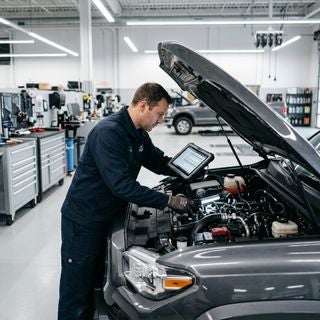
;

How Do You Manage Routine Maintenance on a Ford Vehicle?

Managing routine maintenance on a Ford vehicle requires following the software-driven Intelligent Oil-Life Monitor alerts, adhering to recommended mileage intervals in your owner's manual, and completing regular multi-point inspections to ensure optimal vehicle performance and longevity. Standard upkeep centers on timely synthetic oil changes, tire rotations every 7,500 miles, brake inspections, and replacing air filters to maintain mechanical reliability, proper fuel economy, and long-term engine performance. Staying on top of scheduled service keeps your truck or SUV performing efficiently through varying driving conditions. For residents navigating the gently rolling hills and daily traffic around Calcutta, maintaining clean fluids and balanced tires helps prevent premature component wear on hilly suburban routes. Vehicle owners can establish a practical maintenance routine by relying on professional service care. Drivers can easily navigate to our East Liverpool service facility at 1503 Pennsylvania Ave or give our service department a quick call at (330) 462-7578 to set up a personalized vehicle maintenance plan. Table of Contents How Does the Ford Intelligent Oil-Life Monitor Determine Service Intervals? What Services Are Offered Through Quick Lane at Ford Dealerships? What Are the Benefits of Dealership Service Over Independent Shops? What Does a Ford 30,000-Mile Service Cost and What Coverage Does Ford Protect Offer? How Can You Schedule Service Online or Arrange Pickup and Delivery at Tri State Ford? Common Questions About Servicing Your Ford Vehicle at Tri State Ford How Does the Ford Intelligent Oil-Life Monitor Determine Service Intervals? The Ford Intelligent Oil-Life Monitor determines service intervals by continuously tracking engine operating temperature, idling hours, vehicle speed, ambient climate, and trailering loads through real-time powertrain sensor algorithm software. Instead of relying on a rigid distance counter, the system calculates actual oil degradation and signals when an oil change is required between 3,000 and 10,000 miles. Operating conditions directly dictate how quickly the oil monitor counts down to zero percent life: Normal Driving: Gentle highway cruising, light passenger loads, and mild weather allow service intervals between 7,500 and 10,000 miles. Severe Driving: Frequent trailering, heavy cargo hauling, stop-and-go city commuting, or driving in steep terrain accelerates oil breakdown, triggering service alerts between 5,000 and 7,500 miles. Extreme Driving: Sustained high-load hauling, extended engine idling on job sites, or operating in dusty environments prompts required service between 3,000 and 5,000 miles. Our service advisors regularly see truck owners hauling heavy trailers who are surprised to find their oil life percentage drops faster than during regular highway commuting. For high-capability models like the 2026 Ford F-150 equipped with the 3.5L EcoBoost engine and SelectShift® transmission, adhering to these monitor alerts protects internal engine timing and turbocharger components from thermal breakdown. When your dashboard display signals that an oil change is due, you can schedule a service appointment online to keep your engine properly lubricated. Drivers who prefer performing basic upkeep in their home garage can also order genuine factory parts matched specifically to their vehicle's VIN. What Services Are Offered Through Quick Lane at Ford Dealerships? Quick Lane service at Ford dealerships provides essential routine vehicle maintenance without requiring an advance appointment, covering fluid renewals, tire care, brake services, and battery replacements. Factory-trained technicians complete these rapid-turnaround maintenance items on all vehicle makes and models using original equipment components while performing a comprehensive multi-point inspection. Key maintenance services available through Quick Lane include: Motorcraft synthetic blend or full synthetic oil and filter replacements. Tire pressure adjustments, digital balancing, tire rotation, and tread depth measurements. Visual brake inspections, rotor surface measuring, and pad thickness evaluations. Electrical system diagnostics, including professional battery testing and replacement to handle extreme summer heat and cold winter weather. Wiper blade installations, cabin air filter replacements, engine air filter renewals, and top-offs for essential vehicle fluids. For hardworking vehicle owners and daily commuters who need fast, dependable service care, stopping by a local Ford service center delivers reliable upkeep that fits into a busy schedule without sacrificing quality. What Are the Benefits of Dealership Service Over Independent Shops? Servicing your vehicle at a Ford dealership ensures all maintenance and repair work is performed by factory-certified technicians utilizing specialized diagnostic software, genuine Motorcraft parts, and direct factory warranty integration. Dealership technicians complete regular, specialized training on Ford engine architectures, hybrid systems, and high-voltage electric powertrains. Advanced technical benefits include: Proprietary Diagnostic Software: Dealership service bays utilize the Integrated Diagnostic System (IDS) and Ford Diagnosis and Repair System (FDRS). These diagnostic suites connect directly to control modules through the OBD-II port to read technical diagnostic trouble codes, reflash powertrain control modules, and perform factory software updates. Factory Part Quality: Dealerships install genuine Motorcraft components manufactured to exact original specifications. These parts carry a 2-year, unlimited-mileage limited warranty that covers both parts and labor at authorized Ford dealers nationwide. Automated Vehicle History: Every maintenance service and repair completed at an authorized dealer is logged automatically into Ford's centralized vehicle service history database, preserving future resale value and simplifying future warranty claims. What Does a Ford 30,000-Mile Service Cost and What Coverage Does Ford Protect Offer? A standard Ford 30,000-mile maintenance service pricing may vary depending on model requirements, covering oil and filter replacement, cabin and engine air filter updates, tire rotation, and full mechanical system checks. Long-term mechanical coverage can be secured through a Ford Protect Extended Service Plan, which covers mechanical components past the standard factory warranty. During a 30,000-mile service visit, technicians perform major maintenance renewals: Synthetic motor oil replacement and fresh Motorcraft oil filter installation. Engine air filter and cabin air filter replacements to ensure proper engine intake airflow and clean interior cabin air. Four-wheel tire inspection and tire rotation to maintain even tread wear. Comprehensive inspection of fuel lines, cooling system hoses, steering tie-rod ends, suspension ball joints, and brake pads and rotors. For models like the 2026 Ford Ranger equipped with the 2.3L EcoBoost engine, completing these 30,000-mile service milestones keeps the powertrain operating at peak efficiency. To guard against unexpected repair costs after your standard 3-year/36,000-mile bumper-to-bumper warranty and 5-year/60,000-mile powertrain warranty expire, Ford Protect coverage plans offer extended reassurance. Options like Ford Protect PremiumCARE cover over 1,000 key components—including engine, transmission, steering, suspension, air conditioning, and electrical systems—Contact the dealership for current plan terms and payment information. How Can You Schedule Service Online or Arrange Pickup and Delivery at Tri State Ford? You can schedule service online by visiting the Tri State Ford service portal, entering your vehicle year, model, and mileage, selecting required maintenance tasks, and reserving an available appointment time. Vehicle owners can also arrange door-to-door maintenance without taking time out of their workday. For residents navigating the riverfront terrain around East Liverpool, our dealership offers complimentary Ford Pickup & Delivery service for qualifying maintenance visits. Our service team picks up your truck or SUV directly from your residence or office, completes all requested repairs at our service center using genuine parts, and returns your vehicle when work is finished. We also provide customer shuttle transportation and a comfortable customer lounge equipped with Wi-Fi and complimentary beverages. Common Questions About Servicing Your Ford Vehicle at Tri State Ford Q: How often should I rotate the tires on my Ford F-150? Tires on a Ford F-150 should be rotated every 7,500 miles, which conveniently coincides with every routine oil change visit. Regular tire rotation ensures even tread wear across all four tires, prolongs overall tire life, and helps maintain optimal traction and handling on both rear-wheel drive and four-wheel drive configurations. Q: What happens if I ignore the Intelligent Oil-Life Monitor warning? Ignoring the Intelligent Oil-Life Monitor warning allows degraded oil to remain in your engine, leading to reduced lubrication, increased friction, sludge accumulation, and potential internal component damage. Running engine oil past the zero percent life indicator accelerates wear on timing components and bearing surfaces and may compromise your 5-year/60,000-mile powertrain warranty coverage. Q: Are genuine Motorcraft components used for routine maintenance? Yes, our service department installs genuine Motorcraft components for routine maintenance and repair services. Motorcraft filters, spark plugs, synthetic fluids, and brake friction materials are built specifically to Ford original equipment specifications and come backed by a 2-year unlimited-mileage limited warranty. Q: Are loaner vehicles available for extended service appointments? Tri State Ford offers service loaner vehicles for qualifying extended mechanical repair appointments and major warranty work. Service advisors can confirm loaner vehicle availability and eligibility criteria when you schedule your appointment in advance. Q: What paperwork or items should I bring to my service appointment? When arriving for a scheduled maintenance appointment, bring your primary vehicle key fob and any locking lug nut keys if your wheels are equipped with custom security locks. If you hold a Ford Protect Extended Service Plan, having your policy documentation or registered Ford account details helps our team process coverage seamlessly. Maintaining your Ford truck, SUV, or crossover is straightforward when you rely on factory-certified diagnostic equipment, genuine parts, and experienced technicians. Vehicle owners can easily get directions to our service bay for routine maintenance or lock in a convenient service time by calling our team at (330) 462-7578 today. © 2026 Tri State Ford. All rights reserved. Vehicle specification data © JATO Dynamics Limited. Ford Vehicle Maintenance in East Liverpool OH | Tri State Ford

f

Why Is Your Car Pulling to One Side?

Uneven tire pressure, improper wheel alignment, uneven tire wear, sticking brake components, or worn suspension parts cause a vehicle to pull to one side while driving. A sudden drop in air pressure on one side increases rolling resistance, while misaligned steering angles actively push the wheels off course. Addressing steering drift quickly protects tire life, restores proper vehicle handling, and prevents uneven wear on critical steering components. When a vehicle's chassis, tires, and steering linkages function correctly, the car tracks straight on a flat, level road with minimal driver intervention. Steering pull occurs when external friction, geometry shifts, or uneven braking forces compel the vehicle to steer away from a straight path. Drivers often feel this as a constant tension in the steering wheel, requiring continuous counter-steering force to keep the vehicle in its lane. Ignoring a persistent drift introduces safety risks and increases long-term repair costs. A vehicle that constantly pulls puts extra strain on ball joints, tie rod ends, and control arm bushings. Ford owner guidelines emphasize that unusual steering behavior, severe drift, or changes in steering feel following an impact require immediate professional evaluation to maintain vehicle safety and directional stability. Drivers seeking professional chassis diagnostics can easily get in touch by placing a call to (330) 462-7578 or getting turn-by-turn routing to our East Liverpool facility. Identifying the underlying cause early preserves tread depth and ensures predictable control during daily travel. Table of Contents What Causes a Vehicle to Pull Side-to-Side While Driving? What Are the Most Common Mechanical Causes of Steering Pull? Why Does Your Vehicle Pull Only When Applying the Brakes? How Can You Tell If You Need a Wheel Alignment Versus a Tire Balance? How Long Does Alignment Service Take and What Are Average Maintenance Costs? Quick Answers to Common Steering Drift Questions How to Diagnose Steering Drift and Schedule Professional Ford Service What Causes a Vehicle to Pull Side-to-Side While Driving? Fluctuating tire pressure, radial tire conicity, and civil road crown design are the primary reasons a vehicle drifts side-to-side during steady cruising. Low pressure in a single front tire reduces its overall effective rolling radius while expanding its contact patch, creating drag that pulls the vehicle toward the underinflated side. Checking cold inflation levels remains the simplest starting point when troubleshooting steering drift. A pressure imbalance as small as 4 PSI between the left and right front tires generates noticeable lateral pull. When local drivers ask us about a slight drift on State Route 170, one of the first things our service team checks is cold tire pressure, as a single underinflated tire often mimics a full alignment issue. Radial tire conicity represents a less obvious cause of steering drift. During tire manufacturing, slight variations in internal belt placement can cause the tire tread to shape itself like a subtle cone. As a conical tire rotates, it exerts continuous lateral force toward its narrower side regardless of alignment settings. Swapping the front tires side-to-side helps isolate tire conicity; if the vehicle begins pulling in the opposite direction after the swap, an internal tire belt issue is confirmed. Civil road design also influences vehicle tracking through intentional slope, known as road crown. Public roads feature a 1% to 2% pitch from the roadway center toward the outer shoulder to prevent standing water accumulation. This gradient naturally encourages a mild drift toward the right lane edge. However, a normal road crown drift requires minimal steering effort to maintain control, whereas a true mechanical pull persists even on flat, level pavement. Maintaining proper tire health and replacing worn rubber with factory-approved tires ensures consistent tracking. Vehicle owners can conveniently maintain their wheel assemblies by ordering genuine OEM parts directly through our service center. What Are the Most Common Mechanical Causes of Steering Pull? Mechanical steering pull stems directly from incorrect wheel alignment geometry or degraded front-end hardware such as worn control arm bushings, tie rod ends, and wheel bearings. When primary alignment angles shift out of factory specification, the tires no longer point straight ahead, forcing constant manual steering correction. Wheel alignment relies on three foundational angles: camber: The inward or outward tilt of the tire when viewed from the front. A vehicle pulls toward the side with more positive camber (tilted outward at the top). A cross-camber difference exceeding 0.5 degrees creates a distinct lateral pull. caster: The forward or backward tilt of the steering axis when viewed from the side. A vehicle pulls toward the side with less positive caster (more vertical axis). toe: The inward or outward direction the tires point relative to the vehicle centerline. Incorrect toe primarily causes severe tread feathering and an off-center steering wheel rather than a continuous lateral drift. Suspension component wear dynamically alters alignment angles while driving. Lower control arm compliance bushings hold front wheels in precise alignment during cornering and acceleration. When rubber bushings crack, tear, or soften, the control arm shifts under load, causing dynamic alignment changes that manifest as unpredictable pulling. Steering linkages and wheel bearings play an equally vital role in directional stability. Loose tie rod ends allow unwanted wheel play, while a failing front wheel bearing generates significant mechanical friction and heat on one corner, creating rolling drag that pulls the chassis toward the affected assembly. Navigating steep riverfront bluffs and uneven valley inclines near East Liverpool places significant load on suspension assemblies, making regular chassis inspections essential for heavy-duty vehicles like the Ford F-150 equipped with its 3.5L engine or the Ford Explorer with its SelectShift® transmission. Why Does Your Vehicle Pull Only When Applying the Brakes? A vehicle that pulls exclusively when pressing the brake pedal indicates uneven hydraulic pressure or mechanical friction between the left and right front brakes. This directional tug happens when one brake caliper clamps with greater force or when a failing component prevents equal pressure release. Hydraulic system failures frequently trigger severe braking pull. A sticking brake caliper piston or seized caliper slide pins prevent equal clamping force across the front axle. If the front passenger-side caliper seizes and fails to engage properly, the driver-side brake does all the stopping work, causing the vehicle to dart abruptly to the left upon braking. Flexible rubber brake hoses can also create sneaky hydraulic issues. Over time, an aging brake hose can collapse internally, acting like a one-way check valve that allows hydraulic fluid pressure to reach the caliper when pressing the pedal but traps fluid pressure when releasing it. This trapped pressure keeps the brake pads in continuous contact with the rotor, generating excessive brake drag, extreme heat, and a persistent pull toward that corner. Uneven friction material condition also contributes to braking pull: Oil, grease, or brake fluid contamination on brake pads reduces friction on one side. Glazed brake rotors reduce pad bite on the affected wheel corner. Severely uneven pad wear between left and right axles causes asymmetrical braking force. Braking pull represents an urgent safety concern because sudden directional shifts during hard stopping maneuvers make lane keeping difficult. Prompt inspection of calipers, slide pins, rubber lines, and pad surfaces restores balanced stopping performance. How Can You Tell If You Need a Wheel Alignment Versus a Tire Balance? You need a wheel alignment if your vehicle continuously drifts or pulls to one side, whereas an out-of-balance tire produces a distinct steering wheel vibration at highway speeds without causing directional pull. Alignment corrects chassis geometry, while tire balancing resolves uneven weight distribution across the rotating wheel assembly. Understanding key symptom differences simplifies accurate troubleshooting: Wheel Alignment Issues: Vehicle continuously drifts or pulls toward the left or right shoulder. Steering wheel sits crooked or off-center while driving straight down a level road. Accelerated wear appears on the inner or outer edges of the tire tread. Vehicle feels loose, wandering across lane lines at highway speeds. Tire Imbalance Issues: Steering wheel shimmies or vibrates noticeably between 55 mph and 70 mph. Seat or floorboard vibration develops at specific vehicle speeds. Scalloped or cupped wear patterns form across the tread surface. Vehicle continues tracking straight despite high-speed steering wheel vibration. Combining regular tire balancing with routine wheel alignment checks preserves driving comfort and extends overall tire tread life. Addressing chassis alignment errors early prevents costly premature tire replacement. How Long Does Alignment Service Take and What Are Average Maintenance Costs? A standard computerized wheel alignment takes between 45 and 60 minutes to perform under normal conditions, provided no steering components are seized or damaged. Comprehensive chassis alignment costs vary based on whether the vehicle requires a two-wheel thrust alignment or a complete four-wheel alignment. During an alignment service, factory-trained technicians execute a rigorous process: Mounting high-precision digital targets to all four wheels. Measuring baseline camber, caster, and toe angles using computerized alignment racks. Inspecting ball joints, tie rods, control arms, and sway bar links for mechanical play. Adjusting tie rod ends, strut mounts, or control arm eccentric bolts to restore factory tolerances. Performing a road test to verify centered steering wheel alignment and straight tracking. If components such as rusted tie rod sleeves or worn ball joints require replacement before alignment adjustments can be made, service time expands accordingly. Staying current on routine chassis checks ensures optimal steering performance for versatile crossovers like the Ford Escape powered by its 1.5L EcoBoost® engine. Vehicle owners can maintain vehicle tracking and system longevity by scheduling a service appointment online or combining chassis maintenance with routine battery service during seasonal visits. Quick Answers to Common Steering Drift Questions Q: Can a bad wheel bearing cause my vehicle to pull to one side? A worn wheel bearing creates excessive mechanical friction and rolling drag on that specific wheel corner, pulling the vehicle toward the side with the damaged bearing assembly. As internal bearing races wear down, wheel looseness develops, altering camber and toe angles while driving. Severe bearing wear also generates a loud grinding or humming noise that grows louder with vehicle speed. Prompt replacement restores smooth rotation and directional control. Q: Why does my vehicle pull to the right even after a complete wheel alignment? When alignment angles fall within factory specification but a pull persists, the cause is typically radial tire conicity or normal road crown. Swapping the front tires side-to-side will confirm if internal tire belt construction is causing the lateral drift. If the pull reverses direction after the tire swap, a tire defect is present. If the pull remains unchanged, checking for dragging brake calipers or worn control arm bushings under load is necessary. Q: Will driving with bad wheel alignment ruin my tires quickly? Operating a vehicle with misaligned wheels rapidly accelerates uneven tread wear, causing tread feathering and premature tire replacement. Incorrect toe angles drag tires sideways across pavement, scrubbing away rubber tread within a few thousand miles. Misaligned camber wears down inner or outer tread shoulders rapidly. Correcting chassis geometry ensures even contact across the entire tire footprint, preserving tread life and fuel economy. Q: Does low power steering fluid cause a directional steering pull? Low power steering fluid typically produces heavy steering feel, whining pump noise, or intermittent power assist, rather than a persistent single-sided pull. Modern electronic power-assisted steering systems automatically adjust assist levels without hydraulic fluid. Directional drift remains rooted in tire pressure differences, alignment errors, dragging brake components, or worn suspension joints. Q: How frequently should I have my vehicle's wheel alignment checked? Alignment should be inspected every 12,000 to 15,000 miles, after installing new tires, or immediately following an impact with a deep pothole or curb. Regular checks catch minor geometry shifts before they ruin tire tread. Inspecting alignment during routine tire rotations ensures balanced tread wear across all four wheels throughout ownership. How to Diagnose Steering Drift and Schedule Professional Ford Service Diagnosing steering pull requires a systematic check starting with cold tire pressure verification, visual inspection of suspension linkages, and professional chassis measurement on a computerized alignment rack. Timely maintenance prevents minor alignment shifts from turning into costly tire replacements or suspension repairs. Our factory-trained technicians utilize specialized alignment equipment engineered specifically for Ford vehicles. Whether your vehicle requires precise sensor calibration, suspension bushing replacement, or brake drag diagnostic testing, our certified service department delivers expert care using genuine OEM components built for long-term durability. Local vehicle owners can easily plan their service visit by visiting our East Liverpool service center or connecting with our service team directly at (330) 462-7578. For added convenience, drivers can also take advantage of our Ford Mobile Service for select routine maintenance procedures performed right at home or work. © 2026 Tri State Ford. All rights reserved. Vehicle specification data © JATO Dynamics Limited. Fix Car Pulling Issues in East Liverpool OH | Tri State Ford
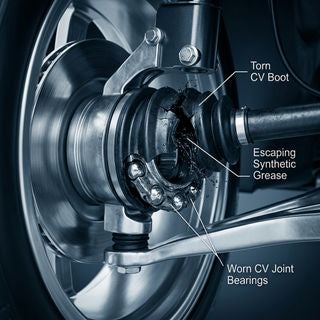
5

Why Does a Car Make a Clicking Noise When Turning?

A car makes a rhythmic clicking noise when turning primarily because of a worn outer constant velocity joint on a front-wheel-drive or all-wheel-drive drive axle. When the joint's protective rubber boot tears or cracks, synthetic grease escapes and dirt enters, causing the internal steel bearings and cage to wear and snap repeatedly against their channels on every rotation during tight turns under load. A repeating click that speeds up as road speed increases is one of the most recognizable drivability symptoms in modern vehicles. On front-wheel-drive models and all-wheel-drive crossovers like the 2026 Ford Escape AWD, the outer constant velocity joint undergoes significant pivoting to transfer engine torque while accommodating steering angles. As bearing clearances expand from mechanical wear, every full turn shifts torque across pitted metal surfaces, creating a distinct popping or clicking sound. Identifying whether the sound occurs during slow maneuvers or higher-speed cornering helps narrow down the mechanical source before scheduling a professional vehicle evaluation. If you suspect an issue with your vehicle's front axle or steering, our team at Tri State Ford can inspect your suspension and driveline at 1503 Pennsylvania Ave, or you can give us a quick call to discuss what you are hearing on the road. Table of Contents How Do Constant Velocity Joints Work and Why Do They Click? What Is the Mechanical Cause of Turning Clicks and Typical CV Axle Repair Costs? Can Bad Wheel Bearings, Ball Joints, or Brake Calipers Cause Turning Clicks? How Far Can You Drive on a Clicking CV Axle and How Do You Identify Which Side Is Failing? Common Questions About Vehicle Turning Clicks and Drivetrain Repairs Schedule Drivetrain Inspection and Service How Do Constant Velocity Joints Work and Why Do They Click? Constant velocity joints transfer smooth rotational power from the transmission and differential to the drive wheels at a continuous speed while allowing the front wheels to steer and absorb vertical suspension movement. They click when damaged bearing balls or worn housing tracks snap against each other under angular stress during turns. Every drive axle features two distinct joint designs that work together: Outer CV joint: Positioned adjacent to the wheel hub, this component accommodates steering angles up to 45 degrees while continuing to turn the wheel smoothly. Inner CV joint: Positioned near the transaxle or differential, this component flexes up and down to follow vertical suspension travel over bumps and uneven pavement. Flexible rubber boot: An accordioned neoprene or silicone cover clamped tightly over each joint to seal in high-temperature grease and seal out moisture, sand, and road grit. Because outer joints endure both rotational force and sharp steering angles, they experience greater lateral stress than inner joints. When a rubber boot degrades or suffers road debris damage, grease flings outward onto nearby suspension parts. Starved of lubrication, internal steel ball bearings grind against their hardened cage. During turns, the severe angle forces these misaligned bearings into worn pockets, producing a rhythmic clicking or snapping sound that gets louder as throttle is applied. Driveline components on capable 4x4 models, such as the 2026 Ford Bronco Sport 4x4 equipped with its SelectShift® transmission and 2L engine, rely on pristine CV axle boots to maintain smooth torque delivery across rugged terrain and daily commutes alike. Commuters navigating gently rolling terrain and State Route 170 around Calcutta often notice this symptom first during tight low-speed turns, such as turning into a driveway or making a U-turn. Heavier vehicles and commercial setups, including our F-Series work truck options, rely on robust front driveline assemblies that demand routine inspection during scheduled maintenance intervals to ensure long-term durability. What Is the Mechanical Cause of Turning Clicks and Typical CV Axle Repair Costs? The primary mechanical cause of a turning click is an outer CV joint with worn internal ball bearings, with professional CV axle replacement contact us for current pricing depending on vehicle drivetrain design and labor complexity. When diagnosing turning noises, the precise failure mechanism dictates the necessary repair path: Split boot without joint noise: If a split flexible boot is discovered early before contamination or noise occurs, replacing just the boot assembly typically costs between $180 and $450. Worn joint with active clicking: Once rhythmic snapping or clicking is present, internal metal scoring has already occurred. Installing a complete original equipment or remanufactured CV axle assembly usually costs $250 to $650 per side for standard front-wheel-drive passenger cars, while specialized all-wheel-drive or heavy-duty trucks can reach $700 or more due to additional labor. Secondary hub or suspension labor: If corrosion or seized hardware requires extra shop time, overall repair expenses increase accordingly. Drivers who bring a vehicle in with a turning noise often ask if replacing just the boot will fix it, but technicians recommend replacing the entire axle assembly once clicking starts because internal metal scoring cannot be undone by fresh grease alone. Installing a factory-spec complete axle assembly ensures proper shaft balance, correct splines, and factory-torqued axle nuts. Vehicle owners performing maintenance or working with trusted technicians can order genuine Ford parts online directly through our facility to ensure factory fitment and durability. Can Bad Wheel Bearings, Ball Joints, or Brake Calipers Cause Turning Clicks? Bad wheel bearings, worn ball joints, and sticking brake calipers can all cause noise while turning, but each produces a distinct sound and vibration profile rather than the sharp, rhythmic clicking of a failing outer CV joint. Differentiating among front-end component noises requires paying close attention to pitch, rhythm, and driving conditions: Wheel bearing: A failing wheel bearing produces a low-frequency hum, growl, or drone that grows louder with vehicle speed. The sound changes tone when vehicle weight shifts from side to side during high-speed cornering, rather than producing a sharp metallic click during low-speed turns. In extreme failure stages, a disintegrating bearing can clunk as load shifts across the hub. Ball joint and tie-rod end: A worn ball joint or loose tie-rod end creates a deep creaking, popping, or heavy clunk when turning the steering wheel or driving over bumps. This noise stems from mechanical play in the suspension pivot points rather than rotational speed. Brake dust shield and hardware: A bent metal dust shield or loose brake pad retainer clip can scrape or tick against the brake rotor. This noise often changes when applying the brakes and occurs even when rolling straight. Sway-bar link and strut mount: Worn sway-bar link bushings or binding upper strut mount bearings snap or knock once as the body rolls during a turn, rather than producing a continuous, speed-dependent click. Drivers experiencing frequent stop-and-go driving along commercial corridors like Market Street in Boardman subject their front steering and suspension joints to thousands of movement cycles daily. Inspecting these components together during routine service isolates the exact source of any front-end noise. How Far Can You Drive on a Clicking CV Axle and How Do You Identify Which Side Is Failing? A vehicle can sometimes be driven a few hundred miles after initial CV axle clicking begins, but continued driving risks complete axle fracture, loss of motive power, and secondary damage to the wheel hub or transmission. Identifying which side has failed requires a simple road test in an empty parking lot: Right-turn load test: Turn the steering wheel sharply to the right while accelerating gently in a slow circle. If clicking intensifies, the driver-side (left) outer joint is under heavy load and is likely failing. Left-turn load test: Turn the steering wheel sharply to the left under light throttle. Increased clicking points toward a failing passenger-side (right) outer joint. Visual boot check: Inspect behind both front wheels with a flashlight. Fresh grease splattered across the inner wheel barrel, brake caliper, or lower control arm clearly identifies a torn boot. Ignoring a clicking axle eventually leads to bearing cage disintegration. If the joint snaps completely while driving, the drive shaft spins freely without delivering power to the wheels, leaving the vehicle stranded. In severe cases, a loose spinning shaft can damage the transmission housing or front suspension arms. Schedule an evaluation promptly, or schedule a test drive or inspection visit with our service team to evaluate your vehicle's road performance safely. Common Questions About Vehicle Turning Clicks and Drivetrain Repairs Q: Does a turning click always mean the outer CV joint is failing? A rhythmic clicking that speeds up with road wheel rotation during sharp turns is caused by a worn outer CV joint in the vast majority of cases. However, loose brake hardware, a bent brake rotor dust shield, or a severely damaged wheel bearing can occasionally mimic rotational noises. A physical underbody inspection confirms whether axle boot tear or joint play is present. Q: Why does the clicking sound get louder when accelerating through a turn? Applying throttle transfers engine torque directly through the drive axle while the joint operates at an angle. This added rotational force pushes the internal steel bearing balls harder against worn grooves in the joint cage, accentuating mechanical clearance and making the rhythmic click much sharper and louder. Q: Can a torn CV boot be replaced without installing a whole new axle? A boot replacement is feasible only if the damage is caught immediately before grease loss occurs and before grit enters the joint. Once a joint begins making audible clicking or popping sounds, internal wear has scored the metal surfaces, requiring a complete CV axle replacement to restore safety and proper operation. Q: Will a bad CV joint cause steering wheel vibration? While an outer joint primarily clicks during turns, a severely worn joint or unbalanced axle shaft can cause noticeable vibration through the steering wheel or floorboards during acceleration. Inner joint failure more frequently causes heavy front-end wobble or shudder during straight-line acceleration. Q: What happens if a CV axle snaps completely while driving? If an axle joint fractures completely, engine power can no longer reach that drive wheel. On front-wheel-drive vehicles, the car loses all forward movement. The broken axle shaft can also swing freely, causing secondary damage to nearby brake lines, steering linkages, and transmission seals. Schedule Drivetrain Inspection and Service Addressing turning noises early prevents unexpected breakdown situations and protects critical front suspension and steering components from severe secondary damage. Rhythmic clicking or popping during turns indicates that driveline components require expert evaluation by certified technicians who understand factory tolerances and OEM replacement standards. Our factory-trained service team provides thorough multi-point underbody inspections, precise diagnostic play checks, and high-quality replacement parts tailored to your specific vehicle model. Whether you drive a front-wheel-drive sedan, an all-wheel-drive crossover, or a four-wheel-drive truck, maintaining proper drive axle integrity preserves smooth handling, tire wear, and long-term driving confidence. If your vehicle is making unusual noises when turning, visit our service center at 1503 Pennsylvania Ave, give our advisors a quick call, or easily schedule a service appointment online today to keep your vehicle operating smoothly and reliably. © 2026 Tri State Ford. All rights reserved. Vehicle specification data © JATO Dynamics Limited. Clicking Noise When Turning in East Liverpool OH | Tri State Ford
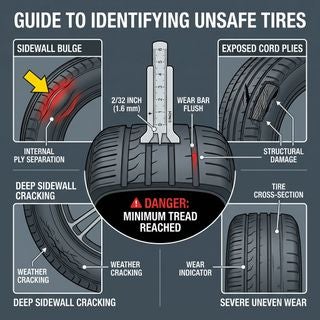
f

When Is a Tire Considered Legally Unsafe to Drive On?

A passenger vehicle tire is legally unsafe to drive on when its tread depth wears down to 2/32 inch (approximately 1.6 mm), when built-in wear indicator bars become flush with the tread surface, or when structural damage such as sidewall cracks exceeding 1.5 mm deep, exposed internal cords, bulges, or tread separation appear. In Ohio, driving on tires below the legal minimum tread limit compromises wet-weather stopping distance and elevates the risk of hydroplaning, necessitating immediate replacement to maintain vehicle control and road safety. Maintaining proper tire health is essential for protecting your vehicle and everyone inside it. Tire tread serves a mechanical purpose: it evacuates water from beneath the rubber contact patch so your vehicle can steer and stop effectively. When tread rubber wears down past safe thresholds, traction drops sharply on wet asphalt and slush, causing stopping distances to increase dramatically even at moderate road speeds. Beyond tread depth, a tire becomes unsafe whenever its structural casing is compromised. Internal belting and rubber compounds break down over time due to age, heat cycles, UV exposure, and impact stress from road hazards. Physical deformities like bubbles on the sidewall indicate that internal structural plies have ruptured, allowing high-pressure air to push against the outer rubber layer. Continuing to drive on a tire with internal plies damaged like this risks a sudden highway blowout. Regular multi-point safety inspections help spot these compromised conditions before they cause a breakdown on the road. Drivers can visit our dealership location at 1503 Pennsylvania Ave for a thorough tire safety check, give our team a quick call to discuss any unusual tire symptoms, or schedule a test drive in a new vehicle equipped with the latest safety technologies. Table of Contents At What Tread Depth Must You Replace Passenger Vehicle Tires? How Do Formal Inspection Standards Define Unsafe Wear Patterns and Commercial Thresholds? How Deep Must Sidewall Cracks from Dry Rot Be Before Mandatory Replacement? What Are the 7 Critical Warning Signs That You Need New Tires Right Away? Common Questions About Tire Safety, Wear Patterns, and Replacement Limits Schedule Certified Tire Care and Safety Inspections At What Tread Depth Must You Replace Passenger Vehicle Tires? Passenger vehicle tires reach their mandatory replacement limit at 2/32 inch of remaining tread depth, though automotive safety standards strongly recommend replacing all-season tires once tread wears down to 4/32 inch for adequate wet-weather braking and hydroplane resistance. Once tread depth drops below 4/32 inch, a tire loses up to three-quarters of its capacity to channel water away from the contact patch, significantly increasing stopping distances during heavy rainfall. | Tread Depth | Safety Condition | Driver Action Required | | --- | --- | --- | | 6/32 inch or more | Good Condition | Routine maintenance and regular rotations | | 4/32 inch | Recommended Limit | Plan for replacement; wet grip decreases | | 2/32 inch | Mandatory Replacement | Immediate replacement required by law | Checking your tread depth at home takes less than a minute and requires only simple tools. The traditional coin check offers a fast visual reference: insert a standard U.S. penny upside down into the main tread groove with Abraham Lincoln's head facing you. If the top of Lincoln's head remains completely visible above the rubber block, your tread depth has reached or fallen below the legal minimum threshold of 2/32 inch, and the tire must be replaced immediately. For a clearer picture of seasonal performance, perform a quarter check. Placing a quarter upside down into the groove measures depth against George Washington's head, which sits at roughly 4/32 inch from the coin edge. If the top of Washington's head is visible, the tire has reached the point where wet traction and snow gripping power decline noticeably. Measuring multiple spots across the tire surface is critical because alignment issues or improper inflation often cause uneven rubber loss. Check the inner groove, center groove, and outer edge groove on every tire. If any single groove reads 2/32 inch or lower, that tire is legally worn out regardless of how much rubber remains on the rest of the surface. Driver assist features like pre-collision assist with automatic emergency braking rely on solid tire traction to slow your vehicle effectively in emergencies. Our tire center makes finding the correct factory-fit replacement straightforward. You can easily order tires matched by vehicle year, make, and model through our online portal, or view our current manufacturer vehicle specials for service offers on complete tire sets. How Do Formal Inspection Standards Define Unsafe Wear Patterns and Commercial Thresholds? Formal motor vehicle inspection standards define a tire as unsafe when molded wear indicator bars sit level with adjacent tread blocks, when wear is uneven across the tread face, or when tread on heavy vehicles weighing over 10,000 pounds falls below 4/32 inch on steering axles. State inspection codes and federal safety guidelines require tires to maintain uniform tread coverage across all major grooves to ensure vehicle stability and predictable tracking. Uneven tread wear patterns signal specific underlying mechanical or maintenance issues that compromise safety: Shoulder Wear on Both Edges: Heavy rubber loss on both outer shoulders indicates chronic under-inflation, which causes the tire center to collapse inward and forces the outer edges to bear excessive vehicle weight. Center Tread Wear: Concentrated wear along the center rib indicates over-inflation, reducing the contact patch size and causing harsh ride quality along with accelerated center tire wear. Single-Edge Wear: Pronounced wear along only the inner or outer edge points to wheel misalignment, camber errors, or worn steering linkages that pull the tire sideways as it rolls. Cupping or Scalloping: High-and-low diagonal dips across the tread surface indicate worn shock absorbers, out-of-balance wheel assemblies, or damaged suspension bushings allowing the wheel to bounce down the road. Safety standards enforce stricter tread thresholds for heavier vehicles due to the immense kinetic energy and stopping distance required for large trucks and towing rigs. While passenger cars share a mandatory minimum floor of 2/32 inch, vehicles with a gross vehicle weight rating exceeding 10,000 pounds must maintain at least 4/32 inch of tread depth on front steering axle tires. Commercial standards also mandate that any tire with two adjacent tread grooves measuring below 2/32 inch, or any tire showing internal fabric, steel belts, or ply separation, must be removed from service immediately. Commuters navigating the rolling hills and highway stretches around Calcutta encounter varying pavement textures and seasonal weather that accelerate uneven wear if tire maintenance is neglected. Regular rotations every 5,000 to 8,000 miles distribute steering and driving forces evenly across all four positions, extending total tread life and keeping wear patterns uniform. How Deep Must Sidewall Cracks from Dry Rot Be Before Mandatory Replacement? Sidewall cracks caused by dry rot require immediate tire replacement when they reach 1.5 mm (approximately 1/16 inch) in depth, when internal structural cords become visible, or when deep fissures open anywhere along the sidewall face. Even if a tire retains substantial tread height, rubber compound oxidation causes structural brittleness that can result in sudden tread separation or sidewall blowouts at highway speeds. Rubber degradation is a chemical process triggered by atmospheric ozone, ultraviolet light, heat cycles, and extended vehicle inactivity. Tire manufacturers blend protective waxes and anti-ozonant compounds into the rubber to maintain elasticity. When a vehicle is driven regularly, the mechanical flexing of the rotating wheel pushes these protective waxes to the surface. When a vehicle sits parked for long periods, this continuous replenishment stops, allowing UV rays and environmental oxygen to break down polymer chains inside the rubber matrix. A simple thumb flex check helps evaluate whether sidewall cracking is cosmetic checking or deep structural failure: Clean and Inspect: Wipe dirt and grime off the tire sidewall near the rim flange and raised lettering where micro-cracking usually begins. Apply Pressure: Press your thumb firmly against the rubber directly beside the crack to flex the sidewall surface. Observe Fissure Behavior: If the crack remains shallow and closed under pressure, it is superficial surface checking. If the crack opens up to reveal lighter inner rubber, nylon cords, or steel wire, the tire structure is compromised. The presence of full tread depth can create a dangerous false sense of security on older tires. Low-mileage vehicles, seasonal trailers, and secondary commuter cars often show deep tread blocks while the underlying carcass has dry rotted into a brittle state. Chemical tire dressings containing heavy petroleum distillates or harsh silicone solvents accelerate this dry rot process by stripping away the factory anti-ozonant barrier. Cleaning tires with mild soap and water is the safest way to preserve sidewall elasticity. When replacement components or specialized tire equipment are needed, drivers can order genuine OEM parts directly through our service portal to ensure exact fitment and factory safety standards. What Are the 7 Critical Warning Signs That You Need New Tires Right Away? Drivers should inspect their tires monthly for seven clear indicators that signal a tire has reached the end of its safe operational life and requires replacement: 1. Tread Depth Below 2/32 Inch: Rubber worn down to or past the legal 2/32 inch limit cannot evacuate water or slush, creating severe hydroplaning hazards. 2. Flush Tread Wear Indicators: Molded rubber bars running across the bottom of the tread grooves sit level with surrounding tread blocks when the tire is fully worn out. 3. Deep Sidewall Cracking or Dry Rot: Cracks reaching 1.5 mm deep or showing internal structural cords reveal severe chemical degradation of the rubber matrix. 4. Sidewall Bulges, Bubbles, or Blisters: A localized bulge on the outer sidewall indicates that the internal structural plies have ruptured, allowing air pressure to push out the surface rubber. 5. Persistent Air Pressure Loss: A tire that consistently loses pressure or triggers the tire pressure monitoring system (TPMS) warning light without an obvious nail puncture often suffers from bead leaks or internal liner porosity. 6. Excessive Steering Wheel Vibration or Vehicle Pulling: Unexplained shaking through the steering wheel or seat that persists after wheel balancing suggests internal belt separation or structural casing distortion. 7. Severe Irregular Wear Patterns: Deep cupping, diagonal scuffing, or severe inner-edge wear exposes internal plies and drastically reduces tire traction. Drivers taking daily trips through Boardman often experience persistent steering wheel vibration when internal tire belts begin shifting under load. Physical damage like sidewall bulges from impact with deep potholes requires immediate attention, as a bulged tire can burst without warning under normal road stresses. If a blowout occurs while driving, avoid slamming on the brakes. Keep both hands firmly on the steering wheel, maintain momentum for a brief second to stabilize vehicle trajectory, ease off the accelerator gradually, and guide the vehicle safely onto the road shoulder. For roadside emergencies, drivers can access manufacturer-backed assistance directly through Ford Roadside Assistance: 1-800-241-3673 for flat tire changes and towing support. Common Questions About Tire Safety, Wear Patterns, and Replacement Limits Q: At what specific tread depth are passenger tires legally considered unsafe and due for mandatory replacement, even if they still look usable? Studies show that nearly 30% of tire-related accidents involve tires worn below the legal tread depth limit of 2/32 inch (about 1.6 mm). At this depth, the built-in wear indicator bars molded into the tread grooves become flush with the outer tread face. While a tire with 2/32 inch of tread may appear visually intact from a distance, its ability to channel water on wet pavement is compromised, leading to increased stopping distances and severe hydroplaning risks. Q: How do formal inspection and safety standards define unsafe tread wear patterns, including thresholds for heavier vehicles, beyond simple visual checks? Formal inspection standards classify a tire as unsafe if any tread wear indicator bar touches the road surface, if tread wear is uneven across the tread face, or if internal steel belts or fabric cords are exposed. For vehicles weighing over 10,000 pounds, safety standards mandate a minimum tread depth of 4/32 inch on front steering axles to maintain control under high load conditions. Uneven wear patterns like cupping, shoulder wear, or single-edge wear indicate alignment, inflation, or suspension failures that require immediate correction. Q: How deep do sidewall cracks from dry rot need to be before a tire must be replaced immediately, even if the tread depth is still above the legal minimum? Sidewall cracks from dry rot dictate immediate tire replacement when they reach 1.5 mm (roughly 1/16 inch) in depth, open up under manual pressure to reveal inner lighter rubber, or expose underlying structural cords. Deep dry rot cracks mean volatile oils inside the rubber compound have evaporated, leaving the tire brittle and susceptible to catastrophic sidewall blowouts regardless of how much remaining tread depth is present. Q: How does the DOT date code on a tire sidewall indicate when a tire is expired? The DOT date code is a four-digit number stamped on the tire sidewall that represents the week and year of manufacture. For example, a code reading 3121 indicates the tire was produced during the 31st week of 2021. Major safety guidelines recommend having tires inspected annually after 5 years in service and replacing any tire once it reaches 6 to 10 years of age from its manufacture date, as internal rubber compounds degrade over time even when stored or driven infrequently. Q: What action should a driver take if a tire experiences a sudden blowout at highway speeds? If a tire suffers a sudden blowout, hold the steering wheel firmly with both hands to maintain control and resist the urge to slam on the brakes. Maintain light pressure on the accelerator for a brief moment to stabilize the vehicle's momentum, then ease off the gas pedal gradually while steering straight. Once the vehicle slows down and stabilizes, signal gently and guide the car onto a safe, flat surface off the roadway before applying the brakes. Schedule Certified Tire Care and Safety Inspections Regular tire care and timely replacements are essential for maintaining your vehicle's safety, fuel economy, and handling stability. Driving on worn tread, dry-rotted sidewalls, or damaged internal belts puts your safety at risk, especially during severe weather conditions. Professional tire inspections identify subtle wear patterns, improper inflation, and structural defects long before they lead to roadside breakdowns. Our factory-trained technicians provide comprehensive tire health checks, wheel alignments, precision balancing, and tread depth assessments using specialized diagnostic equipment. Whether you need a simple rotation or a complete set of new factory-recommended tires, our team ensures your vehicle leaves our service bay operating at peak safety standards. Taking care of your tires is easy and convenient with our online booking tools. You can get directions to our service center, give our service desk a quick call to ask about current tire availability, or schedule a service appointment online to keep your vehicle running safely on every trip. © 2026 Tri State Ford. All rights reserved. Tire Safety & Legal Limits in East Liverpool OH | Tri State Ford

f

What Does a Flashing Check Engine Light Mean? Insights from Our Service Manager

What Does a Flashing Check Engine Light Mean? Insights from Our Service Manager What Does a Flashing Check Engine Light Indicate? A flashing check engine light indicates an active, severe engine misfire occurring right now, allowing unburned fuel to dump directly into your exhaust system. Under SAE J2012 and OBD-II standards, the engine computer blinks the warning lamp when misfire rates reach a threshold high enough to overheat and permanently destroy the catalytic converter within minutes. As the Service Manager at Tri State Ford with a decade of hands-on experience in automotive diagnostics, I see drivers face this issue every month. When your dashboard malfunction indicator lamp flashes rather than staying solid, your vehicle is signaling an immediate mechanical emergency. The computer has detected that one or more cylinders are not firing correctly, which sends raw gasoline down the exhaust stream. When that fuel reaches the extremely hot catalytic converter, it ignites inside the exhaust housing rather than inside the combustion chamber. This secondary combustion rapidly elevates catalytic converter temperatures well past normal operating limits. In severe cases, the internal ceramic honeycombs melt or disintegrate, turning what could have been a straightforward ignition fix into a costly catalytic converter replacement. Drivers navigating the riverfront bluffs and rising terrain around East Liverpool should take this warning seriously, as pulling heavy loads up hills with an active misfire accelerates exhaust system damage. If your light starts blinking while you are on the road, give our team a call at (330) 462-7578 to discuss immediate vehicle care, or find directions to our service center location to bring your vehicle in safely via flatbed tow. Table of Contents Is a Steady Check Engine Light Different From a Flashing Warning? What Causes the Engine Misfire Behind a Flashing Engine Light? Is It Safe to Drive a Short Distance With a Flashing Check Engine Light? How Does an OBD-II Scanner Diagnose Misfire Diagnostic Trouble Codes? How Much Do Professional OBD-II Diagnostic Scans and Repairs Cost? Is a Steady Check Engine Light Different From a Flashing Warning? A steady check engine light signals a non-critical emissions or engine performance fault that requires attention but generally allows you to complete your trip safely. Conversely, a flashing check engine light signifies an ongoing misfire that actively damages vital engine and exhaust hardware every second the vehicle runs. When the warning light remains solid, the onboard computer has logged a diagnostic code for a system operating outside normal tolerances. Common triggers for a steady light include a loose gas cap, a failing oxygen sensor, or a minor leak in the evaporative emissions system. While a steady light should be diagnosed promptly to preserve fuel efficiency and overall engine health, it rarely leaves you stranded on the shoulder or causes sudden catalyst failure. In many instances, the computer initiates a limited operation mode to protect mechanical parts while permitting short-distance driving. A flashing warning light leaves zero room for delay. The constant pulsing pattern—typically blinking once per second—is specifically reserved for conditions that threaten catastrophic hardware breakdown. When drivers ask our service bay about warning lights, I explain that a steady light gives you time to plan a routine diagnostic visit, whereas a flashing light requires shutting off the ignition as soon as you pull into a safe location. Addressing steady lights early by ordering genuine OEM parts like replacement gas caps or sensors helps prevent minor sensor wear from turning into bigger drivability trouble later. What Causes the Engine Misfire Behind a Flashing Engine Light? An engine misfire triggering a flashing check engine light is caused by an interruption in the air, fuel, or spark required for proper cylinder combustion. The primary culprits are worn spark plugs, failed ignition coils, faulty fuel injectors, or a loss of mechanical cylinder compression. In modern engines like the Ford 2.3L EcoBoost inline-four or the 5.0L V8, combustion relies on precise timing. If an ignition coil pack fails or a spark plug gap expands due to wear, the electrical arc fails to ignite the air-fuel mixture inside the cylinder. The unfired fuel mixture is pushed past the exhaust valve during the exhaust stroke. The same outcome occurs when a fuel injector sticks open, flooding the cylinder with excessive fuel, or when a vacuum leak starves a cylinder of proper atmospheric pressure. Worn or fouled spark plugs that fail to produce a strong electrical spark Failed coil-on-plug ignition units that stop delivering high voltage Clogged, leaking, or stuck-open fuel injectors disrupting the fuel charge Mechanical compression loss from burnt valves, damaged piston rings, or head gasket leaks Intake vacuum leaks causing an extreme lean misfire on specific cylinders When raw fuel reaches the exhaust manifold, temperatures can exceed 1,600 degrees Fahrenheit inside the exhaust piping. That thermal spike breaks down the precious metals within the catalyst core. Identifying whether the misfire stems from electrical, fuel delivery, or mechanical causes requires methodical shop testing. Is It Safe to Drive a Short Distance With a Flashing Check Engine Light? Driving even a short distance with a flashing check engine light is unsafe because unburned fuel entering the exhaust manifold can melt the internal structure of your catalytic converter within two to three miles. To prevent compounding repair bills, you should pull over safely, turn off the engine, and arrange emergency vehicle transport. Continuing to drive under heavy engine load or at highway speeds while the light blinks magnifies the mechanical strain. Drivers commuting along Route 170 near Calcutta often experience noticeable engine shaking, sluggish acceleration, or severe power loss when a misfire occurs. Operating a misfiring engine under load causes raw fuel to continuously wash down cylinder walls, diluting protective engine oil and increasing internal friction on crankshaft bearings and cylinder liners. If your dashboard light flashes while driving, reduce your speed immediately, avoid hard acceleration, and find a safe spot off the roadway. For Ford owners, safety coverage includes access to official Ford Roadside Assistance at (800) 241-3673, which provides specialized towing to authorized facilities where factory-trained technicians handle complex powertrain repairs. While our service technicians inspect and repair your vehicle in the bay, customers interested in exploring our current vehicle lineup can consider scheduling a test drive in a new model to experience the latest Ford safety features firsthand. How Does an OBD-II Scanner Diagnose Misfire Diagnostic Trouble Codes? An OBD-II scanner diagnoses a flashing check engine light by plugging directly into the vehicle diagnostic port to retrieve stored numerical trouble codes from the engine control module. These diagnostic codes pinpoint whether misfires are isolated to a single cylinder or spread across multiple combustion chambers. When an engine misfire occurs, the vehicle computer logs specific diagnostic trouble codes categorized as active, pending, or stored. Active codes reflect severe, recurring faults that trigger immediate warning lights, whereas pending codes represent initial detection events awaiting confirmation across secondary drive cycles. Stored codes preserve historical diagnostic information for technician reference. P0300: Indicates a random or multiple cylinder misfire where the computer cannot isolate the issue to a single cylinder P0301 through P0308: Identifies a specific cylinder experiencing a misfire, with the final digit matching the affected cylinder number P0316: Signals that an engine misfire was detected during the first 1,000 engine revolutions after startup While an entry-level handheld scanner identifies the numerical code, professional diagnostic equipment goes much deeper. Advanced tools run live power balance tests, monitor real-time oxygen sensor waveforms, and track fuel trim percentages. This comprehensive data allows a technician to distinguish between an electrical coil breakdown, a clogged fuel injector, or a mechanical valve fault before replacing any components. How Much Do Professional OBD-II Diagnostic Scans and Repairs Cost? A professional OBD-II diagnostic scan typically ranges from $80 to $150, which covers hands-on technician evaluation, electrical pin-point testing, and computerized system analysis. Total repair expenses depend on the underlying cause, ranging from minor ignition parts to extensive catalytic converter replacement. Reading the initial trouble code is only the first step in proper auto service. The diagnostic fee pays for an experienced technician to verify sensor values, check system wiring, conduct smoke tests for vacuum leaks, and perform compression checks. Replacing a single spark plug or ignition coil pack is relatively inexpensive, whereas replacing a damaged catalytic converter ruined by prolonged driving with a flashing light can push repair bills significantly higher. Repair Service Typical Cost Factors Primary Benefit Diagnostic Evaluation Professional technician labor, scanner hookup, pinpoint testing Identifies accurate root cause without guessing Spark Plug & Coil Replacement Number of cylinders, engine access, genuine OEM parts Restores clean ignition spark and engine power Fuel Injector Service Injector cleaning, solenoid testing, unit replacement Ensures correct air-fuel mixture in combustion chamber Catalytic Converter Replacement Direct-fit exhaust assembly, manifold labor, oxygen sensors Restores exhaust flow and vehicle emissions compliance Taking prompt action when your warning light flashes preserves your engine, protects your exhaust hardware, and keeps long-term maintenance costs manageable. If you suspect an engine misfire or need an accurate vehicle diagnostic check, feel free to give our team a quick call, stop by our East Liverpool service center, or secure your spot by scheduling your service appointment online today. © 2026 Tri State Ford. All rights reserved. Flashing Check Engine Light Repair in East Liverpool OH | Tri State Ford

;

What Does It Mean When Your Check Engine Light Comes On?

A check engine light turns on when your vehicle's onboard computer detects an operational error in the engine, transmission, or emissions control system. The engine control module continuously reads data from sensors throughout the powertrain, and when sensor values fall outside preset factory thresholds, the system stores a diagnostic code and illuminates the amber dashboard light to warn you before component damage occurs. Modern Ford vehicles rely on a sophisticated network of digital sensors to monitor everything from air-fuel ratios to exhaust temperature. When the powertrain control module registers an anomaly—such as an unexpected air leak or an erratic voltage signal—it triggers the service indicator light on your instrument cluster. This warning serves as an early notification system designed to prevent minor sensor malfunctions from turning into severe mechanical breakdowns. Ignoring an active engine light can lead to reduced fuel efficiency, rough idling, higher tailpipe emissions, and potential harm to major exhaust components like the catalytic converter. Driving along the bluffs and river valley roads in East Liverpool places steady demands on your engine, making prompt attention to powertrain warnings essential for vehicle longevity. If your dashboard warning light activates, contacting (330) 462-7578 allows our certified service team to perform a comprehensive system scan, pin down the exact diagnostic trouble code, and explain the necessary corrective steps clearly. Drivers needing immediate in-person assistance can easily stop by our convenient East Liverpool service center for professional inspection. Table of Contents What Are the 10 Most Common Reasons Your Check Engine Light Turns On? What Is the Difference Between a Solid and a Flashing Check Engine Light? Why Does an Engine Misfire Cause the Check Engine Light to Flash? How Do Pending Codes, Stored Codes, and OBD2 Scanners Work? Common Questions About Check Engine Lights and Vehicle Repairs Schedule Certified Ford Diagnostic Care at Tri State Ford What Are the 10 Most Common Reasons Your Check Engine Light Turns On? The ten most common causes for a check engine light illumination are a loose or missing gas cap, a failing oxygen sensor, a damaged catalytic converter, a dirty or faulty mass airflow sensor, worn spark plugs, failing ignition coils, an evaporative emission system leak, a failed EVAP purge valve, a malfunctioning thermostat, or a failing engine coolant temperature sensor. Vehicle owners frequently encounter these mechanical and electrical triggers during routine driving. Understanding how each component functions helps clarify why the onboard computer activates the warning light: Loose, Cracked, or Missing Gas Cap: The evaporative emission system maintains a pressurized seal to prevent fuel vapors from escaping into the atmosphere. A loose cap breaks this seal, triggering an EVAP system leak code such as DTC P0457 or P0440. Failing Oxygen Sensor: Measuring unburned oxygen in the exhaust stream, a degraded O2 sensor sends incorrect data to the engine computer, reducing fuel economy by up to 40 percent and accelerating exhaust wear. Malfunctioning Catalytic Converter: Responsible for converting harmful exhaust gases into harmless emissions, a failing converter restricts exhaust flow, causes severe power loss, and often generates a sulfur odor. Faulty Mass Airflow Sensor: The mass airflow sensor measures incoming air volume to determine proper fuel delivery. Contamination on the sensor element causes hesitation, stalling, and poor acceleration. Worn Spark Plugs: Spark plugs ignite the compressed fuel-air mixture inside each cylinder. As electrode gaps widen over thousands of miles, incomplete combustion leads to rough idling and engine misfires. Failing Ignition Coils: Modern engines utilize individual ignition coils for each cylinder. A failing coil stops supplying high-voltage electricity to its spark plug, triggering immediate misfire codes. Evaporative Emission System Leaks: Damaged EVAP hoses or charcoal canisters prevent the vehicle from purging fuel vapors properly into the engine intake, causing persistent warning lights. Stuck EVAP Purge Valve: Common on turbocharged EcoBoost powertrains, a stuck purge valve allows uncontrolled fuel vapors into the intake manifold, creating rich air-fuel mixtures and rough starts after refueling. Faulty Engine Thermostat: A thermostat stuck open prevents the engine coolant from reaching optimal operating temperature, causing the engine control unit to keep the fuel system in a rich warming-up mode. Failing Coolant Temperature Sensor: An inaccurate coolant sensor sends false temperature readings to the dashboard and engine computer, causing improper fan operation and fuel delivery errors. Navigating daily driving along State Route 170 in Calcutta with a active sensor fault forces your engine to run inefficiently. Models like the Ford Escape powered by the 1.5L engine or the Ford Explorer equipped with the 2.3L powertrain rely on precise sensor synchronization. Addressing these common issues promptly keeps your powertrain running smoothly and protects vital emissions equipment. What Is the Difference Between a Solid and a Flashing Check Engine Light? A solid check engine light indicates a non-emergency powertrain or emissions fault that requires professional diagnosis soon, while a flashing check engine light signals an active, severe engine misfire that allows raw fuel to enter the exhaust stream and destroy the catalytic converter within minutes. When the service indicator glows steady, your vehicle's onboard computer has identified a persistent anomaly—such as a failing sensor or a minor emissions leak—that does not present an immediate threat of catastrophic mechanical destruction. You can generally continue driving gently to complete your immediate trip, but you should schedule a diagnostic evaluation at your earliest convenience to prevent worsening performance. A flashing warning light represents an urgent emergency. When the light blinks repeatedly, one or more engine cylinders are failing to ignite fuel properly. As unburned gasoline passes through the engine exhaust valve into the red-hot exhaust manifold, it ignites inside the catalytic converter internal structure, raising temperatures beyond 1,600 degrees Fahrenheit. Continuing to drive under load with a blinking warning light can melt internal converter components, create severe exhaust restrictions, and lead to engine fire hazards. If your dashboard light begins blinking, pull off the road safely, turn off the engine, and arrange for immediate towing service. Why Does an Engine Misfire Cause the Check Engine Light to Flash? An engine misfire causes the check engine light to flash because unburned fuel leaves the combustion chamber and ignites inside the catalytic converter, generating extreme thermal stress that can permanently melt the converter's internal ceramic core in a matter of minutes. During normal operation, the spark plug ignites the air-fuel mixture inside the cylinder at a precise millisecond during the compression stroke. If a failed ignition coil, fouled spark plug, or clogged fuel injector prevents combustion, that full charge of gasoline gets pushed out of the exhaust valve into the manifold. Because exhaust gas temperatures already exceed one thousand degrees, raw fuel ignites immediately upon contact with the internal catalyst material. The catalytic converter relies on rare precious metals coating a fine ceramic honeycomb to neutralize harmful emissions. Internal fuel fires elevate temperatures far beyond structural tolerances, causing the ceramic substrate to liquefy, collapse, and block the exhaust passage completely. The engine control module continuously tracks crankshaft speed variations using position sensors. When it detects rapid deceleration beats corresponding to a non-firing cylinder, it instantly flashes the check engine light to command the driver to stop the vehicle immediately and prevent thousands of dollars in catalytic converter and engine damage. How Do Pending Codes, Stored Codes, and OBD2 Scanners Work? A pending code is a temporary error recorded when the engine computer detects a fault during a single drive cycle, whereas a stored code is a permanent fault confirmed over multiple drive cycles that actively triggers the dashboard check engine light. The vehicle's onboard diagnostic system uses a multi-tier testing process before illuminating warning lights: Pending Codes: When a sensor reading strays outside normal ranges once, the powertrain control module logs a pending diagnostic trouble code without turning on the dashboard light. If the error does not recur on subsequent drives, the computer clears the pending code automatically. Stored Codes: If the same operational fault recurs across consecutive drive cycles under similar operating conditions, the computer elevates the entry to a stored code and illuminates the check engine light. Stored codes remain in memory until cleared manually or resolved through systematic drive cycle testing. Handheld OBD2 Code Readers: Basic handheld code readers and Bluetooth smartphone adapters cost between $20 and $60. These tools connect to the OBD2 port beneath the steering column to read four-digit diagnostic trouble codes. Diagnostic Limitations: A free store code scan or handheld reader only provides the raw code number; it does not identify the exact failing part. For instance, a lean mixture code could point to a vacuum leak, a weak fuel pump, a clogged filter, or a faulty sensor. Professional diagnostic equipment and physical testing are required to pinpoint the root cause. Automatic Light Reset: If an underlying fault is fully repaired, the computer will turn off the check engine light on its own after 50 to 100 miles of varied city and highway driving across several complete drive cycles. Commercial operators utilizing our new Ford F-Series work trucks rely on precise computer diagnostics to maintain fleet uptime and avoid costly roadside breakdowns. Common Questions About Check Engine Lights and Vehicle Repairs Q: Will a free store code scan tell you the exact part to replace? A free store code scan retrieves only the diagnostic trouble code logged by your car's computer, indicating which system or sensor detected abnormal behavior. It does not pinpoint the precise failing component. For example, a code for an oxygen sensor circuit error might stem from a damaged wiring harness, a blown fuse, or an engine vacuum leak rather than a bad sensor itself. Comprehensive hands-on diagnostic testing by factory-trained technicians is necessary to verify the exact faulty component before installing replacement parts. Q: How many miles does it take for a check engine light to turn off on its own after a repair? After an underlying mechanical or electrical fault is completely repaired, the engine control unit typically requires 50 to 100 miles of varied driving to turn off the check engine light automatically. The computer must complete multiple drive cycles—which include specific periods of engine warm-up, steady highway cruising, and street driving—to run self-diagnostic monitors and verify that all operating parameters have returned to factory specifications. Q: How much does a basic handheld OBD2 code reader cost for home diagnostics? A basic standalone handheld OBD2 code reader or a wireless Bluetooth adapter that syncs with a smartphone application generally costs between $20 and $60. These entry-level diagnostic tools plug directly into the standard 16-pin OBD2 port beneath your vehicle's dashboard. They allow vehicle owners to read stored diagnostic trouble codes, view basic engine parameter data, and clear temporary error codes from the computer memory. Q: Can a loose fuel cap cause a check engine light on a Ford vehicle? A loose, missing, or worn fuel cap is one of the most frequent causes of a check engine light on Ford cars, trucks, and crossovers. The evaporative emission control system pressurizes the fuel tank to trap harmful gasoline vapors. When the gas cap fails to form an airtight seal, the pressure sensor detects a vacuum leak and triggers codes such as DTC P0457 or P0440, turning on the dashboard warning light. Q: Is it safe to drive my vehicle to the dealership with a solid check engine light? Driving short distances with a solid, steady check engine light is generally safe provided the engine displays normal coolant temperatures, steady oil pressure, and smooth performance without unusual noises. A steady light indicates a non-critical issue that requires evaluation soon. However, if the engine hesitates, stalls, or displays a flashing check engine light, you should pull over safely and request roadside assistance immediately to avoid catastrophic internal damage. Schedule Certified Ford Diagnostic Care at Tri State Ford Resolving a check engine light quickly protects your powertrain, preserves your vehicle's resale value, and ensures safe driving for every daily journey. Our factory-certified technicians utilize advanced OEM diagnostic equipment to pinpoint underlying electrical and mechanical issues accurately, using genuine replacement components designed specifically for your vehicle. When a dashboard indicator activates, you can schedule a service appointment online at your convenience or order genuine Ford parts online directly through our service department. If your vehicle requires routine electrical checkups alongside engine code scans, feel free to read our battery maintenance guide to learn how stable voltage keeps onboard computer systems operating reliably. When you need trusted, transparent vehicle care from experienced professionals, visit our facility at 1503 Pennsylvania Ave or give our service desk a call at (330) 462-7578 to keep your Ford running reliably for years to come. © 2026 Tri State Ford. All rights reserved. Vehicle specification data © JATO Dynamics Limited. Check Engine Light Diagnostics in East Liverpool OH | Tri State Ford
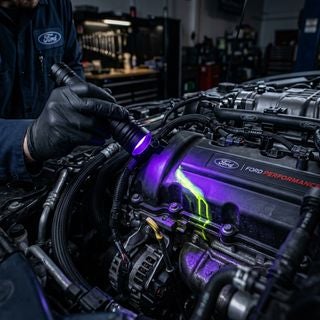
f

How Do You Fix an Oil Leak on a 2026 Ford?

To fix an oil leak on a 2026 Ford, you must clean the engine bay, identify the exact origin using fluorescent ultraviolet dye or inspection powder, replace the compromised gasket or fitting, and refill the crankcase to the proper level. Minor seeps at the valve cover or oil pan require installing a new pre-formed seal or applying Motorcraft High Performance Engine RTV Silicone, whereas pressurized leaks along turbocharger oil feed lines require replacing degraded line fittings and copper seals before fluid loss harms internal components. Identifying an engine oil leak early prevents thermal damage and protects critical engine components from lubrication starvation. Fresh engine oil appears amber or light brown with a slick feel, whereas older oil turns dark brown or black. If oil drips onto hot exhaust manifolds, it generates a harsh burning odor and light white smoke under the hood. Continuing to drive with severe oil loss can lead to low oil pressure warnings, premature bearing wear, or severe engine overheating. When inspecting a leak at home, place a clean sheet of white cardboard directly beneath the engine crossmember overnight. Engine oil leaves a distinct dark brown or black stain, distinguishing it from red transmission fluid or pink coolant. If you notice persistent puddling, check the dipstick level before starting the vehicle to ensure sufficient oil remains in the crankcase. For persistent or high-pressure leaks, professional diagnostic equipment provides the most accurate answer. You can visit our service department at 1503 Pennsylvania Ave for a comprehensive multi-point inspection, or give our service team a quick call at (330) 462-7578 to discuss observed symptoms with a certified technician. Table of Contents What Are the Common Causes and Leak Points on Ford EcoBoost Engines? 2026 Ford F-150 vs Ram 1500: Which Truck Offers Better Oil Leak Resistance? How to Inspect Your Ford for Oil Leaks and Check for Safety Recalls Can You Use an Extended Warranty to Cover Ford Oil Leak Repairs? Frequently Asked Questions About Ford Engine Oil Leaks Schedule Professional Oil Leak Diagnostics What Are the Common Causes and Leak Points on Ford EcoBoost Engines? Common oil leak points on Ford EcoBoost engines center around high-heat and high-pressure zones, including the valve cover gaskets, lower oil pan mating surfaces, timing chain covers, and turbocharger oil supply lines. Modern forced-induction engines subject engine seals to rapid thermal expansion and contraction cycles, which causes rubber gaskets to harden and RTV sealant bonds to degrade over extended mileage. On the 2.0L EcoBoost engine, which powers versatile crossover models like the 2026 Ford Escape with standard all-wheel drive, primary leak points include the front timing cover seal and the valve cover perimeter gasket. Over time, crankcase pressure can force oil past hardened valve cover corner seals, allowing oil to pool around spark plug wells or seep down the front engine cover. The 2.0L EcoBoost in the 2026 Ford Explorer also requires careful inspection around the front crankshaft seal, where road debris and heat can accelerate rubber breakdown. The twin-turbocharged 3.5L EcoBoost V6 presents a distinct set of potential leak areas due to its tight engine bay packaging and elevated turbocharger operating temperatures: Vacuum Pump Seal: On older 3.5L engine architectures, the mechanical vacuum pump mounted to the rear of the passenger-side cylinder head can develop a slow oil seep that drips directly onto the transmission bell housing. Turbocharger Oil Lines: High exhaust gas temperatures near the turbochargers can degrade the small rubber O-rings and crush washers on the oil feed and return lines, causing oil to vaporize against the exhaust piping. Composite Oil Pan Sealant: Certain previous-generation engine designs utilized composite plastic oil pans sealed with liquid RTV sealant. Repeated heat cycles caused minor pan flexing, leading to slow seeps along the lower engine block rail. Recent Ford engine designs have addressed this by utilizing updated pan structures and press-in-place gaskets. When truck owners bring an EcoBoost into our service bay with an oil leak, our technicians usually check the rear vacuum pump and valve covers before looking at the lower oil pan. Driving across varied elevations, such as the rolling hills around State Route 170 in Calcutta, puts steady load on the turbocharger cooling and lubrication system. Maintaining clean engine oil and replacing PCV valves at recommended intervals relieves excess crankcase pressure, protecting internal seals across all EcoBoost engine configurations. 2026 Ford F-150 vs Ram 1500: Which Truck Offers Better Oil Leak Resistance? The 2026 Ford F-150 offers exceptional long-term oil leak resistance by pairing refined engine sealing techniques with durable metal oil pans and press-in-place synthetic rubber gaskets across its powertrain lineup. While Ram 1500 trucks historically relied on standard stamped steel or cast aluminum oil pans, earlier generations of full-size trucks faced persistent valve cover and oil cooler adapter leaks. Modern Ford engineering focuses on heavy-duty crankcase ventilation and robust gasket designs built for heavy towing and demanding commercial service. In full-size work trucks, engine oil integrity directly impacts productivity and long-term durability. The 2026 Ford F-150 equipped with the 3.5L EcoBoost V6 delivers an impressive 10,400 lbs towing capacity, supported by a heavy-duty engine oil cooler and a precise SelectShift® automatic transmission. To withstand high oil pressures during heavy hauling, Ford utilizes engineered press-in gaskets at major engine mating surfaces rather than relying solely on liquid sealant beads, preventing the gasket distortion that affected older truck engines. To keep work fleets running smoothly without unexpected downtime, proper maintenance of cooling and lubrication systems remains essential. You can explore our current new work truck lineup to see how modern Ford powertrains are configured for heavy-duty work, or check out our complete new truck inventory to compare cab styles and engine options built to handle rigorous regional workloads. How to Inspect Your Ford for Oil Leaks and Check for Safety Recalls Performing an accurate DIY oil leak inspection requires a systematic approach to trace fluid back to its highest point of origin on the engine assembly. Gravity causes leaking oil to travel downward and backward along the chassis frame rails while driving, which often makes a minor valve cover leak appear as a major oil pan failure underneath the vehicle. Follow this step-by-step diagnostic process to isolate an oil leak: Clean the Engine Bay: Spray a dedicated automotive degreaser over the dirty lower engine surfaces and rinse carefully with low-pressure water, taking care to avoid delicate electrical connectors. Apply Leak Detection Powder or UV Dye: Dust suspected leak areas with aerosol leak detection powder, or pour a bottle of fluorescent engine oil UV dye directly into the oil filler cap. Run the Engine: Idle the vehicle for 10 to 15 minutes, or drive a short distance to allow oil pressure to build up within the engine galleries. Inspect with an Ultraviolet Light: Shine a blacklight around timing covers, valve cover rails, and oil filter housings. The fluorescent dye will glow brightly at the exact crack or gasket breach where fluid emerges. If a previous repair attempt failed to fix the issue, your vehicle may have been misdiagnosed. Misdiagnoses frequently occur when residual oil from a upper engine leak accumulates around the rear main seal or transmission torque converter housing. Requesting a UV dye tracer test ensures technicians verify the top-most active leak source before replacing expensive structural components. In some cases, oil leaks stem from specific factory service actions or safety recalls rather than normal wear. For instance, manufacturer safety recalls have previously addressed missing cylinder head ball plugs on select 2.0L EcoBoost and 2.3L EcoBoost engines that could allow oil to escape near hot exhaust manifolds. You can check your vehicle's safety recall status at any time by entering your 17-character Vehicle Identification Number (VIN) into the official Ford owner portal or the NHTSA recall lookup tool. Drivers navigating daily trips near Market Street in Boardman can rely on authorized Ford service centers to complete all recall repairs free of charge. Can You Use an Extended Warranty to Cover Ford Oil Leak Repairs? Official Ford Protect Extended Service Plans cover major engine oil leak repairs, including the replacement of oil pan gaskets, valve cover seals, timing cover gaskets, and internal engine oil seals damaged through normal operational wear. Coverage eligibility depends on the specific plan tier selected at contract activation: PowertrainCARE: Covers fundamental mechanical components, including internal engine seals, oil pump assemblies, and cylinder head gaskets across 29 core powertrain parts. BaseCARE: Expands coverage to 84 mechanical components, adding steering gear housing seals and primary engine cooling hardware. ExtraCARE: Protects 113 key parts, covering complex electronic sensors, fuel systems, and engine accessory seals. PremiumCARE: Comprehensive bumper-to-bumper protection covering over 1,000 components, including high-tech engine sensors, turbocharger oil lines, and complete gasket sets. Warranty claims require proof that the vehicle was maintained according to the recommended service schedule published in the owner manual. Failing to perform regular oil changes can lead to sludge buildup, which restricts crankcase ventilation and damages internal seals. Keep all oil change receipts and maintenance logs organized to ensure seamless claim processing when service is required. Component damage resulting from aftermarket engine modifications, improper installation, or pre-existing conditions prior to contract coverage is not covered under extended warranty terms. When repairing an active leak, using genuine factory components preserves engine tolerances and ensures precise fitment. You can schedule a service appointment with our factory-trained technicians to inspect covered components, or order genuine OEM parts directly through our service department for approved maintenance tasks. Frequently Asked Questions About Ford Engine Oil Leaks Q: Can a failing vacuum pump cause an oil leak on a 3.5L EcoBoost engine? Yes, on earlier 3.5L EcoBoost V6 engine designs, the mechanical vacuum pump attached to the back of the passenger-side cylinder head can develop an oil leak at its mounting seal. As the seal degrades, engine oil seeps out and drips down onto the top of the transmission housing, often mimicking a leaking valve cover gasket or rear main seal failure. Q: Is it safe to drive my Ford if it has a minor oil leak? You can drive short distances with a slow oil seep provided you regularly check the dipstick and maintain proper oil levels in the crankcase. However, if oil leaks directly onto hot exhaust components, creates a strong burning smell, or causes the low oil pressure light to illuminate, you should pull over immediately and switch off the engine to prevent severe mechanical damage or thermal hazards. Q: What should I do if a technician misdiagnoses my vehicle's oil leak? If an initial repair fails to stop an oil leak, request a comprehensive ultraviolet dye test to trace the fluid's exact path from the highest point on the engine. Ask the service advisor to review official Technical Service Bulletins related to your specific engine code, which often outline updated diagnostic steps for complex leaks around timing covers, turbo oil lines, and oil pan seals. Q: How do I know if my Ford oil leak is covered by a factory recall? You can verify recall eligibility by locating your 17-character VIN on your registration card or driver-side dashboard and entering it into the official Ford support website or the NHTSA recall tool. If an active safety recall applies to your engine's oil system, an authorized Ford dealership will perform the necessary inspection and component replacement at no cost to you. Q: What is the difference between fresh engine oil and other leaking fluids? Fresh engine oil has an amber or light brown appearance with a slick feel, turning dark brown or black as it ages. Red or dark pink fluid indicates automatic transmission or power steering fluid, clear light brown or blue fluid with a sweet odor points to engine coolant, and clear thin fluid near the passenger side footwell is typically harmless air conditioning condensation. Schedule Professional Oil Leak Diagnostics Addressing an engine oil leak promptly protects your vehicle's mechanical reliability, maintains resale value, and ensures your engine remains fully lubricated under heavy driving loads. Whether your vehicle requires a simple valve cover gasket replacement, updated turbocharger oil line fittings, or a complete multi-point inspection, professional diagnostic care provides lasting peace of mind on local roads and work sites. Our factory-certified technicians utilize specialized diagnostic tools, genuine Motorcraft fluids, and precise OEM replacement seals engineered specifically for your vehicle's powertrain. You can get directions to Tri State Ford to drop off your vehicle for expert care, or give our team a call at (330) 462-7578 to speak directly with a knowledgeable service advisor. If you are also considering an upgraded truck or SUV while your vehicle is in for service, feel free to schedule a test drive online today. © 2026 Tri State Ford. All rights reserved. Vehicle specification data © JATO Dynamics Limited. 2026 Ford Oil Leak Repair in East Liverpool OH | Tri State Ford

Contact Us

Fill out this form below and we'll contact you shortly
*Required Fields