Blog / Vehicle Trade-In Advice, Financing & Insurance, Buying Guides, Used Vehicle Guides, New Vehicle

Blog

All Vehicle Trade-In Advice, Financing & Insurance, Buying Guides, Used Vehicle Guides, New Vehicle Maintenance & Service, Expert Repairs & Diagnostics, Genuine Parts & Accessories, Engine Care & New Vehicle Reviews, Buying Guides, Financing & Insurance, Model Comparisons, Automotive News Automotive News, New Vehicle Reviews, Buying Guides, Financing & Insurance, Seasonal Driving Tips Used Vehicle Guides, Financing & Insurance, Buying Guides, Trade-In Advice, Certified Pre-Owned Maintenance & Service, Warranty & Service Contracts, Repair & Diagnostics, Parts & Components Compare Cars Maintenance & Service, Battery Care & Diagnostics, Electric Vehicle (EV) Maintenance, Seasonal Used Vehicle Guides, Financing & Insurance, Buying Guides, Vehicle Warranty Information, Pre-Owned Maintenance & Service, Essential Vehicle Care, Preventive Maintenance Tips, Vehicle Longevity Buying Guides, Financing & Insurance, New Vehicle Reviews, Model Comparisons, Sales & Promotions Maintenance & Service, Parts & Accessories, Vehicle HVAC Care, Seasonal Vehicle Maintenance, DIY Tips Used Vehicle Guides, Financing & Insurance, Buying Guides, Pre-Owned Vehicle Sales, Vehicle New Vehicle Reviews, Buying Guides, Model Comparisons, Financing & Insurance, Inventory & Sales Buying Guides, Financing & Insurance, New Vehicle Reviews, Model Comparisons, Technology & Maintenance & Service, Brake Systems & Repair, Vehicle Parts & Accessories, Towing & Load Vehicle Trade-In Tips, Financing & Insurance, Buying Guides, Dealership Sales Strategies, Inventory Community Events & Customer Appreciation, New Vehicle Reviews, Financing & Trade-In Guides, Leasing & Lease Deals, Financing & Insurance, New Vehicle Sales, Commercial Vehicle Leasing, Maintenance & Service, Warranty & Recalls, Repair & Diagnostics, Parts & Accessories, Vehicle New Vehicle Reviews, Buying Guides, Financing & Insurance, Model Comparisons, Automotive Technology Vehicle Sales Events, New Vehicle Pricing & Incentives, Financing & Lease Options, Trade-In & Maintenance & Service, Recall Information, Safety & Reliability, Vehicle Ownership Care, Parts & Maintenance & Service, Vehicle Lighting & Electrical Systems, Automotive Safety & Inspection, OEM Maintenance & Service, Vehicle Pickup & Delivery, Mobile Service & On-Site Repairs, Oil Change & Model Comparisons, New Vehicle Reviews, Technology & Innovation, Safety Features, Buying Guides Commercial Truck Sales, Fleet Vehicle Financing, Custom Work Truck Upfits, Commercial Vehicle Commercial Vehicle Sales, Financing & Leasing, Small Business Vehicle Incentives, Fleet Purchasing Commercial Vehicle Sales, Fleet Purchasing & Management, Financing & Leasing for Businesses, New & Community Events, New Vehicle Buying Guides, Financing & Insurance, Maintenance & Service, Local Dealership Events & Promotions, Financing & Trade-In Options, Maintenance & Service Specials, Maintenance & Service, Vehicle Ownership Care, Mobile Repair Services, Genuine Parts & Certified New Vehicle Reviews, Buying Guides, Financing & Insurance, Model Comparisons, Used Vehicle Guides Used Vehicle Guides, Financing & Insurance, Buying Guides, New Vehicle Reviews, Commercial Vehicle Vehicle Sales Process, Financing & Credit Applications, New and Used Vehicle Inventory, Pickup and Buying Guides, Financing & Insurance, New Vehicle Reviews, Commercial Fleet Sales, Custom Orders & Buying Guides, New Vehicle Reviews, Financing & Insurance, Commercial Vehicle Sales, Model Commercial Vehicle Sales, Fleet Leasing & Management, Commercial Financing & Tax Incentives, Financing & Insurance, Leasing Benefits, Model Comparisons, Technology & Innovation, Buying Guides Leasing & Financing Options, Buying Guides, Model Comparisons, Negotiation Tips, Inventory & Leasing & Financing Options, Buying Guides, New Vehicle Reviews, Model Comparisons, Technology & Maintenance & Service, Automotive Detailing, Paint Protection & Care, Seasonal Vehicle Care, Maintenance & Service, Automotive Electrical Systems, Battery Care & Replacement, Vehicle Lighting Maintenance & Service, Automotive Fluids & Lubricants, Vehicle Care & Ownership, Dealership Service Maintenance & Service, Brake System Care, Vehicle Safety & Inspection, Parts Quality & Replacement, Maintenance & Service, Brake System Care, Vehicle Safety & Inspections, Parts & Repairs, Expert Maintenance & Service, Mobile Vehicle Services, Vehicle Care & Ownership, Genuine Parts & Repairs, Maintenance & Service, Safety Features, Technology & Innovation, Seasonal Driving Tips, Parts & Maintenance & Service, Technology & Innovation, Vehicle Diagnostics & Telematics, Fleet Management Maintenance & Service, Tire Care & Repair, Roadside Assistance, Vehicle Safety & Inspections, Maintenance & Service, Tire Care & Repair, Wheel Alignment & Balancing, Suspension Maintenance, Maintenance & Service, Vehicle Inspection & Diagnostics, Parts & Repairs, Warranty & Resale Value, Maintenance & Service, Vehicle Inspections, Oil Change & Fluid Services, Tire Care & Battery Maintenance & Service, Vehicle Interior Care, Technology & Innovation in Service, Professional Maintenance & Service, Vehicle Software Updates, Safety Features, Technology & Innovation, Recall & New Vehicle Reviews, Buying Guides, Financing & Insurance, Model Comparisons, Inventory Highlights New Vehicle Reviews, Buying Guides, Financing & Insurance, Model Comparisons, Inventory Updates New Vehicle Reviews, Buying Guides, Model Comparisons, Maintenance & Service, Technology & New Vehicle Reviews, Buying Guides, Technology & Innovation, Safety Features, Seasonal Driving Tips Vehicle Sales Events, New Vehicle Purchasing, Incentives & Discounts, Financing & Pre-Approval, Buying Guides, Financing & Insurance, Used Vehicle Guides, New Vehicle Reviews, Cross-Border Buying Guides, Financing & Insurance, Vehicle Inventory & Offers, Dealership Visit Preparation, Commercial Leasing Options, Business Fleet Solutions, Financing & Leasing Programs, Commercial Commercial Truck Sales, Fleet Purchasing Guides, Financing & Lease Options, Work Truck Community Engagement & Events, New Vehicle Promotions, Financing & Trade-In Options, Maintenance & Community Events & Dealership News, New Vehicle Promotions & Incentives, Maintenance & Service Community Events & Dealership News, New Vehicle Reviews, Financing & Insurance, Maintenance & Custom Ordering & Build Process, New Vehicle Inventory & Offers, Financing & Trade-In Guidance, East Liverpool, OH Ford Dealer East Liverpool, OH Used Cars Financing & Insurance, Buying Guides, Commercial Vehicle Solutions, Fleet Management, Inventory and Financing & Insurance, Buying Guides, New Vehicle Reviews, Used Vehicle Guides, Automotive Sales Financing & Insurance, Buying Guides, New Vehicle Reviews, Used Vehicle Guides, Automotive Sales & Financing & Insurance, Buying Guides, New Vehicle Reviews, Used Vehicle Guides, Model Comparisons Financing & Insurance, Buying Guides, Used Vehicle Guides, New Vehicle Reviews, Automotive Sales Financing & Insurance, Buying Guides, Used Vehicle Guides, Trade-In Tips, New Vehicle Sales Financing & Insurance, Buying Guides, Vehicle Inventory & Offers, Trade-In & Appraisal, Dealership Financing & Insurance, Buying Guides, Vehicle Trade-In Tips, Dealership Sales Process, New Vehicle Leasing & Financing Options, New Vehicle Leasing Guides, Buying Guides, Inventory Spotlight, Trade Leasing Options, Financing & Insurance, New Vehicle Reviews, Buying Guides, Technology & Innovation Leasing Options, Financing & Insurance, New Vehicle Sales, Buying Guides, Vehicle Inventory Maintenance & Service, Air Conditioning Repair, Genuine Parts & Accessories, Dealer-Authorized Maintenance & Service, Automotive Air Conditioning Repair, Vehicle Cooling System Care, Diagnostic Maintenance & Service, Automotive Detailing & Cleaning, Seasonal Vehicle Care, Vehicle Protection & Maintenance & Service, Automotive Detailing & Paint Care, Vehicle Exterior Protection, Paint Repair Maintenance & Service, Automotive Detailing & Protection, Corrosion & Rust Prevention, Paint & Maintenance & Service, Automotive Detailing, Vehicle Care & Protection, Off-Road Vehicle Maintenance & Service, Automotive Electrical Systems, Battery Care & Replacement, Diagnostics & Maintenance & Service, Automotive Glass Repair, Safety Features, Technology & Innovation, Mobile & Maintenance & Service, Automotive Lighting & Electrical, Vehicle Safety & Visibility, DIY Vehicle Maintenance & Service, Automotive Parts & Accessories, Seasonal Vehicle Care, Vehicle Safety & Maintenance & Service, Automotive Parts & Accessories, Vehicle Air Quality & HVAC Care, Preventive Maintenance & Service, Automotive Parts & Accessories, Vehicle Ownership Care, Engine Care & Maintenance & Service, Automotive Parts & Accessories, Vehicle Safety & Repair, Warranty & Maintenance & Service, Automotive Parts & Components, Vehicle Safety & Repair, Warranty & Service Maintenance & Service, Automotive Parts & Repairs, Vehicle Warranty & Protection, Service Center Maintenance & Service, Automotive Repair Tips, Service Team Selection, Warranty & Service Policies, Maintenance & Service, Automotive Repair, Mobile & Remote Vehicle Service, Warranty & Roadside Maintenance & Service, Automotive Repair, Parts & Accessories, Vehicle Ownership Care, Technology & Maintenance & Service, Automotive Repair, Parts & OEM Components, Vehicle Longevity & Care, Service Maintenance & Service, Automotive Technology & Diagnostics, Vehicle Electronics & Sensors, Seasonal Maintenance & Service, Automotive Technology & Software Updates, Warranty & Recall Service, Mobile Maintenance & Service, Battery Care & Replacement, Vehicle Electrical Systems, Seasonal Vehicle Maintenance & Service, Brake System Care, OEM Parts & Replacement, Vehicle Safety & Inspections, Maintenance & Service, Brake System Care, Vehicle Repair Tips, Automotive Parts & Components, Maintenance & Service, Brake System Care, Vehicle Safety & Inspection, Automotive Repair Tips, Maintenance & Service, Brake System Care, Vehicle Safety & Inspections, Parts & Components, Maintenance & Service, Brake System Care, Vehicle Safety Inspections, Automotive Repair Tips, OEM Maintenance & Service, Certified Technician Insights, Warranty & Service Coverage, Genuine OEM Maintenance & Service, Cooling System Repairs, Vehicle Ownership Care, Diagnostic & Maintenance & Service, Diagnostic Services, Vehicle Health & Diagnostics, Service Tips & Advice, Maintenance & Service, Engine Care & Performance, Parts & Accessories, Genuine vs. After Maintenance & Service, Paint Protection & Detailing, Vehicle Exterior Care, Seasonal Vehicle Maintenance & Service, Parts & Accessories, Engine Care & Repair, Vehicle Longevity Tips, OEM Parts Maintenance & Service, Parts & Replacements, Vehicle Care Tips, Seasonal Maintenance, DIY Vehicle Maintenance & Service, Recall Updates & Safety Notices, Genuine Parts & Accessories, Truck Care & Maintenance & Service, Repair & Diagnostics, OEM Parts & Accessories, Warranty & Recall Maintenance & Service, Repair & Diagnostics, Parts & Accessories, Vehicle Ownership Care, Service Maintenance & Service, Repair & Diagnostics, Parts & Components, Preventive Care & Tips, Warranty & Maintenance & Service, Repair & Diagnostics, Tire & Wheel Care, Vehicle Safety & Inspection, Parts Maintenance & Service, Repair & Diagnostics, Warranty & Service Coverage, Genuine OEM Parts & Maintenance & Service, Repair & Parts, Vehicle Ownership Care, Safety Features, Technology & Maintenance & Service, Repair & Parts, Vehicle Ownership Care, Transmission Maintenance & Service, Repair Solutions, Vehicle Ownership Care, Parts & Accessories, Diagnostic Maintenance & Service, Repair Tips & Techniques, Vehicle Care & Ownership Maintenance & Service, Safety Features, Automotive Recalls & Repairs, Parts & Warranty Services, Maintenance & Service, Safety Features, Automotive Recalls & Repairs, Technology & Innovation, Maintenance & Service, Safety Features, Automotive Recalls, Vehicle Ownership Care, Parts & Repairs Maintenance & Service, Safety Features, Parts & Repairs, Vehicle Ownership Care, Automotive Service Maintenance & Service, Safety Features, Recall & Repair Updates, Parts & Repairs, Vehicle Ownership Maintenance & Service, Safety Features, Recall & Safety Campaigns, Vehicle Inspection & Repairs, Maintenance & Service, Safety Features, Recall & Warranty Information, Vehicle Diagnostics & Maintenance & Service, Safety Features, Recall Repairs & Safety Campaigns, Parts & Genuine Maintenance & Service, Safety Features, Recalls & Repairs, Parts & Accessories, Vehicle Ownership Maintenance & Service, Safety Features, Repair & Recall Updates, Parts & Components, Vehicle Maintenance & Service, Safety Features, Repair & Replacement, Vehicle Care & Inspection, Parts & Maintenance & Service, Safety Features, Seasonal Driving Tips, Technology & Innovation, Parts & Maintenance & Service, Safety Features, Technology & Innovation, Automotive Electrical Systems, Maintenance & Service, Safety Features, Technology & Innovation, Automotive News, Parts & Repairs Maintenance & Service, Safety Features, Technology & Innovation, Automotive Parts & Accessories, Maintenance & Service, Safety Features, Technology & Innovation, Automotive Recalls, Parts & Repairs Maintenance & Service, Safety Features, Technology & Innovation, Automotive Recalls, Vehicle Maintenance & Service, Safety Features, Technology & Innovation, Automotive Service Tips, Recall & Maintenance & Service, Safety Features, Technology & Innovation, Parts & Repairs, Seasonal Driving Maintenance & Service, Safety Features, Technology & Innovation, Parts & Repairs, Vehicle Ownership Maintenance & Service, Safety Features, Technology & Innovation, Recall & Warranty Information, Maintenance & Service, Safety Features, Technology & Innovation, Repair & Recall Information, Parts Maintenance & Service, Safety Features, Technology & Innovation, Tire Care & Replacement, Maintenance & Service, Safety Features, Vehicle Inspections, DIY Vehicle Care, Repair & Diagnostics Maintenance & Service, Safety Recalls & Repairs, Vehicle Safety & Compliance, Powertrain & Maintenance & Service, Seasonal Driving Tips, Model Comparisons, Technology & Innovation, Safety Maintenance & Service, Seasonal Driving Tips, Safety Features, Technology & Innovation, Automotive Maintenance & Service, Seasonal Driving Tips, Safety Features, Technology & Innovation, Parts & Maintenance & Service, Seasonal Driving Tips, Vehicle Care & Ownership, Brake System Maintenance, Maintenance & Service, Seasonal Driving Tips, Vehicle Care & Ownership, Parts & Accessories, Safety Maintenance & Service, Seasonal Driving Tips, Vehicle Care & Ownership, Safety Features, Maintenance & Service, Seasonal Driving Tips, Vehicle Care & Protection, Brake Maintenance, Tire Maintenance & Service, Seasonal Driving Tips, Vehicle Care & Warranty, Service Specials & Packages, Maintenance & Service, Seasonal Driving Tips, Vehicle Cooling Systems, Automotive Safety Features, Maintenance & Service, Service Scheduling & Convenience, Vehicle Repair & Diagnostics, Parts & Maintenance & Service, Technology & Innovation, Automotive Service Transparency, Digital Vehicle Maintenance & Service, Technology & Innovation, Safety Features, Parts & Warranty, Vehicle Maintenance & Service, Tire Care & Replacement, Seasonal Vehicle Care, Safety Features, Automotive Maintenance & Service, Tire Care & Replacement, Vehicle Safety & Handling, Seasonal Vehicle Maintenance & Service, Tire Care & Replacement, Vehicle Safety & Inspection, Emergency Roadside Maintenance & Service, Tire Care & Replacement, Vehicle Safety & Inspections, Seasonal Vehicle Maintenance & Service, Transmission Care & Repair, Vehicle Fluid Services, Automotive Diagnostics, Maintenance & Service, Transmission Care, Repair & Parts, Vehicle Ownership Care, Common Vehicle Maintenance & Service, Vehicle Care & Longevity, Scheduled Service Packages, Oil Changes & Fluid Maintenance & Service, Vehicle Care Tips, Parts & Accessories, Seasonal Vehicle Maintenance, Maintenance & Service, Vehicle Detailing & Care, Parts & Accessories, Seasonal Vehicle Preparation, Maintenance & Service, Vehicle Detailing & Cosmetic Care, Automotive Cleaning & Protection, Service Maintenance & Service, Vehicle Detailing & Cosmetic Care, Service Scheduling & Convenience, Maintenance & Service, Vehicle Detailing & Protection, Repair & Inspection, Parts & Accessories, Maintenance & Service, Vehicle Detailing & Protection, Vehicle Care Tips, Seasonal Vehicle Maintenance & Service, Vehicle Diagnostics & Repair, Engine Performance & Troubleshooting, Fuel Maintenance & Service, Vehicle Fluids & Lubrication, Engine Care & Repair, Parts & Accessories, Maintenance & Service, Vehicle Ownership Care, Parts & Accessories, Repair & Diagnostics, Certified Maintenance & Service, Vehicle Repair & Diagnostics, Parts & Accessories, DIY Vehicle Care, Safety Maintenance & Service, Vehicle Repair & Diagnostics, Parts & Accessories, Hybrid & Electric Vehicle Maintenance & Service, Vehicle Repair & Diagnostics, Parts & Accessories, Seasonal Driving Tips, Maintenance & Service, Vehicle Repair & Diagnostics, Parts & Accessories, Service Lane Tips & Maintenance & Service, Vehicle Repair & Diagnostics, Parts & Accessories, Towing & Performance Maintenance & Service, Vehicle Repair & Parts, Service Convenience & Customer Care, Roadside Maintenance & Service, Vehicle Repair Tips, Parts & Accessories, Safety Features, Technology & Maintenance & Service, Vehicle Service Warranties, Repair & Coverage Plans, Ownership & Vehicle Model Comparisons, Buying Guides, New Vehicle Reviews, Financing & Insurance, Inventory Updates Model Comparisons, Buying Guides, New Vehicle Reviews, Technology & Innovation, Safety Features Model Comparisons, Buying Guides, Technology & Innovation, Safety Features, Maintenance & Service Model Comparisons, New Vehicle Reviews, Buying Guides, Technology & Innovation, Financing & Model Comparisons, New Vehicle Reviews, Buying Guides, Technology & Innovation, Safety Features Model Comparisons, New Vehicle Reviews, Safety Features, Technology & Innovation, Seasonal Driving Model Comparisons, New Vehicle Reviews, Technology & Innovation, Buying Guides, Maintenance & Model Comparisons, New Vehicle Reviews, Technology & Innovation, Maintenance & Service, Buying Model Comparisons, Towing & Hauling Guides, Maintenance & Service, Technology & Innovation, New New Vehicle Promotions, Buying Guides, Financing & Insurance, New Vehicle Reviews, Inventory New Vehicle Reviews, Buying Guides, Financing & Insurance, Model Comparisons, Automotive Sales New Vehicle Reviews, Buying Guides, Financing & Insurance, Model Comparisons, Commercial & Work New Vehicle Reviews, Buying Guides, Financing & Insurance, Model Comparisons, Vehicle Customization New Vehicle Reviews, Buying Guides, Financing & Insurance, Model Comparisons, Vehicle Inventory New Vehicle Reviews, Buying Guides, Financing & Insurance, New Vehicle Specials, Trade-In & Value New Vehicle Reviews, Buying Guides, Financing & Insurance, Used Vehicle Guides, Inventory Updates New Vehicle Reviews, Buying Guides, Financing & Insurance, Used Vehicle Guides, Model Comparisons New Vehicle Reviews, Buying Guides, Financing & Insurance, Vehicle Inventory & Specials, Model New Vehicle Reviews, Buying Guides, Financing & Insurance, Vehicle Inventory, Model Comparisons New Vehicle Reviews, Buying Guides, Model Comparisons, Financing & New Vehicle Reviews, Buying Guides, Safety Features, Technology & Innovation, Model Comparisons New Vehicle Reviews, Buying Guides, Technology & Innovation, Safety Features, Maintenance & Service New Vehicle Reviews, Financing & Insurance, Buying Guides, New Vehicle Specials, Model Comparisons New Vehicle Reviews, Financing & Insurance, Buying Guides, Technology & Innovation, Automotive New Vehicle Reviews, Financing & Insurance, Buying Guides, Used Vehicle Guides, Model Comparisons New Vehicle Reviews, Model Comparisons, Buying Guides, Technology & Innovation, Safety Features New Vehicle Reviews, Model Comparisons, Commercial Truck Guides, Technology & Innovation, New Vehicle Reviews, Model Comparisons, Financing & Insurance, Technology & Innovation, Safety New Vehicle Reviews, Model Comparisons, Off-Road Adventures, Technology & Innovation, Maintenance & New Vehicle Reviews, Model Comparisons, Safety Features, Technology & Innovation, Buying Guides New Vehicle Reviews, Model Comparisons, Technology & Innovation, Financing & Insurance, Maintenance New Vehicle Reviews, Model Comparisons, Technology & Innovation, Safety Features, Buying Guides New Vehicle Reviews, Model Comparisons, Technology & Innovation, Safety Features, Maintenance & New Vehicle Reviews, Off-Road Capabilities, Outdoor Adventure Vehicles, Technology & Innovation, New Vehicle Reviews, Technology & Innovation, Buying Guides, Maintenance & Service, Model New Vehicle Reviews, Technology & Innovation, Buying Guides, Safety Features, Model Comparisons New Vehicle Reviews, Technology & Innovation, Safety Features, Maintenance & Service, Buying Guides New Vehicle Sales, Financing & Incentives, Trade-In & Appraisal, Special Sales Events, Electric New Vehicle Sales, Financing & Incentives, Trade-In & Value Guides, Manufacturer Promotions, New Vehicle Sales, Financing & Insurance, Buying Guides, Manufacturer Incentives & Discounts, New Vehicle Sales, Vehicle Delivery & Logistics, Financing & Credit Applications, Trade-In & Trucks Used Vehicle Guides, Buying Guides, Financing & Insurance, Model Comparisons, Selling Your Car Used Vehicle Guides, Financing & Insurance, Buying Guides, Model Comparisons, Local Dealership Vehicle Sales Events, Financing & Leasing, Trade-In & Trade-Up Guides, New Vehicle Inventory Vehicle Sales Events, New Vehicle Buying Guides, Financing & Incentives, Dealership Inventory Vehicle Sales Events, New Vehicle Pricing, Financing & Credit Applications, Trade-In & Loyalty Vehicle Sales Process, Online Vehicle Purchasing, Financing & Loan Approval, Trade-In & Vehicle Vehicle Sales Promotions, New Vehicle Buying Guides, Financing & Credit Applications, Dealership Vehicle Sales Promotions, New Vehicle Buying Guides, Financing & Incentives, Trade-In & Valuation, Vehicle Sales, Online Car Buying, Financing & Incentives, Trade-In Guides, New Vehicle Delivery
f

Is It Worth Fixing Your Car Before Trading It In?

Fixing a car before trading it in is generally only worth the investment for minor cosmetic touch-ups, simple maintenance, or low-cost functional repairs. Major mechanical overhauls, expensive bodywork, and transmission replacements rarely yield a dollar-for-dollar return because retail repair costs almost always exceed the resulting increase in dealer appraisal value. When evaluating a vehicle, trade-in appraisals calculate wholesale market value minus estimated reconditioning expenses. Reconditioning costs represent the specific reconditioning touch-ups, tire replacements, or mechanical fixes required to prepare a vehicle for resale. Major engine or transmission overhauls performed at retail customer rates consume significant cash out-of-pocket that an appraiser cannot add back to your offer. According to findings from Kelley Blue Book, comparing a repair's full retail cost with the likely increase in your trade allowance reveals that high-cost fixes almost never pay for themselves. Inexpensive functional improvements offer a much better financial return. Replacing a burnt-out headlight bulb, installing fresh wiper blades, or topping off vital fluids costs very little but eliminates obvious red flags during an inspection. Drivers navigating the steep riverfront bluffs in East Liverpool during winter commutes benefit from having essential safety components in order, but extensive body repairs are best left as an as-is trade deduction. Bringing your vehicle in as-is allows our appraisal team to evaluate its current condition directly. You can stop by our physical showroom address or give our team a quick phone call to discuss your vehicle's trade-in potential before spending money on unnecessary repairs. Table of Contents Should You Fix Major Mechanical Issues or Check Engine Lights Before Trading In? Should Worn Tires or Minor Maintenance Items Be Replaced Prior to Appraisal? Does Professional Auto Detailing and Fixing Minor Cosmetic Damage Pay Off? How Do Dealer Reconditioning Deductions Compare to Independent Repair Shop Costs? Should You Trade In As-Is or Sell Privately If Your Vehicle Needs Repairs? Common Questions About Fixing a Car Before Trading It In Maximizing Your Trade-In Value at Tri State Ford Should You Fix Major Mechanical Issues or Check Engine Lights Before Trading In? Major mechanical issues should not be repaired prior to trading in a vehicle because retail parts and labor rates far exceed the value added to a trade-in appraisal. Minor check engine light triggers, however, such as a loose gas cap or a simple sensor replacement, should be resolved to prevent appraisers from assuming worst-case engine damage. Paying thousands of dollars out-of-pocket for severe engine work, transmission rebuilds, or suspension overhauls rarely pays back its full cost in a higher trade allowance. Research from Edmunds confirms that dealers complete mechanical repairs in-house at internal wholesale labor and parts rates, which means a dealership's reconditioning deduction is almost always smaller than the bill you would pay at a retail repair shop. If a car requires a major repair, trading it in as-is protects your personal cash flow while allowing the dealer to handle the necessary work efficiently. Active diagnostic trouble codes and illuminated warning lights require a strategic approach. An active check engine light forces appraisers to factor in potential engine or emissions repairs during their assessment. If the light is triggered by a minor, easily addressable component like a loose gas cap or an accessible oxygen sensor, clearing the code with a low-cost fix protects your vehicle's valuation tier. Our advisors see that buyers evaluating our Carfax 1-owner pre-owned vehicles place high priority on verified maintenance records and clean diagnostic scans, making minor sensor fixes one of the few mechanical steps worth taking before an appraisal. Should Worn Tires or Minor Maintenance Items Be Replaced Prior to Appraisal? Severely worn or bald tires should be replaced before trading in if you can source an inexpensive matching set, as bald tires represent an immediate safety hazard that forces a lower condition classification. Minor maintenance items like functional windshield wipers or fresh fluid top-offs also help preserve your vehicle's overall presentation grade. Tires represent one of the first physical items an appraiser checks during a walk-around inspection. Bald tires fail safety standards and mandate an immediate reconditioning deduction from your trade-in offer. When tread depth falls below safety thresholds, replacing worn tires with budget-friendly, matching tires prevents your vehicle from dropping into a fair or poor condition category. Commuters traveling along State Route 170 in Calcutta rely on adequate tire tread to handle changing weather conditions, and appraisers immediately check tire wear to determine whether a vehicle can be resold safely. Routine maintenance items follow a similar logic. Addressing small details shows that a car has been cared for throughout its lifecycle. Wiper Blades: Replacing streak-prone wiper blades prevents negative visual impressions during test drives. Fluid Levels: Topping off engine oil, windshield washer fluid, and coolant signals proper engine care. Bulbs and Fuses: Swapping out blown taillight or turn-signal bulbs eliminates simple visual defects. Basic Documentation: Gathering documented oil changes and service receipts reassures appraisers regarding engine health. Preserving clean vehicle history and documented care helps pre-owned vehicles qualify for certified programs. Upgrading into models from our Ford certified pre-owned inventory provides peace of mind through rigorous 172-point inspections, comprehensive limited warranty coverage, and 24/7 roadside assistance support. Does Professional Auto Detailing and Fixing Minor Cosmetic Damage Pay Off? Professional auto detailing costing between $150 and $200 almost always pays for itself by eliminating cabin odors, carpet stains, and road grime, helping the vehicle reach a higher condition tier. Extensive bodywork or full-panel paint repairs, by contrast, rarely return their out-of-pocket expenses. First impressions significantly influence the physical appraisal process. A vehicle covered in mud with clutter inside makes it difficult for an appraiser to see well-maintained upholstery or clean body panels. Spending a modest amount on professional detailing or taking time to deep-clean the interior yourself removes pet hair, food crumbs, and surface grime. This modest effort ensures your car is graded on its actual mechanical and cosmetic condition rather than penalized for surface mess. Minor cosmetic repairs require careful cost evaluation: Paintless Dent Repair: Removing minor door dings via low-cost dent removal often returns solid value by restoring clean body lines. Cracked Lenses: Replacing a broken taillight or fog light lens is inexpensive and eliminates obvious visual flaws. Deep Scratches and Dents: Attempting full body-shop repainting or panel replacement for deep scratches rarely yields a dollar-for-dollar return due to high body-shop labor costs. Clean vehicles make trade-in transactions seamless, helping you transition smooth equity into your next purchase. You can begin organizing your upcoming vehicle upgrade by submitting a secure online credit application to explore customized financing options tailored to your family's monthly budget. How Do Dealer Reconditioning Deductions Compare to Independent Repair Shop Costs? Accepting a dealership's reconditioning deduction is almost always financially better than paying an independent repair shop out-of-pocket before trading in. Dealerships perform reconditioning using wholesale internal labor and parts costs, whereas independent facilities charge retail rates. When an appraiser calculates trade-in value, they start with the vehicle's target market value and subtract estimated internal reconditioning costs. Because dealerships operate internal service departments, their cost to fix a leaking gasket, turn brake rotors, or replace a suspension component is calculated at wholesale cost. An independent repair facility must charge you full retail labor rates and marked-up parts prices to turn a profit. Paying retail rates out-of-pocket for a major fix before trading in means spending money that will not be fully recovered in your trade offer. Repair Category Retail Repair Shop Cost Internal Dealer Reconditioning Deduction Financial Impact on Trade-In Major Transmission Repair $3,500 – $5,000 Wholesale Internal Rate Paying retail out-of-pocket loses $1,000+ compared to trade deduction Complete Brake Overhaul $600 – $900 Internal Parts & Labor Retail repair rarely recovers full cost on appraisal allowance Four-Tire Replacement $600 – $1,000 Wholesale Tire Rate Budget tires restore safety tier; high-end retail tires lose money Minor Sensor / Gas Cap Fix $50 – $150 Minimal Diagnostic Time Worth fixing out-of-pocket to prevent check engine light penalty Accepting an as-is trade deduction preserves your savings and eliminates the hassle of waiting days for shop repairs to finish. You can apply your vehicle's trade value directly toward purchasing a new truck or SUV from our latest new vehicle inventory, securing advanced driver-assist features like Pre-Collision Assist with Automatic Emergency Braking and BLIS with Cross-Traffic Alert. Should You Trade In As-Is or Sell Privately If Your Vehicle Needs Repairs? Trading in a vehicle as-is is significantly more practical than attempting a private sale when major repairs are needed. Private buyers are generally unwilling to purchase vehicles with mechanical defects or active bank liens, while dealerships handle lien payoffs, title transfers, and reconditioning in a single transaction. Selling a car that requires repairs to a private buyer involves significant hurdles. Private shoppers typically search for turnkey transportation and react negatively to warning lights, leaking fluids, or worn brakes. To close a private sale on a damaged vehicle, sellers must discount the price heavily, often lower than a dealer's wholesale appraisal. Private sales also require navigating test drives with strangers, handling title transfers, and coordinating with lenders if an active auto loan exists. Trading in at a dealership eliminates these headaches while unlocking state sales tax advantages: Immediate Lien Satisfaction: The dealership contacts your lender directly to secure a 10-day payoff quote and remits funds to clear your title. Single-Appointment Process: You can complete the appraisal, trade transfer, and replacement vehicle purchase in one visit. Sales Tax Credit Savings: In Ohio, the value of your trade-in is subtracted from the taxable purchase price of your replacement vehicle, saving you state sales tax out-of-pocket. To evaluate your options, stop by our East Liverpool dealership location or give our staff (330) 462-7578 to speak with an appraisal specialist. You can also start the valuation process from home using our online trade valuation tool to receive an initial market range. Common Questions About Fixing a Car Before Trading It In Q: Should I fix a cracked windshield before trading in my car? Replacing a cracked windshield is worth doing if your comprehensive auto insurance covers glass replacement with a zero or low deductible. If you must pay out-of-pocket at full retail glass rates, evaluate whether the crack obstructs the driver's view or integrated safety cameras. Minor stone chips can be left as-is, but severe cracks that compromise safety or driver-assist sensors force an appraisal reconditioning deduction. Q: Does a car's service history increase trade-in value? Presenting complete service documentation reassures appraisers that essential powertrain components, brakes, and cooling systems have been properly maintained according to factory standards. Documented service records keep your vehicle in the highest possible condition tier, preventing speculative reconditioning deductions for missed major maintenance intervals. Q: What mechanical components are checked during a dealership appraisal? Appraisers conduct a functional inspection of the engine, transmission, braking system, steering, suspension, and climate control, while scanning for active diagnostic trouble codes. They also inspect tire tread depth, battery age, frame condition, and exterior lighting to calculate estimated reconditioning costs accurately. Q: Will aftermarket modifications increase my trade-in offer? Non-factory modifications like aftermarket exhaust systems, custom suspension lifts, or altered tuning modules usually reduce trade-in value rather than increasing it. Appraisers know that heavy aftermarket alterations restrict general buyer appeal and often require costly restoration back to factory specifications. Q: How does negative equity affect my trade-in process if repairs are needed? If your vehicle requires repairs and you owe more on your auto loan than its current appraised worth, you have negative equity. You can complete the trade-in as-is by paying the difference out-of-pocket, applying a cash down payment, or rolling the remaining loan balance into your replacement vehicle financing subject to lender approval. Maximizing Your Trade-In Value at Tri State Ford Navigating a vehicle trade-in does not require spending thousands of dollars on pre-sale repairs. Focus your effort on simple, high-return presentation steps: clean out personal belongings, detail the cabin, top off essential fluids, and gather your complete service records. For major mechanical repairs or cosmetic bodywork, trading in your vehicle as-is protects your out-of-pocket cash while allowing our team to handle reconditioning at wholesale rates. Our appraisal process provides transparent evaluations based on live market transaction data and current vehicle demand. Whether you drive a sedan, a crossover with spacious seating, or a truck built tough for heavy towing, our team is ready to help you apply maximum trade equity toward your next purchase. Visit our showroom to receive an in-person physical appraisal, explore flexible financing options, and test drive our latest lineup of reliable Ford vehicles today. Keep Your Vehicle Running Strong Keep your vehicle performing at its best with our service team: Order Parts Schedule Service Appt © 2026 Tri State Ford. All rights reserved. Car Trade-In Tips in East Liverpool OH | Tri State Ford


f

Should You Buy a Used Car with a Minor Accident History?

Buying a used vehicle with a minor accident history is generally a safe and practical choice if the damage was strictly cosmetic, the repairs were completed properly using quality components, and the asking price reflects the historical impact. When structural frame components, suspension geometry, and safety restraint systems remain entirely untouched, a previously repaired vehicle delivers identical long-term reliability and daily safety at a lower overall purchase price. Evaluating a pre-owned vehicle with a reported collision requires looking past the surface notation on a vehicle history report. Services like CARFAX compile records from insurance databases, police reports, and participating repair facilities to document recorded events associated with a Vehicle Identification Number. However, an entry showing a cosmetic incident does not tell the complete story on its own. A parking lot scuff, a cracked tail lamp, or a lightly dented fender skin gets flagged in reporting systems alongside more significant events, even though surface-level panel repairs have no bearing on mechanical durability or road safety. A hands-on evaluation combined with thorough documentation review helps determine whether a pre-owned vehicle represents a good buying opportunity. Before making a purchasing decision, buyers should review repair invoices, inspect panel finish consistency, and confirm that all mechanical components operate smoothly. For commuters traveling along State Route 170 in Calcutta, driving a vehicle with verified alignment and flawless safety features provides total peace of mind on everyday trips. To explore our current selection of thoroughly inspected pre-owned vehicles, contact our team directly at (330) 462-7578 or visit our East Liverpool dealership location for a personal test drive. Table of Contents What Qualifies as a Minor Accident Versus Structural Frame Damage? How Does a Minor Collision Impact Resale Value, Title Status, and Factory Warranty Coverage? How Can Buyers Verify ADAS Sensor Calibration and Repair Quality After an Incident? Is a Used Vehicle with a Past Cosmetic Repair Safe and Reliable for Long-Term Driving? Frequently Asked Questions About Buying Used Vehicles with Accident History How to Inspect Pre-Owned Vehicles and Find Quality Options What Qualifies as a Minor Accident Versus Structural Frame Damage? A minor accident involves surface-level cosmetic damage—such as scraped bumper covers, light fender dings, or cracked light assemblies—that leaves the vehicle's unibody frame, mechanical driveline, and safety restraint systems entirely undamaged. Structural frame damage involves bent unibody frame rails, compromised pillar posts, or crumpled structural crossmembers that permanently alter the vehicle's ability to protect occupants in a subsequent crash. Understanding the difference between outer body panels and structural unibody components helps buyers evaluate physical condition during a vehicle walk-around. Modern vehicles utilize unibody construction, where outer sheet metal panels like front fenders, door skins, and trunk lids attach directly to a rigid internal safety cage. Minor impacts typically affect only these outer, bolt-on components: Outer plastic bumper covers designed to flex and absorb low-speed parking impacts Front fender panels and rear quarter panel outer skins Side door shells, exterior door handles, and side mirror housings Headlamp and taillight assemblies, grille inserts, and decorative trim Underneath exterior body covers sit the vehicle's primary structural components and energy-absorbing crumple zones. The impact bar located directly behind a bumper cover absorbs collision energy, protecting the main unibody rails behind it. If a low-speed collision deforms only the plastic cover and exterior impact bar, a body shop replaces those bolt-on parts without disturbing the vehicle's frame alignment. Conversely, if an impact bends the radiator support, floor pan, A-pillars, or rear frame horns, the damage crosses into structural territory, requiring extensive frame-bench pulling and specialized welding to restore structural integrity. Uneven or misaligned gaps between doors, fenders, hoods, and trunk lids often serve as a visual indicator during physical inspection. While slight panel variance can occasionally occur from factory manufacturing, noticeable tape lines, misaligned body lines, or binding door hinges suggest either poor cosmetic repair execution or underlying unibody distortion that warrants a thorough professional mechanical inspection. How Does a Minor Collision Impact Resale Value, Title Status, and Factory Warranty Coverage? A documented minor accident typically reduces a used vehicle's market value by roughly 5 to 15 percent, creating a built-in pricing advantage for secondary buyers without altering the vehicle's clean title status. A cosmetic incident does not void the remaining factory warranty, though manufacturer coverage will not pay for secondary repairs or component failures caused directly by improper body shop work or non-OEM replacement parts. Evaluating financial trade-offs requires understanding how valuation guides like Kelley Blue Book account for accident history notes. When a vehicle history report lists a cosmetic incident, prospective buyers often negotiate a lower purchase price compared to an identical clean-history model. This market adjustment reflects residual value expectations rather than compromised functionality. For a buyer planning to keep the vehicle for several years, this initial discount offsets future trade-in adjustments, offering extra value up front on a fully functional automobile. Title status remains completely unaffected by minor cosmetic incidents. A clean title indicates that the vehicle has never been written off by an insurance carrier as a total loss. In contrast, salvage and rebuilt titles are reserved exclusively for vehicles where estimated repair costs exceeded actual cash value, or where insurance companies declared a total loss due to severe structural impact, fire, or submergence. Vehicle warranty protections remain active following cosmetic repairs, governed by specific terms: The original 3-year/36,000-mile bumper-to-bumper limited warranty continues covering non-damaged factory systems. The 5-year/60,000-mile powertrain limited warranty stays fully intact for the engine, transmission, and drive axles, provided those mechanical assemblies sustained no impact damage. Components replaced during collision repair are covered under the repairing facility's work guarantee rather than the original manufacturer warranty. To explore dependable pre-owned vehicles that maintain robust coverage, drivers can review our certified pre-owned Ford lineup or evaluate your current trade-in value online to plan your upgrade efficiently. How Can Buyers Verify ADAS Sensor Calibration and Repair Quality After an Incident? Buyers can verify Advanced Driver Assistance Systems (ADAS) sensor calibration by requesting detailed repair records that include electronic diagnostic pre-scan and post-scan reports alongside digital calibration certificates from the body shop. A comprehensive test drive paired with an independent diagnostic scan confirms that front radar modules, windshield cameras, and ultrasonic sensors operate within precise manufacturer specifications. Modern vehicles rely heavily on integrated safety electronics located behind exterior body panels. Front bumper covers house millimeter-wave radar units, windshield glass supports forward-looking cameras, and rear bumper corners contain blind-spot radar modules. Even a low-speed bumper scuff or headlight replacement requires disassembling and reinstalling these sensitive components. If a body shop replaces a front bumper cover without performing a sensor recalibration, safety features may fail to function correctly or trigger false alerts. Verifying proper calibration involves checking specific documentation and vehicle behaviors: Review diagnostic scan printouts showing zero active Diagnostic Trouble Codes (DTCs) across all safety modules. Request the body shop invoice verifying that static target alignment or dynamic driving calibration was completed. Test driver-assist features on the road, including Pre-Collision Assist with Automatic Emergency Braking, Lane-Keeping System, and Blind Spot Information System. Ensure dashboard warning indicators for Ford Co-Pilot360 technologies remain off during engine startup and continuous operation. Proper repair verification includes checking structural fasteners and paint finishes. Inspecting fender mounting bolts under the hood reveals whether factory paint on bolt heads was broken during panel removal. Additionally, checking for paint overspray on rubber door seals, inner wheel well liners, and wiring harnesses confirms whether a repair shop took proper masking precautions during refinishing. When you find a pre-owned vehicle that meets your safety standards, our finance team can assist you with an online credit application to secure competitive financing terms tailored to your personal budget. Is a Used Vehicle with a Past Cosmetic Repair Safe and Reliable for Long-Term Driving? A used vehicle with a past cosmetic repair is fully safe and reliable for long-term daily driving, provided the underlying unibody structure, suspension tracking, and protective anti-corrosion coatings remain in factory-standard condition. Outer panel repairs do not impact engine durability, transmission shifting, or passenger cabin protection when completed correctly using proper materials. Long-term reliability depends heavily on the quality of environmental sealing and rust prevention applied during body repairs. Outer body panels receive multi-layer factory coatings, including electro-dip primers and clear coats designed to resist moisture and road salt. Qualified body shops restore these protective barriers using OEM-grade primers and corrosion-resistant seam sealers on inner panel joints. For drivers navigating the riverfront terrain and changing seasonal conditions in East Liverpool, verifying that underbody seams and wheel arch liners are properly sealed prevents premature surface rust from developing near past repair areas. Suspension alignment and tire wear patterns serve as primary indicators of long-term mechanical health following a minor incident. A vehicle that sustained a light side impact or curb contact must undergo a four-wheel computer alignment check. Even tire tread wear across the front and rear axles confirms that suspension arms, strut towers, and steering linkages maintain factory geometry, ensuring predictable handling and maximum tire life over thousands of commuting miles. To find vehicles with verified maintenance and collision histories, explore our pre-owned single-owner inventory or view our current featured vehicle selection to discover excellent pre-owned values today. Frequently Asked Questions About Buying Used Vehicles with Accident History Q: Does a minor accident automatically show up on a CARFAX history report? A: A minor accident only appears on a history report if the incident was reported to police, submitted through an insurance claim, or repaired at a body shop that shares data with reporting services. Private repairs paid out of pocket by a previous owner may not appear on a report, which is why a physical pre-purchase inspection remains essential. Q: Will a minor collision history increase my auto insurance rates on a used car? A: Purchasing a clean-title vehicle with a past minor accident does not increase your comprehensive or collision insurance premiums. Insurance rates are determined by your driving record, geographic location, vehicle make and model, and vehicle age, rather than previous cosmetic repairs documented on a clean title. Q: Can uneven panel gaps on a pre-owned vehicle indicate underlying frame damage? A: Uneven panel gaps often point to misaligned body panels or sub-standard cosmetic repair execution, but they can occasionally indicate underlying unibody distortion from a past impact. Having a qualified technician measure frame alignment points clarifies whether gap variances are strictly surface-level or structural. Q: How can I confirm that airbags were not deployed during a past minor impact? A: Airbag deployment is recorded on detailed vehicle history reports and usually flagged in insurance claim data. Additionally, a physical inspection confirms that original steering wheel covers and dashboard seam covers remain intact, while a diagnostic scan verifies that the Supplemental Restraint System (SRS) module contains no crash history codes. Q: Is financing more difficult for a used car with a documented minor accident on a clean title? A: Financial institutions evaluate used car loan applications based on the vehicle's clean title status, current book value, and the borrower's credit profile. Because a minor accident leaves the clean title intact, lenders treat the vehicle like any other pre-owned automobile, offering standard interest rates and loan terms. To look over our latest vehicle arrivals or explore new vehicle options, browse our brand-new Ford inventory or investigate custom factory order choices tailored directly to your lifestyle. How to Inspect Pre-Owned Vehicles and Find Quality Options Evaluating a pre-owned vehicle with a minor accident history requires following a systematic inspection checklist to ensure total purchase confidence. By combining electronic record checks with physical evaluations, buyers can easily distinguish high-quality cosmetic repairs from poorly executed body work. When inspecting a pre-owned vehicle on the lot, perform these critical checks: Compare paint color consistency and clear coat finish across adjacent body panels in natural daylight. Run your fingers along inner door edges, hood seams, and trunk gutters to check for rough paint masking lines. Inspect tire tread depth evenly across all four tires to confirm correct suspension alignment and tracking. Test all safety technology features during your test drive, ensuring camera views and parking sensors function clearly. Request written repair invoices and pre-purchase diagnostic scan reports showing zero active fault codes. Our team at Tri State Ford carefully inspects every pre-owned vehicle on our lot to guarantee that our inventory meets strict safety, structural, and performance standards. We provide transparent vehicle history documentation so you can select the right car, truck, or SUV with complete confidence. Visit our showroom address at 1503 Pennsylvania Ave, East Liverpool, OH 43920 today to compare our pre-owned lineup, or speak directly with our friendly sales advisors by calling (330) 462-7578 to schedule your test drive. Keep Your Vehicle Running Strong Keep your vehicle performing at its best with our service team: Order Parts Schedule Service Appt © 2026 Tri State Ford. All rights reserved. Used Cars with Minor Accident History in East Liverpool OH | Tri State Ford

,

How Does Trading In a Car With an Existing Loan Work?

Trading in a vehicle that still has an active auto loan is a straightforward process where the dealership pays off your remaining loan balance and applies any remaining equity toward your new purchase. The dealership contacts your lender directly to obtain an official payoff statement, calculates the difference between your car's fair market trade-in value and what you owe, and handles the electronic transfer of funds to close out your original lien. If your vehicle is worth more than the loan balance, the positive equity acts as a cash down payment. If you owe more than the current value, the negative equity must be paid up front or rolled into the financing of your next vehicle. When you arrive at the showroom, our team performs a complete physical inspection and vehicle valuation to determine current market worth. Once a trade-in value is established, we contact your lienholder to verify the exact payoff figure. For drivers navigating the steep riverfront bluffs along East Liverpool, having a vehicle with reliable all-wheel drive or advanced driver-assist features like Pre-Collision Assist with Automatic Emergency Braking is essential for peace of mind during winter commutes. Upgrading to a newer truck or SUV before your current loan is fully paid off allows you to transition into enhanced safety and towing capabilities without waiting years for loan completion. The entire transaction is consolidated into a single agreement. The dealership assumes responsibility for remitting the exact payoff amount to your bank or finance company, releasing you from your old account once the lender processes the final payment. To start the process or ask questions about your current loan status, visit our showroom on Pennsylvania Avenue or give our staff a quick call today. Table of Contents How Do You Calculate Your Vehicle Equity and Handle Negative Equity? What Are the Financial Risks of Rolling Over Negative Equity into a New Loan? Why Do Dealerships Require a 10-Day Payoff Quote and Specific Title Paperwork? How Does Trading In at a Dealership Compare to Selling a Financed Car Privately? Common Questions About Trading In a Financed Vehicle Ready to Upgrade? How a Local Dealership Simplifies Your Financed Trade-In How Do You Calculate Your Vehicle Equity and Handle Negative Equity? Calculating your vehicle equity requires subtracting your official loan payoff amount from your vehicle's current market trade-in value. A positive result means you have positive equity, which reduces the total purchase price of your next vehicle. A negative result means you have negative equity—frequently referred to as being underwater or upside down—meaning your loan balance exceeds what the car is currently worth on the trade market. To determine where you stand financially, follow these three steps: Obtain a formal payoff quote from your current auto lender, which includes total principal and daily accrued interest. Request an objective trade-in evaluation based on your vehicle's condition, mileage, and trim options. Subtract the payoff amount from the appraised trade value to identify your net equity position. For example, if your current vehicle is valued at $18,000 and your official lender payoff is $14,000, you hold $4,000 in positive equity. That $4,000 functions directly as a cash credit, lowering the total amount financed on a new SUV with plenty of cargo space and space for the whole family. Conversely, if your car appraises at $12,000 but your payoff statement reads $15,000, you face $3,000 in negative equity. When dealing with negative equity, buyers have several practical options: Pay the difference out of pocket at closing using cash to keep your replacement loan clean. Apply a cash down payment to offset the negative balance partially or entirely. Roll the remaining balance into your new vehicle's financing agreement if lender loan-to-value limits allow. Delay your trade-in while making additional principal-only payments to bridge the financial gap. Suburban commuters traveling Route 170 through Calcutta often choose to trade in earlier when upgrading to models equipped with intelligent 4WD and BLIS with Cross-Traffic Alert to handle changing road conditions safely. Exploring our new vehicle inventory gives you a clear look at current models featuring SYNC 4 technology, while browsing our pre-owned 1-owner vehicles offers affordable pathways to secure built tough durability and Ford's proven quality. What Are the Financial Risks of Rolling Over Negative Equity into a New Loan? Rolling negative equity into a new car loan increases the total principal amount you finance, elevates your monthly payment, and escalates overall interest charges across the loan term. When you transfer unpaid debt from a previous vehicle into a new contract, you begin the new loan owing significantly more than the replacement vehicle's actual market value. Industry data from Edmunds highlights that roughly 31% of vehicle trade-ins involved negative equity, with the average debt shortfall reaching approximately $7,183. Compounding debt in this manner creates several specific financial challenges: Deeper Negative Equity: Carrying existing debt into a new loan puts you underwater from day one, making it harder to build positive equity as the new vehicle depreciates. Higher Monthly Costs: Because you are financing the replacement vehicle's purchase price plus the unpaid balance of the old loan, your monthly payment rises substantially. Increased Interest Overhead: You end up paying interest charges on the old vehicle's debt for the duration of your new loan term. Insurance Risk: If the replacement vehicle is written off in an accident or stolen, standard auto insurance only covers the fair market value of the car. Without specialized gap coverage, you remain personally responsible for paying off the remaining loan balance, including the rolled-over negative equity. To limit these risks, applying a cash down payment at closing directly reduces financed debt. Buyers can also select shorter loan terms to pay down principal faster, ensuring equity builds at a pace that keeps up with normal vehicle depreciation. Choosing a well-equipped truck with a high towing capacity and reliable EcoBoost engine performance helps retain strong market value over time. Completing an online credit application helps clarify your financing structure, while reviewing our Ford certified pre-owned inventory provides options backed by a 12-month/12,000-mile comprehensive limited warranty and a 7-year/100,000-mile powertrain limited warranty. Why Do Dealerships Require a 10-Day Payoff Quote and Specific Title Paperwork? Dealerships require a 10-day payoff quote because auto loan interest accrues on a daily per-diem basis, making your standard monthly statement figure inaccurate for loan satisfaction. A 10-day payoff statement calculates the exact principal balance plus ten additional days of projected interest, ensuring that funds mailed or electronically transferred to your lender cover the debt in full without leaving a residual balance. When trading in a vehicle with an active lien, bringing the proper documentation speeds up transaction processing and prevents funding delays. While you do not need the physical paper title—since your bank or credit union holds the legal title until the lien is satisfied—you must present specific ownership verification documents at the dealership: 10-Day Payoff Quote: A official document generated by your lender listing the total payoff figure, daily interest rate, payoff expiration date, and remittance address. Account Information: Your current auto loan account number and customer service contact details for the financial institution holding the lien. Valid Driver's License: Government-issued identification for all individuals listed on the current loan and vehicle registration. Current Vehicle Registration: Active registration documents matching the names on the financing contract. Proof of Income and Residency: Pay stubs and recent utility bills if you plan to finance your replacement vehicle on the same day. All Vehicle Keys and Accessories: Factory key fobs, owner's manuals, and original equipment like cargo covers or floor mats to ensure full trade-in value. Our finance team handles direct communication with your bank, verifying payoff details and submitting final settlement funds once agreements are signed. Business owners managing commercial fleets or hauling equipment can streamline vehicle upgrades by browsing our F-Series work truck inventory to find commercial-grade trucks engineered with maximum payload capacity and integrated trailer brake controllers. How Does Trading In at a Dealership Compare to Selling a Financed Car Privately? Trading in a financed vehicle at a dealership eliminates administrative hassle by allowing the dealer to satisfy the lien and transfer ownership directly, whereas selling privately requires arranging complex bank transfers before the lender releases the title to a private buyer. Private sales often yield a slightly higher gross selling price, but navigating a private sale with an active bank lien involves significant logistical hurdles. Process Step Dealership Trade-In Private Party Sale Lender Payoff Handled directly by dealer finance staff [1] Seller must coordinate buyer funds to satisfy bank lien [8] Title Transfer Electronic lien release managed seamlessly by dealership [1] Delays occur while waiting for bank to mail paper title [8] Transaction Speed Completed same-day in a single appointment [1] Can take weeks to arrange buyer financing and title release [8] Sales Tax Impact Trade-in value reduces taxable amount on new vehicle in many states [1, 2] Full sales tax paid on replacement vehicle purchase price [1] Safety & Convenience Secure, professional environment with immediate trade processing [1] Requires meetings with strangers and personal payment risks [8] In a private transaction, prospective buyers are often hesitant to hand over cash or personal checks while a bank holds the physical title. The buyer must either send payment directly to your lender or meet you at a local bank branch to finalize loan satisfaction, after which the bank mails the clear title weeks later. Conversely, trading in your car at a professional dealership offers immediate convenience and potential tax savings. In many jurisdictions, the value of your trade-in is subtracted from the sale price of the new vehicle before sales tax is calculated, saving you hundreds of dollars that private sales do not offset. Visiting our local Ford dealer location allows you to complete the trade appraisal, lien payoff, and new vehicle selection during one seamless visit. Common Questions About Trading In a Financed Vehicle Q: Does trading in a financed car impact your credit score? Trading in a financed car can cause a brief, minor shift in your credit score, but settling the loan balance is beneficial over time. When the dealership remits payment to your lender, your original loan account is closed and reported as paid in full. If you finance a replacement vehicle, a hard credit inquiry occurs during application processing, and a new account opens. Making prompt monthly payments on the replacement loan establishes positive credit history and rebuilds your score quickly. Q: Do you need to contact your lender before bringing your vehicle to the dealership? While our dealership finance department can contact your lender on your behalf, reaching out to your lender prior to your visit is helpful. Requesting a 10-day payoff quote directly gives you clear sight of your exact loan balance before appraisals begin. Knowing your payoff amount in advance allows you to calculate your equity position accurately, evaluate your budget, and streamline your trade-in transaction once you arrive at the showroom. Q: Can you trade in a vehicle if you owe more than its market value? Yes, you can trade in a vehicle even if you owe more than its fair market value. The difference between your payoff figure and trade valuation represents negative equity. You can satisfy this balance by paying cash at closing, applying a down payment, or rolling the remaining debt into your new vehicle loan if lender guidelines permit. Paying cash or supplying a down payment is recommended to avoid inflating the principal balance on your replacement vehicle. Q: What happens to your existing car loan once the trade-in agreement is signed? Once trade-in documents are signed, the dealership submits payment directly to your lienholder to cover the agreed 10-day payoff amount. It typically takes between five and fourteen business days for financial institutions to process incoming funds and mark accounts as paid in full. You should monitor your online loan portal or contact your lender to confirm receipt of funds. If a scheduled automatic payment falls within that processing window, confirm with your bank whether to pause it temporarily. Q: How does a down payment affect a trade-in with negative equity? A cash down payment helps absorb negative equity during a trade-in transaction. Instead of adding the debt shortfall directly to your replacement loan, your cash down payment absorbs the negative balance first. For instance, if you have $2,000 in negative equity and provide a $3,000 cash down payment, $2,000 eliminates the old debt and $1,000 directly reduces the purchase price of your replacement vehicle. Exploring current manufacturer specials can also offer factory incentives that further offset trade-in shortfalls. Ready to Upgrade? How a Local Dealership Simplifies Your Financed Trade-In In our local dealership, over 70% of customers trade in financed vehicles smoothly with expert support throughout the process. We manage all lender communications, secure accurate 10-day payoff figures, and handle title transfers so you can transition into your next vehicle without stress. Whether you need an efficient commuter car with smartphone integration like Apple CarPlay and Android Auto, or a spacious family vehicle equipped with Co-Pilot360, we provide clear guidance at every step. Our staff evaluates your trade-in using up-to-date market data to ensure you receive a fair, competitive value. Before stopping in, you can start the appraisal process online to get a clear picture of your current vehicle equity. Stop by our East Liverpool showroom, give our team a call, or use our convenient trade-in valuation tool to begin your vehicle upgrade today. Keep Your Vehicle Running Strong Keep your vehicle performing at its best with our service team: Order Parts Schedule Service Appt © 2026 Tri State Ford. All rights reserved. Car Trade-In with Loan Payoff in East Liverpool OH | Tri State Ford
g

What Should You Look for When Buying a Pre-Owned Ford Vehicle?

When buying a pre-owned Ford vehicle, prioritize verified service records, frame and underbody condition, proper engine and drivetrain selection for your towing or passenger needs, and factory-backed certification. Focusing on documented maintenance, checking for original tow packages, verifying technology functionality, and opting for certified warranty coverage ensures long-term dependability, lower cost of ownership, and cost control. Evaluating a used truck or SUV requires a systematic approach to ensure you receive maximum value. Vehicle history reports provide essential details regarding previous maintenance, title status, and accident history. Examining routine service entries—such as oil changes, fluid flushes, and brake service—gives a clear picture of how well the prior owner maintained the mechanical components. Structural integrity is equally important. For buyers in East Liverpool, inspecting the frame and underbody for excessive corrosion is crucial due to seasonal road treatments and driving along riverfront bluffs. Another critical factor is verifying that factory equipment aligns with your lifestyle requirements. If you plan to haul heavy loads, confirming the presence of an integrated trailer brake controller, upgraded axle ratios, and cooling packages is essential rather than relying on aftermarket additions. Interior technology, including infotainment displays and active safety systems, should be tested thoroughly during a test drive. Choosing a vehicle with comprehensive vehicle reconditioning and clear inspection documentation gives you total confidence on the road. Starting your purchase research online simplifies the process. You can fill out an online credit application from home to secure pre-approval, view our East Liverpool showroom address for driving directions, or give our sales team a quick call at (330) 462-7578 to ask about specific vehicle arrivals. Table of Contents Does the Ford Explorer Have a Third Row of Seating for Families? What Towing Capacity Does a Pre-Owned Ford F-150 Offer? How Does a Used Ford F-150 Compare to a Pre-Owned Chevrolet Silverado 1500? What Is Ford SYNC 4 and How Does Tech Impact F-150 Resale Value? Is Buying a Ford Certified Pre-Owned Vehicle Worth the Extra Cost? What Financing Options Are Available for Used Trucks and SUVs at Tri State Ford? Common Questions About Pre-Owned Ford Trucks and SUVs Take the Next Step Toward Your Pre-Owned Ford at Tri State Ford Does the Ford Explorer Have a Third Row of Seating for Families? Yes, the Ford Explorer comes standard with three rows of seating across all trim levels, accommodating up to six or seven passengers depending on whether the second row features captain's chairs or a bench seat. Family transport demands versatile cabin layouts, and the Explorer delivers exceptional interior flexibility for growing households. Models equipped with a second-row 35/30/35 split-fold bench seat provide seating for seven, while configurations with second-row captain's chairs seat six and create an easy center aisle for third-row access. The third-row 50/50 split-fold bench offers comfortable legroom for children and teens, making school runs and weekend road trips effortless. When you need maximum utility, folding down both rear rows opens up an expansive flat load floor capable of carrying bulky gear, luggage, or home improvement supplies. Behind the third row, the Explorer provides about 16 cubic feet of dedicated cargo space, keeping daily essentials secured while maintaining full passenger capacity. Under the hood, modern pre-owned models feature a responsive turbocharged 2.3L EcoBoost 4-cylinder engine paired with a SelectShift automatic transmission, delivering an EPA-estimated 20 mpg city / 27 hwy. For drivers needing extra traction on wet pavement or winter roads, available All-wheel drive automatically adjusts torque distribution to maintain stability. When properly equipped, the Explorer also boasts a maximum towing capacity of up to 5,000 pounds, easily pulling small boats, camper trailers, or recreational gear. For families in Calcutta, the Explorer balances suburban carpooling convenience along State Route 170 with the rugged utility needed for outdoor weekend trips to nearby Beaver Creek State Park. If you prefer a tailored configuration with specific interior packages or color schemes, our team can guide you through the custom order process to secure a vehicle built exactly to your preferences. What Towing Capacity Does a Pre-Owned Ford F-150 Offer? A pre-owned Ford F-150 offers a maximum conventional towing capacity between 8,200 pounds and 13,500 pounds, depending directly on the engine, cab layout, axle ratio, and installed towing packages. Understanding F-150 tow ratings requires matching the specific powertrain to your trailering demands. The F-150 lineup features several distinct engines, each engineered for balanced output and strength: 2.7L EcoBoost V6: Generates 325 horsepower and 400 lb-ft of torque, providing high fuel efficiency with standard towing capabilities up to 10,100 pounds. 5.0L Ti-VCT V8: Delivers 400 horsepower and 410 lb-ft of torque, offering classic naturally aspirated V8 muscle with towing power up to 13,000 pounds. 3.5L EcoBoost V6: Produces 400 horsepower and 500 lb-ft of torque, reaching the peak F-150 towing threshold of 13,500 pounds and a maximum payload rating of 2,440 pounds when properly equipped. 3.5L PowerBoost full-hybrid V6: Combines gas and electric power to output 430 horsepower and 570 lb-ft of torque, achieving a maximum tow rating of 12,700 pounds alongside onboard generator capability. All pre-owned F-150 engines pair with a smooth-shifting 10-speed SelectShift automatic transmission that optimizes gear ratios to keep the engine in its prime power band while pulling heavy loads up steep grades. To achieve maximum tow ratings, look for models equipped with the factory Max Trailer Tow Package. This package incorporates a 3.55 or 3.73 electronic-locking rear axle, an integrated trailer brake controller, an upgraded rear bumper, an extended-range fuel tank, and Smart Trailer Tow Connector technology. During vehicle walk-arounds, our team regularly demonstrates how the integrated trailer brake controller and hitch setup operate, helping buyers understand how factory trailer packages enhance real-world stability. If you plan to upgrade to an F-150, you can start by requesting an instant cash offer appraisal to determine your current vehicle's trade value. How Does a Used Ford F-150 Compare to a Pre-Owned Chevrolet Silverado 1500? A used Ford F-150 offers competitive towing and payload ratings alongside an aluminum-alloy body, whereas a pre-owned Chevrolet Silverado 1500 relies on traditional steel body construction and standard V8 engine choices. The defining structural distinction between these two full-size trucks lies in body construction. Ford transitioned the F-150 to a high-strength aluminum-alloy body on a high-strength steel frame, reducing overall vehicle weight by hundreds of pounds. This weight savings is directly reinvested into increased payload capacity and higher tow ratings. While the Chevrolet Silverado 1500 uses a traditional steel bed and body, the lighter body structure of the F-150 allows it to achieve a top conventional towing capacity of 13,500 pounds compared to lower maximum thresholds in equivalent Silverado setups. Powertrain strategy represents another key difference. While the Silverado 1500 relies heavily on naturally aspirated V8 engines, Ford offers a diverse engine portfolio centered around twin-turbocharged EcoBoost V6 technology and full-hybrid power. The Ford 3.5L EcoBoost V6 delivers 500 lb-ft of low-end torque early in the RPM range, providing superior pulling power from a complete stop when compared to traditional V8 engines that require higher engine speeds to reach peak torque. Additionally, Ford's 10-speed SelectShift automatic transmission offers finer ratio steps than older six-speed or eight-speed automatic transmissions found in many pre-owned Silverado models, resulting in smoother power delivery under heavy acceleration. Shoppers interested in well-maintained trucks with verified background histories can browse our inventory of pre-owned single-owner vehicle inventory to compare low-mileage F-150 models against competing pre-owned trucks on our lot. What Is Ford SYNC 4 and How Does Tech Impact F-150 Resale Value? Ford SYNC 4 is an advanced cloud-connected infotainment system featuring wireless smartphone integration, conversational voice command, and over-the-air update capability, standard on most 2021 and newer Ford F-150 trucks. Modern vehicle technology plays a major role in day-to-day driving convenience and long-term asset value. Ford SYNC 4 upgrades cabin connectivity by offering wireless Apple CarPlay and Android Auto compatibility, allowing drivers to project navigation, music, and communication apps directly onto standard 8-inch or available 12-inch touchscreens without plugging in a cable. Cloud connectivity enhances voice recognition, permitting natural spoken requests for directions, audio adjustments, or climate control settings. Furthermore, over-the-air software updates ensure the system receives performance enhancements and feature additions over time, keeping the vehicle's tech suite modern years after manufacture. Vehicle technology and factory options directly influence long-term resale value retention. In the pre-owned truck market, several key factors dictate how well an F-150 retains its value over time: Cabin Technology: Touchscreen interfaces with Ford SYNC 4 and digital cluster displays command higher market demand than basic sync setups. Drivetrain and Cab Configuration: SuperCrew body styles paired with four-wheel drive maintain the highest demand and resale percentages. Engine Selection: Trucks fitted with the powerful 3.5L EcoBoost V6 or 3.5L PowerBoost full-hybrid V6 hold strong market value due to their high torque outputs and towing capabilities. Trim Level: Mid-to-upper trims such as the Lariat or King Ranch retain strong buyer interest due to premium leather seating, advanced Ford Co-Pilot360 driver-assist features, and luxury creature comforts. Understanding these resale dynamics helps buyers select a pre-owned truck that will retain maximum value over their ownership cycle. You can evaluate your current vehicle's current equity using our online vehicle trade-in evaluation tool before upgrading to an F-150 equipped with SYNC 4. Is Buying a Ford Certified Pre-Owned Vehicle Worth the Extra Cost? Buying a Ford Certified Pre-Owned vehicle is worth the added cost because it delivers rigorous multi-point vehicle inspection standards, extended factory-backed warranty coverage, and 24/7 roadside assistance that non-certified used vehicles lack. The Ford Blue Advantage certification program eliminates the guesswork often associated with buying a pre-owned vehicle. Every candidate vehicle must undergo a comprehensive inspection conducted by factory-trained technicians before earning certified status. Any component that fails to meet strict Ford standards is repaired or replaced using genuine Ford parts. Ford Blue Advantage offers two primary certification tiers to match different vehicle ages and buyer budgets: Gold Certified: Applies to Ford models up to six model years old with less than 80,000 miles. It includes a thorough 172-point inspection, a 7-year or 100,000-mile powertrain limited warranty from the original in-service date, a 12-month/12,000-mile comprehensive limited warranty, 24/7 Roadside Assistance, and Ford Rewards Points. Blue Certified: Covers vehicles of any make up to 10 model years old with up to 120,000 miles. It requires a 139-point inspection and includes a 90-day or 4,000-mile comprehensive limited warranty alongside roadside coverage. The modest price premium of a certified pre-owned vehicle is easily offset by the financial protection of extended warranty coverage. Knowing that key mechanical components—including the engine, transmission, and drivetrain—are protected against unexpected repair bills provides exceptional peace of mind. Shoppers comparing pre-owned choices can explore our certified pre-owned Ford selection, view brand-new Ford models on our lot, or check our current manufacturer vehicle specials to identify the best overall value for their household budget. What Financing Options Are Available for Used Trucks and SUVs at Tri State Ford? Used truck and SUV financing options at Tri State Ford include competitive loan programs through Ford Credit, local credit unions, and national lending institutions, tailored to accommodate diverse credit profiles and down payment budgets. Securing auto financing should be a transparent and straightforward process. Our finance specialists work directly with multiple lending institutions to help buyers secure competitive interest rates and flexible loan terms with flexible loan terms. Whether you have exceptional credit, are building your credit history, or fall into a first-time buyer program, our team structures financing packages designed around your monthly income and budget goals. Utilizing trade-in equity from your current vehicle can significantly lower your net loan amount, which can help you better manage your monthly budget over the term of the contract. Completing loan pre-approval before visiting the dealership grants you significant advantages during the shopping process. Pre-approval establishes a clear budget baseline, allowing you to focus on pre-owned trucks and SUVs that fit your target monthly payment. Furthermore, having pre-approved financing streamlines paperwork processing in the finance office, allowing you to complete your purchase efficiently and drive home in your pre-owned vehicle. When you are ready to explore available financing structures in person, locate our convenient dealership location or contact our finance team by giving us a quick call at (330) 462-7578 to discuss current lending rates. Common Questions About Pre-Owned Ford Trucks and SUVs Q: Does the standard Ford Explorer hybrid require a plug-in wall charger? No, the standard Ford Explorer hybrid does not require an external wall charger or plug. The hybrid system utilizes regenerative braking and engine power to recharge its onboard liquid-cooled lithium-ion battery automatically while driving. Energy captured during deceleration is stored in the battery and sent back to the electric motor to assist acceleration, maximizing fuel efficiency without changing your daily refueling habits. Q: What equipment is required on an F-150 to reach its maximum tow rating? Reaching the maximum 13,500 pounds conventional towing capacity requires an F-150 equipped with the 3.5L EcoBoost V6 engine, 4x2 drivetrain, SuperCrew or SuperCab configuration, 3.55 or 3.73 rear axle ratio, and the factory Max Trailer Tow Package. This package incorporates a heavy-duty rear bumper, integrated trailer brake controller, Smart Trailer Tow Connector, and enhanced cooling components necessary to handle peak GCWR limits safely. Q: Can I transfer a Ford Gold Certified warranty if I sell the vehicle later? Yes, the 7-year or 100,000-mile powertrain limited warranty attached to a Ford Gold Certified pre-owned vehicle is fully transferable to subsequent private owners. If you decide to sell your vehicle before the warranty term expires, transferring the remaining factory-backed coverage to the new owner increases buyer confidence and helps command a higher private-party resale price. Q: What documents should I bring to the dealership when applying for auto financing? When completing a vehicle purchase and auto loan application, bring a valid driver's license, your current auto insurance card, your most recent proof of income (such as pay stubs or bank statements), and proof of residence (such as a utility bill). If you plan to trade in a vehicle, bring the vehicle's title or lien payoff information along with all sets of keys. Q: How does a 10-speed automatic transmission improve truck towing performance? The 10-speed SelectShift automatic transmission features narrow step ratios between gears, keeping the engine operating in its sweet spot during acceleration. When pulling heavy trailers up steep grades, the transmission optimizes torque delivery and gear selection to reduce hunting between gears. Additionally, wide overall ratio spans allow for lower numeric top gears, reducing engine RPM at highway speeds to conserve fuel while cruising without a load. Take the Next Step Toward Your Pre-Owned Ford at Tri State Ford Finding the ideal pre-owned truck or SUV comes down to choosing a quality vehicle backed by clear inspection standards, transparent financing, and proven performance capabilities. Whether you require the three-row family utility of a Ford Explorer, the outstanding towing power of an F-150, or the reassurance of a Ford Blue Advantage Certified Pre-Owned warranty, our team is dedicated to delivering outstanding value. Explore our online inventory, calculate your trade-in equity, apply for pre-approved financing, or visit our showroom today to take your test drive and drive home with complete confidence. Keep Your Vehicle Running Strong Keep your vehicle performing at its best with our service team: Order Parts Schedule Service Appt © 2026 Tri State Ford. All rights reserved. Vehicle specification data © JATO Dynamics Limited. Pre-Owned Ford Vehicles in East Liverpool OH | Tri State Ford

d

What You Need to Know When Shopping for a Used Ford Explorer

What You Need to Know When Shopping for a Used Ford Explorer ## How Does a Used Ford Explorer Compare to a Used Jeep Grand Cherokee? A used Ford Explorer provides standard three-row seating for up to seven passengers, a stronger standard turbocharged engine with 300 horsepower, and greater rear cargo volume than a comparable two-row Jeep Grand Cherokee. While the Grand Cherokee focuses on two-row off-road luxury or requires upgrading to the longer Grand Cherokee L for three rows, a used Ford Explorer delivers superior standard passenger versatility, higher fuel efficiency, and confident rear-wheel-drive performance for everyday family driving. When buyers compare these two midsize SUVs, the practical cabin layout is usually the first major difference they notice. The standard two-row Jeep Grand Cherokee features 293 horsepower from its 3.6L V6 and maxes out at five seats, forcing growing families to look specifically for the larger Grand Cherokee L if they need a third row. By contrast, sixth-generation used Ford Explorer models come standard with three rows, accommodating six people with second-row captain's chairs or seven with the second-row bench seat. On our showroom floor, families often ask whether a two-row midsize SUV can handle long-term growth; having that third row standard in the Ford Explorer avoids the need to upgrade vehicles prematurely as kids grow. Under the hood, a used Ford Explorer equipped with the standard 2.3L EcoBoost four-cylinder delivers 300 horsepower and 310 lb-ft of torque. That output beats the Grand Cherokee's 293-horsepower V6 in both horsepower and low-end torque, giving the Explorer snappier throttle response when accelerating onto highways. Furthermore, sixth-generation Explorer models (2020 and newer) offer up to 87 cubic feet of total cargo volume behind the front seats, compared to roughly 70 cubic feet in the standard two-row Grand Cherokee. If you are comparing midsize haulers in person, drop by our East Liverpool showroom address or give our sales team a call to explore our current inventory. Table of Contents What Year Did the Ford Explorer Switch Back to Rear-Wheel Drive Platform Architecture? Is the 2.3L EcoBoost Engine Reliable in a Used Ford Explorer? Can a Used Ford Explorer Tow a Camper Trailer for Weekend Getaways? What Is a Fair Price for a Used Ford Explorer and Which Trim Offers the Best Value? How Can You Maximize Your Used Ford Explorer Resale Value Over Time? Where Can Shoppers Near East Liverpool Check Local Used Ford Explorer Inventory? What Year Did the Ford Explorer Switch Back to Rear-Wheel Drive Platform Architecture? Ford switched the Explorer back to a rear-wheel-drive-based unibody platform architecture for the 2020 model year with the launch of its sixth generation. This major platform transition replaced the previous fifth-generation (2011–2019) front-wheel-drive layout with the CD6 platform, drastically improving driving dynamics, towing balance, and overall cabin proportions. Shifting back to a longitudinal rear-wheel-drive orientation transformed how a used Ford Explorer handles daily road stress. By mounting the engine longitudinally, engineers shifted the front axle forward, shortening the front overhang and achieving near 50/50 weight distribution. This balance reduces front-end plow in sharp turns and eliminates steering tug during acceleration. When equipped with intelligent four-wheel drive, a 2020 or newer used Ford Explorer operates primarily in rear-wheel drive under normal conditions, sending power forward instantly when wheel slip is detected. The rear-wheel-drive architecture also allowed Ford to increase towing capability across all trim levels. While fifth-generation front-wheel-drive models felt front-heavy under heavy tongue weights, 2020 and newer models handle trailering loads with far greater stability. The underlying chassis design supports both the standard 300-horsepower 2.3L EcoBoost and the high-performance 400-horsepower 3.0L EcoBoost V6 found in the ST trim. Both powertrains pair with a responsive 10-speed automatic transmission. Shoppers looking for peak mechanical confidence can browse our certified pre-owned Ford inventory to find rear-wheel-drive platform models backed by factory warranty coverage. Engine & Performance Powertrain specs by trim Feature Active 4WD Active 4WD 100A Active RWD Active RWD 100A Platinum Platinum 4WD ST ST 4WD ST-LINE 4WD ST-LINE RWD Tremor 4WD Utility Police Interceptor 4x4:--:--:--:--:--:--:--:--:--:--:--:--:-- Engine 2.3L 2.3L 2.3L 2.3L 2.3L 2.3L 3L 3L 2.3L 2.3L 2.3L 3.3L Horsepower 300 hp 300 hp 300 hp 300 hp 300 hp 300 hp 400 hp 400 hp 300 hp 300 hp 300 hp 318 hp Torque 310 lb-ft 310 lb-ft 310 lb-ft 310 lb-ft 310 lb-ft 310 lb-ft 415 lb-ft 415 lb-ft 310 lb-ft 310 lb-ft 310 lb-ft 260 lb-ft Transmission SelectShift® SelectShift® SelectShift® SelectShift® SelectShift® SelectShift® SelectShift® SelectShift® SelectShift® SelectShift® SelectShift® SelectShift Drivetrain All-wheel drive All-wheel drive Rear-wheel drive Rear-wheel drive Rear-wheel drive All-wheel drive Rear-wheel drive All-wheel drive All-wheel drive Rear-wheel drive All-wheel drive All-wheel drive Is the 2.3L EcoBoost Engine Reliable in a Used Ford Explorer? The 2.3L EcoBoost four-cylinder engine has earned a solid track record for long-term mechanical reliability in the Ford Explorer when maintained with routine oil changes and factory-scheduled care. Featuring a rigid die-cast aluminum block, direct fuel injection, twin-scroll turbocharging, and a durable chain-driven valvetrain, this powertrain delivers robust daily acceleration without premature wear. With 300 horsepower and 310 lb-ft of torque on tap, the 2.3L EcoBoost engine operates with minimal mechanical strain during highway cruising and suburban commuting. Unlike older turbocharged engines that required frequent teardowns, modern EcoBoost engineering incorporates advanced cooling jackets and synthetic oil formulations that protect turbocharger bearings from heat buildup. For sixth-generation models, an EPA-estimated fuel economy rating of 20 mpg city / 29 mpg highway in rear-wheel drive proves that solid power output does not come at the expense of efficiency. When evaluating a used Ford Explorer equipped with this engine, reviewing documented maintenance history offers complete peace of mind. Regular oil changes protect the hydraulic timing chain tensioners and variable camshaft timing phasers, keeping the engine running quietly well past 100,000 miles. To review high-quality pre-owned options with verified service backgrounds, check out our selection of single-owner pre-owned vehicles and start your purchase process online using our secure online credit application. Can a Used Ford Explorer Tow a Camper Trailer for Weekend Getaways? A properly equipped used Ford Explorer can tow up to 5,000 pounds, making it fully capable of hauling single-axle camper trailers, pop-up campers, teardrop trailers, and personal watercraft. Every sixth-generation Ford Explorer equipped with the factory Class III Trailer Tow Package includes a heavy-duty receiver hitch, trailer wiring harness, and integrated trailer sway control to keep your load stable on open highways. Calculating your total towing setup requires looking at both trailer weight and payload capacity. A typical lightweight travel trailer weighs between 2,800 and 3,800 pounds dry, leaving plenty of margin under the Explorer's 5,000-pound maximum towing capacity for water tanks, camping gear, and family passengers. The standard Class III Trailer Tow Package uses electronic stability controls to apply selective braking if trailer sway is detected, keeping your vehicle tracking straight on winding roads. Navigating steep highway climbs or gravel access routes is straightforward thanks to selectable drive modes like Tow/Haul, which adjusts the shift points of the 10-speed automatic transmission to keep the engine in its optimal powerband. For buyers who need even heavier commercial towing capacity for heavy equipment or multi-car trailers, our team can also guide you toward our commercial truck inventory to explore heavy-duty hauling solutions. What Is a Fair Price for a Used Ford Explorer and Which Trim Offers the Best Value? Fair market pricing for a used Ford Explorer may vary by vehicle, mileage, condition, and market, with examples ranging from roughly $15,000 to $18,000 for well-kept fifth-generation models (2016–2018), while recent sixth-generation models (2020–2023) may typically range between $28,000 and $38,000 depending on mileage, condition, and trim level. Among all available configurations, the XLT trim represents the ultimate value sweet spot by delivering essential convenience features without elevated luxury price tags. Choosing an XLT trim gets buyers popular everyday upgrades, including heated front seats, power-adjustable driver seating, second-row captain's chairs, keyless entry with push-button start, and the comprehensive Ford Co-Pilot360 suite of driver-assist technologies. Higher trims like the Limited, Platinum, or performance-tuned ST introduce leather seating, 20-inch wheels, and available twin-turbo V6 power, but they command higher market prices. Understanding how mileage impacts pricing helps buyers budget effectively. Pre-owned Explorers under 60,000 miles carry a slight price premium because they remain eligible for extended powertrain protection, whereas vehicles closer to 80,000 miles offer steep upfront savings for budget-conscious buyers. Before setting your target price, you can easily value your trade-in online to estimate your purchasing power, or explore our custom factory order tool if you ultimately decide to design a brand-new vehicle. Pricing Pricing by trim Feature Active 4WD Active 4WD 100A Active RWD Active RWD 100A Platinum Platinum 4WD ST ST 4WD ST-LINE 4WD ST-LINE RWD Tremor 4WD Utility Police Interceptor 4x4:--:--:--:--:--:--:--:--:--:--:--:--:-- Base MSRP $42,585 $40,465 $40,585 $38,465 $50,965 $52,965 $54,905 $56,905 $47,155 $45,155 $48,965 $48,550 Destination charge $1,795 $1,795 $1,795 $1,795 $1,795 $1,795 $1,795 $1,795 $1,795 $1,795 $1,795 $1,695 How Can You Maximize Your Used Ford Explorer Resale Value Over Time? Maximizing the future resale value of a used Ford Explorer comes down to maintaining detailed service records, addressing minor exterior chips promptly, and keeping up with factory recall services. Vehicles that show documented oil changes, timely brake services, and routine tire rotations consistently command higher trade-in values and attract buyer interest faster when it comes time to sell. Preserving both mechanical and cosmetic condition protects your vehicle investment against unnecessary depreciation. Parking in shaded or garaged areas prevents paint fading and interior dash cracking, while installing all-weather floor liners shields interior carpeting from mud, snow, and salt. Addressing windshield stone chips or minor body door dings immediately prevents rust from forming on exposed metal. Furthermore, ensuring all manufacturer safety recalls and service bulletins are completed at an authorized dealership maintains clean vehicle history reports. Keeping a dedicated folder of all maintenance invoices provides physical proof of care for future buyers. If your transportation needs evolve into commercial applications down the line, our dealership also supplies our commercial vehicle options to support local business growth. Where Can Shoppers Near East Liverpool Check Local Used Ford Explorer Inventory? Shoppers near East Liverpool can inspect, test-drive, and purchase local pre-owned Ford Explorer models directly at Tri State Ford, located right in town at 1503 Pennsylvania Avenue. Visiting a dedicated local Ford showroom ensures access to thoroughly inspected vehicles, detailed Carfax history reports, transparent trade-in appraisals, and competitive local financing options. Taking a test drive on local roads gives you a true feel for how a used Ford Explorer handles daily transportation demands. Navigating the riverfront bluffs and elevation changes around East Liverpool demonstrates the immediate power of the 2.3L EcoBoost engine and the firm grip of available intelligent four-wheel drive. Families living in nearby suburban communities like Calcutta appreciate testing the easy single-touch folding mechanism on the second-row seats to ensure car seats and sports equipment fit effortlessly. Our sales team is committed to providing a transparent, stress-free buying experience tailored to your family's budget. Whether you are comparing low-mileage XLT models or exploring high-performance ST builds, you can visit our local dealership today, give our staff a call at (330) 462-7578, or browse our new Ford vehicle inventory to explore every option on our lot. Keep Your Vehicle Running Strong Keep your vehicle performing at its best with our service team: Order Parts Schedule Service Appt © 2026 Tri State Ford. All rights reserved. Vehicle specification data © JATO Dynamics Limited. Used Ford Explorer Deals in East Liverpool OH | Tri State Ford
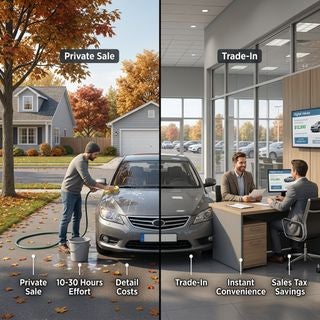
l

What Is the Most Profitable Way to Sell a Used Car?

The most profitable way to sell a used car depends on whether you measure profit strictly by gross sale price or by total net financial return. Selling a vehicle privately yields the highest gross sale price, typically generating 10% to 20% more cash—roughly $1,500 to $3,500 extra on average—than a dealer trade-in offer. However, in states like Ohio, trading in a vehicle toward a new car purchase grants a trade-in sales tax credit that significantly offsets this gap while eliminating reconditioning costs, listing fees, and buyer negotiation risks. Calculating true profitability requires factoring in every expense associated with completing the transaction. When preparing a car for private sale, owners routinely spend several hundred dollars on mechanical inspections, professional detailing, paint touch-ups, and minor maintenance items to justify top market prices. In addition, listing fees on popular automotive marketplaces and the risk of agreeing to a discounted cash price during negotiations can quickly erode the initial private sale margin. Time investment also plays a major role in your final financial return. A typical private sale demands 10 to 30 hours of personal effort spread over 2 to 6 weeks, covering photography, writing advert text, responding to inquiries, scheduling test drives, and handling state title transfers. Conversely, a dealership appraisal turns your used vehicle directly into immediate buying power in under an hour. When you evaluate the total financial picture, trading in your vehicle often yields a net financial return remarkably close to private sale proceeds once you factor in labor hours, detailing costs, and tax savings. To evaluate your current vehicle's baseline market standing or explore quality pre-owned upgrades, you can check our Carfax 1-Owner pre-owned inventory before visiting. Our team is ready to walk you through an appraisal at our showroom location on Pennsylvania Ave, or you can give our team a quick call at (330) 462-7578 to discuss your trade options. Table of Contents How Do Private Sale Returns Compare to Dealer Trade-Ins and Instant Cash Offers? How Does the Ohio State Sales Tax Credit Maximize Your Vehicle Trade-In Value? Can You Sell a Vehicle Privately with an Outstanding Loan and Transfer Title Safely? How Can Sellers Avoid Scams, Safety Risks, and Heavy Time Demands in Private Sales? Why Trading In Your Vehicle at a Local Dealer Delivers Unmatched Speed and Convenience Frequently Asked Questions About Vehicle Trade-Ins and Private Sales Maximize Your Used Vehicle Value at Tri State Ford Today How Do Private Sale Returns Compare to Dealer Trade-Ins and Instant Cash Offers? A direct comparison reveals that private sales yield the highest gross price, dealer trade-ins provide maximum tax advantages and convenience, and instant cash offers deliver a balanced middle ground. While a private buyer pays full retail price, a dealership calculates trade-in offers using wholesale benchmark data, typically setting trade-in values between 80% and 95% of current retail market value. This difference accounts for the professional reconditioning, multi-point safety inspections, marketing expenses, and warranty backing the dealer assumes before placing the vehicle on the lot. Instant cash offers from certified digital buying platforms provide a convenient bridge between private transactions and standard trade-ins. These automated platforms calculate a fixed market offer based on current regional auction data and local supply trends. The price provided by an instant cash offer is usually slightly higher than a basic trade-in baseline, but lower than what a patient private seller might secure through direct advertising. To help buyers see how these options stack up, the primary trade-offs across all three selling methods break down as follows: Private Sale: Highest gross selling price ( 10% to 20% above wholesale), high seller effort, long completion timeline, potential payment risks, and zero sales tax offset on replacement vehicles. Dealer Trade-In: Competitive net value after state tax deductions, zero seller effort, immediate single-visit transaction, total liability relief, and seamless lien payoff integration. Instant Cash Offer: Fixed upfront cash price, low-to-moderate effort, rapid payout, though generally lacking state sales tax benefits unless processed directly through a licensed dealer on a replacement purchase. Choosing the ideal path depends on whether your priority is maximizing every dollar of gross sale price or completing your upgrade quickly without operational hassles. Shoppers looking for direct valuation certainty can claim a KBB Instant Cash Offer online to set a firm starting baseline. If you prefer to apply your current vehicle's value directly toward a high-value upgrade, browse our certified pre-owned Ford inventory to see available replacement models backed by factory coverage. How Does the Ohio State Sales Tax Credit Maximize Your Vehicle Trade-In Value? Trading in a vehicle to a licensed dealership in Ohio unlocks a state sales tax credit that directly reduces the taxable purchase price of your replacement vehicle. Under current Ohio tax regulations, when you turn in a used vehicle to a licensed motor vehicle dealer while buying a new vehicle in the same transaction, state sales tax applies only to the net price difference. If you choose to sell your vehicle privately and use the cash proceeds as a down payment, Ohio tax law offers no trade-in sales tax credit, requiring you to pay sales tax on the full purchase price of the new car. Understanding the direct mathematical impact highlights how this tax policy closes the price gap between private sales and dealer trade-ins: Transaction Variable Private Sale + New Purchase Dealer Trade-In Purchase New Vehicle Purchase Price $45,000 $45,000 Used Vehicle Value / Allowance $20,000 (Gross Cash) $18,000 (Trade Allowance) Taxable Vehicle Amount $45,000 $27,000 Ohio State/Local Sales Tax (7%) $3,150 $1,890 Net Tax Savings Realized $0 $1,260 Effective Net Value of Vehicle $20,000 $19,260 In this realistic scenario, the $2,000 gross price advantage of a private sale shrinks to an effective difference of just $740 once the $1,260 sales tax savings are factored in. When you deduct the private seller's advertising costs, detailing fees, and labor hours, trading in often emerges as the superior financial choice. Note that under Ohio tax code, trade-in sales tax credits apply exclusively to new vehicle purchases and do not apply to used car transactions. Drivers commuting along State Route 170 near Calcutta frequently find that factoring in this tax reduction makes trading in the most financially sensible route. You can explore our selection of new Ford vehicles to calculate your potential savings, use our digital tool to value your trade-in online, or custom order a new Ford configured to your exact family specifications. Can You Sell a Vehicle Privately with an Outstanding Loan and Transfer Title Safely? Selling a car privately when you still have an active lien is possible, but it introduces legal and logistical complications that can make private buyers hesitant. When an auto loan remains active, the financial institution holds the physical vehicle title or maintains an electronic lien record with the state bureau of motor vehicles. To complete a legal title transfer, the outstanding balance must be paid in full so the lender can issue a formal lien release. Private buyers are understandably cautious about handing over thousands of dollars in cash or certified funds without receiving an immediate, unencumbered title in return. To navigate this situation safely during a private transaction, both seller and buyer must coordinate directly with the lienholder: Request an official payoff quote from your lender detailing the exact balance and daily interest accrual. Arrange to meet the buyer in person at a local branch of your financial institution. Have the buyer remit payment directly to the lender to satisfy the remaining loan balance. Have the lender process the lien satisfaction paperwork so the title can be officially reassigned to the buyer. If your lender is an online institution without physical local branches, the process slows down considerably. The buyer must pay the funds, wait 7 to 14 business days for the check to clear and the lender to mail the released title, and then meet you a second time to sign the transfer documents. In contrast, trading in a vehicle with an active loan eliminates these hurdles completely. The dealership contacts your lender directly, verifies the exact payoff amount, remits the required payment, and handles all state title release documentation. If your vehicle's trade-in value exceeds the loan balance, the remaining positive equity applies instantly as a down payment toward your next vehicle. If you are preparing to trade in a vehicle with an active loan, simplify your upgrade path by submitting an online credit application or exploring current Ford offers to maximize your savings. How Can Sellers Avoid Scams, Safety Risks, and Heavy Time Demands in Private Sales? Navigating a private vehicle sale requires vigilant safety protocols and a clear understanding of legal release mechanisms to avoid financial loss. Payment scams remain a constant concern in private transactions. Fraudulent buyers often attempt to use forged cashier's checks, overpayment money order schemes, or reversible peer-to-peer mobile app transfers. To protect your financial security, insist on completing transactions inside the issuing bank branch during regular business hours, verifying the cashier's check directly with a bank teller before signing over the vehicle title. Never accept personal checks, wire promises, or digital payment app transfers for significant amounts. In addition to financial risks, private sellers must protect themselves from future civil and criminal liabilities after the vehicle leaves their driveway. A critical safeguard in this process is filing a Notice of Transfer and Release of Liability with your state department or bureau of motor vehicles. A Notice of Transfer and Release of Liability is an official state filing that formally notifies motor vehicle authorities that you have sold the vehicle and relinquished possession to a new party. Submitting this document records the exact date, time, sale price, odometer reading, and buyer contact details in state records. Filing this notice immediately protects the seller from severe legal and financial vulnerabilities, including: Unpaid parking citations, highway toll violations, or automated traffic camera fines incurred by the new owner. Towing, impoundment, and daily storage fees if the buyer abandons the vehicle before registering it. Civil liability claims and lawsuit risks if the vehicle is involved in a collision or traffic accident before the buyer completes title registration. Filing this document is essential because many private buyers delay visiting the DMV to register the title in order to avoid paying immediate transfer fees and sales tax. If an unregistered buyer gets into an accident or incurs heavy parking fines, state records still point to the former owner unless a Notice of Transfer and Release of Liability is on file. When you trade in your vehicle at a dealership, the business assumes legal responsibility immediately upon execution of the purchase contract, completely insulating you from post-sale complications. Why Trading In Your Vehicle at a Local Dealer Delivers Unmatched Speed and Convenience Trading in your vehicle delivers an efficient, stress-free transaction that eliminates every operational burden associated with private listings. Rather than spending weeks managing online messages, filtering out low-ball offers, and taking safety risks during test drives with strangers, a dealer trade-in resolves your transaction in a single scheduled appointment. You drive in with your current vehicle and drive home in your new model, fully protected by professional legal contracts and institutional backing. When you trade in your vehicle at a local dealership, our team manages every step of the appraisal and administrative process: Conducting an objective, transparent physical appraisal based on real-time regional auction and retail data. Handling all lien payoff communications, title releases, and state registration transfers. Providing immediate sales tax deductions on eligible new vehicle purchases in Ohio. Accepting vehicles in any condition without requiring you to pay for expensive cosmetic detailing or mechanical repairs upfront. For suburban commuters who travel back and forth near Boardman along Market Street, spending weeks managing private buyers is rarely worth the hassle compared to a single afternoon trade-in visit. Our straightforward process ensures you receive fair market value for your current ride while enjoying a seamless transition into your next truck, SUV, or crossover. Stop by our East Liverpool showroom location to start your valuation, or call our team directly at (330) 462-7578 to schedule a fast, professional trade-in appraisal. Frequently Asked Questions About Vehicle Trade-Ins and Private Sales Q: What documents do I need to bring when trading in my vehicle at the dealership? When trading in your vehicle, bring the physical vehicle title if you own the car free and clear, or your current loan account information and payoff details if you have an active lien. You will also need a valid driver's license for all title holders, current state vehicle registration card, all sets of ignition keys or remote key fobs, and the vehicle owner's manual. Bringing complete maintenance records can also help support the highest possible appraisal valuation. Q: Can I trade in a vehicle if I owe more on the loan than the car is worth? Yes, you can trade in a vehicle with negative equity, commonly referred to as being upside down on your loan. In this scenario, the dealership calculates the difference between your trade-in appraisal value and the remaining loan payoff balance. With approved credit, this remaining balance can often be rolled into the financing agreement of your replacement vehicle, allowing you to complete your purchase without paying the full balance out of pocket today. Q: Does a vehicle's cosmetic condition or minor denting drastically lower its trade-in valuation? Minor cosmetic flaws, such as small door dings, light bumper scuffs, or normal interior wear, are expected on pre-owned vehicles and usually result in modest deductions based on standard reconditioning costs. Dealerships have dedicated reconditioning departments that repair cosmetic imperfections far more cost-effectively than an individual retail owner can. Bringing the car in as-is is almost always more financially practical than paying out-of-pocket for retail body shop repairs before trading it in. Q: How long is a dealership trade-in appraisal offer valid once completed? A formal trade-in appraisal offer from our dealership is typically valid for 7 days or a specific limited mileage allowance, such as 250 miles. This timeframe gives you ample room to review your purchase options, verify your finance terms, and make a confident decision without pressure, ensuring the agreed trade-in value remains locked in when you sign your final purchase agreement. Q: Do I need to clean or detail my car before bringing it in for a trade-in estimate? While a full professional detail is not necessary, giving your vehicle a basic wash and clearing out personal belongings helps the appraiser accurately evaluate the body and interior condition. A clean car demonstrates good overall care, making it easier to verify paint quality, upholstery condition, and feature functionality during the inspection, which supports a smooth and accurate trade valuation. Maximize Your Used Vehicle Value at Tri State Ford Today Deciding whether to sell your car privately or trade it in comes down to balancing gross sale price against time, tax advantages, safety, and convenience. While private sales offer slightly higher gross proceeds, trading in your vehicle at Tri State Ford provides immediate tax savings on new car purchases, total relief from payment risks, and a quick transaction completed in under an hour. Our team is committed to making your trade-in experience simple, transparent, and rewarding. Value your current vehicle online or visit our East Liverpool showroom today to explore our full lineup and drive home in your next vehicle with confidence. Keep Your Vehicle Running Strong Keep your vehicle performing at its best with our service team: Order Parts Schedule Service Appt © 2026 Tri State Ford. All rights reserved. Used Car Selling Strategies in East Liverpool OH | Tri State Ford

l

Should You Trade In Your Truck Now? Q&A Guide

Should You Trade In Your Truck Now? Q&A Guide Major truck repairs like complete transmission rebuilds, total engine overhauls, and extensive structural frame or body rust remediation are rarely worth paying for out-of-pocket before trading in a pickup. Dealerships perform reconditioning tasks at wholesale labor and internal parts costs, meaning a truck owner almost never recovers dollar-for-dollar what they spend on heavy mechanical repairs right before an appraisal. Today, we sit down with Nick Pirl, Sales Manager at Tri State Ford, who brings 9 years of automotive experience helping local drivers evaluate trade-in values and navigate smart vehicle upgrades. Q: What major truck repairs are not worth fixing before a trade-in? A: Major mechanical repairs—specifically complete engine replacements, full transmission rebuilds, major head gasket overhauls, and extensive chassis rust remediation—are almost never worth paying for prior to a trade-in. When a truck owner spends thousands of dollars at retail repair rates to fix a blown engine or slipping transmission, the appraisal offer rarely increases by that full outlay. Dealership reconditioning teams address internal mechanical issues and cosmetic work at wholesale shop rates and OEM parts pricing at internal costs, allowing us to absorb necessary repairs much more efficiently than a retail customer can. Minor reconditioning, on the other hand, is usually worth completing if it costs very little. Addressing minor items like replacing a burned-out headlight bulb, fixing a small windshield chip, topping off fluids, or giving the cab a thorough cleaning helps present the vehicle in its best light. If your truck has a lit check engine light caused by an expensive mechanical failure, bringing it to our appraisal bay as is is usually the smartest financial move. Drivers can find our East Liverpool showroom location easily or give our team a quick call to get an honest upfront appraisal on a truck with existing mechanical issues. Q: Is now a good time to trade in a used truck? A: Yes, current market conditions continue to make now a very favorable time to trade in a pre-owned pickup. High ongoing regional demand for full-size pickups and capable work trucks keeps trade-in values elevated, particularly for well-maintained half-ton models and heavy-duty trucks. When high trade equity is combined with available factory incentives on new trucks, trading immediately allows truck owners to lock in strong valuation before seasonal market shifts or mileage accumulation lower the vehicle's worth. Truck values in the Midwest remain resilient because buyers actively seek reliable haulers capable of managing heavy utility tasks, towing boats, or handling winter weather. If you currently hold positive equity—meaning your truck’s market value exceeds your remaining loan balance—that difference acts as a direct cash down payment on your next vehicle. Owners who want to upgrade can explore our Carfax 1-owner used inventory for high-quality replacements or review our certified pre-owned Ford selection to secure factory warranty coverage alongside competitive trade valuations. Q: At what mileage does a pickup lose the most trade-in value? A: A pickup truck experiences its steepest trade-in value drops at three major mileage thresholds: 36,000 miles, 60,000 miles, and 100,000 miles. The first drop occurs when the standard 3-year/36,000-mile bumper-to-bumper warranty expires, transitioning the vehicle out of late-model factory coverage. The second drop at 60,000 miles coincides with the end of the factory 5-year/60,000-mile powertrain warranty, while crossing 100,000 miles represents the psychological hurdle where wholesale buyers and retail shoppers discount values significantly due to anticipated component wear. Staying below these critical milestones when trading in yields higher appraisal numbers. For instance, a 2026 Ford F-150 trim like the STX 4x4 SuperCrew 5-1/2’ Box with a base MSRP of $51,070 plus a $2,795 destination charge, or a Lariat 4x4 SuperCrew 5-1/2’ Box at $63,360 base MSRP, retains significantly stronger resale value when traded prior to hitting six figures on the odometer. Higher trims such as the King Ranch 4x4 SuperCrew 5-1/2’ Box at $69,625 base MSRP or Platinum 4x4 SuperCrew 5-1/2’ Box at $72,600 base MSRP also benefit immensely from being traded while factory coverage remains active. To help truck owners plan their timing, we make it simple to check your current valuation using our online tool to estimate your trade-in value from home. We even offer Ford Pickup & Delivery service for convenient door-to-door appraisal assistance, and buyers can complete a secure online credit application to streamline their trade-and-buy process. "Trading your truck before it crosses major mileage milestones keeps thousands of dollars of equity in your pocket rather than leaving it on the table." Q: What factors determine your truck's actual appraisal value? A: A truck's actual trade-in value is determined by a combination of physical condition, total mileage, cab and bed configuration, drivetrain, regional market demand, and vehicle history. Physical condition accounts for body panels, paint finish, interior wear, frame integrity, and mechanical soundness, while vehicle history reports verify regular maintenance and an accident-free record. Desirable configurations like four-wheel drive, crew cab body styles, and proven powertrains consistently command higher trade offers in the Midwest market. Specific mechanical equipment heavily influences resale value as well. A 2026 Ford F-150 equipped with the 3.5L EcoBoost® V6 engine, SelectShift® 10-speed automatic transmission, and a 10,400-lb towing capacity holds strong demand among buyers who need genuine working capability. Added features like SYNC® 4 infotainment, Pro Power Onboard, or safety suites like Ford Co-Pilot360™ add measurable market value compared to basic work trucks. For business owners and fleet operators looking to upgrade their working vehicles, reviewing our new work truck commercial inventory provides clear insights into how heavy-duty configurations and commercial gear impact resale equity. Q: What are the financial and safety risks of selling privately versus trading in? A: Selling a truck privately carries substantial risks including fraudulent payment attempts, personal safety hazards during test drives with strangers, title transfer mistakes, and unexpected legal liability after the transaction. When an individual lists a truck independently, they assume full responsibility for managing lien payoffs, verifying buyer funds, meeting strangers at unfamiliar locations, and handling complex legal title paperwork without professional assistance. Trading in your truck eliminates these liabilities completely. The dealership manages all lender communications, issues direct payoff funds to clear any active auto loan, transfers official title documentation correctly with the state, and applies all state tax savings directly to your deal. In Ohio, when you trade in a vehicle toward a replacement purchase, you only pay state sales tax on the net price difference between the trade allowance and the new vehicle's price, saving hundreds or thousands of dollars that private sales cannot offer. Q: How should a truck owner in East Liverpool get an accurate read on local trade value? A: The most accurate way to determine your truck's true trade-in value is to combine an instant online market valuation with a brief in-person physical appraisal at a local dealership. While automated online pricing tools deliver an initial baseline range using regional auction data, an in-person evaluation allows a professional appraiser to verify your vehicle’s specific options, trim upgrades, clean maintenance history, and overall condition. Local market demand along the Ohio River corridor heavily favors well-equipped pickups capable of navigating steep riverfront bluffs and handling seasonal weather. Bringing your truck directly to the showroom gives appraisers the opportunity to see premium equipment firsthand, such as heavy-duty towing packages, upgraded wheels, or clean undercarriages free of severe salt corrosion. Truck owners preparing for an appraisal can explore our complete new pickup truck inventory online to see how local demand translates directly into strong trade-in offers. Q: How do you apply your trade-in equity toward a new Ford? A: Applying your trade-in equity toward a new vehicle is a seamless process where positive equity directly reduces the final sale price and the total amount financed on your purchase. Once our appraisal team establishes your truck’s trade value, any remaining balance on an existing auto loan is paid off by the dealer, and the net equity is applied directly as a down payment toward your chosen replacement. Suburban commuters traveling along State Route 170 from nearby Calcutta often find that applying strong trade-in equity helps lower their monthly payments substantially while securing advanced driver-assist features and modern fuel efficiency. To start the trade-in process today, shoppers can visit our dealership showroom on Pennsylvania Avenue, speak with our sales staff by giving us a quick call, or browse our latest new Ford inventory from the comfort of home. Pricing Pricing by trim Feature King Ranch 4x4 SuperCrew 5-1/2’ Box King Ranch 4x4 SuperCrew 6-1/2’ Box King Ranch SuperCrew 5-1/2’ Box Lariat 4x4 SuperCrew 5-1/2’ Box Lariat 4x4 SuperCrew 6-1/2’ Box Lariat SuperCrew 5-1/2’ Box Platinum 4x4 SuperCrew 5-1/2’ Box Platinum 4x4 SuperCrew 6-1/2’ Box Platinum SuperCrew 5-1/2’ Box Police Responder 4x4 SuperCrw 5-1/2’ Box Raptor 4x4 SuperCrew 5-1/2’ Box STX 4x4 SuperCab 6-1/2’ Box STX 4x4 SuperCrew 5-1/2’ Box STX SuperCab 6-1/2’ Box STX SuperCrew 5-1/2’ Box Tremor 4x4 SuperCrew 5-1/2’ Box XL 4x4 Regular Cab 6-1/2’ Box XL 4x4 Regular Cab 8’ Box XL 4x4 SuperCab 6-1/2’ Box XL 4x4 SuperCrew 5-1/2’ Box XL 4x4 SuperCrew 6-1/2’ Box XL Regular Cab 6-1/2’ Box XL Regular Cab 8’ Box XL SuperCab 6-1/2’ Box XL SuperCrew 5-1/2’ Box XLT 4x4 SuperCab 6-1/2’ Box XLT 4x4 SuperCrew 5-1/2’ Box XLT 4x4 SuperCrew 6-1/2’ Box XLT SuperCab 6-1/2’ Box XLT SuperCrew 5-1/2’ Box:--:--:--:--:--:--:--:--:--:--:--:--:--:--:--:--:--:--:--:--:--:--:--:--:--:--:--:--:--:--:-- Base MSRP $69,625 $69,930 $65,825 $63,360 $63,965 $59,560 $72,600 $72,905 $68,800 $52,350 $79,005 $48,655 $51,070 $44,855 $47,190 $64,915 $44,600 $42,305 $45,400 $47,820 $50,475 $39,585 $37,290 $41,600 $43,935 $49,495 $51,915 $54,555 $45,695 $48,055 Destination charge $2,795 $2,795 $2,795 $2,795 $2,795 $2,795 $2,795 $2,795 $2,795 $2,595 $2,795 $2,795 $2,795 $2,795 $2,795 $2,795 $2,795 $2,795 $2,795 $2,795 $2,795 $2,795 $2,795 $2,795 $2,795 $2,795 $2,795 $2,795 $2,795 $2,795 Engine & Performance Powertrain specs by trim Feature King Ranch 4x4 SuperCrew 5-1/2’ Box King Ranch 4x4 SuperCrew 6-1/2’ Box King Ranch SuperCrew 5-1/2’ Box Lariat 4x4 SuperCrew 5-1/2’ Box Lariat 4x4 SuperCrew 6-1/2’ Box Lariat SuperCrew 5-1/2’ Box Platinum 4x4 SuperCrew 5-1/2’ Box Platinum 4x4 SuperCrew 6-1/2’ Box Platinum SuperCrew 5-1/2’ Box Police Responder 4x4 SuperCrw 5-1/2’ Box Raptor 4x4 SuperCrew 5-1/2’ Box STX 4x4 SuperCab 6-1/2’ Box STX 4x4 SuperCrew 5-1/2’ Box STX SuperCab 6-1/2’ Box STX SuperCrew 5-1/2’ Box Tremor 4x4 SuperCrew 5-1/2’ Box XL 4x4 Regular Cab 6-1/2’ Box XL 4x4 Regular Cab 8’ Box XL 4x4 SuperCab 6-1/2’ Box XL 4x4 SuperCrew 5-1/2’ Box XL 4x4 SuperCrew 6-1/2’ Box XL Regular Cab 6-1/2’ Box XL Regular Cab 8’ Box XL SuperCab 6-1/2’ Box XL SuperCrew 5-1/2’ Box XLT 4x4 SuperCab 6-1/2’ Box XLT 4x4 SuperCrew 5-1/2’ Box XLT 4x4 SuperCrew 6-1/2’ Box XLT SuperCab 6-1/2’ Box XLT SuperCrew 5-1/2’ Box:--:--:--:--:--:--:--:--:--:--:--:--:--:--:--:--:--:--:--:--:--:--:--:--:--:--:--:--:--:--:-- Engine 3.5L 3.5L 3.5L 3.5L 3.5L 3.5L 3.5L 3.5L 3.5L 3.5L 3.5L 2.7L 2.7L 2.7L 2.7L 3.5L 5L 2.7L 2.7L 2.7L 3.5L 5L 2.7L 2.7L 2.7L 2.7L 2.7L 3.5L 2.7L 2.7L Horsepower 400 hp 400 hp 400 hp 400 hp 400 hp 400 hp 400 hp 400 hp 400 hp 400 hp 450 hp 325 hp 325 hp 325 hp 325 hp 400 hp 400 hp 325 hp 325 hp 325 hp 400 hp 400 hp 325 hp 325 hp 325 hp 325 hp 325 hp 400 hp 325 hp 325 hp Torque 500 lb-ft 500 lb-ft 500 lb-ft 500 lb-ft 500 lb-ft 500 lb-ft 500 lb-ft 500 lb-ft 500 lb-ft 500 lb-ft 510 lb-ft 400 lb-ft 400 lb-ft 400 lb-ft 400 lb-ft 500 lb-ft 410 lb-ft 400 lb-ft 400 lb-ft 400 lb-ft 500 lb-ft 410 lb-ft 400 lb-ft 400 lb-ft 400 lb-ft 400 lb-ft 400 lb-ft 500 lb-ft 400 lb-ft 400 lb-ft Transmission SelectShift® SelectShift® SelectShift® SelectShift® SelectShift® SelectShift® SelectShift® SelectShift® SelectShift® SelectShift® SelectShift® SelectShift® SelectShift® SelectShift® SelectShift® SelectShift® SelectShift® SelectShift® SelectShift® SelectShift® SelectShift® SelectShift® SelectShift® SelectShift® SelectShift® SelectShift® SelectShift® SelectShift® SelectShift® SelectShift® Drivetrain All-wheel drive All-wheel drive Rear-wheel drive All-wheel drive All-wheel drive Rear-wheel drive All-wheel drive All-wheel drive Rear-wheel drive All-wheel drive All-wheel drive All-wheel drive All-wheel drive Rear-wheel drive Rear-wheel drive All-wheel drive All-wheel drive All-wheel drive All-wheel drive All-wheel drive All-wheel drive Rear-wheel drive Rear-wheel drive Rear-wheel drive Rear-wheel drive All-wheel drive All-wheel drive All-wheel drive Rear-wheel drive Rear-wheel drive Keep Your Vehicle Running Strong Keep your vehicle performing at its best with our service team: Order Parts Schedule Service Appt © 2026 Tri State Ford. All rights reserved. Vehicle specification data © JATO Dynamics Limited. Trade In Your Truck in East Liverpool OH | Tri State Ford

d

How Do You Handle a Car Trade-In With an Active Loan?

You do not need to pay off an active auto loan before trading in your vehicle at a dealership. The dealer contacts your financial institution directly to request a 10-day payoff quote, settles the remaining lien balance, and manages the title transfer paperwork. If your vehicle’s current market value exceeds the loan balance, the resulting positive equity serves as a cash down payment toward your next vehicle purchase. Managing a trade-in with an existing loan balance is a routine daily transaction for finance departments. When you bring a financed vehicle to our showroom on Pennsylvania Avenue, our team initiates a direct verification with your lender. This step determines the precise payoff figure, including accrued daily interest. Once the trade value is locked in, the purchase agreement clearly outlines how the remaining debt is processed. If you owe less than the total trade appraisal, the positive equity is deducted from the purchase price of your new truck or SUV. For example, if a vehicle appraises for $18,000 and your loan payoff is $14,000, you have $4,000 in positive equity to lower the total amount financed on your replacement vehicle. The dealership issues payment directly to your lender to release the title, completing the transaction without requiring you to clear the balance out of pocket beforehand. Drivers preparing to trade in a financed vehicle should gather their current lender account number, the loan customer service phone number, and current registration. If you want to verify your payoff details before visiting or need guidance on what documentation to bring along, you can give our team a quick call to walk through the process. Table of Contents Should You Pay Off Your Car Loan Before Trading It In? How Negative Equity and Loan Rollovers Work During a Trade-In Does Ohio Offer Sales Tax Savings on Vehicle Trade-Ins? Managing Pending Payments, Vehicle Reconditioning, and Lien Title Transfers Common Questions About Trading In a Financed Vehicle Maximize Your Trade-In Value and Finance Your Next Ford Should You Pay Off Your Car Loan Before Trading It In? Paying off your auto loan prior to trading in your vehicle is entirely optional and often financially unnecessary. Clearing the loan beforehand simplifies title handling by placing a clean title in your hands, but using substantial liquid savings to pay off a low-interest auto loan can unnecessarily deplete cash reserves needed for a down payment or emergency funds. Evaluating whether to clear the balance comes down to your available cash, current interest rates, and equity position. Paying down a loan balance until the payoff falls below the vehicle's market value prevents carrying debt into your next vehicle contract. However, if your funds are better utilized as a cash down payment to secure a better interest rate on a new Ford Expedition equipped with Ford Co-Pilot360 or a Ford F-150 with a 3.5L EcoBoost V6, letting the dealership process the payoff during the sale preserves your cash flexibility. Suburban commuters traveling State Route 170 from nearby Calcutta often evaluate whether to trade in an active loan or clear the title early when shopping for a vehicle with enhanced cargo space and towing capacity for family trips. The key benefit of trading in with an active loan is convenience. The dealership takes over the administrative burden of transferring funds to the lienholder, verifying title releases, and ensuring state titling compliance. Before deciding to pay off your balance early, compare your loan interest rate against current financing incentives. You can complete our online credit application to see how your current equity position aligns with available loan terms, or explore our pre-owned Carfax 1-owner inventory if you want to apply existing equity toward a reliable late-model vehicle. How Negative Equity and Loan Rollovers Work During a Trade-In Negative equity occurs when your current loan payoff balance is higher than the actual market trade-in value of your vehicle. When you trade in an upside-down vehicle, the unpaid balance does not disappear; it must either be paid out of pocket at signing or rolled into the financing contract of your replacement vehicle, subject to lender approval limits. Rolling negative equity into a new vehicle loan increases the overall principal balance beyond the vehicle's selling price. Lenders evaluate these transactions using loan-to-value limits, which typically cap total borrowing between 110% and 125% of the new vehicle's book or invoice value. If a vehicle appraises for $12,000 but the loan payoff is $16,000, the $4,000 shortfall is added to the new loan. On a new vehicle purchase, adding several thousand dollars of rolled-over debt can result in higher monthly payments and increased interest costs over time. To mitigate the impact of negative equity during a trade-in, consider selecting a replacement vehicle that offers strong value retention or manufacturer rebates that help offset the balance shortfall. Commercial buyers looking at our Ford F-Series work truck inventory or retail shoppers browsing our certified pre-owned Ford lineup often utilize down payments or factory incentives to absorb remaining balance shortfalls, keeping the new loan within standard financing guidelines. Key strategies for managing negative equity include: Providing a cash down payment to cover part or all of the negative equity gap. Selecting a model with substantial factory rebates to absorb the equity shortfall. Choosing a shorter loan term to pay down principal faster and avoid remaining underwater long-term. Delaying the trade-in for several months while making extra principal-only payments on your current loan. Does Ohio Offer Sales Tax Savings on Vehicle Trade-Ins? Ohio tax law allows a sales tax credit equal to the full agreed trade-in allowance of your vehicle when purchased through a licensed dealership. This tax credit applies directly to the agreed price of the replacement vehicle, reducing the total amount subject to state and local sales tax regardless of whether your existing loan has positive or negative equity. The sales tax credit is calculated strictly on the trade-in allowance value negotiated for your vehicle, independent of the outstanding loan payoff balance. For instance, if you agree on a $20,000 trade-in value for your current vehicle when purchasing a $45,000 Ford Explorer, Ohio sales tax is calculated only on the remaining $25,000 difference. If your local sales tax rate is 6.75%, this trade-in allowance saves you $1,350 in state sales tax compared to buying the new vehicle without a trade-in. Even if you carry negative equity on your trade-in vehicle, you still receive the full sales tax reduction on the trade allowance. The remaining loan debt is handled as a separate financial obligation in the transaction statement. This tax structure provides a distinct financial advantage over private-party sales, where buyers cannot offer state sales tax credit offsets on your purchase. Shoppers commuting along Market Street from Boardman frequently take advantage of trade-in tax offsets when upgrading to a multi-row SUV designed for family safety and suburban driving. To check how your trade value translates into direct savings, look through our selection of new Ford models and submit your details through our Instant Cash Offer valuation tool for an estimated trade allowance. Managing Pending Payments, Vehicle Reconditioning, and Lien Title Transfers Continuing your regularly scheduled auto loan payment is essential if your trade-in transaction takes place near your payment due date. Because lien payoffs take approximately 3 to 5 business days for financial institutions to process and record, missing a payment while a trade is pending can trigger late fees or a negative mark on your credit report. If your scheduled payment processes right before or during the dealership's payoff distribution, an overpayment will occur. Lenders automatically audit account balances once the payoff check clears. Any excess funds resulting from your recent payment are refunded directly to you by the lender, typically via check or direct deposit within 10 to 15 business days. Addressing minor cosmetic details prior to your trade appraisal can help maximize your vehicle's appraisal value without wasting money on unneeded repairs. Professional detailing, clearing personal belongings, fixing small windshield chips, and ensuring all owner's manuals and keys are present provide a solid return on effort. Expensive mechanical overhauls rarely yield a dollar-for-dollar increase in trade value, as dealership reconditioning facilities handle major repairs more cost-effectively. Transferring a title with a lien is handled entirely by the dealership team during a trade-in. When selling to a private party, you must manually request a 10-day payoff quote, pay the bank in full, wait up to several weeks for the lienholder to release the paper title, and then arrange a title transfer with the buyer at a local registrar office. Trading in at a dealership eliminates these delays, as the dealer settles the lien directly with the lender and processes electronic title releases through state agency portals. Common Questions About Trading In a Financed Vehicle Q: Does paying off a car loan lower your credit score temporarily? Paying off an auto loan can cause a minor, temporary dip in your credit score because closing an active installment account reduces your overall credit mix and lowers the average age of your active accounts. This score adjustment is normal and typically stabilizes within a few months as your updated credit profile records ongoing, on-time payments on your replacement auto loan or remaining accounts. Q: What is the maximum negative equity a lender will allow you to roll over? Most automotive lenders cap maximum loan-to-value ratios between 110% and 125% of the replacement vehicle's total invoice or retail value. This percentage sets the ceiling for how much negative equity, warranty products, and registration fees can be added to the new loan balance based on borrower creditworthiness and vehicle value. Q: How does positive equity lower your monthly payment on a new vehicle? Positive equity acts as an immediate down payment that reduces the net purchase price of your replacement vehicle. By lowering the total principal balance you need to borrow, positive equity directly reduces your monthly interest charges and lowers your required monthly installment payment over the term of the loan. Q: Can you trade in a vehicle if you currently have a high interest rate on your loan? You can trade in a vehicle regardless of the interest rate on your existing loan contract. When the dealership appraises the vehicle and processes the transaction, the full outstanding payoff balance is remitted to your current lender, completely closing that account and ending its associated interest rate. Q: How do you transfer a car title to a private buyer when a lien exists? Transferring a titled vehicle with a lien to a private buyer requires obtaining a formal 10-day payoff quote, receiving full funds from the buyer, remitting payment to your lender, and waiting several weeks for the bank to send the paper title release. Once received, both parties must sign the released title at a title office or notary. Trading in at a dealership avoids this waiting period because the dealer handles lien clearance directly with the bank. If you have specific questions about structuring your current vehicle loan into a new purchase, our finance center services team can walk you through exact payoff numbers and credit options. Maximize Your Trade-In Value and Finance Your Next Ford Navigating a trade-in with an active auto loan is simple when you have clear payoff numbers, an accurate trade appraisal, and an experienced finance team managing the paperwork. Whether you have positive equity to apply as a down payment or need options for managing a remaining loan balance, taking the right steps ensures a smooth transition into your next vehicle. At Tri State Ford, we handle all communication with your current lender, process state trade-in tax savings, and help you find a durable, family-friendly vehicle durable and dependable for daily driving and weekend adventures. Bringing your account details, registration, and both sets of keys to your visit ensures your trade evaluation is completed promptly. To take the next step toward your replacement vehicle, you can start by using our online trade evaluation tool to estimate your current vehicle value. When you are ready for a test drive or a complete line-by-line trade quote, visit our dealership in East Liverpool or speak directly with our sales team by calling (330) 462-7578 today. Keep Your Vehicle Running Strong Keep your vehicle performing at its best with our service team: Order Parts Schedule Service © 2026 Tri State Ford. All rights reserved. Car Trade-In with Loan in East Liverpool OH | Tri State Ford
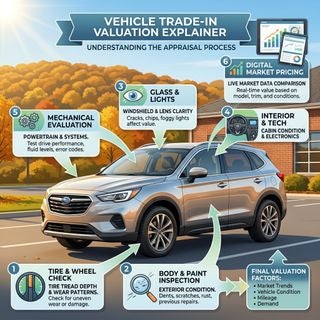
d

Valuing Your Trade-In: Expert Advice with Tri State Ford

Valuing Your Trade-In: Expert Advice with Tri State Ford Finding the true value of your trade-in involves pairing estimates from online valuation tools with an in-person appraisal at a dealership to account for mechanical condition, wear and tear, and regional market demand. Today, we are speaking with Nick Pirl, Sales Manager at Tri State Ford with 9 years of automotive experience, who shares expert advice on how to evaluate your vehicle, navigate trade-in estimates, and maximize your vehicle's overall trade-in credit. Q: How do I find the value of my trade-in? A: You can find the value of your trade-in by gathering preliminary market ranges from online valuation tools and pairing them with a professional physical appraisal at a local dealership. Online estimators establish a helpful baseline, but an on-site inspection evaluates your vehicle's specific mechanical condition, overall cosmetic appearance, local buyer demand, and current wholesale market trends. Combining digital research with an expert physical evaluation ensures you receive an accurate and competitive offer for your vehicle. When local drivers visit our showroom at 1503 Pennsylvania Ave, Nick Pirl walks them through the appraisal process step by step. Dealerships calculate trade-in allowances by reviewing recent transaction data from wholesale auctions and regional market sales, then subtracting estimated reconditioning expenses such as tire replacements, detailing, or mechanical touch-ups. If you want to discuss your vehicle before traveling to the lot, giving our sales specialists a quick call helps you gather initial insights into your car's market standing. Commuters traveling daily along the Ohio River around East Liverpool frequently ask whether an online valuation guarantees a final offer price. Digital software provides a solid starting point, but it cannot assess transmission smoothness, brake condition, or paint finish. A brief hands-on examination by an experienced appraiser is required to confirm a final offer or trade-in credit toward a new Ford model. Q: How do I calculate the trade-in value of my car using online tools? A: Calculating your car's trade-in value online requires entering your exact vehicle identification number or license plate, precise mileage, trim details, and an honest assessment of its current condition into a market valuation tool. Online calculators reference extensive databases of recent sales, auction results, and regional supply figures to generate an estimated price range. Providing complete details regarding minor scratches, interior wear, or accident history delivers the most accurate baseline estimate. Nick notes that accuracy depends heavily on selecting the correct condition category when inputting your vehicle's information. Most vehicle owners naturally tend to rate their vehicle in excellent condition, but only a small fraction of pre-owned vehicles truly meet that strict standard without needing reconditioning. When you utilize our online tool to value your trade-in, selecting the good or fair tier if your car shows standard daily wear keeps your expectations closely aligned with the final written offer. Drivers residing in suburban neighborhoods throughout Calcutta who travel along State Route 170 know that maintaining consistent service records and keeping interior surfaces clean supports vehicle value over time. If you want to see how clean, well-maintained vehicles are priced on the market, you can explore our pre-owned single-owner vehicle inventory to see how single-owner history and documented maintenance protect overall vehicle equity. Q: What factors affect my vehicle's trade-in value the most? A: Total mileage, mechanical health, body condition, vehicle history reports, and current regional demand affect your trade-in value more than any other factors. Crossing notable mileage thresholds, such as every 10,000 miles or major markers like 60,000 and 100,000 miles, creates noticeable adjustments in wholesale valuation due to upcoming maintenance schedules. Furthermore, documented damage on a vehicle history report or unaddressed mechanical issues directly lowers what an appraiser can offer. "An appraiser looks past a morning car wash to evaluate structural integrity, tire tread, service records, and true market demand." According to Nick, popular factory options like four-wheel drive systems, advanced driver-assist features, and spacious seating configurations consistently boost trade-in values for trucks and family SUVs. Presenting complete service documentation reassures appraisers that key mechanical systems, brakes, and engine components have been maintained according to manufacturer specifications. Conversely, non-factory modifications like aftermarket exhaust systems or custom suspension lifts tend to reduce trade-in value because they restrict resale appeal. If you are planning to trade in your current vehicle to lower your payments on a new Ford, reviewing current factory incentive offers can increase your overall savings. Shoppers looking for a specific trim level, paint color, or equipment group can also use our custom factory order portal to configure their ideal vehicle while applying trade-in credit directly to the build. Additionally, those seeking certified quality with warranty protection can browse our certified pre-owned Ford lineup to evaluate how certified models preserve long-term value. Q: How does the trade-in sales tax credit work on a new purchase? A: A trade-in sales tax credit reduces your state sales tax obligation by subtracting your trade-in vehicle's agreed value from the purchase price of the new vehicle before sales tax is calculated. In states where this tax benefit applies, you only pay sales tax on the net price difference rather than the full purchase price of the new automobile. This financial mechanism creates significant savings that help close the gap between trade-in offers and private sale prices. Nick explains that this tax structure offers immediate financial relief that many buyers forget to include in their budget comparisons. For instance, if you receive a trade-in allowance toward a new vehicle, that amount is deducted from the taxable total, saving you money on state sales tax out of pocket. As you view our current new Ford inventory, factoring in this tax reduction helps lower your total financed amount and overall interest charges. To see how your trade-in credit and tax savings shape your overall monthly financing structure, you can submit a secure online credit application prior to visiting the dealership. Business owners and commercial drivers seeking to upgrade their work fleet can also leverage these tax benefits by reviewing our F-Series commercial work truck selection to optimize business expenses and vehicle performance. Q: What is the difference between Kelley Blue Book and Edmunds trade-in values? A: The primary difference between Kelley Blue Book and Edmunds comes down to their data inputs and proprietary pricing models. Kelley Blue Book places heavy emphasis on wholesale dealer auction results, regional dealer transaction data, and consumer sales trends across localized geographic markets. Edmunds uses a distinct algorithm that factors in active retail dealer inventory, regional supply and demand ratios, and historic consumer buying patterns to establish estimated values. Nick points out that because these two platforms weight market variables differently, their trade-in estimates for the exact same vehicle can vary by several hundred dollars. KBB values tend to shift quickly based on auction trends, whereas Edmunds values often reflect broader retail market availability and dealer supply. Understanding these operational differences allows consumers to view online pricing guides as helpful references rather than non-negotiable prices. When buyers bring in figures from multiple valuation websites, Nick recommends using the overlapping price range as a realistic target. An appraiser will ultimately evaluate your car against live market condition reports and current local inventory demand. Utilizing both online resources provides realistic expectations, but the finalized offer rests on a physical walk-around and real-time wholesale demand. Q: How do negative equity and existing car loans affect a trade-in? A: Trading in a car with an existing balance requires paying off the loan, and if the vehicle's trade-in value is less than the loan payoff, the remaining balance is called negative equity. Dealerships assist buyers by paying off the original lender directly and rolling the negative equity balance into the new vehicle loan, subject to lender approval. While this allows you to complete your trade-in without paying cash upfront, it increases the total principal and monthly payment on your new loan. Nick advises drivers with negative equity to review their financing options carefully before finalizing a transaction. If you owe more than your vehicle's current market worth, applying a cash down payment or selecting a new model with substantial factory rebates can help absorb the balance and keep your loan-to-value ratio healthy. Paying down your current loan balance prior to trading in is often a smart financial step if you are not facing an immediate need to swap vehicles. When you are ready to review your vehicle's trade-in potential and discuss your financing options in person, you can access interactive directions to our dealership location. Our sales and finance specialists are here to provide clear, transparent advice on trade-in appraisals, payoff balances, and payment terms. If you want to review your trade-in scenarios before visiting, feel free to give our team a direct phone call today. Keep Your Vehicle Running Strong Keep your vehicle performing at its best with our service team: Order Parts Schedule Service Appt © 2026 Tri State Ford. All rights reserved. Trade-In Vehicle Valuation in East Liverpool OH | Tri State Ford
A man holding a leather portfolio stands beside a black Ford Bronco Sport parked on a driveway in front of a house. (Representative image for illustration purposes only. Actual vehicle may vary based on trim and configuration.)

Trading with Confidence: Expert Trade-In Advice from Tri State Ford

Trading with Confidence: Expert Trade-In Advice from Tri State Ford Trading in your current vehicle can feel like a complex process, but arriving at the dealership with the right knowledge changes the entire experience. We sat down with Nick Pirl, Sales Manager at Tri State Ford, who brings 9 years of automotive expertise to help clarify how vehicle appraisals work. In this interview, he shares practical strategies to maximize your vehicle's value, organize your paperwork, and transition smoothly into your next purchase. Q: How can I build confidence when trading in my vehicle? A: Here at Tri State Ford, we focus on making the trade-in process as transparent and straightforward as possible for every customer who walks through our doors. Building confidence starts with understanding that your current vehicle is a liquid asset with real market value, not just a negotiation afterthought. When you treat the trade-in as an independent business transaction, you reclaim your negotiating power and feel much more in control of the entire process. Preparing your vehicle both cosmetically and mechanically before you visit us is one of the easiest ways to ensure you get a fair and honest assessment. We always recommend that drivers take a few simple steps to get their vehicles ready, such as having the car detailed and addressing minor cosmetic issues like burnt-out bulbs or small paint chips. If you want to explore what your trade-in could help you purchase, you can browse our new Ford inventory or look through our commercial vehicle selection to see what we have available. We also offer options for customizing your next vehicle online if you prefer to build a vehicle to your exact specifications. To find the best value, you can check out our current national Ford incentives, explore our new vehicle specials, or browse our pre-owned specials. If you have any questions or want to stop by, you can find our showroom on Pennsylvania Avenue or give our team (330) 462-7578 to speak with us directly. Q: Why is a dealer's trade-in offer different from Kelley Blue Book private party value? A: One of the first things we look at during an appraisal is the difference between wholesale and retail market dynamics. A private party value represents what one individual might pay another in a direct sale, whereas a dealership's trade-in offer is based on wholesale pricing. When we acquire a trade-in, we assume all the financial risks, immediate reconditioning costs, marketing expenses, and administrative overhead required to prepare that vehicle for its next owner. For families navigating the rolling hills near Calcutta, an older SUV might have accumulated some typical wear and tear that we have to recondition before resale. These reconditioning costs, along with the risk of the vehicle sitting on our lot, are factored directly into our initial appraisal. According to Kelley Blue Book, the single biggest factor in a trade-in offer is a vehicle’s mileage, because higher odometer readings directly reduce resale value by accelerating depreciation. We also look closely at trim levels and factory options, which can significantly boost your vehicle's value. For example, if you are trading up to a new F-150 Lariat which starts at $59,560, or a Platinum starting at $68,800, knowing how your current vehicle's options affect its value is key. To get a realistic baseline before you visit us, you can use our online trade appraisal tool or get a certified offer through our Instant Cash Offer page. This helps you understand the market variables before you even set foot on our lot, and you can also browse our one-owner used inventory to see how we price and present similar high-quality vehicles. Q: How much more money can you actually make selling a car privately versus trading it in? A: It is a very common scenario when a driver compares the potential return of a private sale against the convenience of a dealership trade-in. While a private sale can sometimes yield ten to twenty percent more money on paper, it requires you to manage advertising, answer inquiries, schedule test drives with strangers, and handle all the complex transaction paperwork. Many sellers find that the time, effort, and safety concerns associated with a private sale quickly erode that paper premium. Additionally, trading your vehicle to a licensed dealership in Ohio offers a significant financial benefit that you cannot get in a private transaction. Under Ohio law, when you trade in a vehicle at a dealership, the value of your trade-in is deducted from the purchase price of your replacement vehicle before sales tax is calculated. This tax break directly offsets a large portion of the difference between a private sale price and a dealer's trade-in offer. If you are preparing your vehicle to maximize its trade-in value, making sure the vehicle is mechanically sound by using our tire finder page or checking our battery replacement advice can prevent easy deductions during the appraisal. Once you have a clear idea of your vehicle's value, you can submit an online credit application to streamline the purchasing process and secure your financing ahead of time. Q: What does it mean to have negative equity, and how does it affect a trade-in? A: Many of our customers feel a bit of tension when they realize they owe more on their current auto loan than the vehicle is actually worth. This situation, commonly known as having negative equity or being underwater, is a very frequent occurrence in the automotive industry. When you trade in a vehicle with negative equity, that outstanding balance does not simply disappear; it must be resolved as part of the new transaction. You can choose to pay the difference out of pocket to clear the balance, or you can roll that negative equity into your new auto loan. Rolling negative equity into a new loan is a common option, but it will increase your new monthly payments and your overall loan balance. If you find yourself in this situation, we can help you evaluate your options carefully to find a solution that protects your long-term financial health. While you are waiting to build equity, keeping your current car running smoothly with our service offers is a smart financial move. If you are ready to explore a replacement, we offer convenient pickup and delivery options for sales and service, and we make scheduling a test drive simple and hassle-free. "Negative equity is not a roadblock to getting a safer vehicle; it just requires a transparent, step-by-step plan to manage the numbers." Q: How can I prepare my paperwork to make the trade-in process straightforward and stress-free? A: Gathering the correct documentation is actually one of the most effective ways to reduce anxiety and speed up the appraisal process. When you arrive at the dealership with organized records, you eliminate ambiguity and prevent unexpected delays during the transaction. You should bring your vehicle's title, the current registration, all sets of keys, and a ten-day payoff quote from your current lender if you still have an active loan. Presenting a complete folder of service records is also incredibly powerful, as it proves to our appraisers that the vehicle has been responsibly maintained. A documented maintenance history reduces the estimated reconditioning costs we must factor into our offer, which directly translates to a stronger bid for your vehicle. This level of preparation is especially important for business owners trading in commercial vehicles, where maintenance history directly impacts utility and value. If you are looking to upgrade your business fleet, you can explore our commercial truck inventory to see what options are available. We maintain a robust F-Series work truck selection for heavy-duty needs, as well as versatile Transit commercial vans designed to keep your business moving efficiently. Q: What questions should I ask a dealer to ensure I am getting a fair trade-in offer? A: When I'm helping someone navigate the appraisal process, I always encourage them to ask direct, specific questions about how we arrived at our valuation. A reputable dealership should be completely transparent about their math and willing to explain every detail of the offer. You should ask the appraiser to break down any deductions they made for reconditioning, such as tire wear, cosmetic blemishes, or mechanical issues. You should also ask how local market demand and current wholesale auction data are influencing the offer for your specific make and model. Asking these questions shifts the conversation from a subjective negotiation to an objective, data-driven discussion. It also gives you the confidence to verify that the dealer is treating your vehicle as a valuable asset. If you are trading in an older vehicle to get into a capable pickup, you can browse our new Ford truck inventory to find a model that matches your needs. We also offer convenient mobile service options to make maintaining your next vehicle easier than ever, ensuring you can keep its future trade-in value high without disrupting your busy schedule. Q: How can I feel confident evaluating my next vehicle and reducing decision anxiety? A: How do you know you are making the right choice for your family when selecting your next vehicle? Reducing decision anxiety comes down to matching the vehicle's concrete capabilities and specifications directly to your daily lifestyle and driving habits. Whether you are commuting along Market Street in Boardman or planning a weekend trip, matching the powertrain to your daily drive is essential. For example, if you need a high-demand pickup, the F-150 offers a robust 3.5L engine paired with a 10-speed automatic transmission, delivering 382 hp and 500 lb-ft of torque with a towing capacity of up to 12,800 lbs. If a mainstream crossover fits your lifestyle better, the Escape features a 1.5L engine and an 8-speed automatic transmission, producing 180 hp and 199 lb-ft of torque while achieving an efficient 27 city / 34 hwy rating. For larger families, the Explorer provides spacious seating for seven, a 2.3L engine, and a 10-speed automatic transmission that delivers 300 hp and 310 lb-ft of torque. Taking the time to test drive these models and review their specifications ensures you make an informed, stress-free decision. When you are ready to take the next step, you can visit our physical showroom, contact our finance center to discuss your options, or call our team at (330) 462-7578 to schedule a personalized consultation. ​ Pricing Pricing by trim Feature King Ranch Lariat Platinum Police Responder Raptor STX Tremor XL XLT Base MSRP $65,825 $59,560 $68,800 $52,350 $79,005 $41,855 $64,915 $37,290 $44,695 Destination charge $2,795 $2,795 $2,795 $2,795 $2,795 $2,795 $2,795 $2,795 $2,795 ​ Engine & Performance Powertrain specs by trim Feature King Ranch Lariat Platinum Police Responder Raptor STX Tremor XL XLT Engine 3.5L 5.0L 3.5L 3.5L 3.5L 2.7L 3.5L 2.7L 2.7L Horsepower 382 hp 400 hp 382 hp 400 hp 450 hp 325 hp 382 hp 325 hp 325 hp Torque 500 lb-ft 410 lb-ft 500 lb-ft 500 lb-ft 510 lb-ft 400 lb-ft 500 lb-ft 400 lb-ft 400 lb-ft Transmission 10-speed automatic 10-speed automatic 10-speed automatic 10-speed automatic 10-speed automatic 10-speed automatic 10-speed automatic 10-speed automatic 10-speed automatic Drivetrain Rear-wheel drive Rear-wheel drive Rear-wheel drive Four-wheel Drive Four-wheel Drive Rear-wheel drive Four-wheel Drive Rear-wheel drive Rear-wheel drive Keep Your Vehicle Running Strong Keep your vehicle performing at its best with our service team: Order Parts Schedule Service Appt © 2026 Tri State Ford. All rights reserved.

Contact Us

Fill out this form below and we'll contact you shortly
*Required Fields