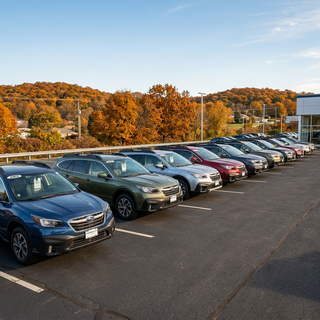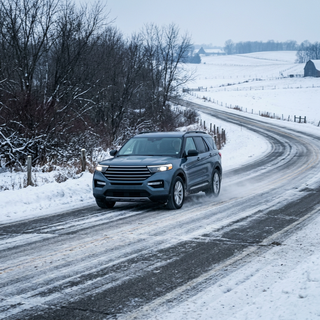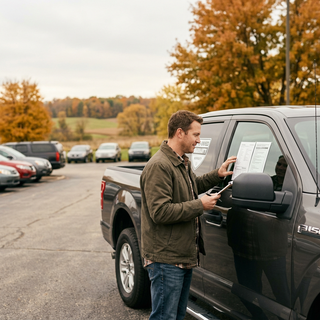


Dealerships calculate your car's trade-in value by analyzing recent live wholesale market auction prices, current local buyer demand, the exact year, trim, and mileage, and a detailed physical appraisal that inspects mechanical performance, tire wear, and body condition. The resulting valuation reflects the vehicle's wholesale worth minus expected reconditioning costs needed before resale.
Understanding how auto retailers establish trade-in values helps you maximize your vehicle's equity when upgrading to a new crossover or full-size utility vehicle. Valuation begins with real-time market data sourced from wholesale auto auctions and national appraisal databases. Estimators check what similar vehicles with matching equipment packages earn at dealer transactions across the region. This wholesale baseline establishes the true current market value of your vehicle before accounting for its specific physical state.
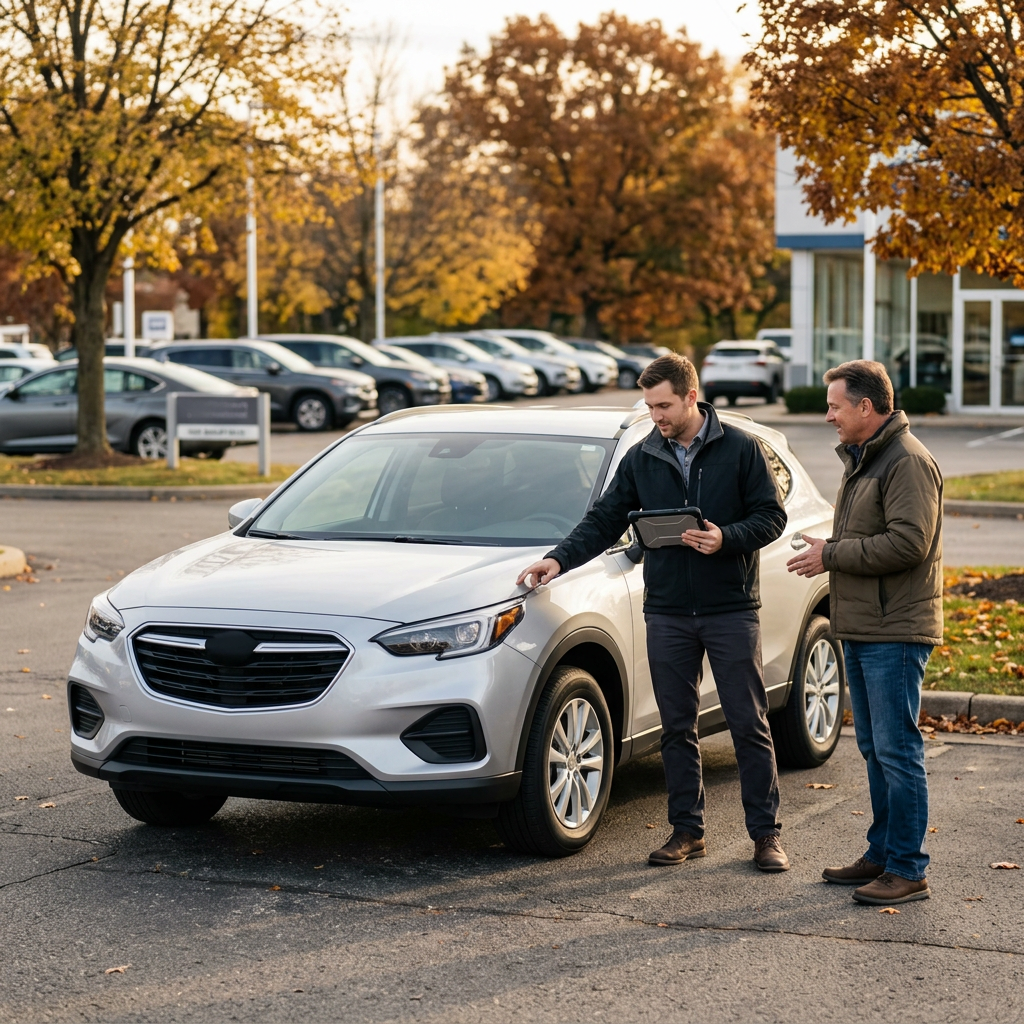
Once the initial market baseline is established, an appraiser conducts a physical walk-around and test drive. This inspection checks essential mechanical components, including the engine, transmission, brake wear, and suspension integrity. Physical body condition, glass clarity, interior seat wear, tire tread depth, and vehicle history reports like accident records or recorded service visits directly impact the appraisal offer. Expenses required to recondition the vehicle for sale—such as installing new tires, fixing body dents, or completing deferred maintenance—are subtracted from the wholesale market figure.
Vehicle configuration also plays a major role in final offers. Models equipped with popular options like all-wheel drive, premium audio, or advanced driver-assist features command higher appraisal values because regional buyers seek those specific capabilities. To discuss your current vehicle equity in person, visit our East Liverpool showroom location or give our team a quick call at (330) 462-7578.
Table of Contents
- At What Mileage Thresholds and Condition Tiers Does Trade-In Value Drop?
- Are Truck and SUV Trade-In Values Higher Than Sedan Trade-Ins?
- How Do Instant Cash Offers Compare to In-Person Dealership Appraisals?
- Can You Trade In a Car If You Owe More Than It Is Worth?
- Common Questions About SUV Trade-Ins and Appraisals
- Steps to Maximize Your Trade Value Toward a New SUV
At What Mileage Thresholds and Condition Tiers Does Trade-In Value Drop?
Trade-in value drops most significantly when a vehicle crosses major mileage thresholds at 50,000 miles, 75,000 miles, and 100,000 miles, alongside shifts between condition tiers from Excellent down to Fair. These milestones represent points where major component wear increases and factory warranty coverages expire, raising expected reconditioning costs.
Mileage is one of the single largest variables affecting vehicle depreciation. Passing specific mileage limits changes how a retail dealership or secondary buyer views a vehicle's longevity:
- 50,000 Miles: Factory bumper-to-bumper warranties usually expire around 36,000 miles, and standard powertrain coverage ends near 60,000 miles. Crossing 50,000 miles places a vehicle near the edge of its original warranty protection, which slightly reduces wholesale demand.
- 75,000 Miles: At this stage, vehicles enter a maintenance window where wear-and-tear items like brake rotors, struts, spark plugs, and tires require replacement. Appraisers deduct anticipated service costs from the trade allowance.
- 100,000 Miles: Crossing six figures represents a significant psychological and financial threshold. Many lending institutions adjust financing terms for vehicles over 100,000 miles, reducing retail buyer demand and causing a noticeable drop in wholesale valuation.
Vehicle condition tiers further adjust the trade allowance. Appraisers classify vehicles into four distinct categories:
- Excellent: Flawless mechanical performance, zero body or paint damage, matching clean tires, and a complete documented service record. Very few trade-in vehicles meet this standard.
- Very Good: Minor cosmetic imperfections like tiny stone chips, minimal seat wear, strong mechanical condition, and no required immediate service.
- Good: Normal wear for its age and mileage, minor scratches, light interior staining, or tires with moderate tread remaining.
- Fair: Visible body damage, worn tires, or mechanical issues requiring immediate service before the vehicle can be resold.
Upgrading to a versatile SUV like the 2026 Ford Escape demonstrates how vehicle value aligns with configuration. For example, the 2026 Ford Escape Active FWD carries a Base MSRP of $30,350 (with a $1,495 destination charge), while the Active AWD starts at $31,750. Sportier trims like the ST-Line FWD start at $31,195, the ST-Line AWD at $32,595, and the ST-Line Select AWD 2.0L at $35,015. Premium configurations include the Platinum AWD at $37,940 and the ST-Line Elite AWD 2.0L at $38,935. Trading in a well-maintained vehicle before it hits a major mileage milestone maximizes your equity offset toward these modern crossovers. You can check your vehicle's projected baseline using an online trade-in appraisal tool or explore our pre-owned 1-owner inventory to see how well-maintained vehicles retain value.
Pricing
Pricing by trim
| Feature | Active AWD | Active FWD | Platinum AWD | ST-Line AWD |
|---|---|---|---|---|
| Base MSRP | $31,750 | $30,350 | $37,940 | $32,595 |
| Destination charge | $1,495 | $1,495 | $1,495 | $1,495 |
Pricing (continued)
| Feature | ST-Line Elite AWD 2.0L | ST-Line FWD | ST-Line Select AWD 2.0L |
|---|---|---|---|
| Base MSRP | $38,935 | $31,195 | $35,015 |
| Destination charge | $1,495 | $1,495 | $1,495 |
Fuel Economy
Fuel economy and range by trim
| Feature | Active AWD | Active FWD | Platinum AWD | ST-Line AWD |
|---|---|---|---|---|
| MPG | 26 city / 32 hwy / 28 combined | 27 city / 34 hwy / 30 combined | 23 city / 31 hwy / 26 combined | 26 city / 32 hwy / 28 combined |
Fuel Economy (continued)
| Feature | ST-Line Elite AWD 2.0L | ST-Line FWD | ST-Line Select AWD 2.0L |
|---|---|---|---|
| MPG | 23 city / 31 hwy / 26 combined | 27 city / 34 hwy / 30 combined | 23 city / 31 hwy / 26 combined |
Are Truck and SUV Trade-In Values Higher Than Sedan Trade-Ins?
Trucks and SUVs consistently maintain higher trade-in values than sedans, retaining a greater percentage of their original sticker price over a five-year ownership window. Strong consumer preference, standard all-wheel drive capability, and multi-purpose utility sustain elevated demand in the pre-owned market.
Market demand heavily favors utility vehicles over traditional four-door passenger cars. Standard compact and midsize sedans lose value at a faster rate due to declining buyer interest on retail lots. In contrast, utility vehicles and pickup trucks hold superior residual value because they fulfill diverse consumer needs, from family transport to heavy towing and foul weather driving.
For drivers negotiating the rolling hills around Calcutta along State Route 170, the ground clearance and towing capability of an SUV make pre-owned utility vehicles far more desirable on the secondary market than traditional sedans. Models like the 2026 Ford Bronco retain up to 66% of their original value over five years, whereas standard midsize sedans retain closer to 42%. Compact trucks like the 2026 Ford Maverick retain approximately 54% over the same five-year window.
Vehicle owners switching from a sedan to an SUV often notice that their trade equity goes further when moving between utility platforms. Buyers interested in commercial capability can view our selection of new commercial work trucks or browse our certified pre-owned vehicle selection to compare long-term resale potential.
How Do Instant Cash Offers Compare to In-Person Dealership Appraisals?
Instant cash offers utilize algorithmic market data to provide a rapid baseline estimate, whereas in-person dealership appraisals conduct a physical inspection that can adjust the value upward based on vehicle condition, trim upgrades, and local demand. Additionally, trading in directly during a purchase yields a sales tax credit on the replacement SUV that cash offers do not provide.
Online valuation algorithms rely on public records, recent auction sales, and self-reported vehicle conditions to generate an automated price range. While this provides a convenient starting point for research, an online estimate cannot assess unique vehicle strengths such as recent tire replacements, aftermarket accessories, or meticulous interior care.
Our team regularly sees shoppers review an online cash offer first, then discover during a showroom walk-around that their vehicle's detailed service history or premium options command additional trade equity toward a new vehicle. Drivers commuting along Market Street near retail centers in Boardman often benefit from in-person appraisals that account for regional demand for all-wheel drive models.
Trading in your vehicle at the time of purchase also offers a major financial benefit through state sales tax structures. In many jurisdictions, you only pay sales tax on the net price difference between your trade-in allowance and the replacement SUV's price. Selling a vehicle outright for cash eliminates this tax credit, often requiring you to pay hundreds or thousands of dollars more in state sales tax on your new purchase. You can begin the process with an instant cash offer tool, connect with our local Ford dealership team, or complete an online credit application to streamline your upgrade.
Can You Trade In a Car If You Owe More Than It Is Worth?
You can trade in a vehicle when you owe more than its current market value by rolling the remaining loan balance into your new SUV's financing agreement. The dealership pays off your original lender in full, consolidating the net negative equity into a monthly payment subject to credit approval.
Negative equity, often called being "underwater" or "upside-down" on an auto loan, occurs when your remaining loan payoff exceeds the current appraisal allowance. For example, if your vehicle appraisals at $12,000 but your loan payoff statement reads $14,000, you have $2,000 in negative equity.
When trading in a car with negative equity toward an SUV:
- Loan Consolidation: The dealership sends a check for $14,000 directly to your existing lender to release the vehicle's legal title.
- Financing Adjustment: The $2,000 difference is added to the total financed balance of your replacement SUV.
- Lender Limits: Financial institutions set maximum loan-to-value limits based on your credit tier and the MSRP of the new vehicle.
To offset negative equity, buyers can apply manufacturer rebates, choose an SUV trim with higher built-in value retention, or provide a cash down payment. Models like the 2026 Ford Bronco Sport—available in trims such as Big Bend starting at $32,340, Heritage at $33,395, Outer Banks at $35,640, and Badlands at $38,260—offer accessible price points that help lenders approve consolidated financing terms.
Common Questions About SUV Trade-Ins and Appraisals
Q: How long is a trade-in appraisal offer valid?
Most physical trade-in appraisal offers remain valid for 7 days or up to 500 additional miles, whichever comes first. This window allows you time to evaluate financing terms or compare new SUV models without risking market price fluctuations on your current vehicle.
Q: Can you negotiate your trade-in offer at a dealership?
Yes, trade-in values can be negotiated based on supporting documentation such as recent maintenance records, new tire receipts, or independent valuation reports. Presenting detailed service histories and highlighting desirable factory packages gives our appraisers clear justification to offer top dollar for your vehicle.
Q: What is the difference between wholesale trade-in value and retail value?
Wholesale trade-in value is the acquisition price a dealership pays for a vehicle before performing safety inspections, mechanical repairs, detailing, and reconditioning. Retail value is the higher listing price a customer pays for that reconditioned vehicle on the sales lot, reflecting the dealer's investment and overhead costs.
Q: What documents should you bring when trading in a car toward an SUV?
Bring your vehicle's physical title if paid in full, or your current loan account number and payoff statement if financing. You should also provide a valid driver's license, current state registration card, proof of auto insurance, all sets of keys and key fobs, and service maintenance records.
Q: How does trading in a car reduce the sales tax on a new SUV?
Trading in a vehicle allows state sales tax to be calculated only on the price difference between your trade-in credit and the purchase price of the new SUV. For example, if you purchase a Ford Explorer and receive a trade allowance, you pay sales tax only on the net amount.
Steps to Maximize Your Trade Value Toward a New SUV
Maximizing your trade-in value requires thorough vehicle preparation, gathering complete documentation, and scheduling a professional appraisal at the time of your replacement purchase. Small investments in detailing and routine maintenance checks yield higher appraisal offers on the showroom floor.
Follow these practical steps before presenting your vehicle for appraisal:
- Detail Interior and Exterior: Wash and wax the exterior, vacuum carpets, wipe down leather or cloth seating, and clean windows to create a positive initial visual impression.
- Gather Documentation: Organize maintenance receipts, warranty documents, and title or payoff information in a clean folder to prove steady maintenance care.
- Fix Low-Cost Issues: Replace burned-out bulb filaments, top off fluid reservoirs, and replace worn wiper blades to prevent minor deductions during inspection.
- Bring All Accessories: Provide both master key fobs, owner's manuals, cargo covers, and floor mats that came originally with the vehicle.
When you are ready to evaluate your vehicle's trade equity toward an upgrade like the 2026 Ford Explorer—featuring a 2.3L engine and 5,000 lbs towing capacity—our staff is ready to assist. You can visit our dealership in East Liverpool, speak directly with an appraiser by calling (330) 462-7578, or explore our new vehicle inventory online today.
Keep Your Vehicle Running Strong
Keep your vehicle performing at its best with our service team: