Blog / Maintenance & Service, Vehicle Pickup & Delivery, Mobile Service & On-Site Repairs, Oil Change &

Blog

All Maintenance & Service, Vehicle Pickup & Delivery, Mobile Service & On-Site Repairs, Oil Change & Maintenance & Service, Expert Repairs & Diagnostics, Genuine Parts & Accessories, Engine Care & Used Vehicle Guides, Financing & Insurance, Buying Guides, Trade-In Advice, Certified Pre-Owned Automotive News, New Vehicle Reviews, Buying Guides, Financing & Insurance, Seasonal Driving Tips Maintenance & Service, Battery Care & Diagnostics, Electric Vehicle (EV) Maintenance, Seasonal Maintenance & Service, Warranty & Service Contracts, Repair & Diagnostics, Parts & Components New Vehicle Reviews, Buying Guides, Financing & Insurance, Model Comparisons, Automotive News Buying Guides, Financing & Insurance, New Vehicle Reviews, Model Comparisons, Sales & Promotions Used Vehicle Guides, Financing & Insurance, Buying Guides, Vehicle Warranty Information, Pre-Owned Vehicle Trade-In Advice, Financing & Insurance, Buying Guides, Used Vehicle Guides, New Vehicle Maintenance & Service, Parts & Accessories, Vehicle HVAC Care, Seasonal Vehicle Maintenance, DIY Maintenance & Service, Essential Vehicle Care, Preventive Maintenance Tips, Vehicle Longevity Compare Cars Used Vehicle Guides, Financing & Insurance, Buying Guides, Pre-Owned Vehicle Sales, Vehicle Maintenance & Service, Brake Systems & Repair, Vehicle Parts & Accessories, Towing & Load New Vehicle Reviews, Buying Guides, Model Comparisons, Financing & Insurance, Inventory & Sales Tips Vehicle Sales Events, New Vehicle Pricing & Incentives, Financing & Lease Options, Trade-In & Vehicle Sales Process, Financing & Credit Applications, New and Used Vehicle Inventory, Pickup and Vehicle Trade-In Tips, Financing & Insurance, Buying Guides, Dealership Sales Strategies, Inventory Buying Guides, Financing & Insurance, New Vehicle Reviews, Model Comparisons, Technology & Leasing & Lease Deals, Financing & Insurance, New Vehicle Sales, Commercial Vehicle Leasing, Maintenance & Service, Recall Information, Safety & Reliability, Vehicle Ownership Care, Parts & Community Events & Customer Appreciation, New Vehicle Reviews, Financing & Trade-In Guides, Maintenance & Service, Warranty & Recalls, Repair & Diagnostics, Parts & Accessories, Vehicle Used Vehicle Guides, Financing & Insurance, Buying Guides, New Vehicle Reviews, Commercial Vehicle Maintenance & Service, Automotive Technology & Software Updates, Warranty & Recall Service, Mobile Maintenance & Service, Vehicle Ownership Care, Mobile Repair Services, Genuine Parts & Certified New Vehicle Reviews, Buying Guides, Financing & Insurance, Model Comparisons, Automotive Technology Commercial Truck Sales, Fleet Vehicle Financing, Custom Work Truck Upfits, Commercial Vehicle Dealership Events & Promotions, Financing & Trade-In Options, Maintenance & Service Specials, Maintenance & Service, Mobile Vehicle Services, Vehicle Care & Ownership, Genuine Parts & Repairs, Maintenance & Service, Vehicle Inspections, Oil Change & Fluid Services, Tire Care & Battery Maintenance & Service, Vehicle Lighting & Electrical Systems, Automotive Safety & Inspection, OEM Model Comparisons, New Vehicle Reviews, Technology & Innovation, Safety Features, Buying Guides New Vehicle Reviews, Buying Guides, Financing & Insurance, Model Comparisons, Used Vehicle Guides Commercial Vehicle Sales, Financing & Leasing, Small Business Vehicle Incentives, Fleet Purchasing Commercial Vehicle Sales, Fleet Purchasing & Management, Financing & Leasing for Businesses, New & Community Events, New Vehicle Buying Guides, Financing & Insurance, Maintenance & Service, Local Maintenance & Service, Brake System Care, Vehicle Safety & Inspection, Parts Quality & Replacement, Maintenance & Service, Safety Features, Technology & Innovation, Seasonal Driving Tips, Parts & Maintenance & Service, Tire Care & Repair, Roadside Assistance, Vehicle Safety & Inspections, Maintenance & Service, Tire Care & Repair, Wheel Alignment & Balancing, Suspension Maintenance, Maintenance & Service, Tire Care & Replacement, Vehicle Safety & Handling, Seasonal Vehicle Maintenance & Service, Tire Care & Replacement, Vehicle Safety & Inspection, Emergency Roadside Maintenance & Service, Vehicle Software Updates, Safety Features, Technology & Innovation, Recall & New Vehicle Reviews, Buying Guides, Model Comparisons, Maintenance & Service, Technology & Used Vehicle Guides, Buying Guides, Financing & Insurance, Model Comparisons, Selling Your Car Vehicle Sales Events, New Vehicle Purchasing, Incentives & Discounts, Financing & Pre-Approval, Buying Guides, Financing & Insurance, New Vehicle Reviews, Commercial Fleet Sales, Custom Orders & Buying Guides, Financing & Insurance, Vehicle Inventory & Offers, Dealership Visit Preparation, Buying Guides, New Vehicle Reviews, Financing & Insurance, Commercial Vehicle Sales, Model Commercial Truck Sales, Fleet Purchasing Guides, Financing & Lease Options, Work Truck Commercial Vehicle Sales, Fleet Leasing & Management, Commercial Financing & Tax Incentives, Financing & Insurance, Leasing Benefits, Model Comparisons, Technology & Innovation, Buying Guides Leasing & Financing Options, Buying Guides, Model Comparisons, Negotiation Tips, Inventory & Leasing & Financing Options, Buying Guides, New Vehicle Reviews, Model Comparisons, Technology & Maintenance & Service, Automotive Detailing, Paint Protection & Care, Seasonal Vehicle Care, Maintenance & Service, Automotive Electrical Systems, Battery Care & Replacement, Vehicle Lighting Maintenance & Service, Automotive Fluids & Lubricants, Vehicle Care & Ownership, Dealership Service Maintenance & Service, Automotive Repair, Mobile & Remote Vehicle Service, Warranty & Roadside Maintenance & Service, Brake System Care, Vehicle Safety & Inspection, Automotive Repair Tips, Maintenance & Service, Brake System Care, Vehicle Safety & Inspections, Parts & Repairs, Expert Maintenance & Service, Technology & Innovation, Vehicle Diagnostics & Telematics, Fleet Management Maintenance & Service, Vehicle Care & Longevity, Scheduled Service Packages, Oil Changes & Fluid Maintenance & Service, Vehicle Inspection & Diagnostics, Parts & Repairs, Warranty & Resale Value, Maintenance & Service, Vehicle Interior Care, Technology & Innovation in Service, Professional New Vehicle Reviews, Buying Guides, Financing & Insurance, Model Comparisons, Inventory Highlights New Vehicle Reviews, Buying Guides, Financing & Insurance, Model Comparisons, Inventory Updates New Vehicle Reviews, Buying Guides, Technology & Innovation, Safety Features, Seasonal Driving Tips New Vehicle Reviews, Financing & Insurance, Buying Guides, Used Vehicle Guides, Model Comparisons New Vehicle Reviews, Model Comparisons, Commercial Truck Guides, Technology & Innovation, Buying Guides, Financing & Insurance, Used Vehicle Guides, New Vehicle Reviews, Cross-Border Commercial Leasing Options, Business Fleet Solutions, Financing & Leasing Programs, Commercial Community Engagement & Events, New Vehicle Promotions, Financing & Trade-In Options, Maintenance & Community Events & Dealership News, New Vehicle Promotions & Incentives, Maintenance & Service Community Events & Dealership News, New Vehicle Reviews, Financing & Insurance, Maintenance & Custom Ordering & Build Process, New Vehicle Inventory & Offers, Financing & Trade-In Guidance, East Liverpool, OH Ford Dealer East Liverpool, OH Used Cars Financing & Insurance, Buying Guides, Commercial Vehicle Solutions, Fleet Management, Inventory and Financing & Insurance, Buying Guides, New Vehicle Reviews, Used Vehicle Guides, Automotive Sales Financing & Insurance, Buying Guides, New Vehicle Reviews, Used Vehicle Guides, Automotive Sales & Financing & Insurance, Buying Guides, New Vehicle Reviews, Used Vehicle Guides, Model Comparisons Financing & Insurance, Buying Guides, Used Vehicle Guides, New Vehicle Reviews, Automotive Sales Financing & Insurance, Buying Guides, Used Vehicle Guides, Trade-In Tips, New Vehicle Sales Financing & Insurance, Buying Guides, Vehicle Inventory & Offers, Trade-In & Appraisal, Dealership Financing & Insurance, Buying Guides, Vehicle Trade-In Tips, Dealership Sales Process, New Vehicle Leasing & Financing Options, New Vehicle Leasing Guides, Buying Guides, Inventory Spotlight, Trade Leasing Options, Financing & Insurance, New Vehicle Reviews, Buying Guides, Technology & Innovation Leasing Options, Financing & Insurance, New Vehicle Sales, Buying Guides, Vehicle Inventory Maintenance & Service, Air Conditioning Repair, Genuine Parts & Accessories, Dealer-Authorized Maintenance & Service, Automotive Air Conditioning Repair, Vehicle Cooling System Care, Diagnostic Maintenance & Service, Automotive Detailing & Cleaning, Seasonal Vehicle Care, Vehicle Protection & Maintenance & Service, Automotive Detailing & Paint Care, Vehicle Exterior Protection, Paint Repair Maintenance & Service, Automotive Detailing & Protection, Corrosion & Rust Prevention, Paint & Maintenance & Service, Automotive Detailing, Vehicle Care & Protection, Off-Road Vehicle Maintenance & Service, Automotive Electrical Systems, Battery Care & Replacement, Diagnostics & Maintenance & Service, Automotive Glass Repair, Safety Features, Technology & Innovation, Mobile & Maintenance & Service, Automotive Lighting & Electrical, Vehicle Safety & Visibility, DIY Vehicle Maintenance & Service, Automotive Parts & Accessories, Seasonal Vehicle Care, Vehicle Safety & Maintenance & Service, Automotive Parts & Accessories, Vehicle Air Quality & HVAC Care, Preventive Maintenance & Service, Automotive Parts & Accessories, Vehicle Ownership Care, Engine Care & Maintenance & Service, Automotive Parts & Accessories, Vehicle Safety & Repair, Warranty & Maintenance & Service, Automotive Parts & Components, Vehicle Safety & Repair, Warranty & Service Maintenance & Service, Automotive Parts & Repairs, Vehicle Warranty & Protection, Service Center Maintenance & Service, Automotive Repair Tips, Service Team Selection, Warranty & Service Policies, Maintenance & Service, Automotive Repair, Parts & Accessories, Vehicle Ownership Care, Technology & Maintenance & Service, Automotive Repair, Parts & OEM Components, Vehicle Longevity & Care, Service Maintenance & Service, Automotive Technology & Diagnostics, Vehicle Electronics & Sensors, Seasonal Maintenance & Service, Battery Care & Replacement, Vehicle Electrical Systems, Seasonal Vehicle Maintenance & Service, Brake System Care, OEM Parts & Replacement, Vehicle Safety & Inspections, Maintenance & Service, Brake System Care, Vehicle Repair Tips, Automotive Parts & Components, Maintenance & Service, Brake System Care, Vehicle Safety & Inspections, Parts & Components, Maintenance & Service, Brake System Care, Vehicle Safety Inspections, Automotive Repair Tips, OEM Maintenance & Service, Certified Technician Insights, Warranty & Service Coverage, Genuine OEM Maintenance & Service, Cooling System Repairs, Vehicle Ownership Care, Diagnostic & Maintenance & Service, Diagnostic Services, Vehicle Health & Diagnostics, Service Tips & Advice, Maintenance & Service, Engine Care & Performance, Parts & Accessories, Genuine vs. After Maintenance & Service, Paint Protection & Detailing, Vehicle Exterior Care, Seasonal Vehicle Maintenance & Service, Parts & Accessories, Engine Care & Repair, Vehicle Longevity Tips, OEM Parts Maintenance & Service, Parts & Replacements, Vehicle Care Tips, Seasonal Maintenance, DIY Vehicle Maintenance & Service, Recall Updates & Safety Notices, Genuine Parts & Accessories, Truck Care & Maintenance & Service, Repair & Diagnostics, OEM Parts & Accessories, Warranty & Recall Maintenance & Service, Repair & Diagnostics, Parts & Accessories, Vehicle Ownership Care, Service Maintenance & Service, Repair & Diagnostics, Parts & Components, Preventive Care & Tips, Warranty & Maintenance & Service, Repair & Diagnostics, Tire & Wheel Care, Vehicle Safety & Inspection, Parts Maintenance & Service, Repair & Diagnostics, Warranty & Service Coverage, Genuine OEM Parts & Maintenance & Service, Repair & Parts, Vehicle Ownership Care, Safety Features, Technology & Maintenance & Service, Repair & Parts, Vehicle Ownership Care, Transmission Maintenance & Service, Repair Solutions, Vehicle Ownership Care, Parts & Accessories, Diagnostic Maintenance & Service, Repair Tips & Techniques, Vehicle Care & Ownership Maintenance & Service, Safety Features, Automotive Recalls & Repairs, Parts & Warranty Services, Maintenance & Service, Safety Features, Automotive Recalls & Repairs, Technology & Innovation, Maintenance & Service, Safety Features, Automotive Recalls, Vehicle Ownership Care, Parts & Repairs Maintenance & Service, Safety Features, Parts & Repairs, Vehicle Ownership Care, Automotive Service Maintenance & Service, Safety Features, Recall & Repair Updates, Parts & Repairs, Vehicle Ownership Maintenance & Service, Safety Features, Recall & Safety Campaigns, Vehicle Inspection & Repairs, Maintenance & Service, Safety Features, Recall & Warranty Information, Vehicle Diagnostics & Maintenance & Service, Safety Features, Recall Repairs & Safety Campaigns, Parts & Genuine Maintenance & Service, Safety Features, Recalls & Repairs, Parts & Accessories, Vehicle Ownership Maintenance & Service, Safety Features, Repair & Recall Updates, Parts & Components, Vehicle Maintenance & Service, Safety Features, Repair & Replacement, Vehicle Care & Inspection, Parts & Maintenance & Service, Safety Features, Seasonal Driving Tips, Technology & Innovation, Parts & Maintenance & Service, Safety Features, Technology & Innovation, Automotive Electrical Systems, Maintenance & Service, Safety Features, Technology & Innovation, Automotive News, Parts & Repairs Maintenance & Service, Safety Features, Technology & Innovation, Automotive Parts & Accessories, Maintenance & Service, Safety Features, Technology & Innovation, Automotive Recalls, Parts & Repairs Maintenance & Service, Safety Features, Technology & Innovation, Automotive Recalls, Vehicle Maintenance & Service, Safety Features, Technology & Innovation, Automotive Service Tips, Recall & Maintenance & Service, Safety Features, Technology & Innovation, Parts & Repairs, Seasonal Driving Maintenance & Service, Safety Features, Technology & Innovation, Parts & Repairs, Vehicle Ownership Maintenance & Service, Safety Features, Technology & Innovation, Recall & Warranty Information, Maintenance & Service, Safety Features, Technology & Innovation, Repair & Recall Information, Parts Maintenance & Service, Safety Features, Technology & Innovation, Tire Care & Replacement, Maintenance & Service, Safety Features, Vehicle Inspections, DIY Vehicle Care, Repair & Diagnostics Maintenance & Service, Safety Recalls & Repairs, Vehicle Safety & Compliance, Powertrain & Maintenance & Service, Seasonal Driving Tips, Model Comparisons, Technology & Innovation, Safety Maintenance & Service, Seasonal Driving Tips, Safety Features, Technology & Innovation, Automotive Maintenance & Service, Seasonal Driving Tips, Safety Features, Technology & Innovation, Parts & Maintenance & Service, Seasonal Driving Tips, Vehicle Care & Ownership, Brake System Maintenance, Maintenance & Service, Seasonal Driving Tips, Vehicle Care & Ownership, Parts & Accessories, Safety Maintenance & Service, Seasonal Driving Tips, Vehicle Care & Ownership, Safety Features, Maintenance & Service, Seasonal Driving Tips, Vehicle Care & Protection, Brake Maintenance, Tire Maintenance & Service, Seasonal Driving Tips, Vehicle Care & Warranty, Service Specials & Packages, Maintenance & Service, Seasonal Driving Tips, Vehicle Cooling Systems, Automotive Safety Features, Maintenance & Service, Service Scheduling & Convenience, Vehicle Repair & Diagnostics, Parts & Maintenance & Service, Technology & Innovation, Automotive Service Transparency, Digital Vehicle Maintenance & Service, Technology & Innovation, Safety Features, Parts & Warranty, Vehicle Maintenance & Service, Tire Care & Replacement, Seasonal Vehicle Care, Safety Features, Automotive Maintenance & Service, Tire Care & Replacement, Vehicle Safety & Inspections, Seasonal Vehicle Maintenance & Service, Transmission Care & Repair, Vehicle Fluid Services, Automotive Diagnostics, Maintenance & Service, Transmission Care, Repair & Parts, Vehicle Ownership Care, Common Vehicle Maintenance & Service, Vehicle Care Tips, Parts & Accessories, Seasonal Vehicle Maintenance, Maintenance & Service, Vehicle Detailing & Care, Parts & Accessories, Seasonal Vehicle Preparation, Maintenance & Service, Vehicle Detailing & Cosmetic Care, Automotive Cleaning & Protection, Service Maintenance & Service, Vehicle Detailing & Cosmetic Care, Service Scheduling & Convenience, Maintenance & Service, Vehicle Detailing & Protection, Repair & Inspection, Parts & Accessories, Maintenance & Service, Vehicle Detailing & Protection, Vehicle Care Tips, Seasonal Vehicle Maintenance & Service, Vehicle Diagnostics & Repair, Engine Performance & Troubleshooting, Fuel Maintenance & Service, Vehicle Fluids & Lubrication, Engine Care & Repair, Parts & Accessories, Maintenance & Service, Vehicle Ownership Care, Parts & Accessories, Repair & Diagnostics, Certified Maintenance & Service, Vehicle Repair & Diagnostics, Parts & Accessories, DIY Vehicle Care, Safety Maintenance & Service, Vehicle Repair & Diagnostics, Parts & Accessories, Hybrid & Electric Vehicle Maintenance & Service, Vehicle Repair & Diagnostics, Parts & Accessories, Seasonal Driving Tips, Maintenance & Service, Vehicle Repair & Diagnostics, Parts & Accessories, Service Lane Tips & Maintenance & Service, Vehicle Repair & Diagnostics, Parts & Accessories, Towing & Performance Maintenance & Service, Vehicle Repair & Parts, Service Convenience & Customer Care, Roadside Maintenance & Service, Vehicle Repair Tips, Parts & Accessories, Safety Features, Technology & Maintenance & Service, Vehicle Service Warranties, Repair & Coverage Plans, Ownership & Vehicle Model Comparisons, Buying Guides, New Vehicle Reviews, Financing & Insurance, Inventory Updates Model Comparisons, Buying Guides, New Vehicle Reviews, Technology & Innovation, Safety Features Model Comparisons, Buying Guides, Technology & Innovation, Safety Features, Maintenance & Service Model Comparisons, New Vehicle Reviews, Buying Guides, Technology & Innovation, Financing & Model Comparisons, New Vehicle Reviews, Buying Guides, Technology & Innovation, Safety Features Model Comparisons, New Vehicle Reviews, Safety Features, Technology & Innovation, Seasonal Driving Model Comparisons, New Vehicle Reviews, Technology & Innovation, Buying Guides, Maintenance & Model Comparisons, New Vehicle Reviews, Technology & Innovation, Maintenance & Service, Buying Model Comparisons, Towing & Hauling Guides, Maintenance & Service, Technology & Innovation, New New Vehicle Promotions, Buying Guides, Financing & Insurance, New Vehicle Reviews, Inventory New Vehicle Reviews, Buying Guides, Financing & Insurance, Model Comparisons, Automotive Sales New Vehicle Reviews, Buying Guides, Financing & Insurance, Model Comparisons, Commercial & Work New Vehicle Reviews, Buying Guides, Financing & Insurance, Model Comparisons, Vehicle Customization New Vehicle Reviews, Buying Guides, Financing & Insurance, Model Comparisons, Vehicle Inventory New Vehicle Reviews, Buying Guides, Financing & Insurance, New Vehicle Specials, Trade-In & Value New Vehicle Reviews, Buying Guides, Financing & Insurance, Used Vehicle Guides, Inventory Updates New Vehicle Reviews, Buying Guides, Financing & Insurance, Used Vehicle Guides, Model Comparisons New Vehicle Reviews, Buying Guides, Financing & Insurance, Vehicle Inventory & Specials, Model New Vehicle Reviews, Buying Guides, Financing & Insurance, Vehicle Inventory, Model Comparisons New Vehicle Reviews, Buying Guides, Model New Vehicle Reviews, Buying Guides, Model Comparisons, Financing & New Vehicle Reviews, Buying Guides, Safety Features, Technology & Innovation, Model Comparisons New Vehicle Reviews, Buying Guides, Technology & Innovation, Safety Features, Maintenance & Service New Vehicle Reviews, Financing & Insurance, Buying Guides, New Vehicle Specials, Model Comparisons New Vehicle Reviews, Financing & Insurance, Buying Guides, Technology & Innovation, Automotive New Vehicle Reviews, Model Comparisons, Buying Guides, Technology & Innovation, Safety Features New Vehicle Reviews, Model Comparisons, Financing & Insurance, Technology & Innovation, Safety New Vehicle Reviews, Model Comparisons, Off-Road Adventures, Technology & Innovation, Maintenance & New Vehicle Reviews, Model Comparisons, Safety Features, Technology & Innovation, Buying Guides New Vehicle Reviews, Model Comparisons, Technology & Innovation, Financing & Insurance, Maintenance New Vehicle Reviews, Model Comparisons, Technology & Innovation, Safety Features, Buying Guides New Vehicle Reviews, Model Comparisons, Technology & Innovation, Safety Features, Maintenance & New Vehicle Reviews, Off-Road Capabilities, Outdoor Adventure Vehicles, Technology & Innovation, New Vehicle Reviews, Technology & Innovation, Buying Guides, Maintenance & Service, Model New Vehicle Reviews, Technology & Innovation, Buying Guides, Safety Features, Model Comparisons New Vehicle Reviews, Technology & Innovation, Safety Features, Maintenance & Service, Buying Guides New Vehicle Sales, Financing & Incentives, Trade-In & Appraisal, Special Sales Events, Electric New Vehicle Sales, Financing & Incentives, Trade-In & Value Guides, Manufacturer Promotions, New Vehicle Sales, Financing & Insurance, Buying Guides, Manufacturer Incentives & Discounts, New Vehicle Sales, Vehicle Delivery & Logistics, Financing & Credit Applications, Trade-In & Trucks Used Vehicle Guides, Financing & Insurance, Buying Guides, Model Comparisons, Local Dealership Vehicle Sales Events, Financing & Leasing, Trade-In & Trade-Up Guides, New Vehicle Inventory Vehicle Sales Events, New Vehicle Buying Guides, Financing & Incentives, Dealership Inventory Vehicle Sales Events, New Vehicle Pricing, Financing & Credit Applications, Trade-In & Loyalty Vehicle Sales Process, Online Vehicle Purchasing, Financing & Loan Approval, Trade-In & Vehicle Vehicle Sales Promotions, New Vehicle Buying Guides, Financing & Credit Applications, Dealership Vehicle Sales Promotions, New Vehicle Buying Guides, Financing & Incentives, Trade-In & Valuation, Vehicle Sales, Online Car Buying, Financing & Incentives, Trade-In Guides, New Vehicle Delivery
3

Can Ford Mobile Service Replace Your Battery at Home?

Yes, Ford Mobile Service can replace your vehicle's 12-volt battery directly at your home, office, or job site. Factory-trained technicians arrive in a specialized mobile service van equipped with diagnostic equipment and genuine Motorcraft replacement batteries to test, install, and properly calibrate your vehicle's electrical system without requiring a trip to the service bay. Convenience is the primary benefit of remote vehicle maintenance. Rather than arranging a tow or driving with a weak battery that might leave you stranded during daily commutes along the Ohio River bluffs around East Liverpool, our mobile team brings complete battery care straight to your driveway. Whether you drive a 2026 Ford F-150 with a 3.5L V6 engine, a family-focused 2026 Ford Explorer, or an efficient 2026 Ford Escape, mobile technicians perform the same precise installation process used in our dealership workshop. The mobile replacement process begins with a comprehensive diagnostic test of your current battery, alternator, and starter. If a replacement is necessary, the technician removes the old battery, cleans the tray and cable terminals to prevent corrosion, and installs a fresh OEM battery matched to your vehicle's original engineering requirements. Beyond physical installation, modern Ford vehicles require specialized digital calibration. Our mobile service vans carry Ford diagnostic software to perform a mandatory Battery Monitoring System reset immediately after fitting the new unit. You can learn more about how our Ford Mobile Service program operates, or reach out to our service center location on Pennsylvania Ave to verify coverage in your neighborhood. If you have questions about current availability, you can also give our team a quick call at (330) 462-7578 to speak with a service coordinator. Table of Contents What Are the Early Signs That Your Ford Battery Needs Replacement? Why Is a Battery Monitoring System (BMS) Reset Required During Replacement? Can AAA or Auto Parts Stores Properly Reset the Ford BMS? How Much Does Ford Mobile Service Battery Replacement Cost and What Warranty Applies? Frequently Asked Questions About Mobile Battery Replacement What Are the Early Signs That Your Ford Battery Needs Replacement? The most common early signs that a Ford battery is failing include slow engine cranking, dimming interior lights, clicking sounds during startup, erratic dashboard displays, and the temporary disabling of automatic electrical features. Recognizing battery degradation before complete power failure prevents unexpected breakdowns. Prolonged sub-freezing winter temperatures across the rolling suburban hills in Calcutta place exceptional demand on 12-volt automotive batteries, often accelerating internal chemical wear. Drivers usually notice subtle warning signals several weeks before a battery dies completely: Sluggish Engine Crank: The starter motor turns over slowly or struggles when you turn the key or push the start button. Feature Power-Shedding: Advanced Ford control modules automatically disable non-essential comfort items like heated seats, ambient lighting, or Auto Start-Stop functionality to preserve remaining voltage for essential engine management. Illuminated Warning Lights: The instrument cluster displays a red battery icon or a general electrical system warning message. Physical Terminal Corrosion: White or bluish powdery buildup builds up around the positive and negative battery posts, restricting electrical conductivity. Swollen Battery Case: Extreme temperature swings cause the outer plastic casing to bulge, indicating internal cell damage. Most automotive batteries carry an operational lifespan of three to five years. If your vehicle displays any of these symptoms or if your current battery is approaching four years of age, scheduling a professional test is the safest proactive measure. Drivers who prefer performing their own routine maintenance can also order genuine Motorcraft parts online directly through our dedicated parts department. Why Is a Battery Monitoring System (BMS) Reset Required During Replacement? A Battery Monitoring System reset is required during replacement because modern Ford vehicle microcontrollers continuously adjust alternator charging output based on the age, operating temperature, and wear state of the installed battery. To maximize fuel efficiency and prolong electrical component life, Ford vehicles utilize a dedicated BMS sensor attached to the negative battery terminal. As a battery ages over years of driving, its internal resistance increases, and its ability to hold a charge diminishes. The engine control module compensates by gradually increasing alternator charge voltage and altering charge timing. When a brand-new battery is physically installed, the vehicle's computer does not automatically recognize that the old, degraded battery has been removed. Without an explicit computer reset, the system continues to apply the higher charging voltage intended for an aging battery. Overcharging a fresh battery creates several costly issues: Thermal Stress and Boiling: Excessive charging voltage causes the new battery to overheat, evaporating internal electrolyte solution. Premature Cell Failure: Overcharging accelerates plate sulfation, severely shortening the lifespan of a new Motorcraft battery. Electrical Glitches: Inaccurate state-of-charge calculations cause control modules to shut down accessories unnecessarily or trigger false diagnostic trouble codes. Performing a BMS reset recalibrates the control module back to days-in-service zero, establishing baseline charging parameters tailored specifically for a fresh battery's internal chemistry. Can AAA or Auto Parts Stores Properly Reset the Ford BMS? Most third-party roadside technicians and retail auto parts stores cannot execute a genuine Ford Battery Monitoring System reset because standard generic handheld code readers lack the OEM-level diagnostic access required to update Ford powertrain control software. While auto parts retail stores and roadside assistance drivers can swap out the physical battery under the hood, their basic diagnostic tools typically only clear stored OBD-II engine codes. Clearing trouble codes is fundamentally different from resetting internal BMS charge tracking algorithms. Without factory diagnostic software, the vehicle continues operating under its old charging profile, which can reduce the lifespan of your new battery by months or even years. Our mobile technicians arrive with factory-grade diagnostic scanners that communicate directly with your Ford vehicle's onboard computers. They execute the official BMS reset command, verifying that the central junction box, body control module, and alternator operate in total alignment. If your vehicle requires extended diagnostic work or if mobile service isn't ideal for your daily schedule, our dealership also provides Ford Pick Up & Delivery service, allowing our team to transport your vehicle to our facility, perform complete maintenance, and return it directly to your home. How Much Does Ford Mobile Service Battery Replacement Cost and What Warranty Applies? A Ford Mobile Service battery replacement generally varies by vehicle and battery type; contact us for current pricing depending on whether your specific vehicle requires a standard flooded lead-acid battery or an Absorbent Glass Mat (AGM) unit, with installed Motorcraft batteries backed by a 36-month, unlimited-mileage free replacement warranty. Pricing variations stem directly from the underlying electrical architecture of your vehicle. Compact crossovers like the 2026 Ford Escape powered by a 1.5L EcoBoost engine often utilize standard flooded batteries, whereas feature-rich vehicles like the 2026 Ford F-150 or 2026 Ford Explorer equipped with SelectShift® transmissions, high-draw accessories, and complex safety suites demand heavy-duty AGM batteries designed for deep cycling. Every replacement battery installed through our mobile service van includes comprehensive nationwide coverage: Feature Motorcraft Tested Tough MAX / AGM Details Warranty Coverage 36-Month Free Replacement Period Mileage Limit Unlimited Miles Nationwide Support Honored at any Ford Dealership across North America Included Labor Labor costs covered on warranty replacements installed by authorized dealers Choosing mobile installation guarantees that both the part cost and expert installation fall under official factory support. You can review our full expert battery care guide for additional details on voltage health, or schedule a mobile service appointment online to reserve a time slot for a technician to visit your home or workplace. Frequently Asked Questions About Mobile Battery Replacement Q: Can Ford Mobile Service test my battery before installing a new one? Yes, mobile service technicians carry handheld digital battery conductance testers to evaluate your battery's cold cranking amps and reserve capacity on-site. This diagnostic test determines whether your battery simply requires a recharge or if internal cell degradation warrants a complete replacement before any new installation work begins. Q: Do I need to be present at home while the technician replaces the battery? An adult must be available at the start of the appointment to unlock the vehicle and hand over the keys. Once access is granted, the technician can complete the installation, run computer diagnostics, perform the BMS reset, and collect digital sign-off while you remain inside your house or office. Q: How long does a mobile battery replacement appointment typically take? A standard mobile battery service usually takes between 30 and 45 minutes from the technician's arrival to final cleanup. This time frame covers physical battery removal, terminal cleaning, hardware mounting, digital BMS recalibration, and an alternator charging system verification. Q: What should I do if my battery dies in an urgent parking lot situation? If you experience a sudden battery breakdown away from home that requires immediate emergency towing or jump-start help, contact Ford Roadside Assistance: 1-800-241-3673 for immediate, manufacturer-backed towing or roadside jump-start services to bring your vehicle to an authorized service facility. Q: Are Motorcraft replacement batteries identical to original factory equipment? Motorcraft batteries are engineered strictly to Ford OEM specifications. They match the original cold cranking amp ratings, physical terminal dimensions, and reserve capacities designed specifically for your model, preserving factory reliability without aftermarket fitment compromises. For trusted vehicle care, friendly guidance, and transparent pricing on all your maintenance needs, turn to our team at Tri State Ford. You can visit our local dealership location for in-person service, or reserve your next driveway maintenance visit by calling our service team at (330) 462-7578 today. © 2026 Tri State Ford. All rights reserved. Vehicle specification data © JATO Dynamics Limited. Ford Mobile Battery Replacement in East Liverpool, OH | Tri State Ford
g

How Does Ford Mobile Service Work for Commercial Fleets?

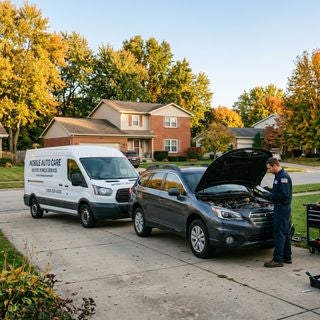
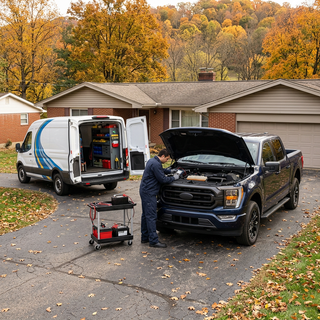
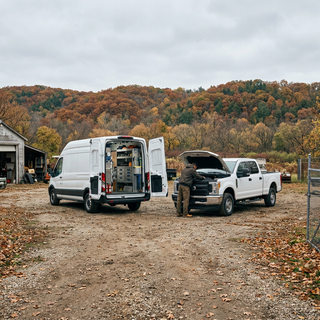
Ford Mobile Service brings factory-trained technicians, official diagnostic software, and specialized tools directly to your business location or staging yard. Designed to eliminate vehicle transportation downtime, fully equipped mobile service vans complete routine scheduled maintenance, safety recall updates, and system diagnostics on-site. This allows commercial operators to keep their trucks and vans working without taking drivers off their daily routes. When managing fleet operations around the riverfront bluffs in East Liverpool, taking vehicles off the road for routine oil changes or brake service directly impacts daily productivity. Mobile servicing solves this challenge by sending a fully outfitted Ford service van directly to your depot, office, or job site. Whether your company runs cargo vans or heavy-duty pickups, certified technicians perform maintenance according to factory procedures without requiring your staff to drop off or pick up vehicles. Fleet administrators can schedule appointments during off-peak hours or while vehicles sit parked between shifts. To review available commercial vehicles in our lineup, examine new commercial F-Series work trucks for your business operational needs. For specific questions regarding service area dispatch, reach out by calling (330) 462-7578 or visit our East Liverpool facility to speak directly with our commercial account team. Table of Contents What Maintenance and Repair Work Can Ford Mobile Service Perform On-Site? Are Mobile Service Technicians Fully Factory-Trained by Ford? How Does Ford Telematics Integrate with Mobile Fleet Servicing? Are Fleet standard rates Available for Routine Mobile Maintenance Contracts? How Does Ford Mobile Service Compare to Third-Party Independent Mechanics and Warranty Rules? Frequently Asked Questions About Mobile Fleet Maintenance Keep Your Fleet Moving with Tri State Ford Mobile Service What Maintenance and Repair Work Can Ford Mobile Service Perform On-Site? Routine maintenance tasks like oil changes and brake inspections can be completed on-site, minimizing downtime for your fleet vehicles. On-site capabilities include engine oil and filter changes, tire rotations, brake pad and rotor servicing, battery testing and replacement, wiper blade installation, fluid top-offs, software updates, and comprehensive multi-point inspections. Routine care for work vehicles like the Ford Transit Cargo Van, F-150, and Super Duty ensures long-term powertrain durability and prevents costly breakdowns. Modern Ford commercial vehicles use an Intelligent Oil-Life Monitor to calculate oil change intervals based on engine load, idling time, and ambient operating conditions rather than strict mileage markers. Mobile technicians clear system alerts, reset service monitors, and inspect high-wear components using specialized equipment carried right in the service van. Our service team frequently sees fleet managers batching oil changes and a multi-point inspection for three or four vans simultaneously during early morning hours before drivers dispatch. Major mechanical overhauls, such as internal engine repairs or full transmission rebuilds, still require specialized vehicle lifts and are handled inside our main service center bays. You can easily schedule a mobile service appointment for your work vehicles or order genuine Motorcraft parts directly through our service portal. Are Mobile Service Technicians Fully Factory-Trained by Ford? Every Ford Mobile Service technician holds the exact same factory certifications and technical qualifications as master technicians working inside our dealership service bays. They undergo rigorous OEM training programs covering advanced electrical diagnostics, mechanical repairs, powertrain systems, and specialized commercial upfit equipment. Mobile service technicians utilize official Ford diagnostic software to interface directly with vehicle control modules. This ensures electronic diagnostics, module reprogramming, and technical service updates match precise factory standards. Local trade professionals along State Route 170 in Calcutta rely on this level of factory expertise to keep their work vans in top operating condition without taking time away from active customer contracts. By sending factory-certified professionals directly to your location, your business receives dealership-grade service quality right at your doorstep. To learn more about how on-site appointments operate, review our mobile service program options to align service intervals with your fleet schedule. How Does Ford Telematics Integrate with Mobile Fleet Servicing? Ford Telematics™ uses built-in vehicle modems to stream real-time diagnostic codes, battery charge levels, fluid statuses, and oil life indicators directly to a centralized management dashboard. This connected data pipeline identifies maintenance needs automatically, alerting fleet managers to service requirements before minor diagnostic fault codes turn into major mechanical failures. When integrated with mobile servicing, connected vehicle data streamlines maintenance logistics. Fleet administrators can view 60 days of diagnostic history, monitor fault indicators across multiple vehicles, and book mobile service visits directly through the management application. Because the technician arrives at your site already knowing the exact diagnostic code and vehicle history, they bring the precise tools and replacement filters needed for the job, maximizing turnaround speed and vehicle uptime. Are Fleet standard rates Available for Routine Mobile Maintenance Contracts? Commercial fleet accounts and businesses utilizing structured fleet service agreements gain access to standardized pricing, commercial parts allowances, and streamlined billing options for routine mobile care. Enrolling vehicles in unified fleet care programs reduces administrative paperwork by consolidating multiple service invoices into simplified commercial accounts. Volume maintenance plans allow small businesses to control operational costs through predictable, scheduled maintenance expenses. By combining routine services—such as oil changes, cabin air filter replacements, and brake pads—across several fleet vehicles during a single mobile visit, businesses help manage total labor costs and eliminate the indirect costs of driver idle time and lost working hours. How Does Ford Mobile Service Compare to Third-Party Independent Mechanics and Warranty Rules? Ford Mobile Service uses genuine Motorcraft® parts and factory-certified diagnostic equipment, ensuring full protection of your vehicle’s factory warranty without complex record-keeping burdens. While federal law permits third-party mechanics to perform routine maintenance without automatically voiding factory warranties, any warranty repairs, recall fixes, or module updates must be performed by authorized Ford technicians using OEM components to maintain coverage. Service Factor Ford Mobile Service Third-Party Mobile Repair Parts Used Genuine Motorcraft® parts OEM certified Universal aftermarket parts Diagnostic Equipment Official Ford factory diagnostic tools Generic multi-brand code scanners Technician Training OEM factory-certified technicians General automotive certification Warranty Work Authorized to perform factory warranty fixes Cannot perform official warranty repairs System Software Direct access to factory software updates Limited software flashing capability Choosing factory-backed mobile care ensures every replacement battery, filter, and brake component matches original engineering specifications. For guidance on electrical system care, check out our routine battery testing and maintenance guidance to prevent winter starting issues across your commercial lineup. Frequently Asked Questions About Mobile Fleet Maintenance Q: What physical job site conditions are required for a mobile service van to perform maintenance? Mobile technicians need a flat, clear surface such as a paved parking lot, concrete pad, or dedicated staging area with adequate workspace surrounding the vehicle. Technicians arrive equipped with fluid containment systems and spill-prevention tools, leaving your work site clean and fully compliant with environmental regulations. Q: Can Ford Mobile Service handle official safety recall repairs on commercial vans and trucks? On-site mobile technicians can complete many safety recall procedures, software recalibrations, and minor component updates directly at your facility. When scheduling, provide your vehicle identification number so our service team can verify whether the specific recall work qualifies for mobile completion. Q: Are non-Ford commercial vehicles eligible for routine mobile servicing? Mobile technicians can perform basic preventive care, including oil changes, fluid checks, and tire rotations, on mixed-brand commercial fleets using high-quality approved components. However, specialized diagnostic software updates and warranty-covered repairs remain exclusive to Ford vehicles. Q: How far in advance should a business schedule a mobile fleet service visit? Booking routine service several days in advance allows our team to coordinate multi-vehicle servicing during your planned fleet downtime. Scheduling ahead ensures we reserve a convenient time slot and prep exact OEM filters and fluids for your specific engine configurations. Q: How do mobile technicians handle environmental waste during oil changes and fluid flushes? Mobile units carry onboard fluid extraction and storage systems that safely capture used engine oil, coolant, and hydraulic fluids. All recovered materials are transported back to our central recycling facility following strict environmental safety standards, keeping your workplace clean and compliant. For additional information or assistance with dispatch arrangements, drop by our local East Liverpool facility or give our service management team a call at (330) 462-7578. Keep Your Fleet Moving with Tri State Ford Mobile Service Protecting your business profitability starts with keeping your work trucks and vans operational. Tri State Ford provides fully equipped mobile maintenance units that deliver certified technicians, OEM Motorcraft parts, and diagnostic technology straight to your business location. Prevent unexpected breakdowns, eliminate driver travel hours, and maintain your factory warranties without disrupting daily commercial operations. Contact our commercial service advisors today to establish a customized mobile maintenance schedule tailored specifically to your fleet needs. © 2026 Tri State Ford. All rights reserved. Vehicle specification data © JATO Dynamics Limited. Ford Mobile Service in East Liverpool OH | Tri State Ford

d

Maintaining Your Ford Engine Health at Home: Expert Advice from Tri State Ford

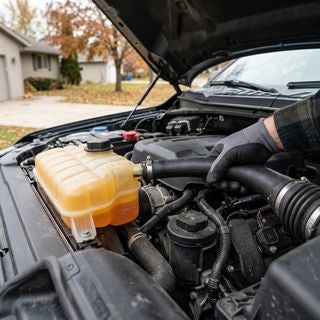
Maintaining Your Ford Engine Health at Home: Expert Advice from Tri State Ford How Do You Inspect and Maintain a Ford Engine Cooling System at Home? Inspect a Ford cooling system at home by checking the coolant level at the translucent expansion tank while the engine is completely cold, ensuring the fluid rests between the MIN and MAX fill lines. Top off exclusively with Motorcraft Yellow Antifreeze mixed to proper specifications, and visually inspect upper and lower radiator hoses for soft spots, swelling, or cracking. Checking fluid levels when cold prevents severe burn hazards from pressurized coolant. Modern Ford engine bays utilize color-coded expansion tanks, eliminating the need to open radiator caps. If the fluid level drops below the minimum threshold, adding pre-diluted Motorcraft Yellow Antifreeze protects against internal corrosion and aluminum cylinder head warping. During hot summer driving up the steep riverfront bluffs in East Liverpool, an underfilled cooling system leads directly to thermal stress and dashboard warning lights. Cooling System DIY Inspection Checklist: 1. Engine Temperature: Verify engine is completely cold before starting inspection. 2. Reservoir Level: Check expansion tank fluid is between MIN and MAX markings. 3. Hose Condition: Squeeze upper and lower radiator hoses to feel for soft or brittle spots. 4. Leak Visual: Inspect water pump housing and radiator seams for dried coolant crust. 5. Cap Security: Ensure expansion tank pressure cap is tightened until it clicks. A quick visual sweep under the vehicle reveals early warning signs before major component failure occurs. Look for wet spots or dried orange and yellow crust near the water pump housing, thermostat housing, and radiator seams. If dashboard warning lights illuminate or coolant levels drop repeatedly, reach out to our team at (330) 462-7578 or stop by our service center at 1503 Pennsylvania Ave for a professional pressure test. Table of Contents How Often Should Engine Oil Be Changed on a Ford EcoBoost Engine? What Are the Signs of Failing Spark Plugs in a Ford EcoBoost Engine? Is DIY Maintenance on a Ford EcoBoost Engine More Expensive Than Naturally Aspirated Engines? Where Can You Find the Correct DIY Maintenance Schedule for Your Ford? How Much Money Can DIY Engine Maintenance Save on a Ford Truck Per Year? How Often Should Engine Oil Be Changed on a Ford EcoBoost Engine? Engine oil on a Ford EcoBoost engine should be changed every 7,500 to 10,000 miles or 1 year under normal driving conditions, guided directly by the Intelligent Oil-Life Monitor. For severe driving conditions including frequent short trips, heavy towing, or extensive idling, lower the interval to 3,000 to 5,000 miles. Turbocharged EcoBoost engines generate high operating temperatures and internal pressures. The turbochargers rely on clean engine oil for both lubrication and shaft cooling. Allowing degraded oil to circulate through hot turbo bearings causes thermal breakdown, leading to carbon sludge deposits that clog oil feed lines. Using a high-grade full synthetic or synthetic blend like Motorcraft SAE 5W-30 meeting Ford specification WSS-M2C961-A1 preserves turbo-shaft longevity across vehicles like the Ford F-150 and Ford Explorer. Driving Condition Breakdown for Oil Change Intervals: • Normal Conditions: 7,500 - 10,000 miles (Mixed highway cruising, light passenger loads) • Moderate Conditions: 5,000 - 7,500 miles (Commuting in cold weather, moderate hauling) • Severe Conditions: 3,000 - 5,000 miles (Frequent towing, commercial work, extreme idling) Monitoring the instrument cluster keeps maintenance timing accurate. When the display shows "Change Engine Oil Soon," approximately 5 percent of oil life remains. Once "Oil Change Required" appears, immediate service is necessary to protect internal engine components. Owners can perform their own oil changes at home or easily schedule a service appointment with our factory-trained technicians. When picking up replacement filters, using a genuine OEM unit with an anti-drainback valve ensures instantaneous oil pressure upon startup. You can order OEM Ford parts directly through our dedicated counter. What Are the Signs of Failing Spark Plugs in a Ford EcoBoost Engine? Failing spark plugs in a Ford EcoBoost vehicle cause engine misfires under heavy throttle, rough engine idling, sluggish acceleration, reduced fuel economy, and illuminated check engine codes. Turbocharged engines gap spark plugs tightly and wear electrodes faster than naturally aspirated engines due to high cylinder pressures. Direct-injection turbo engines place higher thermal stress on ignition components. As spark plug gaps widen from electrode wear, the ignition coil must produce higher voltage to jump the gap. This extra load causes intermittent misfires that feel like a stumble or stutter when accelerating onto high-speed roadways. Replacing plugs early prevents unburned fuel from washing down cylinder walls or damaging expensive catalytic converters. Common EcoBoost Spark Plug Symptoms vs Healthy Operation: • Idle Quality: Rough, vibrating idle vs Smooth, steady RPM • Acceleration: Stuttering under boost vs Clean, linear power delivery • Dashboard Alerts: Flashing or solid Check Engine Light vs Clear display • Plug Lifespan: Needs replacement every 45,000 - 60,000 miles on EcoBoost Vehicle inspection goes hand in hand with overall preventative care. While checking engine components under the hood, driver safety also depends on inspecting tire tread depth and alignment wear patterns. You can use our online tire finder tool to select factory-recommended tires suited for your specific Ford model and drivetrain. Is DIY Maintenance on a Ford EcoBoost Engine More Expensive Than Naturally Aspirated Engines? DIY maintenance on a Ford EcoBoost engine costs slightly more per year than on a naturally aspirated engine due to requirements for full synthetic oil, specialized oil filters, and shorter spark plug replacement cycles. The annual cost difference averages $40 to $80 in raw DIY supplies. Turbocharged EcoBoost engines require higher-specification motor oils to withstand turbo shaft heat without burning. Standard conventional oils cannot handle these temperatures, making synthetic blend or full synthetic Motorcraft SAE 5W-30 essential. Furthermore, spark plug replacement intervals on an EcoBoost engine typically land between 45,000 and 60,000 miles, whereas naturally aspirated engines often stretch spark plug service out to 100,000 miles. Maintenance Item EcoBoost Engine DIY Cost Naturally Aspirated DIY Cost Service Interval Difference Motor Oil Type Full Synthetic / Synthetic Blend Conventional / Synthetic Blend EcoBoost requires higher heat resistance Spark Plugs Replacement every 45k-60k miles Replacement every 90k-100k miles Turbo boost wears electrodes faster Engine Air Filter Inspection every 10k-15k miles Inspection every 15k-20k miles Turbos pull higher intake air volumes The slight increase in fluid and plug costs is offset by the impressive power density and efficiency of the EcoBoost lineup. For example, a Ford Escape equipped with a 1.5L EcoBoost engine delivers responsive passing power while maintaining an EPA-estimated 26 city / 32 hwy MPG rating. Paying a few extra dollars for premium synthetic oil at home preserves that efficiency for hundreds of thousands of miles. Where Can You Find the Correct DIY Maintenance Schedule for Your Ford? The exact DIY maintenance schedule for your vehicle is located in the official Ford owner's manual under the Scheduled Maintenance section or through the official online Ford Owner Support portal. Maintenance schedules vary based on engine displacement, transmission type, and vehicle usage patterns. Relying on generic internet maintenance charts often leads to incorrect fluid capacities or missed service items. Ford designs specific service schedules for every powertrain configuration, from a compact Ford Escape up to a heavy-duty Ford F-150 towing up to 10,400 lbs. Checking the official lookup tool using your 17-digit Vehicle Identification Number (VIN)—found on the driver side door jamb or lower windshield corner—ensures you purchase the correct fluid specifications and filter part numbers. How to Locate Your Ford Maintenance Schedule: 1. Owner's Manual: Flip to the "Scheduled Maintenance" chapter in the glovebox manual. 2. Online Portal: Visit Ford Owner Support and enter your 17-digit VIN. 3. Vehicle Display: Navigate to "Vehicle Settings" on the digital cluster screen. For residents taking daily suburban trips along State Route 170 near Calcutta, staying ahead of scheduled air filter and fluid checks keeps fuel economy at peak performance. When exploring a fresh vehicle equipped with the latest SelectShift® automatic transmission, drivers can easily schedule a test drive online to experience current engine technology firsthand. How Much Money Can DIY Engine Maintenance Save on a Ford Truck Per Year? Performing basic DIY engine maintenance on a Ford truck saves between $200 and $500 per year in labor costs compared to professional shop rates. Typical home maintenance tasks include oil and filter changes, engine air filter replacements, cabin air filter swaps, and spark plug installations. Estimated Annual DIY Savings Breakdown on a Ford Truck: • Two Synthetic Oil Changes: Saves $100 - $180 in shop labor • Engine & Cabin Air Filter Swaps: Saves $60 - $120 in labor fees • Spark Plug Replacement (Pro-rated): Saves $100 - $200 in labor fees • Total Estimated Annual DIY Savings: $260 - $500 Doing routine service in your own garage gives you complete control over part quality and oil choice. Swapping an engine air filter takes ten minutes and requires no special tools, saving roughly $30 in labor fees alone. Replacing six spark plugs on a 3.5L EcoBoost engine at home takes under an hour and avoids shop labor charges that often exceed $150. For fleet owners and independent contractors who rely on commercial haulers, keeping maintenance overhead low directly protects operating profits. You can explore our new work truck inventory to compare durable powertrains built for demanding jobs. Whether you maintain your Ford truck at home or prefer professional support for complex repairs, our team at 1503 Pennsylvania Ave is always ready to assist. Give our service desk a quick call whenever you need genuine parts, technical advice, or major system diagnostics. © 2026 Tri State Ford. All rights reserved. Vehicle specification data © JATO Dynamics Limited. Ford Engine Care Tips in East Liverpool OH | Tri State Ford

d

What Does a Check Engine Light Code Actually Mean for Your Vehicle?

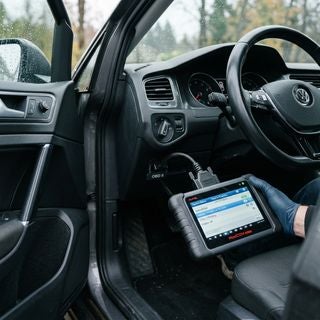
An onboard diagnostic trouble code indicates that your vehicle's engine control computer detected an operating value outside normal factory specifications, but it does not identify the exact component that failed. The alphanumeric code merely reports the specific system, sensor circuit, or mechanical performance anomaly observed by the OBD-II system. Pinpointing the root cause requires step-by-step diagnostic testing of related electrical wiring, vacuum supply lines, and connected mechanical parts. When the malfunction indicator light illuminates on your dashboard, the engine management system stores a standard diagnostic trouble code in its memory bank. According to standards established by SAE International under specification J2012, this five-character code acts as an initial directional signpost rather than a definitive repair instruction. Reading the stored code provides essential context about which vehicle subsystem experienced an operational fault, such as an unexpected voltage reading, an air-fuel ratio variance, or an engine timing offset. Automotive diagnostic systems continuously evaluate hundreds of inputs every minute while your engine runs. If a reading stays outside acceptable tolerances across a set monitoring cycle, the computer records a stored fault code and triggers the dashboard warning light. Understanding this process helps vehicle owners avoid unnecessary part replacements. When dashboard warnings appear during daily driving, drivers can visit our service center location or give our service department a call at (330) 462-7578 to arrange professional diagnostic evaluation. Reviewing current manufacturer service offers also helps maintain essential engine health and routine system inspections at optimal value. Table of Contents Does a Diagnostic Trouble Code Point Directly to a Faulty Part? Why Can a Single Faulty Sensor Cause Multiple Trouble Codes? Code Readers vs. Professional Scanners: What Is Live Data Monitoring? Is It Safe to Drive With a Solid or Flashing Check Engine Light? Frequently Asked Check Engine Light Diagnostic Questions Get Accurate Vehicle Diagnostics Does a Diagnostic Trouble Code Point Directly to a Faulty Part? A diagnostic trouble code describes the electrical condition or operational symptom observed by the powertrain control module, not the definitive broken hardware part. Expecting a single code to serve as an exact auto parts shopping list frequently leads to replacing functional sensors while leaving the underlying mechanical or electrical problem unresolved. Standard OBD-II diagnostic codes follow a structured alphanumeric convention that categorizes the system area and specific fault condition: The initial character defines the major vehicle area: P for powertrain (engine and transmission), B for body systems, C for chassis, and U for network communications. The second character indicates whether the code is standardized generic code ( 0) or manufacturer-specific code ( 1). The third character identifies the precise subsystem, such as fuel metering, ignition system, or auxiliary emission controls. The final two digits designate the specific fault condition being flagged. For example, a common code like P0171 indicates that the air-fuel mixture on Bank 1 is running leaner than expected. While many vehicle owners assume this code requires replacing the front oxygen sensor, the actual root cause could be a torn intake vacuum hose, a dirty mass air flow sensor wire, weak fuel pump pressure, or leaking intake manifold gaskets. Replacing the oxygen sensor without testing the surrounding air intake and fuel delivery hardware leaves the lean condition active, causing the warning light to return shortly after clearing. Similarly, a P0300 code flags random or multiple cylinder misfires, while a P0420 code indicates catalyst system efficiency falling below minimum threshold requirements. Neither code isolates a single failed component. A misfire can stem from worn spark plugs, failing ignition coils, clogged fuel injectors, or low cylinder compression. Professional diagnostics involve checking circuit voltages, inspecting vacuum lines, and testing system pressures before installing any replacement components. Owners facing recurring warning lights can schedule a diagnostic service appointment online for thorough system isolation. Why Can a Single Faulty Sensor Cause Multiple Trouble Codes? A single malfunctioning sensor triggers multiple trouble codes because modern engines rely on tightly integrated feedback loops where one corrupted data signal distorts calculations across multiple downstream vehicle management systems. When a primary sensor reports inaccurate operating data, the engine control module makes improper adjustments that cause secondary sensors to detect abnormal conditions and set additional codes. Our service technicians routinely observe this chain reaction on the diagnostic bay floor: a single primary sensor anomaly cascades through the powertrain control module, setting off three or four seemingly unrelated fault codes across different subsystems. For example, a contaminated or failing mass air flow sensor measuring intake air volume can miscalculate the incoming air mass. Based on that incorrect measurement, the engine computer delivers improper fuel volume, triggering an active P0171 system lean code. As the improper air-fuel mixture burns inefficiently inside the combustion chambers, engine misfires begin, logging a P0300 misfire code. Unburned fuel entering the hot exhaust manifold then skews downstream exhaust readings, setting a secondary oxygen sensor code. Common sensors capable of triggering multi-code cascades include: Mass Air Flow ( MAF) Sensor: Controls primary fuel delivery calculations; causes lean/rich codes and combustion misfires. Engine Coolant Temperature ( ECT) Sensor: Regulates cold-start enrichment and radiator fan timing; causes air-fuel trim faults and transmission shift errors. Throttle Position Sensor ( TPS): Tracks driver pedal input; causes transmission shifting faults, stability control warnings, and engine hesitation codes. Oxygen ( O2) Sensors: Monitors post-combustion exhaust gases; triggers catalytic converter efficiency codes and fuel trim system warnings. This interconnected behavior is especially evident during suburban commuting around Calcutta along State Route 170, where frequent speed changes and elevation shifts place varied loads on the engine management system. Testing individual sensor signal outputs against factory voltage specifications isolates the initial primary failure from secondary code symptoms. Isolating root causes prevents unnecessary component installation, ensuring owners order genuine OEM replacement parts specifically matched to the true failed component. Code Readers vs. Professional Scanners: What Is Live Data Monitoring? Basic consumer code readers only retrieve and erase standard stored fault codes, whereas professional diagnostic scanners access real-time operational data streams, read manufacturer-specific control modules, and perform active bi-directional component testing. Entry-level code readers display basic alphanumeric code strings but lack the analytical depth required to determine why a parameter shifted out of range. Live data monitoring on an advanced diagnostic scanner displays real-time operational metrics directly from running engine sensors. While a vehicle operates, technicians analyze dynamic parameters to spot sensor drift, delayed electrical responses, or intermittent signal drops that do not hold steady long enough to freeze a hard fault code. Essential live data parameters monitored during active diagnosis include: Short-Term and Long-Term Fuel Trims: Measures percentage adjustments made to fuel delivery in response to oxygen sensor readings. Calculated Engine Load and Mass Air Flow Rate: Tracks real-time air intake volume against throttle position and engine RPM. Upstream and Downstream Oxygen Sensor Voltages: Displays rapid switching waveforms to evaluate fuel control and catalytic efficiency. Ignition Timing Advance and Knock Sensor Retard: Identifies pre-ignition trends before severe engine pinging occurs. Freeze-Frame Operating Snapshots: Examines precise engine temperature, vehicle speed, and load parameters recorded the exact second a fault triggered. Consumer interest in vehicle self-testing has grown with the availability of Bluetooth OBD-II adapters designed for smartphone diagnostic applications. Entry-level wireless adapters start near $15 and provide basic code reading and limited gauge displays. Units ranging from $60 to $120 offer advanced sensor graphing, companion app software support, and access to enhanced vehicle network parameters. While smartphone adapters offer convenient basic insight for car enthusiasts, professional multi-system diagnostic scanners remain essential for bi-directional testing, such as commanding fuel injectors or ABS valves on and off to verify mechanical function. Is It Safe to Drive With a Solid or Flashing Check Engine Light? A solid check engine light indicates a non-emergency fault that permits brief, cautious driving to a service facility, whereas a flashing check engine light signifies a severe engine misfire requiring immediate pulling over to prevent catastrophic mechanical and catalytic converter destruction. Continuing to drive while the warning light flashes allows unburned raw gasoline to stream directly into the red-hot exhaust system. Inside the exhaust system, unburned fuel ignites upon hitting the internal ceramic honeycomb structure of the catalytic converter. Internal temperatures rapidly surge beyond 1,800 degrees Fahrenheit, melting the precious metal catalyst elements and clogging the exhaust flow. What could have been a straightforward spark plug or ignition coil replacement turns into a costly repair requiring complete catalytic converter replacement alongside engine component repairs. Important safety and financial guidelines regarding check engine light operation include: Steady Warning Light: Safe for short distance driving if engine performance, temperature, and oil pressure remain normal; schedule diagnostic inspection promptly. Flashing Warning Light: Severe active misfire occurring; safely pull off the roadway immediately, turn off the ignition, and arrange towing. Auxiliary Warning Symbols: If an illuminated check engine light is accompanied by an oil pressure lamp or engine temperature warning, shut down the engine immediately. Auto Insurance Coverage Limits: Standard auto insurance policies do not cover check engine light diagnostic fees or mechanical breakdown repairs unless the damage resulted directly from a covered collision or vandalism incident. During heavy stop-and-go driving along Market Street in Boardman, engine loads fluctuate frequently, accelerating exhaust overheating if a misfire occurs under load. For emergency breakdown situations on the road, vehicle owners should utilize manufacturer-backed roadside protection. Drivers can reach Ford Roadside Assistance at (800) 241-3673 for qualified emergency towing directly to an authorized technical facility. Frequently Asked Check Engine Light Diagnostic Questions Q: How much does a Bluetooth OBD-II adapter for smartphone apps cost? Entry-level Bluetooth OBD-II adapters cost approximately $15 to $30 and offer basic code reading alongside clearing functions. Mid-tier and advanced adapters range from $60 to $120, providing real-time data graphing, multi-module system scans, fast refresh rates, and enhanced companion app diagnostics compatible with iOS and Android devices. Q: Will resetting the check engine light with a scanner fix the underlying mechanical problem? Erasing a diagnostic trouble code with a handheld reader turns off the dashboard light temporarily, but it does not repair the underlying mechanical or electrical fault. The engine control computer will re-detect the out-of-range sensor reading during subsequent drive cycles and illuminate the check engine light again until the root issue is properly repaired. Q: Does auto insurance cover the cost of diagnostic fees at a service center? Standard comprehensive and collision auto insurance policies do not cover diagnostic inspection fees or routine mechanical repairs caused by normal wear and tear. Insurance only covers diagnostic work if the mechanical failure stems directly from an insured accident, fire, fallen object, or act of vandalism. Q: What is the difference between generic and manufacturer-specific OBD-II codes? Generic OBD-II codes begin with P0, B0, C0, or U0 and follow standardized definitions mandated across all vehicle makes sold in North America. Manufacturer-specific codes begin with P1, B1, C1, or U1 and provide specialized diagnostic details engineered specifically for a brand's unique powertrain and body electronics architecture. Q: What is a pending diagnostic trouble code on an OBD scanner? A pending code indicates that the engine control computer detected an operational fault during a drive cycle, but has not yet seen the issue recur frequently enough to set a permanent stored code or illuminate the dashboard light. It serves as an early diagnostic clue during preliminary system troubleshooting. Get Accurate Vehicle Diagnostics Understanding what a check engine light code means protects your vehicle investment and prevents unnecessary component replacements. A stored diagnostic code acts as an informational starting point rather than a final diagnosis. Identifying whether a fault stems from a worn sensor, damaged wiring harness, or underlying mechanical issue requires dedicated diagnostic equipment and professional technical expertise. Our factory-trained service team utilizes advanced factory diagnostic equipment, live data analysis, and targeted component testing to isolate engine faults accurately the first time. Whether your dashboard displays a steady warning light or you need routine maintenance, professional technical care ensures your vehicle remains reliable for every daily journey. Drivers can visit our dealership service facility at 1503 Pennsylvania Ave, East Liverpool, OH 43920 or speak directly with our service team by calling (330) 462-7578. When planning your next vehicle upgrade or replacement, customers can also explore options to custom order a new Ford vehicle tailored to exact family and driving specifications. © 2026 Tri State Ford. All rights reserved. Check Engine Light Codes in East Liverpool OH | Tri State Ford

d

How Does Ford Mobile Service Work?

Ford Mobile Service brings certified technicians directly to your home or workplace in a customized, fully equipped service van to perform routine vehicle maintenance and light repairs on-site. Instead of driving to a dealership waiting room, routine services like oil changes, tire rotations, brake inspections, battery replacements, and software updates are performed right in your driveway using genuine Ford parts and factory-approved equipment. The process is designed to fit seamlessly into a busy schedule. Vehicle owners can request a visit online or by phone, specifying the vehicle year, model, and requested maintenance. On the day of the appointment, a factory-trained technician drives out to your location, sets up a secure workspace around your vehicle, performs the scheduled maintenance, and updates your vehicle's digital service history. This remote service acts as a direct extension of our main service lane, providing the same level of technical expertise without interrupting your day. For residents living along the riverfront bluffs in East Liverpool, managing vehicle maintenance without taking time off work or making trips down steep hills in winter conditions is a practical advantage. Our team brings expert care straight to your parking spot so your vehicle stays reliable year-round. When you need specialized shop care or complex warranty repairs, our primary facility is always ready to assist. You can find directions to our main location for in-shop service, or give our team a quick call to check local mobile van availability in your neighborhood. Table of Contents What Services Can Ford Mobile Technicians Perform at Your Driveway? What Equipment and Technology Are Inside Ford Mobile Service Vans? Does Ford Mobile Service Cost More Than a Dealership Visit? How Far in Advance Do You Need to Book a Ford Mobile Service Appointment? Common Questions About Mobile Ford Maintenance Schedule Mobile Ford Service Across East Liverpool and Surrounding Areas What Services Can Ford Mobile Technicians Perform at Your Driveway? Ford mobile technicians carry out the majority of standard maintenance procedures directly at your home or job site, including engine oil and filter changes, brake pad and rotor replacements, tire pressure adjustments and rotations, battery health testing, cabin air filter swaps, bulb replacements, multi-point safety checks, and remote module updates. Mobile service covers the preventative maintenance items that keep your car, truck, or SUV running smoothly: Engine oil and filter changes utilizing factory-recommended motor oils and OEM filters Brake system service, including visual pad inspections, pad replacements, rotor servicing, and fluid flushes Tire maintenance, including tire rotations, tread depth checks, and air pressure adjustments Electrical system support, including battery testing, battery swaps, and light bulb replacements Filter and fluid maintenance, covering cabin air filters, engine air filters, and fluid top-offs Diagnostic health checks, including system fault code scans and official software updates These mobile capabilities cover most routine upkeep for vehicles like the 2024 Ford F-150, 2024 Ford Explorer, and 2024 Ford Escape. However, certain heavy mechanical procedures cannot be safely performed in a private driveway. Major engine overhauls, transmission rebuilds, structural body repairs, and wheel alignments require heavy-duty shop hoists and fixed alignment bays found only at our physical service center. When scheduling, our advisors review your vehicle's specific maintenance needs to ensure the job is suitable for driveway service. You can quickly schedule a service appointment online to secure a time slot, or order original equipment parts directly through our service department for upcoming maintenance. What Equipment and Technology Are Inside Ford Mobile Service Vans? Ford Mobile Service vehicles are custom-outfitted Ford Transit work vans configured with commercial-grade fluid extraction and fill systems, oil filter changing tools, compressed air lines, heavy-duty jack stands, digital battery testers, and cellular-connected diagnostic laptops running current OEM software. These vans function as specialized rolling repair bays. Fluid handling systems allow technicians to extract used motor oil cleanly through closed-loop suction technology, preventing leaks or drips on your driveway. Onboard air compressors power pneumatic tools for rapid wheel removal during tire rotations and brake pad installations. Our service advisors frequently observe that truck and SUV owners ask whether mobile vans carry the same diagnostic capabilities as our main shop before booking their first remote appointment. Each van is outfitted with the official Ford Integrated Diagnostic System laptop linked to a secure cellular hotspot. This setup allows technicians to read diagnostic trouble codes, perform full system health scans, and flash factory module updates directly from your curb. For commercial operators or business owners interested in how these commercial vehicles are outfitted, exploring specially equipped work vans shows how flexible the platform is. To learn more about how our technicians bring this equipment to you, visit our mobile vehicle service page to review our complete on-site setup. Does Ford Mobile Service Cost More Than a Dealership Visit? Ford Mobile Service costs comparable to visiting our dealership service bay, with current labor and parts pricing available from our service team for qualifying routine maintenance within our designated service zone. Maintaining your vehicle remotely does not mean paying extra for convenience. Ford designed the mobile service program to provide complimentary mobile delivery for qualifying routine maintenance items. You pay standard dealership rates for the specific services performed—such as the price of fresh oil, a new filter, or replacement brake pads—without added delivery or call-out fees. Using mobile service also protects your long-term ownership investment. Every service performed by a mobile technician uses genuine Ford and Motorcraft components, which preserves your vehicle's 5-year / 60,000-mile powertrain warranty and factory bumper-to-bumper protections. If your vehicle is slow to start during cold mornings, taking advantage of remote testing can save you a trip. You can review detailed battery maintenance guidelines to determine whether your vehicle needs a remote system check or a quick battery replacement at home. How Far in Advance Do You Need to Book a Ford Mobile Service Appointment? Booking a Ford Mobile Service appointment typically requires a 2-to-5-day lead time, allowing our service team to organize technician routes efficiently and ensure the correct OEM fluids, filters, and vehicle-specific parts are loaded onto the van prior to departure. Because mobile technicians carry targeted inventory based on the day's schedule, advance booking ensures that the exact components required for your vehicle—such as specific oil grades or specialized brake rotors for a 2024 Ford F-150—are pre-staged in the van. Lead times can fluctuate depending on several key factors: Local geographical routing: Mobile appointments are grouped by geographic zones to minimize transit time between customer locations. Seasonal demand spikes: Demand for mobile battery testing and tire inspections increases significantly during early winter and severe cold snaps. Scope of maintenance: Simple software updates or multi-point inspections may be easier to fit into existing routes than multi-item maintenance packages. For residents in suburban neighborhoods near State Route 170 in Calcutta, scheduling a few days ahead allows our mobile unit to coordinate visits efficiently along routine suburban routes. While booking 2 to 5 days out is standard, software updates or urgent battery tests can occasionally be accommodated sooner if a technician is already scheduled to be in your immediate neighborhood. Common Questions About Mobile Ford Maintenance Q: What happens if a mobile technician discovers a repair that cannot be completed in my driveway? If an inspection reveals major mechanical damage, heavy drivetrain issues, or specialized frame work requiring shop hoists, our technician documents the findings, prioritizes a service bay slot at our main facility, and helps organize transportation or towing if needed. Q: Do mobile service visits preserve my active Ford warranty coverage? Yes, routine maintenance and recall repairs completed during a mobile visit use genuine OEM parts and certified procedures, updating your official vehicle history record and maintaining full warranty compliance. Q: What surface or space conditions are required for a mobile service visit? Mobile visits require a relatively flat, hard surface such as a paved driveway or standard parking lot space, along with sufficient clearance around the vehicle for the technician to operate tools and safety equipment. Q: Can Ford Mobile Service handle software updates and module resets remotely? Yes, mobile service vans are equipped with Ford integrated diagnostic laptops and cellular hotspots, enabling technicians to perform full vehicle system scans and complete software updates directly at your location. Q: Is Ford Mobile Service available for high-mileage older vehicles as well as 2024 models? Yes, while qualifying services vary by exact model specifications, mobile technicians can perform eligible routine maintenance on both older vehicles and new 2024 Ford models. Schedule Mobile Ford Service Across East Liverpool and Surrounding Areas East Liverpool residents can now enjoy the convenience of Ford Mobile Service, which brings expert vehicle care right to their doorstep without disrupting their daily schedule. Our mobile service program brings expert care, specialized tools, and genuine Ford parts straight to your driveway or workplace parking lot. Whether your truck needs its regular oil change, your family SUV is due for a tire rotation, or your vehicle requires a quick factory software update, our remote service team provides transparent care designed around your routine. To set up your next visit, check our dealership location details or give our service department a quick call to reserve an upcoming mobile service time slot for your vehicle. © 2026 Tri State Ford. All rights reserved. Ford Mobile Service in East Liverpool OH | Tri State Ford

l

How Do You Diagnose a Fluid Leak Under Your Car?

Diagnosing a vehicle fluid leak involves placing a clean sheet of light-colored cardboard under your engine bay overnight, examining the fluid's color, consistency, and odor, and matching its drip pattern to specific mechanical components beneath the chassis. Engine oil appears amber to black with a slippery feel, coolant is bright green or pink with a distinctly sweet aroma, and transmission fluid shows red or maroon. Identifying these characteristics narrows down whether the issue stems from the engine, cooling system, transmission, or braking components. When you notice wet spots or puddle marks on your driveway, performing a quick visual inspection helps prevent serious mechanical damage. Park your vehicle on a flat, level surface and allow the engine to cool down completely. Slide a clean piece of white cardboard or heavy paper directly beneath the engine and transmission area before leaving it overnight. In the morning, pull the cardboard out and evaluate the fluid using three key indicators: color, texture, and location relative to the front bumper and axles. Observing where the puddle sits on the cardboard gives immediate clues about its origin. Leaks dripping from the front-center usually point to the radiator, water pump, or oil pan. Fluid pooling near the middle of the vehicle closer to the front seats often traces back to the transmission pan or transfer case. Wetness concentrated near the wheels indicates potential issues with brake calipers, brake lines, or power steering rack boots. Drivers navigating the rolling hills around Calcutta frequently notice fluid seeps after parking on inclined driveways, which can cause settling fluids to run along underbody splash shields before dropping onto the pavement. If you notice persistent puddles or an unfamiliar fluid mark, you can check our East Liverpool service center address or give our certified technicians a quick call to discuss a professional inspection. Table of Contents How Do You Identify a Vehicle Fluid Leak by Its Color and Texture? Where Do the Most Common Vehicle Fluid Leaks Originate Under a Car? What Symptoms Indicate a Power Steering Fluid Leak? Can a Fluid Leak Cause a Vehicle Fire? How Much Does It Cost to Fix an Engine Oil Leak? Common Questions About Vehicle Fluid Leaks and Repairs How Do You Identify a Vehicle Fluid Leak by Its Color and Texture? You identify a vehicle fluid leak by matching its color, viscosity, and scent to the vehicle's essential operating fluids: slick amber or black liquid indicates engine oil, sweet-smelling bright green or orange fluid is coolant, thin red or maroon liquid is transmission fluid, and clear to light yellow slippery fluid near the wheels points to brake fluid. Every automotive fluid is engineered with specific colors, chemical additives, and weight profiles to perform designated tasks, making visual identification straightforward once you know what to look for: Engine Oil: Fresh engine oil ranges from translucent golden amber to light brown, while used oil turns dark brown or black with a thick, slippery consistency and a heavy petroleum smell. It drops under the front-center of the vehicle near the oil pan or engine block. Engine Coolant (Antifreeze): Coolant features vibrant fluorescent colors including bright green, orange, pink, yellow, blue, or purple. It has a watery, slightly slippery feel and a noticeable sweet, syrupy smell. Coolant pools near the front radiator area or lower hose connections and leaves a chalky white residue when dried on warm metal. Automatic Transmission Fluid: Fresh transmission fluid, such as MERCON LV, appears bright red or pink and has a smooth, oily feel. As it ages, it darkens to maroon or reddish-brown. Leaks drop under the center of the chassis beneath the transmission casing or cooler lines. Brake Fluid: Brake fluid, such as DOT 4 brake fluid, is clear to light yellow or pale amber. It feels slick and thin to the touch but requires immediate clean-up because it can strip exterior vehicle paint. Leaks gather near the wheels, along frame-mounted brake lines, or beneath the brake master cylinder at the firewall. Power Steering Fluid: Power steering fluid usually displays a clear, light amber, or pinkish color with an oily consistency similar to light hydraulic fluid. It seeps near the front bumper, power steering pump, or steering rack. Differential and Transfer Case Gear Oil: Gear oil is dark brown or black with a heavy, thick viscosity and a sharp, distinctive sulfur or rotten-egg odor. Leaks gather under the center transfer case or rear axle housing. Windshield Washer Fluid: Washer fluid appears bright blue, green, or orange with a watery consistency and a mild alcohol or window-cleaner scent. Leaks show up directly beneath the washer reservoir or front bumper assembly. Reviewing current maintenance information allows you to stay ahead of routine fluid flushes, gasket replacements, and filter changes before minor seeps become major repairs. Where Do the Most Common Vehicle Fluid Leaks Originate Under a Car? The most common vehicle fluid leaks originate beneath the engine oil pan, valve cover gaskets, radiator hose fittings, transmission oil pan, and wheel hydraulic components where heat and vibration degrade rubber seals over time. Understanding where fluid lines and component housings meet helps isolate seeps before they turn into costly mechanical breakdowns. The engine bay contains numerous gaskets and pressurized seals. Upper leaks often stem from a worn valve cover gasket, causing oil to seep down the side of the engine block. Lower engine leaks usually originate at the oil pan gasket, oil drain plug washer, or front and rear crankshaft seals. Cooling system leaks frequently start at upper and lower radiator hoses, water pump shaft seals, thermostat housings, or plastic radiator end tanks. Transmission fluid leaks generally come from the transmission pan gasket, cooler line quick-connect fittings, or output shaft seals where drive axles enter the transaxle assembly. One notable exception to vehicle leaks is clear water dripping beneath the front passenger side dash area. Commuters who bring their vehicles in after noticing puddles often ask whether clear water dripping on the passenger side requires immediate repair, but our service technicians quickly confirm when it is simply normal HVAC condensation. When you run your air conditioning or windshield defroster, the system extracts moisture from cabin air and drains clean water safely through a rubber tube onto the ground. If you are exploring custom equipment or planning routine maintenance additions, browsing custom vehicle configuration options provides insight into factory-installed heavy-duty cooling packages and protective skid plates. What Symptoms Indicate a Power Steering Fluid Leak? A power steering fluid leak is primarily indicated by a loud whining or groaning noise when turning the steering wheel, noticeably stiffer steering at low speeds, and clear to reddish oily spots dripping beneath the front axle area. Hydraulic power steering systems rely on pressurized fluid to assist steering movement. When a hose, reservoir seal, or steering rack boot begins to seep, fluid pressure drops and allows air into the system. This aeration causes the power steering pump to produce a high-pitched whining noise that grows louder when you turn the wheel toward full lock during parking maneuvers. Other noticeable symptoms of a power steering leak include: Jerky or uneven resistance in the steering wheel while navigating turns. Slow or sluggish return of the steering wheel to the center position after completing a curve. Wet, oily residue accumulating along hydraulic high-pressure hoses or power steering pump fittings. Low fluid levels inside the clear power steering reservoir under the hood. Ignoring low power steering fluid can cause the hydraulic pump to run dry, resulting in metal-on-metal friction that destroys the internal pump vanes. Promptly inspecting the fluid level and repairing damaged lines preserves steering responsiveness and prevents complete pump failure. Can a Fluid Leak Cause a Vehicle Fire? Yes, a fluid leak can cause a vehicle fire when flammable liquids like engine oil, transmission fluid, power steering fluid, or fuel drip onto extremely hot engine parts like exhaust manifolds or catalytic converters. Exhaust system components operate at extreme temperatures that frequently exceed 600°F and can reach over 1,000°F under heavy load or towing conditions. Petroleum-based lubricants and hydraulic fluids have auto-ignition temperatures within this operating range. When a pressurized power steering hose or leaking valve cover gasket sprays oil directly onto hot exhaust headers, the fluid can vaporize and instantly ignite into an engine bay fire. Crucial warning signs that require immediate action include: A strong, acrid smell of burning oil or fuel inside the passenger cabin. Wisps of white or blue smoke rising from beneath the hood or undercarriage while idling or stopped in traffic. An illuminated red brake warning light or specific display messages like BRAKE FLUID LEVEL LOW on the instrument cluster. Rapidly dropping fluid gauges or warning lights indicating loss of engine oil pressure. If you observe smoke or smell burning fluid while driving, safely pull off the road, turn off the ignition immediately to cut electrical power and fluid pressure, and move away from the vehicle. Exploring service and parts information helps you keep vital seals, fuel lines, and brake system components in optimal working condition. How Much Does It Cost to Fix an Engine Oil Leak? Fixing an engine oil leak typically costs between $50 and $150 for simple repairs like an oil filter or drain plug seal replacement, $200 to $600 for a valve cover gasket or oil pan gasket, and $1,200 or more for intensive repairs such as a rear main seal. The total repair cost depends primarily on labor time rather than parts cost. While replacement rubber gaskets or silicone seals are relatively inexpensive, accessing those seals often requires removing steering linkages, subframes, or engine covers: Drain Plug Washer or Oil Filter Seal: $50 to $150. Corrected easily during a routine oil and filter change. Valve Cover Gasket Replacement: $200 to $450. Requires removing upper intake components and spark plug coils to replace the rubber perimeter seal. Oil Pan Gasket Replacement: $300 to $650. May require lowering the front subframe or crossmember to drop the oil pan. Timing Cover Gasket Replacement: $500 to $900. Demands removing drive belts, pulleys, and front engine covers. Rear Main Seal Replacement: $1,200 to $1,800+. Requires separating the transmission from the engine block to reach the seal behind the flywheel or flexplate. Commuters traveling along Market Street in Boardman benefit from addressing minor engine oil seeps early during routinely scheduled oil changes, preventing engine bay smoke during heavy stop-and-go driving. Catching small oil seeps during routine multi-point inspections prevents severe oil loss that can cause internal engine damage. You can easily schedule a service appointment online to have certified technicians inspect your vehicle's engine seals. Common Questions About Vehicle Fluid Leaks and Repairs Q: How can you tell the difference between fresh engine oil and transmission fluid? Fresh engine oil features a translucent amber or golden appearance with a petroleum scent and a slick feel. Automatic transmission fluid displays a bright red or pink color with a smoother, lighter consistency. While aged engine oil turns dark brown or black, old transmission fluid darkens to maroon or dark reddish-brown, making them easy to differentiate when wiped onto a clean white paper towel. Q: Is it safe to drive with a minor power steering fluid leak? Driving short distances with a minor power steering leak is possible if fluid levels remain adequate, but running the system dry risks severe pump damage and sudden heavy steering resistance. As hydraulic fluid drops below the minimum reservoir mark, air enters the lines and accelerates pump wear. Checking the reservoir level before driving and addressing the leak promptly prevents complete steering system failure. Q: What should you do immediately if you suspect a flammable fluid leak under the hood? Safely pull off the roadway, turn off the ignition immediately to stop fluid pressure, and evacuate all passengers away from the vehicle. Avoid opening the hood if smoke or flames are visible, as introducing fresh oxygen can accelerate an engine bay fire. Contact emergency services or Ford Roadside Assistance at 1-800-241-3673 for towing support backed by factory warranty coverage and authorized service center care. Q: Why does an engine coolant leak leave a powdery residue when it dries? Engine coolant contains chemical anti-corrosion additives and organic compounds dissolved in water. When leaking coolant contacts warm engine components, the water content evaporates quickly, leaving behind a crusty white or colored mineral powder around hose clamps, water pump housings, or radiator seams. Spotting this residue helps technicians pinpoint slow cooling system leaks before engine overheating occurs. Q: How long does a certified technician take to diagnose a fluid leak? Most certified technicians complete a comprehensive fluid leak diagnosis within one hour using ultraviolet dye, pressure testing, and multi-point visual checks. Diagnostic dye is added to the suspected fluid system, the engine is run briefly, and an ultraviolet lamp reveals the precise origin of the seep behind heat shields or engine covers. Maintaining your vehicle's seals, hoses, and fluid levels protects mechanical performance and ensures family safety on every trip. Whether you need an engine oil leak diagnosed, a cooling system pressure test, or routine fluid maintenance, our factory-trained technicians use genuine OEM parts engineered specifically for your vehicle. Visit our dealership location, order genuine Ford parts for home maintenance, or give our service team a call to keep your car running safely and dependably. © 2026 Tri State Ford. All rights reserved. Diagnosing Fluid Leaks in East Liverpool OH | Tri State Ford

A service technician hands keys to a homeowner next to a blue Ford F-150 pickup truck in a suburban driveway. (Representative image for illustration purposes only. Actual vehicle may vary based on trim and configuration.)

How Tri State Ford Pickup and Delivery Simplifies Your Maintenance Routine

Many of our customers find that balancing a busy workweek with routine vehicle care is one of the most challenging parts of ownership. To solve this, we offer a seamless program designed to keep your vehicle in peak condition without interrupting your day. Through Ford Pickup & Delivery, our team will come directly to your home or office, retrieve your vehicle, bring it to our specialized facility for certified care, and return it to you once the work is complete. For busy families living in Calcutta who spend their weekends packing up gear for outdoor trips near Beaver Creek, finding a block of free time to sit in a service waiting room can be difficult. This complimentary service ensures your vehicle receives professional attention while you focus on your family or job. If your schedule is busy, we also provide Ford Mobile Service, which brings our certified technicians directly to your driveway for select maintenance tasks. Whether you need a quick battery replacement, a software update, or routine fluid checks, our mobile van is equipped to handle the job on-site. For more extensive repairs, our physical service center is always ready. You can easily find our physical location at 1503 Pennsylvania Ave, East Liverpool, OH 43920 if you prefer to drop your vehicle off yourself. Getting started with these convenient options is incredibly straightforward. If you are searching online for a trusted Ford dealership near me to handle your routine maintenance, our team is ready to assist. You can book your next appointment using our online tool to schedule a service appointment, or simply give our service advisors a quick call to coordinate a pickup time that perfectly matches your schedule. Table of Contents Managing Your Service Appointments and Pickup Requests with the FordPass App Understanding the 2026 Ford Oil Change Intervals and the Intelligent Oil-Life Monitor Maximizing Value with The Works Maintenance Package at Tri State Ford Deciding Between DIY Maintenance Tasks and Professional Certified Ford Service Answers to Common Questions About Ford Maintenance and Delivery Logistics Scheduling Your Next Mobile Maintenance or Pickup Service at Tri State Ford Managing Your Service Appointments and Pickup Requests with the FordPass App Have you ever wished you could manage your vehicle's entire maintenance history and schedule service with a simple tap on your phone? The FordPass application serves as your digital companion, putting complete control of your ownership experience directly in your hands. Through this mobile platform, you can monitor real-time vehicle health metrics, check your remaining oil life, and receive immediate alerts for any outstanding factory recalls. When your vehicle requires professional care, the application allows you to select Tri State Ford, view available time slots, and request our pickup and delivery service without needing to make a phone call. Beyond scheduling convenience, the digital platform helps you maximize the value of every maintenance visit. Every time you service your vehicle with us, you earn points through the loyalty rewards program. These points can be redeemed for future maintenance, parts, or accessories at our dealership. To make your visits even more cost-effective, you can check our current manufacturer monthly service specials before booking to see current service information is available. The application also alerts you when specific components require professional diagnostics. For example, if you receive a low-voltage warning, you can quickly schedule a certified battery service to prevent a winter breakdown. If you prefer to handle minor cosmetic additions or need to replace wiper blades, you can also use the platform to order genuine parts directly from our department. This integrated approach ensures that keeping your car, truck, or van running like new is always a hassle-free experience. ​ Understanding the 2026 Ford Oil Change Intervals and the Intelligent Oil-Life Monitor Waiting until a dashboard warning light turns on is a common habit, but modern engines rely on a much more precise calculation to maintain long-term reliability. The Intelligent Oil-Life Monitor system calculates your oil change service intervals based on actual operating conditions, engine temperatures, idling time, and towing frequency. Instead of relying on a rigid mileage number, this system continuously analyzes how you drive to determine when the oil is losing its effectiveness. For commuters in Boardman who make the daily drive to Youngstown, these miles can accumulate quickly, making a dependable monitoring system essential to protect the engine from premature wear. When the system determines that the oil is reaching the end of its useful life, it will display specific alerts on your instrument cluster. A Change Engine Oil Soon message indicates that the vehicle has approximately 5% oil life remaining, signaling that you should plan a visit to our service center. If you see the Oil Change Required message, the oil life has reached 0% and must be replaced immediately to avoid internal engine damage. Under normal driving conditions, most modern vehicles require this service every 7,500 to 10,000 miles or every 12 months, whichever comes first. Using the correct oil grade is critical to preserving your factory warranty and optimizing fuel efficiency. For instance, a vehicle equipped with a 3.5L EcoBoost engine requires full synthetic 5W-30 oil to protect its turbochargers, while other configurations might utilize a synthetic blend 5W-20 formula. If you are driving an older model and considering upgrading to a modern, highly efficient powertrain, you can explore a new vehicle custom order to select the exact engine and capability package you need. Our finance department is also available to help you plan your long-term ownership budget, ensuring that routine maintenance costs fit comfortably within your plans. Additionally, when you bring your vehicle in for an oil change, our technicians can inspect your tread wear and help you order tires by year, make, and model to ensure you maintain optimal traction on wet or snowy roads. ​ Maximizing Value with The Works Maintenance Package at Tri State Ford A single, isolated service visit can quickly add up in both time and effort if you handle routine tasks one by one. To streamline your maintenance routine and maximize value, we offer The Works package, which bundles several essential services into a single, comprehensive visit. This signature maintenance bundle is designed to address the core wear-and-tear items that keep your vehicle running safely and efficiently. By combining these services, our certified technicians can thoroughly evaluate your vehicle's condition in a single appointment, saving you from making multiple trips to the service bay. When you select this comprehensive package, our team performs a series of critical inspections and preventative services: An oil and filter change using premium Motorcraft synthetic blend oil and a genuine Motorcraft oil filter to protect internal engine components. A professional tire rotation and pressure check to ensure even tread wear and extend the lifespan of your tires. A detailed brake inspection to measure pad thickness and evaluate rotor condition for reliable stopping power. A comprehensive battery test to measure cold cranking amps and ensure reliable starting power during seasonal temperature swings. A thorough multi-point vehicle inspection and fluid top-off to examine belts, hoses, and key fluid levels. For local business owners who rely on commercial vehicles to keep their operations moving, keeping a fleet properly maintained is essential to protecting profit margins. If you are managing a fleet of commercial vehicles, you can explore our used work truck inventory or browse our current F-Series work inventory to find highly capable replacements. Additionally, we offer specialized maintenance support for local delivery businesses utilizing Transit work vans, ensuring that your commercial assets spend more time on the road and less time in the shop. ​ Deciding Between DIY Maintenance Tasks and Professional Certified Ford Service Tackling basic garage projects can be highly satisfying for hands-on owners, yet knowing where to draw the line is essential for protecting your vehicle's warranty and performance. Simple tasks like swapping out a cabin air filter, replacing windshield wiper blades, or checking your windshield washer fluid levels are highly realistic DIY projects that require minimal tooling. These basic steps help maintain cabin air quality and visibility without requiring a trip to the dealership. However, modern vehicles rely on highly sophisticated electrical architectures and tightly engineered mechanical systems that quickly exceed the limits of a home garage. Complex procedures such as engine diagnostics, transmission fluid flushes, brake rotor resurfacing, and electrical troubleshooting should always be left to factory-trained technicians. Modern powertrains, like the EcoBoost engine lineup, utilize high-pressure direct injection and turbocharging systems that require specialized diagnostic equipment to service correctly. Furthermore, advanced safety suites like Ford Co-Pilot360 rely on precisely calibrated cameras and radar sensors that must be aligned using specialized dealer tools after structural or suspension work. Attempting these advanced repairs at home without the proper equipment can lead to costly component damage or void your factory warranty protections. When you trust your vehicle to our certified service department, you gain the peace of mind that comes with factory-backed expertise and genuine Motorcraft parts. Keeping a detailed, professional service history is also a major asset when it comes time to upgrade your ride. If you are planning to transition to a newer model, you can utilize our online tool to get a KBB Instant Cash Offer and find out exactly what your current vehicle is worth. From there, you can browse our new vehicle specials or explore our used vehicle specials to find a replacement vehicle that fits your lifestyle and budget. ​ Answers to Common Questions About Ford Maintenance and Delivery Logistics Q: Does Tri State Ford offer vehicle pickup and delivery for all routine maintenance services? Yes, our pickup and delivery service is available for a wide range of routine maintenance tasks, including oil changes, tire rotations, brake services, and multi-point inspections. Typically, this complimentary service is offered within a specific mileage radius of our dealership, so we recommend contacting our service advisors to confirm the exact boundary for your location. Q: Can I request a loaner vehicle when scheduling my pickup and delivery service? Loaner vehicles may be available upon request depending on our current fleet availability, the specific type of service being performed, and whether your vehicle is covered under an active warranty or extended service plan. If you require alternative transportation while your vehicle is in our shop, please let our team know when booking your appointment so we can coordinate the best possible solution. Q: How does the Intelligent Oil-Life Monitor calculate when my oil needs to be changed? The system does not just count miles; it monitors engine operating temperatures, ambient air temperatures, idling time, and towing loads to calculate oil degradation. If you frequently tow heavy trailers or drive in extreme cold, the system will adjust the interval and alert you sooner to protect your engine. Q: What should I do if my vehicle experiences a sudden mechanical breakdown or flat tire? If you experience an emergency on the road, you can utilize the manufacturer-backed support network by calling Ford Roadside Assistance: 1-800-241-3673. This complimentary service is included with your vehicle's powertrain warranty and provides flat tire changes, fuel delivery, battery jump-starts, and towing to our authorized service center. Q: How can I confirm if my vehicle has any active safety recalls or software updates? You can quickly check for active recalls by entering your vehicle identification number on the FordPass app or by calling our service department directly. If your vehicle requires a software update or a minor recall repair, we can often perform these tasks using our mobile service van right in your driveway. If you are considering transitioning to a new vehicle instead of maintaining your current one, you can check our manufacturer vehicle specials, browse our current truck inventory, or schedule a test drive to experience our latest models firsthand. ​ Scheduling Your Next Mobile Maintenance or Pickup Service at Tri State Ford Taking proactive care of your vehicle is the single most effective way to ensure its long-term reliability, safety, and resale value. Whether you are driving a highly capable truck or a family SUV, keeping up with routine oil changes, tire rotations, and multi-point inspections prevents minor wear from turning into costly repairs. Our team is dedicated to making this process as convenient as possible by bringing certified care directly to you through our pickup and delivery and mobile service programs. When you are ready to experience hassle-free vehicle maintenance, our team is standing by to help. If you prefer to drop off your vehicle and meet our certified technicians in person, you can easily get directions to our showroom and service center located at 1503 Pennsylvania Ave, East Liverpool, OH 43920. Alternatively, you can coordinate your next mobile service appointment or pickup request by calling our service department at (330) 462-7578. For those who are also looking to expand their commercial fleet or personal capability, you can explore our current truck inventory to see the rugged models we have available. Let our team handle the logistics so you can keep your vehicle running like new without missing a beat. © 2026 Tri State Ford. All rights reserved.

Contact Us

Fill out this form below and we'll contact you shortly
*Required Fields