

Maintaining Your Ford Engine Health at Home: Expert Advice from Tri State Ford
How Do You Inspect and Maintain a Ford Engine Cooling System at Home?
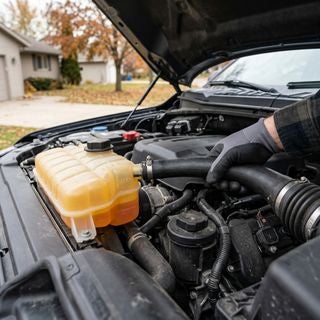
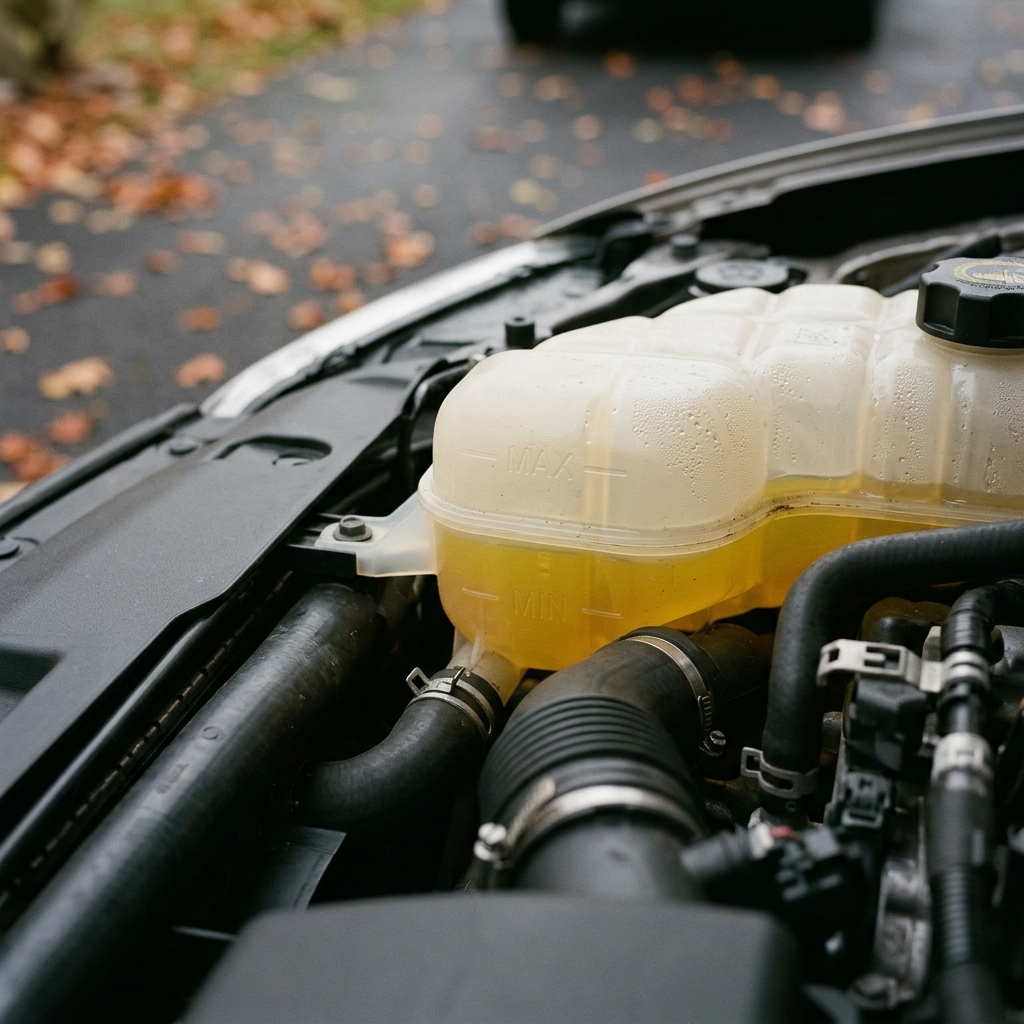
Inspect a Ford cooling system at home by checking the coolant level at the translucent expansion tank while the engine is completely cold, ensuring the fluid rests between the MIN and MAX fill lines. Top off exclusively with Motorcraft Yellow Antifreeze mixed to proper specifications, and visually inspect upper and lower radiator hoses for soft spots, swelling, or cracking.
Checking fluid levels when cold prevents severe burn hazards from pressurized coolant. Modern Ford engine bays utilize color-coded expansion tanks, eliminating the need to open radiator caps. If the fluid level drops below the minimum threshold, adding pre-diluted Motorcraft Yellow Antifreeze protects against internal corrosion and aluminum cylinder head warping. During hot summer driving up the steep riverfront bluffs in East Liverpool, an underfilled cooling system leads directly to thermal stress and dashboard warning lights.
Cooling System DIY Inspection Checklist:
1. Engine Temperature: Verify engine is completely cold before starting inspection.
2. Reservoir Level: Check expansion tank fluid is between MIN and MAX markings.
3. Hose Condition: Squeeze upper and lower radiator hoses to feel for soft or brittle spots.
4. Leak Visual: Inspect water pump housing and radiator seams for dried coolant crust.
5. Cap Security: Ensure expansion tank pressure cap is tightened until it clicks.
A quick visual sweep under the vehicle reveals early warning signs before major component failure occurs. Look for wet spots or dried orange and yellow crust near the water pump housing, thermostat housing, and radiator seams. If dashboard warning lights illuminate or coolant levels drop repeatedly, reach out to our team at (330) 462-7578 or stop by our service center at 1503 Pennsylvania Ave for a professional pressure test.
Table of Contents
- How Often Should Engine Oil Be Changed on a Ford EcoBoost Engine?
- What Are the Signs of Failing Spark Plugs in a Ford EcoBoost Engine?
- Is DIY Maintenance on a Ford EcoBoost Engine More Expensive Than Naturally Aspirated Engines?
- Where Can You Find the Correct DIY Maintenance Schedule for Your Ford?
- How Much Money Can DIY Engine Maintenance Save on a Ford Truck Per Year?
How Often Should Engine Oil Be Changed on a Ford EcoBoost Engine?
Engine oil on a Ford EcoBoost engine should be changed every 7,500 to 10,000 miles or 1 year under normal driving conditions, guided directly by the Intelligent Oil-Life Monitor. For severe driving conditions including frequent short trips, heavy towing, or extensive idling, lower the interval to 3,000 to 5,000 miles.
Turbocharged EcoBoost engines generate high operating temperatures and internal pressures. The turbochargers rely on clean engine oil for both lubrication and shaft cooling. Allowing degraded oil to circulate through hot turbo bearings causes thermal breakdown, leading to carbon sludge deposits that clog oil feed lines. Using a high-grade full synthetic or synthetic blend like Motorcraft SAE 5W-30 meeting Ford specification WSS-M2C961-A1 preserves turbo-shaft longevity across vehicles like the Ford F-150 and Ford Explorer.
Driving Condition Breakdown for Oil Change Intervals:
• Normal Conditions: 7,500 - 10,000 miles (Mixed highway cruising, light passenger loads)
• Moderate Conditions: 5,000 - 7,500 miles (Commuting in cold weather, moderate hauling)
• Severe Conditions: 3,000 - 5,000 miles (Frequent towing, commercial work, extreme idling)
Monitoring the instrument cluster keeps maintenance timing accurate. When the display shows "Change Engine Oil Soon," approximately 5 percent of oil life remains. Once "Oil Change Required" appears, immediate service is necessary to protect internal engine components. Owners can perform their own oil changes at home or easily schedule a service appointment with our factory-trained technicians. When picking up replacement filters, using a genuine OEM unit with an anti-drainback valve ensures instantaneous oil pressure upon startup. You can order OEM Ford parts directly through our dedicated counter.
What Are the Signs of Failing Spark Plugs in a Ford EcoBoost Engine?
Failing spark plugs in a Ford EcoBoost vehicle cause engine misfires under heavy throttle, rough engine idling, sluggish acceleration, reduced fuel economy, and illuminated check engine codes. Turbocharged engines gap spark plugs tightly and wear electrodes faster than naturally aspirated engines due to high cylinder pressures.
Direct-injection turbo engines place higher thermal stress on ignition components. As spark plug gaps widen from electrode wear, the ignition coil must produce higher voltage to jump the gap. This extra load causes intermittent misfires that feel like a stumble or stutter when accelerating onto high-speed roadways. Replacing plugs early prevents unburned fuel from washing down cylinder walls or damaging expensive catalytic converters.
Common EcoBoost Spark Plug Symptoms vs Healthy Operation:
• Idle Quality: Rough, vibrating idle vs Smooth, steady RPM
• Acceleration: Stuttering under boost vs Clean, linear power delivery
• Dashboard Alerts: Flashing or solid Check Engine Light vs Clear display
• Plug Lifespan: Needs replacement every 45,000 - 60,000 miles on EcoBoost
Vehicle inspection goes hand in hand with overall preventative care. While checking engine components under the hood, driver safety also depends on inspecting tire tread depth and alignment wear patterns. You can use our online tire finder tool to select factory-recommended tires suited for your specific Ford model and drivetrain.
Is DIY Maintenance on a Ford EcoBoost Engine More Expensive Than Naturally Aspirated Engines?
DIY maintenance on a Ford EcoBoost engine costs slightly more per year than on a naturally aspirated engine due to requirements for full synthetic oil, specialized oil filters, and shorter spark plug replacement cycles. The annual cost difference averages $40 to $80 in raw DIY supplies.
Turbocharged EcoBoost engines require higher-specification motor oils to withstand turbo shaft heat without burning. Standard conventional oils cannot handle these temperatures, making synthetic blend or full synthetic Motorcraft SAE 5W-30 essential. Furthermore, spark plug replacement intervals on an EcoBoost engine typically land between 45,000 and 60,000 miles, whereas naturally aspirated engines often stretch spark plug service out to 100,000 miles.
| Maintenance Item | EcoBoost Engine DIY Cost | Naturally Aspirated DIY Cost | Service Interval Difference |
|---|---|---|---|
| Motor Oil Type | Full Synthetic / Synthetic Blend | Conventional / Synthetic Blend | EcoBoost requires higher heat resistance |
| Spark Plugs | Replacement every 45k-60k miles | Replacement every 90k-100k miles | Turbo boost wears electrodes faster |
| Engine Air Filter | Inspection every 10k-15k miles | Inspection every 15k-20k miles | Turbos pull higher intake air volumes |
The slight increase in fluid and plug costs is offset by the impressive power density and efficiency of the EcoBoost lineup. For example, a Ford Escape equipped with a 1.5L EcoBoost engine delivers responsive passing power while maintaining an EPA-estimated 26 city / 32 hwy MPG rating. Paying a few extra dollars for premium synthetic oil at home preserves that efficiency for hundreds of thousands of miles.
Where Can You Find the Correct DIY Maintenance Schedule for Your Ford?
The exact DIY maintenance schedule for your vehicle is located in the official Ford owner's manual under the Scheduled Maintenance section or through the official online Ford Owner Support portal. Maintenance schedules vary based on engine displacement, transmission type, and vehicle usage patterns.
Relying on generic internet maintenance charts often leads to incorrect fluid capacities or missed service items. Ford designs specific service schedules for every powertrain configuration, from a compact Ford Escape up to a heavy-duty Ford F-150 towing up to 10,400 lbs. Checking the official lookup tool using your 17-digit Vehicle Identification Number (VIN)—found on the driver side door jamb or lower windshield corner—ensures you purchase the correct fluid specifications and filter part numbers.
How to Locate Your Ford Maintenance Schedule:
1. Owner's Manual: Flip to the "Scheduled Maintenance" chapter in the glovebox manual.
2. Online Portal: Visit Ford Owner Support and enter your 17-digit VIN.
3. Vehicle Display: Navigate to "Vehicle Settings" on the digital cluster screen.
For residents taking daily suburban trips along State Route 170 near Calcutta, staying ahead of scheduled air filter and fluid checks keeps fuel economy at peak performance. When exploring a fresh vehicle equipped with the latest SelectShift® automatic transmission, drivers can easily schedule a test drive online to experience current engine technology firsthand.
How Much Money Can DIY Engine Maintenance Save on a Ford Truck Per Year?
Performing basic DIY engine maintenance on a Ford truck saves between $200 and $500 per year in labor costs compared to professional shop rates. Typical home maintenance tasks include oil and filter changes, engine air filter replacements, cabin air filter swaps, and spark plug installations.
Estimated Annual DIY Savings Breakdown on a Ford Truck:
• Two Synthetic Oil Changes: Saves $100 - $180 in shop labor
• Engine & Cabin Air Filter Swaps: Saves $60 - $120 in labor fees
• Spark Plug Replacement (Pro-rated): Saves $100 - $200 in labor fees
• Total Estimated Annual DIY Savings: $260 - $500
Doing routine service in your own garage gives you complete control over part quality and oil choice. Swapping an engine air filter takes ten minutes and requires no special tools, saving roughly $30 in labor fees alone. Replacing six spark plugs on a 3.5L EcoBoost engine at home takes under an hour and avoids shop labor charges that often exceed $150.
For fleet owners and independent contractors who rely on commercial haulers, keeping maintenance overhead low directly protects operating profits. You can explore our new work truck inventory to compare durable powertrains built for demanding jobs. Whether you maintain your Ford truck at home or prefer professional support for complex repairs, our team at 1503 Pennsylvania Ave is always ready to assist. Give our service desk a quick call whenever you need genuine parts, technical advice, or major system diagnostics.