Blog / Automotive News, New Vehicle Reviews, Buying Guides, Financing & Insurance, Seasonal Driving Tips

Blog

All Automotive News, New Vehicle Reviews, Buying Guides, Financing & Insurance, Seasonal Driving Tips Maintenance & Service, Expert Repairs & Diagnostics, Genuine Parts & Accessories, Engine Care & Used Vehicle Guides, Financing & Insurance, Buying Guides, Trade-In Advice, Certified Pre-Owned Maintenance & Service, Battery Care & Diagnostics, Electric Vehicle (EV) Maintenance, Seasonal Maintenance & Service, Warranty & Service Contracts, Repair & Diagnostics, Parts & Components New Vehicle Reviews, Buying Guides, Financing & Insurance, Model Comparisons, Automotive News Buying Guides, Financing & Insurance, New Vehicle Reviews, Model Comparisons, Sales & Promotions Used Vehicle Guides, Financing & Insurance, Buying Guides, Vehicle Warranty Information, Pre-Owned Vehicle Trade-In Advice, Financing & Insurance, Buying Guides, Used Vehicle Guides, New Vehicle Maintenance & Service, Parts & Accessories, Vehicle HVAC Care, Seasonal Vehicle Maintenance, DIY Maintenance & Service, Essential Vehicle Care, Preventive Maintenance Tips, Vehicle Longevity Compare Cars Used Vehicle Guides, Financing & Insurance, Buying Guides, Pre-Owned Vehicle Sales, Vehicle Maintenance & Service, Brake Systems & Repair, Vehicle Parts & Accessories, Towing & Load New Vehicle Reviews, Buying Guides, Model Comparisons, Financing & Insurance, Inventory & Sales Tips Vehicle Sales Events, New Vehicle Pricing & Incentives, Financing & Lease Options, Trade-In & Vehicle Sales Process, Financing & Credit Applications, New and Used Vehicle Inventory, Pickup and Vehicle Trade-In Tips, Financing & Insurance, Buying Guides, Dealership Sales Strategies, Inventory Buying Guides, Financing & Insurance, New Vehicle Reviews, Model Comparisons, Technology & Leasing & Lease Deals, Financing & Insurance, New Vehicle Sales, Commercial Vehicle Leasing, Maintenance & Service, Recall Information, Safety & Reliability, Vehicle Ownership Care, Parts & Maintenance & Service, Vehicle Pickup & Delivery, Mobile Service & On-Site Repairs, Oil Change & Community Events & Customer Appreciation, New Vehicle Reviews, Financing & Trade-In Guides, Maintenance & Service, Warranty & Recalls, Repair & Diagnostics, Parts & Accessories, Vehicle Used Vehicle Guides, Financing & Insurance, Buying Guides, New Vehicle Reviews, Commercial Vehicle Maintenance & Service, Automotive Technology & Software Updates, Warranty & Recall Service, Mobile Maintenance & Service, Vehicle Ownership Care, Mobile Repair Services, Genuine Parts & Certified New Vehicle Reviews, Buying Guides, Financing & Insurance, Model Comparisons, Automotive Technology Commercial Truck Sales, Fleet Vehicle Financing, Custom Work Truck Upfits, Commercial Vehicle Dealership Events & Promotions, Financing & Trade-In Options, Maintenance & Service Specials, Maintenance & Service, Mobile Vehicle Services, Vehicle Care & Ownership, Genuine Parts & Repairs, Maintenance & Service, Vehicle Inspections, Oil Change & Fluid Services, Tire Care & Battery Maintenance & Service, Vehicle Lighting & Electrical Systems, Automotive Safety & Inspection, OEM Model Comparisons, New Vehicle Reviews, Technology & Innovation, Safety Features, Buying Guides New Vehicle Reviews, Buying Guides, Financing & Insurance, Model Comparisons, Used Vehicle Guides Commercial Vehicle Sales, Financing & Leasing, Small Business Vehicle Incentives, Fleet Purchasing Commercial Vehicle Sales, Fleet Purchasing & Management, Financing & Leasing for Businesses, New & Community Events, New Vehicle Buying Guides, Financing & Insurance, Maintenance & Service, Local Maintenance & Service, Brake System Care, Vehicle Safety & Inspection, Parts Quality & Replacement, Maintenance & Service, Safety Features, Technology & Innovation, Seasonal Driving Tips, Parts & Maintenance & Service, Tire Care & Repair, Roadside Assistance, Vehicle Safety & Inspections, Maintenance & Service, Tire Care & Repair, Wheel Alignment & Balancing, Suspension Maintenance, Maintenance & Service, Tire Care & Replacement, Vehicle Safety & Handling, Seasonal Vehicle Maintenance & Service, Tire Care & Replacement, Vehicle Safety & Inspection, Emergency Roadside Maintenance & Service, Vehicle Software Updates, Safety Features, Technology & Innovation, Recall & New Vehicle Reviews, Buying Guides, Model Comparisons, Maintenance & Service, Technology & Used Vehicle Guides, Buying Guides, Financing & Insurance, Model Comparisons, Selling Your Car Vehicle Sales Events, New Vehicle Purchasing, Incentives & Discounts, Financing & Pre-Approval, Buying Guides, Financing & Insurance, New Vehicle Reviews, Commercial Fleet Sales, Custom Orders & Buying Guides, Financing & Insurance, Vehicle Inventory & Offers, Dealership Visit Preparation, Buying Guides, New Vehicle Reviews, Financing & Insurance, Commercial Vehicle Sales, Model Commercial Truck Sales, Fleet Purchasing Guides, Financing & Lease Options, Work Truck Commercial Vehicle Sales, Fleet Leasing & Management, Commercial Financing & Tax Incentives, Financing & Insurance, Leasing Benefits, Model Comparisons, Technology & Innovation, Buying Guides Leasing & Financing Options, Buying Guides, Model Comparisons, Negotiation Tips, Inventory & Leasing & Financing Options, Buying Guides, New Vehicle Reviews, Model Comparisons, Technology & Maintenance & Service, Automotive Detailing, Paint Protection & Care, Seasonal Vehicle Care, Maintenance & Service, Automotive Electrical Systems, Battery Care & Replacement, Vehicle Lighting Maintenance & Service, Automotive Fluids & Lubricants, Vehicle Care & Ownership, Dealership Service Maintenance & Service, Automotive Repair, Mobile & Remote Vehicle Service, Warranty & Roadside Maintenance & Service, Brake System Care, Vehicle Safety & Inspection, Automotive Repair Tips, Maintenance & Service, Brake System Care, Vehicle Safety & Inspections, Parts & Repairs, Expert Maintenance & Service, Technology & Innovation, Vehicle Diagnostics & Telematics, Fleet Management Maintenance & Service, Vehicle Care & Longevity, Scheduled Service Packages, Oil Changes & Fluid Maintenance & Service, Vehicle Inspection & Diagnostics, Parts & Repairs, Warranty & Resale Value, Maintenance & Service, Vehicle Interior Care, Technology & Innovation in Service, Professional New Vehicle Reviews, Buying Guides, Financing & Insurance, Model Comparisons, Inventory Highlights New Vehicle Reviews, Buying Guides, Financing & Insurance, Model Comparisons, Inventory Updates New Vehicle Reviews, Buying Guides, Technology & Innovation, Safety Features, Seasonal Driving Tips New Vehicle Reviews, Financing & Insurance, Buying Guides, Used Vehicle Guides, Model Comparisons New Vehicle Reviews, Model Comparisons, Commercial Truck Guides, Technology & Innovation, Buying Guides, Financing & Insurance, Used Vehicle Guides, New Vehicle Reviews, Cross-Border Commercial Leasing Options, Business Fleet Solutions, Financing & Leasing Programs, Commercial Community Engagement & Events, New Vehicle Promotions, Financing & Trade-In Options, Maintenance & Community Events & Dealership News, New Vehicle Promotions & Incentives, Maintenance & Service Community Events & Dealership News, New Vehicle Reviews, Financing & Insurance, Maintenance & Custom Ordering & Build Process, New Vehicle Inventory & Offers, Financing & Trade-In Guidance, East Liverpool, OH Ford Dealer East Liverpool, OH Used Cars Financing & Insurance, Buying Guides, Commercial Vehicle Solutions, Fleet Management, Inventory and Financing & Insurance, Buying Guides, New Vehicle Reviews, Used Vehicle Guides, Automotive Sales Financing & Insurance, Buying Guides, New Vehicle Reviews, Used Vehicle Guides, Automotive Sales & Financing & Insurance, Buying Guides, New Vehicle Reviews, Used Vehicle Guides, Model Comparisons Financing & Insurance, Buying Guides, Used Vehicle Guides, New Vehicle Reviews, Automotive Sales Financing & Insurance, Buying Guides, Used Vehicle Guides, Trade-In Tips, New Vehicle Sales Financing & Insurance, Buying Guides, Vehicle Inventory & Offers, Trade-In & Appraisal, Dealership Financing & Insurance, Buying Guides, Vehicle Trade-In Tips, Dealership Sales Process, New Vehicle Leasing & Financing Options, New Vehicle Leasing Guides, Buying Guides, Inventory Spotlight, Trade Leasing Options, Financing & Insurance, New Vehicle Reviews, Buying Guides, Technology & Innovation Leasing Options, Financing & Insurance, New Vehicle Sales, Buying Guides, Vehicle Inventory Maintenance & Service, Air Conditioning Repair, Genuine Parts & Accessories, Dealer-Authorized Maintenance & Service, Automotive Air Conditioning Repair, Vehicle Cooling System Care, Diagnostic Maintenance & Service, Automotive Detailing & Cleaning, Seasonal Vehicle Care, Vehicle Protection & Maintenance & Service, Automotive Detailing & Paint Care, Vehicle Exterior Protection, Paint Repair Maintenance & Service, Automotive Detailing & Protection, Corrosion & Rust Prevention, Paint & Maintenance & Service, Automotive Detailing, Vehicle Care & Protection, Off-Road Vehicle Maintenance & Service, Automotive Electrical Systems, Battery Care & Replacement, Diagnostics & Maintenance & Service, Automotive Glass Repair, Safety Features, Technology & Innovation, Mobile & Maintenance & Service, Automotive Lighting & Electrical, Vehicle Safety & Visibility, DIY Vehicle Maintenance & Service, Automotive Parts & Accessories, Seasonal Vehicle Care, Vehicle Safety & Maintenance & Service, Automotive Parts & Accessories, Vehicle Air Quality & HVAC Care, Preventive Maintenance & Service, Automotive Parts & Accessories, Vehicle Ownership Care, Engine Care & Maintenance & Service, Automotive Parts & Accessories, Vehicle Safety & Repair, Warranty & Maintenance & Service, Automotive Parts & Components, Vehicle Safety & Repair, Warranty & Service Maintenance & Service, Automotive Parts & Repairs, Vehicle Warranty & Protection, Service Center Maintenance & Service, Automotive Repair Tips, Service Team Selection, Warranty & Service Policies, Maintenance & Service, Automotive Repair, Parts & Accessories, Vehicle Ownership Care, Technology & Maintenance & Service, Automotive Repair, Parts & OEM Components, Vehicle Longevity & Care, Service Maintenance & Service, Automotive Technology & Diagnostics, Vehicle Electronics & Sensors, Seasonal Maintenance & Service, Battery Care & Replacement, Vehicle Electrical Systems, Seasonal Vehicle Maintenance & Service, Brake System Care, OEM Parts & Replacement, Vehicle Safety & Inspections, Maintenance & Service, Brake System Care, Vehicle Repair Tips, Automotive Parts & Components, Maintenance & Service, Brake System Care, Vehicle Safety & Inspections, Parts & Components, Maintenance & Service, Brake System Care, Vehicle Safety Inspections, Automotive Repair Tips, OEM Maintenance & Service, Certified Technician Insights, Warranty & Service Coverage, Genuine OEM Maintenance & Service, Cooling System Repairs, Vehicle Ownership Care, Diagnostic & Maintenance & Service, Diagnostic Services, Vehicle Health & Diagnostics, Service Tips & Advice, Maintenance & Service, Engine Care & Performance, Parts & Accessories, Genuine vs. After Maintenance & Service, Paint Protection & Detailing, Vehicle Exterior Care, Seasonal Vehicle Maintenance & Service, Parts & Accessories, Engine Care & Repair, Vehicle Longevity Tips, OEM Parts Maintenance & Service, Parts & Replacements, Vehicle Care Tips, Seasonal Maintenance, DIY Vehicle Maintenance & Service, Recall Updates & Safety Notices, Genuine Parts & Accessories, Truck Care & Maintenance & Service, Repair & Diagnostics, OEM Parts & Accessories, Warranty & Recall Maintenance & Service, Repair & Diagnostics, Parts & Accessories, Vehicle Ownership Care, Service Maintenance & Service, Repair & Diagnostics, Parts & Components, Preventive Care & Tips, Warranty & Maintenance & Service, Repair & Diagnostics, Tire & Wheel Care, Vehicle Safety & Inspection, Parts Maintenance & Service, Repair & Diagnostics, Warranty & Service Coverage, Genuine OEM Parts & Maintenance & Service, Repair & Parts, Vehicle Ownership Care, Safety Features, Technology & Maintenance & Service, Repair & Parts, Vehicle Ownership Care, Transmission Maintenance & Service, Repair Solutions, Vehicle Ownership Care, Parts & Accessories, Diagnostic Maintenance & Service, Repair Tips & Techniques, Vehicle Care & Ownership Maintenance & Service, Safety Features, Automotive Recalls & Repairs, Parts & Warranty Services, Maintenance & Service, Safety Features, Automotive Recalls & Repairs, Technology & Innovation, Maintenance & Service, Safety Features, Automotive Recalls, Vehicle Ownership Care, Parts & Repairs Maintenance & Service, Safety Features, Parts & Repairs, Vehicle Ownership Care, Automotive Service Maintenance & Service, Safety Features, Recall & Repair Updates, Parts & Repairs, Vehicle Ownership Maintenance & Service, Safety Features, Recall & Safety Campaigns, Vehicle Inspection & Repairs, Maintenance & Service, Safety Features, Recall & Warranty Information, Vehicle Diagnostics & Maintenance & Service, Safety Features, Recall Repairs & Safety Campaigns, Parts & Genuine Maintenance & Service, Safety Features, Recalls & Repairs, Parts & Accessories, Vehicle Ownership Maintenance & Service, Safety Features, Repair & Recall Updates, Parts & Components, Vehicle Maintenance & Service, Safety Features, Repair & Replacement, Vehicle Care & Inspection, Parts & Maintenance & Service, Safety Features, Seasonal Driving Tips, Technology & Innovation, Parts & Maintenance & Service, Safety Features, Technology & Innovation, Automotive Electrical Systems, Maintenance & Service, Safety Features, Technology & Innovation, Automotive News, Parts & Repairs Maintenance & Service, Safety Features, Technology & Innovation, Automotive Parts & Accessories, Maintenance & Service, Safety Features, Technology & Innovation, Automotive Recalls, Parts & Repairs Maintenance & Service, Safety Features, Technology & Innovation, Automotive Recalls, Vehicle Maintenance & Service, Safety Features, Technology & Innovation, Automotive Service Tips, Recall & Maintenance & Service, Safety Features, Technology & Innovation, Parts & Repairs, Seasonal Driving Maintenance & Service, Safety Features, Technology & Innovation, Parts & Repairs, Vehicle Ownership Maintenance & Service, Safety Features, Technology & Innovation, Recall & Warranty Information, Maintenance & Service, Safety Features, Technology & Innovation, Repair & Recall Information, Parts Maintenance & Service, Safety Features, Technology & Innovation, Tire Care & Replacement, Maintenance & Service, Safety Features, Vehicle Inspections, DIY Vehicle Care, Repair & Diagnostics Maintenance & Service, Safety Recalls & Repairs, Vehicle Safety & Compliance, Powertrain & Maintenance & Service, Seasonal Driving Tips, Model Comparisons, Technology & Innovation, Safety Maintenance & Service, Seasonal Driving Tips, Safety Features, Technology & Innovation, Automotive Maintenance & Service, Seasonal Driving Tips, Safety Features, Technology & Innovation, Parts & Maintenance & Service, Seasonal Driving Tips, Vehicle Care & Ownership, Brake System Maintenance, Maintenance & Service, Seasonal Driving Tips, Vehicle Care & Ownership, Parts & Accessories, Safety Maintenance & Service, Seasonal Driving Tips, Vehicle Care & Ownership, Safety Features, Maintenance & Service, Seasonal Driving Tips, Vehicle Care & Protection, Brake Maintenance, Tire Maintenance & Service, Seasonal Driving Tips, Vehicle Care & Warranty, Service Specials & Packages, Maintenance & Service, Seasonal Driving Tips, Vehicle Cooling Systems, Automotive Safety Features, Maintenance & Service, Service Scheduling & Convenience, Vehicle Repair & Diagnostics, Parts & Maintenance & Service, Technology & Innovation, Automotive Service Transparency, Digital Vehicle Maintenance & Service, Technology & Innovation, Safety Features, Parts & Warranty, Vehicle Maintenance & Service, Tire Care & Replacement, Seasonal Vehicle Care, Safety Features, Automotive Maintenance & Service, Tire Care & Replacement, Vehicle Safety & Inspections, Seasonal Vehicle Maintenance & Service, Transmission Care & Repair, Vehicle Fluid Services, Automotive Diagnostics, Maintenance & Service, Transmission Care, Repair & Parts, Vehicle Ownership Care, Common Vehicle Maintenance & Service, Vehicle Care Tips, Parts & Accessories, Seasonal Vehicle Maintenance, Maintenance & Service, Vehicle Detailing & Care, Parts & Accessories, Seasonal Vehicle Preparation, Maintenance & Service, Vehicle Detailing & Cosmetic Care, Automotive Cleaning & Protection, Service Maintenance & Service, Vehicle Detailing & Cosmetic Care, Service Scheduling & Convenience, Maintenance & Service, Vehicle Detailing & Protection, Repair & Inspection, Parts & Accessories, Maintenance & Service, Vehicle Detailing & Protection, Vehicle Care Tips, Seasonal Vehicle Maintenance & Service, Vehicle Diagnostics & Repair, Engine Performance & Troubleshooting, Fuel Maintenance & Service, Vehicle Fluids & Lubrication, Engine Care & Repair, Parts & Accessories, Maintenance & Service, Vehicle Ownership Care, Parts & Accessories, Repair & Diagnostics, Certified Maintenance & Service, Vehicle Repair & Diagnostics, Parts & Accessories, DIY Vehicle Care, Safety Maintenance & Service, Vehicle Repair & Diagnostics, Parts & Accessories, Hybrid & Electric Vehicle Maintenance & Service, Vehicle Repair & Diagnostics, Parts & Accessories, Seasonal Driving Tips, Maintenance & Service, Vehicle Repair & Diagnostics, Parts & Accessories, Service Lane Tips & Maintenance & Service, Vehicle Repair & Diagnostics, Parts & Accessories, Towing & Performance Maintenance & Service, Vehicle Repair & Parts, Service Convenience & Customer Care, Roadside Maintenance & Service, Vehicle Repair Tips, Parts & Accessories, Safety Features, Technology & Maintenance & Service, Vehicle Service Warranties, Repair & Coverage Plans, Ownership & Vehicle Model Comparisons, Buying Guides, New Vehicle Reviews, Financing & Insurance, Inventory Updates Model Comparisons, Buying Guides, New Vehicle Reviews, Technology & Innovation, Safety Features Model Comparisons, Buying Guides, Technology & Innovation, Safety Features, Maintenance & Service Model Comparisons, New Vehicle Reviews, Buying Guides, Technology & Innovation, Financing & Model Comparisons, New Vehicle Reviews, Buying Guides, Technology & Innovation, Safety Features Model Comparisons, New Vehicle Reviews, Safety Features, Technology & Innovation, Seasonal Driving Model Comparisons, New Vehicle Reviews, Technology & Innovation, Buying Guides, Maintenance & Model Comparisons, New Vehicle Reviews, Technology & Innovation, Maintenance & Service, Buying Model Comparisons, Towing & Hauling Guides, Maintenance & Service, Technology & Innovation, New New Vehicle Promotions, Buying Guides, Financing & Insurance, New Vehicle Reviews, Inventory New Vehicle Reviews, Buying Guides, Financing & Insurance, Model Comparisons, Automotive Sales New Vehicle Reviews, Buying Guides, Financing & Insurance, Model Comparisons, Commercial & Work New Vehicle Reviews, Buying Guides, Financing & Insurance, Model Comparisons, Vehicle Customization New Vehicle Reviews, Buying Guides, Financing & Insurance, Model Comparisons, Vehicle Inventory New Vehicle Reviews, Buying Guides, Financing & Insurance, New Vehicle Specials, Trade-In & Value New Vehicle Reviews, Buying Guides, Financing & Insurance, Used Vehicle Guides, Inventory Updates New Vehicle Reviews, Buying Guides, Financing & Insurance, Used Vehicle Guides, Model Comparisons New Vehicle Reviews, Buying Guides, Financing & Insurance, Vehicle Inventory & Specials, Model New Vehicle Reviews, Buying Guides, Financing & Insurance, Vehicle Inventory, Model Comparisons New Vehicle Reviews, Buying Guides, Model New Vehicle Reviews, Buying Guides, Model Comparisons, Financing & New Vehicle Reviews, Buying Guides, Safety Features, Technology & Innovation, Model Comparisons New Vehicle Reviews, Buying Guides, Technology & Innovation, Safety Features, Maintenance & Service New Vehicle Reviews, Financing & Insurance, Buying Guides, New Vehicle Specials, Model Comparisons New Vehicle Reviews, Financing & Insurance, Buying Guides, Technology & Innovation, Automotive New Vehicle Reviews, Model Comparisons, Buying Guides, Technology & Innovation, Safety Features New Vehicle Reviews, Model Comparisons, Financing & Insurance, Technology & Innovation, Safety New Vehicle Reviews, Model Comparisons, Off-Road Adventures, Technology & Innovation, Maintenance & New Vehicle Reviews, Model Comparisons, Safety Features, Technology & Innovation, Buying Guides New Vehicle Reviews, Model Comparisons, Technology & Innovation, Financing & Insurance, Maintenance New Vehicle Reviews, Model Comparisons, Technology & Innovation, Safety Features, Buying Guides New Vehicle Reviews, Model Comparisons, Technology & Innovation, Safety Features, Maintenance & New Vehicle Reviews, Off-Road Capabilities, Outdoor Adventure Vehicles, Technology & Innovation, New Vehicle Reviews, Technology & Innovation, Buying Guides, Maintenance & Service, Model New Vehicle Reviews, Technology & Innovation, Buying Guides, Safety Features, Model Comparisons New Vehicle Reviews, Technology & Innovation, Safety Features, Maintenance & Service, Buying Guides New Vehicle Sales, Financing & Incentives, Trade-In & Appraisal, Special Sales Events, Electric New Vehicle Sales, Financing & Incentives, Trade-In & Value Guides, Manufacturer Promotions, New Vehicle Sales, Financing & Insurance, Buying Guides, Manufacturer Incentives & Discounts, New Vehicle Sales, Vehicle Delivery & Logistics, Financing & Credit Applications, Trade-In & Trucks Used Vehicle Guides, Financing & Insurance, Buying Guides, Model Comparisons, Local Dealership Vehicle Sales Events, Financing & Leasing, Trade-In & Trade-Up Guides, New Vehicle Inventory Vehicle Sales Events, New Vehicle Buying Guides, Financing & Incentives, Dealership Inventory Vehicle Sales Events, New Vehicle Pricing, Financing & Credit Applications, Trade-In & Loyalty Vehicle Sales Process, Online Vehicle Purchasing, Financing & Loan Approval, Trade-In & Vehicle Vehicle Sales Promotions, New Vehicle Buying Guides, Financing & Credit Applications, Dealership Vehicle Sales Promotions, New Vehicle Buying Guides, Financing & Incentives, Trade-In & Valuation, Vehicle Sales, Online Car Buying, Financing & Incentives, Trade-In Guides, New Vehicle Delivery
3

How Does Ford Mobile Service Work for Commercial Fleets?

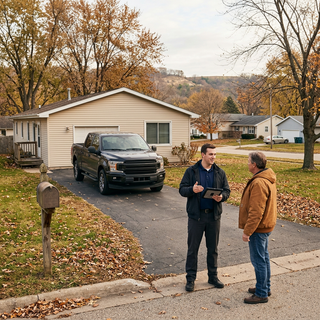
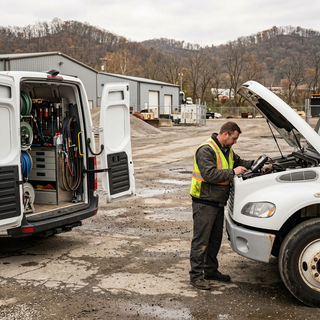
How Does Ford Mobile Service Work for Commercial Fleets? Ford Mobile Service deploys factory-trained technicians directly to your company yard, warehouse, or jobsite in specially outfitted mobile service vans. Our technicians handle scheduled maintenance, light mechanical repairs, diagnostic evaluations, and manufacturer software updates right where your vehicles are parked. Instead of assigning drivers to shuttle trucks to a physical garage and waiting in line, your business schedules on-site appointments during scheduled downtime, keeping your commercial assets road-ready without taking vehicles off their daily routes. Managing a busy lineup of work vehicles requires balancing tight delivery schedules, jobsite commitments, and constant preventative care. When an asset leaves your staging area for maintenance, the hidden costs add up fast: secondary chase vehicles, driver hourly wages spent sitting in waiting rooms, and disrupted route timing. With our mobile service, our team schedules visits around your operating rhythm, servicing vehicles in batches during planned yard stops or between shifts. Our mobile units are equipped with commercial-grade fluid extraction systems, onboard power generators, pneumatic tools, air compressors, and factory calibration equipment. Whether your business operates a local delivery group of Ford Transit vans or runs heavy haulers from our F-Series work truck selection, our mobile technicians carry the specialized tooling required for commercial duty cycles. For local contractors balancing projects near State Route 170 in Calcutta, having scheduled maintenance roll directly onto your lot eliminates route disruptions before morning crews roll out. To discuss setting up a routine commercial care schedule or check our current service perimeter, give our commercial advisors (330) 462-7578 a call. You can also map a route to our service department at 1503 Pennsylvania Ave to coordinate multi-vehicle account setups with our fleet specialists. Table of Contents Can Ford Mobile Service Operate Indoors in a Company Warehouse or Garage? Which Routine Maintenance and Commercial Fleet Services Can Be Performed On-Site? Do Mobile Technicians Have Access to Dealership Diagnostic Systems? How Mobile Maintenance Cuts Fleet Downtime and Supports Mixed Makes with Omnicraft What Do Fleet Managers Need to Know About Ford Mobile Service? Streamline Your Commercial Maintenance Schedule with On-Site Fleet Care Can Ford Mobile Service Operate Indoors in a Company Warehouse or Garage? Indoor service is possible only when a warehouse or garage provides adequate clearance, stable flooring, ventilation, and safe access for the technician. The indoor space must offer adequate overhead door clearance for our tall-roof mobile service vans, a level concrete floor capable of supporting safe jacking, proper airflow, and a facility policy that permits standard commercial automotive fluids on the property. INDOOR FLEET SERVICE CHECKLIST Physical Clearance 10 to 12 feet of overhead door and ceiling clearance for mobile vans Flooring Surface Flat, reinforced concrete clean of debris and rated for commercial jacks Staging Footprint Minimum 4 to 6 feet of perimeter space around each serviced vehicle Facility Ventilation Active air exchange or open bay doors during diagnostic engine cycling Environmental Safety Approved indoor fluid transfer policy and available fire suppression equipment To accommodate our specialized service vans, an indoor facility generally needs a minimum of 10 to 12 feet of vertical clearance at the entry doors and inside the work envelope. Service vans carry internal storage racks, heavy-duty fluid reservoirs, and roof-mounted safety lighting that exceed standard passenger vehicle heights. Staging areas must also provide at least four to six feet of perimeter space around each fleet vehicle so technicians can maneuver tire-handling equipment, roll-around tool cabinets, and digital diagnostic carts without obstruction. Environmental protection is built directly into our on-site processes. Our technicians use closed-loop, vacuum-assisted fluid extraction systems that pull motor oil, transmission fluid, and engine coolant directly through the dipstick tube or sealed access ports into onboard waste recovery tanks. This eliminates open-air gravity pans and drastically lowers the risk of spills on your warehouse floor. Technicians also lay down heavy-duty absorbent containment mats and carry commercial spill kits to comply with property management and industrial health standards. When your warehouse team needs to prepare staging zones or confirm vehicle fitment, you can review our on-site capabilities through our dedicated mobile service overview. If your in-house fleet staff requires replacement filters, hardware, or shop supplies for their own daily checks, you can quickly order commercial maintenance parts through our parts department to keep your staging area fully stocked. Which Routine Maintenance and Commercial Fleet Services Can Be Performed On-Site? Our mobile service handles preventative maintenance, wear-and-tear component replacements, safety inspections, diagnostic troubleshooting, and software-driven recall remedies right at your facility. These capabilities cover up to 80 percent of the routine service events that keep work trucks and cargo vans running through demanding commercial duty cycles. ON-SITE MOBILE SERVICE CAPABILITIES Lubrication & Engine Health Full synthetic and diesel oil changes, oil filters, engine air filters, fuel water separators Brake & Friction Service Pad replacement, rotor replacement, caliper service, hydraulic fluid checks Electrical & Starting Systems Battery conductance testing, AGM/lead-acid replacement, terminal service, alternators Running Gear & Vision Tire rotations, electronic balance checks, tire pressure monitoring reset, wiper sets Diagnostics & Compliance Check engine light diagnostics, factory software updates, safety recall procedures Routine fluid intervals are the foundation of on-site service. Mobile technicians conduct comprehensive oil and filter services on gasoline engines, such as the 3.5L EcoBoost in the Ford F-150, as well as high-capacity Power Stroke turbo diesel engines powering the Ford Super Duty platform. Technicians replace engine air filters, cabin microfilters, and diesel fuel water separators before dirty elements harm fuel efficiency or wear down high-pressure injection pumps. Brake friction components take a beating in urban stop-and-go driving and hilly terrain. Technicians measure pad friction thickness with digital gauges, inspect rotor runout, and replace worn pads and rotors directly on your lot. Mobile vans also carry complete tire service gear, enabling technicians to rotate heavy-ply commercial tires, set cold inflation pressures to load specifications, and reset the Tire Pressure Monitoring System (TPMS) across every axle. To keep commercial vehicles from missing mandated operational windows, dispatchers can schedule fleet service online to book mobile maintenance blocks. Major structural overhauls, internal transmission rebuilds, frame straightening, and tasks requiring multi-post vehicle lifts remain assigned to our main service center, but mobile care handles the regular upkeep that prevents those catastrophic breakdowns. Do Mobile Technicians Have Access to Dealership Diagnostic Systems? Every mobile technician operates with the same factory-level computer diagnostic hardware and proprietary software programs used inside our dealership service bays. Rather than carrying generic handheld code readers that only display basic trouble codes, our mobile units connect directly to Ford Motor Company's engineering database using cloud-linked ruggedized laptops and specialized interface hardware. Our technicians run FDRS (Ford Diagnostic & Repair System) and the legacy IDS (Integrated Diagnostic System) through a genuine Ford VCM 3 (Vehicle Communication Module) vehicle interface. This setup allows technicians to read proprietary controller area network (CAN-bus) live data streams, test individual sensors, and command bidirectional component activations. If a delivery van triggers an illuminated wrench light or enters an engine limp mode, our mobile technician isolates the failing module, checks live pressure readings, and verifies wiring harness voltage on-site. These systems give our mobile units full module programming authority. Technicians can execute: Powertrain Control Module (PCM) software updates to refine transmission shift schedules and engine idle stability Body Control Module (BCM) configurations for auxiliary lighting and upfit electrical circuits Anti-lock braking system calibrations following hydraulic or wheel-speed sensor service Key-fob programming and fleet telematics gateway modem module synchronizations Manufacturer recalls involving module flashes, high-voltage battery software monitoring updates on electric models like the E-Transit, and communications updates are routinely resolved directly on your staging lot. Because our diagnostic tools update over secure cellular networks with real-time factory technical service bulletins, your commercial assets receive identical technical accuracy whether serviced in our shop or parked at your warehouse. How Mobile Maintenance Cuts Fleet Downtime and Supports Mixed Makes with Omnicraft Mobile fleet maintenance slashes non-productive downtime by servicing vehicles when they are naturally parked, eliminating the compounding labor costs of vehicle transport. For operations supporting manufacturing and industrial sites along the river bluffs in East Liverpool, scheduling maintenance between operational runs means zero lost billable hours for drivers and work crews. When a company relies solely on fixed service facilities, the cost of an oil change or brake inspection includes driver wages, fuel burn, and the loss of a revenue-generating vehicle for half a day. Batching mobile service on-site resets this dynamic. While your crews complete paperwork, rest overnight, or load inventory for the next morning, our technicians service three, five, or ten vehicles in a single visit. Dispatchers preserve their scheduled operating hours, vehicle wear from non-revenue travel drops to zero, and your overall fleet availability climbs. FLEET SERVICE METHOD COMPARISON Operational Factor Dealership Bay vs. On-Site Mobile Care Driver Transit Hours 1 to 2 paid driver hours per vehicle vs. 0 driver hours with on-site service Chase Vehicles Required Requires a second driver and chase truck vs. zero external logistics Vehicle Staging Time Sits in off-site holding queue vs. stays parked on company property until finished Service Scheduling Window Strictly during regular shop hours vs. flexible windows during fleet idle time Mixed-Make Support Often requires multiple brand dealers vs. unified care using Motorcraft & Omnicraft Many commercial fleets operate mixed vehicle inventories, combining Ford work trucks with vans and chassis cabs from other manufacturers. Through Ford's Omnicraft parts line, our mobile technicians carry certified, precision-engineered replacement parts designed specifically for non-Ford makes. Omnicraft supplies high-grade brake pads, rotors, starters, alternators, filters, and suspension parts backed by manufacturer warranties. Pairing Omnicraft with genuine Motorcraft components for your Ford vehicles allows you to consolidate all your preventative care into one single mobile vendor. Your fleet administrator handles one service invoice, maintains unified maintenance logs, and avoids juggling accounts across multiple independent repair facilities. What Do Fleet Managers Need to Know About Ford Mobile Service? Q: How many vehicles does my business need to schedule a mobile service visit? A single urgent diagnostic visit and scheduled batch maintenance for dozens of units can both fit into a fleet’s on-site service plan. While servicing multiple vehicles during a single visit maximizes your yard efficiency and technician staging time, single-vehicle visits are regularly scheduled for time-sensitive recalls or critical fluid intervals. Scheduling requirements and travel perimeters depend on technician availability, so contacting our service department allows us to build an appointment window tailored to your lot size. Q: Can mobile technicians service commercial electric vehicles like the E-Transit? Yes, our mobile technicians are certified to perform scheduled maintenance, software updates, and light mechanical repairs on commercial electric vehicles like the Ford E-Transit and F-150 Lightning. On-site EV services include multi-point safety inspections, high-voltage cooling system checks, 12-volt accessory battery testing, cabin air filter replacement, tire rotations, and brake friction maintenance. Mobile technicians also connect factory diagnostic systems to monitor battery cell state-of-health and complete high-voltage battery management software recalibrations right at your fleet charging depot. Q: What happens if an on-site inspection reveals a major mechanical issue? If a technician uncovers severe wear or heavy component failures during an inspection, we document the issue with digital measurements and photographs for your fleet coordinator. The technician establishes whether the vehicle remains safe to operate or requires immediate grounding. For heavy repairs exceeding mobile capabilities, such as transmission replacements, head gaskets, or structural frame alignment, our mobile coordinator helps arrange transport and schedules direct priority entry into our commercial dealership service bays. Q: How do cold winter temperatures and road salt affect mobile maintenance scheduling? Sub-freezing winter weather and heavy road salt usage accelerate undercarriage corrosion and severely strain electrical starting systems. Cold temperatures reduce battery cranking amperage, making proactive conductance testing vital before freezing weather hits. Our commercial battery testing advice explains how our technicians detect failing cells before work trucks fail to crank on winter mornings. If bitter weather or ice storms prevent safe outdoor repairs, mobile visits can transition inside your heated warehouse or be rescheduled to keep technicians safe and equipment operating properly. Q: Is there an added trip charge for scheduling Ford Mobile Service at our facility? Please contact our service department for current mobile service availability and any applicable fees for your location. Your business pays only for the standard parts and labor required for the specific maintenance, inspections, or mechanical repairs performed on your vehicles. Warranty repairs and software-based safety recalls performed on-site are covered according to manufacturer terms with no mobile dispatch fee charged to your commercial account. Streamline Your Commercial Maintenance Schedule with On-Site Fleet Care Protecting commercial vehicle uptime requires a proactive maintenance partner that works around your operating hours rather than disrupting them. Ford Mobile Service from Tri State Ford brings certified technicians, factory-grade diagnostic computers, and original equipment parts straight to your business location. Whether your fleet operates cargo vans, diesel haulers, or mixed-make utility trucks, our mobile units eliminate transit waste and keep your drivers focused on their jobs. Take the friction out of your fleet maintenance schedule by speaking with our commercial service team today. Give us a quick call to set up your company profile, review recurring batch maintenance options, or reserve an upcoming service date. If you prefer to discuss fleet maintenance management in person or inspect our dedicated commercial truck facilities, drop a pin to our service center location and let our commercial team build a maintenance schedule that keeps your business moving forward. © 2026 Tri State Ford. All rights reserved. Vehicle specification data © JATO Dynamics Limited. Ford Mobile Service in East Liverpool, OH | Tri State Ford

f

What Should You Verify Before Buying a Used Vehicle?

What Should You Verify Before Buying a Used Vehicle? Before buying a used vehicle, verify the Vehicle Identification Number (VIN) against official records, inspect the physical title and vehicle history report for undisclosed damage or safety recalls, request an itemized out-the-door price breakdown including taxes and fees, and obtain a comprehensive pre-purchase inspection from a qualified technician. Verifying these critical elements protects your financial investment and ensures total transparency before signing any purchase contract. Purchasing a pre-owned car, truck, or SUV involves evaluating both physical mechanical condition and legal background. A thorough pre-purchase audit prevents costly surprises after taking delivery. Experienced car buyers begin by checking documentation long before reaching the final negotiation stage. When reviewing a prospective pre-owned vehicle, start with a physical walkaround and documentation review. Confirm that the vehicle history report matches the current odometer reading and shows a consistent maintenance record. It is also essential to verify whether the vehicle has been operated under strenuous driving conditions, such as commercial hauling or heavy trailer towing. At Tri State Ford, our team provides full transparency across our entire pre-owned lineup. We supply detailed vehicle history reports for our pre-owned inventory, allowing you to review ownership history, past service records, and title status. Whether you are considering a fuel-efficient commuter, a spacious family crossover, or a capable work truck, inspecting key paperwork upfront ensures complete peace of mind. Before making your decision, you can explore current manufacturer vehicle specials or give our team a call directly at (330) 462-7578 to ask about specific pre-owned models in stock. If you prefer to stop by in person, you can easily find our East Liverpool showroom address and test-drive your top choices. Table of Contents Why Is Asking for the Vehicle Identification Number (VIN) Critical When Buying a Used Car? What Mechanical Questions Should You Ask About Used Engine and Transmission History? What Is the Itemized Out-the-Door Price Including Taxes and Fees? Is a Factory Certified Pre-Owned Warranty Fully Transferable to Subsequent Buyers? What Questions Should You Ask If You Plan to Trade In a Vehicle? What Legal Paperwork and Title Documents Are Required When Purchasing a Used Car? Essential Used Car Buying Questions Answered Step Into Your Next Vehicle with Confidence at Tri State Ford Why Is Asking for the Vehicle Identification Number (VIN) Critical When Buying a Used Car? Asking for the Vehicle Identification Number (VIN) is critical because it unlocks the vehicle's complete operational and legal history, revealing prior accident records, title brands, ownership counts, and uncompleted safety recalls. The unique 17-character alphanumeric code acts as a vehicle's permanent fingerprint, allowing buyers to verify that the physical car matches its legal registration and title documentation. Every modern vehicle manufactured for North America carries a standardized 17-digit VIN. This sequence encodes essential engineering data, including the country of manufacture, vehicle manufacturer, chassis type, engine displacement, model year, assembly plant, and unique production sequence number. Beyond decoding specs, the VIN serves as the primary key for querying public and private automotive databases. Checking the VIN protects buyers from several severe risks: Title Branding Warnings: Running a VIN check highlights severe title designations such as salvage, rebuilt, flood damage, hail damage, or lemon law buybacks. Vehicles carrying branded titles have often suffered catastrophic structural or electronic damage, compromising passenger safety and severely reducing future trade-in value. Unfilled Safety Recalls: The National Highway Traffic Safety Administration (NHTSA) maintains an open recall lookup tool. Entering a vehicle's VIN reveals whether outstanding safety recall repairs remain unperformed. Factory safety recalls are performed free of charge at authorized franchised dealerships. Odometer Fraud Detection: Comparing historical VIN entries across state registration filings, emissions checks, and service entries exposes mileage discrepancies or odometer rollback attempts. Cloning and Theft Protection: Criminals occasionally attempt vehicle cloning by placing a fraudulent VIN plate over the original dashboard marker. Cross-referencing the VIN on the dashboard with the driver-side door jamb sticker, engine frame stamping, and official title prevents purchasing a stolen vehicle. To verify physical VIN consistency, locate the stamped metal plate visible through the lower driver-side windshield corner. Compare this number directly with the safety compliance label attached to the driver door pillar, the engine compartment stamping, and the printed certificate of title. Any discrepancy between these physical locations indicates potential structural repair, panel replacement, or fraudulent tampering. Shoppers researching available models can easily complete an online credit application to secure financing terms prior to visiting. While researching pre-owned options, visitors can also check out new vehicle specials or browse new Ford inventory to compare brand-new models against pre-owned pricing steps. What Mechanical Questions Should You Ask About Used Engine and Transmission History? Evaluating a used vehicle's engine and transmission history requires asking direct questions regarding past maintenance schedules, recent mechanical repairs, fluid condition, and past usage intensity. Buyers should request documented service records, inquire when major wear components were last serviced, and confirm that no diagnostic trouble codes were recently cleared to hide active powertrain defects. A vehicle's powertrain represents its most complex and expensive mechanical assembly. When inquiring about engine condition, ask specifically whether scheduled oil changes occurred at recommended manufacturer intervals. On modern turbocharged engines, such as Ford's 2.3L EcoBoost engine or 3.5L EcoBoost V6 engine, consistent oil change history is vital for turbocharger bearing longevity and internal valve cleanliness. Inquire if drive belts, timing chains, spark plugs, and engine coolant have been replaced according to the owner's manual maintenance schedule. Key mechanical powertrain questions to present to the seller include: Have there been any recent fluid leaks around the engine valve covers, oil pan, radiator, or transmission casing? Has the transmission fluid been serviced or flushed according to recommended mileage intervals? Has the vehicle experienced any transmission slippage, delayed gear engagement, or harsh shifting between gears? Has the vehicle ever overheated, and have major cooling components like the water pump or thermostat been replaced? Has the vehicle been used extensively for heavy trailer towing or snow plowing? Checking the undercarriage for salt-belt corrosion is especially important for local buyers. Cold winter road treatments accelerate frame and line oxidation. A vehicle driven regularly across hilly terrain around Calcutta benefits from a documented transmission service history to ensure shifting clutches remain crisp. For added peace of mind regarding ownership history, shoppers often choose to explore our pre-owned Carfax 1-owner inventory. Vehicles with a single previous owner frequently feature meticulous service documentation, making it easier to verify engine and transmission maintenance logs. What Is the Itemized Out-the-Door Price Including Taxes and Fees? The itemized out-the-door price is the complete final dollar amount required to purchase and take ownership of a used vehicle, encompassing the agreed sales price, state and local sales taxes, official title and registration fees, and dealer documentation fees. Requesting a written, itemized price quote before signing ensures complete financial clarity and eliminates unexpected cost additions at closing. Understanding how sales tax applies to vehicle purchases in Ohio prevents budgeting errors. Ohio charges a base state sales tax rate of 5.75% under state law. In addition to the state base rate, individual counties add permissive local taxes and transit authority surcharges, resulting in combined sales tax rates ranging from 6.50% to 8.00% across most areas. It is critical to recognize that sales tax is determined by the buyer's county of residence, not the county where the dealership operates. For instance, commuters living in Boardman who commute along local commercial corridors pay the combined tax rate established by Mahoning County, regardless of where the purchase transaction takes place. An itemized out-the-door quote breaks down into clear fee categories: Out-the-Door Cost Component Description and Statutory Framework Agreed Vehicle Purchase Price The negotiated base cost of the pre-owned vehicle before applicable taxes and government fees [4]. State and Local Sales Tax Combined state base tax (5.75%) plus local county/transit taxes calculated on taxable purchase price [4]. Certificate of Title Fee Official statutory fee ($18 statewide; $23 in counties with local Clerk of Courts surcharges) [4]. Registration and License Plate Fees State passenger vehicle registration ($36 annual base) plus deputy registrar service fees and local permissive taxes [4]. Dealer Documentation Fee Statutory fee covering administrative title preparation, capped by Ohio law at the lesser of $398 or 10% of contract price [4]. A critical detail involves how trade-ins affect sales tax calculations. Under Ohio Revised Code 5739.01(H), trade-in allowance reductions on taxable price apply exclusively when purchasing a brand-new vehicle from a licensed new motor vehicle dealer. When purchasing a pre-owned vehicle, Ohio sales tax is calculated on the full agreed purchase price, regardless of whether an old vehicle is traded in as part of the transaction. Is a Factory Certified Pre-Owned Warranty Fully Transferable to Subsequent Buyers? Most factory Certified Pre-Owned (CPO) warranties are fully transferable to subsequent private buyers, although exact transferability terms, administrative fees, and coverage durations vary by vehicle manufacturer. OEM-backed certified warranties offer comprehensive protection that stays attached to the vehicle's VIN, enhancing long-term value retention. Unlike generic aftermarket service contracts sold by third-party vendors, a factory Certified Pre-Owned warranty is backed directly by the vehicle manufacturer. For Ford vehicles, the Ford Blue Advantage program provides structured certification tiers that include rigorous multi-point mechanical inspections, comprehensive limited warranty protection, powertrain limited warranty coverage, and 24/7 Ford Roadside Assistance. Key warranty transfer guidelines to verify prior to purchase include: Factory Warranty Transferability: Most OEM CPO coverage automatically transfers to subsequent private owners for the remainder of the specified warranty time or mileage limit. Some manufacturers require submitting a simple transfer form within 30 days of sale along with a small transfer fee. Coverage Duration and Scope: Verify the exact expiration date and mileage threshold of both the bumper-to-bumper comprehensive coverage and the powertrain limited warranty. Included Owner Privileges: Confirm whether complimentary benefits, such as 24/7 roadside assistance or trip interruption coverage, transfer alongside the primary mechanical warranty. Authorized Repair Facilities: Factory CPO coverage ensures that covered mechanical repairs are performed by factory-trained technicians using genuine OEM parts at franchised dealerships across the country. Buyers searching for factory-backed pre-owned vehicles can browse our certified pre-owned Ford inventory to explore models that have passed thorough factory multi-point inspections and carry comprehensive warranty coverage. What Questions Should You Ask If You Plan to Trade In a Vehicle? When planning to trade in a vehicle while purchasing a used car, buyers should ask for a standalone written trade-in appraisal, inquire how existing loan balances will be satisfied, and ask how the transaction paperwork handles title transfer details. Separating the trade-in valuation from the replacement vehicle purchase price ensures total clarity on both sides of the deal. Establishing a clear trade-in process begins with an objective physical inspection and market valuation. Ask the dealership sales team what market tools and physical criteria they use to evaluate trade-in offers. Providing maintenance logs, spare key fobs, and original equipment helps maximize your trade-in appraisal value. Essential trade-in questions to ask include: Is the trade-in appraisal value a firm cash offer that remains valid if I decide to complete the purchase later? How does the finance department handle contacting my current lender to obtain an accurate 10-day payoff amount? If my trade-in has negative equity (owing more on the loan than the vehicle's current market value), how will that balance be structured into the new agreement? Will the dealership handle all official title assignment filings and lien release transfers with the state BMV? Before visiting the showroom, buyers can easily value your trade-in online using our integrated trade-in tool. If you decide that a new vehicle fits your long-term plans better than pre-owned inventory, you can also explore how to custom order a new Ford vehicle tailored to your exact feature preferences. What Legal Paperwork and Title Documents Are Required When Purchasing a Used Car? Purchasing a used car requires executing legal documentation to ensure valid ownership transfer, clear title status, and proper state registration. Required documents include a signed certificate of title, a bill of sale, an odometer disclosure statement, a lien release certificate if a prior loan existed, and official state registration filings. When buying a used vehicle from a private seller, verifying title details requires strict attention. The buyer must ensure the seller's name printed on the front of the physical title matches their driver's license exactly. The seller must sign the title assignment over to the buyer in the presence of a notary public where required. In Ohio, title applications must be filed with the County Clerk of Courts Title Office within 30 days of the sale date to avoid statutory late penalties. When completing a vehicle transaction, ensure the following legal documents are fully executed: Original Certificate of Title: The official state title showing clean ownership without undisclosed active liens or salvage brands. Notarized Bill of Sale: A written document signed by both parties stating the exact sale price, transaction date, buyer and seller details, and vehicle VIN. Odometer Disclosure Statement: A federally mandated statement confirming the exact current mileage reading on the vehicle's odometer at the time of transfer. Lien Release Documentation: If the vehicle was previously financed, an official lien release statement from the lender confirming the loan has been paid in full. Completing a private transaction carries legal risks regarding price disclosure. Knowingly understating the purchase price on title paperwork constitutes falsification under Ohio Revised Code 2921.13, which is a legal misdemeanor. The Ohio Department of Taxation cross-checks reported vehicle sale prices against state valuation databases and assesses additional use taxes if reported figures fall below realistic market value. When you purchase a pre-owned vehicle at Tri State Ford, our professional financial and administrative desk handles all title transfers, lien processing, state tax filings, and registration paperwork directly. This eliminates paperwork stress and guarantees proper legal compliance. For assistance with pre-owned buying paperwork or inventory questions, give our sales desk a call at (330) 462-7578 or visit our East Liverpool showroom to speak with our team. Essential Used Car Buying Questions Answered Q: How can you confirm that the physical vehicle matches its title documentation? Verify that the physical vehicle matches its title documentation by checking the 17-digit VIN stamped on the lower driver-side dashboard through the windshield and comparing it to the compliance label on the driver-side door jamb. Confirm that both physical VINs match the exact number printed on the certificate of title, registration paperwork, and vehicle history report. Any mismatch indicates structural component replacement or potential title fraud. Q: Where can buyers locate official safety recall details for a used Ford? Buyers can locate official safety recall information by entering the vehicle's 17-digit VIN into the NHTSA online recall lookup tool or visiting Ford's owner support portal. These databases detail open recall campaigns, safety advisories, and service campaign statuses. Safety recall repairs are performed free of charge at authorized franchised Ford dealerships regardless of vehicle age or mileage. Q: What should you do if a private seller cannot produce a clean title? Walk away from the transaction if a private seller cannot produce a clean, physical certificate of title in their name. Purchasing a vehicle without a clear title creates severe legal risks, preventing registration, legal insurance coverage, and proper ownership transfer. If an outstanding bank lien exists, complete the transaction directly at the lienholder's financial branch to ensure the loan is fully satisfied and the title is released legally. Q: Does a cash down payment lower the sales tax on a used vehicle purchase in Ohio? A cash down payment does not reduce the taxable price of a used vehicle in Ohio. Sales tax is calculated on the agreed purchase price of the vehicle itself, rather than the net amount financed through a lender. Putting cash down reduces monthly loan payments and interest charges over the loan term, but state and county sales taxes apply to the full negotiated vehicle purchase price. Q: How long does the dealership buying process take compared to a private sale? Purchasing a used vehicle at an authorized dealership typically takes between two and four hours when test-driving, arranging financing, and completing registration paperwork in one visit. Buyers who arrive with financing pre-approval and clear trade-in documentation streamline the desk process significantly. Private sales often require several days to coordinate seller schedules, arrange independent mechanical inspections, visit notary offices, and file title documents at the Clerk of Courts office. Step Into Your Next Vehicle with Confidence at Tri State Ford Selecting the right pre-owned vehicle requires complete confidence in its mechanical quality, vehicle history, and purchase value. By asking the right questions regarding VIN history, maintenance records, title status, and out-the-door pricing, you protect your budget and ensure years of dependable driving. At Tri State Ford, our team is dedicated to providing an enjoyable, transparent buying experience for drivers across the tri-state area. Whether you need a rugged pre-owned truck for heavy towing, a spacious crossover for family trips, or a fuel-efficient daily driver, our extensive pre-owned selection undergoes thorough mechanical inspections before hitting the lot. Take the next step in your vehicle search today. Browse our online pre-owned inventory, evaluate your current vehicle's trade value, or schedule a test drive with our friendly sales team. Visit our East Liverpool dealership or contact us online to experience the Ford commitment to quality and service firsthand. Keep Your Vehicle Running Strong Keep your vehicle performing at its best with our service team: Order Parts Schedule Service Appt © 2026 Tri State Ford. All rights reserved. Vehicle specification data © JATO Dynamics Limited. Used Vehicle Buying Guide in East Liverpool OH | Tri State Ford

f

How Do You Set Up Ford Pickup and Delivery Service?

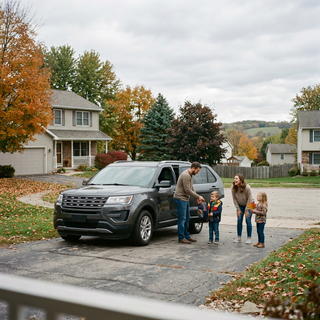
How Do You Set Up Ford Pickup and Delivery Service? Setting up Ford Pickup & Delivery involves selecting the service through the Ford App, contacting our dealership service team by phone, or submitting a request through our online appointment system. You choose an available time window, specify your location, and list the maintenance needed. A dealership representative picks up your vehicle at the designated address, brings it to our service department for care, and returns it to your driveway or workplace once maintenance is complete. Arranging doorstep vehicle care removes the hassle of sitting in a waiting room or arranging rides during a busy workday. Truck owners and commuters balancing tight schedules can organize vehicle maintenance directly from a smartphone or office computer. When setting up your appointment, you specify whether your vehicle will be parked at home or at a work site, establish preferred contact methods for status updates, and approve the initial service scope. For truck owners driving between job sites and residential neighborhoods in Calcutta, setting up service without interrupting daily work routines keeps maintenance on track. Our team confirms the appointment timing and verifies location details prior to dispatching a representative. You can coordinate your next visit by reviewing our service center location on Pennsylvania Ave or by giving our service department a quick call at (330) 462-7578 to speak directly with an advisor. Table of Contents How Does Ford Pickup & Delivery Work on Service Day? How Do You Schedule Ford Pickup & Delivery Through the Ford App? Who Is Eligible for Complimentary Ford Pickup & Delivery? Which Services Qualify for Pickup & Delivery and What Costs Are Excluded? How Does Ford Pickup & Delivery Compare to Ford Mobile Service and Loaner Cars? Common Questions About Ford Remote Service Keep Your Ford Running Smoothly Without Leaving Home How Does Ford Pickup & Delivery Work on Service Day? On your scheduled service day, a dealership representative arrives at your designated address during the agreed time window, conducts a brief vehicle walk-around inspection, and takes possession of your vehicle after providing a digital or paper receipt. Your vehicle is transported to our service facility where factory-trained technicians perform the approved work, after which we deliver your vehicle back to your location and process payment remotely. The handoff process on service day is designed for maximum clarity and safety. Before taking the keys, our representative documents the vehicle's current condition and fuel level while confirming the requested maintenance items. Throughout the day, our service advisors stay in touch using text messages, phone calls, or app updates. If our technicians identify additional maintenance needs during a multi-point inspection, such as worn brake pads or aging wiper blades, you receive a detailed digital estimate to review and approve before any extra work begins. Once maintenance is complete, your vehicle receives a standard check to ensure all work meets factory quality guidelines. The representative cleans key touchpoints and drives or transports the vehicle back to your specified address. Payment is handled securely online or over the phone prior to delivery, meaning you simply receive your keys and completed service document upon return without ever stepping foot inside the dealership. When you are ready to book your next routine care, you can schedule a service appointment online and select genuine components by choosing to order OEM parts directly through our facility. How Do You Schedule Ford Pickup & Delivery Through the Ford App? To schedule Ford Pickup & Delivery using the Ford App, open the application on your smartphone, tap the Service icon, and choose the Pickup & Delivery option. From there, select your required maintenance items, enter your preferred pickup location and appointment date, and tap to confirm your reservation with our dealership. The Ford App streamlines ownership care by storing your vehicle's identification number, service history, and preferred dealership preferences in one central interface. When you open the app to schedule, system diagnostics may automatically flag upcoming maintenance needs based on your mileage and vehicle telemetry. You can select pre-set care packages or type specific notes regarding any vehicle symptoms you want our certified technicians to inspect. Open the Ford App and navigate to the Service tab. Select the Pickup & Delivery option from the available service methods. Check the required maintenance items or enter custom service requests. Input your exact address for pickup and return, such as your home or office. Choose your preferred date and available morning or afternoon time window. Review your contact details and finalize the reservation. After submitting your request, the app sends a push notification confirming that your reservation has been received by our department. As your service date approaches, the app provides real-time updates regarding representative dispatch, vehicle arrival at the shop, work progress, and return timing. You can easily manage these remote features by accessing our dedicated Ford Pickup & Delivery portal to learn more about app compatibility. Who Is Eligible for Complimentary Ford Pickup & Delivery? Complimentary Ford Pickup & Delivery is available to retail owners of Ford vehicles that are currently within their standard 3-year/36,000-mile bumper-to-bumper limited warranty. Owners of out-of-warranty Ford vehicles can still utilize the service for a fee or by redeeming earned Ford owner rewards points at participating dealerships. Vehicle eligibility requires that the vehicle be fully operational, drivable, and safe to transport. Emergency breakdown situations, vehicles with flat tires, or cars involved in roadside collisions do not qualify for standard Pickup & Delivery and must be managed through official roadside support channels instead. Leased Ford vehicles carry full factory warranty coverage during their initial term and are completely eligible for complimentary transport service during that active coverage window. Working-class drivers near the industrial riverfront in East Liverpool who lease a new Ford F-150 or Ford Maverick benefit from factory warranty coverage that includes this doorstep pickup option. Commercial fleet vehicles and heavy-duty trucks like the Ford Super Duty are also eligible at participating locations, provided local distance and transport guidelines are met. Which Services Qualify for Pickup & Delivery and What Costs Are Excluded? Most routine maintenance tasks, minor factory warranty repairs, software updates, and recall services qualify for Ford Pickup & Delivery, including oil changes, tire rotations, brake service, and battery service. The pickup and return vehicle transport is complimentary for eligible warranty owners, but the customer remains responsible for standard parts, labor, and maintenance service charges. Routine maintenance packages like The Works—which combines a synthetic blend oil change, tire rotation, pressure check, brake inspection, and comprehensive multi-point check—are perfectly suited for pickup service. Certified technicians perform all shop work using specialized tools, heavy shop lifts, and diagnostic gear that cannot be carried in a portable service van. Eligible Services Program Exclusions & Requirements Synthetic Oil & Filter Changes Parts and Labor Costs (Customer Pay) Tire Rotations & Wheel Balancing Non-Drivable Vehicles or Flat Tires Multi-Point Safety Inspections Accident/Collision Recovery Work Brake Pad & Rotor Replacements Aftermarket Accessory Installation Battery Testing & Replacement Out-of-Zone Transport Beyond Mileage While transport fees are covered during the warranty period, any out-of-pocket expenses for maintenance items, replacement filters, or worn components are billed directly to the vehicle owner. If a vehicle requires diagnostic testing that reveals out-of-warranty repairs, our service advisors provide clear line-item estimates for approval before work proceeds. Drivers looking to maintain starting power ahead of cold weather can review our guide on battery maintenance and replacement tips to prepare for their appointment. How Does Ford Pickup & Delivery Compare to Ford Mobile Service and Loaner Cars? Ford Pickup & Delivery transports your vehicle to our service facility for shop maintenance, whereas Ford Mobile Service sends a specially outfitted van and technician directly to your location to complete light maintenance in your driveway. If your vehicle requires shop care that spans multiple days, a loaner car can be requested when scheduling Pickup & Delivery, subject to dealer availability. Choosing between remote options depends on the depth of service required. Mobile Service excels at rapid tasks like engine air filter replacements, system software updates, multi-point inspections, and quick battery installations that require minimal heavy equipment. Conversely, Pickup & Delivery is the proper choice when work involves vehicle lifts, lathe turning for brake rotors, complex wheel alignments, or extensive powertrain diagnostics. Ford Pickup & Delivery Ford Mobile Service Vehicle taken to dealer facility Technician travels to customer Uses full shop tools and lifts Uses mobile van and hand tools Ideal for major repairs & brakes Ideal for oil, batteries, recalls Loaner cars available if requested Completed in driveway or lot When heavy-duty truck owners book multi-day maintenance for a Ford Super Duty powered by a 6.7L Power Stroke® V8 Turbo Diesel engine, our service advisors frequently discuss loaner vehicle availability upfront so work schedules remain uninterrupted. If you need a loaner car, requesting it during your initial booking ensures our team can reserve an available vehicle from our fleet. You can review transport availability by checking our service center directions, giving our service staff a call at (330) 462-7578, or exploring our Ford Mobile Service options online. Common Questions About Ford Remote Service Q: Does Ford Pickup & Delivery apply to leased Ford vehicles? Leased Ford vehicles remain eligible for complimentary Pickup & Delivery as long as they are covered under the standard 3-year/36,000-mile bumper-to-bumper warranty. Because leased vehicles carry standard factory warranty coverage, lessees receive the same remote transport benefits as retail buyers for eligible maintenance and warranty repairs. Q: Is there a specific mileage distance limit for vehicle pickup? Participating dealerships establish local transport boundaries based on staffing and travel time, which typically cover a radius of 10 to 15 miles from the facility. You can confirm whether your home or work address falls within our primary pickup zone by entering your address into the Ford App during scheduling or by contacting our service advisors. Q: Can routine oil changes and tire rotations be done with Pickup & Delivery? Routine oil changes, tire rotations, and general maintenance packages like The Works are fully eligible for Pickup & Delivery. Transporting your vehicle to our service facility allows our technicians to perform these maintenance services while utilizing hydraulic lifts for thorough underbody and safety inspections. Q: How do you request a loaner car during Ford Pickup & Delivery? You can request a loaner car while scheduling your appointment through the Ford App or by informing your service advisor over the phone. Loaner availability is managed on a first-come basis, so requesting a loaner vehicle well in advance of major service appointments helps secure temporary transportation. Q: What happens if my vehicle is not drivable or has a flat tire? Vehicles that are non-operational, stuck with a flat tire, or damaged in an accident are not eligible for standard Pickup & Delivery transport. In these situations, owners should contact Ford Roadside Assistance at 1-800-241-3673 to arrange flatbed towing to our certified service center. Keep Your Ford Running Smoothly Without Leaving Home Ford Pickup & Delivery brings professional, factory-backed vehicle care directly to your door, eliminating waiting rooms and commuting hassles. Whether your Ford F-150 needs its scheduled oil change or your Ford Maverick requires routine brake maintenance, our certified technicians ensure your vehicle receives genuine OEM parts and expert attention. Organizing your next service visit takes only a few moments through your smartphone or computer. Contact our service team today to confirm pickup availability for your location, ask about loaner vehicle options, and schedule your next maintenance appointment with total confidence. © 2026 Tri State Ford. All rights reserved. Vehicle specification data © JATO Dynamics Limited. Ford Pickup & Delivery Service in East Liverpool OH | Tri State Ford

5

What Is the Best Overall Used SUV Under $20,000?

What Is the Best Overall Used SUV Under $20,000? The best overall used SUV under $20,000 is a 2015 to 2018 compact crossover such as the Toyota RAV4, Honda CR-V, or pre-owned Ford Escape equipped with all-wheel drive and under 100,000 miles. These models deliver the ideal combination of crash-test protection, practical cabin utility, and manageable routine maintenance costs, keeping total cost of ownership low over years of daily driving. Shopping for a dependable pre-owned vehicle requires balancing initial purchase price against expected ownership expense. In the sub-$20,000 price band, compact and midsize crossovers represent the sweet spot for budget-conscious buyers. Vehicles in this range frequently feature modern amenities including backup cameras, Bluetooth connectivity, and advanced safety equipment, providing high value without forcing buyers into high-mileage risks. When evaluating pre-owned crossover options, overall condition and detailed maintenance documentation matter just as much as the badge on the grille. Modern engine engineering allows well-maintained crossovers to easily pass 150,000 miles without major component failure. Selecting a vehicle with documented oil changes, fresh brake pads, and clean structural history ensures long-term driving confidence. At Tri State Ford, our pre-owned inventory is selected to provide reliable transportation options across all budget levels. If you want to experience pre-owned models in person, you can visit our showroom on Pennsylvania Avenue or give our sales team a call to check current vehicle availability and set up a test drive. Table of Contents Which Used SUVs Under $20,000 Offer the Highest Reliability Scores? How Many Miles Is Too Much for a Used SUV Under $20,000? Is a Used Toyota RAV4 or Honda CR-V Better Under $20,000? Which Used 3-Row SUVs and Hybrids Can You Buy Under $20,000? Is a Used Lexus RX 350 Reliable Compared to German Luxury SUVs? Common Questions About Buying a Used SUV Under $20,000 Which Used SUVs Under $20,000 Offer the Highest Reliability Scores? Model years between 2015 and 2019 for the Toyota RAV4, Honda CR-V, Mazda CX-5, and Ford Escape consistently earn high marks for mechanical longevity while fitting comfortably under a $20,000 cap. These vehicles utilize proven naturally aspirated or efficient turbocharged engines paired with durable multi-speed or continuously variable transmissions. Among compact entries, the 2015-2017 Toyota RAV4 features a simple 2.5L four-cylinder engine paired with a traditional 6-speed automatic transmission, avoiding complex mechanical systems that increase long-term service costs. Similarly, the 2015-2016 Honda CR-V relies on a robust 2.4L engine known for mechanical durability. For drivers navigating the gently rolling hills and suburban commutes along State Route 170 in Calcutta, choosing a model equipped with all-wheel drive ensures surefooted traction during wet spring rains and icy winter mornings. American options offer strong competitive value in this pricing tier. Pre-owned Ford Escape models from the 2017-2019 model years feature refined EcoBoost engine options, tight handling, and available intelligent AWD. A pre-owned Ford Escape with a 1.5L engine delivers an EPA-rated 26 city / 32 hwy mpg, offering excellent efficiency for daily driving. Toyota RAV4 (2015–2017): Known for low repair frequency and standard Toyota Safety Sense P on 2017 models. Honda CR-V (2015–2016): Strong engine reliability with up to 31 hwy mpg in front-wheel drive configurations. Ford Escape (2017–2019): Modern interior tech, available Sync 3 smartphone integration, and sharp exterior design. Mazda CX-5 (2016–2018): Premium interior appointments paired with an energetic 2.5L SkyActiv-G powertrain. To streamline your purchase, you can explore our Carfax 1-owner pre-owned vehicles or look into certified pre-owned Ford inventory that includes factory-backed inspection coverage. If you are replacing an existing car, our instant cash offer online tool provides a quick valuation to apply directly toward your down payment. How Many Miles Is Too Much for a Used SUV Under $20,000? For a pre-owned SUV listed under $20,000, 100,000 miles serves as a practical target threshold, while models with up to 120,000 miles remain sound purchases if supported by clear maintenance records. Modern crossovers engineered with precision tolerances routinely operate beyond 200,000 miles when serviced according to factory intervals. Mileage should always be evaluated in context with the vehicle's age and service history. A five-year-old vehicle with 90,000 highway miles often exhibits less mechanical component wear than an eight-year-old vehicle with 60,000 short-trip stop-and-go miles. Highway driving keeps engine temperatures stable and reduces strain on transmission clutches, suspension bushings, and brake rotors. Buyers examining pre-owned vehicles with 80,000 to 110,000 miles should inspect major wear items rather than focusing strictly on the odometer number. Crucial maintenance check items at this mileage tier include: Timing Belt or Chain Condition: Verifying whether engine designs require periodic timing belt replacement or utilize lifetime timing chains. Suspension Components: Checking struts, shocks, and ball joints for fluid leaks or excessive play over rough pavement. Brake System Wear: Measuring remaining pad thickness and checking brake rotors for heat scoring or corrosion. Fluid Service History: Ensuring transmission fluid, differential fluid, and engine coolant have been refreshed near the 60,000 to 90,000-mile mark. Planning your purchase budget involves understanding the value of your current ride. You can estimate your trade-in value online to see how much equity you can put toward securing a lower-mileage vehicle. Is a Used Toyota RAV4 or Honda CR-V Better Under $20,000? The 2015–2018 Honda CR-V is the better choice for buyers who prioritize total interior cargo volume and rear-seat legroom, while the 2015–2017 Toyota RAV4 holds the advantage in standard driver-assist safety technology on 2017+ trims and higher long-term resale value retention. Comparing these two segment leaders reveals distinct engineering priorities. The 2017 Honda CR-V LX introduced a 1.5L turbocharged engine producing 190 hp, paired with a continuously variable transmission that achieves an EPA-rated 28 city / 34 hwy mpg. Its interior provides 39 cubic feet of cargo space behind the second row, which expands to 76 cubic feet with the rear seats folded flat. The lower load floor makes loading heavy gear or dog crates straightforward. The 2017 Toyota RAV4 utilizes a 2.5L naturally aspirated engine delivering 176 hp and 172 lb-ft of torque, delivering an EPA rating of 23 city / 30 hwy mpg in front-wheel drive. While offering slightly less overall cargo volume at 38 cubic feet behind the rear seats, Toyota made its safety package standard across all trims for the 2017 model year. This package includes Pre-Collision System with Pedestrian Detection, Lane Departure Alert, and Dynamic Radar Cruise Control. Feature / Spec Axis 2017 Toyota RAV4 LE AWD 2017 Honda CR-V EX FWD Engine Type 2.5L 4-Cylinder 1.5L Turbo 4-Cylinder Horsepower 176 hp 190 hp EPA Fuel Economy 22 city / 28 hwy mpg 28 city / 34 hwy mpg Cargo Volume (Seats Up) 38 cubic feet 39 cubic feet Standard Safety Package Toyota Safety Sense P Optional on LX / Standard on EX Our sales team observes that shoppers comparing these two pre-owned models on our lot frequently inspect the rear-seat folding mechanisms and tailgate opening heights before taking a test drive. Both vehicles represent top-tier pre-owned investments, so selecting between them comes down to whether you value the CR-V's fuel economy advantage or the RAV4's standard safety feature suite. Which Used 3-Row SUVs and Hybrids Can You Buy Under $20,000? Under $20,000, buyers seeking three rows of seating can find 2016–2019 Ford Explorer, 2014–2017 Toyota Highlander, and 2015–2018 Honda Pilot models, while hybrid shoppers can access 2016–2018 Toyota RAV4 Hybrid and pre-owned Ford Escape Hybrid models that deliver up to 40 combined mpg. Growing families needing third-row seating find excellent practical capability in the 2016–2019 Ford Explorer. Powered by a standard 3.5L V6 engine producing 290 hp, the Explorer comfortably accommodates up to seven passengers while offering a max towing capacity of 5,000 lbs when properly equipped. For commuters driving through the Market Street retail corridor in Boardman, a three-row crossover provides the flexibility to haul kids, sports gear, or hardware store materials in a single trip. For drivers prioritizing reduced fuel bills, hybrid pre-owned crossovers are increasingly available in the sub-$20,000 inventory pool. The 2016 Toyota RAV4 Hybrid combines a 2.5L engine with electric motors to produce 194 hp while achieving an EPA-rated 34 city / 30 hwy mpg. Standard electronic all-wheel drive on the RAV4 Hybrid uses a dedicated rear electric motor to supply instant traction without mechanical driveshaft losses. Ford Explorer (2016–2019): Spacious 3-row layout, bold exterior styling, and strong 5,000 lb tow rating. Toyota Highlander (2014–2016): Smooth 3.5L V6 powertrain with refined cabin quietness. Honda Pilot (2015–2017): Excellent passenger room across all three rows and intelligent traction management. Toyota RAV4 Hybrid (2016–2018): Impressive 33 combined mpg with standard all-weather AWD capability. If you are exploring your buying options, you can explore our new Ford inventory to compare new features against pre-owned pricing, or fill out our secure online credit application to get pre-approved for competitive auto financing terms before visiting us. Is a Used Lexus RX 350 Reliable Compared to German Luxury SUVs? A pre-owned 2010–2015 Lexus RX 350 is significantly more reliable and costs far less to maintain long-term than competing German luxury crossovers like the BMW X5, Audi Q5, or Mercedes-Benz GLE-Class. The long-term ownership advantage of the Lexus RX 350 lies in its underlying mechanical architecture. The 2010–2015 RX 350 relies on Toyota's proven 3.5L 2GR-FE V6 engine paired with a heavy-duty 6-speed automatic transmission. This naturally aspirated engine avoids complex twin-turbochargers, high-pressure direct-injection failure points, and delicate air suspensions that frequently require expensive repairs on aging European luxury vehicles. European luxury crossovers often require specialized diagnostic tools, expensive synthetic fluids, and imported replacement components. In contrast, the Lexus RX 350 shares many core mechanical, filter, and braking components with high-volume Toyota models. This component sharing means routine replacement parts are widely available at reasonable price points, keeping annual service expenses manageable even past 100,000 miles. Furthermore, the 2012 model year RX 350 was recalibrated to operate efficiently on standard unleaded gasoline rather than premium fuel, providing continuous savings at the gas pump. Combined with standard luxury features such as real leather upholstery, 10 airbags, heated and ventilated front seats, and available power liftgates, a pre-owned Lexus RX 350 delivers true luxury comfort backed by reliable Japanese engineering. Common Questions About Buying a Used SUV Under $20,000 Q: What is the single most important document to check when buying a used SUV under $20,000? The single most important document to review is a comprehensive vehicle history report, such as a Carfax, paired with detailed service records. A clear history report confirms title status, verifies that the odometer reading is accurate, and reveals whether the crossover was involved in reported accidents or structural frame damage. Service records verify that the previous owner performed regular oil changes and addressed factory recall notices on time. Q: Are all-wheel drive used SUVs more expensive to maintain than front-wheel drive models? All-wheel drive models incur slightly higher long-term maintenance needs because they feature additional mechanical components, including a transfer case, rear differential, and extra drive shafts. These components require periodic fluid drain and fill services, typically every 30,000 to 60,000 miles. Additionally, all-wheel drive systems require replacing all four tires simultaneously when tread wears down to prevent strain on the center differential. Q: Can I finance a used SUV under $20,000 with an older model year or over 100,000 miles? Yes, financing is widely available for pre-owned crossovers that are ten model years old or newer with up to 120,000 miles. National auto lenders and local credit unions regularly finance pre-owned vehicles in this price bracket. Bringing a structured down payment, proof of steady income, and current driver's license documentation helps secure favorable loan terms and competitive interest rates regardless of vehicle mileage. Q: Should I buy an extended protection plan for a pre-owned SUV with 80,000 miles? Purchasing an extended protection plan provides financial protection against unexpected mechanical failures in major components like air conditioning compressors, steering racks, or infotainment screens. While durable powertrains rarely fail, modern electronic driver-assist sensors and climate control modules can be costly to replace out of pocket. Reviewing coverage exclusions and deductible terms helps determine if a protection plan fits your vehicle budget. Q: What key features should I test during a pre-owned SUV test drive? During a test drive, test all climate control settings, power windows, touchscreen functions, and backup camera clarity before setting off. On the road, accelerate smoothly to feel for hesitation in the transmission, apply firm braking pressure on a straight road to check for steering wheel vibration, and drive over rough surfaces to listen for suspension clunks or rattles. Finding the right pre-owned crossover requires comparing clear specs, mechanical condition, and total ownership costs. At Tri State Ford, our team is ready to walk you through our pre-owned selection, answer vehicle history questions, and help you secure auto financing that fits your budget. To take the next step, you can get directions to our dealership or call our team directly at (330) 462-7578 to set up a test drive today. Keep Your Vehicle Running Strong Keep your vehicle performing at its best with our service team: Order Parts Schedule Service Appt © 2026 Tri State Ford. All rights reserved. Vehicle specification data © JATO Dynamics Limited. Used SUVs Under 20k in East Liverpool OH | Tri State Ford

f

2026 Ford F-150 vs 2026 Chevrolet Silverado 1500 Comparison

2026 Ford F-150 vs 2026 Chevrolet Silverado 1500 Comparison The 2026 Ford F-150 wins overall against the 2026 Chevrolet Silverado 1500 by delivering superior standard horsepower, greater towing capability, and advanced cabin technology. Powered by a standard 3.5L EcoBoost® V6 engine generating 400 hp and 500 lb-ft of torque, the F-150 outpowers the Silverado Custom's 310 hp 2.7L TurboMax engine while offering up to 10,800 lbs of towing capacity and dual standard 12-inch digital displays. Pricing Manufacturer-listed pricing per trim, across compared vehicles. 2026 Ford F-150 Trim MSRP 2026 Chevrolet Silverado 1500 Trim MSRP King Ranch SuperCrew 5-1/2’ Box $65,825 Custom 4X4 Double Cab Std Box $45,700 King Ranch 4x4 SuperCrew 5-1/2’ Box $69,625 Custom 4X4 Crew Cab Short Box $48,200 King Ranch 4x4 SuperCrew 6-1/2’ Box $69,930 Custom 4X4 Crew Cab Standard Box $48,500 Table of Contents Which Truck Offers the Best Overall Value for Families? Affordable Trim Levels and Pricing for the 2026 Ford F-150 and Chevrolet Silverado 1500 Cargo Capacity and Passenger Comfort for Weekend Adventures Power and Towing Performance Tailored to Calcutta’s Rolling Hills and Outdoor Lifestyle Technology Features That Keep Commuters Connected and Safe Safety Systems Designed for Slippery Roads and Riverfront Trails Warranty Coverage and Maintenance Services for Reliable Truck Ownership Frequently Asked Questions: Choosing Between the 2026 Ford F-150 and Chevrolet Silverado 1500 Which Truck Offers the Best Overall Value for Families? The 2026 Ford F-150 delivers superior long-term value for families by combining a standard 400 hp engine, up to 10,400 lbs of standard towing capacity, and premium interior luxury starting at $65,825 base MSRP. While the Chevrolet Silverado 1500 Custom presents a lower initial entry price of $45,700 base MSRP, it equips a smaller 4-cylinder engine and basic interior appointments, whereas the F-150 King Ranch arrives standard with high-tier comfort and heavy-duty capability. When evaluating full-size pickup trucks for family duty and work projects around the rolling hills of Calcutta, standard equipment matters. The F-150 King Ranch features a standard 14-speaker Bang & Olufsen® sound system, leather bucket seating, heated and ventilated front seats, and dual-zone automatic climate control. In contrast, the Silverado 1500 Custom relies on a 6-speaker audio layout, manual climate controls, and cloth upholstery. For local truck buyers shopping across trim levels, evaluating total features alongside price reveals the F-150's comprehensive package. Check our current truck inventory to compare available cab styles, or explore our new work truck inventory for job-site configurations. Before visiting our showroom, you can also value your trade-in online to see how your current vehicle offsets purchase costs. Affordable Trim Levels and Pricing for the 2026 Ford F-150 and Chevrolet Silverado 1500 The 2026 Ford F-150 lineup featured in this comparison starts at $65,825 base MSRP for the King Ranch SuperCrew 5-1/2’ Box rear-wheel-drive configuration, while the 2026 Chevrolet Silverado 1500 Custom range starts at $45,700 base MSRP for the Custom 4X4 Double Cab Std Box. Both manufacturers carry a standard destination charge of $2,795. The F-150 King Ranch series builds its value proposition around high-end standard equipment and powertrain strength: King Ranch SuperCrew 5-1/2’ Box (Rear-wheel drive): Base MSRP $65,825 (Delivered MSRP $68,620 with $2,795 destination charge). Standard 3.5L EcoBoost® V6 engine, 400 hp, 500 lb-ft torque, SelectShift® 10-speed automatic transmission. King Ranch 4x4 SuperCrew 5-1/2’ Box (Four-wheel drive): Base MSRP $69,625 (Delivered MSRP $72,420). Adds 4WD capability, 5,096 lbs curb weight, 1,945 lbs payload capacity, and 10,400 lbs towing capacity. King Ranch 4x4 SuperCrew 6-1/2’ Box (Four-wheel drive): Base MSRP $69,930 (Delivered MSRP $72,725). Expands cargo volume to about 62 cu ft, payload to 2,000 lbs, and towing capacity to 10,800 lbs on a 157.2-inch wheelbase. The Chevrolet Silverado 1500 Custom trim configurations offer alternative pricing points with its 2.7L TurboMax engine: Custom 4X4 Double Cab Std Box: Base MSRP $45,700 (Delivered MSRP $48,495). 4,150 lbs curb weight, 2,850 lbs payload capacity, 9,000 lbs towing capacity. Custom 4X4 Crew Cab Short Box: Base MSRP $48,200 (Delivered MSRP $50,995). 4,950 lbs curb weight, 2,050 lbs payload capacity, 9,000 lbs towing capacity. Custom 4X4 Crew Cab Standard Box: Base MSRP $48,500 (Delivered MSRP $51,295). 5,010 lbs curb weight, 1,990 lbs payload capacity, 9,000 lbs towing capacity. Buyers interested in exploring competitive rates can complete our secure online credit application to review flexible payment plans. You can also view our complete selection of new vehicles or browse our pre-owned inventory, including CARFAX 1-owner pre-owned vehicles for exceptional value options. Cargo Capacity and Passenger Comfort for Weekend Adventures The 2026 Ford F-150 King Ranch provides up to about 62 cu ft of cargo volume in its 6-1/2’ bed and a spacious 5-passenger SuperCrew cabin featuring 43.9 inches of front legroom and 43.6 inches of rear legroom. This passenger-focused environment gives rear occupants exceptional stretch-out space during family shopping trips along Market Street in Boardman. Inside the cabin, the F-150 King Ranch utilizes Mesa leather bucket seating with electric memory adjustments for driver height, reach, tilt, and lumbar support. Rear passengers enjoy dedicated heating controls and a folding split-bench seat base that flips up to reveal under-seat storage. The Silverado 1500 Custom offers a 6-passenger layout via a 40/20/40 cloth front bench seat, providing 44.5 inches of front legroom and 43.4 inches of rear legroom in Crew Cab models (or 35.2 inches in Double Cab variants). However, the Silverado Custom lacks standard rear seat heating and ventilated front seating. In terms of bed utility, the F-150 short box provides about 53 cu ft of cargo space with a box length of 67.1 inches, while the longer 6-1/2’ box increases length to 78.9 inches and capacity to about 62 cu ft. Both bed layouts feature standard tie-down hooks, cargo bed lighting, and an available power-folding tailgate step. Owners looking to outfit their truck with tonneau covers or bed protection can easily order genuine Ford parts through our dedicated department. Power and Towing Performance Tailored to Calcutta’s Rolling Hills and Outdoor Lifestyle The 2026 Ford F-150 outperforms the Chevrolet Silverado 1500 with its standard 3.5L EcoBoost® V6 engine, which generates 400 hp at 5,000 rpm and 500 lb-ft of torque at 3,500 rpm. Matched with a SelectShift® 10-speed automatic transmission, the F-150 delivers smooth power delivery whether accelerating onto the highway or hauling heavy equipment across steep grades. For maximum pulling performance, the F-150 King Ranch 4x4 SuperCrew with the 6-1/2’ box achieves a maximum towing capacity of 10,800 lbs and a payload rating of 2,000 lbs. The 5-1/2’ box configurations maintain strong ratings of 10,400 lbs towing capacity and 1,945 lbs payload allowance. Ford also offers an optional 3.5L PowerBoost™ Hybrid V6 engine option that elevates output to 430 hp and 570 lb-ft of torque while offering Pro Power Onboard mobile generator capability. The 2026 Chevrolet Silverado 1500 Custom is equipped with a 2.7L TurboMax 4-cylinder engine that outputs 310 hp at 5,600 rpm and 430 lb-ft of torque at 3,000 rpm. Paired with an 8-speed Hydra-Matic automatic transmission, all Silverado Custom 4X4 variants carry a maximum towing rating of 9,000 lbs. In terms of fuel economy, the 4WD F-150 achieves EPA ratings of 17 MPG city / 23 MPG hwy / 19 MPG combined, while the rear-wheel-drive F-150 achieves 17 MPG city / 25 MPG hwy / 20 MPG combined. The 4WD Silverado Custom posts EPA estimates of 17 MPG city / 21 MPG hwy / 19 MPG combined. Technology Features That Keep Commuters Connected and Safe The 2026 Ford F-150 comes standard with dual 12-inch digital screens—including a 12-inch TFT digital instrument cluster and a 12-inch center touchscreen interface—delivering a high-tech command center that far exceeds the Silverado Custom's 7-inch display. Ford's infotainment ecosystem includes standard wireless Apple CarPlay and Android Auto integration, 911 Assist® telematics, 5G Wi-Fi hotspot capability, and voice-activated navigation with 3D mapping. Audio quality is exceptional thanks to the standard 14-speaker Bang & Olufsen® system with a dedicated subwoofer. Convenient cabin charging is supported by dual front USB ports, dual rear USB ports, front and rear 12V power outlets, and a wireless charging pad. The Chevrolet Silverado 1500 Custom features a 7-inch color touchscreen display paired with an analog instrument cluster. It includes wireless Apple CarPlay, Android Auto, OnStar telematics capability, and a 6-speaker sound system. While functional, the Silverado Custom’s smaller display and basic gauge setup lack the immersive clarity and advanced multimedia features provided standard on the F-150. Safety Systems Designed for Slippery Roads and Riverfront Trails The 2026 Ford F-150 earns a 5-Star Overall Safety Rating from the National Highway Traffic Safety Administration (NHTSA) and Top Safety Pick status from the Insurance Institute for Highway Safety (IIHS), offering proven occupant protection supported by advanced driver-assist features. Standard active safety technologies on the F-150 King Ranch include Pre-Collision Assist with Pedestrian Detection, BLIS® (Blind Spot Information System), Lane-Keeping System, and a 360-Degree Camera system. Driving security is further enhanced by Pro Trailer Backup Assist, which automatically steers the truck during tricky reverse trailer maneuvers, alongside Hill Start Assist and Roll Stability Control. The Chevrolet Silverado 1500 Custom includes Chevy Safety Assist, featuring Forward Collision Alert, Lane Keep Assist, and a Rear Vision Camera. It achieves a 4-Star Overall Safety Rating from NHTSA. While both trucks equip 6 standard airbags and ABS, the F-150 provides greater surrounding visibility and advanced trailering assistance as standard equipment. Warranty Coverage and Maintenance Services for Reliable Truck Ownership Both the 2026 Ford F-150 and Chevrolet Silverado 1500 are backed by a 3-year/36,000-mile bumper-to-bumper OEM warranty and a 5-year/60,000-mile powertrain warranty with roadside assistance. Ford extends protection further on hybrid models, providing an 8-year/100,000-mile warranty on battery and electrical system components. If you ever encounter an unexpected roadside issue, official manufacturer assistance is always available. You can contact Ford Roadside Assistance: 1-800-241-3673 for towing, flat tire changes, or battery jump-starts backed by certified Ford technicians using genuine OEM parts. To keep your vehicle operating at peak efficiency, shoppers can explore our certified pre-owned Ford inventory for factory-backed quality or easily schedule a service appointment with our factory-trained maintenance team. Frequently Asked Questions: Choosing Between the 2026 Ford F-150 and Chevrolet Silverado 1500 Q: Which truck offers more standard horsepower and torque? The 2026 Ford F-150 delivers significantly more standard power with its 3.5L EcoBoost® V6 engine, producing 400 hp and 500 lb-ft of torque. By comparison, the 2026 Chevrolet Silverado 1500 Custom features a 2.7L TurboMax 4-cylinder engine that generates 310 hp and 430 lb-ft of torque. Q: How do the maximum towing capabilities compare between the F-150 and Silverado 1500? The 2026 Ford F-150 King Ranch 4x4 SuperCrew with the 6-1/2’ box offers a maximum towing capacity of 10,800 lbs, while 5-1/2’ box configurations tow up to 10,400 lbs. All 4X4 variants of the 2026 Chevrolet Silverado 1500 Custom carry a maximum towing rating of 9,000 lbs. Q: Which pickup truck features larger interior technology displays? The 2026 Ford F-150 comes standard with a 12-inch center touchscreen and a 12-inch digital instrument display. The 2026 Chevrolet Silverado 1500 Custom is equipped with a smaller 7-inch center touchscreen and an analog gauge cluster. Q: Where can I test drive the 2026 Ford F-150 in East Liverpool? You can test drive the 2026 Ford F-150 at Tri State Ford, located at our showroom address at 1503 Pennsylvania Ave, East Liverpool, OH 43920. Give our team a quick call at (330) 462-7578 to schedule your personalized test drive today. © 2026 Tri State Ford. All rights reserved. Vehicle specification data © JATO Dynamics Limited. 2026 Ford F-150 Truck in East Liverpool OH | Tri State Ford

v

When Should You Trade In a Car Instead of Repairing It?

Trading in a vehicle is financially wiser than repairing it when a single mechanical estimate exceeds 50 percent of the vehicle's current market value, or when expected annual repair bills surpass the total cost of twelve months of replacement vehicle financing payments. Transitioning into a reliable automobile makes sense when chronic breakdowns disrupt daily transportation, safety systems become compromised, or factory warranty protection has completely lapsed. Evaluating an aging automobile requires looking closely at total long-term ownership expenses rather than focusing solely on immediate shop estimates. While a minor fix like replacing a belt or sensor is reasonable, spending thousands of dollars on an out-of-warranty powertrain issue often yields zero return on investment. Major repair expenditures rarely increase a vehicle's resale value dollar-for-dollar. Investing heavily in a depreciating vehicle simply locks capital into an older platform that remains vulnerable to subsequent mechanical failures. When drivers evaluate an older vehicle with impending mechanical work on our lot, our trade-in advisors frequently look at whether the needed work involves wearable maintenance components like brake pads or major assembly repairs before finalizing an appraisal. Vehicles carrying high mileage or documented accident histories face compounding depreciation, meaning each major repair dollar spent provides diminishing practical value. Upgrading to a modern vehicle replaces uncertain repair bills with a predictable payment options, updated safety engineering, and comprehensive factory coverage. For drivers navigating daily commutes along the Ohio River bluffs in East Liverpool, having consistent, trouble-free transport is essential for work and family commitments. To discuss your options with our team, feel free to give us a quick phone call or visit our dealership showroom to review trade appraisals in person. Table of Contents What Financial Formulas Help Determine If a Vehicle Repair Is Worth It? Is It Better to Repair a Vehicle Before Trading It In or Trade It In As-Is? How Do Insurance Costs and Long-Term Ownership Expenses Compare? How Do Major Failures Like Engine Replacements Impact the Trade-In Decision? Frequently Asked Questions About Deciding to Repair or Trade In Maximizing Your Vehicle's Trade Value What Financial Formulas Help Determine If a Vehicle Repair Is Worth It? Studies show that when repair costs surpass half the clean retail value of a vehicle, owners often save money by opting for a replacement instead. Applying clear mathematical thresholds eliminates emotional bias when weighing repair quotes against trade-in opportunities. The standard industry evaluation framework centers on three core quantitative checks: The 50 Percent Threshold Rule: Compare the itemized repair quote directly against current valuation guides. If an aging vehicle is worth $6,000 and requires a $3,500 transmission overhaul, applying the repair costs more than half of what the entire car is worth. Because that repair will not raise the car's resale value to $9,500, trading the vehicle in as-is prevents sinking non-recoverable funds into a depreciating asset. The Annual Repair-to-Payment Ratio: Add up all mechanical receipts and pending estimates over a rolling 12-month period. If maintaining your current vehicle costs $400 per month in continuous repairs and unexpected shop visits, those funds equal a monthly auto loan payment on a brand-new vehicle backed by factory warranty coverage. The Cumulative Depreciation and Mileage Factor: Industry data from AAA notes that 12,000 to 15,000 miles per year represents average driving. Vehicles accumulating significantly higher mileage face accelerated wear across core assemblies, including steering components, suspension bushings, and cooling systems. Once multiple primary systems reach their engineering wear limits simultaneously, repair frequency escalates rapidly. Continuing to pour money into an out-of-warranty vehicle often delays an inevitable vehicle replacement while draining funds that could serve as a down payment. Choosing to trade in allows you to pivot that equity directly into our latest new Ford inventory. Whether you prefer to select a versatile SUV equipped with a 10-speed automatic transmission and Ford Co-Pilot360 driver-assist features or submit a factory custom order tailored to your exact specifications, moving on from a money pit establishes financial predictability. For drivers seeking dependable transportation with lower upfront costs, exploring our pre-owned vehicle selection provides access to reliable cars, trucks, and crossovers with verified maintenance backgrounds and excellent remaining service life. Is It Better to Repair a Vehicle Before Trading It In or Trade It In As-Is? Trading in a vehicle as-is is almost always financially superior to paying for retail repairs prior to negotiating a trade appraisal. Dealerships recondition pre-owned vehicles using wholesale parts pricing and internal service labor rates that are substantially lower than retail repair shop quotes. When a consumer spends $2,000 at a retail repair facility to fix a mechanical defect before trading, the vehicle’s trade-in value rarely increases by that full $2,000 amount. In most circumstances, that $2,000 retail investment might only boost the trade offer by $500 to $1,000, resulting in a net financial loss for the owner. Dealership service departments can perform that exact same reconditioning work internally for a fraction of the consumer cost, allowing the trade value to stay competitive without requiring out-of-pocket cash from the customer. Before making any repair commitments, evaluate which issues are worth addressing versus those better left as-is: Skip Major Mechanical Overhauls: Complex engine repairs, transmission replacements, air conditioning compressor overhauls, and differential rebuilds should be left for the dealer to handle post-trade. Skip Body Shop and Paint Work: Dents, bumper scrapes, and paint touch-ups carry steep retail body shop costs that yield minimal trade return. Perform Simple Cosmetic Detailing: Cleaning the interior, washing the exterior, removing personal items, and replacing burnt-out light bulbs cost very little while presenting the vehicle in its best light. Address Minor Wear Items Only If Essential: If tires or windshield wipers are severely worn, simple low-cost fixes can improve overall vehicle presentation, but major component replacements should be avoided. Suburban families commuting from Calcutta across nearby state lines rely on vehicles with strong capability and generous cargo space for school runs, recreational gear, and winter driving. Sinking funds into repairing an older vehicle takes away from your budget for a modern, family-friendly vehicle, which can provide improved safety and reliability. Exploring current Ford purchase offers makes it seamless to transition into a new model. Drivers can also evaluate our certified pre-owned Ford lineup, where every vehicle undergoes a meticulous multi-point inspection and comes backed by factory warranty coverage, including a 5-year/60,000-mile powertrain limited warranty. How Do Insurance Costs and Long-Term Ownership Expenses Compare? While older vehicles typically carry lower comprehensive and collision insurance premiums due to their lower replacement value, newer vehicles offset higher insurance costs through superior fuel efficiency, advanced safety equipment discounts, and reduced maintenance outlays. A complete financial comparison requires looking at total monthly vehicle operating costs rather than insurance rates alone. An older, paid-off vehicle may seem inexpensive on paper, but unexpected breakdown costs, towing bills, rental car expenses, and poor fuel economy quickly add up. Modern Ford vehicles feature advanced powertrain engineering, such as the 3.5L EcoBoost V6 or hybrid engine options, which deliver substantial fuel savings over older, less efficient engines. Furthermore, standard Ford Co-Pilot360 technologies like pre-collision assist and blind-spot monitoring help mitigate accident risks, qualifying drivers for valuable safety equipment discounts from major auto insurance underwriters. Expense Category Older Repaired Vehicle New or Certified Ford Vehicle Monthly Payment $0 (if paid off) Predictable structured loan payment Warranty Protection Expired (100% out-of-pocket risk) 3-year/36,000-mile bumper-to-bumper warranty Unplanned Maintenance High ($1,000+ potential per incident) $0 for covered warrantable defects Fuel Economy Lower (aging engine efficiency) Optimized EcoBoost or hybrid efficiency Insurance Premiums Moderate (lower ACV replacement cost) Slightly higher (offset by safety discounts) Technology & Connectivity Outdated legacy systems SYNC 4 with smartphone integration When you factor in the financial protection provided by Ford's 3-year/36,000-mile bumper-to-bumper limited warranty alongside standard 24/7 Ford Roadside Assistance: 1-800-241-3673 covering emergency towing, flat tire changes, and fuel delivery, the total ownership cost of a new vehicle becomes surprisingly competitive. Replacing unpredictable shop invoices with a fixed budget protects your household finances. You can start exploring financing terms right away by filling out our online credit pre-approval application. How Do Major Failures Like Engine Replacements Impact the Trade-In Decision? A complete engine replacement ranks among the most expensive mechanical failures a vehicle owner can face, with average replacement costs ranging from $4,000 to over $10,000 depending on displacement, turbocharging, and engine bay complexity. Sinking that level of capital into an older vehicle almost never makes financial sense. When an engine experiences catastrophic internal failure, the vehicle's market value drops instantly to its scrap or core mechanical trade value. However, spending $7,000 to install a remanufactured engine in a car with a non-damaged market value of $8,000 only yields an $1,000 net gain in actual equity. That $7,000 investment is essentially lost, as the rest of the aging vehicle—including the transmission, electrical harness, suspension struts, and climate control system—remains high-mileage and vulnerable to subsequent component failures. Trading in a vehicle with a severe mechanical defect allows the owner to apply the remaining vehicle equity or trade allowance toward a dependable purchase rather than taking on fresh debt for a standalone repair. Transitioning into a model built tough for daily driving ensures that core components like the engine and transmission are protected by Ford factory warranties. Modern Ford vehicles engineered for durability provide space for the whole family, rugged capabilities for weekend getaways, and smooth, refined performance on both highway commutes and rural routes. Frequently Asked Questions About Deciding to Repair or Trade In Q: What is the 50 percent rule when evaluating car repairs? Known as the '50 percent rule,' this guideline helps owners decide when repair costs outweigh the benefits of keeping their current vehicle. Spending $4,000 to repair a car valued at $6,000 locks cash into an aging asset without increasing its overall resale market value by a corresponding amount. Q: Can I trade in a car that currently does not run or start? Yes, dealerships accept non-running vehicles on trade every day. The appraisal will reflect the vehicle's current condition and estimated reconditioning costs, but trading it as-is allows you to capture its remaining core value without paying out-of-pocket for expensive retail shop repairs or engine overhauls. Q: How do dealerships calculate trade-in values for vehicles needing repairs? Dealership trade appraisals consider year, trim, overall mileage, physical condition, and historical vehicle records against current regional wholesale market data. Necessary mechanical reconditioning is factored in using wholesale labor and internal parts costs, which are significantly lower than consumer retail shop quotes. Q: Will fixing minor body damage or scratches increase my trade-in offer enough to cover the cost? Paying for retail body shop repairs or paint touch-ups prior to trade-in rarely yields a positive return on investment. Professional bodywork is expensive at retail rates, whereas simple steps like thoroughly cleaning the cabin, washing the exterior, and presenting service records offer better presentation value at zero to minimal cost. Q: Is roadside assistance included when upgrading to a new Ford? Every new Ford vehicle includes standard Ford Roadside Assistance for 5 years or 60,000 miles, providing 24/7 emergency towing, flat tire changes, lockout support, and winching. This manufacturer-backed service ensures certified care at authorized service locations using genuine OEM parts. Maximizing Your Vehicle's Trade Value Making the final decision between repairing an aging automobile or trading it in comes down to protecting your household budget, ensuring daily driving safety, and eliminating unexpected breakdown stress. Sinking thousands of dollars into out-of-warranty mechanical repairs rarely yields a fair return, whereas trading your vehicle in as-is allows you to capture its remaining value and apply it directly toward a modern, feature-packed Ford. At Tri State Ford, our team is committed to providing clear, transparent appraisals and flexible financing solutions tailored to your goals. Whether you need a spacious SUV with intuitive smartphone integration for daily family errands or a durable truck with impressive towing capacity for weekend trailering, our inventory offers reliable performance and safety features you can trust. To start evaluating your options today, use our digital appraisal tool to value your trade-in online in just a few clicks. You can also give our team a quick call or stop by our showroom address at 1503 Pennsylvania Ave, East Liverpool, OH 43920 to test drive your next new or certified Ford vehicle. Keep Your Vehicle Running Strong Keep your vehicle performing at its best with our service team: Order Parts Schedule Service Appt © 2026 Tri State Ford. All rights reserved. Car Trade-In Advice in East Liverpool OH | Tri State Ford

f

What Should You Check Before Authorizing a Car Repair?

Before approving any auto repair, check the specific diagnostic test results, request a written itemized estimate detailing parts, labor, and shop fees, and confirm whether any teardown charges apply if work is declined. Verify whether repairs are urgent or safe to defer, clarify if replacement components are genuine OEM parts or aftermarket alternatives, and ensure the shop commits to obtaining prior approval before exceeding the agreed estimate. Taking time to review these details protects your vehicle and your repair budget. In Ohio, auto repair facilities handling jobs expected to cost over $50 must present an estimate choice form before starting work. This form gives you the right to select a written estimate, an oral estimate, or waive the estimate entirely. Requesting a written estimate establishes a legal baseline for the job. Once you request a written estimate, the facility cannot exceed that quoted amount by 10% or more (excluding tax) without securing your explicit oral or written authorization. Establishing clear communication guidelines with your service team ensures complete transparency throughout the repair process. Ask the service advisor to explain what diagnostic trouble codes were retrieved, what physical tests confirmed the component failure, and whether replacing the faulty item will resolve the underlying symptom. Clarify shop billing policies, including whether diagnostic scan fees are applied toward the final repair bill. Request that all removed components be saved for your inspection upon pickup. If you are commuting from nearby suburban communities like Calcutta along State Route 170, taking these proactive steps ensures your vehicle returns to the road reliably without unexpected billing surprises. When facing complex vehicle repairs or unexpected warning lights, our team at Tri State Ford provides fully transparent estimates and master technical evaluations. You can drop by our service center at 1503 Pennsylvania Ave or give our service department a quick call at (330) 462-7578 to discuss your diagnostic options before any work begins. Table of Contents What Specific Diagnostic Tests Identify Your Vehicle's Issue? Can You Get a Written, Itemized Estimate Before Work Begins? Is the Recommended Auto Repair Urgent or Can It Be Deferred Safely? What Specific Parts Need Replacement and How Do OEM vs Aftermarket Parts Impact Warranties? Common Service Questions Before Approving Your Vehicle Repair How to Schedule Trusted Service and Maintenance in East Liverpool What Specific Diagnostic Tests Identify Your Vehicle's Issue? Diagnostic testing identifies the root cause of a vehicle malfunction through digital OBD-II scanner checks, electrical multimeter testing, fluid pressure evaluations, and physical mechanical inspections rather than relying on surface symptoms. Master technicians follow systematic diagnostic protocols to isolate failing components before recommending part replacements. Modern vehicles rely on complex interconnected electronic networks. When a check engine light or performance glitch occurs, the initial step involves scanning the powertrain control module to retrieve Diagnostic Trouble Codes (DTCs). A trouble code does not pinpoint the precise failed part on its own; it identifies the specific circuit or system operating outside normal parameters. Technicians analyze live sensor data streams, freeze-frame data, and engine parameter graphs while the vehicle is running to observe real-time performance anomalies. Comprehensive physical diagnostics expand beyond electronic computer scans to confirm mechanical integrity: Cylinder Compression and Leak-Down Tests: Measure pressure integrity within combustion chambers to diagnose worn piston rings, burnt valves, or blown head gaskets. Fuel System Pressure Tests: Evaluate fuel pump output and pressure regulator performance to resolve engine misfires or hard-starting conditions. Smoke and Vacuum Leak Tests: Introduce harmless artificial smoke into intake manifolds or evaporative emission systems to detect hidden vacuum leaks and micro-cracks. Digital Battery and Electrical System Analysis: Test cold cranking amps, alternator diode ripple, and starter current draw under load to prevent electrical failures. Requesting a copy of the diagnostic scan report provides visibility into the health of your vehicle. Professional repair facilities differentiate between initial diagnostic fees and actual repair labor. The diagnostic fee covers specialized testing equipment, technical training, and bench time required to pinpoint the exact failure. Reputable shops frequently apply this diagnostic charge toward the overall labor bill when you authorize the recommended repair on site. Can You Get a Written, Itemized Estimate Before Work Begins? Vehicle owners have the right to receive a written, itemized estimate prior to authorizing any mechanical repairs. Under Ohio administrative regulations, auto repair businesses performing services over $50 must document your chosen estimate preference before initiating work. An itemized estimate provides a clear line-item breakdown of every anticipated charge. Reviewing this document line by line helps you understand exactly where your maintenance funds are going: Estimate Item What It Includes What to Check Before Approving Diagnostic Time Computer scan fees and physical pinpoint testing Confirm if fee applies toward total repair bill Parts Charges Component part numbers, quantities, and individual unit prices Verify if parts are new OEM, aftermarket, or remanufactured Labor Charges Hourly labor rates and calculated repair times Clarify whether labor is flat-rate or actual time Shop Supplies & Fees Hazardous waste disposal, shop rags, small fasteners, and lubricants Ensure supply fees are capped at a reasonable percentage Understanding shop labor calculations prevents billing confusion. Auto repair facilities generally utilize either flat-rate labor or actual-time labor. Flat-rate labor bills a set number of labor hours for a specific repair procedure based on standardized industry labor guides, regardless of whether the technician completes the job faster or slower. Actual-time labor charges strictly for the exact clock minutes spent working on the vehicle. Flat-rate billing provides pricing predictability up front, while actual-time billing is often applied to complex electrical troubleshooting or rust-heavy component extractions. For commercial operators and business owners managing fleet vehicles, detailed estimate accuracy is essential for controlling operational budgets. Work vehicles like those in our Ford F-Series work truck inventory require clear authorization records to track vehicle maintenance history and minimize downtime on job sites. Is the Recommended Auto Repair Urgent or Can It Be Deferred Safely? Recommended vehicle repairs fall into three distinct categories: immediate safety hazards, impending mechanical failures, and deferrable maintenance items. Requesting your technician to categorize service recommendations by urgency allows you to prioritize critical safety items immediately while budgeting for routine upkeep over time. Service priorities are grouped based on safety risks and mechanical severity: Immediate Safety Risks (Do Not Defer): Hydraulic brake fluid leaks, brake pads worn past safety limits, severely degraded steering linkage, bulging tire sidewalls, or fuel leaks. Operating a vehicle with these defects creates severe safety hazards. Impending Mechanical Failures (Repair Soon): Worn serpentine drive belts, leaking water pumps, failing wheel bearings, or active oil leaks landing on exhaust components. Delaying these repairs risks sudden breakdowns or expensive secondary damage. Deferrable Maintenance (Plan for Later): Minor valve cover dampness, cabin air filter replacements, cosmetic trim fixes, or routine differential fluid changes approaching recommended mileage intervals. Drivers traveling through Boardman along commercial corridors like Market Street rely on steady handling and responsive braking. Asking your service advisor to explain the consequences of postponing a specific repair helps you make informed choices. If a repair can be safely deferred, request a mileage threshold or time frame for when the component should be re-evaluated. What Specific Parts Need Replacement and How Do OEM vs Aftermarket Parts Impact Warranties? Replacing vehicle components requires choosing between original equipment manufacturer (OEM) parts, aftermarket alternatives, remanufactured assemblies, and salvage components. Under the federal Magnuson-Moss Warranty Act, installing non-OEM parts or servicing a vehicle at an independent shop does not automatically void your manufacturer warranty unless the aftermarket part directly causes a failure in a covered system. Understanding part classifications helps you weigh quality, durability, and cost: New OEM Parts: Engineered directly by or for the vehicle manufacturer to exact factory dimensions, material specifications, and quality standards. They deliver guaranteed fitment and carry manufacturer backing. Aftermarket Parts: Manufactured by third-party companies. Quality, tolerances, and warranty coverage vary significantly between brands. Remanufactured Parts: Used core components completely disassembled, cleaned, fitted with new wear items, and tested to meet functional tolerances. Salvage Parts: As-is components harvested from recycled vehicles without reconditioning. Genuine OEM components offer maximum reliability and seamless integration with factory electronic control systems. When maintaining your vehicle, you can easily request genuine factory components through our online parts ordering portal. Using factory-certified parts ensures exact structural fitment and protects ongoing component longevity. Common Service Questions Before Approving Your Vehicle Repair Q: Will servicing my vehicle at an independent repair shop void my new vehicle factory warranty? Servicing your vehicle at an independent facility will not void your factory warranty. Federal protection rules allow vehicle owners to complete routine maintenance and non-warranty repairs at any qualified repair facility without invalidating original factory coverage. To preserve your warranty rights, maintain detailed records and dated receipts for all completed services. Warranty repairs for factory defect recalls or coverage claims must still be performed at an authorized brand service center. Q: What is the practical difference between flat-rate labor and actual-time labor charges on a repair bill? Flat-rate labor charges a predefined number of labor hours for a specific service based on published factory labor time guides, regardless of the actual bench time spent by the technician. Actual-time labor bills strictly for the precise clock time required to complete the repair. Flat-rate pricing offers up-front cost certainty, whereas actual-time billing is typically utilized for specialized diagnostic work or custom component adjustments. Q: Can I request a copy of the diagnostic scan report and my old replaced parts after a repair? You can request a printed or digital copy of the OBD-II diagnostic scan report showing retrieved trouble codes and live system data. You also have the right to request the return of replaced old parts upon pickup. Informing the service advisor before work begins ensures old parts are set aside, provided they are not required to be returned to a manufacturer under a warranty claim or core exchange program. Q: Are diagnostic fees applied toward the final cost of my vehicle repairs if I approve the work? Many professional automotive service departments apply the initial diagnostic testing fee toward the overall labor charges if you authorize the recommended repairs at the same facility. The diagnostic charge covers the technician's time, technical expertise, and specialized scan equipment required to pinpoint the root fault. Confirming this policy with your service advisor prior to diagnostic testing helps clarify final billing expectations. You can easily schedule a service appointment online to have our certified master technicians perform a thorough diagnostic evaluation. Q: How does Ford Roadside Assistance support drivers when unexpected mechanical breakdowns occur? Ford Roadside Assistance provides 24/7 emergency support including towing to the nearest authorized service center, flat tire changes, battery jump-starts, fuel delivery, and lockout assistance. This manufacturer-backed service delivers brand-specific towing standards and certified technician repair quality. You can reach immediate emergency support directly by calling Ford Roadside Assistance: (800) 241-3673. For routine electrical and battery health evaluations before heading out on long trips, review our dedicated battery service guidance page, or take advantage of convenient home maintenance options through our mobile service program. How to Schedule Trusted Service and Maintenance in East Liverpool Protecting your vehicle investment requires clear communication, transparent pricing, and expert diagnostic evaluation before any repair work starts. Asking the right questions regarding diagnostic test procedures, itemized labor rates, part selection, and repair urgency ensures you remain in complete control of your maintenance decisions. Our certified technical team at Tri State Ford is dedicated to providing transparent vehicle care. We provide itemized estimates before commencing repairs, utilize advanced diagnostic equipment, and fit genuine factory parts designed to keep your vehicle running smoothly. Whether you require routine scheduled oil changes, advanced brake system overhauls, or complex engine diagnostics, our technicians deliver honest, dependable service. Take charge of your vehicle's health by visiting our dealership located at 1503 Pennsylvania Ave. Contact our friendly service department by calling (330) 462-7578 or set up your next service appointment online today to experience transparent, customer-focused automotive care. © 2026 Tri State Ford. All rights reserved. Car Repair Checklist East Liverpool OH | Tri State Ford

v

How Do You Know If a Used Car Is a Good Deal?

A used vehicle is a genuine deal when its asking price sits below verified local market benchmarks for its specific trim, mileage, and condition while backed by documented service records and a clean mechanical inspection. Determining real value requires looking past detailed exterior paint to evaluate recent sales data, structural health, and upcoming reconditioning costs. Combining objective valuation tools with a professional mechanical assessment ensures you pay a fair price for actual vehicle quality rather than superficial sales appeal. Shopping for a pre-owned truck or SUV involves balancing your initial purchase budget against long-term operational reliability. A vehicle listed slightly below market average might seem like a bargain at first glance, but undisclosed wear on key mechanical systems can quickly eliminate those initial savings. Evaluating the entire transaction—including the vehicle history, current mechanical condition, warranty protection, and financing terms—gives you complete clarity on whether a listing delivers true value. Determining overall vehicle value also requires understanding how your trade-in asset factors into the final transaction. When you purchase from an established retailer, applying your current car's equity toward your down payment can help reduce your total loan balance. Contact our team for current financing details. If you want to check local vehicle availability or schedule a test drive, you can find our dealership showroom or give our sales team a quick call at (330) 462-7578 to speak with a specialist. Table of Contents What Is the Best Way to Determine Fair Market Value and Vehicle Condition? Is Low Mileage Always Better Than Proven Mechanical Maintenance? Can a Vehicle History Report Miss Past Accidents or Frame Damage? Is Buying a Certified Pre-Owned Vehicle Better Than a Standard Used Car or Private Sale? How Does Financing Compare When Buying from a Private Seller Versus a Dealership? Common Questions About Used Car Values and Buying Choices What Is the Best Way to Determine Fair Market Value and Vehicle Condition? Establishing the fair market value of a used car requires comparing recent regional sale prices across trusted guides such as Kelley Blue Book, Edmunds, and J.D. Power while factoring in the vehicle's exact trim level, options, and physical condition grade. Published pricing guides serve as realistic baselines, but local supply and demand ultimately dictate final transaction pricing. Valuation services break vehicle condition into distinct tiers—typically Fair, Good, Very Good, and Excellent—and moving down a single tier can adjust market value by hundreds or even thousands of dollars. Our sales team frequently walks buyers through these condition adjustments because superficial cosmetic flaws, worn tread, or missing maintenance documentation naturally reduce what a buyer should pay. For drivers commuting along State Route 170 near Calcutta, evaluating suspension component integrity and tire wear over rolling suburban pavement reveals whether a pre-owned crossover is truly ready for daily family transportation. To accurately evaluate market value on your own, examine these core vehicle parameters: Trim Level and Equipment Packages: Premium factory options like leather seating, advanced driver-assist features, and factory towing packages increase fair market value, whereas non-factory aftermarket modifications often lower resale appeal. Geographic Market Variations: Regional demand for all-wheel drive or high-capacity towing vehicles influences local pricing compared to national average charts. Physical and Mechanical Wear: Engine oil cleanliness, brake pad thickness, frame integrity, and interior wear dictate whether a car belongs in a top pricing tier. Once you determine where a vehicle stands in the market, assessing your current vehicle's worth provides a clear financial starting point. You can value your trade-in online to estimate your purchasing power, or explore options to custom order a new Ford if you decide a brand-new factory build better fits your long-term plans. Is Low Mileage Always Better Than Proven Mechanical Maintenance? Low mileage does not automatically make a used car a superior purchase, as prolonged disuse often creates mechanical issues that regular maintenance prevents. An older vehicle with exceptionally low odometer miles may have spent extended periods sitting idle, leading to dried-out rubber gaskets, corroded brake rotors, degraded engine oil, and stiff suspension bushings. Conversely, a vehicle with 80,000 miles that includes complete service records—showing routine fluid flushes, timely filter changes, and highway driving history—frequently offers greater mechanical reliability. Engines and transmissions perform best when operated regularly at normal operating temperatures. When fluids circulate consistently, internal engine components stay lubricated, and electrical systems maintain proper charge cycles. Analyzing odometer mileage requires examining how those miles were accumulated: City Driving vs. Highway Miles: Stop-and-go suburban driving causes greater wear on brake pads, starter motors, and transmissions per mile than continuous highway cruising. Service Consistency: A high-mileage vehicle backed by scheduled oil changes and transmission service presents fewer mechanical risks than a low-mileage vehicle with zero documented service history. Age-Related Rubber and Fluid Degradation: Coolant, brake fluid, and synthetic engine oil degrade over time regardless of mileage, making fresh fluid service critical on low-mileage older models. Focusing on documented mechanical care rather than odometer numbers alone protects your household budget. A well-maintained engine paired with a smooth 10-speed automatic transmission delivers lasting durability for weekend family trips and long-distance travel. Can a Vehicle History Report Miss Past Accidents or Frame Damage? A vehicle history report can fail to show past collision damage or structural repairs if the incident was never submitted to an insurance company, law enforcement agency, or participating repair facility. Reports from providers like CARFAX aggregate data from state titling agencies, insurance pay-outs, and participating service centers, but self-repaired damage or cash transactions often bypass these reporting channels entirely. Relying exclusively on a digital history report creates a false sense of security. Professional body shops can repair cosmetic panel damage seamlessly, hiding structural frame alignment issues or compromised bumper reinforcement bars that only an experienced technician can spot during a physical lift inspection. Having an independent mechanic inspect the vehicle on a hoist remains an essential step before finalizing any purchase agreement. A qualified technician looks for telltale signs of unrecorded collisions: Uneven Frame Welds and Paint Over-Spray: Mismatched paint inside engine bays or fresh undercoating applied over frame rails often indicates structural repair work. Irregular Body Panel Gaps: Misaligned hood seams, trunk lids, or fender margins signal underlying structural shifting from a prior impact. Submerged or Flood Damage Clues: Silt deposits beneath interior carpets, rusted seat mounting hardware, and musty cabin odors suggest undisclosed water damage. Checking available historical data is a smart first step, but pairing digital records with a physical inspection guarantees full transparency. To maximize your buying power on inspected vehicles, check out current manufacturer vehicle specials before visiting the showroom. Is Buying a Certified Pre-Owned Vehicle Better Than a Standard Used Car or Private Sale? Buying a Certified Pre-Owned (CPO) vehicle provides substantially greater long-term value, mechanical protection, and financial security than buying a standard used car or buying from a private seller. While private-party listings may display lower upfront asking prices, they come with zero warranty coverage, no return rights, and no statutory buyer protections. Ford Blue Advantage CPO vehicles undergo exhaustive multi-point mechanical inspections conducted by factory-trained technicians to verify that every component meets rigorous manufacturer standards. Any component that fails inspection is reconditioned or replaced using genuine OEM parts before the vehicle is offered for sale. The Ford certified program offers operational advantages over uncertified inventory. Please contact the dealership or review current manufacturer program details for the latest inspection, warranty, and roadside assistance information. Navigating the steep river bluffs and heavy traffic routes around East Liverpool demands a dependable vehicle that handles steep grades and severe weather with complete composure. Certified vehicles deliver built-in protection through comprehensive factory warranties, giving your family confidence on every daily commute. If you are comparing different buying avenues, take time to explore our new vehicle inventory alongside our certified options. You can also browse pre-owned Carfax 1-owner inventory or directly view our certified pre-owned Ford inventory to find the right balance of warranty protection and pricing for your household budget. How Does Financing Compare When Buying from a Private Seller Versus a Dealership? Securing auto financing through a dealership offers significantly greater convenience, competitive rate options, and flexible structure than applying for a private-party auto loan. Private-party vehicle loans are offered by a limited selection of financial institutions, carry higher average interest rates, and impose strict vehicle age and mileage caps. When purchasing from an individual, lenders treat the transaction with higher risk parameters because private sales lack professional reconditioning, verified title handling, and formal dealer guarantees. Furthermore, financing a private sale requires buyers to manually manage lien release documentation, out-of-state title transfers, and seller bank payoffs—a process that can delay vehicle delivery for days or weeks. Dealership financing simplifies the entire vehicle acquisition process through several clear operational advantages: Multi-Lender Competition: Finance departments work with major banks, regional credit unions, and manufacturer captive finance programs to secure competitive interest rates across diverse credit profiles. Streamlined Equity Application: Trade-in value is calculated and credited directly against your purchase price, reducing taxable amounts and lowering loan balances in a single transaction. One-Step Paperwork Handling: Title transfers, registration filings, and lien documentation are processed instantly on-site without DMV hassle. Starting your purchase journey online saves time at the dealership. You can submit an online credit application to review personalized financing options before visiting, or stop by our local Ford dealership location to discuss custom payment structures with our dedicated finance team. Common Questions About Used Car Values and Buying Choices Q: How long should a test drive take to thoroughly assess a used vehicle? A test drive should take between 15 and 30 minutes, covering 5 to 10 miles across varied road surfaces. Driving at both low neighborhood speeds and highway acceleration speeds allows the engine and transmission to reach normal operating temperature. This operational window gives you adequate time to evaluate brake pedal feel, steering alignment, air conditioning performance, cabin quietness, and driver-assist features under real-world driving conditions. Q: What documents should buyers review before agreeing to buy a used car? Buyers should examine the title status, vehicle history report, detailed maintenance logs, and mandatory Buyers Guide window form. Federal regulations require dealers to display a Buyers Guide stating whether a vehicle includes warranty coverage or is sold as-is. In Ohio, purchasing from a licensed motor vehicle dealer ensures title delivery within 40 days, protecting buyers against undisclosed salvage brands or mileage misrepresentations under state title laws. Q: Does an aftermarket modification increase or decrease a used vehicle's value? Aftermarket modifications like suspension lift kits, non-factory exhaust systems, and unapproved engine tuning software generally lower a used vehicle's fair market value. Valuation guides and pre-owned buyers view non-standard alterations as potential wear indicators that compromise long-term durability. Factory-installed options—such as cargo space organizers, leather upholstery, upgraded infotainment, and factory tow hitches—consistently preserve resale value far better. Q: Can you trade in a used car if you still owe money on your current loan? Yes, you can trade in a vehicle with an existing loan balance at a dealership. Our finance specialists request an official payoff quote from your current lender and subtract that amount from your vehicle's appraised market value. If your car's value exceeds the loan balance, positive equity applies directly toward your purchase down payment. If the balance exceeds market value, the remaining difference can often be structured into your new loan upon lender approval. Q: What is the main difference between Ford Gold Certified and Blue Certified pre-owned cars? Ford Gold Certified covers Ford models up to 6 years old with fewer than 80,000 miles, requiring a 172-point inspection and providing a 12-month/12,000-mile Comprehensive Warranty plus a 7-year/100,000-mile Powertrain Warranty. Ford Blue Certified applies to any make or model up to 10 years old with under 150,000 miles, passing a 139-point inspection and including a 90-day/4,000-mile Comprehensive Warranty. Both tiers feature a 14-day/1,000-mile Money Back Guarantee and 24/7 Roadside Assistance. Evaluating market pricing, vehicle condition, and warranty protection ensures you make a smart investment when selecting your next pre-owned truck or SUV. If you are ready to evaluate pre-owned models in person, get directions to our dealership today or give our sales team a call directly at (330) 462-7578 to schedule your test drive. Keep Your Vehicle Running Strong Keep your vehicle performing at its best with our service team: Order Parts Schedule Service Appt © 2026 Tri State Ford. All rights reserved. Used Car Value Tips in East Liverpool OH | Tri State Ford

l

How Long Do Replacement Car Parts Typically Last?

How Long Do Replacement Car Parts Typically Last? Most routine replacement car parts last between 30,000 miles and 100,000 miles, depending on component engineering, vehicle use, and maintenance habits. Wear items like brake pads and car batteries typically require replacement every 3 to 5 years or 30,000 to 70,000 miles, while high-durability mechanical parts such as shocks, struts, and premium iridium spark plugs routinely reach 100,000 miles. Component Category Average Replacement Lifespan Standard Brake Pads 30,000 to 70,000 miles Brake Rotors 50,000 to 70,000 miles Shocks and Struts 50,000 to 100,000 miles Copper Spark Plugs 20,000 to 30,000 miles Platinum Spark Plugs Up to 60,000 miles Iridium Spark Plugs 100,000 miles or more Replacement Car Battery 3 to 5 years Understanding component lifespans helps prevent sudden breakdowns and keeps vehicles operating safely. Component wear rates vary based on driving patterns, cargo weight, and operating environments. Towing heavy trailers, frequent short trips in cold weather, and driving on unpaved roads subject parts to higher thermal stress and mechanical friction, accelerating wear. Adhering to factory-recommended service intervals ensures wear-and-tear components are evaluated before they fail. Our certified service team inspects critical wear items during routine oil changes to measure remaining material thickness, fluid integrity, and mechanical play. If you need expert guidance on component health or want to drop by, visit our service center location or give our staff a quick phone call to discuss your maintenance schedule. Table of Contents How Long Should Replacement Brake Pads and Rotors Last? How Long Do Replacement Suspension Components Like Shocks and Struts Last? What Is the Longevity Difference Between Copper, Platinum, and Iridium Spark Plugs? How Can You Test If a Replacement Car Battery Is Going Bad? How Does OEM Lifespan Compare to Aftermarket Parts and Warranties? Frequently Asked Questions About Replacement Auto Parts How Long Should Replacement Brake Pads and Rotors Last? Replacement brake pads generally last between 30,000 miles and 70,000 miles, while replacement brake rotors typically last between 50,000 miles and 70,000 miles. Material composition, vehicle weight, and driver braking habits are the primary factors determining where a vehicle falls within these mileage ranges. Friction Material Average Lifespan Key Performance Characteristics Ceramic Brake Pads 50,000 to 70,000 miles Quiet operation, low brake dust Semi-Metallic Brake Pads 30,000 to 50,000 miles High thermal bite, heavy towing The friction material chosen for replacement brake pads impacts both operational lifespan and stopping characteristics: Ceramic brake pads utilize dense ceramic compound formulas blended with copper or aluminum fibers. They routinely last 50,000 to 70,000 miles, generate minimal brake dust, and deliver whisper-quiet stopping during daily commuter driving. Semi-metallic brake pads consist of steel, iron, and copper alloys embedded in synthetic resin. Lasting 30,000 to 50,000 miles, semi-metallic pads wear faster and produce more rotor dust, but offer superior heat dissipation and stronger stopping force for trucks carrying heavy cargo or towing. Brake rotors wear down alongside pads as hydraulic calipers press friction lining against the spinning iron surface. Over time, friction thins the metal disc, while intense thermal cycles can induce minor surface grooving or lateral runout. Rather than replacing rotors blindly at set intervals, technicians measure rotor thickness with a micrometer during maintenance visits to confirm whether the disc meets minimum discard specifications or can be safely resurfaced. Ford factory maintenance guidelines recommend inspecting brake pads, rotors, and fluid lines every 12 months or 10,000 miles. Identifying thin pad friction material early prevents metal-to-metal contact, preserving rotor surfaces and maintaining pedal feel. Drivers can easily schedule a service appointment online to have their braking system fully evaluated. How Long Do Replacement Suspension Components Like Shocks and Struts Last? Replacement shocks and struts reliably last between 50,000 miles and 100,000 miles on modern passenger cars, crossovers, and light trucks. Operational lifespan decreases when vehicles regularly carry heavy payloads, tow trailers, or encounter rough road surfaces. Suspension dampers absorb surface impacts and control spring rebound through hydraulic fluid metered through internal valve passages. Over millions of compression cycles, internal rubber seals degrade, piston valves experience wear, and hydraulic fluid degrades thermally. The gently rolling suburban hills around Calcutta present varied elevation changes and road transitions that require constant suspension movement, accelerating damper wear compared to flat highway cruising. Key indicators that replacement suspension dampers require service include: Excessive vehicle body bounce or floating sensations after traversing road dips or railway crossings. Front-end diving under braking or rear-end squatting during hard acceleration. Visible hydraulic oil weeping down the exterior body of the shock absorber or strut housing. Cupping or scalloped wear patterns across tire tread blocks caused by uneven road contact. When replacing worn struts, installing complete assembly units—including fresh coil springs, upper strut mounts, and bearing plates—restores factory ride height and handling precision. When performing DIY repairs or replacing worn dampers, drivers can directly order genuine replacement components designed specifically for their vehicle chassis. What Is the Longevity Difference Between Copper, Platinum, and Iridium Spark Plugs? Standard copper spark plugs last 20,000 miles to 30,000 miles, single or double platinum plugs last up to 60,000 miles, and advanced iridium spark plugs deliver an operational lifespan of 100,000 miles or more. Spark Plug Material Mileage Lifespan Best Application Copper Core 20,000 to 30,000 miles Older engines, low-voltage ignition Single / Double Platinum Up to 60,000 miles Standard naturally aspirated V6/V8 Premium Iridium 100,000 miles or more Turbocharged & EcoBoost engines Electrode material strength determines how effectively a spark plug resists electrical erosion and chemical corrosion inside the combustion chamber: Copper plugs feature a nickel-alloy shell surrounding a soft copper core. Electrical arc erosion widens the electrode gap rapidly, requiring frequent replacement to prevent engine misfires. Platinum plugs utilize a platinum disc welded to the center electrode. Platinum withstands high combustion temperatures better than nickel-copper alloys, maintaining proper gap spacing for extended intervals. Iridium plugs feature a fine-wire center tip crafted from dense iridium metal. Iridium has a melting point roughly 1,200 degrees Fahrenheit higher than platinum, enabling an ultra-thin center electrode that fires consistently under extreme cylinder pressures. Modern forced-induction powertrains, such as the 3.5L EcoBoost V6 engine family, place high thermal and electrical demands on ignition systems. Ford scheduled maintenance guidelines specify spark plug inspection and replacement at 100,000 miles under normal highway operating conditions. However, vehicles subjected to severe duty—such as commercial delivery routes, frequent trailer towing, or extensive low-speed idling—call for spark plug replacement every 60,000 miles to preserve fuel economy and smooth engine performance. How Can You Test If a Replacement Car Battery Is Going Bad? Testing a replacement car battery requires checking static voltage with a digital multimeter, measuring voltage drop during engine cranking, and conducting a calibrated digital load test. A healthy 12-volt battery displays a resting charge reading of 12.6 volts or higher, whereas a resting reading below 12.4 volts indicates an undercharged cell or sulfated plates. Test Stage Multimeter Voltage Reading Battery Condition Status Resting State (Engine Off) 12.6 volts or higher Fully Charged (100%) Resting State (Engine Off) 12.4 volts Partially Discharged (75%) Resting State (Engine Off) 12.0 volts or lower Severely Discharged / Damaged Engine Cranking Phase Drops below 9.6 volts Failing / Weak Internal Capacity Follow this step-by-step diagnostic procedure to accurately evaluate battery condition: Static Voltage Test: Ensure the engine and all electrical accessories have been turned off for at least 1 hour. Set a digital multimeter to DC volts and connect the red lead to the positive terminal and the black lead to the negative terminal. A fully charged battery shows 12.6 volts. A reading of 12.4 volts represents roughly 75 percent charge, while 12.0 volts or lower indicates a discharged battery needing immediate charging and testing. Engine Cranking Voltage Test: Have an assistant crank the engine while monitoring the multimeter display. If voltage drops below 9.6 volts during startup, the battery lacks sufficient internal capacity to crank the engine reliably. Conductance and Digital Load Testing: Connect a specialized battery load tester to send a simulated current draw through the internal lead plates. The tester measures internal resistance and calculates remaining cold cranking amps ( CCA) against the rating printed on the top label. Visual Inspection: Check the battery case for bulging sides caused by overcharging or freezing, cracked plastic housings, or white oxidation corrosion around the terminal posts. Replacement car batteries typically last 3 to 5 years. Extreme seasonal temperature shifts in northeastern Ohio put heavy demands on automotive chemistry; summer heat speeds up internal grid corrosion, while freezing winter weather lowers available cranking output. You can review detailed testing procedures through our battery service guidance or stop by for a professional charging system check. How Does OEM Lifespan Compare to Aftermarket Parts and Warranties? Original Equipment Manufacturer (OEM) replacement parts are engineered to match factory durability, routinely delivering 50,000 miles to 100,000 miles or more of reliable service. Aftermarket component lifespans vary considerably, ranging from short-lived economy parts to heavy-duty upgraded components designed for off-road use. Certain vehicle systems require strict manufacturing precision and exact electronic calibration, making OEM components essential for long-term reliability: Electronic engine sensors, including mass airflow, oxygen, and crankshaft position sensors that directly communicate with the engine control module. Powertrain and transmission control units that regulate hydraulic shift pressures and torque converter lockup. Complex safety system components, including blind spot monitoring radar modules and airbag impact sensors. Stamped steel or aluminum exterior body panels that maintain precise factory gap alignments and structural crash energy absorption pathways. Understanding warranty coverage helps vehicle owners manage maintenance costs over time. A limited warranty protects against material or manufacturing defects for a specified period or mileage cap, such as 2 years or 24,000 miles, often covering both replacement parts and labor costs when installed at an authorized service center. Conversely, a lifetime warranty promises a replacement part for as long as the original buyer owns the vehicle, though installation labor, incidental damages, and normal friction wear are usually excluded. Frequently Asked Questions About Replacement Auto Parts Q: How often should brake fluid be replaced in a vehicle? Ford factory maintenance schedules specify replacing brake fluid every 3 years regardless of total vehicle mileage. Brake fluid is hygroscopic, meaning it continuously absorbs moisture from ambient air over time. Accumulated water content lowers the boiling point of the fluid—leading to soft pedal feel during hard braking—and causes internal corrosion inside anti-lock braking system valves and brake calipers. Q: What causes replacement suspension struts to wear out early? Driving regularly over severe potholes, carrying heavy cargo loads, and oil contamination from engine leaks accelerate internal strut seal breakdown. Road salt used during winter de-icing operations also pits polished steel strut shafts, causing fluid leaks and premature loss of hydraulic dampening capability. Q: What is the main operational difference between a limited part warranty and a lifetime part warranty? A limited warranty covers manufacturing defects for a specified calendar duration or mileage limit, often covering both parts and labor at certified centers. A lifetime warranty guarantees a replacement component if the original part fails during the purchaser's period of vehicle ownership, but typically excludes installation labor and normal friction wear. Q: Why do replacement batteries fail faster during cold winter weather? Freezing temperatures slow the electrochemical reactions inside a lead-acid battery, reducing available cold cranking output by up to 50 percent. At the same time, cold engine oil increases resistance during startup, forcing the battery to deliver significantly more current to turn over the engine. Q: Can severe driving conditions cut replacement part lifespans in half? Yes. Continuous stop-and-go commuting along busy retail corridors like Market Street in Boardman, frequent trips under 5 miles, heavy trailer towing, and unpaved roads accelerate pad wear, fluid breakdown, and filter clogging. These conditions require service at 60,000 miles rather than standard 100,000-mile intervals. To maintain your vehicle's safety and reliability, keep up with scheduled inspections and address wear symptoms promptly. Our team at 1503 Pennsylvania Ave, East Liverpool, OH 43920 provides complete system diagnostics, genuine factory parts, and expert maintenance support. Call us at (330) 462-7578 or check our current service information before scheduling your next appointment. © 2026 Tri State Ford. All rights reserved. Replacement Car Parts Lifespan in East Liverpool OH | Tri State Ford

d

Does Oil Filter Quality Actually Affect Engine Life?

Does Oil Filter Quality Actually Affect Engine Life? Oil filter quality directly impacts engine life by trapping microscopic abrasive particles before they circulate through precision engine components. A high-quality filter maintains structural integrity, retains fine debris down to 20 microns, and preserves steady oil flow under heavy engine loads. Substandard or clogged filters allow dirt to bypass filtration or restrict oil pressure, causing accelerated wear on bearings, crankshafts, and camshafts over time. Engine oil acts as the primary lubricant and coolant for moving internal parts. As oil flows through the engine, it collects metallic dust, combustion soot, and microscopic debris. Without an effective filter in place, these hard contaminants act like abrasive grit against engine bearings, cylinder walls, and valve trains. Over thousands of miles, unfiltered microscopic particles gradually erode precision clearances, reducing oil pressure and shortening the overall operating life of the powerplant. Commuters navigating daily drives along State Route 170 near Calcutta often ask our technicians during routine oil changes whether premium filters are truly necessary. Practical experience shows that consistent filtration quality prevents subtle, cumulative internal erosion that leads to major mechanical repairs. Ford equips modern vehicles with an Intelligent Oil-Life Monitor that calculates maintenance intervals based on real-world driving conditions. To protect engine longevity, replacing the oil filter at every indicated oil change is essential. For expert vehicle maintenance located at 1503 Pennsylvania Ave, East Liverpool, OH 43920, you can get step-by-step directions to our East Liverpool service center or give our service team a call directly at (330) 462-7578 to consult with a technician. Table of Contents What Is a Micron Rating on an Oil Filter and Why Isn't Lower Always Better? Synthetic vs Cellulose Filter Media: Which Protects Engine Components Better? What Is an Oil Filter Bypass Valve and How Does It Protect Your Engine? How Do Extended-Performance Oil Filters Differ from Basic Options to Prevent Repairs? Does Using an Aftermarket Oil Filter Void Your Warranty or Risk Internal Breakdown? Answers to Common Questions About Engine Oil Filters and Ford Service What Is a Micron Rating on an Oil Filter and Why Isn't Lower Always Better? A micron rating measures the smallest size of particle, in micrometers, that an oil filter media can trap from circulating engine oil. A lower micron rating is not automatically better because an overly restrictive filter can choke oil flow, triggering the internal bypass valve and allowing dirty, unfiltered oil to flood engine bearings. One micrometer equals one-millionth of a meter or roughly 1/25,400th of an inch. A human hair averages 70 microns in diameter, whereas particles as small as 10 to 20 microns can slip into the microscopic clearances between crankshaft journals and engine bearings, causing scoring over time. Evaluating a filter requires balancing three distinct performance metrics: Filtration efficiency: The percentage of particles at a specific micron size trapped during fluid passage. Flow rate: The volume of oil allowed to pass through the media per minute without excessive fluid restriction. Dirt-holding capacity: The total amount of debris the media can hold before oil pressure drops. Achieving an ultra-low micron rating with basic materials requires making the media pores extremely dense. Small media pores create high flow resistance, especially when engine oil is cold and thick during initial startup. When oil flow is restricted, pressure drops downstream. The lubrication system responds by opening the bypass valve to protect the engine from oil starvation, allowing unfiltered oil to circulate. Premium filters balance particle capture, fluid throughput, and total capacity in accordance with Society of Automotive Engineers standards such as SAE J1858. Synthetic vs Cellulose Filter Media: Which Protects Engine Components Better? Synthetic filter media protects engine components far better than conventional cellulose media by using engineered synthetic micro-glass fibers that capture smaller particles with higher efficiency while maintaining lower flow restriction. Synthetic media also offers double the dirt-holding capacity and resists high-temperature chemical degradation during extended oil change intervals. Conventional cellulose filter media consists of natural wood pulp paper fibers with irregular shapes and inconsistent pore sizes. Under heat, moisture, and chemical exposure from engine combustion, cellulose paper fibers swell, harden, and break down over time. Synthetic media features laboratory-engineered micro-glass or polyester fibers woven into a dense, uniform structure. This design enables "depth filtration," trapping contaminants throughout the thickness of the material rather than relying solely on the surface layer. Key Media Performance Differences Trapping efficiency: Synthetic media captures particles as small as 15 to 20 microns at over 99% efficiency, whereas standard cellulose paper filters typically capture 30 to 40 micron particles at lower overall efficiency rates. Flow capability: Micro-glass fibers are significantly thinner than paper fibers, leaving larger open pathways for oil to flow freely during cold starts. Thermal and chemical resistance: Modern turbocharged EcoBoost engines operate under intense heat. Synthetic media withstands severe thermal stress and extended drain schedules up to 10,000 miles without tearing or degrading. When servicing your vehicle, utilizing OEM-spec media ensures proper oil flow and filtration depth. Drivers performing home maintenance can conveniently order factory-approved components through our portal for ordering OEM Motorcraft parts to maintain factory performance standards. What Is an Oil Filter Bypass Valve and How Does It Protect Your Engine? An oil filter bypass valve is a spring-loaded safety mechanism that opens when the pressure differential between the filter's inlet and outlet exceeds a safe threshold. It protects the engine by prioritizing oil volume over oil cleanliness, ensuring moving components never suffer total oil starvation during cold starts or severe filter blockage. The oil pump forces fluid into the outer chamber of the filter housing, through the filter media, and out the center core to the engine. If the filter media becomes heavily clogged with debris or if cold oil is too viscous to pass quickly, pressure builds up on the inlet side. Once this pressure differential reaches a factory-calibrated limit—typically between 8 PSI and 15 PSI —the spring compresses, opening the valve and allowing oil to bypass the media directly to the engine bearings. During sub-zero winter morning starts in Boardman, engine oil thickens considerably. Without a functioning bypass valve, dense oil would be unable to pass through the filter media quickly enough, causing several seconds of destructive friction before fluid pressure normalizes. Working alongside the bypass valve is the anti-drainback valve, a flexible seal located behind the filter inlet holes. It prevents oil from draining out of the filter canister back into the oil pan when the engine is turned off. A durable silicone anti-drainback valve remains soft and pliable across extreme temperature ranges, preventing "dry starts" by maintaining immediate oil pressure upon ignition. How Do Extended-Performance Oil Filters Differ from Basic Options to Prevent Repairs? Extended-performance oil filters differ from basic filters by incorporating heavy-gauge steel canisters, synthetic micro-glass filtration media, wire-mesh media reinforcement, and high-temp silicone valves engineered for extended drain intervals. These heavy-duty components resist structural collapse, hold twice as much debris, and maintain proper pressure, preventing costly engine repairs caused by bearing wear and oil pressure loss. Component Feature Basic Filter Extended-Performance Filter Canister Strength Standard thin-gauge steel Heavy-gauge steel rated above 300 PSI burst pressure Filter Media Organic cellulose paper Synthetic micro-glass with wire-mesh backing Anti-Drainback Valve Nitrile rubber Premium silicone anti-drainback valve Service Rating 3,000 to 5,000 miles 10,000 miles or more End Cap Construction Glued composite or paper Stamped steel or heavy synthetic composite Using a basic filter beyond its rated capacity risks media saturation. Once saturated, the filter operates in continuous bypass mode, circulating microscopic grit that scores camshaft lobes, turbocharger shaft bearings, and variable camshaft timing phasers. Keeping up with filter replacements using high-grade components protects internal mechanical tolerances. Owners can ensure timely maintenance by scheduling a service appointment online with our factory-trained technicians. Does Using an Aftermarket Oil Filter Void Your Warranty or Risk Internal Breakdown? Under the federal Magnuson-Moss Warranty Act, using an aftermarket oil filter does not void a vehicle's factory warranty unless the dealer or manufacturer proves that the specific aftermarket filter caused the engine failure. However, installing low-quality or incorrectly specified filters carries a high risk of internal breakdown, including media shredding and improper bypass valve calibration. Federal law protects consumer choice in routine vehicle maintenance. Vehicle owners may choose replacement parts as long as the part meets original equipment specifications for flow rate, burst strength, and filtration efficiency. However, if an inferior filter collapses, tears, or leaks, the vehicle warranty will not cover the resulting internal engine repairs. Substandard paper filter media can deteriorate under sustained thermal stress, shedding loose fibers into the lubrication stream. These loose fibers and circulating sludge travel directly to sensitive engine components, clogging narrow passages in variable valve timing solenoids, oil pressure sensors, and turbocharger oil supply lines. Severe media restriction leads to sustained low oil pressure, triggering dash warning lights and accelerating wear. To avoid installation failures, always inspect the mounting engine pad to ensure the old rubber gasket did not remain stuck to the filter housing—a condition called "double-gasketing" that causes immediate, severe oil loss upon engine startup. Hand-tighten spin-on filters according to specification, and select factory-tested filters like Motorcraft designed specifically for your Ford engine's flow requirements. Answers to Common Questions About Engine Oil Filters and Ford Service Q: How often should an engine oil filter be replaced? Ford recommends replacing the engine oil filter at every oil change, as directed by your vehicle's Intelligent Oil-Life Monitor. For most modern Ford vehicles driven under normal conditions, this interval ranges between 7,500 and 10,000 miles or once per year. Replacing the filter every time you change the oil ensures fresh dirt-holding capacity and prevents accumulated debris from contaminating fresh fluid. Q: What are the signs of a clogged or failing oil filter? Key warning signs of a failing or restricted oil filter include an illuminated oil pressure warning light, dark or sludgy oil on the dipstick, unusual metallic clattering from the engine during acceleration, and elevated operating temperatures. If the oil pressure warning light comes on while driving, safely pull over immediately and turn off the engine to prevent severe mechanical damage. Q: What is the difference between spin-on and cartridge oil filters? A spin-on oil filter is a self-contained metal canister containing the filter media, anti-drainback valve, and bypass mechanism, which threads directly onto the engine block. A cartridge oil filter consists of a replaceable paper or synthetic filter element that drops into an engine-mounted housing, utilizing a reusable cap and new rubber O-rings. Both perform identical filtration functions when properly matched to the engine design. Q: Can an oil filter cause oil pressure problems? An improper or severely clogged oil filter can cause low oil pressure if the internal media collapses or if the bypass valve fails to open under high restriction. Conversely, installing an incorrectly sized filter with an improper bypass pressure setting can alter flow dynamics within the lubrication system, potentially triggering diagnostic trouble codes or insufficient bearing lubrication. Q: Why should routine multi-point inspections include battery testing alongside oil changes? Routine maintenance is most effective when treating the vehicle as a complete system. Testing the battery during an oil service identifies weak cells before cold weather causes sudden starting failure. Combining oil filter replacements with battery checks, fluid top-offs, and tire pressure adjustments ensures total operational reliability for every drive. Maintaining proper engine lubrication with high-quality filtration is one of the most effective ways to ensure long-term vehicle durability. Whether you need routine maintenance or specific replacement parts, our team provides transparent, trusted service using factory-certified components. You can reach our service team directly at (330) 462-7578, schedule your visit online, or drop by by getting directions to our East Liverpool location. We are also happy to assist with comprehensive electrical checks including routine battery service and testing during your next visit. © 2026 Tri State Ford. All rights reserved. Oil Filter Importance in East Liverpool OH | Tri State Ford

g

How Do You Choose the Right Used Car as a First-Time Buyer?

How Do You Choose the Right Used Car as a First-Time Buyer? The best used vehicle for a first-time buyer is a well-maintained compact car, crossover, or versatile small truck with between 60,000 and 100,000 miles, complete service records, and proven driver-assist safety systems. Choosing the right vehicle requires balancing realistic mileage limits, verifying past maintenance history, calculating total ownership expenses beyond the sticker price, and securing affordable financing tailored to your established budget. Navigating the pre-owned market for your first vehicle can feel overwhelming, but focusing on practical core capabilities keeps the process clear and straightforward. Compact vehicles like a pre-owned crossover or a versatile compact pickup like a used Ford Maverick offer easy maneuvering, practical interior room, and modern safety technology without the high price tag of a brand-new model. For daily travel across the riverfront bluffs and inland hills in East Liverpool, finding a vehicle that combines strong fuel efficiency with dependable handling gives new drivers long-term confidence behind the wheel. Evaluating individual condition and long-term operating costs is far more critical than simply shopping by model name alone. A properly maintained vehicle with slightly higher mileage often delivers greater reliability than a lower-mileage car that suffered from deferred maintenance or inconsistent care. Prioritizing vehicles equipped with standard driver-assist capabilities, thorough inspection reports, and transparent history records ensures your initial automotive investment remains safe, comfortable, and budget-friendly for years to come. When you are ready to explore reliable pre-owned options in person, you can easily visit our dealership showroom located at 1503 Pennsylvania Ave, East Liverpool, OH 43920 or reach out directly to our sales team at (330) 462-7578 to speak with a knowledgeable advisor. Table of Contents What Mileage Range and Maintenance History Should First-Time Car Buyers Look For? What Out-of-Pocket Costs and Fuel Differences Should You Expect Beyond the Sticker Price? How Can First-Time Buyers Secure Auto Financing with No Credit History? Which Safety Features Matter Most and How Do You Verify Vehicle Safety Systems? Common First-Time Buyer Questions About Used Vehicles and Financing Take the Next Step Toward Your First Vehicle at Tri State Ford What Mileage Range and Maintenance History Should First-Time Car Buyers Look For? A target mileage range between 60,000 and 100,000 miles offers the ideal sweet spot for first-time buyers by providing significant purchase price savings while retaining extensive remaining service life. Verifying comprehensive routine maintenance history is essential to ensure critical components like timing belts, cooling systems, and driveline fluids were serviced on schedule. Odometer mileage only tells part of a vehicle's story. A vehicle driven primarily on open highways accumulates far less mechanical wear per mile than one subjected to constant stop-and-go city driving. When evaluating potential vehicles, look for documented service records showing regular oil changes, tire rotations, and scheduled fluid flushes. Vehicles reaching the 100,000-mile mark typically require specific major service items, including spark plug replacements, coolant flushes, transmission fluid changes, and suspension component inspections. Confirming whether these key services have already been performed helps prevent unexpected maintenance expenses immediately following your purchase. Selecting a certified pre-owned vehicle provides an additional layer of security for first-time shoppers. Certified programs require vehicles to undergo rigorous multi-point mechanical and safety inspections before being offered for sale, ensuring that brakes, tires, steering linkage, and engine performance meet strict factory standards. These vehicles frequently include extended powertrain warranty coverage, offering invaluable peace of mind to buyers who want to avoid surprise repair costs during their first years of vehicle ownership. You can easily view our current selection of verified pre-owned options by exploring our certified pre-owned Ford inventory online. Our team notices that first-time buyers evaluating used vehicles usually inspect overall cabin room and daily utility before asking about specific financing terms. Vehicles such as a pre-owned Ford Escape or Ford Bronco Sport deliver excellent versatility for carrying active gear or commuting, making thorough maintenance verification even more valuable for long-term ownership. What Out-of-Pocket Costs and Fuel Differences Should You Expect Beyond the Sticker Price? First-time buyers should budget an additional 10% to 15% above the vehicle's agreed purchase price to cover essential out-of-pocket costs such as state sales tax, title transfer fees, license plate registration, and dealer documentation charges. Additionally, choosing between a compact sedan and a compact SUV can account for an annual fuel expenditure difference of $200 to $450 depending on driving habits and powertrain selection. Understanding the complete financial picture prevents costly surprises when finalizing your purchase. Beyond the initial transaction fees, ongoing ownership expenses include insurance premiums, seasonal maintenance, and daily fuel consumption. Insurance costs vary based on driver age, location, and the specific vehicle identification number, making it wise to request insurance estimates before committing to a purchase. Fuel economy plays a continuous role in your monthly budget. For daily driving around the rolling suburban terrain of State Route 170 in Calcutta, selecting an efficient powertrain significantly reduces operating expenses. A compact sedan typically achieves higher highway efficiency, but modern compact trucks and crossovers equipped with advanced hybrid tech close that gap effectively. For example, a Ford Maverick equipped with the standard 2.5-liter hybrid FWD setup delivers an EPA-estimated 42 mpg city and 35 mpg highway, providing exceptional efficiency alongside a practical 4-foot-5-inch pickup bed with about 33 cubic feet of cargo volume. Trading in an existing family vehicle is a practical strategy to offset these initial out-of-pocket costs and lower your required loan balance. You can get a clear picture of your current vehicle's worth right now when you value your trade online through our simple evaluation tool. How Can First-Time Buyers Secure Auto Financing with No Credit History? First-time buyers without established credit history can successfully secure auto financing by applying with a qualified co-signer, providing a down payment of 15% to 20%, and supplying proof of steady income and employment. Demonstrating financial stability through verifiable pay stubs and personal references gives auto lenders the confidence needed to approve competitive loan terms. Lacking an established credit score is a common challenge for young adults and first-time car buyers, but it does not have to stand in the way of purchasing a dependable used vehicle. Financing institutions look at the complete financial picture rather than a credit score alone. Bringing standard documentation—including recent pay stubs, utility bills verifying your physical residence, bank statements, and a valid driver's license—speeds up the approval process and demonstrates reliability to underwriters. Placing a larger down payment reduces the total amount borrowed, which lowers the lender's risk and directly decreases your monthly payment obligations. A substantial down payment also helps protect you against negative equity, ensuring that your loan balance stays aligned with the vehicle's resale value over time. Working with a dedicated automotive finance department allows you to explore multiple lending channels, including specialized first-time buyer programs designed specifically to help build positive credit history. Taking time to organize your documentation and calculate a comfortable monthly budget allows you to approach the purchase process with confidence. To review available financing options customized to your circumstances, you can complete our secure online credit application from home before visiting the dealership. Which Safety Features Matter Most and How Do You Verify Vehicle Safety Systems? Essential safety features for first-time car buyers include electronic stability control, anti-lock brakes, side-curtain airbags, and active driver-assist technologies such as pre-collision assist with automatic emergency braking and blind-spot monitoring. Verifying that these systems operate properly requires checking dashboard indicator lights during engine startup, running a diagnostic scan, and completing a thorough test drive. Modern safety technology significantly reduces collision risks for newer drivers. Features like electronic stability control —which became mandatory on all light passenger vehicles starting in the 2012 model year—help prevent skids and loss of control in adverse weather conditions. Advanced driver-assist systems utilize forward-facing cameras and radar sensors to monitor traffic patterns, alert drivers to potential hazards, and apply braking force automatically if an impact is imminent. When shopping for a pre-owned Ford Bronco Sport or Ford Escape, verifying the inclusion of Ford Co-Pilot360 tech gives drivers enhanced awareness on busy roadways. Testing and inspecting safety systems is a vital step in the used car shopping process. During your initial walkaround and test drive, ensure that all dashboard warning lights turn on briefly when the ignition key is turned to the ON position and extinguish once the engine runs. If warning lights like the ABS or airbag indicator remain illuminated, the system requires professional diagnosis. Furthermore, camera and radar sensors mounted behind the windshield or front grille must be clean and properly aligned; windshield replacements or prior body repairs can sometimes require system recalibration. If you decide that a factory-fresh model with the very latest active safety technology best fits your needs, you can explore specialized options like a new vehicle custom order directly through our team. You can also review current inventory and contact our team for up-to-date pricing and availability. Common First-Time Buyer Questions About Used Vehicles and Financing Q: What additional out-of-pocket fees should buyers budget for beyond the car purchase price? In many states, additional fees like sales tax and registration can add up to 15% more than the vehicle's sticker price, a crucial factor for first-time buyers to consider. These administrative costs are separate from the vehicle price and are standard across automotive purchases. Factoring these figures into your total budget early ensures a smooth financing process without unexpected upfront payment demands at signing. Q: What major maintenance services are typically needed around 100,000 miles? At 100,000 miles, standard maintenance schedules typically require replacing spark plugs, performing a cooling system flush, replacing transmission fluid, and inspecting brake lines, belts, and suspension components. On vehicles equipped with a timing belt, replacement is usually mandated around this interval to prevent severe engine damage. Verifying whether a pre-owned vehicle has already undergone these scheduled services helps you avoid immediate maintenance bills after purchase. Q: How do annual routine maintenance costs compare between popular compact models? Annual routine maintenance costs for mainstream compact sedans and crossovers are very comparable, generally averaging between $350 and $450 per year for standard items like synthetic oil changes, tire rotations, air filter replacements, and brake pad service. Choosing a vehicle with widely available OEM parts keeps routine upkeep simple and affordable over years of ownership. Q: What is the annual fuel cost difference between a compact sedan and a compact SUV? A compact crossover typically uses between 10% and 20% more fuel than a traditional compact sedan due to its higher ride height, elevated aerodynamic drag, and increased curb weight. Driving 15,000 miles per year usually results in higher annual fuel costs for the crossover, though modern hybrid options can reduce that difference. Q: How can a buyer verify if a used vehicle driver-assist system is functioning properly? Buyers can verify system function by ensuring all diagnostic lights illuminate during startup and turn off completely once running, conducting a diagnostic code scan with an OBD-II tool, and testing blind-spot and lane-keeping features on a test drive. Choosing certified pre-owned vehicles or requesting a professional pre-purchase inspection confirms that sensor calibration and safety modules operate according to original factory specifications. To compare pre-owned selections against factory-fresh inventory options, feel free to explore new Ford lineup options or browse our current inventory of pre-owned single-owner vehicles to find the best fit for your budget. Take the Next Step Toward Your First Vehicle at Tri State Ford Finding the ideal first vehicle comes down to selecting a reliable, well-maintained model that fits your lifestyle and monthly budget without unexpected ownership expenses. Whether you choose an efficient compact truck, a practical crossover, or a reliable pre-owned sedan, taking a methodical approach to mileage, safety verification, and credit approval ensures complete confidence in your decision. Our experienced team is here to guide you through every step of the purchasing process with zero pressure, helping you compare models, explore flexible auto financing options, and find the right vehicle for your daily drive. You can get simple driving route details to visit our showroom by pulling up our dealership directions online, or give our sales staff a quick call today to schedule your first test drive. Keep Your Vehicle Running Strong Keep your vehicle performing at its best with our service team: Order Parts Schedule Service Appt © 2026 Tri State Ford. All rights reserved. Used Cars for First-Time Buyers in East Liverpool OH | Tri State Ford

f

What Determines the Total Cost of a Brake Repair?

The total cost of a brake repair depends primarily on which components need replacement, the quality tier of the replacement parts, and the specific labor required for your vehicle's setup. A basic service replacing only friction pads costs significantly less than a full overhaul that includes new rotors, refurbished calipers, hardware replacement, and a complete brake fluid flush. Brake systems rely on multiple components working together to safely slow down your vehicle. When you press the brake pedal, hydraulic pressure forces the caliper to press friction pads against a rotating metal disk called a rotor. Over time, friction wears down the pad material, while heat and mechanical pressure stress the rotors. A simple brake job may only require installing fresh friction pads on an otherwise healthy system. However, if inspection reveals scored rotors, leaking caliper seals, or contaminated fluid, the repair scope expands to return the system to factory safety standards. Parts selection also accounts for major price differences across service quotes. Replacement friction components range from value options to original-equipment specification parts engineered specifically for your vehicle. High-grade friction materials cost more upfront, but they deliver superior stopping power, reduced brake dust, and longer component life. Additionally, labor complexity varies depending on your vehicle's drive layout, rust exposure from regional road treatments, and whether specialized diagnostic tools are required to reset electronic system components. For drivers needing a physical inspection or customized estimate, visiting our service team at 1503 Pennsylvania Ave in East Liverpool will provide a complete breakdown of component health. If you hear unexpected squealing or feel pedal vibration, give our service department a quick call to discuss system performance before minor pad wear turns into major rotor damage. Table of Contents Why Do Brake Repair Quotes Vary Between Auto Shops? What Is the Price Difference Between Organic, Semi-Metallic, and Ceramic Brake Pads? What Is the Cost Difference Between Resurfacing Rotors and Replacing Them? Why Do Initial Quotes Often Change After a Brake Inspection? How Often Should Front Brake Pads Be Replaced Compared to Rear Pads? Do Aftermarket Brake Components Void Your Vehicle Warranty? Common Questions About Brake Repair Costs Schedule Trusted Brake Care at Tri State Ford Why Do Brake Repair Quotes Vary Between Auto Shops? Brake repair quotes vary between auto repair shops because each business calculates labor rates based on local overhead, technician certification levels, and the exact scope of parts included in the estimate. A lower quote frequently covers only basic aftermarket pad installation on a single axle, while a comprehensive estimate includes factory-spec parts, rotor resurfacing or replacement, new hardware, and complete fluid care. The definition of a standard brake job differs across service facilities. Posted prices at independent garages often show a baseline for replacing pad sets on a single axle. When comparing estimates, examining the itemized breakdown reveals whether the price covers pad installation alone or includes crucial secondary maintenance. Proper brake service requires cleaning and lubricating caliper slide pins, replacing anti-rattle hardware clips, and inspecting hydraulic lines. Skipping these detail steps saves short-term labor costs but often leads to premature pad wear, uneven braking, and persistent noise. Technician expertise and facility tooling directly influence shop labor rates. Dealership service centers employ factory-trained technicians who specialize in specific vehicle lineups, utilizing specialized equipment to service complex systems like modern electronic parking brake modules and advanced anti-lock braking controls. Independent repair shops may offer lower hourly labor fees, but they may use generic multi-fit parts tiers. Understanding what is included in your estimate ensures you pay for lasting safety rather than a temporary fix. To maintain optimal stopping performance, you can schedule a service appointment with our technicians for a complete diagnostic evaluation. If you prefer carrying out your own maintenance using factory-approved components, you can easily order original parts directly through our dealership parts counter. Service Level Typical Scope of Included Parts Primary Pricing Drivers Long-Term Service Benefit Basic Pad Replacement Friction pads only value parts, fast turn time Lowest immediate cost for high-margin vehicles Full Axle Service Friction pads, hardware clips, slide pin lube OEM-spec pads, hardware kit labor Prevents uneven pad wear and brake chatter Comprehensive System Overhaul Pads, new rotors, caliper rebuild, fluid flush Premium pads, replacement rotors, full system bleed Restores factory stopping distances and pedal feel What Is the Price Difference Between Organic, Semi-Metallic, and Ceramic Brake Pads? The price difference between brake pad materials reflects their composition and durability, with organic pads being the most affordable, semi-metallic pads sitting in the middle price tier, and ceramic pads commanding the highest cost. Organic pad sets are generally the most affordable, semi-metallic sets fall in the middle, and high-performance ceramic pad sets are typically the most expensive for parts alone. Non-asbestos organic pads are manufactured from materials such as rubber, glass, kevlar, and resin bonding agents. Because these materials are softer, organic pads operate quietly and produce smooth initial pedal response, making them suitable for light daily commuting. However, they wear out faster than other options, create substantial brake dust, and degrade rapidly under high heat, requiring more frequent replacement over the life of your vehicle. Semi-metallic brake pads consist of 30 to 65 percent metal filings, including steel, iron, and copper, combined with synthetic lubricants. This metal composition makes semi-metallic pads extremely durable and efficient at dissipating heat away from the braking system. They are ideal for heavy-duty applications, such as towing trailers or hauling heavy bed payloads, though they generate more rotor wear and audible noise than organic or ceramic alternatives. Ceramic brake pads combine dense ceramic fibers with copper compounds to deliver exceptional heat resistance and consistent stopping power across wide temperature ranges. They produce fine, light-colored dust that does not stick to aluminum wheels and offer long service life with minimal rotor abrasion. While ceramic pads require a higher initial investment, their durability and quiet operation make them a preferred choice for modern passenger cars and family SUVs. What Is the Cost Difference Between Resurfacing Rotors and Replacing Them? Resurfacing brake rotors typically costs less than replacing them, whereas installing replacement rotors generally costs more in parts and labor. While resurfacing reduces initial costs by machining away minor surface imperfections, replacement becomes necessary when rotors wear past minimum safety thickness or develop deep heat cracks. Rotor resurfacing, also known as turning, involves mounting the rotor on a precision lathe to shave off a thin layer of metal, smoothing out light grooves and removing minor warpage. This process creates a pristine surface for new brake pads to grip properly, eliminating pedal pulsation without the expense of purchasing new castings. However, turning a rotor thins the disc material, reducing its ability to absorb and dissipate heat during hard braking. Modern vehicles are increasingly built with lighter, thinner rotors designed to optimize vehicle weight and fuel value. These components often have narrower discard thickness tolerances, meaning they can rarely survive more than one resurfacing cycle before dropping below manufacturer safety specifications. When a rotor is worn too thin, machining it creates a safety risk because the thinned metal can warp rapidly or fracture under intense thermal stress. Deciding between resurfacing and replacement comes down to measured thickness and overall rotor condition. Our advisors see that daily driving around the stop-and-go corridors of State Route 170 in Calcutta frequently causes localized heat buildup on rotors. If an inspection shows sufficient discard thickness remaining, machining provides an economical solution. If severe rust pitting or deep thermal scoring is present, installing fresh replacement rotors ensures reliable, noise-free braking performance over thousands of miles. Why Do Initial Quotes Often Change After a Brake Inspection? Initial brake repair estimates often change after a physical inspection because phone or online quotes only assume a standard pad replacement on an otherwise healthy system. Once a technician removes the wheels, hidden issues such as uneven rotor wear, seized caliper pins, contaminated brake fluid, or damaged hardware frequently require additional parts and service. Visual inspection from outside the wheel assembly provides limited information about internal system wear. Phone estimates rely on the driver's description of symptom noises, which may sound like simple friction indicator squealing but actually stem from metal-to-metal contact. Once the vehicle is hoisted on a service lift and calipers are detached, technicians measure rotor thickness with micrometers and inspect inner pad linings that cannot be seen while mounted. Mechanical components exposed to moisture and road deicing chemicals often exhibit hidden degradation. Guide pins can seize inside caliper brackets due to rust buildup, preventing friction pads from retracting properly after you release the brake pedal. When calipers drag, they overheat the assembly, ruin new pads within months, and boil the hydraulic fluid inside the lines. Identifying these secondary failures during teardown protects you from leaving the shop with unaddressed safety issues. Transparent communication prevents unexpected invoice surprises when physical inspections reveal extra wear. Reliable facilities contact vehicle owners directly after hands-on disassembly, detailing why additional components—such as fresh caliper hardware or hydraulic fluid service—are necessary. Providing clear photos or physical measurements helps drivers understand the exact condition of their stopping equipment before any additional work begins. How Often Should Front Brake Pads Be Replaced Compared to Rear Pads? Front brake pads typically require replacement every 30,000 to 50,000 miles, whereas rear brake pads often last between 50,000 and 70,000 miles under normal driving conditions. Front brakes wear out faster because weight transfers toward the front axle during deceleration, forcing front calipers and pads to absorb roughly 70 percent of the vehicle's total stopping force. Vehicle weight distribution during braking creates a natural imbalance in wear rates between front and rear axles. When you press the pedal, kinetic energy forces the vehicle's mass forward, pressing the front tires firmly onto the pavement. To match this kinetic force, front brake pads and rotors are designed with larger surface areas and thicker friction linings than rear components, yet they still wear faster due to the heavier workload. Rear brake systems handle less stopping pressure, but modern vehicle technology has altered traditional wear patterns. Many current cars and crossovers utilize electronic brake force distribution systems that dynamically adjust hydraulic pressure to the rear axle under light pedal effort, keeping the chassis flat during gentle stops. Additionally, vehicle traction control and stability management systems selectively apply individual rear brakes to correct sway or slip, which can accelerate rear pad wear in bad weather. Navigating steep riverfront bluffs along the Ohio River in East Liverpool places elevated strain on front braking systems during downhill descents. Heavy vehicle loads, aggressive driving habits, and frequent stop-and-go commuting further accelerate friction material loss across both axles. Having your pad thickness checked during routine oil changes and tire rotations ensures you catch uneven wear before metal backings scratch your rotors. Do Aftermarket Brake Components Void Your Vehicle Warranty? Installing aftermarket brake components does not automatically void your original vehicle manufacturer warranty under federal law. However, if a non-original aftermarket component directly causes damage to a covered factory part, the manufacturer can legally deny warranty coverage for that specific failure. Under the federal Magnuson-Moss Warranty Act, auto manufacturers cannot void a bumper-to-bumper or powertrain warranty simply because an owner used non-original replacement parts for maintenance. You have the legal right to service your vehicle at independent facilities or install third-party brake components. The burden of proof rests on the vehicle manufacturer to demonstrate that an aftermarket component directly caused a system failure before refusing a warranty claim. Potential warranty conflicts arise when low-quality aftermarket parts fail and damage surrounding assembly units. For example, if an unapproved aftermarket brake pad disintegrates under heat and damages an original-equipment anti-lock brake sensor or hydraulic caliper, the repair for that sensor or caliper will not be covered under factory warranty. Conversely, installing aftermarket rear pads will never invalidate factory warranty coverage on an engine, transmission, or electrical module. Using original-equipment components, such as factory-spec Motorcraft pads and rotors engineered for Ford models, provides complete assurance that all system parts match strict vehicle tolerances. If you are interested in acquiring a new vehicle, our team can help you build a custom new Ford vehicle order with complete factory warranty protections. For immediate maintenance questions or to review your current coverage, give our team a call or visit our service department at our local East Liverpool showroom. Common Questions About Brake Repair Costs Q: What proportion of a brake job cost is parts versus labor? On average, replacement parts represent 40 to 60 percent of a total brake repair invoice, while shop labor accounts for the remaining 40 to 60 percent. This ratio fluctuates based on vehicle complexity, local labor rates, and component selection. Basic pad swaps involve lower parts expenses, while jobs requiring new rotors, specialized electronic parking brake service modes, or complete hydraulic flushes increase labor time and overall cost. Q: Does an electronic parking brake increase brake service labor costs? Servicing vehicles with an electronic parking brake can slightly increase shop labor time because technicians must put the rear brake calipers into service mode using a diagnostic scanner before retracting the pistons. Attempting to force caliper pistons back manually without activating service mode can destroy internal electric actuator motors, resulting in costly component repairs beyond basic pad replacement. Q: Is brake fluid replacement included in a standard brake job quote? Brake fluid flushes are generally quoted as a separate service from routine pad and rotor replacements. Over time, glycol-based brake fluid absorbs moisture from the atmosphere, lowering its boiling point and inducing corrosion inside internal master cylinder bores and caliper lines. Most vehicle manufacturers recommend flushing fluid every two years or 30,000 miles to preserve responsive pedal feel. Q: How do driving habits in hilly terrain affect brake replacement intervals? Driving regularly in hilly or mountainous terrain forces brakes to dissipate extreme heat during long downhill descents, significantly accelerating friction pad wear and thermal rotor expansion. Drivers who frequently navigate steep inclines may need fresh front pads every 20,000 to 30,000 miles compared to highway commuters who coast smoothly and experience much longer pad lifespans. Q: Does Ford offer any warranty on replacement brake pads? Ford offers warranty coverage on replacement parts through its Motorcraft program, which includes a limited lifetime brake pad guarantee on eligible friction sets for consumer vehicles. This coverage covers replacement pads if the friction material wears out under normal driving conditions, though it explicitly excludes labor installation charges and secondary components like rotors or calipers. Schedule Trusted Brake Care at Tri State Ford Maintaining your vehicle's braking performance is essential for keeping your family safe on every daily commute and weekend trip. Understanding the variables behind brake repair pricing helps you make informed choices about your vehicle's maintenance needs, ensuring you receive high-quality parts and expert installation at transparent rates. Our factory-trained technicians use genuine original-equipment parts engineered to deliver precise fitment, quiet stopping power, and long-term durability. Whether you require a routine pad thickness check, rotor resurfacing, or a complete hydraulic service, our service center provides clear inspections and reliable estimates upfront. Contact our team today to schedule your next service appointment and enjoy complete peace of mind on the road. © 2026 Tri State Ford. All rights reserved. Affordable Brake Repair in East Liverpool OH | Tri State Ford

Contact Us

Fill out this form below and we'll contact you shortly
*Required Fields