
Before approving any auto repair, check the specific diagnostic test results, request a written itemized estimate detailing parts, labor, and shop fees, and confirm whether any teardown charges apply if work is declined. Verify whether repairs are urgent or safe to defer, clarify if replacement components are genuine OEM parts or aftermarket alternatives, and ensure the shop commits to obtaining prior approval before exceeding the agreed estimate.
Taking time to review these details protects your vehicle and your repair budget. In Ohio, auto repair facilities handling jobs expected to cost over $50 must present an estimate choice form before starting work. This form gives you the right to select a written estimate, an oral estimate, or waive the estimate entirely. Requesting a written estimate establishes a legal baseline for the job. Once you request a written estimate, the facility cannot exceed that quoted amount by 10% or more (excluding tax) without securing your explicit oral or written authorization.
Establishing clear communication guidelines with your service team ensures complete transparency throughout the repair process. Ask the service advisor to explain what diagnostic trouble codes were retrieved, what physical tests confirmed the component failure, and whether replacing the faulty item will resolve the underlying symptom. Clarify shop billing policies, including whether diagnostic scan fees are applied toward the final repair bill. Request that all removed components be saved for your inspection upon pickup. If you are commuting from nearby suburban communities like Calcutta along State Route 170, taking these proactive steps ensures your vehicle returns to the road reliably without unexpected billing surprises.
When facing complex vehicle repairs or unexpected warning lights, our team at Tri State Ford provides fully transparent estimates and master technical evaluations. You can drop by our service center at 1503 Pennsylvania Ave or give our service department a quick call at (330) 462-7578 to discuss your diagnostic options before any work begins.
Table of Contents
- What Specific Diagnostic Tests Identify Your Vehicle's Issue?
- Can You Get a Written, Itemized Estimate Before Work Begins?
- Is the Recommended Auto Repair Urgent or Can It Be Deferred Safely?
- What Specific Parts Need Replacement and How Do OEM vs Aftermarket Parts Impact Warranties?
- Common Service Questions Before Approving Your Vehicle Repair
- How to Schedule Trusted Service and Maintenance in East Liverpool
What Specific Diagnostic Tests Identify Your Vehicle's Issue?
Diagnostic testing identifies the root cause of a vehicle malfunction through digital OBD-II scanner checks, electrical multimeter testing, fluid pressure evaluations, and physical mechanical inspections rather than relying on surface symptoms. Master technicians follow systematic diagnostic protocols to isolate failing components before recommending part replacements.
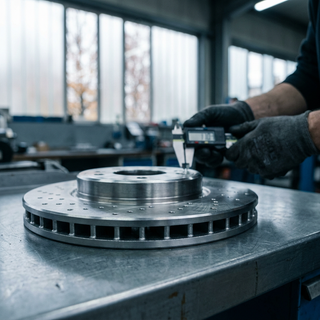
Modern vehicles rely on complex interconnected electronic networks. When a check engine light or performance glitch occurs, the initial step involves scanning the powertrain control module to retrieve Diagnostic Trouble Codes (DTCs). A trouble code does not pinpoint the precise failed part on its own; it identifies the specific circuit or system operating outside normal parameters. Technicians analyze live sensor data streams, freeze-frame data, and engine parameter graphs while the vehicle is running to observe real-time performance anomalies.
Comprehensive physical diagnostics expand beyond electronic computer scans to confirm mechanical integrity:
- Cylinder Compression and Leak-Down Tests: Measure pressure integrity within combustion chambers to diagnose worn piston rings, burnt valves, or blown head gaskets.
- Fuel System Pressure Tests: Evaluate fuel pump output and pressure regulator performance to resolve engine misfires or hard-starting conditions.
- Smoke and Vacuum Leak Tests: Introduce harmless artificial smoke into intake manifolds or evaporative emission systems to detect hidden vacuum leaks and micro-cracks.
- Digital Battery and Electrical System Analysis: Test cold cranking amps, alternator diode ripple, and starter current draw under load to prevent electrical failures.
Requesting a copy of the diagnostic scan report provides visibility into the health of your vehicle. Professional repair facilities differentiate between initial diagnostic fees and actual repair labor. The diagnostic fee covers specialized testing equipment, technical training, and bench time required to pinpoint the exact failure. Reputable shops frequently apply this diagnostic charge toward the overall labor bill when you authorize the recommended repair on site.
Can You Get a Written, Itemized Estimate Before Work Begins?
Vehicle owners have the right to receive a written, itemized estimate prior to authorizing any mechanical repairs. Under Ohio administrative regulations, auto repair businesses performing services over $50 must document your chosen estimate preference before initiating work.
An itemized estimate provides a clear line-item breakdown of every anticipated charge. Reviewing this document line by line helps you understand exactly where your maintenance funds are going:
| Estimate Item | What It Includes | What to Check Before Approving |
|---|---|---|
| Diagnostic Time | Computer scan fees and physical pinpoint testing | Confirm if fee applies toward total repair bill |
| Parts Charges | Component part numbers, quantities, and individual unit prices | Verify if parts are new OEM, aftermarket, or remanufactured |
| Labor Charges | Hourly labor rates and calculated repair times | Clarify whether labor is flat-rate or actual time |
| Shop Supplies & Fees | Hazardous waste disposal, shop rags, small fasteners, and lubricants | Ensure supply fees are capped at a reasonable percentage |
Understanding shop labor calculations prevents billing confusion. Auto repair facilities generally utilize either flat-rate labor or actual-time labor. Flat-rate labor bills a set number of labor hours for a specific repair procedure based on standardized industry labor guides, regardless of whether the technician completes the job faster or slower. Actual-time labor charges strictly for the exact clock minutes spent working on the vehicle. Flat-rate billing provides pricing predictability up front, while actual-time billing is often applied to complex electrical troubleshooting or rust-heavy component extractions.
For commercial operators and business owners managing fleet vehicles, detailed estimate accuracy is essential for controlling operational budgets. Work vehicles like those in our Ford F-Series work truck inventory require clear authorization records to track vehicle maintenance history and minimize downtime on job sites.
Is the Recommended Auto Repair Urgent or Can It Be Deferred Safely?
Recommended vehicle repairs fall into three distinct categories: immediate safety hazards, impending mechanical failures, and deferrable maintenance items. Requesting your technician to categorize service recommendations by urgency allows you to prioritize critical safety items immediately while budgeting for routine upkeep over time.
Service priorities are grouped based on safety risks and mechanical severity:
- Immediate Safety Risks (Do Not Defer): Hydraulic brake fluid leaks, brake pads worn past safety limits, severely degraded steering linkage, bulging tire sidewalls, or fuel leaks. Operating a vehicle with these defects creates severe safety hazards.
- Impending Mechanical Failures (Repair Soon): Worn serpentine drive belts, leaking water pumps, failing wheel bearings, or active oil leaks landing on exhaust components. Delaying these repairs risks sudden breakdowns or expensive secondary damage.
- Deferrable Maintenance (Plan for Later): Minor valve cover dampness, cabin air filter replacements, cosmetic trim fixes, or routine differential fluid changes approaching recommended mileage intervals.
Drivers traveling through Boardman along commercial corridors like Market Street rely on steady handling and responsive braking. Asking your service advisor to explain the consequences of postponing a specific repair helps you make informed choices. If a repair can be safely deferred, request a mileage threshold or time frame for when the component should be re-evaluated.
What Specific Parts Need Replacement and How Do OEM vs Aftermarket Parts Impact Warranties?
Replacing vehicle components requires choosing between original equipment manufacturer (OEM) parts, aftermarket alternatives, remanufactured assemblies, and salvage components. Under the federal Magnuson-Moss Warranty Act, installing non-OEM parts or servicing a vehicle at an independent shop does not automatically void your manufacturer warranty unless the aftermarket part directly causes a failure in a covered system.
Understanding part classifications helps you weigh quality, durability, and cost:
- New OEM Parts: Engineered directly by or for the vehicle manufacturer to exact factory dimensions, material specifications, and quality standards. They deliver guaranteed fitment and carry manufacturer backing.
- Aftermarket Parts: Manufactured by third-party companies. Quality, tolerances, and warranty coverage vary significantly between brands.
- Remanufactured Parts: Used core components completely disassembled, cleaned, fitted with new wear items, and tested to meet functional tolerances.
- Salvage Parts: As-is components harvested from recycled vehicles without reconditioning.
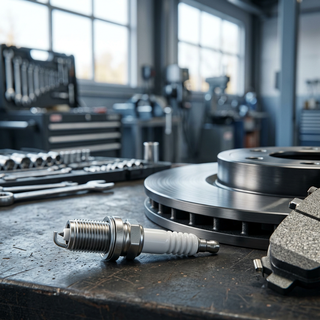
Genuine OEM components offer maximum reliability and seamless integration with factory electronic control systems. When maintaining your vehicle, you can easily request genuine factory components through our online parts ordering portal. Using factory-certified parts ensures exact structural fitment and protects ongoing component longevity.
Common Service Questions Before Approving Your Vehicle Repair
Q: Will servicing my vehicle at an independent repair shop void my new vehicle factory warranty?
Servicing your vehicle at an independent facility will not void your factory warranty. Federal protection rules allow vehicle owners to complete routine maintenance and non-warranty repairs at any qualified repair facility without invalidating original factory coverage. To preserve your warranty rights, maintain detailed records and dated receipts for all completed services. Warranty repairs for factory defect recalls or coverage claims must still be performed at an authorized brand service center.
Q: What is the practical difference between flat-rate labor and actual-time labor charges on a repair bill?
Flat-rate labor charges a predefined number of labor hours for a specific service based on published factory labor time guides, regardless of the actual bench time spent by the technician. Actual-time labor bills strictly for the precise clock time required to complete the repair. Flat-rate pricing offers up-front cost certainty, whereas actual-time billing is typically utilized for specialized diagnostic work or custom component adjustments.
Q: Can I request a copy of the diagnostic scan report and my old replaced parts after a repair?
You can request a printed or digital copy of the OBD-II diagnostic scan report showing retrieved trouble codes and live system data. You also have the right to request the return of replaced old parts upon pickup. Informing the service advisor before work begins ensures old parts are set aside, provided they are not required to be returned to a manufacturer under a warranty claim or core exchange program.
Q: Are diagnostic fees applied toward the final cost of my vehicle repairs if I approve the work?
Many professional automotive service departments apply the initial diagnostic testing fee toward the overall labor charges if you authorize the recommended repairs at the same facility. The diagnostic charge covers the technician's time, technical expertise, and specialized scan equipment required to pinpoint the root fault. Confirming this policy with your service advisor prior to diagnostic testing helps clarify final billing expectations. You can easily schedule a service appointment online to have our certified master technicians perform a thorough diagnostic evaluation.
Q: How does Ford Roadside Assistance support drivers when unexpected mechanical breakdowns occur?
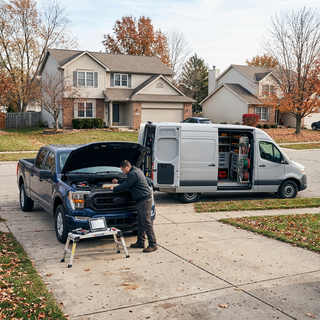
Ford Roadside Assistance provides 24/7 emergency support including towing to the nearest authorized service center, flat tire changes, battery jump-starts, fuel delivery, and lockout assistance. This manufacturer-backed service delivers brand-specific towing standards and certified technician repair quality. You can reach immediate emergency support directly by calling Ford Roadside Assistance: (800) 241-3673. For routine electrical and battery health evaluations before heading out on long trips, review our dedicated battery service guidance page, or take advantage of convenient home maintenance options through our mobile service program.
How to Schedule Trusted Service and Maintenance in East Liverpool
Protecting your vehicle investment requires clear communication, transparent pricing, and expert diagnostic evaluation before any repair work starts. Asking the right questions regarding diagnostic test procedures, itemized labor rates, part selection, and repair urgency ensures you remain in complete control of your maintenance decisions.
Our certified technical team at Tri State Ford is dedicated to providing transparent vehicle care. We provide itemized estimates before commencing repairs, utilize advanced diagnostic equipment, and fit genuine factory parts designed to keep your vehicle running smoothly. Whether you require routine scheduled oil changes, advanced brake system overhauls, or complex engine diagnostics, our technicians deliver honest, dependable service.
Take charge of your vehicle's health by visiting our dealership located at 1503 Pennsylvania Ave. Contact our friendly service department by calling (330) 462-7578 or set up your next service appointment online today to experience transparent, customer-focused automotive care.