Blog / Maintenance & Service, Brake Systems & Repair, Vehicle Parts & Accessories, Towing & Load

Blog

All Maintenance & Service, Brake Systems & Repair, Vehicle Parts & Accessories, Towing & Load Maintenance & Service, Expert Repairs & Diagnostics, Genuine Parts & Accessories, Engine Care & New Vehicle Reviews, Buying Guides, Financing & Insurance, Model Comparisons, Automotive News Automotive News, New Vehicle Reviews, Buying Guides, Financing & Insurance, Seasonal Driving Tips Used Vehicle Guides, Financing & Insurance, Buying Guides, Trade-In Advice, Certified Pre-Owned Maintenance & Service, Warranty & Service Contracts, Repair & Diagnostics, Parts & Components Compare Cars Maintenance & Service, Battery Care & Diagnostics, Electric Vehicle (EV) Maintenance, Seasonal Used Vehicle Guides, Financing & Insurance, Buying Guides, Vehicle Warranty Information, Pre-Owned Vehicle Trade-In Advice, Financing & Insurance, Buying Guides, Used Vehicle Guides, New Vehicle Maintenance & Service, Essential Vehicle Care, Preventive Maintenance Tips, Vehicle Longevity Buying Guides, Financing & Insurance, New Vehicle Reviews, Model Comparisons, Sales & Promotions Maintenance & Service, Parts & Accessories, Vehicle HVAC Care, Seasonal Vehicle Maintenance, DIY Tips Used Vehicle Guides, Financing & Insurance, Buying Guides, Pre-Owned Vehicle Sales, Vehicle New Vehicle Reviews, Buying Guides, Model Comparisons, Financing & Insurance, Inventory & Sales Buying Guides, Financing & Insurance, New Vehicle Reviews, Model Comparisons, Technology & Vehicle Trade-In Tips, Financing & Insurance, Buying Guides, Dealership Sales Strategies, Inventory Community Events & Customer Appreciation, New Vehicle Reviews, Financing & Trade-In Guides, Leasing & Lease Deals, Financing & Insurance, New Vehicle Sales, Commercial Vehicle Leasing, Maintenance & Service, Warranty & Recalls, Repair & Diagnostics, Parts & Accessories, Vehicle New Vehicle Reviews, Buying Guides, Financing & Insurance, Model Comparisons, Automotive Technology Vehicle Sales Events, New Vehicle Pricing & Incentives, Financing & Lease Options, Trade-In & Maintenance & Service, Recall Information, Safety & Reliability, Vehicle Ownership Care, Parts & Maintenance & Service, Vehicle Lighting & Electrical Systems, Automotive Safety & Inspection, OEM Maintenance & Service, Vehicle Pickup & Delivery, Mobile Service & On-Site Repairs, Oil Change & Model Comparisons, New Vehicle Reviews, Technology & Innovation, Safety Features, Buying Guides Commercial Truck Sales, Fleet Vehicle Financing, Custom Work Truck Upfits, Commercial Vehicle Commercial Vehicle Sales, Financing & Leasing, Small Business Vehicle Incentives, Fleet Purchasing Commercial Vehicle Sales, Fleet Purchasing & Management, Financing & Leasing for Businesses, New & Community Events, New Vehicle Buying Guides, Financing & Insurance, Maintenance & Service, Local Dealership Events & Promotions, Financing & Trade-In Options, Maintenance & Service Specials, Maintenance & Service, Vehicle Ownership Care, Mobile Repair Services, Genuine Parts & Certified New Vehicle Reviews, Buying Guides, Financing & Insurance, Model Comparisons, Used Vehicle Guides Used Vehicle Guides, Financing & Insurance, Buying Guides, New Vehicle Reviews, Commercial Vehicle Vehicle Sales Process, Financing & Credit Applications, New and Used Vehicle Inventory, Pickup and Buying Guides, Financing & Insurance, New Vehicle Reviews, Commercial Fleet Sales, Custom Orders & Buying Guides, New Vehicle Reviews, Financing & Insurance, Commercial Vehicle Sales, Model Commercial Vehicle Sales, Fleet Leasing & Management, Commercial Financing & Tax Incentives, Financing & Insurance, Leasing Benefits, Model Comparisons, Technology & Innovation, Buying Guides Leasing & Financing Options, Buying Guides, Model Comparisons, Negotiation Tips, Inventory & Leasing & Financing Options, Buying Guides, New Vehicle Reviews, Model Comparisons, Technology & Maintenance & Service, Automotive Detailing, Paint Protection & Care, Seasonal Vehicle Care, Maintenance & Service, Automotive Electrical Systems, Battery Care & Replacement, Vehicle Lighting Maintenance & Service, Automotive Fluids & Lubricants, Vehicle Care & Ownership, Dealership Service Maintenance & Service, Brake System Care, Vehicle Safety & Inspection, Parts Quality & Replacement, Maintenance & Service, Brake System Care, Vehicle Safety & Inspections, Parts & Repairs, Expert Maintenance & Service, Mobile Vehicle Services, Vehicle Care & Ownership, Genuine Parts & Repairs, Maintenance & Service, Safety Features, Technology & Innovation, Seasonal Driving Tips, Parts & Maintenance & Service, Technology & Innovation, Vehicle Diagnostics & Telematics, Fleet Management Maintenance & Service, Tire Care & Repair, Roadside Assistance, Vehicle Safety & Inspections, Maintenance & Service, Tire Care & Repair, Wheel Alignment & Balancing, Suspension Maintenance, Maintenance & Service, Vehicle Inspection & Diagnostics, Parts & Repairs, Warranty & Resale Value, Maintenance & Service, Vehicle Inspections, Oil Change & Fluid Services, Tire Care & Battery Maintenance & Service, Vehicle Interior Care, Technology & Innovation in Service, Professional Maintenance & Service, Vehicle Software Updates, Safety Features, Technology & Innovation, Recall & New Vehicle Reviews, Buying Guides, Financing & Insurance, Model Comparisons, Inventory Highlights New Vehicle Reviews, Buying Guides, Financing & Insurance, Model Comparisons, Inventory Updates New Vehicle Reviews, Buying Guides, Model Comparisons, Maintenance & Service, Technology & New Vehicle Reviews, Buying Guides, Technology & Innovation, Safety Features, Seasonal Driving Tips Vehicle Sales Events, New Vehicle Purchasing, Incentives & Discounts, Financing & Pre-Approval, Buying Guides, Financing & Insurance, Used Vehicle Guides, New Vehicle Reviews, Cross-Border Buying Guides, Financing & Insurance, Vehicle Inventory & Offers, Dealership Visit Preparation, Commercial Leasing Options, Business Fleet Solutions, Financing & Leasing Programs, Commercial Commercial Truck Sales, Fleet Purchasing Guides, Financing & Lease Options, Work Truck Community Engagement & Events, New Vehicle Promotions, Financing & Trade-In Options, Maintenance & Community Events & Dealership News, New Vehicle Promotions & Incentives, Maintenance & Service Community Events & Dealership News, New Vehicle Reviews, Financing & Insurance, Maintenance & Custom Ordering & Build Process, New Vehicle Inventory & Offers, Financing & Trade-In Guidance, East Liverpool, OH Ford Dealer East Liverpool, OH Used Cars Financing & Insurance, Buying Guides, Commercial Vehicle Solutions, Fleet Management, Inventory and Financing & Insurance, Buying Guides, New Vehicle Reviews, Used Vehicle Guides, Automotive Sales Financing & Insurance, Buying Guides, New Vehicle Reviews, Used Vehicle Guides, Automotive Sales & Financing & Insurance, Buying Guides, New Vehicle Reviews, Used Vehicle Guides, Model Comparisons Financing & Insurance, Buying Guides, Used Vehicle Guides, New Vehicle Reviews, Automotive Sales Financing & Insurance, Buying Guides, Used Vehicle Guides, Trade-In Tips, New Vehicle Sales Financing & Insurance, Buying Guides, Vehicle Inventory & Offers, Trade-In & Appraisal, Dealership Financing & Insurance, Buying Guides, Vehicle Trade-In Tips, Dealership Sales Process, New Vehicle Leasing & Financing Options, New Vehicle Leasing Guides, Buying Guides, Inventory Spotlight, Trade Leasing Options, Financing & Insurance, New Vehicle Reviews, Buying Guides, Technology & Innovation Leasing Options, Financing & Insurance, New Vehicle Sales, Buying Guides, Vehicle Inventory Maintenance & Service, Air Conditioning Repair, Genuine Parts & Accessories, Dealer-Authorized Maintenance & Service, Automotive Air Conditioning Repair, Vehicle Cooling System Care, Diagnostic Maintenance & Service, Automotive Detailing & Cleaning, Seasonal Vehicle Care, Vehicle Protection & Maintenance & Service, Automotive Detailing & Paint Care, Vehicle Exterior Protection, Paint Repair Maintenance & Service, Automotive Detailing & Protection, Corrosion & Rust Prevention, Paint & Maintenance & Service, Automotive Detailing, Vehicle Care & Protection, Off-Road Vehicle Maintenance & Service, Automotive Electrical Systems, Battery Care & Replacement, Diagnostics & Maintenance & Service, Automotive Glass Repair, Safety Features, Technology & Innovation, Mobile & Maintenance & Service, Automotive Lighting & Electrical, Vehicle Safety & Visibility, DIY Vehicle Maintenance & Service, Automotive Parts & Accessories, Seasonal Vehicle Care, Vehicle Safety & Maintenance & Service, Automotive Parts & Accessories, Vehicle Air Quality & HVAC Care, Preventive Maintenance & Service, Automotive Parts & Accessories, Vehicle Ownership Care, Engine Care & Maintenance & Service, Automotive Parts & Accessories, Vehicle Safety & Repair, Warranty & Maintenance & Service, Automotive Parts & Components, Vehicle Safety & Repair, Warranty & Service Maintenance & Service, Automotive Parts & Repairs, Vehicle Warranty & Protection, Service Center Maintenance & Service, Automotive Repair Tips, Service Team Selection, Warranty & Service Policies, Maintenance & Service, Automotive Repair, Mobile & Remote Vehicle Service, Warranty & Roadside Maintenance & Service, Automotive Repair, Parts & Accessories, Vehicle Ownership Care, Technology & Maintenance & Service, Automotive Repair, Parts & OEM Components, Vehicle Longevity & Care, Service Maintenance & Service, Automotive Technology & Diagnostics, Vehicle Electronics & Sensors, Seasonal Maintenance & Service, Automotive Technology & Software Updates, Warranty & Recall Service, Mobile Maintenance & Service, Battery Care & Replacement, Vehicle Electrical Systems, Seasonal Vehicle Maintenance & Service, Brake System Care, OEM Parts & Replacement, Vehicle Safety & Inspections, Maintenance & Service, Brake System Care, Vehicle Repair Tips, Automotive Parts & Components, Maintenance & Service, Brake System Care, Vehicle Safety & Inspection, Automotive Repair Tips, Maintenance & Service, Brake System Care, Vehicle Safety & Inspections, Parts & Components, Maintenance & Service, Brake System Care, Vehicle Safety Inspections, Automotive Repair Tips, OEM Maintenance & Service, Certified Technician Insights, Warranty & Service Coverage, Genuine OEM Maintenance & Service, Cooling System Repairs, Vehicle Ownership Care, Diagnostic & Maintenance & Service, Diagnostic Services, Vehicle Health & Diagnostics, Service Tips & Advice, Maintenance & Service, Engine Care & Performance, Parts & Accessories, Genuine vs. After Maintenance & Service, Paint Protection & Detailing, Vehicle Exterior Care, Seasonal Vehicle Maintenance & Service, Parts & Accessories, Engine Care & Repair, Vehicle Longevity Tips, OEM Parts Maintenance & Service, Parts & Replacements, Vehicle Care Tips, Seasonal Maintenance, DIY Vehicle Maintenance & Service, Recall Updates & Safety Notices, Genuine Parts & Accessories, Truck Care & Maintenance & Service, Repair & Diagnostics, OEM Parts & Accessories, Warranty & Recall Maintenance & Service, Repair & Diagnostics, Parts & Accessories, Vehicle Ownership Care, Service Maintenance & Service, Repair & Diagnostics, Parts & Components, Preventive Care & Tips, Warranty & Maintenance & Service, Repair & Diagnostics, Tire & Wheel Care, Vehicle Safety & Inspection, Parts Maintenance & Service, Repair & Diagnostics, Warranty & Service Coverage, Genuine OEM Parts & Maintenance & Service, Repair & Parts, Vehicle Ownership Care, Safety Features, Technology & Maintenance & Service, Repair & Parts, Vehicle Ownership Care, Transmission Maintenance & Service, Repair Solutions, Vehicle Ownership Care, Parts & Accessories, Diagnostic Maintenance & Service, Repair Tips & Techniques, Vehicle Care & Ownership Maintenance & Service, Safety Features, Automotive Recalls & Repairs, Parts & Warranty Services, Maintenance & Service, Safety Features, Automotive Recalls & Repairs, Technology & Innovation, Maintenance & Service, Safety Features, Automotive Recalls, Vehicle Ownership Care, Parts & Repairs Maintenance & Service, Safety Features, Parts & Repairs, Vehicle Ownership Care, Automotive Service Maintenance & Service, Safety Features, Recall & Repair Updates, Parts & Repairs, Vehicle Ownership Maintenance & Service, Safety Features, Recall & Safety Campaigns, Vehicle Inspection & Repairs, Maintenance & Service, Safety Features, Recall & Warranty Information, Vehicle Diagnostics & Maintenance & Service, Safety Features, Recall Repairs & Safety Campaigns, Parts & Genuine Maintenance & Service, Safety Features, Recalls & Repairs, Parts & Accessories, Vehicle Ownership Maintenance & Service, Safety Features, Repair & Recall Updates, Parts & Components, Vehicle Maintenance & Service, Safety Features, Repair & Replacement, Vehicle Care & Inspection, Parts & Maintenance & Service, Safety Features, Seasonal Driving Tips, Technology & Innovation, Parts & Maintenance & Service, Safety Features, Technology & Innovation, Automotive Electrical Systems, Maintenance & Service, Safety Features, Technology & Innovation, Automotive News, Parts & Repairs Maintenance & Service, Safety Features, Technology & Innovation, Automotive Parts & Accessories, Maintenance & Service, Safety Features, Technology & Innovation, Automotive Recalls, Parts & Repairs Maintenance & Service, Safety Features, Technology & Innovation, Automotive Recalls, Vehicle Maintenance & Service, Safety Features, Technology & Innovation, Automotive Service Tips, Recall & Maintenance & Service, Safety Features, Technology & Innovation, Parts & Repairs, Seasonal Driving Maintenance & Service, Safety Features, Technology & Innovation, Parts & Repairs, Vehicle Ownership Maintenance & Service, Safety Features, Technology & Innovation, Recall & Warranty Information, Maintenance & Service, Safety Features, Technology & Innovation, Repair & Recall Information, Parts Maintenance & Service, Safety Features, Technology & Innovation, Tire Care & Replacement, Maintenance & Service, Safety Features, Vehicle Inspections, DIY Vehicle Care, Repair & Diagnostics Maintenance & Service, Safety Recalls & Repairs, Vehicle Safety & Compliance, Powertrain & Maintenance & Service, Seasonal Driving Tips, Model Comparisons, Technology & Innovation, Safety Maintenance & Service, Seasonal Driving Tips, Safety Features, Technology & Innovation, Automotive Maintenance & Service, Seasonal Driving Tips, Safety Features, Technology & Innovation, Parts & Maintenance & Service, Seasonal Driving Tips, Vehicle Care & Ownership, Brake System Maintenance, Maintenance & Service, Seasonal Driving Tips, Vehicle Care & Ownership, Parts & Accessories, Safety Maintenance & Service, Seasonal Driving Tips, Vehicle Care & Ownership, Safety Features, Maintenance & Service, Seasonal Driving Tips, Vehicle Care & Protection, Brake Maintenance, Tire Maintenance & Service, Seasonal Driving Tips, Vehicle Care & Warranty, Service Specials & Packages, Maintenance & Service, Seasonal Driving Tips, Vehicle Cooling Systems, Automotive Safety Features, Maintenance & Service, Service Scheduling & Convenience, Vehicle Repair & Diagnostics, Parts & Maintenance & Service, Technology & Innovation, Automotive Service Transparency, Digital Vehicle Maintenance & Service, Technology & Innovation, Safety Features, Parts & Warranty, Vehicle Maintenance & Service, Tire Care & Replacement, Seasonal Vehicle Care, Safety Features, Automotive Maintenance & Service, Tire Care & Replacement, Vehicle Safety & Handling, Seasonal Vehicle Maintenance & Service, Tire Care & Replacement, Vehicle Safety & Inspection, Emergency Roadside Maintenance & Service, Tire Care & Replacement, Vehicle Safety & Inspections, Seasonal Vehicle Maintenance & Service, Transmission Care & Repair, Vehicle Fluid Services, Automotive Diagnostics, Maintenance & Service, Transmission Care, Repair & Parts, Vehicle Ownership Care, Common Vehicle Maintenance & Service, Vehicle Care & Longevity, Scheduled Service Packages, Oil Changes & Fluid Maintenance & Service, Vehicle Care Tips, Parts & Accessories, Seasonal Vehicle Maintenance, Maintenance & Service, Vehicle Detailing & Care, Parts & Accessories, Seasonal Vehicle Preparation, Maintenance & Service, Vehicle Detailing & Cosmetic Care, Automotive Cleaning & Protection, Service Maintenance & Service, Vehicle Detailing & Cosmetic Care, Service Scheduling & Convenience, Maintenance & Service, Vehicle Detailing & Protection, Repair & Inspection, Parts & Accessories, Maintenance & Service, Vehicle Detailing & Protection, Vehicle Care Tips, Seasonal Vehicle Maintenance & Service, Vehicle Diagnostics & Repair, Engine Performance & Troubleshooting, Fuel Maintenance & Service, Vehicle Fluids & Lubrication, Engine Care & Repair, Parts & Accessories, Maintenance & Service, Vehicle Ownership Care, Parts & Accessories, Repair & Diagnostics, Certified Maintenance & Service, Vehicle Repair & Diagnostics, Parts & Accessories, DIY Vehicle Care, Safety Maintenance & Service, Vehicle Repair & Diagnostics, Parts & Accessories, Hybrid & Electric Vehicle Maintenance & Service, Vehicle Repair & Diagnostics, Parts & Accessories, Seasonal Driving Tips, Maintenance & Service, Vehicle Repair & Diagnostics, Parts & Accessories, Service Lane Tips & Maintenance & Service, Vehicle Repair & Diagnostics, Parts & Accessories, Towing & Performance Maintenance & Service, Vehicle Repair & Parts, Service Convenience & Customer Care, Roadside Maintenance & Service, Vehicle Repair Tips, Parts & Accessories, Safety Features, Technology & Maintenance & Service, Vehicle Service Warranties, Repair & Coverage Plans, Ownership & Vehicle Model Comparisons, Buying Guides, New Vehicle Reviews, Financing & Insurance, Inventory Updates Model Comparisons, Buying Guides, New Vehicle Reviews, Technology & Innovation, Safety Features Model Comparisons, Buying Guides, Technology & Innovation, Safety Features, Maintenance & Service Model Comparisons, New Vehicle Reviews, Buying Guides, Technology & Innovation, Financing & Model Comparisons, New Vehicle Reviews, Buying Guides, Technology & Innovation, Safety Features Model Comparisons, New Vehicle Reviews, Safety Features, Technology & Innovation, Seasonal Driving Model Comparisons, New Vehicle Reviews, Technology & Innovation, Buying Guides, Maintenance & Model Comparisons, New Vehicle Reviews, Technology & Innovation, Maintenance & Service, Buying Model Comparisons, Towing & Hauling Guides, Maintenance & Service, Technology & Innovation, New New Vehicle Promotions, Buying Guides, Financing & Insurance, New Vehicle Reviews, Inventory New Vehicle Reviews, Buying Guides, Financing & Insurance, Model Comparisons, Automotive Sales New Vehicle Reviews, Buying Guides, Financing & Insurance, Model Comparisons, Commercial & Work New Vehicle Reviews, Buying Guides, Financing & Insurance, Model Comparisons, Vehicle Customization New Vehicle Reviews, Buying Guides, Financing & Insurance, Model Comparisons, Vehicle Inventory New Vehicle Reviews, Buying Guides, Financing & Insurance, New Vehicle Specials, Trade-In & Value New Vehicle Reviews, Buying Guides, Financing & Insurance, Used Vehicle Guides, Inventory Updates New Vehicle Reviews, Buying Guides, Financing & Insurance, Used Vehicle Guides, Model Comparisons New Vehicle Reviews, Buying Guides, Financing & Insurance, Vehicle Inventory & Specials, Model New Vehicle Reviews, Buying Guides, Financing & Insurance, Vehicle Inventory, Model Comparisons New Vehicle Reviews, Buying Guides, Model Comparisons, Financing & New Vehicle Reviews, Buying Guides, Safety Features, Technology & Innovation, Model Comparisons New Vehicle Reviews, Buying Guides, Technology & Innovation, Safety Features, Maintenance & Service New Vehicle Reviews, Financing & Insurance, Buying Guides, New Vehicle Specials, Model Comparisons New Vehicle Reviews, Financing & Insurance, Buying Guides, Technology & Innovation, Automotive New Vehicle Reviews, Financing & Insurance, Buying Guides, Used Vehicle Guides, Model Comparisons New Vehicle Reviews, Model Comparisons, Buying Guides, Technology & Innovation, Safety Features New Vehicle Reviews, Model Comparisons, Commercial Truck Guides, Technology & Innovation, New Vehicle Reviews, Model Comparisons, Financing & Insurance, Technology & Innovation, Safety New Vehicle Reviews, Model Comparisons, Off-Road Adventures, Technology & Innovation, Maintenance & New Vehicle Reviews, Model Comparisons, Safety Features, Technology & Innovation, Buying Guides New Vehicle Reviews, Model Comparisons, Technology & Innovation, Financing & Insurance, Maintenance New Vehicle Reviews, Model Comparisons, Technology & Innovation, Safety Features, Buying Guides New Vehicle Reviews, Model Comparisons, Technology & Innovation, Safety Features, Maintenance & New Vehicle Reviews, Off-Road Capabilities, Outdoor Adventure Vehicles, Technology & Innovation, New Vehicle Reviews, Technology & Innovation, Buying Guides, Maintenance & Service, Model New Vehicle Reviews, Technology & Innovation, Buying Guides, Safety Features, Model Comparisons New Vehicle Reviews, Technology & Innovation, Safety Features, Maintenance & Service, Buying Guides New Vehicle Sales, Financing & Incentives, Trade-In & Appraisal, Special Sales Events, Electric New Vehicle Sales, Financing & Incentives, Trade-In & Value Guides, Manufacturer Promotions, New Vehicle Sales, Financing & Insurance, Buying Guides, Manufacturer Incentives & Discounts, New Vehicle Sales, Vehicle Delivery & Logistics, Financing & Credit Applications, Trade-In & Trucks Used Vehicle Guides, Buying Guides, Financing & Insurance, Model Comparisons, Selling Your Car Used Vehicle Guides, Financing & Insurance, Buying Guides, Model Comparisons, Local Dealership Vehicle Sales Events, Financing & Leasing, Trade-In & Trade-Up Guides, New Vehicle Inventory Vehicle Sales Events, New Vehicle Buying Guides, Financing & Incentives, Dealership Inventory Vehicle Sales Events, New Vehicle Pricing, Financing & Credit Applications, Trade-In & Loyalty Vehicle Sales Process, Online Vehicle Purchasing, Financing & Loan Approval, Trade-In & Vehicle Vehicle Sales Promotions, New Vehicle Buying Guides, Financing & Credit Applications, Dealership Vehicle Sales Promotions, New Vehicle Buying Guides, Financing & Incentives, Trade-In & Valuation, Vehicle Sales, Online Car Buying, Financing & Incentives, Trade-In Guides, New Vehicle Delivery
4

Why Are Modern Vehicles So Difficult to Diagnose?

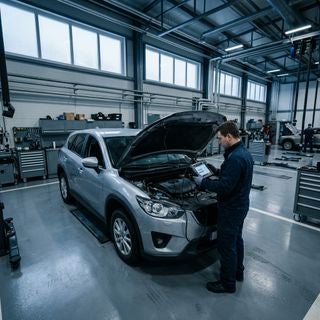
Modern vehicles are increasingly difficult to diagnose because they function as complex, interconnected computer networks rather than isolated mechanical systems. Today’s automobiles rely on dozens of electronic control units sharing real-time data across high-speed communication buses. When a single sensor or component experiences a glitch, software conflict, or voltage drop, the fault cascades across multiple systems. Pinpointing the root cause requires specialized scan tools, secure gateway access, and systematic electrical testing rather than simple code reading. In past decades, mechanical failures were largely straightforward. A worn belt squeaked, a failed alternator stopped charging the battery, and a broken cable prevented a throttle body from opening. Troubleshooting involved visual inspections, basic pressure gauges, and simple multimeter tests. Today, mechanical components are monitored and actuated by sophisticated microprocessors. An engine misfire may not stem from a bad spark plug; it could be caused by a software calibration discrepancy, an intermittent network communication fault, or a security gateway restriction. This architectural shift impacts vehicle owners during everyday driving. Suburban commuters in Calcutta driving along State Route 170 during cold winter mornings frequently experience situations where a sudden drop in battery voltage triggers half a dozen seemingly unrelated dashboard warnings. Dissecting those errors requires distinguishing between true hardware failures and temporary software communication glitches. Acc urate diagnostic work relies on specialized testing equipment, updated manufacturer software, and deep electrical knowledge. Drivers seeking professional evaluation can visit our service center location or contact our team directly at (330) 462-7578 to speak with a factory-trained technician. Table of Contents How Do Dozens of Electronic Control Units (ECUs) Increase Diagnostic Complexity? Why Can a Single Warning Light Trace to Multiple Networked Components? Why Do Proprietary Secure Gateways and Software Limits Restrict Independent Repairs? Why Are Professional Diagnostic Equipment Costs and Shop Service Fees Rising? Can DIY Smartphone OBD-II Adapters Handle Modern Vehicle Diagnostics? What Questions Do Drivers Ask Most About Modern Vehicle Diagnostics? How Do Dozens of Electronic Control Units (ECUs) Increase Diagnostic Complexity? Electronic control units increase diagnostic complexity because a modern vehicle relies on 80 to 150 dedicated microprocessors that must constantly exchange operational data over specialized communication networks. Diagnosing a vehicle requires checking network integrity, communication protocols, and software compatibility across multiple units rather than inspecting a single localized module. A modern vehicle functions as a distributed computing network on wheels. Individual modules govern specific domains throughout the chassis: Powertrain control modules manage fuel injection, ignition timing, and turbocharger boost. Transmission control modules calculate shift points based on acceleration and engine load. Body control modules regulate lighting, door locks, power windows, and climate control systems. Safety modules control airbag deployment, seatbelt pretensioners, and anti-lock braking systems. These modules communicate across multiple network architectures designed for different data speed requirements. High-speed Controller Area Network (CAN) buses operate at data rates between 1 and 5 Mbps to handle critical powertrain and chassis communications. Lower-speed Local Interconnect Network (LIN) buses operate at roughly 19.2 kbps to manage less critical secondary components like side mirrors, power seats, and window switches. Advanced vehicles also incorporate Automotive Ethernet to handle high-bandwidth data demands required by infotainment systems and advanced driver assistance systems. +-------------------------------------------------------------------+ | Modern Vehicle Network Topology | +-------------------------------------------------------------------+ | Automotive Ethernet (High Bandwidth: ADAS / Cameras / Radar) | | +-------------------------------------------------------------+ | | | CAN Bus (1 - 5 Mbps: Engine, Transmission, ABS, Airbags) | | | | +---------------------------------------------------------+ | | | | | LIN Bus (19.2 kbps: Doors, Seats, Windows, Mirrors) | | | | | +---------------------------------------------------------+ | | | +-------------------------------------------------------------+ | +-------------------------------------------------------------------+ Technicians use protocols such as Unified Diagnostic Services (UDS) and Diagnostics over Internet Protocol (DoIP) to interface with these networks. When troubleshooting an issue, a technician must evaluate whether a control unit is failing internally, experiencing a wiring connection fault, or missing required software updates. Because modules rely on secure bootloaders and verified software image states, an unresolved programming state can immobilize a vehicle just as effectively as a broken mechanical shaft. Why Can a Single Warning Light Trace to Multiple Networked Components? A single warning light can stem from multiple networked components because modern electronic control units share sensor readings across a unified communication bus. A malfunction in one sensor forces multiple downstream systems to disable dependent features and set secondary diagnostic trouble codes. When a check engine light or traction control light illuminates on a Ford F-150 or Ford Escape, drivers often expect a single fault code pointing directly to a replacement part, but technicians frequently discover a cascade of secondary codes caused by a single voltage drop or network communication interruption. Because modules rely on shared sensor input, a single bad data point impacts multiple vehicle operations simultaneously. Consider a failing wheel speed sensor. In an older vehicle, a broken sensor simply disabled the anti-lock brakes and turned on an ABS light. In a contemporary vehicle, that same wheel speed sensor feeds data to the following systems: Anti-lock braking module for emergency stopping control Electronic stability control for cornering management Transmission control unit for gear selection and torque management Steering control module for electric power steering assistance Adaptive cruise control and collision avoidance systems A signal disruption from that single sensor causes every dependent module to log a loss-of-communication code. A basic code scanner might show ten different fault codes across five separate control modules. A skilled technician must analyze freeze-frame data, study network wiring diagrams, and test component voltages to identify the primary failure point rather than replacing every module showing an error code. When component replacement is necessary, installing genuine OEM replacement parts ensures that sensor resistance values and response speeds match factory network specifications perfectly. Why Do Proprietary Secure Gateways and Software Limits Restrict Independent Repairs? Proprietary secure gateways restrict diagnostic access by acting as electronic firewalls between the diagnostic port and critical vehicle networks to prevent cyber threats and unauthorized module alterations. Unauthenticated scan tools are limited to basic read-only fault codes and cannot clear codes, run active actuator tests, or recalibrate control modules. As vehicles became more connected through cellular modems, Wi-Fi, and Bluetooth, manufacturers introduced Secure Gateway (SGW) modules to safeguard vehicle control networks against remote hacking. The gateway allows generic scan tools to read basic diagnostic trouble codes, but it blocks command signals that alter vehicle behavior unless the diagnostic tool and technician are authenticated through approved software platforms. Without verified gateway access, a technician cannot perform routine service commands, including: Resetting electronic parking brake service modes during brake pad replacement Performing active actuator tests to verify fuel pump or solenoid operation Executing steering angle sensor calibrations after an alignment Clearing persistent fault codes after completing physical repairs Performing module reflashing and software recalibrations Advanced electric vehicles like the Ford Mustang Mach-E require specialized, model-specific software procedures to verify high-voltage safety interlocks, monitor thermal management systems, and perform battery module balancing. Furthermore, routine recall service updates often require updating software states directly through factory servers. When complex system resets or recalibrations are required, drivers can schedule a service appointment online to ensure their vehicle receives authorized software programming. Why Are Professional Diagnostic Equipment Costs and Shop Service Fees Rising? Diagnostic service fees have risen because accurately troubleshooting high-tech vehicles requires professional scan tools costing between $3,000 and $15,000 per unit, annual manufacturer software subscriptions, and hours of hands-on electrical testing by master technicians. Diagnostic fees reflect the specialized equipment, software licensing, and technical expertise necessary to prevent trial-and-error part replacement. A modern automotive repair facility must invest continuously in diagnostic infrastructure. Beyond purchasing high-end diagnostic consoles, shops pay thousands of dollars annually for access to manufacturer-specific software licensing, technical service bulletins, and wiring schematics. Technicians also utilize digital storage oscilloscopes to view high-speed electrical signals, pin-out boxes to test harness integrity, and precision power supplies to maintain stable voltage during module programming. +-------------------------------------------------------------------+ | Diagnostic Process: Code Reading vs True Diagnosis | +-------------------------------------------------------------------+ | Generic Code Reading: | | [Plug in Tool] -> [Read DTC P0300] -> [Guess / Replace Spark Plug] | +-------------------------------------------------------------------+ | Professional Diagnostic Procedure: | | 1. Scan all network ECUs & record freeze-frame data | | 2. Authenticate through Secure Gateway (SGW) firewall | | 3. Perform live data logging & digital oscilloscope waveform test| | 4. Conduct voltage-drop tests on harness & ground connections | | 5. Execute module reflash / sensor recalibration if required | +-------------------------------------------------------------------+ Physical environment factors also demand rigorous testing. East Liverpool drivers navigating winter slush and road salt frequently encounter wiring harness corrosion along riverfront routes, where isolating a high-resistance ground wire requires systematic voltage-drop testing with specialized tools. Connecting a scan tool merely identifies the symptom; finding the physical root cause requires hours of methodical labor. Maintaining proper system voltage is critical during any diagnostic evaluation. Drivers looking to prevent electrical issues can inspect routine battery maintenance and testing recommendations, or utilize the convenient Ford Mobile Service program for selected maintenance needs handled right at home. Can DIY Smartphone OBD-II Adapters Handle Modern Vehicle Diagnostics? Smartphone OBD-II adapters can read generic powertrain diagnostic trouble codes and display live engine data, but they cannot perform full multi-system diagnostics on modern vehicles. Basic wireless dongles lack access to proprietary module networks, secure gateway authentication, actuator testing, and recalibration routines required to resolve complex faults. Affordable Bluetooth and Wi-Fi OBD-II adapters are popular among vehicle owners for monitoring basic parameters like coolant temperature, engine RPM, and calculated fuel economy. They can also read generic "P0" powertrain codes associated with emissions components, such as a loose gas cap or a failing oxygen sensor. However, these consumer-grade adapters have significant technical limitations: Limited module access: Most apps only communicate with the primary powertrain control module, completely ignoring airbag, body control, transmission, and ABS modules. No bidirectional control: Smartphone adapters cannot send command signals to cycle solenoids, test cooling fans, or command an ABS pump bleed. Lack of gateway security credentials: Basic apps cannot authenticate through manufacturer secure gateways, preventing users from clearing advanced fault codes or resetting service indicators. No software flashing capability: Consumer dongles cannot update module firmware, re-establish lost network handshakes, or perform J2534 pass-thru reprogramming. While a smartphone adapter offers a convenient preliminary check for minor engine light issues, comprehensive troubleshooting requires professional-grade diagnostic systems. What Questions Do Drivers Ask Most About Modern Vehicle Diagnostics? Q: Why does a mechanic charge a diagnostic fee just to read a check engine code? Reading a fault code takes only a few minutes, but a code merely identifies the system or sensor reporting an out-of-range value. It does not explain why the value is incorrect. A diagnostic fee covers the technician's time, specialized testing equipment, schematics, and systematic electrical testing required to pinpoint the actual failure—such as a broken wire, vacuum leak, or software glitch—preventing unnecessary part replacement. Q: What is an ECU reflash, and why is it necessary during a repair? An ECU reflash overwrites a control module's internal software with updated manufacturer code. Just as a smartphone receives software updates to fix bugs, vehicles require software reflashing to resolve operating glitches, refine shifting performance, update sensor calibration parameters, or introduce factory security patches. Reflashing is also necessary when replacing a module so it can adapt to the vehicle network. Q: Can a weak 12-volt battery cause false warning lights on a modern vehicle? A weak or degrading 12-volt battery is one of the most common causes of phantom diagnostic trouble codes. Electronic control units require steady voltage to operate accurately. When voltage drops during engine cranking, sensitive microprocessors experience temporary brownouts. This causes modules to drop offline briefly and report communication errors across the network, illuminating dashboard warnings even when components are functional. Q: How do technicians find an electrical short on a CAN bus network? Technicians diagnose CAN bus network faults using a digital storage oscilloscope to measure communication signals across the network's twisted-pair wiring. By analyzing voltage waveforms, technicians can identify short circuits, open circuits, or excessive electrical resistance. They then systematically isolate sections of the network harness by disconnecting individual modules until proper communication signals return to the bus. Q: Why do some repairs require sensor recalibration after a physical part is replaced? Modern components rely on precise alignment to function safely within driver assistance and chassis systems. When parts such as windshields, steering racks, bumper covers, or suspension struts are replaced, attached radar sensors, cameras, and position sensors shift slightly. Recalibration aligns sensor software with physical geometry, ensuring safety features like blind spot monitoring operate within factory tolerances. For expert electrical evaluations and accurate vehicle troubleshooting, drivers can visit our dealership address at 1503 Pennsylvania Ave or give our service advisors a call to schedule a comprehensive diagnostic inspection. © 2026 Tri State Ford. All rights reserved. Modern Vehicle Diagnostics in East Liverpool OH | Tri State Ford
d

Why Should You Choose OEM Parts for 2026 Ford Repairs?

Choosing OEM parts for 2026 Ford repairs guarantees exact factory fitment, restores original engineering tolerances, and preserves manufacturer safety standards. Genuine Ford and Motorcraft components are designed specifically for your vehicle, backed by a 24-month/unlimited-mileage limited warranty that covers both parts and labor when installed at an authorized dealership. Selecting factory parts protects critical powertrain systems, maintains vehicle resale value, and prevents premature wear caused by imprecise aftermarket alternatives. When maintaining a 2026 Ford F-150 equipped with the 3.5L EcoBoost V6 engine or a 2026 Ford Explorer featuring all-wheel drive, every mechanical component relies on strict factory calibrations. Modern vehicles integrate advanced electronics, precise braking software, and lightweight structural alloys that generic aftermarket manufacturers do not replicate. Installing aftermarket substitutes can cause alignment gaps, premature component failure, or unexpected electronic sensor errors. Our service team sees that drivers who stick with factory-engineered parts enjoy a far more predictable ownership experience. Whether you drive daily along State Route 170 through Calcutta or travel across the region for weekend family trips, factory components deliver dependable longevity. You can easily schedule a service appointment online, drop by our East Liverpool facility, or give our service department a quick call to discuss replacement components for your vehicle. Table of Contents How Do OEM Parts Save Money Over the Life of Your Ford Vehicle? Is Motorcraft an Official OEM Brand and How Does It Differ From Ford Genuine Parts? How Do OEM Parts Preserve Factory Vehicle Safety Standards and Rust Protection? What Warranty Coverage Is Included With Genuine Ford Parts? Are Genuine Ford Parts Required for Ford Lease Returns? Common Questions About Servicing Your Ford With Genuine Parts How Do OEM Parts Save Money Over the Life of Your Ford Vehicle? OEM parts save money over the life of a Ford vehicle by delivering superior durability, reducing secondary mechanical damage, and protecting resale value. Factory components fit correctly the first time, preventing frequent labor costs associated with premature aftermarket part failures. Although generic aftermarket components may carry a lower initial price, their actual long-term cost is often significantly higher. Aftermarket parts are commonly built with looser tolerances to fit multiple vehicle makes and models. This compromise leads to accelerated wear on surrounding systems. For example, installing non-factory brake pads on a 2026 Ford Escape with an 8-speed automatic transmission can cause uneven rotor wear, excessive brake dust, and premature caliper fatigue, turning a routine brake service into an expensive multi-system repair. By contrast, Genuine Ford brake components undergo rigorous testing to ensure optimal stopping power, noise reduction, and thermal resistance. Factory parts also preserve your vehicle's complete service history and resale market strength. A documented record of factory-spec maintenance demonstrates to future buyers that the vehicle was maintained without low-quality compromises. To help keep maintenance costs predictable, vehicle owners can review current current service offers or check maintenance information before booking their next visit. Investing in original engineering protects both your monthly budget and your vehicle's long-term mechanical health. Is Motorcraft an Official OEM Brand and How Does It Differ From Ford Genuine Parts? Yes, Motorcraft is an official OEM brand produced specifically for Ford and Lincoln vehicles. While Genuine Ford Parts are the exact components installed on the assembly line during original vehicle manufacturing, Motorcraft parts are factory-engineered replacement components designed for ongoing maintenance and repair. Both part lines share identical engineering standards, strict quality controls, and factory warranty backing. Genuine Ford Parts include structural sheet metal, interior trim pieces, specialized electronic modules, and major engine assemblies installed when the vehicle is constructed. Motorcraft focuses primarily on high-wear maintenance components, including spark plugs, synthetic blend fluids, cabin filters, batteries, and brake friction materials. Choosing between the two depends on the specific repair requirement: Motorcraft Components: Best suited for routine vehicle maintenance, including oil changes, brake service, battery replacements, and ignition filter swaps. Genuine Ford Parts: Essential for collision restoration, major mechanical overhauls, custom trim updates, and structural body repairs. If your 2026 Ford Explorer requires a replacement battery or air filter, a Motorcraft part delivers exact factory-specified performance. If your vehicle requires body restoration or specialized sensor replacements, Genuine Ford body panels and hardware ensure proper fitment. Vehicle owners looking to complete maintenance or order specific components directly can submit a parts order request with our service team. How Do OEM Parts Preserve Factory Vehicle Safety Standards and Rust Protection? OEM parts preserve factory vehicle safety standards by maintaining original structural crumple zones, precise sensor alignments, and factory-grade anti-corrosion protection. Factory body panels and mechanical hardware undergo comprehensive crash testing to ensure active safety systems function properly during an impact. Modern safety suites like Pre-Collision Assist and BLIS Blind Spot Information System rely on precise radar positioning and exact body dimensions. Installing aftermarket bumper covers or non-standard fenders can alter radar reflection angles or obstruct sensor views, compromising driver-assist functions. Furthermore, structural crash safety relies on engineered steel gauges and designated crumple paths. Generic body panels may buckle unpredictably in a collision, changing how impact energy transfers into the passenger cabin. Corrosion resistance is another vital factor, particularly along the Ohio River valley near East Liverpool where winter road salt is heavily applied during cold months. Genuine Ford body panels feature factory electro-deposition primer coatings and galvanized steel matching original rust-prevention standards. Aftermarket sheet metal often uses thinner steel and inferior primer, leading to early surface rust, paint bubbling, and seam degradation. Drivers adding specialized upgrades or replacing worn hardware can explore our custom equipment options to ensure factory durability across every component. What Warranty Coverage Is Included With Genuine Ford Parts? Genuine Ford and Motorcraft parts include a 24-month/unlimited-mileage limited warranty that covers defects in factory-supplied materials or workmanship. When installed by an authorized dealership, the warranty covers both part replacement and professional labor costs. This comprehensive coverage provides complete peace of mind, with no commercial mileage restrictions: Labor Inclusion: Dealer-installed parts receive full labor reimbursement if a defect occurs during the two-year warranty window. Over-the-Counter Purchases: Components purchased directly for self-installation carry full parts-replacement coverage for 24 months. Warranty Continuity: For dealer-installed service parts, coverage begins on the installation date, with replacement parts receiving the remaining portion of the original coverage term. Additionally, specialized OEM assemblies such as remanufactured engines, transmissions, or hybrid components may feature extended warranty terms backed directly by the manufacturer. Unlike aftermarket parts warranties that often exclude labor reimbursement or require tedious claim filings, Ford warranty coverage is recognized nationwide across the authorized dealer network. Should a replacement part fail during travel outside your home community, any authorized Ford service center can access your warranty records and perform necessary repairs. Are Genuine Ford Parts Required for Ford Lease Returns? Yes, Ford Credit lease return guidelines require vehicle repairs and body work to be completed using Genuine Ford or Motorcraft parts to avoid excess wear-and-use penalty charges. Returning a leased vehicle with non-OEM body panels or mismatched mechanical components can result in diminished value fees. During the pre-return inspection conducted prior to lease end, certified inspectors assess overall vehicle condition, paint consistency, body panel alignment, and mechanical integrity. Installing low-grade aftermarket windshields, mismatched tires, or non-factory body panels can fail inspection standards. Using factory parts for routine maintenance and collision repairs throughout your lease agreement protects you from unexpected charges when turning in your 2026 Ford Escape or Explorer. Maintaining a detailed record of dealer-installed OEM parts ensures a smooth lease transition without financial surprises. Common Questions About Servicing Your Ford With Genuine Parts Q: How can I verify that a replacement component is a Genuine Ford or Motorcraft part? You can verify part authenticity by checking the official packaging, security labels, and stamped engineering part numbers. Authentic components feature distinct brand labeling, VIN-specific catalog tracking, and manufacturer documentation. Ordering components directly through our service department guarantees you receive genuine items backed by factory warranties rather than counterfeit or low-grade aftermarket alternatives. Q: Will using non-OEM parts void my Ford new vehicle limited warranty? Installing non-OEM parts does not automatically void your entire vehicle warranty, but damage caused directly by an aftermarket part will not be covered. If an aftermarket oil filter collapses and causes engine damage, or an unapproved suspension component fails and damages surrounding steering linkages, the required repairs fall outside factory warranty protection. Using factory components eliminates this risk entirely. Q: Why do OEM brake pads perform better than generic auto parts store options? OEM brake pads are formulated with specific friction compounds tailored precisely to your vehicle's weight, rotor metallurgy, and electronic braking software. Ford engineers test these pads for noise reduction, heat dissipation, and pedal feel across thousands of test cycles. Generic pads use one-size-fits-all friction formulas that frequently cause brake squeal, excessive dust, and reduced stopping efficiency in heavy truck and SUV applications. Q: Can I install Motorcraft parts myself without losing warranty coverage? Yes, purchasing Motorcraft parts over the counter for self-installation preserves the 24-month/unlimited-mileage limited warranty on the part itself. However, over-the-counter warranty coverage applies strictly to part replacement if defective. Having the part installed by our authorized service technicians adds full labor coverage to your warranty protection, ensuring complete peace of mind. Q: How often should I replace high-wear Motorcraft components like cabin air filters and spark plugs? Service intervals depend on your vehicle model and driving conditions. Standard Motorcraft cabin air filters are typically replaced every 20,000 miles, while Platinum spark plugs are inspected or replaced around 60,000 to 100,000 miles. Driving in dusty environments or harsh winter salt conditions may require earlier air filter changes to maintain cabin air quality and heating efficiency. Maintaining your vehicle with factory-engineered components is the most reliable way to ensure performance, safety, and long-term value. Whether your vehicle requires routine maintenance or specialized repairs, our service team at Tri State Ford is ready to assist. Stop by our dealership at 1503 Pennsylvania Ave or give us a call at (330) 462-7578 to speak directly with our service specialists today. © 2026 Tri State Ford. All rights reserved. Vehicle specification data © JATO Dynamics Limited. OEM Ford Parts in East Liverpool OH | Tri State Ford
l

How Dangerous Is Driving With a Bad Wheel Bearing?

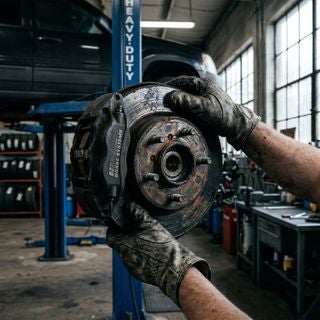
Driving with a bad wheel bearing is extremely dangerous because component wear rapidly escalates from minor noise to severe structural hub failure and complete loss of vehicle control. As friction generates intense thermal buildup inside an unlubricated bearing assembly, internal steel rollers pit and degrade, which can lock the hub solid or snap the wheel spindle at highway speeds. Immediate repair is necessary to prevent catastrophic mechanical failure on the road. When internal bearing seals break down, heat discolors the hub housing and melts away remaining protective grease. This excessive thermal expansion damages nearby braking components and corrupts signals to the wheel speed sensor. Technical evaluations cited by the National Highway Traffic Safety Administration indicate that vehicles operating with confirmed bearing failure are several times more likely to experience single-vehicle loss-of-control incidents on dry pavement compared to properly maintained vehicles. Neglecting early symptoms allows structural play to develop at the tire tread. Once clearance exceeds 0.004 in, steering precision degrades, causing the vehicle to pull unexpectedly across lane lines. Continued operation under heavy lateral loads risks shearing the hub assembly entirely, allowing the wheel unit to separate from the steering knuckle. Drivers who notice severe grinding sounds or steering instability should immediately park the vehicle and contact our team at (330) 462-7578 to arrange professional transportation rather than continuing to drive. For safety inspections and certified wheel service, drivers can visit our service center on Pennsylvania Ave. Table of Contents What Are the Early Warning Signs of a Failing Wheel Bearing? What Causes Wheel Bearings to Fail? How Do You Tell a Bad Wheel Bearing From a Bad CV Joint? Is It Cheaper to Replace Just the Wheel Bearing or the Full Hub Assembly? Can You Replace a Wheel Bearing Yourself at Home? Frequently Asked Questions About Wheel Bearing Repairs at Tri State Ford What Are the Early Warning Signs of a Failing Wheel Bearing? The earliest warning sign of a failing wheel bearing is a low-frequency humming, growling, or roaring sound that changes pitch in direct proportion to road speed rather than engine RPM. This noise typically grows louder when shifting vehicle weight during turns, indicating increased side loading on the damaged internal steel races. As internal race surface damage expands, mechanical harshness translates into physical shaking. Drivers frequently feel a distinct shimmy through the steering wheel at sustained speeds between 45 to 75 mph. If left unchecked, the wobble destabilizes wheel alignment, creating rapid and uneven tread wear across the tire face. A low growling sound that intensifies during gradual lane changes when weight transfers away from the affected wheel side. Steering wheel chatter or floorboard vibration that persists regardless of transmission gear selection. Illuminated dashboard warning lights for the Anti-Lock Braking System or electronic stability control caused by sensor air-gap variations. Excessive looseness or mechanical play when a lifted tire is manually rocked at the 12 and 6 o'clock positions. Technicians evaluating vehicles on the lift often perform a hands-on spin test while gripping the coil spring. Mechanical roughness inside the hub transmits subtle tactile vibrations directly through the suspension structure long before major wheel slop is visible. When replacement components are required, vehicle owners can easily order OEM Ford wheel bearings and hub assemblies online to maintain factory fit and strength standards. What Causes Wheel Bearings to Fail? Wheel bearings primarily fail due to moisture intrusion past damaged rubber seals, loss of protective grease, severe road impacts, and high-mileage metal fatigue. Once water penetrates the internal bearing cavity, protective lubricants break down, allowing raw steel rollers to rub directly against pitted race tracks. Environmental contamination poses a constant challenge for wheel assemblies. In suburban communities like Calcutta, winter road salt runoff and standing surface water frequently wash past worn outer seals, accelerating internal corrosion and pitting steel surfaces. Mechanical shocks from striking deep potholes, hitting curbs, or navigating rough unpaved roads also score internal bearing races, establishing localized hot spots that rapidly degrade during daily driving. Improper installation procedures during past brake or suspension maintenance represent another frequent cause of premature failure. Over-tightening or under-tightening the main spindle nut alters internal pre-load tolerances, crushing roller elements or permitting damaging axial movement. Using genuine replacement hardware torque-checked to precise factory engineering specifications ensures proper thermal clearance and long-term durability. How Do You Tell a Bad Wheel Bearing From a Bad CV Joint? A bad wheel bearing produces a continuous, speed-dependent growling or humming sound that changes intensity with vehicle speed, whereas a worn constant velocity (CV) joint creates a sharp clicking, popping, or snapping noise during low-speed turns. Identifying the exact rotational sound helps pinpoint whether repairs belong to the hub assembly or the drive axle assembly. Wheel bearing noise remains present whether accelerating or coasting, changing pitch as vehicle velocity rises. Loading the suspension during sweeping highway curves shifts weight onto the outer wheel, increasing the growl if the outer bearing is damaged. Conversely, CV joint noise specifically occurs when drive torque is applied through sharp steering angles, such as turning into tight parking spaces along commercial strips in Boardman. Physical inspections under the vehicle provide clear mechanical confirmation. A torn rubber CV boot leaking dark grease onto suspension arms points directly to joint contamination, whereas wheel bearing wear shows as axial runout, magnetic ABS tone ring corrosion, or localized heat discoloration around the hub center without external axle grease leaks. Is It Cheaper to Replace Just the Wheel Bearing or the Full Hub Assembly? Replacing a complete wheel hub assembly is almost always cheaper in total repair cost than replacing an individual press-in wheel bearing because bolt-on assemblies drastically reduce specialized shop labor time. While an individual bearing press unit may carry a slightly lower standalone parts price, the additional labor required to remove, press, and reinstall traditional bearings balances out any initial parts savings. Installing a traditional standalone bearing requires complete removal of the steering knuckle from the vehicle. Technicians must use specialized hydraulic press machinery, bearing splitters, and pullers to force the worn bearing out of the housing bore without scoring internal steel walls. This extensive disassembly process significantly increases shop labor hours and risks damaging surrounding suspension components or wheel speed sensors. Repair Aspect Press-In Wheel Bearing Complete Hub Assembly Labor Complexity High (Requires knuckle removal) Low (Direct bolt-on service) Specialized Tools Needed Hydraulic press & bearing puller Standard hand & torque tools Integrated Sensors Transferred or purchased separate Includes factory-calibrated ABS sensor Total Installation Time Extended shop labor hours Streamlined installation process Long-Term Reliability Dependent on press alignment precision Factory-sealed pre-set internal clearances Modern vehicles increasingly utilize pre-sealed, integrated wheel hub units that bolt directly to the steering knuckle. These complete assemblies come pre-lubricated with factory-calibrated bearing pre-load tolerances and include a brand-new wheel speed sensor. Choosing a complete hub unit ensures all wear surfaces are refreshed simultaneously, protecting your braking systems and providing long-term driving peace of mind. Can You Replace a Wheel Bearing Yourself at Home? Replacing a bolt-on wheel hub assembly at home is possible for advanced DIY mechanics equipped with heavy-duty tools, but pressing individual bearing races out of a steering knuckle requires industrial machinery that makes professional service necessary for most vehicle owners. Undertaking a home repair presents severe physical and safety challenges. Main axle spindle nuts are secured under massive torque loads, often requiring high-torque impact wrenches or long breaker bars to break free. Furthermore, rust accumulation along axle splines and steering knuckle bores frequently welds metal surfaces together, demanding specialized pullers to prevent damaging fragile aluminum steering components. Heavy-duty calibrated torque wrench capable of achieving accurate axle nut tension. Axle hub puller and slide hammer tools to free seized splines without hammering steel shafts. Hydraulic shop press and bearing race drivers for press-in style bearing configurations. High-temp anti-seize compound and new factory spindle retention hardware. Attempting to force bearing races into place with hammers or improvised tools risks misaligning internal steel rollers, leading to immediate bearing failure within a few hundred miles. Professional service ensures every mounting bolt, brake caliper bracket, and axle nut receives exact factory torque, keeping safety systems functioning as designed. Frequently Asked Questions About Wheel Bearing Repairs at Tri State Ford Q: Can a failing wheel bearing cause my ABS warning light to turn on? Yes, a failing wheel bearing can trigger your ABS light because excessive hub movement disrupts the precise gap between the wheel speed sensor and its internal magnetic ring. When bearing wear allows play beyond 0.004 in, the sensor generates erratic voltage signals, leading the brake control module to log a fault code and disable stability features until serviced. Q: How long can I safely drive after wheel bearing noise starts? You should schedule service immediately once wheel bearing noise begins, as driving beyond initial symptoms risks sudden bearing seizure or hub structural failure. While some bearings degrade over 1,000 miles, thermal expansion from friction can cause rapid hub collapse without further warning, making prompt inspection essential for road safety. Q: Should wheel bearings be replaced in pairs? While replacing wheel bearings in pairs is not strictly mandatory, technicians often recommend replacing both axle sides simultaneously if they have covered identical mileage and driving conditions. Because both front or rear hubs experience similar road impacts and thermal cycles, the opposite side bearing frequently exhibits similar wear shortly after the first fails. Q: Why does my bearing noise change when I turn the steering wheel? Wheel bearing noise changes during turns because steering shifts vehicle weight onto or away from the damaged side, altering physical pressure on internal steel rollers. Turning right loads the left wheel assembly, making a worn left bearing roar louder, while turning left unloads that side and softens the growling sound. Q: What happens if a wheel bearing seizes completely while driving? If a wheel bearing seizes completely while driving, friction welding locks the hub solid, stopping wheel rotation instantly or snapping the outer axle spindle. This sudden lockup causes dramatic steering pull, severe tire drag, and potential loss of vehicle control, emphasizing the importance of addressing bearing symptoms at the first warning sign. To keep your vehicle operating smoothly and safely, schedule your next vehicle maintenance with our factory-trained service technicians. You can give our team a quick call to discuss any warning sounds or schedule a service appointment online at your convenience. For hands-on vehicle inspections and professional diagnostic care, visit our East Liverpool service facility today. © 2026 Tri State Ford. All rights reserved. Wheel Bearing Repair in East Liverpool OH | Tri State Ford
d

Expert Braking Insights: Why Is My Car Making a Grinding Noise When I Brake?

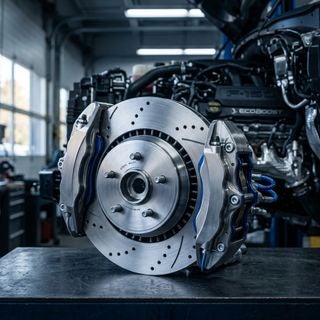
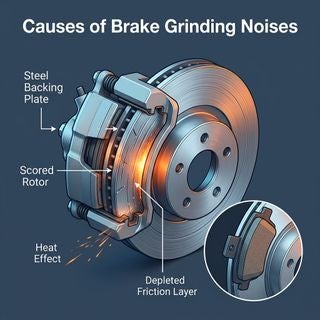
Expert Braking Insights: Why Is My Car Making a Grinding Noise When I Brake? A harsh, metallic grinding noise during braking almost always indicates that your brake pad friction material is completely depleted, causing the steel backing plate to scrape directly against the rotor. To explain the mechanical causes, safety risks, and repair expectations behind these sounds, we sat down with Matt Shaw, Service Manager at Tri State Ford, who brings 10 years of specialized automotive service experience to drivers seeking trusted vehicle care. Q: What primary mechanical issues cause a car to make a grinding noise when braking? A: A grinding noise during braking is primarily caused by brake pads wearing down to their steel backing plates, which then scrape directly against the cast-iron rotor surfaces. While friction material depletion accounts for the vast majority of cases, severe grinding can also stem from road debris such as small stones lodged between the dust shield and the rotor, or broken caliper mounting hardware rubbing against rotating components. When you press the brake pedal, the hydraulic caliper clamps the brake pads against the spinning rotor to slow your vehicle. Under normal conditions, friction material made of semi-metallic or organic compounds absorbs that intense contact safely. Once that layer wears past its minimum thickness, the remaining steel backing plate contacts the rotor directly. This steel-on-steel friction creates immediate scoring, severe heat buildup, and a dramatic drop in stopping power. Drivers navigating the rolling elevation changes near State Route 170 in Calcutta frequently notice this sound on downhill descents, where thermal stress accelerates pad wear. In other instances, the noise presents suddenly without prior wear symptoms. A piece of loose gravel caught between the brake rotor and the metal dust shield can produce a piercing rasp or scraping sound that changes with wheel speed rather than pedal pressure. Foreign objects in the caliper assembly or missing anti-rattle clips can also allow components to shift and rub. If you suspect severe pad wear or backing plate contact, you can reach our East Liverpool service center on Pennsylvania Avenue or give our service team a call for a quick diagnostic walk-through and expert advice. Q: Do ceramic brake pads eliminate grinding noises completely? A: Ceramic brake pads virtually eliminate high-frequency squeals and dust-related noise during normal operation, but they cannot eliminate metal-on-metal grinding if the pad wears down to its backing plate. Because ceramic pads still rely on a hard steel backing plate for structural mounting in the caliper, driving on fully depleted friction material will produce the exact same damaging metallic friction against the rotor as semi-metallic pads. The primary benefit of ceramic friction formulations lies in their composition, which uses dense ceramic compounds and embedded copper or synthetic fibers instead of coarse steel strands. This design dampens noise frequencies above human hearing thresholds and generates light-colored dust that does not stick readily to wheels. Under everyday driving conditions, high-grade ceramic pads operate significantly quieter than high-metallic alternatives. However, no friction formulation exempts a braking system from mechanical wear. Once the ceramic layer wears below 2 millimeters, the mechanical wear indicator or the steel plate itself will contact the rotor. Expecting ceramic pads to prevent metal grinding after complete wear is a common misconception. Maintaining quiet, responsive stopping performance requires replacing pads before the friction material disappears, which you can support by ordering genuine OEM brake components tailored specifically to your vehicle specifications. Q: How far can you safely drive on grinding brakes before catastrophic failure occurs? A: You should not drive a vehicle with grinding brakes beyond the few miles required to reach a certified repair facility. Extended driving on worn backing plates can cause caliper pistons to overextend beyond their fluid seals, leading to complete hydraulic fluid loss and sudden brake failure. "When you hear metal grinding against metal, your stopping distance is already compromised and every extra mile risks turning a basic pad service into a complete hydraulic overhaul." Continuing to press steel against cast iron creates extreme localized friction heat. This thermal spike can warp the rotor, crack the friction surfaces, and boil the brake fluid inside the caliper lines. Vaporized fluid creates air pockets in the sealed hydraulic circuit, causing the brake pedal to sink to the floor without generating stopping pressure. Additionally, the intense heat can scorch caliper piston boots, causing rubber seals to melt and leak fluid directly onto the hot disc. If severe grinding occurs unexpectedly while you are far from home or stranded on the road, utilizing Ford Roadside Assistance: 1-800-241-3673 provides towing support directly to a qualified service bay. During emergency vehicle evaluations, technicians perform comprehensive safety checks, including routine electrical and battery checks, to verify that all electronic safety systems function properly before putting the vehicle back on the road. Q: Can severe grinding brakes cause a vehicle to pull to one side while stopping? A: Severe grinding can cause a vehicle to pull toward one side during braking whenever friction levels or hydraulic caliper pressures become unequal across an axle. When one brake pad wears down to its metal backing plate before the opposing side, or if a caliper slide pin seizes due to extreme friction heat, the uneven stopping force pulls the steering wheel toward the side with stronger friction or binding. Unequal wear patterns frequently develop when caliper slide pins lack proper lubrication or when a caliper piston sticks inside its bore. The stuck pad remains pinned against the rotor while driving, grinding away its friction layer at double the normal rate. When you apply the brakes, the side with intact friction material grips effectively, while the metal-on-metal side slides with reduced efficiency. This differential torque creates a noticeable yaw moment that pulls the front end off course. Drivers negotiating steep riverfront bluffs in East Liverpool near the Ohio River often notice this pull immediately on downhill stops, as weight shifts forward and exaggerates axle imbalances. Inspecting caliper slide pins, hardware boots, and hydraulic lines prevents one-sided binding from destroying rotors prematurely. For added convenience when dealing with braking issues at home or work, exploring Ford Mobile Service options allows certified technicians to perform remote maintenance inspections directly in your driveway. Q: Why do new brake pads sometimes squeak after installation, and how does that differ from grinding? A: New brake pads sometimes produce a high-pitched squeak during their initial break-in period due to microscopic surface vibrations, light glazing, or a lack of dampening lubricant behind the backing plate. That high-frequency squeal is fundamentally different from a harsh, low-frequency metal grinding sound, which indicates physical gouging and heavy mechanical contact between steel and rotor iron. During the initial bedding-in phase, new pad material transfers a thin, uniform layer of friction compound onto the smooth rotor surface. Until that transfer layer fully stabilizes across several dozen moderate stops, light vibration frequencies can resonate through the caliper frame as a squeak. Technicians mitigate this sound by applying specialized anti-squeal dampening shims and high-temperature silicone grease to the rear backing contact points during assembly. Grinding, by contrast, is never a normal break-in sound. A grinding noise signifies deep structural gouging, uneven rotor scoring, or severe mechanical interference. If a newly serviced brake system produces a harsh metal-on-metal sound, it typically means an anti-rattle clip was installed improperly or a mounting bolt has loosened. Drivers who prefer seamless maintenance scheduling can take advantage of Ford Pick Up & Delivery service to have their vehicle transported to the shop and returned after a complete inspection. Q: What should drivers expect regarding brake replacement service costs and professional inspections? A: Professional brake service costs vary based on whether you require a simple pad replacement or a full pad-and-rotor overhaul per axle, with routine maintenance costing significantly less than repairing damaged calipers and gouged rotors. A comprehensive brake inspection includes measuring pad thickness in millimeters, evaluating rotor surface variation, checking caliper slide operation, and testing hydraulic fluid condition. When caught early, replacing brake pads on a single axle remains a straightforward, cost-effective maintenance item. However, allowing pads to grind down to their steel backing plates quickly cuts deep grooves into the rotors, making resurfacing impossible and requiring full rotor replacement. In severe cases, extreme heat damages the caliper assembly itself, requiring fluid flushes and new hydraulic hardware that increases total repair expenses. During a professional inspection at our convenient East Liverpool facility, factory-trained technicians measure remaining friction depth against original manufacturer tolerances. Catching wear before metal-on-metal contact protects your rotors and ensures reliable stopping distance. If you hear unexpected braking sounds or want peace of mind before a long trip, (330) 462-7578 is available for quick questions, or you can get started by scheduling your service appointment online today. © 2026 Tri State Ford. All rights reserved. Brake Grinding Noise Repair in East Liverpool OH | Tri State Ford
Article image

Stop Faster, Drive Safer: Unlock Tips to Extend Your F-150’s Rear Brake Life

Understanding Rear Brake Wear on the Ford F-150: Causes and Maintenance When it comes to keeping your Ford F-150 safe and dependable on the roads near East Liverpool, OH, understanding how rear brakes wear and when to maintain them is essential. Rear brakes play a crucial role in your truck’s overall stopping power, yet many owners notice their rear brake components can wear faster than expected. This often prompts questions about why rear brakes might deteriorate more quickly than front brakes, what factors contribute to this wear, and how regular maintenance can extend their life while ensuring optimal safety. One of the primary reasons rear brakes on the Ford F-150 may wear faster than front brakes stems from the truck’s braking system design and driving habits. Unlike many passenger vehicles that rely mainly on front brakes for stopping power, the F-150’s rear brakes often handle a significant share of braking force, especially during towing or hauling heavy loads. This extra workload accelerates wear on rear brake pads and rotors, making timely inspections and service vital to prevent compromised performance. The F-150’s rear brakes typically use drum or disc brake configurations depending on the model year and trim, each with distinct maintenance considerations. Disc brakes, common on newer models, offer improved heat dissipation and more consistent stopping power but still require regular checks for pad thickness and rotor condition. Drum brakes, found on some base models or older trucks, can accumulate brake dust and moisture more readily, which may contribute to faster wear if not cleaned and serviced properly. Understanding which system your truck uses helps tailor maintenance routines that protect brake longevity. Environmental and driving conditions around rural areas like Knox Township, OH, also influence brake wear. Frequent stops on rolling terrain or driving through muddy or dusty roads can introduce debris that accelerates pad and rotor deterioration. For truck owners regularly navigating these conditions, adhering to a strict brake inspection schedule is especially important. Certified technicians at Tri State Ford recommend routine brake checks every 12,000 to 15,000 miles or sooner if you notice symptoms such as squealing, vibrations, or decreased braking responsiveness. Maintenance plays a key role in extending rear brake life. Regular brake fluid replacement ensures hydraulic components operate smoothly, preventing uneven pad wear and corrosion. Keeping calipers and hardware lubricated reduces sticking and uneven pressure on the brake surface. When rear pads reach minimum thickness, OEM-quality replacements matched to your truck’s towing and payload specifications restore dependable stopping power and help maintain safety for your family and work-related tasks in Smith Township, PA. If you are experiencing signs of rear brake wear or simply want a professional inspection, scheduling service at Tri State Ford ensures your F-150 receives expert care from factory-trained technicians using genuine Ford parts. Conveniently located in East Liverpool, you can get directions to Tri State Ford or call us at (330) 462-7578 to book an appointment. Keeping your rear brakes in top condition safeguards your truck’s performance and your peace of mind on the roads near Independence Township, PA. Table of Contents Expected Lifespan of Rear Brakes and Signs You Need Service How Towing and Load Affect Brake Wear on Your Ford F-150 Choosing the Right Brake Pads for Your F-150: Ceramic vs. Semi-Metallic Routine Brake Service and Repair at Tri State Ford: Quality You Can Trust Expected Lifespan of Rear Brakes and Signs You Need Service The lifespan of rear brakes on a Ford F-150 depends on several factors including driving habits, load carried, and environmental conditions. Typically, rear brake pads last between 30,000 and 50,000 miles, but this range can vary substantially due to how much braking force is applied and the type of terrain frequently driven. In rural areas like Goshen Township, OH, where roads may be less congested and more gradual, rear brake wear may be slower compared to stop-and-go traffic common in busier townships. Brake components on the rear axle endure significant stress, especially when hauling or towing, which can accelerate wear. Regular maintenance and inspections are essential to detect early signs of brake wear before they compromise safety or lead to costly repairs. Common indicators that rear brakes need service include: A noticeable squealing or grinding noise during braking, which often signals worn brake pads or damaged rotors. Reduced braking responsiveness or a spongy brake pedal feel, indicating potential issues with brake fluid or caliper function. Vibrations or pulsations when applying brakes, which can point to warped rotors or uneven pad wear. Routine brake inspections performed by certified technicians at Tri State Ford can help catch these signs early. During service visits, specialists measure pad thickness, examine rotor condition, and test caliper operation to ensure everything functions within manufacturer specifications. Replacing worn pads and resurfacing or swapping out rotors during the same service appointment can extend the life of your rear brakes and provide consistent stopping power. Maintaining your rear brakes in optimal condition safeguards your F-150’s durability and reliability on East Liverpool’s roads and surrounding areas. For reliable brake parts and expert care, trust the factory-trained technicians at Tri State Ford. Learn more about our Truck Inventory to keep your vehicle ready for service and performance. How Towing and Load Affect Brake Wear on Your Ford F-150 Towing heavy trailers or carrying substantial loads significantly impacts the wear rate of your Ford F-150’s rear brakes. When the truck is tasked with hauling weight, the braking system must work harder to slow down and stop the vehicle safely. This increased demand places extra stress on the rear brake components, causing them to wear out faster than under normal driving conditions. The rear brakes on an F-150 support a considerable portion of the braking force during towing, especially when the trailer has its own braking system or when the load shifts rearward. This dynamic can accelerate the deterioration of brake pads and rotors, particularly if the driver frequently uses engine braking or downshifts to control speed on long descents. In rural areas like Goshen Township or Knox Township, where hauling equipment or trailers across rolling terrain is common, brake wear can occur more rapidly without proper maintenance. Proper brake maintenance becomes essential for owners who regularly tow or carry heavy loads. Routine inspections help identify early signs of brake wear such as thinning pads, rotor scoring, or decreased responsiveness. Using high-quality, manufacturer-recommended brake components ensures durability and safety under load conditions. Additionally, applying brake fluid changes and cleaning calipers during service appointments preserves optimal brake performance. Understanding how load affects brake longevity allows F-150 owners to plan timely service visits, preventing unexpected brake failures and maintaining reliable stopping power, particularly on the varied terrain around Smith Township. Regular brake service tailored to towing demands protects your investment and keeps your truck operating safely and dependably. Choosing the Right Brake Pads for Your F-150: Ceramic vs. Semi-Metallic Selecting the appropriate brake pads for your Ford F-150 is essential for maintaining consistent stopping power and prolonging brake system life. The two common options are ceramic and semi-metallic pads, each with distinct characteristics suited to different driving needs and service considerations. Ceramic brake pads offer quieter operation and produce less brake dust, which helps keep wheels cleaner—a benefit especially appreciated by drivers frequently navigating residential areas like Goshen Township. These pads provide smooth braking and tend to wear evenly, supporting longer service intervals. However, ceramic pads usually come at a higher initial cost and may not perform as well under extreme heavy-duty conditions, such as regular towing or hauling. Semi-metallic pads contain metal fibers, making them highly durable and excellent at dissipating heat generated during braking. This feature is vital when hauling or towing heavy loads in areas with rolling terrain, like Knox Township, where brake components face increased stress. Semi-metallic pads generally cost less than ceramic options and offer reliable stopping power, though they tend to produce more noise and brake dust, which may require more frequent cleaning and inspection. For Ford F-150 owners prioritizing everyday driving comfort and lower maintenance, ceramic pads are often recommended. Conversely, those regularly towing or driving in demanding conditions may find semi-metallic pads better suit their needs due to their toughness and heat resistance. Consulting with certified technicians at Tri State Ford ensures you receive expert advice tailored to your vehicle’s usage. They can help you choose the right pads and perform professional installation using OEM parts, preserving both safety and brake system longevity. Routine Brake Service and Repair at Tri State Ford: Quality You Can Trust Regular brake maintenance is essential to keep your Ford F-150 performing safely and reliably, especially when navigating the rural roads around Goshen Township. At Tri State Ford, our certified technicians specialize in comprehensive brake inspections and repairs that focus on precision and durability. We use only genuine OEM parts to ensure your braking system maintains optimal performance and longevity. Our service includes thorough checks of brake pads, rotors, calipers, and brake fluid condition, addressing wear before it becomes a safety issue. Whether you need a simple pad replacement or a full brake system overhaul, we follow Ford’s exact specifications to protect your vehicle’s warranty and your family’s safety. Located conveniently at 1503 Pennsylvania Ave, East Liverpool, OH, Tri State Ford offers transparent service processes and clear communication so you can plan your visits confidently. For expert brake care backed by factory training and genuine parts, call us at (330) 462-7578 or get directions to Tri State Ford. Keeping your F-150 stopping strong is our priority. © 2026 Tri State Ford. All rights reserved.

Contact Us

Fill out this form below and we'll contact you shortly
*Required Fields