
Ford Brake Inspection: Ensuring Safety and Performance
How Can You Visually Check Your Ford Brake Pad Thickness Without Removing the Wheel?
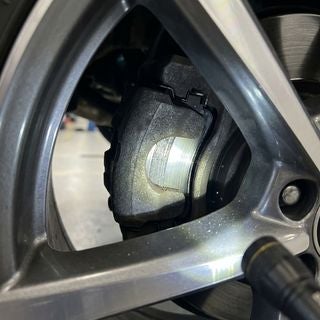
You can visually check brake pad thickness without removing the wheel by shining a flashlight through the wheel spokes directly at the brake caliper assembly. Look for the outer friction pad pressed against the smooth surface of the metal rotor; if the remaining pad material measures less than 4 mm thick (roughly the height of two stacked quarters), your brakes are approaching their wear limit and require professional attention.
Spoked alloy wheels make this visual check straightforward on daily drivers like the Ford Escape equipped with its standard 1.5L engine or the Ford Explorer. Position your vehicle on a flat surface, turn off the engine, and shine a bright flashlight between the rim spokes. The brake pad consists of a heavy steel backing plate and a thick friction block attached to it. You are measuring the thickness of that inner friction block, not the steel backing plate. When you observe less than 3 mm of friction block remaining, the internal mechanical wear indicator will soon contact the rotating disc, producing a distinct screeching sound under braking.
When drivers ask me how to keep an eye on their brakes between scheduled oil changes, I show them how to inspect the outer pads right in their driveway using a simple LED pocket flashlight. Daily stop-and-go commuting along State Route 170 in Calcutta places steady demand on brake friction materials, making periodic visual checks a smart routine for local owners. If your vehicle features steel wheels with full wheel covers that obstruct your view, our service team at 1503 Pennsylvania Ave can hoist the vehicle and measure both inner and outer pad lining depth precisely. Give our service desk a call at (330) 462-7578 or find our service center location to have our certified technicians perform a complete system check.
Table of Contents
- What Are the Minimum Safe Brake Pad Thickness Specifications for Ford Vehicles?
- What Happens When You Drive on Ford Brake Pads Thinner Than 2 mm?
- How Do Ford Electronic Parking Brakes, ABS, and Brake Fluid Ratings Work Together?
- How Do Motorcraft Brake Pads Compare to Aftermarket Ceramic Pads, and Will Aftermarket Parts Void Your Warranty?
- How Can Drivers Save Money on Professional Ford Multi-Point Brake Inspections?
What Are the Minimum Safe Brake Pad Thickness Specifications for Ford Vehicles?
Brand-new factory brake pads typically feature 12 millimeters of fresh friction material. Ford scheduled maintenance guidance recommends planning for replacement when pad material wears down to 3 mm or 4 mm, while 2 mm serves as the absolute critical safety limit where immediate replacement is required to avoid system damage.
Tracking pad thickness during regular multi-point inspections ensures you replace wear items before they damage companion components like rotors and calipers. A friction layer measuring between 6 mm and 12 mm indicates healthy braking condition. When measurements fall into the 4 mm to 5 mm range, our service team recommends setting aside time for an upcoming service visit.
Vehicles like the Ford F-150 configured with a 3.5L EcoBoost engine and a 10,400 lbs maximum towing capacity generate significant kinetic energy that relies directly on brake pad integrity. Heavy payloads, trailering, and hilly driving accelerate pad wear faster than steady highway cruising. Because friction wear rates vary depending on vehicle weight, cargo habits, and driving environments, evaluating pad depth against factory specifications during routine visits is far safer than relying solely on elapsed mileage.
What Happens When You Drive on Ford Brake Pads Thinner Than 2 mm?
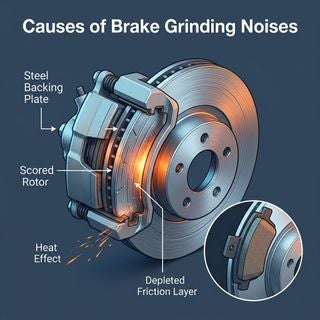
Operating a vehicle on brake pads thinner than 2 mm causes extended stopping distances, severe rotor scarring, and excessive heat buildup that degrades hydraulic brake fluid performance. Once the remaining friction material wears away entirely, the raw steel backing plate strikes the rotating rotor directly, creating severe metal-to-metal gouging that requires full rotor replacement rather than simple pad servicing.
Metal-to-metal contact generates extreme thermal friction that quickly warps disc rotors and bakes caliper piston seals. Excessive heat reduces hydraulic pressure efficiency, leading to a soft pedal feel and reduced stopping response when driver-assist features like Pre-Collision Assist with Automatic Emergency Braking attempt to slow the vehicle automatically.
Beyond expensive component damage, worn pads increase vehicle safety risks during sudden emergency stops on wet or icy roads. Extreme thermal stress can even cause thin pad backing plates to crack or bind within the caliper slide bracket. If you want to evaluate pedal feedback and braking response on a fresh setup, you can schedule a test drive in one of our latest Ford models to experience factory-fresh stopping power firsthand.
How Do Ford Electronic Parking Brakes, ABS, and Brake Fluid Ratings Work Together?
Modern Ford braking systems integrate an Electronic Parking Brake powered by electric caliper motors with an advanced Anti-Lock Braking System that relies on low-viscosity DOT 4 LV brake fluid for rapid hydraulic pressure modulation. The lower viscosity of DOT 4 LV fluid allows electronic control valves to pulse rapidly during hard stops or stability control interventions, maintaining tire traction and steering control under harsh conditions.
Brake fluid is naturally hygroscopic, meaning it absorbs atmospheric moisture over time. Water contamination lowers the boiling point of the fluid and promotes internal corrosion within aluminum ABS valve blocks. Ford service guidelines advise checking brake fluid levels monthly and inspecting fluid clarity during regular routine maintenance. During winter months, degraded fluid can thicken, slowing anti-lock system response times during cold morning commutes along Market Street in Boardman.
When servicing rear brakes on models equipped with an Electronic Parking Brake, technicians must place the vehicle into a dedicated brake service mode to retract the electric actuator pistons safely before retracting the caliper. Skipping this electronic step can destroy the internal motor gears on heavy-duty vehicles, including those in our new Ford F-Series work truck inventory. Maintaining proper fluid ratings and electronic service procedures protects your braking investment across our entire new commercial truck lineup.
How Do Motorcraft Brake Pads Compare to Aftermarket Ceramic Pads, and Will Aftermarket Parts Void Your Warranty?
Genuine Motorcraft brake pads are engineered specifically for your Ford vehicle's curb weight, rotor metallurgy, and noise-vibration-harshness (NVH) requirements to deliver quiet operation and predictable stopping power. Installing aftermarket ceramic pads will not automatically void your Ford factory warranty under federal warranty laws, but any mechanical failure or component damage caused directly by an incompatible or improperly installed aftermarket part will not be covered under factory warranty terms.
Factory Motorcraft friction formulations match specific chassis configurations, balancing heat dissipation, rotor wear, and dusting characteristics. While some generic aftermarket ceramic pads advertise lower dust output, they often operate at higher friction temperatures that accelerate rotor surface wear or cause annoying cold-weather brake squeal.
Sticking with original equipment components maintains your vehicle's factory engineering standards. When it comes time to replace worn pads or hardware, you can quickly order OEM Motorcraft brake parts directly through our parts department to ensure proper fitment, original hardware clip clearance, and uncompromised braking performance.
How Can Drivers Save Money on Professional Ford Multi-Point Brake Inspections?
Drivers can minimize overall brake maintenance costs by scheduling regular multi-point brake inspections alongside routine oil changes, redeeming earned Ford Rewards points for service visits, and replacing worn friction pads before they damage expensive rotors. Catching uneven pad taper, sticking caliper pins, or degraded fluid early prevents simple maintenance visits from turning into major repairs.
A comprehensive Ford multi-point brake inspection includes measuring inner and outer pad lining thickness with precision calipers, checking rotor surfaces for scoring or runout, testing brake fluid moisture content, inspecting flexible brake lines for cracks, and verifying caliper slider movement. Catching a sticking slide pin early costs a fraction of replacing heat-damaged rotors and stuck calipers later.
Our certified technicians at Tri State Ford use factory diagnostic equipment to inspect every component of your stopping system. You can get directions to our East Liverpool service department or give our team a call at (330) 462-7578 to ask about current maintenance offers. When you are ready to ensure your vehicle stops smoothly and safely, feel free to schedule your service appointment online for quick, professional maintenance.