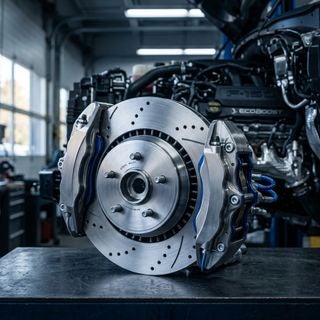

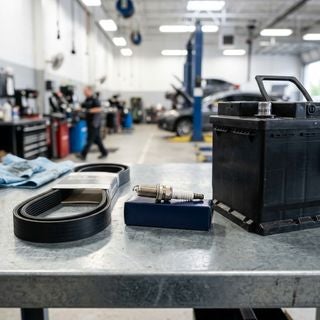
Most major replacement auto parts last between 30,000 and 100,000 miles, or roughly three to seven years, depending on the specific component, driving habits, and manufacturing quality. High-wear components like standard brake pads and conventional flooded batteries usually require replacement every 3 to 5 years or 30,000 to 50,000 miles, whereas premium iridium spark plugs, serpentine belts, and Absorbed Glass Mat (AGM) batteries routinely reach 60,000 to 100,000 miles under normal operating conditions.
Understanding the expected service life of vehicle components allows vehicle owners to plan routine maintenance proactively before minor wear leads to mechanical failure on the road. Component longevity is shaped by mechanical stress, thermal exposure, road conditions, and adherence to factory maintenance schedules. For example, a heavy-duty pickup like the Ford F-150 equipped with a 3.5L engine that regularly hauls heavy loads subjects its cooling and drive systems to greater stress than a light commuter crossover.
Routine inspections during scheduled oil changes help identify aging components before complete breakdown occurs. Watching for subtle warning signs—such as slow engine cranking, squeaking brakes, or faint belt squeal—prevents unexpected breakdowns during daily commutes. For trusted component inspections or routine maintenance guidance, drivers can visit our service center at 1503 Pennsylvania Ave in East Liverpool or give our service team a quick call to discuss factory-recommended replacement intervals.
Table of Contents
- How Long Do Replacement Spark Plugs, Belts, and Hoses Last?
- What Is the Expected Lifespan of Standard Flooded vs. AGM Car Batteries?
- How Long Should Replacement Brake Pads and Rotors Last?
- Are Tier-1 Aftermarket Parts as Durable as OEM Parts, and Do They Void Warranties?
- Common Questions About Replacement Auto Part Lifespans and Warranties
- Keep Your Vehicle Dependable with Genuine Parts
How Long Do Replacement Spark Plugs, Belts, and Hoses Last?
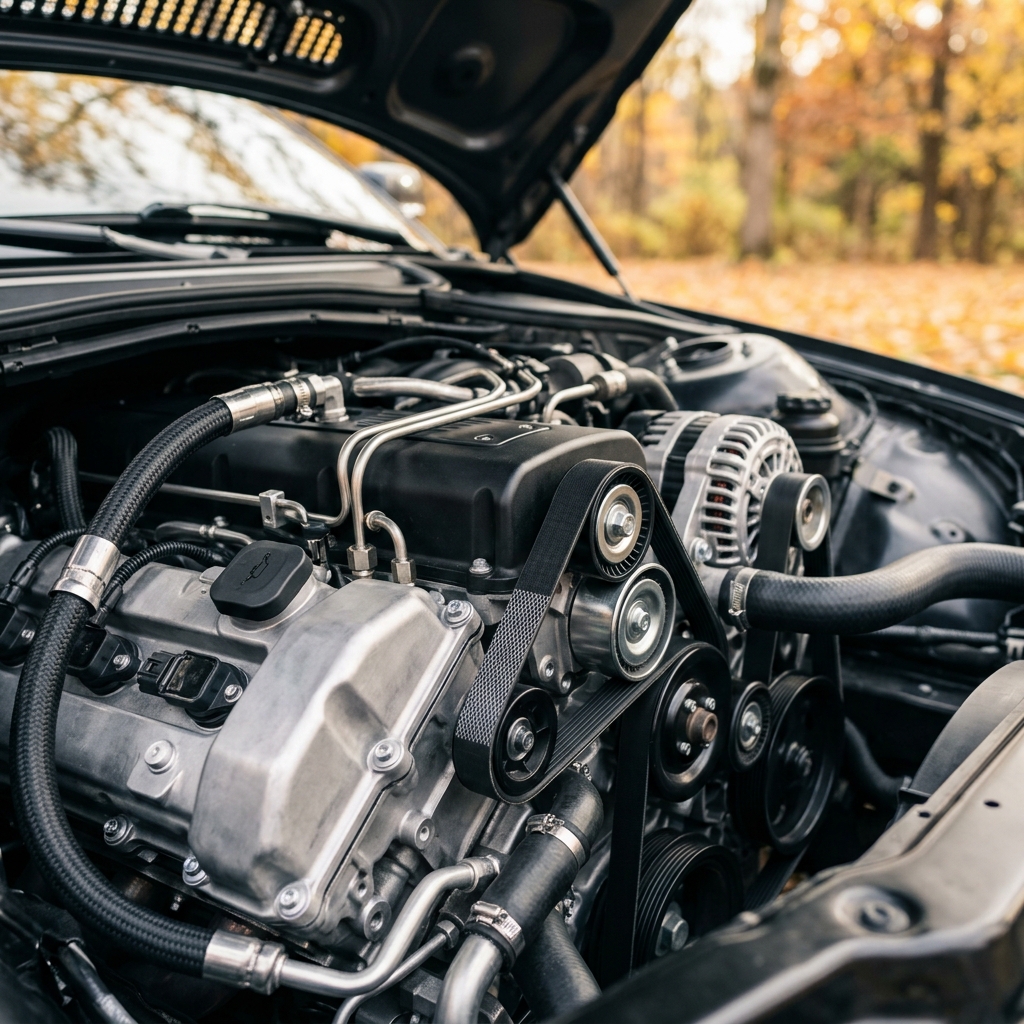
Replacement spark plugs, belts, and hoses generally last between 60,000 and 100,000 miles under normal driving conditions, though severe operating environments accelerate wear. Modern iridium and platinum spark plugs routinely perform reliably for up to 100,000 miles, serpentine accessory belts typically last 60,000 to 100,000 miles, and rubber radiator or heater hoses operate dependably for 4 to 5 years or 60,000 miles before thermal hardening creates risk of cracking.
Engine ignition and accessory systems experience continuous thermal expansion and friction during operation. According to Ford Scheduled Maintenance guidelines, standard spark plug replacement intervals are set at 100,000 miles under normal service, but that recommendation shortens to 60,000 miles under severe operating conditions such as frequent short trips, extensive idling, or persistent heavy towing. The same maintenance guidelines recommend a formal inspection of all accessory drive belts at 100,000 miles to check for rib cracking, edge fraying, or tension loss.
Drivers navigating the gently rolling hills around Calcutta subject engine accessory drive belts and cooling systems to frequent load changes, making periodic visual checks essential. Rubber cooling hoses degrade from the inside out due to electrochemical degradation and constant exposure to hot engine coolant. Replacing aging hoses and brittle serpentine belts during scheduled maintenance windows prevents sudden coolant loss and engine overheating.
- Iridium Spark Plugs: Expected life of 100,000 miles under normal service; 60,000 miles under severe service.
- Serpentine Belts: Expected life of 60,000 to 100,000 miles; inspect for cracking or glazing regularly.
- Cooling System Hoses: Expected life of 4 to 5 years or 60,000 miles; check for softness or swelling at connection points.
What Is the Expected Lifespan of Standard Flooded vs. AGM Car Batteries?
Standard flooded lead-acid replacement batteries typically last 3 to 5 years, whereas Absorbed Glass Mat (AGM) batteries provide an extended service life of 4 to 7 years. AGM batteries feature fiberglass mat separators that absorb electrolyte solution, making them significantly more resistant to vibration, severe cold, and heavy electrical drain than traditional flooded options.
Kelley Blue Book reports that auto batteries average four to five years or 50,000 miles of reliable service under moderate climate conditions, but environmental extremes substantially alter those figures. In the river valley climate of East Liverpool, sub-freezing winter temperatures slow down battery chemical reactions while elevated summer heat accelerates internal plate corrosion. Consequently, standard flooded batteries in cold-winter regions frequently require replacement closer to the 3-year mark.
Modern vehicles equipped with auto start-stop technology, advanced driver-assist safety suites, and power-heavy interior electronics place continuous demand on the vehicle charging system. AGM batteries excel in these applications because they recharge up to five times faster than flooded designs and tolerate frequent deep discharging without permanent capacity loss. Testing battery resting voltage with a multimeter provides an early indication of battery health; a resting voltage below 12.4 volts signals a degraded charge level that warrants battery testing before total starting failure occurs.
| Battery Type | Typical Lifespan | Cold Weather Performance | Ideal Application |
|---|---|---|---|
| Standard Flooded | 3 to 5 Years | Moderate | Older vehicles with basic electrical requirements |
| Absorbed Glass Mat (AGM) | 4 to 7 Years | Superior | Start-stop systems, high electrical loads, harsh climates |
How Long Should Replacement Brake Pads and Rotors Last?
Replacement brake pads typically last between 30,000 and 70,000 miles—with 50,000 miles serving as a standard industry benchmark—while brake rotors generally last between 50,000 and 70,000 miles. Brake system longevity depends on driver braking habits, vehicle gross weight, friction pad material, and whether driving occurs primarily in heavy stop-and-go traffic or open highway cruising.
Kelley Blue Book highlights roughly 50,000 miles as a typical pad replacement point, while emphasizing that brakes must be evaluated by physical wear thickness rather than calendar time alone. Crossover models such as the Ford Escape with a 1.5L engine or family vehicles like the Ford Explorer with a 2.3L engine rely on precise brake pad friction compounds to maintain consistent stopping power and smooth engagement.
Friction materials wear thin over time, causing reduced thermal dissipation and increased stopping distances. Organic brake pads offer quiet operation but wear faster, ceramic pads deliver low dust and long life under light-to-moderate duty, and metallic or semi-metallic pads provide exceptional heat tolerance for heavy towing at the expense of accelerated rotor wear. When pad lining thickness drops to 3 millimeters or lower, immediate replacement is necessary to prevent metal-to-metal contact against the rotor face. Owners can easily schedule a service appointment online to have certified technicians measure brake pad thickness and evaluate rotor surface conditions.
Are Tier-1 Aftermarket Parts as Durable as OEM Parts, and Do They Void Warranties?
Tier-1 supplier aftermarket parts frequently match the durability of Original Equipment Manufacturer (OEM) parts because Tier-1 suppliers manufacture the original factory components directly for automakers. Under the federal Magnuson-Moss Warranty Act, installing aftermarket replacement components does not void a new vehicle warranty unless the dealer or manufacturer demonstrates that the specific aftermarket part caused the mechanical failure.
Tier-1 manufacturers operate state-of-the-art production lines under strict quality control standards, supplying identical component designs both directly to automotive assembly plants and to retail auto parts distributors. Choosing genuine OEM Ford parts, however, provides complete assurance of exact factory fit, proper electrical resistance calibration, and integrated structural design engineered specifically for your exact vehicle model year.
When deciding between OEM and aftermarket components, warranty coverage details carry significant weight. Retail part warranties typically cover only the financial cost of replacing the physical component itself, leaving vehicle owners responsible for any secondary labor costs required during installation. In contrast, genuine parts installed by factory-trained technicians at our dealership service center generally come backed by comprehensive part and labor warranty protection. Vehicle owners looking for exact-fit replacement filters, brake components, or ignition parts can order genuine Ford parts online through our dedicated parts department.
Common Questions About Replacement Auto Part Lifespans and Warranties
Q: Does an auto part warranty pay for the repair labor costs?
Retail replacement part warranties generally cover only the cost of replacing the physical component itself. When parts are purchased over the counter and installed independently, any labor required to remove the failed component and install the new one remains the owner's financial responsibility. However, when genuine parts are installed by factory-trained technicians at our dealership service center, the installation often includes integrated part and labor warranty coverage for complete peace of mind.
Q: How can you test if a replacement car battery is beginning to fail?
Testing a car battery involves checking its resting voltage with a digital multimeter and conducting a professional conductance or load test. A healthy battery maintains a static charge of approximately 12.6 volts, whereas a reading below 12.4 volts signals a weakened state of charge. Additional symptoms of an aging battery include slow engine cranking, dimming headlights during idle, clicking sounds when turning the ignition key, or visible battery terminal corrosion.
Q: How often should engine and cabin air filters be replaced?
Under normal operating conditions, engine air filters are typically replaced every 30,000 miles, while cabin air filters generally require replacement every 15,000 to 20,000 miles. Driving on unpaved gravel roads or in heavily dusty environments accelerates filter clogging, which restricts airflow into the engine intake or passenger cabin. Inspecting both filters during routine oil changes helps maintain optimal fuel efficiency and clean cabin air quality.
Q: Why do windshield wiper blades deteriorate quickly in winter?
Windshield wiper blades usually last about 6 to 12 months, or roughly 10,000 miles, but harsh winter weather dramatically speeds up rubber degradation. Sub-freezing temperatures cause wiper rubber to harden and crack, while ice on windshields and road salt spray tear delicate blade edges. Inspecting wiper blades seasonally and replacing them when streaking or chattering occurs restores full visibility during heavy precipitation.
Q: What severe service conditions shorten spark plug and belt service intervals?
Severe service conditions include frequent short trips under 10 miles, extensive engine idling, persistent stop-and-go driving, continuous operation in dusty environments, and heavy towing or hauling. These conditions subject ignition and drive components to elevated operating temperatures and frequent thermal expansion cycles. Consequently, recommended service intervals for spark plugs and accessory drive belts are shortened from 100,000 miles down to 60,000 miles to maintain peak engine efficiency.
Keep Your Vehicle Dependable with Genuine Parts
Maintaining your vehicle with high-quality replacement parts ensures long-term reliability, safety, and performance for every daily drive. Using genuine components installed according to factory maintenance schedules prevents premature wear and protects key engine systems. When it is time for routine maintenance, brake service, or battery replacement, stop by our dealership at 1503 Pennsylvania Ave, review our current manufacturer service specials, or call us at (330) 462-7578 to speak directly with our certified service team.