Blog / Maintenance & Service, Expert Repairs & Diagnostics, Genuine Parts & Accessories, Engine Care &

Blog

All Maintenance & Service, Expert Repairs & Diagnostics, Genuine Parts & Accessories, Engine Care & Automotive News, New Vehicle Reviews, Buying Guides, Financing & Insurance, Seasonal Driving Tips Used Vehicle Guides, Financing & Insurance, Buying Guides, Trade-In Advice, Certified Pre-Owned Maintenance & Service, Battery Care & Diagnostics, Electric Vehicle (EV) Maintenance, Seasonal Maintenance & Service, Warranty & Service Contracts, Repair & Diagnostics, Parts & Components New Vehicle Reviews, Buying Guides, Financing & Insurance, Model Comparisons, Automotive News Buying Guides, Financing & Insurance, New Vehicle Reviews, Model Comparisons, Sales & Promotions Used Vehicle Guides, Financing & Insurance, Buying Guides, Vehicle Warranty Information, Pre-Owned Vehicle Trade-In Advice, Financing & Insurance, Buying Guides, Used Vehicle Guides, New Vehicle Maintenance & Service, Parts & Accessories, Vehicle HVAC Care, Seasonal Vehicle Maintenance, DIY Maintenance & Service, Essential Vehicle Care, Preventive Maintenance Tips, Vehicle Longevity Compare Cars Used Vehicle Guides, Financing & Insurance, Buying Guides, Pre-Owned Vehicle Sales, Vehicle Maintenance & Service, Brake Systems & Repair, Vehicle Parts & Accessories, Towing & Load New Vehicle Reviews, Buying Guides, Model Comparisons, Financing & Insurance, Inventory & Sales Tips Vehicle Sales Events, New Vehicle Pricing & Incentives, Financing & Lease Options, Trade-In & Vehicle Sales Process, Financing & Credit Applications, New and Used Vehicle Inventory, Pickup and Vehicle Trade-In Tips, Financing & Insurance, Buying Guides, Dealership Sales Strategies, Inventory Buying Guides, Financing & Insurance, New Vehicle Reviews, Model Comparisons, Technology & Leasing & Lease Deals, Financing & Insurance, New Vehicle Sales, Commercial Vehicle Leasing, Maintenance & Service, Recall Information, Safety & Reliability, Vehicle Ownership Care, Parts & Maintenance & Service, Vehicle Pickup & Delivery, Mobile Service & On-Site Repairs, Oil Change & Community Events & Customer Appreciation, New Vehicle Reviews, Financing & Trade-In Guides, Maintenance & Service, Warranty & Recalls, Repair & Diagnostics, Parts & Accessories, Vehicle Used Vehicle Guides, Financing & Insurance, Buying Guides, New Vehicle Reviews, Commercial Vehicle Maintenance & Service, Automotive Technology & Software Updates, Warranty & Recall Service, Mobile Maintenance & Service, Vehicle Ownership Care, Mobile Repair Services, Genuine Parts & Certified New Vehicle Reviews, Buying Guides, Financing & Insurance, Model Comparisons, Automotive Technology Commercial Truck Sales, Fleet Vehicle Financing, Custom Work Truck Upfits, Commercial Vehicle Dealership Events & Promotions, Financing & Trade-In Options, Maintenance & Service Specials, Maintenance & Service, Mobile Vehicle Services, Vehicle Care & Ownership, Genuine Parts & Repairs, Maintenance & Service, Vehicle Inspections, Oil Change & Fluid Services, Tire Care & Battery Maintenance & Service, Vehicle Lighting & Electrical Systems, Automotive Safety & Inspection, OEM Model Comparisons, New Vehicle Reviews, Technology & Innovation, Safety Features, Buying Guides New Vehicle Reviews, Buying Guides, Financing & Insurance, Model Comparisons, Used Vehicle Guides Commercial Vehicle Sales, Financing & Leasing, Small Business Vehicle Incentives, Fleet Purchasing Commercial Vehicle Sales, Fleet Purchasing & Management, Financing & Leasing for Businesses, New & Community Events, New Vehicle Buying Guides, Financing & Insurance, Maintenance & Service, Local Maintenance & Service, Brake System Care, Vehicle Safety & Inspection, Parts Quality & Replacement, Maintenance & Service, Safety Features, Technology & Innovation, Seasonal Driving Tips, Parts & Maintenance & Service, Tire Care & Repair, Roadside Assistance, Vehicle Safety & Inspections, Maintenance & Service, Tire Care & Repair, Wheel Alignment & Balancing, Suspension Maintenance, Maintenance & Service, Tire Care & Replacement, Vehicle Safety & Handling, Seasonal Vehicle Maintenance & Service, Tire Care & Replacement, Vehicle Safety & Inspection, Emergency Roadside Maintenance & Service, Vehicle Software Updates, Safety Features, Technology & Innovation, Recall & New Vehicle Reviews, Buying Guides, Model Comparisons, Maintenance & Service, Technology & Used Vehicle Guides, Buying Guides, Financing & Insurance, Model Comparisons, Selling Your Car Vehicle Sales Events, New Vehicle Purchasing, Incentives & Discounts, Financing & Pre-Approval, Buying Guides, Financing & Insurance, New Vehicle Reviews, Commercial Fleet Sales, Custom Orders & Buying Guides, Financing & Insurance, Vehicle Inventory & Offers, Dealership Visit Preparation, Buying Guides, New Vehicle Reviews, Financing & Insurance, Commercial Vehicle Sales, Model Commercial Truck Sales, Fleet Purchasing Guides, Financing & Lease Options, Work Truck Commercial Vehicle Sales, Fleet Leasing & Management, Commercial Financing & Tax Incentives, Financing & Insurance, Leasing Benefits, Model Comparisons, Technology & Innovation, Buying Guides Leasing & Financing Options, Buying Guides, Model Comparisons, Negotiation Tips, Inventory & Leasing & Financing Options, Buying Guides, New Vehicle Reviews, Model Comparisons, Technology & Maintenance & Service, Automotive Detailing, Paint Protection & Care, Seasonal Vehicle Care, Maintenance & Service, Automotive Electrical Systems, Battery Care & Replacement, Vehicle Lighting Maintenance & Service, Automotive Fluids & Lubricants, Vehicle Care & Ownership, Dealership Service Maintenance & Service, Automotive Repair, Mobile & Remote Vehicle Service, Warranty & Roadside Maintenance & Service, Brake System Care, Vehicle Safety & Inspection, Automotive Repair Tips, Maintenance & Service, Brake System Care, Vehicle Safety & Inspections, Parts & Repairs, Expert Maintenance & Service, Technology & Innovation, Vehicle Diagnostics & Telematics, Fleet Management Maintenance & Service, Vehicle Care & Longevity, Scheduled Service Packages, Oil Changes & Fluid Maintenance & Service, Vehicle Inspection & Diagnostics, Parts & Repairs, Warranty & Resale Value, Maintenance & Service, Vehicle Interior Care, Technology & Innovation in Service, Professional New Vehicle Reviews, Buying Guides, Financing & Insurance, Model Comparisons, Inventory Highlights New Vehicle Reviews, Buying Guides, Financing & Insurance, Model Comparisons, Inventory Updates New Vehicle Reviews, Buying Guides, Technology & Innovation, Safety Features, Seasonal Driving Tips New Vehicle Reviews, Financing & Insurance, Buying Guides, Used Vehicle Guides, Model Comparisons New Vehicle Reviews, Model Comparisons, Commercial Truck Guides, Technology & Innovation, Buying Guides, Financing & Insurance, Used Vehicle Guides, New Vehicle Reviews, Cross-Border Commercial Leasing Options, Business Fleet Solutions, Financing & Leasing Programs, Commercial Community Engagement & Events, New Vehicle Promotions, Financing & Trade-In Options, Maintenance & Community Events & Dealership News, New Vehicle Promotions & Incentives, Maintenance & Service Community Events & Dealership News, New Vehicle Reviews, Financing & Insurance, Maintenance & Custom Ordering & Build Process, New Vehicle Inventory & Offers, Financing & Trade-In Guidance, East Liverpool, OH Ford Dealer East Liverpool, OH Used Cars Financing & Insurance, Buying Guides, Commercial Vehicle Solutions, Fleet Management, Inventory and Financing & Insurance, Buying Guides, New Vehicle Reviews, Used Vehicle Guides, Automotive Sales Financing & Insurance, Buying Guides, New Vehicle Reviews, Used Vehicle Guides, Automotive Sales & Financing & Insurance, Buying Guides, New Vehicle Reviews, Used Vehicle Guides, Model Comparisons Financing & Insurance, Buying Guides, Used Vehicle Guides, New Vehicle Reviews, Automotive Sales Financing & Insurance, Buying Guides, Used Vehicle Guides, Trade-In Tips, New Vehicle Sales Financing & Insurance, Buying Guides, Vehicle Inventory & Offers, Trade-In & Appraisal, Dealership Financing & Insurance, Buying Guides, Vehicle Trade-In Tips, Dealership Sales Process, New Vehicle Leasing & Financing Options, New Vehicle Leasing Guides, Buying Guides, Inventory Spotlight, Trade Leasing Options, Financing & Insurance, New Vehicle Reviews, Buying Guides, Technology & Innovation Leasing Options, Financing & Insurance, New Vehicle Sales, Buying Guides, Vehicle Inventory Maintenance & Service, Air Conditioning Repair, Genuine Parts & Accessories, Dealer-Authorized Maintenance & Service, Automotive Air Conditioning Repair, Vehicle Cooling System Care, Diagnostic Maintenance & Service, Automotive Detailing & Cleaning, Seasonal Vehicle Care, Vehicle Protection & Maintenance & Service, Automotive Detailing & Paint Care, Vehicle Exterior Protection, Paint Repair Maintenance & Service, Automotive Detailing & Protection, Corrosion & Rust Prevention, Paint & Maintenance & Service, Automotive Detailing, Vehicle Care & Protection, Off-Road Vehicle Maintenance & Service, Automotive Electrical Systems, Battery Care & Replacement, Diagnostics & Maintenance & Service, Automotive Glass Repair, Safety Features, Technology & Innovation, Mobile & Maintenance & Service, Automotive Lighting & Electrical, Vehicle Safety & Visibility, DIY Vehicle Maintenance & Service, Automotive Parts & Accessories, Seasonal Vehicle Care, Vehicle Safety & Maintenance & Service, Automotive Parts & Accessories, Vehicle Air Quality & HVAC Care, Preventive Maintenance & Service, Automotive Parts & Accessories, Vehicle Ownership Care, Engine Care & Maintenance & Service, Automotive Parts & Accessories, Vehicle Safety & Repair, Warranty & Maintenance & Service, Automotive Parts & Components, Vehicle Safety & Repair, Warranty & Service Maintenance & Service, Automotive Parts & Repairs, Vehicle Warranty & Protection, Service Center Maintenance & Service, Automotive Repair Tips, Service Team Selection, Warranty & Service Policies, Maintenance & Service, Automotive Repair, Parts & Accessories, Vehicle Ownership Care, Technology & Maintenance & Service, Automotive Repair, Parts & OEM Components, Vehicle Longevity & Care, Service Maintenance & Service, Automotive Technology & Diagnostics, Vehicle Electronics & Sensors, Seasonal Maintenance & Service, Battery Care & Replacement, Vehicle Electrical Systems, Seasonal Vehicle Maintenance & Service, Brake System Care, OEM Parts & Replacement, Vehicle Safety & Inspections, Maintenance & Service, Brake System Care, Vehicle Repair Tips, Automotive Parts & Components, Maintenance & Service, Brake System Care, Vehicle Safety & Inspections, Parts & Components, Maintenance & Service, Brake System Care, Vehicle Safety Inspections, Automotive Repair Tips, OEM Maintenance & Service, Certified Technician Insights, Warranty & Service Coverage, Genuine OEM Maintenance & Service, Cooling System Repairs, Vehicle Ownership Care, Diagnostic & Maintenance & Service, Diagnostic Services, Vehicle Health & Diagnostics, Service Tips & Advice, Maintenance & Service, Engine Care & Performance, Parts & Accessories, Genuine vs. After Maintenance & Service, Paint Protection & Detailing, Vehicle Exterior Care, Seasonal Vehicle Maintenance & Service, Parts & Accessories, Engine Care & Repair, Vehicle Longevity Tips, OEM Parts Maintenance & Service, Parts & Replacements, Vehicle Care Tips, Seasonal Maintenance, DIY Vehicle Maintenance & Service, Recall Updates & Safety Notices, Genuine Parts & Accessories, Truck Care & Maintenance & Service, Repair & Diagnostics, OEM Parts & Accessories, Warranty & Recall Maintenance & Service, Repair & Diagnostics, Parts & Accessories, Vehicle Ownership Care, Service Maintenance & Service, Repair & Diagnostics, Parts & Components, Preventive Care & Tips, Warranty & Maintenance & Service, Repair & Diagnostics, Tire & Wheel Care, Vehicle Safety & Inspection, Parts Maintenance & Service, Repair & Diagnostics, Warranty & Service Coverage, Genuine OEM Parts & Maintenance & Service, Repair & Parts, Vehicle Ownership Care, Safety Features, Technology & Maintenance & Service, Repair & Parts, Vehicle Ownership Care, Transmission Maintenance & Service, Repair Solutions, Vehicle Ownership Care, Parts & Accessories, Diagnostic Maintenance & Service, Repair Tips & Techniques, Vehicle Care & Ownership Maintenance & Service, Safety Features, Automotive Recalls & Repairs, Parts & Warranty Services, Maintenance & Service, Safety Features, Automotive Recalls & Repairs, Technology & Innovation, Maintenance & Service, Safety Features, Automotive Recalls, Vehicle Ownership Care, Parts & Repairs Maintenance & Service, Safety Features, Parts & Repairs, Vehicle Ownership Care, Automotive Service Maintenance & Service, Safety Features, Recall & Repair Updates, Parts & Repairs, Vehicle Ownership Maintenance & Service, Safety Features, Recall & Safety Campaigns, Vehicle Inspection & Repairs, Maintenance & Service, Safety Features, Recall & Warranty Information, Vehicle Diagnostics & Maintenance & Service, Safety Features, Recall Repairs & Safety Campaigns, Parts & Genuine Maintenance & Service, Safety Features, Recalls & Repairs, Parts & Accessories, Vehicle Ownership Maintenance & Service, Safety Features, Repair & Recall Updates, Parts & Components, Vehicle Maintenance & Service, Safety Features, Repair & Replacement, Vehicle Care & Inspection, Parts & Maintenance & Service, Safety Features, Seasonal Driving Tips, Technology & Innovation, Parts & Maintenance & Service, Safety Features, Technology & Innovation, Automotive Electrical Systems, Maintenance & Service, Safety Features, Technology & Innovation, Automotive News, Parts & Repairs Maintenance & Service, Safety Features, Technology & Innovation, Automotive Parts & Accessories, Maintenance & Service, Safety Features, Technology & Innovation, Automotive Recalls, Parts & Repairs Maintenance & Service, Safety Features, Technology & Innovation, Automotive Recalls, Vehicle Maintenance & Service, Safety Features, Technology & Innovation, Automotive Service Tips, Recall & Maintenance & Service, Safety Features, Technology & Innovation, Parts & Repairs, Seasonal Driving Maintenance & Service, Safety Features, Technology & Innovation, Parts & Repairs, Vehicle Ownership Maintenance & Service, Safety Features, Technology & Innovation, Recall & Warranty Information, Maintenance & Service, Safety Features, Technology & Innovation, Repair & Recall Information, Parts Maintenance & Service, Safety Features, Technology & Innovation, Tire Care & Replacement, Maintenance & Service, Safety Features, Vehicle Inspections, DIY Vehicle Care, Repair & Diagnostics Maintenance & Service, Safety Recalls & Repairs, Vehicle Safety & Compliance, Powertrain & Maintenance & Service, Seasonal Driving Tips, Model Comparisons, Technology & Innovation, Safety Maintenance & Service, Seasonal Driving Tips, Safety Features, Technology & Innovation, Automotive Maintenance & Service, Seasonal Driving Tips, Safety Features, Technology & Innovation, Parts & Maintenance & Service, Seasonal Driving Tips, Vehicle Care & Ownership, Brake System Maintenance, Maintenance & Service, Seasonal Driving Tips, Vehicle Care & Ownership, Parts & Accessories, Safety Maintenance & Service, Seasonal Driving Tips, Vehicle Care & Ownership, Safety Features, Maintenance & Service, Seasonal Driving Tips, Vehicle Care & Protection, Brake Maintenance, Tire Maintenance & Service, Seasonal Driving Tips, Vehicle Care & Warranty, Service Specials & Packages, Maintenance & Service, Seasonal Driving Tips, Vehicle Cooling Systems, Automotive Safety Features, Maintenance & Service, Service Scheduling & Convenience, Vehicle Repair & Diagnostics, Parts & Maintenance & Service, Technology & Innovation, Automotive Service Transparency, Digital Vehicle Maintenance & Service, Technology & Innovation, Safety Features, Parts & Warranty, Vehicle Maintenance & Service, Tire Care & Replacement, Seasonal Vehicle Care, Safety Features, Automotive Maintenance & Service, Tire Care & Replacement, Vehicle Safety & Inspections, Seasonal Vehicle Maintenance & Service, Transmission Care & Repair, Vehicle Fluid Services, Automotive Diagnostics, Maintenance & Service, Transmission Care, Repair & Parts, Vehicle Ownership Care, Common Vehicle Maintenance & Service, Vehicle Care Tips, Parts & Accessories, Seasonal Vehicle Maintenance, Maintenance & Service, Vehicle Detailing & Care, Parts & Accessories, Seasonal Vehicle Preparation, Maintenance & Service, Vehicle Detailing & Cosmetic Care, Automotive Cleaning & Protection, Service Maintenance & Service, Vehicle Detailing & Cosmetic Care, Service Scheduling & Convenience, Maintenance & Service, Vehicle Detailing & Protection, Repair & Inspection, Parts & Accessories, Maintenance & Service, Vehicle Detailing & Protection, Vehicle Care Tips, Seasonal Vehicle Maintenance & Service, Vehicle Diagnostics & Repair, Engine Performance & Troubleshooting, Fuel Maintenance & Service, Vehicle Fluids & Lubrication, Engine Care & Repair, Parts & Accessories, Maintenance & Service, Vehicle Ownership Care, Parts & Accessories, Repair & Diagnostics, Certified Maintenance & Service, Vehicle Repair & Diagnostics, Parts & Accessories, DIY Vehicle Care, Safety Maintenance & Service, Vehicle Repair & Diagnostics, Parts & Accessories, Hybrid & Electric Vehicle Maintenance & Service, Vehicle Repair & Diagnostics, Parts & Accessories, Seasonal Driving Tips, Maintenance & Service, Vehicle Repair & Diagnostics, Parts & Accessories, Service Lane Tips & Maintenance & Service, Vehicle Repair & Diagnostics, Parts & Accessories, Towing & Performance Maintenance & Service, Vehicle Repair & Parts, Service Convenience & Customer Care, Roadside Maintenance & Service, Vehicle Repair Tips, Parts & Accessories, Safety Features, Technology & Maintenance & Service, Vehicle Service Warranties, Repair & Coverage Plans, Ownership & Vehicle Model Comparisons, Buying Guides, New Vehicle Reviews, Financing & Insurance, Inventory Updates Model Comparisons, Buying Guides, New Vehicle Reviews, Technology & Innovation, Safety Features Model Comparisons, Buying Guides, Technology & Innovation, Safety Features, Maintenance & Service Model Comparisons, New Vehicle Reviews, Buying Guides, Technology & Innovation, Financing & Model Comparisons, New Vehicle Reviews, Buying Guides, Technology & Innovation, Safety Features Model Comparisons, New Vehicle Reviews, Safety Features, Technology & Innovation, Seasonal Driving Model Comparisons, New Vehicle Reviews, Technology & Innovation, Buying Guides, Maintenance & Model Comparisons, New Vehicle Reviews, Technology & Innovation, Maintenance & Service, Buying Model Comparisons, Towing & Hauling Guides, Maintenance & Service, Technology & Innovation, New New Vehicle Promotions, Buying Guides, Financing & Insurance, New Vehicle Reviews, Inventory New Vehicle Reviews, Buying Guides, Financing & Insurance, Model Comparisons, Automotive Sales New Vehicle Reviews, Buying Guides, Financing & Insurance, Model Comparisons, Commercial & Work New Vehicle Reviews, Buying Guides, Financing & Insurance, Model Comparisons, Vehicle Customization New Vehicle Reviews, Buying Guides, Financing & Insurance, Model Comparisons, Vehicle Inventory New Vehicle Reviews, Buying Guides, Financing & Insurance, New Vehicle Specials, Trade-In & Value New Vehicle Reviews, Buying Guides, Financing & Insurance, Used Vehicle Guides, Inventory Updates New Vehicle Reviews, Buying Guides, Financing & Insurance, Used Vehicle Guides, Model Comparisons New Vehicle Reviews, Buying Guides, Financing & Insurance, Vehicle Inventory & Specials, Model New Vehicle Reviews, Buying Guides, Financing & Insurance, Vehicle Inventory, Model Comparisons New Vehicle Reviews, Buying Guides, Model New Vehicle Reviews, Buying Guides, Model Comparisons, Financing & New Vehicle Reviews, Buying Guides, Safety Features, Technology & Innovation, Model Comparisons New Vehicle Reviews, Buying Guides, Technology & Innovation, Safety Features, Maintenance & Service New Vehicle Reviews, Financing & Insurance, Buying Guides, New Vehicle Specials, Model Comparisons New Vehicle Reviews, Financing & Insurance, Buying Guides, Technology & Innovation, Automotive New Vehicle Reviews, Model Comparisons, Buying Guides, Technology & Innovation, Safety Features New Vehicle Reviews, Model Comparisons, Financing & Insurance, Technology & Innovation, Safety New Vehicle Reviews, Model Comparisons, Off-Road Adventures, Technology & Innovation, Maintenance & New Vehicle Reviews, Model Comparisons, Safety Features, Technology & Innovation, Buying Guides New Vehicle Reviews, Model Comparisons, Technology & Innovation, Financing & Insurance, Maintenance New Vehicle Reviews, Model Comparisons, Technology & Innovation, Safety Features, Buying Guides New Vehicle Reviews, Model Comparisons, Technology & Innovation, Safety Features, Maintenance & New Vehicle Reviews, Off-Road Capabilities, Outdoor Adventure Vehicles, Technology & Innovation, New Vehicle Reviews, Technology & Innovation, Buying Guides, Maintenance & Service, Model New Vehicle Reviews, Technology & Innovation, Buying Guides, Safety Features, Model Comparisons New Vehicle Reviews, Technology & Innovation, Safety Features, Maintenance & Service, Buying Guides New Vehicle Sales, Financing & Incentives, Trade-In & Appraisal, Special Sales Events, Electric New Vehicle Sales, Financing & Incentives, Trade-In & Value Guides, Manufacturer Promotions, New Vehicle Sales, Financing & Insurance, Buying Guides, Manufacturer Incentives & Discounts, New Vehicle Sales, Vehicle Delivery & Logistics, Financing & Credit Applications, Trade-In & Trucks Used Vehicle Guides, Financing & Insurance, Buying Guides, Model Comparisons, Local Dealership Vehicle Sales Events, Financing & Leasing, Trade-In & Trade-Up Guides, New Vehicle Inventory Vehicle Sales Events, New Vehicle Buying Guides, Financing & Incentives, Dealership Inventory Vehicle Sales Events, New Vehicle Pricing, Financing & Credit Applications, Trade-In & Loyalty Vehicle Sales Process, Online Vehicle Purchasing, Financing & Loan Approval, Trade-In & Vehicle Vehicle Sales Promotions, New Vehicle Buying Guides, Financing & Credit Applications, Dealership Vehicle Sales Promotions, New Vehicle Buying Guides, Financing & Incentives, Trade-In & Valuation, Vehicle Sales, Online Car Buying, Financing & Incentives, Trade-In Guides, New Vehicle Delivery
v

How Do You Know If a Used Car Is a Good Deal?

A used vehicle is a genuine deal when its asking price sits below verified local market benchmarks for its specific trim, mileage, and condition while backed by documented service records and a clean mechanical inspection. Determining real value requires looking past detailed exterior paint to evaluate recent sales data, structural health, and upcoming reconditioning costs. Combining objective valuation tools with a professional mechanical assessment ensures you pay a fair price for actual vehicle quality rather than superficial sales appeal. Shopping for a pre-owned truck or SUV involves balancing your initial purchase budget against long-term operational reliability. A vehicle listed slightly below market average might seem like a bargain at first glance, but undisclosed wear on key mechanical systems can quickly eliminate those initial savings. Evaluating the entire transaction—including the vehicle history, current mechanical condition, warranty protection, and financing terms—gives you complete clarity on whether a listing delivers true value. Determining overall vehicle value also requires understanding how your trade-in asset factors into the final transaction. When you purchase from an established retailer, applying your current car's equity toward your down payment can help reduce your total loan balance. Contact our team for current financing details. If you want to check local vehicle availability or schedule a test drive, you can find our dealership showroom or give our sales team a quick call at (330) 462-7578 to speak with a specialist. Table of Contents What Is the Best Way to Determine Fair Market Value and Vehicle Condition? Is Low Mileage Always Better Than Proven Mechanical Maintenance? Can a Vehicle History Report Miss Past Accidents or Frame Damage? Is Buying a Certified Pre-Owned Vehicle Better Than a Standard Used Car or Private Sale? How Does Financing Compare When Buying from a Private Seller Versus a Dealership? Common Questions About Used Car Values and Buying Choices What Is the Best Way to Determine Fair Market Value and Vehicle Condition? Establishing the fair market value of a used car requires comparing recent regional sale prices across trusted guides such as Kelley Blue Book, Edmunds, and J.D. Power while factoring in the vehicle's exact trim level, options, and physical condition grade. Published pricing guides serve as realistic baselines, but local supply and demand ultimately dictate final transaction pricing. Valuation services break vehicle condition into distinct tiers—typically Fair, Good, Very Good, and Excellent—and moving down a single tier can adjust market value by hundreds or even thousands of dollars. Our sales team frequently walks buyers through these condition adjustments because superficial cosmetic flaws, worn tread, or missing maintenance documentation naturally reduce what a buyer should pay. For drivers commuting along State Route 170 near Calcutta, evaluating suspension component integrity and tire wear over rolling suburban pavement reveals whether a pre-owned crossover is truly ready for daily family transportation. To accurately evaluate market value on your own, examine these core vehicle parameters: Trim Level and Equipment Packages: Premium factory options like leather seating, advanced driver-assist features, and factory towing packages increase fair market value, whereas non-factory aftermarket modifications often lower resale appeal. Geographic Market Variations: Regional demand for all-wheel drive or high-capacity towing vehicles influences local pricing compared to national average charts. Physical and Mechanical Wear: Engine oil cleanliness, brake pad thickness, frame integrity, and interior wear dictate whether a car belongs in a top pricing tier. Once you determine where a vehicle stands in the market, assessing your current vehicle's worth provides a clear financial starting point. You can value your trade-in online to estimate your purchasing power, or explore options to custom order a new Ford if you decide a brand-new factory build better fits your long-term plans. Is Low Mileage Always Better Than Proven Mechanical Maintenance? Low mileage does not automatically make a used car a superior purchase, as prolonged disuse often creates mechanical issues that regular maintenance prevents. An older vehicle with exceptionally low odometer miles may have spent extended periods sitting idle, leading to dried-out rubber gaskets, corroded brake rotors, degraded engine oil, and stiff suspension bushings. Conversely, a vehicle with 80,000 miles that includes complete service records—showing routine fluid flushes, timely filter changes, and highway driving history—frequently offers greater mechanical reliability. Engines and transmissions perform best when operated regularly at normal operating temperatures. When fluids circulate consistently, internal engine components stay lubricated, and electrical systems maintain proper charge cycles. Analyzing odometer mileage requires examining how those miles were accumulated: City Driving vs. Highway Miles: Stop-and-go suburban driving causes greater wear on brake pads, starter motors, and transmissions per mile than continuous highway cruising. Service Consistency: A high-mileage vehicle backed by scheduled oil changes and transmission service presents fewer mechanical risks than a low-mileage vehicle with zero documented service history. Age-Related Rubber and Fluid Degradation: Coolant, brake fluid, and synthetic engine oil degrade over time regardless of mileage, making fresh fluid service critical on low-mileage older models. Focusing on documented mechanical care rather than odometer numbers alone protects your household budget. A well-maintained engine paired with a smooth 10-speed automatic transmission delivers lasting durability for weekend family trips and long-distance travel. Can a Vehicle History Report Miss Past Accidents or Frame Damage? A vehicle history report can fail to show past collision damage or structural repairs if the incident was never submitted to an insurance company, law enforcement agency, or participating repair facility. Reports from providers like CARFAX aggregate data from state titling agencies, insurance pay-outs, and participating service centers, but self-repaired damage or cash transactions often bypass these reporting channels entirely. Relying exclusively on a digital history report creates a false sense of security. Professional body shops can repair cosmetic panel damage seamlessly, hiding structural frame alignment issues or compromised bumper reinforcement bars that only an experienced technician can spot during a physical lift inspection. Having an independent mechanic inspect the vehicle on a hoist remains an essential step before finalizing any purchase agreement. A qualified technician looks for telltale signs of unrecorded collisions: Uneven Frame Welds and Paint Over-Spray: Mismatched paint inside engine bays or fresh undercoating applied over frame rails often indicates structural repair work. Irregular Body Panel Gaps: Misaligned hood seams, trunk lids, or fender margins signal underlying structural shifting from a prior impact. Submerged or Flood Damage Clues: Silt deposits beneath interior carpets, rusted seat mounting hardware, and musty cabin odors suggest undisclosed water damage. Checking available historical data is a smart first step, but pairing digital records with a physical inspection guarantees full transparency. To maximize your buying power on inspected vehicles, check out current manufacturer vehicle specials before visiting the showroom. Is Buying a Certified Pre-Owned Vehicle Better Than a Standard Used Car or Private Sale? Buying a Certified Pre-Owned (CPO) vehicle provides substantially greater long-term value, mechanical protection, and financial security than buying a standard used car or buying from a private seller. While private-party listings may display lower upfront asking prices, they come with zero warranty coverage, no return rights, and no statutory buyer protections. Ford Blue Advantage CPO vehicles undergo exhaustive multi-point mechanical inspections conducted by factory-trained technicians to verify that every component meets rigorous manufacturer standards. Any component that fails inspection is reconditioned or replaced using genuine OEM parts before the vehicle is offered for sale. The Ford certified program offers operational advantages over uncertified inventory. Please contact the dealership or review current manufacturer program details for the latest inspection, warranty, and roadside assistance information. Navigating the steep river bluffs and heavy traffic routes around East Liverpool demands a dependable vehicle that handles steep grades and severe weather with complete composure. Certified vehicles deliver built-in protection through comprehensive factory warranties, giving your family confidence on every daily commute. If you are comparing different buying avenues, take time to explore our new vehicle inventory alongside our certified options. You can also browse pre-owned Carfax 1-owner inventory or directly view our certified pre-owned Ford inventory to find the right balance of warranty protection and pricing for your household budget. How Does Financing Compare When Buying from a Private Seller Versus a Dealership? Securing auto financing through a dealership offers significantly greater convenience, competitive rate options, and flexible structure than applying for a private-party auto loan. Private-party vehicle loans are offered by a limited selection of financial institutions, carry higher average interest rates, and impose strict vehicle age and mileage caps. When purchasing from an individual, lenders treat the transaction with higher risk parameters because private sales lack professional reconditioning, verified title handling, and formal dealer guarantees. Furthermore, financing a private sale requires buyers to manually manage lien release documentation, out-of-state title transfers, and seller bank payoffs—a process that can delay vehicle delivery for days or weeks. Dealership financing simplifies the entire vehicle acquisition process through several clear operational advantages: Multi-Lender Competition: Finance departments work with major banks, regional credit unions, and manufacturer captive finance programs to secure competitive interest rates across diverse credit profiles. Streamlined Equity Application: Trade-in value is calculated and credited directly against your purchase price, reducing taxable amounts and lowering loan balances in a single transaction. One-Step Paperwork Handling: Title transfers, registration filings, and lien documentation are processed instantly on-site without DMV hassle. Starting your purchase journey online saves time at the dealership. You can submit an online credit application to review personalized financing options before visiting, or stop by our local Ford dealership location to discuss custom payment structures with our dedicated finance team. Common Questions About Used Car Values and Buying Choices Q: How long should a test drive take to thoroughly assess a used vehicle? A test drive should take between 15 and 30 minutes, covering 5 to 10 miles across varied road surfaces. Driving at both low neighborhood speeds and highway acceleration speeds allows the engine and transmission to reach normal operating temperature. This operational window gives you adequate time to evaluate brake pedal feel, steering alignment, air conditioning performance, cabin quietness, and driver-assist features under real-world driving conditions. Q: What documents should buyers review before agreeing to buy a used car? Buyers should examine the title status, vehicle history report, detailed maintenance logs, and mandatory Buyers Guide window form. Federal regulations require dealers to display a Buyers Guide stating whether a vehicle includes warranty coverage or is sold as-is. In Ohio, purchasing from a licensed motor vehicle dealer ensures title delivery within 40 days, protecting buyers against undisclosed salvage brands or mileage misrepresentations under state title laws. Q: Does an aftermarket modification increase or decrease a used vehicle's value? Aftermarket modifications like suspension lift kits, non-factory exhaust systems, and unapproved engine tuning software generally lower a used vehicle's fair market value. Valuation guides and pre-owned buyers view non-standard alterations as potential wear indicators that compromise long-term durability. Factory-installed options—such as cargo space organizers, leather upholstery, upgraded infotainment, and factory tow hitches—consistently preserve resale value far better. Q: Can you trade in a used car if you still owe money on your current loan? Yes, you can trade in a vehicle with an existing loan balance at a dealership. Our finance specialists request an official payoff quote from your current lender and subtract that amount from your vehicle's appraised market value. If your car's value exceeds the loan balance, positive equity applies directly toward your purchase down payment. If the balance exceeds market value, the remaining difference can often be structured into your new loan upon lender approval. Q: What is the main difference between Ford Gold Certified and Blue Certified pre-owned cars? Ford Gold Certified covers Ford models up to 6 years old with fewer than 80,000 miles, requiring a 172-point inspection and providing a 12-month/12,000-mile Comprehensive Warranty plus a 7-year/100,000-mile Powertrain Warranty. Ford Blue Certified applies to any make or model up to 10 years old with under 150,000 miles, passing a 139-point inspection and including a 90-day/4,000-mile Comprehensive Warranty. Both tiers feature a 14-day/1,000-mile Money Back Guarantee and 24/7 Roadside Assistance. Evaluating market pricing, vehicle condition, and warranty protection ensures you make a smart investment when selecting your next pre-owned truck or SUV. If you are ready to evaluate pre-owned models in person, get directions to our dealership today or give our sales team a call directly at (330) 462-7578 to schedule your test drive. Keep Your Vehicle Running Strong Keep your vehicle performing at its best with our service team: Order Parts Schedule Service Appt © 2026 Tri State Ford. All rights reserved. Used Car Value Tips in East Liverpool OH | Tri State Ford

l

How Long Do Replacement Car Parts Typically Last?

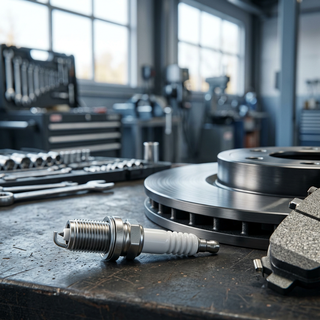
How Long Do Replacement Car Parts Typically Last? Most routine replacement car parts last between 30,000 miles and 100,000 miles, depending on component engineering, vehicle use, and maintenance habits. Wear items like brake pads and car batteries typically require replacement every 3 to 5 years or 30,000 to 70,000 miles, while high-durability mechanical parts such as shocks, struts, and premium iridium spark plugs routinely reach 100,000 miles. Component Category Average Replacement Lifespan Standard Brake Pads 30,000 to 70,000 miles Brake Rotors 50,000 to 70,000 miles Shocks and Struts 50,000 to 100,000 miles Copper Spark Plugs 20,000 to 30,000 miles Platinum Spark Plugs Up to 60,000 miles Iridium Spark Plugs 100,000 miles or more Replacement Car Battery 3 to 5 years Understanding component lifespans helps prevent sudden breakdowns and keeps vehicles operating safely. Component wear rates vary based on driving patterns, cargo weight, and operating environments. Towing heavy trailers, frequent short trips in cold weather, and driving on unpaved roads subject parts to higher thermal stress and mechanical friction, accelerating wear. Adhering to factory-recommended service intervals ensures wear-and-tear components are evaluated before they fail. Our certified service team inspects critical wear items during routine oil changes to measure remaining material thickness, fluid integrity, and mechanical play. If you need expert guidance on component health or want to drop by, visit our service center location or give our staff a quick phone call to discuss your maintenance schedule. Table of Contents How Long Should Replacement Brake Pads and Rotors Last? How Long Do Replacement Suspension Components Like Shocks and Struts Last? What Is the Longevity Difference Between Copper, Platinum, and Iridium Spark Plugs? How Can You Test If a Replacement Car Battery Is Going Bad? How Does OEM Lifespan Compare to Aftermarket Parts and Warranties? Frequently Asked Questions About Replacement Auto Parts How Long Should Replacement Brake Pads and Rotors Last? Replacement brake pads generally last between 30,000 miles and 70,000 miles, while replacement brake rotors typically last between 50,000 miles and 70,000 miles. Material composition, vehicle weight, and driver braking habits are the primary factors determining where a vehicle falls within these mileage ranges. Friction Material Average Lifespan Key Performance Characteristics Ceramic Brake Pads 50,000 to 70,000 miles Quiet operation, low brake dust Semi-Metallic Brake Pads 30,000 to 50,000 miles High thermal bite, heavy towing The friction material chosen for replacement brake pads impacts both operational lifespan and stopping characteristics: Ceramic brake pads utilize dense ceramic compound formulas blended with copper or aluminum fibers. They routinely last 50,000 to 70,000 miles, generate minimal brake dust, and deliver whisper-quiet stopping during daily commuter driving. Semi-metallic brake pads consist of steel, iron, and copper alloys embedded in synthetic resin. Lasting 30,000 to 50,000 miles, semi-metallic pads wear faster and produce more rotor dust, but offer superior heat dissipation and stronger stopping force for trucks carrying heavy cargo or towing. Brake rotors wear down alongside pads as hydraulic calipers press friction lining against the spinning iron surface. Over time, friction thins the metal disc, while intense thermal cycles can induce minor surface grooving or lateral runout. Rather than replacing rotors blindly at set intervals, technicians measure rotor thickness with a micrometer during maintenance visits to confirm whether the disc meets minimum discard specifications or can be safely resurfaced. Ford factory maintenance guidelines recommend inspecting brake pads, rotors, and fluid lines every 12 months or 10,000 miles. Identifying thin pad friction material early prevents metal-to-metal contact, preserving rotor surfaces and maintaining pedal feel. Drivers can easily schedule a service appointment online to have their braking system fully evaluated. How Long Do Replacement Suspension Components Like Shocks and Struts Last? Replacement shocks and struts reliably last between 50,000 miles and 100,000 miles on modern passenger cars, crossovers, and light trucks. Operational lifespan decreases when vehicles regularly carry heavy payloads, tow trailers, or encounter rough road surfaces. Suspension dampers absorb surface impacts and control spring rebound through hydraulic fluid metered through internal valve passages. Over millions of compression cycles, internal rubber seals degrade, piston valves experience wear, and hydraulic fluid degrades thermally. The gently rolling suburban hills around Calcutta present varied elevation changes and road transitions that require constant suspension movement, accelerating damper wear compared to flat highway cruising. Key indicators that replacement suspension dampers require service include: Excessive vehicle body bounce or floating sensations after traversing road dips or railway crossings. Front-end diving under braking or rear-end squatting during hard acceleration. Visible hydraulic oil weeping down the exterior body of the shock absorber or strut housing. Cupping or scalloped wear patterns across tire tread blocks caused by uneven road contact. When replacing worn struts, installing complete assembly units—including fresh coil springs, upper strut mounts, and bearing plates—restores factory ride height and handling precision. When performing DIY repairs or replacing worn dampers, drivers can directly order genuine replacement components designed specifically for their vehicle chassis. What Is the Longevity Difference Between Copper, Platinum, and Iridium Spark Plugs? Standard copper spark plugs last 20,000 miles to 30,000 miles, single or double platinum plugs last up to 60,000 miles, and advanced iridium spark plugs deliver an operational lifespan of 100,000 miles or more. Spark Plug Material Mileage Lifespan Best Application Copper Core 20,000 to 30,000 miles Older engines, low-voltage ignition Single / Double Platinum Up to 60,000 miles Standard naturally aspirated V6/V8 Premium Iridium 100,000 miles or more Turbocharged & EcoBoost engines Electrode material strength determines how effectively a spark plug resists electrical erosion and chemical corrosion inside the combustion chamber: Copper plugs feature a nickel-alloy shell surrounding a soft copper core. Electrical arc erosion widens the electrode gap rapidly, requiring frequent replacement to prevent engine misfires. Platinum plugs utilize a platinum disc welded to the center electrode. Platinum withstands high combustion temperatures better than nickel-copper alloys, maintaining proper gap spacing for extended intervals. Iridium plugs feature a fine-wire center tip crafted from dense iridium metal. Iridium has a melting point roughly 1,200 degrees Fahrenheit higher than platinum, enabling an ultra-thin center electrode that fires consistently under extreme cylinder pressures. Modern forced-induction powertrains, such as the 3.5L EcoBoost V6 engine family, place high thermal and electrical demands on ignition systems. Ford scheduled maintenance guidelines specify spark plug inspection and replacement at 100,000 miles under normal highway operating conditions. However, vehicles subjected to severe duty—such as commercial delivery routes, frequent trailer towing, or extensive low-speed idling—call for spark plug replacement every 60,000 miles to preserve fuel economy and smooth engine performance. How Can You Test If a Replacement Car Battery Is Going Bad? Testing a replacement car battery requires checking static voltage with a digital multimeter, measuring voltage drop during engine cranking, and conducting a calibrated digital load test. A healthy 12-volt battery displays a resting charge reading of 12.6 volts or higher, whereas a resting reading below 12.4 volts indicates an undercharged cell or sulfated plates. Test Stage Multimeter Voltage Reading Battery Condition Status Resting State (Engine Off) 12.6 volts or higher Fully Charged (100%) Resting State (Engine Off) 12.4 volts Partially Discharged (75%) Resting State (Engine Off) 12.0 volts or lower Severely Discharged / Damaged Engine Cranking Phase Drops below 9.6 volts Failing / Weak Internal Capacity Follow this step-by-step diagnostic procedure to accurately evaluate battery condition: Static Voltage Test: Ensure the engine and all electrical accessories have been turned off for at least 1 hour. Set a digital multimeter to DC volts and connect the red lead to the positive terminal and the black lead to the negative terminal. A fully charged battery shows 12.6 volts. A reading of 12.4 volts represents roughly 75 percent charge, while 12.0 volts or lower indicates a discharged battery needing immediate charging and testing. Engine Cranking Voltage Test: Have an assistant crank the engine while monitoring the multimeter display. If voltage drops below 9.6 volts during startup, the battery lacks sufficient internal capacity to crank the engine reliably. Conductance and Digital Load Testing: Connect a specialized battery load tester to send a simulated current draw through the internal lead plates. The tester measures internal resistance and calculates remaining cold cranking amps ( CCA) against the rating printed on the top label. Visual Inspection: Check the battery case for bulging sides caused by overcharging or freezing, cracked plastic housings, or white oxidation corrosion around the terminal posts. Replacement car batteries typically last 3 to 5 years. Extreme seasonal temperature shifts in northeastern Ohio put heavy demands on automotive chemistry; summer heat speeds up internal grid corrosion, while freezing winter weather lowers available cranking output. You can review detailed testing procedures through our battery service guidance or stop by for a professional charging system check. How Does OEM Lifespan Compare to Aftermarket Parts and Warranties? Original Equipment Manufacturer (OEM) replacement parts are engineered to match factory durability, routinely delivering 50,000 miles to 100,000 miles or more of reliable service. Aftermarket component lifespans vary considerably, ranging from short-lived economy parts to heavy-duty upgraded components designed for off-road use. Certain vehicle systems require strict manufacturing precision and exact electronic calibration, making OEM components essential for long-term reliability: Electronic engine sensors, including mass airflow, oxygen, and crankshaft position sensors that directly communicate with the engine control module. Powertrain and transmission control units that regulate hydraulic shift pressures and torque converter lockup. Complex safety system components, including blind spot monitoring radar modules and airbag impact sensors. Stamped steel or aluminum exterior body panels that maintain precise factory gap alignments and structural crash energy absorption pathways. Understanding warranty coverage helps vehicle owners manage maintenance costs over time. A limited warranty protects against material or manufacturing defects for a specified period or mileage cap, such as 2 years or 24,000 miles, often covering both replacement parts and labor costs when installed at an authorized service center. Conversely, a lifetime warranty promises a replacement part for as long as the original buyer owns the vehicle, though installation labor, incidental damages, and normal friction wear are usually excluded. Frequently Asked Questions About Replacement Auto Parts Q: How often should brake fluid be replaced in a vehicle? Ford factory maintenance schedules specify replacing brake fluid every 3 years regardless of total vehicle mileage. Brake fluid is hygroscopic, meaning it continuously absorbs moisture from ambient air over time. Accumulated water content lowers the boiling point of the fluid—leading to soft pedal feel during hard braking—and causes internal corrosion inside anti-lock braking system valves and brake calipers. Q: What causes replacement suspension struts to wear out early? Driving regularly over severe potholes, carrying heavy cargo loads, and oil contamination from engine leaks accelerate internal strut seal breakdown. Road salt used during winter de-icing operations also pits polished steel strut shafts, causing fluid leaks and premature loss of hydraulic dampening capability. Q: What is the main operational difference between a limited part warranty and a lifetime part warranty? A limited warranty covers manufacturing defects for a specified calendar duration or mileage limit, often covering both parts and labor at certified centers. A lifetime warranty guarantees a replacement component if the original part fails during the purchaser's period of vehicle ownership, but typically excludes installation labor and normal friction wear. Q: Why do replacement batteries fail faster during cold winter weather? Freezing temperatures slow the electrochemical reactions inside a lead-acid battery, reducing available cold cranking output by up to 50 percent. At the same time, cold engine oil increases resistance during startup, forcing the battery to deliver significantly more current to turn over the engine. Q: Can severe driving conditions cut replacement part lifespans in half? Yes. Continuous stop-and-go commuting along busy retail corridors like Market Street in Boardman, frequent trips under 5 miles, heavy trailer towing, and unpaved roads accelerate pad wear, fluid breakdown, and filter clogging. These conditions require service at 60,000 miles rather than standard 100,000-mile intervals. To maintain your vehicle's safety and reliability, keep up with scheduled inspections and address wear symptoms promptly. Our team at 1503 Pennsylvania Ave, East Liverpool, OH 43920 provides complete system diagnostics, genuine factory parts, and expert maintenance support. Call us at (330) 462-7578 or check our current service information before scheduling your next appointment. © 2026 Tri State Ford. All rights reserved. Replacement Car Parts Lifespan in East Liverpool OH | Tri State Ford
v

Are OEM Motorcraft Parts Necessary for Maintaining a Ford?

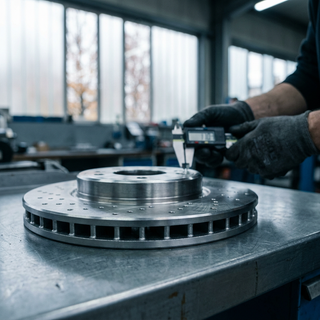
Are OEM Motorcraft Parts Necessary for Maintaining a Ford? OEM Motorcraft parts are not strictly mandatory to keep a vehicle running, but they are essential for preserving exact factory specifications, electronic compatibility, and help support warranty compliance on Ford vehicles. Engineered directly for Ford and Lincoln models, Motorcraft components eliminate fitting discrepancies, prevent premature wear, and include a two-year, unlimited-mileage warranty with labor coverage when installed by authorized technicians. Maintaining a modern truck or SUV requires parts that match original factory tolerances. Standard Original Equipment Manufacturer (OEM) components are produced using the precise metallurgical, electrical, and dimensional blueprints designated by Ford engineering. Third-party aftermarket parts, by contrast, may be designed to fit a range of vehicle makes and models. While a generic component might bolt into place initially, subtle variance in clearance or material strength may contribute to vibration, accelerated wear on adjacent systems, or dashboard warning codes. For critical mechanical assemblies like braking systems, steering linkages, and complex electronic sensors, relying on factory-tested parts ensures that your vehicle performs exactly as designed. Driver-assist systems such as blind spot monitoring, adaptive cruise control, and pre-collision braking rely on precise sensor housing geometry to operate properly. Installing an uncalibrated third-party sensor bracket can disrupt radar signals and compromise active safety functionality. Our advisors see that drivers navigating the gently rolling hills and daily stop-and-go travel along State Route 170 in Calcutta rely on original chassis components to prevent premature suspension wear. Using authentic components protects mechanical longevity and can help simplify future maintenance by matching your specific vehicle identification number (VIN). When your vehicle requires maintenance or repair, you can order OEM Motorcraft components directly from Tri State Ford, visit our dealership address at 1503 Pennsylvania Ave, or speak with our parts specialists by calling (330) 462-7578. Table of Contents Are Motorcraft Parts Made by Ford and Who Manufactures Their Filters? Why Do Dealerships Charge More for Motorcraft Parts and Do Aftermarket Options Void Your Warranty? Is Motorcraft Synthetic Blend Oil and Spark Plugs Right for EcoBoost Engines? Does the Motorcraft Warranty Cover DIY Installation Labor and Battery Replacements? Common Questions About OEM Fitment, Maintenance Standards, and Part Reliability Where East Liverpool Owners Can Confirm Motorcraft Fitment and Get Trusted Service Are Motorcraft Parts Made by Ford and Who Manufactures Their Filters? Motorcraft is Ford Motor Company's official replacement parts brand, but Ford contracts specialized tier-1 automotive manufacturers to produce these components strictly to Ford's proprietary engineering specifications. For example, Motorcraft oil filters are manufactured primarily by Purolator under strict Ford engineering design standards to ensure original equipment performance. Understanding the distinction between Ford Genuine Parts and Motorcraft parts helps clarify how your vehicle was built and serviced. Ford Genuine Parts are the exact components installed on the factory assembly line during vehicle production. Motorcraft parts are engineered specifically as high-quality replacement parts for routine maintenance and repair across Ford and Lincoln vehicles throughout their operational lifespan. Both lines share identical testing standards, structural requirements, and quality control protocols established by Ford engineers. Major automotive suppliers produce components for Motorcraft under strict licensing agreements. Motorcraft oil filters incorporate specific internal features required by Ford, including silicone anti-drain back valves that resist extreme temperatures down to -75 degrees Fahrenheit and up to 450 degrees Fahrenheit. They also feature relief valves positioned specifically to prevent trapped oil bypass contaminants from re-entering the engine during cold winter starts. These internal design details differ significantly from standard off-the-shelf aftermarket filters, which often compromise on bypass location or media density to lower production costs. Maintaining consistent service schedules with original components keeps your vehicle dependable without disrupting your daily routine. Owners who prefer flexible service solutions can take advantage of our mobile service appointment options or set up pickup and delivery maintenance services to have routine oil changes and filter replacements handled seamlessly by our team. Why Do Dealerships Charge More for Motorcraft Parts and Do Aftermarket Options Void Your Warranty? Dealership pricing for Motorcraft parts reflects original vehicle engineering, extensive crash testing, strict quality standards, and manufacturer-backed warranty coverage. Installing non-Motorcraft or aftermarket components does not automatically void your vehicle's factory warranty under federal law, provided the third-party component does not directly cause a mechanical failure. The initial purchase price of an OEM component covers extensive research, multi-stage laboratory testing, and vehicle-specific calibration. Aftermarket manufacturers bypass these upfront development expenses by reverse-engineering existing parts, which allows them to offer lower retail shelf prices. However, generic components often sacrifice material purity, seal durability, or precise electronic compatibility. Under the Magnuson-Moss Warranty Act, an automobile manufacturer cannot invalidate your entire vehicle warranty simply because an aftermarket part was installed. However, if a low-quality aftermarket oil filter collapses and starves the engine of oil pressure, or if an uncertified electrical module shorts out a control unit, repairs for that secondary mechanical damage will not be covered under Ford's factory warranty. Similarly, under federal emissions regulations ( 40 CFR 85.2105), emissions warranty claims can only be denied if an uncertified aftermarket component directly caused the vehicle to fail emissions standards. Factor OEM Motorcraft Parts Generic Aftermarket Parts Engineering Standard Exact factory blueprints and tolerances Reverse-engineered universal designs Material Quality High-grade alloys and specialized polymers Variable material consistency Electronic Integration Direct plug-and-play factory calibration Potential communication errors Warranty Backing 2-year/unlimited-mileage warranty with labor Supplier-dependent (often part-only) Fitment Accuracy Direct VIN-specific match Multi-vehicle compromise fit Choosing factory-certified replacement components protects your mechanical investment and eliminates repair uncertainty, ensuring every component operates in harmony with original factory systems. Is Motorcraft Synthetic Blend Oil and Spark Plugs Right for EcoBoost Engines? Motorcraft 5W-30 Synthetic Blend motor oil and genuine Motorcraft spark plugs are engineered specifically to meet the high thermal and pressure demands of Ford EcoBoost turbocharged engines. Formulated to satisfy Ford specification WSS-M2C961-A1, Motorcraft synthetic blend oil delivers exceptional oxidation resistance and shear stability across factory maintenance intervals. Direct-injected and turbocharged EcoBoost engines generate significantly higher internal cylinder pressures and operating temperatures than naturally aspirated engines. Motorcraft 5W-30 Synthetic Blend oil uses targeted additive packages that resist oil breakdown and minimize deposit formation on intake valves and turbocharger bearings. While full synthetic oil provides maximum extreme-temperature protection, Motorcraft synthetic blend provides robust, factory-validated engine protection for standard daily driving and heavy trailering alike. Ignition performance is equally critical in EcoBoost powertrains. Under turbocharger boost pressure, weak spark energy or improper electrode gaps can cause high-load engine misfires. Motorcraft spark plugs feature precise iridium or platinum alloy tips designed to maintain stable spark energy and match exact factory heat ranges. Many Motorcraft iridium plugs are produced through engineering partnerships with leading manufacturers like NGK to meet Ford's strict combustion requirements. Installing generic spark plugs with incorrect heat ranges can lead to pre-ignition, rough idling, or reduced fuel efficiency. Keeping up with scheduled fluid changes and ignition maintenance protects turbocharger efficiency and engine response over years of ownership. You can easily schedule a service appointment online to have our factory-trained technicians inspect your spark plugs, perform multi-point inspections, and complete factory-spec oil services. Does the Motorcraft Warranty Cover DIY Installation Labor and Battery Replacements? The standard Motorcraft Service Parts Warranty provides two years of unlimited-mileage coverage that includes both part replacement and professional labor costs when installed by an authorized dealer or service center. However, if a Motorcraft part is purchased for DIY self-installation, the warranty covers replacement of the defective component itself but does not reimburse for personal labor or self-installation time. Understanding warranty details ensures you get the full value from every replacement component: Professional Installation Coverage: Parts installed during customer-paid repair orders at authorized facilities carry full two-year coverage with zero mileage limits, including labor reimbursement for removal and reinstallation. DIY Self-Installation Coverage: Over-the-counter part sales retain full two-year component replacement protection, but self-installers must handle physical replacement labor. Commercial and Installer Orders: For qualifying commercial fleet and installer repair orders, labor reimbursement is supported up to $75 per hour. Motorcraft batteries offer tailored replacement warranties based on performance tier. The Motorcraft Tested Tough PLUS battery features a 24-month replacement warranty with pricing available from the dealership. For severe weather demands, the Motorcraft Tested Tough MAX battery carries a 36-month replacement warranty, providing high cold-cranking amps for reliable winter starting. Reviewing proper battery maintenance guidelines helps extend battery life and prevents seasonal electrical failures. Common Questions About OEM Fitment, Maintenance Standards, and Part Reliability Q: Will using non-Motorcraft parts void my Ford factory warranty? A: Installing non-Motorcraft or aftermarket parts does not automatically void your vehicle warranty under the Magnuson-Moss Warranty Act. However, if an aftermarket part fails and directly causes damage to adjacent engine or driveline components, repairs for that secondary damage will not be covered under the factory warranty. Q: Are Motorcraft parts the exact same as Ford Genuine Parts? A: Ford Genuine Parts are the original components installed on the vehicle line during factory assembly. Motorcraft parts are Ford-engineered replacement parts designed specifically for ongoing vehicle service and routine maintenance across Ford and Lincoln models. Both meet identical Ford quality standards. Q: Who manufactures Motorcraft oil filters for Ford vehicles? A: Motorcraft oil filters are produced primarily by Purolator under contract, built strictly according to Ford's OEM engineering specifications. They feature specialized silicone anti-drain back valves and relief valve placements designed to protect Ford engines during cold starts. Q: Does the Motorcraft warranty reimburse labor costs if I install a part myself? A: If you purchase a Motorcraft part over the counter and install it yourself, the two-year warranty covers replacement of the defective part but does not compensate for self-installation labor. Labor coverage is included when parts are installed by an authorized dealership service center. Q: Is Motorcraft synthetic blend oil suitable for turbocharged EcoBoost engines? A: Motorcraft 5W-30 Synthetic Blend oil meets Ford specification WSS-M2C961-A1 and provides proper thermal protection and anti-wear defense for EcoBoost engines under normal service schedules. For extreme thermal demands or prolonged towing, full synthetic oil offers enhanced resistance to high-temperature oxidation. Where East Liverpool Owners Can Confirm Motorcraft Fitment and Get Trusted Service Confirming exact VIN-specific part numbers and securing original factory components is straightforward at Tri State Ford. For drivers traveling along the Ohio River waterfront bluffs in East Liverpool, using authentic components ensures that your truck or SUV maintains optimal braking efficiency, suspension stability, and powertrain longevity across every season. Our service and parts department provides direct access to over 18,000 factory-engineered Motorcraft parts backed by Ford's two-year unlimited-mileage warranty. Whether you require a Tested Tough PLUS battery replacement, fresh 5W-30 Synthetic Blend oil, or factory brake pads, our team works to provide correct fitment and professional installation. To confirm part fitment, check current pricing, or schedule your next maintenance visit, stop by our service department location at 1503 Pennsylvania Ave or call our service team directly at (330) 462-7578. © 2026 Tri State Ford. All rights reserved. OEM Motorcraft Parts in East Liverpool OH | Tri State Ford
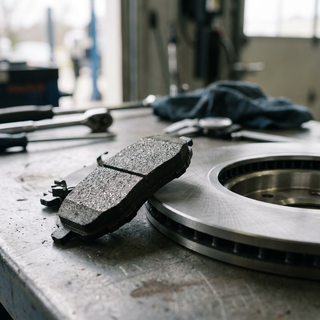
f

What Determines the Total Cost of a Brake Repair?

The total cost of a brake repair depends primarily on which components need replacement, the quality tier of the replacement parts, and the specific labor required for your vehicle's setup. A basic service replacing only friction pads costs significantly less than a full overhaul that includes new rotors, refurbished calipers, hardware replacement, and a complete brake fluid flush. Brake systems rely on multiple components working together to safely slow down your vehicle. When you press the brake pedal, hydraulic pressure forces the caliper to press friction pads against a rotating metal disk called a rotor. Over time, friction wears down the pad material, while heat and mechanical pressure stress the rotors. A simple brake job may only require installing fresh friction pads on an otherwise healthy system. However, if inspection reveals scored rotors, leaking caliper seals, or contaminated fluid, the repair scope expands to return the system to factory safety standards. Parts selection also accounts for major price differences across service quotes. Replacement friction components range from value options to original-equipment specification parts engineered specifically for your vehicle. High-grade friction materials cost more upfront, but they deliver superior stopping power, reduced brake dust, and longer component life. Additionally, labor complexity varies depending on your vehicle's drive layout, rust exposure from regional road treatments, and whether specialized diagnostic tools are required to reset electronic system components. For drivers needing a physical inspection or customized estimate, visiting our service team at 1503 Pennsylvania Ave in East Liverpool will provide a complete breakdown of component health. If you hear unexpected squealing or feel pedal vibration, give our service department a quick call to discuss system performance before minor pad wear turns into major rotor damage. Table of Contents Why Do Brake Repair Quotes Vary Between Auto Shops? What Is the Price Difference Between Organic, Semi-Metallic, and Ceramic Brake Pads? What Is the Cost Difference Between Resurfacing Rotors and Replacing Them? Why Do Initial Quotes Often Change After a Brake Inspection? How Often Should Front Brake Pads Be Replaced Compared to Rear Pads? Do Aftermarket Brake Components Void Your Vehicle Warranty? Common Questions About Brake Repair Costs Schedule Trusted Brake Care at Tri State Ford Why Do Brake Repair Quotes Vary Between Auto Shops? Brake repair quotes vary between auto repair shops because each business calculates labor rates based on local overhead, technician certification levels, and the exact scope of parts included in the estimate. A lower quote frequently covers only basic aftermarket pad installation on a single axle, while a comprehensive estimate includes factory-spec parts, rotor resurfacing or replacement, new hardware, and complete fluid care. The definition of a standard brake job differs across service facilities. Posted prices at independent garages often show a baseline for replacing pad sets on a single axle. When comparing estimates, examining the itemized breakdown reveals whether the price covers pad installation alone or includes crucial secondary maintenance. Proper brake service requires cleaning and lubricating caliper slide pins, replacing anti-rattle hardware clips, and inspecting hydraulic lines. Skipping these detail steps saves short-term labor costs but often leads to premature pad wear, uneven braking, and persistent noise. Technician expertise and facility tooling directly influence shop labor rates. Dealership service centers employ factory-trained technicians who specialize in specific vehicle lineups, utilizing specialized equipment to service complex systems like modern electronic parking brake modules and advanced anti-lock braking controls. Independent repair shops may offer lower hourly labor fees, but they may use generic multi-fit parts tiers. Understanding what is included in your estimate ensures you pay for lasting safety rather than a temporary fix. To maintain optimal stopping performance, you can schedule a service appointment with our technicians for a complete diagnostic evaluation. If you prefer carrying out your own maintenance using factory-approved components, you can easily order original parts directly through our dealership parts counter. Service Level Typical Scope of Included Parts Primary Pricing Drivers Long-Term Service Benefit Basic Pad Replacement Friction pads only value parts, fast turn time Lowest immediate cost for high-margin vehicles Full Axle Service Friction pads, hardware clips, slide pin lube OEM-spec pads, hardware kit labor Prevents uneven pad wear and brake chatter Comprehensive System Overhaul Pads, new rotors, caliper rebuild, fluid flush Premium pads, replacement rotors, full system bleed Restores factory stopping distances and pedal feel What Is the Price Difference Between Organic, Semi-Metallic, and Ceramic Brake Pads? The price difference between brake pad materials reflects their composition and durability, with organic pads being the most affordable, semi-metallic pads sitting in the middle price tier, and ceramic pads commanding the highest cost. Organic pad sets are generally the most affordable, semi-metallic sets fall in the middle, and high-performance ceramic pad sets are typically the most expensive for parts alone. Non-asbestos organic pads are manufactured from materials such as rubber, glass, kevlar, and resin bonding agents. Because these materials are softer, organic pads operate quietly and produce smooth initial pedal response, making them suitable for light daily commuting. However, they wear out faster than other options, create substantial brake dust, and degrade rapidly under high heat, requiring more frequent replacement over the life of your vehicle. Semi-metallic brake pads consist of 30 to 65 percent metal filings, including steel, iron, and copper, combined with synthetic lubricants. This metal composition makes semi-metallic pads extremely durable and efficient at dissipating heat away from the braking system. They are ideal for heavy-duty applications, such as towing trailers or hauling heavy bed payloads, though they generate more rotor wear and audible noise than organic or ceramic alternatives. Ceramic brake pads combine dense ceramic fibers with copper compounds to deliver exceptional heat resistance and consistent stopping power across wide temperature ranges. They produce fine, light-colored dust that does not stick to aluminum wheels and offer long service life with minimal rotor abrasion. While ceramic pads require a higher initial investment, their durability and quiet operation make them a preferred choice for modern passenger cars and family SUVs. What Is the Cost Difference Between Resurfacing Rotors and Replacing Them? Resurfacing brake rotors typically costs less than replacing them, whereas installing replacement rotors generally costs more in parts and labor. While resurfacing reduces initial costs by machining away minor surface imperfections, replacement becomes necessary when rotors wear past minimum safety thickness or develop deep heat cracks. Rotor resurfacing, also known as turning, involves mounting the rotor on a precision lathe to shave off a thin layer of metal, smoothing out light grooves and removing minor warpage. This process creates a pristine surface for new brake pads to grip properly, eliminating pedal pulsation without the expense of purchasing new castings. However, turning a rotor thins the disc material, reducing its ability to absorb and dissipate heat during hard braking. Modern vehicles are increasingly built with lighter, thinner rotors designed to optimize vehicle weight and fuel value. These components often have narrower discard thickness tolerances, meaning they can rarely survive more than one resurfacing cycle before dropping below manufacturer safety specifications. When a rotor is worn too thin, machining it creates a safety risk because the thinned metal can warp rapidly or fracture under intense thermal stress. Deciding between resurfacing and replacement comes down to measured thickness and overall rotor condition. Our advisors see that daily driving around the stop-and-go corridors of State Route 170 in Calcutta frequently causes localized heat buildup on rotors. If an inspection shows sufficient discard thickness remaining, machining provides an economical solution. If severe rust pitting or deep thermal scoring is present, installing fresh replacement rotors ensures reliable, noise-free braking performance over thousands of miles. Why Do Initial Quotes Often Change After a Brake Inspection? Initial brake repair estimates often change after a physical inspection because phone or online quotes only assume a standard pad replacement on an otherwise healthy system. Once a technician removes the wheels, hidden issues such as uneven rotor wear, seized caliper pins, contaminated brake fluid, or damaged hardware frequently require additional parts and service. Visual inspection from outside the wheel assembly provides limited information about internal system wear. Phone estimates rely on the driver's description of symptom noises, which may sound like simple friction indicator squealing but actually stem from metal-to-metal contact. Once the vehicle is hoisted on a service lift and calipers are detached, technicians measure rotor thickness with micrometers and inspect inner pad linings that cannot be seen while mounted. Mechanical components exposed to moisture and road deicing chemicals often exhibit hidden degradation. Guide pins can seize inside caliper brackets due to rust buildup, preventing friction pads from retracting properly after you release the brake pedal. When calipers drag, they overheat the assembly, ruin new pads within months, and boil the hydraulic fluid inside the lines. Identifying these secondary failures during teardown protects you from leaving the shop with unaddressed safety issues. Transparent communication prevents unexpected invoice surprises when physical inspections reveal extra wear. Reliable facilities contact vehicle owners directly after hands-on disassembly, detailing why additional components—such as fresh caliper hardware or hydraulic fluid service—are necessary. Providing clear photos or physical measurements helps drivers understand the exact condition of their stopping equipment before any additional work begins. How Often Should Front Brake Pads Be Replaced Compared to Rear Pads? Front brake pads typically require replacement every 30,000 to 50,000 miles, whereas rear brake pads often last between 50,000 and 70,000 miles under normal driving conditions. Front brakes wear out faster because weight transfers toward the front axle during deceleration, forcing front calipers and pads to absorb roughly 70 percent of the vehicle's total stopping force. Vehicle weight distribution during braking creates a natural imbalance in wear rates between front and rear axles. When you press the pedal, kinetic energy forces the vehicle's mass forward, pressing the front tires firmly onto the pavement. To match this kinetic force, front brake pads and rotors are designed with larger surface areas and thicker friction linings than rear components, yet they still wear faster due to the heavier workload. Rear brake systems handle less stopping pressure, but modern vehicle technology has altered traditional wear patterns. Many current cars and crossovers utilize electronic brake force distribution systems that dynamically adjust hydraulic pressure to the rear axle under light pedal effort, keeping the chassis flat during gentle stops. Additionally, vehicle traction control and stability management systems selectively apply individual rear brakes to correct sway or slip, which can accelerate rear pad wear in bad weather. Navigating steep riverfront bluffs along the Ohio River in East Liverpool places elevated strain on front braking systems during downhill descents. Heavy vehicle loads, aggressive driving habits, and frequent stop-and-go commuting further accelerate friction material loss across both axles. Having your pad thickness checked during routine oil changes and tire rotations ensures you catch uneven wear before metal backings scratch your rotors. Do Aftermarket Brake Components Void Your Vehicle Warranty? Installing aftermarket brake components does not automatically void your original vehicle manufacturer warranty under federal law. However, if a non-original aftermarket component directly causes damage to a covered factory part, the manufacturer can legally deny warranty coverage for that specific failure. Under the federal Magnuson-Moss Warranty Act, auto manufacturers cannot void a bumper-to-bumper or powertrain warranty simply because an owner used non-original replacement parts for maintenance. You have the legal right to service your vehicle at independent facilities or install third-party brake components. The burden of proof rests on the vehicle manufacturer to demonstrate that an aftermarket component directly caused a system failure before refusing a warranty claim. Potential warranty conflicts arise when low-quality aftermarket parts fail and damage surrounding assembly units. For example, if an unapproved aftermarket brake pad disintegrates under heat and damages an original-equipment anti-lock brake sensor or hydraulic caliper, the repair for that sensor or caliper will not be covered under factory warranty. Conversely, installing aftermarket rear pads will never invalidate factory warranty coverage on an engine, transmission, or electrical module. Using original-equipment components, such as factory-spec Motorcraft pads and rotors engineered for Ford models, provides complete assurance that all system parts match strict vehicle tolerances. If you are interested in acquiring a new vehicle, our team can help you build a custom new Ford vehicle order with complete factory warranty protections. For immediate maintenance questions or to review your current coverage, give our team a call or visit our service department at our local East Liverpool showroom. Common Questions About Brake Repair Costs Q: What proportion of a brake job cost is parts versus labor? On average, replacement parts represent 40 to 60 percent of a total brake repair invoice, while shop labor accounts for the remaining 40 to 60 percent. This ratio fluctuates based on vehicle complexity, local labor rates, and component selection. Basic pad swaps involve lower parts expenses, while jobs requiring new rotors, specialized electronic parking brake service modes, or complete hydraulic flushes increase labor time and overall cost. Q: Does an electronic parking brake increase brake service labor costs? Servicing vehicles with an electronic parking brake can slightly increase shop labor time because technicians must put the rear brake calipers into service mode using a diagnostic scanner before retracting the pistons. Attempting to force caliper pistons back manually without activating service mode can destroy internal electric actuator motors, resulting in costly component repairs beyond basic pad replacement. Q: Is brake fluid replacement included in a standard brake job quote? Brake fluid flushes are generally quoted as a separate service from routine pad and rotor replacements. Over time, glycol-based brake fluid absorbs moisture from the atmosphere, lowering its boiling point and inducing corrosion inside internal master cylinder bores and caliper lines. Most vehicle manufacturers recommend flushing fluid every two years or 30,000 miles to preserve responsive pedal feel. Q: How do driving habits in hilly terrain affect brake replacement intervals? Driving regularly in hilly or mountainous terrain forces brakes to dissipate extreme heat during long downhill descents, significantly accelerating friction pad wear and thermal rotor expansion. Drivers who frequently navigate steep inclines may need fresh front pads every 20,000 to 30,000 miles compared to highway commuters who coast smoothly and experience much longer pad lifespans. Q: Does Ford offer any warranty on replacement brake pads? Ford offers warranty coverage on replacement parts through its Motorcraft program, which includes a limited lifetime brake pad guarantee on eligible friction sets for consumer vehicles. This coverage covers replacement pads if the friction material wears out under normal driving conditions, though it explicitly excludes labor installation charges and secondary components like rotors or calipers. Schedule Trusted Brake Care at Tri State Ford Maintaining your vehicle's braking performance is essential for keeping your family safe on every daily commute and weekend trip. Understanding the variables behind brake repair pricing helps you make informed choices about your vehicle's maintenance needs, ensuring you receive high-quality parts and expert installation at transparent rates. Our factory-trained technicians use genuine original-equipment parts engineered to deliver precise fitment, quiet stopping power, and long-term durability. Whether you require a routine pad thickness check, rotor resurfacing, or a complete hydraulic service, our service center provides clear inspections and reliable estimates upfront. Contact our team today to schedule your next service appointment and enjoy complete peace of mind on the road. © 2026 Tri State Ford. All rights reserved. Affordable Brake Repair in East Liverpool OH | Tri State Ford
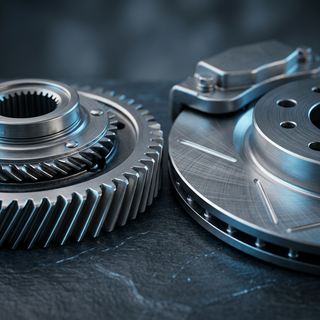
f

Should You Choose OEM or Aftermarket Parts for Vehicle Repairs?

Original Equipment Manufacturer (OEM) parts are manufactured directly by or for the vehicle automaker to meet exact factory specifications, dimensions, and material standards. Aftermarket parts are built by third-party companies with varying levels of quality and fitment. Choosing OEM replacement parts guarantees flawless fit, structural integrity, and full factory warranty protection without guesswork, making them the recommended option for mechanical performance and long-term vehicle dependability. When maintaining or repairing a vehicle, component quality directly impacts safety, vehicle operation, and long-term durability. Original Equipment Manufacturer components are identical to the original components installed on the vehicle during initial factory assembly. Because they are engineered specifically for precise vehicle dimensions, installing factory parts eliminates fitment issues and protects crucial mechanical systems. Drivers can confirm part specifications by contacting our service team or visiting our service center location. Aftermarket alternatives often present lower initial costs, but they are built to universal standards to accommodate multiple vehicle makes and model variations. This generalized approach can lead to minor design variations, slight clearance discrepancies, and inconsistent material strength. Over time, these small differences can cause premature component wear, reduced fuel efficiency, or unwanted noise and vibration. Selecting genuine replacement components preserves factory engineering integrity and safeguards ongoing warranty coverage. Vehicle owners looking to maintain top mechanical performance can start by giving a quick call to our service advisors or conveniently scheduling a service appointment online. Table of Contents What Is the Difference Between OEM and Aftermarket Parts? Why Are OEM Parts More Expensive, and What Design Advantages Do They Offer? Which Auto Components Are Best Purchased as OEM Rather Than Aftermarket? Do Insurance Policies Cover OEM Replacement Parts After an Accident? How Do Aftermarket Parts Affect Vehicle Warranties and Emissions Compliance? Common Questions About OEM and Aftermarket Parts Protect Your Vehicle with Genuine Factory Parts at Tri State Ford What Is the Difference Between OEM and Aftermarket Parts? OEM parts are manufactured using the exact specifications, tooling, and materials designated by the original vehicle automaker, ensuring an identical match to factory components. Aftermarket parts are produced by independent companies that create non-factory alternatives, often modifying structural designs or material compositions to lower manufacturing costs or fit a broader spectrum of vehicles. Understanding the technical distinctions between these two manufacturing approaches helps vehicle owners make informed repair choices. The primary differences involve manufacturing standards, testing protocols, component fitment, and ongoing support: Engineering and Specifications: OEM components, such as Motorcraft parts engineered for Ford and Lincoln vehicles, adhere strictly to initial factory blueprints. Aftermarket manufacturers develop parts through reverse engineering, which can introduce subtle dimensional variances. Quality Control and Testing: Factory replacement parts undergo rigorous multi-stage laboratory testing and real-world durability evaluations. Third-party aftermarket components vary widely in quality control, with some lacking formal testing certification. Selection Process: Choosing factory components is straightforward because there is typically only one designated part for a specific vehicle year, trim, and engine configuration. Selecting aftermarket parts requires evaluating dozens of competing brands with differing specifications. Warranty Backing: Genuine factory parts come backed by comprehensive manufacturer warranty terms, whereas aftermarket warranties depend entirely on individual third-party suppliers. Drivers navigating the moderately elevated terrain and rolling hills around Calcutta benefit from replacement parts engineered specifically to handle original chassis loads without premature wear. Factory parts preserve original vehicle dynamics, safety systems, and towing capabilities. Buyers exploring custom builds or specialized options can also review our custom factory build options to learn more about original component configurations. Why Are OEM Parts More Expensive, and What Design Advantages Do They Offer? OEM parts carry a higher price tag because their cost includes initial vehicle engineering development, extensive safety crash testing, precise tooling, and strict quality control licensing. Aftermarket manufacturers avoid these upfront research and development expenses, allowing them to offer lower purchase prices by utilizing lower-grade materials or broad-fitment designs. The price differential reflects significant engineering advantages that benefit the driver over the lifespan of the vehicle: Component Factor OEM Replacement Parts Generic Aftermarket Parts Material Standards High-grade alloys, precise polymer blends Variable material grades Dimensional Fit Exact factory tolerances Multi-vehicle compromise fit Electronic Calibration Plug-and-play factory programming Potential calibration errors Warranty Protection current warranty coverage Variable (often limited terms) Resale Value Impact Preserves original vehicle value May diminish trade-in value Factory replacement parts deliver guaranteed fitment and seamless system integration, eliminating the trial-and-error often associated with third-party components. For example, Motorcraft replacement parts carry a current warranty coverage that includes labor coverage, offering substantial long-term financial security. Investing in genuine components also maintains vehicle resale value and vehicle history appeal. Maintaining comprehensive factory maintenance records with original components helps preserve trade equity, which owners can evaluate anytime using our instant value appraisal tool. Which Auto Components Are Best Purchased as OEM Rather Than Aftermarket? Complex electrical sensors, structural body collision panels, engine control units, ignition modules, and internal transmission components yield the highest benefit when purchased as OEM parts due to their strict integration requirements. While minor cosmetic items or basic wear accessories may be suitable for aftermarket selection, critical mechanical and electronic systems require exact factory specifications to operate safely. Components that should always be replaced with genuine factory parts include: Advanced Driver-Assist Sensors: Modules supporting blind spot monitoring, lane-keeping assistance, adaptive cruise control, and pre-collision braking require exact factory housing dimensions and radar signal transmission values. Powertrain Control Modules: Engine control units and transmission solenoids rely on proprietary software architecture that aftermarket modules frequently fail to replicate accurately. Collision and Body Panels: Crumple zones, high-strength steel crossmembers, and aluminum body panels are engineered to absorb impact energy in accordance with federal motor vehicle safety standards. Internal Engine Components: Timing chains, head gaskets, and fuel injectors demand exact thermal expansion characteristics and pressure tolerances. When vehicle owners ask our technicians about replacing complex sensors, our advisors see that trying to clear error codes with uncalibrated third-party modules usually leads to secondary diagnostic visits. Using genuine factory components ensures that critical vehicle systems communicate seamlessly without triggering false dashboard alerts or unexpected system failures. Do Insurance Policies Cover OEM Replacement Parts After an Accident? Standard auto insurance policies typically cover aftermarket or reconditioned repair parts by default following an accident, unless the policyholder has purchased an optional OEM parts endorsement rider. Insurance providers often select non-factory or reconditioned collision components to minimize total claim settlement costs. Understanding insurance coverage details helps vehicle owners protect their vehicle integrity during accident recovery: Policy Terms: Standard comprehensive and collision coverage policies specify that repairs may utilize "like kind and quality" parts, which typically means certified aftermarket components. OEM Parts Endorsement: Many insurance carriers offer an optional policy add-on that explicitly guarantees the use of brand-new original manufacturer components for covered repairs. State Regulations: State guidelines vary regarding collision repair disclosures, often requiring body shops to notify owners if non-OEM parts are listed on the repair estimate. Out-of-Pocket Options: If an insurance estimate specifies generic aftermarket body panels, policyholders can choose to pay the price difference out of pocket to receive genuine factory sheet metal and lighting assemblies. Drivers along the Ohio River corridor in East Liverpool who face collision repairs after severe riverfront weather should review their policy riders to ensure structural body panels are replaced with genuine factory sheet metal. Owners or repair facilities looking for authentic replacement components can streamline collision repairs by ordering genuine OEM parts online. How Do Aftermarket Parts Affect Vehicle Warranties and Emissions Compliance? Under federal regulations, installing an aftermarket part does not automatically void a vehicle warranty or emissions coverage, but warranty claims for secondary damage caused by a failed third-party component can be legally denied. Automobile manufacturers cannot cancel an overall vehicle warranty simply because non-factory components are installed, but they are not obligated to cover repairs for failures directly linked to those parts. Federal regulations set clear parameters for emissions compliance and warranty enforcement: Emissions Performance Warranty: Under 40 CFR 85.2105, a manufacturer may deny an emissions warranty claim involving an uncertified aftermarket part only if it demonstrates that the component directly caused the vehicle to fail emissions standards. Aftermarket Part Certification: Under 40 CFR 85.2117, certified aftermarket emissions components must be backed by their respective manufacturers to ensure proper function without exceeding federal emissions thresholds. Secondary Mechanical Damage: If an uncertified aftermarket oil filter collapses and causes oil starvation, engine repairs will not be covered under the manufacturer warranty. Magnuson-Moss Warranty Act: This federal law protects consumers by requiring automakers to prove that an aftermarket component caused a failure before denying warranty coverage for that specific repair. Maintaining complete service documentation and using factory-certified components prevents warranty disputes and keeps emissions systems operating at peak efficiency. Drivers seeking guidance on vehicle maintenance can get directions to our East Liverpool service center, learn more by calling our service experts at (330) 462-7578, or save on essential maintenance by exploring our current service specials. Common Questions About OEM and Aftermarket Parts Q: Will using an aftermarket oil filter or air filter void my original vehicle warranty? A: Installing an aftermarket filter does not void your vehicle warranty. Under federal law, automakers cannot deny warranty coverage simply because a non-factory filter was used. However, if a low-quality aftermarket filter fails mechanically and causes internal engine damage, the cost to repair that secondary damage will not be covered under the manufacturer warranty. Q: What warranty coverage comes with genuine Motorcraft replacement parts? A: Genuine Motorcraft replacement parts feature a current warranty coverage that includes both part replacement and labor coverage when installed at an authorized service center. This coverage provides complete protection without mileage limits, giving vehicle owners reliable long-term peace of mind. Q: How can I verify whether my auto insurance policy pays for original factory parts after a crash? A: You can verify your coverage level by reviewing your auto insurance declaration page or contacting your insurance agent directly. Look specifically for an OEM parts coverage endorsement rider, which guarantees that collision repair estimates specify brand-new factory replacement components rather than reconditioned or third-party body panels. Q: What does CAPA certification mean on an aftermarket collision component? A: CAPA (Certified Automotive Parts Association) certification indicates that an aftermarket body panel, bumper, or lighting assembly has undergone independent laboratory testing. This testing verifies that the part's fit, structural integrity, and corrosion resistance closely match factory standards, offering a higher quality baseline than uncertified generic parts. Q: What happens if an aftermarket part causes damage to a major vehicle component? A: If an aftermarket component fails and damages an adjacent factory system, the vehicle manufacturer will deny warranty coverage for the resulting repairs. The vehicle owner must then seek compensation directly from the aftermarket part manufacturer or pay for the required mechanical repairs out of pocket. Protect Your Vehicle with Genuine Factory Parts at Tri State Ford Choosing genuine factory replacement parts is the best way to safeguard your vehicle's performance, safety systems, and long-term resale value. While generic options may appear budget-friendly initially, OEM components eliminate fitting guesswork and deliver backed durability with comprehensive warranty coverage. Our certified service team uses authentic factory parts engineered specifically for your model to ensure smooth operation on every drive. Contact our service advisors today to discuss your maintenance needs or order factory-direct components for your next service visit. © 2026 Tri State Ford. All rights reserved. OEM vs Aftermarket Auto Parts in East Liverpool OH | Tri State Ford
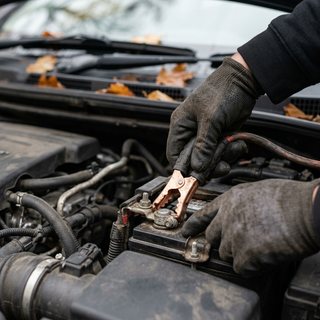
d

How Do You Troubleshoot a Car That Won't Start?

Troubleshooting a car that will not start begins by testing headlights and cabin electronics to observe power levels, listening closely to engine response when turning the key, and inspecting terminal connections for corrosion. If interior accessories stay completely dark or rapid clicking occurs, a discharged battery or loose terminal connection is usually at fault. A single sharp metallic clunk points toward a failed starter, whereas dimming headlights while driving signals an alternator issue. When an engine refuses to crank, performing a quick visual and operational check narrows down the root cause before calling for service. Turn the ignition key to the run position without starting the engine to evaluate key electrical systems: Headlights and Dome Lights: Bright lights indicate adequate resting voltage, shifting suspicion toward the starter motor or ignition switch. Weak or flickering lights point directly to a depleted battery or poor terminal ground. Battery Terminals: Inspect cable clamps for white or greenish crusty oxidation. Loose or corroded terminals block current flow even if internal cell chemistry remains healthy. Jump-Start Response: Connecting jumper cables or a portable booster pack delivers immediate diagnostic feedback. If the engine fires up right away and stays running, the battery was simply drained. If the engine stalls the moment jumper cables are disconnected, the charging system is not producing working voltage. Cold mornings along State Route 170 in Calcutta place extra strain on an electrical system during early starts, quickly exposing marginal batteries before total failure occurs. Drivers dealing with a vehicle that leaves them stranded can contact our location on Pennsylvania Avenue for fast diagnostic support or give our service desk a quick call at (330) 462-7578 to arrange towing and vehicle evaluation. Table of Contents How Can You Tell If the Battery, Starter, or Alternator Is Failing? What Distinct Sounds Do a Bad Battery, Failing Starter, and Faulty Alternator Make? What Multimeter Readings Indicate a Bad Battery Versus a Bad Alternator? Can a Bad Alternator Ruin a Brand-New Car Battery? What Tools Are Needed to Replace an Alternator at Home and How Long Does It Take? What Questions Do Drivers Ask Most About Electrical System Failures? How Can You Tell If the Battery, Starter, or Alternator Is Failing? Distinguishing between a failing battery, a worn starter, and a faulty alternator comes down to identifying when electrical symptoms occur during vehicle operation. Battery issues manifest primarily during ignition attempts, starter failures prevent the crankshaft from turning despite full accessory power, and alternator problems appear while the engine is already running. Each component plays a specialized role in keeping your vehicle running smoothly. The battery stores chemical energy to initiate engine cranking. Once the engine starts, the alternator takes over to supply power to all onboard electronics while replenishing electrical reserves. The starter motor draws high amperage from the battery to physically turn the flywheel and start engine combustion. Recognizing specific warning signs prevents unexpected breakdowns and unnecessary part replacements: Failing Battery Symptoms: Slow, laboring engine cranking, radio or power window slowdown before ignition, a swollen battery case, or an engine that requires boosting after sitting overnight. Failing Starter Symptoms: Dash lights and radio operate normally, but turning the key produces total silence or a single heavy metallic knock. The engine fails to turn over despite a verified full battery charge. Faulty Alternator Symptoms: A illuminated red battery warning icon on the dashboard, headlights that dim or brighten as engine speed changes, burning rubber smells from a slipping belt, or vehicle stalling while driving down the highway. Our service team routinely observes that drivers who experience sudden vehicle stalling while driving are dealing with an depleted charging system rather than an isolated battery failure. Staying current on routine battery maintenance and testing helps identify deteriorating cell strength before winter weather arrives. Drivers noticing early warning signs can easily protect their daily schedule by scheduling a service appointment online for a complete electrical system checkup. What Distinct Sounds Do a Bad Battery, Failing Starter, and Faulty Alternator Make? Audible signals provide immediate clues about which electrical component is deteriorating under the hood. A weak battery makes a rapid, repetitive clicking sound or a slow, low-pitched engine groan during cranking attempts. A damaged starter motor generates a single loud metallic thud, a harsh grinding noise, or a high-pitched whirring sound without engaging the engine. A failing alternator produces a high-pitched whining or growling noise caused by worn internal bearings or a slipping belt drive. Understanding acoustic symptoms helps isolate electrical-mechanical wear before total component breakdown: Electrical Component Primary Acoustic Symptom Secondary Operational Sound Underlying Mechanical Cause Vehicle Battery Rapid chatter or light clicking Slow, struggling engine turnover Starter solenoid rapid cycling due to insufficient voltage Starter Motor Single heavy metallic thud High-pitched spinning screech Pinion gear failing to mesh properly with engine flywheel ring gear Alternator Unit High-pitched mechanical whine Harsh growling or squealing belt Deteriorated internal bearings or improper drive belt tension Frequent short stop-and-go driving along Market Street in Boardman prevents the alternator from fully recharging the battery, making routine acoustic checks even more vital for local vehicle owners. When unusual underhood noises arise, keeping vital chassis and drivetrain components in top condition is essential. Drivers setting up seasonal maintenance can conveniently order replacement items by finding exact-fit tires online to ensure maximum traction, or by ordering genuine Ford replacement parts directly through our factory-certified parts department. What Multimeter Readings Indicate a Bad Battery Versus a Bad Alternator? A resting battery voltage reading below 12.2 volts indicates a depleted or worn battery cell structure, whereas a reading between 13.5 and 14.7 volts with the engine running confirms a fully functional alternator. Testing electrical potential with a digital multimeter provides exact numbers that separate simple battery drain from internal generator failure. Executing a structured voltage check requires taking measurements under specific operational states: Resting State Test: Set the multimeter to DC voltage and connect the probes to the battery terminals with the engine and all electrical accessories turned off. A healthy lead-acid or Motorcraft AGM battery shows between 12.6 and 12.8 volts. A reading between 12.2 and 12.4 volts reflects a 50 percent charge level, while anything under 12.0 volts indicates a deeply discharged state requiring immediate charging and conductance testing. Cranking Voltage Drop Test: Monitor the meter display while an assistant cranks the ignition. Healthy starting systems maintain voltage above 9.6 volts during the three-second start cycle. If voltage drops below 9.0 volts while the engine turns slowly, internal battery plate sulfation or cell breakdown has occurred. Charging Output Test: Start the engine and measure voltage across the terminals at idle speed. A functional alternator raises voltage to between 13.5 and 14.7 volts to recharge the battery while powering ignition coils and accessories. Load Test Verification: Turn on the high-beam headlights, cabin heater fan, and rear defroster while the engine idles. If alternator output drops below 13.0 volts under high electrical load, the voltage regulator or internal diodes are failing. Can a Bad Alternator Ruin a Brand-New Car Battery? A faulty alternator can permanently destroy a brand-new car battery by either undercharging it into deep chemical exhaustion or overcharging it until internal electrolyte fluid boils off. Installing a fresh battery without verifying alternator output often leads to premature battery failure within days or weeks. Undercharging occurs when internal alternator diodes fail or stator windings degrade, causing generator output to drop below operating thresholds. When this happens, the vehicle relies entirely on stored battery reserve to run engine control modules, fuel pumps, and cabin electronics. Deeply discharging a starting battery below 10.5 volts causes lead sulfate crystals to harden on internal grid plates. This process reduces cold-cranking capacity permanently. Overcharging represents an equally destructive condition caused by a failed internal voltage regulator. When a regulator breaks down, the alternator can pump over 15.0 volts continuously into the electrical system. Excessive voltage creates intense internal heat, causing electrolyte water to evaporate into hydrogen gas. Overheated plates warp, shorting internal cells and swelling the exterior casing. Whenever replacing an aged battery, having factory-certified technicians verify total charging system voltage ensures your financial investment remains protected under full manufacturer warranty terms. What Tools Are Needed to Replace an Alternator at Home and How Long Does It Take? Replacing an alternator at home requires a standard metric socket set, open-end combination wrenches, a serpentine belt tensioner tool or breaker bar, safety glasses, and a digital multimeter for post-installation verification. Completing an alternator replacement typically takes between one and three hours of labor depending on engine bay clearance and bracket accessibility. Carrying out a successful DIY alternator replacement involves organizing essential tools and following systematic safety steps: Hand Tools and Hardware: Metric socket set with 3/8-inch drive ratchet, socket extensions, combination wrenches ranging from 8mm to 15mm, and a torque wrench for accurate bolt securing. Belt Removal Equipment: A dedicated serpentine belt tensioner tool or long-handled breaker bar to rotate the spring-loaded belt tensioner pulley and release belt drive tension safely. Safety Equipment: Heavy-duty work gloves and safety glasses to shield eyes from debris and prevent pinch injury around drive pulleys. Diagnostic Meter: Digital multimeter to verify battery disconnected state prior to work and confirm active output upon completion. Before beginning mechanical disassembly, always disconnect the negative battery terminal to prevent accidental short circuits or electrical arcing when removing the main alternator B+ output cable. Label wire connections and note serpentine belt routing across pulleys before releasing tension. Vehicles equipped with compact transverse engine layouts may require removing intake ducting or cooling fans, extending total repair time up to three hours. What Questions Do Drivers Ask Most About Electrical System Failures? Q: What happens if I jump-start a car with a completely broken alternator? A vehicle with a broken alternator may start using power supplied by jumper cables, but the engine will stall shortly after the cables are disconnected. Without a working generator to produce current, ignition coils and fuel injectors consume remaining battery reserves within minutes. Operating a vehicle solely on battery power can cause unpredictable electrical shutdowns while driving. Q: How can I tell if my starter solenoid has failed rather than the starter motor itself? A failing starter solenoid produces a rapid chattering noise or a single loud click when turning the key, without cranking the engine flywheel. In some cases, accessory lights remain bright while the starter motor receives zero electrical current. Testing for battery voltage at the solenoid control terminal during key engagement pinpoints whether the solenoid switch or starter motor brushes have failed. Q: Can extreme winter weather cause a healthy battery to fail without warning? Cold temperatures slow internal chemical reactions within battery cells, reducing available cold-cranking power while engine oil thickens and requires more force to turn over. A battery operating at partial capacity in warm weather can fail to start an engine when ambient temperatures drop below freezing. Annual battery testing prior to winter months identifies weak cells before failure occurs. Q: How long can a car run on battery power if the alternator belt snaps? A modern vehicle running strictly on battery power typically operates for 15 to 30 minutes before system voltage drops too low to fire spark plugs or run fuel pumps. Turning off headlights, heating fans, seat warmers, and audio displays conserves remaining voltage, giving drivers critical minutes to safely navigate off busy roadways. Q: Does my Ford warranty cover roadside towing for sudden battery or alternator breakdown? Vehicles covered under Ford factory warranty benefit from comprehensive roadside coverage that includes emergency battery jump-starts and towing support to authorized service centers. Drivers experiencing unexpected roadside electrical failure can contact Ford Roadside Assistance at 1-800-241-3673 for immediate dispatch and prompt towing coordination. Protecting your vehicle's starting and charging systems requires prompt diagnostic action at the first sign of slow cranking, dimming lights, or abnormal underhood noise. Drivers looking for complete service peace of mind can get straightforward driving steps to our location on Pennsylvania Avenue or reach our factory-trained service technicians directly by calling our service counter at (330) 462-7578 to book a professional electrical system inspection today. © 2026 Tri State Ford. All rights reserved. Car Won't Start Troubleshooting in East Liverpool OH | Tri State Ford
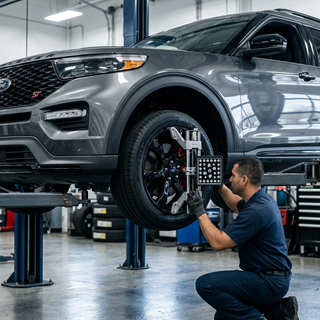
d

What Causes a Car to Vibrate at Highway Speeds?

A car vibrates at highway speeds primarily due to tire and wheel imbalance, uneven tire tread wear, or a bent wheel rim. As vehicle speed increases, even minor weight variations or physical defects create centrifugal force that wobbles the assembly rapidly. Less frequently, warped brake rotors, worn CV joints, unbalanced driveshafts, or loose suspension components cause or magnify high-speed shaking. When a vehicle travels at 55 to 70 mph, its wheel and tire assemblies rotate roughly 800 to 1,000 times per minute. At these rotational speeds, a heavy spot weighing as little as half an ounce exerts strong kinetic force against the hub, steering assembly, and chassis. Identifying the exact source of high-speed shaking requires observing when the sensation occurs, where it is felt inside the cabin, and whether it changes under specific driving actions like braking or accelerating. The location of the vibration inside the passenger cabin offers a reliable diagnostic starting point. Vibrations felt primarily in the steering wheel indicate an issue with the front tires, front wheel rims, or front suspension linkages. Conversely, shaking that resonates through the seat cushions, floorboard, or center console usually points to rear tire imbalance, bent rear wheels, or driveline issues in vehicles equipped with rear-wheel or all-wheel drive systems like the 2026 Ford Explorer ST-Line. Addressing high-speed vibrations promptly prevents secondary mechanical damage. Continuous shaking subjects wheel bearings, ball joints, and tie-rod ends to excessive dynamic stress, leading to premature component failure and irregular tire tread wear. If your vehicle develops a sudden or severe oscillation, our technicians recommend reducing speed safely, inspecting your tires for visible defects, and reaching out to our service department on Pennsylvania Avenue or giving our team a quick call to schedule a thorough inspection. Table of Contents Why Does Your Car Shake Specifically Between 50 and 70 MPH? How Do Unbalanced Tires and Wheel Issues Trigger Vibration? What Mechanical Defects in Brakes, Drivetrain, and Suspension Cause Shaking? Standard vs. Road Force Balancing: When Is Advanced Balancing Worth the Cost? Frequently Asked Questions About Vehicle Vibrations at Speed Expert Diagnostic Service and Precision Wheel Care Why Does Your Car Shake Specifically Between 50 and 70 MPH? A vehicle shakes specifically between 50 and 70 mph because that speed range matches the natural resonant frequency of most automotive tire and suspension setups. At these specific rotational velocities, minor physical imperfections in the wheel assembly align with the wheel's natural bounce rate, magnifying a small weight imbalance into a noticeable wobble. Below 50 mph, the rotational speed of the wheel is too low for centrifugal force to generate enough energy to overcome the dampening resistance of the shocks and struts. Above 70 mph, the frequency of the vibration often increases beyond the suspension system's natural resonance point, which can cause the sensation to smooth out slightly even though the underlying mechanical defect remains present. Our service advisors notice that when drivers bring in vehicles for a high-speed wobble between 50 and 70 mph, they often suspect worn brake rotors first, though tire imbalance is the culprit in the vast majority of cases. During daily commutes across East Liverpool, hitting deep potholes or sharp pavement edges can easily dislodge a small clip-on or adhesive wheel balance weight from an aluminum rim. When a wheel loses a balance weight, the tire no longer rolls uniformly around its center axis. Over time, this uncontrolled hopping motion creates uneven cupping or diagonal tread wear across the tire surface, further amplifying the high-speed shake. Replacing missing weights early or utilizing original equipment components helps restore a smooth ride. You can easily order OEM Ford wheels and tire assemblies directly through our service center to match factory engineering standards. How Do Unbalanced Tires and Wheel Issues Trigger Vibration? Unbalanced tires trigger high-speed vibration because weight distribution across the tire carcass and wheel rim is never mathematically perfect from the factory. As the assembly spins at highway speeds, any concentrated heavy area generates an outward pulling force that causes the wheel to hop vertically or shimmy side-to-side. Dynamic wheel imbalance manifests in two distinct mechanical patterns: Static imbalance: Occurs when a single heavy spot exists on the tire tread, causing the wheel to hop up and down rhythmically against the road surface. Dynamic imbalance: Occurs when weight is unevenly distributed on opposite sides of the wheel centerline, causing the assembly to wobble side-to-side as it spins. Physical wheel damage plays an equally significant role in generating high-speed vibrations. An aluminum or steel wheel rim that suffers impact damage can develop a subtle lateral or radial bend. Even if the tire holds air pressure perfectly, a bent rim prevents the tire bead from seating evenly, resulting in dynamic runout that vibrates through the vehicle body during highway travel. Tire internal construction failures also cause severe high-speed shaking. A broken or shifted steel belt inside the tire carcass creates a localized bulge or flat spot across the tread face. Unlike minor balance weight loss, internal belt separation weakens the structural integrity of the tire and requires immediate replacement to ensure safe vehicle operation on fast-moving highways. What Mechanical Defects in Brakes, Drivetrain, and Suspension Cause Shaking? Mechanical defects in the braking system, drive axles, or suspension linkages cause high-speed vehicle vibration when rotational components warp, develop joint play, or fail to keep the tire firmly anchored to the road. Distinguishing between braking, acceleration, and coasting vibrations helps pinpoint the specific mechanical component at fault. Brake-induced vibration occurs almost exclusively when applying the brake pedal at highway speeds. Over time, thermal stress or improper lug nut torque can cause variation in brake rotor thickness or surface lateral runout. As the brake pads clamp onto a rotor with uneven thickness, the hydraulic system pulses against the caliper piston, transmitting a rapid shaking sensation through the brake pedal and steering wheel. Sticking caliper slides can also hold the brake pad lightly against the rotor during high-speed cruising, generating friction heat that leads to thermal distortion and continuous high-speed drag. Drivetrain and axle issues produce vibration patterns tied directly to engine load and torque delivery: Constant-velocity (CV) joints: Worn inner CV joints or failing u-joints create a rhythmic side-to-side shudder felt mainly during highway acceleration that subsides when you lift off the accelerator pedal. Driveshaft imbalance: On rear-wheel drive models or four-wheel drive trucks like the 2026 Ford F-150 XLT 4x4, a bent driveshaft, missing balance weight, or worn u-joint creates a high-frequency vibration felt in the vehicle floorboard. Differential bearings: Worn pinion or carrier bearings in the axle assembly generate a low-frequency hum and vibration that changes pitch depending on whether the vehicle is cruising, accelerating, or coasting. Suspension wear rarely generates a high-speed vibration on its own, but worn shocks, struts, ball joints, or control arm bushings fail to absorb minor wheel vibrations. When suspension dampening weakens, even minimal tire tread irregularities are transmitted directly into the passenger cabin. Standard vs. Road Force Balancing: When Is Advanced Balancing Worth the Cost? Road force balancing is worth the additional investment when standard spin balancing fails to eliminate high-speed vibration, or when diagnosing firm-riding vehicles equipped with low-profile tires. While standard balancing measures static and dynamic weight balance on a free-spinning axle, road force balancing applies a heavy load roller directly against the spinning tire tread to simulate actual vehicle weight on the highway. Standard tire balancers spin the unmounted wheel assembly in the air and calculate where to place counterweights to neutralize heavy spots. This method successfully addresses weight distribution issues, but it cannot detect internal tire stiffness variations, tread wall hard spots, or minor wheel runout that only manifests when supporting the weight of the vehicle. Road force diagnostics utilize a specialized machine equipped with a hydraulic load roller that presses against the tire tread with up to 1,200 pounds of force as the wheel turns. This process measures radial assembly force variation and pinpoint structural hard spots within the rubber compound. Key benefits of road force balancing include: Force matching: The diagnostic balancer identifies the highest point of structural tire stiffness and matches it to the lowest geometric point on the wheel rim, canceling out radial force variations. Precision weight placement: The machine indicates exact inner and outer rim placement for weight placement, ensuring both lateral and radial balance. Runout verification: Technicians can instantly measure whether a high-speed shake stems from a bent wheel rim or a defective tire belt before replacing parts unnecessarily. Drivers commuting along State Route 170 through Calcutta on firm-riding crossover suspensions, such as the 2026 Ford Escape ST-Line Elite AWD, benefit significantly from road force balancing when mounting new tire sets or troubleshooting persistent 60-mph vibrations. Frequently Asked Questions About Vehicle Vibrations at Speed Q: Can a bad wheel alignment cause my car to vibrate at high speeds? A: Wheel alignment issues primarily cause the vehicle to pull to one side, misalign the steering wheel, or generate rapid, uneven tire tread wear. Alignment misalignments do not typically create a noticeable high-speed vibration on their own. However, severe alignment errors can cause irregular tire wear patterns over time, such as heel-toe feathering, which ultimately leads to a secondary tread vibration at highway speeds. Q: Will driving with unbalanced tires damage my car over time? A: Yes, driving with unbalanced tires subjects your steering and suspension components to continuous, unnecessary stress. The repetitive bouncing motion accelerates wear on shock absorbers, wheel bearings, tie-rod ends, and ball joints. Furthermore, unbalanced tires develop uneven tread wear patches rapidly, which ruins the tire compound prematurely and reduces wet-weather traction. Addressing tire vibration early preserves critical suspension hardware and extends overall tire lifespan. Q: How can I tell if high-speed vibration is coming from the front or rear tires? A: Pay attention to where you feel the vibration most prominently while driving on a smooth stretch of highway. Vibrations felt through the steering wheel or pulsing through your hands almost always originate from the front tires, front wheels, or steering linkages. Vibrations felt through the seat cushion, seatback, floorboard, or center console usually point to an issue with the rear tires, rear brake assemblies, or drive axle hardware. Q: Why does my car vibrate at highway speeds only when I apply the brakes? A: A vibration that occurs exclusively when depressing the brake pedal at highway speeds indicates brake rotor thickness variation or rotor surface warping. As the brake pads clamp against a rotor with microscopic high and low spots, the hydraulic system pulses rapidly, creating a vibration in the pedal and steering wheel. Sticking caliper pins can also cause excessive heat buildup, leading to temporary rotor distortion during long highway drives. Q: How often should I have my vehicle's tire balance checked? A: Our service team recommends having your tire balance checked every 6,000 to 8,000 miles, which conveniently aligns with standard oil change and tire rotation service intervals. You should also request a balance check immediately if you notice a new vibration, after hitting a severe pothole or curb, or whenever you install a new set of tires. Regular balance checks ensure smooth highway operation and maximum tread longevity. Expert Diagnostic Service and Precision Wheel Care Identifying and correcting high-speed vehicle vibration requires specialized diagnostic equipment and experienced automotive technicians. Whether your vehicle requires precise road force tire balancing, brake rotor resurfacing, drive axle replacement, or suspension bushing service, taking action early protects your vehicle investment and restores original ride quality. Our service department utilizes factory-certified equipment, genuine OEM components, and comprehensive multi-point inspection procedures to isolate vibration causes quickly and accurately. We invite local vehicle owners to visit our East Liverpool facility for routine maintenance and diagnostic troubleshooting. You can easily schedule a service appointment online or give our service advisors a quick call to keep your vehicle running smoothly and safely on every journey. © 2026 Tri State Ford. All rights reserved. Vehicle specification data © JATO Dynamics Limited. Car Vibration Solutions in East Liverpool OH | Tri State Ford
d

Is a Free Auto Parts Store Code Scan Accurate Enough to Fix a Car?

A free auto parts store code scan is not accurate enough to fix a car because it only retrieves a generic diagnostic code, not a definitive repair instruction. While a basic code reader identifies which system or sensor flagged an out-of-spec reading, it cannot perform bi-directional component testing, evaluate electrical wiring, or detect underlying mechanical failures, making targeted professional diagnostic testing necessary to avoid replacing functional parts. Basic hand-held code readers used at retail parts stores plug into a vehicle's onboard port to read standard OBD-II powertrain codes. These budget tools read static alphanumeric strings—such as P0171 for a lean fuel mixture or P0301 for a cylinder misfire—and display generic descriptions. However, a code reader cannot command vehicle actuators, run active system self-tests, or access proprietary modules such as body control units, anti-lock braking systems, or advanced safety networks. By contrast, professional diagnostic scan tools used by dealership technicians provide multi-system access, bi-directional control, and real-time live data graphing. Professional tools allow technicians to manually trigger fuel injectors, cycle purge valves, adjust idle speeds, and read specialized manufacturer data streams. For daily suburban commuters negotiating the rolling terrain around Calcutta, relying solely on an unverified parts store code printout often leads to buying unnecessary replacement sensors while leaving the true cause of the malfunction untreated. When a check engine light appears, visiting our dealership facility at 1503 Pennsylvania Ave gives you access to advanced factory diagnostic equipment. Rather than blindly swapping parts, our team can verify system operation, test sensor voltages, and ensure you only order genuine OEM replacement parts when a physical component failure is truly confirmed. If you have questions about an active dashboard light, give our service team a quick call to discuss proper testing options. Table of Contents Why Doesn't an OBD-II Trouble Code Point Directly to the Broken Part? What Is Freeze Frame Data in Vehicle Diagnostics? How Do Mechanical Failures and Bad Wiring Harnesses Trigger False Engine Codes? How Does an EVAP System Smoke Test Differ From Reading Trouble Codes? Why Does the Same Trouble Code Reappear After Installing a New Part? Why Do Service Departments Charge Diagnostic Fees for Trouble Code Inspections? Common Diagnostic Questions from Local Drivers Professional Diagnostic Support at Tri State Ford Why Doesn't an OBD-II Trouble Code Point Directly to the Broken Part? An OBD-II diagnostic trouble code does not point directly to a broken part because it only indicates that a specific electrical circuit or monitored operational parameter has operated outside programmed thresholds under federal 40 CFR 86.010-18 regulations. The code identifies the symptom detected by the engine control module, leaving technicians to investigate whether the root cause is a failed component, a wiring fault, a vacuum leak, or a mechanical defect. Vehicle control units continually monitor sensor inputs using predefined voltage windows. When a reading falls above or below the expected range for a designated duration, the module logs a specific diagnostic trouble code (DTC). For example, code P0301 indicates a misfire detected on cylinder 1. While many drivers assume this code requires replacing the cylinder 1 spark plug, the misfire can stem from numerous distinct causes: A worn or fouled spark plug failing to ignite the air-fuel mixture A cracked or shorted ignition coil boot preventing voltage transfer A clogged or electrically faulted fuel injector starving the combustion chamber Low mechanical cylinder compression caused by a leaking valve or worn piston rings A vacuum leak near the intake runner altering the local air-fuel ratio Control modules also differentiate between pending codes and confirmed codes. A pending code is recorded when a fault occurs during a single driving cycle, allowing the module to track potential issues without immediately illuminating the dashboard light. If the same fault persists across consecutive driving cycles, the module establishes a confirmed code and turns on the malfunction indicator lamp. Because a single fault code represents an entire operational system rather than an individual piece of hardware, systematic elimination testing remains essential for accurate repair. What Is Freeze Frame Data in Vehicle Diagnostics? Freeze frame data is a stored snapshot of real-time engine operating parameters captured automatically by the control module at the exact instant a diagnostic trouble code is triggered. It preserves crucial environmental and mechanical variables—including engine RPM, vehicle speed, engine load percentage, calculated fuel trims, and coolant temperature—giving technicians the exact context needed to replicate and diagnose the fault. Analyzing freeze frame data allows technicians to determine whether an engine issue occurs under cold start conditions, during high-speed highway cruising, or while idling at a stoplight. For instance, if a lean air-fuel code P0171 is recorded alongside fuel trims exceeding positive 20 percent at idle, but those trims normalize at higher engine speeds, the freeze frame context strongly suggests a vacuum leak rather than a failing fuel pump. Engine Speed (RPM): Identifies whether the fault occurred at idle or high engine load. Coolant Temperature: Reveals if the issue is tied to engine warm-up or thermal expansion. Short-Term and Long-Term Fuel Trims: Shows how the control module adjusted fuel delivery to compensate for abnormal air ratios. Vehicle Speed and Calculated Load: Pinpoints whether acceleration, towing, or flat-road cruising triggered the warning lamp. Our service advisors often see drivers clear warning lights with a basic hand-held scanner before visiting the shop, which erases this stored freeze frame record. Clearing the code wipes out the operational snapshot, forcing technicians to start from scratch or wait for the fault to recur before comprehensive testing can begin. How Do Mechanical Failures and Bad Wiring Harnesses Trigger False Engine Codes? Mechanical engine failures and physical wiring harness defects trigger false or misleading engine codes because electronic control units monitor component health strictly through electrical voltage signals. When damaged wiring, corroded ground terminals, or physical mechanical wear disrupt those electrical signals or airflow dynamics, the control module interprets the anomaly as a failing sensor even when the sensor itself is fully functional. An electrical signal travels through a circuit consisting of power leads, harness connectors, internal sensor elements, and ground returns. If a wiring harness rubs against an engine bracket and chafes, the exposed copper can short to ground or create high electrical resistance. That resistance alters the return voltage received by the engine control module, causing it to set a sensor fault code. Replacing the sensor accomplishes nothing because the underlying wiring short remains untouched. Mechanical failures distort sensor readings in a similar manner. Stretched timing chains, sticking internal engine valves, or heavy carbon accumulation across intake ports alter cylinder pressure and airflow velocity. When an engine experiences a mechanical vacuum drop or mechanical timing slip, sensors correctly report the abnormal conditions to the control module. The control module then flags codes for mass airflow sensors, manifold absolute pressure sensors, or oxygen sensors—not because those electronic sensors are broken, but because they are reporting true physical distortion caused by a mechanical breakdown. Drivers commuting through heavy stop-and-go traffic near Boardman often encounter wiring harness wear due to long-term engine bay heat cycling and vibration, illustrating why circuit verification must precede part replacement. How Does an EVAP System Smoke Test Differ From Reading Trouble Codes? An EVAP trouble code only alerts you to an unmetered air leak or pressure loss within the evaporative emissions control system, whereas a smoke test physically pinpoints the precise location of the leak by introducing pressurized, visible vapor into the sealed fuel vapor lines. The evaporative emissions system captures volatile fuel vapors from the gas tank and routes them through a charcoal canister to be burned cleanly during engine operation. To monitor system integrity, the vehicle's computer performs automated pressure decay tests. If the system fails to hold vacuum, the computer logs codes such as P0442 for a small leak or P0455 for a large leak. Diagnostic Method Capabilities Limitations Primary Purpose EVAP Code Reading Identifies system pressure failure; stores code Cannot locate physical hole, crack, or loose fitting Confirms an evaporative leak exists Diagnostic Smoke Machine Delivers dense, low-pressure vapor through lines; illuminates tiny cracks Requires specialized shop equipment and connections Visually isolates exact leak location Relying solely on an EVAP trouble code frequently leads drivers to replace the gas cap or purge valve unnecessarily. In many cases, the true source of the leak is a hairline crack in a plastic vapor line, a degraded filler neck gasket, or a rusted charcoal canister fitting. A diagnostic smoke machine pumps dense vapor mixed with specialized dye into the sealed system at low pressure. As smoke escapes from the precise point of failure, technicians can instantly spot the leak location without guessing or replacing functional components. Why Does the Same Trouble Code Reappear After Installing a New Part? A diagnostic trouble code reappears after installing a new part when the underlying root cause—such as damaged electrical wiring, clogged vacuum passages, poor ground connections, or uncalibrated software—was never resolved during the initial part swap. Replacing a component based strictly on a fault code treats the symptom recorded by the computer rather than the conditions that caused the symptom. Common reasons a trouble code returns after a part installation include: Unresolved Circuit Defects: The new sensor cannot transmit accurate data if the wiring harness has internal corrosion, a backed-out pin connector, or high ground resistance. Secondary System Contamination: Installing a new mass airflow sensor will not fix a code if oil residue from a crankcase breather immediately coats the fresh sensing element. Missing System Recalibrations: Modern vehicles often require adaptive relearn procedures or bi-directional calibration commands using a professional scan tool after replacing throttle bodies, sensors, or actuators. Misdiagnosed Root Cause: Replacing an oxygen sensor when the true issue is a cracked exhaust manifold leaking ambient air upstream forces the computer to log the same fault code during subsequent monitor sweeps. Systematic diagnosis prevents this repetitive cycle by verifying signal integrity, mechanical soundness, and control module responses before any new component is installed. Why Do Service Departments Charge Diagnostic Fees for Trouble Code Inspections? Service departments charge diagnostic fees because retrieving a code is merely the initial step in a multi-stage physical and electrical testing process performed by trained automotive technicians. The fee covers dedicated technical labor, factory scan equipment, multi-meter circuit testing, and specialized diagnostic instruments required to accurately isolate a vehicle's true root cause. A quick code scan takes less than a minute, but interpreting that code and proving which component failed requires extensive technical expertise. Diagnostic testing involves retrieving stored freeze frame parameters, performing guided factory pinpoint routines, inspecting wiring schematics, testing circuit voltages, and conducting mechanical pressure or smoke tests. Paying for targeted diagnostic labor protects vehicle owners from wasting hundreds of dollars on unneeded replacement parts through trial-and-error guessing. When you bring your vehicle to our East Liverpool facility, our certified technicians connect factory-grade scan tools to evaluate complete live data streams and perform active bi-directional component tests. If your check engine light is active, schedule a service appointment online or contact our team directly at (330) 462-7578 to ensure your vehicle receives accurate, professional diagnostic care. Common Diagnostic Questions from Local Drivers Q: What is the difference between a steady check engine light and a flashing check engine light? A steady check engine light indicates an illuminated fault that requires professional inspection but allows brief, cautious driving. A flashing check engine light signals a severe active engine misfire that allows unburned fuel to pour into the exhaust system, creating extreme heat that can rapidly destroy the catalytic converter. If your warning light begins flashing, you should immediately reduce engine load, pull over safely, and arrange vehicle transport to avoid catastrophic exhaust or engine damage. Q: Can a loose gas cap cause a check engine light to turn on? A loose or damaged gas cap prevents the evaporative emissions control system from sealing properly, causing the engine control module to detect a pressure leak and trigger a fault code. Tightening the gas cap securely resolves the physical leak, though it typically takes several complete driving cycles for the control module to run its automated self-test routine and turn off the dashboard light. Q: Will clearing a trouble code fix the vehicle's underlying problem? Clearing a trouble code only resets the dashboard light and erases stored freeze frame data from the control module's memory. It does not repair electrical short circuits, fix mechanical wear, or seal vacuum leaks. If the underlying fault remains uncorrected, the engine control module will detect the anomaly during its next monitoring cycle and re-illuminate the light. Q: Why does my car drive normally even though the check engine light is illuminated? Modern engine control units use pre-programmed default values to maintain operation when certain sensor inputs fail, allowing the vehicle to operate in a fail-safe mode. Although the vehicle may feel normal during casual driving, running on default software maps reduces fuel efficiency, increases tailpipe emissions, and can gradually accelerate wear on secondary emissions hardware over time. Q: How long does a thorough diagnostic inspection take at a service center? A comprehensive diagnostic inspection typically takes between one and two hours depending on the complexity of the fault. Technicians must pull stored module data, execute guided factory pinpoint test procedures, verify circuit voltages with digital meters, and physically test mechanical components to confirm the exact failure point before recommending repairs. Professional Diagnostic Support at Tri State Ford Understanding why a trouble code doesn't tell the whole story saves vehicle owners time and money by preventing unnecessary parts replacement. Diagnostic codes serve as helpful signposts, pointing technicians toward a monitored system, but confirming the exact failure requires professional testing tools, circuit verification, and trained mechanical expertise. At Tri State Ford, our factory-trained service technicians utilize advanced diagnostic equipment to isolate electrical and mechanical issues quickly and accurately. Whether your vehicle requires pinpoint circuit testing, live data stream analysis, or specialized system smoke testing, our team provides transparent, expert care to keep your vehicle running dependably. Contact our service department today to address your check engine light with trusted, thorough diagnostic support. © 2026 Tri State Ford. All rights reserved. Auto Diagnostic Accuracy in East Liverpool OH | Tri State Ford
f

Why Does Ford Technician Certification Matter for Vehicle Repairs?

Ford technician certification matters because modern Ford vehicles utilize complex network architectures, specialized computer module programming, and exact mechanical tolerances that require brand-specific technical expertise. A certified technician completes structured factory instruction to accurately diagnose electronic trouble codes, service high-voltage electric or EcoBoost powertrains, and execute manufacturer recall procedures without trial-and-error part replacement, protecting overall vehicle performance and supporting factory warranty coverage. Vehicles today function as mobile computer networks. A single Ford truck or SUV can contain up to 80 individual electronic control units communicating across high-speed controller area network (CAN-bus) lines. When an engine management light or safety system warning appears, standard multi-brand diagnostic code readers often display generic failure codes that miss underlying Ford-specific module errors. A technician who has completed manufacturer certification understands how these proprietary systems interact, allowing for precise fault isolation and correct repair procedures. Beyond digital diagnostics, mechanical standards on components such as twin-independent variable camshaft timing systems, 10-speed automatic transmissions, and integrated trailer brake controllers demand exact torque specifications and specialized assembly techniques. Factory-trained service specialists receive hands-on instruction using official shop manuals and specialized service tools engineered exclusively for Ford lineups. This specialized training reduces diagnostic time, prevents unnecessary component replacements, and ensures every repair restores the vehicle to original factory engineering standards. For complete ownership care and specialized diagnostics, local drivers can visit our service center on Pennsylvania Avenue to speak directly with our team. If you notice unusual drivability symptoms or require routine maintenance, give us a call at (330) 462-7578 or schedule a service appointment online at your convenience. Table of Contents What Specific Training and Requirements Define a Ford-Trained Technician? What Is Required to Achieve advanced Ford service training status? Why Are Factory Diagnostic Tools and Module Updates Essential for Modern Fords? Can a Mechanic Be Both ASE Certified and Ford Trained? Will Servicing a Ford at an Independent Shop Void the Factory Warranty? Common Questions About Ford Technical Training and Vehicle Service Schedule Factory-Trained Service at Tri State Ford What Specific Training and Requirements Define a Ford-Trained Technician? A Ford-trained technician is defined by completing structured educational tracks administered through Ford Motor Company, combining online technical modules, hands-on classroom instruction, and practical dealership experience. Candidates progress through technical career entry programs like STST (Service Technician Specialty Training) or college-level ASSET (Automotive Student Service Educational Training) courses to master Ford-specific electrical wiring, powertrain management, and chassis control systems. The path to factory credentialing involves multiple structured training tiers: STST Curriculum: Instructor-led classroom and web-based training modules focusing on specific vehicle systems, including engine repair, automatic transmissions, steering and suspension, climate control, and advanced electronics. ASSET Program: A two-year college program partnering higher education institutions with Ford dealerships, balancing classroom instruction with paid dealership co-op work experience. advanced Ford training: A streamlined pathway allowing experienced mechanics holding Automotive Service Excellence certifications to gain credit for general knowledge while completing Ford-specific technical coursework. introductory technical training: An introductory partnership connecting high schools and technical centers with Ford web-based training modules to build foundational knowledge. dealership apprenticeship: A formal dealership apprenticeship structure encompassing 18 to 24 months of training, incorporating about 2,000 hours of hands-on experience and roughly 400 hours of classroom learning across gas, hybrid, and electric vehicle systems. The daily commute across the rolling hills along State Route 170 in Calcutta subjects brake rotors, suspension bushings, and transmission clutches to continuous load shifts. Technicians trained directly by the manufacturer understand how these regional driving conditions accelerate wear on specific Ford components. Rather than relying on generic service guidelines, certified mechanics apply exact fluid specifications, updated software recalibrations, and genuine Motorcraft components tailored to maintain vehicle durability. To maintain vehicle performance without disrupting your daily routine, our team offers options like Ford Mobile Service for light maintenance at your home or workplace. For those performing their own routine maintenance, you can also order genuine OEM Ford parts directly through our service center. What Is Required to Achieve advanced Ford service training status? Achieving advanced Ford service training status requires a technician to earn and continuously maintain Master status across three core specialty tracks—chassis, powertrain, and electronics—for five consecutive calendar years. This credential represents the highest level of service expertise achievable within the Ford dealership network, demanding hundreds of hours of advanced coursework and regular practical examinations. To earn Master certification in each individual track, technicians must complete all foundational and advanced classroom labs, pass comprehensive written examinations, and demonstrate hands-on diagnostic proficiency. The requirements across the three core areas include: Powertrain Master Track: Mastery of engine overhaul procedures, turbocharger diagnostics, fuel-injection mapping, and multi-speed automatic transmission rebuilding. Chassis Master Track: Advanced certification in anti-lock braking systems, electronic stability controls, power steering calibrations, four-wheel-drive transfer cases, and air suspension systems. Electrical/Electronics Master Track: Comprehensive expertise in body control modules, multiplex wiring diagnostics, CAN-bus network troubleshooting, and Ford Co-Pilot360 driver-assist radar and camera alignments. Holding Senior Master status is not a one-time achievement. Vehicle technology evolves rapidly with new model years, introducing updated electrical architectures, high-voltage battery management systems, and over-the-air software capabilities. Senior Master technicians must complete annual update courses and recertification exams every year to retain their active status. Our service team observes that drivers coming in with intricate electrical or multi-system warnings benefit from having Senior Master technicians analyze the live data stream. When complex drivability issues arise, having top-tier technical expertise available ensures accurate fault identification on the first visit. For added maintenance convenience, owners can utilize Ford Pick-Up & Delivery to have their vehicle serviced by our trained staff without leaving home. Why Are Factory Diagnostic Tools and Module Updates Essential for Modern Fords? Factory diagnostic tools and software module updates are essential because contemporary Ford vehicles rely on complex computer software to operate engine management, safety sensors, transmission shift points, and cabin electronics. Specialized diagnostic hardware like the FDRS (Ford Diagnostic & Repair System) and IDS (Integrated Diagnostic Software) interfaces directly with factory servers to read proprietary diagnostic trouble codes and perform computer module reflash updates. General aftermarket scan tools used by non-affiliated repair facilities typically read only generic OBD-II emission codes. While an aftermarket tool might indicate a generic misfire, factory diagnostic software can isolate whether the issue stems from an injector driver signal, a variable camshaft solenoid fault, or a software calibration mismatch inside the powertrain control module. Computer module updates perform several critical functions on modern vehicles: Software Reflashing: Installing updated manufacturer code to fix drivability glitches, improve shift quality, or optimize fuel delivery without physical part replacement. Sensor Calibration: Aligning radar units, camera modules, and steering angle sensors following alignment or bumper service to ensure Ford Co-Pilot360 features function accurately. Guided Component Testing: Executing automated diagnostic sequences that test individual solenoids, relays, and actuators under precise operating conditions. Key and Module Initialization: Security handshake programming required when installing new engine computers, body control modules, or key fobs. Navigating the riverfront slopes in East Liverpool places sustained loads on vehicle transmissions and hill-descent systems. When software updates become available to refine clutch engagement or braking assist software under heavy loads, factory diagnostic equipment ensures those updates are applied correctly. Non-subscribed repair facilities without active access to Ford technical databases cannot reflash or update these proprietary vehicle computers. Can a Mechanic Be Both ASE Certified and Ford Trained? Automotive mechanics can hold both Automotive Service Excellence (ASE) certifications and official Ford factory training credentials simultaneously. Many professional dealership technicians carry active ASE certifications alongside their specialized manufacturer credentials to demonstrate both general automotive knowledge and brand-specific technical expertise. The National Institute for Automotive Service Excellence (ASE) evaluates a technician's understanding of general mechanical and electrical principles through standardized national examinations. ASE certifications cover universal system fundamentals across all vehicle makes and models, such as basic hydraulics, electrical testing theory, and mechanical steering geometry. In contrast, Ford factory training builds upon general mechanical skill by focusing exclusively on Ford engineering, component designs, and proprietary electronic systems. The table below outlines how these two professional credentials complement each other: Certification Type Governing Body Primary Focus Area Testing and Verification ASE Certification National Institute for Automotive Service Excellence Universal automotive repair principles, industry-standard diagnostics, and general mechanical theory across all vehicle brands. Standardized national written exams and verified two-year hands-on work experience requirement. Ford Factory Training Ford Motor Company Technical Career Entry System Brand-specific vehicle architectures, FDRS software reflash procedures, EcoBoost engine diagnostics, and Ford warranty standards. Proctored web modules, hands-on regional center training labs, and mandatory annual update testing. Ford's FAST (Ford Accepted Service Training) program specifically recognizes active ASE certifications, granting experienced mechanics course equivalency credits for general automotive fundamentals. This allows skilled mechanics to transition into specialized Ford training tracks faster, mastering model-specific software and diagnostic tools without repeating entry-level mechanical instruction. Will Servicing a Ford at an Independent Shop Void the Factory Warranty? Servicing a Ford vehicle at an independent repair shop does not void your factory warranty, provided routine maintenance is performed according to manufacturer guidelines and detailed service records are preserved. Under the federal Magnuson-Moss Warranty Act, automobile manufacturers cannot invalidate a vehicle's factory warranty simply because maintenance was completed by a non-dealership facility or using high-quality aftermarket parts. To protect your warranty coverage when using independent service facilities, vehicle owners must keep complete documentation for every maintenance procedure. Essential record-keeping practices include: Detailed Invoices: Retaining receipts that state the date, vehicle mileage, vin number, specific service performed, and exact part numbers installed. Correct Part Specifications: Ensuring non-OEM oil filters, air filters, and synthetic fluids meet the exact Ford material specifications listed in your owner's manual. Maintenance Schedule Adherence: Completing oil changes, tire rotations, spark plug replacements, and fluid flushes within the recommended mileage and time intervals. While routine maintenance like oil changes and tire rotations can legally be performed at independent shops, factory warranty repairs, safety recall campaigns, and complex software reflash procedures must be completed by an authorized Ford dealership. If an independent shop installs an incorrect component or damages a system during repair, any secondary damage caused by that improper service will not be covered under the factory warranty. Using authorized dealership service eliminates documentation friction during future warranty claims because every service record, factory software update, and genuine Motorcraft part installation is automatically logged directly into Ford's centralized vehicle history database. Common Questions About Ford Technical Training and Vehicle Service What specific training and requirements define a Ford-Trained Technician? Ford's technical training program includes comprehensive web modules, rigorous exams, and practical labs to ensure technician proficiency. Training paths like STST and ASSET cover brand-specific electrical networks, EcoBoost powertrains, and high-voltage systems. Can independent shops perform Ford software and computer module updates? Independent shops can only perform module updates if they maintain active subscriptions to Ford's proprietary FDRS or IDS software and possess compatible vehicle communication hardware. Non-subscribed independent shops cannot reflash or calibrate Ford computer modules. What is required to achieve advanced Ford service training status? Earning Senior Master status requires a technician to maintain Master credentials across chassis, powertrain, and electrical specialty tracks for five consecutive years. Technicians must also complete annual update courses on new model year technologies to keep their Senior Master credential active. Can a mechanic be both ASE certified and Ford trained? Mechanics frequently hold both credentials. ASE certification validates general automotive repair knowledge across all vehicle makes, while Ford factory training provides brand-specific expertise on Ford engineering, diagnostic software, and repair procedures. Will servicing a Ford at an independent shop void the factory warranty? Routine service at an independent shop does not void the factory warranty under federal law, provided maintenance meets manufacturer standards and receipts are kept. However, official warranty repair work and recall campaigns must be performed at an authorized dealership. For additional guidance on maintaining your vehicle's performance, view our routine battery testing and replacement guides online. If you need expert diagnostic support, you can reach our team directly at (330) 462-7578 or get step-by-step driving routes for finding our East Liverpool dealership. Schedule Factory-Trained Service at Tri State Ford Maintaining the safety, performance, and long-term value of your Ford requires specialized equipment and up-to-date technical training. From complex computer module reprogramming to routine brake and suspension care, relying on certified service professionals ensures every repair is executed according to exact manufacturer engineering standards. Contact our team today to schedule your next maintenance appointment and keep your vehicle running smoothly for years to come. © 2026 Tri State Ford. All rights reserved. Ford Technician Certification Benefits in East Liverpool OH | Tri State Ford
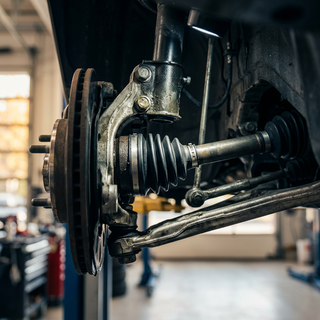
d

What Causes a Car to Make a Clicking Noise?

A vehicle clicking noise is primarily caused by low electrical current during startup, wear in rotating suspension or drivetrain components, or mechanical clearance issues inside the engine. A rapid click when turning the ignition key points to a weak battery or bad electrical connections, while rhythmic clicking during tight turns signals a failing constant velocity joint, and steady ticking from under the hood indicates valvetrain wear or low oil pressure. Understanding the specific conditions under which a noise occurs helps pinpoint the underlying issue before minor mechanical wear turns into an unexpected vehicle breakdown. Automotive clicking sounds generally fall into four distinct operational categories: Starting System Failures: Rapid or single clicking when attempting to crank the engine, tied to battery voltage drops, terminal corrosion, or starter motor degradation. Drivetrain and Steering Anomalies: Metallic clicking or popping that accelerates with vehicle speed, especially while turning, usually originating from damaged axle boots or worn joints. Engine Mechanical Ticking: Rhythmic ticking synced directly with engine speed (RPM), stemming from hydraulic valve lifters, low oil pressure, or high-pressure fuel injectors. Brake and Wheel Assembly Issues: Clicking heard during low-speed braking or coasting, caused by loose brake pad retaining clips, shifting pads, or debris behind the dust shield. East Liverpool's riverfront bluffs and steep grade changes put consistent mechanical strain on constant velocity joints and steering components, making drivetrain clicks easy to identify during daily driving. When an unfamiliar noise develops, getting a professional system check ensures your vehicle remains reliable and safe. You can drop by our East Liverpool service center at 1503 Pennsylvania Ave or give our team a quick call at (330) 462-7578 to speak directly with an expert diagnostic technician. Table of Contents Why Does a Car Make a Rapid Clicking Noise When Starting? How Do You Tell If a Clicking Start Is Battery or Starter Related? What Is the Difference Between Clicking When Turning and Engine Ticking? Is It Cheaper to Replace Just a CV Boot or the Entire CV Axle? Common Diagnostic Questions About Vehicle Clicking Noises Schedule Professional Vehicle Diagnostic Service Why Does a Car Make a Rapid Clicking Noise When Starting? A rapid clicking sound during vehicle startup occurs when the starter solenoid rapidly engages and disengages because it lacks sufficient electrical amperage from the battery. This rapid cycling happens when battery voltage drops below the required operating threshold, cable terminals suffer from corrosion, or an alternator failure prevents the battery from maintaining its electrical charge reserve. When you turn the ignition key or press the start button, the vehicle electrical system sends power to the starter solenoid coil. The solenoid requires a continuous flow of high amperage to hold the starter energizing plunger in place against its internal return spring. If electrical resistance is high or battery charge is depleted, the electrical circuit energizes the solenoid briefly, but the immediate voltage drop forces the spring to push the plunger back. This continuous cycle of rapid engagement and release creates the fast, machine-gun clicking sound under the hood. Common root causes for rapid starting clicks include: Undersized or depleted battery voltage resulting from age or cold weather capacity loss. Heavy buildup of lead sulfate or corrosion on positive and negative battery terminals. Loose or frayed ground straps between the engine block and chassis. Internal diode failure inside the charging system that leaves the battery undercharged during regular driving. Drivers frequently ask our service advisors whether a rapid click automatically means the starter motor is destroyed, when in reality a simple electrical system test resolves the issue nearly nine times out of ten. Replacing compromised cables or installing genuine Ford battery and electrical parts online restores full cranking power and protects your starter motor from premature wear. How Do You Tell If a Clicking Start Is Battery or Starter Related? To determine if a clicking start stems from the battery or the starter motor, observe cabin lighting behavior and the rhythm of the click during ignition. A rapid multi-click accompanied by dimming interior lights or flickering digital displays points to a depleted battery or poor terminal connection, whereas a single loud click with full dashboard brightness indicates a failed starter solenoid or jammed starter motor. Diagnosing the difference between electrical power loss and starter hardware failure requires checking how the vehicle responds under electrical load. Turn on the vehicle headlights and attempt to crank the engine: Battery or Connection Issues: Headlights will dim significantly or shut off entirely when key engagement occurs. The starting sound presents as a fast series of light clicks. Voltage drop testing across the battery posts usually reveals output under 10.5 volts during load. Starter Motor Issues: Headlights remain strong and clear without flickering. The starting sound presents as a single heavy metallic knock or click as the starter solenoid attempts to engage a worn starter armature or damaged flywheel ring gear. If a weak battery is suspected, jump-starting the vehicle offers immediate diagnostic feedback. Attach positive jumper cables to positive terminals on both vehicles, then clamp the negative cable to an unpainted metal ground on the vehicle needing assistance. Allow the donor vehicle to run for several minutes to transfer surface charge. If the vehicle starts right up after charging, the starter motor is functioning properly, and attention should turn to routine battery maintenance and voltage diagnostics to determine if the battery or charging system needs replacement. What Is the Difference Between Clicking When Turning and Engine Ticking? The core difference between turning clicks and engine ticks lies in what triggers the sound and how its rhythm responds to vehicle movement. Clicking while turning originates in the drivetrain—specifically worn constant velocity joints—and speeds up with wheel rotation, whereas engine ticking stems from internal valvetrain components or fuel injectors and speeds up directly with engine RPM, even while the vehicle is sitting in park. Suburban commuters navigating State Route 170 through Calcutta often spot constant velocity joint clicking when turning sharply into shopping center parking lots under acceleration. Dissecting the characteristics of each noise helps isolate the mechanical system involved: Drivetrain Clicking Characteristics Noise correlates directly with vehicle ground speed, not engine engine revs. Sound intensifies during hard cornering or low-speed turning maneuvers. Caused by worn outer ball bearings inside a constant velocity joint after protective rubber boots split and lose lubrication. Pitch remains steady, but frequency increases as wheel rotation speeds up. Engine Ticking Characteristics Noise correlates directly with engine engine revs (RPM) and remains audible while idling in neutral or park. Sound originates beneath the valve covers or near the intake manifold. Caused by mechanical clearance in hydraulic valve lifters, low engine oil pressure, worn rocker arms, or normal operation of high-pressure direct fuel injectors. Adding engine oil can quiet valvetrain ticking if the oil dipstick shows low fluid levels, as proper oil volume restores hydraulic pressure inside the lifters. Brake hardware can also create localized clicking. Loose brake pad retaining clips allow pads to shift inside calipers when changing direction from drive to reverse, producing a single metallic click that should be inspected during regular service. Is It Cheaper to Replace Just a CV Boot or the Entire CV Axle? Replacing an entire constant velocity axle assembly is generally more cost-effective and reliable than replacing only a torn boot once clicking has begun. While a rubber boot replacement kit costs less in standalone parts, installing it requires identical labor steps to remove the axle shaft, and an actively clicking joint has already suffered permanent metallic damage from lost grease and road debris. When a flexible rubber boot cracks, grease flings outward onto suspension parts while dirt and water enter the bearing housing. This contamination rapidly abrades internal steel bearings and raceways. Comparing the service options highlights why complete replacement is standard practice: Repair Consideration Boot Replacement Only Complete CV Axle Assembly Initial Parts Cost Lower initial cost for rubber boot kit Moderate cost for complete factory axle shaft Labor Hours Required High (requires full disassembly and cleaning) Moderate (direct bolt-in replacement) Fixes Active Clicking? No (cannot repair internal metal wear) Yes (replaces all joint bearings entirely) Long-Term Reliability Risk of premature joint failure remains Full factory component life restored Attempting to save on parts by installing a boot over an already noisy joint leaves damaged bearings inside the drivetrain. Continued driving on a severely worn joint risks complete axle separation, which causes an immediate loss of power to the drive wheels and potential damage to nearby suspension steering arms. To protect your vehicle, you can schedule a service appointment online to have our technicians inspect your drive axles. Common Diagnostic Questions About Vehicle Clicking Noises Q: Can a failing alternator cause a car to click when starting? A damaged alternator fails to recharge the battery while the engine runs, steadily draining reserve battery capacity. Once electrical storage drops below necessary amperage, attempting to turn the ignition key results in a rapid clicking sound as the starter solenoid repeatedly cycles without sufficient power to turn the engine over. Q: Will adding engine oil stop a valve lifter ticking noise? Adding engine oil stops valvetrain ticking only if the noise is caused by low oil level or low oil pressure. Topping off engine oil restores hydraulic pressure to the lifters, but if the noise stems from mechanical wear, internal varnish, or sludge buildup, physical component replacement is necessary. Q: How do you jump-start a car that makes a rapid clicking noise? Connect positive jumper cables to positive battery terminals on both vehicles, then clamp the negative cable to an unpainted metal ground on the engine block of the vehicle with the dead battery. Allow the donor vehicle engine to run for several minutes to transfer charge before attempting to turn the ignition key. Q: Is it safe to drive a vehicle with a noisy CV joint? Driving with an actively clicking constant velocity joint is unsafe because internal bearing failure can cause the drive axle shaft to detach from the wheel hub assembly. Complete joint failure leads to immediate loss of vehicle drive power and potential steering control issues. Q: Why does my vehicle make a clicking sound after turning off the engine? Clicking or pinging sounds immediately after engine shutoff are caused by hot metal components contracting as they cool down. The exhaust manifold, catalytic converter, and heat shields expand under operating heat and emit light metallic clicks as ambient air cools the exhaust system. Schedule Professional Vehicle Diagnostic Service Resolving a vehicle clicking noise quickly prevents minor electrical drain or suspension joint wear from turning into unexpected roadside breakdowns. Our factory-trained service department provides complete battery load testing, drivetrain inspections, and engine diagnostics using specialized OEM equipment to pinpoint exact mechanical causes. Vehicle owners backed by Ford factory protection enjoy standard roadside assistance benefits, including emergency jump-starts and towing support to authorized service facilities. If you encounter an unexpected battery failure on the road, contact Ford Roadside Assistance: 1-800-241-3673 for quick dispatch support. Our service center provides comprehensive care tailored to your daily schedule: Factory-certified technicians using original equipment parts. Advanced diagnostic computers that analyze electrical systems and engine sensors. Comfortable customer lounge area with complimentary connectivity. Convenient online booking and transparent repair estimates. Whether you need a quick battery swap, axle replacement, or local maintenance assistance through our convenient Ford Mobile Service options, our team is ready to help. Visit our dealership address at 1503 Pennsylvania Ave, East Liverpool, OH 43920 or call our service desk directly at (330) 462-7578 to reserve your diagnostic appointment today. © 2026 Tri State Ford. All rights reserved. Car Clicking Noise Diagnostics in East Liverpool OH | Tri State Ford
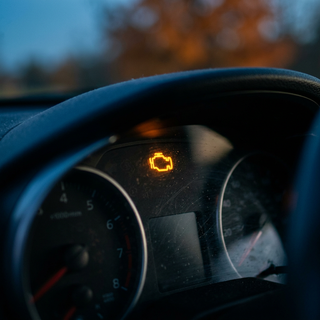
f

What Should You Do If Your Check Engine Light Starts Flashing?

If your check engine light starts flashing, you must immediately ease off the gas pedal, avoid hard acceleration or heavy towing, pull over to a safe location, and turn off the engine. A blinking light indicates a severe, active engine misfire that dumps unburned fuel directly into the exhaust system, creating an urgent risk of catalytic converter overheating and catastrophic mechanical damage. Continuing to drive with a flashing light can destroy expensive emission components within minutes. Understanding the difference between a steady illumination and a flashing warning is essential for every vehicle owner. A solid check engine light signals a stored diagnostic code for a non-emergency fault, such as an evaporative emissions leak, a loose gas cap, or a malfunctioning oxygen sensor. While a steady light warrants prompt attention during your next routine maintenance visit, a blinking indicator demands emergency action. The vehicle engine control module triggers a flashing alert specifically when an active misfire reaches a severity threshold capable of causing immediate thermal destruction downstream in the exhaust system. When a flashing light occurs, safely signal and navigate your vehicle to the shoulder or a nearby parking area away from active traffic. Once parked, switch off the ignition to cut the fuel supply to the misfiring cylinder. Inspect the dashboard for additional warning indicators, such as elevated engine coolant temperature or low oil pressure readings. Do not attempt to continue driving to your destination, even if the vehicle feels like it is running smoothly at cruising speeds. Arranging for professional towing is the safest choice to protect your vehicle from thousands of dollars in secondary exhaust and engine damage. Our factory-trained Ford service team at 1503 Pennsylvania Ave can accurately scan your onboard diagnostic system, identify the precise root cause of the misfire, and execute trusted repairs using original equipment parts. If you experience a sudden warning on the road, reach out to our service advisors at (330) 462-7578 to coordinate towing and fast diagnostic scheduling. Table of Contents How Do Faulty Spark Plugs and Ignition Coils Trigger an Engine Misfire? Can Driving With a Flashing Check Engine Light Destroy Your Catalytic Converter? What Diagnostic Trouble Codes and Battery Resets Mean for a Flashing Engine Light What Immediate Steps Should You Take If Your Vehicle Shakes or Loses Power? What Is the Estimated Cost to Repair Misfires Versus Replacing a Damaged Catalytic Converter? Common Questions About Flashing Check Engine Lights and Engine Misfires Protect Your Engine with Professional Ford Service in East Liverpool How Do Faulty Spark Plugs and Ignition Coils Trigger an Engine Misfire? Faulty spark plugs or failing ignition coils trigger an engine misfire by failing to deliver the high-voltage electrical arc required to ignite the compressed air-fuel mixture inside the cylinder combustion chamber. Without proper spark ignition, the fuel mixture passes through the cylinder unburned during the exhaust stroke, registering as a combustion failure with the engine control module. This misfire alters engine crankshaft speed, prompting the computer to flash the check engine light. Internal combustion engines rely on precise synchronization between fuel delivery, air intake, compression, and electrical spark timing. Modern vehicles utilize a coil-on-plug ignition configuration where an individual ignition coil sits directly atop each spark plug. The engine control module signals the ignition coil to convert low battery voltage into high-voltage electrical pulses, often exceeding 30,000 volts, which jump across the spark plug electrode gap. Over time, several mechanical degradation factors disrupt this vital process: Spark Plug Electrode Wear: Millions of electrical firings cause the metal center and ground electrodes on the spark plug to wear down, widening the plug gap. A wider gap demands higher voltage from the coil to create a spark, eventually causing intermittent or total spark collapse under heavy engine loads. Carbon and Oil Fouling: Deposits from unburned fuel, carbon buildup, or leaking valve stem seals coat the spark plug tip, short-circuiting the electrical arc and preventing ignition. Ignition Coil Insulation Breakdown: Internal coil windings experience extreme thermal cycling under the hood. As the epoxy or silicone insulation breaks down, electrical current shorts internally, resulting in a weak or absent spark at the plug. Moisture and Oil Contamination: Leaking valve cover gaskets can flood spark plug wells with engine oil, degrading the rubber boots on the ignition coil and causing high-voltage spark arcing directly to the engine block instead of the spark plug. When combustion fails, the affected cylinder produces zero power stroke force, creating an immediate imbalance along the engine crankshaft. Sensor arrays monitoring crankshaft position detect this microscopic drop in rotational speed during the cylinder firing order. If the system detects repeated misfire cycles within a set number of engine revolutions, the computer logs a cylinder-specific fault code and immediately flashes the malfunction indicator lamp to alert the driver. For suburban commuters driving along State Route 170 in Calcutta, keeping up with recommended spark plug replacement intervals is one of the most practical steps to prevent sudden ignition coil stress and unexpected highway misfires. If your vehicle is approaching its factory maintenance mileage threshold, you can easily schedule a service appointment online to have our certified technicians inspect and refresh your ignition components before issues develop. Can Driving With a Flashing Check Engine Light Destroy Your Catalytic Converter? Driving with a flashing check engine light can permanently destroy your catalytic converter because raw, unburned fuel enters the hot exhaust stream and ignites directly inside the catalytic converter honeycomb structure. This secondary ignition raises internal converter operating temperatures far beyond safe limits, melting the internal ceramic core and destroying the precious metal catalyst coatings within minutes of driving. The catalytic converter is designed to clean harmful exhaust gases using internal precious metals, including platinum, palladium, and rhodium. Under normal operating conditions, treated exhaust entering the converter ranges between 800 degrees Fahrenheit and 1,200 degrees Fahrenheit. However, when an ignition coil or spark plug fails, every exhaust stroke pumps a full charge of unburned gasoline vapor and oxygen directly into the red-hot exhaust manifold. CYLINDER MISFIRE PROCESS 1. Spark plug or ignition coil fails to ignite air-fuel mixture. 2. Unburned gasoline vapor passes into the exhaust manifold. 3. Raw fuel enters the hot catalytic converter core. 4. Fuel ignites inside the core, driving temperatures past 1,600°F. 5. Ceramic honeycomb structure melts, deforms, and clogs exhaust. When raw fuel hits the hot ceramic honeycomb of the catalytic converter, it combusts uncontrolled inside the narrow flow channels. Internal operating temperatures quickly spike beyond 1,600 degrees Fahrenheit, reaching levels hot enough to melt the ceramic substrate. As the internal structure melts and collapses, it creates a physical restriction in the exhaust system. This restriction leads to severe engine backpressure, significant power loss, severe overheating, and in extreme cases, underbody vehicle fires. Our technicians frequently see drivers ask whether a brief misfire can damage the exhaust, and the reality is that unburned fuel entering a hot exhaust system ignites directly inside the catalytic converter, causing rapid thermal damage. Even if the misfire clears intermittently, cumulative thermal stress weakens the internal precious metal washes, leading to premature catalyst efficiency failure codes and expensive emissions component replacements later on. What Diagnostic Trouble Codes and Battery Resets Mean for a Flashing Engine Light Diagnostic trouble codes retrieved from the engine control module pinpoint which cylinder is misfiring, while disconnecting the vehicle battery merely clears stored code memory without repairing the underlying mechanical fault. Attempting to clear a flashing engine light by disconnecting the battery terminal only temporarily turns off the dashboard light while allowing destructive misfires to continue damaging your engine upon restart. When an engine misfire triggers a flashing alert, the vehicle computer stores specific Diagnostic Trouble Codes ( DTCs) in its memory. These five-digit alphanumeric codes provide a roadmap for certified technicians performing targeted diagnostic testing: P0300: Indicates a random or multiple cylinder misfire, suggesting system-wide issues such as low fuel pressure, intake vacuum leaks, or a faulty mass air flow sensor. P0301 through P0308: Indicates an active misfire on a specific cylinder number (e.g., P0301 for cylinder 1, P0302 for cylinder 2), directing technicians directly to that cylinder's spark plug, ignition coil, fuel injector, or compression sealing. P0420 / P0430: Indicates that catalyst system efficiency has dropped below threshold limits, often appearing after extended driving with an uncorrected engine misfire. When drivers bring a misfiring vehicle to our service bay, they often ask if disconnecting the battery clears the issue, but our service team explains that clearing the computer memory only hides the light until the next misfire occurs. Disconnecting the 12-volt battery disconnects power to the engine control module, resetting temporary fault memory and clearing system readiness monitors required for state safety and emissions testing. However, as soon as the engine restarts and completes a few crankshaft revolutions, the hardware failure remains. The computer detects the missing combustion event, re-logs the misfire code, and flashes the warning light once again. Relying on battery resets poses significant risks beyond uncorrected misfires. Clearing system memory erases valuable freeze-frame data—a snapshot of engine speed, coolant temperature, fuel trim, and load conditions captured at the exact moment the fault occurred. Our factory-trained technicians rely on this freeze-frame data alongside specialized diagnostic scan tools to isolate root causes accurately. If your vehicle experiences electrical reset attempts or low-voltage symptoms alongside engine alerts, our team can perform full computer diagnostics and comprehensive routine battery and electrical maintenance to ensure your electrical system supports proper engine management. What Immediate Steps Should You Take If Your Vehicle Shakes or Loses Power? Statistics show that over 70% of engine misfires cause noticeable shaking or power loss, signaling the need to stop driving immediately. Physical shaking and severe power reduction indicate that one or more engine cylinders have stopped contributing power, creating severe mechanical vibration and putting your drivetrain under intense stress. A severe engine misfire directly alters engine smoothness and vehicle drivability. Drivers typically experience several distinct physical warning signs alongside the blinking dashboard icon: Severe Engine Vibration: The vehicle chassis shudders violently, particularly at low engine speeds or while stopped at traffic lights, caused by uncompensated rotational mass on the crankshaft. Hesitation and Stumbling: Depressing the accelerator pedal results in a delayed response, jerking, or lack of power as the engine struggles to rev on fewer active cylinders. Exhaust Sputtering and Odors: An abnormal popping or sputtering sound comes from the tailpipe, accompanied by a strong smell of unburned raw gasoline or sulfur. Limp-Home Mode Activation: The engine computer may limit transmission gear selection and engine speed to protect internal components from further stress. Navigating the steep river bluffs in East Liverpool requiring steady engine power can make a sudden loss of acceleration especially hazardous during busy traffic hours. Follow these critical safety steps if power drops unexpectedly: Activate Hazard Lights: Turn on your emergency hazard flashers immediately to alert surrounding motorists that your vehicle is experiencing a mechanical emergency. Smoothly Transition Off the Road: Ease off the throttle and steer gently toward the right shoulder, an emergency turnout, or a safe parking lot. Avoid sudden braking or abrupt steering maneuvers. Turn Off the Engine: Once safely parked, move the gear selector to park, set the parking brake, and turn off the ignition to stop fuel flow and prevent further heat buildup in the exhaust. Call for Professional Towing: Do not attempt to restart or limp the vehicle home. Contact a professional towing service to transport your car directly to a certified repair facility. While addressing urgent engine repairs, vehicle owners can explore our current Ford service and parts information for helpful information on essential maintenance. For long-term vehicle planning or replacing an aging model, customers can also review options for custom vehicle configurations to build a dependable vehicle tailored to daily family needs. What Is the Estimated Cost to Repair Misfires Versus Replacing a Damaged Catalytic Converter? Addressing an engine misfire early by replacing spark plugs or ignition coils typically costs between $200 and $600, whereas ignoring the warning and replacing a heat-damaged catalytic converter can cost between $1,000 and $2,500 or more. Timely maintenance prevents a minor electrical replacement from escalating into a major exhaust overhaul. Repair Service Estimated Parts & Labor Cost Range Key Factors Influencing Cost Primary Risk of Delaying Service Spark Plug Replacement $150 – $350 Number of cylinders, plug material (Iridium/Platinum), intake plenum removal requirements Accelerated ignition coil wear, rough idling, reduced fuel economy Single Ignition Coil Replacement $180 – $350 OEM coil vs aftermarket, cylinder access ease, labor rates Continuous cylinder misfire, raw fuel entering exhaust system Full Set Ignition Coils & Plugs $400 – $750 Engine layout (Inline-4 vs transverse V6), labor time, original equipment parts quality Widespread misfires, total engine power loss, catalyst destruction Catalytic Converter Replacement $1,000 – $2,500+ Vehicle make/model, direct-fit OEM assembly, integrated manifold design, labor complexity Failed emissions inspection, engine exhaust blockage, potential vehicle fire The substantial cost difference stems directly from component materials and labor complexity. Replacing a spark plug or ignition coil involves straightforward electrical component replacement. On inline-four engines, ignition coils sit right on top of the engine valve cover, requiring minimal labor time. Even on complex V6 engines where accessing the rear cylinder bank requires removing the upper intake manifold, labor remains manageable compared to major exhaust work. In contrast, catalytic converters contain precious metals like platinum and rhodium, making the physical replacement part costly. Additionally, exhaust fasteners frequently rust and seize due to extreme heat cycles, requiring specialized shop equipment, cutting, and welding to remove and replace damaged units. Using genuine original equipment manufacturer parts ensures precise fitment, correct heat ranges, and factory-level durability. Low-quality aftermarket spark plugs or off-brand coils often fail prematurely under heavy thermal stress, leading to repeated misfire events. Vehicle owners seeking original components for home maintenance or professional repair can conveniently order genuine Ford parts directly through our dedicated dealership parts department. Common Questions About Flashing Check Engine Lights and Engine Misfires Q: Can I drive my vehicle a short distance if the check engine light is flashing? Driving with a flashing check engine light is not safe, even for short distances. A flashing light indicates an active engine misfire that pumps unburned fuel directly into your exhaust system, risking catalytic converter failure within minutes. Safely pull over, turn off the engine, and arrange for towing to a qualified service facility to prevent severe secondary damage. Q: Will a flashing check engine light turn off on its own if the misfire stops? If an intermittent misfire pauses, the check engine light may stop flashing and remain steady solid. However, the underlying mechanical fault remains stored as a Diagnostic Trouble Code in the computer memory. The misfire will likely return under similar driving loads, so you should have the system diagnosed promptly by a certified technician. Q: Why does my car shake violently when the check engine light flashes? The shaking occurs because one or more cylinders are not firing, creating an immediate power imbalance along the engine crankshaft. Without equal power contributions from every cylinder during the combustion order, the engine produces heavy mechanical vibrations that transfer directly through the motor mounts into the passenger cabin. Q: How do technicians determine which cylinder is causing the misfire? Technicians connect a professional OBD-II diagnostic scan tool to retrieve stored diagnostic codes such as P0301 or P0304, which identify the exact cylinder experiencing ignition failure. They then perform live-data monitoring, ignition scope testing, and compression checks to isolate whether the root cause stems from the spark plug, ignition coil, fuel injector, or internal valve sealing. Q: Can a loose gas cap cause the check engine light to flash? A loose gas cap causes a steady, solid check engine light by triggering an evaporative emissions leak code, but it will never cause the light to flash. A flashing check engine light is reserved exclusively for severe engine misfires that threaten immediate, physical damage to downstream catalytic converter components. Protect Your Engine with Professional Ford Service in East Liverpool A flashing check engine light is your vehicle’s most urgent warning signal, indicating a severe misfire that requires immediate expert care. Ignoring a blinking alert risks turning a simple spark plug or ignition coil replacement into a costly exhaust replacement. Stopping safely and seeking professional diagnostic service is the best way to safeguard your vehicle's engine and longevity. At Tri State Ford, our team of factory-certified technicians possesses the specialized diagnostic equipment, technical expertise, and genuine OEM Ford parts required to restore your vehicle to peak operating condition. We provide clear explanations, straightforward pricing, and reliable service care to keep your vehicle running safely on the road. Do not risk driving with an active engine misfire. If your check engine light is flashing or displaying warning alerts, stop driving and contact our experienced service department at (330) 462-7578 or visit our East Liverpool service facility for trusted diagnostic analysis and expert vehicle repair. © 2026 Tri State Ford. All rights reserved. Check Engine Light Flashing? East Liverpool OH Experts | Tri State Ford

d

What Should You Do When Your Check Engine Light Comes On?

When your check engine light turns on, check whether the dashboard indicator is solid or flashing. A solid warning light requires scheduling a diagnostic scan within a few days, while a flashing light signals an active engine misfire that requires pulling over immediately to prevent catastrophic catalytic converter damage. For a solid light, check that your gas cap is tight, observe whether the engine shakes or loses power, and contact a service center to retrieve the stored trouble codes. Navigating the steep riverfront bluffs in East Liverpool places added load on an engine, making early attention to dashboard warning lights essential for preventing premature mechanical wear. If the illumination is steady and the vehicle continues to accelerate smoothly without unusual noises, smells, or temperature spikes, you can safely complete your current drive before arranging a computer scan. If you notice hesitation, unusual vibrations, or power loss alongside a steady warning light, reduce your speed and avoid heavy acceleration. Contact (330) 462-7578 to speak with our service department, or stop by our East Liverpool service center so our technicians can inspect the stored diagnostics. Table of Contents What Are the Most Common Reasons for a Check Engine Light to Come On? What Does a Flashing Check Engine Light Mean and What Immediate Action Should You Take? What Is an OBD-II Code and How Does It Store Diagnostic Information? What Does a Professional Diagnostic Scan Cost and Does Insurance Cover Repairs? Frequently Asked Engine Diagnostic Questions Schedule Reliable Engine Diagnostics with the Service Team What Are the Most Common Reasons for a Check Engine Light to Come On? A check engine light turns on when the engine control unit detects an operational anomaly that exceeds factory emissions or combustion specifications. The most frequent triggers include a loose fuel cap, a failing oxygen sensor, a dirty mass airflow sensor, worn spark plugs or ignition coils, and a degraded catalytic converter. Loose or Damaged Fuel Cap: The evaporative emissions system tests fuel tank pressure to prevent gasoline vapors from escaping. A loose, cracked, or missing fuel cap alters system pressure and triggers a warning code. Tightening the cap often resolves the fault after several normal drive cycles. Failing Oxygen Sensor: The oxygen sensor measures unburned oxygen in the exhaust stream to help optimize the air-fuel mixture. A degraded sensor sends incorrect readings to the engine computer, reducing fuel efficiency and potentially clogging exhaust components over time. Dirty Mass Airflow Sensor: The mass airflow sensor measures the volume of air entering the engine intake. Accumulations of dirt or oil disrupt these readings, causing air-fuel imbalances that lead to rough idling and hesitation. Ignition System Wear: Worn spark plugs or failing ignition coils prevent complete combustion inside the cylinders, causing subtle misfires that trigger diagnostic trouble codes. Catalytic Converter Efficiency Loss: The catalytic converter converts harmful exhaust gases into less toxic emissions. When upstream components like spark plugs or oxygen sensors fail and are left unserviced, unburned fuel can degrade the internal honeycomb structure of the converter. Short trips around State Route 170 in Calcutta involve frequent stop-and-go driving, which highlights subtle engine hesitation caused by sensor errors long before total component failure occurs. Addressing minor sensor warnings early preserves engine efficiency and protects vital powertrain components. What Does a Flashing Check Engine Light Mean and What Immediate Action Should You Take? A flashing check engine light indicates a severe, active engine misfire that allows unburned fuel to pour directly into the exhaust system, creating extreme heat that can destroy the catalytic converter within minutes. When the warning light blinks continuously, you must immediately reduce speed, pull over safely out of traffic, turn off the ignition, and arrange for towing assistance. During an active misfire, unburned gasoline leaves the engine cylinder and ignites inside the red-hot catalytic converter. This intense heat causes the internal ceramic honeycomb structure to melt or collapse, resulting in an expensive exhaust replacement that could have been avoided by stopping promptly. Driving even a few miles with a blinking warning light dramatically increases total repair costs. Ease off the accelerator pedal gently without making sudden vehicle maneuvers. Signal and pull into a safe parking lot or onto a wide road shoulder away from moving traffic. Turn off the engine immediately to stop the flow of unburned fuel into the exhaust. Inspect the instrument cluster for elevated temperature readings, low oil pressure warnings, or secondary indicators. Call for emergency towing rather than attempting to restart or drive the vehicle. If your vehicle experiences an emergency warning on the road, utilize Ford Roadside Assistance: (800) 241-3673 to transport your vehicle directly to an authorized service facility. Factory-backed roadside programs ensure certified transportation and direct coordination with expert service advisors. What Is an OBD-II Code and How Does It Store Diagnostic Information? An OBD-II code is a standardized five-character alphanumeric code stored by the engine control unit whenever an onboard sensor detects operating parameters outside factory limits. These diagnostic trouble codes specify the exact electronic circuit or mechanical system experiencing a fault, preserving freeze-frame operating data from the precise moment the failure occurred. The code structure follows a systematic format that guides technical diagnosis: First Character (Category): "P" represents Powertrain (engine and transmission), "B" indicates Body, "C" denotes Chassis, and "U" identifies Network/Communication faults. Second Character (Code Type): "0" indicates a generic code standardized across all vehicle manufacturers, while "1" designates a manufacturer-specific code tailored to proprietary engine systems like Ford EcoBoost technology. Third Character (Subsystem): Numbers 1 through 8 pinpoint specific vehicle systems, such as fuel metering, ignition systems, emissions controls, or transmission functions. Fourth and Fifth Characters (Fault Designation): These final numbers identify the precise component issue, such as P0300 for a random/multiple cylinder misfire or P0301 for a misfire isolated specifically to cylinder number one. When a trouble code sets, the computer records a snapshot of engine parameters called freeze-frame data. This snapshot captures vehicle speed, engine rpm, coolant temperature, fuel trim percentages, and manifold pressure at the moment of failure. Professional technicians analyze this stored data alongside live sensor readings to isolate root causes rather than replacing components at random. What Does a Professional Diagnostic Scan Cost and Does Insurance Cover Repairs? A professional diagnostic scan pricing can vary, so please contact our service department for current pricing, which covers computer diagnostics, electrical system pin tests, freeze-frame data analysis, and physical component inspections by certified technicians. Standard auto insurance policies do not cover mechanical repairs resulting from wear and tear, though factory powertrain warranties and extended service plans cover internal mechanical failures. While automotive parts stores often offer free code readings, a simple code scan only reveals the symptom rather than the underlying cause. For instance, code P0171 indicates a lean fuel mixture, but the underlying fault could be a vacuum leak, a failing fuel pump, a clogged fuel injector, or a dirty airflow sensor. Professional labor includes hands-on testing to verify the failed component before repairs begin. Diagnostic & Repair Category Typical Cost Range Coverage Availability Professional Computer Diagnostic Scan Contact for current pricing Service Plan / Warranty Spark Plug & Ignition Coil Service Contact for current pricing Extended Warranty / Powertrain Oxygen Sensor Replacement Contact for current pricing Emissions Warranty Mass Airflow Sensor Cleaning/Replacement Contact for current pricing Powertrain / Service Plan Catalytic Converter Replacement Contact for current pricing Federal Emissions Warranty ( 8 years or 80,000 miles) Major emissions control devices—specifically the catalytic converter and the engine control module—are covered by a federal emissions warranty for 8 years or 80,000 miles on light-duty vehicles. If your vehicle falls within these age and mileage limits, major emissions components may be replaced at no out-of-pocket cost. To address an active warning light before minor sensor issues turn into major repairs, schedule a diagnostic appointment with our certified service department. Our facility uses factory diagnostic equipment and stocks genuine OEM replacement parts to ensure every repair meets original manufacturing standards. You can also order OEM replacement parts directly through our dedicated parts department. Frequently Asked Engine Diagnostic Questions How does a loose gas cap trigger the check engine light? Q: How does a loose gas cap trigger the check engine light? A loose, cracked, or improperly seated gas cap prevents the evaporative emissions system from maintaining vacuum pressure in the fuel tank. The engine control computer detects this pressure loss during routine self-tests and interprets it as a fuel vapor leak, illuminating the warning light and storing a small-leak evaporative emissions code. Tightening the cap firmly until it clicks restores system pressure, though the light may require several normal drive cycles to clear automatically. Can a weak or dead battery cause a check engine light to turn on? Q: Can a weak or dead battery cause a check engine light to turn on? A weak battery, failing alternator, or severe voltage drop during engine starting can cause sensitive electronic modules to drop below operational thresholds. This temporary low-voltage condition leads sensors to register false readings or drop communication with the main control module, setting transient electrical fault codes. Having a service technician test your electrical system helps differentiate between genuine component failures and voltage-related diagnostic codes. How many drive cycles does it take for a check engine light to turn off after a repair? Q: How many drive cycles does it take for a check engine light to turn off after a repair? Most engine control computers require three to five consecutive drive cycles without detecting a fault to turn off the check engine light automatically. A complete drive cycle requires starting the engine when cold, accelerating to normal highway speeds, maintaining steady cruising for several minutes, and slowing to a complete stop. Alternatively, technicians clear stored codes directly using professional diagnostic tools once repairs are completed. Will an active check engine light cause my vehicle to fail state inspections? Q: Will an active check engine light cause my vehicle to fail state inspections? An illuminated check engine light results in an automatic failure during official state safety and emissions testing. Even if you clear the diagnostic codes manually using a handheld code reader immediately before an inspection, the vehicle's internal emissions monitors will register as incomplete or not ready, requiring you to drive the vehicle through required test cycles before inspection approval can be granted. Is it safe to drive short distances with a solid check engine light? Q: Is it safe to drive short distances with a solid check engine light? Driving short distances with a solid warning light is generally acceptable provided the engine displays no severe shaking, power loss, strange odors, or abnormal gauge readings. However, continuing to drive for weeks without retrieving the diagnostic code can lower fuel economy, increase tailpipe emissions, and allow minor sensor issues to cause secondary damage to components like the catalytic converter. Schedule Reliable Engine Diagnostics with the Service Team Prompt diagnostic attention protects your vehicle's long-term engine performance, preserves daily fuel economy, and prevents minor component faults from developing into costly mechanical repairs. Our service center provides accurate trouble code scanning, detailed system testing, and transparent repair recommendations backed by factory-certified technicians. Whether you need a routine system scan, sensor replacement, or comprehensive battery maintenance and testing, our team delivers the trusted care your vehicle needs to stay safe on the road. Visit Tri State Ford at 1503 Pennsylvania Ave, East Liverpool, OH 43920 or contact our service advisors directly at (330) 462-7578 to schedule your engine diagnostic evaluation today. © 2026 Tri State Ford. All rights reserved. Check Engine Light Guide in East Liverpool OH | Tri State Ford

Contact Us

Fill out this form below and we'll contact you shortly
*Required Fields