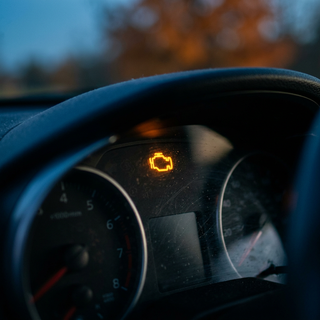

When your check engine light turns on, check whether the dashboard indicator is solid or flashing. A solid warning light requires scheduling a diagnostic scan within a few days, while a flashing light signals an active engine misfire that requires pulling over immediately to prevent catastrophic catalytic converter damage. For a solid light, check that your gas cap is tight, observe whether the engine shakes or loses power, and contact a service center to retrieve the stored trouble codes.
Navigating the steep riverfront bluffs in East Liverpool places added load on an engine, making early attention to dashboard warning lights essential for preventing premature mechanical wear. If the illumination is steady and the vehicle continues to accelerate smoothly without unusual noises, smells, or temperature spikes, you can safely complete your current drive before arranging a computer scan.
If you notice hesitation, unusual vibrations, or power loss alongside a steady warning light, reduce your speed and avoid heavy acceleration. Contact (330) 462-7578 to speak with our service department, or stop by our East Liverpool service center so our technicians can inspect the stored diagnostics.
Table of Contents
- What Are the Most Common Reasons for a Check Engine Light to Come On?
- What Does a Flashing Check Engine Light Mean and What Immediate Action Should You Take?
- What Is an OBD-II Code and How Does It Store Diagnostic Information?
- What Does a Professional Diagnostic Scan Cost and Does Insurance Cover Repairs?
- Frequently Asked Engine Diagnostic Questions
- Schedule Reliable Engine Diagnostics with the Service Team
What Are the Most Common Reasons for a Check Engine Light to Come On?
A check engine light turns on when the engine control unit detects an operational anomaly that exceeds factory emissions or combustion specifications. The most frequent triggers include a loose fuel cap, a failing oxygen sensor, a dirty mass airflow sensor, worn spark plugs or ignition coils, and a degraded catalytic converter.
- Loose or Damaged Fuel Cap: The evaporative emissions system tests fuel tank pressure to prevent gasoline vapors from escaping. A loose, cracked, or missing fuel cap alters system pressure and triggers a warning code. Tightening the cap often resolves the fault after several normal drive cycles.
- Failing Oxygen Sensor: The oxygen sensor measures unburned oxygen in the exhaust stream to help optimize the air-fuel mixture. A degraded sensor sends incorrect readings to the engine computer, reducing fuel efficiency and potentially clogging exhaust components over time.
- Dirty Mass Airflow Sensor: The mass airflow sensor measures the volume of air entering the engine intake. Accumulations of dirt or oil disrupt these readings, causing air-fuel imbalances that lead to rough idling and hesitation.
- Ignition System Wear: Worn spark plugs or failing ignition coils prevent complete combustion inside the cylinders, causing subtle misfires that trigger diagnostic trouble codes.
- Catalytic Converter Efficiency Loss: The catalytic converter converts harmful exhaust gases into less toxic emissions. When upstream components like spark plugs or oxygen sensors fail and are left unserviced, unburned fuel can degrade the internal honeycomb structure of the converter.
Short trips around State Route 170 in Calcutta involve frequent stop-and-go driving, which highlights subtle engine hesitation caused by sensor errors long before total component failure occurs. Addressing minor sensor warnings early preserves engine efficiency and protects vital powertrain components.
What Does a Flashing Check Engine Light Mean and What Immediate Action Should You Take?
A flashing check engine light indicates a severe, active engine misfire that allows unburned fuel to pour directly into the exhaust system, creating extreme heat that can destroy the catalytic converter within minutes. When the warning light blinks continuously, you must immediately reduce speed, pull over safely out of traffic, turn off the ignition, and arrange for towing assistance.
During an active misfire, unburned gasoline leaves the engine cylinder and ignites inside the red-hot catalytic converter. This intense heat causes the internal ceramic honeycomb structure to melt or collapse, resulting in an expensive exhaust replacement that could have been avoided by stopping promptly. Driving even a few miles with a blinking warning light dramatically increases total repair costs.
- Ease off the accelerator pedal gently without making sudden vehicle maneuvers.
- Signal and pull into a safe parking lot or onto a wide road shoulder away from moving traffic.
- Turn off the engine immediately to stop the flow of unburned fuel into the exhaust.
- Inspect the instrument cluster for elevated temperature readings, low oil pressure warnings, or secondary indicators.
- Call for emergency towing rather than attempting to restart or drive the vehicle.
If your vehicle experiences an emergency warning on the road, utilize Ford Roadside Assistance: (800) 241-3673 to transport your vehicle directly to an authorized service facility. Factory-backed roadside programs ensure certified transportation and direct coordination with expert service advisors.
What Is an OBD-II Code and How Does It Store Diagnostic Information?
An OBD-II code is a standardized five-character alphanumeric code stored by the engine control unit whenever an onboard sensor detects operating parameters outside factory limits. These diagnostic trouble codes specify the exact electronic circuit or mechanical system experiencing a fault, preserving freeze-frame operating data from the precise moment the failure occurred.
The code structure follows a systematic format that guides technical diagnosis:
- First Character (Category): "P" represents Powertrain (engine and transmission), "B" indicates Body, "C" denotes Chassis, and "U" identifies Network/Communication faults.
- Second Character (Code Type): "0" indicates a generic code standardized across all vehicle manufacturers, while "1" designates a manufacturer-specific code tailored to proprietary engine systems like Ford EcoBoost technology.
- Third Character (Subsystem): Numbers 1 through 8 pinpoint specific vehicle systems, such as fuel metering, ignition systems, emissions controls, or transmission functions.
- Fourth and Fifth Characters (Fault Designation): These final numbers identify the precise component issue, such as P0300 for a random/multiple cylinder misfire or P0301 for a misfire isolated specifically to cylinder number one.
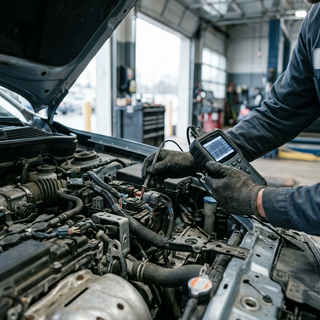
When a trouble code sets, the computer records a snapshot of engine parameters called freeze-frame data. This snapshot captures vehicle speed, engine rpm, coolant temperature, fuel trim percentages, and manifold pressure at the moment of failure. Professional technicians analyze this stored data alongside live sensor readings to isolate root causes rather than replacing components at random.
What Does a Professional Diagnostic Scan Cost and Does Insurance Cover Repairs?
A professional diagnostic scan pricing can vary, so please contact our service department for current pricing, which covers computer diagnostics, electrical system pin tests, freeze-frame data analysis, and physical component inspections by certified technicians. Standard auto insurance policies do not cover mechanical repairs resulting from wear and tear, though factory powertrain warranties and extended service plans cover internal mechanical failures.
While automotive parts stores often offer free code readings, a simple code scan only reveals the symptom rather than the underlying cause. For instance, code P0171 indicates a lean fuel mixture, but the underlying fault could be a vacuum leak, a failing fuel pump, a clogged fuel injector, or a dirty airflow sensor. Professional labor includes hands-on testing to verify the failed component before repairs begin.
| Diagnostic & Repair Category | Typical Cost Range | Coverage Availability |
|---|---|---|
| Professional Computer Diagnostic Scan | Contact for current pricing | Service Plan / Warranty |
| Spark Plug & Ignition Coil Service | Contact for current pricing | Extended Warranty / Powertrain |
| Oxygen Sensor Replacement | Contact for current pricing | Emissions Warranty |
| Mass Airflow Sensor Cleaning/Replacement | Contact for current pricing | Powertrain / Service Plan |
| Catalytic Converter Replacement | Contact for current pricing | Federal Emissions Warranty ( 8 years or 80,000 miles) |
Major emissions control devices—specifically the catalytic converter and the engine control module—are covered by a federal emissions warranty for 8 years or 80,000 miles on light-duty vehicles. If your vehicle falls within these age and mileage limits, major emissions components may be replaced at no out-of-pocket cost.
To address an active warning light before minor sensor issues turn into major repairs, schedule a diagnostic appointment with our certified service department. Our facility uses factory diagnostic equipment and stocks genuine OEM replacement parts to ensure every repair meets original manufacturing standards. You can also order OEM replacement parts directly through our dedicated parts department.
Frequently Asked Engine Diagnostic Questions
How does a loose gas cap trigger the check engine light?
Q: How does a loose gas cap trigger the check engine light?
A loose, cracked, or improperly seated gas cap prevents the evaporative emissions system from maintaining vacuum pressure in the fuel tank. The engine control computer detects this pressure loss during routine self-tests and interprets it as a fuel vapor leak, illuminating the warning light and storing a small-leak evaporative emissions code. Tightening the cap firmly until it clicks restores system pressure, though the light may require several normal drive cycles to clear automatically.
Can a weak or dead battery cause a check engine light to turn on?
Q: Can a weak or dead battery cause a check engine light to turn on?
A weak battery, failing alternator, or severe voltage drop during engine starting can cause sensitive electronic modules to drop below operational thresholds. This temporary low-voltage condition leads sensors to register false readings or drop communication with the main control module, setting transient electrical fault codes. Having a service technician test your electrical system helps differentiate between genuine component failures and voltage-related diagnostic codes.
How many drive cycles does it take for a check engine light to turn off after a repair?
Q: How many drive cycles does it take for a check engine light to turn off after a repair?
Most engine control computers require three to five consecutive drive cycles without detecting a fault to turn off the check engine light automatically. A complete drive cycle requires starting the engine when cold, accelerating to normal highway speeds, maintaining steady cruising for several minutes, and slowing to a complete stop. Alternatively, technicians clear stored codes directly using professional diagnostic tools once repairs are completed.
Will an active check engine light cause my vehicle to fail state inspections?
Q: Will an active check engine light cause my vehicle to fail state inspections?
An illuminated check engine light results in an automatic failure during official state safety and emissions testing. Even if you clear the diagnostic codes manually using a handheld code reader immediately before an inspection, the vehicle's internal emissions monitors will register as incomplete or not ready, requiring you to drive the vehicle through required test cycles before inspection approval can be granted.
Is it safe to drive short distances with a solid check engine light?
Q: Is it safe to drive short distances with a solid check engine light?
Driving short distances with a solid warning light is generally acceptable provided the engine displays no severe shaking, power loss, strange odors, or abnormal gauge readings. However, continuing to drive for weeks without retrieving the diagnostic code can lower fuel economy, increase tailpipe emissions, and allow minor sensor issues to cause secondary damage to components like the catalytic converter.
Schedule Reliable Engine Diagnostics with the Service Team
Prompt diagnostic attention protects your vehicle's long-term engine performance, preserves daily fuel economy, and prevents minor component faults from developing into costly mechanical repairs. Our service center provides accurate trouble code scanning, detailed system testing, and transparent repair recommendations backed by factory-certified technicians.
Whether you need a routine system scan, sensor replacement, or comprehensive battery maintenance and testing, our team delivers the trusted care your vehicle needs to stay safe on the road.
Visit Tri State Ford at 1503 Pennsylvania Ave, East Liverpool, OH 43920 or contact our service advisors directly at (330) 462-7578 to schedule your engine diagnostic evaluation today.