
A vehicle clicking noise is primarily caused by low electrical current during startup, wear in rotating suspension or drivetrain components, or mechanical clearance issues inside the engine. A rapid click when turning the ignition key points to a weak battery or bad electrical connections, while rhythmic clicking during tight turns signals a failing constant velocity joint, and steady ticking from under the hood indicates valvetrain wear or low oil pressure.
Understanding the specific conditions under which a noise occurs helps pinpoint the underlying issue before minor mechanical wear turns into an unexpected vehicle breakdown. Automotive clicking sounds generally fall into four distinct operational categories:
- Starting System Failures: Rapid or single clicking when attempting to crank the engine, tied to battery voltage drops, terminal corrosion, or starter motor degradation.
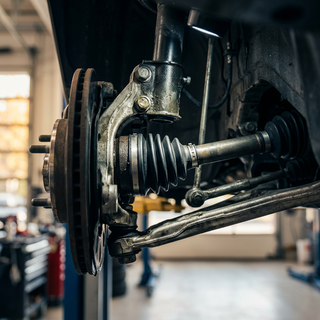
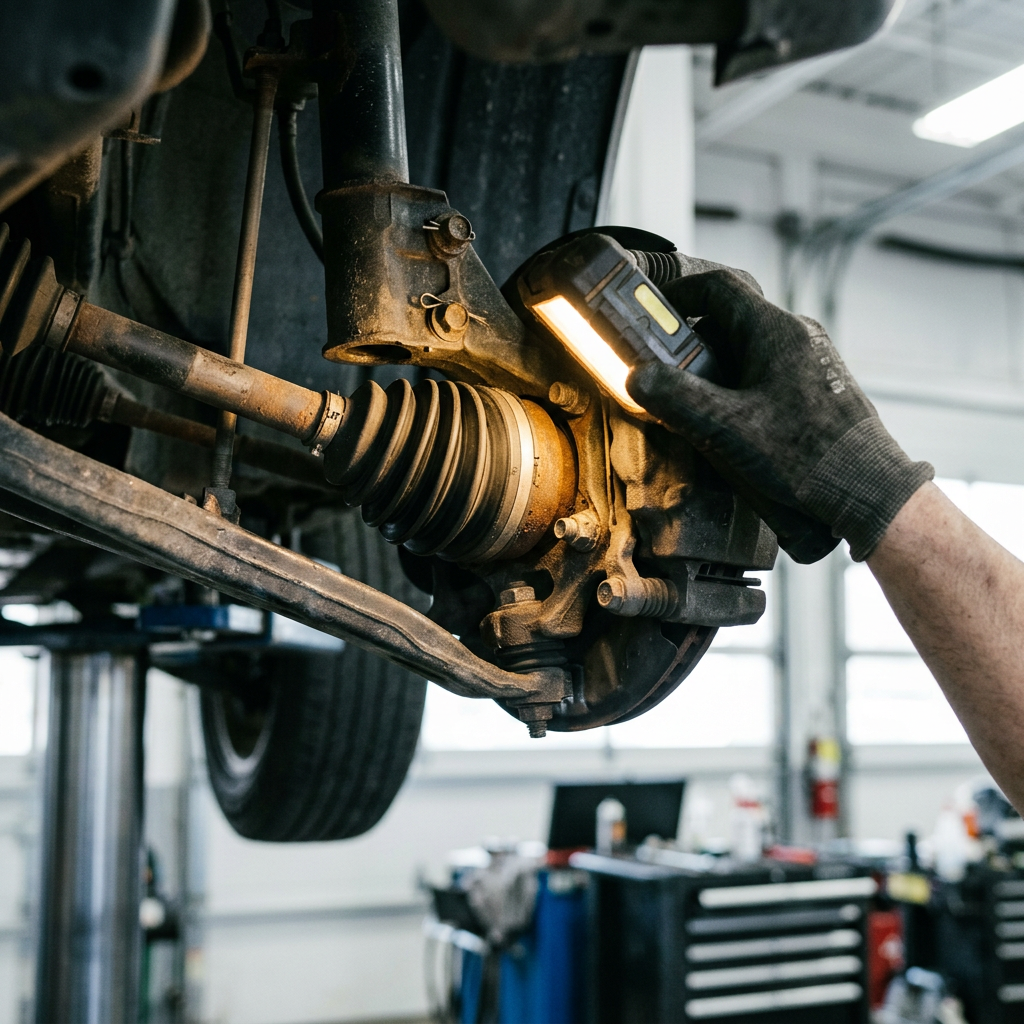
- Drivetrain and Steering Anomalies: Metallic clicking or popping that accelerates with vehicle speed, especially while turning, usually originating from damaged axle boots or worn joints.
- Engine Mechanical Ticking: Rhythmic ticking synced directly with engine speed (RPM), stemming from hydraulic valve lifters, low oil pressure, or high-pressure fuel injectors.
- Brake and Wheel Assembly Issues: Clicking heard during low-speed braking or coasting, caused by loose brake pad retaining clips, shifting pads, or debris behind the dust shield.
East Liverpool's riverfront bluffs and steep grade changes put consistent mechanical strain on constant velocity joints and steering components, making drivetrain clicks easy to identify during daily driving. When an unfamiliar noise develops, getting a professional system check ensures your vehicle remains reliable and safe. You can drop by our East Liverpool service center at 1503 Pennsylvania Ave or give our team a quick call at (330) 462-7578 to speak directly with an expert diagnostic technician.
Table of Contents
- Why Does a Car Make a Rapid Clicking Noise When Starting?
- How Do You Tell If a Clicking Start Is Battery or Starter Related?
- What Is the Difference Between Clicking When Turning and Engine Ticking?
- Is It Cheaper to Replace Just a CV Boot or the Entire CV Axle?
- Common Diagnostic Questions About Vehicle Clicking Noises
- Schedule Professional Vehicle Diagnostic Service
Why Does a Car Make a Rapid Clicking Noise When Starting?
A rapid clicking sound during vehicle startup occurs when the starter solenoid rapidly engages and disengages because it lacks sufficient electrical amperage from the battery. This rapid cycling happens when battery voltage drops below the required operating threshold, cable terminals suffer from corrosion, or an alternator failure prevents the battery from maintaining its electrical charge reserve.
When you turn the ignition key or press the start button, the vehicle electrical system sends power to the starter solenoid coil. The solenoid requires a continuous flow of high amperage to hold the starter energizing plunger in place against its internal return spring. If electrical resistance is high or battery charge is depleted, the electrical circuit energizes the solenoid briefly, but the immediate voltage drop forces the spring to push the plunger back. This continuous cycle of rapid engagement and release creates the fast, machine-gun clicking sound under the hood.
Common root causes for rapid starting clicks include:
- Undersized or depleted battery voltage resulting from age or cold weather capacity loss.
- Heavy buildup of lead sulfate or corrosion on positive and negative battery terminals.
- Loose or frayed ground straps between the engine block and chassis.
- Internal diode failure inside the charging system that leaves the battery undercharged during regular driving.
Drivers frequently ask our service advisors whether a rapid click automatically means the starter motor is destroyed, when in reality a simple electrical system test resolves the issue nearly nine times out of ten. Replacing compromised cables or installing genuine Ford battery and electrical parts online restores full cranking power and protects your starter motor from premature wear.
How Do You Tell If a Clicking Start Is Battery or Starter Related?
To determine if a clicking start stems from the battery or the starter motor, observe cabin lighting behavior and the rhythm of the click during ignition. A rapid multi-click accompanied by dimming interior lights or flickering digital displays points to a depleted battery or poor terminal connection, whereas a single loud click with full dashboard brightness indicates a failed starter solenoid or jammed starter motor.
Diagnosing the difference between electrical power loss and starter hardware failure requires checking how the vehicle responds under electrical load. Turn on the vehicle headlights and attempt to crank the engine:
- Battery or Connection Issues: Headlights will dim significantly or shut off entirely when key engagement occurs. The starting sound presents as a fast series of light clicks. Voltage drop testing across the battery posts usually reveals output under 10.5 volts during load.
- Starter Motor Issues: Headlights remain strong and clear without flickering. The starting sound presents as a single heavy metallic knock or click as the starter solenoid attempts to engage a worn starter armature or damaged flywheel ring gear.
If a weak battery is suspected, jump-starting the vehicle offers immediate diagnostic feedback. Attach positive jumper cables to positive terminals on both vehicles, then clamp the negative cable to an unpainted metal ground on the vehicle needing assistance. Allow the donor vehicle to run for several minutes to transfer surface charge. If the vehicle starts right up after charging, the starter motor is functioning properly, and attention should turn to routine battery maintenance and voltage diagnostics to determine if the battery or charging system needs replacement.
What Is the Difference Between Clicking When Turning and Engine Ticking?
The core difference between turning clicks and engine ticks lies in what triggers the sound and how its rhythm responds to vehicle movement. Clicking while turning originates in the drivetrain—specifically worn constant velocity joints—and speeds up with wheel rotation, whereas engine ticking stems from internal valvetrain components or fuel injectors and speeds up directly with engine RPM, even while the vehicle is sitting in park.
Suburban commuters navigating State Route 170 through Calcutta often spot constant velocity joint clicking when turning sharply into shopping center parking lots under acceleration. Dissecting the characteristics of each noise helps isolate the mechanical system involved:
Drivetrain Clicking Characteristics
- Noise correlates directly with vehicle ground speed, not engine engine revs.
- Sound intensifies during hard cornering or low-speed turning maneuvers.
- Caused by worn outer ball bearings inside a constant velocity joint after protective rubber boots split and lose lubrication.
- Pitch remains steady, but frequency increases as wheel rotation speeds up.
Engine Ticking Characteristics
- Noise correlates directly with engine engine revs (RPM) and remains audible while idling in neutral or park.
- Sound originates beneath the valve covers or near the intake manifold.
- Caused by mechanical clearance in hydraulic valve lifters, low engine oil pressure, worn rocker arms, or normal operation of high-pressure direct fuel injectors.
- Adding engine oil can quiet valvetrain ticking if the oil dipstick shows low fluid levels, as proper oil volume restores hydraulic pressure inside the lifters.
Brake hardware can also create localized clicking. Loose brake pad retaining clips allow pads to shift inside calipers when changing direction from drive to reverse, producing a single metallic click that should be inspected during regular service.
Is It Cheaper to Replace Just a CV Boot or the Entire CV Axle?
Replacing an entire constant velocity axle assembly is generally more cost-effective and reliable than replacing only a torn boot once clicking has begun. While a rubber boot replacement kit costs less in standalone parts, installing it requires identical labor steps to remove the axle shaft, and an actively clicking joint has already suffered permanent metallic damage from lost grease and road debris.
When a flexible rubber boot cracks, grease flings outward onto suspension parts while dirt and water enter the bearing housing. This contamination rapidly abrades internal steel bearings and raceways.
Comparing the service options highlights why complete replacement is standard practice:
| Repair Consideration | Boot Replacement Only | Complete CV Axle Assembly |
|---|---|---|
| Initial Parts Cost | Lower initial cost for rubber boot kit | Moderate cost for complete factory axle shaft |
| Labor Hours Required | High (requires full disassembly and cleaning) | Moderate (direct bolt-in replacement) |
| Fixes Active Clicking? | No (cannot repair internal metal wear) | Yes (replaces all joint bearings entirely) |
| Long-Term Reliability | Risk of premature joint failure remains | Full factory component life restored |
Attempting to save on parts by installing a boot over an already noisy joint leaves damaged bearings inside the drivetrain. Continued driving on a severely worn joint risks complete axle separation, which causes an immediate loss of power to the drive wheels and potential damage to nearby suspension steering arms. To protect your vehicle, you can schedule a service appointment online to have our technicians inspect your drive axles.
Common Diagnostic Questions About Vehicle Clicking Noises
Q: Can a failing alternator cause a car to click when starting?
A damaged alternator fails to recharge the battery while the engine runs, steadily draining reserve battery capacity. Once electrical storage drops below necessary amperage, attempting to turn the ignition key results in a rapid clicking sound as the starter solenoid repeatedly cycles without sufficient power to turn the engine over.
Q: Will adding engine oil stop a valve lifter ticking noise?
Adding engine oil stops valvetrain ticking only if the noise is caused by low oil level or low oil pressure. Topping off engine oil restores hydraulic pressure to the lifters, but if the noise stems from mechanical wear, internal varnish, or sludge buildup, physical component replacement is necessary.
Q: How do you jump-start a car that makes a rapid clicking noise?
Connect positive jumper cables to positive battery terminals on both vehicles, then clamp the negative cable to an unpainted metal ground on the engine block of the vehicle with the dead battery. Allow the donor vehicle engine to run for several minutes to transfer charge before attempting to turn the ignition key.
Q: Is it safe to drive a vehicle with a noisy CV joint?
Driving with an actively clicking constant velocity joint is unsafe because internal bearing failure can cause the drive axle shaft to detach from the wheel hub assembly. Complete joint failure leads to immediate loss of vehicle drive power and potential steering control issues.
Q: Why does my vehicle make a clicking sound after turning off the engine?
Clicking or pinging sounds immediately after engine shutoff are caused by hot metal components contracting as they cool down. The exhaust manifold, catalytic converter, and heat shields expand under operating heat and emit light metallic clicks as ambient air cools the exhaust system.
Schedule Professional Vehicle Diagnostic Service
Resolving a vehicle clicking noise quickly prevents minor electrical drain or suspension joint wear from turning into unexpected roadside breakdowns. Our factory-trained service department provides complete battery load testing, drivetrain inspections, and engine diagnostics using specialized OEM equipment to pinpoint exact mechanical causes.
Vehicle owners backed by Ford factory protection enjoy standard roadside assistance benefits, including emergency jump-starts and towing support to authorized service facilities. If you encounter an unexpected battery failure on the road, contact Ford Roadside Assistance: 1-800-241-3673 for quick dispatch support.
Our service center provides comprehensive care tailored to your daily schedule:
- Factory-certified technicians using original equipment parts.
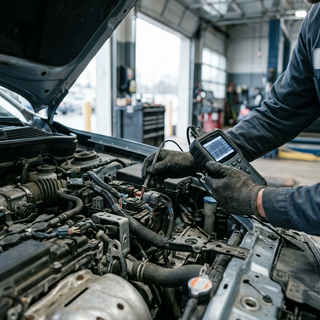
- Advanced diagnostic computers that analyze electrical systems and engine sensors.
- Comfortable customer lounge area with complimentary connectivity.
- Convenient online booking and transparent repair estimates.
Whether you need a quick battery swap, axle replacement, or local maintenance assistance through our convenient Ford Mobile Service options, our team is ready to help. Visit our dealership address at 1503 Pennsylvania Ave, East Liverpool, OH 43920 or call our service desk directly at (330) 462-7578 to reserve your diagnostic appointment today.