

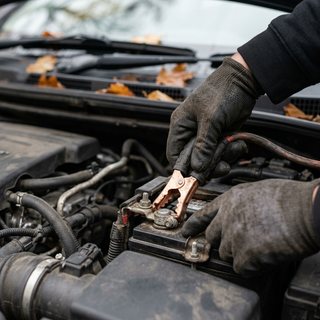
Troubleshooting a car that will not start begins by testing headlights and cabin electronics to observe power levels, listening closely to engine response when turning the key, and inspecting terminal connections for corrosion. If interior accessories stay completely dark or rapid clicking occurs, a discharged battery or loose terminal connection is usually at fault. A single sharp metallic clunk points toward a failed starter, whereas dimming headlights while driving signals an alternator issue.
When an engine refuses to crank, performing a quick visual and operational check narrows down the root cause before calling for service. Turn the ignition key to the run position without starting the engine to evaluate key electrical systems:
- Headlights and Dome Lights: Bright lights indicate adequate resting voltage, shifting suspicion toward the starter motor or ignition switch. Weak or flickering lights point directly to a depleted battery or poor terminal ground.
- Battery Terminals: Inspect cable clamps for white or greenish crusty oxidation. Loose or corroded terminals block current flow even if internal cell chemistry remains healthy.
- Jump-Start Response: Connecting jumper cables or a portable booster pack delivers immediate diagnostic feedback. If the engine fires up right away and stays running, the battery was simply drained. If the engine stalls the moment jumper cables are disconnected, the charging system is not producing working voltage.
Cold mornings along State Route 170 in Calcutta place extra strain on an electrical system during early starts, quickly exposing marginal batteries before total failure occurs. Drivers dealing with a vehicle that leaves them stranded can contact our location on Pennsylvania Avenue for fast diagnostic support or give our service desk a quick call at (330) 462-7578 to arrange towing and vehicle evaluation.
Table of Contents
- How Can You Tell If the Battery, Starter, or Alternator Is Failing?
- What Distinct Sounds Do a Bad Battery, Failing Starter, and Faulty Alternator Make?
- What Multimeter Readings Indicate a Bad Battery Versus a Bad Alternator?
- Can a Bad Alternator Ruin a Brand-New Car Battery?
- What Tools Are Needed to Replace an Alternator at Home and How Long Does It Take?
- What Questions Do Drivers Ask Most About Electrical System Failures?
How Can You Tell If the Battery, Starter, or Alternator Is Failing?
Distinguishing between a failing battery, a worn starter, and a faulty alternator comes down to identifying when electrical symptoms occur during vehicle operation. Battery issues manifest primarily during ignition attempts, starter failures prevent the crankshaft from turning despite full accessory power, and alternator problems appear while the engine is already running.
Each component plays a specialized role in keeping your vehicle running smoothly. The battery stores chemical energy to initiate engine cranking. Once the engine starts, the alternator takes over to supply power to all onboard electronics while replenishing electrical reserves. The starter motor draws high amperage from the battery to physically turn the flywheel and start engine combustion.
Recognizing specific warning signs prevents unexpected breakdowns and unnecessary part replacements:
- Failing Battery Symptoms: Slow, laboring engine cranking, radio or power window slowdown before ignition, a swollen battery case, or an engine that requires boosting after sitting overnight.
- Failing Starter Symptoms: Dash lights and radio operate normally, but turning the key produces total silence or a single heavy metallic knock. The engine fails to turn over despite a verified full battery charge.
- Faulty Alternator Symptoms: A illuminated red battery warning icon on the dashboard, headlights that dim or brighten as engine speed changes, burning rubber smells from a slipping belt, or vehicle stalling while driving down the highway.
Our service team routinely observes that drivers who experience sudden vehicle stalling while driving are dealing with an depleted charging system rather than an isolated battery failure. Staying current on routine battery maintenance and testing helps identify deteriorating cell strength before winter weather arrives. Drivers noticing early warning signs can easily protect their daily schedule by scheduling a service appointment online for a complete electrical system checkup.
What Distinct Sounds Do a Bad Battery, Failing Starter, and Faulty Alternator Make?
Audible signals provide immediate clues about which electrical component is deteriorating under the hood. A weak battery makes a rapid, repetitive clicking sound or a slow, low-pitched engine groan during cranking attempts. A damaged starter motor generates a single loud metallic thud, a harsh grinding noise, or a high-pitched whirring sound without engaging the engine. A failing alternator produces a high-pitched whining or growling noise caused by worn internal bearings or a slipping belt drive.
Understanding acoustic symptoms helps isolate electrical-mechanical wear before total component breakdown:
| Electrical Component | Primary Acoustic Symptom | Secondary Operational Sound | Underlying Mechanical Cause |
|---|---|---|---|
| Vehicle Battery | Rapid chatter or light clicking | Slow, struggling engine turnover | Starter solenoid rapid cycling due to insufficient voltage |
| Starter Motor | Single heavy metallic thud | High-pitched spinning screech | Pinion gear failing to mesh properly with engine flywheel ring gear |
| Alternator Unit | High-pitched mechanical whine | Harsh growling or squealing belt | Deteriorated internal bearings or improper drive belt tension |
Frequent short stop-and-go driving along Market Street in Boardman prevents the alternator from fully recharging the battery, making routine acoustic checks even more vital for local vehicle owners.
When unusual underhood noises arise, keeping vital chassis and drivetrain components in top condition is essential. Drivers setting up seasonal maintenance can conveniently order replacement items by finding exact-fit tires online to ensure maximum traction, or by ordering genuine Ford replacement parts directly through our factory-certified parts department.
What Multimeter Readings Indicate a Bad Battery Versus a Bad Alternator?
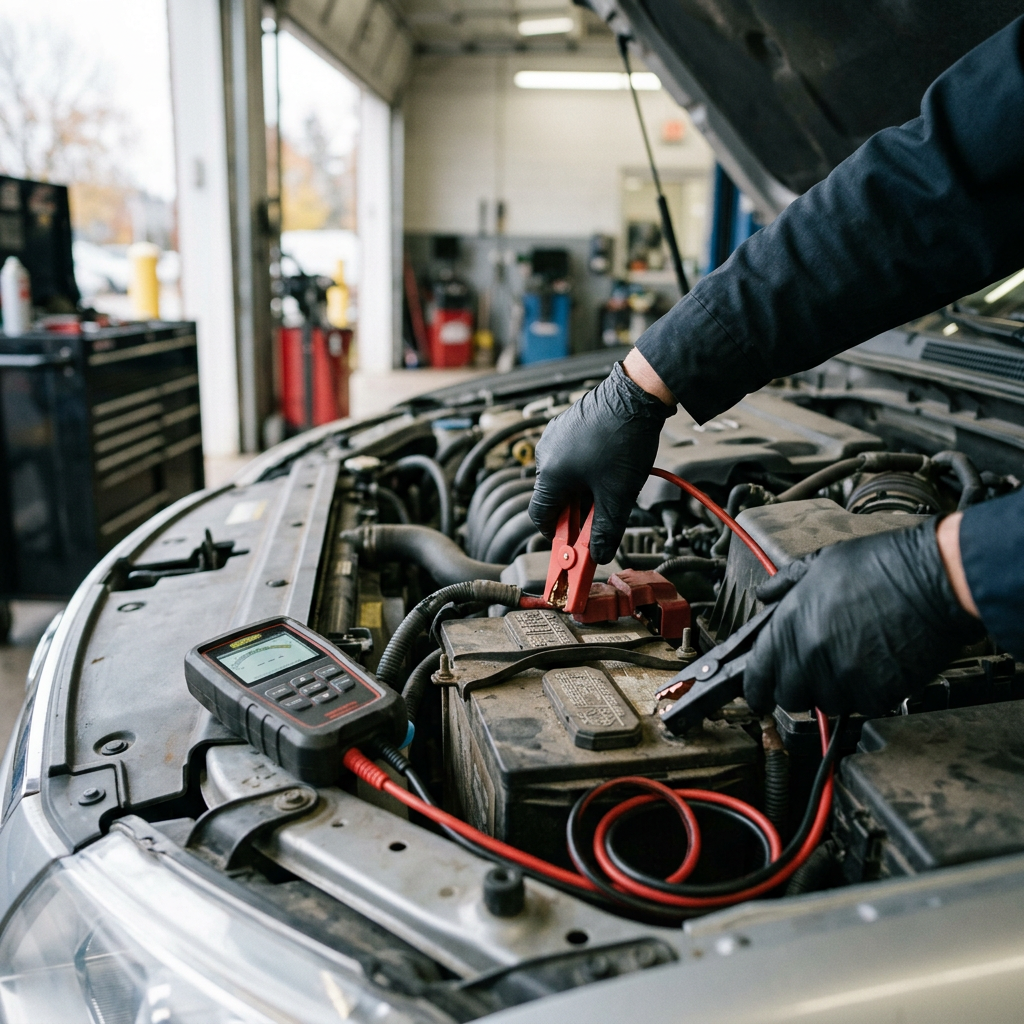
A resting battery voltage reading below 12.2 volts indicates a depleted or worn battery cell structure, whereas a reading between 13.5 and 14.7 volts with the engine running confirms a fully functional alternator. Testing electrical potential with a digital multimeter provides exact numbers that separate simple battery drain from internal generator failure.
Executing a structured voltage check requires taking measurements under specific operational states:
- Resting State Test: Set the multimeter to DC voltage and connect the probes to the battery terminals with the engine and all electrical accessories turned off. A healthy lead-acid or Motorcraft AGM battery shows between 12.6 and 12.8 volts. A reading between 12.2 and 12.4 volts reflects a 50 percent charge level, while anything under 12.0 volts indicates a deeply discharged state requiring immediate charging and conductance testing.
- Cranking Voltage Drop Test: Monitor the meter display while an assistant cranks the ignition. Healthy starting systems maintain voltage above 9.6 volts during the three-second start cycle. If voltage drops below 9.0 volts while the engine turns slowly, internal battery plate sulfation or cell breakdown has occurred.
- Charging Output Test: Start the engine and measure voltage across the terminals at idle speed. A functional alternator raises voltage to between 13.5 and 14.7 volts to recharge the battery while powering ignition coils and accessories.
- Load Test Verification: Turn on the high-beam headlights, cabin heater fan, and rear defroster while the engine idles. If alternator output drops below 13.0 volts under high electrical load, the voltage regulator or internal diodes are failing.
Can a Bad Alternator Ruin a Brand-New Car Battery?
A faulty alternator can permanently destroy a brand-new car battery by either undercharging it into deep chemical exhaustion or overcharging it until internal electrolyte fluid boils off. Installing a fresh battery without verifying alternator output often leads to premature battery failure within days or weeks.
Undercharging occurs when internal alternator diodes fail or stator windings degrade, causing generator output to drop below operating thresholds. When this happens, the vehicle relies entirely on stored battery reserve to run engine control modules, fuel pumps, and cabin electronics. Deeply discharging a starting battery below 10.5 volts causes lead sulfate crystals to harden on internal grid plates. This process reduces cold-cranking capacity permanently.
Overcharging represents an equally destructive condition caused by a failed internal voltage regulator. When a regulator breaks down, the alternator can pump over 15.0 volts continuously into the electrical system. Excessive voltage creates intense internal heat, causing electrolyte water to evaporate into hydrogen gas. Overheated plates warp, shorting internal cells and swelling the exterior casing.
Whenever replacing an aged battery, having factory-certified technicians verify total charging system voltage ensures your financial investment remains protected under full manufacturer warranty terms.
What Tools Are Needed to Replace an Alternator at Home and How Long Does It Take?
Replacing an alternator at home requires a standard metric socket set, open-end combination wrenches, a serpentine belt tensioner tool or breaker bar, safety glasses, and a digital multimeter for post-installation verification. Completing an alternator replacement typically takes between one and three hours of labor depending on engine bay clearance and bracket accessibility.
Carrying out a successful DIY alternator replacement involves organizing essential tools and following systematic safety steps:
- Hand Tools and Hardware: Metric socket set with 3/8-inch drive ratchet, socket extensions, combination wrenches ranging from 8mm to 15mm, and a torque wrench for accurate bolt securing.
- Belt Removal Equipment: A dedicated serpentine belt tensioner tool or long-handled breaker bar to rotate the spring-loaded belt tensioner pulley and release belt drive tension safely.
- Safety Equipment: Heavy-duty work gloves and safety glasses to shield eyes from debris and prevent pinch injury around drive pulleys.
- Diagnostic Meter: Digital multimeter to verify battery disconnected state prior to work and confirm active output upon completion.
Before beginning mechanical disassembly, always disconnect the negative battery terminal to prevent accidental short circuits or electrical arcing when removing the main alternator B+ output cable. Label wire connections and note serpentine belt routing across pulleys before releasing tension. Vehicles equipped with compact transverse engine layouts may require removing intake ducting or cooling fans, extending total repair time up to three hours.
What Questions Do Drivers Ask Most About Electrical System Failures?
Q: What happens if I jump-start a car with a completely broken alternator?
A vehicle with a broken alternator may start using power supplied by jumper cables, but the engine will stall shortly after the cables are disconnected. Without a working generator to produce current, ignition coils and fuel injectors consume remaining battery reserves within minutes. Operating a vehicle solely on battery power can cause unpredictable electrical shutdowns while driving.
Q: How can I tell if my starter solenoid has failed rather than the starter motor itself?
A failing starter solenoid produces a rapid chattering noise or a single loud click when turning the key, without cranking the engine flywheel. In some cases, accessory lights remain bright while the starter motor receives zero electrical current. Testing for battery voltage at the solenoid control terminal during key engagement pinpoints whether the solenoid switch or starter motor brushes have failed.
Q: Can extreme winter weather cause a healthy battery to fail without warning?
Cold temperatures slow internal chemical reactions within battery cells, reducing available cold-cranking power while engine oil thickens and requires more force to turn over. A battery operating at partial capacity in warm weather can fail to start an engine when ambient temperatures drop below freezing. Annual battery testing prior to winter months identifies weak cells before failure occurs.
Q: How long can a car run on battery power if the alternator belt snaps?
A modern vehicle running strictly on battery power typically operates for 15 to 30 minutes before system voltage drops too low to fire spark plugs or run fuel pumps. Turning off headlights, heating fans, seat warmers, and audio displays conserves remaining voltage, giving drivers critical minutes to safely navigate off busy roadways.
Q: Does my Ford warranty cover roadside towing for sudden battery or alternator breakdown?
Vehicles covered under Ford factory warranty benefit from comprehensive roadside coverage that includes emergency battery jump-starts and towing support to authorized service centers. Drivers experiencing unexpected roadside electrical failure can contact Ford Roadside Assistance at 1-800-241-3673 for immediate dispatch and prompt towing coordination.
Protecting your vehicle's starting and charging systems requires prompt diagnostic action at the first sign of slow cranking, dimming lights, or abnormal underhood noise. Drivers looking for complete service peace of mind can get straightforward driving steps to our location on Pennsylvania Avenue or reach our factory-trained service technicians directly by calling our service counter at (330) 462-7578 to book a professional electrical system inspection today.