
A car vibrates at highway speeds primarily due to tire and wheel imbalance, uneven tire tread wear, or a bent wheel rim. As vehicle speed increases, even minor weight variations or physical defects create centrifugal force that wobbles the assembly rapidly. Less frequently, warped brake rotors, worn CV joints, unbalanced driveshafts, or loose suspension components cause or magnify high-speed shaking.
When a vehicle travels at 55 to 70 mph, its wheel and tire assemblies rotate roughly 800 to 1,000 times per minute. At these rotational speeds, a heavy spot weighing as little as half an ounce exerts strong kinetic force against the hub, steering assembly, and chassis. Identifying the exact source of high-speed shaking requires observing when the sensation occurs, where it is felt inside the cabin, and whether it changes under specific driving actions like braking or accelerating.
The location of the vibration inside the passenger cabin offers a reliable diagnostic starting point. Vibrations felt primarily in the steering wheel indicate an issue with the front tires, front wheel rims, or front suspension linkages. Conversely, shaking that resonates through the seat cushions, floorboard, or center console usually points to rear tire imbalance, bent rear wheels, or driveline issues in vehicles equipped with rear-wheel or all-wheel drive systems like the 2026 Ford Explorer ST-Line.
Addressing high-speed vibrations promptly prevents secondary mechanical damage. Continuous shaking subjects wheel bearings, ball joints, and tie-rod ends to excessive dynamic stress, leading to premature component failure and irregular tire tread wear. If your vehicle develops a sudden or severe oscillation, our technicians recommend reducing speed safely, inspecting your tires for visible defects, and reaching out to our service department on Pennsylvania Avenue or giving our team a quick call to schedule a thorough inspection.
Table of Contents
- Why Does Your Car Shake Specifically Between 50 and 70 MPH?
- How Do Unbalanced Tires and Wheel Issues Trigger Vibration?
- What Mechanical Defects in Brakes, Drivetrain, and Suspension Cause Shaking?
- Standard vs. Road Force Balancing: When Is Advanced Balancing Worth the Cost?
- Frequently Asked Questions About Vehicle Vibrations at Speed
- Expert Diagnostic Service and Precision Wheel Care
Why Does Your Car Shake Specifically Between 50 and 70 MPH?
A vehicle shakes specifically between 50 and 70 mph because that speed range matches the natural resonant frequency of most automotive tire and suspension setups. At these specific rotational velocities, minor physical imperfections in the wheel assembly align with the wheel's natural bounce rate, magnifying a small weight imbalance into a noticeable wobble.
Below 50 mph, the rotational speed of the wheel is too low for centrifugal force to generate enough energy to overcome the dampening resistance of the shocks and struts. Above 70 mph, the frequency of the vibration often increases beyond the suspension system's natural resonance point, which can cause the sensation to smooth out slightly even though the underlying mechanical defect remains present.
Our service advisors notice that when drivers bring in vehicles for a high-speed wobble between 50 and 70 mph, they often suspect worn brake rotors first, though tire imbalance is the culprit in the vast majority of cases. During daily commutes across East Liverpool, hitting deep potholes or sharp pavement edges can easily dislodge a small clip-on or adhesive wheel balance weight from an aluminum rim.
When a wheel loses a balance weight, the tire no longer rolls uniformly around its center axis. Over time, this uncontrolled hopping motion creates uneven cupping or diagonal tread wear across the tire surface, further amplifying the high-speed shake. Replacing missing weights early or utilizing original equipment components helps restore a smooth ride. You can easily order OEM Ford wheels and tire assemblies directly through our service center to match factory engineering standards.
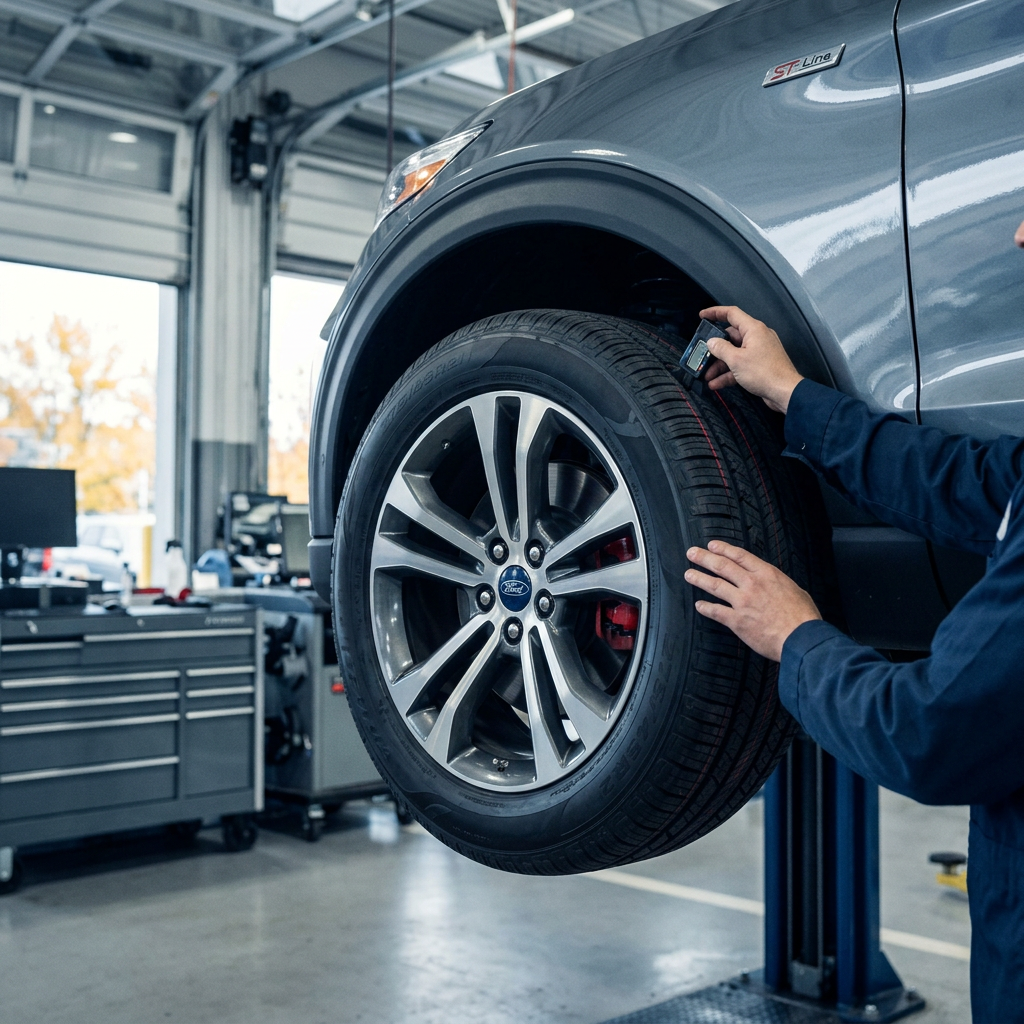
How Do Unbalanced Tires and Wheel Issues Trigger Vibration?
Unbalanced tires trigger high-speed vibration because weight distribution across the tire carcass and wheel rim is never mathematically perfect from the factory. As the assembly spins at highway speeds, any concentrated heavy area generates an outward pulling force that causes the wheel to hop vertically or shimmy side-to-side.
Dynamic wheel imbalance manifests in two distinct mechanical patterns:
- Static imbalance: Occurs when a single heavy spot exists on the tire tread, causing the wheel to hop up and down rhythmically against the road surface.
- Dynamic imbalance: Occurs when weight is unevenly distributed on opposite sides of the wheel centerline, causing the assembly to wobble side-to-side as it spins.
Physical wheel damage plays an equally significant role in generating high-speed vibrations. An aluminum or steel wheel rim that suffers impact damage can develop a subtle lateral or radial bend. Even if the tire holds air pressure perfectly, a bent rim prevents the tire bead from seating evenly, resulting in dynamic runout that vibrates through the vehicle body during highway travel.
Tire internal construction failures also cause severe high-speed shaking. A broken or shifted steel belt inside the tire carcass creates a localized bulge or flat spot across the tread face. Unlike minor balance weight loss, internal belt separation weakens the structural integrity of the tire and requires immediate replacement to ensure safe vehicle operation on fast-moving highways.
What Mechanical Defects in Brakes, Drivetrain, and Suspension Cause Shaking?
Mechanical defects in the braking system, drive axles, or suspension linkages cause high-speed vehicle vibration when rotational components warp, develop joint play, or fail to keep the tire firmly anchored to the road. Distinguishing between braking, acceleration, and coasting vibrations helps pinpoint the specific mechanical component at fault.
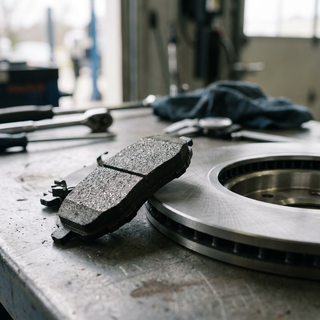
Brake-induced vibration occurs almost exclusively when applying the brake pedal at highway speeds. Over time, thermal stress or improper lug nut torque can cause variation in brake rotor thickness or surface lateral runout. As the brake pads clamp onto a rotor with uneven thickness, the hydraulic system pulses against the caliper piston, transmitting a rapid shaking sensation through the brake pedal and steering wheel. Sticking caliper slides can also hold the brake pad lightly against the rotor during high-speed cruising, generating friction heat that leads to thermal distortion and continuous high-speed drag.
Drivetrain and axle issues produce vibration patterns tied directly to engine load and torque delivery:
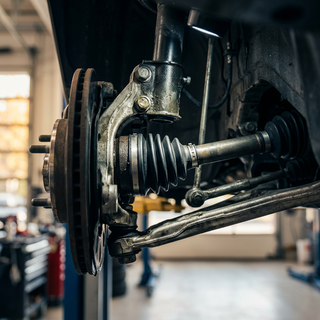
- Constant-velocity (CV) joints: Worn inner CV joints or failing u-joints create a rhythmic side-to-side shudder felt mainly during highway acceleration that subsides when you lift off the accelerator pedal.
- Driveshaft imbalance: On rear-wheel drive models or four-wheel drive trucks like the 2026 Ford F-150 XLT 4x4, a bent driveshaft, missing balance weight, or worn u-joint creates a high-frequency vibration felt in the vehicle floorboard.
- Differential bearings: Worn pinion or carrier bearings in the axle assembly generate a low-frequency hum and vibration that changes pitch depending on whether the vehicle is cruising, accelerating, or coasting.
Suspension wear rarely generates a high-speed vibration on its own, but worn shocks, struts, ball joints, or control arm bushings fail to absorb minor wheel vibrations. When suspension dampening weakens, even minimal tire tread irregularities are transmitted directly into the passenger cabin.
Standard vs. Road Force Balancing: When Is Advanced Balancing Worth the Cost?
Road force balancing is worth the additional investment when standard spin balancing fails to eliminate high-speed vibration, or when diagnosing firm-riding vehicles equipped with low-profile tires. While standard balancing measures static and dynamic weight balance on a free-spinning axle, road force balancing applies a heavy load roller directly against the spinning tire tread to simulate actual vehicle weight on the highway.
Standard tire balancers spin the unmounted wheel assembly in the air and calculate where to place counterweights to neutralize heavy spots. This method successfully addresses weight distribution issues, but it cannot detect internal tire stiffness variations, tread wall hard spots, or minor wheel runout that only manifests when supporting the weight of the vehicle.
Road force diagnostics utilize a specialized machine equipped with a hydraulic load roller that presses against the tire tread with up to 1,200 pounds of force as the wheel turns. This process measures radial assembly force variation and pinpoint structural hard spots within the rubber compound.
Key benefits of road force balancing include:
- Force matching: The diagnostic balancer identifies the highest point of structural tire stiffness and matches it to the lowest geometric point on the wheel rim, canceling out radial force variations.
- Precision weight placement: The machine indicates exact inner and outer rim placement for weight placement, ensuring both lateral and radial balance.
- Runout verification: Technicians can instantly measure whether a high-speed shake stems from a bent wheel rim or a defective tire belt before replacing parts unnecessarily.
Drivers commuting along State Route 170 through Calcutta on firm-riding crossover suspensions, such as the 2026 Ford Escape ST-Line Elite AWD, benefit significantly from road force balancing when mounting new tire sets or troubleshooting persistent 60-mph vibrations.
Frequently Asked Questions About Vehicle Vibrations at Speed
Q: Can a bad wheel alignment cause my car to vibrate at high speeds?
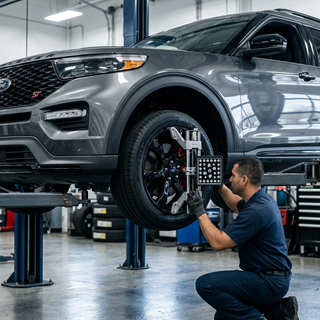
A: Wheel alignment issues primarily cause the vehicle to pull to one side, misalign the steering wheel, or generate rapid, uneven tire tread wear. Alignment misalignments do not typically create a noticeable high-speed vibration on their own. However, severe alignment errors can cause irregular tire wear patterns over time, such as heel-toe feathering, which ultimately leads to a secondary tread vibration at highway speeds.
Q: Will driving with unbalanced tires damage my car over time?
A: Yes, driving with unbalanced tires subjects your steering and suspension components to continuous, unnecessary stress. The repetitive bouncing motion accelerates wear on shock absorbers, wheel bearings, tie-rod ends, and ball joints. Furthermore, unbalanced tires develop uneven tread wear patches rapidly, which ruins the tire compound prematurely and reduces wet-weather traction. Addressing tire vibration early preserves critical suspension hardware and extends overall tire lifespan.
Q: How can I tell if high-speed vibration is coming from the front or rear tires?
A: Pay attention to where you feel the vibration most prominently while driving on a smooth stretch of highway. Vibrations felt through the steering wheel or pulsing through your hands almost always originate from the front tires, front wheels, or steering linkages. Vibrations felt through the seat cushion, seatback, floorboard, or center console usually point to an issue with the rear tires, rear brake assemblies, or drive axle hardware.
Q: Why does my car vibrate at highway speeds only when I apply the brakes?
A: A vibration that occurs exclusively when depressing the brake pedal at highway speeds indicates brake rotor thickness variation or rotor surface warping. As the brake pads clamp against a rotor with microscopic high and low spots, the hydraulic system pulses rapidly, creating a vibration in the pedal and steering wheel. Sticking caliper pins can also cause excessive heat buildup, leading to temporary rotor distortion during long highway drives.
Q: How often should I have my vehicle's tire balance checked?
A: Our service team recommends having your tire balance checked every 6,000 to 8,000 miles, which conveniently aligns with standard oil change and tire rotation service intervals. You should also request a balance check immediately if you notice a new vibration, after hitting a severe pothole or curb, or whenever you install a new set of tires. Regular balance checks ensure smooth highway operation and maximum tread longevity.
Expert Diagnostic Service and Precision Wheel Care
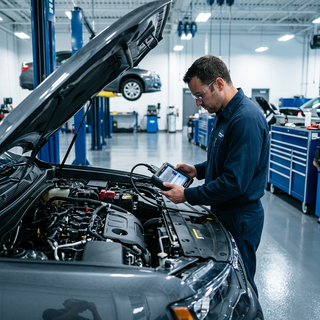
Identifying and correcting high-speed vehicle vibration requires specialized diagnostic equipment and experienced automotive technicians. Whether your vehicle requires precise road force tire balancing, brake rotor resurfacing, drive axle replacement, or suspension bushing service, taking action early protects your vehicle investment and restores original ride quality.
Our service department utilizes factory-certified equipment, genuine OEM components, and comprehensive multi-point inspection procedures to isolate vibration causes quickly and accurately. We invite local vehicle owners to visit our East Liverpool facility for routine maintenance and diagnostic troubleshooting. You can easily schedule a service appointment online or give our service advisors a quick call to keep your vehicle running smoothly and safely on every journey.