
How Often Should You Schedule Routine Vehicle Maintenance?
Modern vehicles require routine maintenance every 6 months or 5,000 to 7,500 miles under standard driving conditions, whichever comes first. Primary service visits include an engine oil and filter change, tire rotation, visual brake inspection, and fluid level checks. Following your vehicle's specific maintenance schedule ensures consistent engine performance, prolongs component longevity, and keeps your factory warranty protections intact.
ROUTINE SERVICE INTERVALS
| SERVICE ITEM | STANDARD INTERVAL | SEVERE SERVICE |
|---|---|---|
| Engine Oil & Filter Change | 5,000 - 7,500 miles | 3,000 - 5,000 miles |
| Tire Rotation & Inspection | 5,000 - 7,500 miles | 5,000 miles |
| Engine Air Filter | 15,000 - 30,000 miles | 10,000 - 15,000 miles |
| Cabin Air Filter | 15,000 - 20,000 miles | 10,000 - 15,000 miles |
| Brake Fluid Flush | Every 2 Years / 24,000 mi | Every 2 Years |
| Transmission Fluid Service | 60,000 - 100,000 miles | 30,000 - 50,000 miles |
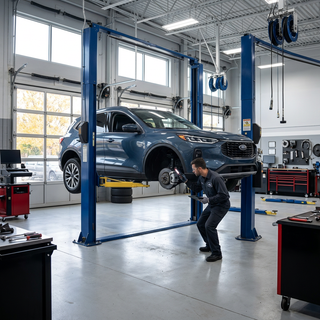
Every model relies on specific engineering criteria to determine maintenance frequency. For example, a 2026 Ford Escape operating as a daily family commuter utilizes built-in software algorithms to evaluate engine operating temperatures, trip lengths, and ambient conditions. When drivers ask our service advisors about oil life monitoring systems, they often wonder if the dashboard notification counts simple mileage or measures actual operating stress. Advanced systems like the Intelligent Oil-Life Monitor® analyze actual driving habits to notify you precisely when service is needed, rather than relying on guesswork.
Suburban commuters driving along Market Street near Boardman accumulate miles on mixed highway routes, making a structured 7,500-mile inspection schedule ideal for maintaining efficiency. During a standard maintenance visit, trained technicians perform essential care steps:
- Draining spent engine oil and replacing the engine oil filter with genuine OEM components
- Rotating tires to balance tread wear across front and rear axles
- Inspecting brake pads, rotors, and hydraulic lines for premature wear
- Testing battery cold-cranking amps and cleaning terminal connections
- Checking and topping off windshield washer, power steering, and coolant fluids
Staying aligned with manufacturer guidelines keeps your vehicle reliable through every season. You can easily find our dealership address at 1503 Pennsylvania Ave to stop by for routine service, or give our team (330) 462-7578 to speak directly with an advisor.
Table of Contents
- What Is the Standard Interval for Synthetic Oil and Can It Go 15,000 Miles?
- What Is Considered Severe Driving Conditions for Vehicle Maintenance?
- Does Servicing at an Independent Shop Void Your Manufacturer Warranty?
- How Much Can Proper Routine Maintenance Save in Long-Term Repair Costs?
- Frequently Asked Questions About Vehicle Maintenance Schedules
What Is the Standard Interval for Synthetic Oil and Can It Go 15,000 Miles?
Full synthetic motor oil typically requires replacement every 7,500 to 10,000 miles or once per year under normal driving conditions. While select extended-drain synthetic oils advertise a 15,000-mile operating lifespan, stretching oil changes to 15,000 miles can increase engine wear and risk voiding factory warranty protections if your vehicle manual specifies shorter intervals.
+-----------------------------------------------------------------------------------+
| OIL TYPE INTERVAL COMPARISON |
+-----------------------------------------------------------------------------------+
| OIL TYPE | RECOMMENDED INTERVAL | MAXIMUM TIME DURATION |
+-----------------------+--------------------------+--------------------------------+
| Conventional Motor Oil| 3,000 - 5,000 miles | 6 Months |
| Synthetic Blend Oil | 5,000 - 7,500 miles | 6 to 12 Months |
| Full Synthetic Oil | 7,500 - 10,000 miles | 12 Months |
| Extended-Drain Synth | Up to 15,000 miles* | 12 Months (Conditions Apply) |
+-----------------------------------------------------------------------------------+
* Always defer to manufacturer owner's manual specifications to maintain warranty coverage.
Synthetic motor oil features highly refined base stock and advanced chemical additives engineered to resist thermal breakdown, oxidation, and sludge formation better than conventional oils. Modern turbocharged engines—such as the 2.3L EcoBoost® engine in the 2026 Ford Explorer or the 3.5L EcoBoost® engine in the 2026 Ford F-150—generate intense heat within the turbocharger housing. Synthetic oil maintains its viscosity under extreme temperature swings, protecting critical internal components during heavy acceleration and highway cruising.
Despite the chemical durability of extended-drain synthetic oils, engine oil filters accumulate microscopic metallic particles, carbon deposits, and airborne dust over time. Even if the synthetic oil molecules remain intact at 12,000 or 14,000 miles, a saturated filter can allow unfiltered oil to bypass the element entirely through the bypass valve. Furthermore, fuel dilution occurs naturally as small amounts of unburned gasoline pass piston rings during cold starts, thinning the oil and degrading its lubricating film.
Adhering to the manufacturer's specified interval preserves critical powertrain protection. Following the vehicle-specific Owner's Manual guidance ensures your engine receives fresh oil and a clean filter before contamination limits lubricating efficiency.

What Is Considered Severe Driving Conditions for Vehicle Maintenance?
Severe driving conditions occur when vehicles experience frequent short trips under 5 miles, heavy towing, extensive idling, off-road driving, or operation in extreme sub-freezing temperatures with heavily salted roads. Under severe driving conditions, routine maintenance intervals should shorten to every 3,000 to 5,000 miles or every 6 months to protect vital mechanical components.
NORMAL VS. SEVERE OPERATING CONDITIONS
| OPERATING FACTOR | NORMAL CONDITIONS | SEVERE CONDITIONS |
|---|---|---|
| Trip Length | Over 10 miles highway | Under 5 miles city driving |
| Ambient Temperature | Moderate (30°F to 90°F) | Sub-freezing or Extreme Heat |
| Vehicle Payload | Passengers & Light Gear | Heavy Cargo & Frequent Towing |
| Road Environment | Paved, clean highways | Dusty, muddy, or salted roads |
| Engine Operation | Steady cruise speeds | Extensive idling/Stop-and-Go |
Engine oil needs to reach full operating temperature—typically around 200°F—to burn off water vapor created during combustion. Short commutes prevent the crankcase from heating fully, allowing moisture and unburned fuel to accumulate in the oil pan and form corrosive acid sludge. Additionally, local winter weather introduces sub-freezing temperatures where thick oil flow during cold starts subjects bearings and valve trains to elevated friction.
Vehicles used for work or heavy utility face unique mechanical stress:
- Heavy Towing and Hauling: Pulling up to 10,400 lbs with an F-150 or 5,000 lbs with an Explorer elevates transmission fluid temperatures and accelerates brake pad wear.
- Dusty and Off-Road Environment: Driving on unpaved or gravel routes clogs the engine air filter rapidly, reducing fuel economy and engine output.
- Extended Idling and Stop-and-Go Traffic: Low-speed driving limits airflow through the radiator, increasing engine bay temperatures and reducing fan belt and hose longevity.
The rolling hills and short-trip suburban errands around State Route 170 in Calcutta fall under severe driving schedules during sub-freezing winter months due to frequent cold starts and heavy road salt exposure. Checking our current manufacturer service offers can help keep your vehicle on a protective maintenance routine tailored to regional weather demands.
Does Servicing at an Independent Shop Void Your Manufacturer Warranty?
Servicing your vehicle at an independent repair shop or performing maintenance yourself does not void your manufacturer warranty. Under federal law established by the Magnuson-Moss Warranty Act, a warrantor cannot deny coverage simply because routine maintenance was performed outside an authorized dealership, provided proper service intervals and component specifications were followed.
DEALERSHIP SERVICE VS. INDEPENDENT SERVICE
| SERVICE FEATURE | DEALER SERVICE CENTER | INDEPENDENT SHOP |
|---|---|---|
| Factory-Certified Techs | Yes (Brand Specific) | Varies (General Automotive) |
| Genuine OEM Parts | Standard Replacement | Aftermarket / Generic |
| Digital Service History | Automatic Ford Syncing | Manual Paper Receipts |
| TSB & Recall Updates | Integrated Diagnostics | Not Automatically Checked |
| Warranty Claim Handing | Direct Manufacturer | Requires Customer Claim |
To safeguard your warranty rights when using an independent shop or completing DIY care, you must maintain complete service documentation. Ford states that failing to perform scheduled maintenance can affect warranty coverage for related components, making organized records essential. A complete record folder should include:
- Detailed repair orders or receipts showing the exact date and odometer reading
- Itemized parts documentation listing approved fluid grades and OEM filter part numbers
- A structured maintenance log recording every service milestone
While independent shops offer basic maintenance capabilities, factory-authorized dealer service delivers specialized advantages. Dealer technicians receive continuous manufacturer training on specific engine architectures, electronic control modules, and safety systems like blind spot monitoring. Furthermore, service completed at our facility automatically syncs to your personal Ford account and Ford App. Independent facilities cannot perform open recall repairs or install automatic factory software updates, which require specialized diagnostic equipment.
Exploring our monthly service specials allows you to maintain original equipment quality and factory-trained care while managing your vehicle ownership budget.
How Much Can Proper Routine Maintenance Save in Long-Term Repair Costs?
Staying current on routine vehicle maintenance saves thousands of dollars over a vehicle's operating lifespan by preventing secondary system damage and premature component breakdown. Small investments in fluid flushes, filter changes, and wear inspections protect complex assemblies like engines, automatic transmissions, and transfer cases from catastrophic failure.
PREVENTIVE MAINTENANCE SAVINGS BREAKDOWN
| ROUTINE MAINTENANCE ITEM | PREVENTIVE COST | PREVENTED REPAIR CAUSED BY NEGLECT |
|---|---|---|
| Routine Oil & Filter | Minor Service | Engine Replacement / Turbo Damage |
| Coolant System Flush | Routine Service | Radiator & Head Gasket Failure |
| Brake Pad Replacement | Wear Maintenance | Rotor & Caliper Overhaul |
| Transmission Fluid Flush | Interval Care | Complete Transmission Rebuild |
| Tire Rotations & Balancing | Basic Care | Premature 4-Tire Replacement |
Mechanical systems function through precise tolerances. When engine oil breaks down, friction accelerates wear on bearings, camshafts, and cylinder walls. Replacing engine oil every 7,500 miles costs a small fraction of replacing an entire engine block or twin-turbocharger assembly. Similarly, operating a SelectShift® automatic transmission with contaminated fluid leads to internal clutch slipping, overheating, and valve body failure.
Key preventive maintenance areas that protect long-term value include:
- Brake System Care: Replacing brake pads before they wear down to the backing plate prevents costly scoring of brake rotors and caliper piston damage.
- Cooling System Maintenance: Fresh coolant prevents internal corrosion inside the aluminum engine block and heater core, eliminating overheating risks.
- Tire Alignment and Rotation: Regular rotations ensure balanced tread wear across all four tires, maximizing tread life and protecting all-wheel-drive transfer cases from rotational strain.
Investing in minor preventive care preserves overall resale value and ensures your vehicle remains dependable for every commute. You can easily schedule a service appointment online to keep your vehicle running smoothly, or order genuine Ford parts for authentic factory components designed specifically for your model.
Frequently Asked Questions About Vehicle Maintenance Schedules
Q: What is included in a standard multi-point safety inspection during maintenance?
A comprehensive multi-point inspection covers vital safety, mechanical, and wear components throughout your vehicle. Technicians evaluate brake pad thickness, rotor condition, tire tread depth, battery health, suspension bushings, steering linkages, and exhaust integrity. They also test exterior lighting, wiper blade performance, and check all fluid levels—including engine coolant, transmission fluid, brake fluid, and power steering fluid—to catch potential issues before they cause unexpected breakdowns.
Q: How often should cabin and engine air filters be replaced?
Engine air filters generally require replacement every 15,000 to 30,000 miles, though driving on unpaved, dusty, or gravel roads requires shorter replacement intervals. Cabin air filters, which clean heating and air conditioning air entering the passenger cabin, should be replaced every 15,000 to 20,000 miles or roughly once per year. Replacing the engine filter maintains proper fuel economy, while fresh cabin filters prevent HVAC odors and improve interior air quality.
Q: When should automatic transmission fluid be changed?
Automatic transmission fluid intervals range from 60,000 to 100,000 miles under normal operating conditions. However, vehicles subjected to severe service—such as frequent trailer towing, heavy cargo hauling, or mountain driving—should have their transmission fluid serviced every 30,000 to 50,000 miles. Fresh transmission fluid cools internal clutch packs, maintains smooth shift performance, and removes abrasive metallic particles from the fluid channels.
Q: How does cold winter weather impact 12-volt vehicle battery lifespan?
Prolonged sub-freezing winter temperatures slow down the chemical reactions inside a 12-volt lead-acid battery, reducing its cold-cranking power by up to 50 percent. At the same time, cold engine oil increases cranking resistance, requiring more energy to start the vehicle. Most vehicle batteries last 3 to 5 years; having your battery tested annually before winter ensures reliable starting performance when temperatures drop.
Q: What documentation is required to support a factory warranty claim?
To support a factory warranty claim, you should provide itemized receipts or repair orders showing the vehicle identification number, service dates, odometer readings, and exact work performed. Receipts must verify that recommended fluid specifications, such as approved viscosity grades, were used during maintenance. Keeping an organized folder with dated invoices provides complete evidence that required maintenance was performed according to owner manual guidelines.
Keeping your vehicle in top condition is straightforward when guided by expert care. You can find our East Liverpool service center right in your neighborhood, or give our service team (330) 462-7578 a call to set up your next vehicle inspection today.