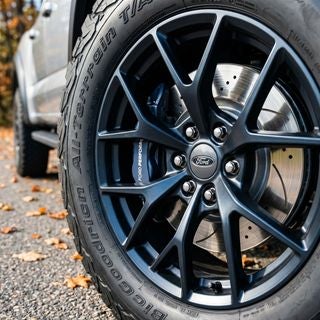

The total cost of a brake repair is determined by the specific components being serviced, the quality and material of the replacement parts, your vehicle's electronic features, and local labor rates. A basic pad replacement costs far less than a full system overhaul involving new brake rotors, rebuilt calipers, hydraulic flushes, and electronic sensor recalibrations.
When drivers evaluate repair estimates, understanding the mechanical scope of the job prevents unexpected costs. Servicing a single axle with standard friction materials requires significantly fewer shop hours and components than replacing damaged rotors and hydraulic hardware on all four wheels. Vehicle design also plays a massive role in final pricing. Heavy-duty trucks and modern SUVs equipped with sophisticated safety tech require specialized servicing procedures compared to older compact sedans.
Driving environment directly influences how quickly these braking components wear down. For example, navigating the steep riverfront bluffs around East Liverpool places higher thermal strain on friction pads and rotors than flat highway driving. Contin uous braking down sharp grades accelerates wear, often requiring full rotor replacements rather than simple pad refreshes.
If you notice squealing sounds, a soft pedal, or steering vibration when stopping, our technicians can evaluate your entire system and outline exact service requirements before any work begins. You can check our East Liverpool service center location or give our service desk a quick call at (330) 462-7578 to discuss your braking needs.
Table of Contents
- What Components Are Serviced in a Pad Swap Versus a Complete Brake Overhaul?
- Which Brake Pad Material Lasts the Longest Under Normal Driving Conditions?
- Why Do Electronic Parking Brakes and Safety Systems Increase Rear Brake Costs?
- Why Do Labor Rates and Repair Overhead Vary Between Shops?
- Does Taking a Car to an Independent Shop Void the Manufacturer Warranty?
- What Buyers Ask Most About Brake Service
What Components Are Serviced in a Pad Swap Versus a Complete Brake Overhaul?
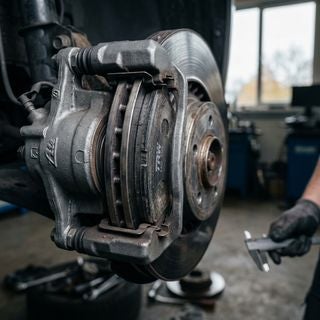
A simple pad swap replaces only the friction pads on an existing rotor that still meets minimum factory thickness specifications. In contrast, a complete brake overhaul replaces the pads, brake rotors, hardware clips, pin boots, and includes a full brake fluid flush to restore factory stopping performance.
Choosing between a pad swap and a complete overhaul depends on the condition of your vehicle's underlying hardware. During a basic service, technicians install fresh friction pads into the existing caliper brackets while leaving the current rotors in place. This option is only viable when the existing disc surfaces are smooth, free of deep scoring, and thick enough to safely absorb heat without warping.
A complete overhaul addresses the entire mechanical assembly to eliminate brake noise and uneven wear patterns:
- Brake pads: High-friction material assemblies replaced across both wheels on the axle set.
- Brake rotors: Disc assemblies either resurfaced on a precision lathe or replaced with new original equipment rotors.
- Hardware kits: Stainless steel abutment clips, anti-rattle springs, and guide pin boots installed to maintain smooth pad movement.
- Hydraulic fluid: Exhausted fluid bled out and replenished with fresh DOT 3 or DOT 4 fluid to prevent internal pedal sponge.
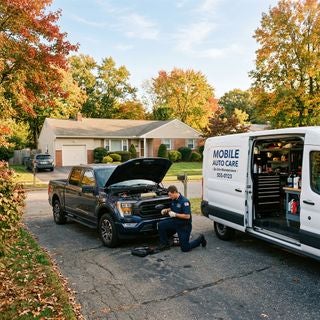
Neglecting worn hardware during a repair often causes new pads to stick or wear prematurely. Routine system inspections during regular maintenance—such as when you schedule a service appointment for routine maintenance or routine battery service insights—help identify thin pads before they damage expensive metal rotors. For added flexibility, our team also provides Ford Mobile Service options that can handle routine inspections directly at your home or workplace.
Which Brake Pad Material Lasts the Longest Under Normal Driving Conditions?
Ceramic brake pads generally provide the longest service life during standard daily commuting because their dense, hard compound resists thermal breakdown and physical wear better than organic or semi-metallic options.
Selecting the right brake pad compound involves balancing overall pad longevity, stopping bite, noise control, and dust creation. Auto manufacturers and service technicians categorize friction materials into three primary compound classes:
| Pad Compound | Service Life Expectancy | Primary Strength | Ideal Driving Scenario |
|---|---|---|---|
| Non-Asbestos Organic | 25,000 to 35,000 miles | Extremely quiet operation | Light city driving and mild climates |
| Semi-Metallic | 30,000 to 50,000 miles | High heat dissipation and heavy bite | Heavy-duty towing and truck hauling |
| Ceramic | 50,000 to 70,000 miles | Long wear life and low dust | Daily commuting and family travel |
While semi-metallic pads deliver high thermal conduction necessary for severe towing duties in an F-150, their metallic strands wear down rotor surfaces faster and produce noticeable brake dust. Organic pads offer soft, quiet stopping power but deteriorate quickly under high heat.
For typical suburban commuting along State Route 170 in Calcutta, ceramic compounds strike the ultimate balance for crossover vehicles like the Ford Escape or Explorer. Their ceramic fibers handle continuous stop-and-go driving without grinding down the rotors, keeping maintenance intervals spread farther apart.
Why Do Electronic Parking Brakes and Safety Systems Increase Rear Brake Costs?
Modern electronic parking brakes require specialized diagnostic scan tools to retract electric servo motors before rear pads can be removed, while integrated Advanced Driver Assistance Systems may demand camera or radar recalibration after brake service.
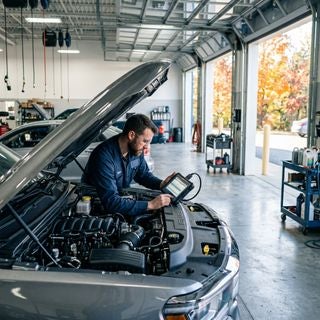
Unlike traditional hand-lever parking brakes that use simple mechanical cables, an electronic parking brake relies on electric actuators bolted directly onto the rear brake calipers. When servicing rear brakes on vehicles equipped with this technology, technicians must connect a diagnostic tool to put the brake system into service mode. Attempting to force the rear caliper piston back manually without disengaging the actuator will strip the internal gear mechanism, requiring a complete replacement of the electric motor assembly.
Additionally, modern active safety equipment interacts directly with the hydraulic braking system. Technologies like Pre-Collision Assist with Automatic Emergency Braking rely on wheel speed sensors, electronic stability control modules, and hydraulic valves to apply full stopping force automatically during emergency scenarios.
When technicians service rotors, hub assemblies, or wheel speed sensors, these driver-assist systems must be checked to confirm proper sensor alignment. The extra labor steps, specialized diagnostic equipment, and software calibration procedures required for these systems account for why modern rear brake services carry higher overall price tags than older mechanical systems.
Why Do Labor Rates and Repair Overhead Vary Between Shops?
Labor rates reflect a shop's operational overhead, specialized equipment investments, and the technical certification of its mechanics. Dealership service centers invest heavily in factory training, OEM specialized tools, and genuine original equipment parts, leading to higher labor rates compared to basic independent garages.
When comparing estimates between repair facilities, the hourly labor rate is only one part of the equation. Service quality and job efficiency depend directly on technical expertise and diagnostic equipment:
- Technician training: Factory-certified technicians undergo continuous training on specific vehicle architectures, allowing them to diagnose complex brake faults faster and perform repairs accurately the first time.
- Specialized tooling: Factory scan tools, precision bench lathes, and vehicle-specific calibration rigs require substantial shop investment but ensure components meet strict original tolerances.
- Parts quality: Dealerships install exact-fit OEM parts built to original engineering standards rather than budget aftermarket friction pads that may vibrate or squeal.
Choosing a facility that uses original factory components ensures all clips, shims, and friction compounds match your vehicle's factory engineering specifications. When replacing worn pads or rotors, vehicle owners can easily order OEM replacement parts directly through our service department to guarantee component quality.
Does Taking a Car to an Independent Shop Void the Manufacturer Warranty?
Having routine maintenance or brake repairs performed at an independent shop does not void an original manufacturer warranty, as long as appropriate service procedures are followed and quality parts are installed. Federal law protects consumer rights to choose where maintenance work is completed without losing warranty coverage.
Under the Magnuson-Moss Warranty Act, vehicle manufacturers cannot invalidate a vehicle's factory warranty simply because maintenance was completed by an independent repair facility or by the vehicle owner. However, maintaining clear records and using proper components is essential to protect your coverage:
- Detailed record keeping: Always retain receipts and itemized invoices showing service dates, mileage, and specific parts installed.
- Quality standards: Ensure replacement brake components meet or exceed original equipment specifications.
- Proper installation: If an independent shop installs incorrect components or damages hydraulic or electronic systems during a brake job, warranty coverage will not cover the resulting repairs.
For vehicle owners who prefer complete peace of mind, having service performed at an authorized dealership guarantees that factory-trained technicians carry out work according to manufacturer guidelines using genuine parts. Reviewing monthly manufacturer service offers can also make certified dealer maintenance surprisingly affordable while ensuring your warranty coverage remains completely uncompromised.
What Buyers Ask Most About Brake Service
Q: How often should brake fluid be flushed during routine maintenance?
Brake fluid absorbs moisture over time, which lowers its boiling point and causes internal corrosion in hydraulic lines. Vehicle manufacturers generally recommend flushing brake fluid every 2 to 3 years or every 30,000 to 45,000 miles. Flushing contaminated fluid keeps hydraulic brake calipers functioning smoothly and protects expensive anti-lock braking system valves.
Q: Why are new brake hardware kits necessary when changing pads?
Hardware kits include replacement stainless steel abutment clips, anti-rattle springs, and rubber guide pin boots. Reusing old, corroded clips allows rust buildup to pinch new pads, causing uneven friction wear, squealing, and sticking calipers. Installing fresh hardware ensures smooth pad movement within the bracket and prolongs overall brake life.
Q: Can worn front brakes cause steering wheel vibration during highway driving?
Yes, excessive steering wheel wobble when applying the brakes at highway speeds usually points to warped brake rotors or severe thickness variation across the rotor face. When heat causes uneven wear or metal distortion on the disc surface, the brake pads grip inconsistently, transmitting mechanical pulses through the suspension directly to the steering column.
Q: Is it safe to replace brake pads on only one side of an axle?
Brake components must always be replaced in complete axle sets across both wheels on an axle. Servicing only one side creates uneven braking force between the left and right wheels, causing the vehicle to pull dangerously toward one side during sudden emergency stops and causing premature wear on hydraulic components.
Q: How do I know if my vehicle needs rotor replacement instead of resurfacing?
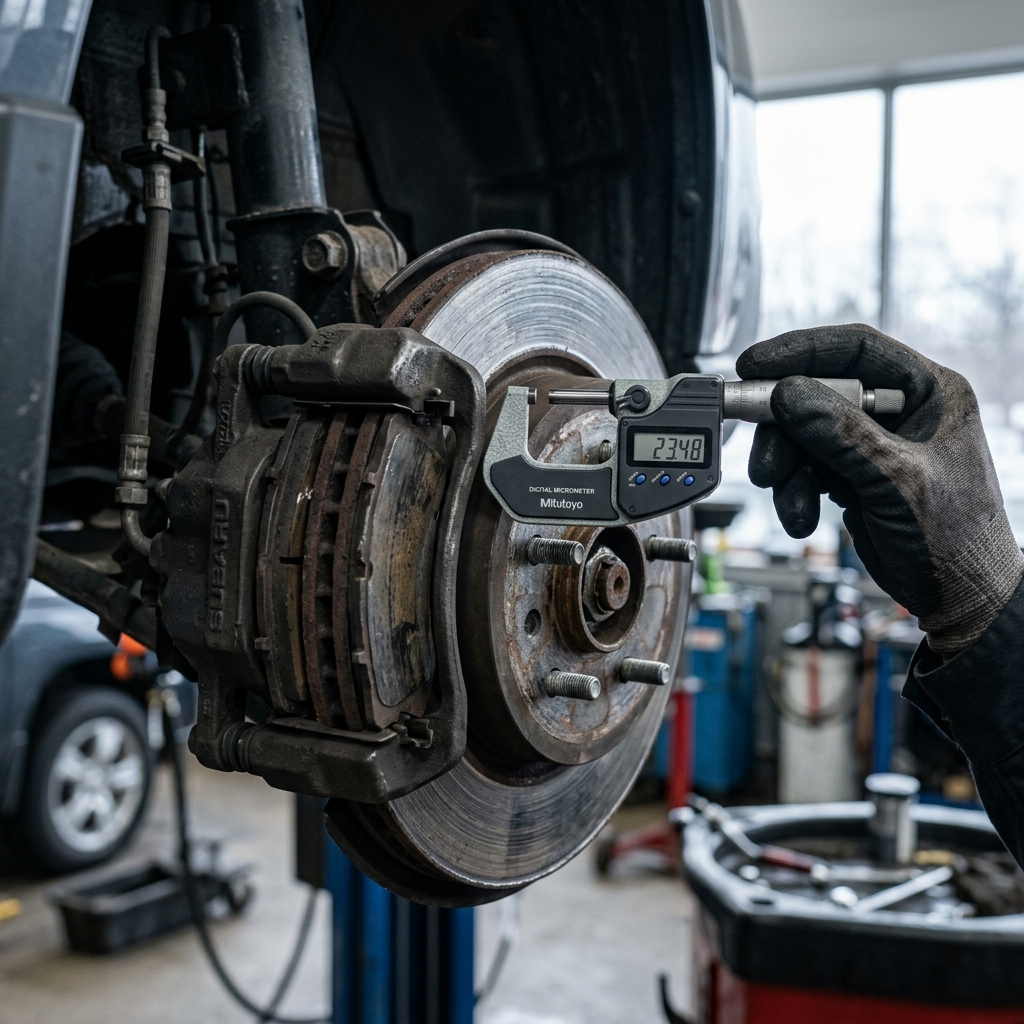
A technician measures the current thickness of the brake rotor using a precision micrometer. If machining the disc to remove grooves or rust drops its total thickness below the manufacturer minimum specifications etched into the rotor hub, the disc must be replaced rather than resurfaced to prevent heat cracking or severe brake fade.
To keep your vehicle stopping safely and smoothly on local roads, trust our certified technicians to deliver transparent assessments and expert care. Stop by our service desk location today or reach out to our service team at (330) 462-7578 to schedule your thorough multi-point brake inspection.