
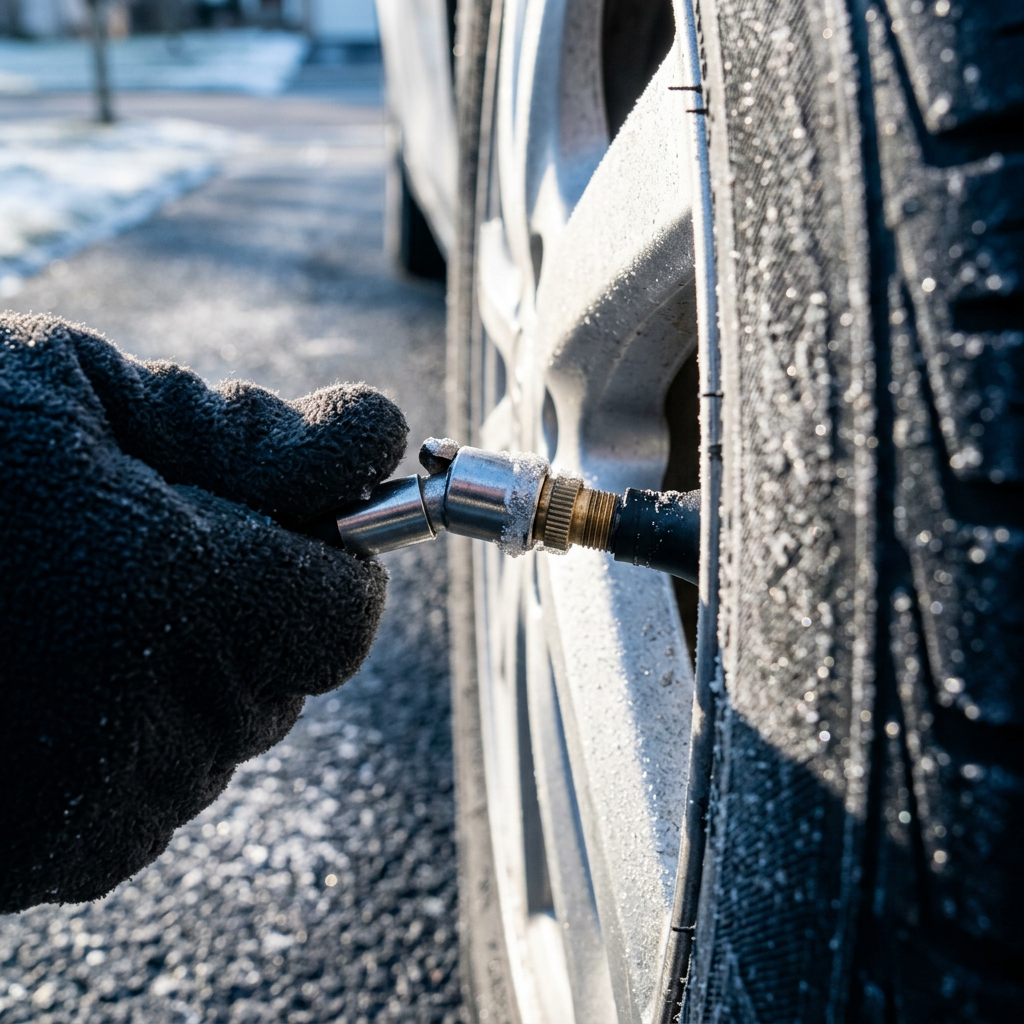
Cold weather causes air inside tires to contract, reducing tire pressure by approximately 1 PSI for every 10°F drop in outside temperature. When ambient temperatures plunge overnight, a tire that was already slightly underinflated drops below the Tire Pressure Monitoring System (TPMS) threshold—typically set at 25% below recommended cold PSI—activating the dashboard light even without a puncture.
As autumn transitions into winter, daily temperature fluctuations frequently surprise vehicle owners. Gas operates according to basic thermal principles: when ambient air cools, gas molecules slow down and draw closer together. This contraction decreases the outward force exerted against the inner liner of the tire casing. In addition to natural thermal drops, tires naturally lose about 1 PSI per month through normal rubber permeability. When seasonal ambient temperature loss combines with gradual air seepage, a tire set correctly in mild autumn weather can cross the warning threshold on the first freezing morning.
Understanding how quickly overnight temperatures shift helps prevent unnecessary worry about punctures. Along the Ohio River, near the riverfront bluffs and rolling terrain of East Liverpool, sub-freezing morning temperatures regularly drop pressure by 3 to 4 PSI before sunrise. Drivers who notice the warning light illuminating early in the morning may observe it shutting off after driving a few miles. As rolling tires flex against the pavement, internal friction generates heat, raising internal air temperature and restoring internal pressure above the warning cutoff.
However, a dashboard light that extinguishes itself after highway driving does not mean the tire has returned to its proper cold inflation specification. The warning light disappearing simply means pressure temporarily cleared the minimum threshold. Once the car sits parked and cools down again, the pressure drops right back into the danger zone. Setting tire pressure when the rubber is completely cold ensures maximum safety, proper tire wear, and optimal fuel economy throughout winter.
For personalized assistance or routine maintenance, visit our East Liverpool dealership address or give our service department a quick call at (330) 462-7578.
Table of Contents
- What Is the Difference Between Direct and Indirect TPMS in Cold Weather?
- Where Is the Recommended Cold Tire Pressure PSI Located on Your Vehicle?
- How Much Fuel Economy Is Lost from Underinflated Tires in Winter?
- What Does a Blinking Tire Pressure Warning Light Mean?
- Common Questions About Winter Tire Pressure and TPMS Operation
- Schedule Professional Winter Tire Service
What Is the Difference Between Direct and Indirect TPMS in Cold Weather?
Direct TPMS relies on battery-powered hardware sensors mounted inside each wheel to measure actual PSI directly, whereas indirect TPMS utilizes anti-lock brake system (ABS) wheel speed sensors to monitor wheel rotation speed and estimate pressure changes based on wheel diameter. Both systems alert drivers to dangerous pressure loss, but they respond differently during sudden winter cold snaps.
Direct TPMS monitors deliver exact, real-time pressure values to the vehicle instrument cluster. Each wheel sensor contains a tiny pressure transducer and RF transmitter powered by an internal lithium battery. When cold weather strikes overnight, a direct system measures the exact physical pressure drop immediately upon turning the ignition key. Many modern vehicles equipped with direct TPMS display the exact numeric PSI for all four individual tires right on the instrument display, making it easy to identify whether a single tire has a puncture or all four tires have dropped uniformly due to ambient cold.
Indirect TPMS operates without wheel-mounted pressure sensors. Instead, it measures how fast each tire rotates relative to the others. An underinflated tire has a slightly smaller overall diameter, forcing it to rotate faster than a properly inflated tire to cover the same distance. In cold weather, indirect systems exhibit distinct characteristics:
- Delayed Alerts: Because indirect systems require vehicle motion to process wheel speed data, the low-pressure light won't illuminate while the car sits parked in the driveway. It triggers only after driving a short distance.
- Uniform Pressure Drops: If cold weather lowers pressure equally across all four tires, every wheel shrinks by the exact same proportion. Because all four wheels continue spinning at the same relative speed, an indirect TPMS might not immediately trigger a warning even though all four tires are significantly underinflated.
- Calibration Requirements: Indirect systems must be manually reset through the vehicle settings menu whenever air is added or tires are rotated so the ABS computer can relearn baseline rolling circumferences.
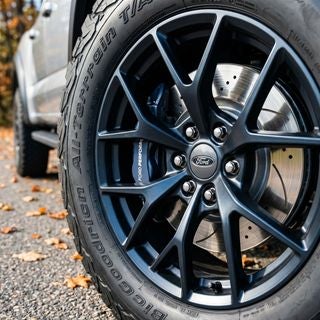
Maintaining direct TPMS hardware requires periodic servicing, especially as wheel sensor batteries reach the end of their typical life cycle. When replacement sensors or valve service kits are needed during seasonal tire rotations, vehicle owners can easily order genuine OEM Ford replacement parts directly through our parts center.
Where Is the Recommended Cold Tire Pressure PSI Located on Your Vehicle?
The recommended cold tire inflation pressure is printed on the Tire and Loading Information label fixed to the driver-side door jamb or door pillar, as well as inside the vehicle owner's manual. Drivers should never use the pressure figure stamped into the tire sidewall, as that number represents the maximum pressure the tire casing can safely handle, not the vehicle manufacturer's recommended operating specification.
Automotive engineers calculate ideal recommended tire pressure based on specific vehicle weight distribution, suspension tuning, braking dynamics, and cargo ratings. Filling a tire to the maximum PSI printed on the sidewall creates a harsh, uncomfortable ride, reduces traction on slick winter roads, and leads to premature center tread wear.
To achieve accurate readings and maintain peak vehicle safety, follow these established pressure-checking standards:
- Define "Cold": Check pressure when the vehicle has been parked out of direct sunlight for at least three hours, or driven less than one mile at moderate speed.
- Account for Warm Expansion: If tire pressure must be checked immediately after driving, readings will naturally appear 4 to 6 PSI higher than cold specifications due to heat expansion. Do not bleed air from a warm tire to meet the door placard baseline.
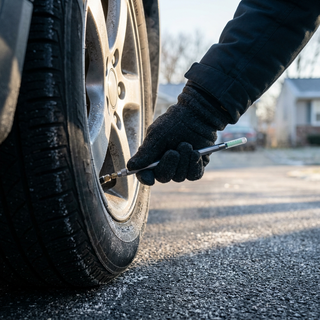
- Use a Quality Pressure Gauge: Vehicle dashboard readouts provide convenient estimates, but a dedicated digital or pencil-style pressure gauge calibrated in 1 PSI increments provides the most reliable measurement.
Checking tire pressure at least once a month and before long highway road trips keeps vehicle safety systems operating exactly as engineered.
How Much Fuel Economy Is Lost from Underinflated Tires in Winter?
Fuel efficiency drops by approximately 0.2% for every 1 PSI drop across all four tires, while driving on severely underinflated tires can reduce total fuel economy by up to 3%. In winter conditions—where cold engines and dense air already lower mileage—soft tires add unnecessary drag and increase weekly fuel costs.
When tire pressure falls below specification, the tire tread flattens out against the road, expanding its contact patch. This expanded contact area generates increased rolling resistance, forcing the engine to consume extra fuel to maintain cruising speed. Beyond wasted fuel, underinflation severely affects overall vehicle durability and highway safety:
- Uneven Tread Wear: Underinflated tires wear heavily on the outer shoulders while leaving the center tread underutilized, prematurely destroying tread life.
- Excessive Heat Generation: Flexing sidewalls create internal friction and thermal buildup, increasing the risk of sudden tire casing failure.
- Compromised Handling and Braking: Underinflated sidewalls squirm during cornering, degrading steering response and increasing stopping distances on wet or icy pavement.
Suburban commuters traveling along State Route 170 in Calcutta rely on proper tire inflation to maintain efficient daily driving during freezing weather. Capable family vehicles like the 2026 Ford Escape, rated at 26 city / 32 hwy MPG with its 1.5L engine and all-wheel drive, or the spacious 2026 Ford Explorer with its 300 hp 2.3L powertrain depend on correct cold inflation pressures to achieve their rated efficiency. Similarly, working trucks like the 2026 Ford F-150 featuring a 3.5L engine and SelectShift® transmission need proper tire support to deliver full towing performance and stable handling when hauling heavy loads.
When tire tread wears thin or sidewalls show aging, drivers can use our convenient online tire lookup tool to locate factory-approved replacement tires built specifically for their vehicle trim.
What Does a Blinking Tire Pressure Warning Light Mean?
A tire pressure warning light that flashes for 60 to 90 seconds upon starting your vehicle before remaining continuously illuminated signals a TPMS system fault or dead sensor battery rather than simple low air pressure. When the light remains steady from the moment you start the engine, it indicates that at least one tire has low pressure.
Understanding the distinction between a steady light and a flashing light prevents improper diagnostic steps. A flashing light indicates that the onboard computer has lost communication with one or more wheel sensors. Common triggers for a blinking TPMS light include:
- Expired Sensor Batteries: Direct TPMS sensors use integrated lithium batteries with a typical lifespan of 5 to 10 years. Once the battery depletes, the sensor stops transmitting data, triggering a system malfunction alert.
- Seasonal Wheel Swaps: Installing winter wheels and tires without transferring or reprogramming electronic TPMS sensors prevents the vehicle computer from reading pressure signals.
- Corroded or Damaged Hardware: Road salt and moisture can corrode valve stems or damage internal electronic components.
- Electronic Interference: Unapproved aftermarket electronic accessories installed near the dash can occasionally disrupt radio frequency signals sent from wheel sensors.
If your dashboard displays a flashing warning light, check air pressure manually across all four tires using a pressure gauge to ensure immediate driving safety, then schedule a professional inspection to identify and replace faulty system components.
Common Questions About Winter Tire Pressure and TPMS Operation
Q: Is nitrogen better than regular compressed air for preventing winter tire pressure drops?
Nitrogen molecules are larger than oxygen molecules and contain virtually no moisture, which reduces air migration through tire rubber and minimizes internal pressure fluctuations caused by humidity changes. However, dry nitrogen gas still obeys basic thermal laws, expanding and contracting as outside temperatures change. While pure nitrogen reduces gradual pressure loss, it still experiences pressure drops during severe cold snaps, making routine manual pressure checks necessary regardless of which inflation gas is used.
Q: Does the tire pressure warning light go off by itself after driving?
Yes, driving generates internal tire friction that warms the air inside, increasing internal pressure. If a tire was sitting just below the warning threshold, thermal expansion while driving can raise pressure enough to temporarily turn off the dashboard light. However, once the vehicle parks and the rubber cools back down, pressure drops right back below recommended levels. Drivers should add air to match recommended cold PSI ratings rather than relying on temporary driving heat.
Q: Should you overinflate tires beyond the door sticker rating during winter?
No, tires should always be inflated to the exact cold pressure specification listed on the driver's door jamb sticker. Overinflating tires to compensate for expected cold snaps reduces tire contact area on snow and ice, causing harsh ride quality, accelerated center tread wear, and reduced traction. Adjust pressure regularly to match recommended placard values as seasonal weather changes.
Q: Why does only one tire trigger a warning light after a cold night?
While cold weather affects all four tires equally, individual tires may sit at slightly different baseline pressures prior to a temperature drop. A tire that was already 2 PSI lower than the others due to normal seepage will cross the 25% underinflation threshold first when freezing weather hits. If one tire reads significantly lower than the rest, inspect the tread and valve stem carefully to rule out a nail, valve leak, or rim damage.
Q: What should you do if a tire loses pressure rapidly on the road?
If a tire loses pressure rapidly while driving, pull over safely to a flat, secure location away from traffic. Do not continue driving on a severely deflated tire, as doing so damages the wheel rim and tire sidewall structure. Drivers covered by factory warranty or extended protection plans can access dedicated manufacturer support by contacting Ford Roadside Assistance at 1-800-241-3673 for professional towing, flat tire changes, or emergency assistance.
Schedule Professional Winter Tire Service
Proper tire care is one of the most effective ways to ensure family safety, precise vehicle handling, and maximum fuel economy throughout the cold winter months. Whether your vehicle requires seasonal air pressure adjustments, TPMS sensor diagnostics, tire rotations, or complete replacement with brand-new snow-rated tires, our certified service department delivers expert care using factory-approved equipment and genuine OEM parts.
Our factory-trained technicians can quickly inspect your tire tread depth, evaluate rubber condition, balance wheels, and reset your Tire Pressure Monitoring System to ensure worry-free winter driving.
Visit our East Liverpool facility today, give our service team a quick call at (330) 462-7578, or conveniently schedule a service appointment online to keep your vehicle running smoothly and safely all season long.