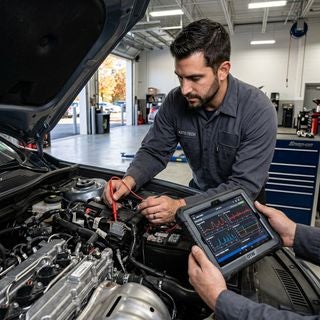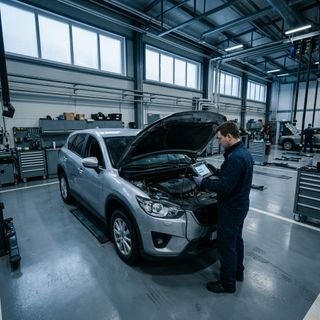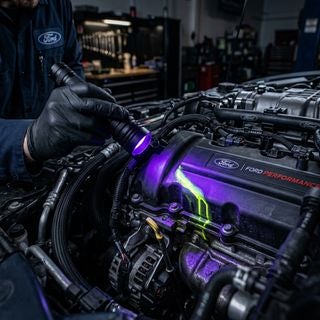

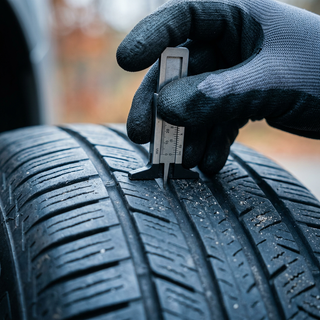
To prepare your car for winter, inspect the battery charge, adjust tire pressure to factory specifications, verify tire tread depth is at least 6/32 of an inch, flush engine coolant with a sub-zero freeze-protected mixture, install winter wiper blades with sub-zero washer fluid, and test your heating and defroster systems. Taking these preventative maintenance steps before freezing temperatures arrive prevents unexpected vehicle breakdowns and ensures maximum traction on icy roads.
Sub-freezing temperatures put intense physical strain on every mechanical system in your vehicle. Engine oil thickens, battery chemical reactions slow down, and air pressure inside your tires drops continuously as outdoor temperatures fall. Drivers navigating the riverfront bluffs and steep hills of East Liverpool face unique winter challenges where slick roads require immediate braking response and consistent wheel grip.
Proper seasonal vehicle preparation transforms how your vehicle handles slush, black ice, and freezing rain. Systematically checking key components ahead of the first winter storm preserves safety systems, protects critical engine components from costly damage, and gives you complete confidence behind the wheel all season long. You can stop by our dealership location or give our service department (330) 462-7578 a call to confirm your vehicle is ready for the cold weather ahead.
Table of Contents
- What Key Vehicle Components Should Be Inspected Before the First Snow?
- What Is the Ideal Tire Tread Depth and Pressure for Winter Driving Conditions?
- What Battery Voltage and Cold Cranking Amps Are Required for Cold Weather?
- Which Winter Preparation Maintenance Tasks Can You Do at Home at Home?
- Quick Answers to Common Winter Vehicle Maintenance Questions
- Schedule Your Pre-Winter Inspection Today
What Key Vehicle Components Should Be Inspected Before the First Snow?
Before the first snowfall, inspect the vehicle battery, brake system, tire tread and pressure, engine coolant concentration, serpentine belts, radiator hoses, wiper blades, and exterior lighting. Evaluating these core mechanical systems ensures your vehicle maintains traction, visibility, and reliable engine operation during severe winter weather.
Cold weather causes rubber materials to harden and contract, which accelerates cracking on aging serpentine belts and radiator hoses. A worn belt that snaps in sub-zero weather cuts power to your alternator and water pump, leading to sudden engine failure. Likewise, engine coolant must maintain a precise 50/50 mixture of antifreeze and water to protect the engine block from cracking when temperatures drop well below freezing.
Brake performance demands thorough inspection before winter arrives. Technicians measure friction lining to verify at least 3/32 inch of pad material remains and inspect brake rotors for severe rust pitting or scoring. Advanced driver-assist technologies and drive modes rely on healthy mechanical components to function properly. For instance, Ford Explorer models equipped with Intelligent 4WD feature a Terrain Management System with Slippery mode and Deep Snow/Sand settings that modulate engine torque and transmission shift points to reduce wheel spin on packed snow [1.1.7].
- Battery and charging system voltage output
- Brake pad lining thickness and rotor surface condition
- Coolant freeze-point protection and hose elasticity
- Serpentine drive belt tension and wear
- Headlight, tail light, and turn signal clarity
- Windshield wiper blade condition and washer fluid level
If you prefer to perform maintenance repairs yourself, you can easily order OEM Ford parts online directly through our service portal. For drivers planning ahead for future seasonal travel needs, exploring the custom factory order options allows you to select winter-ready features like heated seats, remote start, and all-wheel drive straight from the factory.
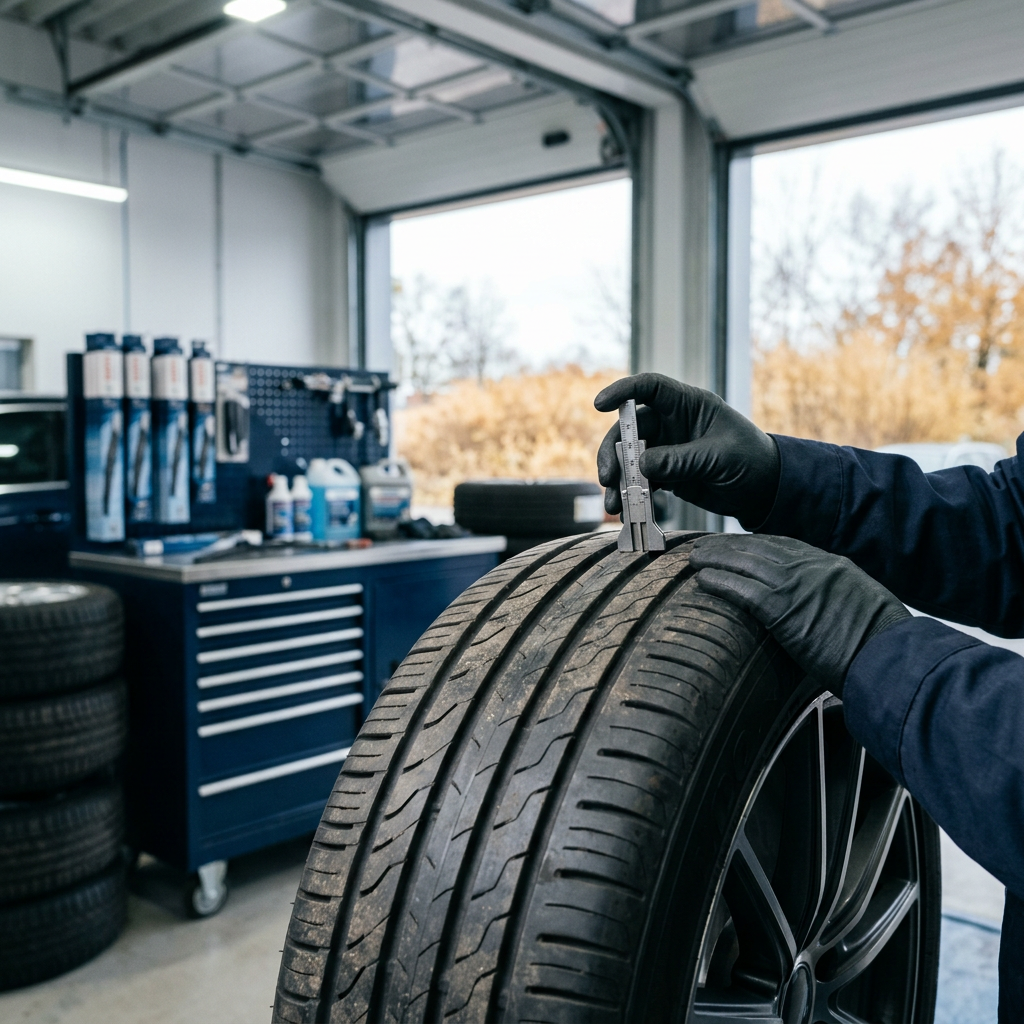
What Is the Ideal Tire Tread Depth and Pressure for Winter Driving Conditions?
The ideal tire tread depth for winter driving is 6/32 of an inch or deeper on winter tires and at least 4/32 of an inch on all-season tires, maintained at the vehicle manufacturer's recommended cold inflation pressure listed on the driver-door placard.
Tire pressure drops approximately 1 to 2 PSI for every 10-degree Fahrenheit decrease in outside temperature. Driving on underinflated tires compromises vehicle handling, reduces fuel efficiency, and causes uneven tread wear. Pressure checks must always be conducted when the tires are cold, meaning the vehicle has been parked for at least three hours. Never adjust tire inflation to the maximum pressure stamped on the tire sidewall, as that number reflects maximum load capacity rather than your vehicle's engineered inflation spec.
Tread depth directly determines how effectively a tire channels slush, snow, and water away from the contact patch. While tires are legally considered worn out at 2/32 of an inch, that minimal tread depth cannot clear snow or prevent hydroplaning on wet highways. Suburban commuters driving daily routes through Calcutta along State Route 170 encounter mixed slush and packed snow where deep tread grooves are vital for maintaining steering control and stopping distance.
To ensure your tires are prepared for slippery road surfaces, you can schedule a service appointment online to have our technicians check tire pressure, perform a computerized wheel alignment, and rotate your tires.
What Battery Voltage and Cold Cranking Amps Are Required for Cold Weather?
A healthy 12-volt automotive battery must maintain a resting voltage of 12.6 volts or higher and meet or exceed the factory rating for cold cranking amps to start reliably in freezing weather.
Cold weather places a double burden on your electrical starting system. Freezing temperatures slow the internal chemical reaction inside lead-acid battery cells, reducing available cranking power by as much as 50 percent at zero degrees Fahrenheit. Simultaneously, low temperatures cause engine oil to thicken, which demands significantly more electrical current from the battery to turn over the crankshaft.
| Battery Health Metric | Ideal Specification | Cold Weather Impact |
|---|---|---|
| Resting Voltage | 12.6 volts or higher | Dropping below 12.4V indicates a weak charge |
| Charging Voltage | 13.8 to 14.7 volts | Alternator output must maintain charge under heater load |
| Cold Cranking Amps | Matches OEM specification | Cold reduces effective amperage output significantly |
Testing your battery's state of charge and reserve capacity before winter identifies weak cell plates before you get stranded in a cold parking lot. Technicians clean corrosion from battery terminals, inspect hold-down brackets, and verify that the alternator charges between 13.8 and 14.7 volts while powering high-draw winter accessories like defrosters and heated seats. You can learn more about our comprehensive battery testing and battery replacement maintenance offerings to ensure your vehicle starts on the coldest mornings.
Which Winter Preparation Maintenance Tasks Can You Do at Home at Home?
You can check tire inflation pressure, measure tread depth using a coin, inspect wiper blade rubber for tearing, top off freezing-rated washer fluid, visually inspect belts and hoses for cracks, and test exterior safety lights at home without specialized tools.
Performing a visual safety audit takes less than twenty minutes in your driveway:
- The Quarter Test: Insert a quarter upside down into the tread grooves of your tires. If the top of Washington's head is covered by the tread, you have at least 4/32 of an inch of tread depth remaining.
- Wiper and Washer Inspection: Lift each wiper arm and slide your finger along the rubber edge to feel for tears or stiff, cracked edges. Fill the windshield washer reservoir with winter-grade fluid rated for sub-zero temperatures.
- Belt and Hose Visual Check: With the engine off and cold, press down on engine drive belts to verify tension and look for fraying or longitudinal cracks along the V-ribs. Squeeze radiator hoses to ensure they feel firm rather than soft or spongy.
- Lighting Audit: Turn on your headlights, hazard flashers, and parking lights, then walk around the vehicle to verify every bulb illuminates clearly through clean lenses.
- Emergency Kit Setup: Pack an emergency kit containing jumper cables, an ice scraper, a flashlight, heavy blankets, bottled water, and sand or cat litter for tire traction.
Quick Answers to Common Winter Vehicle Maintenance Questions
Q: At what temperature do all-season tires lose flexibility and traction?
All-season tire tread compounds begin to harden and lose elasticity at temperatures below 45 degrees Fahrenheit. As the rubber stiffens, it loses its ability to conform to small road imperfections, which significantly reduces traction on dry and wet pavement even before snow or ice falls. Specialized winter tires utilize flexible silica compounds designed specifically to remain pliable in sub-freezing temperatures.
Q: Is a professional winter vehicle inspection worth the cost?
A professional winter vehicle inspection identifies hidden mechanical vulnerabilities such as weak battery cell voltage, hairline belt cracks, and uneven brake lining wear before subzero weather leaves you stranded. Factory-trained technicians use specialized diagnostic tools to load-test electrical systems, measure coolant freeze points, and evaluate suspension components that cannot be adequately checked at home.
Q: How do you inspect vehicle brakes for winter readiness?
Inspect brake pads to confirm at least 3/32 inch of friction lining remains, check rotors for severe rust pitting or scoring, and verify that the brake fluid is clean and filled to the reservoir line. Clean brake fluid prevents internal moisture accumulation that can freeze inside hydraulic lines during extreme cold spells, ensuring smooth and consistent pedal feel.
Q: What items should be in a winter emergency vehicle kit?
A winter emergency kit should include heavy blankets, jumper cables, a flashlight with extra batteries, an ice scraper with a snow brush, a collapsible shovel, traction sand or kitty litter, non-perishable snacks, drinking water, and a mobile phone charger. Keeping these items in your cargo area ensures you remain safe and warm if your vehicle experiences a roadside delay during severe weather.
Q: What should you do if your vehicle stalls during a winter storm?
Stay inside your vehicle, turn on interior lights, and tie a bright marker cloth to your antenna or window. Check that your exhaust pipe remains completely clear of snow banks to prevent dangerous carbon monoxide gas from backing up into the cabin, and run the engine intermittently just long enough to keep warm. If you need emergency roadside service, you can reach Ford Roadside Assistance at 1-800-241-3673 for 24/7 towing, battery jump-starts, and flat tire assistance. You can also view our current Ford service specials for routine winter care.
Schedule Your Pre-Winter Inspection Today
Schedule a comprehensive pre-winter vehicle inspection at Tri State Ford to ensure your car, truck, or SUV is fully prepared for winter driving conditions. Taking care of routine maintenance before snow hits protects your vehicle's long-term reliability and keeps your family safe on slick roads.
Our factory-trained technicians test battery health, evaluate brake system wear, analyze tire tread depth, flush essential engine fluids, and install fresh wiper blades using genuine OEM parts. We provide transparent service recommendations so you can make informed decisions about your vehicle's care.
Visit our service center at 1503 Pennsylvania Ave, East Liverpool, OH 43920 or give our service team a quick call at (330) 462-7578 to reserve your inspection appointment before the first winter freeze.