Blog / Maintenance & Service, Warranty & Service Contracts, Repair & Diagnostics, Parts & Components

What Is the Difference Between Code Reading and Auto Diagnosis?

5

Code reading retrieves an alphanumeric diagnostic trouble code generated by a vehicle's computer when a sensor registers an out-of-spec reading, whereas auto diagnosis is the hands-on mechanical and electrical testing required to identify the root cause of that code. A trouble code identifies the affected monitoring circuit or system, but only a full diagnosis reveals whether the failure stems from a sensor, wiring, mechanical defect, or environmental fault.

When a check engine light illuminates, many drivers stop by a local store or hook up a basic scanner to read the stored code. According to the U.S. Environmental Protection Agency standards for On-Board Diagnostics, an OBD-II diagnostic trouble code reports that the onboard monitoring system detected a fault or an out-of-range condition. However, by itself, the code does not confirm which specific component failed.

Code reading is simply the first informational step in a multi-step troubleshooting sequence. For drivers navigating daily stop-and-go commutes along State Route 170 in Calcutta, engine management systems process millions of data points every mile. A single sensor variance might trigger a code, but replacing that sensor immediately often wastes money if the underlying issue is a vacuum leak, a corroded ground wire, or mechanical wear.

Diagnosing a vehicle requires interpreting live operational metrics, evaluating electrical integrity, and inspecting mechanical assemblies. Our service department at Tri State Ford located at 1503 Pennsylvania Ave, East Liverpool, OH 43920 combines factory diagnostic software with physical testing to isolate the exact cause before any parts are replaced. Drivers can easily reach our team by giving us a quick call or getting directions to our service center for complete diagnostic support.

Table of Contents

Why Doesn't an OBD-II Trouble Code Tell You Exactly Which Part Is Faulty?

An OBD-II diagnostic trouble code indicates that a system, sensor, or circuit is operating outside predetermined parameters, not that a specific component has physically broken. The vehicle control computer monitors electrical signals and performance thresholds, logging a code whenever those signals cross an abnormal boundary.

Automotive computer systems rely on standardized trouble-code structures established under OBD-II trouble-code guidance. A classic example is code P0420, which indicates that the catalyst-efficiency monitor on Bank 1 detected catalytic performance below its minimum threshold. A superficial reading of this code leads many vehicle owners to buy an expensive replacement catalytic converter. However, documented diagnostic procedures demonstrate that P0420 can be caused by an upstream oxygen sensor fault, damaged sensor wiring, an exhaust manifold leak, or unburned fuel entering the exhaust stream from an engine misfire.

Replacing parts solely based on a code string leads to diagnostic guesswork and unnecessary repair expenses. When an engine computer senses abnormal readings, it records the fault based on electrical feedback. If a wire rubbing against an engine bracket loses its insulation, the voltage drop causes the computer to report a sensor failure even though the sensor itself is completely operational.

To avoid replacing functional components, technicians treat the code as an invitation to investigate rather than a directive to install new parts. Our certified service technicians review manufacturer service bulletins, analyze system logic, and test secondary components before confirming a repair plan. Drivers experiencing persistent warning lights can easily schedule a service appointment to receive a comprehensive diagnostic evaluation.
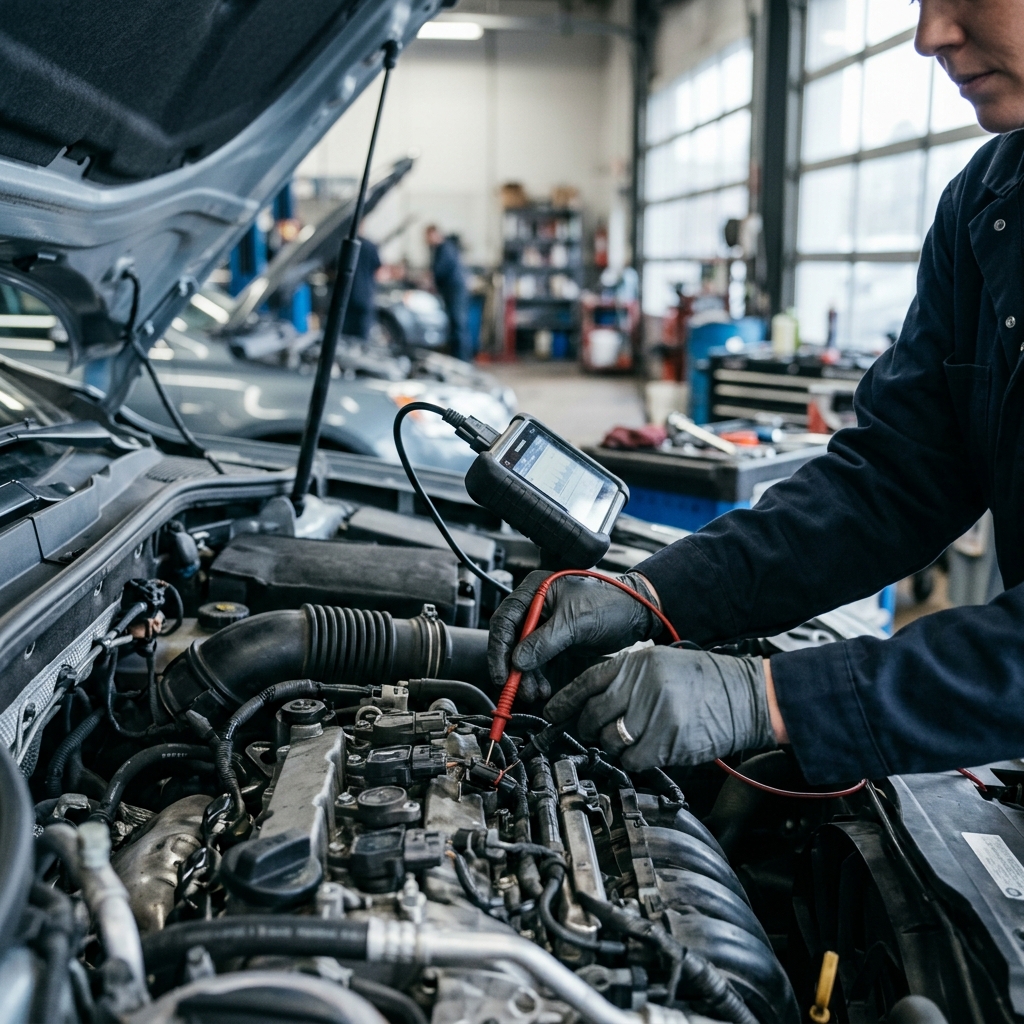
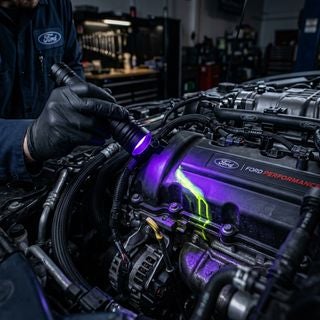
Auto mechanic wearing black gloves uses a red probe and digital diagnostic scanner to test a car engine in a garage. (Representative image for illustration purposes only. Actual vehicle may vary based on trim and configuration.)

Auto Parts Store Code Reads vs. Professional Full Diagnostic Scans

An auto parts store code read uses a basic handheld device to pull generic Powertrain codes from the main engine computer, whereas a professional full diagnostic scan reads all electronic modules and analyzes active system data streams.

Free code-scan services offered at retail parts counters only access generic OBD-II engine codes stored in the primary engine control unit. These handheld tools cannot communicate with body control modules, anti-lock braking systems ( ABS), supplemental restraint systems ( SRS), or electronic transmission control units. Furthermore, simple code readers cannot access freeze-frame data or monitor bidirectional component controls.

In contrast, professional scan equipment establishes deep communication with every computer network in the vehicle. Professional equipment reads manufacturer-specific trouble codes, retrieves freeze-frame snapshots recorded at the exact moment of failure, and allows technicians to perform active component tests—such as commanding a fuel pump relay or solenoid valve to cycle on command.

When a vehicle requires replacement items following a confirmed diagnosis, installing genuine OEM parts ensures that component specifications match factory electrical tolerances. Our team can help you order genuine Ford parts engineered specifically for your vehicle's electronic networks.

What Technical Steps, Live Data, and Pinpoint Testing Are Involved in Proper Diagnosis?

Proper automotive diagnosis follows a systematic sequence: code retrieval, freeze-frame analysis, technical service bulletin review, visual inspection, live data stream monitoring, and physical pinpoint electrical testing.

A complete diagnostic procedure begins by saving stored fault codes and analyzing freeze-frame data. Freeze-frame data captures engine speed, vehicle speed, engine load, and coolant temperature at the precise instant the diagnostic trouble code was triggered. This snapshot reveals whether the issue occurs during cold starts, under heavy load on steep riverfront bluffs in East Liverpool, or while cruising on open highways.

Next, technicians monitor live data streams while the vehicle is running. Live data displays dynamic real-time sensor parameters, including short-term fuel trim, long-term fuel trim, manifold absolute pressure, and oxygen sensor voltage switching speeds. For instance, comparing upstream and downstream oxygen sensor signals on a live graph helps distinguish a degrading catalytic converter from an oxygen sensor output fault.

Once live data narrows down the failure path, technicians execute pinpoint electrical testing using digital multimeters, back-probing pins, smoke machines, and oscilloscopes. Pinpoint testing verifies circuit continuity, measures voltage drops across connectors, checks ground integrity, and inspects vacuum lines for tiny leaks. In some cases, verifying dynamic performance under load requires taking the vehicle on a carefully controlled road test; our service clients frequently request scheduling a road test evaluation with a technician to replicate intermittent symptoms under actual driving conditions.

How Many Drive Cycles Are Needed to Clear a Permanent OBD-II Code?

Clearing a permanent OBD-II code typically requires completing one to three specific drive cycles without the onboard computer detecting any recurring faults.

Permanent diagnostic trouble codes were introduced in modern OBD-II protocols to prevent vehicles from passing emissions inspections simply by disconnecting the battery or manually clearing code memory with a scan tool. Unlike standard pending or stored codes, permanent codes cannot be erased using a handheld scanner or by removing power from the engine control unit.

To clear a permanent code, the vehicle's engine controller must run its internal self-diagnostic monitor and verify that the underlying fault is fully resolved. A qualifying drive cycle requires specific vehicle operating conditions prescribed by the manufacturer, which usually include:

  • Cold engine start-up with coolant temperatures between specified limits
  • Smooth acceleration to highway speeds between 45 and 65 mph
  • Steady-state cruising for 10 to 15 minutes to allow monitor execution
  • Deceleration without touching the brake pedal to test engine braking signals
  • Extended idling periods in park or drive to complete evaporative system checks

Once the internal monitor runs and completes successfully during consecutive drive cycles, the computer automatically erases the permanent code from its internal memory.

How Much Does a Diagnostic Fee Cost vs. the Price of a DIY Scanner?

A professional car diagnostic fee can vary, so contact us for current pricing, while an entry-level DIY OBD-II scanner is typically more affordable.

Purchasing a low-cost DIY scanner is worthwhile for vehicle owners who want to read initial error codes, monitor basic engine parameters, or track overall vehicle maintenance status. However, a consumer-grade scanner lacks the advanced hardware, manufacturer software access, and guided testing trees required to pinpoint complex electrical or mechanical faults.

While paying a professional diagnostic fee represents an upfront investment, it prevents the higher costs associated with replacing functional parts through trial and error. Installing an expensive sensor based on a basic code read—only to discover the light remains on due to a broken wiring connector—can cost significantly more than paying for an initial expert diagnosis.

Professional diagnostic fees cover not only access to multi-thousand-dollar scan equipment and high-speed scope tools, but also the extensive training and labor time of certified technicians who interpret complex live data streams and perform manual circuit testing.

Frequently Asked Questions About Vehicle Diagnostics and Error Codes

Q: Can a low car battery trigger false OBD-II trouble codes?

Yes, voltage fluctuations caused by a failing battery, weak alternator, or corroded battery terminal can cause electronic control units to log multiple false diagnostic trouble codes. Automotive computers require a steady voltage supply to interpret sensor signals accurately. When system voltage drops during engine cranking, sensors may report out-of-range readings that trigger codes across unrelated systems, such as transmission shift solenoids or throttle position sensors. Testing battery health and charging output is a standard preliminary step before condemning expensive electronic sensors.

Q: What happens if I drive my car with the check engine light on?

Driving with a steady check engine light is generally safe for short distances to reach a service facility, provided the vehicle displays no severe driveability issues like stalling, violent shaking, or loss of braking power. However, continuing to drive long-term with an active light can cause secondary damage, such as unburned fuel melting internal catalytic converter elements. If the check engine light is flashing rapidly, it indicates a severe engine misfire requiring immediate pulling over and stopping the engine to prevent catastrophic catalytic and powertrain damage.

Q: Why does my check engine light turn on and off intermittently?

An intermittent check engine light occurs when a fault is triggered only under specific operational conditions, such as high ambient humidity, cold engine starts, or heavy highway load. The computer logs a pending code when the condition is detected during one drive cycle. If the condition does not recur in subsequent drive cycles, the light may turn off, but the history code remains stored in the computer's memory. Intermittent faults are best diagnosed by examining stored freeze-frame data to identify the exact environmental conditions present during failure.

Q: Will clearing a trouble code fix the underlying mechanical issue?

Clearing a trouble code turns off the dashboard light and erases stored fault memory, but it does not fix the mechanical, electrical, or sensor defect that caused the code. Once the computer completes its next self-test monitor under driving conditions that trigger the fault, the check engine light will turn back on. Resetting codes without performing repairs is ineffective for passing state emissions inspections because clearing memory resets all system readiness monitors to an incomplete status.

Q: How do factory Technical Service Bulletins help in diagnosing error codes?

Technical Service Bulletins ( TSBs) are official diagnostic advisories issued by vehicle manufacturers to address recurring issues, software glitches, or known component failures across specific vehicle lines. When a technician retrieves a trouble code, checking TSB databases helps identify if the vehicle requires a re-flashed engine control software update, an updated wiring harness routing, or a revised replacement component. Leveraging TSB guidance reduces diagnostic time and ensures repairs follow updated engineering specifications.

Schedule Accurate Vehicle Diagnostics in East Liverpool

Understanding the difference between a quick code read and a thorough diagnostic scan protects your vehicle's performance and saves money on unnecessary repairs. A diagnostic code provides a clue, but accurate repairs require professional tools, live data analysis, and expert electrical testing.

Our service center at Tri State Ford is fully equipped with factory-grade diagnostic software and experienced technicians ready to resolve your check engine light issues correctly the first time. Visit our location at 1503 Pennsylvania Ave, East Liverpool, OH 43920 or give our service department a quick call to schedule your service appointment. You can also get directions to our East Liverpool service center for reliable, transparent vehicle care.


© 2026 Tri State Ford. All rights reserved.

Auto Diagnostic Services in East Liverpool OH | Tri State Ford
Posted in:

Related Posts

4

Why Are Modern Vehicles So Difficult to Diagnose?

Modern vehicles are increasingly difficult to diagnose because they function as complex, interconnected computer networks rather than isolated mechanical systems. Today’s automobiles rely on dozens of electronic control units sharing real-time data across high-speed communication buses. When a single sensor or component experiences a glitch, software conflict, or voltage drop, the fault cascades across multiple systems. Pinpointing the root cause requires specialized scan tools, secure gateway access, and systematic electrical testing rather than simple code reading. In past decades, mechanical failures were largely straightforward. A worn belt squeaked, a failed alternator stopped charging the battery, and a broken cable prevented a throttle body from opening. Troubleshooting involved visual inspections, basic pressure gauges, and simple multimeter tests. Today, mechanical components are monitored and actuated by sophisticated microprocessors. An engine misfire may not stem from a bad spark plug; it could be caused by a software calibration discrepancy, an intermittent network communication fault, or a security gateway restriction. This architectural shift impacts vehicle owners during everyday driving. Suburban commuters in Calcutta driving along State Route 170 during cold winter mornings frequently experience situations where a sudden drop in battery voltage triggers half a dozen seemingly unrelated dashboard warnings. Dissecting those errors requires distinguishing between true hardware failures and temporary software communication glitches. Acc urate diagnostic work relies on specialized testing equipment, updated manufacturer software, and deep electrical knowledge. Drivers seeking professional evaluation can visit our service center location or contact our team directly at (330) 462-7578 to speak with a factory-trained technician. Table of Contents How Do Dozens of Electronic Control Units (ECUs) Increase Diagnostic Complexity? Why Can a Single Warning Light Trace to Multiple Networked Components? Why Do Proprietary Secure Gateways and Software Limits Restrict Independent Repairs? Why Are Professional Diagnostic Equipment Costs and Shop Service Fees Rising? Can DIY Smartphone OBD-II Adapters Handle Modern Vehicle Diagnostics? What Questions Do Drivers Ask Most About Modern Vehicle Diagnostics? How Do Dozens of Electronic Control Units (ECUs) Increase Diagnostic Complexity? Electronic control units increase diagnostic complexity because a modern vehicle relies on 80 to 150 dedicated microprocessors that must constantly exchange operational data over specialized communication networks. Diagnosing a vehicle requires checking network integrity, communication protocols, and software compatibility across multiple units rather than inspecting a single localized module. A modern vehicle functions as a distributed computing network on wheels. Individual modules govern specific domains throughout the chassis: Powertrain control modules manage fuel injection, ignition timing, and turbocharger boost. Transmission control modules calculate shift points based on acceleration and engine load. Body control modules regulate lighting, door locks, power windows, and climate control systems. Safety modules control airbag deployment, seatbelt pretensioners, and anti-lock braking systems. These modules communicate across multiple network architectures designed for different data speed requirements. High-speed Controller Area Network (CAN) buses operate at data rates between 1 and 5 Mbps to handle critical powertrain and chassis communications. Lower-speed Local Interconnect Network (LIN) buses operate at roughly 19.2 kbps to manage less critical secondary components like side mirrors, power seats, and window switches. Advanced vehicles also incorporate Automotive Ethernet to handle high-bandwidth data demands required by infotainment systems and advanced driver assistance systems. +-------------------------------------------------------------------+ | Modern Vehicle Network Topology | +-------------------------------------------------------------------+ | Automotive Ethernet (High Bandwidth: ADAS / Cameras / Radar) | | +-------------------------------------------------------------+ | | | CAN Bus (1 - 5 Mbps: Engine, Transmission, ABS, Airbags) | | | | +---------------------------------------------------------+ | | | | | LIN Bus (19.2 kbps: Doors, Seats, Windows, Mirrors) | | | | | +---------------------------------------------------------+ | | | +-------------------------------------------------------------+ | +-------------------------------------------------------------------+ Technicians use protocols such as Unified Diagnostic Services (UDS) and Diagnostics over Internet Protocol (DoIP) to interface with these networks. When troubleshooting an issue, a technician must evaluate whether a control unit is failing internally, experiencing a wiring connection fault, or missing required software updates. Because modules rely on secure bootloaders and verified software image states, an unresolved programming state can immobilize a vehicle just as effectively as a broken mechanical shaft. Why Can a Single Warning Light Trace to Multiple Networked Components? A single warning light can stem from multiple networked components because modern electronic control units share sensor readings across a unified communication bus. A malfunction in one sensor forces multiple downstream systems to disable dependent features and set secondary diagnostic trouble codes. When a check engine light or traction control light illuminates on a Ford F-150 or Ford Escape, drivers often expect a single fault code pointing directly to a replacement part, but technicians frequently discover a cascade of secondary codes caused by a single voltage drop or network communication interruption. Because modules rely on shared sensor input, a single bad data point impacts multiple vehicle operations simultaneously. Consider a failing wheel speed sensor. In an older vehicle, a broken sensor simply disabled the anti-lock brakes and turned on an ABS light. In a contemporary vehicle, that same wheel speed sensor feeds data to the following systems: Anti-lock braking module for emergency stopping control Electronic stability control for cornering management Transmission control unit for gear selection and torque management Steering control module for electric power steering assistance Adaptive cruise control and collision avoidance systems A signal disruption from that single sensor causes every dependent module to log a loss-of-communication code. A basic code scanner might show ten different fault codes across five separate control modules. A skilled technician must analyze freeze-frame data, study network wiring diagrams, and test component voltages to identify the primary failure point rather than replacing every module showing an error code. When component replacement is necessary, installing genuine OEM replacement parts ensures that sensor resistance values and response speeds match factory network specifications perfectly. Why Do Proprietary Secure Gateways and Software Limits Restrict Independent Repairs? Proprietary secure gateways restrict diagnostic access by acting as electronic firewalls between the diagnostic port and critical vehicle networks to prevent cyber threats and unauthorized module alterations. Unauthenticated scan tools are limited to basic read-only fault codes and cannot clear codes, run active actuator tests, or recalibrate control modules. As vehicles became more connected through cellular modems, Wi-Fi, and Bluetooth, manufacturers introduced Secure Gateway (SGW) modules to safeguard vehicle control networks against remote hacking. The gateway allows generic scan tools to read basic diagnostic trouble codes, but it blocks command signals that alter vehicle behavior unless the diagnostic tool and technician are authenticated through approved software platforms. Without verified gateway access, a technician cannot perform routine service commands, including: Resetting electronic parking brake service modes during brake pad replacement Performing active actuator tests to verify fuel pump or solenoid operation Executing steering angle sensor calibrations after an alignment Clearing persistent fault codes after completing physical repairs Performing module reflashing and software recalibrations Advanced electric vehicles like the Ford Mustang Mach-E require specialized, model-specific software procedures to verify high-voltage safety interlocks, monitor thermal management systems, and perform battery module balancing. Furthermore, routine recall service updates often require updating software states directly through factory servers. When complex system resets or recalibrations are required, drivers can schedule a service appointment online to ensure their vehicle receives authorized software programming. Why Are Professional Diagnostic Equipment Costs and Shop Service Fees Rising? Diagnostic service fees have risen because accurately troubleshooting high-tech vehicles requires professional scan tools costing between $3,000 and $15,000 per unit, annual manufacturer software subscriptions, and hours of hands-on electrical testing by master technicians. Diagnostic fees reflect the specialized equipment, software licensing, and technical expertise necessary to prevent trial-and-error part replacement. A modern automotive repair facility must invest continuously in diagnostic infrastructure. Beyond purchasing high-end diagnostic consoles, shops pay thousands of dollars annually for access to manufacturer-specific software licensing, technical service bulletins, and wiring schematics. Technicians also utilize digital storage oscilloscopes to view high-speed electrical signals, pin-out boxes to test harness integrity, and precision power supplies to maintain stable voltage during module programming. +-------------------------------------------------------------------+ | Diagnostic Process: Code Reading vs True Diagnosis | +-------------------------------------------------------------------+ | Generic Code Reading: | | [Plug in Tool] -> [Read DTC P0300] -> [Guess / Replace Spark Plug] | +-------------------------------------------------------------------+ | Professional Diagnostic Procedure: | | 1. Scan all network ECUs & record freeze-frame data | | 2. Authenticate through Secure Gateway (SGW) firewall | | 3. Perform live data logging & digital oscilloscope waveform test| | 4. Conduct voltage-drop tests on harness & ground connections | | 5. Execute module reflash / sensor recalibration if required | +-------------------------------------------------------------------+ Physical environment factors also demand rigorous testing. East Liverpool drivers navigating winter slush and road salt frequently encounter wiring harness corrosion along riverfront routes, where isolating a high-resistance ground wire requires systematic voltage-drop testing with specialized tools. Connecting a scan tool merely identifies the symptom; finding the physical root cause requires hours of methodical labor. Maintaining proper system voltage is critical during any diagnostic evaluation. Drivers looking to prevent electrical issues can inspect routine battery maintenance and testing recommendations, or utilize the convenient Ford Mobile Service program for selected maintenance needs handled right at home. Can DIY Smartphone OBD-II Adapters Handle Modern Vehicle Diagnostics? Smartphone OBD-II adapters can read generic powertrain diagnostic trouble codes and display live engine data, but they cannot perform full multi-system diagnostics on modern vehicles. Basic wireless dongles lack access to proprietary module networks, secure gateway authentication, actuator testing, and recalibration routines required to resolve complex faults. Affordable Bluetooth and Wi-Fi OBD-II adapters are popular among vehicle owners for monitoring basic parameters like coolant temperature, engine RPM, and calculated fuel economy. They can also read generic "P0" powertrain codes associated with emissions components, such as a loose gas cap or a failing oxygen sensor. However, these consumer-grade adapters have significant technical limitations: Limited module access: Most apps only communicate with the primary powertrain control module, completely ignoring airbag, body control, transmission, and ABS modules. No bidirectional control: Smartphone adapters cannot send command signals to cycle solenoids, test cooling fans, or command an ABS pump bleed. Lack of gateway security credentials: Basic apps cannot authenticate through manufacturer secure gateways, preventing users from clearing advanced fault codes or resetting service indicators. No software flashing capability: Consumer dongles cannot update module firmware, re-establish lost network handshakes, or perform J2534 pass-thru reprogramming. While a smartphone adapter offers a convenient preliminary check for minor engine light issues, comprehensive troubleshooting requires professional-grade diagnostic systems. What Questions Do Drivers Ask Most About Modern Vehicle Diagnostics? Q: Why does a mechanic charge a diagnostic fee just to read a check engine code? Reading a fault code takes only a few minutes, but a code merely identifies the system or sensor reporting an out-of-range value. It does not explain why the value is incorrect. A diagnostic fee covers the technician's time, specialized testing equipment, schematics, and systematic electrical testing required to pinpoint the actual failure—such as a broken wire, vacuum leak, or software glitch—preventing unnecessary part replacement. Q: What is an ECU reflash, and why is it necessary during a repair? An ECU reflash overwrites a control module's internal software with updated manufacturer code. Just as a smartphone receives software updates to fix bugs, vehicles require software reflashing to resolve operating glitches, refine shifting performance, update sensor calibration parameters, or introduce factory security patches. Reflashing is also necessary when replacing a module so it can adapt to the vehicle network. Q: Can a weak 12-volt battery cause false warning lights on a modern vehicle? A weak or degrading 12-volt battery is one of the most common causes of phantom diagnostic trouble codes. Electronic control units require steady voltage to operate accurately. When voltage drops during engine cranking, sensitive microprocessors experience temporary brownouts. This causes modules to drop offline briefly and report communication errors across the network, illuminating dashboard warnings even when components are functional. Q: How do technicians find an electrical short on a CAN bus network? Technicians diagnose CAN bus network faults using a digital storage oscilloscope to measure communication signals across the network's twisted-pair wiring. By analyzing voltage waveforms, technicians can identify short circuits, open circuits, or excessive electrical resistance. They then systematically isolate sections of the network harness by disconnecting individual modules until proper communication signals return to the bus. Q: Why do some repairs require sensor recalibration after a physical part is replaced? Modern components rely on precise alignment to function safely within driver assistance and chassis systems. When parts such as windshields, steering racks, bumper covers, or suspension struts are replaced, attached radar sensors, cameras, and position sensors shift slightly. Recalibration aligns sensor software with physical geometry, ensuring safety features like blind spot monitoring operate within factory tolerances. For expert electrical evaluations and accurate vehicle troubleshooting, drivers can visit our dealership address at 1503 Pennsylvania Ave or give our service advisors a call to schedule a comprehensive diagnostic inspection. © 2026 Tri State Ford. All rights reserved. Modern Vehicle Diagnostics in East Liverpool OH | Tri State Ford

f

How Do You Fix an Oil Leak on a 2026 Ford?

To fix an oil leak on a 2026 Ford, you must clean the engine bay, identify the exact origin using fluorescent ultraviolet dye or inspection powder, replace the compromised gasket or fitting, and refill the crankcase to the proper level. Minor seeps at the valve cover or oil pan require installing a new pre-formed seal or applying Motorcraft High Performance Engine RTV Silicone, whereas pressurized leaks along turbocharger oil feed lines require replacing degraded line fittings and copper seals before fluid loss harms internal components. Identifying an engine oil leak early prevents thermal damage and protects critical engine components from lubrication starvation. Fresh engine oil appears amber or light brown with a slick feel, whereas older oil turns dark brown or black. If oil drips onto hot exhaust manifolds, it generates a harsh burning odor and light white smoke under the hood. Continuing to drive with severe oil loss can lead to low oil pressure warnings, premature bearing wear, or severe engine overheating. When inspecting a leak at home, place a clean sheet of white cardboard directly beneath the engine crossmember overnight. Engine oil leaves a distinct dark brown or black stain, distinguishing it from red transmission fluid or pink coolant. If you notice persistent puddling, check the dipstick level before starting the vehicle to ensure sufficient oil remains in the crankcase. For persistent or high-pressure leaks, professional diagnostic equipment provides the most accurate answer. You can visit our service department at 1503 Pennsylvania Ave for a comprehensive multi-point inspection, or give our service team a quick call at (330) 462-7578 to discuss observed symptoms with a certified technician. Table of Contents What Are the Common Causes and Leak Points on Ford EcoBoost Engines? 2026 Ford F-150 vs Ram 1500: Which Truck Offers Better Oil Leak Resistance? How to Inspect Your Ford for Oil Leaks and Check for Safety Recalls Can You Use an Extended Warranty to Cover Ford Oil Leak Repairs? Frequently Asked Questions About Ford Engine Oil Leaks Schedule Professional Oil Leak Diagnostics What Are the Common Causes and Leak Points on Ford EcoBoost Engines? Common oil leak points on Ford EcoBoost engines center around high-heat and high-pressure zones, including the valve cover gaskets, lower oil pan mating surfaces, timing chain covers, and turbocharger oil supply lines. Modern forced-induction engines subject engine seals to rapid thermal expansion and contraction cycles, which causes rubber gaskets to harden and RTV sealant bonds to degrade over extended mileage. On the 2.0L EcoBoost engine, which powers versatile crossover models like the 2026 Ford Escape with standard all-wheel drive, primary leak points include the front timing cover seal and the valve cover perimeter gasket. Over time, crankcase pressure can force oil past hardened valve cover corner seals, allowing oil to pool around spark plug wells or seep down the front engine cover. The 2.0L EcoBoost in the 2026 Ford Explorer also requires careful inspection around the front crankshaft seal, where road debris and heat can accelerate rubber breakdown. The twin-turbocharged 3.5L EcoBoost V6 presents a distinct set of potential leak areas due to its tight engine bay packaging and elevated turbocharger operating temperatures: Vacuum Pump Seal: On older 3.5L engine architectures, the mechanical vacuum pump mounted to the rear of the passenger-side cylinder head can develop a slow oil seep that drips directly onto the transmission bell housing. Turbocharger Oil Lines: High exhaust gas temperatures near the turbochargers can degrade the small rubber O-rings and crush washers on the oil feed and return lines, causing oil to vaporize against the exhaust piping. Composite Oil Pan Sealant: Certain previous-generation engine designs utilized composite plastic oil pans sealed with liquid RTV sealant. Repeated heat cycles caused minor pan flexing, leading to slow seeps along the lower engine block rail. Recent Ford engine designs have addressed this by utilizing updated pan structures and press-in-place gaskets. When truck owners bring an EcoBoost into our service bay with an oil leak, our technicians usually check the rear vacuum pump and valve covers before looking at the lower oil pan. Driving across varied elevations, such as the rolling hills around State Route 170 in Calcutta, puts steady load on the turbocharger cooling and lubrication system. Maintaining clean engine oil and replacing PCV valves at recommended intervals relieves excess crankcase pressure, protecting internal seals across all EcoBoost engine configurations. 2026 Ford F-150 vs Ram 1500: Which Truck Offers Better Oil Leak Resistance? The 2026 Ford F-150 offers exceptional long-term oil leak resistance by pairing refined engine sealing techniques with durable metal oil pans and press-in-place synthetic rubber gaskets across its powertrain lineup. While Ram 1500 trucks historically relied on standard stamped steel or cast aluminum oil pans, earlier generations of full-size trucks faced persistent valve cover and oil cooler adapter leaks. Modern Ford engineering focuses on heavy-duty crankcase ventilation and robust gasket designs built for heavy towing and demanding commercial service. In full-size work trucks, engine oil integrity directly impacts productivity and long-term durability. The 2026 Ford F-150 equipped with the 3.5L EcoBoost V6 delivers an impressive 10,400 lbs towing capacity, supported by a heavy-duty engine oil cooler and a precise SelectShift® automatic transmission. To withstand high oil pressures during heavy hauling, Ford utilizes engineered press-in gaskets at major engine mating surfaces rather than relying solely on liquid sealant beads, preventing the gasket distortion that affected older truck engines. To keep work fleets running smoothly without unexpected downtime, proper maintenance of cooling and lubrication systems remains essential. You can explore our current new work truck lineup to see how modern Ford powertrains are configured for heavy-duty work, or check out our complete new truck inventory to compare cab styles and engine options built to handle rigorous regional workloads. How to Inspect Your Ford for Oil Leaks and Check for Safety Recalls Performing an accurate DIY oil leak inspection requires a systematic approach to trace fluid back to its highest point of origin on the engine assembly. Gravity causes leaking oil to travel downward and backward along the chassis frame rails while driving, which often makes a minor valve cover leak appear as a major oil pan failure underneath the vehicle. Follow this step-by-step diagnostic process to isolate an oil leak: Clean the Engine Bay: Spray a dedicated automotive degreaser over the dirty lower engine surfaces and rinse carefully with low-pressure water, taking care to avoid delicate electrical connectors. Apply Leak Detection Powder or UV Dye: Dust suspected leak areas with aerosol leak detection powder, or pour a bottle of fluorescent engine oil UV dye directly into the oil filler cap. Run the Engine: Idle the vehicle for 10 to 15 minutes, or drive a short distance to allow oil pressure to build up within the engine galleries. Inspect with an Ultraviolet Light: Shine a blacklight around timing covers, valve cover rails, and oil filter housings. The fluorescent dye will glow brightly at the exact crack or gasket breach where fluid emerges. If a previous repair attempt failed to fix the issue, your vehicle may have been misdiagnosed. Misdiagnoses frequently occur when residual oil from a upper engine leak accumulates around the rear main seal or transmission torque converter housing. Requesting a UV dye tracer test ensures technicians verify the top-most active leak source before replacing expensive structural components. In some cases, oil leaks stem from specific factory service actions or safety recalls rather than normal wear. For instance, manufacturer safety recalls have previously addressed missing cylinder head ball plugs on select 2.0L EcoBoost and 2.3L EcoBoost engines that could allow oil to escape near hot exhaust manifolds. You can check your vehicle's safety recall status at any time by entering your 17-character Vehicle Identification Number (VIN) into the official Ford owner portal or the NHTSA recall lookup tool. Drivers navigating daily trips near Market Street in Boardman can rely on authorized Ford service centers to complete all recall repairs free of charge. Can You Use an Extended Warranty to Cover Ford Oil Leak Repairs? Official Ford Protect Extended Service Plans cover major engine oil leak repairs, including the replacement of oil pan gaskets, valve cover seals, timing cover gaskets, and internal engine oil seals damaged through normal operational wear. Coverage eligibility depends on the specific plan tier selected at contract activation: PowertrainCARE: Covers fundamental mechanical components, including internal engine seals, oil pump assemblies, and cylinder head gaskets across 29 core powertrain parts. BaseCARE: Expands coverage to 84 mechanical components, adding steering gear housing seals and primary engine cooling hardware. ExtraCARE: Protects 113 key parts, covering complex electronic sensors, fuel systems, and engine accessory seals. PremiumCARE: Comprehensive bumper-to-bumper protection covering over 1,000 components, including high-tech engine sensors, turbocharger oil lines, and complete gasket sets. Warranty claims require proof that the vehicle was maintained according to the recommended service schedule published in the owner manual. Failing to perform regular oil changes can lead to sludge buildup, which restricts crankcase ventilation and damages internal seals. Keep all oil change receipts and maintenance logs organized to ensure seamless claim processing when service is required. Component damage resulting from aftermarket engine modifications, improper installation, or pre-existing conditions prior to contract coverage is not covered under extended warranty terms. When repairing an active leak, using genuine factory components preserves engine tolerances and ensures precise fitment. You can schedule a service appointment with our factory-trained technicians to inspect covered components, or order genuine OEM parts directly through our service department for approved maintenance tasks. Frequently Asked Questions About Ford Engine Oil Leaks Q: Can a failing vacuum pump cause an oil leak on a 3.5L EcoBoost engine? Yes, on earlier 3.5L EcoBoost V6 engine designs, the mechanical vacuum pump attached to the back of the passenger-side cylinder head can develop an oil leak at its mounting seal. As the seal degrades, engine oil seeps out and drips down onto the top of the transmission housing, often mimicking a leaking valve cover gasket or rear main seal failure. Q: Is it safe to drive my Ford if it has a minor oil leak? You can drive short distances with a slow oil seep provided you regularly check the dipstick and maintain proper oil levels in the crankcase. However, if oil leaks directly onto hot exhaust components, creates a strong burning smell, or causes the low oil pressure light to illuminate, you should pull over immediately and switch off the engine to prevent severe mechanical damage or thermal hazards. Q: What should I do if a technician misdiagnoses my vehicle's oil leak? If an initial repair fails to stop an oil leak, request a comprehensive ultraviolet dye test to trace the fluid's exact path from the highest point on the engine. Ask the service advisor to review official Technical Service Bulletins related to your specific engine code, which often outline updated diagnostic steps for complex leaks around timing covers, turbo oil lines, and oil pan seals. Q: How do I know if my Ford oil leak is covered by a factory recall? You can verify recall eligibility by locating your 17-character VIN on your registration card or driver-side dashboard and entering it into the official Ford support website or the NHTSA recall tool. If an active safety recall applies to your engine's oil system, an authorized Ford dealership will perform the necessary inspection and component replacement at no cost to you. Q: What is the difference between fresh engine oil and other leaking fluids? Fresh engine oil has an amber or light brown appearance with a slick feel, turning dark brown or black as it ages. Red or dark pink fluid indicates automatic transmission or power steering fluid, clear light brown or blue fluid with a sweet odor points to engine coolant, and clear thin fluid near the passenger side footwell is typically harmless air conditioning condensation. Schedule Professional Oil Leak Diagnostics Addressing an engine oil leak promptly protects your vehicle's mechanical reliability, maintains resale value, and ensures your engine remains fully lubricated under heavy driving loads. Whether your vehicle requires a simple valve cover gasket replacement, updated turbocharger oil line fittings, or a complete multi-point inspection, professional diagnostic care provides lasting peace of mind on local roads and work sites. Our factory-certified technicians utilize specialized diagnostic tools, genuine Motorcraft fluids, and precise OEM replacement seals engineered specifically for your vehicle's powertrain. You can get directions to Tri State Ford to drop off your vehicle for expert care, or give our team a call at (330) 462-7578 to speak directly with a knowledgeable service advisor. If you are also considering an upgraded truck or SUV while your vehicle is in for service, feel free to schedule a test drive online today. © 2026 Tri State Ford. All rights reserved. Vehicle specification data © JATO Dynamics Limited. 2026 Ford Oil Leak Repair in East Liverpool OH | Tri State Ford

How Do Used Car Warranties Protect Against Unexpected Repair Costs?

A used car warranty protects against unexpected repair costs by transferring financial liability for mechanical and electrical component failures from the vehicle owner to the warranty provider. By paying for covered diagnostic fees, replacement parts, and repair labor after an applicable deductible, these service contracts shield drivers from sudden multi-thousand-dollar repair bills when major mechanical assemblies fail unexpectedly during normal vehicle operation. When purchasing a pre-owned vehicle, understanding how protection plans operate helps safeguard your vehicle investment. Many late-model vehicles still carry the balance of their original factory coverage. For instance, new Ford vehicles originate with a 3-year/36,000-mile bumper-to-bumper warranty along with a 5-year/60,000-mile powertrain warranty. This factory coverage follows the vehicle identification number (VIN) rather than the original owner. Coverage is measured from the initial in-service date and expires as soon as either the elapsed time or mileage threshold is reached. For vehicles beyond their initial factory timeline, certified pre-owned programs and extended service contracts step in to limit financial exposure. A Ford Gold Certified pre-owned vehicle includes a 12-month/12,000-mile comprehensive limited warranty alongside a 7-year/100,000-mile powertrain limited warranty calculated from the original in-service date. Alternatively, Ford Blue Certified models offer coverage for older vehicles up to 10 model years with fewer than 150,000 miles, providing a 90-day/4,000-mile comprehensive limited warranty. Having structured warranty protection ensures that when a mechanical failure occurs, you are not forced to cover the full expense out of pocket. For daily commuters navigating heavy suburban traffic around Boardman, high annual mileage can quickly exhaust base coverage. Securing a reliable warranty contract ensures that unexpected mechanical issues do not disrupt your daily routine or household budget. If you ever have questions about your current coverage status, our technicians at our East Liverpool service facility can run a full VIN inquiry to verify your exact remaining factory terms, or you can give our service team a quick call to discuss your coverage options. Table of Contents What Paperwork Should Come With a Used Car Warranty Contract? What Is the Average Out-of-Pocket Repair Cost for High-Mileage Used Vehicles? What Components Are Covered: Do Warranties Cover Wear-and-Tear Items and High-Tech Systems? Do You Need Pre-Authorization Before Starting Repairs Under a Used Car Warranty? Is an Extended Warranty Different From a Used Car Warranty? Common Questions About Pre-Owned Warranty Coverage and Repairs What Paperwork Should Come With a Used Car Warranty Contract? Every legitimate used car warranty must include a written vehicle service contract or coverage certificate explicitly detailing the start date, expiration mileage, covered component groups, deductible amounts, and excluded maintenance items. Relying on verbal promises made during a vehicle sale is never sufficient, as only the written contract language governs claim approvals and coverage limits. When reviewing the documentation provided with a pre-owned vehicle purchase, ensure the following core documents are included in your records: Federal Trade Commission Buyers Guide: This mandatory window display document states whether the vehicle is sold "As Is" or with a specific dealer warranty, outlining the exact percentage of repair costs the dealer assumes. Master Service Contract Agreement: A legal agreement showing the policy number, full 17-character VIN, purchase date, current odometer reading, coverage tier, and total term duration. Schedule of Covered and Excluded Parts: An itemized listing that clarifies whether the plan operates as an inclusionary policy (listing only covered parts) or an exclusionary contract (listing only excluded parts). Claim Filing Instructions and Administrator Contact Information: Documented protocols outlining exact step-by-step procedures for pre-authorization, towing reimbursements, and rental vehicle allowances. Maintenance Record Log: A dedicated section or requirement sheet detailing the mandatory routine oil changes, tire rotations, and fluid service schedules necessary to keep the contract valid. Carefully reading these documents before signing prevents unexpected surprises when a repair is required. For drivers in Calcutta taking daily trips along State Route 170, keeping a physical copy of your service agreement and routine maintenance receipts inside the glove compartment ensures you are fully prepared whenever service is required. What Is the Average Out-of-Pocket Repair Cost for High-Mileage Used Vehicles? Out-of-pocket repairs on high-mileage vehicles typically average between $500 and $1,500 per repair visit for major mechanical component failures like alternators, water pumps, air conditioning compressors, or suspension assemblies. Without warranty coverage, these expenses must be settled entirely by the owner before the service facility can release the vehicle. As vehicles cross high mileage thresholds, component wear naturally accelerates. While modern engineering allows engines and transmissions to operate dependably for many years, supporting systems eventually require service. Major structural or internal mechanical failures—such as a transmission overhaul or head gasket replacement—can easily cost several thousand dollars in parts and specialized labor. Vehicle System Common High-Mileage Repair Issue Estimated Out-of-Pocket Cost Range Engine Cooling Water Pump & Thermostat Replacement $450 – $900 Electrical Alternator & Battery System Failure $500 – $1,100 Climate Control A/C Compressor & Evaporator Core $800 – $1,800 Suspension Strut Assemblies & Control Arms $600 – $1,400 Drivetrain Transmission Valve Body or Rebuild $1,800 – $4,500 Under a pre-owned warranty or service contract, your financial obligation for covered components is limited to a predetermined per-visit deductible, often set at a $100 deductible or $50 deductible. Rather than paying $1,200 for a failed air conditioning compressor, a covered customer pays only the established deductible while the plan administrator handles the remaining parts and labor charges. To keep your high-mileage vehicle running dependably and address minor concerns before they turn into major repairs, you can schedule a service appointment with our certified facility. What Components Are Covered: Do Warranties Cover Wear-and-Tear Items and High-Tech Systems? Used car warranties explicitly exclude routine wear-and-tear components like brake pads, windshield wipers, and tires, but comprehensive exclusionary policies cover high-tech electronics including factory touchscreen displays, backup cameras, and advanced driver-assist sensors. Distinguishing between wearable maintenance items and covered electrical or mechanical components is essential for setting proper expectations. Wear-and-tear items are designed to consume themselves during normal vehicle operation. Because brake shoes, linings, clutch plates, spark plugs, belts, and tires wear down through standard use, no standard used car warranty or extended service agreement covers their replacement. These services fall under standard owner vehicle maintenance. When you require fresh brake linings, cabin filters, or wiper blades, you can order OEM replacement parts directly through our specialized department. Conversely, complex electronic and mechanical systems receive broad protection under comprehensive exclusionary plans. Modern vehicles rely heavily on interconnected computer modules, touchscreen infotainment displays, lane-keeping sensors, and adaptive cruise control hardware. Replacing a failed center-console display or blind-spot monitoring sensor can involve significant diagnostic and component costs. Coverage boundaries generally follow these guidelines: Covered Mechanical & High-Tech Components: Engine block internal parts, transmission gear sets, drive shafts, differential assemblies, factory touchscreen units, power window motors, electronic steering racks, and advanced driver-assist cameras. Excluded Wear & Cosmetic Items: Brake pads, brake rotors, tires, shock absorbers, battery cables, exhaust pipes, upholstery, paint damage, and glass cracks. Do You Need Pre-Authorization Before Starting Repairs Under a Used Car Warranty? Prior authorization from the warranty administrator is mandatory before any disassembly or repair work begins on a vehicle, or the entire claim will be denied. Service contract administrators strictly enforce this requirement to verify that the failure is covered under the policy terms before shop labor costs accumulate. When a vehicle arrives at our service bay displaying a warning light or mechanical noise, our ASE-certified technicians follow a systematic claim submission protocol: Initial Inspection & Diagnosis: Technicians perform diagnostic testing to identify the root cause of the mechanical failure. Administrator Notification: Our service advisor contacts the warranty company with the exact diagnostic findings, specific part numbers, and estimated labor hours. Adjuster Review or Tear-Down Approval: For major claims, the administrator may request permission for a physical inspection by an independent adjuster or authorize limited component tear-down. Official Claim Approval: The administrator issues a formal claim approval number, confirming the exact dollar amount covered and the customer's deductible obligation. Repair Execution & Quality Testing: Technicians perform the authorized repair using approved original equipment parts and perform testing before releasing the vehicle. If a vehicle owner approves repair work or authorizes engine teardown before obtaining a formal pre-authorization number, the warranty company reserves the right to reject payment completely. Working directly with an experienced dealership service team ensures that all documentation and pre-approval steps are handled correctly on your behalf. Is an Extended Warranty Different From a Used Car Warranty? While a standard used car warranty is built into the vehicle purchase or provided directly by the vehicle manufacturer, an extended warranty—properly classified as a vehicle service contract—is an optional protection plan purchased separately to prolong mechanical coverage after base factory protection expires. A factory used car warranty or certified pre-owned warranty comes attached to the vehicle at no additional charge beyond the vehicle price. It is backed directly by the automaker, guaranteeing that repairs are performed using genuine OEM parts by factory-trained technicians. In contrast, extended service contracts can be purchased at the time of vehicle sale or later in the vehicle's life cycle. These contracts can be structured through manufacturer programs, such as Ford Protect, or through independent third-party companies. Manufacturer-backed service contracts align closely with original factory coverage, allowing seamless claim processing at franchised dealerships nationwide without forcing vehicle owners to pay upfront and await reimbursement. ​ Common Questions About Pre-Owned Warranty Coverage and Repairs Q: Does a pre-owned warranty cover diagnostic fees when a repair is approved? Most comprehensive pre-owned warranties cover diagnostic fees provided the overall repair is approved as a covered claim under the contract terms. However, if diagnostic testing reveals that the component failed due to an excluded wear-and-tear item, pre-existing condition, or lack of maintenance, the customer remains responsible for the diagnostic labor charges incurred by the shop. Q: Can installing aftermarket parts void a used vehicle warranty? Under federal law, installing aftermarket parts does not automatically void your entire vehicle warranty. A claim can only be denied if the warranty administrator or dealership can demonstrate that the specific aftermarket modification directly caused the failure of a covered component. For example, installing an aftermarket suspension lift kit might void coverage for damaged drive axles, but it cannot be used to deny a claim for an unrelated infotainment system failure. Q: What happens to a used car warranty if the vehicle is sold before coverage expires? Most manufacturer-backed pre-owned warranties and extended service contracts automatically transfer to subsequent private owners for the remainder of the time and mileage limits. Some third-party agreements require a simple transfer form and a nominal administrative fee—typically ranging between $25 and $75—submitted within a specified number of days after the private party sale. Q: Why would a warranty claim be denied even if the part is listed as covered? A warranty claim for a listed component can be denied due to documented owner negligence, severe overheating, operating the vehicle without proper fluid levels, unaddressed pre-existing conditions, or a failure to provide routine maintenance logs. Claims may also be rejected if the vehicle was subjected to commercial overuse or improper towing beyond its rated towing capacity. Q: How long does the repair pre-authorization process typically take at the shop? Pre-authorization timelines depend heavily on the complexity of the mechanical issue and the administrator's administrative process. Routine claims involving common mechanical components are typically approved within a few hours. Major repairs requiring a physical inspection by a third-party claim adjuster can take anywhere from 24 to 48 hours before teardown and repair work are officially authorized. To verify your vehicle's warranty status, review detailed contract terms, or address an active mechanical issue, stop by our East Liverpool facility today or give our service department (330) 462-7578 to speak directly with a certified service advisor. © 2026 Tri State Ford. All rights reserved.