

Blog / Maintenance & Service, Warranty & Service Contracts, Repair & Diagnostics, Parts & Components

How Do You Tell If Your Car Battery Is Failing?

t

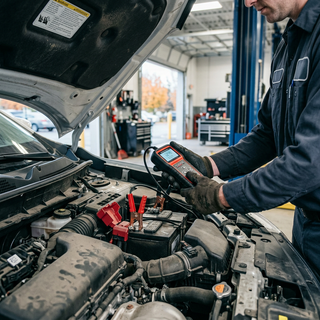
A failing car battery displays observable warning signs, including sluggish engine cranking, dimming headlights during engine idle, audible clicking when turning the ignition key, visible terminal corrosion, and a static charge dropping below 12.4 volts. When starting the engine feels hesitant or electrical accessories flicker during startup, the battery is losing its capacity to sustain adequate electrical load and requires a professional conductance test.

https://www.youtube.com/watch?v=4M8i9Q19yW0

Under normal operating conditions, a standard vehicle battery functions dependably for three to five years. However, chemical degradation inside the battery cells occurs continuously due to seasonal temperature swings and electrical demand. Internal lead plates gradually sulphate, reducing the active surface area needed to generate starting current. As this chemical wear progresses, the starter motor receives less electrical amperage, forcing it to work harder and turn the engine over more slowly.

Recognizing these subtle cues early prevents complete starting failure during morning commutes or winter travel. Our technicians routinely observe that vehicle owners who schedule a battery check at the first sign of a slow crank avoid emergency towing situations later in the season. Checking terminal connections for tightness and testing the battery charge during routine maintenance keeps your electrical system operating smoothly. For trusted battery testing or professional component evaluations, drivers can visit our service center location on Pennsylvania Ave or give our service department a direct call at (330) 462-7578 to speak with a technician.

Table of Contents

7 Signs Your Car Battery Might Not Survive Cold Winter Weather

A car battery likely will not survive severe winter conditions if it exhibits slow cranking, dim exterior lights, terminal corrosion, a swollen case, an operating age over three years, electrical glitches, or repeated jump-starts. Freezing temperatures reduce available chemical power by up to 50 percent at 0°F while simultaneously requiring roughly 30 percent more electrical energy to turn over cold, thickened engine oil.

  1. Sluggish Engine Crank: When turning the key or pressing the start button, the engine turns over slowly or hesitates before firing up.
  2. Dimming Headlights and Interior Lighting: Headlights appear noticeably dim when idling at a stoplight but brighten when pressing the accelerator pedal.
  3. White Powder or Corrosion on Terminals: Crusty white, blue, or greenish powder builds up around the battery posts, restricting current flow between the terminals and battery cables.
  4. Battery Age Exceeding Three Years: Conventional flooded batteries past their third year of service lose significant internal capacity and struggle under winter thermal stress.
  5. Swollen or Bulging Battery Case: Severe heat exposure from past summer driving causes the outer plastic case to swell, indicating internal structural damage.
  6. Sporadic Electrical Glitches: Digital displays reset unexpectedly, power windows operate slowly, or instrument cluster warning symbols illuminate during start-up.
  7. Repeated Jump-Starts Required: Needing more than one jump-start within a week indicates the battery can no longer hold a charge while parked.

Drivers navigating the suburban routes and rolling terrain along State Route 170 in Calcutta frequently subject vehicle charging systems to short, intermittent trips. These brief drives often do not allow the alternator sufficient time to fully replenish the charge used during engine ignition, especially when operating heavy winter loads like heated seats, defrosters, and cabin blowers. Replacing an aging unit proactively ensures uninterrupted starting reliability throughout sub-freezing weather. Vehicle owners can easily arrange routine battery testing and maintenance or order a genuine Motorcraft battery online to maintain factory-grade starting power.

How Do Voltage Readings and CCA Ratings Reveal Battery Health?

A fully charged, healthy 12-volt battery registers between 12.6 and 12.8 volts when tested at rest, whereas a reading of 12.4 volts represents a partial 75 percent charge state and anything below 12.2 volts indicates a discharged battery cell. Cold Cranking Amps ( CCA) measure the exact discharge current a battery delivers for 30 seconds at 0°F without dropping below 7.2 volts, serving as the essential industry benchmark for winter starting performance.

Battery Metric Healthy Target Reading Weak / Warning Reading Critical Failure Threshold
Static Resting Voltage 12.6V to 12.8V 12.2V to 12.4V Below 12.0V
Starting Voltage Drop Stays above 10.0V Drops to 9.0V–9.5V Drops below 8.5V
CCA Output Percentage 90% to 100% of rated CCA 60% to 80% of rated CCA Below 50% of rated CCA

Understanding the technical distinction between Cold Cranking Amps ( CCA) and standard Cranking Amps ( CA) is vital when selecting a replacement component. While CCA is tested at 0°F to evaluate extreme cold capability, Cranking Amps ( CA) are measured at 32°F. A battery displaying a high CA rating may seem impressive on paper, but it might lack the necessary CCA rating required to crank an engine during zero-degree winter mornings.

In the river valley climate surrounding East Liverpool, sub-zero winter blasts rapidly expose hidden battery weaknesses. Professional technicians use specialized conductance testers to evaluate both static voltage and internal resistance. This diagnostic process determines whether a battery can deliver its advertised CCA under heavy electrical load or if internal plate degradation warrants immediate replacement before winter begins.

Is the Battery or the Alternator Causing Your Electrical Issues?

Determining whether electrical issues stem from a bad battery or a failing alternator is achieved through a jump-start test: if the engine starts with jumper cables and continues running smoothly after removing them, the alternator is generating adequate voltage and the battery is failing; if the engine stalls shortly after cable removal, the alternator is failing to power the ignition system.

A healthy alternator delivers between 13.8 and 14.7 volts while the engine runs, supplying operational electricity to cabin components while simultaneously recharging the battery. When an alternator develops failing internal diodes or worn brushes, it can create a partial charging deficiency or produce an AC voltage ripple that causes dash lights to flicker, headlights to dim during driving, and the battery warning light to illuminate on the instrument panel.

Conversely, a failing battery fails to accept or retain the electrical charge sent by a functional alternator. Continuous short-distance driving, loose terminal clamps, or a parasitic electrical draw—such as an electronic module remaining active after key-off—can drain a healthy battery overnight, mimicking alternator failure. Advanced Ford models equipped with a 3.5L EcoBoost V6 or a 2.3L engine feature sophisticated battery monitoring sensors that measure charging system output, ensuring accurate diagnosis during routine service checks.

What Is the Price Difference and Advantage of AGM vs Standard Lead-Acid Batteries?

Absorbed Glass Mat ( AGM) batteries cost roughly 40 to 100 percent more upfront than standard flooded lead-acid batteries—pricing varies by battery type and availability—but deliver up to three times longer operating life and superior cold-weather resistance. AGM designs suspend liquid electrolyte within saturated fiberglass mat separators, creating a spill-proof, highly vibration-resistant battery engineered for modern high-drain vehicles.

Standard Lead-Acid: [ $100 - $180 ] --> 3-5 Year Lifespan --> Basic Electrical Duty
Absorbed Glass Mat: [ $200 - $350 ] --> 4-7 Year Lifespan --> Start-Stop & Heavy Electronics

The structural construction of AGM technology provides distinct performance benefits over traditional flooded options:

  • Fast Recharging Capability: Recharges up to five times faster than standard lead-acid units, recovering quickly after cold-engine starts.
  • Deep Discharge Resistance: Tolerates repeated deep discharging without suffering permanent loss of overall storage capacity.
  • Enhanced Vibration Resistance: Glass mat construction holds internal lead plates firmly in place, protecting against road vibration damage.
  • Sub-Zero Cranking Power: Delivers reliable starting current in extreme freezing weather where conventional fluid electrolytes slow down.
  • Spill-Proof Sealed Design: Eliminates free liquid acid, preventing acid leaks and reducing terminal oxidation risk.

Modern crossover models like the Ford Escape featuring a 1.5L engine and auto start-stop technology require the durable charge acceptance of an AGM battery. Installing a conventional flooded battery in a vehicle designed for AGM specs leads to rapid battery degradation and potential electronic system errors. Investing in an AGM replacement protects sensitive vehicle modules and delivers consistent starting power through several consecutive winters.

Common Questions About Battery Testing and Charger Costs

Q: How much does a quality car battery charger cost?

Basic manual trickle chargers cost between $25 and $50, while multi-stage smart battery maintainers equipped with automatic float modes cost between $60 and $150. A smart charger monitors internal battery voltage, automatically adjusting charge rates to prevent overcharging while maintaining proper static voltage during extended parking periods.

Q: What is the main operational difference between CCA and CA ratings?

Cold Cranking Amps ( CCA) measure the electrical current a battery supplies for 30 seconds at 0°F without dropping below 7.2 volts, evaluating extreme winter starting capability. Cranking Amps ( CA) measure current output under identical test conditions at 32°F, representing mild-weather performance rather than severe cold resilience.

Q: Why does winter weather accelerate car battery failure?

Summer heat evaporates internal electrolyte liquid and accelerates plate grid corrosion, weakening the battery's internal structure. When winter arrives, sub-freezing temperatures slow internal chemical reactions and thicken engine oil, placing extreme physical demand on the previously damaged battery and causing sudden starting failure.

Q: Can a parasitic electrical draw drain a healthy battery overnight?

Yes, an active parasitic draw caused by a sticking relay, damaged glovebox light switch, or faulty electronic module can continuously drain electrical current after the key is turned off. This steady discharge depletes static battery voltage below 12.2 volts, preventing the engine from cranking the following morning.

Q: How long should you drive to help maintain a battery's charge in cold weather?

Driving continuously for at least 30 minutes once or twice a week helps the alternator replace the substantial charge used during cold-engine startup. Frequent short trips lasting under 10 minutes do not provide enough runtime for full charge recovery, especially when running high-draw accessories like defrosters and heated seats.

How to Schedule Winter Battery Service

Scheduling a professional battery inspection before sub-zero temperatures arrive protects your vehicle's starting system and prevents unexpected breakdowns during severe weather. Certified technicians test static voltage, measure CCA output, inspect terminal connections, and confirm alternator charging rates using factory-calibrated diagnostic equipment.

Replacing a weakened battery with a factory-specified Motorcraft component backed by a 24-month/unlimited-mileage warranty provides complete starting confidence. Vehicle owners can drop by our East Liverpool service facility, contact our team directly at (330) 462-7578, or schedule a service appointment online to keep their vehicle winter-ready.



© 2026 Tri State Ford. All rights reserved.

Vehicle specification data © JATO Dynamics Limited.

Car Battery Health Tips in East Liverpool OH | Tri State Ford
Posted in:

Related Posts

3

How Do You Prepare Your Car for Winter?

To prepare your car for winter, inspect the battery charge, adjust tire pressure to factory specifications, verify tire tread depth is at least 6/32 of an inch, flush engine coolant with a sub-zero freeze-protected mixture, install winter wiper blades with sub-zero washer fluid, and test your heating and defroster systems. Taking these preventative maintenance steps before freezing temperatures arrive prevents unexpected vehicle breakdowns and ensures maximum traction on icy roads. Sub-freezing temperatures put intense physical strain on every mechanical system in your vehicle. Engine oil thickens, battery chemical reactions slow down, and air pressure inside your tires drops continuously as outdoor temperatures fall. Drivers navigating the riverfront bluffs and steep hills of East Liverpool face unique winter challenges where slick roads require immediate braking response and consistent wheel grip. Proper seasonal vehicle preparation transforms how your vehicle handles slush, black ice, and freezing rain. Systematically checking key components ahead of the first winter storm preserves safety systems, protects critical engine components from costly damage, and gives you complete confidence behind the wheel all season long. You can stop by our dealership location or give our service department (330) 462-7578 a call to confirm your vehicle is ready for the cold weather ahead. Table of Contents What Key Vehicle Components Should Be Inspected Before the First Snow? What Is the Ideal Tire Tread Depth and Pressure for Winter Driving Conditions? What Battery Voltage and Cold Cranking Amps Are Required for Cold Weather? Which Winter Preparation Maintenance Tasks Can You Do at Home at Home? Quick Answers to Common Winter Vehicle Maintenance Questions Schedule Your Pre-Winter Inspection Today What Key Vehicle Components Should Be Inspected Before the First Snow? Before the first snowfall, inspect the vehicle battery, brake system, tire tread and pressure, engine coolant concentration, serpentine belts, radiator hoses, wiper blades, and exterior lighting. Evaluating these core mechanical systems ensures your vehicle maintains traction, visibility, and reliable engine operation during severe winter weather. Cold weather causes rubber materials to harden and contract, which accelerates cracking on aging serpentine belts and radiator hoses. A worn belt that snaps in sub-zero weather cuts power to your alternator and water pump, leading to sudden engine failure. Likewise, engine coolant must maintain a precise 50/50 mixture of antifreeze and water to protect the engine block from cracking when temperatures drop well below freezing. Brake performance demands thorough inspection before winter arrives. Technicians measure friction lining to verify at least 3/32 inch of pad material remains and inspect brake rotors for severe rust pitting or scoring. Advanced driver-assist technologies and drive modes rely on healthy mechanical components to function properly. For instance, Ford Explorer models equipped with Intelligent 4WD feature a Terrain Management System with Slippery mode and Deep Snow/Sand settings that modulate engine torque and transmission shift points to reduce wheel spin on packed snow [1.1.7]. Battery and charging system voltage output Brake pad lining thickness and rotor surface condition Coolant freeze-point protection and hose elasticity Serpentine drive belt tension and wear Headlight, tail light, and turn signal clarity Windshield wiper blade condition and washer fluid level If you prefer to perform maintenance repairs yourself, you can easily order OEM Ford parts online directly through our service portal. For drivers planning ahead for future seasonal travel needs, exploring the custom factory order options allows you to select winter-ready features like heated seats, remote start, and all-wheel drive straight from the factory. What Is the Ideal Tire Tread Depth and Pressure for Winter Driving Conditions? The ideal tire tread depth for winter driving is 6/32 of an inch or deeper on winter tires and at least 4/32 of an inch on all-season tires, maintained at the vehicle manufacturer's recommended cold inflation pressure listed on the driver-door placard. Tire pressure drops approximately 1 to 2 PSI for every 10-degree Fahrenheit decrease in outside temperature. Driving on underinflated tires compromises vehicle handling, reduces fuel efficiency, and causes uneven tread wear. Pressure checks must always be conducted when the tires are cold, meaning the vehicle has been parked for at least three hours. Never adjust tire inflation to the maximum pressure stamped on the tire sidewall, as that number reflects maximum load capacity rather than your vehicle's engineered inflation spec. Tread depth directly determines how effectively a tire channels slush, snow, and water away from the contact patch. While tires are legally considered worn out at 2/32 of an inch, that minimal tread depth cannot clear snow or prevent hydroplaning on wet highways. Suburban commuters driving daily routes through Calcutta along State Route 170 encounter mixed slush and packed snow where deep tread grooves are vital for maintaining steering control and stopping distance. To ensure your tires are prepared for slippery road surfaces, you can schedule a service appointment online to have our technicians check tire pressure, perform a computerized wheel alignment, and rotate your tires. What Battery Voltage and Cold Cranking Amps Are Required for Cold Weather? A healthy 12-volt automotive battery must maintain a resting voltage of 12.6 volts or higher and meet or exceed the factory rating for cold cranking amps to start reliably in freezing weather. Cold weather places a double burden on your electrical starting system. Freezing temperatures slow the internal chemical reaction inside lead-acid battery cells, reducing available cranking power by as much as 50 percent at zero degrees Fahrenheit. Simultaneously, low temperatures cause engine oil to thicken, which demands significantly more electrical current from the battery to turn over the crankshaft. Battery Health Metric Ideal Specification Cold Weather Impact Resting Voltage 12.6 volts or higher Dropping below 12.4V indicates a weak charge Charging Voltage 13.8 to 14.7 volts Alternator output must maintain charge under heater load Cold Cranking Amps Matches OEM specification Cold reduces effective amperage output significantly Testing your battery's state of charge and reserve capacity before winter identifies weak cell plates before you get stranded in a cold parking lot. Technicians clean corrosion from battery terminals, inspect hold-down brackets, and verify that the alternator charges between 13.8 and 14.7 volts while powering high-draw winter accessories like defrosters and heated seats. You can learn more about our comprehensive battery testing and battery replacement maintenance offerings to ensure your vehicle starts on the coldest mornings. Which Winter Preparation Maintenance Tasks Can You Do at Home at Home? You can check tire inflation pressure, measure tread depth using a coin, inspect wiper blade rubber for tearing, top off freezing-rated washer fluid, visually inspect belts and hoses for cracks, and test exterior safety lights at home without specialized tools. Performing a visual safety audit takes less than twenty minutes in your driveway: The Quarter Test: Insert a quarter upside down into the tread grooves of your tires. If the top of Washington's head is covered by the tread, you have at least 4/32 of an inch of tread depth remaining. Wiper and Washer Inspection: Lift each wiper arm and slide your finger along the rubber edge to feel for tears or stiff, cracked edges. Fill the windshield washer reservoir with winter-grade fluid rated for sub-zero temperatures. Belt and Hose Visual Check: With the engine off and cold, press down on engine drive belts to verify tension and look for fraying or longitudinal cracks along the V-ribs. Squeeze radiator hoses to ensure they feel firm rather than soft or spongy. Lighting Audit: Turn on your headlights, hazard flashers, and parking lights, then walk around the vehicle to verify every bulb illuminates clearly through clean lenses. Emergency Kit Setup: Pack an emergency kit containing jumper cables, an ice scraper, a flashlight, heavy blankets, bottled water, and sand or cat litter for tire traction. Quick Answers to Common Winter Vehicle Maintenance Questions Q: At what temperature do all-season tires lose flexibility and traction? All-season tire tread compounds begin to harden and lose elasticity at temperatures below 45 degrees Fahrenheit. As the rubber stiffens, it loses its ability to conform to small road imperfections, which significantly reduces traction on dry and wet pavement even before snow or ice falls. Specialized winter tires utilize flexible silica compounds designed specifically to remain pliable in sub-freezing temperatures. Q: Is a professional winter vehicle inspection worth the cost? A professional winter vehicle inspection identifies hidden mechanical vulnerabilities such as weak battery cell voltage, hairline belt cracks, and uneven brake lining wear before subzero weather leaves you stranded. Factory-trained technicians use specialized diagnostic tools to load-test electrical systems, measure coolant freeze points, and evaluate suspension components that cannot be adequately checked at home. Q: How do you inspect vehicle brakes for winter readiness? Inspect brake pads to confirm at least 3/32 inch of friction lining remains, check rotors for severe rust pitting or scoring, and verify that the brake fluid is clean and filled to the reservoir line. Clean brake fluid prevents internal moisture accumulation that can freeze inside hydraulic lines during extreme cold spells, ensuring smooth and consistent pedal feel. Q: What items should be in a winter emergency vehicle kit? A winter emergency kit should include heavy blankets, jumper cables, a flashlight with extra batteries, an ice scraper with a snow brush, a collapsible shovel, traction sand or kitty litter, non-perishable snacks, drinking water, and a mobile phone charger. Keeping these items in your cargo area ensures you remain safe and warm if your vehicle experiences a roadside delay during severe weather. Q: What should you do if your vehicle stalls during a winter storm? Stay inside your vehicle, turn on interior lights, and tie a bright marker cloth to your antenna or window. Check that your exhaust pipe remains completely clear of snow banks to prevent dangerous carbon monoxide gas from backing up into the cabin, and run the engine intermittently just long enough to keep warm. If you need emergency roadside service, you can reach Ford Roadside Assistance at 1-800-241-3673 for 24/7 towing, battery jump-starts, and flat tire assistance. You can also view our current Ford service specials for routine winter care. Schedule Your Pre-Winter Inspection Today Schedule a comprehensive pre-winter vehicle inspection at Tri State Ford to ensure your car, truck, or SUV is fully prepared for winter driving conditions. Taking care of routine maintenance before snow hits protects your vehicle's long-term reliability and keeps your family safe on slick roads. Our factory-trained technicians test battery health, evaluate brake system wear, analyze tire tread depth, flush essential engine fluids, and install fresh wiper blades using genuine OEM parts. We provide transparent service recommendations so you can make informed decisions about your vehicle's care. Visit our service center at 1503 Pennsylvania Ave, East Liverpool, OH 43920 or give our service team a quick call at (330) 462-7578 to reserve your inspection appointment before the first winter freeze. © 2026 Tri State Ford. All rights reserved. Vehicle specification data © JATO Dynamics Limited. Winter Car Prep in East Liverpool OH | Tri State Ford

5

What Is the Difference Between Code Reading and Auto Diagnosis?

Code reading retrieves an alphanumeric diagnostic trouble code generated by a vehicle's computer when a sensor registers an out-of-spec reading, whereas auto diagnosis is the hands-on mechanical and electrical testing required to identify the root cause of that code. A trouble code identifies the affected monitoring circuit or system, but only a full diagnosis reveals whether the failure stems from a sensor, wiring, mechanical defect, or environmental fault. When a check engine light illuminates, many drivers stop by a local store or hook up a basic scanner to read the stored code. According to the U.S. Environmental Protection Agency standards for On-Board Diagnostics, an OBD-II diagnostic trouble code reports that the onboard monitoring system detected a fault or an out-of-range condition. However, by itself, the code does not confirm which specific component failed. Code reading is simply the first informational step in a multi-step troubleshooting sequence. For drivers navigating daily stop-and-go commutes along State Route 170 in Calcutta, engine management systems process millions of data points every mile. A single sensor variance might trigger a code, but replacing that sensor immediately often wastes money if the underlying issue is a vacuum leak, a corroded ground wire, or mechanical wear. Diagnosing a vehicle requires interpreting live operational metrics, evaluating electrical integrity, and inspecting mechanical assemblies. Our service department at Tri State Ford located at 1503 Pennsylvania Ave, East Liverpool, OH 43920 combines factory diagnostic software with physical testing to isolate the exact cause before any parts are replaced. Drivers can easily reach our team by giving us a quick call or getting directions to our service center for complete diagnostic support. Table of Contents Why Doesn't an OBD-II Trouble Code Tell You Exactly Which Part Is Faulty? Auto Parts Store Code Reads vs. Professional Full Diagnostic Scans What Technical Steps, Live Data, and Pinpoint Testing Are Involved in Proper Diagnosis? How Many Drive Cycles Are Needed to Clear a Permanent OBD-II Code? How Much Does a Diagnostic Fee Cost vs. the Price of a DIY Scanner? Frequently Asked Questions About Vehicle Diagnostics and Error Codes Schedule Accurate Vehicle Diagnostics in East Liverpool Why Doesn't an OBD-II Trouble Code Tell You Exactly Which Part Is Faulty? An OBD-II diagnostic trouble code indicates that a system, sensor, or circuit is operating outside predetermined parameters, not that a specific component has physically broken. The vehicle control computer monitors electrical signals and performance thresholds, logging a code whenever those signals cross an abnormal boundary. Automotive computer systems rely on standardized trouble-code structures established under OBD-II trouble-code guidance. A classic example is code P0420, which indicates that the catalyst-efficiency monitor on Bank 1 detected catalytic performance below its minimum threshold. A superficial reading of this code leads many vehicle owners to buy an expensive replacement catalytic converter. However, documented diagnostic procedures demonstrate that P0420 can be caused by an upstream oxygen sensor fault, damaged sensor wiring, an exhaust manifold leak, or unburned fuel entering the exhaust stream from an engine misfire. Replacing parts solely based on a code string leads to diagnostic guesswork and unnecessary repair expenses. When an engine computer senses abnormal readings, it records the fault based on electrical feedback. If a wire rubbing against an engine bracket loses its insulation, the voltage drop causes the computer to report a sensor failure even though the sensor itself is completely operational. To avoid replacing functional components, technicians treat the code as an invitation to investigate rather than a directive to install new parts. Our certified service technicians review manufacturer service bulletins, analyze system logic, and test secondary components before confirming a repair plan. Drivers experiencing persistent warning lights can easily schedule a service appointment to receive a comprehensive diagnostic evaluation. Auto Parts Store Code Reads vs. Professional Full Diagnostic Scans An auto parts store code read uses a basic handheld device to pull generic Powertrain codes from the main engine computer, whereas a professional full diagnostic scan reads all electronic modules and analyzes active system data streams. Free code-scan services offered at retail parts counters only access generic OBD-II engine codes stored in the primary engine control unit. These handheld tools cannot communicate with body control modules, anti-lock braking systems ( ABS), supplemental restraint systems ( SRS), or electronic transmission control units. Furthermore, simple code readers cannot access freeze-frame data or monitor bidirectional component controls. In contrast, professional scan equipment establishes deep communication with every computer network in the vehicle. Professional equipment reads manufacturer-specific trouble codes, retrieves freeze-frame snapshots recorded at the exact moment of failure, and allows technicians to perform active component tests—such as commanding a fuel pump relay or solenoid valve to cycle on command. When a vehicle requires replacement items following a confirmed diagnosis, installing genuine OEM parts ensures that component specifications match factory electrical tolerances. Our team can help you order genuine Ford parts engineered specifically for your vehicle's electronic networks. What Technical Steps, Live Data, and Pinpoint Testing Are Involved in Proper Diagnosis? Proper automotive diagnosis follows a systematic sequence: code retrieval, freeze-frame analysis, technical service bulletin review, visual inspection, live data stream monitoring, and physical pinpoint electrical testing. A complete diagnostic procedure begins by saving stored fault codes and analyzing freeze-frame data. Freeze-frame data captures engine speed, vehicle speed, engine load, and coolant temperature at the precise instant the diagnostic trouble code was triggered. This snapshot reveals whether the issue occurs during cold starts, under heavy load on steep riverfront bluffs in East Liverpool, or while cruising on open highways. Next, technicians monitor live data streams while the vehicle is running. Live data displays dynamic real-time sensor parameters, including short-term fuel trim, long-term fuel trim, manifold absolute pressure, and oxygen sensor voltage switching speeds. For instance, comparing upstream and downstream oxygen sensor signals on a live graph helps distinguish a degrading catalytic converter from an oxygen sensor output fault. Once live data narrows down the failure path, technicians execute pinpoint electrical testing using digital multimeters, back-probing pins, smoke machines, and oscilloscopes. Pinpoint testing verifies circuit continuity, measures voltage drops across connectors, checks ground integrity, and inspects vacuum lines for tiny leaks. In some cases, verifying dynamic performance under load requires taking the vehicle on a carefully controlled road test; our service clients frequently request scheduling a road test evaluation with a technician to replicate intermittent symptoms under actual driving conditions. How Many Drive Cycles Are Needed to Clear a Permanent OBD-II Code? Clearing a permanent OBD-II code typically requires completing one to three specific drive cycles without the onboard computer detecting any recurring faults. Permanent diagnostic trouble codes were introduced in modern OBD-II protocols to prevent vehicles from passing emissions inspections simply by disconnecting the battery or manually clearing code memory with a scan tool. Unlike standard pending or stored codes, permanent codes cannot be erased using a handheld scanner or by removing power from the engine control unit. To clear a permanent code, the vehicle's engine controller must run its internal self-diagnostic monitor and verify that the underlying fault is fully resolved. A qualifying drive cycle requires specific vehicle operating conditions prescribed by the manufacturer, which usually include: Cold engine start-up with coolant temperatures between specified limits Smooth acceleration to highway speeds between 45 and 65 mph Steady-state cruising for 10 to 15 minutes to allow monitor execution Deceleration without touching the brake pedal to test engine braking signals Extended idling periods in park or drive to complete evaporative system checks Once the internal monitor runs and completes successfully during consecutive drive cycles, the computer automatically erases the permanent code from its internal memory. How Much Does a Diagnostic Fee Cost vs. the Price of a DIY Scanner? A professional car diagnostic fee can vary, so contact us for current pricing, while an entry-level DIY OBD-II scanner is typically more affordable. Purchasing a low-cost DIY scanner is worthwhile for vehicle owners who want to read initial error codes, monitor basic engine parameters, or track overall vehicle maintenance status. However, a consumer-grade scanner lacks the advanced hardware, manufacturer software access, and guided testing trees required to pinpoint complex electrical or mechanical faults. While paying a professional diagnostic fee represents an upfront investment, it prevents the higher costs associated with replacing functional parts through trial and error. Installing an expensive sensor based on a basic code read—only to discover the light remains on due to a broken wiring connector—can cost significantly more than paying for an initial expert diagnosis. Professional diagnostic fees cover not only access to multi-thousand-dollar scan equipment and high-speed scope tools, but also the extensive training and labor time of certified technicians who interpret complex live data streams and perform manual circuit testing. Frequently Asked Questions About Vehicle Diagnostics and Error Codes Q: Can a low car battery trigger false OBD-II trouble codes? Yes, voltage fluctuations caused by a failing battery, weak alternator, or corroded battery terminal can cause electronic control units to log multiple false diagnostic trouble codes. Automotive computers require a steady voltage supply to interpret sensor signals accurately. When system voltage drops during engine cranking, sensors may report out-of-range readings that trigger codes across unrelated systems, such as transmission shift solenoids or throttle position sensors. Testing battery health and charging output is a standard preliminary step before condemning expensive electronic sensors. Q: What happens if I drive my car with the check engine light on? Driving with a steady check engine light is generally safe for short distances to reach a service facility, provided the vehicle displays no severe driveability issues like stalling, violent shaking, or loss of braking power. However, continuing to drive long-term with an active light can cause secondary damage, such as unburned fuel melting internal catalytic converter elements. If the check engine light is flashing rapidly, it indicates a severe engine misfire requiring immediate pulling over and stopping the engine to prevent catastrophic catalytic and powertrain damage. Q: Why does my check engine light turn on and off intermittently? An intermittent check engine light occurs when a fault is triggered only under specific operational conditions, such as high ambient humidity, cold engine starts, or heavy highway load. The computer logs a pending code when the condition is detected during one drive cycle. If the condition does not recur in subsequent drive cycles, the light may turn off, but the history code remains stored in the computer's memory. Intermittent faults are best diagnosed by examining stored freeze-frame data to identify the exact environmental conditions present during failure. Q: Will clearing a trouble code fix the underlying mechanical issue? Clearing a trouble code turns off the dashboard light and erases stored fault memory, but it does not fix the mechanical, electrical, or sensor defect that caused the code. Once the computer completes its next self-test monitor under driving conditions that trigger the fault, the check engine light will turn back on. Resetting codes without performing repairs is ineffective for passing state emissions inspections because clearing memory resets all system readiness monitors to an incomplete status. Q: How do factory Technical Service Bulletins help in diagnosing error codes? Technical Service Bulletins ( TSBs) are official diagnostic advisories issued by vehicle manufacturers to address recurring issues, software glitches, or known component failures across specific vehicle lines. When a technician retrieves a trouble code, checking TSB databases helps identify if the vehicle requires a re-flashed engine control software update, an updated wiring harness routing, or a revised replacement component. Leveraging TSB guidance reduces diagnostic time and ensures repairs follow updated engineering specifications. Schedule Accurate Vehicle Diagnostics in East Liverpool Understanding the difference between a quick code read and a thorough diagnostic scan protects your vehicle's performance and saves money on unnecessary repairs. A diagnostic code provides a clue, but accurate repairs require professional tools, live data analysis, and expert electrical testing. Our service center at Tri State Ford is fully equipped with factory-grade diagnostic software and experienced technicians ready to resolve your check engine light issues correctly the first time. Visit our location at 1503 Pennsylvania Ave, East Liverpool, OH 43920 or give our service department a quick call to schedule your service appointment. You can also get directions to our East Liverpool service center for reliable, transparent vehicle care. © 2026 Tri State Ford. All rights reserved. Auto Diagnostic Services in East Liverpool OH | Tri State Ford

4

Why Are Modern Vehicles So Difficult to Diagnose?

Modern vehicles are increasingly difficult to diagnose because they function as complex, interconnected computer networks rather than isolated mechanical systems. Today’s automobiles rely on dozens of electronic control units sharing real-time data across high-speed communication buses. When a single sensor or component experiences a glitch, software conflict, or voltage drop, the fault cascades across multiple systems. Pinpointing the root cause requires specialized scan tools, secure gateway access, and systematic electrical testing rather than simple code reading. In past decades, mechanical failures were largely straightforward. A worn belt squeaked, a failed alternator stopped charging the battery, and a broken cable prevented a throttle body from opening. Troubleshooting involved visual inspections, basic pressure gauges, and simple multimeter tests. Today, mechanical components are monitored and actuated by sophisticated microprocessors. An engine misfire may not stem from a bad spark plug; it could be caused by a software calibration discrepancy, an intermittent network communication fault, or a security gateway restriction. This architectural shift impacts vehicle owners during everyday driving. Suburban commuters in Calcutta driving along State Route 170 during cold winter mornings frequently experience situations where a sudden drop in battery voltage triggers half a dozen seemingly unrelated dashboard warnings. Dissecting those errors requires distinguishing between true hardware failures and temporary software communication glitches. Acc urate diagnostic work relies on specialized testing equipment, updated manufacturer software, and deep electrical knowledge. Drivers seeking professional evaluation can visit our service center location or contact our team directly at (330) 462-7578 to speak with a factory-trained technician. Table of Contents How Do Dozens of Electronic Control Units (ECUs) Increase Diagnostic Complexity? Why Can a Single Warning Light Trace to Multiple Networked Components? Why Do Proprietary Secure Gateways and Software Limits Restrict Independent Repairs? Why Are Professional Diagnostic Equipment Costs and Shop Service Fees Rising? Can DIY Smartphone OBD-II Adapters Handle Modern Vehicle Diagnostics? What Questions Do Drivers Ask Most About Modern Vehicle Diagnostics? How Do Dozens of Electronic Control Units (ECUs) Increase Diagnostic Complexity? Electronic control units increase diagnostic complexity because a modern vehicle relies on 80 to 150 dedicated microprocessors that must constantly exchange operational data over specialized communication networks. Diagnosing a vehicle requires checking network integrity, communication protocols, and software compatibility across multiple units rather than inspecting a single localized module. A modern vehicle functions as a distributed computing network on wheels. Individual modules govern specific domains throughout the chassis: Powertrain control modules manage fuel injection, ignition timing, and turbocharger boost. Transmission control modules calculate shift points based on acceleration and engine load. Body control modules regulate lighting, door locks, power windows, and climate control systems. Safety modules control airbag deployment, seatbelt pretensioners, and anti-lock braking systems. These modules communicate across multiple network architectures designed for different data speed requirements. High-speed Controller Area Network (CAN) buses operate at data rates between 1 and 5 Mbps to handle critical powertrain and chassis communications. Lower-speed Local Interconnect Network (LIN) buses operate at roughly 19.2 kbps to manage less critical secondary components like side mirrors, power seats, and window switches. Advanced vehicles also incorporate Automotive Ethernet to handle high-bandwidth data demands required by infotainment systems and advanced driver assistance systems. +-------------------------------------------------------------------+ | Modern Vehicle Network Topology | +-------------------------------------------------------------------+ | Automotive Ethernet (High Bandwidth: ADAS / Cameras / Radar) | | +-------------------------------------------------------------+ | | | CAN Bus (1 - 5 Mbps: Engine, Transmission, ABS, Airbags) | | | | +---------------------------------------------------------+ | | | | | LIN Bus (19.2 kbps: Doors, Seats, Windows, Mirrors) | | | | | +---------------------------------------------------------+ | | | +-------------------------------------------------------------+ | +-------------------------------------------------------------------+ Technicians use protocols such as Unified Diagnostic Services (UDS) and Diagnostics over Internet Protocol (DoIP) to interface with these networks. When troubleshooting an issue, a technician must evaluate whether a control unit is failing internally, experiencing a wiring connection fault, or missing required software updates. Because modules rely on secure bootloaders and verified software image states, an unresolved programming state can immobilize a vehicle just as effectively as a broken mechanical shaft. Why Can a Single Warning Light Trace to Multiple Networked Components? A single warning light can stem from multiple networked components because modern electronic control units share sensor readings across a unified communication bus. A malfunction in one sensor forces multiple downstream systems to disable dependent features and set secondary diagnostic trouble codes. When a check engine light or traction control light illuminates on a Ford F-150 or Ford Escape, drivers often expect a single fault code pointing directly to a replacement part, but technicians frequently discover a cascade of secondary codes caused by a single voltage drop or network communication interruption. Because modules rely on shared sensor input, a single bad data point impacts multiple vehicle operations simultaneously. Consider a failing wheel speed sensor. In an older vehicle, a broken sensor simply disabled the anti-lock brakes and turned on an ABS light. In a contemporary vehicle, that same wheel speed sensor feeds data to the following systems: Anti-lock braking module for emergency stopping control Electronic stability control for cornering management Transmission control unit for gear selection and torque management Steering control module for electric power steering assistance Adaptive cruise control and collision avoidance systems A signal disruption from that single sensor causes every dependent module to log a loss-of-communication code. A basic code scanner might show ten different fault codes across five separate control modules. A skilled technician must analyze freeze-frame data, study network wiring diagrams, and test component voltages to identify the primary failure point rather than replacing every module showing an error code. When component replacement is necessary, installing genuine OEM replacement parts ensures that sensor resistance values and response speeds match factory network specifications perfectly. Why Do Proprietary Secure Gateways and Software Limits Restrict Independent Repairs? Proprietary secure gateways restrict diagnostic access by acting as electronic firewalls between the diagnostic port and critical vehicle networks to prevent cyber threats and unauthorized module alterations. Unauthenticated scan tools are limited to basic read-only fault codes and cannot clear codes, run active actuator tests, or recalibrate control modules. As vehicles became more connected through cellular modems, Wi-Fi, and Bluetooth, manufacturers introduced Secure Gateway (SGW) modules to safeguard vehicle control networks against remote hacking. The gateway allows generic scan tools to read basic diagnostic trouble codes, but it blocks command signals that alter vehicle behavior unless the diagnostic tool and technician are authenticated through approved software platforms. Without verified gateway access, a technician cannot perform routine service commands, including: Resetting electronic parking brake service modes during brake pad replacement Performing active actuator tests to verify fuel pump or solenoid operation Executing steering angle sensor calibrations after an alignment Clearing persistent fault codes after completing physical repairs Performing module reflashing and software recalibrations Advanced electric vehicles like the Ford Mustang Mach-E require specialized, model-specific software procedures to verify high-voltage safety interlocks, monitor thermal management systems, and perform battery module balancing. Furthermore, routine recall service updates often require updating software states directly through factory servers. When complex system resets or recalibrations are required, drivers can schedule a service appointment online to ensure their vehicle receives authorized software programming. Why Are Professional Diagnostic Equipment Costs and Shop Service Fees Rising? Diagnostic service fees have risen because accurately troubleshooting high-tech vehicles requires professional scan tools costing between $3,000 and $15,000 per unit, annual manufacturer software subscriptions, and hours of hands-on electrical testing by master technicians. Diagnostic fees reflect the specialized equipment, software licensing, and technical expertise necessary to prevent trial-and-error part replacement. A modern automotive repair facility must invest continuously in diagnostic infrastructure. Beyond purchasing high-end diagnostic consoles, shops pay thousands of dollars annually for access to manufacturer-specific software licensing, technical service bulletins, and wiring schematics. Technicians also utilize digital storage oscilloscopes to view high-speed electrical signals, pin-out boxes to test harness integrity, and precision power supplies to maintain stable voltage during module programming. +-------------------------------------------------------------------+ | Diagnostic Process: Code Reading vs True Diagnosis | +-------------------------------------------------------------------+ | Generic Code Reading: | | [Plug in Tool] -> [Read DTC P0300] -> [Guess / Replace Spark Plug] | +-------------------------------------------------------------------+ | Professional Diagnostic Procedure: | | 1. Scan all network ECUs & record freeze-frame data | | 2. Authenticate through Secure Gateway (SGW) firewall | | 3. Perform live data logging & digital oscilloscope waveform test| | 4. Conduct voltage-drop tests on harness & ground connections | | 5. Execute module reflash / sensor recalibration if required | +-------------------------------------------------------------------+ Physical environment factors also demand rigorous testing. East Liverpool drivers navigating winter slush and road salt frequently encounter wiring harness corrosion along riverfront routes, where isolating a high-resistance ground wire requires systematic voltage-drop testing with specialized tools. Connecting a scan tool merely identifies the symptom; finding the physical root cause requires hours of methodical labor. Maintaining proper system voltage is critical during any diagnostic evaluation. Drivers looking to prevent electrical issues can inspect routine battery maintenance and testing recommendations, or utilize the convenient Ford Mobile Service program for selected maintenance needs handled right at home. Can DIY Smartphone OBD-II Adapters Handle Modern Vehicle Diagnostics? Smartphone OBD-II adapters can read generic powertrain diagnostic trouble codes and display live engine data, but they cannot perform full multi-system diagnostics on modern vehicles. Basic wireless dongles lack access to proprietary module networks, secure gateway authentication, actuator testing, and recalibration routines required to resolve complex faults. Affordable Bluetooth and Wi-Fi OBD-II adapters are popular among vehicle owners for monitoring basic parameters like coolant temperature, engine RPM, and calculated fuel economy. They can also read generic "P0" powertrain codes associated with emissions components, such as a loose gas cap or a failing oxygen sensor. However, these consumer-grade adapters have significant technical limitations: Limited module access: Most apps only communicate with the primary powertrain control module, completely ignoring airbag, body control, transmission, and ABS modules. No bidirectional control: Smartphone adapters cannot send command signals to cycle solenoids, test cooling fans, or command an ABS pump bleed. Lack of gateway security credentials: Basic apps cannot authenticate through manufacturer secure gateways, preventing users from clearing advanced fault codes or resetting service indicators. No software flashing capability: Consumer dongles cannot update module firmware, re-establish lost network handshakes, or perform J2534 pass-thru reprogramming. While a smartphone adapter offers a convenient preliminary check for minor engine light issues, comprehensive troubleshooting requires professional-grade diagnostic systems. What Questions Do Drivers Ask Most About Modern Vehicle Diagnostics? Q: Why does a mechanic charge a diagnostic fee just to read a check engine code? Reading a fault code takes only a few minutes, but a code merely identifies the system or sensor reporting an out-of-range value. It does not explain why the value is incorrect. A diagnostic fee covers the technician's time, specialized testing equipment, schematics, and systematic electrical testing required to pinpoint the actual failure—such as a broken wire, vacuum leak, or software glitch—preventing unnecessary part replacement. Q: What is an ECU reflash, and why is it necessary during a repair? An ECU reflash overwrites a control module's internal software with updated manufacturer code. Just as a smartphone receives software updates to fix bugs, vehicles require software reflashing to resolve operating glitches, refine shifting performance, update sensor calibration parameters, or introduce factory security patches. Reflashing is also necessary when replacing a module so it can adapt to the vehicle network. Q: Can a weak 12-volt battery cause false warning lights on a modern vehicle? A weak or degrading 12-volt battery is one of the most common causes of phantom diagnostic trouble codes. Electronic control units require steady voltage to operate accurately. When voltage drops during engine cranking, sensitive microprocessors experience temporary brownouts. This causes modules to drop offline briefly and report communication errors across the network, illuminating dashboard warnings even when components are functional. Q: How do technicians find an electrical short on a CAN bus network? Technicians diagnose CAN bus network faults using a digital storage oscilloscope to measure communication signals across the network's twisted-pair wiring. By analyzing voltage waveforms, technicians can identify short circuits, open circuits, or excessive electrical resistance. They then systematically isolate sections of the network harness by disconnecting individual modules until proper communication signals return to the bus. Q: Why do some repairs require sensor recalibration after a physical part is replaced? Modern components rely on precise alignment to function safely within driver assistance and chassis systems. When parts such as windshields, steering racks, bumper covers, or suspension struts are replaced, attached radar sensors, cameras, and position sensors shift slightly. Recalibration aligns sensor software with physical geometry, ensuring safety features like blind spot monitoring operate within factory tolerances. For expert electrical evaluations and accurate vehicle troubleshooting, drivers can visit our dealership address at 1503 Pennsylvania Ave or give our service advisors a call to schedule a comprehensive diagnostic inspection. © 2026 Tri State Ford. All rights reserved. Modern Vehicle Diagnostics in East Liverpool OH | Tri State Ford