
Blog

All Maintenance & Service, Expert Repairs & Diagnostics, Genuine Parts & Accessories, Engine Care & New Vehicle Reviews, Buying Guides, Financing & Insurance, Model Comparisons, Automotive News Used Vehicle Guides, Financing & Insurance, Buying Guides, Trade-In Advice, Certified Pre-Owned Automotive News, New Vehicle Reviews, Buying Guides, Financing & Insurance, Seasonal Driving Tips Maintenance & Service, Warranty & Service Contracts, Repair & Diagnostics, Parts & Components Compare Cars Used Vehicle Guides, Financing & Insurance, Buying Guides, Vehicle Warranty Information, Pre-Owned Maintenance & Service, Battery Care & Diagnostics, Electric Vehicle (EV) Maintenance, Seasonal Vehicle Trade-In Advice, Financing & Insurance, Buying Guides, Used Vehicle Guides, New Vehicle Maintenance & Service, Essential Vehicle Care, Preventive Maintenance Tips, Vehicle Longevity Maintenance & Service, Parts & Accessories, Vehicle HVAC Care, Seasonal Vehicle Maintenance, DIY Buying Guides, Financing & Insurance, New Vehicle Reviews, Model Comparisons, Sales & Promotions Tips Used Vehicle Guides, Financing & Insurance, Buying Guides, Pre-Owned Vehicle Sales, Vehicle Maintenance & Service, Brake Systems & Repair, Vehicle Parts & Accessories, Towing & Load New Vehicle Reviews, Buying Guides, Model Comparisons, Financing & Insurance, Inventory & Sales Buying Guides, Financing & Insurance, New Vehicle Reviews, Model Comparisons, Technology & Leasing & Lease Deals, Financing & Insurance, New Vehicle Sales, Commercial Vehicle Leasing, Maintenance & Service, Warranty & Recalls, Repair & Diagnostics, Parts & Accessories, Vehicle Vehicle Sales Events, New Vehicle Pricing & Incentives, Financing & Lease Options, Trade-In & Vehicle Trade-In Tips, Financing & Insurance, Buying Guides, Dealership Sales Strategies, Inventory Community Events & Customer Appreciation, New Vehicle Reviews, Financing & Trade-In Guides, Maintenance & Service, Recall Information, Safety & Reliability, Vehicle Ownership Care, Parts & New Vehicle Reviews, Buying Guides, Financing & Insurance, Model Comparisons, Automotive Technology Maintenance & Service, Vehicle Lighting & Electrical Systems, Automotive Safety & Inspection, OEM Maintenance & Service, Vehicle Pickup & Delivery, Mobile Service & On-Site Repairs, Oil Change & Model Comparisons, New Vehicle Reviews, Technology & Innovation, Safety Features, Buying Guides Commercial Truck Sales, Fleet Vehicle Financing, Custom Work Truck Upfits, Commercial Vehicle Commercial Vehicle Sales, Financing & Leasing, Small Business Vehicle Incentives, Fleet Purchasing Commercial Vehicle Sales, Fleet Purchasing & Management, Financing & Leasing for Businesses, New & Community Events, New Vehicle Buying Guides, Financing & Insurance, Maintenance & Service, Local Dealership Events & Promotions, Financing & Trade-In Options, Maintenance & Service Specials, Maintenance & Service, Vehicle Ownership Care, Mobile Repair Services, Genuine Parts & Certified New Vehicle Reviews, Buying Guides, Financing & Insurance, Model Comparisons, Used Vehicle Guides Used Vehicle Guides, Financing & Insurance, Buying Guides, New Vehicle Reviews, Commercial Vehicle Vehicle Sales Process, Financing & Credit Applications, New and Used Vehicle Inventory, Pickup and Buying Guides, Financing & Insurance, New Vehicle Reviews, Commercial Fleet Sales, Custom Orders & Buying Guides, New Vehicle Reviews, Financing & Insurance, Commercial Vehicle Sales, Model Commercial Vehicle Sales, Fleet Leasing & Management, Commercial Financing & Tax Incentives, Financing & Insurance, Leasing Benefits, Model Comparisons, Technology & Innovation, Buying Guides Leasing & Financing Options, Buying Guides, Model Comparisons, Negotiation Tips, Inventory & Leasing & Financing Options, Buying Guides, New Vehicle Reviews, Model Comparisons, Technology & Maintenance & Service, Automotive Detailing, Paint Protection & Care, Seasonal Vehicle Care, Maintenance & Service, Automotive Electrical Systems, Battery Care & Replacement, Vehicle Lighting Maintenance & Service, Automotive Fluids & Lubricants, Vehicle Care & Ownership, Dealership Service Maintenance & Service, Brake System Care, Vehicle Safety & Inspection, Parts Quality & Replacement, Maintenance & Service, Brake System Care, Vehicle Safety & Inspections, Parts & Repairs, Expert Maintenance & Service, Mobile Vehicle Services, Vehicle Care & Ownership, Genuine Parts & Repairs, Maintenance & Service, Safety Features, Technology & Innovation, Seasonal Driving Tips, Parts & Maintenance & Service, Technology & Innovation, Vehicle Diagnostics & Telematics, Fleet Management Maintenance & Service, Tire Care & Repair, Roadside Assistance, Vehicle Safety & Inspections, Maintenance & Service, Tire Care & Repair, Wheel Alignment & Balancing, Suspension Maintenance, Maintenance & Service, Vehicle Care & Longevity, Scheduled Service Packages, Oil Changes & Fluid Maintenance & Service, Vehicle Inspection & Diagnostics, Parts & Repairs, Warranty & Resale Value, Maintenance & Service, Vehicle Inspections, Oil Change & Fluid Services, Tire Care & Battery Maintenance & Service, Vehicle Interior Care, Technology & Innovation in Service, Professional Maintenance & Service, Vehicle Software Updates, Safety Features, Technology & Innovation, Recall & New Vehicle Reviews, Buying Guides, Financing & Insurance, Model Comparisons, Inventory Highlights New Vehicle Reviews, Buying Guides, Financing & Insurance, Model Comparisons, Inventory Updates New Vehicle Reviews, Buying Guides, Model Comparisons, Maintenance & Service, Technology & New Vehicle Reviews, Buying Guides, Technology & Innovation, Safety Features, Seasonal Driving Tips Vehicle Sales Events, New Vehicle Purchasing, Incentives & Discounts, Financing & Pre-Approval, Buying Guides, Financing & Insurance, Used Vehicle Guides, New Vehicle Reviews, Cross-Border Buying Guides, Financing & Insurance, Vehicle Inventory & Offers, Dealership Visit Preparation, Commercial Leasing Options, Business Fleet Solutions, Financing & Leasing Programs, Commercial Commercial Truck Sales, Fleet Purchasing Guides, Financing & Lease Options, Work Truck Community Engagement & Events, New Vehicle Promotions, Financing & Trade-In Options, Maintenance & Community Events & Dealership News, New Vehicle Promotions & Incentives, Maintenance & Service Community Events & Dealership News, New Vehicle Reviews, Financing & Insurance, Maintenance & Custom Ordering & Build Process, New Vehicle Inventory & Offers, Financing & Trade-In Guidance, East Liverpool, OH Ford Dealer East Liverpool, OH Used Cars Financing & Insurance, Buying Guides, Commercial Vehicle Solutions, Fleet Management, Inventory and Financing & Insurance, Buying Guides, New Vehicle Reviews, Used Vehicle Guides, Automotive Sales Financing & Insurance, Buying Guides, New Vehicle Reviews, Used Vehicle Guides, Automotive Sales & Financing & Insurance, Buying Guides, New Vehicle Reviews, Used Vehicle Guides, Model Comparisons Financing & Insurance, Buying Guides, Used Vehicle Guides, New Vehicle Reviews, Automotive Sales Financing & Insurance, Buying Guides, Used Vehicle Guides, Trade-In Tips, New Vehicle Sales Financing & Insurance, Buying Guides, Vehicle Inventory & Offers, Trade-In & Appraisal, Dealership Financing & Insurance, Buying Guides, Vehicle Trade-In Tips, Dealership Sales Process, New Vehicle Leasing & Financing Options, New Vehicle Leasing Guides, Buying Guides, Inventory Spotlight, Trade Leasing Options, Financing & Insurance, New Vehicle Reviews, Buying Guides, Technology & Innovation Leasing Options, Financing & Insurance, New Vehicle Sales, Buying Guides, Vehicle Inventory Maintenance & Service, Air Conditioning Repair, Genuine Parts & Accessories, Dealer-Authorized Maintenance & Service, Automotive Air Conditioning Repair, Vehicle Cooling System Care, Diagnostic Maintenance & Service, Automotive Detailing & Cleaning, Seasonal Vehicle Care, Vehicle Protection & Maintenance & Service, Automotive Detailing & Paint Care, Vehicle Exterior Protection, Paint Repair Maintenance & Service, Automotive Detailing & Protection, Corrosion & Rust Prevention, Paint & Maintenance & Service, Automotive Detailing, Vehicle Care & Protection, Off-Road Vehicle Maintenance & Service, Automotive Electrical Systems, Battery Care & Replacement, Diagnostics & Maintenance & Service, Automotive Glass Repair, Safety Features, Technology & Innovation, Mobile & Maintenance & Service, Automotive Lighting & Electrical, Vehicle Safety & Visibility, DIY Vehicle Maintenance & Service, Automotive Parts & Accessories, Seasonal Vehicle Care, Vehicle Safety & Maintenance & Service, Automotive Parts & Accessories, Vehicle Air Quality & HVAC Care, Preventive Maintenance & Service, Automotive Parts & Accessories, Vehicle Ownership Care, Engine Care & Maintenance & Service, Automotive Parts & Accessories, Vehicle Safety & Repair, Warranty & Maintenance & Service, Automotive Parts & Components, Vehicle Safety & Repair, Warranty & Service Maintenance & Service, Automotive Parts & Repairs, Vehicle Warranty & Protection, Service Center Maintenance & Service, Automotive Repair Tips, Service Team Selection, Warranty & Service Policies, Maintenance & Service, Automotive Repair, Mobile & Remote Vehicle Service, Warranty & Roadside Maintenance & Service, Automotive Repair, Parts & Accessories, Vehicle Ownership Care, Technology & Maintenance & Service, Automotive Repair, Parts & OEM Components, Vehicle Longevity & Care, Service Maintenance & Service, Automotive Technology & Diagnostics, Vehicle Electronics & Sensors, Seasonal Maintenance & Service, Automotive Technology & Software Updates, Warranty & Recall Service, Mobile Maintenance & Service, Battery Care & Replacement, Vehicle Electrical Systems, Seasonal Vehicle Maintenance & Service, Brake System Care, OEM Parts & Replacement, Vehicle Safety & Inspections, Maintenance & Service, Brake System Care, Vehicle Repair Tips, Automotive Parts & Components, Maintenance & Service, Brake System Care, Vehicle Safety & Inspection, Automotive Repair Tips, Maintenance & Service, Brake System Care, Vehicle Safety & Inspections, Parts & Components, Maintenance & Service, Brake System Care, Vehicle Safety Inspections, Automotive Repair Tips, OEM Maintenance & Service, Certified Technician Insights, Warranty & Service Coverage, Genuine OEM Maintenance & Service, Cooling System Repairs, Vehicle Ownership Care, Diagnostic & Maintenance & Service, Diagnostic Services, Vehicle Health & Diagnostics, Service Tips & Advice, Maintenance & Service, Engine Care & Performance, Parts & Accessories, Genuine vs. After Maintenance & Service, Paint Protection & Detailing, Vehicle Exterior Care, Seasonal Vehicle Maintenance & Service, Parts & Accessories, Engine Care & Repair, Vehicle Longevity Tips, OEM Parts Maintenance & Service, Parts & Replacements, Vehicle Care Tips, Seasonal Maintenance, DIY Vehicle Maintenance & Service, Recall Updates & Safety Notices, Genuine Parts & Accessories, Truck Care & Maintenance & Service, Repair & Diagnostics, OEM Parts & Accessories, Warranty & Recall Maintenance & Service, Repair & Diagnostics, Parts & Accessories, Vehicle Ownership Care, Service Maintenance & Service, Repair & Diagnostics, Parts & Components, Preventive Care & Tips, Warranty & Maintenance & Service, Repair & Diagnostics, Tire & Wheel Care, Vehicle Safety & Inspection, Parts Maintenance & Service, Repair & Diagnostics, Warranty & Service Coverage, Genuine OEM Parts & Maintenance & Service, Repair & Parts, Vehicle Ownership Care, Safety Features, Technology & Maintenance & Service, Repair & Parts, Vehicle Ownership Care, Transmission Maintenance & Service, Repair Solutions, Vehicle Ownership Care, Parts & Accessories, Diagnostic Maintenance & Service, Repair Tips & Techniques, Vehicle Care & Ownership Maintenance & Service, Safety Features, Automotive Recalls & Repairs, Parts & Warranty Services, Maintenance & Service, Safety Features, Automotive Recalls & Repairs, Technology & Innovation, Maintenance & Service, Safety Features, Automotive Recalls, Vehicle Ownership Care, Parts & Repairs Maintenance & Service, Safety Features, Parts & Repairs, Vehicle Ownership Care, Automotive Service Maintenance & Service, Safety Features, Recall & Repair Updates, Parts & Repairs, Vehicle Ownership Maintenance & Service, Safety Features, Recall & Safety Campaigns, Vehicle Inspection & Repairs, Maintenance & Service, Safety Features, Recall & Warranty Information, Vehicle Diagnostics & Maintenance & Service, Safety Features, Recall Repairs & Safety Campaigns, Parts & Genuine Maintenance & Service, Safety Features, Recalls & Repairs, Parts & Accessories, Vehicle Ownership Maintenance & Service, Safety Features, Repair & Recall Updates, Parts & Components, Vehicle Maintenance & Service, Safety Features, Repair & Replacement, Vehicle Care & Inspection, Parts & Maintenance & Service, Safety Features, Seasonal Driving Tips, Technology & Innovation, Parts & Maintenance & Service, Safety Features, Technology & Innovation, Automotive Electrical Systems, Maintenance & Service, Safety Features, Technology & Innovation, Automotive News, Parts & Repairs Maintenance & Service, Safety Features, Technology & Innovation, Automotive Parts & Accessories, Maintenance & Service, Safety Features, Technology & Innovation, Automotive Recalls, Parts & Repairs Maintenance & Service, Safety Features, Technology & Innovation, Automotive Recalls, Vehicle Maintenance & Service, Safety Features, Technology & Innovation, Automotive Service Tips, Recall & Maintenance & Service, Safety Features, Technology & Innovation, Parts & Repairs, Seasonal Driving Maintenance & Service, Safety Features, Technology & Innovation, Parts & Repairs, Vehicle Ownership Maintenance & Service, Safety Features, Technology & Innovation, Recall & Warranty Information, Maintenance & Service, Safety Features, Technology & Innovation, Repair & Recall Information, Parts Maintenance & Service, Safety Features, Technology & Innovation, Tire Care & Replacement, Maintenance & Service, Safety Features, Vehicle Inspections, DIY Vehicle Care, Repair & Diagnostics Maintenance & Service, Safety Recalls & Repairs, Vehicle Safety & Compliance, Powertrain & Maintenance & Service, Seasonal Driving Tips, Model Comparisons, Technology & Innovation, Safety Maintenance & Service, Seasonal Driving Tips, Safety Features, Technology & Innovation, Automotive Maintenance & Service, Seasonal Driving Tips, Safety Features, Technology & Innovation, Parts & Maintenance & Service, Seasonal Driving Tips, Vehicle Care & Ownership, Brake System Maintenance, Maintenance & Service, Seasonal Driving Tips, Vehicle Care & Ownership, Parts & Accessories, Safety Maintenance & Service, Seasonal Driving Tips, Vehicle Care & Ownership, Safety Features, Maintenance & Service, Seasonal Driving Tips, Vehicle Care & Protection, Brake Maintenance, Tire Maintenance & Service, Seasonal Driving Tips, Vehicle Care & Warranty, Service Specials & Packages, Maintenance & Service, Seasonal Driving Tips, Vehicle Cooling Systems, Automotive Safety Features, Maintenance & Service, Service Scheduling & Convenience, Vehicle Repair & Diagnostics, Parts & Maintenance & Service, Technology & Innovation, Automotive Service Transparency, Digital Vehicle Maintenance & Service, Technology & Innovation, Safety Features, Parts & Warranty, Vehicle Maintenance & Service, Tire Care & Replacement, Seasonal Vehicle Care, Safety Features, Automotive Maintenance & Service, Tire Care & Replacement, Vehicle Safety & Handling, Seasonal Vehicle Maintenance & Service, Tire Care & Replacement, Vehicle Safety & Inspection, Emergency Roadside Maintenance & Service, Tire Care & Replacement, Vehicle Safety & Inspections, Seasonal Vehicle Maintenance & Service, Transmission Care & Repair, Vehicle Fluid Services, Automotive Diagnostics, Maintenance & Service, Transmission Care, Repair & Parts, Vehicle Ownership Care, Common Vehicle Maintenance & Service, Vehicle Care Tips, Parts & Accessories, Seasonal Vehicle Maintenance, Maintenance & Service, Vehicle Detailing & Care, Parts & Accessories, Seasonal Vehicle Preparation, Maintenance & Service, Vehicle Detailing & Cosmetic Care, Automotive Cleaning & Protection, Service Maintenance & Service, Vehicle Detailing & Cosmetic Care, Service Scheduling & Convenience, Maintenance & Service, Vehicle Detailing & Protection, Repair & Inspection, Parts & Accessories, Maintenance & Service, Vehicle Detailing & Protection, Vehicle Care Tips, Seasonal Vehicle Maintenance & Service, Vehicle Diagnostics & Repair, Engine Performance & Troubleshooting, Fuel Maintenance & Service, Vehicle Fluids & Lubrication, Engine Care & Repair, Parts & Accessories, Maintenance & Service, Vehicle Ownership Care, Parts & Accessories, Repair & Diagnostics, Certified Maintenance & Service, Vehicle Repair & Diagnostics, Parts & Accessories, DIY Vehicle Care, Safety Maintenance & Service, Vehicle Repair & Diagnostics, Parts & Accessories, Hybrid & Electric Vehicle Maintenance & Service, Vehicle Repair & Diagnostics, Parts & Accessories, Seasonal Driving Tips, Maintenance & Service, Vehicle Repair & Diagnostics, Parts & Accessories, Service Lane Tips & Maintenance & Service, Vehicle Repair & Diagnostics, Parts & Accessories, Towing & Performance Maintenance & Service, Vehicle Repair & Parts, Service Convenience & Customer Care, Roadside Maintenance & Service, Vehicle Repair Tips, Parts & Accessories, Safety Features, Technology & Maintenance & Service, Vehicle Service Warranties, Repair & Coverage Plans, Ownership & Vehicle Model Comparisons, Buying Guides, New Vehicle Reviews, Financing & Insurance, Inventory Updates Model Comparisons, Buying Guides, New Vehicle Reviews, Technology & Innovation, Safety Features Model Comparisons, Buying Guides, Technology & Innovation, Safety Features, Maintenance & Service Model Comparisons, New Vehicle Reviews, Buying Guides, Technology & Innovation, Financing & Model Comparisons, New Vehicle Reviews, Buying Guides, Technology & Innovation, Safety Features Model Comparisons, New Vehicle Reviews, Safety Features, Technology & Innovation, Seasonal Driving Model Comparisons, New Vehicle Reviews, Technology & Innovation, Buying Guides, Maintenance & Model Comparisons, New Vehicle Reviews, Technology & Innovation, Maintenance & Service, Buying Model Comparisons, Towing & Hauling Guides, Maintenance & Service, Technology & Innovation, New New Vehicle Promotions, Buying Guides, Financing & Insurance, New Vehicle Reviews, Inventory New Vehicle Reviews, Buying Guides, Financing & Insurance, Model Comparisons, Automotive Sales New Vehicle Reviews, Buying Guides, Financing & Insurance, Model Comparisons, Commercial & Work New Vehicle Reviews, Buying Guides, Financing & Insurance, Model Comparisons, Vehicle Customization New Vehicle Reviews, Buying Guides, Financing & Insurance, Model Comparisons, Vehicle Inventory New Vehicle Reviews, Buying Guides, Financing & Insurance, New Vehicle Specials, Trade-In & Value New Vehicle Reviews, Buying Guides, Financing & Insurance, Used Vehicle Guides, Inventory Updates New Vehicle Reviews, Buying Guides, Financing & Insurance, Used Vehicle Guides, Model Comparisons New Vehicle Reviews, Buying Guides, Financing & Insurance, Vehicle Inventory & Specials, Model New Vehicle Reviews, Buying Guides, Financing & Insurance, Vehicle Inventory, Model Comparisons New Vehicle Reviews, Buying Guides, Model New Vehicle Reviews, Buying Guides, Model Comparisons, Financing & New Vehicle Reviews, Buying Guides, Safety Features, Technology & Innovation, Model Comparisons New Vehicle Reviews, Buying Guides, Technology & Innovation, Safety Features, Maintenance & Service New Vehicle Reviews, Financing & Insurance, Buying Guides, New Vehicle Specials, Model Comparisons New Vehicle Reviews, Financing & Insurance, Buying Guides, Technology & Innovation, Automotive New Vehicle Reviews, Financing & Insurance, Buying Guides, Used Vehicle Guides, Model Comparisons New Vehicle Reviews, Model Comparisons, Buying Guides, Technology & Innovation, Safety Features New Vehicle Reviews, Model Comparisons, Commercial Truck Guides, Technology & Innovation, New Vehicle Reviews, Model Comparisons, Financing & Insurance, Technology & Innovation, Safety New Vehicle Reviews, Model Comparisons, Off-Road Adventures, Technology & Innovation, Maintenance & New Vehicle Reviews, Model Comparisons, Safety Features, Technology & Innovation, Buying Guides New Vehicle Reviews, Model Comparisons, Technology & Innovation, Financing & Insurance, Maintenance New Vehicle Reviews, Model Comparisons, Technology & Innovation, Safety Features, Buying Guides New Vehicle Reviews, Model Comparisons, Technology & Innovation, Safety Features, Maintenance & New Vehicle Reviews, Off-Road Capabilities, Outdoor Adventure Vehicles, Technology & Innovation, New Vehicle Reviews, Technology & Innovation, Buying Guides, Maintenance & Service, Model New Vehicle Reviews, Technology & Innovation, Buying Guides, Safety Features, Model Comparisons New Vehicle Reviews, Technology & Innovation, Safety Features, Maintenance & Service, Buying Guides New Vehicle Sales, Financing & Incentives, Trade-In & Appraisal, Special Sales Events, Electric New Vehicle Sales, Financing & Incentives, Trade-In & Value Guides, Manufacturer Promotions, New Vehicle Sales, Financing & Insurance, Buying Guides, Manufacturer Incentives & Discounts, New Vehicle Sales, Vehicle Delivery & Logistics, Financing & Credit Applications, Trade-In & Trucks Used Vehicle Guides, Buying Guides, Financing & Insurance, Model Comparisons, Selling Your Car Used Vehicle Guides, Financing & Insurance, Buying Guides, Model Comparisons, Local Dealership Vehicle Sales Events, Financing & Leasing, Trade-In & Trade-Up Guides, New Vehicle Inventory Vehicle Sales Events, New Vehicle Buying Guides, Financing & Incentives, Dealership Inventory Vehicle Sales Events, New Vehicle Pricing, Financing & Credit Applications, Trade-In & Loyalty Vehicle Sales Process, Online Vehicle Purchasing, Financing & Loan Approval, Trade-In & Vehicle Vehicle Sales Promotions, New Vehicle Buying Guides, Financing & Credit Applications, Dealership Vehicle Sales Promotions, New Vehicle Buying Guides, Financing & Incentives, Trade-In & Valuation, Vehicle Sales, Online Car Buying, Financing & Incentives, Trade-In Guides, New Vehicle Delivery
d
in Maintenance & Service, Expert Repairs & Diagnostics, Genuine Parts & Accessories, Engine Care &

How Does Ford Mobile Service Work?

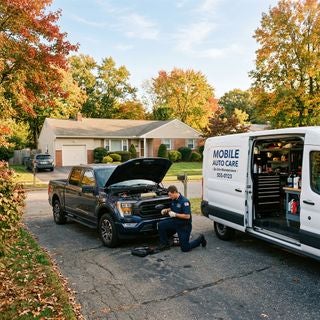
Ford Mobile Service brings certified vehicle maintenance directly to your driveway or workplace by dispatching factory-trained technicians in custom-outfitted service vans. The technician arrives during your scheduled time window, brings specialized diagnostic tools and genuine parts, completes the maintenance on site, and leaves your parking space clean without requiring you to visit a dealership service bay. Owners can book an appointment through the Ford App, online, or by giving our team a quick call at (330) 462-7578. When the service van arrives at your home, the technician performs the requested maintenance right in your driveway, whether you own a 2026 Ford Escape with the 1.5L EcoBoost engine or a heavy-duty 2026 Ford F-150 featuring the 3.5L EcoBoost V6. Our mobile units operate as fully functional extensions of our main garage, carrying fluid extraction systems, pneumatic tools, and original equipment manufacturer components. For drivers navigating the steep riverfront bluffs around East Liverpool, having routine maintenance performed on site saves valuable commuting time while preserving complete vehicle reliability. If an inspection reveals a larger repair that requires heavy hydraulic lifts, our staff can seamlessly transfer your vehicle to our dealership facility on Pennsylvania Avenue. Table of Contents Does Ford Mobile Service Cost More Than Bringing Your Vehicle to the Dealership? What Services and Maintenance Can Ford Mobile Service Perform in Your Driveway? Is Driveway Mobile Service as Fast as Bringing Your Vehicle to a Dealer Bay? Which Service Program Is Recommended for Major Engine or Transmission Repairs? How Do Ford Rewards Points Work for Driveway Oil Changes and Maintenance? Common Questions About Ford Mobile Service Convenient Driveway Maintenance Tailored to Your Schedule Does Ford Mobile Service Cost More Than Bringing Your Vehicle to the Dealership? Ford Mobile Service costs the exact same price as bringing your vehicle into a physical service bay, with no extra convenience fees or travel surcharges added for driveway appointments. Routine maintenance items like oil changes, tire rotations, and battery installations carry identical retail pricing whether completed in a dealer workshop or in your driveway. Participating dealerships structure mobile maintenance to match standard retail pricing sheets, ensuring transparent pricing across all maintenance channels. By choosing our Ford Mobile Service program, owners eliminate personal transit costs, fuel consumption, and lost work time without paying a premium for at-home care. Identical Retail Rates: Oil changes, cabin air filter replacements, and fluid top-offs cost the same rate on site as they do in the shop. Zero Travel Surcharges: Standard maintenance visits inside our designated service radius do not incur mileage fees or house-call dispatch costs. Full Coupon Eligibility: Current offers and eligible benefits may vary; contact the dealership for current service pricing and eligibility. Our service advisors frequently hear owners ask whether mobile vans carry factory diagnostic tools and genuine Motorcraft parts. Every mobile appointment utilizes the same diagnostic hardware, software updates, and factory-certified filters that our master technicians use inside the main facility. What Services and Maintenance Can Ford Mobile Service Perform in Your Driveway? Ford Mobile Service can complete routine fluid changes, filter replacements, battery installations, brake pad renewals, tire rotations, multi-point vehicle inspections, lamp replacements, software updates, and minor recall repairs directly in your driveway. The mobile van is equipped to handle roughly eighty percent of standard recommended vehicle maintenance schedules on site. The equipment installed inside each service van allows certified technicians to perform clean, spill-free maintenance on popular family vehicles like the 2026 Ford Explorer equipped with the 2.3L EcoBoost engine. Waste oil is vacuum-extracted through sealed equipment into onboard holding tanks, preventing any fluid drips on your pavement. Engine Oil and Filter Service: Complete drain or vacuum extraction of engine oil with new Motorcraft® filter installation. Brake System Care: Inspection and replacement of front or rear brake pads and rotors, along with brake fluid checks. Battery Testing and Replacement: Diagnostic testing of cold-cranking amps and full installation of a new Motorcraft® battery. Tire Maintenance: Four-wheel tire rotations, air pressure adjustments, and tread depth evaluations. Filters and Wipers: Replacement of engine air filters, cabin air filters, and windshield wiper blades. System Software and Recalls: Wireless modules allow technicians to flash powertrain control software and address eligible safety recalls. For busy families balancing school routines and work schedules around Calcutta, scheduling a mobile appointment online keeps your daily driver in peak mechanical condition without disturbing your family calendar. Is Driveway Mobile Service as Fast as Bringing Your Vehicle to a Dealer Bay? Driveway mobile service saves total vehicle owner time compared to a dealer bay visit because it completely eliminates driving time, check-in lines, and waiting room stays. While the physical labor time required for a technician to replace brake pads or change engine oil is virtually identical, the overall time commitment for the vehicle owner drops from several hours to a few minutes. When a vehicle enters a traditional service lane, it undergoes intake queuing, staging, and parking moves before and after the actual repair. Mobile technicians work continuously on a single vehicle from the moment they park in your driveway until the job is finished. Zero Transit Time: You do not spend time driving to a facility or arranging shuttle rides back home. No Line Delays: Work starts immediately upon the technician's scheduled arrival window. Uninterrupted Productivity: Owners can continue working from home or managing household tasks while service takes place outside. During routine battery evaluations, mobile technicians perform a digital load test and charging system check. If your vehicle shows slow cranking symptoms, reviewing our battery service guide provides helpful technical details on battery lifespans before your driveway appointment. Which Service Program Is Recommended for Major Engine or Transmission Repairs? Ford Pickup & Delivery or a direct in-bay appointment is recommended for major engine, transmission, or heavy suspension overhaul work because these complex jobs require heavy-duty hydraulic vehicle lifts, engine cranes, and specialized shop machinery. Mobile service vans handle light mechanical repairs, while full-facility bays accommodate deep mechanical teardowns. When a vehicle experiences severe mechanical issues involving powertrain removals or frame-level repairs, mobile service technicians recommend bringing the truck or SUV into a dedicated service bay. Through Ford Pickup & Delivery, a dealership team member picks up your vehicle from your home, leaves a loaner if arranged, takes your vehicle to the main repair facility, and returns it once master technicians complete the heavy overhaul. Complex shop repairs rely on direct access to heavy workshop tools, including: Two-Post and Four-Wheel Hydraulic Lifts: Required for complete transmission drops, transfer case removals, and subframe access. Heavy Machinery: Hydraulic presses, tire mounting and high-speed balancing machines, and engine hoists. Fluid Flushing Stations: Commercial-grade equipment for complete transmission fluid flushes and heavy cooling system flushes. If your vehicle requires deep mechanical overhaul parts, our team handles ordering OEM Ford parts directly from factory distribution hubs to ensure exact fitment and full warranty compliance. How Do Ford Rewards Points Work for Driveway Oil Changes and Maintenance? Ford Rewards points can be redeemed directly toward driveway oil changes, tire rotations, and mobile maintenance at the exact same conversion values used inside dealership service departments. Points earned from a new vehicle purchase or previous maintenance visits apply toward your invoice, lowering or completely covering your out-of-pocket costs. Point redemption values vary by service and vehicle; contact the dealership for current Ford Rewards redemption details. Technicians or service advisors process your reward points digitally at the time of booking or upon completion of the driveway visit. Flexible Redemption: Apply points to full maintenance invoices or use them toward eligible charges alongside standard payment methods. Automatic Point Earning: Every driveway service visit earns new reward points on all eligible parts and labor costs. Fleet and Work Truck Support: Local business owners managing a commercial commercial Ford F-Series work trucks fleet can combine rewards points across multiple vehicles to reduce fleet operating expenses. Common Questions About Ford Mobile Service Q: Do I need a paved driveway for Ford Mobile Service? A: A clean, level surface such as a concrete driveway, asphalt parking pad, or firm parking space is required so the technician can safely place jack stands, wheel chocks, and service equipment. Technicians cannot perform raised-vehicle work on steep inclines, soft soil, or loose gravel. Q: What happens if it rains or snows on my scheduled mobile service day? A: Mobile service vans are outfitted to operate in light rain or cold conditions, but severe weather, heavy snow, or dangerous lightning may require rescheduling. If weather prevents safe driveway work, our team contacts you to pick up the vehicle or adjust your appointment window. Q: Can Ford Mobile Service complete open safety recalls on my vehicle? A: Many software flashes, module updates, light wiring harness inspections, and minor hardware replacements under open factory recalls can be completed right in your driveway. Complex recalls requiring major component teardowns must still be scheduled inside our main service center. Q: Do I need to stay outside with the technician while work is performed? A: You do not need to stand outside during the appointment. Once you unlock the vehicle and hand over the key fob, you can return indoors while the technician completes the scheduled work, runs diagnostics, and cleans the work area. Q: How do I verify if my address qualifies for mobile driveway maintenance? A: Coverage is based on distance from our main facility and technician scheduling availability across local zip codes. You can confirm eligibility by entering your address in the Ford App or calling our service desk directly at (330) 462-7578 to check your street address. Convenient Driveway Maintenance Tailored to Your Schedule Over 90% of routine maintenance tasks can be completed right in your driveway with Ford Mobile Service, offering unmatched convenience without compromising quality. By combining driveway convenience with transparent retail pricing, original equipment parts, and full Ford Rewards integration, maintaining your vehicle has never been easier. Whether your household requires a routine oil change on a 2026 Ford Escape, a brake service on a 2026 Ford Explorer, or routine maintenance on a 2026 Ford F-150, our certified technicians deliver expert service without interrupting your busy day. Book your next mobile maintenance appointment online or visit our service center address to speak with our service team today. © 2026 Tri State Ford. All rights reserved. Vehicle specification data © JATO Dynamics Limited. Ford Mobile Service in East Liverpool OH | Tri State Ford

Read More
l

How Does Leasing a Car Work?

A vehicle lease functions as a long-term agreement where you pay for the projected depreciation of a new vehicle over a set timeframe—typically 24 to 36 months—rather than financing its total purchase price. You pay an initial amount at signing, follow a structured monthly payment schedule, adhere to agreed-upon annual mileage caps, and return or buy the vehicle when the contract ends. Leasing provides a straightforward way to drive a new vehicle with different monthly payments than traditional buying. Because payments are based on expected vehicle depreciation rather than the full purchase value, drivers enjoy reduced monthly costs along with coverage under the 3-year/36,000-mile bumper-to-bumper warranty and 5-year/60,000-mile powertrain warranty. When you enter a lease contract, you agree on key parameters upfront: The contract length (most commonly 24, 36, or 39 months) The annual mileage allowance (typically 10,000, 12,000, or 15,000 miles per year) The scheduled monthly payment information and due date End-of-term options, including returning the vehicle, starting a new lease, or purchasing the car outright Driving along the riverfront bluffs and hilly terrain of East Liverpool means having a durable, modern vehicle matters for daily commuting. Leasing allows drivers to transition into an updated vehicle every few years without worrying about long-term mechanical wear or resale depreciation. To explore current lease terms or tour our showroom at 1503 Pennsylvania Ave, East Liverpool, OH 43920, drop by our dealership location or call our finance team at (330) 462-7578. Table of Contents What Is the Main Difference Between Leasing and Buying a Vehicle? Who Benefits Most From Leasing a Ford Model? How Are Lease Payments Calculated: Capitalized Cost, Residual Value, and Money Factor Should You Make a Down Payment and What Credit Score Is Needed to Lease? How Do Mileage Limits, Lease Swaps, and End-of-Lease Buyouts Work? Common Questions About Leasing a Ford Vehicle Exploring Your Ford Leasing Options at Tri State Ford What Is the Main Difference Between Leasing and Buying a Vehicle? The main distinction between leasing and buying comes down to financial equity and vehicle ownership structure. Buying finances the full purchase price of a vehicle until you pay off the loan and own the title, whereas leasing finances only the vehicle's estimated value loss during the time you drive it. When choosing between these purchase paths, several core operational factors stand out: Monthly Payment Structure: Leasing generally yields monthly payments compared to financing the total price of a new vehicle because you pay only for depreciation plus a rent charge. Ownership Equity: Buying builds long-term vehicle equity as payments accrue toward total ownership. Leasing operates like a long-term vehicle setup where you return the keys at contract end without trade-in equity, unless market conditions create positive equity above the preset buyout price. Vehicle Customization: Purchased vehicles can be modified, repainted, or fitted with custom aftermarket accessories without restriction. Leased vehicles must be maintained in factory condition and returned without permanent alterations. Warranty and Maintenance: Leased models stay continuously protected under original manufacturer warranties throughout the typical 36-month lease cycle, protecting drivers from out-of-pocket costs on major mechanical repairs. Whether you prefer long-term ownership or regular updates to vehicle tech, reviewing vehicle choices helps clarify your decision. You can explore our inventory of brand-new Ford models, view current manufacturer lease offers, or check out our selection of single-owner pre-owned vehicles to compare purchase choices side by side. Pricing Pricing by trim Feature Active AWD Active FWD Platinum AWD ST-Line AWD Base MSRP $31,750 $30,350 $37,940 $32,595 Destination charge $1,495 $1,495 $1,495 $1,495 Pricing (continued) Feature ST-Line Elite AWD 2.0L ST-Line FWD ST-Line Select AWD 2.0L Base MSRP $38,935 $31,195 $35,015 Destination charge $1,495 $1,495 $1,495 Who Benefits Most From Leasing a Ford Model? Leasing offers the greatest value to drivers who prefer upgrading to updated tech every two to three years, maintain predictable driving habits, and prefer keeping monthly expenses low under full factory warranty protection. A vehicle lease is well-suited for several types of drivers: Tech-Oriented Drivers: Commuters who want the latest cabin features, including SYNC 4A and Ford Co-Pilot360 driver-assist technologies, can refresh their vehicle technology every few years. Predictable-Distance Commuters: Drivers taking daily trips along State Route 170 in Calcutta usually find that standard 12,000-mile or 15,000-mile annual caps fit their daily driving patterns cleanly without triggering excess mileage fees. Budget-Conscious Families: Families needing generous passenger room and safety tech benefit from lower monthly payments on full-size or midsize SUVs without committing to a 72-month purchase loan. For example, a driver leasing a 2026 Ford Escape with its 1.5L engine paired with an automatic 8-speed transmission gets an EPA-estimated 26 city / 32 hwy MPG alongside about 37.5 cu ft of rear cargo space. This delivers modern capability and space for weekend activities without long-term commitment. To keep your current vehicle running at peak performance, you can select factory-approved replacement tires, or if you prefer long-term ownership with low mileage, browse our certified pre-owned Ford inventory. How Are Lease Payments Calculated: Capitalized Cost, Residual Value, and Money Factor Lease payments are calculated by determining net capitalized cost, subtracting the vehicle's estimated residual value at term end, and adding a finance fee known as the money factor across the contract months. Understanding the underlying math behind your lease agreement helps clarify how monthly payments are structured: Gross Capitalized Cost: The agreed-upon sale price of the vehicle, including any selected option packages or mandatory dealer processing fees. Net Capitalized Cost: The gross capitalized cost minus any capitalized cost reductions, such as cash down payments, manufacturer incentives, or trade-in equity. Residual Value: The leasing company’s predetermined projection of what the vehicle will be worth when the lease contract ends. Higher residual values lead to lower monthly payments because the vehicle depreciates less over the lease term. Money Factor: The lease charge expressed as a small decimal fraction (for example, 0.0025). Multiplying the money factor by 2,400 yields the equivalent Annual Percentage Rate (APR). To see how MSRP affects lease pricing, consider the trim breakdown of the 2026 Ford Escape lineup. The baseline Active FWD carries a Base MSRP of $30,350, while adding all-wheel drive moves the Active AWD to $31,750. Sportier styling on the ST-Line FWD starts at $31,195, and the ST-Line AWD sits at $32,595. Upgrading to the punchier 2.0L engine with SelectShift® in the ST-Line Select AWD 2.0L brings the Base MSRP to $35,015. The luxury-oriented Platinum AWD starts at $37,940, while the top-tier ST-Line Elite AWD 2.0L reaches $38,935. Each model carries a mandatory $1,495 destination charge. Higher trims carry higher initial capitalized costs, but strong residual values keep monthly lease payments competitive. Drivers looking to lower their net capitalized cost can start by estimating your trade-in value online to see how current vehicle equity can reduce overall monthly lease costs. Should You Make a Down Payment and What Credit Score Is Needed to Lease? Placing a large down payment on a leased vehicle is generally discouraged because upfront capital reduction payments are non-refundable if the vehicle is totaled or stolen early in the lease, while securing top-tier lease rates typically requires a credit score of 720 or higher. When structuring a lease, understanding upfront money and credit requirements protects your wallet: The Down Payment Risk: On a financed purchase, a down payment builds equity immediately. On a lease, a down payment—referred to as a capitalized cost reduction—simply prepays a portion of the depreciation. If the vehicle is involved in a severe collision or stolen during the first few months, gap protection covers the difference between market value and lease balance, but any cash paid upfront at signing is lost. Credit Tier Qualifications: Leasing companies structure interest rates (money factors) into distinct credit tiers. A credit score above 720 typically qualifies applicants for Tier 1 rates, securing the lowest possible money factor. Scores between 660 and 719 usually qualify for competitive lease terms, though slightly higher money factors may apply. Optimal Upfront Strategy: Paying minimum drive-off fees—covering the first month's payment, registration, and mandatory acquisition fees—is often the safest approach. This keeps your cash liquid while maintaining a predictable monthly payment. Shoppers comparing lease options on our showroom floor often ask whether placing thousands down upfront saves money long-term, and our finance team explains that preserving cash while rolling incentives into net capitalized cost offers better financial protection. You can verify your current leasing tier by submitting an online credit application with our finance desk. How Do Mileage Limits, Lease Swaps, and End-of-Lease Buyouts Work? Lease agreements establish strict annual mileage limits with per-mile charges for overages, allow contract assumption through formal lease swaps, and provide a fixed-price buyout option at term completion. Managing operational parameters during and after your lease contract ensures a smooth experience: Mileage Allowance Structures: Standard lease contracts offer annual mileage tiers of 10,000, 12,000, or 15,000 miles. Exceeding your cumulative contract limit results in excess mileage charges at vehicle turn-in, typically ranging between $0.15 and $0.25 per excess mile. Purchasing extra miles upfront during initial lease structuring is significantly less expensive than paying per-mile penalties at return. Lease Transfers and Swaps: If your driving needs change mid-contract, a formal lease swap allows another qualified individual to take over your remaining lease term and monthly payments through lender approval. End-of-Lease Buyout Option: Every lease contract specifies a fixed purchase option price equal to the vehicle's residual value. If market prices make the car worth more than the preset residual figure, executing a lease buyout lets you purchase the vehicle outright without paying wear-and-tear or excess mileage charges. For business owners needing high-mileage utility, structured vehicle options extend beyond consumer SUVs. You can evaluate our commercial F-Series work truck inventory to evaluate specialized commercial purchasing and financing arrangements tailored for heavy-duty operational demands. Fuel Economy Fuel economy and range by trim Feature Active AWD Active FWD Platinum AWD ST-Line AWD MPG 26 city / 32 hwy / 28 combined 27 city / 34 hwy / 30 combined 23 city / 31 hwy / 26 combined 26 city / 32 hwy / 28 combined Fuel Economy (continued) Feature ST-Line Elite AWD 2.0L ST-Line FWD ST-Line Select AWD 2.0L MPG 23 city / 31 hwy / 26 combined 27 city / 34 hwy / 30 combined 23 city / 31 hwy / 26 combined Common Questions About Leasing a Ford Vehicle Q: What happens if I exceed my lease mileage allowance before the contract ends? Exceeding your total cumulative mileage limit results in excess mileage fees when you return the vehicle, calculated at the per-mile rate stated in your contract (typically between $0.15 and $0.25 per mile). However, if you choose to execute an end-of-lease buyout or trade the vehicle in toward a new purchase where market value covers the balance, excess mileage charges do not apply. Q: Can I end my car lease early or turn in the vehicle before contract expiration? Early lease termination is permitted by most lenders, but it usually involves paying the difference between the remaining contract balance and the vehicle’s current wholesale value, along with an early termination fee. Alternative options include transferring the lease to a qualified buyer through a formal lease swap or trading the vehicle in early if market equity supports a buyout. Q: Is routine vehicle maintenance included in a standard Ford lease? Standard lease agreements cover major mechanical defects under the factory 3-year/36,000-mile bumper-to-bumper warranty, but routine scheduled maintenance such as fluid changes, tire rotations, and cabin air filter replacements remain the driver's responsibility unless an optional maintenance package is included at signing. Q: What wear and tear charges should I expect when returning a leased vehicle? Leasing companies allow normal wear and tear, including minor paint scratches under two inches, light tire tread wear, and small interior scuffs. Excess wear-and-tear charges apply to un-repaired body denting, cracked windshield glass, worn tires below minimum safety tread depths, or deep interior upholstery stains. Q: Can I purchase my leased Ford model before the lease term expires? Yes, drivers can execute an early lease buyout at any point during the agreement term. The purchase price equals the remaining capitalized cost balance plus the predetermined residual value and any applicable purchase option fees outlined in the original contract. Engine & Performance Powertrain specs by trim Feature Active AWD Active FWD Platinum AWD ST-Line AWD Engine 1.5L 1.5L 2L 1.5L Horsepower 180 hp 180 hp 250 hp 180 hp Torque 199 lb-ft 199 lb-ft 280 lb-ft 199 lb-ft Transmission automatic 8-speed automatic 8-speed SelectShift® automatic 8-speed Drivetrain All-wheel drive Front-wheel drive All-wheel drive All-wheel drive Engine & Performance (continued) Feature ST-Line Elite AWD 2.0L ST-Line FWD ST-Line Select AWD 2.0L Engine 2L 1.5L 2L Horsepower 250 hp 180 hp 250 hp Torque 280 lb-ft 199 lb-ft 280 lb-ft Transmission SelectShift® automatic 8-speed SelectShift® Drivetrain All-wheel drive Front-wheel drive All-wheel drive Exploring Your Ford Leasing Options at Tri State Ford Navigating lease choices requires evaluating your daily driving patterns, monthly budget goals, and preference for new automotive technology to select the ideal Ford model and contract terms. At Tri State Ford, our team helps drivers evaluate lease options, review current manufacturer incentives, and structure agreements tailored to their driving needs. Whether you want a compact Ford Escape for daily commuting or a midsize SUV like the Ford Edge, leasing offers an accessible path to driving a new vehicle backed by factory warranty protection. To start your lease search, view our current online inventory, review trade-in estimates, or visit our showroom floor. Take the next step today by visiting our sales floor or calling our friendly team at (330) 462-7578 to schedule a test drive and explore personalized lease options. Keep Your Vehicle Running Strong Keep your vehicle performing at its best with our service team: Order Parts Schedule Service Appt © 2026 Tri State Ford. All rights reserved. Vehicle specification data © JATO Dynamics Limited. Car Leasing Options in East Liverpool, OH | Tri State Ford
x

How Often Should You Schedule a Ford Brake Inspection?

You should schedule a Ford brake inspection every 10,000 miles or at every scheduled oil change, whichever occurs first. Routine checks allow technicians to evaluate friction material thickness and hydraulic system integrity before severe wear occurs. However, you should arrange an immediate inspection if you hear continuous squealing or grinding, feel pedal softness or steering wheel shudder during deceleration, or see an active brake warning light on your dashboard. Following a consistent inspection schedule ensures that minor wear is identified before it damages surrounding components. While the 10,000-mile interval serves as a reliable baseline for general driving, real-world conditions often dictate more frequent checkups. For instance, commuting through stop-and-go traffic along State Route 170 in Calcutta places higher demand on friction materials than steady highway cruising. Heavier vehicles like the 2026 Ford F-150 equipped with a 3.5L engine also transfer substantial kinetic energy into heat during braking, which accelerates pad wear when carrying heavy cargo or towing. Specific warning signs indicate that your braking system requires attention prior to your next scheduled service interval: Continuous high-pitched squealing or harsh metal-on-metal grinding noises when applying pressure to the pedal A spongy, soft, or unusually low brake pedal that sinks closer to the floorboard than normal Steering wheel pulsation, chassis shudder, or vehicle pulling to one side while slowing down A sharp burning odor near the wheel wells following hard stops Illumination of the red brake system light or yellow anti-lock braking system light on the instrument cluster Prompt attention to these symptoms prevents minor pad wear from turning into costly rotor scoring or caliper failure. To speak directly with our factory-trained service team, give us a quick call or stop by our East Liverpool facility for an in-person diagnostic review. Table of Contents What Is Included in a Ford Multi-Point Brake Inspection? How Many Miles Do Original Ford Motorcraft Brake Pads Last? Why Does Brake Fluid Need to Be Flushed Periodically in Ford Vehicles? What Are the Costs of Ford Brake Replacement and Rotor Resurfacing? Common Questions About Ford Brake Maintenance Proactive Ford Service Keeps Every Journey Safe What Is Included in a Ford Multi-Point Brake Inspection? A Ford multi-point brake inspection includes a complete technical evaluation of brake pad lining thickness, rotor surface integrity, caliper pin sliding action, hydraulic fluid moisture levels, brake line flexible hoses, and parking brake mechanism operation. Technicians remove all four wheels to measure friction components against factory minimum tolerances and inspect internal mechanical linkages. During the evaluation, technicians perform detailed measurements and physical checks across several core assemblies: Brake Pad Lining Thickness: Technicians use precision calipers to measure remaining friction material on inner and outer pads. Any lining measuring at or below 2 mm requires immediate replacement to ensure safe stopping power and prevent metal backing plates from contacting the disc. Rotor Condition and Thickness: Rotors are checked for minimum disc thickness, lateral runout, and surface defects such as deep grooves, heat cracks, or heavy corrosion ridges along the outer lip. Caliper and Hardware Operation: Inspection covers caliper slide pins, rubber dust boots, piston seals, and anti-rattle clips to ensure even pressure application and prevent sticking. Hydraulic Lines and Fluid Quality: Flexible rubber hoses and hard steel lines are checked for cracking, chafing, fluid seepage, or rust. Brake fluid is tested for chemical moisture absorption and clarity. Parking Brake Linkage: Technicians verify cable tension, electronic actuator functionality, and parking brake shoe lining condition on rear drum-in-hat or caliper-integrated setups. Our technicians routinely show vehicle owners physical wear measurements on precision gauges during routine service walk-throughs to provide full clarity on remaining pad life. For owners balancing busy work schedules, scheduling Ford mobile service options brings certified maintenance care directly to your driveway or workplace. How Many Miles Do Original Ford Motorcraft Brake Pads Last? Original Ford Motorcraft brake pads typically last between 40,000 and 60,000 miles under standard driving conditions, though actual lifespan ranges from 30,000 to 70,000 miles based on compound selection, vehicle weight, and driving habits. Heavy cargo loads, frequent mountain braking, or urban traffic shorten pad longevity. The material formulation of Motorcraft friction linings plays a major role in operating characteristics and durability: Motorcraft Ceramic Brake Pads: Formulated primarily from dense ceramic compounds and non-ferrous filler materials, ceramic pads deliver exceptionally quiet operation, minimal brake dust accumulation on wheels, and consistent pedal feel during daily commuting. They are standard equipment on everyday family vehicles like the 2026 Ford Explorer equipped with a 2.3L engine and SelectShift® transmission. Motorcraft Semi-Metallic Brake Pads: Engineered with steel, iron, and copper fibers embedded in synthetic resin, semi-metallic pads offer superior heat transfer, higher friction coefficients under extreme thermal loads, and maximum fade resistance. These are ideal for heavy-duty hauling or towing up to 10,400 lbs in a 2026 Ford F-150 or track-focused performance in a 2026 Ford Mustang. Navigating steep riverfront bluffs and hill climbs across East Liverpool increases friction temperatures, making semi-metallic compounds particularly effective for local trucks and heavy SUVs. To keep your vehicle operating at factory standards without disturbing your calendar, utilize Ford pick-up and delivery service to have your vehicle serviced and returned directly to your home. Why Does Brake Fluid Need to Be Flushed Periodically in Ford Vehicles? Brake fluid must be flushed every three years in Ford vehicles because hydraulic fluid is hygroscopic and naturally absorbs moisture from atmospheric humidity over time. Excess water lowers the boiling point of the fluid, causing a soft brake pedal during hard stops and accelerating internal oxidation throughout calipers and ABS valves. The hydraulic braking system relies on incompressible liquid to transfer force from the brake pedal to the wheel calipers. As brake fluid ages and absorbs ambient moisture through microscopic pores in flexible rubber hoses and reservoir caps, its thermal stability degrades significantly: Vapor Lock and Thermal Fade: Heavy or prolonged braking creates extreme friction temperatures at the caliper. Water-contaminated brake fluid boils at a much lower temperature than fresh fluid, producing vapor bubbles within the sealed hydraulic lines. Because vapor compresses under pressure while liquid does not, the brake pedal sinks toward the floor, resulting in sudden pedal fade or increased stopping distances. Internal Component Corrosion: Moisture trapped inside the hydraulic system reacts with iron and aluminum components. Over time, this leads to internal pitting on caliper pistons, valve bore degradation inside the anti-lock braking system hydraulic control unit, and premature degradation of master cylinder seals. Periodic flushes completely remove contaminated fluid, flush out microscopic metallic debris, and replenish anti-corrosion additives that keep internal hydraulic seals flexible and pressure-tight. What Are the Costs of Ford Brake Replacement and Rotor Resurfacing? Replacing both front and rear Ford brake pads and rotors generally varies by vehicle class, rotor dimensions, and axle requirements. Resurfacing rotors also varies by vehicle and labor requirements, whereas replacing rotors with new factory parts depends on parts and installation needs. Contact the dealership for current pricing. Deciding whether to resurface or replace worn rotors depends on precise measurements taken during the inspection process: Maintenance Consideration Rotor Resurfacing (Lathing) Full Rotor Replacement Primary Requirement Rotor thickness must exceed discard limit Required when rotor is cracked, warped, or thin Typical Part / Labor Cost $30 to $60 per rotor (labor only) $80 to $200 per rotor (plus installation labor) Surface Finish Outcome Restores smooth parallel friction surface Returns assembly to factory original disc specs Ideal Application Minor surface scoring or light rust buildup Heavy grooving, heat checking, or severe runout Rotor resurfacing involves mounting the brake disc to a precision machine lathe that shaves away a thin layer of metal, removing surface irregularities and light heat checking. Resurfacing is only viable if the final disc thickness remains safely above the minimum thickness specification cast directly into the rotor housing. If a rotor is machined below this limit, it loses the structural mass required to dissipate heat effectively, leading to rapid warpage and thermal failure. When installing new friction components, using genuine OEM parts ensures exact mechanical fitment, factory-matched noise dampening shims, and optimal thermal performance. Vehicle owners looking to perform maintenance or replace worn components can order genuine Motorcraft brake parts directly through our service center. Common Questions About Ford Brake Maintenance Q: How long does a Ford brake inspection take at the dealership? A standard Ford multi-point brake inspection typically takes 30 to 45 minutes when performed by a factory-trained technician. If the inspection is completed alongside routine maintenance, such as an oil change or tire rotation, the total service appointment usually lasts between one and two hours. Q: Is a brake inspection included in the Ford Works service package? Yes, the Ford Works maintenance package includes a visual and dimensional brake inspection alongside a synthetic blend oil change, filter replacement, tire rotation, pressure check, battery test, and comprehensive fluid check. It provides a complete diagnostic assessment of vital safety components in a single visit. Q: What causes a steering wheel to shake when applying Ford brakes? Steering wheel vibration during braking is usually caused by uneven rotor surface wear or lateral runout, often referred to as warped rotors. High thermal stress or uneven caliper clamping pressure creates variation in rotor thickness, causing the pads to skip across the disc surface and transfer pulsations through the steering system. Q: Can I drive safely if my Ford brake wear indicator light comes on? You should schedule a service appointment as soon as possible when the brake warning light illuminates. While the light indicates that brake pad lining thickness has reached a critical threshold or fluid level is low, continuing to drive risks rotor damage, elevated stopping distances, and potential hydraulic power loss. Q: How does towing a heavy trailer impact Ford brake maintenance schedules? Towing heavy loads significantly increases thermal friction and kinetic energy transfer, causing brake pads to wear down much faster than during unladen driving. Ford recommends inspecting friction materials at every 5,000 to 7,500 miles if you routinely tow trailers or haul heavy cargo. Proactive Ford Service Keeps Every Journey Safe Keeping your braking system in peak operational condition is essential for highway safety, predictable vehicle handling, and long-term component durability. Routine inspections eliminate guesswork by tracking pad wear rates, monitoring rotor thickness, and identifying hydraulic fluid degradation before performance suffers. Our service center provides the factory tools, specialized diagnostic equipment, and genuine Motorcraft parts required to keep your Ford performing exactly as the engineers intended. Whether you need a routine multi-point check, fluid flush, or full pad and rotor replacement, our certified service team is ready to assist. To preserve your vehicle's stopping performance and enjoy complete peace of mind on the road, schedule a service appointment online today. You can also visit our East Liverpool service center or speak directly with an advisor by giving us a quick call to discuss your maintenance needs. © 2026 Tri State Ford. All rights reserved. Vehicle specification data © JATO Dynamics Limited. Ford Brake Inspection in East Liverpool OH | Tri State Ford

d

How Does the Ford Bronco Compare to the Ford Bronco Sport?

The primary difference between the Ford Bronco and Ford Bronco Sport centers on their underlying platform engineering and intended driving environment. The full-size Ford Bronco is built on a heavy-duty, body-on-frame truck chassis with removable doors and roof panels designed for severe off-road trails and extreme rock crawling. In contrast, the Ford Bronco Sport utilizes an integrated unibody construction engineered for smooth daily highway commuting, responsive urban handling, and versatile fuel efficiency while keeping standard 4x4 capability for light off-road adventures. Choosing between these two capable SUVs comes down to how you plan to spend your time behind the wheel. The full-size Bronco caters to off-road purists who want maximum ground clearance, massive all-terrain tires, and open-air driving experiences. The Bronco Sport appeals directly to drivers who desire rugged adventure styling and weekend trail capability paired with the refined comfort, lower step-in height, and easy parking dynamics of a compact crossover. Both vehicles carry the proud Ford adventure heritage, featuring signature round headlights, bold front grilles, and intelligent terrain control technology. To explore both models in person and discover current offers and availability, visit our East Liverpool showroom or get in touch by giving our sales team a call today. Table of Contents What Are the Main Platform and Design Differences Between the Bronco and Bronco Sport? How Does Unibody Construction Benefit Daily Driving in the Bronco Sport? How Do Off-Road Capabilities and G.O.A.T. Modes Compare Across Both SUVs? How Do Passenger Room, Cargo Space, and Towing Capacities Compare? What Standard Equipment Accounts for the Price Difference and Resale Value? Quick Answers to Common Questions About the Bronco and Bronco Sport Choosing Your Ford Adventurer What Are the Main Platform and Design Differences Between the Bronco and Bronco Sport? Platform architecture forms the fundamental divide between these two vehicles, dictating how each SUV rides, handles, and performs across different surfaces. The Ford Bronco utilizes traditional body-on-frame construction—similar to a midsize pickup truck—where the vehicle body is mounted onto a rigid steel frame. The Ford Bronco Sport employs unibody construction, where the body and frame are manufactured as a single integrated structure. This architectural difference creates distinct physical dimensions and body configurations across the two lineups: Body Configurations: The full-size Bronco is available in two-door or four-door configurations with fully removable doors and roof sections. The Bronco Sport is exclusively a four-door compact SUV with fixed body doors and a solid safari-style roof structure. Vehicle Footprint: The full-size Bronco features a significantly wider track, longer wheelbase options, and higher overall standing height. The Bronco Sport maintains a compact footprint that easily fits into tight suburban garages and standard parking spots. Exterior Utility: While the larger Bronco offers heavy-duty steel bumpers and exposed tow hooks, the Bronco Sport includes built-in roof rails, a flip-up rear glass hatch, and integrated tie-down points for mounting bikes, kayaks, and cargo boxes. Drivers looking for an everyday commuter that can easily transition into a weekend camper will find that our new Ford SUV selection provides plenty of versatile Bronco Sport models ready for immediate delivery. How Does Unibody Construction Benefit Daily Driving in the Bronco Sport? Unibody construction benefits daily driving in the Ford Bronco Sport by providing structural rigidity that delivers a smoother highway ride, tighter cornering stability, improved fuel economy, and reduced cabin noise. Because the frame and body panels share load-bearing duties, energy from bumps and potholes is absorbed evenly throughout the vehicle structure rather than transferred directly into the passenger cabin. When shoppers compare these two vehicles side by side on our lot, they often ask about highway ride comfort before taking a test drive. For daily driving across Calcutta, where gently rolling hills and local errands along State Route 170 demand predictable handling, the unibody frame absorbs pavement expansion joints without the stiff bouncing motion typical of truck-based off-roaders. Daily driving benefits of the Bronco Sport's unibody setup include: Engine and Powertrain Efficiency: Most trims—including the Big Bend, Heritage, and Outer Banks —are powered by a 1.5-liter EcoBoost three-cylinder engine generating 180 hp and 200 lb-ft of torque. Paired with a smooth eight-speed automatic transmission, this setup delivers EPA estimates of 25 mpg city / 30 mpg highway. Responsive Handling: Independent front and rear suspension systems allow each wheel to react individually to road surface changes, minimizing body roll through turns and providing precise steering feedback. Cabin Refinement and Entry: A lower overall step-in height makes loading gear and securing child safety seats effortless, while isolated subframes reduce tire hum and wind turbulence at highway speeds. For the driver who wants more passing power, the Badlands trim upgrades to a 2.0-liter EcoBoost four-cylinder engine producing 250 hp and 280 lb-ft of torque. Shoppers exploring reliable used choices can also browse our inventory of pre-owned single-owner models to find well-maintained crossover options. How Do Off-Road Capabilities and G.O.A.T. Modes Compare Across Both SUVs? While both vehicles feature Ford's specialized Terrain Management System with G.O.A.T. Modes (Goes Over Any Type of Terrain), the full-size Bronco is equipped for heavy-duty crawling over large boulders, while the Bronco Sport is optimized for loose gravel, snow, sand, and mud trails. Standard 4x4 capability comes engineered into every Bronco Sport, giving drivers instant confidence when weather or road conditions deteriorate. The off-road systems divide across the two lineups through specific mechanical hardware: Drive Mode Selection: Every Bronco Sport includes five standard G.O.A.T. Modes: Normal, Eco, Sport, Slippery, and Sand. Upgrading to the Badlands trim adds two specialized trail modes: Mud/Ruts and Rock Crawl. All-Wheel Drive Systems: Standard trims use an intelligent 4x4 system that automatically routes torque to the wheels with the most traction. The Badlands model upgrades to an advanced twin-clutch rear drive unit that can lock the rear differential to push power to a single rear wheel when necessary. Off-Road Upgrades: The available Sasquatch package on the Bronco Sport adds a tuned HOSS off-road suspension system, increased ground clearance, underbody skid plates, and aggressive all-terrain tires. For buyers seeking backed assurance on their adventure vehicle, viewing our certified pre-owned inventory provides access to factory-inspected models with extended powertrain warranty protection. How Do Passenger Room, Cargo Space, and Towing Capacities Compare? The full-size Ford Bronco offers a wider interior cabin with greater shoulder room, while the Ford Bronco Sport maximizes vertical cargo space through its signature safari-style roof design. The elevated roofline of the Bronco Sport allows rear passengers to enjoy generous headroom while enabling upright interior storage for bulky recreation gear. Space and utility metrics for the Bronco Sport highlight its practical cabin design: Passenger Seating: Spacious seating for up to five passengers with 105 cubic feet of total passenger volume, offering comfortable legroom for long highway drives. Cargo Capacity: Provides about 33 cubic feet of rear cargo storage behind the second-row seats. Folding the 60/40 split rear seats down opens up roughly 65 cubic feet of total cargo area. Smart Storage Features: Highlights include available under-seat storage bins, seatback MOLLE strap organizers, a built-in bottle opener in the hatch, and an available slide-out cargo management table. Towing capacities also reflect the distinct missions of each vehicle. When equipped with the factory Class II Trailer Tow Package, the Bronco Sport can tow up to 2,200 pounds with the 1.5-liter EcoBoost engine. Upgrading to the 2.0-liter EcoBoost on the Badlands model increases maximum towing capacity to 2,700 pounds. Boating and camping enthusiasts heading down toward the riverfront trails and boat launches in East Liverpool can easily tow light utility trailers or personal watercraft behind the Badlands model. To discuss current financing options, you can complete our secure online credit application before visiting our finance department. What Standard Equipment Accounts for the Price Difference and Resale Value? The base price difference between the Ford Bronco and Bronco Sport stems directly from manufacturing materials, chassis components, and specialized drivetrain hardware. The full-size Bronco requires heavy-duty steel frame rails, removable aluminum door hinges, manual or power soft/hard tops, and complex mechanical transfer cases. The Bronco Sport focuses its value on built-in driver technology, daily cabin comfort, and active safety systems. Standard feature advantages that enhance the value proposition of the Bronco Sport include: Safety and Driver Assist: Standard Ford Co-Pilot360 technology includes Pre-Collision Assist with Automatic Emergency Braking, Blind Spot Information System with Cross-Traffic Alert, Lane-Keeping System, and Auto High-Beam Headlamps. The Bronco Sport carries a five-star overall crash rating from the National Highway Traffic Safety Administration (NHTSA). Cabin Connectivity: SYNC infotainment technology features a large 13.2-inch central touchscreen interface, a 12.3-inch digital instrument cluster display, and wireless Apple CarPlay and Android Auto integration. Resale Value Retention: The full-size Bronco holds exceptional resale value due to high enthusiast demand and specialized off-road hardware. The Bronco Sport maintains competitive resale metrics consistent with top subcompact crossovers, ensuring owners retain strong equity when trading in. If you are thinking about upgrading your current ride, you can estimate your vehicle's current equity instantly using our online trade-in appraisal tool. Quick Answers to Common Questions About the Bronco and Bronco Sport Q: Can you remove the doors and roof on the Ford Bronco Sport? No, the Ford Bronco Sport features a fixed unibody roof structure and conventional vehicle doors. If you want fully removable doors and roof panels for open-air driving, you will want to select the full-size Ford Bronco. Q: What is the maximum towing capacity of the Ford Bronco Sport? When properly equipped with the available Class II Trailer Tow Package, the Ford Bronco Sport can tow up to 2,200 pounds with the 1.5-liter EcoBoost engine or up to 2,700 pounds on the Badlands trim with the 2.0-liter EcoBoost engine. Q: Is all-wheel drive standard on the Ford Bronco Sport? Yes, standard 4x4 capability is included on every Ford Bronco Sport trim level. Advanced systems featuring a twin-clutch rear differential unit are available on higher trims like the Badlands for enhanced off-road traction. Q: What safety ratings does the Ford Bronco Sport carry? The Ford Bronco Sport has earned a five-star overall crash test rating from the National Highway Traffic Safety Administration (NHTSA), including five stars in frontal and side crash tests. Q: What factory warranty coverage comes with these SUVs? Both models include Ford's standard factory warranty package, which provides 3 years or 36,000 miles of bumper-to-bumper coverage alongside a 5-year or 60,000-mile powertrain warranty and 5 years of roadside assistance. Choosing Your Ford Adventurer Deciding between the Ford Bronco and Ford Bronco Sport comes down to matching your vehicle to your daily routine and weekend activities. If your travel plans involve conquering extreme rock trails, traversing deep mud pits, and driving with the doors and roof removed, the full-size Ford Bronco is built for your lifestyle. If you want a comfortable, fuel-efficient daily driver that offers clever interior cargo space and confident 4x4 capability for bad weather and unpaved weekend trails, the Ford Bronco Sport is the ideal choice. Our sales team at Tri State Ford is ready to help you compare trims, explore available option packages, and take a test drive. You can visit our East Liverpool showroom to see our current inventory in person, or reach out directly by calling (330) 462-7578 to speak with an advisor today. Keep Your Vehicle Running Strong Keep your vehicle performing at its best with our service team: Order Parts Schedule Service Appt © 2026 Tri State Ford. All rights reserved. Ford Bronco vs Bronco Sport in East Liverpool OH | Tri State Ford

d

What Oil Filter Should You Use on a Ford Vehicle?

You should use an original equipment manufacturer (OEM) Ford Motorcraft oil filter specified for your vehicle's exact engine displacement and model year. Engineered directly to Ford factory specifications, Motorcraft filters feature media rated at 80% to 90% efficiency at 20 microns, a silicone anti-drainback valve, and a precise 8 to 16 PSI pressure relief valve. This engineering combination protects high-pressure oiling systems and EcoBoost turbochargers far better than generic aftermarket options. Maintaining a Ford engine requires components designed specifically for its lubrication architecture. Modern Ford powerplants, such as the 3.5L EcoBoost V6 in the Ford F-150 or the 2.3L EcoBoost in the Ford Ranger, operate under tight tolerances and elevated internal temperatures. Motorcraft oil filters undergo rigorous durability testing to ensure they maintain oil flow rates while filtering out microscopic debris. Using a factory-certified filter protects sensitive variable camshaft timing actuators and turbocharger feed lines from oil starvation. Selecting the right oil filter involves matching the exact part number designated in your owner's manual. While generic filters may fit the physical thread size of a Ford oil filter housing, their internal construction often varies significantly from original equipment standards. Installing a genuine Motorcraft filter ensures that internal bypass valves, filter media surface area, and pressure relief ratings perfectly match your engine's requirements. For routine maintenance or parts assistance, you can drop by our service center location at 1503 Pennsylvania Ave, East Liverpool, OH 43920 or speak directly with our service desk at (330) 462-7578. Our service department frequently provides updates on service and parts information to help keep your vehicle running smoothly. Table of Contents Does It Matter What Oil Filter You Put on Your Ford? lower-cost What Happens If You Use the Wrong or Inferior Oil Filter on a Ford? How Do OEM Motorcraft Technical Specs Compare on Bypass Pressure, Valves, and Efficiency? How Often Should You Replace Your Ford Oil Filter and What Does an OEM Filter Cost? Frequently Asked Questions About Ford Oil Filters Does It Matter What Oil Filter You Put on Your Ford? Yes, the specific oil filter installed on a Ford vehicle directly impacts oil flow rates, cold-start lubrication, and long-term internal engine protection. Installing a filter with incorrect bypass pressure settings or inferior filter media can lead to oil pressure drops, valve chatter, and accelerated engine component wear. Every engine family engineered by Ford relies on precise oil pressure calculations to operate internal valves, hydraulic tensioners, and camshaft phasers. A filter designed with excessive flow resistance forces the oiling system to work harder, while a filter with inadequate filtration allows harmful soot and metal particulates to recirculate. For drivers navigating the gently rolling suburban hills of Calcutta, frequent engine restarts and short trip cycles make rapid oil delivery essential during every morning ignition sequence. The structural integrity of the filter housing also plays a massive role in engine safety. Standard oil systems build considerable hydraulic pressure during initial cold starts, especially during sub-freezing winter weather. Original equipment filters feature heavy-gauge steel canisters and seam welds designed to withstand high pressure spikes without expanding or leaking at the base gasket. Proper maintenance keeps your Ford vehicle performing reliably through years of daily driving. To ensure your vehicle receives factory-matched parts during every oil change, drivers can easily schedule a service appointment online with our certified technician team. For owners who prefer managing maintenance on specialized models or custom factory orders, maintaining factory filter specifications preserves long-term engine health and durability. Are lower-cost Aftermarket Oil Filters Bad for Ford Engines? Aftermarket oil filters may not meet Ford specifications for Ford engines because they frequently utilize low-grade nitrile anti-drainback valves, thin metal canisters, and fragile paper filter media. Under high oil pressure and extreme thermal cycles, these lower-cost filters can rupture, restrict oil flow, or allow unfiltered engine oil to bypass the filter element entirely. lower-cost oil filters cut manufacturing costs by replacing quality internal components with lower-tier materials. Instead of synthetic-blended media, lower-cost filters often rely on thin cellulose paper that degrades quickly when exposed to heat and fuel dilution. Over time, saturated cellulose media can collapse inward, blocking oil flow to critical bearings. Furthermore, low-cost filters routinely feature cardboard end caps glued to the filter element, which can loosen and send loose fibers into narrow oil galleries. The structural weakness of lower-cost filters becomes especially dangerous under severe driving conditions. For drivers in East Liverpool hauling heavy payloads or towing trailers up steep riverfront bluffs along the Ohio River valley, oil temperatures rise quickly and put intense stress on the lubrication system. Under these demanding conditions, lower-cost nitrile anti-drainback valves harden and crack, allowing oil to drain back into the pan when the engine turns off. This creates dry cold starts, leaving valvetrain components unlubricated for critical seconds during startup. Choosing higher-quality components prevents costly repairs down the road. Our dealership offers access to current maintenance and parts information to make original equipment service accessible and affordable for every truck and SUV owner. What Happens If You Use the Wrong or Inferior Oil Filter on a Ford? Installing the wrong or an inferior oil filter on a Ford engine can lead to dry cold starts, reduced oil pressure, valvetrain ticking, and catastrophic engine failure. When a filter fails to deliver adequate oil flow or allows debris to bypass the filter media, critical components like crankshaft bearings and turbocharger shafts suffer rapid mechanical wear. One immediate issue caused by an incorrect oil filter is dry cold start noise. When an oil filter lacks a high-quality anti-drainback valve, engine oil drains out of the filter body and upper cylinder head down into the oil pan after the vehicle sits overnight. Upon the next ignition cycle, the oil pump must refill the filter housing before sending pressure to the top of the engine. This delay leaves overhead camshafts, hydraulic lifters, and timing chains operating without pressure, creating noticeable metal-on-metal rattling during start-up. In severe cases, an incorrect oil filter can trigger an engine check light or low oil pressure warning message. Modern Ford powertrains monitor oil pressure through precise sensors linked to the engine control module. If an aftermarket filter creates excessive restriction, the engine may throw diagnostic trouble codes related to variable camshaft timing performance. Key risks of using improper oil filters include: Turbocharger oil starvation: Small metal particulates or restricted oil lines can starve turbocharger bearings, leading to premature turbo failure. Bypass valve stuck open: Debris entering an uncalibrated bypass valve can jam it open, continuously circulating dirty oil through the engine block. Canister rupture: Substandard seam welds or thin wall tubing can burst under cold-start oil pressure spikes, leading to rapid oil loss. Gasket blow-out: Improper thread pitch or ill-fitting rubber sealing rings can leak oil onto hot exhaust components. How Do OEM Motorcraft Technical Specs Compare on Bypass Pressure, Valves, and Efficiency? OEM Motorcraft oil filters feature application-specific bypass relief valves set between 8 and 16 PSI, silicone anti-drainback valves, and filter media engineered for 80% to 90% single-pass efficiency at 20 microns. Generic aftermarket filters typically rely on standardized 12 PSI relief springs and lower-grade nitrile rubber valves that deteriorate rapidly under high operating temperatures. The bypass valve setting is one of the most critical engineering specifications of an oil filter. When oil viscosity is thick during cold weather, or if the filter media becomes saturated with debris, the bypass valve opens to ensure the engine receives oil flow rather than starving. Motorcraft places the bypass valve on the threaded inlet end of the filter canister. This design ensures that incoming oil flowing through an open bypass valve does not wash over the dirty side of the filter media, preventing trapped contaminants from flushing back into the engine. Technical Specification OEM Motorcraft Oil Filters Standard lower-cost Aftermarket Filters Bypass Relief Valve Pressure 8 to 16 PSI (Engine-Specific) Standardized ~12 PSI Bypass Valve Location Threaded Inlet End Dome / Bottom End Anti-Drainback Valve Material High-Temp Silicone Standard Nitrile Rubber Filtration Efficiency Rating 80% to 90% at 20 microns 50% to 70% at 20 microns End Cap Construction Steel Crimp / Metal Support Fiberboard / Cardboard The silicone anti-drainback valve utilized in Motorcraft filters withstands extreme thermal cycles without losing elasticity. While standard nitrile rubber hardens and warps after repeated exposure to hot engine oil, silicone remains soft and pliable, forming a tight seal against the filter baseplate every time the engine shuts down. Drivers looking to perform their own maintenance can easily order genuine Motorcraft components directly through our parts department to maintain original factory engineering standards. How Often Should You Replace Your Ford Oil Filter and What Does an OEM Filter Cost? You should replace your Ford oil filter at every oil change, which typically occurs every 5,000 to 10,000 miles or 12 months under guidance from Ford's Intelligent Oil-Life Monitor. OEM Ford Motorcraft oil filters are available; contact us for current pricing, offering exceptional protection for only a minor price difference over lower-cost $4 to $8 aftermarket options. Maintaining a strict filter replacement schedule ensures that engine oil remains clean and free of abrasive particles. Ford's Intelligent Oil-Life Monitor calculates maintenance intervals based on actual engine operating conditions, including towing frequency, ambient operating temperature, idle time, and trip duration. Vehicles subjected to heavy towing, severe weather, or frequent short drives require more frequent filter replacements to prevent media saturation. Investing in an OEM filter provides incredible financial value over the life of your vehicle. Considering that standard aftermarket filters cost nearly the same amount as a factory Motorcraft filter, cutting corners on filter quality saves virtually no money while exposing your engine to substantial repair risks. Genuine Motorcraft parts installed at an authorized service dealer also carry a two-year, unlimited-mileage limited warranty that covers both parts and labor. Frequently Asked Questions About Ford Oil Filters Q: Who manufactures OEM oil filters for Ford Motor Company? Ford Motorcraft oil filters are manufactured through official production partnerships with automotive supplier Purolator (Mann+Hummel). These filters are constructed strictly according to proprietary Ford engineering blueprints, specifying exact bypass valve pressures, silicone anti-drainback material, and metal end-cap requirements unique to Ford vehicles. Q: Does using an aftermarket oil filter automatically void my Ford warranty? Using an aftermarket oil filter does not automatically void your vehicle warranty. Federal law protects consumer rights to use third-party maintenance parts. However, if an aftermarket filter fails—such as collapsing internally or leaking oil—and causes engine damage, repairs related to that specific filter failure will not be covered under the Ford factory warranty. Q: What micron rating do Motorcraft oil filters offer? Motorcraft oil filters are engineered to deliver an 80% to 90% single-pass efficiency rating for particles down to 20 microns. This rating balances effective dirt-trapping capability with high oil flow rates, ensuring adequate lubrication to high-demand engine components like turbochargers and variable valve timing phasers. Q: Can I change my Ford oil filter without changing the engine oil? While it is technically possible to unscrew and replace an oil filter without draining the engine oil pan, it is strongly discouraged. Installing a clean filter while leaving old, dirty oil in the crankcase quickly saturates the new filter media with accumulated contaminants, negating the benefits of the fresh filter component. Q: How can I tell if my current oil filter bypass valve is failing? Signs of a failing or stuck oil filter bypass valve include low oil pressure warning lights, valvetrain ticking during acceleration, and unusual dark oil contamination shortly after an oil service. If the bypass valve jams open, dirty oil bypasses the media entirely; if it jams shut during cold starts, oil pressure drops significantly. For dependable vehicle maintenance, genuine OEM parts, and expert service support, stop by our dealership address at Tri State Ford or call our service department at (330) 462-7578 to book your next scheduled oil service today. © 2026 Tri State Ford. All rights reserved. Vehicle specification data © JATO Dynamics Limited. Ford Oil Filter Recommendations in East Liverpool OH | Tri State Ford

d

Does Leasing a Car Cost Less Than Buying Over 3 Years?

Leasing a car generally costs less in total out-of-pocket cash than buying over a 3-year period because monthly lease payments cover only the vehicle's projected 3-year depreciation plus finance fees rather than the full purchase price. However, when financing a vehicle purchase with an auto loan, the remaining resale equity you hold at month 36 often makes buying less expensive in long-term net cost once the loan principal is factored in. When evaluating out-of-pocket cash flow during the first 36 months of vehicle ownership, leasing requires a smaller down payment and significantly lower monthly payments. Under a standard 36-month lease contract, your payments are calculated based on the difference between the initial selling price and the estimated residual value at lease end. You are essentially paying for the portion of the vehicle's lifespan that you use, alongside a money factor interest rate and standard administrative fees. Financing a vehicle purchase through a traditional loan means amortizing the entire sale price over the loan term. While a 36-month or 60-month auto loan requires higher monthly outlays, each payment builds equity in an asset you own. At the end of 36 months, a driver who leased must either turn in the vehicle, pay off the remaining residual balance to keep it, or start a new lease. Conversely, a driver who bought the vehicle owns an asset with trade-in value that offsets their original investment. To compare exact 3-year payment structures, trade options, and current Ford lease offers, visit our showroom on Pennsylvania Avenue or give our team a quick call at (330) 462-7578. Table of Contents What Is the Monthly Payment Difference Between Leasing and Buying a Ford? How Do Depreciation and Residual Values Impact 3-Year Vehicle Costs? How Do Mileage Limits and Upfront Overage Options Work on a 3-Year Lease? What Excess Wear Fees and Gap Insurance Protection Apply Over 36 Months? Frequently Asked Questions About 3-Year Ford Leasing and Buying Finding Your Ideal 3-Year Financing Strategy What Is the Monthly Payment Difference Between Leasing and Buying a Ford? Leasing a new Ford typically results in monthly payments that are 30% to 50% lower than financing the exact same vehicle on a conventional 36-month or 60-month auto loan. This lower monthly outlay occurs because lease payments finance only the vehicle's projected value loss over 36 months rather than amortizing the entire sticker price. For example, regional manufacturer lease programs on popular crossover models reflect this payment dynamic. A 2026 Ford Explorer Active equipped with the Comfort Package has been offered through Ford Credit at contact us for current lease pricing and terms. Financing that same SUV—which carries an MSRP starting at $42,585 for the AWD model equipped with the 2.3L EcoBoost® engine—on a standard 60-month loan even with a promotional current financing terms results in a noticeably higher monthly payment commitment. Similarly, truck and compact SUV shoppers encounter substantial payment gaps between leasing and buying. A 2026 Ford F-150 STX 4WD SuperCrew with an MSRP of $50,865 has been listed on 36-month lease programs for contact us for current lease pricing. For fuel-conscious drivers, the 2026 Ford Escape ST-Line AWD lease sits near contact us for current lease pricing over 36 months, whereas purchasing an Escape Active AWD model with a base MSRP of $31,750 demands a higher monthly commitment over a 36-month loan term. For family budgets in suburban areas like Calcutta where daily commutes along State Route 170 accumulate steady mileage, keeping monthly fixed vehicle costs low makes leasing an appealing financial strategy. Lower monthly lease payments free up capital while ensuring drivers stay behind the wheel of a modern vehicle covered by Ford's 3-year or 36,000-mile bumper-to-bumper factory warranty. To review current vehicles and payment options, browse our new Ford vehicle inventory, submit an online credit application, or view current offers. Pricing Pricing by trim Feature Active AWD Active FWD Platinum AWD ST-Line AWD Base MSRP $31,750 $30,350 $37,940 $32,595 Destination charge $1,495 $1,495 $1,495 $1,495 Pricing (continued) Feature ST-Line Elite AWD 2.0L ST-Line FWD ST-Line Select AWD 2.0L Base MSRP $38,935 $31,195 $35,015 Destination charge $1,495 $1,495 $1,495 How Do Depreciation and Residual Values Impact 3-Year Vehicle Costs? A vehicle's residual value—the estimated percentage of its original sticker price retained after 3 years—directly dictates lease costs, with higher residuals driving lower monthly lease payments. Most new vehicles retain a 36-month residual value between 45% and 65% of MSRP, and models that hold their value exceptionally well cost less to lease because the gap between purchase price and end-of-term value is smaller. In a 3-year lease structure, residual value is fixed at contract signing by Ford Credit based on historical market trends and projected vehicle demand. If a vehicle starting at $31,750 retains a 60% residual value after 36 months, its estimated value is $19,050. The lease payments over those 3 years cover the $12,700 difference in value plus interest and fees. The 2026 Ford Escape lineup illustrates how trim selection and feature options shape initial MSRP baselines across the board: Active FWD: $30,350 base MSRP (plus $1,495 destination charge) Active AWD: $31,750 base MSRP (plus $1,495 destination charge) ST-Line FWD: $31,195 base MSRP (plus $1,495 destination charge) ST-Line AWD: $32,595 base MSRP (plus $1,495 destination charge) ST-Line Select AWD 2.0L: $35,015 base MSRP (plus $1,495 destination charge) Platinum AWD: $37,940 base MSRP (plus $1,495 destination charge) ST-Line Elite AWD 2.0L: $38,935 base MSRP (plus $1,495 destination charge) When you buy rather than lease, actual market depreciation impacts your equity when you choose to sell or trade the vehicle at month 36. High-demand models, such as the 2026 Ford Explorer XLT AWD with its 5,000 lbs towing capacity or the Ford F-150 XL AWD with its 10,400 lbs max towing capacity, tend to hold residual value exceptionally well. When a purchased vehicle retains strong market value, the owner reclaims a substantial portion of their original investment upon trade-in. Drivers interested in evaluating their current vehicle's market value can use our online trade appraisal tool, check current Ford promotional offers, or explore pre-owned single-owner vehicle inventory. How Do Mileage Limits and Upfront Overage Options Work on a 3-Year Lease? Mileage allowances and excess-mileage charges vary by lease program. Contact the dealership for current lease terms and mileage options. In industrial centers like East Liverpool, where workers commute along riverfront bluffs and regional highway corridors, daily driving distances can accumulate faster than anticipated. Commercial drivers or business owners selecting a heavy-duty model like the 2026 Ford F-150 XL AWD with its 3.5L V6 engine must carefully align their lease mileage allowance with regional work routes. If your driving patterns change mid-lease and you risk exceeding contract limits, options exist to manage the cost. You can purchase the vehicle outright at the end of the term for the pre-set residual value, eliminating mileage penalties entirely, or trade the vehicle in early toward a new purchase if market equity covers the payoff balance. To explore lease-friendly commercial vehicles or high-value pre-owned alternatives, view our F-Series work truck inventory or browse our certified pre-owned Ford selection. Fuel Economy Fuel economy and range by trim Feature Active AWD Active FWD Platinum AWD ST-Line AWD MPG 26 city / 32 hwy / 28 combined 27 city / 34 hwy / 30 combined 23 city / 31 hwy / 26 combined 26 city / 32 hwy / 28 combined Fuel Economy (continued) Feature ST-Line Elite AWD 2.0L ST-Line FWD ST-Line Select AWD 2.0L MPG 23 city / 31 hwy / 26 combined 27 city / 34 hwy / 30 combined 23 city / 31 hwy / 26 combined What Excess Wear Fees and Gap Insurance Protection Apply Over 36 Months? Lease turn-in inspections assess excess wear and tear for body dents larger than a credit card, deep paint scratches, cracked windshields, tire tread depth below 4/32 of an inch, and interior upholstery tears. Meanwhile, gap insurance protects both leased and financed vehicles by covering the financial shortfall between insurance payout and remaining loan or lease balance in the event of a total loss. During a 3-year lease, normal wear and tear from routine daily driving is expected and fully permitted under Ford Credit guidelines. Minor door dings smaller than a credit card, light surface scuffs that can be buffed out, and standard mechanical wear are acceptable. However, unaddressed structural damage, cracked light assemblies, or mismatched tires result in reconditioning charges when turning in the vehicle at month 36. Performing routine vehicle care and addressing windshield chips or tire wear before your end-of-term inspection can help reduce turn-in costs. Gap insurance plays a critical financial protection role during the first 36 months of both leasing and buying. Because new vehicles experience their highest rate of market depreciation during the first 3 years of ownership, an accident resulting in a total loss early in the term can leave a driver owing more on their loan or lease balance than their auto insurance policy pays out based on actual cash value. On standard Ford Credit Red Carpet Lease agreements, Gap Protection is automatically included in the contract terms at no additional upfront charge. For drivers financing a vehicle purchase through an auto loan, gap insurance can be added to the loan balance at purchase, protecting personal savings from unexpected vehicle depreciation gaps. Frequently Asked Questions About 3-Year Ford Leasing and Buying Q: Is gap insurance automatically included in a Ford lease? Ford Credit automatically includes Gap Protection in standard Red Carpet Lease contracts at no extra upfront cost. This coverage waives the financial difference between your primary auto insurance cash-value payout and the remaining lease payoff balance if the vehicle is stolen or declared a total loss in an accident during your 3-year term. Q: What happens if I go over my lease mileage limit before 36 months are up? Exceeding your contract mileage allowance results in per-mile overage charges when returning the vehicle at month 36, typically billed between $0.15 and $0.20 per excess mile. If you anticipate driving more than your agreed limit, you can buy out the lease at term end, trade the vehicle in toward a new purchase, or purchase extra miles through the dealership when structuring your initial agreement. Q: Can I buy my Ford vehicle at the end of a 3-year lease? You have the guaranteed right to purchase your vehicle at the end of a 3-year lease for the pre-determined residual value stated in your original contract, plus applicable administrative fees and state sales tax. Buying your leased vehicle eliminates overage mileage fees and excess wear charges while keeping a vehicle whose complete maintenance history you know personally. Q: How does down payment impact total costs on a 3-year lease versus a purchase loan? On a 3-year auto loan, a larger down payment reduces loan principal, lowers monthly interest, and builds immediate equity. On a 3-year lease, putting down cash lowers monthly payments but exposes capital to risk; if the vehicle is totaled early in the lease, insurance pays the lender and personal cash down payments are rarely refunded. Q: What documents should I bring to finance or lease a Ford at the dealership? When visiting the dealership to complete a lease or loan agreement, bring a valid driver's license, your current vehicle registration and title if trading in, proof of income such as recent pay stubs, proof of residence like a utility bill, and current auto insurance card. Having these documents prepared streamlines credit approval through Ford Credit. Finding Your Ideal 3-Year Financing Strategy Deciding whether leasing or buying costs less over 3 years depends on whether you prioritize lower monthly payments and minimal upfront cash outflow or building long-term vehicle equity. Evaluating your annual driving mileage, monthly budget, and personal ownership timeline allows our team to structure a finance or lease plan tailored to your needs. At Tri State Ford, our finance specialists guide you through side-by-side comparisons of Ford Credit lease offers, competitive purchase loans, and trade-in appraisals. Whether you prefer driving a new Ford SUV every 3 years with factory warranty coverage or owning a capable truck for years to come, we provide clear terms and straightforward pricing. Visit our dealership located at 1503 Pennsylvania Ave to test drive our newest models, or call our sales team directly at (330) 462-7578 to explore customized 3-year lease and purchase quotes today. Keep Your Vehicle Running Strong Keep your vehicle performing at its best with our service team: Order Parts Schedule Service © 2026 Tri State Ford. All rights reserved. Vehicle specification data © JATO Dynamics Limited. Leasing vs Buying a Car in East Liverpool OH | Tri State Ford

3

How Long Do Replacement Auto Parts Typically Last?

Most major replacement auto parts last between 30,000 and 100,000 miles, or roughly three to seven years, depending on the specific component, driving habits, and manufacturing quality. High-wear components like standard brake pads and conventional flooded batteries usually require replacement every 3 to 5 years or 30,000 to 50,000 miles, whereas premium iridium spark plugs, serpentine belts, and Absorbed Glass Mat (AGM) batteries routinely reach 60,000 to 100,000 miles under normal operating conditions. Understanding the expected service life of vehicle components allows vehicle owners to plan routine maintenance proactively before minor wear leads to mechanical failure on the road. Component longevity is shaped by mechanical stress, thermal exposure, road conditions, and adherence to factory maintenance schedules. For example, a heavy-duty pickup like the Ford F-150 equipped with a 3.5L engine that regularly hauls heavy loads subjects its cooling and drive systems to greater stress than a light commuter crossover. Routine inspections during scheduled oil changes help identify aging components before complete breakdown occurs. Watching for subtle warning signs—such as slow engine cranking, squeaking brakes, or faint belt squeal—prevents unexpected breakdowns during daily commutes. For trusted component inspections or routine maintenance guidance, drivers can visit our service center at 1503 Pennsylvania Ave in East Liverpool or give our service team a quick call to discuss factory-recommended replacement intervals. Table of Contents How Long Do Replacement Spark Plugs, Belts, and Hoses Last? What Is the Expected Lifespan of Standard Flooded vs. AGM Car Batteries? How Long Should Replacement Brake Pads and Rotors Last? Are Tier-1 Aftermarket Parts as Durable as OEM Parts, and Do They Void Warranties? Common Questions About Replacement Auto Part Lifespans and Warranties Keep Your Vehicle Dependable with Genuine Parts How Long Do Replacement Spark Plugs, Belts, and Hoses Last? Replacement spark plugs, belts, and hoses generally last between 60,000 and 100,000 miles under normal driving conditions, though severe operating environments accelerate wear. Modern iridium and platinum spark plugs routinely perform reliably for up to 100,000 miles, serpentine accessory belts typically last 60,000 to 100,000 miles, and rubber radiator or heater hoses operate dependably for 4 to 5 years or 60,000 miles before thermal hardening creates risk of cracking. Engine ignition and accessory systems experience continuous thermal expansion and friction during operation. According to Ford Scheduled Maintenance guidelines, standard spark plug replacement intervals are set at 100,000 miles under normal service, but that recommendation shortens to 60,000 miles under severe operating conditions such as frequent short trips, extensive idling, or persistent heavy towing. The same maintenance guidelines recommend a formal inspection of all accessory drive belts at 100,000 miles to check for rib cracking, edge fraying, or tension loss. Drivers navigating the gently rolling hills around Calcutta subject engine accessory drive belts and cooling systems to frequent load changes, making periodic visual checks essential. Rubber cooling hoses degrade from the inside out due to electrochemical degradation and constant exposure to hot engine coolant. Replacing aging hoses and brittle serpentine belts during scheduled maintenance windows prevents sudden coolant loss and engine overheating. Iridium Spark Plugs: Expected life of 100,000 miles under normal service; 60,000 miles under severe service. Serpentine Belts: Expected life of 60,000 to 100,000 miles; inspect for cracking or glazing regularly. Cooling System Hoses: Expected life of 4 to 5 years or 60,000 miles; check for softness or swelling at connection points. What Is the Expected Lifespan of Standard Flooded vs. AGM Car Batteries? Standard flooded lead-acid replacement batteries typically last 3 to 5 years, whereas Absorbed Glass Mat (AGM) batteries provide an extended service life of 4 to 7 years. AGM batteries feature fiberglass mat separators that absorb electrolyte solution, making them significantly more resistant to vibration, severe cold, and heavy electrical drain than traditional flooded options. Kelley Blue Book reports that auto batteries average four to five years or 50,000 miles of reliable service under moderate climate conditions, but environmental extremes substantially alter those figures. In the river valley climate of East Liverpool, sub-freezing winter temperatures slow down battery chemical reactions while elevated summer heat accelerates internal plate corrosion. Consequently, standard flooded batteries in cold-winter regions frequently require replacement closer to the 3-year mark. Modern vehicles equipped with auto start-stop technology, advanced driver-assist safety suites, and power-heavy interior electronics place continuous demand on the vehicle charging system. AGM batteries excel in these applications because they recharge up to five times faster than flooded designs and tolerate frequent deep discharging without permanent capacity loss. Testing battery resting voltage with a multimeter provides an early indication of battery health; a resting voltage below 12.4 volts signals a degraded charge level that warrants battery testing before total starting failure occurs. Battery Type Typical Lifespan Cold Weather Performance Ideal Application Standard Flooded 3 to 5 Years Moderate Older vehicles with basic electrical requirements Absorbed Glass Mat (AGM) 4 to 7 Years Superior Start-stop systems, high electrical loads, harsh climates How Long Should Replacement Brake Pads and Rotors Last? Replacement brake pads typically last between 30,000 and 70,000 miles—with 50,000 miles serving as a standard industry benchmark—while brake rotors generally last between 50,000 and 70,000 miles. Brake system longevity depends on driver braking habits, vehicle gross weight, friction pad material, and whether driving occurs primarily in heavy stop-and-go traffic or open highway cruising. Kelley Blue Book highlights roughly 50,000 miles as a typical pad replacement point, while emphasizing that brakes must be evaluated by physical wear thickness rather than calendar time alone. Crossover models such as the Ford Escape with a 1.5L engine or family vehicles like the Ford Explorer with a 2.3L engine rely on precise brake pad friction compounds to maintain consistent stopping power and smooth engagement. Friction materials wear thin over time, causing reduced thermal dissipation and increased stopping distances. Organic brake pads offer quiet operation but wear faster, ceramic pads deliver low dust and long life under light-to-moderate duty, and metallic or semi-metallic pads provide exceptional heat tolerance for heavy towing at the expense of accelerated rotor wear. When pad lining thickness drops to 3 millimeters or lower, immediate replacement is necessary to prevent metal-to-metal contact against the rotor face. Owners can easily schedule a service appointment online to have certified technicians measure brake pad thickness and evaluate rotor surface conditions. Are Tier-1 Aftermarket Parts as Durable as OEM Parts, and Do They Void Warranties? Tier-1 supplier aftermarket parts frequently match the durability of Original Equipment Manufacturer (OEM) parts because Tier-1 suppliers manufacture the original factory components directly for automakers. Under the federal Magnuson-Moss Warranty Act, installing aftermarket replacement components does not void a new vehicle warranty unless the dealer or manufacturer demonstrates that the specific aftermarket part caused the mechanical failure. Tier-1 manufacturers operate state-of-the-art production lines under strict quality control standards, supplying identical component designs both directly to automotive assembly plants and to retail auto parts distributors. Choosing genuine OEM Ford parts, however, provides complete assurance of exact factory fit, proper electrical resistance calibration, and integrated structural design engineered specifically for your exact vehicle model year. When deciding between OEM and aftermarket components, warranty coverage details carry significant weight. Retail part warranties typically cover only the financial cost of replacing the physical component itself, leaving vehicle owners responsible for any secondary labor costs required during installation. In contrast, genuine parts installed by factory-trained technicians at our dealership service center generally come backed by comprehensive part and labor warranty protection. Vehicle owners looking for exact-fit replacement filters, brake components, or ignition parts can order genuine Ford parts online through our dedicated parts department. Common Questions About Replacement Auto Part Lifespans and Warranties Q: Does an auto part warranty pay for the repair labor costs? Retail replacement part warranties generally cover only the cost of replacing the physical component itself. When parts are purchased over the counter and installed independently, any labor required to remove the failed component and install the new one remains the owner's financial responsibility. However, when genuine parts are installed by factory-trained technicians at our dealership service center, the installation often includes integrated part and labor warranty coverage for complete peace of mind. Q: How can you test if a replacement car battery is beginning to fail? Testing a car battery involves checking its resting voltage with a digital multimeter and conducting a professional conductance or load test. A healthy battery maintains a static charge of approximately 12.6 volts, whereas a reading below 12.4 volts signals a weakened state of charge. Additional symptoms of an aging battery include slow engine cranking, dimming headlights during idle, clicking sounds when turning the ignition key, or visible battery terminal corrosion. Q: How often should engine and cabin air filters be replaced? Under normal operating conditions, engine air filters are typically replaced every 30,000 miles, while cabin air filters generally require replacement every 15,000 to 20,000 miles. Driving on unpaved gravel roads or in heavily dusty environments accelerates filter clogging, which restricts airflow into the engine intake or passenger cabin. Inspecting both filters during routine oil changes helps maintain optimal fuel efficiency and clean cabin air quality. Q: Why do windshield wiper blades deteriorate quickly in winter? Windshield wiper blades usually last about 6 to 12 months, or roughly 10,000 miles, but harsh winter weather dramatically speeds up rubber degradation. Sub-freezing temperatures cause wiper rubber to harden and crack, while ice on windshields and road salt spray tear delicate blade edges. Inspecting wiper blades seasonally and replacing them when streaking or chattering occurs restores full visibility during heavy precipitation. Q: What severe service conditions shorten spark plug and belt service intervals? Severe service conditions include frequent short trips under 10 miles, extensive engine idling, persistent stop-and-go driving, continuous operation in dusty environments, and heavy towing or hauling. These conditions subject ignition and drive components to elevated operating temperatures and frequent thermal expansion cycles. Consequently, recommended service intervals for spark plugs and accessory drive belts are shortened from 100,000 miles down to 60,000 miles to maintain peak engine efficiency. Keep Your Vehicle Dependable with Genuine Parts Maintaining your vehicle with high-quality replacement parts ensures long-term reliability, safety, and performance for every daily drive. Using genuine components installed according to factory maintenance schedules prevents premature wear and protects key engine systems. When it is time for routine maintenance, brake service, or battery replacement, stop by our dealership at 1503 Pennsylvania Ave, review our current manufacturer service specials, or call us at (330) 462-7578 to speak directly with our certified service team. © 2026 Tri State Ford. All rights reserved. Vehicle specification data © JATO Dynamics Limited. Replacement Auto Parts Lifespan in East Liverpool OH | Tri State Ford Replacement Auto Parts Lifespan in East Liverpool OH | Tri State Ford

2

What Should You Know Before Buying a Used Car From a Dealer?

Before buying a used car from a dealer, buyers should confirm the complete out-of-the-door price breakdown, request a comprehensive vehicle history report, verify open safety recalls using the vehicle identification number, and review available maintenance records. Purchasing also requires clarifying warranty coverage or Certified Pre-Owned status, confirming whether an independent pre-purchase inspection is permitted, and negotiating final pricing using objective market value benchmarks. Navigating the pre-owned car market requires a methodical approach that protects your investment and ensures daily driving dependability. Asking the right questions before signing any paperwork transforms what can feel like an intimidating negotiation into a clear, transparent purchase process. At Tri State Ford, our team believes informed buyers make the best decisions for their families and budgets. When evaluating a used vehicle on the lot, your initial conversation with the sales team should establish total financial expectations and mechanical transparency. Knowing what documentation to request upfront prevents surprises during the finance and insurance signing process. Before taking a test drive on local roads, request the vehicle identification number (VIN) to pull an official vehicle history report. This documentation provides essential details regarding previous ownership, title status, and any reported accidents or structural repairs. Confirm the total out-of-the-door price, including all taxes, title transfer costs, and dealer documentation fees. Request a full vehicle history report to verify title status, past ownership, and reported accident records. Ask if the vehicle has undergone a mechanical safety inspection and request a copy of the completed repair order. Determine whether any remaining factory warranty applies or if the vehicle is sold under a dealer warranty or as-is. Confirm whether the dealer permits an independent mechanic to perform a pre-purchase inspection off-site. If you are planning to visit our dealership to inspect our inventory, you can easily find our showroom location in East Liverpool or give our sales team a call to verify current pre-owned vehicle availability before driving in. Ta ble of Contents What Is the Difference Between a Certified Pre-Owned Car and a Standard Used Car? What Questions Should You Ask About a Used Car's Service History and Open Recalls? How Much Does an Independent Pre-Purchase Inspection Cost and Is It Necessary? What Is the Out-of-the-Door Price and Which Dealer Fees Can Be Negotiated? What Is the Best Strategy If a Dealer Refuses to Drop the Price of a Used Car? Quick Answers to Common Used Car Buying Questions Take the Next Step Toward Your Used Vehicle What Is the Difference Between a Certified Pre-Owned Car and a Standard Used Car? A Certified Pre-Owned (CPO) vehicle undergoes a rigorous factory-mandated multi-point mechanical inspection, meets strict age and mileage limits, and includes manufacturer-backed extended warranty coverage, whereas a standard used car is sold under any remaining original factory warranty, a short-term dealer warranty, or as-is without extended protection. Understanding the distinction between certified inventory and standard pre-owned models helps buyers balance upfront purchase costs against long-term peace of mind. Manufacturer certification programs, such as Ford Blue Advantage, establish strict baseline criteria before a vehicle can earn certified status. Candidates must typically be recent model years with low mileage and a clean title history free of major collision or flood damage. Factory-trained technicians perform comprehensive technical inspections covering powertrain performance, braking efficiency, suspension integrity, electronic systems, and safety equipment. Any worn or non-compliant components are reconditioned or replaced using original equipment manufacturer parts before certification is granted. Feature Comparison Certified Pre-Owned (CPO) Standard Used Car Inspection Standard Multi-point factory-mandated inspection Basic safety or state inspection Warranty Protection Manufacturer-backed extended warranty Remaining factory warranty or as-is Vehicle Age Limits Newer model years (typically under 6 years) No age restrictions Mileage Thresholds Low mileage limits (typically under 80,000 miles) Any recorded odometer mileage Roadside Coverage Included complimentary roadside assistance Optional or third-party add-on Financing Eligibility Often qualifies for lower promotional APRs Standard used vehicle financing rates Beyond additional mechanical safeguards, certified pre-owned vehicles often provide financial advantages over non-certified options. Lenders generally view certified vehicles as lower-risk assets due to their documented condition and extended warranty backing, which frequently unlocks lower interest rates comparable to new car financing offers. For buyers seeking maximum transparency, browsing our single-owner used inventory or exploring the certified pre-owned Ford lineup ensures access to detailed vehicle background records. If you currently own a vehicle, choosing to value your trade-in online can significantly offset the final purchase amount of a certified model. What Questions Should You Ask About a Used Car's Service History and Open Recalls? Shoppers should ask whether regular oil changes and major mileage-based maintenance services were completed on schedule, request physical or digital service invoices, and verify open safety recalls using the 17-digit vehicle identification number on the official National Highway Traffic Safety Administration (NHTSA) lookup tool. A vehicle's historical maintenance record offers direct insight into how well prior owners cared for key mechanical components. While a vehicle history report captures reported service events from participating facilities, requesting detailed repair orders from the selling dealer reveals exact parts replaced, fluid change intervals, and recent reconditioning work completed on the lot. Our advisors see that shoppers reviewing pre-owned vehicles with our sales staff routinely ask to verify oil change histories and battery health checks before discussing contract terms. Inquiring about routine service helps prevent unexpected maintenance expenses shortly after taking delivery. Key questions to ask the dealer regarding vehicle history and safety include: Has this vehicle completed all scheduled oil, filter, and transmission fluid changes according to manufacturer guidelines? Are detailed service invoices or internal reconditioning repair orders available for review? Has the 17-digit VIN been run through the NHTSA recall database to confirm zero unrepaired safety recalls exist? Was this vehicle owned locally by a private party, or was it previously operated as a fleet, lease, or rental vehicle? What mechanical repairs or wear-and-item replacements were performed by your service department to prepare this car for sale? Safety recalls require prompt attention because unperformed recall campaigns can impact vehicle safety, fuel efficiency, or structural integrity. Federal law mandates that franchised dealers repair open recalls on new vehicles, and reputable dealerships proactively resolve open safety recalls on used inventory using factory parts before placing cars on the sales floor. When reviewing service documentation, pay special attention to recent brake pad thickness, tire tread measurements, and electrical system diagnostics. Vehicles that received consistent care, including routine battery inspections, demonstrate lower risks of premature component failure. For added convenience after your purchase, our dealership also offers remote mobile service options for qualified routine maintenance needs. How Much Does an Independent Pre-Purchase Inspection Cost and Is It Necessary? An independent pre-purchase inspection typically costs between $100 and $250 depending on the vehicle class, location, and shop labor rates, providing an unbiased mechanical evaluation before finalizing a purchase agreement. Investing in a pre-purchase inspection (PPI) performed by an ASE-certified technician outside the selling dealership is one of the most effective ways to avoid hidden mechanical issues. Even when a vehicle looks flawless on the outside and carries a clean history report, an independent mechanic examining the vehicle on a hydraulic lift can spot subtle signs of frame damage, fluid seepage, suspension wear, or substandard body repairs. A professional pre-purchase inspection covers essential vehicle systems: Engine mechanical health, diagnostic trouble codes, and cooling system pressure tests. Transmission shift engagement, fluid cleanliness, and driveline smoothness. Undercarriage condition, including frame alignment, rust levels, exhaust system seals, and floor pan integrity. Braking components, rotor surfaces, suspension bushings, struts, and tire wear patterns. Electronic modules, climate control functionality, power windows, and active safety sensor operation. For commuters driving along State Route 170 in Calcutta, evaluating pre-owned all-wheel-drive crossovers requires checking tire tread depth and undercarriage condition before signing. An independent mechanic can verify that driveline systems operate smoothly without binding or noise. When comparing pre-owned pricing against original vehicle values, shoppers often review factory baseline specs. For example, a new 2026 Ford Escape Active AWD starts at a Base MSRP of $31,750 with a $1,495 destination charge, featuring an automatic 8-speed transmission, a 1.5L engine, EPA estimates of 26 city / 32 hwy MPG, seating for 5, cargo room of about 37.5 cu ft, and a 2,000 lbs towing capacity. Understanding these baseline specs helps buyers weigh the value of a pre-owned compact SUV against brand-new Ford models available on the market. Pricing Pricing by trim Feature Active AWD Active FWD Platinum AWD ST-Line AWD Base MSRP $31,750 $30,350 $37,940 $32,595 Destination charge $1,495 $1,495 $1,495 $1,495 Pricing (continued) Feature ST-Line Elite AWD 2.0L ST-Line FWD ST-Line Select AWD 2.0L Base MSRP $38,935 $31,195 $35,015 Destination charge $1,495 $1,495 $1,495 Engine & Performance Powertrain specs by trim Feature Active AWD Active FWD Platinum AWD ST-Line AWD Engine 1.5L 1.5L 2L 1.5L Horsepower 180 hp 180 hp 250 hp 180 hp Torque 199 lb-ft 199 lb-ft 280 lb-ft 199 lb-ft Transmission automatic 8-speed automatic 8-speed SelectShift® automatic 8-speed Drivetrain All-wheel drive Front-wheel drive All-wheel drive All-wheel drive Engine & Performance (continued) Feature ST-Line Elite AWD 2.0L ST-Line FWD ST-Line Select AWD 2.0L Engine 2L 1.5L 2L Horsepower 250 hp 180 hp 250 hp Torque 280 lb-ft 199 lb-ft 280 lb-ft Transmission SelectShift® automatic 8-speed SelectShift® Drivetrain All-wheel drive Front-wheel drive All-wheel drive What Is the Out-of-the-Door Price and Which Dealer Fees Can Be Negotiated? The out-of-the-door (OTD) price is the entire total cost required to purchase and register a vehicle, combining the negotiated vehicle price, state and local sales taxes, county title transfer fees, registration costs, and dealer documentation charges. Focusing exclusively on the advertised listing price or monthly payment projection can create an incomplete financial picture. When negotiating a pre-owned vehicle purchase, request an itemized OTD quote in writing before discussing financing terms or signing purchase options. This breakdown ensures complete transparency regarding every line item added to the base vehicle cost. Understanding which line items are fixed government fees and which represent dealer charges empowers buyers during negotiations: Negotiated Vehicle Price: The agreed purchase price for the car itself, subject to market data and condition negotiation. State and County Sales Tax: Mandatory state and local taxes calculated based on the buyer's county of residence and applicable trade-in tax credits. Title and Registration Fees: State-regulated charges required to legally transfer ownership, issue license plates, and record liens. Dealer Documentation Fee: A charge covering title processing and administrative record-keeping; while allowed by state law, the amount varies by dealership. Dealer Prep and Reconditioning Fees: Charges sometimes added for detailing or inspection; buyers can request these be removed or bundled into the vehicle price. Optional Add-ons: Items like fabric protection, window etching, or paint sealants that can be declined or removed from the contract entirely. Requesting an itemized worksheet upfront eliminates confusion regarding optional dealer add-ons. Government taxes and official state title fees cannot be waived or altered by the dealership, but optional service protection plans and dealer accessory packages remain completely negotiable. What Is the Best Strategy If a Dealer Refuses to Drop the Price of a Used Car? When a dealer holds firm on a pre-owned vehicle listing price, the most effective strategy is leveraging third-party market value data to negotiate complimentary dealer add-ons or walking away politely while leaving clear contact details with the sales management team. In competitive automotive markets, dealerships price pre-owned inventory using real-time market software that tracks regional supply and demand. If a vehicle is already priced aggressively at fair market value, a dealer may have minimal margin left to discount the selling price directly. However, price is only one component of a successful vehicle purchase agreement. If the selling price is firm, shift your negotiation strategy toward non-cash concessions and value-added items that carry low internal cost for the dealer but provide significant real-world value to you: Request a brand-new set of tires or an upgraded battery installed prior to delivery. Ask for complimentary routine oil changes or scheduled maintenance vouchers for your first year of ownership. Request minor cosmetic reconditioning, such as paint touch-ups, wheel scuff repairs, or interior detailing. Negotiate a higher valuation on your trade-in vehicle to reduce the net transaction price and lower your total tax liability. Ask the dealer to include an extended protection plan or powertrain warranty at no additional charge. Utilizing objective pricing tools like Kelley Blue Book gives buyers factual leverage. Presenting local market comparables showing lower prices for identical models in similar condition provides a rational basis for your offer. If an agreement cannot be reached, thank the sales advisor, leave your target price number, and walk away. Dealerships frequently follow up with buyers if market conditions shift or if inventory remains on the lot longer than anticipated. Quick Answers to Common Used Car Buying Questions Q: How does market value software affect used car pricing? Market value software evaluates regional auction sales, active retail listings, vehicle mileage, and local demand to set competitive prices. Dealerships use these live data feeds to align pre-owned vehicle prices with current market trends. Buyers can utilize online market guides to confirm that a vehicle's listing price aligns with fair purchase ranges in their geographic area. Q: Can you negotiate dealer documentation fees on a pre-owned vehicle? Dealer documentation fees cover administrative processing, title submission, and secure record storage. While the doc fee amount is set by dealer policy or state caps and charged uniformly to all buyers, you can negotiate a reduction in the overall vehicle selling price to offset the cost of the fee. Q: What paperwork should you bring when buying a used car from a dealer? Buyers should bring a valid driver's license, current auto insurance card, payment method for down payment funds, and recent pay stubs if applying for financing. If trading in a vehicle, bring the current vehicle title, valid registration card, and all keys or key fobs. Completing an online credit application ahead of time speeds up processing. Q: Is a vehicle history report completely foolproof? Vehicle history reports provide valuable records of reported accidents, title transfers, and facility service visits, but they rely on reporting from insurance companies, law enforcement, and repair shops. An unreported incident or private repair may not appear on the report, which is why an independent mechanical inspection remains essential. Q: What happens if a used car has an open safety recall? If a pre-owned vehicle has an open safety recall, factory-authorized dealerships perform the required recall repairs free of charge using genuine manufacturer components. Buyers can verify recall status using the 17-digit VIN on the official NHTSA recall lookup website before taking delivery. Take the Next Step Toward Your Used Vehicle Asking targeted questions regarding vehicle condition, service history, recall status, and out-of-the-door pricing ensures a confident and transparent car-buying experience. At Tri State Ford, our team is committed to providing clear documentation, fair market pricing, and high-quality pre-owned cars, trucks, and SUVs that fit your lifestyle and budget. Whether you are looking for a reliable pre-owned family crossover, a pre-owned truck, or exploring options for a custom factory order on a brand-new model, our knowledgeable sales staff is here to guide you through every step of the process. Visit our showroom today at 1503 Pennsylvania Ave, East Liverpool, OH 43920 to test drive our pre-owned inventory. You can also explore our online resources, get driving directions by visiting our East Liverpool location, or (330) 462-7578 to speak directly with our team and schedule your test drive. Keep Your Vehicle Running Strong Keep your vehicle performing at its best with our service team: Order Parts Schedule Service Appt © 2026 Tri State Ford. All rights reserved. Vehicle specification data © JATO Dynamics Limited. Used Car Buying Tips in East Liverpool OH | Tri State Ford

5

What Is the Difference Between Code Reading and Auto Diagnosis?

Code reading retrieves an alphanumeric diagnostic trouble code generated by a vehicle's computer when a sensor registers an out-of-spec reading, whereas auto diagnosis is the hands-on mechanical and electrical testing required to identify the root cause of that code. A trouble code identifies the affected monitoring circuit or system, but only a full diagnosis reveals whether the failure stems from a sensor, wiring, mechanical defect, or environmental fault. When a check engine light illuminates, many drivers stop by a local store or hook up a basic scanner to read the stored code. According to the U.S. Environmental Protection Agency standards for On-Board Diagnostics, an OBD-II diagnostic trouble code reports that the onboard monitoring system detected a fault or an out-of-range condition. However, by itself, the code does not confirm which specific component failed. Code reading is simply the first informational step in a multi-step troubleshooting sequence. For drivers navigating daily stop-and-go commutes along State Route 170 in Calcutta, engine management systems process millions of data points every mile. A single sensor variance might trigger a code, but replacing that sensor immediately often wastes money if the underlying issue is a vacuum leak, a corroded ground wire, or mechanical wear. Diagnosing a vehicle requires interpreting live operational metrics, evaluating electrical integrity, and inspecting mechanical assemblies. Our service department at Tri State Ford located at 1503 Pennsylvania Ave, East Liverpool, OH 43920 combines factory diagnostic software with physical testing to isolate the exact cause before any parts are replaced. Drivers can easily reach our team by giving us a quick call or getting directions to our service center for complete diagnostic support. Table of Contents Why Doesn't an OBD-II Trouble Code Tell You Exactly Which Part Is Faulty? Auto Parts Store Code Reads vs. Professional Full Diagnostic Scans What Technical Steps, Live Data, and Pinpoint Testing Are Involved in Proper Diagnosis? How Many Drive Cycles Are Needed to Clear a Permanent OBD-II Code? How Much Does a Diagnostic Fee Cost vs. the Price of a DIY Scanner? Frequently Asked Questions About Vehicle Diagnostics and Error Codes Schedule Accurate Vehicle Diagnostics in East Liverpool Why Doesn't an OBD-II Trouble Code Tell You Exactly Which Part Is Faulty? An OBD-II diagnostic trouble code indicates that a system, sensor, or circuit is operating outside predetermined parameters, not that a specific component has physically broken. The vehicle control computer monitors electrical signals and performance thresholds, logging a code whenever those signals cross an abnormal boundary. Automotive computer systems rely on standardized trouble-code structures established under OBD-II trouble-code guidance. A classic example is code P0420, which indicates that the catalyst-efficiency monitor on Bank 1 detected catalytic performance below its minimum threshold. A superficial reading of this code leads many vehicle owners to buy an expensive replacement catalytic converter. However, documented diagnostic procedures demonstrate that P0420 can be caused by an upstream oxygen sensor fault, damaged sensor wiring, an exhaust manifold leak, or unburned fuel entering the exhaust stream from an engine misfire. Replacing parts solely based on a code string leads to diagnostic guesswork and unnecessary repair expenses. When an engine computer senses abnormal readings, it records the fault based on electrical feedback. If a wire rubbing against an engine bracket loses its insulation, the voltage drop causes the computer to report a sensor failure even though the sensor itself is completely operational. To avoid replacing functional components, technicians treat the code as an invitation to investigate rather than a directive to install new parts. Our certified service technicians review manufacturer service bulletins, analyze system logic, and test secondary components before confirming a repair plan. Drivers experiencing persistent warning lights can easily schedule a service appointment to receive a comprehensive diagnostic evaluation. Auto Parts Store Code Reads vs. Professional Full Diagnostic Scans An auto parts store code read uses a basic handheld device to pull generic Powertrain codes from the main engine computer, whereas a professional full diagnostic scan reads all electronic modules and analyzes active system data streams. Free code-scan services offered at retail parts counters only access generic OBD-II engine codes stored in the primary engine control unit. These handheld tools cannot communicate with body control modules, anti-lock braking systems ( ABS), supplemental restraint systems ( SRS), or electronic transmission control units. Furthermore, simple code readers cannot access freeze-frame data or monitor bidirectional component controls. In contrast, professional scan equipment establishes deep communication with every computer network in the vehicle. Professional equipment reads manufacturer-specific trouble codes, retrieves freeze-frame snapshots recorded at the exact moment of failure, and allows technicians to perform active component tests—such as commanding a fuel pump relay or solenoid valve to cycle on command. When a vehicle requires replacement items following a confirmed diagnosis, installing genuine OEM parts ensures that component specifications match factory electrical tolerances. Our team can help you order genuine Ford parts engineered specifically for your vehicle's electronic networks. What Technical Steps, Live Data, and Pinpoint Testing Are Involved in Proper Diagnosis? Proper automotive diagnosis follows a systematic sequence: code retrieval, freeze-frame analysis, technical service bulletin review, visual inspection, live data stream monitoring, and physical pinpoint electrical testing. A complete diagnostic procedure begins by saving stored fault codes and analyzing freeze-frame data. Freeze-frame data captures engine speed, vehicle speed, engine load, and coolant temperature at the precise instant the diagnostic trouble code was triggered. This snapshot reveals whether the issue occurs during cold starts, under heavy load on steep riverfront bluffs in East Liverpool, or while cruising on open highways. Next, technicians monitor live data streams while the vehicle is running. Live data displays dynamic real-time sensor parameters, including short-term fuel trim, long-term fuel trim, manifold absolute pressure, and oxygen sensor voltage switching speeds. For instance, comparing upstream and downstream oxygen sensor signals on a live graph helps distinguish a degrading catalytic converter from an oxygen sensor output fault. Once live data narrows down the failure path, technicians execute pinpoint electrical testing using digital multimeters, back-probing pins, smoke machines, and oscilloscopes. Pinpoint testing verifies circuit continuity, measures voltage drops across connectors, checks ground integrity, and inspects vacuum lines for tiny leaks. In some cases, verifying dynamic performance under load requires taking the vehicle on a carefully controlled road test; our service clients frequently request scheduling a road test evaluation with a technician to replicate intermittent symptoms under actual driving conditions. How Many Drive Cycles Are Needed to Clear a Permanent OBD-II Code? Clearing a permanent OBD-II code typically requires completing one to three specific drive cycles without the onboard computer detecting any recurring faults. Permanent diagnostic trouble codes were introduced in modern OBD-II protocols to prevent vehicles from passing emissions inspections simply by disconnecting the battery or manually clearing code memory with a scan tool. Unlike standard pending or stored codes, permanent codes cannot be erased using a handheld scanner or by removing power from the engine control unit. To clear a permanent code, the vehicle's engine controller must run its internal self-diagnostic monitor and verify that the underlying fault is fully resolved. A qualifying drive cycle requires specific vehicle operating conditions prescribed by the manufacturer, which usually include: Cold engine start-up with coolant temperatures between specified limits Smooth acceleration to highway speeds between 45 and 65 mph Steady-state cruising for 10 to 15 minutes to allow monitor execution Deceleration without touching the brake pedal to test engine braking signals Extended idling periods in park or drive to complete evaporative system checks Once the internal monitor runs and completes successfully during consecutive drive cycles, the computer automatically erases the permanent code from its internal memory. How Much Does a Diagnostic Fee Cost vs. the Price of a DIY Scanner? A professional car diagnostic fee can vary, so contact us for current pricing, while an entry-level DIY OBD-II scanner is typically more affordable. Purchasing a low-cost DIY scanner is worthwhile for vehicle owners who want to read initial error codes, monitor basic engine parameters, or track overall vehicle maintenance status. However, a consumer-grade scanner lacks the advanced hardware, manufacturer software access, and guided testing trees required to pinpoint complex electrical or mechanical faults. While paying a professional diagnostic fee represents an upfront investment, it prevents the higher costs associated with replacing functional parts through trial and error. Installing an expensive sensor based on a basic code read—only to discover the light remains on due to a broken wiring connector—can cost significantly more than paying for an initial expert diagnosis. Professional diagnostic fees cover not only access to multi-thousand-dollar scan equipment and high-speed scope tools, but also the extensive training and labor time of certified technicians who interpret complex live data streams and perform manual circuit testing. Frequently Asked Questions About Vehicle Diagnostics and Error Codes Q: Can a low car battery trigger false OBD-II trouble codes? Yes, voltage fluctuations caused by a failing battery, weak alternator, or corroded battery terminal can cause electronic control units to log multiple false diagnostic trouble codes. Automotive computers require a steady voltage supply to interpret sensor signals accurately. When system voltage drops during engine cranking, sensors may report out-of-range readings that trigger codes across unrelated systems, such as transmission shift solenoids or throttle position sensors. Testing battery health and charging output is a standard preliminary step before condemning expensive electronic sensors. Q: What happens if I drive my car with the check engine light on? Driving with a steady check engine light is generally safe for short distances to reach a service facility, provided the vehicle displays no severe driveability issues like stalling, violent shaking, or loss of braking power. However, continuing to drive long-term with an active light can cause secondary damage, such as unburned fuel melting internal catalytic converter elements. If the check engine light is flashing rapidly, it indicates a severe engine misfire requiring immediate pulling over and stopping the engine to prevent catastrophic catalytic and powertrain damage. Q: Why does my check engine light turn on and off intermittently? An intermittent check engine light occurs when a fault is triggered only under specific operational conditions, such as high ambient humidity, cold engine starts, or heavy highway load. The computer logs a pending code when the condition is detected during one drive cycle. If the condition does not recur in subsequent drive cycles, the light may turn off, but the history code remains stored in the computer's memory. Intermittent faults are best diagnosed by examining stored freeze-frame data to identify the exact environmental conditions present during failure. Q: Will clearing a trouble code fix the underlying mechanical issue? Clearing a trouble code turns off the dashboard light and erases stored fault memory, but it does not fix the mechanical, electrical, or sensor defect that caused the code. Once the computer completes its next self-test monitor under driving conditions that trigger the fault, the check engine light will turn back on. Resetting codes without performing repairs is ineffective for passing state emissions inspections because clearing memory resets all system readiness monitors to an incomplete status. Q: How do factory Technical Service Bulletins help in diagnosing error codes? Technical Service Bulletins ( TSBs) are official diagnostic advisories issued by vehicle manufacturers to address recurring issues, software glitches, or known component failures across specific vehicle lines. When a technician retrieves a trouble code, checking TSB databases helps identify if the vehicle requires a re-flashed engine control software update, an updated wiring harness routing, or a revised replacement component. Leveraging TSB guidance reduces diagnostic time and ensures repairs follow updated engineering specifications. Schedule Accurate Vehicle Diagnostics in East Liverpool Understanding the difference between a quick code read and a thorough diagnostic scan protects your vehicle's performance and saves money on unnecessary repairs. A diagnostic code provides a clue, but accurate repairs require professional tools, live data analysis, and expert electrical testing. Our service center at Tri State Ford is fully equipped with factory-grade diagnostic software and experienced technicians ready to resolve your check engine light issues correctly the first time. Visit our location at 1503 Pennsylvania Ave, East Liverpool, OH 43920 or give our service department a quick call to schedule your service appointment. You can also get directions to our East Liverpool service center for reliable, transparent vehicle care. © 2026 Tri State Ford. All rights reserved. Auto Diagnostic Services in East Liverpool OH | Tri State Ford

l

How Do You Protect Yourself When Buying a Used Car?

To protect yourself when buying a used car, demand complete written transparency by reviewing the vehicle history report, verifying the FTC Buyers Guide disclosure, obtaining a comprehensive out-the-door price quote, and scheduling an independent pre-purchase inspection before signing any contract. Securing all verbal agreements in writing guarantees that promised repairs or warranty coverages remain legally binding. Purchasing a pre-owned truck, SUV, or sedan offers exceptional value, but navigating the buying process requires a systematic approach to safeguard your investment. Protecting your interests begins long before you sign financial paperwork. It starts by gathering objective data about the car's background, mechanical condition, and total ownership costs. Evaluating a vehicle step by step eliminates uncertainty, giving you complete peace of mind when choosing a ride for your daily routine. A thorough evaluation combines documentary evidence with physical inspection. Requesting title history, verifying service records, and taking a comprehensive test drive help confirm that a vehicle matches its listed condition. For drivers commuting along State Route 170 around Calcutta, reliable daily transportation is essential for balancing work runs, family schedules, and weekend errands. Taking time to inspect steering alignment, brake responsiveness, and cabin comfort under real-world driving conditions ensures the vehicle meets your everyday performance needs. Before finalizing any vehicle purchase, always request a complete itemized pricing breakdown rather than relying on estimated monthly payments. Verifying taxes, title transfer fees, and dealer documentation fees up front prevents unexpected costs at contract signing. If you are ready to explore dependable pre-owned options, you can visit our showroom floor or give our team a quick call to discuss available inventory and schedule a walk-around appointment today. Table of Contents What Key Questions Should You Ask About Vehicle History and Usage? Will a Dealer Allow an Independent Mechanic Inspection and What Does It Cover? What Does the Buyers Guide Reveal About Warranty Coverage and Written Terms? Is Paying Extra for a Certified Pre-Owned Vehicle Worth the Investment? How Do You Negotiate the Best Out-the-Door Price on a Used Vehicle? Quick Answers to Common Questions About Buying Used Vehicles Take the Next Step Toward Your Next Used Vehicle What Key Questions Should You Ask About Vehicle History and Usage? You should ask whether the dealer provides a free vehicle history report detailing title status, prior ownership count, accident records, open safety recalls, and routine service history. Confirming whether a vehicle served as a personal commuter, commercial fleet vehicle, or daily rental reveals how consistently it was maintained and how heavily it was driven. A vehicle history report serves as an essential foundation for evaluating any pre-owned truck, car, or crossover. Reports sourced through platforms like AutoCheck or Carfax compile data from state motor vehicle departments, collision repair facilities, and law enforcement agencies. These documents reveal crucial background details, including title brands such as salvage, flood, or lemon law buyback status. They also record odometer readings over time, helping buyers identify potential mileage rollback discrepancies before committing to a vehicle. Beyond the title history report, asking detailed questions about previous ownership provides context regarding mechanical wear. Shoppers comparing pre-owned trucks on our lot often ask whether a vehicle was owned locally or used as a commercial fleet vehicle before looking at the odometer. While fleet vehicles frequently adhere to strict, manufacturer-recommended maintenance schedules, they may experience higher cumulative wear from multiple drivers. Conversely, single-owner personal vehicles often come with detailed maintenance receipts, showing regular oil changes, tire rotations, and scheduled fluid flushes. It is equally vital to check for unperformed safety recalls using the National Highway Traffic Safety Administration recall lookup tool. Enter the 17-digit Vehicle Identification Number to verify whether the manufacturer has issued safety notices for components like airbag inflators, fuel pumps, or electronic control modules. Our team verifies recall status on incoming inventory, ensuring necessary factory service updates are addressed. If you are considering transitioning to a tailored setup, you can explore our custom vehicle ordering options, check out current new vehicle information, or value your current trade-in online to establish your trade equity before shopping. Will a Dealer Allow an Independent Mechanic Inspection and What Does It Cover? Reputable dealerships allow independent pre-purchase inspections and will permit you to take the vehicle to a certified technician of your choice. A thorough pre-purchase inspection evaluates mechanical components, fluid integrity, electrical systems, brake wear, suspension parts, frame alignment, and diagnostic trouble codes to identify hidden issues before you buy. An independent inspection gives buyers an unbiased, professional assessment of a vehicle's mechanical health. Even when a vehicle has undergone a multi-point dealership reconditioning process, an independent mechanic offers a secondary review tailored directly to your concerns. Most technicians charge between $100 and $200 for a pre-purchase inspection, making it a modest investment that can prevent costly unexpected repairs down the road. During a pre-purchase inspection, a qualified technician places the vehicle on a hydraulic lift to examine undercarriage components that are impossible to inspect on a sales lot. They check for frame corrosion, subframe damage, fluid leaks around the oil pan and transmission housing, and uneven tire wear that indicates alignment or suspension issues. Negotiating the steep riverfront elevation changes along the bluffs in East Liverpool requires strong suspension dampening, healthy brake pads, and tight steering linkages, making an undercarriage check especially valuable for local drivers. The mechanic will also run a full diagnostic scan on the vehicle’s engine control unit to check for cleared or pending diagnostic trouble codes. This scan detects potential sensor failures, transmission slips, or emissions system faults that might not immediately trigger a dashboard warning light during a short test drive. Once the inspection is complete, the mechanic provides an itemized report detailing component conditions, upcoming maintenance requirements, and estimated repair costs, giving you clear leverage during price negotiations. What Does the Buyers Guide Reveal About Warranty Coverage and Written Terms? The window Buyers Guide explicitly states whether a used car is sold as is or with a specific dealer warranty, outlining the exact percentage of repair costs the seller agrees to cover. Federal law requires this disclosure to be displayed on every pre-owned vehicle offered by a dealership, and any verbal promise made on the sales floor must be written directly onto the document to be legally binding. Prominently posted on a vehicle's side window, the FTC Buyers Guide acts as a primary legal disclosure governing your purchase. If the as is - no dealer warranty box is checked, the dealership assumes no financial responsibility for mechanical or electrical failures once you drive off the lot. In an as-is transaction, all future maintenance and repair expenses belong entirely to the buyer. Conversely, if the vehicle includes a dealer warranty, the Buyers Guide will specify whether coverage is full or limited, list the covered systems—such as engine assembly, transmission components, or drive axles—and define the exact duration, such as a 30-day/1,000-mile limited warranty. +-----------------------------------------------------------------------------------+ | FTC BUYERS GUIDE DISCLOSURE | +------------------------------------+----------------------------------------------+ | Coverage Status | Legal Meaning & Financial Responsibility | +------------------------------------+----------------------------------------------+ | As Is - No Dealer Warranty | Buyer pays 100% of all repair costs | | | immediately after delivery. | +------------------------------------+----------------------------------------------+ | Implied Warranties Only | State law limits seller disclaimers; | | | coverage varies by jurisdiction. | +------------------------------------+----------------------------------------------+ | Dealer Warranty (Limited / Full) | Dealer pays specified percentage of parts | | | and labor for designated systems. | +------------------------------------+----------------------------------------------+ | Manufacturer Warranty Remaining | Original factory coverage transfers according| | | to original time and mileage limits. | +------------------------------------+----------------------------------------------+ Never rely on spoken assurances regarding future repairs or physical reconditioning. If a sales representative promises to fix a cracked windshield, replace worn brake pads, or supply a second key fob, insist that those items are explicitly itemized on a written "We Owe" form or directly referenced in the Buyers Guide contract. Written stipulations turn informal promises into enforceable contractual obligations. Understanding warranty terms also helps you structure your auto financing responsibly. Knowing whether key mechanical assemblies are protected allows you to budget accurately for ongoing ownership costs without unexpected repair expenses disrupting your monthly household finances. You can start the buying process from home by completing our secure online credit application to review financing options tailored to your purchasing budget. Is Paying Extra for a Certified Pre-Owned Vehicle Worth the Investment? Purchasing a Certified Pre-Owned (CPO) vehicle is worth the additional cost for buyers seeking factory-backed warranty coverage, rigorous multi-point mechanical inspections, and built-in benefits like emergency roadside assistance. Factory certification minimizes financial risk by ensuring the vehicle meets strict manufacturer standards for age, mileage, and mechanical condition. Unlike standard pre-owned vehicles, certified pre-owned cars, trucks, and crossovers undergo a rigorous factory-mandated evaluation process before earning certification. For instance, Ford Certified Pre-Owned models must pass a detailed inspection covering engine performance, transmission shifting, body panel alignment, frame integrity, interior electronics, and safety systems. Any component that fails to meet strict factory guidelines must be repaired or replaced using genuine OEM parts before the vehicle is offered for sale. +-----------------------------------------------------------------------------------+ | Ford CERTIFIED PRE-OWNED COVERAGE | +----------------------------------+------------------------------------------------+ | Program Tier | Key Benefits & Warranty Terms | +----------------------------------+------------------------------------------------+ | Ford Gold Certified | • 172-point mechanical inspection | | | • 12-month/12,000-mile comprehensive warranty | | | • 7-year/100,000-mile powertrain warranty | | | • 24/7 roadside assistance included | +----------------------------------+------------------------------------------------+ | Ford Blue Certified | • 139-point mechanical inspection | | | • 90-day/4,000-mile comprehensive warranty | | | • 24/7 roadside assistance included | +----------------------------------+------------------------------------------------+ Beyond comprehensive mechanical reconditioning, factory certification provides long-term peace of mind through extended warranty protections. Ford Gold Certified vehicles include a 12-month/12,000-mile comprehensive limited warranty alongside a 7-year/100,000-mile powertrain limited warranty measured from the original factory in-service date. These programs also feature 24/7 emergency support services, reachable anytime via Ford Roadside Assistance: 1-800-241-3673, which covers towing, flat-tire changes, fuel delivery, and lockout assistance across the country. For families prioritizing long-term dependability and modern safety technologies like Ford Co-Pilot360, certified pre-owned inventory strikes an optimal balance between initial affordability and long-term security. You can compare our selection of pre-owned single-owner vehicles or browse our current certified pre-owned Ford inventory to find models that fit your lifestyle requirements. How Do You Negotiate the Best Out-the-Door Price on a Used Vehicle? To negotiate the best out-the-door price, request an itemized quotation including the vehicle sale price, documentation fees, applicable state taxes, and registration charges before discussing monthly financing options. Comparing local market valuation data, leveraging documented inspection findings, and keeping financing negotiations separate from vehicle price discussions ensure you secure a fair deal. Successful price negotiation relies on objective research rather than high-pressure tactics. Before visiting the dealership, consult independent vehicle valuation resources to establish the fair market value range for the specific year, trim level, engine configuration, and mileage you are considering. Knowing the average selling price for comparable models gives you a clear baseline when evaluating a dealer's opening offer. Focusing exclusively on the out-the-door price prevents common negotiation pitfalls. Dealers can alter monthly loan payments by extending financing term lengths or adjusting down payment structures without actually reducing the purchase price of the car. Insist on reviewing an itemized breakdown that clearly separates the vehicle price from mandatory state taxes, license fees, and dealer documentation fees. If an independent mechanic inspection revealed upcoming maintenance items—such as tires needing replacement within 5,000 miles or worn brake rotors—use the written repair estimate to request a corresponding price adjustment. If you plan to trade in your current vehicle, keep the trade-in appraisal discussion separate from the pre-owned vehicle price negotiation. Separating these transactions ensures you receive fair market value for your trade-in based on its condition and current wholesale demand. Before finalizing your terms, be sure to ask our team about eligible national vehicle incentives and manufacturer offers that may apply to your purchase. Quick Answers to Common Questions About Buying Used Vehicles Q: Can you request a free vehicle history report directly from the dealership? Yes, reputable dealerships provide a complimentary Carfax or AutoCheck report on pre-owned vehicles in their inventory. You can request a digital copy via email or view the report directly on the dealership's online listing before visiting the showroom. The report details title status, prior ownership records, accident history, and reported maintenance services. Q: What paperwork should you gather before applying for pre-owned vehicle financing? To streamline your credit approval, bring valid government-issued photo identification, your most recent pay stubs or proof of income, a current utility bill verifying your residential address, and proof of active auto insurance. If you plan to trade in a vehicle, bring its title, current registration card, and payoff information if an outstanding loan exists. Q: What happens if an open safety recall is listed on a used car's VIN? If a pre-owned vehicle has an open safety recall, the manufacturer is responsible for completing the required recall repairs at no charge to the owner through an authorized dealership. You should ask the selling dealer to perform all open recall service procedures before you take delivery, or confirm in writing when the necessary recall parts will be available. Q: Are dealer documentation fees negotiable on a pre-owned vehicle purchase? Dealer documentation fees cover administrative costs associated with processing title transfers, contract preparation, and state registry filings. While the documentation fee rate is typically standardized across a dealership's operations, you can negotiate a reduction in the vehicle's sales price to offset administrative fees if the total out-the-door cost exceeds your target budget. Q: How does trading in a vehicle with an existing loan balance affect your purchase? When trading in a vehicle with an active loan, the dealer contacts your lender to obtain an official payoff quote. If your vehicle's trade-in value exceeds the loan balance, the remaining positive equity applies directly as a down payment toward your purchase. If the loan balance exceeds the vehicle's trade-in value, the remaining equity gap can often be rolled into your new auto loan upon lender approval. To explore current factory options, browse our brand-new vehicle inventory to compare model specs and tech packages. Take the Next Step Toward Your Next Used Vehicle Finding a pre-owned truck, SUV, or sedan begins with clear documentation, verified vehicle history, and a transparent purchasing process. Asking targeted questions about maintenance history, verifying Buyers Guide warranty terms, and scheduling an independent inspection ensure you make an informed decision aligned with your budget and lifestyle. Our team at Tri State Ford is dedicated to providing an honest, straightforward buying experience for every customer. Whether you are looking for a fuel-efficient daily commuter, a spacious family vehicle, or a capable pickup equipped for weekend towing, we offer a wide selection of thoroughly inspected pre-owned vehicles backed by complete vehicle history reports. Ready to take the next step toward your next vehicle? You can get directions to our East Liverpool dealership to explore our lot in person, or give us a quick call to schedule a test drive today. Keep Your Vehicle Running Strong Keep your vehicle performing at its best with our service team: Order Parts Schedule Service Appt © 2026 Tri State Ford. All rights reserved. Used Car Buying Tips in East Liverpool OH | Tri State Ford

d

What Does a Check Engine Light Code Actually Mean for Your Vehicle?

An onboard diagnostic trouble code indicates that your vehicle's engine control computer detected an operating value outside normal factory specifications, but it does not identify the exact component that failed. The alphanumeric code merely reports the specific system, sensor circuit, or mechanical performance anomaly observed by the OBD-II system. Pinpointing the root cause requires step-by-step diagnostic testing of related electrical wiring, vacuum supply lines, and connected mechanical parts. When the malfunction indicator light illuminates on your dashboard, the engine management system stores a standard diagnostic trouble code in its memory bank. According to standards established by SAE International under specification J2012, this five-character code acts as an initial directional signpost rather than a definitive repair instruction. Reading the stored code provides essential context about which vehicle subsystem experienced an operational fault, such as an unexpected voltage reading, an air-fuel ratio variance, or an engine timing offset. Automotive diagnostic systems continuously evaluate hundreds of inputs every minute while your engine runs. If a reading stays outside acceptable tolerances across a set monitoring cycle, the computer records a stored fault code and triggers the dashboard warning light. Understanding this process helps vehicle owners avoid unnecessary part replacements. When dashboard warnings appear during daily driving, drivers can visit our service center location or give our service department a call at (330) 462-7578 to arrange professional diagnostic evaluation. Reviewing current manufacturer service offers also helps maintain essential engine health and routine system inspections at optimal value. Table of Contents Does a Diagnostic Trouble Code Point Directly to a Faulty Part? Why Can a Single Faulty Sensor Cause Multiple Trouble Codes? Code Readers vs. Professional Scanners: What Is Live Data Monitoring? Is It Safe to Drive With a Solid or Flashing Check Engine Light? Frequently Asked Check Engine Light Diagnostic Questions Get Accurate Vehicle Diagnostics Does a Diagnostic Trouble Code Point Directly to a Faulty Part? A diagnostic trouble code describes the electrical condition or operational symptom observed by the powertrain control module, not the definitive broken hardware part. Expecting a single code to serve as an exact auto parts shopping list frequently leads to replacing functional sensors while leaving the underlying mechanical or electrical problem unresolved. Standard OBD-II diagnostic codes follow a structured alphanumeric convention that categorizes the system area and specific fault condition: The initial character defines the major vehicle area: P for powertrain (engine and transmission), B for body systems, C for chassis, and U for network communications. The second character indicates whether the code is standardized generic code ( 0) or manufacturer-specific code ( 1). The third character identifies the precise subsystem, such as fuel metering, ignition system, or auxiliary emission controls. The final two digits designate the specific fault condition being flagged. For example, a common code like P0171 indicates that the air-fuel mixture on Bank 1 is running leaner than expected. While many vehicle owners assume this code requires replacing the front oxygen sensor, the actual root cause could be a torn intake vacuum hose, a dirty mass air flow sensor wire, weak fuel pump pressure, or leaking intake manifold gaskets. Replacing the oxygen sensor without testing the surrounding air intake and fuel delivery hardware leaves the lean condition active, causing the warning light to return shortly after clearing. Similarly, a P0300 code flags random or multiple cylinder misfires, while a P0420 code indicates catalyst system efficiency falling below minimum threshold requirements. Neither code isolates a single failed component. A misfire can stem from worn spark plugs, failing ignition coils, clogged fuel injectors, or low cylinder compression. Professional diagnostics involve checking circuit voltages, inspecting vacuum lines, and testing system pressures before installing any replacement components. Owners facing recurring warning lights can schedule a diagnostic service appointment online for thorough system isolation. Why Can a Single Faulty Sensor Cause Multiple Trouble Codes? A single malfunctioning sensor triggers multiple trouble codes because modern engines rely on tightly integrated feedback loops where one corrupted data signal distorts calculations across multiple downstream vehicle management systems. When a primary sensor reports inaccurate operating data, the engine control module makes improper adjustments that cause secondary sensors to detect abnormal conditions and set additional codes. Our service technicians routinely observe this chain reaction on the diagnostic bay floor: a single primary sensor anomaly cascades through the powertrain control module, setting off three or four seemingly unrelated fault codes across different subsystems. For example, a contaminated or failing mass air flow sensor measuring intake air volume can miscalculate the incoming air mass. Based on that incorrect measurement, the engine computer delivers improper fuel volume, triggering an active P0171 system lean code. As the improper air-fuel mixture burns inefficiently inside the combustion chambers, engine misfires begin, logging a P0300 misfire code. Unburned fuel entering the hot exhaust manifold then skews downstream exhaust readings, setting a secondary oxygen sensor code. Common sensors capable of triggering multi-code cascades include: Mass Air Flow ( MAF) Sensor: Controls primary fuel delivery calculations; causes lean/rich codes and combustion misfires. Engine Coolant Temperature ( ECT) Sensor: Regulates cold-start enrichment and radiator fan timing; causes air-fuel trim faults and transmission shift errors. Throttle Position Sensor ( TPS): Tracks driver pedal input; causes transmission shifting faults, stability control warnings, and engine hesitation codes. Oxygen ( O2) Sensors: Monitors post-combustion exhaust gases; triggers catalytic converter efficiency codes and fuel trim system warnings. This interconnected behavior is especially evident during suburban commuting around Calcutta along State Route 170, where frequent speed changes and elevation shifts place varied loads on the engine management system. Testing individual sensor signal outputs against factory voltage specifications isolates the initial primary failure from secondary code symptoms. Isolating root causes prevents unnecessary component installation, ensuring owners order genuine OEM replacement parts specifically matched to the true failed component. Code Readers vs. Professional Scanners: What Is Live Data Monitoring? Basic consumer code readers only retrieve and erase standard stored fault codes, whereas professional diagnostic scanners access real-time operational data streams, read manufacturer-specific control modules, and perform active bi-directional component testing. Entry-level code readers display basic alphanumeric code strings but lack the analytical depth required to determine why a parameter shifted out of range. Live data monitoring on an advanced diagnostic scanner displays real-time operational metrics directly from running engine sensors. While a vehicle operates, technicians analyze dynamic parameters to spot sensor drift, delayed electrical responses, or intermittent signal drops that do not hold steady long enough to freeze a hard fault code. Essential live data parameters monitored during active diagnosis include: Short-Term and Long-Term Fuel Trims: Measures percentage adjustments made to fuel delivery in response to oxygen sensor readings. Calculated Engine Load and Mass Air Flow Rate: Tracks real-time air intake volume against throttle position and engine RPM. Upstream and Downstream Oxygen Sensor Voltages: Displays rapid switching waveforms to evaluate fuel control and catalytic efficiency. Ignition Timing Advance and Knock Sensor Retard: Identifies pre-ignition trends before severe engine pinging occurs. Freeze-Frame Operating Snapshots: Examines precise engine temperature, vehicle speed, and load parameters recorded the exact second a fault triggered. Consumer interest in vehicle self-testing has grown with the availability of Bluetooth OBD-II adapters designed for smartphone diagnostic applications. Entry-level wireless adapters start near $15 and provide basic code reading and limited gauge displays. Units ranging from $60 to $120 offer advanced sensor graphing, companion app software support, and access to enhanced vehicle network parameters. While smartphone adapters offer convenient basic insight for car enthusiasts, professional multi-system diagnostic scanners remain essential for bi-directional testing, such as commanding fuel injectors or ABS valves on and off to verify mechanical function. Is It Safe to Drive With a Solid or Flashing Check Engine Light? A solid check engine light indicates a non-emergency fault that permits brief, cautious driving to a service facility, whereas a flashing check engine light signifies a severe engine misfire requiring immediate pulling over to prevent catastrophic mechanical and catalytic converter destruction. Continuing to drive while the warning light flashes allows unburned raw gasoline to stream directly into the red-hot exhaust system. Inside the exhaust system, unburned fuel ignites upon hitting the internal ceramic honeycomb structure of the catalytic converter. Internal temperatures rapidly surge beyond 1,800 degrees Fahrenheit, melting the precious metal catalyst elements and clogging the exhaust flow. What could have been a straightforward spark plug or ignition coil replacement turns into a costly repair requiring complete catalytic converter replacement alongside engine component repairs. Important safety and financial guidelines regarding check engine light operation include: Steady Warning Light: Safe for short distance driving if engine performance, temperature, and oil pressure remain normal; schedule diagnostic inspection promptly. Flashing Warning Light: Severe active misfire occurring; safely pull off the roadway immediately, turn off the ignition, and arrange towing. Auxiliary Warning Symbols: If an illuminated check engine light is accompanied by an oil pressure lamp or engine temperature warning, shut down the engine immediately. Auto Insurance Coverage Limits: Standard auto insurance policies do not cover check engine light diagnostic fees or mechanical breakdown repairs unless the damage resulted directly from a covered collision or vandalism incident. During heavy stop-and-go driving along Market Street in Boardman, engine loads fluctuate frequently, accelerating exhaust overheating if a misfire occurs under load. For emergency breakdown situations on the road, vehicle owners should utilize manufacturer-backed roadside protection. Drivers can reach Ford Roadside Assistance at (800) 241-3673 for qualified emergency towing directly to an authorized technical facility. Frequently Asked Check Engine Light Diagnostic Questions Q: How much does a Bluetooth OBD-II adapter for smartphone apps cost? Entry-level Bluetooth OBD-II adapters cost approximately $15 to $30 and offer basic code reading alongside clearing functions. Mid-tier and advanced adapters range from $60 to $120, providing real-time data graphing, multi-module system scans, fast refresh rates, and enhanced companion app diagnostics compatible with iOS and Android devices. Q: Will resetting the check engine light with a scanner fix the underlying mechanical problem? Erasing a diagnostic trouble code with a handheld reader turns off the dashboard light temporarily, but it does not repair the underlying mechanical or electrical fault. The engine control computer will re-detect the out-of-range sensor reading during subsequent drive cycles and illuminate the check engine light again until the root issue is properly repaired. Q: Does auto insurance cover the cost of diagnostic fees at a service center? Standard comprehensive and collision auto insurance policies do not cover diagnostic inspection fees or routine mechanical repairs caused by normal wear and tear. Insurance only covers diagnostic work if the mechanical failure stems directly from an insured accident, fire, fallen object, or act of vandalism. Q: What is the difference between generic and manufacturer-specific OBD-II codes? Generic OBD-II codes begin with P0, B0, C0, or U0 and follow standardized definitions mandated across all vehicle makes sold in North America. Manufacturer-specific codes begin with P1, B1, C1, or U1 and provide specialized diagnostic details engineered specifically for a brand's unique powertrain and body electronics architecture. Q: What is a pending diagnostic trouble code on an OBD scanner? A pending code indicates that the engine control computer detected an operational fault during a drive cycle, but has not yet seen the issue recur frequently enough to set a permanent stored code or illuminate the dashboard light. It serves as an early diagnostic clue during preliminary system troubleshooting. Get Accurate Vehicle Diagnostics Understanding what a check engine light code means protects your vehicle investment and prevents unnecessary component replacements. A stored diagnostic code acts as an informational starting point rather than a final diagnosis. Identifying whether a fault stems from a worn sensor, damaged wiring harness, or underlying mechanical issue requires dedicated diagnostic equipment and professional technical expertise. Our factory-trained service team utilizes advanced factory diagnostic equipment, live data analysis, and targeted component testing to isolate engine faults accurately the first time. Whether your dashboard displays a steady warning light or you need routine maintenance, professional technical care ensures your vehicle remains reliable for every daily journey. Drivers can visit our dealership service facility at 1503 Pennsylvania Ave, East Liverpool, OH 43920 or speak directly with our service team by calling (330) 462-7578. When planning your next vehicle upgrade or replacement, customers can also explore options to custom order a new Ford vehicle tailored to exact family and driving specifications. © 2026 Tri State Ford. All rights reserved. Check Engine Light Codes in East Liverpool OH | Tri State Ford

f

Is It Worth Fixing Your Car Before Trading It In?

Fixing a car before trading it in is generally only worth the investment for minor cosmetic touch-ups, simple maintenance, or low-cost functional repairs. Major mechanical overhauls, expensive bodywork, and transmission replacements rarely yield a dollar-for-dollar return because retail repair costs almost always exceed the resulting increase in dealer appraisal value. When evaluating a vehicle, trade-in appraisals calculate wholesale market value minus estimated reconditioning expenses. Reconditioning costs represent the specific reconditioning touch-ups, tire replacements, or mechanical fixes required to prepare a vehicle for resale. Major engine or transmission overhauls performed at retail customer rates consume significant cash out-of-pocket that an appraiser cannot add back to your offer. According to findings from Kelley Blue Book, comparing a repair's full retail cost with the likely increase in your trade allowance reveals that high-cost fixes almost never pay for themselves. Inexpensive functional improvements offer a much better financial return. Replacing a burnt-out headlight bulb, installing fresh wiper blades, or topping off vital fluids costs very little but eliminates obvious red flags during an inspection. Drivers navigating the steep riverfront bluffs in East Liverpool during winter commutes benefit from having essential safety components in order, but extensive body repairs are best left as an as-is trade deduction. Bringing your vehicle in as-is allows our appraisal team to evaluate its current condition directly. You can stop by our physical showroom address or give our team a quick phone call to discuss your vehicle's trade-in potential before spending money on unnecessary repairs. Table of Contents Should You Fix Major Mechanical Issues or Check Engine Lights Before Trading In? Should Worn Tires or Minor Maintenance Items Be Replaced Prior to Appraisal? Does Professional Auto Detailing and Fixing Minor Cosmetic Damage Pay Off? How Do Dealer Reconditioning Deductions Compare to Independent Repair Shop Costs? Should You Trade In As-Is or Sell Privately If Your Vehicle Needs Repairs? Common Questions About Fixing a Car Before Trading It In Maximizing Your Trade-In Value at Tri State Ford Should You Fix Major Mechanical Issues or Check Engine Lights Before Trading In? Major mechanical issues should not be repaired prior to trading in a vehicle because retail parts and labor rates far exceed the value added to a trade-in appraisal. Minor check engine light triggers, however, such as a loose gas cap or a simple sensor replacement, should be resolved to prevent appraisers from assuming worst-case engine damage. Paying thousands of dollars out-of-pocket for severe engine work, transmission rebuilds, or suspension overhauls rarely pays back its full cost in a higher trade allowance. Research from Edmunds confirms that dealers complete mechanical repairs in-house at internal wholesale labor and parts rates, which means a dealership's reconditioning deduction is almost always smaller than the bill you would pay at a retail repair shop. If a car requires a major repair, trading it in as-is protects your personal cash flow while allowing the dealer to handle the necessary work efficiently. Active diagnostic trouble codes and illuminated warning lights require a strategic approach. An active check engine light forces appraisers to factor in potential engine or emissions repairs during their assessment. If the light is triggered by a minor, easily addressable component like a loose gas cap or an accessible oxygen sensor, clearing the code with a low-cost fix protects your vehicle's valuation tier. Our advisors see that buyers evaluating our Carfax 1-owner pre-owned vehicles place high priority on verified maintenance records and clean diagnostic scans, making minor sensor fixes one of the few mechanical steps worth taking before an appraisal. Should Worn Tires or Minor Maintenance Items Be Replaced Prior to Appraisal? Severely worn or bald tires should be replaced before trading in if you can source an inexpensive matching set, as bald tires represent an immediate safety hazard that forces a lower condition classification. Minor maintenance items like functional windshield wipers or fresh fluid top-offs also help preserve your vehicle's overall presentation grade. Tires represent one of the first physical items an appraiser checks during a walk-around inspection. Bald tires fail safety standards and mandate an immediate reconditioning deduction from your trade-in offer. When tread depth falls below safety thresholds, replacing worn tires with budget-friendly, matching tires prevents your vehicle from dropping into a fair or poor condition category. Commuters traveling along State Route 170 in Calcutta rely on adequate tire tread to handle changing weather conditions, and appraisers immediately check tire wear to determine whether a vehicle can be resold safely. Routine maintenance items follow a similar logic. Addressing small details shows that a car has been cared for throughout its lifecycle. Wiper Blades: Replacing streak-prone wiper blades prevents negative visual impressions during test drives. Fluid Levels: Topping off engine oil, windshield washer fluid, and coolant signals proper engine care. Bulbs and Fuses: Swapping out blown taillight or turn-signal bulbs eliminates simple visual defects. Basic Documentation: Gathering documented oil changes and service receipts reassures appraisers regarding engine health. Preserving clean vehicle history and documented care helps pre-owned vehicles qualify for certified programs. Upgrading into models from our Ford certified pre-owned inventory provides peace of mind through rigorous 172-point inspections, comprehensive limited warranty coverage, and 24/7 roadside assistance support. Does Professional Auto Detailing and Fixing Minor Cosmetic Damage Pay Off? Professional auto detailing costing between $150 and $200 almost always pays for itself by eliminating cabin odors, carpet stains, and road grime, helping the vehicle reach a higher condition tier. Extensive bodywork or full-panel paint repairs, by contrast, rarely return their out-of-pocket expenses. First impressions significantly influence the physical appraisal process. A vehicle covered in mud with clutter inside makes it difficult for an appraiser to see well-maintained upholstery or clean body panels. Spending a modest amount on professional detailing or taking time to deep-clean the interior yourself removes pet hair, food crumbs, and surface grime. This modest effort ensures your car is graded on its actual mechanical and cosmetic condition rather than penalized for surface mess. Minor cosmetic repairs require careful cost evaluation: Paintless Dent Repair: Removing minor door dings via low-cost dent removal often returns solid value by restoring clean body lines. Cracked Lenses: Replacing a broken taillight or fog light lens is inexpensive and eliminates obvious visual flaws. Deep Scratches and Dents: Attempting full body-shop repainting or panel replacement for deep scratches rarely yields a dollar-for-dollar return due to high body-shop labor costs. Clean vehicles make trade-in transactions seamless, helping you transition smooth equity into your next purchase. You can begin organizing your upcoming vehicle upgrade by submitting a secure online credit application to explore customized financing options tailored to your family's monthly budget. How Do Dealer Reconditioning Deductions Compare to Independent Repair Shop Costs? Accepting a dealership's reconditioning deduction is almost always financially better than paying an independent repair shop out-of-pocket before trading in. Dealerships perform reconditioning using wholesale internal labor and parts costs, whereas independent facilities charge retail rates. When an appraiser calculates trade-in value, they start with the vehicle's target market value and subtract estimated internal reconditioning costs. Because dealerships operate internal service departments, their cost to fix a leaking gasket, turn brake rotors, or replace a suspension component is calculated at wholesale cost. An independent repair facility must charge you full retail labor rates and marked-up parts prices to turn a profit. Paying retail rates out-of-pocket for a major fix before trading in means spending money that will not be fully recovered in your trade offer. Repair Category Retail Repair Shop Cost Internal Dealer Reconditioning Deduction Financial Impact on Trade-In Major Transmission Repair $3,500 – $5,000 Wholesale Internal Rate Paying retail out-of-pocket loses $1,000+ compared to trade deduction Complete Brake Overhaul $600 – $900 Internal Parts & Labor Retail repair rarely recovers full cost on appraisal allowance Four-Tire Replacement $600 – $1,000 Wholesale Tire Rate Budget tires restore safety tier; high-end retail tires lose money Minor Sensor / Gas Cap Fix $50 – $150 Minimal Diagnostic Time Worth fixing out-of-pocket to prevent check engine light penalty Accepting an as-is trade deduction preserves your savings and eliminates the hassle of waiting days for shop repairs to finish. You can apply your vehicle's trade value directly toward purchasing a new truck or SUV from our latest new vehicle inventory, securing advanced driver-assist features like Pre-Collision Assist with Automatic Emergency Braking and BLIS with Cross-Traffic Alert. Should You Trade In As-Is or Sell Privately If Your Vehicle Needs Repairs? Trading in a vehicle as-is is significantly more practical than attempting a private sale when major repairs are needed. Private buyers are generally unwilling to purchase vehicles with mechanical defects or active bank liens, while dealerships handle lien payoffs, title transfers, and reconditioning in a single transaction. Selling a car that requires repairs to a private buyer involves significant hurdles. Private shoppers typically search for turnkey transportation and react negatively to warning lights, leaking fluids, or worn brakes. To close a private sale on a damaged vehicle, sellers must discount the price heavily, often lower than a dealer's wholesale appraisal. Private sales also require navigating test drives with strangers, handling title transfers, and coordinating with lenders if an active auto loan exists. Trading in at a dealership eliminates these headaches while unlocking state sales tax advantages: Immediate Lien Satisfaction: The dealership contacts your lender directly to secure a 10-day payoff quote and remits funds to clear your title. Single-Appointment Process: You can complete the appraisal, trade transfer, and replacement vehicle purchase in one visit. Sales Tax Credit Savings: In Ohio, the value of your trade-in is subtracted from the taxable purchase price of your replacement vehicle, saving you state sales tax out-of-pocket. To evaluate your options, stop by our East Liverpool dealership location or give our staff (330) 462-7578 to speak with an appraisal specialist. You can also start the valuation process from home using our online trade valuation tool to receive an initial market range. Common Questions About Fixing a Car Before Trading It In Q: Should I fix a cracked windshield before trading in my car? Replacing a cracked windshield is worth doing if your comprehensive auto insurance covers glass replacement with a zero or low deductible. If you must pay out-of-pocket at full retail glass rates, evaluate whether the crack obstructs the driver's view or integrated safety cameras. Minor stone chips can be left as-is, but severe cracks that compromise safety or driver-assist sensors force an appraisal reconditioning deduction. Q: Does a car's service history increase trade-in value? Presenting complete service documentation reassures appraisers that essential powertrain components, brakes, and cooling systems have been properly maintained according to factory standards. Documented service records keep your vehicle in the highest possible condition tier, preventing speculative reconditioning deductions for missed major maintenance intervals. Q: What mechanical components are checked during a dealership appraisal? Appraisers conduct a functional inspection of the engine, transmission, braking system, steering, suspension, and climate control, while scanning for active diagnostic trouble codes. They also inspect tire tread depth, battery age, frame condition, and exterior lighting to calculate estimated reconditioning costs accurately. Q: Will aftermarket modifications increase my trade-in offer? Non-factory modifications like aftermarket exhaust systems, custom suspension lifts, or altered tuning modules usually reduce trade-in value rather than increasing it. Appraisers know that heavy aftermarket alterations restrict general buyer appeal and often require costly restoration back to factory specifications. Q: How does negative equity affect my trade-in process if repairs are needed? If your vehicle requires repairs and you owe more on your auto loan than its current appraised worth, you have negative equity. You can complete the trade-in as-is by paying the difference out-of-pocket, applying a cash down payment, or rolling the remaining loan balance into your replacement vehicle financing subject to lender approval. Maximizing Your Trade-In Value at Tri State Ford Navigating a vehicle trade-in does not require spending thousands of dollars on pre-sale repairs. Focus your effort on simple, high-return presentation steps: clean out personal belongings, detail the cabin, top off essential fluids, and gather your complete service records. For major mechanical repairs or cosmetic bodywork, trading in your vehicle as-is protects your out-of-pocket cash while allowing our team to handle reconditioning at wholesale rates. Our appraisal process provides transparent evaluations based on live market transaction data and current vehicle demand. Whether you drive a sedan, a crossover with spacious seating, or a truck built tough for heavy towing, our team is ready to help you apply maximum trade equity toward your next purchase. Visit our showroom to receive an in-person physical appraisal, explore flexible financing options, and test drive our latest lineup of reliable Ford vehicles today. Keep Your Vehicle Running Strong Keep your vehicle performing at its best with our service team: Order Parts Schedule Service Appt © 2026 Tri State Ford. All rights reserved. Car Trade-In Tips in East Liverpool OH | Tri State Ford

5

Is It Better to Service a Ford at a Dealership?

Servicing a Ford at a dealership is better for vehicle longevity, technical precision, and warranty compliance because factory-trained technicians use specialized diagnostic software and genuine Motorcraft components engineered specifically for your model. Independent repair shops often rely on multi-brand scan tools and generic aftermarket parts that may not meet exact factory standards. Dealership service also ensures open safety recalls, module updates, and Ford Protect extended service plan claims are processed seamlessly under one roof. Modern Ford trucks and SUVs feature sophisticated electronic architectures, turbocharged powertrains, and dedicated driver-assist hardware. Maintaining a vehicle like the 2026 Ford F-150 equipped with a 3.5L EcoBoost® V6 engine or a 2026 Ford Explorer requires precise mechanical calibration and up-to-date factory software. Routine maintenance tasks, such as professional battery service testing and replacement, involve specialized battery management system recalibrations that generic testing units cannot perform. Failing to reset this system after installing a new battery can lead to improper charging rates and reduced electrical component life. Our service team understands the daily demands placed on local vehicles, whether hauling cargo across the rolling suburban terrain of Calcutta or navigating daily commutes in unpredictable winter weather. Regular factory-scheduled checkups ensure key fluid levels, brake wear, tire health, and electrical systems remain in optimal working condition. To protect your investment and preserve long-term vehicle performance, you can reach our advisors by giving us a quick call at (330) 462-7578 or getting directions to our dedicated service center on Pennsylvania Ave. Table of Contents What Advanced Diagnostic Software and Equipment Do Ford Dealerships Use? How Do Genuine OEM and Motorcraft Parts Compare to Aftermarket Options? Does Independent Maintenance Void Your Factory Warranty or Ford Protect Coverage? How Can Ford Owners Save Money on Factory Dealership Maintenance? Do Ford Dealerships Offer Pickup & Delivery, Loaner Vehicles, and Quick Lane Care? Common Questions About Ford Maintenance and Service Options What Advanced Diagnostic Software and Equipment Do Ford Dealerships Use? Ford dealerships utilize proprietary diagnostic software suites, including the Ford Diagnostic and Repair System (FDRS) and legacy Integrated Diagnostic System (IDS), paired with specialized VCM III hardware interfaces that independent repair facilities rarely possess. This advanced hardware and software ecosystem grants factory technicians direct communication with every electronic module in your vehicle, allowing for precise system flashing, module reprogramming, and complete vehicle health mapping. While independent auto repair shops can read basic diagnostic trouble codes using generic OBD-II scanners, those universal tools lack access to Ford proprietary code definitions, live data parameters, and bidirectional control tests. Modern vehicles rely on cloud-connected networks for over-the-air software updates and complex computer modules. The FDRS platform is designed specifically for these modern vehicle architectures, enabling technicians to download software calibration updates directly from Ford engineering servers. Technicians at general service garages often encounter limitations when attempting to resolve complex electrical glitches, SYNC infotainment resets, or safety sensor recalibrations. When local drivers bring their vehicles to our authorized Ford service center, our service bay equipment interfaces directly with factory databases to pinpoint root causes quickly. Our team frequently sees vehicle owners who previously spent time and money at general repair shops for recurring check engine lights, only to find that an authorized software reflash was the precise fix required. How Do Genuine OEM and Motorcraft Parts Compare to Aftermarket Options? Genuine Motorcraft and OEM Ford parts are designed using original vehicle blueprints, ensuring exact fitment, identical structural integrity, and uncompromising durability compared to third-party aftermarket alternatives. Non-OEM manufacturers produce parts to fit a broad range of vehicle makes and models, which frequently results in loose physical tolerances, excessive operational noise, and premature component wear. Every original component is crafted to pass strict factory performance and safety evaluations. Key replacement components, including brake rotors, engine air filters, spark plugs, and suspension shocks, undergo extensive stress testing under extreme thermal and mechanical loads. Using generic aftermarket brake pads, for instance, can result in increased dust accumulation, squealing, and reduced stopping power during emergency situations. Choosing factory parts also protects your wallet with robust coverage. Motorcraft replacement components installed at a dealership come backed by a 2-year/unlimited-mileage warranty that includes both parts and labor coverage. If you prefer handling routine maintenance items yourself or need specialized components, you can easily order genuine Ford parts through our dedicated department to keep your truck or SUV performing to original factory standards. Does Independent Maintenance Void Your Factory Warranty or Ford Protect Coverage? Having routine maintenance performed at an independent repair shop does not void your Ford factory warranty under federal law, provided the service follows recommended schedules, uses specification-compliant materials, and is backed by detailed receipts. However, any repairs covered under a Ford Protect Extended Service Plan or official warranty claims must be completed at an authorized dealership using genuine OEM parts. Under the federal Magnuson-Moss Warranty Act, vehicle owners have the legal right to choose where they receive routine maintenance such as oil changes, tire rotations, and air filter replacements. However, Ford explicitly states that owners are responsible for following the "Scheduled Maintenance" guidelines detailed in the vehicle Owner's Manual. Fluids, filters, and replacement parts used during service must meet exact Ford engineering specifications. If an independent shop uses non-compliant engine oil or an inferior filter that causes mechanical damage, Ford can rightfully deny warranty claims related to that specific component failure. Maintaining thorough documentation is essential when using non-dealership service providers. Owners should keep itemized receipts detailing the date, vehicle mileage, specific services performed, and part numbers used. In contrast to routine maintenance, extended coverage under a Ford Protect Extended Service Plan carries strict contractual requirements. These service agreements require covered mechanical and electrical repairs to be diagnosed and completed by authorized dealership technicians to guarantee proper installation and genuine part usage. Reliable performance is especially critical when navigating the riverfront bluffs and steep grade changes along East Liverpool, where heavy engine loading puts added stress on internal components. How Can Ford Owners Save Money on Factory Dealership Maintenance? Ford owners can lower dealership maintenance expenses by redeeming Ford Rewards points earned on vehicle purchases, utilizing online dealership service coupons, and taking advantage of bundled seasonal maintenance packages. Adhering to preventative service schedules keeps long-term ownership costs low by catching minor wear items before they turn into major mechanical repairs. The Ford Rewards program allows vehicle owners to earn points on routine service visits, tire purchases, and vehicle care. These accumulated points act as direct credit toward future maintenance appointments, allowing you to offset the cost of upcoming fluid flushes, brake jobs, or cabin filter changes. Signing up for digital account management lets you track your point balance and view exclusive service offers directly from your smartphone. Bundled maintenance programs offer significant savings compared to paying for individual services separately. Bundled maintenance packages, such as "The Works," combine an oil change, synthetic blend fluid renewal, tire rotation, pressure check, brake wear inspection, and a comprehensive multi-point vehicle inspection into one transparently priced package. Taking advantage of these recurring service offers ensures your vehicle receives factory-grade attention while remaining friendly on your household budget. Do Ford Dealerships Offer Pickup & Delivery, Loaner Vehicles, and Quick Lane Care? Many Ford dealerships provide complimentary Ford Pickup & Delivery service, complimentary local shuttle rides, and dedicated loaner vehicles for qualifying service and repair appointments. For fast routine upkeep, Quick Lane facilities deliver rapid service without an appointment, though official warranty work and safety recalls must still be handled at the main dealership service center. The Ford Pickup & Delivery program is engineered to make maintenance seamless for busy schedules. An authorized representative arrives at your home or workplace to pick up your vehicle, brings it to our service department for complete maintenance, and delivers it back to your driveway once work is complete. You can easily confirm eligibility and arrange Ford pickup and delivery service online to keep your day moving without taking time out for a service lobby wait. When  rapid maintenance is needed, Quick Lane bays handle essential services like tire balances, wiper installations, brake pad swaps, and fluid checks with minimal downtime. However, it is important to note the operational distinction: Quick Lane locations cannot perform factory warranty repairs or process VIN-specific safety recalls. Those specialized tasks require the master technician certifications, specialized software access, and designated service bays found only within our primary dealership service department. Common Questions About Ford Maintenance and Service Options Q: Can Quick Lane perform official Ford factory warranty repairs or safety recalls? Quick Lane facilities excel at fast routine maintenance like oil changes and tire servicing, but they cannot perform official factory warranty repairs or safety recall updates. Recalls and warranty claims require specialized technician certifications, factory diagnostic software, and official documentation that must be processed through an authorized dealership service department. Q: How do I know when my Ford vehicle needs scheduled maintenance? Ford vehicles feature an Intelligent Oil-Life Monitor that calculates maintenance timing based on engine operating temperatures, towing loads, idling time, and actual driving habits. Instead of relying on generic mileage estimates, Ford recommends following your instrument cluster indicators and checking the "Scheduled Maintenance" section in your Owner's Manual for precise service intervals. Q: What should I bring with me when dropping off my Ford for warranty service? When arriving for a warranty service visit, bring your vehicle registration, current driver's license, and documentation of past maintenance records if servicing was performed outside a dealership. Providing complete receipt records confirms that required maintenance intervals were met using approved fluids and parts, allowing service advisors to process your claim smoothly. Q: Are software and SYNC updates included during routine dealership service visits? During routine service visits, technicians connect your vehicle to factory diagnostic tools that check for available software patches, module recalibrations, and SYNC system updates. While standard health checks cover essential module updates, major infotainment updates can also be addressed during your visit to maintain seamless mobile connectivity and display performance. Q: What is included in a Ford multi-point service inspection? A factory multi-point inspection provides a thorough visual and mechanical evaluation of key safety components. Technicians inspect brake pad thickness, tire tread wear patterns, battery health, belt and hose flexibility, suspension components, and fluid levels, providing a clear color-coded report that highlights immediate needs and upcoming maintenance priorities. Keeping your Ford in top condition ensures total reliability on every road trip and daily commute. To speak with our service team, give us a quick call at (330) 462-7578 or get directions to our service center location at 1503 Pennsylvania Ave, East Liverpool, OH 43920. You can also schedule a service appointment online to keep your vehicle running smoothly year-round. © 2026 Tri State Ford. All rights reserved. Vehicle specification data © JATO Dynamics Limited. Ford Service Excellence in East Liverpool OH | Tri State Ford
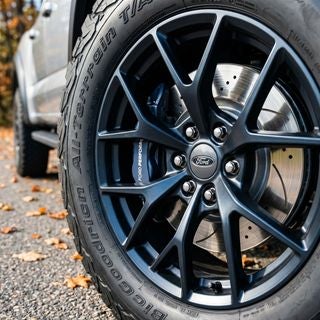
Contact Us

Fill out this form below and we'll contact you shortly
*Required Fields