

Leasing a car generally costs less in total out-of-pocket cash than buying over a 3-year period because monthly lease payments cover only the vehicle's projected 3-year depreciation plus finance fees rather than the full purchase price. However, when financing a vehicle purchase with an auto loan, the remaining resale equity you hold at month 36 often makes buying less expensive in long-term net cost once the loan principal is factored in.
When evaluating out-of-pocket cash flow during the first 36 months of vehicle ownership, leasing requires a smaller down payment and significantly lower monthly payments. Under a standard 36-month lease contract, your payments are calculated based on the difference between the initial selling price and the estimated residual value at lease end. You are essentially paying for the portion of the vehicle's lifespan that you use, alongside a money factor interest rate and standard administrative fees.
Financing a vehicle purchase through a traditional loan means amortizing the entire sale price over the loan term. While a 36-month or 60-month auto loan requires higher monthly outlays, each payment builds equity in an asset you own. At the end of 36 months, a driver who leased must either turn in the vehicle, pay off the remaining residual balance to keep it, or start a new lease. Conversely, a driver who bought the vehicle owns an asset with trade-in value that offsets their original investment.
To compare exact 3-year payment structures, trade options, and current Ford lease offers, visit our showroom on Pennsylvania Avenue or give our team a quick call at (330) 462-7578.
Table of Contents
- What Is the Monthly Payment Difference Between Leasing and Buying a Ford?
- How Do Depreciation and Residual Values Impact 3-Year Vehicle Costs?
- How Do Mileage Limits and Upfront Overage Options Work on a 3-Year Lease?
- What Excess Wear Fees and Gap Insurance Protection Apply Over 36 Months?
- Frequently Asked Questions About 3-Year Ford Leasing and Buying
- Finding Your Ideal 3-Year Financing Strategy
What Is the Monthly Payment Difference Between Leasing and Buying a Ford?
Leasing a new Ford typically results in monthly payments that are 30% to 50% lower than financing the exact same vehicle on a conventional 36-month or 60-month auto loan. This lower monthly outlay occurs because lease payments finance only the vehicle's projected value loss over 36 months rather than amortizing the entire sticker price.
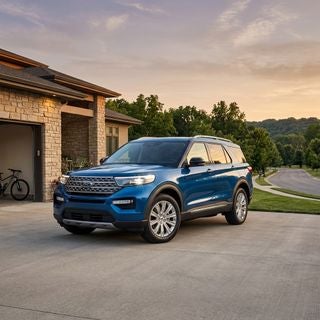
For example, regional manufacturer lease programs on popular crossover models reflect this payment dynamic. A 2026 Ford Explorer Active equipped with the Comfort Package has been offered through Ford Credit at contact us for current lease pricing and terms. Financing that same SUV—which carries an MSRP starting at $42,585 for the AWD model equipped with the 2.3L EcoBoost® engine—on a standard 60-month loan even with a promotional current financing terms results in a noticeably higher monthly payment commitment.
Similarly, truck and compact SUV shoppers encounter substantial payment gaps between leasing and buying. A 2026 Ford F-150 STX 4WD SuperCrew with an MSRP of $50,865 has been listed on 36-month lease programs for contact us for current lease pricing. For fuel-conscious drivers, the 2026 Ford Escape ST-Line AWD lease sits near contact us for current lease pricing over 36 months, whereas purchasing an Escape Active AWD model with a base MSRP of $31,750 demands a higher monthly commitment over a 36-month loan term.
For family budgets in suburban areas like Calcutta where daily commutes along State Route 170 accumulate steady mileage, keeping monthly fixed vehicle costs low makes leasing an appealing financial strategy. Lower monthly lease payments free up capital while ensuring drivers stay behind the wheel of a modern vehicle covered by Ford's 3-year or 36,000-mile bumper-to-bumper factory warranty.
To review current vehicles and payment options, browse our new Ford vehicle inventory, submit an online credit application, or view current offers.
Pricing
Pricing by trim
| Feature | Active AWD | Active FWD | Platinum AWD | ST-Line AWD |
|---|---|---|---|---|
| Base MSRP | $31,750 | $30,350 | $37,940 | $32,595 |
| Destination charge | $1,495 | $1,495 | $1,495 | $1,495 |
Pricing (continued)
| Feature | ST-Line Elite AWD 2.0L | ST-Line FWD | ST-Line Select AWD 2.0L |
|---|---|---|---|
| Base MSRP | $38,935 | $31,195 | $35,015 |
| Destination charge | $1,495 | $1,495 | $1,495 |

How Do Depreciation and Residual Values Impact 3-Year Vehicle Costs?
A vehicle's residual value—the estimated percentage of its original sticker price retained after 3 years—directly dictates lease costs, with higher residuals driving lower monthly lease payments. Most new vehicles retain a 36-month residual value between 45% and 65% of MSRP, and models that hold their value exceptionally well cost less to lease because the gap between purchase price and end-of-term value is smaller.
In a 3-year lease structure, residual value is fixed at contract signing by Ford Credit based on historical market trends and projected vehicle demand. If a vehicle starting at $31,750 retains a 60% residual value after 36 months, its estimated value is $19,050. The lease payments over those 3 years cover the $12,700 difference in value plus interest and fees.
The 2026 Ford Escape lineup illustrates how trim selection and feature options shape initial MSRP baselines across the board:
- Active FWD: $30,350 base MSRP (plus $1,495 destination charge)
- Active AWD: $31,750 base MSRP (plus $1,495 destination charge)
- ST-Line FWD: $31,195 base MSRP (plus $1,495 destination charge)
- ST-Line AWD: $32,595 base MSRP (plus $1,495 destination charge)
- ST-Line Select AWD 2.0L: $35,015 base MSRP (plus $1,495 destination charge)
- Platinum AWD: $37,940 base MSRP (plus $1,495 destination charge)
- ST-Line Elite AWD 2.0L: $38,935 base MSRP (plus $1,495 destination charge)
When you buy rather than lease, actual market depreciation impacts your equity when you choose to sell or trade the vehicle at month 36. High-demand models, such as the 2026 Ford Explorer XLT AWD with its 5,000 lbs towing capacity or the Ford F-150 XL AWD with its 10,400 lbs max towing capacity, tend to hold residual value exceptionally well. When a purchased vehicle retains strong market value, the owner reclaims a substantial portion of their original investment upon trade-in.
Drivers interested in evaluating their current vehicle's market value can use our online trade appraisal tool, check current Ford promotional offers, or explore pre-owned single-owner vehicle inventory.
How Do Mileage Limits and Upfront Overage Options Work on a 3-Year Lease?
Mileage allowances and excess-mileage charges vary by lease program. Contact the dealership for current lease terms and mileage options.
In industrial centers like East Liverpool, where workers commute along riverfront bluffs and regional highway corridors, daily driving distances can accumulate faster than anticipated. Commercial drivers or business owners selecting a heavy-duty model like the 2026 Ford F-150 XL AWD with its 3.5L V6 engine must carefully align their lease mileage allowance with regional work routes.
If your driving patterns change mid-lease and you risk exceeding contract limits, options exist to manage the cost. You can purchase the vehicle outright at the end of the term for the pre-set residual value, eliminating mileage penalties entirely, or trade the vehicle in early toward a new purchase if market equity covers the payoff balance.
To explore lease-friendly commercial vehicles or high-value pre-owned alternatives, view our F-Series work truck inventory or browse our certified pre-owned Ford selection.
Fuel Economy
Fuel economy and range by trim
| Feature | Active AWD | Active FWD | Platinum AWD | ST-Line AWD |
|---|---|---|---|---|
| MPG | 26 city / 32 hwy / 28 combined | 27 city / 34 hwy / 30 combined | 23 city / 31 hwy / 26 combined | 26 city / 32 hwy / 28 combined |
Fuel Economy (continued)
| Feature | ST-Line Elite AWD 2.0L | ST-Line FWD | ST-Line Select AWD 2.0L |
|---|---|---|---|
| MPG | 23 city / 31 hwy / 26 combined | 27 city / 34 hwy / 30 combined | 23 city / 31 hwy / 26 combined |
What Excess Wear Fees and Gap Insurance Protection Apply Over 36 Months?
Lease turn-in inspections assess excess wear and tear for body dents larger than a credit card, deep paint scratches, cracked windshields, tire tread depth below 4/32 of an inch, and interior upholstery tears. Meanwhile, gap insurance protects both leased and financed vehicles by covering the financial shortfall between insurance payout and remaining loan or lease balance in the event of a total loss.
During a 3-year lease, normal wear and tear from routine daily driving is expected and fully permitted under Ford Credit guidelines. Minor door dings smaller than a credit card, light surface scuffs that can be buffed out, and standard mechanical wear are acceptable. However, unaddressed structural damage, cracked light assemblies, or mismatched tires result in reconditioning charges when turning in the vehicle at month 36. Performing routine vehicle care and addressing windshield chips or tire wear before your end-of-term inspection can help reduce turn-in costs.
Gap insurance plays a critical financial protection role during the first 36 months of both leasing and buying. Because new vehicles experience their highest rate of market depreciation during the first 3 years of ownership, an accident resulting in a total loss early in the term can leave a driver owing more on their loan or lease balance than their auto insurance policy pays out based on actual cash value.
On standard Ford Credit Red Carpet Lease agreements, Gap Protection is automatically included in the contract terms at no additional upfront charge. For drivers financing a vehicle purchase through an auto loan, gap insurance can be added to the loan balance at purchase, protecting personal savings from unexpected vehicle depreciation gaps.
Frequently Asked Questions About 3-Year Ford Leasing and Buying
Q: Is gap insurance automatically included in a Ford lease?
Ford Credit automatically includes Gap Protection in standard Red Carpet Lease contracts at no extra upfront cost. This coverage waives the financial difference between your primary auto insurance cash-value payout and the remaining lease payoff balance if the vehicle is stolen or declared a total loss in an accident during your 3-year term.
Q: What happens if I go over my lease mileage limit before 36 months are up?
Exceeding your contract mileage allowance results in per-mile overage charges when returning the vehicle at month 36, typically billed between $0.15 and $0.20 per excess mile. If you anticipate driving more than your agreed limit, you can buy out the lease at term end, trade the vehicle in toward a new purchase, or purchase extra miles through the dealership when structuring your initial agreement.
Q: Can I buy my Ford vehicle at the end of a 3-year lease?
You have the guaranteed right to purchase your vehicle at the end of a 3-year lease for the pre-determined residual value stated in your original contract, plus applicable administrative fees and state sales tax. Buying your leased vehicle eliminates overage mileage fees and excess wear charges while keeping a vehicle whose complete maintenance history you know personally.
Q: How does down payment impact total costs on a 3-year lease versus a purchase loan?
On a 3-year auto loan, a larger down payment reduces loan principal, lowers monthly interest, and builds immediate equity. On a 3-year lease, putting down cash lowers monthly payments but exposes capital to risk; if the vehicle is totaled early in the lease, insurance pays the lender and personal cash down payments are rarely refunded.
Q: What documents should I bring to finance or lease a Ford at the dealership?
When visiting the dealership to complete a lease or loan agreement, bring a valid driver's license, your current vehicle registration and title if trading in, proof of income such as recent pay stubs, proof of residence like a utility bill, and current auto insurance card. Having these documents prepared streamlines credit approval through Ford Credit.
Finding Your Ideal 3-Year Financing Strategy
Deciding whether leasing or buying costs less over 3 years depends on whether you prioritize lower monthly payments and minimal upfront cash outflow or building long-term vehicle equity. Evaluating your annual driving mileage, monthly budget, and personal ownership timeline allows our team to structure a finance or lease plan tailored to your needs.
At Tri State Ford, our finance specialists guide you through side-by-side comparisons of Ford Credit lease offers, competitive purchase loans, and trade-in appraisals. Whether you prefer driving a new Ford SUV every 3 years with factory warranty coverage or owning a capable truck for years to come, we provide clear terms and straightforward pricing.
Visit our dealership located at 1503 Pennsylvania Ave to test drive our newest models, or call our sales team directly at (330) 462-7578 to explore customized 3-year lease and purchase quotes today.
Keep Your Vehicle Running Strong
Keep your vehicle performing at its best with our service team: