Blog

All Maintenance & Service, Expert Repairs & Diagnostics, Genuine Parts & Accessories, Engine Care & Used Vehicle Guides, Financing & Insurance, Buying Guides, Trade-In Advice, Certified Pre-Owned New Vehicle Reviews, Buying Guides, Financing & Insurance, Model Comparisons, Automotive News Maintenance & Service, Warranty & Service Contracts, Repair & Diagnostics, Parts & Components Used Vehicle Guides, Financing & Insurance, Buying Guides, Vehicle Warranty Information, Pre-Owned Automotive News, New Vehicle Reviews, Buying Guides, Financing & Insurance, Seasonal Driving Tips Maintenance & Service, Battery Care & Diagnostics, Electric Vehicle (EV) Maintenance, Seasonal Compare Cars Maintenance & Service, Parts & Accessories, Vehicle HVAC Care, Seasonal Vehicle Maintenance, DIY Maintenance & Service, Essential Vehicle Care, Preventive Maintenance Tips, Vehicle Longevity Vehicle Trade-In Advice, Financing & Insurance, Buying Guides, Used Vehicle Guides, New Vehicle Buying Guides, Financing & Insurance, New Vehicle Reviews, Model Comparisons, Sales & Promotions Used Vehicle Guides, Financing & Insurance, Buying Guides, Pre-Owned Vehicle Sales, Vehicle Maintenance & Service, Brake Systems & Repair, Vehicle Parts & Accessories, Towing & Load New Vehicle Reviews, Buying Guides, Model Comparisons, Financing & Insurance, Inventory & Sales Tips Buying Guides, Financing & Insurance, New Vehicle Reviews, Model Comparisons, Technology & Leasing & Lease Deals, Financing & Insurance, New Vehicle Sales, Commercial Vehicle Leasing, Maintenance & Service, Recall Information, Safety & Reliability, Vehicle Ownership Care, Parts & Maintenance & Service, Vehicle Pickup & Delivery, Mobile Service & On-Site Repairs, Oil Change & Maintenance & Service, Warranty & Recalls, Repair & Diagnostics, Parts & Accessories, Vehicle Used Vehicle Guides, Financing & Insurance, Buying Guides, New Vehicle Reviews, Commercial Vehicle Vehicle Sales Events, New Vehicle Pricing & Incentives, Financing & Lease Options, Trade-In & Vehicle Sales Process, Financing & Credit Applications, New and Used Vehicle Inventory, Pickup and Vehicle Trade-In Tips, Financing & Insurance, Buying Guides, Dealership Sales Strategies, Inventory Community Events & Customer Appreciation, New Vehicle Reviews, Financing & Trade-In Guides, New Vehicle Reviews, Buying Guides, Financing & Insurance, Model Comparisons, Automotive Technology Maintenance & Service, Automotive Technology & Software Updates, Warranty & Recall Service, Mobile Maintenance & Service, Vehicle Lighting & Electrical Systems, Automotive Safety & Inspection, OEM Maintenance & Service, Vehicle Ownership Care, Mobile Repair Services, Genuine Parts & Certified Model Comparisons, New Vehicle Reviews, Technology & Innovation, Safety Features, Buying Guides Commercial Truck Sales, Fleet Vehicle Financing, Custom Work Truck Upfits, Commercial Vehicle Commercial Vehicle Sales, Financing & Leasing, Small Business Vehicle Incentives, Fleet Purchasing Commercial Vehicle Sales, Fleet Purchasing & Management, Financing & Leasing for Businesses, New & Community Events, New Vehicle Buying Guides, Financing & Insurance, Maintenance & Service, Local Dealership Events & Promotions, Financing & Trade-In Options, Maintenance & Service Specials, Maintenance & Service, Brake System Care, Vehicle Safety & Inspection, Parts Quality & Replacement, Maintenance & Service, Mobile Vehicle Services, Vehicle Care & Ownership, Genuine Parts & Repairs, Maintenance & Service, Safety Features, Technology & Innovation, Seasonal Driving Tips, Parts & Maintenance & Service, Tire Care & Repair, Roadside Assistance, Vehicle Safety & Inspections, Maintenance & Service, Vehicle Inspections, Oil Change & Fluid Services, Tire Care & Battery Maintenance & Service, Vehicle Software Updates, Safety Features, Technology & Innovation, Recall & New Vehicle Reviews, Buying Guides, Financing & Insurance, Model Comparisons, Used Vehicle Guides New Vehicle Reviews, Buying Guides, Model Comparisons, Maintenance & Service, Technology & Buying Guides, Financing & Insurance, New Vehicle Reviews, Commercial Fleet Sales, Custom Orders & Buying Guides, New Vehicle Reviews, Financing & Insurance, Commercial Vehicle Sales, Model Commercial Vehicle Sales, Fleet Leasing & Management, Commercial Financing & Tax Incentives, Financing & Insurance, Leasing Benefits, Model Comparisons, Technology & Innovation, Buying Guides Leasing & Financing Options, Buying Guides, Model Comparisons, Negotiation Tips, Inventory & Leasing & Financing Options, Buying Guides, New Vehicle Reviews, Model Comparisons, Technology & Maintenance & Service, Automotive Detailing, Paint Protection & Care, Seasonal Vehicle Care, Maintenance & Service, Automotive Electrical Systems, Battery Care & Replacement, Vehicle Lighting Maintenance & Service, Automotive Fluids & Lubricants, Vehicle Care & Ownership, Dealership Service Maintenance & Service, Automotive Repair, Mobile & Remote Vehicle Service, Warranty & Roadside Maintenance & Service, Brake System Care, Vehicle Safety & Inspection, Automotive Repair Tips, Maintenance & Service, Brake System Care, Vehicle Safety & Inspections, Parts & Repairs, Expert Maintenance & Service, Technology & Innovation, Vehicle Diagnostics & Telematics, Fleet Management Maintenance & Service, Tire Care & Repair, Wheel Alignment & Balancing, Suspension Maintenance, Maintenance & Service, Tire Care & Replacement, Vehicle Safety & Handling, Seasonal Vehicle Maintenance & Service, Tire Care & Replacement, Vehicle Safety & Inspection, Emergency Roadside Maintenance & Service, Vehicle Care & Longevity, Scheduled Service Packages, Oil Changes & Fluid Maintenance & Service, Vehicle Inspection & Diagnostics, Parts & Repairs, Warranty & Resale Value, Maintenance & Service, Vehicle Interior Care, Technology & Innovation in Service, Professional New Vehicle Reviews, Buying Guides, Financing & Insurance, Model Comparisons, Inventory Highlights New Vehicle Reviews, Buying Guides, Financing & Insurance, Model Comparisons, Inventory Updates New Vehicle Reviews, Buying Guides, Technology & Innovation, Safety Features, Seasonal Driving Tips Used Vehicle Guides, Buying Guides, Financing & Insurance, Model Comparisons, Selling Your Car Vehicle Sales Events, New Vehicle Purchasing, Incentives & Discounts, Financing & Pre-Approval, Buying Guides, Financing & Insurance, Used Vehicle Guides, New Vehicle Reviews, Cross-Border Buying Guides, Financing & Insurance, Vehicle Inventory & Offers, Dealership Visit Preparation, Commercial Leasing Options, Business Fleet Solutions, Financing & Leasing Programs, Commercial Commercial Truck Sales, Fleet Purchasing Guides, Financing & Lease Options, Work Truck Community Engagement & Events, New Vehicle Promotions, Financing & Trade-In Options, Maintenance & Community Events & Dealership News, New Vehicle Promotions & Incentives, Maintenance & Service Community Events & Dealership News, New Vehicle Reviews, Financing & Insurance, Maintenance & Custom Ordering & Build Process, New Vehicle Inventory & Offers, Financing & Trade-In Guidance, East Liverpool, OH Ford Dealer East Liverpool, OH Used Cars Financing & Insurance, Buying Guides, Commercial Vehicle Solutions, Fleet Management, Inventory and Financing & Insurance, Buying Guides, New Vehicle Reviews, Used Vehicle Guides, Automotive Sales Financing & Insurance, Buying Guides, New Vehicle Reviews, Used Vehicle Guides, Automotive Sales & Financing & Insurance, Buying Guides, New Vehicle Reviews, Used Vehicle Guides, Model Comparisons Financing & Insurance, Buying Guides, Used Vehicle Guides, New Vehicle Reviews, Automotive Sales Financing & Insurance, Buying Guides, Used Vehicle Guides, Trade-In Tips, New Vehicle Sales Financing & Insurance, Buying Guides, Vehicle Inventory & Offers, Trade-In & Appraisal, Dealership Financing & Insurance, Buying Guides, Vehicle Trade-In Tips, Dealership Sales Process, New Vehicle Leasing & Financing Options, New Vehicle Leasing Guides, Buying Guides, Inventory Spotlight, Trade Leasing Options, Financing & Insurance, New Vehicle Reviews, Buying Guides, Technology & Innovation Leasing Options, Financing & Insurance, New Vehicle Sales, Buying Guides, Vehicle Inventory Maintenance & Service, Air Conditioning Repair, Genuine Parts & Accessories, Dealer-Authorized Maintenance & Service, Automotive Air Conditioning Repair, Vehicle Cooling System Care, Diagnostic Maintenance & Service, Automotive Detailing & Cleaning, Seasonal Vehicle Care, Vehicle Protection & Maintenance & Service, Automotive Detailing & Paint Care, Vehicle Exterior Protection, Paint Repair Maintenance & Service, Automotive Detailing & Protection, Corrosion & Rust Prevention, Paint & Maintenance & Service, Automotive Detailing, Vehicle Care & Protection, Off-Road Vehicle Maintenance & Service, Automotive Electrical Systems, Battery Care & Replacement, Diagnostics & Maintenance & Service, Automotive Glass Repair, Safety Features, Technology & Innovation, Mobile & Maintenance & Service, Automotive Lighting & Electrical, Vehicle Safety & Visibility, DIY Vehicle Maintenance & Service, Automotive Parts & Accessories, Seasonal Vehicle Care, Vehicle Safety & Maintenance & Service, Automotive Parts & Accessories, Vehicle Air Quality & HVAC Care, Preventive Maintenance & Service, Automotive Parts & Accessories, Vehicle Ownership Care, Engine Care & Maintenance & Service, Automotive Parts & Accessories, Vehicle Safety & Repair, Warranty & Maintenance & Service, Automotive Parts & Components, Vehicle Safety & Repair, Warranty & Service Maintenance & Service, Automotive Parts & Repairs, Vehicle Warranty & Protection, Service Center Maintenance & Service, Automotive Repair Tips, Service Team Selection, Warranty & Service Policies, Maintenance & Service, Automotive Repair, Parts & Accessories, Vehicle Ownership Care, Technology & Maintenance & Service, Automotive Repair, Parts & OEM Components, Vehicle Longevity & Care, Service Maintenance & Service, Automotive Technology & Diagnostics, Vehicle Electronics & Sensors, Seasonal Maintenance & Service, Battery Care & Replacement, Vehicle Electrical Systems, Seasonal Vehicle Maintenance & Service, Brake System Care, OEM Parts & Replacement, Vehicle Safety & Inspections, Maintenance & Service, Brake System Care, Vehicle Repair Tips, Automotive Parts & Components, Maintenance & Service, Brake System Care, Vehicle Safety & Inspections, Parts & Components, Maintenance & Service, Brake System Care, Vehicle Safety Inspections, Automotive Repair Tips, OEM Maintenance & Service, Certified Technician Insights, Warranty & Service Coverage, Genuine OEM Maintenance & Service, Cooling System Repairs, Vehicle Ownership Care, Diagnostic & Maintenance & Service, Diagnostic Services, Vehicle Health & Diagnostics, Service Tips & Advice, Maintenance & Service, Engine Care & Performance, Parts & Accessories, Genuine vs. After Maintenance & Service, Paint Protection & Detailing, Vehicle Exterior Care, Seasonal Vehicle Maintenance & Service, Parts & Accessories, Engine Care & Repair, Vehicle Longevity Tips, OEM Parts Maintenance & Service, Parts & Replacements, Vehicle Care Tips, Seasonal Maintenance, DIY Vehicle Maintenance & Service, Recall Updates & Safety Notices, Genuine Parts & Accessories, Truck Care & Maintenance & Service, Repair & Diagnostics, OEM Parts & Accessories, Warranty & Recall Maintenance & Service, Repair & Diagnostics, Parts & Accessories, Vehicle Ownership Care, Service Maintenance & Service, Repair & Diagnostics, Parts & Components, Preventive Care & Tips, Warranty & Maintenance & Service, Repair & Diagnostics, Tire & Wheel Care, Vehicle Safety & Inspection, Parts Maintenance & Service, Repair & Diagnostics, Warranty & Service Coverage, Genuine OEM Parts & Maintenance & Service, Repair & Parts, Vehicle Ownership Care, Safety Features, Technology & Maintenance & Service, Repair & Parts, Vehicle Ownership Care, Transmission Maintenance & Service, Repair Solutions, Vehicle Ownership Care, Parts & Accessories, Diagnostic Maintenance & Service, Repair Tips & Techniques, Vehicle Care & Ownership Maintenance & Service, Safety Features, Automotive Recalls & Repairs, Parts & Warranty Services, Maintenance & Service, Safety Features, Automotive Recalls & Repairs, Technology & Innovation, Maintenance & Service, Safety Features, Automotive Recalls, Vehicle Ownership Care, Parts & Repairs Maintenance & Service, Safety Features, Parts & Repairs, Vehicle Ownership Care, Automotive Service Maintenance & Service, Safety Features, Recall & Repair Updates, Parts & Repairs, Vehicle Ownership Maintenance & Service, Safety Features, Recall & Safety Campaigns, Vehicle Inspection & Repairs, Maintenance & Service, Safety Features, Recall & Warranty Information, Vehicle Diagnostics & Maintenance & Service, Safety Features, Recall Repairs & Safety Campaigns, Parts & Genuine Maintenance & Service, Safety Features, Recalls & Repairs, Parts & Accessories, Vehicle Ownership Maintenance & Service, Safety Features, Repair & Recall Updates, Parts & Components, Vehicle Maintenance & Service, Safety Features, Repair & Replacement, Vehicle Care & Inspection, Parts & Maintenance & Service, Safety Features, Seasonal Driving Tips, Technology & Innovation, Parts & Maintenance & Service, Safety Features, Technology & Innovation, Automotive Electrical Systems, Maintenance & Service, Safety Features, Technology & Innovation, Automotive News, Parts & Repairs Maintenance & Service, Safety Features, Technology & Innovation, Automotive Parts & Accessories, Maintenance & Service, Safety Features, Technology & Innovation, Automotive Recalls, Parts & Repairs Maintenance & Service, Safety Features, Technology & Innovation, Automotive Recalls, Vehicle Maintenance & Service, Safety Features, Technology & Innovation, Automotive Service Tips, Recall & Maintenance & Service, Safety Features, Technology & Innovation, Parts & Repairs, Seasonal Driving Maintenance & Service, Safety Features, Technology & Innovation, Parts & Repairs, Vehicle Ownership Maintenance & Service, Safety Features, Technology & Innovation, Recall & Warranty Information, Maintenance & Service, Safety Features, Technology & Innovation, Repair & Recall Information, Parts Maintenance & Service, Safety Features, Technology & Innovation, Tire Care & Replacement, Maintenance & Service, Safety Features, Vehicle Inspections, DIY Vehicle Care, Repair & Diagnostics Maintenance & Service, Safety Recalls & Repairs, Vehicle Safety & Compliance, Powertrain & Maintenance & Service, Seasonal Driving Tips, Model Comparisons, Technology & Innovation, Safety Maintenance & Service, Seasonal Driving Tips, Safety Features, Technology & Innovation, Automotive Maintenance & Service, Seasonal Driving Tips, Safety Features, Technology & Innovation, Parts & Maintenance & Service, Seasonal Driving Tips, Vehicle Care & Ownership, Brake System Maintenance, Maintenance & Service, Seasonal Driving Tips, Vehicle Care & Ownership, Parts & Accessories, Safety Maintenance & Service, Seasonal Driving Tips, Vehicle Care & Ownership, Safety Features, Maintenance & Service, Seasonal Driving Tips, Vehicle Care & Protection, Brake Maintenance, Tire Maintenance & Service, Seasonal Driving Tips, Vehicle Care & Warranty, Service Specials & Packages, Maintenance & Service, Seasonal Driving Tips, Vehicle Cooling Systems, Automotive Safety Features, Maintenance & Service, Service Scheduling & Convenience, Vehicle Repair & Diagnostics, Parts & Maintenance & Service, Technology & Innovation, Automotive Service Transparency, Digital Vehicle Maintenance & Service, Technology & Innovation, Safety Features, Parts & Warranty, Vehicle Maintenance & Service, Tire Care & Replacement, Seasonal Vehicle Care, Safety Features, Automotive Maintenance & Service, Tire Care & Replacement, Vehicle Safety & Inspections, Seasonal Vehicle Maintenance & Service, Transmission Care & Repair, Vehicle Fluid Services, Automotive Diagnostics, Maintenance & Service, Transmission Care, Repair & Parts, Vehicle Ownership Care, Common Vehicle Maintenance & Service, Vehicle Care Tips, Parts & Accessories, Seasonal Vehicle Maintenance, Maintenance & Service, Vehicle Detailing & Care, Parts & Accessories, Seasonal Vehicle Preparation, Maintenance & Service, Vehicle Detailing & Cosmetic Care, Automotive Cleaning & Protection, Service Maintenance & Service, Vehicle Detailing & Cosmetic Care, Service Scheduling & Convenience, Maintenance & Service, Vehicle Detailing & Protection, Repair & Inspection, Parts & Accessories, Maintenance & Service, Vehicle Detailing & Protection, Vehicle Care Tips, Seasonal Vehicle Maintenance & Service, Vehicle Diagnostics & Repair, Engine Performance & Troubleshooting, Fuel Maintenance & Service, Vehicle Fluids & Lubrication, Engine Care & Repair, Parts & Accessories, Maintenance & Service, Vehicle Ownership Care, Parts & Accessories, Repair & Diagnostics, Certified Maintenance & Service, Vehicle Repair & Diagnostics, Parts & Accessories, DIY Vehicle Care, Safety Maintenance & Service, Vehicle Repair & Diagnostics, Parts & Accessories, Hybrid & Electric Vehicle Maintenance & Service, Vehicle Repair & Diagnostics, Parts & Accessories, Seasonal Driving Tips, Maintenance & Service, Vehicle Repair & Diagnostics, Parts & Accessories, Service Lane Tips & Maintenance & Service, Vehicle Repair & Diagnostics, Parts & Accessories, Towing & Performance Maintenance & Service, Vehicle Repair & Parts, Service Convenience & Customer Care, Roadside Maintenance & Service, Vehicle Repair Tips, Parts & Accessories, Safety Features, Technology & Maintenance & Service, Vehicle Service Warranties, Repair & Coverage Plans, Ownership & Vehicle Model Comparisons, Buying Guides, New Vehicle Reviews, Financing & Insurance, Inventory Updates Model Comparisons, Buying Guides, New Vehicle Reviews, Technology & Innovation, Safety Features Model Comparisons, Buying Guides, Technology & Innovation, Safety Features, Maintenance & Service Model Comparisons, New Vehicle Reviews, Buying Guides, Technology & Innovation, Financing & Model Comparisons, New Vehicle Reviews, Buying Guides, Technology & Innovation, Safety Features Model Comparisons, New Vehicle Reviews, Safety Features, Technology & Innovation, Seasonal Driving Model Comparisons, New Vehicle Reviews, Technology & Innovation, Buying Guides, Maintenance & Model Comparisons, New Vehicle Reviews, Technology & Innovation, Maintenance & Service, Buying Model Comparisons, Towing & Hauling Guides, Maintenance & Service, Technology & Innovation, New New Vehicle Promotions, Buying Guides, Financing & Insurance, New Vehicle Reviews, Inventory New Vehicle Reviews, Buying Guides, Financing & Insurance, Model Comparisons, Automotive Sales New Vehicle Reviews, Buying Guides, Financing & Insurance, Model Comparisons, Commercial & Work New Vehicle Reviews, Buying Guides, Financing & Insurance, Model Comparisons, Vehicle Customization New Vehicle Reviews, Buying Guides, Financing & Insurance, Model Comparisons, Vehicle Inventory New Vehicle Reviews, Buying Guides, Financing & Insurance, New Vehicle Specials, Trade-In & Value New Vehicle Reviews, Buying Guides, Financing & Insurance, Used Vehicle Guides, Inventory Updates New Vehicle Reviews, Buying Guides, Financing & Insurance, Used Vehicle Guides, Model Comparisons New Vehicle Reviews, Buying Guides, Financing & Insurance, Vehicle Inventory & Specials, Model New Vehicle Reviews, Buying Guides, Financing & Insurance, Vehicle Inventory, Model Comparisons New Vehicle Reviews, Buying Guides, Model New Vehicle Reviews, Buying Guides, Model Comparisons, Financing & New Vehicle Reviews, Buying Guides, Safety Features, Technology & Innovation, Model Comparisons New Vehicle Reviews, Buying Guides, Technology & Innovation, Safety Features, Maintenance & Service New Vehicle Reviews, Financing & Insurance, Buying Guides, New Vehicle Specials, Model Comparisons New Vehicle Reviews, Financing & Insurance, Buying Guides, Technology & Innovation, Automotive New Vehicle Reviews, Financing & Insurance, Buying Guides, Used Vehicle Guides, Model Comparisons New Vehicle Reviews, Model Comparisons, Buying Guides, Technology & Innovation, Safety Features New Vehicle Reviews, Model Comparisons, Commercial Truck Guides, Technology & Innovation, New Vehicle Reviews, Model Comparisons, Financing & Insurance, Technology & Innovation, Safety New Vehicle Reviews, Model Comparisons, Off-Road Adventures, Technology & Innovation, Maintenance & New Vehicle Reviews, Model Comparisons, Safety Features, Technology & Innovation, Buying Guides New Vehicle Reviews, Model Comparisons, Technology & Innovation, Financing & Insurance, Maintenance New Vehicle Reviews, Model Comparisons, Technology & Innovation, Safety Features, Buying Guides New Vehicle Reviews, Model Comparisons, Technology & Innovation, Safety Features, Maintenance & New Vehicle Reviews, Off-Road Capabilities, Outdoor Adventure Vehicles, Technology & Innovation, New Vehicle Reviews, Technology & Innovation, Buying Guides, Maintenance & Service, Model New Vehicle Reviews, Technology & Innovation, Buying Guides, Safety Features, Model Comparisons New Vehicle Reviews, Technology & Innovation, Safety Features, Maintenance & Service, Buying Guides New Vehicle Sales, Financing & Incentives, Trade-In & Appraisal, Special Sales Events, Electric New Vehicle Sales, Financing & Incentives, Trade-In & Value Guides, Manufacturer Promotions, New Vehicle Sales, Financing & Insurance, Buying Guides, Manufacturer Incentives & Discounts, New Vehicle Sales, Vehicle Delivery & Logistics, Financing & Credit Applications, Trade-In & Trucks Used Vehicle Guides, Financing & Insurance, Buying Guides, Model Comparisons, Local Dealership Vehicle Sales Events, Financing & Leasing, Trade-In & Trade-Up Guides, New Vehicle Inventory Vehicle Sales Events, New Vehicle Buying Guides, Financing & Incentives, Dealership Inventory Vehicle Sales Events, New Vehicle Pricing, Financing & Credit Applications, Trade-In & Loyalty Vehicle Sales Process, Online Vehicle Purchasing, Financing & Loan Approval, Trade-In & Vehicle Vehicle Sales Promotions, New Vehicle Buying Guides, Financing & Credit Applications, Dealership Vehicle Sales Promotions, New Vehicle Buying Guides, Financing & Incentives, Trade-In & Valuation, Vehicle Sales, Online Car Buying, Financing & Incentives, Trade-In Guides, New Vehicle Delivery
6

Which Auto Parts Are Most Critical for Vehicle Safety?

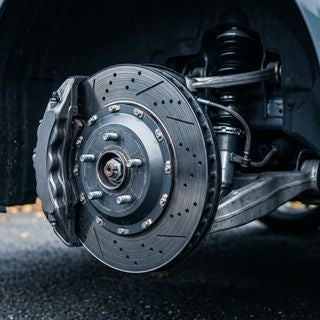
The auto parts most critical for vehicle safety are tires, brake pads and rotors, steering and suspension linkages, replacement airbags, and timing belts. These components directly dictate stopping distance, emergency evasion handling, structural crash protection, and reliable engine timing. Compromising on their quality drastically elevates the risk of mechanical failure, extended stopping times, loss of directional control, and cabin intrusion during a collision. Vehicle mechanical systems operate as an interconnected safety envelope. When a driver presses the brake pedal or turns the steering wheel, every link in that mechanical chain must withstand immediate kinetic pressure. High-grade components undergo rigorous stress testing, thermal validation, and material analysis to handle emergency maneuvers. Substituting lower-grade components weakens this system, transforming standard road hazards into immediate safety threats. For drivers navigating the steep riverfront bluffs and sudden stops around East Liverpool, mechanical precision is essential. Steering tie rods, ball joints, control arms, and coil springs maintain tire contact with the pavement. If budget steering or suspension parts yield under heavy cornering or load shifts, electronic safety systems like stability control and anti-lock braking systems cannot properly function. Maintaining these safety-critical systems with validated components preserves overall operational safety. If you ever suspect wear in your vehicle's core safety mechanics, feel free to stop by our East Liverpool service facility or reach out to our technicians directly by giving us a quick call to discuss an inspection. Table of Contents Why Are Budget Tires Considered a Major Safety Risk? What Are the Risks of Using aftermarket brake pads and rotors? Why Should You Never choose low-quality replacement airbags? Are OES Parts as Good as OEM Parts? Do Detailed Maintenance Records Showing Quality Parts Boost Trade-In Value? Key Service Questions Regarding Vehicle Parts and Safety Trust Tri State Ford for Professional Safety Component Service Why Are Budget Tires Considered a Major Safety Risk? Budget tires are considered a major safety risk because they utilize low-grade synthetic rubber compounds, rigid sidewalls, and shallow tread designs that significantly lengthen stopping distances and reduce wet-weather traction. These structural deficiencies compromise vehicle stability, increase hydroplaning risks, and heighten the probability of sudden tread separation or catastrophic blowouts under load. Tires serve as the sole physical point of contact between a vehicle and the road surface, covering a total contact patch roughly the size of four human palms. Premium and Original Equipment tires are engineered with specific silica-enhanced rubber formulations that remain flexible across broad temperature ranges. In contrast, low-cost tire manufacturers save on production costs by using stiffer, lower-cost petroleum-based compounds. This lack of compound flexibility prevents the tread from conforming to road micro-textures, leading to a substantial drop in cornering grip and stopping performance during unexpected hard braking. The National Highway Traffic Safety Administration identifies 2/32 inch as the absolute minimum tread depth before immediate tire replacement is required. However, budget tires often lose traction well before reaching that wear bar due to poor water-evacuation channels. During heavy rainstorms, inferior tread architecture fails to channel water away from the contact patch, lifting the tire off the pavement and causing severe hydroplaning. Furthermore, the National Highway Traffic Safety Administration advises drivers to check tire inflation pressure at least monthly when the tires are cold, setting levels to the manufacturer's specification found on the driver's door placard rather than the maximum pressure stamped on the tire sidewall. Maintaining optimal tire pressure and monitoring tread depth preserves original handling dynamics and ensures that factory driver-assist features operate as designed. Drivers looking to verify their current tire condition can easily schedule a service appointment online with our certified maintenance team. What Are the Risks of Using aftermarket brake pads and rotors? Using aftermarket brake pads and rotors introduces severe safety risks, including rapid thermal brake fade, uneven rotor warping, excessive stopping distances, and potential complete friction material shear under emergency braking. Low-quality friction compounds lack proper thermal resistance, turning excessive kinetic heat into a slippery glazed layer that leaves the brake pedal feeling spongy and unresponsive. Brake systems rely on converting kinetic energy into thermal energy through friction. High-tier brake pads, such as genuine Motorcraft components, utilize vehicle-specific friction formulations engineered to match the exact weight, braking bias, and thermal demands of the vehicle. These premium pad assemblies include integrated noise-damping insulators, engineered steel shims, and application-specific attaching hardware that ensure precise caliper alignment and even wear distribution. Cheap aftermarket pads frequently skip these critical insulating shims and hardware, resulting in high-pitched brake squeal, severe dusting, and premature rotor scarring. When drivers come into our service facility after noticing longer braking distances on wet roads, our technicians frequently discover low-grade friction pads or budget tires that lack proper thermal resistance. Low-cost brake rotors compound these issues by using inferior cast iron with uneven density, thinner internal cooling vanes, and coarse surface machining. Under repeated stopping cycles, low-grade iron cannot dissipate heat efficiently. This thermal build-up causes the rotor face to warp, creating violent pedal pulsation and steering wheel shudder. In severe cases, extreme heat causes brake fluid contamination and boiling, leading to pedal drop and sudden loss of braking power. To prevent friction failure and maintain proper caliper movement, routine system flushes and hardware replacements are required: Flush brake fluid every two to three years or 30,000 miles to eliminate moisture contamination and maintain hydraulic pressure. Replace caliper slide pins, anti-rattle clips, and stainless steel hardware during every pad replacement to prevent binding. Inspect rotor thickness and lateral runout at every oil change interval to catch uneven wear before damage occurs. Why Should You Never choose low-quality replacement airbags? You should never choose low-quality replacement airbags because non-OEM, unvetted, or counterfeit airbag assemblies can fail to deploy or violently explode during a crash, sending metal fragments into the cabin. Improperly manufactured inflators transform a life-saving restraint into a fatal hazard during otherwise survivable collisions. Airbags rely on precise pyrotechnic charges and chemical propellants calibrated to deploy within milliseconds of an impact signal. According to safety alerts from the National Highway Traffic Safety Administration, unvetted and counterfeit replacement airbag inflators—including banned imported units labeled with suspect identifiers like DTN60DB—pose severe risks of rupture. Rather than safely expanding the fabric cushion to protect vehicle occupants, defective inflator canisters can violently rupture under pressure, propelling sharp metal shrapnel directly toward the driver and passengers. Vehicles involved in previous collisions where airbags deployed require rigorous verification before returning to the road. The National Highway Traffic Safety Administration strongly urges owners of used vehicles repaired after a crash deployment to have their supplemental restraint systems thoroughly inspected by a factory-authorized service center. Non-genuine replacement parts purchased through unregulated online channels or cut-rate body shops often lack safety sensor calibration and chemical propellant stability. Ensuring that every replacement airbag is a genuine OEM unit maintains original crash test ratings and protects human life. Are OES Parts as Good as OEM Parts? Original Equipment Supplier (OES) parts are functionally identical to Original Equipment Manufacturer (OEM) parts because they are produced by the same tier-one manufacturing suppliers using identical engineering drawings, tooling, and quality standards. Choosing OES components provides exact factory-level fitment, material integrity, and operational reliability while frequently offering a lower cost point. Vehicle manufacturers design complex systems but outsource the physical production of specific components—such as alternators, brake calipers, sensors, and spark plugs—to specialized automotive suppliers. When a component is branded with the vehicle manufacturer's logo and packaged in factory boxes, it is categorized as an OEM part. When that exact same supplier packages the identical component under their own brand name, it is sold as an OES part. Both variants share identical metallurgy, dimensions, tolerances, and performance ratings. In contrast, low-tier generic aftermarket parts are reverse-engineered by third-party factories without access to original factory CAD files or proprietary alloy recipes. This often results in improper bolt alignment, electrical resistance variations, and accelerated wear rates. Sticking with OEM or verified OES components preserves factory warranty protections and prevents premature mechanical breakdown. Ford stands behind its official Motorcraft replacement components with a comprehensive two-year unlimited-mileage service-parts warranty, providing long-term confidence for every repair. Owners needing factory-approved parts for upcoming vehicle maintenance can easily order genuine Ford parts directly through our dedicated parts center. Do Detailed Maintenance Records Showing Quality Parts Boost Trade-In Value? Detailed maintenance records showing the exclusive use of high-quality OEM or top-tier OES parts significantly boost trade-in value by eliminating mechanical uncertainty and verifying diligent vehicle stewardship. Dealership appraisers and prospective buyers pay a premium for vehicles with documented maintenance histories because they represent lower reconditioning costs and reduced risk of hidden mechanical defects. When a vehicle enters the dealership appraisal process, evaluators examine overall condition, tire tread wear, brake pad thickness, fluid clarity, and service documentation. A comprehensive logbook filled with receipts for factory-specified fluid changes, genuine filter replacements, and premium safety components signals that the engine, transmission, and chassis have been well preserved. This documented history allows the dealership to classify the vehicle as a high-tier pre-owned candidate, justifying a higher trade-in valuation. For vehicle owners navigating the gently rolling suburban terrain around Calcutta, consistent adherence to the factory maintenance schedule protects core drivetrain longevity. Routine engine oil and filter changes performed according to the vehicle's intelligent oil-life monitor prevent sludge build-up and internal friction. Documenting these services along with timing belt replacements, cooling system flushes, and brake overhauls proves that the vehicle has been operated under optimal maintenance standards, delivering tangible financial returns when it comes time to trade up. Key Service Questions Regarding Vehicle Parts and Safety Q: How often should I check my tire pressure and tread depth? You should inspect tire pressure at least once a month when the tires are cold, using the recommended PSI found on your vehicle's driver-side door placard. Tread depth should be checked during every monthly pressure check or oil change interval using a dedicated gauge. Tires measuring at or below 2/32 inch tread depth require immediate replacement, as severe traction loss and hydroplaning hazards increase drastically below this safety threshold. Q: What are the primary signs that my vehicle's brake pads need replacement? The most common indicators of worn brake pads include high-pitched squealing noises caused by built-in wear indicators, severe pedal pulsation, grinding metallic sounds during braking, and increased stopping distances. If your brake pedal feels unusually soft or spongy when pressed, friction material degradation or brake fluid overheating may be present, requiring an immediate brake inspection to restore system safety. Q: Why is professional installation recommended for steering and suspension parts? Professional installation is critical for steering and suspension components because tierods, ball joints, control arms, and struts require precise torque specifications, specialized press tools, and immediate four-wheel alignment adjustments. Incorrectly installed suspension linkage can cause severe handling instability, uneven tire wear, and failure of electronic driver-assist sensors that rely on accurate steering angle data. Q: How do I know if my timing belt needs to be replaced? Timing belt replacement intervals are vehicle-specific and detailed within your official factory maintenance schedule rather than determined by visual inspection alone. Because timing belts operate inside engine covers and control critical valve-to-piston synchronization, a snapping belt on an interference engine can cause catastrophic internal engine destruction. Following your vehicle's designated mileage interval for timing belt service prevents sudden snapping and costly engine replacement. Q: Can using non-OEM oil filters cause engine damage? Yes, low-quality aftermarket oil filters often utilize poor synthetic or paper filtering media and lack internal anti-drainback valves. This can lead to oil starvation during cold engine starts and allow unfiltered debris to circulate through tight engine tolerances. Using genuine OEM or Motorcraft oil filters ensures proper oil flow rates, pressure regulation, and particle filtration designed specifically for your engine's internal architecture. Trust Tri State Ford for Professional Safety Component Service Tri State Ford provides certified service and genuine OEM parts to ensure every vehicle safety system operates at peak factory standards. Protecting your vehicle with top-tier components prevents unexpected breakdowns, maintains handling precision, and ensures long-term driving safety. Our factory-trained technicians utilize specialized diagnostic equipment, official service protocols, and genuine Motorcraft parts for every repair. Whether your vehicle requires fresh tires, premium brake pads, or routine battery service guidance, our team delivers transparent vehicle care tailored to your driving requirements. When you are ready to experience certified automotive care, visit our local service center at 1503 Pennsylvania Ave, East Liverpool, OH 43920 or give our service advisors a call at (330) 462-7578 to schedule your maintenance appointment today. © 2026 Tri State Ford. All rights reserved. Critical Vehicle Safety Parts in East Liverpool OH | Tri State Ford

f

Should You Buy a Used Car with a Minor Accident History?

Buying a used vehicle with a minor accident history is generally a safe and practical choice if the damage was strictly cosmetic, the repairs were completed properly using quality components, and the asking price reflects the historical impact. When structural frame components, suspension geometry, and safety restraint systems remain entirely untouched, a previously repaired vehicle delivers identical long-term reliability and daily safety at a lower overall purchase price. Evaluating a pre-owned vehicle with a reported collision requires looking past the surface notation on a vehicle history report. Services like CARFAX compile records from insurance databases, police reports, and participating repair facilities to document recorded events associated with a Vehicle Identification Number. However, an entry showing a cosmetic incident does not tell the complete story on its own. A parking lot scuff, a cracked tail lamp, or a lightly dented fender skin gets flagged in reporting systems alongside more significant events, even though surface-level panel repairs have no bearing on mechanical durability or road safety. A hands-on evaluation combined with thorough documentation review helps determine whether a pre-owned vehicle represents a good buying opportunity. Before making a purchasing decision, buyers should review repair invoices, inspect panel finish consistency, and confirm that all mechanical components operate smoothly. For commuters traveling along State Route 170 in Calcutta, driving a vehicle with verified alignment and flawless safety features provides total peace of mind on everyday trips. To explore our current selection of thoroughly inspected pre-owned vehicles, contact our team directly at (330) 462-7578 or visit our East Liverpool dealership location for a personal test drive. Table of Contents What Qualifies as a Minor Accident Versus Structural Frame Damage? How Does a Minor Collision Impact Resale Value, Title Status, and Factory Warranty Coverage? How Can Buyers Verify ADAS Sensor Calibration and Repair Quality After an Incident? Is a Used Vehicle with a Past Cosmetic Repair Safe and Reliable for Long-Term Driving? Frequently Asked Questions About Buying Used Vehicles with Accident History How to Inspect Pre-Owned Vehicles and Find Quality Options What Qualifies as a Minor Accident Versus Structural Frame Damage? A minor accident involves surface-level cosmetic damage—such as scraped bumper covers, light fender dings, or cracked light assemblies—that leaves the vehicle's unibody frame, mechanical driveline, and safety restraint systems entirely undamaged. Structural frame damage involves bent unibody frame rails, compromised pillar posts, or crumpled structural crossmembers that permanently alter the vehicle's ability to protect occupants in a subsequent crash. Understanding the difference between outer body panels and structural unibody components helps buyers evaluate physical condition during a vehicle walk-around. Modern vehicles utilize unibody construction, where outer sheet metal panels like front fenders, door skins, and trunk lids attach directly to a rigid internal safety cage. Minor impacts typically affect only these outer, bolt-on components: Outer plastic bumper covers designed to flex and absorb low-speed parking impacts Front fender panels and rear quarter panel outer skins Side door shells, exterior door handles, and side mirror housings Headlamp and taillight assemblies, grille inserts, and decorative trim Underneath exterior body covers sit the vehicle's primary structural components and energy-absorbing crumple zones. The impact bar located directly behind a bumper cover absorbs collision energy, protecting the main unibody rails behind it. If a low-speed collision deforms only the plastic cover and exterior impact bar, a body shop replaces those bolt-on parts without disturbing the vehicle's frame alignment. Conversely, if an impact bends the radiator support, floor pan, A-pillars, or rear frame horns, the damage crosses into structural territory, requiring extensive frame-bench pulling and specialized welding to restore structural integrity. Uneven or misaligned gaps between doors, fenders, hoods, and trunk lids often serve as a visual indicator during physical inspection. While slight panel variance can occasionally occur from factory manufacturing, noticeable tape lines, misaligned body lines, or binding door hinges suggest either poor cosmetic repair execution or underlying unibody distortion that warrants a thorough professional mechanical inspection. How Does a Minor Collision Impact Resale Value, Title Status, and Factory Warranty Coverage? A documented minor accident typically reduces a used vehicle's market value by roughly 5 to 15 percent, creating a built-in pricing advantage for secondary buyers without altering the vehicle's clean title status. A cosmetic incident does not void the remaining factory warranty, though manufacturer coverage will not pay for secondary repairs or component failures caused directly by improper body shop work or non-OEM replacement parts. Evaluating financial trade-offs requires understanding how valuation guides like Kelley Blue Book account for accident history notes. When a vehicle history report lists a cosmetic incident, prospective buyers often negotiate a lower purchase price compared to an identical clean-history model. This market adjustment reflects residual value expectations rather than compromised functionality. For a buyer planning to keep the vehicle for several years, this initial discount offsets future trade-in adjustments, offering extra value up front on a fully functional automobile. Title status remains completely unaffected by minor cosmetic incidents. A clean title indicates that the vehicle has never been written off by an insurance carrier as a total loss. In contrast, salvage and rebuilt titles are reserved exclusively for vehicles where estimated repair costs exceeded actual cash value, or where insurance companies declared a total loss due to severe structural impact, fire, or submergence. Vehicle warranty protections remain active following cosmetic repairs, governed by specific terms: The original 3-year/36,000-mile bumper-to-bumper limited warranty continues covering non-damaged factory systems. The 5-year/60,000-mile powertrain limited warranty stays fully intact for the engine, transmission, and drive axles, provided those mechanical assemblies sustained no impact damage. Components replaced during collision repair are covered under the repairing facility's work guarantee rather than the original manufacturer warranty. To explore dependable pre-owned vehicles that maintain robust coverage, drivers can review our certified pre-owned Ford lineup or evaluate your current trade-in value online to plan your upgrade efficiently. How Can Buyers Verify ADAS Sensor Calibration and Repair Quality After an Incident? Buyers can verify Advanced Driver Assistance Systems (ADAS) sensor calibration by requesting detailed repair records that include electronic diagnostic pre-scan and post-scan reports alongside digital calibration certificates from the body shop. A comprehensive test drive paired with an independent diagnostic scan confirms that front radar modules, windshield cameras, and ultrasonic sensors operate within precise manufacturer specifications. Modern vehicles rely heavily on integrated safety electronics located behind exterior body panels. Front bumper covers house millimeter-wave radar units, windshield glass supports forward-looking cameras, and rear bumper corners contain blind-spot radar modules. Even a low-speed bumper scuff or headlight replacement requires disassembling and reinstalling these sensitive components. If a body shop replaces a front bumper cover without performing a sensor recalibration, safety features may fail to function correctly or trigger false alerts. Verifying proper calibration involves checking specific documentation and vehicle behaviors: Review diagnostic scan printouts showing zero active Diagnostic Trouble Codes (DTCs) across all safety modules. Request the body shop invoice verifying that static target alignment or dynamic driving calibration was completed. Test driver-assist features on the road, including Pre-Collision Assist with Automatic Emergency Braking, Lane-Keeping System, and Blind Spot Information System. Ensure dashboard warning indicators for Ford Co-Pilot360 technologies remain off during engine startup and continuous operation. Proper repair verification includes checking structural fasteners and paint finishes. Inspecting fender mounting bolts under the hood reveals whether factory paint on bolt heads was broken during panel removal. Additionally, checking for paint overspray on rubber door seals, inner wheel well liners, and wiring harnesses confirms whether a repair shop took proper masking precautions during refinishing. When you find a pre-owned vehicle that meets your safety standards, our finance team can assist you with an online credit application to secure competitive financing terms tailored to your personal budget. Is a Used Vehicle with a Past Cosmetic Repair Safe and Reliable for Long-Term Driving? A used vehicle with a past cosmetic repair is fully safe and reliable for long-term daily driving, provided the underlying unibody structure, suspension tracking, and protective anti-corrosion coatings remain in factory-standard condition. Outer panel repairs do not impact engine durability, transmission shifting, or passenger cabin protection when completed correctly using proper materials. Long-term reliability depends heavily on the quality of environmental sealing and rust prevention applied during body repairs. Outer body panels receive multi-layer factory coatings, including electro-dip primers and clear coats designed to resist moisture and road salt. Qualified body shops restore these protective barriers using OEM-grade primers and corrosion-resistant seam sealers on inner panel joints. For drivers navigating the riverfront terrain and changing seasonal conditions in East Liverpool, verifying that underbody seams and wheel arch liners are properly sealed prevents premature surface rust from developing near past repair areas. Suspension alignment and tire wear patterns serve as primary indicators of long-term mechanical health following a minor incident. A vehicle that sustained a light side impact or curb contact must undergo a four-wheel computer alignment check. Even tire tread wear across the front and rear axles confirms that suspension arms, strut towers, and steering linkages maintain factory geometry, ensuring predictable handling and maximum tire life over thousands of commuting miles. To find vehicles with verified maintenance and collision histories, explore our pre-owned single-owner inventory or view our current featured vehicle selection to discover excellent pre-owned values today. Frequently Asked Questions About Buying Used Vehicles with Accident History Q: Does a minor accident automatically show up on a CARFAX history report? A: A minor accident only appears on a history report if the incident was reported to police, submitted through an insurance claim, or repaired at a body shop that shares data with reporting services. Private repairs paid out of pocket by a previous owner may not appear on a report, which is why a physical pre-purchase inspection remains essential. Q: Will a minor collision history increase my auto insurance rates on a used car? A: Purchasing a clean-title vehicle with a past minor accident does not increase your comprehensive or collision insurance premiums. Insurance rates are determined by your driving record, geographic location, vehicle make and model, and vehicle age, rather than previous cosmetic repairs documented on a clean title. Q: Can uneven panel gaps on a pre-owned vehicle indicate underlying frame damage? A: Uneven panel gaps often point to misaligned body panels or sub-standard cosmetic repair execution, but they can occasionally indicate underlying unibody distortion from a past impact. Having a qualified technician measure frame alignment points clarifies whether gap variances are strictly surface-level or structural. Q: How can I confirm that airbags were not deployed during a past minor impact? A: Airbag deployment is recorded on detailed vehicle history reports and usually flagged in insurance claim data. Additionally, a physical inspection confirms that original steering wheel covers and dashboard seam covers remain intact, while a diagnostic scan verifies that the Supplemental Restraint System (SRS) module contains no crash history codes. Q: Is financing more difficult for a used car with a documented minor accident on a clean title? A: Financial institutions evaluate used car loan applications based on the vehicle's clean title status, current book value, and the borrower's credit profile. Because a minor accident leaves the clean title intact, lenders treat the vehicle like any other pre-owned automobile, offering standard interest rates and loan terms. To look over our latest vehicle arrivals or explore new vehicle options, browse our brand-new Ford inventory or investigate custom factory order choices tailored directly to your lifestyle. How to Inspect Pre-Owned Vehicles and Find Quality Options Evaluating a pre-owned vehicle with a minor accident history requires following a systematic inspection checklist to ensure total purchase confidence. By combining electronic record checks with physical evaluations, buyers can easily distinguish high-quality cosmetic repairs from poorly executed body work. When inspecting a pre-owned vehicle on the lot, perform these critical checks: Compare paint color consistency and clear coat finish across adjacent body panels in natural daylight. Run your fingers along inner door edges, hood seams, and trunk gutters to check for rough paint masking lines. Inspect tire tread depth evenly across all four tires to confirm correct suspension alignment and tracking. Test all safety technology features during your test drive, ensuring camera views and parking sensors function clearly. Request written repair invoices and pre-purchase diagnostic scan reports showing zero active fault codes. Our team at Tri State Ford carefully inspects every pre-owned vehicle on our lot to guarantee that our inventory meets strict safety, structural, and performance standards. We provide transparent vehicle history documentation so you can select the right car, truck, or SUV with complete confidence. Visit our showroom address at 1503 Pennsylvania Ave, East Liverpool, OH 43920 today to compare our pre-owned lineup, or speak directly with our friendly sales advisors by calling (330) 462-7578 to schedule your test drive. Keep Your Vehicle Running Strong Keep your vehicle performing at its best with our service team: Order Parts Schedule Service Appt © 2026 Tri State Ford. All rights reserved. Used Cars with Minor Accident History in East Liverpool OH | Tri State Ford
d

How Does Ford Mobile Service Work?

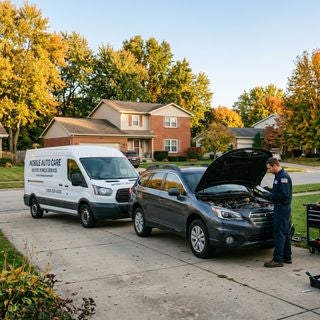
Ford Mobile Service brings certified technicians directly to your home or workplace in a customized, fully equipped service van to perform routine vehicle maintenance and light repairs on-site. Instead of driving to a dealership waiting room, routine services like oil changes, tire rotations, brake inspections, battery replacements, and software updates are performed right in your driveway using genuine Ford parts and factory-approved equipment. The process is designed to fit seamlessly into a busy schedule. Vehicle owners can request a visit online or by phone, specifying the vehicle year, model, and requested maintenance. On the day of the appointment, a factory-trained technician drives out to your location, sets up a secure workspace around your vehicle, performs the scheduled maintenance, and updates your vehicle's digital service history. This remote service acts as a direct extension of our main service lane, providing the same level of technical expertise without interrupting your day. For residents living along the riverfront bluffs in East Liverpool, managing vehicle maintenance without taking time off work or making trips down steep hills in winter conditions is a practical advantage. Our team brings expert care straight to your parking spot so your vehicle stays reliable year-round. When you need specialized shop care or complex warranty repairs, our primary facility is always ready to assist. You can find directions to our main location for in-shop service, or give our team a quick call to check local mobile van availability in your neighborhood. Table of Contents What Services Can Ford Mobile Technicians Perform at Your Driveway? What Equipment and Technology Are Inside Ford Mobile Service Vans? Does Ford Mobile Service Cost More Than a Dealership Visit? How Far in Advance Do You Need to Book a Ford Mobile Service Appointment? Common Questions About Mobile Ford Maintenance Schedule Mobile Ford Service Across East Liverpool and Surrounding Areas What Services Can Ford Mobile Technicians Perform at Your Driveway? Ford mobile technicians carry out the majority of standard maintenance procedures directly at your home or job site, including engine oil and filter changes, brake pad and rotor replacements, tire pressure adjustments and rotations, battery health testing, cabin air filter swaps, bulb replacements, multi-point safety checks, and remote module updates. Mobile service covers the preventative maintenance items that keep your car, truck, or SUV running smoothly: Engine oil and filter changes utilizing factory-recommended motor oils and OEM filters Brake system service, including visual pad inspections, pad replacements, rotor servicing, and fluid flushes Tire maintenance, including tire rotations, tread depth checks, and air pressure adjustments Electrical system support, including battery testing, battery swaps, and light bulb replacements Filter and fluid maintenance, covering cabin air filters, engine air filters, and fluid top-offs Diagnostic health checks, including system fault code scans and official software updates These mobile capabilities cover most routine upkeep for vehicles like the 2024 Ford F-150, 2024 Ford Explorer, and 2024 Ford Escape. However, certain heavy mechanical procedures cannot be safely performed in a private driveway. Major engine overhauls, transmission rebuilds, structural body repairs, and wheel alignments require heavy-duty shop hoists and fixed alignment bays found only at our physical service center. When scheduling, our advisors review your vehicle's specific maintenance needs to ensure the job is suitable for driveway service. You can quickly schedule a service appointment online to secure a time slot, or order original equipment parts directly through our service department for upcoming maintenance. What Equipment and Technology Are Inside Ford Mobile Service Vans? Ford Mobile Service vehicles are custom-outfitted Ford Transit work vans configured with commercial-grade fluid extraction and fill systems, oil filter changing tools, compressed air lines, heavy-duty jack stands, digital battery testers, and cellular-connected diagnostic laptops running current OEM software. These vans function as specialized rolling repair bays. Fluid handling systems allow technicians to extract used motor oil cleanly through closed-loop suction technology, preventing leaks or drips on your driveway. Onboard air compressors power pneumatic tools for rapid wheel removal during tire rotations and brake pad installations. Our service advisors frequently observe that truck and SUV owners ask whether mobile vans carry the same diagnostic capabilities as our main shop before booking their first remote appointment. Each van is outfitted with the official Ford Integrated Diagnostic System laptop linked to a secure cellular hotspot. This setup allows technicians to read diagnostic trouble codes, perform full system health scans, and flash factory module updates directly from your curb. For commercial operators or business owners interested in how these commercial vehicles are outfitted, exploring specially equipped work vans shows how flexible the platform is. To learn more about how our technicians bring this equipment to you, visit our mobile vehicle service page to review our complete on-site setup. Does Ford Mobile Service Cost More Than a Dealership Visit? Ford Mobile Service costs comparable to visiting our dealership service bay, with current labor and parts pricing available from our service team for qualifying routine maintenance within our designated service zone. Maintaining your vehicle remotely does not mean paying extra for convenience. Ford designed the mobile service program to provide complimentary mobile delivery for qualifying routine maintenance items. You pay standard dealership rates for the specific services performed—such as the price of fresh oil, a new filter, or replacement brake pads—without added delivery or call-out fees. Using mobile service also protects your long-term ownership investment. Every service performed by a mobile technician uses genuine Ford and Motorcraft components, which preserves your vehicle's 5-year / 60,000-mile powertrain warranty and factory bumper-to-bumper protections. If your vehicle is slow to start during cold mornings, taking advantage of remote testing can save you a trip. You can review detailed battery maintenance guidelines to determine whether your vehicle needs a remote system check or a quick battery replacement at home. How Far in Advance Do You Need to Book a Ford Mobile Service Appointment? Booking a Ford Mobile Service appointment typically requires a 2-to-5-day lead time, allowing our service team to organize technician routes efficiently and ensure the correct OEM fluids, filters, and vehicle-specific parts are loaded onto the van prior to departure. Because mobile technicians carry targeted inventory based on the day's schedule, advance booking ensures that the exact components required for your vehicle—such as specific oil grades or specialized brake rotors for a 2024 Ford F-150—are pre-staged in the van. Lead times can fluctuate depending on several key factors: Local geographical routing: Mobile appointments are grouped by geographic zones to minimize transit time between customer locations. Seasonal demand spikes: Demand for mobile battery testing and tire inspections increases significantly during early winter and severe cold snaps. Scope of maintenance: Simple software updates or multi-point inspections may be easier to fit into existing routes than multi-item maintenance packages. For residents in suburban neighborhoods near State Route 170 in Calcutta, scheduling a few days ahead allows our mobile unit to coordinate visits efficiently along routine suburban routes. While booking 2 to 5 days out is standard, software updates or urgent battery tests can occasionally be accommodated sooner if a technician is already scheduled to be in your immediate neighborhood. Common Questions About Mobile Ford Maintenance Q: What happens if a mobile technician discovers a repair that cannot be completed in my driveway? If an inspection reveals major mechanical damage, heavy drivetrain issues, or specialized frame work requiring shop hoists, our technician documents the findings, prioritizes a service bay slot at our main facility, and helps organize transportation or towing if needed. Q: Do mobile service visits preserve my active Ford warranty coverage? Yes, routine maintenance and recall repairs completed during a mobile visit use genuine OEM parts and certified procedures, updating your official vehicle history record and maintaining full warranty compliance. Q: What surface or space conditions are required for a mobile service visit? Mobile visits require a relatively flat, hard surface such as a paved driveway or standard parking lot space, along with sufficient clearance around the vehicle for the technician to operate tools and safety equipment. Q: Can Ford Mobile Service handle software updates and module resets remotely? Yes, mobile service vans are equipped with Ford integrated diagnostic laptops and cellular hotspots, enabling technicians to perform full vehicle system scans and complete software updates directly at your location. Q: Is Ford Mobile Service available for high-mileage older vehicles as well as 2024 models? Yes, while qualifying services vary by exact model specifications, mobile technicians can perform eligible routine maintenance on both older vehicles and new 2024 Ford models. Schedule Mobile Ford Service Across East Liverpool and Surrounding Areas East Liverpool residents can now enjoy the convenience of Ford Mobile Service, which brings expert vehicle care right to their doorstep without disrupting their daily schedule. Our mobile service program brings expert care, specialized tools, and genuine Ford parts straight to your driveway or workplace parking lot. Whether your truck needs its regular oil change, your family SUV is due for a tire rotation, or your vehicle requires a quick factory software update, our remote service team provides transparent care designed around your routine. To set up your next visit, check our dealership location details or give our service department a quick call to reserve an upcoming mobile service time slot for your vehicle. © 2026 Tri State Ford. All rights reserved. Ford Mobile Service in East Liverpool OH | Tri State Ford

d

How Much Down Payment Is Recommended for a Used Car?

Financial experts and auto lenders recommend putting down 10% to 20% of the purchase price on a pre-owned vehicle. A 10% down payment serves as the baseline to secure competitive financing approval, whereas a 20% down payment further lowers monthly obligations, offsets upfront vehicle depreciation, and minimizes overall loan interest costs. When purchasing a pre-owned truck or SUV, providing upfront cash or trade equity directly alters the structural risk of the loan. Lenders calculate loan-to-value (LTV) ratios by dividing the total financed amount by the official wholesale valuation of the vehicle. For example, financing $22,000 on a vehicle valued at $20,000 creates a 110% LTV ratio. Placing 10% to 20% down lowers that ratio, helping buyers lock in more favorable interest rates across traditional lenders and credit unions. For buyers evaluating an option durable with Ford vehicles, a healthy down payment reduces the risk of becoming underwater on an auto loan. Because pre-owned vehicles experience slower depreciation than brand-new vehicles, a modest upfront investment preserves positive equity much faster. To discuss specific vehicle availability or speak with a finance representative in person, visit our physical showroom location or call (330) 462-7578 to connect with our financing department directly. Table of Contents How Does the 20/4/10 Budgeting Rule Apply to Used Cars? How Does Credit Score Affect Required Down Payments and Interest Rates? What Additional Out-of-Pocket Costs Should You Budget for at Signing? Can You Use a Vehicle Trade-In as a Down Payment? Where Can You Finance a Used Car Near East Liverpool and What Are the Requirements? How Does a Larger Down Payment Lower Your Monthly Payment and Total Loan Costs? Frequently Asked Questions About Pre-Owned Vehicle Financing Take the Next Step Toward Your Pre-Owned Vehicle at Tri State Ford How Does the 20/4/10 Budgeting Rule Apply to Used Cars? The 20/4/10 budgeting rule recommends placing a 20% down payment, financing for a maximum term of 4 years (48 months), and keeping total monthly vehicle expenses—including loan principal, interest, and insurance—under 10% of gross monthly income. Applied to pre-owned vehicles, this formula protects household cash flow while preventing over-extension on long loan terms. Applying this rule to pre-owned trucks and family crossovers helps local buyers balance daily household expenses with dependable transportation. For commuters navigating the State Route 170 corridor around Calcutta, keeping auto expenses within a strict percentage of monthly income ensures long-term financial flexibility. Choosing a shorter 48-month term prevents interest charges from accumulating over extended periods, even though 60-month and 72-month terms remain popular choices for lower immediate payments. Adjusting the rule slightly for pre-owned models is common. While brand-new vehicles rapidly lose value in their first three years, pre-owned models have already absorbed that initial steep drop. As a result, placing a 10% down payment on pre-owned single-owner models or a certified pre-owned Ford lineup model often meets lender LTV requirements while satisfying practical household budgets. Budgeting Component 20/4/10 Rule Target Practical Application for Pre-Owned Vehicles Down Payment 20% of purchase price 10% to 20% cash or net trade equity Loan Term 48 months maximum 48 to 60 months depending on APR Total Monthly Cost Under 10% of gross income Includes principal, interest, taxes, and auto insurance How Does Credit Score Affect Required Down Payments and Interest Rates? Your credit score directly dictates the interest rate offered by auto lenders and determines whether a cash down payment is mandatory for loan approval. Borrowers in higher credit tiers secure significantly lower annual percentage rates (APRs), whereas lower credit scores require larger down payments to offset lender risk. According to Experian's Q2 2026 state of the automotive finance market report, average pre-owned vehicle interest rates vary widely across credit score tiers: Super Prime (781–850): Average APR of 6.29% Prime (661–780): Average APR of 8.81% Near Prime (601–660): Average APR of 13.93% Subprime (501–600): Average APR of 19.10% Deep Subprime (300–500): Average APR of 21.62% For buyers with prime credit, lenders may offer zero-down financing options because the default risk remains low. However, for buyers in near-prime or subprime credit tiers, lenders frequently impose strict loan-to-value caps, often requiring 10% to 20% down in cash or trade value before approving the loan structure. Placing additional cash down moves a borrower into a lower risk threshold, which can sometimes reduce the assigned interest rate by a full percentage point or more. Completing an online credit application allows our finance team to review available lending programs across multiple financial institutions to determine your exact down payment requirement. What Additional Out-of-Pocket Costs Should You Budget for at Signing? Buyers must budget for state sales tax, county tax rates, title charges, registration fees, and dealership documentation fees in addition to their planned vehicle down payment. In Ohio, the base state vehicle sales tax is 5.75%, with local county additions raising the total tax rate higher depending on where the vehicle is registered. Out-of-pocket costs at signing fall into distinct regulatory and administrative categories: State and Local Sales Tax: Calculated on the net purchase price after trade-in credits are applied. Title Transfer Fees: Official state charges processed through the Ohio Bureau of Motor Vehicles to transfer legal ownership. Vehicle Registration and License Plate Fees: Annual state fees required to register the vehicle for road use. Dealership Documentation Fees: Administrative costs for processing title paperwork, state filings, and financial compliance documents. Failing to plan for these closing expenses can create an unpleasant surprise at the closing desk. For example, purchasing a $20,000 pre-owned SUV subject to a combined 7% sales tax rate generates $1,400 in tax obligations alone, alongside standard title and registration fees. Buyers can choose either to pay these fees out-of-pocket at signing or to finance them directly into the total loan balance. Financing fees increases the loan-to-value ratio, which may require a larger cash down payment to stay within lender approval limits. Can You Use a Vehicle Trade-In as a Down Payment? Net trade-in equity—calculated as your current vehicle's market value minus any remaining loan balance—applies directly toward the down payment on a pre-owned vehicle purchase. Utilizing positive trade-in equity reduces or completely eliminates the need to out-of-pocket cash at signing. When your current car is worth more than the balance owed on its existing loan, that positive difference serves as real cash value. For instance, if your trade-in is valued at $8,000 and your remaining loan pay-off is $5,000, you have $3,000 in positive net equity. That $3,000 counts immediately as a 15% down payment on a $20,000 pre-owned vehicle. Our team frequently sees family shoppers use their existing vehicle's equity to transition into pre-owned three-row SUVs equipped with Ford Co-Pilot360 and space for the whole family. If you prefer exploring brand-new Ford models, checking current factory offers, or sticking to pre-owned options, evaluating your existing car via our online trade-in appraisal tool gives you a clear figure before visiting our showroom. Where Can You Finance a Used Car Near East Liverpool and What Are the Requirements? Shoppers near East Liverpool can secure pre-owned vehicle financing directly through dealership finance centers, local credit unions, or regional commercial banks. Local lenders generally require a 10% down payment or a minimum of $1,000 down, depending on credit tier, income verification, and vehicle age. Drivers commuting along the Ohio River bluffs and steep grades around East Liverpool need dependable transportation equipped with driver-assist features for changing seasonal road conditions. Securing auto financing locally involves presenting standard documentation to satisfy lender underwriter guidelines: Proof of Income: Recent pay stubs or tax documents showing steady earnings. Proof of Residence: A recent utility bill or mortgage/lease statement matching your application address. Government-Issued Identification: A valid driver's license. Valid Auto Insurance: Proof of comprehensive and collision coverage naming the lender as lienholder. Working with our finance center services simplifies the process by submitting a single application to multiple local and national lending institutions. This competitive framework helps buyers secure flexible down payment terms tailored to their specific financial profile. How Does a Larger Down Payment Lower Your Monthly Payment and Total Loan Costs? Increasing your down payment directly reduces the loan principal, which decreases your monthly payment and substantially lowers total interest expenses over the life of the loan. Every $1,000 applied as a down payment reduces monthly payments by roughly $15 to $20, depending on the interest rate and loan duration. A higher down payment affects loan economics across three distinct areas: Immediate Principal Reduction: Borrowing less money means calculating interest on a smaller base amount from day one. Lower Interest Charges: Reducing total principal drastically cuts cumulative interest costs over 48, 60, or 72 months. Improved Term Options: a lower financed amount can help buyers better manage monthly payments. Financing a vehicle with a larger down payment can reduce monthly payments and total interest costs. Down Payment Amount Financed Amount ($20k Price) Estimated Monthly Payment (60 mos @ 11%) Total Interest Paid Lower down payment Lower financed amount Lower estimated monthly payment Lower total interest Higher down payment Higher equity contribution Lower estimated monthly payment Lower total interest To explore our current pre-owned inventory, stop by our East Liverpool dealership address, give our team a quick call, or browse our latest current offers online. Frequently Asked Questions About Pre-Owned Vehicle Financing Q: Is a 10% down payment always required for a pre-owned vehicle loan? A: A 10% down payment is not legally mandatory, but most auto lenders prefer or require it for borrowers outside super-prime credit tiers. Placing at least 10% down keeps the loan-to-value ratio within reasonable guidelines, which significantly improves approval odds and helps secure lower interest rates from commercial banks and credit unions. Q: What happens if I put zero down on a pre-owned truck or SUV? A: Putting zero down increases your total loan principal, raises your monthly payment, and forces you to pay significantly more interest over the loan term. It also places you at risk of negative equity, where you owe more on the vehicle loan than the vehicle's fair market wholesale value. Q: Can I finance the state sales tax and registration fees into my loan? A: Yes, most lenders allow qualified buyers to roll sales tax, title charges, and registration fees directly into the total financed loan amount. However, doing so increases your loan-to-value ratio, which may require a higher cash down payment to satisfy the lender's maximum approval threshold. Q: How does loan-to-value (LTV) ratio affect my required down payment? A: LTV represents the total loan amount divided by the vehicle's official wholesale valuation. If a lender capped LTV at 100% on a $15,000 vehicle and total costs with taxes came to $16,500, you would need at least a $1,500 down payment to cover the difference and obtain loan approval. Q: What documents should I bring to the dealership to complete financing? A: Buyers should bring a valid driver's license, their most recent pay stubs or proof of income, a current utility bill for residence verification, proof of auto insurance, and title or payoff information if trading in an existing vehicle. Take the Next Step Toward Your Pre-Owned Vehicle at Tri State Ford Selecting the right down payment strategy provides financial confidence and ensures comfortable monthly payments throughout your vehicle ownership. Whether you choose to put down 10%, 20%, or leverage positive trade-in equity, our dedicated team at Tri State Ford is here to guide you through every step of the purchasing process. Visit our showroom today to test drive our rugged, dependable pre-owned Ford trucks and family SUVs, value your current vehicle, and secure financing tailored directly to your budget. Keep Your Vehicle Running Strong Keep your vehicle performing at its best with our service team: Order Parts Schedule Service Appt © 2026 Tri State Ford. All rights reserved. Used Car Down Payment Advice in East Liverpool OH | Tri State Ford
5

How Do You Prepare a Ford 4WD System for Winter in the Ohio Valley?

Preparing a Ford four-wheel-drive system for winter requires inspecting the transfer case and differential fluid levels, testing electronic or vacuum-operated axle engagement actuators, verifying battery output, and checking tire tread depth. Technicians also confirm that terrain management features like Slippery mode function correctly. Completing these checks before sub-freezing temperatures arrive prevents component binding, sluggish front-axle engagement, and unexpected traction loss on frozen roads. Early winter weather brings sudden freeze-thaw cycles, packed snow, and river valley fog that turn local asphalt slick without warning. A four-wheel-drive truck or SUV relies on mechanical and electronic coordination between the transmission, transfer case, front differential, and wheel hubs. If fluid inside the transfer case is degraded or contaminated with moisture, low ambient temperatures increase fluid viscosity, causing delayed mechanical engagement when switching from two-wheel drive to four-wheel drive. A thorough pre-winter checkup evaluates every component involved in transferring torque: Transfer Case and Differential Fluid: Inspecting fluid levels and checking for dark color or metal shavings that signal internal wear. Hub Engagement Motors and Actuators: Testing integrated wheel ends and vacuum lines to ensure prompt front axle locking is functioning properly. Drive Mode Electronics: Running diagnostic checks on drive mode switches to verify communication with the powertrain control module. Battery Cold-Cranking Capacity: Measuring battery voltage under load, as electronic four-wheel-drive actuators draw significant electrical power during engagement. Undercarriage and Fastener Condition: Checking protective skid plates and differential housing seals for signs of seepage or road-salt corrosion. Drivers navigating rolling elevation changes along State Route 170 in Calcutta depend on immediate front-wheel traction when pulling onto snow-dusted highways. If an actuator fails or transfer case fluid breaks down, drivers may find themselves stranded in rear-wheel drive when road conditions deteriorate. To keep your truck or SUV performing dependably in freezing conditions, you can stop by our East Liverpool facility or give our service department (330) 462-7578 to confirm current appointment availability. Table of Contents What Maintenance and Fluid Specifications Are Recommended for Ford Transfer Cases? How Fast Does Ford Intelligent 4WD Adjust Power Distribution on Slick Ice? Is 4WD Auto Safer Than 4WD High on Roads with Patchy Ice and Dry Pavement? Does Having Four-Wheel Drive Eliminate the Need for Winter Tires in Cold Weather? How Much Does a Winter 4WD Inspection Cost for a Ford Truck or SUV? Common Questions About Ford 4WD Winter Operation Where Can Ford Owners Arrange a Local Pre-Winter Inspection? What Maintenance and Fluid Specifications Are Recommended for Ford Transfer Cases? Ford transfer cases require specialized lubricants like Motorcraft MERCON LV or dedicated Motorcraft Transfer Case Fluid, with inspections recommended every 10,000 miles and fluid replacement typically scheduled between 30,000 miles and 60,000 miles depending on operating severity. Using non-approved lubricants or neglecting fluid changes leads to fluid oxidation, premature clutch pack wear, and internal gear scoring in severe winter cold. The transfer case is responsible for splitting engine torque between the front and rear axles. Modern Ford vehicles employ electronically controlled transfer cases equipped with internal multi-plate clutch packs. These internal clutches engage seamlessly to direct power forward whenever rear-wheel slip is detected. Over time, thermal cycles, towing friction, and normal mechanical wear break down the fluid's additive package. Degraded fluid loses its ability to lubricate internal chain drives and planetary gear sets, increasing mechanical friction when ambient temperatures fall below freezing. When servicing a Ford transfer case, technicians follow precise factory maintenance procedures: Draining old lubricant and inspecting magnet drain plugs for fine metal particles. Checking vent hoses for blockages that could cause pressure buildup and seal leaks. Refilling the transfer case with exact quantities of factory-specified Motorcraft fluid. Inspecting output shaft seals and front driveshaft universal joints for play or fluid weeping. Cycling the four-wheel-drive system through 4H and 4L settings to verify smooth actuator movement and silent gear mesh. Vehicles subjected to heavy trailering or frequent operation in mud and deep snow require shorter maintenance intervals. For example, a 2026 Ford F-150 4x4 equipped with the 3.5L EcoBoost V6 and SelectShift® automatic transmission can tow up to 10,400 lbs, placing heavy thermal stress on transfer case fluid during summer hauling that can manifest as rough engagement when winter arrives. To maintain peak driveline performance, owners can schedule a service appointment with our factory-trained team or order genuine Motorcraft fluids and components directly from our parts department. How Fast Does Ford Intelligent 4WD Adjust Power Distribution on Slick Ice? Ford Intelligent 4WD samples vehicle sensor data every 16 milliseconds and can dynamically transfer up to 100 percent of available engine torque to either the front or rear axle before wheel slip occurs. By continuously analyzing wheel speed, throttle position, steering wheel angle, and yaw rates, the system pre-emptively distributes power to maintain vehicle stability on icy roads. Unlike traditional four-wheel-drive setups that require manual driver activation after traction is lost, Intelligent 4WD operates proactively. On models like the 2026 Ford Explorer 4WD, powered by the 2.3L EcoBoost engine and SelectShift® transmission, sensors monitor small changes in driver input and surface friction. If the system detects sudden throttle application while accelerating on a frost-covered bridge deck, it instantly energizes an electromagnetic clutch inside the power transfer unit. This locks the front driveline into action within milliseconds, stabilizing the vehicle before the driver notices wheelspin. Electronic drive modes further refine how this power transfer behaves in winter: Slippery Mode: Calibrates the accelerator pedal response to prevent abrupt power delivery, adjusts transmission shift points to reduce wheel torque, and increases stability control intervention. Deep Snow/Sand Mode: Adjusts traction control parameters to allow momentum-building wheelspin while maintaining active torque balance across both axles. Trail Mode: Tailors wheel-end braking and throttle mapping on select two-wheel-drive configurations to assist with low-traction off-road navigation. On models like the 2026 Ford Bronco 4x4, standard four-wheel drive works in tandem with selectable G.O.A.T. Modes (Goes Over Any Type of Terrain) to manage slick conditions automatically. When Slippery mode is selected, electronic control units soften throttle mapping and optimize front-to-rear power distribution, giving drivers maximum steering control across slush, black ice, and packed snow. Is 4WD Auto Safer Than 4WD High on Roads with Patchy Ice and Dry Pavement? Using 4A (4WD Auto) is safer and mechanically superior to 4H (4WD High) when driving on winter roads that alternate between icy patches and clear, dry asphalt. In 4A mode, an electronically controlled clutch continuously varies front-wheel power on demand, whereas 4H mechanically locks the front and rear driveshafts together at a rigid 50/50 split, causing severe driveline binding on high-traction dry pavement. Mechanical driveline binding occurs because front tires must travel along a wider turning arc than rear tires during cornering. On dry asphalt, tires grip the road surface firmly, preventing the front and rear axles from slipping to relieve rotational speed differences. Driving in 4H on dry pavement places immense torque strain on the transfer case chain, front differential gears, and axle shafts, often resulting in vehicle hopping or hard steering resistance. Drivetrain Mode Surface Application Front/Rear Power Split Driveline Binding Risk on Dry Pavement:--:--:--:-- 4A (4WD Auto) Patchy ice, slush, dry pavement Variable (0/100 to 50/50 on demand) None (clutch slips during turns) 4H (4WD High) Continuous deep snow, unpaved ice Fixed 50/50 split High (causes mechanical strain and binding) 4L (4WD Low) Deep mud, steep off-road grades Fixed 50/50 split with gear reduction Extreme (strictly for low-speed off-road use) When our service advisors walk truck owners through seasonal driving tips, we explain that leaving a vehicle in 4A during changing winter conditions provides seamless traction without risking driveline damage. Operating in 4A mode uses slightly more fuel than two-wheel drive due to mechanical rotation of front driveline components, but it provides immediate, automatic front-wheel torque the moment a tire hits unexpected black ice. Does Having Four-Wheel Drive Eliminate the Need for Winter Tires in Cold Weather? Having four-wheel drive does not eliminate the need for winter tires because four-wheel drive only enhances forward acceleration and traction under engine power, whereas winter tires provide necessary cornering grip and stopping capability on snow and ice. All four-wheel-drive vehicles rely on tire tread compounds and siping to brake and steer effectively on frozen road surfaces. Four-wheel drive helps a vehicle accelerate out of deep snow or climb slick grades by sending torque to all four wheel positions. However, when a driver applies the brakes or turns the steering wheel, every passenger vehicle relies entirely on the friction coefficient of its four tire contact patches. Standard all-season tire rubber hardens at ambient temperatures below 45 degrees Fahrenheit, turning stiff and losing flexibility. Winter tires utilize specialized soft silica tread compounds that remain pliable in sub-zero cold, combined with thousands of microscopic tread sipes that bite directly into packed snow and ice. Key safety differences between four-wheel drive and dedicated winter tires include: Braking Distance: Four-wheel drive provides zero assistance during braking; dedicated winter tires can reduce stopping distances on ice by up to 30 percent compared to standard tires. Lateral Steering Control: Winter tires maintain directional control through curves where hard all-season tires slide sideways, regardless of four-wheel-drive engagement. Slush Evacuation: Wide, directional winter tread grooves channel thick road slush away from the footprint to prevent dangerous hydroplaning. Maintaining correct tire pressures and tread depth above 4/32 inch is critical for all-wheel-drive and four-wheel-drive powertrains. Uneven tire wear or differing inflation pressures change rolling circumference between axles, placing continuous strain on transfer case clutch packs. Vehicle owners can utilize our online tire finder tool to select winter tires matching their vehicle's exact specifications, or schedule a drive in a 4WD vehicle to evaluate current handling characteristics firsthand. How Much Does a Winter 4WD Inspection Cost for a Ford Truck or SUV? A comprehensive winter four-wheel-drive system inspection for a Ford truck or SUV may vary in price; please contact our service department for current pricing. This specialized service covers diagnostic fluid analysis, vacuum line pressure checks, electronic hub actuator testing, transfer case shift motor operation, and undercarriage fastener verification. Investing in a pre-winter inspection protects expensive driveline assemblies against major mechanical failure. Identifying a torn vacuum hub line or a leaking transfer case shaft seal early costs significantly less than replacing a damaged differential or burned-out internal clutch pack later in the season. During a winter inspection, factory-trained technicians connect diagnostic scan tools to monitor live data from the transfer case control module, ensuring electrical signals reach engagement solenoids without fault codes. A standard winter four-wheel-drive inspection covers key multi-system checks: Diagnostic System Scan: Checking control modules for active or stored fault codes related to four-wheel-drive electronics. Fluid Clarity and Level Checks: Inspecting fluid quality inside the transfer case, front differential, and rear axle housing. Vacuum and Mechanical Actuator Testing: Verifying that integrated wheel end hubs lock and release smoothly without vacuum leaks. Transfer Case Shift Motor Test: Cycling the electronic motor through 4H and 4L ranges to verify swift gear engagement. Underbody Visual Inspection: Checking driveshaft universal joints, CV axle boots, and skid plate mountings for wear or looseness. Business owners operating commercial fleets rely heavily on four-wheel-drive reliability to maintain winter schedules. For fleet managers reviewing options for heavy-duty fleet additions, exploring our new work truck models provides access to reliable F-Series pickups built to handle severe winter hauling. Common Questions About Ford 4WD Winter Operation Q: Can I engage 4H mode while driving at highway speeds? Yes, Ford shift-on-the-fly four-wheel-drive systems allow drivers to shift from 2H into 4H at speeds up to 55 mph, provided the rear wheels are not actively slipping at the moment of engagement. However, 4H should only be engaged when travelling on continuously slippery surfaces like deep snow or loose gravel, never on clear dry asphalt. Q: What does a flashing 4x4 light on my instrument cluster mean? A flashing 4x4 indicator light signals that the electronic control module attempted to engage the four-wheel-drive system but could not confirm mechanical lockup. This issue is often caused by a vacuum line leak, a sticking integrated wheel end hub actuator, or a slow transfer case shift motor, requiring a quick diagnostic scan by factory technicians. Q: Why does my vehicle make a binding or crowhopping noise during tight turns in 4H? Crowhopping occurs because 4H mechanically locks the front and rear driveshafts to rotate at identical speeds. During a tight turn, front tires must spin faster than rear tires; on high-traction pavement, the driveline binds and forces the tires to hop. Shifting into 4A or back into 2H on clear pavement resolves this stress immediately. Q: Does driving in 4WD mode reduce my Ford's fuel economy? Operating in 4A or 4H mode increases mechanical drag across the front axle, driveshaft, and transfer case components, which slightly reduces fuel economy by approximately 1 to 2 mpg compared to two-wheel drive. Using four-wheel drive selectively on slick roads balances winter safety with efficient fuel usage. Q: How often should front and rear differential fluids be changed on a Ford 4x4? Ford factory maintenance schedules generally recommend replacing front and rear differential fluids every 30,000 miles to 60,000 miles, or sooner if the axle assemblies are frequently submerged in water or subjected to heavy trailer towing in severe winter conditions. Where Can Ford Owners Arrange a Local Pre-Winter Inspection? Ford owners can arrange a comprehensive pre-winter vehicle inspection at Tri State Ford, located at 1503 Pennsylvania Ave, East Liverpool, OH 43920. Our service department is fully equipped with Ford specialized diagnostic computers, factory-certified technicians, and genuine Motorcraft replacement parts to ensure your truck or SUV is completely prepared for cold weather. Navigating the steep riverfront bluffs along the Ohio River in East Liverpool requires reliable braking, healthy tires, and responsive four-wheel-drive engagement during frosty morning commutes. Our factory-trained technicians conduct thorough multi-point checks that evaluate battery cold-cranking health, transfer case fluid condition, brake pad friction thickness, and drive mode module calibration. Documenting every inspection in Ford's central database protects your original factory warranty coverage and preserves long-term vehicle resale value. Before freezing temperatures and icy road conditions settle across the region, taking time for routine maintenance gives you complete confidence behind the wheel. You can get clear directions to our location to visit our service center, or call (330) 462-7578 to speak directly with our service advisors and reserve your pre-winter inspection date. © 2026 Tri State Ford. All rights reserved. Vehicle specification data © JATO Dynamics Limited. Ford 4WD Winter Prep in East Liverpool OH | Tri State Ford

h

Is a 100,000-Mile Used Truck a Smart Purchase?

Buying a used truck with 100,000 miles is a smart purchase when the vehicle has a documented service history and passes a thorough mechanical inspection. Modern full-size pickups are engineered for extended durability and routinely reach 200,000 miles or more, meaning a well-maintained 100,000-mile truck is typically at the midpoint of its operational life while offering strong value compared with a new model. At 100,000 miles, a pickup truck has already absorbed its steepest initial depreciation curve. For buyers who need strong towing capacity and reliable haulage without the investment required for a brand-new vehicle, the used truck market provides exceptional value. Modern engineering standards, synthetic lubricants, and advanced powertrain electronics mean that key mechanical systems—including the engine block, frame, and transmission housing—are built to handle long-term stress. Evaluating a high-mileage pickup requires looking beyond the odometer reading. A truck driven 100,000 highway miles for personal transportation often exhibits far less mechanical wear than a lower-mileage vehicle subjected to severe commercial work, frequent heavy towing, or harsh off-road use. When buyers evaluate high-mileage half-ton trucks on our lot, they most often ask to review the engine oil maintenance history and differential fluid records before taking a highway test drive. Determining whether a specific truck is a wise buy comes down to verifying how it was driven and maintained by its previous owners. To inspect our available used pickups in person, get directions to Tri State Ford or give our sales team a quick call at (330) 462-7578 to discuss our current selection. Table of Contents How Many Years and Miles Can a Used Truck Last After 100,000 Miles? Which Used Pickup Truck Models Hold Up Best at High Mileage? What Maintenance Records Should You Verify Before Buying a 100k-Mile Truck? What Inspection Red Flags Mean You Should Walk Away From a Used Truck? Should You Buy an Extended Warranty or Finance a Used Truck with 100k Miles? Common Questions About Buying a Used Truck with 100,000 Miles Visit Tri State Ford for Quality Used Pickups How Many Years and Miles Can a Used Truck Last After 100,000 Miles? A properly maintained used pickup truck can comfortably last another 100,000 to 150,000 miles after passing the 100,000-mile mark, translating to roughly 7 to 10 additional years of reliable service for the average driver. Modern truck powertrains regularly surpass 200,000 total miles when routine fluid changes and wear-and-tear items are addressed on schedule. The total lifespan of a truck purchased at 100,000 miles depends on driving habits, environment, and ongoing maintenance. Drivers putting an average of 12,000 to 15,000 miles annually on their vehicle can expect many years of service before major mechanical overhauls become necessary. Engine designs across major manufacturers now routinely run past 250,000 miles on original internal components when oil degradation is prevented. Expected Mileage Lifespan for Modern Used Pickups: ┌─────────────────────────────────────────────────────────┐ │ 0 Miles 100,000 Miles 250,000+ Miles │ ├─────────────────────┬────────────────────┬──────────────┤ │ Initial Deprec. │ Optimal Purchase │ Extended │ │ & Warranty Era │ Value Window │ Lifespan Era │ └─────────────────────┴────────────────────┴──────────────┘ Regional factors play a major role in vehicle longevity. In areas with cold winters and heavy road-salt usage, undercarriage corrosion often poses a greater threat to a truck's longevity than internal engine wear. Inspecting the frame, brake lines, fuel rails, and suspension mounting points is critical to ensuring a high-mileage truck remains structurally sound for years to come. Choosing a truck with a clean history is the most effective way to secure long-term reliability. Exploring our pre-owned single-owner truck inventory allows shoppers to find vehicles with complete, verifiable service records. If you are upgrading from your current ride, our team can help you value your trade-in toward a long-lasting pickup. Which Used Pickup Truck Models Hold Up Best at High Mileage? Full-size trucks like the Ford F-150 consistently rank among the most dependable vehicles for high-mileage longevity according to independent automotive durability studies. Models equipped with proven powertrains—such as Ford’s EcoBoost and V8 engines—frequently reach 200,000 to 250,000 miles while retaining solid structural integrity and heavy-duty towing performance. The Ford F-150 stands out in the high-mileage market due to its high-strength, military-grade aluminum-alloy body, which eliminates rust concerns on exterior body panels. Beneath the bed, robust steel frames provide the structural foundation needed for demanding tasks. For example, modern F-150 configurations featuring the 3.5L EcoBoost V6 deliver 400 hp and 500 lb-ft of torque through a SelectShift® 10-speed automatic transmission, offering immense power alongside proven long-term durability. Other strong choices include the 2.7L EcoBoost V6 producing 325 hp and 400 lb-ft of torque, and the naturally aspirated 5.0L V8 generating 400 hp and 410 lb-ft of torque. Heavy-duty pickups—such as the Ford Super Duty series—are engineered for industrial workloads and offer even greater long-term durability potential. However, buyers should remember that a heavy-duty truck used exclusively for severe commercial hauling or continuous maximum towing may experience more suspension and drivetrain wear than a half-ton truck used primarily for personal transportation and family recreation. Comparing competitive half-ton models like the Ram 1500 or Chevrolet Silverado 1500 reveals that while engine reliability across the segment is generally strong, Ford's combination of corrosion-resistant body construction, advanced driver-assist features, and widespread parts availability gives it a clear edge on the used market. For shoppers considering whether to buy used or buy new, reviewing our new Ford vehicle inventory provides a useful benchmark for comparing technology, warranty coverage, and overall value. Additionally, our Ford Pick Up & Delivery service makes maintaining your truck seamless throughout ownership. Fuel Economy Fuel economy and range by trim Feature King Ranch 4x4 SuperCrew 5-1/2’ Box King Ranch 4x4 SuperCrew 6-1/2’ Box King Ranch SuperCrew 5-1/2’ Box Lariat 4x4 SuperCrew 5-1/2’ Box:--:--:--:--:-- MPG 17 city / 23 hwy / 19 combined 17 city / 23 hwy / 19 combined 17 city / 25 hwy / 20 combined 17 city / 23 hwy / 19 combined Fuel Economy (continued) Feature Lariat 4x4 SuperCrew 6-1/2’ Box Lariat SuperCrew 5-1/2’ Box Platinum 4x4 SuperCrew 5-1/2’ Box Platinum 4x4 SuperCrew 6-1/2’ Box:--:--:--:--:-- MPG 17 city / 23 hwy / 19 combined 17 city / 25 hwy / 20 combined 17 city / 23 hwy / 19 combined 17 city / 23 hwy / 19 combined Fuel Economy (continued) Feature Platinum SuperCrew 5-1/2’ Box Police Responder 4x4 SuperCrew 5-1/2’ Box Raptor 4x4 SuperCrew 5-1/2’ Box STX 4x4 SuperCab 6-1/2’ Box:--:--:--:--:-- MPG 17 city / 25 hwy / 20 combined — 14 city / 18 hwy / 16 combined 18 city / 23 hwy / 20 combined Fuel Economy (continued) Feature STX 4x4 SuperCrew 5-1/2’ Box STX SuperCab 6-1/2’ Box STX SuperCrew 5-1/2’ Box Tremor 4x4 SuperCrew 5-1/2’ Box:--:--:--:--:-- MPG 18 city / 23 hwy / 20 combined 19 city / 25 hwy / 21 combined 19 city / 25 hwy / 21 combined 16 city / 21 hwy / 18 combined Fuel Economy (continued) Feature XL 4x4 Regular Cab 6-1/2’ Box XL 4x4 Regular Cab 8’ Box XL 4x4 SuperCab 6-1/2’ Box XL 4x4 SuperCrew 5-1/2’ Box:--:--:--:--:-- MPG 16 city / 24 hwy / 19 combined 18 city / 23 hwy / 20 combined 18 city / 23 hwy / 20 combined 18 city / 23 hwy / 20 combined Fuel Economy (continued) Feature XL 4x4 SuperCrew 6-1/2’ Box XL Regular Cab 6-1/2’ Box XL Regular Cab 8’ Box XL SuperCab 6-1/2’ Box:--:--:--:--:-- MPG 17 city / 23 hwy / 19 combined 16 city / 24 hwy / 19 combined 19 city / 25 hwy / 21 combined 19 city / 25 hwy / 21 combined Fuel Economy (continued) Feature XL SuperCrew 5-1/2’ Box XLT 4x4 SuperCab 6-1/2’ Box XLT 4x4 SuperCrew 5-1/2’ Box XLT 4x4 SuperCrew 6-1/2’ Box:--:--:--:--:-- MPG 19 city / 25 hwy / 21 combined 18 city / 23 hwy / 20 combined 18 city / 23 hwy / 20 combined 17 city / 23 hwy / 19 combined Fuel Economy (continued) Feature XLT SuperCab 6-1/2’ Box XLT SuperCrew 5-1/2’ Box:--:--:-- MPG 19 city / 25 hwy / 21 combined 19 city / 25 hwy / 21 combined What Maintenance Records Should You Verify Before Buying a 100k-Mile Truck? Documented maintenance such as oil changes, transmission fluid flushes, and coolant replacements are critical indicators of a truck's longevity at 100,000 miles. A complete service history confirms that consumable components were replaced before wear could cause internal engine or drivetrain damage. At the 100,000-mile mark, major factory-recommended maintenance items come due across most truck manufacturer schedules. Verifying whether these services have already been performed helps you calculate the immediate cost of ownership following purchase. Key maintenance milestones to check in the owner’s manual or vehicle history log include: Engine Oil and Filter Changes: Evidence of consistent fluid services performed every 5,000 to 10,000 miles using synthetic oil. Spark Plug Replacement: Manufacturer schedules typically call for new spark plugs at 100,000 miles to maintain optimal combustion efficiency and fuel economy. Cooling System Flush: Coolant breaks down over time, risking internal radiator corrosion and water pump wear if not replaced near 100,000 miles. Drivetrain Fluids: Verification that differential fluid and transfer case fluid (on 4x4 models) have been serviced, especially if the truck was used for heavy trailering. Brake and Suspension Components: Inspection records for brake pads, rotors, shocks, and struts to ensure tight handling and safe stopping power. Proper maintenance directly impacts real-world efficiency. For instance, a well-maintained Ford F-150 equipped with a 2.7L engine and rear-wheel drive achieves up to 19 city / 25 hwy / 21 combined MPG, whereas neglected spark plugs or dragging brake calipers quickly degrade fuel performance. For business owners seeking durable haulers with documented reliability, exploring our commercial new work truck inventory provides fleet-ready solutions built to tackle demanding job sites. What Inspection Red Flags Mean You Should Walk Away From a Used Truck? Severe frame rust holes, slipping transmission gears, and active coolant leaks are major red flags when inspecting a 100,000-mile used truck. These red flags indicate severe neglect or structural failure that will lead to expensive, non-viable repair costs. A thorough pre-purchase inspection by a qualified mechanic is essential before signing any paperwork. On the bluffs and river roads of East Liverpool, trucks frequently encounter moisture and winter road treatments, making a full undercarriage inspection paramount. Mechanics will check the following critical areas: Pre-Purchase Truck Inspection Checklist: [ ] Frame & Undercarriage: Check for structural rust holes or fresh undercoating hiding damage. [ ] Engine Oil & Cap: Inspect for milky buildup indicating blown head gasket or coolant intrusion. [ ] Transmission Function: Test for gear slippage, delayed engagement, or harsh shifting. [ ] 4x4 Transfer Case: Engage 4-High and 4-Low to verify smooth mechanical locking and zero fluid leaks. [ ] Steering & Suspension: Check ball joints, tie rod ends, and shock absorbers for play or leakage. Pay close attention to transmission engagement during a test drive. Hesitation, clunking, or gear slippage under acceleration signals internal transmission wear. Furthermore, check the vehicle identification number (VIN) against official National Highway Traffic Safety Administration database listings to confirm all safety recall repairs were properly completed by an authorized dealer. Engine & Performance Powertrain specs by trim Feature King Ranch 4x4 SuperCrew 5-1/2’ Box King Ranch 4x4 SuperCrew 6-1/2’ Box King Ranch SuperCrew 5-1/2’ Box Lariat 4x4 SuperCrew 5-1/2’ Box:--:--:--:--:-- Engine 3.5L 3.5L 3.5L 3.5L Horsepower 400 hp 400 hp 400 hp 400 hp Torque 500 lb-ft 500 lb-ft 500 lb-ft 500 lb-ft Transmission SelectShift® SelectShift® SelectShift® SelectShift® Drivetrain All-wheel drive All-wheel drive Rear-wheel drive All-wheel drive Engine & Performance (continued) Feature Lariat 4x4 SuperCrew 6-1/2’ Box Lariat SuperCrew 5-1/2’ Box Platinum 4x4 SuperCrew 5-1/2’ Box Platinum 4x4 SuperCrew 6-1/2’ Box:--:--:--:--:-- Engine 3.5L 3.5L 3.5L 3.5L Horsepower 400 hp 400 hp 400 hp 400 hp Torque 500 lb-ft 500 lb-ft 500 lb-ft 500 lb-ft Transmission SelectShift® SelectShift® SelectShift® SelectShift® Drivetrain All-wheel drive Rear-wheel drive All-wheel drive All-wheel drive Engine & Performance (continued) Feature Platinum SuperCrew 5-1/2’ Box Police Responder 4x4 SuperCrw 5-1/2’ Box Raptor 4x4 SuperCrew 5-1/2’ Box STX 4x4 SuperCab 6-1/2’ Box:--:--:--:--:-- Engine 3.5L 3.5L 3.5L 2.7L Horsepower 400 hp 400 hp 450 hp 325 hp Torque 500 lb-ft 500 lb-ft 510 lb-ft 400 lb-ft Transmission SelectShift® SelectShift® SelectShift® SelectShift® Drivetrain Rear-wheel drive All-wheel drive All-wheel drive All-wheel drive Engine & Performance (continued) Feature STX 4x4 SuperCrew 5-1/2’ Box STX SuperCab 6-1/2’ Box STX SuperCrew 5-1/2’ Box Tremor 4x4 SuperCrew 5-1/2’ Box:--:--:--:--:-- Engine 2.7L 2.7L 2.7L 3.5L Horsepower 325 hp 325 hp 325 hp 400 hp Torque 400 lb-ft 400 lb-ft 400 lb-ft 500 lb-ft Transmission SelectShift® SelectShift® SelectShift® SelectShift® Drivetrain All-wheel drive Rear-wheel drive Rear-wheel drive All-wheel drive Engine & Performance (continued) Feature XL 4x4 Regular Cab 6-1/2’ Box XL 4x4 Regular Cab 8’ Box XL 4x4 SuperCab 6-1/2’ Box XL 4x4 SuperCrew 5-1/2’ Box:--:--:--:--:-- Engine 5L 2.7L 2.7L 2.7L Horsepower 400 hp 325 hp 325 hp 325 hp Torque 410 lb-ft 400 lb-ft 400 lb-ft 400 lb-ft Transmission SelectShift® SelectShift® SelectShift® SelectShift® Drivetrain All-wheel drive All-wheel drive All-wheel drive All-wheel drive Engine & Performance (continued) Feature XL 4x4 SuperCrew 6-1/2’ Box XL Regular Cab 6-1/2’ Box XL Regular Cab 8’ Box XL SuperCab 6-1/2’ Box:--:--:--:--:-- Engine 3.5L 5L 2.7L 2.7L Horsepower 400 hp 400 hp 325 hp 325 hp Torque 500 lb-ft 410 lb-ft 400 lb-ft 400 lb-ft Transmission SelectShift® SelectShift® SelectShift® SelectShift® Drivetrain All-wheel drive Rear-wheel drive Rear-wheel drive Rear-wheel drive Engine & Performance (continued) Feature XL SuperCrew 5-1/2’ Box XLT 4x4 SuperCab 6-1/2’ Box XLT 4x4 SuperCrew 5-1/2’ Box XLT 4x4 SuperCrew 6-1/2’ Box:--:--:--:--:-- Engine 2.7L 2.7L 2.7L 3.5L Horsepower 325 hp 325 hp 325 hp 400 hp Torque 400 lb-ft 400 lb-ft 400 lb-ft 500 lb-ft Transmission SelectShift® SelectShift® SelectShift® SelectShift® Drivetrain Rear-wheel drive All-wheel drive All-wheel drive All-wheel drive Engine & Performance (continued) Feature XLT SuperCab 6-1/2’ Box XLT SuperCrew 5-1/2’ Box:--:--:-- Engine 2.7L 2.7L Horsepower 325 hp 325 hp Torque 400 lb-ft 400 lb-ft Transmission SelectShift® SelectShift® Drivetrain Rear-wheel drive Rear-wheel drive Should You Buy an Extended Warranty or Finance a Used Truck with 100k Miles? Financing a 100,000-mile used truck is often a practical financial decision, and pairing it with a vehicle service contract or setting aside a dedicated repair fund provides protection against unexpected mechanical costs. Auto lenders can offer financing options for modern, high-mileage pickups that hold strong resale values. Securing financing for a used truck requires evaluating both the loan term and the vehicle's remaining lifespan. Short to medium loan terms (such as 36 to 60 months) ensure that you build equity quickly without carrying debt on a high-mileage vehicle for too long. Bringing complete income documentation, proof of residence, and an insurance quote speeds up loan approval with underwriters. When evaluating extended protection, consider manufacturer-backed plans over third-party policies. A certified option like our certified pre-owned Ford inventory includes rigorous multi-point inspections and factory-backed warranty coverage, giving buyers total confidence on the road. Our finance center team works directly with regional and national lenders to secure competitive loan rates regardless of your budget. You can start the process from home by completing our secure online credit application. Common Questions About Buying a Used Truck with 100,000 Miles Q: Is 100,000 miles considered high mileage for a modern pickup truck? For modern full-size pickup trucks, 100,000 miles is considered mid-life rather than high mileage. Today's trucks are designed with advanced metallurgy, precise engine tolerances, and durable transmissions built to reach 200,000 miles or more when routinely maintained. High mileage for modern trucks generally starts past 150,000 miles. Q: What is the most important maintenance item to check on a 100,000-mile truck? The most critical maintenance item to verify is a consistent record of engine oil and filter changes. Clean engine oil prevents internal bearing, camshaft, and turbocharger wear. Additionally, verify whether the 100,000-mile factory services—such as spark plug replacement, transmission fluid flushes, and differential fluid changes—have been completed. Q: Can you finance a used truck with over 100,000 miles? Yes, many lenders offer competitive auto loans for trucks with 100,000 miles, provided the vehicle's book value supports the loan amount. Financing options depend on credit history, down payment size, and vehicle age. Shorter loan terms are generally recommended for higher-mileage vehicles to keep equity positive throughout the loan. Q: How can I tell if a used truck was used for heavy towing? Signs of heavy towing include excessive wear or heat discoloration on rear brake rotors, aftermarket brake controller installations, heavy scratches or gouges around the trailer hitch receiver, and low differential fluid levels. Reviewing maintenance logs for frequent transmission and differential fluid changes helps confirm the vehicle was properly cared for during heavy work. Q: Is a 4x4 truck at 100,000 miles more risky than a 4x2 model? A 4x4 pickup includes additional mechanical components—such as a transfer case, front differential, and front drive shafts—that require periodic maintenance. While this adds potential wear points, a properly serviced 4x4 system adds minimal risk and offers essential traction for winter driving, off-road recreation, and rural towing. Visit Tri State Ford for Quality Used Pickups Buying a used pickup truck with 100,000 miles offers exceptional capability, cargo space, and towing power at a fraction of the cost of a new vehicle. Whether you need a dependable truck for daily commutes along the State Route 170 commercial corridor in Calcutta, hauling fishing gear near Beaver Creek, or tackling tough tasks across state lines, a well-maintained Ford pickup is well-built to deliver reliable performance for miles to come. At Tri State Ford, our team is committed to providing a transparent, straightforward vehicle buying experience. Explore our pre-owned selection, schedule a test drive, and discover how easy it is to drive home in a reliable, high-capability pickup today. To get started, get directions to Tri State Ford or contact our friendly sales team with a quick call at (330) 462-7578. Keep Your Vehicle Running Strong Keep your vehicle performing at its best with our service team: Order Parts Schedule Service Appt © 2026 Tri State Ford. All rights reserved. Vehicle specification data © JATO Dynamics Limited. Used Trucks with 100,000 Miles in East Liverpool OH | Tri State Ford

4

Why Are Modern Vehicles So Difficult to Diagnose?

Modern vehicles are increasingly difficult to diagnose because they function as complex, interconnected computer networks rather than isolated mechanical systems. Today’s automobiles rely on dozens of electronic control units sharing real-time data across high-speed communication buses. When a single sensor or component experiences a glitch, software conflict, or voltage drop, the fault cascades across multiple systems. Pinpointing the root cause requires specialized scan tools, secure gateway access, and systematic electrical testing rather than simple code reading. In past decades, mechanical failures were largely straightforward. A worn belt squeaked, a failed alternator stopped charging the battery, and a broken cable prevented a throttle body from opening. Troubleshooting involved visual inspections, basic pressure gauges, and simple multimeter tests. Today, mechanical components are monitored and actuated by sophisticated microprocessors. An engine misfire may not stem from a bad spark plug; it could be caused by a software calibration discrepancy, an intermittent network communication fault, or a security gateway restriction. This architectural shift impacts vehicle owners during everyday driving. Suburban commuters in Calcutta driving along State Route 170 during cold winter mornings frequently experience situations where a sudden drop in battery voltage triggers half a dozen seemingly unrelated dashboard warnings. Dissecting those errors requires distinguishing between true hardware failures and temporary software communication glitches. Acc urate diagnostic work relies on specialized testing equipment, updated manufacturer software, and deep electrical knowledge. Drivers seeking professional evaluation can visit our service center location or contact our team directly at (330) 462-7578 to speak with a factory-trained technician. Table of Contents How Do Dozens of Electronic Control Units (ECUs) Increase Diagnostic Complexity? Why Can a Single Warning Light Trace to Multiple Networked Components? Why Do Proprietary Secure Gateways and Software Limits Restrict Independent Repairs? Why Are Professional Diagnostic Equipment Costs and Shop Service Fees Rising? Can DIY Smartphone OBD-II Adapters Handle Modern Vehicle Diagnostics? What Questions Do Drivers Ask Most About Modern Vehicle Diagnostics? How Do Dozens of Electronic Control Units (ECUs) Increase Diagnostic Complexity? Electronic control units increase diagnostic complexity because a modern vehicle relies on 80 to 150 dedicated microprocessors that must constantly exchange operational data over specialized communication networks. Diagnosing a vehicle requires checking network integrity, communication protocols, and software compatibility across multiple units rather than inspecting a single localized module. A modern vehicle functions as a distributed computing network on wheels. Individual modules govern specific domains throughout the chassis: Powertrain control modules manage fuel injection, ignition timing, and turbocharger boost. Transmission control modules calculate shift points based on acceleration and engine load. Body control modules regulate lighting, door locks, power windows, and climate control systems. Safety modules control airbag deployment, seatbelt pretensioners, and anti-lock braking systems. These modules communicate across multiple network architectures designed for different data speed requirements. High-speed Controller Area Network (CAN) buses operate at data rates between 1 and 5 Mbps to handle critical powertrain and chassis communications. Lower-speed Local Interconnect Network (LIN) buses operate at roughly 19.2 kbps to manage less critical secondary components like side mirrors, power seats, and window switches. Advanced vehicles also incorporate Automotive Ethernet to handle high-bandwidth data demands required by infotainment systems and advanced driver assistance systems. +-------------------------------------------------------------------+ | Modern Vehicle Network Topology | +-------------------------------------------------------------------+ | Automotive Ethernet (High Bandwidth: ADAS / Cameras / Radar) | | +-------------------------------------------------------------+ | | | CAN Bus (1 - 5 Mbps: Engine, Transmission, ABS, Airbags) | | | | +---------------------------------------------------------+ | | | | | LIN Bus (19.2 kbps: Doors, Seats, Windows, Mirrors) | | | | | +---------------------------------------------------------+ | | | +-------------------------------------------------------------+ | +-------------------------------------------------------------------+ Technicians use protocols such as Unified Diagnostic Services (UDS) and Diagnostics over Internet Protocol (DoIP) to interface with these networks. When troubleshooting an issue, a technician must evaluate whether a control unit is failing internally, experiencing a wiring connection fault, or missing required software updates. Because modules rely on secure bootloaders and verified software image states, an unresolved programming state can immobilize a vehicle just as effectively as a broken mechanical shaft. Why Can a Single Warning Light Trace to Multiple Networked Components? A single warning light can stem from multiple networked components because modern electronic control units share sensor readings across a unified communication bus. A malfunction in one sensor forces multiple downstream systems to disable dependent features and set secondary diagnostic trouble codes. When a check engine light or traction control light illuminates on a Ford F-150 or Ford Escape, drivers often expect a single fault code pointing directly to a replacement part, but technicians frequently discover a cascade of secondary codes caused by a single voltage drop or network communication interruption. Because modules rely on shared sensor input, a single bad data point impacts multiple vehicle operations simultaneously. Consider a failing wheel speed sensor. In an older vehicle, a broken sensor simply disabled the anti-lock brakes and turned on an ABS light. In a contemporary vehicle, that same wheel speed sensor feeds data to the following systems: Anti-lock braking module for emergency stopping control Electronic stability control for cornering management Transmission control unit for gear selection and torque management Steering control module for electric power steering assistance Adaptive cruise control and collision avoidance systems A signal disruption from that single sensor causes every dependent module to log a loss-of-communication code. A basic code scanner might show ten different fault codes across five separate control modules. A skilled technician must analyze freeze-frame data, study network wiring diagrams, and test component voltages to identify the primary failure point rather than replacing every module showing an error code. When component replacement is necessary, installing genuine OEM replacement parts ensures that sensor resistance values and response speeds match factory network specifications perfectly. Why Do Proprietary Secure Gateways and Software Limits Restrict Independent Repairs? Proprietary secure gateways restrict diagnostic access by acting as electronic firewalls between the diagnostic port and critical vehicle networks to prevent cyber threats and unauthorized module alterations. Unauthenticated scan tools are limited to basic read-only fault codes and cannot clear codes, run active actuator tests, or recalibrate control modules. As vehicles became more connected through cellular modems, Wi-Fi, and Bluetooth, manufacturers introduced Secure Gateway (SGW) modules to safeguard vehicle control networks against remote hacking. The gateway allows generic scan tools to read basic diagnostic trouble codes, but it blocks command signals that alter vehicle behavior unless the diagnostic tool and technician are authenticated through approved software platforms. Without verified gateway access, a technician cannot perform routine service commands, including: Resetting electronic parking brake service modes during brake pad replacement Performing active actuator tests to verify fuel pump or solenoid operation Executing steering angle sensor calibrations after an alignment Clearing persistent fault codes after completing physical repairs Performing module reflashing and software recalibrations Advanced electric vehicles like the Ford Mustang Mach-E require specialized, model-specific software procedures to verify high-voltage safety interlocks, monitor thermal management systems, and perform battery module balancing. Furthermore, routine recall service updates often require updating software states directly through factory servers. When complex system resets or recalibrations are required, drivers can schedule a service appointment online to ensure their vehicle receives authorized software programming. Why Are Professional Diagnostic Equipment Costs and Shop Service Fees Rising? Diagnostic service fees have risen because accurately troubleshooting high-tech vehicles requires professional scan tools costing between $3,000 and $15,000 per unit, annual manufacturer software subscriptions, and hours of hands-on electrical testing by master technicians. Diagnostic fees reflect the specialized equipment, software licensing, and technical expertise necessary to prevent trial-and-error part replacement. A modern automotive repair facility must invest continuously in diagnostic infrastructure. Beyond purchasing high-end diagnostic consoles, shops pay thousands of dollars annually for access to manufacturer-specific software licensing, technical service bulletins, and wiring schematics. Technicians also utilize digital storage oscilloscopes to view high-speed electrical signals, pin-out boxes to test harness integrity, and precision power supplies to maintain stable voltage during module programming. +-------------------------------------------------------------------+ | Diagnostic Process: Code Reading vs True Diagnosis | +-------------------------------------------------------------------+ | Generic Code Reading: | | [Plug in Tool] -> [Read DTC P0300] -> [Guess / Replace Spark Plug] | +-------------------------------------------------------------------+ | Professional Diagnostic Procedure: | | 1. Scan all network ECUs & record freeze-frame data | | 2. Authenticate through Secure Gateway (SGW) firewall | | 3. Perform live data logging & digital oscilloscope waveform test| | 4. Conduct voltage-drop tests on harness & ground connections | | 5. Execute module reflash / sensor recalibration if required | +-------------------------------------------------------------------+ Physical environment factors also demand rigorous testing. East Liverpool drivers navigating winter slush and road salt frequently encounter wiring harness corrosion along riverfront routes, where isolating a high-resistance ground wire requires systematic voltage-drop testing with specialized tools. Connecting a scan tool merely identifies the symptom; finding the physical root cause requires hours of methodical labor. Maintaining proper system voltage is critical during any diagnostic evaluation. Drivers looking to prevent electrical issues can inspect routine battery maintenance and testing recommendations, or utilize the convenient Ford Mobile Service program for selected maintenance needs handled right at home. Can DIY Smartphone OBD-II Adapters Handle Modern Vehicle Diagnostics? Smartphone OBD-II adapters can read generic powertrain diagnostic trouble codes and display live engine data, but they cannot perform full multi-system diagnostics on modern vehicles. Basic wireless dongles lack access to proprietary module networks, secure gateway authentication, actuator testing, and recalibration routines required to resolve complex faults. Affordable Bluetooth and Wi-Fi OBD-II adapters are popular among vehicle owners for monitoring basic parameters like coolant temperature, engine RPM, and calculated fuel economy. They can also read generic "P0" powertrain codes associated with emissions components, such as a loose gas cap or a failing oxygen sensor. However, these consumer-grade adapters have significant technical limitations: Limited module access: Most apps only communicate with the primary powertrain control module, completely ignoring airbag, body control, transmission, and ABS modules. No bidirectional control: Smartphone adapters cannot send command signals to cycle solenoids, test cooling fans, or command an ABS pump bleed. Lack of gateway security credentials: Basic apps cannot authenticate through manufacturer secure gateways, preventing users from clearing advanced fault codes or resetting service indicators. No software flashing capability: Consumer dongles cannot update module firmware, re-establish lost network handshakes, or perform J2534 pass-thru reprogramming. While a smartphone adapter offers a convenient preliminary check for minor engine light issues, comprehensive troubleshooting requires professional-grade diagnostic systems. What Questions Do Drivers Ask Most About Modern Vehicle Diagnostics? Q: Why does a mechanic charge a diagnostic fee just to read a check engine code? Reading a fault code takes only a few minutes, but a code merely identifies the system or sensor reporting an out-of-range value. It does not explain why the value is incorrect. A diagnostic fee covers the technician's time, specialized testing equipment, schematics, and systematic electrical testing required to pinpoint the actual failure—such as a broken wire, vacuum leak, or software glitch—preventing unnecessary part replacement. Q: What is an ECU reflash, and why is it necessary during a repair? An ECU reflash overwrites a control module's internal software with updated manufacturer code. Just as a smartphone receives software updates to fix bugs, vehicles require software reflashing to resolve operating glitches, refine shifting performance, update sensor calibration parameters, or introduce factory security patches. Reflashing is also necessary when replacing a module so it can adapt to the vehicle network. Q: Can a weak 12-volt battery cause false warning lights on a modern vehicle? A weak or degrading 12-volt battery is one of the most common causes of phantom diagnostic trouble codes. Electronic control units require steady voltage to operate accurately. When voltage drops during engine cranking, sensitive microprocessors experience temporary brownouts. This causes modules to drop offline briefly and report communication errors across the network, illuminating dashboard warnings even when components are functional. Q: How do technicians find an electrical short on a CAN bus network? Technicians diagnose CAN bus network faults using a digital storage oscilloscope to measure communication signals across the network's twisted-pair wiring. By analyzing voltage waveforms, technicians can identify short circuits, open circuits, or excessive electrical resistance. They then systematically isolate sections of the network harness by disconnecting individual modules until proper communication signals return to the bus. Q: Why do some repairs require sensor recalibration after a physical part is replaced? Modern components rely on precise alignment to function safely within driver assistance and chassis systems. When parts such as windshields, steering racks, bumper covers, or suspension struts are replaced, attached radar sensors, cameras, and position sensors shift slightly. Recalibration aligns sensor software with physical geometry, ensuring safety features like blind spot monitoring operate within factory tolerances. For expert electrical evaluations and accurate vehicle troubleshooting, drivers can visit our dealership address at 1503 Pennsylvania Ave or give our service advisors a call to schedule a comprehensive diagnostic inspection. © 2026 Tri State Ford. All rights reserved. Modern Vehicle Diagnostics in East Liverpool OH | Tri State Ford

,

How Does Trading In a Car With an Existing Loan Work?

Trading in a vehicle that still has an active auto loan is a straightforward process where the dealership pays off your remaining loan balance and applies any remaining equity toward your new purchase. The dealership contacts your lender directly to obtain an official payoff statement, calculates the difference between your car's fair market trade-in value and what you owe, and handles the electronic transfer of funds to close out your original lien. If your vehicle is worth more than the loan balance, the positive equity acts as a cash down payment. If you owe more than the current value, the negative equity must be paid up front or rolled into the financing of your next vehicle. When you arrive at the showroom, our team performs a complete physical inspection and vehicle valuation to determine current market worth. Once a trade-in value is established, we contact your lienholder to verify the exact payoff figure. For drivers navigating the steep riverfront bluffs along East Liverpool, having a vehicle with reliable all-wheel drive or advanced driver-assist features like Pre-Collision Assist with Automatic Emergency Braking is essential for peace of mind during winter commutes. Upgrading to a newer truck or SUV before your current loan is fully paid off allows you to transition into enhanced safety and towing capabilities without waiting years for loan completion. The entire transaction is consolidated into a single agreement. The dealership assumes responsibility for remitting the exact payoff amount to your bank or finance company, releasing you from your old account once the lender processes the final payment. To start the process or ask questions about your current loan status, visit our showroom on Pennsylvania Avenue or give our staff a quick call today. Table of Contents How Do You Calculate Your Vehicle Equity and Handle Negative Equity? What Are the Financial Risks of Rolling Over Negative Equity into a New Loan? Why Do Dealerships Require a 10-Day Payoff Quote and Specific Title Paperwork? How Does Trading In at a Dealership Compare to Selling a Financed Car Privately? Common Questions About Trading In a Financed Vehicle Ready to Upgrade? How a Local Dealership Simplifies Your Financed Trade-In How Do You Calculate Your Vehicle Equity and Handle Negative Equity? Calculating your vehicle equity requires subtracting your official loan payoff amount from your vehicle's current market trade-in value. A positive result means you have positive equity, which reduces the total purchase price of your next vehicle. A negative result means you have negative equity—frequently referred to as being underwater or upside down—meaning your loan balance exceeds what the car is currently worth on the trade market. To determine where you stand financially, follow these three steps: Obtain a formal payoff quote from your current auto lender, which includes total principal and daily accrued interest. Request an objective trade-in evaluation based on your vehicle's condition, mileage, and trim options. Subtract the payoff amount from the appraised trade value to identify your net equity position. For example, if your current vehicle is valued at $18,000 and your official lender payoff is $14,000, you hold $4,000 in positive equity. That $4,000 functions directly as a cash credit, lowering the total amount financed on a new SUV with plenty of cargo space and space for the whole family. Conversely, if your car appraises at $12,000 but your payoff statement reads $15,000, you face $3,000 in negative equity. When dealing with negative equity, buyers have several practical options: Pay the difference out of pocket at closing using cash to keep your replacement loan clean. Apply a cash down payment to offset the negative balance partially or entirely. Roll the remaining balance into your new vehicle's financing agreement if lender loan-to-value limits allow. Delay your trade-in while making additional principal-only payments to bridge the financial gap. Suburban commuters traveling Route 170 through Calcutta often choose to trade in earlier when upgrading to models equipped with intelligent 4WD and BLIS with Cross-Traffic Alert to handle changing road conditions safely. Exploring our new vehicle inventory gives you a clear look at current models featuring SYNC 4 technology, while browsing our pre-owned 1-owner vehicles offers affordable pathways to secure built tough durability and Ford's proven quality. What Are the Financial Risks of Rolling Over Negative Equity into a New Loan? Rolling negative equity into a new car loan increases the total principal amount you finance, elevates your monthly payment, and escalates overall interest charges across the loan term. When you transfer unpaid debt from a previous vehicle into a new contract, you begin the new loan owing significantly more than the replacement vehicle's actual market value. Industry data from Edmunds highlights that roughly 31% of vehicle trade-ins involved negative equity, with the average debt shortfall reaching approximately $7,183. Compounding debt in this manner creates several specific financial challenges: Deeper Negative Equity: Carrying existing debt into a new loan puts you underwater from day one, making it harder to build positive equity as the new vehicle depreciates. Higher Monthly Costs: Because you are financing the replacement vehicle's purchase price plus the unpaid balance of the old loan, your monthly payment rises substantially. Increased Interest Overhead: You end up paying interest charges on the old vehicle's debt for the duration of your new loan term. Insurance Risk: If the replacement vehicle is written off in an accident or stolen, standard auto insurance only covers the fair market value of the car. Without specialized gap coverage, you remain personally responsible for paying off the remaining loan balance, including the rolled-over negative equity. To limit these risks, applying a cash down payment at closing directly reduces financed debt. Buyers can also select shorter loan terms to pay down principal faster, ensuring equity builds at a pace that keeps up with normal vehicle depreciation. Choosing a well-equipped truck with a high towing capacity and reliable EcoBoost engine performance helps retain strong market value over time. Completing an online credit application helps clarify your financing structure, while reviewing our Ford certified pre-owned inventory provides options backed by a 12-month/12,000-mile comprehensive limited warranty and a 7-year/100,000-mile powertrain limited warranty. Why Do Dealerships Require a 10-Day Payoff Quote and Specific Title Paperwork? Dealerships require a 10-day payoff quote because auto loan interest accrues on a daily per-diem basis, making your standard monthly statement figure inaccurate for loan satisfaction. A 10-day payoff statement calculates the exact principal balance plus ten additional days of projected interest, ensuring that funds mailed or electronically transferred to your lender cover the debt in full without leaving a residual balance. When trading in a vehicle with an active lien, bringing the proper documentation speeds up transaction processing and prevents funding delays. While you do not need the physical paper title—since your bank or credit union holds the legal title until the lien is satisfied—you must present specific ownership verification documents at the dealership: 10-Day Payoff Quote: A official document generated by your lender listing the total payoff figure, daily interest rate, payoff expiration date, and remittance address. Account Information: Your current auto loan account number and customer service contact details for the financial institution holding the lien. Valid Driver's License: Government-issued identification for all individuals listed on the current loan and vehicle registration. Current Vehicle Registration: Active registration documents matching the names on the financing contract. Proof of Income and Residency: Pay stubs and recent utility bills if you plan to finance your replacement vehicle on the same day. All Vehicle Keys and Accessories: Factory key fobs, owner's manuals, and original equipment like cargo covers or floor mats to ensure full trade-in value. Our finance team handles direct communication with your bank, verifying payoff details and submitting final settlement funds once agreements are signed. Business owners managing commercial fleets or hauling equipment can streamline vehicle upgrades by browsing our F-Series work truck inventory to find commercial-grade trucks engineered with maximum payload capacity and integrated trailer brake controllers. How Does Trading In at a Dealership Compare to Selling a Financed Car Privately? Trading in a financed vehicle at a dealership eliminates administrative hassle by allowing the dealer to satisfy the lien and transfer ownership directly, whereas selling privately requires arranging complex bank transfers before the lender releases the title to a private buyer. Private sales often yield a slightly higher gross selling price, but navigating a private sale with an active bank lien involves significant logistical hurdles. Process Step Dealership Trade-In Private Party Sale Lender Payoff Handled directly by dealer finance staff [1] Seller must coordinate buyer funds to satisfy bank lien [8] Title Transfer Electronic lien release managed seamlessly by dealership [1] Delays occur while waiting for bank to mail paper title [8] Transaction Speed Completed same-day in a single appointment [1] Can take weeks to arrange buyer financing and title release [8] Sales Tax Impact Trade-in value reduces taxable amount on new vehicle in many states [1, 2] Full sales tax paid on replacement vehicle purchase price [1] Safety & Convenience Secure, professional environment with immediate trade processing [1] Requires meetings with strangers and personal payment risks [8] In a private transaction, prospective buyers are often hesitant to hand over cash or personal checks while a bank holds the physical title. The buyer must either send payment directly to your lender or meet you at a local bank branch to finalize loan satisfaction, after which the bank mails the clear title weeks later. Conversely, trading in your car at a professional dealership offers immediate convenience and potential tax savings. In many jurisdictions, the value of your trade-in is subtracted from the sale price of the new vehicle before sales tax is calculated, saving you hundreds of dollars that private sales do not offset. Visiting our local Ford dealer location allows you to complete the trade appraisal, lien payoff, and new vehicle selection during one seamless visit. Common Questions About Trading In a Financed Vehicle Q: Does trading in a financed car impact your credit score? Trading in a financed car can cause a brief, minor shift in your credit score, but settling the loan balance is beneficial over time. When the dealership remits payment to your lender, your original loan account is closed and reported as paid in full. If you finance a replacement vehicle, a hard credit inquiry occurs during application processing, and a new account opens. Making prompt monthly payments on the replacement loan establishes positive credit history and rebuilds your score quickly. Q: Do you need to contact your lender before bringing your vehicle to the dealership? While our dealership finance department can contact your lender on your behalf, reaching out to your lender prior to your visit is helpful. Requesting a 10-day payoff quote directly gives you clear sight of your exact loan balance before appraisals begin. Knowing your payoff amount in advance allows you to calculate your equity position accurately, evaluate your budget, and streamline your trade-in transaction once you arrive at the showroom. Q: Can you trade in a vehicle if you owe more than its market value? Yes, you can trade in a vehicle even if you owe more than its fair market value. The difference between your payoff figure and trade valuation represents negative equity. You can satisfy this balance by paying cash at closing, applying a down payment, or rolling the remaining debt into your new vehicle loan if lender guidelines permit. Paying cash or supplying a down payment is recommended to avoid inflating the principal balance on your replacement vehicle. Q: What happens to your existing car loan once the trade-in agreement is signed? Once trade-in documents are signed, the dealership submits payment directly to your lienholder to cover the agreed 10-day payoff amount. It typically takes between five and fourteen business days for financial institutions to process incoming funds and mark accounts as paid in full. You should monitor your online loan portal or contact your lender to confirm receipt of funds. If a scheduled automatic payment falls within that processing window, confirm with your bank whether to pause it temporarily. Q: How does a down payment affect a trade-in with negative equity? A cash down payment helps absorb negative equity during a trade-in transaction. Instead of adding the debt shortfall directly to your replacement loan, your cash down payment absorbs the negative balance first. For instance, if you have $2,000 in negative equity and provide a $3,000 cash down payment, $2,000 eliminates the old debt and $1,000 directly reduces the purchase price of your replacement vehicle. Exploring current manufacturer specials can also offer factory incentives that further offset trade-in shortfalls. Ready to Upgrade? How a Local Dealership Simplifies Your Financed Trade-In In our local dealership, over 70% of customers trade in financed vehicles smoothly with expert support throughout the process. We manage all lender communications, secure accurate 10-day payoff figures, and handle title transfers so you can transition into your next vehicle without stress. Whether you need an efficient commuter car with smartphone integration like Apple CarPlay and Android Auto, or a spacious family vehicle equipped with Co-Pilot360, we provide clear guidance at every step. Our staff evaluates your trade-in using up-to-date market data to ensure you receive a fair, competitive value. Before stopping in, you can start the appraisal process online to get a clear picture of your current vehicle equity. Stop by our East Liverpool showroom, give our team a call, or use our convenient trade-in valuation tool to begin your vehicle upgrade today. Keep Your Vehicle Running Strong Keep your vehicle performing at its best with our service team: Order Parts Schedule Service Appt © 2026 Tri State Ford. All rights reserved. Car Trade-In with Loan Payoff in East Liverpool OH | Tri State Ford
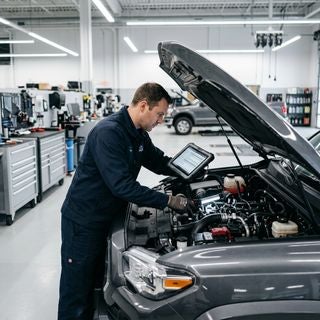
;

How Do You Manage Routine Maintenance on a Ford Vehicle?

Managing routine maintenance on a Ford vehicle requires following the software-driven Intelligent Oil-Life Monitor alerts, adhering to recommended mileage intervals in your owner's manual, and completing regular multi-point inspections to ensure optimal vehicle performance and longevity. Standard upkeep centers on timely synthetic oil changes, tire rotations every 7,500 miles, brake inspections, and replacing air filters to maintain mechanical reliability, proper fuel economy, and long-term engine performance. Staying on top of scheduled service keeps your truck or SUV performing efficiently through varying driving conditions. For residents navigating the gently rolling hills and daily traffic around Calcutta, maintaining clean fluids and balanced tires helps prevent premature component wear on hilly suburban routes. Vehicle owners can establish a practical maintenance routine by relying on professional service care. Drivers can easily navigate to our East Liverpool service facility at 1503 Pennsylvania Ave or give our service department a quick call at (330) 462-7578 to set up a personalized vehicle maintenance plan. Table of Contents How Does the Ford Intelligent Oil-Life Monitor Determine Service Intervals? What Services Are Offered Through Quick Lane at Ford Dealerships? What Are the Benefits of Dealership Service Over Independent Shops? What Does a Ford 30,000-Mile Service Cost and What Coverage Does Ford Protect Offer? How Can You Schedule Service Online or Arrange Pickup and Delivery at Tri State Ford? Common Questions About Servicing Your Ford Vehicle at Tri State Ford How Does the Ford Intelligent Oil-Life Monitor Determine Service Intervals? The Ford Intelligent Oil-Life Monitor determines service intervals by continuously tracking engine operating temperature, idling hours, vehicle speed, ambient climate, and trailering loads through real-time powertrain sensor algorithm software. Instead of relying on a rigid distance counter, the system calculates actual oil degradation and signals when an oil change is required between 3,000 and 10,000 miles. Operating conditions directly dictate how quickly the oil monitor counts down to zero percent life: Normal Driving: Gentle highway cruising, light passenger loads, and mild weather allow service intervals between 7,500 and 10,000 miles. Severe Driving: Frequent trailering, heavy cargo hauling, stop-and-go city commuting, or driving in steep terrain accelerates oil breakdown, triggering service alerts between 5,000 and 7,500 miles. Extreme Driving: Sustained high-load hauling, extended engine idling on job sites, or operating in dusty environments prompts required service between 3,000 and 5,000 miles. Our service advisors regularly see truck owners hauling heavy trailers who are surprised to find their oil life percentage drops faster than during regular highway commuting. For high-capability models like the 2026 Ford F-150 equipped with the 3.5L EcoBoost engine and SelectShift® transmission, adhering to these monitor alerts protects internal engine timing and turbocharger components from thermal breakdown. When your dashboard display signals that an oil change is due, you can schedule a service appointment online to keep your engine properly lubricated. Drivers who prefer performing basic upkeep in their home garage can also order genuine factory parts matched specifically to their vehicle's VIN. What Services Are Offered Through Quick Lane at Ford Dealerships? Quick Lane service at Ford dealerships provides essential routine vehicle maintenance without requiring an advance appointment, covering fluid renewals, tire care, brake services, and battery replacements. Factory-trained technicians complete these rapid-turnaround maintenance items on all vehicle makes and models using original equipment components while performing a comprehensive multi-point inspection. Key maintenance services available through Quick Lane include: Motorcraft synthetic blend or full synthetic oil and filter replacements. Tire pressure adjustments, digital balancing, tire rotation, and tread depth measurements. Visual brake inspections, rotor surface measuring, and pad thickness evaluations. Electrical system diagnostics, including professional battery testing and replacement to handle extreme summer heat and cold winter weather. Wiper blade installations, cabin air filter replacements, engine air filter renewals, and top-offs for essential vehicle fluids. For hardworking vehicle owners and daily commuters who need fast, dependable service care, stopping by a local Ford service center delivers reliable upkeep that fits into a busy schedule without sacrificing quality. What Are the Benefits of Dealership Service Over Independent Shops? Servicing your vehicle at a Ford dealership ensures all maintenance and repair work is performed by factory-certified technicians utilizing specialized diagnostic software, genuine Motorcraft parts, and direct factory warranty integration. Dealership technicians complete regular, specialized training on Ford engine architectures, hybrid systems, and high-voltage electric powertrains. Advanced technical benefits include: Proprietary Diagnostic Software: Dealership service bays utilize the Integrated Diagnostic System (IDS) and Ford Diagnosis and Repair System (FDRS). These diagnostic suites connect directly to control modules through the OBD-II port to read technical diagnostic trouble codes, reflash powertrain control modules, and perform factory software updates. Factory Part Quality: Dealerships install genuine Motorcraft components manufactured to exact original specifications. These parts carry a 2-year, unlimited-mileage limited warranty that covers both parts and labor at authorized Ford dealers nationwide. Automated Vehicle History: Every maintenance service and repair completed at an authorized dealer is logged automatically into Ford's centralized vehicle service history database, preserving future resale value and simplifying future warranty claims. What Does a Ford 30,000-Mile Service Cost and What Coverage Does Ford Protect Offer? A standard Ford 30,000-mile maintenance service pricing may vary depending on model requirements, covering oil and filter replacement, cabin and engine air filter updates, tire rotation, and full mechanical system checks. Long-term mechanical coverage can be secured through a Ford Protect Extended Service Plan, which covers mechanical components past the standard factory warranty. During a 30,000-mile service visit, technicians perform major maintenance renewals: Synthetic motor oil replacement and fresh Motorcraft oil filter installation. Engine air filter and cabin air filter replacements to ensure proper engine intake airflow and clean interior cabin air. Four-wheel tire inspection and tire rotation to maintain even tread wear. Comprehensive inspection of fuel lines, cooling system hoses, steering tie-rod ends, suspension ball joints, and brake pads and rotors. For models like the 2026 Ford Ranger equipped with the 2.3L EcoBoost engine, completing these 30,000-mile service milestones keeps the powertrain operating at peak efficiency. To guard against unexpected repair costs after your standard 3-year/36,000-mile bumper-to-bumper warranty and 5-year/60,000-mile powertrain warranty expire, Ford Protect coverage plans offer extended reassurance. Options like Ford Protect PremiumCARE cover over 1,000 key components—including engine, transmission, steering, suspension, air conditioning, and electrical systems—Contact the dealership for current plan terms and payment information. How Can You Schedule Service Online or Arrange Pickup and Delivery at Tri State Ford? You can schedule service online by visiting the Tri State Ford service portal, entering your vehicle year, model, and mileage, selecting required maintenance tasks, and reserving an available appointment time. Vehicle owners can also arrange door-to-door maintenance without taking time out of their workday. For residents navigating the riverfront terrain around East Liverpool, our dealership offers complimentary Ford Pickup & Delivery service for qualifying maintenance visits. Our service team picks up your truck or SUV directly from your residence or office, completes all requested repairs at our service center using genuine parts, and returns your vehicle when work is finished. We also provide customer shuttle transportation and a comfortable customer lounge equipped with Wi-Fi and complimentary beverages. Common Questions About Servicing Your Ford Vehicle at Tri State Ford Q: How often should I rotate the tires on my Ford F-150? Tires on a Ford F-150 should be rotated every 7,500 miles, which conveniently coincides with every routine oil change visit. Regular tire rotation ensures even tread wear across all four tires, prolongs overall tire life, and helps maintain optimal traction and handling on both rear-wheel drive and four-wheel drive configurations. Q: What happens if I ignore the Intelligent Oil-Life Monitor warning? Ignoring the Intelligent Oil-Life Monitor warning allows degraded oil to remain in your engine, leading to reduced lubrication, increased friction, sludge accumulation, and potential internal component damage. Running engine oil past the zero percent life indicator accelerates wear on timing components and bearing surfaces and may compromise your 5-year/60,000-mile powertrain warranty coverage. Q: Are genuine Motorcraft components used for routine maintenance? Yes, our service department installs genuine Motorcraft components for routine maintenance and repair services. Motorcraft filters, spark plugs, synthetic fluids, and brake friction materials are built specifically to Ford original equipment specifications and come backed by a 2-year unlimited-mileage limited warranty. Q: Are loaner vehicles available for extended service appointments? Tri State Ford offers service loaner vehicles for qualifying extended mechanical repair appointments and major warranty work. Service advisors can confirm loaner vehicle availability and eligibility criteria when you schedule your appointment in advance. Q: What paperwork or items should I bring to my service appointment? When arriving for a scheduled maintenance appointment, bring your primary vehicle key fob and any locking lug nut keys if your wheels are equipped with custom security locks. If you hold a Ford Protect Extended Service Plan, having your policy documentation or registered Ford account details helps our team process coverage seamlessly. Maintaining your Ford truck, SUV, or crossover is straightforward when you rely on factory-certified diagnostic equipment, genuine parts, and experienced technicians. Vehicle owners can easily get directions to our service bay for routine maintenance or lock in a convenient service time by calling our team at (330) 462-7578 today. © 2026 Tri State Ford. All rights reserved. Vehicle specification data © JATO Dynamics Limited. Ford Vehicle Maintenance in East Liverpool OH | Tri State Ford

s

Is Leasing a Car Worth It for Your Driving Habits and Budget?

Leasing a car is worth it if you drive a predictable annual mileage under 15,000 miles, prefer lower monthly payments than conventional financing, and want to transition to a new vehicle with updated warranty protection every two to four years. It is less suited for drivers who keep vehicles long-term, make permanent modifications, or accumulate high mileage across regional commutes. Determining whether auto leasing fits your lifestyle starts with evaluating how you use your primary vehicle day to day. A Ford Red Carpet Lease structured through Ford Credit allows drivers to pay for the projected depreciation of the vehicle during the contract term rather than the entire purchase price. This structural distinction generally translates into lower initial cash outlays and reduced monthly obligations compared to standard loan financing. For working professionals navigating daily suburban trips along State Route 170 around Calcutta, staying within structured annual mileage caps is often straightforward, making a three-year lease agreement highly economical. Your financial strategy plays a substantial role in this decision. When you lease, your monthly payments cover the vehicle's expected loss in value over two, three, or four years, plus finance charges and administrative fees. Because you are not paying down the entire vehicle equity, your cash flow remains more flexible. However, this structure means you do not build equity toward full ownership at the end of the term unless you choose to execute a purchase option. Drivers who prefer predictable monthly expenses without the long-term responsibility of out-of-warranty mechanical maintenance often find leasing ideal. Evaluating your preference for modern vehicle technology and driver-assist capabilities is equally critical. Vehicle safety systems, infotainment interfaces, and powertrain efficiency evolve rapidly. Leasing guarantees that every few years you transition into current engineering without the hassle of selling or trading an aging car privately. If you prefer long-term ownership, put heavy wear on vehicle interiors, or routinely travel excessive highway distances, buying outright or exploring our pre-owned Carfax 1-owner inventory may better align with your financial goals. When you are ready to evaluate lease options or explore specific model configurations in person, call (330) 462-7578 to speak directly with our team, or stop by our East Liverpool showroom address for a hands-on walk-around. Table of Contents What Are the Primary Advantages and Biggest Drawbacks of Leasing a Vehicle? How Does Residual Value Impact Your Monthly Lease Payment? How Many Miles Are Included in a Lease and What Do Excess Mileage Charges Cost? What Guidelines Define Excessive Wear and Tear at Lease Return? Are State or Local Incentives Available for Leasing an EV in Ohio? Common Questions About Leasing vs Buying a Ford How to Choose Between Leasing and Buying at Ford What Are the Primary Advantages and Biggest Drawbacks of Leasing a Vehicle? The primary advantages of leasing include lower monthly payments, minimal up-front capital requirements, continuous manufacturer warranty coverage, and routine access to modern safety and infotainment technology. The biggest drawbacks are the lack of long-term ownership equity, strict mileage restrictions, potential charges for excess wear and tear, and fees if you exit the agreement early. Understanding the balance between lease benefits and restrictions helps clarify whether this financing route matches your household budget. The primary financial incentive for most drivers is payment size. Because lease payments reflect projected depreciation rather than full vehicle value, drivers can often step into higher trim levels or larger vehicles for the same monthly investment required to finance an entry-level trim. Additionally, most lease terms last 24 to 36 months, keeping the vehicle continuously protected under Ford’s original bumper-to-bumper factory warranty. This coverage minimizes unexpected out-of-pocket repair costs during your tenure with the car. +-----------------------------------------------------------------------------------+ | LEASING VS. BUYING COMPARISON MATRIX | +------------------------------------+----------------------------------------------+ | LEASING ADVANTAGES | POTENTIAL DRAWBACKS | +------------------------------------+----------------------------------------------+ | Lower monthly payments | No equity accumulated toward ownership | | Minimal down payment required | Annual mileage caps (e.g., 12,000 mi/yr) | | Continuous factory warranty scope | Excess wear and tear inspection standards | | Seamless lease-end transition | Early termination financial penalties | +------------------------------------+----------------------------------------------+ To see how these payment dynamics function across different body styles, you can browse our new Ford vehicle inventory to compare model choices. For instance, a 2026 Ford Escape featuring a 1.5L EcoBoost engine with an automatic 8-speed transmission provides an accessible entry point with a 2,000-lb towing capacity and about 37.5 cu ft of rear cargo space. Families needing greater interior volume might consider a 2026 Ford Explorer equipped with a 2.3L EcoBoost engine, SelectShift® transmission, seating for six, and a 5,000-lb towing capacity. Drivers interested in maximum utility often evaluate the 2026 Ford F-150, which pairs a 3.5L EcoBoost engine with a 10,400-lb towing capacity and about 53 cu ft of bed volume. The primary trade-off in any lease contract is the absence of long-term asset value. When the lease contract expires, the vehicle returns to the dealership unless you elect to buy it out. Furthermore, lease agreements specify strict annual mileage allowances and establish rigid guidelines regarding physical vehicle condition. Drivers who plan to customize their vehicles with aftermarket accessories, performance modifications, or heavy-duty utility gear must recognize that the vehicle must be returned in factory condition. Checking current manufacturer vehicle offers or utilizing our custom factory order tool can assist in tailoring a lease agreement or purchase plan that reflects your exact equipment preferences. How Does Residual Value Impact Your Monthly Lease Payment? Residual value is the estimated wholesale worth of a vehicle at the conclusion of its lease term, calculated as a percentage of the manufacturer's suggested retail price. A higher residual value reduces your monthly lease payment because you are only financing the difference between the initial vehicle cost and its projected future value over the contract duration. The mechanics of residual value serve as the mathematical foundation of every lease agreement. When Ford Credit establishes a residual percentage for a specific model and trim, that figure represents the predicted value of the vehicle after accounting for time, market trends, and contracted mileage. For example, if a vehicle with an MSRP of $40,000 retains a 60% residual value after a 36-month lease, its projected end-of-lease value is $24,000. The primary component of your monthly payment is calculated by dividing the remaining $16,000 in depreciation over the 36-month term, alongside finance charges known as the money factor. Vehicle models known for strong market durability, high safety ratings, and steady demand naturally maintain higher residual percentages. A higher residual value directly benefits the lessee by shrinking the total depreciation gap that must be financed. This dynamic explains why a higher-priced vehicle with an exceptionally strong residual rating can sometimes yield a lower monthly lease payment than a lower-cost vehicle that depreciates more rapidly over the same period. Understanding residual value also clarifies your options when your lease term nears completion. Ford Credit agreements specify three distinct lease-end pathways: Returning the vehicle to an authorized dealership and choosing a new model. Purchasing the leased vehicle outright at the pre-documented residual purchase option price. Extending or adjusting lease terms where eligible through Ford Credit guidelines. If market conditions cause your vehicle's actual real-world value at lease-end to exceed the pre-calculated residual purchase option price, you hold positive equity. You can exercise your purchase option to buy the vehicle at the discounted contractual figure or apply that equity toward your next vehicle lease or purchase. If you plan to transition out of a current vehicle to lower your starting capitalization cost, you can utilize our online trade-in evaluation tool. To streamline the pre-approval process, you can submit an online credit application ahead of time. Additionally, keeping up with routine service ensures your current vehicle retains optimal value, which you can support by reviewing our manufacturer service specials. How Many Miles Are Included in a Lease and What Do Excess Mileage Charges Cost? Standard Ford Credit lease contracts typically include annual mileage allowances of 10,000, 12,000, or 15,000 miles, with options to purchase additional miles upfront at a discounted rate. If you exceed your agreed limit, excess mileage fees generally range between 15 and 25 cents per mile at lease turn-in, though purchasing the vehicle at contract end waives these penalties entirely. +-----------------------------------------------------------------------------------+ | Ford CREDIT MILEAGE ALLOWANCE COMPARISON | +-------------------+---------------------+-----------------------------------------+ | ANNUAL MILES | TOTAL 3-YEAR MILES | IDEAL DRIVER PROFILE | +-------------------+---------------------+-----------------------------------------+ | 10,000 miles | 30,000 miles | Short daily commutes, local errands | | 12,000 miles | 36,000 miles | Standard suburban commute patterns | | 15,000 miles | 45,000 miles | Frequent regional highway traveling | +-------------------+---------------------+-----------------------------------------+ Calculating your annual driving distance accurately is essential before signing a lease contract. First-time lease shoppers visiting our showroom most often ask how mileage overages are calculated before they compare monthly payments between trims. Calculating your commute accurately prevents unexpected lease-end costs. For instance, commuting daily along Market Street in Boardman accumulates steady weekly mileage that should be factored into your baseline contract terms rather than estimated conservatively. Ford Credit allows lessees to structure high-mileage lease contracts at signing if personal or professional driving habits exceed 15,000 miles annually. Purchasing additional miles at contract inception costs significantly less per mile than paying excess mileage assessments at lease turn-in. If you select a 12,000-mile annual contract but drive 42,000 miles over three years, you exceed your limit by 6,000 miles. Contact the dealership for current excess mileage fee information. Fuel economy ratings also play a role in selecting the appropriate trim and drivetrain for your daily routes. The 2026 Ford Escape lineup illustrates how trim selection impacts efficiency: Active FWD and ST-Line FWD models deliver 27 city / 34 hwy / 30 combined MPG. Active AWD and ST-Line AWD configurations achieve 26 city / 32 hwy / 28 combined MPG. Platinum AWD, ST-Line Select AWD 2.0L, and ST-Line Elite AWD 2.0L models offer 23 city / 31 hwy / 26 combined MPG. Selecting an efficient powertrain helps manage overall operating costs over your lease duration. If your annual mileage fluctuates wildly or exceeds 20,000 miles per year, purchasing a vehicle or choosing our certified pre-owned Ford inventory often provides greater long-term value by eliminating per-mile penalty structures entirely. Fuel Economy Fuel economy and range by trim Feature Active AWD Active FWD Platinum AWD ST-Line AWD:--:--:--:--:-- MPG 26 city / 32 hwy / 28 combined 27 city / 34 hwy / 30 combined 23 city / 31 hwy / 26 combined 26 city / 32 hwy / 28 combined Fuel Economy (continued) Feature ST-Line Elite AWD 2.0L ST-Line FWD ST-Line Select AWD 2.0L:--:--:--:-- MPG 23 city / 31 hwy / 26 combined 27 city / 34 hwy / 30 combined 23 city / 31 hwy / 26 combined What Guidelines Define Excessive Wear and Tear at Lease Return? Ford Credit defines excessive wear and tear as body damage larger than two inches, exterior scratches extending beyond credit card length, interior upholstery tears, cracked windshield glass, and tire tread depth below 1/8 inch. Routine minor scuffs and normal operational wear are accepted without penalty during the turn-in inspection process. Understanding vehicle condition standards ensures a smooth transition at the end of your lease. Ford Credit provides clear wear-and-use guidelines to evaluate returned vehicles. Minor stone chips on the front fascia, tiny door dings under two inches without paint damage, and light carpet wear from normal foot traffic fall within acceptable limits. However, structural dents, broken light lenses, burned or torn seat fabric, and deep scratches through the clear coat require remediation or incur lease-end charges. To prevent unexpected fees, Ford Credit offers complimentary pre-inspections within 60 days of your scheduled lease-end date. A certified inspector evaluates the vehicle at your home or work, providing an itemized report detailing any condition issues that exceed allowable standards. This advance notice allows you to handle necessary repairs independently using original equipment manufacturer parts prior to final vehicle turn-in. +-----------------------------------------------------------------------------------+ | WEAR AND USE INSPECTION THRESHOLDS | +-----------------------+--------------------------+--------------------------------+ | ITEM | NORMAL WEAR (NO FEE) | EXCESS WEAR (FEE APPLIES) | +-----------------------+--------------------------+--------------------------------+ | Exterior Body Dents | Under 2 inches | Over 2 inches or paint broken | | Glass Scratches/Chips | Light pitting, under 1/2"| Cracked glass, star fractures | | Tire Tread Depth | 1/8 inch or greater | Under 1/8 inch remaining | | Interior Upholstery | Minor soil, no tears | Permanent stains, tears, burns | +-----------------------+--------------------------+--------------------------------+ For drivers seeking additional financial protection against turn-in charges, Ford Credit offers WearCare coverage at initial lease signing. Designed for lease contracts up to 48 months, WearCare covers eligible end-of-lease excess wear charges up to specified limits, reducing out-of-pocket exposure for unexpected interior stains or exterior dings. However, WearCare does not cover excess mileage charges, missing vehicle equipment, or improper mechanical alterations. Lessees who exercise their pre-documented contractual option to purchase the vehicle directly from the dealer avoid all wear, tear, and mileage assessments completely. Are State or Local Incentives Available for Leasing an EV in Ohio? Ohio does not offer a direct state-funded purchase or lease rebate for electric vehicles, and federal clean vehicle tax credits under IRC §30D officially terminated on September 30, 2025 under Public Law 119-21 unless secured by a prior binding written contract. However, select regional electric utility providers in Ohio offer localized rebates and discounted off-peak charging rates for home Level 2 charging station installations. When evaluating an electric vehicle lease in Ohio, drivers should focus on utility-sponsored incentive programs and manufacturer lease offers rather than state tax credits. Various electric utilities across northeastern Ohio offer residential rebates covering a portion of the hardware and installation costs for Level 2 home charging units. These home chargers utilize a 240-volt circuit to replenish battery capacity overnight, providing convenient morning range without reliance on public charging networks. Winter climate considerations are also vital when leasing an EV or electrified crossover in northeastern Ohio. Cold winter temperatures and sub-freezing weather conditions impact lithium-ion battery efficiency, with typical EV cold-weather range loss falling between 15% and 30% on the coldest days. Utilizing garaged parking, scheduling cabin preconditioning while connected to grid power, and choosing models with heated seating help preserve operating range during heavy winter months. Drivers evaluating total vehicle performance across different propulsion choices can compare Ford's EcoBoost gas powertrains as a baseline for power and efficiency. For example, the 2026 Ford Escape ST-Line features a 1.5L EcoBoost engine producing 180 hp and 199 lb-ft of torque paired with All-wheel drive. Stepping up to the ST-Line Elite or Platinum trim upgrades the powertrain to a 2.0L EcoBoost engine generating 250 hp and 280 lb-ft of torque mated to a SelectShift® automatic transmission. Reviewing your daily driving routes alongside seasonal performance needs ensures you choose the ideal powertrain and lease structure. Engine & Performance Powertrain specs by trim Feature Active AWD Active FWD Platinum AWD ST-Line AWD:--:--:--:--:-- Engine 1.5L 1.5L 2L 1.5L Horsepower 180 hp 180 hp 250 hp 180 hp Torque 199 lb-ft 199 lb-ft 280 lb-ft 199 lb-ft Transmission automatic 8-speed automatic 8-speed SelectShift® automatic 8-speed Drivetrain All-wheel drive Front-wheel drive All-wheel drive All-wheel drive Engine & Performance (continued) Feature ST-Line Elite AWD 2.0L ST-Line FWD ST-Line Select AWD 2.0L:--:--:--:-- Engine 2L 1.5L 2L Horsepower 250 hp 180 hp 250 hp Torque 280 lb-ft 199 lb-ft 280 lb-ft Transmission SelectShift® automatic 8-speed SelectShift® Drivetrain All-wheel drive Front-wheel drive All-wheel drive Common Questions About Leasing vs Buying a Ford Q: Can a leased Ford vehicle be purchased before or at the end of the contract term? Yes, Ford Credit lease agreements include an explicit purchase option that allows you to buy the leased vehicle at any point during or at the end of your contract term. The purchase price is determined by the pre-documented residual value stated in your original agreement, plus any remaining lease payments and applicable state taxes or processing fees. Exercising this purchase option allows you to keep the vehicle permanently and completely waives all excess mileage and wear-and-tear charges that would otherwise apply at lease return. Q: What happens if a leased vehicle is involved in an accident? If your leased Ford vehicle is involved in a collision, you must report the incident to your auto insurance provider and notify Ford Credit. The vehicle must be repaired at an authorized repair facility using genuine Ford original equipment parts to ensure structural safety and maintain factory compliance. Insurance policies typically require full coverage, including collision and comprehensive protection, for the duration of the lease term. If the vehicle is declared a total loss, Gap protection integrated into your Ford Credit lease helps cover the difference between insurance payout and remaining balance. Q: Can I transfer my Ford Credit lease to another driver if my commuting needs change? Ford Credit allows lease transfers under specific conditions, subject to credit approval of the transferee and program guidelines. The party assuming the lease must meet Ford Credit’s underwriting standards and agree to fulfill all remaining contractual obligations, including monthly payments, mileage limits, and vehicle condition standards. Administrative transfer fees apply, and primary liability terms depend on the specific lease agreement structure. Transferring a lease offers an alternative path for drivers who experience sudden changes in daily commuting distances or vehicle size requirements before contract expiration. Q: What paperwork should I bring to the dealership when turning in a leased vehicle? When returning your leased vehicle, bring both sets of master keys, the original owner’s manual, the vehicle registration card, and any maintenance records accumulated during your lease term. You should also bring your complimentary pre-inspection report if one was completed prior to turn-in. Ensure all personal belongings are removed from the cabin, storage consoles, and cargo areas, and reset the infotainment system to factory settings to clear stored personal data. Our team completes a final odometer statement and turn-in confirmation document to finalize your vehicle return. Q: Are routine maintenance and oil changes included in a standard Ford lease agreement? Standard Ford Credit lease contracts do not automatically include routine scheduled maintenance such as engine oil changes, tire rotations, cabin air filter replacements, or brake inspections. The lessee remains responsible for maintaining the vehicle according to the manufacturer's recommended maintenance schedule outlined in the owner's manual. However, drivers can opt to include optional Ford Protect Prepaid Maintenance Plans directly into their monthly lease payments at signing. Maintaining complete service documentation protects you during lease turn-in by proving proper mechanical care throughout the lease duration. How to Choose Between Leasing and Buying at Ford Choosing between leasing and buying comes down to prioritizing either lower monthly payments and constant vehicle updates or long-term equity and unlimited mileage flexibility. Evaluating your annual mileage budget and vehicle retention goals clarifies which path delivers the highest financial value for your lifestyle. +-----------------------------------------------------------------------------------+ | DECISION FRAMEWORK: LEASE VS. BUY | +------------------------------------+----------------------------------------------+ | CHOOSE LEASING IF YOU: | CHOOSE BUYING IF YOU: | +------------------------------------+----------------------------------------------+ | Drive under 15,000 miles per year | Drive high annual mileage without limits | | Prefer lower monthly auto payments | Plan to keep your vehicle for 5+ years | | Want a new vehicle every 2-3 years | Want to build long-term ownership equity | | Prefer continuous warranty cover | Intend to add custom equipment or tow hitches| +------------------------------------+----------------------------------------------+ Our sales team is dedicated to providing clear, straightforward guidance to help you navigate every aspect of your vehicle purchase or lease. Whether you want to explore the latest technology features on a new SUV, evaluate trade-in options, or discuss financing structures tailored to your household budget, we are here to support your research. To compare lease terms, schedule a test drive, or review current inventory in person, (330) 462-7578 to speak directly with our team, or visit our dealership showroom today. We look forward to helping you find the ideal vehicle and contract structure for your driving needs. Keep Your Vehicle Running Strong Keep your vehicle performing at its best with our service team: Order Parts Schedule Service Appt © 2026 Tri State Ford. All rights reserved. Vehicle specification data © JATO Dynamics Limited. Car Leasing Benefits in East Liverpool OH | Tri State Ford
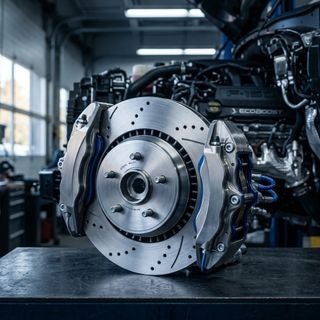
d

Why Should You Choose OEM Parts for 2026 Ford Repairs?

Choosing OEM parts for 2026 Ford repairs guarantees exact factory fitment, restores original engineering tolerances, and preserves manufacturer safety standards. Genuine Ford and Motorcraft components are designed specifically for your vehicle, backed by a 24-month/unlimited-mileage limited warranty that covers both parts and labor when installed at an authorized dealership. Selecting factory parts protects critical powertrain systems, maintains vehicle resale value, and prevents premature wear caused by imprecise aftermarket alternatives. When maintaining a 2026 Ford F-150 equipped with the 3.5L EcoBoost V6 engine or a 2026 Ford Explorer featuring all-wheel drive, every mechanical component relies on strict factory calibrations. Modern vehicles integrate advanced electronics, precise braking software, and lightweight structural alloys that generic aftermarket manufacturers do not replicate. Installing aftermarket substitutes can cause alignment gaps, premature component failure, or unexpected electronic sensor errors. Our service team sees that drivers who stick with factory-engineered parts enjoy a far more predictable ownership experience. Whether you drive daily along State Route 170 through Calcutta or travel across the region for weekend family trips, factory components deliver dependable longevity. You can easily schedule a service appointment online, drop by our East Liverpool facility, or give our service department a quick call to discuss replacement components for your vehicle. Table of Contents How Do OEM Parts Save Money Over the Life of Your Ford Vehicle? Is Motorcraft an Official OEM Brand and How Does It Differ From Ford Genuine Parts? How Do OEM Parts Preserve Factory Vehicle Safety Standards and Rust Protection? What Warranty Coverage Is Included With Genuine Ford Parts? Are Genuine Ford Parts Required for Ford Lease Returns? Common Questions About Servicing Your Ford With Genuine Parts How Do OEM Parts Save Money Over the Life of Your Ford Vehicle? OEM parts save money over the life of a Ford vehicle by delivering superior durability, reducing secondary mechanical damage, and protecting resale value. Factory components fit correctly the first time, preventing frequent labor costs associated with premature aftermarket part failures. Although generic aftermarket components may carry a lower initial price, their actual long-term cost is often significantly higher. Aftermarket parts are commonly built with looser tolerances to fit multiple vehicle makes and models. This compromise leads to accelerated wear on surrounding systems. For example, installing non-factory brake pads on a 2026 Ford Escape with an 8-speed automatic transmission can cause uneven rotor wear, excessive brake dust, and premature caliper fatigue, turning a routine brake service into an expensive multi-system repair. By contrast, Genuine Ford brake components undergo rigorous testing to ensure optimal stopping power, noise reduction, and thermal resistance. Factory parts also preserve your vehicle's complete service history and resale market strength. A documented record of factory-spec maintenance demonstrates to future buyers that the vehicle was maintained without low-quality compromises. To help keep maintenance costs predictable, vehicle owners can review current current service offers or check maintenance information before booking their next visit. Investing in original engineering protects both your monthly budget and your vehicle's long-term mechanical health. Is Motorcraft an Official OEM Brand and How Does It Differ From Ford Genuine Parts? Yes, Motorcraft is an official OEM brand produced specifically for Ford and Lincoln vehicles. While Genuine Ford Parts are the exact components installed on the assembly line during original vehicle manufacturing, Motorcraft parts are factory-engineered replacement components designed for ongoing maintenance and repair. Both part lines share identical engineering standards, strict quality controls, and factory warranty backing. Genuine Ford Parts include structural sheet metal, interior trim pieces, specialized electronic modules, and major engine assemblies installed when the vehicle is constructed. Motorcraft focuses primarily on high-wear maintenance components, including spark plugs, synthetic blend fluids, cabin filters, batteries, and brake friction materials. Choosing between the two depends on the specific repair requirement: Motorcraft Components: Best suited for routine vehicle maintenance, including oil changes, brake service, battery replacements, and ignition filter swaps. Genuine Ford Parts: Essential for collision restoration, major mechanical overhauls, custom trim updates, and structural body repairs. If your 2026 Ford Explorer requires a replacement battery or air filter, a Motorcraft part delivers exact factory-specified performance. If your vehicle requires body restoration or specialized sensor replacements, Genuine Ford body panels and hardware ensure proper fitment. Vehicle owners looking to complete maintenance or order specific components directly can submit a parts order request with our service team. How Do OEM Parts Preserve Factory Vehicle Safety Standards and Rust Protection? OEM parts preserve factory vehicle safety standards by maintaining original structural crumple zones, precise sensor alignments, and factory-grade anti-corrosion protection. Factory body panels and mechanical hardware undergo comprehensive crash testing to ensure active safety systems function properly during an impact. Modern safety suites like Pre-Collision Assist and BLIS Blind Spot Information System rely on precise radar positioning and exact body dimensions. Installing aftermarket bumper covers or non-standard fenders can alter radar reflection angles or obstruct sensor views, compromising driver-assist functions. Furthermore, structural crash safety relies on engineered steel gauges and designated crumple paths. Generic body panels may buckle unpredictably in a collision, changing how impact energy transfers into the passenger cabin. Corrosion resistance is another vital factor, particularly along the Ohio River valley near East Liverpool where winter road salt is heavily applied during cold months. Genuine Ford body panels feature factory electro-deposition primer coatings and galvanized steel matching original rust-prevention standards. Aftermarket sheet metal often uses thinner steel and inferior primer, leading to early surface rust, paint bubbling, and seam degradation. Drivers adding specialized upgrades or replacing worn hardware can explore our custom equipment options to ensure factory durability across every component. What Warranty Coverage Is Included With Genuine Ford Parts? Genuine Ford and Motorcraft parts include a 24-month/unlimited-mileage limited warranty that covers defects in factory-supplied materials or workmanship. When installed by an authorized dealership, the warranty covers both part replacement and professional labor costs. This comprehensive coverage provides complete peace of mind, with no commercial mileage restrictions: Labor Inclusion: Dealer-installed parts receive full labor reimbursement if a defect occurs during the two-year warranty window. Over-the-Counter Purchases: Components purchased directly for self-installation carry full parts-replacement coverage for 24 months. Warranty Continuity: For dealer-installed service parts, coverage begins on the installation date, with replacement parts receiving the remaining portion of the original coverage term. Additionally, specialized OEM assemblies such as remanufactured engines, transmissions, or hybrid components may feature extended warranty terms backed directly by the manufacturer. Unlike aftermarket parts warranties that often exclude labor reimbursement or require tedious claim filings, Ford warranty coverage is recognized nationwide across the authorized dealer network. Should a replacement part fail during travel outside your home community, any authorized Ford service center can access your warranty records and perform necessary repairs. Are Genuine Ford Parts Required for Ford Lease Returns? Yes, Ford Credit lease return guidelines require vehicle repairs and body work to be completed using Genuine Ford or Motorcraft parts to avoid excess wear-and-use penalty charges. Returning a leased vehicle with non-OEM body panels or mismatched mechanical components can result in diminished value fees. During the pre-return inspection conducted prior to lease end, certified inspectors assess overall vehicle condition, paint consistency, body panel alignment, and mechanical integrity. Installing low-grade aftermarket windshields, mismatched tires, or non-factory body panels can fail inspection standards. Using factory parts for routine maintenance and collision repairs throughout your lease agreement protects you from unexpected charges when turning in your 2026 Ford Escape or Explorer. Maintaining a detailed record of dealer-installed OEM parts ensures a smooth lease transition without financial surprises. Common Questions About Servicing Your Ford With Genuine Parts Q: How can I verify that a replacement component is a Genuine Ford or Motorcraft part? You can verify part authenticity by checking the official packaging, security labels, and stamped engineering part numbers. Authentic components feature distinct brand labeling, VIN-specific catalog tracking, and manufacturer documentation. Ordering components directly through our service department guarantees you receive genuine items backed by factory warranties rather than counterfeit or low-grade aftermarket alternatives. Q: Will using non-OEM parts void my Ford new vehicle limited warranty? Installing non-OEM parts does not automatically void your entire vehicle warranty, but damage caused directly by an aftermarket part will not be covered. If an aftermarket oil filter collapses and causes engine damage, or an unapproved suspension component fails and damages surrounding steering linkages, the required repairs fall outside factory warranty protection. Using factory components eliminates this risk entirely. Q: Why do OEM brake pads perform better than generic auto parts store options? OEM brake pads are formulated with specific friction compounds tailored precisely to your vehicle's weight, rotor metallurgy, and electronic braking software. Ford engineers test these pads for noise reduction, heat dissipation, and pedal feel across thousands of test cycles. Generic pads use one-size-fits-all friction formulas that frequently cause brake squeal, excessive dust, and reduced stopping efficiency in heavy truck and SUV applications. Q: Can I install Motorcraft parts myself without losing warranty coverage? Yes, purchasing Motorcraft parts over the counter for self-installation preserves the 24-month/unlimited-mileage limited warranty on the part itself. However, over-the-counter warranty coverage applies strictly to part replacement if defective. Having the part installed by our authorized service technicians adds full labor coverage to your warranty protection, ensuring complete peace of mind. Q: How often should I replace high-wear Motorcraft components like cabin air filters and spark plugs? Service intervals depend on your vehicle model and driving conditions. Standard Motorcraft cabin air filters are typically replaced every 20,000 miles, while Platinum spark plugs are inspected or replaced around 60,000 to 100,000 miles. Driving in dusty environments or harsh winter salt conditions may require earlier air filter changes to maintain cabin air quality and heating efficiency. Maintaining your vehicle with factory-engineered components is the most reliable way to ensure performance, safety, and long-term value. Whether your vehicle requires routine maintenance or specialized repairs, our service team at Tri State Ford is ready to assist. Stop by our dealership at 1503 Pennsylvania Ave or give us a call at (330) 462-7578 to speak directly with our service specialists today. © 2026 Tri State Ford. All rights reserved. Vehicle specification data © JATO Dynamics Limited. OEM Ford Parts in East Liverpool OH | Tri State Ford
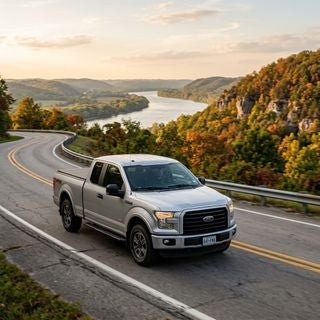
5

Is a Used Ford F-150 a Good Truck to Buy?

A used Ford F-150 is one of the most reliable, capable, and practical full-size pickup trucks available on the pre-owned market. Built with a high-strength, military-grade aluminum-alloy body on a fully boxed steel frame, it delivers long-term rust resistance, exceptional resale value, class-leading towing performance, and manageable ownership costs compared to rival trucks. Buying a pre-owned Ford F-150 allows truck shoppers to avoid the steepest initial depreciation curve while acquiring proven towing power and modern driver-assist safety tech. Ford engineered this chassis to handle demanding workloads, whether hauling equipment through work sites near the East Liverpool riverfront bluffs or pulling a recreational camper for a weekend getaway. Because the F-150 body panels are crafted from aluminum alloy rather than conventional sheet metal, older models maintain their exterior cosmetic appearance without the typical wheel-well rust that plagues standard steel trucks in cold-winter salt-belt climates. At Tri State Ford, our pre-owned truck lineup gives buyers access to diverse cab styles, bed lengths, and proven EcoBoost® or V8 powertrains. Every pre-owned F-150 on our lot undergoes a thorough mechanical evaluation to confirm that steering components, brakes, four-wheel-drive transfer cases, and electrical networks operate to manufacturer standards. Shoppers can plan their visit using our showroom address at 1503 Pennsylvania Ave, or give our sales team a call to verify current truck inventory. If your operations require specialized commercial capabilities, you can also explore our commercial work truck inventory to evaluate heavy-duty cab-chassis options. Table of Contents Which Ford F-150 Engine Offers the Highest Towing Capability? How Does a Used Ford F-150 Compare to a Chevrolet Silverado 1500? Is It Better to Buy a Used Ford F-150 or Lease a New One? Does Ford SYNC 4 Support Wireless Apple CarPlay and Android Auto? What Factors Impact the Resale Value of a Used Ford F-150? What Inspection and Warranty Advantages Does a Certified Used Ford Offer at Tri State Ford? Frequently Asked Questions About Buying a Used Ford Truck Drive Home Your Next Pre-Owned Truck from Tri State Ford Which Ford F-150 Engine Offers the Highest Towing Capability? The 3.5L EcoBoost® V6 engine delivers the highest maximum gas towing capability in the Ford F-150 lineup, reaching up to 13,500 lbs of pull when properly configured with the Max Trailer Tow Package. Generating 400 hp and 500 lb-ft of torque, this twin-turbocharged powerplant produces peak torque low in the RPM range to pull heavy trailers effortlessly. While the 3.5L EcoBoost® V6 holds the top spot for overall towing capacity, Ford offers several distinct engine options across pre-owned F-150 model years, allowing buyers to select the ideal balance of horsepower, fuel economy, and payload capability: 3.5L EcoBoost® V6: Delivers 400 hp and 500 lb-ft of torque with a maximum tow rating of 13,500 lbs in configuration setups like the SuperCrew or SuperCab. Selected trims like the high-output Raptor variant elevate output to 450 hp and 510 lb-ft of torque. 5.0L Ti-VCT V8: Generates 400 hp and 410 lb-ft of torque, delivering classic naturally aspirated V8 acceleration, strong hauling muscle, and payload capacity up to 2,440 lbs. 2.7L EcoBoost® V6: Produces 325 hp and 400 lb-ft of torque, making it an efficient choice for daily commuting with impressive tow ratings reaching up to 10,400 lbs depending on axle ratio and cab configuration. 3.5L PowerBoost® Full Hybrid: Combines the 3.5L EcoBoost® V6 with an electric motor to generate 430 hp and 570 lb-ft of torque, offering serious pulling power along with Pro Power Onboard mobile generator functionality. Selecting the right engine depends on your specific trailering demands. Drivers who haul heavy machinery or large enclosed trailers benefit most from the twin-turbo torque of the 3.5L engine paired with the standard SelectShift® 10-speed automatic transmission. Before making a purchasing decision, buyers can contact us for a current trade-in offer on their current vehicle to apply toward a down payment, then browse our full pickup truck inventory to compare engine specifications across available trims. Engine & Performance Powertrain specs by trim Feature King Ranch 4x4 SuperCrew 5-1/2’ Box King Ranch 4x4 SuperCrew 6-1/2’ Box King Ranch SuperCrew 5-1/2’ Box Lariat 4x4 SuperCrew 5-1/2’ Box:--:--:--:--:-- Engine 3.5L 3.5L 3.5L 3.5L Horsepower 400 hp 400 hp 400 hp 400 hp Torque 500 lb-ft 500 lb-ft 500 lb-ft 500 lb-ft Transmission SelectShift® SelectShift® SelectShift® SelectShift® Drivetrain All-wheel drive All-wheel drive Rear-wheel drive All-wheel drive Engine & Performance (continued) Feature Lariat 4x4 SuperCrew 6-1/2’ Box Lariat SuperCrew 5-1/2’ Box Platinum 4x4 SuperCrew 5-1/2’ Box Platinum 4x4 SuperCrew 6-1/2’ Box:--:--:--:--:-- Engine 3.5L 3.5L 3.5L 3.5L Horsepower 400 hp 400 hp 400 hp 400 hp Torque 500 lb-ft 500 lb-ft 500 lb-ft 500 lb-ft Transmission SelectShift® SelectShift® SelectShift® SelectShift® Drivetrain All-wheel drive Rear-wheel drive All-wheel drive All-wheel drive Engine & Performance (continued) Feature Platinum SuperCrew 5-1/2’ Box Police Responder 4x4 SuperCrew 5-1/2’ Box Raptor 4x4 SuperCrew 5-1/2’ Box STX 4x4 SuperCab 6-1/2’ Box:--:--:--:--:-- Engine 3.5L 3.5L 3.5L 2.7L Horsepower 400 hp 400 hp 450 hp 325 hp Torque 500 lb-ft 500 lb-ft 510 lb-ft 400 lb-ft Transmission SelectShift® SelectShift® SelectShift® SelectShift® Drivetrain Rear-wheel drive All-wheel drive All-wheel drive All-wheel drive Engine & Performance (continued) Feature STX 4x4 SuperCrew 5-1/2’ Box STX SuperCab 6-1/2’ Box STX SuperCrew 5-1/2’ Box Tremor 4x4 SuperCrew 5-1/2’ Box:--:--:--:--:-- Engine 2.7L 2.7L 2.7L 3.5L Horsepower 325 hp 325 hp 325 hp 400 hp Torque 400 lb-ft 400 lb-ft 400 lb-ft 500 lb-ft Transmission SelectShift® SelectShift® SelectShift® SelectShift® Drivetrain All-wheel drive Rear-wheel drive Rear-wheel drive All-wheel drive Engine & Performance (continued) Feature XL 4x4 Regular Cab 6-1/2’ Box XL 4x4 Regular Cab 8’ Box XL 4x4 SuperCab 6-1/2’ Box XL 4x4 SuperCrew 5-1/2’ Box:--:--:--:--:-- Engine 5.0L 2.7L 2.7L 2.7L Horsepower 400 hp 325 hp 325 hp 325 hp Torque 410 lb-ft 400 lb-ft 400 lb-ft 400 lb-ft Transmission SelectShift® SelectShift® SelectShift® SelectShift® Drivetrain All-wheel drive All-wheel drive All-wheel drive All-wheel drive Engine & Performance (continued) Feature XL 4x4 SuperCrew 6-1/2’ Box XL Regular Cab 6-1/2’ Box XL Regular Cab 8’ Box XL SuperCab 6-1/2’ Box:--:--:--:--:-- Engine 3.5L 5L 2.7L 2.7L Horsepower 400 hp 400 hp 325 hp 325 hp Torque 500 lb-ft 410 lb-ft 400 lb-ft 400 lb-ft Transmission SelectShift® SelectShift® SelectShift® SelectShift® Drivetrain All-wheel drive Rear-wheel drive Rear-wheel drive Rear-wheel drive Engine & Performance (continued) Feature XL SuperCrew 5-1/2’ Box XLT 4x4 SuperCab 6-1/2’ Box XLT 4x4 SuperCrew 5-1/2’ Box XLT 4x4 SuperCrew 6-1/2’ Box:--:--:--:--:-- Engine 2.7L 2.7L 2.7L 3.5L Horsepower 325 hp 325 hp 325 hp 400 hp Torque 400 lb-ft 400 lb-ft 400 lb-ft 500 lb-ft Transmission SelectShift® SelectShift® SelectShift® SelectShift® Drivetrain Rear-wheel drive All-wheel drive All-wheel drive All-wheel drive Engine & Performance (continued) Feature XLT SuperCab 6-1/2’ Box XLT SuperCrew 5-1/2’ Box:--:--:-- Engine 2.7L 2.7L Horsepower 325 hp 325 hp Torque 400 lb-ft 400 lb-ft Transmission SelectShift® SelectShift® Drivetrain Rear-wheel drive Rear-wheel drive How Does a Used Ford F-150 Compare to a Chevrolet Silverado 1500? A pre-owned Ford F-150 offers higher maximum towing limits, superior payload capacity, and better long-term body corrosion protection compared to a pre-owned Chevrolet Silverado 1500. Ford's military-grade aluminum-alloy cab and bed reduce overall vehicle weight without sacrificing structural strength, allowing more engine torque to be directed toward pulling trailers and hauling cargo. When evaluating these two popular full-size trucks side-by-side, distinct engineering advantages emerge across major performance categories: Body Construction: The F-150 utilizes an aluminum-alloy body over a high-strength steel frame, eliminating panel rust concerns. The Silverado 1500 uses a traditional steel outer body, which remains susceptible to paint chipping and panel corrosion over time. Towing & Payload Capacities: Max available gas towing on the F-150 reaches 13,500 lbs with payload ratings up to 2,440 lbs. Comparable Chevrolet Silverado 1500 models max out lower in both maximum tow capacity and overall bed payload capacity. Powertrain Technology: Ford equips most pre-owned F-150 models with twin-turbocharged EcoBoost® engines and a standard SelectShift® 10-speed automatic transmission. Chevrolet relies heavily on larger naturally aspirated V8s or small turbo four-cylinders paired with varying 6-speed, 8-speed, or 10-speed transmissions depending on the trim level. Interior Cargo Room: F-150 SuperCrew models offer a completely flat rear load floo r, allowing owners to slide large tools, gear boxes, or pet crates inside the cab easily. For truck buyers focused on durability, interior versatility, and maximum working capacity, a pre-owned F-150 represents a complete value proposition. To explore pre-owned trucks with verified service histories, buyers can browse our single-owner pre-owned vehicles to find a truck maintained by a single prior owner. Is It Better to Buy a Used Ford F-150 or Lease a New One? Buying a used Ford F-150 is the preferred path for drivers seeking long-term ownership equity, lower overall insurance premiums, no annual mileage caps, and freedom from wear-and-use lease penalties. Conversely, leasing a new F-150 suits buyers who want to drive a brand-new truck every two or three years with full initial factory warranty protection and lower initial repair risks. Choosing between purchasing pre-owned and leasing new comes down to how you plan to use your truck: Equity & Long-Term Value: Buying a used F-150 means every payment builds direct owner equity. Once the auto loan is paid in full, you own an asset that retains substantial trade-in value for years. Usage Freedom: Truck owners who tow heavy loads, drive on gravel back roads, or commute long distances do not have to worry about lease mileage limits or end-of-lease damage charges for minor bed scratches and cab wear. Monthly Payment Structure: Because a used truck has already absorbed its initial steep depreciation, pre-owned purchase financing often results in lower loan balances relative to the truck's remaining operational life. Shoppers interested in comparing new model current lease information against pre-owned purchasing rates can explore our latest new vehicle lineup alongside our pre-owned stock. When you are ready to evaluate budget parameters, you can complete a secure online credit application to review competitive finance options tailored to your purchasing budget. Does Ford SYNC 4 Support Wireless Apple CarPlay and Android Auto? Yes, Ford SYNC® 4 infotainment technology provides standard wireless Apple CarPlay® and Android Auto™ compatibility across supported Ford F-150 trucks. Drivers can connect their mobile devices via Bluetooth® and Wi-Fi without plugging in a physical USB cable, projecting smartphone navigation, media apps, and voice assistants directly onto the central touchscreen. Buyers test-driving a pre-owned F-150 usually want to pair their smartphone with SYNC 4 to test wireless Apple CarPlay integration before setting off on the test loop. Beyond cord-free smartphone integration, SYNC® 4 offers several modern cabin convenience features: Over-the-Air Software Updates: Keeps vehicle software and system enhancements up to date automatically via cloud connectivity. Enhanced Voice Recognition: Allows drivers to adjust climate settings, enter navigation addresses, or place hands-free phone calls using natural spoken commands. Cloud-Based Navigation: Delivers real-time traffic updates, weather alerts, and route adjustments to avoid highway delays. Digital Owner's Manual: Includes a searchable touchscreen guide complete with how-to videos and feature explanations. What Factors Impact the Resale Value of a Used Ford F-150? Resale value on a pre-owned Ford F-150 is determined primarily by powertrain choice, drivetrain configuration, maintenance documentation, physical body condition, and overall mileage. Four-wheel-drive ( 4x4) models equipped with crew cabs and proven EcoBoost® or V8 engines command the highest resale prices in the pre-owned pickup market. Key factors that influence F-150 market valuation include: Drivetrain Selection: Four-wheel-drive trucks maintain higher resale value than two-wheel-drive models, particularly in regions where winter weather demands added traction. Commuters navigating the rolling hills around Calcutta rely on 4x4 capability during seasonal snow updates. Cab & Bed Style: SuperCrew models featuring four full-size doors attract the highest buyer demand due to their ability to serve as both family transport and work vehicles. Trim Level & Packages: Mid-level and luxury trims like the XLT, Lariat, and King Ranch equipped with Ford Co-Pilot360™ safety driver-assist features, leather seating, or trailer tow packages retain strong market equity. Vehicle History & Care: A clean CARFAX history report proving consistent oil changes, routine fluid service, and zero structural accident damage allows a pre-owned truck to command top trade-in value. Before shopping for your next truck, you can estimate your current vehicle trade-in value online to understand your current purchasing power. What Inspection and Warranty Advantages Does a Certified Used Ford Offer at Tri State Ford? A Ford Gold Certified pre-owned truck at Tri State Ford includes a comprehensive 172-point inspection by factory-trained technicians, a 12-month/12,000-mile comprehensive limited warranty, and a 7-year/100,000-mile powertrain limited warranty. Ford Blue Certified pre-owned vehicles undergo a 127-point inspection and feature a 90-day/4,000-mile comprehensive limited warranty alongside a 14-day/1,000-mile money-back guarantee. Ford Blue Advantage certified vehicles provide manufacturer-backed protections that standard used trucks do not offer: Rigorously Tested Quality: Factory-trained technicians inspect mechanical performance, frame integrity, brake wear, tire tread depth, safety restraints, and electrical modules using original equipment guidelines. CARFAX Vehicle History Report: Every certified pre-owned Ford comes with a complimentary vehicle history summary verifying title status and service history. 24/7 Roadside Assistance: Complimentary coverage provides emergency towing, flat tire changes, battery jump-starts, fuel delivery, and lockout help. Assistance can be dispatched directly by calling Ford Roadside Assistance: (800) 241-3673. Warranty Transferability: Ford CPO limited warranties are fully transferable to future private owners, providing an added selling point when trading or selling the truck later. To inspect certified trucks in person, drivers can visit our dealership address, call our team at (330) 462-7578, or browse our certified pre-owned Ford inventory online. Frequently Asked Questions About Buying a Used Ford Truck Q: What point inspection do Ford Certified Pre-Owned trucks undergo? Ford Gold Certified trucks complete a rigorous 172-point inspection administered by certified technicians, evaluating engine diagnostics, transmission engagement, 4x4 transfer case operation, braking hardware, suspension components, exterior body panels, and cabin electronics. Ford Blue Certified models complete a thorough 127-point inspection checking all vital safety and mechanical systems before reaching our sales lot. Q: Does Ford CPO warranty coverage transfer to a second owner? Yes, Ford Blue Advantage Gold and Blue Certified limited warranties are fully transferable to subsequent private owners without additional transfer fees. This factory-backed coverage stays attached to the vehicle's VIN, protecting future owners and enhancing the truck's overall market value when you decide to sell or trade it down the road. Q: What emergency services come with Ford CPO roadside assistance? Complimentary 24/7 Ford Roadside Assistance covers emergency towing to the nearest authorized Ford dealership, flat tire changes, battery jump-starts, fuel delivery if you run out of gas, and lockout assistance. Coverage also includes rental car reimbursement allowance and travel expense coverage if a mechanical breakdown occurs far from home. Q: How does a used Ford Ranger compare to a used F-150 for daily driving? A pre-owned Ford Ranger is a midsize truck featuring a smaller footprint, agile handling, easy suburban parking, and a 2.3L EcoBoost® engine capable of towing up to 7,500 lbs. The full-size F-150 provides a larger passenger cabin, wider cargo bed choices, expanded payload thresholds, and higher maximum tow ratings up to 13,500 lbs for heavy work requirements. Q: What documents should buyers bring to finalize a used truck purchase? Buyers should bring a valid driver's license, current proof of auto insurance, recent pay stubs or proof of income, and proof of residency such as a utility bill. If you plan to trade in your current vehicle, bring the physical vehicle title, current registration, and all original sets of keys to ensure a smooth, prompt transaction. Dimensions & Capacity Capacity and dimensions by trim Feature King Ranch 4x4 SuperCrew 5-1/2’ Box King Ranch 4x4 SuperCrew 6-1/2’ Box King Ranch SuperCrew 5-1/2’ Box Lariat 4x4 SuperCrew 5-1/2’ Box:--:--:--:--:-- Seating 5 5 5 5 Cargo 52.8 cu ft 62.3 cu ft 52.8 cu ft 52.8 cu ft Curb weight 5,096 lbs 5,143 lbs 5,096 lbs 5,020 lbs Towing 10,400 lbs 10,800 lbs 10,400 lbs 9,300 lbs Payload 1,945 lbs 2,000 lbs 1,945 lbs 2,020 lbs Dimensions & Capacity (continued) Feature Lariat 4x4 SuperCrew 6-1/2’ Box Lariat SuperCrew 5-1/2’ Box Platinum 4x4 SuperCrew 5-1/2’ Box Platinum 4x4 SuperCrew 6-1/2’ Box:--:--:--:--:-- Seating 5 5 5 5 Cargo 62.3 cu ft 52.8 cu ft 52.8 cu ft 62.3 cu ft Curb weight 5,122 lbs 5,020 lbs 5,096 lbs 5,143 lbs Towing 9,200 lbs 9,300 lbs 10,400 lbs 10,800 lbs Payload 2,020 lbs 2,020 lbs 1,945 lbs 2,000 lbs Dimensions & Capacity (continued) Feature Platinum SuperCrew 5-1/2’ Box Police Responder 4x4 SuperCrew 5-1/2’ Box Raptor 4x4 SuperCrew 5-1/2’ Box STX 4x4 SuperCab 6-1/2’ Box:--:--:--:--:-- Seating 5 5 5 5 Cargo 52.8 cu ft 52.8 cu ft 52.8 cu ft 62.3 cu ft Curb weight 5,096 lbs 5,020 lbs 5,710 lbs 4,895 lbs Towing 10,400 lbs — 8,200 lbs 7,400 lbs Payload 1,945 lbs 2,030 lbs 1,410 lbs 1,600 lbs Dimensions & Capacity (continued) Feature STX 4x4 SuperCrew 5-1/2’ Box STX SuperCab 6-1/2’ Box STX SuperCrew 5-1/2’ Box Tremor 4x4 SuperCrew 5-1/2’ Box:--:--:--:--:-- Seating 5 5 5 5 Cargo 52.8 cu ft 62.3 cu ft 52.8 cu ft — Curb weight 4,941 lbs 4,641 lbs 4,687 lbs 5,267 lbs Towing 7,500 lbs 7,500 lbs 7,600 lbs 9,300 lbs Payload 1,650 lbs 1,670 lbs 1,685 lbs 1,725 lbs Dimensions & Capacity (continued) Feature XL 4x4 Regular Cab 6-1/2’ Box XL 4x4 Regular Cab 8’ Box XL 4x4 SuperCab 6-1/2’ Box XL 4x4 SuperCrew 5-1/2’ Box:--:--:--:--:-- Seating 3 3 6 6 Cargo 62.3 cu ft 77.4 cu ft 62.3 cu ft 52.8 cu ft Curb weight 4,655 lbs 4,679 lbs 4,895 lbs 4,941 lbs Towing 9,400 lbs 7,500 lbs 7,400 lbs 7,500 lbs Payload 1,740 lbs 1,715 lbs 1,600 lbs 1,650 lbs Dimensions & Capacity (continued) Feature XL 4x4 SuperCrew 6-1/2’ Box XL Regular Cab 6-1/2’ Box XL Regular Cab 8’ Box XL SuperCab 6-1/2’ Box:--:--:--:--:-- Seating 6 3 3 6 Cargo 62.3 cu ft 62.3 cu ft 77.4 cu ft 62.3 cu ft Curb weight 5,122 lbs 4,391 lbs 4,396 lbs 4,641 lbs Towing 9,200 lbs 9,000 lbs 7,400 lbs 7,500 lbs Payload 2,020 lbs 1,810 lbs 1,775 lbs 1,670 lbs Dimensions & Capacity (continued) Feature XL SuperCrew 5-1/2’ Box XLT 4x4 SuperCab 6-1/2’ Box XLT 4x4 SuperCrew 5-1/2’ Box XLT 4x4 SuperCrew 6-1/2’ Box:--:--:--:--:-- Seating 6 6 6 6 Cargo 52.8 cu ft 62.3 cu ft 52.8 cu ft 62.3 cu ft Curb weight 4,687 lbs 4,895 lbs 4,941 lbs 5,122 lbs Towing 7,600 lbs 7,400 lbs 7,500 lbs 9,200 lbs Payload 1,685 lbs 1,600 lbs 1,650 lbs 2,020 lbs Dimensions & Capacity (continued) Feature XLT SuperCab 6-1/2’ Box XLT SuperCrew 5-1/2’ Box:--:--:-- Seating 6 6 Cargo 62.3 cu ft 52.8 cu ft Curb weight 4,641 lbs 4,687 lbs Towing 7,500 lbs 7,600 lbs Payload 1,670 lbs 1,685 lbs Drive Home Your Next Pre-Owned Truck from Tri State Ford Choosing a used truck from Tri State Ford gives you access to a thoroughly vetted inventory of tough, reliable pickups engineered for heavy hauling, family road trips, and daily commuting. Whether you need the proven towing performance of an F-150 3.5L EcoBoost® V6, the heavy-duty muscle of a Ford Super Duty, or the efficient versatility of a Ford Ranger, our team is committed to helping you find the right truck for your budget and lifestyle. We make buying a pre-owned truck straightforward and transparent from start to finish. You can evaluate your trade-in online, apply for competitive financing rates, and explore certified pre-owned models backed by factory warranties—all with a no-pressure approach. Stop by our showroom today, take your favorite Ford truck for a test drive, and experience why local drivers trust Tri State Ford for their truck-buying needs. Keep Your Vehicle Running Strong Keep your vehicle performing at its best with our service team: Order Parts Schedule Service Appt © 2026 Tri State Ford. All rights reserved. Vehicle specification data © JATO Dynamics Limited. Used Ford F-150 Trucks for Sale in East Liverpool OH | Tri State Ford

Contact Us

Fill out this form below and we'll contact you shortly
*Required Fields