Blog / Used Vehicle Guides, Financing & Insurance, Buying Guides, Vehicle Warranty Information, Pre-Owned

Is a Used Ford F-150 a Good Truck to Buy?

5

A used Ford F-150 is one of the most reliable, capable, and practical full-size pickup trucks available on the pre-owned market. Built with a high-strength, military-grade aluminum-alloy body on a fully boxed steel frame, it delivers long-term rust resistance, exceptional resale value, class-leading towing performance, and manageable ownership costs compared to rival trucks.

Buying a pre-owned Ford F-150 allows truck shoppers to avoid the steepest initial depreciation curve while acquiring proven towing power and modern driver-assist safety tech. Ford engineered this chassis to handle demanding workloads, whether hauling equipment through work sites near the East Liverpool riverfront bluffs or pulling a recreational camper for a weekend getaway. Because the F-150 body panels are crafted from aluminum alloy rather than conventional sheet metal, older models maintain their exterior cosmetic appearance without the typical wheel-well rust that plagues standard steel trucks in cold-winter salt-belt climates.

At Tri State Ford, our pre-owned truck lineup gives buyers access to diverse cab styles, bed lengths, and proven EcoBoost® or V8 powertrains. Every pre-owned F-150 on our lot undergoes a thorough mechanical evaluation to confirm that steering components, brakes, four-wheel-drive transfer cases, and electrical networks operate to manufacturer standards. Shoppers can plan their visit using our showroom address at 1503 Pennsylvania Ave, or give our sales team a call to verify current truck inventory. If your operations require specialized commercial capabilities, you can also explore our commercial work truck inventory to evaluate heavy-duty cab-chassis options.

Table of Contents

Which Ford F-150 Engine Offers the Highest Towing Capability?

The 3.5L EcoBoost® V6 engine delivers the highest maximum gas towing capability in the Ford F-150 lineup, reaching up to 13,500 lbs of pull when properly configured with the Max Trailer Tow Package. Generating 400 hp and 500 lb-ft of torque, this twin-turbocharged powerplant produces peak torque low in the RPM range to pull heavy trailers effortlessly.

While the 3.5L EcoBoost® V6 holds the top spot for overall towing capacity, Ford offers several distinct engine options across pre-owned F-150 model years, allowing buyers to select the ideal balance of horsepower, fuel economy, and payload capability:

  • 3.5L EcoBoost® V6: Delivers 400 hp and 500 lb-ft of torque with a maximum tow rating of 13,500 lbs in configuration setups like the SuperCrew or SuperCab. Selected trims like the high-output Raptor variant elevate output to 450 hp and 510 lb-ft of torque.
  • 5.0L Ti-VCT V8: Generates 400 hp and 410 lb-ft of torque, delivering classic naturally aspirated V8 acceleration, strong hauling muscle, and payload capacity up to 2,440 lbs.
  • 2.7L EcoBoost® V6: Produces 325 hp and 400 lb-ft of torque, making it an efficient choice for daily commuting with impressive tow ratings reaching up to 10,400 lbs depending on axle ratio and cab configuration.
  • 3.5L PowerBoost® Full Hybrid: Combines the 3.5L EcoBoost® V6 with an electric motor to generate 430 hp and 570 lb-ft of torque, offering serious pulling power along with Pro Power Onboard mobile generator functionality.

Selecting the right engine depends on your specific trailering demands. Drivers who haul heavy machinery or large enclosed trailers benefit most from the twin-turbo torque of the 3.5L engine paired with the standard SelectShift® 10-speed automatic transmission. Before making a purchasing decision, buyers can contact us for a current trade-in offer on their current vehicle to apply toward a down payment, then browse our full pickup truck inventory to compare engine specifications across available trims.

Engine & Performance

Powertrain specs by trim

Feature King Ranch 4x4 SuperCrew 5-1/2’ Box King Ranch 4x4 SuperCrew 6-1/2’ Box King Ranch SuperCrew 5-1/2’ Box Lariat 4x4 SuperCrew 5-1/2’ Box
:-- :-- :-- :-- :--
Engine 3.5L 3.5L 3.5L 3.5L
Horsepower 400 hp 400 hp 400 hp 400 hp
Torque 500 lb-ft 500 lb-ft 500 lb-ft 500 lb-ft
Transmission SelectShift® SelectShift® SelectShift® SelectShift®
Drivetrain All-wheel drive All-wheel drive Rear-wheel drive All-wheel drive

Engine & Performance (continued)

Feature Lariat 4x4 SuperCrew 6-1/2’ Box Lariat SuperCrew 5-1/2’ Box Platinum 4x4 SuperCrew 5-1/2’ Box Platinum 4x4 SuperCrew 6-1/2’ Box
:-- :-- :-- :-- :--
Engine 3.5L 3.5L 3.5L 3.5L
Horsepower 400 hp 400 hp 400 hp 400 hp
Torque 500 lb-ft 500 lb-ft 500 lb-ft 500 lb-ft
Transmission SelectShift® SelectShift® SelectShift® SelectShift®
Drivetrain All-wheel drive Rear-wheel drive All-wheel drive All-wheel drive

Engine & Performance (continued)

Feature Platinum SuperCrew 5-1/2’ Box Police Responder 4x4 SuperCrew 5-1/2’ Box Raptor 4x4 SuperCrew 5-1/2’ Box STX 4x4 SuperCab 6-1/2’ Box
:-- :-- :-- :-- :--
Engine 3.5L 3.5L 3.5L 2.7L
Horsepower 400 hp 400 hp 450 hp 325 hp
Torque 500 lb-ft 500 lb-ft 510 lb-ft 400 lb-ft
Transmission SelectShift® SelectShift® SelectShift® SelectShift®
Drivetrain Rear-wheel drive All-wheel drive All-wheel drive All-wheel drive

Engine & Performance (continued)

Feature STX 4x4 SuperCrew 5-1/2’ Box STX SuperCab 6-1/2’ Box STX SuperCrew 5-1/2’ Box Tremor 4x4 SuperCrew 5-1/2’ Box
:-- :-- :-- :-- :--
Engine 2.7L 2.7L 2.7L 3.5L
Horsepower 325 hp 325 hp 325 hp 400 hp
Torque 400 lb-ft 400 lb-ft 400 lb-ft 500 lb-ft
Transmission SelectShift® SelectShift® SelectShift® SelectShift®
Drivetrain All-wheel drive Rear-wheel drive Rear-wheel drive All-wheel drive

Engine & Performance (continued)

Feature XL 4x4 Regular Cab 6-1/2’ Box XL 4x4 Regular Cab 8’ Box XL 4x4 SuperCab 6-1/2’ Box XL 4x4 SuperCrew 5-1/2’ Box
:-- :-- :-- :-- :--
Engine 5.0L 2.7L 2.7L 2.7L
Horsepower 400 hp 325 hp 325 hp 325 hp
Torque 410 lb-ft 400 lb-ft 400 lb-ft 400 lb-ft
Transmission SelectShift® SelectShift® SelectShift® SelectShift®
Drivetrain All-wheel drive All-wheel drive All-wheel drive All-wheel drive

Engine & Performance (continued)

Feature XL 4x4 SuperCrew 6-1/2’ Box XL Regular Cab 6-1/2’ Box XL Regular Cab 8’ Box XL SuperCab 6-1/2’ Box
:-- :-- :-- :-- :--
Engine 3.5L 5L 2.7L 2.7L
Horsepower 400 hp 400 hp 325 hp 325 hp
Torque 500 lb-ft 410 lb-ft 400 lb-ft 400 lb-ft
Transmission SelectShift® SelectShift® SelectShift® SelectShift®
Drivetrain All-wheel drive Rear-wheel drive Rear-wheel drive Rear-wheel drive

Engine & Performance (continued)

Feature XL SuperCrew 5-1/2’ Box XLT 4x4 SuperCab 6-1/2’ Box XLT 4x4 SuperCrew 5-1/2’ Box XLT 4x4 SuperCrew 6-1/2’ Box
:-- :-- :-- :-- :--
Engine 2.7L 2.7L 2.7L 3.5L
Horsepower 325 hp 325 hp 325 hp 400 hp
Torque 400 lb-ft 400 lb-ft 400 lb-ft 500 lb-ft
Transmission SelectShift® SelectShift® SelectShift® SelectShift®
Drivetrain Rear-wheel drive All-wheel drive All-wheel drive All-wheel drive

Engine & Performance (continued)

Feature XLT SuperCab 6-1/2’ Box XLT SuperCrew 5-1/2’ Box
:-- :-- :--
Engine 2.7L 2.7L
Horsepower 325 hp 325 hp
Torque 400 lb-ft 400 lb-ft
Transmission SelectShift® SelectShift®
Drivetrain Rear-wheel drive Rear-wheel drive

How Does a Used Ford F-150 Compare to a Chevrolet Silverado 1500?

A pre-owned Ford F-150 offers higher maximum towing limits, superior payload capacity, and better long-term body corrosion protection compared to a pre-owned Chevrolet Silverado 1500. Ford's military-grade aluminum-alloy cab and bed reduce overall vehicle weight without sacrificing structural strength, allowing more engine torque to be directed toward pulling trailers and hauling cargo.

When evaluating these two popular full-size trucks side-by-side, distinct engineering advantages emerge across major performance categories:

  • Body Construction: The F-150 utilizes an aluminum-alloy body over a high-strength steel frame, eliminating panel rust concerns. The Silverado 1500 uses a traditional steel outer body, which remains susceptible to paint chipping and panel corrosion over time.
  • Towing & Payload Capacities: Max available gas towing on the F-150 reaches 13,500 lbs with payload ratings up to 2,440 lbs. Comparable Chevrolet Silverado 1500 models max out lower in both maximum tow capacity and overall bed payload capacity.
  • Powertrain Technology: Ford equips most pre-owned F-150 models with twin-turbocharged EcoBoost® engines and a standard SelectShift® 10-speed automatic transmission. Chevrolet relies heavily on larger naturally aspirated V8s or small turbo four-cylinders paired with varying 6-speed, 8-speed, or 10-speed transmissions depending on the trim level.
  • Interior Cargo Room: F-150 SuperCrew models offer a completely flat rear load floo r, allowing owners to slide large tools, gear boxes, or pet crates inside the cab easily.

For truck buyers focused on durability, interior versatility, and maximum working capacity, a pre-owned F-150 represents a complete value proposition. To explore pre-owned trucks with verified service histories, buyers can browse our single-owner pre-owned vehicles to find a truck maintained by a single prior owner.
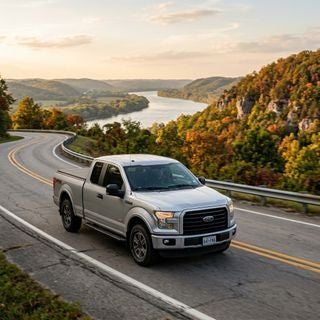
A dark grey Ford F-150 truck on a winding country road surrounded by colorful fall trees. (Representative image for illustration purposes only. Actual vehicle may vary based on trim and configuration.)

Is It Better to Buy a Used Ford F-150 or Lease a New One?

Buying a used Ford F-150 is the preferred path for drivers seeking long-term ownership equity, lower overall insurance premiums, no annual mileage caps, and freedom from wear-and-use lease penalties. Conversely, leasing a new F-150 suits buyers who want to drive a brand-new truck every two or three years with full initial factory warranty protection and lower initial repair risks.

Choosing between purchasing pre-owned and leasing new comes down to how you plan to use your truck:

  • Equity & Long-Term Value: Buying a used F-150 means every payment builds direct owner equity. Once the auto loan is paid in full, you own an asset that retains substantial trade-in value for years.
  • Usage Freedom: Truck owners who tow heavy loads, drive on gravel back roads, or commute long distances do not have to worry about lease mileage limits or end-of-lease damage charges for minor bed scratches and cab wear.
  • Monthly Payment Structure: Because a used truck has already absorbed its initial steep depreciation, pre-owned purchase financing often results in lower loan balances relative to the truck's remaining operational life.

Shoppers interested in comparing new model current lease information against pre-owned purchasing rates can explore our latest new vehicle lineup alongside our pre-owned stock. When you are ready to evaluate budget parameters, you can complete a secure online credit application to review competitive finance options tailored to your purchasing budget.

Does Ford SYNC 4 Support Wireless Apple CarPlay and Android Auto?

Yes, Ford SYNC® 4 infotainment technology provides standard wireless Apple CarPlay® and Android Auto™ compatibility across supported Ford F-150 trucks. Drivers can connect their mobile devices via Bluetooth® and Wi-Fi without plugging in a physical USB cable, projecting smartphone navigation, media apps, and voice assistants directly onto the central touchscreen.

Buyers test-driving a pre-owned F-150 usually want to pair their smartphone with SYNC 4 to test wireless Apple CarPlay integration before setting off on the test loop. Beyond cord-free smartphone integration, SYNC® 4 offers several modern cabin convenience features:

  • Over-the-Air Software Updates: Keeps vehicle software and system enhancements up to date automatically via cloud connectivity.
  • Enhanced Voice Recognition: Allows drivers to adjust climate settings, enter navigation addresses, or place hands-free phone calls using natural spoken commands.
  • Cloud-Based Navigation: Delivers real-time traffic updates, weather alerts, and route adjustments to avoid highway delays.
  • Digital Owner's Manual: Includes a searchable touchscreen guide complete with how-to videos and feature explanations.

What Factors Impact the Resale Value of a Used Ford F-150?

Resale value on a pre-owned Ford F-150 is determined primarily by powertrain choice, drivetrain configuration, maintenance documentation, physical body condition, and overall mileage. Four-wheel-drive ( 4x4) models equipped with crew cabs and proven EcoBoost® or V8 engines command the highest resale prices in the pre-owned pickup market.

Key factors that influence F-150 market valuation include:

  • Drivetrain Selection: Four-wheel-drive trucks maintain higher resale value than two-wheel-drive models, particularly in regions where winter weather demands added traction. Commuters navigating the rolling hills around Calcutta rely on 4x4 capability during seasonal snow updates.
  • Cab & Bed Style: SuperCrew models featuring four full-size doors attract the highest buyer demand due to their ability to serve as both family transport and work vehicles.
  • Trim Level & Packages: Mid-level and luxury trims like the XLT, Lariat, and King Ranch equipped with Ford Co-Pilot360â„¢ safety driver-assist features, leather seating, or trailer tow packages retain strong market equity.
  • Vehicle History & Care: A clean CARFAX history report proving consistent oil changes, routine fluid service, and zero structural accident damage allows a pre-owned truck to command top trade-in value.

Before shopping for your next truck, you can estimate your current vehicle trade-in value online to understand your current purchasing power.

What Inspection and Warranty Advantages Does a Certified Used Ford Offer at Tri State Ford?

A Ford Gold Certified pre-owned truck at Tri State Ford includes a comprehensive 172-point inspection by factory-trained technicians, a 12-month/12,000-mile comprehensive limited warranty, and a 7-year/100,000-mile powertrain limited warranty. Ford Blue Certified pre-owned vehicles undergo a 127-point inspection and feature a 90-day/4,000-mile comprehensive limited warranty alongside a 14-day/1,000-mile money-back guarantee.

Ford Blue Advantage certified vehicles provide manufacturer-backed protections that standard used trucks do not offer:

  • Rigorously Tested Quality: Factory-trained technicians inspect mechanical performance, frame integrity, brake wear, tire tread depth, safety restraints, and electrical modules using original equipment guidelines.
  • CARFAX Vehicle History Report: Every certified pre-owned Ford comes with a complimentary vehicle history summary verifying title status and service history.
  • 24/7 Roadside Assistance: Complimentary coverage provides emergency towing, flat tire changes, battery jump-starts, fuel delivery, and lockout help. Assistance can be dispatched directly by calling Ford Roadside Assistance: (800) 241-3673.
  • Warranty Transferability: Ford CPO limited warranties are fully transferable to future private owners, providing an added selling point when trading or selling the truck later.

To inspect certified trucks in person, drivers can visit our dealership address, call our team at (330) 462-7578, or browse our certified pre-owned Ford inventory online.
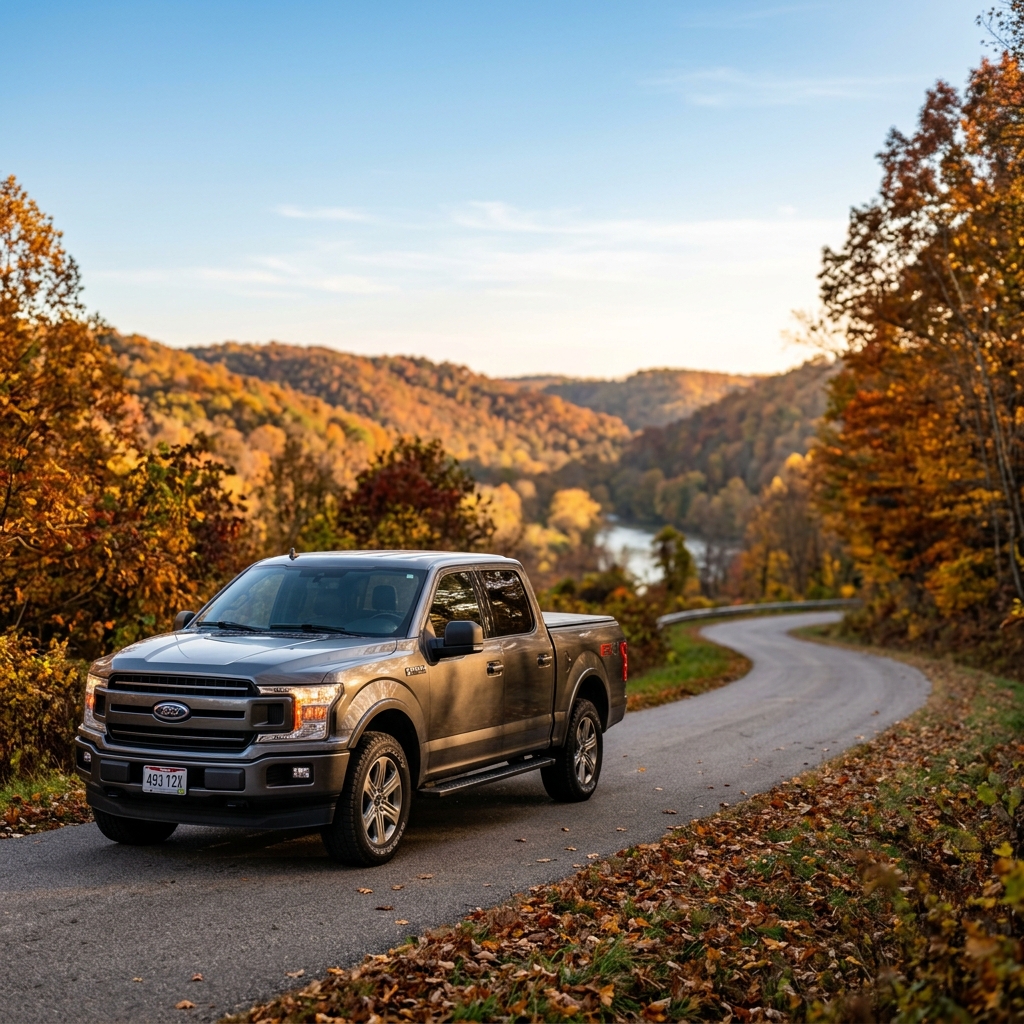
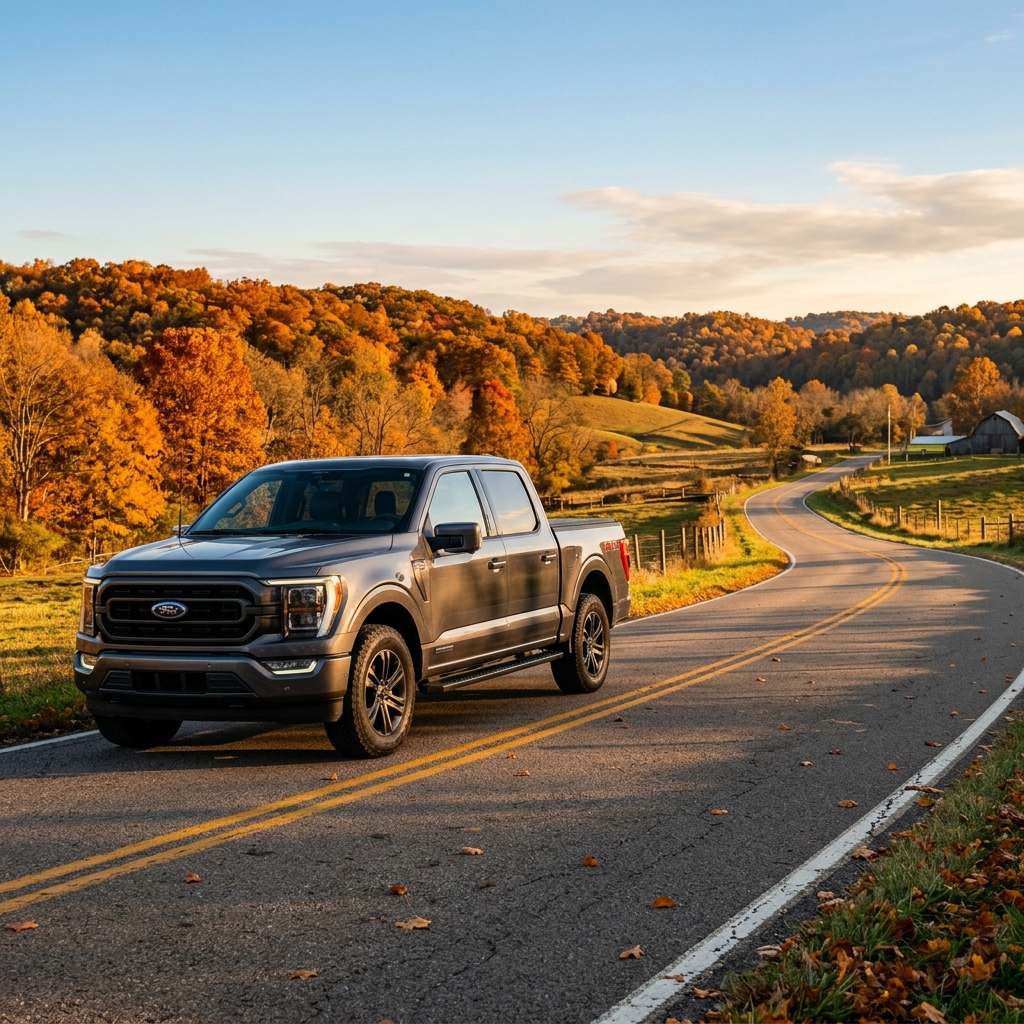
A grey Ford F-150 pickup truck driving on a winding country road surrounded by colorful autumn foliage. (Representative image for illustration purposes only. Actual vehicle may vary based on trim and configuration.)

Frequently Asked Questions About Buying a Used Ford Truck

Q: What point inspection do Ford Certified Pre-Owned trucks undergo?

Ford Gold Certified trucks complete a rigorous 172-point inspection administered by certified technicians, evaluating engine diagnostics, transmission engagement, 4x4 transfer case operation, braking hardware, suspension components, exterior body panels, and cabin electronics. Ford Blue Certified models complete a thorough 127-point inspection checking all vital safety and mechanical systems before reaching our sales lot.

Q: Does Ford CPO warranty coverage transfer to a second owner?

Yes, Ford Blue Advantage Gold and Blue Certified limited warranties are fully transferable to subsequent private owners without additional transfer fees. This factory-backed coverage stays attached to the vehicle's VIN, protecting future owners and enhancing the truck's overall market value when you decide to sell or trade it down the road.

Q: What emergency services come with Ford CPO roadside assistance?

Complimentary 24/7 Ford Roadside Assistance covers emergency towing to the nearest authorized Ford dealership, flat tire changes, battery jump-starts, fuel delivery if you run out of gas, and lockout assistance. Coverage also includes rental car reimbursement allowance and travel expense coverage if a mechanical breakdown occurs far from home.

Q: How does a used Ford Ranger compare to a used F-150 for daily driving?

A pre-owned Ford Ranger is a midsize truck featuring a smaller footprint, agile handling, easy suburban parking, and a 2.3L EcoBoost® engine capable of towing up to 7,500 lbs. The full-size F-150 provides a larger passenger cabin, wider cargo bed choices, expanded payload thresholds, and higher maximum tow ratings up to 13,500 lbs for heavy work requirements.

Q: What documents should buyers bring to finalize a used truck purchase?

Buyers should bring a valid driver's license, current proof of auto insurance, recent pay stubs or proof of income, and proof of residency such as a utility bill. If you plan to trade in your current vehicle, bring the physical vehicle title, current registration, and all original sets of keys to ensure a smooth, prompt transaction.

Dimensions & Capacity

Capacity and dimensions by trim

Feature King Ranch 4x4 SuperCrew 5-1/2’ Box King Ranch 4x4 SuperCrew 6-1/2’ Box King Ranch SuperCrew 5-1/2’ Box Lariat 4x4 SuperCrew 5-1/2’ Box
:-- :-- :-- :-- :--
Seating 5 5 5 5
Cargo 52.8 cu ft 62.3 cu ft 52.8 cu ft 52.8 cu ft
Curb weight 5,096 lbs 5,143 lbs 5,096 lbs 5,020 lbs
Towing 10,400 lbs 10,800 lbs 10,400 lbs 9,300 lbs
Payload 1,945 lbs 2,000 lbs 1,945 lbs 2,020 lbs

Dimensions & Capacity (continued)

Feature Lariat 4x4 SuperCrew 6-1/2’ Box Lariat SuperCrew 5-1/2’ Box Platinum 4x4 SuperCrew 5-1/2’ Box Platinum 4x4 SuperCrew 6-1/2’ Box
:-- :-- :-- :-- :--
Seating 5 5 5 5
Cargo 62.3 cu ft 52.8 cu ft 52.8 cu ft 62.3 cu ft
Curb weight 5,122 lbs 5,020 lbs 5,096 lbs 5,143 lbs
Towing 9,200 lbs 9,300 lbs 10,400 lbs 10,800 lbs
Payload 2,020 lbs 2,020 lbs 1,945 lbs 2,000 lbs

Dimensions & Capacity (continued)

Feature Platinum SuperCrew 5-1/2’ Box Police Responder 4x4 SuperCrew 5-1/2’ Box Raptor 4x4 SuperCrew 5-1/2’ Box STX 4x4 SuperCab 6-1/2’ Box
:-- :-- :-- :-- :--
Seating 5 5 5 5
Cargo 52.8 cu ft 52.8 cu ft 52.8 cu ft 62.3 cu ft
Curb weight 5,096 lbs 5,020 lbs 5,710 lbs 4,895 lbs
Towing 10,400 lbs — 8,200 lbs 7,400 lbs
Payload 1,945 lbs 2,030 lbs 1,410 lbs 1,600 lbs

Dimensions & Capacity (continued)

Feature STX 4x4 SuperCrew 5-1/2’ Box STX SuperCab 6-1/2’ Box STX SuperCrew 5-1/2’ Box Tremor 4x4 SuperCrew 5-1/2’ Box
:-- :-- :-- :-- :--
Seating 5 5 5 5
Cargo 52.8 cu ft 62.3 cu ft 52.8 cu ft —
Curb weight 4,941 lbs 4,641 lbs 4,687 lbs 5,267 lbs
Towing 7,500 lbs 7,500 lbs 7,600 lbs 9,300 lbs
Payload 1,650 lbs 1,670 lbs 1,685 lbs 1,725 lbs

Dimensions & Capacity (continued)

Feature XL 4x4 Regular Cab 6-1/2’ Box XL 4x4 Regular Cab 8’ Box XL 4x4 SuperCab 6-1/2’ Box XL 4x4 SuperCrew 5-1/2’ Box
:-- :-- :-- :-- :--
Seating 3 3 6 6
Cargo 62.3 cu ft 77.4 cu ft 62.3 cu ft 52.8 cu ft
Curb weight 4,655 lbs 4,679 lbs 4,895 lbs 4,941 lbs
Towing 9,400 lbs 7,500 lbs 7,400 lbs 7,500 lbs
Payload 1,740 lbs 1,715 lbs 1,600 lbs 1,650 lbs

Dimensions & Capacity (continued)

Feature XL 4x4 SuperCrew 6-1/2’ Box XL Regular Cab 6-1/2’ Box XL Regular Cab 8’ Box XL SuperCab 6-1/2’ Box
:-- :-- :-- :-- :--
Seating 6 3 3 6
Cargo 62.3 cu ft 62.3 cu ft 77.4 cu ft 62.3 cu ft
Curb weight 5,122 lbs 4,391 lbs 4,396 lbs 4,641 lbs
Towing 9,200 lbs 9,000 lbs 7,400 lbs 7,500 lbs
Payload 2,020 lbs 1,810 lbs 1,775 lbs 1,670 lbs

Dimensions & Capacity (continued)

Feature XL SuperCrew 5-1/2’ Box XLT 4x4 SuperCab 6-1/2’ Box XLT 4x4 SuperCrew 5-1/2’ Box XLT 4x4 SuperCrew 6-1/2’ Box
:-- :-- :-- :-- :--
Seating 6 6 6 6
Cargo 52.8 cu ft 62.3 cu ft 52.8 cu ft 62.3 cu ft
Curb weight 4,687 lbs 4,895 lbs 4,941 lbs 5,122 lbs
Towing 7,600 lbs 7,400 lbs 7,500 lbs 9,200 lbs
Payload 1,685 lbs 1,600 lbs 1,650 lbs 2,020 lbs

Dimensions & Capacity (continued)

Feature XLT SuperCab 6-1/2’ Box XLT SuperCrew 5-1/2’ Box
:-- :-- :--
Seating 6 6
Cargo 62.3 cu ft 52.8 cu ft
Curb weight 4,641 lbs 4,687 lbs
Towing 7,500 lbs 7,600 lbs
Payload 1,670 lbs 1,685 lbs

Drive Home Your Next Pre-Owned Truck from Tri State Ford

Choosing a used truck from Tri State Ford gives you access to a thoroughly vetted inventory of tough, reliable pickups engineered for heavy hauling, family road trips, and daily commuting. Whether you need the proven towing performance of an F-150 3.5L EcoBoost® V6, the heavy-duty muscle of a Ford Super Duty, or the efficient versatility of a Ford Ranger, our team is committed to helping you find the right truck for your budget and lifestyle.

We make buying a pre-owned truck straightforward and transparent from start to finish. You can evaluate your trade-in online, apply for competitive financing rates, and explore certified pre-owned models backed by factory warranties—all with a no-pressure approach. Stop by our showroom today, take your favorite Ford truck for a test drive, and experience why local drivers trust Tri State Ford for their truck-buying needs.

Keep Your Vehicle Running Strong

Keep your vehicle performing at its best with our service team:


© 2026 Tri State Ford. All rights reserved.
Vehicle specification data © JATO Dynamics Limited.

Used Ford F-150 Trucks for Sale in East Liverpool OH | Tri State Ford
Posted in:

Related Posts

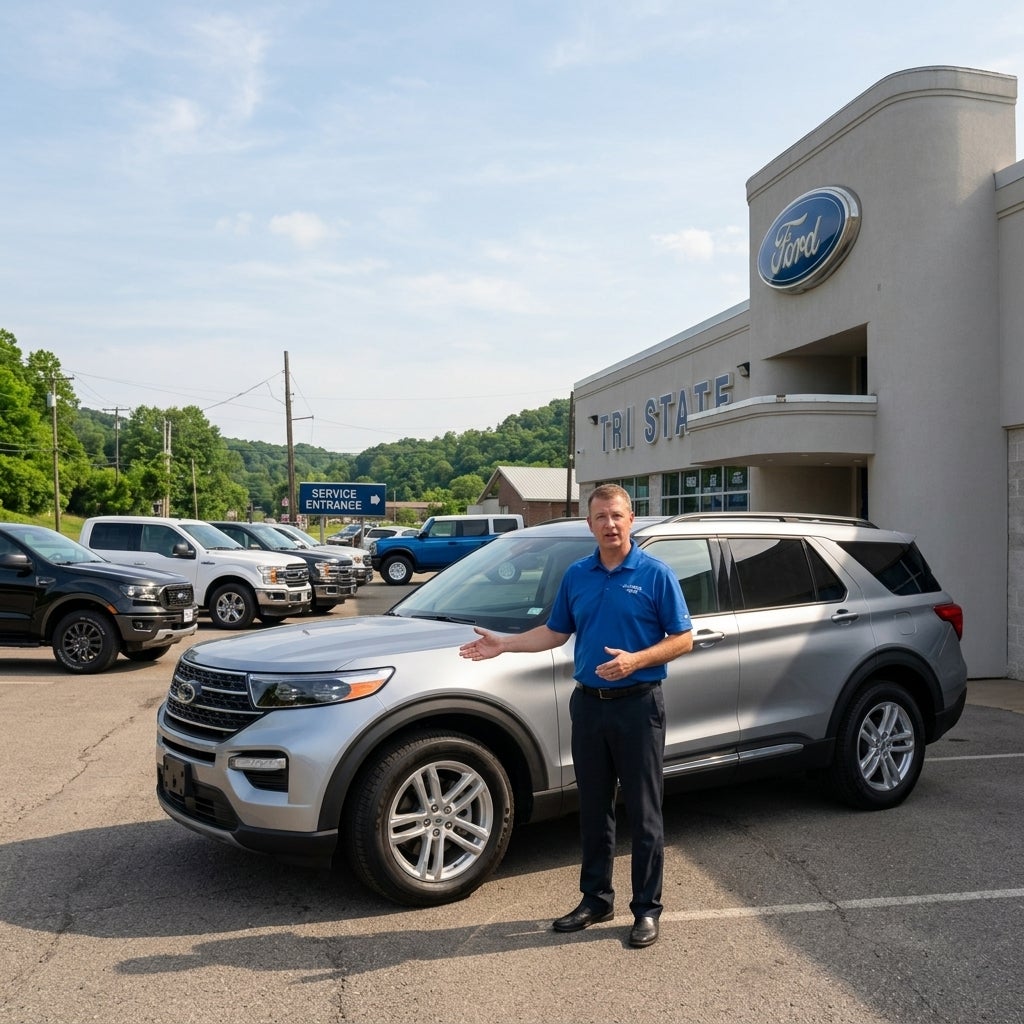
A professional, middle-aged automotive sales manager with a friendly, approachable expression, standing on a paved dealership lot in Calcutta, Ohio, during a bright, clear Tuesday afternoon in late June. He is dressed in a clean, short-sleeved blue polo shirt and dark slacks, gesturing toward a well

Q&A: Understanding Used Car Protections with Nick Pirl at Tri State Ford

Q&A: Understanding Used Car Protections with Nick Pirl at Tri State Ford Today, we're interviewing Nick Pirl, our Sales Manager at Tri State Ford. With 9 years of experience, Nick is uniquely qualified to answer your questions and provide expert insights on the critical differences between buying a vehicle as-is versus one backed by a dealer warranty. In this discussion, Nick breaks down the legal definitions and practical risks to help you make an informed decision for your family’s next purchase. Q: Nick, when a shopper is looking at our pre-owned lot, what is the most fundamental difference they need to understand between a vehicle sold as-is and one with a dealer warranty? A: That is a great question, and it really comes down to who is responsible for the bill if something goes wrong ten minutes after you drive off the lot. According to the Federal Trade Commission, a vehicle sold **as-is** means the buyer assumes every bit of the financial risk for repairs. If the engine light pops on or a window regulator fails, the dealership has no legal obligation to pay for those fixes unless a specific verbal or written promise was made otherwise. It is the most direct way to purchase a vehicle, but it requires the most homework from the shopper. A: On the flip side, a **dealer warranty** is a formal promise from us to repair or replace specific components for a set amount of time or mileage. When I am talking to middle-class families in the suburban neighborhoods around Calcutta who are driving their kids along State Route 170, they usually lean toward a warranty because it provides a safety net. We offer a variety of options, including high-quality one-owner vehicles that often come with more transparent histories. Whether you are looking at our current pre-owned specials or browsing our used work truck selection, knowing who holds the risk is the first step in your shopping journey. If you ever have questions about a specific window sticker, you can always give us (330) 462-7578 or visit our showroom on Pennsylvania Ave to see the Buyers Guide in person. Q: There seems to be a common misconception that as-is means the car is in poor condition, but is that always the case in your experience? A: Not at all. Many people assume that an **as-is** label is a red flag, but in reality, it is often just a reflection of the vehicle's age or mileage. For instance, a perfectly reliable older truck might be sold **as-is** simply because it has aged out of standard factory or CPO programs. In a city like East Liverpool, with our deep industrial roots and working-class heritage, we see a lot of durable vehicles that still have plenty of life left but fall outside of traditional warranty windows. The key is to look at the Buyers Guide, which is the window sticker required by federal law to disclose whether a car has a warranty or not. A: Even if you are looking at an **as-is** model, we encourage shoppers to use our tools to understand the full value of their purchase. You can estimate your current vehicle's trade-in value to see how it fits into your budget for a more modern replacement. We carry a wide range of inventory, from versatile pickup trucks to reliable Transit work vans, and we want you to feel confident regardless of the warranty status. The label just means you need to be more diligent with your pre-purchase inspection because once the paperwork is signed, the repair costs are your responsibility. Q: Nick, walk us through the difference between a full warranty and a limited warranty, as those terms show up on those Buyers Guides quite often. A: This is where the fine print really matters for your long-term budget. A **full warranty** is the gold standard because it typically covers both parts and labor for any covered defect without a deductible, and it often allows the warranty to be transferred if you sell the car. However, these are quite rare on the used market. Most of what you will see are **limited warranties**. A **limited warranty** might only cover specific systems, like the **powertrain**, or it might require the owner to pay a percentage of the repair costs. For example, a dealer might agree to pay **50 percent** of the labor and parts for a **30-day** period. "The most expensive repair is the one you didn't plan for, which is why understanding the scope of your limited warranty is more important than the price of the car itself." A: When I am helping a professional find a vehicle from our F-Series work inventory, we look closely at these terms because downtime equals lost money. We want to make sure the coverage matches the way you use the truck. Our specialized finance team can help explain how these protections impact your monthly payment and overall value. Whether you are buying from our standard truck inventory or a specialized model, the distinction between a full and limited promise is what determines your out-of-pocket exposure over the first few months of ownership. Q: What specific systems are usually included in a standard dealer warranty for a pre-owned vehicle? A: Most standard dealer warranties focus on the **powertrain**, which includes the engine, transmission, and drive axles. These are the "big ticket" items that would be the most devastating to a family's finances if they failed. A typical **limited warranty** might last for **90 days** or **3,000 miles**, whichever comes first. While it may not cover every sensor or a squeaky trim piece, it ensures that the vehicle's core mechanical systems are sound. We want our customers to drive home knowing that the heavy lifting is covered. A: Beyond the mechanical basics, we also look for ways to add value to the ownership experience. For example, some buyers use our instant cash offer tool to simplify their transition into a newer vehicle that might still have remaining factory coverage. We even offer conveniences like vehicle pick-up and delivery to make maintaining your purchase easier. Even if you are just looking to find the right tires for your model, our goal is to support the longevity of the vehicle. A standard warranty is essentially a bridge of confidence between the dealership and your driveway. Q: Is a dealer warranty or an extended service contract actually worth the extra money on a used car? A: I tell shoppers that it really depends on their financial cushion and the specific vehicle. If you are buying a high-mileage SUV and you do not have **a few thousand dollars** sitting in a savings account for a sudden transmission issue, a warranty is absolutely worth it. It turns an unpredictable emergency into a predictable monthly cost. Modern vehicles are incredibly complex, and even a simple electrical fault can be expensive to diagnose. An **extended service contract**—often called an extended warranty—is an optional purchase that can stretch that peace of mind for years. A: We also try to help our customers save on the back end by offering monthly manufacturer service specials and even convenient mobile service options for certain repairs. Whether it is routine battery maintenance and testing or more complex work, having a plan in place reduces stress. For many of our neighbors who balance busy work schedules and family life, the cost of the warranty is a small price to pay for the assurance that their daily transport is protected against major mechanical failures. Q: For those who do decide to buy a vehicle as-is, what steps should they take to protect themselves before they sign the contract? A: The absolute most important step is a pre-purchase inspection by an independent mechanic. Even though we stand behind our inventory, we always tell shoppers they have the right to get an outside opinion. A mechanic can spot leaks, worn suspension components, or signs of previous accidents that might not be obvious during a quick test drive. You should also review the vehicle history report and check for any lemon-law branding, as suggested by the Ohio Attorney General. Being thorough now prevents a lot of headaches later. A: If you find that an **as-is** vehicle feels too risky, we have plenty of other options. You can browse our current new inventory or look through our latest new work trucks, many of which come with full factory protections. We also offer incentives on new models and exclusive manufacturer specials that can make a new car more affordable than you might think. Our team can help you apply for credit online or even start a custom order for a new vehicle tailored to your needs. If you want to talk through your options, feel free to give us (330) 462-7578 or stop by our East Liverpool location for a face-to-face conversation. Understanding the difference between an as-is sale and a dealer warranty is essential for any savvy car buyer. As Nick Pirl explained, the choice ultimately comes down to how much risk you are willing to carry versus the value of long-term peace of mind. At Tri State Ford, we are committed to transparency and helping you find a vehicle that fits both your lifestyle and your budget. Whether you are looking for the rugged durability of a Ford truck or a reliable family SUV, our team is here to ensure you drive away with total confidence in your purchase. Keep Your Vehicle Running Strong Keep your vehicle performing at its best with our service team: Order Parts Schedule Service Appt © 2026 Tri State Ford. All rights reserved.

5

What Should You Check Before Buying a Used Car?

.hrizn-rte-content .e-rte-image { border: 0;max-width: 100%;height: auto } .hrizn-rte-content .e-rte-image.e-imginline { display: inline-block;float: none;margin-left: 5px;margin-right: 5px;max-width: calc(100% - 10px);vertical-align: bottom } .hrizn-rte-content .e-rte-image.e-imgbreak, .hrizn-rte-content .e-rte-image.e-imgcenter { display: block;float: none;margin: 5px auto;max-width: 100% } .hrizn-rte-content .e-rte-image.e-imgleft { float: left;margin: 0 12px 8px 0;max-width: 100% } .hrizn-rte-content .e-rte-image.e-imgright { float: right;margin: 0 0 8px 12px;max-width: 100% } .hrizn-rte-content figure.e-rte-image { margin: 8px auto;max-width: 100% } .hrizn-rte-content figure.e-imgleft { float: left;margin: 0 12px 8px 0 } .hrizn-rte-content figure.e-imgright { float: right;margin: 0 0 8px 12px } .hrizn-rte-content figure.e-imgcenter { display: block;margin: 8px auto;text-align: center } Before buying a used car, perform a systematic pre-purchase evaluation covering five core areas: a stone-cold engine start, an under-hood fluid and belt inspection, an exterior check for paint overspray and panel misalignments, a comprehensive road test across all speeds, and a complete title and vehicle history verification. Checking these key items protects your investment, identifies hidden structural or mechanical issues, and gives you clear leverage during purchase evaluation. A thorough used car assessment requires systematically working from the engine bay to the test drive route. Running the 17-character VIN through the official NHTSA recall lookup ensures there are no unresolved safety recalls before you commit to a vehicle purchase. You should also verify that the seller's identification matches the name printed on the physical title, examine state title records, and review a full vehicle history report to rule out previous flood exposure or title fraud. When walking buyers through a pre-owned truck or SUV on the lot, the first thing shoppers usually ask to see is a true cold start before taking it out on the road. Gathering your financial documentation ahead of time streamlines the entire transaction once you find the right vehicle. Completing an online credit application helps establish your purchasing budget before setting foot on the lot. If you want to view pre-owned cars in person or schedule a professional vehicle appraisal, you can obtain directions to our showroom at 1503 Pennsylvania Ave, East Liverpool, OH 43920 or give our sales team a quick call to check current vehicle availability. Table of Contents What Cold-Start Checks on a Used Car Reveal Hidden Engine Issues? What Key Mechanical Components and Fluids Should You Inspect Under the Hood? What Exterior and Body Condition Signs Indicate Prior Accident Damage or Rust? How Do You Determine Fair Market Value and Negotiate a Purchase Value in Calcutta? What Is the Difference Between Manufacturer CPO and Dealer Certified Programs? What Questions Do Used Car Buyers Ask Most Before Finalizing a Deal? What Cold-Start Checks on a Used Car Reveal Hidden Engine Issues? Insisting on a true cold start reveals critical engine flaws—such as worn valve stem seals, timing chain slack, and failing fuel pumps—that a pre-warmed engine easily conceals. Starting the vehicle when the engine block is completely cold forces hidden rattles, smoke emissions, and rough idle issues to present themselves immediately. Arranging your visit in advance allows you to request that the seller leave the vehicle untouched for several hours before you arrive. Touching the hood upon arrival lets you confirm the engine block is stone-cold. When turning the key, observe the tailpipe for exhaust smoke; persistent blue smoke indicates burning oil from worn piston rings or valve guides, while heavy white smoke that smells sweet points to internal coolant leaks. Listen closely during the first two seconds after startup. A sharp metallic rattle that disappears once oil pressure builds often indicates a loose timing chain or worn hydraulic lifters. Browsing carefully maintained pre-owned single-owner models reduces the likelihood of encountering these deferred maintenance issues, as complete service records typically accompany well cared-for vehicles. What Key Mechanical Components and Fluids Should You Inspect Under the Hood? Inspecting the vital engine fluids, rubber hoses, serpentine belt, and battery connections under the hood reveals how consistently the previous owner maintained the vehicle. Healthy fluids display clear coloration without burnt smells or contamination, directly indicating the internal health of the engine, transmission, and cooling system. Pulling the engine oil dipstick allows you to verify both fluid level and consistency. Oil should range from amber to dark brown; a gritty texture signals neglected oil changes, while a milky, frothy appearance under the oil cap or on the dipstick indicates coolant mixing with the oil due to a blown head gasket or cracked block. Inspecting the transmission fluid dipstick—where equipped—is equally critical. Healthy automatic transmission fluid is bright red, whereas dark brown or black fluid with a burnt odor signifies severe clutch wear and internal thermal breakdown. Examine the coolant expansion tank for oily films or rust deposits, check drive belts for frays or cracking, and look for white corrosion around battery terminals to ensure the electrical system remains sound. What Exterior and Body Condition Signs Indicate Prior Accident Damage or Rust? Uneven body panel gaps, inconsistent paint texture, scratched fender bolt heads, and bubbling paint near wheel arches are clear physical indicators of prior collision repair or advancing corrosion. Spotting these exterior defects helps you identify structural damage that unibody repairs may have tried to mask. Evaluating exterior body condition requires inspecting panel alignment along the hood, doors, and trunk seam lines. Consistent gaps along every edge indicate factory assembly, whereas a gap that narrows or widens sharply suggests a panel was removed or realigned following an impact. Sighting down the side of the body panels under natural light helps uncover subtle ripples or heavy orange peel texture from non-factory resprays. Checking fender bolts inside the engine compartment reveals whether body panels have been unbolted for repairs; scratched paint on bolt heads proves a wrench was used. Running a light plastic-coated magnet over lower door panels and rear quarters confirms whether steel sheet metal or plastic body filler lies beneath the paint. Examining the riverfront bluffs terrain along East Liverpool highlights why inspecting the undercarriage for frame rust and pinch-weld damage is essential on local vehicles exposed to moisture and road salt. How Do You Determine Fair Market Value and Negotiate a Purchase Value in Calcutta? Determining fair market value requires comparing local market vehicle listings against trusted valuation guides while adjusting for exact mileage, trim level, vehicle condition, and history. Presenting documented repair estimates from an independent inspection gives you firm, factual leverage to negotiate a reasonable price adjustment. Establishing a realistic offer begins with researching recent sales data for identical vehicle configurations in your region. Adjusting your target price based on documented condition issues—such as uneven tire wear indicating alignment or suspension faults—provides an objective foundation for negotiation rather than aggressive haggling. Evaluating your current vehicle's worth online using a trusted trade-in valuation tool gives you an exact baseline for offset financing when buying a pre-owned truck or SUV. Navigating the gently rolling hills around Calcutta requires a capable, dependable vehicle, whether you are choosing between a quality used truck or exploring brand-new Ford inventory options to match your daily driving needs. What Is the Difference Between Manufacturer CPO and Dealer Certified Programs? Manufacturer Certified Pre-Owned (CPO) programs provide factory-backed warranty protection honored at authorized brand dealerships nationwide, whereas dealer-certified programs rely on third-party service contracts restricted to specific dealer networks. Choosing a factory CPO model guarantees original equipment replacement parts and standardized multi-point factory inspections. A factory CPO vehicle undergoes an exhaustive inspection process administered by factory-trained technicians to meet strict age and mileage thresholds. A Gold Certified Ford vehicle includes a 12-month/12,000-mile comprehensive limited warranty alongside a 7-year/100,000-mile powertrain limited warranty, providing peace of mind backed directly by the manufacturer. Exploring our selection of certified pre-owned Ford vehicles allows you to combine factory-backed protection with advanced features like Ford Co-Pilot360 and SYNC 4 infotainment technology. Buyers can also take advantage of current national vehicle incentives on select models, or review available factory service offers to keep their vehicle running smoothly over the long haul. What Questions Do Used Car Buyers Ask Most Before Finalizing a Deal? Q: What documentation should I bring to the dealership when buying a used car? You should bring a valid driver's license, current proof of auto insurance, your most recent pay stubs or proof of income, and proof of residency such as a utility bill. If you plan to trade in your current vehicle, bring the physical title, current registration, and all original set of keys. Having these documents ready prevents paperwork delays and speeds up loan approval. Q: How long does a thorough test drive need to be when evaluating a used vehicle? A complete test drive should take about 15 to 20 minutes to evaluate the car across different driving conditions. You need enough time to test low-speed maneuvering on local streets, complete several firm stops to check brake feel, and accelerate up to highway speeds to listen for wheel bearing noise, transmission slipping, or steering vibration. Q: Does a clean vehicle history report guarantee that a used car has never been in an accident? No, a clean history report only reflects incidents reported to insurance companies, law enforcement, or repair databases. Private accident repairs paid out-of-pocket leave no official paper trail on history reports. Always combine a vehicle history report with a thorough physical inspection of panel gaps, seam sealers, and bolt heads to verify body integrity. Q: Should I test drive a used car on both surface streets and the highway? Yes, driving across both environments reveals distinct mechanical behaviors. Low-speed surface driving highlights power steering noise, suspension clunks over bumps, and low-gear transmission engagement. Highway speeds reveal wheel imbalance, alignment pulling, high-rpm engine performance, and wind noise around door seals that low-speed parking lot drives completely miss. Q: Can missing original accessories or spare keys affect the final purchase price? Yes, missing factory items like key fobs, floor mats, cargo covers, or owner's manuals add real out-of-pocket replacement costs after purchase. Modern electronic key fobs with remote start or push-button ignition can cost several hundred dollars to cut and program. Pointing out missing original equipment provides legitimate justification for asking the seller for a value discussion. When you are ready to shop for your next pre-owned vehicle with total confidence, visit our dealership or call our friendly sales team at (330) 462-7578 to schedule your test drive today. Keep Your Vehicle Running Strong Keep your vehicle performing at its best with our service team: Order Parts Schedule Service Appt © 2026 Tri State Ford. All rights reserved. Title Tags Used Car Inspection Tips in East Liverpool OH | Tri State Ford Meta Description Keywords Open Graph Twitter Card Canonical Article Metadata Geographic Targeting { "@context": "https://schema.org", "@graph": [ { "@type": "NewsArticle", "@id": "#article", "headline": "What Should You Check Before Buying a Used Car?", "datePublished": "2026-09-15T12:39:26.567Z", "dateModified": "2026-09-15T12:40:55.977Z", "author": { "@id": "#author" }, "publisher": { "@id": "#dealer" }, "wordCount": 1646, "description": "Learn what to inspect before buying a used car, including cold engine starts, body condition, road tests, and title history to protect your investment." }, { "@type": "AutoDealer", "@id": "#dealer", "name": "Tri State Ford", "url": "https://www.tristateford.net", "telephone": "+13304627578", "sameAs": [ "https://maps.google.com/?cid=1136336406351438323" ], "address": { "@type": "PostalAddress", "streetAddress": "1503 Pennsylvania Ave", "addressLocality": "East Liverpool", "addressRegion": "OH", "postalCode": "43920", "addressCountry": "US" }, "areaServed": { "@type": "GeoCircle", "geoMidpoint": { "@type": "GeoCoordinates", "latitude": "40.6367833", "longitude": "-80.5443033" }, "geoRadius": "48280" }, "geo": { "@type": "GeoCoordinates", "latitude": "40.6367833", "longitude": "-80.5443033" }, "openingHours": [ "Mo 09:00-20:00", "Tu 09:00-18:00", "We 09:00-18:00", "Th 09:00-20:00", "Fr 09:00-18:00", "Sa 09:00-15:00" ] }, { "@type": "FAQPage", "@id": "#faq", "mainEntity": [ { "@type": "Question", "name": "What documentation should I bring to the dealership when buying a used car?", "acceptedAnswer": { "@type": "Answer", "text": "You should bring a valid driver's license, current proof of auto insurance, your most recent pay stubs or proof of income, and proof of residency such as a utility bill. If you plan to trade in your current vehicle, bring the physical title, current registration, and all original set of keys. Having these documents ready prevents paperwork delays and speeds up loan approval." } }, { "@type": "Question", "name": "How long does a thorough test drive need to be when evaluating a used vehicle?", "acceptedAnswer": { "@type": "Answer", "text": "A complete test drive should take about 15 to 20 minutes to evaluate the car across different driving conditions. You need enough time to test low-speed maneuvering on local streets, complete several firm stops to check brake feel, and accelerate up to highway speeds to listen for wheel bearing noise, transmission slipping, or steering vibration." } }, { "@type": "Question", "name": "Does a clean vehicle history report guarantee that a used car has never been in an accident?", "acceptedAnswer": { "@type": "Answer", "text": "No, a clean history report only reflects incidents reported to insurance companies, law enforcement, or repair databases. Private accident repairs paid out-of-pocket leave no official paper trail on history reports. Always combine a vehicle history report with a thorough physical inspection of panel gaps, seam sealers, and bolt heads to verify body integrity." } }, { "@type": "Question", "name": "Should I test drive a used car on both surface streets and the highway?", "acceptedAnswer": { "@type": "Answer", "text": "Yes, driving across both environments reveals distinct mechanical behaviors. Low-speed surface driving highlights power steering noise, suspension clunks over bumps, and low-gear transmission engagement. Highway speeds reveal wheel imbalance, alignment pulling, high-rpm engine performance, and wind noise around door seals that low-speed parking lot drives completely miss." } }, { "@type": "Question", "name": "Can missing original accessories or spare keys affect the final purchase price?", "acceptedAnswer": { "@type": "Answer", "text": "Yes, missing factory items like key fobs, floor mats, cargo covers, or owner's manuals add real out-of-pocket replacement costs after purchase. Modern electronic key fobs with remote start or push-button ignition can cost several hundred dollars to cut and program. Pointing out missing original equipment provides legitimate justification for asking the seller for a price concession. When you are ready to shop for your next pre-owned vehicle with total confidence, visit our dealership or call our friendly sales team at (330) 462-7578 to schedule your test drive today." } } ] } ] }
2

When Is the Best Time to Trade In Your Vehicle?

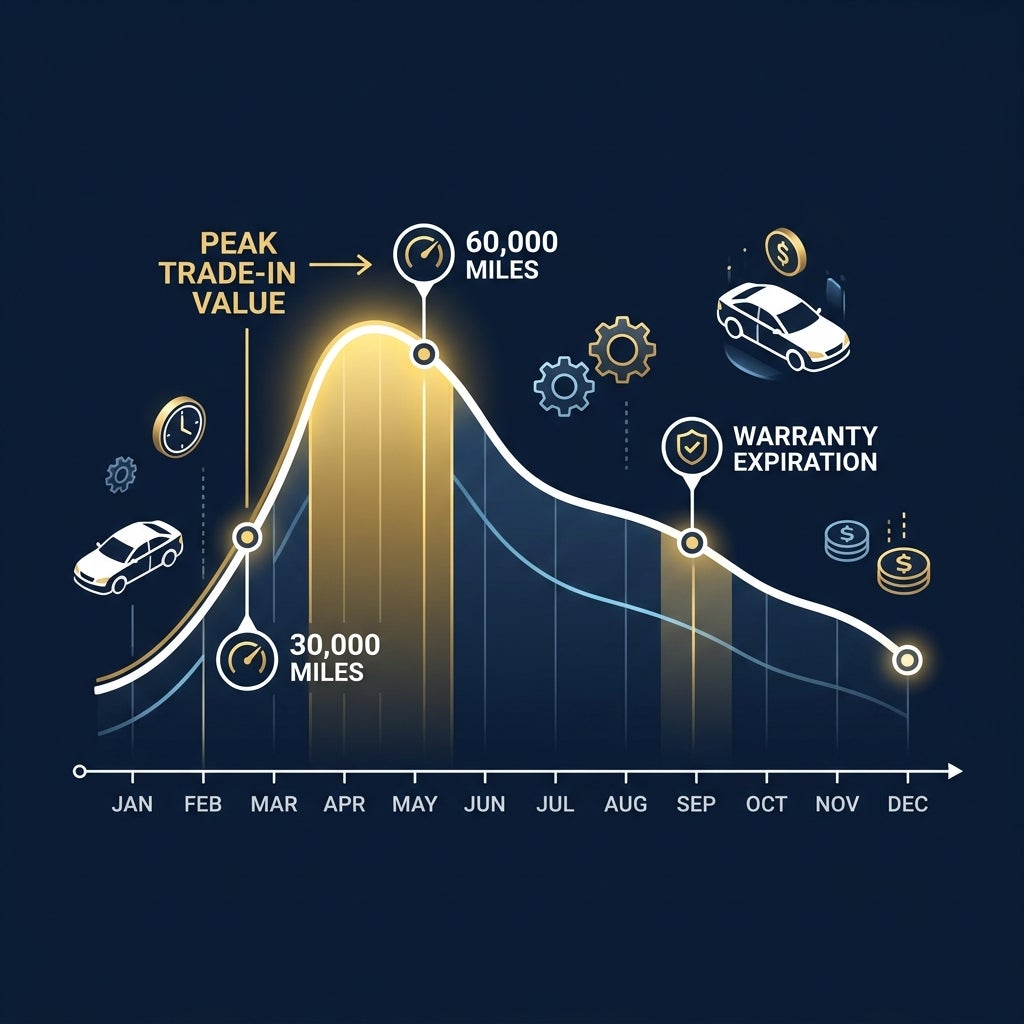
.hrizn-rte-content .e-rte-image { border: 0;max-width: 100%;height: auto } .hrizn-rte-content .e-rte-image.e-imginline { display: inline-block;float: none;margin-left: 5px;margin-right: 5px;max-width: calc(100% - 10px);vertical-align: bottom } .hrizn-rte-content .e-rte-image.e-imgbreak, .hrizn-rte-content .e-rte-image.e-imgcenter { display: block;float: none;margin: 5px auto;max-width: 100% } .hrizn-rte-content .e-rte-image.e-imgleft { float: left;margin: 0 12px 8px 0;max-width: 100% } .hrizn-rte-content .e-rte-image.e-imgright { float: right;margin: 0 0 8px 12px;max-width: 100% } .hrizn-rte-content figure.e-rte-image { margin: 8px auto;max-width: 100% } .hrizn-rte-content figure.e-imgleft { float: left;margin: 0 12px 8px 0 } .hrizn-rte-content figure.e-imgright { float: right;margin: 0 0 8px 12px } .hrizn-rte-content figure.e-imgcenter { display: block;margin: 8px auto;text-align: center } The best time to trade in your vehicle is during late winter and early spring, specifically between February and April, when tax refund demand drives wholesale values up and dealer appetite for used inventory peaks. Secondary ideal timing includes trading right before major mileage thresholds like 30,000 or 60,000 miles, or just prior to factory warranty expiration. Selling during these specific windows secures maximum equity before depreciation steps down further. Timing a trade-in properly keeps money in your pocket and gives you the maximum equity toward your next purchase. Wholesale market data consistently shows that pre-owned vehicle values follow a seasonal arc across the country. Values hit a seasonal low in January, rebound sharply during spring tax season, plateau through early summer, and slowly ease downward through late autumn. Trading in during the spring rush positions your car when pre-owned demand is strongest, helping you secure a top-dollar appraisal. Your personal vehicle lifecycle also dictates timing. Vehicle equity drops in predictable stages based on age, odometer readings, and mechanical warranty status. Upgrading before expensive scheduled service visits or major component replacements prevents out-of-pocket repair bills that never return a dollar-for-dollar increase on appraisal value. Combining favorable market demand with key lifecycle milestones ensures you trade at peak value. Our team at Tri State Ford makes transferring your vehicle equity simple, direct, and straightforward. Whether you want to transition into an expansive SUV with space for the whole family or start a new vehicle custom order tailored to your lifestyle, we evaluate your trade using live market data. If you have questions about your vehicle's current appraisal value, give our team a quick call or stop by our showroom address on Pennsylvania Ave to get a transparent appraisal. Table of Contents How Do Mileage Milestones, Year-One Depreciation, and Vehicle Age Affect Value? Should You Trade In Before Factory Warranty Expiration or Major Maintenance? What Time of the Month and Season Offers the Best Trade-In Negotiations? How Does Ohio Trade-In Sales Tax Credit Save You Money on Your Next Purchase? What Are the Risks of Selling Privately vs Using Online Instant Estimates? Answers to Common Questions About Vehicle Trade-Ins How Do Mileage Milestones, Year-One Depreciation, and Vehicle Age Affect Value? A new vehicle loses between 15% and 20% of its total retail value during its first year on the road, with the single steepest drop occurring the moment it leaves the lot. After that initial first-year drop, annual depreciation settles into a steady pace of roughly 10% to 15% per year, while specific odometer milestones create sudden downward adjustments in trade-in value. Understanding depreciation milestones allows you to time your trade-in right before significant value drops occur. The first major odometer threshold arrives at 30,000 to 40,000 miles. Vehicles in this bracket command premium trade-in appraisals because dealerships can easily recondition them into top-tier pre-owned inventory with minimal reconditioning expense. A three-year-old vehicle with under 36,000 miles represents a sweet spot for resale value, retaining a high percentage of its original value while staying well within standard factory warranty limits. The second major milestone occurs between 60,000 and 70,000 miles. At this stage, vehicles enter a secondary value band where buyers expect complete service records and fresh wear-and-tear components. The final sharp drop occurs when an odometer crosses 100,000 miles. Once a vehicle passes six figures on the dash, wholesale buyers and retail shoppers view it differently, and many dealerships route high-mileage trades directly to wholesale auctions rather than retail lots, resulting in lower appraisal offers. Drivers commuting daily along State Route 170 in suburban Calcutta rack up miles quickly on gentle rolling hills, making it critical to watch those odometer markers close. If your odometer is approaching 30,000 or 60,000 miles, trading in now secures maximum return before the next depreciation step down. You can explore our new Ford inventory to see the latest models equipped with Ford Co-Pilot360 driver-assist features and modern technology. We also invite you to review current Ford vehicle specials or check out pre-owned single-owner vehicles to find a reliable upgrade that matches your household budget. Mileage Window Depreciation Impact Appraisal Status Primary Dealer Resale Path Under 30,000 Miles Low (Initial steep drop completed) Maximum Value Prime Certified Pre-Owned Retail 30,000 to 60,000 Miles Moderate (Steady annual curve) Strong Value High-Grade Pre-Owned Retail 60,000 to 100,000 Miles Accelerated (Maintenance wear considerations) Fair Value Budget-Friendly Retail Lot Over 100,000 Miles Heavy (Significant steep drop) Reduced Value Wholesale Auction / Trade Entry Should You Trade In Before Factory Warranty Expiration or Major Maintenance? Trading in your car before its factory warranty expires yields higher appraisal offers because dealerships can market and recondition the vehicle with minimal financial risk. Most modern Ford vehicles carry a 3-year/36,000-mile bumper-to-bumper warranty alongside a 5-year/60,000-mile powertrain warranty, providing broad protection that enhances retail value on the pre-owned market. Selling a vehicle while original warranty coverage remains active gives the acquiring dealership a distinct reconditioning advantage. Dealers can inspect, service, and certify warranty-backed cars faster and with greater buyer confidence. This allows us to pass that value directly back to you in your trade-in offer. Once a car crosses out of its bumper-to-bumper or powertrain warranty windows, potential buyers and appraisers must account for future mechanical repair risks, which naturally lowers the baseline appraisal calculation. Major maintenance intervals present another crucial timing factor. Reaching a 60,000-mile service interval or a 100,000-mile milestone usually requires substantial maintenance investments, including new tires, complete brake replacements, transmission fluid flushes, and spark plug changes. Spending heavy out-of-pocket money on routine maintenance right before trading in rarely increases your car's appraisal dollar-for-dollar. For example, spending considerable money on new tires and brake service right before an appraisal might only increase the trade offer by a fraction of that expenditure. Trading in immediately prior to these major service dates saves you money by turning that impending maintenance expense into down-payment equity for a fresh vehicle. Upgrading to a newer model equipped with Ford’s proven quality means enjoying new vehicle dependability, modern smartphone integration, and refreshed bumper-to-bumper coverage. You can explore our certified pre-owned Ford lineup to see how factory warranty backing provides long-term peace of mind. What Time of the Month and Season Offers the Best Trade-In Negotiations? The final three days of any month consistently provide the best environment for trade-in price negotiations because sales teams work to hit monthly volume targets and manufacturer sales thresholds. Dealerships striving to meet monthly performance goals are often willing to adjust trade-in appraisal allowances upward to finalize a deal before the calendar turns. Seasonal timing reinforces monthly sales cycles. The absolute strongest quarter for trade-in values runs from late February through mid-April. During this spring window, federal tax refunds flow into buyer bank accounts, sparking peak retail demand for quality pre-owned vehicles. To meet this surge in customer demand, dealerships actively build used inventory, driving wholesale appraisal values higher than during any other season. Late Winter / Early Spring (February–April): Peak trade-in value driven by tax refund shoppers and high used inventory demand. Late Spring / Summer (May–July): Solid, stable trade-in values with strong family demand for summer vacation vehicles. Early Autumn (August–October): Value begins gradual softening as incoming new model year inventory shifts focus to inventory turnover. Late Autumn / Early Winter (November–January): Seasonal low point for pre-owned trade values due to holiday slowdowns and cold weather foot traffic. Commuters driving daily along Market Street near retail centers in Boardman know that vehicle readiness matters when market demand peaks. When seasonal buyer demand rises across northern Ohio, dealerships need reliable trades to fill showroom lots. Bringing your vehicle in during these high-demand months allows you to leverage market timing for a higher payout. You can quickly start the process from home when you value your trade-in online using current market evaluation tools. How Does Ohio Trade-In Sales Tax Credit Save You Money on Your Next Purchase? The Ohio trade-in sales tax credit saves you money by deducting the full agreed appraisal value of your trade-in vehicle directly from the total purchase price of your new vehicle before state and local sales taxes are calculated. This statutory tax credit provides substantial savings that are completely unavailable when selling a car through a private transaction. To understand how this tax advantage works in real-world numbers, consider a buyer purchasing a new Ford SUV with an agreed price of $40,000 while trading in a current vehicle valued at $15,000. Under Ohio tax law, the state and local sales tax rates apply only to the net difference of $25,000 rather than the full $40,000 purchase price. Assuming a combined state and local tax rate of 7%, paying tax on $25,000 results in a sales tax bill of $1,750. Without the trade-in credit, sales tax on the full $40,000 purchase price would equal $2,800. Trading in saves the buyer $1,050 in direct cash outlays on sales tax alone. Agreed Vehicle Purchase Price: $40,000 Trade-In Appraisal Allowance: -$15,000 Taxable Net Difference: $25,000 Sales Tax Obligation (at 7% combined rate): $1,750 (a direct savings of $1,050 compared to paying full tax) This tax structure levels the playing field when comparing dealer trade-in offers against private buyer offers. Even if a private buyer offers a slightly higher purchase price on paper, the lack of a trade-in tax credit means the private sale often yields less net money once you calculate the higher sales tax paid on your next car. Combining state tax advantages with flexible dealership vehicle financing simplifies your transaction into a single, seamless step. You can prepare your financing path in advance by filling out our online credit application page to secure quick pre-approval. What Are the Risks of Selling Privately vs Using Online Instant Estimates? Selling a vehicle privately carries significant personal safety risks, payment fraud exposures, time-consuming administrative hassles, and legal liability concerns that do not exist when trading in at an authorized dealership. Private sellers must manage public listings, field constant messaging from uninterested shoppers, schedule test drives with total strangers, and manually navigate title transfer paperwork at county clerk offices. Payment security represents one of the largest risks in private automotive sales. Fraudulent cashier's checks, wire transfer scams, and reversed digital payments target private sellers every day. Furthermore, if a hidden mechanical defect appears shortly after a private transaction, private sellers frequently face uncomfortable buyer disputes or small-claims legal threats. Selling privately also requires you to handle existing lien payoffs yourself, contacting your lender to obtain payoff quotes, tracking title releases, and managing bank delays while keeping your buyer waiting. Instant online car buying websites promise a fast alternative, but their initial digital estimates are rarely guaranteed initial payout numbers. Online valuation algorithms generate an optimistic automated quote based on unverified user inputs. Once you arrive at a drop-off center or an inspector arrives at your driveway, physical reconditioning inspections frequently drop that initial offer downward for minor paint chips, tire wear, wheel scuffs, or interior wear. Trading your vehicle directly to Tri State Ford eliminates these friction points entirely. Our certified appraisers evaluate your vehicle transparently in person, honor transparent live-market valuations, and handle all payoff paperwork directly with your lender. Whether your vehicle is a rugged truck with exceptional towing capacity built for heavy trailers or a practical family crossover built for weekend getaways, we provide an honest, binding offer. You can start with an official appraisal today when you request a KBB instant cash offer directly through our website. Answers to Common Questions About Vehicle Trade-Ins Q: What happens if I owe more on my current vehicle loan than the vehicle is worth? Owing more on your auto loan than your vehicle's current appraisal value is known as negative equity. When trading in a vehicle with negative equity, you can choose to pay the remaining balance out of pocket at closing, or in many cases, roll that remaining balance into the financing of your new Ford vehicle. Rolling negative equity into your new loan consolidates your payments into one monthly bill, though it increases your new loan principal. Our financing team works with multiple lenders to help structure options that keep your monthly payment manageable. Q: Do I need to replace worn tires or repair minor body damage before trading in my car? You generally do not need to replace tires, repair minor paint scratches, or fix small door dings prior to trading in your car. Dealerships maintain dedicated service facilities and order reconditioning parts at wholesale rates, meaning we can complete repairs far more cost-effectively than an individual retail customer paying retail shop rates. Spending hundreds of dollars on retail repairs right before trading in rarely increases your vehicle's appraisal value by an equivalent amount. Q: What paperwork and items do I need to bring when trading in my vehicle? When arriving to trade in your vehicle, bring your physical valid driver's license, current state registration card, and current auto insurance card. If you own the vehicle outright, bring the physical vehicle title. If you have an active auto loan, bring your lender account details or a current loan payoff statement. Finally, make sure to bring all sets of factory keys, key fobs, owner's manuals, and any specialized equipment like wheel lock keys or navigation software cards. Q: How long does an in-person trade-in appraisal take at the dealership? A complete in-person trade-in appraisal at Tri State Ford typically takes roughly 20 to 30 minutes. During this time, our pre-owned inventory appraisal team conducts a physical walk-around inspection, verifies vehicle options, checks mechanical operation, and reviews local live-market pricing data. While our appraisers inspect your current vehicle, you can browse our showroom floor or test drive new Ford models. Q: Can I trade in a vehicle if my spouse or co-buyer is not physically present? If both your name and your spouse or co-buyer's name appear on the vehicle title joined by the word "AND," both registered owners must be physically present to sign the title transfer paperwork. If the names on the title are separated by the word "OR," either named owner can legally sign the title transfer documents independently. If you are unsure how your vehicle title is structured, our team can review your title document or registration beforehand to confirm who needs to be present. When you are ready to explore your vehicle trade-in options and upgrade to a reliable Ford vehicle, our team is here to assist you every step of the way. Bring your current vehicle to our dealership address at 1503 Pennsylvania Ave for a straightforward appraisal. You can also give our team a quick call to discuss current trade incentives or schedule an appointment with our sales staff today. Keep Your Vehicle Running Strong Keep your vehicle performing at its best with our service team: Order Parts Schedule Service Appt © 2026 Tri State Ford. All rights reserved. Title Tags Optimal Vehicle Trade-In Timing in East Liverpool OH | Tri State Ford Meta Description Keywords Open Graph Twitter Card Canonical Article Metadata Geographic Targeting { "@context": "https://schema.org", "@graph": [ { "@type": "NewsArticle", "@id": "#article", "headline": "When Is the Best Time to Trade In Your Vehicle?", "datePublished": "2026-09-14T18:53:46.434Z", "dateModified": "2026-09-14T18:55:56.345Z", "author": { "@id": "#author" }, "publisher": { "@id": "#dealer" }, "wordCount": 2514, "description": "Learn the optimal times to trade in a vehicle, including peak spring demand from February to April and before key mileage or warranty thresholds." }, { "@type": "AutoDealer", "@id": "#dealer", "name": "Tri State Ford", "url": "https://www.tristateford.net", "telephone": "+13304627578", "sameAs": [ "https://maps.google.com/?cid=1136336406351438323" ], "address": { "@type": "PostalAddress", "streetAddress": "1503 Pennsylvania Ave", "addressLocality": "East Liverpool", "addressRegion": "OH", "postalCode": "43920", "addressCountry": "US" }, "areaServed": { "@type": "GeoCircle", "geoMidpoint": { "@type": "GeoCoordinates", "latitude": "40.6367833", "longitude": "-80.5443033" }, "geoRadius": "48280" }, "geo": { "@type": "GeoCoordinates", "latitude": "40.6367833", "longitude": "-80.5443033" }, "openingHours": [ "Mo 09:00-20:00", "Tu 09:00-18:00", "We 09:00-18:00", "Th 09:00-20:00", "Fr 09:00-18:00", "Sa 09:00-15:00" ] }, { "@type": "FAQPage", "@id": "#faq", "mainEntity": [ { "@type": "Question", "name": "What happens if I owe more on my current vehicle loan than the vehicle is worth?", "acceptedAnswer": { "@type": "Answer", "text": "Owing more on your auto loan than your vehicle's current appraisal value is known as negative equity. When trading in a vehicle with negative equity, you can choose to pay the remaining balance out of pocket at closing, or in many cases, roll that remaining balance into the financing of your new Ford vehicle. Rolling negative equity into your new loan consolidates your payments into one monthly bill, though it increases your new loan principal. Our financing team works with multiple lenders to help structure options that keep your monthly payment manageable." } }, { "@type": "Question", "name": "Do I need to replace worn tires or repair minor body damage before trading in my car?", "acceptedAnswer": { "@type": "Answer", "text": "You generally do not need to replace tires, repair minor paint scratches, or fix small door dings prior to trading in your car. Dealerships maintain dedicated service facilities and order reconditioning parts at wholesale rates, meaning we can complete repairs far more cost-effectively than an individual retail customer paying retail shop rates. Spending hundreds of dollars on retail repairs right before trading in rarely increases your vehicle's appraisal value by an equivalent amount." } }, { "@type": "Question", "name": "What paperwork and items do I need to bring when trading in my vehicle?", "acceptedAnswer": { "@type": "Answer", "text": "When arriving to trade in your vehicle, bring your physical valid driver's license, current state registration card, and current auto insurance card. If you own the vehicle outright, bring the physical vehicle title. If you have an active auto loan, bring your lender account details or a current loan payoff statement. Finally, make sure to bring all sets of factory keys, key fobs, owner's manuals, and any specialized equipment like wheel lock keys or navigation software cards." } }, { "@type": "Question", "name": "How long does an in-person trade-in appraisal take at the dealership?", "acceptedAnswer": { "@type": "Answer", "text": "A complete in-person trade-in appraisal at Tri State Ford typically takes roughly 20 to 30 minutes. During this time, our pre-owned inventory appraisal team conducts a physical walk-around inspection, verifies vehicle options, checks mechanical operation, and reviews local live-market pricing data. While our appraisers inspect your current vehicle, you can browse our showroom floor or test drive new Ford models." } }, { "@type": "Question", "name": "Can I trade in a vehicle if my spouse or co-buyer is not physically present?", "acceptedAnswer": { "@type": "Answer", "text": "If both your name and your spouse or co-buyer's name appear on the vehicle title joined by the word \"AND,\" both registered owners must be physically present to sign the title transfer paperwork. If the names on the title are separated by the word \"OR,\" either named owner can legally sign the title transfer documents independently. If you are unsure how your vehicle title is structured, our team can review your title document or registration beforehand to confirm who needs to be present." } } ] } ] }