
Blog / Used Vehicle Guides, Financing & Insurance, Buying Guides, Trade-In Advice, Certified Pre-Owned

How Much Down Payment Is Recommended for a Used Car?

d

Financial experts and auto lenders recommend putting down 10% to 20% of the purchase price on a pre-owned vehicle. A 10% down payment serves as the baseline to secure competitive financing approval, whereas a 20% down payment further lowers monthly obligations, offsets upfront vehicle depreciation, and minimizes overall loan interest costs.

When purchasing a pre-owned truck or SUV, providing upfront cash or trade equity directly alters the structural risk of the loan. Lenders calculate loan-to-value (LTV) ratios by dividing the total financed amount by the official wholesale valuation of the vehicle. For example, financing $22,000 on a vehicle valued at $20,000 creates a 110% LTV ratio. Placing 10% to 20% down lowers that ratio, helping buyers lock in more favorable interest rates across traditional lenders and credit unions.

For buyers evaluating an option durable with Ford vehicles, a healthy down payment reduces the risk of becoming underwater on an auto loan. Because pre-owned vehicles experience slower depreciation than brand-new vehicles, a modest upfront investment preserves positive equity much faster. To discuss specific vehicle availability or speak with a finance representative in person, visit our physical showroom location or call (330) 462-7578 to connect with our financing department directly.

Table of Contents

How Does the 20/4/10 Budgeting Rule Apply to Used Cars?

The 20/4/10 budgeting rule recommends placing a 20% down payment, financing for a maximum term of 4 years (48 months), and keeping total monthly vehicle expenses—including loan principal, interest, and insurance—under 10% of gross monthly income. Applied to pre-owned vehicles, this formula protects household cash flow while preventing over-extension on long loan terms.

Applying this rule to pre-owned trucks and family crossovers helps local buyers balance daily household expenses with dependable transportation. For commuters navigating the State Route 170 corridor around Calcutta, keeping auto expenses within a strict percentage of monthly income ensures long-term financial flexibility. Choosing a shorter 48-month term prevents interest charges from accumulating over extended periods, even though 60-month and 72-month terms remain popular choices for lower immediate payments.

Adjusting the rule slightly for pre-owned models is common. While brand-new vehicles rapidly lose value in their first three years, pre-owned models have already absorbed that initial steep drop. As a result, placing a 10% down payment on pre-owned single-owner models or a certified pre-owned Ford lineup model often meets lender LTV requirements while satisfying practical household budgets.

Budgeting Component 20/4/10 Rule Target Practical Application for Pre-Owned Vehicles
Down Payment 20% of purchase price 10% to 20% cash or net trade equity
Loan Term 48 months maximum 48 to 60 months depending on APR
Total Monthly Cost Under 10% of gross income Includes principal, interest, taxes, and auto insurance

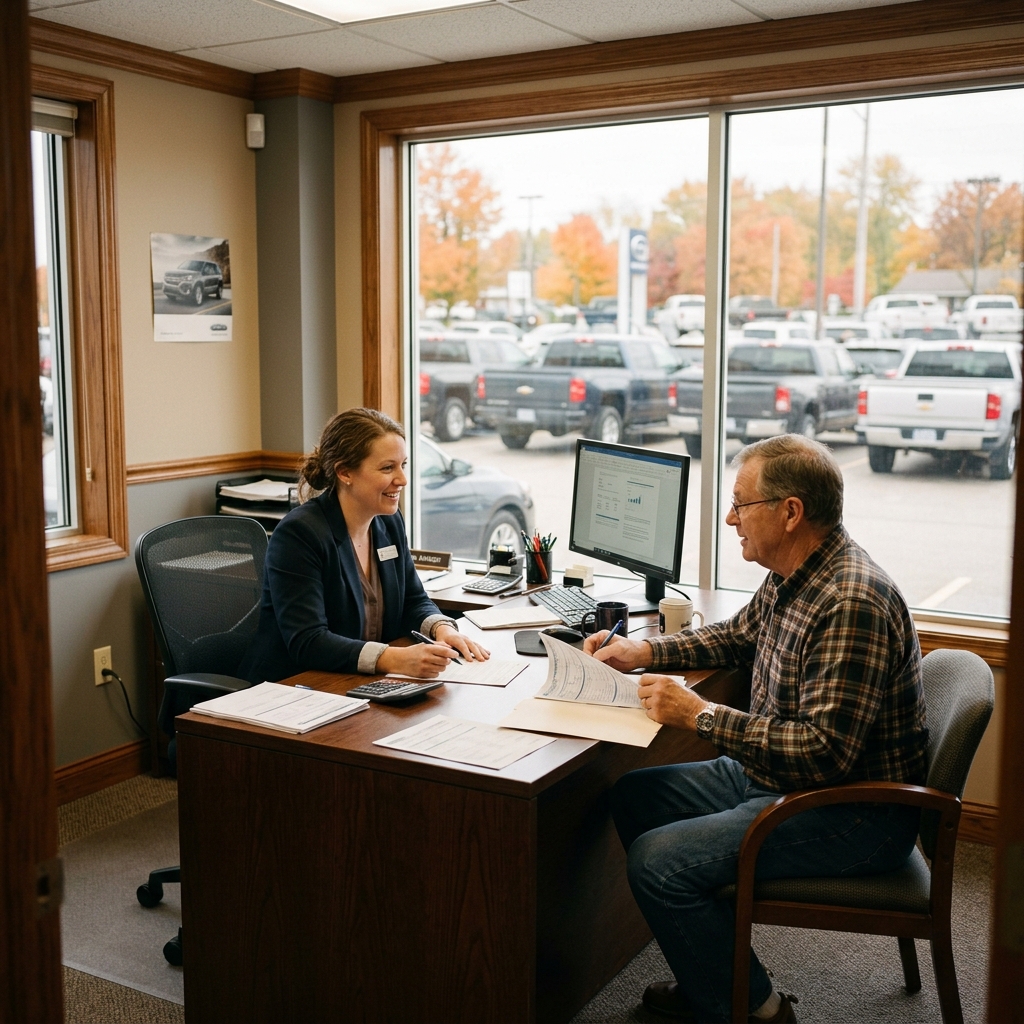
A dealership agent working with a customer at a desk filled with paperwork in an office setting. (Representative image for illustration purposes only. Actual vehicle may vary based on trim and configuration.)

How Does Credit Score Affect Required Down Payments and Interest Rates?

Your credit score directly dictates the interest rate offered by auto lenders and determines whether a cash down payment is mandatory for loan approval. Borrowers in higher credit tiers secure significantly lower annual percentage rates (APRs), whereas lower credit scores require larger down payments to offset lender risk.

According to Experian's Q2 2026 state of the automotive finance market report, average pre-owned vehicle interest rates vary widely across credit score tiers:

  • Super Prime (781–850): Average APR of 6.29%
  • Prime (661–780): Average APR of 8.81%
  • Near Prime (601–660): Average APR of 13.93%
  • Subprime (501–600): Average APR of 19.10%
  • Deep Subprime (300–500): Average APR of 21.62%

For buyers with prime credit, lenders may offer zero-down financing options because the default risk remains low. However, for buyers in near-prime or subprime credit tiers, lenders frequently impose strict loan-to-value caps, often requiring 10% to 20% down in cash or trade value before approving the loan structure.

Placing additional cash down moves a borrower into a lower risk threshold, which can sometimes reduce the assigned interest rate by a full percentage point or more. Completing an online credit application allows our finance team to review available lending programs across multiple financial institutions to determine your exact down payment requirement.

What Additional Out-of-Pocket Costs Should You Budget for at Signing?

Buyers must budget for state sales tax, county tax rates, title charges, registration fees, and dealership documentation fees in addition to their planned vehicle down payment. In Ohio, the base state vehicle sales tax is 5.75%, with local county additions raising the total tax rate higher depending on where the vehicle is registered.

Out-of-pocket costs at signing fall into distinct regulatory and administrative categories:

  • State and Local Sales Tax: Calculated on the net purchase price after trade-in credits are applied.
  • Title Transfer Fees: Official state charges processed through the Ohio Bureau of Motor Vehicles to transfer legal ownership.
  • Vehicle Registration and License Plate Fees: Annual state fees required to register the vehicle for road use.
  • Dealership Documentation Fees: Administrative costs for processing title paperwork, state filings, and financial compliance documents.

Failing to plan for these closing expenses can create an unpleasant surprise at the closing desk. For example, purchasing a $20,000 pre-owned SUV subject to a combined 7% sales tax rate generates $1,400 in tax obligations alone, alongside standard title and registration fees.

Buyers can choose either to pay these fees out-of-pocket at signing or to finance them directly into the total loan balance. Financing fees increases the loan-to-value ratio, which may require a larger cash down payment to stay within lender approval limits.

Can You Use a Vehicle Trade-In as a Down Payment?

Net trade-in equity—calculated as your current vehicle's market value minus any remaining loan balance—applies directly toward the down payment on a pre-owned vehicle purchase. Utilizing positive trade-in equity reduces or completely eliminates the need to out-of-pocket cash at signing.

When your current car is worth more than the balance owed on its existing loan, that positive difference serves as real cash value. For instance, if your trade-in is valued at $8,000 and your remaining loan pay-off is $5,000, you have $3,000 in positive net equity. That $3,000 counts immediately as a 15% down payment on a $20,000 pre-owned vehicle.

Our team frequently sees family shoppers use their existing vehicle's equity to transition into pre-owned three-row SUVs equipped with Ford Co-Pilot360 and space for the whole family. If you prefer exploring brand-new Ford models, checking current factory offers, or sticking to pre-owned options, evaluating your existing car via our online trade-in appraisal tool gives you a clear figure before visiting our showroom.

Where Can You Finance a Used Car Near East Liverpool and What Are the Requirements?

Shoppers near East Liverpool can secure pre-owned vehicle financing directly through dealership finance centers, local credit unions, or regional commercial banks. Local lenders generally require a 10% down payment or a minimum of $1,000 down, depending on credit tier, income verification, and vehicle age.

Drivers commuting along the Ohio River bluffs and steep grades around East Liverpool need dependable transportation equipped with driver-assist features for changing seasonal road conditions. Securing auto financing locally involves presenting standard documentation to satisfy lender underwriter guidelines:

  • Proof of Income: Recent pay stubs or tax documents showing steady earnings.
  • Proof of Residence: A recent utility bill or mortgage/lease statement matching your application address.
  • Government-Issued Identification: A valid driver's license.
  • Valid Auto Insurance: Proof of comprehensive and collision coverage naming the lender as lienholder.

Working with our finance center services simplifies the process by submitting a single application to multiple local and national lending institutions. This competitive framework helps buyers secure flexible down payment terms tailored to their specific financial profile.

How Does a Larger Down Payment Lower Your Monthly Payment and Total Loan Costs?

Increasing your down payment directly reduces the loan principal, which decreases your monthly payment and substantially lowers total interest expenses over the life of the loan. Every $1,000 applied as a down payment reduces monthly payments by roughly $15 to $20, depending on the interest rate and loan duration.

A higher down payment affects loan economics across three distinct areas:

  1. Immediate Principal Reduction: Borrowing less money means calculating interest on a smaller base amount from day one.
  2. Lower Interest Charges: Reducing total principal drastically cuts cumulative interest costs over 48, 60, or 72 months.
  3. Improved Term Options: a lower financed amount can help buyers better manage monthly payments.

Financing a vehicle with a larger down payment can reduce monthly payments and total interest costs.

Down Payment Amount Financed Amount ($20k Price) Estimated Monthly Payment (60 mos @ 11%) Total Interest Paid
Lower down payment Lower financed amount Lower estimated monthly payment Lower total interest
Higher down payment Higher equity contribution Lower estimated monthly payment Lower total interest

To explore our current pre-owned inventory, stop by our East Liverpool dealership address, give our team a quick call, or browse our latest current offers online.

Frequently Asked Questions About Pre-Owned Vehicle Financing

Q: Is a 10% down payment always required for a pre-owned vehicle loan?

A: A 10% down payment is not legally mandatory, but most auto lenders prefer or require it for borrowers outside super-prime credit tiers. Placing at least 10% down keeps the loan-to-value ratio within reasonable guidelines, which significantly improves approval odds and helps secure lower interest rates from commercial banks and credit unions.

Q: What happens if I put zero down on a pre-owned truck or SUV?

A: Putting zero down increases your total loan principal, raises your monthly payment, and forces you to pay significantly more interest over the loan term. It also places you at risk of negative equity, where you owe more on the vehicle loan than the vehicle's fair market wholesale value.

Q: Can I finance the state sales tax and registration fees into my loan?

A: Yes, most lenders allow qualified buyers to roll sales tax, title charges, and registration fees directly into the total financed loan amount. However, doing so increases your loan-to-value ratio, which may require a higher cash down payment to satisfy the lender's maximum approval threshold.

Q: How does loan-to-value (LTV) ratio affect my required down payment?

A: LTV represents the total loan amount divided by the vehicle's official wholesale valuation. If a lender capped LTV at 100% on a $15,000 vehicle and total costs with taxes came to $16,500, you would need at least a $1,500 down payment to cover the difference and obtain loan approval.

Q: What documents should I bring to the dealership to complete financing?

A: Buyers should bring a valid driver's license, their most recent pay stubs or proof of income, a current utility bill for residence verification, proof of auto insurance, and title or payoff information if trading in an existing vehicle.

Take the Next Step Toward Your Pre-Owned Vehicle at Tri State Ford

Selecting the right down payment strategy provides financial confidence and ensures comfortable monthly payments throughout your vehicle ownership. Whether you choose to put down 10%, 20%, or leverage positive trade-in equity, our dedicated team at Tri State Ford is here to guide you through every step of the purchasing process. Visit our showroom today to test drive our rugged, dependable pre-owned Ford trucks and family SUVs, value your current vehicle, and secure financing tailored directly to your budget.

Keep Your Vehicle Running Strong

Keep your vehicle performing at its best with our service team:


© 2026 Tri State Ford. All rights reserved.

Used Car Down Payment Advice in East Liverpool OH | Tri State Ford
Posted in:

Related Posts

h

Is a 100,000-Mile Used Truck a Smart Purchase?

Buying a used truck with 100,000 miles is a smart purchase when the vehicle has a documented service history and passes a thorough mechanical inspection. Modern full-size pickups are engineered for extended durability and routinely reach 200,000 miles or more, meaning a well-maintained 100,000-mile truck is typically at the midpoint of its operational life while offering strong value compared with a new model. At 100,000 miles, a pickup truck has already absorbed its steepest initial depreciation curve. For buyers who need strong towing capacity and reliable haulage without the investment required for a brand-new vehicle, the used truck market provides exceptional value. Modern engineering standards, synthetic lubricants, and advanced powertrain electronics mean that key mechanical systems—including the engine block, frame, and transmission housing—are built to handle long-term stress. Evaluating a high-mileage pickup requires looking beyond the odometer reading. A truck driven 100,000 highway miles for personal transportation often exhibits far less mechanical wear than a lower-mileage vehicle subjected to severe commercial work, frequent heavy towing, or harsh off-road use. When buyers evaluate high-mileage half-ton trucks on our lot, they most often ask to review the engine oil maintenance history and differential fluid records before taking a highway test drive. Determining whether a specific truck is a wise buy comes down to verifying how it was driven and maintained by its previous owners. To inspect our available used pickups in person, get directions to Tri State Ford or give our sales team a quick call at (330) 462-7578 to discuss our current selection. Table of Contents How Many Years and Miles Can a Used Truck Last After 100,000 Miles? Which Used Pickup Truck Models Hold Up Best at High Mileage? What Maintenance Records Should You Verify Before Buying a 100k-Mile Truck? What Inspection Red Flags Mean You Should Walk Away From a Used Truck? Should You Buy an Extended Warranty or Finance a Used Truck with 100k Miles? Common Questions About Buying a Used Truck with 100,000 Miles Visit Tri State Ford for Quality Used Pickups How Many Years and Miles Can a Used Truck Last After 100,000 Miles? A properly maintained used pickup truck can comfortably last another 100,000 to 150,000 miles after passing the 100,000-mile mark, translating to roughly 7 to 10 additional years of reliable service for the average driver. Modern truck powertrains regularly surpass 200,000 total miles when routine fluid changes and wear-and-tear items are addressed on schedule. The total lifespan of a truck purchased at 100,000 miles depends on driving habits, environment, and ongoing maintenance. Drivers putting an average of 12,000 to 15,000 miles annually on their vehicle can expect many years of service before major mechanical overhauls become necessary. Engine designs across major manufacturers now routinely run past 250,000 miles on original internal components when oil degradation is prevented. Expected Mileage Lifespan for Modern Used Pickups: ┌─────────────────────────────────────────────────────────┐ │ 0 Miles 100,000 Miles 250,000+ Miles │ ├─────────────────────┬────────────────────┬──────────────┤ │ Initial Deprec. │ Optimal Purchase │ Extended │ │ & Warranty Era │ Value Window │ Lifespan Era │ └─────────────────────┴────────────────────┴──────────────┘ Regional factors play a major role in vehicle longevity. In areas with cold winters and heavy road-salt usage, undercarriage corrosion often poses a greater threat to a truck's longevity than internal engine wear. Inspecting the frame, brake lines, fuel rails, and suspension mounting points is critical to ensuring a high-mileage truck remains structurally sound for years to come. Choosing a truck with a clean history is the most effective way to secure long-term reliability. Exploring our pre-owned single-owner truck inventory allows shoppers to find vehicles with complete, verifiable service records. If you are upgrading from your current ride, our team can help you value your trade-in toward a long-lasting pickup. Which Used Pickup Truck Models Hold Up Best at High Mileage? Full-size trucks like the Ford F-150 consistently rank among the most dependable vehicles for high-mileage longevity according to independent automotive durability studies. Models equipped with proven powertrains—such as Ford’s EcoBoost and V8 engines—frequently reach 200,000 to 250,000 miles while retaining solid structural integrity and heavy-duty towing performance. The Ford F-150 stands out in the high-mileage market due to its high-strength, military-grade aluminum-alloy body, which eliminates rust concerns on exterior body panels. Beneath the bed, robust steel frames provide the structural foundation needed for demanding tasks. For example, modern F-150 configurations featuring the 3.5L EcoBoost V6 deliver 400 hp and 500 lb-ft of torque through a SelectShift® 10-speed automatic transmission, offering immense power alongside proven long-term durability. Other strong choices include the 2.7L EcoBoost V6 producing 325 hp and 400 lb-ft of torque, and the naturally aspirated 5.0L V8 generating 400 hp and 410 lb-ft of torque. Heavy-duty pickups—such as the Ford Super Duty series—are engineered for industrial workloads and offer even greater long-term durability potential. However, buyers should remember that a heavy-duty truck used exclusively for severe commercial hauling or continuous maximum towing may experience more suspension and drivetrain wear than a half-ton truck used primarily for personal transportation and family recreation. Comparing competitive half-ton models like the Ram 1500 or Chevrolet Silverado 1500 reveals that while engine reliability across the segment is generally strong, Ford's combination of corrosion-resistant body construction, advanced driver-assist features, and widespread parts availability gives it a clear edge on the used market. For shoppers considering whether to buy used or buy new, reviewing our new Ford vehicle inventory provides a useful benchmark for comparing technology, warranty coverage, and overall value. Additionally, our Ford Pick Up & Delivery service makes maintaining your truck seamless throughout ownership. Fuel Economy Fuel economy and range by trim Feature King Ranch 4x4 SuperCrew 5-1/2’ Box King Ranch 4x4 SuperCrew 6-1/2’ Box King Ranch SuperCrew 5-1/2’ Box Lariat 4x4 SuperCrew 5-1/2’ Box:--:--:--:--:-- MPG 17 city / 23 hwy / 19 combined 17 city / 23 hwy / 19 combined 17 city / 25 hwy / 20 combined 17 city / 23 hwy / 19 combined Fuel Economy (continued) Feature Lariat 4x4 SuperCrew 6-1/2’ Box Lariat SuperCrew 5-1/2’ Box Platinum 4x4 SuperCrew 5-1/2’ Box Platinum 4x4 SuperCrew 6-1/2’ Box:--:--:--:--:-- MPG 17 city / 23 hwy / 19 combined 17 city / 25 hwy / 20 combined 17 city / 23 hwy / 19 combined 17 city / 23 hwy / 19 combined Fuel Economy (continued) Feature Platinum SuperCrew 5-1/2’ Box Police Responder 4x4 SuperCrew 5-1/2’ Box Raptor 4x4 SuperCrew 5-1/2’ Box STX 4x4 SuperCab 6-1/2’ Box:--:--:--:--:-- MPG 17 city / 25 hwy / 20 combined — 14 city / 18 hwy / 16 combined 18 city / 23 hwy / 20 combined Fuel Economy (continued) Feature STX 4x4 SuperCrew 5-1/2’ Box STX SuperCab 6-1/2’ Box STX SuperCrew 5-1/2’ Box Tremor 4x4 SuperCrew 5-1/2’ Box:--:--:--:--:-- MPG 18 city / 23 hwy / 20 combined 19 city / 25 hwy / 21 combined 19 city / 25 hwy / 21 combined 16 city / 21 hwy / 18 combined Fuel Economy (continued) Feature XL 4x4 Regular Cab 6-1/2’ Box XL 4x4 Regular Cab 8’ Box XL 4x4 SuperCab 6-1/2’ Box XL 4x4 SuperCrew 5-1/2’ Box:--:--:--:--:-- MPG 16 city / 24 hwy / 19 combined 18 city / 23 hwy / 20 combined 18 city / 23 hwy / 20 combined 18 city / 23 hwy / 20 combined Fuel Economy (continued) Feature XL 4x4 SuperCrew 6-1/2’ Box XL Regular Cab 6-1/2’ Box XL Regular Cab 8’ Box XL SuperCab 6-1/2’ Box:--:--:--:--:-- MPG 17 city / 23 hwy / 19 combined 16 city / 24 hwy / 19 combined 19 city / 25 hwy / 21 combined 19 city / 25 hwy / 21 combined Fuel Economy (continued) Feature XL SuperCrew 5-1/2’ Box XLT 4x4 SuperCab 6-1/2’ Box XLT 4x4 SuperCrew 5-1/2’ Box XLT 4x4 SuperCrew 6-1/2’ Box:--:--:--:--:-- MPG 19 city / 25 hwy / 21 combined 18 city / 23 hwy / 20 combined 18 city / 23 hwy / 20 combined 17 city / 23 hwy / 19 combined Fuel Economy (continued) Feature XLT SuperCab 6-1/2’ Box XLT SuperCrew 5-1/2’ Box:--:--:-- MPG 19 city / 25 hwy / 21 combined 19 city / 25 hwy / 21 combined What Maintenance Records Should You Verify Before Buying a 100k-Mile Truck? Documented maintenance such as oil changes, transmission fluid flushes, and coolant replacements are critical indicators of a truck's longevity at 100,000 miles. A complete service history confirms that consumable components were replaced before wear could cause internal engine or drivetrain damage. At the 100,000-mile mark, major factory-recommended maintenance items come due across most truck manufacturer schedules. Verifying whether these services have already been performed helps you calculate the immediate cost of ownership following purchase. Key maintenance milestones to check in the owner’s manual or vehicle history log include: Engine Oil and Filter Changes: Evidence of consistent fluid services performed every 5,000 to 10,000 miles using synthetic oil. Spark Plug Replacement: Manufacturer schedules typically call for new spark plugs at 100,000 miles to maintain optimal combustion efficiency and fuel economy. Cooling System Flush: Coolant breaks down over time, risking internal radiator corrosion and water pump wear if not replaced near 100,000 miles. Drivetrain Fluids: Verification that differential fluid and transfer case fluid (on 4x4 models) have been serviced, especially if the truck was used for heavy trailering. Brake and Suspension Components: Inspection records for brake pads, rotors, shocks, and struts to ensure tight handling and safe stopping power. Proper maintenance directly impacts real-world efficiency. For instance, a well-maintained Ford F-150 equipped with a 2.7L engine and rear-wheel drive achieves up to 19 city / 25 hwy / 21 combined MPG, whereas neglected spark plugs or dragging brake calipers quickly degrade fuel performance. For business owners seeking durable haulers with documented reliability, exploring our commercial new work truck inventory provides fleet-ready solutions built to tackle demanding job sites. What Inspection Red Flags Mean You Should Walk Away From a Used Truck? Severe frame rust holes, slipping transmission gears, and active coolant leaks are major red flags when inspecting a 100,000-mile used truck. These red flags indicate severe neglect or structural failure that will lead to expensive, non-viable repair costs. A thorough pre-purchase inspection by a qualified mechanic is essential before signing any paperwork. On the bluffs and river roads of East Liverpool, trucks frequently encounter moisture and winter road treatments, making a full undercarriage inspection paramount. Mechanics will check the following critical areas: Pre-Purchase Truck Inspection Checklist: [ ] Frame & Undercarriage: Check for structural rust holes or fresh undercoating hiding damage. [ ] Engine Oil & Cap: Inspect for milky buildup indicating blown head gasket or coolant intrusion. [ ] Transmission Function: Test for gear slippage, delayed engagement, or harsh shifting. [ ] 4x4 Transfer Case: Engage 4-High and 4-Low to verify smooth mechanical locking and zero fluid leaks. [ ] Steering & Suspension: Check ball joints, tie rod ends, and shock absorbers for play or leakage. Pay close attention to transmission engagement during a test drive. Hesitation, clunking, or gear slippage under acceleration signals internal transmission wear. Furthermore, check the vehicle identification number (VIN) against official National Highway Traffic Safety Administration database listings to confirm all safety recall repairs were properly completed by an authorized dealer. Engine & Performance Powertrain specs by trim Feature King Ranch 4x4 SuperCrew 5-1/2’ Box King Ranch 4x4 SuperCrew 6-1/2’ Box King Ranch SuperCrew 5-1/2’ Box Lariat 4x4 SuperCrew 5-1/2’ Box:--:--:--:--:-- Engine 3.5L 3.5L 3.5L 3.5L Horsepower 400 hp 400 hp 400 hp 400 hp Torque 500 lb-ft 500 lb-ft 500 lb-ft 500 lb-ft Transmission SelectShift® SelectShift® SelectShift® SelectShift® Drivetrain All-wheel drive All-wheel drive Rear-wheel drive All-wheel drive Engine & Performance (continued) Feature Lariat 4x4 SuperCrew 6-1/2’ Box Lariat SuperCrew 5-1/2’ Box Platinum 4x4 SuperCrew 5-1/2’ Box Platinum 4x4 SuperCrew 6-1/2’ Box:--:--:--:--:-- Engine 3.5L 3.5L 3.5L 3.5L Horsepower 400 hp 400 hp 400 hp 400 hp Torque 500 lb-ft 500 lb-ft 500 lb-ft 500 lb-ft Transmission SelectShift® SelectShift® SelectShift® SelectShift® Drivetrain All-wheel drive Rear-wheel drive All-wheel drive All-wheel drive Engine & Performance (continued) Feature Platinum SuperCrew 5-1/2’ Box Police Responder 4x4 SuperCrw 5-1/2’ Box Raptor 4x4 SuperCrew 5-1/2’ Box STX 4x4 SuperCab 6-1/2’ Box:--:--:--:--:-- Engine 3.5L 3.5L 3.5L 2.7L Horsepower 400 hp 400 hp 450 hp 325 hp Torque 500 lb-ft 500 lb-ft 510 lb-ft 400 lb-ft Transmission SelectShift® SelectShift® SelectShift® SelectShift® Drivetrain Rear-wheel drive All-wheel drive All-wheel drive All-wheel drive Engine & Performance (continued) Feature STX 4x4 SuperCrew 5-1/2’ Box STX SuperCab 6-1/2’ Box STX SuperCrew 5-1/2’ Box Tremor 4x4 SuperCrew 5-1/2’ Box:--:--:--:--:-- Engine 2.7L 2.7L 2.7L 3.5L Horsepower 325 hp 325 hp 325 hp 400 hp Torque 400 lb-ft 400 lb-ft 400 lb-ft 500 lb-ft Transmission SelectShift® SelectShift® SelectShift® SelectShift® Drivetrain All-wheel drive Rear-wheel drive Rear-wheel drive All-wheel drive Engine & Performance (continued) Feature XL 4x4 Regular Cab 6-1/2’ Box XL 4x4 Regular Cab 8’ Box XL 4x4 SuperCab 6-1/2’ Box XL 4x4 SuperCrew 5-1/2’ Box:--:--:--:--:-- Engine 5L 2.7L 2.7L 2.7L Horsepower 400 hp 325 hp 325 hp 325 hp Torque 410 lb-ft 400 lb-ft 400 lb-ft 400 lb-ft Transmission SelectShift® SelectShift® SelectShift® SelectShift® Drivetrain All-wheel drive All-wheel drive All-wheel drive All-wheel drive Engine & Performance (continued) Feature XL 4x4 SuperCrew 6-1/2’ Box XL Regular Cab 6-1/2’ Box XL Regular Cab 8’ Box XL SuperCab 6-1/2’ Box:--:--:--:--:-- Engine 3.5L 5L 2.7L 2.7L Horsepower 400 hp 400 hp 325 hp 325 hp Torque 500 lb-ft 410 lb-ft 400 lb-ft 400 lb-ft Transmission SelectShift® SelectShift® SelectShift® SelectShift® Drivetrain All-wheel drive Rear-wheel drive Rear-wheel drive Rear-wheel drive Engine & Performance (continued) Feature XL SuperCrew 5-1/2’ Box XLT 4x4 SuperCab 6-1/2’ Box XLT 4x4 SuperCrew 5-1/2’ Box XLT 4x4 SuperCrew 6-1/2’ Box:--:--:--:--:-- Engine 2.7L 2.7L 2.7L 3.5L Horsepower 325 hp 325 hp 325 hp 400 hp Torque 400 lb-ft 400 lb-ft 400 lb-ft 500 lb-ft Transmission SelectShift® SelectShift® SelectShift® SelectShift® Drivetrain Rear-wheel drive All-wheel drive All-wheel drive All-wheel drive Engine & Performance (continued) Feature XLT SuperCab 6-1/2’ Box XLT SuperCrew 5-1/2’ Box:--:--:-- Engine 2.7L 2.7L Horsepower 325 hp 325 hp Torque 400 lb-ft 400 lb-ft Transmission SelectShift® SelectShift® Drivetrain Rear-wheel drive Rear-wheel drive Should You Buy an Extended Warranty or Finance a Used Truck with 100k Miles? Financing a 100,000-mile used truck is often a practical financial decision, and pairing it with a vehicle service contract or setting aside a dedicated repair fund provides protection against unexpected mechanical costs. Auto lenders can offer financing options for modern, high-mileage pickups that hold strong resale values. Securing financing for a used truck requires evaluating both the loan term and the vehicle's remaining lifespan. Short to medium loan terms (such as 36 to 60 months) ensure that you build equity quickly without carrying debt on a high-mileage vehicle for too long. Bringing complete income documentation, proof of residence, and an insurance quote speeds up loan approval with underwriters. When evaluating extended protection, consider manufacturer-backed plans over third-party policies. A certified option like our certified pre-owned Ford inventory includes rigorous multi-point inspections and factory-backed warranty coverage, giving buyers total confidence on the road. Our finance center team works directly with regional and national lenders to secure competitive loan rates regardless of your budget. You can start the process from home by completing our secure online credit application. Common Questions About Buying a Used Truck with 100,000 Miles Q: Is 100,000 miles considered high mileage for a modern pickup truck? For modern full-size pickup trucks, 100,000 miles is considered mid-life rather than high mileage. Today's trucks are designed with advanced metallurgy, precise engine tolerances, and durable transmissions built to reach 200,000 miles or more when routinely maintained. High mileage for modern trucks generally starts past 150,000 miles. Q: What is the most important maintenance item to check on a 100,000-mile truck? The most critical maintenance item to verify is a consistent record of engine oil and filter changes. Clean engine oil prevents internal bearing, camshaft, and turbocharger wear. Additionally, verify whether the 100,000-mile factory services—such as spark plug replacement, transmission fluid flushes, and differential fluid changes—have been completed. Q: Can you finance a used truck with over 100,000 miles? Yes, many lenders offer competitive auto loans for trucks with 100,000 miles, provided the vehicle's book value supports the loan amount. Financing options depend on credit history, down payment size, and vehicle age. Shorter loan terms are generally recommended for higher-mileage vehicles to keep equity positive throughout the loan. Q: How can I tell if a used truck was used for heavy towing? Signs of heavy towing include excessive wear or heat discoloration on rear brake rotors, aftermarket brake controller installations, heavy scratches or gouges around the trailer hitch receiver, and low differential fluid levels. Reviewing maintenance logs for frequent transmission and differential fluid changes helps confirm the vehicle was properly cared for during heavy work. Q: Is a 4x4 truck at 100,000 miles more risky than a 4x2 model? A 4x4 pickup includes additional mechanical components—such as a transfer case, front differential, and front drive shafts—that require periodic maintenance. While this adds potential wear points, a properly serviced 4x4 system adds minimal risk and offers essential traction for winter driving, off-road recreation, and rural towing. Visit Tri State Ford for Quality Used Pickups Buying a used pickup truck with 100,000 miles offers exceptional capability, cargo space, and towing power at a fraction of the cost of a new vehicle. Whether you need a dependable truck for daily commutes along the State Route 170 commercial corridor in Calcutta, hauling fishing gear near Beaver Creek, or tackling tough tasks across state lines, a well-maintained Ford pickup is well-built to deliver reliable performance for miles to come. At Tri State Ford, our team is committed to providing a transparent, straightforward vehicle buying experience. Explore our pre-owned selection, schedule a test drive, and discover how easy it is to drive home in a reliable, high-capability pickup today. To get started, get directions to Tri State Ford or contact our friendly sales team with a quick call at (330) 462-7578. Keep Your Vehicle Running Strong Keep your vehicle performing at its best with our service team: Order Parts Schedule Service Appt © 2026 Tri State Ford. All rights reserved. Vehicle specification data © JATO Dynamics Limited. Title Tags Used Trucks with 100,000 Miles in East Liverpool OH | Tri State Ford Meta Description Keywords Open Graph Twitter Card Canonical Article Metadata Geographic Targeting { "@context": "https://schema.org", "@graph": [ { "@type": "NewsArticle", "@id": "#article", "headline": "Is a 100,000-Mile Used Truck a Smart Purchase?", "datePublished": "2026-09-29T12:35:21.050Z", "dateModified": "2026-09-29T12:37:52.459Z", "author": { "@id": "#author" }, "publisher": { "@id": "#dealer" }, "wordCount": 3402, "description": "Buying a used truck with 100,000 miles can be a practical choice if supported by a documented service history and a thorough inspection." }, { "@type": "AutoDealer", "@id": "#dealer", "name": "Tri State Ford", "url": "https://www.tristateford.net", "telephone": "+13304627578", "sameAs": [ "https://maps.google.com/?cid=1136336406351438323" ], "address": { "@type": "PostalAddress", "streetAddress": "1503 Pennsylvania Ave", "addressLocality": "East Liverpool", "addressRegion": "OH", "postalCode": "43920", "addressCountry": "US" }, "areaServed": { "@type": "GeoCircle", "geoMidpoint": { "@type": "GeoCoordinates", "latitude": "40.6367833", "longitude": "-80.5443033" }, "geoRadius": "48280" }, "geo": { "@type": "GeoCoordinates", "latitude": "40.6367833", "longitude": "-80.5443033" }, "openingHours": [ "Mo 09:00-20:00", "Tu 09:00-18:00", "We 09:00-18:00", "Th 09:00-20:00", "Fr 09:00-18:00", "Sa 09:00-15:00" ] }, { "@type": "FAQPage", "@id": "#faq", "mainEntity": [ { "@type": "Question", "name": "Is 100,000 miles considered high mileage for a modern pickup truck?", "acceptedAnswer": { "@type": "Answer", "text": "For modern full-size pickup trucks, 100,000 miles is considered mid-life rather than high mileage. Today's trucks are designed with advanced metallurgy, precise engine tolerances, and durable transmissions built to reach 200,000 miles or more when routinely maintained. High mileage for modern trucks generally starts past 150,000 miles." } }, { "@type": "Question", "name": "What is the most important maintenance item to check on a 100,000-mile truck?", "acceptedAnswer": { "@type": "Answer", "text": "The most critical maintenance item to verify is a consistent record of engine oil and filter changes. Clean engine oil prevents internal bearing, camshaft, and turbocharger wear. Additionally, verify whether the 100,000-mile factory services—such as spark plug replacement, transmission fluid flushes, and differential fluid changes—have been completed." } }, { "@type": "Question", "name": "Can you finance a used truck with over 100,000 miles?", "acceptedAnswer": { "@type": "Answer", "text": "Yes, many lenders offer competitive auto loans for trucks with 100,000 miles, provided the vehicle's book value supports the loan amount. Financing options depend on credit history, down payment size, and vehicle age. Shorter loan terms are generally recommended for higher-mileage vehicles to keep equity positive throughout the loan." } }, { "@type": "Question", "name": "How can I tell if a used truck was used for heavy towing?", "acceptedAnswer": { "@type": "Answer", "text": "Signs of heavy towing include excessive wear or heat discoloration on rear brake rotors, aftermarket brake controller installations, heavy scratches or gouges around the trailer hitch receiver, and low differential fluid levels. Reviewing maintenance logs for frequent transmission and differential fluid changes helps confirm the vehicle was properly cared for during heavy work." } }, { "@type": "Question", "name": "Is a 4x4 truck at 100,000 miles more risky than a 4x2 model?", "acceptedAnswer": { "@type": "Answer", "text": "A 4x4 pickup includes additional mechanical components—such as a transfer case, front differential, and front drive shafts—that require periodic maintenance. While this adds potential wear points, a properly serviced 4x4 system adds minimal risk and offers essential traction for winter driving, off-road recreation, and rural towing." } } ] } ] }

d

Is It Smart to Buy a Used Car With a Minor Accident History?

.hrizn-rte-content .e-rte-image { border: 0;max-width: 100%;height: auto } .hrizn-rte-content .e-rte-image.e-imginline { display: inline-block;float: none;margin-left: 5px;margin-right: 5px;max-width: calc(100% - 10px);vertical-align: bottom } .hrizn-rte-content .e-rte-image.e-imgbreak, .hrizn-rte-content .e-rte-image.e-imgcenter { display: block;float: none;margin: 5px auto;max-width: 100% } .hrizn-rte-content .e-rte-image.e-imgleft { float: left;margin: 0 12px 8px 0;max-width: 100% } .hrizn-rte-content .e-rte-image.e-imgright { float: right;margin: 0 0 8px 12px;max-width: 100% } .hrizn-rte-content figure.e-rte-image { margin: 8px auto;max-width: 100% } .hrizn-rte-content figure.e-imgleft { float: left;margin: 0 12px 8px 0 } .hrizn-rte-content figure.e-imgright { float: right;margin: 0 0 8px 12px } .hrizn-rte-content figure.e-imgcenter { display: block;margin: 8px auto;text-align: center } Buying a pre-owned vehicle with a documented minor accident history is a smart financial move if the car retains a clean title, suffered no structural frame damage or airbag deployment, and received high-quality repairs. Because reported cosmetic damage creates an potentially lower market value compared to identical clean-history vehicles, informed buyers can secure substantial savings on a completely safe, reliable automobile. Navigating the pre-owned market requires balancing price advantage against vehicle condition. When a vehicle history report notes minor damage—such as a scraped bumper from parallel parking or a shallow door dent from a shopping cart—the actual structural integrity of the automobile remains untouched. For commuters traveling along State Route 170 through Calcutta, acquiring a late-model pre-owned vehicle with minor cosmetic history offers modern technology and dependable performance without the higher purchase price of a flawless history report. The primary benefit of considering these vehicles is value optimization. You pay significantly less upfront for minor surface blemishes that may have already been professionally restored to original factory specifications. Furthermore, pre-owned inventory with clean titles and light past damage still qualifies for standard auto loans and full insurance coverage. To explore our current selection of thoroughly vetted pre-owned models, buyers can visit our showroom location or give our sales team a quick call to discuss specific vehicle history reports and background records. Table of Contents What Qualifies as a Minor Accident on a Vehicle History Report? How Does Past Minor Body Damage Affect Modern Safety Systems and Structural Alignment? What Tools and Inspection Techniques Detect Hidden Repairs and Long-Term Frame Bends? Does a Previous Minor Accident Impact Insurance Coverage, Financing, and Future Trade-In Value? Frequently Asked Questions About Buying Used Vehicles With Reported Damage How to Confidently Evaluate and Purchase a Reliable Pre-Owned Vehicle What Qualifies as a Minor Accident on a Vehicle History Report? A minor accident entry on a vehicle history report indicates light cosmetic damage to outer body panels, light assemblies, or bumper covers without structural unibody distortion or mechanical component failure. Insurance companies and reporting agencies classify collisions under roughly $3,000 in repair costs with zero airbag deployment as minor incidents. Vehicle history services aggregate VIN-based records from state motor vehicle departments, law enforcement accident filings, insurance claim databases, and certified collision repair facilities. When a vehicle is involved in a low-speed impact, the event is categorized based on severity metrics: Cosmetic Exterior Damage: Minor scratches, shallow door dings, or scraped bumper covers that require simple refinishing or panel replacement. Non-Structural Component Repair: Replacing cracked headlight housings, side mirrors, or exterior trim pieces that do not alter the vehicle chassis. Zero Airbag Deployment: Collisions where impact forces were insufficient to trigger primary safety restraint systems. Intact Unibody Frame: No bending, cracking, or compromise to the core structural frame rails or passenger safety cage. Understanding these distinctions helps shoppers separate minor cosmetic incidents from serious collisions. A vehicle that suffered a parking lot scrape and received a replacement bumper cover remains mechanically identical to one with an unblemished record. Buyers looking at newer model years can also review current manufacturer incentives on new models or explore a custom vehicle factory order if they prefer a brand-new build with zero history entries. How Does Past Minor Body Damage Affect Modern Safety Systems and Structural Alignment? A minor cosmetic collision does not compromise overall vehicle safety as long as modern driver-assist sensors located inside bumper covers and grilles are properly recalibrated during body repair. Modern vehicles rely on precise unibody engineering and electronic safety networks that require professional attention after any front or rear impact. Contemporary automobiles use unibody construction where outer sheet metal, crumple zones, and frame rails function as an integrated safety cell. In low-speed impacts, impact-absorbing bumper bars capture collision energy before forces reach the primary frame. However, because modern vehicles incorporate advanced driver-assistance technology—such as Pre-Collision Assist, blind-spot radar modules, and ultrasonic parking sensors—even a light bumper tap can misalign critical monitoring hardware. When evaluating a pre-owned vehicle with previous front or rear bumper work, verification of camera and sensor calibration is essential. If radar brackets are tilted by even a single degree during panel replacement, features like adaptive cruise control or automatic emergency braking can deliver false alerts or fail to detect obstacles correctly. Professional repair documentation should confirm that electronic safety systems underwent digital re-alignment alongside physical panel fitting. What Tools and Inspection Techniques Detect Hidden Repairs and Long-Term Frame Bends? Automotive technicians utilize digital paint depth gauges, electronic wheel alignment racks, and three-dimensional laser frame measuring systems to verify underlying structural integrity and reveal hidden body filler. A thorough pre-purchase inspection on a hoist exposes inconsistencies between a vehicle history summary and real-world condition. Buyers evaluating pre-owned models on our lot frequently ask how to verify if a reported bumper collision reached the underlying unibody. Professional technicians follow a systematic physical and digital inspection process: Digital Paint Depth Gauges: Measuring paint thickness in mils across every panel identifies underlying body filler, heavy primer layers, or aftermarket resprays. Computerized 3D Laser Frame Measuring: Mounting the vehicle on an alignment rack uses laser targets to measure factory datum points, confirming frame rails and unibody dimensions remain within millimeter tolerances. Seam Sealer and Weld Inspection: Examining engine bay seams, trunk floors, and door jambs reveals whether factory seam sealers are intact or if aftermarket welding and cutting occurred. Wheel Alignment and Suspension Geometry: Digital alignment checks confirm that camber, caster, and toe settings meet factory specifications, ruling out bent control arms or subframe shifts. Poorly executed repairs leave noticeable warning signs, including uneven panel gaps, water intrusion inside headlight housings, overspray on rubber door seals, and premature rust along unsealed panel edges. Confirming precise alignment and clean factory seams ensures the automobile will perform reliably for miles to come. Does a Previous Minor Accident Impact Insurance Coverage, Financing, and Future Trade-In Value? A vehicle with a reported minor accident on a clean title remains fully eligible for standard auto financing and comprehensive insurance coverage, though it experiences a modest reduction in resale market value. Because total loss branding is absent, lenders evaluate the vehicle using standard loan-to-value guidelines. Insurance underwriters make no distinction between a clean-history vehicle and one with a clean-title minor damage report when offering collision, liability, and comprehensive coverage. Because the title remains normal (non-branded), major auto insurance carriers issue standard policies without elevated premium surcharges. From a financing perspective, auto lenders issue loans based on official wholesale and retail valuation guides. While minor damage history lowers the baseline book value slightly, borrowers secure standard interest rates and loan terms. To streamline your purchase, you can complete our secure online credit application to review financing parameters tailored to your budget. When it comes to future trade-in value, vehicles with prior damage entries trade at a slight discount compared to clean-history equivalents. However, because you purchase the vehicle at a lower market value initially, the net depreciation curve mirrors that of any other pre-owned automobile. Local drivers negotiating the riverfront bluffs and hill climbs of East Liverpool can easily calculate their potential equity by taking advantage of our online tool to value your trade-in before visiting our dealership. Frequently Asked Questions About Buying Used Vehicles With Reported Damage Q: What is the main difference between a minor accident and structural damage on a Carfax report? Vehicle history reports often classify minor accidents as incidents involving only superficial damage, which rarely affects the car's mechanical performance or safety features. Structural damage entries indicate that the central unibody, frame rails, roof pillars, or main crash supports were bent, cracked, or compromised, severely impacting crash protection and resale value. Q: Can I fully insure a used car that has a minor accident listed on its record? Yes, insurance companies provide complete coverage—including liability, collision, and comprehensive plans—for vehicles with minor accident histories, provided the title remains clean and non-branded. Because cosmetic repairs do not alter the vehicle's legal status or structural integrity, premium rates remain consistent with standard market standards. Q: How much does a minor accident lower a used car's purchase price? A reported minor accident typically reduces a used car's market value by 10 to 15 percent compared to an equivalent clean-history vehicle. This initial price discount offers significant savings for buyers while providing identical mechanical reliability when proper body repairs have been completed. Q: How can I confirm that driver-assist sensors were properly calibrated after a minor collision repair? Verification requires reviewing the repair facility's detailed work order to ensure digital camera and radar sensor recalibration procedures were performed. During a test drive, you should also test driver-assist systems like lane-keeping alerts and blind-spot monitoring to confirm they operate smoothly without warning lights. Q: Does a past minor accident prevent a car from being financed by a bank? No, national lenders and credit unions regularly finance pre-owned vehicles with minor damage entries on clean titles. Standard loan terms apply because the vehicle carries a normal title status rather than a branded salvage or reconstructed designation. You can explore our latest new vehicle selection or browse our single-owner pre-owned vehicles to find a model that fits your finance plans. How to Confidently Evaluate and Purchase a Reliable Pre-Owned Vehicle Acquiring a pre-owned vehicle with a minor accident record allows smart shoppers to maximize their purchasing power without sacrificing safety, modern features, or long-term durability. By verifying repair documentation, confirming clean title status, and ensuring electronic driver-assist systems are properly calibrated, you can drive home in a high-value automobile with total peace of mind. At Tri State Ford, every pre-owned automobile undergoes a comprehensive physical and mechanical inspection by our certified technicians before reaching our inventory lot. We provide transparent vehicle history reports on every car, truck, and SUV so you can review background details with complete confidence. When you are ready to take the next step, our team is here to assist you through every stage of the buying process: Explore our high-quality certified pre-owned inventory to find rigorously inspected vehicles backed by factory warranty coverage. Get turnkey directions to our East Liverpool dealership to inspect our pre-owned lineup in person. Reach out to our friendly sales team by giving us a quick call to schedule your test drive today. Keep Your Vehicle Running Strong Keep your vehicle performing at its best with our service team: Order Parts Schedule Service Appt © 2026 Tri State Ford. All rights reserved. Title Tags Used Cars with Minor Accident History in East Liverpool OH | Tri State Ford Meta Description Keywords Open Graph Twitter Card Canonical Article Metadata Geographic Targeting { "@context": "https://schema.org", "@graph": [ { "@type": "NewsArticle", "@id": "#article", "headline": "Is It Smart to Buy a Used Car With a Minor Accident History?", "datePublished": "2026-09-24T12:10:28.804Z", "dateModified": "2026-09-24T12:12:13.754Z", "author": { "@id": "#author" }, "publisher": { "@id": "#dealer" }, "wordCount": 1759, "description": "Buying a used car with a minor accident history can offer significant price discounts while delivering a safe, reliable vehicle with a clean title." }, { "@type": "AutoDealer", "@id": "#dealer", "name": "Tri State Ford", "url": "https://www.tristateford.net", "telephone": "+13304627578", "sameAs": [ "https://maps.google.com/?cid=1136336406351438323" ], "address": { "@type": "PostalAddress", "streetAddress": "1503 Pennsylvania Ave", "addressLocality": "East Liverpool", "addressRegion": "OH", "postalCode": "43920", "addressCountry": "US" }, "areaServed": { "@type": "GeoCircle", "geoMidpoint": { "@type": "GeoCoordinates", "latitude": "40.6367833", "longitude": "-80.5443033" }, "geoRadius": "48280" }, "geo": { "@type": "GeoCoordinates", "latitude": "40.6367833", "longitude": "-80.5443033" }, "openingHours": [ "Mo 09:00-20:00", "Tu 09:00-18:00", "We 09:00-18:00", "Th 09:00-20:00", "Fr 09:00-18:00", "Sa 09:00-15:00" ] }, { "@type": "FAQPage", "@id": "#faq", "mainEntity": [ { "@type": "Question", "name": "What is the main difference between a minor accident and structural damage on a Carfax report?", "acceptedAnswer": { "@type": "Answer", "text": "Vehicle history reports often classify minor accidents as incidents involving only superficial damage, which rarely affects the car's mechanical performance or safety features. Structural damage entries indicate that the central unibody, frame rails, roof pillars, or main crash supports were bent, cracked, or compromised, severely impacting crash protection and resale value." } }, { "@type": "Question", "name": "Can I fully insure a used car that has a minor accident listed on its record?", "acceptedAnswer": { "@type": "Answer", "text": "Yes, insurance companies provide complete coverage—including liability, collision, and comprehensive plans—for vehicles with minor accident histories, provided the title remains clean and non-branded. Because cosmetic repairs do not alter the vehicle's legal status or structural integrity, premium rates remain consistent with standard market standards." } }, { "@type": "Question", "name": "How much does a minor accident lower a used car's purchase price?", "acceptedAnswer": { "@type": "Answer", "text": "A reported minor accident typically reduces a used car's market value by 10 to 15 percent compared to an equivalent clean-history vehicle. This initial price discount offers significant savings for buyers while providing identical mechanical reliability when proper body repairs have been completed." } }, { "@type": "Question", "name": "How can I confirm that driver-assist sensors were properly calibrated after a minor collision repair?", "acceptedAnswer": { "@type": "Answer", "text": "Verification requires reviewing the repair facility's detailed work order to ensure digital camera and radar sensor recalibration procedures were performed. During a test drive, you should also test driver-assist systems like lane-keeping alerts and blind-spot monitoring to confirm they operate smoothly without warning lights." } }, { "@type": "Question", "name": "Does a past minor accident prevent a car from being financed by a bank?", "acceptedAnswer": { "@type": "Answer", "text": "No, national lenders and credit unions regularly finance pre-owned vehicles with minor damage entries on clean titles. Standard loan terms apply because the vehicle carries a normal title status rather than a branded salvage or reconstructed designation. You can explore our latest new vehicle selection or browse our single-owner pre-owned vehicles to find a model that fits your finance plans." } } ] } ] }
g

What Should You Look for When Buying a Pre-Owned Ford Vehicle?

.hrizn-rte-content .e-rte-image { border: 0;max-width: 100%;height: auto } .hrizn-rte-content .e-rte-image.e-imginline { display: inline-block;float: none;margin-left: 5px;margin-right: 5px;max-width: calc(100% - 10px);vertical-align: bottom } .hrizn-rte-content .e-rte-image.e-imgbreak, .hrizn-rte-content .e-rte-image.e-imgcenter { display: block;float: none;margin: 5px auto;max-width: 100% } .hrizn-rte-content .e-rte-image.e-imgleft { float: left;margin: 0 12px 8px 0;max-width: 100% } .hrizn-rte-content .e-rte-image.e-imgright { float: right;margin: 0 0 8px 12px;max-width: 100% } .hrizn-rte-content figure.e-rte-image { margin: 8px auto;max-width: 100% } .hrizn-rte-content figure.e-imgleft { float: left;margin: 0 12px 8px 0 } .hrizn-rte-content figure.e-imgright { float: right;margin: 0 0 8px 12px } .hrizn-rte-content figure.e-imgcenter { display: block;margin: 8px auto;text-align: center } When buying a pre-owned Ford vehicle, prioritize verified service records, frame and underbody condition, proper engine and drivetrain selection for your towing or passenger needs, and factory-backed certification. Focusing on documented maintenance, checking for original tow packages, verifying technology functionality, and opting for certified warranty coverage ensures long-term dependability, lower cost of ownership, and cost control. Evaluating a used truck or SUV requires a systematic approach to ensure you receive maximum value. Vehicle history reports provide essential details regarding previous maintenance, title status, and accident history. Examining routine service entries—such as oil changes, fluid flushes, and brake service—gives a clear picture of how well the prior owner maintained the mechanical components. Structural integrity is equally important. For buyers in East Liverpool, inspecting the frame and underbody for excessive corrosion is crucial due to seasonal road treatments and driving along riverfront bluffs. Another critical factor is verifying that factory equipment aligns with your lifestyle requirements. If you plan to haul heavy loads, confirming the presence of an integrated trailer brake controller, upgraded axle ratios, and cooling packages is essential rather than relying on aftermarket additions. Interior technology, including infotainment displays and active safety systems, should be tested thoroughly during a test drive. Choosing a vehicle with comprehensive vehicle reconditioning and clear inspection documentation gives you total confidence on the road. Starting your purchase research online simplifies the process. You can fill out an online credit application from home to secure pre-approval, view our East Liverpool showroom address for driving directions, or give our sales team a quick call at (330) 462-7578 to ask about specific vehicle arrivals. Table of Contents Does the Ford Explorer Have a Third Row of Seating for Families? What Towing Capacity Does a Pre-Owned Ford F-150 Offer? How Does a Used Ford F-150 Compare to a Pre-Owned Chevrolet Silverado 1500? What Is Ford SYNC 4 and How Does Tech Impact F-150 Resale Value? Is Buying a Ford Certified Pre-Owned Vehicle Worth the Extra Cost? What Financing Options Are Available for Used Trucks and SUVs at Tri State Ford? Common Questions About Pre-Owned Ford Trucks and SUVs Take the Next Step Toward Your Pre-Owned Ford at Tri State Ford Does the Ford Explorer Have a Third Row of Seating for Families? Yes, the Ford Explorer comes standard with three rows of seating across all trim levels, accommodating up to six or seven passengers depending on whether the second row features captain's chairs or a bench seat. Family transport demands versatile cabin layouts, and the Explorer delivers exceptional interior flexibility for growing households. Models equipped with a second-row 35/30/35 split-fold bench seat provide seating for seven, while configurations with second-row captain's chairs seat six and create an easy center aisle for third-row access. The third-row 50/50 split-fold bench offers comfortable legroom for children and teens, making school runs and weekend road trips effortless. When you need maximum utility, folding down both rear rows opens up an expansive flat load floor capable of carrying bulky gear, luggage, or home improvement supplies. Behind the third row, the Explorer provides about 16 cubic feet of dedicated cargo space, keeping daily essentials secured while maintaining full passenger capacity. Under the hood, modern pre-owned models feature a responsive turbocharged 2.3L EcoBoost 4-cylinder engine paired with a SelectShift automatic transmission, delivering an EPA-estimated 20 mpg city / 27 hwy. For drivers needing extra traction on wet pavement or winter roads, available All-wheel drive automatically adjusts torque distribution to maintain stability. When properly equipped, the Explorer also boasts a maximum towing capacity of up to 5,000 pounds, easily pulling small boats, camper trailers, or recreational gear. For families in Calcutta, the Explorer balances suburban carpooling convenience along State Route 170 with the rugged utility needed for outdoor weekend trips to nearby Beaver Creek State Park. If you prefer a tailored configuration with specific interior packages or color schemes, our team can guide you through the custom order process to secure a vehicle built exactly to your preferences. What Towing Capacity Does a Pre-Owned Ford F-150 Offer? A pre-owned Ford F-150 offers a maximum conventional towing capacity between 8,200 pounds and 13,500 pounds, depending directly on the engine, cab layout, axle ratio, and installed towing packages. Understanding F-150 tow ratings requires matching the specific powertrain to your trailering demands. The F-150 lineup features several distinct engines, each engineered for balanced output and strength: 2.7L EcoBoost V6: Generates 325 horsepower and 400 lb-ft of torque, providing high fuel efficiency with standard towing capabilities up to 10,100 pounds. 5.0L Ti-VCT V8: Delivers 400 horsepower and 410 lb-ft of torque, offering classic naturally aspirated V8 muscle with towing power up to 13,000 pounds. 3.5L EcoBoost V6: Produces 400 horsepower and 500 lb-ft of torque, reaching the peak F-150 towing threshold of 13,500 pounds and a maximum payload rating of 2,440 pounds when properly equipped. 3.5L PowerBoost full-hybrid V6: Combines gas and electric power to output 430 horsepower and 570 lb-ft of torque, achieving a maximum tow rating of 12,700 pounds alongside onboard generator capability. All pre-owned F-150 engines pair with a smooth-shifting 10-speed SelectShift automatic transmission that optimizes gear ratios to keep the engine in its prime power band while pulling heavy loads up steep grades. To achieve maximum tow ratings, look for models equipped with the factory Max Trailer Tow Package. This package incorporates a 3.55 or 3.73 electronic-locking rear axle, an integrated trailer brake controller, an upgraded rear bumper, an extended-range fuel tank, and Smart Trailer Tow Connector technology. During vehicle walk-arounds, our team regularly demonstrates how the integrated trailer brake controller and hitch setup operate, helping buyers understand how factory trailer packages enhance real-world stability. If you plan to upgrade to an F-150, you can start by requesting an instant cash offer appraisal to determine your current vehicle's trade value. How Does a Used Ford F-150 Compare to a Pre-Owned Chevrolet Silverado 1500? A used Ford F-150 offers competitive towing and payload ratings alongside an aluminum-alloy body, whereas a pre-owned Chevrolet Silverado 1500 relies on traditional steel body construction and standard V8 engine choices. The defining structural distinction between these two full-size trucks lies in body construction. Ford transitioned the F-150 to a high-strength aluminum-alloy body on a high-strength steel frame, reducing overall vehicle weight by hundreds of pounds. This weight savings is directly reinvested into increased payload capacity and higher tow ratings. While the Chevrolet Silverado 1500 uses a traditional steel bed and body, the lighter body structure of the F-150 allows it to achieve a top conventional towing capacity of 13,500 pounds compared to lower maximum thresholds in equivalent Silverado setups. Powertrain strategy represents another key difference. While the Silverado 1500 relies heavily on naturally aspirated V8 engines, Ford offers a diverse engine portfolio centered around twin-turbocharged EcoBoost V6 technology and full-hybrid power. The Ford 3.5L EcoBoost V6 delivers 500 lb-ft of low-end torque early in the RPM range, providing superior pulling power from a complete stop when compared to traditional V8 engines that require higher engine speeds to reach peak torque. Additionally, Ford's 10-speed SelectShift automatic transmission offers finer ratio steps than older six-speed or eight-speed automatic transmissions found in many pre-owned Silverado models, resulting in smoother power delivery under heavy acceleration. Shoppers interested in well-maintained trucks with verified background histories can browse our inventory of pre-owned single-owner vehicle inventory to compare low-mileage F-150 models against competing pre-owned trucks on our lot. What Is Ford SYNC 4 and How Does Tech Impact F-150 Resale Value? Ford SYNC 4 is an advanced cloud-connected infotainment system featuring wireless smartphone integration, conversational voice command, and over-the-air update capability, standard on most 2021 and newer Ford F-150 trucks. Modern vehicle technology plays a major role in day-to-day driving convenience and long-term asset value. Ford SYNC 4 upgrades cabin connectivity by offering wireless Apple CarPlay and Android Auto compatibility, allowing drivers to project navigation, music, and communication apps directly onto standard 8-inch or available 12-inch touchscreens without plugging in a cable. Cloud connectivity enhances voice recognition, permitting natural spoken requests for directions, audio adjustments, or climate control settings. Furthermore, over-the-air software updates ensure the system receives performance enhancements and feature additions over time, keeping the vehicle's tech suite modern years after manufacture. Vehicle technology and factory options directly influence long-term resale value retention. In the pre-owned truck market, several key factors dictate how well an F-150 retains its value over time: Cabin Technology: Touchscreen interfaces with Ford SYNC 4 and digital cluster displays command higher market demand than basic sync setups. Drivetrain and Cab Configuration: SuperCrew body styles paired with four-wheel drive maintain the highest demand and resale percentages. Engine Selection: Trucks fitted with the powerful 3.5L EcoBoost V6 or 3.5L PowerBoost full-hybrid V6 hold strong market value due to their high torque outputs and towing capabilities. Trim Level: Mid-to-upper trims such as the Lariat or King Ranch retain strong buyer interest due to premium leather seating, advanced Ford Co-Pilot360 driver-assist features, and luxury creature comforts. Understanding these resale dynamics helps buyers select a pre-owned truck that will retain maximum value over their ownership cycle. You can evaluate your current vehicle's current equity using our online vehicle trade-in evaluation tool before upgrading to an F-150 equipped with SYNC 4. Is Buying a Ford Certified Pre-Owned Vehicle Worth the Extra Cost? Buying a Ford Certified Pre-Owned vehicle is worth the added cost because it delivers rigorous multi-point vehicle inspection standards, extended factory-backed warranty coverage, and 24/7 roadside assistance that non-certified used vehicles lack. The Ford Blue Advantage certification program eliminates the guesswork often associated with buying a pre-owned vehicle. Every candidate vehicle must undergo a comprehensive inspection conducted by factory-trained technicians before earning certified status. Any component that fails to meet strict Ford standards is repaired or replaced using genuine Ford parts. Ford Blue Advantage offers two primary certification tiers to match different vehicle ages and buyer budgets: Gold Certified: Applies to Ford models up to six model years old with less than 80,000 miles. It includes a thorough 172-point inspection, a 7-year or 100,000-mile powertrain limited warranty from the original in-service date, a 12-month/12,000-mile comprehensive limited warranty, 24/7 Roadside Assistance, and Ford Rewards Points. Blue Certified: Covers vehicles of any make up to 10 model years old with up to 120,000 miles. It requires a 139-point inspection and includes a 90-day or 4,000-mile comprehensive limited warranty alongside roadside coverage. The modest price premium of a certified pre-owned vehicle is easily offset by the financial protection of extended warranty coverage. Knowing that key mechanical components—including the engine, transmission, and drivetrain—are protected against unexpected repair bills provides exceptional peace of mind. Shoppers comparing pre-owned choices can explore our certified pre-owned Ford selection, view brand-new Ford models on our lot, or check our current manufacturer vehicle specials to identify the best overall value for their household budget. What Financing Options Are Available for Used Trucks and SUVs at Tri State Ford? Used truck and SUV financing options at Tri State Ford include competitive loan programs through Ford Credit, local credit unions, and national lending institutions, tailored to accommodate diverse credit profiles and down payment budgets. Securing auto financing should be a transparent and straightforward process. Our finance specialists work directly with multiple lending institutions to help buyers secure competitive interest rates and flexible loan terms with flexible loan terms. Whether you have exceptional credit, are building your credit history, or fall into a first-time buyer program, our team structures financing packages designed around your monthly income and budget goals. Utilizing trade-in equity from your current vehicle can significantly lower your net loan amount, which can help you better manage your monthly budget over the term of the contract. Completing loan pre-approval before visiting the dealership grants you significant advantages during the shopping process. Pre-approval establishes a clear budget baseline, allowing you to focus on pre-owned trucks and SUVs that fit your target monthly payment. Furthermore, having pre-approved financing streamlines paperwork processing in the finance office, allowing you to complete your purchase efficiently and drive home in your pre-owned vehicle. When you are ready to explore available financing structures in person, locate our convenient dealership location or contact our finance team by giving us a quick call at (330) 462-7578 to discuss current lending rates. Common Questions About Pre-Owned Ford Trucks and SUVs Q: Does the standard Ford Explorer hybrid require a plug-in wall charger? No, the standard Ford Explorer hybrid does not require an external wall charger or plug. The hybrid system utilizes regenerative braking and engine power to recharge its onboard liquid-cooled lithium-ion battery automatically while driving. Energy captured during deceleration is stored in the battery and sent back to the electric motor to assist acceleration, maximizing fuel efficiency without changing your daily refueling habits. Q: What equipment is required on an F-150 to reach its maximum tow rating? Reaching the maximum 13,500 pounds conventional towing capacity requires an F-150 equipped with the 3.5L EcoBoost V6 engine, 4x2 drivetrain, SuperCrew or SuperCab configuration, 3.55 or 3.73 rear axle ratio, and the factory Max Trailer Tow Package. This package incorporates a heavy-duty rear bumper, integrated trailer brake controller, Smart Trailer Tow Connector, and enhanced cooling components necessary to handle peak GCWR limits safely. Q: Can I transfer a Ford Gold Certified warranty if I sell the vehicle later? Yes, the 7-year or 100,000-mile powertrain limited warranty attached to a Ford Gold Certified pre-owned vehicle is fully transferable to subsequent private owners. If you decide to sell your vehicle before the warranty term expires, transferring the remaining factory-backed coverage to the new owner increases buyer confidence and helps command a higher private-party resale price. Q: What documents should I bring to the dealership when applying for auto financing? When completing a vehicle purchase and auto loan application, bring a valid driver's license, your current auto insurance card, your most recent proof of income (such as pay stubs or bank statements), and proof of residence (such as a utility bill). If you plan to trade in a vehicle, bring the vehicle's title or lien payoff information along with all sets of keys. Q: How does a 10-speed automatic transmission improve truck towing performance? The 10-speed SelectShift automatic transmission features narrow step ratios between gears, keeping the engine operating in its sweet spot during acceleration. When pulling heavy trailers up steep grades, the transmission optimizes torque delivery and gear selection to reduce hunting between gears. Additionally, wide overall ratio spans allow for lower numeric top gears, reducing engine RPM at highway speeds to conserve fuel while cruising without a load. Take the Next Step Toward Your Pre-Owned Ford at Tri State Ford Finding the ideal pre-owned truck or SUV comes down to choosing a quality vehicle backed by clear inspection standards, transparent financing, and proven performance capabilities. Whether you require the three-row family utility of a Ford Explorer, the outstanding towing power of an F-150, or the reassurance of a Ford Blue Advantage Certified Pre-Owned warranty, our team is dedicated to delivering outstanding value. Explore our online inventory, calculate your trade-in equity, apply for pre-approved financing, or visit our showroom today to take your test drive and drive home with complete confidence. Keep Your Vehicle Running Strong Keep your vehicle performing at its best with our service team: Order Parts Schedule Service Appt © 2026 Tri State Ford. All rights reserved. Vehicle specification data © JATO Dynamics Limited. Title Tags Pre-Owned Ford Vehicles in East Liverpool OH | Tri State Ford Meta Description Keywords Open Graph Twitter Card Canonical Article Metadata Geographic Targeting { "@context": "https://schema.org", "@graph": [ { "@type": "NewsArticle", "@id": "#article", "headline": "What Should You Look for When Buying a Pre-Owned Ford Vehicle?", "datePublished": "2026-09-23T13:00:46.616Z", "dateModified": "2026-09-23T13:03:42.843Z", "author": { "@id": "#author" }, "publisher": { "@id": "#dealer" }, "wordCount": 2590, "description": "Learn key factors to evaluate when buying a pre-owned Ford, including service records, frame condition, drivetrain options, and factory certification." }, { "@type": "AutoDealer", "@id": "#dealer", "name": "Tri State Ford", "url": "https://www.tristateford.net", "telephone": "+13304627578", "sameAs": [ "https://maps.google.com/?cid=1136336406351438323" ], "address": { "@type": "PostalAddress", "streetAddress": "1503 Pennsylvania Ave", "addressLocality": "East Liverpool", "addressRegion": "OH", "postalCode": "43920", "addressCountry": "US" }, "areaServed": { "@type": "GeoCircle", "geoMidpoint": { "@type": "GeoCoordinates", "latitude": "40.6367833", "longitude": "-80.5443033" }, "geoRadius": "48280" }, "geo": { "@type": "GeoCoordinates", "latitude": "40.6367833", "longitude": "-80.5443033" }, "openingHours": [ "Mo 09:00-20:00", "Tu 09:00-18:00", "We 09:00-18:00", "Th 09:00-20:00", "Fr 09:00-18:00", "Sa 09:00-15:00" ] }, { "@type": "FAQPage", "@id": "#faq", "mainEntity": [ { "@type": "Question", "name": "Does the standard Ford Explorer hybrid require a plug-in wall charger?", "acceptedAnswer": { "@type": "Answer", "text": "No, the standard Ford Explorer hybrid does not require an external wall charger or plug. The hybrid system utilizes regenerative braking and engine power to recharge its onboard liquid-cooled lithium-ion battery automatically while driving. Energy captured during deceleration is stored in the battery and sent back to the electric motor to assist acceleration, maximizing fuel efficiency without changing your daily refueling habits." } }, { "@type": "Question", "name": "What equipment is required on an F-150 to reach its maximum tow rating?", "acceptedAnswer": { "@type": "Answer", "text": "Reaching the maximum 13,500 pounds conventional towing capacity requires an F-150 equipped with the 3.5L EcoBoost V6 engine, 4x2 drivetrain, SuperCrew or SuperCab configuration, 3.55 or 3.73 rear axle ratio, and the factory Max Trailer Tow Package . This package incorporates a heavy-duty rear bumper, integrated trailer brake controller, Smart Trailer Tow Connector, and enhanced cooling components necessary to handle peak GCWR limits safely." } }, { "@type": "Question", "name": "Can I transfer a Ford Gold Certified warranty if I sell the vehicle later?", "acceptedAnswer": { "@type": "Answer", "text": "Yes, the 7-year or 100,000-mile powertrain limited warranty attached to a Ford Gold Certified pre-owned vehicle is fully transferable to subsequent private owners. If you decide to sell your vehicle before the warranty term expires, transferring the remaining factory-backed coverage to the new owner increases buyer confidence and helps command a higher private-party resale price." } }, { "@type": "Question", "name": "What documents should I bring to the dealership when applying for auto financing?", "acceptedAnswer": { "@type": "Answer", "text": "When completing a vehicle purchase and auto loan application, bring a valid driver's license, your current auto insurance card, your most recent proof of income (such as pay stubs or bank statements), and proof of residence (such as a utility bill). If you plan to trade in a vehicle, bring the vehicle's title or lien payoff information along with all sets of keys." } }, { "@type": "Question", "name": "How does a 10-speed automatic transmission improve truck towing performance?", "acceptedAnswer": { "@type": "Answer", "text": "The 10-speed SelectShift automatic transmission features narrow step ratios between gears, keeping the engine operating in its sweet spot during acceleration. When pulling heavy trailers up steep grades, the transmission optimizes torque delivery and gear selection to reduce hunting between gears. Additionally, wide overall ratio spans allow for lower numeric top gears, reducing engine RPM at highway speeds to conserve fuel while cruising without a load." } } ] } ] }