Blog / Used Vehicle Guides, Financing & Insurance, Buying Guides, Trade-In Advice, Certified Pre-Owned

Is It Smart to Buy a Used Car With a Minor Accident History?

d

Buying a pre-owned vehicle with a documented minor accident history is a smart financial move if the car retains a clean title, suffered no structural frame damage or airbag deployment, and received high-quality repairs. Because reported cosmetic damage creates an potentially lower market value compared to identical clean-history vehicles, informed buyers can secure substantial savings on a completely safe, reliable automobile.

Navigating the pre-owned market requires balancing price advantage against vehicle condition. When a vehicle history report notes minor damage—such as a scraped bumper from parallel parking or a shallow door dent from a shopping cart—the actual structural integrity of the automobile remains untouched. For commuters traveling along State Route 170 through Calcutta, acquiring a late-model pre-owned vehicle with minor cosmetic history offers modern technology and dependable performance without the higher purchase price of a flawless history report.

The primary benefit of considering these vehicles is value optimization. You pay significantly less upfront for minor surface blemishes that may have already been professionally restored to original factory specifications. Furthermore, pre-owned inventory with clean titles and light past damage still qualifies for standard auto loans and full insurance coverage.

To explore our current selection of thoroughly vetted pre-owned models, buyers can visit our showroom location or give our sales team a quick call to discuss specific vehicle history reports and background records.

Table of Contents

 A couple reviews paperwork on a clipboard with a car dealership representative in an outdoor parking lot in autumn. (Representative image for illustration purposes only. Actual vehicle may vary based on trim and configuration.)

What Qualifies as a Minor Accident on a Vehicle History Report?

A minor accident entry on a vehicle history report indicates light cosmetic damage to outer body panels, light assemblies, or bumper covers without structural unibody distortion or mechanical component failure. Insurance companies and reporting agencies classify collisions under roughly $3,000 in repair costs with zero airbag deployment as minor incidents.

Vehicle history services aggregate VIN-based records from state motor vehicle departments, law enforcement accident filings, insurance claim databases, and certified collision repair facilities. When a vehicle is involved in a low-speed impact, the event is categorized based on severity metrics:

  • Cosmetic Exterior Damage: Minor scratches, shallow door dings, or scraped bumper covers that require simple refinishing or panel replacement.
  • Non-Structural Component Repair: Replacing cracked headlight housings, side mirrors, or exterior trim pieces that do not alter the vehicle chassis.
  • Zero Airbag Deployment: Collisions where impact forces were insufficient to trigger primary safety restraint systems.
  • Intact Unibody Frame: No bending, cracking, or compromise to the core structural frame rails or passenger safety cage.

Understanding these distinctions helps shoppers separate minor cosmetic incidents from serious collisions. A vehicle that suffered a parking lot scrape and received a replacement bumper cover remains mechanically identical to one with an unblemished record. Buyers looking at newer model years can also review current manufacturer incentives on new models or explore a custom vehicle factory order if they prefer a brand-new build with zero history entries.

How Does Past Minor Body Damage Affect Modern Safety Systems and Structural Alignment?

A minor cosmetic collision does not compromise overall vehicle safety as long as modern driver-assist sensors located inside bumper covers and grilles are properly recalibrated during body repair. Modern vehicles rely on precise unibody engineering and electronic safety networks that require professional attention after any front or rear impact.

Contemporary automobiles use unibody construction where outer sheet metal, crumple zones, and frame rails function as an integrated safety cell. In low-speed impacts, impact-absorbing bumper bars capture collision energy before forces reach the primary frame. However, because modern vehicles incorporate advanced driver-assistance technology—such as Pre-Collision Assist, blind-spot radar modules, and ultrasonic parking sensors—even a light bumper tap can misalign critical monitoring hardware.

When evaluating a pre-owned vehicle with previous front or rear bumper work, verification of camera and sensor calibration is essential. If radar brackets are tilted by even a single degree during panel replacement, features like adaptive cruise control or automatic emergency braking can deliver false alerts or fail to detect obstacles correctly. Professional repair documentation should confirm that electronic safety systems underwent digital re-alignment alongside physical panel fitting.

What Tools and Inspection Techniques Detect Hidden Repairs and Long-Term Frame Bends?

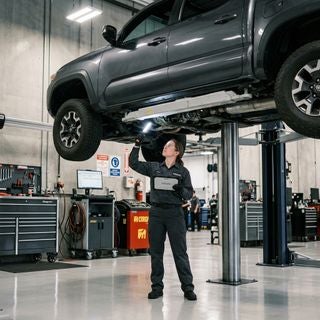
Automotive technicians utilize digital paint depth gauges, electronic wheel alignment racks, and three-dimensional laser frame measuring systems to verify underlying structural integrity and reveal hidden body filler. A thorough pre-purchase inspection on a hoist exposes inconsistencies between a vehicle history summary and real-world condition.

Buyers evaluating pre-owned models on our lot frequently ask how to verify if a reported bumper collision reached the underlying unibody. Professional technicians follow a systematic physical and digital inspection process:

  • Digital Paint Depth Gauges: Measuring paint thickness in mils across every panel identifies underlying body filler, heavy primer layers, or aftermarket resprays.
  • Computerized 3D Laser Frame Measuring: Mounting the vehicle on an alignment rack uses laser targets to measure factory datum points, confirming frame rails and unibody dimensions remain within millimeter tolerances.
  • Seam Sealer and Weld Inspection: Examining engine bay seams, trunk floors, and door jambs reveals whether factory seam sealers are intact or if aftermarket welding and cutting occurred.
  • Wheel Alignment and Suspension Geometry: Digital alignment checks confirm that camber, caster, and toe settings meet factory specifications, ruling out bent control arms or subframe shifts.

Poorly executed repairs leave noticeable warning signs, including uneven panel gaps, water intrusion inside headlight housings, overspray on rubber door seals, and premature rust along unsealed panel edges. Confirming precise alignment and clean factory seams ensures the automobile will perform reliably for miles to come.

A smiling car salesman speaks with an older couple in a dealership parking lot surrounded by cars and fall foliage. (Representative image for illustration purposes only. Actual vehicle may vary based on trim and configuration.)

Does a Previous Minor Accident Impact Insurance Coverage, Financing, and Future Trade-In Value?

A vehicle with a reported minor accident on a clean title remains fully eligible for standard auto financing and comprehensive insurance coverage, though it experiences a modest reduction in resale market value. Because total loss branding is absent, lenders evaluate the vehicle using standard loan-to-value guidelines.

Insurance underwriters make no distinction between a clean-history vehicle and one with a clean-title minor damage report when offering collision, liability, and comprehensive coverage. Because the title remains normal (non-branded), major auto insurance carriers issue standard policies without elevated premium surcharges.

From a financing perspective, auto lenders issue loans based on official wholesale and retail valuation guides. While minor damage history lowers the baseline book value slightly, borrowers secure standard interest rates and loan terms. To streamline your purchase, you can complete our secure online credit application to review financing parameters tailored to your budget.

When it comes to future trade-in value, vehicles with prior damage entries trade at a slight discount compared to clean-history equivalents. However, because you purchase the vehicle at a lower market value initially, the net depreciation curve mirrors that of any other pre-owned automobile. Local drivers negotiating the riverfront bluffs and hill climbs of East Liverpool can easily calculate their potential equity by taking advantage of our online tool to value your trade-in before visiting our dealership.

Frequently Asked Questions About Buying Used Vehicles With Reported Damage

Q: What is the main difference between a minor accident and structural damage on a Carfax report?

Vehicle history reports often classify minor accidents as incidents involving only superficial damage, which rarely affects the car's mechanical performance or safety features. Structural damage entries indicate that the central unibody, frame rails, roof pillars, or main crash supports were bent, cracked, or compromised, severely impacting crash protection and resale value.

Q: Can I fully insure a used car that has a minor accident listed on its record?

Yes, insurance companies provide complete coverage—including liability, collision, and comprehensive plans—for vehicles with minor accident histories, provided the title remains clean and non-branded. Because cosmetic repairs do not alter the vehicle's legal status or structural integrity, premium rates remain consistent with standard market standards.

Q: How much does a minor accident lower a used car's purchase price?

A reported minor accident typically reduces a used car's market value by 10 to 15 percent compared to an equivalent clean-history vehicle. This initial price discount offers significant savings for buyers while providing identical mechanical reliability when proper body repairs have been completed.

Q: How can I confirm that driver-assist sensors were properly calibrated after a minor collision repair?

Verification requires reviewing the repair facility's detailed work order to ensure digital camera and radar sensor recalibration procedures were performed. During a test drive, you should also test driver-assist systems like lane-keeping alerts and blind-spot monitoring to confirm they operate smoothly without warning lights.

Q: Does a past minor accident prevent a car from being financed by a bank?

No, national lenders and credit unions regularly finance pre-owned vehicles with minor damage entries on clean titles. Standard loan terms apply because the vehicle carries a normal title status rather than a branded salvage or reconstructed designation. You can explore our latest new vehicle selection or browse our single-owner pre-owned vehicles to find a model that fits your finance plans.

How to Confidently Evaluate and Purchase a Reliable Pre-Owned Vehicle

Acquiring a pre-owned vehicle with a minor accident record allows smart shoppers to maximize their purchasing power without sacrificing safety, modern features, or long-term durability. By verifying repair documentation, confirming clean title status, and ensuring electronic driver-assist systems are properly calibrated, you can drive home in a high-value automobile with total peace of mind.

At Tri State Ford, every pre-owned automobile undergoes a comprehensive physical and mechanical inspection by our certified technicians before reaching our inventory lot. We provide transparent vehicle history reports on every car, truck, and SUV so you can review background details with complete confidence.

When you are ready to take the next step, our team is here to assist you through every stage of the buying process:

Keep Your Vehicle Running Strong

Keep your vehicle performing at its best with our service team:


© 2026 Tri State Ford. All rights reserved.

Used Cars with Minor Accident History in East Liverpool OH | Tri State Ford
Posted in:

Related Posts

g

What Should You Look for When Buying a Pre-Owned Ford Vehicle?

.hrizn-rte-content .e-rte-image { border: 0;max-width: 100%;height: auto } .hrizn-rte-content .e-rte-image.e-imginline { display: inline-block;float: none;margin-left: 5px;margin-right: 5px;max-width: calc(100% - 10px);vertical-align: bottom } .hrizn-rte-content .e-rte-image.e-imgbreak, .hrizn-rte-content .e-rte-image.e-imgcenter { display: block;float: none;margin: 5px auto;max-width: 100% } .hrizn-rte-content .e-rte-image.e-imgleft { float: left;margin: 0 12px 8px 0;max-width: 100% } .hrizn-rte-content .e-rte-image.e-imgright { float: right;margin: 0 0 8px 12px;max-width: 100% } .hrizn-rte-content figure.e-rte-image { margin: 8px auto;max-width: 100% } .hrizn-rte-content figure.e-imgleft { float: left;margin: 0 12px 8px 0 } .hrizn-rte-content figure.e-imgright { float: right;margin: 0 0 8px 12px } .hrizn-rte-content figure.e-imgcenter { display: block;margin: 8px auto;text-align: center } When buying a pre-owned Ford vehicle, prioritize verified service records, frame and underbody condition, proper engine and drivetrain selection for your towing or passenger needs, and factory-backed certification. Focusing on documented maintenance, checking for original tow packages, verifying technology functionality, and opting for certified warranty coverage ensures long-term dependability, lower cost of ownership, and cost control. Evaluating a used truck or SUV requires a systematic approach to ensure you receive maximum value. Vehicle history reports provide essential details regarding previous maintenance, title status, and accident history. Examining routine service entries—such as oil changes, fluid flushes, and brake service—gives a clear picture of how well the prior owner maintained the mechanical components. Structural integrity is equally important. For buyers in East Liverpool, inspecting the frame and underbody for excessive corrosion is crucial due to seasonal road treatments and driving along riverfront bluffs. Another critical factor is verifying that factory equipment aligns with your lifestyle requirements. If you plan to haul heavy loads, confirming the presence of an integrated trailer brake controller, upgraded axle ratios, and cooling packages is essential rather than relying on aftermarket additions. Interior technology, including infotainment displays and active safety systems, should be tested thoroughly during a test drive. Choosing a vehicle with comprehensive vehicle reconditioning and clear inspection documentation gives you total confidence on the road. Starting your purchase research online simplifies the process. You can fill out an online credit application from home to secure pre-approval, view our East Liverpool showroom address for driving directions, or give our sales team a quick call at (330) 462-7578 to ask about specific vehicle arrivals. Table of Contents Does the Ford Explorer Have a Third Row of Seating for Families? What Towing Capacity Does a Pre-Owned Ford F-150 Offer? How Does a Used Ford F-150 Compare to a Pre-Owned Chevrolet Silverado 1500? What Is Ford SYNC 4 and How Does Tech Impact F-150 Resale Value? Is Buying a Ford Certified Pre-Owned Vehicle Worth the Extra Cost? What Financing Options Are Available for Used Trucks and SUVs at Tri State Ford? Common Questions About Pre-Owned Ford Trucks and SUVs Take the Next Step Toward Your Pre-Owned Ford at Tri State Ford Does the Ford Explorer Have a Third Row of Seating for Families? Yes, the Ford Explorer comes standard with three rows of seating across all trim levels, accommodating up to six or seven passengers depending on whether the second row features captain's chairs or a bench seat. Family transport demands versatile cabin layouts, and the Explorer delivers exceptional interior flexibility for growing households. Models equipped with a second-row 35/30/35 split-fold bench seat provide seating for seven, while configurations with second-row captain's chairs seat six and create an easy center aisle for third-row access. The third-row 50/50 split-fold bench offers comfortable legroom for children and teens, making school runs and weekend road trips effortless. When you need maximum utility, folding down both rear rows opens up an expansive flat load floor capable of carrying bulky gear, luggage, or home improvement supplies. Behind the third row, the Explorer provides about 16 cubic feet of dedicated cargo space, keeping daily essentials secured while maintaining full passenger capacity. Under the hood, modern pre-owned models feature a responsive turbocharged 2.3L EcoBoost 4-cylinder engine paired with a SelectShift automatic transmission, delivering an EPA-estimated 20 mpg city / 27 hwy. For drivers needing extra traction on wet pavement or winter roads, available All-wheel drive automatically adjusts torque distribution to maintain stability. When properly equipped, the Explorer also boasts a maximum towing capacity of up to 5,000 pounds, easily pulling small boats, camper trailers, or recreational gear. For families in Calcutta, the Explorer balances suburban carpooling convenience along State Route 170 with the rugged utility needed for outdoor weekend trips to nearby Beaver Creek State Park. If you prefer a tailored configuration with specific interior packages or color schemes, our team can guide you through the custom order process to secure a vehicle built exactly to your preferences. What Towing Capacity Does a Pre-Owned Ford F-150 Offer? A pre-owned Ford F-150 offers a maximum conventional towing capacity between 8,200 pounds and 13,500 pounds, depending directly on the engine, cab layout, axle ratio, and installed towing packages. Understanding F-150 tow ratings requires matching the specific powertrain to your trailering demands. The F-150 lineup features several distinct engines, each engineered for balanced output and strength: 2.7L EcoBoost V6: Generates 325 horsepower and 400 lb-ft of torque, providing high fuel efficiency with standard towing capabilities up to 10,100 pounds. 5.0L Ti-VCT V8: Delivers 400 horsepower and 410 lb-ft of torque, offering classic naturally aspirated V8 muscle with towing power up to 13,000 pounds. 3.5L EcoBoost V6: Produces 400 horsepower and 500 lb-ft of torque, reaching the peak F-150 towing threshold of 13,500 pounds and a maximum payload rating of 2,440 pounds when properly equipped. 3.5L PowerBoost full-hybrid V6: Combines gas and electric power to output 430 horsepower and 570 lb-ft of torque, achieving a maximum tow rating of 12,700 pounds alongside onboard generator capability. All pre-owned F-150 engines pair with a smooth-shifting 10-speed SelectShift automatic transmission that optimizes gear ratios to keep the engine in its prime power band while pulling heavy loads up steep grades. To achieve maximum tow ratings, look for models equipped with the factory Max Trailer Tow Package. This package incorporates a 3.55 or 3.73 electronic-locking rear axle, an integrated trailer brake controller, an upgraded rear bumper, an extended-range fuel tank, and Smart Trailer Tow Connector technology. During vehicle walk-arounds, our team regularly demonstrates how the integrated trailer brake controller and hitch setup operate, helping buyers understand how factory trailer packages enhance real-world stability. If you plan to upgrade to an F-150, you can start by requesting an instant cash offer appraisal to determine your current vehicle's trade value. How Does a Used Ford F-150 Compare to a Pre-Owned Chevrolet Silverado 1500? A used Ford F-150 offers competitive towing and payload ratings alongside an aluminum-alloy body, whereas a pre-owned Chevrolet Silverado 1500 relies on traditional steel body construction and standard V8 engine choices. The defining structural distinction between these two full-size trucks lies in body construction. Ford transitioned the F-150 to a high-strength aluminum-alloy body on a high-strength steel frame, reducing overall vehicle weight by hundreds of pounds. This weight savings is directly reinvested into increased payload capacity and higher tow ratings. While the Chevrolet Silverado 1500 uses a traditional steel bed and body, the lighter body structure of the F-150 allows it to achieve a top conventional towing capacity of 13,500 pounds compared to lower maximum thresholds in equivalent Silverado setups. Powertrain strategy represents another key difference. While the Silverado 1500 relies heavily on naturally aspirated V8 engines, Ford offers a diverse engine portfolio centered around twin-turbocharged EcoBoost V6 technology and full-hybrid power. The Ford 3.5L EcoBoost V6 delivers 500 lb-ft of low-end torque early in the RPM range, providing superior pulling power from a complete stop when compared to traditional V8 engines that require higher engine speeds to reach peak torque. Additionally, Ford's 10-speed SelectShift automatic transmission offers finer ratio steps than older six-speed or eight-speed automatic transmissions found in many pre-owned Silverado models, resulting in smoother power delivery under heavy acceleration. Shoppers interested in well-maintained trucks with verified background histories can browse our inventory of pre-owned single-owner vehicle inventory to compare low-mileage F-150 models against competing pre-owned trucks on our lot. What Is Ford SYNC 4 and How Does Tech Impact F-150 Resale Value? Ford SYNC 4 is an advanced cloud-connected infotainment system featuring wireless smartphone integration, conversational voice command, and over-the-air update capability, standard on most 2021 and newer Ford F-150 trucks. Modern vehicle technology plays a major role in day-to-day driving convenience and long-term asset value. Ford SYNC 4 upgrades cabin connectivity by offering wireless Apple CarPlay and Android Auto compatibility, allowing drivers to project navigation, music, and communication apps directly onto standard 8-inch or available 12-inch touchscreens without plugging in a cable. Cloud connectivity enhances voice recognition, permitting natural spoken requests for directions, audio adjustments, or climate control settings. Furthermore, over-the-air software updates ensure the system receives performance enhancements and feature additions over time, keeping the vehicle's tech suite modern years after manufacture. Vehicle technology and factory options directly influence long-term resale value retention. In the pre-owned truck market, several key factors dictate how well an F-150 retains its value over time: Cabin Technology: Touchscreen interfaces with Ford SYNC 4 and digital cluster displays command higher market demand than basic sync setups. Drivetrain and Cab Configuration: SuperCrew body styles paired with four-wheel drive maintain the highest demand and resale percentages. Engine Selection: Trucks fitted with the powerful 3.5L EcoBoost V6 or 3.5L PowerBoost full-hybrid V6 hold strong market value due to their high torque outputs and towing capabilities. Trim Level: Mid-to-upper trims such as the Lariat or King Ranch retain strong buyer interest due to premium leather seating, advanced Ford Co-Pilot360 driver-assist features, and luxury creature comforts. Understanding these resale dynamics helps buyers select a pre-owned truck that will retain maximum value over their ownership cycle. You can evaluate your current vehicle's current equity using our online vehicle trade-in evaluation tool before upgrading to an F-150 equipped with SYNC 4. Is Buying a Ford Certified Pre-Owned Vehicle Worth the Extra Cost? Buying a Ford Certified Pre-Owned vehicle is worth the added cost because it delivers rigorous multi-point vehicle inspection standards, extended factory-backed warranty coverage, and 24/7 roadside assistance that non-certified used vehicles lack. The Ford Blue Advantage certification program eliminates the guesswork often associated with buying a pre-owned vehicle. Every candidate vehicle must undergo a comprehensive inspection conducted by factory-trained technicians before earning certified status. Any component that fails to meet strict Ford standards is repaired or replaced using genuine Ford parts. Ford Blue Advantage offers two primary certification tiers to match different vehicle ages and buyer budgets: Gold Certified: Applies to Ford models up to six model years old with less than 80,000 miles. It includes a thorough 172-point inspection, a 7-year or 100,000-mile powertrain limited warranty from the original in-service date, a 12-month/12,000-mile comprehensive limited warranty, 24/7 Roadside Assistance, and Ford Rewards Points. Blue Certified: Covers vehicles of any make up to 10 model years old with up to 120,000 miles. It requires a 139-point inspection and includes a 90-day or 4,000-mile comprehensive limited warranty alongside roadside coverage. The modest price premium of a certified pre-owned vehicle is easily offset by the financial protection of extended warranty coverage. Knowing that key mechanical components—including the engine, transmission, and drivetrain—are protected against unexpected repair bills provides exceptional peace of mind. Shoppers comparing pre-owned choices can explore our certified pre-owned Ford selection, view brand-new Ford models on our lot, or check our current manufacturer vehicle specials to identify the best overall value for their household budget. What Financing Options Are Available for Used Trucks and SUVs at Tri State Ford? Used truck and SUV financing options at Tri State Ford include competitive loan programs through Ford Credit, local credit unions, and national lending institutions, tailored to accommodate diverse credit profiles and down payment budgets. Securing auto financing should be a transparent and straightforward process. Our finance specialists work directly with multiple lending institutions to help buyers secure competitive interest rates and flexible loan terms with flexible loan terms. Whether you have exceptional credit, are building your credit history, or fall into a first-time buyer program, our team structures financing packages designed around your monthly income and budget goals. Utilizing trade-in equity from your current vehicle can significantly lower your net loan amount, which can help you better manage your monthly budget over the term of the contract. Completing loan pre-approval before visiting the dealership grants you significant advantages during the shopping process. Pre-approval establishes a clear budget baseline, allowing you to focus on pre-owned trucks and SUVs that fit your target monthly payment. Furthermore, having pre-approved financing streamlines paperwork processing in the finance office, allowing you to complete your purchase efficiently and drive home in your pre-owned vehicle. When you are ready to explore available financing structures in person, locate our convenient dealership location or contact our finance team by giving us a quick call at (330) 462-7578 to discuss current lending rates. Common Questions About Pre-Owned Ford Trucks and SUVs Q: Does the standard Ford Explorer hybrid require a plug-in wall charger? No, the standard Ford Explorer hybrid does not require an external wall charger or plug. The hybrid system utilizes regenerative braking and engine power to recharge its onboard liquid-cooled lithium-ion battery automatically while driving. Energy captured during deceleration is stored in the battery and sent back to the electric motor to assist acceleration, maximizing fuel efficiency without changing your daily refueling habits. Q: What equipment is required on an F-150 to reach its maximum tow rating? Reaching the maximum 13,500 pounds conventional towing capacity requires an F-150 equipped with the 3.5L EcoBoost V6 engine, 4x2 drivetrain, SuperCrew or SuperCab configuration, 3.55 or 3.73 rear axle ratio, and the factory Max Trailer Tow Package. This package incorporates a heavy-duty rear bumper, integrated trailer brake controller, Smart Trailer Tow Connector, and enhanced cooling components necessary to handle peak GCWR limits safely. Q: Can I transfer a Ford Gold Certified warranty if I sell the vehicle later? Yes, the 7-year or 100,000-mile powertrain limited warranty attached to a Ford Gold Certified pre-owned vehicle is fully transferable to subsequent private owners. If you decide to sell your vehicle before the warranty term expires, transferring the remaining factory-backed coverage to the new owner increases buyer confidence and helps command a higher private-party resale price. Q: What documents should I bring to the dealership when applying for auto financing? When completing a vehicle purchase and auto loan application, bring a valid driver's license, your current auto insurance card, your most recent proof of income (such as pay stubs or bank statements), and proof of residence (such as a utility bill). If you plan to trade in a vehicle, bring the vehicle's title or lien payoff information along with all sets of keys. Q: How does a 10-speed automatic transmission improve truck towing performance? The 10-speed SelectShift automatic transmission features narrow step ratios between gears, keeping the engine operating in its sweet spot during acceleration. When pulling heavy trailers up steep grades, the transmission optimizes torque delivery and gear selection to reduce hunting between gears. Additionally, wide overall ratio spans allow for lower numeric top gears, reducing engine RPM at highway speeds to conserve fuel while cruising without a load. Take the Next Step Toward Your Pre-Owned Ford at Tri State Ford Finding the ideal pre-owned truck or SUV comes down to choosing a quality vehicle backed by clear inspection standards, transparent financing, and proven performance capabilities. Whether you require the three-row family utility of a Ford Explorer, the outstanding towing power of an F-150, or the reassurance of a Ford Blue Advantage Certified Pre-Owned warranty, our team is dedicated to delivering outstanding value. Explore our online inventory, calculate your trade-in equity, apply for pre-approved financing, or visit our showroom today to take your test drive and drive home with complete confidence. Keep Your Vehicle Running Strong Keep your vehicle performing at its best with our service team: Order Parts Schedule Service Appt © 2026 Tri State Ford. All rights reserved. Vehicle specification data © JATO Dynamics Limited. Title Tags Pre-Owned Ford Vehicles in East Liverpool OH | Tri State Ford Meta Description Keywords Open Graph Twitter Card Canonical Article Metadata Geographic Targeting { "@context": "https://schema.org", "@graph": [ { "@type": "NewsArticle", "@id": "#article", "headline": "What Should You Look for When Buying a Pre-Owned Ford Vehicle?", "datePublished": "2026-09-23T13:00:46.616Z", "dateModified": "2026-09-23T13:03:42.843Z", "author": { "@id": "#author" }, "publisher": { "@id": "#dealer" }, "wordCount": 2590, "description": "Learn key factors to evaluate when buying a pre-owned Ford, including service records, frame condition, drivetrain options, and factory certification." }, { "@type": "AutoDealer", "@id": "#dealer", "name": "Tri State Ford", "url": "https://www.tristateford.net", "telephone": "+13304627578", "sameAs": [ "https://maps.google.com/?cid=1136336406351438323" ], "address": { "@type": "PostalAddress", "streetAddress": "1503 Pennsylvania Ave", "addressLocality": "East Liverpool", "addressRegion": "OH", "postalCode": "43920", "addressCountry": "US" }, "areaServed": { "@type": "GeoCircle", "geoMidpoint": { "@type": "GeoCoordinates", "latitude": "40.6367833", "longitude": "-80.5443033" }, "geoRadius": "48280" }, "geo": { "@type": "GeoCoordinates", "latitude": "40.6367833", "longitude": "-80.5443033" }, "openingHours": [ "Mo 09:00-20:00", "Tu 09:00-18:00", "We 09:00-18:00", "Th 09:00-20:00", "Fr 09:00-18:00", "Sa 09:00-15:00" ] }, { "@type": "FAQPage", "@id": "#faq", "mainEntity": [ { "@type": "Question", "name": "Does the standard Ford Explorer hybrid require a plug-in wall charger?", "acceptedAnswer": { "@type": "Answer", "text": "No, the standard Ford Explorer hybrid does not require an external wall charger or plug. The hybrid system utilizes regenerative braking and engine power to recharge its onboard liquid-cooled lithium-ion battery automatically while driving. Energy captured during deceleration is stored in the battery and sent back to the electric motor to assist acceleration, maximizing fuel efficiency without changing your daily refueling habits." } }, { "@type": "Question", "name": "What equipment is required on an F-150 to reach its maximum tow rating?", "acceptedAnswer": { "@type": "Answer", "text": "Reaching the maximum 13,500 pounds conventional towing capacity requires an F-150 equipped with the 3.5L EcoBoost V6 engine, 4x2 drivetrain, SuperCrew or SuperCab configuration, 3.55 or 3.73 rear axle ratio, and the factory Max Trailer Tow Package . This package incorporates a heavy-duty rear bumper, integrated trailer brake controller, Smart Trailer Tow Connector, and enhanced cooling components necessary to handle peak GCWR limits safely." } }, { "@type": "Question", "name": "Can I transfer a Ford Gold Certified warranty if I sell the vehicle later?", "acceptedAnswer": { "@type": "Answer", "text": "Yes, the 7-year or 100,000-mile powertrain limited warranty attached to a Ford Gold Certified pre-owned vehicle is fully transferable to subsequent private owners. If you decide to sell your vehicle before the warranty term expires, transferring the remaining factory-backed coverage to the new owner increases buyer confidence and helps command a higher private-party resale price." } }, { "@type": "Question", "name": "What documents should I bring to the dealership when applying for auto financing?", "acceptedAnswer": { "@type": "Answer", "text": "When completing a vehicle purchase and auto loan application, bring a valid driver's license, your current auto insurance card, your most recent proof of income (such as pay stubs or bank statements), and proof of residence (such as a utility bill). If you plan to trade in a vehicle, bring the vehicle's title or lien payoff information along with all sets of keys." } }, { "@type": "Question", "name": "How does a 10-speed automatic transmission improve truck towing performance?", "acceptedAnswer": { "@type": "Answer", "text": "The 10-speed SelectShift automatic transmission features narrow step ratios between gears, keeping the engine operating in its sweet spot during acceleration. When pulling heavy trailers up steep grades, the transmission optimizes torque delivery and gear selection to reduce hunting between gears. Additionally, wide overall ratio spans allow for lower numeric top gears, reducing engine RPM at highway speeds to conserve fuel while cruising without a load." } } ] } ] }

d

What You Need to Know When Shopping for a Used Ford Explorer

.hrizn-rte-content .e-rte-image { border: 0;max-width: 100%;height: auto } .hrizn-rte-content .e-rte-image.e-imginline { display: inline-block;float: none;margin-left: 5px;margin-right: 5px;max-width: calc(100% - 10px);vertical-align: bottom } .hrizn-rte-content .e-rte-image.e-imgbreak, .hrizn-rte-content .e-rte-image.e-imgcenter { display: block;float: none;margin: 5px auto;max-width: 100% } .hrizn-rte-content .e-rte-image.e-imgleft { float: left;margin: 0 12px 8px 0;max-width: 100% } .hrizn-rte-content .e-rte-image.e-imgright { float: right;margin: 0 0 8px 12px;max-width: 100% } .hrizn-rte-content figure.e-rte-image { margin: 8px auto;max-width: 100% } .hrizn-rte-content figure.e-imgleft { float: left;margin: 0 12px 8px 0 } .hrizn-rte-content figure.e-imgright { float: right;margin: 0 0 8px 12px } .hrizn-rte-content figure.e-imgcenter { display: block;margin: 8px auto;text-align: center } What You Need to Know When Shopping for a Used Ford Explorer ## How Does a Used Ford Explorer Compare to a Used Jeep Grand Cherokee? A used Ford Explorer provides standard three-row seating for up to seven passengers, a stronger standard turbocharged engine with 300 horsepower, and greater rear cargo volume than a comparable two-row Jeep Grand Cherokee. While the Grand Cherokee focuses on two-row off-road luxury or requires upgrading to the longer Grand Cherokee L for three rows, a used Ford Explorer delivers superior standard passenger versatility, higher fuel efficiency, and confident rear-wheel-drive performance for everyday family driving. When buyers compare these two midsize SUVs, the practical cabin layout is usually the first major difference they notice. The standard two-row Jeep Grand Cherokee features 293 horsepower from its 3.6L V6 and maxes out at five seats, forcing growing families to look specifically for the larger Grand Cherokee L if they need a third row. By contrast, sixth-generation used Ford Explorer models come standard with three rows, accommodating six people with second-row captain's chairs or seven with the second-row bench seat. On our showroom floor, families often ask whether a two-row midsize SUV can handle long-term growth; having that third row standard in the Ford Explorer avoids the need to upgrade vehicles prematurely as kids grow. Under the hood, a used Ford Explorer equipped with the standard 2.3L EcoBoost four-cylinder delivers 300 horsepower and 310 lb-ft of torque. That output beats the Grand Cherokee's 293-horsepower V6 in both horsepower and low-end torque, giving the Explorer snappier throttle response when accelerating onto highways. Furthermore, sixth-generation Explorer models (2020 and newer) offer up to 87 cubic feet of total cargo volume behind the front seats, compared to roughly 70 cubic feet in the standard two-row Grand Cherokee. If you are comparing midsize haulers in person, drop by our East Liverpool showroom address or give our sales team a call to explore our current inventory. Table of Contents What Year Did the Ford Explorer Switch Back to Rear-Wheel Drive Platform Architecture? Is the 2.3L EcoBoost Engine Reliable in a Used Ford Explorer? Can a Used Ford Explorer Tow a Camper Trailer for Weekend Getaways? What Is a Fair Price for a Used Ford Explorer and Which Trim Offers the Best Value? How Can You Maximize Your Used Ford Explorer Resale Value Over Time? Where Can Shoppers Near East Liverpool Check Local Used Ford Explorer Inventory? What Year Did the Ford Explorer Switch Back to Rear-Wheel Drive Platform Architecture? Ford switched the Explorer back to a rear-wheel-drive-based unibody platform architecture for the 2020 model year with the launch of its sixth generation. This major platform transition replaced the previous fifth-generation (2011–2019) front-wheel-drive layout with the CD6 platform, drastically improving driving dynamics, towing balance, and overall cabin proportions. Shifting back to a longitudinal rear-wheel-drive orientation transformed how a used Ford Explorer handles daily road stress. By mounting the engine longitudinally, engineers shifted the front axle forward, shortening the front overhang and achieving near 50/50 weight distribution. This balance reduces front-end plow in sharp turns and eliminates steering tug during acceleration. When equipped with intelligent four-wheel drive, a 2020 or newer used Ford Explorer operates primarily in rear-wheel drive under normal conditions, sending power forward instantly when wheel slip is detected. The rear-wheel-drive architecture also allowed Ford to increase towing capability across all trim levels. While fifth-generation front-wheel-drive models felt front-heavy under heavy tongue weights, 2020 and newer models handle trailering loads with far greater stability. The underlying chassis design supports both the standard 300-horsepower 2.3L EcoBoost and the high-performance 400-horsepower 3.0L EcoBoost V6 found in the ST trim. Both powertrains pair with a responsive 10-speed automatic transmission. Shoppers looking for peak mechanical confidence can browse our certified pre-owned Ford inventory to find rear-wheel-drive platform models backed by factory warranty coverage. Engine & Performance Powertrain specs by trim Feature Active 4WD Active 4WD 100A Active RWD Active RWD 100A Platinum Platinum 4WD ST ST 4WD ST-LINE 4WD ST-LINE RWD Tremor 4WD Utility Police Interceptor 4x4:--:--:--:--:--:--:--:--:--:--:--:--:-- Engine 2.3L 2.3L 2.3L 2.3L 2.3L 2.3L 3L 3L 2.3L 2.3L 2.3L 3.3L Horsepower 300 hp 300 hp 300 hp 300 hp 300 hp 300 hp 400 hp 400 hp 300 hp 300 hp 300 hp 318 hp Torque 310 lb-ft 310 lb-ft 310 lb-ft 310 lb-ft 310 lb-ft 310 lb-ft 415 lb-ft 415 lb-ft 310 lb-ft 310 lb-ft 310 lb-ft 260 lb-ft Transmission SelectShift® SelectShift® SelectShift® SelectShift® SelectShift® SelectShift® SelectShift® SelectShift® SelectShift® SelectShift® SelectShift® SelectShift Drivetrain All-wheel drive All-wheel drive Rear-wheel drive Rear-wheel drive Rear-wheel drive All-wheel drive Rear-wheel drive All-wheel drive All-wheel drive Rear-wheel drive All-wheel drive All-wheel drive Is the 2.3L EcoBoost Engine Reliable in a Used Ford Explorer? The 2.3L EcoBoost four-cylinder engine has earned a solid track record for long-term mechanical reliability in the Ford Explorer when maintained with routine oil changes and factory-scheduled care. Featuring a rigid die-cast aluminum block, direct fuel injection, twin-scroll turbocharging, and a durable chain-driven valvetrain, this powertrain delivers robust daily acceleration without premature wear. With 300 horsepower and 310 lb-ft of torque on tap, the 2.3L EcoBoost engine operates with minimal mechanical strain during highway cruising and suburban commuting. Unlike older turbocharged engines that required frequent teardowns, modern EcoBoost engineering incorporates advanced cooling jackets and synthetic oil formulations that protect turbocharger bearings from heat buildup. For sixth-generation models, an EPA-estimated fuel economy rating of 20 mpg city / 29 mpg highway in rear-wheel drive proves that solid power output does not come at the expense of efficiency. When evaluating a used Ford Explorer equipped with this engine, reviewing documented maintenance history offers complete peace of mind. Regular oil changes protect the hydraulic timing chain tensioners and variable camshaft timing phasers, keeping the engine running quietly well past 100,000 miles. To review high-quality pre-owned options with verified service backgrounds, check out our selection of single-owner pre-owned vehicles and start your purchase process online using our secure online credit application. Can a Used Ford Explorer Tow a Camper Trailer for Weekend Getaways? A properly equipped used Ford Explorer can tow up to 5,000 pounds, making it fully capable of hauling single-axle camper trailers, pop-up campers, teardrop trailers, and personal watercraft. Every sixth-generation Ford Explorer equipped with the factory Class III Trailer Tow Package includes a heavy-duty receiver hitch, trailer wiring harness, and integrated trailer sway control to keep your load stable on open highways. Calculating your total towing setup requires looking at both trailer weight and payload capacity. A typical lightweight travel trailer weighs between 2,800 and 3,800 pounds dry, leaving plenty of margin under the Explorer's 5,000-pound maximum towing capacity for water tanks, camping gear, and family passengers. The standard Class III Trailer Tow Package uses electronic stability controls to apply selective braking if trailer sway is detected, keeping your vehicle tracking straight on winding roads. Navigating steep highway climbs or gravel access routes is straightforward thanks to selectable drive modes like Tow/Haul, which adjusts the shift points of the 10-speed automatic transmission to keep the engine in its optimal powerband. For buyers who need even heavier commercial towing capacity for heavy equipment or multi-car trailers, our team can also guide you toward our commercial truck inventory to explore heavy-duty hauling solutions. What Is a Fair Price for a Used Ford Explorer and Which Trim Offers the Best Value? Fair market pricing for a used Ford Explorer may vary by vehicle, mileage, condition, and market, with examples ranging from roughly $15,000 to $18,000 for well-kept fifth-generation models (2016–2018), while recent sixth-generation models (2020–2023) may typically range between $28,000 and $38,000 depending on mileage, condition, and trim level. Among all available configurations, the XLT trim represents the ultimate value sweet spot by delivering essential convenience features without elevated luxury price tags. Choosing an XLT trim gets buyers popular everyday upgrades, including heated front seats, power-adjustable driver seating, second-row captain's chairs, keyless entry with push-button start, and the comprehensive Ford Co-Pilot360 suite of driver-assist technologies. Higher trims like the Limited, Platinum, or performance-tuned ST introduce leather seating, 20-inch wheels, and available twin-turbo V6 power, but they command higher market prices. Understanding how mileage impacts pricing helps buyers budget effectively. Pre-owned Explorers under 60,000 miles carry a slight price premium because they remain eligible for extended powertrain protection, whereas vehicles closer to 80,000 miles offer steep upfront savings for budget-conscious buyers. Before setting your target price, you can easily value your trade-in online to estimate your purchasing power, or explore our custom factory order tool if you ultimately decide to design a brand-new vehicle. Pricing Pricing by trim Feature Active 4WD Active 4WD 100A Active RWD Active RWD 100A Platinum Platinum 4WD ST ST 4WD ST-LINE 4WD ST-LINE RWD Tremor 4WD Utility Police Interceptor 4x4:--:--:--:--:--:--:--:--:--:--:--:--:-- Base MSRP $42,585 $40,465 $40,585 $38,465 $50,965 $52,965 $54,905 $56,905 $47,155 $45,155 $48,965 $48,550 Destination charge $1,795 $1,795 $1,795 $1,795 $1,795 $1,795 $1,795 $1,795 $1,795 $1,795 $1,795 $1,695 How Can You Maximize Your Used Ford Explorer Resale Value Over Time? Maximizing the future resale value of a used Ford Explorer comes down to maintaining detailed service records, addressing minor exterior chips promptly, and keeping up with factory recall services. Vehicles that show documented oil changes, timely brake services, and routine tire rotations consistently command higher trade-in values and attract buyer interest faster when it comes time to sell. Preserving both mechanical and cosmetic condition protects your vehicle investment against unnecessary depreciation. Parking in shaded or garaged areas prevents paint fading and interior dash cracking, while installing all-weather floor liners shields interior carpeting from mud, snow, and salt. Addressing windshield stone chips or minor body door dings immediately prevents rust from forming on exposed metal. Furthermore, ensuring all manufacturer safety recalls and service bulletins are completed at an authorized dealership maintains clean vehicle history reports. Keeping a dedicated folder of all maintenance invoices provides physical proof of care for future buyers. If your transportation needs evolve into commercial applications down the line, our dealership also supplies our commercial vehicle options to support local business growth. Where Can Shoppers Near East Liverpool Check Local Used Ford Explorer Inventory? Shoppers near East Liverpool can inspect, test-drive, and purchase local pre-owned Ford Explorer models directly at Tri State Ford, located right in town at 1503 Pennsylvania Avenue. Visiting a dedicated local Ford showroom ensures access to thoroughly inspected vehicles, detailed Carfax history reports, transparent trade-in appraisals, and competitive local financing options. Taking a test drive on local roads gives you a true feel for how a used Ford Explorer handles daily transportation demands. Navigating the riverfront bluffs and elevation changes around East Liverpool demonstrates the immediate power of the 2.3L EcoBoost engine and the firm grip of available intelligent four-wheel drive. Families living in nearby suburban communities like Calcutta appreciate testing the easy single-touch folding mechanism on the second-row seats to ensure car seats and sports equipment fit effortlessly. Our sales team is committed to providing a transparent, stress-free buying experience tailored to your family's budget. Whether you are comparing low-mileage XLT models or exploring high-performance ST builds, you can visit our local dealership today, give our staff a call at (330) 462-7578, or browse our new Ford vehicle inventory to explore every option on our lot. Keep Your Vehicle Running Strong Keep your vehicle performing at its best with our service team: Order Parts Schedule Service Appt © 2026 Tri State Ford. All rights reserved. Vehicle specification data © JATO Dynamics Limited. Title Tags Used Ford Explorer Deals in East Liverpool OH | Tri State Ford Meta Description Keywords Open Graph Twitter Card Canonical Article Metadata Geographic Targeting { "@context": "https://schema.org", "@graph": [ { "@type": "NewsArticle", "@id": "#article", "headline": "What You Need to Know When Shopping for a Used Ford Explorer", "datePublished": "2026-09-22T20:19:07.461Z", "dateModified": "2026-09-22T20:20:50.091Z", "author": { "@id": "#author" }, "publisher": { "@id": "#dealer" }, "wordCount": 2025, "description": "Learn how a used Ford Explorer offers standard three-row seating, 300 horsepower, and greater cargo space compared to a two-row Jeep Grand Cherokee." }, { "@type": "AutoDealer", "@id": "#dealer", "name": "Tri State Ford", "url": "https://www.tristateford.net", "telephone": "+13304627578", "sameAs": [ "https://maps.google.com/?cid=1136336406351438323" ], "address": { "@type": "PostalAddress", "streetAddress": "1503 Pennsylvania Ave", "addressLocality": "East Liverpool", "addressRegion": "OH", "postalCode": "43920", "addressCountry": "US" }, "areaServed": { "@type": "GeoCircle", "geoMidpoint": { "@type": "GeoCoordinates", "latitude": "40.6367833", "longitude": "-80.5443033" }, "geoRadius": "48280" }, "geo": { "@type": "GeoCoordinates", "latitude": "40.6367833", "longitude": "-80.5443033" }, "openingHours": [ "Mo 09:00-20:00", "Tu 09:00-18:00", "We 09:00-18:00", "Th 09:00-20:00", "Fr 09:00-18:00", "Sa 09:00-15:00" ] }, { "@type": "FAQPage", "@id": "#faq", "mainEntity": [ { "@type": "Question", "name": "How Does a Used Ford Explorer Compare to a Used Jeep Grand Cherokee?", "acceptedAnswer": { "@type": "Answer", "text": "A used Ford Explorer provides standard three-row seating for up to seven passengers, a stronger standard turbocharged engine with 300 horsepower, and greater rear cargo volume than a comparable two-row Jeep Grand Cherokee. While the Grand Cherokee focuses on two-row off-road luxury or requires upgrading to the longer Grand Cherokee L for three rows, a used Ford Explorer delivers superior standard passenger versatility, higher fuel efficiency, and confident rear-wheel-drive performance for everyday family driving. When buyers compare these two midsize SUVs, the practical cabin layout is usually the first major difference they notice. The standard two-row Jeep Grand Cherokee features 293 horsepower from its 3.6L V6 and maxes out at five seats, forcing growing families to look specifically for the larger Grand Cherokee L if they need a third row. By contrast, sixth-generation used Ford Explorer models come standard with three rows, accommodating six people with second-row captain's chairs or seven with the second-row bench seat. On our showroom floor, families often ask whether a two-row midsize SUV can handle long-term growth; having that third row standard in the Ford Explorer avoids the need to upgrade vehicles prematurely as kids grow. Under the hood, a used Ford Explorer equipped with the standard 2.3L EcoBoost four-cylinder delivers 300 horsepower and 310 lb-ft of torque. That output beats the Grand Cherokee's 293-horsepower V6 in both horsepower and low-end torque, giving the Explorer snappier throttle response when accelerating onto highways. Furthermore, sixth-generation Explorer models (2020 and newer) offer up to 87 cubic feet of total cargo volume behind the front seats, compared to roughly 70 cubic feet in the standard two-row Grand Cherokee. If you are comparing midsize haulers in person, drop by our East Liverpool showroom address or give our sales team a call to explore our current inventory." } }, { "@type": "Question", "name": "What Year Did the Ford Explorer Switch Back to Rear-Wheel Drive Platform Architecture?", "acceptedAnswer": { "@type": "Answer", "text": "Ford switched the Explorer back to a rear-wheel-drive-based unibody platform architecture for the 2020 model year with the launch of its sixth generation. This major platform transition replaced the previous fifth-generation (2011–2019) front-wheel-drive layout with the CD6 platform , drastically improving driving dynamics, towing balance, and overall cabin proportions. Shifting back to a longitudinal rear-wheel-drive orientation transformed how a used Ford Explorer handles daily road stress. By mounting the engine longitudinally, engineers shifted the front axle forward, shortening the front overhang and achieving near 50/50 weight distribution. This balance reduces front-end plow in sharp turns and eliminates steering tug during acceleration. When equipped with intelligent four-wheel drive , a 2020 or newer used Ford Explorer operates primarily in rear-wheel drive under normal conditions, sending power forward instantly when wheel slip is detected. The rear-wheel-drive architecture also allowed Ford to increase towing capability across all trim levels. While fifth-generation front-wheel-drive models felt front-heavy under heavy tongue weights, 2020 and newer models handle trailering loads with far greater stability. The underlying chassis design supports both the standard 300-horsepower 2.3L EcoBoost and the high-performance 400-horsepower 3.0L EcoBoost V6 found in the ST trim. Both powertrains pair with a responsive 10-speed automatic transmission . Shoppers looking for peak mechanical confidence can browse our certified pre-owned Ford inventory to find rear-wheel-drive platform models backed by factory warranty coverage." } }, { "@type": "Question", "name": "Is the 2.3L EcoBoost Engine Reliable in a Used Ford Explorer?", "acceptedAnswer": { "@type": "Answer", "text": "The 2.3L EcoBoost four-cylinder engine has earned a solid track record for long-term mechanical reliability in the Ford Explorer when maintained with routine oil changes and factory-scheduled care. Featuring a rigid die-cast aluminum block, direct fuel injection, twin-scroll turbocharging, and a durable chain-driven valvetrain, this powertrain delivers robust daily acceleration without premature wear. With 300 horsepower and 310 lb-ft of torque on tap, the 2.3L EcoBoost engine operates with minimal mechanical strain during highway cruising and suburban commuting. Unlike older turbocharged engines that required frequent teardowns, modern EcoBoost engineering incorporates advanced cooling jackets and synthetic oil formulations that protect turbocharger bearings from heat buildup. For sixth-generation models, an EPA-estimated fuel economy rating of 20 mpg city / 29 mpg highway in rear-wheel drive proves that solid power output does not come at the expense of efficiency. When evaluating a used Ford Explorer equipped with this engine, reviewing documented maintenance history offers complete peace of mind. Regular oil changes protect the hydraulic timing chain tensioners and variable camshaft timing phasers, keeping the engine running quietly well past 100,000 miles. To review high-quality pre-owned options with verified service backgrounds, check out our selection of single-owner pre-owned vehicles and start your purchase process online using our secure online credit application ." } }, { "@type": "Question", "name": "Can a Used Ford Explorer Tow a Camper Trailer for Weekend Getaways?", "acceptedAnswer": { "@type": "Answer", "text": "A properly equipped used Ford Explorer can tow up to 5,000 pounds, making it fully capable of hauling single-axle camper trailers, pop-up campers, teardrop trailers, and personal watercraft. Every sixth-generation Ford Explorer equipped with the factory Class III Trailer Tow Package includes a heavy-duty receiver hitch, trailer wiring harness, and integrated trailer sway control to keep your load stable on open highways. Calculating your total towing setup requires looking at both trailer weight and payload capacity. A typical lightweight travel trailer weighs between 2,800 and 3,800 pounds dry, leaving plenty of margin under the Explorer's 5,000-pound maximum towing capacity for water tanks, camping gear, and family passengers. The standard Class III Trailer Tow Package uses electronic stability controls to apply selective braking if trailer sway is detected, keeping your vehicle tracking straight on winding roads. Navigating steep highway climbs or gravel access routes is straightforward thanks to selectable drive modes like Tow/Haul, which adjusts the shift points of the 10-speed automatic transmission to keep the engine in its optimal powerband. For buyers who need even heavier commercial towing capacity for heavy equipment or multi-car trailers, our team can also guide you toward our commercial truck inventory to explore heavy-duty hauling solutions." } }, { "@type": "Question", "name": "What Is a Fair Price for a Used Ford Explorer and Which Trim Offers the Best Value?", "acceptedAnswer": { "@type": "Answer", "text": "Fair market pricing for a used Ford Explorer ranges from roughly $15,000 to $18,000 for well-kept fifth-generation models (2016–2018), while recent sixth-generation models (2020–2023) typically sell between $28,000 and $38,000 depending on mileage, condition, and trim level. Among all available configurations, the XLT trim represents the ultimate value sweet spot by delivering essential convenience features without elevated luxury price tags. Choosing an XLT trim gets buyers popular everyday upgrades, including heated front seats, power-adjustable driver seating, second-row captain's chairs, keyless entry with push-button start, and the comprehensive Ford Co-Pilot360 suite of driver-assist technologies. Higher trims like the Limited , Platinum , or performance-tuned ST introduce leather seating, 20-inch wheels, and available twin-turbo V6 power, but they command higher market prices. Understanding how mileage impacts pricing helps buyers budget effectively. Pre-owned Explorers under 60,000 miles carry a slight price premium because they remain eligible for extended powertrain protection, whereas vehicles closer to 80,000 miles offer steep upfront savings for budget-conscious buyers. Before setting your target price, you can easily value your trade-in online to estimate your purchasing power, or explore our custom factory order tool if you ultimately decide to design a brand-new vehicle." } }, { "@type": "Question", "name": "How Can You Maximize Your Used Ford Explorer Resale Value Over Time?", "acceptedAnswer": { "@type": "Answer", "text": "Maximizing the future resale value of a used Ford Explorer comes down to maintaining detailed service records, addressing minor exterior chips promptly, and keeping up with factory recall services. Vehicles that show documented oil changes, timely brake services, and routine tire rotations consistently command higher trade-in values and attract buyer interest faster when it comes time to sell. Preserving both mechanical and cosmetic condition protects your vehicle investment against unnecessary depreciation. Parking in shaded or garaged areas prevents paint fading and interior dash cracking, while installing all-weather floor liners shields interior carpeting from mud, snow, and salt. Addressing windshield stone chips or minor body door dings immediately prevents rust from forming on exposed metal. Furthermore, ensuring all manufacturer safety recalls and service bulletins are completed at an authorized dealership maintains clean vehicle history reports. Keeping a dedicated folder of all maintenance invoices provides physical proof of care for future buyers. If your transportation needs evolve into commercial applications down the line, our dealership also supplies our commercial vehicle options to support local business growth." } }, { "@type": "Question", "name": "Where Can Shoppers Near East Liverpool Check Local Used Ford Explorer Inventory?", "acceptedAnswer": { "@type": "Answer", "text": "Shoppers near East Liverpool can inspect, test-drive, and purchase local pre-owned Ford Explorer models directly at Tri State Ford, located right in town at 1503 Pennsylvania Avenue. Visiting a dedicated local Ford showroom ensures access to thoroughly inspected vehicles, detailed Carfax history reports, transparent trade-in appraisals, and competitive local financing options. Taking a test drive on local roads gives you a true feel for how a used Ford Explorer handles daily transportation demands. Navigating the riverfront bluffs and elevation changes around East Liverpool demonstrates the immediate power of the 2.3L EcoBoost engine and the firm grip of available intelligent four-wheel drive . Families living in nearby suburban communities like Calcutta appreciate testing the easy single-touch folding mechanism on the second-row seats to ensure car seats and sports equipment fit effortlessly. Our sales team is committed to providing a transparent, stress-free buying experience tailored to your family's budget. Whether you are comparing low-mileage XLT models or exploring high-performance ST builds, you can visit our local dealership today, give our staff a call at (330) 462-7578 , or browse our new Ford vehicle inventory to explore every option on our lot." } } ] } ] }
5

What Should You Check Before Buying a Used Car?

.hrizn-rte-content .e-rte-image { border: 0;max-width: 100%;height: auto } .hrizn-rte-content .e-rte-image.e-imginline { display: inline-block;float: none;margin-left: 5px;margin-right: 5px;max-width: calc(100% - 10px);vertical-align: bottom } .hrizn-rte-content .e-rte-image.e-imgbreak, .hrizn-rte-content .e-rte-image.e-imgcenter { display: block;float: none;margin: 5px auto;max-width: 100% } .hrizn-rte-content .e-rte-image.e-imgleft { float: left;margin: 0 12px 8px 0;max-width: 100% } .hrizn-rte-content .e-rte-image.e-imgright { float: right;margin: 0 0 8px 12px;max-width: 100% } .hrizn-rte-content figure.e-rte-image { margin: 8px auto;max-width: 100% } .hrizn-rte-content figure.e-imgleft { float: left;margin: 0 12px 8px 0 } .hrizn-rte-content figure.e-imgright { float: right;margin: 0 0 8px 12px } .hrizn-rte-content figure.e-imgcenter { display: block;margin: 8px auto;text-align: center } Before buying a used car, perform a systematic pre-purchase evaluation covering five core areas: a stone-cold engine start, an under-hood fluid and belt inspection, an exterior check for paint overspray and panel misalignments, a comprehensive road test across all speeds, and a complete title and vehicle history verification. Checking these key items protects your investment, identifies hidden structural or mechanical issues, and gives you clear leverage during purchase evaluation. A thorough used car assessment requires systematically working from the engine bay to the test drive route. Running the 17-character VIN through the official NHTSA recall lookup ensures there are no unresolved safety recalls before you commit to a vehicle purchase. You should also verify that the seller's identification matches the name printed on the physical title, examine state title records, and review a full vehicle history report to rule out previous flood exposure or title fraud. When walking buyers through a pre-owned truck or SUV on the lot, the first thing shoppers usually ask to see is a true cold start before taking it out on the road. Gathering your financial documentation ahead of time streamlines the entire transaction once you find the right vehicle. Completing an online credit application helps establish your purchasing budget before setting foot on the lot. If you want to view pre-owned cars in person or schedule a professional vehicle appraisal, you can obtain directions to our showroom at 1503 Pennsylvania Ave, East Liverpool, OH 43920 or give our sales team a quick call to check current vehicle availability. Table of Contents What Cold-Start Checks on a Used Car Reveal Hidden Engine Issues? What Key Mechanical Components and Fluids Should You Inspect Under the Hood? What Exterior and Body Condition Signs Indicate Prior Accident Damage or Rust? How Do You Determine Fair Market Value and Negotiate a Purchase Value in Calcutta? What Is the Difference Between Manufacturer CPO and Dealer Certified Programs? What Questions Do Used Car Buyers Ask Most Before Finalizing a Deal? What Cold-Start Checks on a Used Car Reveal Hidden Engine Issues? Insisting on a true cold start reveals critical engine flaws—such as worn valve stem seals, timing chain slack, and failing fuel pumps—that a pre-warmed engine easily conceals. Starting the vehicle when the engine block is completely cold forces hidden rattles, smoke emissions, and rough idle issues to present themselves immediately. Arranging your visit in advance allows you to request that the seller leave the vehicle untouched for several hours before you arrive. Touching the hood upon arrival lets you confirm the engine block is stone-cold. When turning the key, observe the tailpipe for exhaust smoke; persistent blue smoke indicates burning oil from worn piston rings or valve guides, while heavy white smoke that smells sweet points to internal coolant leaks. Listen closely during the first two seconds after startup. A sharp metallic rattle that disappears once oil pressure builds often indicates a loose timing chain or worn hydraulic lifters. Browsing carefully maintained pre-owned single-owner models reduces the likelihood of encountering these deferred maintenance issues, as complete service records typically accompany well cared-for vehicles. What Key Mechanical Components and Fluids Should You Inspect Under the Hood? Inspecting the vital engine fluids, rubber hoses, serpentine belt, and battery connections under the hood reveals how consistently the previous owner maintained the vehicle. Healthy fluids display clear coloration without burnt smells or contamination, directly indicating the internal health of the engine, transmission, and cooling system. Pulling the engine oil dipstick allows you to verify both fluid level and consistency. Oil should range from amber to dark brown; a gritty texture signals neglected oil changes, while a milky, frothy appearance under the oil cap or on the dipstick indicates coolant mixing with the oil due to a blown head gasket or cracked block. Inspecting the transmission fluid dipstick—where equipped—is equally critical. Healthy automatic transmission fluid is bright red, whereas dark brown or black fluid with a burnt odor signifies severe clutch wear and internal thermal breakdown. Examine the coolant expansion tank for oily films or rust deposits, check drive belts for frays or cracking, and look for white corrosion around battery terminals to ensure the electrical system remains sound. What Exterior and Body Condition Signs Indicate Prior Accident Damage or Rust? Uneven body panel gaps, inconsistent paint texture, scratched fender bolt heads, and bubbling paint near wheel arches are clear physical indicators of prior collision repair or advancing corrosion. Spotting these exterior defects helps you identify structural damage that unibody repairs may have tried to mask. Evaluating exterior body condition requires inspecting panel alignment along the hood, doors, and trunk seam lines. Consistent gaps along every edge indicate factory assembly, whereas a gap that narrows or widens sharply suggests a panel was removed or realigned following an impact. Sighting down the side of the body panels under natural light helps uncover subtle ripples or heavy orange peel texture from non-factory resprays. Checking fender bolts inside the engine compartment reveals whether body panels have been unbolted for repairs; scratched paint on bolt heads proves a wrench was used. Running a light plastic-coated magnet over lower door panels and rear quarters confirms whether steel sheet metal or plastic body filler lies beneath the paint. Examining the riverfront bluffs terrain along East Liverpool highlights why inspecting the undercarriage for frame rust and pinch-weld damage is essential on local vehicles exposed to moisture and road salt. How Do You Determine Fair Market Value and Negotiate a Purchase Value in Calcutta? Determining fair market value requires comparing local market vehicle listings against trusted valuation guides while adjusting for exact mileage, trim level, vehicle condition, and history. Presenting documented repair estimates from an independent inspection gives you firm, factual leverage to negotiate a reasonable price adjustment. Establishing a realistic offer begins with researching recent sales data for identical vehicle configurations in your region. Adjusting your target price based on documented condition issues—such as uneven tire wear indicating alignment or suspension faults—provides an objective foundation for negotiation rather than aggressive haggling. Evaluating your current vehicle's worth online using a trusted trade-in valuation tool gives you an exact baseline for offset financing when buying a pre-owned truck or SUV. Navigating the gently rolling hills around Calcutta requires a capable, dependable vehicle, whether you are choosing between a quality used truck or exploring brand-new Ford inventory options to match your daily driving needs. What Is the Difference Between Manufacturer CPO and Dealer Certified Programs? Manufacturer Certified Pre-Owned (CPO) programs provide factory-backed warranty protection honored at authorized brand dealerships nationwide, whereas dealer-certified programs rely on third-party service contracts restricted to specific dealer networks. Choosing a factory CPO model guarantees original equipment replacement parts and standardized multi-point factory inspections. A factory CPO vehicle undergoes an exhaustive inspection process administered by factory-trained technicians to meet strict age and mileage thresholds. A Gold Certified Ford vehicle includes a 12-month/12,000-mile comprehensive limited warranty alongside a 7-year/100,000-mile powertrain limited warranty, providing peace of mind backed directly by the manufacturer. Exploring our selection of certified pre-owned Ford vehicles allows you to combine factory-backed protection with advanced features like Ford Co-Pilot360 and SYNC 4 infotainment technology. Buyers can also take advantage of current national vehicle incentives on select models, or review available factory service offers to keep their vehicle running smoothly over the long haul. What Questions Do Used Car Buyers Ask Most Before Finalizing a Deal? Q: What documentation should I bring to the dealership when buying a used car? You should bring a valid driver's license, current proof of auto insurance, your most recent pay stubs or proof of income, and proof of residency such as a utility bill. If you plan to trade in your current vehicle, bring the physical title, current registration, and all original set of keys. Having these documents ready prevents paperwork delays and speeds up loan approval. Q: How long does a thorough test drive need to be when evaluating a used vehicle? A complete test drive should take about 15 to 20 minutes to evaluate the car across different driving conditions. You need enough time to test low-speed maneuvering on local streets, complete several firm stops to check brake feel, and accelerate up to highway speeds to listen for wheel bearing noise, transmission slipping, or steering vibration. Q: Does a clean vehicle history report guarantee that a used car has never been in an accident? No, a clean history report only reflects incidents reported to insurance companies, law enforcement, or repair databases. Private accident repairs paid out-of-pocket leave no official paper trail on history reports. Always combine a vehicle history report with a thorough physical inspection of panel gaps, seam sealers, and bolt heads to verify body integrity. Q: Should I test drive a used car on both surface streets and the highway? Yes, driving across both environments reveals distinct mechanical behaviors. Low-speed surface driving highlights power steering noise, suspension clunks over bumps, and low-gear transmission engagement. Highway speeds reveal wheel imbalance, alignment pulling, high-rpm engine performance, and wind noise around door seals that low-speed parking lot drives completely miss. Q: Can missing original accessories or spare keys affect the final purchase price? Yes, missing factory items like key fobs, floor mats, cargo covers, or owner's manuals add real out-of-pocket replacement costs after purchase. Modern electronic key fobs with remote start or push-button ignition can cost several hundred dollars to cut and program. Pointing out missing original equipment provides legitimate justification for asking the seller for a value discussion. When you are ready to shop for your next pre-owned vehicle with total confidence, visit our dealership or call our friendly sales team at (330) 462-7578 to schedule your test drive today. Keep Your Vehicle Running Strong Keep your vehicle performing at its best with our service team: Order Parts Schedule Service Appt © 2026 Tri State Ford. All rights reserved. Title Tags Used Car Inspection Tips in East Liverpool OH | Tri State Ford Meta Description Keywords Open Graph Twitter Card Canonical Article Metadata Geographic Targeting { "@context": "https://schema.org", "@graph": [ { "@type": "NewsArticle", "@id": "#article", "headline": "What Should You Check Before Buying a Used Car?", "datePublished": "2026-09-15T12:39:26.567Z", "dateModified": "2026-09-15T12:40:55.977Z", "author": { "@id": "#author" }, "publisher": { "@id": "#dealer" }, "wordCount": 1646, "description": "Learn what to inspect before buying a used car, including cold engine starts, body condition, road tests, and title history to protect your investment." }, { "@type": "AutoDealer", "@id": "#dealer", "name": "Tri State Ford", "url": "https://www.tristateford.net", "telephone": "+13304627578", "sameAs": [ "https://maps.google.com/?cid=1136336406351438323" ], "address": { "@type": "PostalAddress", "streetAddress": "1503 Pennsylvania Ave", "addressLocality": "East Liverpool", "addressRegion": "OH", "postalCode": "43920", "addressCountry": "US" }, "areaServed": { "@type": "GeoCircle", "geoMidpoint": { "@type": "GeoCoordinates", "latitude": "40.6367833", "longitude": "-80.5443033" }, "geoRadius": "48280" }, "geo": { "@type": "GeoCoordinates", "latitude": "40.6367833", "longitude": "-80.5443033" }, "openingHours": [ "Mo 09:00-20:00", "Tu 09:00-18:00", "We 09:00-18:00", "Th 09:00-20:00", "Fr 09:00-18:00", "Sa 09:00-15:00" ] }, { "@type": "FAQPage", "@id": "#faq", "mainEntity": [ { "@type": "Question", "name": "What documentation should I bring to the dealership when buying a used car?", "acceptedAnswer": { "@type": "Answer", "text": "You should bring a valid driver's license, current proof of auto insurance, your most recent pay stubs or proof of income, and proof of residency such as a utility bill. If you plan to trade in your current vehicle, bring the physical title, current registration, and all original set of keys. Having these documents ready prevents paperwork delays and speeds up loan approval." } }, { "@type": "Question", "name": "How long does a thorough test drive need to be when evaluating a used vehicle?", "acceptedAnswer": { "@type": "Answer", "text": "A complete test drive should take about 15 to 20 minutes to evaluate the car across different driving conditions. You need enough time to test low-speed maneuvering on local streets, complete several firm stops to check brake feel, and accelerate up to highway speeds to listen for wheel bearing noise, transmission slipping, or steering vibration." } }, { "@type": "Question", "name": "Does a clean vehicle history report guarantee that a used car has never been in an accident?", "acceptedAnswer": { "@type": "Answer", "text": "No, a clean history report only reflects incidents reported to insurance companies, law enforcement, or repair databases. Private accident repairs paid out-of-pocket leave no official paper trail on history reports. Always combine a vehicle history report with a thorough physical inspection of panel gaps, seam sealers, and bolt heads to verify body integrity." } }, { "@type": "Question", "name": "Should I test drive a used car on both surface streets and the highway?", "acceptedAnswer": { "@type": "Answer", "text": "Yes, driving across both environments reveals distinct mechanical behaviors. Low-speed surface driving highlights power steering noise, suspension clunks over bumps, and low-gear transmission engagement. Highway speeds reveal wheel imbalance, alignment pulling, high-rpm engine performance, and wind noise around door seals that low-speed parking lot drives completely miss." } }, { "@type": "Question", "name": "Can missing original accessories or spare keys affect the final purchase price?", "acceptedAnswer": { "@type": "Answer", "text": "Yes, missing factory items like key fobs, floor mats, cargo covers, or owner's manuals add real out-of-pocket replacement costs after purchase. Modern electronic key fobs with remote start or push-button ignition can cost several hundred dollars to cut and program. Pointing out missing original equipment provides legitimate justification for asking the seller for a price concession. When you are ready to shop for your next pre-owned vehicle with total confidence, visit our dealership or call our friendly sales team at (330) 462-7578 to schedule your test drive today." } } ] } ] }