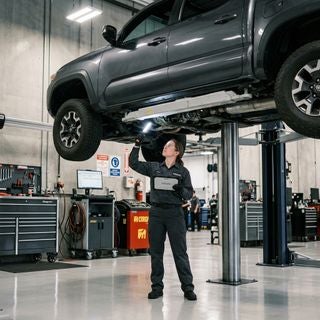


Buying a used truck with 100,000 miles is a smart purchase when the vehicle has a documented service history and passes a thorough mechanical inspection. Modern full-size pickups are engineered for extended durability and routinely reach 200,000 miles or more, meaning a well-maintained 100,000-mile truck is typically at the midpoint of its operational life while offering strong value compared with a new model.
At 100,000 miles, a pickup truck has already absorbed its steepest initial depreciation curve. For buyers who need strong towing capacity and reliable haulage without the investment required for a brand-new vehicle, the used truck market provides exceptional value. Modern engineering standards, synthetic lubricants, and advanced powertrain electronics mean that key mechanical systems—including the engine block, frame, and transmission housing—are built to handle long-term stress.
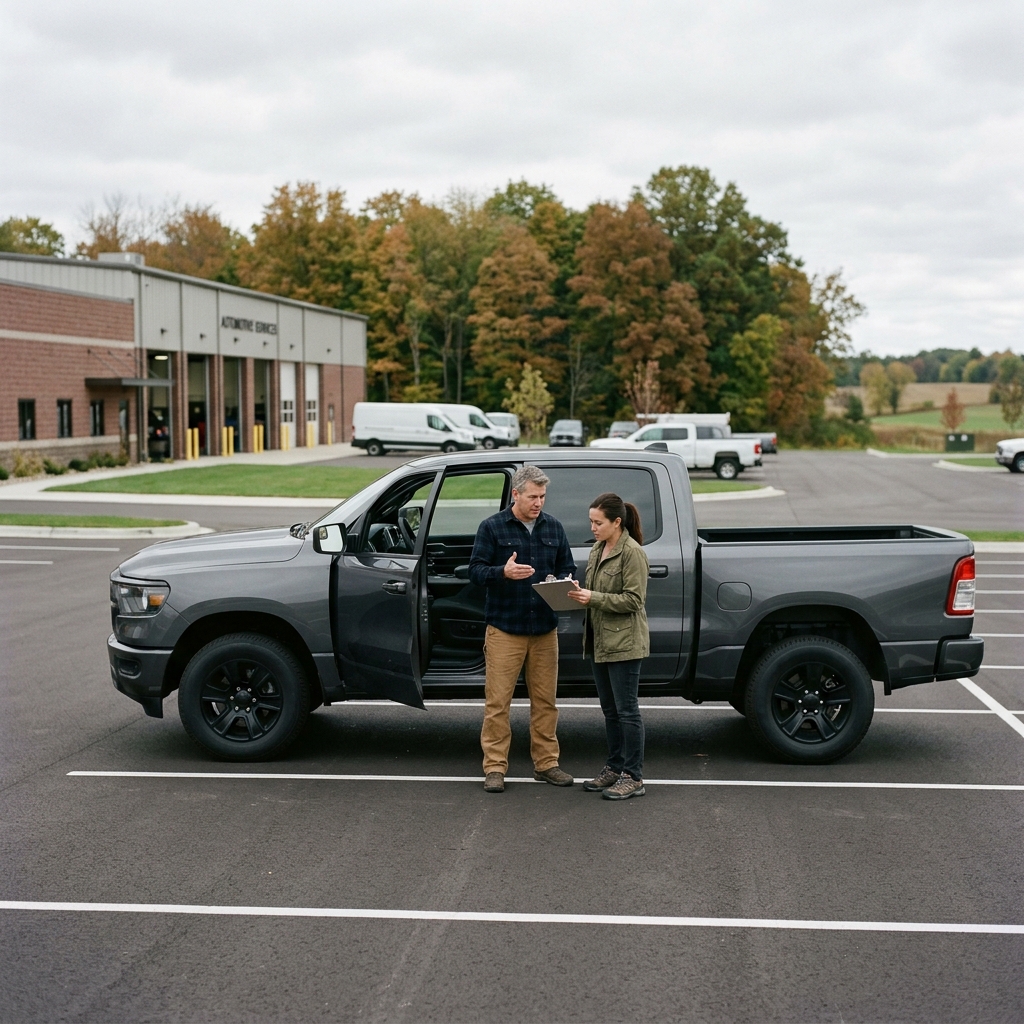
Evaluating a high-mileage pickup requires looking beyond the odometer reading. A truck driven 100,000 highway miles for personal transportation often exhibits far less mechanical wear than a lower-mileage vehicle subjected to severe commercial work, frequent heavy towing, or harsh off-road use. When buyers evaluate high-mileage half-ton trucks on our lot, they most often ask to review the engine oil maintenance history and differential fluid records before taking a highway test drive.
Determining whether a specific truck is a wise buy comes down to verifying how it was driven and maintained by its previous owners. To inspect our available used pickups in person, get directions to Tri State Ford or give our sales team a quick call at (330) 462-7578 to discuss our current selection.
Table of Contents
- How Many Years and Miles Can a Used Truck Last After 100,000 Miles?
- Which Used Pickup Truck Models Hold Up Best at High Mileage?
- What Maintenance Records Should You Verify Before Buying a 100k-Mile Truck?
- What Inspection Red Flags Mean You Should Walk Away From a Used Truck?
- Should You Buy an Extended Warranty or Finance a Used Truck with 100k Miles?
- Common Questions About Buying a Used Truck with 100,000 Miles
- Visit Tri State Ford for Quality Used Pickups
How Many Years and Miles Can a Used Truck Last After 100,000 Miles?
A properly maintained used pickup truck can comfortably last another 100,000 to 150,000 miles after passing the 100,000-mile mark, translating to roughly 7 to 10 additional years of reliable service for the average driver. Modern truck powertrains regularly surpass 200,000 total miles when routine fluid changes and wear-and-tear items are addressed on schedule.
The total lifespan of a truck purchased at 100,000 miles depends on driving habits, environment, and ongoing maintenance. Drivers putting an average of 12,000 to 15,000 miles annually on their vehicle can expect many years of service before major mechanical overhauls become necessary. Engine designs across major manufacturers now routinely run past 250,000 miles on original internal components when oil degradation is prevented.
Expected Mileage Lifespan for Modern Used Pickups:
┌─────────────────────────────────────────────────────────┐
│ 0 Miles 100,000 Miles 250,000+ Miles │
├─────────────────────┬────────────────────┬──────────────┤
│ Initial Deprec. │ Optimal Purchase │ Extended │
│ & Warranty Era │ Value Window │ Lifespan Era │
└─────────────────────┴────────────────────┴──────────────┘
Regional factors play a major role in vehicle longevity. In areas with cold winters and heavy road-salt usage, undercarriage corrosion often poses a greater threat to a truck's longevity than internal engine wear. Inspecting the frame, brake lines, fuel rails, and suspension mounting points is critical to ensuring a high-mileage truck remains structurally sound for years to come.
Choosing a truck with a clean history is the most effective way to secure long-term reliability. Exploring our pre-owned single-owner truck inventory allows shoppers to find vehicles with complete, verifiable service records. If you are upgrading from your current ride, our team can help you value your trade-in toward a long-lasting pickup.
Which Used Pickup Truck Models Hold Up Best at High Mileage?
Full-size trucks like the Ford F-150 consistently rank among the most dependable vehicles for high-mileage longevity according to independent automotive durability studies. Models equipped with proven powertrains—such as Ford’s EcoBoost and V8 engines—frequently reach 200,000 to 250,000 miles while retaining solid structural integrity and heavy-duty towing performance.
The Ford F-150 stands out in the high-mileage market due to its high-strength, military-grade aluminum-alloy body, which eliminates rust concerns on exterior body panels. Beneath the bed, robust steel frames provide the structural foundation needed for demanding tasks. For example, modern F-150 configurations featuring the 3.5L EcoBoost V6 deliver 400 hp and 500 lb-ft of torque through a SelectShift® 10-speed automatic transmission, offering immense power alongside proven long-term durability. Other strong choices include the 2.7L EcoBoost V6 producing 325 hp and 400 lb-ft of torque, and the naturally aspirated 5.0L V8 generating 400 hp and 410 lb-ft of torque.
Heavy-duty pickups—such as the Ford Super Duty series—are engineered for industrial workloads and offer even greater long-term durability potential. However, buyers should remember that a heavy-duty truck used exclusively for severe commercial hauling or continuous maximum towing may experience more suspension and drivetrain wear than a half-ton truck used primarily for personal transportation and family recreation.
Comparing competitive half-ton models like the Ram 1500 or Chevrolet Silverado 1500 reveals that while engine reliability across the segment is generally strong, Ford's combination of corrosion-resistant body construction, advanced driver-assist features, and widespread parts availability gives it a clear edge on the used market. For shoppers considering whether to buy used or buy new, reviewing our new Ford vehicle inventory provides a useful benchmark for comparing technology, warranty coverage, and overall value. Additionally, our Ford Pick Up & Delivery service makes maintaining your truck seamless throughout ownership.
Fuel Economy
Fuel economy and range by trim
| Feature | King Ranch 4x4 SuperCrew 5-1/2’ Box | King Ranch 4x4 SuperCrew 6-1/2’ Box | King Ranch SuperCrew 5-1/2’ Box | Lariat 4x4 SuperCrew 5-1/2’ Box |
|---|---|---|---|---|
| :-- | :-- | :-- | :-- | :-- |
| MPG | 17 city / 23 hwy / 19 combined | 17 city / 23 hwy / 19 combined | 17 city / 25 hwy / 20 combined | 17 city / 23 hwy / 19 combined |
Fuel Economy (continued)
| Feature | Lariat 4x4 SuperCrew 6-1/2’ Box | Lariat SuperCrew 5-1/2’ Box | Platinum 4x4 SuperCrew 5-1/2’ Box | Platinum 4x4 SuperCrew 6-1/2’ Box |
|---|---|---|---|---|
| :-- | :-- | :-- | :-- | :-- |
| MPG | 17 city / 23 hwy / 19 combined | 17 city / 25 hwy / 20 combined | 17 city / 23 hwy / 19 combined | 17 city / 23 hwy / 19 combined |
Fuel Economy (continued)
| Feature | Platinum SuperCrew 5-1/2’ Box | Police Responder 4x4 SuperCrew 5-1/2’ Box | Raptor 4x4 SuperCrew 5-1/2’ Box | STX 4x4 SuperCab 6-1/2’ Box |
|---|---|---|---|---|
| :-- | :-- | :-- | :-- | :-- |
| MPG | 17 city / 25 hwy / 20 combined | — | 14 city / 18 hwy / 16 combined | 18 city / 23 hwy / 20 combined |
Fuel Economy (continued)
| Feature | STX 4x4 SuperCrew 5-1/2’ Box | STX SuperCab 6-1/2’ Box | STX SuperCrew 5-1/2’ Box | Tremor 4x4 SuperCrew 5-1/2’ Box |
|---|---|---|---|---|
| :-- | :-- | :-- | :-- | :-- |
| MPG | 18 city / 23 hwy / 20 combined | 19 city / 25 hwy / 21 combined | 19 city / 25 hwy / 21 combined | 16 city / 21 hwy / 18 combined |
Fuel Economy (continued)
| Feature | XL 4x4 Regular Cab 6-1/2’ Box | XL 4x4 Regular Cab 8’ Box | XL 4x4 SuperCab 6-1/2’ Box | XL 4x4 SuperCrew 5-1/2’ Box |
|---|---|---|---|---|
| :-- | :-- | :-- | :-- | :-- |
| MPG | 16 city / 24 hwy / 19 combined | 18 city / 23 hwy / 20 combined | 18 city / 23 hwy / 20 combined | 18 city / 23 hwy / 20 combined |
Fuel Economy (continued)
| Feature | XL 4x4 SuperCrew 6-1/2’ Box | XL Regular Cab 6-1/2’ Box | XL Regular Cab 8’ Box | XL SuperCab 6-1/2’ Box |
|---|---|---|---|---|
| :-- | :-- | :-- | :-- | :-- |
| MPG | 17 city / 23 hwy / 19 combined | 16 city / 24 hwy / 19 combined | 19 city / 25 hwy / 21 combined | 19 city / 25 hwy / 21 combined |
Fuel Economy (continued)
| Feature | XL SuperCrew 5-1/2’ Box | XLT 4x4 SuperCab 6-1/2’ Box | XLT 4x4 SuperCrew 5-1/2’ Box | XLT 4x4 SuperCrew 6-1/2’ Box |
|---|---|---|---|---|
| :-- | :-- | :-- | :-- | :-- |
| MPG | 19 city / 25 hwy / 21 combined | 18 city / 23 hwy / 20 combined | 18 city / 23 hwy / 20 combined | 17 city / 23 hwy / 19 combined |
Fuel Economy (continued)
| Feature | XLT SuperCab 6-1/2’ Box | XLT SuperCrew 5-1/2’ Box |
|---|---|---|
| :-- | :-- | :-- |
| MPG | 19 city / 25 hwy / 21 combined | 19 city / 25 hwy / 21 combined |
What Maintenance Records Should You Verify Before Buying a 100k-Mile Truck?
Documented maintenance such as oil changes, transmission fluid flushes, and coolant replacements are critical indicators of a truck's longevity at 100,000 miles. A complete service history confirms that consumable components were replaced before wear could cause internal engine or drivetrain damage.
At the 100,000-mile mark, major factory-recommended maintenance items come due across most truck manufacturer schedules. Verifying whether these services have already been performed helps you calculate the immediate cost of ownership following purchase. Key maintenance milestones to check in the owner’s manual or vehicle history log include:
- Engine Oil and Filter Changes: Evidence of consistent fluid services performed every 5,000 to 10,000 miles using synthetic oil.
- Spark Plug Replacement: Manufacturer schedules typically call for new spark plugs at 100,000 miles to maintain optimal combustion efficiency and fuel economy.
- Cooling System Flush: Coolant breaks down over time, risking internal radiator corrosion and water pump wear if not replaced near 100,000 miles.
- Drivetrain Fluids: Verification that differential fluid and transfer case fluid (on 4x4 models) have been serviced, especially if the truck was used for heavy trailering.
- Brake and Suspension Components: Inspection records for brake pads, rotors, shocks, and struts to ensure tight handling and safe stopping power.
Proper maintenance directly impacts real-world efficiency. For instance, a well-maintained Ford F-150 equipped with a 2.7L engine and rear-wheel drive achieves up to 19 city / 25 hwy / 21 combined MPG, whereas neglected spark plugs or dragging brake calipers quickly degrade fuel performance.
For business owners seeking durable haulers with documented reliability, exploring our commercial new work truck inventory provides fleet-ready solutions built to tackle demanding job sites.
What Inspection Red Flags Mean You Should Walk Away From a Used Truck?
Severe frame rust holes, slipping transmission gears, and active coolant leaks are major red flags when inspecting a 100,000-mile used truck. These red flags indicate severe neglect or structural failure that will lead to expensive, non-viable repair costs.
A thorough pre-purchase inspection by a qualified mechanic is essential before signing any paperwork. On the bluffs and river roads of East Liverpool, trucks frequently encounter moisture and winter road treatments, making a full undercarriage inspection paramount. Mechanics will check the following critical areas:
Pre-Purchase Truck Inspection Checklist:
[ ] Frame & Undercarriage: Check for structural rust holes or fresh undercoating hiding damage.
[ ] Engine Oil & Cap: Inspect for milky buildup indicating blown head gasket or coolant intrusion.
[ ] Transmission Function: Test for gear slippage, delayed engagement, or harsh shifting.
[ ] 4x4 Transfer Case: Engage 4-High and 4-Low to verify smooth mechanical locking and zero fluid leaks.
[ ] Steering & Suspension: Check ball joints, tie rod ends, and shock absorbers for play or leakage.
Pay close attention to transmission engagement during a test drive. Hesitation, clunking, or gear slippage under acceleration signals internal transmission wear. Furthermore, check the vehicle identification number (VIN) against official National Highway Traffic Safety Administration database listings to confirm all safety recall repairs were properly completed by an authorized dealer.
Engine & Performance
Powertrain specs by trim
| Feature | King Ranch 4x4 SuperCrew 5-1/2’ Box | King Ranch 4x4 SuperCrew 6-1/2’ Box | King Ranch SuperCrew 5-1/2’ Box | Lariat 4x4 SuperCrew 5-1/2’ Box |
|---|---|---|---|---|
| :-- | :-- | :-- | :-- | :-- |
| Engine | 3.5L | 3.5L | 3.5L | 3.5L |
| Horsepower | 400 hp | 400 hp | 400 hp | 400 hp |
| Torque | 500 lb-ft | 500 lb-ft | 500 lb-ft | 500 lb-ft |
| Transmission | SelectShift® | SelectShift® | SelectShift® | SelectShift® |
| Drivetrain | All-wheel drive | All-wheel drive | Rear-wheel drive | All-wheel drive |
Engine & Performance (continued)
| Feature | Lariat 4x4 SuperCrew 6-1/2’ Box | Lariat SuperCrew 5-1/2’ Box | Platinum 4x4 SuperCrew 5-1/2’ Box | Platinum 4x4 SuperCrew 6-1/2’ Box |
|---|---|---|---|---|
| :-- | :-- | :-- | :-- | :-- |
| Engine | 3.5L | 3.5L | 3.5L | 3.5L |
| Horsepower | 400 hp | 400 hp | 400 hp | 400 hp |
| Torque | 500 lb-ft | 500 lb-ft | 500 lb-ft | 500 lb-ft |
| Transmission | SelectShift® | SelectShift® | SelectShift® | SelectShift® |
| Drivetrain | All-wheel drive | Rear-wheel drive | All-wheel drive | All-wheel drive |
Engine & Performance (continued)
| Feature | Platinum SuperCrew 5-1/2’ Box | Police Responder 4x4 SuperCrw 5-1/2’ Box | Raptor 4x4 SuperCrew 5-1/2’ Box | STX 4x4 SuperCab 6-1/2’ Box |
|---|---|---|---|---|
| :-- | :-- | :-- | :-- | :-- |
| Engine | 3.5L | 3.5L | 3.5L | 2.7L |
| Horsepower | 400 hp | 400 hp | 450 hp | 325 hp |
| Torque | 500 lb-ft | 500 lb-ft | 510 lb-ft | 400 lb-ft |
| Transmission | SelectShift® | SelectShift® | SelectShift® | SelectShift® |
| Drivetrain | Rear-wheel drive | All-wheel drive | All-wheel drive | All-wheel drive |
Engine & Performance (continued)
| Feature | STX 4x4 SuperCrew 5-1/2’ Box | STX SuperCab 6-1/2’ Box | STX SuperCrew 5-1/2’ Box | Tremor 4x4 SuperCrew 5-1/2’ Box |
|---|---|---|---|---|
| :-- | :-- | :-- | :-- | :-- |
| Engine | 2.7L | 2.7L | 2.7L | 3.5L |
| Horsepower | 325 hp | 325 hp | 325 hp | 400 hp |
| Torque | 400 lb-ft | 400 lb-ft | 400 lb-ft | 500 lb-ft |
| Transmission | SelectShift® | SelectShift® | SelectShift® | SelectShift® |
| Drivetrain | All-wheel drive | Rear-wheel drive | Rear-wheel drive | All-wheel drive |
Engine & Performance (continued)
| Feature | XL 4x4 Regular Cab 6-1/2’ Box | XL 4x4 Regular Cab 8’ Box | XL 4x4 SuperCab 6-1/2’ Box | XL 4x4 SuperCrew 5-1/2’ Box |
|---|---|---|---|---|
| :-- | :-- | :-- | :-- | :-- |
| Engine | 5L | 2.7L | 2.7L | 2.7L |
| Horsepower | 400 hp | 325 hp | 325 hp | 325 hp |
| Torque | 410 lb-ft | 400 lb-ft | 400 lb-ft | 400 lb-ft |
| Transmission | SelectShift® | SelectShift® | SelectShift® | SelectShift® |
| Drivetrain | All-wheel drive | All-wheel drive | All-wheel drive | All-wheel drive |
Engine & Performance (continued)
| Feature | XL 4x4 SuperCrew 6-1/2’ Box | XL Regular Cab 6-1/2’ Box | XL Regular Cab 8’ Box | XL SuperCab 6-1/2’ Box |
|---|---|---|---|---|
| :-- | :-- | :-- | :-- | :-- |
| Engine | 3.5L | 5L | 2.7L | 2.7L |
| Horsepower | 400 hp | 400 hp | 325 hp | 325 hp |
| Torque | 500 lb-ft | 410 lb-ft | 400 lb-ft | 400 lb-ft |
| Transmission | SelectShift® | SelectShift® | SelectShift® | SelectShift® |
| Drivetrain | All-wheel drive | Rear-wheel drive | Rear-wheel drive | Rear-wheel drive |
Engine & Performance (continued)
| Feature | XL SuperCrew 5-1/2’ Box | XLT 4x4 SuperCab 6-1/2’ Box | XLT 4x4 SuperCrew 5-1/2’ Box | XLT 4x4 SuperCrew 6-1/2’ Box |
|---|---|---|---|---|
| :-- | :-- | :-- | :-- | :-- |
| Engine | 2.7L | 2.7L | 2.7L | 3.5L |
| Horsepower | 325 hp | 325 hp | 325 hp | 400 hp |
| Torque | 400 lb-ft | 400 lb-ft | 400 lb-ft | 500 lb-ft |
| Transmission | SelectShift® | SelectShift® | SelectShift® | SelectShift® |
| Drivetrain | Rear-wheel drive | All-wheel drive | All-wheel drive | All-wheel drive |
Engine & Performance (continued)
| Feature | XLT SuperCab 6-1/2’ Box | XLT SuperCrew 5-1/2’ Box |
|---|---|---|
| :-- | :-- | :-- |
| Engine | 2.7L | 2.7L |
| Horsepower | 325 hp | 325 hp |
| Torque | 400 lb-ft | 400 lb-ft |
| Transmission | SelectShift® | SelectShift® |
| Drivetrain | Rear-wheel drive | Rear-wheel drive |
Should You Buy an Extended Warranty or Finance a Used Truck with 100k Miles?
Financing a 100,000-mile used truck is often a practical financial decision, and pairing it with a vehicle service contract or setting aside a dedicated repair fund provides protection against unexpected mechanical costs. Auto lenders can offer financing options for modern, high-mileage pickups that hold strong resale values.
Securing financing for a used truck requires evaluating both the loan term and the vehicle's remaining lifespan. Short to medium loan terms (such as 36 to 60 months) ensure that you build equity quickly without carrying debt on a high-mileage vehicle for too long. Bringing complete income documentation, proof of residence, and an insurance quote speeds up loan approval with underwriters.
When evaluating extended protection, consider manufacturer-backed plans over third-party policies. A certified option like our certified pre-owned Ford inventory includes rigorous multi-point inspections and factory-backed warranty coverage, giving buyers total confidence on the road.
Our finance center team works directly with regional and national lenders to secure competitive loan rates regardless of your budget. You can start the process from home by completing our secure online credit application.
Common Questions About Buying a Used Truck with 100,000 Miles
Q: Is 100,000 miles considered high mileage for a modern pickup truck?
For modern full-size pickup trucks, 100,000 miles is considered mid-life rather than high mileage. Today's trucks are designed with advanced metallurgy, precise engine tolerances, and durable transmissions built to reach 200,000 miles or more when routinely maintained. High mileage for modern trucks generally starts past 150,000 miles.
Q: What is the most important maintenance item to check on a 100,000-mile truck?
The most critical maintenance item to verify is a consistent record of engine oil and filter changes. Clean engine oil prevents internal bearing, camshaft, and turbocharger wear. Additionally, verify whether the 100,000-mile factory services—such as spark plug replacement, transmission fluid flushes, and differential fluid changes—have been completed.
Q: Can you finance a used truck with over 100,000 miles?
Yes, many lenders offer competitive auto loans for trucks with 100,000 miles, provided the vehicle's book value supports the loan amount. Financing options depend on credit history, down payment size, and vehicle age. Shorter loan terms are generally recommended for higher-mileage vehicles to keep equity positive throughout the loan.
Q: How can I tell if a used truck was used for heavy towing?
Signs of heavy towing include excessive wear or heat discoloration on rear brake rotors, aftermarket brake controller installations, heavy scratches or gouges around the trailer hitch receiver, and low differential fluid levels. Reviewing maintenance logs for frequent transmission and differential fluid changes helps confirm the vehicle was properly cared for during heavy work.
Q: Is a 4x4 truck at 100,000 miles more risky than a 4x2 model?
A 4x4 pickup includes additional mechanical components—such as a transfer case, front differential, and front drive shafts—that require periodic maintenance. While this adds potential wear points, a properly serviced 4x4 system adds minimal risk and offers essential traction for winter driving, off-road recreation, and rural towing.
Visit Tri State Ford for Quality Used Pickups
Buying a used pickup truck with 100,000 miles offers exceptional capability, cargo space, and towing power at a fraction of the cost of a new vehicle. Whether you need a dependable truck for daily commutes along the State Route 170 commercial corridor in Calcutta, hauling fishing gear near Beaver Creek, or tackling tough tasks across state lines, a well-maintained Ford pickup is well-built to deliver reliable performance for miles to come.
At Tri State Ford, our team is committed to providing a transparent, straightforward vehicle buying experience. Explore our pre-owned selection, schedule a test drive, and discover how easy it is to drive home in a reliable, high-capability pickup today. To get started, get directions to Tri State Ford or contact our friendly sales team with a quick call at (330) 462-7578.
Keep Your Vehicle Running Strong
Keep your vehicle performing at its best with our service team:
© 2026 Tri State Ford. All rights reserved.