
A used AWD car is worth buying over FWD if you frequently drive on icy, snowy, or unpaved roads where four-wheel traction helps you accelerate without slipping. For drivers operating primarily on dry or treated paved roads, a used FWD vehicle provides superior fuel economy, lower upfront purchase costs, and lower long-term maintenance expenses.
Choosing between all-wheel drive and front-wheel drive on the pre-owned market comes down to weighing physical mechanical advantages against overall ownership expenses. Front-wheel-drive vehicles package the engine and transmission over the front driven wheels, creating a lighter layout that maximizes interior cabin room while delivering efficient performance. All-wheel-drive systems build upon this layout by adding a transfer case, drive shaft, and rear differential to route engine torque to all four wheels when sensors detect slippage.
On the pre-owned market, an AWD system typically adds a price premium between $1,000 and $2,500 compared to an equivalent FWD model. Furthermore, the additional mechanical components add 150 to 300 pounds of curb weight, which lowers fuel efficiency by 1 to 3 mpg depending on the vehicle class.
At Tri State Ford, our team helps you evaluate your driving routines to select the right drivetrain for your household. You can drop by our showroom at 1503 Pennsylvania Ave to inspect our pre-owned lineup in person, give our sales department a quick call at (330) 462-7578 to ask about current arrivals, or fill out an online credit application to get pre-approved before your visit.
Table of Contents
- What Is the Main Difference Between AWD and FWD in a Used Vehicle?
- Does AWD Make a Used Car Safer on Winter Roads and Heavy Snow?
- How Much More Does a Used AWD Car Cost Compared to FWD?
- What Additional Maintenance Components and Towing Capabilities Come with AWD?
- When Does Used AWD Make More Sense for Driving Around East Liverpool?
- Common Questions About Buying a Used AWD or FWD Vehicle
What Is the Main Difference Between AWD and FWD in a Used Vehicle?
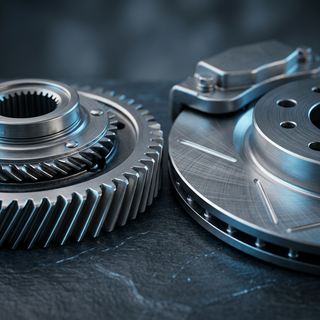
The primary difference between AWD and FWD in a used vehicle lies in mechanical torque distribution: FWD routes engine power strictly to the front two wheels via a transaxle, whereas AWD uses a transfer case, center coupling, and rear differential to route power dynamically to all four wheels when traction loss is detected.
In a front-wheel-drive configuration, the front tires bear responsibility for both steering the vehicle and putting engine power onto the pavement. This consolidated layout eliminates the need for a long drive shaft running to the back of the vehicle, which reduces curb weight and allows engineers to design flat interior floorboards with generous passenger legroom. Because FWD drivetrains feature fewer moving parts, they suffer less mechanical friction, contributing to strong everyday fuel economy.
All-wheel-drive drivetrains monitor wheel speed continuously through electronic sensors. When the front wheels lose traction on wet leaves, mud, or snow, an electronically controlled clutch pack or viscous coupling engages within milliseconds to send engine torque to the rear axle. Advanced systems can vary torque delivery continuously between front and rear axles to optimize cornering stability even on dry pavement.
Pre-owned Ford crossovers demonstrate these drivetrain differences clearly:
- The 2026 Ford Escape Active AWD utilizes a 1.5L EcoBoost® engine producing 180 hp and 199 lb-ft of torque mated to an automatic 8-speed transmission, providing active four-wheel grip during inclement weather.
- Front-wheel-drive variants of the same crossover deliver lighter curb weights and lower initial purchase points.
- Higher-tier models like the Ford Escape ST-Line Elite AWD equip a 2.0L EcoBoost® engine yielding 250 hp and 280 lb-ft of torque through a SelectShift® automatic transmission for responsive passing power.
- Truck options such as the 2026 Ford Maverick offer a 2.5L hybrid powertrain in both FWD and AWD configurations, giving pre-owned buyers freedom to choose between maximum efficiency or four-wheel traction.
When shopping for pre-owned crossovers or trucks, you can explore pre-owned single-owner models for documented maintenance histories, check current manufacturer vehicle offers for incentives, or review custom order options if you prefer ordering a brand-new vehicle built to your exact specifications.
Does AWD Make a Used Car Safer on Winter Roads and Heavy Snow?
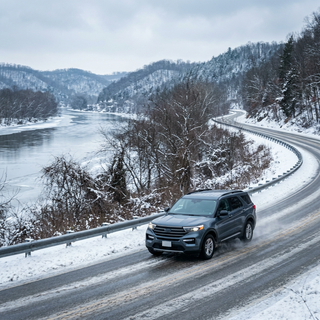
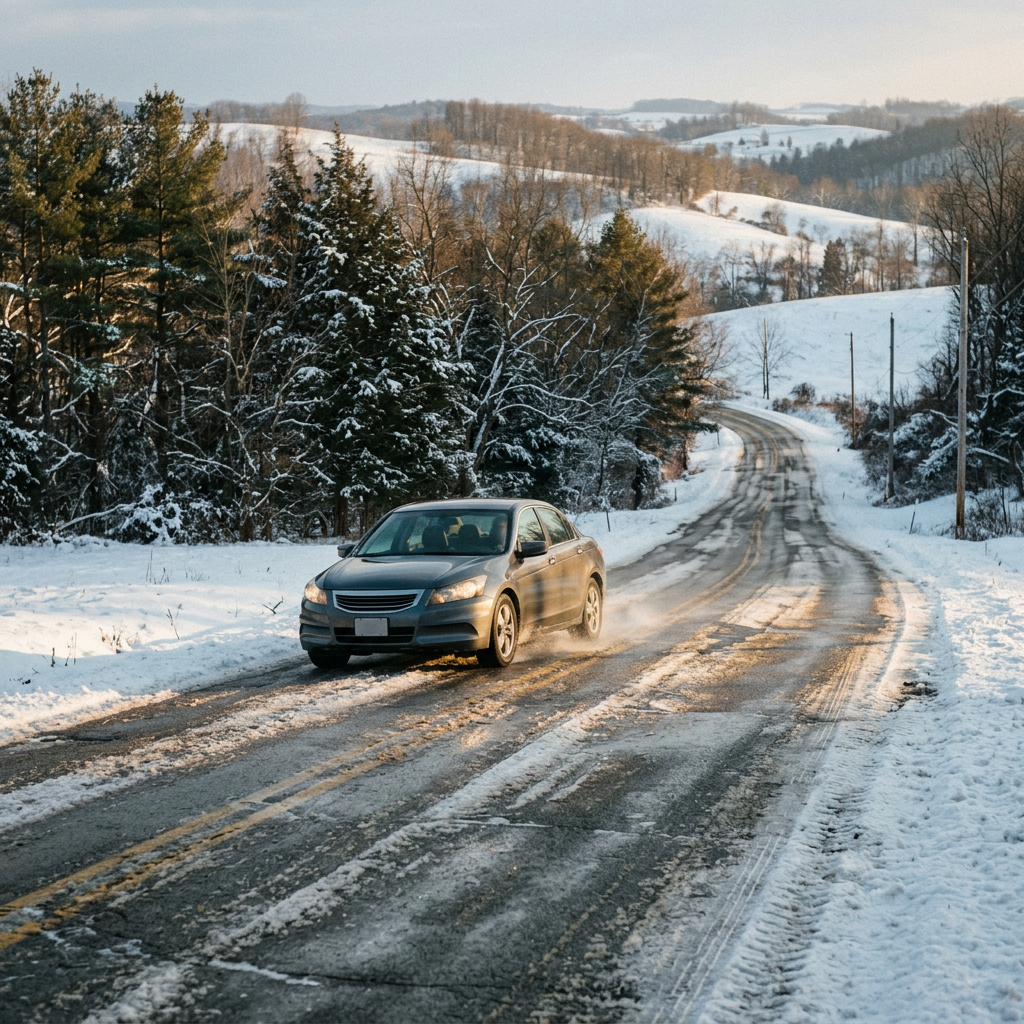
All-wheel drive enhances winter safety primarily during acceleration and hill climbing by engaging four contact patches to prevent wheel spin on snow and ice. However, AWD does not reduce braking distances or improve cornering grip on slick pavement, as stopping performance depends entirely on tire tread compound and braking technology.
Many drivers assume that an AWD badge guarantees total winter immunity, but four-wheel propulsion only assists in getting a vehicle moving from a stop or keeping momentum through slush and unplowed drifts. When you apply the brakes on an icy road, every modern vehicle uses four-wheel braking regardless of its drivetrain configuration. Consequently, an AWD crossover and a FWD sedan equipped with identical tires will take the same distance to come to a complete stop from highway speeds.
Modern active safety features work alongside physical drivetrains to maintain vehicle stability:
- Ford Co-Pilot360™ combines Electronic Stability Control, Anti-lock Braking Systems, and traction management to correct directional skids before they escalate.
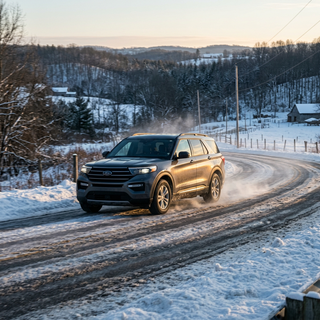
- Midsize SUVs like the 2026 Ford Explorer feature Intelligent 4WD paired with the Terrain Management System™, offering a dedicated Slippery drive mode that adjusts throttle mapping and transmission shift points for snow-covered roads.
- Off-road capability increases further on models like the 2026 Ford Bronco Sport Badlands, which equips Advanced 4x4 technology with a twin-clutch rear drive unit to send power to individual rear wheels.
For commuters tackling elevated routes across Calcutta, where sudden winter lake-effect bursts create slushy hill climbs along State Route 170, active four-wheel traction provides valuable confidence when pulling out into traffic. To ensure complete peace of mind when navigating seasonal weather, buyers can browse our certified pre-owned inventory to find rigorously inspected vehicles backed by factory warranty coverage.
How Much More Does a Used AWD Car Cost Compared to FWD?
On the pre-owned market, an AWD vehicle costs between $1,000 and $2,500 more upfront than an equivalent FWD model of the same year, trim, and mileage. Beyond the initial purchase price, AWD models carry a 1 to 3 mpg fuel economy penalty and slightly higher long-term maintenance costs.
The overall financial calculation between FWD and AWD involves three distinct factors:
- Upfront Purchase Price: All-wheel-drive models command higher resale values on used car lots because regional demand for winter-capable vehicles remains strong.
- Fuel Costs Over Time: Because an AWD system adds 150 to 300 pounds of drivetrain mass and creates additional rotational drag, it consumes slightly more fuel per mile. For example, while a 2026 Ford Escape Platinum AWD Hybrid achieves an EPA-estimated 39 mpg combined, FWD hybrid variants often gain 1 to 2 extra miles per gallon.
- Resale and Trade-In Equity: While you pay more for AWD initially, you recover a significant portion of that investment when trading the vehicle in years later, as pre-owned buyers in cold climates prioritize four-wheel traction.
Evaluating these ownership costs helps you select a vehicle that fits your monthly household budget. If you plan to upgrade from your current vehicle, you can utilize our online trade-in valuation tool to receive an instant appraisal estimate that can be applied directly toward your down payment.
What Additional Maintenance Components and Towing Capabilities Come with AWD?
An AWD drivetrain requires periodic fluid servicing for the transfer case and rear differential unit, alongside regular inspections of additional CV boots, universal joints, and center drive shafts. For towing, AWD delivers superior launch traction on steep or slippery ramps, though overall towing capacity is determined by chassis structure, engine cooling, and suspension design.
Maintaining an all-wheel-drive vehicle involves servicing several mechanical components that do not exist on front-wheel-drive cars:
- Transfer Case / Power Transfer Unit (PTU): Takes engine torque from the transaxle and routes it backward to the rear drive shaft. The gear oil inside requires periodic replacement to prevent thermal breakdown.
- Rear Differential Assembly: Converts the longitudinal rotation of the drive shaft into lateral rotation for the rear axle shafts. Like the PTU, its gear fluid must be changed according to manufacturer maintenance intervals.
- Drive Shaft and CV Axles: Four axle shafts and a multi-piece drive shaft utilize flexible rubber boots to protect universal joints from road debris and salt corrosion.
- Tire Matching Requirements: All four tires on an AWD vehicle must share matching tread depth and overall diameter. Replacing only one or two worn tires creates rotational speed variances that put continuous mechanical stress on the center transfer case.
Families comparing pre-owned crossovers on our lot often ask whether all-wheel drive adds noticeable maintenance costs before learning that differential fluid exchanges occur at extended factory intervals.
When it comes to trailering, all-wheel drive provides a major advantage when pulling heavy loads from a standstill on low-traction surfaces. Pulling a small fishing boat up a slippery, algae-covered concrete launch ramp or hauling a utility trailer over wet gravel tracks causes front tires on a FWD vehicle to spin helplessly. AWD engages all four wheels immediately, preventing wheel spin and providing smooth, controlled momentum. However, maximum total tow weight remains governed by chassis ratings, engine output, and cooling capacity rather than drivetrain layout alone.
When Does Used AWD Make More Sense for Driving Around East Liverpool?
East Liverpool's steep riverfront bluffs and frequent winter snowfalls make AWD vehicles particularly advantageous for local drivers facing challenging road conditions. FWD remains ideal if your route consists mostly of flat, well-maintained arterial roads where fuel savings take priority.
The topography along the Ohio River corridor features sharp elevation shifts and winding bluff climbs that become treacherous during winter snowstorms or freezing rain. Accelerating up a steep, icy grade in a front-wheel-drive car transfers vehicle weight toward the rear wheels, lifting weight off the front drive tires and reducing available traction. An all-wheel-drive system solves this issue by transferring torque to the rear axle, taking advantage of that weight transfer to push the vehicle smoothly up the incline.
Pre-owned Ford crossovers excel in these riverfront environments:
- Compact options like a pre-owned Ford Escape Active AWD deliver agile urban handling paired with automatic foul weather traction.
- Midsize crossovers like a pre-owned Ford Edge provide a heavier curb weight and wider stance that stabilize the chassis during high-wind river crossings.
- Three-row models like the Ford Explorer offer standard rear-wheel-drive balance with available Intelligent 4WD, ensuring plenty of passenger room and towing strength for weekend trips along the river.
If your daily driving consists primarily of flat, well-plowed highway stretches, a front-wheel-drive model equipped with quality tires provides dependable service while maximizing fuel economy. If your routine requires climbing steep side streets before snowplows arrive, investing in a pre-owned AWD model is a practical decision.
Common Questions About Buying a Used AWD or FWD Vehicle
Q: Does an AWD system add significant weight to a pre-owned vehicle?
An AWD system typically adds 150 to 300 pounds to a vehicle's curb weight due to the transfer case, rear differential, drive shaft, and rear axle shafts. This extra mass slightly reduces fuel efficiency by 1 to 3 mpg compared to a front-wheel-drive counterpart.
Q: Can you put two new tires on an AWD car instead of four?
Replacing only two tires on an AWD vehicle is not recommended because uneven tire circumference forces the center differential or clutch pack to slip continuously. This rotational speed variance causes mechanical strain, elevated operating temperatures, and potential transfer case failure.
Q: Is FWD sufficient for light snow if the vehicle has good winter tires?
A FWD vehicle equipped with dedicated winter tires frequently outperforms an AWD vehicle on all-season tires when stopping and turning on snow. Dedicated winter rubber compounds remain flexible in sub-freezing temperatures, providing essential tread grip for everyday winter commutes.
Q: Does AWD increase maximum towing capacity over FWD?
All-wheel drive does not automatically increase a vehicle's maximum tow rating, as total capacity depends on frame strength, engine torque, transmission cooling, and brake size. However, AWD provides crucial launch traction when pulling a trailer up steep, wet, or unpaved inclines.
Q: What documentation is required when financing a used AWD vehicle at the dealership?
Buyers applying for pre-owned vehicle financing should bring a valid driver's license, recent pay stubs or proof of income, a utility bill for address verification, and a current auto insurance quote. Gathering these documents in advance helps our finance team process your credit approval quickly.
When you are ready to explore pre-owned crossovers or compare new models in person, our team at Tri State Ford is here to guide you through every step of the buying process. You can visit our East Liverpool dealership to test drive our pre-owned selection, call us directly at (330) 462-7578 to speak with a sales specialist, or browse our new Ford models online to see the latest four-wheel-drive technology today.
Keep Your Vehicle Running Strong
Keep your vehicle performing at its best with our service team: