
Blog

All Maintenance & Service, Expert Repairs & Diagnostics, Genuine Parts & Accessories, Engine Care & Used Vehicle Guides, Financing & Insurance, Buying Guides, Trade-In Advice, Certified Pre-Owned New Vehicle Reviews, Buying Guides, Financing & Insurance, Model Comparisons, Automotive News Maintenance & Service, Battery Care & Diagnostics, Electric Vehicle (EV) Maintenance, Seasonal Maintenance & Service, Warranty & Service Contracts, Repair & Diagnostics, Parts & Components Used Vehicle Guides, Financing & Insurance, Buying Guides, Vehicle Warranty Information, Pre-Owned Automotive News, New Vehicle Reviews, Buying Guides, Financing & Insurance, Seasonal Driving Tips Vehicle Trade-In Advice, Financing & Insurance, Buying Guides, Used Vehicle Guides, New Vehicle Compare Cars Maintenance & Service, Essential Vehicle Care, Preventive Maintenance Tips, Vehicle Longevity Maintenance & Service, Parts & Accessories, Vehicle HVAC Care, Seasonal Vehicle Maintenance, DIY Buying Guides, Financing & Insurance, New Vehicle Reviews, Model Comparisons, Sales & Promotions Used Vehicle Guides, Financing & Insurance, Buying Guides, Pre-Owned Vehicle Sales, Vehicle Maintenance & Service, Brake Systems & Repair, Vehicle Parts & Accessories, Towing & Load New Vehicle Reviews, Buying Guides, Model Comparisons, Financing & Insurance, Inventory & Sales Tips Vehicle Trade-In Tips, Financing & Insurance, Buying Guides, Dealership Sales Strategies, Inventory Maintenance & Service, Vehicle Pickup & Delivery, Mobile Service & On-Site Repairs, Oil Change & Vehicle Sales Events, New Vehicle Pricing & Incentives, Financing & Lease Options, Trade-In & Buying Guides, Financing & Insurance, New Vehicle Reviews, Model Comparisons, Technology & Leasing & Lease Deals, Financing & Insurance, New Vehicle Sales, Commercial Vehicle Leasing, Maintenance & Service, Recall Information, Safety & Reliability, Vehicle Ownership Care, Parts & Maintenance & Service, Warranty & Recalls, Repair & Diagnostics, Parts & Accessories, Vehicle Used Vehicle Guides, Financing & Insurance, Buying Guides, New Vehicle Reviews, Commercial Vehicle Vehicle Sales Process, Financing & Credit Applications, New and Used Vehicle Inventory, Pickup and Community Events & Customer Appreciation, New Vehicle Reviews, Financing & Trade-In Guides, Maintenance & Service, Automotive Technology & Software Updates, Warranty & Recall Service, Mobile Maintenance & Service, Vehicle Ownership Care, Mobile Repair Services, Genuine Parts & Certified New Vehicle Reviews, Buying Guides, Financing & Insurance, Model Comparisons, Automotive Technology Dealership Events & Promotions, Financing & Trade-In Options, Maintenance & Service Specials, Maintenance & Service, Mobile Vehicle Services, Vehicle Care & Ownership, Genuine Parts & Repairs, Maintenance & Service, Vehicle Lighting & Electrical Systems, Automotive Safety & Inspection, OEM Model Comparisons, New Vehicle Reviews, Technology & Innovation, Safety Features, Buying Guides Commercial Truck Sales, Fleet Vehicle Financing, Custom Work Truck Upfits, Commercial Vehicle Commercial Vehicle Sales, Financing & Leasing, Small Business Vehicle Incentives, Fleet Purchasing Commercial Vehicle Sales, Fleet Purchasing & Management, Financing & Leasing for Businesses, New & Community Events, New Vehicle Buying Guides, Financing & Insurance, Maintenance & Service, Local Maintenance & Service, Brake System Care, Vehicle Safety & Inspection, Parts Quality & Replacement, Maintenance & Service, Safety Features, Technology & Innovation, Seasonal Driving Tips, Parts & Maintenance & Service, Tire Care & Repair, Roadside Assistance, Vehicle Safety & Inspections, Maintenance & Service, Vehicle Inspections, Oil Change & Fluid Services, Tire Care & Battery Maintenance & Service, Vehicle Software Updates, Safety Features, Technology & Innovation, Recall & New Vehicle Reviews, Buying Guides, Financing & Insurance, Model Comparisons, Used Vehicle Guides New Vehicle Reviews, Buying Guides, Model Comparisons, Maintenance & Service, Technology & Buying Guides, Financing & Insurance, New Vehicle Reviews, Commercial Fleet Sales, Custom Orders & Buying Guides, New Vehicle Reviews, Financing & Insurance, Commercial Vehicle Sales, Model Commercial Vehicle Sales, Fleet Leasing & Management, Commercial Financing & Tax Incentives, Financing & Insurance, Leasing Benefits, Model Comparisons, Technology & Innovation, Buying Guides Leasing & Financing Options, Buying Guides, Model Comparisons, Negotiation Tips, Inventory & Leasing & Financing Options, Buying Guides, New Vehicle Reviews, Model Comparisons, Technology & Maintenance & Service, Automotive Detailing, Paint Protection & Care, Seasonal Vehicle Care, Maintenance & Service, Automotive Electrical Systems, Battery Care & Replacement, Vehicle Lighting Maintenance & Service, Automotive Fluids & Lubricants, Vehicle Care & Ownership, Dealership Service Maintenance & Service, Automotive Repair, Mobile & Remote Vehicle Service, Warranty & Roadside Maintenance & Service, Brake System Care, Vehicle Safety & Inspection, Automotive Repair Tips, Maintenance & Service, Brake System Care, Vehicle Safety & Inspections, Parts & Repairs, Expert Maintenance & Service, Technology & Innovation, Vehicle Diagnostics & Telematics, Fleet Management Maintenance & Service, Tire Care & Repair, Wheel Alignment & Balancing, Suspension Maintenance, Maintenance & Service, Tire Care & Replacement, Vehicle Safety & Handling, Seasonal Vehicle Maintenance & Service, Tire Care & Replacement, Vehicle Safety & Inspection, Emergency Roadside Maintenance & Service, Vehicle Care & Longevity, Scheduled Service Packages, Oil Changes & Fluid Maintenance & Service, Vehicle Inspection & Diagnostics, Parts & Repairs, Warranty & Resale Value, Maintenance & Service, Vehicle Interior Care, Technology & Innovation in Service, Professional New Vehicle Reviews, Buying Guides, Financing & Insurance, Model Comparisons, Inventory Highlights New Vehicle Reviews, Buying Guides, Financing & Insurance, Model Comparisons, Inventory Updates New Vehicle Reviews, Buying Guides, Technology & Innovation, Safety Features, Seasonal Driving Tips Used Vehicle Guides, Buying Guides, Financing & Insurance, Model Comparisons, Selling Your Car Vehicle Sales Events, New Vehicle Purchasing, Incentives & Discounts, Financing & Pre-Approval, Buying Guides, Financing & Insurance, Used Vehicle Guides, New Vehicle Reviews, Cross-Border Buying Guides, Financing & Insurance, Vehicle Inventory & Offers, Dealership Visit Preparation, Commercial Leasing Options, Business Fleet Solutions, Financing & Leasing Programs, Commercial Commercial Truck Sales, Fleet Purchasing Guides, Financing & Lease Options, Work Truck Community Engagement & Events, New Vehicle Promotions, Financing & Trade-In Options, Maintenance & Community Events & Dealership News, New Vehicle Promotions & Incentives, Maintenance & Service Community Events & Dealership News, New Vehicle Reviews, Financing & Insurance, Maintenance & Custom Ordering & Build Process, New Vehicle Inventory & Offers, Financing & Trade-In Guidance, East Liverpool, OH Ford Dealer East Liverpool, OH Used Cars Financing & Insurance, Buying Guides, Commercial Vehicle Solutions, Fleet Management, Inventory and Financing & Insurance, Buying Guides, New Vehicle Reviews, Used Vehicle Guides, Automotive Sales Financing & Insurance, Buying Guides, New Vehicle Reviews, Used Vehicle Guides, Automotive Sales & Financing & Insurance, Buying Guides, New Vehicle Reviews, Used Vehicle Guides, Model Comparisons Financing & Insurance, Buying Guides, Used Vehicle Guides, New Vehicle Reviews, Automotive Sales Financing & Insurance, Buying Guides, Used Vehicle Guides, Trade-In Tips, New Vehicle Sales Financing & Insurance, Buying Guides, Vehicle Inventory & Offers, Trade-In & Appraisal, Dealership Financing & Insurance, Buying Guides, Vehicle Trade-In Tips, Dealership Sales Process, New Vehicle Leasing & Financing Options, New Vehicle Leasing Guides, Buying Guides, Inventory Spotlight, Trade Leasing Options, Financing & Insurance, New Vehicle Reviews, Buying Guides, Technology & Innovation Leasing Options, Financing & Insurance, New Vehicle Sales, Buying Guides, Vehicle Inventory Maintenance & Service, Air Conditioning Repair, Genuine Parts & Accessories, Dealer-Authorized Maintenance & Service, Automotive Air Conditioning Repair, Vehicle Cooling System Care, Diagnostic Maintenance & Service, Automotive Detailing & Cleaning, Seasonal Vehicle Care, Vehicle Protection & Maintenance & Service, Automotive Detailing & Paint Care, Vehicle Exterior Protection, Paint Repair Maintenance & Service, Automotive Detailing & Protection, Corrosion & Rust Prevention, Paint & Maintenance & Service, Automotive Detailing, Vehicle Care & Protection, Off-Road Vehicle Maintenance & Service, Automotive Electrical Systems, Battery Care & Replacement, Diagnostics & Maintenance & Service, Automotive Glass Repair, Safety Features, Technology & Innovation, Mobile & Maintenance & Service, Automotive Lighting & Electrical, Vehicle Safety & Visibility, DIY Vehicle Maintenance & Service, Automotive Parts & Accessories, Seasonal Vehicle Care, Vehicle Safety & Maintenance & Service, Automotive Parts & Accessories, Vehicle Air Quality & HVAC Care, Preventive Maintenance & Service, Automotive Parts & Accessories, Vehicle Ownership Care, Engine Care & Maintenance & Service, Automotive Parts & Accessories, Vehicle Safety & Repair, Warranty & Maintenance & Service, Automotive Parts & Components, Vehicle Safety & Repair, Warranty & Service Maintenance & Service, Automotive Parts & Repairs, Vehicle Warranty & Protection, Service Center Maintenance & Service, Automotive Repair Tips, Service Team Selection, Warranty & Service Policies, Maintenance & Service, Automotive Repair, Parts & Accessories, Vehicle Ownership Care, Technology & Maintenance & Service, Automotive Repair, Parts & OEM Components, Vehicle Longevity & Care, Service Maintenance & Service, Automotive Technology & Diagnostics, Vehicle Electronics & Sensors, Seasonal Maintenance & Service, Battery Care & Replacement, Vehicle Electrical Systems, Seasonal Vehicle Maintenance & Service, Brake System Care, OEM Parts & Replacement, Vehicle Safety & Inspections, Maintenance & Service, Brake System Care, Vehicle Repair Tips, Automotive Parts & Components, Maintenance & Service, Brake System Care, Vehicle Safety & Inspections, Parts & Components, Maintenance & Service, Brake System Care, Vehicle Safety Inspections, Automotive Repair Tips, OEM Maintenance & Service, Certified Technician Insights, Warranty & Service Coverage, Genuine OEM Maintenance & Service, Cooling System Repairs, Vehicle Ownership Care, Diagnostic & Maintenance & Service, Diagnostic Services, Vehicle Health & Diagnostics, Service Tips & Advice, Maintenance & Service, Engine Care & Performance, Parts & Accessories, Genuine vs. After Maintenance & Service, Paint Protection & Detailing, Vehicle Exterior Care, Seasonal Vehicle Maintenance & Service, Parts & Accessories, Engine Care & Repair, Vehicle Longevity Tips, OEM Parts Maintenance & Service, Parts & Replacements, Vehicle Care Tips, Seasonal Maintenance, DIY Vehicle Maintenance & Service, Recall Updates & Safety Notices, Genuine Parts & Accessories, Truck Care & Maintenance & Service, Repair & Diagnostics, OEM Parts & Accessories, Warranty & Recall Maintenance & Service, Repair & Diagnostics, Parts & Accessories, Vehicle Ownership Care, Service Maintenance & Service, Repair & Diagnostics, Parts & Components, Preventive Care & Tips, Warranty & Maintenance & Service, Repair & Diagnostics, Tire & Wheel Care, Vehicle Safety & Inspection, Parts Maintenance & Service, Repair & Diagnostics, Warranty & Service Coverage, Genuine OEM Parts & Maintenance & Service, Repair & Parts, Vehicle Ownership Care, Safety Features, Technology & Maintenance & Service, Repair & Parts, Vehicle Ownership Care, Transmission Maintenance & Service, Repair Solutions, Vehicle Ownership Care, Parts & Accessories, Diagnostic Maintenance & Service, Repair Tips & Techniques, Vehicle Care & Ownership Maintenance & Service, Safety Features, Automotive Recalls & Repairs, Parts & Warranty Services, Maintenance & Service, Safety Features, Automotive Recalls & Repairs, Technology & Innovation, Maintenance & Service, Safety Features, Automotive Recalls, Vehicle Ownership Care, Parts & Repairs Maintenance & Service, Safety Features, Parts & Repairs, Vehicle Ownership Care, Automotive Service Maintenance & Service, Safety Features, Recall & Repair Updates, Parts & Repairs, Vehicle Ownership Maintenance & Service, Safety Features, Recall & Safety Campaigns, Vehicle Inspection & Repairs, Maintenance & Service, Safety Features, Recall & Warranty Information, Vehicle Diagnostics & Maintenance & Service, Safety Features, Recall Repairs & Safety Campaigns, Parts & Genuine Maintenance & Service, Safety Features, Recalls & Repairs, Parts & Accessories, Vehicle Ownership Maintenance & Service, Safety Features, Repair & Recall Updates, Parts & Components, Vehicle Maintenance & Service, Safety Features, Repair & Replacement, Vehicle Care & Inspection, Parts & Maintenance & Service, Safety Features, Seasonal Driving Tips, Technology & Innovation, Parts & Maintenance & Service, Safety Features, Technology & Innovation, Automotive Electrical Systems, Maintenance & Service, Safety Features, Technology & Innovation, Automotive News, Parts & Repairs Maintenance & Service, Safety Features, Technology & Innovation, Automotive Parts & Accessories, Maintenance & Service, Safety Features, Technology & Innovation, Automotive Recalls, Parts & Repairs Maintenance & Service, Safety Features, Technology & Innovation, Automotive Recalls, Vehicle Maintenance & Service, Safety Features, Technology & Innovation, Automotive Service Tips, Recall & Maintenance & Service, Safety Features, Technology & Innovation, Parts & Repairs, Seasonal Driving Maintenance & Service, Safety Features, Technology & Innovation, Parts & Repairs, Vehicle Ownership Maintenance & Service, Safety Features, Technology & Innovation, Recall & Warranty Information, Maintenance & Service, Safety Features, Technology & Innovation, Repair & Recall Information, Parts Maintenance & Service, Safety Features, Technology & Innovation, Tire Care & Replacement, Maintenance & Service, Safety Features, Vehicle Inspections, DIY Vehicle Care, Repair & Diagnostics Maintenance & Service, Safety Recalls & Repairs, Vehicle Safety & Compliance, Powertrain & Maintenance & Service, Seasonal Driving Tips, Model Comparisons, Technology & Innovation, Safety Maintenance & Service, Seasonal Driving Tips, Safety Features, Technology & Innovation, Automotive Maintenance & Service, Seasonal Driving Tips, Safety Features, Technology & Innovation, Parts & Maintenance & Service, Seasonal Driving Tips, Vehicle Care & Ownership, Brake System Maintenance, Maintenance & Service, Seasonal Driving Tips, Vehicle Care & Ownership, Parts & Accessories, Safety Maintenance & Service, Seasonal Driving Tips, Vehicle Care & Ownership, Safety Features, Maintenance & Service, Seasonal Driving Tips, Vehicle Care & Protection, Brake Maintenance, Tire Maintenance & Service, Seasonal Driving Tips, Vehicle Care & Warranty, Service Specials & Packages, Maintenance & Service, Seasonal Driving Tips, Vehicle Cooling Systems, Automotive Safety Features, Maintenance & Service, Service Scheduling & Convenience, Vehicle Repair & Diagnostics, Parts & Maintenance & Service, Technology & Innovation, Automotive Service Transparency, Digital Vehicle Maintenance & Service, Technology & Innovation, Safety Features, Parts & Warranty, Vehicle Maintenance & Service, Tire Care & Replacement, Seasonal Vehicle Care, Safety Features, Automotive Maintenance & Service, Tire Care & Replacement, Vehicle Safety & Inspections, Seasonal Vehicle Maintenance & Service, Transmission Care & Repair, Vehicle Fluid Services, Automotive Diagnostics, Maintenance & Service, Transmission Care, Repair & Parts, Vehicle Ownership Care, Common Vehicle Maintenance & Service, Vehicle Care Tips, Parts & Accessories, Seasonal Vehicle Maintenance, Maintenance & Service, Vehicle Detailing & Care, Parts & Accessories, Seasonal Vehicle Preparation, Maintenance & Service, Vehicle Detailing & Cosmetic Care, Automotive Cleaning & Protection, Service Maintenance & Service, Vehicle Detailing & Cosmetic Care, Service Scheduling & Convenience, Maintenance & Service, Vehicle Detailing & Protection, Repair & Inspection, Parts & Accessories, Maintenance & Service, Vehicle Detailing & Protection, Vehicle Care Tips, Seasonal Vehicle Maintenance & Service, Vehicle Diagnostics & Repair, Engine Performance & Troubleshooting, Fuel Maintenance & Service, Vehicle Fluids & Lubrication, Engine Care & Repair, Parts & Accessories, Maintenance & Service, Vehicle Ownership Care, Parts & Accessories, Repair & Diagnostics, Certified Maintenance & Service, Vehicle Repair & Diagnostics, Parts & Accessories, DIY Vehicle Care, Safety Maintenance & Service, Vehicle Repair & Diagnostics, Parts & Accessories, Hybrid & Electric Vehicle Maintenance & Service, Vehicle Repair & Diagnostics, Parts & Accessories, Seasonal Driving Tips, Maintenance & Service, Vehicle Repair & Diagnostics, Parts & Accessories, Service Lane Tips & Maintenance & Service, Vehicle Repair & Diagnostics, Parts & Accessories, Towing & Performance Maintenance & Service, Vehicle Repair & Parts, Service Convenience & Customer Care, Roadside Maintenance & Service, Vehicle Repair Tips, Parts & Accessories, Safety Features, Technology & Maintenance & Service, Vehicle Service Warranties, Repair & Coverage Plans, Ownership & Vehicle Model Comparisons, Buying Guides, New Vehicle Reviews, Financing & Insurance, Inventory Updates Model Comparisons, Buying Guides, New Vehicle Reviews, Technology & Innovation, Safety Features Model Comparisons, Buying Guides, Technology & Innovation, Safety Features, Maintenance & Service Model Comparisons, New Vehicle Reviews, Buying Guides, Technology & Innovation, Financing & Model Comparisons, New Vehicle Reviews, Buying Guides, Technology & Innovation, Safety Features Model Comparisons, New Vehicle Reviews, Safety Features, Technology & Innovation, Seasonal Driving Model Comparisons, New Vehicle Reviews, Technology & Innovation, Buying Guides, Maintenance & Model Comparisons, New Vehicle Reviews, Technology & Innovation, Maintenance & Service, Buying Model Comparisons, Towing & Hauling Guides, Maintenance & Service, Technology & Innovation, New New Vehicle Promotions, Buying Guides, Financing & Insurance, New Vehicle Reviews, Inventory New Vehicle Reviews, Buying Guides, Financing & Insurance, Model Comparisons, Automotive Sales New Vehicle Reviews, Buying Guides, Financing & Insurance, Model Comparisons, Commercial & Work New Vehicle Reviews, Buying Guides, Financing & Insurance, Model Comparisons, Vehicle Customization New Vehicle Reviews, Buying Guides, Financing & Insurance, Model Comparisons, Vehicle Inventory New Vehicle Reviews, Buying Guides, Financing & Insurance, New Vehicle Specials, Trade-In & Value New Vehicle Reviews, Buying Guides, Financing & Insurance, Used Vehicle Guides, Inventory Updates New Vehicle Reviews, Buying Guides, Financing & Insurance, Used Vehicle Guides, Model Comparisons New Vehicle Reviews, Buying Guides, Financing & Insurance, Vehicle Inventory & Specials, Model New Vehicle Reviews, Buying Guides, Financing & Insurance, Vehicle Inventory, Model Comparisons New Vehicle Reviews, Buying Guides, Model New Vehicle Reviews, Buying Guides, Model Comparisons, Financing & New Vehicle Reviews, Buying Guides, Safety Features, Technology & Innovation, Model Comparisons New Vehicle Reviews, Buying Guides, Technology & Innovation, Safety Features, Maintenance & Service New Vehicle Reviews, Financing & Insurance, Buying Guides, New Vehicle Specials, Model Comparisons New Vehicle Reviews, Financing & Insurance, Buying Guides, Technology & Innovation, Automotive New Vehicle Reviews, Financing & Insurance, Buying Guides, Used Vehicle Guides, Model Comparisons New Vehicle Reviews, Model Comparisons, Buying Guides, Technology & Innovation, Safety Features New Vehicle Reviews, Model Comparisons, Commercial Truck Guides, Technology & Innovation, New Vehicle Reviews, Model Comparisons, Financing & Insurance, Technology & Innovation, Safety New Vehicle Reviews, Model Comparisons, Off-Road Adventures, Technology & Innovation, Maintenance & New Vehicle Reviews, Model Comparisons, Safety Features, Technology & Innovation, Buying Guides New Vehicle Reviews, Model Comparisons, Technology & Innovation, Financing & Insurance, Maintenance New Vehicle Reviews, Model Comparisons, Technology & Innovation, Safety Features, Buying Guides New Vehicle Reviews, Model Comparisons, Technology & Innovation, Safety Features, Maintenance & New Vehicle Reviews, Off-Road Capabilities, Outdoor Adventure Vehicles, Technology & Innovation, New Vehicle Reviews, Technology & Innovation, Buying Guides, Maintenance & Service, Model New Vehicle Reviews, Technology & Innovation, Buying Guides, Safety Features, Model Comparisons New Vehicle Reviews, Technology & Innovation, Safety Features, Maintenance & Service, Buying Guides New Vehicle Sales, Financing & Incentives, Trade-In & Appraisal, Special Sales Events, Electric New Vehicle Sales, Financing & Incentives, Trade-In & Value Guides, Manufacturer Promotions, New Vehicle Sales, Financing & Insurance, Buying Guides, Manufacturer Incentives & Discounts, New Vehicle Sales, Vehicle Delivery & Logistics, Financing & Credit Applications, Trade-In & Trucks Used Vehicle Guides, Financing & Insurance, Buying Guides, Model Comparisons, Local Dealership Vehicle Sales Events, Financing & Leasing, Trade-In & Trade-Up Guides, New Vehicle Inventory Vehicle Sales Events, New Vehicle Buying Guides, Financing & Incentives, Dealership Inventory Vehicle Sales Events, New Vehicle Pricing, Financing & Credit Applications, Trade-In & Loyalty Vehicle Sales Process, Online Vehicle Purchasing, Financing & Loan Approval, Trade-In & Vehicle Vehicle Sales Promotions, New Vehicle Buying Guides, Financing & Credit Applications, Dealership Vehicle Sales Promotions, New Vehicle Buying Guides, Financing & Incentives, Trade-In & Valuation, Vehicle Sales, Online Car Buying, Financing & Incentives, Trade-In Guides, New Vehicle Delivery
l

What Causes Uneven Tire Wear on a Vehicle?

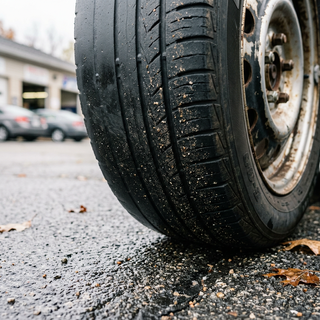
Uneven tire wear is primarily caused by incorrect wheel alignment, improper inflation pressures, worn suspension components, and unperformed tire rotations. Mechanical stress from bad ball joints or failing struts alters how tread blocks contact the road surface. Potholes, curb impacts, and heavy payload hauling also distort tire geometry, leading to accelerated wear that compromises braking distance and overall driving stability. When a tire rolls along the pavement, its rubber contact patch should distribute the vehicle's weight uniformly across the entire tread width. If wheel alignment angles drift out of factory specification, the tire drags at an angle rather than rolling flat. This friction concentrated on a single edge or rib strips away rubber rapidly. Vehicle manufacturer specifications emphasize that even minor alignment deviations, such as a fraction of a degree off in toe or camber, will cause noticeable diagonal or shoulder wear over just a few thousand miles. Tire pressure plays an equally vital role in tread longevity. Underinflated tires sag in the center, transferring weight outward and wearing down both outer shoulders prematurely. Overinflated tires balloon outward in the middle, causing rapid center tread loss while leaving the shoulders untouched. Routine maintenance, including checking inflation levels monthly with an accurate gauge, prevents these uneven wear profiles from forming. Suspension wear and chassis impacts further compound tread breakdown. Driving over rough pavement or potholed back roads in Calcutta subjects steering linkages and control arms to severe shocks that can bend tie rods or knock alignment out of position. If you notice irregular tread patterns, pulling to one side, or steering wheel vibration, our team at 1503 Pennsylvania Ave, East Liverpool, OH 43920 can perform a comprehensive multi-point inspection. You can also give our service center a call directly at (330) 462-7578 or check current Ford service information before booking your visit. Table of Contents What Do Different Tire-Wear Patterns Reveal About Your Suspension and Alignment? How Do Bad Ball Joints, Shocks, and Suspension Parts Cause Inner Tire Wear? How Many 32nds of an Inch Difference Is Allowed on AWD Tires? How Often Should You Check Tire Pressure and Rotate Your Tires? Common Questions About Diagnosing and Fixing Uneven Tire Wear Protect Your Tires and Vehicle Stability at Tri State Ford What Do Different Tire-Wear Patterns Reveal About Your Suspension and Alignment? Visual tire-wear patterns serve as a precise diagnostic roadmap, signaling specific alignment errors, pressure issues, or worn mechanical components. Examining tread block shapes and wear location allows technicians to isolate problems before they destroy your tires. Different mechanical failures generate distinct physical signatures on the tread surface. Understanding what these patterns mean helps drivers spot potential hazards early: Center Tread Wear: Rapid wear concentrated strictly down the center rib indicates chronic overinflation. High pressure causes the center of the tire to bulge outward and carry the vast majority of the vehicle's load. Shoulder Wear on Both Edges: Heavy wear on both the inner and outer edges with deeper tread remaining in the center signifies chronic underinflation. Lacking sufficient air pressure, the tire carcass collapses inward, forcing the outer shoulders to absorb road contact. Inner or Outer Edge Wear: Heavy rubber loss on only one edge points directly to alignment trouble, specifically improper camber setting or incorrect toe angle. Excessive negative camber leans the top of the wheel inward, grinding down the inside shoulder. Feathered Tread Edges: When individual tread blocks feel smooth when sliding your hand across them in one direction but rough and sharp in the opposite direction, the tire suffers from feathering. This condition is caused by incorrect toe alignment, which forces the tire to scrub sideways while rolling forward. Tire Cupping or Scalloping: Deep, repeating scooped dips or valleys around the circumference of the tread indicate worn shock absorbers, struts, or loose wheel bearings. Worn dampeners fail to keep the tire firmly planted, allowing the wheel to bounce down the road like a basketball. Ignoring irregular tread patterns causes secondary damage to wheel bearings, steering racks, and suspension bushings over time. Driving on cupped or feathered tires also increases stopping distances on wet pavement and reduces resistance to hydroplaning. Catching these patterns early allows technicians to perform adjustments before the rubber is permanently ruined. When tread wear is identified in its beginning stages, correcting the mechanical root cause and rotating the tires can help balance out future wear. To have your tread inspected and corrected by factory-trained specialists, feel free to schedule a service appointment online or inquire about specialized equipment checks for custom vehicle factory orders. How Do Bad Ball Joints, Shocks, and Suspension Parts Cause Inner Tire Wear? Failing ball joints, worn control arm bushings, and leaking struts allow front wheels to lean inward, shifting the vehicle's weight onto the tire's inside shoulder. This misalignment creates excessive negative camber and improper toe angles, rapidly grinding down inner tread blocks until internal casing cords become exposed. Ball joints act as the critical pivot points connecting your vehicle's control arms to the steering knuckles. As ball joints wear down internally, microscopic play develops within the socket. This looseness allows the wheel assembly to tilt outward or inward under load. When a lower ball joint deteriorates, the wheel splays outward at the bottom, creating an aggressive negative camber angle. This forces the inner edge of the tire to bear the brunt of vehicle weight and cornering friction. Worn shock absorbers and struts exacerbate inner tire wear by failing to control wheel rebound. Struts hold the wheel at a precise angle relative to the body chassis. As internal hydraulic fluid leaks or valving degrades, the strut can no longer maintain structural rigidity during cornering or braking. The tire begins to wobble and bounce erratically, gouging out inner tread rubber while creating severe steering wheel vibrations. Drivers frequently ask our technicians why inside shoulder wear often goes unnoticed until a tire fails. Because inner edge wear occurs on the hidden underside of the vehicle, a tire can look healthy from the outside while severely compromised on the inside edge. If rubber wears down to the internal steel belts or nylon body cords, the tire loses structural integrity and becomes a blowout risk. Correcting inner tire wear requires replacing degraded steering parts—such as ball joints, tie rod ends, or control arm bushings—and performing a four-wheel laser alignment to reset factory geometric tolerances. Our department can quickly supply genuine OEM Ford suspension parts built specifically for your model's exact chassis requirements. How Many 32nds of an Inch Difference Is Allowed on AWD Tires? Engineering guidelines for all-wheel-drive systems require all four tires to have matching tread depths within 2/32 of an inch to 3/32 of an inch of one another. Exceeding this variance forces the transfer case and center differential to work continuously to compensate for differing wheel rotation speeds, leading to severe mechanical overheating and premature drivetrain failure. All-wheel-drive systems, such as Ford Intelligent AWD, monitor wheel speed sensors dozens of times per second to distribute torque precisely where traction is needed. Tire tread depth directly determines the overall rolling circumference of the wheel. A brand-new tire typically starts with 10/32 of an inch to 12/32 of an inch of tread depth, whereas a partially worn tire might measure 5/32 of an inch. This difference of 5/32 of an inch reduces the overall tire diameter by nearly a third of an inch, causing the worn tire to rotate faster than the new tire at identical vehicle speeds. When tires on an AWD vehicle rotate at different speeds on dry pavement, the driveline computer interprets the speed differential as wheel slip. The system continuously engages clutch packs inside the center differential or power transfer unit to correct the non-existent slip. This constant binding generates extreme heat, degrades differential fluid, and can destroy expensive drivetrain components in a short period. Tread Depth Variance Drivetrain Impact Recommended Action 0/32 to 2/32 of an inch Safe operational range; no driveline binding Maintain normal rotation schedule 3/32 of an inch Maximum allowable variance on most AWD systems Inspect tread regularly; plan replacement 4/32 of an inch or more High risk of transfer case and differential damage Replace all four tires or shave new tire Commuters in Boardman who rely on all-wheel-drive traction during wet spring rains or icy winter storms must keep tread variance top of mind when replacing damaged tires. If a single tire suffers an unrepairable puncture, installing one brand-new tire alongside three worn tires can compromise the AWD transfer case. In these situations, replacing all four tires or sourcing a shaved replacement tire matches rolling circumferences safely. Drivers can check tire sizes and tread options using our online tire lookup tool. How Often Should You Check Tire Pressure and Rotate Your Tires? Drivers should inspect cold tire inflation pressure at least once a month and perform tire rotations every 5,000 miles to 7,500 miles or at every scheduled oil change. Maintaining this interval ensures uniform tread wear across front and rear axles, extending tire life and maintaining optimal fuel economy. Tire air pressure fluctuates constantly due to ambient temperature changes and natural permeability through the tire's inner liner. For every 10-degree drop in outside air temperature, tire pressure decreases by approximately 1 PSI. Checking tire pressure monthly—and always before long highway trips—prevents undetected underinflation. Always measure pressure when the tires are cold, meaning the vehicle has been parked for at least three hours or driven less than one mile. The correct recommended inflation figure is located on the tire specification decal inside the driver's door jamb, not the maximum pressure stamped on the tire sidewall. Tire rotation is critical because front and rear tires perform vastly different duties: Front Tires: Bear the weight of the engine, absorb front-wheel steering angles, and handle over 60 percent of all braking forces. Rear Tires: Primarily follow the front wheels in front-wheel-drive vehicles, experiencing straight-line rolling friction without steering stress. By rotating tire positions periodically, wear patterns are distributed evenly across all four tires. Front-wheel-drive vehicles typically utilize a forward-cross rotation pattern, moving front tires straight to the rear and crossing rear tires to opposite front sides. Rear-wheel and four-wheel-drive trucks utilize a rear-cross pattern, moving rear tires straight forward and crossing front tires to opposite rear sides. Individual tire rotations are an affordable maintenance service, and many tire manufacturers or service departments offer complimentary rotations over the life of the tires when purchased as a set. Combining rotations with your regular oil change keeps your maintenance schedule organized and ensures your tires wear down evenly over thousands of miles. Common Questions About Diagnosing and Fixing Uneven Tire Wear Q: Is it safe to drive with tires worn down on the inner edge? No, driving with severe inner edge tire wear is unsafe because it structurally weakens the internal tire carcass. Excessive inner edge wear grinds away protective rubber layers, exposing internal steel belts and body cords to moisture, dirt, and road friction. Exposed cords quickly rust and fray, which dramatically increases the risk of a sudden highway blowout. If you spot exposed metal or fabric on any part of your tire tread, replace the tire immediately. Q: Does tire rotation cost money or is it free with new tires? Individual tire rotation services typically cost $20 to $50 when performed as a standalone service at a service center. However, many service departments and tire retailers offer lifetime complimentary tire rotations when you purchase a complete set of four new tires from them. Bundling your tire rotation with scheduled oil changes or multi-point vehicle inspections is a practical way to keep maintenance organized. Q: What causes tire feathering and how is it corrected? Tire feathering occurs when the individual tread blocks wear down at an angle, creating a sharp edge on one side and a rounded edge on the other. This condition is caused by improper toe alignment, which forces the tire to scrub sideways across the road while rolling forward. Feathering is corrected by placing the vehicle on an alignment rack and adjusting the steering tie rods back to factory toe settings. Q: Why does cupping occur on rear tires of trucks and SUVs? Cupping or scalloping on rear tires is caused by worn rear shock absorbers, out-of-balance wheel assemblies, or loose suspension bushings that allow the tire to bounce up and down repeatedly at highway speeds. Every time the tire bounces and lands on the pavement, rubber is carved out of the contact patch. Fixing rear tire cupping requires replacing worn shocks or struts and rebalancing the wheel assembly. Q: Can misaligned tires lower fuel economy during daily driving? Yes, misaligned tires increase rolling resistance, forcing your engine to work harder and consume more fuel. When wheels are not aligned parallel to each other, the misaligned tire drags across the pavement rather than rolling freely. This mechanical drag places continuous strain on the drivetrain, reducing fuel efficiency by up to 10 percent depending on how severely the alignment angles are off. If you have additional questions about tire maintenance or need directions to our department, visit our dealership map and location page or speak with a service advisor directly at (330) 462-7578. Protect Your Tires and Vehicle Stability at Tri State Ford Catching uneven tire wear early saves money, protects your steering and suspension systems, and keeps your vehicle handling safely in all road conditions. Whether your vehicle needs a four-wheel alignment adjustment, new ball joints, routine tire rotations, or a fresh set of factory-approved tires, professional maintenance ensures long-term reliability. Our certified technicians use specialized diagnostic tools and alignment equipment to restore your vehicle's factory specifications. Routine multi-point inspections catch worn control arm bushings, failing shocks, and pressure imbalances before they permanently ruin your tires. Take the next step in caring for your vehicle today. Contact our service team to schedule a professional tire inspection and wheel alignment, ensuring your vehicle remains dependable for every commute and weekend journey ahead. © 2026 Tri State Ford. All rights reserved. Uneven Tire Wear Solutions in East Liverpool OH | Tri State Ford
5

How Do You Maximize Your Ford F-150 Trade-In Value?

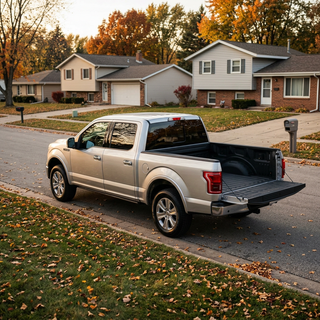
Maximizing your Ford F-150 trade-in value requires maintaining detailed service records, fixing low-cost cosmetic flaws, retaining desirable factory equipment, and timing your appraisal when local truck demand is high. Choosing high-demand configurations like a SuperCrew cab with 4WD and taking advantage of state trade-in sales tax credits further increases your net payout when trading for your next vehicle. Vehicle valuations depend heavily on documented maintenance, overall mechanical health, and physical presentation. Performing basic pre-appraisal preparation—such as thoroughly detailing the interior, removing minor bed scuffs, and gathering factory keys—ensures your pickup receives the top appraisal bracket. Truck owners driving around the industrial and riverfront work corridors of East Liverpool often see stronger trade-in offers when their vehicle shows consistent maintenance despite heavy daily work use. Documenting routine service history is one of the most effective ways to protect your truck's resale baseline. Bringing complete paper logs showing regular oil changes, transmission flushes, and brake service proves to appraising managers that critical components were maintained. Before visiting our showroom for an in-person vehicle evaluation, shoppers can easily find our dealership location or reach out to our team with a quick call to discuss pre-appraisal checklists. T able of Contents What Key Factors Determine a Ford F-150's Overall Appraisal Value? Which Ford F-150 Trim Levels and Configurations Hold Resale Value Best? How Does Mileage and Depreciation Compare to Competitors Like the Toyota Tundra? How Does the Ohio Trade-In Sales Tax Credit Work for Truck Buyers? How Can You Negotiate the Highest Trade-In Offer at the Dealership? Common Questions About Ford F-150 Trade-In Values Maximize Your Ford F-150 Trade-In Value Today What Key Factors Determine a Ford F-150's Overall Appraisal Value? An F-150 trade-in valuation is calculated by evaluating total vehicle mileage, mechanical health, physical condition, factory options, vehicle history reports, and current regional market demand. Dealership appraising managers assess reconditioning costs needed to bring the pickup to frontline retail standards, adjusting the offer based on needed repairs or detailing. Mileage Accumulation: Total odometer mileage serves as a baseline indicator of wear. Lower mileage pickups command premium trade-in numbers because they require less reconditioning and qualify for certified pre-owned marketing programs. Powertrain & Drivetrain Configuration: Truck buyers strongly favor 4WD systems over rear-wheel-drive configurations. Engines such as the 3.5L EcoBoost V6, 5.0L V8, and 3.5L PowerBoost hybrid command solid resale pricing compared to standard base fleet powerplants. Cab and Bed Style: Full four-door SuperCrew configurations represent the majority of buyer interest, carrying a distinct value premium over SuperCab and Regular Cab styles. Factory Packages & Technology: Options like the FX4 Off-Road Package, Pro Power Onboard, towing technology packages, and BlueCruise hands-free driving capabilities add direct value to the appraisal. Vehicle History & Title Cleanliness: A clear history with a single owner, no accident records, and regular service stamps significantly increases appraisal confidence. Original window sticker pricing demonstrates how factory trim levels set the resale baseline. For example, a 2026 F-150 XL 4x4 SuperCrew 5-1/2’ Box carries a base MSRP of $47,820 with a $2,795 destination charge, while a luxury-oriented 2026 F-150 Lariat 4x4 SuperCrew 5-1/2’ Box starts at a base MSRP of $63,360. Top-tier configurations like the 2026 F-150 King Ranch 4x4 SuperCrew 5-1/2’ Box begin at $69,625 base MSRP, reflecting how higher initial feature content elevates long-term residual value. Before bringing your truck to the lot, you can obtain a transparent estimate using our online tool to value your trade-in online. Truck owners who have consistently maintained their vehicles can also explore our inventory of pre-owned single-owner vehicles to see how clean history reports preserve strong market value over time. Pricing Pricing by trim Trim Base MSRP Destination charge King Ranch 4x4 SuperCrew 5-1/2’ Box $69,625 $2,795 King Ranch 4x4 SuperCrew 6-1/2’ Box $69,930 $2,795 King Ranch SuperCrew 5-1/2’ Box $65,825 $2,795 Lariat 4x4 SuperCrew 5-1/2’ Box $63,360 $2,795 Lariat 4x4 SuperCrew 6-1/2’ Box $63,965 $2,795 Lariat SuperCrew 5-1/2’ Box $59,560 $2,795 Platinum 4x4 SuperCrew 5-1/2’ Box $72,600 $2,795 Platinum 4x4 SuperCrew 6-1/2’ Box $72,905 $2,795 Platinum SuperCrew 5-1/2’ Box $68,800 $2,795 Police Responder 4x4 SuperCrew 5-1/2’ Box $52,350 $2,595 Raptor 4x4 SuperCrew 5-1/2’ Box $79,005 $2,795 STX 4x4 SuperCab 6-1/2’ Box $48,655 $2,795 STX 4x4 SuperCrew 5-1/2’ Box $51,070 $2,795 STX SuperCab 6-1/2’ Box $44,855 $2,795 STX SuperCrew 5-1/2’ Box $47,190 $2,795 Tremor 4x4 SuperCrew 5-1/2’ Box $64,915 $2,795 XL 4x4 Regular Cab 6-1/2’ Box $44,600 $2,795 XL 4x4 Regular Cab 8’ Box $42,305 $2,795 XL 4x4 SuperCab 6-1/2’ Box $45,400 $2,795 XL 4x4 SuperCrew 5-1/2’ Box $47,820 $2,795 XL 4x4 SuperCrew 6-1/2’ Box $50,475 $2,795 XL Regular Cab 6-1/2’ Box $39,585 $2,795 XL Regular Cab 8’ Box $37,290 $2,795 XL SuperCab 6-1/2’ Box $41,600 $2,795 XL SuperCrew 5-1/2’ Box $43,935 $2,795 XLT 4x4 SuperCab 6-1/2’ Box $49,495 $2,795 XLT 4x4 SuperCrew 5-1/2’ Box $51,915 $2,795 XLT 4x4 SuperCrew 6-1/2’ Box $54,555 $2,795 XLT SuperCab 6-1/2’ Box $45,695 $2,795 XLT SuperCrew 5-1/2’ Box $48,055 $2,795 Which Ford F-150 Trim Levels and Configurations Hold Resale Value Best? Mid-level and specialty Ford F-150 trims equipped with 4WD and four-door SuperCrew cabs hold their trade-in value significantly better than base fleet models. Off-road oriented models like the Tremor and Raptor, alongside well-appointed trims like the XLT, Lariat, and King Ranch, experience slower depreciation schedules due to high consumer demand in the used truck market. The XLT trim represents a sweet spot for long-term value retention. Because it bridges the gap between commercial utility and personal luxury, it remains the most sought-after configuration on the pre-owned market. Features such as the 12-inch touchscreen, advanced driver-assist features, and available Pro Power Onboard generator tech make pre-owned XLT models move quickly off dealer lots. Off-road builds like the Tremor retain exceptionally high equity percentages. Standard factory equipment including upgraded off-road suspension, locking differentials, specialized skid plates, and all-terrain tires appeals directly to buyers wanting trail-ready capability without aftermarket modifications. Local driving conditions also shape trim desirability. Truck owners navigating the rolling hills and wooded outdoor spots near Calcutta frequently seek out four-wheel-drive SuperCrew configurations that can handle family trips and weekend trailering with ease. Shoppers looking to trade into an upgraded truck can check out our local showroom selection or explore our current lineup of certified pre-owned Ford vehicles to inspect models that have maintained exceptional residual quality. Engine & Performance Powertrain specs by trim Feature King Ranch 4x4 SuperCrew 5-1/2’ Box King Ranch 4x4 SuperCrew 6-1/2’ Box King Ranch SuperCrew 5-1/2’ Box Lariat 4x4 SuperCrew 5-1/2’ Box Lariat 4x4 SuperCrew 6-1/2’ Box Lariat SuperCrew 5-1/2’ Box Engine 3.5L 3.5L 3.5L 3.5L 3.5L 3.5L Horsepower 400 hp 400 hp 400 hp 400 hp 400 hp 400 hp Torque 500 lb-ft 500 lb-ft 500 lb-ft 500 lb-ft 500 lb-ft 500 lb-ft Transmission SelectShift® SelectShift® SelectShift® SelectShift® SelectShift® SelectShift® Drivetrain Four-wheel drive Four-wheel drive Rear-wheel drive Four-wheel drive Four-wheel drive Rear-wheel drive Engine & Performance (continued) Feature Platinum 4x4 SuperCrew 5-1/2’ Box Platinum 4x4 SuperCrew 6-1/2’ Box Platinum SuperCrew 5-1/2’ Box Police Responder 4x4 SuperCrw 5-1/2’ Box Raptor 4x4 SuperCrew 5-1/2’ Box STX 4x4 SuperCab 6-1/2’ Box Engine 3.5L 3.5L 3.5L 3.5L 3.5L 2.7L Horsepower 400 hp 400 hp 400 hp 400 hp 450 hp 325 hp Torque 500 lb-ft 500 lb-ft 500 lb-ft 500 lb-ft 510 lb-ft 400 lb-ft Transmission SelectShift® SelectShift® SelectShift® SelectShift® SelectShift® SelectShift® Drivetrain Four-wheel drive Four-wheel drive Rear-wheel drive Four-wheel drive Four-wheel drive Four-wheel drive Engine & Performance (continued) Feature STX 4x4 SuperCrew 5-1/2’ Box STX SuperCab 6-1/2’ Box STX SuperCrew 5-1/2’ Box Tremor 4x4 SuperCrew 5-1/2’ Box XL 4x4 Regular Cab 6-1/2’ Box XL 4x4 Regular Cab 8’ Box Engine 2.7L 2.7L 2.7L 3.5L 5L 2.7L Horsepower 325 hp 325 hp 325 hp 400 hp 400 hp 325 hp Torque 400 lb-ft 400 lb-ft 400 lb-ft 500 lb-ft 410 lb-ft 400 lb-ft Transmission SelectShift® SelectShift® SelectShift® SelectShift® SelectShift® SelectShift® Drivetrain Four-wheel drive Rear-wheel drive Rear-wheel drive Four-wheel drive Four-wheel drive Four-wheel drive Engine & Performance (continued) Feature XL 4x4 SuperCab 6-1/2’ Box XL 4x4 SuperCrew 5-1/2’ Box XL 4x4 SuperCrew 6-1/2’ Box XL Regular Cab 6-1/2’ Box XL Regular Cab 8’ Box XL SuperCab 6-1/2’ Box Engine 2.7L 2.7L 3.5L 5L 2.7L 2.7L Horsepower 325 hp 325 hp 400 hp 400 hp 325 hp 325 hp Torque 400 lb-ft 400 lb-ft 500 lb-ft 410 lb-ft 400 lb-ft 400 lb-ft Transmission SelectShift® SelectShift® SelectShift® SelectShift® SelectShift® SelectShift® Drivetrain Four-wheel drive Four-wheel drive Four-wheel drive Rear-wheel drive Rear-wheel drive Rear-wheel drive Engine & Performance (continued) Feature XL SuperCrew 5-1/2’ Box XLT 4x4 SuperCab 6-1/2’ Box XLT 4x4 SuperCrew 5-1/2’ Box XLT 4x4 SuperCrew 6-1/2’ Box XLT SuperCab 6-1/2’ Box XLT SuperCrew 5-1/2’ Box Engine 2.7L 2.7L 2.7L 3.5L 2.7L 2.7L Horsepower 325 hp 325 hp 325 hp 400 hp 325 hp 325 hp Torque 400 lb-ft 400 lb-ft 400 lb-ft 500 lb-ft 400 lb-ft 400 lb-ft Transmission SelectShift® SelectShift® SelectShift® SelectShift® SelectShift® SelectShift® Drivetrain Rear-wheel drive Four-wheel drive Four-wheel drive Four-wheel drive Rear-wheel drive Rear-wheel drive How Does Mileage and Depreciation Compare to Competitors Like the Toyota Tundra? The Ford F-150 experiences steady, predictable depreciation that accelerates once mileage exceeds 100,000 miles, comparing favorably against class rivals while offering higher maximum towing and payload capacities. While the Toyota Tundra historically retains a slightly higher overall percentage of its original MSRP over five years, the F-150 matches or exceeds rival residual values in high-tier 4WD SuperCrew configurations due to high regional market demand. Engine efficiency and output play a noticeable role in keeping pre-owned F-150 models competitive. For instance, the 3.5L PowerBoost hybrid powertrain delivers 420 horsepower and 578 lb-ft of torque, offering EPA fuel economy ratings up to 22 mpg city / 24 hwy / 23 combined on certain 4WD configurations, matching the fuel efficiency of diesel competitors. Standard gas options, like the 2.7L EcoBoost V6, generate 325 horsepower and 400 lb-ft of torque with EPA ratings reaching 19 mpg city / 25 hwy / 21 combined in rear-wheel drive or 18 mpg city / 23 hwy / 20 combined in 4WD. High-performance variants like the Raptor yield 14 mpg city / 18 hwy / 16 combined, while the off-road Tremor earns 16 mpg city / 21 hwy / 18 combined. Mileage milestones impact trade-in values across distinct bands: Under 36,000 Miles: Vehicles within the bumper-to-bumper factory warranty window command peak trade-in values. These trucks qualify easily for certified pre-owned programs, minimizing dealer reconditioning costs. 36,000 to 60,000 Miles: Depreciation remains moderate. Trucks in this range remain well within the 5-year / 60,000-mile drivetrain warranty coverage, maintaining strong retail appeal. 60,000 to 100,000 Miles: Depreciation steadily increases as routine wear items like tires, brakes, and suspension components near replacement intervals. Over 100,000 Miles: Trade-in value experiences a steeper reduction because appraising managers must budget for comprehensive reconditioning and higher buyer mileage sensitivity. Even at higher mileage thresholds, the F-150 retains strong trade equity when equipped for serious work, offering up to 13,500 pounds of maximum towing capacity and up to 2,440 pounds of maximum payload when properly configured. Fuel Economy Fuel economy and range by trim Trim MPG King Ranch 4x4 SuperCrew 5-1/2’ Box 17 city / 23 hwy / 19 combined King Ranch 4x4 SuperCrew 6-1/2’ Box 17 city / 23 hwy / 19 combined King Ranch SuperCrew 5-1/2’ Box 17 city / 25 hwy / 20 combined Lariat 4x4 SuperCrew 5-1/2’ Box 17 city / 23 hwy / 19 combined Lariat 4x4 SuperCrew 6-1/2’ Box 17 city / 23 hwy / 19 combined Lariat SuperCrew 5-1/2’ Box 17 city / 25 hwy / 20 combined Platinum 4x4 SuperCrew 5-1/2’ Box 17 city / 23 hwy / 19 combined Platinum 4x4 SuperCrew 6-1/2’ Box 17 city / 23 hwy / 19 combined Platinum SuperCrew 5-1/2’ Box 17 city / 25 hwy / 20 combined Police Responder 4x4 SuperCrw 5-1/2’ Box — Raptor 4x4 SuperCrew 5-1/2’ Box 14 city / 18 hwy / 16 combined STX 4x4 SuperCab 6-1/2’ Box 18 city / 23 hwy / 20 combined STX 4x4 SuperCrew 5-1/2’ Box 18 city / 23 hwy / 20 combined STX SuperCab 6-1/2’ Box 19 city / 25 hwy / 21 combined STX SuperCrew 5-1/2’ Box 19 city / 25 hwy / 21 combined Tremor 4x4 SuperCrew 5-1/2’ Box 16 city / 21 hwy / 18 combined XL 4x4 Regular Cab 6-1/2’ Box 16 city / 24 hwy / 19 combined XL 4x4 Regular Cab 8’ Box 18 city / 23 hwy / 20 combined XL 4x4 SuperCab 6-1/2’ Box 18 city / 23 hwy / 20 combined XL 4x4 SuperCrew 5-1/2’ Box 18 city / 23 hwy / 20 combined XL 4x4 SuperCrew 6-1/2’ Box 17 city / 23 hwy / 19 combined XL Regular Cab 6-1/2’ Box 16 city / 24 hwy / 19 combined XL Regular Cab 8’ Box 19 city / 25 hwy / 21 combined XL SuperCab 6-1/2’ Box 19 city / 25 hwy / 21 combined XL SuperCrew 5-1/2’ Box 19 city / 25 hwy / 21 combined XLT 4x4 SuperCab 6-1/2’ Box 18 city / 23 hwy / 20 combined XLT 4x4 SuperCrew 5-1/2’ Box 18 city / 23 hwy / 20 combined XLT 4x4 SuperCrew 6-1/2’ Box 17 city / 23 hwy / 19 combined XLT SuperCab 6-1/2’ Box 19 city / 25 hwy / 21 combined XLT SuperCrew 5-1/2’ Box 19 city / 25 hwy / 21 combined How Does the Ohio Trade-In Sales Tax Credit Work for Truck Buyers? The Ohio trade-in sales tax credit allows vehicle buyers to subtract the total trade-in allowance of their current vehicle from the purchase price of their next vehicle before state and county sales taxes are calculated. This net purchase reduction directly lowers your out-of-pocket transaction costs and total amount financed. Under Ohio tax code, this credit applies automatically when you purchase a replacement vehicle and trade in your existing vehicle in the same transaction at an authorized dealership. For example, if you purchase a new pickup priced at $55,000 and receive a $25,000 trade-in valuation for your current F-150, you are only taxed on the remaining $30,000 net difference. At a combined state and local sales tax rate of 7.25%, this tax offset may reduce your out-of-pocket tax burden compared to selling your truck privately and paying tax on the full purchase price. Direct Net Tax Base Reduction: Sales tax applies only to the net difference between the new truck purchase price and the trade allowance. No Dollar Limit: Ohio does not place a cap on the trade-in allowance amount eligible for sales tax deduction. Immediate Equity Offset: The tax credit instantly reduces total vehicle purchase cost, lowering required down payments or financing balances. Truck buyers can explore our complete new vehicle inventory to locate eligible models for trade-in tax savings. You can also start your purchase online by submitting our secure credit application, or view heavy-duty options through our commercial work truck inventory. How Can You Negotiate the Highest Trade-In Offer at the Dealership? Negotiating a top trade-in offer involves presenting a clean, well-documented vehicle alongside verifiable market research to support your target valuation figure. Preparing your truck beforehand removes potential reconditioning deductions and gives appraising managers full confidence in your vehicle's mechanical integrity. Start by thoroughly cleaning the cabin, bed, and exterior body. Removing trash, personal items, and road grime creates an immediate positive impression during the physical inspection. Addressing inexpensive fixes, such as replacing burnt-out light bulbs, topping off fluids, and repairing minor windshield chips, prevents unnecessary reconditioning markdowns on your appraisal sheet. Organize all service receipts, maintenance logs, and warranty records in a folder to present during the walk-around. Our sales team frequently notes that truck owners coming in for an appraisal are surprised by how much complete maintenance documentation boosts their trade-in valuation compared to unserviced models. Bring all original equipment that came with the pickup, including secondary remote key fobs, owner manuals, bed cleats, trailer hitch accessories, and original floor mats. Missing keys alone can cost dealers over $200 to program, leading to a direct deduction from your initial offer. Presenting realistic market appraisal data from reputable valuation sources helps anchor negotiations around true wholesale values. Common Questions About Ford F-150 Trade-In Values Q: Does having complete maintenance records increase my F-150 trade-in value? Yes, presenting full service records increases trade-in value by providing concrete proof of regular oil changes, fluid flushes, and scheduled maintenance. Clear documentation reduces dealer reconditioning risks, allowing appraising managers to offer higher trade-in allowances for well-maintained trucks. Q: How much value does 4WD add to a Ford F-150 trade-in appraisal? Equipping an F-150 with 4WD typically adds between $2,000 and $4,000 in trade-in appraisal value compared to an equivalent rear-wheel-drive truck. Regional vehicle markets with severe winter weather or rural terrain show exceptionally strong resale demand for four-wheel-drive models. Q: Should I repair body dents and scratches before trading in my truck? Minor cosmetic flaws and small door dings are usually best left alone, as major auto body repair costs rarely yield a full return on investment during trade-in appraisals. However, low-cost fixes like thorough detailing, cleaning the interior, and fixing minor windshield chips provide an excellent return by improving first impressions. Q: Does aftermarket modification lower my Ford F-150 trade-in offer? Heavy aftermarket modifications like non-factory suspension lifts, oversized off-road wheels, custom engine tunes, or exhaust alterations often reduce trade-in values. Dealerships prefer stock factory configurations because modified pickups appeal to a narrower secondary market and cannot qualify for certified pre-owned warranty programs. Q: How does trading in a truck lower my sales tax in Ohio? Trading in a truck in Ohio allows the trade-in valuation amount to be subtracted directly from the purchase price of your next vehicle before state and county sales taxes are calculated. You only pay sales tax on the remaining net price difference, yielding direct tax savings. For personalized appraisal support, shoppers can find directions to our showroom or connect with our valuation experts by giving our team a quick call today. Maximize Your Ford F-150 Trade-In Value Today Unlocking the highest trade-in value for your Ford F-150 comes down to smart preparation, detailed record-keeping, and taking full advantage of state trade-in tax savings. Whether you are driving a high-trim SuperCrew or a reliable work truck, bringing a clean, well-maintained pickup to the valuation desk ensures you receive full market value toward your next purchase. Our team makes the appraisal process clear and straightforward from start to finish. Bring your pickup in for a professional appraisal, explore our latest truck lineup, and take the next step by contacting our team today to schedule your trade-in evaluation. Keep Your Vehicle Running Strong Keep your vehicle performing at its best with our service team: Order Parts Schedule Service Appt © 2026 Tri State Ford. All rights reserved. Vehicle specification data © JATO Dynamics Limited. Ford F-150 Trade-In Tips in East Liverpool OH | Tri State Ford
3

How Do You Prepare Your Car for Winter?

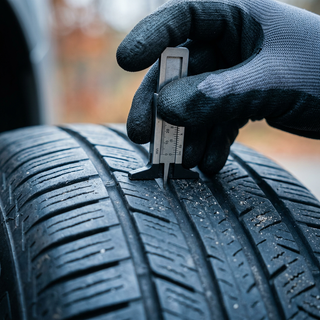
To prepare your car for winter, inspect the battery charge, adjust tire pressure to factory specifications, verify tire tread depth is at least 6/32 of an inch, flush engine coolant with a sub-zero freeze-protected mixture, install winter wiper blades with sub-zero washer fluid, and test your heating and defroster systems. Taking these preventative maintenance steps before freezing temperatures arrive prevents unexpected vehicle breakdowns and ensures maximum traction on icy roads. Sub-freezing temperatures put intense physical strain on every mechanical system in your vehicle. Engine oil thickens, battery chemical reactions slow down, and air pressure inside your tires drops continuously as outdoor temperatures fall. Drivers navigating the riverfront bluffs and steep hills of East Liverpool face unique winter challenges where slick roads require immediate braking response and consistent wheel grip. Proper seasonal vehicle preparation transforms how your vehicle handles slush, black ice, and freezing rain. Systematically checking key components ahead of the first winter storm preserves safety systems, protects critical engine components from costly damage, and gives you complete confidence behind the wheel all season long. You can stop by our dealership location or give our service department (330) 462-7578 a call to confirm your vehicle is ready for the cold weather ahead. Table of Contents What Key Vehicle Components Should Be Inspected Before the First Snow? What Is the Ideal Tire Tread Depth and Pressure for Winter Driving Conditions? What Battery Voltage and Cold Cranking Amps Are Required for Cold Weather? Which Winter Preparation Maintenance Tasks Can You Do at Home at Home? Quick Answers to Common Winter Vehicle Maintenance Questions Schedule Your Pre-Winter Inspection Today What Key Vehicle Components Should Be Inspected Before the First Snow? Before the first snowfall, inspect the vehicle battery, brake system, tire tread and pressure, engine coolant concentration, serpentine belts, radiator hoses, wiper blades, and exterior lighting. Evaluating these core mechanical systems ensures your vehicle maintains traction, visibility, and reliable engine operation during severe winter weather. Cold weather causes rubber materials to harden and contract, which accelerates cracking on aging serpentine belts and radiator hoses. A worn belt that snaps in sub-zero weather cuts power to your alternator and water pump, leading to sudden engine failure. Likewise, engine coolant must maintain a precise 50/50 mixture of antifreeze and water to protect the engine block from cracking when temperatures drop well below freezing. Brake performance demands thorough inspection before winter arrives. Technicians measure friction lining to verify at least 3/32 inch of pad material remains and inspect brake rotors for severe rust pitting or scoring. Advanced driver-assist technologies and drive modes rely on healthy mechanical components to function properly. For instance, Ford Explorer models equipped with Intelligent 4WD feature a Terrain Management System with Slippery mode and Deep Snow/Sand settings that modulate engine torque and transmission shift points to reduce wheel spin on packed snow [1.1.7]. Battery and charging system voltage output Brake pad lining thickness and rotor surface condition Coolant freeze-point protection and hose elasticity Serpentine drive belt tension and wear Headlight, tail light, and turn signal clarity Windshield wiper blade condition and washer fluid level If you prefer to perform maintenance repairs yourself, you can easily order OEM Ford parts online directly through our service portal. For drivers planning ahead for future seasonal travel needs, exploring the custom factory order options allows you to select winter-ready features like heated seats, remote start, and all-wheel drive straight from the factory. What Is the Ideal Tire Tread Depth and Pressure for Winter Driving Conditions? The ideal tire tread depth for winter driving is 6/32 of an inch or deeper on winter tires and at least 4/32 of an inch on all-season tires, maintained at the vehicle manufacturer's recommended cold inflation pressure listed on the driver-door placard. Tire pressure drops approximately 1 to 2 PSI for every 10-degree Fahrenheit decrease in outside temperature. Driving on underinflated tires compromises vehicle handling, reduces fuel efficiency, and causes uneven tread wear. Pressure checks must always be conducted when the tires are cold, meaning the vehicle has been parked for at least three hours. Never adjust tire inflation to the maximum pressure stamped on the tire sidewall, as that number reflects maximum load capacity rather than your vehicle's engineered inflation spec. Tread depth directly determines how effectively a tire channels slush, snow, and water away from the contact patch. While tires are legally considered worn out at 2/32 of an inch, that minimal tread depth cannot clear snow or prevent hydroplaning on wet highways. Suburban commuters driving daily routes through Calcutta along State Route 170 encounter mixed slush and packed snow where deep tread grooves are vital for maintaining steering control and stopping distance. To ensure your tires are prepared for slippery road surfaces, you can schedule a service appointment online to have our technicians check tire pressure, perform a computerized wheel alignment, and rotate your tires. What Battery Voltage and Cold Cranking Amps Are Required for Cold Weather? A healthy 12-volt automotive battery must maintain a resting voltage of 12.6 volts or higher and meet or exceed the factory rating for cold cranking amps to start reliably in freezing weather. Cold weather places a double burden on your electrical starting system. Freezing temperatures slow the internal chemical reaction inside lead-acid battery cells, reducing available cranking power by as much as 50 percent at zero degrees Fahrenheit. Simultaneously, low temperatures cause engine oil to thicken, which demands significantly more electrical current from the battery to turn over the crankshaft. Battery Health Metric Ideal Specification Cold Weather Impact Resting Voltage 12.6 volts or higher Dropping below 12.4V indicates a weak charge Charging Voltage 13.8 to 14.7 volts Alternator output must maintain charge under heater load Cold Cranking Amps Matches OEM specification Cold reduces effective amperage output significantly Testing your battery's state of charge and reserve capacity before winter identifies weak cell plates before you get stranded in a cold parking lot. Technicians clean corrosion from battery terminals, inspect hold-down brackets, and verify that the alternator charges between 13.8 and 14.7 volts while powering high-draw winter accessories like defrosters and heated seats. You can learn more about our comprehensive battery testing and battery replacement maintenance offerings to ensure your vehicle starts on the coldest mornings. Which Winter Preparation Maintenance Tasks Can You Do at Home at Home? You can check tire inflation pressure, measure tread depth using a coin, inspect wiper blade rubber for tearing, top off freezing-rated washer fluid, visually inspect belts and hoses for cracks, and test exterior safety lights at home without specialized tools. Performing a visual safety audit takes less than twenty minutes in your driveway: The Quarter Test: Insert a quarter upside down into the tread grooves of your tires. If the top of Washington's head is covered by the tread, you have at least 4/32 of an inch of tread depth remaining. Wiper and Washer Inspection: Lift each wiper arm and slide your finger along the rubber edge to feel for tears or stiff, cracked edges. Fill the windshield washer reservoir with winter-grade fluid rated for sub-zero temperatures. Belt and Hose Visual Check: With the engine off and cold, press down on engine drive belts to verify tension and look for fraying or longitudinal cracks along the V-ribs. Squeeze radiator hoses to ensure they feel firm rather than soft or spongy. Lighting Audit: Turn on your headlights, hazard flashers, and parking lights, then walk around the vehicle to verify every bulb illuminates clearly through clean lenses. Emergency Kit Setup: Pack an emergency kit containing jumper cables, an ice scraper, a flashlight, heavy blankets, bottled water, and sand or cat litter for tire traction. Quick Answers to Common Winter Vehicle Maintenance Questions Q: At what temperature do all-season tires lose flexibility and traction? All-season tire tread compounds begin to harden and lose elasticity at temperatures below 45 degrees Fahrenheit. As the rubber stiffens, it loses its ability to conform to small road imperfections, which significantly reduces traction on dry and wet pavement even before snow or ice falls. Specialized winter tires utilize flexible silica compounds designed specifically to remain pliable in sub-freezing temperatures. Q: Is a professional winter vehicle inspection worth the cost? A professional winter vehicle inspection identifies hidden mechanical vulnerabilities such as weak battery cell voltage, hairline belt cracks, and uneven brake lining wear before subzero weather leaves you stranded. Factory-trained technicians use specialized diagnostic tools to load-test electrical systems, measure coolant freeze points, and evaluate suspension components that cannot be adequately checked at home. Q: How do you inspect vehicle brakes for winter readiness? Inspect brake pads to confirm at least 3/32 inch of friction lining remains, check rotors for severe rust pitting or scoring, and verify that the brake fluid is clean and filled to the reservoir line. Clean brake fluid prevents internal moisture accumulation that can freeze inside hydraulic lines during extreme cold spells, ensuring smooth and consistent pedal feel. Q: What items should be in a winter emergency vehicle kit? A winter emergency kit should include heavy blankets, jumper cables, a flashlight with extra batteries, an ice scraper with a snow brush, a collapsible shovel, traction sand or kitty litter, non-perishable snacks, drinking water, and a mobile phone charger. Keeping these items in your cargo area ensures you remain safe and warm if your vehicle experiences a roadside delay during severe weather. Q: What should you do if your vehicle stalls during a winter storm? Stay inside your vehicle, turn on interior lights, and tie a bright marker cloth to your antenna or window. Check that your exhaust pipe remains completely clear of snow banks to prevent dangerous carbon monoxide gas from backing up into the cabin, and run the engine intermittently just long enough to keep warm. If you need emergency roadside service, you can reach Ford Roadside Assistance at 1-800-241-3673 for 24/7 towing, battery jump-starts, and flat tire assistance. You can also view our current Ford service specials for routine winter care. Schedule Your Pre-Winter Inspection Today Schedule a comprehensive pre-winter vehicle inspection at Tri State Ford to ensure your car, truck, or SUV is fully prepared for winter driving conditions. Taking care of routine maintenance before snow hits protects your vehicle's long-term reliability and keeps your family safe on slick roads. Our factory-trained technicians test battery health, evaluate brake system wear, analyze tire tread depth, flush essential engine fluids, and install fresh wiper blades using genuine OEM parts. We provide transparent service recommendations so you can make informed decisions about your vehicle's care. Visit our service center at 1503 Pennsylvania Ave, East Liverpool, OH 43920 or give our service team a quick call at (330) 462-7578 to reserve your inspection appointment before the first winter freeze. © 2026 Tri State Ford. All rights reserved. Vehicle specification data © JATO Dynamics Limited. Winter Car Prep in East Liverpool OH | Tri State Ford

g

How Do Dealerships Calculate Your Car's Trade-In Value Toward an SUV?

Dealerships calculate your car's trade-in value by analyzing recent live wholesale market auction prices, current local buyer demand, the exact year, trim, and mileage, and a detailed physical appraisal that inspects mechanical performance, tire wear, and body condition. The resulting valuation reflects the vehicle's wholesale worth minus expected reconditioning costs needed before resale. Understanding how auto retailers establish trade-in values helps you maximize your vehicle's equity when upgrading to a new crossover or full-size utility vehicle. Valuation begins with real-time market data sourced from wholesale auto auctions and national appraisal databases. Estimators check what similar vehicles with matching equipment packages earn at dealer transactions across the region. This wholesale baseline establishes the true current market value of your vehicle before accounting for its specific physical state. Once the initial market baseline is established, an appraiser conducts a physical walk-around and test drive. This inspection checks essential mechanical components, including the engine, transmission, brake wear, and suspension integrity. Physical body condition, glass clarity, interior seat wear, tire tread depth, and vehicle history reports like accident records or recorded service visits directly impact the appraisal offer. Expenses required to recondition the vehicle for sale—such as installing new tires, fixing body dents, or completing deferred maintenance—are subtracted from the wholesale market figure. Vehicle configuration also plays a major role in final offers. Models equipped with popular options like all-wheel drive, premium audio, or advanced driver-assist features command higher appraisal values because regional buyers seek those specific capabilities. To discuss your current vehicle equity in person, visit our East Liverpool showroom location or give our team a quick call at (330) 462-7578. Table of Contents At What Mileage Thresholds and Condition Tiers Does Trade-In Value Drop? Are Truck and SUV Trade-In Values Higher Than Sedan Trade-Ins? How Do Instant Cash Offers Compare to In-Person Dealership Appraisals? Can You Trade In a Car If You Owe More Than It Is Worth? Common Questions About SUV Trade-Ins and Appraisals Steps to Maximize Your Trade Value Toward a New SUV At What Mileage Thresholds and Condition Tiers Does Trade-In Value Drop? Trade-in value drops most significantly when a vehicle crosses major mileage thresholds at 50,000 miles, 75,000 miles, and 100,000 miles, alongside shifts between condition tiers from Excellent down to Fair. These milestones represent points where major component wear increases and factory warranty coverages expire, raising expected reconditioning costs. Mileage is one of the single largest variables affecting vehicle depreciation. Passing specific mileage limits changes how a retail dealership or secondary buyer views a vehicle's longevity: 50,000 Miles: Factory bumper-to-bumper warranties usually expire around 36,000 miles, and standard powertrain coverage ends near 60,000 miles. Crossing 50,000 miles places a vehicle near the edge of its original warranty protection, which slightly reduces wholesale demand. 75,000 Miles: At this stage, vehicles enter a maintenance window where wear-and-tear items like brake rotors, struts, spark plugs, and tires require replacement. Appraisers deduct anticipated service costs from the trade allowance. 100,000 Miles: Crossing six figures represents a significant psychological and financial threshold. Many lending institutions adjust financing terms for vehicles over 100,000 miles, reducing retail buyer demand and causing a noticeable drop in wholesale valuation. Vehicle condition tiers further adjust the trade allowance. Appraisers classify vehicles into four distinct categories: Excellent: Flawless mechanical performance, zero body or paint damage, matching clean tires, and a complete documented service record. Very few trade-in vehicles meet this standard. Very Good: Minor cosmetic imperfections like tiny stone chips, minimal seat wear, strong mechanical condition, and no required immediate service. Good: Normal wear for its age and mileage, minor scratches, light interior staining, or tires with moderate tread remaining. Fair: Visible body damage, worn tires, or mechanical issues requiring immediate service before the vehicle can be resold. Upgrading to a versatile SUV like the 2026 Ford Escape demonstrates how vehicle value aligns with configuration. For example, the 2026 Ford Escape Active FWD carries a Base MSRP of $30,350 (with a $1,495 destination charge), while the Active AWD starts at $31,750. Sportier trims like the ST-Line FWD start at $31,195, the ST-Line AWD at $32,595, and the ST-Line Select AWD 2.0L at $35,015. Premium configurations include the Platinum AWD at $37,940 and the ST-Line Elite AWD 2.0L at $38,935. Trading in a well-maintained vehicle before it hits a major mileage milestone maximizes your equity offset toward these modern crossovers. You can check your vehicle's projected baseline using an online trade-in appraisal tool or explore our pre-owned 1-owner inventory to see how well-maintained vehicles retain value. Pricing Pricing by trim Feature Active AWD Active FWD Platinum AWD ST-Line AWD Base MSRP $31,750 $30,350 $37,940 $32,595 Destination charge $1,495 $1,495 $1,495 $1,495 Pricing (continued) Feature ST-Line Elite AWD 2.0L ST-Line FWD ST-Line Select AWD 2.0L Base MSRP $38,935 $31,195 $35,015 Destination charge $1,495 $1,495 $1,495 Fuel Economy Fuel economy and range by trim Feature Active AWD Active FWD Platinum AWD ST-Line AWD MPG 26 city / 32 hwy / 28 combined 27 city / 34 hwy / 30 combined 23 city / 31 hwy / 26 combined 26 city / 32 hwy / 28 combined Fuel Economy (continued) Feature ST-Line Elite AWD 2.0L ST-Line FWD ST-Line Select AWD 2.0L MPG 23 city / 31 hwy / 26 combined 27 city / 34 hwy / 30 combined 23 city / 31 hwy / 26 combined Are Truck and SUV Trade-In Values Higher Than Sedan Trade-Ins? Trucks and SUVs consistently maintain higher trade-in values than sedans, retaining a greater percentage of their original sticker price over a five-year ownership window. Strong consumer preference, standard all-wheel drive capability, and multi-purpose utility sustain elevated demand in the pre-owned market. Market demand heavily favors utility vehicles over traditional four-door passenger cars. Standard compact and midsize sedans lose value at a faster rate due to declining buyer interest on retail lots. In contrast, utility vehicles and pickup trucks hold superior residual value because they fulfill diverse consumer needs, from family transport to heavy towing and foul weather driving. For drivers negotiating the rolling hills around Calcutta along State Route 170, the ground clearance and towing capability of an SUV make pre-owned utility vehicles far more desirable on the secondary market than traditional sedans. Models like the 2026 Ford Bronco retain up to 66% of their original value over five years, whereas standard midsize sedans retain closer to 42%. Compact trucks like the 2026 Ford Maverick retain approximately 54% over the same five-year window. Vehicle owners switching from a sedan to an SUV often notice that their trade equity goes further when moving between utility platforms. Buyers interested in commercial capability can view our selection of new commercial work trucks or browse our certified pre-owned vehicle selection to compare long-term resale potential. How Do Instant Cash Offers Compare to In-Person Dealership Appraisals? Instant cash offers utilize algorithmic market data to provide a rapid baseline estimate, whereas in-person dealership appraisals conduct a physical inspection that can adjust the value upward based on vehicle condition, trim upgrades, and local demand. Additionally, trading in directly during a purchase yields a sales tax credit on the replacement SUV that cash offers do not provide. Online valuation algorithms rely on public records, recent auction sales, and self-reported vehicle conditions to generate an automated price range. While this provides a convenient starting point for research, an online estimate cannot assess unique vehicle strengths such as recent tire replacements, aftermarket accessories, or meticulous interior care. Our team regularly sees shoppers review an online cash offer first, then discover during a showroom walk-around that their vehicle's detailed service history or premium options command additional trade equity toward a new vehicle. Drivers commuting along Market Street near retail centers in Boardman often benefit from in-person appraisals that account for regional demand for all-wheel drive models. Trading in your vehicle at the time of purchase also offers a major financial benefit through state sales tax structures. In many jurisdictions, you only pay sales tax on the net price difference between your trade-in allowance and the replacement SUV's price. Selling a vehicle outright for cash eliminates this tax credit, often requiring you to pay hundreds or thousands of dollars more in state sales tax on your new purchase. You can begin the process with an instant cash offer tool, connect with our local Ford dealership team, or complete an online credit application to streamline your upgrade. Can You Trade In a Car If You Owe More Than It Is Worth? You can trade in a vehicle when you owe more than its current market value by rolling the remaining loan balance into your new SUV's financing agreement. The dealership pays off your original lender in full, consolidating the net negative equity into a monthly payment subject to credit approval. Negative equity, often called being "underwater" or "upside-down" on an auto loan, occurs when your remaining loan payoff exceeds the current appraisal allowance. For example, if your vehicle appraisals at $12,000 but your loan payoff statement reads $14,000, you have $2,000 in negative equity. When trading in a car with negative equity toward an SUV: Loan Consolidation: The dealership sends a check for $14,000 directly to your existing lender to release the vehicle's legal title. Financing Adjustment: The $2,000 difference is added to the total financed balance of your replacement SUV. Lender Limits: Financial institutions set maximum loan-to-value limits based on your credit tier and the MSRP of the new vehicle. To offset negative equity, buyers can apply manufacturer rebates, choose an SUV trim with higher built-in value retention, or provide a cash down payment. Models like the 2026 Ford Bronco Sport—available in trims such as Big Bend starting at $32,340, Heritage at $33,395, Outer Banks at $35,640, and Badlands at $38,260 —offer accessible price points that help lenders approve consolidated financing terms. Common Questions About SUV Trade-Ins and Appraisals Q: How long is a trade-in appraisal offer valid? Most physical trade-in appraisal offers remain valid for 7 days or up to 500 additional miles, whichever comes first. This window allows you time to evaluate financing terms or compare new SUV models without risking market price fluctuations on your current vehicle. Q: Can you negotiate your trade-in offer at a dealership? Yes, trade-in values can be negotiated based on supporting documentation such as recent maintenance records, new tire receipts, or independent valuation reports. Presenting detailed service histories and highlighting desirable factory packages gives our appraisers clear justification to offer top dollar for your vehicle. Q: What is the difference between wholesale trade-in value and retail value? Wholesale trade-in value is the acquisition price a dealership pays for a vehicle before performing safety inspections, mechanical repairs, detailing, and reconditioning. Retail value is the higher listing price a customer pays for that reconditioned vehicle on the sales lot, reflecting the dealer's investment and overhead costs. Q: What documents should you bring when trading in a car toward an SUV? Bring your vehicle's physical title if paid in full, or your current loan account number and payoff statement if financing. You should also provide a valid driver's license, current state registration card, proof of auto insurance, all sets of keys and key fobs, and service maintenance records. Q: How does trading in a car reduce the sales tax on a new SUV? Trading in a vehicle allows state sales tax to be calculated only on the price difference between your trade-in credit and the purchase price of the new SUV. For example, if you purchase a Ford Explorer and receive a trade allowance, you pay sales tax only on the net amount. Steps to Maximize Your Trade Value Toward a New SUV Maximizing your trade-in value requires thorough vehicle preparation, gathering complete documentation, and scheduling a professional appraisal at the time of your replacement purchase. Small investments in detailing and routine maintenance checks yield higher appraisal offers on the showroom floor. Follow these practical steps before presenting your vehicle for appraisal: Detail Interior and Exterior: Wash and wax the exterior, vacuum carpets, wipe down leather or cloth seating, and clean windows to create a positive initial visual impression. Gather Documentation: Organize maintenance receipts, warranty documents, and title or payoff information in a clean folder to prove steady maintenance care. Fix Low-Cost Issues: Replace burned-out bulb filaments, top off fluid reservoirs, and replace worn wiper blades to prevent minor deductions during inspection. Bring All Accessories: Provide both master key fobs, owner's manuals, cargo covers, and floor mats that came originally with the vehicle. When you are ready to evaluate your vehicle's trade equity toward an upgrade like the 2026 Ford Explorer—featuring a 2.3L engine and 5,000 lbs towing capacity—our staff is ready to assist. You can visit our dealership in East Liverpool, speak directly with an appraiser by calling (330) 462-7578, or explore our new vehicle inventory online today. Keep Your Vehicle Running Strong Keep your vehicle performing at its best with our service team: Order Parts Schedule Service Appt © 2026 Tri State Ford. All rights reserved. Vehicle specification data © JATO Dynamics Limited. Trade-In Value Insights for SUVs in East Liverpool OH | Tri State Ford
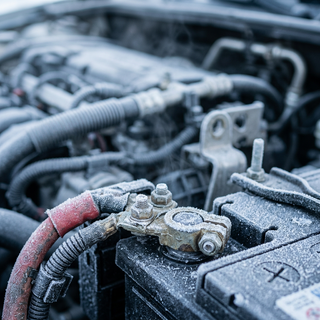
3

Why Does a Car Struggle to Start on Cold Mornings?

A car struggles to start on cold mornings because freezing temperatures slow down the chemical reactions inside the battery, drastically reducing its electrical output while simultaneously thickening engine oil and increasing internal mechanical resistance. This combination requires the starting motor to draw significantly more power from a battery that is operating at a reduced capacity. When temperatures drop to 32°F, a standard lead-acid car battery loses roughly 20% of its total cranking strength, and at 0°F, that output plunges by nearly 60%. At the exact moment your battery has the least power to offer, your engine demands up to twice as much energy to rotate. Cold weather thickens internal engine lubricants, causing pistons, bearings, and valve trains to resist movement. If your vehicle has a marginal electrical connection, an aging battery, or worn ignition components, these cold-weather physical forces reveal those hidden weaknesses immediately. Vehicles equipped with larger powertrains or higher compression engines require optimal voltage to fire reliably. For example, a 2026 Ford F-150 with a 3.5L EcoBoost® V6 or a 2026 Ford Explorer with a 2.3L EcoBoost® engine relies on precise starter speeds to build initial fuel rail pressure and generate combustion heat. When morning frost coats the windshield, any loss of electrical current leads directly to slow cranking or a complete failure to turn over. In suburban areas like Calcutta, where vehicles often sit outside overnight amidst rolling hills and cold valley air along State Route 170, a weak starting system is quick to surface. Taking time to inspect your starting system before winter settles in prevents unexpected delays. If your morning commute begins with an unusually sluggish start, you can stop by our service center in East Liverpool for a comprehensive electrical load check, or give our technicians a call at (330) 462-7578 to discuss your vehicle's symptoms. Table of Contents How Do Weakening Batteries and Extreme Cold Affect Engine Cranking? How Does Engine Oil Viscosity Cause Slow Morning Starts? Can Worn Spark Plugs or Fuel Delivery Issues Cause Extended Cranking? What Sound Does a Bad Starter Relay Make Compared to a Failing Starter Motor? How Much Does It Cost to Replace a Starter Motor or Alternator? Common Questions About Slow Morning Starts and Electrical Repairs Keep Your Vehicle Starting Dependably Every Morning How Do Weakening Batteries and Extreme Cold Affect Engine Cranking? A weakening battery cranks slowly on cold mornings because low ambient temperatures lower its Cold Cranking Amps (CCA) output while internal engine resistance peaks. As chemical activity slows inside traditional lead-acid cells, battery voltage drops rapidly during ignition, leaving insufficient current to spin the starter motor at normal operational speed. Batteries are rated by Cold Cranking Amps, which measures the number of amperes a battery can deliver at 0°F for 30 seconds while maintaining a minimum voltage of 7.2 volts. Standard passenger cars and compact SUVs like the 2026 Ford Escape generally require between 400 CCA and 600 CCA, while larger trucks and utility vehicles demand 700 CCA or higher. As a battery ages over three to five years, chemical sulfation builds up on the internal lead plates, reducing total active surface area. A battery that operates adequately during mild autumn weather may suddenly drop below its required threshold during the first hard freeze. Battery construction plays a critical role in winter performance. Standard flooded batteries contain liquid electrolyte solution that can stratify and freeze in extreme sub-zero conditions, potentially cracking internal plates or damaging the outer casing. In contrast, Absorbed Glass Mat (AGM) batteries bind the electrolyte inside fine fiberglass cell mats. This design eliminates free-flowing liquid, resists internal freezing, provides faster recharge acceptance, and delivers higher surge currents during cold starts. Our service team often sees drivers get caught off guard on the first sub-zero morning when a battery that passed summer checks suddenly fails. Corrosion at the cable terminals further compounds cold-weather starting issues. White or greenish powdery deposits created by lead sulfate build up resistance at the battery posts, blocking electrical flow to the starter. Cleaning terminals, verifying ground connections, and selecting an upgraded battery rating ensure dependable morning starts. Drivers looking to replace an aging unit can order genuine Motorcraft® replacement parts directly through our component department. How Does Engine Oil Viscosity Cause Slow Morning Starts? Engine oil viscosity directly causes slow morning starts because lower temperatures increase fluid thickness, creating severe parasitic drag on the engine crankshaft and pistons. When oil thickens into a heavy, gel-like consistency, the starter motor must work twice as hard to rotate the internal engine assembly until proper operating temperatures are reached. Motor oil is classified using a multi-grade rating system developed by the Society of Automotive Engineers (SAE), such as 0W-20 or 5W-30. The number preceding the "W" represents the oil's winter viscosity rating, indicating how easily fluid flows at sub-zero temperatures. Lower numbers mean thinner, more fluid oil during cold starts: 0W viscosity: Formulated to flow instantly at temperatures as low as -31°F, drastically reducing cold-start friction and providing rapid oil pressure to upper valvetrain components. 5W viscosity: Suitable for winter temperatures down to -22°F, offering strong protection for standard daily commuting needs. 10W viscosity: Thicker at sub-freezing temperatures, which can add substantial fluid drag during extreme cold starts if used outside recommended factory guidelines. Using motor oil with a higher cold-viscosity rating than recommended by the vehicle manufacturer forces the starter motor to overcome massive fluid friction. Modern engine designs rely on rapid oil pressure during the first few seconds of ignition. For example, variable valve timing actuators require immediate oil flow to set camshaft positioning for efficient combustion. Delayed oil flow prolongs cranking times and increases wear on internal bearings. For daily commuters traveling along Market Street in Boardman, where morning traffic requires quick, reliable vehicle performance, using full synthetic motor oil helps maintain liquid fluidity on sub-freezing mornings. Full synthetic oils resist cold-temperature thickening far better than conventional mineral oils, protecting internal surfaces and lowering electrical load on the starter. To keep your engine filled with the exact factory-recommended grade, you can schedule a winter service appointment online with our maintenance department. Can Worn Spark Plugs or Fuel Delivery Issues Cause Extended Cranking? Worn spark plugs and fuel delivery issues cause extended morning cranking because cold fuel vaporizes less efficiently, requiring precise fuel pressure and higher electrical voltage to ignite. Worn plug gaps demand more electrical current from an already stressed cold battery, while losing fuel line pressure overnight delays combustion inside the cylinders. When an engine is cold, liquid gasoline does not vaporize as easily as it does at operating temperature. The engine control computer compensates by delivering a richer air-fuel mixture during cold starts. However, if the ignition or fuel delivery systems are compromised, this rich mixture fails to ignite cleanly: Worn Spark Plugs: Over tens of thousands of miles, the electrical gap between the spark plug center and ground electrode widens. A wider gap requires significantly higher voltage from the ignition coils to jump. On a cold morning, when battery voltage is already suppressed, the ignition system may fail to produce a strong enough spark, causing extended cranking or engine misfires. Loss of Fuel Pressure: The fuel system relies on a check valve inside the fuel pump module to hold pressure in the fuel rail after the engine turns off. If this valve leaks, fuel drains back into the gas tank overnight. When you turn the key the next morning, the fuel pump must run for several seconds just to purge air from the lines and build pressure before the injectors can mist fuel into the combustion chambers. Clogged Fuel Injectors: Leaking or dirty fuel injectors alter the fuel spray pattern from a fine mist into large liquid droplets. Cold air cannot vaporize large droplets, resulting in wet spark plugs and delayed engine ignition. Taking advantage of modern convenience features can help manage winter driving routines. Remote start systems—activated on Ford models by pressing the door lock button once and the remote start button twice—allow the engine to warm up safely in an open outdoor area. If your vehicle exhibits hesitation or extended cranking when starting, our technicians can evaluate ignition components and fuel rail pressure. To make routine maintenance easier during busy winter months, customers can utilize our Ford Pick Up & Delivery service options to have their vehicle serviced without interrupting their workday. What Sound Does a Bad Starter Relay Make Compared to a Failing Starter Motor? A bad starter relay or solenoid typically produces a rapid series of metallic clicking sounds or a single faint click without turning the engine over, whereas a failing starter motor generates a heavy single thud, a high-pitched whirring sound, or a harsh metallic grinding noise. Distinguishing between these distinct acoustic symptoms allows technicians to isolate electrical control issues from mechanical starter hardware failures: Component Condition Primary Sound Produced Root Physical Cause Weak Battery / Low Voltage Rapid, continuous clicking ("click-click-click-click") The solenoid engages, voltage drops, the solenoid releases, and the cycle repeats rapidly. Bad Starter Relay / Solenoid Single soft click or complete silence Internal electrical contacts are pitted or burned, preventing high-amperage current from reaching the motor. Failing Starter Motor Brushes Single loud thud or dull clunk with no rotation Current reaches the starter, but worn carbon brushes or shorted armature windings fail to spin the shaft. Worn Starter Pinion Gear High-pitched whirring or screeching sound The starter motor spins at high speed, but the Bendix drive fails to extend and engage the flywheel. Damaged Flywheel Ring Gear Harsh metallic grinding noise Broken or rounded teeth on the engine flywheel prevent proper gear mesh during cranking. When you turn the ignition key or press the engine start button, a small control signal travels through the starter relay to energize the starter solenoid. The solenoid acts as an electromagnetic switch: it closes heavy internal contacts to feed full battery current directly to the starter motor while simultaneously pushing the starter pinion gear into mesh with the engine flywheel. If you hear a rapid chatter, the battery voltage is usually too low to keep the solenoid engaged. If you hear a single solid click accompanied by dimming interior lights, the solenoid is working, but the starter motor armature is locked or mechanically jammed. If you hear a high-pitched spinning sound without the engine turning over, the starter motor is functioning, but its internal drive clutch has failed. Maintaining complete vehicle health during winter includes inspecting all supportive chassis systems. While checking your electrical system, evaluating tire condition is equally vital for cold-weather traction. You can check your current tire sizes and tread options using our online tire lookup tool. How Much Does It Cost to Replace a Starter Motor or Alternator? Replacing a starter motor generally costs between $300 and $700 for parts and labor, while replacing an alternator typically ranges from $400 to $900 depending on vehicle make, engine packaging, and component accessibility. The total repair investment varies based on mechanical design factors and component quality: Starter Motor Replacement Factors: Parts Cost: A high-quality or original equipment replacement starter costs between $150 and $400. Labor Expense: Labor charges depend on location and accessibility. On straightforward inline-four or V6 engine layouts, replacement takes 1 to 2 hours. On dense engine bays where intake manifolds, steering shafts, or exhaust heat shields must be removed, labor can extend to 3 hours or more. Alternator Replacement Factors: Parts Cost: Replacement alternators range from $200 to $500 depending on amperage output requirements (such as high-output units needed for vehicles with extensive electronic accessories). Labor Expense: Replacing an alternator typically involves releasing serpentine belt tension, disconnecting electrical harnesses, and unbolting mounting brackets, requiring 1.5 to 3 hours of shop time. Accurate diagnostic testing before replacing major components prevents unnecessary expense. A blown starter fuse, corroded ground wire, or degraded battery cable can perfectly mimic a failed starter or alternator. For example, if an alternator's internal diode bridge fails, it may allow a small AC voltage leak that drains the battery overnight while parked, causing slow morning starts despite the battery itself being in good condition. Our factory-trained service technicians use specialized diagnostic tools to measure starter current draw, charging system ripple voltage, and battery conductance. Using genuine OEM Motorcraft® starters and alternators ensures exact bolt-on alignment, proper electrical plug compatibility, and long-term durability. If your vehicle is exhibiting slow cranking, flickering battery warning lights, or abnormal starting noises, bring it to our local dealership workshop for an accurate diagnosis, or give our service advisors a call at (330) 462-7578 to receive a detailed estimate. Common Questions About Slow Morning Starts and Electrical Repairs Q: What Cold Cranking Amps (CCA) rating does my vehicle need for winter? Most standard passenger cars and compact SUVs require a battery rated between 400 CCA and 600 CCA, while larger trucks like the 2026 Ford F-150 often require 700 CCA or higher. Choosing a battery with a CCA rating equal to or slightly higher than original factory specifications ensures your starter motor receives sufficient electrical current during sub-zero mornings. Q: How can I test my car battery's Cold Cranking Amps at home? You can test battery strength at home using a digital battery conductance tester connected directly to the positive and negative terminals. A reading significantly lower than the rated CCA printed on the battery label indicates internal plate degradation, signaling that the battery should be replaced before cold weather causes a complete failure. Q: Why does my Ford remote start fail to turn on the vehicle in extreme cold? Ford remote start systems automatically disable ignition when battery voltage drops below a safe operational threshold or if diagnostic trouble codes are stored in the engine computer. If your remote start fails on a freezing morning, unlock and lock the doors using your key fob, then press the remote start button twice to test system response. Q: Does extreme cold weather permanently damage a vehicle battery? Sub-zero cold reduces battery charge capacity and can freeze liquid electrolyte inside a discharged flooded battery, cracking internal lead plates and destroying the battery structure. Keeping your battery fully charged and upgrading to an AGM battery prevents internal freezing and extends battery life throughout harsh winters. Q: How do I know if my starting issue is a dead battery or a bad alternator? A dead battery causes slow cranking or rapid clicking when turning the key, but the engine will run normally once jump-started. A failing alternator often triggers a battery warning light on the dashboard, causes dimming headlights during night driving, or causes the engine to stall shortly after starting because the charging system cannot maintain operational voltage. Keep Your Vehicle Starting Dependably Every Morning Addressing slow starting symptoms early prevents unexpected breakdowns when winter weather is at its worst. Whether your vehicle requires a fresh battery with a higher Cold Cranking Amps rating, a system diagnostic to test starter current draw, or an engine oil change using the ideal winter viscosity grade, taking proactive steps preserves electrical health and extends starter motor longevity. Our factory-certified service center provides comprehensive battery load testing, charging system inspections, and genuine Motorcraft® replacement parts installed by trained technicians. If your car hesitates, clicks, or cranks slowly in the morning, schedule a professional diagnostic inspection or contact our team to ensure your vehicle remains completely dependable on every drive. Should you ever encounter an unexpected roadside emergency, manufacturer-backed emergency support is available directly through Ford Roadside Assistance: 1-800-241-3673. © 2026 Tri State Ford. All rights reserved. Vehicle specification data © JATO Dynamics Limited. Car Starting Issues in East Liverpool OH | Tri State Ford
5

What Is the Best Used AWD SUV Under $25,000?

The best overall used AWD SUVs under $25,000 include late-model compact crossovers like the Ford Bronco Sport and Ford Escape, alongside established options such as the Toyota RAV4, Subaru Forester, and Honda CR-V. Among these vehicles, recent Ford models stand out under $25,000 by offering lower mileage, standard all-wheel drive, higher towing capacity, and advanced driver-assist features. Finding a dependable pre-owned crossover within a $25,000 budget requires balancing mileage, overall vehicle condition, and long-term ownership costs. Recent market inventory shows that buyers shopping under $25,000 can easily secure 2021 to 2023 models with moderate odometer readings between 16,000 and 85,000 miles. Crossovers in this price bracket deliver modern infotainment systems, active safety gear, and confident winter traction without forcing buyers into older, high-mileage inventory. For drivers seeking rugged styling combined with daily efficiency, the Ford Bronco Sport is a standout candidate in the $25,000 price range. Pre-owned Big Bend and Outer Banks trims routinely list under $25,000. These models feature standard all-wheel drive, a flexible terrain management system, and up to 2,700 pounds of towing capacity when equipped with the 2.0L EcoBoost engine on the Badlands trim. Meanwhile, the Ford Escape offers an exceptionally comfortable ride, offering an automatic 8-speed transmission paired with a 1.5L engine that yields an EPA-estimated 26 city / 32 hwy fuel economy rating. When comparing these to other pre-owned crossovers like the Toyota RAV4 or Subaru Forester, late-model Ford vehicles often provide newer technology packages and lower odometer figures at similar price points. To explore these options in person, you can visit our East Liverpool showroom address or give our sales team a call at (330) 462-7578 to check current availability. Table of Contents Which Reliable Used AWD SUVs Offer the Best Value Under $25,000? How Many Miles Per Gallon Does a Used Subaru Crosstrek AWD Get? Can You Find 3-Row AWD SUVs Like the Ford Explorer or Honda Pilot Under $25,000? Is a Used Luxury AWD SUV Like an Audi Q5 Worth Buying Over a Non-Luxury Model? Common Buyer Questions About Used AWD SUV Ownership, Warranties, and Insurance Which Reliable Used AWD SUVs Offer the Best Value Under $25,000? Under $25,000, the best-value reliable used AWD SUVs are the Toyota RAV4, Honda CR-V, Subaru Forester, Mazda CX-5, and Ford Bronco Sport. These vehicles combine strong long-term mechanical durability, excellent resale value, and effective all-wheel drive systems that handle demanding road conditions with ease. For buyers focusing strictly on overall ownership cost and mechanical simplicity, comparing maintenance requirements across popular models is essential. When looking at a Toyota RAV4 versus a Subaru Forester, the Toyota RAV4 generally costs slightly less to maintain over time. The inline four-cylinder engine layout of the RAV4 allows easier component access during routine service compared to the horizontal boxer engine design found in the Subaru Forester, which can require additional labor time for spark plug replacements or valve cover service. To understand how trim choices impact new MSRP baseline pricing and factory specifications for versatile pre-owned models like the Ford Bronco Sport, buyers can review the exact manufacturer figures below: Big Bend 4X4: Base MSRP of $31,845 plus a $1,995 destination charge; EPA-estimated 25 city / 30 hwy / 27 combined MPG. Heritage 4X4: Base MSRP of $33,395 plus a $1,995 destination charge; EPA-estimated 25 city / 30 hwy / 27 combined MPG. Outer Banks 4X4: Base MSRP of $35,145 plus a $1,995 destination charge; EPA-estimated 25 city / 30 hwy / 27 combined MPG. Badlands 4X4: Base MSRP of $37,265 plus a $1,995 destination charge; EPA-estimated 21 city / 27 hwy / 23 combined MPG with its larger 2.0L engine and SelectShift transmission. Because these vehicles depreciate initial retail pricing into the used market, shoppers can often acquire 2021–2023 Big Bend or Outer Banks models under $25,000. For drivers navigating the rolling hills and rural suburban connector routes near Calcutta, having standard all-wheel drive and robust ground clearance makes a noticeable difference during sudden winter weather shifts. Shoppers interested in added peace of mind can browse our single-owner pre-owned inventory to find well-documented maintenance records. If you plan on trading in your current vehicle toward your purchase, our team makes it simple to value your trade-in online or secure an instant cash offer for your vehicle before visiting our lot. Pricing Pricing by trim Feature Badlands 4X4 Big Bend 4X4 Heritage 4X4 Outer Banks 4X4 Base MSRP $37,265 $31,845 $33,395 $35,145 Destination charge $1,995 $1,995 $1,995 $1,995 Engine & Performance Powertrain specs by trim Feature Badlands 4X4 Big Bend 4X4 Heritage 4X4 Outer Banks 4X4 Engine 2L 1.5L 1.5L 1.5L Horsepower 238 hp 180 hp 180 hp 180 hp Torque 277 lb-ft 200 lb-ft 200 lb-ft 200 lb-ft Drivetrain All-wheel drive All-wheel drive All-wheel drive All-wheel drive How Many Miles Per Gallon Does a Used Subaru Crosstrek AWD Get? A pre-owned 2.0L Subaru Crosstrek AWD equipped with a continuously variable transmission delivers an EPA-estimated 28 mpg city / 33 mpg highway / 30 combined, while manual-transmission models achieve 22 mpg city / 29 mpg highway. Fuel efficiency is a primary deciding factor for many crossover buyers, and the Subaru Crosstrek ranks among the most fuel-efficient subcompact AWD options on the market. However, evaluating fuel economy requires looking at real-world usability alongside interior space. While the Crosstrek delivers impressive highway numbers, its subcompact frame limits total cargo volume to about 21 cubic feet behind the second row. By comparison, compact crossovers in the same under-$25,000 price range offer competitive fuel efficiency while providing significantly larger cabin dimensions: Ford Escape AWD: Equipped with the 1.5L EcoBoost engine and automatic 8-speed transmission, it achieves 26 city / 32 hwy MPG while providing 38 cubic feet of rear cargo space. Ford Bronco Sport 4X4: Powered by the 1.5L engine, it delivers 25 city / 30 hwy MPG alongside 29 cubic feet of rear cargo space and an upright boxy roofline that accommodates tall items. Honda CR-V AWD: Typically achieves 27 city / 32 hwy MPG, providing exceptional passenger legroom across both rows. Shoppers comparing compact crossovers in our showroom frequently ask whether a subcompact option like the Crosstrek delivers enough rear seat legroom and cargo capacity for growing families, or if stepping up to a slightly larger vehicle makes more sense. For most households balancing school runs, grocery trips, and weekend travel, stepping up to a compact SUV like the Ford Escape provides a much more versatile cabin with almost no penalty in daily fuel economy. To explore late-model options that have passed thorough multi-point mechanical inspections, shoppers can explore our certified pre-owned Ford inventory to compare high-efficiency crossovers directly. Fuel Economy Fuel economy and range by trim Feature Badlands 4X4 Big Bend 4X4 Heritage 4X4 Outer Banks 4X4 MPG 21 city / 27 hwy / 23 combined 25 city / 30 hwy / 27 combined 25 city / 30 hwy / 27 combined 25 city / 30 hwy / 27 combined Can You Find 3-Row AWD SUVs Like the Ford Explorer or Honda Pilot Under $25,000? Yes, midsize 3-row AWD SUVs including the 2020–2021 Ford Explorer, 2016–2019 Honda Pilot, and 2017–2020 Toyota Highlander are readily available under $25,000. These larger vehicles provide seating for six to eight passengers, expanded cargo capacity, and substantial towing capabilities. Moving from a 2-row compact crossover to a 3-row SUV gives families the space needed for extra passengers and gear. Pre-owned 2020–2021 Ford Explorer models on the used market frequently land right at or below $25,000 with odometer readings around 73,000 to 95,000 miles. The Ford Explorer XLT or Limited trims feature a 2.3L EcoBoost engine, SelectShift transmission, standard all-wheel drive, and seating for up to six or seven passengers. It delivers 16 cubic feet of storage behind the third row, expands to substantial cargo volume with the rear seats folded flat, and provides a maximum towing capacity of 5,000 pounds. Other competitive 3-row options in this price class include: Honda Pilot AWD: Powered by a 3.5L V6 engine, offering seating for up to eight passengers and up to 5,000 pounds of towing capacity when properly equipped. Toyota Highlander AWD: Features strong reliability ratings, comfortable seating, and an EPA rating of roughly 20 city / 27 hwy MPG on V6 models. Mazda CX-9 AWD: Delivers dynamic handling, a upscale interior feel, and a turbocharged four-cylinder engine with 3,500 pounds of towing capacity. Families commuting across the Mahoning Valley near Boardman often prefer midsize 3-row SUVs for their added passenger room during school drop-offs and extra stability on icy interstate connectors. When shopping for a 3-row vehicle under $25,000, reviewing maintenance records is critical to verify that transmission fluids, brake pads, and cooling systems were regularly serviced by previous owners. Is a Used Luxury AWD SUV Like an Audi Q5 Worth Buying Over a Non-Luxury Model? A used luxury AWD SUV like an Audi Q5 or BMW X3 under $25,000 offers premium cabin materials and refined driving dynamics, but carries significantly higher ongoing maintenance, repair, and fuel costs than a non-luxury crossover. For most budget-focused buyers, a newer non-luxury SUV represents a smarter overall purchase. Buying a luxury crossover under $25,000 usually means selecting an older model year with 70,000 to 110,000 miles on the odometer. While features like leather upholstery, panoramic sunroofs, and tuned suspensions are appealing, European luxury vehicles require specialized replacement parts and higher shop labor rates. Component repairs on complex turbochargers, multi-link suspensions, or electronic transfer cases can easily run two to three times higher than equivalent repairs on a Ford Escape, Ford Bronco Sport, or Toyota RAV4. Comparing what $25,000 buys in today's pre-owned market illustrates the clear value difference: Pre-Owned Luxury SUV (e.g., 2016–2018 Audi Q5): Typically features higher mileage, older infotainment software, out-of-warranty components, and a requirement for premium high-octane gasoline. Pre-Owned Non-Luxury SUV (e.g., 2021–2023 Ford Escape or Bronco Sport): Typically features remaining factory warranty coverage, lower mileage, modern smartphone integration, updated driver-assist features, and regular unleaded fuel requirements. For buyers considering an older luxury SUV, purchasing an extended service contract can help mitigate unexpected mechanical expenses. However, warranty contracts add upfront cost and often include specific deductibles or coverage caps on complex electrical components. Choosing a late-model mainstream SUV gives buyers better long-term reliability and lower total cost of ownership. If you are ready to evaluate budget-friendly crossover options, you can check out our new Ford inventory to see baseline model features, apply online with our secure credit application, or find seasonal tires using our online tire finder tool to prepare your current vehicle for trade-in. Common Buyer Questions About Used AWD SUV Ownership, Warranties, and Insurance Purchasing a used AWD SUV requires evaluating ongoing ownership costs, where all-wheel drive systems slightly increase tire wear and insurance rates while delivering unmatched winter traction and driver confidence. Choosing well-maintained inventory with complete service histories ensures long-term reliability and peace of mind. Q: Does AWD increase insurance premiums on used SUVs? All-wheel drive can slightly increase vehicle insurance premiums by 5% to 10% compared to front-wheel-drive models because AWD powertrains have a higher initial purchase value and more complex mechanical components to repair after an accident. However, many insurance providers offer safety discounts for advanced driver-assist features and superior winter traction systems that help offset this modest rate difference. Q: Should you buy an extended warranty for a used luxury AWD SUV? Purchasing an extended warranty for a used European luxury AWD SUV under $25,000 is strongly advisable due to elevated labor rates and expensive electronic or mechanical replacement components. Buyers should carefully review coverage terms to verify that critical drivetrain parts, turbochargers, and complex transfer cases are fully included without burdensome repair deductibles. Q: Which used AWD SUV under $25,000 has the highest reliability score? The Toyota RAV4 and late-model Ford Escape consistently achieve top reliability standings among pre-owned AWD SUVs under $25,000. Their straightforward four-cylinder engine designs, proven automatic transmissions, and broad availability of service parts make them exceptionally durable choices for long-term ownership. Q: Is a high-mileage Toyota RAV4 AWD still worth buying under $25,000? A Toyota RAV4 AWD with 80,000 to 100,000 miles remains a smart buying choice under $25,000 if documented maintenance records confirm regular fluid flushes, filter replacements, and brake service. These vehicles routinely exceed 200,000 miles when properly maintained, preserving high trade-in value throughout their life cycle. Q: What features come standard on a 2019 Mazda CX-5 AWD under $25,000? A 2019 Mazda CX-5 AWD priced under $25,000 typically includes i-Activsense safety technologies like full-speed adaptive cruise control, lane-keep assist, automatic emergency braking, blind-spot monitoring, smart device connectivity, and a 7-inch touchscreen infotainment system. Finding the right pre-owned AWD crossover for your family comes down to matching your seating needs, daily commute, and budget. Whether you need a compact crossover like the Ford Escape or a spacious 3-row Ford Explorer, our team is ready to walk you through available inventory and financing options. To take the next step toward your next vehicle, visit our showroom at 1503 Pennsylvania Ave, East Liverpool, OH 43920 or give our team a call at (330) 462-7578 to schedule a test drive today. Keep Your Vehicle Running Strong Keep your vehicle performing at its best with our service team: Order Parts Schedule Service Appt © 2026 Tri State Ford. All rights reserved. Vehicle specification data © JATO Dynamics Limited. Used AWD SUVs Under $25K in East Liverpool OH | Tri State Ford
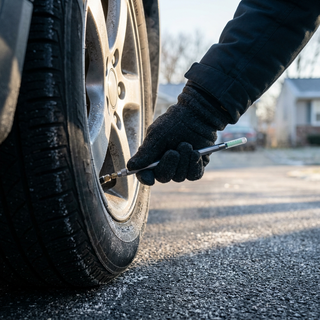
l

Why Does Cold Weather Trigger Your Tire Pressure Warning Light?

Cold weather causes air inside tires to contract, reducing tire pressure by approximately 1 PSI for every 10°F drop in outside temperature. When ambient temperatures plunge overnight, a tire that was already slightly underinflated drops below the Tire Pressure Monitoring System (TPMS) threshold—typically set at 25% below recommended cold PSI—activating the dashboard light even without a puncture. As autumn transitions into winter, daily temperature fluctuations frequently surprise vehicle owners. Gas operates according to basic thermal principles: when ambient air cools, gas molecules slow down and draw closer together. This contraction decreases the outward force exerted against the inner liner of the tire casing. In addition to natural thermal drops, tires naturally lose about 1 PSI per month through normal rubber permeability. When seasonal ambient temperature loss combines with gradual air seepage, a tire set correctly in mild autumn weather can cross the warning threshold on the first freezing morning. Understanding how quickly overnight temperatures shift helps prevent unnecessary worry about punctures. Along the Ohio River, near the riverfront bluffs and rolling terrain of East Liverpool, sub-freezing morning temperatures regularly drop pressure by 3 to 4 PSI before sunrise. Drivers who notice the warning light illuminating early in the morning may observe it shutting off after driving a few miles. As rolling tires flex against the pavement, internal friction generates heat, raising internal air temperature and restoring internal pressure above the warning cutoff. However, a dashboard light that extinguishes itself after highway driving does not mean the tire has returned to its proper cold inflation specification. The warning light disappearing simply means pressure temporarily cleared the minimum threshold. Once the car sits parked and cools down again, the pressure drops right back into the danger zone. Setting tire pressure when the rubber is completely cold ensures maximum safety, proper tire wear, and optimal fuel economy throughout winter. For personalized assistance or routine maintenance, visit our East Liverpool dealership address or give our service department a quick call at (330) 462-7578. Table of Contents What Is the Difference Between Direct and Indirect TPMS in Cold Weather? Where Is the Recommended Cold Tire Pressure PSI Located on Your Vehicle? How Much Fuel Economy Is Lost from Underinflated Tires in Winter? What Does a Blinking Tire Pressure Warning Light Mean? Common Questions About Winter Tire Pressure and TPMS Operation Schedule Professional Winter Tire Service What Is the Difference Between Direct and Indirect TPMS in Cold Weather? Direct TPMS relies on battery-powered hardware sensors mounted inside each wheel to measure actual PSI directly, whereas indirect TPMS utilizes anti-lock brake system (ABS) wheel speed sensors to monitor wheel rotation speed and estimate pressure changes based on wheel diameter. Both systems alert drivers to dangerous pressure loss, but they respond differently during sudden winter cold snaps. Direct TPMS monitors deliver exact, real-time pressure values to the vehicle instrument cluster. Each wheel sensor contains a tiny pressure transducer and RF transmitter powered by an internal lithium battery. When cold weather strikes overnight, a direct system measures the exact physical pressure drop immediately upon turning the ignition key. Many modern vehicles equipped with direct TPMS display the exact numeric PSI for all four individual tires right on the instrument display, making it easy to identify whether a single tire has a puncture or all four tires have dropped uniformly due to ambient cold. Indirect TPMS operates without wheel-mounted pressure sensors. Instead, it measures how fast each tire rotates relative to the others. An underinflated tire has a slightly smaller overall diameter, forcing it to rotate faster than a properly inflated tire to cover the same distance. In cold weather, indirect systems exhibit distinct characteristics: Delayed Alerts: Because indirect systems require vehicle motion to process wheel speed data, the low-pressure light won't illuminate while the car sits parked in the driveway. It triggers only after driving a short distance. Uniform Pressure Drops: If cold weather lowers pressure equally across all four tires, every wheel shrinks by the exact same proportion. Because all four wheels continue spinning at the same relative speed, an indirect TPMS might not immediately trigger a warning even though all four tires are significantly underinflated. Calibration Requirements: Indirect systems must be manually reset through the vehicle settings menu whenever air is added or tires are rotated so the ABS computer can relearn baseline rolling circumferences. Maintaining direct TPMS hardware requires periodic servicing, especially as wheel sensor batteries reach the end of their typical life cycle. When replacement sensors or valve service kits are needed during seasonal tire rotations, vehicle owners can easily order genuine OEM Ford replacement parts directly through our parts center. Where Is the Recommended Cold Tire Pressure PSI Located on Your Vehicle? The recommended cold tire inflation pressure is printed on the Tire and Loading Information label fixed to the driver-side door jamb or door pillar, as well as inside the vehicle owner's manual. Drivers should never use the pressure figure stamped into the tire sidewall, as that number represents the maximum pressure the tire casing can safely handle, not the vehicle manufacturer's recommended operating specification. Automotive engineers calculate ideal recommended tire pressure based on specific vehicle weight distribution, suspension tuning, braking dynamics, and cargo ratings. Filling a tire to the maximum PSI printed on the sidewall creates a harsh, uncomfortable ride, reduces traction on slick winter roads, and leads to premature center tread wear. To achieve accurate readings and maintain peak vehicle safety, follow these established pressure-checking standards: Define "Cold": Check pressure when the vehicle has been parked out of direct sunlight for at least three hours, or driven less than one mile at moderate speed. Account for Warm Expansion: If tire pressure must be checked immediately after driving, readings will naturally appear 4 to 6 PSI higher than cold specifications due to heat expansion. Do not bleed air from a warm tire to meet the door placard baseline. Use a Quality Pressure Gauge: Vehicle dashboard readouts provide convenient estimates, but a dedicated digital or pencil-style pressure gauge calibrated in 1 PSI increments provides the most reliable measurement. Checking tire pressure at least once a month and before long highway road trips keeps vehicle safety systems operating exactly as engineered. How Much Fuel Economy Is Lost from Underinflated Tires in Winter? Fuel efficiency drops by approximately 0.2% for every 1 PSI drop across all four tires, while driving on severely underinflated tires can reduce total fuel economy by up to 3%. In winter conditions—where cold engines and dense air already lower mileage—soft tires add unnecessary drag and increase weekly fuel costs. When tire pressure falls below specification, the tire tread flattens out against the road, expanding its contact patch. This expanded contact area generates increased rolling resistance, forcing the engine to consume extra fuel to maintain cruising speed. Beyond wasted fuel, underinflation severely affects overall vehicle durability and highway safety: Uneven Tread Wear: Underinflated tires wear heavily on the outer shoulders while leaving the center tread underutilized, prematurely destroying tread life. Excessive Heat Generation: Flexing sidewalls create internal friction and thermal buildup, increasing the risk of sudden tire casing failure. Compromised Handling and Braking: Underinflated sidewalls squirm during cornering, degrading steering response and increasing stopping distances on wet or icy pavement. Suburban commuters traveling along State Route 170 in Calcutta rely on proper tire inflation to maintain efficient daily driving during freezing weather. Capable family vehicles like the 2026 Ford Escape, rated at 26 city / 32 hwy MPG with its 1.5L engine and all-wheel drive, or the spacious 2026 Ford Explorer with its 300 hp 2.3L powertrain depend on correct cold inflation pressures to achieve their rated efficiency. Similarly, working trucks like the 2026 Ford F-150 featuring a 3.5L engine and SelectShift® transmission need proper tire support to deliver full towing performance and stable handling when hauling heavy loads. When tire tread wears thin or sidewalls show aging, drivers can use our convenient online tire lookup tool to locate factory-approved replacement tires built specifically for their vehicle trim. What Does a Blinking Tire Pressure Warning Light Mean? A tire pressure warning light that flashes for 60 to 90 seconds upon starting your vehicle before remaining continuously illuminated signals a TPMS system fault or dead sensor battery rather than simple low air pressure. When the light remains steady from the moment you start the engine, it indicates that at least one tire has low pressure. Understanding the distinction between a steady light and a flashing light prevents improper diagnostic steps. A flashing light indicates that the onboard computer has lost communication with one or more wheel sensors. Common triggers for a blinking TPMS light include: Expired Sensor Batteries: Direct TPMS sensors use integrated lithium batteries with a typical lifespan of 5 to 10 years. Once the battery depletes, the sensor stops transmitting data, triggering a system malfunction alert. Seasonal Wheel Swaps: Installing winter wheels and tires without transferring or reprogramming electronic TPMS sensors prevents the vehicle computer from reading pressure signals. Corroded or Damaged Hardware: Road salt and moisture can corrode valve stems or damage internal electronic components. Electronic Interference: Unapproved aftermarket electronic accessories installed near the dash can occasionally disrupt radio frequency signals sent from wheel sensors. If your dashboard displays a flashing warning light, check air pressure manually across all four tires using a pressure gauge to ensure immediate driving safety, then schedule a professional inspection to identify and replace faulty system components. Common Questions About Winter Tire Pressure and TPMS Operation Q: Is nitrogen better than regular compressed air for preventing winter tire pressure drops? Nitrogen molecules are larger than oxygen molecules and contain virtually no moisture, which reduces air migration through tire rubber and minimizes internal pressure fluctuations caused by humidity changes. However, dry nitrogen gas still obeys basic thermal laws, expanding and contracting as outside temperatures change. While pure nitrogen reduces gradual pressure loss, it still experiences pressure drops during severe cold snaps, making routine manual pressure checks necessary regardless of which inflation gas is used. Q: Does the tire pressure warning light go off by itself after driving? Yes, driving generates internal tire friction that warms the air inside, increasing internal pressure. If a tire was sitting just below the warning threshold, thermal expansion while driving can raise pressure enough to temporarily turn off the dashboard light. However, once the vehicle parks and the rubber cools back down, pressure drops right back below recommended levels. Drivers should add air to match recommended cold PSI ratings rather than relying on temporary driving heat. Q: Should you overinflate tires beyond the door sticker rating during winter? No, tires should always be inflated to the exact cold pressure specification listed on the driver's door jamb sticker. Overinflating tires to compensate for expected cold snaps reduces tire contact area on snow and ice, causing harsh ride quality, accelerated center tread wear, and reduced traction. Adjust pressure regularly to match recommended placard values as seasonal weather changes. Q: Why does only one tire trigger a warning light after a cold night? While cold weather affects all four tires equally, individual tires may sit at slightly different baseline pressures prior to a temperature drop. A tire that was already 2 PSI lower than the others due to normal seepage will cross the 25% underinflation threshold first when freezing weather hits. If one tire reads significantly lower than the rest, inspect the tread and valve stem carefully to rule out a nail, valve leak, or rim damage. Q: What should you do if a tire loses pressure rapidly on the road? If a tire loses pressure rapidly while driving, pull over safely to a flat, secure location away from traffic. Do not continue driving on a severely deflated tire, as doing so damages the wheel rim and tire sidewall structure. Drivers covered by factory warranty or extended protection plans can access dedicated manufacturer support by contacting Ford Roadside Assistance at 1-800-241-3673 for professional towing, flat tire changes, or emergency assistance. Schedule Professional Winter Tire Service Proper tire care is one of the most effective ways to ensure family safety, precise vehicle handling, and maximum fuel economy throughout the cold winter months. Whether your vehicle requires seasonal air pressure adjustments, TPMS sensor diagnostics, tire rotations, or complete replacement with brand-new snow-rated tires, our certified service department delivers expert care using factory-approved equipment and genuine OEM parts. Our factory-trained technicians can quickly inspect your tire tread depth, evaluate rubber condition, balance wheels, and reset your Tire Pressure Monitoring System to ensure worry-free winter driving. Visit our East Liverpool facility today, give our service team a quick call at (330) 462-7578, or conveniently schedule a service appointment online to keep your vehicle running smoothly and safely all season long. © 2026 Tri State Ford. All rights reserved. Vehicle specification data © JATO Dynamics Limited. Tire Pressure Tips for Cold Weather in East Liverpool OH | Tri State Ford
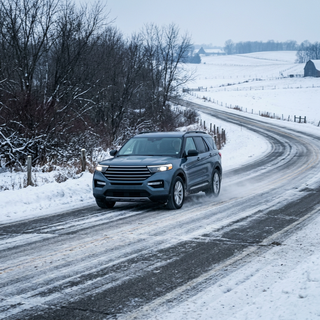
5

Which Used SUV Is Best for Winter Driving?

The best used SUV for winter driving combines active all-wheel drive or four-wheel drive, at least 7.5 to 8.5 inches of ground clearance, and active cold-weather safety features. Pre-owned models like the Ford Bronco Sport Badlands, Ford Explorer Intelligent 4WD, and Ford Escape AWD stand out because their proactive drivetrains continuously adjust power to wheels with grip, preventing traction loss before it occurs in heavy snow or slush. When navigating winter weather across northeastern Ohio, having a vehicle engineered for snow-covered roads provides essential confidence. Crossover vehicles with elevated ride heights avoid getting high centered on packed snowbanks, while advanced driver-assist systems help maintain steering control on slick pavement. Whether commuting along the elevation changes of State Route 170 in Calcutta during a sudden snowstorm or driving through slushy suburban streets, selecting a capable pre-owned crossover ensures reliable performance for your daily routine. At Tri State Ford, our pre-owned lineup offers space for the whole family alongside Ford quality. Every used crossover on our lot undergoes a thorough safety inspection to ensure its drivetrain, brakes, and heating systems are ready for cold-weather driving. You can stop by our showroom at 1503 Pennsylvania Ave to explore available options, or give our sales team a quick call to learn more about current pre-owned arrival models. Table of Contents Is All-Wheel Drive Better Than 4WD for Winter Snow and Ice Driving? What Features Matter Most for Winter Driving and Snow Ground Clearance? Comparing Popular Used Winter Models: Subaru Outback vs Honda CR-V and Toyota SUVs Which Used Winter SUVs Under $15,000 Offer Reliable AWD? Are Used Electric SUVs Eligible for Federal Tax Credits for Winter Buyers? Common Questions About Finding a Used Winter SUV Find Your Winter-Ready SUV at Tri State Ford Is All-Wheel Drive Better Than 4WD for Winter Snow and Ice Driving? All-wheel drive ( AWD) is generally better for daily winter road conditions because it operates automatically and constantly shifts torque between axles on variable snow, ice, and dry pavement. Traditional four-wheel drive ( 4WD) is superior for deep unplowed snow, steep inclines, or severe off-road conditions where locking differentials and low-range gearing provide maximum low-speed power. Un derstanding the mechanical differences between these drivetrains helps drivers choose the right configuration: All-Wheel Drive (AWD): Uses electronic sensors to monitor wheel speed continuously. When a tire loses grip on slush or ice, the system redirects engine power to the remaining wheels with traction within milliseconds without requiring driver intervention. Four-Wheel Drive (4WD): Mechanically locks the front and rear driveshafts together to deliver equal power to both axles. This is ideal for crawling through deep snowdrifts, but using traditional 4WD on dry or partially clear highway pavement can cause driveline binding. Pre-owned Ford SUVs bridge this gap effectively. For example, a pre-owned Ford Explorer equipped with Intelligent 4WD utilizes the Terrain Management System™. Drivers can select Slippery mode, which softens throttle response and optimizes traction control thresholds specifically for icy roads. For extra peace of mind, buyers searching for rigorous quality standards can browse our inventory of certified pre-owned vehicles to find winter-ready models with factory-backed warranty protection. What Features Matter Most for Winter Driving and Snow Ground Clearance? Adequate ground clearance of at least 8 inches, dedicated winter drive modes, heated seating and mirrors, and electronic stability control matter most when selecting a pre-owned winter vehicle. Ride height keeps the chassis from high-centering on snowdrifts, while electronic driver-assist systems help maintain steering control on icy roads. Essential winter vehicle features include: Ground Clearance: A minimum clearance of 7.5 to 8.5 inches prevents the front bumper from plowing heavy accumulation and keeps snow from lifting the tires off the road surface. Driver-Assist Safety Technology: Systems like Ford Co-Pilot360™ incorporate Electronic Stability Control ( ESC), Anti-lock Braking Systems ( ABS), and Traction Control Systems ( TCS) to prevent skids during sudden directional changes. Cold-Weather Comfort: Features such as heated front seats, a heated steering wheel, and remote start ensure a comfortable cabin while clearing iced windshields efficiently. Tire management remains equally crucial. As ambient temperatures drop, tire pressure decreases by approximately 1 psi for every 10°F temperature reduction. Checking tire pressure cold and inflating tires to the specification printed on the driver-door placard ensures proper contact patches. While AWD aids acceleration on slippery surfaces, stopping and turning performance relies on tire tread condition. Buyers inspecting pre-owned SUVs for winter travel often ask our team to demonstrate how remote start and heated seat integration work on cold mornings before checking cargo space. To help budget for your next purchase, you can estimate your trade-in value online before visiting. Comparing Popular Used Winter Models: Subaru Outback vs Honda CR-V and Toyota SUVs The Subaru Outback offers standard AWD and 8.7 inches of ground clearance, beating the Honda CR-V's 7.8 to 8.2 inches for deep snow clearance. Pre-owned Toyota RAV4 AWD and Toyota Highlander models provide strong fuel economy and winter traction, but Ford crossover options match or exceed them in winter technology, ride stability, and cabin comfort. When comparing pre-owned winter vehicles across major brands: Subaru Outback vs Honda CR-V: The Outback provides a higher factory ride height than most CR-V model years, making it more capable in unplowed drifts. Toyota RAV4 AWD & Highlander: Toyota’s pre-owned crossovers offer reliable torque-vectoring AWD systems, though interior passenger room and technology integration vary by trim. Ford Crossover Advantage: The Ford Escape and Ford Explorer deliver durable durability paired with refined highway manners, making them ideal when driving across snowy riverfront bluffs in East Liverpool. For buyers considering compact crossover models, a pre-owned Ford Escape offers impressive capability across several configurations. The Escape Active AWD features a 1.5L EcoBoost® engine producing 180 hp and 199 lb-ft of torque, paired with an automatic 8-speed transmission and a base MSRP starting at $31,750 (with a $1,495 destination charge). Upgrading to the ST-Line Elite AWD or Platinum AWD introduces a powerful 2.0L EcoBoost® generating 250 hp and 280 lb-ft of torque through a SelectShift® automatic transmission, starting at $38,935 base MSRP. If you are comparing pre-owned choices against brand-new options, feel free to explore our current new Ford inventory to see the latest winter features. Pricing Pricing by trim Feature Active AWD Active FWD Platinum AWD ST-Line AWD Base MSRP $31,750 $30,350 $37,940 $32,595 Destination charge $1,495 $1,495 $1,495 $1,495 Pricing (continued) Feature ST-Line Elite AWD 2.0L ST-Line FWD ST-Line Select AWD 2.0L Base MSRP $38,935 $31,195 $35,015 Destination charge $1,495 $1,495 $1,495 Engine & Performance Powertrain specs by trim Feature Active AWD Active FWD Platinum AWD ST-Line AWD Engine 1.5L 1.5L 2L 1.5L Horsepower 180 hp 180 hp 250 hp 180 hp Torque 199 lb-ft 199 lb-ft 280 lb-ft 199 lb-ft Transmission automatic 8-speed automatic 8-speed SelectShift® automatic 8-speed Drivetrain All-wheel drive Front-wheel drive All-wheel drive All-wheel drive Engine & Performance (continued) Feature ST-Line Elite AWD 2.0L ST-Line FWD ST-Line Select AWD 2.0L Engine 2L 1.5L 2L Horsepower 250 hp 180 hp 250 hp Torque 280 lb-ft 199 lb-ft 280 lb-ft Transmission SelectShift® automatic 8-speed SelectShift® Drivetrain All-wheel drive Front-wheel drive All-wheel drive Which Used Winter SUVs Under $15,000 Offer Reliable AWD? Pre-owned vehicles under $15,000 like 2012–2015 Subaru Foresters, 2011–2014 Honda CR-Vs, 2010–2013 Toyota RAV4s, and 2016–2019 Ford Edge models offer reliable AWD and proven long-term durability. Midsize options like the Ford Edge combine generous interior room, ample cargo space, and solid winter highway stability at an affordable pre-owned price point. When shopping for a reliable winter vehicle under $15,000, prioritize these evaluation steps: Undercarriage Inspection: Examine frame rails and suspension components for excessive surface rust caused by seasonal road salt. Drivetrain Maintenance Records: Verify that previous owners completed regular fluid changes for differentials and transfer cases. Tire Tread Depth: Ensure the vehicle is equipped with high-quality all-season or dedicated snow tires with sufficient tread remaining. Electronic Stability Verification: Confirm that traction control and ABS warning lights cycle off properly upon engine startup. A pre-owned Ford Edge in this price tier provides midsize cabin room, smartphone integration, and a heavier curb weight that plant the chassis securely during windy winter highway drives. To find well-maintained options with documented history, you can browse our CARFAX 1-Owner pre-owned inventory, or use our digital tools to get an instant cash offer for your vehicle toward your down payment. Are Used Electric SUVs Eligible for Federal Tax Credits for Winter Buyers? Used electric SUVs are no longer eligible for federal tax credits for present-day purchases, as Public Law 119-21 terminated the federal pre-owned clean vehicle credit effective September 30, 2025. Buyers taking possession now qualify only if they entered a binding written contract and made a qualifying payment on or before September 30, 2025. When shopping for a pre-owned electric vehicle for winter driving, keep these practical factors in mind: Cold-Weather Range Impact: Sub-freezing temperatures temporarily reduce real-world EV battery range between 15% and 30% due to battery chemistry and cabin heating demands. Preconditioning Benefits: Pre-cooling or pre-heating an electric vehicle while plugged into a home charger preserves battery energy for driving. Gas & Hybrid Alternatives: Pre-owned EcoBoost® gas crossovers and hybrid SUVs offer immediate heater performance and consistent driving range regardless of outside temperatures. For buyers seeking predictable winter capability without range variables, traditional pre-owned gas and hybrid crossovers remain highly practical choices. Our finance team can help discuss current financing options regardless of the powertrain you choose—simply submit an online credit application to begin the pre-approval process. Common Questions About Finding a Used Winter SUV Q: How much ground clearance is needed for driving in heavy snow? A minimum ground clearance of 8.0 to 8.5 inches is recommended for driving in heavy snow without high-centering or plowing snow with the front bumper. Vehicles like a pre-owned Ford Bronco Sport Badlands offer up to 8.8 inches of clearance, allowing them to traverse deep drifts and unplowed secondary roads with confidence. Q: Does all-wheel drive shorten stopping distances on icy roads? No, AWD helps a vehicle accelerate and maintain traction while moving, but it does not reduce stopping distances on ice or snow. Braking and cornering grip depend on tire tread compound and winter tire technology rather than drivetrain configuration, making proper tires essential for winter safety. Q: What safety technologies help prevent skids on slippery winter roads? Electronic Stability Control ( ESC), Anti-lock Braking Systems ( ABS), and Traction Control Systems ( TCS) work together to prevent skids. Driver-assist suites like Ford Co-Pilot360™ continuously monitor wheel spin and vehicle direction to help drivers maintain steering control during emergency maneuvers on ice. Q: Are heated seats and steering wheels standard on used winter SUVs? Comfort features like heated seats and heated steering wheels depend on the trim level and package equipped on the specific pre-owned SUV. Mid-level and higher trims, such as the Ford Explorer Active, Platinum, or ST-Line versions, frequently include heated front seating, remote start, and automatic climate control. Q: What paperwork should I bring when applying for used SUV financing? Buyers applying for pre-owned vehicle financing should bring a valid driver's license, recent pay stubs, proof of residency (such as a utility bill), and a current auto insurance policy quote. Gathering these documents in advance helps our finance specialists process your approval quickly. Find Your Winter-Ready SUV at Tri State Ford Selecting the right pre-owned SUV for winter requires matching proven AWD capability, generous ground clearance, and winter driver comfort to your family's daily needs. From compact crossovers equipped with efficient EcoBoost® power to spacious three-row SUVs featuring Intelligent 4WD, our team is dedicated to helping you find a reliable vehicle built for seasonal road conditions. At Tri State Ford, we pride ourselves on providing a straightforward buying experience supported by flexible financing options tailored to your budget. Every pre-owned crossover on our lot is thoroughly evaluated so you can drive away with complete confidence in your vehicle's safety and performance. When you are ready to upgrade your winter ride, visit our dealership location to take a test drive, call our sales team directly with any questions, or contact your trusted local Ford dealer online to schedule your appointment today. Keep Your Vehicle Running Strong Keep your vehicle performing at its best with our service team: Order Parts Schedule Service Appt © 2026 Tri State Ford. All rights reserved. Vehicle specification data © JATO Dynamics Limited. Used Winter SUVs in East Liverpool OH | Tri State Ford
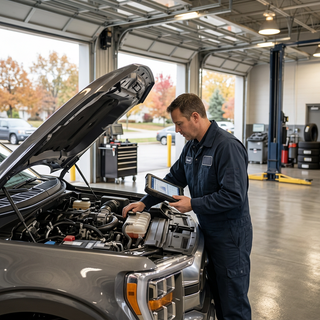
;

Why Should You Choose a Ford-Trained Technician for Vehicle Repairs?

Choosing a Ford-trained technician ensures your vehicle is diagnosed and repaired using manufacturer-developed procedures, proprietary software calibrations, and model-specific technical bulletins. These specialists undergo continuous instruction directly from Ford Motor Company to master integrated control modules, electrical networks, and complex mechanical assemblies, maintaining factory warranty coverage and vehicle safety. Modern vehicles rely on intricate multiplex wiring, sensor arrays, and interconnected electronic modules. When a system alert or mechanical malfunction occurs, general aftermarket diagnostic tools frequently retrieve broad trouble codes that miss underlying issues. Factory-trained technicians connect directly to the Professional Technician System (PTS) network, accessing exact electrical schematics, field service actions, and step-by-step diagnostic trees updated in real time for your specific model year. Ford engineers design powertrains and chassis components around exact operational tolerances. For instance, servicing a SelectShift transmission or managing the twin-turbo setup on a 3.5L EcoBoost engine in a 2026 Ford F-150 rated for up to 10,400 lbs of towing capacity requires specialized mechanical familiarity. Navigating elevated suburban hills along State Route 170 in Calcutta places steady demands on brake responsiveness and engine calibration, making exact factory service essential. Our team works on Ford drivetrains, hybrid battery setups, and chassis systems every day using genuine OEM components. To review available vehicle offers or consult with a service advisor, you can explore current manufacturer vehicle specials, give o ur service desk a call at (330) 462-7578, or stop by our East Liverpool facility. Table of Contents What Specific Certifications and STARS Training Tiers Do Ford Technicians Earn? How Do Diagnostic Tools and Accuracy Rates Compare Between Dealership Technicians and General Mechanics? What High-Voltage Safety Certifications and Training Do Ford Hybrid and EV Technicians Complete? Can an Independent Mechanic Be ASE Certified in Ford Repairs? How Can Customers Verify a Technician’s Master or Senior Master Certification Status? Quick Answers to Common Questions About Ford Technician Credentials Dependable Care for Your Vehicle at Tri State Ford What Specific Certifications and STARS Training Tiers Do Ford Technicians Earn? Ford structures technician career development through five recognition tiers within the Standardized Training and Resource System ( STARS), progressing from Registered Technician up to Senior Master Technician. Earning these credentials requires hundreds of classroom and web-based training hours, practical examinations, and mandatory National Institute for Automotive Service Excellence ( ASE) certifications across core vehicle systems. The credential pathway establishes clear standards of technical mastery across five defined levels: Registered Technician: Establishes foundations in multi-point safety inspections, fluid maintenance, workplace safety, and basic shop diagnostics. Certified Technician: Requires completion of core technical modules covering hydraulic braking systems, steering geometry, suspension alignment, and basic electrical circuit analysis. Specialty Trained Technician: Focuses on advanced diagnostic mastery within specific mechanical categories, including diesel performance, automatic transmission overhauls, or climate control electronics through Ford Service Technician Specialty Training ( STST). Master Technician: Demonstrates expert proficiency across multiple specialty areas, verified by passing rigorous practical diagnostic tests and maintaining active ASE credentials. Senior Master Technician: Represents the highest level of factory technical achievement, requiring a minimum of five consecutive years as a Master Technician along with comprehensive mastery across engine repair, drivetrain electronics, chassis dynamics, and high-voltage systems. Many dealership professionals enter the field through the Automotive Student Service Educational Training (ASSET) program. This two-year collegiate cooperative education path combines rigorous classroom lectures on mechanical theory with paid dealership apprenticeships. Students in the Automotive Student Service Educational Training (ASSET) curriculum rotate between academic coursework and hands-on service bays, accumulating extensive practical experience on current production platforms. Technicians also complete mandatory update modules whenever new vehicle platforms or powertrain updates launch. Whether adjusting safety camera calibrations on a 2026 Ford Explorer equipped with a 2.3L engine or servicing heavy-duty axles, factory-trained professionals use authentic replacement components. You can connect with our local Ford dealership location to confirm maintenance schedules designed to preserve your vehicle's original operating specs. How Do Diagnostic Tools and Accuracy Rates Compare Between Dealership Technicians and General Mechanics? Dealership technicians achieve higher first-time diagnostic accuracy rates because they utilize Ford proprietary software, including Ford Diagnosis and Repair System (FDRS) and Integrated Diagnostic System (IDS), which communicate directly with OEM factory servers. General mechanics using aftermarket scanners can read standard OBD-II engine codes, but often cannot re-flash control modules, perform sensor recalibrations, or access exact vehicle technical service bulletins. The Ford Diagnosis and Repair System (FDRS) is the primary software platform for modern Ford vehicles equipped with high-speed vehicle networks, while the Integrated Diagnostic System (IDS) supports legacy electronics. Paired with official VCM III vehicle communication modules, these tools allow technicians to execute automated actuator tests, reprogram key fobs, update powertrain control software, and recalibrate driver-assist sensors following alignments or body repairs. While independent repair shops can legally purchase software licenses directly from Ford Motor Company, the high cost of subscription fees and specialized hardware interfaces leads many general facilities to rely on multi-brand scan tools instead. These universal devices frequently lack the capability to access secondary electronic modules, clear deep historical diagnostic trouble codes, or apply factory software updates designed for a vehicle's exact Vehicle Identification Number (VIN). Our service advisors see that drivers often bring in vehicles after generic shop tools fail to identify intermittent electrical faults across interconnected network lines. By connecting directly to Ford technical databases, factory-trained technicians eliminate trial-and-error parts replacement. This precision ensures advanced safety systems like Co-Pilot360—available on models like the 2026 Ford Maverick with its 2.5L hybrid powertrain and 13.2-inch center display—function exactly as intended. What High-Voltage Safety Certifications and Training Do Ford Hybrid and EV Technicians Complete? Ford hybrid and electric vehicle technicians complete comprehensive high-voltage safety certifications covering battery de-energization procedures, insulation testing, and personal protective equipment protocols. This instruction equips technicians to safely diagnose thermal management systems, repair electric drive units, and perform module-level battery pack evaluations on high-voltage powertrains. Servicing high-voltage battery arrays requires strict adherence to safety standards that extend beyond traditional internal combustion repair. Technicians undergo intensive instruction in high-voltage testing procedures, personal protective equipment (PPE) care, rubber insulating glove inspection, and de-energization verification before opening high-voltage enclosures. Specialized technical modules for electrified vehicles focus on critical service areas: Diagnostic isolation of high-voltage battery cell voltage imbalances and module replacement. Servicing liquid-cooling loops, electric water pumps, and thermal management control valves. Testing integrated electric drive motors, single-speed gearboxes, and rotor position sensors. Inspecting onboard charging control units, power electronics, and high-voltage junction boxes. Recalibrating regenerative braking systems to balance mechanical friction with electric motor deceleration. In cold-winter climates where sub-freezing temperatures can cause an EV winter range loss between 15% and 30%, maintaining thermal management systems is vital. Technicians use insulated hand tools rated for high-voltage isolation alongside factory software routines to ensure hybrid and all-electric vehicles deliver efficient performance across seasonal temperature shifts. Can an Independent Mechanic Be ASE Certified in Ford Repairs? An independent mechanic can hold Master ASE certifications, but those tests evaluate general automotive knowledge across all makes rather than brand-specific Ford engineering or factory software. While ASE testing confirms foundational competency in areas like brakes and electrical systems, it does not provide access to Ford-specific training pathways like Service Technician Specialty Training ( STST). Through the Ford Accepted Service Training ( FAST) program, technicians with active professional ASE credentials can receive course-equivalency credit toward specific STST modules. Ford also recognizes qualified technical instruction completed during U.S. military service or at other vehicle manufacturers through this equivalency process. However, maintaining complete factory certification requires ongoing access to proprietary Ford software and model-specific classroom labs. Working through daily commutes along the steep riverfront bluffs in East Liverpool requires precision brake friction and transmission cooling, where genuine factory components ensure consistent durability. Installing original Motorcraft parts preserves factory warranty protection, including the 3-year/36,000-mile bumper-to-bumper warranty and 5-year/60,000-mile powertrain warranty. To protect your warranty coverage, keep detailed records of every maintenance visit, including itemized repair orders, exact vehicle mileage, and part numbers showing that factory-approved fluids were used. You can schedule a service appointment online for routine maintenance or order genuine Motorcraft parts directly from our service team. How Can Customers Verify a Technician’s Master or Senior Master Certification Status? Customers can verify a technician's certification level by requesting confirmation from the dealership service manager or viewing official credential plaques prominently displayed in the service lobby. Dealerships maintain updated internal rosters within the STARS database that track every technician's completed web modules, classroom credits, and active ASE certifications. Achieving and maintaining Master or Senior Master status requires continuous recertification as new vehicle platforms launch. When advanced mechanical assemblies or revised electrical networks are introduced—such as those found when custom ordering a new vehicle like a 2026 Ford Bronco or 2026 Ford F-150—certified technicians must complete mandatory update modules to keep their credentials current. Verifying technician credentials provides assurance that your vehicle receives proper care according to factory standards. Proper maintenance completed by certified technicians supports long-term vehicle dependability and helps maintain higher resale value over time. Quick Answers to Common Questions About Ford Technician Credentials Q: What is the main difference between a factory-trained technician and a general mechanic? A factory-trained technician receives specialized education directly from Ford Motor Company regarding proprietary vehicle electronics, model-specific wiring, and factory repair procedures. While general mechanics work on many vehicle brands using aftermarket tools, factory-trained technicians specialize in Ford platforms and utilize proprietary diagnostic software connected directly to factory servers. Q: How many training hours are required to become a Ford Senior Master Technician? Earning Senior Master Technician status requires completing hundreds of hours of web-based and classroom instruction over several years. Candidates must maintain Master Technician status for at least five consecutive years, pass multiple ASE certification exams, and demonstrate mastery across engine performance, transmission systems, chassis electronics, and high-voltage powertrains. Q: Will servicing my Ford at an independent shop void my factory warranty? Servicing your vehicle at an independent facility does not automatically void your factory warranty. Federal law protects your right to choose any qualified service facility for routine maintenance. However, you must keep itemized receipts showing correct parts and fluid specifications were used, as damage caused by improper service or non-compliant parts is not covered under warranty. Q: What diagnostic equipment is used during a dealership multi-point inspection? During a multi-point inspection, technicians connect to the vehicle using Ford Diagnosis and Repair System (FDRS) software to check electronic control modules for stored fault codes. They also perform physical measurements using precision tools to evaluate brake pad lining thickness, tire tread depth, battery cold-cranking amps, and cooling system integrity. Q: How often do Ford technicians need to update their certifications? Ford technicians participate in continuous training throughout the year. Whenever Ford launches new vehicle models, updated powertrain configurations, or new electronic features, technicians must complete mandatory web modules and classroom sessions to maintain active certification status for those specific systems. Dependable Care for Your Vehicle at Tri State Ford Maintaining your vehicle's performance and safety requires trained technical expertise, proprietary diagnostic tools, and genuine factory parts. Whether you need routine oil maintenance, brake inspections, or complex electrical troubleshooting, relying on certified professionals ensures your vehicle receives correct care according to factory specifications. Our service team provides transparent communication, clear repair documentation, and efficient service turnarounds for drivers throughout our community. To schedule your next checkup or discuss your service needs, get directions to our local service department or call our team today at (330) 462-7578. © 2026 Tri State Ford. All rights reserved. Vehicle specification data © JATO Dynamics Limited. Ford-Certified Auto Repairs in East Liverpool OH | Tri State Ford
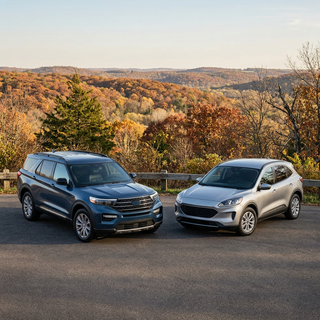
l

How Does a Used Ford Explorer Compare to a Used Ford Escape?

A used Ford Explorer is a midsize three-row SUV seating up to seven passengers with up to 5,000 pounds of towing capacity, while a used Ford Escape is a compact two-row SUV built for five passengers with higher city fuel efficiency and easier maneuverability. Choosing between them comes down to cabin volume versus overall agility. Larger families needing maximum cargo room and heavy trailering benefit from the Explorer, whereas daily commuters and smaller households often prefer the compact footprint and efficient engine options of the Escape. When shoppers compare these two popular crossovers on our lot, the deciding factor usually centers on how often they carry extra passengers or gear. The midsize Explorer provides substantial cabin volume across three distinct seating rows, making it ideal for road trips and hauling sport equipment. Powering through the riverfront bluffs and elevated terrain around East Liverpool is effortless in a midsize SUV equipped with intelligent four-wheel drive. On the other hand, the compact Escape delivers a lighter curb weight, making it exceptionally nimble on tight city streets while maximizing fuel economy during daily drives. Both pre-owned Ford models come engineered with Ford's proven quality, offering flexible interior configurations and modern safety technology. While a used Escape provides a comfortable ride with low operating costs, a used Explorer adds serious utility with available twin-turbo V6 power and standard towing features. For personalized assistance, you can get directions to our East Liverpool dealership or speak with our sales staff directly by giving us a call at (330) 462-7578 to explore available pre-owned crossovers. Table of Contents What Is the Main Difference in Size, Seating, and Parking Between a Used Explorer and Escape? How Do Cargo Space and Car Seat Installation Compare in the Explorer Versus the Escape? What Engine Options Enable Maximum Towing and Hybrid Efficiency in Used Ford SUVs? How Fast Do Used Ford Explorers and Escapes Depreciate, and What Should Buyers Inspect? What Financing Rates Are Typical for Used Ford SUVs? Quick Answers for Used Ford SUV Buyers Find Your Pre-Owned Ford SUV at Tri State Ford What Is the Main Difference in Size, Seating, and Parking Between a Used Explorer and Escape? The Ford Explorer measures about 198 inches in length, significantly larger than the Escape's 180 inches, affecting seating and parking ease. A midsize Explorer measures approximately 198.8 inches in length and 78.9 inches in width, offering three rows of seating for six or seven occupants. A compact Escape measures about 180.1 inches long and 74.1 inches wide, providing two rows of seating for up to five passengers. Consequently, the Escape features a tighter turning radius of roughly 37.1 feet compared to the Explorer's 38.8 feet, making parallel parking and tight garage maneuvering noticeably simpler. Inside the cabin, physical space directly impacts daily comfort depending on how you use your vehicle: Passenger Seating: The Explorer offers standard three-row flexibility with optional second-row captain's chairs, ideal when carrying extra family members or carpool groups. The Escape focuses on generous two-row seating for five, providing ample head and legroom for adult passengers in both rows. Exterior Footprint: Being nearly 19 inches shorter than the Explorer, the Escape fits easily into compact parking spots and busy suburban shopping plazas like those along State Route 170 in Calcutta. Maneuverability: A lower overall weight and smaller frame give the Escape agile handling in traffic, while the longer wheelbase of the Explorer provides enhanced high-speed stability on the highway. Shoppers seeking well-maintained options can browse our inventory of Carfax 1-owner pre-owned vehicles to find low-mileage models with documented history. For additional peace of mind, exploring our certified pre-owned Ford inventory grants access to multi-point inspected vehicles backed by factory-backed warranty coverage. Dimensions & Capacity Capacity and dimensions by trim Feature Active 4WD Active 4WD 100A Active RWD Active RWD 100A Seating 6 6 6 6 Cargo 16.3 cu ft 16.3 cu ft 16.3 cu ft 16.3 cu ft Curb weight 4,303 lbs 4,303 lbs 4,303 lbs 4,303 lbs Towing 5,000 lbs 5,000 lbs 5,000 lbs 5,000 lbs Payload 1,467 lbs 1,467 lbs 1,467 lbs 1,467 lbs Dimensions & Capacity (continued) Feature Platinum Platinum 4WD ST ST 4WD Seating 6 6 6 6 Cargo 16.3 cu ft 16.3 cu ft 16.3 cu ft 16.3 cu ft Curb weight 4,303 lbs 4,303 lbs 4,631 lbs 4,631 lbs Towing 5,000 lbs 5,000 lbs 5,000 lbs 5,000 lbs Payload 1,467 lbs 1,467 lbs 1,139 lbs 1,139 lbs Dimensions & Capacity (continued) Feature ST-LINE 4WD ST-LINE RWD Tremor 4WD Utility Police Interceptor 4x4 Seating 7 7 6 7 Cargo 16.3 cu ft 16.3 cu ft 16.3 cu ft 52.0 cu ft Curb weight 4,303 lbs 4,303 lbs 4,424 lbs 4,732 lbs Towing 5,000 lbs 5,000 lbs 5,000 lbs 3,500 lbs Payload 1,467 lbs 1,467 lbs 1,346 lbs 2,108 lbs How Do Cargo Space and Car Seat Installation Compare in the Explorer Versus the Escape? A used Ford Explorer provides up to about 86 cubic feet of total cargo space with all rear seats folded, compared to roughly 65 cubic feet in a used Ford Escape. Behind the third row, the Explorer holds about 16 cubic feet of luggage space, whereas the two-row Escape offers approximately 37.5 cubic feet directly behind its second row. For car seat installation, both SUVs feature lower LATCH anchors and top tether anchors, but the Explorer's longer second-row legroom makes installing bulky, rear-facing child safety seats significantly easier without adjusting the front seats. Family transport demands practical flexibility, and both crossovers deliver intelligent storage solutions: Cargo Versatility: The Explorer includes an underfloor storage tub behind the third row and a reversible load floor carpeted on one side and rubberized on the other for wet or muddy gear. The Escape features a sliding second row that moves forward or backward to prioritize either rear legroom or trunk cargo volume. Car Seat Accessibility: Wide-opening rear doors on the Explorer grant extra clearance when lifting infant carriers in and out. In addition, its second-row seats slide forward at the touch of a button to simplify access to the third row even when booster seats are used. Daily Storage: Both cabins feature deep center consoles, door bottle holders, and overhead sunglasses holders to keep daily essentials organized. Upgrading your current vehicle for a roomier family SUV is simple when you value your trade-in online before visiting our showroom floor. What Engine Options Enable Maximum Towing and Hybrid Efficiency in Used Ford SUVs? Maximum towing in a used Ford Explorer is achieved using either the standard 2.3L EcoBoost four-cylinder or the available 3.0L EcoBoost V6 when equipped with the factory Class III Trailer Tow Package, enabling a maximum towing capacity of 5,000 pounds. For hybrid buyers, the pre-owned Escape Hybrid features a efficient 2.5L Atkinson-cycle four-cylinder paired with an electric motor for high city fuel economy, while select pre-owned Explorer Hybrid models utilize a 3.3L V6 hybrid engine producing 318 hp and 260 lb-ft of torque for a blend of power and efficiency. The powertrain lineup across used Ford Explorer trims delivers specialized performance capabilities: 2.3L EcoBoost Four-Cylinder: Standard on Active, ST-Line, and Tremor trims, generating 300 hp and 310 lb-ft of torque through a smooth 10-speed automatic SelectShift® transmission. 3.0L EcoBoost Twin-Turbo V6: Standard on the performance-focused ST trim and available on Platinum models, delivering 400 hp and 415 lb-ft of torque for rapid highway merging and steady hill-climbing power. Drivetrain Options: Select models feature intelligent All-wheel drive or rear-wheel drive configurations designed to optimize traction across variable road conditions. In comparison, the Escape lineup offers a choice between a 1.5L EcoBoost, a 2.0L EcoBoost rated for up to 3,500 pounds of towing, and hybrid options built specifically for fuel-conscious daily commutes. Engine & Performance Powertrain specs by trim Feature Active 4WD Active 4WD 100A Active RWD Active RWD 100A Engine 2.3L 2.3L 2.3L 2.3L Horsepower 300 hp 300 hp 300 hp 300 hp Torque 310 lb-ft 310 lb-ft 310 lb-ft 310 lb-ft Transmission SelectShift® SelectShift® SelectShift® SelectShift® Drivetrain All-wheel drive All-wheel drive Rear-wheel drive Rear-wheel drive Engine & Performance (continued) Feature Platinum Platinum 4WD ST ST 4WD Engine 2.3L 2.3L 3L 3L Horsepower 300 hp 300 hp 400 hp 400 hp Torque 310 lb-ft 310 lb-ft 415 lb-ft 415 lb-ft Transmission SelectShift® SelectShift® SelectShift® SelectShift® Drivetrain Rear-wheel drive All-wheel drive Rear-wheel drive All-wheel drive Engine & Performance (continued) Feature ST-LINE 4WD ST-LINE RWD Tremor 4WD Utility Police Interceptor 4x4 Engine 2.3L 2.3L 2.3L 3.3L Horsepower 300 hp 300 hp 300 hp 318 hp Torque 310 lb-ft 310 lb-ft 310 lb-ft 260 lb-ft Transmission SelectShift® SelectShift® SelectShift® SelectShift Drivetrain All-wheel drive Rear-wheel drive All-wheel drive All-wheel drive Fuel Economy Fuel economy and range by trim Feature Active 4WD Active 4WD 100A Active RWD Active RWD 100A MPG 20 city / 27 hwy / 23 combined 20 city / 27 hwy / 23 combined 20 city / 29 hwy / 24 combined 20 city / 29 hwy / 24 combined Fuel Economy (continued) Feature Platinum Platinum 4WD ST ST 4WD MPG 20 city / 29 hwy / 24 combined 20 city / 27 hwy / 23 combined 18 city / 25 hwy / 21 combined 18 city / 25 hwy / 20 combined Fuel Economy (continued) Feature ST-LINE 4WD ST-LINE RWD Tremor 4WD Utility Police Interceptor 4x4 MPG 20 city / 27 hwy / 23 combined 20 city / 29 hwy / 24 combined 19 city / 23 hwy / 21 combined — How Fast Do Used Ford Explorers and Escapes Depreciate, and What Should Buyers Inspect? Both the Ford Explorer and Ford Escape depreciate roughly 40% to 45% over their first five years, making three-to-four-year-old pre-owned models an exceptionally strong value for value-focused buyers. At this age, the initial owner has absorbed the steepest portion of the depreciation curve, allowing pre-owned shoppers to purchase high-spec trims at a fraction of their original sticker price. When inspecting a used Explorer, prospective buyers should test transmission shift smoothness, check the exhaust manifold condition on high-mileage EcoBoost engines, and verify touchscreen responsiveness on the SYNC® 4 or Ford Digital Experience infotainment system. A comprehensive pre-purchase inspection checklist for used Ford SUVs includes: Transmission Function: Ensure the 10-speed automatic shifts seamlessly through gear ranges during both cold starts and warm highway cruising. Infotainment & Driver-Assist Features: Test the center touchscreen, Bluetooth® smartphone integration, backup camera clarity, and Ford Co-Pilot360™ safety tech like Pre-Collision Assist and blind-spot monitoring. Underbody & Suspension: Inspect suspension bushings and undercarriage components for wear, especially on models driven through heavy winter road salt. Service Records: Verify regular oil change intervals and completed factory maintenance schedules to confirm long-term mechanical care. If you are evaluating whether to buy new or pre-owned, take a moment to look over our current new Ford inventory to compare incoming features and pricing. When you are ready to move forward on a pre-owned vehicle, completing our secure online credit application speeds up your purchase process before you set foot in the dealership. Pricing Pricing by trim Feature Active 4WD Active 4WD 100A Active RWD Active RWD 100A Base MSRP $42,585 $40,465 $40,585 $38,465 Destination charge $1,795 $1,795 $1,795 $1,795 Pricing (continued) Feature Platinum Platinum 4WD ST ST 4WD Base MSRP $50,965 $52,965 $54,905 $56,905 Destination charge $1,795 $1,795 $1,795 $1,795 Pricing (continued) Feature ST-LINE 4WD ST-LINE RWD Tremor 4WD Utility Police Interceptor 4x4 Base MSRP $47,155 $45,155 $48,965 $48,550 Destination charge $1,795 $1,795 $1,795 $1,695 What Financing Rates Are Typical for Used Ford SUVs? For current financing options on used Ford SUVs, please contact our team, depending heavily on your credit score, chosen loan term, down payment amount, and the age of the vehicle. Buyers with tier-one credit often qualify for rates at the lower end of that spectrum, while manufacturer Certified Pre-Owned financing promotions occasionally offer special promotional APRs on qualifying models. Securing competitive terms involves evaluating overall vehicle value, original MSRP baselines, and financing structures tailored to your monthly budget. Original factory MSRP references help establish fair market value for pre-owned pricing baselines: Explorer Active RWD 100A: Base MSRP of $38,465 with a $1,795 destination charge. Explorer Active 4WD 100A: Base MSRP of $40,465 with a $1,795 destination charge. Explorer Active 4WD: Base MSRP of $42,585 with a $1,795 destination charge. Explorer ST: Base MSRP of $54,905 with a $1,795 destination charge. Explorer ST 4WD: Base MSRP of $56,905 with a $1,795 destination charge. Organizing key financial paperwork—such as recent pay stubs, proof of residence, and current auto insurance details—helps streamline approval with auto lenders. Drivers looking to compare current rates are welcome to visit our showroom floor or simply give our team a call to discuss personalized loan packages. Quick Answers for Used Ford SUV Buyers Q: Do used Ford Explorers come standard with all-wheel drive? No, most pre-owned Ford Explorer models come standard with rear-wheel drive, while intelligent four-wheel drive was optional when new. However, rugged trim levels such as the Tremor feature standard four-wheel drive for enhanced off-road traction. Q: Can a used Ford Escape tow a small camper or utility trailer? Yes, a pre-owned Ford Escape equipped with the 2.0L EcoBoost engine and factory tow package can pull up to 3,500 pounds, which is sufficient for light utility trailers, jet skis, or small teardrop campers. Standard 1.5L models carry a lower towing rating. Q: What paperwork should I bring when applying for pre-owned SUV financing? To expedite your credit approval, bring a valid driver's license, your two most recent pay stubs, proof of residence such as a utility bill, proof of auto insurance, and title or payoff information if trading in your current vehicle. Q: How does Ford Certified Pre-Owned coverage extend factory warranty protection? A Ford Certified Pre-Owned SUV includes a 12-month/12,000-mile comprehensive limited warranty alongside a 7-year/100,000-mile powertrain warranty coverage period measured from the original in-service date, plus 24/7 roadside assistance. Q: Is rear-seat legroom sufficient for teenagers in a Ford Escape? Yes, the second-row seats in a used Ford Escape offer generous legroom and feature a sliding mechanism that moves back up to six inches, allowing comfortable seating for teenagers and adults on longer family road trips. Find Your Pre-Owned Ford SUV at Tri State Ford Selecting the ideal pre-owned Ford SUV comes down to matching your daily seating, towing, and lifestyle needs with proven crossover capability. Whether you prefer the three-row versatility and heavy towing power of a used Explorer or the nimble, fuel-efficient daily commute performance of a used Escape, our team is ready to guide you through every step of the vehicle selection process. Explore our extensive selection of pre-owned crossovers, compare features side-by-side on a test drive, and take advantage of tailored financing solutions designed for your household budget. Get started online today by getting pre-approved or scheduling your visit to our dealership to experience Ford's proven quality firsthand. Keep Your Vehicle Running Strong Keep your vehicle performing at its best with our service team: Order Parts Schedule Service Appt © 2026 Tri State Ford. All rights reserved. Vehicle specification data © JATO Dynamics Limited. Used Ford Explorer vs Escape in East Liverpool OH | Tri State Ford
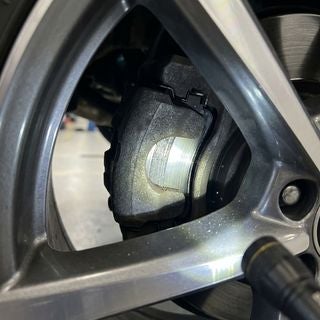
d

Ford Brake Inspection: Ensuring Safety and Performance

Ford Brake Inspection: Ensuring Safety and Performance How Can You Visually Check Your Ford Brake Pad Thickness Without Removing the Wheel? You can visually check brake pad thickness without removing the wheel by shining a flashlight through the wheel spokes directly at the brake caliper assembly. Look for the outer friction pad pressed against the smooth surface of the metal rotor; if the remaining pad material measures less than 4 mm thick (roughly the height of two stacked quarters), your brakes are approaching their wear limit and require professional attention. Spoked alloy wheels make this visual check straightforward on daily drivers like the Ford Escape equipped with its standard 1.5L engine or the Ford Explorer. Position your vehicle on a flat surface, turn off the engine, and shine a bright flashlight between the rim spokes. The brake pad consists of a heavy steel backing plate and a thick friction block attached to it. You are measuring the thickness of that inner friction block, not the steel backing plate. When you observe less than 3 mm of friction block remaining, the internal mechanical wear indicator will soon contact the rotating disc, producing a distinct screeching sound under braking. When drivers ask me how to keep an eye on their brakes between scheduled oil changes, I show them how to inspect the outer pads right in their driveway using a simple LED pocket flashlight. Daily stop-and-go commuting along State Route 170 in Calcutta places steady demand on brake friction materials, making periodic visual checks a smart routine for local owners. If your vehicle features steel wheels with full wheel covers that obstruct your view, our service team at 1503 Pennsylvania Ave can hoist the vehicle and measure both inner and outer pad lining depth precisely. Give our service desk a call at (330) 462-7578 or find our service center location to have our certified technicians perform a complete system check. Table of Contents What Are the Minimum Safe Brake Pad Thickness Specifications for Ford Vehicles? What Happens When You Drive on Ford Brake Pads Thinner Than 2 mm? How Do Ford Electronic Parking Brakes, ABS, and Brake Fluid Ratings Work Together? How Do Motorcraft Brake Pads Compare to Aftermarket Ceramic Pads, and Will Aftermarket Parts Void Your Warranty? How Can Drivers Save Money on Professional Ford Multi-Point Brake Inspections? What Are the Minimum Safe Brake Pad Thickness Specifications for Ford Vehicles? Brand-new factory brake pads typically feature 12 millimeters of fresh friction material. Ford scheduled maintenance guidance recommends planning for replacement when pad material wears down to 3 mm or 4 mm, while 2 mm serves as the absolute critical safety limit where immediate replacement is required to avoid system damage. Tracking pad thickness during regular multi-point inspections ensures you replace wear items before they damage companion components like rotors and calipers. A friction layer measuring between 6 mm and 12 mm indicates healthy braking condition. When measurements fall into the 4 mm to 5 mm range, our service team recommends setting aside time for an upcoming service visit. Vehicles like the Ford F-150 configured with a 3.5L EcoBoost engine and a 10,400 lbs maximum towing capacity generate significant kinetic energy that relies directly on brake pad integrity. Heavy payloads, trailering, and hilly driving accelerate pad wear faster than steady highway cruising. Because friction wear rates vary depending on vehicle weight, cargo habits, and driving environments, evaluating pad depth against factory specifications during routine visits is far safer than relying solely on elapsed mileage. What Happens When You Drive on Ford Brake Pads Thinner Than 2 mm? Operating a vehicle on brake pads thinner than 2 mm causes extended stopping distances, severe rotor scarring, and excessive heat buildup that degrades hydraulic brake fluid performance. Once the remaining friction material wears away entirely, the raw steel backing plate strikes the rotating rotor directly, creating severe metal-to-metal gouging that requires full rotor replacement rather than simple pad servicing. Metal-to-metal contact generates extreme thermal friction that quickly warps disc rotors and bakes caliper piston seals. Excessive heat reduces hydraulic pressure efficiency, leading to a soft pedal feel and reduced stopping response when driver-assist features like Pre-Collision Assist with Automatic Emergency Braking attempt to slow the vehicle automatically. Beyond expensive component damage, worn pads increase vehicle safety risks during sudden emergency stops on wet or icy roads. Extreme thermal stress can even cause thin pad backing plates to crack or bind within the caliper slide bracket. If you want to evaluate pedal feedback and braking response on a fresh setup, you can schedule a test drive in one of our latest Ford models to experience factory-fresh stopping power firsthand. How Do Ford Electronic Parking Brakes, ABS, and Brake Fluid Ratings Work Together? Modern Ford braking systems integrate an Electronic Parking Brake powered by electric caliper motors with an advanced Anti-Lock Braking System that relies on low-viscosity DOT 4 LV brake fluid for rapid hydraulic pressure modulation. The lower viscosity of DOT 4 LV fluid allows electronic control valves to pulse rapidly during hard stops or stability control interventions, maintaining tire traction and steering control under harsh conditions. Brake fluid is naturally hygroscopic, meaning it absorbs atmospheric moisture over time. Water contamination lowers the boiling point of the fluid and promotes internal corrosion within aluminum ABS valve blocks. Ford service guidelines advise checking brake fluid levels monthly and inspecting fluid clarity during regular routine maintenance. During winter months, degraded fluid can thicken, slowing anti-lock system response times during cold morning commutes along Market Street in Boardman. When servicing rear brakes on models equipped with an Electronic Parking Brake, technicians must place the vehicle into a dedicated brake service mode to retract the electric actuator pistons safely before retracting the caliper. Skipping this electronic step can destroy the internal motor gears on heavy-duty vehicles, including those in our new Ford F-Series work truck inventory. Maintaining proper fluid ratings and electronic service procedures protects your braking investment across our entire new commercial truck lineup. How Do Motorcraft Brake Pads Compare to Aftermarket Ceramic Pads, and Will Aftermarket Parts Void Your Warranty? Genuine Motorcraft brake pads are engineered specifically for your Ford vehicle's curb weight, rotor metallurgy, and noise-vibration-harshness (NVH) requirements to deliver quiet operation and predictable stopping power. Installing aftermarket ceramic pads will not automatically void your Ford factory warranty under federal warranty laws, but any mechanical failure or component damage caused directly by an incompatible or improperly installed aftermarket part will not be covered under factory warranty terms. Factory Motorcraft friction formulations match specific chassis configurations, balancing heat dissipation, rotor wear, and dusting characteristics. While some generic aftermarket ceramic pads advertise lower dust output, they often operate at higher friction temperatures that accelerate rotor surface wear or cause annoying cold-weather brake squeal. Sticking with original equipment components maintains your vehicle's factory engineering standards. When it comes time to replace worn pads or hardware, you can quickly order OEM Motorcraft brake parts directly through our parts department to ensure proper fitment, original hardware clip clearance, and uncompromised braking performance. How Can Drivers Save Money on Professional Ford Multi-Point Brake Inspections? Drivers can minimize overall brake maintenance costs by scheduling regular multi-point brake inspections alongside routine oil changes, redeeming earned Ford Rewards points for service visits, and replacing worn friction pads before they damage expensive rotors. Catching uneven pad taper, sticking caliper pins, or degraded fluid early prevents simple maintenance visits from turning into major repairs. A comprehensive Ford multi-point brake inspection includes measuring inner and outer pad lining thickness with precision calipers, checking rotor surfaces for scoring or runout, testing brake fluid moisture content, inspecting flexible brake lines for cracks, and verifying caliper slider movement. Catching a sticking slide pin early costs a fraction of replacing heat-damaged rotors and stuck calipers later. Our certified technicians at Tri State Ford use factory diagnostic equipment to inspect every component of your stopping system. You can get directions to our East Liverpool service department or give our team a call at (330) 462-7578 to ask about current maintenance offers. When you are ready to ensure your vehicle stops smoothly and safely, feel free to schedule your service appointment online for quick, professional maintenance. © 2026 Tri State Ford. All rights reserved. Vehicle specification data © JATO Dynamics Limited. Ford Brake Pad Inspection in East Liverpool OH | Tri State Ford

f

Should You Buy a Winter SUV Before the First Snowfall?

Buying a winter SUV before the first snowfall secures maximum inventory selection, better pricing transparency during fall inventory events, and sufficient time to install cold-weather equipment before severe storms arrive. Waiting until winter weather hits restricts available trim choices, forces hurried purchase decisions during peak seasonal demand, and leaves drivers tackling icy roads without proper vehicle familiarization. Purchasing early ensures full confidence, optimal trade-in values, and complete winter readiness. Planning an SUV purchase ahead of the freezing weather gives buyers distinct financial and operational advantages. During early fall, dealership lots maintain robust model availability across popular crossover configurations and colors. Securing a vehicle prior to the initial snowstorm allows drivers to test vehicle handling on dry pavement, setup personalized safety settings within driver-assist systems, and organize necessary winter gear. In addition, early shoppers can easily fit dedicated winter tires to their wheels before service centers face heavy winter appointment backlogs. Early buyers also experience a stress-free transition into winter travel. When freezing rain or slush unexpectedly hits state routes, having a fully equipped crossover ready in the driveway eliminates emergency rental searches or dangerous commutes in unequipped vehicles. For personalized assistance with seasonal vehicle selection, drivers can reach out to our team with a quick call or visit our East Liverpool showroom address at 1503 Pennsylvania Ave, East Liverpool, OH 43920. Table of Contents How Do Fall Clearance Events and Dealer Quotas Impact SUV Pricing? Is AWD or 4WD Better for Winter Driving on Snow and Ice? Which Winter SUV Features and Driver-Assist Tech Keep You Safe? What Ford SUV Lineup Options Offer the Best Winter Capability? Common Questions About Buying a Winter SUV Before Snow Season Take Advantage of Fall SUV Selection and Incentives at Local Ford Dealership How Do Fall Clearance Events and Dealer Quotas Impact SUV Pricing? Fall inventory cycles and model-year transitions create active pricing conditions for SUV buyers between October and December. Dealerships and sales teams working toward year-end volume targets may update available offers and trade-in information as current model-year inventory changes. Purchasing during late fall allows shoppers to review current MSRP and inventory before high winter demand reduces selection. Automakers structure major incentive programs around late-fall clearance pushes. During this window, inventory transitions occur as incoming vehicles arrive on the lot. To accommodate new shipments, pricing adjustments are applied across popular trims. For example, shoppers looking at compact crossovers will find options ranging from the Active FWD starting at an MSRP of $30,350 up to the Platinum AWD at $37,940, each with a $1,495 destination charge. Mid-range choices like the Active AWD at $31,750, the ST-Line FWD at $31,195, and the ST-Line AWD at $32,595 provide a range of MSRP points. Drivers seeking upgraded engine output can evaluate the ST-Line Select AWD 2.0L at $35,015 or the ST-Line Elite AWD 2.0L at $38,935. MSRP and availability may vary by vehicle and equipment. Beyond new model savings, fall clearance periods bring an influx of high-quality trade-in vehicles as buyers upgrade for winter. This delivers expanded choices for value-focused shoppers evaluating our pre-owned Carfax 1-owner inventory. Sales departments working toward quarterly quotas are often highly motivated to offer strong values on incoming trade-ins, providing secondary savings that make buying before winter financially advantageous. Pricing Pricing by trim Feature Active AWD Active FWD Platinum AWD ST-Line AWD Base MSRP $31,750 $30,350 $37,940 $32,595 Destination charge $1,495 $1,495 $1,495 $1,495 Pricing (continued) Feature ST-Line Elite AWD 2.0L ST-Line FWD ST-Line Select AWD 2.0L Base MSRP $38,935 $31,195 $35,015 Destination charge $1,495 $1,495 $1,495 Engine & Performance Powertrain specs by trim Feature Active AWD Active FWD Platinum AWD ST-Line AWD Engine 1.5L 1.5L 2L 1.5L Horsepower 180 hp 180 hp 250 hp 180 hp Torque 199 lb-ft 199 lb-ft 280 lb-ft 199 lb-ft Transmission automatic 8-speed automatic 8-speed SelectShift® automatic 8-speed Drivetrain All-wheel drive Front-wheel drive All-wheel drive All-wheel drive Engine & Performance (continued) Feature ST-Line Elite AWD 2.0L ST-Line FWD ST-Line Select AWD 2.0L Engine 2L 1.5L 2L Horsepower 250 hp 180 hp 250 hp Torque 280 lb-ft 199 lb-ft 280 lb-ft Transmission SelectShift® automatic 8-speed SelectShift® Drivetrain All-wheel drive Front-wheel drive All-wheel drive Is AWD or 4WD Better for Winter Driving on Snow and Ice? All-wheel drive delivers superior continuous traction for everyday winter highway and suburban driving, while four-wheel drive excels in deep snow, unplowed rural paths, and off-road conditions. All-wheel drive operates automatically by continuously monitoring wheel slip and routing power to the tires with the most grip without requiring driver intervention. Four-wheel drive locks front and rear axles together for maximum low-speed power in severe snow accumulation. Understanding drivetrain mechanics helps buyers choose the right setup for local topography. Crossovers equipped with All-wheel drive utilize electronic sensors to engage power transfer in milliseconds when ice or slush is detected. On models like the 2026 Ford Escape, the standard 1.5L EcoBoost engine delivers 180 hp and 199 lb-ft of torque through a smooth automatic 8-speed transmission. For additional passing power on icy inclines, the available 2.0L EcoBoost generates 250 hp and 280 lb-ft of torque paired with an agile SelectShift® transmission. For steeper terrain, larger three-row SUVs offer specialized drivetrains. The 2026 Ford Explorer features standard rear-wheel drive with available Intelligent 4WD, delivering heavy-duty capability alongside specialized terrain settings like Slippery mode. The riverfront bluffs and rolling hills around East Liverpool demand consistent power delivery, making selectable drive modes essential for negotiating sudden grade changes during freezing weather. All-Wheel Drive Benefits: Automatic engagement requires zero driver effort on changing road surfaces. Improves cornering balance and acceleration on wet, slushy, or icy pavement. Seamlessly disconnects when traction is stable to help optimize fuel efficiency. Four-Wheel Drive Benefits: High torque distribution locked evenly between front and rear wheels. Superior capability for pulling through deep snowdrifts or mud. Includes low-range gearing settings for controlled, low-speed hill descents. Shoppers interested in factory-backed reliability and winter capability can explore our certified pre-owned Ford selection for rigorous multi-point inspected models ready for cold weather. Which Winter SUV Features and Driver-Assist Tech Keep You Safe? The most effective winter SUV safety features combine physical cold-weather equipment with advanced electronic driver-assist technologies. High ground clearance, heated glass elements, and automatic emergency braking work together to maintain vehicle control, prevent collisions on slippery surfaces, and preserve driver visibility in sub-freezing temperatures. Physical winter features provide immediate daily convenience and protection against cold conditions. An SUV designed for heavy snow requires at least 8 to 8.5 inches of ground clearance to prevent packed snow from high-centering the undercarriage. Heated wiper park zones and heated washer nozzles keep windshield blades free of ice build-up during freezing rain, ensuring clear sightlines. Remote engine start pre-warms the powertrain and cabin while defrosting windows, protecting the internal engine components from extreme cold-start stress. Modern driver-assist suites further boost driver confidence when road conditions deteriorate. Safety systems continuously analyze road friction and traffic movement to assist in critical moments: Traction Control and Stability Systems: Automatically reduce engine throttle and apply individual wheel braking to stop tire spin on ice. Ford Co-Pilot360® Technology: Features Pre-Collision Assist with Automatic Emergency Braking to help detect sudden slowdowns ahead on slick streets. Blind Spot Information System: Alerts drivers to vehicles hidden in side blind zones during snowy conditions when mirror visibility is reduced. Selectable Drive Modes: Features dedicated settings like Slippery mode that recalibrate throttle response and shift points for optimal snow traction. Upgrading your vehicle before winter allows you to maximize your existing vehicle's value toward a safer model. You can evaluate your current vehicle's worth by checking our online Kelley Blue Book trade-in tool before visiting the showroom. What Ford SUV Lineup Options Offer the Best Winter Capability? The Ford SUV lineup delivers tailored winter capability across compact, midsize, and three-row segments to fit diverse family transportation needs. From fuel-efficient compact crossovers featuring disconnectable all-wheel drive to spacious three-row SUVs with selectable terrain modes and heavy towing strength, Ford models provide proven winter performance. The 2026 Ford Escape serves as a versatile compact crossover for daily winter commutes. Powered by either a 1.5L EcoBoost rated up to an EPA-estimated 26 city / 32 hwy MPG in All-wheel drive or a potent 2.0L EcoBoost, the Escape balances slick-road traction with everyday fuel economy. With about 37.5 cubic feet of rear cargo space and a towing capacity of 2,000 lbs, it comfortably accommodates winter gear, sleds, or small utility trailers. For larger families requiring expanded passenger room and serious hauling power, the 2026 Ford Explorer provides three-row seating for up to six passengers. Driven by a powerful 2.3L EcoBoost engine paired with a SelectShift® automatic transmission, the Explorer delivers an EPA-estimated 20 city / 27 hwy MPG with Intelligent 4WD. It provides up to about 86 cubic feet of maximum cargo volume and a robust towing capacity of 5,000 lbs, making it ideal for hauling winter recreational equipment. The suburban commutes along State Route 170 in Calcutta showcase how these versatile crossover dimensions and all-weather drive systems simplify daily family travel during winter storms. To see current model choices and compare trim configurations, shoppers can browse our new Ford SUV inventory today. If you plan to trade in a vehicle, you can also request a trade-in value estimate online to streamline your purchase process. Common Questions About Buying a Winter SUV Before Snow Season Q: How much ground clearance should an SUV have for heavy snow? An ideal SUV for navigating heavy winter snow should have between 8 and 8.5 inches of ground clearance. This height prevents deep, unplowed snowpack from packing underneath the vehicle frame and high-centering the vehicle, allowing the tires to maintain solid contact with the road surface. Q: Should you install dedicated winter tires on an all-wheel-drive SUV? Yes, fitting winter tires on an all-wheel-drive SUV significantly improves stopping distances and cornering stability. The Tire and Rubber Association of Canada confirms that winter tires outperform all-season tires at temperatures below 45°F (7°C) because their specialized rubber compounds stay flexible in extreme cold, maximizing tread grip on ice and hard-packed snow. Q: When do dealer year-end clearance events offer the best selection? Year-end clearance events peak between October and December. Shopping during early fall provides the ideal balance between aggressive factory pricing incentives and a complete selection of vehicle colors, trim packages, and available options before inventory diminishes later in the season. Q: How does cold weather affect tire pressure in winter SUVs? Tire pressure drops approximately 1 psi for every 10°F (5°C) drop in outside temperature. Checking tire pressures monthly during cold weather ensures proper tread contact, optimal fuel economy, and prevents under-inflated tires from compromising traction on snow and ice. Q: What is the main difference between Ford's 1.5L and 2.0L EcoBoost engines for winter driving? The 1.5L EcoBoost engine focuses on high fuel efficiency, delivering 180 hp for dependable daily driving. The available 2.0L EcoBoost increases output to 250 hp and 280 lb-ft of torque, providing extra power and a higher towing capacity of 2,000 lbs for pulling heavier loads through steep or snowy inclines. Shoppers seeking fast financing approval before visiting can submit our secure online credit application to save time at the dealership. Take Advantage of Fall SUV Selection and Incentives at Local Ford Dealership Buying your next SUV before the first snowfall ensures superior vehicle availability, strong fall price incentives, and complete winter driving confidence. Preparing early allows you to select the precise drivetrain, safety tech, and cabin features your family needs without the stress of sudden winter weather. Our team at Tri State Ford is ready to assist you in finding the ideal all-weather vehicle tailored to your budget and lifestyle. Explore our competitive inventory, take advantage of seasonal trade-in values, and test drive your favorite Ford models on local roads today. To get started, check out options at our local Ford dealership page, contact our team by giving us a quick call, or stop by our showroom address in East Liverpool to secure your winter SUV today. Keep Your Vehicle Running Strong Keep your vehicle performing at its best with our service team: Order Parts Schedule Service Appt © 2026 Tri State Ford. All rights reserved. Vehicle specification data © JATO Dynamics Limited. Winter SUV Deals in East Liverpool OH | Tri State Ford

Contact Us

Fill out this form below and we'll contact you shortly
*Required Fields