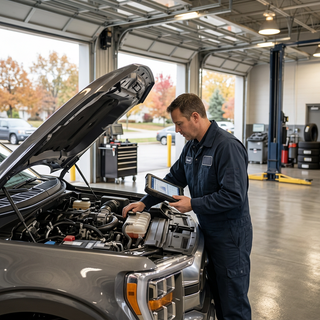
Choosing a Ford-trained technician ensures your vehicle is diagnosed and repaired using manufacturer-developed procedures, proprietary software calibrations, and model-specific technical bulletins. These specialists undergo continuous instruction directly from Ford Motor Company to master integrated control modules, electrical networks, and complex mechanical assemblies, maintaining factory warranty coverage and vehicle safety.
Modern vehicles rely on intricate multiplex wiring, sensor arrays, and interconnected electronic modules. When a system alert or mechanical malfunction occurs, general aftermarket diagnostic tools frequently retrieve broad trouble codes that miss underlying issues. Factory-trained technicians connect directly to the Professional Technician System (PTS) network, accessing exact electrical schematics, field service actions, and step-by-step diagnostic trees updated in real time for your specific model year.
Ford engineers design powertrains and chassis components around exact operational tolerances. For instance, servicing a SelectShift transmission or managing the twin-turbo setup on a 3.5L EcoBoost engine in a 2026 Ford F-150 rated for up to 10,400 lbs of towing capacity requires specialized mechanical familiarity. Navigating elevated suburban hills along State Route 170 in Calcutta places steady demands on brake responsiveness and engine calibration, making exact factory service essential.
Our team works on Ford drivetrains, hybrid battery setups, and chassis systems every day using genuine OEM components. To review available vehicle offers or consult with a service advisor, you can explore current manufacturer vehicle specials, give o ur service desk a call at (330) 462-7578, or stop by our East Liverpool facility.
Table of Contents
- What Specific Certifications and STARS Training Tiers Do Ford Technicians Earn?
- How Do Diagnostic Tools and Accuracy Rates Compare Between Dealership Technicians and General Mechanics?
- What High-Voltage Safety Certifications and Training Do Ford Hybrid and EV Technicians Complete?
- Can an Independent Mechanic Be ASE Certified in Ford Repairs?
- How Can Customers Verify a Technician’s Master or Senior Master Certification Status?
- Quick Answers to Common Questions About Ford Technician Credentials
- Dependable Care for Your Vehicle at Tri State Ford
What Specific Certifications and STARS Training Tiers Do Ford Technicians Earn?
Ford structures technician career development through five recognition tiers within the Standardized Training and Resource System ( STARS), progressing from Registered Technician up to Senior Master Technician. Earning these credentials requires hundreds of classroom and web-based training hours, practical examinations, and mandatory National Institute for Automotive Service Excellence ( ASE) certifications across core vehicle systems.
The credential pathway establishes clear standards of technical mastery across five defined levels:
- Registered Technician: Establishes foundations in multi-point safety inspections, fluid maintenance, workplace safety, and basic shop diagnostics.
- Certified Technician: Requires completion of core technical modules covering hydraulic braking systems, steering geometry, suspension alignment, and basic electrical circuit analysis.
- Specialty Trained Technician: Focuses on advanced diagnostic mastery within specific mechanical categories, including diesel performance, automatic transmission overhauls, or climate control electronics through Ford Service Technician Specialty Training ( STST).
- Master Technician: Demonstrates expert proficiency across multiple specialty areas, verified by passing rigorous practical diagnostic tests and maintaining active ASE credentials.
- Senior Master Technician: Represents the highest level of factory technical achievement, requiring a minimum of five consecutive years as a Master Technician along with comprehensive mastery across engine repair, drivetrain electronics, chassis dynamics, and high-voltage systems.
Many dealership professionals enter the field through the Automotive Student Service Educational Training (ASSET) program. This two-year collegiate cooperative education path combines rigorous classroom lectures on mechanical theory with paid dealership apprenticeships. Students in the Automotive Student Service Educational Training (ASSET) curriculum rotate between academic coursework and hands-on service bays, accumulating extensive practical experience on current production platforms.
Technicians also complete mandatory update modules whenever new vehicle platforms or powertrain updates launch. Whether adjusting safety camera calibrations on a 2026 Ford Explorer equipped with a 2.3L engine or servicing heavy-duty axles, factory-trained professionals use authentic replacement components. You can connect with our local Ford dealership location to confirm maintenance schedules designed to preserve your vehicle's original operating specs.
How Do Diagnostic Tools and Accuracy Rates Compare Between Dealership Technicians and General Mechanics?
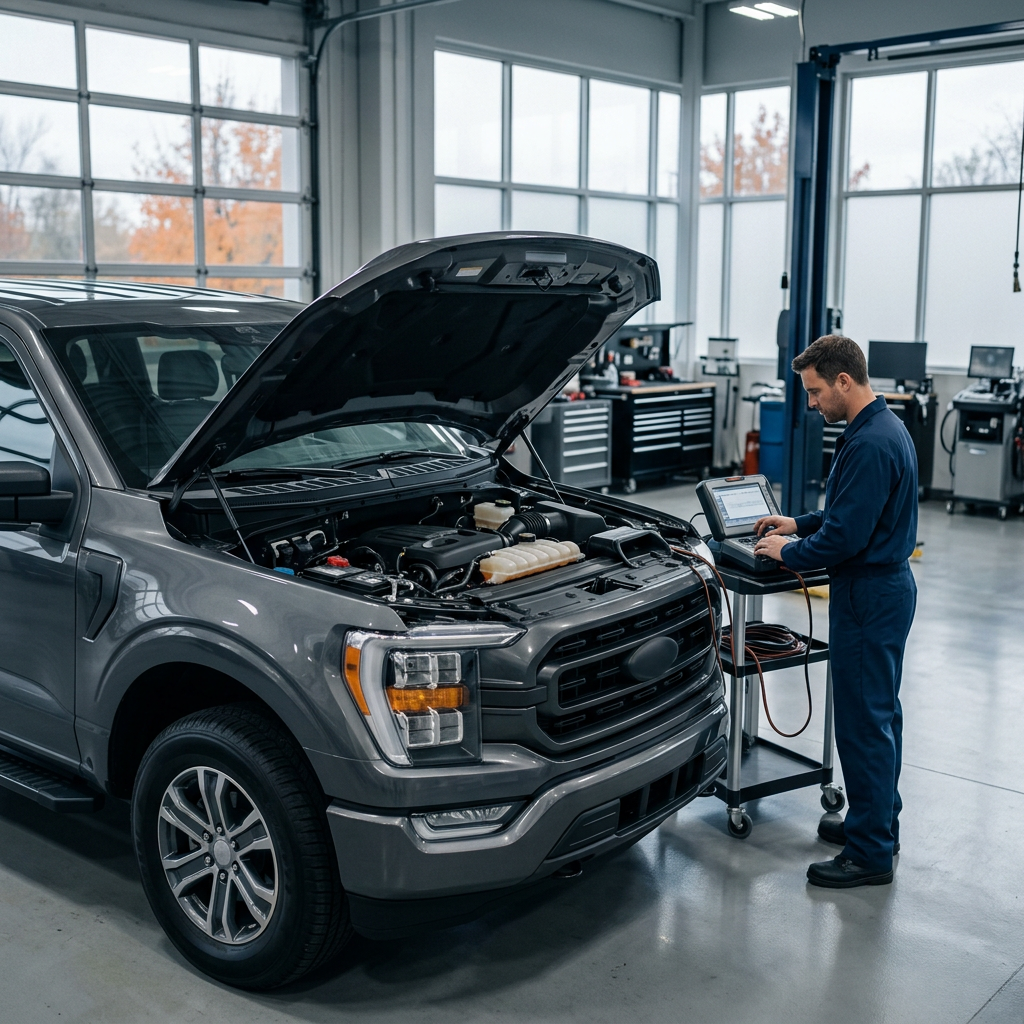
Dealership technicians achieve higher first-time diagnostic accuracy rates because they utilize Ford proprietary software, including Ford Diagnosis and Repair System (FDRS) and Integrated Diagnostic System (IDS), which communicate directly with OEM factory servers. General mechanics using aftermarket scanners can read standard OBD-II engine codes, but often cannot re-flash control modules, perform sensor recalibrations, or access exact vehicle technical service bulletins.
The Ford Diagnosis and Repair System (FDRS) is the primary software platform for modern Ford vehicles equipped with high-speed vehicle networks, while the Integrated Diagnostic System (IDS) supports legacy electronics. Paired with official VCM III vehicle communication modules, these tools allow technicians to execute automated actuator tests, reprogram key fobs, update powertrain control software, and recalibrate driver-assist sensors following alignments or body repairs.
While independent repair shops can legally purchase software licenses directly from Ford Motor Company, the high cost of subscription fees and specialized hardware interfaces leads many general facilities to rely on multi-brand scan tools instead. These universal devices frequently lack the capability to access secondary electronic modules, clear deep historical diagnostic trouble codes, or apply factory software updates designed for a vehicle's exact Vehicle Identification Number (VIN).
Our service advisors see that drivers often bring in vehicles after generic shop tools fail to identify intermittent electrical faults across interconnected network lines. By connecting directly to Ford technical databases, factory-trained technicians eliminate trial-and-error parts replacement. This precision ensures advanced safety systems like Co-Pilot360—available on models like the 2026 Ford Maverick with its 2.5L hybrid powertrain and 13.2-inch center display—function exactly as intended.
What High-Voltage Safety Certifications and Training Do Ford Hybrid and EV Technicians Complete?
Ford hybrid and electric vehicle technicians complete comprehensive high-voltage safety certifications covering battery de-energization procedures, insulation testing, and personal protective equipment protocols. This instruction equips technicians to safely diagnose thermal management systems, repair electric drive units, and perform module-level battery pack evaluations on high-voltage powertrains.
Servicing high-voltage battery arrays requires strict adherence to safety standards that extend beyond traditional internal combustion repair. Technicians undergo intensive instruction in high-voltage testing procedures, personal protective equipment (PPE) care, rubber insulating glove inspection, and de-energization verification before opening high-voltage enclosures.
Specialized technical modules for electrified vehicles focus on critical service areas:
- Diagnostic isolation of high-voltage battery cell voltage imbalances and module replacement.
- Servicing liquid-cooling loops, electric water pumps, and thermal management control valves.
- Testing integrated electric drive motors, single-speed gearboxes, and rotor position sensors.
- Inspecting onboard charging control units, power electronics, and high-voltage junction boxes.
- Recalibrating regenerative braking systems to balance mechanical friction with electric motor deceleration.
In cold-winter climates where sub-freezing temperatures can cause an EV winter range loss between 15% and 30%, maintaining thermal management systems is vital. Technicians use insulated hand tools rated for high-voltage isolation alongside factory software routines to ensure hybrid and all-electric vehicles deliver efficient performance across seasonal temperature shifts.
Can an Independent Mechanic Be ASE Certified in Ford Repairs?
An independent mechanic can hold Master ASE certifications, but those tests evaluate general automotive knowledge across all makes rather than brand-specific Ford engineering or factory software. While ASE testing confirms foundational competency in areas like brakes and electrical systems, it does not provide access to Ford-specific training pathways like Service Technician Specialty Training ( STST).
Through the Ford Accepted Service Training ( FAST) program, technicians with active professional ASE credentials can receive course-equivalency credit toward specific STST modules. Ford also recognizes qualified technical instruction completed during U.S. military service or at other vehicle manufacturers through this equivalency process. However, maintaining complete factory certification requires ongoing access to proprietary Ford software and model-specific classroom labs.
Working through daily commutes along the steep riverfront bluffs in East Liverpool requires precision brake friction and transmission cooling, where genuine factory components ensure consistent durability. Installing original Motorcraft parts preserves factory warranty protection, including the 3-year/36,000-mile bumper-to-bumper warranty and 5-year/60,000-mile powertrain warranty.
To protect your warranty coverage, keep detailed records of every maintenance visit, including itemized repair orders, exact vehicle mileage, and part numbers showing that factory-approved fluids were used. You can schedule a service appointment online for routine maintenance or order genuine Motorcraft parts directly from our service team.
How Can Customers Verify a Technician’s Master or Senior Master Certification Status?
Customers can verify a technician's certification level by requesting confirmation from the dealership service manager or viewing official credential plaques prominently displayed in the service lobby. Dealerships maintain updated internal rosters within the STARS database that track every technician's completed web modules, classroom credits, and active ASE certifications.
Achieving and maintaining Master or Senior Master status requires continuous recertification as new vehicle platforms launch. When advanced mechanical assemblies or revised electrical networks are introduced—such as those found when custom ordering a new vehicle like a 2026 Ford Bronco or 2026 Ford F-150—certified technicians must complete mandatory update modules to keep their credentials current.
Verifying technician credentials provides assurance that your vehicle receives proper care according to factory standards. Proper maintenance completed by certified technicians supports long-term vehicle dependability and helps maintain higher resale value over time.
Quick Answers to Common Questions About Ford Technician Credentials
Q: What is the main difference between a factory-trained technician and a general mechanic?
A factory-trained technician receives specialized education directly from Ford Motor Company regarding proprietary vehicle electronics, model-specific wiring, and factory repair procedures. While general mechanics work on many vehicle brands using aftermarket tools, factory-trained technicians specialize in Ford platforms and utilize proprietary diagnostic software connected directly to factory servers.
Q: How many training hours are required to become a Ford Senior Master Technician?
Earning Senior Master Technician status requires completing hundreds of hours of web-based and classroom instruction over several years. Candidates must maintain Master Technician status for at least five consecutive years, pass multiple ASE certification exams, and demonstrate mastery across engine performance, transmission systems, chassis electronics, and high-voltage powertrains.
Q: Will servicing my Ford at an independent shop void my factory warranty?
Servicing your vehicle at an independent facility does not automatically void your factory warranty. Federal law protects your right to choose any qualified service facility for routine maintenance. However, you must keep itemized receipts showing correct parts and fluid specifications were used, as damage caused by improper service or non-compliant parts is not covered under warranty.
Q: What diagnostic equipment is used during a dealership multi-point inspection?
During a multi-point inspection, technicians connect to the vehicle using Ford Diagnosis and Repair System (FDRS) software to check electronic control modules for stored fault codes. They also perform physical measurements using precision tools to evaluate brake pad lining thickness, tire tread depth, battery cold-cranking amps, and cooling system integrity.
Q: How often do Ford technicians need to update their certifications?
Ford technicians participate in continuous training throughout the year. Whenever Ford launches new vehicle models, updated powertrain configurations, or new electronic features, technicians must complete mandatory web modules and classroom sessions to maintain active certification status for those specific systems.
Dependable Care for Your Vehicle at Tri State Ford
Maintaining your vehicle's performance and safety requires trained technical expertise, proprietary diagnostic tools, and genuine factory parts. Whether you need routine oil maintenance, brake inspections, or complex electrical troubleshooting, relying on certified professionals ensures your vehicle receives correct care according to factory specifications.
Our service team provides transparent communication, clear repair documentation, and efficient service turnarounds for drivers throughout our community. To schedule your next checkup or discuss your service needs, get directions to our local service department or call our team today at (330) 462-7578.