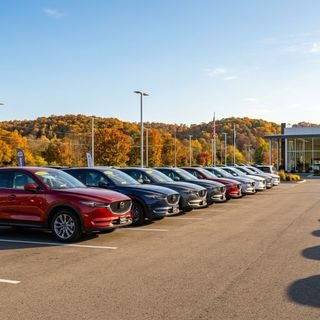
Buying a winter SUV before the first snowfall secures maximum inventory selection, better pricing transparency during fall inventory events, and sufficient time to install cold-weather equipment before severe storms arrive. Waiting until winter weather hits restricts available trim choices, forces hurried purchase decisions during peak seasonal demand, and leaves drivers tackling icy roads without proper vehicle familiarization. Purchasing early ensures full confidence, optimal trade-in values, and complete winter readiness.
Planning an SUV purchase ahead of the freezing weather gives buyers distinct financial and operational advantages. During early fall, dealership lots maintain robust model availability across popular crossover configurations and colors. Securing a vehicle prior to the initial snowstorm allows drivers to test vehicle handling on dry pavement, setup personalized safety settings within driver-assist systems, and organize necessary winter gear. In addition, early shoppers can easily fit dedicated winter tires to their wheels before service centers face heavy winter appointment backlogs.
Early buyers also experience a stress-free transition into winter travel. When freezing rain or slush unexpectedly hits state routes, having a fully equipped crossover ready in the driveway eliminates emergency rental searches or dangerous commutes in unequipped vehicles. For personalized assistance with seasonal vehicle selection, drivers can reach out to our team with a quick call or visit our East Liverpool showroom address at 1503 Pennsylvania Ave, East Liverpool, OH 43920.
Table of Contents
- How Do Fall Clearance Events and Dealer Quotas Impact SUV Pricing?
- Is AWD or 4WD Better for Winter Driving on Snow and Ice?
- Which Winter SUV Features and Driver-Assist Tech Keep You Safe?
- What Ford SUV Lineup Options Offer the Best Winter Capability?
- Common Questions About Buying a Winter SUV Before Snow Season
- Take Advantage of Fall SUV Selection and Incentives at Local Ford Dealership
How Do Fall Clearance Events and Dealer Quotas Impact SUV Pricing?
Fall inventory cycles and model-year transitions create active pricing conditions for SUV buyers between October and December. Dealerships and sales teams working toward year-end volume targets may update available offers and trade-in information as current model-year inventory changes. Purchasing during late fall allows shoppers to review current MSRP and inventory before high winter demand reduces selection.
Automakers structure major incentive programs around late-fall clearance pushes. During this window, inventory transitions occur as incoming vehicles arrive on the lot. To accommodate new shipments, pricing adjustments are applied across popular trims. For example, shoppers looking at compact crossovers will find options ranging from the Active FWD starting at an MSRP of $30,350 up to the Platinum AWD at $37,940, each with a $1,495 destination charge. Mid-range choices like the Active AWD at $31,750, the ST-Line FWD at $31,195, and the ST-Line AWD at $32,595 provide a range of MSRP points. Drivers seeking upgraded engine output can evaluate the ST-Line Select AWD 2.0L at $35,015 or the ST-Line Elite AWD 2.0L at $38,935. MSRP and availability may vary by vehicle and equipment.
Beyond new model savings, fall clearance periods bring an influx of high-quality trade-in vehicles as buyers upgrade for winter. This delivers expanded choices for value-focused shoppers evaluating our pre-owned Carfax 1-owner inventory. Sales departments working toward quarterly quotas are often highly motivated to offer strong values on incoming trade-ins, providing secondary savings that make buying before winter financially advantageous.
Pricing
Pricing by trim
| Feature | Active AWD | Active FWD | Platinum AWD | ST-Line AWD |
|---|---|---|---|---|
| Base MSRP | $31,750 | $30,350 | $37,940 | $32,595 |
| Destination charge | $1,495 | $1,495 | $1,495 | $1,495 |
Pricing (continued)
| Feature | ST-Line Elite AWD 2.0L | ST-Line FWD | ST-Line Select AWD 2.0L |
|---|---|---|---|
| Base MSRP | $38,935 | $31,195 | $35,015 |
| Destination charge | $1,495 | $1,495 | $1,495 |
Engine & Performance
Powertrain specs by trim
| Feature | Active AWD | Active FWD | Platinum AWD | ST-Line AWD |
|---|---|---|---|---|
| Engine | 1.5L | 1.5L | 2L | 1.5L |
| Horsepower | 180 hp | 180 hp | 250 hp | 180 hp |
| Torque | 199 lb-ft | 199 lb-ft | 280 lb-ft | 199 lb-ft |
| Transmission | automatic 8-speed | automatic 8-speed | SelectShift® | automatic 8-speed |
| Drivetrain | All-wheel drive | Front-wheel drive | All-wheel drive | All-wheel drive |
Engine & Performance (continued)
| Feature | ST-Line Elite AWD 2.0L | ST-Line FWD | ST-Line Select AWD 2.0L |
|---|---|---|---|
| Engine | 2L | 1.5L | 2L |
| Horsepower | 250 hp | 180 hp | 250 hp |
| Torque | 280 lb-ft | 199 lb-ft | 280 lb-ft |
| Transmission | SelectShift® | automatic 8-speed | SelectShift® |
| Drivetrain | All-wheel drive | Front-wheel drive | All-wheel drive |
Is AWD or 4WD Better for Winter Driving on Snow and Ice?
All-wheel drive delivers superior continuous traction for everyday winter highway and suburban driving, while four-wheel drive excels in deep snow, unplowed rural paths, and off-road conditions. All-wheel drive operates automatically by continuously monitoring wheel slip and routing power to the tires with the most grip without requiring driver intervention. Four-wheel drive locks front and rear axles together for maximum low-speed power in severe snow accumulation.
Understanding drivetrain mechanics helps buyers choose the right setup for local topography. Crossovers equipped with All-wheel drive utilize electronic sensors to engage power transfer in milliseconds when ice or slush is detected. On models like the 2026 Ford Escape, the standard 1.5L EcoBoost engine delivers 180 hp and 199 lb-ft of torque through a smooth automatic 8-speed transmission. For additional passing power on icy inclines, the available 2.0L EcoBoost generates 250 hp and 280 lb-ft of torque paired with an agile SelectShift® transmission.
For steeper terrain, larger three-row SUVs offer specialized drivetrains. The 2026 Ford Explorer features standard rear-wheel drive with available Intelligent 4WD, delivering heavy-duty capability alongside specialized terrain settings like Slippery mode. The riverfront bluffs and rolling hills around East Liverpool demand consistent power delivery, making selectable drive modes essential for negotiating sudden grade changes during freezing weather.
- All-Wheel Drive Benefits:
- Automatic engagement requires zero driver effort on changing road surfaces.
- Improves cornering balance and acceleration on wet, slushy, or icy pavement.
- Seamlessly disconnects when traction is stable to help optimize fuel efficiency.
- Four-Wheel Drive Benefits:
- High torque distribution locked evenly between front and rear wheels.
- Superior capability for pulling through deep snowdrifts or mud.
- Includes low-range gearing settings for controlled, low-speed hill descents.
Shoppers interested in factory-backed reliability and winter capability can explore our certified pre-owned Ford selection for rigorous multi-point inspected models ready for cold weather.
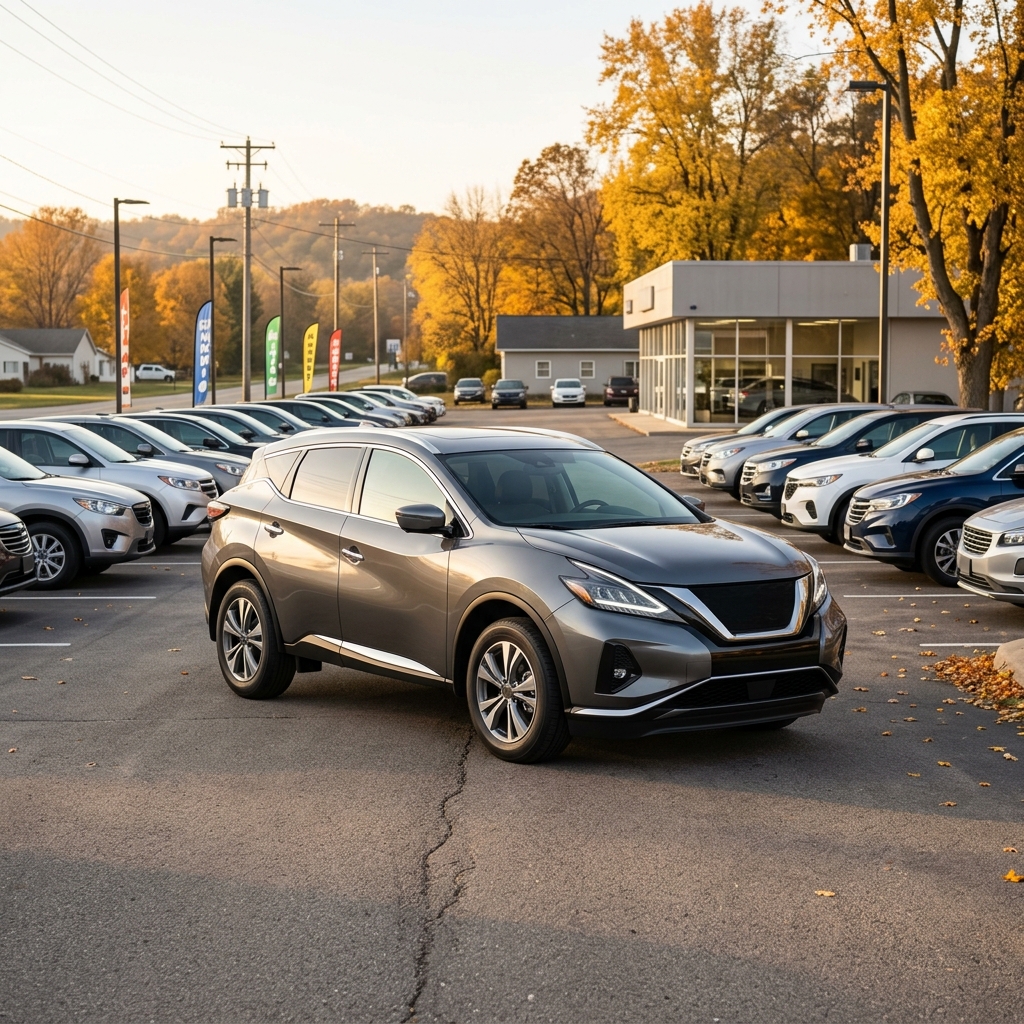
Which Winter SUV Features and Driver-Assist Tech Keep You Safe?
The most effective winter SUV safety features combine physical cold-weather equipment with advanced electronic driver-assist technologies. High ground clearance, heated glass elements, and automatic emergency braking work together to maintain vehicle control, prevent collisions on slippery surfaces, and preserve driver visibility in sub-freezing temperatures.
Physical winter features provide immediate daily convenience and protection against cold conditions. An SUV designed for heavy snow requires at least 8 to 8.5 inches of ground clearance to prevent packed snow from high-centering the undercarriage. Heated wiper park zones and heated washer nozzles keep windshield blades free of ice build-up during freezing rain, ensuring clear sightlines. Remote engine start pre-warms the powertrain and cabin while defrosting windows, protecting the internal engine components from extreme cold-start stress.
Modern driver-assist suites further boost driver confidence when road conditions deteriorate. Safety systems continuously analyze road friction and traffic movement to assist in critical moments:
- Traction Control and Stability Systems: Automatically reduce engine throttle and apply individual wheel braking to stop tire spin on ice.
- Ford Co-Pilot360® Technology: Features Pre-Collision Assist with Automatic Emergency Braking to help detect sudden slowdowns ahead on slick streets.
- Blind Spot Information System: Alerts drivers to vehicles hidden in side blind zones during snowy conditions when mirror visibility is reduced.
- Selectable Drive Modes: Features dedicated settings like Slippery mode that recalibrate throttle response and shift points for optimal snow traction.
Upgrading your vehicle before winter allows you to maximize your existing vehicle's value toward a safer model. You can evaluate your current vehicle's worth by checking our online Kelley Blue Book trade-in tool before visiting the showroom.
What Ford SUV Lineup Options Offer the Best Winter Capability?
The Ford SUV lineup delivers tailored winter capability across compact, midsize, and three-row segments to fit diverse family transportation needs. From fuel-efficient compact crossovers featuring disconnectable all-wheel drive to spacious three-row SUVs with selectable terrain modes and heavy towing strength, Ford models provide proven winter performance.
The 2026 Ford Escape serves as a versatile compact crossover for daily winter commutes. Powered by either a 1.5L EcoBoost rated up to an EPA-estimated 26 city / 32 hwy MPG in All-wheel drive or a potent 2.0L EcoBoost, the Escape balances slick-road traction with everyday fuel economy. With about 37.5 cubic feet of rear cargo space and a towing capacity of 2,000 lbs, it comfortably accommodates winter gear, sleds, or small utility trailers.
For larger families requiring expanded passenger room and serious hauling power, the 2026 Ford Explorer provides three-row seating for up to six passengers. Driven by a powerful 2.3L EcoBoost engine paired with a SelectShift® automatic transmission, the Explorer delivers an EPA-estimated 20 city / 27 hwy MPG with Intelligent 4WD. It provides up to about 86 cubic feet of maximum cargo volume and a robust towing capacity of 5,000 lbs, making it ideal for hauling winter recreational equipment. The suburban commutes along State Route 170 in Calcutta showcase how these versatile crossover dimensions and all-weather drive systems simplify daily family travel during winter storms.
To see current model choices and compare trim configurations, shoppers can browse our new Ford SUV inventory today. If you plan to trade in a vehicle, you can also request a trade-in value estimate online to streamline your purchase process.
Common Questions About Buying a Winter SUV Before Snow Season
Q: How much ground clearance should an SUV have for heavy snow?
An ideal SUV for navigating heavy winter snow should have between 8 and 8.5 inches of ground clearance. This height prevents deep, unplowed snowpack from packing underneath the vehicle frame and high-centering the vehicle, allowing the tires to maintain solid contact with the road surface.
Q: Should you install dedicated winter tires on an all-wheel-drive SUV?
Yes, fitting winter tires on an all-wheel-drive SUV significantly improves stopping distances and cornering stability. The Tire and Rubber Association of Canada confirms that winter tires outperform all-season tires at temperatures below 45°F (7°C) because their specialized rubber compounds stay flexible in extreme cold, maximizing tread grip on ice and hard-packed snow.
Q: When do dealer year-end clearance events offer the best selection?
Year-end clearance events peak between October and December. Shopping during early fall provides the ideal balance between aggressive factory pricing incentives and a complete selection of vehicle colors, trim packages, and available options before inventory diminishes later in the season.
Q: How does cold weather affect tire pressure in winter SUVs?
Tire pressure drops approximately 1 psi for every 10°F (5°C) drop in outside temperature. Checking tire pressures monthly during cold weather ensures proper tread contact, optimal fuel economy, and prevents under-inflated tires from compromising traction on snow and ice.
Q: What is the main difference between Ford's 1.5L and 2.0L EcoBoost engines for winter driving?
The 1.5L EcoBoost engine focuses on high fuel efficiency, delivering 180 hp for dependable daily driving. The available 2.0L EcoBoost increases output to 250 hp and 280 lb-ft of torque, providing extra power and a higher towing capacity of 2,000 lbs for pulling heavier loads through steep or snowy inclines.
Shoppers seeking fast financing approval before visiting can submit our secure online credit application to save time at the dealership.
Take Advantage of Fall SUV Selection and Incentives at Local Ford Dealership
Buying your next SUV before the first snowfall ensures superior vehicle availability, strong fall price incentives, and complete winter driving confidence. Preparing early allows you to select the precise drivetrain, safety tech, and cabin features your family needs without the stress of sudden winter weather.
Our team at Tri State Ford is ready to assist you in finding the ideal all-weather vehicle tailored to your budget and lifestyle. Explore our competitive inventory, take advantage of seasonal trade-in values, and test drive your favorite Ford models on local roads today. To get started, check out options at our local Ford dealership page, contact our team by giving us a quick call, or stop by our showroom address in East Liverpool to secure your winter SUV today.
Keep Your Vehicle Running Strong
Keep your vehicle performing at its best with our service team: