
Blog / Used Vehicle Guides, Financing & Insurance, Buying Guides, Trade-In Advice, Certified Pre-Owned

Blog

All Used Vehicle Guides, Financing & Insurance, Buying Guides, Trade-In Advice, Certified Pre-Owned Maintenance & Service, Expert Repairs & Diagnostics, Genuine Parts & Accessories, Engine Care & Automotive News, New Vehicle Reviews, Buying Guides, Financing & Insurance, Seasonal Driving Tips Maintenance & Service, Battery Care & Diagnostics, Electric Vehicle (EV) Maintenance, Seasonal Maintenance & Service, Warranty & Service Contracts, Repair & Diagnostics, Parts & Components New Vehicle Reviews, Buying Guides, Financing & Insurance, Model Comparisons, Automotive News Buying Guides, Financing & Insurance, New Vehicle Reviews, Model Comparisons, Sales & Promotions Used Vehicle Guides, Financing & Insurance, Buying Guides, Vehicle Warranty Information, Pre-Owned Vehicle Trade-In Advice, Financing & Insurance, Buying Guides, Used Vehicle Guides, New Vehicle Maintenance & Service, Parts & Accessories, Vehicle HVAC Care, Seasonal Vehicle Maintenance, DIY Maintenance & Service, Essential Vehicle Care, Preventive Maintenance Tips, Vehicle Longevity Compare Cars Used Vehicle Guides, Financing & Insurance, Buying Guides, Pre-Owned Vehicle Sales, Vehicle Maintenance & Service, Brake Systems & Repair, Vehicle Parts & Accessories, Towing & Load New Vehicle Reviews, Buying Guides, Model Comparisons, Financing & Insurance, Inventory & Sales Tips Vehicle Sales Events, New Vehicle Pricing & Incentives, Financing & Lease Options, Trade-In & Vehicle Sales Process, Financing & Credit Applications, New and Used Vehicle Inventory, Pickup and Vehicle Trade-In Tips, Financing & Insurance, Buying Guides, Dealership Sales Strategies, Inventory Buying Guides, Financing & Insurance, New Vehicle Reviews, Model Comparisons, Technology & Leasing & Lease Deals, Financing & Insurance, New Vehicle Sales, Commercial Vehicle Leasing, Maintenance & Service, Recall Information, Safety & Reliability, Vehicle Ownership Care, Parts & Maintenance & Service, Vehicle Pickup & Delivery, Mobile Service & On-Site Repairs, Oil Change & Community Events & Customer Appreciation, New Vehicle Reviews, Financing & Trade-In Guides, Maintenance & Service, Warranty & Recalls, Repair & Diagnostics, Parts & Accessories, Vehicle Used Vehicle Guides, Financing & Insurance, Buying Guides, New Vehicle Reviews, Commercial Vehicle Maintenance & Service, Automotive Technology & Software Updates, Warranty & Recall Service, Mobile Maintenance & Service, Vehicle Ownership Care, Mobile Repair Services, Genuine Parts & Certified New Vehicle Reviews, Buying Guides, Financing & Insurance, Model Comparisons, Automotive Technology Commercial Truck Sales, Fleet Vehicle Financing, Custom Work Truck Upfits, Commercial Vehicle Dealership Events & Promotions, Financing & Trade-In Options, Maintenance & Service Specials, Maintenance & Service, Mobile Vehicle Services, Vehicle Care & Ownership, Genuine Parts & Repairs, Maintenance & Service, Vehicle Inspections, Oil Change & Fluid Services, Tire Care & Battery Maintenance & Service, Vehicle Lighting & Electrical Systems, Automotive Safety & Inspection, OEM Model Comparisons, New Vehicle Reviews, Technology & Innovation, Safety Features, Buying Guides New Vehicle Reviews, Buying Guides, Financing & Insurance, Model Comparisons, Used Vehicle Guides Commercial Vehicle Sales, Financing & Leasing, Small Business Vehicle Incentives, Fleet Purchasing Commercial Vehicle Sales, Fleet Purchasing & Management, Financing & Leasing for Businesses, New & Community Events, New Vehicle Buying Guides, Financing & Insurance, Maintenance & Service, Local Maintenance & Service, Brake System Care, Vehicle Safety & Inspection, Parts Quality & Replacement, Maintenance & Service, Safety Features, Technology & Innovation, Seasonal Driving Tips, Parts & Maintenance & Service, Tire Care & Repair, Roadside Assistance, Vehicle Safety & Inspections, Maintenance & Service, Tire Care & Repair, Wheel Alignment & Balancing, Suspension Maintenance, Maintenance & Service, Tire Care & Replacement, Vehicle Safety & Handling, Seasonal Vehicle Maintenance & Service, Tire Care & Replacement, Vehicle Safety & Inspection, Emergency Roadside Maintenance & Service, Vehicle Software Updates, Safety Features, Technology & Innovation, Recall & New Vehicle Reviews, Buying Guides, Model Comparisons, Maintenance & Service, Technology & Used Vehicle Guides, Buying Guides, Financing & Insurance, Model Comparisons, Selling Your Car Vehicle Sales Events, New Vehicle Purchasing, Incentives & Discounts, Financing & Pre-Approval, Buying Guides, Financing & Insurance, New Vehicle Reviews, Commercial Fleet Sales, Custom Orders & Buying Guides, Financing & Insurance, Vehicle Inventory & Offers, Dealership Visit Preparation, Buying Guides, New Vehicle Reviews, Financing & Insurance, Commercial Vehicle Sales, Model Commercial Truck Sales, Fleet Purchasing Guides, Financing & Lease Options, Work Truck Commercial Vehicle Sales, Fleet Leasing & Management, Commercial Financing & Tax Incentives, Financing & Insurance, Leasing Benefits, Model Comparisons, Technology & Innovation, Buying Guides Leasing & Financing Options, Buying Guides, Model Comparisons, Negotiation Tips, Inventory & Leasing & Financing Options, Buying Guides, New Vehicle Reviews, Model Comparisons, Technology & Maintenance & Service, Automotive Detailing, Paint Protection & Care, Seasonal Vehicle Care, Maintenance & Service, Automotive Electrical Systems, Battery Care & Replacement, Vehicle Lighting Maintenance & Service, Automotive Fluids & Lubricants, Vehicle Care & Ownership, Dealership Service Maintenance & Service, Automotive Repair, Mobile & Remote Vehicle Service, Warranty & Roadside Maintenance & Service, Brake System Care, Vehicle Safety & Inspection, Automotive Repair Tips, Maintenance & Service, Brake System Care, Vehicle Safety & Inspections, Parts & Repairs, Expert Maintenance & Service, Technology & Innovation, Vehicle Diagnostics & Telematics, Fleet Management Maintenance & Service, Vehicle Care & Longevity, Scheduled Service Packages, Oil Changes & Fluid Maintenance & Service, Vehicle Inspection & Diagnostics, Parts & Repairs, Warranty & Resale Value, Maintenance & Service, Vehicle Interior Care, Technology & Innovation in Service, Professional New Vehicle Reviews, Buying Guides, Financing & Insurance, Model Comparisons, Inventory Highlights New Vehicle Reviews, Buying Guides, Financing & Insurance, Model Comparisons, Inventory Updates New Vehicle Reviews, Buying Guides, Technology & Innovation, Safety Features, Seasonal Driving Tips New Vehicle Reviews, Financing & Insurance, Buying Guides, Used Vehicle Guides, Model Comparisons New Vehicle Reviews, Model Comparisons, Commercial Truck Guides, Technology & Innovation, Buying Guides, Financing & Insurance, Used Vehicle Guides, New Vehicle Reviews, Cross-Border Commercial Leasing Options, Business Fleet Solutions, Financing & Leasing Programs, Commercial Community Engagement & Events, New Vehicle Promotions, Financing & Trade-In Options, Maintenance & Community Events & Dealership News, New Vehicle Promotions & Incentives, Maintenance & Service Community Events & Dealership News, New Vehicle Reviews, Financing & Insurance, Maintenance & Custom Ordering & Build Process, New Vehicle Inventory & Offers, Financing & Trade-In Guidance, East Liverpool, OH Ford Dealer East Liverpool, OH Used Cars Financing & Insurance, Buying Guides, Commercial Vehicle Solutions, Fleet Management, Inventory and Financing & Insurance, Buying Guides, New Vehicle Reviews, Used Vehicle Guides, Automotive Sales Financing & Insurance, Buying Guides, New Vehicle Reviews, Used Vehicle Guides, Automotive Sales & Financing & Insurance, Buying Guides, New Vehicle Reviews, Used Vehicle Guides, Model Comparisons Financing & Insurance, Buying Guides, Used Vehicle Guides, New Vehicle Reviews, Automotive Sales Financing & Insurance, Buying Guides, Used Vehicle Guides, Trade-In Tips, New Vehicle Sales Financing & Insurance, Buying Guides, Vehicle Inventory & Offers, Trade-In & Appraisal, Dealership Financing & Insurance, Buying Guides, Vehicle Trade-In Tips, Dealership Sales Process, New Vehicle Leasing & Financing Options, New Vehicle Leasing Guides, Buying Guides, Inventory Spotlight, Trade Leasing Options, Financing & Insurance, New Vehicle Reviews, Buying Guides, Technology & Innovation Leasing Options, Financing & Insurance, New Vehicle Sales, Buying Guides, Vehicle Inventory Maintenance & Service, Air Conditioning Repair, Genuine Parts & Accessories, Dealer-Authorized Maintenance & Service, Automotive Air Conditioning Repair, Vehicle Cooling System Care, Diagnostic Maintenance & Service, Automotive Detailing & Cleaning, Seasonal Vehicle Care, Vehicle Protection & Maintenance & Service, Automotive Detailing & Paint Care, Vehicle Exterior Protection, Paint Repair Maintenance & Service, Automotive Detailing & Protection, Corrosion & Rust Prevention, Paint & Maintenance & Service, Automotive Detailing, Vehicle Care & Protection, Off-Road Vehicle Maintenance & Service, Automotive Electrical Systems, Battery Care & Replacement, Diagnostics & Maintenance & Service, Automotive Glass Repair, Safety Features, Technology & Innovation, Mobile & Maintenance & Service, Automotive Lighting & Electrical, Vehicle Safety & Visibility, DIY Vehicle Maintenance & Service, Automotive Parts & Accessories, Seasonal Vehicle Care, Vehicle Safety & Maintenance & Service, Automotive Parts & Accessories, Vehicle Air Quality & HVAC Care, Preventive Maintenance & Service, Automotive Parts & Accessories, Vehicle Ownership Care, Engine Care & Maintenance & Service, Automotive Parts & Accessories, Vehicle Safety & Repair, Warranty & Maintenance & Service, Automotive Parts & Components, Vehicle Safety & Repair, Warranty & Service Maintenance & Service, Automotive Parts & Repairs, Vehicle Warranty & Protection, Service Center Maintenance & Service, Automotive Repair Tips, Service Team Selection, Warranty & Service Policies, Maintenance & Service, Automotive Repair, Parts & Accessories, Vehicle Ownership Care, Technology & Maintenance & Service, Automotive Repair, Parts & OEM Components, Vehicle Longevity & Care, Service Maintenance & Service, Automotive Technology & Diagnostics, Vehicle Electronics & Sensors, Seasonal Maintenance & Service, Battery Care & Replacement, Vehicle Electrical Systems, Seasonal Vehicle Maintenance & Service, Brake System Care, OEM Parts & Replacement, Vehicle Safety & Inspections, Maintenance & Service, Brake System Care, Vehicle Repair Tips, Automotive Parts & Components, Maintenance & Service, Brake System Care, Vehicle Safety & Inspections, Parts & Components, Maintenance & Service, Brake System Care, Vehicle Safety Inspections, Automotive Repair Tips, OEM Maintenance & Service, Certified Technician Insights, Warranty & Service Coverage, Genuine OEM Maintenance & Service, Cooling System Repairs, Vehicle Ownership Care, Diagnostic & Maintenance & Service, Diagnostic Services, Vehicle Health & Diagnostics, Service Tips & Advice, Maintenance & Service, Engine Care & Performance, Parts & Accessories, Genuine vs. After Maintenance & Service, Paint Protection & Detailing, Vehicle Exterior Care, Seasonal Vehicle Maintenance & Service, Parts & Accessories, Engine Care & Repair, Vehicle Longevity Tips, OEM Parts Maintenance & Service, Parts & Replacements, Vehicle Care Tips, Seasonal Maintenance, DIY Vehicle Maintenance & Service, Recall Updates & Safety Notices, Genuine Parts & Accessories, Truck Care & Maintenance & Service, Repair & Diagnostics, OEM Parts & Accessories, Warranty & Recall Maintenance & Service, Repair & Diagnostics, Parts & Accessories, Vehicle Ownership Care, Service Maintenance & Service, Repair & Diagnostics, Parts & Components, Preventive Care & Tips, Warranty & Maintenance & Service, Repair & Diagnostics, Tire & Wheel Care, Vehicle Safety & Inspection, Parts Maintenance & Service, Repair & Diagnostics, Warranty & Service Coverage, Genuine OEM Parts & Maintenance & Service, Repair & Parts, Vehicle Ownership Care, Safety Features, Technology & Maintenance & Service, Repair & Parts, Vehicle Ownership Care, Transmission Maintenance & Service, Repair Solutions, Vehicle Ownership Care, Parts & Accessories, Diagnostic Maintenance & Service, Repair Tips & Techniques, Vehicle Care & Ownership Maintenance & Service, Safety Features, Automotive Recalls & Repairs, Parts & Warranty Services, Maintenance & Service, Safety Features, Automotive Recalls & Repairs, Technology & Innovation, Maintenance & Service, Safety Features, Automotive Recalls, Vehicle Ownership Care, Parts & Repairs Maintenance & Service, Safety Features, Parts & Repairs, Vehicle Ownership Care, Automotive Service Maintenance & Service, Safety Features, Recall & Repair Updates, Parts & Repairs, Vehicle Ownership Maintenance & Service, Safety Features, Recall & Safety Campaigns, Vehicle Inspection & Repairs, Maintenance & Service, Safety Features, Recall & Warranty Information, Vehicle Diagnostics & Maintenance & Service, Safety Features, Recall Repairs & Safety Campaigns, Parts & Genuine Maintenance & Service, Safety Features, Recalls & Repairs, Parts & Accessories, Vehicle Ownership Maintenance & Service, Safety Features, Repair & Recall Updates, Parts & Components, Vehicle Maintenance & Service, Safety Features, Repair & Replacement, Vehicle Care & Inspection, Parts & Maintenance & Service, Safety Features, Seasonal Driving Tips, Technology & Innovation, Parts & Maintenance & Service, Safety Features, Technology & Innovation, Automotive Electrical Systems, Maintenance & Service, Safety Features, Technology & Innovation, Automotive News, Parts & Repairs Maintenance & Service, Safety Features, Technology & Innovation, Automotive Parts & Accessories, Maintenance & Service, Safety Features, Technology & Innovation, Automotive Recalls, Parts & Repairs Maintenance & Service, Safety Features, Technology & Innovation, Automotive Recalls, Vehicle Maintenance & Service, Safety Features, Technology & Innovation, Automotive Service Tips, Recall & Maintenance & Service, Safety Features, Technology & Innovation, Parts & Repairs, Seasonal Driving Maintenance & Service, Safety Features, Technology & Innovation, Parts & Repairs, Vehicle Ownership Maintenance & Service, Safety Features, Technology & Innovation, Recall & Warranty Information, Maintenance & Service, Safety Features, Technology & Innovation, Repair & Recall Information, Parts Maintenance & Service, Safety Features, Technology & Innovation, Tire Care & Replacement, Maintenance & Service, Safety Features, Vehicle Inspections, DIY Vehicle Care, Repair & Diagnostics Maintenance & Service, Safety Recalls & Repairs, Vehicle Safety & Compliance, Powertrain & Maintenance & Service, Seasonal Driving Tips, Model Comparisons, Technology & Innovation, Safety Maintenance & Service, Seasonal Driving Tips, Safety Features, Technology & Innovation, Automotive Maintenance & Service, Seasonal Driving Tips, Safety Features, Technology & Innovation, Parts & Maintenance & Service, Seasonal Driving Tips, Vehicle Care & Ownership, Brake System Maintenance, Maintenance & Service, Seasonal Driving Tips, Vehicle Care & Ownership, Parts & Accessories, Safety Maintenance & Service, Seasonal Driving Tips, Vehicle Care & Ownership, Safety Features, Maintenance & Service, Seasonal Driving Tips, Vehicle Care & Protection, Brake Maintenance, Tire Maintenance & Service, Seasonal Driving Tips, Vehicle Care & Warranty, Service Specials & Packages, Maintenance & Service, Seasonal Driving Tips, Vehicle Cooling Systems, Automotive Safety Features, Maintenance & Service, Service Scheduling & Convenience, Vehicle Repair & Diagnostics, Parts & Maintenance & Service, Technology & Innovation, Automotive Service Transparency, Digital Vehicle Maintenance & Service, Technology & Innovation, Safety Features, Parts & Warranty, Vehicle Maintenance & Service, Tire Care & Replacement, Seasonal Vehicle Care, Safety Features, Automotive Maintenance & Service, Tire Care & Replacement, Vehicle Safety & Inspections, Seasonal Vehicle Maintenance & Service, Transmission Care & Repair, Vehicle Fluid Services, Automotive Diagnostics, Maintenance & Service, Transmission Care, Repair & Parts, Vehicle Ownership Care, Common Vehicle Maintenance & Service, Vehicle Care Tips, Parts & Accessories, Seasonal Vehicle Maintenance, Maintenance & Service, Vehicle Detailing & Care, Parts & Accessories, Seasonal Vehicle Preparation, Maintenance & Service, Vehicle Detailing & Cosmetic Care, Automotive Cleaning & Protection, Service Maintenance & Service, Vehicle Detailing & Cosmetic Care, Service Scheduling & Convenience, Maintenance & Service, Vehicle Detailing & Protection, Repair & Inspection, Parts & Accessories, Maintenance & Service, Vehicle Detailing & Protection, Vehicle Care Tips, Seasonal Vehicle Maintenance & Service, Vehicle Diagnostics & Repair, Engine Performance & Troubleshooting, Fuel Maintenance & Service, Vehicle Fluids & Lubrication, Engine Care & Repair, Parts & Accessories, Maintenance & Service, Vehicle Ownership Care, Parts & Accessories, Repair & Diagnostics, Certified Maintenance & Service, Vehicle Repair & Diagnostics, Parts & Accessories, DIY Vehicle Care, Safety Maintenance & Service, Vehicle Repair & Diagnostics, Parts & Accessories, Hybrid & Electric Vehicle Maintenance & Service, Vehicle Repair & Diagnostics, Parts & Accessories, Seasonal Driving Tips, Maintenance & Service, Vehicle Repair & Diagnostics, Parts & Accessories, Service Lane Tips & Maintenance & Service, Vehicle Repair & Diagnostics, Parts & Accessories, Towing & Performance Maintenance & Service, Vehicle Repair & Parts, Service Convenience & Customer Care, Roadside Maintenance & Service, Vehicle Repair Tips, Parts & Accessories, Safety Features, Technology & Maintenance & Service, Vehicle Service Warranties, Repair & Coverage Plans, Ownership & Vehicle Model Comparisons, Buying Guides, New Vehicle Reviews, Financing & Insurance, Inventory Updates Model Comparisons, Buying Guides, New Vehicle Reviews, Technology & Innovation, Safety Features Model Comparisons, Buying Guides, Technology & Innovation, Safety Features, Maintenance & Service Model Comparisons, New Vehicle Reviews, Buying Guides, Technology & Innovation, Financing & Model Comparisons, New Vehicle Reviews, Buying Guides, Technology & Innovation, Safety Features Model Comparisons, New Vehicle Reviews, Safety Features, Technology & Innovation, Seasonal Driving Model Comparisons, New Vehicle Reviews, Technology & Innovation, Buying Guides, Maintenance & Model Comparisons, New Vehicle Reviews, Technology & Innovation, Maintenance & Service, Buying Model Comparisons, Towing & Hauling Guides, Maintenance & Service, Technology & Innovation, New New Vehicle Promotions, Buying Guides, Financing & Insurance, New Vehicle Reviews, Inventory New Vehicle Reviews, Buying Guides, Financing & Insurance, Model Comparisons, Automotive Sales New Vehicle Reviews, Buying Guides, Financing & Insurance, Model Comparisons, Commercial & Work New Vehicle Reviews, Buying Guides, Financing & Insurance, Model Comparisons, Vehicle Customization New Vehicle Reviews, Buying Guides, Financing & Insurance, Model Comparisons, Vehicle Inventory New Vehicle Reviews, Buying Guides, Financing & Insurance, New Vehicle Specials, Trade-In & Value New Vehicle Reviews, Buying Guides, Financing & Insurance, Used Vehicle Guides, Inventory Updates New Vehicle Reviews, Buying Guides, Financing & Insurance, Used Vehicle Guides, Model Comparisons New Vehicle Reviews, Buying Guides, Financing & Insurance, Vehicle Inventory & Specials, Model New Vehicle Reviews, Buying Guides, Financing & Insurance, Vehicle Inventory, Model Comparisons New Vehicle Reviews, Buying Guides, Model New Vehicle Reviews, Buying Guides, Model Comparisons, Financing & New Vehicle Reviews, Buying Guides, Safety Features, Technology & Innovation, Model Comparisons New Vehicle Reviews, Buying Guides, Technology & Innovation, Safety Features, Maintenance & Service New Vehicle Reviews, Financing & Insurance, Buying Guides, New Vehicle Specials, Model Comparisons New Vehicle Reviews, Financing & Insurance, Buying Guides, Technology & Innovation, Automotive New Vehicle Reviews, Model Comparisons, Buying Guides, Technology & Innovation, Safety Features New Vehicle Reviews, Model Comparisons, Financing & Insurance, Technology & Innovation, Safety New Vehicle Reviews, Model Comparisons, Off-Road Adventures, Technology & Innovation, Maintenance & New Vehicle Reviews, Model Comparisons, Safety Features, Technology & Innovation, Buying Guides New Vehicle Reviews, Model Comparisons, Technology & Innovation, Financing & Insurance, Maintenance New Vehicle Reviews, Model Comparisons, Technology & Innovation, Safety Features, Buying Guides New Vehicle Reviews, Model Comparisons, Technology & Innovation, Safety Features, Maintenance & New Vehicle Reviews, Off-Road Capabilities, Outdoor Adventure Vehicles, Technology & Innovation, New Vehicle Reviews, Technology & Innovation, Buying Guides, Maintenance & Service, Model New Vehicle Reviews, Technology & Innovation, Buying Guides, Safety Features, Model Comparisons New Vehicle Reviews, Technology & Innovation, Safety Features, Maintenance & Service, Buying Guides New Vehicle Sales, Financing & Incentives, Trade-In & Appraisal, Special Sales Events, Electric New Vehicle Sales, Financing & Incentives, Trade-In & Value Guides, Manufacturer Promotions, New Vehicle Sales, Financing & Insurance, Buying Guides, Manufacturer Incentives & Discounts, New Vehicle Sales, Vehicle Delivery & Logistics, Financing & Credit Applications, Trade-In & Trucks Used Vehicle Guides, Financing & Insurance, Buying Guides, Model Comparisons, Local Dealership Vehicle Sales Events, Financing & Leasing, Trade-In & Trade-Up Guides, New Vehicle Inventory Vehicle Sales Events, New Vehicle Buying Guides, Financing & Incentives, Dealership Inventory Vehicle Sales Events, New Vehicle Pricing, Financing & Credit Applications, Trade-In & Loyalty Vehicle Sales Process, Online Vehicle Purchasing, Financing & Loan Approval, Trade-In & Vehicle Vehicle Sales Promotions, New Vehicle Buying Guides, Financing & Credit Applications, Dealership Vehicle Sales Promotions, New Vehicle Buying Guides, Financing & Incentives, Trade-In & Valuation, Vehicle Sales, Online Car Buying, Financing & Incentives, Trade-In Guides, New Vehicle Delivery
d

What Is the Best Used Family Vehicle to Buy Right Now?

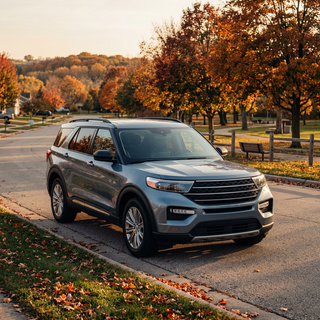
The best used family vehicle to buy right now is a late-model midsize or full-size three-row crossover like a pre-owned Ford Explorer, Ford Expedition, or Toyota Highlander, which balances three-row seating, advanced driver-assist technology, and strong value retention. These four- to five-year-old crossovers offer robust towing capacity, flexible cargo configurations, and modern safety features at a fraction of their original retail price. Choosing a pre-owned family vehicle requires matching interior space, safety credentials, and long-term operating costs to your household's daily routine. Midsize three-row crossovers have become the preferred choice for growing families because they combine car-like handling with the seating versatility and all-weather traction of traditional SUVs. A four-year-old vehicle has already experienced its steepest initial depreciation curve while retaining modern infotainment and driver-assist capabilities. At Tri State Ford, our pre-owned lineup offers space for the whole family alongside Ford quality. Families shopping for dependable transport can visit our East Liverpool showroom to compare seating layouts and cargo dimensions in person, give our team a call at (330) 462-7578, or explore our new Ford inventory to evaluate current features against pre-owned options. Five top pre-owned family vehicles worth inspecting this weekend include: Ford Explorer: A versatile midsize crossover offering seating for six or seven, up to 5,000 lbs of towing capacity, and intelligent all-wheel drive. Ford Expedition: A full-size SUV providing seating for up to eight passengers, expansive cargo volume, and maximum towing power for heavy trailers. Toyota Highlander: A reliable midsize crossover known for conservative engineering, low annual repair frequency, and available hybrid efficiency. Honda Pilot: A spacious three-row crossover featuring a refined V6 engine, generous passenger legroom, and comfortable long-distance highway manners. Ford Bronco Sport: A flexible compact crossover tailored for active smaller families requiring lower ground-clearance compromises and outdoor utility. Table of Contents What Are the Best Used 3-Row SUVs for Families and Which Offers the Most Cargo Space? Which Used Three-Row SUVs Near East Liverpool Are Available Under $30,000? How Much Value Does a Family Vehicle Lose After 5 Years, and How Do Long-Term Maintenance Costs Compare? How Do Child Seat LATCH Anchors and Safety Ratings Differ Across Family Vehicles? Common Questions About Buying a Used Family SUV How Can Shoppers Test Drive and Finance Available Used Family SUVs This Weekend? What Are the Best Used 3-Row SUVs for Families and Which Offers the Most Cargo Space? Top used three-row SUVs for families include the Ford Explorer, Ford Expedition, Toyota Highlander, Honda Pilot, and Kia Telluride, with full-size models like the Ford Expedition leading the class in total storage by providing 23 cubic feet of cargo volume behind the third row and expanding to over 108 cubic feet with rear seats folded. When evaluating three-row family crossovers, cargo volume behind the third row dictates how much gear you can carry while utilizing every passenger seat. Midsize crossovers average between 16 and 18 cubic feet of rear storage space, which accommodates standard grocery runs or light luggage. When maximum utility is required, full-size body-on-frame SUVs offer significantly expanded dimensions. Midsize choices like a pre-owned Explorer Active or ST-Line deliver a practical balance of efficiency and interior room. The Ford Explorer provides 16 cubic feet of storage behind the rearmost seats, expanding to 86 cubic feet with second- and third-row seats folded flat. Powered by a standard 2.3L EcoBoost® engine or an available 3.0L EcoBoost® V6 paired with a SelectShift® 10-speed automatic transmission, the Explorer supports a standard 5,000 lbs towing capacity and a 1,467 lbs maximum payload rating across most trim levels. Shoppers seeking single-owner documentation can browse our CARFAX 1-Owner pre-owned inventory to locate well-maintained vehicles. For additional multi-point inspection coverage and factory-backed protection, buyers can also view our certified pre-owned Ford lineup. To compare how popular three-row models measure up in rear cargo volume: Ford Expedition: Provides 23 cubic feet behind the third row, expanding to 108 cubic feet total. Chevrolet Traverse: Delivers 23 cubic feet behind the third row, expanding to 98 cubic feet total. Honda Pilot: Offers 18 cubic feet behind the third row, expanding to 87 cubic feet total. Ford Explorer: Features 16 cubic feet behind the third row, expanding to 86 cubic feet total. Toyota Highlander: Includes 16 cubic feet behind the third row, expanding to 84 cubic feet total. Dimensions & Capacity Capacity and dimensions by trim Feature Active 4WD Active 4WD 100A Active RWD Active RWD 100A Platinum Platinum 4WD Seating 6 6 6 6 6 6 Cargo 16.3 cu ft 16.3 cu ft 16.3 cu ft 16.3 cu ft 16.3 cu ft 16.3 cu ft Curb weight 4,303 lbs 4,303 lbs 4,303 lbs 4,303 lbs 4,303 lbs 4,303 lbs Towing 5,000 lbs 5,000 lbs 5,000 lbs 5,000 lbs 5,000 lbs 5,000 lbs Payload 1,467 lbs 1,467 lbs 1,467 lbs 1,467 lbs 1,467 lbs 1,467 lbs Dimensions & Capacity (continued) Feature ST ST 4WD ST-LINE 4WD ST-LINE RWD Tremor 4WD Utility Police Interceptor 4x4 Seating 6 6 7 7 6 7 Cargo 16.3 cu ft 16.3 cu ft 16.3 cu ft 16.3 cu ft 16.3 cu ft 52.0 cu ft Curb weight 4,631 lbs 4,631 lbs 4,303 lbs 4,303 lbs 4,424 lbs 4,732 lbs Towing 5,000 lbs 5,000 lbs 5,000 lbs 5,000 lbs 5,000 lbs 3,500 lbs Payload 1,139 lbs 1,139 lbs 1,467 lbs 1,467 lbs 1,346 lbs 2,108 lbs Which Used Three-Row SUVs Near East Liverpool Are Available Under $30,000? Pre-owned three-row family SUVs priced under $30,000 typically include 2021 to 2023 model-year crossovers like the Ford Explorer, Toyota Highlander, and Honda Pilot, with current pricing available upon request. For families commuting along the Ohio River bluffs in East Liverpool, finding a capable three-row crossover under $30,000 provides all-weather traction and multi-row seating without pushing monthly financing past budget limits. Vehicles in this price bracket represent an attractive balance of modern vehicle architecture and remaining service life. Shopping in the $20,000 to $30,000 price range allows buyers to access four-wheel drive or all-wheel drive drivetrains, active driver-assist technologies, and user-friendly smartphone integration. These late-model pre-owned vehicles deliver the core safety standards and cabin connectivity expected by modern drivers while avoiding the steeper depreciation curve associated with brand-new vehicle purchases. Key advantages of choosing a pre-owned three-row SUV under $30,000 include: Lower Capital Cost: Lower initial purchase prices translate directly into reduced principal loan balances and lower monthly payments. Modern Safety Tech: Vehicles from model years 2021 through 2023 include standard automated emergency braking, lane-keeping systems, and blind-spot monitoring. Predictable Value: The majority of initial vehicle value loss has already occurred, helping stabilize vehicle equity over subsequent ownership years. How Much Value Does a Family Vehicle Lose After 5 Years, and How Do Long-Term Maintenance Costs Compare? Family SUVs experience an average total depreciation of 40% to 50% over their first five years of ownership, while independent repair data shows the Toyota Highlander averages $489 in annual maintenance expenses compared to $542 per year for the Honda Pilot. Depreciation represents the single largest cost of vehicle ownership during the first three years. By year five, the rate of value loss flattens significantly, making a 4- to 6-year-old pre-owned crossover a cost-effective purchasing option. Evaluating long-term maintenance patterns alongside depreciation helps buyers estimate their total cost of ownership over a multi-year loan term. When comparing long-term maintenance between popular three-row crossovers, the Toyota Highlander demonstrates a slight edge in repair frequency over the Honda Pilot. Highlander owners report an average of 0.3 unscheduled repair shop visits annually, compared to 0.5 visits per year for the Pilot. Both models maintain a modest 13% probability of an individual repair being classified as major. For hybrid buyers, a pre-owned Toyota Highlander Hybrid frequently surpasses 200,000 miles with routine fluid changes and periodic cooling fan maintenance for the hybrid battery system. Pre-owned Ford crossovers like the Explorer offer competitive long-term ownership value. Featuring proven powertrain engineering, durable SelectShift® transmissions, and widely available replacement components, the Explorer provides straightforward maintenance requirements. Base MSRP figures for new Explorer models range from $38,465 for the Explorer Active RWD up to $56,905 for the performance-oriented Explorer ST 4WD, plus a $1,795 destination charge. To plan your budget effectively, shoppers can use our online trade-in appraisal tool to estimate the current value of their existing vehicle before visiting our finance desk. Pricing Pricing by trim Trim Base MSRP Destination charge Active 4WD $42,585 $1,795 Active 4WD 100A $40,465 $1,795 Active RWD $40,585 $1,795 Active RWD 100A $38,465 $1,795 Platinum $50,965 $1,795 Platinum 4WD $52,965 $1,795 ST $54,905 $1,795 ST 4WD $56,905 $1,795 ST-LINE 4WD $47,155 $1,795 ST-LINE RWD $45,155 $1,795 Tremor 4WD $48,965 $1,795 Utility Police Interceptor 4x4 $48,550 $1,695 How Do Child Seat LATCH Anchors and Safety Ratings Differ Across Family Vehicles? Minivans feature complete LATCH hardware across all second- and third-row seating positions, whereas most midsize three-row SUVs equip complete lower anchor sets primarily on second-row outboard seats while using top tethers for third-row installations. Understanding LATCH (Lower Anchors and Tethers for Children) hardware configurations is essential for parents installing child safety seats. Lower anchors consist of rigid metal bars located in the seat bight, designed for use up to a combined child-and-seat weight limit of 65 pounds. Once a child exceeds that limit, the car seat must be secured using the vehicle's seat belt system. Top tether anchors restrict forward head movement during a sudden impact and should always be utilized with forward-facing car seats. In most midsize three-row crossovers, accessing the third row requires sliding or tumbling the second-row seats forward. Because installed child seats prevent second-row seats from folding, families utilizing multiple car seats often prefer second-row captain's chairs to maintain a pass-through center aisle to the rearmost row. For parents driving kids across the rolling suburban hills near Calcutta, active driver-assist safety suites provide vital daily protection. Top-rated family crossovers, including the Ford Explorer, Subaru Ascent, Honda Pilot, and Toyota Highlander, consistently earn Top Safety Pick+ ratings from the IIHS and 5-Star Overall Safety Ratings from the NHTSA. Driver-assist technology like Ford Co-Pilot360™ incorporates essential active safety features: Pre-Collision Assist with Automatic Emergency Braking: Scans the road ahead to detect potential vehicle or pedestrian collisions and automatically applies braking force if necessary. Blind Spot Information System (BLIS®): Monitors hard-to-see rear quarter zones and alerts drivers to approaching vehicles during lane changes. Lane-Keeping System: Detects lane markings and provides gentle steering wheel feedback if the vehicle begins drifting out of its travel lane. Common Questions About Buying a Used Family SUV Q: Can buyers get pre-approved for used family vehicle financing online before visiting? A: Yes, shoppers can complete our secure online credit application to pre-qualify for current financing options before visiting the showroom. Getting pre-approved establishes a clear vehicle budget, clarifies loan terms, and speeds up the delivery process at the dealership. Q: Are three-row family SUVs available with hybrid powertrains in the pre-owned market? A: Yes, pre-owned three-row crossovers like the Toyota Highlander Hybrid and Ford Explorer Hybrid provide multi-row passenger seating alongside improved city and highway fuel economy. Hybrid powertrains utilize regenerative braking, which helps extend brake pad life over extended ownership. Q: How much cargo space is available behind the third row in a midsize SUV versus a full-size SUV? A: Midsize three-row crossovers like the Ford Explorer provide approximately 16 cubic feet of cargo volume behind the third row, which is suitable for daily errands. Full-size SUVs like the Ford Expedition expand rear storage to nearly 23 cubic feet behind the rearmost seats. Q: What documents should shoppers bring when purchasing a pre-owned vehicle? A: Buyers should bring a valid driver's license, current proof of auto insurance, recent pay stubs or proof of income, and proof of residence such as a recent utility bill. Bringing these documents ensures our finance team can process your approval quickly. Q: Does a higher-mileage pre-owned SUV still offer reliable daily performance? A: Well-maintained pre-owned crossovers with over 100,000 miles can deliver reliable service when supported by documented maintenance histories. Vehicles engineered with proven engines, robust transmissions, and regular fluid service schedules maintain mechanical integrity over extended ownership periods. How Can Shoppers Test Drive and Finance Available Used Family SUVs This Weekend? Shoppers can check immediate pre-owned vehicle availability by reviewing online inventory, calling our sales team directly, or visiting our dealership in person to inspect available family SUVs. Our experienced sales staff is ready to help you evaluate seating configurations, demonstrate active safety technologies, and compare cargo dimensions across our pre-owned lineup. Whether you are looking for a fuel-efficient midsize crossover or a spacious full-size SUV, our team provides transparent information and current financing information available from our team. When you are ready to take the next step toward your family's next vehicle, visit our showroom location at 1503 Pennsylvania Ave, call our sales department directly at (330) 462-7578, or schedule a test drive online today. Keep Your Vehicle Running Strong Keep your vehicle performing at its best with our service team: Order Parts Schedule Service Appt © 2026 Tri State Ford. All rights reserved. Vehicle specification data © JATO Dynamics Limited. Used Family SUVs in East Liverpool OH | Tri State Ford

f

What Is the Minimum Down Payment Required for a Used Car Loan?

There is no universal minimum down payment required to finance a used car. While financial experts typically recommend putting down **10% down ** of the vehicle’s purchase price, many lenders approve qualified buyers for low-down-payment options, or even zero dollars down, based on credit profile, income stability, debt-to-income ratio, and the specific vehicle being financed. When evaluating a used car loan application, lenders calculate a key financial metric called the loan-to-value (LTV) ratio. The LTV compares the total loan amount against the official clean wholesale value or market value of the vehicle. A larger cash down payment lowers the loan balance relative to the car's value, reducing the financial risk for the lender. As a result, buyers who provide a solid upfront contribution often secure lower interest rates and easier loan approval terms. However, for buyers with strong credit history and steady proof of income, lenders frequently waive strict minimum down payment requirements altogether. Beyond the baseline vehicle purchase price, buyers must also account for out-of-door costs, which include state sales tax, title transfer fees, registration charges, and dealer documentation fees. A modest cash down payment—such as $500 or $1,000—often covers these initial administrative fees so they do not have to be rolled into the total financed amount. For working professionals and suburban families commuting along State Route 170 near Calcutta, keeping upfront loan costs balanced ensures manageable monthly payments over the full financing term. At Tri State Ford, our team works directly with national banks, regional credit unions, and specialized auto lenders to structure flexible payment plans tailored to your financial goals. Whether you have a substantial trade-in or limited cash on hand, you can visit our East Liverpool showroom location or give us a quick call at (330) 462-7578 to explore customized used-car financing options. Table of Contents Can You Finance a Used Car with Zero Dollars Down? Can You Get a Low-Down-Payment Used Car Loan with Credit Below 600? How Does Every $1,000 Down Lower Your Monthly Payment and Total Interest? What Does It Mean to Be Upside Down on a Low-Down-Payment Used Car Loan? How Do Trade-In Equity and current offers Reduce Cash Required Upfront? Common Questions About Low-Down-Payment Used Car Financing Can You Finance a Used Car with Zero Dollars Down? Yes, you can finance a used car with zero dollars down if you meet lender underwriting criteria, such as a strong credit score and sufficient verifiable income. However, financing 100% of the purchase price increases your overall loan balance, monthly payments, and total interest paid over the life of the loan. Zero-down financing options are primarily extended to buyers in prime or super-prime credit tiers, typically defined as credit scores of 661 to 850. Lenders offering zero-down auto loans closely review an applicant's debt-to-income (DTI) ratio, job stability, and credit history to ensure the borrower can comfortably handle higher monthly payments. Because the lender is taking on 100% of the vehicle's purchase price risk, zero-down loans may carry different annual percentage rates ( APRs) depending on lender and credit profile. Higher Monthly Payments: Borrowing the full purchase price without an upfront reduction results in larger monthly installments across the entire repayment term. Increased Total Interest: Paying interest on a larger principal balance raises the total cost of financing over 48-month, 60-month, or 72-month terms. Higher Initial Loan-to-Value Ratio: Starting a loan at 100% or more of the vehicle's retail value leaves less margin for normal market depreciation. Shoppers exploring low upfront costs often examine our wide selection of quality CARFAX 1-Owner pre-owned inventory to find well-maintained vehicles that hold strong retail value. Experian industry reports show that while zero-down used car financing is widely available, bringing even a modest upfront payment noticeably lowers a borrower's interest rate tier. Our experienced finance department can compare multiple lender offers side-by-side, helping you decide whether a zero-down agreement or a small cash down payment works best for your monthly budget. Buyers who ultimately decide to compare pre-owned savings against new model incentives can also view our brand-new Ford inventory online. Can You Get a Low-Down-Payment Used Car Loan with Credit Below 600? Borrowers with credit scores below 600 can secure a used car loan with a modest down payment, but lenders typically require at least $1,000 or 10% down to offset risk. Lower credit scores place applicants into subprime credit tiers, where higher interest rates mean a down payment is essential to keeping monthly payments manageable. According to Experian automotive finance data, average used car interest rates vary significantly across credit tiers: Credit Score Tier Rating Classification Average Used Car APR 781 – 850 Super Prime 7.70% APR 661 – 780 Prime 9.65% APR 601 – 660 Near Prime 14.11% APR 501 – 600 Subprime 19.00% APR 300 – 500 Deep Subprime 21.85% APR When evaluating applications with credit scores below 600, subprime lenders look beyond credit scores alone. They analyze verifiable monthly income, length of employment, utility bill stability, and current debt obligations. Supplying an upfront cash down payment or trade-in value demonstrates financial commitment and lowers the lender's exposure, which dramatically improves approval odds. Adding a qualified co-borrower with established credit can also help secure lower interest rates and reduce required cash at signing. Choosing high-quality pre-owned vehicles also strengthens subprime applications. Vehicles backed by rigorous reconditioning programs, such as our certified pre-owned Ford inventory featuring Ford Blue Advantage coverage, provide lenders with confidence regarding asset reliability and retained value. Completing a confidential online credit application allows our finance specialists to pre-qualify your file and identify lenders that specialize in low-down-payment subprime approvals. How Does Every $1,000 Down Lower Your Monthly Payment and Total Interest? Every $1,000 put down on a used car loan reduces the monthly payment by approximately $15 to $20 on a standard 60-month loan term. Over the course of the loan, that initial cash contribution also saves hundreds of dollars in total interest charges by reducing the principal loan balance. To see how an upfront down payment shapes total financing costs, consider a $20,000 used vehicle loan financed at a 9.65% APR over a 60-month term: Larger down payments can reduce the amount financed, which may lower monthly payments and total interest paid over the life of the loan. As shown in the table, putting 10% down ($2,000) on a $20,000 vehicle lowers the monthly payment by $42 compared to financing with zero down. Furthermore, it cuts total interest charges by $529 over five years. Because a lower loan balance decreases the lender's loan-to-value ratio, submitting a down payment may also qualify you for a lower interest rate bracket, yielding even greater long-term savings. Planning ahead and factoring initial costs into your budget ensures long-term vehicle affordability. When evaluating total ownership expense, buyers can also explore current manufacturer vehicle offers and specials to lower initial vehicle costs and maximize the value of every dollar invested upfront. What Does It Mean to Be Upside Down on a Low-Down-Payment Used Car Loan? Being upside down on a used car loan—also known as having negative equity—means owing more on the loan than the vehicle is currently worth on the market. Financing a vehicle with little or zero money down increases this risk because normal depreciation occurs faster than the principal balance is paid off during the early months. When a vehicle is purchased with zero down and additional costs like sales tax and documentation fees are rolled into the loan principal, the initial loan balance immediately exceeds the car's wholesale value. For example, if you finance $18,000 on a used SUV with a market value of $16,000, you begin the loan with $2,000 of negative equity. If you need to sell or trade in the vehicle after two years, you must pay off that remaining unpaid balance before title transfer can occur. Trade-In Challenges: Negative equity must either be paid out-of-pocket or rolled into a new auto loan, increasing future monthly payments. Insurance Gaps During Total Loss: In the event of an accident where the car is declared a total loss, standard auto insurance only pays current market value, leaving the owner responsible for paying off the remaining unpaid loan balance. Extended Repayment Terms: Choosing 72-month or 84-month financing terms lowers monthly payments but slows principal reduction, extending the time spent upside down. Drivers navigating daily commutes along the Ohio River around East Liverpool can protect themselves from negative equity by opting for shorter loan terms, providing a modest cash down payment, or adding Guaranteed Asset Protection ( GAP coverage). GAP insurance covers the financial difference between an insurance payout and the remaining loan balance if a vehicle is totaled, offering financial security for low-down-payment loans. How Do Trade-In Equity and current offers Reduce Cash Required Upfront? Positive trade-in equity and dealer incentives count directly toward down payment requirements, allowing buyers to reduce or completely eliminate out-of-pocket cash needed at signing. If your current vehicle is worth more than what you owe on it, that difference acts just like cash towards your purchase. For instance, if your trade-in vehicle has a market value of $7,000 and your remaining loan payoff is $5,000, you possess $2,000 in positive equity. When applied to your next purchase, that $2,000 satisfies a 10% down payment requirement on a $20,000 used vehicle without requiring any out-of-pocket cash from your bank account. Combining trade-in equity with manufacturer promotional allowances further reduces the net amount financed, securing lower monthly payments and favorable LTV approval terms. To streamline the low-down-payment buying process, bring these key documents to the dealership: Proof of Income: Recent pay stubs or W-2 forms verifying steady monthly earnings. Proof of Residence: A recent utility bill or bank statement confirming your physical address. Trade-In Paperwork: Vehicle title, current registration, and loan payoff statement if applicable. Valid Driver’s License & Insurance: Active driver's license and current auto insurance card. Preparing these materials in advance speeds up loan underwriting and helps our finance desk secure fast approvals. You can determine your vehicle's current equity today using our online Kelley Blue Book trade-in valuation tool or request a firm purchasing offer through our instant cash offer tool before visiting our showroom. Common Questions About Low-Down-Payment Used Car Financing Q: How long does a credit application take when applying for used car financing? An online credit application typically takes less than ten minutes to complete. Once submitted, our finance team reviews your credit profile and submits it to our network of lenders, often generating approval options within thirty to sixty minutes during regular business hours. Bringing complete documentation—including pay stubs, proof of residence, and trade-in information—helps expedite the final underwriting verification process. Q: Can I roll sales tax and licensing fees into my used car loan? Yes, many lenders permit qualified buyers to finance state sales tax, title transfer, and registration charges directly into the total loan balance. However, rolling administrative fees into the loan increases your principal balance and loan-to-value ratio, which may slightly raise monthly payments and total interest costs. Buyers choosing low-down-payment financing often prefer paying taxes and fees upfront to keep loan amounts manageable. Q: Does a co-borrower help secure a low-down-payment auto loan? Adding a creditworthy co-borrower significantly strengthens an auto loan application, particularly for applicants with credit scores below 600 or limited credit history. A co-borrower assumes joint legal responsibility for loan repayment, which reduces lender risk. This financial backing often helps secure approval with a smaller cash down payment, lower interest rates, and more flexible loan term options. Q: Is GAP insurance necessary when financing a used car with zero money down? While GAP insurance is optional, it is highly recommended when financing a used vehicle with little or zero money down. Because new loans begin at maximum loan-to-value ratios, standard collision insurance may not fully cover your remaining loan balance if the car is declared a total loss in an accident. GAP coverage pays the difference between market value and loan payoff, protecting you from unexpected debt. Q: How do lender loan-to-value limits affect used car approvals? Lenders establish maximum loan-to-value (LTV) limits, usually capped between 100% and 125% of a used vehicle’s clean wholesale book value. The LTV caps the maximum amount a lender will finance, including vehicle price, taxes, warranties, and fees. If a vehicle's selling price or add-ons exceed the lender's LTV cap, a cash down payment or trade-in equity is required to cover the difference. Q: What steps should I take first if I want to buy a used car with little money down? Your first step should be calculating your trade-in equity and submitting a secure finance pre-qualification application online. Knowing your borrowing power and estimated monthly payment range allows you to shop our pre-owned inventory with complete confidence. You can confirm current vehicle availability or speak with our finance team by stopping by our East Liverpool dealership address or calling us at (330) 462-7578 to schedule a test drive today. Keep Your Vehicle Running Strong Keep your vehicle performing at its best with our service team: Order Parts Schedule Service Appt © 2026 Tri State Ford. All rights reserved. Used Car Financing Options in East Liverpool OH | Tri State Ford
d

What is the best used three-row SUV under $30,000?

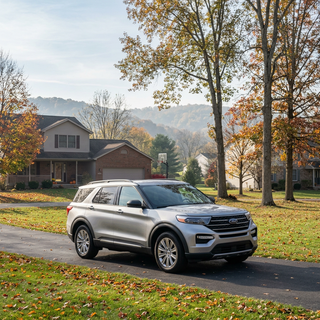
The Toyota Highlander consistently stands out as the most reliable pre-owned three-row SUV under $30,000, primarily due to the long-term durability of its 3.5L V6 powertrain and low average maintenance demands across 2017 through 2021 model years. For families who require greater third-row passenger room, higher maximum towing power, or American utility, models like a pre-owned Ford Explorer or Chevrolet Traverse serve as outstanding choices in the same price range. Selecting the ideal family vehicle requires balancing seating capacity, cargo capability, daily fuel economy, and long-term ownership costs. A budget under $30,000 opens up a wide selection of well-maintained midsize crossovers that offer modern driver-assist features and comfortable seating for up to eight passengers. In suburban communities like Calcutta, where weekend recreational trips near Beaver Creek and daily errands along State Route 170 demand both versatility and foul weather traction, all-wheel-drive crossovers represent a practical investment. While the Highlander earns high marks for mechanical longevity, exploring options across different domestic and import brands ensures you find the exact layout your family requires. At Tri State Ford, our pre-owned inventory gives local shoppers access to thoroughly inspected vehicles engineered for years of dependable service. If you are ready to evaluate these options in person, you can stop by our East Liverpool showroom or give our sales team (330) 462-7578 a call to discuss current availability. Table of Contents Which recent three-row SUVs rank highly under $30,000, and what are their average prices? How do the Toyota Highlander, Mazda CX-9, Kia Telluride, and Honda Pilot compare? Which three-row SUV under $30,000 offers the most cargo volume and third-row legroom? Do you need a factory tow package to reach a 5,000-pound towing capacity? Common Questions About Buying a Used Three-Row SUV Under $30,000 Find Your Ideal Used Family SUV at Tri State Ford Which recent three-row SUVs rank highly under $30,000, and what are their average prices? Market data indicates that a 2020 Toyota Highlander averages approximately $28,608, a 2021 Honda Pilot averages around $26,542, and a 2022 Nissan Pathfinder sits near $26,641 in the pre-owned market. Other top-performing candidates in this price bracket include the 2022 Chevrolet Traverse with an average listing price near $28,300, the 2022 Mazda CX-9 at roughly $28,400, and the 2022 Volkswagen Atlas hovering around $29,600. Shopping in the sub-$30,000 category generally gives buyers access to vehicles that are two to six model years old with under 75,000 miles on the odometer. Each model within this price point targets specific family needs: 2020 Toyota Highlander: Averages $28,608. Highlights include standard safety equipment, strong resale value, and available hybrid efficiency. 2021 Honda Pilot: Averages $26,542. Highlights include clever interior storage cubbies, a smooth V6 engine, and comfortable second-row seating. 2022 Nissan Pathfinder: Averages $26,641. Highlights include a rugged redesign, modern dashboard tech, and an 8-speed automatic transmission replacing the prior CVT. 2022 Chevrolet Traverse: Averages $28,300. Highlights include best-in-class cargo capacity and generous third-row legroom. 2022 Mazda CX-9: Averages $28,400. Highlights include premium cabin materials, responsive turbocharged performance, and sleek exterior design. For buyers seeking additional peace of mind, exploring certified pre-owned Ford inventory provides factory-backed warranty coverage, rigorous multi-point mechanical inspections, and comprehensive vehicle history reports. A certified Ford Explorer, for example, combines modern convenience features like smartphone integration with competitive pricing that fits well within a $30,000 budget limit. MSRP Pricing MSRP by trim Trim Base MSRP Destination charge Active 4WD $42,585 $1,795 Active 4WD 100A $40,465 $1,795 Active RWD $40,585 $1,795 Active RWD 100A $38,465 $1,795 Platinum $50,965 $1,795 Platinum 4WD $52,965 $1,795 ST $54,905 $1,795 ST 4WD $56,905 $1,795 ST-LINE 4WD $47,155 $1,795 ST-LINE RWD $45,155 $1,795 Tremor 4WD $48,965 $1,795 Utility Police Interceptor 4x4 $48,550 $1,695 How do the Toyota Highlander, Mazda CX-9, Kia Telluride, and Honda Pilot compare? Among midsize three-row SUVs under $30,000, the Highlander excels in reliability and resale, whereas the Pilot shines with flexible storage and a refined V6 engine. The Mazda CX-9 delivers the sportiest handling dynamics and a luxury-tier interior, whereas the Kia Telluride balances high-end cabin aesthetics with intuitive widescreen technology. Comparing these four popular three-row crossovers reveals key differences in performance, cabin dimension, and daily drivability: Powertrain and Driving Dynamics The 2019 Toyota Highlander features a 3.5L V6 engine producing 295 hp and 263 lb-ft of torque mated to an 8-speed automatic transmission, delivering an EPA-estimated 20 city / 27 hwy mpg in front-wheel drive. By contrast, the Mazda CX-9 relies on a 2.5L Turbo 4-cylinder generating 227 hp and up to 310 lb-ft of torque on regular fuel, providing sharp throttle response and athletic cornering capability through its sport-tuned suspension. The Honda Pilot utilizes a proven 3.5L V6 engine delivering 280 hp, offering effortless highway passing and quiet cruising. The Kia Telluride features a 3.8L V6 engine outputting 291 hp, paired with a smooth-shifting 8-speed automatic transmission that handles heavy passenger loads with confidence. Interior Accommodations and Technology Inside the cabin, the Honda Pilot excels at family organization, offering deep door pockets, multiple charging ports, and an available second-row bench that seats eight. The Kia Telluride stands out for technology, offering an available 10.25-inch infotainment display, simulated leather upholstery, and a spacious third row that comfortably accommodates teens and adults. The Mazda CX-9 emphasizes near-luxury refinement with real wood accents and soft-touch materials on higher trims, though its overall cargo volume behind the front seats remains smaller than its rivals. The Toyota Highlander includes Toyota Safety Sense P as standard equipment, featuring adaptive cruise control and automatic emergency braking, though 2019 and older models lack standard Apple CarPlay integration. For drivers who want a balance of high towing capability and responsive performance, a pre-owned Ford Explorer with the 2.3L EcoBoost engine delivers 300 hp and 310 lb-ft of torque, backed by a SelectShift® 10-speed automatic transmission. When evaluating trade-in options to offset your next purchase, you can easily value your trade-in online to see how much equity you can apply toward your down payment. Engine & Performance Powertrain specs by trim Feature Active 4WD Active 4WD 100A Active RWD Active RWD 100A Platinum Platinum 4WD Engine 2.3L 2.3L 2.3L 2.3L 2.3L 2.3L Horsepower 300 hp 300 hp 300 hp 300 hp 300 hp 300 hp Torque 310 lb-ft 310 lb-ft 310 lb-ft 310 lb-ft 310 lb-ft 310 lb-ft Transmission SelectShift® SelectShift® SelectShift® SelectShift® SelectShift® SelectShift® Drivetrain Four-wheel drive Four-wheel drive Rear-wheel drive Rear-wheel drive Rear-wheel drive Four-wheel drive Engine & Performance (continued) Feature ST ST 4WD ST-LINE 4WD ST-LINE RWD Tremor 4WD Utility Police Interceptor 4x4 Engine 3L 3L 2.3L 2.3L 2.3L 3.3L Horsepower 400 hp 400 hp 300 hp 300 hp 300 hp 318 hp Torque 415 lb-ft 415 lb-ft 310 lb-ft 310 lb-ft 310 lb-ft 260 lb-ft Transmission SelectShift® SelectShift® SelectShift® SelectShift® SelectShift® SelectShift Drivetrain Rear-wheel drive Four-wheel drive Four-wheel drive Rear-wheel drive Four-wheel drive Four-wheel drive Which three-row SUV under $30,000 offers the most cargo volume and third-row legroom? The Chevrolet Traverse leads the midsize three-row class in total maximum cargo capacity under $30,000, offering up to 98 cubic feet of space with all rear rows folded flat and approximately 23 cubic feet of storage directly behind the third row. For adult-friendly third-row legroom, the Volkswagen Atlas takes top honors with 34 inches of space, followed closely by the Chevrolet Traverse at 33 inches. When evaluating cabin dimensions, total cargo capacity varies significantly across the segment: Chevrolet Traverse: 23 cubic feet behind 3rd row / 98 cubic feet max cargo / 33 inches 3rd-row legroom Volkswagen Atlas: 21 cubic feet behind 3rd row / 96 cubic feet max cargo / 34 inches 3rd-row legroom Ford Explorer: 16 cubic feet behind 3rd row / 85 cubic feet max cargo / 32 inches 3rd-row legroom Honda Pilot: 16 cubic feet behind 3rd row / 84 cubic feet max cargo / 32 inches 3rd-row legroom Toyota Highlander: 16 cubic feet behind 3rd row / 84 cubic feet max cargo / 28 inches 3rd-row legroom Families who frequently travel with sports equipment, luggage, or large strollers will find the extra volume in full-size or larger midsize crossovers immensely valuable. In commercial and suburban centers like Boardman, where daily commutes along Market Street are combined with weekly shopping trips near Mill Creek Park, having extra flat-floor cargo utility prevents cabin clutter. On our sales floor, families test-driving three-row SUVs usually ask about third-row access and legroom before they ask about infotainment screens. Testing the seat-folding mechanisms with child safety seats installed in the second row is one of the most effective ways to determine real-world usability. Dimensions & Capacity Capacity and dimensions by trim Feature Active 4WD Active 4WD 100A Active RWD Active RWD 100A Platinum Platinum 4WD Seating 6 6 6 6 6 6 Cargo 16.3 cu ft 16.3 cu ft 16.3 cu ft 16.3 cu ft 16.3 cu ft 16.3 cu ft Curb weight 4,303 lbs 4,303 lbs 4,303 lbs 4,303 lbs 4,303 lbs 4,303 lbs Towing 5,000 lbs 5,000 lbs 5,000 lbs 5,000 lbs 5,000 lbs 5,000 lbs Payload 1,467 lbs 1,467 lbs 1,467 lbs 1,467 lbs 1,467 lbs 1,467 lbs Dimensions & Capacity (continued) Feature ST ST 4WD ST-LINE 4WD ST-LINE RWD Tremor 4WD Utility Police Interceptor 4x4 Seating 6 6 7 7 6 7 Cargo 16.3 cu ft 16.3 cu ft 16.3 cu ft 16.3 cu ft 16.3 cu ft 52.0 cu ft Curb weight 4,631 lbs 4,631 lbs 4,303 lbs 4,303 lbs 4,424 lbs 4,732 lbs Towing 5,000 lbs 5,000 lbs 5,000 lbs 5,000 lbs 5,000 lbs 3,500 lbs Payload 1,139 lbs 1,139 lbs 1,467 lbs 1,467 lbs 1,346 lbs 2,108 lbs Do you need a factory tow package to reach a 5,000-pound towing capacity? Yes, achieving the maximum 5,000 lb towing capacity on most pre-owned midsize three-row SUVs requires a factory-installed towing package or factory-certified heavy-duty cooling hardware. Adding an aftermarket hitch receiver to a base model without heavy-duty cooling upgrades generally limits safe towing limits to 1,500 or 2,000 pounds. Factory towing packages typically bundle several essential mechanical components: Heavy-duty engine cooling: Upgraded radiators and high-output electric cooling fans prevent engine overheating under heavy loads on steep highway inclines. Transmission fluid cooler: Supplemental heat exchangers keep automatic transmission fluid within safe operating temperature bands during heavy hauling. Upgraded alternator: High-output electrical generators support auxiliary trailer lighting and electric trailer brake controllers. Integrated trailer hitch receiver and wiring: Frame-mounted receiver hitches and 7-pin/4-pin wiring harnesses ensure proper electrical connection and load distribution. Trailer sway control: Advanced software integrated into the electronic stability control system automatically applies individual vehicle brakes to suppress trailer oscillation. For example, a base 4-cylinder Toyota Highlander is rated to tow only 1,500 pounds, whereas V6 models equipped with the factory tow package reach the full 5,000 lb towing capacity. Similarly, a pre-owned Ford Explorer with the 2.3L EcoBoost engine or a full-size Ford Expedition equipped with a 3.5L EcoBoost V6 delivers standard or available towing ratings from 5,000 up to 6,000 pounds, making them ideal for hauling boats, camper trailers, or utility equipment across state lines. Common Questions About Buying a Used Three-Row SUV Under $30,000 Q: What paperwork should I bring when applying for financing on a used three-row SUV? To streamline your auto loan approval, bring your current driver's license, your two most recent pay stubs, proof of residency such as a recent utility bill, and your current auto insurance card. If you plan to trade in your existing vehicle, bring its title or lien payoff documentation along with all registration papers. Preparing these documents in advance accelerates processing with our lending partners. You can start the approval process from home by submitting an online credit application with our finance team. Q: Can adults fit in the third row of a pre-owned Toyota Highlander? Third-row seating in 2017 through 2021 Toyota Highlander models provides approximately 28 inches of legroom, making it tight for taller adults on long trips. That row is best suited for children, teens, or short suburban trips across town. Buyers needing adult-friendly third-row seating should consider a Chevrolet Traverse, Volkswagen Atlas, or a full-size SUV like the Ford Expedition. Q: Is all-wheel drive standard on used three-row crossover SUVs under $30,000? All-wheel drive is typically an optional feature on most gas-powered pre-owned crossovers in this price range, with front-wheel drive serving as the base configuration. However, certain trim levels and hybrid models feature standard all-wheel drive. If winter road traction and wet-weather stability are priorities for your daily drive, verify that the specific vehicle listing includes an active four-wheel-drive or all-wheel-drive system. Q: What is the benefit of buying a Carfax 1-Owner vehicle over standard used inventory? A Carfax 1-Owner vehicle has been maintained by a single owner since new, which frequently correlates with complete service records, consistent maintenance schedules, and lower wear and tear. Having a clear maintenance history reduces ownership uncertainty when buying a pre-owned vehicle. Browsing our selection of pre-owned Carfax 1-Owner vehicles helps you locate well-cared-for SUVs with documented oil changes and service intervals. Q: How do used midsize three-row SUVs compare in winter driving performance? Winter performance depends heavily on drivetrain configuration, ground clearance, and tire selection. Models equipped with intelligent all-wheel-drive systems continuously monitor wheel slip and route power to the wheels with the best traction. Crossovers offering selectable drive modes for snow and slippery conditions allow the vehicle to manage throttle response and transmission shifts automatically, keeping your vehicle stable on icy morning roads. For families considering brand-new options alongside pre-owned choices, exploring our new Ford vehicle inventory provides a clear comparison of modern winter safety technologies. Find Your Ideal Used Family SUV at Tri State Ford Finding a dependable, spacious three-row vehicle within a $30,000 budget comes down to matching your seating needs, cargo requirements, and towing goals with a thoroughly inspected pre-owned model. Whether you prioritize the proven reliability of a Toyota Highlander, the expansive cargo room of a Chevrolet Traverse, or the versatile turbocharged strength of a pre-owned Ford Explorer, taking a thorough test drive is the best way to choose. Our team at Tri State Ford is dedicated to helping local families navigate their options with complete clarity on pricing, vehicle condition, and current finance information. We invite you to visit our dealership at 1503 Pennsylvania Ave in East Liverpool to explore our current pre-owned lineup. You can also give our friendly sales advisors a quick call to schedule your test drive today. Keep Your Vehicle Running Strong Keep your vehicle performing at its best with our service team: Order Parts Schedule Service Appt © 2026 Tri State Ford. All rights reserved. Vehicle specification data © JATO Dynamics Limited. Used Three-Row SUVs Under $30K in East Liverpool OH | Tri State Ford
d

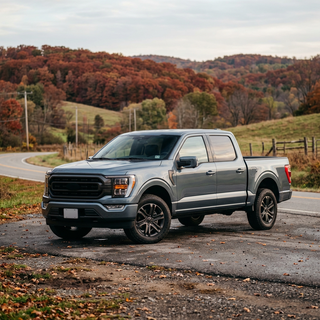
How Do You Choose the Right Pickup Truck to Buy?

To choose the right pickup truck, match the vehicle's engine performance, payload, and towing capacities directly to your maximum trailer weight and bed cargo requirements, then select a cab style and trim level that fits your daily seating and technology needs. Evaluating drivetrain requirements like four-wheel drive against local terrain and comparing total ownership value ensures you select a truck that handles both work and daily driving comfortably. Selecting the optimal truck begins by separating essential capability specs from optional comfort upgrades. Work demands dictate the required mechanical foundation, including frame strength, rear axle ratio, and cooling systems. For drivers balancing daily highway commutes with weekend trailering, engine efficiency and cabin space take priority over maximum payload setup. Evaluating how often you carry passengers versus hauling tools in the bed helps narrow the choice between regular cab, extended cab, and four-door crew cab configurations. Budget planning involves examining total value, expected fuel efficiency, and long-term resale potential alongside upfront purchase prices. Exploring options in our new Ford inventory gives shoppers a clear view of current engine choices, cab styles, and utility packages. Buyers can also speak directly with our sales team at (330) 462-7578 or visit our dealership location on Pennsylvania Avenue to compare model configurations side by side. Table of Contents What Is the Maximum Towing Capacity of Modern Light-Duty Full-Size Pickup Trucks? How Does Payload Capacity Differ From Towing Capacity and Required Equipment? What Is the Difference Between Full-Size and Midsize Pickup Trucks? How Does the Ford F-150 Compare to the Chevrolet Silverado 1500? Which Featured Trucks and Pricing Details Are Available Near East Liverpool This Weekend? What Standard Features Come on Base Trim Work Trucks and Tech Packages? Common Buyer Questions About Pickup Truck Capabilities and Selection Finding Your Next Truck at Tri State Ford What Is the Maximum Towing Capacity of Modern Light-Duty Full-Size Pickup Trucks? Modern light-duty full-size pickup trucks deliver maximum conventional towing capacities ranging from 13,000 to 14,000 pounds when properly configured with specialized tow packages, upgraded axle ratios, and high-output engines. Achieving these peak ratings requires selecting specific cab lengths, axle configurations, and frame layouts designed for maximum pull strength. In the half-ton segment, engine architecture directly determines maximum pulling capability. For example, a properly equipped 2026 Ford F-150 powered by the 3.5L EcoBoost V6 delivers up to 13,500 pounds of conventional towing capacity. Shoppers seeking exceptional efficiency without giving up heavy-hauling capability can choose the 3.5L PowerBoost full hybrid V6 powertrain, which provides up to 12,400 pounds of conventional towing capability. Buyers exploring full-size trucks on our floor usually ask about the weight difference between conventional towing and payload ratings before discussing hitch configurations. Reaching maximum tow ratings requires factory equipment upgrades that manage thermal and structural stress. These features include high-capacity radiators, auxiliary transmission oil coolers, stiffer rear springs, and integrated trailer brake wiring. Drivers managing heavy equipment or travel trailers rely on these mechanical reinforcements to maintain stability across highway grades and stopping distances. Shoppers seeking pre-owned full-size capability can explore our selection of Carfax one-owner pre-owned vehicles to find properly equipped half-ton trucks. Truck owners can also take advantage of Ford pickup and delivery service to keep their vehicle's trailering hardware and cooling systems maintained without disrupting their busy work schedules. How Does Payload Capacity Differ From Towing Capacity and Required Equipment? Payload capacity measures the maximum combined weight a pickup bed and cab can carry internally, while towing capacity measures the maximum weight a truck can pull behind its rear bumper or hitch platform. Payload includes the driver, passengers, cab cargo, tongue weight from a trailer, and items placed inside the truck bed. Understanding this distinction prevents overloading the vehicle's axle ratings and suspension. A full-size truck like the properly equipped 2026 Ford F-150 offers a maximum payload rating of 2,440 pounds with traditional gas engines, or up to 2,045 pounds with the 3.5L PowerBoost hybrid configuration. Midsize trucks like the 2026 Ford Ranger carry a maximum payload rating of 1,767 pounds in a 2.3L EcoBoost 4x2 layout. Every pound of passenger weight and bed cargo reduces the remaining available tongue weight allowable for pulling a trailer. To pull heavy loads safely at maximum limits, specific factory hardware is mandatory: Class IV hitch receiver rated for heavy tongue weights Integrated trailer brake controller synced with vehicle antilock brakes Heavy-duty engine cooling fan and enlarged radiator Upgraded rear axle ratio for increased low-end torque delivery Weight-distributing hitch assembly for loads exceeding standard bumper limits Exceeding gross vehicle weight ratings subjects suspension components, frame mounts, and braking systems to excessive stress. Evaluating certified vehicles from our certified pre-owned Ford lineup ensures buyers receive factory-inspected frame and suspension components built for rigorous load carrying. What Is the Difference Between Full-Size and Midsize Pickup Trucks? Full-size pickup trucks provide wider cabs, standard V6 or V8 powertrains, bed lengths over six feet, and towing capacities exceeding 10,000 pounds, whereas midsize pickup trucks feature narrower footprints, four-cylinder or light V6 engines, lighter payloads, and maximum towing capacities around 7,500 pounds for easier maneuverability. Choosing between segments comes down to physical footprint, engine torque, and practical everyday maneuverability. Midsize trucks offer easier parking in tight residential driveways and tighter turning radii on narrow roads. The 2026 Ford Ranger illustrates midsize strengths with a starting MSRP of $47,455, featuring a 2.3L EcoBoost engine paired with a 10-speed SelectShift automatic transmission that earns 19 mpg city / 24 mpg hwy while delivering a maximum towing capacity of 7,500 pounds. Full-size trucks excel when maximum passenger room and heavy work site duties are daily requirements. Half-ton frames offer wider interior shoulder room, larger touchscreens, and larger fuel tanks for extended driving range. The gently rolling terrain in Calcutta makes midsize trucks popular for suburban outdoor recreation, whereas local contractors needing to haul heavy masonry or tandem-axle trailers lean toward full-size platforms. Evaluating current vehicle value helps buyers decide whether to step up to a full-size platform or stay in the midsize class. Shoppers can use our online trade-in appraisal tool to establish their existing vehicle's market trade value before test driving different cab and bed sizes. How Does the Ford F-150 Compare to the Chevrolet Silverado 1500? The Ford F-150 outperforms the Chevrolet Silverado 1500 in maximum conventional towing capability and powertrain diversity, offering an available full-hybrid V6 option along with higher peak towing figures compared to the Silverado 1500's TurboMax and V8 engine options. When comparing light-duty full-size trucks, powertrain selection plays a critical role in daily performance. The Ford F-150 lineup features a broad range of engine choices, including the efficient 2.7L EcoBoost V6, traditional 5.0L V8, powerful 3.5L EcoBoost V6, and the innovative 3.5L PowerBoost full hybrid. In contrast, the Chevrolet Silverado 1500 relies on a 2.7L TurboMax four-cylinder rated at 310 horsepower with a 9,000 pounds trailering capacity, alongside traditional V8 and Duramax diesel options. Capability / Feature Ford F-150 Chevrolet Silverado 1500 Max Conventional Towing 13,500 pounds 13,300 pounds Max Payload Rating 2,440 pounds 2,260 pounds Full Hybrid Powertrain Available 3.5L PowerBoost Not Available High-Output Gasoline Engine Available 5.2L Supercharged V8 Not Available Ford's high-strength, military-grade aluminum-alloy body structure reduces overall vehicle curb weight, allowing engineers to route extra capacity into payload and tow ratings. Inside the cab, Ford offers specialized productivity technology such as Pro Power Onboard, turning the truck into a mobile generator. Shoppers planning their truck purchase can submit an online credit application to streamline your financing process prior to visiting the showroom. Which Featured Trucks and Pricing Details Are Available Near East Liverpool This Weekend? Featured full-size light-duty and heavy-duty trucks on regional market lots this weekend include a 2026 Chevrolet Silverado 1500 LT Crew Cab listed at $54,895 MSRP, alongside a 2026 GMC Sierra 2500 HD AT4 listed at $84,045 MSRP. Regional truck buyers looking at half-ton options will find the featured 2026 Chevrolet Silverado 1500 LT Crew Cab equipped with four-wheel drive, a TurboMax engine, an 8-speed automatic transmission, and an EPA-rated 17 mpg city / 21 mpg hwy. This configuration features a 7,000 pounds GVWR, integrated trailer brake controller, and the All Star Edition convenience package in Sterling Gray Metallic exterior trim. For buyers requiring heavy-duty performance along the riverfront bluffs of East Liverpool, three-quarter-ton featured inventory provides substantial mechanical upgrades. The 2026 GMC Sierra 2500 HD AT4 features a 6.6L V8 gas engine, 10-speed automatic transmission, four-wheel drive, 10,850 pounds GVWR, and factory Gooseneck / 5th Wheel Prep Package hardware in Summit White. Shoppers seeking even greater commercial towing power look to the 2026 Ford Super Duty lineup. A properly equipped Super Duty provides up to 40,000 pounds of gooseneck towing, 35,000 pounds of fifth-wheel towing, or 30,000 pounds of conventional towing, with a maximum gas engine payload of 8,000 pounds. Because regional dealer inventory turns daily, shoppers should confirm current vehicle availability and advertised savings prior to traveling. What Standard Features Come on Base Trim Work Trucks and Tech Packages? Base trim full-size work trucks come standard with durable vinyl or cloth seating, automatic emergency braking, air conditioning, power windows, and central touchscreen displays featuring wireless smartphone integration. These modern base models balance rugged durability with fundamental driver safety technology. Today's commercial work trucks have evolved far beyond basic entry-level utility. Standard safety equipment includes forward collision alert, lane-keeping assist, and automatic headlight control. Interior convenience features include dual USB charging ports, digital driver information clusters, and standard rear view cameras. Upgrading to intermediate technology and utility packages adds advanced trailering software and cabin power management: Large 12-inch or 13.4-inch central touchscreen displays with voice recognition Integrated 120-volt household auxiliary outlets mounted on the dashboard and inside the pickup bed Blind-spot monitoring systems extended to cover active trailer length Multi-angle camera systems providing close-up hitch views and bed cargo views Remote engine start and keyless proximity entry systems Fleet managers and business owners needing job-site ready pickups can browse our commercial work truck inventory online to view specialized bed lengths and upfitter options. To inspect standard cabin technology in person, visit our physical location on Pennsylvania Avenue or connect with our sales team at (330) 462-7578 for detailed package specs. Common Buyer Questions About Pickup Truck Capabilities and Selection Q: What specific axle ratio is needed to maximize a light-duty truck's trailering performance? Selecting a numerically higher axle ratio, such as a 3.55, 3.73, or 4.10, increases low-end wheel torque and maximizes a truck's tow rating. Lower numerical ratios like 3.21 or 3.31 optimize highway cruising efficiency but lower total pulling capacity. Buyers should match axle ratios to their maximum expected trailer weight. Q: How much does towing heavy trailers impact real-world fuel economy during highway travel? Towing a heavy enclosed trailer or travel trailer near a truck's maximum rating typically reduces fuel economy by 30% to 50%. Aerodynamic drag from wide loads and elevation grade changes require sustained engine output, increasing fuel consumption regardless of whether the truck uses gas, diesel, or hybrid power. Q: What paperwork should buyers bring to the dealership when applying for truck financing? Shoppers should bring a valid driver's license, recent proof of income such as pay stubs, current proof of vehicle insurance, and verification of residence like a recent utility bill. Bringing these documents speeds up loan processing and helps lenders finalize credit terms quickly. Q: Does operating a 3.5L PowerBoost hybrid truck require external plug-in charging at home? No, the 3.5L PowerBoost full hybrid engine uses regenerative braking and engine power to automatically recharge its onboard liquid-cooled battery pack while driving. It functions seamlessly as a self-charging hybrid system without requiring a 240-volt charging station or external power cord. Q: What heavy-duty towing capacity does a Ford Super Duty achieve with a gooseneck hitch? A properly configured 2026 Ford Super Duty equipped with the 6.7L High Output Power Stroke V8 Turbo Diesel achieves up to 40,000 pounds of gooseneck towing capacity. Reaching this peak rating requires specific high-capacity axle packages and gooseneck hitch hardware installed in the truck bed. Finding Your Next Truck at Tri State Ford Finding the right truck requires selecting a vehicle whose mechanical specs, cab configuration, and payload capabilities align directly with your daily demands. Whether you need a midsize pickup for tight suburban commutes or a heavy-duty workhorse built for serious trailering, choosing the proper platform guarantees dependable performance over the long haul. Our team at Tri State Ford is ready to walk you through engine options, bed lengths, and available trailering technology across our complete truck lineup. Visit our showroom to compare models, evaluate your trade-in, and take a test drive. Contact our sales staff today to explore current inventory and schedule your personal vehicle demonstration. Keep Your Vehicle Running Strong Keep your vehicle performing at its best with our service team: Order Parts Schedule Service Appt © 2026 Tri State Ford. All rights reserved. Vehicle specification data © JATO Dynamics Limited. Pickup Truck Buying Guide in East Liverpool OH | Tri State Ford
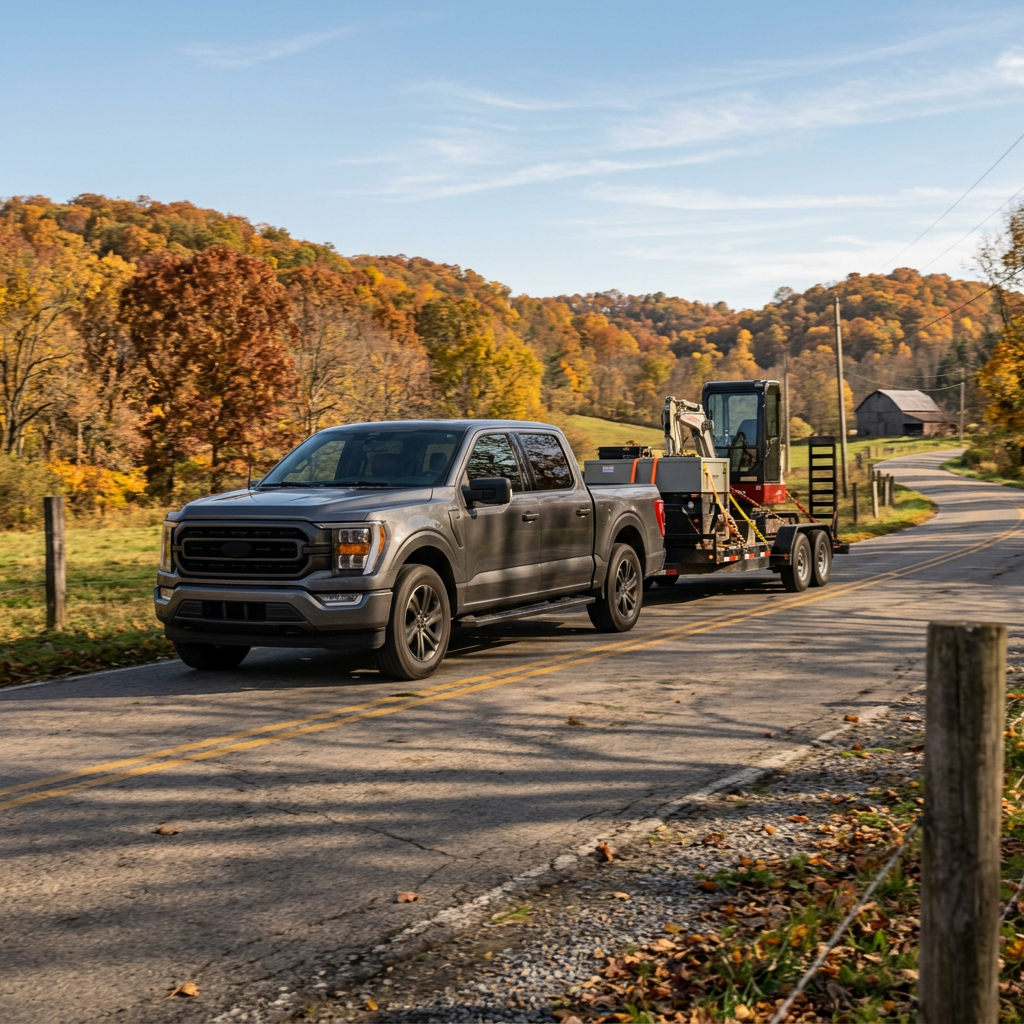
d

How Do You Choose the Right Full-Size Pickup Truck?

Choosing the right full-size pickup truck requires matching your daily towing weight, payload demands, cab space needs, and preferred engine efficiency with a frame and axle configuration built to handle your workload. Start by defining your maximum trailer weight and cabin space requirements, then select a trim level and engine package that balances raw capability with daily driving fuel economy. Selecting a pickup truck starts with evaluating how the vehicle will be used throughout the week. Buyers choosing between regular cabs, extended cabs, and spacious four-door crew cabs must balance rear-seat passenger comfort against cargo bed length. A standard short bed provides easier parking and tight-radius maneuvering, while a standard 6.5-foot or long 8-foot bed delivers the cargo volume necessary for hauling construction materials or camping equipment. Powertrain selection directly impacts both daily operating costs and maximum capability. Modern light-duty trucks offer various engine choices, including naturally aspirated V8s, high-output turbocharged EcoBoost V6s, and full-hybrid options. Drivers who frequently pull heavy equipment across regional terrain benefit from engines engineered to deliver high torque at lower RPMs, while daily commuters often prioritize efficiency and smooth city handling. When comparing trim levels, look closely at axle ratios, suspension packages, and factory towing equipment. Upgrading to specialized towing configurations provides integrated trailer brake controllers, heavy-duty cooling radiators, and upgraded hitch receivers right from the factory floor. To inspect our available pickup lineup or discuss your hauling needs in person, stop by our East Liverpool showroom at 1503 Pennsylvania Ave or give our sales team a quick call at (330) 462-7578 to set up a test drive. Table of Contents Which Truck Has Better Fuel Economy Between the Ford F-150 and Silverado 1500? Do Midsize Trucks Get Significantly Better Fuel Economy Than Full-Size Pickups? What Cab Configurations, Bed Lengths, and Tech Features Are Standard on Full-Size Trucks? What Equipment Is Required for Maximum Towing Capacity and How Does Towing Lower Fuel Economy? What Is the Starting Price Range for New Full-Size Trucks and current pricing? Common Questions About Choosing Featured Trucks Finding Your Ideal Featured Truck at Tri State Ford Which Truck Has Better Fuel Economy Between the Ford F-150 and Silverado 1500? The Ford F-150 equipped with the 3.5L PowerBoost® Full Hybrid V6 delivers superior city fuel economy with ratings up to 25 mpg city, while the Chevrolet Silverado 1500 with its available 3.0L Duramax® Turbo-Diesel holds a slight edge on extended highway trips at up to 29 mpg highway. For overall mixed driving efficiency across standard gas engines, both full-size trucks deliver highly competitive performance depending on drive configuration and engine displacement. Comparing fuel economy across these flagship full-size trucks requires looking at specific engine choices and drivetrain configurations. Standard gas engines across the F-150 lineup deliver practical efficiency for everyday work and travel. The 2.7L EcoBoost® V6 engine on two-wheel-drive models reaches an EPA-estimated 19 city / 25 hwy / 21 combined MPG, making it one of the most efficient gas-powered half-ton engines in its segment. Equipping the F-150 with four-wheel drive slightly adjusts these numbers, with popular configurations like the F-150 XLT 4x4 SuperCrew yielding 17 city / 23 hwy / 19 combined MPG. The Chevrolet Silverado 1500 relies heavily on its 5.3L EcoTec3 V8 and 6.2L EcoTec3 V8 engines for high-tier performance, but traditional large-displacement V8s consume more fuel in stop-and-go driving. For instance, a luxury 4x4 pickup equipped with a 6.2L V8 typically achieves approximately 15 city / 19 hwy MPG. In contrast, Ford's twin-turbocharged EcoBoost technology maximizes low-end torque without sacrificing unladen fuel economy, allowing drivers commuting along State Route 170 in Calcutta to maintain efficient fuel consumption during suburban errands and highway cruising alike. To assist truck owners in keeping their vehicles operating at peak efficiency, we offer our Ford pickup and delivery assistance for routine maintenance visits. If you are researching pre-owned options to maximize your buying power, you can also explore our selection of pre-owned Carfax 1-owner trucks to find high-efficiency models in excellent condition. Fuel Economy Fuel economy and range by trim Trim MPG King Ranch 4x4 SuperCrew 5-1/2’ Box 17 city / 23 hwy / 19 combined King Ranch 4x4 SuperCrew 6-1/2’ Box 17 city / 23 hwy / 19 combined King Ranch SuperCrew 5-1/2’ Box 17 city / 25 hwy / 20 combined Lariat 4x4 SuperCrew 5-1/2’ Box 17 city / 23 hwy / 19 combined Lariat 4x4 SuperCrew 6-1/2’ Box 17 city / 23 hwy / 19 combined Lariat SuperCrew 5-1/2’ Box 17 city / 25 hwy / 20 combined Platinum 4x4 SuperCrew 5-1/2’ Box 17 city / 23 hwy / 19 combined Platinum 4x4 SuperCrew 6-1/2’ Box 17 city / 23 hwy / 19 combined Platinum SuperCrew 5-1/2’ Box 17 city / 25 hwy / 20 combined Police Responder 4x4 SuperCrew 5-1/2’ Box — Raptor 4x4 SuperCrew 5-1/2’ Box 14 city / 18 hwy / 16 combined STX 4x4 SuperCab 6-1/2’ Box 18 city / 23 hwy / 20 combined STX 4x4 SuperCrew 5-1/2’ Box 18 city / 23 hwy / 20 combined STX SuperCab 6-1/2’ Box 19 city / 25 hwy / 21 combined STX SuperCrew 5-1/2’ Box 19 city / 25 hwy / 21 combined Tremor 4x4 SuperCrew 5-1/2’ Box 16 city / 21 hwy / 18 combined XL 4x4 Regular Cab 6-1/2’ Box 16 city / 24 hwy / 19 combined XL 4x4 Regular Cab 8’ Box 18 city / 23 hwy / 20 combined XL 4x4 SuperCab 6-1/2’ Box 18 city / 23 hwy / 20 combined XL 4x4 SuperCrew 5-1/2’ Box 18 city / 23 hwy / 20 combined XL 4x4 SuperCrew 6-1/2’ Box 17 city / 23 hwy / 19 combined XL Regular Cab 6-1/2’ Box 16 city / 24 hwy / 19 combined XL Regular Cab 8’ Box 19 city / 25 hwy / 21 combined XL SuperCab 6-1/2’ Box 19 city / 25 hwy / 21 combined XL SuperCrew 5-1/2’ Box 19 city / 25 hwy / 21 combined XLT 4x4 SuperCab 6-1/2’ Box 18 city / 23 hwy / 20 combined XLT 4x4 SuperCrew 5-1/2’ Box 18 city / 23 hwy / 20 combined XLT 4x4 SuperCrew 6-1/2’ Box 17 city / 23 hwy / 19 combined XLT SuperCab 6-1/2’ Box 19 city / 25 hwy / 21 combined XLT SuperCrew 5-1/2’ Box 19 city / 25 hwy / 21 combined Do Midsize Trucks Get Significantly Better Fuel Economy Than Full-Size Pickups? Midsize pickup trucks do not deliver significantly better highway fuel economy than modern full-size trucks, as advanced turbocharging, multi-speed transmissions, and hybrid systems allow full-size pickups to match or closely approach midsize fuel ratings during highway cruising. While compact trucks provide notable city efficiency, traditional midsize trucks yield average combined ratings that closely overlap with efficient half-ton engine options. Compact trucks like the Ford Maverick set the benchmark for light-duty truck efficiency, achieving 39 city / 32 hwy MPG with its standard hybrid powertrain and 23 city / 30 hwy MPG with all-wheel drive models. However, moving up to true midsize pickups like the Ford Ranger, Toyota Tacoma, or Chevrolet Colorado shifts fuel economy closer to full-size territory. Most four-cylinder and V6 midsize trucks earn EPA combined ratings between 20 MPG and 22 MPG. Full-size trucks bridge this gap effectively due to sophisticated powertrain engineering. A full-size Ford F-150 with the 3.5L PowerBoost® Full Hybrid V6 or 2.7L EcoBoost® V6 delivers 21 MPG combined to 23 MPG combined in two-wheel drive configurations. Because full-size trucks carry larger fuel tanks, higher towing capacities, and broader interior cabins, many buyers find that midsize trucks offer smaller physical dimensions for tight parking rather than dramatic savings at the fuel pump. For buyers evaluating overall value, exploring certified pre-owned Ford trucks provides an accessible way to step into full-size capability and modern fuel-saving technology with factory-backed warranty coverage. Dimensions & Capacity Capacity and dimensions by trim Feature King Ranch 4x4 SuperCrew 5-1/2’ Box King Ranch 4x4 SuperCrew 6-1/2’ Box King Ranch SuperCrew 5-1/2’ Box Lariat 4x4 SuperCrew 5-1/2’ Box Lariat 4x4 SuperCrew 6-1/2’ Box Lariat SuperCrew 5-1/2’ Box Seating 5 5 5 5 5 5 Cargo 52.8 cu ft 62.3 cu ft 52.8 cu ft 52.8 cu ft 62.3 cu ft 52.8 cu ft Curb weight 5,096 lbs 5,143 lbs 5,096 lbs 5,020 lbs 5,122 lbs 5,020 lbs Towing 10,400 lbs 10,800 lbs 10,400 lbs 9,300 lbs 9,200 lbs 9,300 lbs Payload 1,945 lbs 2,000 lbs 1,945 lbs 2,020 lbs 2,020 lbs 2,020 lbs Dimensions & Capacity (continued) Feature Platinum 4x4 SuperCrew 5-1/2’ Box Platinum 4x4 SuperCrew 6-1/2’ Box Platinum SuperCrew 5-1/2’ Box Police Responder 4x4 SuperCrew 5-1/2’ Box Raptor 4x4 SuperCrew 5-1/2’ Box STX 4x4 SuperCab 6-1/2’ Box Seating 5 5 5 5 5 5 Cargo 52.8 cu ft 62.3 cu ft 52.8 cu ft 52.8 cu ft 52.8 cu ft 62.3 cu ft Curb weight 5,096 lbs 5,143 lbs 5,096 lbs 5,020 lbs 5,710 lbs 4,895 lbs Towing 10,400 lbs 10,800 lbs 10,400 lbs — 8,200 lbs 7,400 lbs Payload 1,945 lbs 2,000 lbs 1,945 lbs 2,030 lbs 1,410 lbs 1,600 lbs Dimensions & Capacity (continued) Feature STX 4x4 SuperCrew 5-1/2’ Box STX SuperCab 6-1/2’ Box STX SuperCrew 5-1/2’ Box Tremor 4x4 SuperCrew 5-1/2’ Box XL 4x4 Regular Cab 6-1/2’ Box XL 4x4 Regular Cab 8’ Box Seating 5 5 5 5 3 3 Cargo 52.8 cu ft 62.3 cu ft 52.8 cu ft — 62.3 cu ft 77.4 cu ft Curb weight 4,941 lbs 4,641 lbs 4,687 lbs 5,267 lbs 4,655 lbs 4,679 lbs Towing 7,500 lbs 7,500 lbs 7,600 lbs 9,300 lbs 9,400 lbs 7,500 lbs Payload 1,650 lbs 1,670 lbs 1,685 lbs 1,725 lbs 1,740 lbs 1,715 lbs Dimensions & Capacity (continued) Feature XL 4x4 SuperCab 6-1/2’ Box XL 4x4 SuperCrew 5-1/2’ Box XL 4x4 SuperCrew 6-1/2’ Box XL Regular Cab 6-1/2’ Box XL Regular Cab 8’ Box XL SuperCab 6-1/2’ Box Seating 6 6 6 3 3 6 Cargo 62.3 cu ft 52.8 cu ft 62.3 cu ft 62.3 cu ft 77.4 cu ft 62.3 cu ft Curb weight 4,895 lbs 4,941 lbs 5,122 lbs 4,391 lbs 4,396 lbs 4,641 lbs Towing 7,400 lbs 7,500 lbs 9,200 lbs 9,000 lbs 7,400 lbs 7,500 lbs Payload 1,600 lbs 1,650 lbs 2,020 lbs 1,810 lbs 1,775 lbs 1,670 lbs Dimensions & Capacity (continued) Feature XL SuperCrew 5-1/2’ Box XLT 4x4 SuperCab 6-1/2’ Box XLT 4x4 SuperCrew 5-1/2’ Box XLT 4x4 SuperCrew 6-1/2’ Box XLT SuperCab 6-1/2’ Box XLT SuperCrew 5-1/2’ Box Seating 6 6 6 6 6 6 Cargo 52.8 cu ft 62.3 cu ft 52.8 cu ft 62.3 cu ft 62.3 cu ft 52.8 cu ft Curb weight 4,687 lbs 4,895 lbs 4,941 lbs 5,122 lbs 4,641 lbs 4,687 lbs Towing 7,600 lbs 7,400 lbs 7,500 lbs 9,200 lbs 7,500 lbs 7,600 lbs Payload 1,685 lbs 1,600 lbs 1,650 lbs 2,020 lbs 1,670 lbs 1,685 lbs What Cab Configurations, Bed Lengths, and Tech Features Are Standard on Full-Size Trucks? Full-size pickup trucks come standard with touchscreen infotainment interfaces, wireless smartphone connectivity, automatic emergency braking, and choice across Regular Cab, extended SuperCab, and four-door SuperCrew cabin configurations paired with short, standard, or long cargo beds. Modern truck cabins prioritize both mobile workspace functionality and passenger safety technology across every trim level. Cab and bed selection defines a full-size truck's utility footprint. Manufacturers structure full-size lineups into three primary seating configurations: Regular Cab: Features a single row of seating for two to three passengers, typically paired with a standard 6.5-foot box or an 8-foot long box for maximum bed cargo space. SuperCab (Extended Cab): Offers rear seating accessed via rear-hinged or smaller side doors, generally matched with a 6.5-foot box to balance back-seat utility with bed capacity. SuperCrew (Crew Cab): Features four full-size, independently opening doors with expansive rear legroom, paired with either a short 5.5-foot box for easier maneuvering or a 6.5-foot box for added hauling capability. Inside the cabin, advanced electronics and active driver-assist technology have become standard expectations. Current full-size models include user-friendly infotainment touchscreens ranging from 12 inches up to 13.4 inches, complete with wireless Apple CarPlay® and Android Auto™ integration. Standard driver-assist technology includes automated emergency braking, forward collision warning, lane-keeping systems, and blind-spot monitoring designed to extend coverage along the side of a towed trailer. Innovations like the SYNC® 4 system in the F-150 and advanced trailering apps allow drivers navigating busy retail corridors along Market Street in Boardman to manage vehicle settings, trailering checklists, and navigation effortlessly. Features such as Pro Trailer Backup Assist™ and Pro Trailer Hitch Assist™ automate steering and alignment when hitching up equipment, removing stress from solo towing trips. To calculate how your current vehicle can contribute toward a technology-equipped pickup, try using our online trade-in appraisal tool. What Equipment Is Required for Maximum Towing Capacity and How Does Towing Lower Fuel Economy? Achieving a truck's maximum towing capacity requires selecting specific engine options, upgraded axle gear ratios, a Class IV hitch receiver, an integrated trailer brake controller, and a factory heavy-duty towing package, while pulling heavy loads at maximum capacity reduces fuel economy by roughly 30% to 50%. A truck's base towing rating reflects standard equipment, but reaching maximum ratings—such as the 13,500-pound conventional towing limit on the Ford F-150 —requires specific factory equipment options: Engine and Drivetrain: Higher-output engines like the 3.5L EcoBoost® V6 or 5.0L V8 paired with four-wheel drive or heavy-duty rear axles. Axle Ratio: A numerically higher rear axle ratio (such as 3.55 or 3.73) to increase mechanical leverage when launching heavy loads. Cooling Upgrades: High-capacity radiators, upgraded engine oil coolers, and auxiliary transmission fluid coolers to dissipate extreme heat. Trailer Hardware: A Class IV hitch receiver, 7-pin wiring harness, and an integrated trailer brake controller that synchronizes the truck's braking system with electric trailer brakes. Weight-Distributing Hitch: Required for heavy conventional trailers to distribute tongue weight evenly across the truck's front and rear axles. When walking through towing features on our vehicle display floor, buyers frequently ask whether standard hitches support full capacity before realizing max ratings require factory tow packages with specialized cooling. Towing heavy cargo significantly impacts fuel efficiency. Pulling a large trailer increases aerodynamic drag and rolling resistance while forcing the engine to operate under continuous boost or high RPMs. As a result, a truck that normally achieves 20 MPG combined on the highway may drop to 10 MPG to 14 MPG when pulling a trailer near its maximum weight limit. Planning for reduced range and maintaining steady highway speeds helps preserve fuel during long hauling trips. When you are ready to move forward with a tow-ready pickup, completing our secure online financing application saves time at the dealership and helps our team discuss current payment options with you. What Is the Starting Price Range for New Full-Size Trucks and current pricing? New full-size pickup trucks carry starting MSRPs ranging from approximately $37,000 for standard work cab models up to $80,000 or more for premium luxury or high-performance off-road trims. Popular mid-tier crew cab trucks configured with four-wheel drive and modern technology packages generally land between $48,000 and $65,000. Base regular cab work trucks serve as durable tools for commercial fleets and budget-conscious buyers. Mid-grade trims introduce enhanced seating comfort, upgraded audio systems, and advanced driver-assist features. Premium trims add leather upholstery, adaptive suspensions, hands-free highway driving tech, and high-output engine options. The Ford F-150 lineup offers a clear trim progression tailored to diverse capability and budget requirements: F-150 XL Regular Cab (8' Box): Starting Base MSRP of $37,290 (plus $2,795 destination charge). F-150 XL SuperCrew (5.5' Box): Starting Base MSRP of $43,935 (plus $2,795 destination charge). F-150 STX SuperCrew (5.5' Box): Starting Base MSRP of $47,190 (plus $2,795 destination charge). F-150 XLT SuperCrew (5.5' Box): Starting Base MSRP of $48,055 (plus $2,795 destination charge). F-150 Lariat SuperCrew (5.5' Box): Starting Base MSRP of $59,560 (plus $2,795 destination charge). F-150 Tremor 4x4 SuperCrew: Starting Base MSRP of $64,915 (plus $2,795 destination charge). F-150 King Ranch 4x4 SuperCrew: Starting Base MSRP of $69,625 (plus $2,795 destination charge). F-150 Raptor 4x4 SuperCrew: Starting Base MSRP of $79,005 (plus $2,795 destination charge). Other half-ton competitors follow similar pricing structures. For example, a luxury comparison benchmark like a 2026 GMC Sierra 1500 Denali carries a sticker price near $82,894 MSRP. This places luxury half-ton trucks firmly in the $70,000+ bracket across brands. Whether you prefer browsing our current inventory online or setting up a custom build, you can check our new Ford truck inventory to see current arrivals, start a custom order process directly from the factory, or explore our specialized commercial work truck lineup for business fleet needs. Pricing Pricing by trim Trim Base MSRP Destination charge King Ranch 4x4 SuperCrew 5-1/2’ Box $69,625 $2,795 King Ranch 4x4 SuperCrew 6-1/2’ Box $69,930 $2,795 King Ranch SuperCrew 5-1/2’ Box $65,825 $2,795 Lariat 4x4 SuperCrew 5-1/2’ Box $63,360 $2,795 Lariat 4x4 SuperCrew 6-1/2’ Box $63,965 $2,795 Lariat SuperCrew 5-1/2’ Box $59,560 $2,795 Platinum 4x4 SuperCrew 5-1/2’ Box $72,600 $2,795 Platinum 4x4 SuperCrew 6-1/2’ Box $72,905 $2,795 Platinum SuperCrew 5-1/2’ Box $68,800 $2,795 Police Responder 4x4 SuperCrw 5-1/2’ Box $52,350 $2,595 Raptor 4x4 SuperCrew 5-1/2’ Box $79,005 $2,795 STX 4x4 SuperCab 6-1/2’ Box $48,655 $2,795 STX 4x4 SuperCrew 5-1/2’ Box $51,070 $2,795 STX SuperCab 6-1/2’ Box $44,855 $2,795 STX SuperCrew 5-1/2’ Box $47,190 $2,795 Tremor 4x4 SuperCrew 5-1/2’ Box $64,915 $2,795 XL 4x4 Regular Cab 6-1/2’ Box $44,600 $2,795 XL 4x4 Regular Cab 8’ Box $42,305 $2,795 XL 4x4 SuperCab 6-1/2’ Box $45,400 $2,795 XL 4x4 SuperCrew 5-1/2’ Box $47,820 $2,795 XL 4x4 SuperCrew 6-1/2’ Box $50,475 $2,795 XL Regular Cab 6-1/2’ Box $39,585 $2,795 XL Regular Cab 8’ Box $37,290 $2,795 XL SuperCab 6-1/2’ Box $41,600 $2,795 XL SuperCrew 5-1/2’ Box $43,935 $2,795 XLT 4x4 SuperCab 6-1/2’ Box $49,495 $2,795 XLT 4x4 SuperCrew 5-1/2’ Box $51,915 $2,795 XLT 4x4 SuperCrew 6-1/2’ Box $54,555 $2,795 XLT SuperCab 6-1/2’ Box $45,695 $2,795 XLT SuperCrew 5-1/2’ Box $48,055 $2,795 Common Questions About Choosing Featured Trucks Q: What is the difference between payload capacity and towing capacity on a full-size pickup? Payload capacity measures the maximum weight a pickup truck can safely support inside its cabin and cargo bed, including passengers, tools, equipment, and tongue weight from a trailer. Towing capacity represents the maximum weight the truck can pull behind it using a hitch setup. For example, a pickup might carry a payload rating of 2,440 pounds while offering a maximum towing limit of 13,500 pounds. Exceeding either limit compromises safety, handling, and braking performance. Q: Does four-wheel drive reduce a truck's overall towing capacity or fuel economy? Adding a four-wheel-drive system increases a truck's curb weight due to heavy mechanical components like transfer cases and front differentials. This additional weight slightly reduces maximum payload and towing ratings compared to an equivalent two-wheel-drive model. Four-wheel drive also increases mechanical resistance, reducing fuel economy by roughly 1 to 2 MPG. However, four-wheel drive provides essential traction on slick boat ramps, unpaved job sites, and snowy winter roads. Q: What documents should buyers bring when financing a new truck at the dealership? When arriving to complete finance paperwork, bring a valid driver's license, proof of current auto insurance, recent pay stubs or proof of income, and a recent utility bill confirming your physical address. If you plan to trade in a vehicle, bring the current title, vehicle registration, and any existing lien payoff information. Having these documents ready accelerates credit approval and helps our finance desk finalize loan terms quickly. Q: Is the 3.5L EcoBoost V6 better for heavy towing than a traditional V8 engine? Ford's 3.5L EcoBoost® V6 uses twin turbochargers to generate high torque at low engine speeds, delivering peak torque earlier in the RPM range than most naturally aspirated V8 engines. This low-RPM pulling power allows the engine to haul heavy loads up steep highway grades with less gear hunting. While traditional V8 engines offer linear acceleration, twin-turbo V6 engines match or exceed V8 towing capacity while maintaining excellent unladen highway fuel economy. Q: How does bed length affect parking and maneuvering in daily driving? Choosing a longer bed—such as a 6.5-foot box or 8-foot long box on a crew cab—extends the vehicle's total length and wheelbase, widening its turning radius. This additional length requires extra care when navigating tight parking decks, parallel parking on suburban streets, or fitting the vehicle into standard home garages. Drivers who prioritize tight-space maneuverability often choose a 5.5-foot short bed on SuperCrew models to balance passenger space with daily parking convenience. To test drive our available models or speak directly with our team, view our dealership directions or give us a call at (330) 462-7578. Finding Your Ideal Featured Truck at Tri State Ford Finding the right truck comes down to matching your daily work requirements, cab comfort preferences, and towing needs with a vehicle engineered for long-term durability. Whether you require the high efficiency of an EcoBoost engine for daily driving or the heavy-duty strength of a Super Duty for job site equipment, our showroom features options tailored to every lifestyle. Take the next step in your buying journey by exploring our online tools or visiting our showroom floor. You can value your trade, calculate estimated monthly payments, and apply for financing pre-approval online in minutes. Stop by Tri State Ford today to compare trim options, inspect trailer towing packages, and schedule a test drive with our friendly team. Keep Your Vehicle Running Strong Keep your vehicle performing at its best with our service team: Order Parts Schedule Service Appt © 2026 Tri State Ford. All rights reserved. Vehicle specification data © JATO Dynamics Limited. Full-Size Pickup Trucks in East Liverpool OH | Tri State Ford

8

What Should You Know Before Buying a New Vehicle from Tri State Ford?

Before buying a new vehicle from Tri State Ford, shoppers should know that current inventory, available promotional APR financing through Ford Credit, trade-in valuations, and available vehicle incentives shape your final purchase terms. Reviewing window stickers, verifying available driver-assist technologies, and starting an online pre-approval streamline the showroom experience and ensure transparent transaction details. Navigating the new vehicle market requires a clear understanding of vehicle options, financing paths, and trade-in opportunities. When you prepare for a vehicle purchase, establishing your total budget and determining key capability requirements—such as towing capacity or cargo space —allows our team to guide you toward the right trim and package. Confirming documentation upfront helps ensure a smooth purchase process. Bringing a valid driver's license, current auto insurance documentation, and recent income verification if applying for financing allows our team to process paperwork efficiently. For shoppers trading in an existing vehicle, bringing the title, current registration, and all factory keys ensures an accurate on-site evaluation. Before making the drive to our showroom, shoppers can explore our current new vehicle inventory online to check available trims, exterior colors, and optional equipment packages. Finding our dealership is simple when you map out your route to our East Liverpool facility, or you can give our sales team a quick call at (330) 462-7578 to confirm vehicle availability before your test drive. Table of Contents What Lease Incentives and Financing Rates Does Ford Offer for New Vehicles? Is Ford BlueCruise Hands-Free Highway Driving Available on 2027 Ford Models? Which Truck Has Better Fuel Economy: Ford F-150 PowerBoost or Chevy Silverado Duramax? What Is the Starting Price for the 2027 Ford F-150 Lightning Electric Truck? Can I Estimate My Trade-In Value Before Visiting Tri State Ford? Common Questions About Buying and Financing a Vehicle at Tri State Ford Where Is Tri State Ford in East Liverpool and How Can You Contact Our Sales Team? What Lease Incentives and Financing Rates Does Ford Offer for New Vehicles? Ford Credit offers promotional financing interest rates—that vary by model, term, and qualification for eligible buyers on select new models—alongside structured retail lease programs and factory customer cash incentives. Lease programs incorporate defined annual mileage terms, initial acquisition structures, and residual value projections to deliver predictable monthly payments. Promotional APR offers allow buyers to minimize interest expenses over standard loan durations ranging from 36 to 72 months. Financing incentives vary by model year, trim selection, and customer credit profile. For buyers who prefer lower upfront commitments or want to upgrade vehicles every few years, factory lease options provide flexible terms with mileage allowances tailored to daily commuting or family travel requirements. Incentive Category Typical Program Structure Primary Buyer Benefit Promotional APR Financing Rates from 0% APR to 3.9% APR for select terms Lowers total interest paid over loan life Retail Lease Offer 24- to 36-month terms with low monthly rates Provides predictable payments and easy upgrades Regional Customer Cash Factory rebates applied to transaction price Direct reduction in final vehicle cost Custom Factory Order Incentives Price protection and current program locking Secures preferred specs without lot compromises Evaluating auto loan options before visiting the dealership helps align your financing path with your household financial goals. Completing an online credit application establishes clear budget parameters, enabling our finance department to structure competitive loan or lease terms. If you prefer a specific exterior color or rare package combination, utilizing our custom factory order tool allows you to lock in eligible incentives while tailoring a truck or SUV to your exact specifications. Additionally, trading in your current vehicle using our instant cash offer program provides a firm trade allowance that can be applied directly as a cash down payment. Is Ford BlueCruise Hands-Free Highway Driving Available on 2027 Ford Models? Yes, Ford BlueCruise hands-free highway driving is available on selected 2027 Ford models, including the F-150, Explorer, Expedition, and Mustang Mach-E. Operating across more than 130,000 miles of pre-mapped, divided highways called Blue Zones, the system manages acceleration, braking, and steering while requiring drivers to keep their eyes on the road ahead. The 2027 model year expands hands-free capability with upgraded software releases that refine overall lane-positioning performance. Automatic Lane Change allows the vehicle to execute safe lane transitions when traffic slows without driver turn-signal activation, while In-Lane Repositioning subtly shifts the vehicle away from oversized commercial trucks in adjacent lanes. For truck buyers, 2027 marks the debut of BlueCruise with Towing on equipped F-150 pickups, enabling hands-free highway control while hauling trailers weighing up to 10,000 lbs. Drivers can choose flexible activation plans depending on their usage needs: Annual Subscription Plan: Provides continuous service following an initial trial period. Monthly Subscription Plan: Offers flexible, pay-as-you-go activation for seasonal road trips. One-Time Purchase Option: Bundles long-term hardware and service access at initial vehicle purchase. An infrared driver-facing camera continuously tracks eye gaze and head position to ensure attentiveness. If a driver looks away from the roadway, visual and audible alerts prompt immediate driver re-engagement. If you are researching reliable pre-owned options before upgrading to new driver-assist tech, you can browse our pre-owned single-owner vehicle inventory to inspect models equipped with proven driver-assist safety suites. Which Truck Has Better Fuel Economy: Ford F-150 PowerBoost or Chevy Silverado Duramax? The Chevrolet Silverado Duramax diesel carries a higher EPA highway rating at up to 26 mpg combined, whereas the Ford F-150 PowerBoost full hybrid delivers 23 mpg combined while providing standard four-wheel drive and built-in mobile electrical generation. The decision between the two comes down to highway diesel cruising efficiency versus all-around hybrid versatility and onboard job site power. The F-150 PowerBoost pairs a twin-turbo 3.5L EcoBoost V6 engine with a 47 hp electric motor integrated into a 10-speed automatic transmission, generating 430 hp and 570 lb-ft of torque. Beyond solid fuel efficiency, the PowerBoost hybrid features Pro Power Onboard, supplying 2.4 kW or an optional 7.2 kW of exportable AC electrical power through bed outlets to run power tools, compressors, or recreational camping equipment without bringing an external generator. Performance Metric Ford F-150 3.5L PowerBoost Hybrid Chevy Silverado 3.0L Duramax Diesel EPA Fuel Economy Rating 22 city / 24 hwy / 23 combined MPG 23 city / 29 hwy / 26 combined MPG Horsepower Output 430 hp 305 hp Torque Rating 570 lb-ft 495 lb-ft Standard Onboard Power 2.4 kW (expandable to 7.2 kW) Traditional 120V outlet options only Maximum Towing Capacity Up to 13,500 lbs Up to 13,300 lbs While the Silverado Duramax excels during steady, uninterrupted interstate cruising, the F-150 PowerBoost delivers superior horsepower, higher low-end torque, and unmatched utility for work crews and outdoor adventures. Drivers navigating the steep riverfront bluffs in East Liverpool benefit from the instant low-end electric torque assist during uphill acceleration. To explore high-quality pre-owned options backed by thorough inspection standards, review our certified pre-owned Ford lineup to view late-model pickups equipped with advanced hybrid and EcoBoost powertrains. What Is the Starting Price for the 2027 Ford F-150 Lightning Electric Truck? The 2027 Ford F-150 Lightning electric truck starts at an estimated $52,000 MSRP for commercial Pro trims, while retail-focused XLT and Flash models start between $65,000 MSRP and $72,000 MSRP. Top-tier Lariat and Platinum editions extend the luxury and performance range from $79,000 MSRP to over $87,000 MSRP. Equipped with dual electric motors and standard four-wheel drive across every trim, the F-150 Lightning delivers 775 lb-ft of instant torque. Standard-range battery models output 452 hp with an EPA-estimated range of 240 miles, while extended-range battery setups boost horsepower to 580 hp and extend driving range up to 320 miles on a full charge. Key functional advantages of the F-150 Lightning include: Mega Power Frunk: Offers about 14 cubic feet of secure, lockable front trunk storage with a 400-lb payload limit and built-in power outlets. Pro Power Onboard: Delivers up to 9.6 kW of exportable electricity through 11 power outlets distributed across the cab, frunk, and bed. Towing and Hauling Power: Pulls up to 10,000 lbs of trailer weight when equipped with the Max Trailer Tow Package. DC Fast Charging: Restores battery capacity from 15% to 80% in approximately 32 to 39 minutes at public fast-charging stations. The F-150 Lightning blends full-size truck utility with quiet electric performance, making it a capable choice for work or recreation. Can I Estimate My Trade-In Value Before Visiting Tri State Ford? Yes, buyers can estimate their trade-in value online before visiting Tri State Ford by submitting their vehicle identification number (VIN), current odometer mileage, exterior condition details, and optional equipment through our digital appraisal tool. Estimating trade value online establishes a clear financial baseline for your current vehicle prior to an in-person inspection. Online valuation tools analyze recent regional auction data, wholesale transactions, and live retail market listings to calculate a realistic trade equity estimate. Having this information organized before visiting our showroom speeds up final contract discussions and clarifies your net vehicle purchase amount. To ensure your vehicle receives a top-tier appraisal during the final on-site physical walk-around, complete these preparation steps: Clean Interior and Exterior Surfaces: Wash away road grime and detail the cabin to ensure body panels and seat upholstery are easily inspected. Resolve Simple Cosmetic and Functional Flaws: Replace burnt-out light bulbs, top off vital fluids, and install fresh wiper blades to eliminate obvious maintenance flags. Gather Full Maintenance Records: Compile paper invoices and service logs to prove proper engine, transmission, and brake care according to factory schedules. Locate Factory Accessories: Bring both original key fobs, owner's manual booklets, cargo covers, and carpeted floor mats. Commuters traveling along State Route 170 in Calcutta often see strong trade allowances when their vehicles show consistent documented maintenance. Before stopping in for an appraisal, you can use our online trade-in valuation tool to receive an initial valuation quote from home. Common Questions About Buying and Financing a Vehicle at Tri State Ford Q: How do current manufacturer incentives affect my monthly lease or purchase payment? Factory incentives, such as regional customer cash rebates or low promotional APR financing rates, directly reduce either the overall loan balance or the monthly interest charge on a vehicle purchase. Applying rebates as a capital reduction on a lease lowers the base payment, while low promotional interest rates preserve cash by reducing long-term finance charges. Q: What documentation do I need to bring to complete an auto loan application? When applying for vehicle financing, buyers should bring a valid driver's license, proof of current auto insurance, recent pay stubs or proof of income, and a current utility bill to verify residential address. If you are trading in a vehicle, bring the vehicle title or current loan payoff statement, registration card, and all factory keys. Q: Can I custom order a new Ford model if my preferred trim is not on the lot? Yes, custom ordering allows you to build a new Ford truck, SUV, or crossover to your exact specification directly from the factory. Custom ordering lets you select specific engine configurations, paint colors, interior seating options, and capability packages while locking in eligible factory price protections and current incentive programs. Q: What is the difference between purchasing with a loan and leasing a new Ford? Purchasing a vehicle with an auto loan means you build full equity over time and own the vehicle outright once the loan is paid off, with no annual mileage limits or wear-and-tear restrictions. Leasing allows you to pay for the vehicle's projected depreciation over a shorter 24- to 36-month term, offering lower monthly payments and simple vehicle upgrades every few years. Q: How does a vehicle trade-in reduce state sales tax on a replacement purchase? In Ohio, the appraised trade-in value of your current vehicle is deducted directly from the gross purchase price of the replacement vehicle before sales tax is calculated. This state trade-in tax allowance lowers your total taxable balance, saving you cash out-of-pocket during transaction closing. To review current incentive structures across our vehicle lineup, explore our current manufacturer offers before scheduling your showroom visit. Where Is Tri State Ford in East Liverpool and How Can You Contact Our Sales Team? Tri State Ford is located at 1503 Pennsylvania Ave, East Liverpool, OH 43920, providing convenient sales access for drivers across the tri-state area. Our sales team is ready to answer your questions regarding inventory selection, custom orders, trade-in appraisals, and current financing offers. Our sales department is open Monday, Tuesday, and Thursday from 9:00 AM to 7:00 PM, Wednesday and Friday from 9:00 AM to 5:00 PM, and Saturday from 9:00 AM to 3:00 PM. Plan your visit by getting directions to our East Liverpool showroom address, or contact our sales line at (330) 462-7578 to speak with a sales advisor and schedule your test drive today. Keep Your Vehicle Running Strong Keep your vehicle performing at its best with our service team: Order Parts Schedule Service Appt © 2026 Tri State Ford. All rights reserved. New Vehicle Buying Guide in East Liverpool OH | Tri State Ford
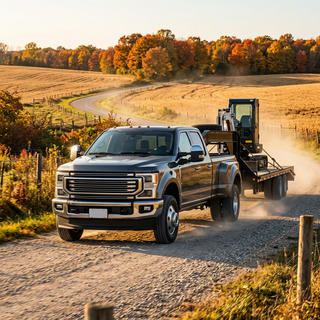
e

Is a Used Ford Super Duty Worth Buying for Heavy Work?

A used Ford Super Duty is exceptionally well-suited for heavy work, offering high towing capacity, durable high-strength chassis components, and long-term mechanical reliability at a lower overall ownership cost than a brand-new truck. By letting the original owner absorb the initial vehicle depreciation, commercial operators and private buyers gain access to proven powertrains capable of towing up to 40,000 pounds of gooseneck trailer weight when properly equipped without paying new-model price premiums. For commercial contractors, farmers, and fleet managers needing uncompromising capability, buying a pre-owned F-250, F-350, or F-450 delivers an outstanding return on investment. Heavy-duty trucks are engineered from the frame up for extreme commercial duty cycles. Unlike light-duty pickups that might experience accelerated wear under continuous hauling, a pre-owned Super Duty utilizes fully boxed high-strength steel frames, heavy-duty axles, and commercial-grade cooling systems built to endure hundreds of thousands of hard working miles. Buying pre-owned also allows buyers to expand their options into higher equipment tiers. Instead of settling for a spartan base model, a pre-owned purchase often makes feature-rich trims like the Lariat or King Ranch affordable, providing premium cabin comfort alongside massive work capability. If you are comparing heavy-duty trucks near our dealership, you can find our East Liverpool showroom location conveniently situated for a test drive, or feel free to call our sales team at (330) 462-7578 to discuss our current work truck selection. Table of Contents What Engines Power Recent Used Ford Super Duty Models? How Much Can a Used Ford Super Duty Tow and Haul? What Job Site Features Make the Super Duty a Commercial Workhorse? How Does the 6.7 Power Stroke Compare to the Ram Cummins, and What Should Used Buyers Inspect? Common Questions About Used Ford Super Duty Pickups Find Your Used Ford Super Duty Workhorse at Tri State Ford What Engines Power Recent Used Ford Super Duty Models? Recent used Ford Super Duty models feature a lineup of heavy-duty V8 engines, ranging from durable naturally aspirated gasoline powerplants to high-output turbodiesels producing up to 1,200 lb-ft of torque. Ford has continuously refined these engines to maximize low-end pulling power, thermal efficiency, and long-term durability under heavy loads. The gas engine lineup starts with the modern 6.8-liter gas V8, which serves as an efficient and responsive entry point producing 405 horsepower and 445 lb-ft of torque. Paired with a smooth-shifting 10-speed TorqShift-G automatic transmission, this engine provides excellent low-speed maneuvering and reliable power delivery for work crews and daily hauling. For buyers who prefer maximum gasoline capability without the maintenance requirements of a diesel, the famous 7.3-liter gas V8 —often referred to as the Godzilla engine—delivers 430 horsepower and 485 lb-ft of torque. Built with a cast-iron block and pushrod architecture for ultimate longevity, this engine handles heavy payloads and steep grade pulling with ease. For maximum towing performance, the top choice is the legendary diesel engine lineup: 6.7-liter Power Stroke V8 turbo-diesel: Delivering up to 475 horsepower and 1,050 lb-ft of torque in standard configuration, this oil-burner provides effortless highway merging and heavy trailer control. 6.7-liter High Output Power Stroke V8 turbo-diesel: Standard on top-tier setups, this High Output edition elevates performance to 500 horsepower and 1,200 lb-ft of torque for extreme hauling requirements. While pre-owned models offer exceptional value, shoppers cross-shopping against brand-new commercial trucks can check our latest new Ford inventory to explore current production updates. Proper maintenance is vital for maintaining engine health under heavy usage, and keeping quality rubber on the pavement is made easy through our online tire finder service tool. Buyers seeking added peace of mind can also look into our certified pre-owned Ford lineup for factory-backed warranty benefits. How Much Can a Used Ford Super Duty Tow and Haul? When properly equipped, a used Ford Super Duty can tow up to 40,000 pounds with a gooseneck hitch, 35,000 pounds with a fifth-wheel setup, and 30,000 pounds conventionally, while offering maximum payload capacity up to 8,000 pounds. Actual ratings depend on the specific model year, cab style, axle ratio, single or dual rear wheel setup, and engine choice. For single-rear-wheel configurations such as a pre-owned F-250 Crew Cab, conventional towing capacity regularly ranges between 14,000 and 22,000 pounds, making it ideal for pull-behind construction equipment, enclosed car haulers, and large travel trailers. Moving up to an F-350 or F-450 dual-rear-wheel truck unlocks the highest weight brackets, ideal for commercial gooseneck trailers, multi-car haulers, and heavy agricultural equipment. Payload ratings are equally impressive across the lineup: Gas-powered Super Duty models achieve maximum available payload figures up to 8,000 pounds, benefiting from lighter engine block weights. Diesel-powered models provide up to 6,952 pounds of payload capacity while prioritizing massive pulling torque. F-250 regular cab gas models routinely handle payloads exceeding 4,200 pounds directly in the bed. For local business owners hauling heavy brick, gravel, or equipment along the Ohio River bluffs in East Liverpool, having a chassis designed for high payload prevents suspension sag and ensures confident steering geometry. Shoppers interested in documented history can review our pre-owned single-owner vehicle inventory to find work-ready trucks with clean service records. If you are preparing to upgrade your existing vehicle, our team makes it easy to value your trade-in online toward your next heavy-duty purchase. What Job Site Features Make the Super Duty a Commercial Workhorse? The Ford Super Duty is packed with job-site innovations designed to simplify hitching, increase trailer safety, and convert the truck cab and bed into a mobile office and power station. These practical features eliminate common work-site hassles and keep job operators productive throughout the day. One of the most valuable job site technologies is the available Pro Power Onboard generator system, which supplies up to 2.0 kW of exportable electrical energy directly through bed-mounted power outlets. Construction crews can run power tools, air compressors, battery chargers, and job site lighting directly from the truck without carrying a noisy portable generator. Accessibility and safety features integrated into the exterior structure include: Integrated Bed Steps: Heavy-duty box side steps and rear corner bumper steps sized for work boots allow fast, secure climbing into the bed. Pro Trailer Backup Assist: An intuitive control system that lets drivers steer a hitched trailer while reversing using a simple dashboard dial. 360-Degree Camera System: Provides a bird's-eye digital view around the entire perimeter of the truck and trailer to navigate tight staging areas. Blind Spot Information System (BLIS): Extends radar coverage along the sides of the truck and down the length of trailers up to 33 feet long. Contractors operating near State Route 170 in Calcutta often tell our sales team that having integrated bed steps and onboard generator power turns their truck into an essential job-site asset. To inspect vehicles specifically outfitted for vocational demands, browse our commercial F-Series work truck selection or view our comprehensive new work truck inventory online. How Does the 6.7 Power Stroke Compare to the Ram Cummins, and What Should Used Buyers Inspect? The Ford 6.7-liter Power Stroke V8 turbo-diesel delivers 500 horsepower and 1,200 lb-ft of torque, while the Ram 6.7-liter Cummins inline-six offers a different power delivery profile, while the Cummins is favored by some for its inline engine simplicity. Used diesel buyers should perform a thorough mechanical inspection focusing on emissions systems, turbocharger lines, and fuel system integrity. While the Ram Cummins inline-6 configuration has earned a loyal following for low-RPM lugging strength, Ford’s V8 Power Stroke design revs more freely, mating perfectly with the 10-speed TorqShift automatic transmission to keep the engine in its optimal powerband during highway towing. When evaluating a pre-owned 6.7 Power Stroke diesel truck, buyers should verify key component conditions: EGR Cooler and DPF System: Inspect the Exhaust Gas Recirculation cooler and Diesel Particulate Filter for carbon buildup or excessive regeneration cycles. Turbocharger Supply Lines: Check oil supply and coolant feed lines around the turbo housing for signs of weeping or corrosion. Fuel System Health: Ensure fuel filters have been replaced at recommended intervals to protect high-pressure fuel pumps and injectors from contamination. Cold-Start Operation: Observe engine startup from a cold state to confirm glow plug performance and smooth idle stability. Annual routine maintenance costs for a gas Super Duty typically average between $800 and $1,200, whereas diesel models average between $1,200 and $1,800 due to larger oil pan capacities, dual fuel filters, and Diesel Exhaust Fluid (DEF) replenishment. However, the superior fuel efficiency during heavy towing and exceptional resale value of diesel models easily offset these maintenance costs over time. Once you select the ideal truck, completing an online credit application with our finance department helps streamline your vehicle purchase. Common Questions About Used Ford Super Duty Pickups Q: What is the average annual maintenance cost for a used Ford Super Duty? Annual routine maintenance costs for a gas-powered Ford Super Duty average between $800 and $1,200, while diesel models average $1,200 to $1,800 annually. Higher diesel costs stem from larger crankcase oil volumes, specialized fuel filter replacement kits, and routine DEF fluid additions. Keeping up with factory oil change intervals and fuel system servicing ensures long-term powertrain reliability. Q: What is the maximum weight a Ford F-250 can tow conventionally? When properly configured with the 6.7-liter High Output Power Stroke V8 turbo-diesel and high-capacity tow package, a Ford F-250 can tow up to 22,000 pounds conventionally or 23,000 pounds with a gooseneck hitch. Lower trim gas configurations generally handle between 14,000 and 18,200 pounds of conventional towing weight depending on axle ratio and cab selection. Q: How long does a 6.7 Power Stroke diesel engine typically last? With regular oil changes, timely fuel filter replacements, and proper cooling system care, a Ford 6.7-liter Power Stroke V8 turbo-diesel engine regularly exceeds 300,000 to 500,000 miles in commercial service. Its cast-iron engine block, forged steel connecting rods, and aluminum cylinder heads are designed for extreme thermal durability under continuous heavy loads. Q: Should I choose a gas or diesel engine in a used Super Duty? Choose a gas engine like the 7.3-liter gas V8 if your driving involves shorter local trips, moderate towing under 15,000 pounds, and lower initial vehicle purchase budgets. Choose the 6.7-liter Power Stroke V8 turbo-diesel if you haul heavy trailers frequently over long highway distances, where massive torque and superior towing fuel efficiency outweigh higher routine maintenance costs. Q: What warranty coverage comes with a pre-owned Ford Super Duty? Ford Super Duty trucks originally feature a 3-year/36,000-mile bumper-to-bumper basic warranty and a 5-year/60,000-mile powertrain warranty on gas models. Models equipped with the 6.7-liter Power Stroke V8 turbo-diesel feature an extended 5-year/100,000-mile diesel powertrain warranty, much of which may still remain on younger pre-owned trucks. Find Your Used Ford Super Duty Workhorse at Tri State Ford Finding the ideal pre-owned heavy-duty pickup requires knowledgeable guidance from commercial truck specialists who understand axle ratios, payload capacities, and tow ratings. At Tri State Ford, our experienced sales team is dedicated to matching local contractors, agricultural operators, and families with heavy-duty trucks built to tackle their toughest jobs with confidence. Explore our expansive inventory online, compare trim features, and take advantage of pre-owned vehicle financing options available through our finance team. When you are ready to experience the raw power and refined comfort of a pre-owned Ford Super Duty, visit our dealership at 1503 Pennsylvania Ave, East Liverpool, OH 43920. For quick directions, follow our map link for directions to 1503 Pennsylvania Ave or call us at (330) 462-7578 to arrange your work truck test drive today. Keep Your Vehicle Running Strong Keep your vehicle performing at its best with our service team: Order Parts Schedule Service Appt © 2026 Tri State Ford. All rights reserved. Used Ford Super Duty Trucks in East Liverpool OH | Tri State Ford
5

Which Drivetrain Is Best for Winter Driving in the Ohio Valley?

All-wheel drive provides the best winter driving performance for paved roads and variable snow in the Ohio Valley because it continuously monitors road slip and distributes power without driver input. Drivers who regularly navigate unplowed steep grades, deep mud, or haul heavy trailers benefit more from traditional four-wheel drive with selectable low-range gearing. Balancing daily commuting needs against heavy-duty capability determines whether an automatic system or a manual mechanical system is right for your vehicle. Navigating winter road conditions across regional river valleys presents unpredictable traction challenges. Morning commutes often transition from dry asphalt to slush-covered bridges and patchy black ice within a few miles. An all-wheel-drive system operates continuously behind the scenes, using electronic sensors to detect wheel slip and send torque to the tires with the most grip. This automatic intervention allows drivers to focus entirely on steering and road awareness without worrying about engaging high- or low-range gear sets when road surfaces suddenly change. Four-wheel drive remains the preferred choice for heavy-duty tasks, severe off-road driving, and deep snow accumulation. By locking the front and rear drive axles together mechanically, four-wheel drive ensures both axles turn at identical speeds, giving maximum momentum through thick mud or unplowed inclines. When deciding between these two options, evaluating your typical driving routes, cargo demands, and winter travel habits ensures you select a vehicle built for your daily routine. If you want to explore available inventory or schedule a test drive, visiting our showroom on Pennsylvania Avenue or giving our sales team a call gives you direct access to expert guidance on current vehicle capabilities. Table of Contents What Is the Technical Difference Between All-Wheel Drive and Four-Wheel Drive? How Do East Liverpool Hills and Winter Commutes Shape the AWD SUV vs. 4WD Truck Decision? How Do AWD and 4WD Systems Impact Fuel Economy, Purchase Price, and Ownership Costs? Do Winter Tires Matter More Than AWD or 4WD for Stopping Distance on Ice? Common Questions About AWD and 4WD Vehicles Explore AWD and 4WD Ford Vehicles What Is the Technical Difference Between All-Wheel Drive and Four-Wheel Drive? The primary technical difference between all-wheel drive and four-wheel drive lies in how torque is distributed between the front and rear axles and whether the system operates automatically or requires driver management. All-wheel-drive systems utilize a center differential or electronically controlled clutch pack to continuously route power to all four wheels while allowing front and rear tires to rotate at different speeds. Four-wheel-drive systems rely on a heavy-duty mechanical transfer case that locks the front and rear driveshafts together, forcing both axles to spin at the exact same rate. Because all-wheel drive allows speed differentiation between the front and rear axles, it can remain permanently active on dry pavement, wet roads, and icy streets without causing mechanical binding in the driveline. Modern all-wheel-drive systems use active wheel-speed monitoring to direct engine torque to individual wheels within milliseconds of detecting slip. This electronic torque vectoring enhances cornering stability on dry pavement while preventing loss of traction on slick surfaces. In contrast, traditional part-time four-wheel drive is engineered primarily for low-traction or off-road environments. Engaging four-wheel drive in high range, commonly designated as 4H, bridges the front and rear axles directly. Because wheels must turn at different speeds when negotiating a turn, driving a part-time four-wheel-drive vehicle on dry, high-traction pavement forces the tires to hop and scrub, putting severe mechanical stress on transfer case gears and axle shafts. Drivers operating a part-time system must manually switch back to 2WD once clear pavement resumes. Many modern trucks and full-size SUVs incorporate advanced transfer cases that offer multiple drive modes to bridge this gap: 2WD: Disengages the front axle entirely to maximize fuel efficiency on clear, dry roads. 4A: Automatically engages the front axle via electronic clutches when rear wheel slip is detected, providing seamless traction on mixed road surfaces without driveline strain. 4H: Mechanically locks front and rear driveshafts for low-traction conditions such as unplowed snow, deep sand, or mud. 4L: Engages extra low-range reduction gearing inside the transfer case to multiply torque at low speeds for crawling steep inclines, pulling heavy loads out of slippery areas, or navigating extreme off-road obstacles. For drivers seeking dependable pre-owned vehicles equipped with advanced drivetrain options, you can browse our pre-owned single-owner lineup to inspect well-maintained crossovers and trucks ready for winter roads. How Do East Liverpool Hills and Winter Commutes Shape the AWD SUV vs. 4WD Truck Decision? Steep riverfront bluffs and inclined intersections in East Liverpool make all-wheel-drive crossovers ideal for daily commuters, while four-wheel-drive trucks excel for drivers needing maximum ground clearance, high payload capacity, and heavy towing capability. Stopping and starting on a hillside coated in freezing rain requires immediate traction at all four corners, a scenario where automatic all-wheel drive reacts instantly to keep the vehicle moving forward smoothly. Families evaluating SUVs for local winter commutes usually ask whether an AWD crossover can handle steep riverfront inclines before they compare seating options. Compact and midsize crossovers feature unibody construction, providing car-like ride comfort, predictable handling, and lower step-in heights while delivering seamless all-weather grip. For daily driving, a crossover like the 2026 Ford Escape equipped with available All-wheel drive powered by the 1.5L engine achieves an EPA-estimated 26 city / 32 hwy, offering strong fuel economy alongside winter traction. Families requiring three rows of seating and enhanced capability can look to the 2026 Ford Explorer, which offers Intelligent 4WD with up to six drive modes and a maximum tow rating of 5,000 lbs supported by its standard Class III Tow Package. When work demands require hauling heavy cargo or pulling large equipment trailers, a traditional body-on-frame truck or full-size SUV provides structural strength that unibody crossovers cannot match. The 2026 Ford F-150 equipped with All-wheel drive or 4x4 options, driven by the 3.5L engine and SelectShift® automatic transmission, provides up to 10,400 lbs of towing capacity and 52 cubic feet of bed cargo space. For maximum interior volume combined with heavy towing capability, the 2026 Ford Expedition features available Control Trac 4WD, seating for up to eight passengers, and up to 9,600 lbs towing capacity when equipped with the Heavy-Duty Trailer Tow Package. Choosing between an AWD crossover and a 4WD truck comes down to your primary usage patterns: Choose an AWD SUV if your daily routine involves suburban commutes, school drop-offs, highway cruising, and navigating icy suburban hills without towing heavy equipment. Choose a 4WD truck or full-size SUV if you haul heavy trailer loads, carry tools or gravel in an open bed, require high ground clearance for deep ruts, or regularly venture off paved roads. To find the right work-ready pickup or family transport, drivers can explore our commercial work truck inventory or check out our certified pre-owned vehicles for factory-backed confidence. How Do AWD and 4WD Systems Impact Fuel Economy, Purchase Price, and Ownership Costs? Selecting an all-wheel-drive or four-wheel-drive system increases a vehicle's initial purchase price by approximately $1,500 to $2,500 and reduces combined fuel economy by roughly 1 to 3 mpg compared to an equivalent front-wheel-drive model. These added financial investments stem from the physical weight of extra driveshafts, differentials, and transfer cases, alongside the rotational friction inherent in driving four wheels instead of two. Modern automotive engineering has significantly reduced the fuel economy penalty historically associated with four-wheel traction. Disconnectable all-wheel-drive systems automatically disengage the rear axle and driveshaft during steady highway cruising, returning fuel efficiency close to two-wheel-drive baseline levels when extra grip is unnecessary. When sensors detect acceleration or front wheel slip, the system re-engages the rear axle in a fraction of a second. Long-term ownership and maintenance considerations for four-wheel drivetrains include: Differential and Transfer Case Service: Front and rear differentials, as well as transfer cases, require fluid changes roughly every 50,000 miles to clear out metal wear particles and maintain proper lubrication. Tire Wear Requirements: Because all-wheel-drive transfer cases and electronic center clutches monitor tire rotational speeds constantly, all four tires must maintain matching tread depths. Replacing a single worn tire with a brand-new tire creates an outer circumference difference that can trick drivetrain electronics into sensing continuous slip, potentially causing driveline overheating. Resale Value Retention: Vehicles equipped with four-wheel traction experience slower depreciation in northern climate zones, retaining a higher percentage of their original value on the pre-owned market compared to two-wheel-drive variants. To review available options and review your options, shoppers can view our new Ford inventory, contact us for current financing information, or value your trade-in online before visiting our dealership. Do Winter Tires Matter More Than AWD or 4WD for Stopping Distance on Ice? Dedicated winter tires shorten stopping distances on ice and packed snow by 25 to 50 percent compared to standard all-season tires, making rubber compound and tread design far more critical for braking safety than the number of driven wheels. While all-wheel drive and four-wheel drive help a vehicle accelerate and climb slick grades, they offer no assistance when applying the brakes or attempting to hold a curve on sheet ice. All-season tire tread compounds begin to harden when ambient temperatures drop below 45 degrees Fahrenheit, reducing rubber flexibility and lowering traction on dry or wet cold pavement. Winter tires utilize specialized hydrophilic rubber compounds that remain pliable in sub-freezing temperatures, combined with high-density tread sipes that bite into snow and channel ice surface water away from the contact patch. Vehicle & Tire Configuration Acceleration Grip on Snow/Ice Braking Distance on Ice FWD with All-Season Tires Moderate Baseline (Longest) AWD / 4WD with All-Season Tires High Similar to FWD All-Season FWD with Dedicated Winter Tires Good 25% to 50% Shorter Than All-Season AWD / 4WD with Winter Tires Maximum 25% to 50% Shorter Than All-Season An all-wheel-drive vehicle equipped with standard all-season tires can accelerate briskly on snow, creating a false sense of security for the driver. However, when emergency braking is required, that same vehicle stops in nearly the same distance as a front-wheel-drive car on all-season tires. Equipping an all-wheel-drive or four-wheel-drive vehicle with dedicated winter tires delivers the ultimate combination of acceleration traction, directional control, and stopping safety. Drivers looking to prepare their current or prospective vehicle for severe weather can use our online tire finder tool to browse factory-approved winter and all-season tire options. Common Questions About AWD and 4WD Vehicles Q: What is the main technical difference between full-time AWD and part-time 4WD? Full-time all-wheel drive continuously monitors and routes power to all four wheels using electronic sensors and internal differentials, making it completely safe for all road conditions including dry pavement. Part-time four-wheel drive mechanically locks the front and rear driveshafts together through a transfer case, requiring manual driver engagement and strictly prohibiting operation on dry roads to prevent mechanical binding and driveline damage. Q: Can you leave Ford’s 4H mode engaged on dry highway pavement? Drivers should never leave 4H engaged on dry pavement because the locked front and rear driveshafts force all four wheels to rotate at identical speeds. When negotiating turns on dry surfaces, outer and inner wheels must rotate at different speeds; running 4H forces the tires to scrub, creating driveline strain and premature mechanical wear. Drivers navigating mixed road conditions should select 4A or automatic modes to allow dynamic electronic management. Q: How do terrain management modes help on packed snow or gravel? Ford Terrain Management System drive modes adjust throttle sensitivity, transmission gear selection, and traction control parameters to suit specific surfaces. For example, Grass/Gravel/Snow mode limits engine torque delivery during initial take-off to prevent tires from spinning on loose ice or packed powder, while Snow/Wet mode optimizes stability control intervention to keep the vehicle tracking straight through heavy slush and standing water. Q: Does Tow/Haul mode change how AWD or 4WD systems perform on steep descents? Tow/Haul mode alters transmission shift mapping and uses engine braking to help slow the vehicle automatically when descending downhill grades with a heavy trailer or cargo load. While it does not change mechanical axle locking, pairing Tow/Haul mode with active all-wheel drive or four-wheel drive enhances vehicle stability, reduces brake wear, and gives drivers precise control on steep grades. Q: Is it necessary to replace all four tires at once on an AWD vehicle? Replacing all four tires simultaneously on an all-wheel-drive vehicle is strongly recommended because uneven tread wear alters tire circumference. Circumference discrepancies cause individual wheels to rotate at different speeds during straight-line driving, which can trick electronic differentials into sensing continuous wheel slip, leading to clutch pack overheating, increased component wear, and degraded system efficiency. To customize a vehicle with specific drivetrain hardware and factory options, shoppers can build and price a custom Ford order directly through our website. Explore AWD and 4WD Ford Vehicles Selecting between all-wheel drive and four-wheel drive comes down to aligning system capabilities with your daily driving routes, towing demands, and local terrain challenges. Commuters taking rolling suburban routes through Calcutta benefit from the automatic adaptability of Intelligent AWD on daily drives, while heavy trailer haulers and off-road drivers get maximum utility from heavy-duty 4x4 systems with low-range transfer cases. At Tri State Ford, our team is ready to walk you through active vehicle inventory, demonstrate drive modes on a test drive, and help you select the exact drivetrain package for your lifestyle. To get started, you can visit our dealership address in person or call our sales team at (330) 462-7578 to speak with a representative today. Keep Your Vehicle Running Strong Keep your vehicle performing at its best with our service team: Order Parts Schedule Service Appt © 2026 Tri State Ford. All rights reserved. Vehicle specification data © JATO Dynamics Limited. All-Wheel vs Four-Wheel Drive in East Liverpool OH | Tri State Ford
s

What Is the Best Used Car to Buy Under $15,000?

The best used car to buy within a value-focused-conscious price range is a well-maintained midsize or compact sedan—such as a pre-owned Ford Fusion, Toyota Corolla, or Honda Civic—or a practical compact crossover like a Ford Escape, offering an optimal balance of vehicle age, mechanical condition, and structural durability. Choosing a model with documented maintenance history and a proven powertrain delivers long-term dependability and lower ownership costs within a strict value-focused. Navigating the pre-owned market at this price point requires strategic evaluation. Recent market data from Cox Automotive shows that used vehicles listed within a value-focused-conscious price range represented just 32 days of supply, compared to 46 days for the overall pre-owned market. Because high-quality value-focused vehicles sell quickly, finding the right option means prioritizing mechanical integrity and verified maintenance records over cosmetic extras or cosmetic trim packages. When evaluating choices in this price range, midsize sedans like the Ford Fusion present exceptional value. Models equipped with the naturally aspirated 2.5-liter Duratec four-cylinder engine or the 2.0-liter hybrid powertrain deliver strong long-term reliability while avoiding complex turbocharger maintenance. For buyers who prefer compact cars, pre-owned options like the Toyota Corolla and Honda Civic are widely recognized for minimal repair needs and stable resale retention. If extra cabin height and expanded cargo capacity are priorities, compact crossovers such as the Ford Escape provide versatile family transportation without exceeding value-focused parameters. At Tri State Ford, our pre-owned inventory is carefully selected and inspected to ensure value-focused-conscious shoppers receive maximum reliability. Whether you commute daily along State Route 170 in suburban Calcutta or drive across state lines for work, our sales team is ready to guide you toward a vehicle that fits your financial goals. You can reach out to our team at (330) 462-7578 or stop by our showroom location in East Liverpool to explore current vehicles in stock. Table of Contents What Are the Most Reliable Used Cars and Sedans within a value-focused-conscious price range? What Mileage Range and Service History Are Ideal When Shopping within a value-focused-conscious price range? Which Used SUVs within a value-focused-conscious price range Offer All-Wheel Drive and Family Utility? Which Used Trucks Can You Buy for within a value-focused-conscious price range? What Essential Safety Features and Financing Options Should You Look For? Common Questions About Buying Used Vehicles within a value-focused-conscious price range Drive Home in a Dependable Used Car from Tri State Ford What Are the Most Reliable Used Cars and Sedans within a value-focused-conscious price range? The most reliable pre-owned sedans available within a value-focused-conscious price range include the Ford Fusion, Toyota Corolla, Honda Civic, Toyota Camry, and Honda Accord. These vehicles consistently demonstrate long-term mechanical endurance, low annual repair expenses, and wide replacement part availability, making them smart financial investments for daily drivers. Sedans remain one of the strongest value segments within a value-focused-conscious price range because they experience less dramatic price inflation than trucks or large SUVs. Ford guidance highlights non-turbo versions of the Ford Fusion as standout value candidates. Models equipped with the 2.5-liter iVCT engine mated to a smooth 6-speed automatic transmission provide uncomplicated, heavy-duty service over many years. Furthermore, the Ford Fusion Hybrid offers exceptional urban fuel efficiency, making it an excellent choice for daily commuters seeking reduced fuel spending. For shoppers expanding their search across top Japanese manufacturers, long-standing industry benchmarks deliver consistent results: Toyota Corolla: Renowned for straightforward mechanical design, achieving up to 30 mpg city / 40 mpg highway on standard trim levels. Honda Civic: Offers sharp handling, comfortable cabin space, and robust engine reliability across multiple model generations. Toyota Camry: Delivers midsize roominess, refined ride quality, and low lifetime ownership costs. Honda Accord: Features spacious rear seating, intuitive interior ergonomics, and strong crash-test performance history. Finding a dependable vehicle requires looking beyond the brand name on the grille. Prioritizing vehicles with clear vehicle history reports ensures you avoid hidden collision damage or neglected service schedules. Buyers looking for total peace of mind can explore our selection of Carfax 1-owner pre-owned vehicles to verify single-ownership care, or browse our Ford certified pre-owned inventory for rigorous multipoint inspections and manufacturer-backed coverage options. What Mileage Range and Service History Are Ideal When Shopping within a value-focused-conscious price range? An ideal mileage range when purchasing a used car within a value-focused-conscious price range is between 60,000 and 90,000 miles, providing a sweet spot between affordable purchase pricing, remaining component lifespan, and modern interior safety features. However, a well-documented service record on a vehicle with 100,000 miles often represents a better overall purchase than an unmaintained vehicle showing 70,000 miles. Evaluating vehicle age against total mileage is a core part of value-focused shopping. Edmunds' research indicates that sub-$15,000 buyers frequently weigh a three-year difference in age or an additional 35,000 miles when balancing price against condition. A higher-mileage vehicle that underwent routine oil changes every 5,000 to 7,500 miles and received comprehensive fluid flushes every 30,000 miles for the transmission, cooling system, and brakes will consistently outlast a lower-mileage vehicle that suffered from deferred maintenance. When assessing a pre-owned vehicle that has reached or passed the 80,000-mile mark, buyers should verify that major service milestones have been completed: Cooling & Drive Belts: Inspection or replacement of accessory drive belts, radiator hoses, and engine coolant. Brake System: Replacement of brake pads, rotors, and fresh brake fluid flush to maintain hydraulic pressure. Transmission Care: Transmission fluid and filter refresh to protect internal gears and solenoid function. Spark Plugs & Ignition: Fresh spark plugs and air filters to preserve original engine horsepower and fuel economy. Battery & Electrical: Diagnostic testing of the charging system to prevent unexpected starting issues. For shoppers who decide that a higher-mileage vehicle does not align with their ownership goals, stepping up to brand-new Ford models provides factory warranties and pristine component health. For current owners looking after an existing vehicle, our technicians offer routine battery service guidance and convenient off-site support through the Ford Mobile Service program to handle essential maintenance right in your driveway. Which Used SUVs within a value-focused-conscious price range Offer All-Wheel Drive and Family Utility? Pre-owned compact crossovers within a value-focused-conscious price range that deliver reliable all-wheel drive, spacious interiors, and versatile cargo utility include the Ford Escape, Honda CR-V, Toyota RAV4, and Subaru Forester. These utility vehicles provide confident traction on slick road surfaces while maintaining reasonable fuel economy for daily commuting. Compact SUVs have become the preferred choice for families who need flexible interior packaging for sport equipment, grocery runs, and child safety seats. A pre-owned Ford Escape from recent model generations stands out by offering up to 34 cubic feet of rear cargo volume behind the second row, which expands to over 67 cubic feet when the rear seats are folded flat. Models equipped with intelligent all-wheel drive automatically monitor road traction, transferring torque to the rear wheels before wheel slippage occurs on steep riverfront bluffs or unpaved rural inclines. Comparing popular crossover choices within a value-focused-conscious price range highlights specific lifestyle advantages: Ford Escape: Features responsive handling, intuitive infotainment controls, and available all-wheel drive for confident winter driving. Honda CR-V: Highly regarded for wide door openings, flat cargo floor loading, and excellent rear legroom. Toyota RAV4: Known for durable interior materials, intuitive dash controls, and strong resale value retention. Subaru Forester: Offers standard symmetrical all-wheel drive, generous ground clearance, and expansive outward visibility. When shopping for an AWD utility vehicle in this price class, buyers should confirm that all-wheel drive is actually installed on the specific listing rather than assuming it comes standard on every trim. Upgrading to an SUV is straightforward when leveraging existing vehicle equity. You can quickly calculate your current car's purchase power using our online trade-in appraisal tool to apply its value directly toward your pre-owned down payment. Which Used Trucks Can You Buy for within a value-focused-conscious price range? Pre-owned pickup trucks available within a value-focused-conscious price range primarily consist of older model years of full-size trucks like the Ford F-150 and Chevrolet Silverado 1500, or midsize trucks such as the Nissan Frontier and Toyota Tacoma. These trucks typically feature higher mileage or regular cab configurations while retaining substantial towing and hauling capability. Finding a capable truck on a $15,000 value-focused requires prioritizing mechanical frame strength, powertrain health, and axle ratings over pristine cosmetic body condition. A pre-owned Ford F-150 equipped with the 3.7-liter V6 or 5.0-liter V8 engine provides proven work-ready performance, capable of towing 5,000 to 8,500 lb when properly equipped. Midsize options like the Nissan Frontier with a 4.0-liter V6 offer a narrower body footprint and easier maneuverability in tight parking spots while maintaining a bed payload rating of over 1,200 lb. Key considerations when evaluating value-focused pickup trucks include: Frame & Undercarriage Integrity: Inspecting structural frame rails for heavy surface rust or corrosion from winter road salt exposure. Drivetrain Configuration: Choosing between two-wheel drive for lower maintenance costs or four-wheel drive with a dual-range transfer case for mud and snow traction. Cab & Bed Dimensions: Balancing regular cab models with longer 6.5-foot beds against SuperCab or crew cab models that offer rear passenger seating. Service & Towing History: Checking whether the vehicle was used for heavy commercial towing, which places added wear on transmission cooling systems and rear differentials. Securing competitive auto financing makes purchasing a pre-owned truck smooth and affordable. You can start the pre-approval process from home by completing our secure online financing application to review monthly payment plans tailored to your personal value-focused. What Essential Safety Features and Financing Options Should You Look For? Essential safety features to prioritize in used cars within a value-focused-conscious price range include electronic stability control, side-curtain airbags, a rearview camera, and available driver-assist technologies such as blind-spot monitoring or automatic emergency braking. Comparing safety records helps ensure maximum protection for every family member on board. Safety performance remains a top concern for pre-owned buyers. National Highway Traffic Safety Administration (NHTSA) testing evaluates vehicles through frontal, side barrier, side pole, and rollover tests, assigning an Overall Vehicle Score up to 5 stars. When comparing popular sedans like the Honda Civic and Toyota Corolla, both models consistently achieve 5-star overall safety ratings from NHTSA and earn Top Safety Pick designations from the Insurance Institute for Highway Safety (IIHS) across modern model years. Key driver-assist and safety features to check on a test drive include: Electronic Stability Control: Helps prevent skids and loss of steering control on wet or icy pavement. Rearview Camera Systems: Standard on 2018 and newer vehicles, aiding rear visibility while backing out of driveways. Blind-Spot Monitoring: Alerts drivers to vehicles traveling in adjacent lane blind spots. Forward Collision Warning: Warns of approaching obstacles ahead to help reduce collision severity. Evaluating auto financing options is equally important when closing a pre-owned transaction. Getting pre-approved helps set a clear purchasing ceiling and clarifies interest rate expectations before choosing a car. Our finance team works with local and national lenders to construct practical financing packages regardless of your credit background. When you are ready to take the next step toward a dependable vehicle, visit our East Liverpool dealership for a personal test drive. Our team is standing by to answer your questions—give us a call directly at (330) 462-7578 to speak with a pre-owned specialist today. Common Questions About Buying Used Vehicles within a value-focused-conscious price range Q: How do buyers verify if a pre-owned vehicle within a value-focused-conscious price range has an active recall? Buyers can verify active recall status by entering the vehicle’s 17-digit Vehicle Identification Number (VIN) into the official NHTSA recall lookup tool online. This free database displays uncompleted safety recalls and safety campaign notices. Dealership sales advisors can also pull current recall reports and ensure required safety repairs are completed prior to vehicle delivery. Q: Can buyers obtain auto financing for pre-owned cars with higher mileage? Yes, financing is widely available for pre-owned vehicles with higher mileage, though current loan terms and interest rates depend on lender guidelines, vehicle age, and credit profile. Lenders evaluate overall credit history, income stability, and down payment amount alongside vehicle condition. Submitting a structured credit application helps determine exact loan approval terms. Q: What documents should shoppers bring to the dealership when buying a used car within a value-focused-conscious price range? Shoppers should bring a valid government-issued driver’s license, current proof of auto insurance, recent pay stubs or proof of income, and a utility bill for address verification. If trading in an existing vehicle, bring the title, current vehicle registration, and all keys or key fobs to ensure a smooth paperwork process. Q: How does all-wheel drive affect fuel economy on pre-owned crossovers? All-wheel-drive systems add physical weight and mechanical drag to a vehicle’s driveline, typically reducing fuel economy by approximately 1 to 2 mpg compared to two-wheel-drive equivalents. Modern intelligent AWD systems mitigate this impact by engaging the rear wheels only when front-wheel traction slip is detected. Q: Is a pre-purchase vehicle inspection recommended before completing a used car transaction? A pre-purchase inspection by a certified technician is strongly recommended when purchasing any pre-owned vehicle. A comprehensive inspection evaluates frame integrity, brake wear, suspension bushings, engine diagnostics, and fluid conditions, revealing potential mechanical needs before purchase decisions are finalized. Drive Home in a Dependable Used Car from Tri State Ford Finding a high-quality, reliable vehicle within a value-focused-conscious price range requires working with a dealership committed to thorough vehicle preparation and customer satisfaction. At Tri State Ford, our pre-owned inventory features carefully inspected sedans, versatile crossovers, and practical trucks engineered to deliver years of dependable transportation. Our experienced team is here to walk you through vehicle specs, compare model features, and arrange flexible financing tailored to your monthly value-focused. Start your journey today by browsing our online selection, getting an instant appraisal on your trade-in, or scheduling a test drive. Contact our sales department or visit our showroom to test drive your next vehicle today. Keep Your Vehicle Running Strong Keep your vehicle performing at its best with our service team: Order Parts Schedule Service Appt © 2026 Tri State Ford. All rights reserved. Used Cars Under $15,000 in East Liverpool OH | Tri State Ford

g

How Do Dealerships Calculate Your Car's Trade-In Value Toward an SUV?

Dealerships calculate your car's trade-in value by analyzing recent live wholesale market auction prices, current local buyer demand, the exact year, trim, and mileage, and a detailed physical appraisal that inspects mechanical performance, tire wear, and body condition. The resulting valuation reflects the vehicle's wholesale worth minus expected reconditioning costs needed before resale. Understanding how auto retailers establish trade-in values helps you maximize your vehicle's equity when upgrading to a new crossover or full-size utility vehicle. Valuation begins with real-time market data sourced from wholesale auto auctions and national appraisal databases. Estimators check what similar vehicles with matching equipment packages earn at dealer transactions across the region. This wholesale baseline establishes the true current market value of your vehicle before accounting for its specific physical state. Once the initial market baseline is established, an appraiser conducts a physical walk-around and test drive. This inspection checks essential mechanical components, including the engine, transmission, brake wear, and suspension integrity. Physical body condition, glass clarity, interior seat wear, tire tread depth, and vehicle history reports like accident records or recorded service visits directly impact the appraisal offer. Expenses required to recondition the vehicle for sale—such as installing new tires, fixing body dents, or completing deferred maintenance—are subtracted from the wholesale market figure. Vehicle configuration also plays a major role in final offers. Models equipped with popular options like all-wheel drive, premium audio, or advanced driver-assist features command higher appraisal values because regional buyers seek those specific capabilities. To discuss your current vehicle equity in person, visit our East Liverpool showroom location or give our team a quick call at (330) 462-7578. Table of Contents At What Mileage Thresholds and Condition Tiers Does Trade-In Value Drop? Are Truck and SUV Trade-In Values Higher Than Sedan Trade-Ins? How Do Instant Cash Offers Compare to In-Person Dealership Appraisals? Can You Trade In a Car If You Owe More Than It Is Worth? Common Questions About SUV Trade-Ins and Appraisals Steps to Maximize Your Trade Value Toward a New SUV At What Mileage Thresholds and Condition Tiers Does Trade-In Value Drop? Trade-in value drops most significantly when a vehicle crosses major mileage thresholds at 50,000 miles, 75,000 miles, and 100,000 miles, alongside shifts between condition tiers from Excellent down to Fair. These milestones represent points where major component wear increases and factory warranty coverages expire, raising expected reconditioning costs. Mileage is one of the single largest variables affecting vehicle depreciation. Passing specific mileage limits changes how a retail dealership or secondary buyer views a vehicle's longevity: 50,000 Miles: Factory bumper-to-bumper warranties usually expire around 36,000 miles, and standard powertrain coverage ends near 60,000 miles. Crossing 50,000 miles places a vehicle near the edge of its original warranty protection, which slightly reduces wholesale demand. 75,000 Miles: At this stage, vehicles enter a maintenance window where wear-and-tear items like brake rotors, struts, spark plugs, and tires require replacement. Appraisers deduct anticipated service costs from the trade allowance. 100,000 Miles: Crossing six figures represents a significant psychological and financial threshold. Many lending institutions adjust financing terms for vehicles over 100,000 miles, reducing retail buyer demand and causing a noticeable drop in wholesale valuation. Vehicle condition tiers further adjust the trade allowance. Appraisers classify vehicles into four distinct categories: Excellent: Flawless mechanical performance, zero body or paint damage, matching clean tires, and a complete documented service record. Very few trade-in vehicles meet this standard. Very Good: Minor cosmetic imperfections like tiny stone chips, minimal seat wear, strong mechanical condition, and no required immediate service. Good: Normal wear for its age and mileage, minor scratches, light interior staining, or tires with moderate tread remaining. Fair: Visible body damage, worn tires, or mechanical issues requiring immediate service before the vehicle can be resold. Upgrading to a versatile SUV like the 2026 Ford Escape demonstrates how vehicle value aligns with configuration. For example, the 2026 Ford Escape Active FWD carries a Base MSRP of $30,350 (with a $1,495 destination charge), while the Active AWD starts at $31,750. Sportier trims like the ST-Line FWD start at $31,195, the ST-Line AWD at $32,595, and the ST-Line Select AWD 2.0L at $35,015. Premium configurations include the Platinum AWD at $37,940 and the ST-Line Elite AWD 2.0L at $38,935. Trading in a well-maintained vehicle before it hits a major mileage milestone maximizes your equity offset toward these modern crossovers. You can check your vehicle's projected baseline using an online trade-in appraisal tool or explore our pre-owned 1-owner inventory to see how well-maintained vehicles retain value. Pricing Pricing by trim Feature Active AWD Active FWD Platinum AWD ST-Line AWD Base MSRP $31,750 $30,350 $37,940 $32,595 Destination charge $1,495 $1,495 $1,495 $1,495 Pricing (continued) Feature ST-Line Elite AWD 2.0L ST-Line FWD ST-Line Select AWD 2.0L Base MSRP $38,935 $31,195 $35,015 Destination charge $1,495 $1,495 $1,495 Fuel Economy Fuel economy and range by trim Feature Active AWD Active FWD Platinum AWD ST-Line AWD MPG 26 city / 32 hwy / 28 combined 27 city / 34 hwy / 30 combined 23 city / 31 hwy / 26 combined 26 city / 32 hwy / 28 combined Fuel Economy (continued) Feature ST-Line Elite AWD 2.0L ST-Line FWD ST-Line Select AWD 2.0L MPG 23 city / 31 hwy / 26 combined 27 city / 34 hwy / 30 combined 23 city / 31 hwy / 26 combined Are Truck and SUV Trade-In Values Higher Than Sedan Trade-Ins? Trucks and SUVs consistently maintain higher trade-in values than sedans, retaining a greater percentage of their original sticker price over a five-year ownership window. Strong consumer preference, standard all-wheel drive capability, and multi-purpose utility sustain elevated demand in the pre-owned market. Market demand heavily favors utility vehicles over traditional four-door passenger cars. Standard compact and midsize sedans lose value at a faster rate due to declining buyer interest on retail lots. In contrast, utility vehicles and pickup trucks hold superior residual value because they fulfill diverse consumer needs, from family transport to heavy towing and foul weather driving. For drivers negotiating the rolling hills around Calcutta along State Route 170, the ground clearance and towing capability of an SUV make pre-owned utility vehicles far more desirable on the secondary market than traditional sedans. Models like the 2026 Ford Bronco retain up to 66% of their original value over five years, whereas standard midsize sedans retain closer to 42%. Compact trucks like the 2026 Ford Maverick retain approximately 54% over the same five-year window. Vehicle owners switching from a sedan to an SUV often notice that their trade equity goes further when moving between utility platforms. Buyers interested in commercial capability can view our selection of new commercial work trucks or browse our certified pre-owned vehicle selection to compare long-term resale potential. How Do Instant Cash Offers Compare to In-Person Dealership Appraisals? Instant cash offers utilize algorithmic market data to provide a rapid baseline estimate, whereas in-person dealership appraisals conduct a physical inspection that can adjust the value upward based on vehicle condition, trim upgrades, and local demand. Additionally, trading in directly during a purchase yields a sales tax credit on the replacement SUV that cash offers do not provide. Online valuation algorithms rely on public records, recent auction sales, and self-reported vehicle conditions to generate an automated price range. While this provides a convenient starting point for research, an online estimate cannot assess unique vehicle strengths such as recent tire replacements, aftermarket accessories, or meticulous interior care. Our team regularly sees shoppers review an online cash offer first, then discover during a showroom walk-around that their vehicle's detailed service history or premium options command additional trade equity toward a new vehicle. Drivers commuting along Market Street near retail centers in Boardman often benefit from in-person appraisals that account for regional demand for all-wheel drive models. Trading in your vehicle at the time of purchase also offers a major financial benefit through state sales tax structures. In many jurisdictions, you only pay sales tax on the net price difference between your trade-in allowance and the replacement SUV's price. Selling a vehicle outright for cash eliminates this tax credit, often requiring you to pay hundreds or thousands of dollars more in state sales tax on your new purchase. You can begin the process with an instant cash offer tool, connect with our local Ford dealership team, or complete an online credit application to streamline your upgrade. Can You Trade In a Car If You Owe More Than It Is Worth? You can trade in a vehicle when you owe more than its current market value by rolling the remaining loan balance into your new SUV's financing agreement. The dealership pays off your original lender in full, consolidating the net negative equity into a monthly payment subject to credit approval. Negative equity, often called being "underwater" or "upside-down" on an auto loan, occurs when your remaining loan payoff exceeds the current appraisal allowance. For example, if your vehicle appraisals at $12,000 but your loan payoff statement reads $14,000, you have $2,000 in negative equity. When trading in a car with negative equity toward an SUV: Loan Consolidation: The dealership sends a check for $14,000 directly to your existing lender to release the vehicle's legal title. Financing Adjustment: The $2,000 difference is added to the total financed balance of your replacement SUV. Lender Limits: Financial institutions set maximum loan-to-value limits based on your credit tier and the MSRP of the new vehicle. To offset negative equity, buyers can apply manufacturer rebates, choose an SUV trim with higher built-in value retention, or provide a cash down payment. Models like the 2026 Ford Bronco Sport—available in trims such as Big Bend starting at $32,340, Heritage at $33,395, Outer Banks at $35,640, and Badlands at $38,260 —offer accessible price points that help lenders approve consolidated financing terms. Common Questions About SUV Trade-Ins and Appraisals Q: How long is a trade-in appraisal offer valid? Most physical trade-in appraisal offers remain valid for 7 days or up to 500 additional miles, whichever comes first. This window allows you time to evaluate financing terms or compare new SUV models without risking market price fluctuations on your current vehicle. Q: Can you negotiate your trade-in offer at a dealership? Yes, trade-in values can be negotiated based on supporting documentation such as recent maintenance records, new tire receipts, or independent valuation reports. Presenting detailed service histories and highlighting desirable factory packages gives our appraisers clear justification to offer top dollar for your vehicle. Q: What is the difference between wholesale trade-in value and retail value? Wholesale trade-in value is the acquisition price a dealership pays for a vehicle before performing safety inspections, mechanical repairs, detailing, and reconditioning. Retail value is the higher listing price a customer pays for that reconditioned vehicle on the sales lot, reflecting the dealer's investment and overhead costs. Q: What documents should you bring when trading in a car toward an SUV? Bring your vehicle's physical title if paid in full, or your current loan account number and payoff statement if financing. You should also provide a valid driver's license, current state registration card, proof of auto insurance, all sets of keys and key fobs, and service maintenance records. Q: How does trading in a car reduce the sales tax on a new SUV? Trading in a vehicle allows state sales tax to be calculated only on the price difference between your trade-in credit and the purchase price of the new SUV. For example, if you purchase a Ford Explorer and receive a trade allowance, you pay sales tax only on the net amount. Steps to Maximize Your Trade Value Toward a New SUV Maximizing your trade-in value requires thorough vehicle preparation, gathering complete documentation, and scheduling a professional appraisal at the time of your replacement purchase. Small investments in detailing and routine maintenance checks yield higher appraisal offers on the showroom floor. Follow these practical steps before presenting your vehicle for appraisal: Detail Interior and Exterior: Wash and wax the exterior, vacuum carpets, wipe down leather or cloth seating, and clean windows to create a positive initial visual impression. Gather Documentation: Organize maintenance receipts, warranty documents, and title or payoff information in a clean folder to prove steady maintenance care. Fix Low-Cost Issues: Replace burned-out bulb filaments, top off fluid reservoirs, and replace worn wiper blades to prevent minor deductions during inspection. Bring All Accessories: Provide both master key fobs, owner's manuals, cargo covers, and floor mats that came originally with the vehicle. When you are ready to evaluate your vehicle's trade equity toward an upgrade like the 2026 Ford Explorer—featuring a 2.3L engine and 5,000 lbs towing capacity—our staff is ready to assist. You can visit our dealership in East Liverpool, speak directly with an appraiser by calling (330) 462-7578, or explore our new vehicle inventory online today. Keep Your Vehicle Running Strong Keep your vehicle performing at its best with our service team: Order Parts Schedule Service Appt © 2026 Tri State Ford. All rights reserved. Vehicle specification data © JATO Dynamics Limited. Trade-In Value Insights for SUVs in East Liverpool OH | Tri State Ford
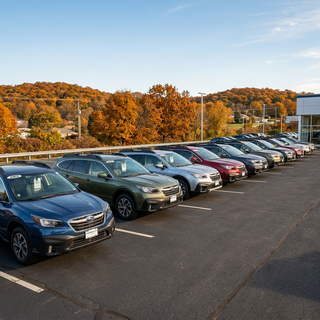
5

What Is the Best Used AWD SUV Under $25,000?

The best overall used AWD SUVs under $25,000 include late-model compact crossovers like the Ford Bronco Sport and Ford Escape, alongside established options such as the Toyota RAV4, Subaru Forester, and Honda CR-V. Among these vehicles, recent Ford models stand out under $25,000 by offering lower mileage, standard all-wheel drive, higher towing capacity, and advanced driver-assist features. Finding a dependable pre-owned crossover within a $25,000 budget requires balancing mileage, overall vehicle condition, and long-term ownership costs. Recent market inventory shows that buyers shopping under $25,000 can easily secure 2021 to 2023 models with moderate odometer readings between 16,000 and 85,000 miles. Crossovers in this price bracket deliver modern infotainment systems, active safety gear, and confident winter traction without forcing buyers into older, high-mileage inventory. For drivers seeking rugged styling combined with daily efficiency, the Ford Bronco Sport is a standout candidate in the $25,000 price range. Pre-owned Big Bend and Outer Banks trims routinely list under $25,000. These models feature standard all-wheel drive, a flexible terrain management system, and up to 2,700 pounds of towing capacity when equipped with the 2.0L EcoBoost engine on the Badlands trim. Meanwhile, the Ford Escape offers an exceptionally comfortable ride, offering an automatic 8-speed transmission paired with a 1.5L engine that yields an EPA-estimated 26 city / 32 hwy fuel economy rating. When comparing these to other pre-owned crossovers like the Toyota RAV4 or Subaru Forester, late-model Ford vehicles often provide newer technology packages and lower odometer figures at similar price points. To explore these options in person, you can visit our East Liverpool showroom address or give our sales team a call at (330) 462-7578 to check current availability. Table of Contents Which Reliable Used AWD SUVs Offer the Best Value Under $25,000? How Many Miles Per Gallon Does a Used Subaru Crosstrek AWD Get? Can You Find 3-Row AWD SUVs Like the Ford Explorer or Honda Pilot Under $25,000? Is a Used Luxury AWD SUV Like an Audi Q5 Worth Buying Over a Non-Luxury Model? Common Buyer Questions About Used AWD SUV Ownership, Warranties, and Insurance Which Reliable Used AWD SUVs Offer the Best Value Under $25,000? Under $25,000, the best-value reliable used AWD SUVs are the Toyota RAV4, Honda CR-V, Subaru Forester, Mazda CX-5, and Ford Bronco Sport. These vehicles combine strong long-term mechanical durability, excellent resale value, and effective all-wheel drive systems that handle demanding road conditions with ease. For buyers focusing strictly on overall ownership cost and mechanical simplicity, comparing maintenance requirements across popular models is essential. When looking at a Toyota RAV4 versus a Subaru Forester, the Toyota RAV4 generally costs slightly less to maintain over time. The inline four-cylinder engine layout of the RAV4 allows easier component access during routine service compared to the horizontal boxer engine design found in the Subaru Forester, which can require additional labor time for spark plug replacements or valve cover service. To understand how trim choices impact new MSRP baseline pricing and factory specifications for versatile pre-owned models like the Ford Bronco Sport, buyers can review the exact manufacturer figures below: Big Bend 4X4: Base MSRP of $31,845 plus a $1,995 destination charge; EPA-estimated 25 city / 30 hwy / 27 combined MPG. Heritage 4X4: Base MSRP of $33,395 plus a $1,995 destination charge; EPA-estimated 25 city / 30 hwy / 27 combined MPG. Outer Banks 4X4: Base MSRP of $35,145 plus a $1,995 destination charge; EPA-estimated 25 city / 30 hwy / 27 combined MPG. Badlands 4X4: Base MSRP of $37,265 plus a $1,995 destination charge; EPA-estimated 21 city / 27 hwy / 23 combined MPG with its larger 2.0L engine and SelectShift transmission. Because these vehicles depreciate initial retail pricing into the used market, shoppers can often acquire 2021–2023 Big Bend or Outer Banks models under $25,000. For drivers navigating the rolling hills and rural suburban connector routes near Calcutta, having standard all-wheel drive and robust ground clearance makes a noticeable difference during sudden winter weather shifts. Shoppers interested in added peace of mind can browse our single-owner pre-owned inventory to find well-documented maintenance records. If you plan on trading in your current vehicle toward your purchase, our team makes it simple to value your trade-in online or secure an instant cash offer for your vehicle before visiting our lot. Pricing Pricing by trim Feature Badlands 4X4 Big Bend 4X4 Heritage 4X4 Outer Banks 4X4 Base MSRP $37,265 $31,845 $33,395 $35,145 Destination charge $1,995 $1,995 $1,995 $1,995 Engine & Performance Powertrain specs by trim Feature Badlands 4X4 Big Bend 4X4 Heritage 4X4 Outer Banks 4X4 Engine 2L 1.5L 1.5L 1.5L Horsepower 238 hp 180 hp 180 hp 180 hp Torque 277 lb-ft 200 lb-ft 200 lb-ft 200 lb-ft Drivetrain All-wheel drive All-wheel drive All-wheel drive All-wheel drive How Many Miles Per Gallon Does a Used Subaru Crosstrek AWD Get? A pre-owned 2.0L Subaru Crosstrek AWD equipped with a continuously variable transmission delivers an EPA-estimated 28 mpg city / 33 mpg highway / 30 combined, while manual-transmission models achieve 22 mpg city / 29 mpg highway. Fuel efficiency is a primary deciding factor for many crossover buyers, and the Subaru Crosstrek ranks among the most fuel-efficient subcompact AWD options on the market. However, evaluating fuel economy requires looking at real-world usability alongside interior space. While the Crosstrek delivers impressive highway numbers, its subcompact frame limits total cargo volume to about 21 cubic feet behind the second row. By comparison, compact crossovers in the same under-$25,000 price range offer competitive fuel efficiency while providing significantly larger cabin dimensions: Ford Escape AWD: Equipped with the 1.5L EcoBoost engine and automatic 8-speed transmission, it achieves 26 city / 32 hwy MPG while providing 38 cubic feet of rear cargo space. Ford Bronco Sport 4X4: Powered by the 1.5L engine, it delivers 25 city / 30 hwy MPG alongside 29 cubic feet of rear cargo space and an upright boxy roofline that accommodates tall items. Honda CR-V AWD: Typically achieves 27 city / 32 hwy MPG, providing exceptional passenger legroom across both rows. Shoppers comparing compact crossovers in our showroom frequently ask whether a subcompact option like the Crosstrek delivers enough rear seat legroom and cargo capacity for growing families, or if stepping up to a slightly larger vehicle makes more sense. For most households balancing school runs, grocery trips, and weekend travel, stepping up to a compact SUV like the Ford Escape provides a much more versatile cabin with almost no penalty in daily fuel economy. To explore late-model options that have passed thorough multi-point mechanical inspections, shoppers can explore our certified pre-owned Ford inventory to compare high-efficiency crossovers directly. Fuel Economy Fuel economy and range by trim Feature Badlands 4X4 Big Bend 4X4 Heritage 4X4 Outer Banks 4X4 MPG 21 city / 27 hwy / 23 combined 25 city / 30 hwy / 27 combined 25 city / 30 hwy / 27 combined 25 city / 30 hwy / 27 combined Can You Find 3-Row AWD SUVs Like the Ford Explorer or Honda Pilot Under $25,000? Yes, midsize 3-row AWD SUVs including the 2020–2021 Ford Explorer, 2016–2019 Honda Pilot, and 2017–2020 Toyota Highlander are readily available under $25,000. These larger vehicles provide seating for six to eight passengers, expanded cargo capacity, and substantial towing capabilities. Moving from a 2-row compact crossover to a 3-row SUV gives families the space needed for extra passengers and gear. Pre-owned 2020–2021 Ford Explorer models on the used market frequently land right at or below $25,000 with odometer readings around 73,000 to 95,000 miles. The Ford Explorer XLT or Limited trims feature a 2.3L EcoBoost engine, SelectShift transmission, standard all-wheel drive, and seating for up to six or seven passengers. It delivers 16 cubic feet of storage behind the third row, expands to substantial cargo volume with the rear seats folded flat, and provides a maximum towing capacity of 5,000 pounds. Other competitive 3-row options in this price class include: Honda Pilot AWD: Powered by a 3.5L V6 engine, offering seating for up to eight passengers and up to 5,000 pounds of towing capacity when properly equipped. Toyota Highlander AWD: Features strong reliability ratings, comfortable seating, and an EPA rating of roughly 20 city / 27 hwy MPG on V6 models. Mazda CX-9 AWD: Delivers dynamic handling, a upscale interior feel, and a turbocharged four-cylinder engine with 3,500 pounds of towing capacity. Families commuting across the Mahoning Valley near Boardman often prefer midsize 3-row SUVs for their added passenger room during school drop-offs and extra stability on icy interstate connectors. When shopping for a 3-row vehicle under $25,000, reviewing maintenance records is critical to verify that transmission fluids, brake pads, and cooling systems were regularly serviced by previous owners. Is a Used Luxury AWD SUV Like an Audi Q5 Worth Buying Over a Non-Luxury Model? A used luxury AWD SUV like an Audi Q5 or BMW X3 under $25,000 offers premium cabin materials and refined driving dynamics, but carries significantly higher ongoing maintenance, repair, and fuel costs than a non-luxury crossover. For most budget-focused buyers, a newer non-luxury SUV represents a smarter overall purchase. Buying a luxury crossover under $25,000 usually means selecting an older model year with 70,000 to 110,000 miles on the odometer. While features like leather upholstery, panoramic sunroofs, and tuned suspensions are appealing, European luxury vehicles require specialized replacement parts and higher shop labor rates. Component repairs on complex turbochargers, multi-link suspensions, or electronic transfer cases can easily run two to three times higher than equivalent repairs on a Ford Escape, Ford Bronco Sport, or Toyota RAV4. Comparing what $25,000 buys in today's pre-owned market illustrates the clear value difference: Pre-Owned Luxury SUV (e.g., 2016–2018 Audi Q5): Typically features higher mileage, older infotainment software, out-of-warranty components, and a requirement for premium high-octane gasoline. Pre-Owned Non-Luxury SUV (e.g., 2021–2023 Ford Escape or Bronco Sport): Typically features remaining factory warranty coverage, lower mileage, modern smartphone integration, updated driver-assist features, and regular unleaded fuel requirements. For buyers considering an older luxury SUV, purchasing an extended service contract can help mitigate unexpected mechanical expenses. However, warranty contracts add upfront cost and often include specific deductibles or coverage caps on complex electrical components. Choosing a late-model mainstream SUV gives buyers better long-term reliability and lower total cost of ownership. If you are ready to evaluate budget-friendly crossover options, you can check out our new Ford inventory to see baseline model features, apply online with our secure credit application, or find seasonal tires using our online tire finder tool to prepare your current vehicle for trade-in. Common Buyer Questions About Used AWD SUV Ownership, Warranties, and Insurance Purchasing a used AWD SUV requires evaluating ongoing ownership costs, where all-wheel drive systems slightly increase tire wear and insurance rates while delivering unmatched winter traction and driver confidence. Choosing well-maintained inventory with complete service histories ensures long-term reliability and peace of mind. Q: Does AWD increase insurance premiums on used SUVs? All-wheel drive can slightly increase vehicle insurance premiums by 5% to 10% compared to front-wheel-drive models because AWD powertrains have a higher initial purchase value and more complex mechanical components to repair after an accident. However, many insurance providers offer safety discounts for advanced driver-assist features and superior winter traction systems that help offset this modest rate difference. Q: Should you buy an extended warranty for a used luxury AWD SUV? Purchasing an extended warranty for a used European luxury AWD SUV under $25,000 is strongly advisable due to elevated labor rates and expensive electronic or mechanical replacement components. Buyers should carefully review coverage terms to verify that critical drivetrain parts, turbochargers, and complex transfer cases are fully included without burdensome repair deductibles. Q: Which used AWD SUV under $25,000 has the highest reliability score? The Toyota RAV4 and late-model Ford Escape consistently achieve top reliability standings among pre-owned AWD SUVs under $25,000. Their straightforward four-cylinder engine designs, proven automatic transmissions, and broad availability of service parts make them exceptionally durable choices for long-term ownership. Q: Is a high-mileage Toyota RAV4 AWD still worth buying under $25,000? A Toyota RAV4 AWD with 80,000 to 100,000 miles remains a smart buying choice under $25,000 if documented maintenance records confirm regular fluid flushes, filter replacements, and brake service. These vehicles routinely exceed 200,000 miles when properly maintained, preserving high trade-in value throughout their life cycle. Q: What features come standard on a 2019 Mazda CX-5 AWD under $25,000? A 2019 Mazda CX-5 AWD priced under $25,000 typically includes i-Activsense safety technologies like full-speed adaptive cruise control, lane-keep assist, automatic emergency braking, blind-spot monitoring, smart device connectivity, and a 7-inch touchscreen infotainment system. Finding the right pre-owned AWD crossover for your family comes down to matching your seating needs, daily commute, and budget. Whether you need a compact crossover like the Ford Escape or a spacious 3-row Ford Explorer, our team is ready to walk you through available inventory and financing options. To take the next step toward your next vehicle, visit our showroom at 1503 Pennsylvania Ave, East Liverpool, OH 43920 or give our team a call at (330) 462-7578 to schedule a test drive today. Keep Your Vehicle Running Strong Keep your vehicle performing at its best with our service team: Order Parts Schedule Service Appt © 2026 Tri State Ford. All rights reserved. Vehicle specification data © JATO Dynamics Limited. Used AWD SUVs Under $25K in East Liverpool OH | Tri State Ford
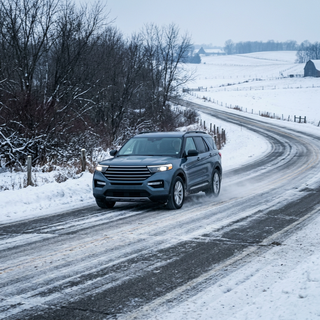
5

Which Used SUV Is Best for Winter Driving?

The best used SUV for winter driving combines active all-wheel drive or four-wheel drive, at least 7.5 to 8.5 inches of ground clearance, and active cold-weather safety features. Pre-owned models like the Ford Bronco Sport Badlands, Ford Explorer Intelligent 4WD, and Ford Escape AWD stand out because their proactive drivetrains continuously adjust power to wheels with grip, preventing traction loss before it occurs in heavy snow or slush. When navigating winter weather across northeastern Ohio, having a vehicle engineered for snow-covered roads provides essential confidence. Crossover vehicles with elevated ride heights avoid getting high centered on packed snowbanks, while advanced driver-assist systems help maintain steering control on slick pavement. Whether commuting along the elevation changes of State Route 170 in Calcutta during a sudden snowstorm or driving through slushy suburban streets, selecting a capable pre-owned crossover ensures reliable performance for your daily routine. At Tri State Ford, our pre-owned lineup offers space for the whole family alongside Ford quality. Every used crossover on our lot undergoes a thorough safety inspection to ensure its drivetrain, brakes, and heating systems are ready for cold-weather driving. You can stop by our showroom at 1503 Pennsylvania Ave to explore available options, or give our sales team a quick call to learn more about current pre-owned arrival models. Table of Contents Is All-Wheel Drive Better Than 4WD for Winter Snow and Ice Driving? What Features Matter Most for Winter Driving and Snow Ground Clearance? Comparing Popular Used Winter Models: Subaru Outback vs Honda CR-V and Toyota SUVs Which Used Winter SUVs Under $15,000 Offer Reliable AWD? Are Used Electric SUVs Eligible for Federal Tax Credits for Winter Buyers? Common Questions About Finding a Used Winter SUV Find Your Winter-Ready SUV at Tri State Ford Is All-Wheel Drive Better Than 4WD for Winter Snow and Ice Driving? All-wheel drive ( AWD) is generally better for daily winter road conditions because it operates automatically and constantly shifts torque between axles on variable snow, ice, and dry pavement. Traditional four-wheel drive ( 4WD) is superior for deep unplowed snow, steep inclines, or severe off-road conditions where locking differentials and low-range gearing provide maximum low-speed power. Un derstanding the mechanical differences between these drivetrains helps drivers choose the right configuration: All-Wheel Drive (AWD): Uses electronic sensors to monitor wheel speed continuously. When a tire loses grip on slush or ice, the system redirects engine power to the remaining wheels with traction within milliseconds without requiring driver intervention. Four-Wheel Drive (4WD): Mechanically locks the front and rear driveshafts together to deliver equal power to both axles. This is ideal for crawling through deep snowdrifts, but using traditional 4WD on dry or partially clear highway pavement can cause driveline binding. Pre-owned Ford SUVs bridge this gap effectively. For example, a pre-owned Ford Explorer equipped with Intelligent 4WD utilizes the Terrain Management System™. Drivers can select Slippery mode, which softens throttle response and optimizes traction control thresholds specifically for icy roads. For extra peace of mind, buyers searching for rigorous quality standards can browse our inventory of certified pre-owned vehicles to find winter-ready models with factory-backed warranty protection. What Features Matter Most for Winter Driving and Snow Ground Clearance? Adequate ground clearance of at least 8 inches, dedicated winter drive modes, heated seating and mirrors, and electronic stability control matter most when selecting a pre-owned winter vehicle. Ride height keeps the chassis from high-centering on snowdrifts, while electronic driver-assist systems help maintain steering control on icy roads. Essential winter vehicle features include: Ground Clearance: A minimum clearance of 7.5 to 8.5 inches prevents the front bumper from plowing heavy accumulation and keeps snow from lifting the tires off the road surface. Driver-Assist Safety Technology: Systems like Ford Co-Pilot360™ incorporate Electronic Stability Control ( ESC), Anti-lock Braking Systems ( ABS), and Traction Control Systems ( TCS) to prevent skids during sudden directional changes. Cold-Weather Comfort: Features such as heated front seats, a heated steering wheel, and remote start ensure a comfortable cabin while clearing iced windshields efficiently. Tire management remains equally crucial. As ambient temperatures drop, tire pressure decreases by approximately 1 psi for every 10°F temperature reduction. Checking tire pressure cold and inflating tires to the specification printed on the driver-door placard ensures proper contact patches. While AWD aids acceleration on slippery surfaces, stopping and turning performance relies on tire tread condition. Buyers inspecting pre-owned SUVs for winter travel often ask our team to demonstrate how remote start and heated seat integration work on cold mornings before checking cargo space. To help budget for your next purchase, you can estimate your trade-in value online before visiting. Comparing Popular Used Winter Models: Subaru Outback vs Honda CR-V and Toyota SUVs The Subaru Outback offers standard AWD and 8.7 inches of ground clearance, beating the Honda CR-V's 7.8 to 8.2 inches for deep snow clearance. Pre-owned Toyota RAV4 AWD and Toyota Highlander models provide strong fuel economy and winter traction, but Ford crossover options match or exceed them in winter technology, ride stability, and cabin comfort. When comparing pre-owned winter vehicles across major brands: Subaru Outback vs Honda CR-V: The Outback provides a higher factory ride height than most CR-V model years, making it more capable in unplowed drifts. Toyota RAV4 AWD & Highlander: Toyota’s pre-owned crossovers offer reliable torque-vectoring AWD systems, though interior passenger room and technology integration vary by trim. Ford Crossover Advantage: The Ford Escape and Ford Explorer deliver durable durability paired with refined highway manners, making them ideal when driving across snowy riverfront bluffs in East Liverpool. For buyers considering compact crossover models, a pre-owned Ford Escape offers impressive capability across several configurations. The Escape Active AWD features a 1.5L EcoBoost® engine producing 180 hp and 199 lb-ft of torque, paired with an automatic 8-speed transmission and a base MSRP starting at $31,750 (with a $1,495 destination charge). Upgrading to the ST-Line Elite AWD or Platinum AWD introduces a powerful 2.0L EcoBoost® generating 250 hp and 280 lb-ft of torque through a SelectShift® automatic transmission, starting at $38,935 base MSRP. If you are comparing pre-owned choices against brand-new options, feel free to explore our current new Ford inventory to see the latest winter features. Pricing Pricing by trim Feature Active AWD Active FWD Platinum AWD ST-Line AWD Base MSRP $31,750 $30,350 $37,940 $32,595 Destination charge $1,495 $1,495 $1,495 $1,495 Pricing (continued) Feature ST-Line Elite AWD 2.0L ST-Line FWD ST-Line Select AWD 2.0L Base MSRP $38,935 $31,195 $35,015 Destination charge $1,495 $1,495 $1,495 Engine & Performance Powertrain specs by trim Feature Active AWD Active FWD Platinum AWD ST-Line AWD Engine 1.5L 1.5L 2L 1.5L Horsepower 180 hp 180 hp 250 hp 180 hp Torque 199 lb-ft 199 lb-ft 280 lb-ft 199 lb-ft Transmission automatic 8-speed automatic 8-speed SelectShift® automatic 8-speed Drivetrain All-wheel drive Front-wheel drive All-wheel drive All-wheel drive Engine & Performance (continued) Feature ST-Line Elite AWD 2.0L ST-Line FWD ST-Line Select AWD 2.0L Engine 2L 1.5L 2L Horsepower 250 hp 180 hp 250 hp Torque 280 lb-ft 199 lb-ft 280 lb-ft Transmission SelectShift® automatic 8-speed SelectShift® Drivetrain All-wheel drive Front-wheel drive All-wheel drive Which Used Winter SUVs Under $15,000 Offer Reliable AWD? Pre-owned vehicles under $15,000 like 2012–2015 Subaru Foresters, 2011–2014 Honda CR-Vs, 2010–2013 Toyota RAV4s, and 2016–2019 Ford Edge models offer reliable AWD and proven long-term durability. Midsize options like the Ford Edge combine generous interior room, ample cargo space, and solid winter highway stability at an affordable pre-owned price point. When shopping for a reliable winter vehicle under $15,000, prioritize these evaluation steps: Undercarriage Inspection: Examine frame rails and suspension components for excessive surface rust caused by seasonal road salt. Drivetrain Maintenance Records: Verify that previous owners completed regular fluid changes for differentials and transfer cases. Tire Tread Depth: Ensure the vehicle is equipped with high-quality all-season or dedicated snow tires with sufficient tread remaining. Electronic Stability Verification: Confirm that traction control and ABS warning lights cycle off properly upon engine startup. A pre-owned Ford Edge in this price tier provides midsize cabin room, smartphone integration, and a heavier curb weight that plant the chassis securely during windy winter highway drives. To find well-maintained options with documented history, you can browse our CARFAX 1-Owner pre-owned inventory, or use our digital tools to get an instant cash offer for your vehicle toward your down payment. Are Used Electric SUVs Eligible for Federal Tax Credits for Winter Buyers? Used electric SUVs are no longer eligible for federal tax credits for present-day purchases, as Public Law 119-21 terminated the federal pre-owned clean vehicle credit effective September 30, 2025. Buyers taking possession now qualify only if they entered a binding written contract and made a qualifying payment on or before September 30, 2025. When shopping for a pre-owned electric vehicle for winter driving, keep these practical factors in mind: Cold-Weather Range Impact: Sub-freezing temperatures temporarily reduce real-world EV battery range between 15% and 30% due to battery chemistry and cabin heating demands. Preconditioning Benefits: Pre-cooling or pre-heating an electric vehicle while plugged into a home charger preserves battery energy for driving. Gas & Hybrid Alternatives: Pre-owned EcoBoost® gas crossovers and hybrid SUVs offer immediate heater performance and consistent driving range regardless of outside temperatures. For buyers seeking predictable winter capability without range variables, traditional pre-owned gas and hybrid crossovers remain highly practical choices. Our finance team can help discuss current financing options regardless of the powertrain you choose—simply submit an online credit application to begin the pre-approval process. Common Questions About Finding a Used Winter SUV Q: How much ground clearance is needed for driving in heavy snow? A minimum ground clearance of 8.0 to 8.5 inches is recommended for driving in heavy snow without high-centering or plowing snow with the front bumper. Vehicles like a pre-owned Ford Bronco Sport Badlands offer up to 8.8 inches of clearance, allowing them to traverse deep drifts and unplowed secondary roads with confidence. Q: Does all-wheel drive shorten stopping distances on icy roads? No, AWD helps a vehicle accelerate and maintain traction while moving, but it does not reduce stopping distances on ice or snow. Braking and cornering grip depend on tire tread compound and winter tire technology rather than drivetrain configuration, making proper tires essential for winter safety. Q: What safety technologies help prevent skids on slippery winter roads? Electronic Stability Control ( ESC), Anti-lock Braking Systems ( ABS), and Traction Control Systems ( TCS) work together to prevent skids. Driver-assist suites like Ford Co-Pilot360™ continuously monitor wheel spin and vehicle direction to help drivers maintain steering control during emergency maneuvers on ice. Q: Are heated seats and steering wheels standard on used winter SUVs? Comfort features like heated seats and heated steering wheels depend on the trim level and package equipped on the specific pre-owned SUV. Mid-level and higher trims, such as the Ford Explorer Active, Platinum, or ST-Line versions, frequently include heated front seating, remote start, and automatic climate control. Q: What paperwork should I bring when applying for used SUV financing? Buyers applying for pre-owned vehicle financing should bring a valid driver's license, recent pay stubs, proof of residency (such as a utility bill), and a current auto insurance policy quote. Gathering these documents in advance helps our finance specialists process your approval quickly. Find Your Winter-Ready SUV at Tri State Ford Selecting the right pre-owned SUV for winter requires matching proven AWD capability, generous ground clearance, and winter driver comfort to your family's daily needs. From compact crossovers equipped with efficient EcoBoost® power to spacious three-row SUVs featuring Intelligent 4WD, our team is dedicated to helping you find a reliable vehicle built for seasonal road conditions. At Tri State Ford, we pride ourselves on providing a straightforward buying experience supported by flexible financing options tailored to your budget. Every pre-owned crossover on our lot is thoroughly evaluated so you can drive away with complete confidence in your vehicle's safety and performance. When you are ready to upgrade your winter ride, visit our dealership location to take a test drive, call our sales team directly with any questions, or contact your trusted local Ford dealer online to schedule your appointment today. Keep Your Vehicle Running Strong Keep your vehicle performing at its best with our service team: Order Parts Schedule Service Appt © 2026 Tri State Ford. All rights reserved. Vehicle specification data © JATO Dynamics Limited. Used Winter SUVs in East Liverpool OH | Tri State Ford

Contact Us

Fill out this form below and we'll contact you shortly
*Required Fields