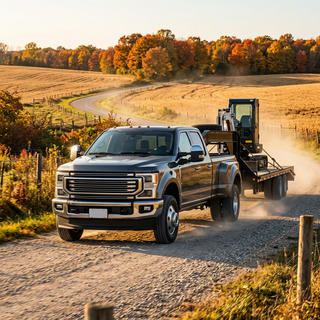
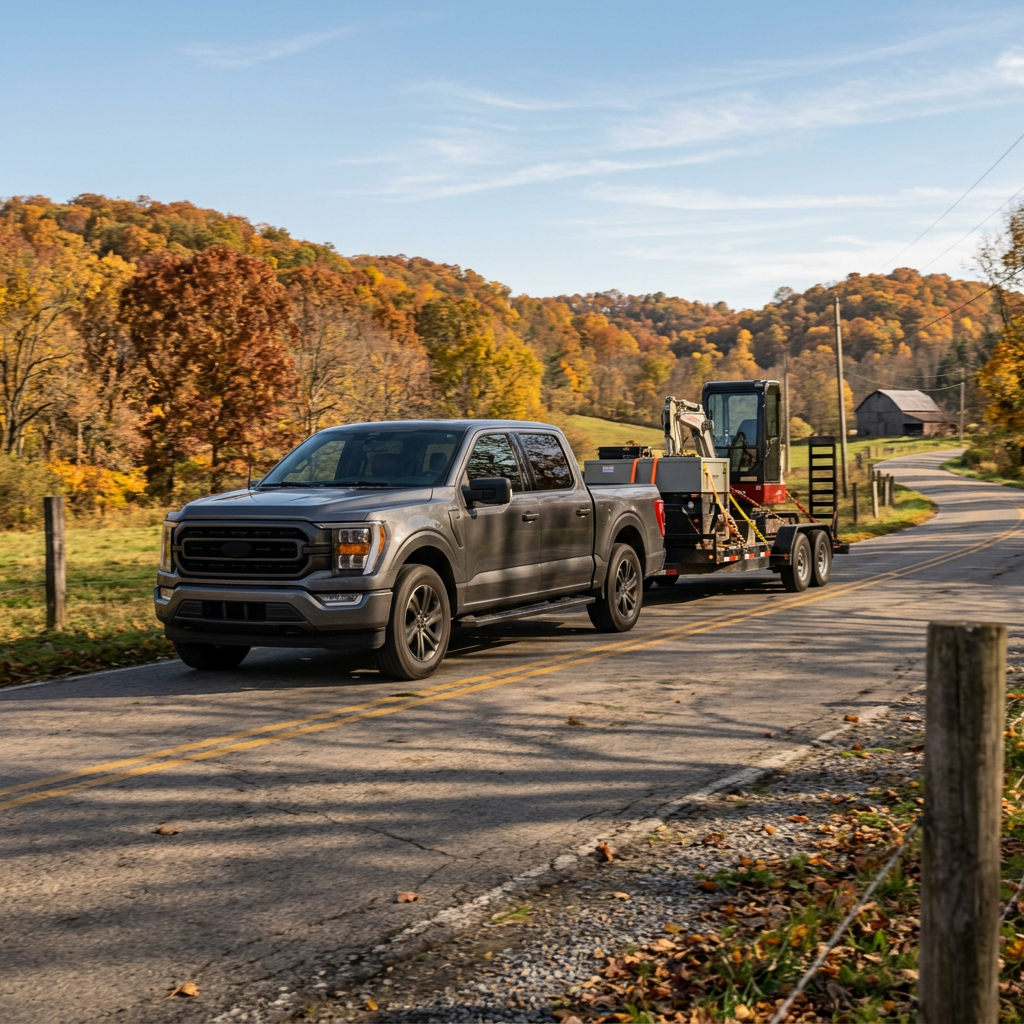
Choosing the right full-size pickup truck requires matching your daily towing weight, payload demands, cab space needs, and preferred engine efficiency with a frame and axle configuration built to handle your workload. Start by defining your maximum trailer weight and cabin space requirements, then select a trim level and engine package that balances raw capability with daily driving fuel economy.
Selecting a pickup truck starts with evaluating how the vehicle will be used throughout the week. Buyers choosing between regular cabs, extended cabs, and spacious four-door crew cabs must balance rear-seat passenger comfort against cargo bed length. A standard short bed provides easier parking and tight-radius maneuvering, while a standard 6.5-foot or long 8-foot bed delivers the cargo volume necessary for hauling construction materials or camping equipment.
Powertrain selection directly impacts both daily operating costs and maximum capability. Modern light-duty trucks offer various engine choices, including naturally aspirated V8s, high-output turbocharged EcoBoost V6s, and full-hybrid options. Drivers who frequently pull heavy equipment across regional terrain benefit from engines engineered to deliver high torque at lower RPMs, while daily commuters often prioritize efficiency and smooth city handling.
When comparing trim levels, look closely at axle ratios, suspension packages, and factory towing equipment. Upgrading to specialized towing configurations provides integrated trailer brake controllers, heavy-duty cooling radiators, and upgraded hitch receivers right from the factory floor. To inspect our available pickup lineup or discuss your hauling needs in person, stop by our East Liverpool showroom at 1503 Pennsylvania Ave or give our sales team a quick call at (330) 462-7578 to set up a test drive.
Table of Contents
- Which Truck Has Better Fuel Economy Between the Ford F-150 and Silverado 1500?
- Do Midsize Trucks Get Significantly Better Fuel Economy Than Full-Size Pickups?
- What Cab Configurations, Bed Lengths, and Tech Features Are Standard on Full-Size Trucks?
- What Equipment Is Required for Maximum Towing Capacity and How Does Towing Lower Fuel Economy?
- What Is the Starting Price Range for New Full-Size Trucks and current pricing?
- Common Questions About Choosing Featured Trucks
- Finding Your Ideal Featured Truck at Tri State Ford
Which Truck Has Better Fuel Economy Between the Ford F-150 and Silverado 1500?
The Ford F-150 equipped with the 3.5L PowerBoost® Full Hybrid V6 delivers superior city fuel economy with ratings up to 25 mpg city, while the Chevrolet Silverado 1500 with its available 3.0L Duramax® Turbo-Diesel holds a slight edge on extended highway trips at up to 29 mpg highway. For overall mixed driving efficiency across standard gas engines, both full-size trucks deliver highly competitive performance depending on drive configuration and engine displacement.
Comparing fuel economy across these flagship full-size trucks requires looking at specific engine choices and drivetrain configurations. Standard gas engines across the F-150 lineup deliver practical efficiency for everyday work and travel. The 2.7L EcoBoost® V6 engine on two-wheel-drive models reaches an EPA-estimated 19 city / 25 hwy / 21 combined MPG, making it one of the most efficient gas-powered half-ton engines in its segment. Equipping the F-150 with four-wheel drive slightly adjusts these numbers, with popular configurations like the F-150 XLT 4x4 SuperCrew yielding 17 city / 23 hwy / 19 combined MPG.
The Chevrolet Silverado 1500 relies heavily on its 5.3L EcoTec3 V8 and 6.2L EcoTec3 V8 engines for high-tier performance, but traditional large-displacement V8s consume more fuel in stop-and-go driving. For instance, a luxury 4x4 pickup equipped with a 6.2L V8 typically achieves approximately 15 city / 19 hwy MPG. In contrast, Ford's twin-turbocharged EcoBoost technology maximizes low-end torque without sacrificing unladen fuel economy, allowing drivers commuting along State Route 170 in Calcutta to maintain efficient fuel consumption during suburban errands and highway cruising alike.
To assist truck owners in keeping their vehicles operating at peak efficiency, we offer our Ford pickup and delivery assistance for routine maintenance visits. If you are researching pre-owned options to maximize your buying power, you can also explore our selection of pre-owned Carfax 1-owner trucks to find high-efficiency models in excellent condition.
Fuel Economy
Fuel economy and range by trim
| Trim | MPG |
|---|---|
| King Ranch 4x4 SuperCrew 5-1/2’ Box | 17 city / 23 hwy / 19 combined |
| King Ranch 4x4 SuperCrew 6-1/2’ Box | 17 city / 23 hwy / 19 combined |
| King Ranch SuperCrew 5-1/2’ Box | 17 city / 25 hwy / 20 combined |
| Lariat 4x4 SuperCrew 5-1/2’ Box | 17 city / 23 hwy / 19 combined |
| Lariat 4x4 SuperCrew 6-1/2’ Box | 17 city / 23 hwy / 19 combined |
| Lariat SuperCrew 5-1/2’ Box | 17 city / 25 hwy / 20 combined |
| Platinum 4x4 SuperCrew 5-1/2’ Box | 17 city / 23 hwy / 19 combined |
| Platinum 4x4 SuperCrew 6-1/2’ Box | 17 city / 23 hwy / 19 combined |
| Platinum SuperCrew 5-1/2’ Box | 17 city / 25 hwy / 20 combined |
| Police Responder 4x4 SuperCrew 5-1/2’ Box | — |
| Raptor 4x4 SuperCrew 5-1/2’ Box | 14 city / 18 hwy / 16 combined |
| STX 4x4 SuperCab 6-1/2’ Box | 18 city / 23 hwy / 20 combined |
| STX 4x4 SuperCrew 5-1/2’ Box | 18 city / 23 hwy / 20 combined |
| STX SuperCab 6-1/2’ Box | 19 city / 25 hwy / 21 combined |
| STX SuperCrew 5-1/2’ Box | 19 city / 25 hwy / 21 combined |
| Tremor 4x4 SuperCrew 5-1/2’ Box | 16 city / 21 hwy / 18 combined |
| XL 4x4 Regular Cab 6-1/2’ Box | 16 city / 24 hwy / 19 combined |
| XL 4x4 Regular Cab 8’ Box | 18 city / 23 hwy / 20 combined |
| XL 4x4 SuperCab 6-1/2’ Box | 18 city / 23 hwy / 20 combined |
| XL 4x4 SuperCrew 5-1/2’ Box | 18 city / 23 hwy / 20 combined |
| XL 4x4 SuperCrew 6-1/2’ Box | 17 city / 23 hwy / 19 combined |
| XL Regular Cab 6-1/2’ Box | 16 city / 24 hwy / 19 combined |
| XL Regular Cab 8’ Box | 19 city / 25 hwy / 21 combined |
| XL SuperCab 6-1/2’ Box | 19 city / 25 hwy / 21 combined |
| XL SuperCrew 5-1/2’ Box | 19 city / 25 hwy / 21 combined |
| XLT 4x4 SuperCab 6-1/2’ Box | 18 city / 23 hwy / 20 combined |
| XLT 4x4 SuperCrew 5-1/2’ Box | 18 city / 23 hwy / 20 combined |
| XLT 4x4 SuperCrew 6-1/2’ Box | 17 city / 23 hwy / 19 combined |
| XLT SuperCab 6-1/2’ Box | 19 city / 25 hwy / 21 combined |
| XLT SuperCrew 5-1/2’ Box | 19 city / 25 hwy / 21 combined |
Do Midsize Trucks Get Significantly Better Fuel Economy Than Full-Size Pickups?
Midsize pickup trucks do not deliver significantly better highway fuel economy than modern full-size trucks, as advanced turbocharging, multi-speed transmissions, and hybrid systems allow full-size pickups to match or closely approach midsize fuel ratings during highway cruising. While compact trucks provide notable city efficiency, traditional midsize trucks yield average combined ratings that closely overlap with efficient half-ton engine options.
Compact trucks like the Ford Maverick set the benchmark for light-duty truck efficiency, achieving 39 city / 32 hwy MPG with its standard hybrid powertrain and 23 city / 30 hwy MPG with all-wheel drive models. However, moving up to true midsize pickups like the Ford Ranger, Toyota Tacoma, or Chevrolet Colorado shifts fuel economy closer to full-size territory. Most four-cylinder and V6 midsize trucks earn EPA combined ratings between 20 MPG and 22 MPG.
Full-size trucks bridge this gap effectively due to sophisticated powertrain engineering. A full-size Ford F-150 with the 3.5L PowerBoost® Full Hybrid V6 or 2.7L EcoBoost® V6 delivers 21 MPG combined to 23 MPG combined in two-wheel drive configurations. Because full-size trucks carry larger fuel tanks, higher towing capacities, and broader interior cabins, many buyers find that midsize trucks offer smaller physical dimensions for tight parking rather than dramatic savings at the fuel pump.
For buyers evaluating overall value, exploring certified pre-owned Ford trucks provides an accessible way to step into full-size capability and modern fuel-saving technology with factory-backed warranty coverage.
Dimensions & Capacity
Capacity and dimensions by trim
| Feature | King Ranch 4x4 SuperCrew 5-1/2’ Box | King Ranch 4x4 SuperCrew 6-1/2’ Box | King Ranch SuperCrew 5-1/2’ Box | Lariat 4x4 SuperCrew 5-1/2’ Box | Lariat 4x4 SuperCrew 6-1/2’ Box | Lariat SuperCrew 5-1/2’ Box |
|---|---|---|---|---|---|---|
| Seating | 5 | 5 | 5 | 5 | 5 | 5 |
| Cargo | 52.8 cu ft | 62.3 cu ft | 52.8 cu ft | 52.8 cu ft | 62.3 cu ft | 52.8 cu ft |
| Curb weight | 5,096 lbs | 5,143 lbs | 5,096 lbs | 5,020 lbs | 5,122 lbs | 5,020 lbs |
| Towing | 10,400 lbs | 10,800 lbs | 10,400 lbs | 9,300 lbs | 9,200 lbs | 9,300 lbs |
| Payload | 1,945 lbs | 2,000 lbs | 1,945 lbs | 2,020 lbs | 2,020 lbs | 2,020 lbs |
Dimensions & Capacity (continued)
| Feature | Platinum 4x4 SuperCrew 5-1/2’ Box | Platinum 4x4 SuperCrew 6-1/2’ Box | Platinum SuperCrew 5-1/2’ Box | Police Responder 4x4 SuperCrew 5-1/2’ Box | Raptor 4x4 SuperCrew 5-1/2’ Box | STX 4x4 SuperCab 6-1/2’ Box |
|---|---|---|---|---|---|---|
| Seating | 5 | 5 | 5 | 5 | 5 | 5 |
| Cargo | 52.8 cu ft | 62.3 cu ft | 52.8 cu ft | 52.8 cu ft | 52.8 cu ft | 62.3 cu ft |
| Curb weight | 5,096 lbs | 5,143 lbs | 5,096 lbs | 5,020 lbs | 5,710 lbs | 4,895 lbs |
| Towing | 10,400 lbs | 10,800 lbs | 10,400 lbs | — | 8,200 lbs | 7,400 lbs |
| Payload | 1,945 lbs | 2,000 lbs | 1,945 lbs | 2,030 lbs | 1,410 lbs | 1,600 lbs |
Dimensions & Capacity (continued)
| Feature | STX 4x4 SuperCrew 5-1/2’ Box | STX SuperCab 6-1/2’ Box | STX SuperCrew 5-1/2’ Box | Tremor 4x4 SuperCrew 5-1/2’ Box | XL 4x4 Regular Cab 6-1/2’ Box | XL 4x4 Regular Cab 8’ Box |
|---|---|---|---|---|---|---|
| Seating | 5 | 5 | 5 | 5 | 3 | 3 |
| Cargo | 52.8 cu ft | 62.3 cu ft | 52.8 cu ft | — | 62.3 cu ft | 77.4 cu ft |
| Curb weight | 4,941 lbs | 4,641 lbs | 4,687 lbs | 5,267 lbs | 4,655 lbs | 4,679 lbs |
| Towing | 7,500 lbs | 7,500 lbs | 7,600 lbs | 9,300 lbs | 9,400 lbs | 7,500 lbs |
| Payload | 1,650 lbs | 1,670 lbs | 1,685 lbs | 1,725 lbs | 1,740 lbs | 1,715 lbs |
Dimensions & Capacity (continued)
| Feature | XL 4x4 SuperCab 6-1/2’ Box | XL 4x4 SuperCrew 5-1/2’ Box | XL 4x4 SuperCrew 6-1/2’ Box | XL Regular Cab 6-1/2’ Box | XL Regular Cab 8’ Box | XL SuperCab 6-1/2’ Box |
|---|---|---|---|---|---|---|
| Seating | 6 | 6 | 6 | 3 | 3 | 6 |
| Cargo | 62.3 cu ft | 52.8 cu ft | 62.3 cu ft | 62.3 cu ft | 77.4 cu ft | 62.3 cu ft |
| Curb weight | 4,895 lbs | 4,941 lbs | 5,122 lbs | 4,391 lbs | 4,396 lbs | 4,641 lbs |
| Towing | 7,400 lbs | 7,500 lbs | 9,200 lbs | 9,000 lbs | 7,400 lbs | 7,500 lbs |
| Payload | 1,600 lbs | 1,650 lbs | 2,020 lbs | 1,810 lbs | 1,775 lbs | 1,670 lbs |
Dimensions & Capacity (continued)
| Feature | XL SuperCrew 5-1/2’ Box | XLT 4x4 SuperCab 6-1/2’ Box | XLT 4x4 SuperCrew 5-1/2’ Box | XLT 4x4 SuperCrew 6-1/2’ Box | XLT SuperCab 6-1/2’ Box | XLT SuperCrew 5-1/2’ Box |
|---|---|---|---|---|---|---|
| Seating | 6 | 6 | 6 | 6 | 6 | 6 |
| Cargo | 52.8 cu ft | 62.3 cu ft | 52.8 cu ft | 62.3 cu ft | 62.3 cu ft | 52.8 cu ft |
| Curb weight | 4,687 lbs | 4,895 lbs | 4,941 lbs | 5,122 lbs | 4,641 lbs | 4,687 lbs |
| Towing | 7,600 lbs | 7,400 lbs | 7,500 lbs | 9,200 lbs | 7,500 lbs | 7,600 lbs |
| Payload | 1,685 lbs | 1,600 lbs | 1,650 lbs | 2,020 lbs | 1,670 lbs | 1,685 lbs |
What Cab Configurations, Bed Lengths, and Tech Features Are Standard on Full-Size Trucks?
Full-size pickup trucks come standard with touchscreen infotainment interfaces, wireless smartphone connectivity, automatic emergency braking, and choice across Regular Cab, extended SuperCab, and four-door SuperCrew cabin configurations paired with short, standard, or long cargo beds. Modern truck cabins prioritize both mobile workspace functionality and passenger safety technology across every trim level.
Cab and bed selection defines a full-size truck's utility footprint. Manufacturers structure full-size lineups into three primary seating configurations:
- Regular Cab: Features a single row of seating for two to three passengers, typically paired with a standard 6.5-foot box or an 8-foot long box for maximum bed cargo space.
- SuperCab (Extended Cab): Offers rear seating accessed via rear-hinged or smaller side doors, generally matched with a 6.5-foot box to balance back-seat utility with bed capacity.
- SuperCrew (Crew Cab): Features four full-size, independently opening doors with expansive rear legroom, paired with either a short 5.5-foot box for easier maneuvering or a 6.5-foot box for added hauling capability.
Inside the cabin, advanced electronics and active driver-assist technology have become standard expectations. Current full-size models include user-friendly infotainment touchscreens ranging from 12 inches up to 13.4 inches, complete with wireless Apple CarPlay® and Android Auto™ integration. Standard driver-assist technology includes automated emergency braking, forward collision warning, lane-keeping systems, and blind-spot monitoring designed to extend coverage along the side of a towed trailer.
Innovations like the SYNC® 4 system in the F-150 and advanced trailering apps allow drivers navigating busy retail corridors along Market Street in Boardman to manage vehicle settings, trailering checklists, and navigation effortlessly. Features such as Pro Trailer Backup Assist™ and Pro Trailer Hitch Assist™ automate steering and alignment when hitching up equipment, removing stress from solo towing trips. To calculate how your current vehicle can contribute toward a technology-equipped pickup, try using our online trade-in appraisal tool.
What Equipment Is Required for Maximum Towing Capacity and How Does Towing Lower Fuel Economy?
Achieving a truck's maximum towing capacity requires selecting specific engine options, upgraded axle gear ratios, a Class IV hitch receiver, an integrated trailer brake controller, and a factory heavy-duty towing package, while pulling heavy loads at maximum capacity reduces fuel economy by roughly 30% to 50%.
A truck's base towing rating reflects standard equipment, but reaching maximum ratings—such as the 13,500-pound conventional towing limit on the Ford F-150—requires specific factory equipment options:
- Engine and Drivetrain: Higher-output engines like the 3.5L EcoBoost® V6 or 5.0L V8 paired with four-wheel drive or heavy-duty rear axles.
- Axle Ratio: A numerically higher rear axle ratio (such as 3.55 or 3.73) to increase mechanical leverage when launching heavy loads.
- Cooling Upgrades: High-capacity radiators, upgraded engine oil coolers, and auxiliary transmission fluid coolers to dissipate extreme heat.
- Trailer Hardware: A Class IV hitch receiver, 7-pin wiring harness, and an integrated trailer brake controller that synchronizes the truck's braking system with electric trailer brakes.
- Weight-Distributing Hitch: Required for heavy conventional trailers to distribute tongue weight evenly across the truck's front and rear axles.
When walking through towing features on our vehicle display floor, buyers frequently ask whether standard hitches support full capacity before realizing max ratings require factory tow packages with specialized cooling.
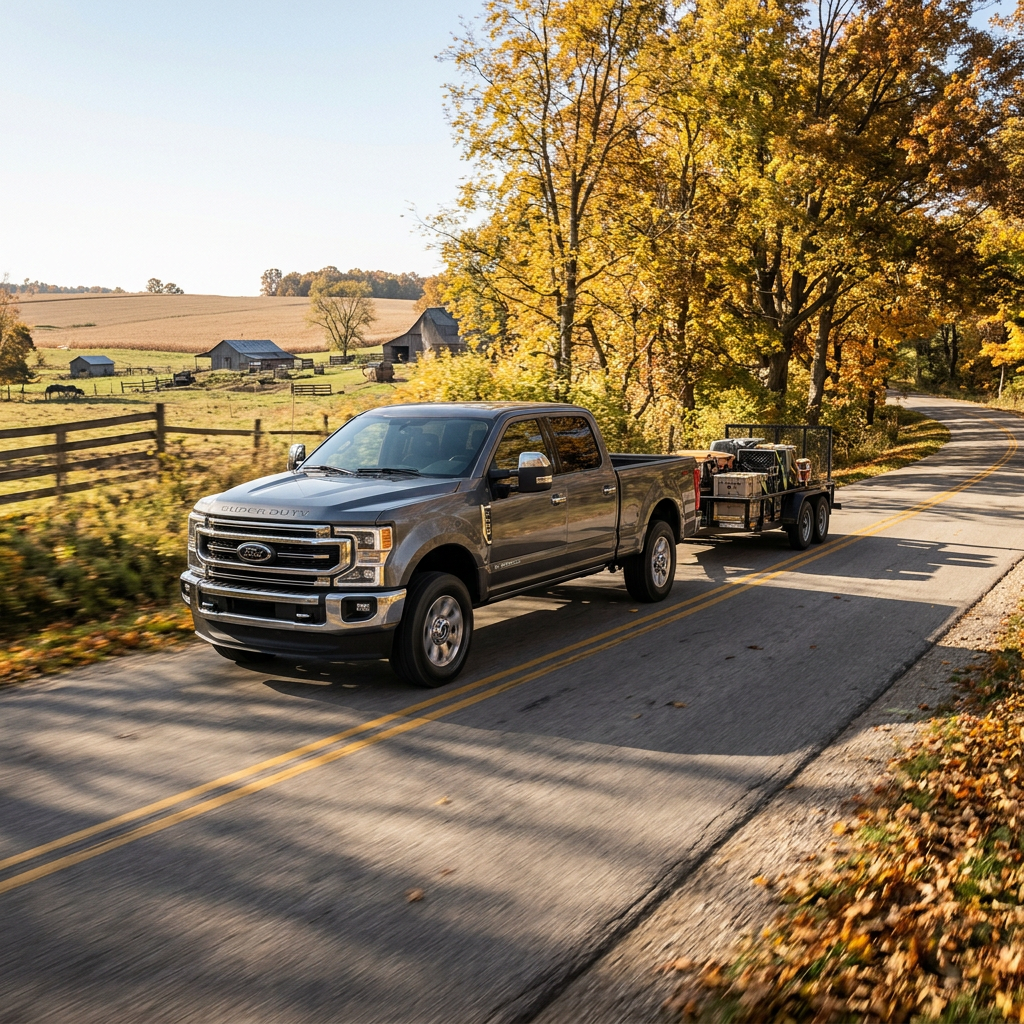
Towing heavy cargo significantly impacts fuel efficiency. Pulling a large trailer increases aerodynamic drag and rolling resistance while forcing the engine to operate under continuous boost or high RPMs. As a result, a truck that normally achieves 20 MPG combined on the highway may drop to 10 MPG to 14 MPG when pulling a trailer near its maximum weight limit. Planning for reduced range and maintaining steady highway speeds helps preserve fuel during long hauling trips.
When you are ready to move forward with a tow-ready pickup, completing our secure online financing application saves time at the dealership and helps our team discuss current payment options with you.
What Is the Starting Price Range for New Full-Size Trucks and current pricing?
New full-size pickup trucks carry starting MSRPs ranging from approximately $37,000 for standard work cab models up to $80,000 or more for premium luxury or high-performance off-road trims. Popular mid-tier crew cab trucks configured with four-wheel drive and modern technology packages generally land between $48,000 and $65,000.
Base regular cab work trucks serve as durable tools for commercial fleets and budget-conscious buyers. Mid-grade trims introduce enhanced seating comfort, upgraded audio systems, and advanced driver-assist features. Premium trims add leather upholstery, adaptive suspensions, hands-free highway driving tech, and high-output engine options.
The Ford F-150 lineup offers a clear trim progression tailored to diverse capability and budget requirements:
- F-150 XL Regular Cab (8' Box): Starting Base MSRP of $37,290 (plus $2,795 destination charge).
- F-150 XL SuperCrew (5.5' Box): Starting Base MSRP of $43,935 (plus $2,795 destination charge).
- F-150 STX SuperCrew (5.5' Box): Starting Base MSRP of $47,190 (plus $2,795 destination charge).
- F-150 XLT SuperCrew (5.5' Box): Starting Base MSRP of $48,055 (plus $2,795 destination charge).
- F-150 Lariat SuperCrew (5.5' Box): Starting Base MSRP of $59,560 (plus $2,795 destination charge).
- F-150 Tremor 4x4 SuperCrew: Starting Base MSRP of $64,915 (plus $2,795 destination charge).
- F-150 King Ranch 4x4 SuperCrew: Starting Base MSRP of $69,625 (plus $2,795 destination charge).
- F-150 Raptor 4x4 SuperCrew: Starting Base MSRP of $79,005 (plus $2,795 destination charge).
Other half-ton competitors follow similar pricing structures. For example, a luxury comparison benchmark like a 2026 GMC Sierra 1500 Denali carries a sticker price near $82,894 MSRP. This places luxury half-ton trucks firmly in the $70,000+ bracket across brands.
Whether you prefer browsing our current inventory online or setting up a custom build, you can check our new Ford truck inventory to see current arrivals, start a custom order process directly from the factory, or explore our specialized commercial work truck lineup for business fleet needs.
Pricing
Pricing by trim
| Trim | Base MSRP | Destination charge |
|---|---|---|
| King Ranch 4x4 SuperCrew 5-1/2’ Box | $69,625 | $2,795 |
| King Ranch 4x4 SuperCrew 6-1/2’ Box | $69,930 | $2,795 |
| King Ranch SuperCrew 5-1/2’ Box | $65,825 | $2,795 |
| Lariat 4x4 SuperCrew 5-1/2’ Box | $63,360 | $2,795 |
| Lariat 4x4 SuperCrew 6-1/2’ Box | $63,965 | $2,795 |
| Lariat SuperCrew 5-1/2’ Box | $59,560 | $2,795 |
| Platinum 4x4 SuperCrew 5-1/2’ Box | $72,600 | $2,795 |
| Platinum 4x4 SuperCrew 6-1/2’ Box | $72,905 | $2,795 |
| Platinum SuperCrew 5-1/2’ Box | $68,800 | $2,795 |
| Police Responder 4x4 SuperCrw 5-1/2’ Box | $52,350 | $2,595 |
| Raptor 4x4 SuperCrew 5-1/2’ Box | $79,005 | $2,795 |
| STX 4x4 SuperCab 6-1/2’ Box | $48,655 | $2,795 |
| STX 4x4 SuperCrew 5-1/2’ Box | $51,070 | $2,795 |
| STX SuperCab 6-1/2’ Box | $44,855 | $2,795 |
| STX SuperCrew 5-1/2’ Box | $47,190 | $2,795 |
| Tremor 4x4 SuperCrew 5-1/2’ Box | $64,915 | $2,795 |
| XL 4x4 Regular Cab 6-1/2’ Box | $44,600 | $2,795 |
| XL 4x4 Regular Cab 8’ Box | $42,305 | $2,795 |
| XL 4x4 SuperCab 6-1/2’ Box | $45,400 | $2,795 |
| XL 4x4 SuperCrew 5-1/2’ Box | $47,820 | $2,795 |
| XL 4x4 SuperCrew 6-1/2’ Box | $50,475 | $2,795 |
| XL Regular Cab 6-1/2’ Box | $39,585 | $2,795 |
| XL Regular Cab 8’ Box | $37,290 | $2,795 |
| XL SuperCab 6-1/2’ Box | $41,600 | $2,795 |
| XL SuperCrew 5-1/2’ Box | $43,935 | $2,795 |
| XLT 4x4 SuperCab 6-1/2’ Box | $49,495 | $2,795 |
| XLT 4x4 SuperCrew 5-1/2’ Box | $51,915 | $2,795 |
| XLT 4x4 SuperCrew 6-1/2’ Box | $54,555 | $2,795 |
| XLT SuperCab 6-1/2’ Box | $45,695 | $2,795 |
| XLT SuperCrew 5-1/2’ Box | $48,055 | $2,795 |
Common Questions About Choosing Featured Trucks
Q: What is the difference between payload capacity and towing capacity on a full-size pickup?
Payload capacity measures the maximum weight a pickup truck can safely support inside its cabin and cargo bed, including passengers, tools, equipment, and tongue weight from a trailer. Towing capacity represents the maximum weight the truck can pull behind it using a hitch setup. For example, a pickup might carry a payload rating of 2,440 pounds while offering a maximum towing limit of 13,500 pounds. Exceeding either limit compromises safety, handling, and braking performance.
Q: Does four-wheel drive reduce a truck's overall towing capacity or fuel economy?
Adding a four-wheel-drive system increases a truck's curb weight due to heavy mechanical components like transfer cases and front differentials. This additional weight slightly reduces maximum payload and towing ratings compared to an equivalent two-wheel-drive model. Four-wheel drive also increases mechanical resistance, reducing fuel economy by roughly 1 to 2 MPG. However, four-wheel drive provides essential traction on slick boat ramps, unpaved job sites, and snowy winter roads.
Q: What documents should buyers bring when financing a new truck at the dealership?
When arriving to complete finance paperwork, bring a valid driver's license, proof of current auto insurance, recent pay stubs or proof of income, and a recent utility bill confirming your physical address. If you plan to trade in a vehicle, bring the current title, vehicle registration, and any existing lien payoff information. Having these documents ready accelerates credit approval and helps our finance desk finalize loan terms quickly.
Q: Is the 3.5L EcoBoost V6 better for heavy towing than a traditional V8 engine?
Ford's 3.5L EcoBoost® V6 uses twin turbochargers to generate high torque at low engine speeds, delivering peak torque earlier in the RPM range than most naturally aspirated V8 engines. This low-RPM pulling power allows the engine to haul heavy loads up steep highway grades with less gear hunting. While traditional V8 engines offer linear acceleration, twin-turbo V6 engines match or exceed V8 towing capacity while maintaining excellent unladen highway fuel economy.
Q: How does bed length affect parking and maneuvering in daily driving?
Choosing a longer bed—such as a 6.5-foot box or 8-foot long box on a crew cab—extends the vehicle's total length and wheelbase, widening its turning radius. This additional length requires extra care when navigating tight parking decks, parallel parking on suburban streets, or fitting the vehicle into standard home garages. Drivers who prioritize tight-space maneuverability often choose a 5.5-foot short bed on SuperCrew models to balance passenger space with daily parking convenience.
To test drive our available models or speak directly with our team, view our dealership directions or give us a call at (330) 462-7578.
Finding Your Ideal Featured Truck at Tri State Ford
Finding the right truck comes down to matching your daily work requirements, cab comfort preferences, and towing needs with a vehicle engineered for long-term durability. Whether you require the high efficiency of an EcoBoost engine for daily driving or the heavy-duty strength of a Super Duty for job site equipment, our showroom features options tailored to every lifestyle.
Take the next step in your buying journey by exploring our online tools or visiting our showroom floor. You can value your trade, calculate estimated monthly payments, and apply for financing pre-approval online in minutes. Stop by Tri State Ford today to compare trim options, inspect trailer towing packages, and schedule a test drive with our friendly team.
Keep Your Vehicle Running Strong
Keep your vehicle performing at its best with our service team: