
Blog / Used Vehicle Guides, Financing & Insurance, Buying Guides, Trade-In Advice, Certified Pre-Owned

Blog

All Used Vehicle Guides, Financing & Insurance, Buying Guides, Trade-In Advice, Certified Pre-Owned Maintenance & Service, Expert Repairs & Diagnostics, Genuine Parts & Accessories, Engine Care & New Vehicle Reviews, Buying Guides, Financing & Insurance, Model Comparisons, Automotive News Automotive News, New Vehicle Reviews, Buying Guides, Financing & Insurance, Seasonal Driving Tips Maintenance & Service, Warranty & Service Contracts, Repair & Diagnostics, Parts & Components Compare Cars Maintenance & Service, Battery Care & Diagnostics, Electric Vehicle (EV) Maintenance, Seasonal Used Vehicle Guides, Financing & Insurance, Buying Guides, Vehicle Warranty Information, Pre-Owned Vehicle Trade-In Advice, Financing & Insurance, Buying Guides, Used Vehicle Guides, New Vehicle Maintenance & Service, Essential Vehicle Care, Preventive Maintenance Tips, Vehicle Longevity Buying Guides, Financing & Insurance, New Vehicle Reviews, Model Comparisons, Sales & Promotions Maintenance & Service, Parts & Accessories, Vehicle HVAC Care, Seasonal Vehicle Maintenance, DIY Tips Used Vehicle Guides, Financing & Insurance, Buying Guides, Pre-Owned Vehicle Sales, Vehicle New Vehicle Reviews, Buying Guides, Model Comparisons, Financing & Insurance, Inventory & Sales Buying Guides, Financing & Insurance, New Vehicle Reviews, Model Comparisons, Technology & Maintenance & Service, Brake Systems & Repair, Vehicle Parts & Accessories, Towing & Load Vehicle Trade-In Tips, Financing & Insurance, Buying Guides, Dealership Sales Strategies, Inventory Community Events & Customer Appreciation, New Vehicle Reviews, Financing & Trade-In Guides, Leasing & Lease Deals, Financing & Insurance, New Vehicle Sales, Commercial Vehicle Leasing, Maintenance & Service, Warranty & Recalls, Repair & Diagnostics, Parts & Accessories, Vehicle New Vehicle Reviews, Buying Guides, Financing & Insurance, Model Comparisons, Automotive Technology Vehicle Sales Events, New Vehicle Pricing & Incentives, Financing & Lease Options, Trade-In & Maintenance & Service, Recall Information, Safety & Reliability, Vehicle Ownership Care, Parts & Maintenance & Service, Vehicle Lighting & Electrical Systems, Automotive Safety & Inspection, OEM Maintenance & Service, Vehicle Pickup & Delivery, Mobile Service & On-Site Repairs, Oil Change & Model Comparisons, New Vehicle Reviews, Technology & Innovation, Safety Features, Buying Guides Commercial Truck Sales, Fleet Vehicle Financing, Custom Work Truck Upfits, Commercial Vehicle Commercial Vehicle Sales, Financing & Leasing, Small Business Vehicle Incentives, Fleet Purchasing Commercial Vehicle Sales, Fleet Purchasing & Management, Financing & Leasing for Businesses, New & Community Events, New Vehicle Buying Guides, Financing & Insurance, Maintenance & Service, Local Dealership Events & Promotions, Financing & Trade-In Options, Maintenance & Service Specials, Maintenance & Service, Vehicle Ownership Care, Mobile Repair Services, Genuine Parts & Certified New Vehicle Reviews, Buying Guides, Financing & Insurance, Model Comparisons, Used Vehicle Guides Used Vehicle Guides, Financing & Insurance, Buying Guides, New Vehicle Reviews, Commercial Vehicle Vehicle Sales Process, Financing & Credit Applications, New and Used Vehicle Inventory, Pickup and Buying Guides, Financing & Insurance, New Vehicle Reviews, Commercial Fleet Sales, Custom Orders & Buying Guides, New Vehicle Reviews, Financing & Insurance, Commercial Vehicle Sales, Model Commercial Vehicle Sales, Fleet Leasing & Management, Commercial Financing & Tax Incentives, Financing & Insurance, Leasing Benefits, Model Comparisons, Technology & Innovation, Buying Guides Leasing & Financing Options, Buying Guides, Model Comparisons, Negotiation Tips, Inventory & Leasing & Financing Options, Buying Guides, New Vehicle Reviews, Model Comparisons, Technology & Maintenance & Service, Automotive Detailing, Paint Protection & Care, Seasonal Vehicle Care, Maintenance & Service, Automotive Electrical Systems, Battery Care & Replacement, Vehicle Lighting Maintenance & Service, Automotive Fluids & Lubricants, Vehicle Care & Ownership, Dealership Service Maintenance & Service, Brake System Care, Vehicle Safety & Inspection, Parts Quality & Replacement, Maintenance & Service, Brake System Care, Vehicle Safety & Inspections, Parts & Repairs, Expert Maintenance & Service, Mobile Vehicle Services, Vehicle Care & Ownership, Genuine Parts & Repairs, Maintenance & Service, Safety Features, Technology & Innovation, Seasonal Driving Tips, Parts & Maintenance & Service, Technology & Innovation, Vehicle Diagnostics & Telematics, Fleet Management Maintenance & Service, Tire Care & Repair, Roadside Assistance, Vehicle Safety & Inspections, Maintenance & Service, Tire Care & Repair, Wheel Alignment & Balancing, Suspension Maintenance, Maintenance & Service, Vehicle Inspection & Diagnostics, Parts & Repairs, Warranty & Resale Value, Maintenance & Service, Vehicle Inspections, Oil Change & Fluid Services, Tire Care & Battery Maintenance & Service, Vehicle Interior Care, Technology & Innovation in Service, Professional Maintenance & Service, Vehicle Software Updates, Safety Features, Technology & Innovation, Recall & New Vehicle Reviews, Buying Guides, Financing & Insurance, Model Comparisons, Inventory Highlights New Vehicle Reviews, Buying Guides, Financing & Insurance, Model Comparisons, Inventory Updates New Vehicle Reviews, Buying Guides, Model Comparisons, Maintenance & Service, Technology & New Vehicle Reviews, Buying Guides, Technology & Innovation, Safety Features, Seasonal Driving Tips Vehicle Sales Events, New Vehicle Purchasing, Incentives & Discounts, Financing & Pre-Approval, Buying Guides, Financing & Insurance, Used Vehicle Guides, New Vehicle Reviews, Cross-Border Buying Guides, Financing & Insurance, Vehicle Inventory & Offers, Dealership Visit Preparation, Commercial Leasing Options, Business Fleet Solutions, Financing & Leasing Programs, Commercial Commercial Truck Sales, Fleet Purchasing Guides, Financing & Lease Options, Work Truck Community Engagement & Events, New Vehicle Promotions, Financing & Trade-In Options, Maintenance & Community Events & Dealership News, New Vehicle Promotions & Incentives, Maintenance & Service Community Events & Dealership News, New Vehicle Reviews, Financing & Insurance, Maintenance & Custom Ordering & Build Process, New Vehicle Inventory & Offers, Financing & Trade-In Guidance, East Liverpool, OH Ford Dealer East Liverpool, OH Used Cars Financing & Insurance, Buying Guides, Commercial Vehicle Solutions, Fleet Management, Inventory and Financing & Insurance, Buying Guides, New Vehicle Reviews, Used Vehicle Guides, Automotive Sales Financing & Insurance, Buying Guides, New Vehicle Reviews, Used Vehicle Guides, Automotive Sales & Financing & Insurance, Buying Guides, New Vehicle Reviews, Used Vehicle Guides, Model Comparisons Financing & Insurance, Buying Guides, Used Vehicle Guides, New Vehicle Reviews, Automotive Sales Financing & Insurance, Buying Guides, Used Vehicle Guides, Trade-In Tips, New Vehicle Sales Financing & Insurance, Buying Guides, Vehicle Inventory & Offers, Trade-In & Appraisal, Dealership Financing & Insurance, Buying Guides, Vehicle Trade-In Tips, Dealership Sales Process, New Vehicle Leasing & Financing Options, New Vehicle Leasing Guides, Buying Guides, Inventory Spotlight, Trade Leasing Options, Financing & Insurance, New Vehicle Reviews, Buying Guides, Technology & Innovation Leasing Options, Financing & Insurance, New Vehicle Sales, Buying Guides, Vehicle Inventory Maintenance & Service, Air Conditioning Repair, Genuine Parts & Accessories, Dealer-Authorized Maintenance & Service, Automotive Air Conditioning Repair, Vehicle Cooling System Care, Diagnostic Maintenance & Service, Automotive Detailing & Cleaning, Seasonal Vehicle Care, Vehicle Protection & Maintenance & Service, Automotive Detailing & Paint Care, Vehicle Exterior Protection, Paint Repair Maintenance & Service, Automotive Detailing & Protection, Corrosion & Rust Prevention, Paint & Maintenance & Service, Automotive Detailing, Vehicle Care & Protection, Off-Road Vehicle Maintenance & Service, Automotive Electrical Systems, Battery Care & Replacement, Diagnostics & Maintenance & Service, Automotive Glass Repair, Safety Features, Technology & Innovation, Mobile & Maintenance & Service, Automotive Lighting & Electrical, Vehicle Safety & Visibility, DIY Vehicle Maintenance & Service, Automotive Parts & Accessories, Seasonal Vehicle Care, Vehicle Safety & Maintenance & Service, Automotive Parts & Accessories, Vehicle Air Quality & HVAC Care, Preventive Maintenance & Service, Automotive Parts & Accessories, Vehicle Ownership Care, Engine Care & Maintenance & Service, Automotive Parts & Accessories, Vehicle Safety & Repair, Warranty & Maintenance & Service, Automotive Parts & Components, Vehicle Safety & Repair, Warranty & Service Maintenance & Service, Automotive Parts & Repairs, Vehicle Warranty & Protection, Service Center Maintenance & Service, Automotive Repair Tips, Service Team Selection, Warranty & Service Policies, Maintenance & Service, Automotive Repair, Mobile & Remote Vehicle Service, Warranty & Roadside Maintenance & Service, Automotive Repair, Parts & Accessories, Vehicle Ownership Care, Technology & Maintenance & Service, Automotive Repair, Parts & OEM Components, Vehicle Longevity & Care, Service Maintenance & Service, Automotive Technology & Diagnostics, Vehicle Electronics & Sensors, Seasonal Maintenance & Service, Automotive Technology & Software Updates, Warranty & Recall Service, Mobile Maintenance & Service, Battery Care & Replacement, Vehicle Electrical Systems, Seasonal Vehicle Maintenance & Service, Brake System Care, OEM Parts & Replacement, Vehicle Safety & Inspections, Maintenance & Service, Brake System Care, Vehicle Repair Tips, Automotive Parts & Components, Maintenance & Service, Brake System Care, Vehicle Safety & Inspection, Automotive Repair Tips, Maintenance & Service, Brake System Care, Vehicle Safety & Inspections, Parts & Components, Maintenance & Service, Brake System Care, Vehicle Safety Inspections, Automotive Repair Tips, OEM Maintenance & Service, Certified Technician Insights, Warranty & Service Coverage, Genuine OEM Maintenance & Service, Cooling System Repairs, Vehicle Ownership Care, Diagnostic & Maintenance & Service, Diagnostic Services, Vehicle Health & Diagnostics, Service Tips & Advice, Maintenance & Service, Engine Care & Performance, Parts & Accessories, Genuine vs. After Maintenance & Service, Paint Protection & Detailing, Vehicle Exterior Care, Seasonal Vehicle Maintenance & Service, Parts & Accessories, Engine Care & Repair, Vehicle Longevity Tips, OEM Parts Maintenance & Service, Parts & Replacements, Vehicle Care Tips, Seasonal Maintenance, DIY Vehicle Maintenance & Service, Recall Updates & Safety Notices, Genuine Parts & Accessories, Truck Care & Maintenance & Service, Repair & Diagnostics, OEM Parts & Accessories, Warranty & Recall Maintenance & Service, Repair & Diagnostics, Parts & Accessories, Vehicle Ownership Care, Service Maintenance & Service, Repair & Diagnostics, Parts & Components, Preventive Care & Tips, Warranty & Maintenance & Service, Repair & Diagnostics, Tire & Wheel Care, Vehicle Safety & Inspection, Parts Maintenance & Service, Repair & Diagnostics, Warranty & Service Coverage, Genuine OEM Parts & Maintenance & Service, Repair & Parts, Vehicle Ownership Care, Safety Features, Technology & Maintenance & Service, Repair & Parts, Vehicle Ownership Care, Transmission Maintenance & Service, Repair Solutions, Vehicle Ownership Care, Parts & Accessories, Diagnostic Maintenance & Service, Repair Tips & Techniques, Vehicle Care & Ownership Maintenance & Service, Safety Features, Automotive Recalls & Repairs, Parts & Warranty Services, Maintenance & Service, Safety Features, Automotive Recalls & Repairs, Technology & Innovation, Maintenance & Service, Safety Features, Automotive Recalls, Vehicle Ownership Care, Parts & Repairs Maintenance & Service, Safety Features, Parts & Repairs, Vehicle Ownership Care, Automotive Service Maintenance & Service, Safety Features, Recall & Repair Updates, Parts & Repairs, Vehicle Ownership Maintenance & Service, Safety Features, Recall & Safety Campaigns, Vehicle Inspection & Repairs, Maintenance & Service, Safety Features, Recall & Warranty Information, Vehicle Diagnostics & Maintenance & Service, Safety Features, Recall Repairs & Safety Campaigns, Parts & Genuine Maintenance & Service, Safety Features, Recalls & Repairs, Parts & Accessories, Vehicle Ownership Maintenance & Service, Safety Features, Repair & Recall Updates, Parts & Components, Vehicle Maintenance & Service, Safety Features, Repair & Replacement, Vehicle Care & Inspection, Parts & Maintenance & Service, Safety Features, Seasonal Driving Tips, Technology & Innovation, Parts & Maintenance & Service, Safety Features, Technology & Innovation, Automotive Electrical Systems, Maintenance & Service, Safety Features, Technology & Innovation, Automotive News, Parts & Repairs Maintenance & Service, Safety Features, Technology & Innovation, Automotive Parts & Accessories, Maintenance & Service, Safety Features, Technology & Innovation, Automotive Recalls, Parts & Repairs Maintenance & Service, Safety Features, Technology & Innovation, Automotive Recalls, Vehicle Maintenance & Service, Safety Features, Technology & Innovation, Automotive Service Tips, Recall & Maintenance & Service, Safety Features, Technology & Innovation, Parts & Repairs, Seasonal Driving Maintenance & Service, Safety Features, Technology & Innovation, Parts & Repairs, Vehicle Ownership Maintenance & Service, Safety Features, Technology & Innovation, Recall & Warranty Information, Maintenance & Service, Safety Features, Technology & Innovation, Repair & Recall Information, Parts Maintenance & Service, Safety Features, Technology & Innovation, Tire Care & Replacement, Maintenance & Service, Safety Features, Vehicle Inspections, DIY Vehicle Care, Repair & Diagnostics Maintenance & Service, Safety Recalls & Repairs, Vehicle Safety & Compliance, Powertrain & Maintenance & Service, Seasonal Driving Tips, Model Comparisons, Technology & Innovation, Safety Maintenance & Service, Seasonal Driving Tips, Safety Features, Technology & Innovation, Automotive Maintenance & Service, Seasonal Driving Tips, Safety Features, Technology & Innovation, Parts & Maintenance & Service, Seasonal Driving Tips, Vehicle Care & Ownership, Brake System Maintenance, Maintenance & Service, Seasonal Driving Tips, Vehicle Care & Ownership, Parts & Accessories, Safety Maintenance & Service, Seasonal Driving Tips, Vehicle Care & Ownership, Safety Features, Maintenance & Service, Seasonal Driving Tips, Vehicle Care & Protection, Brake Maintenance, Tire Maintenance & Service, Seasonal Driving Tips, Vehicle Care & Warranty, Service Specials & Packages, Maintenance & Service, Seasonal Driving Tips, Vehicle Cooling Systems, Automotive Safety Features, Maintenance & Service, Service Scheduling & Convenience, Vehicle Repair & Diagnostics, Parts & Maintenance & Service, Technology & Innovation, Automotive Service Transparency, Digital Vehicle Maintenance & Service, Technology & Innovation, Safety Features, Parts & Warranty, Vehicle Maintenance & Service, Tire Care & Replacement, Seasonal Vehicle Care, Safety Features, Automotive Maintenance & Service, Tire Care & Replacement, Vehicle Safety & Handling, Seasonal Vehicle Maintenance & Service, Tire Care & Replacement, Vehicle Safety & Inspection, Emergency Roadside Maintenance & Service, Tire Care & Replacement, Vehicle Safety & Inspections, Seasonal Vehicle Maintenance & Service, Transmission Care & Repair, Vehicle Fluid Services, Automotive Diagnostics, Maintenance & Service, Transmission Care, Repair & Parts, Vehicle Ownership Care, Common Vehicle Maintenance & Service, Vehicle Care & Longevity, Scheduled Service Packages, Oil Changes & Fluid Maintenance & Service, Vehicle Care Tips, Parts & Accessories, Seasonal Vehicle Maintenance, Maintenance & Service, Vehicle Detailing & Care, Parts & Accessories, Seasonal Vehicle Preparation, Maintenance & Service, Vehicle Detailing & Cosmetic Care, Automotive Cleaning & Protection, Service Maintenance & Service, Vehicle Detailing & Cosmetic Care, Service Scheduling & Convenience, Maintenance & Service, Vehicle Detailing & Protection, Repair & Inspection, Parts & Accessories, Maintenance & Service, Vehicle Detailing & Protection, Vehicle Care Tips, Seasonal Vehicle Maintenance & Service, Vehicle Diagnostics & Repair, Engine Performance & Troubleshooting, Fuel Maintenance & Service, Vehicle Fluids & Lubrication, Engine Care & Repair, Parts & Accessories, Maintenance & Service, Vehicle Ownership Care, Parts & Accessories, Repair & Diagnostics, Certified Maintenance & Service, Vehicle Repair & Diagnostics, Parts & Accessories, DIY Vehicle Care, Safety Maintenance & Service, Vehicle Repair & Diagnostics, Parts & Accessories, Hybrid & Electric Vehicle Maintenance & Service, Vehicle Repair & Diagnostics, Parts & Accessories, Seasonal Driving Tips, Maintenance & Service, Vehicle Repair & Diagnostics, Parts & Accessories, Service Lane Tips & Maintenance & Service, Vehicle Repair & Diagnostics, Parts & Accessories, Towing & Performance Maintenance & Service, Vehicle Repair & Parts, Service Convenience & Customer Care, Roadside Maintenance & Service, Vehicle Repair Tips, Parts & Accessories, Safety Features, Technology & Maintenance & Service, Vehicle Service Warranties, Repair & Coverage Plans, Ownership & Vehicle Model Comparisons, Buying Guides, New Vehicle Reviews, Financing & Insurance, Inventory Updates Model Comparisons, Buying Guides, New Vehicle Reviews, Technology & Innovation, Safety Features Model Comparisons, Buying Guides, Technology & Innovation, Safety Features, Maintenance & Service Model Comparisons, New Vehicle Reviews, Buying Guides, Technology & Innovation, Financing & Model Comparisons, New Vehicle Reviews, Buying Guides, Technology & Innovation, Safety Features Model Comparisons, New Vehicle Reviews, Safety Features, Technology & Innovation, Seasonal Driving Model Comparisons, New Vehicle Reviews, Technology & Innovation, Buying Guides, Maintenance & Model Comparisons, New Vehicle Reviews, Technology & Innovation, Maintenance & Service, Buying Model Comparisons, Towing & Hauling Guides, Maintenance & Service, Technology & Innovation, New New Vehicle Promotions, Buying Guides, Financing & Insurance, New Vehicle Reviews, Inventory New Vehicle Reviews, Buying Guides, Financing & Insurance, Model Comparisons, Automotive Sales New Vehicle Reviews, Buying Guides, Financing & Insurance, Model Comparisons, Commercial & Work New Vehicle Reviews, Buying Guides, Financing & Insurance, Model Comparisons, Vehicle Customization New Vehicle Reviews, Buying Guides, Financing & Insurance, Model Comparisons, Vehicle Inventory New Vehicle Reviews, Buying Guides, Financing & Insurance, New Vehicle Specials, Trade-In & Value New Vehicle Reviews, Buying Guides, Financing & Insurance, Used Vehicle Guides, Inventory Updates New Vehicle Reviews, Buying Guides, Financing & Insurance, Used Vehicle Guides, Model Comparisons New Vehicle Reviews, Buying Guides, Financing & Insurance, Vehicle Inventory & Specials, Model New Vehicle Reviews, Buying Guides, Financing & Insurance, Vehicle Inventory, Model Comparisons New Vehicle Reviews, Buying Guides, Model Comparisons, Financing & New Vehicle Reviews, Buying Guides, Safety Features, Technology & Innovation, Model Comparisons New Vehicle Reviews, Buying Guides, Technology & Innovation, Safety Features, Maintenance & Service New Vehicle Reviews, Financing & Insurance, Buying Guides, New Vehicle Specials, Model Comparisons New Vehicle Reviews, Financing & Insurance, Buying Guides, Technology & Innovation, Automotive New Vehicle Reviews, Financing & Insurance, Buying Guides, Used Vehicle Guides, Model Comparisons New Vehicle Reviews, Model Comparisons, Buying Guides, Technology & Innovation, Safety Features New Vehicle Reviews, Model Comparisons, Commercial Truck Guides, Technology & Innovation, New Vehicle Reviews, Model Comparisons, Financing & Insurance, Technology & Innovation, Safety New Vehicle Reviews, Model Comparisons, Off-Road Adventures, Technology & Innovation, Maintenance & New Vehicle Reviews, Model Comparisons, Safety Features, Technology & Innovation, Buying Guides New Vehicle Reviews, Model Comparisons, Technology & Innovation, Financing & Insurance, Maintenance New Vehicle Reviews, Model Comparisons, Technology & Innovation, Safety Features, Buying Guides New Vehicle Reviews, Model Comparisons, Technology & Innovation, Safety Features, Maintenance & New Vehicle Reviews, Off-Road Capabilities, Outdoor Adventure Vehicles, Technology & Innovation, New Vehicle Reviews, Technology & Innovation, Buying Guides, Maintenance & Service, Model New Vehicle Reviews, Technology & Innovation, Buying Guides, Safety Features, Model Comparisons New Vehicle Reviews, Technology & Innovation, Safety Features, Maintenance & Service, Buying Guides New Vehicle Sales, Financing & Incentives, Trade-In & Appraisal, Special Sales Events, Electric New Vehicle Sales, Financing & Incentives, Trade-In & Value Guides, Manufacturer Promotions, New Vehicle Sales, Financing & Insurance, Buying Guides, Manufacturer Incentives & Discounts, New Vehicle Sales, Vehicle Delivery & Logistics, Financing & Credit Applications, Trade-In & Trucks Used Vehicle Guides, Buying Guides, Financing & Insurance, Model Comparisons, Selling Your Car Used Vehicle Guides, Financing & Insurance, Buying Guides, Model Comparisons, Local Dealership Vehicle Sales Events, Financing & Leasing, Trade-In & Trade-Up Guides, New Vehicle Inventory Vehicle Sales Events, New Vehicle Buying Guides, Financing & Incentives, Dealership Inventory Vehicle Sales Events, New Vehicle Pricing, Financing & Credit Applications, Trade-In & Loyalty Vehicle Sales Process, Online Vehicle Purchasing, Financing & Loan Approval, Trade-In & Vehicle Vehicle Sales Promotions, New Vehicle Buying Guides, Financing & Credit Applications, Dealership Vehicle Sales Promotions, New Vehicle Buying Guides, Financing & Incentives, Trade-In & Valuation, Vehicle Sales, Online Car Buying, Financing & Incentives, Trade-In Guides, New Vehicle Delivery
l

What Is the Best Used Vehicle for a Family of 5?

Midsize crossovers and 3-row SUVs represent the overall best used vehicle choice for a family of 5, balancing daily interior comfort, child seat room, and modern safety features. Models like a used Ford Explorer or Ford Edge deliver generous rear hip room, versatile cargo configurations, and reliable all-wheel drive traction for everyday driving. A pre-owned Ford Explorer provides flexible seating for six or seven passengers, 5,000 lbs of maximum towing capacity, and 46 cubic feet of cargo room behind the second row. Finding the ideal pre-owned model for five passengers requires looking beyond basic seating counts. Families must evaluate how three car seats or growing teenagers fit across the second row, how much dedicated trunk space remains during road trips, and how long-term mechanical dependability fits into the household budget. A spacious 2-row midsize crossover offers exceptional rear legroom and deep trunk space for groceries and sports gear, making it a sleek, easy-to-park option for suburban errands. Meanwhile, a 3-row SUV offers split-folding rear seats that transform from extra passenger seating to expansive gear storage in seconds. To test out cabin dimensions with your own child seats and family gear, visit our showroom directions or give our sales team a quick call to check current pre-owned availability. You can also browse our new Ford vehicle inventory to compare brand-new family crossover capabilities against late-model used options on the lot. Table of Contents What Minimum Hip Room and Legroom Do You Need for Three Car Seats Across? How Do Used Minivans Compare to Midsize SUVs for Family Seating and Comfort? Is the Honda CR-V or Toyota RAV4 More Reliable as a Used Family Crossover? What Mileage Range and Safety Features Matter Most on Used SUVs Under $20,000? Does a 3-Row SUV Offer Reasonable Cargo Space with the Back Row Up? Quick Answers About Buying a Used Vehicle for a Family of 5 Which Used Family Vehicles Deliver the Best Resale Value and Long-Term Value? What Minimum Hip Room and Legroom Do You Need for Three Car Seats Across? Fitting three child safety seats side-by-side across the second row requires a vehicle with a minimum second-row hip room measurement of 54 to 56 inches. For families carrying taller children or teenagers, maintaining a second-row legroom measurement of 38 inches or higher ensures adequate knee clearance and long-distance comfort. Installing three child seats across a single bench row involves more than measuring total seat width. Rear hip room measures the distance between the interior door panels at seat cushion height, providing the structural boundary for base-width seat shells. Convertible seats and high-back boosters typically feature base widths ranging from 17 to 19 inches. When three seats are installed side-by-side, physical contact between shell edges, harness tensioning clearances, and access to low-anchors and tethers ( LATCH) require at least 54 inches of clear horizontal width. Vehicles with contoured outer cushions or narrow center seats often pinch the center car seat upward, preventing a flat, secure latching foundation. Legroom demands expand as children transition from rear-facing safety seats to forward-facing boosters and adult-sized legs. Rear-facing infant seats extend far forward into the front seatbacks, requiring generous longitudinal cabin depth so driver and front passenger legroom remains uncompromised. Midsize 2-row crossovers like a used Ford Escape offer 41 inches of second-row legroom on EcoBoost models, backed by a 60/40-split sliding second-row bench that lets parents adjust the balance between legroom and cargo depth. Larger 3-row vehicles like a used Ford Explorer provide 38 inches of second-row legroom, a payload capacity of 1,467 lbs, and standard driver-assist features like Pre-Collision Assist with Automatic Emergency Braking that enhance peace of mind. To review certified models that pass multi-point safety inspections, check our certified pre-owned Ford lineup to find pre-owned family vehicles ready for immediate delivery. Dimensions & Capacity Capacity and dimensions by trim Feature Active 4WD Active 4WD 100A Active RWD Active RWD 100A:--:--:--:--:-- Seating 6 6 6 6 Cargo 16.3 cu ft 16.3 cu ft 16.3 cu ft 16.3 cu ft Curb weight 4,303 lbs 4,303 lbs 4,303 lbs 4,303 lbs Towing 5,000 lbs 5,000 lbs 5,000 lbs 5,000 lbs Payload 1,467 lbs 1,467 lbs 1,467 lbs 1,467 lbs Dimensions & Capacity (continued) Feature Platinum Platinum 4WD ST ST 4WD:--:--:--:--:-- Seating 6 6 6 6 Cargo 16.3 cu ft 16.3 cu ft 16.3 cu ft 16.3 cu ft Curb weight 4,303 lbs 4,303 lbs 4,631 lbs 4,631 lbs Towing 5,000 lbs 5,000 lbs 5,000 lbs 5,000 lbs Payload 1,467 lbs 1,467 lbs 1,139 lbs 1,139 lbs Dimensions & Capacity (continued) Feature ST-LINE 4WD ST-LINE RWD Tremor 4WD Utility Police Interceptor 4x4:--:--:--:--:-- Seating 7 7 6 7 Cargo 16.3 cu ft 16.3 cu ft 16.3 cu ft 52.0 cu ft Curb weight 4,303 lbs 4,303 lbs 4,424 lbs 4,732 lbs Towing 5,000 lbs 5,000 lbs 5,000 lbs 3,500 lbs Payload 1,467 lbs 1,467 lbs 1,346 lbs 2,108 lbs How Do Used Minivans Compare to Midsize SUVs for Family Seating and Comfort? Used minivans excel at low step-in height, sliding door access, and maximum interior volume, while midsize SUVs offer superior ground clearance, higher towing capacities, and available all-wheel drive systems built for poor road conditions. Minivans like the Toyota Sienna, Honda Odyssey, and Chrysler Pacifica feature low floor heights and power-sliding side doors that eliminate tight parking spot door-ding worries while making drop-offs seamless. Their flat interior floors and wide second-row bench options provide over 56 inches of rear hip room, accommodating three car seats or three adult passengers without crowding. However, traditional minivans rely primarily on front-wheel drive configurations and offer lower chassis clearance, which can limit driver confidence on unpaved gravel roads or unplowed winter streets. Midsize 2-row and 3-row SUVs provide elevated seating positions, rugged body structures, and robust drivetrain capabilities. A used 3-row crossover like a pre-owned Ford Explorer combines versatile 6- or 7-passenger seating with advanced SelectShift® automatic transmission controls and Intelligent 4WD. Suburban families taking weekend trips past Beaver Creek in Calcutta benefit from an SUV's capability to cross rough terrain, haul bike racks, or tow camping trailers weighing up to 5,000 lbs. SUV cabins offer elevated sightlines and refined driver-assist features, trading a small amount of floor-to-ceiling vertical volume for higher utility and foul-weather traction. Shoppers exploring well-maintained options can view our pre-owned Carfax 1-owner inventory to secure a clear vehicle history, or complete our online credit application to streamline competitive auto loan approvals. Is the Honda CR-V or Toyota RAV4 More Reliable as a Used Family Crossover? Both the Honda CR-V and Toyota RAV4 rank at the top of used compact crossover reliability benchmarks, with the Toyota RAV4 emphasizing traditional powertrain durability and the Honda CR-V delivering slightly more interior rear-seat room and cargo utility. Both vehicles earned 5-star overall safety ratings from the National Highway Traffic Safety Administration ( NHTSA). The Toyota RAV4 utilizes a naturally aspirated 2.5L 4-cylinder engine producing 203 hp paired with a direct-shift 8-speed automatic transmission. This conventional gear-shifting transmission delivers predictable throttle response and proven mechanical longevity under heavy family commuter use. In comparison, the Honda CR-V features a 1.5L turbocharged 4-cylinder engine paired with a Continuously Variable Transmission ( CVT), generating 190 hp and maximum torque early in the rev range at 1,700 rpm. Feature / Metric Honda CR-V Toyota RAV4:--:--:-- Engine Type 1.5L Turbo 4-cylinder 2.5L 4-cylinder Horsepower 190 hp @ 6,000 rpm 203 hp @ 6,600 rpm Transmission Continuously Variable (CVT) 8-speed Automatic Second-Row Legroom 41 inches 38 inches Cargo Space Behind 2nd Row 39 cubic feet 38 cubic feet NHTSA Overall Safety Rating 5 Stars 5 Stars For a family of 5, cabin dimensions favor the Honda CR-V, which offers 41 inches of second-row legroom and 39 cubic feet of rear cargo space compared to the RAV4's 38 inches of second-row legroom and 38 cubic feet of trunk volume. However, both compact crossovers remain tight across the rear bench when fitting three full-size child safety seats simultaneously. Buyers seeking larger cabin footprints often move up to midsize options like the Ford Edge or Ford Explorer. To review current current offers across our pre-owned and new vehicle departments, check out our current manufacturer vehicle specials before finalizing your purchase decision. What Mileage Range and Safety Features Matter Most on Used SUVs Under $20,000? When shopping for a reliable used family SUV priced under $20,000, target vehicles in the 60,000 to 100,000-mile range that include verified maintenance records and advanced crash-avoidance technologies. Purchasing a family vehicle in this price segment requires balancing initial acquisition cost against remaining mechanical service life. Vehicles maintained with regular oil changes, timely transmission fluid services, and documented brake care routinely exceed 150,000 to 200,000 total miles. Obtaining a detailed vehicle history report ensures the SUV has stayed clear of major structural flood or accident damage while confirming consistent ownership care. Family buyers should prioritize three key safety design baselines when filtering pre-owned inventory: 2012 Model Year Floor: Ensures factory-standard Electronic Stability Control ( ESC) and head-protecting side-curtain airbags are present. 2015 Small-Overlap Crash Reinforcements: Marks the era when structural designs were updated to pass Insurance Institute for Highway Safety ( IIHS) driver-side small-overlap frontal impact evaluations. 2019 Active Driver-Assist Integration: Highlights model years where forward collision warning and Automatic Emergency Braking ( AEB) shifted from high-cost optional packages to standard factory equipment on mainstream trims like Ford Co-Pilot360™. Checking active driver-assist system functionality during test drives guarantees features like Blind Spot Information System ( BLIS®) and Lane-Keeping System operate without warning lights or sensor faults. Fuel Economy Fuel economy and range by trim Feature Active 4WD Active 4WD 100A Active RWD Active RWD 100A:--:--:--:--:-- MPG 20 city / 27 hwy / 23 combined 20 city / 27 hwy / 23 combined 20 city / 29 hwy / 24 combined 20 city / 29 hwy / 24 combined Fuel Economy (continued) Feature Platinum Platinum 4WD ST ST 4WD:--:--:--:--:-- MPG 20 city / 29 hwy / 24 combined 20 city / 27 hwy / 23 combined 18 city / 25 hwy / 21 combined 18 city / 25 hwy / 20 combined Fuel Economy (continued) Feature ST-LINE 4WD ST-LINE RWD Tremor 4WD Utility Police Interceptor 4x4:--:--:--:--:-- MPG 20 city / 27 hwy / 23 combined 20 city / 29 hwy / 24 combined 19 city / 23 hwy / 21 combined — Does a 3-Row SUV Offer Reasonable Cargo Space with the Back Row Up? Most midsize 3-row SUVs provide between 16 and 21 cubic feet of cargo space behind the third row, which comfortably accommodates routine grocery runs or duffel bags but requires folding the rear bench for oversized strollers or vacation luggage. Families test-driving a 3-row SUV on our lot often check cargo depth behind the back row first, making sure it holds a full-size stroller before folding the split bench down. In a pre-owned Ford Explorer, the trunk area behind the upright third row offers 16 cubic feet of vertical storage volume. This space accommodates up to four upright rolling suitcases or several paper grocery bags. When traveling with a family of 5, the 50/50-split or 60/40-split third-row seat can be partially folded flat, expanding total rear cargo volume up to 46 cubic feet while maintaining comfortable seating for all five family members. For long family road trips across state lines along the Ohio River, utilizing a roof cargo box or attaching a hitch-mounted carrier to an SUV equipped with a 5,000 lbs tow package keeps the interior floor clear without squeezing second-row passengers. If you are planning to upgrade your current vehicle to a more spacious family crossover, use our instant cash offer appraisal tool to receive a clear trade-in valuation in minutes. Quick Answers About Buying a Used Vehicle for a Family of 5 Q: Can a 2-row crossover comfortably handle a family of 5 with luggage for weekend trips? Yes, a midsize 2-row crossover like a used Ford Edge or Ford Escape provides comfortable seating for five along with generous cargo capacity. With up to 37 cubic feet of trunk space behind the rear bench on an EcoBoost Ford Escape, there is plenty of room for sports bags and luggage. If you carry bulky strollers or camping gear regularly, adding a roof rack or a hitch-mounted cargo carrier provides extra storage without cramping passenger legroom. Q: How do I verify if a used family vehicle has open safety recalls before buying? You can check open safety recall status instantly by entering the vehicle's 17-character Vehicle Identification Number ( VIN) into the official NHTSA recall lookup website. Every reputable dealership checks and clears open manufacturer safety recalls on pre-owned inventory before offering vehicles for sale on the lot. Our sales team provides complete vehicle history reports for every used car, truck, and SUV in stock. Q: What is the benefit of choosing a certified pre-owned SUV over a standard used car? A certified pre-owned vehicle undergoes a rigorous multi-point mechanical inspection by factory-trained technicians to verify safety components, engine performance, brake wear, and interior equipment. Certified models also include manufacturer-backed powertrain warranty coverage and roadside assistance programs. This extra layer of factory inspection and warranty protection delivers peace of mind for parents seeking budget stability. Q: How does all-wheel drive impact fuel economy on a used midsize family SUV? An all-wheel drive ( AWD) system typically reduces EPA fuel economy estimates by roughly 1 to 2 MPG combined compared to a front-wheel drive or rear-wheel drive model. Modern Intelligent AWD systems engage four-wheel traction only when sensors detect wheel slippage, operating in efficient two-wheel drive during dry highway cruising to save fuel while maintaining winter weather capability. Q: What documents should I bring to prequalify for financing on a used family vehicle? To speed up your credit prequalification process, bring a valid driver's license, your most recent pay stubs or proof of income, a current utility bill for address verification, and your current vehicle registration and title if you plan to trade in your car. Having these documents organized helps our finance department secure current auto loan information quickly. Pricing Pricing by trim Feature Active 4WD Active 4WD 100A Active RWD Active RWD 100A:--:--:--:--:-- Base MSRP — — — — Destination charge — — — — Pricing (continued) Feature Platinum Platinum 4WD ST ST 4WD:--:--:--:--:-- Base MSRP $50,965 — $54,905 — Destination charge $1,795 — $1,795 — Pricing (continued) Feature ST-LINE 4WD ST-LINE RWD Tremor 4WD Utility Police Interceptor 4x4:--:--:--:--:-- Base MSRP — — — — Destination charge — — — — Which Used Family Vehicles Deliver the Best Resale Value and Long-Term Value? Midsize SUVs built with durable powertrains, proven safety structures, and strong towing capabilities—such as the Ford Explorer—deliver superior resale value retention over long ownership periods. Vehicle value retention depends heavily on market demand, mechanical dependability, and versatile utility. Midsize 3-row SUVs remain highly sought after in the pre-owned market due to their ability to adapt to changing family needs over time. A used Ford Explorer Platinum trim equipped with a 3.5L EcoBoost V6 or 2.3L EcoBoost engine, original base MSRP of $50,965, and factory destination charge of $1,795 maintains strong trade-in equity thanks to its 5,000 lbs tow rating and premium cabin amenities. Models featuring all-wheel drive systems command higher resale values in cold-winter regions where road salt and steep, icy riverfront bluffs in East Liverpool make foul-weather traction essential for daily driving. To maximize long-term financial value when purchasing a used family vehicle, consider these practical buying steps: Verify Complete Service Records: Prioritize vehicles showing regular oil changes, fluid flushes, and tire rotations on their vehicle history report. Choose Midsize Drivetrains: Select capably powered 4-cylinder turbo or V6 engines that handle full passenger loads without straining mechanical components. Lock In Trade-In Equity: Apply the value of your current car toward your down payment to lower principal loan balances and monthly finance costs. Ready to find the ideal pre-owned vehicle for your family of 5? Stop by our East Liverpool dealership location, call our team at (330) 462-7578, or use our trade-in value estimation tool to start your upgrade today. Keep Your Vehicle Running Strong Keep your vehicle performing at its best with our service team: Order Parts Schedule Service Appt © 2026 Tri State Ford. All rights reserved. Vehicle specification data © JATO Dynamics Limited. Used Family SUVs in East Liverpool OH | Tri State Ford


;

When Is the Best Time of Year to Buy a Used Car?

The best time of year to buy a used car is during the fourth quarter, specifically October through December, as well as late holiday weekends like Veterans Day and New Year's Eve. During late fall and winter, dealerships clear out pre-owned inventory to meet annual sales goals and create space for incoming trade-ins from new model-year rollouts, giving buyers maximum negotiation leverage and expanded inventory selection. Timing a used car purchase around seasonal inventory shifts allows buyers to take advantage of market dynamics that drive prices down. Late summer and early autumn bring a surge of trade-ins as auto manufacturers introduce new model-year vehicles. By October, pre-owned lots see peak inventory levels. As the end of the calendar year approaches, sales goals create strong motivation to finalize sales before December 31, often leading to current pricing information and financing options. Beyond year-end sales, month-end and quarter-end periods also present favorable buying conditions. Dealership sales teams track monthly quotas, meaning the last three to four days of any given month can yield extra price flexibility on late-model pre-owned sedans, trucks, and SUVs. Long holiday weekends, including Memorial Day and Labor Day, similarly feature current offers and vehicle value information designed to move pre-owned vehicles quickly. Shopping during inclement weather or colder winter months can also work to a buyer's advantage. Showroom traffic slows down during quiet winter weekdays, allowing sales advisors extra time to work through trade-in valuations, walk through vehicle features, and present tailored financing terms. To start exploring your financing options before visiting our East Liverpool showroom address, submit an online credit application or give our sales department a direct call at (330) 462-7578. Table of Contents How Much Value Does a New Car Lose in Its First Three Years? What Are Red Flags on a Vehicle History Report? Is CPO Worth the Price Premium Over a Non-Certified Used Car? How Do Insurance Rates Compare Between New and Late-Model Used Cars? What Is the Optimal Mileage and Age Range for Pre-Owned Vehicles? Quick Answers for Pre-Owned Vehicle Shoppers How Much Value Does a New Car Lose in Its First Three Years? A brand-new vehicle loses roughly 20 percent of its original retail value within the first 12 months and approximately 15 percent per year over the next two years, resulting in a total value loss of 30 to 40 percent after three years. Buying a three-year-old pre-owned vehicle lets shoppers bypass this steep initial depreciation while securing modern safety tech, intuitive infotainment, and dependable performance. Depreciation is the single largest cost of vehicle ownership during the initial three years. The moment a new automobile leaves the dealer lot, its market value drops due to the transition from new to used status. By year three, the depreciation curve begins to level out significantly. Between years three and six, annual value loss slows to roughly 9 to 12 percent per year, making late-model pre-owned vehicles an exceptional long-term financial choice. For budget-conscious buyers, purchasing a vehicle that has already completed its sharpest depreciation curve offers several distinct advantages: Lower purchase prices allow shoppers to step up to higher trim levels or larger family SUVs equipped with premium features. Reduced loan principal amounts lead to lower monthly payments and smaller total interest charges over the life of the loan. Slower ongoing depreciation helps owners preserve equity when trading in or selling the vehicle down the road. Understanding depreciation dynamics also helps when trading in your current automobile. To estimate what your present vehicle is worth in today's pre-owned market, use our online trade-in valuation tool to calculate your trade equity toward your next purchase. What Are Red Flags on a Vehicle History Report? Major red flags on a vehicle history report include salvage or rebuilt title branding, documented structural or frame damage, odometer rollbacks, frequent ownership changes over short periods, inconsistent mileage records, and unperformed safety recalls. Reviewing a comprehensive history report helps buyers identify hidden mechanical risks, past severe collisions, or maintenance neglect before agreeing to a sale. A title record provides critical insight into a vehicle's legal and operational background. Titles branded as salvage, total loss, flood, or lemon law buyback indicate that an insurance company or manufacturer previously deemed the vehicle unsafe or economically unviable to repair. Vehicles with rebuilt titles may look restored on the surface, but structural weakness, electrical corrosion from water exposure, and compromised airbag safety systems can pose serious ongoing hazards. Odometer discrepancies are another critical warning sign. A history report that records an odometer reading of 45,000 miles in 2024 and 38,000 miles in 2025 indicates potential instrument cluster tampering or clerical errors that obscure the true wear and tear on major powertrain components. Inconsistent fashion, frequent ownership transfers—such as a vehicle changing hands three times in a single year—often point to unresolved mechanical troubles that previous owners elected to sell rather than repair. Detailed service histories offer reassurance that a pre-owned truck or crossover received proper care. A report lacking routine oil service logs, brake inspections, or fluid flushes suggests potential mechanical neglect that could lead to premature component failure. For buyers who prefer a completely custom vehicle built fresh from the assembly line rather than navigating pre-owned vehicle histories, exploring a custom factory order represents a tailored path to long-term ownership. Is CPO Worth the Price Premium Over a Non-Certified Used Car? A Certified Pre-Owned (CPO) vehicle is worth a modest price premium over a standard used car because it includes factory-backed warranty coverage, a rigorous multi-point inspection, and complimentary roadside assistance. This additional upfront investment provides verified mechanical quality, reconditioned components, and long-term protection that non-certified pre-owned vehicles do not carry. Ford CPO programs deliver clear structure and protection through tiers like Gold Certified and Blue Certified. A Gold Certified Ford vehicle must be under 6 years old with fewer than 80,000 miles, passing a thorough 172-point inspection conducted by factory-trained technicians. It includes a 7-year/100,000-mile powertrain limited warranty alongside a 12-month/12,000-mile comprehensive limited warranty, providing comprehensive protection for crucial engine, transmission, and driveline components. +-----------------------------------+-----------------------------------+-----------------------------------+ | CPO Program Feature | Gold Certified Ford | Standard Non-Certified Used Car | +-----------------------------------+-----------------------------------+-----------------------------------+ | Age & Mileage Limit | Under 6 years / Under 80,000 miles| No age or mileage restriction | | Multi-Point Inspection | 172-point comprehensive check | Basic safety check | | Powertrain Warranty | 7-year / 100,000-mile coverage | Optional third-party contract only| | Roadside Assistance | Included 24/7 during warranty | Optional add-on | +-----------------------------------+-----------------------------------+-----------------------------------+ Our sales team frequently sees families compare standard used vehicles against certified models on the lot, noticing that the included warranty protection easily offsets the upfront price difference. Buyers interested in reliable history can browse our pre-owned single-owner vehicle inventory or explore our complete certified pre-owned Ford selection to find models backed by factory coverage. How Do Insurance Rates Compare Between New and Late-Model Used Cars? Auto insurance premiums for late-model pre-owned vehicles are typically 5 to 15 percent lower than for brand-new equivalents because replacement values and repair costs are lower for older models. Because insurance companies base collision and comprehensive coverage rates on the current actual cash value of the automobile, a pre-owned car reduces overall annual transportation expenses. Several factors drive the difference in insurance pricing between new and late-model pre-owned automobiles: Lower asset value: Since a used car has already experienced initial depreciation, the maximum payout an insurer owes in the event of a total loss is lower. Reduced gap insurance necessity: New car buyers frequently need gap coverage to cover the difference between their loan balance and rapid initial depreciation, whereas pre-owned buyers carry lower loan balances. Lower replacement component costs: Body panels, glass, and standard interior trim for slightly older model years cost less to source and install than those for brand-new releases. Commuters driving along Market Street in Boardman often find that lower monthly auto insurance premiums on a late-model pre-owned SUV free up significant room in their household monthly budget. However, advanced safety systems like Ford Co-Pilot360 feature specialized sensors, radar units, and cameras that keep insurance costs competitive across both pre-owned and new lineups. Buyers wanting to compare late-model pre-owned options against brand-new choices can review our current brand-new Ford models to evaluate complete price and feature structures. What Is the Optimal Mileage and Age Range for Pre-Owned Vehicles? The optimal sweet spot for purchasing a pre-owned vehicle is between 3 to 5 years of age with an odometer reading between 30,000 and 60,000 miles. At this point, the vehicle has absorbed the steepest portion of its depreciation curve while retaining substantial mechanical life, low component wear, and modern safety technology. In Calcutta, where suburban drivers routinely travel elevated routes and State Route 170, a well-maintained vehicle in this 30,000 to 60,000 mile window delivers reliable traction and durability for daily family transit. Vehicles in this range often have remaining factory warranty coverage or qualify easily for certified pre-owned protection plans, providing peace of mind alongside lower purchase costs. +-------------------+-------------------+-----------------------------------------------------------------+ | Mileage Range | Depreciation Status| Vehicle Condition & Consideration Features | +-------------------+-------------------+-----------------------------------------------------------------+ | 0 - 30,000 Miles | High initial loss | Like-new condition, active original warranty, higher purchase price| | 30,000 - 60,000 | Optimal sweet spot| Moderate wear, modern tech, excellent balance of price & value | | 60,000 - 100,000 | Slower decline | Budget-friendly, requires checking wear items like brakes & tires| | Over 100,000 Miles| Minimal decline | Lowest upfront cost, requires active maintenance tracking | +-------------------+-------------------+-----------------------------------------------------------------+ When shopping above 60,000 miles, focus shifts toward verified maintenance records rather than strict odometer numbers. Modern powertrains easily exceed 150,000 miles when serviced regularly. Buyers considering various vehicle age brackets can explore our current offers and inventory to evaluate how new-car incentives compare against late-model pre-owned pricing. Quick Answers for Pre-Owned Vehicle Shoppers Q: What are the best days of the week to buy a used car? Mondays and Tuesdays offer the best environment for pre-owned vehicle shopping. Dealership sales departments experience lighter foot traffic early in the week compared to busy Saturdays. This allows sales advisors and finance specialists extra time to walk through vehicle options, review detailed vehicle history reports, evaluate trade-ins, and structure financing terms without delay. Q: How does annual mileage impact the long-term resale value of a used truck or SUV? Vehicles driven significantly more than the national average of 12,000 to 15,000 miles per year experience faster depreciation. Every additional block of excess mileage lowers market resale value due to expected wear on powertrain components, suspension bushings, and interior materials. Choosing a low-mileage pre-owned vehicle helps preserve future trade-in value. Q: Should I get pre-approved for financing before visiting the dealership? Securing pre-approval before shopping establishes a clear working budget, streamlines the paperwork process, and helps you evaluate loan terms with confidence. Pre-approval lets buyers focus on selecting the right vehicle trim and mileage range while knowing their exact loan capacity and targeted interest rates beforehand. Q: What key components typically require attention on vehicles reaching 60,000 to 100,000 miles? Pre-owned vehicles reaching 60,000 to 100,000 miles typically approach standard wear-and-tear replacement intervals for brake pads, brake rotors, tires, spark plugs, drive belts, and transmission fluid flushes. Verifying whether these routine maintenance items were recently completed on the vehicle history report helps buyers budget accurately. Q: Can I trade in a vehicle that still has an active auto loan? Yes, trading in a vehicle with an existing loan balance is a standard daily process. The dealership contacts your lender to obtain a payoff quote, compares that payoff figure against your vehicle's current market trade-in value, and applies any positive equity toward your pre-owned purchase down payment. Taking Your Next Step at Tri State Ford Finding the ideal pre-owned truck, crossover, or sedan comes down to timing, thorough vehicle history verification, and personal comfort behind the wheel. Our team at Tri State Ford is dedicated to helping you navigate every step of the purchase process with clear information, extensive inventory choices, and flexible financing options tailored to your household budget. Visit 1503 Pennsylvania Ave in East Liverpool to test drive your preferred pre-owned model, or give our sales team a call at (330) 462-7578 to discuss current availability today. Keep Your Vehicle Running Strong Keep your vehicle performing at its best with our service team: Order Parts Schedule Service Appt © 2026 Tri State Ford. All rights reserved. Used Car Buying Tips in East Liverpool OH | Tri State Ford

d

How Much Down Payment Is Recommended for a Used Car?

Financial experts and auto lenders recommend putting down 10% to 20% of the purchase price on a pre-owned vehicle. A 10% down payment serves as the baseline to secure competitive financing approval, whereas a 20% down payment further lowers monthly obligations, offsets upfront vehicle depreciation, and minimizes overall loan interest costs. When purchasing a pre-owned truck or SUV, providing upfront cash or trade equity directly alters the structural risk of the loan. Lenders calculate loan-to-value (LTV) ratios by dividing the total financed amount by the official wholesale valuation of the vehicle. For example, financing $22,000 on a vehicle valued at $20,000 creates a 110% LTV ratio. Placing 10% to 20% down lowers that ratio, helping buyers lock in more favorable interest rates across traditional lenders and credit unions. For buyers evaluating an option durable with Ford vehicles, a healthy down payment reduces the risk of becoming underwater on an auto loan. Because pre-owned vehicles experience slower depreciation than brand-new vehicles, a modest upfront investment preserves positive equity much faster. To discuss specific vehicle availability or speak with a finance representative in person, visit our physical showroom location or call (330) 462-7578 to connect with our financing department directly. Table of Contents How Does the 20/4/10 Budgeting Rule Apply to Used Cars? How Does Credit Score Affect Required Down Payments and Interest Rates? What Additional Out-of-Pocket Costs Should You Budget for at Signing? Can You Use a Vehicle Trade-In as a Down Payment? Where Can You Finance a Used Car Near East Liverpool and What Are the Requirements? How Does a Larger Down Payment Lower Your Monthly Payment and Total Loan Costs? Frequently Asked Questions About Pre-Owned Vehicle Financing Take the Next Step Toward Your Pre-Owned Vehicle at Tri State Ford How Does the 20/4/10 Budgeting Rule Apply to Used Cars? The 20/4/10 budgeting rule recommends placing a 20% down payment, financing for a maximum term of 4 years (48 months), and keeping total monthly vehicle expenses—including loan principal, interest, and insurance—under 10% of gross monthly income. Applied to pre-owned vehicles, this formula protects household cash flow while preventing over-extension on long loan terms. Applying this rule to pre-owned trucks and family crossovers helps local buyers balance daily household expenses with dependable transportation. For commuters navigating the State Route 170 corridor around Calcutta, keeping auto expenses within a strict percentage of monthly income ensures long-term financial flexibility. Choosing a shorter 48-month term prevents interest charges from accumulating over extended periods, even though 60-month and 72-month terms remain popular choices for lower immediate payments. Adjusting the rule slightly for pre-owned models is common. While brand-new vehicles rapidly lose value in their first three years, pre-owned models have already absorbed that initial steep drop. As a result, placing a 10% down payment on pre-owned single-owner models or a certified pre-owned Ford lineup model often meets lender LTV requirements while satisfying practical household budgets. Budgeting Component 20/4/10 Rule Target Practical Application for Pre-Owned Vehicles Down Payment 20% of purchase price 10% to 20% cash or net trade equity Loan Term 48 months maximum 48 to 60 months depending on APR Total Monthly Cost Under 10% of gross income Includes principal, interest, taxes, and auto insurance How Does Credit Score Affect Required Down Payments and Interest Rates? Your credit score directly dictates the interest rate offered by auto lenders and determines whether a cash down payment is mandatory for loan approval. Borrowers in higher credit tiers secure significantly lower annual percentage rates (APRs), whereas lower credit scores require larger down payments to offset lender risk. According to Experian's Q2 2026 state of the automotive finance market report, average pre-owned vehicle interest rates vary widely across credit score tiers: Super Prime (781–850): Average APR of 6.29% Prime (661–780): Average APR of 8.81% Near Prime (601–660): Average APR of 13.93% Subprime (501–600): Average APR of 19.10% Deep Subprime (300–500): Average APR of 21.62% For buyers with prime credit, lenders may offer zero-down financing options because the default risk remains low. However, for buyers in near-prime or subprime credit tiers, lenders frequently impose strict loan-to-value caps, often requiring 10% to 20% down in cash or trade value before approving the loan structure. Placing additional cash down moves a borrower into a lower risk threshold, which can sometimes reduce the assigned interest rate by a full percentage point or more. Completing an online credit application allows our finance team to review available lending programs across multiple financial institutions to determine your exact down payment requirement. What Additional Out-of-Pocket Costs Should You Budget for at Signing? Buyers must budget for state sales tax, county tax rates, title charges, registration fees, and dealership documentation fees in addition to their planned vehicle down payment. In Ohio, the base state vehicle sales tax is 5.75%, with local county additions raising the total tax rate higher depending on where the vehicle is registered. Out-of-pocket costs at signing fall into distinct regulatory and administrative categories: State and Local Sales Tax: Calculated on the net purchase price after trade-in credits are applied. Title Transfer Fees: Official state charges processed through the Ohio Bureau of Motor Vehicles to transfer legal ownership. Vehicle Registration and License Plate Fees: Annual state fees required to register the vehicle for road use. Dealership Documentation Fees: Administrative costs for processing title paperwork, state filings, and financial compliance documents. Failing to plan for these closing expenses can create an unpleasant surprise at the closing desk. For example, purchasing a $20,000 pre-owned SUV subject to a combined 7% sales tax rate generates $1,400 in tax obligations alone, alongside standard title and registration fees. Buyers can choose either to pay these fees out-of-pocket at signing or to finance them directly into the total loan balance. Financing fees increases the loan-to-value ratio, which may require a larger cash down payment to stay within lender approval limits. Can You Use a Vehicle Trade-In as a Down Payment? Net trade-in equity—calculated as your current vehicle's market value minus any remaining loan balance—applies directly toward the down payment on a pre-owned vehicle purchase. Utilizing positive trade-in equity reduces or completely eliminates the need to out-of-pocket cash at signing. When your current car is worth more than the balance owed on its existing loan, that positive difference serves as real cash value. For instance, if your trade-in is valued at $8,000 and your remaining loan pay-off is $5,000, you have $3,000 in positive net equity. That $3,000 counts immediately as a 15% down payment on a $20,000 pre-owned vehicle. Our team frequently sees family shoppers use their existing vehicle's equity to transition into pre-owned three-row SUVs equipped with Ford Co-Pilot360 and space for the whole family. If you prefer exploring brand-new Ford models, checking current factory offers, or sticking to pre-owned options, evaluating your existing car via our online trade-in appraisal tool gives you a clear figure before visiting our showroom. Where Can You Finance a Used Car Near East Liverpool and What Are the Requirements? Shoppers near East Liverpool can secure pre-owned vehicle financing directly through dealership finance centers, local credit unions, or regional commercial banks. Local lenders generally require a 10% down payment or a minimum of $1,000 down, depending on credit tier, income verification, and vehicle age. Drivers commuting along the Ohio River bluffs and steep grades around East Liverpool need dependable transportation equipped with driver-assist features for changing seasonal road conditions. Securing auto financing locally involves presenting standard documentation to satisfy lender underwriter guidelines: Proof of Income: Recent pay stubs or tax documents showing steady earnings. Proof of Residence: A recent utility bill or mortgage/lease statement matching your application address. Government-Issued Identification: A valid driver's license. Valid Auto Insurance: Proof of comprehensive and collision coverage naming the lender as lienholder. Working with our finance center services simplifies the process by submitting a single application to multiple local and national lending institutions. This competitive framework helps buyers secure flexible down payment terms tailored to their specific financial profile. How Does a Larger Down Payment Lower Your Monthly Payment and Total Loan Costs? Increasing your down payment directly reduces the loan principal, which decreases your monthly payment and substantially lowers total interest expenses over the life of the loan. Every $1,000 applied as a down payment reduces monthly payments by roughly $15 to $20, depending on the interest rate and loan duration. A higher down payment affects loan economics across three distinct areas: Immediate Principal Reduction: Borrowing less money means calculating interest on a smaller base amount from day one. Lower Interest Charges: Reducing total principal drastically cuts cumulative interest costs over 48, 60, or 72 months. Improved Term Options: a lower financed amount can help buyers better manage monthly payments. Financing a vehicle with a larger down payment can reduce monthly payments and total interest costs. Down Payment Amount Financed Amount ($20k Price) Estimated Monthly Payment (60 mos @ 11%) Total Interest Paid Lower down payment Lower financed amount Lower estimated monthly payment Lower total interest Higher down payment Higher equity contribution Lower estimated monthly payment Lower total interest To explore our current pre-owned inventory, stop by our East Liverpool dealership address, give our team a quick call, or browse our latest current offers online. Frequently Asked Questions About Pre-Owned Vehicle Financing Q: Is a 10% down payment always required for a pre-owned vehicle loan? A: A 10% down payment is not legally mandatory, but most auto lenders prefer or require it for borrowers outside super-prime credit tiers. Placing at least 10% down keeps the loan-to-value ratio within reasonable guidelines, which significantly improves approval odds and helps secure lower interest rates from commercial banks and credit unions. Q: What happens if I put zero down on a pre-owned truck or SUV? A: Putting zero down increases your total loan principal, raises your monthly payment, and forces you to pay significantly more interest over the loan term. It also places you at risk of negative equity, where you owe more on the vehicle loan than the vehicle's fair market wholesale value. Q: Can I finance the state sales tax and registration fees into my loan? A: Yes, most lenders allow qualified buyers to roll sales tax, title charges, and registration fees directly into the total financed loan amount. However, doing so increases your loan-to-value ratio, which may require a higher cash down payment to satisfy the lender's maximum approval threshold. Q: How does loan-to-value (LTV) ratio affect my required down payment? A: LTV represents the total loan amount divided by the vehicle's official wholesale valuation. If a lender capped LTV at 100% on a $15,000 vehicle and total costs with taxes came to $16,500, you would need at least a $1,500 down payment to cover the difference and obtain loan approval. Q: What documents should I bring to the dealership to complete financing? A: Buyers should bring a valid driver's license, their most recent pay stubs or proof of income, a current utility bill for residence verification, proof of auto insurance, and title or payoff information if trading in an existing vehicle. Take the Next Step Toward Your Pre-Owned Vehicle at Tri State Ford Selecting the right down payment strategy provides financial confidence and ensures comfortable monthly payments throughout your vehicle ownership. Whether you choose to put down 10%, 20%, or leverage positive trade-in equity, our dedicated team at Tri State Ford is here to guide you through every step of the purchasing process. Visit our showroom today to test drive our rugged, dependable pre-owned Ford trucks and family SUVs, value your current vehicle, and secure financing tailored directly to your budget. Keep Your Vehicle Running Strong Keep your vehicle performing at its best with our service team: Order Parts Schedule Service Appt © 2026 Tri State Ford. All rights reserved. Used Car Down Payment Advice in East Liverpool OH | Tri State Ford

h

Is a 100,000-Mile Used Truck a Smart Purchase?

Buying a used truck with 100,000 miles is a smart purchase when the vehicle has a documented service history and passes a thorough mechanical inspection. Modern full-size pickups are engineered for extended durability and routinely reach 200,000 miles or more, meaning a well-maintained 100,000-mile truck is typically at the midpoint of its operational life while offering strong value compared with a new model. At 100,000 miles, a pickup truck has already absorbed its steepest initial depreciation curve. For buyers who need strong towing capacity and reliable haulage without the investment required for a brand-new vehicle, the used truck market provides exceptional value. Modern engineering standards, synthetic lubricants, and advanced powertrain electronics mean that key mechanical systems—including the engine block, frame, and transmission housing—are built to handle long-term stress. Evaluating a high-mileage pickup requires looking beyond the odometer reading. A truck driven 100,000 highway miles for personal transportation often exhibits far less mechanical wear than a lower-mileage vehicle subjected to severe commercial work, frequent heavy towing, or harsh off-road use. When buyers evaluate high-mileage half-ton trucks on our lot, they most often ask to review the engine oil maintenance history and differential fluid records before taking a highway test drive. Determining whether a specific truck is a wise buy comes down to verifying how it was driven and maintained by its previous owners. To inspect our available used pickups in person, get directions to Tri State Ford or give our sales team a quick call at (330) 462-7578 to discuss our current selection. Table of Contents How Many Years and Miles Can a Used Truck Last After 100,000 Miles? Which Used Pickup Truck Models Hold Up Best at High Mileage? What Maintenance Records Should You Verify Before Buying a 100k-Mile Truck? What Inspection Red Flags Mean You Should Walk Away From a Used Truck? Should You Buy an Extended Warranty or Finance a Used Truck with 100k Miles? Common Questions About Buying a Used Truck with 100,000 Miles Visit Tri State Ford for Quality Used Pickups How Many Years and Miles Can a Used Truck Last After 100,000 Miles? A properly maintained used pickup truck can comfortably last another 100,000 to 150,000 miles after passing the 100,000-mile mark, translating to roughly 7 to 10 additional years of reliable service for the average driver. Modern truck powertrains regularly surpass 200,000 total miles when routine fluid changes and wear-and-tear items are addressed on schedule. The total lifespan of a truck purchased at 100,000 miles depends on driving habits, environment, and ongoing maintenance. Drivers putting an average of 12,000 to 15,000 miles annually on their vehicle can expect many years of service before major mechanical overhauls become necessary. Engine designs across major manufacturers now routinely run past 250,000 miles on original internal components when oil degradation is prevented. Expected Mileage Lifespan for Modern Used Pickups: ┌─────────────────────────────────────────────────────────┐ │ 0 Miles 100,000 Miles 250,000+ Miles │ ├─────────────────────┬────────────────────┬──────────────┤ │ Initial Deprec. │ Optimal Purchase │ Extended │ │ & Warranty Era │ Value Window │ Lifespan Era │ └─────────────────────┴────────────────────┴──────────────┘ Regional factors play a major role in vehicle longevity. In areas with cold winters and heavy road-salt usage, undercarriage corrosion often poses a greater threat to a truck's longevity than internal engine wear. Inspecting the frame, brake lines, fuel rails, and suspension mounting points is critical to ensuring a high-mileage truck remains structurally sound for years to come. Choosing a truck with a clean history is the most effective way to secure long-term reliability. Exploring our pre-owned single-owner truck inventory allows shoppers to find vehicles with complete, verifiable service records. If you are upgrading from your current ride, our team can help you value your trade-in toward a long-lasting pickup. Which Used Pickup Truck Models Hold Up Best at High Mileage? Full-size trucks like the Ford F-150 consistently rank among the most dependable vehicles for high-mileage longevity according to independent automotive durability studies. Models equipped with proven powertrains—such as Ford’s EcoBoost and V8 engines—frequently reach 200,000 to 250,000 miles while retaining solid structural integrity and heavy-duty towing performance. The Ford F-150 stands out in the high-mileage market due to its high-strength, military-grade aluminum-alloy body, which eliminates rust concerns on exterior body panels. Beneath the bed, robust steel frames provide the structural foundation needed for demanding tasks. For example, modern F-150 configurations featuring the 3.5L EcoBoost V6 deliver 400 hp and 500 lb-ft of torque through a SelectShift® 10-speed automatic transmission, offering immense power alongside proven long-term durability. Other strong choices include the 2.7L EcoBoost V6 producing 325 hp and 400 lb-ft of torque, and the naturally aspirated 5.0L V8 generating 400 hp and 410 lb-ft of torque. Heavy-duty pickups—such as the Ford Super Duty series—are engineered for industrial workloads and offer even greater long-term durability potential. However, buyers should remember that a heavy-duty truck used exclusively for severe commercial hauling or continuous maximum towing may experience more suspension and drivetrain wear than a half-ton truck used primarily for personal transportation and family recreation. Comparing competitive half-ton models like the Ram 1500 or Chevrolet Silverado 1500 reveals that while engine reliability across the segment is generally strong, Ford's combination of corrosion-resistant body construction, advanced driver-assist features, and widespread parts availability gives it a clear edge on the used market. For shoppers considering whether to buy used or buy new, reviewing our new Ford vehicle inventory provides a useful benchmark for comparing technology, warranty coverage, and overall value. Additionally, our Ford Pick Up & Delivery service makes maintaining your truck seamless throughout ownership. Fuel Economy Fuel economy and range by trim Feature King Ranch 4x4 SuperCrew 5-1/2’ Box King Ranch 4x4 SuperCrew 6-1/2’ Box King Ranch SuperCrew 5-1/2’ Box Lariat 4x4 SuperCrew 5-1/2’ Box:--:--:--:--:-- MPG 17 city / 23 hwy / 19 combined 17 city / 23 hwy / 19 combined 17 city / 25 hwy / 20 combined 17 city / 23 hwy / 19 combined Fuel Economy (continued) Feature Lariat 4x4 SuperCrew 6-1/2’ Box Lariat SuperCrew 5-1/2’ Box Platinum 4x4 SuperCrew 5-1/2’ Box Platinum 4x4 SuperCrew 6-1/2’ Box:--:--:--:--:-- MPG 17 city / 23 hwy / 19 combined 17 city / 25 hwy / 20 combined 17 city / 23 hwy / 19 combined 17 city / 23 hwy / 19 combined Fuel Economy (continued) Feature Platinum SuperCrew 5-1/2’ Box Police Responder 4x4 SuperCrew 5-1/2’ Box Raptor 4x4 SuperCrew 5-1/2’ Box STX 4x4 SuperCab 6-1/2’ Box:--:--:--:--:-- MPG 17 city / 25 hwy / 20 combined — 14 city / 18 hwy / 16 combined 18 city / 23 hwy / 20 combined Fuel Economy (continued) Feature STX 4x4 SuperCrew 5-1/2’ Box STX SuperCab 6-1/2’ Box STX SuperCrew 5-1/2’ Box Tremor 4x4 SuperCrew 5-1/2’ Box:--:--:--:--:-- MPG 18 city / 23 hwy / 20 combined 19 city / 25 hwy / 21 combined 19 city / 25 hwy / 21 combined 16 city / 21 hwy / 18 combined Fuel Economy (continued) Feature XL 4x4 Regular Cab 6-1/2’ Box XL 4x4 Regular Cab 8’ Box XL 4x4 SuperCab 6-1/2’ Box XL 4x4 SuperCrew 5-1/2’ Box:--:--:--:--:-- MPG 16 city / 24 hwy / 19 combined 18 city / 23 hwy / 20 combined 18 city / 23 hwy / 20 combined 18 city / 23 hwy / 20 combined Fuel Economy (continued) Feature XL 4x4 SuperCrew 6-1/2’ Box XL Regular Cab 6-1/2’ Box XL Regular Cab 8’ Box XL SuperCab 6-1/2’ Box:--:--:--:--:-- MPG 17 city / 23 hwy / 19 combined 16 city / 24 hwy / 19 combined 19 city / 25 hwy / 21 combined 19 city / 25 hwy / 21 combined Fuel Economy (continued) Feature XL SuperCrew 5-1/2’ Box XLT 4x4 SuperCab 6-1/2’ Box XLT 4x4 SuperCrew 5-1/2’ Box XLT 4x4 SuperCrew 6-1/2’ Box:--:--:--:--:-- MPG 19 city / 25 hwy / 21 combined 18 city / 23 hwy / 20 combined 18 city / 23 hwy / 20 combined 17 city / 23 hwy / 19 combined Fuel Economy (continued) Feature XLT SuperCab 6-1/2’ Box XLT SuperCrew 5-1/2’ Box:--:--:-- MPG 19 city / 25 hwy / 21 combined 19 city / 25 hwy / 21 combined What Maintenance Records Should You Verify Before Buying a 100k-Mile Truck? Documented maintenance such as oil changes, transmission fluid flushes, and coolant replacements are critical indicators of a truck's longevity at 100,000 miles. A complete service history confirms that consumable components were replaced before wear could cause internal engine or drivetrain damage. At the 100,000-mile mark, major factory-recommended maintenance items come due across most truck manufacturer schedules. Verifying whether these services have already been performed helps you calculate the immediate cost of ownership following purchase. Key maintenance milestones to check in the owner’s manual or vehicle history log include: Engine Oil and Filter Changes: Evidence of consistent fluid services performed every 5,000 to 10,000 miles using synthetic oil. Spark Plug Replacement: Manufacturer schedules typically call for new spark plugs at 100,000 miles to maintain optimal combustion efficiency and fuel economy. Cooling System Flush: Coolant breaks down over time, risking internal radiator corrosion and water pump wear if not replaced near 100,000 miles. Drivetrain Fluids: Verification that differential fluid and transfer case fluid (on 4x4 models) have been serviced, especially if the truck was used for heavy trailering. Brake and Suspension Components: Inspection records for brake pads, rotors, shocks, and struts to ensure tight handling and safe stopping power. Proper maintenance directly impacts real-world efficiency. For instance, a well-maintained Ford F-150 equipped with a 2.7L engine and rear-wheel drive achieves up to 19 city / 25 hwy / 21 combined MPG, whereas neglected spark plugs or dragging brake calipers quickly degrade fuel performance. For business owners seeking durable haulers with documented reliability, exploring our commercial new work truck inventory provides fleet-ready solutions built to tackle demanding job sites. What Inspection Red Flags Mean You Should Walk Away From a Used Truck? Severe frame rust holes, slipping transmission gears, and active coolant leaks are major red flags when inspecting a 100,000-mile used truck. These red flags indicate severe neglect or structural failure that will lead to expensive, non-viable repair costs. A thorough pre-purchase inspection by a qualified mechanic is essential before signing any paperwork. On the bluffs and river roads of East Liverpool, trucks frequently encounter moisture and winter road treatments, making a full undercarriage inspection paramount. Mechanics will check the following critical areas: Pre-Purchase Truck Inspection Checklist: [ ] Frame & Undercarriage: Check for structural rust holes or fresh undercoating hiding damage. [ ] Engine Oil & Cap: Inspect for milky buildup indicating blown head gasket or coolant intrusion. [ ] Transmission Function: Test for gear slippage, delayed engagement, or harsh shifting. [ ] 4x4 Transfer Case: Engage 4-High and 4-Low to verify smooth mechanical locking and zero fluid leaks. [ ] Steering & Suspension: Check ball joints, tie rod ends, and shock absorbers for play or leakage. Pay close attention to transmission engagement during a test drive. Hesitation, clunking, or gear slippage under acceleration signals internal transmission wear. Furthermore, check the vehicle identification number (VIN) against official National Highway Traffic Safety Administration database listings to confirm all safety recall repairs were properly completed by an authorized dealer. Engine & Performance Powertrain specs by trim Feature King Ranch 4x4 SuperCrew 5-1/2’ Box King Ranch 4x4 SuperCrew 6-1/2’ Box King Ranch SuperCrew 5-1/2’ Box Lariat 4x4 SuperCrew 5-1/2’ Box:--:--:--:--:-- Engine 3.5L 3.5L 3.5L 3.5L Horsepower 400 hp 400 hp 400 hp 400 hp Torque 500 lb-ft 500 lb-ft 500 lb-ft 500 lb-ft Transmission SelectShift® SelectShift® SelectShift® SelectShift® Drivetrain All-wheel drive All-wheel drive Rear-wheel drive All-wheel drive Engine & Performance (continued) Feature Lariat 4x4 SuperCrew 6-1/2’ Box Lariat SuperCrew 5-1/2’ Box Platinum 4x4 SuperCrew 5-1/2’ Box Platinum 4x4 SuperCrew 6-1/2’ Box:--:--:--:--:-- Engine 3.5L 3.5L 3.5L 3.5L Horsepower 400 hp 400 hp 400 hp 400 hp Torque 500 lb-ft 500 lb-ft 500 lb-ft 500 lb-ft Transmission SelectShift® SelectShift® SelectShift® SelectShift® Drivetrain All-wheel drive Rear-wheel drive All-wheel drive All-wheel drive Engine & Performance (continued) Feature Platinum SuperCrew 5-1/2’ Box Police Responder 4x4 SuperCrw 5-1/2’ Box Raptor 4x4 SuperCrew 5-1/2’ Box STX 4x4 SuperCab 6-1/2’ Box:--:--:--:--:-- Engine 3.5L 3.5L 3.5L 2.7L Horsepower 400 hp 400 hp 450 hp 325 hp Torque 500 lb-ft 500 lb-ft 510 lb-ft 400 lb-ft Transmission SelectShift® SelectShift® SelectShift® SelectShift® Drivetrain Rear-wheel drive All-wheel drive All-wheel drive All-wheel drive Engine & Performance (continued) Feature STX 4x4 SuperCrew 5-1/2’ Box STX SuperCab 6-1/2’ Box STX SuperCrew 5-1/2’ Box Tremor 4x4 SuperCrew 5-1/2’ Box:--:--:--:--:-- Engine 2.7L 2.7L 2.7L 3.5L Horsepower 325 hp 325 hp 325 hp 400 hp Torque 400 lb-ft 400 lb-ft 400 lb-ft 500 lb-ft Transmission SelectShift® SelectShift® SelectShift® SelectShift® Drivetrain All-wheel drive Rear-wheel drive Rear-wheel drive All-wheel drive Engine & Performance (continued) Feature XL 4x4 Regular Cab 6-1/2’ Box XL 4x4 Regular Cab 8’ Box XL 4x4 SuperCab 6-1/2’ Box XL 4x4 SuperCrew 5-1/2’ Box:--:--:--:--:-- Engine 5L 2.7L 2.7L 2.7L Horsepower 400 hp 325 hp 325 hp 325 hp Torque 410 lb-ft 400 lb-ft 400 lb-ft 400 lb-ft Transmission SelectShift® SelectShift® SelectShift® SelectShift® Drivetrain All-wheel drive All-wheel drive All-wheel drive All-wheel drive Engine & Performance (continued) Feature XL 4x4 SuperCrew 6-1/2’ Box XL Regular Cab 6-1/2’ Box XL Regular Cab 8’ Box XL SuperCab 6-1/2’ Box:--:--:--:--:-- Engine 3.5L 5L 2.7L 2.7L Horsepower 400 hp 400 hp 325 hp 325 hp Torque 500 lb-ft 410 lb-ft 400 lb-ft 400 lb-ft Transmission SelectShift® SelectShift® SelectShift® SelectShift® Drivetrain All-wheel drive Rear-wheel drive Rear-wheel drive Rear-wheel drive Engine & Performance (continued) Feature XL SuperCrew 5-1/2’ Box XLT 4x4 SuperCab 6-1/2’ Box XLT 4x4 SuperCrew 5-1/2’ Box XLT 4x4 SuperCrew 6-1/2’ Box:--:--:--:--:-- Engine 2.7L 2.7L 2.7L 3.5L Horsepower 325 hp 325 hp 325 hp 400 hp Torque 400 lb-ft 400 lb-ft 400 lb-ft 500 lb-ft Transmission SelectShift® SelectShift® SelectShift® SelectShift® Drivetrain Rear-wheel drive All-wheel drive All-wheel drive All-wheel drive Engine & Performance (continued) Feature XLT SuperCab 6-1/2’ Box XLT SuperCrew 5-1/2’ Box:--:--:-- Engine 2.7L 2.7L Horsepower 325 hp 325 hp Torque 400 lb-ft 400 lb-ft Transmission SelectShift® SelectShift® Drivetrain Rear-wheel drive Rear-wheel drive Should You Buy an Extended Warranty or Finance a Used Truck with 100k Miles? Financing a 100,000-mile used truck is often a practical financial decision, and pairing it with a vehicle service contract or setting aside a dedicated repair fund provides protection against unexpected mechanical costs. Auto lenders can offer financing options for modern, high-mileage pickups that hold strong resale values. Securing financing for a used truck requires evaluating both the loan term and the vehicle's remaining lifespan. Short to medium loan terms (such as 36 to 60 months) ensure that you build equity quickly without carrying debt on a high-mileage vehicle for too long. Bringing complete income documentation, proof of residence, and an insurance quote speeds up loan approval with underwriters. When evaluating extended protection, consider manufacturer-backed plans over third-party policies. A certified option like our certified pre-owned Ford inventory includes rigorous multi-point inspections and factory-backed warranty coverage, giving buyers total confidence on the road. Our finance center team works directly with regional and national lenders to secure competitive loan rates regardless of your budget. You can start the process from home by completing our secure online credit application. Common Questions About Buying a Used Truck with 100,000 Miles Q: Is 100,000 miles considered high mileage for a modern pickup truck? For modern full-size pickup trucks, 100,000 miles is considered mid-life rather than high mileage. Today's trucks are designed with advanced metallurgy, precise engine tolerances, and durable transmissions built to reach 200,000 miles or more when routinely maintained. High mileage for modern trucks generally starts past 150,000 miles. Q: What is the most important maintenance item to check on a 100,000-mile truck? The most critical maintenance item to verify is a consistent record of engine oil and filter changes. Clean engine oil prevents internal bearing, camshaft, and turbocharger wear. Additionally, verify whether the 100,000-mile factory services—such as spark plug replacement, transmission fluid flushes, and differential fluid changes—have been completed. Q: Can you finance a used truck with over 100,000 miles? Yes, many lenders offer competitive auto loans for trucks with 100,000 miles, provided the vehicle's book value supports the loan amount. Financing options depend on credit history, down payment size, and vehicle age. Shorter loan terms are generally recommended for higher-mileage vehicles to keep equity positive throughout the loan. Q: How can I tell if a used truck was used for heavy towing? Signs of heavy towing include excessive wear or heat discoloration on rear brake rotors, aftermarket brake controller installations, heavy scratches or gouges around the trailer hitch receiver, and low differential fluid levels. Reviewing maintenance logs for frequent transmission and differential fluid changes helps confirm the vehicle was properly cared for during heavy work. Q: Is a 4x4 truck at 100,000 miles more risky than a 4x2 model? A 4x4 pickup includes additional mechanical components—such as a transfer case, front differential, and front drive shafts—that require periodic maintenance. While this adds potential wear points, a properly serviced 4x4 system adds minimal risk and offers essential traction for winter driving, off-road recreation, and rural towing. Visit Tri State Ford for Quality Used Pickups Buying a used pickup truck with 100,000 miles offers exceptional capability, cargo space, and towing power at a fraction of the cost of a new vehicle. Whether you need a dependable truck for daily commutes along the State Route 170 commercial corridor in Calcutta, hauling fishing gear near Beaver Creek, or tackling tough tasks across state lines, a well-maintained Ford pickup is well-built to deliver reliable performance for miles to come. At Tri State Ford, our team is committed to providing a transparent, straightforward vehicle buying experience. Explore our pre-owned selection, schedule a test drive, and discover how easy it is to drive home in a reliable, high-capability pickup today. To get started, get directions to Tri State Ford or contact our friendly sales team with a quick call at (330) 462-7578. Keep Your Vehicle Running Strong Keep your vehicle performing at its best with our service team: Order Parts Schedule Service Appt © 2026 Tri State Ford. All rights reserved. Vehicle specification data © JATO Dynamics Limited. Used Trucks with 100,000 Miles in East Liverpool OH | Tri State Ford

d

Is It Smart to Buy a Used Car With a Minor Accident History?

Buying a pre-owned vehicle with a documented minor accident history is a smart financial move if the car retains a clean title, suffered no structural frame damage or airbag deployment, and received high-quality repairs. Because reported cosmetic damage creates an potentially lower market value compared to identical clean-history vehicles, informed buyers can secure substantial savings on a completely safe, reliable automobile. Navigating the pre-owned market requires balancing price advantage against vehicle condition. When a vehicle history report notes minor damage—such as a scraped bumper from parallel parking or a shallow door dent from a shopping cart—the actual structural integrity of the automobile remains untouched. For commuters traveling along State Route 170 through Calcutta, acquiring a late-model pre-owned vehicle with minor cosmetic history offers modern technology and dependable performance without the higher purchase price of a flawless history report. The primary benefit of considering these vehicles is value optimization. You pay significantly less upfront for minor surface blemishes that may have already been professionally restored to original factory specifications. Furthermore, pre-owned inventory with clean titles and light past damage still qualifies for standard auto loans and full insurance coverage. To explore our current selection of thoroughly vetted pre-owned models, buyers can visit our showroom location or give our sales team a quick call to discuss specific vehicle history reports and background records. Table of Contents What Qualifies as a Minor Accident on a Vehicle History Report? How Does Past Minor Body Damage Affect Modern Safety Systems and Structural Alignment? What Tools and Inspection Techniques Detect Hidden Repairs and Long-Term Frame Bends? Does a Previous Minor Accident Impact Insurance Coverage, Financing, and Future Trade-In Value? Frequently Asked Questions About Buying Used Vehicles With Reported Damage How to Confidently Evaluate and Purchase a Reliable Pre-Owned Vehicle What Qualifies as a Minor Accident on a Vehicle History Report? A minor accident entry on a vehicle history report indicates light cosmetic damage to outer body panels, light assemblies, or bumper covers without structural unibody distortion or mechanical component failure. Insurance companies and reporting agencies classify collisions under roughly $3,000 in repair costs with zero airbag deployment as minor incidents. Vehicle history services aggregate VIN-based records from state motor vehicle departments, law enforcement accident filings, insurance claim databases, and certified collision repair facilities. When a vehicle is involved in a low-speed impact, the event is categorized based on severity metrics: Cosmetic Exterior Damage: Minor scratches, shallow door dings, or scraped bumper covers that require simple refinishing or panel replacement. Non-Structural Component Repair: Replacing cracked headlight housings, side mirrors, or exterior trim pieces that do not alter the vehicle chassis. Zero Airbag Deployment: Collisions where impact forces were insufficient to trigger primary safety restraint systems. Intact Unibody Frame: No bending, cracking, or compromise to the core structural frame rails or passenger safety cage. Understanding these distinctions helps shoppers separate minor cosmetic incidents from serious collisions. A vehicle that suffered a parking lot scrape and received a replacement bumper cover remains mechanically identical to one with an unblemished record. Buyers looking at newer model years can also review current manufacturer incentives on new models or explore a custom vehicle factory order if they prefer a brand-new build with zero history entries. How Does Past Minor Body Damage Affect Modern Safety Systems and Structural Alignment? A minor cosmetic collision does not compromise overall vehicle safety as long as modern driver-assist sensors located inside bumper covers and grilles are properly recalibrated during body repair. Modern vehicles rely on precise unibody engineering and electronic safety networks that require professional attention after any front or rear impact. Contemporary automobiles use unibody construction where outer sheet metal, crumple zones, and frame rails function as an integrated safety cell. In low-speed impacts, impact-absorbing bumper bars capture collision energy before forces reach the primary frame. However, because modern vehicles incorporate advanced driver-assistance technology—such as Pre-Collision Assist, blind-spot radar modules, and ultrasonic parking sensors—even a light bumper tap can misalign critical monitoring hardware. When evaluating a pre-owned vehicle with previous front or rear bumper work, verification of camera and sensor calibration is essential. If radar brackets are tilted by even a single degree during panel replacement, features like adaptive cruise control or automatic emergency braking can deliver false alerts or fail to detect obstacles correctly. Professional repair documentation should confirm that electronic safety systems underwent digital re-alignment alongside physical panel fitting. What Tools and Inspection Techniques Detect Hidden Repairs and Long-Term Frame Bends? Automotive technicians utilize digital paint depth gauges, electronic wheel alignment racks, and three-dimensional laser frame measuring systems to verify underlying structural integrity and reveal hidden body filler. A thorough pre-purchase inspection on a hoist exposes inconsistencies between a vehicle history summary and real-world condition. Buyers evaluating pre-owned models on our lot frequently ask how to verify if a reported bumper collision reached the underlying unibody. Professional technicians follow a systematic physical and digital inspection process: Digital Paint Depth Gauges: Measuring paint thickness in mils across every panel identifies underlying body filler, heavy primer layers, or aftermarket resprays. Computerized 3D Laser Frame Measuring: Mounting the vehicle on an alignment rack uses laser targets to measure factory datum points, confirming frame rails and unibody dimensions remain within millimeter tolerances. Seam Sealer and Weld Inspection: Examining engine bay seams, trunk floors, and door jambs reveals whether factory seam sealers are intact or if aftermarket welding and cutting occurred. Wheel Alignment and Suspension Geometry: Digital alignment checks confirm that camber, caster, and toe settings meet factory specifications, ruling out bent control arms or subframe shifts. Poorly executed repairs leave noticeable warning signs, including uneven panel gaps, water intrusion inside headlight housings, overspray on rubber door seals, and premature rust along unsealed panel edges. Confirming precise alignment and clean factory seams ensures the automobile will perform reliably for miles to come. Does a Previous Minor Accident Impact Insurance Coverage, Financing, and Future Trade-In Value? A vehicle with a reported minor accident on a clean title remains fully eligible for standard auto financing and comprehensive insurance coverage, though it experiences a modest reduction in resale market value. Because total loss branding is absent, lenders evaluate the vehicle using standard loan-to-value guidelines. Insurance underwriters make no distinction between a clean-history vehicle and one with a clean-title minor damage report when offering collision, liability, and comprehensive coverage. Because the title remains normal (non-branded), major auto insurance carriers issue standard policies without elevated premium surcharges. From a financing perspective, auto lenders issue loans based on official wholesale and retail valuation guides. While minor damage history lowers the baseline book value slightly, borrowers secure standard interest rates and loan terms. To streamline your purchase, you can complete our secure online credit application to review financing parameters tailored to your budget. When it comes to future trade-in value, vehicles with prior damage entries trade at a slight discount compared to clean-history equivalents. However, because you purchase the vehicle at a lower market value initially, the net depreciation curve mirrors that of any other pre-owned automobile. Local drivers negotiating the riverfront bluffs and hill climbs of East Liverpool can easily calculate their potential equity by taking advantage of our online tool to value your trade-in before visiting our dealership. Frequently Asked Questions About Buying Used Vehicles With Reported Damage Q: What is the main difference between a minor accident and structural damage on a Carfax report? Vehicle history reports often classify minor accidents as incidents involving only superficial damage, which rarely affects the car's mechanical performance or safety features. Structural damage entries indicate that the central unibody, frame rails, roof pillars, or main crash supports were bent, cracked, or compromised, severely impacting crash protection and resale value. Q: Can I fully insure a used car that has a minor accident listed on its record? Yes, insurance companies provide complete coverage—including liability, collision, and comprehensive plans—for vehicles with minor accident histories, provided the title remains clean and non-branded. Because cosmetic repairs do not alter the vehicle's legal status or structural integrity, premium rates remain consistent with standard market standards. Q: How much does a minor accident lower a used car's purchase price? A reported minor accident typically reduces a used car's market value by 10 to 15 percent compared to an equivalent clean-history vehicle. This initial price discount offers significant savings for buyers while providing identical mechanical reliability when proper body repairs have been completed. Q: How can I confirm that driver-assist sensors were properly calibrated after a minor collision repair? Verification requires reviewing the repair facility's detailed work order to ensure digital camera and radar sensor recalibration procedures were performed. During a test drive, you should also test driver-assist systems like lane-keeping alerts and blind-spot monitoring to confirm they operate smoothly without warning lights. Q: Does a past minor accident prevent a car from being financed by a bank? No, national lenders and credit unions regularly finance pre-owned vehicles with minor damage entries on clean titles. Standard loan terms apply because the vehicle carries a normal title status rather than a branded salvage or reconstructed designation. You can explore our latest new vehicle selection or browse our single-owner pre-owned vehicles to find a model that fits your finance plans. How to Confidently Evaluate and Purchase a Reliable Pre-Owned Vehicle Acquiring a pre-owned vehicle with a minor accident record allows smart shoppers to maximize their purchasing power without sacrificing safety, modern features, or long-term durability. By verifying repair documentation, confirming clean title status, and ensuring electronic driver-assist systems are properly calibrated, you can drive home in a high-value automobile with total peace of mind. At Tri State Ford, every pre-owned automobile undergoes a comprehensive physical and mechanical inspection by our certified technicians before reaching our inventory lot. We provide transparent vehicle history reports on every car, truck, and SUV so you can review background details with complete confidence. When you are ready to take the next step, our team is here to assist you through every stage of the buying process: Explore our high-quality certified pre-owned inventory to find rigorously inspected vehicles backed by factory warranty coverage. Get turnkey directions to our East Liverpool dealership to inspect our pre-owned lineup in person. Reach out to our friendly sales team by giving us a quick call to schedule your test drive today. Keep Your Vehicle Running Strong Keep your vehicle performing at its best with our service team: Order Parts Schedule Service Appt © 2026 Tri State Ford. All rights reserved. Used Cars with Minor Accident History in East Liverpool OH | Tri State Ford
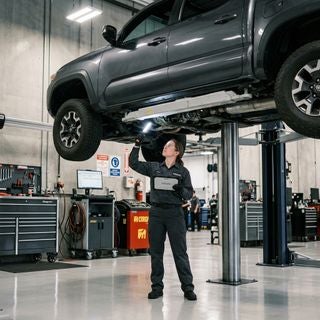
g

What Should You Look for When Buying a Pre-Owned Ford Vehicle?

When buying a pre-owned Ford vehicle, prioritize verified service records, frame and underbody condition, proper engine and drivetrain selection for your towing or passenger needs, and factory-backed certification. Focusing on documented maintenance, checking for original tow packages, verifying technology functionality, and opting for certified warranty coverage ensures long-term dependability, lower cost of ownership, and cost control. Evaluating a used truck or SUV requires a systematic approach to ensure you receive maximum value. Vehicle history reports provide essential details regarding previous maintenance, title status, and accident history. Examining routine service entries—such as oil changes, fluid flushes, and brake service—gives a clear picture of how well the prior owner maintained the mechanical components. Structural integrity is equally important. For buyers in East Liverpool, inspecting the frame and underbody for excessive corrosion is crucial due to seasonal road treatments and driving along riverfront bluffs. Another critical factor is verifying that factory equipment aligns with your lifestyle requirements. If you plan to haul heavy loads, confirming the presence of an integrated trailer brake controller, upgraded axle ratios, and cooling packages is essential rather than relying on aftermarket additions. Interior technology, including infotainment displays and active safety systems, should be tested thoroughly during a test drive. Choosing a vehicle with comprehensive vehicle reconditioning and clear inspection documentation gives you total confidence on the road. Starting your purchase research online simplifies the process. You can fill out an online credit application from home to secure pre-approval, view our East Liverpool showroom address for driving directions, or give our sales team a quick call at (330) 462-7578 to ask about specific vehicle arrivals. Table of Contents Does the Ford Explorer Have a Third Row of Seating for Families? What Towing Capacity Does a Pre-Owned Ford F-150 Offer? How Does a Used Ford F-150 Compare to a Pre-Owned Chevrolet Silverado 1500? What Is Ford SYNC 4 and How Does Tech Impact F-150 Resale Value? Is Buying a Ford Certified Pre-Owned Vehicle Worth the Extra Cost? What Financing Options Are Available for Used Trucks and SUVs at Tri State Ford? Common Questions About Pre-Owned Ford Trucks and SUVs Take the Next Step Toward Your Pre-Owned Ford at Tri State Ford Does the Ford Explorer Have a Third Row of Seating for Families? Yes, the Ford Explorer comes standard with three rows of seating across all trim levels, accommodating up to six or seven passengers depending on whether the second row features captain's chairs or a bench seat. Family transport demands versatile cabin layouts, and the Explorer delivers exceptional interior flexibility for growing households. Models equipped with a second-row 35/30/35 split-fold bench seat provide seating for seven, while configurations with second-row captain's chairs seat six and create an easy center aisle for third-row access. The third-row 50/50 split-fold bench offers comfortable legroom for children and teens, making school runs and weekend road trips effortless. When you need maximum utility, folding down both rear rows opens up an expansive flat load floor capable of carrying bulky gear, luggage, or home improvement supplies. Behind the third row, the Explorer provides about 16 cubic feet of dedicated cargo space, keeping daily essentials secured while maintaining full passenger capacity. Under the hood, modern pre-owned models feature a responsive turbocharged 2.3L EcoBoost 4-cylinder engine paired with a SelectShift automatic transmission, delivering an EPA-estimated 20 mpg city / 27 hwy. For drivers needing extra traction on wet pavement or winter roads, available All-wheel drive automatically adjusts torque distribution to maintain stability. When properly equipped, the Explorer also boasts a maximum towing capacity of up to 5,000 pounds, easily pulling small boats, camper trailers, or recreational gear. For families in Calcutta, the Explorer balances suburban carpooling convenience along State Route 170 with the rugged utility needed for outdoor weekend trips to nearby Beaver Creek State Park. If you prefer a tailored configuration with specific interior packages or color schemes, our team can guide you through the custom order process to secure a vehicle built exactly to your preferences. What Towing Capacity Does a Pre-Owned Ford F-150 Offer? A pre-owned Ford F-150 offers a maximum conventional towing capacity between 8,200 pounds and 13,500 pounds, depending directly on the engine, cab layout, axle ratio, and installed towing packages. Understanding F-150 tow ratings requires matching the specific powertrain to your trailering demands. The F-150 lineup features several distinct engines, each engineered for balanced output and strength: 2.7L EcoBoost V6: Generates 325 horsepower and 400 lb-ft of torque, providing high fuel efficiency with standard towing capabilities up to 10,100 pounds. 5.0L Ti-VCT V8: Delivers 400 horsepower and 410 lb-ft of torque, offering classic naturally aspirated V8 muscle with towing power up to 13,000 pounds. 3.5L EcoBoost V6: Produces 400 horsepower and 500 lb-ft of torque, reaching the peak F-150 towing threshold of 13,500 pounds and a maximum payload rating of 2,440 pounds when properly equipped. 3.5L PowerBoost full-hybrid V6: Combines gas and electric power to output 430 horsepower and 570 lb-ft of torque, achieving a maximum tow rating of 12,700 pounds alongside onboard generator capability. All pre-owned F-150 engines pair with a smooth-shifting 10-speed SelectShift automatic transmission that optimizes gear ratios to keep the engine in its prime power band while pulling heavy loads up steep grades. To achieve maximum tow ratings, look for models equipped with the factory Max Trailer Tow Package. This package incorporates a 3.55 or 3.73 electronic-locking rear axle, an integrated trailer brake controller, an upgraded rear bumper, an extended-range fuel tank, and Smart Trailer Tow Connector technology. During vehicle walk-arounds, our team regularly demonstrates how the integrated trailer brake controller and hitch setup operate, helping buyers understand how factory trailer packages enhance real-world stability. If you plan to upgrade to an F-150, you can start by requesting an instant cash offer appraisal to determine your current vehicle's trade value. How Does a Used Ford F-150 Compare to a Pre-Owned Chevrolet Silverado 1500? A used Ford F-150 offers competitive towing and payload ratings alongside an aluminum-alloy body, whereas a pre-owned Chevrolet Silverado 1500 relies on traditional steel body construction and standard V8 engine choices. The defining structural distinction between these two full-size trucks lies in body construction. Ford transitioned the F-150 to a high-strength aluminum-alloy body on a high-strength steel frame, reducing overall vehicle weight by hundreds of pounds. This weight savings is directly reinvested into increased payload capacity and higher tow ratings. While the Chevrolet Silverado 1500 uses a traditional steel bed and body, the lighter body structure of the F-150 allows it to achieve a top conventional towing capacity of 13,500 pounds compared to lower maximum thresholds in equivalent Silverado setups. Powertrain strategy represents another key difference. While the Silverado 1500 relies heavily on naturally aspirated V8 engines, Ford offers a diverse engine portfolio centered around twin-turbocharged EcoBoost V6 technology and full-hybrid power. The Ford 3.5L EcoBoost V6 delivers 500 lb-ft of low-end torque early in the RPM range, providing superior pulling power from a complete stop when compared to traditional V8 engines that require higher engine speeds to reach peak torque. Additionally, Ford's 10-speed SelectShift automatic transmission offers finer ratio steps than older six-speed or eight-speed automatic transmissions found in many pre-owned Silverado models, resulting in smoother power delivery under heavy acceleration. Shoppers interested in well-maintained trucks with verified background histories can browse our inventory of pre-owned single-owner vehicle inventory to compare low-mileage F-150 models against competing pre-owned trucks on our lot. What Is Ford SYNC 4 and How Does Tech Impact F-150 Resale Value? Ford SYNC 4 is an advanced cloud-connected infotainment system featuring wireless smartphone integration, conversational voice command, and over-the-air update capability, standard on most 2021 and newer Ford F-150 trucks. Modern vehicle technology plays a major role in day-to-day driving convenience and long-term asset value. Ford SYNC 4 upgrades cabin connectivity by offering wireless Apple CarPlay and Android Auto compatibility, allowing drivers to project navigation, music, and communication apps directly onto standard 8-inch or available 12-inch touchscreens without plugging in a cable. Cloud connectivity enhances voice recognition, permitting natural spoken requests for directions, audio adjustments, or climate control settings. Furthermore, over-the-air software updates ensure the system receives performance enhancements and feature additions over time, keeping the vehicle's tech suite modern years after manufacture. Vehicle technology and factory options directly influence long-term resale value retention. In the pre-owned truck market, several key factors dictate how well an F-150 retains its value over time: Cabin Technology: Touchscreen interfaces with Ford SYNC 4 and digital cluster displays command higher market demand than basic sync setups. Drivetrain and Cab Configuration: SuperCrew body styles paired with four-wheel drive maintain the highest demand and resale percentages. Engine Selection: Trucks fitted with the powerful 3.5L EcoBoost V6 or 3.5L PowerBoost full-hybrid V6 hold strong market value due to their high torque outputs and towing capabilities. Trim Level: Mid-to-upper trims such as the Lariat or King Ranch retain strong buyer interest due to premium leather seating, advanced Ford Co-Pilot360 driver-assist features, and luxury creature comforts. Understanding these resale dynamics helps buyers select a pre-owned truck that will retain maximum value over their ownership cycle. You can evaluate your current vehicle's current equity using our online vehicle trade-in evaluation tool before upgrading to an F-150 equipped with SYNC 4. Is Buying a Ford Certified Pre-Owned Vehicle Worth the Extra Cost? Buying a Ford Certified Pre-Owned vehicle is worth the added cost because it delivers rigorous multi-point vehicle inspection standards, extended factory-backed warranty coverage, and 24/7 roadside assistance that non-certified used vehicles lack. The Ford Blue Advantage certification program eliminates the guesswork often associated with buying a pre-owned vehicle. Every candidate vehicle must undergo a comprehensive inspection conducted by factory-trained technicians before earning certified status. Any component that fails to meet strict Ford standards is repaired or replaced using genuine Ford parts. Ford Blue Advantage offers two primary certification tiers to match different vehicle ages and buyer budgets: Gold Certified: Applies to Ford models up to six model years old with less than 80,000 miles. It includes a thorough 172-point inspection, a 7-year or 100,000-mile powertrain limited warranty from the original in-service date, a 12-month/12,000-mile comprehensive limited warranty, 24/7 Roadside Assistance, and Ford Rewards Points. Blue Certified: Covers vehicles of any make up to 10 model years old with up to 120,000 miles. It requires a 139-point inspection and includes a 90-day or 4,000-mile comprehensive limited warranty alongside roadside coverage. The modest price premium of a certified pre-owned vehicle is easily offset by the financial protection of extended warranty coverage. Knowing that key mechanical components—including the engine, transmission, and drivetrain—are protected against unexpected repair bills provides exceptional peace of mind. Shoppers comparing pre-owned choices can explore our certified pre-owned Ford selection, view brand-new Ford models on our lot, or check our current manufacturer vehicle specials to identify the best overall value for their household budget. What Financing Options Are Available for Used Trucks and SUVs at Tri State Ford? Used truck and SUV financing options at Tri State Ford include competitive loan programs through Ford Credit, local credit unions, and national lending institutions, tailored to accommodate diverse credit profiles and down payment budgets. Securing auto financing should be a transparent and straightforward process. Our finance specialists work directly with multiple lending institutions to help buyers secure competitive interest rates and flexible loan terms with flexible loan terms. Whether you have exceptional credit, are building your credit history, or fall into a first-time buyer program, our team structures financing packages designed around your monthly income and budget goals. Utilizing trade-in equity from your current vehicle can significantly lower your net loan amount, which can help you better manage your monthly budget over the term of the contract. Completing loan pre-approval before visiting the dealership grants you significant advantages during the shopping process. Pre-approval establishes a clear budget baseline, allowing you to focus on pre-owned trucks and SUVs that fit your target monthly payment. Furthermore, having pre-approved financing streamlines paperwork processing in the finance office, allowing you to complete your purchase efficiently and drive home in your pre-owned vehicle. When you are ready to explore available financing structures in person, locate our convenient dealership location or contact our finance team by giving us a quick call at (330) 462-7578 to discuss current lending rates. Common Questions About Pre-Owned Ford Trucks and SUVs Q: Does the standard Ford Explorer hybrid require a plug-in wall charger? No, the standard Ford Explorer hybrid does not require an external wall charger or plug. The hybrid system utilizes regenerative braking and engine power to recharge its onboard liquid-cooled lithium-ion battery automatically while driving. Energy captured during deceleration is stored in the battery and sent back to the electric motor to assist acceleration, maximizing fuel efficiency without changing your daily refueling habits. Q: What equipment is required on an F-150 to reach its maximum tow rating? Reaching the maximum 13,500 pounds conventional towing capacity requires an F-150 equipped with the 3.5L EcoBoost V6 engine, 4x2 drivetrain, SuperCrew or SuperCab configuration, 3.55 or 3.73 rear axle ratio, and the factory Max Trailer Tow Package. This package incorporates a heavy-duty rear bumper, integrated trailer brake controller, Smart Trailer Tow Connector, and enhanced cooling components necessary to handle peak GCWR limits safely. Q: Can I transfer a Ford Gold Certified warranty if I sell the vehicle later? Yes, the 7-year or 100,000-mile powertrain limited warranty attached to a Ford Gold Certified pre-owned vehicle is fully transferable to subsequent private owners. If you decide to sell your vehicle before the warranty term expires, transferring the remaining factory-backed coverage to the new owner increases buyer confidence and helps command a higher private-party resale price. Q: What documents should I bring to the dealership when applying for auto financing? When completing a vehicle purchase and auto loan application, bring a valid driver's license, your current auto insurance card, your most recent proof of income (such as pay stubs or bank statements), and proof of residence (such as a utility bill). If you plan to trade in a vehicle, bring the vehicle's title or lien payoff information along with all sets of keys. Q: How does a 10-speed automatic transmission improve truck towing performance? The 10-speed SelectShift automatic transmission features narrow step ratios between gears, keeping the engine operating in its sweet spot during acceleration. When pulling heavy trailers up steep grades, the transmission optimizes torque delivery and gear selection to reduce hunting between gears. Additionally, wide overall ratio spans allow for lower numeric top gears, reducing engine RPM at highway speeds to conserve fuel while cruising without a load. Take the Next Step Toward Your Pre-Owned Ford at Tri State Ford Finding the ideal pre-owned truck or SUV comes down to choosing a quality vehicle backed by clear inspection standards, transparent financing, and proven performance capabilities. Whether you require the three-row family utility of a Ford Explorer, the outstanding towing power of an F-150, or the reassurance of a Ford Blue Advantage Certified Pre-Owned warranty, our team is dedicated to delivering outstanding value. Explore our online inventory, calculate your trade-in equity, apply for pre-approved financing, or visit our showroom today to take your test drive and drive home with complete confidence. Keep Your Vehicle Running Strong Keep your vehicle performing at its best with our service team: Order Parts Schedule Service Appt © 2026 Tri State Ford. All rights reserved. Vehicle specification data © JATO Dynamics Limited. Pre-Owned Ford Vehicles in East Liverpool OH | Tri State Ford

d

What You Need to Know When Shopping for a Used Ford Explorer

What You Need to Know When Shopping for a Used Ford Explorer ## How Does a Used Ford Explorer Compare to a Used Jeep Grand Cherokee? A used Ford Explorer provides standard three-row seating for up to seven passengers, a stronger standard turbocharged engine with 300 horsepower, and greater rear cargo volume than a comparable two-row Jeep Grand Cherokee. While the Grand Cherokee focuses on two-row off-road luxury or requires upgrading to the longer Grand Cherokee L for three rows, a used Ford Explorer delivers superior standard passenger versatility, higher fuel efficiency, and confident rear-wheel-drive performance for everyday family driving. When buyers compare these two midsize SUVs, the practical cabin layout is usually the first major difference they notice. The standard two-row Jeep Grand Cherokee features 293 horsepower from its 3.6L V6 and maxes out at five seats, forcing growing families to look specifically for the larger Grand Cherokee L if they need a third row. By contrast, sixth-generation used Ford Explorer models come standard with three rows, accommodating six people with second-row captain's chairs or seven with the second-row bench seat. On our showroom floor, families often ask whether a two-row midsize SUV can handle long-term growth; having that third row standard in the Ford Explorer avoids the need to upgrade vehicles prematurely as kids grow. Under the hood, a used Ford Explorer equipped with the standard 2.3L EcoBoost four-cylinder delivers 300 horsepower and 310 lb-ft of torque. That output beats the Grand Cherokee's 293-horsepower V6 in both horsepower and low-end torque, giving the Explorer snappier throttle response when accelerating onto highways. Furthermore, sixth-generation Explorer models (2020 and newer) offer up to 87 cubic feet of total cargo volume behind the front seats, compared to roughly 70 cubic feet in the standard two-row Grand Cherokee. If you are comparing midsize haulers in person, drop by our East Liverpool showroom address or give our sales team a call to explore our current inventory. Table of Contents What Year Did the Ford Explorer Switch Back to Rear-Wheel Drive Platform Architecture? Is the 2.3L EcoBoost Engine Reliable in a Used Ford Explorer? Can a Used Ford Explorer Tow a Camper Trailer for Weekend Getaways? What Is a Fair Price for a Used Ford Explorer and Which Trim Offers the Best Value? How Can You Maximize Your Used Ford Explorer Resale Value Over Time? Where Can Shoppers Near East Liverpool Check Local Used Ford Explorer Inventory? What Year Did the Ford Explorer Switch Back to Rear-Wheel Drive Platform Architecture? Ford switched the Explorer back to a rear-wheel-drive-based unibody platform architecture for the 2020 model year with the launch of its sixth generation. This major platform transition replaced the previous fifth-generation (2011–2019) front-wheel-drive layout with the CD6 platform, drastically improving driving dynamics, towing balance, and overall cabin proportions. Shifting back to a longitudinal rear-wheel-drive orientation transformed how a used Ford Explorer handles daily road stress. By mounting the engine longitudinally, engineers shifted the front axle forward, shortening the front overhang and achieving near 50/50 weight distribution. This balance reduces front-end plow in sharp turns and eliminates steering tug during acceleration. When equipped with intelligent four-wheel drive, a 2020 or newer used Ford Explorer operates primarily in rear-wheel drive under normal conditions, sending power forward instantly when wheel slip is detected. The rear-wheel-drive architecture also allowed Ford to increase towing capability across all trim levels. While fifth-generation front-wheel-drive models felt front-heavy under heavy tongue weights, 2020 and newer models handle trailering loads with far greater stability. The underlying chassis design supports both the standard 300-horsepower 2.3L EcoBoost and the high-performance 400-horsepower 3.0L EcoBoost V6 found in the ST trim. Both powertrains pair with a responsive 10-speed automatic transmission. Shoppers looking for peak mechanical confidence can browse our certified pre-owned Ford inventory to find rear-wheel-drive platform models backed by factory warranty coverage. Engine & Performance Powertrain specs by trim Feature Active 4WD Active 4WD 100A Active RWD Active RWD 100A Platinum Platinum 4WD ST ST 4WD ST-LINE 4WD ST-LINE RWD Tremor 4WD Utility Police Interceptor 4x4:--:--:--:--:--:--:--:--:--:--:--:--:-- Engine 2.3L 2.3L 2.3L 2.3L 2.3L 2.3L 3L 3L 2.3L 2.3L 2.3L 3.3L Horsepower 300 hp 300 hp 300 hp 300 hp 300 hp 300 hp 400 hp 400 hp 300 hp 300 hp 300 hp 318 hp Torque 310 lb-ft 310 lb-ft 310 lb-ft 310 lb-ft 310 lb-ft 310 lb-ft 415 lb-ft 415 lb-ft 310 lb-ft 310 lb-ft 310 lb-ft 260 lb-ft Transmission SelectShift® SelectShift® SelectShift® SelectShift® SelectShift® SelectShift® SelectShift® SelectShift® SelectShift® SelectShift® SelectShift® SelectShift Drivetrain All-wheel drive All-wheel drive Rear-wheel drive Rear-wheel drive Rear-wheel drive All-wheel drive Rear-wheel drive All-wheel drive All-wheel drive Rear-wheel drive All-wheel drive All-wheel drive Is the 2.3L EcoBoost Engine Reliable in a Used Ford Explorer? The 2.3L EcoBoost four-cylinder engine has earned a solid track record for long-term mechanical reliability in the Ford Explorer when maintained with routine oil changes and factory-scheduled care. Featuring a rigid die-cast aluminum block, direct fuel injection, twin-scroll turbocharging, and a durable chain-driven valvetrain, this powertrain delivers robust daily acceleration without premature wear. With 300 horsepower and 310 lb-ft of torque on tap, the 2.3L EcoBoost engine operates with minimal mechanical strain during highway cruising and suburban commuting. Unlike older turbocharged engines that required frequent teardowns, modern EcoBoost engineering incorporates advanced cooling jackets and synthetic oil formulations that protect turbocharger bearings from heat buildup. For sixth-generation models, an EPA-estimated fuel economy rating of 20 mpg city / 29 mpg highway in rear-wheel drive proves that solid power output does not come at the expense of efficiency. When evaluating a used Ford Explorer equipped with this engine, reviewing documented maintenance history offers complete peace of mind. Regular oil changes protect the hydraulic timing chain tensioners and variable camshaft timing phasers, keeping the engine running quietly well past 100,000 miles. To review high-quality pre-owned options with verified service backgrounds, check out our selection of single-owner pre-owned vehicles and start your purchase process online using our secure online credit application. Can a Used Ford Explorer Tow a Camper Trailer for Weekend Getaways? A properly equipped used Ford Explorer can tow up to 5,000 pounds, making it fully capable of hauling single-axle camper trailers, pop-up campers, teardrop trailers, and personal watercraft. Every sixth-generation Ford Explorer equipped with the factory Class III Trailer Tow Package includes a heavy-duty receiver hitch, trailer wiring harness, and integrated trailer sway control to keep your load stable on open highways. Calculating your total towing setup requires looking at both trailer weight and payload capacity. A typical lightweight travel trailer weighs between 2,800 and 3,800 pounds dry, leaving plenty of margin under the Explorer's 5,000-pound maximum towing capacity for water tanks, camping gear, and family passengers. The standard Class III Trailer Tow Package uses electronic stability controls to apply selective braking if trailer sway is detected, keeping your vehicle tracking straight on winding roads. Navigating steep highway climbs or gravel access routes is straightforward thanks to selectable drive modes like Tow/Haul, which adjusts the shift points of the 10-speed automatic transmission to keep the engine in its optimal powerband. For buyers who need even heavier commercial towing capacity for heavy equipment or multi-car trailers, our team can also guide you toward our commercial truck inventory to explore heavy-duty hauling solutions. What Is a Fair Price for a Used Ford Explorer and Which Trim Offers the Best Value? Fair market pricing for a used Ford Explorer may vary by vehicle, mileage, condition, and market, with examples ranging from roughly $15,000 to $18,000 for well-kept fifth-generation models (2016–2018), while recent sixth-generation models (2020–2023) may typically range between $28,000 and $38,000 depending on mileage, condition, and trim level. Among all available configurations, the XLT trim represents the ultimate value sweet spot by delivering essential convenience features without elevated luxury price tags. Choosing an XLT trim gets buyers popular everyday upgrades, including heated front seats, power-adjustable driver seating, second-row captain's chairs, keyless entry with push-button start, and the comprehensive Ford Co-Pilot360 suite of driver-assist technologies. Higher trims like the Limited, Platinum, or performance-tuned ST introduce leather seating, 20-inch wheels, and available twin-turbo V6 power, but they command higher market prices. Understanding how mileage impacts pricing helps buyers budget effectively. Pre-owned Explorers under 60,000 miles carry a slight price premium because they remain eligible for extended powertrain protection, whereas vehicles closer to 80,000 miles offer steep upfront savings for budget-conscious buyers. Before setting your target price, you can easily value your trade-in online to estimate your purchasing power, or explore our custom factory order tool if you ultimately decide to design a brand-new vehicle. Pricing Pricing by trim Feature Active 4WD Active 4WD 100A Active RWD Active RWD 100A Platinum Platinum 4WD ST ST 4WD ST-LINE 4WD ST-LINE RWD Tremor 4WD Utility Police Interceptor 4x4:--:--:--:--:--:--:--:--:--:--:--:--:-- Base MSRP $42,585 $40,465 $40,585 $38,465 $50,965 $52,965 $54,905 $56,905 $47,155 $45,155 $48,965 $48,550 Destination charge $1,795 $1,795 $1,795 $1,795 $1,795 $1,795 $1,795 $1,795 $1,795 $1,795 $1,795 $1,695 How Can You Maximize Your Used Ford Explorer Resale Value Over Time? Maximizing the future resale value of a used Ford Explorer comes down to maintaining detailed service records, addressing minor exterior chips promptly, and keeping up with factory recall services. Vehicles that show documented oil changes, timely brake services, and routine tire rotations consistently command higher trade-in values and attract buyer interest faster when it comes time to sell. Preserving both mechanical and cosmetic condition protects your vehicle investment against unnecessary depreciation. Parking in shaded or garaged areas prevents paint fading and interior dash cracking, while installing all-weather floor liners shields interior carpeting from mud, snow, and salt. Addressing windshield stone chips or minor body door dings immediately prevents rust from forming on exposed metal. Furthermore, ensuring all manufacturer safety recalls and service bulletins are completed at an authorized dealership maintains clean vehicle history reports. Keeping a dedicated folder of all maintenance invoices provides physical proof of care for future buyers. If your transportation needs evolve into commercial applications down the line, our dealership also supplies our commercial vehicle options to support local business growth. Where Can Shoppers Near East Liverpool Check Local Used Ford Explorer Inventory? Shoppers near East Liverpool can inspect, test-drive, and purchase local pre-owned Ford Explorer models directly at Tri State Ford, located right in town at 1503 Pennsylvania Avenue. Visiting a dedicated local Ford showroom ensures access to thoroughly inspected vehicles, detailed Carfax history reports, transparent trade-in appraisals, and competitive local financing options. Taking a test drive on local roads gives you a true feel for how a used Ford Explorer handles daily transportation demands. Navigating the riverfront bluffs and elevation changes around East Liverpool demonstrates the immediate power of the 2.3L EcoBoost engine and the firm grip of available intelligent four-wheel drive. Families living in nearby suburban communities like Calcutta appreciate testing the easy single-touch folding mechanism on the second-row seats to ensure car seats and sports equipment fit effortlessly. Our sales team is committed to providing a transparent, stress-free buying experience tailored to your family's budget. Whether you are comparing low-mileage XLT models or exploring high-performance ST builds, you can visit our local dealership today, give our staff a call at (330) 462-7578, or browse our new Ford vehicle inventory to explore every option on our lot. Keep Your Vehicle Running Strong Keep your vehicle performing at its best with our service team: Order Parts Schedule Service Appt © 2026 Tri State Ford. All rights reserved. Vehicle specification data © JATO Dynamics Limited. Used Ford Explorer Deals in East Liverpool OH | Tri State Ford
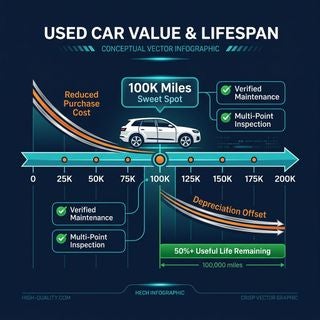
g

Is Buying a Used Car With 100,000 Miles a Good Decision?

Buying a used car with 100,000 miles is a smart financial decision when the vehicle has a documented service history and passes a comprehensive mechanical evaluation. Modern engineering standards mean properly maintained vehicles easily operate beyond 200,000 miles, allowing a 100,000-mile vehicle to deliver half or more of its total service life at a strong value. The historic belief that 100,000 miles marks the end of a vehicle's useful life is an outdated remnant from decades past. Advanced powertrain manufacturing, precision tolerances, and synthetic lubricants allow modern engines and transmissions to stay in top working order far longer than older designs. Choosing a vehicle at this milestone allows you to bypass the steepest portion of the vehicle depreciation curve, translating into lower monthly payments, reduced vehicle insurance premiums, and exceptional overall value. For buyers navigating the suburban State Route 170 corridor in Calcutta, a well-maintained pre-owned SUV or truck with 100,000 miles offers reliable everyday transportation, ample cargo space for school runs, and robust towing capability for weekend trips. The key to securing a quality vehicle at this mileage lies in reviewing vehicle history records to confirm regular oil changes, timely fluid flushes, and scheduled belt replacements. At Tri State Ford, our pre-owned selection undergoes rigorous multi-point inspections so you can shop with total confidence. If you want to check out our pre-owned lineup in person, you can easily find our showroom location, reach out directly by giving our sales team a quick call at (330) 462-7578, or start your buying journey from home by filling out an online credit application today. Table of Contents Which Vehicle Brands and Engine Designs Reliably Exceed 200,000 Miles? 100,000 Highway Miles vs. 50,000 City Miles: Which Used Car Is the Better Value? At What Mileage Mark Does Vehicle Depreciation Slow Down the Most? What Mechanical Components and Fluid Inspections Reveal True 100,000-Mile Vehicle Health? Understanding Extended Warranty Coverage: Inclusionary vs. Exclusionary Policies Common Questions About Buying High-Mileage Used Vehicles Find Your Next Reliable Pre-Owned Vehicle at Tri State Ford Which Vehicle Brands and Engine Designs Reliably Exceed 200,000 Miles? Naturally aspirated four-cylinder engines, under-stressed V6 configurations, and heavy-duty V8 powertrains paired with simple automatic transmissions consistently demonstrate the mechanical endurance needed to exceed 200,000 miles. Engineering designs that prioritize durable iron or reinforced aluminum engine blocks, timing chains rather than timing belts, and proven fuel delivery systems routinely outlast over-boosted or highly complex engine setups. When evaluating long-term dependability, Ford's engineering lineup stands out for rugged capability and sustained longevity. Built tough powertrains like the naturally aspirated 3.5L Duratec V6, the durable 2.5L iVCT inline-four, and the legendary 5.0L Coyote V8 feature robust metallurgy designed to handle decades of heavy use. Combined with heavy-duty cooling systems and smooth-shifting 10-speed automatic or 6-speed automatic transmissions, these powertrains handle daily commuter demands, heavy cargo loads, and trailer hauling without premature wear. In addition to Ford’s proven engine families, trucks and full-size SUVs built on body-on-frame platforms consistently reach high mileage totals. Models like the Ford F-150 and Ford Expedition offer the structural strength, high towing capacity, and spacious seating required for active family lifestyles and heavy-duty work schedules. Selecting an engine design built for high-mileage longevity gives you dependable performance and long-term peace of mind on every journey. If you are exploring your buying options or comparing new versus pre-owned values across our inventory, take a moment to review our current manufacturer specials to find the right vehicle for your family budget. 100,000 Highway Miles vs. 50,000 City Miles: Which Used Car Is the Better Value? A used vehicle with 100,000 highway miles generally represents a better mechanical value and a smarter purchase than a vehicle with 50,000 city-driven miles. Highway driving allows the engine and transmission to operate at stable operating temperatures with minimal gear shifting, reducing wear on internal components, brakes, and suspension parts. Stop-and-go city driving inflicts far more severe wear per mile on a vehicle's powertrain and chassis. Commuters navigating dense traffic, such as the frequent stop-and-go conditions along Market Street in Boardman, subject their vehicles to thousands of additional gear shifts, constant brake application, extended engine idling, and repeated starter motor cycles. City driving also exposes the suspension to frequent potholes and curb strikes, accelerating wear on struts, ball joints, and control arm bushings. In contrast, highway miles are accrued with the engine turning at a low, steady RPM while constant airflow keeps engine coolant and transmission fluid within ideal operating ranges. A 100,000-mile highway cruiser often exhibits pristine seat upholstery, minimal wear on brake rotors, and clean internal engine components. When evaluating pre-owned vehicles, verifying ownership history is critical. To shop vehicles with documented histories, explore our inventory of one-owner pre-owned vehicles. If you are upgrading from your current ride, you can also value your current trade-in online to see how much equity you can apply toward your purchase. At What Mileage Mark Does Vehicle Depreciation Slow Down the Most? Vehicle depreciation flattens significantly between the 100,000-mile and 120,000-mile marks, creating an ideal buying window where future equity loss remains minimal over years of ownership. While a new car experiences its steepest value drop during the first three to five years, a 100,000-mile vehicle has already absorbed that initial financial drop. The following list outlines how vehicle depreciation typically progresses across a vehicle's life cycle: Years 1 to 3: Rapid initial depreciation, where a vehicle can lose 30% to 50% of its original retail value. Miles 50,000 to 80,000: Moderate depreciation as factory powertrain warranties expire and secondary market pricing establishes a baseline. Miles 100,000 to 120,000: Depreciation flattens dramatically; vehicle valuation shifts from age and mileage metrics to functional mechanical condition and physical appearance. Miles 120,000 and beyond: Value stabilizes into a flat floor, where well-maintained vehicles retain strong resale value based purely on utility and driving reliability. Buying a pre-owned vehicle past the 100,000-mile mark protects your investment from sudden drops in valuation. Should you decide to sell or trade the vehicle several years later, the minimal difference between your purchase price and future value ensures an exceptionally low cost of ownership. For buyers who prefer zero previous mileage and complete factory warranty coverage, custom ordering remains an attractive path. You can explore those options by designing a personalized build through our page for custom ordering a new Ford. What Mechanical Components and Fluid Inspections Reveal True 100,000-Mile Vehicle Health? A professional pre-purchase evaluation focusing on engine compression and fluid condition provides an accurate assessment of a 100,000-mile vehicle's health. Comprehensive fluid checks reveal how well prior owners maintained the internal components, while compression testing verifies cylinder sealing, valve health, and piston ring integrity. When inspecting a pre-owned candidate on the lot, paying close attention to vital mechanical indicators ensures you make an informed decision: Transmission Fluid: Healthy automatic transmission fluid exhibits a clear pink or red hue. Dark, burnt-smelling fluid indicates excessive heat buildup, clutch pack friction, or deferred maintenance. Engine Oil and Coolant: Oil should be free of milky emulsion, which signals a head gasket breach. Coolant should be clean and bright without rust scale or oil film floating in the reservoir. Engine Cylinder Compression: Uniform compression pressure across all cylinders confirms that internal engine combustion chambers maintain tight mechanical sealing. Timing Belt and Water Pump: On engines equipped with timing belts rather than chains, service records should confirm replacement between 60,000 and 105,000 miles. Interference engine designs risk severe valve damage if a worn belt breaks. Suspension and Brake Components: Struts, shock absorbers, control arm bushings, and brake rotors should be inspected for fluid leaks, excessive play, or deep heat scoring. Undercarriage Frame Integrity: Inspecting the frame rails, floor pans, and brake lines ensures the vehicle remains structurally sound and free of severe rust damage. Taking time to verify these mechanical checkpoints guarantees that your pre-owned purchase is ready for years of dependable family transportation. To compare pre-owned value against fresh factory options, check out our new vehicle information to see all current incentives available today. Understanding Extended Warranty Coverage: Inclusionary vs. Exclusionary Policies Securing an extended warranty policy on a 100,000-mile vehicle offers financial protection against unexpected mechanical repairs and helps manage your long-term ownership costs. Understanding the distinction between inclusionary and exclusionary warranty policies is essential when choosing the right coverage plan for your budget. An exclusionary warranty policy offers the most comprehensive coverage available for high-mileage vehicles. Instead of listing every individual part that is covered, an exclusionary contract covers all mechanical and electrical components on the vehicle except for a brief, specific list of excluded items. Exclusions typically consist of basic wear items such as brake pads, wiper blades, spark plugs, tires, and routine maintenance fluids. Because anything not explicitly excluded is covered, exclusionary plans deliver maximum confidence and leave zero guesswork regarding repair claims. An inclusionary warranty policy operates under the opposite framework. This type of plan only covers the specific components explicitly named inside the contract document. If an unlisted part fails—such as a specialized electronic sensor or power window motor—the repair cost falls entirely on the vehicle owner. While inclusionary plans often carry a lower upfront price tag, their restricted component lists mean less total protection compared to exclusionary options. For buyers seeking maximum peace of mind in a pre-owned vehicle, Ford Certified Pre-Owned vehicles offer exceptional factory-backed protection. Certified models pass a detailed 139-point or 172-point inspection and include factory-backed warranty benefits, such as a 12-month/12,000-mile comprehensive warranty or a 7-year/100,000-mile powertrain warranty. Explore our current pre-owned inventory by browsing our certified pre-owned Ford lineup. Common Questions About Buying High-Mileage Used Vehicles Q: What major service items should be completed on a car at 100,000 miles? At 100,000 miles, a complete service update typically includes replacing spark plugs, flushing the engine coolant, replacing air and cabin filters, and servicing the transmission fluid and differential lubricants. On engines equipped with a timing belt, replacing both the belt and the water pump is critical to prevent engine damage. A thorough inspection of the suspension struts, brake pads, rotors, serpentine drive belts, and battery health should also be performed. Q: How much does a comprehensive 100,000-mile service cost? A comprehensive 100,000-mile service typically ranges between $500 and $1,500 depending on the vehicle layout, engine size, and specific maintenance requirements. Basic fluid flushes, spark plug replacements, and multi-point inspections sit on the lower end of the price spectrum, while vehicles requiring a timing belt and water pump replacement push total costs toward the higher end. Purchasing a vehicle that already has documented service records for these items saves you immediate out-of-pocket expense. Q: What happens if a timing belt fails on a high-mileage engine? If a timing belt breaks on an interference engine design, the engine's camshaft stops turning while the crankshaft continues to rotate. This causes the rising pistons to collide directly with open intake and exhaust valves. This mechanical impact results in bent valves, damaged pistons, and severe cylinder head destruction, frequently requiring a complete engine rebuild or replacement. Verifying timing belt replacement history on 100,000-mile vehicles is crucial. Q: Can regular fluid changes prevent major mechanical failures past 100,000 miles? Regular fluid changes are the single most effective way to extend the lifespan of an engine, transmission, and differential past 100,000 miles. Over time, vital fluids break down due to thermal heat stress and become contaminated with microscopic metal particles and carbon debris. Flushing and replacing engine oil, transmission fluid, brake fluid, and engine coolant removes abrasive contaminants and restores essential corrosion inhibitors, protecting precision internal surfaces from premature wear. Q: Does financing a 100,000-mile vehicle require a larger down payment? Financing a 100,000-mile vehicle does not automatically mandate a larger down payment, though putting money down helps secure more favorable loan terms and lower monthly payments. Most auto lenders evaluate loan approval based on your overall credit profile, debt-to-income ratio, and the vehicle's book value. Providing a down payment lowers the loan-to-value ratio, which helps lower your interest rate and shortens your overall financing term. Find Your Next Reliable Pre-Owned Vehicle at Tri State Ford Buying a pre-owned vehicle with 100,000 miles is a practical, value-driven strategy that delivers reliable transportation without the heavy depreciation of a new car purchase. By focusing on proven engine designs, verified service histories, and thorough mechanical evaluations, you can drive home in a quality truck, SUV, or sedan that is fully prepared to serve your family for years to come. Our team at Tri State Ford is dedicated to helping you find the right vehicle for your daily lifestyle and budget. We invite you to explore our pre-owned lot, test-drive our pre-owned selection, and discuss customized auto financing options with our finance specialists. Ready to take the next step toward your next vehicle? You can visit our showroom at 1503 Pennsylvania Ave, East Liverpool, OH 43920, speak directly with our team by calling (330) 462-7578, or start exploring your options online to browse our new Ford inventory and pre-owned models today. Keep Your Vehicle Running Strong Keep your vehicle performing at its best with our service team: Order Parts Schedule Service Appt © 2026 Tri State Ford. All rights reserved. Used Cars with 100,000 Miles in East Liverpool OH | Tri State Ford
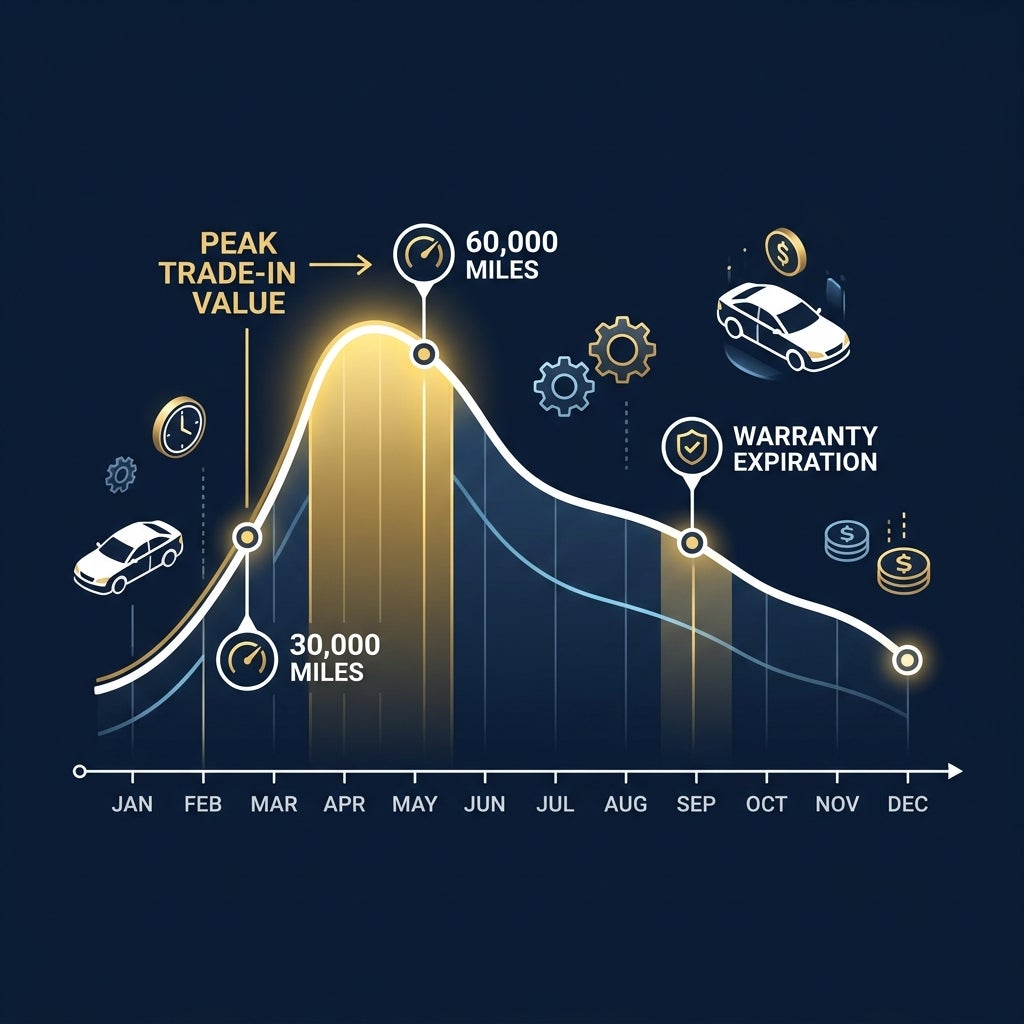
2

When Is the Best Time to Trade In Your Vehicle?

The best time to trade in your vehicle is during late winter and early spring, specifically between February and April, when tax refund demand drives wholesale values up and dealer appetite for used inventory peaks. Secondary ideal timing includes trading right before major mileage thresholds like 30,000 or 60,000 miles, or just prior to factory warranty expiration. Selling during these specific windows secures maximum equity before depreciation steps down further. Timing a trade-in properly keeps money in your pocket and gives you the maximum equity toward your next purchase. Wholesale market data consistently shows that pre-owned vehicle values follow a seasonal arc across the country. Values hit a seasonal low in January, rebound sharply during spring tax season, plateau through early summer, and slowly ease downward through late autumn. Trading in during the spring rush positions your car when pre-owned demand is strongest, helping you secure a top-dollar appraisal. Your personal vehicle lifecycle also dictates timing. Vehicle equity drops in predictable stages based on age, odometer readings, and mechanical warranty status. Upgrading before expensive scheduled service visits or major component replacements prevents out-of-pocket repair bills that never return a dollar-for-dollar increase on appraisal value. Combining favorable market demand with key lifecycle milestones ensures you trade at peak value. Our team at Tri State Ford makes transferring your vehicle equity simple, direct, and straightforward. Whether you want to transition into an expansive SUV with space for the whole family or start a new vehicle custom order tailored to your lifestyle, we evaluate your trade using live market data. If you have questions about your vehicle's current appraisal value, give our team a quick call or stop by our showroom address on Pennsylvania Ave to get a transparent appraisal. Table of Contents How Do Mileage Milestones, Year-One Depreciation, and Vehicle Age Affect Value? Should You Trade In Before Factory Warranty Expiration or Major Maintenance? What Time of the Month and Season Offers the Best Trade-In Negotiations? How Does Ohio Trade-In Sales Tax Credit Save You Money on Your Next Purchase? What Are the Risks of Selling Privately vs Using Online Instant Estimates? Answers to Common Questions About Vehicle Trade-Ins How Do Mileage Milestones, Year-One Depreciation, and Vehicle Age Affect Value? A new vehicle loses between 15% and 20% of its total retail value during its first year on the road, with the single steepest drop occurring the moment it leaves the lot. After that initial first-year drop, annual depreciation settles into a steady pace of roughly 10% to 15% per year, while specific odometer milestones create sudden downward adjustments in trade-in value. Understanding depreciation milestones allows you to time your trade-in right before significant value drops occur. The first major odometer threshold arrives at 30,000 to 40,000 miles. Vehicles in this bracket command premium trade-in appraisals because dealerships can easily recondition them into top-tier pre-owned inventory with minimal reconditioning expense. A three-year-old vehicle with under 36,000 miles represents a sweet spot for resale value, retaining a high percentage of its original value while staying well within standard factory warranty limits. The second major milestone occurs between 60,000 and 70,000 miles. At this stage, vehicles enter a secondary value band where buyers expect complete service records and fresh wear-and-tear components. The final sharp drop occurs when an odometer crosses 100,000 miles. Once a vehicle passes six figures on the dash, wholesale buyers and retail shoppers view it differently, and many dealerships route high-mileage trades directly to wholesale auctions rather than retail lots, resulting in lower appraisal offers. Drivers commuting daily along State Route 170 in suburban Calcutta rack up miles quickly on gentle rolling hills, making it critical to watch those odometer markers close. If your odometer is approaching 30,000 or 60,000 miles, trading in now secures maximum return before the next depreciation step down. You can explore our new Ford inventory to see the latest models equipped with Ford Co-Pilot360 driver-assist features and modern technology. We also invite you to review current Ford vehicle specials or check out pre-owned single-owner vehicles to find a reliable upgrade that matches your household budget. Mileage Window Depreciation Impact Appraisal Status Primary Dealer Resale Path Under 30,000 Miles Low (Initial steep drop completed) Maximum Value Prime Certified Pre-Owned Retail 30,000 to 60,000 Miles Moderate (Steady annual curve) Strong Value High-Grade Pre-Owned Retail 60,000 to 100,000 Miles Accelerated (Maintenance wear considerations) Fair Value Budget-Friendly Retail Lot Over 100,000 Miles Heavy (Significant steep drop) Reduced Value Wholesale Auction / Trade Entry Should You Trade In Before Factory Warranty Expiration or Major Maintenance? Trading in your car before its factory warranty expires yields higher appraisal offers because dealerships can market and recondition the vehicle with minimal financial risk. Most modern Ford vehicles carry a 3-year/36,000-mile bumper-to-bumper warranty alongside a 5-year/60,000-mile powertrain warranty, providing broad protection that enhances retail value on the pre-owned market. Selling a vehicle while original warranty coverage remains active gives the acquiring dealership a distinct reconditioning advantage. Dealers can inspect, service, and certify warranty-backed cars faster and with greater buyer confidence. This allows us to pass that value directly back to you in your trade-in offer. Once a car crosses out of its bumper-to-bumper or powertrain warranty windows, potential buyers and appraisers must account for future mechanical repair risks, which naturally lowers the baseline appraisal calculation. Major maintenance intervals present another crucial timing factor. Reaching a 60,000-mile service interval or a 100,000-mile milestone usually requires substantial maintenance investments, including new tires, complete brake replacements, transmission fluid flushes, and spark plug changes. Spending heavy out-of-pocket money on routine maintenance right before trading in rarely increases your car's appraisal dollar-for-dollar. For example, spending considerable money on new tires and brake service right before an appraisal might only increase the trade offer by a fraction of that expenditure. Trading in immediately prior to these major service dates saves you money by turning that impending maintenance expense into down-payment equity for a fresh vehicle. Upgrading to a newer model equipped with Ford’s proven quality means enjoying new vehicle dependability, modern smartphone integration, and refreshed bumper-to-bumper coverage. You can explore our certified pre-owned Ford lineup to see how factory warranty backing provides long-term peace of mind. What Time of the Month and Season Offers the Best Trade-In Negotiations? The final three days of any month consistently provide the best environment for trade-in price negotiations because sales teams work to hit monthly volume targets and manufacturer sales thresholds. Dealerships striving to meet monthly performance goals are often willing to adjust trade-in appraisal allowances upward to finalize a deal before the calendar turns. Seasonal timing reinforces monthly sales cycles. The absolute strongest quarter for trade-in values runs from late February through mid-April. During this spring window, federal tax refunds flow into buyer bank accounts, sparking peak retail demand for quality pre-owned vehicles. To meet this surge in customer demand, dealerships actively build used inventory, driving wholesale appraisal values higher than during any other season. Late Winter / Early Spring (February–April): Peak trade-in value driven by tax refund shoppers and high used inventory demand. Late Spring / Summer (May–July): Solid, stable trade-in values with strong family demand for summer vacation vehicles. Early Autumn (August–October): Value begins gradual softening as incoming new model year inventory shifts focus to inventory turnover. Late Autumn / Early Winter (November–January): Seasonal low point for pre-owned trade values due to holiday slowdowns and cold weather foot traffic. Commuters driving daily along Market Street near retail centers in Boardman know that vehicle readiness matters when market demand peaks. When seasonal buyer demand rises across northern Ohio, dealerships need reliable trades to fill showroom lots. Bringing your vehicle in during these high-demand months allows you to leverage market timing for a higher payout. You can quickly start the process from home when you value your trade-in online using current market evaluation tools. How Does Ohio Trade-In Sales Tax Credit Save You Money on Your Next Purchase? The Ohio trade-in sales tax credit saves you money by deducting the full agreed appraisal value of your trade-in vehicle directly from the total purchase price of your new vehicle before state and local sales taxes are calculated. This statutory tax credit provides substantial savings that are completely unavailable when selling a car through a private transaction. To understand how this tax advantage works in real-world numbers, consider a buyer purchasing a new Ford SUV with an agreed price of $40,000 while trading in a current vehicle valued at $15,000. Under Ohio tax law, the state and local sales tax rates apply only to the net difference of $25,000 rather than the full $40,000 purchase price. Assuming a combined state and local tax rate of 7%, paying tax on $25,000 results in a sales tax bill of $1,750. Without the trade-in credit, sales tax on the full $40,000 purchase price would equal $2,800. Trading in saves the buyer $1,050 in direct cash outlays on sales tax alone. Agreed Vehicle Purchase Price: $40,000 Trade-In Appraisal Allowance: -$15,000 Taxable Net Difference: $25,000 Sales Tax Obligation (at 7% combined rate): $1,750 (a direct savings of $1,050 compared to paying full tax) This tax structure levels the playing field when comparing dealer trade-in offers against private buyer offers. Even if a private buyer offers a slightly higher purchase price on paper, the lack of a trade-in tax credit means the private sale often yields less net money once you calculate the higher sales tax paid on your next car. Combining state tax advantages with flexible dealership vehicle financing simplifies your transaction into a single, seamless step. You can prepare your financing path in advance by filling out our online credit application page to secure quick pre-approval. What Are the Risks of Selling Privately vs Using Online Instant Estimates? Selling a vehicle privately carries significant personal safety risks, payment fraud exposures, time-consuming administrative hassles, and legal liability concerns that do not exist when trading in at an authorized dealership. Private sellers must manage public listings, field constant messaging from uninterested shoppers, schedule test drives with total strangers, and manually navigate title transfer paperwork at county clerk offices. Payment security represents one of the largest risks in private automotive sales. Fraudulent cashier's checks, wire transfer scams, and reversed digital payments target private sellers every day. Furthermore, if a hidden mechanical defect appears shortly after a private transaction, private sellers frequently face uncomfortable buyer disputes or small-claims legal threats. Selling privately also requires you to handle existing lien payoffs yourself, contacting your lender to obtain payoff quotes, tracking title releases, and managing bank delays while keeping your buyer waiting. Instant online car buying websites promise a fast alternative, but their initial digital estimates are rarely guaranteed initial payout numbers. Online valuation algorithms generate an optimistic automated quote based on unverified user inputs. Once you arrive at a drop-off center or an inspector arrives at your driveway, physical reconditioning inspections frequently drop that initial offer downward for minor paint chips, tire wear, wheel scuffs, or interior wear. Trading your vehicle directly to Tri State Ford eliminates these friction points entirely. Our certified appraisers evaluate your vehicle transparently in person, honor transparent live-market valuations, and handle all payoff paperwork directly with your lender. Whether your vehicle is a rugged truck with exceptional towing capacity built for heavy trailers or a practical family crossover built for weekend getaways, we provide an honest, binding offer. You can start with an official appraisal today when you request a KBB instant cash offer directly through our website. Answers to Common Questions About Vehicle Trade-Ins Q: What happens if I owe more on my current vehicle loan than the vehicle is worth? Owing more on your auto loan than your vehicle's current appraisal value is known as negative equity. When trading in a vehicle with negative equity, you can choose to pay the remaining balance out of pocket at closing, or in many cases, roll that remaining balance into the financing of your new Ford vehicle. Rolling negative equity into your new loan consolidates your payments into one monthly bill, though it increases your new loan principal. Our financing team works with multiple lenders to help structure options that keep your monthly payment manageable. Q: Do I need to replace worn tires or repair minor body damage before trading in my car? You generally do not need to replace tires, repair minor paint scratches, or fix small door dings prior to trading in your car. Dealerships maintain dedicated service facilities and order reconditioning parts at wholesale rates, meaning we can complete repairs far more cost-effectively than an individual retail customer paying retail shop rates. Spending hundreds of dollars on retail repairs right before trading in rarely increases your vehicle's appraisal value by an equivalent amount. Q: What paperwork and items do I need to bring when trading in my vehicle? When arriving to trade in your vehicle, bring your physical valid driver's license, current state registration card, and current auto insurance card. If you own the vehicle outright, bring the physical vehicle title. If you have an active auto loan, bring your lender account details or a current loan payoff statement. Finally, make sure to bring all sets of factory keys, key fobs, owner's manuals, and any specialized equipment like wheel lock keys or navigation software cards. Q: How long does an in-person trade-in appraisal take at the dealership? A complete in-person trade-in appraisal at Tri State Ford typically takes roughly 20 to 30 minutes. During this time, our pre-owned inventory appraisal team conducts a physical walk-around inspection, verifies vehicle options, checks mechanical operation, and reviews local live-market pricing data. While our appraisers inspect your current vehicle, you can browse our showroom floor or test drive new Ford models. Q: Can I trade in a vehicle if my spouse or co-buyer is not physically present? If both your name and your spouse or co-buyer's name appear on the vehicle title joined by the word "AND," both registered owners must be physically present to sign the title transfer paperwork. If the names on the title are separated by the word "OR," either named owner can legally sign the title transfer documents independently. If you are unsure how your vehicle title is structured, our team can review your title document or registration beforehand to confirm who needs to be present. When you are ready to explore your vehicle trade-in options and upgrade to a reliable Ford vehicle, our team is here to assist you every step of the way. Bring your current vehicle to our dealership address at 1503 Pennsylvania Ave for a straightforward appraisal. You can also give our team a quick call to discuss current trade incentives or schedule an appointment with our sales staff today. Keep Your Vehicle Running Strong Keep your vehicle performing at its best with our service team: Order Parts Schedule Service Appt © 2026 Tri State Ford. All rights reserved. Optimal Vehicle Trade-In Timing in East Liverpool OH | Tri State Ford

5

What Should You Check Before Buying a Used Car?

Before buying a used car, perform a systematic pre-purchase evaluation covering five core areas: a stone-cold engine start, an under-hood fluid and belt inspection, an exterior check for paint overspray and panel misalignments, a comprehensive road test across all speeds, and a complete title and vehicle history verification. Checking these key items protects your investment, identifies hidden structural or mechanical issues, and gives you clear leverage during purchase evaluation. A thorough used car assessment requires systematically working from the engine bay to the test drive route. Running the 17-character VIN through the official NHTSA recall lookup ensures there are no unresolved safety recalls before you commit to a vehicle purchase. You should also verify that the seller's identification matches the name printed on the physical title, examine state title records, and review a full vehicle history report to rule out previous flood exposure or title fraud. When walking buyers through a pre-owned truck or SUV on the lot, the first thing shoppers usually ask to see is a true cold start before taking it out on the road. Gathering your financial documentation ahead of time streamlines the entire transaction once you find the right vehicle. Completing an online credit application helps establish your purchasing budget before setting foot on the lot. If you want to view pre-owned cars in person or schedule a professional vehicle appraisal, you can obtain directions to our showroom at 1503 Pennsylvania Ave, East Liverpool, OH 43920 or give our sales team a quick call to check current vehicle availability. Table of Contents What Cold-Start Checks on a Used Car Reveal Hidden Engine Issues? What Key Mechanical Components and Fluids Should You Inspect Under the Hood? What Exterior and Body Condition Signs Indicate Prior Accident Damage or Rust? How Do You Determine Fair Market Value and Negotiate a Purchase Value in Calcutta? What Is the Difference Between Manufacturer CPO and Dealer Certified Programs? What Questions Do Used Car Buyers Ask Most Before Finalizing a Deal? What Cold-Start Checks on a Used Car Reveal Hidden Engine Issues? Insisting on a true cold start reveals critical engine flaws—such as worn valve stem seals, timing chain slack, and failing fuel pumps—that a pre-warmed engine easily conceals. Starting the vehicle when the engine block is completely cold forces hidden rattles, smoke emissions, and rough idle issues to present themselves immediately. Arranging your visit in advance allows you to request that the seller leave the vehicle untouched for several hours before you arrive. Touching the hood upon arrival lets you confirm the engine block is stone-cold. When turning the key, observe the tailpipe for exhaust smoke; persistent blue smoke indicates burning oil from worn piston rings or valve guides, while heavy white smoke that smells sweet points to internal coolant leaks. Listen closely during the first two seconds after startup. A sharp metallic rattle that disappears once oil pressure builds often indicates a loose timing chain or worn hydraulic lifters. Browsing carefully maintained pre-owned single-owner models reduces the likelihood of encountering these deferred maintenance issues, as complete service records typically accompany well cared-for vehicles. What Key Mechanical Components and Fluids Should You Inspect Under the Hood? Inspecting the vital engine fluids, rubber hoses, serpentine belt, and battery connections under the hood reveals how consistently the previous owner maintained the vehicle. Healthy fluids display clear coloration without burnt smells or contamination, directly indicating the internal health of the engine, transmission, and cooling system. Pulling the engine oil dipstick allows you to verify both fluid level and consistency. Oil should range from amber to dark brown; a gritty texture signals neglected oil changes, while a milky, frothy appearance under the oil cap or on the dipstick indicates coolant mixing with the oil due to a blown head gasket or cracked block. Inspecting the transmission fluid dipstick—where equipped—is equally critical. Healthy automatic transmission fluid is bright red, whereas dark brown or black fluid with a burnt odor signifies severe clutch wear and internal thermal breakdown. Examine the coolant expansion tank for oily films or rust deposits, check drive belts for frays or cracking, and look for white corrosion around battery terminals to ensure the electrical system remains sound. What Exterior and Body Condition Signs Indicate Prior Accident Damage or Rust? Uneven body panel gaps, inconsistent paint texture, scratched fender bolt heads, and bubbling paint near wheel arches are clear physical indicators of prior collision repair or advancing corrosion. Spotting these exterior defects helps you identify structural damage that unibody repairs may have tried to mask. Evaluating exterior body condition requires inspecting panel alignment along the hood, doors, and trunk seam lines. Consistent gaps along every edge indicate factory assembly, whereas a gap that narrows or widens sharply suggests a panel was removed or realigned following an impact. Sighting down the side of the body panels under natural light helps uncover subtle ripples or heavy orange peel texture from non-factory resprays. Checking fender bolts inside the engine compartment reveals whether body panels have been unbolted for repairs; scratched paint on bolt heads proves a wrench was used. Running a light plastic-coated magnet over lower door panels and rear quarters confirms whether steel sheet metal or plastic body filler lies beneath the paint. Examining the riverfront bluffs terrain along East Liverpool highlights why inspecting the undercarriage for frame rust and pinch-weld damage is essential on local vehicles exposed to moisture and road salt. How Do You Determine Fair Market Value and Negotiate a Purchase Value in Calcutta? Determining fair market value requires comparing local market vehicle listings against trusted valuation guides while adjusting for exact mileage, trim level, vehicle condition, and history. Presenting documented repair estimates from an independent inspection gives you firm, factual leverage to negotiate a reasonable price adjustment. Establishing a realistic offer begins with researching recent sales data for identical vehicle configurations in your region. Adjusting your target price based on documented condition issues—such as uneven tire wear indicating alignment or suspension faults—provides an objective foundation for negotiation rather than aggressive haggling. Evaluating your current vehicle's worth online using a trusted trade-in valuation tool gives you an exact baseline for offset financing when buying a pre-owned truck or SUV. Navigating the gently rolling hills around Calcutta requires a capable, dependable vehicle, whether you are choosing between a quality used truck or exploring brand-new Ford inventory options to match your daily driving needs. What Is the Difference Between Manufacturer CPO and Dealer Certified Programs? Manufacturer Certified Pre-Owned (CPO) programs provide factory-backed warranty protection honored at authorized brand dealerships nationwide, whereas dealer-certified programs rely on third-party service contracts restricted to specific dealer networks. Choosing a factory CPO model guarantees original equipment replacement parts and standardized multi-point factory inspections. A factory CPO vehicle undergoes an exhaustive inspection process administered by factory-trained technicians to meet strict age and mileage thresholds. A Gold Certified Ford vehicle includes a 12-month/12,000-mile comprehensive limited warranty alongside a 7-year/100,000-mile powertrain limited warranty, providing peace of mind backed directly by the manufacturer. Exploring our selection of certified pre-owned Ford vehicles allows you to combine factory-backed protection with advanced features like Ford Co-Pilot360 and SYNC 4 infotainment technology. Buyers can also take advantage of current national vehicle incentives on select models, or review available factory service offers to keep their vehicle running smoothly over the long haul. What Questions Do Used Car Buyers Ask Most Before Finalizing a Deal? Q: What documentation should I bring to the dealership when buying a used car? You should bring a valid driver's license, current proof of auto insurance, your most recent pay stubs or proof of income, and proof of residency such as a utility bill. If you plan to trade in your current vehicle, bring the physical title, current registration, and all original set of keys. Having these documents ready prevents paperwork delays and speeds up loan approval. Q: How long does a thorough test drive need to be when evaluating a used vehicle? A complete test drive should take about 15 to 20 minutes to evaluate the car across different driving conditions. You need enough time to test low-speed maneuvering on local streets, complete several firm stops to check brake feel, and accelerate up to highway speeds to listen for wheel bearing noise, transmission slipping, or steering vibration. Q: Does a clean vehicle history report guarantee that a used car has never been in an accident? No, a clean history report only reflects incidents reported to insurance companies, law enforcement, or repair databases. Private accident repairs paid out-of-pocket leave no official paper trail on history reports. Always combine a vehicle history report with a thorough physical inspection of panel gaps, seam sealers, and bolt heads to verify body integrity. Q: Should I test drive a used car on both surface streets and the highway? Yes, driving across both environments reveals distinct mechanical behaviors. Low-speed surface driving highlights power steering noise, suspension clunks over bumps, and low-gear transmission engagement. Highway speeds reveal wheel imbalance, alignment pulling, high-rpm engine performance, and wind noise around door seals that low-speed parking lot drives completely miss. Q: Can missing original accessories or spare keys affect the final purchase price? Yes, missing factory items like key fobs, floor mats, cargo covers, or owner's manuals add real out-of-pocket replacement costs after purchase. Modern electronic key fobs with remote start or push-button ignition can cost several hundred dollars to cut and program. Pointing out missing original equipment provides legitimate justification for asking the seller for a value discussion. When you are ready to shop for your next pre-owned vehicle with total confidence, visit our dealership or call our friendly sales team at (330) 462-7578 to schedule your test drive today. Keep Your Vehicle Running Strong Keep your vehicle performing at its best with our service team: Order Parts Schedule Service Appt © 2026 Tri State Ford. All rights reserved. Used Car Inspection Tips in East Liverpool OH | Tri State Ford
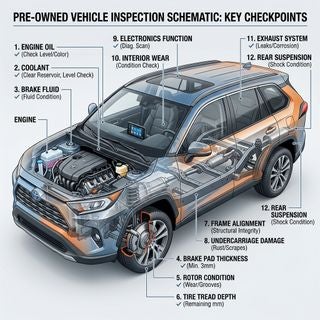
d

How Do You Know If a Used Car Is Worth Buying?

A used car is worth buying when it has a clear title, documented maintenance records, no structural frame damage, healthy fluid levels, and a pre-purchase inspection showing sound mechanical performance that justifies the asking price. Verifying these core factors ensures you get reliable transportation that protects your budget and your family on every drive. Evaluating a pre-owned vehicle requires a methodical approach that combines physical inspection, history verification, and a comprehensive test drive. Whether you need a dependable truck for work, a midsize SUV for daily commutes along State Route 170 in Calcutta, or a spacious full-size model for family road trips, checking 12 critical areas helps you separate well-maintained vehicles from high-risk options: Vehicle Identification Number (VIN) consistency across all body tags and legal title documents Vehicle history report verification for accident, lien, and title status Exterior body panel alignment and frame integrity check Tire tread depth, inflation pressure, and wear pattern evaluation Essential fluid levels and fluid cleanliness (engine oil, coolant, transmission, brake fluid) Brake system responsiveness, pad thickness, and rotor surface condition Undercarriage rust inspection, focusing on rocker panels and structural rails Engine start-up sound, exhaust clarity, and idle smoothness Transmission engagement, shift timing, and power delivery Steering precision, suspension dampening, and wheel alignment Interior electrical systems, air conditioning, and smartphone integration infotainment controls Operational testing of active safety technology and driver-assist features Taking the time to evaluate these 12 factors before signing any paperwork provides complete confidence in your purchase. Our sales team at Tri State Ford believes in absolute transparency, providing transparent vehicle details and multi-point inspection summaries for every pre-owned model on our lot. When you are ready to explore our current selection in person, you can easily find our East Liverpool showroom location or give our staff a quick call to ask about specific vehicle arrivals. Table of Contents What Are the Most Important Physical and Mechanical Checks on a Used Car? How Do You Verify Vehicle History and Check for Unreported Accidents? Is High Mileage Highway Driving Better Than Low Mileage City Driving? Is a Certified Pre-Owned Vehicle Worth the Price Difference Over Regular Used? Should You Hire a Mechanic for a Pre-Purchase Inspection? What Buyers Ask Most About Used Car Inspections and CPO Vehicles What Are the Most Important Physical and Mechanical Checks on a Used Car? The most critical physical and mechanical checks on a used car prioritize engine oil quality, brake pad and rotor wear, transmission shift smoothness, underbody corrosion, and tire wear patterns. Focusing on these vital mechanical areas prevents unexpected repair expenses immediately after purchase. Starting under the hood gives you an immediate picture of how the previous owner cared for the vehicle. Pull the engine oil dipstick to confirm the oil is smooth and amber or dark brown; milky oil indicates coolant contamination from a blown head gasket, while gritty or thick black oil signals extended missed oil changes. Examine the engine coolant reservoir to verify clean, brightly colored fluid rather than rusty sludge. Checking transmission fluid reveals whether the internal clutches have overheated; clean fluid presents a clear reddish color without a burnt odor. Fluid guidelines published in the AAA Time-Stamped Car Maintenance Checklist emphasize replacing low, dark, or dirty fluids immediately rather than simply topping them off to maintain internal component hydraulic pressure. Tires tell an honest story about steering alignment and suspension health. Inspect all four tires across the entire tread surface. Uneven wear on the inner or outer edges often points to misaligned wheels, worn tie rods, or failing struts. Verify that tread depth exceeds minimum safety thresholds so your family stays secure during sudden rainstorms or icy winter roads. When examining the exterior, look closely along side door panels and wheel arches for bubbling paint or flaking metal. In regions exposed to road salt, undercarriage corrosion on frame rails and rocker panels can compromise structural integrity. On a road test, pay close attention to how the vehicle accelerates, stops, and handles. Grinding noises or pulsing in the pedal when slowing down signal worn brake pads or warped rotors. Test modern convenience and driver assistance features, including blind spot monitoring, lane-keeping assist, touchscreens, and easy smartphone connection menus, to ensure all onboard electronics function properly. If you plan to upgrade your current ride, start by estimating your trade-in value online to see how your current vehicle can reduce the overall purchase cost of a high-quality pre-owned car, truck, or SUV. How Do You Verify Vehicle History and Check for Unreported Accidents? You verify a vehicle history by matching the VIN across the dashboard, door jamb, and title documentation, then running that number through an official history database like CARFAX or AutoCheck. Matching these identifiers prevents title fraud and reveals documented owner history, service records, and reported collisions. While official vehicle history reports capture accidents reported by police departments, insurance companies, and body shops, minor fender benders paid out-of-pocket may not appear on a digital record. Combining a history report with a physical visual inspection protects you against hidden previous repairs. Look for these physical indicators of past body work or frame repairs: Uneven gaps between exterior body panels, fenders, hood lines, and trunk lids Paint color variations between adjacent panels or rough overspray on rubber door seals Fresh undercoating applied selectively over isolated sections of the underbody or frame rails Clamp marks, welding ripples, or distorted metal on inner frame structures under the hood or trunk floor Headlight or taillight lenses that look brand new on one side while cloudy on the other Systematically checking these physical details prevents unpleasant surprises later. Once you feel confident about what type of vehicle and history profile suits your daily routine, you can explore current purchase specials or check out national manufacturer offers to compare buying pre-owned versus purchasing new. If you prefer a specific color or feature package, our sales specialists can also assist with a custom vehicle order tailored directly to your family's preferences. Is High Mileage Highway Driving Better Than Low Mileage City Driving? High-mileage highway driving is generally better for a vehicle's mechanical longevity than low-mileage city driving because steady cruising maintains consistent operating temperatures and drastically reduces mechanical stress. Sustained highway miles produce far less wear per mile on major vehicle systems compared to short, frequent trips around town. During highway cruising, the engine operates at a steady rotation speed with continuous oil pressure and optimal coolant circulation. The transmission remains locked in top gear, which eliminates the heat generated by constant gear hunting. Brakes, suspension bushings, starter motors, and clutch packs experience minimal engagement over long distances. High highway miles also allow the engine to burn off condensation and carbon deposits in the exhaust system. By contrast, stop-and-go driving—such as daily errands around high-density commercial corridors like Market Street in Boardman— subjects a vehicle to repetitive heat cycles, continuous gear changes, aggressive braking, and prolonged engine idling. Cold engine starts in city traffic cause higher internal engine wear because oil takes time to reach full operating temperature and circulation. A vehicle with 80,000 miles driven primarily on open highways often exhibits cleaner internal engine components and tighter suspension dynamics than a city-driven car with 40,000 miles. When evaluating a used vehicle, focus on overall mechanical condition, documented oil change frequency, and drive quality rather than looking solely at the odometer reading. A high-mileage vehicle backed by detailed maintenance logs often represents outstanding long-term value. Is a Certified Pre-Owned Vehicle Worth the Price Difference Over Regular Used? A certified pre-owned vehicle is worth the higher price tag if you want manufacturer-backed extended warranty protection, a rigorous multi-point mechanical inspection, and included roadside emergency coverage. CPO models usually carry a price premium between $1,000 and $3,000 over non-certified used cars of similar age and mileage, but that extra cost covers thorough mechanical reconditioning and factory warranty backing. Standard used cars are sold with remaining factory warranty coverage or as-is, meaning future repair bills become your full responsibility as soon as you drive off the lot. A Certified Pre-Owned vehicle must satisfy strict age and mileage limits before it undergoes a factory-mandated inspection process covering powertrain performance, safety systems, interior amenities, and cosmetic condition. Any worn wear-and-tear components that fail inspection standards are replaced with genuine original equipment manufacturer parts. Key advantages of choosing a CPO vehicle include: Comprehensive extended powertrain and bumper-to-bumper warranty protection Dedicated 24/7 roadside assistance for flat tires, battery jump-starts, and emergency towing Detailed vehicle history verification meeting strict manufacturer certification criteria Low-mileage, late-model vehicles featuring modern safety tech and smartphone integration Flexible pre-owned financing rates offered directly through manufacturer lenders For buyers balancing budget limits with the desire for long-term peace of mind, certified vehicles deliver an ideal middle ground. You can explore a wide range of reliable options by browsing our pre-owned 1-owner inventory or viewing our selection of certified pre-owned Ford inventory to find the right combination of value, warranty coverage, and feature content for your family. Should You Hire a Mechanic for a Pre-Purchase Inspection? Hiring an independent certified mechanic for a pre-purchase inspection is highly recommended whenever you purchase a non-certified used car. Professional mechanics possess the specialized tools, vehicle lifts, and diagnostic equipment required to detect mechanical issues hidden beneath shiny body paint. During a professional inspection, a technician raises the vehicle on a hydraulic lift to examine underside components that are difficult to evaluate from the ground. They inspect CV axle boots, steering rack seals, transmission casings, and differential covers for fluid leaks. They measure brake pad thickness, check brake rotor surfaces, evaluate suspension bushings for dry rot or cracking, and look for structural frame damage or rust. Connecting an OBD-II diagnostic scanner allows the technician to check for pending trouble codes, cleared diagnostic lights, or emission system faults stored in the computer modules. Spending a modest amount on an independent inspection provides immense bargaining leverage or gives you the clear answer needed to walk away from a problematic car. Professional pre-purchase inspections are especially beneficial when purchasing out-of-warranty trucks or high-mileage vehicles. Once you find a solid vehicle that passes mechanical checks, taking the next step toward ownership is simple. You can jumpstart the buying process by completing our secure online financing application to secure competitive loan terms tailored to your household budget. What Buyers Ask Most About Used Car Inspections and CPO Vehicles Q: How do you check for body damage or previous frame repair yourself? Inspect body panel gaps for uniform width along the hood, doors, and trunk lid. Check for subtle color variations between adjacent metal panels and feel along lower door edges for rough paint overspray. Under the hood and inside the trunk floor, look for irregular welding seams, ripples in the sheet metal, or fresh undercoating sprayed over structural frame rails. Q: What tools should you bring to inspect a used car yourself? Bring a high-lumen flashlight to look into dark engine corners and undercarriage areas, a digital tire tread depth gauge, and paper towels to check fluid colors on dipsticks. A small magnet helps detect plastic body filler hidden under exterior paint, while an OBD-II code scanner lets you check onboard vehicle computer modules for hidden diagnostic fault codes. Q: Can a vehicle history report miss previous accidents? Yes, a vehicle history report can miss prior collision damage if the accident was paid out-of-pocket and never reported to insurance companies, law enforcement agencies, or repair facilities that supply data to reporting services. That is why combining a digital history report with a thorough visual inspection and a test drive is always necessary. Q: What driver-assist and tech features should you test on a used vehicle? Test all cabin electronics, including touchscreen response, Bluetooth connectivity, backup camera clarity, and smartphone integration functions like Apple CarPlay or Android Auto. On your test drive, activate active driver-assist systems like adaptive cruise control, blind spot monitoring, and lane-keeping alerts to verify that front sensors and radar units work properly. Q: How do financing options differ between standard used and certified pre-owned vehicles? Certified pre-owned vehicles often qualify for current financing options offered directly by factory-backed lending institutions. Standard used vehicles are financed through traditional bank or credit union loan rates, which vary based on your overall credit profile, down payment amount, and the age of the vehicle. Finding a high-quality used car, truck, or SUV requires balancing mechanical inspection, vehicle history verification, and smart financing. Our sales team at Tri State Ford is dedicated to making your buying experience clear, straightforward, and stress-free. Whether you want to test drive a pre-owned model or check out our complete new vehicle inventory, we are here to help you drive home in a vehicle you trust. Stop by our showroom on Pennsylvania Avenue or reach out to our team at (330) 462-7578 to schedule your test drive today. Keep Your Vehicle Running Strong Keep your vehicle performing at its best with our service team: Order Parts Schedule Service Appt © 2026 Tri State Ford. All rights reserved. Used Car Buying Guide in East Liverpool OH | Tri State Ford
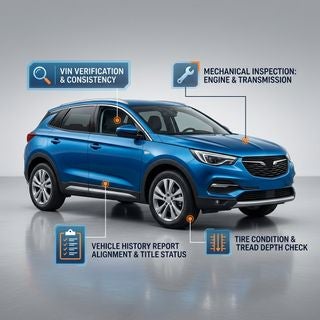
g

What Should You Know Before Buying a Used Car?

Before buying a used vehicle, verify the vehicle identification number across all body panels, review a detailed vehicle history report for title brands, confirm that no unresolved safety recalls exist, and order an independent pre-purchase mechanical inspection. Establishing your target price through market pricing research and evaluating remaining warranty coverage ensures a transparent and secure transaction. Evaluating a pre-owned vehicle requires a methodical approach that balances mechanical condition, financial value, and structural integrity. A comprehensive vehicle history report provides vital background, but physical verification remains essential. Comparing the vehicle identification number on the driver side dashboard, the driver door jamb sticker, and the title document ensures all three match character for character. Any mismatch indicates potential fraud or unreported body panel replacements following an impact. For suburban commuters navigating the rolling hills and daily errands around Calcutta, finding a dependable pre-owned crossover like a 2026 Ford Escape with all-wheel drive requires looking closely at recent tire tread depth and brake wear. Hardworking vehicles endure diverse driving environments across the region, making a verified maintenance trail critical. Requesting past service records or reviewing dealer reconditioning logs reveals whether oil changes, fluid flushes, and filter replacements occurred at recommended intervals. Starting your search with a transparent team makes the purchasing journey straightforward. You can easily find our East Liverpool showroom right along the river, or give our friendly sales staff a quick call to ask about specific vehicle details before visiting in person. Table of Contents What Should You Check First and Look for During a Pre-Purchase Car Inspection? What Should You Look for on a Used Car Vehicle History Report and Title Status? What Is the Difference Between a Certified Pre-Owned Car and a Regular Used Car? Is It Better to Buy a Used Car from a Dealership or a Private Seller under As-Is Laws? How Do You Negotiate the Purchase Price of a Used Car at a Dealership? Frequently Asked Questions About Shopping Pre-Owned Vehicles What Should You Check First and Look for During a Pre-Purchase Car Inspection? During a pre-purchase car inspection, first confirm that the vehicle identification number matches across the dashboard, door jamb, and title, then perform a detailed visual check of fluid clarity, body panel alignment, and tire tread wear. A certified independent mechanic should raise the vehicle on a lift to examine the undercarriage, evaluate brake and suspension components, run a diagnostic scan for hidden trouble codes, and conduct a cold-start test drive. A thorough physical walkaround begins on the outside under bright natural daylight. Sight down each side of the body to confirm that panel gaps between doors, fenders, and the hood are uniform. Asymmetric gaps or subtle color variations across panels often point to previous collision repairs. Using a small magnet wrapped in a soft cloth against steel body panels helps identify body filler underneath repainted surfaces. In regional winter climates where road salt causes underbody wear, inspect the frame rails, strut towers, and rocker panels for heavy rust or freshly sprayed undercoating designed to cover structural damage. Under the hood, pull the oil dipstick to check fluid condition. Clean oil appears light amber, while dark, gritty oil indicates skipped oil changes. Foamy or milky fluid on the dipstick signals coolant leaking into the engine crankcase, which points to major internal engine failure. Squeeze radiator hoses to ensure they feel firm rather than spongy or brittle, and check the battery terminals for corrosion. When examining a pre-owned three-row SUV such as a 2026 Ford Explorer equipped with a 2.3L engine and SelectShift automatic transmission, check that coolant and transmission fluids are clean and filled to proper levels. The test drive yields critical operational details about mechanical health: Cold Start: Arrive before the seller warms up the vehicle to listen for engine knocks, valve ticks, or rough idling that disappears once the engine reaches operating temperature. Acceleration and Shifting: Accelerate firmly onto a highway lane to test engine responsiveness and shift smoothness. Shuddering during gear changes indicates transmission slippage. Braking Performance: Perform two firm stops from higher speeds on an open stretch of road. The vehicle must stop straight without pulling to one side, pedal vibration, or metallic grinding sounds. Suspension Integrity: Drive over moderate road bumps to listen for clunks or rattles, which signal worn ball joints, control arm bushings, or struts. When reviewing a heavy-duty truck like a 2026 Ford F-150 powered by a 3.5L engine, examine the trailer hitch receiver and axle seals for signs of heavy towing stress. To make your eventual purchase process smooth, completing an online credit application ahead of time helps establish clear monthly budget boundaries before you finalize your vehicle choice. Pricing Pricing by trim Feature Active AWD Active FWD Platinum AWD ST-Line AWD ST-Line Elite AWD 2.0L ST-Line FWD ST-Line Select AWD 2.0L:--:--:--:--:--:--:--:-- MSRP $31,750 $30,350 $37,940 $32,595 $38,935 $31,195 $35,015 Destination charge $1,495 $1,495 $1,495 $1,495 $1,495 $1,495 $1,495 Engine & Performance Powertrain specs by trim Feature Active AWD Active FWD Platinum AWD ST-Line AWD ST-Line Elite AWD 2.0L ST-Line FWD ST-Line Select AWD 2.0L:--:--:--:--:--:--:--:-- Engine 1.5L 1.5L 2L 1.5L 2L 1.5L 2L Horsepower 180 hp 180 hp 250 hp 180 hp 250 hp 180 hp 250 hp Torque 199 lb-ft 199 lb-ft 280 lb-ft 199 lb-ft 280 lb-ft 199 lb-ft 280 lb-ft Transmission automatic 8-speed automatic 8-speed SelectShift® automatic 8-speed SelectShift® automatic 8-speed SelectShift® Drivetrain All-wheel drive Front-wheel drive All-wheel drive All-wheel drive All-wheel drive Front-wheel drive All-wheel drive What Should You Look for on a Used Car Vehicle History Report and Title Status? A vehicle history report must be checked for title brands such as salvage, rebuilt, flood, or not actual mileage, along with odometer progression entries and accident records. Clean titles confirm that an insurance provider has never designated the vehicle as a total loss, preserving market value, structural safety, and eligibility for standard auto financing options. A history report provides a paper trail of recorded events throughout a vehicle's life cycle. Look closely at ownership history to distinguish between personal single-owner use, rental fleets, or commercial usage. Frequent ownership transfers over short timeframes often indicate persistent mechanical issues that previous owners preferred to pass along. Furthermore, check odometer entries across every service visit and registration renewal. If a recorded service visit lists higher mileage than a subsequent state registration entry, the vehicle may have experienced odometer rollback fraud. Title status represents the legal standing of the vehicle. A clean title signifies an uninterrupted ownership record free from catastrophic total-loss declarations. Conversely, salvage or rebuilt titles mean the vehicle sustained significant damage exceeding a major percentage of its retail value. Vehicles with branded titles present severe safety risks, carry reduced resale value, and are frequently ineligible for comprehensive insurance coverage or traditional financing terms. Checking open safety recall status directly on the official National Highway Traffic Safety Administration website using the vehicle identification number is another essential step. Unresolved safety recalls must be addressed by an authorized dealership service facility prior to purchase. If you prefer to skip the uncertainty of pre-owned title histories altogether, our team can assist you with custom ordering a new Ford tailored to your exact specifications, or you can explore current manufacturer vehicle specials available directly from the factory. What Is the Difference Between a Certified Pre-Owned Car and a Regular Used Car? A Certified Pre-Owned vehicle completes a rigorous factory-mandated multi-point inspection and includes a manufacturer-backed extended warranty, whereas a standard used car is generally sold as-is or with a short dealer warranty. Certified Pre-Owned programs provide higher quality standards through age, mileage, and reconditioning restrictions backed directly by the vehicle manufacturer. The primary distinction between standard pre-owned vehicles and factory-certified models sits in the strict inspection and warranty protections required by the original manufacturer. Standard used vehicles undergo basic safety checks and reconditioning, but their post-sale coverage varies significantly depending on remaining factory terms or dealer-offered service contracts. Feature Standard Pre-Owned Vehicle Certified Pre-Owned (CPO) Vehicle Inspection Process General safety and mechanical check Factory-mandated multi-point inspection Warranty Protection As-is or limited dealer warranty Manufacturer-backed extended limited warranty Age and Mileage Limits Varies widely by inventory Strict maximum age and mileage caps Vehicle History Report available upon request Full history report included and verified Roadside Assistance Optional add-on coverage Included manufacturer roadside support Vehicles enrolled in the certified program pass detailed checks covering engine performance, brake pad thickness, tire tread depth, frame integrity, and cabin electronics. Any worn component that fails to meet strict factory standards must be replaced with genuine factory parts before certification is granted. Certified buyers also enjoy round-the-clock emergency support. If you ever require towing, flat tire changes, or battery jump-starts, you can contact Ford Roadside Assistance: 1-800-241-3673 for immediate manufacturer-backed aid. Exploring our selection of pre-owned Carfax 1-owner vehicles offers excellent background transparency, while browsing our certified pre-owned Ford lineup delivers maximum long-term confidence and factory warranty coverage. Is It Better to Buy a Used Car from a Dealership or a Private Seller under As-Is Laws? Buying a used vehicle from a dealership offers structural protections under federal regulations, access to competitive financing, and trade-in conveniences, whereas private sales operate strictly under as-is terms without post-sale recourse. Dealerships must display an FTC Buyer's Guide on every pre-owned vehicle, clearly defining warranty terms or explicitly noting as-is status. Purchasing a vehicle directly from a private individual often carries a lower initial listing price, but it presents significant legal and financial risks. Private transactions operate entirely on an as-is basis under state commercial codes. Once money exchanges hands and the title transfers, the buyer absorbs complete financial responsibility for any mechanical failure, hidden frame damage, or electrical defect that arises, even if the issue appears minutes after the drive home. Additionally, private sales require the buyer to manage title transfers, lien payoffs, and registration paperwork independently. In contrast, established dealerships operate under state and federal consumer protection guidelines. Federal law mandates that dealers place a clear FTC Buyer's Guide in the window of every pre-owned car or truck on the lot. This document outlines whether the vehicle carries a full warranty, a limited warranty, or is being sold as-is, while explicitly stating that any verbal promises made by sales staff must be documented in writing on the purchase contract to be legally binding. Commuters traveling along Market Street in Boardman often choose dealership purchases because structured financing options and verified title processing save significant time compared to private title transfers. Dealerships also accept existing vehicles toward the purchase price, helping lower your total financed balance. You can easily value your trade-in online to estimate how your current vehicle's equity reduces your out-of-pocket costs. How Do You Negotiate the Purchase Price of a Used Car at a Dealership? Negotiate a used car purchase price by establishing a firm target price based on local market research for the exact trim, mileage, and condition, then using documented repair estimates from a pre-purchase inspection as line-item price adjustments. Separating the vehicle purchase price from financing terms, down payments, and trade-in valuations ensures complete financial clarity throughout negotiations. Effective price negotiation begins long before you step onto the sales floor. Research current market listings for comparable models using exact year, trim level, optional packages, and mileage inputs. Armed with objective market data, establish a realistic target price and a firm maximum limit before entering discussions. When local shoppers evaluate a practical crossover like the 2026 Ford Escape, understanding factory trim tiers and baseline pricing provides strong context for pre-owned pricing evaluations: Active FWD: $30,350 MSRP plus $1,495 destination charge. Active AWD: $31,750 MSRP plus $1,495 destination charge. ST-Line FWD: $31,195 MSRP plus $1,495 destination charge. ST-Line AWD: $32,595 MSRP plus $1,495 destination charge. ST-Line Select AWD 2.0L: $35,015 MSRP plus $1,495 destination charge. Platinum AWD: $37,940 MSRP plus $1,495 destination charge. ST-Line Elite AWD 2.0L: $38,935 MSRP plus $1,495 destination charge. When inspecting a pre-owned vehicle, use any mechanical flaws or upcoming maintenance items discovered during your visual check or independent inspection as objective negotiation points. If an inspection reveals that the tires have only 4/32" of tread remaining or the rear brake rotors require replacement soon, present the written repair estimate from an ASE-certified technician. Using the written repair estimate as a negotiation reference keeps the conversation focused on documented facts rather than general pricing assumptions. Keep every element of the transaction distinct. Negotiate the final sale price of the vehicle first before discussing monthly payment targets, credit terms, or trade-in allowances. Bundling these numbers together makes it difficult to see true vehicle pricing. Working with a supportive sales staff ensures a respectful, transparent dialogue where all pricing terms are presented clearly. Reaching out to our knowledgeable local Ford dealership team provides a stress-free environment focused on finding a vehicle that fits your budget. Frequently Asked Questions About Shopping Pre-Owned Vehicles Q: How much does a pre-purchase car inspection typically cost? A comprehensive pre-purchase inspection conducted by an independent certified mechanic typically costs between $100 and $250 depending on the vehicle type and scope of the evaluation. This fee covers a multi-point inspection including an undercarriage lift examination, a computerized diagnostic code scan, brake and suspension checks, and a full operational test drive. Q: What legal protections apply when buying a used car as-is? Buying a vehicle as-is means the buyer assumes all financial responsibility for repairs immediately upon purchase, with no implied or expressed warranty protection. Federal law requires dealers to display an FTC Buyer's Guide stating whether a vehicle is sold as-is. Legal recourse after an as-is sale exists only if the seller engaged in explicit fraud or intentional title misrepresentation. Q: How do you verify if a used vehicle has an open safety recall? You can verify open safety recalls by entering the vehicle's 17-character vehicle identification number into the free recall lookup tool on the official National Highway Traffic Safety Administration website. The tool displays any unrepaired safety recalls issued by the manufacturer. Authorized brand dealerships perform all safety recall repairs free of charge to the owner. Q: Can you finance a used vehicle with an existing trade-in balance? Yes, you can finance a pre-owned vehicle when trading in a car that still has an outstanding loan balance. The dealership contacts your current lender to obtain the exact payoff amount. If your trade-in value exceeds the loan balance, the remaining positive equity is applied as a down payment. If equity is negative, the remaining balance can often be rolled into the new auto loan subject to lender approval. Q: What documents are required when purchasing a pre-owned car at a dealership? Purchasing a pre-owned vehicle requires a valid government-issued driver's license, current proof of auto insurance, and your preferred form of payment or loan approval documentation. If you are trading in a vehicle, bring the original title or current registration card, payoff information if applicable, and all sets of keys. Finding the right pre-owned vehicle comes down to clear information, rigorous mechanical verification, and honest pricing. Our team is dedicated to delivering a straightforward, transparent buying experience for every customer. You can visit our dealership address at 1503 Pennsylvania Ave, East Liverpool, OH 43920 to inspect our pre-owned selection in person, give our friendly sales team a quick call with your questions, or explore our brand-new Ford models online to compare all your ownership options today. Keep Your Vehicle Running Strong Keep your vehicle performing at its best with our service team: Order Parts Schedule Service Appt © 2026 Tri State Ford. All rights reserved. Vehicle specification data © JATO Dynamics Limited. Used Car Buying Tips in East Liverpool OH | Tri State Ford

Contact Us

Fill out this form below and we'll contact you shortly
*Required Fields