
All-wheel drive provides the best winter driving performance for paved roads and variable snow in the Ohio Valley because it continuously monitors road slip and distributes power without driver input. Drivers who regularly navigate unplowed steep grades, deep mud, or haul heavy trailers benefit more from traditional four-wheel drive with selectable low-range gearing. Balancing daily commuting needs against heavy-duty capability determines whether an automatic system or a manual mechanical system is right for your vehicle.
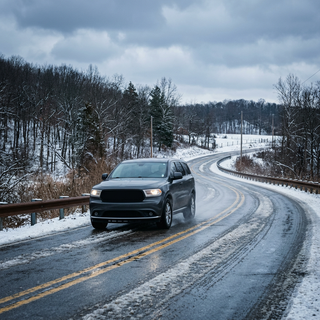
Navigating winter road conditions across regional river valleys presents unpredictable traction challenges. Morning commutes often transition from dry asphalt to slush-covered bridges and patchy black ice within a few miles. An all-wheel-drive system operates continuously behind the scenes, using electronic sensors to detect wheel slip and send torque to the tires with the most grip. This automatic intervention allows drivers to focus entirely on steering and road awareness without worrying about engaging high- or low-range gear sets when road surfaces suddenly change.
Four-wheel drive remains the preferred choice for heavy-duty tasks, severe off-road driving, and deep snow accumulation. By locking the front and rear drive axles together mechanically, four-wheel drive ensures both axles turn at identical speeds, giving maximum momentum through thick mud or unplowed inclines. When deciding between these two options, evaluating your typical driving routes, cargo demands, and winter travel habits ensures you select a vehicle built for your daily routine. If you want to explore available inventory or schedule a test drive, visiting our showroom on Pennsylvania Avenue or giving our sales team a call gives you direct access to expert guidance on current vehicle capabilities.
Table of Contents
- What Is the Technical Difference Between All-Wheel Drive and Four-Wheel Drive?
- How Do East Liverpool Hills and Winter Commutes Shape the AWD SUV vs. 4WD Truck Decision?
- How Do AWD and 4WD Systems Impact Fuel Economy, Purchase Price, and Ownership Costs?
- Do Winter Tires Matter More Than AWD or 4WD for Stopping Distance on Ice?
- Common Questions About AWD and 4WD Vehicles
- Explore AWD and 4WD Ford Vehicles
What Is the Technical Difference Between All-Wheel Drive and Four-Wheel Drive?
The primary technical difference between all-wheel drive and four-wheel drive lies in how torque is distributed between the front and rear axles and whether the system operates automatically or requires driver management. All-wheel-drive systems utilize a center differential or electronically controlled clutch pack to continuously route power to all four wheels while allowing front and rear tires to rotate at different speeds. Four-wheel-drive systems rely on a heavy-duty mechanical transfer case that locks the front and rear driveshafts together, forcing both axles to spin at the exact same rate.
Because all-wheel drive allows speed differentiation between the front and rear axles, it can remain permanently active on dry pavement, wet roads, and icy streets without causing mechanical binding in the driveline. Modern all-wheel-drive systems use active wheel-speed monitoring to direct engine torque to individual wheels within milliseconds of detecting slip. This electronic torque vectoring enhances cornering stability on dry pavement while preventing loss of traction on slick surfaces.
In contrast, traditional part-time four-wheel drive is engineered primarily for low-traction or off-road environments. Engaging four-wheel drive in high range, commonly designated as 4H, bridges the front and rear axles directly. Because wheels must turn at different speeds when negotiating a turn, driving a part-time four-wheel-drive vehicle on dry, high-traction pavement forces the tires to hop and scrub, putting severe mechanical stress on transfer case gears and axle shafts. Drivers operating a part-time system must manually switch back to 2WD once clear pavement resumes.
Many modern trucks and full-size SUVs incorporate advanced transfer cases that offer multiple drive modes to bridge this gap:
- 2WD: Disengages the front axle entirely to maximize fuel efficiency on clear, dry roads.
- 4A: Automatically engages the front axle via electronic clutches when rear wheel slip is detected, providing seamless traction on mixed road surfaces without driveline strain.
- 4H: Mechanically locks front and rear driveshafts for low-traction conditions such as unplowed snow, deep sand, or mud.
- 4L: Engages extra low-range reduction gearing inside the transfer case to multiply torque at low speeds for crawling steep inclines, pulling heavy loads out of slippery areas, or navigating extreme off-road obstacles.
For drivers seeking dependable pre-owned vehicles equipped with advanced drivetrain options, you can browse our pre-owned single-owner lineup to inspect well-maintained crossovers and trucks ready for winter roads.
How Do East Liverpool Hills and Winter Commutes Shape the AWD SUV vs. 4WD Truck Decision?
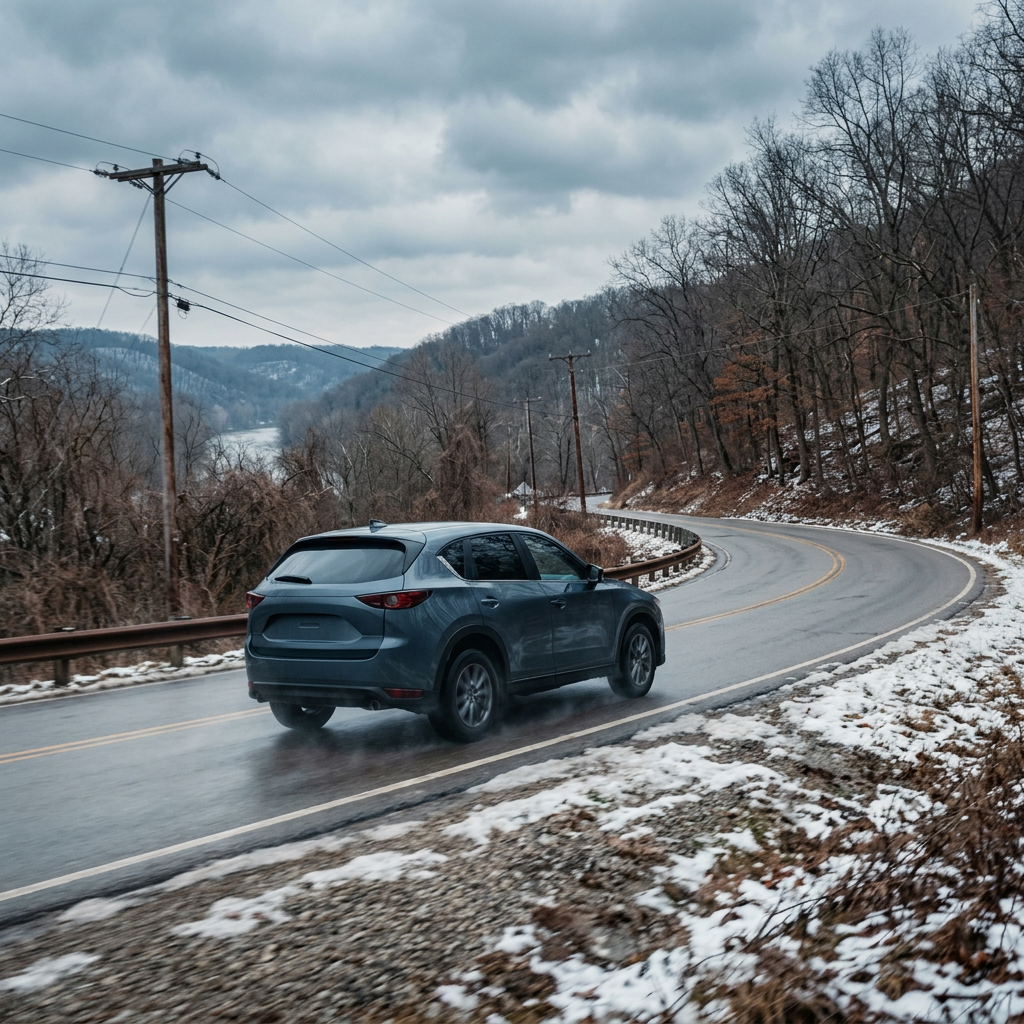
Steep riverfront bluffs and inclined intersections in East Liverpool make all-wheel-drive crossovers ideal for daily commuters, while four-wheel-drive trucks excel for drivers needing maximum ground clearance, high payload capacity, and heavy towing capability. Stopping and starting on a hillside coated in freezing rain requires immediate traction at all four corners, a scenario where automatic all-wheel drive reacts instantly to keep the vehicle moving forward smoothly.
Families evaluating SUVs for local winter commutes usually ask whether an AWD crossover can handle steep riverfront inclines before they compare seating options. Compact and midsize crossovers feature unibody construction, providing car-like ride comfort, predictable handling, and lower step-in heights while delivering seamless all-weather grip. For daily driving, a crossover like the 2026 Ford Escape equipped with available All-wheel drive powered by the 1.5L engine achieves an EPA-estimated 26 city / 32 hwy, offering strong fuel economy alongside winter traction. Families requiring three rows of seating and enhanced capability can look to the 2026 Ford Explorer, which offers Intelligent 4WD with up to six drive modes and a maximum tow rating of 5,000 lbs supported by its standard Class III Tow Package.
When work demands require hauling heavy cargo or pulling large equipment trailers, a traditional body-on-frame truck or full-size SUV provides structural strength that unibody crossovers cannot match. The 2026 Ford F-150 equipped with All-wheel drive or 4x4 options, driven by the 3.5L engine and SelectShift® automatic transmission, provides up to 10,400 lbs of towing capacity and 52 cubic feet of bed cargo space. For maximum interior volume combined with heavy towing capability, the 2026 Ford Expedition features available Control Trac 4WD, seating for up to eight passengers, and up to 9,600 lbs towing capacity when equipped with the Heavy-Duty Trailer Tow Package.
Choosing between an AWD crossover and a 4WD truck comes down to your primary usage patterns:
- Choose an AWD SUV if your daily routine involves suburban commutes, school drop-offs, highway cruising, and navigating icy suburban hills without towing heavy equipment.
- Choose a 4WD truck or full-size SUV if you haul heavy trailer loads, carry tools or gravel in an open bed, require high ground clearance for deep ruts, or regularly venture off paved roads.
To find the right work-ready pickup or family transport, drivers can explore our commercial work truck inventory or check out our certified pre-owned vehicles for factory-backed confidence.
How Do AWD and 4WD Systems Impact Fuel Economy, Purchase Price, and Ownership Costs?
Selecting an all-wheel-drive or four-wheel-drive system increases a vehicle's initial purchase price by approximately $1,500 to $2,500 and reduces combined fuel economy by roughly 1 to 3 mpg compared to an equivalent front-wheel-drive model. These added financial investments stem from the physical weight of extra driveshafts, differentials, and transfer cases, alongside the rotational friction inherent in driving four wheels instead of two.
Modern automotive engineering has significantly reduced the fuel economy penalty historically associated with four-wheel traction. Disconnectable all-wheel-drive systems automatically disengage the rear axle and driveshaft during steady highway cruising, returning fuel efficiency close to two-wheel-drive baseline levels when extra grip is unnecessary. When sensors detect acceleration or front wheel slip, the system re-engages the rear axle in a fraction of a second.
Long-term ownership and maintenance considerations for four-wheel drivetrains include:
- Differential and Transfer Case Service: Front and rear differentials, as well as transfer cases, require fluid changes roughly every 50,000 miles to clear out metal wear particles and maintain proper lubrication.
- Tire Wear Requirements: Because all-wheel-drive transfer cases and electronic center clutches monitor tire rotational speeds constantly, all four tires must maintain matching tread depths. Replacing a single worn tire with a brand-new tire creates an outer circumference difference that can trick drivetrain electronics into sensing continuous slip, potentially causing driveline overheating.
- Resale Value Retention: Vehicles equipped with four-wheel traction experience slower depreciation in northern climate zones, retaining a higher percentage of their original value on the pre-owned market compared to two-wheel-drive variants.
To review available options and review your options, shoppers can view our new Ford inventory, contact us for current financing information, or value your trade-in online before visiting our dealership.
Do Winter Tires Matter More Than AWD or 4WD for Stopping Distance on Ice?
Dedicated winter tires shorten stopping distances on ice and packed snow by 25 to 50 percent compared to standard all-season tires, making rubber compound and tread design far more critical for braking safety than the number of driven wheels. While all-wheel drive and four-wheel drive help a vehicle accelerate and climb slick grades, they offer no assistance when applying the brakes or attempting to hold a curve on sheet ice.
All-season tire tread compounds begin to harden when ambient temperatures drop below 45 degrees Fahrenheit, reducing rubber flexibility and lowering traction on dry or wet cold pavement. Winter tires utilize specialized hydrophilic rubber compounds that remain pliable in sub-freezing temperatures, combined with high-density tread sipes that bite into snow and channel ice surface water away from the contact patch.
| Vehicle & Tire Configuration | Acceleration Grip on Snow/Ice | Braking Distance on Ice |
|---|---|---|
| FWD with All-Season Tires | Moderate | Baseline (Longest) |
| AWD / 4WD with All-Season Tires | High | Similar to FWD All-Season |
| FWD with Dedicated Winter Tires | Good | 25% to 50% Shorter Than All-Season |
| AWD / 4WD with Winter Tires | Maximum | 25% to 50% Shorter Than All-Season |
An all-wheel-drive vehicle equipped with standard all-season tires can accelerate briskly on snow, creating a false sense of security for the driver. However, when emergency braking is required, that same vehicle stops in nearly the same distance as a front-wheel-drive car on all-season tires. Equipping an all-wheel-drive or four-wheel-drive vehicle with dedicated winter tires delivers the ultimate combination of acceleration traction, directional control, and stopping safety. Drivers looking to prepare their current or prospective vehicle for severe weather can use our online tire finder tool to browse factory-approved winter and all-season tire options.
Common Questions About AWD and 4WD Vehicles
Q: What is the main technical difference between full-time AWD and part-time 4WD?
Full-time all-wheel drive continuously monitors and routes power to all four wheels using electronic sensors and internal differentials, making it completely safe for all road conditions including dry pavement. Part-time four-wheel drive mechanically locks the front and rear driveshafts together through a transfer case, requiring manual driver engagement and strictly prohibiting operation on dry roads to prevent mechanical binding and driveline damage.
Q: Can you leave Ford’s 4H mode engaged on dry highway pavement?
Drivers should never leave 4H engaged on dry pavement because the locked front and rear driveshafts force all four wheels to rotate at identical speeds. When negotiating turns on dry surfaces, outer and inner wheels must rotate at different speeds; running 4H forces the tires to scrub, creating driveline strain and premature mechanical wear. Drivers navigating mixed road conditions should select 4A or automatic modes to allow dynamic electronic management.
Q: How do terrain management modes help on packed snow or gravel?
Ford Terrain Management System drive modes adjust throttle sensitivity, transmission gear selection, and traction control parameters to suit specific surfaces. For example, Grass/Gravel/Snow mode limits engine torque delivery during initial take-off to prevent tires from spinning on loose ice or packed powder, while Snow/Wet mode optimizes stability control intervention to keep the vehicle tracking straight through heavy slush and standing water.
Q: Does Tow/Haul mode change how AWD or 4WD systems perform on steep descents?
Tow/Haul mode alters transmission shift mapping and uses engine braking to help slow the vehicle automatically when descending downhill grades with a heavy trailer or cargo load. While it does not change mechanical axle locking, pairing Tow/Haul mode with active all-wheel drive or four-wheel drive enhances vehicle stability, reduces brake wear, and gives drivers precise control on steep grades.
Q: Is it necessary to replace all four tires at once on an AWD vehicle?
Replacing all four tires simultaneously on an all-wheel-drive vehicle is strongly recommended because uneven tread wear alters tire circumference. Circumference discrepancies cause individual wheels to rotate at different speeds during straight-line driving, which can trick electronic differentials into sensing continuous wheel slip, leading to clutch pack overheating, increased component wear, and degraded system efficiency.
To customize a vehicle with specific drivetrain hardware and factory options, shoppers can build and price a custom Ford order directly through our website.
Explore AWD and 4WD Ford Vehicles
Selecting between all-wheel drive and four-wheel drive comes down to aligning system capabilities with your daily driving routes, towing demands, and local terrain challenges. Commuters taking rolling suburban routes through Calcutta benefit from the automatic adaptability of Intelligent AWD on daily drives, while heavy trailer haulers and off-road drivers get maximum utility from heavy-duty 4x4 systems with low-range transfer cases.
At Tri State Ford, our team is ready to walk you through active vehicle inventory, demonstrate drive modes on a test drive, and help you select the exact drivetrain package for your lifestyle. To get started, you can visit our dealership address in person or call our sales team at (330) 462-7578 to speak with a representative today.
Keep Your Vehicle Running Strong
Keep your vehicle performing at its best with our service team: