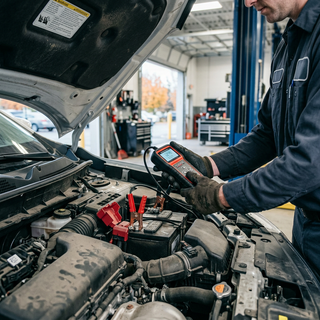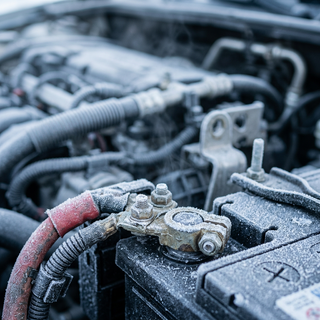

A failing car battery displays observable warning signs, including sluggish engine cranking, dimming headlights during engine idle, audible clicking when turning the ignition key, visible terminal corrosion, and a static charge dropping below 12.4 volts. When starting the engine feels hesitant or electrical accessories flicker during startup, the battery is losing its capacity to sustain adequate electrical load and requires a professional conductance test. https://www.youtube.com/watch?v=4M8i9Q19yW0 Under normal operating conditions, a standard vehicle battery functions dependably for three to five years. However, chemical degradation inside the battery cells occurs continuously due to seasonal temperature swings and electrical demand. Internal lead plates gradually sulphate, reducing the active surface area needed to generate starting current. As this chemical wear progresses, the starter motor receives less electrical amperage, forcing it to work harder and turn the engine over more slowly. Recognizing these subtle cues early prevents complete starting failure during morning commutes or winter travel. Our technicians routinely observe that vehicle owners who schedule a battery check at the first sign of a slow crank avoid emergency towing situations later in the season. Checking terminal connections for tightness and testing the battery charge during routine maintenance keeps your electrical system operating smoothly. For trusted battery testing or professional component evaluations, drivers can visit our service center location on Pennsylvania Ave or give our service department a direct call at (330) 462-7578 to speak with a technician. Table of Contents 7 Signs Your Car Battery Might Not Survive Cold Winter Weather How Do Voltage Readings and CCA Ratings Reveal Battery Health? Is the Battery or the Alternator Causing Your Electrical Issues? What Is the Price Difference and Advantage of AGM vs Standard Lead-Acid Batteries? Common Questions About Battery Testing and Charger Costs How to Schedule Winter Battery Service 7 Signs Your Car Battery Might Not Survive Cold Winter Weather A car battery likely will not survive severe winter conditions if it exhibits slow cranking, dim exterior lights, terminal corrosion, a swollen case, an operating age over three years, electrical glitches, or repeated jump-starts. Freezing temperatures reduce available chemical power by up to 50 percent at 0°F while simultaneously requiring roughly 30 percent more electrical energy to turn over cold, thickened engine oil. Sluggish Engine Crank: When turning the key or pressing the start button, the engine turns over slowly or hesitates before firing up. Dimming Headlights and Interior Lighting: Headlights appear noticeably dim when idling at a stoplight but brighten when pressing the accelerator pedal. White Powder or Corrosion on Terminals: Crusty white, blue, or greenish powder builds up around the battery posts, restricting current flow between the terminals and battery cables. Battery Age Exceeding Three Years: Conventional flooded batteries past their third year of service lose significant internal capacity and struggle under winter thermal stress. Swollen or Bulging Battery Case: Severe heat exposure from past summer driving causes the outer plastic case to swell, indicating internal structural damage. Sporadic Electrical Glitches: Digital displays reset unexpectedly, power windows operate slowly, or instrument cluster warning symbols illuminate during start-up. Repeated Jump-Starts Required: Needing more than one jump-start within a week indicates the battery can no longer hold a charge while parked. Drivers navigating the suburban routes and rolling terrain along State Route 170 in Calcutta frequently subject vehicle charging systems to short, intermittent trips. These brief drives often do not allow the alternator sufficient time to fully replenish the charge used during engine ignition, especially when operating heavy winter loads like heated seats, defrosters, and cabin blowers. Replacing an aging unit proactively ensures uninterrupted starting reliability throughout sub-freezing weather. Vehicle owners can easily arrange routine battery testing and maintenance or order a genuine Motorcraft battery online to maintain factory-grade starting power. How Do Voltage Readings and CCA Ratings Reveal Battery Health? A fully charged, healthy 12-volt battery registers between 12.6 and 12.8 volts when tested at rest, whereas a reading of 12.4 volts represents a partial 75 percent charge state and anything below 12.2 volts indicates a discharged battery cell. Cold Cranking Amps ( CCA) measure the exact discharge current a battery delivers for 30 seconds at 0°F without dropping below 7.2 volts, serving as the essential industry benchmark for winter starting performance. Battery Metric Healthy Target Reading Weak / Warning Reading Critical Failure Threshold Static Resting Voltage 12.6V to 12.8V 12.2V to 12.4V Below 12.0V Starting Voltage Drop Stays above 10.0V Drops to 9.0V–9.5V Drops below 8.5V CCA Output Percentage 90% to 100% of rated CCA 60% to 80% of rated CCA Below 50% of rated CCA Understanding the technical distinction between Cold Cranking Amps ( CCA) and standard Cranking Amps ( CA) is vital when selecting a replacement component. While CCA is tested at 0°F to evaluate extreme cold capability, Cranking Amps ( CA) are measured at 32°F. A battery displaying a high CA rating may seem impressive on paper, but it might lack the necessary CCA rating required to crank an engine during zero-degree winter mornings. In the river valley climate surrounding East Liverpool, sub-zero winter blasts rapidly expose hidden battery weaknesses. Professional technicians use specialized conductance testers to evaluate both static voltage and internal resistance. This diagnostic process determines whether a battery can deliver its advertised CCA under heavy electrical load or if internal plate degradation warrants immediate replacement before winter begins. Is the Battery or the Alternator Causing Your Electrical Issues? Determining whether electrical issues stem from a bad battery or a failing alternator is achieved through a jump-start test: if the engine starts with jumper cables and continues running smoothly after removing them, the alternator is generating adequate voltage and the battery is failing; if the engine stalls shortly after cable removal, the alternator is failing to power the ignition system. A healthy alternator delivers between 13.8 and 14.7 volts while the engine runs, supplying operational electricity to cabin components while simultaneously recharging the battery. When an alternator develops failing internal diodes or worn brushes, it can create a partial charging deficiency or produce an AC voltage ripple that causes dash lights to flicker, headlights to dim during driving, and the battery warning light to illuminate on the instrument panel. Conversely, a failing battery fails to accept or retain the electrical charge sent by a functional alternator. Continuous short-distance driving, loose terminal clamps, or a parasitic electrical draw—such as an electronic module remaining active after key-off—can drain a healthy battery overnight, mimicking alternator failure. Advanced Ford models equipped with a 3.5L EcoBoost V6 or a 2.3L engine feature sophisticated battery monitoring sensors that measure charging system output, ensuring accurate diagnosis during routine service checks. What Is the Price Difference and Advantage of AGM vs Standard Lead-Acid Batteries? Absorbed Glass Mat ( AGM) batteries cost roughly 40 to 100 percent more upfront than standard flooded lead-acid batteries—pricing varies by battery type and availability—but deliver up to three times longer operating life and superior cold-weather resistance. AGM designs suspend liquid electrolyte within saturated fiberglass mat separators, creating a spill-proof, highly vibration-resistant battery engineered for modern high-drain vehicles. Standard Lead-Acid: [ $100 - $180 ] --> 3-5 Year Lifespan --> Basic Electrical Duty Absorbed Glass Mat: [ $200 - $350 ] --> 4-7 Year Lifespan --> Start-Stop & Heavy Electronics The structural construction of AGM technology provides distinct performance benefits over traditional flooded options: Fast Recharging Capability: Recharges up to five times faster than standard lead-acid units, recovering quickly after cold-engine starts. Deep Discharge Resistance: Tolerates repeated deep discharging without suffering permanent loss of overall storage capacity. Enhanced Vibration Resistance: Glass mat construction holds internal lead plates firmly in place, protecting against road vibration damage. Sub-Zero Cranking Power: Delivers reliable starting current in extreme freezing weather where conventional fluid electrolytes slow down. Spill-Proof Sealed Design: Eliminates free liquid acid, preventing acid leaks and reducing terminal oxidation risk. Modern crossover models like the Ford Escape featuring a 1.5L engine and auto start-stop technology require the durable charge acceptance of an AGM battery. Installing a conventional flooded battery in a vehicle designed for AGM specs leads to rapid battery degradation and potential electronic system errors. Investing in an AGM replacement protects sensitive vehicle modules and delivers consistent starting power through several consecutive winters. Common Questions About Battery Testing and Charger Costs Q: How much does a quality car battery charger cost? Basic manual trickle chargers cost between $25 and $50, while multi-stage smart battery maintainers equipped with automatic float modes cost between $60 and $150. A smart charger monitors internal battery voltage, automatically adjusting charge rates to prevent overcharging while maintaining proper static voltage during extended parking periods. Q: What is the main operational difference between CCA and CA ratings? Cold Cranking Amps ( CCA) measure the electrical current a battery supplies for 30 seconds at 0°F without dropping below 7.2 volts, evaluating extreme winter starting capability. Cranking Amps ( CA) measure current output under identical test conditions at 32°F, representing mild-weather performance rather than severe cold resilience. Q: Why does winter weather accelerate car battery failure? Summer heat evaporates internal electrolyte liquid and accelerates plate grid corrosion, weakening the battery's internal structure. When winter arrives, sub-freezing temperatures slow internal chemical reactions and thicken engine oil, placing extreme physical demand on the previously damaged battery and causing sudden starting failure. Q: Can a parasitic electrical draw drain a healthy battery overnight? Yes, an active parasitic draw caused by a sticking relay, damaged glovebox light switch, or faulty electronic module can continuously drain electrical current after the key is turned off. This steady discharge depletes static battery voltage below 12.2 volts, preventing the engine from cranking the following morning. Q: How long should you drive to help maintain a battery's charge in cold weather? Driving continuously for at least 30 minutes once or twice a week helps the alternator replace the substantial charge used during cold-engine startup. Frequent short trips lasting under 10 minutes do not provide enough runtime for full charge recovery, especially when running high-draw accessories like defrosters and heated seats. How to Schedule Winter Battery Service Scheduling a professional battery inspection before sub-zero temperatures arrive protects your vehicle's starting system and prevents unexpected breakdowns during severe weather. Certified technicians test static voltage, measure CCA output, inspect terminal connections, and confirm alternator charging rates using factory-calibrated diagnostic equipment. Replacing a weakened battery with a factory-specified Motorcraft component backed by a 24-month/unlimited-mileage warranty provides complete starting confidence. Vehicle owners can drop by our East Liverpool service facility, contact our team directly at (330) 462-7578, or schedule a service appointment online to keep their vehicle winter-ready. © 2026 Tri State Ford. All rights reserved. Vehicle specification data © JATO Dynamics Limited. Car Battery Health Tips in East Liverpool OH | Tri State Ford