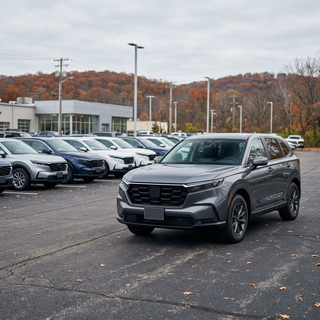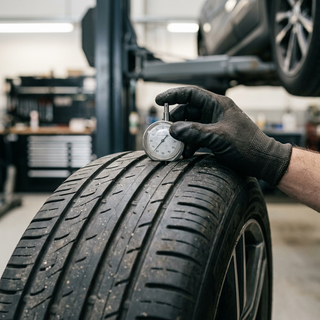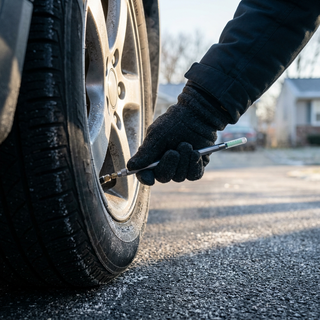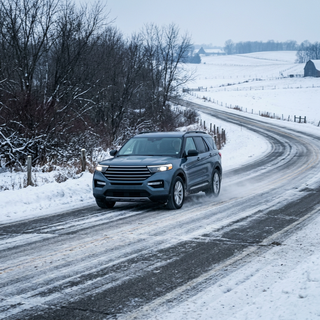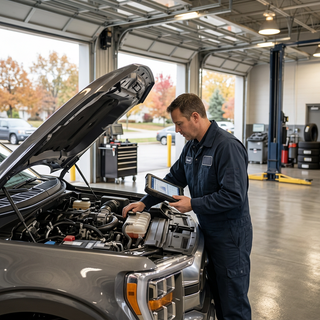
The best time of year to buy a used SUV depends on whether your priority is maximum purchase selection or the absolute lowest price. Late winter into early spring offers the best purchase prices as seasonal demand for all-wheel drive drops, while late autumn and early winter provide the largest selection of winter-ready vehicles on dealership lots. Shoppers evaluating whether to purchase a pre-owned crossover immediately or wait for warmer weather face a classic automotive market tradeoff. During late fall and early winter, dealerships maintain robust inventories of four-wheel drive and all-wheel drive vehicles to satisfy peak seasonal demand. However, because many buyers are actively searching for winter-capable transportation at the same time, retail pricing on pre-owned SUVs remains firm through January. Conversely, market dynamics shift noticeably as winter draws to a close. Wholesale used-vehicle price trends tracked by Cox Automotive indicate that average listing prices often ease after the peak winter demand cycle subsides. Once severe weather passes, buyer interest spreads across sedan, coupe, and fuel-efficient hatchback categories, causing pre-owned SUV values to soften slightly in late February and March. For local commuters traveling along State Route 170 in Calcutta, waiting until late winter can yield minor price savings, but waiting also means navigating another season of snow and ice in your current vehicle. Purchasing before winter arrives guarantees immediate access to features like heated seats, advanced traction control, and capable ground clearance when road conditions are at their worst. If you are ready to evaluate current options or compare trade-in values, you can get directions to our dealership or speak directly with our team by giving us a call at (330) 462-7578. Table of Contents Why Do Used SUV Prices Fluctuate Seasonally and Rise in Winter? Does AWD Increase Fuel Consumption and Cost More in Used SUVs? What Cold-Weather Signs to Check During a Winter Pre-Purchase Test Drive? How Can You Tell If an AWD System in a Used SUV Is Failing? Frequently Asked Questions About Buying a Pre-Owned SUV Finding the Right Pre-Owned SUV for Your Budget at Tri State Ford Why Do Used SUV Prices Fluctuate Seasonally and Rise in Winter? Used SUV prices fluctuate seasonally because consumer demand for all-wheel drive, higher ground clearance, and winter capability surges ahead of snow and severe cold. Between October and February, heightened competition among buyers inflates market values for winter-capable crossovers and full-size SUVs by 3% to 5% compared to spring baselines. The mechanics of seasonal vehicle pricing are driven primarily by consumer buying behavior and inventory turnover. In early autumn, retail buyers actively search for vehicles equipped with all-weather capability to prepare for upcoming snowstorms and freezing temperatures. This surge in buyer foot traffic increases dealership sales velocity, allowing pre-owned SUV prices to hold near annual highs throughout the fourth quarter. Data from Cox Automotive shows that used-vehicle inventory levels topped 2.14 million units mid-year, with average listing prices hovering near $27,027 following strong spring buying activity driven by tax refunds. As autumn approaches, dealerships adjust their inventory acquisitions to stock more all-wheel drive models, paying higher wholesale prices at dealer auctions to secure clean, snow-ready inventory. These higher acquisition costs reflect directly in retail pricing through December. To understand baseline values on the pre-owned market, it helps to examine original equipment pricing on popular compact SUVs like the Ford Escape. Baseline factory pricing establishes the depreciation foundation for pre-owned models: Active FWD: $30,350 MSRP (plus $1,495 destination charge) Active AWD: $31,750 MSRP (plus $1,495 destination charge) ST-Line FWD: $31,195 MSRP (plus $1,495 destination charge) ST-Line AWD: $32,595 MSRP (plus $1,495 destination charge) ST-Line Select AWD 2.0L: $35,015 MSRP (plus $1,495 destination charge) Platinum AWD: $37,940 MSRP (plus $1,495 destination charge) ST-Line Elite AWD 2.0L: $38,935 MSRP (plus $1,495 destination charge) Because an all-wheel drive system adds roughly $1,400 to $1,500 to a vehicle's initial retail cost, that value delta remains present in the secondary market. Buyers looking to maximize their budget often explore single-owner used SUVs to find well-maintained vehicles with clear service records. If you plan to upgrade before winter weather sets in, you can value your trade-in online to see how much equity you can apply toward your next purchase. Pricing Pricing by trim Feature Active AWD Active FWD Platinum AWD ST-Line AWD Base MSRP $31,750 $30,350 $37,940 $32,595 Destination charge $1,495 $1,495 $1,495 $1,495 Pricing (continued) Feature ST-Line Elite AWD 2.0L ST-Line FWD ST-Line Select AWD 2.0L Base MSRP $38,935 $31,195 $35,015 Destination charge $1,495 $1,495 $1,495 Does AWD Increase Fuel Consumption and Cost More in Used SUVs? All-wheel drive increases fuel consumption by roughly 1 to 2 MPG compared to equivalent front-wheel drive SUVs due to the added weight and mechanical drag of additional driveshafts and differentials. While an AWD model typically costs more upfront on the pre-owned market, it delivers superior winter traction and retains higher resale value over time. The fuel economy penalty in all-wheel drive vehicles stems from mechanical friction and component mass. An AWD system requires a power transfer unit or transfer case, a rear driveshaft, a rear differential, and rear axle shafts. This hardware adds between 150 and 250 pounds to the vehicle's total weight. Furthermore, constantly spinning gears and shafts consume engine power through mechanical drag, even when driving on dry, clear pavement. Modern Ford engineering minimizes this efficiency gap using intelligent AWD disconnect systems. Under normal driving conditions on clear roads, system electronics disconnect the rear driveline, allowing the SUV to operate in front-wheel drive to save fuel. When sensors detect wheel slip, steering angle changes, or sudden acceleration, the system re-engages torque to the rear wheels in milliseconds. Engine performance figures illustrate how powertrain choice impacts both power and efficiency across the lineup: The 1.5L EcoBoost engine delivers 180 hp and 199 lb-ft of torque paired with an automatic 8-speed transmission in models like the Active FWD, Active AWD, ST-Line FWD, and ST-Line AWD. The 2.0L EcoBoost engine generates 250 hp and 280 lb-ft of torque mated to a SelectShift® automatic transmission in performance-oriented models like the Platinum AWD, ST-Line Select AWD 2.0L, and ST-Line Elite AWD 2.0L. While front-wheel drive offers slightly lower fuel costs and a lower purchase price, all-wheel drive provides essential peace of mind when navigating unplowed roads, slush, and icy highway ramps. Engine & Performance Powertrain specs by trim Feature Active AWD Active FWD Platinum AWD ST-Line AWD Engine 1.5L 1.5L 2L 1.5L Horsepower 180 hp 180 hp 250 hp 180 hp Torque 199 lb-ft 199 lb-ft 280 lb-ft 199 lb-ft Transmission automatic 8-speed automatic 8-speed SelectShift® automatic 8-speed Drivetrain All-wheel drive Front-wheel drive All-wheel drive All-wheel drive Engine & Performance (continued) Feature ST-Line Elite AWD 2.0L ST-Line FWD ST-Line Select AWD 2.0L Engine 2L 1.5L 2L Horsepower 250 hp 180 hp 250 hp Torque 280 lb-ft 199 lb-ft 280 lb-ft Transmission SelectShift® automatic 8-speed SelectShift® Drivetrain All-wheel drive Front-wheel drive All-wheel drive What Cold-Weather Signs to Check During a Winter Pre-Purchase Test Drive? During a winter pre-purchase test drive, focus on engine cranking behavior, heater and defroster response, tire pressure monitoring alerts, and suspension noises over cold road surfaces. Sub-freezing temperatures strain aging vehicle batteries by reducing starting capacity by 30% to 50%, making winter test drives ideal for exposing hidden mechanical weaknesses. Taking a pre-owned vehicle out on a cold day provides a unique diagnostic advantage. Our sales team notices that buyers test-driving pre-owned SUVs during late autumn and winter usually check heater airflow speeds and seat warmers before evaluating touchscreen infotainment menus. Cold weather forces every comfort and mechanical system to work harder, making it easier to spot items that need attention. Essential winter inspection steps during your test drive include: Cold Engine Starting: Ensure the engine has not been warmed up before your drive. Turn the key or press the start button to listen for starter hesitation or slow cranking. HVAC and Defroster Operation: Test all fan speeds, climate control zones, windshield defroster grids, and heated mirrors to verify quick warm-up times. Tire Pressure Monitoring: Cold air contracts, lowering tire pressure by approximately 1 PSI for every 10-degree drop in outside temperature. Verify that all four tires are properly inflated and that no dashboard warning lights remain lit. Suspension and Steering Bushings: Cold rubber bushings harden in freezing weather. Drive over small bumps to listen for creaks, clunks, or rattles that indicate worn sway bar links or strut mounts. Evaluating these items is especially crucial when navigating steep riverfront bluffs in East Liverpool, where steep grades require responsive brakes, tight steering, and reliable engine output. Vehicles like the 2026 Ford Bronco Sport come equipped with standard 4x4 capabilities across Big Bend, Heritage, and Outer Banks trims, offering ground clearance from 7.8 to 8.1 inches—reaching 8.8 inches when equipped with off-road tires. Higher trims like the Badlands include standard heated front bucket seats to keep drivers comfortable in sub-zero weather. To explore available winter-ready models, browse our latest new vehicle inventory, start your financing setup by filling out a submit an online credit application, or schedule a test drive online to experience vehicle capabilities firsthand. How Can You Tell If an AWD System in a Used SUV Is Failing? You can identify a failing AWD system in a used SUV by listening for metallic grinding or clunking sounds from the underside, feeling shuddering or binding during tight low-speed turns, and observing dashboard warning lights. Severe binding or chatter during full-lock parking maneuvers often points to worn transfer case clutches or damaged constant-velocity joints. An all-wheel drive system relies on mechanical, hydraulic, and electronic components working together seamlessly. When a system begins to fail, the symptoms manifest in distinct ways during specific driving maneuvers: Tight Turn Binding: Drive the SUV in a tight circle at low speed in a dry parking lot. If the vehicle hops, stutters, or feels like the brakes are being applied, the center differential or clutch pack may be failing to allow speed differences between the front and rear axles. Underbody Whine or Hum: A high-pitched whining sound that changes pitch with vehicle speed typically indicates worn bearings inside the power transfer unit or rear differential assembly. Dashboard Warning Lights: Indicators such as "AWD Off," "Service 4WD," or a flashing traction control light signal that the control module has detected a sensor fault or mechanical disengagement. Delayed Engagement: Accelerate briskly on a loose or wet surface. If the front tires spin excessively before the rear wheels engage, the electronic coupling or viscous clutch may be worn out. Shoppers frequently ask if high-mileage SUVs are safe to purchase for winter driving. A pre-owned SUV with over 100,000 miles can be a safe and dependable winter vehicle provided maintenance records show consistent fluid services for the transmission, transfer case, and rear differential. Regular fluid changes prevent thermal breakdown and protect internal gears from premature wear, ensuring long-term mechanical reliability regardless of total mileage. Frequently Asked Questions About Buying a Pre-Owned SUV Q: Are used SUVs with over 100,000 miles safe to buy for winter driving? Yes, pre-owned SUVs with more than 100,000 miles can be exceptionally reliable in winter weather if they have documented maintenance history showing regular fluid changes, brake service, and healthy suspension components. Modern fuel-injected engines and sealed drivetrain assemblies easily exceed six-figure mileage when properly maintained. Before purchasing, verify that the battery delivers adequate cold-cranking amps and that winter-rated tires have sufficient tread depth for slush and icy pavement. Q: How do cold temperatures affect a car battery during a test drive? Freezing weather reduces chemical activity inside a 12-volt battery, diminishing starting power by up to 50% while engine oil thickens and requires more energy to turn over. If a used SUV hesitates or cranks slowly during a cold morning start, the battery or starter motor is likely near the end of its service life. Verifying battery age and testing voltage before driving ensures you will not face unexpected starting troubles during severe winter weather. Q: Does severe cold cause tire pressure warning lights to illuminate? Ambient air contracts as temperatures drop, causing tire pressure to fall by roughly 1 PSI for every 10-degree Fahrenheit drop in outside temperature. A sudden cold snap can drop pressure enough to trigger the tire pressure monitoring system alert on the dashboard during a test drive. Adjusting tires to the manufacturer's recommended cold pressure rating on the door placard restores proper pressure and ensures optimal winter traction. Q: What documentation should you bring when applying for pre-owned SUV financing? To streamline your vehicle purchase, bring your current driver's license, proof of income such as recent pay stubs, proof of residence like a utility bill, and current auto insurance card. If you plan to trade in a vehicle, bring its title, current registration, and any loan payoff information. Arriving with complete documentation allows our finance desk to process your application rapidly and secure competitive loan terms. Q: What is the benefit of choosing a Ford Certified Pre-Owned SUV? A Ford Certified Pre-Owned vehicle undergoes a comprehensive multi-point inspection by factory-trained technicians to ensure all mechanical systems, electrical features, and safety equipment meet strict manufacturer standards. Certified vehicles include comprehensive limited warranty protection, 24/7 roadside assistance, and a complete CARFAX vehicle history report. This added protection delivers total peace of mind when buying an AWD SUV for tough winter driving conditions. If you are ready to explore certified options, inspect current inventory, or speak with our team, get directions to Tri State Ford, call us at (330) 462-7578, or browse our certified pre-owned Ford inventory online today. Finding the Right Pre-Owned SUV for Your Budget at Tri State Ford Deciding whether to buy a pre-owned SUV now or wait until after winter comes down to balancing your immediate driving needs against market timing. Purchasing before winter hits provides maximum safety, traction, and driving comfort during the coldest months of the year, ensuring your family stays secure on slippery roads. Waiting until late winter or early spring may offer slight pricing advantages as seasonal demand eases, though inventory selection for top-tier AWD models may be more limited. At Tri State Ford, located at 1503 Pennsylvania Ave, East Liverpool, OH 43920, our sales team is committed to helping you find the perfect crossover or full-size SUV for your lifestyle and budget. Whether you need a fuel-efficient daily commuter or a spacious three-row vehicle equipped with advanced four-wheel drive, we offer a wide range of thoroughly inspected pre-owned models. Visit our showroom today or call (330) 462-7578 to take the next step toward your next vehicle. Keep Your Vehicle Running Strong Keep your vehicle performing at its best with our service team: Order Parts Schedule Service Appt © 2026 Tri State Ford. All rights reserved. Vehicle specification data © JATO Dynamics Limited. Used SUV Deals in East Liverpool OH | Tri State Ford