Blog / New Vehicle Reviews, Buying Guides, Financing & Insurance, Model Comparisons, Automotive News

Blog

All New Vehicle Reviews, Buying Guides, Financing & Insurance, Model Comparisons, Automotive News Maintenance & Service, Expert Repairs & Diagnostics, Genuine Parts & Accessories, Engine Care & Automotive News, New Vehicle Reviews, Buying Guides, Financing & Insurance, Seasonal Driving Tips Used Vehicle Guides, Financing & Insurance, Buying Guides, Trade-In Advice, Certified Pre-Owned Maintenance & Service, Battery Care & Diagnostics, Electric Vehicle (EV) Maintenance, Seasonal Maintenance & Service, Warranty & Service Contracts, Repair & Diagnostics, Parts & Components Buying Guides, Financing & Insurance, New Vehicle Reviews, Model Comparisons, Sales & Promotions Used Vehicle Guides, Financing & Insurance, Buying Guides, Vehicle Warranty Information, Pre-Owned Vehicle Trade-In Advice, Financing & Insurance, Buying Guides, Used Vehicle Guides, New Vehicle Maintenance & Service, Parts & Accessories, Vehicle HVAC Care, Seasonal Vehicle Maintenance, DIY Maintenance & Service, Essential Vehicle Care, Preventive Maintenance Tips, Vehicle Longevity Compare Cars Used Vehicle Guides, Financing & Insurance, Buying Guides, Pre-Owned Vehicle Sales, Vehicle Maintenance & Service, Brake Systems & Repair, Vehicle Parts & Accessories, Towing & Load New Vehicle Reviews, Buying Guides, Model Comparisons, Financing & Insurance, Inventory & Sales Tips Vehicle Sales Events, New Vehicle Pricing & Incentives, Financing & Lease Options, Trade-In & Vehicle Sales Process, Financing & Credit Applications, New and Used Vehicle Inventory, Pickup and Vehicle Trade-In Tips, Financing & Insurance, Buying Guides, Dealership Sales Strategies, Inventory Buying Guides, Financing & Insurance, New Vehicle Reviews, Model Comparisons, Technology & Leasing & Lease Deals, Financing & Insurance, New Vehicle Sales, Commercial Vehicle Leasing, Maintenance & Service, Recall Information, Safety & Reliability, Vehicle Ownership Care, Parts & Maintenance & Service, Vehicle Pickup & Delivery, Mobile Service & On-Site Repairs, Oil Change & Community Events & Customer Appreciation, New Vehicle Reviews, Financing & Trade-In Guides, Maintenance & Service, Warranty & Recalls, Repair & Diagnostics, Parts & Accessories, Vehicle Used Vehicle Guides, Financing & Insurance, Buying Guides, New Vehicle Reviews, Commercial Vehicle Maintenance & Service, Automotive Technology & Software Updates, Warranty & Recall Service, Mobile Maintenance & Service, Vehicle Ownership Care, Mobile Repair Services, Genuine Parts & Certified New Vehicle Reviews, Buying Guides, Financing & Insurance, Model Comparisons, Automotive Technology Commercial Truck Sales, Fleet Vehicle Financing, Custom Work Truck Upfits, Commercial Vehicle Dealership Events & Promotions, Financing & Trade-In Options, Maintenance & Service Specials, Maintenance & Service, Mobile Vehicle Services, Vehicle Care & Ownership, Genuine Parts & Repairs, Maintenance & Service, Vehicle Inspections, Oil Change & Fluid Services, Tire Care & Battery Maintenance & Service, Vehicle Lighting & Electrical Systems, Automotive Safety & Inspection, OEM Model Comparisons, New Vehicle Reviews, Technology & Innovation, Safety Features, Buying Guides New Vehicle Reviews, Buying Guides, Financing & Insurance, Model Comparisons, Used Vehicle Guides Commercial Vehicle Sales, Financing & Leasing, Small Business Vehicle Incentives, Fleet Purchasing Commercial Vehicle Sales, Fleet Purchasing & Management, Financing & Leasing for Businesses, New & Community Events, New Vehicle Buying Guides, Financing & Insurance, Maintenance & Service, Local Maintenance & Service, Brake System Care, Vehicle Safety & Inspection, Parts Quality & Replacement, Maintenance & Service, Safety Features, Technology & Innovation, Seasonal Driving Tips, Parts & Maintenance & Service, Tire Care & Repair, Roadside Assistance, Vehicle Safety & Inspections, Maintenance & Service, Tire Care & Repair, Wheel Alignment & Balancing, Suspension Maintenance, Maintenance & Service, Tire Care & Replacement, Vehicle Safety & Handling, Seasonal Vehicle Maintenance & Service, Tire Care & Replacement, Vehicle Safety & Inspection, Emergency Roadside Maintenance & Service, Vehicle Software Updates, Safety Features, Technology & Innovation, Recall & New Vehicle Reviews, Buying Guides, Model Comparisons, Maintenance & Service, Technology & Used Vehicle Guides, Buying Guides, Financing & Insurance, Model Comparisons, Selling Your Car Vehicle Sales Events, New Vehicle Purchasing, Incentives & Discounts, Financing & Pre-Approval, Buying Guides, Financing & Insurance, New Vehicle Reviews, Commercial Fleet Sales, Custom Orders & Buying Guides, Financing & Insurance, Vehicle Inventory & Offers, Dealership Visit Preparation, Buying Guides, New Vehicle Reviews, Financing & Insurance, Commercial Vehicle Sales, Model Commercial Truck Sales, Fleet Purchasing Guides, Financing & Lease Options, Work Truck Commercial Vehicle Sales, Fleet Leasing & Management, Commercial Financing & Tax Incentives, Financing & Insurance, Leasing Benefits, Model Comparisons, Technology & Innovation, Buying Guides Leasing & Financing Options, Buying Guides, Model Comparisons, Negotiation Tips, Inventory & Leasing & Financing Options, Buying Guides, New Vehicle Reviews, Model Comparisons, Technology & Maintenance & Service, Automotive Detailing, Paint Protection & Care, Seasonal Vehicle Care, Maintenance & Service, Automotive Electrical Systems, Battery Care & Replacement, Vehicle Lighting Maintenance & Service, Automotive Fluids & Lubricants, Vehicle Care & Ownership, Dealership Service Maintenance & Service, Automotive Repair, Mobile & Remote Vehicle Service, Warranty & Roadside Maintenance & Service, Brake System Care, Vehicle Safety & Inspection, Automotive Repair Tips, Maintenance & Service, Brake System Care, Vehicle Safety & Inspections, Parts & Repairs, Expert Maintenance & Service, Technology & Innovation, Vehicle Diagnostics & Telematics, Fleet Management Maintenance & Service, Vehicle Care & Longevity, Scheduled Service Packages, Oil Changes & Fluid Maintenance & Service, Vehicle Inspection & Diagnostics, Parts & Repairs, Warranty & Resale Value, Maintenance & Service, Vehicle Interior Care, Technology & Innovation in Service, Professional New Vehicle Reviews, Buying Guides, Financing & Insurance, Model Comparisons, Inventory Highlights New Vehicle Reviews, Buying Guides, Financing & Insurance, Model Comparisons, Inventory Updates New Vehicle Reviews, Buying Guides, Technology & Innovation, Safety Features, Seasonal Driving Tips New Vehicle Reviews, Financing & Insurance, Buying Guides, Used Vehicle Guides, Model Comparisons New Vehicle Reviews, Model Comparisons, Commercial Truck Guides, Technology & Innovation, Buying Guides, Financing & Insurance, Used Vehicle Guides, New Vehicle Reviews, Cross-Border Commercial Leasing Options, Business Fleet Solutions, Financing & Leasing Programs, Commercial Community Engagement & Events, New Vehicle Promotions, Financing & Trade-In Options, Maintenance & Community Events & Dealership News, New Vehicle Promotions & Incentives, Maintenance & Service Community Events & Dealership News, New Vehicle Reviews, Financing & Insurance, Maintenance & Custom Ordering & Build Process, New Vehicle Inventory & Offers, Financing & Trade-In Guidance, East Liverpool, OH Ford Dealer East Liverpool, OH Used Cars Financing & Insurance, Buying Guides, Commercial Vehicle Solutions, Fleet Management, Inventory and Financing & Insurance, Buying Guides, New Vehicle Reviews, Used Vehicle Guides, Automotive Sales Financing & Insurance, Buying Guides, New Vehicle Reviews, Used Vehicle Guides, Automotive Sales & Financing & Insurance, Buying Guides, New Vehicle Reviews, Used Vehicle Guides, Model Comparisons Financing & Insurance, Buying Guides, Used Vehicle Guides, New Vehicle Reviews, Automotive Sales Financing & Insurance, Buying Guides, Used Vehicle Guides, Trade-In Tips, New Vehicle Sales Financing & Insurance, Buying Guides, Vehicle Inventory & Offers, Trade-In & Appraisal, Dealership Financing & Insurance, Buying Guides, Vehicle Trade-In Tips, Dealership Sales Process, New Vehicle Leasing & Financing Options, New Vehicle Leasing Guides, Buying Guides, Inventory Spotlight, Trade Leasing Options, Financing & Insurance, New Vehicle Reviews, Buying Guides, Technology & Innovation Leasing Options, Financing & Insurance, New Vehicle Sales, Buying Guides, Vehicle Inventory Maintenance & Service, Air Conditioning Repair, Genuine Parts & Accessories, Dealer-Authorized Maintenance & Service, Automotive Air Conditioning Repair, Vehicle Cooling System Care, Diagnostic Maintenance & Service, Automotive Detailing & Cleaning, Seasonal Vehicle Care, Vehicle Protection & Maintenance & Service, Automotive Detailing & Paint Care, Vehicle Exterior Protection, Paint Repair Maintenance & Service, Automotive Detailing & Protection, Corrosion & Rust Prevention, Paint & Maintenance & Service, Automotive Detailing, Vehicle Care & Protection, Off-Road Vehicle Maintenance & Service, Automotive Electrical Systems, Battery Care & Replacement, Diagnostics & Maintenance & Service, Automotive Glass Repair, Safety Features, Technology & Innovation, Mobile & Maintenance & Service, Automotive Lighting & Electrical, Vehicle Safety & Visibility, DIY Vehicle Maintenance & Service, Automotive Parts & Accessories, Seasonal Vehicle Care, Vehicle Safety & Maintenance & Service, Automotive Parts & Accessories, Vehicle Air Quality & HVAC Care, Preventive Maintenance & Service, Automotive Parts & Accessories, Vehicle Ownership Care, Engine Care & Maintenance & Service, Automotive Parts & Accessories, Vehicle Safety & Repair, Warranty & Maintenance & Service, Automotive Parts & Components, Vehicle Safety & Repair, Warranty & Service Maintenance & Service, Automotive Parts & Repairs, Vehicle Warranty & Protection, Service Center Maintenance & Service, Automotive Repair Tips, Service Team Selection, Warranty & Service Policies, Maintenance & Service, Automotive Repair, Parts & Accessories, Vehicle Ownership Care, Technology & Maintenance & Service, Automotive Repair, Parts & OEM Components, Vehicle Longevity & Care, Service Maintenance & Service, Automotive Technology & Diagnostics, Vehicle Electronics & Sensors, Seasonal Maintenance & Service, Battery Care & Replacement, Vehicle Electrical Systems, Seasonal Vehicle Maintenance & Service, Brake System Care, OEM Parts & Replacement, Vehicle Safety & Inspections, Maintenance & Service, Brake System Care, Vehicle Repair Tips, Automotive Parts & Components, Maintenance & Service, Brake System Care, Vehicle Safety & Inspections, Parts & Components, Maintenance & Service, Brake System Care, Vehicle Safety Inspections, Automotive Repair Tips, OEM Maintenance & Service, Certified Technician Insights, Warranty & Service Coverage, Genuine OEM Maintenance & Service, Cooling System Repairs, Vehicle Ownership Care, Diagnostic & Maintenance & Service, Diagnostic Services, Vehicle Health & Diagnostics, Service Tips & Advice, Maintenance & Service, Engine Care & Performance, Parts & Accessories, Genuine vs. After Maintenance & Service, Paint Protection & Detailing, Vehicle Exterior Care, Seasonal Vehicle Maintenance & Service, Parts & Accessories, Engine Care & Repair, Vehicle Longevity Tips, OEM Parts Maintenance & Service, Parts & Replacements, Vehicle Care Tips, Seasonal Maintenance, DIY Vehicle Maintenance & Service, Recall Updates & Safety Notices, Genuine Parts & Accessories, Truck Care & Maintenance & Service, Repair & Diagnostics, OEM Parts & Accessories, Warranty & Recall Maintenance & Service, Repair & Diagnostics, Parts & Accessories, Vehicle Ownership Care, Service Maintenance & Service, Repair & Diagnostics, Parts & Components, Preventive Care & Tips, Warranty & Maintenance & Service, Repair & Diagnostics, Tire & Wheel Care, Vehicle Safety & Inspection, Parts Maintenance & Service, Repair & Diagnostics, Warranty & Service Coverage, Genuine OEM Parts & Maintenance & Service, Repair & Parts, Vehicle Ownership Care, Safety Features, Technology & Maintenance & Service, Repair & Parts, Vehicle Ownership Care, Transmission Maintenance & Service, Repair Solutions, Vehicle Ownership Care, Parts & Accessories, Diagnostic Maintenance & Service, Repair Tips & Techniques, Vehicle Care & Ownership Maintenance & Service, Safety Features, Automotive Recalls & Repairs, Parts & Warranty Services, Maintenance & Service, Safety Features, Automotive Recalls & Repairs, Technology & Innovation, Maintenance & Service, Safety Features, Automotive Recalls, Vehicle Ownership Care, Parts & Repairs Maintenance & Service, Safety Features, Parts & Repairs, Vehicle Ownership Care, Automotive Service Maintenance & Service, Safety Features, Recall & Repair Updates, Parts & Repairs, Vehicle Ownership Maintenance & Service, Safety Features, Recall & Safety Campaigns, Vehicle Inspection & Repairs, Maintenance & Service, Safety Features, Recall & Warranty Information, Vehicle Diagnostics & Maintenance & Service, Safety Features, Recall Repairs & Safety Campaigns, Parts & Genuine Maintenance & Service, Safety Features, Recalls & Repairs, Parts & Accessories, Vehicle Ownership Maintenance & Service, Safety Features, Repair & Recall Updates, Parts & Components, Vehicle Maintenance & Service, Safety Features, Repair & Replacement, Vehicle Care & Inspection, Parts & Maintenance & Service, Safety Features, Seasonal Driving Tips, Technology & Innovation, Parts & Maintenance & Service, Safety Features, Technology & Innovation, Automotive Electrical Systems, Maintenance & Service, Safety Features, Technology & Innovation, Automotive News, Parts & Repairs Maintenance & Service, Safety Features, Technology & Innovation, Automotive Parts & Accessories, Maintenance & Service, Safety Features, Technology & Innovation, Automotive Recalls, Parts & Repairs Maintenance & Service, Safety Features, Technology & Innovation, Automotive Recalls, Vehicle Maintenance & Service, Safety Features, Technology & Innovation, Automotive Service Tips, Recall & Maintenance & Service, Safety Features, Technology & Innovation, Parts & Repairs, Seasonal Driving Maintenance & Service, Safety Features, Technology & Innovation, Parts & Repairs, Vehicle Ownership Maintenance & Service, Safety Features, Technology & Innovation, Recall & Warranty Information, Maintenance & Service, Safety Features, Technology & Innovation, Repair & Recall Information, Parts Maintenance & Service, Safety Features, Technology & Innovation, Tire Care & Replacement, Maintenance & Service, Safety Features, Vehicle Inspections, DIY Vehicle Care, Repair & Diagnostics Maintenance & Service, Safety Recalls & Repairs, Vehicle Safety & Compliance, Powertrain & Maintenance & Service, Seasonal Driving Tips, Model Comparisons, Technology & Innovation, Safety Maintenance & Service, Seasonal Driving Tips, Safety Features, Technology & Innovation, Automotive Maintenance & Service, Seasonal Driving Tips, Safety Features, Technology & Innovation, Parts & Maintenance & Service, Seasonal Driving Tips, Vehicle Care & Ownership, Brake System Maintenance, Maintenance & Service, Seasonal Driving Tips, Vehicle Care & Ownership, Parts & Accessories, Safety Maintenance & Service, Seasonal Driving Tips, Vehicle Care & Ownership, Safety Features, Maintenance & Service, Seasonal Driving Tips, Vehicle Care & Protection, Brake Maintenance, Tire Maintenance & Service, Seasonal Driving Tips, Vehicle Care & Warranty, Service Specials & Packages, Maintenance & Service, Seasonal Driving Tips, Vehicle Cooling Systems, Automotive Safety Features, Maintenance & Service, Service Scheduling & Convenience, Vehicle Repair & Diagnostics, Parts & Maintenance & Service, Technology & Innovation, Automotive Service Transparency, Digital Vehicle Maintenance & Service, Technology & Innovation, Safety Features, Parts & Warranty, Vehicle Maintenance & Service, Tire Care & Replacement, Seasonal Vehicle Care, Safety Features, Automotive Maintenance & Service, Tire Care & Replacement, Vehicle Safety & Inspections, Seasonal Vehicle Maintenance & Service, Transmission Care & Repair, Vehicle Fluid Services, Automotive Diagnostics, Maintenance & Service, Transmission Care, Repair & Parts, Vehicle Ownership Care, Common Vehicle Maintenance & Service, Vehicle Care Tips, Parts & Accessories, Seasonal Vehicle Maintenance, Maintenance & Service, Vehicle Detailing & Care, Parts & Accessories, Seasonal Vehicle Preparation, Maintenance & Service, Vehicle Detailing & Cosmetic Care, Automotive Cleaning & Protection, Service Maintenance & Service, Vehicle Detailing & Cosmetic Care, Service Scheduling & Convenience, Maintenance & Service, Vehicle Detailing & Protection, Repair & Inspection, Parts & Accessories, Maintenance & Service, Vehicle Detailing & Protection, Vehicle Care Tips, Seasonal Vehicle Maintenance & Service, Vehicle Diagnostics & Repair, Engine Performance & Troubleshooting, Fuel Maintenance & Service, Vehicle Fluids & Lubrication, Engine Care & Repair, Parts & Accessories, Maintenance & Service, Vehicle Ownership Care, Parts & Accessories, Repair & Diagnostics, Certified Maintenance & Service, Vehicle Repair & Diagnostics, Parts & Accessories, DIY Vehicle Care, Safety Maintenance & Service, Vehicle Repair & Diagnostics, Parts & Accessories, Hybrid & Electric Vehicle Maintenance & Service, Vehicle Repair & Diagnostics, Parts & Accessories, Seasonal Driving Tips, Maintenance & Service, Vehicle Repair & Diagnostics, Parts & Accessories, Service Lane Tips & Maintenance & Service, Vehicle Repair & Diagnostics, Parts & Accessories, Towing & Performance Maintenance & Service, Vehicle Repair & Parts, Service Convenience & Customer Care, Roadside Maintenance & Service, Vehicle Repair Tips, Parts & Accessories, Safety Features, Technology & Maintenance & Service, Vehicle Service Warranties, Repair & Coverage Plans, Ownership & Vehicle Model Comparisons, Buying Guides, New Vehicle Reviews, Financing & Insurance, Inventory Updates Model Comparisons, Buying Guides, New Vehicle Reviews, Technology & Innovation, Safety Features Model Comparisons, Buying Guides, Technology & Innovation, Safety Features, Maintenance & Service Model Comparisons, New Vehicle Reviews, Buying Guides, Technology & Innovation, Financing & Model Comparisons, New Vehicle Reviews, Buying Guides, Technology & Innovation, Safety Features Model Comparisons, New Vehicle Reviews, Safety Features, Technology & Innovation, Seasonal Driving Model Comparisons, New Vehicle Reviews, Technology & Innovation, Buying Guides, Maintenance & Model Comparisons, New Vehicle Reviews, Technology & Innovation, Maintenance & Service, Buying Model Comparisons, Towing & Hauling Guides, Maintenance & Service, Technology & Innovation, New New Vehicle Promotions, Buying Guides, Financing & Insurance, New Vehicle Reviews, Inventory New Vehicle Reviews, Buying Guides, Financing & Insurance, Model Comparisons, Automotive Sales New Vehicle Reviews, Buying Guides, Financing & Insurance, Model Comparisons, Commercial & Work New Vehicle Reviews, Buying Guides, Financing & Insurance, Model Comparisons, Vehicle Customization New Vehicle Reviews, Buying Guides, Financing & Insurance, Model Comparisons, Vehicle Inventory New Vehicle Reviews, Buying Guides, Financing & Insurance, New Vehicle Specials, Trade-In & Value New Vehicle Reviews, Buying Guides, Financing & Insurance, Used Vehicle Guides, Inventory Updates New Vehicle Reviews, Buying Guides, Financing & Insurance, Used Vehicle Guides, Model Comparisons New Vehicle Reviews, Buying Guides, Financing & Insurance, Vehicle Inventory & Specials, Model New Vehicle Reviews, Buying Guides, Financing & Insurance, Vehicle Inventory, Model Comparisons New Vehicle Reviews, Buying Guides, Model New Vehicle Reviews, Buying Guides, Model Comparisons, Financing & New Vehicle Reviews, Buying Guides, Safety Features, Technology & Innovation, Model Comparisons New Vehicle Reviews, Buying Guides, Technology & Innovation, Safety Features, Maintenance & Service New Vehicle Reviews, Financing & Insurance, Buying Guides, New Vehicle Specials, Model Comparisons New Vehicle Reviews, Financing & Insurance, Buying Guides, Technology & Innovation, Automotive New Vehicle Reviews, Model Comparisons, Buying Guides, Technology & Innovation, Safety Features New Vehicle Reviews, Model Comparisons, Financing & Insurance, Technology & Innovation, Safety New Vehicle Reviews, Model Comparisons, Off-Road Adventures, Technology & Innovation, Maintenance & New Vehicle Reviews, Model Comparisons, Safety Features, Technology & Innovation, Buying Guides New Vehicle Reviews, Model Comparisons, Technology & Innovation, Financing & Insurance, Maintenance New Vehicle Reviews, Model Comparisons, Technology & Innovation, Safety Features, Buying Guides New Vehicle Reviews, Model Comparisons, Technology & Innovation, Safety Features, Maintenance & New Vehicle Reviews, Off-Road Capabilities, Outdoor Adventure Vehicles, Technology & Innovation, New Vehicle Reviews, Technology & Innovation, Buying Guides, Maintenance & Service, Model New Vehicle Reviews, Technology & Innovation, Buying Guides, Safety Features, Model Comparisons New Vehicle Reviews, Technology & Innovation, Safety Features, Maintenance & Service, Buying Guides New Vehicle Sales, Financing & Incentives, Trade-In & Appraisal, Special Sales Events, Electric New Vehicle Sales, Financing & Incentives, Trade-In & Value Guides, Manufacturer Promotions, New Vehicle Sales, Financing & Insurance, Buying Guides, Manufacturer Incentives & Discounts, New Vehicle Sales, Vehicle Delivery & Logistics, Financing & Credit Applications, Trade-In & Trucks Used Vehicle Guides, Financing & Insurance, Buying Guides, Model Comparisons, Local Dealership Vehicle Sales Events, Financing & Leasing, Trade-In & Trade-Up Guides, New Vehicle Inventory Vehicle Sales Events, New Vehicle Buying Guides, Financing & Incentives, Dealership Inventory Vehicle Sales Events, New Vehicle Pricing, Financing & Credit Applications, Trade-In & Loyalty Vehicle Sales Process, Online Vehicle Purchasing, Financing & Loan Approval, Trade-In & Vehicle Vehicle Sales Promotions, New Vehicle Buying Guides, Financing & Credit Applications, Dealership Vehicle Sales Promotions, New Vehicle Buying Guides, Financing & Incentives, Trade-In & Valuation, Vehicle Sales, Online Car Buying, Financing & Incentives, Trade-In Guides, New Vehicle Delivery
f

Can You Buy a Car Entirely From Home?

Can You Buy a Car Entirely From Home? You can purchase a vehicle entirely from home by selecting an inventory model, finalizing your trade-in appraisal, securing loan approval, and completing your sales contract through digital dealership tools. Digital automotive platforms allow buyers to complete every step of the transaction remotely without showroom visits, concluding with doorstep vehicle delivery or scheduled curbside pickup. Digital vehicle shopping has evolved from browsing photo listings into a complete remote transaction channel. Modern automotive retail platforms connect inventory databases, appraisal estimators, and digital finance portals directly to your home computer or mobile device. Buyers can research models, calculate real payment scenarios, verify vehicle history, and submit credit details securely. Completing the transaction remotely requires clear communication with the dealership staff. Once you locate a vehicle, sales consultants can provide detailed documentation, window stickers, and purchase agreements via email or secure customer portals. State titling and registration paperwork can either be completed via encrypted electronic signature systems or delivered alongside the vehicle for signature upon drop-off. If you prefer to finalize your purchase remotely but want the option to visit in person, our staff is readily accessible. Drivers can plan a trip using our dealership location on Pennsylvania Avenue or reach our sales advisors with (330) 462-7578 to guide every stage of the remote buying path. Table of Contents Online Retailers vs Traditional Dealership Websites: Pricing, Trade-Ins, and Return Policies How Do Virtual Vehicle Walkarounds and Digital Inspection Tools Work? How Do You Negotiate an Out-the-Door Price When Shopping for a Vehicle Online? Can You Secure Independent Auto Financing and Complete Paperwork Remotely? Key Questions Buyers Ask About Online Car Shopping Start Your Online Purchase Journey With Tri State Ford Online Retailers vs Traditional Dealership Websites: Pricing, Trade-Ins, and Return Policies Online-only catalog retailers utilize fixed, non-negotiable pricing algorithms and short return windows, whereas franchised dealership websites offer flexible negotiations, verified manufacturer incentives, and direct trade-in appraisals backed by physical facilities. Buying through a local dealer combines digital convenience with real vehicle accountability and local warranty support. National online platforms often advertise fixed pricing as a convenience, yet this model eliminates the opportunity to negotiate discounts or adjust trade-in numbers. When working through an authorized dealer portal, shoppers can communicate directly with sales teams to review current factory rebates, promotional interest rates, and tailored trade-in values. For families living in Calcutta who frequently commute along State Route 170, working with an established local dealership provides a reliable point of contact for long-term ownership needs rather than a remote call center located states away. Trade-in procedures also show major differences between platforms: Automated Algorithm Quotes: Online-only retailers rely on automated sight-unseen estimates that can be downgraded upon final collection if minor discrepancies are discovered. Accurate Dealership Appraisals: Local dealers allow you to value your trade-in online using verified market data, with actual appraisers available to account for maintenance history, installed accessories, and high-demand options. Return Guarantees vs Pre-Delivery Inspections: While digital platforms emphasize limited seven-day return periods to compensate for the inability to inspect the car before delivery, franchised dealerships provide verified inspection reports and certified guarantees before funds transfer. Shoppers looking for pre-owned quality can inspect verified history by reviewing our Carfax single-owner pre-owned inventory, which provides comprehensive service records and title verification. Choosing a reliable local Ford dealership ensures that your vehicle is backed by factory-trained technicians and established regional customer support. How Do Virtual Vehicle Walkarounds and Digital Inspection Tools Work? Virtual vehicle walkarounds utilize high-definition video calls and interactive digital imaging to provide prospective buyers with a live, bumper-to-bumper examination of a vehicle's mechanical and cosmetic condition. Dealership specialists use handheld mobile devices to highlight exterior body panels, paint condition, tire tread depth, undercarriage surfaces, and interior cabin features in real time. During a scheduled virtual demonstration, you direct the presentation from your living room. You can ask the sales representative to start the engine, cycle through infotainment menus, demonstrate seat folding sequences, or measure cargo volume. High-resolution digital inspection tools complement this process by providing close-up photo galleries of wheel rims, engine bays, glass surfaces, and interior seating wear, leaving no hidden flaws prior to purchase. Virtual inspections allow you to evaluate specific functional packages tailored to your lifestyle: Family Comfort and Space: Explore how the 2026 Ford Explorer accommodates passengers with seating for six, about 16 cubic feet of cargo room behind the third row, and a 5,000-pound towing capacity powered by its 2.3L engine and SelectShift® automatic transmission. Everyday Commuting Efficiency: Inspect the 2026 Ford Escape, which delivers an EPA-rated 26 city / 32 hwy mpg with its 1.5L engine and 8-speed automatic, offering about 38 cubic feet of cargo space behind the second row. Commercial and Fleet Configurations: Commercial buyers can inspect heavy-duty frames and commercial upfits through our dedicated F-Series work truck inventory online. Buyers seeking personalized vehicle configurations can also utilize our custom factory build and pricing tool to order a vehicle built to exact factory specifications. If you prefer verified late-model used vehicles, our team can guide you through our certified pre-owned Ford inventory, showing point-by-point digital inspections that meet strict factory certification standards. How Do You Negotiate an Out-the-Door Price When Shopping for a Vehicle Online? Negotiating an out-the-door price online requires requesting a complete, itemized purchase agreement that details the base vehicle price, applicable manufacturer rebates, dealership documentation fees, sales taxes, and state registration charges before committing to terms. Securing this full breakdown in writing via email or chat prevents unexpected add-ons from appearing at delivery. The out-the-door figure represents the absolute total amount required to take ownership of the vehicle. When shopping online, always focus negotiations on this bottom-line total rather than discussing target monthly payments. Monthly payment targets allow finance departments to adjust loan durations or interest terms to hide higher vehicle costs. Dealership advisors observe that remote shoppers who request an itemized worksheet upfront experience a smoother closing process, as every line item can be reviewed without time pressure. Online purchasing often proves more cost-effective than in-person shopping because it allows you to compare written itemized estimates side by side. When negotiating remotely: Request the Full Invoice Breakdown: Ask your sales representative to provide a formal quote showing the MSRP, dealer discount, factory rebates, document fees, and exact local taxes. Review Dealer Add-Ons: Identify whether optional charges such as exterior paint protection, interior fabric sealant, or window tinting have been added, and negotiate their inclusion or removal. Validate Regional Incentives: Verify that all eligible retail customer cash, trade-in assistance, or military and first-responder discounts are applied directly to the principal cost. Compare Across Equivalent Configurations: Use written quotes from other dealers to request a price match on an identical trim and powertrain. Drivers navigating the steep river bluffs and varied elevations of East Liverpool require vehicles with reliable all-weather capability and durable construction. Reviewing our online new Ford vehicle inventory allows you to evaluate models equipped with intelligent all-wheel drive, smart safety suites, and dependable powertrains, ensuring you secure competitive pricing on vehicles engineered to manage regional driving demands. Can You Secure Independent Auto Financing and Complete Paperwork Remotely? You can secure independent auto financing when buying online by obtaining a loan pre-approval letter from your bank or credit union and submitting the funding instructions directly to the dealership's business office. Dealership finance departments regularly collaborate with independent financial institutions to process loan disbursements alongside digital purchase contracts. Securing financing pre-approval establishes a clear budget and provides a competitive baseline for interest rates. Once your lender provides an approval letter with loan limits, terms, and interest figures, our finance managers can compare those numbers with Ford Credit promotional programs. Dealership finance portals often provide access to manufacturer APR incentives that independent lenders cannot offer, giving buyers multiple rate pathways to evaluate side by side. Remote document execution makes vehicle financing straightforward: Encrypted Electronic Signing: Loan contracts, retail installment agreements, and privacy disclosures can be executed through secure digital signature services on your smartphone or home computer. Remote Identity Verification: Buyers submit secure digital images of their driver's license, proof of current auto insurance, and residency documentation to satisfy state compliance standards. Physical Title and State Requirements: While most sales contracts are signed electronically, certain state motor vehicle titling forms may require physical ink signatures upon vehicle delivery. You can streamline your remote financing process by submitting our secure online credit application, allowing our finance team to assemble competitive loan options before you finalize your vehicle delivery. Key Questions Buyers Ask About Online Car Shopping Q: How does vehicle delivery work when purchasing a car online from home? Vehicle delivery occurs after all financing, trade-in documentation, and purchase agreements are finalized digitally. The dealership schedules a delivery window where a transport representative delivers the vehicle directly to your driveway or office. Upon arrival, you inspect the vehicle to verify its cosmetic and mechanical condition, verify the mileage, test the keys, and complete any remaining state-mandated physical registration paperwork before accepting the keys. Q: What documents must I submit to complete a remote vehicle purchase? Completing a digital car purchase requires a valid driver's license, proof of current automotive insurance covering the new vehicle, proof of physical residence such as a utility statement, and financing approval documentation. If trading in an existing car, you must also provide the vehicle title or current loan payoff statement, active registration card, and lien release forms prior to finalizing the transaction. Q: Can I add genuine factory accessories to an online order before home delivery? You can add genuine Ford accessories to an online vehicle order before finalizing your financing agreement. Items such as all-weather floor liners, heavy-duty trailer hitches, cargo management systems, splash guards, and bed covers can be rolled directly into the vehicle's total financing package and installed by certified dealership technicians before the vehicle leaves the lot. Q: How is negative equity handled during a remote online vehicle transaction? Negative equity occurs when your current auto loan balance exceeds the trade-in value of your vehicle. During an online purchase, our finance team calculates this difference and can roll the remaining balance into the new vehicle's financing agreement, subject to lender credit approval and loan-to-value limits, eliminating the need to pay off the balance upfront out of pocket. Q: What happens if a vehicle arrives with undisclosed cosmetic flaws? If a vehicle arrives at your home with damage or discrepancies not disclosed during the virtual walkaround, you note the conditions on the delivery bill of lading before signing acceptance paperwork. The dealership will either arrange to correct the flaws at no expense, provide compensation, or allow you to decline delivery before final title registration takes place. Start Your Online Purchase Journey With Tri State Ford Shopping for a vehicle online from the comfort of home gives you complete control over your purchase schedule, vehicle research, and price negotiations. Our digital retail tools let you compare trims, configure ideal options, discuss current payment options, and complete loan approvals without stepping away from your desk. Every vehicle listed on our platform includes transparent specifications and clear history reports so you can choose your next car with absolute confidence. Whether you are seeking a reliable daily commuter or a capable family hauler, our staff is available to provide live virtual demonstrations and answer every financing question. When you are ready to explore our lineup in person, plan your visit to our showroom at 1503 Pennsylvania Ave in East Liverpool, OH 43920. To start your virtual consultation or schedule a digital walkaround today, call our team directly at (330) 462-7578. Keep Your Vehicle Running Strong Keep your vehicle performing at its best with our service team: Order Parts Schedule Service Appt © 2026 Tri State Ford. All rights reserved. Vehicle specification data © JATO Dynamics Limited. Online Car Buying in East Liverpool OH | Tri State Ford


d

Is Trading In a Car Better Than Selling It Privately?

Is Trading In a Car Better Than Selling It Privately? Trading in a vehicle is generally better for buyers who prioritize speed, legal protection, and state tax savings, completing it in 1 to 2 hours with immediate credit applied to a replacement purchase. Selling privately yields a higher gross sale price—typically 10% to 20% more—but requires 2 to 6 weeks of managing listings, buyer communications, test drives, lien payoffs, and title transfers. The overall financial advantage of a private sale shrinks significantly once state tax offsets, out-of-pocket reconditioning, and listing expenses are factored into the transaction. Deciding between a trade-in and a private sale comes down to evaluating your personal schedule, financial goals, and comfort level with legal paperwork. When you list a vehicle on your own, you assume the full responsibility of an automotive retailer. That includes advertising the car, screening potential buyers, handling test drives around steep riverfront bluffs like those near East Liverpool, and verifying secure payment methods. For busy working families balancing daily schedules, spending weeks managing strangers and financial paperwork often outweighs the gross price premium of a direct buyer. Trading in your vehicle streamlines the entire vehicle transition into a single visit. Our team handles all state motor vehicle paperwork, communicates directly with your existing lienholder to pay off remaining loan balances, and applies your vehicle value directly as a down payment toward a new model. Whether you are eyeing a spacious SUV with Ford Co-Pilot360 driver-assist features or a capable truck built tough for daily work and weekend recreation, trading in eliminates downtime. If you prefer a seamless upgrade path, you can find our dealership address at 1503 Pennsylvania Ave to get an in-person vehicle valuation, or give our sales team a quick call at (330) 462-7578 to discuss your replacement vehicle options. Table of Contents How Much More Money Do You Get Selling Privately Versus Trading In? How Does the Ohio Trade-In Sales Tax Credit Affect Your Net Profit? How Does Selling Privately Compare to Dealer Trade-Ins and Instant Online Buyers? How Do Dealerships Handle Existing Loans, Negative Equity, and Car Insurance? What Paperwork, Bills of Sale, and Safety Steps Are Needed for a Private Sale? Common Questions About Trading In vs. Selling Privately Take the Next Step Toward Your Replacement Vehicle at Tri State Ford How Much More Money Do You Get Selling Privately Versus Trading In? Selling a car privately typically generates 10% to 20% more gross revenue than a dealer trade-in offer because private sellers set retail pricing rather than wholesale market values. However, reaching that higher listing figure requires absorbing detailing costs, minor mechanical repairs, marketing fees, and ongoing vehicle insurance payments while the car sits on the market. To understand why this price gap exists, it helps to examine how pre-owned vehicle pricing is structured. Dealerships evaluate trade-ins based on wholesale values because every acquired vehicle requires professional inspection, maintenance, reconditioning, and administrative processing before it can be resold. Dealerships generally invest between $1,500 and $4,000 per vehicle into safety inspections, component reconditioning, re-detailing, extended warranty backing, and state compliance checks. These investments ensure that the next buyer receives a safe, reliable vehicle backed by Ford’s proven quality. Private sellers skip these operational expenses up front, passing reconditioning responsibility to the buyer, which is why private listing prices match local retail averages. However, private sellers must handle every expense out of pocket prior to the sale. If your vehicle requires a new set of tires, brake pad replacements, or paint correction to fetch top retail price, those investments reduce your net takeaway. Furthermore, holding a car for several weeks along the suburban State Route 170 commercial corridor in Calcutta while waiting for a serious buyer means paying extra monthly insurance premiums and loan interest. When you shop our pre-owned Carfax 1-Owner inventory, you can see how professionally reconditioned vehicles retain clear market value while delivering complete safety confidence for your family. Transaction Factor Private Party Sale Dealership Trade-In Gross Sale Price Higher (Retail market value) Lower (Wholesale market value) Time to Complete 2 to 6 weeks average 1 to 2 hours total Sales Tax Impact No tax offset on next purchase Reduces taxable base on replacement Paperwork & Liens Seller coordinates payoff & title Dealership processes all documentation Safety & Liability Seller manages unknown buyers Professional, secure transaction How Does the Ohio Trade-In Sales Tax Credit Affect Your Net Profit? The Ohio trade-in sales tax credit directly reduces the taxable purchase price of a replacement vehicle by the exact valuation allowance of your trade-in. This tax offset lowers your total out-of-pocket transaction cost, effectively closing the net financial gap between a wholesale trade-in valuation and a private retail sale. State tax regulations allow buyers to subtract their trade-in value from the purchase price of a replacement vehicle before calculating state and county sales taxes. For example, if you purchase a new vehicle priced at $40,000 and receive $20,000 for your trade-in, you only pay sales tax on the remaining $20,000 difference. In a jurisdiction with a 7% combined state and local sales tax rate, that trade-in allowance saves you $1,400 in direct tax expense. By contrast, when you sell a vehicle privately, you receive cash from the buyer, but you gain no sales tax deduction when buying your next vehicle. You are obligated to pay state sales tax on the entire purchase price of the replacement vehicle. Private Sale Net Calculation: Private Sale Gross Price: $22,000 Replacement Vehicle Price: $40,000 Sales Tax (7% on $40,000): -$2,800 Net Cash Applied: $19,200 Dealer Trade-In Net Calculation: Dealer Trade-In Allowance: $20,000 Replacement Vehicle Price: $40,000 Taxable Purchase Base: $20,000 ($40,000 - $20,000) Sales Tax (7% on $20,000): -$1,400 (Saves $1,400 in tax) Net Value Realized: $20,000 trade credit + $1,400 tax savings = $21,400 equivalent As shown in the comparison, the $2,000 gross price advantage of a private sale drops to a narrow $200 real-world difference once the tax savings are included. That small remaining margin is easily offset by the time, effort, and listing expenses required for a private sale. You can start your financing process today by filling out our online credit application to see how your trade-in valuation may apply toward your next vehicle purchase across our certified pre-owned Ford inventory. How Does Selling Privately Compare to Dealer Trade-Ins and Instant Online Buyers? Selling privately provides maximum control over your asking price, but dealer trade-ins and instant online buying platforms offer significantly greater convenience, speed, and transaction security. Choosing the right path depends on whether you prioritize capturing every dollar of gross equity or executing a fast, risk-free transaction. Instant online buyers utilize automated algorithms to deliver instant cash offers without requiring you to purchase a replacement vehicle. While online buying services eliminate the hassle of hosting private test drives, their initial offers often adjust downward following physical vehicle inspections. Additionally, online buyers cannot match the integrated financing benefits, trade-in tax credits, and personal customer service provided by a dedicated local Ford dealership. Trading in your vehicle at a traditional dealership merges valuation and replacement shopping into a single step. Our appraisal team inspects your vehicle in person, evaluates local market demand, and presents an honest valuation that can be applied immediately toward any model in our new Ford vehicle inventory. Features like spacious third-row seating, user-friendly smartphone integration, and SYNC 4 infotainment make upgrading your family vehicle straightforward and enjoyable. Before making a decision, you can calculate your vehicle's market position using our online trade-in valuation tool or request a KBB instant cash offer to benchmark your options from home. How Do Dealerships Handle Existing Loans, Negative Equity, and Car Insurance? Dealerships simplify vehicle transactions by contacting your lender directly to pay off existing auto loans and transferring clear title paperwork automatically. If you owe more on your vehicle loan than its current market value—a scenario known as negative equity—a dealership can frequently consolidate that remaining balance into your replacement vehicle's financing agreement. Managing an existing lien during a private sale is far more complex. Because a lender holds the vehicle title until the loan balance is paid in full, a private buyer cannot receive a clean title at the moment of purchase unless you pay off the lender out of pocket beforehand. Coordinating a multi-party transfer where the buyer's funds are sent to your bank to release the lien requires immense trust from the buyer and can delay title delivery by several weeks. Negative equity poses an even greater barrier in private sales. A private buyer will only pay market value for the vehicle. If your loan balance exceeds that market value, you must pay your lender the difference out of pocket to clear the title before transferring ownership. At a dealership, positive equity acts immediately as cash toward your down payment, while negative equity can be structured into flexible monthly payments tailored to your household budget. Updating auto insurance is similarly streamlined during a dealership trade-in. Insurance policies generally provide a grace period of 7 to 30 days to transfer coverage to a replacement vehicle. Our financing specialists coordinate directly with your insurance carrier before you drive off the lot, ensuring uninterrupted coverage for your family road trip adventures. What Paperwork, Bills of Sale, and Safety Steps Are Needed for a Private Sale? Executing a private vehicle sale in Ohio requires strict compliance with state transfer laws, including completing a properly notarized title assignment, issuing a detailed bill of sale, and finalizing documentation through a county Clerk of Courts title office within 30 days. Failing to complete these legal steps correctly leaves the seller vulnerable to ongoing liability and financial penalties. Private Sale Step-by-Step Checklist: 1. Obtain Official Payoff: Satisfy remaining lender liens to secure a physical, clean title [3, 4]. 2. Complete Bill of Sale: Record buyer/seller details, sale price, date, and Vehicle Identification Number (VIN) [4, 5]. 3. Notarize Title Transfer: Sign the title assignment section before a registered Notary Public [4, 5]. 4. Perform Safe Meeting: Conduct test drives in populated, daylight areas; verify buyer driver's license [4, 5]. 5. Verify Funds: Accept only certified funds; confirm transfer clearance before releasing keys [4, 5]. 6. Remove License Plates: Retain registration plates and cancel/transfer insurance coverage immediately [4, 5]. Personal safety and financial fraud are major considerations during private sales. Consumer protection authorities advise sellers to avoid meeting strangers at home. Instead, schedule test drives during daylight hours in high-traffic public parking spaces, always accompany the driver, and inspect their driver's license prior to handing over the keys. Payment verification represents another significant risk area for private sellers. Fraudulent cashier's checks and overpayment schemes can trick sellers into releasing vehicles before a bank discovers the check is fake. Deposited funds may appear accessible in your account balance initially, but if the check fails clearance days later, your bank reverses the credit, leaving you responsible for the full financial loss. Trading in at a reputable dealership completely eliminates payment fraud risks, vehicle liability concerns, and legal paperwork errors. Common Questions About Trading In vs. Selling Privately Q: How long does a trade-in take at a dealership compared to a private sale? A trade-in transaction at a dealership typically takes 1 to 2 hours from initial appraisal to final paperwork completion. Selling a vehicle privately requires an average of 2 to 6 weeks, which includes preparing the vehicle, creating online listings, screening inquiries, arranging test drives, and waiting for lender lien releases. Q: Can I trade in a vehicle if I still have an active auto loan? Yes, you can trade in a vehicle with an active loan. The dealership contacts your lender to obtain the official payoff amount, pays off the remaining balance directly, and applies any remaining positive equity toward the purchase of your replacement vehicle. Q: What happens if my trade-in has custom aftermarket accessories installed? Aftermarket accessories like towing hitches, bed liners, or upgraded wheels can add functional value to a vehicle valuation, but they rarely return their full original retail cost. If your vehicle features specialized accessories, our appraisal team evaluates their condition and local market appeal during your in-person appraisal. Q: Do I need to bring my title when trading in a vehicle? If you own your vehicle outright without a lien, you should bring the physical, clean title to the dealership. If your vehicle currently has an active auto loan, the dealership handles the title retrieval process directly with your financial institution. Q: How does trading in affect my vehicle's temporary tag registration? When you trade in a vehicle, the dealership processes all state registration paperwork on site. You receive an official temporary tag or have your existing Ohio license plates transferred directly to your replacement vehicle, allowing you to drive home without visiting a local BMV agency. If you have additional questions about evaluating your vehicle, stop by our location map or contact our sales department at (330) 462-7578 to speak with a specialist. Take the Next Step Toward Your Replacement Vehicle at Tri State Ford Trading in your vehicle delivers an unbeatable combination of immediate tax savings, fast turnaround, and total safety peace of mind. While a private sale offers potential for a higher gross asking price, the hidden costs of reconditioning, listing fees, loan payoff delays, and legal paperwork risks make trading in the smarter choice for most vehicle owners. At Tri State Ford, our goal is to make upgrading your vehicle simple, transparent, and rewarding. Our team provides clear, competitive trade-in valuations grounded in current market data, ensuring you get full value for your trade while maximizing your state sales tax credits. Whether you need an efficient commuter car, a rugged truck with exceptional towing capacity, or an adventurous family SUV, we have options ready for your lifestyle. Visit our showroom today to receive a free, no-obligation vehicle appraisal and explore our latest lineup. Bring your vehicle in for evaluation, take a test drive in a new Ford model, and let our team structure a personalized trade-in package tailored to your budget. Keep Your Vehicle Running Strong Keep your vehicle performing at its best with our service team: Order Parts Schedule Service Appt © 2026 Tri State Ford. All rights reserved. Car Trade-In Benefits in East Liverpool OH | Tri State Ford

5

What Current Ford Financing Offers Can Buyers Near East Liverpool Compare?

What Current Ford Financing Offers Can Buyers Near East Liverpool Compare? Published factory incentives for qualified buyers may include manufacturer financing and bonus-cash offers on select 2026 Ford F-150 and Ford Explorer models through Ford Credit, subject to current terms and availability. Buyers exploring midsize SUVs can also compare published terms on the 2026 Ford Bronco. These national and regional promotions establish a baseline for shoppers planning a new vehicle purchase. Financing programs through Ford Credit require credit approval, and specific incentive combinations vary based on vehicle identification numbers, selected trim levels, and home ZIP codes. A customer looking at an entry-level SUV might note the 2026 Ford Escape Active AWD, which pairs an EPA-estimated 26 mpg city / 32 hwy rating from its 1.5L engine with an automatic 8-speed transmission, providing an efficient alternative when lower total loan balances are the priority. Navigating published programs is easier when you evaluate the entire financial package, including manufacturer cash back and retail consumer bonuses, rather than focusing solely on interest rates. Local drivers traveling along the Ohio River bluffs frequently weigh the long-term interest savings of zero-percent financing against upfront cash rebates that lower the initial principal. To review how these manufacturer programs apply to current showroom arrivals or to verify qualification guidelines, plan a visit to our facility using the directions to 1503 Pennsylvania Ave in East Liverpool. You can also connect directly with our finance team by giving us a quick call to check program expirations and eligible vehicle trims. Table of Contents What Financing and Bonus-Cash Offers Are Highlighted for Ford F-150 Buyers? How Do Ford Credit Purchase Loans and Red Carpet Leases Compare? Navigating Taxes, Title Fees, and Trade-In Evaluations Which Dealership Delivers Trusted Ford Financing and Trade-In Solutions? Common Questions About Financing a Ford Finalize Your Ford Financing Plan at Tri State Ford What Financing and Bonus-Cash Offers Are Highlighted for Ford F-150 Buyers? Eligible 2026 Ford F-150 buyers in Ohio can access 0% APR financing for 60 months through Ford Credit combined with $500 in Bonus Cash on qualifying configurations. Additional factory programs on select trim levels like the F-150 XLT deliver up to available manufacturer cash incentives for buyers who choose standard financing terms over specialized low-rate programs. The Ford F-150 lineup provides broad capability configurations, and available financing incentives align with distinct performance tiers. For example, high-end builds like the King Ranch 4x4 SuperCrew feature a 3.5L engine generating 400 hp and 500 lb-ft of torque paired with a SelectShift® automatic transmission. This powertrain achieves an EPA-rated 17 mpg city / 23 hwy while offering a maximum towing capacity of 10,400 lbs and a payload rating of 1,945 lbs, making it suitable for pulling heavy work equipment or recreational trailers. Truck shoppers should consider how bonus cash programs interact with specific packages and options: Promotional APR terms like 0% APR for 60 months are tied to Ford Credit Tier 0 and Tier 1 credit approvals. Retail customer cash bonuses often cannot be combined with subvented low-APR financing rates on the same vehicle. Engine-specific allowances, military recognition offers, and first responder programs can provide supplemental savings for eligible households. Work-ready models like the Super Duty lineup feature distinct commercial incentives, including promotional 60-month financing on select diesel XL and XLT builds. Drivers hauling equipment through the rolling elevation changes along State Route 170 in Calcutta often balance the long-term utility of maximum payload against financing structures. To see qualifying trucks currently on the ground, explore our selection of new Ford vehicles. If you have an existing vehicle to offset your down payment, obtain a rapid market appraisal using our instant cash offer tool, or consider value-focused pre-owned alternatives by browsing our pre-owned single-owner models. How Do Ford Credit Purchase Loans and Red Carpet Leases Compare? Ford Credit purchase loans provide fixed-rate financing terms ranging from 12 to 84 months for complete vehicle ownership, while Red Carpet Leases offer closed-end agreements spanning 24 to 48 months with predetermined mileage allowances. Choosing between them depends on how many miles you log annually and whether your priority is vehicle equity or lower initial contractual commitments. A conventional purchase loan through Ford Credit suits drivers who intend to keep their truck or SUV well past the payment term. When financing an SUV like the three-row 2026 Ford Explorer Active 4WD, which features a 2.3L powertrain delivering 300 hp and a 5,000-lb towing capacity, purchasing allows unlimited driving across state lines without excess mileage calculations. Owners build equity as principal balances diminish, creating value that can be rolled into future purchases. In contrast, a Red Carpet Lease functions as an extended operational agreement. Contract terms include: Pre-selected annual mileage limits, typically structured at 10,500, 12,000, or 15,000 miles per year. Protection from unexpected depreciation, with end-of-lease options to purchase the vehicle outright or return the keys. Lower required upfront capital at lease signing, though excess wear and tear fees apply at final return. Continuous coverage under the factory bumper-to-bumper warranty when choosing 24-month or 36-month lease terms. Before finalizing a structure, submit our secure online credit application to see the loan terms and lease programs your credit profile unlocks. Shoppers seeking manufacturer-backed quality on pre-owned budgets can also check our certified pre-owned inventory, which provides comprehensive limited warranty coverage and thorough mechanical multi-point inspections. Navigating Taxes, Title Fees, and Trade-In Evaluations In Ohio, vehicle sales tax is determined by the buyer's county of residence rather than the dealership's location, meaning tax rates differ across the region even on identical vehicle sales prices. When establishing a final transaction agreement, buyers must also account for standardized state fees, including an $18 certificate-of-title fee and an $18 lien recording fee whenever a vehicle purchase is financed. Lease transactions carry distinct tax considerations under state regulations. Sales tax generally applies to monthly lease payments and to any capitalized cost reduction, such as cash down payments or trade equity applied at signing, calculated at the rate where the vehicle is principally garaged. Factoring these fixed statutory amounts into your preliminary budget prevents unexpected surprises when completing transaction documents. Trade-in equity plays a vital role in managing your taxable base and loan-to-value ratio. Ohio tax guidelines allow the value of a physical trade-in vehicle to reduce the taxable purchase price of the replacement vehicle directly, saving buyers substantial money upfront. To determine the current equity in your present car, truck, or crossover, calculate your baseline valuation with our online trade appraisal resource. Keeping your existing car properly maintained ensures you capture top value on the evaluation drive; you can easily book a routine checkup through our dedicated portal to schedule a service appointment with certified technicians. Which Dealership Delivers Trusted Ford Financing and Trade-In Solutions? Tri State Ford provides comprehensive financing packages, factory incentive access, and transparent vehicle trade-in evaluations directly to drivers in the tri-state border corridor. While some buyers look toward large metropolitan markets like Pittsburgh when researching inventory, our showroom delivers localized automotive financing solutions, direct Ford Credit integration, and hands-on customer attention right near your driveway. Securing an auto loan through our on-site finance department eliminates the friction of third-party coordination. We work directly with Ford Motor Credit alongside regional lending institutions to structure loans tailored to diverse credit profiles, whether you are seeking promotional zero-percent financing on an F-150 or competitive retail financing on a family-sized Explorer. Our finance professionals guide you through each stage of the acquisition process: Evaluating applicable manufacturer rebates against promotional low-rate APR tiers to verify the greatest financial benefit. Establishing accurate trade-in allowances that reflect current regional auction data and local market demand. Presenting clear, itemized breakdowns of state titling fees, local county taxes, and documentation processing. Structuring vehicle protection plans and extended service contracts that protect your vehicle throughout the financing period. Learn more about our dedicated staff, our showroom commitments, and our transparent sales approach by reviewing our history and team background. When you want a dealership partner that understands the demands of local driving, see why we are the preferred choice as your local Ford dealership destination. If you need vehicle upgrades, heavy-duty floor mats, or factory-certified towing hardware before taking delivery of your new truck, you can quickly order authentic Ford accessories through our dedicated parts counter. Common Questions About Financing a Ford Q: What paperwork must I bring to complete an auto financing agreement? Applicants need a valid government-issued driver's license, current proof of vehicle insurance, and their most recent verifiable income documentation, such as pay stubs or recent tax filings. If you are completing a trade-in transaction, you must also provide the vehicle's original title or active lienholder account details, along with the current state vehicle registration card. Bringing all required documents ensures smooth loan processing and quick delivery. Q: How does a larger down payment influence loan approval and interest charges? Submitting a larger down payment immediately lowers the loan-to-value ratio, reducing risk for underwriters and frequently qualifying the borrower for lower interest tiers through Ford Credit. A substantial down payment also reduces your financed balance, which directly reduces your monthly obligation and cuts the total interest accrued over the life of your contract. Q: Can I combine trade-in equity with Ford bonus cash incentives? Positive trade equity functions identically to cash down and can be combined with qualifying Ford manufacturer incentives, including Bonus Cash and customer cash back. When our appraisal team establishes the value of your trade, the net positive equity is deducted from the vehicle purchase price alongside all eligible factory incentives to significantly reduce your financed amount. Q: What credit tiers qualify for promotional zero-percent financing programs? Published subvented financing terms, such as 0% APR for 60 months, are reserved for Tier 0 and Tier 1 credit applicants approved through Ford Credit. While qualification is primarily evaluated on your credit score, underwriters also weigh credit stability, employment history, and debt-to-income ratios. Borrowers in alternative tiers can still access competitive retail rates and tailored term lengths. Q: Are emergency road services included when financing a new Ford model? Every new Ford vehicle purchased or financed includes manufacturer roadside assistance coverage for 5 years or 60,000 miles, whichever comes first. This manufacturer-backed program covers flat tire changes, emergency towing to authorized Ford service facilities, battery jump-starts, and fuel delivery. For immediate assistance or program dispatch, drivers can contact Ford Roadside Assistance: 800-241-3673 for qualified support. Finalize Your Ford Financing Plan at Tri State Ford Selecting the ideal financing strategy requires weighing published manufacturer APR rates, retail cash programs, and trade-in valuations against your long-term ownership goals. Our finance team at Tri State Ford is ready to walk you through active factory programs, outline exact tax and registration numbers, and deliver competitive rates for your next truck or SUV. To review available 2026 models in person and structure your purchase contract, visit our dealership at 1503 Pennsylvania Ave, East Liverpool, OH 43920. If you want to check specific vehicle availability or review current Ford Credit application requirements before stopping by, give our team a quick call to begin your purchase process today. © 2026 Tri State Ford. All rights reserved. Vehicle specification data © JATO Dynamics Limited. Ford Financing in East Liverpool, OH | Tri State Ford

5

2026 Ford Explorer vs. 2026 Ford Bronco Sport Comparison

2026 Ford Explorer vs. 2026 Ford Bronco Sport Comparison The 2026 Ford Explorer wins this head-to-head matchup as the superior all-around family vehicle, delivering standard three-row seating for up to six passengers, a robust 300 hp powertrain, 5,000 lbs of maximum towing capacity, and an expansive about 86 cu ft maximum cargo volume. While the smaller 2026 Ford Bronco Sport serves solo adventurers well with agile trail manners, the midsize Explorer provides the passenger comfort, structural composure, and hauling strength that growing households require for daily routines and weekend getaways. Table of Contents Why the 2026 Ford Explorer Is the Better All-Around Choice Which 2026 Ford SUV Offers Better Trim Value? How Do the 2026 Ford Explorer and 2026 Ford Bronco Sport Compare for Family Space? Which 2026 Ford SUV Feels Better on Boardman Commutes and Weekend Drives? Which 2026 Ford SUV Makes Everyday Tech Easier to Use? Which 2026 Ford SUV Offers the Safety Features Families Need? What Do 2026 Ford Explorer and 2026 Ford Bronco Sport Ownership Costs Mean for Drivers? 2026 Ford Explorer vs. 2026 Ford Bronco Sport: Buyer Questions Answered Why the 2026 Ford Explorer Is the Better All-Around Choice The 2026 Ford Explorer stands out as the better all-around choice because it blends genuine three-row passenger versatility with a foundation built for work and comfort. Built by Ford Motor Company on a rear-wheel-drive architecture (with available Four-wheel drive), the Explorer offers a composed, quiet ride quality that smaller compact crossovers cannot duplicate. Edmunds highlights this dynamic advantage, noting that drivers looking for athleticism out of a three-row SUV will find the Explorer out-steers, out-handles, and out-accelerates the competition. While the compact Bronco Sport caters to weekend trail hobbyists with its rugged styling, the Explorer adapts effortlessly to changing life stages. Whether you need standard captain's chairs for child car seats, room for grandparents during holiday visits, or a hefty 5,000 lbs towing threshold for family recreational trailers, the Explorer Active lineup accommodates real-world demands without compromise. At Tri State Ford, our team understands that practicality and long-term durability matter most to local drivers. For shoppers considering a variety of vehicle options, our lot also features an impressive inventory of CARFAX 1-owner pre-owned vehicles that highlight the lasting build quality of the Ford brand. Which 2026 Ford SUV Offers Better Trim Value? The 2026 Ford Explorer delivers stronger long-term dollar-for-dollar value through its standard equipment list, greater passenger accommodation, and higher mechanical capacities, despite the lower initial base price of the compact Bronco Sport. Looking at the manufacturer catalog, the 2026 Explorer trim family begins with the Active 4WD 100A at an entry MSRP of $40,465, followed closely by the Active RWD at $40,585 and the well-appointed Active 4WD at $42,585. Each Explorer trim shares a standard $1,795 destination charge. In comparison, the smaller 2026 Bronco Sport lineup includes the Big Bend 4X4 starting at $31,845, the vintage-themed Heritage 4X4 at $33,395, and the trail-tuned Badlands 4X4 at $37,265, each carrying a $1,995 destination charge. While a compact Bronco Sport entry trim offers a lower starting price point, stepping up to the Explorer secures standard three-row seating, a larger 2.3L engine outputting 300 hp, and a full suite of convenience gear. The Explorer Active comes standard with an intuitive 13.2 in digital navigation display, tri-zone electronic climate control, and comprehensive acoustic insulation. When evaluating the cost of ownership, trade equity plays a major role; buyers can easily value your trade online through our website to see how their current vehicle offsets an upgrade. Drivers wanting peace of mind can also look into our selection of certified pre-owned Ford models to review manufacturer-backed warranty protection across varying price points. Pricing Manufacturer-listed pricing per trim, across compared vehicles. 2026 Ford Explorer Trim MSRP 2026 Ford Bronco Sport Trim MSRP Active 4WD 100A $40,465 Big Bend 4X4 $31,845 Active RWD $40,585 Heritage 4X4 $33,395 Active 4WD $42,585 Badlands 4X4 $37,265 How Do the 2026 Ford Explorer and 2026 Ford Bronco Sport Compare for Family Space? The 2026 Ford Explorer is significantly better for family life, offering standard three-row seating for 6 passengers and a total maximum cargo capacity of about 86 cu ft, easily outdistancing the two-row Bronco Sport's 5 -passenger limit. Interior volume tells the real story of how these vehicles fit into daily routines. The midsize Explorer provides 43 in of front legroom, 39 in of second-row legroom, and 32.2 in of third-row legroom. In contrast, the Bronco Sport provides 42.4 in up front and drops to 36.9 in in the rear seat. Headroom and shoulder room are equally generous in the Explorer, with 62.1 in of front shoulder room and 61.9 in in the second row, ensuring that growing children, teenagers, and adult passengers have enough personal space on long trips. Cargo versatility is an interesting study in packaging. Behind its upright third row, the Explorer provides about 16 cu ft of luggage volume. If you need to haul major sports gear, furniture, or home improvement supplies, folding the Explorer's flat-fold second and third rows expands available capacity to a massive about 86 cu ft. The compact Bronco Sport offers about 29 cu ft behind its rear seats on the Badlands trim (and about 32.5 cu ft on Big Bend and Heritage), expanding to about 61 cu ft (or about 65 cu ft on Big Bend) with the seats folded down. While the Bronco Sport boasts useful cargo room behind row two for routine errands, it simply lacks the passenger flexibility needed when cousins, teammates, or friends come along. For families loading up strollers, coolers, and gear for an afternoon outing near Calcutta Park, the Explorer ensures that nobody and nothing gets left behind. Keeping your family hauler in top running order is simple at our dealership, where you can schedule a service appointment with factory-certified technicians. Dimensions & Capacity Capacity and dimensions by trim Specification 2026 Ford Explorer 2026 Ford Bronco Sport Seating 6 5 Cargo 16.3 cu ft 29.4 cu ft Curb weight 4,303 lbs 3,809 lbs Towing 5,000 lbs 2,700 lbs Payload 1,467 lbs 3,081 lbs Which 2026 Ford SUV Feels Better on Boardman Commutes and Weekend Drives? The 2026 Ford Explorer delivers a noticeably more refined and authoritative driving dynamic, powered by a standard 2.3L EcoBoost® I-4 generating 300 hp and 310 lb-ft of torque mated to a smooth 10-speed SelectShift® automatic transmission. By contrast, the Bronco Sport Big Bend and Heritage trims rely on a smaller 1.5L 3-cylinder engine making 180 hp and 200 lb-ft of torque. Even the range-topping Bronco Sport Badlands, with its 2L EcoBoost engine producing 238 hp and 277 lb-ft of torque paired with an 8-speed automatic, trails the Explorer's output by 62 hp and 33 lb-ft of torque. On open highways, passing maneuvers in the Explorer feel effortless, backed by a quick-shifting powertrain that stays right in its sweet spot. Chassis architecture also separates these two stablemates. The Explorer utilizes a rear-wheel-drive-biased CD6 platform featuring an independent front strut suspension and an independent multi-link rear setup with stabilizer bars at both axles. The Car Connection highlights this setup, praising its responsive, planted handling on winding roads. The Bronco Sport rides on the C2 front-wheel-drive unibody platform. While nimble in tight parking lots and responsive on dirt trails, the Bronco Sport has a shorter 105.1 in wheelbase that transmits more expansion-joint roughness compared to the Explorer's highway-smoothing 119.1 in wheelbase. For buyers planning personal financing around daily commute comfort, submitting an online credit application through Tri State Ford helps streamline the transition into an Explorer. Engine & Performance Powertrain specs by trim Specification 2026 Ford Explorer 2026 Ford Bronco Sport Standard engine 2.3L 2L Horsepower 300 hp 238 hp Torque 310 lb-ft 277 lb-ft Transmission SelectShift® SelectShift® Drivetrain Four-wheel drive Four-wheel drive Which 2026 Ford SUV Makes Everyday Tech Easier to Use? The 2026 Ford Explorer takes the technology lead by offering a uniform, premium digital experience across all trim levels, headlined by a standard 13.2 in center touchscreen paired with an expansive 12.3 in configurable digital instrument cluster. Every Explorer driver benefits from crystal-clear gauges and effortless infotainment access without having to climb to expensive upper trim packages. The 13.2-inch center screen integrates built-in Google functionality alongside wireless Apple CarPlay and Android Auto, allowing seamless smartphone mirroring without dealing with tangled cables. Furthermore, the Explorer Active comes standard with an abundance of power points, including four USB ports in the front, two USB ports in the second row, and two USB ports in the third row, plus multiple 12-volt power outlets. This setup ensures that every passenger can keep their devices charged during extended family road trips. While the Bronco Sport also adopts the responsive 13.2-inch center touchscreen for 2026, its driver cluster remains a smaller 8 in screen on Big Bend and Heritage trims, reserving the fully digital 12.3-inch cluster for the Badlands. In the Explorer, the layout is unified and user-friendly from day one. Consumer Guide praises this approach, noting the easy-to-read dashboard design and intuitively placed physical controls. For vehicle customization, our dealership parts counter makes ordering genuine OEM parts and accessories quick and straightforward. Which 2026 Ford SUV Offers the Safety Features Families Need? The 2026 Ford Explorer demonstrates superior structural safety and crash protection, earning the prestigious TOP SAFETY PICK award from the Insurance Institute for Highway Safety (IIHS) for 2026. In official IIHS testing, the Explorer achieved top-tier Good ratings across crucial collision metrics, including the driver small overlap front, updated side impact, and updated moderate overlap front crash evaluations. The Bronco Sport also performs solidly with Good small overlap scores, but it received an Acceptable rating in the updated side-impact test and a Marginal rating in the updated moderate overlap front test. For parents prioritizing maximum occupant safety, the Explorer provides stronger structural reassurance. Both vehicles feature active protection via 7 standard airbags, including driver knee airbags and side curtains that extend to cover outboard passengers. The Explorer Active comes standard with Ford CoPilot360 Assist+, equipping drivers with: Pre-Collision Assist with Automatic Emergency Braking, featuring pedestrian detection and junction turning assist BLIS® (Blind Spot Information System) with cross-traffic alert Lane-Keeping System with active steering assist Adaptive Cruise Control with stop-and-go highway capability Rear Cross Traffic Braking and rear parking sensors These driver-assist features operate unobtrusively in the background, stepping in with auditory and visual alerts or gentle steering nudges only when hazards arise. What Do 2026 Ford Explorer and 2026 Ford Bronco Sport Ownership Costs Mean for Drivers? The 2026 Ford Explorer balances its larger footprint with remarkably competitive fuel efficiency, delivering up to an EPA-estimated 20 city / 27 hwy / 23 combined MPG on Active 4WD models and 20 city / 29 hwy / 24 combined MPG on Active RWD. When compared against the Bronco Sport Badlands 4X4, which earns an identical 23 combined MPG (21 city / 27 highway) using regular unleaded fuel, the Explorer extracts similar efficiency while providing an extra row of seating and an additional 62 horsepower. Even against the smaller 1.5L Bronco Sport trims (25 city / 30 highway / 27 combined MPG), the Explorer's larger 17.9 gal fuel tank provides a calculated cruising range of up to 430 miles in rear-wheel drive or 412 miles with four-wheel drive, cutting down on frequent fuel stops. Warranty coverage between both vehicles is backed directly by the manufacturer: Bumper-to-Bumper Limited Warranty: 3 years or 36,000 miles Powertrain Limited Warranty: 5 years or 60,000 miles Corrosion Perforation Warranty: 5 years or unlimited mileage Roadside Assistance Program: 5 years or 60,000 miles If an unexpected roadside flat tire or breakdown occurs, owners are backed exclusively by the official program. Drivers can reach assistance by calling Ford Roadside Assistance: 1-800-241-3673, ensuring help arrives from certified technicians using genuine components. Fuel Economy Fuel economy and range by trim Specification 2026 Ford Explorer 2026 Ford Bronco Sport MPG 20 city / 27 hwy / 23 combined 21 city / 27 hwy / 23 combined 2026 Ford Explorer vs. 2026 Ford Bronco Sport: Buyer Questions Answered Q: Does the Explorer tow significantly more than the Bronco Sport? Yes. The 2026 Ford Explorer Active boasts a maximum towing capacity of 5,000 lbs when properly equipped, backed by standard trailer sway control. By contrast, the 2026 Ford Bronco Sport tops out at 2,700 lbs on the 2.0L Badlands trim and 2,200 lbs on 1.5L Big Bend and Heritage trims. For shoppers intending to pull heavier utility trailers, camping trailers, or recreational gear, the Explorer is engineered to handle the load comfortably. Q: Which vehicle gets better fuel economy in routine driving? The 1.5L Bronco Sport Big Bend and Heritage trims achieve higher fuel economy ratings at 25 city / 30 hwy / 27 combined MPG. However, when comparing the high-output engines, the 300 hp Explorer Active 4WD and the 238 hp Bronco Sport Badlands both post an identical 23 combined MPG rating. Furthermore, the Explorer Active RWD achieves 29 hwy MPG, proving that upgrading to a three-row midsize platform does not require a severe fuel-economy penalty. Q: Can the third row in the Ford Explorer fit real passengers? Yes. The third row in the 2026 Ford Explorer provides 32.2 in of legroom, 38.9 in of headroom, and 54.6 in of shoulder room. This space is well-suited for kids, teenagers, and adults on daily trips across town. If additional cargo space is needed, the split third row folds completely flat into the floor, expanding your storage area instantly. Q: Why should I choose the 2026 Ford Explorer over the Bronco Sport at Tri State Ford? The 2026 Ford Explorer provides superior family versatility, elevated engine performance, and better crash test ratings. While the Bronco Sport is a capable compact SUV, the Explorer offers the space, power, and everyday composure that growing households depend on for years to come. When you are ready to compare both models in person, stop by our showroom at 1503 Pennsylvania Ave, East Liverpool, OH 43920. You can also call our sales team directly at (330) 462-7578 to schedule a test drive, or browse online to explore our new Ford inventory today. © 2026 Tri State Ford. All rights reserved. Vehicle specification data © JATO Dynamics Limited. 2026 Ford Explorer in East Liverpool, OH | Tri State Ford

f

2026 Ford F-150 vs 2026 Chevrolet Silverado 1500 Comparison

2026 Ford F-150 vs 2026 Chevrolet Silverado 1500 Comparison The 2026 Ford F-150 wins overall against the 2026 Chevrolet Silverado 1500 by delivering superior standard horsepower, greater towing capability, and advanced cabin technology. Powered by a standard 3.5L EcoBoost® V6 engine generating 400 hp and 500 lb-ft of torque, the F-150 outpowers the Silverado Custom's 310 hp 2.7L TurboMax engine while offering up to 10,800 lbs of towing capacity and dual standard 12-inch digital displays. Pricing Manufacturer-listed pricing per trim, across compared vehicles. 2026 Ford F-150 Trim MSRP 2026 Chevrolet Silverado 1500 Trim MSRP King Ranch SuperCrew 5-1/2’ Box $65,825 Custom 4X4 Double Cab Std Box $45,700 King Ranch 4x4 SuperCrew 5-1/2’ Box $69,625 Custom 4X4 Crew Cab Short Box $48,200 King Ranch 4x4 SuperCrew 6-1/2’ Box $69,930 Custom 4X4 Crew Cab Standard Box $48,500 Table of Contents Which Truck Offers the Best Overall Value for Families? Affordable Trim Levels and Pricing for the 2026 Ford F-150 and Chevrolet Silverado 1500 Cargo Capacity and Passenger Comfort for Weekend Adventures Power and Towing Performance Tailored to Calcutta’s Rolling Hills and Outdoor Lifestyle Technology Features That Keep Commuters Connected and Safe Safety Systems Designed for Slippery Roads and Riverfront Trails Warranty Coverage and Maintenance Services for Reliable Truck Ownership Frequently Asked Questions: Choosing Between the 2026 Ford F-150 and Chevrolet Silverado 1500 Which Truck Offers the Best Overall Value for Families? The 2026 Ford F-150 delivers superior long-term value for families by combining a standard 400 hp engine, up to 10,400 lbs of standard towing capacity, and premium interior luxury starting at $65,825 base MSRP. While the Chevrolet Silverado 1500 Custom presents a lower initial entry price of $45,700 base MSRP, it equips a smaller 4-cylinder engine and basic interior appointments, whereas the F-150 King Ranch arrives standard with high-tier comfort and heavy-duty capability. When evaluating full-size pickup trucks for family duty and work projects around the rolling hills of Calcutta, standard equipment matters. The F-150 King Ranch features a standard 14-speaker Bang & Olufsen® sound system, leather bucket seating, heated and ventilated front seats, and dual-zone automatic climate control. In contrast, the Silverado 1500 Custom relies on a 6-speaker audio layout, manual climate controls, and cloth upholstery. For local truck buyers shopping across trim levels, evaluating total features alongside price reveals the F-150's comprehensive package. Check our current truck inventory to compare available cab styles, or explore our new work truck inventory for job-site configurations. Before visiting our showroom, you can also value your trade-in online to see how your current vehicle offsets purchase costs. Affordable Trim Levels and Pricing for the 2026 Ford F-150 and Chevrolet Silverado 1500 The 2026 Ford F-150 lineup featured in this comparison starts at $65,825 base MSRP for the King Ranch SuperCrew 5-1/2’ Box rear-wheel-drive configuration, while the 2026 Chevrolet Silverado 1500 Custom range starts at $45,700 base MSRP for the Custom 4X4 Double Cab Std Box. Both manufacturers carry a standard destination charge of $2,795. The F-150 King Ranch series builds its value proposition around high-end standard equipment and powertrain strength: King Ranch SuperCrew 5-1/2’ Box (Rear-wheel drive): Base MSRP $65,825 (Delivered MSRP $68,620 with $2,795 destination charge). Standard 3.5L EcoBoost® V6 engine, 400 hp, 500 lb-ft torque, SelectShift® 10-speed automatic transmission. King Ranch 4x4 SuperCrew 5-1/2’ Box (Four-wheel drive): Base MSRP $69,625 (Delivered MSRP $72,420). Adds 4WD capability, 5,096 lbs curb weight, 1,945 lbs payload capacity, and 10,400 lbs towing capacity. King Ranch 4x4 SuperCrew 6-1/2’ Box (Four-wheel drive): Base MSRP $69,930 (Delivered MSRP $72,725). Expands cargo volume to about 62 cu ft, payload to 2,000 lbs, and towing capacity to 10,800 lbs on a 157.2-inch wheelbase. The Chevrolet Silverado 1500 Custom trim configurations offer alternative pricing points with its 2.7L TurboMax engine: Custom 4X4 Double Cab Std Box: Base MSRP $45,700 (Delivered MSRP $48,495). 4,150 lbs curb weight, 2,850 lbs payload capacity, 9,000 lbs towing capacity. Custom 4X4 Crew Cab Short Box: Base MSRP $48,200 (Delivered MSRP $50,995). 4,950 lbs curb weight, 2,050 lbs payload capacity, 9,000 lbs towing capacity. Custom 4X4 Crew Cab Standard Box: Base MSRP $48,500 (Delivered MSRP $51,295). 5,010 lbs curb weight, 1,990 lbs payload capacity, 9,000 lbs towing capacity. Buyers interested in exploring competitive rates can complete our secure online credit application to review flexible payment plans. You can also view our complete selection of new vehicles or browse our pre-owned inventory, including CARFAX 1-owner pre-owned vehicles for exceptional value options. Cargo Capacity and Passenger Comfort for Weekend Adventures The 2026 Ford F-150 King Ranch provides up to about 62 cu ft of cargo volume in its 6-1/2’ bed and a spacious 5-passenger SuperCrew cabin featuring 43.9 inches of front legroom and 43.6 inches of rear legroom. This passenger-focused environment gives rear occupants exceptional stretch-out space during family shopping trips along Market Street in Boardman. Inside the cabin, the F-150 King Ranch utilizes Mesa leather bucket seating with electric memory adjustments for driver height, reach, tilt, and lumbar support. Rear passengers enjoy dedicated heating controls and a folding split-bench seat base that flips up to reveal under-seat storage. The Silverado 1500 Custom offers a 6-passenger layout via a 40/20/40 cloth front bench seat, providing 44.5 inches of front legroom and 43.4 inches of rear legroom in Crew Cab models (or 35.2 inches in Double Cab variants). However, the Silverado Custom lacks standard rear seat heating and ventilated front seating. In terms of bed utility, the F-150 short box provides about 53 cu ft of cargo space with a box length of 67.1 inches, while the longer 6-1/2’ box increases length to 78.9 inches and capacity to about 62 cu ft. Both bed layouts feature standard tie-down hooks, cargo bed lighting, and an available power-folding tailgate step. Owners looking to outfit their truck with tonneau covers or bed protection can easily order genuine Ford parts through our dedicated department. Power and Towing Performance Tailored to Calcutta’s Rolling Hills and Outdoor Lifestyle The 2026 Ford F-150 outperforms the Chevrolet Silverado 1500 with its standard 3.5L EcoBoost® V6 engine, which generates 400 hp at 5,000 rpm and 500 lb-ft of torque at 3,500 rpm. Matched with a SelectShift® 10-speed automatic transmission, the F-150 delivers smooth power delivery whether accelerating onto the highway or hauling heavy equipment across steep grades. For maximum pulling performance, the F-150 King Ranch 4x4 SuperCrew with the 6-1/2’ box achieves a maximum towing capacity of 10,800 lbs and a payload rating of 2,000 lbs. The 5-1/2’ box configurations maintain strong ratings of 10,400 lbs towing capacity and 1,945 lbs payload allowance. Ford also offers an optional 3.5L PowerBoost™ Hybrid V6 engine option that elevates output to 430 hp and 570 lb-ft of torque while offering Pro Power Onboard mobile generator capability. The 2026 Chevrolet Silverado 1500 Custom is equipped with a 2.7L TurboMax 4-cylinder engine that outputs 310 hp at 5,600 rpm and 430 lb-ft of torque at 3,000 rpm. Paired with an 8-speed Hydra-Matic automatic transmission, all Silverado Custom 4X4 variants carry a maximum towing rating of 9,000 lbs. In terms of fuel economy, the 4WD F-150 achieves EPA ratings of 17 MPG city / 23 MPG hwy / 19 MPG combined, while the rear-wheel-drive F-150 achieves 17 MPG city / 25 MPG hwy / 20 MPG combined. The 4WD Silverado Custom posts EPA estimates of 17 MPG city / 21 MPG hwy / 19 MPG combined. Technology Features That Keep Commuters Connected and Safe The 2026 Ford F-150 comes standard with dual 12-inch digital screens—including a 12-inch TFT digital instrument cluster and a 12-inch center touchscreen interface—delivering a high-tech command center that far exceeds the Silverado Custom's 7-inch display. Ford's infotainment ecosystem includes standard wireless Apple CarPlay and Android Auto integration, 911 Assist® telematics, 5G Wi-Fi hotspot capability, and voice-activated navigation with 3D mapping. Audio quality is exceptional thanks to the standard 14-speaker Bang & Olufsen® system with a dedicated subwoofer. Convenient cabin charging is supported by dual front USB ports, dual rear USB ports, front and rear 12V power outlets, and a wireless charging pad. The Chevrolet Silverado 1500 Custom features a 7-inch color touchscreen display paired with an analog instrument cluster. It includes wireless Apple CarPlay, Android Auto, OnStar telematics capability, and a 6-speaker sound system. While functional, the Silverado Custom’s smaller display and basic gauge setup lack the immersive clarity and advanced multimedia features provided standard on the F-150. Safety Systems Designed for Slippery Roads and Riverfront Trails The 2026 Ford F-150 earns a 5-Star Overall Safety Rating from the National Highway Traffic Safety Administration (NHTSA) and Top Safety Pick status from the Insurance Institute for Highway Safety (IIHS), offering proven occupant protection supported by advanced driver-assist features. Standard active safety technologies on the F-150 King Ranch include Pre-Collision Assist with Pedestrian Detection, BLIS® (Blind Spot Information System), Lane-Keeping System, and a 360-Degree Camera system. Driving security is further enhanced by Pro Trailer Backup Assist, which automatically steers the truck during tricky reverse trailer maneuvers, alongside Hill Start Assist and Roll Stability Control. The Chevrolet Silverado 1500 Custom includes Chevy Safety Assist, featuring Forward Collision Alert, Lane Keep Assist, and a Rear Vision Camera. It achieves a 4-Star Overall Safety Rating from NHTSA. While both trucks equip 6 standard airbags and ABS, the F-150 provides greater surrounding visibility and advanced trailering assistance as standard equipment. Warranty Coverage and Maintenance Services for Reliable Truck Ownership Both the 2026 Ford F-150 and Chevrolet Silverado 1500 are backed by a 3-year/36,000-mile bumper-to-bumper OEM warranty and a 5-year/60,000-mile powertrain warranty with roadside assistance. Ford extends protection further on hybrid models, providing an 8-year/100,000-mile warranty on battery and electrical system components. If you ever encounter an unexpected roadside issue, official manufacturer assistance is always available. You can contact Ford Roadside Assistance: 1-800-241-3673 for towing, flat tire changes, or battery jump-starts backed by certified Ford technicians using genuine OEM parts. To keep your vehicle operating at peak efficiency, shoppers can explore our certified pre-owned Ford inventory for factory-backed quality or easily schedule a service appointment with our factory-trained maintenance team. Frequently Asked Questions: Choosing Between the 2026 Ford F-150 and Chevrolet Silverado 1500 Q: Which truck offers more standard horsepower and torque? The 2026 Ford F-150 delivers significantly more standard power with its 3.5L EcoBoost® V6 engine, producing 400 hp and 500 lb-ft of torque. By comparison, the 2026 Chevrolet Silverado 1500 Custom features a 2.7L TurboMax 4-cylinder engine that generates 310 hp and 430 lb-ft of torque. Q: How do the maximum towing capabilities compare between the F-150 and Silverado 1500? The 2026 Ford F-150 King Ranch 4x4 SuperCrew with the 6-1/2’ box offers a maximum towing capacity of 10,800 lbs, while 5-1/2’ box configurations tow up to 10,400 lbs. All 4X4 variants of the 2026 Chevrolet Silverado 1500 Custom carry a maximum towing rating of 9,000 lbs. Q: Which pickup truck features larger interior technology displays? The 2026 Ford F-150 comes standard with a 12-inch center touchscreen and a 12-inch digital instrument display. The 2026 Chevrolet Silverado 1500 Custom is equipped with a smaller 7-inch center touchscreen and an analog gauge cluster. Q: Where can I test drive the 2026 Ford F-150 in East Liverpool? You can test drive the 2026 Ford F-150 at Tri State Ford, located at our showroom address at 1503 Pennsylvania Ave, East Liverpool, OH 43920. Give our team a quick call at (330) 462-7578 to schedule your personalized test drive today. © 2026 Tri State Ford. All rights reserved. Vehicle specification data © JATO Dynamics Limited. 2026 Ford F-150 Truck in East Liverpool OH | Tri State Ford
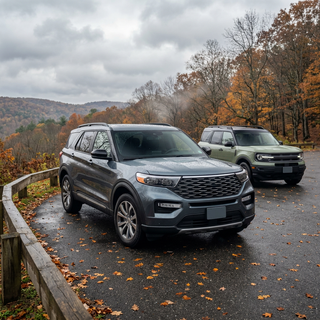
v

When Should You Trade In a Car Instead of Repairing It?

Trading in a vehicle is financially wiser than repairing it when a single mechanical estimate exceeds 50 percent of the vehicle's current market value, or when expected annual repair bills surpass the total cost of twelve months of replacement vehicle financing payments. Transitioning into a reliable automobile makes sense when chronic breakdowns disrupt daily transportation, safety systems become compromised, or factory warranty protection has completely lapsed. Evaluating an aging automobile requires looking closely at total long-term ownership expenses rather than focusing solely on immediate shop estimates. While a minor fix like replacing a belt or sensor is reasonable, spending thousands of dollars on an out-of-warranty powertrain issue often yields zero return on investment. Major repair expenditures rarely increase a vehicle's resale value dollar-for-dollar. Investing heavily in a depreciating vehicle simply locks capital into an older platform that remains vulnerable to subsequent mechanical failures. When drivers evaluate an older vehicle with impending mechanical work on our lot, our trade-in advisors frequently look at whether the needed work involves wearable maintenance components like brake pads or major assembly repairs before finalizing an appraisal. Vehicles carrying high mileage or documented accident histories face compounding depreciation, meaning each major repair dollar spent provides diminishing practical value. Upgrading to a modern vehicle replaces uncertain repair bills with a predictable payment options, updated safety engineering, and comprehensive factory coverage. For drivers navigating daily commutes along the Ohio River bluffs in East Liverpool, having consistent, trouble-free transport is essential for work and family commitments. To discuss your options with our team, feel free to give us a quick phone call or visit our dealership showroom to review trade appraisals in person. Table of Contents What Financial Formulas Help Determine If a Vehicle Repair Is Worth It? Is It Better to Repair a Vehicle Before Trading It In or Trade It In As-Is? How Do Insurance Costs and Long-Term Ownership Expenses Compare? How Do Major Failures Like Engine Replacements Impact the Trade-In Decision? Frequently Asked Questions About Deciding to Repair or Trade In Maximizing Your Vehicle's Trade Value What Financial Formulas Help Determine If a Vehicle Repair Is Worth It? Studies show that when repair costs surpass half the clean retail value of a vehicle, owners often save money by opting for a replacement instead. Applying clear mathematical thresholds eliminates emotional bias when weighing repair quotes against trade-in opportunities. The standard industry evaluation framework centers on three core quantitative checks: The 50 Percent Threshold Rule: Compare the itemized repair quote directly against current valuation guides. If an aging vehicle is worth $6,000 and requires a $3,500 transmission overhaul, applying the repair costs more than half of what the entire car is worth. Because that repair will not raise the car's resale value to $9,500, trading the vehicle in as-is prevents sinking non-recoverable funds into a depreciating asset. The Annual Repair-to-Payment Ratio: Add up all mechanical receipts and pending estimates over a rolling 12-month period. If maintaining your current vehicle costs $400 per month in continuous repairs and unexpected shop visits, those funds equal a monthly auto loan payment on a brand-new vehicle backed by factory warranty coverage. The Cumulative Depreciation and Mileage Factor: Industry data from AAA notes that 12,000 to 15,000 miles per year represents average driving. Vehicles accumulating significantly higher mileage face accelerated wear across core assemblies, including steering components, suspension bushings, and cooling systems. Once multiple primary systems reach their engineering wear limits simultaneously, repair frequency escalates rapidly. Continuing to pour money into an out-of-warranty vehicle often delays an inevitable vehicle replacement while draining funds that could serve as a down payment. Choosing to trade in allows you to pivot that equity directly into our latest new Ford inventory. Whether you prefer to select a versatile SUV equipped with a 10-speed automatic transmission and Ford Co-Pilot360 driver-assist features or submit a factory custom order tailored to your exact specifications, moving on from a money pit establishes financial predictability. For drivers seeking dependable transportation with lower upfront costs, exploring our pre-owned vehicle selection provides access to reliable cars, trucks, and crossovers with verified maintenance backgrounds and excellent remaining service life. Is It Better to Repair a Vehicle Before Trading It In or Trade It In As-Is? Trading in a vehicle as-is is almost always financially superior to paying for retail repairs prior to negotiating a trade appraisal. Dealerships recondition pre-owned vehicles using wholesale parts pricing and internal service labor rates that are substantially lower than retail repair shop quotes. When a consumer spends $2,000 at a retail repair facility to fix a mechanical defect before trading, the vehicle’s trade-in value rarely increases by that full $2,000 amount. In most circumstances, that $2,000 retail investment might only boost the trade offer by $500 to $1,000, resulting in a net financial loss for the owner. Dealership service departments can perform that exact same reconditioning work internally for a fraction of the consumer cost, allowing the trade value to stay competitive without requiring out-of-pocket cash from the customer. Before making any repair commitments, evaluate which issues are worth addressing versus those better left as-is: Skip Major Mechanical Overhauls: Complex engine repairs, transmission replacements, air conditioning compressor overhauls, and differential rebuilds should be left for the dealer to handle post-trade. Skip Body Shop and Paint Work: Dents, bumper scrapes, and paint touch-ups carry steep retail body shop costs that yield minimal trade return. Perform Simple Cosmetic Detailing: Cleaning the interior, washing the exterior, removing personal items, and replacing burnt-out light bulbs cost very little while presenting the vehicle in its best light. Address Minor Wear Items Only If Essential: If tires or windshield wipers are severely worn, simple low-cost fixes can improve overall vehicle presentation, but major component replacements should be avoided. Suburban families commuting from Calcutta across nearby state lines rely on vehicles with strong capability and generous cargo space for school runs, recreational gear, and winter driving. Sinking funds into repairing an older vehicle takes away from your budget for a modern, family-friendly vehicle, which can provide improved safety and reliability. Exploring current Ford purchase offers makes it seamless to transition into a new model. Drivers can also evaluate our certified pre-owned Ford lineup, where every vehicle undergoes a meticulous multi-point inspection and comes backed by factory warranty coverage, including a 5-year/60,000-mile powertrain limited warranty. How Do Insurance Costs and Long-Term Ownership Expenses Compare? While older vehicles typically carry lower comprehensive and collision insurance premiums due to their lower replacement value, newer vehicles offset higher insurance costs through superior fuel efficiency, advanced safety equipment discounts, and reduced maintenance outlays. A complete financial comparison requires looking at total monthly vehicle operating costs rather than insurance rates alone. An older, paid-off vehicle may seem inexpensive on paper, but unexpected breakdown costs, towing bills, rental car expenses, and poor fuel economy quickly add up. Modern Ford vehicles feature advanced powertrain engineering, such as the 3.5L EcoBoost V6 or hybrid engine options, which deliver substantial fuel savings over older, less efficient engines. Furthermore, standard Ford Co-Pilot360 technologies like pre-collision assist and blind-spot monitoring help mitigate accident risks, qualifying drivers for valuable safety equipment discounts from major auto insurance underwriters. Expense Category Older Repaired Vehicle New or Certified Ford Vehicle Monthly Payment $0 (if paid off) Predictable structured loan payment Warranty Protection Expired (100% out-of-pocket risk) 3-year/36,000-mile bumper-to-bumper warranty Unplanned Maintenance High ($1,000+ potential per incident) $0 for covered warrantable defects Fuel Economy Lower (aging engine efficiency) Optimized EcoBoost or hybrid efficiency Insurance Premiums Moderate (lower ACV replacement cost) Slightly higher (offset by safety discounts) Technology & Connectivity Outdated legacy systems SYNC 4 with smartphone integration When you factor in the financial protection provided by Ford's 3-year/36,000-mile bumper-to-bumper limited warranty alongside standard 24/7 Ford Roadside Assistance: 1-800-241-3673 covering emergency towing, flat tire changes, and fuel delivery, the total ownership cost of a new vehicle becomes surprisingly competitive. Replacing unpredictable shop invoices with a fixed budget protects your household finances. You can start exploring financing terms right away by filling out our online credit pre-approval application. How Do Major Failures Like Engine Replacements Impact the Trade-In Decision? A complete engine replacement ranks among the most expensive mechanical failures a vehicle owner can face, with average replacement costs ranging from $4,000 to over $10,000 depending on displacement, turbocharging, and engine bay complexity. Sinking that level of capital into an older vehicle almost never makes financial sense. When an engine experiences catastrophic internal failure, the vehicle's market value drops instantly to its scrap or core mechanical trade value. However, spending $7,000 to install a remanufactured engine in a car with a non-damaged market value of $8,000 only yields an $1,000 net gain in actual equity. That $7,000 investment is essentially lost, as the rest of the aging vehicle—including the transmission, electrical harness, suspension struts, and climate control system—remains high-mileage and vulnerable to subsequent component failures. Trading in a vehicle with a severe mechanical defect allows the owner to apply the remaining vehicle equity or trade allowance toward a dependable purchase rather than taking on fresh debt for a standalone repair. Transitioning into a model built tough for daily driving ensures that core components like the engine and transmission are protected by Ford factory warranties. Modern Ford vehicles engineered for durability provide space for the whole family, rugged capabilities for weekend getaways, and smooth, refined performance on both highway commutes and rural routes. Frequently Asked Questions About Deciding to Repair or Trade In Q: What is the 50 percent rule when evaluating car repairs? Known as the '50 percent rule,' this guideline helps owners decide when repair costs outweigh the benefits of keeping their current vehicle. Spending $4,000 to repair a car valued at $6,000 locks cash into an aging asset without increasing its overall resale market value by a corresponding amount. Q: Can I trade in a car that currently does not run or start? Yes, dealerships accept non-running vehicles on trade every day. The appraisal will reflect the vehicle's current condition and estimated reconditioning costs, but trading it as-is allows you to capture its remaining core value without paying out-of-pocket for expensive retail shop repairs or engine overhauls. Q: How do dealerships calculate trade-in values for vehicles needing repairs? Dealership trade appraisals consider year, trim, overall mileage, physical condition, and historical vehicle records against current regional wholesale market data. Necessary mechanical reconditioning is factored in using wholesale labor and internal parts costs, which are significantly lower than consumer retail shop quotes. Q: Will fixing minor body damage or scratches increase my trade-in offer enough to cover the cost? Paying for retail body shop repairs or paint touch-ups prior to trade-in rarely yields a positive return on investment. Professional bodywork is expensive at retail rates, whereas simple steps like thoroughly cleaning the cabin, washing the exterior, and presenting service records offer better presentation value at zero to minimal cost. Q: Is roadside assistance included when upgrading to a new Ford? Every new Ford vehicle includes standard Ford Roadside Assistance for 5 years or 60,000 miles, providing 24/7 emergency towing, flat tire changes, lockout support, and winching. This manufacturer-backed service ensures certified care at authorized service locations using genuine OEM parts. Maximizing Your Vehicle's Trade Value Making the final decision between repairing an aging automobile or trading it in comes down to protecting your household budget, ensuring daily driving safety, and eliminating unexpected breakdown stress. Sinking thousands of dollars into out-of-warranty mechanical repairs rarely yields a fair return, whereas trading your vehicle in as-is allows you to capture its remaining value and apply it directly toward a modern, feature-packed Ford. At Tri State Ford, our team is committed to providing clear, transparent appraisals and flexible financing solutions tailored to your goals. Whether you need a spacious SUV with intuitive smartphone integration for daily family errands or a durable truck with impressive towing capacity for weekend trailering, our inventory offers reliable performance and safety features you can trust. To start evaluating your options today, use our digital appraisal tool to value your trade-in online in just a few clicks. You can also give our team a quick call or stop by our showroom address at 1503 Pennsylvania Ave, East Liverpool, OH 43920 to test drive your next new or certified Ford vehicle. Keep Your Vehicle Running Strong Keep your vehicle performing at its best with our service team: Order Parts Schedule Service Appt © 2026 Tri State Ford. All rights reserved. Car Trade-In Advice in East Liverpool OH | Tri State Ford
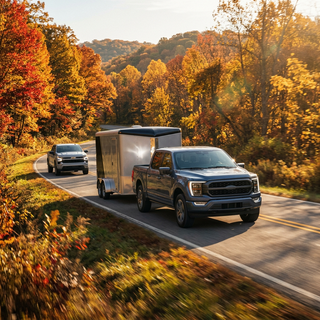
f

Which Ford Pickup Truck Should You Buy: Maverick, Ranger, or F-150?

Which Ford Pickup Truck Should You Buy: Maverick, Ranger, or F-150? You should buy the Ford Maverick if you want ultra-efficient daily commuting with light hauling, the Ford Ranger if you need balanced midsize muscle for towing recreational gear, or the Ford F-150 if maximum payload, full-size interior space, and heavy-duty trailering are non-negotiable requirements. Choosing the right truck depends on matching bed dimensions, towing limits, and daily driving costs to your specific lifestyle. Comparing pickup trucks across different size classes comes down to how you plan to use the vehicle every day. Compact, midsize, and full-size trucks each serve distinct driving demands, from navigating tight parking lots to pulling heavy machinery. The Ford pickup lineup provides a clear ladder of capability, allowing buyers to select exact towing ratings, cabin configurations, and bed lengths without paying for extra vehicle footprint they do not need. At Tri State Ford, our team helps drivers compare these three trucks side by side to evaluate cabin seating, bed utility, and highway performance in real-world conditions. Whether you need a fuel-sipping hybrid for daily cross-town drives or a high-capacity tow vehicle for work equipment, finding the right match starts with understanding key specs. You can easily plan your visit by getting directions to our dealership or giving our sales specialists a quick call at (330) 462-7578 to check current showroom availability. Table of Contents How Do Dimensions, Garage Fit, and Plywood Bed Capacity Compare Across Ford Truck Models? What Engine Options, Fuel Economy Ratings, and Tow Packages Are Available Across the Lineup? How Do Fully Loaded Maverick Prices and Long-Term Maintenance Costs Compare to the Ranger and F-150? Finding the Right Ford Truck Configuration for Your Needs Common Buyer Questions About the Ford Maverick, Ranger, and F-150 Test Drive and Finance Your Ford Maverick, Ranger, or F-150 How Do Dimensions, Garage Fit, and Plywood Bed Capacity Compare Across Ford Truck Models? The compact Ford Maverick measures roughly 200 inches long and fits easily in standard residential garages, while the midsize Ranger spans 211 inches and the full-size F-150 requires a larger bay at over 209 to 243 inches depending on cab setup. Neither the Maverick nor the Ranger can lay a 4x8 sheet of plywood flat between their wheel arches, but both utilize built-in bed slots and adjustable tailgate angles to carry sheet goods elevated above the wheel wells. Vehicle footprint is often the first deciding factor for buyers evaluating home garage space and daily maneuverability. The Maverick features an overall width of about 73 inches without mirrors and a height of 68 inches, making it as effortless to park in suburban tight spaces around Boardman as a midsize crossover. The Ranger increases width to roughly 76 inches and height to 74 inches, offering higher ground clearance while remaining garage-friendly for most standard home bays. By contrast, the full-size F-150 measures about 80 inches wide excluding mirrors, requiring wider parking spaces and a deep garage bay to park indoors comfortably. Interior dimensions reveal significant differences in passenger volume and second-row legroom across the three platforms: Ford Maverick: Offers 36 inches of rear legroom, providing comfortable seating for up to five passengers in a compact crew-cab layout. Ford Ranger: Delivers 35 inches of rear legroom with standard four-door seating, engineered for comfortable family trips and crew transport. Ford F-150: SuperCrew models lead the class with nearly 44 inches of rear legroom, delivering full-size executive stretch-out space for adult passengers. Bed cargo functionality varies directly with total length. The Maverick features a 4.5-foot bed with 33 cubic feet of volume, designed with multi-position tailgate supports that line up with internal bed side slots to balance 4x8 plywood sheets flat across the wheel wells. The Ranger carries a 5-foot bed providing increased cargo volume, while the F-150 offers 5.5-foot, 6.5-foot, and 8-foot bed options capable of laying 4x8 building materials flat across the floor between the wheel arches. Shoppers can start comparing physical bed layouts by exploring our new Ford inventory or reviewing single-owner pre-owned trucks available on our lot. What Engine Options, Fuel Economy Ratings, and Tow Packages Are Available Across the Lineup? The Ford Maverick delivers up to 42 mpg city with its standard 2.5-liter hybrid engine and reaches a 4,000-pound towing limit when spec'd with the optional 4K Tow Package. The Ranger offers a 2.3-liter EcoBoost producing 270 horsepower and tows up to 7,500 pounds with the Trailer Tow Package, while the F-150 tops out at 13,500 pounds of conventional towing and 2,440 pounds of payload when equipped with the 3.5-liter EcoBoost V6. Powertrain choices directly dictate how each truck balances fuel efficiency against heavy pulling power. The Maverick's standard 2.5-liter hybrid front-wheel-drive powertrain yields an EPA-estimated 42 mpg city, 35 mpg highway, and 38 mpg combined, making it an exceptional option for high-mileage commuters. Buyers seeking extra traction can opt for the 2.0-liter EcoBoost four-cylinder engine with all-wheel drive. Standard Maverick models feature a 2,000-pound towing capacity, but selecting the optional 4K Tow Package adds upgraded engine cooling, key axle gear ratios, and a trailer brake controller to double maximum towing capacity to 4,000 pounds. The midsize Ranger moves up to dedicated truck engines, featuring a standard 2.3-liter EcoBoost engine generating 270 horsepower and 310 lb-ft of torque paired with a 10-speed automatic transmission. Available engine upgrades include a 2.7-liter EcoBoost V6 and a high-output 3.0-liter EcoBoost V6 in the Ranger Raptor. Fuel economy for the 2.3-liter EcoBoost reaches up to 21 mpg city and 25 mpg highway. When equipped with the available Trailer Tow Package, the Ranger hauls up to 7,500 pounds, easily handling heavy ski boats, campers, and utility trailers. The full-size F-150 offers the broadest array of engine setups, ranging from efficient V6 engines to high-capacity V8s and hybrid options: 3.5-liter EcoBoost V6: Produces 400 horsepower and 500 lb-ft of torque, delivering maximum conventional towing up to 13,500 pounds when properly configured. Maximum Payload Capacity: Reaches up to 2,440 pounds on properly equipped configurations, perfect for heavy job site materials, gravel loads, and commercial slide-in equipment. Buyers researching pre-owned capability ratings can also inspect options by checking our certified pre-owned Ford inventory to find factory-inspected models equipped with towing packages. How Do Fully Loaded Maverick Prices and Long-Term Maintenance Costs Compare to the Ranger and F-150? A top-tier, fully loaded Ford Maverick Lariat AWD is available at MSRP, overlapping directly with entry to mid-level Ford Ranger pricing. Annual routine maintenance and repair costs average approximately $500 for a Maverick due to smaller fluid capacities, lighter braking components, and compact tires, whereas an F-150 averages roughly $788 per year. Price overlapping between top-tier compact trucks and mid-tier midsize trucks is a common consideration for buyers. A fully equipped Maverick Lariat featuring all-wheel drive, synthetic leather seating, advanced driver-assist systems, and the 4K Tow Package lands in a similar price bracket as a midsize Ranger XLT. Choosing between them comes down to prioritizing high-end interior luxuries and maximum fuel economy against higher raw towing capacity and greater ground clearance. Long-term ownership expenses also favor smaller truck platforms for everyday drivers: Ford Maverick Ownership Costs: Averages around $500 annually in routine maintenance. Compact tire sizes cost less to replace, fluid capacities are smaller during routine oil services, and lighter curb weight reduces wear on brake pads and suspension components. Ford F-150 Ownership Costs: Averages around $788 annually for repair and scheduled service. Larger tire footprints, heavy-duty brake rotors, high-capacity transmission and differential fluids, and larger engine oil capacities increase routine service totals over time. For local drivers navigating the rolling terrain around Calcutta near Beaver Creek State Park, a lightweight, efficient truck like the Maverick or Ranger keeps routine upkeep low while providing ample capability for weekend fishing trips and trail equipment hauling. Evaluating your current vehicle's market value is a great starting point when budgeting for a new truck, and you can quickly start by valuing your trade-in vehicle online. Finding the Right Ford Truck Configuration for Your Needs Selecting the ideal Ford truck configuration requires matching your primary daily driving demands with your heaviest weekly haul or weekend trailer load. Commuters seeking maximum efficiency should target a Maverick Hybrid, active outdoor enthusiasts will find the Ranger midsize footprint optimal, and contractors or heavy-equipment towers require the unmatched cab volume and payload of an F-150. To narrow down the choice, consider these common buyer profiles: The Daily Commuter and DIYer: The Ford Maverick is ideal if you commute long distances across state lines, need to park in suburban garages, and carry home improvement supplies, lawn equipment, or bicycles on weekends. The Outdoor Adventurer: The Ford Ranger fits drivers who need dedicated four-wheel-drive capability, ground clearance for off-road trails, and up to 7,500 pounds of towing capacity for midsize travel trailers or boat launches without the bulk of a full-size truck. The Heavy Hauler and Tradesperson: The Ford F-150 is necessary if you routinely haul heavy commercial payloads, tow livestock or enclosed equipment trailers over 8,000 pounds, or require maximum rear-seat room for adult passengers and crew members. Matching cab configurations, bed lengths, and optional tow packages ensures you purchase a truck that handles your toughest tasks without paying for unnecessary size. Commercial operators and business owners can view targeted specs by viewing available new work trucks in our inventory. Common Buyer Questions About the Ford Maverick, Ranger, and F-150 Q: What package is required for the Maverick to achieve its maximum 4,000 lb towing limit? The Maverick requires the optional 4K Tow Package paired with either the 2.0-liter EcoBoost engine or an all-wheel-drive powertrain. Standard models without this package are limited to a 2,000-pound towing capacity. The package adds heavy-duty engine cooling, a trailer hitch receiver with a seven-pin connector, upgraded drive axle gears, and an integrated trailer brake controller. Q: Can a 4x8 sheet of plywood fit flat in the bed of a Ford Ranger or Maverick? Neither the Maverick nor the Ranger allows a standard 4x8 sheet of plywood to lie completely flat on the bed floor between the rear wheel arches. However, both trucks feature molded bed slots and adjustable tailgate positioners designed specifically to secure 4x8 building materials elevated above the wheel wells for stable transport. The full-size F-150 can lay 4x8 sheets completely flat on the bed floor. Q: How much wider is the F-150 compared to the Ranger and Maverick? The F-150 measures approximately 80 inches wide excluding mirrors, making it roughly 4 inches wider than the midsize Ranger at 76 inches wide and nearly 7 inches wider than the compact Maverick at 73 inches wide. This extra width translates directly into wider shoulder room and greater center console storage inside the cabin, but requires more clearance when maneuvering in narrow parking bays. Q: Which Ford truck delivers the best fuel economy for daily highway driving? The Maverick equipped with the 2.5-liter hybrid powertrain leads the lineup with EPA estimates of 42 mpg city and 35 mpg highway. By comparison, a 2.3-liter EcoBoost Ranger achieves up to 25 mpg highway, while an F-150 yields up to 24 mpg highway depending on engine and axle configuration. Q: How long does an online credit application take to complete before visiting the showroom? Completing our secure pre-approval application online takes under ten minutes when you have basic income, employment, and identification details ready. Submitting your finance profile ahead of time accelerates your showroom visit and allows our team to present personalized loan or lease options immediately upon arrival. You can save time at the dealership by submitting an online credit application today. Test Drive and Finance Your Ford Maverick, Ranger, or F-150 Tri State Ford makes comparing the Maverick, Ranger, and F-150 straightforward with side-by-side inventory walkarounds and tailored financing options. Scheduling a test drive on our showroom floor allows you to evaluate cab comfort, bed accessibility, and road handling firsthand. Our finance specialists work with nationwide and local lenders to secure terms aligned with your household budget. Whether you plan to purchase a compact hybrid, lease a midsize Ranger, or build a heavy-duty F-150 work truck, our team guides you through every step of the sales process. Visit our sales floor at 1503 Pennsylvania Ave in East Liverpool to see all three trucks in person. You can get step-by-step driving directions by getting directions to our dealership, talk directly with a product expert by calling (330) 462-7578, or reserve your spot on the calendar when you schedule a personal test drive online. Keep Your Vehicle Running Strong Keep your vehicle performing at its best with our service team: Order Parts Schedule Service Appt © 2026 Tri State Ford. All rights reserved. Ford Pickup Truck Options in East Liverpool OH | Tri State Ford

f

2026 Ford Maverick vs 2026 Toyota Tacoma Comparison

2026 Ford Maverick vs 2026 Toyota Tacoma Comparison The 2026 Ford Maverick offers a strong combination of value, everyday suburban maneuverability, and comfortable five-passenger seating at a lower starting MSRP of $28,145 compared to the 2026 Toyota Tacoma's $32,145 base price. While the Tacoma offers higher maximum towing capabilities, the Maverick provides the ideal blend of practical truck bed storage, family-friendly utility, and city-friendly handling. Table of Contents Which Truck Offers the Best Value for Families: 2026 Ford Maverick or 2026 Toyota Tacoma? How Pricing and Trim Options Match Local Budgets and Needs Cargo and Passenger Space That Supports Weekend Adventures Performance and Handling Tailored for Rolling Hills and Suburban Roads Fuel Efficiency and Range for Daily Commutes Technology Features That Enhance Connectivity and Convenience Safety Systems Designed to Protect Families on Busy Commutes Warranty, Maintenance, and Local Service Options for 2026 Ford Maverick and Toyota Tacoma Owners Which Truck Fits Your Daily Needs Best? Common Buyer Questions Why the 2026 Ford Maverick Is the Smart Choice for Tri-State Drivers Which Truck Offers the Best Value for Families: 2026 Ford Maverick or 2026 Toyota Tacoma? The 2026 Ford Maverick offers the best overall value for modern families, delivering standard 5-passenger seating and about 33 cu ft of bed cargo volume at a starting MSRP of $28,145, which is $4,000 below the base 2026 Toyota Tacoma SR MSRP. While the Toyota Tacoma caters to traditional midsize truck buyers, its higher starting price of $32,145 and available 2-passenger configurations on select trims limit its flexibility for family transport needs. Shoppers evaluating both trucks will find that the compact footprint of the Ford Maverick makes daily driving much more approachable. With an overall length of 199.7 inches and a 121.1-inch wheelbase, the Maverick maneuvers into tight parking spaces and suburban garages far easier than the Tacoma, which measures 213.0 inches long with a 131.9-inch wheelbase. The Maverick also features an 8.6-inch ground clearance that balances easy ingress for children and retirees with enough heig ht to handle unpaved paths and rough winter roads. In terms of hauling capability, the Maverick provides a 1,500 lb maximum payload capacity and a 2,000 lb standard towing capacity, which expands to 4,000 lbs when equipped with the optional 4K Tow Package. This makes towing small trailers, lightweight boats, or recreational gear straightforward for weekend trips. The Tacoma offers a higher maximum towing capacity of 6,500 lbs and a 1,705 lb maximum payload, but comes with a heavier curb weight of 4,500 lbs and a larger exterior width of 76.9 inches compared to the Maverick's 72.6-inch width. To explore your current vehicle's trade value toward a new compact truck, you can easily value your trade-in online before visiting our showroom. For ongoing vehicle care, our dealership offers convenient service options like Ford Mobile Service for light maintenance at your home and dedicated Ford Pick Up & Delivery service to keep your busy routine running smoothly. Pricing Starting MSRP lineup comparison across trims for the 2026 Ford Maverick and 2026 Toyota Tacoma. 2026 Ford Maverick Trim MSRP 2026 Toyota Tacoma Trim MSRP XL $28,145 SR $32,145 XLT $30,645 SR5 $36,235 Lobo $35,930 TRD PreRunner $38,735 Lariat $38,090 TRD Sport $40,015 Tremor $41,495 TRD Off-Road $42,415 — — TRD Sport i-FORCE MAX $46,935 — — TRD Off-Road i-FORCE MAX $47,235 — — Limited $53,170 — — Limited i-FORCE MAX $56,495 — — Trailhunter $63,350 — — TRD Pro $64,350 How Pricing and Trim Options Match Local Budgets and Needs The 2026 Ford Maverick lineup ranges from $28,145 for the entry XL trim to $41,495 for the off-road Tremor, establishing a price-conscious price ladder that maximizes feature content at accessible price points. In comparison, the 2026 Toyota Tacoma spans eleven different trim levels starting at $32,145 for the SR and rising to $64,350 for the top-tier TRD Pro, making upper-tier Tacoma models significantly more expensive. For buyers seeking practical entry-level utility, the Maverick XL ( $28,145) and XLT ( $30,645) deliver core essential features, modern infotainment, and space for the whole family. Moving up the lineup, the street-tuned Maverick Lobo ( $35,930) and refined Lariat ( $38,090) add premium cabin upgrades and convenience technology. The top-spec Maverick Tremor ( $41,495) comes fully equipped for off-road trails while remaining lower in price than mid-range Tacoma trims like the TRD Off-Road i-FORCE MAX ( $47,235). Toyota structures the Tacoma lineup across multiple heavy-duty and hybrid variants, including the SR5 ( $36,235), TRD PreRunner ( $38,735), TRD Sport ( $40,015), and TRD Off-Road ( $42,415). Higher-end luxury and off-road grades like the Limited ( $53,170), Limited i-FORCE MAX ( $56,495), Trailhunter ( $63,350), and TRD Pro ( $64,350) require a substantial financial commitment that exceeds typical compact truck budgets. You can start your vehicle search today by checking our new Ford Maverick inventory to see currently available trims. If you prefer pre-owned models, feel free to browse our pre-owned vehicle inventory for quality options. When you are ready to take the next step, our team makes financing straightforward through our secure online credit application. Cargo and Passenger Space That Supports Weekend Adventures The 2026 Ford Maverick delivers superior interior passenger utility for active households, featuring standard 5-passenger seating and a spacious about 33 cu ft bed cargo volume. The Toyota Tacoma offers bed length options of 60.3 inches or 73.2 inches, but standard seating on entry trims is restricted to 2 passengers unless upgraded to a 5-passenger cab configuration. Loading gear for weekend hikes near Calcutta is effortless thanks to the Maverick's low bed side height and 54.4-inch bed length. The Maverick FLEXBED system provides customizable storage solutions, allowing owners to divide cargo space for groceries, camping equipment, or DIY materials. The Tacoma offers a longer bed option for extended equipment, but its higher load height requires more effort when lifting heavy items. Inside the cabin, the Maverick prioritizes family comfort with clever storage cubbies under the rear seats and expansive shoulder room. The Tacoma features a traditional truck cabin layout, but rear legroom in 5-passenger models can feel tighter for adult passengers on longer highway drives. To keep your current vehicle running smoothly before your next road trip, you can schedule a service appointment with factory-trained technicians. Dimensions & Capacity Exterior dimensions, bed length, weight capacity, and towing specifications. Specification 2026 Ford Maverick 2026 Toyota Tacoma Seating Capacity 5 passengers 2 or 5 passengers Overall Length 199.7 inches 213.0 inches Overall Width 72.6 inches 76.9 inches Overall Height 68.7 inches 73.9 inches Wheelbase 121.1 inches 131.9 inches Ground Clearance 8.6 inches 10.3 inches Bed Length 54.4 inches 60.3 inches / 73.2 inches Maximum Towing Capacity 2,000 lbs (Standard) / 4,000 lbs (with 4K Tow Package) 6,500 lbs Maximum Payload Capacity 1,500 lbs 1,705 lbs Performance and Handling Tailored for Rolling Hills and Suburban Roads Featuring a 199.7-inch overall length and a 121.1-inch wheelbase, the 2026 Ford Maverick delivers smooth, car-like handling and sharp maneuverability that excels on suburban streets and tight two-lane roads. The 2026 Toyota Tacoma relies on a traditional body-on-frame platform with a 131.9-inch wheelbase and a 73.9-inch overall height, providing a elevated driving position but creating a wider turning radius and more noticeable body roll. Navigating busy shopping center lots and daily commutes around Boardman feels far more natural in the compact Maverick. Its unibody construction absorbs pavement imperfections and potholes comfortably, giving families a quiet and composed ride quality during daily school runs. When terrain gets uneven, the Maverick Tremor trim utilizes its 8.6-inch ground clearance and specialized suspension tuning to conquer mud, gravel, and snow without compromising daily ride comfort. The Tacoma shines in extreme rock crawling scenarios with its 10.3-inch ground clearance, but that added height makes daily entry and exit more challenging for younger children and elderly passengers. If you ever need replacement parts or accessories to customize your vehicle's capability, our team makes it easy to order OEM Ford parts directly through our dealership. Engine & Performance Engine specifications, output, transmission types, and drivetrain options. Specification 2026 Ford Maverick 2026 Toyota Tacoma Engine Options 2.5L 4-Cylinder Hybrid / 2.0L EcoBoost Turbocharged 4-Cylinder 2.4L Turbocharged i-FORCE 4-Cylinder / 2.4L Turbocharged i-FORCE MAX Hybrid 4-Cylinder Horsepower 191 hp (Hybrid) / 250 hp (2.0L EcoBoost) 228 hp (SR) / 278 hp (i-FORCE) / 326 hp (i-FORCE MAX Hybrid) Torque 173 lb-ft (Hybrid) / 277 lb-ft (2.0L EcoBoost) 243 lb-ft (SR) / 317 lb-ft (i-FORCE) / 465 lb-ft (i-FORCE MAX Hybrid) Transmission Power-Split CVT (Hybrid) / 8-Speed Automatic / 7-Speed Quick-Shift Automatic 8-Speed Electronically Controlled Automatic / 6-Speed Intelligent Manual (iMT) Drivetrain Front-Wheel Drive (FWD) / All-Wheel Drive (AWD) / Advanced 4WD Rear-Wheel Drive (RWD) / Part-Time 4WD / Full-Time 4WD Fuel Efficiency and Range for Daily Commutes The 2026 Ford Maverick provides clear overall fuel efficiency advantages for daily commuters due to its unibody architecture and lightweight design compared to the heavier midsize Tacoma. Designed for drivers who balance work commutes with weekend chores, the Maverick minimizes fuel costs over long distance highway driving. Toyota's Tacoma utilizes larger turbocharged four-cylinder engines and optional hybrid powertrains across its lineup. While these powertrains generate strong low-end torque for heavy hauling, the Tacoma's heavier 4,500 lb curb weight and taller aerodynamic profile lead to higher overall fuel consumption during stop-and-go driving. For families planning a extended family road trip or daily interstate commutes across state lines, the Maverick offers predictable efficiency that helps stretch your monthly transportation budget further. Fuel Economy EPA-estimated fuel economy ratings and recommended fuel type. Specification 2026 Ford Maverick 2026 Toyota Tacoma City Fuel Economy 42 MPG (Hybrid FWD) / 40 MPG (Hybrid AWD) / 22 MPG (2.0L AWD) 21 MPG (i-FORCE RWD) / 19 MPG (i-FORCE 4WD) / 22 MPG (i-FORCE MAX) Highway Fuel Economy 35 MPG (Hybrid FWD) / 34 MPG (Hybrid AWD) / 29 MPG (2.0L AWD) 26 MPG (i-FORCE RWD) / 23 MPG (i-FORCE 4WD) / 24 MPG (i-FORCE MAX) Combined Fuel Economy 38 MPG (Hybrid FWD) / 37 MPG (Hybrid AWD) / 25 MPG (2.0L AWD) 23 MPG (i-FORCE RWD) / 20 MPG (i-FORCE 4WD) / 23 MPG (i-FORCE MAX) Fuel Type Regular Unleaded Regular Unleaded Best combined fuel economy: 2026 Ford Maverick at 38 MPG (Hybrid FWD) / 37 MPG (Hybrid AWD) / 25 MPG (2.0L AWD) Technology Features That Enhance Connectivity and Convenience Ford equips the 2026 Maverick with intuitive infotainment screens and seamless smartphone integration, allowing drivers to access navigation, music, and hands-free calls without distracting from the road ahead. The dashboard controls are logically arranged with physical knobs for primary climate and volume settings, making everyday operation simple for drivers of all tech comfort levels. The Toyota Tacoma introduces updated infotainment displays on higher trim levels, but lower-tier models come with smaller standard screens. Accessing secondary functions inside the Tacoma often requires navigating multi-layer digital menus, which can be less convenient while driving. Whether you are coordinating weekend schedules or keeping kids entertained on the go, the Maverick's easy smartphone connection and accessible USB power ports ensure everyone stays powered up and connected. Safety Systems Designed to Protect Families on Busy Commutes Advanced driver-assist features come standard on the 2026 Ford Maverick, providing critical active safety protection for busy family schedules. Key safety technologies continuously monitor surrounding traffic, alerting the driver to potential front-end hazards and helping prevent unintentional lane drift during long highway drives. Toyota equips the 2026 Tacoma with its standard active safety bundle across all trims. However, visibility out the rear and side windows of the Tacoma is somewhat restricted by its taller bed sides and thicker roof pillars, making blind-spot awareness even more critical during lane changes. With clear outboard visibility, robust structural engineering, and responsive emergency braking systems, the Maverick builds total confidence for parents transporting children to school, sports practice, and community events. Warranty, Maintenance, and Local Service Options for 2026 Ford Maverick and Toyota Tacoma Owners The 2026 Ford Maverick comes backed by a comprehensive manufacturer warranty package, including bumper-to-bumper coverage and powertrain protection designed to keep your investment secure over years of daily driving. Additionally, every new Ford owner receives manufacturer-backed roadside emergency coverage for complete peace of mind on the open road. If you ever encounter an emergency breakdown or flat tire, you can contact Ford Roadside Assistance: 1-800-241-3673 for prompt support from factory-trained technicians using genuine parts. At Tri State Ford, located at 1503 Pennsylvania Ave, East Liverpool, OH 43920, our certified service team is dedicated to supporting your vehicle's longevity. You can easily get directions to Tri State Ford to tour our showroom or bring your truck in for routine maintenance. If you have questions about current vehicle availability or maintenance schedules, give our sales team a call at (330) 462-7578. You can also explore our inventory of pre-owned vehicles online, including our selection of certified pre-owned Ford inventory models that offer exceptional warranty protection. Which Truck Fits Your Daily Needs Best? Common Buyer Questions Q: Is the 2026 Ford Maverick better for families than the 2026 Toyota Tacoma? The 2026 Ford Maverick is better suited for most families because it offers standard 5-passenger seating, a smoother unibody ride quality, lower step-in height, and an starting MSRP of $28,145. The Toyota Tacoma starts at $32,145 and restricts seating to 2 passengers on select base trims, making it less convenient for everyday family transportation. Q: How does towing capacity compare between the Maverick and Tacoma? The 2026 Ford Maverick features a standard 2,000 lb towing capacity, which expands to 4,000 lbs with the available 4K Tow Package—plenty of power for small boats, utility trailers, and camper units. The 2026 Toyota Tacoma offers up to 6,500 lbs of towing capacity for heavy-duty commercial equipment, but comes with a larger footprint and higher overall purchase price. Q: What is the price difference between the Maverick and Tacoma trim levels? The Ford Maverick spans five main trim levels priced from $28,145 (XL) to $41,495 (Tremor). The Toyota Tacoma offers eleven trim levels starting at $32,145 (SR) and reaching up to $64,350 (TRD Pro). The Maverick provides a far more accessible pricing structure across its entire lineup. Q: Is the Ford Maverick easier to park and drive in suburban areas? Yes, the Ford Maverick is significantly easier to maneuver and park in tight suburban spaces. Measuring 199.7 inches in overall length with a 72.6-inch width, it is over a foot shorter and narrower than the Toyota Tacoma ( 213.0 inches long and 76.9 inches wide), giving it a much tighter turning radius. Why the 2026 Ford Maverick Is the Smart Choice for Tri-State Drivers The 2026 Ford Maverick stands out as the ideal truck for local drivers who require genuine utility without the bulk, heavy fuel consumption, or high price tag of a traditional midsize pickup. With its starting price of $28,145, standard 5-passenger seating, 1,500 lb payload capacity, and smooth handling, the Maverick delivers unmatched daily versatility. While the Toyota Tacoma remains a powerful off-road machine, its higher price point and larger dimensions make it less practical for everyday family commutes. Experience the practical utility, comfort, and performance of the 2026 Ford Maverick for yourself. Visit Tri State Ford today to take a test drive, evaluate your trade, and discover why so many local drivers choose Ford trucks for their daily driving needs. © 2026 Tri State Ford. All rights reserved. 2026 Ford Maverick Truck in East Liverpool OH | Tri State Ford
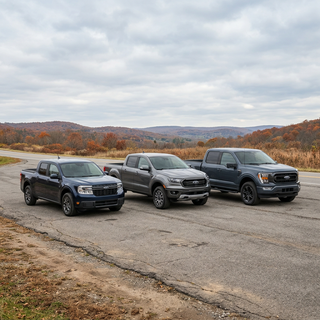
g

How Do You Choose the Right Used Car as a First-Time Buyer?

How Do You Choose the Right Used Car as a First-Time Buyer? The best used vehicle for a first-time buyer is a well-maintained compact car, crossover, or versatile small truck with between 60,000 and 100,000 miles, complete service records, and proven driver-assist safety systems. Choosing the right vehicle requires balancing realistic mileage limits, verifying past maintenance history, calculating total ownership expenses beyond the sticker price, and securing affordable financing tailored to your established budget. Navigating the pre-owned market for your first vehicle can feel overwhelming, but focusing on practical core capabilities keeps the process clear and straightforward. Compact vehicles like a pre-owned crossover or a versatile compact pickup like a used Ford Maverick offer easy maneuvering, practical interior room, and modern safety technology without the high price tag of a brand-new model. For daily travel across the riverfront bluffs and inland hills in East Liverpool, finding a vehicle that combines strong fuel efficiency with dependable handling gives new drivers long-term confidence behind the wheel. Evaluating individual condition and long-term operating costs is far more critical than simply shopping by model name alone. A properly maintained vehicle with slightly higher mileage often delivers greater reliability than a lower-mileage car that suffered from deferred maintenance or inconsistent care. Prioritizing vehicles equipped with standard driver-assist capabilities, thorough inspection reports, and transparent history records ensures your initial automotive investment remains safe, comfortable, and budget-friendly for years to come. When you are ready to explore reliable pre-owned options in person, you can easily visit our dealership showroom located at 1503 Pennsylvania Ave, East Liverpool, OH 43920 or reach out directly to our sales team at (330) 462-7578 to speak with a knowledgeable advisor. Table of Contents What Mileage Range and Maintenance History Should First-Time Car Buyers Look For? What Out-of-Pocket Costs and Fuel Differences Should You Expect Beyond the Sticker Price? How Can First-Time Buyers Secure Auto Financing with No Credit History? Which Safety Features Matter Most and How Do You Verify Vehicle Safety Systems? Common First-Time Buyer Questions About Used Vehicles and Financing Take the Next Step Toward Your First Vehicle at Tri State Ford What Mileage Range and Maintenance History Should First-Time Car Buyers Look For? A target mileage range between 60,000 and 100,000 miles offers the ideal sweet spot for first-time buyers by providing significant purchase price savings while retaining extensive remaining service life. Verifying comprehensive routine maintenance history is essential to ensure critical components like timing belts, cooling systems, and driveline fluids were serviced on schedule. Odometer mileage only tells part of a vehicle's story. A vehicle driven primarily on open highways accumulates far less mechanical wear per mile than one subjected to constant stop-and-go city driving. When evaluating potential vehicles, look for documented service records showing regular oil changes, tire rotations, and scheduled fluid flushes. Vehicles reaching the 100,000-mile mark typically require specific major service items, including spark plug replacements, coolant flushes, transmission fluid changes, and suspension component inspections. Confirming whether these key services have already been performed helps prevent unexpected maintenance expenses immediately following your purchase. Selecting a certified pre-owned vehicle provides an additional layer of security for first-time shoppers. Certified programs require vehicles to undergo rigorous multi-point mechanical and safety inspections before being offered for sale, ensuring that brakes, tires, steering linkage, and engine performance meet strict factory standards. These vehicles frequently include extended powertrain warranty coverage, offering invaluable peace of mind to buyers who want to avoid surprise repair costs during their first years of vehicle ownership. You can easily view our current selection of verified pre-owned options by exploring our certified pre-owned Ford inventory online. Our team notices that first-time buyers evaluating used vehicles usually inspect overall cabin room and daily utility before asking about specific financing terms. Vehicles such as a pre-owned Ford Escape or Ford Bronco Sport deliver excellent versatility for carrying active gear or commuting, making thorough maintenance verification even more valuable for long-term ownership. What Out-of-Pocket Costs and Fuel Differences Should You Expect Beyond the Sticker Price? First-time buyers should budget an additional 10% to 15% above the vehicle's agreed purchase price to cover essential out-of-pocket costs such as state sales tax, title transfer fees, license plate registration, and dealer documentation charges. Additionally, choosing between a compact sedan and a compact SUV can account for an annual fuel expenditure difference of $200 to $450 depending on driving habits and powertrain selection. Understanding the complete financial picture prevents costly surprises when finalizing your purchase. Beyond the initial transaction fees, ongoing ownership expenses include insurance premiums, seasonal maintenance, and daily fuel consumption. Insurance costs vary based on driver age, location, and the specific vehicle identification number, making it wise to request insurance estimates before committing to a purchase. Fuel economy plays a continuous role in your monthly budget. For daily driving around the rolling suburban terrain of State Route 170 in Calcutta, selecting an efficient powertrain significantly reduces operating expenses. A compact sedan typically achieves higher highway efficiency, but modern compact trucks and crossovers equipped with advanced hybrid tech close that gap effectively. For example, a Ford Maverick equipped with the standard 2.5-liter hybrid FWD setup delivers an EPA-estimated 42 mpg city and 35 mpg highway, providing exceptional efficiency alongside a practical 4-foot-5-inch pickup bed with about 33 cubic feet of cargo volume. Trading in an existing family vehicle is a practical strategy to offset these initial out-of-pocket costs and lower your required loan balance. You can get a clear picture of your current vehicle's worth right now when you value your trade online through our simple evaluation tool. How Can First-Time Buyers Secure Auto Financing with No Credit History? First-time buyers without established credit history can successfully secure auto financing by applying with a qualified co-signer, providing a down payment of 15% to 20%, and supplying proof of steady income and employment. Demonstrating financial stability through verifiable pay stubs and personal references gives auto lenders the confidence needed to approve competitive loan terms. Lacking an established credit score is a common challenge for young adults and first-time car buyers, but it does not have to stand in the way of purchasing a dependable used vehicle. Financing institutions look at the complete financial picture rather than a credit score alone. Bringing standard documentation—including recent pay stubs, utility bills verifying your physical residence, bank statements, and a valid driver's license—speeds up the approval process and demonstrates reliability to underwriters. Placing a larger down payment reduces the total amount borrowed, which lowers the lender's risk and directly decreases your monthly payment obligations. A substantial down payment also helps protect you against negative equity, ensuring that your loan balance stays aligned with the vehicle's resale value over time. Working with a dedicated automotive finance department allows you to explore multiple lending channels, including specialized first-time buyer programs designed specifically to help build positive credit history. Taking time to organize your documentation and calculate a comfortable monthly budget allows you to approach the purchase process with confidence. To review available financing options customized to your circumstances, you can complete our secure online credit application from home before visiting the dealership. Which Safety Features Matter Most and How Do You Verify Vehicle Safety Systems? Essential safety features for first-time car buyers include electronic stability control, anti-lock brakes, side-curtain airbags, and active driver-assist technologies such as pre-collision assist with automatic emergency braking and blind-spot monitoring. Verifying that these systems operate properly requires checking dashboard indicator lights during engine startup, running a diagnostic scan, and completing a thorough test drive. Modern safety technology significantly reduces collision risks for newer drivers. Features like electronic stability control —which became mandatory on all light passenger vehicles starting in the 2012 model year—help prevent skids and loss of control in adverse weather conditions. Advanced driver-assist systems utilize forward-facing cameras and radar sensors to monitor traffic patterns, alert drivers to potential hazards, and apply braking force automatically if an impact is imminent. When shopping for a pre-owned Ford Bronco Sport or Ford Escape, verifying the inclusion of Ford Co-Pilot360 tech gives drivers enhanced awareness on busy roadways. Testing and inspecting safety systems is a vital step in the used car shopping process. During your initial walkaround and test drive, ensure that all dashboard warning lights turn on briefly when the ignition key is turned to the ON position and extinguish once the engine runs. If warning lights like the ABS or airbag indicator remain illuminated, the system requires professional diagnosis. Furthermore, camera and radar sensors mounted behind the windshield or front grille must be clean and properly aligned; windshield replacements or prior body repairs can sometimes require system recalibration. If you decide that a factory-fresh model with the very latest active safety technology best fits your needs, you can explore specialized options like a new vehicle custom order directly through our team. You can also review current inventory and contact our team for up-to-date pricing and availability. Common First-Time Buyer Questions About Used Vehicles and Financing Q: What additional out-of-pocket fees should buyers budget for beyond the car purchase price? In many states, additional fees like sales tax and registration can add up to 15% more than the vehicle's sticker price, a crucial factor for first-time buyers to consider. These administrative costs are separate from the vehicle price and are standard across automotive purchases. Factoring these figures into your total budget early ensures a smooth financing process without unexpected upfront payment demands at signing. Q: What major maintenance services are typically needed around 100,000 miles? At 100,000 miles, standard maintenance schedules typically require replacing spark plugs, performing a cooling system flush, replacing transmission fluid, and inspecting brake lines, belts, and suspension components. On vehicles equipped with a timing belt, replacement is usually mandated around this interval to prevent severe engine damage. Verifying whether a pre-owned vehicle has already undergone these scheduled services helps you avoid immediate maintenance bills after purchase. Q: How do annual routine maintenance costs compare between popular compact models? Annual routine maintenance costs for mainstream compact sedans and crossovers are very comparable, generally averaging between $350 and $450 per year for standard items like synthetic oil changes, tire rotations, air filter replacements, and brake pad service. Choosing a vehicle with widely available OEM parts keeps routine upkeep simple and affordable over years of ownership. Q: What is the annual fuel cost difference between a compact sedan and a compact SUV? A compact crossover typically uses between 10% and 20% more fuel than a traditional compact sedan due to its higher ride height, elevated aerodynamic drag, and increased curb weight. Driving 15,000 miles per year usually results in higher annual fuel costs for the crossover, though modern hybrid options can reduce that difference. Q: How can a buyer verify if a used vehicle driver-assist system is functioning properly? Buyers can verify system function by ensuring all diagnostic lights illuminate during startup and turn off completely once running, conducting a diagnostic code scan with an OBD-II tool, and testing blind-spot and lane-keeping features on a test drive. Choosing certified pre-owned vehicles or requesting a professional pre-purchase inspection confirms that sensor calibration and safety modules operate according to original factory specifications. To compare pre-owned selections against factory-fresh inventory options, feel free to explore new Ford lineup options or browse our current inventory of pre-owned single-owner vehicles to find the best fit for your budget. Take the Next Step Toward Your First Vehicle at Tri State Ford Finding the ideal first vehicle comes down to selecting a reliable, well-maintained model that fits your lifestyle and monthly budget without unexpected ownership expenses. Whether you choose an efficient compact truck, a practical crossover, or a reliable pre-owned sedan, taking a methodical approach to mileage, safety verification, and credit approval ensures complete confidence in your decision. Our experienced team is here to guide you through every step of the purchasing process with zero pressure, helping you compare models, explore flexible auto financing options, and find the right vehicle for your daily drive. You can get simple driving route details to visit our showroom by pulling up our dealership directions online, or give our sales staff a quick call today to schedule your first test drive. Keep Your Vehicle Running Strong Keep your vehicle performing at its best with our service team: Order Parts Schedule Service Appt © 2026 Tri State Ford. All rights reserved. Used Cars for First-Time Buyers in East Liverpool OH | Tri State Ford
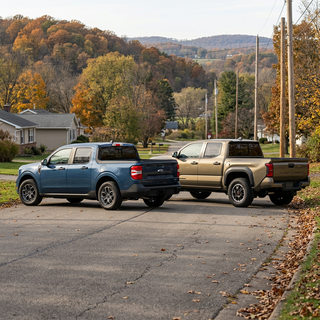
f

Is a Used AWD Car Worth Buying Over FWD?

A used AWD car is worth buying over FWD if you frequently drive on icy, snowy, or unpaved roads where four-wheel traction helps you accelerate without slipping. For drivers operating primarily on dry or treated paved roads, a used FWD vehicle provides superior fuel economy, lower upfront purchase costs, and lower long-term maintenance expenses. Choosing between all-wheel drive and front-wheel drive on the pre-owned market comes down to weighing physical mechanical advantages against overall ownership expenses. Front-wheel-drive vehicles package the engine and transmission over the front driven wheels, creating a lighter layout that maximizes interior cabin room while delivering efficient performance. All-wheel-drive systems build upon this layout by adding a transfer case, drive shaft, and rear differential to route engine torque to all four wheels when sensors detect slippage. On the pre-owned market, an AWD system typically adds a price premium between $1,000 and $2,500 compared to an equivalent FWD model. Furthermore, the additional mechanical components add 150 to 300 pounds of curb weight, which lowers fuel efficiency by 1 to 3 mpg depending on the vehicle class. At Tri State Ford, our team helps you evaluate your driving routines to select the right drivetrain for your household. You can drop by our showroom at 1503 Pennsylvania Ave to inspect our pre-owned lineup in person, give our sales department a quick call at (330) 462-7578 to ask about current arrivals, or fill out an online credit application to get pre-approved before your visit. Table of Contents What Is the Main Difference Between AWD and FWD in a Used Vehicle? Does AWD Make a Used Car Safer on Winter Roads and Heavy Snow? How Much More Does a Used AWD Car Cost Compared to FWD? What Additional Maintenance Components and Towing Capabilities Come with AWD? When Does Used AWD Make More Sense for Driving Around East Liverpool? Common Questions About Buying a Used AWD or FWD Vehicle What Is the Main Difference Between AWD and FWD in a Used Vehicle? The primary difference between AWD and FWD in a used vehicle lies in mechanical torque distribution: FWD routes engine power strictly to the front two wheels via a transaxle, whereas AWD uses a transfer case, center coupling, and rear differential to route power dynamically to all four wheels when traction loss is detected. In a front-wheel-drive configuration, the front tires bear responsibility for both steering the vehicle and putting engine power onto the pavement. This consolidated layout eliminates the need for a long drive shaft running to the back of the vehicle, which reduces curb weight and allows engineers to design flat interior floorboards with generous passenger legroom. Because FWD drivetrains feature fewer moving parts, they suffer less mechanical friction, contributing to strong everyday fuel economy. All-wheel-drive drivetrains monitor wheel speed continuously through electronic sensors. When the front wheels lose traction on wet leaves, mud, or snow, an electronically controlled clutch pack or viscous coupling engages within milliseconds to send engine torque to the rear axle. Advanced systems can vary torque delivery continuously between front and rear axles to optimize cornering stability even on dry pavement. Pre-owned Ford crossovers demonstrate these drivetrain differences clearly: The 2026 Ford Escape Active AWD utilizes a 1.5L EcoBoost® engine producing 180 hp and 199 lb-ft of torque mated to an automatic 8-speed transmission, providing active four-wheel grip during inclement weather. Front-wheel-drive variants of the same crossover deliver lighter curb weights and lower initial purchase points. Higher-tier models like the Ford Escape ST-Line Elite AWD equip a 2.0L EcoBoost® engine yielding 250 hp and 280 lb-ft of torque through a SelectShift® automatic transmission for responsive passing power. Truck options such as the 2026 Ford Maverick offer a 2.5L hybrid powertrain in both FWD and AWD configurations, giving pre-owned buyers freedom to choose between maximum efficiency or four-wheel traction. When shopping for pre-owned crossovers or trucks, you can explore pre-owned single-owner models for documented maintenance histories, check current manufacturer vehicle offers for incentives, or review custom order options if you prefer ordering a brand-new vehicle built to your exact specifications. Does AWD Make a Used Car Safer on Winter Roads and Heavy Snow? All-wheel drive enhances winter safety primarily during acceleration and hill climbing by engaging four contact patches to prevent wheel spin on snow and ice. However, AWD does not reduce braking distances or improve cornering grip on slick pavement, as stopping performance depends entirely on tire tread compound and braking technology. Many drivers assume that an AWD badge guarantees total winter immunity, but four-wheel propulsion only assists in getting a vehicle moving from a stop or keeping momentum through slush and unplowed drifts. When you apply the brakes on an icy road, every modern vehicle uses four-wheel braking regardless of its drivetrain configuration. Consequently, an AWD crossover and a FWD sedan equipped with identical tires will take the same distance to come to a complete stop from highway speeds. Modern active safety features work alongside physical drivetrains to maintain vehicle stability: Ford Co-Pilot360™ combines Electronic Stability Control, Anti-lock Braking Systems, and traction management to correct directional skids before they escalate. Midsize SUVs like the 2026 Ford Explorer feature Intelligent 4WD paired with the Terrain Management System™, offering a dedicated Slippery drive mode that adjusts throttle mapping and transmission shift points for snow-covered roads. Off-road capability increases further on models like the 2026 Ford Bronco Sport Badlands, which equips Advanced 4x4 technology with a twin-clutch rear drive unit to send power to individual rear wheels. For commuters tackling elevated routes across Calcutta, where sudden winter lake-effect bursts create slushy hill climbs along State Route 170, active four-wheel traction provides valuable confidence when pulling out into traffic. To ensure complete peace of mind when navigating seasonal weather, buyers can browse our certified pre-owned inventory to find rigorously inspected vehicles backed by factory warranty coverage. How Much More Does a Used AWD Car Cost Compared to FWD? On the pre-owned market, an AWD vehicle costs between $1,000 and $2,500 more upfront than an equivalent FWD model of the same year, trim, and mileage. Beyond the initial purchase price, AWD models carry a 1 to 3 mpg fuel economy penalty and slightly higher long-term maintenance costs. The overall financial calculation between FWD and AWD involves three distinct factors: Upfront Purchase Price: All-wheel-drive models command higher resale values on used car lots because regional demand for winter-capable vehicles remains strong. Fuel Costs Over Time: Because an AWD system adds 150 to 300 pounds of drivetrain mass and creates additional rotational drag, it consumes slightly more fuel per mile. For example, while a 2026 Ford Escape Platinum AWD Hybrid achieves an EPA-estimated 39 mpg combined, FWD hybrid variants often gain 1 to 2 extra miles per gallon. Resale and Trade-In Equity: While you pay more for AWD initially, you recover a significant portion of that investment when trading the vehicle in years later, as pre-owned buyers in cold climates prioritize four-wheel traction. Evaluating these ownership costs helps you select a vehicle that fits your monthly household budget. If you plan to upgrade from your current vehicle, you can utilize our online trade-in valuation tool to receive an instant appraisal estimate that can be applied directly toward your down payment. What Additional Maintenance Components and Towing Capabilities Come with AWD? An AWD drivetrain requires periodic fluid servicing for the transfer case and rear differential unit, alongside regular inspections of additional CV boots, universal joints, and center drive shafts. For towing, AWD delivers superior launch traction on steep or slippery ramps, though overall towing capacity is determined by chassis structure, engine cooling, and suspension design. Maintaining an all-wheel-drive vehicle involves servicing several mechanical components that do not exist on front-wheel-drive cars: Transfer Case / Power Transfer Unit (PTU): Takes engine torque from the transaxle and routes it backward to the rear drive shaft. The gear oil inside requires periodic replacement to prevent thermal breakdown. Rear Differential Assembly: Converts the longitudinal rotation of the drive shaft into lateral rotation for the rear axle shafts. Like the PTU, its gear fluid must be changed according to manufacturer maintenance intervals. Drive Shaft and CV Axles: Four axle shafts and a multi-piece drive shaft utilize flexible rubber boots to protect universal joints from road debris and salt corrosion. Tire Matching Requirements: All four tires on an AWD vehicle must share matching tread depth and overall diameter. Replacing only one or two worn tires creates rotational speed variances that put continuous mechanical stress on the center transfer case. Families comparing pre-owned crossovers on our lot often ask whether all-wheel drive adds noticeable maintenance costs before learning that differential fluid exchanges occur at extended factory intervals. When it comes to trailering, all-wheel drive provides a major advantage when pulling heavy loads from a standstill on low-traction surfaces. Pulling a small fishing boat up a slippery, algae-covered concrete launch ramp or hauling a utility trailer over wet gravel tracks causes front tires on a FWD vehicle to spin helplessly. AWD engages all four wheels immediately, preventing wheel spin and providing smooth, controlled momentum. However, maximum total tow weight remains governed by chassis ratings, engine output, and cooling capacity rather than drivetrain layout alone. When Does Used AWD Make More Sense for Driving Around East Liverpool? East Liverpool's steep riverfront bluffs and frequent winter snowfalls make AWD vehicles particularly advantageous for local drivers facing challenging road conditions. FWD remains ideal if your route consists mostly of flat, well-maintained arterial roads where fuel savings take priority. The topography along the Ohio River corridor features sharp elevation shifts and winding bluff climbs that become treacherous during winter snowstorms or freezing rain. Accelerating up a steep, icy grade in a front-wheel-drive car transfers vehicle weight toward the rear wheels, lifting weight off the front drive tires and reducing available traction. An all-wheel-drive system solves this issue by transferring torque to the rear axle, taking advantage of that weight transfer to push the vehicle smoothly up the incline. Pre-owned Ford crossovers excel in these riverfront environments: Compact options like a pre-owned Ford Escape Active AWD deliver agile urban handling paired with automatic foul weather traction. Midsize crossovers like a pre-owned Ford Edge provide a heavier curb weight and wider stance that stabilize the chassis during high-wind river crossings. Three-row models like the Ford Explorer offer standard rear-wheel-drive balance with available Intelligent 4WD, ensuring plenty of passenger room and towing strength for weekend trips along the river. If your daily driving consists primarily of flat, well-plowed highway stretches, a front-wheel-drive model equipped with quality tires provides dependable service while maximizing fuel economy. If your routine requires climbing steep side streets before snowplows arrive, investing in a pre-owned AWD model is a practical decision. Common Questions About Buying a Used AWD or FWD Vehicle Q: Does an AWD system add significant weight to a pre-owned vehicle? An AWD system typically adds 150 to 300 pounds to a vehicle's curb weight due to the transfer case, rear differential, drive shaft, and rear axle shafts. This extra mass slightly reduces fuel efficiency by 1 to 3 mpg compared to a front-wheel-drive counterpart. Q: Can you put two new tires on an AWD car instead of four? Replacing only two tires on an AWD vehicle is not recommended because uneven tire circumference forces the center differential or clutch pack to slip continuously. This rotational speed variance causes mechanical strain, elevated operating temperatures, and potential transfer case failure. Q: Is FWD sufficient for light snow if the vehicle has good winter tires? A FWD vehicle equipped with dedicated winter tires frequently outperforms an AWD vehicle on all-season tires when stopping and turning on snow. Dedicated winter rubber compounds remain flexible in sub-freezing temperatures, providing essential tread grip for everyday winter commutes. Q: Does AWD increase maximum towing capacity over FWD? All-wheel drive does not automatically increase a vehicle's maximum tow rating, as total capacity depends on frame strength, engine torque, transmission cooling, and brake size. However, AWD provides crucial launch traction when pulling a trailer up steep, wet, or unpaved inclines. Q: What documentation is required when financing a used AWD vehicle at the dealership? Buyers applying for pre-owned vehicle financing should bring a valid driver's license, recent pay stubs or proof of income, a utility bill for address verification, and a current auto insurance quote. Gathering these documents in advance helps our finance team process your credit approval quickly. When you are ready to explore pre-owned crossovers or compare new models in person, our team at Tri State Ford is here to guide you through every step of the buying process. You can visit our East Liverpool dealership to test drive our pre-owned selection, call us directly at (330) 462-7578 to speak with a sales specialist, or browse our new Ford models online to see the latest four-wheel-drive technology today. Keep Your Vehicle Running Strong Keep your vehicle performing at its best with our service team: Order Parts Schedule Service Appt © 2026 Tri State Ford. All rights reserved. Used AWD vs FWD Cars in East Liverpool OH | Tri State Ford

f

Can You Trade In a Car With an Unpaid Loan Balance?

You can trade in a vehicle with an unpaid loan balance. The dealership handles the payoff process directly with your existing lender, subtracting your remaining balance from the vehicle's agreed market trade-in value. If your vehicle is worth more than what you owe, the remaining positive balance serves as equity toward your down payment; if you owe more than the trade value, the unpaid difference can be paid out of pocket or included in your new vehicle loan. Trading in a financed vehicle is a standard transaction managed daily by finance teams. When you bring a vehicle with an active auto loan to Tri State Ford, you do not need to clear the debt independently before shopping for your next vehicle. Our team coordinates directly with your financial institution to secure an accurate account payoff and manage the lien release paperwork on your behalf. To begin the evaluation, our vehicle appraisers determine the fair market value of your current ride based on its age, mileage, overall physical condition, and local market demand. Simultaneously, our finance department obtains an official 10-day payoff statement from your lender. This statement accounts for your principal balance plus daily accrued interest charges up through the anticipated settlement date. Once both values are established, calculating your net trade position is straightforward: Positive Equity: Your vehicle's valuation exceeds your loan balance. For example, if your trade value is an example amount and your payoff is an example amount, you have a positive equity amount in positive equity to apply directly toward reducing the price or principal of your next purchase. Negative Equity: Your vehicle's valuation is lower than your remaining payoff amount. For instance, if your trade value is $14,000 but your loan balance is $17,000, you have a positive equity amount in negative equity (often called being "upside down" or "underwater"). Understanding this balance before signing purchase documents allows you to structure financing that fits your household budget. If you want to review your options in person or schedule a professional appraisal, you can find our showroom location at 1503 Pennsylvania Ave, East Liverpool, OH 43920, or call our team directly at (330) 462-7578 to speak with a financing specialist. Table of Contents How Does Trading In a Financed Vehicle Work and Who Pays Off the Loan? What Is Negative Equity and How Does Rolling It Over Into a New Car Loan Work? What Are the Long-Term Financial Risks of Repeatedly Rolling Over Auto Loans? What Happens to GAP Insurance on a Trade-In and Does It Cover Rolled-Over Negative Equity? How Does Selling a Financed Vehicle Privately Compare to Trading It In? Common Questions About Trading In a Financed Vehicle Plan Your Financed Vehicle Trade-In at Tri State Ford How Does Trading In a Financed Vehicle Work and Who Pays Off the Loan? Trading in a financed vehicle works by allowing the purchasing dealership to pay off your existing loan balance directly to your lender while transferring your vehicle's ownership title. You do not need to write a check to your original lienholder prior to trading in, as the dealership handles the electronic or paper draft transfer as part of the sales contract. When buyers ask our finance team about trading in a financed vehicle, the question we answer first is whether the payoff balance matches their monthly account statement. Monthly statements display your remaining balance on a specific billing date, but auto loans accrue interest on a daily basis. To ensure the loan is cleared down to the exact penny, our finance department contacts your lienholder to request a formal 10-day payoff quote. This 10-day window accounts for daily interest accumulation during the time required for funds to transfer between financial institutions. Once the payoff figure is established, the transaction proceeds through three structured steps: Trade Value Valuation: Our appraisal team inspects your trade-in and establishes its current wholesale market value. Lien Satisfaction: Tri State Ford sends funds directly to your existing lender to satisfy the 10-day payoff amount, freeing the vehicle's title from the original lienholder. Contract Integration: Your net trade balance (positive equity credited or negative equity added) is applied to your new sales agreement. For drivers making regular commutes down Market Street toward Boardman, having our team handle loan payoff logistics eliminates time spent sitting on hold with bank representatives or tracking title documents through the state bureau of motor vehicles. Once the paperwork is signed, your obligation to the original loan terminates as soon as the lender processes the dealer's draft. If you are ready to explore your vehicle options, you can browse our selection of new Ford vehicles online, submit an online credit application to secure pre-approval, or check out our durable Ford Transit commercial vans for commercial work needs. What Is Negative Equity and How Does Rolling It Over Into a New Car Loan Work? Negative equity occurs when the payoff amount on your current vehicle loan is higher than the vehicle's actual trade-in market value. Rolling over negative equity means taking that unpaid deficit and adding it directly into the loan principal of the new vehicle you are purchasing. When a vehicle depreciates faster than the loan principal is paid down, negative equity is created. This situation frequently happens during the first two to three years of a long-term financing agreement, as new vehicles experience their steep curve of depreciation early in ownership. NEGATIVE EQUITY ROLLOVER CALCULATION EXAMPLE Agreed Trade Valuation: $16,000 Existing Lender 10-Day Payoff Quote: - $19,500 Unpaid Deficit (Negative Equity): - an example amount Base Price of New Vehicle: $32,000 Added Rolled-Over Deficit: + an example amount Total New Loan Principal (before fees): $35,500 As illustrated above, adding an example amount of previous vehicle debt increases your starting loan principal on the replacement vehicle. Financial institutions evaluate rollover requests based on strict Loan-to-Value (LTV) ratios. LTV is the percentage calculated by dividing the total financing amount by the wholesale value or MSRP of the new vehicle. Lenders set maximum LTV limits—often between 110% and 125%—to restrict how much extra debt can be attached to an asset. High-value, durable vehicles with strong resale retainment offer better LTV flexibility for accommodating a rollover. For example, local small business owners and contractors negotiating elevated terrain along State Route 170 near Calcutta frequently look at our dependable Ford F-Series lineup or explore our new work truck inventory because these platform trucks maintain strong resale value over time. To offset negative equity without borrowing extra money, buyers can contribute a cash down payment or apply manufacturer rebate incentives directly against the trade deficit. Alternatively, choosing high-quality pre-owned Carfax 1-owner vehicles can help stabilize initial depreciation and minimize total debt exposure. What Are the Long-Term Financial Risks of Repeatedly Rolling Over Auto Loans? According to recent studies, over 30% of car buyers unknowingly increase their debt by rolling negative equity into new auto loans repeatedly. Over time, this compounding debt increases your monthly obligation, forces longer repayment terms, elevates total interest charges, and limits future vehicle trading flexibility. When you roll negative equity from one contract into another, you pay interest on both the purchase price of your new vehicle and the unpaid balance of your previous vehicle. If you trade vehicles every two to three years while consistently carrying over unpaid balances, the cumulative debt can quickly outpace normal vehicle depreciation curves. COMPOUNDING DEBT CYCLE OVER MULTIPLE VEHICLE TRADES Initial Vehicle Purchase: $25,000 Loan Balance Trade-In 1 Deficit: + a positive equity amount Rolled into Vehicle 2 Vehicle 2 Starting Principal: $31,000 ($28,000 MSRP + a positive equity amount Deficit) Trade-In 2 Deficit: + $5,500 Rolled into Vehicle 3 Vehicle 3 Starting Principal: $39,500 ($34,000 MSRP + $5,500 Deficit) The long-term financial consequences of consecutive loan rollovers include: Elevated Monthly Payments: A larger total financed amount directly increases your required monthly payment, putting extra strain on your monthly budget. Extended Loan Terms: Lenders may require 72-month or 84-month financing terms to keep monthly payments manageable, which slows principal reduction and keeps you underwater longer. Higher Cumulative Interest: Paying interest across extended loan terms on inflated principal balances substantially raises the total cost of owning your vehicle. Restricted Trading Flexibility: Excessive debt can push your Loan-to-Value ratio past lender approval thresholds, preventing you from trading until significant cash is paid toward the loan balance. Breaking a compounding loan cycle requires deliberate financing strategies. Keeping your current vehicle until the loan principal drops below its wholesale market value eliminates negative equity entirely. If an immediate vehicle replacement is necessary, applying cash down payments, selecting vehicles with high residual value retainment, or shopping from our certified pre-owned Ford inventory —which includes factory warranty coverage—can help realign your debt with actual market value. What Happens to GAP Insurance on a Trade-In and Does It Cover Rolled-Over Negative Equity? Guaranteed Asset Protection (GAP) insurance attached to your old loan automatically terminates upon trade-in loan payoff, making you eligible for a prorated refund on unearned premiums. Standard GAP policies purchased on a replacement vehicle cover total loss valuation gaps but explicitly exclude negative equity carried over from prior auto loans. When you trade in a vehicle with an active auto loan that includes GAP protection, paying off the loan satisfies the original financing contract. Because the policy coverage ends with the loan, any upfront premium paid for months you will not use must be refunded to you by the policy provider. Our finance team can assist you in filing for a prorated GAP refund during your trade-in paperwork process. HOW STANDARD GAP INSURANCE TREATS ROLLED-OVER NEGATIVE EQUITY Base Vehicle Market Value at Total Loss Event: $22,000 Total Financed Balance (Includes $4,000 Prior Negative Equity): $28,000 Primary Auto Insurance Settlement Check: - $22,000 Remaining Debt Difference: $6,000 Standard GAP Policy Payout (Covers Base Vehicle Gap Only): - $2,000 Excluded Balance Customer Owes Out-of-Pocket: $4,000 (Uncovered Prior Rolled-Over Negative Equity) A common misconception is that purchasing GAP insurance on a new vehicle protects rolled-over debt from past vehicles. Standard GAP policies are designed to cover the difference between your primary auto insurer's actual cash value settlement and the primary loan balance tied directly to that specific vehicle. Insurance guidelines restrict GAP payouts from covering previous loan carryovers, extended service contracts, or unpaid late fees. If a total loss accident occurs, your GAP coverage pays the difference up to the vehicle's market value limit, but leaves the rolled-over debt balance unpaid. To assess your current trade position and see where your loan balance stands relative to market value, you can use our online trade-in valuation tool before finalizing your purchase plans. How Does Selling a Financed Vehicle Privately Compare to Trading It In? Selling a financed vehicle privately can yield a higher gross selling price than a dealer trade valuation, but requires you to arrange loan satisfaction out of pocket before your lender releases the clear title to the private buyer. Trading in at a dealership eliminates private title coordination, protects you from transaction fraud, and offers state sales tax advantages. COMPARISON: PRIVATE SALE VS. DEALERSHIP TRADE-IN WITH FINANCED LOAN TRANSACTION FEATURE PRIVATE SALE DEALERSHIP TRADE-IN Sale Valuation Price Often Higher Wholesale Market Wholesale Title Release Process Complex / Delayed Immediate / Handled Lien Satisfaction Out-of-Pocket Cash First Handled Direct Sales Tax Offset Not Applicable Applicable in Ohio Fraud / Payment Risk Buyer Payment Risks Secure Dealer Draft Selling a vehicle privately with an active lien requires clear communication with your buyer and lender. Because the financial institution holds the physical or electronic title until the payoff draft clears, private buyers are often reluctant to hand over cash or personal checks without receiving a clean title immediately. If your buyer is financing through a separate bank, coordinating lien releases across two external financial institutions can take weeks. Furthermore, if your vehicle has negative equity, you must pay the shortfall balance in cash to your lender before they will release the title to the buyer. Trading in your vehicle at Tri State Ford avoids these obstacles completely: State Sales Tax Savings: In Ohio, trade-in value is deducted from the purchase price of your replacement vehicle before sales tax is calculated. For instance, if you purchase a $35,000 vehicle and trade in your car for an example amount, you only pay sales tax on the remaining $20,000 difference—saving hundreds of dollars in tax obligations. Seamless Lien Settlement: Our team remits electronic payment to your lender immediately, eliminating waiting periods and paperwork hassles for you. Safety and Convenience: You avoid meeting buyers privately, arranging test drives with strangers, or handling unverified funds. If you are ready to evaluate your trade-in options and streamline your next vehicle purchase, you can visit our dealership or give our staff a call at (330) 462-7578 to discuss your financing options. Common Questions About Trading In a Financed Vehicle Q: What is a 10-day payoff quote for a vehicle trade-in? A 10-day payoff quote is an official statement generated by your current auto lender detailing the exact dollar amount required to satisfy your loan contract completely within a ten-day window. This figure includes your unpaid principal balance plus daily accrued interest calculations and processing fees. Finance departments request a 10-day window to ensure that funds transferred electronically or mailed via check satisfy the lien without leaving micro-balances due to daily interest accumulation. Q: How do I request a refund for GAP insurance after trading in my car? You can request a prorated GAP insurance refund by submitting a formal cancellation form along with proof of loan payoff to your GAP policy administrator or selling dealer. When you trade in your vehicle, our finance office provides a copy of the dealer trade agreement and payoff confirmation showing the original financing has been satisfied. Unearned premiums calculated from the date of loan payoff are returned via check or credited to your account according to policy terms. Q: Can I trade in a financed vehicle if my credit score has dropped? You can trade in a financed vehicle even if your credit score has dropped since taking out your original loan. A lower credit score may affect the interest rates and loan terms offered by lenders on your replacement vehicle financing contract. Providing a cash down payment, choosing a vehicle with strong book value retainment, or clearing existing negative equity out of pocket improves lender approval odds and secures better rate tiers. Q: What paperwork do I need to bring when trading in a financed vehicle? When trading in a vehicle with an active loan, you should bring your current vehicle registration card, account information for your current auto lender, a recent account statement, valid driver's licenses for all named title holders, all sets of ignition keys and remote key fobs, and proof of current auto insurance. If you have positive equity, bringing the physical title is helpful if held in your possession, though our team can request title releases electronically from lienholders. Q: How does a trade-in tax credit work on a financed car? State trade-in tax credits apply to the total agreed market trade valuation of your trade vehicle, regardless of whether you owe money on an existing auto loan. The full market trade value is subtracted from the gross sales price of your new vehicle before state and local sales taxes are calculated. Even if you have negative equity that must be added back into the loan principal, your trade-in allowance reduces your taxable purchase total. Plan Your Financed Vehicle Trade-In at Tri State Ford Trading in a vehicle you still owe money on is a manageable, routine transaction when guided by an experienced finance department. Whether you hold positive equity that can reduce your next loan principal or face negative equity that requires strategic contract structuring, understanding your options allows you to make confident purchasing decisions. Our team at Tri State Ford provides transparent vehicle appraisals, straightforward 10-day loan payoff coordination, and competitive financing packages tailored to your budget. To take the next step toward your upgrade, explore our online inventory, get pre-approved through our online credit application, or visit our showroom at 1503 Pennsylvania Ave, East Liverpool, OH 43920 to speak with our staff today. Keep Your Vehicle Running Strong Keep your vehicle performing at its best with our service team: Order Parts Schedule Service Appt © 2026 Tri State Ford. All rights reserved. Trade In Cars with Loans in East Liverpool OH | Tri State Ford
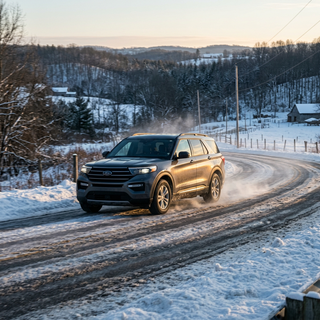
f

What Is the Minimum Down Payment Required for a Used Car Loan?

There is no universal minimum down payment required to finance a used car. While financial experts typically recommend putting down **10% down ** of the vehicle’s purchase price, many lenders approve qualified buyers for low-down-payment options, or even zero dollars down, based on credit profile, income stability, debt-to-income ratio, and the specific vehicle being financed. When evaluating a used car loan application, lenders calculate a key financial metric called the loan-to-value (LTV) ratio. The LTV compares the total loan amount against the official clean wholesale value or market value of the vehicle. A larger cash down payment lowers the loan balance relative to the car's value, reducing the financial risk for the lender. As a result, buyers who provide a solid upfront contribution often secure lower interest rates and easier loan approval terms. However, for buyers with strong credit history and steady proof of income, lenders frequently waive strict minimum down payment requirements altogether. Beyond the baseline vehicle purchase price, buyers must also account for out-of-door costs, which include state sales tax, title transfer fees, registration charges, and dealer documentation fees. A modest cash down payment—such as $500 or $1,000—often covers these initial administrative fees so they do not have to be rolled into the total financed amount. For working professionals and suburban families commuting along State Route 170 near Calcutta, keeping upfront loan costs balanced ensures manageable monthly payments over the full financing term. At Tri State Ford, our team works directly with national banks, regional credit unions, and specialized auto lenders to structure flexible payment plans tailored to your financial goals. Whether you have a substantial trade-in or limited cash on hand, you can visit our East Liverpool showroom location or give us a quick call at (330) 462-7578 to explore customized used-car financing options. Table of Contents Can You Finance a Used Car with Zero Dollars Down? Can You Get a Low-Down-Payment Used Car Loan with Credit Below 600? How Does Every $1,000 Down Lower Your Monthly Payment and Total Interest? What Does It Mean to Be Upside Down on a Low-Down-Payment Used Car Loan? How Do Trade-In Equity and current offers Reduce Cash Required Upfront? Common Questions About Low-Down-Payment Used Car Financing Can You Finance a Used Car with Zero Dollars Down? Yes, you can finance a used car with zero dollars down if you meet lender underwriting criteria, such as a strong credit score and sufficient verifiable income. However, financing 100% of the purchase price increases your overall loan balance, monthly payments, and total interest paid over the life of the loan. Zero-down financing options are primarily extended to buyers in prime or super-prime credit tiers, typically defined as credit scores of 661 to 850. Lenders offering zero-down auto loans closely review an applicant's debt-to-income (DTI) ratio, job stability, and credit history to ensure the borrower can comfortably handle higher monthly payments. Because the lender is taking on 100% of the vehicle's purchase price risk, zero-down loans may carry different annual percentage rates ( APRs) depending on lender and credit profile. Higher Monthly Payments: Borrowing the full purchase price without an upfront reduction results in larger monthly installments across the entire repayment term. Increased Total Interest: Paying interest on a larger principal balance raises the total cost of financing over 48-month, 60-month, or 72-month terms. Higher Initial Loan-to-Value Ratio: Starting a loan at 100% or more of the vehicle's retail value leaves less margin for normal market depreciation. Shoppers exploring low upfront costs often examine our wide selection of quality CARFAX 1-Owner pre-owned inventory to find well-maintained vehicles that hold strong retail value. Experian industry reports show that while zero-down used car financing is widely available, bringing even a modest upfront payment noticeably lowers a borrower's interest rate tier. Our experienced finance department can compare multiple lender offers side-by-side, helping you decide whether a zero-down agreement or a small cash down payment works best for your monthly budget. Buyers who ultimately decide to compare pre-owned savings against new model incentives can also view our brand-new Ford inventory online. Can You Get a Low-Down-Payment Used Car Loan with Credit Below 600? Borrowers with credit scores below 600 can secure a used car loan with a modest down payment, but lenders typically require at least $1,000 or 10% down to offset risk. Lower credit scores place applicants into subprime credit tiers, where higher interest rates mean a down payment is essential to keeping monthly payments manageable. According to Experian automotive finance data, average used car interest rates vary significantly across credit tiers: Credit Score Tier Rating Classification Average Used Car APR 781 – 850 Super Prime 7.70% APR 661 – 780 Prime 9.65% APR 601 – 660 Near Prime 14.11% APR 501 – 600 Subprime 19.00% APR 300 – 500 Deep Subprime 21.85% APR When evaluating applications with credit scores below 600, subprime lenders look beyond credit scores alone. They analyze verifiable monthly income, length of employment, utility bill stability, and current debt obligations. Supplying an upfront cash down payment or trade-in value demonstrates financial commitment and lowers the lender's exposure, which dramatically improves approval odds. Adding a qualified co-borrower with established credit can also help secure lower interest rates and reduce required cash at signing. Choosing high-quality pre-owned vehicles also strengthens subprime applications. Vehicles backed by rigorous reconditioning programs, such as our certified pre-owned Ford inventory featuring Ford Blue Advantage coverage, provide lenders with confidence regarding asset reliability and retained value. Completing a confidential online credit application allows our finance specialists to pre-qualify your file and identify lenders that specialize in low-down-payment subprime approvals. How Does Every $1,000 Down Lower Your Monthly Payment and Total Interest? Every $1,000 put down on a used car loan reduces the monthly payment by approximately $15 to $20 on a standard 60-month loan term. Over the course of the loan, that initial cash contribution also saves hundreds of dollars in total interest charges by reducing the principal loan balance. To see how an upfront down payment shapes total financing costs, consider a $20,000 used vehicle loan financed at a 9.65% APR over a 60-month term: Larger down payments can reduce the amount financed, which may lower monthly payments and total interest paid over the life of the loan. As shown in the table, putting 10% down ($2,000) on a $20,000 vehicle lowers the monthly payment by $42 compared to financing with zero down. Furthermore, it cuts total interest charges by $529 over five years. Because a lower loan balance decreases the lender's loan-to-value ratio, submitting a down payment may also qualify you for a lower interest rate bracket, yielding even greater long-term savings. Planning ahead and factoring initial costs into your budget ensures long-term vehicle affordability. When evaluating total ownership expense, buyers can also explore current manufacturer vehicle offers and specials to lower initial vehicle costs and maximize the value of every dollar invested upfront. What Does It Mean to Be Upside Down on a Low-Down-Payment Used Car Loan? Being upside down on a used car loan—also known as having negative equity—means owing more on the loan than the vehicle is currently worth on the market. Financing a vehicle with little or zero money down increases this risk because normal depreciation occurs faster than the principal balance is paid off during the early months. When a vehicle is purchased with zero down and additional costs like sales tax and documentation fees are rolled into the loan principal, the initial loan balance immediately exceeds the car's wholesale value. For example, if you finance $18,000 on a used SUV with a market value of $16,000, you begin the loan with $2,000 of negative equity. If you need to sell or trade in the vehicle after two years, you must pay off that remaining unpaid balance before title transfer can occur. Trade-In Challenges: Negative equity must either be paid out-of-pocket or rolled into a new auto loan, increasing future monthly payments. Insurance Gaps During Total Loss: In the event of an accident where the car is declared a total loss, standard auto insurance only pays current market value, leaving the owner responsible for paying off the remaining unpaid loan balance. Extended Repayment Terms: Choosing 72-month or 84-month financing terms lowers monthly payments but slows principal reduction, extending the time spent upside down. Drivers navigating daily commutes along the Ohio River around East Liverpool can protect themselves from negative equity by opting for shorter loan terms, providing a modest cash down payment, or adding Guaranteed Asset Protection ( GAP coverage). GAP insurance covers the financial difference between an insurance payout and the remaining loan balance if a vehicle is totaled, offering financial security for low-down-payment loans. How Do Trade-In Equity and current offers Reduce Cash Required Upfront? Positive trade-in equity and dealer incentives count directly toward down payment requirements, allowing buyers to reduce or completely eliminate out-of-pocket cash needed at signing. If your current vehicle is worth more than what you owe on it, that difference acts just like cash towards your purchase. For instance, if your trade-in vehicle has a market value of $7,000 and your remaining loan payoff is $5,000, you possess $2,000 in positive equity. When applied to your next purchase, that $2,000 satisfies a 10% down payment requirement on a $20,000 used vehicle without requiring any out-of-pocket cash from your bank account. Combining trade-in equity with manufacturer promotional allowances further reduces the net amount financed, securing lower monthly payments and favorable LTV approval terms. To streamline the low-down-payment buying process, bring these key documents to the dealership: Proof of Income: Recent pay stubs or W-2 forms verifying steady monthly earnings. Proof of Residence: A recent utility bill or bank statement confirming your physical address. Trade-In Paperwork: Vehicle title, current registration, and loan payoff statement if applicable. Valid Driver’s License & Insurance: Active driver's license and current auto insurance card. Preparing these materials in advance speeds up loan underwriting and helps our finance desk secure fast approvals. You can determine your vehicle's current equity today using our online Kelley Blue Book trade-in valuation tool or request a firm purchasing offer through our instant cash offer tool before visiting our showroom. Common Questions About Low-Down-Payment Used Car Financing Q: How long does a credit application take when applying for used car financing? An online credit application typically takes less than ten minutes to complete. Once submitted, our finance team reviews your credit profile and submits it to our network of lenders, often generating approval options within thirty to sixty minutes during regular business hours. Bringing complete documentation—including pay stubs, proof of residence, and trade-in information—helps expedite the final underwriting verification process. Q: Can I roll sales tax and licensing fees into my used car loan? Yes, many lenders permit qualified buyers to finance state sales tax, title transfer, and registration charges directly into the total loan balance. However, rolling administrative fees into the loan increases your principal balance and loan-to-value ratio, which may slightly raise monthly payments and total interest costs. Buyers choosing low-down-payment financing often prefer paying taxes and fees upfront to keep loan amounts manageable. Q: Does a co-borrower help secure a low-down-payment auto loan? Adding a creditworthy co-borrower significantly strengthens an auto loan application, particularly for applicants with credit scores below 600 or limited credit history. A co-borrower assumes joint legal responsibility for loan repayment, which reduces lender risk. This financial backing often helps secure approval with a smaller cash down payment, lower interest rates, and more flexible loan term options. Q: Is GAP insurance necessary when financing a used car with zero money down? While GAP insurance is optional, it is highly recommended when financing a used vehicle with little or zero money down. Because new loans begin at maximum loan-to-value ratios, standard collision insurance may not fully cover your remaining loan balance if the car is declared a total loss in an accident. GAP coverage pays the difference between market value and loan payoff, protecting you from unexpected debt. Q: How do lender loan-to-value limits affect used car approvals? Lenders establish maximum loan-to-value (LTV) limits, usually capped between 100% and 125% of a used vehicle’s clean wholesale book value. The LTV caps the maximum amount a lender will finance, including vehicle price, taxes, warranties, and fees. If a vehicle's selling price or add-ons exceed the lender's LTV cap, a cash down payment or trade-in equity is required to cover the difference. Q: What steps should I take first if I want to buy a used car with little money down? Your first step should be calculating your trade-in equity and submitting a secure finance pre-qualification application online. Knowing your borrowing power and estimated monthly payment range allows you to shop our pre-owned inventory with complete confidence. You can confirm current vehicle availability or speak with our finance team by stopping by our East Liverpool dealership address or calling us at (330) 462-7578 to schedule a test drive today. Keep Your Vehicle Running Strong Keep your vehicle performing at its best with our service team: Order Parts Schedule Service Appt © 2026 Tri State Ford. All rights reserved. Used Car Financing Options in East Liverpool OH | Tri State Ford

Contact Us

Fill out this form below and we'll contact you shortly
*Required Fields