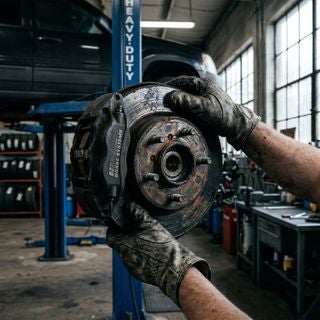

Driving with a bad wheel bearing is extremely dangerous because component wear rapidly escalates from minor noise to severe structural hub failure and complete loss of vehicle control. As friction generates intense thermal buildup inside an unlubricated bearing assembly, internal steel rollers pit and degrade, which can lock the hub solid or snap the wheel spindle at highway speeds. Immediate repair is necessary to prevent catastrophic mechanical failure on the road. When internal bearing seals break down, heat discolors the hub housing and melts away remaining protective grease. This excessive thermal expansion damages nearby braking components and corrupts signals to the wheel speed sensor. Technical evaluations cited by the National Highway Traffic Safety Administration indicate that vehicles operating with confirmed bearing failure are several times more likely to experience single-vehicle loss-of-control incidents on dry pavement compared to properly maintained vehicles. Neglecting early symptoms allows structural play to develop at the tire tread. Once clearance exceeds 0.004 in, steering precision degrades, causing the vehicle to pull unexpectedly across lane lines. Continued operation under heavy lateral loads risks shearing the hub assembly entirely, allowing the wheel unit to separate from the steering knuckle. Drivers who notice severe grinding sounds or steering instability should immediately park the vehicle and contact our team at (330) 462-7578 to arrange professional transportation rather than continuing to drive. For safety inspections and certified wheel service, drivers can visit our service center on Pennsylvania Ave. Table of Contents What Are the Early Warning Signs of a Failing Wheel Bearing? What Causes Wheel Bearings to Fail? How Do You Tell a Bad Wheel Bearing From a Bad CV Joint? Is It Cheaper to Replace Just the Wheel Bearing or the Full Hub Assembly? Can You Replace a Wheel Bearing Yourself at Home? Frequently Asked Questions About Wheel Bearing Repairs at Tri State Ford What Are the Early Warning Signs of a Failing Wheel Bearing? The earliest warning sign of a failing wheel bearing is a low-frequency humming, growling, or roaring sound that changes pitch in direct proportion to road speed rather than engine RPM. This noise typically grows louder when shifting vehicle weight during turns, indicating increased side loading on the damaged internal steel races. As internal race surface damage expands, mechanical harshness translates into physical shaking. Drivers frequently feel a distinct shimmy through the steering wheel at sustained speeds between 45 to 75 mph. If left unchecked, the wobble destabilizes wheel alignment, creating rapid and uneven tread wear across the tire face. A low growling sound that intensifies during gradual lane changes when weight transfers away from the affected wheel side. Steering wheel chatter or floorboard vibration that persists regardless of transmission gear selection. Illuminated dashboard warning lights for the Anti-Lock Braking System or electronic stability control caused by sensor air-gap variations. Excessive looseness or mechanical play when a lifted tire is manually rocked at the 12 and 6 o'clock positions. Technicians evaluating vehicles on the lift often perform a hands-on spin test while gripping the coil spring. Mechanical roughness inside the hub transmits subtle tactile vibrations directly through the suspension structure long before major wheel slop is visible. When replacement components are required, vehicle owners can easily order OEM Ford wheel bearings and hub assemblies online to maintain factory fit and strength standards. What Causes Wheel Bearings to Fail? Wheel bearings primarily fail due to moisture intrusion past damaged rubber seals, loss of protective grease, severe road impacts, and high-mileage metal fatigue. Once water penetrates the internal bearing cavity, protective lubricants break down, allowing raw steel rollers to rub directly against pitted race tracks. Environmental contamination poses a constant challenge for wheel assemblies. In suburban communities like Calcutta, winter road salt runoff and standing surface water frequently wash past worn outer seals, accelerating internal corrosion and pitting steel surfaces. Mechanical shocks from striking deep potholes, hitting curbs, or navigating rough unpaved roads also score internal bearing races, establishing localized hot spots that rapidly degrade during daily driving. Improper installation procedures during past brake or suspension maintenance represent another frequent cause of premature failure. Over-tightening or under-tightening the main spindle nut alters internal pre-load tolerances, crushing roller elements or permitting damaging axial movement. Using genuine replacement hardware torque-checked to precise factory engineering specifications ensures proper thermal clearance and long-term durability. How Do You Tell a Bad Wheel Bearing From a Bad CV Joint? A bad wheel bearing produces a continuous, speed-dependent growling or humming sound that changes intensity with vehicle speed, whereas a worn constant velocity (CV) joint creates a sharp clicking, popping, or snapping noise during low-speed turns. Identifying the exact rotational sound helps pinpoint whether repairs belong to the hub assembly or the drive axle assembly. Wheel bearing noise remains present whether accelerating or coasting, changing pitch as vehicle velocity rises. Loading the suspension during sweeping highway curves shifts weight onto the outer wheel, increasing the growl if the outer bearing is damaged. Conversely, CV joint noise specifically occurs when drive torque is applied through sharp steering angles, such as turning into tight parking spaces along commercial strips in Boardman. Physical inspections under the vehicle provide clear mechanical confirmation. A torn rubber CV boot leaking dark grease onto suspension arms points directly to joint contamination, whereas wheel bearing wear shows as axial runout, magnetic ABS tone ring corrosion, or localized heat discoloration around the hub center without external axle grease leaks. Is It Cheaper to Replace Just the Wheel Bearing or the Full Hub Assembly? Replacing a complete wheel hub assembly is almost always cheaper in total repair cost than replacing an individual press-in wheel bearing because bolt-on assemblies drastically reduce specialized shop labor time. While an individual bearing press unit may carry a slightly lower standalone parts price, the additional labor required to remove, press, and reinstall traditional bearings balances out any initial parts savings. Installing a traditional standalone bearing requires complete removal of the steering knuckle from the vehicle. Technicians must use specialized hydraulic press machinery, bearing splitters, and pullers to force the worn bearing out of the housing bore without scoring internal steel walls. This extensive disassembly process significantly increases shop labor hours and risks damaging surrounding suspension components or wheel speed sensors. Repair Aspect Press-In Wheel Bearing Complete Hub Assembly Labor Complexity High (Requires knuckle removal) Low (Direct bolt-on service) Specialized Tools Needed Hydraulic press & bearing puller Standard hand & torque tools Integrated Sensors Transferred or purchased separate Includes factory-calibrated ABS sensor Total Installation Time Extended shop labor hours Streamlined installation process Long-Term Reliability Dependent on press alignment precision Factory-sealed pre-set internal clearances Modern vehicles increasingly utilize pre-sealed, integrated wheel hub units that bolt directly to the steering knuckle. These complete assemblies come pre-lubricated with factory-calibrated bearing pre-load tolerances and include a brand-new wheel speed sensor. Choosing a complete hub unit ensures all wear surfaces are refreshed simultaneously, protecting your braking systems and providing long-term driving peace of mind. Can You Replace a Wheel Bearing Yourself at Home? Replacing a bolt-on wheel hub assembly at home is possible for advanced DIY mechanics equipped with heavy-duty tools, but pressing individual bearing races out of a steering knuckle requires industrial machinery that makes professional service necessary for most vehicle owners. Undertaking a home repair presents severe physical and safety challenges. Main axle spindle nuts are secured under massive torque loads, often requiring high-torque impact wrenches or long breaker bars to break free. Furthermore, rust accumulation along axle splines and steering knuckle bores frequently welds metal surfaces together, demanding specialized pullers to prevent damaging fragile aluminum steering components. Heavy-duty calibrated torque wrench capable of achieving accurate axle nut tension. Axle hub puller and slide hammer tools to free seized splines without hammering steel shafts. Hydraulic shop press and bearing race drivers for press-in style bearing configurations. High-temp anti-seize compound and new factory spindle retention hardware. Attempting to force bearing races into place with hammers or improvised tools risks misaligning internal steel rollers, leading to immediate bearing failure within a few hundred miles. Professional service ensures every mounting bolt, brake caliper bracket, and axle nut receives exact factory torque, keeping safety systems functioning as designed. Frequently Asked Questions About Wheel Bearing Repairs at Tri State Ford Q: Can a failing wheel bearing cause my ABS warning light to turn on? Yes, a failing wheel bearing can trigger your ABS light because excessive hub movement disrupts the precise gap between the wheel speed sensor and its internal magnetic ring. When bearing wear allows play beyond 0.004 in, the sensor generates erratic voltage signals, leading the brake control module to log a fault code and disable stability features until serviced. Q: How long can I safely drive after wheel bearing noise starts? You should schedule service immediately once wheel bearing noise begins, as driving beyond initial symptoms risks sudden bearing seizure or hub structural failure. While some bearings degrade over 1,000 miles, thermal expansion from friction can cause rapid hub collapse without further warning, making prompt inspection essential for road safety. Q: Should wheel bearings be replaced in pairs? While replacing wheel bearings in pairs is not strictly mandatory, technicians often recommend replacing both axle sides simultaneously if they have covered identical mileage and driving conditions. Because both front or rear hubs experience similar road impacts and thermal cycles, the opposite side bearing frequently exhibits similar wear shortly after the first fails. Q: Why does my bearing noise change when I turn the steering wheel? Wheel bearing noise changes during turns because steering shifts vehicle weight onto or away from the damaged side, altering physical pressure on internal steel rollers. Turning right loads the left wheel assembly, making a worn left bearing roar louder, while turning left unloads that side and softens the growling sound. Q: What happens if a wheel bearing seizes completely while driving? If a wheel bearing seizes completely while driving, friction welding locks the hub solid, stopping wheel rotation instantly or snapping the outer axle spindle. This sudden lockup causes dramatic steering pull, severe tire drag, and potential loss of vehicle control, emphasizing the importance of addressing bearing symptoms at the first warning sign. To keep your vehicle operating smoothly and safely, schedule your next vehicle maintenance with our factory-trained service technicians. You can give our team a quick call to discuss any warning sounds or schedule a service appointment online at your convenience. For hands-on vehicle inspections and professional diagnostic care, visit our East Liverpool service facility today. © 2026 Tri State Ford. All rights reserved. Wheel Bearing Repair in East Liverpool OH | Tri State Ford