
Blog / Vehicle Sales Process, Financing & Credit Applications, New and Used Vehicle Inventory, Pickup and

What Should You Know Before Buying a Used Car?

g

Before buying a used vehicle, verify the vehicle identification number across all body panels, review a detailed vehicle history report for title brands, confirm that no unresolved safety recalls exist, and order an independent pre-purchase mechanical inspection. Establishing your target price through market pricing research and evaluating remaining warranty coverage ensures a transparent and secure transaction.

Evaluating a pre-owned vehicle requires a methodical approach that balances mechanical condition, financial value, and structural integrity. A comprehensive vehicle history report provides vital background, but physical verification remains essential. Comparing the vehicle identification number on the driver side dashboard, the driver door jamb sticker, and the title document ensures all three match character for character. Any mismatch indicates potential fraud or unreported body panel replacements following an impact.

For suburban commuters navigating the rolling hills and daily errands around Calcutta, finding a dependable pre-owned crossover like a 2026 Ford Escape with all-wheel drive requires looking closely at recent tire tread depth and brake wear. Hardworking vehicles endure diverse driving environments across the region, making a verified maintenance trail critical. Requesting past service records or reviewing dealer reconditioning logs reveals whether oil changes, fluid flushes, and filter replacements occurred at recommended intervals.

Starting your search with a transparent team makes the purchasing journey straightforward. You can easily find our East Liverpool showroom right along the river, or give our friendly sales staff a quick call to ask about specific vehicle details before visiting in person.
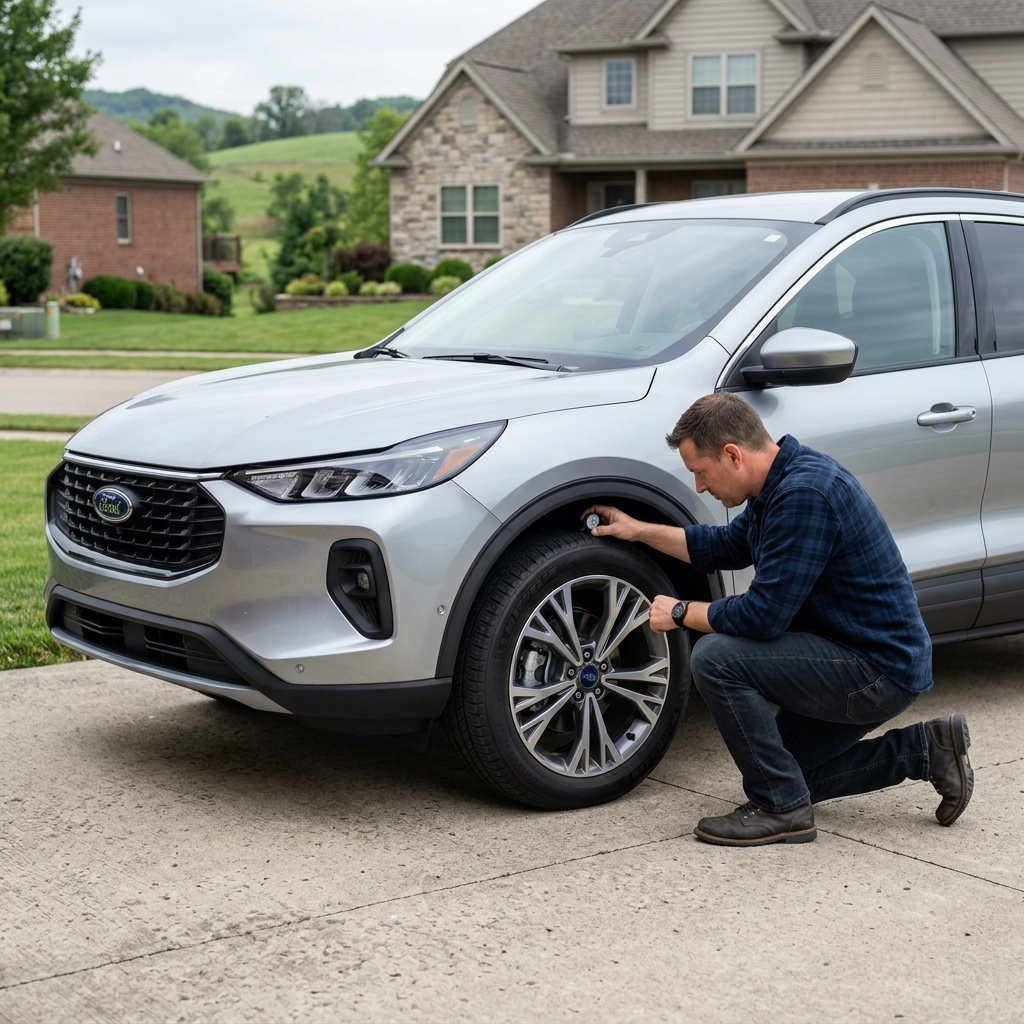
Man kneeling on a driveway checking the front tire of a silver Ford SUV with a small gauge. (Representative image for illustration purposes only. Actual vehicle may vary based on trim and configuration.)

Table of Contents

What Should You Check First and Look for During a Pre-Purchase Car Inspection?

During a pre-purchase car inspection, first confirm that the vehicle identification number matches across the dashboard, door jamb, and title, then perform a detailed visual check of fluid clarity, body panel alignment, and tire tread wear. A certified independent mechanic should raise the vehicle on a lift to examine the undercarriage, evaluate brake and suspension components, run a diagnostic scan for hidden trouble codes, and conduct a cold-start test drive.

A thorough physical walkaround begins on the outside under bright natural daylight. Sight down each side of the body to confirm that panel gaps between doors, fenders, and the hood are uniform. Asymmetric gaps or subtle color variations across panels often point to previous collision repairs. Using a small magnet wrapped in a soft cloth against steel body panels helps identify body filler underneath repainted surfaces. In regional winter climates where road salt causes underbody wear, inspect the frame rails, strut towers, and rocker panels for heavy rust or freshly sprayed undercoating designed to cover structural damage.

Under the hood, pull the oil dipstick to check fluid condition. Clean oil appears light amber, while dark, gritty oil indicates skipped oil changes. Foamy or milky fluid on the dipstick signals coolant leaking into the engine crankcase, which points to major internal engine failure. Squeeze radiator hoses to ensure they feel firm rather than spongy or brittle, and check the battery terminals for corrosion. When examining a pre-owned three-row SUV such as a 2026 Ford Explorer equipped with a 2.3L engine and SelectShift automatic transmission, check that coolant and transmission fluids are clean and filled to proper levels.

The test drive yields critical operational details about mechanical health:

  • Cold Start: Arrive before the seller warms up the vehicle to listen for engine knocks, valve ticks, or rough idling that disappears once the engine reaches operating temperature.
  • Acceleration and Shifting: Accelerate firmly onto a highway lane to test engine responsiveness and shift smoothness. Shuddering during gear changes indicates transmission slippage.
  • Braking Performance: Perform two firm stops from higher speeds on an open stretch of road. The vehicle must stop straight without pulling to one side, pedal vibration, or metallic grinding sounds.
  • Suspension Integrity: Drive over moderate road bumps to listen for clunks or rattles, which signal worn ball joints, control arm bushings, or struts.

When reviewing a heavy-duty truck like a 2026 Ford F-150 powered by a 3.5L engine, examine the trailer hitch receiver and axle seals for signs of heavy towing stress. To make your eventual purchase process smooth, completing an online credit application ahead of time helps establish clear monthly budget boundaries before you finalize your vehicle choice.

Pricing

Pricing by trim

Feature Active AWD Active FWD Platinum AWD ST-Line AWD ST-Line Elite AWD 2.0L ST-Line FWD ST-Line Select AWD 2.0L
:-- :-- :-- :-- :-- :-- :-- :--
MSRP $31,750 $30,350 $37,940 $32,595 $38,935 $31,195 $35,015
Destination charge $1,495 $1,495 $1,495 $1,495 $1,495 $1,495 $1,495

Engine & Performance

Powertrain specs by trim

Feature Active AWD Active FWD Platinum AWD ST-Line AWD ST-Line Elite AWD 2.0L ST-Line FWD ST-Line Select AWD 2.0L
:-- :-- :-- :-- :-- :-- :-- :--
Engine 1.5L 1.5L 2L 1.5L 2L 1.5L 2L
Horsepower 180 hp 180 hp 250 hp 180 hp 250 hp 180 hp 250 hp
Torque 199 lb-ft 199 lb-ft 280 lb-ft 199 lb-ft 280 lb-ft 199 lb-ft 280 lb-ft
Transmission automatic 8-speed automatic 8-speed SelectShift® automatic 8-speed SelectShift® automatic 8-speed SelectShift®
Drivetrain All-wheel drive Front-wheel drive All-wheel drive All-wheel drive All-wheel drive Front-wheel drive All-wheel drive

What Should You Look for on a Used Car Vehicle History Report and Title Status?

A vehicle history report must be checked for title brands such as salvage, rebuilt, flood, or not actual mileage, along with odometer progression entries and accident records. Clean titles confirm that an insurance provider has never designated the vehicle as a total loss, preserving market value, structural safety, and eligibility for standard auto financing options.

A history report provides a paper trail of recorded events throughout a vehicle's life cycle. Look closely at ownership history to distinguish between personal single-owner use, rental fleets, or commercial usage. Frequent ownership transfers over short timeframes often indicate persistent mechanical issues that previous owners preferred to pass along. Furthermore, check odometer entries across every service visit and registration renewal. If a recorded service visit lists higher mileage than a subsequent state registration entry, the vehicle may have experienced odometer rollback fraud.

Title status represents the legal standing of the vehicle. A clean title signifies an uninterrupted ownership record free from catastrophic total-loss declarations. Conversely, salvage or rebuilt titles mean the vehicle sustained significant damage exceeding a major percentage of its retail value. Vehicles with branded titles present severe safety risks, carry reduced resale value, and are frequently ineligible for comprehensive insurance coverage or traditional financing terms.

Checking open safety recall status directly on the official National Highway Traffic Safety Administration website using the vehicle identification number is another essential step. Unresolved safety recalls must be addressed by an authorized dealership service facility prior to purchase. If you prefer to skip the uncertainty of pre-owned title histories altogether, our team can assist you with custom ordering a new Ford tailored to your exact specifications, or you can explore current manufacturer vehicle specials available directly from the factory.
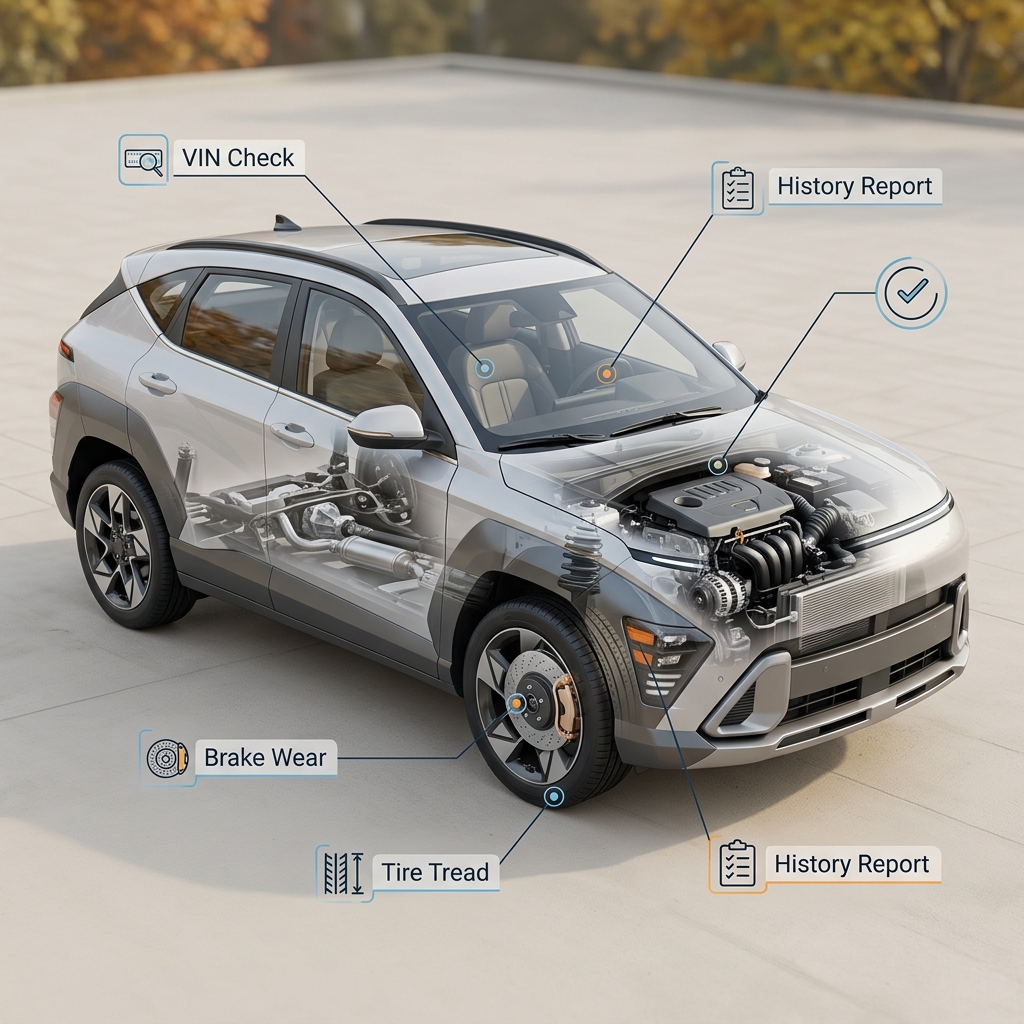
Cutaway graphic of a silver SUV with labeled inspection points including VIN Check, Brake Wear, and Tire Tread. (Representative image for illustration purposes only. Actual vehicle may vary based on trim and configuration.)

What Is the Difference Between a Certified Pre-Owned Car and a Regular Used Car?

A Certified Pre-Owned vehicle completes a rigorous factory-mandated multi-point inspection and includes a manufacturer-backed extended warranty, whereas a standard used car is generally sold as-is or with a short dealer warranty. Certified Pre-Owned programs provide higher quality standards through age, mileage, and reconditioning restrictions backed directly by the vehicle manufacturer.

The primary distinction between standard pre-owned vehicles and factory-certified models sits in the strict inspection and warranty protections required by the original manufacturer. Standard used vehicles undergo basic safety checks and reconditioning, but their post-sale coverage varies significantly depending on remaining factory terms or dealer-offered service contracts.

Feature Standard Pre-Owned Vehicle Certified Pre-Owned (CPO) Vehicle
Inspection Process General safety and mechanical check Factory-mandated multi-point inspection
Warranty Protection As-is or limited dealer warranty Manufacturer-backed extended limited warranty
Age and Mileage Limits Varies widely by inventory Strict maximum age and mileage caps
Vehicle History Report available upon request Full history report included and verified
Roadside Assistance Optional add-on coverage Included manufacturer roadside support

Vehicles enrolled in the certified program pass detailed checks covering engine performance, brake pad thickness, tire tread depth, frame integrity, and cabin electronics. Any worn component that fails to meet strict factory standards must be replaced with genuine factory parts before certification is granted. Certified buyers also enjoy round-the-clock emergency support. If you ever require towing, flat tire changes, or battery jump-starts, you can contact Ford Roadside Assistance: 1-800-241-3673 for immediate manufacturer-backed aid.

Exploring our selection of pre-owned Carfax 1-owner vehicles offers excellent background transparency, while browsing our certified pre-owned Ford lineup delivers maximum long-term confidence and factory warranty coverage.

Is It Better to Buy a Used Car from a Dealership or a Private Seller under As-Is Laws?

Buying a used vehicle from a dealership offers structural protections under federal regulations, access to competitive financing, and trade-in conveniences, whereas private sales operate strictly under as-is terms without post-sale recourse. Dealerships must display an FTC Buyer's Guide on every pre-owned vehicle, clearly defining warranty terms or explicitly noting as-is status.

Purchasing a vehicle directly from a private individual often carries a lower initial listing price, but it presents significant legal and financial risks. Private transactions operate entirely on an as-is basis under state commercial codes. Once money exchanges hands and the title transfers, the buyer absorbs complete financial responsibility for any mechanical failure, hidden frame damage, or electrical defect that arises, even if the issue appears minutes after the drive home. Additionally, private sales require the buyer to manage title transfers, lien payoffs, and registration paperwork independently.

In contrast, established dealerships operate under state and federal consumer protection guidelines. Federal law mandates that dealers place a clear FTC Buyer's Guide in the window of every pre-owned car or truck on the lot. This document outlines whether the vehicle carries a full warranty, a limited warranty, or is being sold as-is, while explicitly stating that any verbal promises made by sales staff must be documented in writing on the purchase contract to be legally binding.

Commuters traveling along Market Street in Boardman often choose dealership purchases because structured financing options and verified title processing save significant time compared to private title transfers. Dealerships also accept existing vehicles toward the purchase price, helping lower your total financed balance. You can easily value your trade-in online to estimate how your current vehicle's equity reduces your out-of-pocket costs.

How Do You Negotiate the Purchase Price of a Used Car at a Dealership?

Negotiate a used car purchase price by establishing a firm target price based on local market research for the exact trim, mileage, and condition, then using documented repair estimates from a pre-purchase inspection as line-item price adjustments. Separating the vehicle purchase price from financing terms, down payments, and trade-in valuations ensures complete financial clarity throughout negotiations.

Effective price negotiation begins long before you step onto the sales floor. Research current market listings for comparable models using exact year, trim level, optional packages, and mileage inputs. Armed with objective market data, establish a realistic target price and a firm maximum limit before entering discussions. When local shoppers evaluate a practical crossover like the 2026 Ford Escape, understanding factory trim tiers and baseline pricing provides strong context for pre-owned pricing evaluations:

  • Active FWD: $30,350 MSRP plus $1,495 destination charge.
  • Active AWD: $31,750 MSRP plus $1,495 destination charge.
  • ST-Line FWD: $31,195 MSRP plus $1,495 destination charge.
  • ST-Line AWD: $32,595 MSRP plus $1,495 destination charge.
  • ST-Line Select AWD 2.0L: $35,015 MSRP plus $1,495 destination charge.
  • Platinum AWD: $37,940 MSRP plus $1,495 destination charge.
  • ST-Line Elite AWD 2.0L: $38,935 MSRP plus $1,495 destination charge.

When inspecting a pre-owned vehicle, use any mechanical flaws or upcoming maintenance items discovered during your visual check or independent inspection as objective negotiation points. If an inspection reveals that the tires have only 4/32" of tread remaining or the rear brake rotors require replacement soon, present the written repair estimate from an ASE-certified technician. Using the written repair estimate as a negotiation reference keeps the conversation focused on documented facts rather than general pricing assumptions.

Keep every element of the transaction distinct. Negotiate the final sale price of the vehicle first before discussing monthly payment targets, credit terms, or trade-in allowances. Bundling these numbers together makes it difficult to see true vehicle pricing. Working with a supportive sales staff ensures a respectful, transparent dialogue where all pricing terms are presented clearly. Reaching out to our knowledgeable local Ford dealership team provides a stress-free environment focused on finding a vehicle that fits your budget.

Frequently Asked Questions About Shopping Pre-Owned Vehicles

Q: How much does a pre-purchase car inspection typically cost?

A comprehensive pre-purchase inspection conducted by an independent certified mechanic typically costs between $100 and $250 depending on the vehicle type and scope of the evaluation. This fee covers a multi-point inspection including an undercarriage lift examination, a computerized diagnostic code scan, brake and suspension checks, and a full operational test drive.

Buying a vehicle as-is means the buyer assumes all financial responsibility for repairs immediately upon purchase, with no implied or expressed warranty protection. Federal law requires dealers to display an FTC Buyer's Guide stating whether a vehicle is sold as-is. Legal recourse after an as-is sale exists only if the seller engaged in explicit fraud or intentional title misrepresentation.

Q: How do you verify if a used vehicle has an open safety recall?

You can verify open safety recalls by entering the vehicle's 17-character vehicle identification number into the free recall lookup tool on the official National Highway Traffic Safety Administration website. The tool displays any unrepaired safety recalls issued by the manufacturer. Authorized brand dealerships perform all safety recall repairs free of charge to the owner.

Q: Can you finance a used vehicle with an existing trade-in balance?

Yes, you can finance a pre-owned vehicle when trading in a car that still has an outstanding loan balance. The dealership contacts your current lender to obtain the exact payoff amount. If your trade-in value exceeds the loan balance, the remaining positive equity is applied as a down payment. If equity is negative, the remaining balance can often be rolled into the new auto loan subject to lender approval.

Q: What documents are required when purchasing a pre-owned car at a dealership?

Purchasing a pre-owned vehicle requires a valid government-issued driver's license, current proof of auto insurance, and your preferred form of payment or loan approval documentation. If you are trading in a vehicle, bring the original title or current registration card, payoff information if applicable, and all sets of keys.

Finding the right pre-owned vehicle comes down to clear information, rigorous mechanical verification, and honest pricing. Our team is dedicated to delivering a straightforward, transparent buying experience for every customer. You can visit our dealership address at 1503 Pennsylvania Ave, East Liverpool, OH 43920 to inspect our pre-owned selection in person, give our friendly sales team a quick call with your questions, or explore our brand-new Ford models online to compare all your ownership options today.

Keep Your Vehicle Running Strong

Keep your vehicle performing at its best with our service team:


© 2026 Tri State Ford. All rights reserved.
Vehicle specification data © JATO Dynamics Limited.

Used Car Buying Tips in East Liverpool OH | Tri State Ford
Posted in:

Related Posts

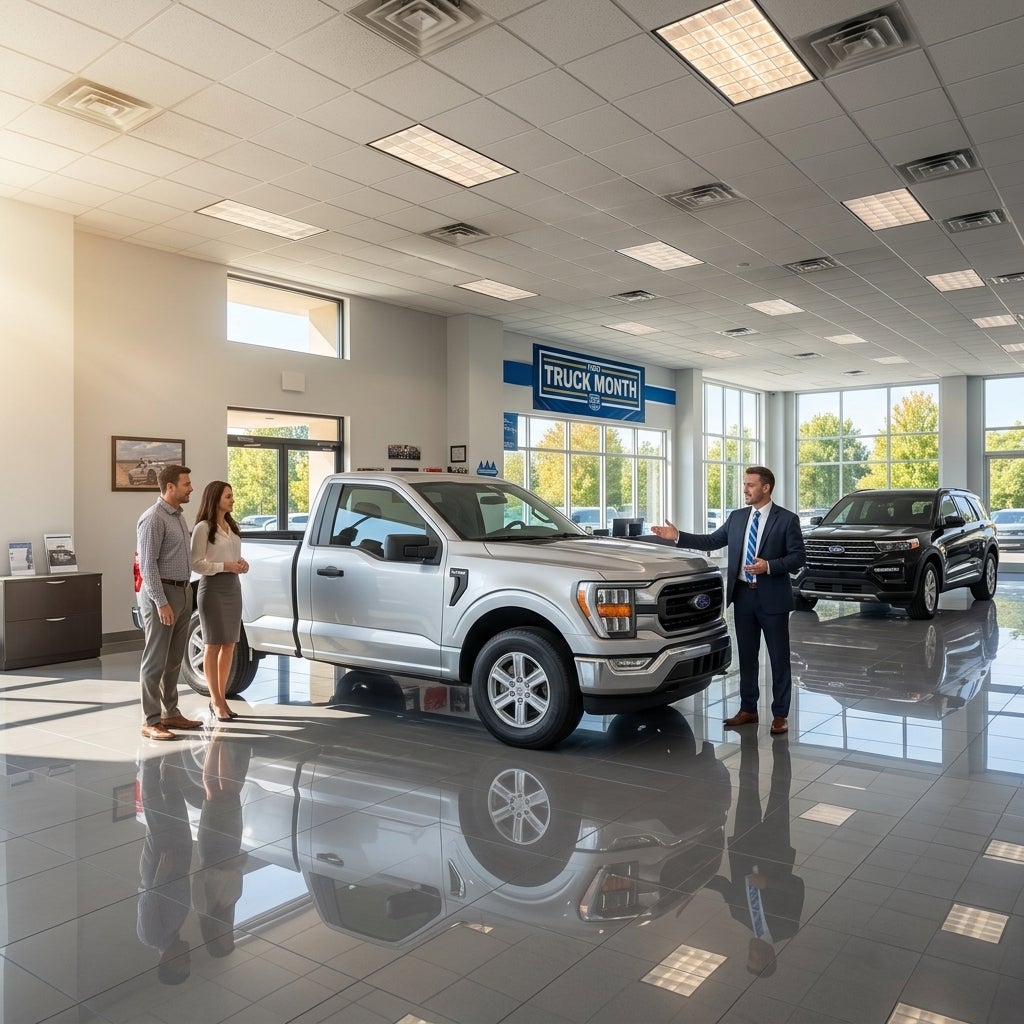
Cinematic wide-angle photograph of a modern automotive showroom in the Ohio River Valley, bright morning light streaming through expansive floor-to-ceiling glass windows, polished tile floors reflecting a gleaming new silver pickup truck and a white SUV, a professional sales consultant gesturing war

How Tri State Ford Coordinates Customer Pickup for Your Next Vehicle Purchase

How Tri State Ford Coordinates Customer Pickup for Your Next Vehicle Purchase Our showroom at 1503 Pennsylvania Ave, East Liverpool, OH 43920 serves as the central hub for a buying process designed to accommodate the busy schedules of local families and professionals. We understand that finding the time to visit a Ford dealership near me can be a challenge when you are balancing work and home life. To make the transition into your next vehicle as smooth as possible, our team offers local pickup services to bring you directly to our facility to finalize your purchase. This service is part of our commitment to providing a reliable and approachable experience for every guest. When you find the perfect match in our current new Ford inventory, the logistics of getting to the dealership shouldn't stand in your way. We frequently coordinate with buyers to arrange a convenient pickup time, allowing you to focus on the excitement of your new truck or SUV rather than the stress of arranging a ride. Whether you are interested in new vehicle specials or looking at our rotating used vehicle specials, we aim to eliminate the hurdles between you and the driver's seat. If you prefer a vehicle built specifically for your needs, we can also assist with a new Ford custom order to ensure every feature is exactly as you imagined. For many of our customers, the process begins long before they step foot in a vehicle. You can start by completing a secure online credit application to save time once you arrive. If you have questions about the logistics of your visit, give us a quick call at (330) 462-7578 to speak with a member of our sales team. We also offer Ford pickup and delivery options for various dealership interactions to keep your day moving. While you are researching, you can browse our new inventory online to see the latest arrivals. Our goal is to be the most accessible Ford dealer in the region, offering everything from manufacturer vehicle specials to Ford mobile service support for our owners. Table of Contents Understanding Service Areas and Delivery Fees for New Ford Purchases Essential Documents to Have Ready When We Pick You Up to Buy Convenient Transportation Alternatives to Reach Our Showroom How to Complete Your Entire Ford Purchase and Custom Order Online Quick Answers Before You Visit Our Showroom Understanding Service Areas and Delivery Fees for New Ford Purchases Distance should not be a barrier to securing a vehicle that offers the durability and brand loyalty Ford is known for. We typically provide complimentary pickup services for customers within a specific radius of our East Liverpool location, ensuring that local residents have a straightforward path to ownership. For those living in the residential neighborhoods of Calcutta, where the gently rolling hills often require the dependable traction of Intelligent 4WD, we make it a priority to facilitate your visit. Our team can often arrange to meet you at your home or workplace to bring you back to the showroom for a final walk-around and signing. While local pickup is generally provided at no additional cost for new vehicle purchases, we recommend confirming the details with our sales department based on your specific location. If you are looking for a heavy-duty solution, such as a vehicle from our new work truck inventory, we understand that uptime is critical for your business. We strive to be transparent about any potential mileage limits or scheduling requirements upfront so there are no surprises. This honest approach helps us build long-term trust with our community, mirroring the stable and practical values of the hard-working people we serve. Beyond the initial purchase, we continue to support our customers with resources like manufacturer monthly service specials to help maintain your vehicle’s value. Even for smaller needs like essential battery service, we aim to provide the information you need to keep your Ford running at its best. By choosing a local partner that understands the terrain and lifestyle of the tri-state area, you gain a trusted advisor dedicated to your vehicle's long-term performance and safety. ​ Essential Documents to Have Ready When We Pick You Up to Buy One detail that often surprises buyers is how quickly the final steps can move when the proper documentation is prepared in advance. If we are picking you up to complete a purchase, having your paperwork organized ensures that you spend more time learning about your vehicle's features and less time at a desk. For residents in Chester, where the daily commute often involves crossing the bridge and navigating riverfront bluffs, having a vehicle with Ford Co-Pilot360 provides extra confidence. To get you on the road faster, please have the following items ready: A valid driver’s license for all parties who will be on the title. Current proof of automotive insurance that meets state requirements. Your most recent pay stubs or proof of income if you are financing. The title or payoff information for your current vehicle if you are trading it in. Our team is experienced in handling a wide variety of purchase scenarios, from families looking for Carfax 1-owner vehicles to professionals searching for a specific configuration in our new truck inventory. Families test-driving the Explorer usually ask about the third-row recline before they ask about price, and we want to make sure you have plenty of time for those practical evaluations. By arriving prepared, you can seamlessly transition from your current ride into a powerful option from our F-Series work inventory. We believe in a straightforward, jargon-light communication style that respects your time and intelligence. Whether you are a first-time buyer or a long-time Ford enthusiast, our goal is to provide a supportive environment where you feel confident in your decision. Ensuring your documents are ready is a practical step that reflects the down-to-earth and reliable nature of our dealership relationship. Convenient Transportation Alternatives to Reach Our Showroom What happens if our pickup schedule doesn't align perfectly with your busy afternoon? We recognize that our customers lead active lives, often balancing school runs, work shifts, and outdoor recreation. If you prefer to find your own way to our showroom, many shoppers choose to have a friend or family member drop them off, allowing them to drive their new Ford home immediately. Others utilize local rideshare services for a quick trip to our Pennsylvania Ave location. We also find that some customers prefer to coordinate a test drive from their workplace, which can be a great way to experience a vehicle's capabilities during a lunch break. Before you make the trip, it is often helpful to value your trade-in online to get a clear picture of your buying power. Knowing the estimated value of your current vehicle can help you narrow down your choices in our available truck inventory. Once you have a few models in mind, you can schedule a test drive to ensure the vehicle meets your needs for space, safety, and towing capacity. This proactive approach allows us to have the vehicle ready and waiting for you, regardless of how you choose to arrive. We are here to support your lifestyle, whether that involves hauling a boat to the river or commuting across state lines. Our team is always a call away to help you navigate these logistics, ensuring you have a personalized and respectful experience from start to finish. We value the local community connections we have built and are proud to be a reliable resource for drivers throughout the region. How to Complete Your Entire Ford Purchase and Custom Order Online When I walk families through our digital tools, I often see a look of relief when they realize how much of the process can be handled from their own living room. Digital retailing has transformed the way we buy vehicles, allowing you to research, compare, and secure financing without multiple trips to the dealership. You can use our finance department resources to explore different payment structures and find an option that fits your your budget. This transparency is key to building the trust that our repeat buyers have come to expect from us over the years. For local business owners, the ability to browse specialized inventory like Transit work vans online saves valuable time that can be better spent on the job site. Our website provides detailed specs and virtual tours, making it easier to decide which configuration offers the right payload and cargo volume for your trade. You can even use our online tire finder to research maintenance needs for your current vehicle while you shop. If we don't have the exact model you are looking for on the lot, our online custom order tool allows you to specify the engine, such as the 3.5L EcoBoost V6, and the trim level that best suits your needs. Once your online purchase or custom order is finalized, we can coordinate the delivery of your new Ford directly to your driveway. This modern approach to car buying matches the moderate technology adoption of our customers while maintaining the personalized touch of a local business. We are committed to providing a confident and reassuring experience, emphasizing the safety and reliability that Ford vehicles are known for. Quick Answers Before You Visit Our Showroom Q: Is there a maximum distance for the customer pickup service? Our team typically provides complimentary pickup for customers within a 15- to 20-mile radius of our East Liverpool location. If you live further away, we encourage you to contact our sales department to discuss available options and potential arrangements to facilitate your visit. Q: Do I need to have my financing finalized before I request a pickup? While it is not strictly required, we highly recommend getting pre-approved through our online credit application first. Having your financing in place allows us to provide a more efficient experience once you arrive at the showroom to finalize your purchase. Q: Can I use the pickup service if I am buying a used vehicle? Yes, we offer pickup services for both new and used vehicle purchases. Whether you are interested in a late-model SUV or a rugged truck, our goal is to make the buying process as convenient as possible for every member of our customer family. Q: What should I do if I have a trade-in but want to be picked up? If you have a trade-in, we recommend using our Instant Cash Offer tool to get an initial valuation. In many cases, we can arrange for a team member to drive to your location, evaluate the trade-in on-site, and then bring you back to the dealership in your potential new vehicle. Q: Is Ford Roadside Assistance available if my current vehicle breaks down before I can buy a new one? If you currently own a Ford that is still under warranty, you can contact Ford Roadside Assistance: 1-800-241-3673 for help with towing or basic emergency services. This manufacturer-backed support is a great example of the long-term reliability you can expect when you join the Ford family. If you are ready to take the next step toward your next adventure, we invite you to browse our current inventory or visit our East Liverpool showroom. You can also give us a quick call at (330) 462-7578 to discuss your specific needs and schedule a pickup time that works for you. Keep Your Vehicle Running Strong Keep your vehicle performing at its best with our service team: Order Parts Schedule Service Appt © 2026 Tri State Ford. All rights reserved.

;

What Should You Do When You Receive a Vehicle Recall Notice?

.hrizn-rte-content .e-rte-image{border:0;max-width:100%;height:auto} .hrizn-rte-content .e-rte-image.e-imginline{display:inline-block;float:none;margin-left:5px;margin-right:5px;max-width:calc(100% - 10px);vertical-align:bottom} .hrizn-rte-content .e-rte-image.e-imgbreak,.hrizn-rte-content .e-rte-image.e-imgcenter{display:block;float:none;margin:5px auto;max-width:100%} .hrizn-rte-content .e-rte-image.e-imgleft{float:left;margin:0 12px 8px 0;max-width:100%} .hrizn-rte-content .e-rte-image.e-imgright{float:right;margin:0 0 8px 12px;max-width:100%} .hrizn-rte-content figure.e-rte-image{margin:8px auto;max-width:100%} .hrizn-rte-content figure.e-imgleft{float:left;margin:0 12px 8px 0} .hrizn-rte-content figure.e-imgright{float:right;margin:0 0 8px 12px} .hrizn-rte-content figure.e-imgcenter{display:block;margin:8px auto;text-align:center} When you receive a vehicle recall notification, locate your 17-character VIN on your vehicle or registration card, verify the campaign status through official recall databases, and contact an authorized dealership to schedule a free repair. Federal law requires vehicle manufacturers to correct safety defects and noncompliance issues without charging owners for parts or labor, regardless of whether your vehicle is still under its original factory warranty. An official recall is issued when a manufacturer or federal safety regulators determine that a vehicle component fails to meet safety standards or creates an unreasonable safety risk on the road. These campaigns cover a wide range of issues, including mechanical steering linkages, fuel lines prone to leaks, software glitches in anti-lock braking systems, and sensor faults within driver-assist features like blind spot monitoring. When automakers file a campaign with federal regulators, each recall receives an official NHTSA campaign number to track remedy completion rates across every registered vehicle. Checking your vehicle for active campaigns requires verifying your vehicle identification number rather than relying strictly on the model year or trim name. You can find this 17-digit code stamped on the lower driver-side corner of the windshield, visible from outside the vehicle, as well as on the driver-side door jamb sticker, state registration card, and insurance documentation. Entering this sequence into official online databases or tracking software like the Ford App reveals any uncompleted safety repairs assigned to your exact vehicle. When a notification arrives in your mailbox, review the documentation carefully for specific operational details. The notice explains the underlying technical defect, describes potential safety hazards, outlines the official repair remedy, and states whether replacement parts are currently available at service departments. To confirm open campaign status or arrange an appointment, you can reach our service team at (330) 462-7578 or visit our East Liverpool facility location for professional assistance. Table of Contents Is It Safe to Drive Your Vehicle After Receiving a Recall Notice or Do Not Drive Warning? What Should You Do If Recall Parts Are Backordered or Not Yet Available? How Long Do Recall Repairs Take, and Are Towing or Rental Expenses Covered? How Do You Claim Pre-Recall Repair Reimbursements and Resolve Dealership Refusals? Questions Drivers Ask Most About Recall Repairs and Service Logistics Schedule Your Free Recall Inspection and Service Is It Safe to Drive Your Vehicle After Receiving a Recall Notice or Do Not Drive Warning? You can typically continue driving your vehicle after receiving a standard recall notice unless the manufacturer or safety regulators issue an explicit "Do Not Drive" or "Park Outside" advisory. Standard recalls involve minor mechanical adjustments or routine control module updates that allow normal operation while replacement components are being manufactured and routed to your local service center. Understanding the severity level listed on your recall notice determines whether continued driving poses an immediate risk to your family: Standard Safety Recall: Permits regular vehicle operation while you schedule a convenient service appointment. Components are replaced during a standard shop visit without immediate hazard under typical driving conditions. Park Outside Advisory: Indicates an electrical or fuel system defect that could trigger a vehicle fire even when the engine is turned off and the ignition key is removed. Vehicles subject to this warning should be parked in open driveways away from garages, carports, and residential structures until the free repair is completed. Do Not Drive Warning: Signals an urgent, high-risk mechanical or structural defect that could cause sudden control loss, severe injury, or vehicle destruction. Critical examples include degraded Takata airbag inflators subject to rupture, fractured steering columns, and sudden hydraulic master cylinder failures. If your vehicle notice contains a "Do Not Drive" instruction, immediately pull off the road or leave the vehicle parked in a safe space. Do not attempt to drive the vehicle to the dealership for repair. Contact the manufacturer's emergency support line or your dealer's service lane right away to arrange flatbed transportation. Service advisors can log your 17-character VIN into the priority queue and explain alternative transportation arrangements available while your car is held for service. For drivers commuting along State Route 170 in Calcutta, keeping steering, braking, and occupant protection systems operating properly is vital for navigating local traffic safely. Drivers evaluating vehicle performance after a system update or inspection can coordinate with our staff when scheduling a vehicle evaluation session to ensure every safety component functions as intended. What Should You Do If Recall Parts Are Backordered or Not Yet Available? If a recall notification indicates that replacement parts are backordered or not yet available, review the interim safety guidance provided in the notice, confirm your contact details with the manufacturer, and monitor official recall portals for inventory updates. Dealerships cannot perform permanent remedies until factory-approved components arrive, but service advisors can document your vehicle in the national distribution queue. Automakers frequently issue safety recall announcements before replacement assemblies are fully manufactured in quantities sufficient to service millions of affected vehicles. During this initial phase, the manufacturer sends an interim notice informing owners of the safety issue while factories scale up production of redesigned components. When replacement parts arrive at regional distribution centers, a follow-up letter instructs owners to book an appointment for the free repair. While waiting for replacement parts to clear backorder status, follow these practical steps to protect your vehicle and stay informed: Read the interim notice thoroughly to identify any temporary operational adjustments, such as disabling a specific feature or avoiding heavy cargo loads. Contact your authorized dealer to register your 17-character VIN on the parts backorder list, ensuring components are reserved as soon as shipments arrive. Verify that your current mailing address and phone number are updated with the vehicle manufacturer to receive prompt notification when remedies become available. Check official recall lookup tools every few weeks to monitor campaign status updates for your vehicle. When owners bring a vehicle into the service lane after getting a notice, they usually ask whether the fix requires leaving the vehicle all day or if it can be completed while they wait in the lounge. Service advisors can review the specific technical service guidelines to explain expected timelines and component availability. If your vehicle requires routine maintenance while waiting for recall parts, ordering replacement components through our dedicated parts department ensures your vehicle stays in prime running condition. How Long Do Recall Repairs Take, and Are Towing or Rental Expenses Covered? Most recall repairs take between one and two hours for software flashes or simple component swaps, while complex mechanical work can require several days. If your recall notice specifies a "Do Not Drive" warning, manufacturers typically cover flatbed towing to the dealership, and many offer pre-approved rental car or loaner vehicle coverage during extended component delays. The time required to complete a recall depends entirely on the technical scope of the bulletin: Repair Category Typical Duration Repair Process Overview:--:--:-- Electronic Module Reprogramming 30 to 60 Minutes Technicians connect factory diagnostic tools to reflash control software for engine, transmission, or Ford Co-Pilot360 modules. Minor Hardware Replacement 1 to 2 Hours Involves swapping accessible components like door latches, wiring harnesses, tail lamp assemblies, or seatbelt anchors. Major Mechanical Overhaul 4 to 8+ Hours Requires significant disassembly, such as replacing fuel tanks, steering racks, brake master cylinders, or internal engine assemblies. When a severe recall involves a "Do Not Drive" or "Park Outside" directive, vehicle manufacturers arrange and pay for flatbed towing directly to an authorized service facility. Operating a vehicle under an active stop-drive order voids roadside assistance protections for driven miles, so utilizing manufacturer-funded flatbed transport protects both occupant safety and vehicle integrity. If replacement components are delayed or if a repair requires more than a single day in the service bay, automakers routinely reimburse out-of-pocket rental car expenses or provide complimentary loaner vehicles. To qualify for rental reimbursement, the rental must be pre-authorized through the dealership service department or manufacturer customer care team. Always retain itemized rental agency receipts, rental agreements, and official service work orders to submit with your reimbursement claim. How Do You Claim Pre-Recall Repair Reimbursements and Resolve Dealership Refusals? To claim reimbursement for repairs paid out-of-pocket before a recall was announced, submit your original itemized repair invoice, proof of payment, and work order directly to the manufacturer customer care department. If a dealership refuses to perform an open recall repair, request a written explanation from the service manager, contact the manufacturer national customer support line, and report the refusal directly to federal safety regulators. Under federal regulations, vehicle owners who paid for repairs to fix a defect prior to an official recall announcement are entitled to full financial reimbursement from the automaker. To process a successful refund claim, gather the following required documentation: An itemized repair invoice showing the vehicle identification number, date of service, specific parts installed, and labor performed. Proof of payment, such as a canceled check, credit card statement, or paid dealer receipt confirming out-of-pocket costs. Documentation demonstrating that the prior repair directly addressed the exact mechanical or electrical fault identified in the subsequent safety campaign. A copy of your official state vehicle registration proving ownership at the time the repair was completed. If an authorized dealer refuses to perform a free recall repair, understand that federal law mandates franchise dealerships complete open safety recalls on affected vehicles regardless of vehicle age, mileage, or warranty status. Refusals occasionally stem from miscommunications regarding part availability or regional dealer scope, but dealers cannot decline valid recall work. To resolve a refusal, ask to speak directly with the dealership service director to clarify campaign details. If the issue remains unresolved, contact the automaker's national customer assistance center to open a formal case file. You can also file an official complaint with the National Highway Traffic Safety Administration online or by calling the Vehicle Safety Hotline at 888-327-4236. Seeking authorized local Ford dealership support ensures your vehicle receives certified care backed by factory standards. Questions Drivers Ask Most About Recall Repairs and Service Logistics Q: How do I verify if my vehicle has an open recall? You can verify open recalls by entering your 17-character VIN into official safety lookup tools online or through mobile applications like the Ford App. Your VIN is located on the lower driver-side windshield and state registration card. The search results show any uncompleted safety campaigns associated with your specific vehicle. Q: Do safety recall repairs expire if I wait too long? Safety recall campaigns for mechanical components, structural assemblies, and software modules do not expire and remain active for the life of the vehicle. Federal law mandates free repairs regardless of vehicle age or mileage. The primary exception involves tire recalls, which must be claimed within 60 days of owner notification. Q: Will an open recall affect my vehicle history report or resale value? Open safety recalls appear on vehicle history reports as uncompleted safety campaigns until an authorized franchise dealership completes the repair. Having the free remedy performed updates official databases, clearing the record on future history checks and protecting vehicle safety and market value. Q: Can software-related recalls be updated without a physical shop visit? Certain module updates can be completed remotely through Over-The-Air software installations if your vehicle supports connected vehicle technology. However, recalls requiring hardware inspections, physical module recalibrations, or mechanical adjustments still require a dedicated appointment at an authorized service bay. Q: What should I do if I suspect a safety defect that has not been recalled yet? Document the specific failure symptoms and file a detailed safety complaint online with federal regulators or by calling the Vehicle Safety Hotline at 888-327-4236. Individual complaints are analyzed by safety engineers to investigate recurring technical patterns and determine whether a new safety recall is necessary. Schedule Your Free Recall Inspection and Service Resolving an open safety recall promptly protects your family on every journey, preserves mechanical reliability, and keeps your vehicle compliant with federal safety standards. Because all recall remedies are completely free of charge and performed by factory-certified technicians using genuine OEM parts, getting your vehicle updated is simple and stress-free. Commuters traveling toward the commercial hubs around Boardman rely on fully functioning safety systems during daily highway driving. If your vehicle requires routine electrical checks or module updates alongside recall work, routine battery maintenance guide details can help keep your electrical system operating smoothly in all weather conditions. Our dedicated team at Tri State Ford is ready to assist you with VIN verification, parts availability checks, and quick service scheduling. You can get started today by scheduling a service appointment online or by giving our service advisors a call at (330) 462-7578. You can also visit our service center to speak with our certified staff in person and ensure your vehicle stays safe on the road. © 2026 Tri State Ford. All rights reserved. Title Tags Vehicle Recall Assistance in East Liverpool, OH | Tri State Ford Meta Description Keywords Open Graph Twitter Card Canonical Article Metadata Geographic Targeting { "@context": "https://schema.org", "@graph": [ { "@type": "NewsArticle", "@id": "#article", "headline": "What Should You Do When You Receive a Vehicle Recall Notice?", "datePublished": "2026-09-09T20:26:21.245Z", "dateModified": "2026-09-09T20:28:20.578Z", "author": { "@id": "#author" }, "publisher": { "@id": "#dealer" }, "wordCount": 2174, "description": "This guide explains what to do after receiving a vehicle recall notice, including how to check your VIN and schedule a free safety repair." }, { "@type": "AutoDealer", "@id": "#dealer", "name": "Tri State Ford", "url": "https://www.tristateford.net", "telephone": "+13304627578", "sameAs": [ "https://maps.google.com/?cid=1136336406351438323" ], "address": { "@type": "PostalAddress", "streetAddress": "1503 Pennsylvania Ave", "addressLocality": "East Liverpool", "addressRegion": "OH", "postalCode": "43920", "addressCountry": "US" }, "areaServed": { "@type": "GeoCircle", "geoMidpoint": { "@type": "GeoCoordinates", "latitude": "40.6367833", "longitude": "-80.5443033" }, "geoRadius": "48280" }, "geo": { "@type": "GeoCoordinates", "latitude": "40.6367833", "longitude": "-80.5443033" }, "openingHours": [ "Mo 09:00-20:00", "Tu 09:00-18:00", "We 09:00-18:00", "Th 09:00-20:00", "Fr 09:00-18:00", "Sa 09:00-15:00" ] }, { "@type": "FAQPage", "@id": "#faq", "mainEntity": [ { "@type": "Question", "name": "How do I verify if my vehicle has an open recall?", "acceptedAnswer": { "@type": "Answer", "text": "You can verify open recalls by entering your 17-character VIN into official safety lookup tools online or through mobile applications like the SaferCar app . Your VIN is located on the lower driver-side windshield and state registration card. The search results show any uncompleted safety campaigns associated with your specific vehicle." } }, { "@type": "Question", "name": "Do safety recall repairs expire if I wait too long?", "acceptedAnswer": { "@type": "Answer", "text": "Safety recall campaigns for mechanical components, structural assemblies, and software modules do not expire and remain active for the life of the vehicle. Federal law mandates free repairs regardless of vehicle age or mileage. The primary exception involves tire recalls, which must be claimed within 60 days of owner notification." } }, { "@type": "Question", "name": "Will an open recall affect my vehicle history report or resale value?", "acceptedAnswer": { "@type": "Answer", "text": "Open safety recalls appear on vehicle history reports as uncompleted safety campaigns until an authorized franchise dealership completes the repair. Having the free remedy performed updates official databases, clearing the record on future history checks and protecting vehicle safety and market value." } }, { "@type": "Question", "name": "Can software-related recalls be updated without a physical shop visit?", "acceptedAnswer": { "@type": "Answer", "text": "Certain module updates can be completed remotely through Over-The-Air software installations if your vehicle supports connected vehicle technology. However, recalls requiring hardware inspections, physical module recalibrations, or mechanical adjustments still require a dedicated appointment at an authorized service bay." } }, { "@type": "Question", "name": "What should I do if I suspect a safety defect that has not been recalled yet?", "acceptedAnswer": { "@type": "Answer", "text": "Document the specific failure symptoms and file a detailed safety complaint online with federal regulators or by calling the Vehicle Safety Hotline at 888-327-4236 . Individual complaints are analyzed by safety engineers to investigate recurring technical patterns and determine whether a new safety recall is necessary." } } ] } ] }

k

What Fall Maintenance Does Your Ford Need Before Winter?

.hrizn-rte-content .e-rte-image{border:0;max-width:100%;height:auto} .hrizn-rte-content .e-rte-image.e-imginline{display:inline-block;float:none;margin-left:5px;margin-right:5px;max-width:calc(100% - 10px);vertical-align:bottom} .hrizn-rte-content .e-rte-image.e-imgbreak,.hrizn-rte-content .e-rte-image.e-imgcenter{display:block;float:none;margin:5px auto;max-width:100%} .hrizn-rte-content .e-rte-image.e-imgleft{float:left;margin:0 12px 8px 0;max-width:100%} .hrizn-rte-content .e-rte-image.e-imgright{float:right;margin:0 0 8px 12px;max-width:100%} .hrizn-rte-content figure.e-rte-image{margin:8px auto;max-width:100%} .hrizn-rte-content figure.e-imgleft{float:left;margin:0 12px 8px 0} .hrizn-rte-content figure.e-imgright{float:right;margin:0 0 8px 12px} .hrizn-rte-content figure.e-imgcenter{display:block;margin:8px auto;text-align:center} Before winter arrives, your Ford requires a fall maintenance routine focused on six core areas: testing battery cold-cranking capacity, inspecting tire tread depth and setting inflation pressure, verifying brake pad thickness, replacing worn wiper blades with freeze-resistant washer fluid, testing engine coolant, and changing engine oil. Addressing these wear items before ambient temperatures drop below 50 degrees Fahrenheit preserves winter traction, cold-start reliability, and passenger safety across unpredictable autumn roads. Following Ford’s factory-recommended service schedule provides a structured framework for autumn vehicle care. For most 2025–2026 models, including the Ford Escape, Ford Explorer, and Ford F-150, standard maintenance guidelines call for an engine oil and filter change approximately every 10,000 miles or 12 months, or whenever prompted by the instrument cluster's oil-life monitor. Combining this oil change with a pre-winter multi-point inspection ensures that every vital system is evaluated before sub-freezing weather places extra mechanical strain on your vehicle. Autumn serves as a critical maintenance window because summer heat breaks down motor oil, degrades battery chemistry, and bakes rubber wiper blades. When cool autumn rain and early morning frosts arrive, compromised components reveal their weaknesses quickly. Inspecting these systems early helps you avoid peak service rushes at the dealership while preventing minor component wear from turning into an unexpected roadside delay. For drivers negotiating the steep riverfront bluffs around East Liverpool, morning frost and damp river valley fog make responsive brakes, healthy tires, and clear windshields essential priorities every day. Staying proactive with routine care protects your vehicle’s longevity and ensures consistent performance throughout the changing seasons. When you are ready to prepare your truck or SUV for colder weather, our team at our East Liverpool facility is here to assist, or you can give us a quick call to speak directly with our service advisors. Table of Contents What Items Belong on Your Essential Ford Fall Maintenance Checklist? Why Are Fall Battery Testing and Cooling System Flushes Critical for Ford Vehicles? What Is the Minimum Safe Tire Tread Depth and Pressure for Autumn Driving? How Often Should Ford Wiper Blades and Cabin Air Filters Be Replaced? How Much Does a Complete Ford Fall Inspection Cost at a Dealership? Common Questions About Ford Fall Maintenance Keep Your Ford Safe and Reliable All Season Long What Items Belong on Your Essential Ford Fall Maintenance Checklist? An essential Ford fall maintenance checklist includes evaluating battery state-of-charge, checking tire tread depth above 4/32 inch, testing brake pad friction material, verifying exterior bulb operation, replacing cabin and engine air filters, and inspecting rubber serpentine belts for cracking. Systematically checking these components eliminates unexpected breakdown risks during wet and cold autumn commutes. A complete seasonal inspection focuses on key operational systems: Battery and Charging System: Conduct a digital load test to measure cold-cranking amps and clean surface corrosion from battery terminals. Tire Condition and Alignment: Measure tread depth across all four tires, adjust cold inflation pressures, and check for uneven wear patterns. Brake System Hydraulics and Hardware: Inspect brake pad thickness, check rotor surfaces for scoring, and verify brake fluid clarity. V isibility and HVAC Components: Replace worn wiper blades, fill washer fluid with a non-freezing formula, and check heater and defroster operation. Engine Fluids and Filters: Change engine oil and filter, inspect engine air filter cleanliness, and test antifreeze freeze protection. Belts and Hoses: Check serpentine belts and cooling system hoses for cracking, softening, or fraying. Vehicles subjected to severe operating conditions require shorter service intervals. According to Ford special operating maintenance charts, vehicles frequently used for heavy trailering, extensive idling, short-trip driving, or operating in dusty environments should undergo engine oil changes and tire rotations as often as every 5,000 miles or 6 months. High-stress usage accelerates fluid breakdown and component wear, making autumn inspection even more vital for work trucks and family hauling vehicles. Families bringing in an Explorer or F-150 for autumn prep often ask whether a standard multi-point inspection covers the heating and defroster systems before cold weather arrives. During a professional multi-point check, technicians evaluate cabin air filter condition, heater core output, and air-blend door operation to guarantee clear windshield defogging. You can easily manage your seasonal upkeep by scheduling a service appointment online or ordering genuine Motorcraft replacement parts directly through our department. Why Are Fall Battery Testing and Cooling System Flushes Critical for Ford Vehicles? Fall battery load testing and cooling system inspections are critical because freezing temperatures reduce battery chemical output while demanding maximum cranking power and proper engine freeze protection down to sub-zero levels. Catching a declining battery or weak antifreeze mixture in autumn prevents sudden non-start emergencies and internal engine corrosion during hard winter freezes. Chemical reactions inside a vehicle battery slow down dramatically as temperatures drop. At 32 degrees Fahrenheit, a battery loses roughly 20 percent of its electrical strength, and that loss increases to nearly 50 percent at zero degrees. Simultaneously, cold engine oil creates greater mechanical resistance during engine startup, requiring higher amperage from the battery to turn the crankshaft. A digital conductance test measures actual cold-cranking capacity against factory specifications, revealing internal cell degradation that standard static voltage testing might miss. Cooling system care is equally vital for engine longevity. Engine coolant, or antifreeze, contains chemical rust inhibitors and pH buffers that break down over time. As these additives deplete, coolant becomes acidic and loses its ability to protect internal engine components from corrosion and cavitation. Furthermore, if the water-to-antifreeze ratio becomes diluted, the coolant can freeze inside the engine block or radiator, leading to cracked castings and severe mechanical failure. Ford maintenance guidelines recommend testing engine coolant concentration during routine service intervals and flushing the system according to factory mileage schedules, typically every 50,000 miles to 100,000 miles depending on model year and engine design. Ensuring proper fluid strength guarantees freeze protection down to minus 20 degrees Fahrenheit or lower while supporting efficient heater core operation to warm the cabin. Drivers interested in learning more about charging system health can review our battery service guide for expert insight. What Is the Minimum Safe Tire Tread Depth and Pressure for Autumn Driving? The minimum safe tire tread depth for autumn and winter driving in a Ford is 4/32 inch, which provides sufficient groove depth to channel standing water, mud, and slush away from the tire footprint. Tire pressure must also be monitored closely, as ambient temperatures drop tire inflation by approximately 1 PSI to 2 PSI for every 10-degree Fahrenheit drop in outside temperature. While 2/32 inch represents the legal minimum tread depth in most jurisdictions, tires worn down to that limit lose their ability to evacuate water efficiently on wet roads. Driving on shallow tread increases stopping distances and heightens the risk of hydroplaning during heavy autumn rainstorms. Measuring tread depth with a dedicated gauge across the inner, center, and outer tread grooves ensures that your tires maintain proper traction before snow and ice arrive. Maintaining correct tire pressure is essential for vehicle handling, fuel economy, and tire longevity. Thermal contraction causes air inside the tire to condense as ambient temperatures fall. A tire inflated to 35 PSI on a warm 80-degree summer day can drop to 30 PSI when autumn mornings settle in the 40s. Operating a vehicle with soft tires creates excessive sidewall flex, increases rolling resistance, and causes uneven tread wear along the outer shoulders. Proper tire maintenance is particularly important for models equipped with intelligent All-wheel-drive, such as the Ford Escape with a 1.5L EcoBoost engine or the Ford Explorer featuring a 2.3L EcoBoost engine. Differing tire pressures or uneven tread wear across axles alter the effective rolling circumference of individual wheels, placing unintended stress on AWD transfer cases and center differentials. Rotating tires every 7,500 miles to 10,000 miles ensures even wear across all four wheel positions and maintains smooth driveline operation. Drivers making daily trips along State Route 170 in Calcutta encounter rolling elevation changes where wet fallen leaves require maximum rubber contact and accurate tire inflation to maintain traction every morning. Checking tire pressures monthly with an accurate digital gauge helps keep your vehicle performing safely through seasonal weather shifts. How Often Should Ford Wiper Blades and Cabin Air Filters Be Replaced? Ford windshield wiper blades should be replaced every 6 months to 12 months, or immediately upon noticing streaking, chattering, or rubber split lines. Cabin air filters should be replaced approximately every 20,000 miles, or sooner if operating in dusty environments or if heater airflow feels weak during windshield defogging. Summer sun and intense heat bake the rubber squeegee edge of wiper blades, causing the material to harden, crack, or lose its flexibility. When autumn rain and road spray arrive, compromised wiper blades leave wide streaks across the windshield, severely impairing night vision and driver safety. Installing fresh beam-style wiper blades before winter ensures full contact across contoured glass and prevents blade chatter during frosty morning starts. Top off the windshield washer fluid reservoir with a winter-blend washer fluid formulated to prevent freezing on cold glass. The cabin air filter cleans incoming outside air before it enters the HVAC system, trapping dust, pollen, mold spores, and road debris. Over time, accumulated debris restricts airflow through the heating and air conditioning vents. In autumn, a clogged cabin air filter prevents the defroster from blowing sufficient warm, dry air across the interior windshield, leading to persistent glass fogging and reduced cabin heating performance. Replacing the cabin air filter restores proper HVAC blower volume, improves interior air quality, and reduces load on the blower motor. Inspecting both the cabin air filter and engine air filter during fall maintenance ensures that your passenger cabin stays comfortable while your engine receives clean, unrestricted airflow. How Much Does a Complete Ford Fall Inspection Cost at a Dealership? A complete Ford fall maintenance inspection package at a dealership is available at current service pricing, often structured as a comprehensive multi-point service that combines a synthetic blend oil change, tire rotation, battery test, brake measurement, and fluid check. This structured service offers a convenient way to verify vehicle readiness before severe winter weather arrives. Professional dealership maintenance offers significant value by bundling essential preventive tasks into a single visit. A standard multi-point fall service package generally includes: Motorcraft® Oil and Filter Change: Replacing worn engine oil with factory-recommended synthetic blend or full synthetic oil and an OEM filter. Tire Rotation and Inspection: Rotating all four tires, measuring tread depth, and adjusting inflation pressure to door-jamb specs. Comprehensive Brake Inspection: Measuring front and rear brake pad friction material in millimeters and inspecting rotor surfaces. Digital Battery Load Test: Testing battery cold-cranking capacity and charging system voltage output. Fluid Level and Condition Check: Inspecting coolant freeze protection, brake fluid clarity, power steering fluid, and windshield washer fluid. Visual Safety Inspection: Checking steering linkage, suspension bushings, exhaust hangers, drive belts, and exterior lighting. Performing basic visual checks at home—such as inspecting wiper blades and checking tire pressure—is a great way to stay connected with your vehicle. However, complex safety diagnostics require specialized equipment. Measuring brake fluid moisture content, checking battery reserve capacity under load, and evaluating computer-controlled HVAC blend doors require calibrated tools and factory training to execute accurately. Completing scheduled maintenance at an authorized service facility also preserves your original factory warranty and Ford Protect extended service coverage. Utilizing genuine Motorcraft parts installed by factory-trained technicians ensures that every component meets precise engineering standards. To get your vehicle ready for the upcoming season, stop by our service center location, call (330) 462-7578, or connect with our authorized Ford service team online to confirm current maintenance packages. Common Questions About Ford Fall Maintenance Q: Can I perform basic autumn vehicle checks at home before booking professional service? Yes, checking tire pressure, measuring tread depth with a tread gauge, inspecting wiper blades, and topping off washer fluid are simple tasks to handle in your driveway. However, critical safety evaluations like battery conductance load testing, brake pad thickness measurements in millimeters, and cooling system hydrometer tests require specialized diagnostic tools best handled by trained technicians. Q: How does the Ford Oil-Life Monitor help determine fall maintenance timing? The Intelligent Oil-Life Monitor calculates oil degradation by analyzing engine operating temperatures, towing frequency, idle duration, and driving habits. When dashboard prompts appear, such as "Change Engine Oil Soon," it indicates that your engine oil has reached the end of its protective lifespan and signals an ideal opportunity to complete a full fall maintenance inspection. Q: Is an engine coolant flush necessary every single fall? An engine coolant flush is not required every year unless the fluid fails a hydrometer strength test, shows acidity contamination, or reaches Ford's recommended mileage interval. Ford factory schedules typically recommend coolant replacement every 50,000 miles to 100,000 miles depending on the specific model year and powertrain, though annual autumn checks verify freeze protection levels. Q: What happens if I keep summer washer fluid in my Ford through late autumn? Summer washer fluid contains a higher concentration of water and lacks anti-freezing additives. When ambient temperatures drop below freezing, summer fluid freezes inside the washer fluid reservoir, supply lines, and spray nozzles. Freezing can crack the plastic reservoir, rupture fluid hoses, or damage the washer pump, leaving you without windshield cleaning capability during icy conditions. Q: What emergency supplies belong inside a Ford vehicle during autumn? An autumn emergency kit should contain warm fleece blankets, waterproof gloves, an LED flashlight with extra batteries, reflective hazard triangles, heavy-duty jumper cables, a compact shovel, non-clumping clay litter for traction, a USB phone charger, bottled water, and non-perishable protein snacks. Store these items inside the passenger cabin rather than the trunk for easy access during unexpected roadside delays. Keep Your Ford Safe and Reliable All Season Long Taking time to complete a fall maintenance checklist is the single best way to ensure your Ford remains safe, efficient, and dependable through the colder months ahead. From verifying battery cold-cranking capacity to inspecting tire tread depth and updating windshield wipers, proactive autumn care prevents minor component wear from escalating into severe winter repairs. Our factory-trained technicians at Tri State Ford are committed to helping you maintain your vehicle’s performance and reliability. Using genuine Motorcraft parts and advanced diagnostic tools, our team delivers thorough, transparent maintenance tailored to your vehicle's exact mileage and usage needs. Beat the late-season service rush and enter the colder weather with total peace of mind. Schedule your fall service appointment online today or contact our service desk to discuss your maintenance options with our dedicated staff. © 2026 Tri State Ford. All rights reserved. Title Tags Ford Fall Maintenance in East Liverpool OH | Tri State Ford Meta Description Keywords Open Graph Twitter Card Canonical Article Metadata Geographic Targeting { "@context": "https://schema.org", "@graph": [ { "@type": "NewsArticle", "@id": "#article", "headline": "What Fall Maintenance Does Your Ford Need Before Winter?", "datePublished": "2026-09-08T20:17:45.340Z", "dateModified": "2026-09-08T20:20:12.738Z", "author": { "@id": "#author" }, "publisher": { "@id": "#dealer" }, "wordCount": 2449, "description": "Prepare your Ford for winter with essential fall maintenance, including battery, tire, brake, and oil checks to preserve cold-weather performance and safety." }, { "@type": "AutoDealer", "@id": "#dealer", "name": "Tri State Ford", "url": "https://www.tristateford.net", "telephone": "+13304627578", "sameAs": [ "https://maps.google.com/?cid=1136336406351438323" ], "address": { "@type": "PostalAddress", "streetAddress": "1503 Pennsylvania Ave", "addressLocality": "East Liverpool", "addressRegion": "OH", "postalCode": "43920", "addressCountry": "US" }, "areaServed": { "@type": "GeoCircle", "geoMidpoint": { "@type": "GeoCoordinates", "latitude": "40.6367833", "longitude": "-80.5443033" }, "geoRadius": "48280" }, "geo": { "@type": "GeoCoordinates", "latitude": "40.6367833", "longitude": "-80.5443033" }, "openingHours": [ "Mo 09:00-20:00", "Tu 09:00-18:00", "We 09:00-18:00", "Th 09:00-20:00", "Fr 09:00-18:00", "Sa 09:00-15:00" ] }, { "@type": "FAQPage", "@id": "#faq", "mainEntity": [ { "@type": "Question", "name": "Can I perform basic autumn vehicle checks at home before booking professional service?", "acceptedAnswer": { "@type": "Answer", "text": "Yes, checking tire pressure, measuring tread depth with a tread gauge, inspecting wiper blades, and topping off washer fluid are simple tasks to handle in your driveway. However, critical safety evaluations like battery conductance load testing, brake pad thickness measurements in millimeters, and cooling system hydrometer tests require specialized diagnostic tools best handled by trained technicians." } }, { "@type": "Question", "name": "How does the Ford Oil-Life Monitor help determine fall maintenance timing?", "acceptedAnswer": { "@type": "Answer", "text": "The Intelligent Oil-Life Monitor calculates oil degradation by analyzing engine operating temperatures, towing frequency, idle duration, and driving habits. When dashboard prompts appear, such as \"Change Engine Oil Soon,\" it indicates that your engine oil has reached the end of its protective lifespan and signals an ideal opportunity to complete a full fall maintenance inspection." } }, { "@type": "Question", "name": "Is an engine coolant flush necessary every single fall?", "acceptedAnswer": { "@type": "Answer", "text": "An engine coolant flush is not required every year unless the fluid fails a hydrometer strength test, shows acidity contamination, or reaches Ford's recommended mileage interval. Ford factory schedules typically recommend coolant replacement every 50,000 miles to 100,000 miles depending on the specific model year and powertrain, though annual autumn checks verify freeze protection levels." } }, { "@type": "Question", "name": "What happens if I keep summer washer fluid in my Ford through late autumn?", "acceptedAnswer": { "@type": "Answer", "text": "Summer washer fluid contains a higher concentration of water and lacks anti-freezing additives. When ambient temperatures drop below freezing, summer fluid freezes inside the washer fluid reservoir, supply lines, and spray nozzles. Freezing can crack the plastic reservoir, rupture fluid hoses, or damage the washer pump, leaving you without windshield cleaning capability during icy conditions." } }, { "@type": "Question", "name": "What emergency supplies belong inside a Ford vehicle during autumn?", "acceptedAnswer": { "@type": "Answer", "text": "An autumn emergency kit should contain warm fleece blankets, waterproof gloves, an LED flashlight with extra batteries, reflective hazard triangles, heavy-duty jumper cables, a compact shovel, non-clumping clay litter for traction, a USB phone charger, bottled water, and non-perishable protein snacks. Store these items inside the passenger cabin rather than the trunk for easy access during unexpected roadside delays." } } ] } ] }