
Blog / Vehicle Sales Process, Financing & Credit Applications, New and Used Vehicle Inventory, Pickup and

How Tri State Ford Coordinates Customer Pickup for Your Next Vehicle Purchase

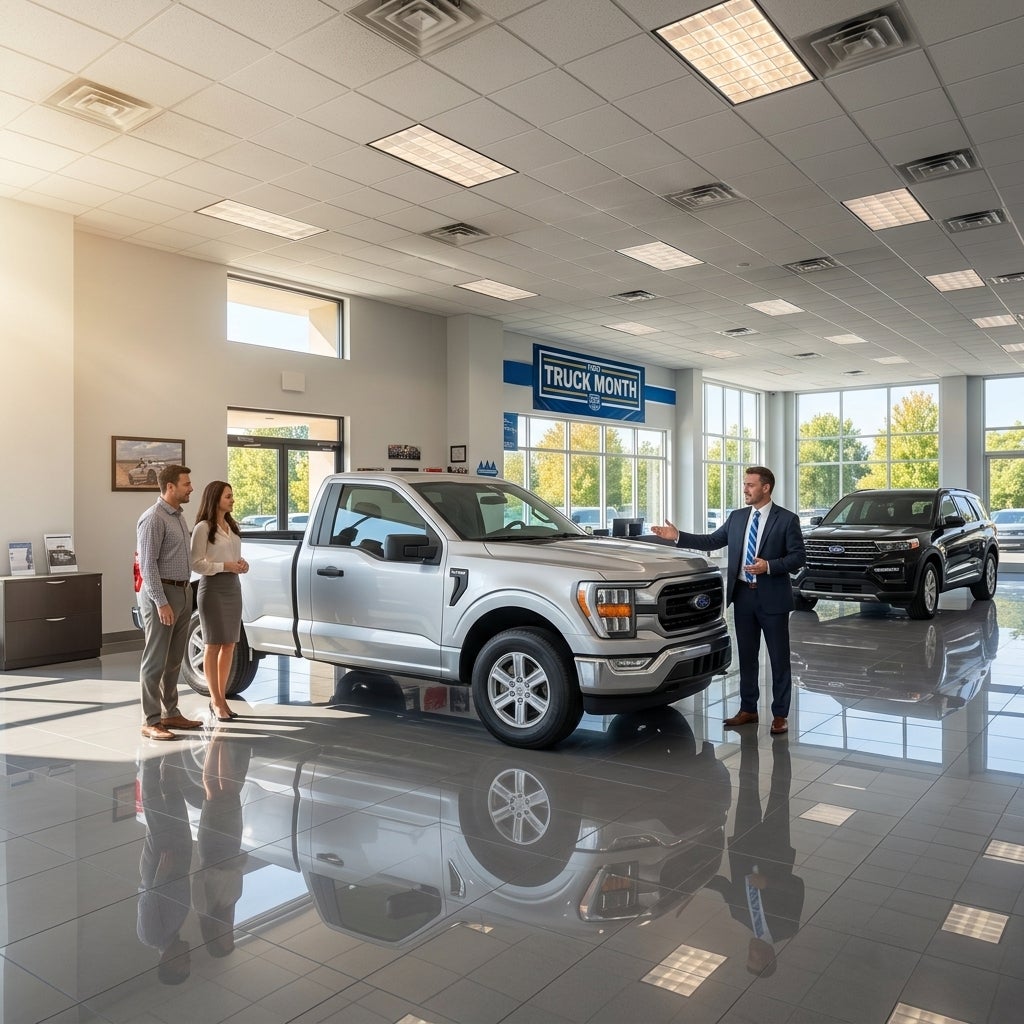
Cinematic wide-angle photograph of a modern automotive showroom in the Ohio River Valley, bright morning light streaming through expansive floor-to-ceiling glass windows, polished tile floors reflecting a gleaming new silver pickup truck and a white SUV, a professional sales consultant gesturing war

How Tri State Ford Coordinates Customer Pickup for Your Next Vehicle Purchase

Our showroom at 1503 Pennsylvania Ave, East Liverpool, OH 43920 serves as the central hub for a buying process designed to accommodate the busy schedules of local families and professionals. We understand that finding the time to visit a Ford dealership near me can be a challenge when you are balancing work and home life. To make the transition into your next vehicle as smooth as possible, our team offers local pickup services to bring you directly to our facility to finalize your purchase. This service is part of our commitment to providing a reliable and approachable experience for every guest.

When you find the perfect match in our current new Ford inventory, the logistics of getting to the dealership shouldn't stand in your way. We frequently coordinate with buyers to arrange a convenient pickup time, allowing you to focus on the excitement of your new truck or SUV rather than the stress of arranging a ride. Whether you are interested in new vehicle specials or looking at our rotating used vehicle specials, we aim to eliminate the hurdles between you and the driver's seat. If you prefer a vehicle built specifically for your needs, we can also assist with a new Ford custom order to ensure every feature is exactly as you imagined.

For many of our customers, the process begins long before they step foot in a vehicle. You can start by completing a secure online credit application to save time once you arrive. If you have questions about the logistics of your visit, give us a quick call at (330) 462-7578 to speak with a member of our sales team. We also offer Ford pickup and delivery options for various dealership interactions to keep your day moving. While you are researching, you can browse our new inventory online to see the latest arrivals. Our goal is to be the most accessible Ford dealer in the region, offering everything from manufacturer vehicle specials to Ford mobile service support for our owners.

Table of Contents

Understanding Service Areas and Delivery Fees for New Ford Purchases

Distance should not be a barrier to securing a vehicle that offers the durability and brand loyalty Ford is known for. We typically provide complimentary pickup services for customers within a specific radius of our East Liverpool location, ensuring that local residents have a straightforward path to ownership. For those living in the residential neighborhoods of Calcutta, where the gently rolling hills often require the dependable traction of Intelligent 4WD, we make it a priority to facilitate your visit. Our team can often arrange to meet you at your home or workplace to bring you back to the showroom for a final walk-around and signing.

While local pickup is generally provided at no additional cost for new vehicle purchases, we recommend confirming the details with our sales department based on your specific location. If you are looking for a heavy-duty solution, such as a vehicle from our new work truck inventory, we understand that uptime is critical for your business. We strive to be transparent about any potential mileage limits or scheduling requirements upfront so there are no surprises. This honest approach helps us build long-term trust with our community, mirroring the stable and practical values of the hard-working people we serve.

Beyond the initial purchase, we continue to support our customers with resources like manufacturer monthly service specials to help maintain your vehicle’s value. Even for smaller needs like essential battery service, we aim to provide the information you need to keep your Ford running at its best. By choosing a local partner that understands the terrain and lifestyle of the tri-state area, you gain a trusted advisor dedicated to your vehicle's long-term performance and safety.
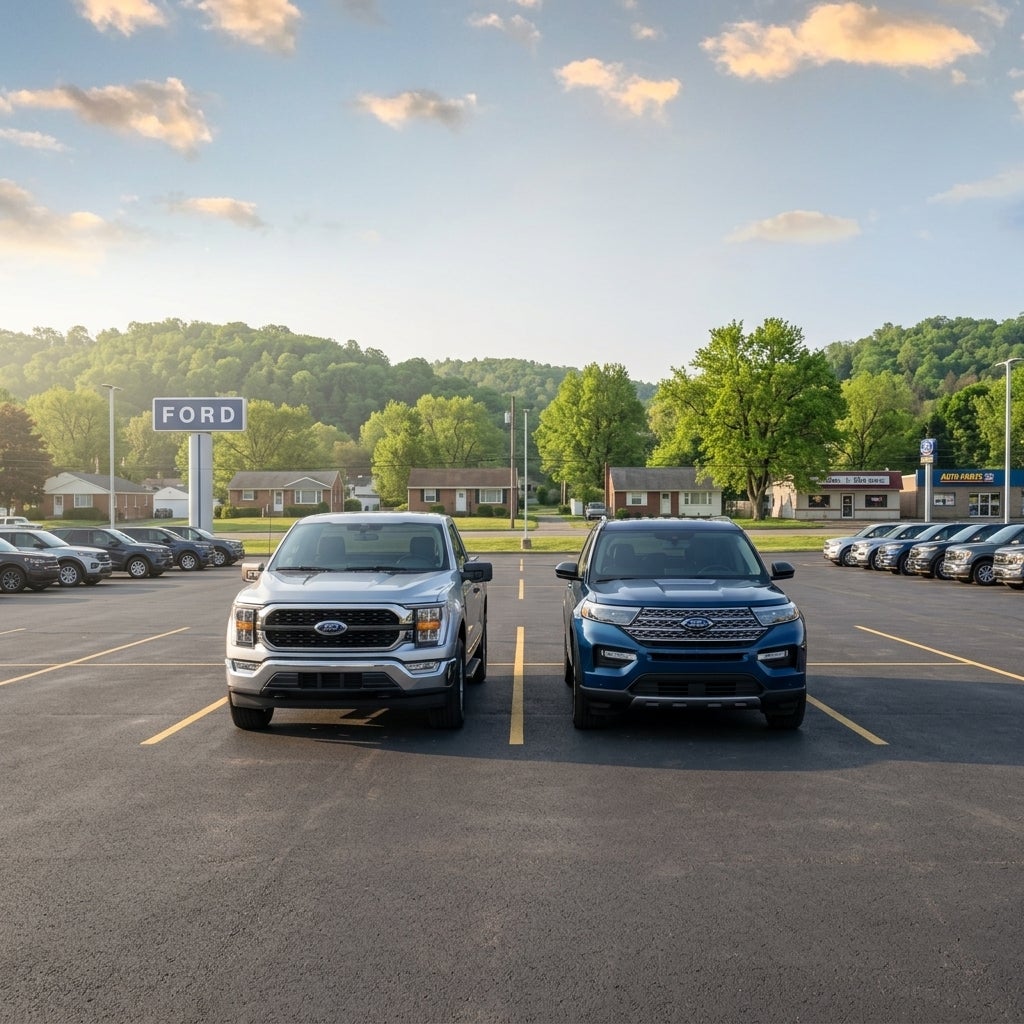
​A 2026 Ford F-150 and a Ford Explorer parked on the clean, asphalt lot of a local Ford dealership in east Liverpool, Ohio, early June morning light, soft hazy sunshine, gentle rolling hills of the Appalachian Plateau in the background, a row of modest mid-century suburban homes and small local busin

Essential Documents to Have Ready When We Pick You Up to Buy

One detail that often surprises buyers is how quickly the final steps can move when the proper documentation is prepared in advance. If we are picking you up to complete a purchase, having your paperwork organized ensures that you spend more time learning about your vehicle's features and less time at a desk. For residents in Chester, where the daily commute often involves crossing the bridge and navigating riverfront bluffs, having a vehicle with Ford Co-Pilot360 provides extra confidence. To get you on the road faster, please have the following items ready:

  • A valid driver’s license for all parties who will be on the title.
  • Current proof of automotive insurance that meets state requirements.
  • Your most recent pay stubs or proof of income if you are financing.
  • The title or payoff information for your current vehicle if you are trading it in.

Our team is experienced in handling a wide variety of purchase scenarios, from families looking for Carfax 1-owner vehicles to professionals searching for a specific configuration in our new truck inventory. Families test-driving the Explorer usually ask about the third-row recline before they ask about price, and we want to make sure you have plenty of time for those practical evaluations. By arriving prepared, you can seamlessly transition from your current ride into a powerful option from our F-Series work inventory.

We believe in a straightforward, jargon-light communication style that respects your time and intelligence. Whether you are a first-time buyer or a long-time Ford enthusiast, our goal is to provide a supportive environment where you feel confident in your decision. Ensuring your documents are ready is a practical step that reflects the down-to-earth and reliable nature of our dealership relationship.

Convenient Transportation Alternatives to Reach Our Showroom

What happens if our pickup schedule doesn't align perfectly with your busy afternoon? We recognize that our customers lead active lives, often balancing school runs, work shifts, and outdoor recreation. If you prefer to find your own way to our showroom, many shoppers choose to have a friend or family member drop them off, allowing them to drive their new Ford home immediately. Others utilize local rideshare services for a quick trip to our Pennsylvania Ave location. We also find that some customers prefer to coordinate a test drive from their workplace, which can be a great way to experience a vehicle's capabilities during a lunch break.

Before you make the trip, it is often helpful to value your trade-in online to get a clear picture of your buying power. Knowing the estimated value of your current vehicle can help you narrow down your choices in our available truck inventory. Once you have a few models in mind, you can schedule a test drive to ensure the vehicle meets your needs for space, safety, and towing capacity. This proactive approach allows us to have the vehicle ready and waiting for you, regardless of how you choose to arrive.

We are here to support your lifestyle, whether that involves hauling a boat to the river or commuting across state lines. Our team is always a call away to help you navigate these logistics, ensuring you have a personalized and respectful experience from start to finish. We value the local community connections we have built and are proud to be a reliable resource for drivers throughout the region.

How to Complete Your Entire Ford Purchase and Custom Order Online

When I walk families through our digital tools, I often see a look of relief when they realize how much of the process can be handled from their own living room. Digital retailing has transformed the way we buy vehicles, allowing you to research, compare, and secure financing without multiple trips to the dealership. You can use our finance department resources to explore different payment structures and find an option that fits your your budget. This transparency is key to building the trust that our repeat buyers have come to expect from us over the years.

For local business owners, the ability to browse specialized inventory like Transit work vans online saves valuable time that can be better spent on the job site. Our website provides detailed specs and virtual tours, making it easier to decide which configuration offers the right payload and cargo volume for your trade. You can even use our online tire finder to research maintenance needs for your current vehicle while you shop. If we don't have the exact model you are looking for on the lot, our online custom order tool allows you to specify the engine, such as the 3.5L EcoBoost V6, and the trim level that best suits your needs.

Once your online purchase or custom order is finalized, we can coordinate the delivery of your new Ford directly to your driveway. This modern approach to car buying matches the moderate technology adoption of our customers while maintaining the personalized touch of a local business. We are committed to providing a confident and reassuring experience, emphasizing the safety and reliability that Ford vehicles are known for.

Quick Answers Before You Visit Our Showroom

Q: Is there a maximum distance for the customer pickup service? Our team typically provides complimentary pickup for customers within a 15- to 20-mile radius of our East Liverpool location. If you live further away, we encourage you to contact our sales department to discuss available options and potential arrangements to facilitate your visit.

Q: Do I need to have my financing finalized before I request a pickup? While it is not strictly required, we highly recommend getting pre-approved through our online credit application first. Having your financing in place allows us to provide a more efficient experience once you arrive at the showroom to finalize your purchase.

Q: Can I use the pickup service if I am buying a used vehicle? Yes, we offer pickup services for both new and used vehicle purchases. Whether you are interested in a late-model SUV or a rugged truck, our goal is to make the buying process as convenient as possible for every member of our customer family.

Q: What should I do if I have a trade-in but want to be picked up? If you have a trade-in, we recommend using our Instant Cash Offer tool to get an initial valuation. In many cases, we can arrange for a team member to drive to your location, evaluate the trade-in on-site, and then bring you back to the dealership in your potential new vehicle.

Q: Is Ford Roadside Assistance available if my current vehicle breaks down before I can buy a new one? If you currently own a Ford that is still under warranty, you can contact Ford Roadside Assistance: 1-800-241-3673 for help with towing or basic emergency services. This manufacturer-backed support is a great example of the long-term reliability you can expect when you join the Ford family.

If you are ready to take the next step toward your next adventure, we invite you to browse our current inventory or visit our East Liverpool showroom. You can also give us a quick call at (330) 462-7578 to discuss your specific needs and schedule a pickup time that works for you.

Keep your vehicle performing at its best with our service team:

© 2026 Tri State Ford. All rights reserved.

Posted in:

Related Posts

g

What Should You Know Before Buying a Used Car?

Before buying a used vehicle, verify the vehicle identification number across all body panels, review a detailed vehicle history report for title brands, confirm that no unresolved safety recalls exist, and order an independent pre-purchase mechanical inspection. Establishing your target price through market pricing research and evaluating remaining warranty coverage ensures a transparent and secure transaction. Evaluating a pre-owned vehicle requires a methodical approach that balances mechanical condition, financial value, and structural integrity. A comprehensive vehicle history report provides vital background, but physical verification remains essential. Comparing the vehicle identification number on the driver side dashboard, the driver door jamb sticker, and the title document ensures all three match character for character. Any mismatch indicates potential fraud or unreported body panel replacements following an impact. For suburban commuters navigating the rolling hills and daily errands around Calcutta, finding a dependable pre-owned crossover like a 2026 Ford Escape with all-wheel drive requires looking closely at recent tire tread depth and brake wear. Hardworking vehicles endure diverse driving environments across the region, making a verified maintenance trail critical. Requesting past service records or reviewing dealer reconditioning logs reveals whether oil changes, fluid flushes, and filter replacements occurred at recommended intervals. Starting your search with a transparent team makes the purchasing journey straightforward. You can easily find our East Liverpool showroom right along the river, or give our friendly sales staff a quick call to ask about specific vehicle details before visiting in person. Table of Contents What Should You Check First and Look for During a Pre-Purchase Car Inspection? What Should You Look for on a Used Car Vehicle History Report and Title Status? What Is the Difference Between a Certified Pre-Owned Car and a Regular Used Car? Is It Better to Buy a Used Car from a Dealership or a Private Seller under As-Is Laws? How Do You Negotiate the Purchase Price of a Used Car at a Dealership? Frequently Asked Questions About Shopping Pre-Owned Vehicles What Should You Check First and Look for During a Pre-Purchase Car Inspection? During a pre-purchase car inspection, first confirm that the vehicle identification number matches across the dashboard, door jamb, and title, then perform a detailed visual check of fluid clarity, body panel alignment, and tire tread wear. A certified independent mechanic should raise the vehicle on a lift to examine the undercarriage, evaluate brake and suspension components, run a diagnostic scan for hidden trouble codes, and conduct a cold-start test drive. A thorough physical walkaround begins on the outside under bright natural daylight. Sight down each side of the body to confirm that panel gaps between doors, fenders, and the hood are uniform. Asymmetric gaps or subtle color variations across panels often point to previous collision repairs. Using a small magnet wrapped in a soft cloth against steel body panels helps identify body filler underneath repainted surfaces. In regional winter climates where road salt causes underbody wear, inspect the frame rails, strut towers, and rocker panels for heavy rust or freshly sprayed undercoating designed to cover structural damage. Under the hood, pull the oil dipstick to check fluid condition. Clean oil appears light amber, while dark, gritty oil indicates skipped oil changes. Foamy or milky fluid on the dipstick signals coolant leaking into the engine crankcase, which points to major internal engine failure. Squeeze radiator hoses to ensure they feel firm rather than spongy or brittle, and check the battery terminals for corrosion. When examining a pre-owned three-row SUV such as a 2026 Ford Explorer equipped with a 2.3L engine and SelectShift automatic transmission, check that coolant and transmission fluids are clean and filled to proper levels. The test drive yields critical operational details about mechanical health: Cold Start: Arrive before the seller warms up the vehicle to listen for engine knocks, valve ticks, or rough idling that disappears once the engine reaches operating temperature. Acceleration and Shifting: Accelerate firmly onto a highway lane to test engine responsiveness and shift smoothness. Shuddering during gear changes indicates transmission slippage. Braking Performance: Perform two firm stops from higher speeds on an open stretch of road. The vehicle must stop straight without pulling to one side, pedal vibration, or metallic grinding sounds. Suspension Integrity: Drive over moderate road bumps to listen for clunks or rattles, which signal worn ball joints, control arm bushings, or struts. When reviewing a heavy-duty truck like a 2026 Ford F-150 powered by a 3.5L engine, examine the trailer hitch receiver and axle seals for signs of heavy towing stress. To make your eventual purchase process smooth, completing an online credit application ahead of time helps establish clear monthly budget boundaries before you finalize your vehicle choice. Pricing Pricing by trim Feature Active AWD Active FWD Platinum AWD ST-Line AWD ST-Line Elite AWD 2.0L ST-Line FWD ST-Line Select AWD 2.0L:--:--:--:--:--:--:--:-- MSRP $31,750 $30,350 $37,940 $32,595 $38,935 $31,195 $35,015 Destination charge $1,495 $1,495 $1,495 $1,495 $1,495 $1,495 $1,495 Engine & Performance Powertrain specs by trim Feature Active AWD Active FWD Platinum AWD ST-Line AWD ST-Line Elite AWD 2.0L ST-Line FWD ST-Line Select AWD 2.0L:--:--:--:--:--:--:--:-- Engine 1.5L 1.5L 2L 1.5L 2L 1.5L 2L Horsepower 180 hp 180 hp 250 hp 180 hp 250 hp 180 hp 250 hp Torque 199 lb-ft 199 lb-ft 280 lb-ft 199 lb-ft 280 lb-ft 199 lb-ft 280 lb-ft Transmission automatic 8-speed automatic 8-speed SelectShift® automatic 8-speed SelectShift® automatic 8-speed SelectShift® Drivetrain All-wheel drive Front-wheel drive All-wheel drive All-wheel drive All-wheel drive Front-wheel drive All-wheel drive What Should You Look for on a Used Car Vehicle History Report and Title Status? A vehicle history report must be checked for title brands such as salvage, rebuilt, flood, or not actual mileage, along with odometer progression entries and accident records. Clean titles confirm that an insurance provider has never designated the vehicle as a total loss, preserving market value, structural safety, and eligibility for standard auto financing options. A history report provides a paper trail of recorded events throughout a vehicle's life cycle. Look closely at ownership history to distinguish between personal single-owner use, rental fleets, or commercial usage. Frequent ownership transfers over short timeframes often indicate persistent mechanical issues that previous owners preferred to pass along. Furthermore, check odometer entries across every service visit and registration renewal. If a recorded service visit lists higher mileage than a subsequent state registration entry, the vehicle may have experienced odometer rollback fraud. Title status represents the legal standing of the vehicle. A clean title signifies an uninterrupted ownership record free from catastrophic total-loss declarations. Conversely, salvage or rebuilt titles mean the vehicle sustained significant damage exceeding a major percentage of its retail value. Vehicles with branded titles present severe safety risks, carry reduced resale value, and are frequently ineligible for comprehensive insurance coverage or traditional financing terms. Checking open safety recall status directly on the official National Highway Traffic Safety Administration website using the vehicle identification number is another essential step. Unresolved safety recalls must be addressed by an authorized dealership service facility prior to purchase. If you prefer to skip the uncertainty of pre-owned title histories altogether, our team can assist you with custom ordering a new Ford tailored to your exact specifications, or you can explore current manufacturer vehicle specials available directly from the factory. What Is the Difference Between a Certified Pre-Owned Car and a Regular Used Car? A Certified Pre-Owned vehicle completes a rigorous factory-mandated multi-point inspection and includes a manufacturer-backed extended warranty, whereas a standard used car is generally sold as-is or with a short dealer warranty. Certified Pre-Owned programs provide higher quality standards through age, mileage, and reconditioning restrictions backed directly by the vehicle manufacturer. The primary distinction between standard pre-owned vehicles and factory-certified models sits in the strict inspection and warranty protections required by the original manufacturer. Standard used vehicles undergo basic safety checks and reconditioning, but their post-sale coverage varies significantly depending on remaining factory terms or dealer-offered service contracts. Feature Standard Pre-Owned Vehicle Certified Pre-Owned (CPO) Vehicle Inspection Process General safety and mechanical check Factory-mandated multi-point inspection Warranty Protection As-is or limited dealer warranty Manufacturer-backed extended limited warranty Age and Mileage Limits Varies widely by inventory Strict maximum age and mileage caps Vehicle History Report available upon request Full history report included and verified Roadside Assistance Optional add-on coverage Included manufacturer roadside support Vehicles enrolled in the certified program pass detailed checks covering engine performance, brake pad thickness, tire tread depth, frame integrity, and cabin electronics. Any worn component that fails to meet strict factory standards must be replaced with genuine factory parts before certification is granted. Certified buyers also enjoy round-the-clock emergency support. If you ever require towing, flat tire changes, or battery jump-starts, you can contact Ford Roadside Assistance: 1-800-241-3673 for immediate manufacturer-backed aid. Exploring our selection of pre-owned Carfax 1-owner vehicles offers excellent background transparency, while browsing our certified pre-owned Ford lineup delivers maximum long-term confidence and factory warranty coverage. Is It Better to Buy a Used Car from a Dealership or a Private Seller under As-Is Laws? Buying a used vehicle from a dealership offers structural protections under federal regulations, access to competitive financing, and trade-in conveniences, whereas private sales operate strictly under as-is terms without post-sale recourse. Dealerships must display an FTC Buyer's Guide on every pre-owned vehicle, clearly defining warranty terms or explicitly noting as-is status. Purchasing a vehicle directly from a private individual often carries a lower initial listing price, but it presents significant legal and financial risks. Private transactions operate entirely on an as-is basis under state commercial codes. Once money exchanges hands and the title transfers, the buyer absorbs complete financial responsibility for any mechanical failure, hidden frame damage, or electrical defect that arises, even if the issue appears minutes after the drive home. Additionally, private sales require the buyer to manage title transfers, lien payoffs, and registration paperwork independently. In contrast, established dealerships operate under state and federal consumer protection guidelines. Federal law mandates that dealers place a clear FTC Buyer's Guide in the window of every pre-owned car or truck on the lot. This document outlines whether the vehicle carries a full warranty, a limited warranty, or is being sold as-is, while explicitly stating that any verbal promises made by sales staff must be documented in writing on the purchase contract to be legally binding. Commuters traveling along Market Street in Boardman often choose dealership purchases because structured financing options and verified title processing save significant time compared to private title transfers. Dealerships also accept existing vehicles toward the purchase price, helping lower your total financed balance. You can easily value your trade-in online to estimate how your current vehicle's equity reduces your out-of-pocket costs. How Do You Negotiate the Purchase Price of a Used Car at a Dealership? Negotiate a used car purchase price by establishing a firm target price based on local market research for the exact trim, mileage, and condition, then using documented repair estimates from a pre-purchase inspection as line-item price adjustments. Separating the vehicle purchase price from financing terms, down payments, and trade-in valuations ensures complete financial clarity throughout negotiations. Effective price negotiation begins long before you step onto the sales floor. Research current market listings for comparable models using exact year, trim level, optional packages, and mileage inputs. Armed with objective market data, establish a realistic target price and a firm maximum limit before entering discussions. When local shoppers evaluate a practical crossover like the 2026 Ford Escape, understanding factory trim tiers and baseline pricing provides strong context for pre-owned pricing evaluations: Active FWD: $30,350 MSRP plus $1,495 destination charge. Active AWD: $31,750 MSRP plus $1,495 destination charge. ST-Line FWD: $31,195 MSRP plus $1,495 destination charge. ST-Line AWD: $32,595 MSRP plus $1,495 destination charge. ST-Line Select AWD 2.0L: $35,015 MSRP plus $1,495 destination charge. Platinum AWD: $37,940 MSRP plus $1,495 destination charge. ST-Line Elite AWD 2.0L: $38,935 MSRP plus $1,495 destination charge. When inspecting a pre-owned vehicle, use any mechanical flaws or upcoming maintenance items discovered during your visual check or independent inspection as objective negotiation points. If an inspection reveals that the tires have only 4/32" of tread remaining or the rear brake rotors require replacement soon, present the written repair estimate from an ASE-certified technician. Using the written repair estimate as a negotiation reference keeps the conversation focused on documented facts rather than general pricing assumptions. Keep every element of the transaction distinct. Negotiate the final sale price of the vehicle first before discussing monthly payment targets, credit terms, or trade-in allowances. Bundling these numbers together makes it difficult to see true vehicle pricing. Working with a supportive sales staff ensures a respectful, transparent dialogue where all pricing terms are presented clearly. Reaching out to our knowledgeable local Ford dealership team provides a stress-free environment focused on finding a vehicle that fits your budget. Frequently Asked Questions About Shopping Pre-Owned Vehicles Q: How much does a pre-purchase car inspection typically cost? A comprehensive pre-purchase inspection conducted by an independent certified mechanic typically costs between $100 and $250 depending on the vehicle type and scope of the evaluation. This fee covers a multi-point inspection including an undercarriage lift examination, a computerized diagnostic code scan, brake and suspension checks, and a full operational test drive. Q: What legal protections apply when buying a used car as-is? Buying a vehicle as-is means the buyer assumes all financial responsibility for repairs immediately upon purchase, with no implied or expressed warranty protection. Federal law requires dealers to display an FTC Buyer's Guide stating whether a vehicle is sold as-is. Legal recourse after an as-is sale exists only if the seller engaged in explicit fraud or intentional title misrepresentation. Q: How do you verify if a used vehicle has an open safety recall? You can verify open safety recalls by entering the vehicle's 17-character vehicle identification number into the free recall lookup tool on the official National Highway Traffic Safety Administration website. The tool displays any unrepaired safety recalls issued by the manufacturer. Authorized brand dealerships perform all safety recall repairs free of charge to the owner. Q: Can you finance a used vehicle with an existing trade-in balance? Yes, you can finance a pre-owned vehicle when trading in a car that still has an outstanding loan balance. The dealership contacts your current lender to obtain the exact payoff amount. If your trade-in value exceeds the loan balance, the remaining positive equity is applied as a down payment. If equity is negative, the remaining balance can often be rolled into the new auto loan subject to lender approval. Q: What documents are required when purchasing a pre-owned car at a dealership? Purchasing a pre-owned vehicle requires a valid government-issued driver's license, current proof of auto insurance, and your preferred form of payment or loan approval documentation. If you are trading in a vehicle, bring the original title or current registration card, payoff information if applicable, and all sets of keys. Finding the right pre-owned vehicle comes down to clear information, rigorous mechanical verification, and honest pricing. Our team is dedicated to delivering a straightforward, transparent buying experience for every customer. You can visit our dealership address at 1503 Pennsylvania Ave, East Liverpool, OH 43920 to inspect our pre-owned selection in person, give our friendly sales team a quick call with your questions, or explore our brand-new Ford models online to compare all your ownership options today. Keep Your Vehicle Running Strong Keep your vehicle performing at its best with our service team: Order Parts Schedule Service Appt © 2026 Tri State Ford. All rights reserved. Vehicle specification data © JATO Dynamics Limited. Used Car Buying Tips in East Liverpool OH | Tri State Ford

d

Is Buying a Used Car With 100,000 Miles Worth the Risk?

Buying a used car with 100,000 miles is worth the risk if the vehicle has a documented maintenance history, verified mechanical updates, and a clean vehicle history report. Modern automotive engineering standards and widespread synthetic oil usage allow properly cared-for vehicles from reliable manufacturers to routinely operate well past 200,000 miles. At 100,000 miles, the initial steep vehicle depreciation has already occurred [3], providing buyers with significant upfront savings while retaining substantial remaining operational life. 100,000-MILE BUYING DECISION MATRIX Factor Practical Assessment Major Mechanical Risk Low when routine oil changes and timing belt services are documented [1, 3] Upfront Depreciation Savings Moderate to High (typically 40% to 60% off original MSRP) Expected Remaining Lifespan 5 to 10 years (75,000 to 100,000+ additional miles) [2] Near-Term Maintenance Outlook Plan for wear items: brakes, tires, spark plugs, fluids [2] The historical milestone of 100,000 miles used to signal the end of a vehicle's dependable life, but modern powertrain manufacturing has altered that baseline. Precision build tolerances, improved metallurgy, and advanced engine management computer systems protect internal components from premature failure. A 100,000-mile car that spent its early years logging highway commuter miles retains plenty of life in its drivetrain. Selecting a high-mileage vehicle allows smart shoppers to stretch their vehicle budget into higher trim levels, larger body styles, or models equipped with intelligent four-wheel drive systems that might otherwise exceed their spending limit. For suburban commuters traveling along State Route 170 in Calcutta, a well-maintained high-mileage crossover or truck delivers winter traction and everyday cargo versatility at a fraction of the cost of a brand-new vehicle. Before making a final purchase commitment, evaluate the complete ownership package. Confirming that major 100,000-mile scheduled maintenance items—such as spark plug replacement, transmission fluid exchange, and coolant flushes—were recently completed eliminates near-term repair surprises. To explore our current selection of pre-owned vehicles or speak directly with our team, feel free to visit our East Liverpool showroom location or give our staff a quick call at (330) 462-7578 to discuss available pre-owned models. Table of Contents Is 100,000 Miles Bad for a Used Car, and How Does Modern Synthetic Oil Extend Engine Life? How Do You Verify Maintenance History and Avoid Red Flags on a High-Mileage Car? What Is the Average Cost of a Used Car With 100,000 Miles? What Are Standard Loan Limits and Financing Options for High-Mileage Vehicles? How Does Safety Technology Compare Between Older High-Mileage Cars and Newer Models? Common Questions About Buying a Used Car With 100,000 Miles Is 100,000 Miles Bad for a Used Car, and How Does Modern Synthetic Oil Extend Engine Life? A six-figure odometer reading is not inherently bad for a used car, as engine longevity depends primarily on consistent lubrication and preventive care rather than mileage alone. Full synthetic motor oil plays the central role in high-mileage engine survival by maintaining uniform viscosity under severe thermal stress, preventing internal metal-on-metal wear, and eliminating harmful engine sludge deposits. LUBRICATION TYPE IMPACT ON HIGH-MILEAGE ENGINE LONGEVITY Lubricant Property Full Synthetic Advantage in High-Mileage Units Viscosity Stability Resists thermal breakdown during extreme summer heat and severe engine loads [1] Cold-Start Flow Rate Circulates immediately during freezing starts, protecting bearings and camshafts [1] Sludge & Deposit Control Active detergent additives scrub varnish and keep oil passages open [1] Seal Conditioning Specialized formulations keep rubber gaskets pliable to prevent oil leaks [1] Unlike conventional motor oil refined directly from crude oil, synthetic lubricant molecules are chemically engineered to uniform sizes. This consistent molecular structure creates a resilient protective oil film across critical internal components, including piston rings, crankshaft bearings, valve guides, and turbocharger shafts. When an engine cold-starts on a freezing morning, low-viscosity synthetic oil pumps quickly throughout the cylinder block, mitigating friction during the critical seconds before the engine reaches normal operating temperature. Thermal stability is equally vital for high-mileage engines. During extended highway driving or heavy towing, high engine temperatures cause conventional oil to oxidize, thicken, and break down into sticky carbon varnish and sludge. Synthetic formulations resist oxidative breakdown, keeping oil galleries clear so vital internal parts receive uninterrupted lubrication. Furthermore, specialized high-mileage synthetic blends contain active seal conditioners that preserve internal rubber seals and gaskets, preventing dry rot, cracking, and oil seepage. When assessing a high-mileage vehicle on our lot, reviewing lubrication care gives clear insight into how the vehicle will perform over the next 50,000 to 100,000 miles. Vehicles configured with high-output powertrains like the 3.5L EcoBoost V6 or robust naturally aspirated engines benefit significantly from consistent synthetic oil service intervals. Shoppers seeking maximum peace of mind can filter our pre-owned inventory for pre-owned single-owner vehicles with verified oil maintenance logs, or explore the certified pre-owned Ford lineup to secure factory-backed warranty protection on low-risk, thoroughly inspected pre-owned models. How Do You Verify Maintenance History and Avoid Red Flags on a High-Mileage Car? Verifying the maintenance history of a 100,000-mile car requires reviewing itemized service receipts, analyzing digital vehicle history reports, and scheduling a physical pre-purchase inspection. Cross-referencing dated shop records against the manufacturer's recommended service schedule ensures all major mileage milestones were completed on time. Vehicle History Reports: Review independent history reports using the Vehicle Identification Number (VIN) to verify odometer consistency, check title status, and confirm the absence of major accident reports or flood damage claims. Itemized Service Invoices: Look for physical receipts or digital logs documenting routine oil changes, transmission fluid services, brake rotor replacements, and cooling system maintenance. NHTSA Recall Database: Check the National Highway Traffic Safety Administration recall portal using the VIN to confirm that all manufacturer safety recalls were performed free of charge at an authorized dealership. Physical Inspection: Have a qualified technician inspect underbody components, check fluid clarity, assess brake pad thickness, examine tire wear patterns, and scan engine control modules for pending diagnostic trouble codes. HIGH-MILEAGE VEHICLE INSPECTION CHECKLIST Area What to Inspect Engine & Drivetrain Look for active oil leaks, dark exhaust smoke, gear slipping, or unusual valve train noise [1, 3, 4] Undercarriage & Frame Inspect frame rails, suspension perches, and exhaust hangers for severe structural rust [3, 4] Steering & Suspension Check shock absorbers, struts, ball joints, and tie rod ends for excessive play or leaking fluid [1, 3, 4] Electrical & Comfort Test power windows, air conditioning, heater core, infotainment screens, and instrument cluster gauges [3, 4] When evaluating vehicles that navigate the riverfront bluffs and hill climbs along the Ohio River in East Liverpool, paying close attention to suspension bushings, brake hardware, and undercarriage condition is essential. Road salt exposure and frequent hill ascents accelerate wear on steering joints and brake pads. A well-documented vehicle whose prior owner replaced struts, ball joints, and brake rotors represents a far better purchase value than a lower-mileage car with deferred suspension maintenance. A major red flag during any vehicle inspection is an incomplete or missing maintenance history combined with dark, dirty engine oil or low fluid levels. Inconsistent mileage entries between state inspection records and history report logs may indicate odometer tampering. Unresolved check engine lights, slipping automatic transmission shifts, or uneven tire wear indicating bent suspension geometry mean a buyer should walk away or demand a significant price adjustment. If you plan to trade in your current vehicle toward a well-documented pre-owned car, you can estimate your trade-in value online in just a few clicks to establish your purchasing budget. What Is the Average Cost of a Used Car With 100,000 Miles? The average cost of a used car with 100,000 miles typically ranges from $7,000 to $12,000 for compact and midsize sedans, while high-mileage trucks, full-size SUVs, and commercial vehicles average between $12,000 and $18,000. Exact pricing depends heavily on vehicle segment, brand reputation, body style, powertrain, geographic location, and overall mechanical condition. AVERAGE PRICING BY VEHICLE CATEGORY AT 100,000 MILES Vehicle Segment Typical High-Mileage Market Price Range Compact & Midsize Sedans $7,000 to $11,000 Crossovers & Compact SUVs $9,000 to $14,000 Full-Size Trucks & Body-on-Frame $13,000 to $18,000 Full-Size Three-Row SUVs $12,000 to $17,000 Market valuation for 100,000-mile cars reflects the dramatic slowing of vehicle depreciation. A new vehicle loses approximately 20% of its initial value during the first year and up to 50% by its fifth year. By the time a vehicle reaches 100,000 miles, the bulk of its monetary depreciation has already occurred. Buyers pay primarily for the remaining utility and mechanical health of the vehicle rather than its original retail sticker price. Vehicles configured with specialized equipment—such as full-frame four-wheel drive trucks with the 5.0L V8 engine or heavy-duty diesel pickups—retain a higher percentage of their value at 100,000 miles due to sustained demand for towing and work capabilities. Conversely, front-wheel-drive sedans and entry-level commuter hatchbacks yield lower price points, making them ideal options for first-time buyers or budget-conscious shoppers. Comparing the asking price against the total estimated cost of any near-term maintenance items ensures you lock in a fair deal that fits comfortably into your household budget. What Are Standard Loan Limits and Financing Options for High-Mileage Vehicles? Standard loan guidelines for high-mileage used cars generally restrict financing to vehicles under 10 model years old with fewer than 120,000 to 150,000 odometer miles. While major national banks enforce strict age and mileage cutoffs, credit unions and specialized automotive dealership lending networks offer flexible financing terms for qualified high-mileage inventory. LENDER ELIGIBILITY COMPARISON FOR HIGH-MILEAGE VEHICLES Lender Type Typical Mileage Cap Typical Vehicle Age Limit Major Commercial 100,000 to 125,000 7 to 10 model years Banks miles [1] max [1] Regional Credit 120,000 to 150,000 10 to 15 model years Unions miles [1] max [1] Dealership Indirect Up to 150,000 miles Up to 12 model years Financing Networks based on vehicle value with flexible terms Financing a high-mileage pre-owned vehicle differs slightly from securing a loan on a late-model car. Because lenders view older or high-mileage units as carrying elevated mechanical risk, loan terms vary by lender and vehicle to prevent the borrower from becoming upside-down on the loan balance. Loan-to-value (LTV) limits are calculated using wholesale book values, meaning a larger down payment or trade-in equity helps secure approval and lowers interest rates. Our finance department maintains relationships with multiple regional banks and credit unions experienced in structuring competitive used-car loans. Bringing your financial documents—including recent pay stubs, proof of residence, a valid driver's license, and insurance information—streamlines the underwriting process. To review personalized rate options and see what loan terms fit your budget, you can submit an online credit application directly through our secure website before visiting our lot. How Does Safety Technology Compare Between Older High-Mileage Cars and Newer Models? Older high-mileage vehicles manufactured prior to 2018 come equipped with fundamental passive safety features such as multi-stage airbags, anti-lock brakes, electronic stability control, and rearview cameras, but they often lack modern active driver-assist technologies. Newer vehicles incorporate advanced radar and camera networks designed to actively intervene and prevent collisions before they occur. SAFETY TECHNOLOGY GENERATION COMPARISON High-Mileage Older Vehicles Contemporary Newer Models Multi-stage front & side airbags Complete curtain airbags & knee bolsters [1] Four-wheel Anti-lock Brakes (ABS) Automatic Emergency Braking (AEB) [1] Electronic Stability Control Adaptive Cruise Control with Stop-and-Go [1] Basic Rearview Camera System Blind Spot Information System (BLIS) [1] Standard halogen headlights Lane-Keeping Assist & Pre-Collision Assist [1] For drivers who prioritize cutting-edge driver-assist tools, modern vehicle suites like Ford Co-Pilot360 offer features such as Pre-Collision Assist with Automatic Emergency Braking, Blind Spot Information System (BLIS), Lane-Keeping System, and Adaptive Cruise Control. These active safety technologies provide real-time alerts and automatic steering or braking assistance during highway commutes and congested traffic situations. While a 100,000-mile vehicle from a previous generation delivers sturdy crash protection and core safety equipment, buyers who frequently transport young children or desire the latest semi-autonomous highway support may prefer late-model pre-owned or new vehicles. Comparing an older high-mileage SUV against a current-year model allows families to weigh initial acquisition savings against the comfort of updated safety tech. If you want to compare late-model tech features against high-mileage value, you can explore our new vehicle inventory to view our current stock of safety-equipped models. Common Questions About Buying a Used Car With 100,000 Miles Q: Is 100,000 miles considered too high for a pre-owned truck or SUV? A 100,000-mile odometer reading is not too high for a pre-owned truck or SUV that has been properly maintained with consistent fluid changes and timely component services. Full-size trucks and body-on-frame SUVs are engineered with heavy-duty transmissions, robust axle assemblies, and durable engines built to handle demanding workloads over long ownership periods. Verifying that prior owners completed transfer case fluid changes, differential services, and brake updates ensures the vehicle remains ready for daily driving and towing. Q: How many additional years can a vehicle last after reaching 100,000 miles? A vehicle with 100,000 miles can reliably last an additional 5 to 10 years when cared for according to the manufacturer's maintenance schedule. Assuming an average annual driving distance of 12,000 to 15,000 miles, a well-lubricated engine using full synthetic oil and receiving timely wear-and-tear repairs can easily reach 175,000 to 200,000+ total miles. Vehicle longevity depends far more on preventive maintenance and gentle driving habits than on the odometer reading alone. Q: What major maintenance items should be checked on a 100,000-mile car before buying? Key maintenance items to check on a 100,000-mile car include spark plug replacement, cooling system flush, transmission fluid service, brake fluid replacement, and timing belt condition if equipped with an engine timing belt rather than a timing chain. Additionally, inspect the vehicle's serpentine drive belts, radiator hoses, shock absorbers, suspension bushings, and brake pads for signs of wear. Confirming these services are completed prevents immediate out-of-pocket maintenance expenses right after purchase. Q: Will financing interest rates be higher on a high-mileage used car? Financing interest rates on high-mileage vehicles are typically slightly higher than rates for brand-new or late-model pre-owned cars because lenders price for the additional risk associated with older vehicles. However, because the overall purchase price of a 100,000-mile car is substantially lower, the total monthly payment and total interest paid over the life of a shorter-term loan can still be significantly less than financing a newer model. Q: Should I purchase an extended service contract for a 100,000-mile car? Purchasing an extended service contract or vehicle protection plan for a 100,000-mile car can be a smart decision if you want to safeguard your monthly budget against unexpected mechanical repairs. Review the specific coverage details, component exclusions, deductible amounts, and mileage limits of any offered vehicle service contract. Choosing a comprehensive plan that covers major powertrain components like the engine, transmission, and drive axles provides peace of mind throughout your ownership period. Finding the right pre-owned car with 100,000 miles comes down to choosing a quality vehicle backed by verified maintenance and transparent dealership support. At Tri State Ford, our team carefully inspects every pre-owned vehicle on our lot to ensure it meets our high standards for safety, mechanical reliability, and overall value. Whether you need a dependable commuter car, a spacious family crossover, or a hard-working four-wheel-drive pickup, we are here to help you navigate your options with complete confidence. Take the next step in your vehicle search today by exploring our current pre-owned inventory online or dropping by our showroom. Stop by our showroom address at 1503 Pennsylvania Ave to take a test drive, or give our sales team a call at (330) 462-7578 to ask about specific models, discuss financing terms, or value your trade-in. Keep Your Vehicle Running Strong Keep your vehicle performing at its best with our service team: Order Parts Schedule Service © 2026 Tri State Ford. All rights reserved. Used Cars with 100,000 Miles in East Liverpool OH | Tri State Ford

f

Should You Buy a Winter SUV Before the First Snowfall?

Buying a winter SUV before the first snowfall secures maximum inventory selection, better pricing transparency during fall inventory events, and sufficient time to install cold-weather equipment before severe storms arrive. Waiting until winter weather hits restricts available trim choices, forces hurried purchase decisions during peak seasonal demand, and leaves drivers tackling icy roads without proper vehicle familiarization. Purchasing early ensures full confidence, optimal trade-in values, and complete winter readiness. Planning an SUV purchase ahead of the freezing weather gives buyers distinct financial and operational advantages. During early fall, dealership lots maintain robust model availability across popular crossover configurations and colors. Securing a vehicle prior to the initial snowstorm allows drivers to test vehicle handling on dry pavement, setup personalized safety settings within driver-assist systems, and organize necessary winter gear. In addition, early shoppers can easily fit dedicated winter tires to their wheels before service centers face heavy winter appointment backlogs. Early buyers also experience a stress-free transition into winter travel. When freezing rain or slush unexpectedly hits state routes, having a fully equipped crossover ready in the driveway eliminates emergency rental searches or dangerous commutes in unequipped vehicles. For personalized assistance with seasonal vehicle selection, drivers can reach out to our team with a quick call or visit our East Liverpool showroom address at 1503 Pennsylvania Ave, East Liverpool, OH 43920. Table of Contents How Do Fall Clearance Events and Dealer Quotas Impact SUV Pricing? Is AWD or 4WD Better for Winter Driving on Snow and Ice? Which Winter SUV Features and Driver-Assist Tech Keep You Safe? What Ford SUV Lineup Options Offer the Best Winter Capability? Common Questions About Buying a Winter SUV Before Snow Season Take Advantage of Fall SUV Selection and Incentives at Local Ford Dealership How Do Fall Clearance Events and Dealer Quotas Impact SUV Pricing? Fall inventory cycles and model-year transitions create active pricing conditions for SUV buyers between October and December. Dealerships and sales teams working toward year-end volume targets may update available offers and trade-in information as current model-year inventory changes. Purchasing during late fall allows shoppers to review current MSRP and inventory before high winter demand reduces selection. Automakers structure major incentive programs around late-fall clearance pushes. During this window, inventory transitions occur as incoming vehicles arrive on the lot. To accommodate new shipments, pricing adjustments are applied across popular trims. For example, shoppers looking at compact crossovers will find options ranging from the Active FWD starting at an MSRP of $30,350 up to the Platinum AWD at $37,940, each with a $1,495 destination charge. Mid-range choices like the Active AWD at $31,750, the ST-Line FWD at $31,195, and the ST-Line AWD at $32,595 provide a range of MSRP points. Drivers seeking upgraded engine output can evaluate the ST-Line Select AWD 2.0L at $35,015 or the ST-Line Elite AWD 2.0L at $38,935. MSRP and availability may vary by vehicle and equipment. Beyond new model savings, fall clearance periods bring an influx of high-quality trade-in vehicles as buyers upgrade for winter. This delivers expanded choices for value-focused shoppers evaluating our pre-owned Carfax 1-owner inventory. Sales departments working toward quarterly quotas are often highly motivated to offer strong values on incoming trade-ins, providing secondary savings that make buying before winter financially advantageous. Pricing Pricing by trim Feature Active AWD Active FWD Platinum AWD ST-Line AWD Base MSRP $31,750 $30,350 $37,940 $32,595 Destination charge $1,495 $1,495 $1,495 $1,495 Pricing (continued) Feature ST-Line Elite AWD 2.0L ST-Line FWD ST-Line Select AWD 2.0L Base MSRP $38,935 $31,195 $35,015 Destination charge $1,495 $1,495 $1,495 Engine & Performance Powertrain specs by trim Feature Active AWD Active FWD Platinum AWD ST-Line AWD Engine 1.5L 1.5L 2L 1.5L Horsepower 180 hp 180 hp 250 hp 180 hp Torque 199 lb-ft 199 lb-ft 280 lb-ft 199 lb-ft Transmission automatic 8-speed automatic 8-speed SelectShift® automatic 8-speed Drivetrain All-wheel drive Front-wheel drive All-wheel drive All-wheel drive Engine & Performance (continued) Feature ST-Line Elite AWD 2.0L ST-Line FWD ST-Line Select AWD 2.0L Engine 2L 1.5L 2L Horsepower 250 hp 180 hp 250 hp Torque 280 lb-ft 199 lb-ft 280 lb-ft Transmission SelectShift® automatic 8-speed SelectShift® Drivetrain All-wheel drive Front-wheel drive All-wheel drive Is AWD or 4WD Better for Winter Driving on Snow and Ice? All-wheel drive delivers superior continuous traction for everyday winter highway and suburban driving, while four-wheel drive excels in deep snow, unplowed rural paths, and off-road conditions. All-wheel drive operates automatically by continuously monitoring wheel slip and routing power to the tires with the most grip without requiring driver intervention. Four-wheel drive locks front and rear axles together for maximum low-speed power in severe snow accumulation. Understanding drivetrain mechanics helps buyers choose the right setup for local topography. Crossovers equipped with All-wheel drive utilize electronic sensors to engage power transfer in milliseconds when ice or slush is detected. On models like the 2026 Ford Escape, the standard 1.5L EcoBoost engine delivers 180 hp and 199 lb-ft of torque through a smooth automatic 8-speed transmission. For additional passing power on icy inclines, the available 2.0L EcoBoost generates 250 hp and 280 lb-ft of torque paired with an agile SelectShift® transmission. For steeper terrain, larger three-row SUVs offer specialized drivetrains. The 2026 Ford Explorer features standard rear-wheel drive with available Intelligent 4WD, delivering heavy-duty capability alongside specialized terrain settings like Slippery mode. The riverfront bluffs and rolling hills around East Liverpool demand consistent power delivery, making selectable drive modes essential for negotiating sudden grade changes during freezing weather. All-Wheel Drive Benefits: Automatic engagement requires zero driver effort on changing road surfaces. Improves cornering balance and acceleration on wet, slushy, or icy pavement. Seamlessly disconnects when traction is stable to help optimize fuel efficiency. Four-Wheel Drive Benefits: High torque distribution locked evenly between front and rear wheels. Superior capability for pulling through deep snowdrifts or mud. Includes low-range gearing settings for controlled, low-speed hill descents. Shoppers interested in factory-backed reliability and winter capability can explore our certified pre-owned Ford selection for rigorous multi-point inspected models ready for cold weather. Which Winter SUV Features and Driver-Assist Tech Keep You Safe? The most effective winter SUV safety features combine physical cold-weather equipment with advanced electronic driver-assist technologies. High ground clearance, heated glass elements, and automatic emergency braking work together to maintain vehicle control, prevent collisions on slippery surfaces, and preserve driver visibility in sub-freezing temperatures. Physical winter features provide immediate daily convenience and protection against cold conditions. An SUV designed for heavy snow requires at least 8 to 8.5 inches of ground clearance to prevent packed snow from high-centering the undercarriage. Heated wiper park zones and heated washer nozzles keep windshield blades free of ice build-up during freezing rain, ensuring clear sightlines. Remote engine start pre-warms the powertrain and cabin while defrosting windows, protecting the internal engine components from extreme cold-start stress. Modern driver-assist suites further boost driver confidence when road conditions deteriorate. Safety systems continuously analyze road friction and traffic movement to assist in critical moments: Traction Control and Stability Systems: Automatically reduce engine throttle and apply individual wheel braking to stop tire spin on ice. Ford Co-Pilot360® Technology: Features Pre-Collision Assist with Automatic Emergency Braking to help detect sudden slowdowns ahead on slick streets. Blind Spot Information System: Alerts drivers to vehicles hidden in side blind zones during snowy conditions when mirror visibility is reduced. Selectable Drive Modes: Features dedicated settings like Slippery mode that recalibrate throttle response and shift points for optimal snow traction. Upgrading your vehicle before winter allows you to maximize your existing vehicle's value toward a safer model. You can evaluate your current vehicle's worth by checking our online Kelley Blue Book trade-in tool before visiting the showroom. What Ford SUV Lineup Options Offer the Best Winter Capability? The Ford SUV lineup delivers tailored winter capability across compact, midsize, and three-row segments to fit diverse family transportation needs. From fuel-efficient compact crossovers featuring disconnectable all-wheel drive to spacious three-row SUVs with selectable terrain modes and heavy towing strength, Ford models provide proven winter performance. The 2026 Ford Escape serves as a versatile compact crossover for daily winter commutes. Powered by either a 1.5L EcoBoost rated up to an EPA-estimated 26 city / 32 hwy MPG in All-wheel drive or a potent 2.0L EcoBoost, the Escape balances slick-road traction with everyday fuel economy. With about 37.5 cubic feet of rear cargo space and a towing capacity of 2,000 lbs, it comfortably accommodates winter gear, sleds, or small utility trailers. For larger families requiring expanded passenger room and serious hauling power, the 2026 Ford Explorer provides three-row seating for up to six passengers. Driven by a powerful 2.3L EcoBoost engine paired with a SelectShift® automatic transmission, the Explorer delivers an EPA-estimated 20 city / 27 hwy MPG with Intelligent 4WD. It provides up to about 86 cubic feet of maximum cargo volume and a robust towing capacity of 5,000 lbs, making it ideal for hauling winter recreational equipment. The suburban commutes along State Route 170 in Calcutta showcase how these versatile crossover dimensions and all-weather drive systems simplify daily family travel during winter storms. To see current model choices and compare trim configurations, shoppers can browse our new Ford SUV inventory today. If you plan to trade in a vehicle, you can also request a trade-in value estimate online to streamline your purchase process. Common Questions About Buying a Winter SUV Before Snow Season Q: How much ground clearance should an SUV have for heavy snow? An ideal SUV for navigating heavy winter snow should have between 8 and 8.5 inches of ground clearance. This height prevents deep, unplowed snowpack from packing underneath the vehicle frame and high-centering the vehicle, allowing the tires to maintain solid contact with the road surface. Q: Should you install dedicated winter tires on an all-wheel-drive SUV? Yes, fitting winter tires on an all-wheel-drive SUV significantly improves stopping distances and cornering stability. The Tire and Rubber Association of Canada confirms that winter tires outperform all-season tires at temperatures below 45°F (7°C) because their specialized rubber compounds stay flexible in extreme cold, maximizing tread grip on ice and hard-packed snow. Q: When do dealer year-end clearance events offer the best selection? Year-end clearance events peak between October and December. Shopping during early fall provides the ideal balance between aggressive factory pricing incentives and a complete selection of vehicle colors, trim packages, and available options before inventory diminishes later in the season. Q: How does cold weather affect tire pressure in winter SUVs? Tire pressure drops approximately 1 psi for every 10°F (5°C) drop in outside temperature. Checking tire pressures monthly during cold weather ensures proper tread contact, optimal fuel economy, and prevents under-inflated tires from compromising traction on snow and ice. Q: What is the main difference between Ford's 1.5L and 2.0L EcoBoost engines for winter driving? The 1.5L EcoBoost engine focuses on high fuel efficiency, delivering 180 hp for dependable daily driving. The available 2.0L EcoBoost increases output to 250 hp and 280 lb-ft of torque, providing extra power and a higher towing capacity of 2,000 lbs for pulling heavier loads through steep or snowy inclines. Shoppers seeking fast financing approval before visiting can submit our secure online credit application to save time at the dealership. Take Advantage of Fall SUV Selection and Incentives at Local Ford Dealership Buying your next SUV before the first snowfall ensures superior vehicle availability, strong fall price incentives, and complete winter driving confidence. Preparing early allows you to select the precise drivetrain, safety tech, and cabin features your family needs without the stress of sudden winter weather. Our team at Tri State Ford is ready to assist you in finding the ideal all-weather vehicle tailored to your budget and lifestyle. Explore our competitive inventory, take advantage of seasonal trade-in values, and test drive your favorite Ford models on local roads today. To get started, check out options at our local Ford dealership page, contact our team by giving us a quick call, or stop by our showroom address in East Liverpool to secure your winter SUV today. Keep Your Vehicle Running Strong Keep your vehicle performing at its best with our service team: Order Parts Schedule Service Appt © 2026 Tri State Ford. All rights reserved. Vehicle specification data © JATO Dynamics Limited. Winter SUV Deals in East Liverpool OH | Tri State Ford