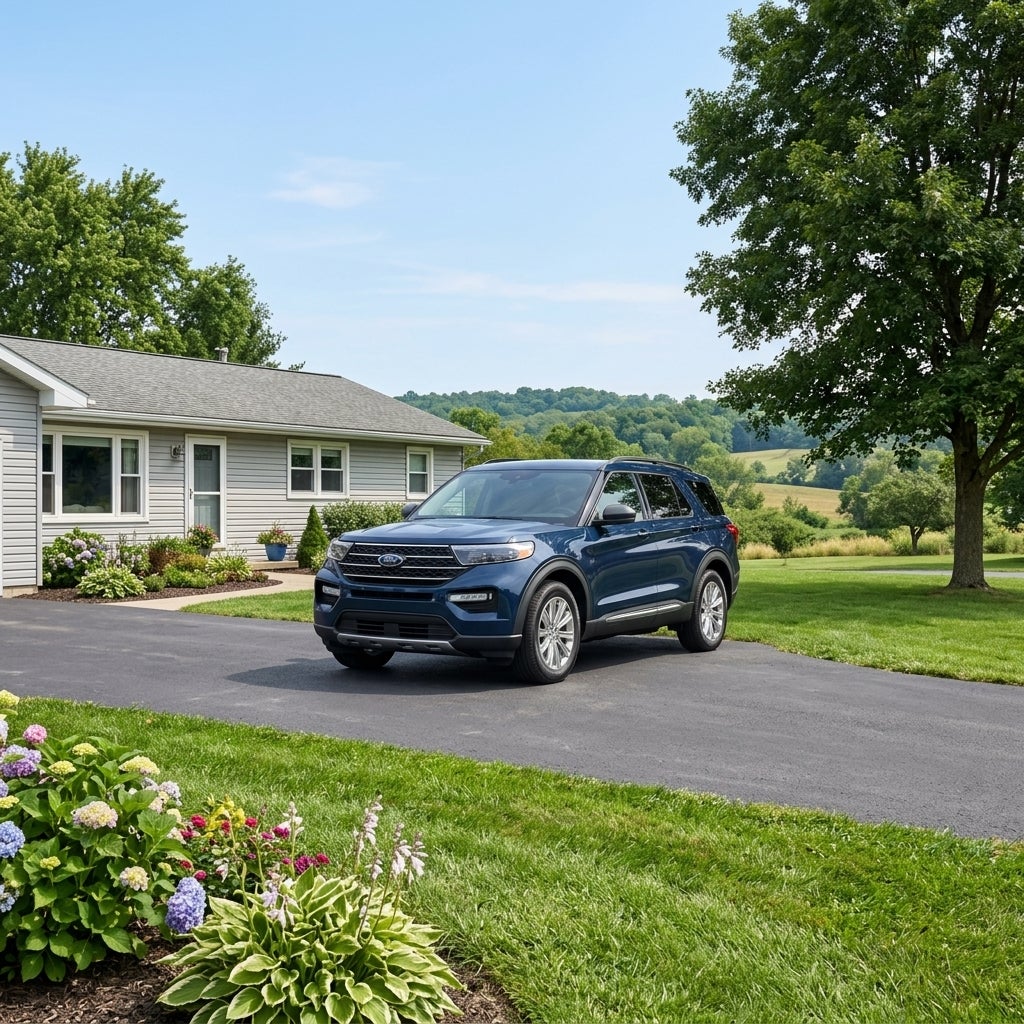


Buying a used car with 100,000 miles is worth the risk if the vehicle has a documented maintenance history, verified mechanical updates, and a clean vehicle history report. Modern automotive engineering standards and widespread synthetic oil usage allow properly cared-for vehicles from reliable manufacturers to routinely operate well past 200,000 miles. At 100,000 miles, the initial steep vehicle depreciation has already occurred [3], providing buyers with significant upfront savings while retaining substantial remaining operational life.
100,000-MILE BUYING DECISION MATRIX
| Factor | Practical Assessment |
|---|---|
| Major Mechanical Risk | Low when routine oil changes |
| and timing belt services are | |
| documented [1, 3] | |
| Upfront Depreciation Savings | Moderate to High (typically |
| 40% to 60% off original MSRP) | |
| Expected Remaining Lifespan | 5 to 10 years (75,000 to |
| 100,000+ additional miles) [2] | |
| Near-Term Maintenance Outlook | Plan for wear items: brakes, |
| tires, spark plugs, fluids [2] |
The historical milestone of 100,000 miles used to signal the end of a vehicle's dependable life, but modern powertrain manufacturing has altered that baseline. Precision build tolerances, improved metallurgy, and advanced engine management computer systems protect internal components from premature failure. A 100,000-mile car that spent its early years logging highway commuter miles retains plenty of life in its drivetrain.
Selecting a high-mileage vehicle allows smart shoppers to stretch their vehicle budget into higher trim levels, larger body styles, or models equipped with intelligent four-wheel drive systems that might otherwise exceed their spending limit. For suburban commuters traveling along State Route 170 in Calcutta, a well-maintained high-mileage crossover or truck delivers winter traction and everyday cargo versatility at a fraction of the cost of a brand-new vehicle.
Before making a final purchase commitment, evaluate the complete ownership package. Confirming that major 100,000-mile scheduled maintenance items—such as spark plug replacement, transmission fluid exchange, and coolant flushes—were recently completed eliminates near-term repair surprises. To explore our current selection of pre-owned vehicles or speak directly with our team, feel free to visit our East Liverpool showroom location or give our staff a quick call at (330) 462-7578 to discuss available pre-owned models.
Table of Contents
- Is 100,000 Miles Bad for a Used Car, and How Does Modern Synthetic Oil Extend Engine Life?
- How Do You Verify Maintenance History and Avoid Red Flags on a High-Mileage Car?
- What Is the Average Cost of a Used Car With 100,000 Miles?
- What Are Standard Loan Limits and Financing Options for High-Mileage Vehicles?
- How Does Safety Technology Compare Between Older High-Mileage Cars and Newer Models?
- Common Questions About Buying a Used Car With 100,000 Miles
Is 100,000 Miles Bad for a Used Car, and How Does Modern Synthetic Oil Extend Engine Life?
A six-figure odometer reading is not inherently bad for a used car, as engine longevity depends primarily on consistent lubrication and preventive care rather than mileage alone. Full synthetic motor oil plays the central role in high-mileage engine survival by maintaining uniform viscosity under severe thermal stress, preventing internal metal-on-metal wear, and eliminating harmful engine sludge deposits.
LUBRICATION TYPE IMPACT ON HIGH-MILEAGE ENGINE LONGEVITY
| Lubricant Property | Full Synthetic Advantage in High-Mileage Units |
|---|---|
| Viscosity Stability | Resists thermal breakdown during extreme summer |
| heat and severe engine loads [1] | |
| Cold-Start Flow Rate | Circulates immediately during freezing starts, |
| protecting bearings and camshafts [1] | |
| Sludge & Deposit Control | Active detergent additives scrub varnish and |
| keep oil passages open [1] | |
| Seal Conditioning | Specialized formulations keep rubber gaskets |
| pliable to prevent oil leaks [1] |
Unlike conventional motor oil refined directly from crude oil, synthetic lubricant molecules are chemically engineered to uniform sizes. This consistent molecular structure creates a resilient protective oil film across critical internal components, including piston rings, crankshaft bearings, valve guides, and turbocharger shafts. When an engine cold-starts on a freezing morning, low-viscosity synthetic oil pumps quickly throughout the cylinder block, mitigating friction during the critical seconds before the engine reaches normal operating temperature.
Thermal stability is equally vital for high-mileage engines. During extended highway driving or heavy towing, high engine temperatures cause conventional oil to oxidize, thicken, and break down into sticky carbon varnish and sludge. Synthetic formulations resist oxidative breakdown, keeping oil galleries clear so vital internal parts receive uninterrupted lubrication. Furthermore, specialized high-mileage synthetic blends contain active seal conditioners that preserve internal rubber seals and gaskets, preventing dry rot, cracking, and oil seepage.
When assessing a high-mileage vehicle on our lot, reviewing lubrication care gives clear insight into how the vehicle will perform over the next 50,000 to 100,000 miles. Vehicles configured with high-output powertrains like the 3.5L EcoBoost V6 or robust naturally aspirated engines benefit significantly from consistent synthetic oil service intervals. Shoppers seeking maximum peace of mind can filter our pre-owned inventory for pre-owned single-owner vehicles with verified oil maintenance logs, or explore the certified pre-owned Ford lineup to secure factory-backed warranty protection on low-risk, thoroughly inspected pre-owned models.

How Do You Verify Maintenance History and Avoid Red Flags on a High-Mileage Car?
Verifying the maintenance history of a 100,000-mile car requires reviewing itemized service receipts, analyzing digital vehicle history reports, and scheduling a physical pre-purchase inspection. Cross-referencing dated shop records against the manufacturer's recommended service schedule ensures all major mileage milestones were completed on time.
- Vehicle History Reports: Review independent history reports using the Vehicle Identification Number (VIN) to verify odometer consistency, check title status, and confirm the absence of major accident reports or flood damage claims.
- Itemized Service Invoices: Look for physical receipts or digital logs documenting routine oil changes, transmission fluid services, brake rotor replacements, and cooling system maintenance.
- NHTSA Recall Database: Check the National Highway Traffic Safety Administration recall portal using the VIN to confirm that all manufacturer safety recalls were performed free of charge at an authorized dealership.
- Physical Inspection: Have a qualified technician inspect underbody components, check fluid clarity, assess brake pad thickness, examine tire wear patterns, and scan engine control modules for pending diagnostic trouble codes.
HIGH-MILEAGE VEHICLE INSPECTION CHECKLIST
| Area | What to Inspect |
|---|---|
| Engine & Drivetrain | Look for active oil leaks, dark exhaust smoke, gear |
| slipping, or unusual valve train noise [1, 3, 4] | |
| Undercarriage & Frame | Inspect frame rails, suspension perches, and exhaust |
| hangers for severe structural rust [3, 4] | |
| Steering & Suspension | Check shock absorbers, struts, ball joints, and tie rod |
| ends for excessive play or leaking fluid [1, 3, 4] | |
| Electrical & Comfort | Test power windows, air conditioning, heater core, |
| infotainment screens, and instrument cluster gauges [3, 4] |
When evaluating vehicles that navigate the riverfront bluffs and hill climbs along the Ohio River in East Liverpool, paying close attention to suspension bushings, brake hardware, and undercarriage condition is essential. Road salt exposure and frequent hill ascents accelerate wear on steering joints and brake pads. A well-documented vehicle whose prior owner replaced struts, ball joints, and brake rotors represents a far better purchase value than a lower-mileage car with deferred suspension maintenance.
A major red flag during any vehicle inspection is an incomplete or missing maintenance history combined with dark, dirty engine oil or low fluid levels. Inconsistent mileage entries between state inspection records and history report logs may indicate odometer tampering. Unresolved check engine lights, slipping automatic transmission shifts, or uneven tire wear indicating bent suspension geometry mean a buyer should walk away or demand a significant price adjustment. If you plan to trade in your current vehicle toward a well-documented pre-owned car, you can estimate your trade-in value online in just a few clicks to establish your purchasing budget.
What Is the Average Cost of a Used Car With 100,000 Miles?
The average cost of a used car with 100,000 miles typically ranges from $7,000 to $12,000 for compact and midsize sedans, while high-mileage trucks, full-size SUVs, and commercial vehicles average between $12,000 and $18,000. Exact pricing depends heavily on vehicle segment, brand reputation, body style, powertrain, geographic location, and overall mechanical condition.
AVERAGE PRICING BY VEHICLE CATEGORY AT 100,000 MILES
| Vehicle Segment | Typical High-Mileage Market Price Range |
|---|---|
| Compact & Midsize Sedans | $7,000 to $11,000 |
| Crossovers & Compact SUVs | $9,000 to $14,000 |
| Full-Size Trucks & Body-on-Frame | $13,000 to $18,000 |
| Full-Size Three-Row SUVs | $12,000 to $17,000 |
Market valuation for 100,000-mile cars reflects the dramatic slowing of vehicle depreciation. A new vehicle loses approximately 20% of its initial value during the first year and up to 50% by its fifth year. By the time a vehicle reaches 100,000 miles, the bulk of its monetary depreciation has already occurred. Buyers pay primarily for the remaining utility and mechanical health of the vehicle rather than its original retail sticker price.
Vehicles configured with specialized equipment—such as full-frame four-wheel drive trucks with the 5.0L V8 engine or heavy-duty diesel pickups—retain a higher percentage of their value at 100,000 miles due to sustained demand for towing and work capabilities. Conversely, front-wheel-drive sedans and entry-level commuter hatchbacks yield lower price points, making them ideal options for first-time buyers or budget-conscious shoppers. Comparing the asking price against the total estimated cost of any near-term maintenance items ensures you lock in a fair deal that fits comfortably into your household budget.
What Are Standard Loan Limits and Financing Options for High-Mileage Vehicles?
Standard loan guidelines for high-mileage used cars generally restrict financing to vehicles under 10 model years old with fewer than 120,000 to 150,000 odometer miles. While major national banks enforce strict age and mileage cutoffs, credit unions and specialized automotive dealership lending networks offer flexible financing terms for qualified high-mileage inventory.
LENDER ELIGIBILITY COMPARISON FOR HIGH-MILEAGE VEHICLES
| Lender Type | Typical Mileage Cap | Typical Vehicle Age Limit |
|---|---|---|
| Major Commercial | 100,000 to 125,000 | 7 to 10 model years |
| Banks | miles [1] | max [1] |
| Regional Credit | 120,000 to 150,000 | 10 to 15 model years |
| Unions | miles [1] | max [1] |
| Dealership Indirect | Up to 150,000 miles | Up to 12 model years |
| Financing Networks | based on vehicle value | with flexible terms |
Financing a high-mileage pre-owned vehicle differs slightly from securing a loan on a late-model car. Because lenders view older or high-mileage units as carrying elevated mechanical risk, loan terms vary by lender and vehicle to prevent the borrower from becoming upside-down on the loan balance. Loan-to-value (LTV) limits are calculated using wholesale book values, meaning a larger down payment or trade-in equity helps secure approval and lowers interest rates.
Our finance department maintains relationships with multiple regional banks and credit unions experienced in structuring competitive used-car loans. Bringing your financial documents—including recent pay stubs, proof of residence, a valid driver's license, and insurance information—streamlines the underwriting process. To review personalized rate options and see what loan terms fit your budget, you can submit an online credit application directly through our secure website before visiting our lot.
How Does Safety Technology Compare Between Older High-Mileage Cars and Newer Models?
Older high-mileage vehicles manufactured prior to 2018 come equipped with fundamental passive safety features such as multi-stage airbags, anti-lock brakes, electronic stability control, and rearview cameras, but they often lack modern active driver-assist technologies. Newer vehicles incorporate advanced radar and camera networks designed to actively intervene and prevent collisions before they occur.
SAFETY TECHNOLOGY GENERATION COMPARISON
| High-Mileage Older Vehicles | Contemporary Newer Models |
|---|---|
| Multi-stage front & side airbags | Complete curtain airbags & knee bolsters [1] |
| Four-wheel Anti-lock Brakes (ABS) | Automatic Emergency Braking (AEB) [1] |
| Electronic Stability Control | Adaptive Cruise Control with Stop-and-Go [1] |
| Basic Rearview Camera System | Blind Spot Information System (BLIS) [1] |
| Standard halogen headlights | Lane-Keeping Assist & Pre-Collision Assist [1] |
For drivers who prioritize cutting-edge driver-assist tools, modern vehicle suites like Ford Co-Pilot360 offer features such as Pre-Collision Assist with Automatic Emergency Braking, Blind Spot Information System (BLIS), Lane-Keeping System, and Adaptive Cruise Control. These active safety technologies provide real-time alerts and automatic steering or braking assistance during highway commutes and congested traffic situations.
While a 100,000-mile vehicle from a previous generation delivers sturdy crash protection and core safety equipment, buyers who frequently transport young children or desire the latest semi-autonomous highway support may prefer late-model pre-owned or new vehicles. Comparing an older high-mileage SUV against a current-year model allows families to weigh initial acquisition savings against the comfort of updated safety tech. If you want to compare late-model tech features against high-mileage value, you can explore our new vehicle inventory to view our current stock of safety-equipped models.
Common Questions About Buying a Used Car With 100,000 Miles
Q: Is 100,000 miles considered too high for a pre-owned truck or SUV?
A 100,000-mile odometer reading is not too high for a pre-owned truck or SUV that has been properly maintained with consistent fluid changes and timely component services. Full-size trucks and body-on-frame SUVs are engineered with heavy-duty transmissions, robust axle assemblies, and durable engines built to handle demanding workloads over long ownership periods. Verifying that prior owners completed transfer case fluid changes, differential services, and brake updates ensures the vehicle remains ready for daily driving and towing.
Q: How many additional years can a vehicle last after reaching 100,000 miles?
A vehicle with 100,000 miles can reliably last an additional 5 to 10 years when cared for according to the manufacturer's maintenance schedule. Assuming an average annual driving distance of 12,000 to 15,000 miles, a well-lubricated engine using full synthetic oil and receiving timely wear-and-tear repairs can easily reach 175,000 to 200,000+ total miles. Vehicle longevity depends far more on preventive maintenance and gentle driving habits than on the odometer reading alone.
Q: What major maintenance items should be checked on a 100,000-mile car before buying?
Key maintenance items to check on a 100,000-mile car include spark plug replacement, cooling system flush, transmission fluid service, brake fluid replacement, and timing belt condition if equipped with an engine timing belt rather than a timing chain. Additionally, inspect the vehicle's serpentine drive belts, radiator hoses, shock absorbers, suspension bushings, and brake pads for signs of wear. Confirming these services are completed prevents immediate out-of-pocket maintenance expenses right after purchase.
Q: Will financing interest rates be higher on a high-mileage used car?
Financing interest rates on high-mileage vehicles are typically slightly higher than rates for brand-new or late-model pre-owned cars because lenders price for the additional risk associated with older vehicles. However, because the overall purchase price of a 100,000-mile car is substantially lower, the total monthly payment and total interest paid over the life of a shorter-term loan can still be significantly less than financing a newer model.
Q: Should I purchase an extended service contract for a 100,000-mile car?
Purchasing an extended service contract or vehicle protection plan for a 100,000-mile car can be a smart decision if you want to safeguard your monthly budget against unexpected mechanical repairs. Review the specific coverage details, component exclusions, deductible amounts, and mileage limits of any offered vehicle service contract. Choosing a comprehensive plan that covers major powertrain components like the engine, transmission, and drive axles provides peace of mind throughout your ownership period.
Finding the right pre-owned car with 100,000 miles comes down to choosing a quality vehicle backed by verified maintenance and transparent dealership support. At Tri State Ford, our team carefully inspects every pre-owned vehicle on our lot to ensure it meets our high standards for safety, mechanical reliability, and overall value. Whether you need a dependable commuter car, a spacious family crossover, or a hard-working four-wheel-drive pickup, we are here to help you navigate your options with complete confidence.
Take the next step in your vehicle search today by exploring our current pre-owned inventory online or dropping by our showroom. Stop by our showroom address at 1503 Pennsylvania Ave to take a test drive, or give our sales team a call at (330) 462-7578 to ask about specific models, discuss financing terms, or value your trade-in.
Keep Your Vehicle Running Strong
Keep your vehicle performing at its best with our service team: