
Blog / Used Vehicle Guides, Financing & Insurance, Buying Guides, Pre-Owned Vehicle Sales, Vehicle

Balancing Cost and Quality in the Pre-Owned Market

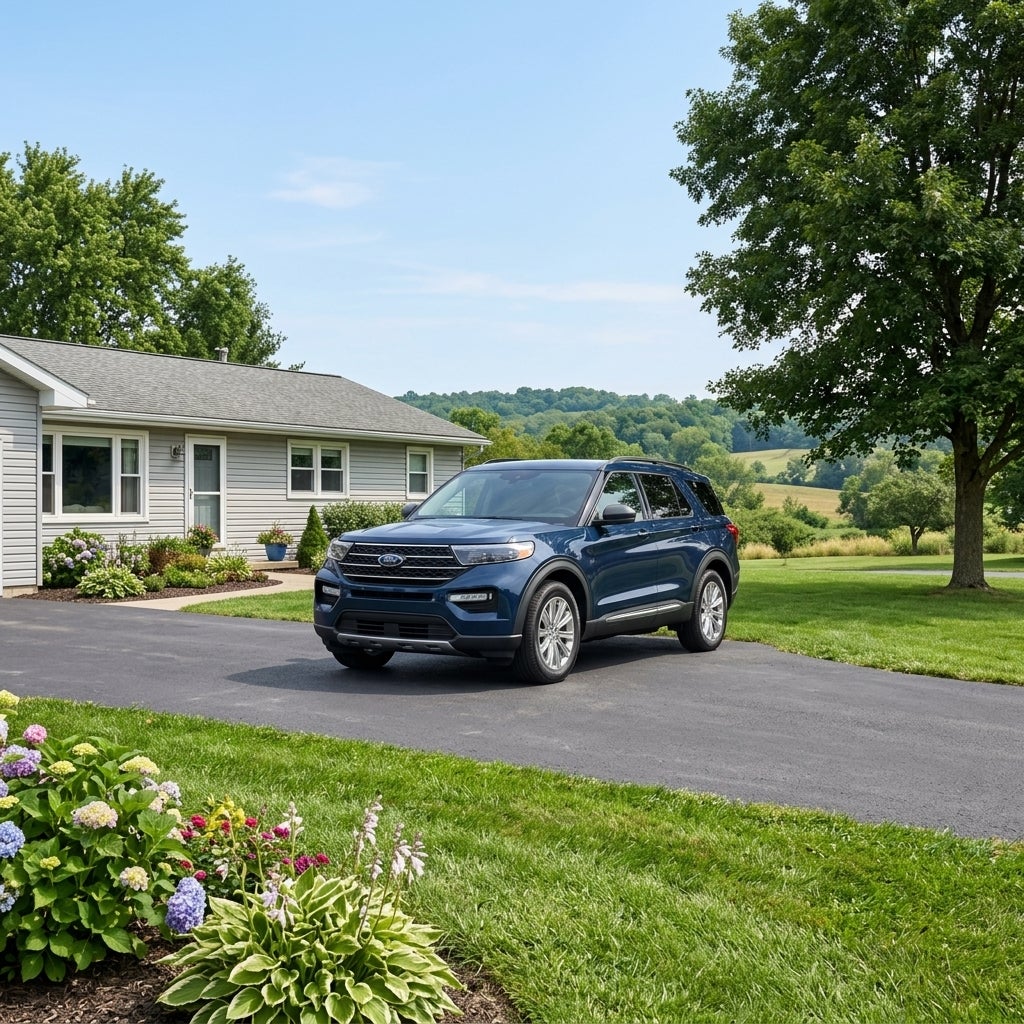
A blue Ford Explorer parked on a paved driveway of a suburban house with a lush green lawn. (Representative image for illustration purposes only. Actual vehicle may vary based on trim and configuration.)

Navigating the pre-owned vehicle market requires balancing upfront savings with long-term mechanical reliability. With the average age of light vehicles in the United States reaching over twelve years, the inventory of available used cars is more diverse than ever. Recent industry data highlights a favorable shift for budget-conscious buyers. Edmunds reported that three-year-old used vehicles averaged $31,548 in the first quarter of 2026. This pricing trend aligns with a five-year low in value retention, as three-year-old models retained just 66% of their original retail price on average.

This depreciation represents a significant buying opportunity on our lot at 1503 Pennsylvania Ave, East Liverpool, OH 43920. For those seeking maximum peace of mind, we recommend exploring our curated selection of one-owner pre-owned vehicles, which often come with comprehensive maintenance histories. To help you find the right fit for your budget, you can easily plan a visit to our physical showroom or give our sales team a quick call to discuss current pre-owned options.

Table of Contents

Calculating the Depreciation Discount: How Much Cheaper Is a Used Car Than a New One?

Understanding the financial spread between a brand-new model and a pre-owned alternative is the first step toward smart budgeting. The initial depreciation hit on a new vehicle is historically the steepest, which works directly in favor of the used-car buyer. For instance, a new 2026 Ford Escape Active starts at an MSRP of $30,350, while a new 2026 Ford F-150 King Ranch starts at $65,825. By choosing a pre-owned model instead, buyers can bypass that immediate drop in value while securing a highly capable vehicle. For drivers in Calcutta navigating the rolling hills of northeastern Ohio, finding a dependable daily driver with a lower monthly payment is a practical priority that makes this depreciation discount highly appealing.

Market data supports this cost-saving strategy. According to industry tracking, the average transaction price for a used vehicle sits around $28,000, compared to over $48,000 for new models. This substantial gap allows buyers to access higher trim levels or advanced features that might otherwise be out of reach. If you are comparing your options, you can browse our new vehicle stock or look through our latest factory arrivals to see the starting point for modern features.

Some buyers prefer to design a vehicle from the ground up using our custom ordering service, while others focus on maximizing their savings by checking our pre-owned vehicle deals or our current new vehicle promotions. We also maintain a specialized selection of commercial-grade work trucks to support local business owners who need immediate hauling power without the premium price tag.

Certain models hold their value exceptionally well, which is an important factor if you plan to trade the vehicle in later. Kelley Blue Book's 2026 Best Resale Value Awards recognized this durability, ranking the Ford Maverick seventh overall with a five-year resale value of 54.1%, and the Ford Ranger tenth overall at 53.4%. Buying a pre-owned version of a vehicle with high resale value ensures that your investment remains secure over your years of ownership.

​

Securing a low purchase price is only half the battle; understanding the complete cost of ownership prevents unexpected financial strain down the road. Hidden costs often arise from deferred maintenance, registration fees, and high finance rates. When buying from a private seller, you might inherit immediate repair needs like worn brakes or aging batteries. In contrast, purchasing from a reputable dealership ensures the vehicle has undergone a professional safety and quality inspection, saving you from immediate out-of-pocket expenses.

To illustrate the baseline costs of modern vehicles, consider the pricing structure of a popular compact SUV. A new 2026 Ford Escape Active has a base MSRP of $30,350 with a $1,495 destination charge, while the ST-Line starts at $31,195 with a $1,495 destination charge. Upgrading to the ST-Line Select brings the base MSRP to $33,890 with a $1,495 destination charge, and the ST-Line Elite is priced at $37,210 with a $1,495 destination charge. For those interested in premium features or alternative powertrains, the Platinum trim starts at $36,215 and the PHEV starts at $35,400, both carrying the same $1,495 destination charge. Reviewing these retail baselines helps pre-owned shoppers gauge whether a used vehicle's price accurately reflects its age and equipment level.

For commercial buyers, managing operational costs is even more critical to protecting profit margins. If your business requires heavy-duty capability, we offer a dedicated selection of commercial F-Series trucks built to handle demanding payloads. Likewise, local delivery and service businesses can optimize their daily routes by exploring our fleet of Transit vans. To help keep your vehicle performing efficiently, you can check our current service promotions for regular maintenance savings that protect your vehicle's long-term value.

Pricing

Pricing by trim

FeatureActivePHEVPlatinumST-LineST-Line EliteST-Line Select
Base MSRP$30,350$35,400$36,215$31,195$37,210$33,890
Destination charge$1,495$1,495$1,495$1,495$1,495$1,495

Fuel Economy

Fuel economy and range by trim

FeatureActivePHEVPlatinumST-LineST-Line EliteST-Line Select
MPG27 city / 34 hwy / 30 combined42 city / 37 hwy / 40 combined42 city / 36 hwy / 39 combined27 city / 34 hwy / 30 combined23 city / 31 hwy / 26 combined23 city / 31 hwy / 26 combined

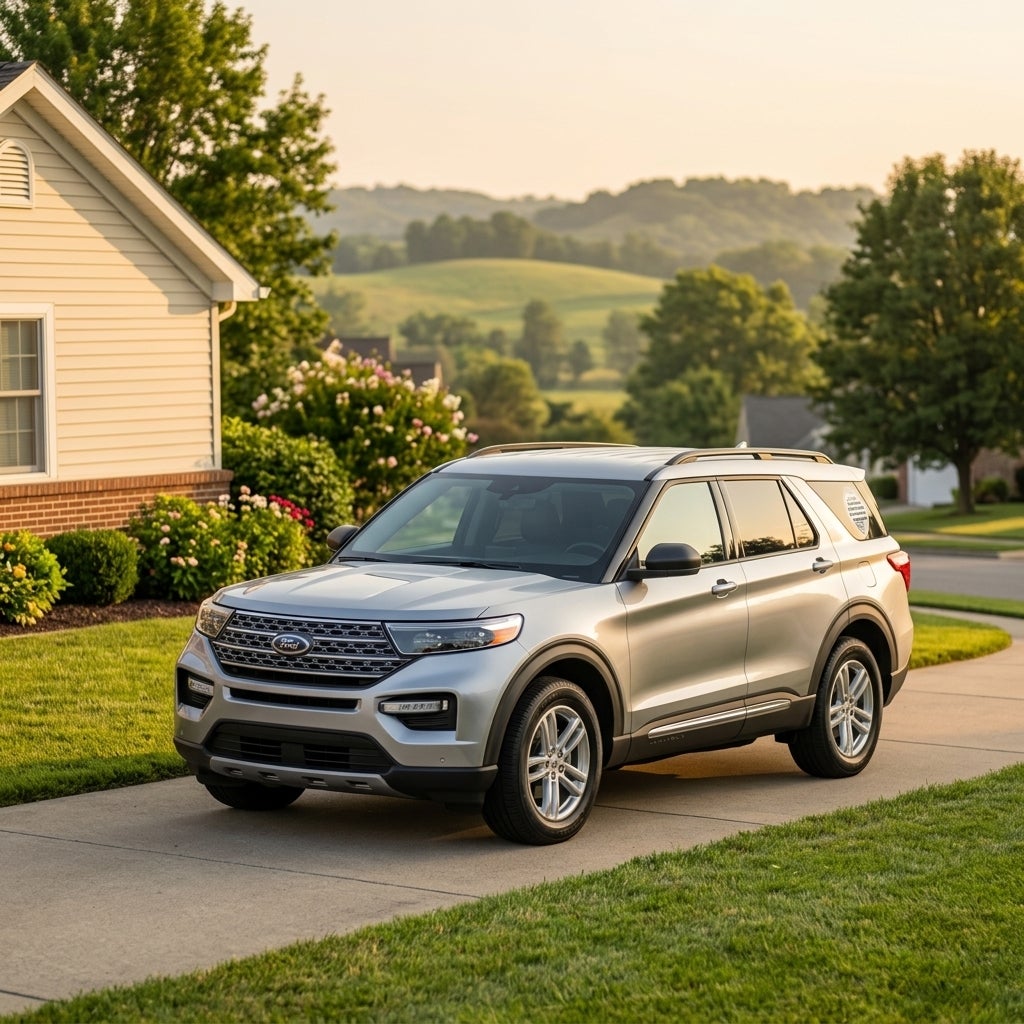
​Silver Ford Explorer SUV parked on a concrete driveway in front of a suburban house during golden hour. (Representative image for illustration purposes only. Actual vehicle may vary based on trim and configuration.)

The Mileage Equation: How Odometer Readings and Maintenance History Affect Pre-Owned Pricing

The numbers on an odometer are often the first thing a buyer looks at, but mileage only tells part of the story. A low-mileage vehicle that is nearly a decade old may seem like an incredible find, but prolonged sitting can cause rubber hoses, seals, and tires to dry rot and degrade over time. Conversely, a newer model with higher mileage has likely spent its life on the highway, where consistent engine temperatures and smooth driving conditions cause far less wear and tear. For commuters in Boardman who drive daily to Youngstown, a newer vehicle with slightly higher highway mileage but a spotless service history often represents the perfect sweet spot of modern technology and affordable pricing.

Evaluating the maintenance history is the most reliable way to verify a vehicle's true condition. Regular oil changes, fluid flushes, and scheduled inspections prevent premature mechanical wear, ensuring a long lifespan regardless of the odometer reading. When evaluating a pre-owned vehicle, pay close attention to high-wear items that could require immediate replacement. If you need to budget for upcoming maintenance on a vehicle you already own or are planning to buy, you can easily find matching tires online or schedule a professional battery health check to ensure reliable starting power during our cold local winters. If you are planning to upgrade your current ride, you can get a fast, competitive valuation by utilizing our online instant cash offer tool to jumpstart your next purchase.

​

Reliable Brands for Budget Buyers and the Realities of Private Seller Transactions

Purchasing a vehicle from a private seller is often perceived as a way to save money, but the process carries substantial risks and administrative hurdles. Private transactions require you to handle the title transfer, verify there are no active liens on the vehicle, and coordinate a secure payment method on your own. Furthermore, private sellers rarely offer financing options, forcing buyers to secure personal loans with higher interest rates or pay the entire balance in cash. At a dealership, the entire transaction is streamlined, legal compliance is guaranteed, and competitive financing is handled in one place.

For budget-conscious buyers seeking long-term dependability, focusing on brands with a proven track record of engineering durable powertrains is essential. Ford models are highly regarded in the pre-owned market due to their robust engine options and widespread parts availability. For example, the Ford Escape offers highly reliable configurations, such as the 1.5L engine producing 180 hp and 199 lb-ft of torque, paired with an 8-speed automatic and Front-wheel drive. For those needing extra capability for winter weather, the 2.0L engine delivers 250 hp and 280 lb-ft of torque with an 8-speed automatic and All-wheel drive. Additionally, the highly efficient 2.5L hybrid powertrain produces 192 hp and 155 lb-ft of torque, utilizing a smooth eCVT and All-wheel drive to maximize fuel economy.

Choosing a dealership like ours provides access to flexible financing solutions that private sellers simply cannot match. To streamline your buying process, you can complete our secure online finance application from the comfort of home. If you have a vehicle to swap, we can help you calculate your current vehicle's trade-in value to contact our team for current financing options. We also encourage shoppers to check our latest manufacturer promotions to see if a new or certified pre-owned model fits within your monthly budget.

Engine & Performance

Powertrain specs by trim

FeatureActivePHEVPlatinumST-LineST-Line EliteST-Line Select
Engine1.5L2.5L2.0L1.5L2.0L2.5L
Horsepower180 hp210 hp250 hp180 hp250 hp192 hp
Torque199 lb-ft155 lb-ft280 lb-ft199 lb-ft280 lb-ft155 lb-ft
Transmission8-speed automaticeCVT8-speed automatic8-speed automatic8-speed automaticeCVT
DrivetrainFront-wheel driveFront-wheel driveAll-wheel driveFront-wheel driveAll-wheel driveAll-wheel drive

​

The Road Test and Inspection: How Long to Drive and Why Professional Checks Matter

A thorough test drive is your best opportunity to evaluate a vehicle's mechanical health and overall comfort before making a commitment. Many shoppers make the mistake of taking a quick five-minute drive around the block, which is rarely long enough to get the engine up to its normal operating temperature or reveal hidden steering vibrations. When helping local buyers, our sales team always suggests spending at least thirty minutes on a varied test loop that includes both local streets and highway stretches to ensure the vehicle feels right in every driving scenario.

During your test drive, pay close attention to how the vehicle handles acceleration, braking, and cornering. Listen for any unusual engine noises upon startup, and check that all interior electronics, climate controls, and driver-assist features function properly. If you are shopping for a pre-owned pickup to handle towing or heavy payloads, we recommend checking our available truck inventory to compare cabin space and utility features. When you find a model that catches your eye, you can easily book a test drive online to experience its performance firsthand on local roads.

While a self-inspection is valuable, a professional pre-purchase inspection by a certified technician is the ultimate safeguard against buying a vehicle with hidden damage. A technician can put the vehicle on a lift to inspect the undercarriage for rust, structural damage, or fluid leaks that are completely invisible from a simple walk-around. For added security, purchasing a certified pre-owned Ford vehicle includes access to Ford Roadside Assistance: 800-241-3673, providing manufacturer-backed service quality, comprehensive coverage, and warranty protection on your journeys.

​

Common Questions About Used Car Value and Affordability

Q: What is the difference between a standard used car and a Certified Pre-Owned vehicle?

Certified Pre-Owned vehicles undergo a rigorous multi-point inspection by factory-trained technicians and come backed by manufacturer warranties. Standard used cars are typically sold as-is, meaning they do not include these extended manufacturer-backed protections, though they often carry a lower purchase price.

Q: How does mileage impact the overall value of a pre-owned vehicle?

Generally, lower mileage indicates less mechanical wear and tear, which commands a higher market price. However, a well-maintained vehicle with higher mileage is often a better long-term value than a low-mileage car that has suffered from neglect or sitting idle.

Q: Are vehicle history reports completely reliable for identifying past accidents?

While history reports are excellent resources for tracking title status and reported maintenance, they only show incidents that were officially reported to insurance or police. A physical inspection by a professional technician remains essential to catch unreported structural repairs or bodywork.

Q: What is a salvage title and is it safe to purchase a vehicle that has one?

A salvage title is issued when an insurance company deems a vehicle a total loss due to severe damage or theft. Buying a salvage vehicle carries significant risks regarding structural safety, difficulty securing insurance, and extremely low resale value.

Q: How can I find a reliable dealership close to home for my next purchase?

You can easily locate our showroom by searching for a local Ford dealer online to view our current inventory and hours. To make ownership even more convenient, we offer specialized services like valet vehicle pickup and delivery as well as mobile vehicle service to handle your maintenance needs directly at your home or office.

​

Finding Your Next Dependable Vehicle at Tri State Ford

Securing an affordable, high-quality vehicle does not have to be a stressful process. By focusing on proven engine options, verifying maintenance records, and taking the time for a comprehensive road test, you can drive away with complete confidence in your investment. Our team is dedicated to providing a transparent, pressure-free buying experience that respects your budget and your family's transportation needs.

When you are ready to explore our current selection of pre-owned cars, trucks, and SUVs, our finance department is here to help you secure current financing options and payment terms. Stop by our showroom located at 1503 Pennsylvania Ave, East Liverpool, OH 43920, or get easy turn-by-turn directions to our dealership. You can also connect with our sales specialists by calling (330) 462-7578 to schedule a personal consultation today.

Keep Your Vehicle Running Strong

Keep your vehicle performing at its best with our service team:


© 2026 Tri State Ford. All rights reserved.

Posted in:

Related Posts

g

What Should You Know Before Buying a Used Car?

.hrizn-rte-content .e-rte-image { border: 0;max-width: 100%;height: auto } .hrizn-rte-content .e-rte-image.e-imginline { display: inline-block;float: none;margin-left: 5px;margin-right: 5px;max-width: calc(100% - 10px);vertical-align: bottom } .hrizn-rte-content .e-rte-image.e-imgbreak, .hrizn-rte-content .e-rte-image.e-imgcenter { display: block;float: none;margin: 5px auto;max-width: 100% } .hrizn-rte-content .e-rte-image.e-imgleft { float: left;margin: 0 12px 8px 0;max-width: 100% } .hrizn-rte-content .e-rte-image.e-imgright { float: right;margin: 0 0 8px 12px;max-width: 100% } .hrizn-rte-content figure.e-rte-image { margin: 8px auto;max-width: 100% } .hrizn-rte-content figure.e-imgleft { float: left;margin: 0 12px 8px 0 } .hrizn-rte-content figure.e-imgright { float: right;margin: 0 0 8px 12px } .hrizn-rte-content figure.e-imgcenter { display: block;margin: 8px auto;text-align: center } Before buying a used vehicle, verify the vehicle identification number across all body panels, review a detailed vehicle history report for title brands, confirm that no unresolved safety recalls exist, and order an independent pre-purchase mechanical inspection. Establishing your target price through market pricing research and evaluating remaining warranty coverage ensures a transparent and secure transaction. Evaluating a pre-owned vehicle requires a methodical approach that balances mechanical condition, financial value, and structural integrity. A comprehensive vehicle history report provides vital background, but physical verification remains essential. Comparing the vehicle identification number on the driver side dashboard, the driver door jamb sticker, and the title document ensures all three match character for character. Any mismatch indicates potential fraud or unreported body panel replacements following an impact. For suburban commuters navigating the rolling hills and daily errands around Calcutta, finding a dependable pre-owned crossover like a 2026 Ford Escape with all-wheel drive requires looking closely at recent tire tread depth and brake wear. Hardworking vehicles endure diverse driving environments across the region, making a verified maintenance trail critical. Requesting past service records or reviewing dealer reconditioning logs reveals whether oil changes, fluid flushes, and filter replacements occurred at recommended intervals. Starting your search with a transparent team makes the purchasing journey straightforward. You can easily find our East Liverpool showroom right along the river, or give our friendly sales staff a quick call to ask about specific vehicle details before visiting in person. Table of Contents What Should You Check First and Look for During a Pre-Purchase Car Inspection? What Should You Look for on a Used Car Vehicle History Report and Title Status? What Is the Difference Between a Certified Pre-Owned Car and a Regular Used Car? Is It Better to Buy a Used Car from a Dealership or a Private Seller under As-Is Laws? How Do You Negotiate the Purchase Price of a Used Car at a Dealership? Frequently Asked Questions About Shopping Pre-Owned Vehicles What Should You Check First and Look for During a Pre-Purchase Car Inspection? During a pre-purchase car inspection, first confirm that the vehicle identification number matches across the dashboard, door jamb, and title, then perform a detailed visual check of fluid clarity, body panel alignment, and tire tread wear. A certified independent mechanic should raise the vehicle on a lift to examine the undercarriage, evaluate brake and suspension components, run a diagnostic scan for hidden trouble codes, and conduct a cold-start test drive. A thorough physical walkaround begins on the outside under bright natural daylight. Sight down each side of the body to confirm that panel gaps between doors, fenders, and the hood are uniform. Asymmetric gaps or subtle color variations across panels often point to previous collision repairs. Using a small magnet wrapped in a soft cloth against steel body panels helps identify body filler underneath repainted surfaces. In regional winter climates where road salt causes underbody wear, inspect the frame rails, strut towers, and rocker panels for heavy rust or freshly sprayed undercoating designed to cover structural damage. Under the hood, pull the oil dipstick to check fluid condition. Clean oil appears light amber, while dark, gritty oil indicates skipped oil changes. Foamy or milky fluid on the dipstick signals coolant leaking into the engine crankcase, which points to major internal engine failure. Squeeze radiator hoses to ensure they feel firm rather than spongy or brittle, and check the battery terminals for corrosion. When examining a pre-owned three-row SUV such as a 2026 Ford Explorer equipped with a 2.3L engine and SelectShift automatic transmission, check that coolant and transmission fluids are clean and filled to proper levels. The test drive yields critical operational details about mechanical health: Cold Start: Arrive before the seller warms up the vehicle to listen for engine knocks, valve ticks, or rough idling that disappears once the engine reaches operating temperature. Acceleration and Shifting: Accelerate firmly onto a highway lane to test engine responsiveness and shift smoothness. Shuddering during gear changes indicates transmission slippage. Braking Performance: Perform two firm stops from higher speeds on an open stretch of road. The vehicle must stop straight without pulling to one side, pedal vibration, or metallic grinding sounds. Suspension Integrity: Drive over moderate road bumps to listen for clunks or rattles, which signal worn ball joints, control arm bushings, or struts. When reviewing a heavy-duty truck like a 2026 Ford F-150 powered by a 3.5L engine, examine the trailer hitch receiver and axle seals for signs of heavy towing stress. To make your eventual purchase process smooth, completing an online credit application ahead of time helps establish clear monthly budget boundaries before you finalize your vehicle choice. Pricing Pricing by trim Feature Active AWD Active FWD Platinum AWD ST-Line AWD ST-Line Elite AWD 2.0L ST-Line FWD ST-Line Select AWD 2.0L:--:--:--:--:--:--:--:-- MSRP $31,750 $30,350 $37,940 $32,595 $38,935 $31,195 $35,015 Destination charge $1,495 $1,495 $1,495 $1,495 $1,495 $1,495 $1,495 Engine & Performance Powertrain specs by trim Feature Active AWD Active FWD Platinum AWD ST-Line AWD ST-Line Elite AWD 2.0L ST-Line FWD ST-Line Select AWD 2.0L:--:--:--:--:--:--:--:-- Engine 1.5L 1.5L 2L 1.5L 2L 1.5L 2L Horsepower 180 hp 180 hp 250 hp 180 hp 250 hp 180 hp 250 hp Torque 199 lb-ft 199 lb-ft 280 lb-ft 199 lb-ft 280 lb-ft 199 lb-ft 280 lb-ft Transmission automatic 8-speed automatic 8-speed SelectShift® automatic 8-speed SelectShift® automatic 8-speed SelectShift® Drivetrain All-wheel drive Front-wheel drive All-wheel drive All-wheel drive All-wheel drive Front-wheel drive All-wheel drive What Should You Look for on a Used Car Vehicle History Report and Title Status? A vehicle history report must be checked for title brands such as salvage, rebuilt, flood, or not actual mileage, along with odometer progression entries and accident records. Clean titles confirm that an insurance provider has never designated the vehicle as a total loss, preserving market value, structural safety, and eligibility for standard auto financing options. A history report provides a paper trail of recorded events throughout a vehicle's life cycle. Look closely at ownership history to distinguish between personal single-owner use, rental fleets, or commercial usage. Frequent ownership transfers over short timeframes often indicate persistent mechanical issues that previous owners preferred to pass along. Furthermore, check odometer entries across every service visit and registration renewal. If a recorded service visit lists higher mileage than a subsequent state registration entry, the vehicle may have experienced odometer rollback fraud. Title status represents the legal standing of the vehicle. A clean title signifies an uninterrupted ownership record free from catastrophic total-loss declarations. Conversely, salvage or rebuilt titles mean the vehicle sustained significant damage exceeding a major percentage of its retail value. Vehicles with branded titles present severe safety risks, carry reduced resale value, and are frequently ineligible for comprehensive insurance coverage or traditional financing terms. Checking open safety recall status directly on the official National Highway Traffic Safety Administration website using the vehicle identification number is another essential step. Unresolved safety recalls must be addressed by an authorized dealership service facility prior to purchase. If you prefer to skip the uncertainty of pre-owned title histories altogether, our team can assist you with custom ordering a new Ford tailored to your exact specifications, or you can explore current manufacturer vehicle specials available directly from the factory. What Is the Difference Between a Certified Pre-Owned Car and a Regular Used Car? A Certified Pre-Owned vehicle completes a rigorous factory-mandated multi-point inspection and includes a manufacturer-backed extended warranty, whereas a standard used car is generally sold as-is or with a short dealer warranty. Certified Pre-Owned programs provide higher quality standards through age, mileage, and reconditioning restrictions backed directly by the vehicle manufacturer. The primary distinction between standard pre-owned vehicles and factory-certified models sits in the strict inspection and warranty protections required by the original manufacturer. Standard used vehicles undergo basic safety checks and reconditioning, but their post-sale coverage varies significantly depending on remaining factory terms or dealer-offered service contracts. Feature Standard Pre-Owned Vehicle Certified Pre-Owned (CPO) Vehicle Inspection Process General safety and mechanical check Factory-mandated multi-point inspection Warranty Protection As-is or limited dealer warranty Manufacturer-backed extended limited warranty Age and Mileage Limits Varies widely by inventory Strict maximum age and mileage caps Vehicle History Report available upon request Full history report included and verified Roadside Assistance Optional add-on coverage Included manufacturer roadside support Vehicles enrolled in the certified program pass detailed checks covering engine performance, brake pad thickness, tire tread depth, frame integrity, and cabin electronics. Any worn component that fails to meet strict factory standards must be replaced with genuine factory parts before certification is granted. Certified buyers also enjoy round-the-clock emergency support. If you ever require towing, flat tire changes, or battery jump-starts, you can contact Ford Roadside Assistance: 1-800-241-3673 for immediate manufacturer-backed aid. Exploring our selection of pre-owned Carfax 1-owner vehicles offers excellent background transparency, while browsing our certified pre-owned Ford lineup delivers maximum long-term confidence and factory warranty coverage. Is It Better to Buy a Used Car from a Dealership or a Private Seller under As-Is Laws? Buying a used vehicle from a dealership offers structural protections under federal regulations, access to competitive financing, and trade-in conveniences, whereas private sales operate strictly under as-is terms without post-sale recourse. Dealerships must display an FTC Buyer's Guide on every pre-owned vehicle, clearly defining warranty terms or explicitly noting as-is status. Purchasing a vehicle directly from a private individual often carries a lower initial listing price, but it presents significant legal and financial risks. Private transactions operate entirely on an as-is basis under state commercial codes. Once money exchanges hands and the title transfers, the buyer absorbs complete financial responsibility for any mechanical failure, hidden frame damage, or electrical defect that arises, even if the issue appears minutes after the drive home. Additionally, private sales require the buyer to manage title transfers, lien payoffs, and registration paperwork independently. In contrast, established dealerships operate under state and federal consumer protection guidelines. Federal law mandates that dealers place a clear FTC Buyer's Guide in the window of every pre-owned car or truck on the lot. This document outlines whether the vehicle carries a full warranty, a limited warranty, or is being sold as-is, while explicitly stating that any verbal promises made by sales staff must be documented in writing on the purchase contract to be legally binding. Commuters traveling along Market Street in Boardman often choose dealership purchases because structured financing options and verified title processing save significant time compared to private title transfers. Dealerships also accept existing vehicles toward the purchase price, helping lower your total financed balance. You can easily value your trade-in online to estimate how your current vehicle's equity reduces your out-of-pocket costs. How Do You Negotiate the Purchase Price of a Used Car at a Dealership? Negotiate a used car purchase price by establishing a firm target price based on local market research for the exact trim, mileage, and condition, then using documented repair estimates from a pre-purchase inspection as line-item price adjustments. Separating the vehicle purchase price from financing terms, down payments, and trade-in valuations ensures complete financial clarity throughout negotiations. Effective price negotiation begins long before you step onto the sales floor. Research current market listings for comparable models using exact year, trim level, optional packages, and mileage inputs. Armed with objective market data, establish a realistic target price and a firm maximum limit before entering discussions. When local shoppers evaluate a practical crossover like the 2026 Ford Escape, understanding factory trim tiers and baseline pricing provides strong context for pre-owned pricing evaluations: Active FWD: $30,350 MSRP plus $1,495 destination charge. Active AWD: $31,750 MSRP plus $1,495 destination charge. ST-Line FWD: $31,195 MSRP plus $1,495 destination charge. ST-Line AWD: $32,595 MSRP plus $1,495 destination charge. ST-Line Select AWD 2.0L: $35,015 MSRP plus $1,495 destination charge. Platinum AWD: $37,940 MSRP plus $1,495 destination charge. ST-Line Elite AWD 2.0L: $38,935 MSRP plus $1,495 destination charge. When inspecting a pre-owned vehicle, use any mechanical flaws or upcoming maintenance items discovered during your visual check or independent inspection as objective negotiation points. If an inspection reveals that the tires have only 4/32" of tread remaining or the rear brake rotors require replacement soon, present the written repair estimate from an ASE-certified technician. Using the written repair estimate as a negotiation reference keeps the conversation focused on documented facts rather than general pricing assumptions. Keep every element of the transaction distinct. Negotiate the final sale price of the vehicle first before discussing monthly payment targets, credit terms, or trade-in allowances. Bundling these numbers together makes it difficult to see true vehicle pricing. Working with a supportive sales staff ensures a respectful, transparent dialogue where all pricing terms are presented clearly. Reaching out to our knowledgeable local Ford dealership team provides a stress-free environment focused on finding a vehicle that fits your budget. Frequently Asked Questions About Shopping Pre-Owned Vehicles Q: How much does a pre-purchase car inspection typically cost? A comprehensive pre-purchase inspection conducted by an independent certified mechanic typically costs between $100 and $250 depending on the vehicle type and scope of the evaluation. This fee covers a multi-point inspection including an undercarriage lift examination, a computerized diagnostic code scan, brake and suspension checks, and a full operational test drive. Q: What legal protections apply when buying a used car as-is? Buying a vehicle as-is means the buyer assumes all financial responsibility for repairs immediately upon purchase, with no implied or expressed warranty protection. Federal law requires dealers to display an FTC Buyer's Guide stating whether a vehicle is sold as-is. Legal recourse after an as-is sale exists only if the seller engaged in explicit fraud or intentional title misrepresentation. Q: How do you verify if a used vehicle has an open safety recall? You can verify open safety recalls by entering the vehicle's 17-character vehicle identification number into the free recall lookup tool on the official National Highway Traffic Safety Administration website. The tool displays any unrepaired safety recalls issued by the manufacturer. Authorized brand dealerships perform all safety recall repairs free of charge to the owner. Q: Can you finance a used vehicle with an existing trade-in balance? Yes, you can finance a pre-owned vehicle when trading in a car that still has an outstanding loan balance. The dealership contacts your current lender to obtain the exact payoff amount. If your trade-in value exceeds the loan balance, the remaining positive equity is applied as a down payment. If equity is negative, the remaining balance can often be rolled into the new auto loan subject to lender approval. Q: What documents are required when purchasing a pre-owned car at a dealership? Purchasing a pre-owned vehicle requires a valid government-issued driver's license, current proof of auto insurance, and your preferred form of payment or loan approval documentation. If you are trading in a vehicle, bring the original title or current registration card, payoff information if applicable, and all sets of keys. Finding the right pre-owned vehicle comes down to clear information, rigorous mechanical verification, and honest pricing. Our team is dedicated to delivering a straightforward, transparent buying experience for every customer. You can visit our dealership address at 1503 Pennsylvania Ave, East Liverpool, OH 43920 to inspect our pre-owned selection in person, give our friendly sales team a quick call with your questions, or explore our brand-new Ford models online to compare all your ownership options today. Keep Your Vehicle Running Strong Keep your vehicle performing at its best with our service team: Order Parts Schedule Service Appt © 2026 Tri State Ford. All rights reserved. Vehicle specification data © JATO Dynamics Limited. Title Tags Used Car Buying Tips in East Liverpool OH | Tri State Ford Meta Description Keywords Open Graph Twitter Card Canonical Article Metadata Geographic Targeting { "@context": "https://schema.org", "@graph": [ { "@type": "NewsArticle", "@id": "#article", "headline": "What Should You Know Before Buying a Used Car?", "datePublished": "2026-09-09T12:59:09.508Z", "dateModified": "2026-09-09T13:02:42.884Z", "author": { "@id": "#author" }, "publisher": { "@id": "#dealer" }, "wordCount": 2732, "description": "Learn key steps for buying a used car, including verifying the VIN, reviewing vehicle history reports, and scheduling a pre-purchase inspection." }, { "@type": "AutoDealer", "@id": "#dealer", "name": "Tri State Ford", "url": "https://www.tristateford.net", "telephone": "+13304627578", "sameAs": [ "https://maps.google.com/?cid=1136336406351438323" ], "address": { "@type": "PostalAddress", "streetAddress": "1503 Pennsylvania Ave", "addressLocality": "East Liverpool", "addressRegion": "OH", "postalCode": "43920", "addressCountry": "US" }, "areaServed": { "@type": "GeoCircle", "geoMidpoint": { "@type": "GeoCoordinates", "latitude": "40.6367833", "longitude": "-80.5443033" }, "geoRadius": "48280" }, "geo": { "@type": "GeoCoordinates", "latitude": "40.6367833", "longitude": "-80.5443033" }, "openingHours": [ "Mo 09:00-20:00", "Tu 09:00-18:00", "We 09:00-18:00", "Th 09:00-20:00", "Fr 09:00-18:00", "Sa 09:00-15:00" ] }, { "@type": "FAQPage", "@id": "#faq", "mainEntity": [ { "@type": "Question", "name": "How much does a pre-purchase car inspection typically cost?", "acceptedAnswer": { "@type": "Answer", "text": "A comprehensive pre-purchase inspection conducted by an independent certified mechanic typically costs between $100 and $250 depending on the vehicle type and scope of the evaluation. This fee covers a multi-point inspection including an undercarriage lift examination, a computerized diagnostic code scan, brake and suspension checks, and a full operational test drive." } }, { "@type": "Question", "name": "What legal protections apply when buying a used car as-is?", "acceptedAnswer": { "@type": "Answer", "text": "Buying a vehicle as-is means the buyer assumes all financial responsibility for repairs immediately upon purchase, with no implied or expressed warranty protection. Federal law requires dealers to display an FTC Buyer's Guide stating whether a vehicle is sold as-is. Legal recourse after an as-is sale exists only if the seller engaged in explicit fraud or intentional title misrepresentation." } }, { "@type": "Question", "name": "How do you verify if a used vehicle has an open safety recall?", "acceptedAnswer": { "@type": "Answer", "text": "You can verify open safety recalls by entering the vehicle's 17-character vehicle identification number into the free recall lookup tool on the official National Highway Traffic Safety Administration website. The tool displays any unrepaired safety recalls issued by the manufacturer. Authorized brand dealerships perform all safety recall repairs free of charge to the owner." } }, { "@type": "Question", "name": "Can you finance a used vehicle with an existing trade-in balance?", "acceptedAnswer": { "@type": "Answer", "text": "Yes, you can finance a pre-owned vehicle when trading in a car that still has an outstanding loan balance. The dealership contacts your current lender to obtain the exact payoff amount. If your trade-in value exceeds the loan balance, the remaining positive equity is applied as a down payment. If equity is negative, the remaining balance can often be rolled into the new auto loan subject to lender approval." } }, { "@type": "Question", "name": "What documents are required when purchasing a pre-owned car at a dealership?", "acceptedAnswer": { "@type": "Answer", "text": "Purchasing a pre-owned vehicle requires a valid government-issued driver's license, current proof of auto insurance, and your preferred form of payment or loan approval documentation. If you are trading in a vehicle, bring the original title or current registration card, payoff information if applicable, and all sets of keys. Finding the right pre-owned vehicle comes down to clear information, rigorous mechanical verification, and honest pricing. Our team is dedicated to delivering a straightforward, transparent buying experience for every customer. You can visit our dealership address at 1503 Pennsylvania Ave, East Liverpool, OH 43920 to inspect our pre-owned selection in person, give our friendly sales team a quick call with your questions, or explore our brand-new Ford models online to compare all your ownership options today." } } ] } ] }