Blog

All Compare Cars Automotive News, New Vehicle Reviews, Buying Guides, Financing & Insurance, Seasonal Driving Tips New Vehicle Reviews, Buying Guides, Financing & Insurance, Model Comparisons, Automotive News Tips Buying Guides, Financing & Insurance, New Vehicle Reviews, Model Comparisons, Sales & Promotions Community Events & Customer Appreciation, New Vehicle Reviews, Financing & Trade-In Guides, Buying Guides, Financing & Insurance, New Vehicle Reviews, Model Comparisons, Technology & Community Events, New Vehicle Buying Guides, Financing & Insurance, Maintenance & Service, Local Model Comparisons, New Vehicle Reviews, Technology & Innovation, Safety Features, Buying Guides New Vehicle Reviews, Buying Guides, Financing & Insurance, Model Comparisons, Automotive Technology New Vehicle Reviews, Buying Guides, Financing & Insurance, Model Comparisons, Used Vehicle Guides New Vehicle Reviews, Buying Guides, Model Comparisons, Financing & Insurance, Inventory & Sales Buying Guides, Financing & Insurance, New Vehicle Reviews, Commercial Fleet Sales, Custom Orders & Commercial Vehicle Sales, Financing & Leasing, Small Business Vehicle Incentives, Fleet Purchasing Dealership Events & Promotions, Financing & Trade-In Options, Maintenance & Service Specials, Leasing & Financing Options, Buying Guides, New Vehicle Reviews, Model Comparisons, Technology & Maintenance & Service, Automotive Detailing, Paint Protection & Care, Seasonal Vehicle Care, Maintenance & Service, Automotive Fluids & Lubricants, Vehicle Care & Ownership, Dealership Service Maintenance & Service, Essential Vehicle Care, Preventive Maintenance Tips, Vehicle Longevity Maintenance & Service, Safety Features, Technology & Innovation, Seasonal Driving Tips, Parts & Maintenance & Service, Warranty & Recalls, Repair & Diagnostics, Parts & Accessories, Vehicle New Vehicle Reviews, Buying Guides, Financing & Insurance, Model Comparisons, Inventory Highlights New Vehicle Reviews, Buying Guides, Financing & Insurance, Model Comparisons, Inventory Updates New Vehicle Reviews, Buying Guides, Model Comparisons, Maintenance & Service, Technology & New Vehicle Reviews, Buying Guides, Technology & Innovation, Safety Features, Seasonal Driving Tips Buying Guides, Financing & Insurance, Used Vehicle Guides, New Vehicle Reviews, Cross-Border Buying Guides, Financing & Insurance, Vehicle Inventory & Offers, Dealership Visit Preparation, Buying Guides, New Vehicle Reviews, Financing & Insurance, Commercial Vehicle Sales, Model Commercial Leasing Options, Business Fleet Solutions, Financing & Leasing Programs, Commercial Commercial Truck Sales, Fleet Purchasing Guides, Financing & Lease Options, Work Truck Commercial Truck Sales, Fleet Vehicle Financing, Custom Work Truck Upfits, Commercial Vehicle Commercial Vehicle Sales, Fleet Leasing & Management, Commercial Financing & Tax Incentives, Commercial Vehicle Sales, Fleet Purchasing & Management, Financing & Leasing for Businesses, New & Community Engagement & Events, New Vehicle Promotions, Financing & Trade-In Options, Maintenance & Community Events & Dealership News, New Vehicle Promotions & Incentives, Maintenance & Service Community Events & Dealership News, New Vehicle Reviews, Financing & Insurance, Maintenance & Custom Ordering & Build Process, New Vehicle Inventory & Offers, Financing & Trade-In Guidance, East Liverpool, OH Ford Dealer East Liverpool, OH Used Cars Financing & Insurance, Buying Guides, Commercial Vehicle Solutions, Fleet Management, Inventory and Financing & Insurance, Buying Guides, New Vehicle Reviews, Used Vehicle Guides, Automotive Sales Financing & Insurance, Buying Guides, New Vehicle Reviews, Used Vehicle Guides, Automotive Sales & Financing & Insurance, Buying Guides, New Vehicle Reviews, Used Vehicle Guides, Model Comparisons Financing & Insurance, Buying Guides, Used Vehicle Guides, New Vehicle Reviews, Automotive Sales Financing & Insurance, Buying Guides, Used Vehicle Guides, Trade-In Tips, New Vehicle Sales Financing & Insurance, Buying Guides, Vehicle Inventory & Offers, Trade-In & Appraisal, Dealership Financing & Insurance, Buying Guides, Vehicle Trade-In Tips, Dealership Sales Process, New Vehicle Financing & Insurance, Leasing Benefits, Model Comparisons, Technology & Innovation, Buying Guides Leasing & Financing Options, Buying Guides, Model Comparisons, Negotiation Tips, Inventory & Leasing & Financing Options, New Vehicle Leasing Guides, Buying Guides, Inventory Spotlight, Trade Leasing & Lease Deals, Financing & Insurance, New Vehicle Sales, Commercial Vehicle Leasing, Leasing Options, Financing & Insurance, New Vehicle Reviews, Buying Guides, Technology & Innovation Leasing Options, Financing & Insurance, New Vehicle Sales, Buying Guides, Vehicle Inventory Maintenance & Service, Air Conditioning Repair, Genuine Parts & Accessories, Dealer-Authorized Maintenance & Service, Automotive Air Conditioning Repair, Vehicle Cooling System Care, Diagnostic Maintenance & Service, Automotive Detailing & Cleaning, Seasonal Vehicle Care, Vehicle Protection & Maintenance & Service, Automotive Detailing & Paint Care, Vehicle Exterior Protection, Paint Repair Maintenance & Service, Automotive Detailing & Protection, Corrosion & Rust Prevention, Paint & Maintenance & Service, Automotive Detailing, Vehicle Care & Protection, Off-Road Vehicle Maintenance & Service, Automotive Electrical Systems, Battery Care & Replacement, Diagnostics & Maintenance & Service, Automotive Electrical Systems, Battery Care & Replacement, Vehicle Lighting Maintenance & Service, Automotive Glass Repair, Safety Features, Technology & Innovation, Mobile & Maintenance & Service, Automotive Lighting & Electrical, Vehicle Safety & Visibility, DIY Vehicle Maintenance & Service, Automotive Parts & Accessories, Seasonal Vehicle Care, Vehicle Safety & Maintenance & Service, Automotive Parts & Accessories, Vehicle Air Quality & HVAC Care, Preventive Maintenance & Service, Automotive Parts & Accessories, Vehicle Ownership Care, Engine Care & Maintenance & Service, Automotive Parts & Accessories, Vehicle Safety & Repair, Warranty & Maintenance & Service, Automotive Parts & Components, Vehicle Safety & Repair, Warranty & Service Maintenance & Service, Automotive Parts & Repairs, Vehicle Warranty & Protection, Service Center Maintenance & Service, Automotive Repair Tips, Service Team Selection, Warranty & Service Policies, Maintenance & Service, Automotive Repair, Mobile & Remote Vehicle Service, Warranty & Roadside Maintenance & Service, Automotive Repair, Parts & Accessories, Vehicle Ownership Care, Technology & Maintenance & Service, Automotive Repair, Parts & OEM Components, Vehicle Longevity & Care, Service Maintenance & Service, Automotive Technology & Diagnostics, Vehicle Electronics & Sensors, Seasonal Maintenance & Service, Automotive Technology & Software Updates, Warranty & Recall Service, Mobile Maintenance & Service, Battery Care & Diagnostics, Electric Vehicle (EV) Maintenance, Seasonal Maintenance & Service, Battery Care & Replacement, Vehicle Electrical Systems, Seasonal Vehicle Maintenance & Service, Brake System Care, OEM Parts & Replacement, Vehicle Safety & Inspections, Maintenance & Service, Brake System Care, Vehicle Repair Tips, Automotive Parts & Components, Maintenance & Service, Brake System Care, Vehicle Safety & Inspection, Automotive Repair Tips, Maintenance & Service, Brake System Care, Vehicle Safety & Inspection, Parts Quality & Replacement, Maintenance & Service, Brake System Care, Vehicle Safety & Inspections, Parts & Components, Maintenance & Service, Brake System Care, Vehicle Safety & Inspections, Parts & Repairs, Expert Maintenance & Service, Brake System Care, Vehicle Safety Inspections, Automotive Repair Tips, OEM Maintenance & Service, Brake Systems & Repair, Vehicle Parts & Accessories, Towing & Load Maintenance & Service, Certified Technician Insights, Warranty & Service Coverage, Genuine OEM Maintenance & Service, Cooling System Repairs, Vehicle Ownership Care, Diagnostic & Maintenance & Service, Diagnostic Services, Vehicle Health & Diagnostics, Service Tips & Advice, Maintenance & Service, Engine Care & Performance, Parts & Accessories, Genuine vs. After Maintenance & Service, Expert Repairs & Diagnostics, Genuine Parts & Accessories, Engine Care & Maintenance & Service, Mobile Vehicle Services, Vehicle Care & Ownership, Genuine Parts & Repairs, Maintenance & Service, Paint Protection & Detailing, Vehicle Exterior Care, Seasonal Vehicle Maintenance & Service, Parts & Accessories, Engine Care & Repair, Vehicle Longevity Tips, OEM Parts Maintenance & Service, Parts & Accessories, Vehicle HVAC Care, Seasonal Vehicle Maintenance, DIY Maintenance & Service, Parts & Replacements, Vehicle Care Tips, Seasonal Maintenance, DIY Vehicle Maintenance & Service, Recall Information, Safety & Reliability, Vehicle Ownership Care, Parts & Maintenance & Service, Recall Updates & Safety Notices, Genuine Parts & Accessories, Truck Care & Maintenance & Service, Repair & Diagnostics, OEM Parts & Accessories, Warranty & Recall Maintenance & Service, Repair & Diagnostics, Parts & Accessories, Vehicle Ownership Care, Service Maintenance & Service, Repair & Diagnostics, Parts & Components, Preventive Care & Tips, Warranty & Maintenance & Service, Repair & Diagnostics, Tire & Wheel Care, Vehicle Safety & Inspection, Parts Maintenance & Service, Repair & Diagnostics, Warranty & Service Coverage, Genuine OEM Parts & Maintenance & Service, Repair & Parts, Vehicle Ownership Care, Safety Features, Technology & Maintenance & Service, Repair & Parts, Vehicle Ownership Care, Transmission Maintenance & Service, Repair Solutions, Vehicle Ownership Care, Parts & Accessories, Diagnostic Maintenance & Service, Repair Tips & Techniques, Vehicle Care & Ownership Maintenance & Service, Safety Features, Automotive Recalls & Repairs, Parts & Warranty Services, Maintenance & Service, Safety Features, Automotive Recalls & Repairs, Technology & Innovation, Maintenance & Service, Safety Features, Automotive Recalls, Vehicle Ownership Care, Parts & Repairs Maintenance & Service, Safety Features, Parts & Repairs, Vehicle Ownership Care, Automotive Service Maintenance & Service, Safety Features, Recall & Repair Updates, Parts & Repairs, Vehicle Ownership Maintenance & Service, Safety Features, Recall & Safety Campaigns, Vehicle Inspection & Repairs, Maintenance & Service, Safety Features, Recall & Warranty Information, Vehicle Diagnostics & Maintenance & Service, Safety Features, Recall Repairs & Safety Campaigns, Parts & Genuine Maintenance & Service, Safety Features, Recalls & Repairs, Parts & Accessories, Vehicle Ownership Maintenance & Service, Safety Features, Repair & Recall Updates, Parts & Components, Vehicle Maintenance & Service, Safety Features, Repair & Replacement, Vehicle Care & Inspection, Parts & Maintenance & Service, Safety Features, Seasonal Driving Tips, Technology & Innovation, Parts & Maintenance & Service, Safety Features, Technology & Innovation, Automotive Electrical Systems, Maintenance & Service, Safety Features, Technology & Innovation, Automotive News, Parts & Repairs Maintenance & Service, Safety Features, Technology & Innovation, Automotive Parts & Accessories, Maintenance & Service, Safety Features, Technology & Innovation, Automotive Recalls, Parts & Repairs Maintenance & Service, Safety Features, Technology & Innovation, Automotive Recalls, Vehicle Maintenance & Service, Safety Features, Technology & Innovation, Automotive Service Tips, Recall & Maintenance & Service, Safety Features, Technology & Innovation, Parts & Repairs, Seasonal Driving Maintenance & Service, Safety Features, Technology & Innovation, Parts & Repairs, Vehicle Ownership Maintenance & Service, Safety Features, Technology & Innovation, Recall & Warranty Information, Maintenance & Service, Safety Features, Technology & Innovation, Repair & Recall Information, Parts Maintenance & Service, Safety Features, Technology & Innovation, Tire Care & Replacement, Maintenance & Service, Safety Features, Vehicle Inspections, DIY Vehicle Care, Repair & Diagnostics Maintenance & Service, Safety Recalls & Repairs, Vehicle Safety & Compliance, Powertrain & Maintenance & Service, Seasonal Driving Tips, Model Comparisons, Technology & Innovation, Safety Maintenance & Service, Seasonal Driving Tips, Safety Features, Technology & Innovation, Automotive Maintenance & Service, Seasonal Driving Tips, Safety Features, Technology & Innovation, Parts & Maintenance & Service, Seasonal Driving Tips, Vehicle Care & Ownership, Brake System Maintenance, Maintenance & Service, Seasonal Driving Tips, Vehicle Care & Ownership, Parts & Accessories, Safety Maintenance & Service, Seasonal Driving Tips, Vehicle Care & Ownership, Safety Features, Maintenance & Service, Seasonal Driving Tips, Vehicle Care & Protection, Brake Maintenance, Tire Maintenance & Service, Seasonal Driving Tips, Vehicle Care & Warranty, Service Specials & Packages, Maintenance & Service, Seasonal Driving Tips, Vehicle Cooling Systems, Automotive Safety Features, Maintenance & Service, Service Scheduling & Convenience, Vehicle Repair & Diagnostics, Parts & Maintenance & Service, Technology & Innovation, Automotive Service Transparency, Digital Vehicle Maintenance & Service, Technology & Innovation, Safety Features, Parts & Warranty, Vehicle Maintenance & Service, Technology & Innovation, Vehicle Diagnostics & Telematics, Fleet Management Maintenance & Service, Tire Care & Repair, Roadside Assistance, Vehicle Safety & Inspections, Maintenance & Service, Tire Care & Repair, Wheel Alignment & Balancing, Suspension Maintenance, Maintenance & Service, Tire Care & Replacement, Seasonal Vehicle Care, Safety Features, Automotive Maintenance & Service, Tire Care & Replacement, Vehicle Safety & Handling, Seasonal Vehicle Maintenance & Service, Tire Care & Replacement, Vehicle Safety & Inspection, Emergency Roadside Maintenance & Service, Tire Care & Replacement, Vehicle Safety & Inspections, Seasonal Vehicle Maintenance & Service, Transmission Care & Repair, Vehicle Fluid Services, Automotive Diagnostics, Maintenance & Service, Transmission Care, Repair & Parts, Vehicle Ownership Care, Common Vehicle Maintenance & Service, Vehicle Care & Longevity, Scheduled Service Packages, Oil Changes & Fluid Maintenance & Service, Vehicle Care Tips, Parts & Accessories, Seasonal Vehicle Maintenance, Maintenance & Service, Vehicle Detailing & Care, Parts & Accessories, Seasonal Vehicle Preparation, Maintenance & Service, Vehicle Detailing & Cosmetic Care, Automotive Cleaning & Protection, Service Maintenance & Service, Vehicle Detailing & Cosmetic Care, Service Scheduling & Convenience, Maintenance & Service, Vehicle Detailing & Protection, Repair & Inspection, Parts & Accessories, Maintenance & Service, Vehicle Detailing & Protection, Vehicle Care Tips, Seasonal Vehicle Maintenance & Service, Vehicle Diagnostics & Repair, Engine Performance & Troubleshooting, Fuel Maintenance & Service, Vehicle Fluids & Lubrication, Engine Care & Repair, Parts & Accessories, Maintenance & Service, Vehicle Inspection & Diagnostics, Parts & Repairs, Warranty & Resale Value, Maintenance & Service, Vehicle Inspections, Oil Change & Fluid Services, Tire Care & Battery Maintenance & Service, Vehicle Interior Care, Technology & Innovation in Service, Professional Maintenance & Service, Vehicle Lighting & Electrical Systems, Automotive Safety & Inspection, OEM Maintenance & Service, Vehicle Ownership Care, Mobile Repair Services, Genuine Parts & Certified Maintenance & Service, Vehicle Ownership Care, Parts & Accessories, Repair & Diagnostics, Certified Maintenance & Service, Vehicle Pickup & Delivery, Mobile Service & On-Site Repairs, Oil Change & Maintenance & Service, Vehicle Repair & Diagnostics, Parts & Accessories, DIY Vehicle Care, Safety Maintenance & Service, Vehicle Repair & Diagnostics, Parts & Accessories, Hybrid & Electric Vehicle Maintenance & Service, Vehicle Repair & Diagnostics, Parts & Accessories, Seasonal Driving Tips, Maintenance & Service, Vehicle Repair & Diagnostics, Parts & Accessories, Service Lane Tips & Maintenance & Service, Vehicle Repair & Diagnostics, Parts & Accessories, Towing & Performance Maintenance & Service, Vehicle Repair & Parts, Service Convenience & Customer Care, Roadside Maintenance & Service, Vehicle Repair Tips, Parts & Accessories, Safety Features, Technology & Maintenance & Service, Vehicle Service Warranties, Repair & Coverage Plans, Ownership & Vehicle Maintenance & Service, Vehicle Software Updates, Safety Features, Technology & Innovation, Recall & Maintenance & Service, Warranty & Service Contracts, Repair & Diagnostics, Parts & Components Model Comparisons, Buying Guides, New Vehicle Reviews, Financing & Insurance, Inventory Updates Model Comparisons, Buying Guides, New Vehicle Reviews, Technology & Innovation, Safety Features Model Comparisons, Buying Guides, Technology & Innovation, Safety Features, Maintenance & Service Model Comparisons, New Vehicle Reviews, Buying Guides, Technology & Innovation, Financing & Model Comparisons, New Vehicle Reviews, Buying Guides, Technology & Innovation, Safety Features Model Comparisons, New Vehicle Reviews, Safety Features, Technology & Innovation, Seasonal Driving Model Comparisons, New Vehicle Reviews, Technology & Innovation, Buying Guides, Maintenance & Model Comparisons, New Vehicle Reviews, Technology & Innovation, Maintenance & Service, Buying Model Comparisons, Towing & Hauling Guides, Maintenance & Service, Technology & Innovation, New New Vehicle Promotions, Buying Guides, Financing & Insurance, New Vehicle Reviews, Inventory New Vehicle Reviews, Buying Guides, Financing & Insurance, Model Comparisons, Automotive Sales New Vehicle Reviews, Buying Guides, Financing & Insurance, Model Comparisons, Commercial & Work New Vehicle Reviews, Buying Guides, Financing & Insurance, Model Comparisons, Vehicle Customization New Vehicle Reviews, Buying Guides, Financing & Insurance, Model Comparisons, Vehicle Inventory New Vehicle Reviews, Buying Guides, Financing & Insurance, New Vehicle Specials, Trade-In & Value New Vehicle Reviews, Buying Guides, Financing & Insurance, Used Vehicle Guides, Inventory Updates New Vehicle Reviews, Buying Guides, Financing & Insurance, Used Vehicle Guides, Model Comparisons New Vehicle Reviews, Buying Guides, Financing & Insurance, Vehicle Inventory & Specials, Model New Vehicle Reviews, Buying Guides, Financing & Insurance, Vehicle Inventory, Model Comparisons New Vehicle Reviews, Buying Guides, Model Comparisons, Financing & New Vehicle Reviews, Buying Guides, Safety Features, Technology & Innovation, Model Comparisons New Vehicle Reviews, Buying Guides, Technology & Innovation, Safety Features, Maintenance & Service New Vehicle Reviews, Financing & Insurance, Buying Guides, New Vehicle Specials, Model Comparisons New Vehicle Reviews, Financing & Insurance, Buying Guides, Technology & Innovation, Automotive New Vehicle Reviews, Financing & Insurance, Buying Guides, Used Vehicle Guides, Model Comparisons New Vehicle Reviews, Model Comparisons, Buying Guides, Technology & Innovation, Safety Features New Vehicle Reviews, Model Comparisons, Commercial Truck Guides, Technology & Innovation, New Vehicle Reviews, Model Comparisons, Financing & Insurance, Technology & Innovation, Safety New Vehicle Reviews, Model Comparisons, Off-Road Adventures, Technology & Innovation, Maintenance & New Vehicle Reviews, Model Comparisons, Safety Features, Technology & Innovation, Buying Guides New Vehicle Reviews, Model Comparisons, Technology & Innovation, Financing & Insurance, Maintenance New Vehicle Reviews, Model Comparisons, Technology & Innovation, Safety Features, Buying Guides New Vehicle Reviews, Model Comparisons, Technology & Innovation, Safety Features, Maintenance & New Vehicle Reviews, Off-Road Capabilities, Outdoor Adventure Vehicles, Technology & Innovation, New Vehicle Reviews, Technology & Innovation, Buying Guides, Maintenance & Service, Model New Vehicle Reviews, Technology & Innovation, Buying Guides, Safety Features, Model Comparisons New Vehicle Reviews, Technology & Innovation, Safety Features, Maintenance & Service, Buying Guides New Vehicle Sales, Financing & Incentives, Trade-In & Appraisal, Special Sales Events, Electric New Vehicle Sales, Financing & Incentives, Trade-In & Value Guides, Manufacturer Promotions, New Vehicle Sales, Financing & Insurance, Buying Guides, Manufacturer Incentives & Discounts, New Vehicle Sales, Vehicle Delivery & Logistics, Financing & Credit Applications, Trade-In & Trucks Used Vehicle Guides, Buying Guides, Financing & Insurance, Model Comparisons, Selling Your Car Used Vehicle Guides, Financing & Insurance, Buying Guides, Model Comparisons, Local Dealership Used Vehicle Guides, Financing & Insurance, Buying Guides, New Vehicle Reviews, Commercial Vehicle Used Vehicle Guides, Financing & Insurance, Buying Guides, Pre-Owned Vehicle Sales, Vehicle Used Vehicle Guides, Financing & Insurance, Buying Guides, Trade-In Advice, Certified Pre-Owned Used Vehicle Guides, Financing & Insurance, Buying Guides, Vehicle Warranty Information, Pre-Owned Vehicle Sales Events, Financing & Leasing, Trade-In & Trade-Up Guides, New Vehicle Inventory Vehicle Sales Events, New Vehicle Buying Guides, Financing & Incentives, Dealership Inventory Vehicle Sales Events, New Vehicle Pricing & Incentives, Financing & Lease Options, Trade-In & Vehicle Sales Events, New Vehicle Pricing, Financing & Credit Applications, Trade-In & Loyalty Vehicle Sales Events, New Vehicle Purchasing, Incentives & Discounts, Financing & Pre-Approval, Vehicle Sales Process, Financing & Credit Applications, New and Used Vehicle Inventory, Pickup and Vehicle Sales Process, Online Vehicle Purchasing, Financing & Loan Approval, Trade-In & Vehicle Vehicle Sales Promotions, New Vehicle Buying Guides, Financing & Credit Applications, Dealership Vehicle Sales Promotions, New Vehicle Buying Guides, Financing & Incentives, Trade-In & Valuation, Vehicle Sales, Online Car Buying, Financing & Incentives, Trade-In Guides, New Vehicle Delivery Vehicle Trade-In Advice, Financing & Insurance, Buying Guides, Used Vehicle Guides, New Vehicle Vehicle Trade-In Tips, Financing & Insurance, Buying Guides, Dealership Sales Strategies, Inventory
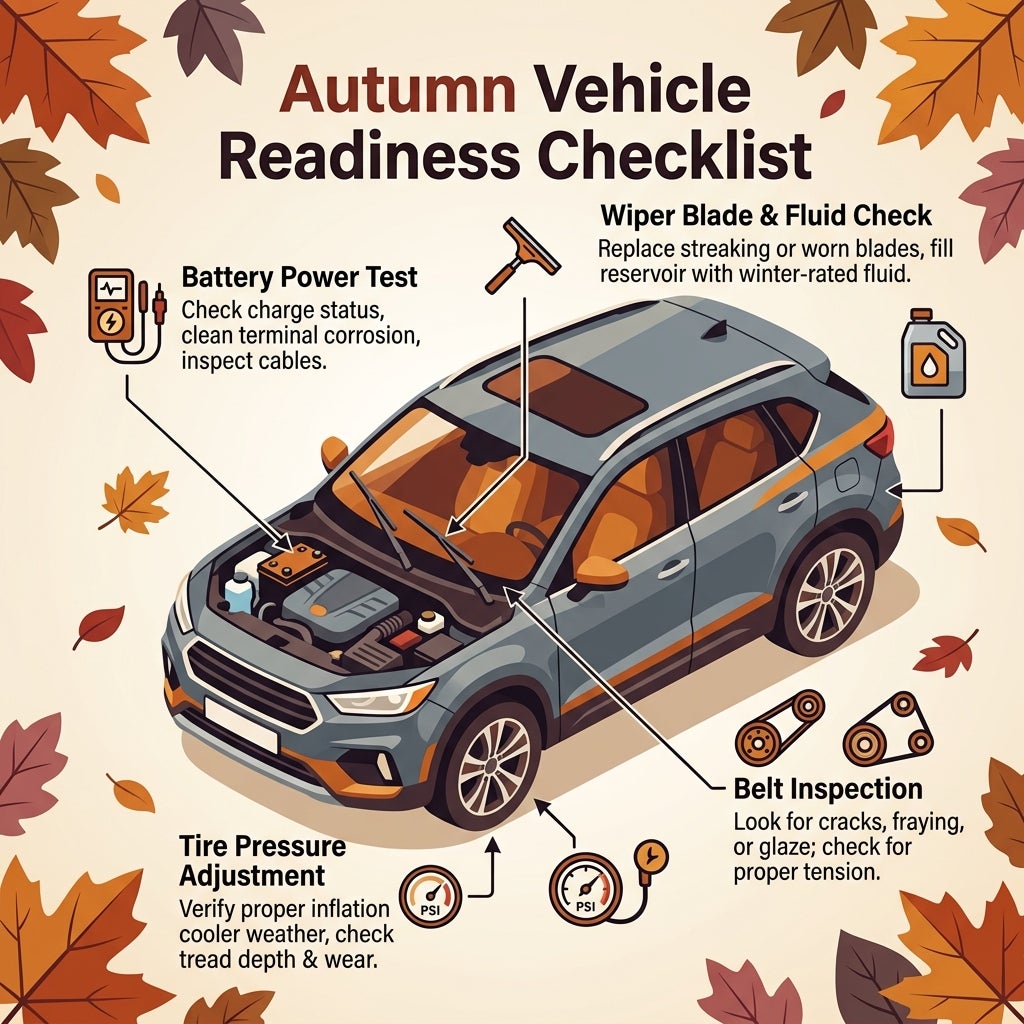
Illustrated Autumn Vehicle Readiness Checklist detailing battery, wiper, tire, and belt inspection tips for a car. (Representative image for illustration purposes only. Actual vehicle may vary based on trim and configuration.)
in Maintenance & Service, Seasonal Driving Tips, Safety Features, Technology & Innovation, Automotive

What I Tell Drivers About Getting Vehicles Ready for Autumn Weather

What I Tell Drivers About Getting Vehicles Ready for Autumn Weather You should start getting your vehicle ready for fall weather in late August or early September before ambient temperatures consistently drop below 50 degrees Fahrenheit. Preparing your car early ensures weak batteries, worn wiper blades, and soft tire pressures are corrected before cold rain, wet leaves, and early morning frosts hit local roads, while also beating the winter service rush at the dealership. When Should You Start Getting Your Vehicle Ready for Fall Weather? The ideal window for autumn vehicle preparation begins during the tail end of summer, ideally between late August and mid-September. Ambient temperatures begin fluctuating during these weeks, causing thermal contraction in your tires and placing initial cold-start stress on your electrical system. Handling maintenance before the autumn equinox guarantees that your vehicle is fully conditioned before daylight hours shorten and wet leaves make road surfaces slick. Getting ahead of the seasonal transition also helps you avoid peak wait times when the first hard frost triggers a sudden rush for service. Early preparation is particularly important because cold morning starts require higher amperage from your battery just as chemical reactions inside the battery cells slow down. Furthermore, rubber components like wiper blades and serpentine belts that survived summer heat can rapidly harden, crack, or chatter when exposed to damp, 40-degree mornings. By inspecting these wear items early, you prevent minor degradation from turning into an unexpected breakdown on your morning commute. Our team at Tri State Ford makes seasonal maintenance straightforward whether you are swinging by for a rapid multi-point inspection or dropping off your vehicle for comprehensive care. If you need to drop off your vehicle, our service center location on Pennsylvania Ave is easy to reach, or you can give us a quick call at (330) 462-7578 to speak directly with our service desk. Table of Contents What Items Belong on Your Essential Fall Maintenance Checklist? Why Is Fall the Ideal Season to Schedule Preventive Auto Care? What Should You Request When Booking a Professional Fall Service Visit? Which Seasonal Prep Tasks Are Safe to Do Yourself Versus Professional Service? What Must-Have Items Belong in Your Autumn Emergency Kit and Service Records? What Items Belong on Your Essential Fall Maintenance Checklist? A thorough fall car maintenance checklist focuses on the vital systems that handle cold, wet, and dark driving conditions: battery health, tire traction, brake efficiency, fluid protection, and exterior lighting. Systematically evaluating these key areas prevents cold-weather failures and maintains vehicle control on unpredictable autumn pavement. Battery and Charging System: Test cold-cranking amps and clean corrosion from terminal posts to ensure reliable morning starts. Tires and Tread Depth: Measure tread depth across all four tires, check for uneven wear, and adjust inflation pressure to match door-jamb specifications. Wiper Blades and Washer Fluid: Replace streaking wiper blades and top off the fluid reservoir with a cold-weather washer formula that will not freeze on the windshield. Brake System: Inspect brake pads, rotors, and fluid condition to maintain short stopping distances on wet leaves and frosty roads. Exterior Lighting: Verify function for all headlights, taillights, brake lights, and turn signals to maximize visibility during shorter autumn days. Belts and Hoses: Inspect engine rubber for cracking, fraying, or soft spots that worsen when temperatures drop. Tires require extra vigilance in the autumn because tire pressure drops approximately 1 to 2 PSI for every 10-degree drop in outside temperature. A tire that was properly inflated at 85 degrees in July can easily be underinflated by 4 to 5 PSI by October. For vehicles like the 2026 Ford Escape featuring All-wheel drive and a 1.5L EcoBoost engine, maintaining correct tire pressure ensures the intelligent AWD system properly distributes torque across wet roads. Inspecting tread depth is equally critical; while 2/32 inch is the legal limit, a minimum tread depth of 4/32 inch is strongly recommended for safely channeling water and mud away from your tire footprint. Brake condition directly impacts family safety when autumn rain turns dry pavement into a slick surface. We check pad thickness to ensure at least 4 mm of friction material remains, while verifying that brake fluid is clean and free of moisture contamination. If your vehicle needs routine upkeep, you can easily schedule a service appointment with our factory-trained technicians, or order genuine Ford parts through our dedicated parts department. Why Is Fall the Ideal Season to Schedule Preventive Auto Care? Fall provides a balanced climate window where environmental stress on your vehicle is moderate, making it the most cost-effective and practical time to catch mechanical wear before severe winter weather sets in. Summer heat breaks down engine oil, degrades battery fluid, and bakes wiper rubber, leaving major components vulnerable right as cold weather arrives. Addressing these issues in autumn restores protective fluid barriers and replaces compromised components before sub-freezing temperatures amplify mechanical strain. Scheduling preventive service during autumn also protects major mechanical systems from cascading failures. For instance, replacing a worn serpentine belt in September prevents an alternator or water pump failure on a freezing night. Similarly, replacing aged engine coolant ensures your cooling system maintains proper anti-freeze protection down to sub-zero temperatures while preventing internal engine corrosion. The 2026 Ford Explorer with its 2.3L EcoBoost engine and SelectShift® automatic transmission relies on precise fluid viscosities to deliver smooth power and efficient heating to the cabin, making seasonal fluid verifications essential. Drivers navigating the rolling elevation along State Route 170 in Calcutta particularly benefit from fall brake and suspension checkups, where damp autumn leaves on hilly stretches test vehicle stability every single morning. To make maintaining your vehicle completely hassle-free, our dealership offers Ford Pick Up & Delivery service, allowing us to pick up your vehicle from your home or office, complete all needed autumn maintenance, and return it directly to you. What Should You Request When Booking a Professional Fall Service Visit? When booking a professional fall service visit, you should request a comprehensive pre-winter multi-point inspection that includes a digital battery conductance load test, brake pad and rotor measurement, cooling system hydrometer test, and a complete HVAC defroster check. Requesting a systematic inspection ensures that hidden issues like microscopic belt cracks, weak battery cells, or moisture-contaminated brake fluid are identified before severe weather arrives. During a professional fall checkup, our factory-certified technicians perform targeted diagnostics that go beyond basic visual checks: Battery Conductance Load Testing: Measuring actual cold-cranking performance against factory ratings rather than relying solely on static voltage. Cooling System Protection Analysis: Testing antifreeze concentration to ensure freeze protection down to minus 20 degrees Fahrenheit or lower. Brake Hydraulics and Hardware Inspection: Measuring pad thickness in millimeters, checking rotor runout, and testing brake fluid for moisture content. HVAC and Defroster Calibration: Verifying heater core performance, cabin air filter cleanliness, and air-blend door operation to guarantee clear windshield defogging. Undercarriage and Suspension Check: Inspecting shocks, struts, ball joints, and protective boots before road salt season begins. Because cold weather places extraordinary electrical demand on modern vehicles—powering seat warmers, heated steering wheels, defrosters, and headlights simultaneously—knowing the exact condition of your charging system is paramount. You can explore complete details on charging system checks and routine battery testing and maintenance to understand how our certified technicians evaluate battery reserve capacity. ​ Which Seasonal Prep Tasks Are Safe to Do Yourself Versus Professional Service? Basic seasonal prep tasks like checking tire pressure, inspecting wiper blades, topping off washer fluid, testing exterior lights, and changing the cabin air filter are safe and simple to perform at home. Complex diagnostics—including battery load testing, brake pad thickness measurements, cooling system flushes, and suspension alignments—require specialized equipment, calibrated tools, and professional expertise to execute safely and accurately. Doing your own basic maintenance offers a practical way to stay connected with your vehicle’s condition between professional service visits. You can easily test tire tread depth at home using a standard quarter: insert the coin upside down into the center tread groove, and if the top of Washington's head is covered by tread, your tires have more than 4/32 inch of tread depth remaining. Likewise, checking wiper blades for small tears and topping off your windshield washer reservoir with a winter blend takes only a few minutes in your driveway. When tasks involve hydraulic pressure, high electrical amperage, or precision alignment, professional service is essential. Tasks like changing DOT 4 brake fluid every three years require proper system bleeding to prevent air lock, while evaluating high-output charging systems on a heavy-duty truck like the 2026 Ford F-150 with its 3.5L EcoBoost engine requires professional diagnostic tools. For customers who prefer expert care delivered to their driveway, our Ford Mobile Service options allow our certified technicians to complete routine maintenance directly at your location. ​ What Must-Have Items Belong in Your Autumn Emergency Kit and Service Records? An autumn emergency car kit should contain essential safety supplies for warmth, visibility, traction, and communication, stored securely inside the passenger cabin rather than locked in the trunk. Keeping a dedicated folder or digital record of your fall maintenance receipts and safety kit updates helps you track component lifespans, maintain complete warranty compliance, and preserve optimal resale value over time. A well-equipped emergency kit for fall and early winter includes: Warmth and Protection: Heavy fleece blankets, waterproof gloves, thermal hats, and disposable hand warmers. Visibility and Signaling: A high-lumen LED flashlight with extra batteries, reflective hazard triangles, and a high-visibility safety vest. Traction and Recovery: A compact folding snow shovel, traction mats, non-clumping clay litter or sand, and heavy-duty jumper cables or a portable lithium jump-starter pack. Communication and First Aid: A fully charged USB power bank, extra phone charging cables, bottled water, non-perishable protein snacks, and a compact first-aid kit. Always store your emergency kit in the rear seat area or under a seating row rather than in the trunk, as rear-end collisions or frozen trunk locks can make trunk-stored items inaccessible during an emergency. If you ever experience an unexpected roadside failure, remember that Ford Roadside Assistance: (800) 241-3673 provides manufacturer-backed towing, jump-starts, and flat tire changes directly to an authorized service facility. Drivers traversing the steep riverfront bluffs around East Liverpool know how quickly autumn weather can turn rainy streets into challenging drives. Tracking your maintenance history and emergency gear ensures total peace of mind wherever the road takes you. When you are ready for expert vehicle care, feel free to stop by our service center location on Pennsylvania Ave or give our service department a quick call at (330) 462-7578 to keep your vehicle running smoothly all season long. © 2026 Tri State Ford. All rights reserved. Vehicle specification data © JATO Dynamics Limited. Title Tags Meta Description Keywords Open Graph Twitter Card Canonical Article Metadata Geographic Targeting
Read More

What is the best Ford for a family of four?

The 2026 Ford Explorer is a strong Ford SUV for a family of four heading into the fall sports season. It delivers an ideal balance of two-row daily comfort and third-row versatility, providing 16 cubic feet of rear cargo space behind the third row and up to 86 cubic feet with rear seats folded. Its standard 2.3L EcoBoost engine, available intelligent four-wheel drive, and comfortable seating configuration give growing families the exact blend of interior cabin space, fuel economy, and game-day capability they need without stepping up to a full-size frame. For a family of four, vehicle dimensions dictate daily usability. While a compact crossover like the 2026 Ford Escape offers agile city handling and an efficient 1.5L EcoBoost engine, its two-row layout limits seating options when grandparents join for weekend games or when kids want to bring teammates along. On the other end of the spectrum, the full-size 2026 Ford Expedition provides immense passenger room and up to 123 cubic feet of maximum cargo volume in the MAX configuration, but its larger footprint requires a bigger garage and higher fuel budget. The 2026 Ford Explorer sits right in the sweet spot for four-person households, serving as a nimble daily commuter that easily transforms into a weekend sports shuttle. Inside the cabin, a four-person family benefits immediately from flexible seating options. The 2026 Ford Explorer Active 100A trim features standard second-row captain's chairs, creating a designated personal space for each child along with a center pass-through corridor. This aisle makes it simple for kids to access the third row or reach back for gear without unbuckling. When weekend tournaments require extra gear capacity, the 50/50 split-folding third row drops completely flat at the pull of a lever, expanding the trunk area into an expansive floor for folding chairs, pop-up canopy tents, and large equipment bags. Families visiting our dealership showroom can compare seating layouts in person to see how easily child seats and booster bases install using standard LATCH anchors. If you want to check current availability or set up an afternoon test loop with your family, give our team a quick call at (330) 462-7578 to speak with a sales specialist. Table of Contents Is the Ford Explorer big enough for kids and sports gear? How does the Expedition MAX handle football pads and team gear? What Ford Explorer trim levels fit family needs and compare to rivals? How do you order custom sports packages and all-weather mats for your Ford SUV? Frequently Asked Questions About Ford SUVs for Fall Sports Families Find the Ideal Family SUV for Fall Sports Is the Ford Explorer big enough for kids and sports gear? With spacious seating and cargo configurations, the 2026 Ford Explorer accommodates all your kids' sports gear comfortably. With a cargo length measuring roughly 23 inches behind the third row, 55 inches behind the second row, and over 84 inches behind the front seats, the load floor accommodates long gear like sticks, bats, canopy frames, and goalie trunks with ease. When navigating weekly soccer practices around Calcutta, parents frequently need a vehicle that separates muddy cleats and damp practice jerseys from primary seating areas. The 2026 Ford Explorer achieves this with a wide rear hatch opening and a low liftover height, allowing younger athletes to load their own gear bags after games. Behind the third-row seatbacks, the 16 cubic feet of storage area easily holds two standard equipment duffels alongside a rolling cooler. When extra space is required for away-game road trips, folding down one side of the third row retains seating for five while instantly doubling the rear cargo area. In addition to physical storage volume, passenger connectivity plays a huge role in keeping young athletes comfortable during back-to-back weekend games. Across the 2026 Ford Explorer lineup, power access is built into all three rows. Second- and third-row passengers benefit from accessible USB-C charging ports on Active 4WD and higher trims, letting kids recharge phones and handheld devices on long drives between tournament venues. Smart interior storage cubbies, deep door pockets, and durable cup holders in every row help keep drink bottles and snacks off the floor. Cargo Behind Third Row: 16 cubic feet of upright storage for daily backpacks and sports duffels. Cargo Behind Second Row: About 47 cubic feet with the third row folded flat for large equipment trunks and coolers. Maximum Cargo Capacity: Up to 86 cubic feet with all rear passenger rows lowered for large gear hauling. Maximum Towing Capacity: Up to 5,000 lbs when properly equipped for pulling utility trailers or small camper setups. To explore how your family's gear fits into the back of a new SUV, you can browse our new Ford vehicle inventory online to compare available interior colors and seating layouts. ​ How does the Expedition MAX handle football pads and team gear? The 2026 Ford Expedition MAX handles heavy football shoulder pads, helmet trunks, and multi-player gear bags effortlessly by offering an expanded wheel-base frame with 37 cubic feet of dedicated cargo space behind the third row alone. Unlike standard three-row SUVs that require folding down seats to swallow bulky sports gear, the Expedition MAX keeps all three passenger rows upright while leaving ample room in the back for an entire team's gear. For youth football programs, travel soccer squads, and multi-sport families, gear volume adds up quickly. Heavy padded equipment, catching gear, team water coolers, and sideline benches require significant flat storage area. The 2026 Ford Expedition MAX Platinum offers 85 cubic feet of space behind the second row and a massive 123 cubic feet of maximum cargo volume behind the front seats. Its flat load floor is wide enough to lay rigid equipment trunks side by side, eliminating the need to stack heavy bags on top of fragile helmets or personal backpacks. When carpooling teammates to away games, seat count and safety hardware matter just as much as trunk volume. The 2026 Ford Expedition MAX seats up to eight passengers in spacious comfort, providing adult-sized legroom across all three rows. Parents and coaches securing younger athletes will appreciate standard LATCH attachments across all outboard seating positions in both the second and third rows. This makes anchoring multiple child safety seats or booster seats fast and simple, ensuring every passenger rides securely. Extended Length Design: Adds roughly one foot of overall body length compared to the standard Expedition, directly expanding rear cargo depth. Power-Folding Rear Seats: Available power-fold third-row seatbacks lower in seconds at the touch of a trunk-mounted button. Robust Towing Performance: A 3.5L EcoBoost V6 engine paired with a SelectShift automatic transmission delivers standard rear-wheel drive or available four-wheel drive with available towing ratings up to 9,000 lbs. Versatile Cargo Management: Lower hidden storage compartments keep smaller accessories, cleats, and first-aid kits organized beneath the main floor. Parents looking for heavy-duty family haulers with complete peace of mind can explore our certified pre-owned Ford inventory to find multi-row models equipped with factory warranty protection and rigorous inspection standards. ​ What Ford Explorer trim levels fit family needs and compare to rivals? The 2026 Ford Explorer lineup features value-focused family trims starting with the Active RWD 100A at a $38,465 base MSRP, comparing favorably with key three-row competitors like the Honda Pilot while delivering a standard 300 hp turbocharged engine and a $1,795 destination charge across the board. Every trim level is built to offer solid standard value, allowing families to pick the precise feature set that fits their monthly budget. Comparing the 2026 Ford Explorer against competitors reveals a strong balance of standard performance and interior value. While rivals often charge extra for upgraded engines to achieve passing power on highway commutes around Boardman, the Explorer includes its punchy 2.3L EcoBoost engine generating 310 lb-ft of torque as standard equipment on Active, ST-Line, Tremor, and Platinum models. For drivers seeking high-performance highway response, the Explorer ST steps up to a twin-turbo 3.0L EcoBoost V6 pushing 400 hp and 415 lb-ft of torque, backed by a SelectShift automatic transmission and available sport-tuned suspension. Trim Level Base MSRP Engine Horsepower Torque Standard Drivetrain Active RWD 100A $38,465 2.3L EcoBoost 300 hp 310 lb-ft Rear-wheel drive Active 4WD 100A $40,465 2.3L EcoBoost 300 hp 310 lb-ft All-wheel drive Active RWD $40,585 2.3L EcoBoost 300 hp 310 lb-ft Rear-wheel drive Active 4WD $42,585 2.3L EcoBoost 300 hp 310 lb-ft All-wheel drive ST-Line RWD $45,155 2.3L EcoBoost 300 hp 310 lb-ft Rear-wheel drive ST-Line 4WD $47,155 2.3L EcoBoost 300 hp 310 lb-ft All-wheel drive Tremor 4WD $48,965 2.3L EcoBoost 300 hp 310 lb-ft All-wheel drive Platinum $50,965 2.3L EcoBoost 300 hp 310 lb-ft Rear-wheel drive Platinum 4WD $52,965 2.3L EcoBoost 300 hp 310 lb-ft All-wheel drive ST $54,905 3.0L EcoBoost 400 hp 415 lb-ft Rear-wheel drive ST 4WD $56,905 3.0L EcoBoost 400 hp 415 lb-ft All-wheel drive Families seeking value can look at the Active 4WD at $42,585 base MSRP, which adds intelligent four-wheel drive for confident traction on slippery morning roads or grass parking lots at athletic fields. Upgrading to the ST-Line 4WD at $47,155 base MSRP brings aggressive exterior styling, dark trim accents, and upgraded interior tech without forcing buyers into a higher engine price point. If you are planning to upgrade your current family vehicle before sport season begins, you can check out our pre-owned single-owner inventory for low-mileage options, or use our online trade-in appraisal tool to estimate the current market value of your trade. Pricing Pricing by trim Feature Active 4WD Active 4WD 100A Active RWD Active RWD 100A Platinum Platinum 4WD ST ST 4WD ST-LINE 4WD ST-LINE RWD Tremor 4WD Utility Police Interceptor 4x4 Base MSRP $42,585 $40,465 $40,585 $38,465 $50,965 $52,965 $54,905 $56,905 $47,155 $45,155 $48,965 $48,550 Destination charge $1,795 $1,795 $1,795 $1,795 $1,795 $1,795 $1,795 $1,795 $1,795 $1,795 $1,795 $1,695 Engine & Performance Powertrain specs by trim Feature Active 4WD Active 4WD 100A Active RWD Active RWD 100A Platinum Platinum 4WD ST ST 4WD ST-LINE 4WD ST-LINE RWD Tremor 4WD Utility Police Interceptor 4x4 Engine 2.3L 2.3L 2.3L 2.3L 2.3L 2.3L 3L 3L 2.3L 2.3L 2.3L 3.3L Horsepower 300 hp 300 hp 300 hp 300 hp 300 hp 300 hp 400 hp 400 hp 300 hp 300 hp 300 hp 318 hp Torque 310 lb-ft 310 lb-ft 310 lb-ft 310 lb-ft 310 lb-ft 310 lb-ft 415 lb-ft 415 lb-ft 310 lb-ft 310 lb-ft 310 lb-ft 260 lb-ft Transmission SelectShift® SelectShift® SelectShift® SelectShift® SelectShift® SelectShift® SelectShift® SelectShift® SelectShift® SelectShift® SelectShift® SelectShift Drivetrain All-wheel drive All-wheel drive Rear-wheel drive Rear-wheel drive Rear-wheel drive All-wheel drive Rear-wheel drive All-wheel drive All-wheel drive Rear-wheel drive All-wheel drive All-wheel drive ​ How do you order custom sports packages and all-weather mats for your Ford SUV? You can order custom sports appearance packages, specialized off-road hardware, and official factory protection accessories directly through our dealership sales department or custom order portal. Factory custom ordering ensures your family SUV arrives from the assembly plant with the exact exterior trim, seating layout, and gear protection tools you want, eliminating any need to compromise on color or option packages. When building a 2026 Ford Explorer for fall sports duty, protective accessories make a huge difference in keeping your vehicle's carpet clean. Custom-fit all-weather floor liners engineered by Ford cover the footwells in all three rows, featuring raised perimeter edges that trap mud, rain, melted snow, and field turf. In the rear cargo area, custom rubber cargo tray liners protect the carpet beneath wet gear bags and heavy equipment trunks. These accessories can be ordered through our parts desk or added directly into your vehicle's purchase order. For buyers who want sportier styling or enhanced off-road capabilities, specialized packages add unique features right from the factory. Appearance upgrades like the Sinister Package bring gloss black wheels and custom dark accents, while the off-road-focused Tremor 4WD model adds steel skid plates, off-road suspension tuning, and a Torsen limited-slip rear axle for navigating unpaved facility parking lots. Step 1: Select Model & Trim: Choose between versatile models like the Explorer or Expedition based on your family's seating and cargo needs. Step 2: Choose Drivetrain & Packages: Select available intelligent four-wheel drive and opt for sports appearance packages or tow packages. Step 3: Add Interior Floor Protection: Include factory custom-fit all-weather liners and heavy-duty cargo trays to safeguard interior carpets. Step 4: Finalize Order Details: Contact our F&I specialists for current financing information and track your vehicle's build progress directly from the factory. Ready to design your ideal sports-season SUV? You can start a custom factory order online, use our online tire finder tool to select all-season rubber, or submit an online financing application to get pre-approved before your test drive. ​ Frequently Asked Questions About Ford SUVs for Fall Sports Families Q: Is the Ford Explorer or Ford Expedition better for hauling sports gear? An EPA rating of 20 city / 27 hwy and a starting MSRP of $38,465 make the 2026 Ford Explorer a practical choice for everyday family use. However, if you frequently haul large team equipment trunks or transport up to eight players, the 2026 Ford Expedition MAX provides superior cargo capacity with 37 cubic feet behind the third row and up to 123 cubic feet total. Q: Can the Ford Explorer tow a sports trailer or camper? Yes, a properly equipped 2026 Ford Explorer offers a maximum towing capacity of up to 5,000 lbs. This allows families to easily pull utility trailers loaded with team gear, lawn equipment, or small recreational campers for weekend sports tournaments. Q: What is the main difference between standard Expedition and Expedition MAX models? The primary difference is overall length and rear cargo capacity. The 2026 Ford Expedition MAX adds approximately one foot of extended length, expanding rear cargo volume behind the third row to 37 cubic feet compared to the standard Expedition's 21 cubic feet, making it ideal for hauling bulky sports bags without folding down passenger seats. Q: Are all-weather floor mats included from the factory on Ford SUVs? Standard equipment varies by trim level, but official custom-fit all-weather floor liners and rubber cargo protectors can be included in any new vehicle order or purchased directly through our dealership parts department. These liners feature deep channels and raised borders designed to protect interior carpets from mud, water, and grass. Q: How long does a custom factory order take for a new Ford SUV? Custom factory order timelines vary based on production schedules, trim selections, and optional package availability. When you place a custom build order through our team, we provide regular status updates as your SUV moves from scheduling to assembly and final transport to our showroom. Find the Ideal Family SUV for Fall Sports Choosing the right Ford SUV transforms chaotic fall sports schedules into smooth, stress-free family trips. Whether you choose the agile, three-row 2026 Ford Explorer with its comfortable seating for six or seven, or step up to the spacious 2026 Ford Expedition MAX for maximum team gear capacity, our sales team is here to help you select the exact vehicle, drivetrain, and accessory packages your family needs. At Tri State Ford, we take pride in offering a straightforward purchasing process and current pricing information available from our team. From exploring custom appearance packages to fitting all-weather floor liners that shield your vehicle from mud and turf, our experienced staff walks you through every step of selecting and customizing your next Ford SUV. When you are ready to test-drive a new SUV with your family, stop by our East Liverpool dealership showroom or give our team a quick call at (330) 462-7578 to schedule your test drive today. Keep Your Vehicle Running Strong Keep your vehicle performing at its best with our service team: Order Parts Schedule Service Appt © 2026 Tri State Ford. All rights reserved. Vehicle specification data © JATO Dynamics Limited. Title Tags Meta Description Keywords Open Graph Twitter Card Canonical Article Metadata Geographic Targeting
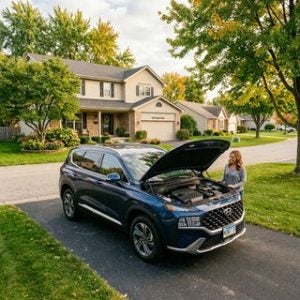
What Vehicle Maintenance Is Needed Before Back-to-School Season?

Essential back-to-school vehicle maintenance requires inspecting tires, testing battery capacity, checking brake pads and rotors, replacing engine and cabin air filters, inspecting wiper blades, and topping off essential vehicle fluids. Summer heat accelerates battery wear and fluid degradation, while upcoming school-zone traffic requires prompt braking response and clear road visibility. Completing these inspections before daily carpooling begins prevents unexpected vehicle breakdowns during busy morning routines. Preparing your car for the upcoming academic calendar involves addressing both safety components and routine wear items. Summer driving exposes engine oil, coolant, and brake fluid to sustained high temperatures. Over time, engine oil loses viscosity and coolant protective additives deplete. Checking fluid levels and condition ensures your engine maintains proper operating temperatures during idling in pick-up lines and stop-and-go driving. Ford maintenance guidance recommends replacing brake fluid every three years regardless of mileage. Moisture naturally enters the hydraulic braking system over time, which lowers the boiling point of the fluid and reduces stopping efficiency. For drivers carrying students along busy corridors like State Route 170 in Calcutta, fresh brake fluid preserves firm pedal feel and protects anti-lock braking system hydraulic components. Electrical systems also demand immediate attention before autumn arrives. Battery chemical reactions accelerate during warm summer weather, causing internal grid corrosion and water loss. A battery that functioned adequately during June may fail suddenly when cooler morning temperatures arrive. Having a technician conduct a conductance load test reveals whether your battery maintains sufficient cold-cranking capacity to handle autumn starts. To schedule your seasonal vehicle inspection, reach out to our team with a quick call or find our service center location to prepare your vehicle for school-year driving. Table of Contents What Is Included in a Back-to-School Vehicle Maintenance Safety Checklist? How Do Recommended Tire Pressure and Tread Depth Protect Fall Commutes? How Does DIY Back-to-School Maintenance Cost Compare to Professional Service? What Items Belong in a Back-to-School Emergency Car Kit? Common Questions About Back-to-School Vehicle Maintenance Schedule Your Pre-School Service Check What Is Included in a Back-to-School Vehicle Maintenance Safety Checklist? A thorough back-to-school safety checklist evaluates brake system condition, battery charge capacity, tire tread depth and pressure, exterior lighting functionality, windshield wiper performance, and engine and cabin air filtration. Conducting a comprehensive multi-point inspection verifies that critical safety equipment functions correctly before daily drop-off schedules begin. Braking components represent the primary line of defense in school zones and residential neighborhoods. Technicians measure brake pad friction material thickness to ensure pads retain adequate surface material above mechanical wear indicators. Rotors are inspected for heat scoring, grooves, or lateral runout that causes pedal pulsation. The vehicle checklist also prioritizes optical clarity and external communication. Every exterior bulb must function properly to alert surrounding drivers during early morning twilight commutes: Headlights (low and high beams) for illuminating pedestrians and road signs in dim lighting Brake lights and center high-mounted stop light to signal quick stops in heavy traffic Turn signals and hazard flashers for clear lane-change and emergency communication Reverse lights to warn pedestrians when backing out of crowded school parking spots Filtration systems directly impact both mechanical longevity and cabin comfort. Service schedules specify replacing engine air filters every 15,000 to 30,000 miles depending on local road conditions. A clean engine filter prevents dirt from entering the intake tract, maintaining optimal combustion efficiency. Concurrently, replacing the cabin air filter every 20,000 miles prevents dust, mold spores, and autumn pollen from circulating through the climate control system. For larger family vehicles such as the 2026 Ford Explorer, equipped with a 2.3L engine and a SelectShift® transmission, clean filtration systems ensure the 16 cubic feet of cargo space behind the third row stays free of external odors. Drivers looking to complete routine filter or wiper replacements can conveniently order OEM Ford parts directly through our service department. ​ How Do Recommended Tire Pressure and Tread Depth Protect Fall Commutes? Maintaining cold tire inflation within the recommended 30 to 35 PSI range and preserving tread depth above 4/32 of an inch prevents hydroplaning and shortens stopping distances on damp roads. As ambient outdoor temperatures drop in late summer and early autumn, tire pressure decreases by approximately 1 PSI for every 10-degree Fahrenheit drop in temperature. Tire tread channels standing water away from the contact patch where rubber meets pavement. While the legal minimum tread depth is 2/32 of an inch, driving on tires worn to this limit severely compromises wet-surface traction. Testing tread depth with an American penny offers a quick gauge: inserting the coin upside down into the tread groove should cover the top of Lincoln's head. If the top of his head remains fully visible, the tread has dropped below 2/32 of an inch and requires immediate tire replacement. Correct tire inflation directly affects fuel efficiency and tread wear patterns. Under-inflated tires increase rolling resistance, causing rubber to flex excessively and build up heat along the outer shoulders. Over-inflated tires reduce the contact patch size, leading to accelerated center-tread wear and a harsher ride quality over road imperfections. Routine tire rotations performed every 5,000 to 7,500 miles distribute wear evenly across all four positions. Front tires endure additional lateral stress from steering input and weight transfer during braking. Rotating tires periodically extends total tread life. For drivers navigating suburban routes and wet park roads near Mill Creek Park in Boardman, proper tire care in models like the 2026 Ford Escape with its 1.5L engine and all-wheel drive ensures predictable cornering stability during rainy autumn commutes. How Does DIY Back-to-School Maintenance Cost Compare to Professional Service? DIY maintenance eliminates shop labor expenses on basic procedures like replacing wiper blades, swapping air filters, and topping off washer fluid, reducing direct out-of-pocket spending on simple parts by 50% to 70%. Professional dealership service delivers factory-trained technical expertise, computerized diagnostic equipment, original equipment manufacturer parts warranties, and systematic multi-point safety checks that DIY tasks cannot replicate. Simple maintenance procedures are well within the capability of home mechanics using basic hand tools. Swapping engine and cabin air filters takes minutes and requires no specialized machinery. Likewise, replacing worn wiper blades or clearing minor battery terminal corrosion with a wire brush and baking soda solution protects electrical connections without repair shop fees. However, complex systems demand specialized tools and technical training to service correctly. Modern vehicle maintenance requires diagnostic equipment to interact with electronic control modules, recalibrate driver-assist sensors, and perform hydraulic fluid flushes safely: Maintenance Task Recommended Approach Key Technical Requirement Cabin & Engine Air Filters DIY Safe Basic hand tools / manual clip release Windshield Wiper Blades DIY Safe Direct blade-arm adapter engagement Battery Terminal Cleaning DIY Safe Wire brush & anti-corrosion spray Brake Fluid Flush Professional Service Pressure bleeder & ABS module cycling Battery Load Testing Professional Service Digital conductance load tester Wheel Alignment Professional Service Computerized 4-wheel alignment rig Families preparing their 2026 Ford F-150 with its 3.5L engine and 10,400-lb towing capacity usually ask our technicians to check brake pad thickness and rotor condition before evaluating battery reserve capacity. Professional technicians inspect caliper slides, hydraulic hoses, and hardware to ensure braking systems perform reliably under load. To keep your vehicle covered during unexpected road delays, owners can contact Ford Roadside Assistance at 1-800-241-3673 for factory-backed towing and emergency support. Drivers looking to stay on schedule can easily schedule a service appointment online, review our professional battery replacement advice, or request certified maintenance delivered directly to their driveway via Ford Mobile Service options. ​ What Items Belong in a Back-to-School Emergency Car Kit? An effective back-to-school emergency car kit includes heavy-duty jumper cables or a lithium jump starter pack, a calibrated tire pressure gauge, an LED flashlight with fresh batteries, a first-aid kit, reflective safety triangles, bottled water, non-perishable snacks, a blanket, and a dedicated mobile phone charger. Storing these supplies inside your vehicle provides protection during unexpected electrical failures, flat tires, or roadside delays. Autumn weather brings unpredictable rain and declining morning light, making visibility items essential. Reflective hazard triangles or battery-operated LED flares alert approaching motorists if your vehicle disables along an unlit roadside. A heavy-duty LED flashlight provides clear illumination when checking tire inflation or under-hood fluid levels in the dark. Emergency power equipment eliminates reliance on passing motorists for minor battery failures. Portable lithium jump packs store enough electrical energy to start an engine multiple times on a single charge while fitting compactly into a glove compartment or side door pocket. Paired with a digital tire pressure gauge and a compact 12-volt tire inflator, drivers can address low tire pressure warnings without searching for a gas station air pump. Organizing emergency gear inside structured cargo organizers keeps passenger space clean and prevents loose items from shifting during travel. Utilizing dedicated storage areas—such as the 53 cubic feet of bed cargo space in an F-150 or the 38 cubic feet behind the rear seats of an Escape—ensures emergency items remain accessible without crowding school backpacks, sports gear, or instruments. Common Questions About Back-to-School Vehicle Maintenance Q: How often should I replace my vehicle's cabin air filter? Ford maintenance schedules specify replacing the cabin air filter every 20,000 miles, or approximately every two years. If your daily school commute includes dusty unpaved roads or high-pollen areas, replacing the filter annually maintains maximum heating and air conditioning airflow while keeping airborne allergens out of the passenger compartment. Q: Why is brake fluid maintenance important before the school year starts? Ford factory guidance recommends replacing brake fluid every three years regardless of vehicle mileage. Over time, brake fluid absorbs moisture from ambient air, which lowers its boiling temperature and creates internal corrosion inside hydraulic calipers and anti-lock braking system valves. Fresh fluid ensures firm pedal feel and reliable stopping performance during stop-and-go school zone traffic. Q: What tire tread depth is necessary for safe school-year driving? Tire tread should measure at least 4/32 of an inch to safely channel water and prevent hydroplaning during heavy autumn rainstorms. While 2/32 of an inch represents the legal wear limit, tires worn to that degree require significantly longer stopping distances on wet pavement and should be replaced immediately. Q: How does summer heat affect car battery performance heading into autumn? High summer temperatures accelerate chemical reactions inside automotive lead-acid batteries, causing internal plate degradation and electrolyte fluid loss. As ambient temperatures drop in late summer and early fall, the weakened battery struggles to provide necessary engine cranking amps, leading to sudden battery failure during morning starts. Q: Can I perform my own back-to-school vehicle maintenance at home? Basic maintenance items including windshield wiper replacement, engine and cabin air filter swaps, tire pressure adjustments, and battery terminal cleaning are safe DIY projects. Complex services such as brake fluid flushes, computerized wheel alignments, and battery conductance load testing require professional diagnostic equipment and certified technician training to execute safely. Schedule Your Pre-School Service Check Completing essential vehicle maintenance before the academic calendar begins protects your family and keeps your daily routine running smoothly. Inspecting tires, testing battery capacity, replacing aging filters, and checking brake system wear prevents minor component fatigue from developing into morning vehicle breakdowns. Our service department provides comprehensive vehicle inspections, OEM Ford parts, and certified technician expertise for all your maintenance requirements. Whether your vehicle requires routine fluid changes or a detailed multi-point safety check, our team delivers transparent service you can rely on. Call our team directly at (330) 462-7578 or get driving directions to Tri State Ford at 1503 Pennsylvania Ave, East Liverpool, OH 43920 to reserve your back-to-school service appointment today. © 2026 Tri State Ford. All rights reserved. Vehicle specification data © JATO Dynamics Limited. Title Tags Meta Description Keywords Open Graph Twitter Card Canonical Article Metadata Geographic Targeting
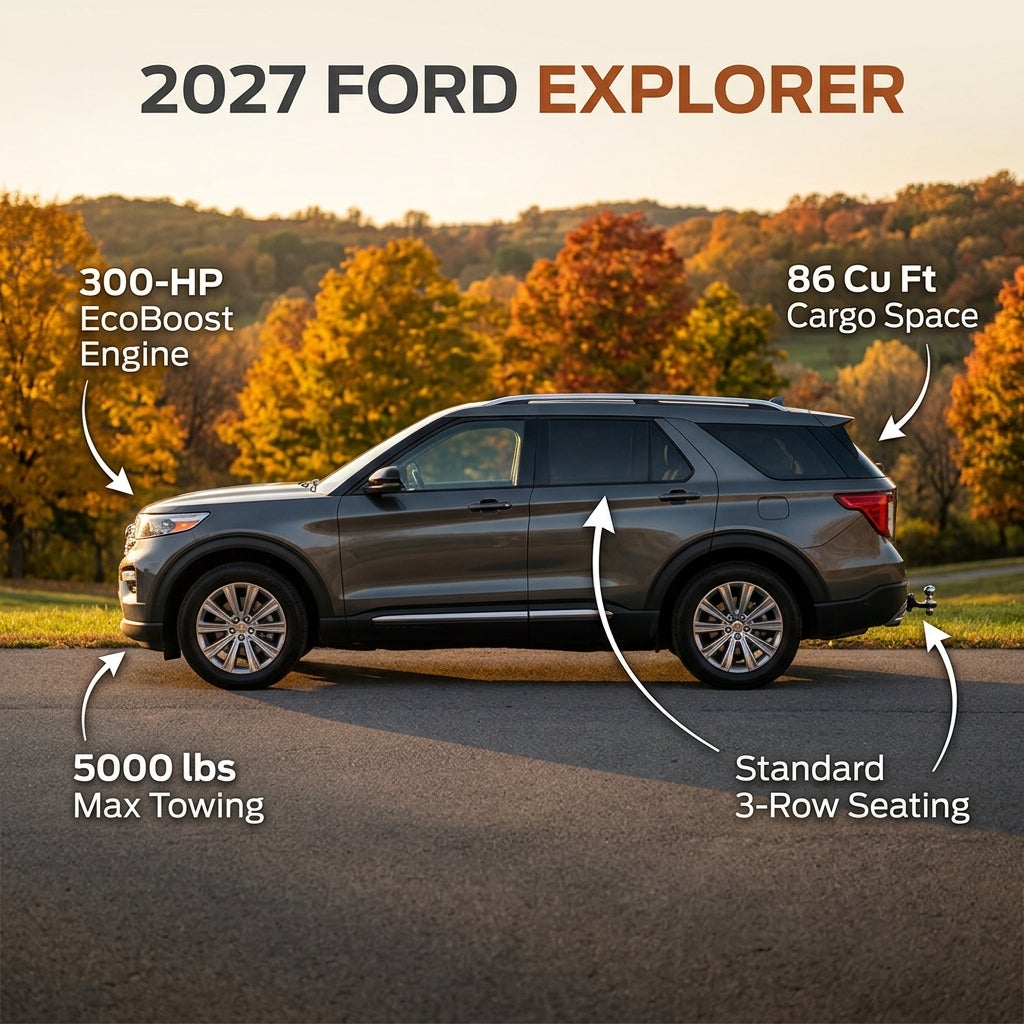
Side view of a grey 2027 Ford Explorer highlighting features like engine horsepower, cargo space, and towing capacity. (Representative image for illustration purposes only. Actual vehicle may vary based on trim and configuration.)

Unlock Versatility and Power: Why the 2027 Ford Explorer Dominates Midsize SUVs

Yes, the 2027 Ford Explorer is an exceptional choice for midsize SUV shoppers seeking a balanced combination of performance, interior versatility, and safety. With standard three-row seating for up to seven, a maximum cargo capacity of about 86 cubic feet, a standard 300-hp 2.3L EcoBoost engine, and a maximum towing capacity of 5,000 lbs, the 2027 Explorer provides the real-world utility active families require. It delivers smooth road manners for everyday commuting and rugged capability for weekend road trips, backed by a five-star overall safety rating from NHTSA and an IIHS Top Safety Pick+ designation. Built on a durable rear-wheel-drive platform with available all-wheel drive, the Explorer handles suburban neighborhoods and unpaved secondary roads with confidence. Its 119-inch wheelbase and balanced chassis generate stable high-speed tracking on highway commutes, while up to 8.7 inches of ground clearance allows drivers to clear heavy snow or rough trail terrain effortlessly. Inside the cabin, the Ford Digital Experience integrates intuitive touchscreen controls, seamless smartphone mirroring, and optional massaging front seats to simplify daily travel. At Tri State Ford, our team helps drivers compare configurations and secure competitive financing on the latest lineup. You can easily find our East Liverpool showroom location along Pennsylvania Avenue, or call us at (330) 462-7578 to speak directly with an expert advisor about current vehicle availability. Table of Contents How Do the Active, ST-Line, Tremor, Platinum, and ST Trims Differ? What Engine Options and Transmissions Power the 2027 Ford Explorer? Which SUV Offers More Horsepower: 2027 Ford Explorer or Honda Pilot? What Warranty Coverage Protects Your 2027 Ford Explorer Purchase? What Inventory Selection and Buying Advantages Are Available at Tri State Ford? Common Questions About the 2027 Ford Explorer What Are the First Steps to Purchase a 2027 Explorer Online from Tri State Ford? How Do the Active, ST-Line, Tremor, Platinum, and ST Trims Differ? The 2027 Ford Explorer trim lineup differs primarily by interior luxury levels, exterior styling accents, off-road equipment, and engine performance. The Active serves as the comfortable, high-value entry point, while the ST-Line adds aggressive dark exterior accents and sporty interior trim. The Tremor brings specialized off-road hardware for rough trails, the Platinum emphasizes upscale cabin materials and high-end tech, and the ST focuses on track-inspired performance with a powerful twin-turbo V6 engine. Understanding how these trims align with your daily routine helps narrow down the perfect match: Active: Designed for practical daily commuting and family hauling, featuring durable ActiveX® or cloth seating, user-friendly infotainment, and comprehensive safety features. ST-Line: Emphasizes sport-inspired style with blacked-out grille treatments, dark wheels, red interior accent stitching, and ambient lighting while retaining the efficient 2.3L EcoBoost engine. Tremor: Built for off-pavement adventures, featuring an off-road tuned suspension, protective steel deflector plates, all-terrain tires, and a model-exclusive Torsen® limited-slip rear axle. Platinum: Delivers a luxury-level experience with plush leather-trimmed seating, multicontour massaging front seats, immersive audio options, and available quad-tip exhaust. ST: Engineered for performance enthusiasts, packing a standard 400-hp 3.0L EcoBoost V6, sport-tuned suspension, upgraded performance brakes, and available 21-inch Gloss Black wheels via the Sinister Package. When shoppers walk through our showroom floor, they frequently compare the seating utility and cabin finishes between the Active and ST-Line trim levels before taking a test drive. If you are open to late-model alternatives alongside new vehicles, you can also browse our pre-owned Carfax 1-owner inventory to explore thoroughly inspected vehicles with verified maintenance histories. Pricing Pricing by trim Feature Active 4WD 100A Active 4WD 200A Active RWD 100A Active RWD 200A Platinum Platinum 4WD ST ST 4WD ST-LINE 4WD ST-LINE RWD Tremor 4WD Utility Police Interceptor 4x4 Base MSRP $40,465 $42,400 $38,465 $40,400 $50,660 $52,660 $53,660 $55,660 $46,200 $44,200 $56,460 $49,050 Destination charge $1,795 $1,795 $1,795 $1,795 $1,795 $1,795 $1,795 $1,795 $1,795 $1,795 $1,795 $1,795 ​ What Engine Options and Transmissions Power the 2027 Ford Explorer? The 2027 Ford Explorer offers two EcoBoost powertrains: a standard 2.3L turbocharged I-4 delivering 300 hp and 310 lb-ft of torque, and an available 3.0L twin-turbo V6 producing 400 hp and 415 lb-ft of torque. Both engine options are paired exclusively with a smooth-shifting SelectShift® 10-speed automatic transmission that optimizes gear ratios for quick acceleration and efficient highway cruising. The standard 2.3L EcoBoost provides eager throttle response for passing and merging, making it ideal for daily driving across state lines or navigating suburban traffic. For drivers needing higher output for heavy trailering or spirited driving, the 3.0L EcoBoost V6 comes standard on the ST trim and is available on Tremor and Platinum models. (Note: Vehicles equipped with 50-State Emissions systems rating the 3.0L engine produce 385 hp on Tremor and ST, or 383 hp on Platinum). Proper equipment enables a maximum towing capacity of 5,000 lbs across the lineup, allowing you to haul campers, utility trailers, or watercraft with confidence. Before making a final purchase decision, customers can value your trade-in online to estimate your current vehicle's market worth and lower your net out-of-pocket investment. Engine & Performance Powertrain specs by trim Feature Active 4WD 100A Active 4WD 200A Active RWD 100A Active RWD 200A Platinum Platinum 4WD ST ST 4WD ST-LINE 4WD ST-LINE RWD Tremor 4WD Utility Police Interceptor 4x4 Engine 2.3L 2.3L 2.3L 2.3L 2.3L 2.3L 3L 3L 2.3L 2.3L 3L 3.3L Horsepower 300 hp 300 hp 300 hp 300 hp 300 hp 300 hp 400 hp 400 hp 300 hp 300 hp 400 hp 318 hp Torque 310 lb-ft 310 lb-ft 310 lb-ft 310 lb-ft 310 lb-ft 310 lb-ft 415 lb-ft 415 lb-ft 310 lb-ft 310 lb-ft 415 lb-ft 260 lb-ft Transmission SelectShift® SelectShift® SelectShift® SelectShift® SelectShift® SelectShift® SelectShift® SelectShift® SelectShift® SelectShift® SelectShift® SelectShift Drivetrain All-wheel drive All-wheel drive Rear-wheel drive Rear-wheel drive Rear-wheel drive All-wheel drive Rear-wheel drive All-wheel drive All-wheel drive Rear-wheel drive All-wheel drive All-wheel drive ​ Which SUV Offers More Horsepower: 2027 Ford Explorer or Honda Pilot? With up to 400 horsepower available in its twin-turbo V6, the 2027 Ford Explorer outpaces many competitors like the Honda Pilot. While the Honda Pilot relies on a single 3.5L naturally aspirated V6 producing 285 hp, the Explorer's standard 2.3L EcoBoost I-4 generates 300 hp, and its available 3.0L twin-turbo EcoBoost V6 delivers up to 400 hp. This engine output advantage translates into noticeable real-world performance benefits: Base Horsepower: The Explorer's standard engine provides 300 hp, outperforming the Honda Pilot's 285 hp by 15 horsepower right from the entry trim level. Peak Performance: The Explorer ST's 400-hp output exceeds the Honda Pilot's maximum rating by 115 horsepower, offering superior highway passing acceleration. Torque Delivery: With 310 lb-ft of torque from the standard engine and 415 lb-ft from the V6, the Explorer provides low-RPM pulling power compared to the Honda Pilot's 262 lb-ft of torque. Transmission Gearing: The Explorer's SelectShift® 10-speed automatic transmission keeps the engine in its optimal power band more effectively during steep climbs or heavy towing. For drivers in Calcutta looking for an SUV that accelerates confidently up elevated river bluffs with a fully loaded vehicle, the Ford Explorer provides clear mechanical advantages over the Honda Pilot. ​ What Warranty Coverage Protects Your 2027 Ford Explorer Purchase? Every new 2027 Ford Explorer comes protected by a standard factory 3-year/36,000-mile bumper-to-bumper limited warranty alongside a 5-year/60,000-mile powertrain limited warranty. This coverage safeguards your vehicle's essential electronic, mechanical, and structural components against factory defects from the day you take delivery. In addition to basic and powertrain coverage, Ford provides supplemental factory protection packages for total ownership confidence: Roadside Assistance: Includes 5 years or 60,000 miles of 24/7 emergency roadside support, covering towing, flat tire changes, fuel delivery, and jump-starts. Corrosion Coverage: Protects outer body sheet metal panels against perforation caused by rust for 5 years with unlimited mileage. Safety Restraint System: Covers seatbelts and airbag systems for 5 years or 60,000 miles. Drivers who want to explore extended factory protection options or budget-friendly ownership paths can check our certified pre-owned Ford inventory, or complete an online credit application to get pre-approved for customized purchase terms. Safety & Driver Assistance Safety and driver-assistance features by trim All trims feature standard ABS and include height-adjustable front and rear head restraints—two each—along with standard front and rear seat belts for driver and passenger positions, including pre-tensioners and height adjustment on front seat belts. Third-row head restraints and seat belts are standard on every trim except for the Utility Police Interceptor 4x4, where 3rd row head restraints are not listed and the rear seats have three height-adjustable head restraints instead of two. Distance and object sensing technology with millimeter-wave sensors, emergency call, accident data recorder, telematics advanced auto collision notification, and Isofix preparation are standard across all trims except the Utility Police Interceptor 4x4, which does not list telematics, Isofix, sensing technology, emergency call, or accident data recorder. All trims provide a comprehensive anti-collision system that activates brake lights and includes automatic emergency braking and a driver monitor feature. However, the anti-collision system's ability to brake at low speed in front is only standard on Active 4WD 100A, Active 4WD 200A, Active RWD 100A, Active RWD 200A, Tremor 4WD, and Utility Police Interceptor 4x4 trims; this feature is not listed for Platinum, Platinum 4WD, ST, ST 4WD, ST-LINE 4WD, or ST-LINE RWD trims. Additionally, front seat belts for the driver are height-adjustable and come with pre-tensioners on every trim. ​ What Inventory Selection and Buying Advantages Are Available at Tri State Ford? Tri State Ford maintains a comprehensive selection of 2027 Ford Explorer models in popular trim levels, exterior colors, and package configurations. Base MSRP pricing for the Explorer lineup starts at $38,465 for the Active RWD 100A and $40,465 for the Active 4WD 100A, extending up to $55,660 for the ST 4WD and $56,460 for the off-road Tremor 4WD (plus a standard $1,795 destination charge across all models). Buying your SUV from our team offers concrete advantages tailored to your schedule and budget: Diverse In-Stock Selection: We carry a wide variety of Explorer trims, from family-friendly Active and ST-Line builds to twin-turbo ST and Tremor models. Transparent Purchase Process: Clear pricing breakdowns with zero hidden fees or high-pressure sales tactics. Full Commercial and Personal Vehicle Support: From family crossovers to heavy-duty trucks, our inventory caters to every driving requirement. Shoppers in Boardman looking for a seamless suburban shopping experience will find our sales staff knowledgeable and responsive. You can explore our complete selection of new Ford models online, check out our heavy-duty commercial F-Series work trucks, or browse our broader brand-new truck inventory from home. ​ Common Questions About the 2027 Ford Explorer Q: How much cargo volume does the 2027 Ford Explorer offer behind the third row? The 2027 Ford Explorer provides approximately 16 cubic feet of dedicated cargo space behind the third row of seats when all seating positions are upright. Folding the 50/50 split-bench third row expands cargo capacity to roughly 46 cubic feet behind the second row. For maximum hauling capability, folding both the second and third rows opens up about 86 cubic feet of total cargo volume, easily accommodating large athletic gear, camping equipment, or hardware supplies. Q: Does the 2027 Ford Explorer come with standard all-wheel drive or rear-wheel drive? The 2027 Ford Explorer comes standard with rear-wheel drive on Active, ST-Line, and Platinum models, while intelligent all-wheel drive is available as an option across those trims. Intelligent 4WD comes standard on off-road and performance-focused models, including the Explorer Tremor 4WD and ST 4WD. The all-wheel-drive system continually monitors traction conditions and routes engine torque to the wheels with the most grip to enhance stability on icy or wet road surfaces. Q: What infotainment interface and display features are standard inside the 2027 Ford Explorer cabin? Every 2027 Ford Explorer comes equipped with the Ford Digital Experience software system. This system integrates standard wireless Apple CarPlay® and Android Auto™ compatibility, Google Maps navigation capability, and voice assistance. Driver information is displayed on a crisp digital instrument cluster alongside a central touchscreen, keeping vehicle diagnostics, climate settings, and media controls easy to view and operate without distracting from the road ahead. Q: Can the 2027 Ford Explorer tow a small camper or family boat? Yes, when properly equipped with the factory Class III Trailer Tow setup, the 2027 Ford Explorer offers a maximum towing capacity of up to 5,000 lbs. This towing capability allows owners to pull medium-sized travel trailers, fishing boats, small speedboats, or enclosed utility trailers. Integrated sway control features adjust braking and engine power automatically if trailer movement is detected, helping maintain vehicle control while towing on highway routes. Q: How does Ford BlueCruise hands-free highway driving work on the 2027 Ford Explorer? Ford BlueCruise is an available driver-assist technology that enables hands-free highway driving on pre-mapped sections of divided highways known as Hands-Free Blue Zones. The system utilizes driver-facing cameras to monitor eye gaze and head position while regulating lane centering, vehicle steering, and adaptive cruise control speed. It helps reduce driving fatigue during long highway trips while requiring the driver to keep their eyes on the road. ​ What Are the First Steps to Purchase a 2027 Explorer Online from Tri State Ford? To begin buying a 2027 Ford Explorer online from Tri State Ford, simply browse our digital inventory, select your preferred trim, estimate your trade-in value, and submit a credit pre-qualification request. Our digital tools allow you to structure your deal parameters from home, saving valuable time before you ever set foot inside the dealership. Here is how to complete your purchase path efficiently: Explore Available Inventory: Filter our online stock by trim, exterior color, engine option, and package features to pinpoint your ideal Explorer. Value Your Current Vehicle: Input your current car's year, make, model, and mileage into our appraisal tool to receive an estimated trade-in valuation. Submit Financing Paperwork: Complete our secure finance application to get pre-approved for competitive loan rates tailored to your financial goals. Schedule Your Showroom Visit: Arrange a convenient time to meet with our sales staff, complete a final test drive, sign your paperwork, and take delivery. When you are ready to complete your purchase or take a test drive, visit our local dealership showroom at 1503 Pennsylvania Ave, East Liverpool, OH 43920, or give our sales team a call at (330) 462-7578 to get started today. Keep Your Vehicle Running Strong Keep your vehicle performing at its best with our service team: Order Parts Schedule Service Appt © 2026 Tri State Ford. All rights reserved. Vehicle specification data © JATO Dynamics Limited. Title Tags 2027 Ford Explorer SUV in East Liverpool OH | Tri State Ford Meta Description Keywords Open Graph Twitter Card Canonical Article Metadata Geographic Targeting
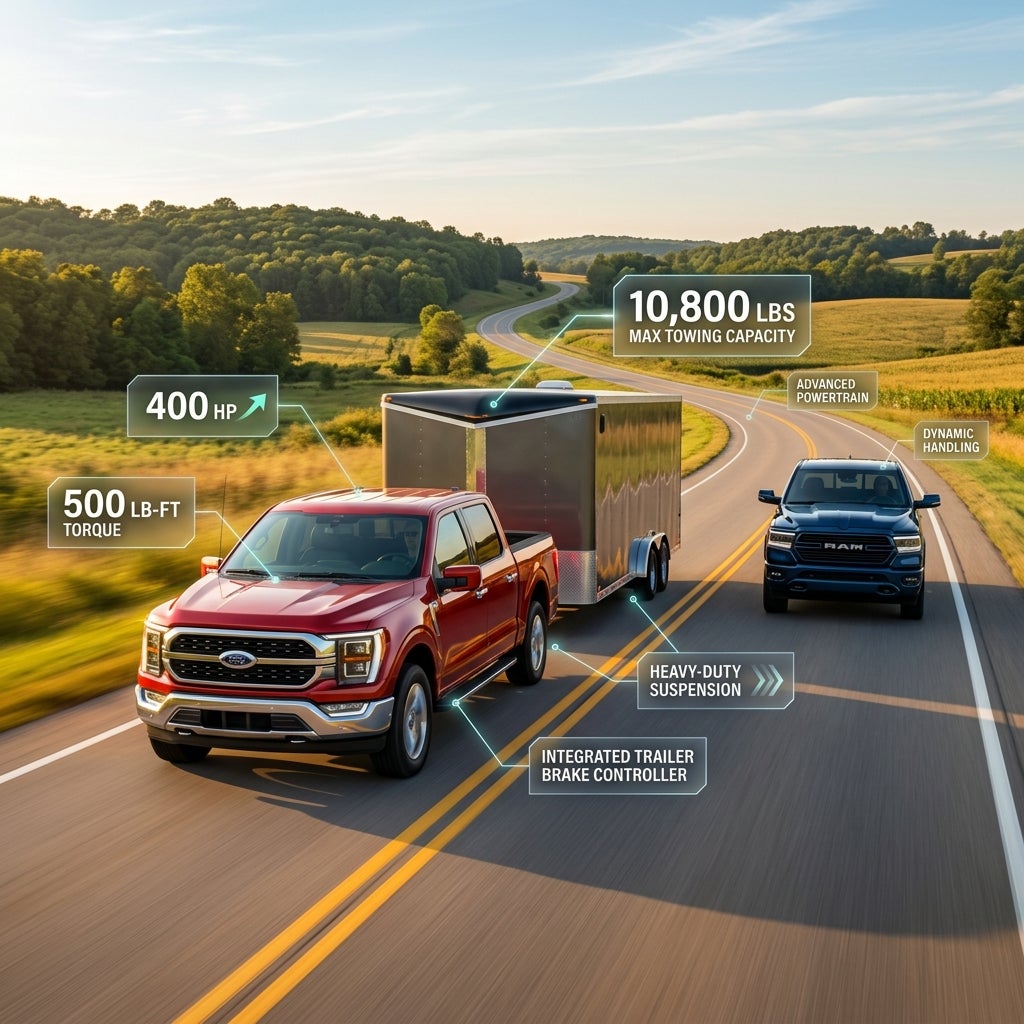
What Ten Years in the Service Bay Taught Me About Ford vs Chevy Reliability

What Ten Years in the Service Bay Taught Me About Ford vs Chevy Reliability ## Does Local Dealer Support Make Ford a Better Long-Term Value Than Chevy in East Liverpool? Local dealer support makes Ford a better long-term ownership value because nearby access to factory-certified technicians, specialized diagnostic equipment, and genuine OEM parts directly reduces maintenance downtime and prevents minor wear from becoming costly mechanical failures. While national reliability surveys place Ford and Chevrolet close in overall scores, immediate local service support ensures warranty repairs, software updates, and routine maintenance are handled efficiently without long travel distances. In my ten years running the service department, I have seen how proximity to a dedicated service bay changes the ownership experience. When a truck driver or family commuter faces an unexpected check engine light or a scheduled fluid flush, having local support eliminates the friction of taking a vehicle miles away for service. Heavy towing up the riverfront bluffs along the Ohio River puts real strain on truck powertrains. Having a service team that understands those exact driving conditions means problems are diagnosed accurately the first time. B eyond convenience, local support protects your financial investment. Factory-trained technicians use specialized diagnostic tools calibrated specifically for Ford systems, catching subtle sensor variances or software updates that generic scan tools miss. When routine care is documented in a manufacturer-backed service history, it can help support resale and trade-in value down the road. You can easily find our service center location right in town, or give our service desk (330) 462-7578 to discuss any maintenance questions. Table of Contents How Do Recent Reliability Scores Compare for the Ford F-150 and Chevy Silverado? Are Naturally Aspirated Chevy V8s More Reliable Than Turbocharged Ford EcoBoost Engines? What Is the Average Annual Maintenance Cost for a Ford F-150? How Can Proactive Maintenance at Tri State Ford Improve Real-World Vehicle Longevity? What Services Does the Tri State Ford Service Department Offer to Keep Your Truck Running Strong? How Do Recent Reliability Scores Compare for the Ford F-150 and Chevy Silverado? In recent national reliability evaluations, Chevrolet and Ford score within a narrow band, with Consumer Reports ranking Ford ahead in predicted brand reliability while J.D. Power gives Chevrolet a slight edge in initial multi-year dependability. Specifically, Consumer Reports places Ford near the top half of all automakers with a predicted reliability score in the mid-40s compared to Chevrolet in the high-30s, whereas J.D. Power's 2026 Vehicle Dependability Study ranked Chevrolet third overall with 178 problems per 100 vehicles. When you look past headline scores into specific repair data, distinct pattern differences emerge between the Ford F-150 and Chevrolet Silverado. National complaint tracking shows that Silverado complaints cluster around engine valvetrain components and electrical system glitches. By contrast, Ford F-150 complaints show a higher volume in transmission and powertrain shifting behavior, though major engine mechanics remain robust. In heavy-duty truck metrics, J.D. Power's 2025 truck rankings awarded highest marks to the Ford F-Series Super Duty for initial quality and appeal, showing strong structural durability across Ford's heavy-truck engineering. Both brands experience factory recalls, reflecting modern vehicle complexity rather than systemic failure. A recent NHTSA recall on select Ford vehicles involved a transmission valve body issue, while Chevrolet experienced targeted engine recalls on certain V8 models. From my perspective on the service floor, what matters most is how easily those recalls and service campaigns are resolved. Having immediate access to genuine OEM replacement parts ensures that any factory bulletin or wear item is corrected with factory-spec components engineered specifically for your vehicle. ​ Are Naturally Aspirated Chevy V8s More Reliable Than Turbocharged Ford EcoBoost Engines? Modern turbocharged Ford EcoBoost engines match or exceed the long-term mechanical reliability of naturally aspirated Chevy V8s when maintained with regular oil changes, as direct-injection turbo technology eliminates common naturally aspirated V8 valvetrain weaknesses like active fuel management lifter failures. While early turbochargers carried a reputation for complexity, Ford's twin-turbo EcoBoost architecture has proven exceptionally durable across millions of high-mileage work trucks. Many drivers assume that a simple, naturally aspirated V8 inherently outlasts a smaller turbocharged engine. However, late-model naturally aspirated V8s rely on complex cylinder deactivation systems to meet modern fuel economy standards. In our shop, we frequently see GM V8 engines experience mechanical lifter collapsing or bent pushrods caused by cylinder deactivation hardware. In contrast, Ford's EcoBoost design uses a robust dual-overhead-cam architecture with precision twin turbochargers that supply massive low-end torque without needing cylinder shutoff mechanisms. The key to keeping an EcoBoost engine running past 200,000 miles comes down to oil quality and electrical system health. Turbochargers rely on engine oil for high-speed lubrication and cooling, meaning oil breakdown can damage turbo bearings over time. Modern turbo systems also rely heavily on electronic wastegate controls and sensors, making steady electrical voltage vital. Keeping up with routine battery service testing ensures that wastegate actuators, sensors, and electronic control modules receive consistent voltage, preventing false diagnostic codes or performance drops. ​ What Is the Average Annual Maintenance Cost for a Ford F-150? The average annual maintenance and unscheduled repair cost for a Ford F-150 is $788, with owners averaging 0.3 unscheduled shop visits per year and a 15% probability of encountering a severe repair. This predictable baseline keeps long-term operating costs manageable, particularly when adhering to factory-recommended service intervals for fluids, filters, and spark plugs. To put that figure in context, the average annual repair cost across all passenger vehicles in industry databases is $652. Full-size pickup trucks carry slightly higher annual maintenance costs than compact sedans because they hold larger oil capacities, use heavy-duty brake friction materials, and feature complex four-wheel-drive transfer cases. However, an average repair frequency of 0.3 visits per year means most owners only visit a service bay roughly once every three years for an unscheduled repair beyond standard oil changes. Commuters driving the rolling hills near State Route 170 in Calcutta can easily keep their annual costs at or below this national average by staying ahead of routine maintenance. Replacing air filters, rotating tires every 5,000 to 7,500 miles, and changing transmission fluid at factory intervals prevents thermal breakdown in heavy-use components. When you are ready to set up your vehicle's next checkup, you can schedule a service appointment online in just a few clicks. For business owners managing local fleets, exploring our commercial F-Series truck inventory provides options built for heavy daily service. ​ How Can Proactive Maintenance at Tri State Ford Improve Real-World Vehicle Longevity? Proactive maintenance at our service facility improves real-world vehicle longevity by catching component wear early through multi-point inspections, preventing severe drivetrain damage, and keeping fluid properties optimal under heavy towing or winter driving conditions. Vehicles that follow strict OEM maintenance schedules consistently double the mileage life of neglected trucks, avoiding major engine or transmission overhauls. When truck owners come into our service bay asking about high mileage, the first thing my technicians check isn't the turbochargers—it's the transmission fluid condition and maintenance logs. Operating in a severe winter climate with heavy road-salt use creates harsh conditions for undercarriage electrical connectors, brake calipers, and fluid lines. Regular multi-point inspections allow us to clean corrosion from wiring harnesses, lubricate sticking brake slide pins, and spot minor valve cover oil weeping before it starves vital engine components. Our service approach focuses on transparent diagnostic reporting. During every visit, our certified technicians inspect your steering linkage, suspension bushings, cooling system hoses, and battery terminals. By replacing a cracking belt or flushing degraded coolant before a summer road trip or heavy winter storm, you avoid expensive roadside breakdowns and keep your vehicle operating with factory performance year after year. ​ What Services Does the Tri State Ford Service Department Offer to Keep Your Truck Running Strong? Our service department offers comprehensive automotive maintenance and repair solutions, including factory-certified oil changes, brake system overhauls, transmission servicing, battery testing, wheel alignments, and specialized diesel and powertrain diagnostics. Every procedure is performed by factory-trained technicians using specialized Ford diagnostic tools and genuine OEM parts to maintain your vehicle's factory warranty and resale value. Whether you drive a volume truck like the 2026 Ford F-150 XLT, a compact SUV like the 2026 Ford Escape (starting MSRP $31,750 with its 1.5L engine and 8-speed automatic delivering 26 city / 32 hwy mpg), or a three-row family crossover like the 2026 Ford Explorer (starting MSRP $42,585 with its 2.3L engine and SelectShift® transmission), our team handles routine care and complex repairs with equal precision. Our facility features high-bay service lifts capable of accommodating heavy-duty work trucks, commercial vans, and passenger vehicles alike. We provide a complete range of fixed-operations support to keep your vehicle safe and dependable: Factory-Scheduled Oil & Filter Changes: Utilizing synthetic-blend and full-synthetic motor oils engineered to protect turbocharged EcoBoost and naturally aspirated engines. Brake System Maintenance: Pad replacements, rotor resurfacing or replacement, fluid flushes, and anti-lock brake system diagnostics using genuine Motorcraft parts. Powertrain & Transmission Repairs: Diagnostic testing and service for 6-speed and 10-speed SelectShift® automatic transmissions, transfer cases, and differentials. Battery & Electrical System Care: Digital battery load testing, alternator testing, and terminal corrosion protection to maintain clean system voltage. Tire Service & Wheel Alignment: Precision four-wheel alignment, tire rotations, pressure monitoring sensor resets, and tread depth checks. Finding reliable vehicle care shouldn't be complicated. You can drop by our East Liverpool facility anytime during business hours, call our team directly at (330) 462-7578, or review our work truck selection if you are looking to expand your fleet. Our entire team is dedicated to keeping your vehicle safe, reliable, and on the road for miles to come. © 2026 Tri State Ford. All rights reserved. Vehicle specification data © JATO Dynamics Limited. Title Tags Meta Description Keywords Open Graph Twitter Card Canonical Article Metadata Geographic Targeting
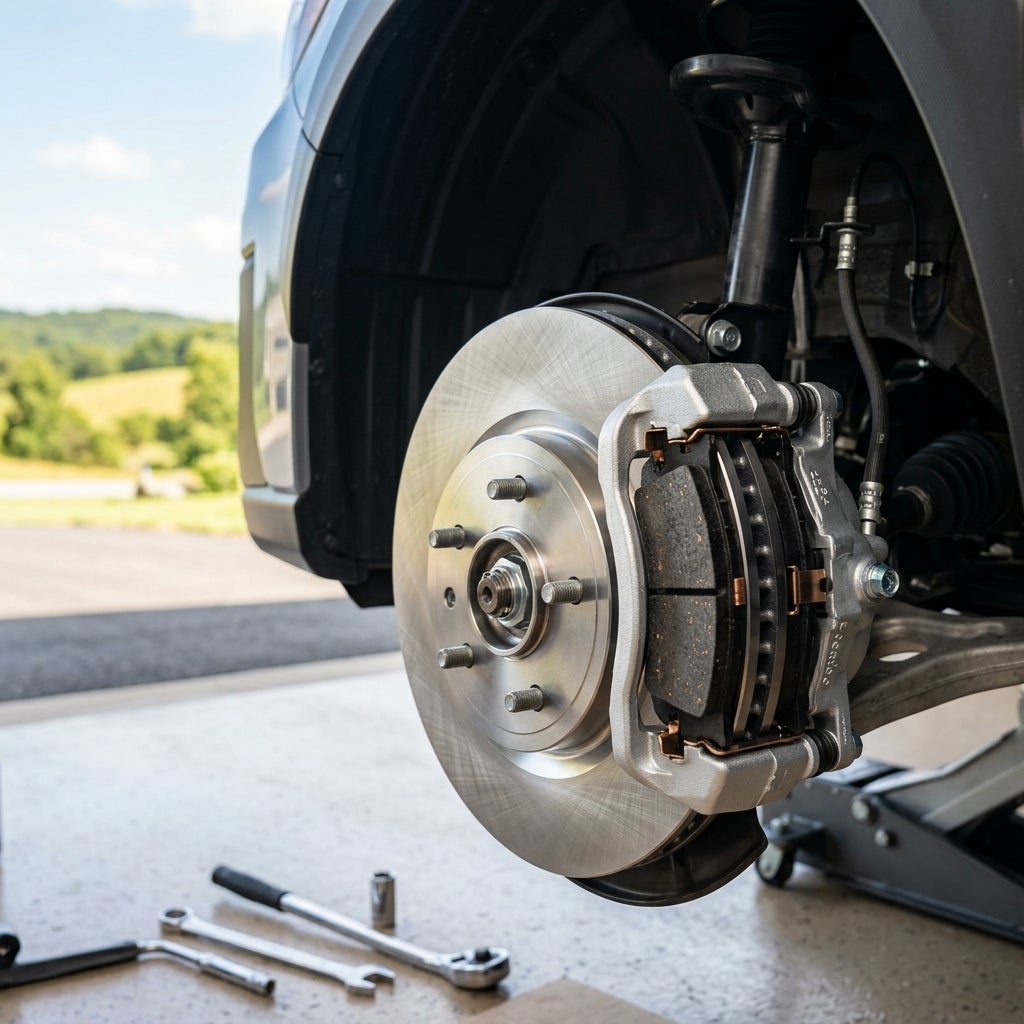
Red pickup truck towing a large trailer on a rural road next to a blue truck, with performance stats highlighted. (Representative image for illustration purposes only. Actual vehicle may vary based on trim and configuration.)

/2026-ford-f150-vs-ram-1500-east-liverpool-comparison

The 2026 Ford F-150 emerges as the recommended overall choice in the full-size truck segment, delivering significantly higher performance and capability than the 2026 Ram 1500 Pickup. Generating 400 hp and 500 lb-ft of torque from its standard 3.5L engine, the F-150 offers a maximum towing capacity of 10,800 lbs and payload capability up to 2,000 lbs, easily outpacing the Ram 1500's 305 hp and 6,370 lbs towing limit for demanding jobs and trailering needs. Table of Contents Which Pickup Is the Best Overall for Drivers: 2026 Ford F-150 or 2026 Ram Ram 1500 Pickup? How the 2026 Ford F-150 and Ram Ram 1500 Compare in Price and Trim Value Cargo and Passenger Space Designed for Boardman Weekend Getaways in the 2026 Ford F-150 and Ram Ram 1500 Power and Driving Experience Tailored to Rolling Hills: 2026 Ford F-150 vs Ram Ram 1500 Fuel Economy and Range Considerations for Commuters Technology Features That Enhance Connectivity and Convenience Safety and Driver Assistance Systems Built for Confident Driving on Suburban Roads Warranty, Maintenance, and Local Service Options for 2026 Ford F-150 and Ram Ram 1500 Owners Final Verdict: Why the 2026 Ford F-150 Is the Right Choice for Your Drive Which Pickup Is the Best Overall for Drivers: 2026 Ford F-150 or 2026 Ram Ram 1500 Pickup? The 2026 Ford F-150 is the superior overall full-size pickup because it provides substantially more towing capability and engine output, reaching up to 10,800 lbs of towing power compared to 6,370 lbs on the 2026 Ram Ram 1500 Pickup. When evaluating a truck as a workhorse and a daily companion, the F-150 functions like a trusted tool in your toolbox. The F-150 King Ranch standard trim comes equipped with a twin-turbocharged 3.5L engine linked to a SelectShift® 10-speed automatic transmission, outputting 400 hp and 500 lb-ft of torque. By comparison, the Ram 1500 equipped with its 3.6L engine generates 305 hp and 271 lb-ft of torque sent through an automatic 8-speed transmission. This massive power gap translates directly into real-world capability, whether you are hauling equipment or pulling heavy trailers. Ford's engineering emphasis on durability and utility is evident in every specification. The F-150 provides a payload allowance of up to 2,000 lbs, surpassing the Ram 1500's maximum payload of 1,734 lbs. For owners who balance busy work schedules with weekend family commitments, the F-150 delivers uncompromised versatility. Maintaining your truck is effortless with our Ford pickup and delivery service, allowing you to focus on work and family while certified technicians care for your vehicle. Explore our new Ford truck inventory to see available trim options today. How the 2026 Ford F-150 and Ram Ram 1500 Compare in Price and Trim Value The 2026 Ford F-150 King Ranch lineup starts at $65,825 MSRP for the King Ranch SuperCrew 5-1/2’ Box trim, offering exceptional value through standard luxury, high-output performance, and heavy-duty components that justify its premium positioning over the Ram 1500. Value in a full-size pickup is determined by standard equipment, mechanical strength, and long-term durability. The F-150 King Ranch 4x4 SuperCrew 5-1/2’ Box carries an MSRP of $69,625 (or $72,420 including delivery charge), while the King Ranch 4x4 SuperCrew 6-1/2’ Box comes in at $69,930 MSRP (or $72,725 including delivery charge). The rear-wheel drive King Ranch SuperCrew 5-1/2’ Box is priced at $65,825 MSRP (or $68,620 including delivery charge). All F-150 King Ranch models come standard with full leather bucket seats, genuine wood interior accents, a 14-speaker Bang & Olufsen sound system, and advanced trailering technologies. The Ram 1500 Big Horn/Lone Star trims feature lower starting prices, with the 4x4 Quad Cab 6'4" at $50,680 MSRP, the 4x4 Crew Cab 5'7" at $53,430 MSRP, and the 4x4 Crew Cab 6'4" at $56,570 MSRP. However, these entry-to-mid trim Ram models lack the standard 400 hp engine output, 10,400 lbs base towing threshold, and high-end cabin refinements included in the F-150 King Ranch. To assist with your purchase planning, you can value your trade-in online before visiting the dealership. Buyers exploring different options can also examine our selection of pre-owned Carfax 1-owner vehicles to find high-quality pre-owned alternatives. Pricing Manufacturer-listed pricing per trim, across compared vehicles. 2026 Ford F-150 Trim MSRP 2026 Ram Ram 1500 Pickup Trim MSRP King Ranch SuperCrew 5-1/2’ Box $65,825 Big Horn/Lone Star 4x4 Quad Cab 6'4" $50,680 King Ranch 4x4 SuperCrew 5-1/2’ Box $69,625 Big Horn/Lone Star 4x4 Crew Cab 5'7" $53,430 King Ranch 4x4 SuperCrew 6-1/2’ Box $69,930 Big Horn/Lone Star 4x4 Crew Cab 6'4" $56,570 Cargo and Passenger Space Designed for Boardman Weekend Getaways in the 2026 Ford F-150 and Ram Ram 1500 The 2026 Ford F-150 delivers superior bed cargo volume and legroom flexibility, providing up to about 62 cu ft of cargo capacity in its 6-1/2’ box option to easily carry recreational gear for trips to Boardman parks. Inside the cabin, both trucks feature spacious SuperCrew or Crew Cab seating for 5 passengers. The F-150 provides generous interior dimensions, offering 40.8 in of front headroom, 40.4 in of rear headroom, 43.9 in of front legroom, and 43.6 in of rear legroom. Rear seat passengers benefit from a flat load floor that makes storing luggage or gear inside the cab simple and convenient. When comparing pickup bed capabilities, the F-150 6-1/2’ box configuration provides about 62 cu ft of volume and a cargo bed length of 78.9 in. The 5-1/2’ box version offers about 53 cu ft of cargo volume with a length of 67.1 in. By comparison, the Ram 1500 Crew Cab 5'7" box offers about 54 cu ft of space. The F-150's bed design features a width of 50.6 in between wheelhouses and available accessories like the Pro Access Tailgate and bed dividers to secure cargo. Busy truck owners who need routine maintenance performed without taking time out of their weekend can utilize our convenient Ford mobile service option, or easily book a service appointment online for showroom maintenance. Dimensions & Capacity Capacity and dimensions by trim Specification 2026 Ford F-150 2026 Ram Ram 1500 Pickup Seating 5 5 Cargo 52.8 cu ft 53.8 cu ft Curb weight 5,096 lbs 5,166 lbs Towing 10,400 lbs 6,370 lbs Payload 1,945 lbs 1,734 lbs Power and Driving Experience Tailored to Rolling Hills: 2026 Ford F-150 vs Ram Ram 1500 The 2026 Ford F-150 dominates driving performance with its standard 3.5L EcoBoost® V6 engine producing 400 hp and 500 lb-ft of torque, providing effortless acceleration and hill-climbing power that eclipses the Ram 1500's 305 hp output. Navigating steep grades and uneven terrain requires instant engine responsiveness and chassis stability. The F-150’s twin-turbocharged engine generates peak torque at just 3,500 rpm, pairing seamlessly with the SelectShift® 10-speed automatic transmission to keep the truck in its optimal powerband. For buyers seeking maximum power and efficiency, the available 3.5L PowerBoost™ Hybrid V6 engine elevates output to 430 hp and 570 lb-ft of torque, backed by a 1.5 kWh lithium-ion battery. The Ram 1500 utilizes a naturally aspirated 3.6L V6 engine producing 305 hp and 271 lb-ft of torque at 4,900 rpm. In heavy-towing scenarios or steep highway climbs, the F-150's extra 95 hp and 229 lb-ft of torque provide noticeably quicker response and lower engine strain. Both vehicles offer all-wheel drive configurations for winter traction. The F-150 features front independent double-wishbone suspension with coil springs and a heavy-duty rear beam axle with leaf springs, balancing ride smoothness with workhorse durability. To help bring home the capability you need, you can complete our secure online credit application from the comfort of home. Engine & Performance Powertrain specs by trim Specification 2026 Ford F-150 2026 Ram Ram 1500 Pickup Engine 3.5L 3.6L Horsepower 400 hp 305 hp Torque 500 lb-ft 271 lb-ft Transmission SelectShift® automatic 8-speed Drivetrain All-wheel drive All-wheel drive Fuel Economy and Range Considerations for Commuters The 2026 Ford F-150 RWD achieves up to 25 hwy MPG and an estimated total driving range of 720 mi on a single tank, combining robust power with practical long-distance range. In 4x4 configuration, the F-150 3.5L EcoBoost® is EPA-rated at 17 city / 23 hwy / 19 combined MPG, while the rear-wheel drive model earns 17 city / 25 hwy / 20 combined MPG. Equipped with a standard 36 gal fuel tank, the F-150 4x4 delivers a calculated driving range of 684 mi, while the RWD trim reaches 720 mi. The Ram 1500 3.6L AWD registers EPA ratings of 19 city / 24 hwy / 21 combined MPG. While the Ram holds a slight 2 MPG advantage in city driving, the F-150 RWD matches or exceeds it on the highway while offering significantly greater towing capacity and horsepower. For maintenance items, filters, or accessories that keep your vehicle efficient, you can order genuine OEM parts directly through our dealership. Fuel Economy Fuel economy and range by trim Specification 2026 Ford F-150 2026 Ram Ram 1500 Pickup MPG 17 city / 23 hwy / 19 combined 19 city / 24 hwy / 21 combined Technology Features That Enhance Connectivity and Convenience The 2026 Ford F-150 sets the standard for truck technology with a standard 12 in center touchscreen, a 12 in digital instrument cluster, and available Pro Power Onboard – 7.2 KW electrical power generation. Inside the F-150, the SYNC® infotainment system integrates wireless Apple CarPlay® and Android Auto™, 911 Assist® telematics, and 5G Wi-Fi hotspot connectivity. The available Pro Power Onboard system transforms the truck bed into a mobile generator, offering up to 7.2 KW of exportable power—enough to run power tools, jobsite equipment, or camping accessories without requiring a standalone generator. Trailering technology on the F-150 includes Pro Trailer Backup Assist, Pro Trailer Hitch Assist, an integrated trailer brake controller, and a 360-Degree Camera system. Available Ford BlueCruise provides hands-free highway driving assistance on mapped highways, managing steering, braking, and lane positioning to reduce driver fatigue during long trips. ​ Safety and Driver Assistance Systems Built for Confident Driving on Suburban Roads The 2026 Ford F-150 provides exceptional occupant protection, backed by a 5-star overall safety rating from the NHTSA and IIHS Top Safety Pick recognition. Every F-150 comes standard with Ford Co-Pilot360® driver-assist technologies. Standard safety features include Pre-Collision Assist with Pedestrian Detection, automatic emergency braking, BLIS® (Blind Spot Information System) with trailer coverage, Lane-Keeping System, and Rear Cross-Traffic Collision Avoidance with automatic braking. The structural integrity of the F-150 is built on a high-strength, military-grade aluminum-alloy body mounted on a fully boxed steel frame. Six standard airbags—including dual-stage front airbags, front seat-mounted side airbags, and Safety Canopy® side-curtain airbags—protect passengers across both seating rows. Warranty, Maintenance, and Local Service Options for 2026 Ford F-150 and Ram Ram 1500 Owners The 2026 Ford F-150 includes comprehensive warranty coverage, featuring a 36 mth / 36,000 mi bumper-to-bumper warranty, a 60 mth / 60,000 mi powertrain warranty, and 5 years of complimentary roadside assistance. For emergency situations on the road, owner coverage is supported by Ford Roadside Assistance at 1-800-241-3673, providing 24/7 towing, flat tire changes, and fuel delivery backed by factory-trained technicians. When you are ready to explore your vehicle options in person, visit our East Liverpool showroom located at 1503 Pennsylvania Ave, East Liverpool, OH 43920. You can also give our team a quick call at (330) 462-7578 to speak with a truck specialist or browse our certified pre-owned inventory to view additional factory-backed options. Q: Which truck offers higher towing capacity, the 2026 Ford F-150 or Ram 1500? The 2026 Ford F-150 delivers a maximum towing capacity of 10,800 lbs in its King Ranch 4x4 SuperCrew 6-1/2’ Box configuration, significantly outpacing the 2026 Ram Ram 1500 Pickup's 6,370 lbs towing limit. Q: What are the primary engine differences between these two pickup trucks? The 2026 Ford F-150 King Ranch features a standard twin-turbo 3.5L EcoBoost® V6 producing 400 hp and 500 lb-ft of torque with a 10-speed transmission. The 2026 Ram 1500 Big Horn features a 3.6L V6 producing 305 hp and 271 lb-ft of torque paired with an 8-speed transmission. Q: Is the 2026 Ford F-150 PowerBoost™ Hybrid available on King Ranch trims? Yes, the 3.5L PowerBoost™ Hybrid V6 engine is available as an option on the King Ranch trim, boosting total system output to 430 hp and 570 lb-ft of torque while providing an available 7.2 KW Pro Power Onboard generator system. Q: How do the bed cargo volumes compare between the F-150 and Ram 1500? The 2026 Ford F-150 offers about 53 cu ft of cargo volume in its 5-1/2’ box and about 62 cu ft in its 6-1/2’ box option. The 2026 Ram 1500 Crew Cab 5'7" box provides about 54 cu ft of cargo space. Final Verdict: Why the 2026 Ford F-150 Is the Right Choice for Your Drive For truck buyers who require relentless capability, advanced productivity features, and proven American toughness, the 2026 Ford F-150 stands out as the superior pickup. With its 400 hp engine output, 10,800 lbs max towing capacity, 2,000 lbs payload capacity, and innovation like Pro Power Onboard, the F-150 handles daily work duties and family weekend adventures with equal ease. Visit Tri State Ford in East Liverpool to test drive the 2026 F-150 today. Our knowledgeable sales and finance staff are ready to help you find the perfect truck configuration and tailored financing options for your budget. © 2026 Tri State Ford. All rights reserved. Vehicle specification data © JATO Dynamics Limited. Title Tags 2026 Ford F-150 Trucks in East Liverpool OH | Tri State Ford Meta Description Keywords Open Graph Twitter Card Canonical Article Metadata Geographic Targeting

Close-up of a new car disc brake rotor, caliper, and brake pads installed on a vehicle during maintenance. (Representative image for illustration purposes only. Actual vehicle may vary based on trim and configuration.)

Should You Replace Brake Pads and Rotors at the Same Time?

Replacing brake pads and rotors together is strongly recommended because new friction pads require a flat, uniform disc surface to bed in properly and achieve maximum stopping power. Installing new pads onto worn, scored, or heat-grooved rotors causes uneven contact, excessive brake noise, pedal vibration, and premature wear on the new pads, which ultimately reduces overall vehicle braking efficiency and safety. +-------------------------------------------------------------------+ | BRAKE SYSTEM COMPONENTS | +-------------------------------------------------------------------+ | --> Clamps pads against the spinning disc | | --> High-friction friction blocks (3 mm discard limit)| | --> Heavy iron disc absorbing stopping energy | +-------------------------------------------------------------------+ When you step on the brake pedal, hydraulic pressure forces the brake caliper to squeeze the brake pads against the flat sides of the rotating brake rotor. This physical friction generates intense thermal energy, transforming the kinetic energy of your moving vehicle into heat to bring thousands of pounds of vehicle to a complete stop. Because brake pads and rotors operate in tandem as a matched friction pair, their physical condition directly impacts how quickly and smoothly your vehicle slows down. Over thousands of miles, brake pads wear down their friction material while simultaneously carving microscopic ridges, grooves, and heat spots into the metal rotor face. If you install fresh, flat brake pads against an old, uneven rotor, the new friction material only contacts the high spots of the grooved metal surface. This reduced contact patch severely decreases initial stopping power and concentrates frictional heat into small areas on the pad, leading to friction material glazing, squeal, and pedal pulsation. Modern vehicles are engineered with lightweight rotor castings designed to maximize heat dissipation while reducing unsprung weight. As a result, today's rotors wear thinner alongside the brake pads rather than outlasting multiple pad changes like heavier friction discs from decades past. Inspecting disc thickness and friction pad depth together ensures your vehicle retains its original stopping performance. Drivers navigating the gently rolling hills around Calcutta know that consistent stopping power is essential during daily trips and family drives. When you notice squealing, grinding, or steering wheel vibration while slowing down, bringing your vehicle to our service facility ensures a thorough multi-point brake system evaluation. You can visit our service center in East Liverpool to have our factory-trained technicians inspect your complete brake setup, or give our service desk a quick call to speak with an advisor about your vehicle's maintenance schedule. Table of Contents Is It Always Necessary to Replace Rotors or Can You Just Change Pads? Does Replacing Brake Pads and Rotors Together Save Money on Labor? What Does It Mean to Turn or Resurface a Brake Rotor? How Do EV Regenerative Braking and Specialized Rotors Impact Service? Questions Drivers Ask About Brake Bedding Procedures and Rotor Care Key Questions Local Drivers Ask Before Servicing Their Brakes What Questions to Ask Before Approving a Brake Job Is It Always Necessary to Replace Rotors or Can You Just Change Pads? Brake rotors can often be reused if they meet strict criteria such as minimum thickness and absence of damage, saving you unnecessary replacement costs. However, installing new pads without replacing or resurfacing worn rotors frequently results in noisy operation, extended stopping distances, and rapid pad degradation. Friction material thickness on new brake pads typically measures around 12 mm, and professional service guidelines recommend planning replacement once the pad compound wears down to 3 mm or 4 mm. The absolute minimum discard threshold is 2 mm, at which point the metal backing plate risks contacting the rotor disc directly. Rotors also feature a critical measurement known as the MIN TH (minimum thickness) limit, which is permanently stamped directly on the outer edge or hub of the casting. Pad replacement threshold: 3 mm to 4 mm remaining friction material Absolute pad discard limit: 2 mm remaining compound depth Rotor minimum thickness: Stamped MIN TH specification on disc edge Maximum lateral runout tolerance: 0.004 inches of disc wobble To evaluate whether an existing rotor can safely remain in service, technicians measure disc thickness across multiple points around the surface using a digital micrometer. If the lowest measured reading rests at or below the stamped MIN TH spec, the rotor lacks sufficient mass to absorb and dissipate heat without warping, making immediate replacement mandatory. When walking owners through a multi-point inspection, our technicians measure rotor thickness at several points across the disc surface using a micrometer to verify it stays well above the factory minimum threshold before recommending pad-only service. If your vehicle requires replacement components, choosing factory-engineered parts ensures precise fitment and thermal endurance. You can order genuine Motorcraft parts through our dealership parts department to maintain original factory braking standards. Does Replacing Brake Pads and Rotors Together Save Money on Labor? Replacing brake pads and rotors in a single service visit saves significant money on labor costs because the technician completes the disassembly process only once. Because access to the brake rotor requires unbolting the caliper and removing the brake pads, performing both jobs simultaneously eliminates paying twice for redundant labor hours. +-------------------------------------------------------------------+ | LABOR SAVINGS COMPARISON | +-------------------------------------------------------------------+ | Combined Service: Wheel Removal -> Caliper Unbolt -> Swap Pads | | & Rotors Together (1 Teardown Charge) | | | | Separate Service: Visit 1: Wheel & Caliper Teardown for Pads | | Visit 2: Wheel & Caliper Teardown for Rotors | | (2 Full Teardown Labor Charges) | +-------------------------------------------------------------------+ When a technician performs a brake service, the majority of the labor time involves placing the vehicle on a hoist, removing the road wheels, unbolting the brake caliper, clearing away road debris, and servicing the caliper sliding pins and hardware. Once the caliper and old pads are dismounted, sliding the old rotor off the wheel hub and installing a fresh rotor adds only a few minutes to the overall service procedure. If you opt to install new pads while keeping worn rotors, and those old rotors warp or develop severe pulsation 5,000 miles later, you must pay full labor charges a second time to teardown the exact same wheel assemblies. Furthermore, riding on uneven rotors rapidly damages the fresh brake pads, forcing you to purchase a second set of pads far earlier than normal. Completing pad and rotor replacement as a unified package protects your investment in new friction components. Fresh pads bedding into pristine rotors achieve maximum thermal stability, reducing wear on slide pins, anti-rattle clips, and caliper pistons over tens of thousands of miles. What Does It Mean to Turn or Resurface a Brake Rotor? Turning or resurfacing a brake rotor involves mounting the disc onto a precision mechanical lathe to cut away a thin layer of surface metal, restoring a perfectly smooth, flat, and parallel friction face. This machining process removes light surface scoring, minor rust ridges, and minor glaze buildup so new brake pads can bed in correctly. +-------------------------------------------------------------------+ | ROTOR RESURFACING CRITERIA | +-------------------------------------------------------------------+ | ALLOWED: | | - Adequate metal thickness exceeding Machine Minimum limit | | - Minor surface glazing or light pitting | | - Minimal lateral runout under 0.004 inches | | | | FORBIDDEN (REPLACEMENT REQUIRED): | | - Thickness at or below stamped MIN TH specification | | - Deep thermal cracking, blue heat spots, or hard spots | | - Heavy rust scale or structural flange corrosion | +-------------------------------------------------------------------+ Before a rotor can be resurfaced, technicians calculate whether machining will remove too much metal. Rotors possess two distinct thickness specifications: the discard limit ( MIN TH) and a slightly higher machine-minimum limit. If lathe turning would reduce the rotor mass below the machine-minimum threshold, the disc cannot legally or safely be resurfaced and must be replaced with a new component. Machining is only appropriate for rotors that maintain structural integrity and plenty of metal reserve. If a rotor displays severe thermal warping, deep grooves from metal-on-metal pad contact, micro-cracking from extreme heat, or lateral runout exceeding 0.004 inches, resurfacing cannot resolve the underlying structural weakness. Modern replacement rotors are priced competitively enough that installing fresh units is frequently more cost-effective and durable than machining older metal down to its bare limit. How Do EV Regenerative Braking and Specialized Rotors Impact Service? Electric vehicles and hybrid powertrains utilize regenerative braking to slow the vehicle using the electric drive motor, which drastically reduces physical friction wear on mechanical brake pads and rotors. However, this lack of regular mechanical engagement creates a unique maintenance challenge: corrosion and rust accumulation on rotor surfaces due to inactivity. Because EV friction brakes remain disused during gentle slowing, moisture, humidity, and road de-icers accumulate on the rotor surfaces without being swept clean by daily pad contact. Vehicle owners operating near the riverfront bluffs of East Liverpool face damp winter air and road salt, which speeds up surface rust on rarely used EV friction brakes. Periodic professional brake inspections ensure hydraulic calipers do not seize up from disuse and friction surfaces remain free of heavy pitting. High-performance applications, such as heavy towing or severe duty, often feature specialized drilled or slotted rotors: Slotted rotors utilize machined channels to vent gas, dust, and water away from the pad contact zone under heavy braking. Drilled rotors feature cross-drilled holes that enhance thermal dissipation and reduce rotating mass. Drilled and slotted designs resist brake fade during steep mountain descents or heavy trailer hauling. Specialized performance rotors generally cannot be resurfaced on a standard lathe and must be replaced when worn. Maintaining hybrid and electric powertrain systems requires specialized technical knowledge alongside traditional brake hardware maintenance. You can explore ev battery service and care information on our website, or request our mobile technicians to perform routine maintenance at your home through Ford mobile service options. ​ Questions Drivers Ask About Brake Bedding Procedures and Rotor Care Brake pad bedding, also referred to as burnishing or break-in, is the process of transferring an even, microscopic layer of pad friction material onto the smooth surface of a new rotor through controlled heating cycles. This chemical transfer film optimizes friction adhesion between the components, preventing brake judder, reducing noise, and ensuring consistent pedal feel. Proper bedding requires gradually raising the temperature of the friction components without causing severe thermal shock: Accelerate to approximately 35 mph and apply moderate pedal pressure to slow the vehicle to 10 mph without stopping complete motion. Repeat this moderate deceleration 6 to 8 times, allowing 30 seconds of driving between slowdowns to release heat buildup. Perform 2 to 3 firmer slowdowns from 45 mph to 15 mph to build higher friction temperatures. Drive for 5 to 10 minutes with minimal brake usage to allow air cooling across the rotor vanes before parking. Avoid engaging the parking brake immediately after heated bedding passes to prevent transfer film imprinting on hot metal. Failing to bed in new pads and rotors properly causes uneven, patchy film transfer, creating spots of varying friction across the disc face. Over time, these uneven spots develop into hot spots that cause steering wheel shake and brake pedal pulsation during highway stopping. Most standard replacement pads require 300 to 400 miles of moderate city driving to fully establish an even friction layer if a manual burnishing routine is not conducted. Avoiding sudden, violent panic stops during this initial break-in period allows the pad compound and metal rotor face to mate seamlessly. To keep your vehicle stopping reliably, you can schedule a service appointment online for a comprehensive multi-point brake evaluation. Key Questions Local Drivers Ask Before Servicing Their Brakes Q: How can I tell if my brake rotors are warped without taking off the wheel? Pedal pulsation or steering wheel shake while slowing down at highway speeds is the most common indicator of rotor thickness variation or warping. When the rotor disc surface develops uneven high and low spots, the caliper piston pulses inward and outward as the disc rotates, pushing fluid back through the hydraulic lines directly into your foot. Q: Will putting new pads on rusted rotors cause squeaking or brake noise? Installing fresh brake pads over rusted or pitted rotors leads to intense squealing and grinding noises. Flaking rust around the outer edge or hub of an old rotor scrapes against the new pad backing plate, while pitted friction surfaces strip material off the new pad unevenly, creating severe noise and vibration. Q: How many miles do OEM brake pads and rotors typically last on a truck or SUV? Original equipment brake pads and rotors typically last between 30,000 and 70,000 miles depending on driving habits, cargo loads, and towing frequency. Stop-and-go commuting, heavy payload hauling, and mountain driving accelerate friction wear, whereas steady highway driving extends the lifespan of both pads and rotors toward the upper limit. Q: What happens if a rotor drops below its stamped minimum thickness limit? A rotor worn below its stamped MIN TH rating lacks sufficient mass to absorb the intense thermal energy created during hard braking. This thermal overload leads to extreme rotor warping, micro-cracking, extended stopping distances, structural failure, or total loss of braking efficiency under high-heat driving conditions. Q: Can ceramic brake pads be used on standard steel brake rotors? Ceramic brake pads perform exceptionally well on standard cast-iron steel rotors, offering low dust generation, quiet operation, and stable high-temperature performance. Premium ceramic pads pair smoothly with fresh cast-iron rotors, providing smooth pedal engagement and long component life for everyday commuting and family driving. What Questions to Ask Before Approving a Brake Job Before authorizing a facility to begin work on your braking system, asking your service advisor clear technical questions guarantees you receive proper parts, transparent service, and reliable work. Understanding the exact mechanical condition of your pads and rotors helps you make informed decisions regarding component replacement versus resurfacing. Key questions to review with your service technician include: What are the precise micrometer measurements of my rotors, and how do they compare to the stamped minimum thickness limit? Are you installing factory-recommended OEM friction compounds matched to my vehicle's towing and weight specifications? Will the technician clean the hub surfaces, lubricate the slide pins, and install fresh anti-rattle hardware clips? Does the quoted brake service price include a full hydraulic fluid check and a comprehensive road test? What warranty coverage protects the new friction pads and replacement rotors against defects or premature wear? At Tri State Ford, located at 1503 Pennsylvania Ave, East Liverpool, OH 43920, our factory-certified technicians inspect every aspect of your brake assembly using precision measuring tools and genuine Motorcraft components. Whether your vehicle needs fresh pads, precision rotor installation, or a comprehensive safety checkup, our team provides trusted service you can rely on for every mile ahead. To speak directly with our factory-trained service team or request a detailed estimate for your vehicle, visit our East Liverpool service center or contact our advisors by calling (330) 462-7578 to set up your next service visit. © 2026 Tri State Ford. All rights reserved. Title Tags Brake Pad & Rotor Replacement in East Liverpool OH | Tri State Ford Meta Description Keywords Open Graph Twitter Card Canonical Article Metadata Geographic Targeting
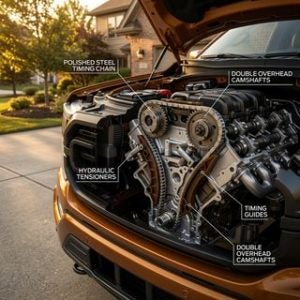
Should You Buy a Ford Bronco or a Bronco Sport?

Deciding between a Ford Bronco and a Bronco Sport comes down to platform size, off-road intensity, and daily driving habits. The 2026 Ford Bronco is a midsize, body-on-frame SUV with a removable roof and doors, designed for severe trail capability and towing up to 3,500 lbs. The 2026 Ford Bronco Sport is a compact unibody crossover with standard 4x4, offering easier city maneuverability, lower running costs, and up to 25 city / 30 hwy mpg. Selecting the right vehicle starts with understanding how each construction type behaves on paved roads and rough terrain. The full-size Bronco utilizes a truck-based platform engineered to articulate over large boulders, conquer deep ruts, and haul heavy trailers. Its rugged solid rear axle and selectable low-range 4x4 transfer case deliver maximum off-road traction, making it an ideal choice for off-road enthusiasts who plan to tackle aggressive trails. The Bronco Sport shares its foundational styling cues with its larger sibling but rests on a lighter, unibody crossover architecture. This setup provides a smooth, car-like ride quality, crisp steering response, and effortless parking in tight suburban spaces. Every Bronco Sport includes standard four-wheel drive and Ford G.O.A.T. Modes (Goes Over Any Type of Terrain), providing dependable grip on snow, rain, and gravel without the added weight and stiff ride of a traditional truck frame. When you are ready to evaluate both SUVs side-by-side, our team at Tri State Ford can help you compare cabin dimensions, seating ergonomics, and powertrain options. You can explore financing paths by filling out an online credit application ahead of time. Before coming in, feel free to give our sales department (330) 462-7578 a quick call or check finding our showroom location to plan your visit. Table of Contents What Are the Size Differences and Does Either Have a Removable Roof? What Are the Towing Capacities and Drivetrain Differences for Both? Which Model Delivers Lower Fuel Costs and Easier Daily Livability? How Reliable Is the Bronco vs Bronco Sport and Does Jeep Have an Equivalent? Common Questions About the Ford Bronco and Bronco Sport How Do You Check Local Availability and Test Drive the Ford Bronco and Bronco Sport? What Are the Size Differences and Does Either Have a Removable Roof? The Ford Bronco is larger in every exterior dimension and features fully removable doors and roof panels, whereas the Bronco Sport is a smaller, fixed-body crossover. The 2026 Ford Bronco measures around 173 to 189 inches in length depending on two-door or four-door configuration, while the 2026 Ford Bronco Sport maintains a compact footprint at roughly 173 inches with fixed body panels. Underneath the body, the size variance creates distinctly different interior environments. The full-size Bronco sits on a wheelbase of 100 inches in two-door models or 116 inches in four-door models, offering an overall width of nearly 79 inches without mirrors. This wide stance translates to maximum shoulder room and up to 36 cubic feet of cargo volume behind the second row. Crucially, every full-size Bronco comes standard with removable frameless doors and modular roof panels—available in softtop or hardtop variations—allowing driver and passengers to experience open-air driving. The Bronco Sport uses a 105-inch wheelbase and a narrower 74-inch body, making it significantly easier to maneuver through crowded parking lots and narrow driveways. It provides up to 29 cubic feet of rear cargo space, enhanced by a raised safari-style roof line that maximizes interior vertical headroom. While the Bronco Sport features standard roof rack side rails for kayaks and cargo carriers, its doors and roof are permanently fixed to the body structure. When families compare both models on our sales floor, the first action they usually test is reaching up to unlatch the removable roof panels on the Bronco to see how manageable the weight is for two people. In suburban Calcutta, where drivers frequently navigate moderately elevated hills and residential roads near local parks, the compact turn radius of the Bronco Sport simplifies garage parking and tight turns. Drivers searching for pre-owned capability can also check our pre-owned Carfax 1-owner inventory to see late-model crossover options. ​ What Are the Towing Capacities and Drivetrain Differences for Both? Maximum towing capacity reaches 3,500 lbs on the standard Ford Bronco—and up to 4,500 lbs on Raptor models—compared to a maximum tow rating of 2,700 lbs on the Bronco Sport Badlands. Standard Bronco Sport models equipped with the base engine pull up to 2,200 lbs. Engine and drivetrain options further highlight the performance gap between these two models: 2026 Ford Bronco Powertrains: Standard 2.3-liter EcoBoost 4-cylinder generating 300 hp and 325 lb-ft of torque. Available 2.7-liter EcoBoost V6 producing 330 hp and 415 lb-ft of torque. Choice of a 7-speed manual or 10-speed automatic transmission. Part-time 4x4 or advanced automatic 4x4 system with low-range transfer case engagement. 2026 Ford Bronco Sport Powertrains: Standard 1.5-liter EcoBoost 3-cylinder producing 180 hp and 200 lb-ft of torque. Available 2.0-liter EcoBoost 4-cylinder on Badlands delivering 250 hp and 277 lb-ft of torque. 8-speed automatic transmission featuring SelectShift® paddle shifters on select trims. Standard 4x4 system with twin-clutch rear-drive unit available on Badlands. For drivers navigating the riverfront bluffs and steep terrain around East Liverpool, the heavy-duty low-range transfer case in the full-size Bronco offers traditional crawl capability, while the Bronco Sport's twin-clutch rear drive unit manages slick pavement with ease. If you require higher towing limits for boats or camper trailers, the midsize Bronco is engineered for heavier trailering demands. Buyers interested in factory-backed coverage can review our certified pre-owned Ford lineup to find inspected vehicles with extended warranty protections. ​ Which Model Delivers Lower Fuel Costs and Easier Daily Livability? The Ford Bronco Sport achieves lower overall fuel costs thanks to EPA estimates reaching up to 25 city / 30 hwy mpg on 1.5-liter EcoBoost models, beating the full-size Bronco's typical 18 city / 22 hwy mpg rating. Smaller exterior dimensions and a crossover suspension tuning also make the Bronco Sport more agile for daily errand runs and routine highway driving. Over several thousand miles of daily commutes, fuel efficiency differences create a noticeable distinction in overall ownership expenses. The 3-cylinder engine in the Bronco Sport uses a compact displacement to optimize highway fuel efficiency while maintaining responsive turbocharged power when merging onto highways. Upgrading to the 2.0-liter EcoBoost engine on the Badlands trim slightly shifts estimates to 21 city / 27 hwy mpg, which still remains more efficient than most full-size Bronco configurations. Daily ergonomics also lean in favor of the Bronco Sport for families and solo commuters. Its lower step-in height makes entering and exiting effortless for young children or elderly passengers, and its fully sealed cabin isolates tire and wind noise far better at interstate speeds. The cargo area features rubberized washable floor liners on select trims, flip-up rear glass for quick loading, and built-in hatch lighting for nighttime gear access. The full-size Bronco provides command of the road with an elevated seating position and commanding sightlines, but its larger turn circle and firmer truck suspension require more driver effort in parking structures. You can browse our current selection of new Ford vehicles to check active trim availability. Routine maintenance keeps fuel economy consistent; you can use our online tire finder tool to select all-terrain or highway tires, or use our online service scheduler to maintain proper alignment and fluid levels. ​ How Reliable Is the Bronco vs Bronco Sport and Does Jeep Have an Equivalent? Both models demonstrate solid durability backed by Ford's standard 3 years / 36,000 miles bumper-to-bumper and 5 years / 60,000 miles powertrain warranties, though the Jeep Compass Trailhawk serves as the main competitor to the Bronco Sport in the compact crossover class. The Bronco Sport Badlands trim delivers 250 hp, surpassing the Compass Trailhawk's 200 hp 2.0-liter turbo engine. Long-term dependability for both SUVs is rooted in Ford's direct-injected EcoBoost engine technology and multi-speed automatic transmissions. The Bronco Sport utilizes a simpler unibody frame layout that requires fewer specialized mechanical maintenance steps over time. In contrast, the full-size Bronco features heavy-duty electronic locking differentials, front stabilizer bar disconnects, and rugged suspension systems built for extreme off-road punishment, which benefit from periodic multi-point inspections following heavy trail use. When buyers cross-shop rival brands, Jeep offers distinct alternatives against each Ford model: Comparison Metric Ford Bronco Sport Badlands Jeep Compass Trailhawk Ford Bronco Big Bend Jeep Wrangler Sport Engine Type 2.0-liter EcoBoost 2.0-liter turbo 2.3-liter EcoBoost 3.6-liter V6 Horsepower 250 hp 200 hp 300 hp 285 hp Torque 277 lb-ft 221 lb-ft 325 lb-ft 260 lb-ft Drivetrain Advanced 4x4 Active Drive Low 4x4 Part-Time 4x4 Part-Time 4x4 Body Construction Unibody Crossover Unibody Crossover Body-on-Frame SUV Body-on-Frame SUV While the Compass Trailhawk competes well on light trails, the Bronco Sport Badlands produces 50 more horsepower and offers superior cargo organization options. If you plan to trade in your current vehicle toward a new SUV, you can visit our Kelley Blue Book trade-in valuation page to calculate estimated market value. ​ Common Questions About the Ford Bronco and Bronco Sport Q: Can the Bronco Sport tow a small camper or utility trailer? The Bronco Sport's towing ability peaks at 2,700 lbs when fitted with the 2.0-liter EcoBoost engine and tow package on the Badlands trim. Models equipped with the standard 1.5-liter EcoBoost engine can tow up to 2,200 lbs, which is sufficient for light utility trailers, small teardrop campers, or jet skis. Q: Do both models come standard with four-wheel drive? Every Bronco Sport includes standard 4x4, utilizing an automatic all-wheel-drive architecture designed to split torque between the front and rear wheels based on traction needs. The full-size Bronco comes standard with a true part-time 4x4 transfer case featuring low-range gearing, with an advanced automatic 4x4 system available on upper trims. Q: Which Bronco model is easier to park in standard residential garages? The Bronco Sport is substantially easier to park in tight spaces and standard residential garages due to its compact width of about 74 inches and overall length of roughly 173 inches. By contrast, the four-door full-size Bronco is nearly 80 inches wide with exterior mirrors and up to 189 inches long, requiring more clearance. Q: What drive modes are included with Ford G.O.A.T. Modes? Both vehicles feature Ford G.O.A.T. Modes (Goes Over Any Type of Terrain) as standard equipment. Standard modes typically include Normal, Eco, Sport, Slippery, and Sand, while rugged trims like the Bronco Sport Badlands or full-size Bronco off-road packages add specialized modes such as Mud/Ruts, Rock Crawl, and Baja. Q: How do warranty terms compare between these two SUVs? Factory warranty coverage is identical for both models. Ford provides a 3 years / 36,000 miles bumper-to-bumper limited warranty alongside a 5 years / 60,000 miles powertrain warranty that includes 24-hour roadside assistance. Owners looking for replacement accessories or towing hitches can utilize our parts order form to order genuine components. ​ How Do You Check Local Availability and Test Drive the Ford Bronco and Bronco Sport? You can check local inventory in real time on our website or by contacting our sales team directly to schedule a back-to-back test drive. Comparing both vehicles on the same road loop allows you to experience the handling differences, cabin space, and seating positions firsthand. When you arrive at Tri State Ford, our team will walk you through the distinct features of each vehicle on the showroom floor. We can demonstrate how to unlatch and stow the roof panels on a full-size Bronco, or show you how the slide-out working table and interior cargo tie-downs operate inside the Bronco Sport. Taking both models out on local streets and highway stretches gives you a clear sense of acceleration, interior sound insulation, and ride comfort. To begin your search, you can get driving directions to our East Liverpool dealership, call our knowledgeable staff at (330) 462-7578, or conveniently schedule an appointment online to schedule a test drive online today. © 2026 Tri State Ford. All rights reserved. Vehicle specification data © JATO Dynamics Limited. Title Tags Meta Description Keywords Open Graph Twitter Card Canonical Article Metadata Geographic Targeting
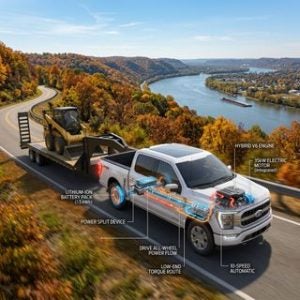
Are 2026 Ford timing chain repairs covered by warranty?

Factory timing chain repairs on a 2026 Ford are covered under the standard 5-year/60,000-mile Ford powertrain limited warranty. If a timing chain, tensioner, or guide develops a mechanical defect within this factory coverage window, the repair may be covered under the applicable warranty at no out-of-pocket cost to the vehicle owner. Replacement timing components installed past factory coverage carry a 2-year/unlimited-mileage Ford service parts warranty covering both parts and labor. The powertrain warranty encompasses internal lubricated engine components, including crankshaft sprockets, camshaft gears, hydraulic tensioners, timing chains, and timing guides. On popular models like the 2026 Ford F-150 equipped with the 3.5L EcoBoost V6 or 5.0L V8, as well as the 2026 Ford Ranger featuring the 2.3L EcoBoost engine, mechanical protection ensures that internal synchronization components remain fully covered against defect-related wear. When timing chain stretch or hydraulic guide wear occurs outside the original warranty period, repairs performed at our East Liverpool service facility are backed by genuine Ford service protection. If you suspect an unusual noise from the front of your engine, giving our service desk a quick call at (330) 462-7578 helps verify your current coverage window before diagnostic disassembly begins. Table of Contents What are the early signs that a 2026 Ford timing chain needs service? What maintenance practices extend the life of a 2026 Ford timing chain? Why choose Tri State Ford factory-trained technicians over independent shops for timing chain replacements? What is the typical cost of Ford timing chain service and what repair financing or warranties are available? Common Questions About 2026 Ford Timing Chain Service What loaner vehicle, multi-point inspection, and service conveniences does Tri State Ford offer during major repairs? How to schedule timing chain service at Tri State Ford in East Liverpool What are the early signs that a 2026 Ford timing chain needs service? Early warning signs of timing chain wear include a momentary metallic rattling sound on cold starts, illuminated check engine lights displaying correlation code P0016, engine misfires, and reduced engine power. Catching these indicators early prevents secondary damage to internal engine valves. A cold-start rattle occurs when hydraulic timing chain tensioners lose oil pressure while sitting overnight. When the engine starts up, the timing chain experiences momentary slack, causing it to contact the timing cover or plastic guides until engine oil pressure builds up. On engines like the 3.5L EcoBoost V6, secondary timing chain guide wear often becomes noticeable between 100,000 miles and 150,000 miles. While steel chains are designed for extreme durability, guide wear or stretched chain links alter exact camshaft-to-crankshaft alignment. When timing alignment deviates beyond factory tolerances, the engine computer flags code P0016 or similar timing correlation codes. On interference engines such as the 2.3L EcoBoost four-cylinder found in the Ford Ranger, ignoring timing chain symptoms can lead to chain breakage, resulting in severe valve-to-piston contact. Paying attention to engine acoustics and pairing routine maintenance with routine battery and electrical checks ensures diagnostic codes are read promptly before minor slack turns into major engine damage. ​ What maintenance practices extend the life of a 2026 Ford timing chain? Regular motor oil changes every 5,000 miles using Motorcraft synthetic oil provide the primary defense against premature timing chain stretch and hydraulic tensioner wear. Maintaining proper fluid cleanliness preserves internal oil passages that power hydraulic timing tensioners. Modern Ford engines rely heavily on clean oil pressure to operate variable camshaft timing phasers and hydraulic chain tensioners. Dirty or degraded oil forms varnish and sludge inside tiny oil feed passages. Restricted oil flow starves the tensioner, allowing the timing chain to whip against its nylon alignment guides. Over time, this whipping action accelerates guide wear and stretches individual chain links. Change engine oil every 5,000 miles using recommended Motorcraft synthetic blends. Check engine oil levels monthly to prevent low-oil pressure conditions. Avoid excessive short-distance driving where oil does not reach full operating temperature. Address cold-start noises immediately rather than waiting for scheduled oil changes. For drivers making short suburban trips along State Route 170 around Calcutta, engines experience frequent warm-up cycles that break down oil additive packages faster. Utilizing services such as Ford pickup and delivery service makes keeping up with strict oil change schedules simple and convenient. ​ Why choose Tri State Ford factory-trained technicians over independent shops for timing chain replacements? When our service team inspects an engine for timing wear, technicians utilize specialized Ford diagnostic scan tools and alignment fixtures to ensure exact synchronization between the crankshaft and camshaft. Factory-trained technicians follow precise torque sequences and install updated OEM guide kits that general repair shops often lack. Replacing a timing chain requires deep engine disassembly, requiring the removal of engine accessories, valve covers, and the front timing cover. Ford factory technicians undergo specialized brand training focused directly on EcoBoost and V8 engine architecture. They utilize specialized hold tools to lock camshafts in position, preventing engine timing shifts during chain removal. Service Feature Tri State Ford Service Center General Repair Shops Technician Certification Factory-Trained Ford Specialists General ASE Certification Diagnostic Equipment Integrated Diagnostic System (IDS) Generic Code Readers Part Standards Factory OEM Chains, Guides, & Tensioners Aftermarket or Third-Party Kits Warranty Coverage 2-year/unlimited-mileage Parts & Labor Varies (Often Limited Labor) Technical Bulletins Direct Access to Ford TSB Updates Standard Repair Manuals In addition to exact tool alignment, dealership technicians replace secondary wear items during the job, including updated hydraulic tensioners, front crank seals, and cam phasers when required. Using genuine OEM replacement parts guarantees every component meets exact factory hardness, tensile strength, and fitment standards. ​ What is the typical cost of Ford timing chain service and what repair financing or warranties are available? Timing chain replacements reflect extensive engine front-cover teardown labor, with repair financing structured through available payment options through the dealership. Every dealership replacement includes a 2-year/unlimited-mileage Ford parts warranty that covers both component replacement and labor costs. Because accessing the timing chain requires several hours of precise labor, replacing all associated timing components simultaneously protects your investment. Technicians swap out the main timing chain, secondary chains, hydraulic tensioners, guides, and front crank seals during a single tear-down. This comprehensive approach eliminates the risk of paying double labor fees later if a secondary guide fails shortly after chain installation. To support vehicle owners facing major mechanical upkeep, flexible payment structures allow owners to finance service bills over time. Long-distance commuters traveling along Market Street through Boardman can rely on mobile service options for initial diagnostic checks before scheduling major engine repairs at our service center. ​ Common Questions About 2026 Ford Timing Chain Service Q: Can a Ford engine run with a broken timing chain? No, an engine cannot run with a broken timing chain. If the chain breaks, the connection between the crankshaft and camshafts is lost immediately, causing the engine to stall instantly. On interference engines like the 2.3L EcoBoost or 3.5L EcoBoost, a broken chain causes the pistons to strike open valves, resulting in severe internal engine damage. Q: Do 2026 Ford models have scheduled timing chain replacement intervals? Ford timing chains are engineered as lifetime components with no specific mileage replacement interval listed in the maintenance schedule. Unlike rubber timing belts that require replacement every 60,000 miles, steel timing chains are designed to last the life of the vehicle when supported by regular motor oil changes and proper maintenance. Q: What causes timing chain stretch in EcoBoost engines? Timing chain stretch is primarily caused by oil breakdown, dirty motor oil, or low oil levels. When oil breaks down, microscopic abrasive particles wear away at the individual pins and bushings connecting the chain links. This microscopic wear increases the overall length of the chain, altering camshaft timing alignment. Q: Will replacing the timing chain fix a cold-start rattle on an F-150? Replacing the timing chain often resolves cold-start rattles, but technicians must also inspect the hydraulic tensioners and variable camshaft timing phasers. On engines like the 3.5L EcoBoost, the cold-start rattle frequently originates from internal locking pins inside worn cam phasers or collapsed tensioners, which should be replaced alongside the chain. Q: How long does a timing chain replacement take at the dealership? A timing chain replacement typically requires 1 to 2 business days to complete. The process involves extensive teardown of the front engine cover, precise alignment of the camshafts and crankshaft using specialized alignment fixtures, fresh engine oil and coolant refills, and thorough road testing. What loaner vehicle, multi-point inspection, and service conveniences does Tri State Ford offer during major repairs? Tri State Ford provides complimentary multi-point inspections and loaner vehicle access for services requiring overnight care to keep your routine uninterrupted. Customers can also utilize comfortable waiting areas with complimentary refreshments while diagnostic evaluations take place. Every major repair begins with a comprehensive multi-point evaluation. Technicians check brake pad thickness, tire tread depth, battery health, suspension components, and fluid quality to give you a complete picture of your vehicle's health. Complimentary loaner vehicles for extended overnight service jobs Detailed multi-point safety and mechanical inspections Shuttle service for local drop-offs and pick-ups Mobile status updates directly to your smartphone Taking advantage of these conveniences ensures that major upkeep does not disrupt your work week. You can easily schedule a service appointment online to select a time and loaner option that fits your personal schedule. ​ How to schedule timing chain service at Tri State Ford in East Liverpool Drivers can book timing chain evaluations online or by phone for prompt diagnostic service at our dealership. Our certified service center provides complete timing system repairs backed by factory-trained technicians and genuine OEM parts. To set up an evaluation for your vehicle, visit us in person at 1503 Pennsylvania Ave, East Liverpool, OH 43920 or speak directly with a service advisor by calling (330) 462-7578. Our team is ready to deliver transparent, trusted vehicle care to keep your Ford running smoothly for years to come. © 2026 Tri State Ford. All rights reserved. Vehicle specification data © JATO Dynamics Limited. Title Tags Meta Description Keywords Open Graph Twitter Card Canonical Article Metadata Geographic Targeting
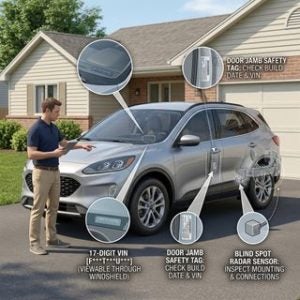
Are Hybrid Trucks Powerful Enough for Heavy Work?

Modern hybrid trucks generate exceptional low-end torque and high towing capacities that easily handle heavy work sites, trailer hauling, and demanding daily chores. The Ford F-150 PowerBoost Hybrid delivers 430 horsepower and 570 lb-ft of torque with a maximum towing capacity of about 11,600 pounds, outperforming many standard gas V8 engines while delivering significantly better overall fuel efficiency. When truck buyers step onto our lot to test drive a PowerBoost, they often ask if an electric motor can really pull a heavy trailer up steep grade climbs along the riverfront bluffs in East Liverpool. The answer is found in how electric motors deliver immediate twisting power from a dead stop. Unlike conventional gas engines that need to build up engine speed to hit peak torque, the electric motor in a hybrid powertrain provides maximum torque the moment you press the accelerator pedal. This instant power delivery helps move heavy trailers, equipment, and fully loaded beds with less strain on the gas engine. Hybrid technology also enhances overall capability without compromising rugged durability. By placing an electric motor between the internal combustion engine and a heavy-duty transmission, full-size hybrid trucks merge traditional combustion strength with high-voltage electrical power. The result is a dependable workhorse that delivers durable performance for demanding jobs, while dramatically lowering fuel consumption during city driving and idle periods. If you want to experience how hybrid power handles heavy payloads, visit our East Liverpool dealership at 1503 Pennsylvania Ave or give our sales team a quick call to set up a test drive today. Table of Contents What Is a Hybrid Truck and How Does the Powertrain Work? Which Full-Size, Midsize, and Compact Trucks Offer a Hybrid Option? Can a Hybrid Pickup Power Heavy-Duty Tools or Home Appliances? Should You Choose a Compact, Midsize, or Full-Size Hybrid Truck? What Factors Impact Price, Maintenance, and Reliability in Hybrid Pickups? Common Questions About Buying and Owning Hybrid Trucks What Is a Hybrid Truck and How Does the Powertrain Work? A hybrid truck combines a traditional internal combustion engine with an electric motor and a high-voltage battery pack to deliver instant torque and improved fuel efficiency without requiring an external plug-in power source. The system automatically switches between electric power, gasoline power, or a blend of both based on speed, load, and throttle input. Understanding the difference between full hybrids and mild hybrids helps clarify how these powertrains perform under load: Full Hybrids: Systems like the Ford 3.5L PowerBoost V6 or the Ford 2.5L hybrid engine integrate an electric motor into the drivetrain alongside a high-voltage lithium-ion battery. These trucks can propel themselves on electric power alone at lower speeds, shut off the gas engine during coasting or idling, and supply substantial electric assistance during heavy acceleration. Mild Hybrids: Systems such as Ram's eTorque use a smaller 48-volt motor-generator in place of a traditional alternator. While a mild hybrid smooths out engine stop-start transitions and provides a brief torque boost when accelerating from a stop, it cannot propel the truck using electricity alone. Power management in a full hybrid operates seamlessly through an electronic control unit. During deceleration, the electric motor acts as a generator through regenerative braking, capturing momentum that would otherwise be lost as brake heat and routing that energy back into the high-voltage battery pack. That stored energy then assists the gasoline engine during the next launch or heavy acceleration cycle. For commercial operators and tradespeople managing demanding job schedules, exploring our commercial work truck inventory or viewing our F-Series commercial truck selection provides a clear look at how hybrid efficiency integrates into serious working fleets. Those seeking pre-owned choices can also check Carfax 1-owner pre-owned vehicles to find proven trucks ready for hard labor. ​ Which Full-Size, Midsize, and Compact Trucks Offer a Hybrid Option? Five main hybrid pickup models are available in the U.S. retail market, spanning full-size, midsize, and compact vehicle classes from three primary manufacturers. These include full-size options like the Ford F-150 PowerBoost, Toyota Tundra i-FORCE MAX, and Ram 1500 eTorque, alongside the midsize Toyota Tacoma i-FORCE MAX and the compact Ford Maverick Hybrid. Here is how current hybrid pickup trucks compare across size segments and key specifications: Compact Hybrid Trucks: The Ford Maverick Hybrid pairs a 2.5L 4-cylinder engine with a Power-Split Electric CVT to produce 191 horsepower and 277 lb-ft of torque. Front-wheel-drive models earn EPA ratings of 42 mpg city / 35 mpg hwy / 38 mpg combined, while all-wheel-drive versions achieve 40 mpg city / 34 mpg hwy / 37 mpg combined. The Maverick offers a 1,500 pounds payload capacity and standard 2,000 pounds towing, which increases to 4,000 pounds when equipped with the available 4K Tow Package. Midsize Hybrid Trucks: The Toyota Tacoma i-FORCE MAX uses a 2.4L turbocharged 4-cylinder hybrid engine producing 326 horsepower and 465 lb-ft of torque paired with an 8-speed automatic transmission, returning an EPA-estimated 23 mpg combined with a towing capacity up to 6,000 pounds. Full-Size Hybrid Trucks: The Ford F-150 PowerBoost Hybrid pairs a twin-turbo 3.5L PowerBoost V6 with an electric motor built into a 10-speed automatic transmission, generating 430 horsepower and 570 lb-ft of torque. It achieves an EPA-rated 23 mpg combined on 4x4 configurations, with a maximum towing capacity around 11,600 pounds and payload up to 1,740 pounds. The Toyota Tundra i-FORCE MAX utilizes a twin-turbo 3.5L V6 hybrid system making 437 horsepower and 583 lb-ft of torque with up to 11,175 pounds towing capacity and 19 mpg to 22 mpg combined. The Ram 1500 eTorque offers a 5.7L V8 mild-hybrid system delivering 395 horsepower and 19 mpg combined. For buyers looking for pre-owned value with factory backing, searching through our certified pre-owned Ford vehicles provides access to late-model trucks that have undergone detailed multi-point inspections. ​ Can a Hybrid Pickup Power Heavy-Duty Tools or Home Appliances? Selected hybrid pickups feature integrated high-output electrical generator systems that draw energy directly from the hybrid battery pack and internal combustion engine to run heavy-duty power tools, construction equipment, and essential home appliances. The standout system in this category is Ford's Pro Power Onboard, available on the F-150 PowerBoost Hybrid. This system turns the truck into an active mobile power generator capable of delivering exportable electricity through multiple outlets mounted in the truck bed and interior cab. Key capabilities of integrated hybrid generator systems include: Multi-Voltage Output: Systems like the 7.2 kW Pro Power Onboard system supply both standard 120-volt wall outlets and a 240-volt NEMA L6-30 outlet directly in the truck bed. Heavy-Duty Tool Operation: A 7.2 kW output provides enough continuous wattage to simultaneously power heavy air compressors, circular saws, miter saws, battery chargers, and job site halogen lighting without tripping circuit breakers. Emergency Home Backup: During power grid interruptions caused by severe weather, a 7.2 kW generator setup can run critical home appliances including refrigerators, freezers, sump pumps, well pumps, and heating system blowers for days on a single tank of gasoline. Compact Utility Outlets: The compact Maverick Hybrid offers available in-bed and in-cab 120-volt power outlets that easily support corded power tools, laptop chargers, or outdoor recreational gear. For drivers who want convenience during routine service visits, we provide Ford Pick Up & Delivery service so your truck stays maintained without disrupting your workday. You can also value your trade-in online to see how your current vehicle offsets the cost of upgrading to a generator-equipped hybrid. ​ Should You Choose a Compact, Midsize, or Full-Size Hybrid Truck? Selecting the right hybrid pickup size depends on how you balance daily commuting, passenger comfort, garage storage dimensions, and heavy trailering needs. Compact hybrid pickups like the Ford Maverick suit drivers who need a family-safe passenger cab and a versatile cargo bed, but spend most of their driving time navigating suburban traffic or tight parking lots. Taking State Route 170 past the local shops and rolling hills around Calcutta showcases how the Maverick Hybrid shines: its 38 mpg combined rating keeps fuel expenses remarkably low, while its 1,500 pounds payload rating easily accommodates mulch, lumber, or outdoor recreation gear. Midsize hybrid pickups fit buyers who desire enhanced off-road ground clearance and mid-tier towing capabilities without the wider exterior dimensions of a full-size vehicle. With towing capacities around 6,000 pounds, midsize hybrids easily manage single-axle utility trailers or small recreational boats. Full-size hybrid pickups like the Ford F-150 PowerBoost represent the ultimate choice for heavy-duty hauling, serious equipment towing, and multi-passenger comfort. Delivering up to 11,600 pounds of towing capacity alongside spacious crew cab interiors, full-size hybrids excel as multi-purpose vehicles capable of handling daily construction site duties during the week and pulling large camper trailers on weekend family trips. Shoppers ready to explore financing options tailored to their financial goals can complete our simple online credit application to get pre-approved before stepping into the dealership. ​ What Factors Impact Price, Maintenance, and Reliability in Hybrid Pickups? Vehicle trim choices, drivetrain configurations, and optional work-ready equipment packages represent the primary factors affecting hybrid truck pricing, while routine maintenance requirements remain straightforward and cost-effective over time. Primary factors shaping purchase prices include: Trim Levels and Cab Configurations: Stepping from entry-level work trims like XL or XLT up to feature-rich trims such as Lariat, King Ranch, or Platinum adds premium leather seating, advanced infotainment, and driver-assist technologies. Drivetrain Options: Selecting 4x4 or advanced all-wheel-drive systems adds all-weather traction capability for winter roads, which incrementally changes total vehicle pricing. Specialized Option Packages: Adding heavy-duty equipment like the 4K Tow Package or upgrading to high-output 7.2 kW Pro Power Onboard generator hardware increases utility value. Regarding long-term reliability and routine service, hybrid pickups offer distinct maintenance advantages. Regenerative braking systems take over much of the initial stopping effort, significantly extending the service life of brake pads and rotors compared to traditional gas trucks. Hybrid high-voltage batteries are engineered for long-term durability and carry standard 8-year/100,000-mile factory warranty protection on high-voltage components. Routine maintenance schedules follow standard intervals for synthetic motor oil changes, tire rotations, cabin air filter replacements, and multi-point inspections. When your vehicle is due for service, you can easily schedule a service appointment with our factory-trained technicians or order genuine Ford parts through our dedicated parts department. ​ Common Questions About Buying and Owning Hybrid Trucks Q: Do hybrid pickup trucks require an external wall plug or charging station? No, full hybrid pickup trucks like the Ford F-150 PowerBoost and Ford Maverick do not require plugging into an electrical outlet or charging station. The high-voltage hybrid battery recharges automatically while driving through regenerative braking energy captured during deceleration and power generated directly by the gasoline engine. Drivers maintain their normal gas station fueling habits while enjoying boosted fuel efficiency and increased electrical power output. Q: How does fuel economy on a hybrid truck differ between city and highway driving? Hybrid truck powertrains deliver their greatest fuel efficiency gains during stop-and-go city driving because lower speeds allow the electric motor to power the vehicle independently for short distances. City driving also provides frequent braking opportunities, allowing the regenerative braking system to constantly recharge the hybrid battery. For example, the Ford Maverick Hybrid achieves an EPA-estimated 42 mpg city compared to 35 mpg highway, reversing the traditional trend where vehicles perform better on open highways. Q: What factory warranty coverage protects hybrid batteries and high-voltage electronics? Ford protects high-voltage hybrid components—including the lithium-ion hybrid battery pack, electric motor, and power electronics control module—with a dedicated 8-year/100,000-mile factory warranty. This coverage comes in addition to the standard 3-year/36,000-mile bumper-to-bumper warranty and 5-year/60,000-mile powertrain warranty, providing long-term peace of mind regarding electrical component reliability. Q: Can a hybrid truck tow heavy trailers in cold winter weather without damaging the electrical system? Yes, hybrid pickup trucks are thoroughly tested to handle heavy towing across extreme temperature ranges. Liquid cooling systems monitor and regulate operating temperatures for both the internal combustion engine and the high-voltage hybrid battery pack. During cold winter weather, automated battery thermal management systems keep the electrical cells within optimal operating ranges, ensuring smooth power delivery and reliable towing performance on icy or snow-covered roads. Q: What documentation should buyers bring when trading in a vehicle for a new hybrid truck? When visiting Tri State Ford to trade in a vehicle, bringing a few key documents speeds up the transaction process. Drivers should bring the current vehicle title (or payoff information if financed), current vehicle registration, valid state driver’s licenses for all title holders, auto insurance information, and all set of vehicle keys. Having these items ready allows our team to complete trade evaluations quickly and help you drive home in your new truck without unnecessary delays. To explore our current inventory in person, view our East Liverpool showroom address, reach out directly at (330) 462-7578, or browse our current new Ford vehicle inventory online to find your ideal hybrid truck today. © 2026 Tri State Ford. All rights reserved. Vehicle specification data © JATO Dynamics Limited. Title Tags Meta Description Keywords Open Graph Twitter Card Canonical Article Metadata

Understanding the mechanics of a safety recall helps keep your vehicle dependable on everyday drives. A recall is triggered whenever a component fails to meet federal motor vehicle safety standards or presents an unreasonable safety risk. These issues can range from mechanical components like steering linkages or fuel lines to electrical faults affecting airbag deployment or driver-assist systems like blind spot monitoring. When a manufacturer submits a recall notice to federal regulators, each campaign is assigned an official NHTSA campaign number. Automakers gather registration records from state motor vehicle departments to mail notices directly to vehicle owners. Even if a official letter has not yet arrived in your mailbox, the recall campaign becomes active immediately upon filing. Checking your vehicle for open campaigns requires only your vehicle identification number. You can locate your 17-digit VIN stamped on the driver-side dashboard near the windshield or printed on the driver-side door jamb. Entering this number into the official Recalls Lookup Tool or using the SaferCar app reveals any uncompleted safety campaigns specific to your vehicle. If an active campaign appears for your vehicle, contacting an authorized franchise service center ensures the issue is resolved promptly. Our certified technicians at Tri State Ford possess the specialized factory tooling, software, and genuine OEM parts required to complete recall remedies according to precise manufacturer standards. You can confirm campaign status or schedule your free recall service by giving our team (330) 462-7578 a call or visiting our service center location on Pennsylvania Avenue. Table of Contents What Is the Difference Between a Recall and a Technical Service Bulletin? Is It Safe to Drive My Car with an Open Recall or a Do Not Drive Warning? Do You Have to Pay for Recall Repairs on Older Vehicles, Out of Warranty Cars, or Past Repairs? Should You Call the Dealer Service Department Before Showing Up for Recall Work? Common Questions About Vehicle Recalls and Vehicle History Reports Schedule Your Free Recall Service What Is the Difference Between a Recall and a Technical Service Bulletin? A safety recall addresses a critical defect or regulatory noncompliance that poses a direct risk to traffic safety, requiring federal oversight and free repairs for all affected vehicles regardless of warranty status. In contrast, a Technical Service Bulletin is an internal manufacturer advisory sent to dealership service departments that offers recommended diagnostic procedures and repair instructions for minor operational, cosmetic, or electrical quirks that do not constitute a safety hazard. Knowing how these two service communications differ prevents confusion when maintaining your vehicle. Automakers issue Technical Service Bulletins, often called TSBs, to help factory-trained technicians fix recurring non-safety issues efficiently. A TSB might address a squeaky brake pedal, a minor transmission shift hesitation, an HVAC blower noise, or a subtle interior trim rattle. Unlike safety recalls, TSBs are not monitored by federal safety agencies, do not trigger mandatory owner notification letters by mail, and are not automatically covered for free once your standard bumper-to-bumper warranty expires. Safety recalls carry strict legal mandates because the underlying issue directly impacts occupant or public safety. Examples include fuel system leaks that create fire risks, seatbelt latch failures, steering column lockups, or unexpected engine stalls. When an automaker issues a safety recall, the manufacturer is required by federal law to remedy the issue free of charge. When local drivers visit our service lane after receiving a notification letter, their first question is usually whether they can safely drive their vehicle while waiting for recall parts to arrive. Our service advisors always check the specific bulletin details to clarify whether the notice involves an urgent safety campaign or a routine service bulletin. For trucks navigating the steep riverfront bluffs near the Ohio River in East Liverpool, keeping steering, braking, and powertrain components in top working condition is critical for safety and vehicle longevity. Maintaining your vehicle according to factory standards prevents minor mechanical issues from developing into costly headaches down the road. If you suspect your vehicle requires routine maintenance or a bulletin fix, scheduling your service appointment online allows our team to prepare the proper diagnostic tools before you arrive. ​ Is It Safe to Drive My Car with an Open Recall or a Do Not Drive Warning? Whether a vehicle remains safe to drive with an open recall depends on the specific nature and severity of the defect, as standard recalls allow continued operation until parts arrive, whereas an urgent "Do Not Drive" advisory requires immediate vehicle shutdown. Most standard recall notices inform owners that their car can be operated normally while the dealership orders necessary replacement components. However, when an automaker or safety agency issues a "Do Not Drive" or "Park Outside" warning, operating the vehicle creates an immediate hazard and should be avoided entirely. High-severity advisories are issued when a defect poses an extreme, unpredictable risk of severe injury, crash, or fire. A "Park Outside" advisory typically stems from electrical short circuits, starter relay faults, or fuel system leaks that could trigger a vehicle fire even while the engine is turned off and parked in a garage. In these instances, parking the vehicle away from structures and nearby homes protects your family and property until technicians perform the free fix. A "Do Not Drive" warning is the most critical safety notice an automaker can issue. This level of urgency applies to severe mechanical defects such as Takata airbag inflators prone to rupturing, steering shaft detachments, or sudden master cylinder fluid loss. Operating a vehicle under a "Do Not Drive" order exposes occupants to severe danger. If your vehicle carries a "Do Not Drive" advisory, follow these essential steps immediately: Stop driving the vehicle immediately and park it in a safe location. Locate your 17-digit VIN on your vehicle registration or insurance card. Contact an authorized dealership to confirm recall details and arrange free emergency towing to the service bay. Ask your service advisor about available temporary transportation, such as a loaner vehicle or rental coverage funded by the manufacturer. Verify that the dealership has reserved the required replacement components for your vehicle before work begins. While our technicians handle your service work, shoppers looking to replace an older vehicle can schedule a test drive online to explore our updated lineup of dependable cars, trucks, and crossovers equipped with advanced driver-assist systems like Ford Co-Pilot360. ​ Do You Have to Pay for Recall Repairs on Older Vehicles, Out of Warranty Cars, or Past Repairs? Automakers are required by federal law to complete recall repairs free of charge regardless of vehicle age, mileage, or current warranty status, provided the recall campaign remains open. Furthermore, if an owner previously paid out-of-pocket to repair the exact defect identified in a subsequent recall, the manufacturer provides a formal reimbursement process to refund those documented repair costs. A common misconception among pre-owned car buyers is that factory safety recalls expire when the original bumper-to-bumper or powertrain warranty ends. Federal regulations mandate that safety defect remedies remain free for the life of the vehicle. Whether you drive a brand-new vehicle or a fifteen-year-old daily driver, an authorized franchise dealership must perform the required recall repair without charging for parts or labor. The only notable exception involves tire safety recalls, which federal law requires manufacturers to remedy free of charge for up to 60 days from the date the owner receives notification. For mechanical defects, structural issues, and electronic control modules, the free repair obligation remains active indefinitely across successive owners. If you paid for a repair before an official recall was announced, you can request a full financial reimbursement from the manufacturer. To successfully claim a refund, you must submit specific documentation directly to the automaker's customer campaign department: The original detailed repair invoice showing the specific parts replaced and labor performed. Proof of payment, such as a credit card receipt, canceled check, or bank statement. Documented proof that the pre-recall repair directly addressed the specific defect described in the official safety campaign. A copy of your vehicle registration verifying ownership during the repair period. Our service department supports vehicle longevity by installing factory-approved components designed for durable performance. If your vehicle requires supplemental maintenance or non-recall components, ordering genuine OEM parts directly through our dealership ensures exact fitment and factory warranty protection. ​ Should You Call the Dealer Service Department Before Showing Up for Recall Work? Contacting your dealer's service department prior to your visit is necessary because recall components are allocated by manufacturers based on specific VIN reservations, meaning unannounced visits often lead to unnecessary delays or turned-away appointments. While franchised dealerships perform recall work at no charge, service bays require advance notice to verify campaign eligibility, check nationwide parts availability, and schedule specialized certified technicians. Spontaneously driving into a dealership service lane assuming recall parts are sitting on the shelf can lead to frustration. Automakers release recall parts in controlled waves to manage nationwide inventory supply chains. When a campaign impacts millions of vehicles, replacement assemblies are distributed to dealerships only after a specific appointment is booked and linked to an affected 17-digit VIN. Calling ahead allows service advisors to pull up your vehicle history, order required components if they are not in stock, and set a realistic turnaround time for the work. Calling in advance also allows you to plan around service duration and arrange convenient transportation options. Software updates delivered via Over-The-Air flashing or quick sensor replacements may take under an hour, whereas complex mechanical remedies like engine component replacements or high-voltage battery repairs require extended shop time. During your scheduling call, you can inquire about local shuttle services, mobile service van availability, or loaner vehicles provided under manufacturer guidelines. For commuters traveling along State Route 170 in Calcutta, keeping up with software updates and mechanical checks ensures your daily drive remains reliable. Planning routine maintenance alongside your recall service keeps your vehicle performing at its best. If your vehicle requires general electrical upkeep, reviewing our routine battery maintenance advice helps prevent winter starting issues, while commercial operators can explore our inventory of Ford F-Series work trucks for heavy-duty fleet solutions built to handle tough jobs. ​ Common Questions About Vehicle Recalls and Vehicle History Reports Q: Do open recalls show up on a Carfax report? Yes, open safety recalls appear prominently on Carfax reports and AutoCheck vehicle history reports. Automakers and federal safety agencies share open recall databases with vehicle history providers. When a safety recall is issued for a specific VIN, history reports reflect an "Open Recall" status until an authorized dealership completes the repair and reports the closed campaign back to the manufacturer database. Q: How do I check if my car has an active recall? You can check for active safety recalls by entering your vehicle's 17-digit VIN into the National Highway Traffic Safety Administration's online lookup tool or by visiting your vehicle manufacturer's owner portal. Your VIN is listed on your vehicle registration card, insurance paperwork, and the driver-side dashboard near the windshield. The lookup tool displays any incomplete safety campaigns linked to your specific vehicle. Q: Can I ask for a loaner vehicle during recall service? Yes, you can request a loaner vehicle or rental car during recall service, though availability depends on the specific manufacturer's campaign guidelines and individual dealership inventory. For severe safety advisories like "Do Not Drive" or "Park Outside" recalls, automakers routinely authorize and fund alternative transportation or loaner cars while replacement parts are on order. Asking your service advisor when scheduling ensures arrangements are made in advance. Q: What happens if recall replacement parts are on backorder? If recall parts are on backorder, your authorized dealership will place your 17-digit VIN into the manufacturer's priority order queue and notify you as soon as components arrive at the dealership. For standard recalls that do not restrict driving, you can continue operating your vehicle safely while waiting. If the recall involves a critical safety hazard, the manufacturer may provide a loaner vehicle until parts arrive. Q: Do safety recalls expire after a certain number of years? Safety recalls generally do not expire and remain active for the life of the vehicle. Federal law mandates that automakers provide free repairs for safety-related defects regardless of vehicle age or mileage. The primary exception involves tire safety recalls, which must be claimed within 60 days of official owner notification to guarantee free replacement. ​ Schedule Your Free Recall Service Addressing an open safety recall promptly protects your family, maintains vehicle performance, and preserves your automobile's resale value. Because recall repairs are completely free of charge and performed by factory-certified technicians using genuine OEM components, resolving an open campaign is straightforward and hassle-free. Our dedicated service team at Tri State Ford is here to assist you with VIN verification, parts ordering, and scheduling a quick repair appointment that fits your routine. To confirm if your vehicle has an open recall or to reserve your service slot, start by getting directions to our dealership or giving our friendly service advisors a quick call at (330) 462-7578 today. © 2026 Tri State Ford. All rights reserved. more Title Tags Meta Description Keywords Open Graph Twitter Card Canonical Article Metadata Geographic Targeting
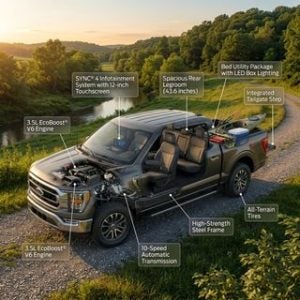
Which 2026 Ford F-150 Trim Should You Buy?

The 2026 Ford F-150 XLT is a strong choice for many buyers, delivering the ideal combination of practical tech, cabin comfort, and strong value. Fleet and value-focused buyers should choose the XL or STX, while drivers requiring standard 3.5L EcoBoost V6 power, leather seating, and 13,500 lbs towing capacity should step up to the Lariat. Luxury buyers belong in the King Ranch or Platinum, while off-road enthusiasts need the Tremor or Raptor. Selecting the right truck comes down to matching your daily workload and personal lifestyle with the proper level of equipment. The lineup spans eight distinct trim levels: XL, STX, XLT, Lariat, Tremor, King Ranch, Platinum, and Raptor. When walking buyers through the lot, families comparing trims usually check the rear-seat legroom and center console workspace before looking at sticker details. For active drivers hauling fishing gear near Beaver Creek in Calcutta, the XLT SuperCrew configuration provides an exceptional balance of passenger space, bed utility, and smart technology like the standard SYNC 4 system on a 12-inch screen. Reviewing our selection of new Ford F-150 models allows you to evaluate these cabin layouts in person. You can easily find our East Liverpool showroom address or reach out by calling us at (330) 462-7578 to speak with our sales specialists. Table of Contents What Are the Main Differences Across 2026 Ford F-150 Trim Levels? What Engine Options Power the 2026 Ford F-150 and Which Has the Highest Towing Capacity? How Do Upper Trims Compare: F-150 Lariat vs Platinum vs the Tremor Package? Which Ford F-150 Trim Offers the Best Resale Value and Long-Term Ownership Value? Is the 2026 Ford F-150 or Chevrolet Silverado 1500 a Better Truck? Common Questions About 2026 Ford F-150 Trims and Buying Finding Your Ideal 2026 Ford F-150 at Tri State Ford What Are the Main Differences Across 2026 Ford F-150 Trim Levels? The primary differences across 2026 Ford F-150 trim levels center on standard engine offerings, cabin materials, technological driver aids, and specialized suspension hardware. As you move upward through the lineup, vinyl work surfaces give way to ActiveX-trimmed heated seats, advanced hands-free driving tools like BlueCruise, and specialized off-road equipment. Understanding how features build from one trim to the next ensures you only pay for the equipment you genuinely need: XL: The entry work truck featuring durable cloth or vinyl seating, black bumpers, 17-inch steel wheels, and standard SYNC 4 with a 12-inch touchscreen. STX: Adds sport styling with 18-inch gloss-black wheels, body-color bumpers, sport cloth seats, and an available F-150 Lobo Package with 22-inch wheels and a 5.0L V8. XLT: Adds popular comfort features including a 12-inch digital instrument cluster, power driver lumbar support, available 360-degree cameras, and the new XLT Chrome Appearance Package. Lariat: Introducing luxury features with standard 3.5L EcoBoost V6 power, ActiveX-trimmed heated and ventilated front seats, an 8-speaker Bang & Olufsen sound system, and BlueCruise capability. Tremor: Built for off-road work with a factory lift, 33-inch all-terrain tires, an electronic-locking rear differential, and Trail Control. King Ranch: Offers western-themed luxury featuring multicontour leather seating, two-tone exterior paint, genuine wood accents, and standard Pro Power Onboard. Platinum: Delivers modern luxury with gloss-black exterior accents, rear heated seats, multicontour leather, and an optional Platinum Satin Appearance Package. Raptor: High-performance off-roader with Fox Racing Shox, 35-inch or 37-inch tires, and a 3.5L High-Output EcoBoost V6 making 450 hp, topped by the Raptor R with a 720 hp 5.2L Supercharged V8. Shoppers looking at pre-owned alternatives can also explore our single-owner pre-owned truck selection to see high-value options from recent model years. Pricing Pricing by trim Feature King Ranch 4x4 SuperCrew 5-1/2’ Box King Ranch 4x4 SuperCrew 6-1/2’ Box King Ranch SuperCrew 5-1/2’ Box Lariat 4x4 SuperCrew 5-1/2’ Box Lariat 4x4 SuperCrew 6-1/2’ Box Lariat SuperCrew 5-1/2’ Box Platinum 4x4 SuperCrew 5-1/2’ Box Platinum 4x4 SuperCrew 6-1/2’ Box Platinum SuperCrew 5-1/2’ Box Police Responder 4x4 SuperCrew 5-1/2’ Box Raptor 4x4 SuperCrew 5-1/2’ Box STX 4x4 SuperCab 6-1/2’ Box STX 4x4 SuperCrew 5-1/2’ Box STX SuperCab 6-1/2’ Box STX SuperCrew 5-1/2’ Box Tremor 4x4 SuperCrew 5-1/2’ Box XL 4x4 Regular Cab 6-1/2’ Box XL 4x4 Regular Cab 8’ Box XL 4x4 SuperCab 6-1/2’ Box XL 4x4 SuperCrew 5-1/2’ Box XL 4x4 SuperCrew 6-1/2’ Box XL Regular Cab 6-1/2’ Box XL Regular Cab 8’ Box XL SuperCab 6-1/2’ Box XL SuperCrew 5-1/2’ Box XLT 4x4 SuperCab 6-1/2’ Box XLT 4x4 SuperCrew 5-1/2’ Box XLT 4x4 SuperCrew 6-1/2’ Box XLT SuperCab 6-1/2’ Box XLT SuperCrew 5-1/2’ Box Base MSRP $69,625 $69,930 $65,825 $63,360 $63,965 $59,560 $72,600 $72,905 $68,800 $52,350 $79,005 $48,655 $51,070 $44,855 $47,190 $64,915 $44,600 $42,305 $45,400 $47,820 $50,475 $39,585 $37,290 $41,600 $43,935 $49,495 $51,915 $54,555 $45,695 $48,055 Destination charge $2,795 $2,795 $2,795 $2,795 $2,795 $2,795 $2,795 $2,795 $2,795 $2,595 $2,795 $2,795 $2,795 $2,795 $2,795 $2,795 $2,795 $2,795 $2,795 $2,795 $2,795 $2,795 $2,795 $2,795 $2,795 $2,795 $2,795 $2,795 $2,795 $2,795 Engine & Performance Powertrain specs by trim Feature King Ranch 4x4 SuperCrew 5-1/2’ Box King Ranch 4x4 SuperCrew 6-1/2’ Box King Ranch SuperCrew 5-1/2’ Box Lariat 4x4 SuperCrew 5-1/2’ Box Lariat 4x4 SuperCrew 6-1/2’ Box Lariat SuperCrew 5-1/2’ Box Platinum 4x4 SuperCrew 5-1/2’ Box Platinum 4x4 SuperCrew 6-1/2’ Box Platinum SuperCrew 5-1/2’ Box Police Responder 4x4 SuperCrew 5-1/2’ Box Raptor 4x4 SuperCrew 5-1/2’ Box STX 4x4 SuperCab 6-1/2’ Box STX 4x4 SuperCrew 5-1/2’ Box STX SuperCab 6-1/2’ Box STX SuperCrew 5-1/2’ Box Tremor 4x4 SuperCrew 5-1/2’ Box XL 4x4 Regular Cab 6-1/2’ Box XL 4x4 Regular Cab 8’ Box XL 4x4 SuperCab 6-1/2’ Box XL 4x4 SuperCrew 5-1/2’ Box XL 4x4 SuperCrew 6-1/2’ Box XL Regular Cab 6-1/2’ Box XL Regular Cab 8’ Box XL SuperCab 6-1/2’ Box XL SuperCrew 5-1/2’ Box XLT 4x4 SuperCab 6-1/2’ Box XLT 4x4 SuperCrew 5-1/2’ Box XLT 4x4 SuperCrew 6-1/2’ Box XLT SuperCab 6-1/2’ Box XLT SuperCrew 5-1/2’ Box Engine 3.5L 3.5L 3.5L 3.5L 3.5L 3.5L 3.5L 3.5L 3.5L 3.5L 3.5L 2.7L 2.7L 2.7L 2.7L 3.5L 5L 2.7L 2.7L 2.7L 3.5L 5L 2.7L 2.7L 2.7L 2.7L 2.7L 3.5L 2.7L 2.7L Horsepower 400 hp 400 hp 400 hp 400 hp 400 hp 400 hp 400 hp 400 hp 400 hp 400 hp 450 hp 325 hp 325 hp 325 hp 325 hp 400 hp 400 hp 325 hp 325 hp 325 hp 400 hp 400 hp 325 hp 325 hp 325 hp 325 hp 325 hp 400 hp 325 hp 325 hp Torque 500 lb-ft 500 lb-ft 500 lb-ft 500 lb-ft 500 lb-ft 500 lb-ft 500 lb-ft 500 lb-ft 500 lb-ft 500 lb-ft 510 lb-ft 400 lb-ft 400 lb-ft 400 lb-ft 400 lb-ft 500 lb-ft 410 lb-ft 400 lb-ft 400 lb-ft 400 lb-ft 500 lb-ft 410 lb-ft 400 lb-ft 400 lb-ft 400 lb-ft 400 lb-ft 400 lb-ft 500 lb-ft 400 lb-ft 400 lb-ft Transmission SelectShift® SelectShift® SelectShift® SelectShift® SelectShift® SelectShift® SelectShift® SelectShift® SelectShift® SelectShift® SelectShift® SelectShift® SelectShift® SelectShift® SelectShift® SelectShift® SelectShift® SelectShift® SelectShift® SelectShift® SelectShift® SelectShift® SelectShift® SelectShift® SelectShift® SelectShift® SelectShift® SelectShift® SelectShift® SelectShift® Drivetrain All-wheel drive All-wheel drive Rear-wheel drive All-wheel drive All-wheel drive Rear-wheel drive All-wheel drive All-wheel drive Rear-wheel drive All-wheel drive All-wheel drive All-wheel drive All-wheel drive Rear-wheel drive Rear-wheel drive All-wheel drive All-wheel drive All-wheel drive All-wheel drive All-wheel drive All-wheel drive Rear-wheel drive Rear-wheel drive Rear-wheel drive Rear-wheel drive All-wheel drive All-wheel drive All-wheel drive Rear-wheel drive Rear-wheel drive ​ What Engine Options Power the 2026 Ford F-150 and Which Has the Highest Towing Capacity? The 2026 Ford F-150 offers five distinct engines, led by the 3.5L EcoBoost V6 which achieves the lineup's maximum towing capacity of 13,500 lbs when paired with the Max Trailer Tow Package. This engine delivers 400 hp and 500 lb-ft of torque, providing the highest pulling capability in the half-ton truck segment. Ford pairs every engine in the 2026 lineup with an advanced 10-speed SelectShift® automatic transmission to maximize power delivery and efficiency. The standard engine on XL, STX, and XLT models is the 2.7L EcoBoost V6, producing 325 hp and 400 lb-ft of torque. Buyers seeking classic atmospheric engine power can choose the 5.0L V8, which outputs 400 hp and 410 lb-ft of torque. For maximum efficiency combined with workhorse capability, the 3.5L PowerBoost Full Hybrid V6 generates 430 hp and 570 lb-ft of torque while rating up to 23 mpg combined and supporting up to 11,200 lbs of towing. The twin-turbo 3.5L EcoBoost V6 also delivers the truck's maximum available payload rating of 2,440 lbs. Performance variants feature the 3.5L High-Output EcoBoost V6 ( 450 hp, 510 lb-ft) in the Raptor, and the supercharged 5.2L Supercharged V8 ( 720 hp, 640 lb-ft) in the Raptor R. To explore well-maintained options with certified coverage, browse our certified pre-owned Ford inventory. Dimensions & Capacity Capacity and dimensions by trim Feature King Ranch 4x4 SuperCrew 5-1/2’ Box King Ranch 4x4 SuperCrew 6-1/2’ Box King Ranch SuperCrew 5-1/2’ Box Lariat 4x4 SuperCrew 5-1/2’ Box Lariat 4x4 SuperCrew 6-1/2’ Box Lariat SuperCrew 5-1/2’ Box Platinum 4x4 SuperCrew 5-1/2’ Box Platinum 4x4 SuperCrew 6-1/2’ Box Platinum SuperCrew 5-1/2’ Box Police Responder 4x4 SuperCrw 5-1/2’ Box Raptor 4x4 SuperCrew 5-1/2’ Box STX 4x4 SuperCab 6-1/2’ Box STX 4x4 SuperCrew 5-1/2’ Box STX SuperCab 6-1/2’ Box STX SuperCrew 5-1/2’ Box Tremor 4x4 SuperCrew 5-1/2’ Box XL 4x4 Regular Cab 6-1/2’ Box XL 4x4 Regular Cab 8’ Box XL 4x4 SuperCab 6-1/2’ Box XL 4x4 SuperCrew 5-1/2’ Box XL 4x4 SuperCrew 6-1/2’ Box XL Regular Cab 6-1/2’ Box XL Regular Cab 8’ Box XL SuperCab 6-1/2’ Box XL SuperCrew 5-1/2’ Box XLT 4x4 SuperCab 6-1/2’ Box XLT 4x4 SuperCrew 5-1/2’ Box XLT 4x4 SuperCrew 6-1/2’ Box XLT SuperCab 6-1/2’ Box XLT SuperCrew 5-1/2’ Box Seating 5 5 5 5 5 5 5 5 5 5 5 5 5 5 5 5 3 3 6 6 6 3 3 6 6 6 6 6 6 6 Cargo 52.8 cu ft 62.3 cu ft 52.8 cu ft 52.8 cu ft 62.3 cu ft 52.8 cu ft 52.8 cu ft 62.3 cu ft 52.8 cu ft 52.8 cu ft 52.8 cu ft 62.3 cu ft 52.8 cu ft 62.3 cu ft 52.8 cu ft — 62.3 cu ft 77.4 cu ft 62.3 cu ft 52.8 cu ft 62.3 cu ft 62.3 cu ft 77.4 cu ft 62.3 cu ft 52.8 cu ft 62.3 cu ft 52.8 cu ft 62.3 cu ft 62.3 cu ft 52.8 cu ft Curb weight 5,096 lbs 5,143 lbs 5,096 lbs 5,020 lbs 5,122 lbs 5,020 lbs 5,096 lbs 5,143 lbs 5,096 lbs 5,020 lbs 5,710 lbs 4,895 lbs 4,941 lbs 4,641 lbs 4,687 lbs 5,267 lbs 4,655 lbs 4,679 lbs 4,895 lbs 4,941 lbs 5,122 lbs 4,391 lbs 4,396 lbs 4,641 lbs 4,687 lbs 4,895 lbs 4,941 lbs 5,122 lbs 4,641 lbs 4,687 lbs Towing 10,400 lbs 10,800 lbs 10,400 lbs 9,300 lbs 9,200 lbs 9,300 lbs 10,400 lbs 10,800 lbs 10,400 lbs — 8,200 lbs 7,400 lbs 7,500 lbs 7,500 lbs 7,600 lbs 9,300 lbs 9,400 lbs 7,500 lbs 7,400 lbs 7,500 lbs 9,200 lbs 9,000 lbs 7,400 lbs 7,500 lbs 7,600 lbs 7,400 lbs 7,500 lbs 9,200 lbs 7,500 lbs 7,600 lbs Payload 1,945 lbs 2,000 lbs 1,945 lbs 2,020 lbs 2,020 lbs 2,020 lbs 1,945 lbs 2,000 lbs 1,945 lbs 2,030 lbs 1,410 lbs 1,600 lbs 1,650 lbs 1,670 lbs 1,685 lbs 1,725 lbs 1,740 lbs 1,715 lbs 1,600 lbs 1,650 lbs 2,020 lbs 1,810 lbs 1,775 lbs 1,670 lbs 1,685 lbs 1,600 lbs 1,650 lbs 2,020 lbs 1,670 lbs 1,685 lbs ​ How Do Upper Trims Compare: F-150 Lariat vs Platinum vs the Tremor Package? Among upper trims, the F-150 Lariat introduces leather seating and a 3.5L EcoBoost V6, whereas the Platinum trim adds multicontour seats and premium audio for enhanced comfort. In contrast, the Tremor trades street refinement for pure mechanical off-road capability, adding specialized suspension tuning, increased ground clearance, and 33-inch all-terrain tires. Choosing between these upper-level trims depends on whether your priority is everyday refinement, top-tier luxury, or rugged trail performance. The Lariat is the well-balanced choice for drivers who haul heavy trailers and want a premium cabin without paying flagship prices. It includes 20-inch chrome-like PVD wheels, power-folding mirrors, and dynamic-bending LED headlights. The Platinum represents the high-tech flagship. For 2026, both the Platinum and King Ranch trims offer a 4x2 drivetrain option for the first time, allowing buyers who do not need four-wheel drive to reduce upfront configuration needs. The Platinum Satin Appearance Package further enhances the exterior with brushed silver trim and a satin chrome grille. For tradespeople and equipment haulers traversing the riverfront bluffs in East Liverpool, the Tremor package offers a dedicated middle ground between a standard 4x4 and the high-speed Raptor. Equipped with an electronic-locking rear differential, off-road shocks, upfitter switches, and Trail Control with 1-Pedal Drive, the Tremor handles severe job site terrain while remaining smooth on highway commutes. ​ Which Ford F-150 Trim Offers the Best Resale Value and Long-Term Ownership Value? The F-150 XLT and F-150 Raptor offer the highest resale value retention across the lineup, driven by consistent market demand and strong feature sets. The XLT provides the best overall long-term ownership value by balancing a modest initial purchase price with high residual value when trading in down the road. Evaluating total cost of ownership involves looking past the starting sticker price to consider depreciation, fuel efficiency, and long-term durability. Base MSRP figures across the lineup start at $39,585 for a regular cab XL, $45,695 for an XLT SuperCab, $59,560 for a Lariat SuperCrew, and up to $72,600 for a 4x4 Platinum SuperCrew, plus a $2,795 destination charge. Because the XLT in a SuperCrew 4x4 configuration is the most popular truck configuration on the market, it retains a larger percentage of its value over a typical five-year ownership cycle than ultra-luxury trims that experience steeper initial depreciation. Additionally, every 2026 F-150 is backed by a 3-year/36,000-mile bumper-to-bumper warranty and a 5-year/60,000-mile powertrain warranty. When planning your next upgrade, start by appraising your current trade-in value online to see what your current vehicle is worth. ​ Is the 2026 Ford F-150 or Chevrolet Silverado 1500 a Better Truck? The 2026 Ford F-150 is the superior overall pickup, leading the Chevrolet Silverado 1500 with a higher maximum towing capacity of 13,500 lbs versus 13,300 lbs and a higher maximum payload rating of 2,440 lbs versus 2,260 lbs. Ford also provides exclusive job site technology like Pro Power Onboard mobile generator capabilities and BlueCruise hands-free driving. While both trucks are highly competitive full-size options, the F-150 edges ahead in key areas that matter to truck owners. The F-150's high-strength, military-grade aluminum-alloy body reduces overall vehicle weight, allowing more of the engine's power to be directed toward towing and hauling capability. In terms of technology, Ford's Pro Power Onboard system transforms the truck bed into an electrical power source, offering outputs of 2.0 kW, 2.4 kW, or 7.2 kW on hybrid models. The available Pro Access Tailgate features a side-hinged door section that opens up to 100 degrees, letting you reach items inside the bed even while a trailer is hitched. Inside the cab, the standard 12-inch touchscreen powered by SYNC 4 provides intuitiveness that rivals struggle to match. Business owners and contractors can examine our selection of commercial work trucks to find task-ready models equipped for heavy daily use. ​ Common Questions About 2026 Ford F-150 Trims and Buying Q: Which 2026 F-150 trim is the most popular among buyers? The XLT is historically and currently the most popular trim level in the F-150 lineup. It strikes an optimal middle ground by offering essential convenience upgrades such as a 12-inch digital cluster, power driver lumbar support, available 360-degree camera views, and BlueCruise capability without pushing into luxury price territory. Q: What is included in the Ford F-150 Tremor package? The Tremor is a dedicated off-road trim featuring a factory suspension lift, 33-inch all-terrain tires, off-road tuned shocks, an electronic-locking rear differential, six overhead upfitter switches, and Trail Control with 1-Pedal Drive. It delivers serious trail capability while maintaining comfortable pavement ride quality. Q: What generator capability does Pro Power Onboard offer across trims? Pro Power Onboard provides built-in electrical outlets in the truck bed. Gas models offer up to a 2.0 kW system, while the 3.5L PowerBoost Full Hybrid V6 comes standard with 2.4 kW output and offers an optional 7.2 kW version capable of running heavy industrial tools simultaneously. Q: What warranty coverage comes standard with a new 2026 F-150? Every new 2026 F-150 includes a 3-year/36,000-mile bumper-to-bumper limited warranty and a 5-year/60,000-mile powertrain warranty with roadside assistance. Hybrid models carry an additional 8-year/100,000-mile warranty on hybrid battery components. Q: How does the Pro Access Tailgate work on 2026 F-150 models? The available Pro Access Tailgate functions as a traditional fold-down tailgate but includes a central side-hinged door. This door opens sideways at detents of 37, 70, or 100 degrees, allowing easy access to gear in the bed even when towing a trailer. To get started on your purchase, consider submitting a credit application online, or stop by our East Liverpool location. You can also reach our finance department directly by calling our team at (330) 462-7578. ​ Finding Your Ideal 2026 Ford F-150 at Tri State Ford Selecting the right 2026 Ford F-150 trim comes down to evaluating how you plan to use your truck every day, whether that involves pulling a heavy work trailer, commuting comfortably, or heading off-road on weekends. From the practical efficiency of the STX and XLT to the high-end refinement of the Lariat, King Ranch, and Platinum, the F-150 lineup provides a tailored fit for every type of driver. Our experienced sales team at Tri State Ford is here to guide you through every step of the purchase process, from comparing trim packages side-by-side to configuring your preferred engine and bed layout. Reach out to us today to explore available inventory, discuss financing options, and discover why the Ford F-150 remains America's favorite pickup. Keep Your Vehicle Running Strong Keep your vehicle performing at its best with our service team: Order Parts Schedule Service Appt © 2026 Tri State Ford. All rights reserved. Vehicle specification data © JATO Dynamics Limited. Title Tags Meta Description Keywords Open Graph Twitter Card Canonical Article Metadata Geographic Targeting

Is Ford's The Works Service Package Worth the Cost for a 2024 Ford?

Ford's The Works Package is exceptionally worth the cost for a 2024 Ford because bundling essential preventative maintenance saves roughly half the price of scheduling those same services separately. Combining a Motorcraft synthetic blend oil change, tire rotation, brake inspection, battery test, and a comprehensive multi-point inspection into one visit protects engine longevity and ensures road-trip reliability before embarking on long late-summer travel. Long road trips put continuous stress on your vehicle's engine, cooling system, and tires. Scheduling routine maintenance prior to a major trip helps prevent roadside breakdowns caused by undetected fluid leaks, worn brake pads, or hidden battery degradation. For drivers commuting through Calcutta where gently rolling hills along State Route 170 demand reliable braking and engine performance, starting a travel season with fresh engine oil and verified tire pressures ensures optimal vehicle safety. Rather than paying individual retail rates for separate maintenance tasks, choosing a complete bundle delivers total peace of mind. Performing these routine maintenance items on schedule also keeps your factory warranty intact and protects your vehicle's long-term resale value. To prepare your vehicle for upcoming travel, stop by our dealership location on Pennsylvania Avenue or give our service team a call to check availability. Table of Contents What Services and Multi-Point Inspections Are Included in The Works Package? Is The Works a Better Value Than Buying Services Individually, and Can You Upgrade to Full Synthetic Oil? Why Are Late-Summer Road Trips Tough on Batteries and Tires? Should You Compare The Works Maintenance Package with Ford Subscription Services? Frequently Asked Questions About Servicing Your Ford Before Late-Summer Travel Schedule Your Late-Summer Maintenance at Tri State Ford What Services and Multi-Point Inspections Are Included in The Works Package? The Works Package delivers a thorough multi-point inspection alongside essential maintenance services, including a Motorcraft synthetic blend oil change, oil filter replacement, tire rotation with pressure checks, a digital battery test, vital fluid top-offs, and detailed checks of engine air filters, belts, and hoses. Every service visit begins with fresh engine oil and a genuine Motorcraft oil filter designed to trap harmful engine contaminants. Technicians then rotate all four tires to promote even tread wear and set tire inflation pressures to manufacturer specifications listed on your vehicle's driver-side door jamb label. The comprehensive multi-point vehicle checkup covers vital components that keep your vehicle operating safely: Brake System Inspection: Examination of brake pad thickness, rotor wear, calipers, brake lines, and parking brake operation. Battery Health Diagnostics: A digital battery check measuring cold cranking amps and charging system performance to spot weak cells before failure. Fluid Inspection and Top-Off: Checking and topping off engine coolant, windshield washer fluid, brake fluid, and automatic transmission or power steering fluids. Belts and Hoses Check: Visual check of serpentine belts, radiator hoses, and heater lines for cracks, fraying, or soft spots caused by heat aging. Filter and Safety Checks: Inspection of the engine air filter, cabin air filter, wiper blades, exterior lighting, and steering components. When drivers stop in prior to late-summer road trips, our technicians often hear questions about whether battery tests and belt inspections are fully included in the multi-point check. Confirming that these vital systems are healthy gives you confidence before starting a long highway journey. You can quickly schedule a service appointment online or order OEM Motorcraft parts directly through our department. ​ Is The Works a Better Value Than Buying Services Individually, and Can You Upgrade to Full Synthetic Oil? Upgrading to Motorcraft full synthetic oil within The Works Package enhances engine protection, especially under severe driving conditions, making it a smarter choice than buying services separately. Purchasing a standalone oil change, an individual tire rotation, a standalone battery test, and a professional brake inspection piecemeal at retail rates can cost more than the bundled package. Bundling these items into a single service visit saves both money and shop time while ensuring no critical safety item gets overlooked. While the standard service bundle includes premium Motorcraft synthetic blend oil, upgrading to full synthetic oil is highly recommended for specific driving demands: Heavy Towing and Hauling: Models like the Ford F-150 towing trailers or campers benefit from full synthetic oil's superior resistance to thermal breakdown under heavy engine loads. Extreme Late-Summer Heat: Full synthetic oil maintains stable viscosity and lubrication qualities during high ambient temperatures and extended highway driving. Stop-and-Go Traffic: Enhanced oil formulations minimize engine wear and oil oxidation during slow-moving summer vacation traffic. Upgrading your oil formulation during routine maintenance ensures max protection for modern EcoBoost engines and high-stress powertrains. For vehicles facing severe driving demands, getting expert battery service advice alongside your engine check ensures every system is primed for travel. ​ Why Are Late-Summer Road Trips Tough on Batteries and Tires? Extreme summer heat accelerates battery fluid evaporation and internal cell corrosion, while scorching road surface temperatures cause tire inflation pressures to spike and accelerate rubber tread wear during long highway trips. Many drivers assume cold winter weather is the primary cause of battery failures, but high summer temperatures are the actual root cause of battery damage. Heat evaporates the liquid electrolyte inside the battery casing and speeds up internal grid corrosion. Once internal components degrade, the battery struggles to retain charge, often leading to a sudden failure when late-summer temperatures fluctuate. Tires experience similar stress on long road trips during late summer. Road surface temperatures can exceed ambient air temperatures by 30 to 50 degrees, causing air inside the tire to expand rapidly. For every 10-degree rise in air temperature, tire pressure increases by approximately 1 PSI. Driving on underinflated or overinflated tires on hot pavement increases friction, accelerates tread wear, and raises the risk of tire blowouts. The steep river bluffs around East Liverpool put extra stress on tires and brakes, making regular tread depth checks and pressure adjustments critical before taking off on long interstate trips. Combining engine oil replacement with routine tire management ensures your vehicle's tread wears evenly across all four corners, maximizing tire lifespan and protecting fuel economy on the highway. ​ Should You Compare The Works Maintenance Package with Ford Subscription Services? The Works Package is a physical mechanical maintenance service designed to preserve engine, tire, and brake performance, whereas Ford connected subscription services provide software features like 5G Wi-Fi hotspots and streaming apps, meaning the two offerings serve completely distinct ownership needs. Owners occasionally confuse vehicle maintenance programs with connected technology packages available on late-model Ford vehicles. Ford connectivity packages deliver in-vehicle entertainment, unlimited data via an integrated 5G Wi-Fi hotspot, real-time navigation updates, and streaming application integration directly on the center touchscreen display. Mechanical care and digital software subscriptions work together to enhance your driving experience, but one cannot substitute for the other: Mechanical Maintenance: Focuses on physical vehicle longevity through fluid changes, mechanical safety inspections, filter replacements, and brake upkeep. Connected Subscriptions: Focuses on passenger convenience, navigation assistance, and digital connectivity during travel. Ensuring your vehicle receives regular mechanical care guarantees that your vehicle remains safe and reliable, allowing you to fully enjoy your connected features on the open road. If busy schedules make visiting the service center difficult before your trip, exploring Ford mobile service options can bring certified routine maintenance directly to your driveway. ​ Frequently Asked Questions About Servicing Your Ford Before Late-Summer Travel Q: Does Ford offer rebates or coupons for The Works vehicle service? National Ford service rebates and promotional coupons are regularly updated throughout the year, allowing vehicle owners to save on bundled maintenance. Dealership service centers routinely honor regional service special offers and Ford Rewards point redemptions. You can apply accumulated Ford Rewards points directly toward your maintenance bill to lower out-of-pocket costs on oil changes, tire care, and multi-point vehicle checks. Q: Can I schedule The Works package online at local dealerships? Scheduling bundled vehicle maintenance online is simple and can be completed in just a few clicks through digital scheduling portals. You can select your specific vehicle year and model, choose preferred service options, select an available date and time slot, and assign a dedicated service advisor. Utilizing online scheduling ensures your appointment is locked in before busy holiday travel weekends. Q: Does The Works package include a new engine air filter replacement? The standard maintenance bundle includes a detailed visual check of your engine air filter and cabin air filter, but the replacement filter parts and installation carry an additional fee. If the technician discovers heavy dust, pollen, or debris buildup during the checkup, they will show you the filter condition and recommend a fresh Motorcraft replacement filter to restore proper engine airflow and cabin air quality. Q: Why is combining oil changes with tire rotations recommended? Combining engine oil service with routine tire care ensures both critical maintenance items are performed at the correct mileage intervals. Tire manufacturers recommend rotating tires every 5,000 to 7,500 miles to promote even tread wear across front and rear axles. Because this distance aligns with modern engine oil change intervals, completing both tasks during the same appointment saves time and maximizes tire lifespan. Q: How does extreme heat affect coolant and brake fluid before a long road trip? Extreme summer heat increases operating temperatures inside your engine bay, causing older coolant to degrade and lose its corrosion-inhibiting properties. Similarly, brake fluid is hygroscopic, meaning it absorbs moisture from the air over time; under heavy braking on hot roads, moisture in old brake fluid can boil, causing a spongy brake pedal feeling. Inspecting and topping off these vital fluids before travel prevents engine overheating and maintains crisp braking response. To make servicing even more convenient during busy work weeks, ask about Ford pickup and delivery service for complete door-to-door vehicle care. ​ Schedule Your Late-Summer Maintenance at Tri State Ford Tri State Ford offers expert late-summer maintenance services that help prevent common travel issues like battery failure and tire wear. Skipping routine checkups before a long trip exposes your vehicle to preventable mechanical issues, from heat-worn belts and low fluid levels to sudden battery failures and uneven tire wear. Completing a comprehensive checkup gives you confidence that every major system is operating at peak efficiency. Our team of factory-trained technicians uses genuine Motorcraft parts and specialized diagnostic equipment designed specifically for your Ford vehicle. Whether you are driving a Ford F-150, Explorer, or Escape, we treat every vehicle with the care and attention it deserves. Get directions to our East Liverpool service center or lock in your appointment by calling our service counter directly today. © 2026 Tri State Ford. All rights reserved. Title Tags Meta Description Keywords Open Graph Twitter Card Canonical Article Metadata Geographic Targeting

Contact Us

Fill out this form below and we'll contact you shortly
*Required Fields