
Blog / Maintenance & Service, Vehicle Inspections, Oil Change & Fluid Services, Tire Care & Battery

Are Winter Tires Necessary for Driving in Ohio and Pennsylvania?

f

Winter tires are not legally mandated in Ohio or Pennsylvania, but dedicated winter tires are necessary for drivers seeking maximum safety whenever daily temperatures consistently fall below 45°F. Specialized winter tire compounds remain flexible in severe cold to maintain grip on snow and glare ice, whereas standard all-season rubber hardens in cold weather and significantly increases stopping distances.

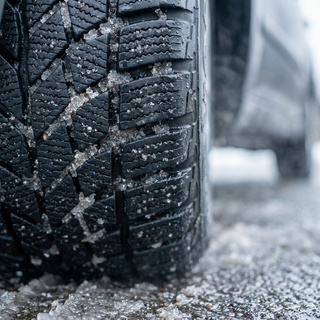
Navigating freezing precipitation, slush, and frozen river valley moisture along the riverfront bluffs of East Liverpool requires consistent tire friction. When temperatures hover around freezing, standard all-season tires lose elasticity. This chemical hardening reduces the tire surface area clinging to the pavement, making routine stops unpredictable. Equipping four dedicated winter tires ensures that your vehicle retains optimal traction on icy asphalt, packed snow, and wet pavement throughout the coldest months of the year.

Our service team at Tri State Ford helps local drivers prepare their vehicles for harsh regional weather with complete tire inspections and seasonal changeover services. To verify your current tread depth or discuss tire packages tailored to your driving habits, stop by our service center on Pennsylvania Avenue or give our certified technicians a call at (330) 462-7578 today.

Table of Contents

Ohio and Pennsylvania state codes establish a legal minimum tire tread depth of 2/32 inch for passenger vehicles, though automotive safety standards recommend at least 6/32 inch for driving in snow and slush. Neither state requires drivers to install winter tires by law, but law enforcement officers can issue traffic citations for operating an unsafe vehicle if worn tires fail to maintain traction during winter conditions.

Both states strictly regulate specialized traction equipment like studded tires to protect road surfaces from pavement wear. State traffic codes permit studded snow tires between November 1 and April 15 in both Ohio and Pennsylvania. Outside of this legal window, driving on studded tires can result in fines.

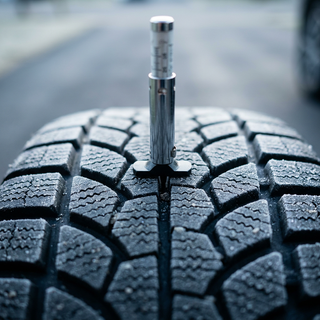
Maintaining adequate tread depth is vital because deep tread channels, known as lugs, act as water and slush pumps. As a tire rolls over wet snow, these deep grooves push slush away from the center contact patch, allowing the rubber edges to bite into the road surface. Once tread wears down below 4/32 inch, a tire loses its physical capability to clear slush, dramatically increasing the risk of hydroplaning or skidding across icy intersections.

Regular tire inspections at our service facility help identify uneven tread wear and low depth before winter weather hits. Drivers looking to maintain their vehicle hardware can order OEM tire accessories and parts online directly through our service department.
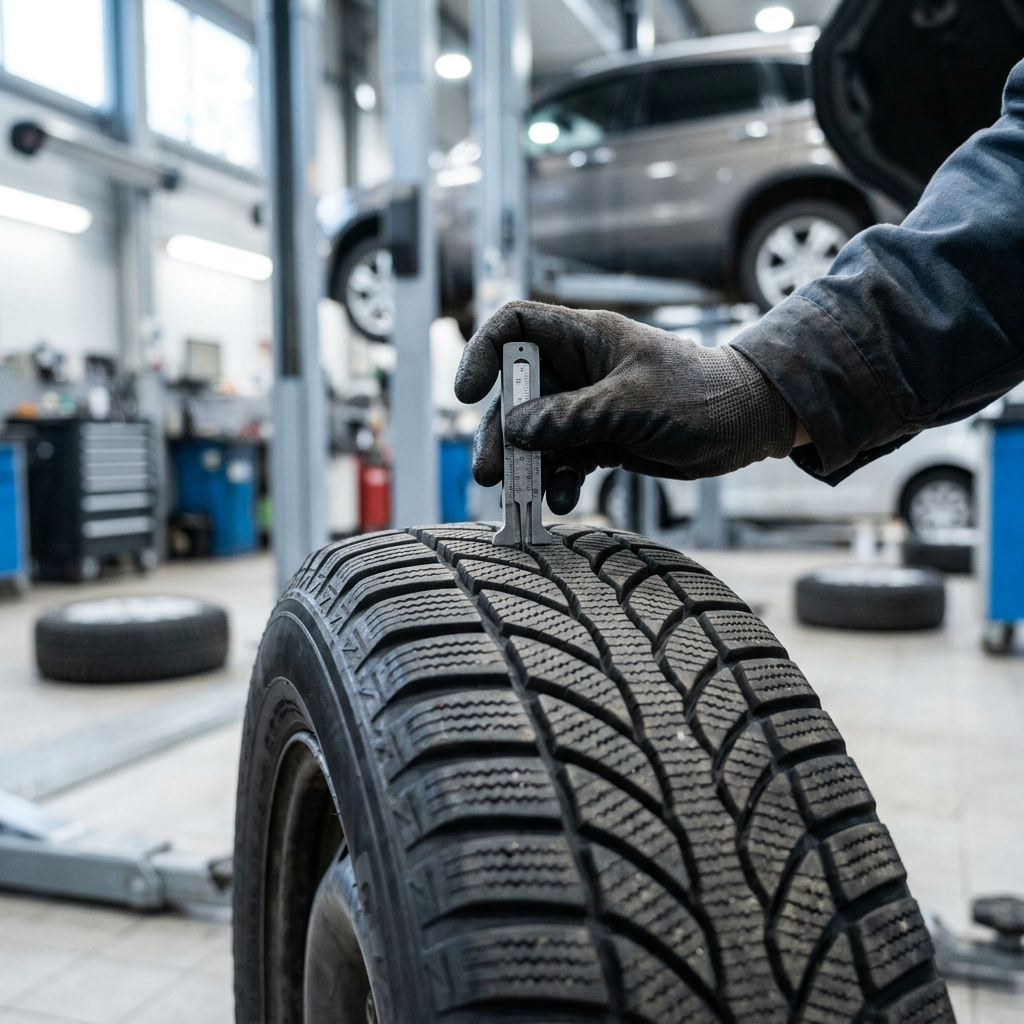
Mechanic using a metal gauge to measure tire tread depth in an auto repair shop. (Representative image for illustration purposes only. Actual vehicle may vary based on trim and configuration.)

What Happens If You Put Winter Tires on Only the Front Drive Wheels?

Installing winter tires on only the front drive wheels of a front-wheel-drive vehicle creates a dangerous handling imbalance that causes the rear tires to lose traction unexpectedly on slippery roads. This uneven grip frequently triggers vehicle spin-outs and extreme oversteer during routine cornering or emergency braking maneuvers.

When a front-wheel-drive vehicle has high-traction winter tires on the front axle and hard, cold-stiffened all-season tires on the rear axle, the vehicle develops unequal cornering capabilities:

  • The front wheels grip the snow and initiate a sharp turn, but the rear wheels lack the lateral grip needed to hold the vehicle's tail in line.
  • The rear axle swings outward around the turning axis, causing the back end of the vehicle to slide out of control.
  • Vehicle electronic stability control systems struggle to compensate because the physical traction difference between the front and rear tires exceeds system correction limits.

Automotive tire safety standards mandate fitting a complete, matching set of four winter tires on all passenger vehicles, regardless of whether the vehicle is FWD, rear-wheel drive, or AWD. Equipping four identical winter tires ensures balanced traction during acceleration, steering, and stopping, keeping the front and rear axles working in harmony across frozen asphalt.

Drivers who want to evaluate how proper tire balance affects handling stability under controlled guidance can schedule a test drive with our team to explore modern driver-assist systems and vehicle dynamics.

How Do Winter Tires Compare to All-Wheel Drive and All-Season Tires on Ice?

Dedicated winter tires stop up to 30 percent faster on ice than all-season tires mounted on an all-wheel-drive vehicle because tread compound flexibility governs braking friction rather than the number of powered wheels. While AWD systems assist with forward acceleration out of deep snow, they offer no additional traction during braking or lateral cornering on ice.

Vehicle braking and cornering rely entirely on the rubber compound staying soft enough to conform to microscopic surface imperfections on glare ice. Standard all-season rubber compounds harden when ambient temperatures drop, causing the tire to skate across ice like a plastic block. Tests show that stopping distance on packed snow can triple compared to dry roads, and stopping distance on glare ice can extend to ten times the dry-road baseline. From a speed of just 10 mph on ice, studless winter tires can stop a vehicle in roughly 21 feet, whereas standard all-season tires require nearly 40 feet to come to a complete stop.

Cornering stability on frozen roads reveals a similar performance gap. An AWD system distributes engine torque to four wheels to keep a vehicle moving forward, but engine torque cannot prevent lateral sliding if the tire rubber lacks grip. When entering a slippery turn, an AWD vehicle on all-season tires will slide wide toward the outside shoulder, while a vehicle equipped with dedicated winter tires maintains steering control and stays safely within its lane.

Can You Drive All-Weather Tires Year-Round or Use Winter Tires in Warm Weather?

Drivers can leave all-weather tires bearing the 3-Peak Mountain Snowflake symbol on their vehicles all year long, but driving dedicated winter tires in warm temperatures above 50°F rapidly degrades the soft tread compound and compromises handling precision.

All-weather tires differ from standard all-season tires by utilizing hybrid rubber compounds and specialized tread patterns designed to meet official snow-traction performance thresholds without deteriorating quickly during summer heat. For commuters navigating the suburban hill terrain in Calcutta, all-weather tires eliminate the need for biannual seasonal tire swaps while providing dependable cold-weather traction.

Conversely, dedicated winter tires are engineered strictly for freezing weather:

  • The specialized silica compounds and micro-sipes that stay flexible in sub-zero temperatures soften excessively when exposed to warm asphalt.
  • High heat accelerates tread wear, causing the soft rubber lugs to squirm and wear down prematurely within a single summer season.
  • Warm-weather driving on winter tires creates a vague, spongy steering feel and increases stopping distances on dry pavement.

Drivers looking to select the proper tire type for their vehicle model and driving routine can utilize our online tire finder tool to browse recommended tire options across all seasonal ratings.

How Much Does Winter Tire Mounting, Balancing, and Seasonal Changeover Cost?

A seasonal tire changeover service typically costs between $80 and $150 per visit for mounting and high-speed balancing when transferring tires onto a single set of wheels. Vehicle owners can reduce long-term changeover costs by mounting their winter tires on a dedicated secondary set of steel or aluminum wheels.

Setting up winter tires on dedicated wheels provides several distinct advantages for long-term ownership care:

  • Eliminates the labor cost of dismounting and remounting rubber tires from the rims twice every year.
  • Allows technicians to perform quick wheel swaps, reducing shop turnaround times during peak seasonal changeover periods.
  • Protects custom factory alloy wheels from harsh winter road salt, chemical de-icers, and curb scrapes hidden under snowbanks.
  • Extends overall tire casing lifespan by avoiding repeated bead stress caused by mounting tools.

Investing in a secondary wheel package pays for itself over several winter seasons through reduced installation fees while keeping your primary wheels in pristine condition.

Frequently Asked Questions About Winter Tire Care and Safety

Check tire inflation pressure when tires are cold and maintain the exact pressure specified on the vehicle driver-side door-jamb label. Air pressure drops by approximately 1 pound per square inch for every 10-degree drop in outside temperature. Never inflate tires to the maximum pressure stamped on the tire sidewall, as that number represents the maximum pressure the casing can support, not the operational specification for your vehicle.

Q: How does tire tread depth affect stopping performance on wet and slushy roads?

Sufficient tread depth allows the tire grooves to channel water and slush away from the rubber contact patch. While 2/32 inch is the absolute legal limit, winter driving safety declines sharply once tread depth drops below 6/32 inch. Shallow tread traps slush beneath the tire surface, causing the vehicle to float above the pavement and significantly extending emergency braking distances.

Q: What should you do if your vehicle suffers a flat tire or breakdown in hazardous winter weather?

If you experience a flat tire or mechanical issue during inclement weather, safely pull as far off the roadway as possible, turn on your hazard lights, and remain inside your vehicle for safety. Ford owners can contact Ford Roadside Assistance at (800) 241-3673 for complimentary 24/7 flat tire changes, towing to an authorized service center, and emergency jump-starts.

Q: Where is the proper location to store winter tires during the summer months?

Store off-season tires indoors in a cool, dark, and dry environment away from direct sunlight and electric motors that generate ozone. Clean the tires to remove road salt and brake dust, then place them in airtight tire storage bags. Storing tires on their sides if mounted on wheels, or upright if unmounted, prevents casing distortion and preserves the rubber compound.

Q: Why do my vehicle tire pressure monitoring system lights turn on during cold winter mornings?

Cold overnight temperatures cause the air inside your tires to contract, lowering the internal air pressure below the vehicle sensor alert threshold. Once you drive a few miles, friction warms the tire air and may cause the light to shut off. However, persistent low pressure warnings indicate that your tires require additional air to reach the proper cold inflation setting listed on your vehicle door jamb.

If you have questions about winter tire storage, tread depth inspections, or tire pressure resets, stop by our service center location or give us a quick call at (330) 462-7578 to speak with our service advisors. You can also schedule a service appointment online at your convenience.

Keep Your Vehicle Safe This Winter with Certified Tire Service at Tri State Ford

Preparing your vehicle for freezing temperatures, snow, and ice is the single most effective step you can take to safeguard your family on winter roads. From thorough multi-point tire inspections and digital alignment checks to complete seasonal wheel changeovers, our factory-trained technicians provide transparent, trusted maintenance tailored to regional driving conditions. Protect your vehicle investment and maintain uncompromised stopping power all season long by booking your seasonal tire service with our expert care team today.

© 2026 Tri State Ford. All rights reserved.

Winter Tires for East Liverpool OH Drivers | Tri State Ford
Posted in:

Related Posts

l

How Do You Diagnose a Fluid Leak Under Your Car?

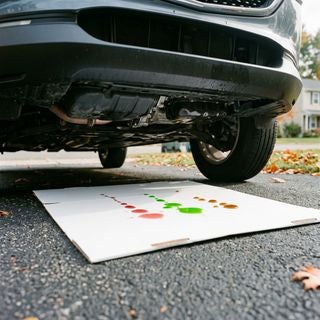
Diagnosing a vehicle fluid leak involves placing a clean sheet of light-colored cardboard under your engine bay overnight, examining the fluid's color, consistency, and odor, and matching its drip pattern to specific mechanical components beneath the chassis. Engine oil appears amber to black with a slippery feel, coolant is bright green or pink with a distinctly sweet aroma, and transmission fluid shows red or maroon. Identifying these characteristics narrows down whether the issue stems from the engine, cooling system, transmission, or braking components. When you notice wet spots or puddle marks on your driveway, performing a quick visual inspection helps prevent serious mechanical damage. Park your vehicle on a flat, level surface and allow the engine to cool down completely. Slide a clean piece of white cardboard or heavy paper directly beneath the engine and transmission area before leaving it overnight. In the morning, pull the cardboard out and evaluate the fluid using three key indicators: color, texture, and location relative to the front bumper and axles. Observing where the puddle sits on the cardboard gives immediate clues about its origin. Leaks dripping from the front-center usually point to the radiator, water pump, or oil pan. Fluid pooling near the middle of the vehicle closer to the front seats often traces back to the transmission pan or transfer case. Wetness concentrated near the wheels indicates potential issues with brake calipers, brake lines, or power steering rack boots. Drivers navigating the rolling hills around Calcutta frequently notice fluid seeps after parking on inclined driveways, which can cause settling fluids to run along underbody splash shields before dropping onto the pavement. If you notice persistent puddles or an unfamiliar fluid mark, you can check our East Liverpool service center address or give our certified technicians a quick call to discuss a professional inspection. Table of Contents How Do You Identify a Vehicle Fluid Leak by Its Color and Texture? Where Do the Most Common Vehicle Fluid Leaks Originate Under a Car? What Symptoms Indicate a Power Steering Fluid Leak? Can a Fluid Leak Cause a Vehicle Fire? How Much Does It Cost to Fix an Engine Oil Leak? Common Questions About Vehicle Fluid Leaks and Repairs How Do You Identify a Vehicle Fluid Leak by Its Color and Texture? You identify a vehicle fluid leak by matching its color, viscosity, and scent to the vehicle's essential operating fluids: slick amber or black liquid indicates engine oil, sweet-smelling bright green or orange fluid is coolant, thin red or maroon liquid is transmission fluid, and clear to light yellow slippery fluid near the wheels points to brake fluid. Every automotive fluid is engineered with specific colors, chemical additives, and weight profiles to perform designated tasks, making visual identification straightforward once you know what to look for: Engine Oil: Fresh engine oil ranges from translucent golden amber to light brown, while used oil turns dark brown or black with a thick, slippery consistency and a heavy petroleum smell. It drops under the front-center of the vehicle near the oil pan or engine block. Engine Coolant (Antifreeze): Coolant features vibrant fluorescent colors including bright green, orange, pink, yellow, blue, or purple. It has a watery, slightly slippery feel and a noticeable sweet, syrupy smell. Coolant pools near the front radiator area or lower hose connections and leaves a chalky white residue when dried on warm metal. Automatic Transmission Fluid: Fresh transmission fluid, such as MERCON LV, appears bright red or pink and has a smooth, oily feel. As it ages, it darkens to maroon or reddish-brown. Leaks drop under the center of the chassis beneath the transmission casing or cooler lines. Brake Fluid: Brake fluid, such as DOT 4 brake fluid, is clear to light yellow or pale amber. It feels slick and thin to the touch but requires immediate clean-up because it can strip exterior vehicle paint. Leaks gather near the wheels, along frame-mounted brake lines, or beneath the brake master cylinder at the firewall. Power Steering Fluid: Power steering fluid usually displays a clear, light amber, or pinkish color with an oily consistency similar to light hydraulic fluid. It seeps near the front bumper, power steering pump, or steering rack. Differential and Transfer Case Gear Oil: Gear oil is dark brown or black with a heavy, thick viscosity and a sharp, distinctive sulfur or rotten-egg odor. Leaks gather under the center transfer case or rear axle housing. Windshield Washer Fluid: Washer fluid appears bright blue, green, or orange with a watery consistency and a mild alcohol or window-cleaner scent. Leaks show up directly beneath the washer reservoir or front bumper assembly. Reviewing current maintenance information allows you to stay ahead of routine fluid flushes, gasket replacements, and filter changes before minor seeps become major repairs. Where Do the Most Common Vehicle Fluid Leaks Originate Under a Car? The most common vehicle fluid leaks originate beneath the engine oil pan, valve cover gaskets, radiator hose fittings, transmission oil pan, and wheel hydraulic components where heat and vibration degrade rubber seals over time. Understanding where fluid lines and component housings meet helps isolate seeps before they turn into costly mechanical breakdowns. The engine bay contains numerous gaskets and pressurized seals. Upper leaks often stem from a worn valve cover gasket, causing oil to seep down the side of the engine block. Lower engine leaks usually originate at the oil pan gasket, oil drain plug washer, or front and rear crankshaft seals. Cooling system leaks frequently start at upper and lower radiator hoses, water pump shaft seals, thermostat housings, or plastic radiator end tanks. Transmission fluid leaks generally come from the transmission pan gasket, cooler line quick-connect fittings, or output shaft seals where drive axles enter the transaxle assembly. One notable exception to vehicle leaks is clear water dripping beneath the front passenger side dash area. Commuters who bring their vehicles in after noticing puddles often ask whether clear water dripping on the passenger side requires immediate repair, but our service technicians quickly confirm when it is simply normal HVAC condensation. When you run your air conditioning or windshield defroster, the system extracts moisture from cabin air and drains clean water safely through a rubber tube onto the ground. If you are exploring custom equipment or planning routine maintenance additions, browsing custom vehicle configuration options provides insight into factory-installed heavy-duty cooling packages and protective skid plates. What Symptoms Indicate a Power Steering Fluid Leak? A power steering fluid leak is primarily indicated by a loud whining or groaning noise when turning the steering wheel, noticeably stiffer steering at low speeds, and clear to reddish oily spots dripping beneath the front axle area. Hydraulic power steering systems rely on pressurized fluid to assist steering movement. When a hose, reservoir seal, or steering rack boot begins to seep, fluid pressure drops and allows air into the system. This aeration causes the power steering pump to produce a high-pitched whining noise that grows louder when you turn the wheel toward full lock during parking maneuvers. Other noticeable symptoms of a power steering leak include: Jerky or uneven resistance in the steering wheel while navigating turns. Slow or sluggish return of the steering wheel to the center position after completing a curve. Wet, oily residue accumulating along hydraulic high-pressure hoses or power steering pump fittings. Low fluid levels inside the clear power steering reservoir under the hood. Ignoring low power steering fluid can cause the hydraulic pump to run dry, resulting in metal-on-metal friction that destroys the internal pump vanes. Promptly inspecting the fluid level and repairing damaged lines preserves steering responsiveness and prevents complete pump failure. Can a Fluid Leak Cause a Vehicle Fire? Yes, a fluid leak can cause a vehicle fire when flammable liquids like engine oil, transmission fluid, power steering fluid, or fuel drip onto extremely hot engine parts like exhaust manifolds or catalytic converters. Exhaust system components operate at extreme temperatures that frequently exceed 600°F and can reach over 1,000°F under heavy load or towing conditions. Petroleum-based lubricants and hydraulic fluids have auto-ignition temperatures within this operating range. When a pressurized power steering hose or leaking valve cover gasket sprays oil directly onto hot exhaust headers, the fluid can vaporize and instantly ignite into an engine bay fire. Crucial warning signs that require immediate action include: A strong, acrid smell of burning oil or fuel inside the passenger cabin. Wisps of white or blue smoke rising from beneath the hood or undercarriage while idling or stopped in traffic. An illuminated red brake warning light or specific display messages like BRAKE FLUID LEVEL LOW on the instrument cluster. Rapidly dropping fluid gauges or warning lights indicating loss of engine oil pressure. If you observe smoke or smell burning fluid while driving, safely pull off the road, turn off the ignition immediately to cut electrical power and fluid pressure, and move away from the vehicle. Exploring service and parts information helps you keep vital seals, fuel lines, and brake system components in optimal working condition. How Much Does It Cost to Fix an Engine Oil Leak? Fixing an engine oil leak typically costs between $50 and $150 for simple repairs like an oil filter or drain plug seal replacement, $200 to $600 for a valve cover gasket or oil pan gasket, and $1,200 or more for intensive repairs such as a rear main seal. The total repair cost depends primarily on labor time rather than parts cost. While replacement rubber gaskets or silicone seals are relatively inexpensive, accessing those seals often requires removing steering linkages, subframes, or engine covers: Drain Plug Washer or Oil Filter Seal: $50 to $150. Corrected easily during a routine oil and filter change. Valve Cover Gasket Replacement: $200 to $450. Requires removing upper intake components and spark plug coils to replace the rubber perimeter seal. Oil Pan Gasket Replacement: $300 to $650. May require lowering the front subframe or crossmember to drop the oil pan. Timing Cover Gasket Replacement: $500 to $900. Demands removing drive belts, pulleys, and front engine covers. Rear Main Seal Replacement: $1,200 to $1,800+. Requires separating the transmission from the engine block to reach the seal behind the flywheel or flexplate. Commuters traveling along Market Street in Boardman benefit from addressing minor engine oil seeps early during routinely scheduled oil changes, preventing engine bay smoke during heavy stop-and-go driving. Catching small oil seeps during routine multi-point inspections prevents severe oil loss that can cause internal engine damage. You can easily schedule a service appointment online to have certified technicians inspect your vehicle's engine seals. Common Questions About Vehicle Fluid Leaks and Repairs Q: How can you tell the difference between fresh engine oil and transmission fluid? Fresh engine oil features a translucent amber or golden appearance with a petroleum scent and a slick feel. Automatic transmission fluid displays a bright red or pink color with a smoother, lighter consistency. While aged engine oil turns dark brown or black, old transmission fluid darkens to maroon or dark reddish-brown, making them easy to differentiate when wiped onto a clean white paper towel. Q: Is it safe to drive with a minor power steering fluid leak? Driving short distances with a minor power steering leak is possible if fluid levels remain adequate, but running the system dry risks severe pump damage and sudden heavy steering resistance. As hydraulic fluid drops below the minimum reservoir mark, air enters the lines and accelerates pump wear. Checking the reservoir level before driving and addressing the leak promptly prevents complete steering system failure. Q: What should you do immediately if you suspect a flammable fluid leak under the hood? Safely pull off the roadway, turn off the ignition immediately to stop fluid pressure, and evacuate all passengers away from the vehicle. Avoid opening the hood if smoke or flames are visible, as introducing fresh oxygen can accelerate an engine bay fire. Contact emergency services or Ford Roadside Assistance at 1-800-241-3673 for towing support backed by factory warranty coverage and authorized service center care. Q: Why does an engine coolant leak leave a powdery residue when it dries? Engine coolant contains chemical anti-corrosion additives and organic compounds dissolved in water. When leaking coolant contacts warm engine components, the water content evaporates quickly, leaving behind a crusty white or colored mineral powder around hose clamps, water pump housings, or radiator seams. Spotting this residue helps technicians pinpoint slow cooling system leaks before engine overheating occurs. Q: How long does a certified technician take to diagnose a fluid leak? Most certified technicians complete a comprehensive fluid leak diagnosis within one hour using ultraviolet dye, pressure testing, and multi-point visual checks. Diagnostic dye is added to the suspected fluid system, the engine is run briefly, and an ultraviolet lamp reveals the precise origin of the seep behind heat shields or engine covers. Maintaining your vehicle's seals, hoses, and fluid levels protects mechanical performance and ensures family safety on every trip. Whether you need an engine oil leak diagnosed, a cooling system pressure test, or routine fluid maintenance, our factory-trained technicians use genuine OEM parts engineered specifically for your vehicle. Visit our dealership location, order genuine Ford parts for home maintenance, or give our service team a call to keep your car running safely and dependably. © 2026 Tri State Ford. All rights reserved. Diagnosing Fluid Leaks in East Liverpool OH | Tri State Ford

Is Ford's The Works Service Package Worth the Cost for a 2024 Ford?

Ford's The Works Package is exceptionally worth the cost for a 2024 Ford because bundling essential preventative maintenance saves roughly half the price of scheduling those same services separately. Combining a Motorcraft synthetic blend oil change, tire rotation, brake inspection, battery test, and a comprehensive multi-point inspection into one visit protects engine longevity and ensures road-trip reliability before embarking on long late-summer travel. Long road trips put continuous stress on your vehicle's engine, cooling system, and tires. Scheduling routine maintenance prior to a major trip helps prevent roadside breakdowns caused by undetected fluid leaks, worn brake pads, or hidden battery degradation. For drivers commuting through Calcutta where gently rolling hills along State Route 170 demand reliable braking and engine performance, starting a travel season with fresh engine oil and verified tire pressures ensures optimal vehicle safety. Rather than paying individual retail rates for separate maintenance tasks, choosing a complete bundle delivers total peace of mind. Performing these routine maintenance items on schedule also keeps your factory warranty intact and protects your vehicle's long-term resale value. To prepare your vehicle for upcoming travel, stop by our dealership location on Pennsylvania Avenue or give our service team a call to check availability. Table of Contents What Services and Multi-Point Inspections Are Included in The Works Package? Is The Works a Better Value Than Buying Services Individually, and Can You Upgrade to Full Synthetic Oil? Why Are Late-Summer Road Trips Tough on Batteries and Tires? Should You Compare The Works Maintenance Package with Ford Subscription Services? Frequently Asked Questions About Servicing Your Ford Before Late-Summer Travel Schedule Your Late-Summer Maintenance at Tri State Ford What Services and Multi-Point Inspections Are Included in The Works Package? The Works Package delivers a thorough multi-point inspection alongside essential maintenance services, including a Motorcraft synthetic blend oil change, oil filter replacement, tire rotation with pressure checks, a digital battery test, vital fluid top-offs, and detailed checks of engine air filters, belts, and hoses. Every service visit begins with fresh engine oil and a genuine Motorcraft oil filter designed to trap harmful engine contaminants. Technicians then rotate all four tires to promote even tread wear and set tire inflation pressures to manufacturer specifications listed on your vehicle's driver-side door jamb label. The comprehensive multi-point vehicle checkup covers vital components that keep your vehicle operating safely: Brake System Inspection: Examination of brake pad thickness, rotor wear, calipers, brake lines, and parking brake operation. Battery Health Diagnostics: A digital battery check measuring cold cranking amps and charging system performance to spot weak cells before failure. Fluid Inspection and Top-Off: Checking and topping off engine coolant, windshield washer fluid, brake fluid, and automatic transmission or power steering fluids. Belts and Hoses Check: Visual check of serpentine belts, radiator hoses, and heater lines for cracks, fraying, or soft spots caused by heat aging. Filter and Safety Checks: Inspection of the engine air filter, cabin air filter, wiper blades, exterior lighting, and steering components. When drivers stop in prior to late-summer road trips, our technicians often hear questions about whether battery tests and belt inspections are fully included in the multi-point check. Confirming that these vital systems are healthy gives you confidence before starting a long highway journey. You can quickly schedule a service appointment online or order OEM Motorcraft parts directly through our department. ​ Is The Works a Better Value Than Buying Services Individually, and Can You Upgrade to Full Synthetic Oil? Upgrading to Motorcraft full synthetic oil within The Works Package enhances engine protection, especially under severe driving conditions, making it a smarter choice than buying services separately. Purchasing a standalone oil change, an individual tire rotation, a standalone battery test, and a professional brake inspection piecemeal at retail rates can cost more than the bundled package. Bundling these items into a single service visit saves both money and shop time while ensuring no critical safety item gets overlooked. While the standard service bundle includes premium Motorcraft synthetic blend oil, upgrading to full synthetic oil is highly recommended for specific driving demands: Heavy Towing and Hauling: Models like the Ford F-150 towing trailers or campers benefit from full synthetic oil's superior resistance to thermal breakdown under heavy engine loads. Extreme Late-Summer Heat: Full synthetic oil maintains stable viscosity and lubrication qualities during high ambient temperatures and extended highway driving. Stop-and-Go Traffic: Enhanced oil formulations minimize engine wear and oil oxidation during slow-moving summer vacation traffic. Upgrading your oil formulation during routine maintenance ensures max protection for modern EcoBoost engines and high-stress powertrains. For vehicles facing severe driving demands, getting expert battery service advice alongside your engine check ensures every system is primed for travel. ​ Why Are Late-Summer Road Trips Tough on Batteries and Tires? Extreme summer heat accelerates battery fluid evaporation and internal cell corrosion, while scorching road surface temperatures cause tire inflation pressures to spike and accelerate rubber tread wear during long highway trips. Many drivers assume cold winter weather is the primary cause of battery failures, but high summer temperatures are the actual root cause of battery damage. Heat evaporates the liquid electrolyte inside the battery casing and speeds up internal grid corrosion. Once internal components degrade, the battery struggles to retain charge, often leading to a sudden failure when late-summer temperatures fluctuate. Tires experience similar stress on long road trips during late summer. Road surface temperatures can exceed ambient air temperatures by 30 to 50 degrees, causing air inside the tire to expand rapidly. For every 10-degree rise in air temperature, tire pressure increases by approximately 1 PSI. Driving on underinflated or overinflated tires on hot pavement increases friction, accelerates tread wear, and raises the risk of tire blowouts. The steep river bluffs around East Liverpool put extra stress on tires and brakes, making regular tread depth checks and pressure adjustments critical before taking off on long interstate trips. Combining engine oil replacement with routine tire management ensures your vehicle's tread wears evenly across all four corners, maximizing tire lifespan and protecting fuel economy on the highway. ​ Should You Compare The Works Maintenance Package with Ford Subscription Services? The Works Package is a physical mechanical maintenance service designed to preserve engine, tire, and brake performance, whereas Ford connected subscription services provide software features like 5G Wi-Fi hotspots and streaming apps, meaning the two offerings serve completely distinct ownership needs. Owners occasionally confuse vehicle maintenance programs with connected technology packages available on late-model Ford vehicles. Ford connectivity packages deliver in-vehicle entertainment, unlimited data via an integrated 5G Wi-Fi hotspot, real-time navigation updates, and streaming application integration directly on the center touchscreen display. Mechanical care and digital software subscriptions work together to enhance your driving experience, but one cannot substitute for the other: Mechanical Maintenance: Focuses on physical vehicle longevity through fluid changes, mechanical safety inspections, filter replacements, and brake upkeep. Connected Subscriptions: Focuses on passenger convenience, navigation assistance, and digital connectivity during travel. Ensuring your vehicle receives regular mechanical care guarantees that your vehicle remains safe and reliable, allowing you to fully enjoy your connected features on the open road. If busy schedules make visiting the service center difficult before your trip, exploring Ford mobile service options can bring certified routine maintenance directly to your driveway. ​ Frequently Asked Questions About Servicing Your Ford Before Late-Summer Travel Q: Does Ford offer rebates or coupons for The Works vehicle service? National Ford service rebates and promotional coupons are regularly updated throughout the year, allowing vehicle owners to save on bundled maintenance. Dealership service centers routinely honor regional service special offers and Ford Rewards point redemptions. You can apply accumulated Ford Rewards points directly toward your maintenance bill to lower out-of-pocket costs on oil changes, tire care, and multi-point vehicle checks. Q: Can I schedule The Works package online at local dealerships? Scheduling bundled vehicle maintenance online is simple and can be completed in just a few clicks through digital scheduling portals. You can select your specific vehicle year and model, choose preferred service options, select an available date and time slot, and assign a dedicated service advisor. Utilizing online scheduling ensures your appointment is locked in before busy holiday travel weekends. Q: Does The Works package include a new engine air filter replacement? The standard maintenance bundle includes a detailed visual check of your engine air filter and cabin air filter, but the replacement filter parts and installation carry an additional fee. If the technician discovers heavy dust, pollen, or debris buildup during the checkup, they will show you the filter condition and recommend a fresh Motorcraft replacement filter to restore proper engine airflow and cabin air quality. Q: Why is combining oil changes with tire rotations recommended? Combining engine oil service with routine tire care ensures both critical maintenance items are performed at the correct mileage intervals. Tire manufacturers recommend rotating tires every 5,000 to 7,500 miles to promote even tread wear across front and rear axles. Because this distance aligns with modern engine oil change intervals, completing both tasks during the same appointment saves time and maximizes tire lifespan. Q: How does extreme heat affect coolant and brake fluid before a long road trip? Extreme summer heat increases operating temperatures inside your engine bay, causing older coolant to degrade and lose its corrosion-inhibiting properties. Similarly, brake fluid is hygroscopic, meaning it absorbs moisture from the air over time; under heavy braking on hot roads, moisture in old brake fluid can boil, causing a spongy brake pedal feeling. Inspecting and topping off these vital fluids before travel prevents engine overheating and maintains crisp braking response. To make servicing even more convenient during busy work weeks, ask about Ford pickup and delivery service for complete door-to-door vehicle care. ​ Schedule Your Late-Summer Maintenance at Tri State Ford Tri State Ford offers expert late-summer maintenance services that help prevent common travel issues like battery failure and tire wear. Skipping routine checkups before a long trip exposes your vehicle to preventable mechanical issues, from heat-worn belts and low fluid levels to sudden battery failures and uneven tire wear. Completing a comprehensive checkup gives you confidence that every major system is operating at peak efficiency. Our team of factory-trained technicians uses genuine Motorcraft parts and specialized diagnostic equipment designed specifically for your Ford vehicle. Whether you are driving a Ford F-150, Explorer, or Escape, we treat every vehicle with the care and attention it deserves. Get directions to our East Liverpool service center or lock in your appointment by calling our service counter directly today. © 2026 Tri State Ford. All rights reserved.

f

How Do You Know If Your Vehicle Is Ready for Winter?

A vehicle is winter-ready when its 12-volt battery maintains strong Cold Cranking Amps under load, tire tread depth exceeds 6/32-inch on flexible rubber, coolant mixture tests to -34 degrees Fahrenheit freeze protection, and windshield wipers clear slush without streaking effectively. If an engine cranks slowly, tire pressure warnings trigger after a temperature drop, or heating response lags, critical maintenance is required before severe winter weather sets in. Driving across the region brings challenging cold-weather conditions, from navigating steep riverfront bluffs in East Liverpool during icy morning commutes to handling freezing rain along regional highways. Sub-freezing temperatures stress every mechanical system in a vehicle. Engine oil thickens, battery chemical output drops, and rubber components lose elasticity. Ensuring your vehicle is prepared requires evaluating core systems before snow and ice arrive on local roads. Proactive seasonal care keeps your vehicle operating dependably when temperatures drop. A comprehensive multi-point check identifies aging components before they fail on cold mornings. Drivers seeking professional vehicle evaluation can visit our service center location or give our service team a call at (330) 462-7578 to confirm their car is fully prepared for cold weather. Table of Contents What Are the Main Signs Your Vehicle Isn't Ready for Winter Weather? What Tire Tread Depth and Rubber Compound Limits Impact Winter Traction? How Do You Test Battery Cold Cranking Amps to Avoid Winter Failure? What Antifreeze Mixture and Coolant Tools Protect Your Engine in Sub-Freezing Weather? What Specific Maintenance Checks Are Included in a Standard Winter Inspection Package? Quick Answers to Common Winter Vehicle Maintenance Questions Schedule Your Winter Maintenance Inspection What Are the Main Signs Your Vehicle Isn't Ready for Winter Weather? A vehicle shows clear warning signs of winter unreadiness through hesitant engine starting, dimming exterior lighting, degraded wiper blade action, persistent low tire pressure alerts, and insufficient cabin heat. Ignoring these early mechanical signals drastically increases the risk of cold-weather breakdowns and compromised roadway traction. Five specific mechanical indicators demonstrate that a vehicle requires immediate maintenance before winter weather worsens: Engine Cranking Delays: Cold weather reduces 12-volt battery power output while motor oil thickens, creating heavy electrical resistance during ignition. If the starter turns over sluggishly or makes a metallic clicking sound, the battery or charging system is failing. Dimming Exterior and Interior Lights: Weak electrical output from an aging battery or worn alternator causes headlights and cabin displays to flicker or dim, especially when idling at intersections. Wiper Blade Streaking and Squeaking: Cold temperatures harden natural rubber wiper elements, causing tearing, chatter, and poor windshield clearing during snowstorms. Hardened rubber cannot conform to windshield glass curves, leaving dangerous blind spots. Low Tire Pressure Monitoring Alerts: Ambient temperature drops cause internal tire air pressure to drop by roughly 1 PSI for every 10 degrees Fahrenheit decrease. Driving on underinflated tires reduces fuel economy, accelerates tread wear, and compromises traction on wet roads. Slow Defroster and Heater Output: A sticking thermostat, low coolant levels, or air pockets in the heater core lead to cold cabin air and slow windshield defrosting, creating severe visibility hazards during winter storms. Addressing these warning signs early protects your engine and ensures family safety during harsh weather. Vehicle owners can review current factory maintenance information for seasonal service savings or order genuine Ford parts online to replace worn wiper blades and air filters. What Tire Tread Depth and Rubber Compound Limits Impact Winter Traction? Safe winter driving requires a minimum tire tread depth of 6/32-inch to channel snow and slush away from the contact patch, as opposed to the 2/32-inch legal limit for dry pavement. Furthermore, standard all-season rubber compounds begin stiffening at 45 degrees Fahrenheit, causing a significant loss of road grip regardless of remaining tread depth. Tire performance in winter conditions depends on two distinct factors: tread geometry and rubber chemistry. Tread grooves physically clear standing water, slush, and packed snow. When tread wears down below 4/32-inch, tires lose the ability to evacuate slush, leading to hydroplaning. Measuring tread depth using a specialized depth gauge across inner, center, and outer tread ribs ensures even tire wear. The rubber compound itself plays an equally crucial role. All-season tires use tread formulations designed for high-temperature durability, but these compounds harden when temperatures drop below 45 degrees Fahrenheit. As the rubber stiffens, it loses flexibility, reducing friction on cold asphalt. Winter tires and winter-rated all-weather tires use specialized silica-rich compounds that remain pliable in sub-freezing temperatures, providing shorter stopping distances on ice. Sub-freezing squalls across the rolling hills and State Route 170 elevation changes around Calcutta demand maximum tire grip. Capable vehicles like the 2026 Ford Escape with All-Wheel Drive or the 2026 Ford Explorer with 4x4 rely directly on flexible rubber compounds and adequate tread depth to transmit engine torque to icy pavement safely. How Do You Test Battery Cold Cranking Amps to Avoid Winter Failure? Automotive battery cold performance is evaluated by measuring Cold Cranking Amps ( CCA), which quantifies the number of amperes a 12-volt battery delivers at 0 degrees Fahrenheit for 30 seconds while maintaining at least 7.2 volts. Passenger vehicles operating in cold climates typically require a battery rated between 600 to 800 CCA to guarantee reliable engine starting. At 32 degrees Fahrenheit, a standard lead-acid or AGM battery loses approximately 20% of its available starting power. When temperatures fall to 0 degrees Fahrenheit, battery output drops by roughly 50%. At the same time, cold engine oil thickens, requiring up to twice as much current to turn the crankshaft. This combination makes winter the most common season for sudden battery failure. Professional battery testing goes beyond simple voltage measurement. Service technicians use digital conductance testers to measure internal resistance and cold-cranking capacity under simulated load. Batteries older than three to five years should undergo routine conductance testing before winter. If test results indicate reduced cold-cranking capacity, replacing the unit prevents unexpected strandings. Vehicle owners can schedule specialized battery inspection and service to verify electrical health, or explore new vehicle options by booking time to schedule a test drive in an All-Wheel Drive Ford model equipped with advanced winter packages. What Antifreeze Mixture and Coolant Tools Protect Your Engine in Sub-Freezing Weather? Engine coolant freezing point protection is tested using an optical refractometer or a hydrometer, which measures fluid specific gravity to determine exact temperature limits. A standard 50/50 ratio of ethylene glycol antifreeze to distilled water protects against freezing down to -34 degrees Fahrenheit, while a 70/30 winter concentration lowers protection to -84 degrees Fahrenheit. An optical refractometer provides the most accurate measurement of coolant health. By placing a drop of coolant on the refractometer prism and looking through the eyepiece, technicians measure light refraction to read exact freezing and boiling thresholds. While floating-bulb hydrometers are also used, they are sensitive to fluid temperature variations and can give misleading readings if the coolant is warm. Maintaining the proper coolant mixture is vital for engine longevity. Water alone expands when freezing, which can crack engine blocks, burst radiator cores, and rupture heater hoses. Antifreeze prevents freezing while raising the boiling point and providing anti-corrosion additives that protect internal aluminum and cast-iron engine components. Coolant ratios should never exceed 70% antifreeze concentrate. Pure antifreeze freezes at a higher temperature than a glycol-water mixture and has poor heat-transfer properties. Over time, protective corrosion inhibitors break down, making regular fluid testing and factory-recommended flushes essential for winter preparation. What Specific Maintenance Checks Are Included in a Standard Winter Inspection Package? A standard winter car inspection package incorporates comprehensive diagnostics across electrical systems, braking components, tires, thermal fluids, windshield visibility gear, and drive belts. Each inspection systematically evaluates critical components under sub-freezing operating conditions to prevent winter breakdowns. Professional technicians complete a thorough winter inspection checklist covering key vehicle systems: Electrical & Battery Diagnostics: Conductance testing to measure Cold Cranking Amps against factory ratings, checking terminal posts for lead-acid corrosion, and verifying alternator charging voltage output. Tire & Suspension Audit: Measuring tread depth across all four tires using a digital depth gauge, inspecting sidewalls for cracking or impact bulges, setting cold inflation pressures, and checking wheel alignment. Cooling System & Thermal Protection: Refractometer testing of coolant freeze point, pressure testing radiator caps and cooling lines for microscopic leaks, and verifying thermostat opening operation. Brake System Assessment: Measuring brake pad friction material thickness, inspecting rotors for rust pitting or heat scoring, and testing brake fluid moisture content to prevent pedal fade. Visibility & Safety Equipment: Checking wiper arm spring tension, inspecting wiper blade rubber elements, filling the washer reservoir with winter de-icer fluid, testing rear defroster grid heating, and auditing exterior light bulb operation. Underhood Belts & Hoses: Measuring drive belt tension, inspecting serpentine belts for rubber cracking, and checking heater hose flexibility to ensure reliable engine cooling. A complete seasonal inspection identifies minor wear before it causes major repairs in cold weather. Drivers can easily book a winter maintenance appointment online to have factory-trained technicians inspect their vehicle. Quick Answers to Common Winter Vehicle Maintenance Questions Q: How do cold temperatures affect electric vehicle battery range? Cold ambient temperatures temporarily reduce electric vehicle driving range by 15% to 30% on severe winter days due to slowed lithium-ion chemical reactions and increased cabin heating power demands. Ford electric vehicle owners can mitigate cold-weather range loss by preconditioning the cabin and battery while plugged into a charger before departure and utilizing heated seats and steering wheels, which use significantly less energy than cabin climate blowers. Q: Can all-season tires be used safely through an Ohio winter? All-season tires remain suitable for light snow provided tread depth exceeds 6/32-inch and temperatures remain moderate. However, because all-season tread compounds begin stiffening at 45 degrees Fahrenheit, dedicated winter tires or 3-Peak Mountain Snowflake rated all-weather tires provide superior stopping distances and cornering stability on packed snow and icy surfaces during prolonged sub-freezing conditions. Q: Why does a tire pressure light turn on during the first cold morning of winter? Pneumatic tire pressure drops by approximately 1 PSI for every 10 degrees Fahrenheit decrease in ambient air temperature due to thermal gas contraction. When overnight temperatures plunge, tire pressure frequently drops below the vehicle's minimum threshold, triggering the tire pressure monitoring system indicator. Drivers should adjust pressures when tires are cold according to the vehicle door jamb label. Q: What should be stored in a vehicle emergency winter kit? A properly equipped winter emergency kit should contain heavy-duty jumper cables, a durable ice scraper with a snow brush, a flashlight with extra batteries, a collapsible shovel, thermal blankets, and a tow strap. Carrying non-perishable snacks, bottled water, and a portable phone power bank provides vital safety support if stranded in remote cold-weather locations. Q: How often should windshield wiper blades be replaced in cold climates? Windshield wiper blades operating in cold climates should be replaced every 6 to 12 months, or immediately when streaking, chattering, or tearing occurs. Freezing temperatures harden wiper rubber, while heavy snow accumulation and windshield ice accelerate edge wear. Installing beam-style winter wiper blades with protective rubber covers prevents ice buildup within the wiper frame. Schedule Your Winter Maintenance Inspection Ensuring your vehicle is fully prepared for sub-freezing weather requires proactive maintenance before snow and ice arrive on local roads. Taking simple preventative steps—such as testing battery Cold Cranking Amps, verifying coolant freeze protection, and inspecting tire tread—prevents unexpected breakdowns and keeps your family safe all season long. If emergency roadside issues occur during severe weather, eligible Ford owners benefit from manufacturer-backed emergency support by contacting Ford Roadside Assistance: 1-800-241-3673 for towing, flat tire replacement, fuel delivery, and jump-starts. Our factory-trained technicians at Tri State Ford use genuine OEM parts and specialized diagnostic tools to ensure your vehicle handles tough winter driving with complete confidence. Visit our dealership at 1503 Pennsylvania Ave, East Liverpool, OH 43920 or reach our service team directly at (330) 462-7578 to schedule your comprehensive winter inspection today. © 2026 Tri State Ford. All rights reserved. Vehicle specification data © JATO Dynamics Limited. Winter Vehicle Maintenance in East Liverpool OH | Tri State Ford