Blog / Used Vehicle Guides, Financing & Insurance, Buying Guides, Trade-In Advice, Certified Pre-Owned

Which Used Vehicle Under $10,000 Is Best to Buy Near East Liverpool?

f

Which Used Vehicle Under $10,000 Is Best to Buy Near East Liverpool?

For value-focused shoppers, a third-generation Ford Escape stands out as the best overall purchase near East Liverpool because it combines roughly 8 inches of ground clearance, available all-wheel drive, and cargo capacity expanding up to 68 cubic feet without the mechanical complexity of high-mileage continuously variable transmissions. While a compact all-wheel-drive car like the Subaru Impreza delivers great road-holding, the Escape provides the elevated stance, cabin versatility, and durable traditional automatic transmission required for steep river valley hills and harsh winter road conditions.

value-focused shoppers evaluating vehicles budget-friendly face distinct tradeoffs across popular crossovers and sport utility vehicles:

  • Ford Escape (2013 to 2016): Balances nimble handling, roughly 8 inches of ground clearance, and an available 1.6L turbocharged four-cylinder or 2.0L EcoBoost engine paired with a durable 6-speed automatic transmission, achieving up to 23 mpg city / 32 mpg highway.
  • Subaru Impreza (2012 to 2016): Provides standard Symmetrical All-Wheel Drive and strong efficiency near 27 mpg city / 36 mpg highway, but sits lower with roughly 5 to 6 inches of clearance and requires careful verification of continuously variable transmission fluid history.
  • Nissan Rogue (2014 to 2017): Delivers a spacious cabin and 25 mpg city / 32 mpg highway from a 2.5L four-cylinder engine, though its belt-driven continuously variable transmission demands rigorous pre-purchase health checks at higher mileage.
  • Jeep Cherokee (2014 to 2017): Offers rugged styling and an available 3.2L Pentastar V6 with authentic multi-mode four-wheel drive, offset by a heavier curb weight and lower city fuel economy near 19 mpg city.
  • Ford Explorer (2011 to 2014): Supplies authentic three-row seating, up to 5,000 lbs towing capacity, and a robust 3.5L V6 engine, making it the premier choice for larger crews requiring heavy towing capability.

At Tri State Ford, our team focuses on transparent vehicle evaluations to help you select the exact vehicle configuration that matches your budget and driving routine. If you are coming from a neighboring community, finding our showroom on Pennsylvania Avenue is straightforward, and our team grounds every purchase decision in clear mechanical facts. You can also give our staff a call at (330) 462-7578 to discuss incoming trade-ins and budget-friendly inventory options.

Table of Contents

How Does Ground Clearance Compare Between the Subaru Impreza and Ford Escape?

A standard Subaru Impreza provides between 5 and 6 inches of ground clearance, whereas a third-generation Ford Escape sits significantly higher at roughly 8 inches. That difference of more than 2 inches represents the operational boundary between gliding over frozen snow ridges and plowing into them with your front bumper and underbody shields.

Drivers navigating the rolling hills and elevated roads around Calcutta encounter steep driveways and winter ruts where ground clearance makes a noticeable difference. While the Impreza utilizes standard all-wheel drive to maintain tire traction, its low sedan or hatchback ride height leaves critical chassis components vulnerable to packed slush, frozen snowdrifts, and jagged gravel shoulders. A third-generation Ford Escape rides on a tall MacPherson strut front suspension and multi-link rear suspension, elevating the engine oil pan, exhaust system, and rocker panels well above roadway obstacles.

Interior utility reinforces the clearance advantage of the Ford Escape. Behind the second row, the Escape provides about 34 cubic feet of dedicated cargo space, expanding to nearly 68 cubic feet when folding the split rear bench. A comparable Subaru Impreza hatchback offers roughly 22 cubic feet behind the second row and about 52 cubic feet with seats folded, limiting your capacity for hauling outdoor gear, tools, or bulk grocery supplies.

Before deciding on a budget vehicle, shoppers often leverage our online trade appraisal tool to establish current equity in their existing car. Upgrading from a low-slung compact car to a higher-riding compact crossover gives drivers greater command of the road and superior obstacle clearance when winter weather strikes.
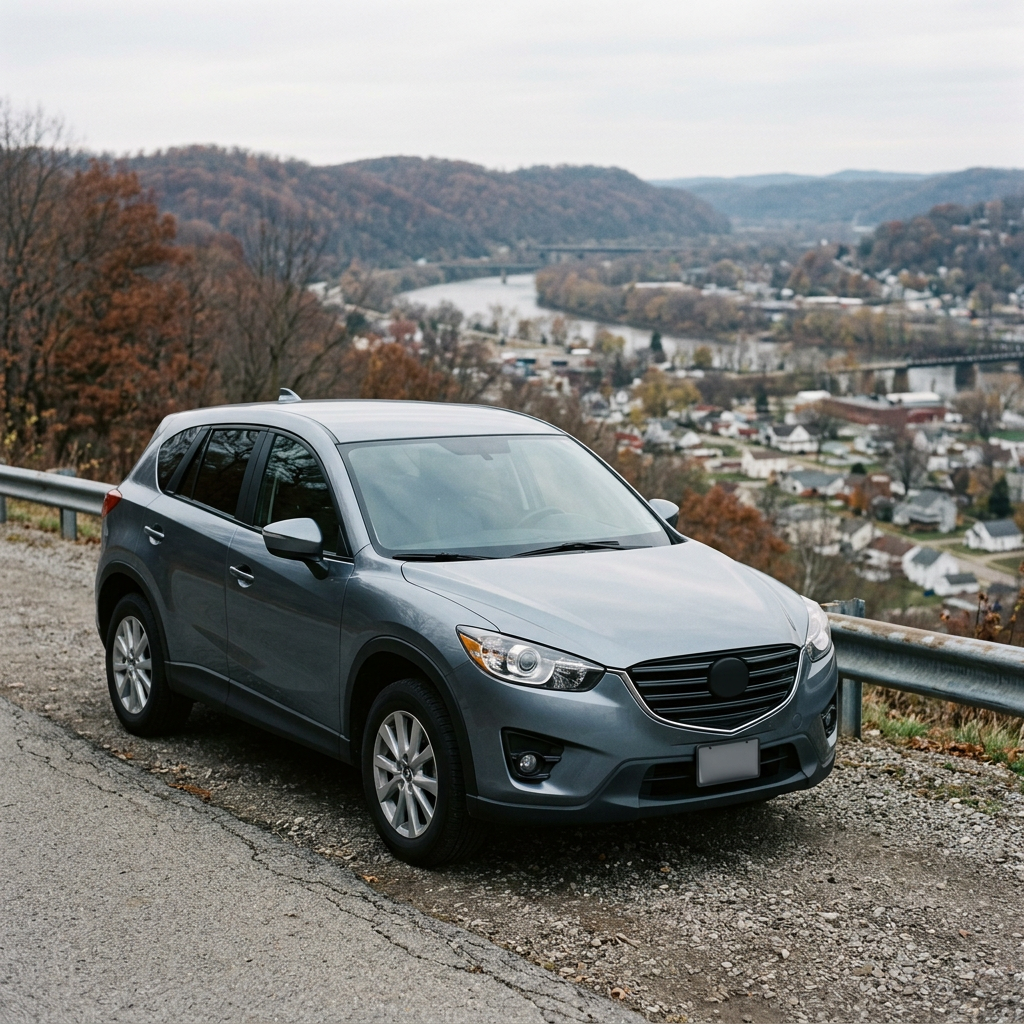
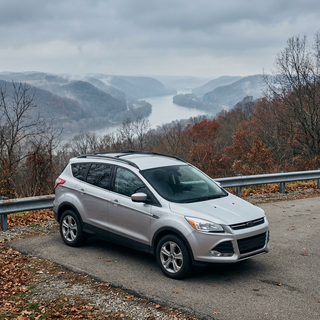
Gray crossover SUV parked along a hillside road overlooking an autumn river valley and small town. (Representative image for illustration purposes only. Actual vehicle may vary based on trim and configuration.)

How Reliable Are Older Ford Explorer, Nissan Rogue, and Subaru Impreza Models Past 100,000 Miles?

A well-maintained Ford Explorer, Subaru Impreza, or Nissan Rogue can readily surpass 150,000 to 200,000 miles, but each model exhibits distinct mechanical wear points that buyers must evaluate past the 100,000-mile mark. Powertrain design and transmission architecture dictate long-term maintenance costs and durability on high-mileage vehicles priced budget-friendly.

Early fifth-generation Ford Explorer models (2011 to 2014) commonly enter the sub-$10,000 market showing between 120,000 and 175,000 miles. Equipped with Ford’s naturally aspirated 3.5L Duratec V6 and a 6-speed automatic, this drivetrain avoids turbocharger wear while delivering dependable power. The primary mechanical checkpoint on the 3.5L engine involves the internal water pump; buyers should verify that coolant inspections and timing chain checks were performed regularly. With proper upkeep, these three-row utility vehicles easily maintain structural and mechanical integrity past 200,000 miles.

Used Subaru Impreza models from the 2012 to 2016 model years feature the 2.0L FB20 boxer engine. While earlier generations struggled with head gasket deterioration, the FB-series utilizes improved multi-layer steel gaskets and a timing chain rather than a timing belt. Key longevity concerns past 100,000 miles center on oil consumption, front control arm bushings, and the Lineartronic continuously variable transmission. Scheduling routine fluid exchanges ensures the transmission valve body operates without shuddering under load.

Second-generation Nissan Rogue models (2014 to 2017) feature a dependable 2.5L QR25DE four-cylinder engine producing 170 hp, but their Xtronic continuously variable transmission represents a documented failure risk at high mileage. Without strict 30,000-mile fluid service intervals, internal belt slip and cooling degradation can lead to acceleration lag and transmission overheating. Conversely, a Ford Escape equipped with a conventional planetary-gear automatic provides higher tolerance for towing and temperature variations over extended lifespans.

What Pre-Purchase Checks, Sales Taxes, and Fees Should Budget Buyers Expect?

Purchasing an under-$10,000 vehicle in eastern Ohio requires a thorough structural inspection for winter road-salt corrosion alongside precise accounting for state and county conveyance fees. In Columbiana County, a vehicle purchase incurs a combined state and local sales tax rate of 7.25%, which equals $725 on a $10,000 transaction, accompanied by a $15 title fee and standard passenger registration fees ranging between $31 and $45.

Because highway maintenance crews use heavy road salt throughout prolonged freezing periods, inspecting the structural underside of any pre-owned vehicle is essential. When shoppers evaluate budget vehicles on our lot, our sales team regularly checks key underbody areas, including rocker panels, subframes, and brake lines for road-salt exposure before any test drive begins. Surface oxidation on heavy cast-iron components is standard, but structural flaking on suspension mounting points or unibody seams indicates excessive environmental fatigue.

Key mechanical items to check prior to finalizing a purchase include:

  • Frame rails and subframes: Inspect front and rear cradle assemblies for perforation or deep rust scaling.
  • Brake and fuel lines: Verify that steel lines along the inner floor pan remain free of heavy corrosion pitting.
  • Fluid conditions: Check automatic transmission fluid for discoloration or burnt aroma, and ensure engine coolant exhibits clean clarity without oil residue.
  • Tire wear patterns: Uneven tread feathering frequently signals worn ball joints, tired tie-rod ends, or degraded strut mounts.
  • Vehicle history documentation: Confirm clean title branding, odometer consistency, and past maintenance regularity.

Factoring in purchase taxes and title fees prevents unexpected budgeting hurdles at signing. When buyers consider whether an older vehicle or a newer model fits their financial parameters, exploring our current new Ford inventory provides a clear baseline for modern safety equipment, factory warranty coverage, and current financing information. You can also get a jump start on your monthly planning by submitting an online credit application through our finance center.

Where Can You Find Pre-Owned SUVs budget-friendly and Financing?

Sub-$10,000 sport utility vehicles and sedans are located across local regional trade networks, reputable franchised dealerships, and select independent lots along regional state routes. Franchised dealerships provide clear advantages for budget shoppers by conducting professional safety check-ins, resolving open safety recalls, and offering structured lending partnerships that independent roadside lots cannot match.

Securing financing on vehicles priced below $10,000 often presents challenges at conventional banks due to mileage limits and vehicle age caps. At Tri State Ford, our finance department works with regional lenders, credit unions, and national automotive financial institutions to arrange sensible payment terms tailored to your credit profile. Establishing manageable monthly terms with predictable fixed interest rates helps rebuild credit while keeping dependable transportation within reach.

Shoppers seeking enhanced ownership reassurance beyond older budget models frequently review our Carfax single-owner pre-owned selection to locate vehicles featuring documented service records and lower overall mileage. Furthermore, exploring our certified pre-owned inventory opens access to factory-inspected vehicles backed by comprehensive limited warranty coverage and 24/7 roadside assistance.

What Should You Know Before Buying a Used Vehicle budget-friendly?

Q: What is the main mechanical advantage of a Ford Escape over a Nissan Rogue budget-friendly?

The primary mechanical advantage is the transmission design. The Ford Escape utilizes a traditional 6-speed planetary automatic transmission with hydraulic torque converter, whereas the Nissan Rogue uses a belt-driven continuously variable transmission. In vehicles with over 100,000 miles, conventional geared automatics generally demonstrate higher durability under heavy acceleration, heat, and light towing demands.

Q: Can a used Ford Explorer priced budget-friendly safely tow a family camper?

A 2011 to 2014 Ford Explorer equipped with the factory Class III tow package and 3.5L V6 engine delivers a maximum towing rating of 5,000 lbs. That provides ample strength for lightweight travel trailers, pop-up campers, or utility trailers, provided you verify the hitch rating and transmission cooler condition prior to departure.

Q: How do winter road conditions impact high-mileage Subaru all-wheel-drive systems?

Subaru’s all-wheel-drive hardware is exceptionally durable in snow, but tire circumference differences can cause premature center differential strain. When purchasing an older Impreza, ensure all four tires match in brand, model, and tread depth within 2/32 of an inch to prevent excessive thermal stress on the all-wheel-drive transfer clutch pack.

Q: Does buying a budget vehicle make more financial sense than financing a newer crossover?

Purchasing an under-$10,000 vehicle lowers upfront investment and eliminates new-car depreciation. However, newer vehicles provide modern active safety features, significantly lower fuel consumption, and full factory warranty coverage. Shoppers frequently evaluate our current inventory and offers to compare the true monthly cost of an older car against a newer model with zero repair expenses.

Q: What should you bring to the dealership when financing an older pre-owned vehicle?

To ensure prompt loan approval on an older used vehicle, bring your current driver's license, recent pay stubs verifying employment, proof of residence such as a utility bill, and your current vehicle insurance card. Having these documents organized allows our finance team to submit your file to preferred lenders without administrative delays. For buyers exploring future vehicle purchases, our custom factory order tool also allows you to configure newer models directly from the assembly line.

Test-Drive Reliable Budget-Friendly Vehicles at Tri State Ford

Selecting the right vehicle budget-friendly comes down to verified mechanical condition, realistic ground clearance, and long-term drivetrain durability. Whether you require the snow-clearing height of a Ford Escape, the passenger volume of a Ford Explorer, or the nimble traction of an all-wheel-drive sedan, finding the proper balance ensures confident travel across all seasons.

Our knowledgeable sales professionals at Tri State Ford take the guesswork out of pre-owned vehicle shopping by providing honest condition assessments and flexible financing avenues. To plan an in-person visit and see our latest pre-owned arrivals, enter our dealership address at 1503 Pennsylvania Ave in your navigation app. You can also reach our staff directly at (330) 462-7578 or schedule a test drive online today to get behind the wheel of a dependable vehicle that fits your household budget.

Keep your vehicle performing at its best with our service team:


© 2026 Tri State Ford. All rights reserved.

Vehicle specification data © JATO Dynamics Limited.

Used SUVs Under $10K East Liverpool OH | Tri State Ford
Posted in:

Related Posts

d

Which Used SUV Is Best for Holiday Road Trips?

Which Used SUV Is Best for Holiday Road Trips? The best used SUV for holiday road trips depends on your passenger count, but full-size models like the Ford Expedition and long-wheelbase Expedition MAX rank highest overall because they provide up to about 37 cubic feet of luggage space behind the third row while maintaining true four-wheel-drive capability in winter conditions. For midsize efficiency, pre-owned models such as the Ford Explorer and Honda Pilot deliver the ideal balance of three-row passenger room, sure-footed foul-weather traction, and highway fuel economy reaching 27 mpg highway. When winter weather arrives, holiday travel demands a vehicle that keeps everyone warm, secure, and entertained across hundreds of highway miles. A dependable road-trip SUV needs enough cargo space for duffel bags, wrapped gifts, and winter gear without forcing rear passengers to ride with luggage piled around their feet. It also requires advanced safety technology to manage sleet, freezing rain, and sudden traffic slow-downs. Our sales team regularly sees families testing how easily luggage fits through the rear hatch before they even sit in the driver's seat. That practical cargo space makes a massive difference whether you are navigating the steep riverfront bluffs of East Liverpool or cruising across interstate lines for Thanksgiving dinner. Modern crossover and full-size platforms provide flexible split-folding rear seats, dedicated underfloor storage bins, and wide hatch openings designed to swallow bulky hard-sided suitcases. Before loading up for the holidays, finding the right pre-owned SUV starts with exploring our lot in person. You can drop a pin to our showroom on Pennsylvania Avenue or give our sales staff a direct call at (330) 462-7578 to discuss current pre-owned arrivals ready for holiday travel. Table of Contents Which Used 3-Row SUVs Have the Most Cargo Space for Holiday Luggage? How Does Third-Row Legroom Compare Between the Pilot, Highlander, and Rivals? What Are the Most Reliable Used Road-Trip SUVs within a budget? Which Used SUVs Offer the Best Winter All-Wheel Drive and Highway Fuel Economy? Used Road-Trip SUVs: Pre-Trip Checks, Roof Boxes, and Other FAQs Finding and Financing Your Next Road-Trip SUV at Tri State Ford Which Used 3-Row SUVs Have the Most Cargo Space for Holiday Luggage? Extended full-size SUVs lead the automotive industry in dedicated rear storage, with the Ford Expedition MAX, Chevrolet Suburban, and GMC Yukon XL providing between 36 cubic feet and 41 cubic feet of cargo room behind the third row with all seats in use. In the standard full-size segment, a pre-owned Ford Expedition offers about 23 cubic feet of rear storage, while the midsize Chevrolet Traverse offers competitive cargo space by supplying about 23 cubic feet behind row three. Luggage capacity behind the rear bench determines whether your family can travel self-contained or whether you need an awkward rooftop carrier. The Chevrolet Traverse can fit four to six standard carry-on suitcases or two large roller bags stacked upright behind its 60/40 split-folding third row. Stepping up to a full-size platform like the Expedition MAX expands that capacity substantially, easily swallowing eight rolling suitcases alongside folded strollers and grocery boxes, while still seating up to eight passengers in complete comfort. For families who require three rows of seating only occasionally, standard midsize crossovers offer exceptional utility when the back seats are dropped flat. A pre-owned Ford Explorer provides about 16 cubic feet behind the third row, which expands to over 47 cubic feet with the rear bench stowed and maxes out at about 86 cubic feet behind the front row. That setup creates space for the whole family on daily commutes while providing the cargo space needed to pack winter sports gear, luggage, and holiday packages for four passengers. Selecting the right layout comes down to your luggage-to-passenger ratio: Full-size extended SUVs: Over 36 cubic feet behind row three, designed for six to eight travelers carrying a full week of luggage. Midsize class leaders: Between 16 cubic feet and 23 cubic feet behind row three, ideal for four to five travelers with occasional third-row utility. Folded-bench configurations: Between 40 cubic feet and 55 cubic feet of gear volume with the third row laid flat, leaving seating for four or five. To see how these interior dimensions look in person, explore our verified Carfax 1-owner pre-owned vehicles or browse our latest new vehicle inventory to compare cabin layouts. How Does Third-Row Legroom Compare Between the Pilot, Highlander, and Rivals? The Honda Pilot delivers significantly more third-row legroom than the standard Toyota Highlander, offering between 31.9 inches and 32.5 inches of rear legroom compared to the Highlander's cramped 27.7 inches to 28.0 inches. This four-inch difference determines whether your third row can comfortably support teenagers and adults on a four-hour holiday journey or remain suitable only for small children in booster seats. Legroom measurements only tell part of the story when evaluating long-distance family transport. Cushion height off the floor and second-row adjustability dramatically alter how comfortable passengers feel over extended drives. In the Toyota Highlander, the third-row cushion sits relatively low, forcing adult passengers into a knees-up posture that causes fatigue over long highway stretches. By contrast, the Honda Pilot features a slightly elevated rear bench and a broader footwell that reduces leg cramping. Competing models in this category approach passenger packaging with distinct engineering advantages. The Ford Explorer features available second-row captain's chairs that slide forward smoothly, allowing quick access through a center aisle without forcing passengers to climb over folded cushions. With adult-friendly second-row space and accessible rear seating, it handles weekend trips with ease, whether taking the kids to holiday tournaments or driving grandparents out for family dinners. For families departing from Calcutta along the rolling hills of State Route 170, interior passenger volume directly impacts highway comfort. You can experience these cabin layouts firsthand by touring our certified pre-owned inventory to evaluate legroom across multiple model years. What Are the Most Reliable Used Road-Trip SUVs within a budget? Proven sub-$20,000 road-trip candidates include the 2014 to 2017 Toyota RAV4 and Highlander, 2015 to 2018 Honda CR-V and Pilot, and 2016 to 2019 Mazda CX-5, alongside dependable pre-owned Ford Escape and Explorer models. These vehicles are recognized across the automotive industry for durable powertrains, straightforward maintenance schedules, and strong structural safety scores that give budget-minded shoppers confidence on interstate journeys. Purchasing a vehicle within a budget for holiday travel requires balancing mileage against overall mechanical condition and feature content. Compact options like a 2016 Mazda CX-5 or Ford Escape provide agile handling, modern smartphone integration, and fuel efficiency that keeps travel costs manageable. If your travel plans demand a third row and higher towing capacity for small utility trailers, a midsize 2015 Honda Pilot or Ford Explorer powered by a naturally aspirated V6 or a robust EcoBoost engine delivers the muscle required to haul heavy loads through winter grades. When shopping in this affordable price category, smart buyers prioritize documented vehicle history and robust component condition. A vehicle that has undergone a comprehensive multi-point inspection ensures the cooling system, charging system, and driveline components are prepped for cold-weather demands. Choosing a model with Ford's proven quality provides dependable engineering durable and dependable enough to handle changing road conditions season after season. Trading in your current daily driver can significantly reduce your purchase cost on a road-ready pre-owned crossover. You can quickly value your trade-in through our online appraisal tool to see how much equity you have to put toward an upgraded holiday road-trip vehicle. Which Used SUVs Offer the Best Winter All-Wheel Drive and Highway Fuel Economy? Midsize hybrid SUVs deliver the highest highway fuel economy for winter travel, led by the Toyota Highlander Hybrid at 35 mpg to 36 mpg highway and the Kia Sorento Hybrid at 33 mpg to 35 mpg highway, while traditional non-hybrid leaders like the Subaru Outback 2.5i achieve up to 32 mpg highway. For severe winter traction, Subaru’s standard Symmetrical All-Wheel Drive and Ford’s Intelligent 4WD provide outstanding control over ice, slush, and packed snow. Winter highway travel introduces unique mechanical challenges that impact both traction and fuel consumption. Cold ambient air, winter-blend gasoline, and rolling resistance from snow or slush naturally decrease fuel economy across all vehicle classes. That makes choosing an efficient, capable powertrain essential: Ford Explorer: Powered by the 2.3-liter EcoBoost engine, it delivers an EPA-estimated 27 mpg highway while utilizing an active transfer case that automatically routes torque to the wheels with the strongest grip. Subaru Outback and Ascent: Standard continuous all-wheel drive and elevated ground clearance provide exceptional deep-snow capability, making them staples for drivers encountering unplowed back roads. Full-Size 4WD Platforms: The Ford Expedition pairs an advanced 3.5L EcoBoost V6 with SelectShift transmission to achieve 24 mpg highway in rear-wheel drive or 18 mpg combined in four-wheel drive, combining heavy-duty snow traction with a 6,000-pound towing capacity. Modern driver-assist features also alleviate highway stress during inclement winter weather. Systems like Ford's Pre-Collision Assist with Automatic Emergency Braking and available BlueCruise hands-free highway driving monitor lane markings and traffic spacing to help you stay centered and alert. If you want to capitalize on current market equity before upgrading to an all-wheel-drive vehicle, claim your instant cash offer appraisal and take the next step to schedule a test drive in an all-weather SUV today. Used Road-Trip SUVs: Pre-Trip Checks, Roof Boxes, and Other FAQs Q: What mechanical checks should be verified on a used SUV before a long road trip? Before departing on a multi-state journey, verify that the battery demonstrates strong cold-cranking amps, as sub-freezing weather significantly degrades weak electrical cells. Check the serpentine belt for micro-cracks or fraying, measure front and rear brake pad friction material to ensure at least 4 millimeters of pad life remains, and inspect tire tread depth using a depth gauge to ensure at least 4/32 inches for winter traction. Finally, confirm that all engine coolant, brake fluid, and engine oil levels meet manufacturer specifications. Q: How many suitcases fit behind the third row of a used Chevrolet Traverse? A pre-owned Chevrolet Traverse accommodates four to six standard carry-on suitcases or two 28-inch rolling suitcases standing vertically behind its third row. The vehicle provides roughly 23 cubic feet of dedicated luggage room behind the rear bench, supported by a deep hidden floor well that stores soft duffel bags, roadside kits, or winter emergency gear without infringing upon primary passenger space. Q: Can roof cargo boxes be installed on used 3-row SUVs without factory crossbars? Yes, aftermarket crossbars from manufacturers such as Yakima and Thule can be clamped directly onto raised side rails, flush roof rails, or bare roof door jambs. Once quality crossbars are securely anchored, a hardshell roof cargo carrier adds between 16 and 22 cubic feet of weatherproof, lockable storage capacity. This exterior setup frees up valuable passenger space inside the cabin for bulky winter outerwear, skis, and wrapped holiday packages. Q: Does folding down the third row in midsize SUVs provide enough room for winter sports gear? Folding down the 50/50 or 60/40 split third-row seating in midsize SUVs expands total cargo volume to between 40 and 55 cubic feet. This flat cargo floor easily holds multiple sets of skis, snowboards, heavy winter boots, and luggage bags for up to four passengers. Many midsize crossovers also incorporate rear-seat pass-through doors or split folding sections that allow long gear to fit while retaining seating for five passengers. Q: What roadside support is available if a breakdown happens during holiday travel? Vehicles covered under Ford programs have access to dedicated manufacturer-backed support through Ford Roadside Assistance: 1-800-241-3673. This manufacturer service includes flat tire changes using genuine equipment, battery jump-starts, lockout assistance, emergency fuel delivery, and towing directly to an authorized dealership service facility, ensuring certified technicians and genuine components handle your vehicle repairs. Finding and Financing Your Next Road-Trip SUV at Tri State Ford Tri State Ford provides a broad selection of quality pre-owned and certified SUVs engineered to keep your family comfortable, connected, and secure throughout the winter driving season. Whether you require an eight-passenger Expedition with best-in-class capability or an efficient all-wheel-drive Explorer with smart driver-assist technology, our inventory delivers rugged yet refined performance ready for rural roads and weekend getaways. Our dedicated finance center works with local credit unions and major automotive lenders to structure competitive loan options that align with your monthly goals. You can streamline your entire vehicle purchase by completing our secure online credit application from home before you arrive. Space for the whole family and safety you can trust are waiting on our lot. We invite you to visit our dealership showroom at 1503 Pennsylvania Ave, East Liverpool, OH 43920 or contact our friendly sales advisors at (330) 462-7578 to find the ideal road-trip SUV for your family today. Keep Your Vehicle Running Strong Keep your vehicle performing at its best with our service team: Order Parts Schedule Service Appt © 2026 Tri State Ford. All rights reserved. Vehicle specification data © JATO Dynamics Limited. Used Road-Trip SUVs in East Liverpool, OH | Tri State Ford

f

What Should You Verify Before Buying a Used Vehicle?

What Should You Verify Before Buying a Used Vehicle? Before buying a used vehicle, verify the Vehicle Identification Number (VIN) against official records, inspect the physical title and vehicle history report for undisclosed damage or safety recalls, request an itemized out-the-door price breakdown including taxes and fees, and obtain a comprehensive pre-purchase inspection from a qualified technician. Verifying these critical elements protects your financial investment and ensures total transparency before signing any purchase contract. Purchasing a pre-owned car, truck, or SUV involves evaluating both physical mechanical condition and legal background. A thorough pre-purchase audit prevents costly surprises after taking delivery. Experienced car buyers begin by checking documentation long before reaching the final negotiation stage. When reviewing a prospective pre-owned vehicle, start with a physical walkaround and documentation review. Confirm that the vehicle history report matches the current odometer reading and shows a consistent maintenance record. It is also essential to verify whether the vehicle has been operated under strenuous driving conditions, such as commercial hauling or heavy trailer towing. At Tri State Ford, our team provides full transparency across our entire pre-owned lineup. We supply detailed vehicle history reports for our pre-owned inventory, allowing you to review ownership history, past service records, and title status. Whether you are considering a fuel-efficient commuter, a spacious family crossover, or a capable work truck, inspecting key paperwork upfront ensures complete peace of mind. Before making your decision, you can explore current manufacturer vehicle specials or give our team a call directly at (330) 462-7578 to ask about specific pre-owned models in stock. If you prefer to stop by in person, you can easily find our East Liverpool showroom address and test-drive your top choices. Table of Contents Why Is Asking for the Vehicle Identification Number (VIN) Critical When Buying a Used Car? What Mechanical Questions Should You Ask About Used Engine and Transmission History? What Is the Itemized Out-the-Door Price Including Taxes and Fees? Is a Factory Certified Pre-Owned Warranty Fully Transferable to Subsequent Buyers? What Questions Should You Ask If You Plan to Trade In a Vehicle? What Legal Paperwork and Title Documents Are Required When Purchasing a Used Car? Essential Used Car Buying Questions Answered Step Into Your Next Vehicle with Confidence at Tri State Ford Why Is Asking for the Vehicle Identification Number (VIN) Critical When Buying a Used Car? Asking for the Vehicle Identification Number (VIN) is critical because it unlocks the vehicle's complete operational and legal history, revealing prior accident records, title brands, ownership counts, and uncompleted safety recalls. The unique 17-character alphanumeric code acts as a vehicle's permanent fingerprint, allowing buyers to verify that the physical car matches its legal registration and title documentation. Every modern vehicle manufactured for North America carries a standardized 17-digit VIN. This sequence encodes essential engineering data, including the country of manufacture, vehicle manufacturer, chassis type, engine displacement, model year, assembly plant, and unique production sequence number. Beyond decoding specs, the VIN serves as the primary key for querying public and private automotive databases. Checking the VIN protects buyers from several severe risks: Title Branding Warnings: Running a VIN check highlights severe title designations such as salvage, rebuilt, flood damage, hail damage, or lemon law buybacks. Vehicles carrying branded titles have often suffered catastrophic structural or electronic damage, compromising passenger safety and severely reducing future trade-in value. Unfilled Safety Recalls: The National Highway Traffic Safety Administration (NHTSA) maintains an open recall lookup tool. Entering a vehicle's VIN reveals whether outstanding safety recall repairs remain unperformed. Factory safety recalls are performed free of charge at authorized franchised dealerships. Odometer Fraud Detection: Comparing historical VIN entries across state registration filings, emissions checks, and service entries exposes mileage discrepancies or odometer rollback attempts. Cloning and Theft Protection: Criminals occasionally attempt vehicle cloning by placing a fraudulent VIN plate over the original dashboard marker. Cross-referencing the VIN on the dashboard with the driver-side door jamb sticker, engine frame stamping, and official title prevents purchasing a stolen vehicle. To verify physical VIN consistency, locate the stamped metal plate visible through the lower driver-side windshield corner. Compare this number directly with the safety compliance label attached to the driver door pillar, the engine compartment stamping, and the printed certificate of title. Any discrepancy between these physical locations indicates potential structural repair, panel replacement, or fraudulent tampering. Shoppers researching available models can easily complete an online credit application to secure financing terms prior to visiting. While researching pre-owned options, visitors can also check out new vehicle specials or browse new Ford inventory to compare brand-new models against pre-owned pricing steps. What Mechanical Questions Should You Ask About Used Engine and Transmission History? Evaluating a used vehicle's engine and transmission history requires asking direct questions regarding past maintenance schedules, recent mechanical repairs, fluid condition, and past usage intensity. Buyers should request documented service records, inquire when major wear components were last serviced, and confirm that no diagnostic trouble codes were recently cleared to hide active powertrain defects. A vehicle's powertrain represents its most complex and expensive mechanical assembly. When inquiring about engine condition, ask specifically whether scheduled oil changes occurred at recommended manufacturer intervals. On modern turbocharged engines, such as Ford's 2.3L EcoBoost engine or 3.5L EcoBoost V6 engine, consistent oil change history is vital for turbocharger bearing longevity and internal valve cleanliness. Inquire if drive belts, timing chains, spark plugs, and engine coolant have been replaced according to the owner's manual maintenance schedule. Key mechanical powertrain questions to present to the seller include: Have there been any recent fluid leaks around the engine valve covers, oil pan, radiator, or transmission casing? Has the transmission fluid been serviced or flushed according to recommended mileage intervals? Has the vehicle experienced any transmission slippage, delayed gear engagement, or harsh shifting between gears? Has the vehicle ever overheated, and have major cooling components like the water pump or thermostat been replaced? Has the vehicle been used extensively for heavy trailer towing or snow plowing? Checking the undercarriage for salt-belt corrosion is especially important for local buyers. Cold winter road treatments accelerate frame and line oxidation. A vehicle driven regularly across hilly terrain around Calcutta benefits from a documented transmission service history to ensure shifting clutches remain crisp. For added peace of mind regarding ownership history, shoppers often choose to explore our pre-owned Carfax 1-owner inventory. Vehicles with a single previous owner frequently feature meticulous service documentation, making it easier to verify engine and transmission maintenance logs. What Is the Itemized Out-the-Door Price Including Taxes and Fees? The itemized out-the-door price is the complete final dollar amount required to purchase and take ownership of a used vehicle, encompassing the agreed sales price, state and local sales taxes, official title and registration fees, and dealer documentation fees. Requesting a written, itemized price quote before signing ensures complete financial clarity and eliminates unexpected cost additions at closing. Understanding how sales tax applies to vehicle purchases in Ohio prevents budgeting errors. Ohio charges a base state sales tax rate of 5.75% under state law. In addition to the state base rate, individual counties add permissive local taxes and transit authority surcharges, resulting in combined sales tax rates ranging from 6.50% to 8.00% across most areas. It is critical to recognize that sales tax is determined by the buyer's county of residence, not the county where the dealership operates. For instance, commuters living in Boardman who commute along local commercial corridors pay the combined tax rate established by Mahoning County, regardless of where the purchase transaction takes place. An itemized out-the-door quote breaks down into clear fee categories: Out-the-Door Cost Component Description and Statutory Framework Agreed Vehicle Purchase Price The negotiated base cost of the pre-owned vehicle before applicable taxes and government fees [4]. State and Local Sales Tax Combined state base tax (5.75%) plus local county/transit taxes calculated on taxable purchase price [4]. Certificate of Title Fee Official statutory fee ($18 statewide; $23 in counties with local Clerk of Courts surcharges) [4]. Registration and License Plate Fees State passenger vehicle registration ($36 annual base) plus deputy registrar service fees and local permissive taxes [4]. Dealer Documentation Fee Statutory fee covering administrative title preparation, capped by Ohio law at the lesser of $398 or 10% of contract price [4]. A critical detail involves how trade-ins affect sales tax calculations. Under Ohio Revised Code 5739.01(H), trade-in allowance reductions on taxable price apply exclusively when purchasing a brand-new vehicle from a licensed new motor vehicle dealer. When purchasing a pre-owned vehicle, Ohio sales tax is calculated on the full agreed purchase price, regardless of whether an old vehicle is traded in as part of the transaction. Is a Factory Certified Pre-Owned Warranty Fully Transferable to Subsequent Buyers? Most factory Certified Pre-Owned (CPO) warranties are fully transferable to subsequent private buyers, although exact transferability terms, administrative fees, and coverage durations vary by vehicle manufacturer. OEM-backed certified warranties offer comprehensive protection that stays attached to the vehicle's VIN, enhancing long-term value retention. Unlike generic aftermarket service contracts sold by third-party vendors, a factory Certified Pre-Owned warranty is backed directly by the vehicle manufacturer. For Ford vehicles, the Ford Blue Advantage program provides structured certification tiers that include rigorous multi-point mechanical inspections, comprehensive limited warranty protection, powertrain limited warranty coverage, and 24/7 Ford Roadside Assistance. Key warranty transfer guidelines to verify prior to purchase include: Factory Warranty Transferability: Most OEM CPO coverage automatically transfers to subsequent private owners for the remainder of the specified warranty time or mileage limit. Some manufacturers require submitting a simple transfer form within 30 days of sale along with a small transfer fee. Coverage Duration and Scope: Verify the exact expiration date and mileage threshold of both the bumper-to-bumper comprehensive coverage and the powertrain limited warranty. Included Owner Privileges: Confirm whether complimentary benefits, such as 24/7 roadside assistance or trip interruption coverage, transfer alongside the primary mechanical warranty. Authorized Repair Facilities: Factory CPO coverage ensures that covered mechanical repairs are performed by factory-trained technicians using genuine OEM parts at franchised dealerships across the country. Buyers searching for factory-backed pre-owned vehicles can browse our certified pre-owned Ford inventory to explore models that have passed thorough factory multi-point inspections and carry comprehensive warranty coverage. What Questions Should You Ask If You Plan to Trade In a Vehicle? When planning to trade in a vehicle while purchasing a used car, buyers should ask for a standalone written trade-in appraisal, inquire how existing loan balances will be satisfied, and ask how the transaction paperwork handles title transfer details. Separating the trade-in valuation from the replacement vehicle purchase price ensures total clarity on both sides of the deal. Establishing a clear trade-in process begins with an objective physical inspection and market valuation. Ask the dealership sales team what market tools and physical criteria they use to evaluate trade-in offers. Providing maintenance logs, spare key fobs, and original equipment helps maximize your trade-in appraisal value. Essential trade-in questions to ask include: Is the trade-in appraisal value a firm cash offer that remains valid if I decide to complete the purchase later? How does the finance department handle contacting my current lender to obtain an accurate 10-day payoff amount? If my trade-in has negative equity (owing more on the loan than the vehicle's current market value), how will that balance be structured into the new agreement? Will the dealership handle all official title assignment filings and lien release transfers with the state BMV? Before visiting the showroom, buyers can easily value your trade-in online using our integrated trade-in tool. If you decide that a new vehicle fits your long-term plans better than pre-owned inventory, you can also explore how to custom order a new Ford vehicle tailored to your exact feature preferences. What Legal Paperwork and Title Documents Are Required When Purchasing a Used Car? Purchasing a used car requires executing legal documentation to ensure valid ownership transfer, clear title status, and proper state registration. Required documents include a signed certificate of title, a bill of sale, an odometer disclosure statement, a lien release certificate if a prior loan existed, and official state registration filings. When buying a used vehicle from a private seller, verifying title details requires strict attention. The buyer must ensure the seller's name printed on the front of the physical title matches their driver's license exactly. The seller must sign the title assignment over to the buyer in the presence of a notary public where required. In Ohio, title applications must be filed with the County Clerk of Courts Title Office within 30 days of the sale date to avoid statutory late penalties. When completing a vehicle transaction, ensure the following legal documents are fully executed: Original Certificate of Title: The official state title showing clean ownership without undisclosed active liens or salvage brands. Notarized Bill of Sale: A written document signed by both parties stating the exact sale price, transaction date, buyer and seller details, and vehicle VIN. Odometer Disclosure Statement: A federally mandated statement confirming the exact current mileage reading on the vehicle's odometer at the time of transfer. Lien Release Documentation: If the vehicle was previously financed, an official lien release statement from the lender confirming the loan has been paid in full. Completing a private transaction carries legal risks regarding price disclosure. Knowingly understating the purchase price on title paperwork constitutes falsification under Ohio Revised Code 2921.13, which is a legal misdemeanor. The Ohio Department of Taxation cross-checks reported vehicle sale prices against state valuation databases and assesses additional use taxes if reported figures fall below realistic market value. When you purchase a pre-owned vehicle at Tri State Ford, our professional financial and administrative desk handles all title transfers, lien processing, state tax filings, and registration paperwork directly. This eliminates paperwork stress and guarantees proper legal compliance. For assistance with pre-owned buying paperwork or inventory questions, give our sales desk a call at (330) 462-7578 or visit our East Liverpool showroom to speak with our team. Essential Used Car Buying Questions Answered Q: How can you confirm that the physical vehicle matches its title documentation? Verify that the physical vehicle matches its title documentation by checking the 17-digit VIN stamped on the lower driver-side dashboard through the windshield and comparing it to the compliance label on the driver-side door jamb. Confirm that both physical VINs match the exact number printed on the certificate of title, registration paperwork, and vehicle history report. Any mismatch indicates structural component replacement or potential title fraud. Q: Where can buyers locate official safety recall details for a used Ford? Buyers can locate official safety recall information by entering the vehicle's 17-digit VIN into the NHTSA online recall lookup tool or visiting Ford's owner support portal. These databases detail open recall campaigns, safety advisories, and service campaign statuses. Safety recall repairs are performed free of charge at authorized franchised Ford dealerships regardless of vehicle age or mileage. Q: What should you do if a private seller cannot produce a clean title? Walk away from the transaction if a private seller cannot produce a clean, physical certificate of title in their name. Purchasing a vehicle without a clear title creates severe legal risks, preventing registration, legal insurance coverage, and proper ownership transfer. If an outstanding bank lien exists, complete the transaction directly at the lienholder's financial branch to ensure the loan is fully satisfied and the title is released legally. Q: Does a cash down payment lower the sales tax on a used vehicle purchase in Ohio? A cash down payment does not reduce the taxable price of a used vehicle in Ohio. Sales tax is calculated on the agreed purchase price of the vehicle itself, rather than the net amount financed through a lender. Putting cash down reduces monthly loan payments and interest charges over the loan term, but state and county sales taxes apply to the full negotiated vehicle purchase price. Q: How long does the dealership buying process take compared to a private sale? Purchasing a used vehicle at an authorized dealership typically takes between two and four hours when test-driving, arranging financing, and completing registration paperwork in one visit. Buyers who arrive with financing pre-approval and clear trade-in documentation streamline the desk process significantly. Private sales often require several days to coordinate seller schedules, arrange independent mechanical inspections, visit notary offices, and file title documents at the Clerk of Courts office. Step Into Your Next Vehicle with Confidence at Tri State Ford Selecting the right pre-owned vehicle requires complete confidence in its mechanical quality, vehicle history, and purchase value. By asking the right questions regarding VIN history, maintenance records, title status, and out-the-door pricing, you protect your budget and ensure years of dependable driving. At Tri State Ford, our team is dedicated to providing an enjoyable, transparent buying experience for drivers across the tri-state area. Whether you need a rugged pre-owned truck for heavy towing, a spacious crossover for family trips, or a fuel-efficient daily driver, our extensive pre-owned selection undergoes thorough mechanical inspections before hitting the lot. Take the next step in your vehicle search today. Browse our online pre-owned inventory, evaluate your current vehicle's trade value, or schedule a test drive with our friendly sales team. Visit our East Liverpool dealership or contact us online to experience the Ford commitment to quality and service firsthand. Keep Your Vehicle Running Strong Keep your vehicle performing at its best with our service team: Order Parts Schedule Service Appt © 2026 Tri State Ford. All rights reserved. Vehicle specification data © JATO Dynamics Limited. Used Vehicle Buying Guide in East Liverpool OH | Tri State Ford

d

Is Trading In a Car Better Than Selling It Privately?

Is Trading In a Car Better Than Selling It Privately? Trading in a vehicle is generally better for buyers who prioritize speed, legal protection, and state tax savings, completing it in 1 to 2 hours with immediate credit applied to a replacement purchase. Selling privately yields a higher gross sale price—typically 10% to 20% more—but requires 2 to 6 weeks of managing listings, buyer communications, test drives, lien payoffs, and title transfers. The overall financial advantage of a private sale shrinks significantly once state tax offsets, out-of-pocket reconditioning, and listing expenses are factored into the transaction. Deciding between a trade-in and a private sale comes down to evaluating your personal schedule, financial goals, and comfort level with legal paperwork. When you list a vehicle on your own, you assume the full responsibility of an automotive retailer. That includes advertising the car, screening potential buyers, handling test drives around steep riverfront bluffs like those near East Liverpool, and verifying secure payment methods. For busy working families balancing daily schedules, spending weeks managing strangers and financial paperwork often outweighs the gross price premium of a direct buyer. Trading in your vehicle streamlines the entire vehicle transition into a single visit. Our team handles all state motor vehicle paperwork, communicates directly with your existing lienholder to pay off remaining loan balances, and applies your vehicle value directly as a down payment toward a new model. Whether you are eyeing a spacious SUV with Ford Co-Pilot360 driver-assist features or a capable truck built tough for daily work and weekend recreation, trading in eliminates downtime. If you prefer a seamless upgrade path, you can find our dealership address at 1503 Pennsylvania Ave to get an in-person vehicle valuation, or give our sales team a quick call at (330) 462-7578 to discuss your replacement vehicle options. Table of Contents How Much More Money Do You Get Selling Privately Versus Trading In? How Does the Ohio Trade-In Sales Tax Credit Affect Your Net Profit? How Does Selling Privately Compare to Dealer Trade-Ins and Instant Online Buyers? How Do Dealerships Handle Existing Loans, Negative Equity, and Car Insurance? What Paperwork, Bills of Sale, and Safety Steps Are Needed for a Private Sale? Common Questions About Trading In vs. Selling Privately Take the Next Step Toward Your Replacement Vehicle at Tri State Ford How Much More Money Do You Get Selling Privately Versus Trading In? Selling a car privately typically generates 10% to 20% more gross revenue than a dealer trade-in offer because private sellers set retail pricing rather than wholesale market values. However, reaching that higher listing figure requires absorbing detailing costs, minor mechanical repairs, marketing fees, and ongoing vehicle insurance payments while the car sits on the market. To understand why this price gap exists, it helps to examine how pre-owned vehicle pricing is structured. Dealerships evaluate trade-ins based on wholesale values because every acquired vehicle requires professional inspection, maintenance, reconditioning, and administrative processing before it can be resold. Dealerships generally invest between $1,500 and $4,000 per vehicle into safety inspections, component reconditioning, re-detailing, extended warranty backing, and state compliance checks. These investments ensure that the next buyer receives a safe, reliable vehicle backed by Ford’s proven quality. Private sellers skip these operational expenses up front, passing reconditioning responsibility to the buyer, which is why private listing prices match local retail averages. However, private sellers must handle every expense out of pocket prior to the sale. If your vehicle requires a new set of tires, brake pad replacements, or paint correction to fetch top retail price, those investments reduce your net takeaway. Furthermore, holding a car for several weeks along the suburban State Route 170 commercial corridor in Calcutta while waiting for a serious buyer means paying extra monthly insurance premiums and loan interest. When you shop our pre-owned Carfax 1-Owner inventory, you can see how professionally reconditioned vehicles retain clear market value while delivering complete safety confidence for your family. Transaction Factor Private Party Sale Dealership Trade-In Gross Sale Price Higher (Retail market value) Lower (Wholesale market value) Time to Complete 2 to 6 weeks average 1 to 2 hours total Sales Tax Impact No tax offset on next purchase Reduces taxable base on replacement Paperwork & Liens Seller coordinates payoff & title Dealership processes all documentation Safety & Liability Seller manages unknown buyers Professional, secure transaction How Does the Ohio Trade-In Sales Tax Credit Affect Your Net Profit? The Ohio trade-in sales tax credit directly reduces the taxable purchase price of a replacement vehicle by the exact valuation allowance of your trade-in. This tax offset lowers your total out-of-pocket transaction cost, effectively closing the net financial gap between a wholesale trade-in valuation and a private retail sale. State tax regulations allow buyers to subtract their trade-in value from the purchase price of a replacement vehicle before calculating state and county sales taxes. For example, if you purchase a new vehicle priced at $40,000 and receive $20,000 for your trade-in, you only pay sales tax on the remaining $20,000 difference. In a jurisdiction with a 7% combined state and local sales tax rate, that trade-in allowance saves you $1,400 in direct tax expense. By contrast, when you sell a vehicle privately, you receive cash from the buyer, but you gain no sales tax deduction when buying your next vehicle. You are obligated to pay state sales tax on the entire purchase price of the replacement vehicle. Private Sale Net Calculation: Private Sale Gross Price: $22,000 Replacement Vehicle Price: $40,000 Sales Tax (7% on $40,000): -$2,800 Net Cash Applied: $19,200 Dealer Trade-In Net Calculation: Dealer Trade-In Allowance: $20,000 Replacement Vehicle Price: $40,000 Taxable Purchase Base: $20,000 ($40,000 - $20,000) Sales Tax (7% on $20,000): -$1,400 (Saves $1,400 in tax) Net Value Realized: $20,000 trade credit + $1,400 tax savings = $21,400 equivalent As shown in the comparison, the $2,000 gross price advantage of a private sale drops to a narrow $200 real-world difference once the tax savings are included. That small remaining margin is easily offset by the time, effort, and listing expenses required for a private sale. You can start your financing process today by filling out our online credit application to see how your trade-in valuation may apply toward your next vehicle purchase across our certified pre-owned Ford inventory. How Does Selling Privately Compare to Dealer Trade-Ins and Instant Online Buyers? Selling privately provides maximum control over your asking price, but dealer trade-ins and instant online buying platforms offer significantly greater convenience, speed, and transaction security. Choosing the right path depends on whether you prioritize capturing every dollar of gross equity or executing a fast, risk-free transaction. Instant online buyers utilize automated algorithms to deliver instant cash offers without requiring you to purchase a replacement vehicle. While online buying services eliminate the hassle of hosting private test drives, their initial offers often adjust downward following physical vehicle inspections. Additionally, online buyers cannot match the integrated financing benefits, trade-in tax credits, and personal customer service provided by a dedicated local Ford dealership. Trading in your vehicle at a traditional dealership merges valuation and replacement shopping into a single step. Our appraisal team inspects your vehicle in person, evaluates local market demand, and presents an honest valuation that can be applied immediately toward any model in our new Ford vehicle inventory. Features like spacious third-row seating, user-friendly smartphone integration, and SYNC 4 infotainment make upgrading your family vehicle straightforward and enjoyable. Before making a decision, you can calculate your vehicle's market position using our online trade-in valuation tool or request a KBB instant cash offer to benchmark your options from home. How Do Dealerships Handle Existing Loans, Negative Equity, and Car Insurance? Dealerships simplify vehicle transactions by contacting your lender directly to pay off existing auto loans and transferring clear title paperwork automatically. If you owe more on your vehicle loan than its current market value—a scenario known as negative equity—a dealership can frequently consolidate that remaining balance into your replacement vehicle's financing agreement. Managing an existing lien during a private sale is far more complex. Because a lender holds the vehicle title until the loan balance is paid in full, a private buyer cannot receive a clean title at the moment of purchase unless you pay off the lender out of pocket beforehand. Coordinating a multi-party transfer where the buyer's funds are sent to your bank to release the lien requires immense trust from the buyer and can delay title delivery by several weeks. Negative equity poses an even greater barrier in private sales. A private buyer will only pay market value for the vehicle. If your loan balance exceeds that market value, you must pay your lender the difference out of pocket to clear the title before transferring ownership. At a dealership, positive equity acts immediately as cash toward your down payment, while negative equity can be structured into flexible monthly payments tailored to your household budget. Updating auto insurance is similarly streamlined during a dealership trade-in. Insurance policies generally provide a grace period of 7 to 30 days to transfer coverage to a replacement vehicle. Our financing specialists coordinate directly with your insurance carrier before you drive off the lot, ensuring uninterrupted coverage for your family road trip adventures. What Paperwork, Bills of Sale, and Safety Steps Are Needed for a Private Sale? Executing a private vehicle sale in Ohio requires strict compliance with state transfer laws, including completing a properly notarized title assignment, issuing a detailed bill of sale, and finalizing documentation through a county Clerk of Courts title office within 30 days. Failing to complete these legal steps correctly leaves the seller vulnerable to ongoing liability and financial penalties. Private Sale Step-by-Step Checklist: 1. Obtain Official Payoff: Satisfy remaining lender liens to secure a physical, clean title [3, 4]. 2. Complete Bill of Sale: Record buyer/seller details, sale price, date, and Vehicle Identification Number (VIN) [4, 5]. 3. Notarize Title Transfer: Sign the title assignment section before a registered Notary Public [4, 5]. 4. Perform Safe Meeting: Conduct test drives in populated, daylight areas; verify buyer driver's license [4, 5]. 5. Verify Funds: Accept only certified funds; confirm transfer clearance before releasing keys [4, 5]. 6. Remove License Plates: Retain registration plates and cancel/transfer insurance coverage immediately [4, 5]. Personal safety and financial fraud are major considerations during private sales. Consumer protection authorities advise sellers to avoid meeting strangers at home. Instead, schedule test drives during daylight hours in high-traffic public parking spaces, always accompany the driver, and inspect their driver's license prior to handing over the keys. Payment verification represents another significant risk area for private sellers. Fraudulent cashier's checks and overpayment schemes can trick sellers into releasing vehicles before a bank discovers the check is fake. Deposited funds may appear accessible in your account balance initially, but if the check fails clearance days later, your bank reverses the credit, leaving you responsible for the full financial loss. Trading in at a reputable dealership completely eliminates payment fraud risks, vehicle liability concerns, and legal paperwork errors. Common Questions About Trading In vs. Selling Privately Q: How long does a trade-in take at a dealership compared to a private sale? A trade-in transaction at a dealership typically takes 1 to 2 hours from initial appraisal to final paperwork completion. Selling a vehicle privately requires an average of 2 to 6 weeks, which includes preparing the vehicle, creating online listings, screening inquiries, arranging test drives, and waiting for lender lien releases. Q: Can I trade in a vehicle if I still have an active auto loan? Yes, you can trade in a vehicle with an active loan. The dealership contacts your lender to obtain the official payoff amount, pays off the remaining balance directly, and applies any remaining positive equity toward the purchase of your replacement vehicle. Q: What happens if my trade-in has custom aftermarket accessories installed? Aftermarket accessories like towing hitches, bed liners, or upgraded wheels can add functional value to a vehicle valuation, but they rarely return their full original retail cost. If your vehicle features specialized accessories, our appraisal team evaluates their condition and local market appeal during your in-person appraisal. Q: Do I need to bring my title when trading in a vehicle? If you own your vehicle outright without a lien, you should bring the physical, clean title to the dealership. If your vehicle currently has an active auto loan, the dealership handles the title retrieval process directly with your financial institution. Q: How does trading in affect my vehicle's temporary tag registration? When you trade in a vehicle, the dealership processes all state registration paperwork on site. You receive an official temporary tag or have your existing Ohio license plates transferred directly to your replacement vehicle, allowing you to drive home without visiting a local BMV agency. If you have additional questions about evaluating your vehicle, stop by our location map or contact our sales department at (330) 462-7578 to speak with a specialist. Take the Next Step Toward Your Replacement Vehicle at Tri State Ford Trading in your vehicle delivers an unbeatable combination of immediate tax savings, fast turnaround, and total safety peace of mind. While a private sale offers potential for a higher gross asking price, the hidden costs of reconditioning, listing fees, loan payoff delays, and legal paperwork risks make trading in the smarter choice for most vehicle owners. At Tri State Ford, our goal is to make upgrading your vehicle simple, transparent, and rewarding. Our team provides clear, competitive trade-in valuations grounded in current market data, ensuring you get full value for your trade while maximizing your state sales tax credits. Whether you need an efficient commuter car, a rugged truck with exceptional towing capacity, or an adventurous family SUV, we have options ready for your lifestyle. Visit our showroom today to receive a free, no-obligation vehicle appraisal and explore our latest lineup. Bring your vehicle in for evaluation, take a test drive in a new Ford model, and let our team structure a personalized trade-in package tailored to your budget. Keep Your Vehicle Running Strong Keep your vehicle performing at its best with our service team: Order Parts Schedule Service Appt © 2026 Tri State Ford. All rights reserved. Car Trade-In Benefits in East Liverpool OH | Tri State Ford